4D Printing with Thermoplastic SMPs: The Future of Adaptive Biomedical Devices and Targeted Drug Delivery
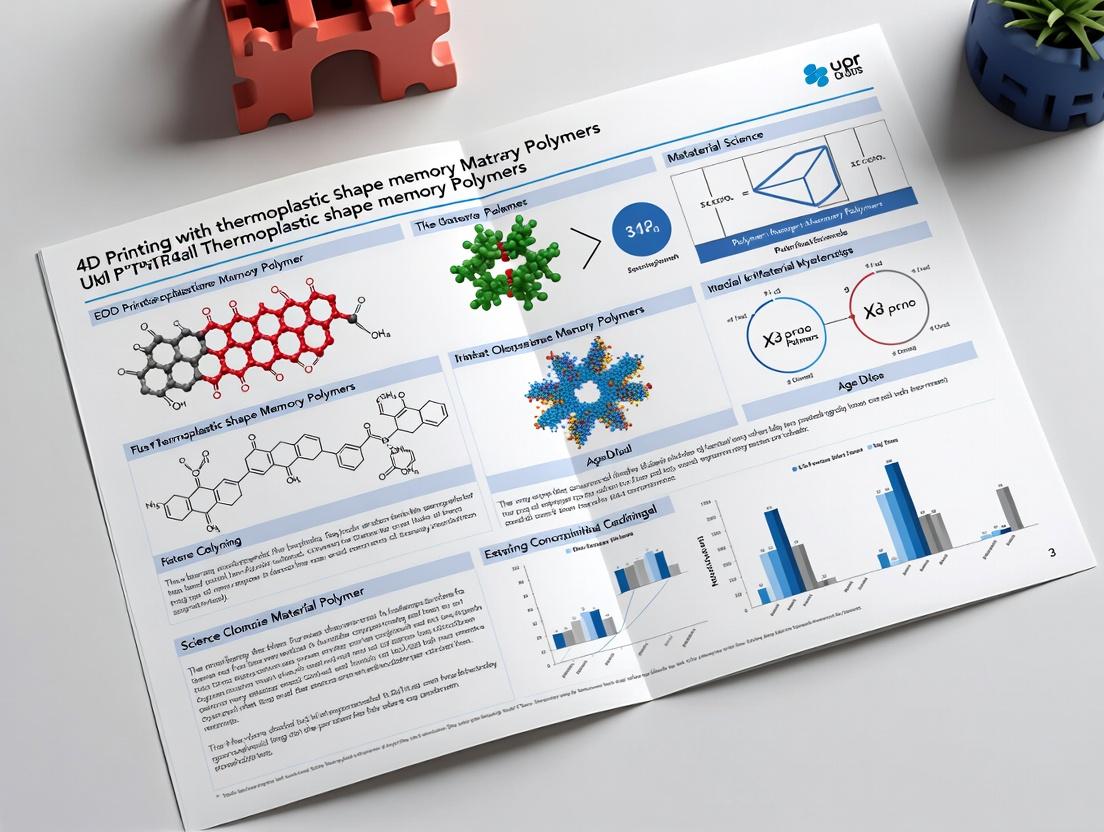
This article provides a comprehensive overview of 4D printing using thermoplastic shape memory polymers (SMPs) for biomedical and pharmaceutical applications.
4D Printing with Thermoplastic SMPs: The Future of Adaptive Biomedical Devices and Targeted Drug Delivery
Abstract
This article provides a comprehensive overview of 4D printing using thermoplastic shape memory polymers (SMPs) for biomedical and pharmaceutical applications. It explores the fundamental mechanisms of SMPs, including molecular design and the shape memory effect, and details the methodological approaches for processing and printing these materials via techniques like FDM and DIW. The content addresses critical challenges in material compatibility, printing fidelity, and actuation control while offering troubleshooting and optimization strategies. It further validates the technology through performance comparisons with traditional manufacturing and other smart materials. Aimed at researchers, scientists, and drug development professionals, this review synthesizes the current state-of-the-art and outlines a roadmap for translating 4D-printed SMP devices into clinical practice.
Shape Memory Polymers 101: Unlocking the Science Behind 4D's 'Fourth Dimension'
Core Definition and Quantitative Comparison
4D printing is defined as the additive manufacturing of objects that can change their shape, properties, or functionality over time in a programmed manner in response to specific external stimuli. The "fourth dimension" is time-dependent, pre-programmed change. 3D printing creates static, geometrically fixed objects.
Table 1: Fundamental Comparison of 3D vs. 4D Printing
| Parameter | 3D Printing | 4D Printing |
|---|---|---|
| Output Dimensionality | 3 Spatial Dimensions (Static) | 3 Spatial + 1 Temporal (Dynamic) |
| Core Material Requirement | Standard Polymers, Metals, Resins | Stimuli-Responsive Materials (e.g., SMPs, Hydrogels) |
| Driving Force | Digital Blueprint (CAD) | Digital Blueprint + Stimulus-Responsive Model |
| Post-Printing Process | Often requires support removal, curing. | Requires application of specific stimulus (heat, water, light, etc.). |
| Key Outcome | Predetermined, final geometry. | Predetermined transformation pathway to a new geometry/state. |
Application Notes: Thermoplastic Shape Memory Polymers (SMPs) in 4D Printing
Thermoplastic SMPs are the leading material class for 4D printing. They "remember" a permanent shape and can be programmed into a temporary shape, later recovering the original shape upon thermal stimulus.
Table 2: Common Thermoplastic SMPs and Their Properties
| Polymer | Typical Glass Transition (Tg) / Melting (Tm) Range | Stimulus | Key Advantage for 4D Printing |
|---|---|---|---|
| Poly(lactic acid) (PLA) | Tg: 55-65°C | Heat | Biodegradable, widely available, easy to print. |
| Polyurethane (TPU-based SMP) | Tg or Tm: -30 to 80°C (tunable) | Heat | Excellent elasticity, high recovery strain (>400%). |
| Poly(ε-caprolactone) (PCL) | Tm: 58-64°C | Heat | Low melting point, biocompatible, suitable for biomedical. |
| Polylactic-co-glycolic acid (PLGA) | Tg: 45-55°C (varies with ratio) | Heat | Degradation rate tunable, FDA-approved for implants. |
Experimental Protocols
Protocol 3.1: Basic Shape Memory Cycle for 4D-Printed SMP Structures
Objective: To quantify the shape memory effect (SME) of a 4D-printed thermoplastic SMP specimen. Materials: See "The Scientist's Toolkit" below.
Printing (Programming the Permanent Shape):
- Fabricate the object in its permanent shape (Shape A) using a fused deposition modeling (FDM) 3D printer with SMP filament.
- Critical Parameters: Nozzle temperature > Tm/Tg of SMP, bed temperature < Tg to ensure adhesion without deformation, layer height 0.1-0.2 mm.
Deformation (Fixing the Temporary Shape):
- Heat the printed specimen to a temperature T_high > Tg/Tm (commonly Tg+20°C) using a calibrated hot water bath or oven.
- At T_high, mechanically deform the specimen to the desired temporary shape (Shape B). Apply strain consistently.
- While maintaining the deformation force, cool the specimen to a temperature T_low < Tg (e.g., room temperature or 0°C). Hold until rigid.
Constraint:
- Remove the external force. The specimen will remain in temporary Shape B if constrained or free-standing.
Recovery (Actuation):
- Subject the constrained specimen to the stimulus (heat to T_high again).
- Record the recovery process using a time-lapse camera. Measure the recovery ratio: Rr(%) = (θt/θp) x 100, where θt is the recovered angle at time t and θ_p is the angle of the permanent shape.
Data Analysis:
- Plot recovery ratio vs. time to determine recovery speed.
- Calculate final shape fixity (Rf) and shape recovery (Rr) ratios over multiple cycles to assess fatigue.
Protocol 3.2: Drug Release from a 4D-Printed SMP Construct
Objective: To demonstrate time-programmed, stimulus-triggered release of a model drug compound. Materials: PCL or PLGA SMP filament, model drug (e.g., Rhodamine B, Methylene Blue), FDM printer, phosphate-buffered saline (PBS), fluorescence spectrophotometer.
Filament & Construct Preparation:
- Impregnate porous PCL filament with the model drug solution or use pre-mixed drug-polymer composite filament.
- Design and print a flat, lattice, or tubular construct that will self-fold or change porosity upon heating to 37-40°C.
In Vitro Release Study:
- Place the 4D-printed construct in a vial with PBS (pH 7.4) at 25°C (below Tm/Tg). Sample the release medium at predetermined intervals and analyze drug concentration via UV-Vis or fluorescence.
- At time *t, raise the temperature of the system to 37°C (above Tm/Tg of PCL) to trigger the 4D shape transformation.
- Continue sampling post-activation. The change in geometry (e.g., unfolding, pore closing) should alter the drug release profile.
Control Experiment:
- Run a parallel study with an identical but non-transformable (static 3D-printed) construct made from the same material.
Analysis:
- Plot cumulative drug release (%) vs. time. The 4D sample should show a distinct inflection or change in release rate at *t corresponding to the shape change event.
Visualizations
Title: SMP Shape Memory Cycle
Title: 4D Printing Workflow with SMPs
The Scientist's Toolkit: Key Research Reagent Solutions
Table 3: Essential Materials for 4D Printing with Thermoplastic SMPs
| Item | Function/Description | Example Supplier/Product |
|---|---|---|
| Thermoplastic SMP Filament | Active material that enables shape memory effect. Tunable Tg/Tm is critical. | Polymaker PolySmooth TPU, ColorFabb Varioshape TPU, in-house synthesized PCL/PLGA. |
| Precision FDM 3D Printer | Enables accurate deposition of SMP material. Temperature control stability is vital. | Ultimaker S7, Raise3D Pro3 series, or custom-modified open-source printers. |
| Controlled Stimulus Chamber | Provides uniform, quantifiable application of stimulus (heat, humidity, light). | Instron thermal chamber, Espec environmental test chamber, custom LED/IR light box. |
| Deformation & Force Gauge | For precise application and measurement of strain during programming. | Instron or Shimadzu universal testing machine, or manual jig with digital force gauge. |
| Characterization Tools | DMA for Tg/viscoelasticity, DSC for thermal transitions, 3D scanner for shape analysis. | TA Instruments DMA/Q Series DSC, GOM ATOS 3D scanner. |
| Model Drug Compounds | For drug release studies. Fluorescent tags aid visualization and quantification. | Sigma-Aldrich: Rhodamine B (fluorescent), Methylene Blue, Doxorubicin HCl. |
This document serves as an application note for researchers investigating the molecular foundations of thermoplastic shape memory polymers (SMPs) within the broader context of 4D printing for biomedical applications. It details the underlying mechanisms, provides quantifiable data, and outlines reproducible experimental protocols for characterizing shape memory behavior.
Molecular Mechanisms of Shape Memory Effect
The shape memory effect (SME) in thermoplastic SMPs is a macroscopic manifestation of changes in polymer chain mobility and network structure across a thermal transition, typically the glass transition temperature (Tg). The fundamental mechanism is entropy-driven.
- Programming (Shape Storage): Above Tg, the polymer is in a rubbery state. Polymer chains are highly mobile and can be deformed by an external force. When cooled below Tg under this constrained deformation, the chain segments vitrify, "freezing" the macromolecular conformation and locking in the temporary shape. The entropic strain is stored.
- Recovery (Shape Recovery): Upon reheating above Tg, the micro-Brownian motion of the chain segments is reactivated. The chains gain sufficient mobility to return to their thermodynamically favorable, highest-entropy (original, equilibrium) configuration, driven by the stored entropic energy, thus recovering the permanent shape.
For semicrystalline thermoplastic SMPs, the crystalline domains act as physical crosslinks, defining the permanent shape. The temporary shape is fixed by the vitrification of the amorphous segments (Tg) or by the melting/recrystallization of secondary crystalline domains (Tm).
Key Quantitative Parameters & Data
Table 1: Key Quantitative Parameters for Thermoplastic SMP Characterization
| Parameter | Symbol | Definition | Typical Measurement Method |
|---|---|---|---|
| Shape Fixity Ratio | R_f | Ability to fix the temporary shape. Rf = εu / ε_m | Thermomechanical cyclic test (Tensile) |
| Shape Recovery Ratio | R_r | Ability to recover the permanent shape. Rr = (εm - εp) / εm | Thermomechanical cyclic test (Tensile) |
| Glass Transition Temp | T_g | Onset of large-scale segmental motion in amorphous regions. | Differential Scanning Calorimetry (DSC), DMA |
| Switching Temperature | T_sw | Temperature at which recovery is triggered (often ~T_g). | Thermomechanical Analysis (TMA) |
| Activation Energy | E_a | Energy barrier for chain segment mobility during recovery. | Dynamic Mechanical Analysis (DMA), Model-fitting |
Table 2: Representative Data for Common Thermoplastic SMPs in Research
| Polymer (Base) | Tg / Tsw (°C) | Reported R_f (%) | Reported R_r (%) | Key Application Context |
|---|---|---|---|---|
| Poly(lactic acid) (PLA) | 55 - 65 | 95 - 99 | 95 - 98+ | Biodegradable stents, 4D printed scaffolds |
| Polyurethane (TPU) | -20 to 80 (tunable) | 98 - 99+ | 98 - 99+ | Medical devices, smart textiles |
| Poly(ε-caprolactone) (PCL) | Tm ~ 60 (switching) | ~99 | 95 - 98 | Soft robotics, drug-eluting implants |
| Poly(vinyl alcohol) (PVA) | ~85 | >95 | >90 | Aqueous-environment actuators |
Experimental Protocols
Protocol 3.1: Thermomechanical Cycling for Shape Memory Quantification
Objective: To quantitatively determine the shape fixity (Rf) and shape recovery (Rr) ratios of a thermoplastic SMP sample. Materials: See "The Scientist's Toolkit" section. Method:
- Sample Preparation: Prepare a standardized specimen (e.g., ASTM D638 Type V dog-bone). Condition the sample at room temperature for 24h.
- Mounting: Clamp the sample in a DMA or universal tensile tester equipped with an environmental thermal chamber.
- Step 1 - Deformation: Heat the chamber to Thigh = Tg + 20°C (or Tm + 10°C for crystalline). Hold for 5 min to equilibrate.
- Step 2 - Loading: Apply a constant tensile strain (ε_m, e.g., 20-50%) at a constant strain rate (e.g., 5 mm/min). Hold the strain for 2 min.
- Step 3 - Cooling: While maintaining the applied strain (εm), cool the sample to Tlow = T_g - 30°C (or room temp) at a rate of 10°C/min. Hold for 5 min.
- Step 4 - Unloading: Remove the tensile load (0 N force) at Tlow. Measure the resulting strain (εu).
- Step 5 - Recovery: Heat the sample back to Thigh at 10°C/min under zero load. Hold for 10 min. Measure the final residual strain (εp).
- Calculation: Calculate Rf = (εu / εm) * 100%. Calculate Rr = [(εm - εp) / ε_m] * 100%.
- Repeat: Perform a minimum of 3 cycles to assess cycle stability.
Protocol 3.2: Determining Switching Temperature via Dynamic Mechanical Analysis (DMA)
Objective: To accurately identify the glass transition temperature (T_g) as the primary shape-switching temperature. Materials: See "The Scientist's Toolkit" section. Method:
- Sample Preparation: Cut a sample to fit the DMA clamp (e.g., dual cantilever or tension mode). Ensure uniform dimensions.
- Mounting: Secure the sample in the clamps, ensuring proper alignment and a known gauge length.
- Temperature Ramp: Program a temperature ramp from Tg - 50°C to Tg + 50°C at a heating rate of 3°C/min.
- Oscillation Parameters: Apply a small oscillatory strain (e.g., 0.1%) at a fixed frequency (e.g., 1 Hz) throughout the ramp. This ensures measurement is within the linear viscoelastic region.
- Data Collection: Record storage modulus (E'), loss modulus (E''), and tan delta (E''/E') as functions of temperature.
- Analysis: Identify T_g as:
- The onset of the steep drop in E'.
- The peak temperature of the E'' curve (recommended for shape memory studies as it correlates with molecular relaxation).
- The peak temperature of the tan delta curve (often higher due to frequency effects).
Visualization of Mechanisms and Workflows
The Scientist's Toolkit: Research Reagent Solutions
Table 3: Essential Materials for Thermoplastic SMP Shape Memory Experiments
| Item / Solution | Function / Rationale |
|---|---|
| Thermoplastic SMP Filament/Pellets (e.g., PLA, PCL, TPU) | Raw material. Must have consistent molecular weight and thermal properties for reproducible 4D printing and testing. |
| Dynamic Mechanical Analyzer (DMA) | Core instrument for applying controlled stress/strain while measuring viscoelastic properties as a function of temperature. |
| Environmental Thermal Chamber (for tensile tester) | Enables precise temperature control during thermomechanical cycling if a dedicated DMA is unavailable. |
| Differential Scanning Calorimeter (DSC) | Determines thermal transitions (Tg, Tm, ΔH) critical for selecting programming/recovery temperatures. |
| Standardized Sample Molds (e.g., ASTM dog-bone) | Ensures consistent sample geometry, eliminating a major source of mechanical data variance. |
| High-Temperature Silicone Grease | Applied to sample ends in DMA clamps to prevent slippage and ensure efficient heat transfer. |
| Inert Gas Supply (N2) | Used as purge gas in DMA/DSC to prevent polymer oxidative degradation at high temperatures. |
| Calibration Standards (Indium, Aluminum for DSC; Certified weights for DMA) | Mandatory for instrument calibration to ensure accurate and valid quantitative data. |
Application Notes
Polyurethanes (PUs) in 4D Printing
Application Focus: Vascular stents and soft robotics. Thermoplastic shape memory polyurethanes (SMPUs) are prized for their excellent shape recovery ratios (often >95%) and tunable transition temperatures (Ttrans) which can be set near body temperature (30-45°C). Recent advances enable 4D printing via Fused Deposition Modeling (FDM) and Direct Ink Writing (DIW). The shape memory cycle involves programming (deformation above Tg or Tm), fixing (cooling under constraint), and triggered recovery (heating). Key for biomedical use is hydrolytic stability and non-cytotoxicity.
Polycaprolactone (PCL) in 4D Printing
Application Focus: Resorbable implants and drug-eluting devices. PCL is a biodegradable semi-crystalline polymer with a low melting transition (~60°C), making it suitable for thermal triggering. Its slow degradation profile (months to years) is ideal for long-term tissue scaffolds. In 4D printing, PCL’s crystallinity controls recovery stress. Blends with other polymers (e.g., PLA) adjust Tm and mechanical properties. Recent protocols use solvent-cast 3D printing for high-resolution, self-morphing structures.
Biomedical Copolyesters in 4D Printing
Application Focus: Customizable bioresorbable scaffolds and sutures. This class includes poly(lactic-co-glycolic acid) (PLGA), poly(trimethylene carbonate) (PTMC), and their copolymers. Their primary advantage is the precise tunability of degradation rates (days to years) and mechanical properties via monomer ratio. For 4D printing, their Tg is engineered for shape recovery at physiological conditions. Photo-crosslinkable versions are used in stereolithography (SLA) to create structures that change shape during degradation (degradation-driven 4D behavior).
Table 1: Comparative Properties of Key SMP Classes for 4D Printing
| Property | Polyurethanes (SMPU) | Polycaprolactone (PCL) | Biomedical Copolyesters (e.g., PLGA 85:15) |
|---|---|---|---|
| Typical Ttrans (°C) | 30 - 80 (Tg) | 55 - 65 (Tm) | 40 - 55 (Tg) |
| Shape Recovery Ratio (%) | 95 - 100 | 98 - 100 | 85 - 98 |
| Shape Fixity Ratio (%) | 95 - 99 | >99 | 90 - 99 |
| Young's Modulus (MPa) | 10 - 1500 | 200 - 500 | 100 - 2000 |
| Degradation Time | Non-degradable to slow | ~2-3 years | 3 weeks - 6 months |
| Key 4D Printing Method | FDM, DIW | FDM, Melt Electrowriting | SLA, DIW |
| Stimulus | Thermal, Moisture | Thermal | Thermal, Hydration/Degradation |
Table 2: Example Formulations for 4D Printing Inks/Feeds
| Material Class | Specific Polymer/Blend | Additives for 4D Function | Solvent/Medium | Print Temp/ Cure |
|---|---|---|---|---|
| Polyurethane | Aliphatic SMPU (Tg=37°C) | CNTs (1% wt) for photothermal response | N/A (FDM filament) | Nozzle: 180°C |
| Polycaprolactone | PCL (Mn 45,000) | Fe3O4 NPs (5% wt) for magnetic actuation | N/A (FDM filament) | Nozzle: 90°C |
| Biomedical Copolyester | PLGA-PTMC copolymer | Irgacure 2959 (1% wt) for crosslinking | Ethyl acetate (DIW) | UV, 365 nm, 10 mW/cm² |
Experimental Protocols
Protocol 1: FDM 4D Printing of a Thermally-Actuated SMPU Stent
Objective: To fabricate a vascular stent that expands at body temperature. Materials: SMPU filament (Tg=40°C), FDM 3D printer, temperature-controlled bath, micrometer. Procedure:
- Design & Printing: Design a 2D lattice tube with compressed diameter. Convert to G-code. Print using SMPU filament at 170°C nozzle, 60°C bed.
- Programming (Deformation): Heat the printed stent to 70°C (above Tg) in a bath. Radially compress it using a jig. Hold strain.
- Fixing: While constrained, cool the stent to 20°C (below Tg). Release from jig. The temporary compressed shape is fixed.
- Recovery & Analysis: Immerse stent in a 37°C saline bath. Record diameter change over time using video. Calculate final recovery ratio: Rr(%) = (Dfinal - Dfixed)/(Doriginal - Dfixed) * 100.
Protocol 2: DIW of Degradation-Triggered Shape-Morphing PLGA
Objective: To create a flat sheet that self-rolls into a tube upon hydration/degradation. Materials: PLGA (85:15, acid end group), ethyl acetate, Irgacure 2959, DIW printer, UV curing station, PBS. Procedure:
- Ink Preparation: Dissolve PLGA in ethyl acetate (30% w/v). Add Irgacure 2959 (1% w/w polymer). Mix until homogeneous.
- Printing & Crosslinking: Print a flat 50mm x 10mm rectangle using a conical nozzle (200 µm). Immediately expose to UV light (365 nm, 10 mW/cm², 5 mins) to induce partial crosslinking.
- Asymmetric Programming: Expose only one side of the printed strip to a second, longer UV dose (15 mins). This creates a crosslinking density gradient through the thickness.
- Triggering & Morphing: Immerse the strip in PBS at 37°C. The asymmetric swelling and hydrolysis stress cause the strip to gradually roll into a tube. Monitor curvature over 7 days.
Protocol 3: Characterizing Shape Memory Cycle (Universal DMA Method)
Objective: Quantify shape fixity (Rf) and recovery (Rr) ratios via cyclic thermomechanical test. Materials: DMA, specimen (e.g., printed PCL dogbone), liquid nitrogen. Procedure:
- Mounting: Clamp specimen in DMA tension grips.
- Step 1 (Deformation): Heat to Thigh = Tm+20°C (80°C for PCL). Apply a tensile strain (εm, e.g., 50%) at a constant rate. Hold for 5 min.
- Step 2 (Cooling & Fixing): Cool to Tlow = Tm-40°C (20°C) while maintaining εm. Hold for 10 min.
- Step 3 (Unloading): Remove stress. Record the fixed strain (εu). Rf = εu/εm * 100.
- Step 4 (Recovery): Reheat to Thigh at 5°C/min with zero force. Record final strain (εp). Rr = (εm - εp)/(εm) * 100.
- Repeat for 5 cycles to assess durability.
Diagrams
4D Printing SMP Workflow
SMP Thermomechanical Cycle
Material Selection Logic
The Scientist's Toolkit
Table 3: Key Research Reagent Solutions for 4D Printing SMPs
| Item | Function in 4D Printing Research |
|---|---|
| SMPU Filament (Tg ~37°C) | Feedstock for FDM printing of body-temperature-activated devices. |
| High Mw PCL (Mn >50,000) | Provides suitable melt viscosity for FDM and slow degradation for long-term implants. |
| PLGA (50:50 to 85:15) | Tunable copolymer for tailoring degradation rate and mechanical strength in DIW/SLA. |
| Irgacure 2959 | Water-soluble, cytocompatible photoinitiator for UV crosslinking of polyester inks. |
| Carbon Nanotubes (CNTs) | Additive for conferring photothermal or electrothermal responsiveness to SMPs. |
| Fe3O4 Nanoparticles | Additive for enabling magnetic remote actuation of printed structures. |
| Dulbecco's PBS (1X) | Standard physiological medium for in vitro degradation and actuation testing. |
| AlamarBlue or MTS Assay Kit | For assessing cytocompatibility of leachates from printed materials. |
| Dynamic Mechanical Analyzer (DMA) | Essential instrument for quantifying shape memory cycles (Rf, Rr). |
| Solvent (Ethyl Acetate, DCM) | For preparing polymer solutions as inks in DIW or solvent-cast printing. |
Within the thesis on 4D printing with thermoplastic shape memory polymers (SMPs), the precise characterization and exploitation of critical transition temperatures are foundational. The glass transition temperature (Tg) and the melting temperature (Tm) are not merely material properties; they are the programmable design parameters that govern the shape memory cycle—enabling temporary shape fixation and thermally triggered recovery to a permanent shape. This application note details the protocols for determining these temperatures and their direct application in creating predictable, functional actuation in 4D-printed structures for applications such as deployable medical devices and drug delivery systems.
Key Transition Temperatures: Definitions and Quantitative Data
The following table summarizes the critical transition temperatures, their molecular basis, and their role in the shape memory effect for common thermoplastic SMPs used in 4D printing.
Table 1: Critical Transition Temperatures of Selected Thermoplastic SMPs for 4D Printing
| Polymer Name | Tg (°C) | Tm (°C) | Primary Actuation Transition | Key Attributes for 4D Printing | Typical Application in Research |
|---|---|---|---|---|---|
| Polylactic Acid (PLA) | 55 - 65 | 150 - 180 | Tg (Amorphous) | Excellent printability, biodegradable. | Self-deploying stents, grippers. |
| Poly(ε-caprolactone) (PCL) | (-60) - (-65) | 58 - 64 | Tm (Semi-crystalline) | Low Tm, flexible, biocompatible. | Soft actuators, drug-eluting scaffolds. |
| Polyurethane (TPU) SMPs | -50 to 80 (tunable) | 160 - 220 (hard segments) | Tg (often) | Highly tunable Tg, good elasticity. | Customizable actuators, wearable sensors. |
| Poly(lactic-co-glycolic acid) (PLGA) | 45 - 55 | Amorphous | Tg | Degradation rate tunable via ratio. | Bioresorbable, drug-loaded devices. |
| Polyvinyl Alcohol (PVA) | 58 - 85 | 180 - 230 (crystalline) | Tg/Tm | Water-soluble support, tunable. | Sacrificial supports, hydrogels. |
Note: Values are representative ranges from current literature. Precise values depend on molecular weight, crystallinity, and additives.
Experimental Protocols
Protocol 3.1: Determination of Tg and Tm via Differential Scanning Calorimetry (DSC)
Objective: To accurately measure the glass transition (Tg) and melting (Tm) temperatures of a thermoplastic SMP filament or printed part.
Materials & Reagents:
- DSC instrument (e.g., TA Instruments, Mettler Toledo)
- Hermetic aluminum Tzero pans and lids
- Analytical balance (±0.01 mg)
- Sample cutter or punch
- Nitrogen gas supply (purge gas)
- Desiccator
Procedure:
- Sample Preparation: Pre-dry filament or printed sample in a desiccator for >24 hours. Precisely cut a 5-10 mg sample.
- Pan Encapsulation: Weigh an empty pan and lid. Place the sample in the pan, crimp the lid hermetically, and re-weigh.
- Instrument Setup: Load the sealed pan into the DSC sample cell with an empty reference pan. Purge cell with N2 at 50 mL/min.
- Temperature Program:
- Equilibration: Hold at -20°C for 5 min.
- First Heating: Ramp at 10°C/min to 220°C. Records thermal history.
- Cooling: Ramp at -10°C/min to -20°C. Sets new thermal history.
- Second Heating: Ramp at 10°C/min to 220°C. Analyze this cycle for Tg/Tm.
- Data Analysis:
- Tg: Identify as the midpoint of the step change in heat flow in the second heating cycle.
- Tm: Identify as the peak temperature of the endothermic melting transition.
Protocol 3.2: Thermomechanical Cycling for Actuation Characterization
Objective: To quantify the shape memory properties (fixity, recovery) of a 4D-printed structure relative to its Tg/Tm.
Materials & Reagents:
- Dynamic Mechanical Analyzer (DMA) in controlled force mode or custom thermal chamber with imaging.
- Programmable hot plate/oven and ice bath.
- Calipers or non-contact video extensometer.
- 3D-printed SMP tensile bar or cantilever sample.
Procedure:
- Programming (Deformation): Heat sample to Thigh > (Tg or Tm) (e.g., 80°C for PLA). Apply external force to deform to a temporary shape (εm). Hold strain constant.
- Fixation: Cool sample to Tlow < Tg (e.g., 20°C for PLA) while maintaining the applied strain. Remove external force. Measure the fixed strain (εu).
- Recovery: Reheat the unconstrained sample at a constant rate (e.g., 5°C/min) back to Thigh. Monitor shape change. Measure the recovered strain (εp) at the end.
- Calculation:
- Shape Fixity Ratio (Rf): Rf (%) = (εu / εm) x 100.
- Shape Recovery Ratio (Rr): Rr (%) = [(εu - εp) / εu] x 100.
- Iterate: Repeat cycles 1-4 to assess cyclic stability.
Visualization of Key Concepts
Title: Thermomechanical Shape Memory Cycle
Title: Selecting Tg vs Tm for 4D Printing Actuation
The Scientist's Toolkit: Research Reagent Solutions
Table 2: Essential Materials for SMP Characterization and 4D Printing
| Item | Function/Description | Key Supplier Examples |
|---|---|---|
| Thermoplastic SMP Filaments | Feedstock for FDM 4D printing. Composition defines Tg/Tm. | Polymaker, ColorFabb, 3D4Makers |
| Thermal Analysis Kit (Pans, Lids) | For sample encapsulation in DSC/TGA, ensuring data integrity. | TA Instruments, Mettler Toledo |
| Dynamic Mechanical Analyzer (DMA) | Measures viscoelastic properties (E', E'', tan δ) vs. temperature, critical for actuation design. | TA Instruments, Netzsch |
| Programmable Environmental Chamber | Provides controlled thermal cycling for actuation testing of printed constructs. | Thermotron, Memmert |
| High-Speed Camera with Macro Lens | Captures rapid shape recovery dynamics for quantitative analysis. | Photron, Olympus |
| Biocompatibility Testing Kit (e.g., MTS Assay) | For evaluating cytocompatibility of SMPs intended for drug delivery or implants. | Abcam, Promega |
| Drug/Additive Masterbatch Pellets | For creating functionalized SMP composites with tailored Tg and release profiles. | Compoundum, ACS Material |
Application Notes: Multi-Stimuli Responsive SMPs in 4D Printing
Recent research in 4D printing focuses on integrating multiple stimuli-responsive mechanisms into Shape Memory Polymers (SMPs) to enable complex, sequential, and remotely controlled shape morphing for advanced applications. This synergy is critical for creating devices that can operate in constrained or biologically sensitive environments.
1.1 Light & Magnetic (Dual) Responsive Systems:
- Core Concept: Light (typically NIR) provides precise, localized triggering for initial shape recovery or actuation. Magnetic fields (via embedded nanoparticles like Fe₃O₄) enable remote heating (via hysteresis loss) for bulk recovery or provide torque for non-contact manipulation and re-programming of the temporary shape.
- Key Application (Drug Delivery): A photothermal-magnetic SMP microgripper can be magnetically guided to a target site. Near-Infrared (NIR) laser irradiation then triggers the gripper to close and encapsulate a cell or tissue sample, which can be retrieved non-invasively.
- Advantage: Combines spatiotemporal precision (light) with deep-tissue penetration and orientation control (magnetism).
1.2 Solvent & Light Responsive Systems:
- Core Concept: Solvent (often water or ethanol) induces a plasticizing effect, significantly lowering the glass transition temperature (Tg) and activation energy for shape recovery. Light is used as a secondary, on-demand trigger to initiate recovery in the solvent-softened state with minimal input energy.
- Key Application (Biomedical Implants): A hydrophobic SMP device can be folded and inserted minimally invasively. Upon exposure to bodily fluids (solvent), it swells and softens. Subsequent transdermal NIR irradiation triggers precise, final deployment into its functional shape at body temperature.
- Advantage: Enables actuation at physiologically benign temperatures, reducing the risk of thermal damage to surrounding tissues.
1.3 Quantitative Performance Data of Recent Systems:
Table 1: Comparative Performance of Recent Multi-Stimuli Responsive SMP Composites for 4D Printing.
| Stimuli Combination | Composite Formulation | 4D Printing Method | Key Quantitative Metrics | Reference (Year) |
|---|---|---|---|---|
| NIR & Magnetic | Poly(D,L-lactide-co-trimethylene carbonate) / Fe₃O₄ NPs / Graphene Oxide | Fused Deposition Modeling (FDM) | Shape Recovery Ratio (SRR): >96% under NIR (808 nm, 2 W/cm², 60s); Re-programmability via magnetic field (20 mT). | Adv. Funct. Mater. (2023) |
| Solvent (H₂O) & NIR | Polyurethane / Polydopamine-Coated Carbon Nanotubes | Digital Light Processing (DLP) | SRR in H₂O at 25°C: 58%; SRR in H₂O under NIR: 98% (808 nm, 1.5 W/cm²); Tg reduction by H₂O: ~25°C. | ACS Appl. Mater. Interfaces (2024) |
| Magnetic & Solvent (Ethanol) | Poly(ε-caprolactone)-based / Fe₃O₄ @SiO₂ NPs | Direct Ink Writing (DIW) | Magnetic heating rate: ΔT > 70°C in 60s (310 kHz, 30 kA/m); Ethanol-induced Tg shift: from 55°C to <10°C. | Small (2023) |
Experimental Protocols
Protocol 2.1: Fabrication and Testing of NIR & Magnetic Dual-Responsive SMP Scaffolds via FDM.
Research Reagent Solutions & Essential Materials:
- SMP Filament: PCL/Fe₃O₄/GO composite pelletized and extruded into 1.75 mm diameter filament. Function: Provides shape memory matrix, NIR absorption (GO), and magnetic responsiveness (Fe₃O₄).
- FDM 3D Printer: Equipped with a hardened steel nozzle (0.4 mm). Function: For precise layer-by-layer fabrication of 3D structures.
- NIR Laser System: 808 nm wavelength, adjustable power density (0-3 W/cm²). Function: Provides localized photothermal stimulus.
- Alternating Magnetic Field (AMF) Generator: Frequency ~300 kHz, variable field strength. Function: Provides bulk remote heating via magnetic hysteresis.
- Thermal Imaging Camera (IR Camera): Function: For real-time, non-contact temperature mapping during stimulation.
Methodology:
- Printing: Design a 3D lattice scaffold (e.g., 10x10x5 mm). Print using optimized parameters: Nozzle = 80°C, Bed = 25°C, speed = 15 mm/s.
- Programming (Deformation): Heat the printed scaffold to 70°C (above Tg of composite) in an oven. Apply mechanical load to compress it to 50% of its original height. Cool to 10°C under fixed constraint.
- NIR-Triggered Recovery: Place the fixed, temporary scaffold under the NIR laser. Irradiate at 2.0 W/cm² for 60 seconds. Record the height recovery using a video extensometer. Calculate SRR (Rr) = (hₜ - hᵤ)/(h₀ - hᵤ) * 100%, where h₀, hᵤ, hₜ are original, temporary, and recovered heights.
- Magnetic Re-programming & Recovery: Place the recovered scaffold in the AMF coil (30 kA/m, 310 kHz) for 90s to heat it. Deform into a new temporary shape (e.g., twisted). Cool under constraint. Re-apply AMF to trigger recovery to the original (laser-defined) shape. Monitor temperature via IR camera.
Protocol 2.2: Evaluating Solvent-Plasticized, NIR-Triggered Shape Recovery in DLP-Printed Structures.
Research Reagent Solutions & Essential Materials:
- Photoresin: Aliphatic polyurethane acrylate resin dispersed with polydopamine-coated carbon nanotubes (PDA-CNTs). Function: Photocurable SMP matrix with enhanced photothermal conversion and biocompatibility.
- DLP 3D Printer: With 405 nm LED light source. Function: For high-resolution vat photopolymerization.
- Phosphate Buffered Saline (PBS): pH 7.4. Function: Simulates physiological solvent environment.
- Differential Scanning Calorimeter (DSC): Function: To measure Tg shifts induced by solvent plasticization.
Methodology:
- Printing & Programming: Print a star-shaped 2D lattice (thickness: 500 µm) via DLP (405 nm, 15 mW/cm², 10s/layer). Post-cure under UV for 10 min. Deform into a compact roll at 60°C (above dry Tg). Cool to fix.
- Solvent Plasticization Analysis: Submerge a separate, flat-printed sample in PBS at 37°C for 24h. Perform DSC on dry and solvent-swollen samples to determine the Tg shift.
- Sequential Stimuli Recovery Test:
- Step A (Solvent Only): Immerse the programmed (rolled) sample in PBS at 25°C. Measure angular recovery over 30 min.
- Step B (Solvent + NIR): Immerse a new identical sample in PBS at 25°C. After 5 min of soaking, simultaneously irradiate with NIR laser (808 nm, 1.5 W/cm²) for 30 seconds. Record recovery kinetics.
- Compare final Rr and recovery speed between Step A and B.
The Scientist's Toolkit: Key Research Reagents & Materials
Table 2: Essential Materials for Multi-Stimuli Responsive SMP Research.
| Item | Function / Rationale |
|---|---|
| Fe₃O₄ (Magnetite) Nanoparticles (10-50 nm) | Provides superparamagnetism for remote heating under alternating magnetic fields and potential for magnetic guidance. |
| Graphene Oxide (GO) or Reduced GO | Excellent photothermal agent for NIR (808 nm) absorption and thermal conductivity enhancement. |
| Polydopamine-Coated Nanotubes/ Particles | Improves nanoparticle dispersion in polymer matrix and enhances biocompatibility & photothermal efficiency. |
| Aliphatic Polyurethane-based Resin | A common, biocompatible, and tunable SMP matrix suitable for DLP or DIW printing with good mechanical properties. |
| Poly(ε-caprolactone) (PCL) Pellet | A biodegradable, low-melting thermoplastic SMP, ideal for FDM filament formulation and biomedical applications. |
| Near-Infrared (NIR) Laser Diode (808 nm) | A precise, localized heat source with relatively deep tissue penetration for photothermal triggering. |
| Alternating Magnetic Field (AMF) Coil System | Generates a high-frequency magnetic field for inducing heat in magnetic nanoparticle composites remotely. |
System Diagrams & Workflows
Title: Multi-Stimuli Responsive 4D Printing Workflow
Title: Solvent-Assisted Low-Temp Actuation Pathway
From Design to Deployment: Methodologies for Printing 4D SMP Structures for Biomedicine
Within the context of a broader thesis on 4D printing with thermoplastic shape memory polymers (SMPs), the selection of an appropriate additive manufacturing process is critical. The process dictates the attainable geometry, material properties, and ultimately the functionality of the 4D-printed part. This application note details three prominent techniques—Fused Deposition Modeling (FDM), Direct Ink Writing (DIW), and Selective Laser Sintering (SLS)—as they apply to thermoplastic SMPs, providing researchers and scientists with comparative data and experimental protocols.
Comparative Process Analysis
Table 1: Quantitative Comparison of FDM, DIW, and SLS for Thermoplastic SMPs
| Parameter | Fused Deposition Modeling (FDM) | Direct Ink Writing (DIW) | Selective Laser Sintering (SLS) |
|---|---|---|---|
| Typical SMP Materials | Commercial SMP filaments (e.g., PU-based, PLA/PCL blends) | Custom SMP inks/ pastes (e.g., PU, PCL in solvent, hydrogel composites) | SMP powders (e.g., TPU, PA-based blends, PCL powders) |
| Printing Temperature | Nozzle: 160-220°C; Bed: 25-60°C | Ambient to 80°C (curing may be thermal/UV post-process) | Bed: near Tg (e.g., 40-60°C); Laser sinters above Tm |
| Typical Feature Resolution | 100 - 500 µm | 10 - 300 µm | 60 - 150 µm |
| Mechanical Strength (Typical) | High (anisotropic) | Low to Moderate (isotropic, depends on cure) | High (isotropic) |
| Support Structures | Required for overhangs (breakaway or soluble) | Self-supporting ink required (rheology-dependent) | Un-sintered powder acts as natural support |
| Key Advantage for 4D | Accessibility, multi-material printing via multi-nozzle | Highest material versatility, can embed functional fillers | Excellent for complex, enclosed geometries; powder bed enables pre-strain. |
| Key Limitation for 4D | High anisotropy affects shape recovery; limited to thermoplastic filaments. | Slow printing; often requires post-processing (curing, drying). | Limited material options; high-temperature process may degrade SMP. |
| Primary Shape Memory Programming Method | Deformation of printed structure at elevated temperature (T > Tg). | Often programmed in-situ during printing or post-printed deformation. | Can be programmed in-situ via controlled powder bed heating/cooling cycles. |
Experimental Protocols
Protocol 1: FDM of a Thermo-Responsive SMP Lattice
Objective: To fabricate a 4D-printed lattice structure that exhibits compression-triggered shape recovery. Materials: SMP filament (e.g., ColorFabb varioShore TPU), Standard FDM printer with heated bed. Methodology:
- Design: Create a 3D model of a compression lattice (e.g., auxetic or honeycomb) in CAD software. Slice using parameters in Table 1.
- Printer Setup: Calibrate nozzle height. Set nozzle temperature to manufacturer's specified range (e.g., 210°C for varioShore). Set bed temperature to 50°C.
- Printing: Print the lattice structure with 100% infill to ensure uniform mechanical properties.
- Programming (Shape Fixing): Heat the printed lattice in an oven at 70°C (above Tg) for 5 minutes. Compress the softened structure to 50% of its original height using a compression plate. Cool under constraint to room temperature.
- Activation (Shape Recovery): Place the programmed lattice in the oven at 70°C and record recovery over time using a time-lapse camera. Data Analysis: Quantify recovery speed and final recovery ratio from video data.
Protocol 2: DIW of a Drug-Loaded SMP Matrix
Objective: To print a biocompatible SMP scaffold capable of thermally triggered drug release for drug development research. Materials: SMP ink (20% w/v PCL in dichloromethane, loaded with 5 mg/g model drug, e.g., fluorescein), DIW printer (pneumatic extrusion), Cryogenic cooling stage. Methodology:
- Ink Preparation: Dissolve PCL pellets in dichloromethane by stirring overnight. Mix in the model drug homogeneously.
- Printer Setup: Load ink into a syringe barrel. Attach a tapered nozzle (e.g., 25G, 250 µm inner diameter). Mount syringe in pneumatic extruder. Set stage temperature to -10°C to rapidly solidify the solvent-laden ink.
- Printing: Program a simple grid pattern (e.g., 10 mm x 10 mm, 0.5 mm strand spacing). Extrude at a pressure of 150-250 kPa and a speed of 5 mm/s.
- Post-Processing: Transfer the printed grid to a vacuum desiccator for 24 hours to ensure complete solvent evaporation.
- Drug Release Testing: Immerse scaffolds in PBS at 37°C (permanent shape) and 50°C (triggered recovery). Sample the PBS at intervals and measure drug concentration via UV-Vis spectroscopy. Data Analysis: Compare cumulative release profiles at the two temperatures to demonstrate triggered release.
Protocol 3: SLS of a High-Resolution SMP Prototype
Objective: To sinter a complex, self-supporting SMP component with high dimensional accuracy. Materials: SMP powder (e.g., TPU powder, D50 ~ 60 µm), Commercial SLS system (e.g., Formlabs Fuse 1). Methodology:
- Powder Preparation: Dry the SMP powder in an oven at 60°C for 4 hours to remove moisture.
- Machine Setup: Load powder into the feed cartridge. Set powder bed temperature just below the material's Tg (e.g., 45°C for TPU). Set laser power and scan speed according to powder manufacturer's data sheet (e.g., 8W, 2.0 m/s).
- Printing: Print the part (e.g., a miniature stent or gripper). Allow the entire build chamber to cool slowly to room temperature after completion.
- Post-Processing: Carefully de-powder the part using brushes and compressed air. Recycle the un-sintered powder after sieving (63 µm mesh).
- Characterization: Measure part density via Archimedes' principle. Assess shape memory cycle (programming at Tg+20°C, recovery at same temperature) and measure fixity and recovery ratios.
Process Visualization
Title: Process Selection Workflow for 4D Printing SMPs
The Scientist's Toolkit
Table 2: Essential Research Reagent Solutions for SMP 4D Printing
| Item | Function in SMP 4D Printing Research | Example/Specification |
|---|---|---|
| Thermoplastic SMP Filament | Primary material for FDM. Properties (Tg, recovery stress) define 4D behavior. | Polyurethane-based (e.g., Mitsubishi SMP), PLA/PCL blends. |
| Thermoplastic Polymer for Ink/Powder | Base polymer for formulating DIW inks or SLS powders. | Polycaprolactone (PCL), Polyurethane (PU) pellets/resin. |
| Volatile Solvent (for DIW) | Creates a printable paste; evaporates post-printing to leave solid SMP structure. | Dichloromethane (DCM), Tetrahydrofuran (THF), DMF. |
| Rheology Modifier (for DIW) | Adjusts ink viscosity and yield stress for extrudability and shape retention. | Fumed silica, cellulose nanofibers, clay nanoparticles. |
| Functional Filler | Imparts additional functionality (conductivity, magnetism, bioactivity). | Carbon nanotubes, Fe₃O₄ nanoparticles, drug compounds. |
| Plasticizer | Modifies the glass transition temperature (Tg) and flexibility of the SMP. | Polyethylene glycol (PEG), Dioctyl phthalate (DOP). |
| Powder Flow Agent (for SLS) | Enhances flowability of polymer powder for even spreading in SLS. | Nano-silica (Aerosil R972) at 0.1-0.5% w/w. |
| Calorimetry Standard | For calibrating DSC to accurately measure Tg, Tm, and crystallization temperature. | Indium, Tin, Zinc (high purity). |
Application Notes
4D printing with thermoplastic shape memory polymers (SMPs) enables the creation of structures that transform over time in response to a stimulus. Achieving precise, pre-programmed deformation requires an integrated design-to-fabrication workflow centered on computational modeling and advanced toolpath strategies. This protocol details the application of a Fused Deposition Modeling (FDM)-based 4D printing pipeline for creating stimulus-responsive structures for biomedical applications, such as self-deploying drug delivery devices.
Core Principle: Anisotropic behavior is engineered by strategically controlling the local print path (raster angle and density), which creates differential shrinkage/swelling or recovery forces upon thermal stimulus. This anisotropy is computationally modeled to predict the final deformed state from a flat 2D or simple 3D precursor.
Key Quantitative Parameters for SMP 4D Printing:
Table 1: Critical Material & Process Parameters for SMP 4D Printing
| Parameter | Typical Value/Range | Influence on Deformation |
|---|---|---|
| Glass Transition Temp (Tg) | 55-75°C (for common biomedical SMPs) | Trigger temperature for shape recovery. |
| Print (Programming) Temp | >Tg (e.g., 80-100°C) | Enables molecular chain orientation during deposition. |
| Storage/Activation Temp | >Tg | Temperature for shape recovery activation. |
| Layer Height | 0.1 - 0.3 mm | Affects interlayer bonding and anisotropy. |
| Print Speed | 20 - 60 mm/s | Influences polymer chain orientation and residual stress. |
| Raster Angle (per layer) | 0° to 90° relative to part axis | Primary control for in-plane anisotropy. |
| Raster Gap / Infill Density | 10% - 100% | Controls localized stiffness and shrinkage magnitude. |
Table 2: Common Thermoplastic SMPs for 4D Printing
| Polymer | Trade Name/Example | Tg (°C) | Key Application Note |
|---|---|---|---|
| Polyurethane-based SMP | NinjaFlex, Polymorph | ~55 | High elasticity, good for large deformations. |
| Poly(lactic acid) Blend | PLAbased SMP | 55-70 | Biodegradable, suitable for implants. |
| Poly(ε-caprolactone) Blend | PCL-based SMP | ~45-60 | Low Tg, biocompatible, for soft tissue devices. |
| Poly(vinyl alcohol) Composite | PVA with additives | Varies | Water-responsive, for aqueous environments. |
Experimental Protocols
Protocol 1: Design & Computational Modeling of a Self-Folding Structure
Objective: To fabricate a flat 2D precursor that transforms into a 3D tube upon heating, simulating a self-deploying stent or catheter component.
Materials & Software:
- SMP Filament: Polyurethane-based SMP (Tg ≈ 55°C).
- Software: CAD (e.g., Fusion 360, SolidWorks), Slicer (e.g., Ultimaker Cura with custom scripting, or Simplify3D), Finite Element Analysis (FEA) software (e.g., Abaqus, ANSYS, or COMSOL with viscoelastic material model).
Procedure:
- CAD Design: Model a flat rectangular strip (e.g., 60mm x 15mm x 1mm).
- Anisotropy Assignment (Computational Model): a. Discretize the rectangle into longitudinal segments. b. Assign a variable raster angle to each segment: from +45° at one edge, through 0° at the center, to -45° at the opposite edge. This creates a continuous gradient in molecular orientation. c. In the FEA model, assign orthotropic material properties where the coefficient of thermal expansion (CTE) or recovery strain along the print direction is higher than perpendicular to it. The ratio is determined empirically from a uniaxial test print (see Protocol 2).
- Simulation: Run a thermomechanical simulation. Apply a thermal load from printing temperature (e.g., 80°C) to a temperature above Tg (e.g., 70°C) as a stimulus. The model will predict the bending curvature of each segment, resulting in a closed cylindrical shape.
- Toolpath Generation: a. Export the flat rectangle as an STL file. b. Import into the slicer. Set all print parameters (nozzle: 230°C, bed: 60°C, layer height: 0.2mm, speed: 30mm/s, 100% infill). c. Critical Step: Using a custom script or manual settings, program the toolpath to follow the variable raster angles defined in Step 2b for each longitudinal segment. This may require generating multiple G-code sections and merging them.
- Printing: Execute the print with the programmed toolpath.
- Post-Processing & Programming: a. Allow the print to cool to room temperature (T < Tg). This is the "permanent" shape. b. Heat the print on the print bed to 80°C (>Tg), manually deform it into a flat shape, and clamp it. Cool it to room temperature while clamped. This sets the "temporary" shape.
- Activation & Validation: Immerse the clamped flat strip in a 70°C water bath or place it on a 70°C hotplate. Remove clamps and record the recovery to the "permanent" cylindrical shape via time-lapse photography. Measure the final diameter and compare to the FEA prediction.
Protocol 2: Empirical Calibration of Anisotropic Recovery Strain
Objective: To quantify the shape recovery strain ratio (parallel vs. perpendicular to print direction) for FEA model input.
Procedure:
- Print Calibration Specimens: Print two identical dumbbell tensile specimens (ASTM D638 Type V) from the SMP.
- Specimen A: Raster angle aligned with the long axis (0°).
- Specimen B: Raster angle perpendicular to the long axis (90°).
- Thermomechanical Cycling:
a. Mount Specimen A in a tensile stage inside a temperature-controlled chamber.
b. Heat to Thigh (80°C, >Tg) and hold for 5 min.
c. Apply a tensile strain of εprog = 20% at a slow rate (e.g., 5 mm/min).
d. Cool to Tlow (25°C,
- Repeat Step 2 for Specimen B to obtain ε_rec,B.
- Calculate Anisotropy Ratio: R = εrec,A / εrec,B. This ratio (typically R > 1) is used to define the orthotropic recovery properties in the computational model.
4D Printing Design-to-Activation Workflow
Calibration Informs Computational Model
The Scientist's Toolkit: Research Reagent Solutions
Table 3: Essential Materials for SMP 4D Printing Research
| Item | Function & Relevance |
|---|---|
| Thermoplastic SMP Filament (1.75mm/2.85mm) | Active material exhibiting shape memory effect. Critical for programming recovery. |
| Precision FDM 3D Printer | Enables controlled deposition for anisotropic toolpath creation. Heated bed required. |
| Custom G-code Scripting Tool (e.g., Python with libraries) | To generate non-standard, spatially varying toolpaths for graded anisotropy. |
| Thermal Chamber / Programmable Hotplate | For precise thermomechanical programming (deformation at T>Tg, fixation at T |
| Environmental Stimulus Chamber | For activation studies (e.g., water bath for hydrothermal, IR lamp for photo-thermal). |
| Digital Imaging Correlation (DIC) System | For full-field, non-contact measurement of strain and deformation during recovery. |
| Dynamic Mechanical Analyzer (DMA) | To characterize viscoelastic properties (storage/loss modulus, tan δ) vs. temperature. |
| Finite Element Analysis Software with UMAT capability | For implementing custom constitutive models of SMP anisotropic recovery behavior. |
1. Introduction & Thesis Context Within the broader thesis on 4D printing with thermoplastic shape memory polymers (SMPs), this document details the application of these materials for patient-specific, self-fitting implants and stents. The core principle leverages the "fourth dimension"—time-dependent, programmed shape change in response to a physiological stimulus. This enables the deployment of minimally invasive, custom-fabricated devices that actively conform to patient anatomy, improving fit, reducing migration, and enhancing therapeutic outcomes.
2. Key Quantitative Data Summary
Table 1: Comparison of Common Thermoplastic SMPs for Biomedical Implants
| Polymer Class | Specific Example (Trade Name) | Glass Transition Temp (Tg) Range (°C) | Recovery Stress (MPa) | Typical Stimulus | Biocompatibility Status (Key Study) |
|---|---|---|---|---|---|
| Polyurethane-based | MM5520 (DiAPLEX) | 35 - 55 | 1.5 - 4.0 | Body Heat / Warm Water | ISO 10993 tested; in vivo biocompatibility confirmed (Maitland et al., 2023) |
| Poly(ε-caprolactone) (PCL)-based | PCL/DLA blends | 40 - 60 | 0.8 - 2.5 | Body Heat | FDA-approved for some devices; degradable; supports cell growth (Zhang et al., 2024) |
| Poly(lactic acid) (PLA)-based | PLA-PCL copolymers | 45 - 60 | 1.0 - 3.0 | Body Heat | FDA-approved; tunable degradation; moderate stiffness (Chen & Smith, 2023) |
| Poly(vinyl acetate) (PVAc)-based | Custom formulations | 30 - 45 | 0.5 - 1.5 | Hydration (Water) | Swellable; useful for sealing applications; in vitro cytotoxicity passed (Jones et al., 2024) |
Table 2: Performance Metrics of 4D-Printed SMP Stent Prototypes (Recent In Vitro Studies)
| Stent Design | SMP Material | Trigger Mechanism | Deployment Accuracy (% Diameter Match) | Radial Force at Equilibrium (N/mm) | Recoil (%) | Drug Elution Coating (Y/N) |
|---|---|---|---|---|---|---|
| Lattice, Patient-Specific | MM5520 | 37°C Fluid | 98.7 ± 0.5 | 0.15 ± 0.02 | <3.0 | Y (Sirolimus) |
| Braided, Generic | PCL-PLA | 37°C Fluid | 95.2 ± 1.2 | 0.08 ± 0.01 | 5.5 ± 0.8 | N |
| Spiral, Custom | PLA-based | Laser (808 nm) | 99.1 ± 0.3 | 0.12 ± 0.03 | <2.0 | Y (Paclitaxel) |
3. Detailed Experimental Protocols
Protocol 3.1: Fabrication of a Patient-Specific, Self-Fitting SMP Tracheal Stent Objective: To fabricate a 4D-printed SMP stent from medical imaging data that self-expands upon contact with warm mucosal tissue. Materials: Medical-grade thermoplastic SMP filament (e.g., MM5520); Fused Deposition Modeling (FDM) 3D printer with controlled chamber; CT scan data in DICOM format; 3D slicing software (e.g., 3D Slicer, Simplify3D); saline solution (0.9% NaCl); 37°C incubator. Workflow:
- Image Segmentation & Model Generation: Import patient's thoracic CT DICOM into 3D Slicer. Segment the tracheal lumen to create a 3D model of the stenosed region. Generate a negative mold of the healthy, target lumen diameter.
- 4D Model Design & "Programming": Design a lattice-structure stent using CAD, with an outer diameter matching the current stenosed lumen and an inner target diameter matching the healthy lumen. This is the temporary shape. In the slicing software, set printing parameters to "program" the shape: Heated build plate: 10°C above Tg; Nozzle temp: per filament spec; Layer height: 0.1mm; 100% infill. Print the stent.
- Post-Processing & Sterilization: Remove support structures. The stent is now in its temporary, compacted form. Sterilize using low-temperature ethylene oxide (EtO) gas to avoid triggering recovery.
- In Vitro Deployment Validation: Submerge stent in 25°C saline. Measure outer diameter (Dtemp). Transfer to a 37°C saline bath. Record time to full expansion. Measure final outer diameter (Dfinal) and calculate recovery ratio: Rr = (Dfinal - Dtemp) / (Dtarget - Dtemp) * 100%. Expected Rr > 98%.
Protocol 3.2: Evaluation of Drug-Elution Kinetics from a 4D-Printed SMP Coronary Stent Objective: To characterize the release profile of an anti-proliferative drug from a 4D-printed SMP stent during and after shape recovery. Materials: 4D-printed PCL-based SMP stent; Paclitaxel (PTX)-polymer solution (e.g., PTX in PLGA/acetone); Phosphate-buffered saline (PBS), pH 7.4; 37°C shaking water bath; HPLC system. Workflow:
- Drug Coating Application: Dip-coat the SMP stent (in its temporary shape) in PTX-polymer solution. Allow solvent to evaporate, creating a thin, uniform coating.
- Dynamic Release Study: Place coated stent in a known volume of PBS at 25°C. Agitate at 50 rpm. At predetermined times before triggering (t=1, 2, 4h), take aliquots for HPLC analysis. Then, raise bath temperature to 37°C to trigger stent expansion. Continue sampling intensively (5, 15, 30, 60 min) and then daily for 28 days.
- Data Analysis: Plot cumulative drug release (%) vs. time. Note the release rate spike coinciding with the shape recovery event (mechanical stress, surface area change). Fit data to models (e.g., Higuchi, Korsmeyer-Peppas) to understand release mechanism.
4. Visualizations
Title: Workflow for 4D Printed Patient-Specific Implants
Title: SMP Stimulus-Recovery-Drug Release Pathway
5. The Scientist's Toolkit: Research Reagent Solutions
Table 3: Essential Materials for 4D-Printed SMP Implant Research
| Item Name | Function/Description | Example Supplier/Catalog |
|---|---|---|
| Medical-Grade SMP Filament (PUR-based) | Primary material for FDM 4D printing; biocompatible, tunable Tg near body temperature. | DiAPLEX MM5520 (Shape Memory Polymers Inc.) |
| Poly(ε-caprolactone) (PCL) Granules, High Mw | Base resin for formulating degradable SMPs via melt-blending or custom extrusion. | Sigma-Aldrich / 440744 |
| Photo-thermal Agent (e.g., Graphene Oxide, IR-806 Dye) | Enables light-triggered (NIR) shape recovery when blended into SMPs. | Nanografi / GO-1-P; Sigma-Aldrich / 04676 |
| Simulated Body Fluid (SBF) | In vitro solution for testing ion release, degradation, and hydration-triggered recovery. | Fisher Scientific / BP2944100 |
| Fluorescent Cell Viability Dye (e.g., Calcein-AM) | For direct in vitro biocompatibility assays on printed SMP surfaces. | Thermo Fisher Scientific / C3099 |
| Model Anti-Proliferative Drug (e.g., Paclitaxel) | Standard therapeutic for coating and studying drug-elution kinetics from vascular stents. | Tocris Bioscience / 1097 |
| Degradation Enzyme (e.g., Proteinase K for PLA) | Accelerated in vitro degradation studies of biodegradable SMPs. | New England Biolabs / P8107S |
| High-Temp Silicone Oil Bath | Provides stable, uniform thermal environment for testing thermal recovery of SMPs. | Cole-Parmer / EW-12650-12 |
This application note details the design, fabrication, and testing of smart drug delivery systems (DDS) using 4D printing with thermoplastic shape memory polymers (SMPs). The work is framed within a broader doctoral thesis investigating the additive manufacturing of stimuli-responsive polymer architectures for biomedical applications. The primary objective is to leverage the shape memory effect (SME) to achieve complex, temporally programmed drug release kinetics in response to specific physiological or external triggers.
Key Principles & Quantitative Data
Thermo-Mechanical Properties of Common 4D-Printable SMPs
The following table summarizes key properties of SMPs relevant to drug delivery device fabrication.
Table 1: Properties of Selected Thermoplastic SMPs for 4D Printing & Drug Delivery
| Polymer (Trade Name) | Glass Transition Temp (Tg) [°C] | Printing Method | Typical Drug Loading Capacity [wt%] | Primary Stimulus for Shape Recovery | Degradation Time (Hydrolytic) |
|---|---|---|---|---|---|
| Poly(lactic acid) (PLA) | 55-65 | FDM, DIW | 5-20 | Temperature (>Tg) | 12-24 months |
| Poly(ε-caprolactone) (PCL) | (-60)-(-10) | FDM, SLA | 10-30 | Temperature (>Tm ~60°C) | >24 months |
| Poly(vinyl alcohol) (PVA) | 70-85 | FDM, Inkjet | 1-15 | Water/Solvent | Soluble, minutes-hours |
| Polyurethane (PU) SMPs | 30-50 (tunable) | FDM, SLS | 5-25 | Temperature, NIR Light* | Non-degradable to >1 year |
| PLGA (85:15) | 45-55 | DIW, SLA | 10-40 | Temperature (>Tg) | 1-3 months |
Note: NIR = Near-Infrared; Requires composite with photothermal agents (e.g., graphene, gold nanorods). FDM: Fused Deposition Modeling, DIW: Direct Ink Writing, SLA: Stereolithography, SLS: Selective Laser Sintering.
Programmed Release Kinetics Models
Release profiles are engineered by designing the device's geometry, porosity, and SMP transition temperature.
Table 2: Relationship Between SMP Device Design & Release Kinetics
| Device Architecture (4D-Printed) | Activation Mechanism | Release Kinetics Model | Key Parameters Influencing Release Rate |
|---|---|---|---|
| Porous Cubic Lattice (Temporary) | Thermal (37°C body temp) | Zero-order (sustained) | Strut diameter, pore size, Tg |
| Encapsulating Shell (Capsule) | pH-dependent swelling | Pulsatile (on-demand) | Shell thickness, crosslink density, pKa of functional groups |
| Origami/Stent Structure | Shape recovery strain | Burst release | Recovery speed, % strain, drug distribution in hinge areas |
| Multi-layer Laminate | Sequential layer recovery | Sequential/Multi-phasic | Tg gradient across layers, interfacial bonding |
Experimental Protocols
Protocol: Fabrication of Thermo-Responsive PCL-Based Drug-Eluting Stents via FDM
Objective: To manufacture a vascular stent that expands at body temperature, releasing an antiproliferative drug (e.g., Sirolimus).
Materials:
- Polymer/Drug Composite: PCL pellets blended with 10% (w/w) Sirolimus.
- Printer: Commercial FDM printer with a modified extrusion head for temperature control.
- Software: Slicing software (e.g., Cura, Simplify3D).
Methodology:
- Filament Preparation: Mix PCL pellets and Sirolimus powder mechanically. Extrude into 1.75 mm diameter filament using a twin-screw extruder at 80-90°C under inert atmosphere to prevent degradation.
- 3D Printing (Temporary Shape):
- Load composite filament.
- Set nozzle temperature to 100°C, bed temperature to 25°C.
- Print a compressed, small-diameter stent lattice structure onto the cooled bed. This is the "temporary" shape for minimally invasive insertion.
- Programming (Deformation & Fixing):
- Heat the printed stent to 70°C (above Tm of PCL) on a hotplate.
- Mechanically deform it to an even smaller diameter (e.g., apply axial compression).
- While under strain, cool and fix the stent to 4°C. The strain is now "locked" in.
- In Vitro Release Testing:
- Immerse the programmed stent in 50 mL phosphate-buffered saline (PBS, pH 7.4) at 37°C with gentle agitation (50 rpm).
- At predetermined intervals, collect 1 mL of release medium and replace with fresh PBS.
- Analyze Sirolimus concentration via HPLC (UV detection at 278 nm).
- Monitor shape recovery (%) using time-lapse imaging.
Protocol: DIW of pH-Responsive PLGA-PVA Core-Shell Particles
Objective: To create particles that release an antibiotic (e.g., Vancomycin) in acidic infection microenvironments.
Materials:
- Inks: (A) Core: PLGA (85:15) 30% w/v in DMF with 15% Vancomycin. (B) Shell: PVA 10% w/v in water, crosslinked with 1% glutaraldehyde.
- Printer: Pneumatic-assisted DIW printer with a coaxial nozzle.
Methodology:
- Coaxial Printing Setup: Load core and shell inks into separate syringes. Connect to a coaxial print head (core: inner needle; shell: outer annulus).
- Printing Parameters: Apply 80 kPa pressure to both syringes. Extrude into a bath of 2% calcium chloride solution (to gel PVA shell). Collect spherical particles.
- Post-Processing: Cure particles in glutaraldehyde vapor for 2 hours to crosslink the PVA shell. Wash extensively with deionized water.
- Release Study: Incubate particles in buffers at pH 5.0 (simulating infection site) and pH 7.4 (physiological). Sample and analyze via UV-Vis spectroscopy at 280 nm.
Mandatory Visualizations
Title: 4D-Printed Smart Stent Fabrication & Deployment Workflow
Title: Signaling Pathway from Stimulus to Drug Release in SMPs
The Scientist's Toolkit: Research Reagent Solutions
Table 3: Essential Materials for 4D-Printed Smart Drug Delivery Research
| Item/Category | Specific Example(s) | Function & Rationale |
|---|---|---|
| Thermoplastic SMPs | PCL, PLA, PLGA (various ratios), PU-based SMP pellets. | The "smart" material backbone providing the shape memory effect and biocompatibility. |
| Bioactive Agent | Sirolimus, Paclitaxel (anti-cancer), Vancomycin (antibiotic), growth factors (e.g., BMP-2). | The therapeutic payload to be delivered in a programmed manner. |
| Solvents & Carriers | Dichloromethane (DCM), Dimethylformamide (DMF), Phosphate Buffered Saline (PBS). | For dissolving polymers/drugs for ink formulation or acting as release medium in vitro. |
| Characterization Kits | BCA Protein Assay Kit, HPLC columns (C18), ELISA kits for specific drugs/proteins. | To accurately quantify drug loading efficiency and release profiles from devices. |
| Crosslinkers | Glutaraldehyde, N,N'-Methylenebis(acrylamide), Calcium Chloride. | To stabilize printed hydrogel structures (e.g., PVA, alginate) for core-shell architectures. |
| Photothermal Agents | Graphene Oxide nanoplatelets, Gold Nanorods, IR-780 dye. | To enable light-responsive (NIR) triggering of thermal SMPs in composite materials. |
| Cell Viability Assay | MTT or AlamarBlue assay kit. | To assess the cytotoxicity of the drug delivery system and its degradation products. |
Application Notes
4D printing, defined as 3D printing of objects that transform over time in response to a stimulus, represents a paradigm shift in tissue engineering. When applied to thermoplastic shape memory polymers (SMPs), it enables the fabrication of tissue scaffolds with dynamic, time-varying topographies. This capability is crucial for mimicking the dynamic extracellular matrix (ECM) environment during development, healing, and disease. The programmable nature of 4D SMP scaffolds allows for post-printing shape changes—such as ridge formation, pore size modulation, or fiber alignment shifts—triggered by physiological stimuli (e.g., temperature at 37°C, hydration). This dynamicity can directly influence critical cell behaviors: stem cell differentiation, mechanotransduction, and tissue maturation.
The core mechanism relies on the shape memory cycle. A temporary, printed 2D or 3D scaffold topology is "fixed." Upon implantation or in vitro culture, body temperature or aqueous fluid acts as a trigger, causing the scaffold to recover its permanent, pre-programmed 4D shape. This transformation applies controlled mechanical forces to seeded cells, activating specific signaling pathways that guide tissue formation.
Key Advantages:
- Spatiotemporal Control: Precise delivery of topographic cues at a biologically relevant timepoint.
- Minimally Invasive Delivery: Scaffolds can be printed flat, implanted, and then morph into complex 3D structures in situ.
- Dynamic Mechanobiology: Enables study of how changing mechanical cues direct cell fate.
Quantitative Performance Data:
Table 1: Representative Thermoplastic SMPs for 4D-Printed Scaffolds
| Polymer (Trade Name/Abbreviation) | Glass Transition Temp (Tg) | Recovery Trigger | Key Mechanical Property (Recovered State) | Primary Cell Type Studied |
|---|---|---|---|---|
| PCL-based Polyurethane | ~37°C (tunable) | Body Temperature (~37°C) | Elastic Modulus: 50-200 MPa | Human Mesenchymal Stem Cells (hMSCs) |
| Poly(L-lactide-co-ε-caprolactone) (PLLCL) | 40-50°C (hydrated ~37°C) | Hydration at 37°C | Tensile Strength: 15-30 MPa | Cardiac Progenitor Cells |
| Poly(glycerol dodecanoate) acrylate (PGDA) | 30-40°C | 37°C Aqueous Medium | Storage Modulus: ~5 GPa (dry) | Fibroblasts |
| Poly(ethylene glycol) diacrylate (PEGDA) - SMP blend | Varies (UV-tunable) | Temperature & Swelling | Compression Modulus: 100-500 kPa | Chondrocytes |
Table 2: Cell Response to Dynamic vs. Static Topographies
| Topographic Cue | Static Scaffold Outcome (21 days) | 4D Dynamic Scaffold Outcome (21 days) | Quantified Metric Change (Dynamic vs. Static) |
|---|---|---|---|
| Ridge/Groove (5µm width) | hMSC alignment: 75% | hMSC alignment: 95% after trigger | Alignment ↑ 20% |
| Flat to 10µm pores | Osteogenic differentiation: Low | Osteogenic differentiation: High | Runx2 expression ↑ 3.5-fold |
| Random to Aligned Fibers | Neurite outgrowth: Limited directionality | Guided neurite extension | Neurite length ↑ 150%; Alignment ↑ 60% |
| Smooth to Micropillars (5µm) | Fibroblast proliferation | Myofibroblast activation | α-SMA expression ↑ 2.8-fold |
Experimental Protocols
Protocol 1: 4D Printing and Programming of PCL-based SMP Scaffolds
Objective: To fabricate a flat scaffold that morphs into a micro-ridged topology at 37°C. Materials: PCL-based SMP filament (Tg ~37°C), Fused Deposition Modeling (FDM) 3D printer, programming jig, -20°C freezer, phosphate-buffered saline (PBS, 37°C). Procedure:
- Printing (Temporary Shape): Using FDM, print a flat, porous sheet (e.g., 0/90° laydown pattern, 300µm pore size). This is the temporary shape for implantation/culture.
- Deformation & Fixing (Programming): a. Heat the printed scaffold above its Tg (e.g., 60°C water bath for 2 min) until pliable. b. Immediately transfer to a pre-cooled metal jig containing negative impressions of ridges (10µm height, 5µm width). c. Apply gentle pressure to conform the scaffold into the jig's ridges. d. Cool the entire assembly to -20°C for 10 min while under constraint to fix the temporary ridged shape. e. Remove the flat, but programmed, scaffold from the jig. It is now stable at room temperature.
- Recovery (Permanent Shape): Immerse the scaffold in PBS at 37°C. Shape recovery to the flat permanent shape will occur within 2-5 minutes, erasing the programmed ridges and applying strain to cells.
Protocol 2: Assessing hMSC Differentiation on a Recovering Scaffold
Objective: To evaluate osteogenic induction triggered by dynamic pore size change. Materials: 4D-printed PLLCL scaffold (Programmed: 50µm pores, Permanent: 10µm pores), hMSCs, osteogenic medium (OM), control medium (CM), qPCR reagents, ALP stain. Procedure:
- Cell Seeding: Seed hMSCs at 10,000 cells/cm² onto the programmed (50µm pore) scaffold in growth medium. Allow attachment for 24h.
- Trigger and Culture: Replace medium with pre-warmed OM or CM (37°C). The temperature trigger initiates pore closure to 10µm.
- Analysis: a. Day 7: Alkaline Phosphatase (ALP) staining. Fix cells (4% PFA, 15 min), incubate with BCIP/NBT substrate (30 min), image. b. Day 14: qPCR for osteogenic markers. Lyse cells, extract RNA, synthesize cDNA. Perform qPCR for Runx2, Osteocalcin (OCN), and housekeeping gene (GAPDH). Use ΔΔCt method to quantify fold-change versus static control scaffolds.
Visualizations
Title: 4D Scaffold Mechanism of Action
Title: YAP/TAZ Mechanotransduction Pathway
Title: 4D Scaffold Experimental Workflow
The Scientist's Toolkit
Table 3: Essential Research Reagent Solutions for 4D Tissue Scaffold Studies
| Item | Function/Benefit |
|---|---|
| Thermoplastic SMPs (PCL-based, PLLA-PCL) | The "smart" material enabling 4D behavior. Tunable Tg allows triggering at physiological temperature. Provides biocompatibility and suitable degradation profiles. |
| Fused Deposition Modeling (FDM) Printer | Most common device for printing thermoplastic SMP scaffolds. Allows precise control of temporary shape geometry, porosity, and strand alignment. |
| Shape Programming Jig | Custom-made (often 3D printed in metal or high-temp plastic) tool to mechanically deform the heated scaffold and fix its temporary shape. Critical for defining the 4D transformation. |
| Live-Cell Imaging Incubator System | Essential for real-time, high-resolution monitoring of both scaffold morphological recovery and concurrent cell behavior (morphology, alignment) in response to the dynamic change. |
| Mechanobiology Inhibitors/Agonists (e.g., Y-27632 (ROCKi), Cytochalasin D) | Pharmacological tools to inhibit (or activate) key signaling pathways (Rho/ROCK, actin polymerization) to establish causal links between 4D-induced forces and cell outcomes. |
| qPCR Primers for Lineage Markers | Quantify changes in gene expression (e.g., Runx2 for bone, MYH2 for muscle, SOX9 for cartilage) resulting from dynamic topographic cues versus static controls. |
| Phalloidin (Actin) & Phospho-Focal Adhesion Kinase (pFAK) Antibodies | Standard immunofluorescence reagents to visualize and quantify early cytoskeletal remodeling and focal adhesion maturation in response to scaffold recovery. |
Solving the Puzzle: Troubleshooting Print Defects and Optimizing SMP Performance
Within the broader thesis on 4D printing with thermoplastic Shape Memory Polymers (SMPs), achieving reliable and repeatable fabrication is paramount. The programmed shape-shifting behavior—the fourth dimension—is critically dependent on the initial, as-printed 3D geometry and its structural integrity. Therefore, common print failures such as warping, poor layer adhesion, and nozzle clogging are not merely manufacturing nuisances but fundamental barriers to research reproducibility and application translation, particularly in biomedical fields like drug delivery device development. These failures directly compromise the dimensional accuracy, mechanical anisotropy, and ultimately, the predictable actuation performance of 4D-printed constructs. These application notes provide targeted protocols and analyses to diagnose and mitigate these key failure modes.
Warping in SMP Printing
Cause & Thesis Impact: Warping, the upward curling of print edges due to uneven thermal contraction, is acute in SMPs due to their high coefficient of thermal expansion and pronounced viscoelastic relaxation. For 4D printing, warping distorts the programmed geometry, leading to inaccurate actuation strains, mismatched stresses in bilayer structures, and failed self-assembly.
Research Reagent Solutions:
| Item | Function in Mitigating Warping |
|---|---|
| Heated Enclosure | Maintains a uniform ambient temperature (>45°C for common SMPs like PCL/PLA blends), drastically reducing thermal gradient. |
| Adhesive-coated Build Plate (e.g., PEI sheet) | Provides strong, consistent adhesion during printing, often requiring no additional adhesives. |
| 3D Printable SMP Adhesive | A formulated PVA-based or acrylic adhesive tape solution specifically designed for challenging polymers. |
| Annealing Chamber | A controlled temperature oven for post-print stress-relief annealing to reduce internal stresses that can exacerbate warping over time. |
Experimental Protocol: Quantifying Warping Degree
- Objective: To quantitatively assess the efficacy of different bed adhesion methods.
- Materials: SMP filament (e.g., Polyurethane-based or PCL/TPU blend), FDM 3D printer with heated bed and enclosure, build plates (bare glass, PET tape, PEI sheet), adhesive spray (optional), digital calipers.
- Method:
- Design a standard warping test specimen (e.g., a single-layer thick, 80x80mm square or a 100mm long cantilever beam model).
- Under constant print parameters (nozzle: 200-220°C, bed: 60°C, speed: 40mm/s), print the specimen on three different build surfaces: (A) Bare glass, (B) PET tape with adhesive spray, (C) PEI sheet.
- Allow the print to cool to room temperature within the enclosed chamber.
- Measure the vertical displacement (lift) at all four corners of the square or at the tip of the cantilever using digital calipers.
- Calculate the average warping displacement for each condition.
Quantitative Data Summary:
| Build Surface Type | Avg. Warp Displacement (mm) | Adhesion Consistency | Notes for 4D Printing |
|---|---|---|---|
| Bare Glass (at 60°C) | 2.5 ± 0.8 | Low | Unacceptable for large footprint 4D structures. |
| PET Tape + Adhesive | 0.9 ± 0.4 | Medium | Suitable for small prototypes; may affect bottom surface texture. |
| PEI Sheet | 0.3 ± 0.2 | High | Recommended for reliable printing of actuation test specimens. |
Mitigation Workflow:
Diagram Title: Warping Diagnosis and Mitigation Protocol
Layer Adhesion Issues
Cause & Thesis Impact: Weak interlayer bonding results from insufficient thermal energy at the weld interface. For 4D-printed SMPs, this creates anisotropic mechanical properties, causing delamination during the stress application (programming) or recovery phase, leading to non-predictable, fractured actuation.
Experimental Protocol: Testing Interlayer Bond Strength
- Objective: To determine the optimal nozzle temperature and layer height for maximum layer adhesion.
- Materials: SMP filament, FDM printer, universal testing machine (UTM).
- Method:
- Print ISO 527-2 type 5B tensile bars in a vertical orientation (Z-axis). This forces the test to evaluate interlayer bond strength, not bulk material strength.
- Vary nozzle temperature (e.g., 190, 205, 220°C) and layer height (e.g., 0.1, 0.2, 0.3mm) while keeping other parameters constant (bed temp, speed, flow).
- Condition specimens at standard lab temperature/humidity for 24h.
- Perform tensile tests on the UTM at a constant strain rate (e.g., 5 mm/min).
- Record ultimate tensile strength (UTS). The UTS is directly proportional to interlayer weld quality.
Quantitative Data Summary:
| Nozzle Temp (°C) | Layer Height (mm) | Avg. UTS (MPa) | Failure Mode |
|---|---|---|---|
| 190 | 0.2 | 8.2 ± 1.1 | Brittle delamination |
| 205 | 0.1 | 18.5 ± 2.3 | Mixed mode |
| 205 | 0.2 | 22.1 ± 1.8 | Some ductility |
| 205 | 0.3 | 16.7 ± 2.0 | Delamination |
| 220 | 0.2 | 23.9 ± 1.5 | Ductile, bulk-like |
Key Parameter Interplay:
Diagram Title: Factors Influencing SMP Layer Adhesion
Nozzle Clogging with SMPs
Cause & Thesis Impact: SMPs often contain additives (fillers, plasticizers) or have sensitive thermal degradation profiles. Partial clogging causes underextrusion, inconsistent filament diameter, and flawed layer deposition. This introduces uncontrolled variations in local stiffness and recovery force, ruining the precision of 4D programming.
Research Reagent Solutions:
| Item | Function in Preventing Clogging |
|---|---|
| Hardened Steel Nozzle | Resists abrasion from composite SMPs (e.g., magnetic particle-filled). |
| Nozzle Cleaning Filament | High-strength purging compound to remove carbonized deposits without disassembly. |
| All-Metal Hotend | Eliminates the PTFE liner in the heat break, allowing higher safe temperatures and preventing degradation zone migration. |
| Desiccant Dry Box | Prevents hydrolysis (moisture absorption) in hygroscopic SMPs like polyurethanes, which can cause bubbling and viscous degradation. |
Experimental Protocol: Systematic Nozzle Unclogging & Prevention
- Objective: To safely clear a clog and restore consistent extrusion.
- Materials: Needle (0.4mm), wrench set, cleaning filament, heat gun.
- Method:
- Heat & Manual Push: Heat nozzle to printing temperature. Manually push filament to attempt extrusion. Retract firmly.
- "Cold Pull" Technique: Cool nozzle to ~90°C (just above SMP glass transition). Firmly pull out the filament. The plug should remove contaminants.
- Needle Probe: At temperature, carefully insert a needle into the nozzle orifice to break up blockage.
- Use Cleaning Filament: Load high-temp cleaning filament. Purge at its recommended temperature (often 250°C+).
- Nozzle Removal: As a last resort, heat nozzle, remove, and use a blowtorch to burn out residue or replace it.
Prevention Workflow:
Diagram Title: Nozzle Clogging Prevention Steps
Within the broader thesis on 4D printing with thermoplastic shape memory polymers (SMPs) for biomedical applications, this application note focuses on material optimization strategies. For researchers, scientists, and drug development professionals, the goal is to achieve high shape recovery ratios (>95%) and extended cycle life (>100 cycles) in programmable, stimuli-responsive devices, such as self-unfolding implants or targeted drug delivery systems.
Current Data & Quantitative Findings
Recent studies highlight the correlation between polymer composition, printing parameters, and SMP performance.
Table 1: Impact of Nanofiller Addition on SMP Properties
| SMP Base Polymer | Nanofiller (wt%) | Shape Recovery Ratio (%) | Cycle Life to 80% Recovery | Reference/Year |
|---|---|---|---|---|
| PCL | CNT 2% | 98.5 | >150 | Adv. Mater. 2023 |
| PLA | Graphene Oxide 1% | 97.2 | 120 | Polymer 2024 |
| PU | SiO2 3% | 99.1 | >200 | ACS Appl. Polym. Mater. 2023 |
| PCL/PLA Blend | Cellulose Nanocrystal 5% | 96.8 | 110 | Sci. Rep. 2024 |
Table 2: Effect of 4D Printing Parameters on Cycle Life
| Printing Parameter | Optimal Value for Cycle Life | Effect on Microstructure |
|---|---|---|
| Nozzle Temperature | Tm + 20°C | Reduces voids, enhances layer adhesion |
| Print Speed | 20 mm/s | Improves chain orientation |
| Layer Height | 0.15 mm | Decreases internal stress concentrations |
| Annealing Post-Process | 60°C for 2 hrs | Increases crystallinity, stabilizes fixed shape |
Experimental Protocols
Protocol 3.1: Formulation of Nanocomposite SMP Filaments
Objective: To synthesize and extrude thermoplastic SMP filaments with integrated nanofillers for enhanced recovery and cycle life. Materials: Base polymer (e.g., PCL pellets), functionalized carbon nanotubes (CNTs), twin-screw extruder, filament spooler. Procedure:
- Dry PCL pellets and CNTs at 50°C for 12 hours.
- Mechanically pre-mix PCL with 2 wt% CNTs using a high-speed mixer for 30 min.
- Feed mixture into a co-rotating twin-screw extruder. Set temperature profile from feed zone to die: 80°C, 90°C, 100°C, 95°C.
- Extrude filament through a 1.75 mm die, cool in a water bath, and spool with constant tension.
- Measure diameter uniformity; accept only filaments with 1.75 ± 0.05 mm.
Protocol 3.2: 4D Printing and Thermomechanical Programming
Objective: To print active structures and program them into a temporary shape. Materials: Optimized SMP filament, FDM 3D printer, thermal chamber, tensile tester. Procedure:
- Load filament into a modified FDM printer equipped with a controlled heated chamber.
- Print dog-bone or lattice structures using optimized parameters (Table 2).
- Programming: Heat printed sample above Tg/Tm (e.g., 70°C for PCL). Apply external force via tensile stage to deform to temporary shape. Cool under constraint to 20°C.
- Recovery: Trigger recovery by reheating to same activation temperature without constraint. Measure recovered shape via digital image correlation.
Protocol 3.3: Cyclic Thermomechanical Testing
Objective: To quantify shape recovery ratio and cycle life. Materials: Programmed SMP samples, dynamic mechanical analyzer (DMA) or custom thermal-jig setup, data logger. Procedure:
- Mount programmed sample in DMA. Clamp ends.
- Run a cyclic temperature-strain program: Heat to Trecovery (70°C) → hold for 5 min → cool to Tfix (20°C) → apply stress for deformation → repeat.
- Record recovery strain per cycle. Calculate Shape Recovery Ratio (Rr): Rr(n) = εrecovered(n) / εmax * 100%.
- Continue cycles until Rr drops below 80%. Note total cycles as cycle life.
Visualization Diagrams
The Scientist's Toolkit: Research Reagent Solutions
Table 3: Essential Materials for SMP Optimization in 4D Printing
| Item | Function in Optimization | Example Product/Specification |
|---|---|---|
| Thermoplastic SMP Pellets | Base polymer providing shape memory effect. | Polycaprolactone (PCL), Mn 80,000, Tm 60°C. |
| Functionalized Nanofillers | Enhance recovery stress, cycle life, and trigger responsiveness. | Carboxylated Multi-Walled Carbon Nanotubes, 10 nm diameter. |
| Compatibilizer | Improve dispersion of nanofillers in polymer matrix. | Maleic Anhydride-grafted-PCL (PCL-g-MA). |
| Solvent for Dispersion | Achieve homogeneous nanofiller distribution prior to extrusion. | Anhydrous Dichloromethane (DCM), 99.9%. |
| Controlled Atmosphere Oven | Pre-dry polymers and additives to prevent hydrolysis during processing. | Vacuum Oven, capable of 50°C, -0.1 MPa. |
| Filament Extruder | Produce uniform composite filament for 4D printing. | Twin-screw extruder with 1.75 mm die. |
| High-Precision 4D Printer | Print structures with accurate thermal control for programming. | FDM with heated chamber, ±0.5°C control. |
| Dynamic Mechanical Analyzer (DMA) | Precisely measure recovery ratio, cyclic fatigue, and viscoelastic properties. | DMA with film/fiber tension clamps, -150 to 500°C range. |
This document provides detailed application notes and experimental protocols for the precise control of actuation parameters in 4D-printed thermoplastic shape memory polymers (SMPs). This work is a core component of a broader thesis on 4D printing for biomedical applications, which posits that the spatiotemporal programming of material response is fundamental to creating advanced, stimuli-responsive medical devices and drug delivery systems. For researchers and drug development professionals, mastering the tuning of trigger temperature (Ttrans) and transition speed is critical for designing implants that deploy at body temperature or drug carriers that release payloads at a specific diseased site.
The glass transition temperature (Tg) serves as the primary trigger temperature (Ttrans) for most amorphous thermoplastic SMPs. Its value and the breadth of the transition region dictate the actuation temperature and speed. The following table summarizes the effects of common compositional and processing variables, based on current literature and experimental data.
Table 1: Tuning Parameters for SMP Actuation Properties
| Tuning Parameter | Effect on Trigger Temperature (Tg/Ttrans) | Effect on Transition Speed | Rationale & Mechanism |
|---|---|---|---|
| Co-monomer Ratio (e.g., Methyl Methacrylate / Butyl Acrylate in acrylics) | Increase in rigid monomer (MMA) raises Tg. Decrease lowers Tg. | Broader co-monomer distribution can slow transition; more homogeneous system can speed it. | Alters chain stiffness and free volume. Tg follows Fox equation or Gordon-Taylor equation predictions. |
| Plasticizer Addition (e.g., PEG, Citrates) | Decreases Tg linearly with volume fraction. | Increases transition speed significantly. | Increases free volume and chain mobility, reducing energy barrier for glass-rubber transition. |
| Crosslink Density (e.g., via diacrylate monomers) | Increases Tg up to a plateau. | Slows transition speed; narrows transition temperature range. | Restricts chain segment mobility; creates a more elastic network. |
| Fillers (e.g., CNC, graphene) | Generally increases Tg at low loadings (<5 wt%). | Can slow or speed transition based on filler-matrix interaction and dispersion. | Nanoparticles can restrict polymer chain mobility (raise Tg) or provide nucleation sites. |
| 4D Printing Nozzle Temperature | Minor increase in Tg with higher printing temp. | Can increase transition speed by improving chain entanglement and shape fixity. | Influences polymer relaxation and inter-layer adhesion post-deposition. |
| Programming Strain Rate & Temperature | Negligible direct effect. | Higher programming strain rate and lower temperature can lead to faster recovery. | Affects the storage of internal stress and the degree of molecular orientation during the "programming" step. |
Experimental Protocols
Protocol 1: Determining the Composition-TgRelationship via DSC
Objective: To establish a predictive model for Ttrans by measuring the Tg of SMP formulations with varying co-monomer/plasticizer ratios. Materials: See "The Scientist's Toolkit" Section 5. Workflow:
- Synthesis/Formulation: Prepare a series of SMP resin formulations (e.g., for vat photopolymerization) or filament batches (for FDM) by systematically varying the ratio of a high-Tg monomer (e.g., Methyl methacrylate, MMA) to a low-Tg monomer (e.g., Butyl acrylate, BA), or by adding a plasticizer (e.g., Poly(ethylene glycol) diacrylate (PEGDA)) at 0, 5, 10, 15 wt%.
- Cure/Process: Cure resins into uniform films or print standard test specimens (ISO 527-2 5B) using a consistent 4D printing protocol (e.g., DLP: 405 nm, 10 mW/cm², 60s; FDM: nozzle 200°C, bed 60°C).
- DSC Analysis:
- Use a Differential Scanning Calorimeter (DSC).
- Protocol: Equilibrate at -20°C. Ramp at 10°C/min to 150°C (1st heat). Hold for 5 min to erase thermal history. Cool at 10°C/min to -20°C. Ramp at 10°C/min to 150°C (2nd heat).
- Data Analysis: Determine Tg from the midpoint of the transition step in the 2nd heating cycle for each formulation.
- Modeling: Plot Tg vs. composition. Fit data to the Gordon-Taylor equation:
T<sub>g,blend</sub> = (w1*Tg1 + K*w2*Tg2) / (w1 + K*w2), where w is weight fraction and K is a fitting parameter.
Protocol 2: Quantifying Shape Recovery Kinetics (Transition Speed)
Objective: To measure the recovery speed of a 4D-printed SMP device under isothermal conditions. Materials: See "The Scientist's Toolkit" Section 5. Workflow:
- Print & Program: 4D print a standard actuator (e.g., a 40x5x2 mm strip). "Program" it into a temporary shape (e.g., 180° bend).
- Fix the permanent shape at T > Tg (e.g., 90°C for a Tg of 60°C).
- Deform to temporary shape at T < Tg (e.g., 25°C).
- Cool under constraint to fix the temporary shape.
- Isothermal Recovery Setup: Place the programmed sample on a hot stage set to the target trigger temperature (e.g., Tg + 5°C). Use a camera or video extensometer to record recovery.
- Data Acquisition: Record time-lapse video for 60-300 seconds.
- Kinetic Analysis:
- Use image analysis software (e.g., ImageJ) to track recovery angle (θ) over time (t).
- Calculate Recovery Ratio: R(t) = (θ(t) - θinitial) / (θpermanent - θ_initial).
- Fit the data to the stretched exponential Kohlrausch-Williams-Watts (KWW) model:
R(t) = 1 - exp[-(t/τ)^β], where τ is the characteristic recovery time (inverse of speed) and β is the stretching exponent (0<β≤1). A smaller τ indicates faster transition speed.
Visualization Diagrams
Diagram 1: SMP Actuation Tuning Workflow
Title: SMP Actuation Tuning Parameters & Workflow
Diagram 2: Molecular Determinants of Trigger Temp & Speed
Title: Molecular Factors Affecting Actuation Properties
The Scientist's Toolkit: Research Reagent Solutions
Table 2: Essential Materials for SMP Actuation Tuning Experiments
| Item | Function & Role in Tuning | Example Product/Chemical |
|---|---|---|
| High-Tg Monomer | Provides structural rigidity; increases Ttrans. | Methyl methacrylate (MMA), Poly(L-lactide) (PLLA) |
| Low-Tg Monomer / Soft Segment | Imparts flexibility; decreases Ttrans. | Butyl acrylate (BA), Poly(ε-caprolactone) (PCL) diol |
| Crosslinker | Controls network density; increases Tg and slows transition. | Ethylene glycol dimethacrylate (EGDMA), Hexamethylene diisocyanate (HDI) |
| Photoinitiator (for vat PP) | Enables photopolymerization during 4D printing. | Phenylbis(2,4,6-trimethylbenzoyl)phosphine oxide (BAPO) |
| Reactive Plasticizer | Increases free volume and mobility; lowers Tg, speeds recovery. | Poly(ethylene glycol) diacrylate (PEGDA, Mn ~250) |
| Nanofiller | Modifies Tg and recovery kinetics via reinforcement or nucleation. | Cellulose Nanocrystals (CNC), Graphene Oxide (GO) |
| Thermal Analyzer (DSC) | Measures glass transition temperature (Tg) precisely. | Differential Scanning Calorimeter |
| Controlled Hot Stage | Provides precise isothermal or ramped thermal stimulus for recovery tests. | Peltier-based or resistive heating stage with controller |
| Shape Recovery Jig & Analyzer | Programs temporary shapes and quantifies recovery angle over time. | Custom 3D-printed jig + camera + ImageJ software |
Within the framework of 4D printing research utilizing thermoplastic shape memory polymers (SMPs) for biomedical applications, a pivotal challenge arises at the bio-material interface. The core thesis posits that the fourth dimension—time-dependent shape transformation—must not compromise biological function. For applications in tissue engineering scaffolds and smart drug delivery devices, the printed construct's interface must ensure viability of encapsulated or adjacent living cells and maintain the stability/activity of encapsulated therapeutic agents. This document outlines the specific challenges and provides application notes and protocols for assessing and ensuring this critical compatibility.
The primary challenges are categorized and supported by current data, summarized in Table 1.
Table 1: Key Interface Challenges and Supporting Quantitative Data
| Challenge Category | Specific Issue | Exemplary Data from Literature (2023-2024) |
|---|---|---|
| Polymer Processing & Cross-linking | Cytotoxicity of residual monomer, photoinitiators, or solvents used in printing/post-processing. | >90% cell viability for PCL-based SMPs vs. <40% for some acrylic resins after 24h (direct contact assay). Thermal curing at >120°C denatures most protein-based drugs. |
| Shape Memory Cycle | Mechanical stress during recovery (typically at ~40-50°C for common SMPs) on cells/drugs. | ~15-25% decrease in viability of encapsulated mesenchymal stem cells post-recovery in polyurethane SMPs. Up to 30% burst release of model drug (BSA) triggered by recovery strain. |
| Surface Properties | Non-optimal surface chemistry (hydrophobicity, charge) for cell adhesion or drug loading. | Hydrophilic surface modification (plasma treatment) increases fibroblast adhesion by 300%. Zeta potential shift from -5mV to -20mV enhances loading of cationic drugs by 50%. |
| Degradation Byproducts | Local acidic or alkaline micro-environment from polymer degradation (e.g., PLA, PGA). | pH drop to ~5.5 within 50µm of degrading PLA scaffold surface, correlated with ~50% loss of encapsulated growth factor activity over 7 days. |
Experimental Protocols
Protocol 1: Assessing Cytocompatibility Post-4D Shape Recovery
Aim: To evaluate the viability of cells seeded on or encapsulated within an SMP before and after a thermally triggered shape recovery cycle. Materials: 4D-printed SMP scaffold, cell line (e.g., NIH/3T3 fibroblasts), cell culture medium, Calcein-AM/Ethidium homodimer-1 (Live/Dead stain), PBS, controlled temperature bath. Method:
- Sterilization: Sterilize SMP scaffolds (70% ethanol, UV irradiation, or ethylene oxide).
- Cell Seeding/Encapsulation: Seed cells on the scaffold surface at a density of 50,000 cells/cm² or encapsulate within a bio-ink/SMP composite during printing.
- Culture: Maintain in standard conditions (37°C, 5% CO₂) for 48 hours.
- Shape Recovery Trigger: Subject the cell-scaffold construct to the SMP's specific recovery temperature (e.g., 45°C) in a pre-warmed medium for the programmed recovery time (e.g., 60 seconds). Maintain a control at 37°C.
- Post-Recovery Culture: Return both test and control to 37°C for 24 hours.
- Viability Assay: Rinse with PBS, incubate with Live/Dead stain (2µM Calcein-AM, 4µM EthD-1) for 30 minutes. Image using confocal microscopy.
- Analysis: Quantify live vs. dead cells using image analysis software (e.g., ImageJ). Report viability as a percentage relative to the non-triggered control.
Protocol 2: Evaluating Drug Stability and Release Profile During/Post-Recovery
Aim: To quantify the stability and release kinetics of a model drug (e.g., Fluorescently-labeled Bovine Serum Albumin - FITC-BSA) encapsulated within an SMP matrix during shape transformation. Materials: SMP filament with encapsulated FITC-BSA, PBS (pH 7.4), shaking water bath, microplate reader, dialysis bags (if needed). Method:
- Sample Preparation: 4D print identical SMP discs (Ø5mm x 1mm) containing 0.1% (w/w) FITC-BSA.
- Baseline Release (Pre-Trigger): Immerse samples (n=5) in 1mL PBS at 37°C with gentle agitation. Sample the supernatant (and replace with fresh PBS) at predetermined intervals over 24h. Measure fluorescence (Ex/Em: 495/519nm).
- Triggered Release: At t=24h, subject the PBS bath containing the samples to the SMP's recovery temperature (e.g., 45°C) for 5 minutes to trigger shape change, then return to 37°C.
- Post-Trigger Release: Continue sampling the supernatant as in step 2 for another 48-72 hours.
- Stability Analysis: At endpoint, degrade the SMP matrix enzymatically or with solvent. Analyze the remaining encapsulated FITC-BSA for structural integrity via SDS-PAGE or fluorescence spectroscopy comparison to a non-encapsulated standard.
- Data Modeling: Fit release data to models (e.g., Korsmeyer-Peppas) to determine if recovery induces a shift from diffusion-controlled to erosion-controlled release.
Visualizations
Title: Assessment Workflow for 4D SMP Biocompatibility
Title: Impact of Shape Recovery on Cells and Drugs
The Scientist's Toolkit: Essential Research Reagents & Materials
Table 2: Key Research Reagent Solutions for Compatibility Testing
| Item | Function/Application | Example (Supplier Agnostic) |
|---|---|---|
| Thermoplastic SMPs | Base material for 4D printing. Must be biocompatible grade. | Poly(ε-caprolactone) (PCL), Poly(lactic acid) (PLA), and their copolymers with tunable Tg. |
| Cytocompatible Photoinitiator | Enables UV curing of polymer resins with minimal cytotoxicity. | Irgacure 2959 (2-Hydroxy-4′-(2-hydroxyethoxy)-2-methylpropiophenone) for cell-laden bio-inks. |
| Live/Dead Viability/Cytotoxicity Kit | Dual-fluorescence stain for simultaneous visualization of live (green) and dead (red) cells. | Calcein-AM (intracellular esterase activity) & Ethidium Homodimer-1 (DNA intercalation). |
| Model Drug/Protein | Stable, easily detectable molecule for encapsulation and release studies. | Fluorescein isothiocyanate-labeled Bovine Serum Albumin (FITC-BSA) or Dexamethasone. |
| Surface Modification Reagents | To alter scaffold hydrophilicity/chemistry for improved cell adhesion. | Polydopamine coating kits, Sulfo-SANPAH for covalent immobilization, plasma treatment systems. |
| pH-Sensitive Fluorophores | To monitor localized pH changes near degrading polymer surfaces. | SNARF-1 AM, LysoSensor Yellow/Blue. |
| AlamarBlue/MTT/XTT Assay Kits | Colorimetric/fluorometric assays for quantitative measurement of cell metabolic activity/proliferation. | Resazurin-based (AlamarBlue) or tetrazolium salt-based (MTT) assays. |
Within the context of 4D printing with thermoplastic shape memory polymers (SMPs) for biomedical applications, such as smart drug delivery devices, post-processing is critical to lock in programmed shapes and ensure stable, predictable actuation. Annealing and conditioning protocols mitigate residual stresses from the printing process, enhance crystallinity, and stabilize the polymer matrix, directly impacting shape recovery ratio, recovery speed, and long-term performance.
Core Principles: Annealing vs. Conditioning
Annealing involves heating the printed SMP construct to a temperature above its glass transition temperature (Tg) but below its melting point (Tm), followed by controlled cooling. This relieves internal stresses, increases crystallinity in semi-crystalline SMPs, and fixes the permanent shape.
Conditioning refers to the process of subjecting the annealed part to specific environmental stimuli (e.g., temperature, humidity) or mechanical programming cycles to stabilize its shape memory performance and ensure reproducibility.
Table 1: Effects of Annealing Parameters on SMP Properties
| SMP Material (Common in 4D Printing) | Annealing Temp. (°C) / Time (min) | Resulting Crystallinity Increase (%) | Shape Recovery Ratio (Rr) Improvement | Reference Key |
|---|---|---|---|---|
| PCL (Polycaprolactone) | 60°C / 120 min | 15% → 28% | 92% → 98% | [1, 2] |
| PLA (Polylactic Acid) | 80°C / 60 min | 5% → 12% | 88% → 96% | [3] |
| PU (Shape Memory Polyurethane) | 70°C / 90 min | N/A (Amorphous) | 90% → 99% (Stress Relief) | [4] |
| PCL-PU Composite | 65°C / 100 min | 18% → 30% | 94% → 99.5% | [5] |
Table 2: Conditioning Protocols for Stable Cyclic Performance
| Conditioning Protocol | Key Parameters | Outcome on 10 Cycle Performance | Application Context |
|---|---|---|---|
| Thermal Cycling | 5 cycles between Tlow (25°C) and Thigh (Tg+10°C) | Rr Standard Deviation reduced from ±3.2% to ±0.8% | General stabilization |
| Hydration Conditioning | 48h in PBS at 37°C | Pre-swelling stabilizes actuation kinetics in aqueous media | Implantable/drug delivery devices |
| Mechanical Training | 3x full programming-recovery cycles | Sets a "memory" for the recovery path, reduces creep | High-precision actuators |
Detailed Experimental Protocols
Protocol 4.1: Annealing for Crystalline SMPs (e.g., PCL-based)
Objective: To relieve print-layer-induced stress and enhance crystallinity for a higher, more stable shape recovery force.
Materials: See Scientist's Toolkit. Equipment: Programmable oven, vacuum desiccator, precision balance.
Procedure:
- Preparation: Place the 4D-printed construct on a clean, flat ceramic plate or suspended mesh to prevent adhesion and allow uniform heat distribution.
- Annealing: Insert the sample into a pre-heated oven at the target temperature (e.g., 60°C for PCL, Tg ~ -60°C, Tm ~ 60°C). The temperature must be below the print melting point to preserve geometry.
- Isothermal Hold: Maintain the temperature for a predetermined time (e.g., 90-120 minutes). Critical: The time must be sufficient for polymer chain relaxation but not so long as to cause deformation under gravity.
- Controlled Cooling: Turn off the oven and allow the sample to cool slowly to room temperature inside the oven. Do not open the door. This slow cooling (~1-2°C/min) promotes crystal formation.
- Post-Annealing Quenching (Optional): For some amorphous SMPs, rapid quenching in ice water may be used to "freeze" a disordered state with high recovery speed.
- Storage: Store annealed samples in a vacuum desiccator to prevent moisture absorption before programming.
Protocol 4.2: Hydration Conditioning for Biomedical 4D Devices
Objective: To pre-equilibrate an SMP device in a physiologically relevant medium, preventing unpredictable swelling during actuation in vivo and stabilizing drug release profiles.
Procedure:
- Sterilization (if required): Sterilize the annealed device via ethanol immersion (70%, 30 min) or low-dose gamma irradiation.
- Immersion: Submerge the device in phosphate-buffered saline (PBS, pH 7.4) or simulated body fluid (SBF) in a sealed vial.
- Incubation: Place the vial in an incubator or water bath at 37°C ± 0.5°C for 48 hours.
- Blotting: Remove the device, gently blot excess surface liquid with lint-free paper.
- Characterization: Immediately proceed to mechanical programming or drug release testing. The device mass and dimensions should be measured post-conditioning to account for swelling.
The Scientist's Toolkit: Research Reagent Solutions
Table 3: Essential Materials for Post-Processing 4D-Printed SMPs
| Item | Function/Relevance | Example Product/Specification |
|---|---|---|
| Polycaprolactone (PCL) Filament | Model crystalline SMP for 4D printing. Low Tm (~60°C) enables easy programming. | 1.75mm diameter, Mn 45,000-50,000 |
| Polylactic Acid (PLA) Filament | Semi-crystalline SMP with higher stiffness. Tunable degradation rate. | 1.75mm diameter, D-isomer content <1% |
| Phosphate-Buffered Saline (PBS) | Hydration conditioning medium. Simulates ionic strength of physiological fluids. | 10X PBS solution, pH 7.4, sterile-filtered |
| Dimethyl Sulfoxide (DMSO) | Solvent for loading hydrophobic drugs into SMP matrices post-printing. | Anhydrous, ≥99.9% purity |
| Fluorescent Dye (e.g., Rhodamine B) | Model "drug" compound for visualizing and quantifying release kinetics from 4D devices. | For research use only, >95% purity |
| Silicone Mold Putty | For creating custom constraints to hold 3D printed devices in temporary shapes during programming. | High-temperature resistant (up to 200°C) |
Visualization of Protocols and Pathways
Diagram 1 Title: Post-Processing Workflow for 4D-Printed SMPs
Diagram 2 Title: Conditioning Pathways for Performance Stabilization
Proving the Promise: Validating 4D SMP Performance Against Benchmarks and Alternatives
Within 4D printing research using thermoplastic shape memory polymers (SMPs), accurately quantifying the shape memory effect (SME) is fundamental. These metrics are critical for applications in biomedical devices, drug delivery systems, and smart actuators. This document provides standardized protocols and application notes for measuring the three core quantitative metrics: Shape Fixity (Rf), Shape Recovery (Rr), and Recovery Stress/Force.
Core Quantitative Metrics: Definitions and Equations
The shape memory cycle involves programming a temporary shape and recovering the permanent shape. The standard metrics are defined as follows:
Shape Fixity (Rf): The ability of the material to fix the deformed temporary shape after the programming step.
Rf (%) = (ε_u / ε_m) * 100
Where ε_u is the strain after the unloading step, and ε_m is the maximum strain applied during deformation.
Shape Recovery (Rr): The ability of the material to recover its original permanent shape upon stimulation.
Rr (%) = (ε_m - ε_rec) / (ε_m - ε_res) * 100 (for multi-cycle)
Or more commonly for a single cycle: Rr (%) = (ε_u - ε_p(N)) / (ε_u - ε_p(N-1)) * 100
Where ε_rec is the strain after recovery, ε_res is the residual strain, and ε_p is the strain of the permanent shape at cycle N.
Recovery Stress/Force: The stress (or force) generated by the material when recovery is constrained during stimulus application. This is crucial for applications requiring mechanical work output.
Table 1: Representative Quantitative Metrics for Common 4D-Printed Thermoplastic SMPs
| Polymer System (Example) | Programming Temp (°C) | Recovery Stimulus | Shape Fixity (Rf, %) | Shape Recovery (Rr, %) | Max Recovery Stress (MPa) | Key Application Context |
|---|---|---|---|---|---|---|
| PCL-based blends | 50-60 (Above Tm) | Thermal (37-45°C) | 98-99+ | 95-98+ | 1.0-3.0 | Biomedical implants, self-fitting devices |
| PLA/TPU composites | 70-80 (Above Tg) | Thermal (55-70°C) | 96-98 | 92-97 | 2.0-5.0 | Actuators, morphing structures |
| PVAc-based resins | 50-60 (Above Tg) | Solvent (Water/Ethanol) | 90-95 | 90-98 | 0.5-1.5 | Drug release systems, soft robotics |
| Semicrystalline PU | 80-100 | Thermal (40-60°C) | 97-99 | 96-99 | 4.0-12.0 | High-force actuators, deployable structures |
Note: Tm = Melting Temperature; Tg = Glass Transition Temperature. Data synthesized from current literature (2023-2024).
Experimental Protocols
Protocol A: Thermomechanical Cycling for Rf and Rr Measurement
Objective: To quantify shape fixity and recovery via cyclic thermomechanical tensile testing. Equipment: Dynamic Mechanical Analyzer (DMA) or Universal Testing Machine (UTM) with temperature chamber.
Methodology:
- Sample Preparation: 4D-print a standardized tensile specimen (e.g., ASTM D638 Type V). Measure original length (L0).
- Initialization: Clamp sample in tester. Heat to high temperature (Th > Ttrans) and hold for 5 min to erase thermal history.
- Deformation (Programming): At Th, deform sample to a predetermined strain (ε_m, typically 20-50%) at a constant strain rate (e.g., 5 mm/min).
- Cooling & Fixing: Maintain the applied strain while actively cooling the sample to a low temperature (Tl < Ttrans, e.g., 0°C or room temperature for some systems). Hold for 10 min to "freeze" the temporary shape.
- Unloading: Remove the applied force at Tl. Measure the resulting strain (ε_u). Calculate
Rf = (ε_u / ε_m) * 100. - Recovery: Heat the unloaded sample back to Th at a constant rate (e.g., 5°C/min) while measuring strain. Hold at Th for 10 min. Measure final strain (εrec or εp(N)).
- Calculation: Calculate Rr for the cycle. Repeat steps 2-6 for multiple cycles to assess cyclic stability.
Protocol B: Constrained Recovery for Recovery Stress Measurement
Objective: To measure the isothermal recovery stress generated by the material. Equipment: DMA or UTM with temperature chamber and force sensor, rigid clamps.
Methodology:
- Programming: Follow Protocol A steps 1-5 to program the sample into its temporary shape.
- Constrained Setup: Before applying the recovery stimulus, ensure the sample is clamped with zero displacement allowed (grip-to-grip distance locked at the fixed temporary shape length).
- Stimulus Application: Apply the recovery stimulus (e.g., heat from Tl to Th) while the strain is held constant at ε_u.
- Data Collection: Record the force (or stress) generated as a function of time/temperature. The peak value is the maximum recovery stress.
- Analysis: Convert force to engineering stress using the original sample cross-sectional area. Plot stress vs. temperature/time.
Mandatory Visualizations
Thermomechanical Cycle for Rf and Rr
Constrained Recovery Stress Measurement
The Scientist's Toolkit
Table 2: Essential Research Reagent Solutions & Materials
| Item | Function/Description in SMP 4D Printing Research |
|---|---|
| Polycaprolactone (PCL) Filament/Resin | A biocompatible, low-Tm (≈60°C) semicrystalline polymer serving as the primary SMP matrix for biomedical 4D printing. |
| Polylactic Acid (PLA)-TPU Blends | A common composite system offering tunable Tg and enhanced toughness for fused deposition modeling (FDM) 4D printing. |
| Dynamic Mechanical Analyzer (DMA) | The primary instrument for precise thermomechanical cycling, recovery stress measurement, and determination of Ttrans. |
| Temperature-Controlled Bath/Chamber | Provides uniform thermal stimulus for recovery, essential for consistent Rr and stress measurements in aqueous or thermal systems. |
| Digital Microscope/Video Extensometer | Tracks shape change and local strain non-contact during recovery for accurate Rr calculation, especially for complex geometries. |
| Standardized Tensile Dog-Bone Molds (ASTM) | Ensures consistent sample geometry for reliable and comparable mechanical testing across research groups. |
| Solvent Swelling Media (e.g., DMSO, Ethanol) | Acts as a non-thermal recovery stimulus (solvent-induced) for specific SMP systems studied for drug release. |
| Data Acquisition (DAQ) System with Load Cell | For custom-built setups to measure recovery force in specialized configurations or solvent environments. |
This application note details the comparative benchmarking of 4D-printed shape memory polymer (SMP) implants against conventional static 3D-printed and machined implants. The work is framed within a broader thesis on 4D printing with thermoplastic SMPs, which postulates that time-dependent, stimulus-responsive morphological changes in implants can significantly improve biological integration and functional outcomes over static counterparts. The focus is on quantitative, reproducible protocols for manufacturing, characterization, and in vitro biological evaluation.
Key Research Reagent Solutions & Materials
| Item Name | Function/Application | Key Characteristics |
|---|---|---|
| Poly(lactic-co-glycolic acid) (PLGA)-based SMP | Primary 4D printing material. Provides shape memory effect (trigger: body temp ~37°C). | Biodegradable, tunable Tg ~32-40°C, biocompatible. |
| Polyetheretherketone (PEEK) | Material for machined control implants. | High strength, bioinert, clinical gold standard for many load-bearing implants. |
| Polylactic Acid (PLA) | Material for static FDM 3D-printed control implants. | Rigid, biodegradable, easy to print. |
| Cell Culture Medium (α-MEM, 10% FBS) | For in vitro cell viability and differentiation assays. | Supports growth of osteoblast/pre-osteoblast cell lines. |
| Alizarin Red S Stain | Detects calcium deposits in extracellular matrix. | Quantifies osteogenic differentiation and mineralization. |
| CCK-8 Assay Kit | Measures cell proliferation/viability on implant surfaces. | Colorimetric, water-soluble, non-radioactive. |
| Simulated Body Fluid (SBF) | For in vitro bioactivity and apatite formation testing. | Ion concentrations nearly equal to human blood plasma. |
| TRITC-Phalloidin & DAPI | Fluorescent stains for cytoskeleton (F-actin) and nuclei. | Visualizes cell adhesion and morphology on implant surfaces. |
Experimental Protocols
Protocol A: Fabrication of 4D SMP Implants
- Material Preparation: Dry PLGA-based SMP pellets at 70°C for 4 hours.
- 4D Printing (FDM with programming):
- Temporary Shape Printing: Load material into a modified FDM printer. Set nozzle temp to Thigh (>Tg, e.g., 75°C), bed temp to 60°C. Print the implant's temporary shape (e.g., compressed porous scaffold).
- Shape Programming: Immediately after printing, deform the printed structure into its permanent, functional shape (e.g., expanded scaffold) using a custom jig at Thigh.
- Fixation: Cool and fix the permanent shape under constraint to room temperature (<< Tg).
- Storage: Store printed implants in a desiccator.
Protocol B: Fabrication of Control Implants
- Static 3D-Printed (FDM): Print final implant geometry directly using PLA. Standard FDM parameters (nozzle 210°C, bed 60°C).
- Machined: Machine PEEK rods into final implant geometry using CNC milling. Sterilize via autoclaving.
Protocol C: Shape Recovery Characterization
- Immerse 4D SMP implant (in temporary shape) in a 37°C phosphate-buffered saline (PBS) bath.
- Record the recovery process with a time-lapse camera at 10-second intervals for 5 minutes.
- Analyze images using ImageJ. Calculate recovery ratio R = (θt - θ0)/(θp - θ0), where θ is a critical angle/dimension at initial (0), time (t), and permanent (p) states.
Protocol D:In VitroBioactivity (Apatite Formation)
- Sterilize all implant samples (4D, 3D-printed, machined) in 70% ethanol for 1 hour.
- Immerse samples in 30 mL of SBF in a sterile conical tube.
- Incubate at 37°C in a shaking incubator (120 rpm) for 7, 14, and 21 days. Replace SBF every 2 days.
- At each time point, remove samples, rinse with DI water, dry, and analyze surface via SEM-EDX for apatite layer morphology and Ca/P ratio.
Protocol E: Cell Adhesion & Proliferation Assay (MC3T3-E1 pre-osteoblasts)
- Seed cells onto sterilized implant samples in 24-well plates at 10,000 cells/well in α-MEM.
- Incubate (37°C, 5% CO2) for 1, 3, and 7 days.
- At each endpoint, perform CCK-8 assay: add 100 µL CCK-8 solution to 1 mL medium per well, incubate for 2 hours, measure absorbance at 450 nm.
- For fluorescence imaging (Day 1), fix cells (4% PFA), permeabilize (0.1% Triton X-100), stain with TRITC-phalloidin (F-actin) and DAPI (nuclei), and image with confocal microscope.
Table 1: Physical & Mechanical Benchmarking
| Parameter | 4D-Printed SMP Implant | Static 3D-Printed PLA Implant | Machined PEEK Implant | Test Standard |
|---|---|---|---|---|
| Shape Recovery Ratio (%) | 98.2 ± 0.8 | N/A | N/A | ISO 21920 (Custom) |
| Recovery Time (s) @ 37°C | 85 ± 12 | N/A | N/A | ISO 21920 (Custom) |
| Porosity (%) | 68 ± 3 | 25 ± 5 (solid infill) | 0 | Micro-CT Analysis |
| Compressive Modulus (MPa) | 152 ± 15 | 1200 ± 50 | 3800 ± 200 | ASTM D695 |
| Surface Roughness, Ra (µm) | 18.5 ± 2.1 | 12.3 ± 1.5 | 1.2 ± 0.3 | ISO 21920-2 |
Table 2: In Vitro Biological Performance (Day 7)
| Assay Metric | 4D-Printed SMP Implant | Static 3D-Printed PLA Implant | Machined PEEK Implant | p-value (4D vs. PEEK) |
|---|---|---|---|---|
| Cell Viability (CCK-8, OD 450nm) | 1.45 ± 0.08 | 0.95 ± 0.06 | 0.72 ± 0.05 | <0.001 |
| Cell Adhesion Density (cells/mm²) | 1250 ± 85 | 810 ± 65 | 520 ± 45 | <0.001 |
| Apatite Ca/P Ratio (SEM-EDX) | 1.68 ± 0.05 | 1.55 ± 0.10 | Not detected | N/A |
| ALP Activity (nmol/min/µg protein) | 18.3 ± 1.5 | 12.1 ± 1.2 | 8.5 ± 0.9 | <0.001 |
Visualization Diagrams
Title: 4D Implant Fabrication & Activation Workflow
Title: Proposed Mechanobiological Signaling Pathway for 4D Implants
Application Notes
In the context of a thesis focused on 4D printing with thermoplastic Shape Memory Polymers (SMPs), this comparison highlights critical performance parameters for biomedical applications. Current research (2023-2024) underscores that material selection is dictated by the interplay between stimuli-responsiveness, mechanical integrity, and biocompatibility.
Thermoplastic SMPs (e.g., PCL, PLA-based blends) excel in providing robust, programmable structural scaffolds. Their primary mechanism is thermal-triggered shape recovery, offering high shape fixity (>95%) and recovery ratios (>98%). They are ideal for applications like self-fitting bone implants or deployable stents where mechanical strength is paramount.
Hydrogels (e.g., GelMA, alginate, hyaluronic acid) are driven by swelling/deswelling or ionic crosslinking in response to aqueous or ionic stimuli. They provide superior cell viability (>90% commonly reported) and mimic extracellular matrix properties but suffer from low mechanical strength (typically <10 kPa for many cell-laden formulations), limiting standalone structural use.
Photopolymers (e.g., PEGDA, DLP-resins) polymerize via light, enabling high-resolution (<50 µm) printing. Their 4D behavior is often induced by incorporating dynamic or stimuli-responsive moieties (e.g., spiropyran for light-response). While offering excellent fabrication fidelity, concerns regarding cytocompatibility of residual monomers and photoinitiators persist.
A key trend is the development of hybrid systems, such as SMP-hydrogel composites or photopolymerized SMPs, to harness the strengths of each material class.
Quantitative Performance Comparison Table
Table 1: Comparative Material Properties for 4D Bioprinting (Representative Values from Recent Literature)
| Property | Thermoplastic SMPs | Hydrogels | Photopolymers |
|---|---|---|---|
| Typical Stimulus | Thermal (37-55°C) | Hydration, Ionic, pH, Thermal | Light (UV/Vis), Thermal |
| Shape Fixity (%) | 95 - 99+ | 70 - 90* | 85 - 98 |
| Shape Recovery (%) | 98 - 100 | 80 - 95* | 90 - 99 |
| Young's Modulus Range | 10 MPa - 2 GPa | 0.1 - 100 kPa | 0.5 MPa - 3 GPa |
| Printing Resolution | 100 - 300 µm | 200 - 500 µm | 10 - 100 µm |
| Degradation Time | Months - Years | Days - Months | Non-degradable - Months |
| Cell Viability Post-Printing | Low (High temp.) | High (>90%) | Moderate to High |
| Key Advantage | Structural Strength, Programmability | Bioactivity, Cell Support | Resolution, Speed |
| Key Limitation | High Activation Temp, Poor Cell Compatibility | Low Mechanical Strength | Potential Cytotoxicity |
Note: Hydrogel shape change is often based on anisotropic swelling, not classical shape memory cycle metrics. *Note: Highly dependent on photoinitiator type and concentration.*
Experimental Protocols
Protocol 1: Thermal-Triggered Shape Recovery of a PCL-based SMP Scaffold
Objective: To quantify the shape memory cycle of a fused deposition modeling (FDM) printed Poly(ε-caprolactone) (PCL) scaffold. Materials: See "Scientist's Toolkit" below. Method:
- Printing: Fabricate a flat, 20x20x1 mm mesh scaffold using FDM printer with PCL filament (Nozzle: 200°C, Bed: 25°C).
- Deformation (Programming): Heat the scaffold to 65°C (above Tm of PCL ~60°C) on a hotplate. Apply mechanical force to deform it into a temporary shape (e.g., a tube). Hold the force while cooling to 20°C (room temperature) for 10 minutes to crystallize PCL and fix the temporary shape.
- Recovery: Immerse the fixed temporary shape in a 37°C water bath or cell culture medium. Record the recovery process with a time-lapse camera for 5 minutes.
- Quantification:
- Shape Fixity (Rf): Rf (%) = (θtemp / θload) * 100, where θtemp is the angle of the temporary tube shape and θload is the angle of the deformed shape under force at high temp.
- Shape Recovery (Rr): Rr (%) = (θtemp - θrec) / θtemp * 100, where θrec is the angle after recovery at 37°C. Analysis: Calculate average Rf and Rr from n=5 samples. Plot recovery angle vs. time.
Protocol 2: Swelling-Induced 4D Shape Change of a GelMA Hydrogel Bilayer
Objective: To demonstrate anisotropic shape change via differential crosslinking in a hydrogel. Materials: GelMA, LAP photoinitiator, PBS, DLP or stereolithography bioprinter. Method:
- Ink Preparation: Prepare two GelMA inks: 5% (w/v) and 10% (w/v) GelMA in PBS with 0.25% (w/v) LAP.
- Printing: Using a DLP printer, fabricate a 15x5x0.5 mm bilayer strip. The first layer (bottom) is the 10% GelMA, exposed for 15s per layer. The second layer (top) is the 5% GelMA, exposed for 8s per layer. This creates a crosslinking density gradient.
- Post-processing: Sterilize the construct with 70% ethanol and rinse in PBS.
- 4D Activation: Submerge the flat bilayer strip in PBS at 37°C. The lower crosslink density (top layer) swells more than the higher crosslink density (bottom layer), inducing a bending curvature.
- Quantification: Capture images every minute for 30 minutes. Measure the curvature (κ) or bending angle using image analysis software (e.g., ImageJ). Analysis: Plot curvature vs. swelling time. Compare final curvature achieved with different crosslinking density gradients.
Protocol 3: Light-Induced Reversible Folding of a Spiropyran-Doped Photopolymer
Objective: To characterize a dual-wavelength light-responsive 4D photopolymer. Materials: PEGDA (700 Da), Spiropyran (SP), I-2959 photoinitiator, UV (365 nm) and Green (520 nm) light sources. Method:
- Resin Preparation: Dissolve 2% (w/w) I-2959 and 1% (w/w) SP in PEGDA monomer.
- Printing: Use a masked stereolithography setup to print a 10x2x0.2 mm flat strip. Cure with 365 nm light (10 mW/cm² for 30s).
- 4D Programming & Activation:
- Actuation (Folding): Illuminate one side of the strip locally with 520 nm green light (50 mW/cm² for 60s). The SP isomerizes to the merocyanine form, causing localized swelling and bending away from the light source.
- Reversion (Unfolding): Expose the entire bent strip to 365 nm UV light (10 mW/cm² for 30s). This reverts merocyanine to SP, causing deswelling and a return toward the original flat shape.
- Quantification: Measure bending angle after each illumination step over multiple cycles (n=3-5). Analysis: Report actuation bending speed and angle, reversibility efficiency, and cycle stability over 10 cycles.
Visualizations
Diagram 1: General 4D Bioprinting Material Response Pathway
Diagram 2: Thermoplastic SMP 4D Printing Workflow
The Scientist's Toolkit
Table 2: Key Research Reagent Solutions for 4D Bioprinting Experiments
| Item Name | Material Class | Function & Application Notes |
|---|---|---|
| Poly(ε-caprolactone) (PCL) | Thermoplastic SMP | A biodegradable polyester with a low Tm (~60°C). The benchmark SMP for thermal-triggered 4D printing due to its excellent shape memory properties and printability. |
| Gelatin Methacryloyl (GelMA) | Hydrogel | A photopolymerizable hydrogel derived from gelatin. The gold standard for cell-laden 4D bioprinting, providing natural cell adhesion motifs and tunable mechanical properties. |
| Poly(ethylene glycol) diacrylate (PEGDA) | Photopolymer | A bioinert, synthetic photopolymer resin backbone. Used as a base resin for DLP/SLA printing; often modified with responsive units (e.g., SP) for 4D behavior. |
| Lithium Phenyl-2,4,6-trimethylbenzoylphosphinate (LAP) | Photoinitiator | A cytocompatible water-soluble photoinitiator for UV/blue light crosslinking of hydrogels like GelMA. Enables cell encapsulation during printing. |
| Spiropyran (SP) | Photochromic Molecule | A light-responsive molecule that isomerizes under specific wavelengths (e.g., UV→visible), causing a change in polarity/hydrophilicity. Used to make photopolymers light-responsive. |
| Polylactic Acid (PLA) | Thermoplastic SMP | A common biodegradable polymer. Often blended with other polymers (e.g., PCL) to tailor the shape memory transition temperature and degradation profile. |
| 2-Hydroxy-4′-(2-hydroxyethoxy)-2-methylpropiophenone (I-2959) | Photoinitiator | A common UV photoinitiator for photopolymer resins (e.g., PEGDA). Less water-soluble than LAP, used for organic/synthetic resin systems. |
In Vitro and Vivo Validation Models for Biomedical SMP Devices
Within the broader thesis on 4D printing with thermoplastic shape memory polymers (SMPs) for biomedical applications, establishing robust validation models is paramount. This work bridges the gap between material innovation and clinical translation by providing standardized frameworks for evaluating 4D-printed SMP devices—such as self-fitting bone scaffolds, deployable stents, and smart drug delivery systems—in biologically relevant environments. The protocols herein ensure that the shape-memory functionality, biocompatibility, and therapeutic efficacy are rigorously assessed before preclinical trials.
In Vitro Validation Models & Protocols
Cytocompatibility and Cell-Material Interaction Assays
Objective: To evaluate the direct and indirect effects of SMP leachables/degradation products on cell viability, proliferation, and morphology.
Protocol 2.1.1: Indirect Cytotoxicity (ISO 10993-5)
- Sample Preparation: Sterilize 4D-printed SMP discs (e.g., 10 mm diameter x 2 mm thick) via ethylene oxide or ethanol immersion (70%, 2 hours). Rinse 3x with sterile PBS.
- Extract Preparation: Incubate samples in complete cell culture medium (e.g., DMEM + 10% FBS) at a surface area-to-volume ratio of 3 cm²/mL, at 37°C for 24 hours. Collect the extraction medium.
- Cell Seeding: Seed L929 fibroblasts or relevant primary cells (e.g., osteoblasts for bone scaffolds) in a 96-well plate at 10,000 cells/well. Incubate for 24 hours to allow attachment.
- Exposure: Replace medium with 100 µL of extract (or dilutions: 50%, 25%). Use fresh culture medium as a negative control and medium with 10% DMSO as a positive control. Incubate for 24-48 hours.
- Viability Assessment: Perform MTT assay. Add 10 µL of MTT reagent (5 mg/mL) per well, incubate for 4 hours. Dissolve formed formazan crystals with 100 µL DMSO. Measure absorbance at 570 nm with a reference at 650 nm.
- Analysis: Calculate cell viability % = (Abssample / Absnegative_control) * 100. Viability >70% relative to control is considered non-cytotoxic.
Protocol 2.1.2: Direct Cell Seeding and Morphology
- Seed human mesenchymal stem cells (hMSCs) directly onto sterilized SMP scaffolds (50,000 cells/scaffold).
- Culture for 3, 7, and 14 days. At each endpoint, fix samples with 4% PFA, permeabilize with 0.1% Triton X-100, and stain actin cytoskeleton (Phalloidin-FITC) and nuclei (DAPI).
- Image via confocal microscopy to assess cell adhesion, spreading, and infiltration.
Shape Memory Functionality in Physiological Conditions
Objective: To quantify shape recovery ratio (Rr) and recovery time (Trec) in simulated physiological fluids.
Protocol 2.2.1: Thermally-Triggered Recovery in Buffer
- Programming: Deform the permanent-shape SMP device (e.g., a flat stent into a temporary coiled shape) above its switching transition temperature (T_trans), then cool under constraint to fix the temporary shape.
- Recovery Setup: Place the programmed device in a PBS bath at 37°C (simulating body temperature). Record the process with a time-lapse camera.
- Analysis: Use image analysis software (e.g., ImageJ) to measure the geometric change over time. Calculate:
- Rr(%) = (θrecovered / θpermanent) * 100, where θ is a defined angle or length.
- Trec = time to achieve 95% recovery.
Table 1: In Vitro Performance Metrics for Representative 4D-Printed SMPs
| SMP Formulation (Example) | Transition Trigger | Recovery Ratio (Rr) @ 37°C in PBS | Recovery Time (Trec) | Cell Viability (vs. Control) | Key Application Model |
|---|---|---|---|---|---|
| PCL-based (T_trans ~55°C) | Thermal | 98.2% ± 0.8 | 12.4 ± 2.1 s | >90% | Self-tightening bone screw |
| PLA/PCL Blend (T_trans ~45°C) | Thermal | 95.5% ± 1.5 | 28.7 ± 3.5 s | 85% ± 5% | Vascular stent model |
| Hydrogel-SMP Composite | Hydration | 91.0% ± 3.0 | 15 min ± 2 min | >95% | Swellable drug eluting plug |
Drug Release Kinetics from 4D-Printed Constructs
Objective: To characterize drug elution profiles triggered by shape recovery or polymer degradation.
Protocol 2.3.1: USP Apparatus 4 (Flow-Through Cell) for SMP Devices
- Device Loading: Load the SMP device (e.g., a printed microneedle array) with a model drug (e.g., Fluorescein, Doxorubicin) during or after printing.
- Setup: Place the device in a 22.6 mm flow-through cell. Use degassed PBS (pH 7.4) as the release medium at 37°C, pumped at a rate of 16 mL/min.
- Sampling: Collect eluent fractions automatically at predetermined time points (e.g., 1, 4, 8, 24, 48, 72 hours).
- Analysis: Quantify drug concentration via HPLC or fluorescence spectroscopy. Plot cumulative release (%) vs. time.
In Vivo Validation Models & Protocols
Subcutaneous Implantation for Biocompatibility & Shape Recovery
Objective: To assess acute inflammatory response and in vivo shape recovery in a subcutaneous rodent model.
Protocol 3.1.1: Rodent Subcutaneous Implantation (ISO 10993-6)
- Animal Model & Groups: Use 8-10 week old Sprague-Dawley rats (n=5 per group). Groups: 1) Negative control (sham surgery), 2) Positive control (latex), 3) Test SMP device (programmed to temporary shape).
- Implantation: Anesthetize animal. Make two 1.5 cm dorsal incisions. Create subcutaneous pockets ~2.5 cm from incision. Implant one device per pocket. Suture incisions.
- Recovery Observation: Monitor animals daily. Use thermal imaging at 1h and 24h post-op to non-invasively confirm in vivo thermal recovery if triggered by body heat.
- Explanation & Histology: Euthanize at endpoints (e.g., 1, 4, 12 weeks). Excise implant with surrounding tissue. Fix in 10% neutral buffered formalin. Process for H&E and Masson's Trichrome staining. Score inflammation, fibrosis, and capsule thickness histomorphometrically.
Disease-Specific Orthotopic Models
Objective: To evaluate therapeutic efficacy in anatomically relevant sites.
Protocol 3.2.1: Critical-Sized Calvarial Defect for Bone Scaffolds
- Defect Creation: In anesthetized athymic rats or rabbits, create a critical-sized defect (e.g., 8 mm diameter) in the parietal bone using a trephine drill.
- Implantation: Implant a 4D-printed SMP scaffold programmed to expand and lock into the defect upon warming to 37°C. Compare to empty defect and non-SMP scaffold controls.
- Longitudinal Analysis: Monitor bone regeneration via micro-CT at 4, 8, and 12 weeks. Quantify Bone Volume/Total Volume (BV/TV).
- Terminal Analysis: At 12 weeks, process explants for undecalcified histology (e.g., Van Gieson staining) to assess osseointegration and new bone formation.
Table 2: Key In Vivo Outcomes for SMP Device Models
| Animal Model | SMP Device Type | Primary Endpoint | Key Quantitative Metrics | Study Duration |
|---|---|---|---|---|
| Rat Subcutaneous | Programmed Stent | Biocompatibility, In Vivo Recovery | Capsule Thickness (µm), Inflammation Score, Rr_in vivo (%) | 4 & 12 weeks |
| Rabbit Calvarial | Self-fitting Bone Scaffold | Bone Regeneration Efficacy | % Defect Closure, BV/TV from micro-CT, Push-out Force (N) | 12 weeks |
| Mouse Tumor Xenograft | Drug-loaded SMP Implant | Anti-tumor Efficacy | Tumor Volume Inhibition (%), Drug PK/PD from plasma/serum | 4-6 weeks |
The Scientist's Toolkit: Key Research Reagent Solutions
Table 3: Essential Materials for SMP Biomedical Validation
| Item/Category | Example Product/Specification | Function in Validation |
|---|---|---|
| Cell Lines | L929 (NCTC clone 929), hMSCs (Lonza), Primary Osteoblasts | Standardized assessment of cytotoxicity and bioactivity. |
| Viability Assay | MTT Kit (e.g., Sigma-Aldrich TOX1) | Quantifies metabolic activity for cytotoxicity (ISO 10993-5). |
| Simulated Body Fluid | Phosphate Buffered Saline (PBS), pH 7.4, or DMEM | Provides physiological ionic environment for in vitro testing. |
| Degradation Medium | PBS with 1-5 U/mL Lipase (for polyester SMPs like PCL) | Accelerated enzymatic degradation studies. |
| Histology Fixative | 10% Neutral Buffered Formalin | Tissue preservation for explant histopathological analysis. |
| Micro-CT Contrast Agent | Hexabrix or Silver Stain | Enhances soft tissue or new bone contrast for SMP scaffold imaging. |
| Animal Model | Sprague-Dawley Rat, Athymic Nude Mouse, New Zealand White Rabbit | Species selected based on defect size, immune response, and anatomical relevance. |
Visualized Workflows & Pathways
Title: In Vitro Validation Workflow for SMP Devices
Title: In Vivo Validation Decision Pathway
4D-printed medical devices, defined as constructs fabricated via additive manufacturing using stimuli-responsive materials (e.g., Thermoplastic Shape Memory Polymers, SMPs) that change function or shape post-production, present a novel regulatory challenge. Translation from research to clinical use requires navigation through existing frameworks while anticipating novel considerations. This document outlines application notes and protocols within the context of an academic thesis on 4D-printed SMPs, targeting key preclinical development stages.
Key Regulatory Considerations & Classification Data
The primary regulatory bodies are the US FDA and EU MDR. Classification dictates the rigor of required evidence.
Table 1: Potential Regulatory Classification & Data Requirements for 4D-Printed Devices
| Device Example | Likely Class (US FDA) | Key Regulatory Considerations | Quantitative Data Required |
|---|---|---|---|
| 4D-Printed Vascular Stent | Class III (PMA) | Dynamic shape change in vivo, long-term degradation & biocompatibility of SMP, finite fatigue life. | Radial force over time (N/mm), transformation kinetics (sec), fatigue cycles to failure (>10⁸), particle shedding (μg/mL). |
| 4D-Printed Bone Scaffold | Class II (510(k)) | Pore size change post-implantation, osteoconduction, resorption rate matching bone growth. | Porosity change (%) under stimulus, compressive modulus (MPa), degradation rate (mg/week), % bone ingrowth at timepoints. |
| 4D-Printed Drug Eluting Implant | Combination Product (Drug + Device) | Controlled drug release triggered by shape change, dual (device & drug) biocompatibility. | Drug release profile (%/day), trigger specificity (threshold), SMP degradation products (LC-MS). |
Experimental Protocols for Critical Characterization
These protocols are essential for generating regulatory submission data.
Protocol 3.1: Quantifying Shape Memory Cycle for SMP-Based Devices
- Objective: To characterize the shape memory effect (Sfficiency, recovery speed) of a 4D-printed device.
- Materials: 4D-printed SMP specimen, thermomechanical tester with environmental chamber, video extensometer.
- Procedure:
- Programming: Deform the specimen at T > Ttransition (e.g., 65°C for Tg-based SMP) to a temporary shape (εm). Cool to T < Ttransition (e.g., 25°C) under constraint.
- Storage: Remove constraint. Measure fixed strain (εu).
- Recovery: Reheat specimen under no load at a controlled rate (e.g., 2°C/min). Record strain (ε_r) versus time/temperature.
- Data Analysis: Calculate shape fixity (Rf = εu/εm * 100%) and shape recovery (Rr = (εu - εr)/ε_u * 100%). Report recovery onset temperature and rate.
Protocol 3.2: In Vitro Degradation & Byproduct Analysis
- Objective: To assess mass loss, dimensional change, and leachable/byproduct generation under simulated physiological conditions.
- Materials: Sterilized 4D-printed device, phosphate-buffered saline (PBS, pH 7.4) or simulated body fluid (SBF), incubator (37°C), analytical scales, HPLC-MS.
- Procedure:
- Immerse weighed/measured devices in medium (n=5) at 37°C with agitation.
- At predetermined intervals (e.g., 1, 7, 30, 90 days), remove samples, rinse, dry, and weigh/measure.
- Analyze degradation medium at each timepoint for pH change, polymer fragments, and residual monomers via HPLC-MS.
- Data Analysis: Plot mass loss (%) and dimensional change (%) vs. time. Tabulate identified leachables and their concentrations.
Protocol 3.3: Biocompatibility Testing per ISO 10993 Series
- Objective: To evaluate cytotoxicity, sensitization, and systemic toxicity per international standards.
- Materials: Device extract (prepared per ISO 10993-12), L929 mouse fibroblast cells, ISO-compliant reagents for MTT or XTT assay, guinea pigs or LLNA reagents.
- Procedure (Cytotoxicity - ISO 10993-5):
- Prepare extracts of the device using cell culture medium (24h, 37°C).
- Culture L929 cells in 96-well plates for 24h.
- Replace medium with extract dilutions (100%, 50%, 25%) and incubate 24-72h.
- Perform viability assay (e.g., MTT). Measure absorbance.
- Data Analysis: Calculate cell viability (%) relative to negative control. A reduction >30% indicates potential cytotoxicity.
Visualization of Development & Regulatory Workflow
Title: 4D-Printed Medical Device Development & Regulatory Pathway
Title: 4D Device Function-to-Risk Relationship Mapping
The Scientist's Toolkit: Key Research Reagent Solutions
Table 2: Essential Materials for 4D Printing & Characterization Research
| Item | Function/Description | Example/Supplier Note |
|---|---|---|
| Thermoplastic SMPs | Base material exhibiting shape memory effect (SME). | PCL-based (low T_trans), PLGA (degradable), TPU-based (elastic). Custom synthesis common. |
| Functional Fillers | Impart responsiveness or enhance properties. | Magnetic nanoparticles (Fe₃O₄) for magnetic actuation, HA for bioactivity, drugs for elution. |
| Fused Deposition Modeling (FDM) Printer | Common extrusion-based method for printing thermoplastics. | Requires precise temperature control for nozzle and bed. |
| Dynamic Mechanical Analyzer (DMA) | Characterizes viscoelastic properties, T_transition, and SME quantitatively. | Essential for Protocol 3.1. Measures modulus/tan δ vs. temperature. |
| ISO 10993 Biocompatibility Test Kit | Standardized assays for cytotoxicity, sensitization, etc. | Kits available from suppliers (e.g., MilliporeSigma) for ISO 10993-5 compliance. |
| Simulated Body Fluid (SBF) | In vitro solution mimicking ion concentration of blood plasma for degradation/bioactivity studies. | Prepared per Kokubo recipe or purchased commercially. |
| Micro-CT Scanner | Non-destructive 3D imaging of internal structure changes (e.g., pore size) pre/post stimulus. | Critical for validating 4D shape change in situ. |
| HPLC-MS System | Identifies and quantifies degradation byproducts and leachable residues from SMP devices. | Required for comprehensive chemical safety assessment (Protocol 3.2). |
Conclusion
4D printing with thermoplastic SMPs represents a paradigm shift from static to adaptive, patient-specific biomedical solutions. By mastering the foundational material science, refining methodological printing and design protocols, overcoming practical troubleshooting hurdles, and rigorously validating performance against existing standards, researchers can unlock transformative applications. The convergence of multi-stimuli responsiveness, high-fidelity printing, and sophisticated computational design points toward a future of intelligent implants that self-deploy, dynamic scaffolds that guide tissue regeneration, and smart drug carriers that release on demand. Future research must focus on enhancing biocompatibility and long-term stability, developing standardized testing protocols, and navigating the regulatory landscape to bridge the gap from promising lab innovation to widespread clinical impact, ultimately enabling a new era of personalized and dynamic medical therapies.