Advanced Biopolymer Hydrogels for Targeted Drug Delivery: Materials, Mechanisms, and Clinical Applications
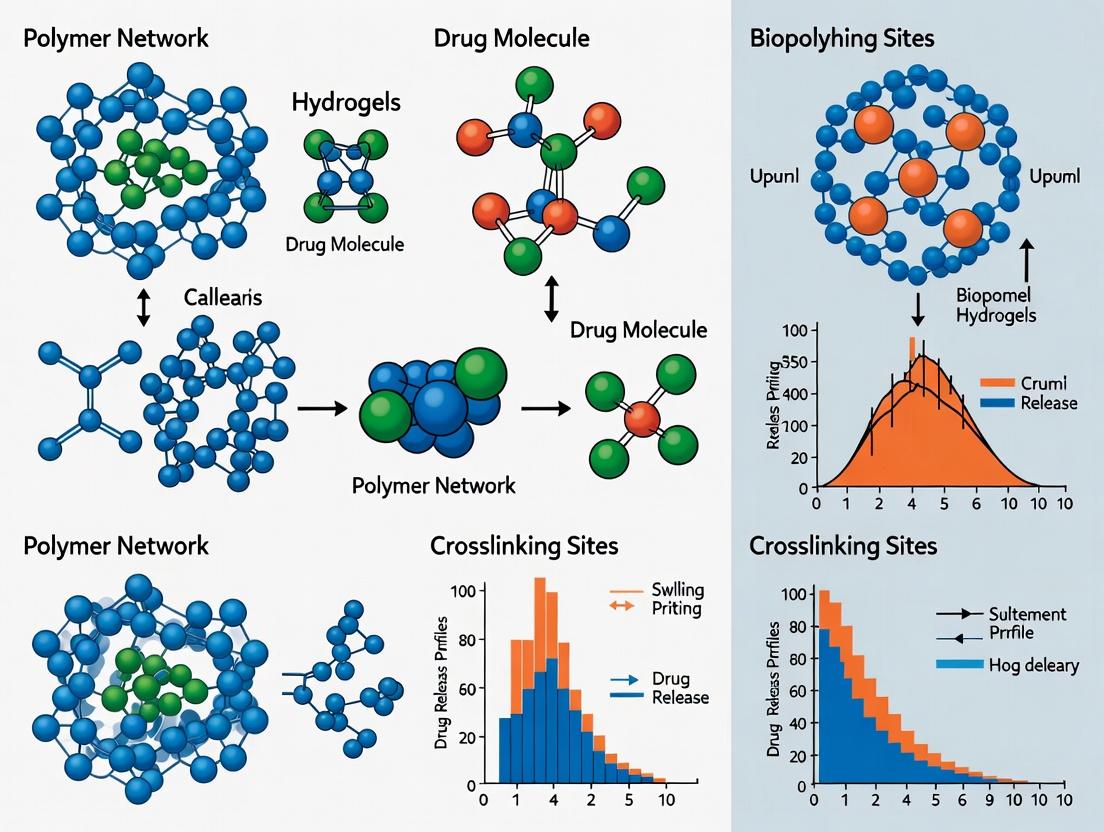
This comprehensive review explores the cutting-edge development of biopolymer-based hydrogels for advanced drug delivery systems (DDS).
Advanced Biopolymer Hydrogels for Targeted Drug Delivery: Materials, Mechanisms, and Clinical Applications
Abstract
This comprehensive review explores the cutting-edge development of biopolymer-based hydrogels for advanced drug delivery systems (DDS). It provides a foundational understanding of natural (e.g., chitosan, alginate, hyaluronic acid) and synthetic biopolymers used in hydrogel fabrication, detailing their inherent biocompatibility and biodegradability. The article systematically examines modern synthesis methodologies, including chemical crosslinking, physical gelation, and 3D bioprinting, alongside specific applications in controlled, stimuli-responsive, and targeted delivery. Critical challenges such as drug loading efficiency, burst release, mechanical stability, and scalability are addressed with optimization strategies. The review further validates these systems through comparative analysis of release kinetics, in vitro/in vivo performance, and benchmarking against conventional DDS. Aimed at researchers and drug development professionals, this synthesis highlights the translational potential and future research vectors for biopolymer hydrogels in personalized and regenerative medicine.
The Building Blocks: Understanding Biopolymer Hydrogels for Drug Delivery
This document provides application notes and experimental protocols within the framework of biopolymer-based hydrogel research for drug delivery systems (DDS). It details key material characteristics, quantitative performance metrics, and standardized methodologies for evaluation.
Quantitative Characterization of Key Hydrogel Properties
The efficacy of a biopolymer hydrogel for DDS is governed by several interdependent physicochemical and biological properties. The target values vary based on the administration route and drug payload.
Table 1: Target Ranges for Critical Hydrogel Characteristics in DDS
| Characteristic | Typical Target Range for DDS | Key Impact on DDS Performance |
|---|---|---|
| Swelling Ratio (Q) | 10 - 100 (g/g) | Determines mesh size, dictates drug diffusion rate and payload capacity. |
| Mesh Size (ξ) | 5 - 100 nm | Controls diffusion of therapeutic molecules; critical for sustained release. |
| Porosity (%) | 70 - 95% | Influences cell infiltration (for tissue engineering) and drug release kinetics. |
| Compressive Modulus | 0.1 - 100 kPa | Must match target tissue for in-situ forming implants; affects mechanical stability. |
| Gelation Time | 30 sec - 30 min | Crucial for injectable systems; must allow for administration before solidification. |
| Degradation Time | 1 day - several months | Should align with therapeutic regimen; can be tuned via crosslinking density. |
| Bioadhesion Strength | 2 - 20 kPa (e.g., mucosal) | Enhances residence time at sites like the gastrointestinal tract or buccal cavity. |
Table 2: Common Biopolymers and Their Crosslinking Methods
| Biopolymer | Typical Crosslinking Mechanism | Key Advantage for DDS | Potential Drawback |
|---|---|---|---|
| Alginate | Ionic (Ca²⁺) | Mild, rapid process; high biocompatibility. | Low mechanical strength; fast, uncontrolled dissolution. |
| Chitosan | Ionic (TPP), Covalent (Genipin) | Mucoadhesive; inherent antimicrobial properties. | Solubility only in acidic pH. |
| Hyaluronic Acid | Covalent (DVS, ADH), Enzymatic | Enzyme (hyaluronidase)-responsive degradation; targets CD44 receptors. | Can be rapidly degraded in vivo. |
| Gelatin | Physical (Thermo-reversible), Enzymatic (Transglutaminase) | Thermo-responsive; contains RGD sequences for cell adhesion. | Low stability at body temperature. |
| Cellulose Derivatives (CMC, MC) | Physical (Thermal gelation), Chemical (Citric acid) | Thermogelling (e.g., MC); cost-effective and abundant. | May require chemical modification for optimal performance. |
Core Experimental Protocols
Protocol 2.1: Determining Swelling Ratio and Mesh Size
Objective: To quantify hydrogel water uptake capacity and calculate the average distance between crosslinks (mesh size, ξ). Materials: Synthesized hydrogel disks (dry), PBS (pH 7.4), analytical balance, incubation oven (37°C). Procedure:
- Weigh dry hydrogel sample (W_dry).
- Immerse in excess PBS at 37°C until equilibrium swelling is reached (typically 24-48 hrs).
- Remove hydrogel, gently blot surface with filter paper to remove excess water, and immediately weigh (W_swollen).
- Calculate Equilibrium Swelling Ratio (Q): Q = Wswollen / Wdry.
- Calculate Average Mesh Size (ξ) using the Peppas-Merrill equation: ξ = v * (Q)^(1/3). Where v is the specific volume of the polymer (~0.8-1.0 cm³/g for most biopolymers). Data Analysis: Report Q as mean ± SD (n≥3). Use Q to derive ξ, a critical parameter for modeling drug diffusion.
Protocol 2.2: In Vitro Drug Release Kinetics
Objective: To profile the cumulative release of a model drug (e.g., BSA, dexamethasone) from the hydrogel under sink conditions. Materials: Drug-loaded hydrogel, release medium (PBS, optionally with 0.1% w/v sodium azide), shaking water bath (37°C, 50 rpm), UV-Vis spectrophotometer or HPLC, dialysis membrane tubes (if needed). Procedure:
- Place pre-weighed, drug-loaded hydrogel into a known volume of release medium (e.g., 20 mL).
- Incubate under gentle agitation at 37°C.
- At predetermined time points, withdraw a sample aliquot (e.g., 1 mL) and replace with an equal volume of fresh pre-warmed medium to maintain sink conditions.
- Analyze the drug concentration in the aliquot using a pre-calibrated method (UV absorbance, HPLC).
- Calculate cumulative drug release (%) over time. Data Analysis: Fit release data to kinetic models (e.g., Zero-order, Higuchi, Korsmeyer-Peppas) to determine the dominant release mechanism (Fickian diffusion, swelling-controlled, etc.).
Protocol 2.3: Rheological Assessment of Gelation Time and Modulus
Objective: To monitor the sol-gel transition and measure the viscoelastic properties of the hydrogel. Materials: Rheometer (parallel plate geometry), hydrogel precursor solution, temperature control unit. Procedure:
- Load precursor solution onto the lower plate (pre-set to relevant temperature, e.g., 37°C).
- Perform a time sweep experiment at a constant low strain (e.g., 1%) and angular frequency (e.g., 10 rad/s).
- Monitor the storage modulus (G') and loss modulus (G'') over time.
- Gelation time is defined as the time point where G' intersects and permanently exceeds G''.
- Perform a strain sweep (after gelation) to determine the linear viscoelastic region (LVR).
- Perform a frequency sweep within the LVR to report the plateau storage modulus (G'), representing gel stiffness. Data Analysis: Report gelation time (seconds/minutes) and equilibrium G' (Pa) as key parameters for injectability and mechanical integrity.
Visualization of Key Concepts
Title: Hydrogel Formation and Drug Delivery Workflow
Title: Primary Drug Release Mechanisms from Hydrogels
The Scientist's Toolkit: Essential Research Reagents & Materials
Table 3: Key Reagent Solutions for Hydrogel DDS Research
| Item | Function in DDS Hydrogel Research | Example (Supplier Varies) |
|---|---|---|
| Calcium Chloride (CaCl₂) Solution | Ionic crosslinker for alginate hydrogels; concentration controls gel stiffness. | 0.1M - 1.0 M in DI water or buffer. |
| Sodium Tripolyphosphate (TPP) Solution | Ionic crosslinker for chitosan hydrogels; forms polyelectrolyte complexes. | 1-10 mg/mL in DI water. |
| Genipin Stock Solution | Natural, low-toxicity covalent crosslinker for chitosan, gelatin, etc. | 1% (w/v) in DMSO or ethanol. |
| MTT Cell Viability Assay Kit | Standard colorimetric assay to assess hydrogel cytocompatibility in vitro. | (e.g., Sigma-Aldrich, TOX1) |
| Fluorescently-Tagged Dextrans | Model macromolecular drugs of varying sizes to probe hydrogel mesh size and diffusion. | FITC-Dextran, 4 kDa - 2000 kDa. |
| Simulated Body Fluids (SBF, SIF) | Buffered solutions mimicking physiological conditions for in vitro degradation/release. | PBS (pH 7.4), FaSSIF (for intestinal). |
| Rheology Calibration Standard | Certified silicone oil or polymer for verifying rheometer torque and inertia calibration. | (e.g., TA Instruments standard) |
| Dialysis Membranes (MWCO) | Used in release studies to contain hydrogel while allowing drug diffusion into medium. | Spectra/Por, typical MWCO: 3.5-14 kDa. |
Application Notes
This document provides a comparative analysis of natural and synthetic biopolymers within the context of developing hydrogel-based drug delivery systems (DDS). The selection of biopolymer type fundamentally dictates the hydrogel's physicochemical properties, biocompatibility, degradability, and drug release kinetics. The following notes and protocols are designed to guide researchers in making informed material choices.
1. Comparative Analysis: Source, Structure, and Key Properties
Table 1: Source, Structure, and Suitability of Representative Biopolymers for Hydrogel DDS
| Polymer Class | Example | Primary Source | Chemical Structure | Key Advantages for DDS | Key Limitations for DDS |
|---|---|---|---|---|---|
| Natural | Alginate | Brown seaweed | Linear copolymer of β-D-mannuronate (M) and α-L-guluronate (G) blocks. | Mild, ionic gelation (Ca²⁺); high biocompatibility; low cost. | Batch-to-batch variability; slow, uncontrolled degradation; low mechanical strength. |
| Natural | Chitosan | Crustacean shells | Linear polysaccharide of D-glucosamine and N-acetyl-D-glucosamine. | Mucoadhesive; inherent antimicrobial properties; cationic nature allows complexation. | Insoluble at physiological pH; variability in degree of deacetylation; moderate mechanical strength. |
| Natural | Hyaluronic Acid | Bacterial fermentation/animal tissues | Linear glycosaminoglycan of D-glucuronic acid and N-acetyl-D-glucosamine. | Enzymatically degraded by hyaluronidase; targets CD44 receptors; excellent biocompatibility. | Rapid in vivo degradation; high cost; poor mechanical properties. |
| Synthetic | Poly(lactic-co-glycolic acid) (PLGA) | Chemical synthesis | Random copolymer of lactic acid and glycolic acid. | Tunable degradation (weeks to years) via monomer ratio; excellent mechanical properties; FDA-approved. | Acidic degradation products may cause inflammation; hydrophobic; lacks cell adhesion sites. |
| Synthetic | Poly(ethylene glycol) (PEG) | Chemical synthesis | Polyether compound with repeating -CH₂-CH₂-O- units. | "Stealth" properties reduce protein adsorption/opsonization; highly tunable crosslinking; low immunogenicity. | Non-degradable (unless designed with cleavable links); can induce anti-PEG antibodies; lacks bioactivity. |
| Synthetic | Poly(N-isopropylacrylamide) (PNIPAAm) | Chemical synthesis | Polymer with pendant isopropyl groups and amide backbone. | Exhibits sharp lower critical solution temperature (LCST ~32°C), enabling temperature-triggered gelation/drug release. | Potential cytotoxicity from monomers; non-degradable; hysteresis in phase transition. |
2. Experimental Protocols
Protocol 1: Fabrication of Ionically Crosslinked Alginate-PLGA Composite Hydrogel Microspheres for Sustained Release
Objective: To create a hybrid hydrogel system combining the mild processing of alginate with the sustained release profile of PLGA.
Research Reagent Solutions:
- Sodium Alginate Solution (2% w/v): Dissolve 2 g of medium-viscosity alginate in 100 mL of deionized water under stirring overnight. Sterilize by autoclaving.
- PLGA in Dichloromethane (5% w/v): Dissolve 500 mg of PLGA (50:50 LA:GA, MW ~30kDa) in 10 mL of dichloromethane (DCM).
- Calcium Chloride Gelling Bath (100 mM): Dissolve 1.47 g of CaCl₂·2H₂O in 100 mL of deionized water. Filter sterilize (0.22 μm).
- Polyvinyl Alcohol (PVA) Solution (1% w/v): Dissolve 1 g of PVA (MW 31-50 kDa) in 100 mL of hot deionized water.
Methodology:
- Emulsion Formation: Add 2 mL of PLGA/DCM solution dropwise to 20 mL of alginate solution under high-speed homogenization (10,000 rpm) for 5 minutes to form a water-in-oil-in-water (W/O/W) double emulsion.
- Microsphere Formation: Transfer the emulsion to a beaker containing 200 mL of 1% PVA solution under gentle magnetic stirring.
- Solvent Evaporation & Gelation: Stir for 4 hours at room temperature to allow DCM evaporation. Add 100 mL of the CaCl₂ gelling bath and continue stirring for 30 minutes to ionically crosslink the alginate shell.
- Collection & Washing: Collect microspheres by centrifugation (1000 x g, 5 min). Wash three times with deionized water.
- Lyophilization: Freeze samples at -80°C for 4 hours and lyophilize for 48 hours. Store at -20°C.
Protocol 2: Enzymatic Degradation Kinetics of Hyaluronic Acid (HA) vs. PEG-HA Hybrid Hydrogels
Objective: To quantitatively compare the degradation profile of pure HA hydrogels versus PEG-crosslinked HA hydrogels in the presence of hyaluronidase.
Research Reagent Solutions:
- Methacrylated HA (HA-MA) Solution (3% w/v): Dissolve in PBS (pH 7.4).
- PEG-Diacrylate (PEGDA, MW 3400) Solution (10% w/v): Dissolve in PBS.
- Photoinitiator: Irgacure 2959 (0.05% w/v in PBS).
- Hyaluronidase Buffer: 0.1 M phosphate buffer, pH 6.0, containing 0.15 M NaCl and 0.1% w/v bovine serum albumin (BSA).
- Hyaluronidase Stock Solution: Disspose hyaluronidase (from bovine testes) in buffer to 100 U/mL.
Methodology:
- Hydrogel Fabrication:
- Group A (Pure HA): Mix HA-MA solution with photoinitiator.
- Group B (PEG-HA Hybrid): Mix HA-MA and PEGDA solutions at a 1:1 molar ratio of methacrylate groups, add photoinitiator.
- Pipette 200 μL of each precursor into cylindrical molds (6 mm diameter). UV crosslink (365 nm, 5 mW/cm², 5 min).
- Degradation Study: Weigh initial hydrogel mass (W₀). Incubate each hydrogel (n=5 per group) in 2 mL of hyaluronidase buffer containing 10 U/mL enzyme at 37°C under gentle shaking.
- Mass Loss Measurement: At predetermined time points (0, 6, 12, 24, 48, 72 h), remove hydrogels, blot dry, and record wet weight (Wₜ).
- Data Analysis: Calculate mass remaining (%) as (Wₜ / W₀) * 100. Plot degradation curves and calculate the time for 50% mass loss (t₅₀).
3. Diagrams
Biopolymer Selection Workflow for DDS
HA Hydrogel Targeted Drug Release Pathway
4. The Scientist's Toolkit: Essential Reagents for Biopolymer Hydrogel Research
Table 2: Key Research Reagent Solutions and Materials
| Reagent/Material | Function/Description | Key Consideration for DDS |
|---|---|---|
| Ionic Crosslinker (CaCl₂, ZnCl₂) | Induces gelation of anionic polymers (e.g., alginate, pectin) via ionic bridging. | Concentration determines gelation speed and final hydrogel stiffness. Biocompatibility of ion. |
| Photoinitiator (Irgacure 2959, LAP) | Generates free radicals upon UV/blue light exposure to initiate polymer chain crosslinking. | Critical for cytocompatibility. 2959 is a gold standard for low cytotoxicity. Must match light source wavelength. |
| Enzymatic Crosslinker (Horseradish Peroxidase, Transglutaminase) | Catalyzes covalent bond formation between specific polymer functional groups under mild conditions. | Enables injectable, in situ forming hydrogels. Enzyme activity must be controlled spatially/temporally. |
| Degradation Enzyme (Hyaluronidase, Collagenase, Protease) | Used in vitro to model and study the enzymatic degradation profile of natural polymer-based hydrogels. | Enzyme concentration and activity units must mimic in vivo conditions for predictive results. |
| Model Drug (Doxorubicin, FITC-Dextran, BSA) | Small molecule, polysaccharide, or protein used to track loading efficiency and release kinetics. | Should span a range of hydrophobicity/size. Fluorescent tagging enables easy detection. |
| Surfactant (PVA, Span 80) | Stabilizes emulsions during micro/nanoparticle fabrication, preventing coalescence. | Choice affects particle size distribution and surface properties. Must be removed/considered in final formulation. |
Core Mechanisms of Drug Encapsulation and Release
Application Notes
This document details core mechanisms for the encapsulation and controlled release of therapeutic agents within biopolymer-based hydrogel matrices. These mechanisms are central to advancing tunable, biocompatible drug delivery systems (DDS) for applications ranging from chronic disease management to regenerative medicine.
1. Core Encapsulation Mechanisms Encapsulation involves incorporating a drug into the hydrogel network during or after gel formation. The mechanism dictates initial drug loading efficiency and distribution.
- Physical Entrapment: The drug is physically immobilized within the porous, crosslinked network of the hydrogel. This is common for hydrophilic drugs during in situ gelation (e.g., ionic crosslinking of alginate).
- Affinity-Based Binding: The drug interacts with the biopolymer chains via specific non-covalent interactions (e.g., ionic, hydrogen bonding, hydrophobic interactions). Chitosan, with its cationic charge, efficiently encapsulates anionic drugs or macromolecules like siRNA via electrostatic interaction.
- Covalent Conjugation: The drug is tethered to the polymer backbone via cleavable linkers (e.g., ester, peptide bonds), providing precise control over release kinetics dependent on linker hydrolysis.
2. Core Release Mechanisms Drug release is governed by the interplay of diffusion, swelling, and degradation processes, often acting in concert.
- Diffusion-Controlled Release: The drug diffuses through the water-swollen gel matrix. The mesh size (ξ) of the polymer network relative to the drug's hydrodynamic radius (Rh) is critical. A high crosslink density reduces ξ and slows diffusion.
- Swelling-Controlled Release: Drug release is minimal in the dry or de-swollen state. Upon exposure to a physiological trigger (pH, temperature), the hydrogel swells, increasing mesh size and enabling drug diffusion. This is utilized in colon-targeted delivery where swelling is triggered by a rise in pH.
- Degradation-Controlled Release: The drug is released as the biopolymer backbone or crosslinks degrade. Enzymatic degradation (e.g., hyaluronidase on hyaluronic acid) or hydrolytic cleavage provides temporal control. Erosion can be bulk (homogeneous) or surface (heterogeneous).
3. Key Triggering Modalities for Controlled Release Modern DDS employ stimuli-responsive biopolymers to achieve on-demand, site-specific release.
- pH-Responsive Release: Utilizing polymers with ionizable groups (e.g., carboxyl in alginate, amine in chitosan) that swell or dissolve at specific pH. Alginate gels remain stable at neutral pH but dissolve in the low-pH gastric environment unless protected.
- Enzyme-Responsive Release: Incorporation of peptide crosslinkers or drug-polymer linkers that are cleaved by disease-specific, overexpressed enzymes (e.g., matrix metalloproteinases in tumor microenvironments).
- Redox-Responsive Release: Use of disulfide crosslinks that are stable in circulation but rapidly cleaved in the high glutathione (GSH) concentration of intracellular compartments (e.g., cancer cells).
Protocols
Protocol 1: Fabrication and Drug Loading of Ionically Crosslinked Alginate Hydrogel Beads
Objective: To prepare calcium-alginate beads for encapsulating a model hydrophilic drug (e.g., BSA-FITC) via physical entrapment.
Materials:
- 2% (w/v) Sodium alginate solution in deionized water.
- 100 mM Calcium chloride (CaCl₂) crosslinking solution.
- Model drug: Bovine Serum Albumin conjugated with Fluorescein Isothiocyanate (BSA-FITC), 2 mg/mL in saline.
- Syringe pump or peristaltic pump with needle (22-27G).
- Magnetic stirrer.
Procedure:
- Drug-Alginate Mix: Add BSA-FITC solution to the sodium alginate solution at a 1:9 volume ratio to achieve a final alginate concentration of 1.8% and homogeneous drug distribution. Stir gently for 1 hour protected from light.
- Droplet Formation: Load the drug-alginate mixture into a syringe. Using a pump, extrude the solution dropwise (flow rate: 10 mL/h) into the gently stirred CaCl₂ solution. The distance from needle tip to crosslinking bath should be 5-10 cm.
- Crosslinking: Allow beads to cure in the CaCl₂ bath under gentle stirring for 20 minutes to ensure complete ionic gelation.
- Washing & Storage: Collect beads by sieving, rinse three times with deionized water to remove excess Ca²⁺ and surface-bound drug. Store in buffer (pH 7.4) at 4°C until use.
Protocol 2:In VitroDrug Release Study under Physiological and Enzymatic Conditions
Objective: To quantify the release profile of a drug from a hydrolytically/enzymatically degradable hydrogel (e.g., gelatin-methacryloyl (GelMA)).
Materials:
- Drug-loaded GelMA hydrogel discs (prepared via UV photocrosslinking).
- Release media: Phosphate Buffered Saline (PBS, pH 7.4) and PBS with Collagenase Type II (0.1 U/mL).
- Water bath shaker maintained at 37°C and 50 rpm.
- Microcentrifuge tubes.
- Spectrophotometer/Plate reader.
Procedure:
- Sample Preparation: Pre-weigh (W₀) each hydrated drug-loaded GelMA disc (n=5 per group). Place each disc in a separate microcentrifuge tube containing 1 mL of pre-warmed release medium (PBS or PBS+Collagenase).
- Incubation: Place tubes in the 37°C shaker.
- Sampling: At predetermined time points (e.g., 1, 3, 6, 12, 24, 48, 72 h), remove the entire release medium from each tube and replace with 1 mL of fresh, pre-warmed corresponding medium.
- Analysis: Quantify the drug concentration in the collected supernatant using a pre-calibrated absorbance/fluorescence assay. For BSA-FITC, measure fluorescence (λex/~495 nm, λem/~520 nm).
- Data Calculation: Calculate cumulative drug release as a percentage of the total loaded drug (determined from a fully dissolved hydrogel).
Data Tables
Table 1: Comparative Drug Loading Efficiency and Release Kinetics of Common Biopolymer Hydrogels
| Biopolymer Hydrogel | Crosslinking Method | Model Drug (Hydrodynamic Radius) | Loading Efficiency (%) | Predominant Release Mechanism | Time for 50% Release (T₅₀) |
|---|---|---|---|---|---|
| Calcium Alginate | Ionic (Ca²⁺) | BSA-FITC (~3.6 nm) | 65-80% | Diffusion/Swelling (pH) | 4.5 h (pH 7.4), <0.5 h (pH 1.2) |
| Chitosan | Ionic (TPP) | Doxorubicin HCl (small molecule) | 70-85% | Diffusion/Swelling (pH) | 12 h (pH 7.4), 48 h (pH 5.0) |
| Gelatin-Methacryloyl | Photochemical (UV) | Vancomycin (~1 nm) | 75-90% | Diffusion/Degradation | 72 h (PBS), 18 h (with Collagenase) |
| Hyaluronic Acid | Disulfide (DTT) | siRNA (complexed) | >90% | Redox-Degradation | >96 h (PBS), 6 h (10 mM GSH) |
Table 2: Influence of Network Parameters on Diffusion-Based Release
| Network Parameter | Typical Range | Impact on Mesh Size (ξ) | Effect on Drug Diffusion Coefficient (D_gel) | Consequence for Release Rate |
|---|---|---|---|---|
| Polymer Concentration | 2 - 10% (w/v) | ξ decreases as concentration increases | D_gel decreases exponentially | Slower, more sustained release |
| Crosslink Density | Low - High | ξ decreases as density increases | D_gel decreases | Reduced burst release, prolonged T₅₀ |
| Swelling Ratio (Q) | 5 - 50 | ξ ∝ Q^(3/5) | D_gel increases with higher Q | Accelerated release in swollen state |
Diagrams
Diagram Title: Hydrogel Drug Release Pathways
Diagram Title: Alginate Bead Fabrication Protocol
The Scientist's Toolkit
Table 3: Essential Research Reagents and Materials
| Item | Function in Research | Example/Note |
|---|---|---|
| Sodium Alginate (High G-Content) | Forms strong, brittle gels with divalent cations (Ca²⁺). Key for ionic gelation & pH-sensitive release. | Source: Brown algae. M/G ratio controls porosity. |
| Chitosan (Medium MW, >75% DD) | Cationic biopolymer for electrostatic drug/complex encapsulation and mucoadhesion. | Degree of Deacetylation (DD) dictates charge density. |
| Gelatin-Methacryloyl (GelMA) | Photocrosslinkable derivative enabling tunable, cell-friendly hydrogels with enzymatic degradability. | Degree of functionalization controls mechanical properties. |
| Calcium Chloride (CaCl₂) | Crosslinking agent for anionic polysaccharides (alginate, pectin). | Concentration determines gelation kinetics and bead hardness. |
| Tripolyphosphate (TPP) | Ionic crosslinker for cationic polymers (chitosan) via electrostatic interaction. | Forms polyelectrolyte complexes. |
| Photoinitiator (LAP or Irgacure 2959) | Generates radicals under UV/blue light to initiate crosslinking of methacrylated polymers. | LAP is preferred for cytocompatibility. |
| Matrix Metalloproteinases (MMPs) | Enzymes used to study enzyme-responsive degradation of peptide-containing hydrogels. | e.g., MMP-2, MMP-9, common in tumor microenvironments. |
| Glutathione (Reduced, GSH) | Redox trigger used to evaluate the breakdown of disulfide-crosslinked hydrogels. | Intracellular concentration (2-10 mM) vs. extracellular (2-20 µM). |
| Dialysis Membranes (MWCO) | Used in in vitro release studies to contain hydrogel particles while allowing drug diffusion. | Select MWCO 3.5-14 kDa based on drug size. |
Application Notes
The synergistic integration of biocompatibility, biodegradability, and tunability defines the utility of advanced biopolymer-based hydrogels in modern drug delivery systems (DDS). These properties are not independent; tunability of physical and chemical parameters directly dictates in vivo biocompatibility and biodegradation kinetics, which in turn control therapeutic payload release and host integration.
Table 1: Key Tunable Parameters of Common Biopolymer Hydrogels & Their Impact on the Trifecta
| Biopolymer | Crosslinking Method | Tunable Parameter | Impact on Biocompatibility | Impact on Biodegradation | Typical Drug Loading Efficiency (%) | Key Application |
|---|---|---|---|---|---|---|
| Alginate | Ionic (Ca²⁺) | G-block length, [Ca²⁺] | Low inherent toxicity; gel purity critical. | Ion exchange with bodily fluids; rate tunable via G-block content. | 65-85 | Sustained release of proteins, peptides. |
| Chitosan | Covalent (Genipin) | DD%, Mw, crosslinker ratio | DD% >85% enhances cytocompatibility. | Enzyme-mediated (lysozyme); rate slows with crosslinking density. | 70-90 | pH-responsive release in gastric environments. |
| Hyaluronic Acid | Enzymatic (HRP/H₂O₂) | Enzyme concentration, polymer Mw | High native biocompatibility; CD44 receptor targeting. | Hyaluronidase-mediated; faster for lower Mw. | 60-80 | Targeted delivery to CD44+ cancer cells. |
| Gelatin-Methacryloyl (GelMA) | Photo (UV/LAP) | Polymer %, UV intensity, LAP % | RGD sequences promote cell adhesion. | Collagenase-sensitive; degradation rate correlates with polymer %. | 80-95 | 3D-bioprinted, cell-laden DDS. |
| Fibrin | Enzymatic (Thrombin) | Thrombin concentration, [Fibrinogen] | Autologous source eliminates immunogenicity. | Plasmin-driven proteolysis; rate increases with lower thrombin. | 50-75 | Growth factor delivery in tissue regeneration. |
Protocol 1: Formulation and Characterization of Tunable, Injectable GelMA Hydrogel for Sustained Release
Objective: To synthesize a UV-crosslinkable GelMA hydrogel with tunable mechanical properties for sustained release of a model protein (e.g., BSA).
Research Reagent Solutions Toolkit:
| Item | Function |
|---|---|
| GelMA (≥90% methacrylation) | Main polymer backbone, provides photocrosslinkable groups and RGD sites. |
| Lithium phenyl-2,4,6-trimethylbenzoylphosphinate (LAP) | Photo-initiator for rapid, cytocompatible UV crosslinking. |
| PBS (1X, pH 7.4) | Buffer for polymer dissolution and biocompatible gel formation. |
| Model Drug (e.g., FITC-BSA) | Fluorescently tagged model protein for release tracking. |
| UV Light Source (365 nm, 5-10 mW/cm²) | Light source to initiate free-radical crosslinking. |
| Rheometer | Instrument to measure storage (G') and loss (G") moduli. |
| Fluorescence Spectrophotometer/Plate Reader | To quantify released FITC-BSA in supernatant. |
Methodology:
- Hydrogel Precursor Solution: Dissolve GelMA powder in warm PBS (37°C) to desired concentrations (e.g., 5%, 7%, 10% w/v). Add LAP photo-initiator (0.25% w/v) and vortex until clear.
- Drug Loading: Add FITC-BSA (1 mg/mL final concentration) to the precursor solution. Mix gently to avoid protein denaturation. Keep solution protected from light.
- Crosslinking & Swelling: Pipette 100 µL of solution into a cylindrical mold (e.g., 5mm diameter). Expose to 365 nm UV light (5 mW/cm²) for 30-60 seconds. Gels are then incubated in PBS (1 mL) at 37°C for 24 hrs to reach equilibrium swelling.
- Mechanical Characterization: Perform oscillatory rheology on swollen gels (n=3). Determine storage modulus (G') at 1% strain, 1 Hz frequency.
- In Vitro Release Study: Immerse each loaded hydrogel in 1 mL of release medium (PBS + 0.01% w/v sodium azide) at 37°C under gentle agitation. At predetermined time points, collect 500 µL of supernatant (replenishing with fresh medium) and quantify FITC-BSA fluorescence (Ex: 495 nm, Em: 519 nm). Calculate cumulative release.
Protocol 2: Evaluating Enzymatic Biodegradation of Hyaluronic Acid (HA) Hydrogels
Objective: To quantify the hyaluronidase-mediated degradation kinetics of HA hydrogels and its correlation with drug release.
Methodology:
- Hydrogel Fabrication: Form HA hydrogels via enzymatic crosslinking using horseradish peroxidase (HRP) and H₂O₂. Prepare a 2% w/v HA-tyramine conjugate solution. Mix with HRP (0.1 U/mL) and H₂O₂ (0.03% w/v). Cast gels as in Protocol 1.
- Mass Loss Study: Swell gels to equilibrium (PBS, 24 hrs). Record initial wet weight (Wi). Transfer gels (n=5) to vials containing 2 mL of PBS with hyaluronidase (100 U/mL). Control group uses enzyme-free PBS. Incubate at 37°C.
- Sampling: At set intervals, remove gels, blot dry, and record wet weight (Wt). Replace enzyme solution completely to maintain activity.
- Data Analysis: Calculate remaining mass percentage: Remaining Mass (%) = (Wt / Wi) * 100. Plot vs. time to determine degradation profile. Correlate with release data from a co-loaded drug.
Diagrams
Design Factors of Tunable Hydrogels
GelMA Synthesis & Release Workflow
Current Landscape and Market Drivers in Hydrogel-Based DDS
1. Application Notes: Market Landscape and Quantitative Drivers
The global market for hydrogel-based drug delivery systems (DDS) is expanding rapidly, driven by the demand for localized, sustained, and stimuli-responsive therapeutic release. The following tables summarize current market data and key application areas within the context of biopolymer-based hydrogel research.
Table 1: Hydrogel DDS Market Drivers and Projections
| Driver Category | Specific Driver | Quantitative Impact / Data | Relevance to Biopolymer Hydrogels |
|---|---|---|---|
| Market Growth | Global Market Value (2023) | ~USD 7.2 Billion | Serves as total addressable market. |
| Projected CAGR (2024-2033) | ~7.5% - 8.2% | Indicates sustained R&D investment viability. | |
| Therapeutic Demand | Prevalence of Chronic Diseases (e.g., Diabetes, CVD) | Billions of cases globally | Drives need for long-term, controlled release systems. |
| Cancer Incidence (Annual New Cases) | >20 million globally | Fuels demand for localized, implantable, or injectable depot therapies. | |
| Clinical & Regulatory | FDA 505(b)(2) Approvals Utilizing Hydrogels | Increasing year-on-year | Provides efficient regulatory pathway for reformulated drugs. |
| Number of Active Clinical Trials (Phase II/III) | 150+ trials involving "hydrogel drug delivery" | Demonstrates translation from research to clinical validation. | |
| Material & Cost | Cost of Synthetic Polymers vs. Natural Biopolymers | Chitosan, Alginate, Hyaluronan are often >20-30% lower cost | Biopolymers offer cost advantage and inherent biocompatibility. |
| Technological | Success Rate of Targeted vs. Systemic Delivery | Can improve therapeutic index by 2-5 fold | Hydrogels enable spatial and temporal control. |
Table 2: Key Application Areas and Biopolymer Examples
| Application Area | Clinical/Research Goal | Exemplar Biopolymers | Key Release Mechanism |
|---|---|---|---|
| Ocular Delivery | Sustained release for glaucoma, post-op care. | Hyaluronic acid, Chitosan | Diffusion & hydrogel degradation over weeks. |
| Wound Healing | Pro-angiogenic & antimicrobial agent delivery. | Alginate, Gelatin, Fibrin | Stimuli-responsive (pH, enzyme) release. |
| Oncology | Intratumoral chemo-immunotherapy depot. | Chitosan, Heparin, Cellulose derivatives | Sustained diffusion & matrix erosion. |
| Cartilage Repair | Delivery of growth factors (e.g., TGF-β). | Chondroitin sulfate, Silk fibroin, Agarose | Mechanically robust, cell-mediated degradation. |
| Oral Delivery | Gastric protection & intestinal targeted release. | Pectin, Chitosan (pH-sensitive), Alginate | pH-triggered swelling or degradation. |
2. Experimental Protocols
Protocol 1: Formulation and Characterization of pH-Sensitive Chitosan/Alginate Hydrogel Beads for Oral Protein Delivery. Objective: To fabricate and characterize composite hydrogel beads for targeted intestinal delivery. Materials: Medium molecular weight Chitosan, Sodium Alginate, Calcium Chloride (CaCl₂), model protein (e.g., BSA), acetic acid, phosphate buffers (pH 1.2, 6.8, 7.4). Procedure:
- Solution Preparation: Dissolve chitosan (2% w/v) in aqueous acetic acid (1% v/v). Dissolve sodium alginate (2% w/v) in deionized water. Mix the two solutions at a 1:1 volume ratio. Add BSA (1-5 mg/mL) to the polymer blend.
- Ionotropic Gelation: Using a syringe pump or coaxial air flow, extrude the polymer-drug solution dropwise into a gently stirred hardening bath of CaCl₂ (2-5% w/v). Allow beads to cure for 30 minutes.
- Washing & Collection: Collect beads by filtration, wash with DI water, and lyophilize for 24h.
- In Vitro Swelling: Weigh dry beads (W₀). Incubate in buffers at pH 1.2 (2h, simulating stomach) and pH 6.8/7.4 (simulating intestine). Remove at intervals, blot, and weigh (Wₜ). Calculate Swelling Ratio (%) = [(Wₜ - W₀)/W₀] * 100.
- In Vitro Release: Place loaded beads in pH 1.2 buffer for 2h, then transfer to pH 6.8 buffer. Sample the release medium at predetermined times. Quantify protein content via UV-Vis (280 nm) or BCA assay. Plot cumulative release (%) vs. time.
Protocol 2: Evaluation of Sustained Release from an Injectable Hyaluronic Acid (HA)/Gelatin-Methacrylate (GelMA) Hybrid Hydrogel for Subcutaneous Depot. Objective: To develop a UV-crosslinkable, injectable hydrogel for sustained small molecule release. Materials: Hyaluronic acid (HA), Gelatin-Methacrylate (GelMA), Photoinitiator (LAP or Irgacure 2959), PBS, model drug (e.g., Doxorubicin or Dexamethasone). Procedure:
- Hydrogel Precursor Prep: Dissolve HA (3% w/v) and GelMA (5-10% w/v) in PBS at 37°C. Add photoinitiator (0.05-0.1% w/v) and drug. Mix thoroughly and keep in the dark.
- Rheological & Gelation Test: Perform time-sweep oscillatory rheology (1 Hz frequency, 1% strain) after exposing the precursor to UV light (365 nm, 5-10 mW/cm²) for 1-5 minutes. Confirm gelation by G' > G''.
- In Vitro Release Study: Pipette 200 µL of precursor into a cylindrical mold (e.g., 48-well plate). Photo-crosslink for 2 mins. Add 1 mL of PBS (pH 7.4, 37°C) as release medium. Place on an orbital shaker (50 rpm). At set intervals, collect 500 µL of medium and replace with fresh PBS. Analyze drug concentration via HPLC or fluorescence.
- Degradation & Release Kinetics: Fit release data to models (e.g., Korsmeyer-Peppas, Higuchi) to determine release mechanism. Correlate with hydrogel mass loss over time in PBS or in the presence of hyaluronidase/collagenase.
3. Visualization
Diagram 1: Signaling Pathways in Hydrogel-Mediated Local Immunotherapy
Diagram 2: Experimental Workflow for Hydrogel DDS Development
4. The Scientist's Toolkit: Research Reagent Solutions
Table 3: Essential Materials for Hydrogel DDS Research
| Item / Reagent | Function / Role in Research | Example & Key Property |
|---|---|---|
| Natural Biopolymers | Base hydrogel matrix material; provides biocompatibility and specific functionality (e.g., mucoadhesion, enzyme-sensitivity). | Chitosan: cationic, pH-sensitive, mucoadhesive. Hyaluronic Acid: CD44-receptor targeting, enzymatically degradable. |
| Crosslinkers | Induces hydrogel network formation; can be ionic, covalent, or physical. | Genipin: Low-toxicity natural crosslinker for amines. EDC/NHS: Carbodiimide chemistry for amide bond formation. Calcium Chloride: Ionic crosslinker for alginate. |
| Photoinitiators | Enables photopolymerization of methacrylated or other photo-sensitive polymers for in situ gelation. | Lithium Phenyl-2,4,6-Trimethylbenzoylphosphinate (LAP): Water-soluble, UV (365-405 nm) initiator, low cytotoxicity. |
| Model Actives | Used to study release kinetics, encapsulation efficiency, and bioactivity. | Fluorescein Isothiocyanate (FITC)-Dextran: Tracer for diffusion studies. Bovine Serum Albumin (BSA): Model protein therapeutic. |
| Enzymes for Degradation Studies | Simulates in vivo biodegradation of the hydrogel matrix. | Hyaluronidase, Collagenase, Lysozyme: Degrade specific biopolymer components (HA, gelatin, chitosan). |
| Rheometer | Characterizes viscoelastic properties (G', G'') and gelation kinetics. | Malvern Kinexus, TA Instruments DHR: With temperature control and UV curing attachment. |
| Dialysis Membranes / Franz Cells | Standard setup for in vitro drug release testing under sink conditions. | Spectra/Por membranes: Variable molecular weight cut-offs. Franz Diffusion Cell: For topical/transdermal hydrogel studies. |
From Lab to Application: Fabrication Techniques and Targeted Delivery Strategies
The development of biopolymer-based hydrogels for drug delivery systems is critically dependent on the crosslinking method. This report provides a comparative analysis of chemical, physical, and enzymatic crosslinking techniques, framed within the scope of optimizing hydrogel networks for controlled drug release kinetics, mechanical integrity, and biocompatibility in therapeutic applications.
Chemical Crosslinking
Chemical crosslinking involves the formation of covalent bonds between polymer chains using reactive crosslinking agents or functional group coupling. This method creates permanent, stable networks with high mechanical strength, ideal for long-term drug delivery implants.
Application Notes
- Primary Use: Fabrication of hydrogels for sustained, long-term release of therapeutics (e.g., protein drugs, growth factors) over weeks to months.
- Key Biopolymers: Alginate (oxidized), Hyaluronic acid (methacrylated), Chitosan (genipin-crosslinked), Gelatin (methacryloyl).
- Advantages: High structural stability, tunable degradation by crosslink density, robust mechanical properties.
- Disadvantages: Potential cytotoxicity from residual crosslinkers or reaction byproducts, irreversible network formation, possible denaturation of encapsulated bioactive molecules.
Experimental Protocol: Genipin-Crosslinked Chitosan Hydrogel for Protein Delivery
Aim: To synthesize a chemically crosslinked chitosan hydrogel for the sustained release of a model protein (BSA).
Materials:
- Chitosan (medium molecular weight, >75% deacetylated)
- Genipin (purity >98%)
- Bovine Serum Albumin (BSA), fluorescein isothiocyanate (FITC) labeled
- Acetic acid (1% v/v solution)
- Phosphate Buffered Saline (PBS, pH 7.4)
- Centrifuge tubes, vortex mixer, 48-well plate.
Procedure:
- Polymer Solution: Dissolve chitosan at 2% (w/v) in 1% acetic acid solution under continuous stirring for 12 hours at room temperature (RT). Centrifuge to remove bubbles.
- Protein Loading: Add FITC-BSA to the chitosan solution at a final concentration of 1 mg/mL. Mix gently via pipetting.
- Crosslinking Initiation: Add genipin stock solution (10 mg/mL in DMSO) to the protein-polymer mixture to achieve a final genipin concentration of 0.5% (w/v). Vortex immediately for 10 seconds.
- Gelation: Quickly transfer 200 µL of the mixture to individual wells of a 48-well plate. Incubate the plate at 37°C for 24 hours to complete the crosslinking reaction (visualized by a dark blue color).
- Washing: Gently add 1 mL of PBS (pH 7.4) to each well to remove unreacted genipin and surface-bound BSA. Replace PBS every hour for the first 6 hours, then leave overnight.
- Release Study: Add 1 mL of fresh PBS (release medium) to each well. Place the plate on an orbital shaker (50 rpm) at 37°C. At predetermined time points, collect 500 µL of the release medium and replace it with an equal volume of fresh PBS.
- Analysis: Quantify the released FITC-BSA in the supernatant using a fluorescence plate reader (ex/em: 495/519 nm). Construct a cumulative release profile.
Physical Crosslinking
Physical crosslinking utilizes non-covalent interactions—ionic bonds, hydrogen bonding, hydrophobic interactions, and crystallite formation—to form reversible hydrogel networks. This method is typically mild, avoiding harsh chemicals.
Application Notes
- Primary Use: Injectable hydrogels for minimally invasive delivery, encapsulation of sensitive biologics (cells, peptides), and short-to-medium term release profiles.
- Key Biopolymers: Alginate (Ca²⁺ crosslinked), Gelatin (thermal gelation), Chitosan (pH-sensitive), κ-Carrageenan (ionotropic).
- Advantages: Mild, often cell-friendly conditions, reversible gelation, shear-thinning properties for injectability.
- Disadvantages: Generally weaker mechanical strength, sensitivity to environmental changes (pH, ionic strength, temperature), potential for rapid dissolution.
Experimental Protocol: Ionotropic Gelation of Alginate Microgels
Aim: To prepare calcium-crosslinked alginate microgels for the encapsulation of a small molecule drug (Doxorubicin HCl).
Materials:
- Sodium Alginate (high G-content, viscosity ~250 cP)
- Calcium Chloride (CaCl₂)
- Doxorubicin Hydrochloride (Dox-HCl)
- Syringe pump, 26G needle, magnetic stirrer, beakers.
- Mineral oil or sunflower oil containing 0.5% (v/v) Span 80.
Procedure:
- Polymer-Drug Solution: Dissolve sodium alginate at 2% (w/v) in deionized water overnight. Add Dox-HCl to a final concentration of 0.5 mg/mL. Protect from light.
- Crosslinking Bath: Prepare a 100 mM CaCl₂ solution. For microgel formation, prepare an oil bath by adding 0.5% Span 80 to mineral oil and stirring vigorously.
- Droplet Formation: Load the alginate-drug solution into a syringe fitted with a 26G needle. Using a syringe pump, extrude the solution at a constant rate (e.g., 5 mL/hour) into the stirring oil bath. The shear force forms emulsion droplets.
- Gelation: After 10 minutes of stirring in oil, add the CaCl₂ solution dropwise to the oil bath to a final concentration equivalent to 50 mM. Continue stirring for 30 minutes to allow calcium ions to diffuse into the alginate droplets and induce gelation.
- Harvesting: Transfer the mixture to a centrifuge tube. Centrifuge at low speed (500 x g, 5 min) to pellet the microgels. Carefully remove the oil layer.
- Washing: Wash the microgels three times with hexane to remove residual oil, followed by three washes with PBS (pH 7.4).
- Release Study: Suspend a known weight of washed microgels in 5 mL PBS in a dialysis bag (MWCO 12-14 kDa). Immerse the bag in 50 mL PBS sink. At intervals, sample 1 mL from the sink for UV-Vis analysis (480 nm for Dox) and replace with fresh PBS.
Enzymatic Crosslinking
Enzymatic crosslinking uses specific enzymes (e.g., transglutaminase, peroxidase, tyrosinase) to catalyze the formation of covalent bonds between biopolymer chains. It offers high specificity and occurs under physiological conditions.
Application Notes
- Primary Use: In-situ forming hydrogels for cell encapsulation and delivery of sensitive growth factors or fragile drugs, where spatial and temporal control is needed.
- Key Biopolymers: Gelatin (microbial transglutaminase), Tyrosine-rich peptides (Horseradish Peroxidase/H₂O₂), Chitosan (tyrosinase).
- Advantages: Excellent biocompatibility, fast gelation under mild conditions, high selectivity, minimal side reactions.
- Disadvantages: Enzyme cost, potential immunogenicity, sensitivity to enzyme inhibitors, and the need to control reaction kinetics (e.g., H₂O₂ concentration).
Experimental Protocol: HRP/H₂O₂-Catalyzed Gelatin Hydrogel Formation
Aim: To fabricate an enzymatically crosslinked hydrogel from tyramine-conjugated gelatin for 3D cell encapsulation.
Materials:
- Gelatin-Tyramine conjugate (synthesized per literature)
- Horseradish Peroxidase (HRP, Type VI)
- Hydrogen Peroxide (H₂O₂, 30% stock)
- Mammalian cells (e.g., NIH/3T3 fibroblasts), cell culture medium.
- Sterile PBS, tubes, pipettes.
Procedure:
- Solution Preparation: Dissolve Gelatin-Tyramine in sterile PBS at 37°C to make a 5% (w/v) solution. Cool to room temperature.
- Enzyme Addition: Add HRP to the polymer solution to a final concentration of 0.5 U/mL. Mix gently.
- Cell Encapsulation: Trypsinize, count, and pellet the cells. Resuspend the cell pellet in a small volume of the Gelatin-Tyramine/HRP solution to achieve a final density of 1 x 10⁶ cells/mL. Keep on ice.
- Gelation Initiation: Quickly add H₂O₂ from a dilute stock to the cell-polymer-enzyme mixture to a final concentration of 0.05% (w/v). Mix thoroughly by pipetting.
- Molding: Immediately transfer 100 µL of the mixture to a pre-warmed (37°C) 96-well plate. Incubate at 37°C for 5-10 minutes until gelation is complete.
- Culture: Gently overlay the formed hydrogel with complete cell culture medium. Change the medium every 2-3 days.
- Assessment: Monitor cell viability using a Live/Dead assay (Calcein-AM/EthD-1) at days 1, 3, and 7 via confocal microscopy.
Table 1: Comparative Analysis of Crosslinking Methods for Drug Delivery Hydrogels
| Parameter | Chemical (Genipin-Chitosan) | Physical (Ca²⁺-Alginate) | Enzymatic (HRP-Gelatin) |
|---|---|---|---|
| Typical Gelation Time | 30 min - 24 hours | Seconds - 5 minutes | 10 seconds - 5 minutes |
| Crosslink Bond Type | Covalent (C-N) | Ionic (COO⁻ ··· Ca²⁺ ··· ⁻OOC) | Covalent (C-N, di-tyrosine) |
| Mechanical Strength (Elastic Modulus, G') | 1 - 20 kPa | 0.5 - 5 kPa | 0.2 - 10 kPa |
| Degradation Time (in vitro) | 2 weeks - 6 months | 2 days - 2 weeks | 1 day - 4 weeks |
| Drug Release Duration | Sustained (weeks-months) | Burst release, then days-weeks | Tunable (days-weeks) |
| Cytocompatibility (Cell Viability) | >70% (after washing) | >85% | >90% |
| Key Tunable Parameter | Crosslinker concentration | Ion concentration/pH | Enzyme/H₂O₂ ratio |
Table 2: The Scientist's Toolkit: Key Research Reagent Solutions
| Reagent/Material | Function in Hydrogel Crosslinking | Example & Rationale |
|---|---|---|
| Genipin | Natural, biocompatible crosslinker for amines (e.g., chitosan). Forms stable heterocyclic compounds. | Preferred over glutaraldehyde for in-vivo applications due to significantly lower cytotoxicity. |
| Calcium Chloride (CaCl₂) | Ionic crosslinker for polysaccharides with guluronic acid blocks (e.g., alginate). | Concentration controls gelation rate and final hydrogel density/strength. |
| Horseradish Peroxidase (HRP) / H₂O₂ | Enzyme/Substrate pair for phenolic coupling (e.g., tyramine-conjugated polymers). | H₂O₂ concentration is critical: too low prevents gelation, too high causes cell toxicity. |
| Methacrylic Anhydride | Derivitizing agent to introduce photo-crosslinkable groups (e.g., GelMA, HAMA). | Enables UV-light initiated chemical crosslinking for high-resolution 3D patterning. |
| RGD Peptide | Cell-adhesive ligand often incorporated into hydrogel networks. | Mitigates the inherently non-adhesive nature of many hydrogels (e.g., PEG, pure alginate) to promote cell attachment. |
Visualizations
Diagram 1: Chemical Crosslinking Process
Diagram 2: Physical Crosslinking via Ionic Bonds
Diagram 3: Enzymatic Crosslinking Pathway
This application note details advanced fabrication techniques within the broader thesis research on developing next-generation, biopolymer-based hydrogels for controlled drug delivery. The integration of 3D bioprinting and microfluidic synthesis enables the precise engineering of hydrogel matrices with tailored spatial, chemical, and mechanical properties, crucial for mimicking native tissue environments and achieving spatiotemporal control over therapeutic release.
Application Notes
Application Note: Bioprinting Alginate-Gelatin Methacryloyl (GelMA) Core-Shell Hydrogels for Dual-Drug Delivery
Objective: To fabricate a multi-compartment hydrogel structure for the sequential release of an antibiotic (gentamicin) and a growth factor (BMP-2) to address bone infection and subsequent regeneration.
Key Findings:
- A coaxial microfluidic printhead was used to deposit a shell of alginate (2% w/v, crosslinked with 100mM CaCl₂) surrounding a core of GelMA (7.5% w/v, photo-crosslinked with 0.1% w/v LAP under 405 nm light).
- Gentamicin was encapsulated in the alginate shell for rapid initial release (≈80% within 48 hours).
- BMP-2 was loaded within the GelMA core for sustained release over 21 days.
- The construct supported >85% viability of encapsulated human mesenchymal stem cells (hMSCs) over 7 days and promoted osteogenic differentiation in vitro.
Quantitative Data Summary:
Table 1: Characterization of Bioprinted Core-Shell Hydrogels
| Parameter | Alginate Shell | GelMA Core | Composite Construct |
|---|---|---|---|
| Polymer Conc. | 2.0% (w/v) | 7.5% (w/v) | N/A |
| Crosslinker | 100 mM CaCl₂ | 0.1% LAP, 405 nm, 30s | Sequential |
| Compressive Modulus | 15.2 ± 3.1 kPa | 22.7 ± 4.5 kPa | 18.9 ± 2.8 kPa |
| Swelling Ratio (24h) | 4.8 ± 0.3 | 3.2 ± 0.2 | 4.1 ± 0.4 |
| Drug Load Efficiency | Gentamicin: 92.5% | BMP-2: 78.3% | N/A |
| Critical Release Time (50%) | 18 hours | 10 days | N/A |
Application Note: Microfluidic Synthesis of Hyaluronic Acid (HA) Nanoparticle-Hydrogel Composites
Objective: To utilize droplet microfluidics for the high-throughput generation of uniform, drug-loaded HA nanoparticles and their subsequent incorporation into a shear-thinning hydrogel for injectable delivery.
Key Findings:
- A flow-focusing microfluidic device (channel width: 200 µm) was used with an aqueous phase of 1.5% w/v HA-ADH and an organic phase (DCM) containing the crosslinker.
- Nanoparticles with a highly uniform diameter of 152 ± 8 nm (PDI < 0.1) were synthesized.
- Doxorubicin (Dox) was encapsulated with an efficiency of 88%.
- Incorporation of these nanoparticles into a pluronic F127-alginate composite hydrogel resulted in a sustained release profile, with ≈60% Dox released over 12 days, compared to >90% from free nanoparticles in 48 hours.
Quantitative Data Summary:
Table 2: Microfluidic Synthesis & Composite Performance
| Parameter | Value/Range | Measurement Method |
|---|---|---|
| Microfluidic Flow Rate (Aqueous:Organic) | 1:3 (0.5 mL/hr : 1.5 mL/hr) | Syringe Pump |
| HA Nanoparticle Diameter | 152 ± 8 nm | Dynamic Light Scattering |
| Nanoparticle Polydispersity Index (PDI) | 0.08 | Dynamic Light Scattering |
| Doxorubicin Encapsulation Efficiency | 88.2% ± 3.1% | Fluorescence Spectroscopy |
| Hydrogel Composite Storage Modulus (G') | 1250 Pa | Rheometry |
| Composite Shear-Thinning Recovery (10s) | >95% | Rheometry |
Experimental Protocols
Protocol 1: Extrusion Bioprinting of Core-Shell Hydrogel Constructs
Materials: See Scientist's Toolkit. Method:
- Bioink Preparation:
- Alginate Shell Bioink: Dissolve sodium alginate (2% w/v) in DMEM. Add gentamicin sulfate (2 mg/mL). Filter sterilize (0.22 µm). Keep at 4°C.
- GelMA Core Bioink: Dissolve lyophilized GelMA (7.5% w/v) in PBS at 37°C. Add 0.1% w/v LAP photoinitiator and BMP-2 (100 ng/mL). Protect from light. Filter sterilize (0.22 µm).
- Bioprinter Setup: Mount a coaxial printhead onto the extruder. Load bioinks into separate, temperature-controlled (20°C) syringes. Connect to pneumatic or mechanical dispensing systems.
- Printing Process: Set pneumatic pressure (Alginate: 12-15 psi, GelMA: 8-10 psi) to achieve a consistent core-shell filament. Print lattice structure (e.g., 10x10x2 mm) onto a stage maintained at 4°C.
- Crosslinking: Immediately after deposition, expose the construct to a nebulized mist of 100 mM CaCl₂ for 2 minutes for ionic crosslinking of alginate. Subsequently, expose the entire construct to 405 nm light (5 mW/cm²) for 30 seconds to photocrosslink the GelMA core.
- Post-Processing: Transfer construct to complete cell culture medium and incubate at 37°C, 5% CO₂.
Protocol 2: Droplet Microfluidic Synthesis of HA Nanoparticles
Materials: See Scientist's Toolkit. Method:
- Device Fabrication/Preparation: Use a standard PDMS flow-focusing microfluidic device bonded to a glass slide. Treat channels with 1% v/v trichlorosilane in toluene for 5 min to render them hydrophobic. Flush with nitrogen.
- Phase Preparation:
- Aqueous Phase (Dispersed): 1.5% w/v Hyaluronic Acid-Adipic Dihydrazide (HA-ADH) in deionized water.
- Organic Phase (Continuous): Dichloromethane (DCM) containing 5 mg/mL of a crosslinker (e.g., Poly(ethylene glycol) bis(carboxymethyl)ether).
- Droplet Generation: Load phases into gas-tight syringes. Mount on syringe pumps. Set flow rates to Aqueous: 0.5 mL/hr, Organic: 1.5 mL/hr. Introduce phases into device via PTFE tubing. Monitor droplet formation (≈50 µm diameter) at the junction using a high-speed camera on an inverted microscope.
- Collection & Purification: Collect emulsion droplets in a vial containing 10 mL of 0.3% w/v polyvinyl alcohol (PVA) solution under gentle stirring. Stir for 3 hours to allow DCM evaporation and nanoparticle solidification.
- Washing: Centrifuge the nanoparticle suspension at 15,000 rpm for 20 minutes. Resuspend the pellet in PBS. Repeat wash twice. Filter sterilize (0.45 µm).
Visualizations
Title: Workflow for Sequential Drug Delivery Bioprinting
Title: Microfluidic HA Nanoparticle Synthesis Path
The Scientist's Toolkit: Essential Research Reagent Solutions
Table 3: Key Materials for Biopolymer Hydrogel Fabrication
| Item | Function/Relevance | Example Product/Catalog |
|---|---|---|
| Gelatin Methacryloyl (GelMA) | Photocrosslinkable biopolymer providing cell-adhesive motifs; forms the core matrix for cell encapsulation and sustained drug release. | "GelMA, 90% DoM" (Advanced BioMatrix) |
| Sodium Alginate (High G-Content) | Ionic-crosslinkable polysaccharide for rapid gelation; used for shell structures or sacrificial bioinks in bioprinting. | "Pronova SLG100" (NovaMatrix) |
| Lithium Phenyl-2,4,6-trimethylbenzoylphosphinate (LAP) | Efficient, cytocompatible photoinitiator for visible/UV light crosslinking of GelMA and other methacrylated polymers. | "LAP Photoinitiator" (Sigma-Aldrich) |
| Hyaluronic Acid (HA) Derivatives | Base material for nanoparticle synthesis via microfluidics; targets CD44 receptors for active drug delivery. | "Thiolated HA" (Creative PEGWorks) |
| Coaxial Bioprinting Nozzle | Printhead enabling simultaneous extrusion of multiple bioinks to form core-shell or multi-material filaments. | "CELLINK Coaxial Nozzle Kit" |
| PDMS Microfluidic Chip | Disposable device for high-throughput, reproducible generation of monodisperse hydrogel droplets or particles. | "Flow-Focusing Droplet Chip" (Darwin Microfluidics) |
| Pluronic F-127 | Thermoresponsive polymer used to create sacrificial supports or shear-thinning hydrogels for embedding nanoparticles. | "Poloxamer 407" (Sigma-Aldrich) |
| Fluorescently-Tagged Drugs (e.g., Dox-Cy5) | Model therapeutics for quantitative tracking of encapsulation efficiency and release kinetics via fluorescence. | "Cy5.5-Doxorubicin" (Lumiprobe) |
This application note details key methodologies and principles for engineering controlled release within biopolymer-based hydrogels, a central pillar of thesis research on next-generation drug delivery systems. Understanding the interplay of diffusion, polymer degradation, and swelling kinetics is critical for achieving precise temporal and spatial control over therapeutic release.
Table 1: Key Parameters Governing Controlled Release in Hydrogels
| Mechanism | Governing Equation (Typical Form) | Key Influencing Factors | Typical Measurement Techniques |
|---|---|---|---|
| Fickian Diffusion | dM_t/dt = (A*D*ΔC)/L |
Mesh size (ξ), drug size (R_h), polymer volume fraction, drug-polymer interactions | UV-Vis Spectrometry, HPLC, Fluorescence Recovery After Photobleaching (FRAP) |
| Degradation-Controlled Release | M_t/M_∞ = 1 - [1 - (k_d*t)/C_0]^n |
Ester bond density, hydrolysis rate (k_d), pH, enzyme concentration | GPC, Mass Loss, SEM, NMR (for degradation products) |
| Swelling-Controlled Release | ∂C/∂t = D_eff * ∂²C/∂x² + (∂ϕ/∂t)*C |
Crosslink density, polymer hydrophilicity, osmotic pressure | Swelling Ratio (Gravimetric), Rheology, Confocal Microscopy |
Note: M_t: released mass at time t; M_∞: total releasable mass; D: diffusivity; k_d: degradation rate constant; ϕ: polymer volume fraction; D_eff: effective diffusivity.
Table 2: Properties of Common Biopolymers for Hydrogel Matrices (Recent Data)
| Biopolymer | Typical Crosslink Method | Degradation Time (Approx.) | Key Advantage for Controlled Release |
|---|---|---|---|
| Alginate | Ionic (Ca²⁺) | Weeks-months (ion exchange) | Mild gelation, tunable porosity via molecular weight. |
| Chitosan | Covalent (Genipin) | Days-weeks (enzymatic) | pH-responsive swelling, mucoadhesive. |
| Hyaluronic Acid | Click Chemistry (DBCO-Azide) | Hours-days (hyaluronidase) | Enzyme-responsive, targets CD44 receptors. |
| Gelatin Methacryloyl (GelMA) | Photopolymerization | Days-weeks (collagenase) | Tunable mechanical properties, cell-responsive. |
Experimental Protocols
Protocol 1: Determining Swelling Kinetics and Equilibrium Swelling Ratio (Q)
Objective: To characterize the hydrogel's capacity to absorb fluid, a primary driver for diffusion-controlled release. Materials: Pre-formed hydrogel discs (e.g., 5mm diameter x 2mm thickness), PBS (pH 7.4), analytical balance, incubation chamber (37°C). Procedure:
- Dry Mass (W_d): Weigh the lyophilized hydrogel disc (n=5).
- Swelling: Immerse discs in excess PBS at 37°C.
- Kinetic Sampling: At predetermined time points (e.g., 0.5, 1, 2, 4, 8, 24h), remove disc, blot gently with lint-free tissue to remove surface water, and record the wet mass (W_t).
- Equilibrium: Continue until mass plateaus (typically 24-48h) to obtain equilibrium wet mass (W_eq).
- Calculation:
- Swelling Ratio at time t:
Q_t = (W_t - W_d) / W_d - Equilibrium Swelling Ratio:
Q_eq = (W_eq - W_d) / W_d - Swelling Kinetics can be modeled using a second-order kinetic model:
t/Q_t = 1/(k*Q_eq²) + t/Q_eq
- Swelling Ratio at time t:
Protocol 2: In Vitro Drug Release Under Sink Conditions
Objective: To profile the cumulative release of a model drug (e.g., fluorescein, BSA) as a function of time. Materials: Drug-loaded hydrogel, release medium (PBS +/- 0.1% w/v sodium azide), shaking water bath (37°C, 50 rpm), multi-well plates, UV-Vis plate reader or HPLC. Procedure:
- Preparation: Place each loaded hydrogel disc into a well of a 24-well plate.
- Release Initiation: Add a known volume of pre-warmed release medium (ensure sink conditions: volume ≥ 3-10x saturation volume of drug).
- Sampling: At designated intervals, completely withdraw the entire release medium from each well and replace with fresh, pre-warmed medium.
- Analysis: Quantify drug concentration in the collected medium via calibrated UV-Vis (e.g., fluorescein at 490 nm) or HPLC.
- Data Processing: Calculate cumulative release percentage, accounting for dilution from medium replacement. Fit data to models (e.g., Higuchi, Korsmeyer-Peppas) to elucidate release mechanism.
Protocol 3: Monitoring Hydrogel Degradation via Mass Loss
Objective: To quantify the erosion profile of hydrolytically or enzymatically degradable hydrogels. Materials: Hydrogel discs, degradation buffer (e.g., PBS for hydrolysis, PBS with 100 U/mL collagenase for enzymatic), orbital shaker (37°C), lyophilizer. Procedure:
- Initial Dry Mass (W_i): Record the dry mass of lyophilized discs (n=5 per group).
- Incubation: Incubate discs in 1.0 mL of relevant degradation buffer. Control group uses plain PBS.
- Buffer Exchange: Replace degradation buffer every 48 hours to maintain enzyme activity/pH.
- Time-Point Harvest: At each time point, remove a set of discs (n=5), rinse with DI water, lyophilize to constant weight, and record the dry mass (W_t).
- Calculation:
Mass Remaining (%) = (W_t / W_i) * 100. Plot vs. time to obtain degradation profile.
The Scientist's Toolkit: Research Reagent Solutions
Table 3: Essential Materials for Controlled Release Hydrogel Research
| Item | Function in Research | Example Product/Catalog Number |
|---|---|---|
| Gelatin Methacryloyl (GelMA) | Photo-crosslinkable biopolymer matrix enabling tunable stiffness and cell compatibility. | Sigma-Aldrich, 900637 or Advanced BioMatrix, 9007-10G. |
| Lithium Phenyl-2,4,6-trimethylbenzoylphosphinate (LAP) | Highly efficient, water-soluble photoinitiator for UV/blue light crosslinking. | Toronto Research Chemicals, L585000. |
| Fluorescein Isothiocyanate–Dextran (FITC-Dextran) | Model drug/probe with varying molecular weights for studying size-dependent diffusion. | Sigma-Aldrich, FD4, FD10, FD20, FD70 series. |
| Collagenase Type II | Enzyme for studying enzymatic degradation kinetics of protein-based hydrogels (e.g., GelMA). | Worthington Biochemical, LS004176. |
| Genipin | Natural, low-cytotoxicity crosslinker for chitosan or protein-based hydrogels. | Challenge Bioproducts, 6902-77-8. |
| Micro BCA Protein Assay Kit | For quantifying protein (e.g., BSA, antibodies) release from hydrogels with high sensitivity. | Thermo Fisher Scientific, 23235. |
Visualizations
Diagram 1: Pathways for Drug Release from Hydrogels
Diagram 2: Experimental Workflow for Release Mechanism Analysis
Designing Stimuli-Responsive Systems (pH, Temperature, Enzymes)
Within the thesis research on biopolymer-based hydrogels for drug delivery systems, the development of stimuli-responsive ("smart") hydrogels is paramount. These systems are engineered to undergo specific, reversible physicochemical changes in response to microenvironmental triggers, enabling spatiotemporally controlled drug release. This application note details protocols and methodologies for designing and characterizing pH-, temperature-, and enzyme-responsive biopolymer hydrogel systems, with a focus on chitosan, gelatin, and alginate-based matrices.
Key Stimuli and Response Mechanisms
Table 1: Core Stimuli-Responsive Mechanisms in Biopolymer Hydrogels
| Stimulus | Biopolymer Example | Response Mechanism | Key Transition Point/ Condition |
|---|---|---|---|
| pH | Chitosan (polycation) | Swelling/Deswelling due to protonation/deprotonation of amine groups. | pKa ~6.5. Swells at pH < 6.5. |
| pH | Alginate (polyanion) | Swelling/Deswelling due to ionization of carboxylate groups. | pKa 3.5-4.5. Swells at pH > 4.5. |
| Temperature | Gelatin/Chitosan blends | Sol-Gel transition via helix-coil transition or hydrophobic interactions. | Gelation at ~25-30°C (gelatin). |
| Enzymes | Gelatin or peptide cross-linkers | Degradation or cleavage of specific peptide sequences. | Collagenase or Matrix Metalloproteinases (MMPs). |
| Dual (pH/Temp) | PNIPAm-grafted Chitosan | Combined pH-dependent swelling and thermal phase transition. | LCST ~32°C (PNIPAm). |
Experimental Protocols
Protocol 1: Synthesis of pH-Responsive Chitosan-Alginate Polyelectrolyte Complex (PEC) Hydrogel
Purpose: To fabricate a hydrogel with swelling behavior responsive to gastrointestinal pH gradients. Materials: Medium molecular weight Chitosan (deacetylation degree >75%), Sodium Alginate (high G-content), Acetic acid (1% v/v), Calcium chloride (CaCl₂, 2% w/v), PBS buffer (pH 7.4), Acetate buffer (pH 4.5). Method:
- Solution Preparation: Dissolve chitosan (2% w/v) in 1% acetic acid. Dissolve sodium alginate (2% w/v) in deionized water. Filter sterilize both solutions.
- Complex Formation: Under constant stirring (300 rpm), add the alginate solution dropwise (1 mL/min) to an equal volume of chitosan solution.
- Ionic Cross-linking: Transfer the PEC mixture into a mold. Immerse in 2% CaCl₂ solution for 30 min to ionically cross-link alginate chains.
- Washing: Rinse the formed hydrogel disks thoroughly with DI water until neutral pH is achieved.
- Equilibration: Store equilibrated hydrogels in desired pH buffer at 4°C until use.
Protocol 2: Characterizing Temperature-Dependent Gelation Kinetics
Purpose: To quantify the sol-gel transition temperature and gelation time of a thermosensitive gelatin-chitosan composite. Materials: Gelatin Type A (300 Bloom), Chitosan, Glycerol phosphate, Rheometer with Peltier plate. Method:
- Hydrogel Prep: Prepare a 10% (w/v) gelatin solution in PBS at 40°C. Dissolve chitosan (1.5% w/v) in dilute acetic acid. Mix solutions 1:1 and add glycerol phosphate (10% w/v) to induce thermal sensitivity.
- Rheological Analysis: Load the pre-cooled sol onto the rheometer plate (pre-set to 15°C). Perform a temperature sweep from 15°C to 40°C at a rate of 2°C/min, constant frequency (1 Hz), and strain (1%).
- Data Analysis: Identify the gelation temperature (T_gel) as the point where storage modulus (G') exceeds loss modulus (G''). Determine gelation time at 37°C by monitoring G' over time.
Protocol 3: Enzymatic Degradation Profiling via Mass Loss
Purpose: To measure the degradation rate of a gelatin hydrogel by collagenase. Materials: Gelatin hydrogel disks (from Protocol 2, cross-linked with genipin), Collagenase Type I (from Clostridium histolyticum), Tris-CaCl₂ buffer (50 mM Tris, 5 mM CaCl₂, pH 7.8). Method:
- Baseline Mass: Pre-weigh (W₀) dried, pre-swollen hydrogel disks (n=5).
- Degradation Incubation: Immerse each disk in 2 mL of Tris-CaCl₂ buffer containing 1.0 U/mL collagenase. Maintain at 37°C with gentle shaking.
- Sampling: At predetermined intervals (0, 2, 6, 12, 24h), remove disks, rinse with DI water, and dry to constant weight (W_t).
- Calculation: Calculate remaining mass percentage as (W_t / W₀) * 100%. Plot vs. time to determine degradation kinetics.
The Scientist's Toolkit
Table 2: Essential Research Reagent Solutions
| Reagent / Material | Function in Stimuli-Responsive Hydrogel Research |
|---|---|
| Chitosan (varying DDA & MW) | Cationic biopolymer backbone for pH-responsive systems and mucoadhesion. |
| Sodium Alginate (High-G) | Anionic biopolymer for ionic cross-linking (Ca²⁺) and pH-dependent swelling. |
| Genipin | Natural, biocompatible cross-linker for amine-containing polymers (e.g., chitosan, gelatin). |
| N-Isopropylacrylamide (NIPAm) | Monomer for synthesizing thermosensitive polymers with an LCST ~32°C. |
| Matrix Metalloproteinase (MMP-2/9) | Key enzymes used to trigger degradation in enzyme-responsive systems for targeted release. |
| Glycerol 2-Phosphate | Used to induce thermosensitivity in chitosan systems at physiological pH. |
| Fluorescein Isothiocyanate (FITC) | Model hydrophilic drug or fluorescent tag for tracking release kinetics. |
| Simulated Physiological Buffers | Gastric (SGF, pH 1.2), Intestinal (SIF, pH 6.8), Blood (PBS, pH 7.4) for in vitro testing. |
Diagrams
Title: pH-Triggered Swelling in Chitosan Hydrogels
Title: Thermal Phase Transition for Drug Entrapment
Title: Enzyme-Responsive Hydrogel Degradation Pathway
Title: General Hydrogel Synthesis & Testing Workflow
Application Note 1: Hyaluronic Acid (HA)/Chitosan Thermo-responsive Hydrogel for Intra-tumoral Doxorubicin Delivery
Thesis Context: This case study exemplifies the design of an injectable, stimuli-responsive biopolymer hydrogel for localized chemotherapy, enhancing tumor retention and reducing systemic toxicity in a broader investigation of structure-function relationships in depot-forming delivery systems.
Key Quantitative Data:
Table 1: Characterization & In Vitro Performance of HA/Chitosan-Dox Hydrogel
| Parameter | Formulation A | Formulation B | Test Method |
|---|---|---|---|
| Gelation Temperature | 32°C | 28°C | Tube Inversion |
| Gelation Time (at 37°C) | 45 sec | 25 sec | Rheometry |
| Swelling Ratio (24h, PBS) | 350% | 280% | Gravimetric |
| Doxorubicin Encapsulation Efficiency | 89.5% ± 2.1% | 92.7% ± 1.8% | HPLC |
| Cumulative Release (pH 7.4, 14 days) | 68% | 55% | Dialysis, UV-Vis |
| Cumulative Release (pH 5.5, 14 days) | 92% | 85% | Dialysis, UV-Vis |
| IC50 (MCF-7 cells, 72h) | 0.8 µM | 0.5 µM | MTT Assay |
Protocol: Fabrication and Evaluation of HA/Chitosan-Dox Hydrogel
Aim: To prepare and characterize a thermo-gelling hydrogel for sustained doxorubicin release.
Materials (Research Reagent Solutions):
- Oxidized Hyaluronic Acid (OHA): Provides biodegradability and CD44 receptor targeting to tumor cells.
- Chitosan (CS, deacetylated >85%): Confers cationic character for mucoadhesion and pH-responsive behavior.
- β-glycerophosphate (β-GP): Critical thermo-sensitizing agent enabling sol-gel transition at body temperature.
- Doxorubicin Hydrochloride: Model chemotherapeutic anthracycline drug.
- Phosphate Buffered Saline (PBS, pH 7.4 & 5.5): Simulates physiological and tumor microenvironment conditions for release studies.
Method:
- OHA Synthesis: Dissolve HA (1g) in deionized water (100 mL). Add sodium periodate (0.5g) and stir in the dark at 25°C for 24h. Terminate reaction with ethylene glycol. Dialyze (MWCO 12-14 kDa) and lyophilize.
- Hydrogel Precursor Preparation: a. Dissolve OHA (2% w/v) and chitosan (2% w/v) in 0.1M acetic acid under stirring. b. Dissolve β-GP (50% w/v) in DI water and cool to 4°C. c. Dissolve doxorubicin in the β-GP solution.
- Gel Formation: Slowly add the cold β-GP/Dox solution to the OHA/CS solution under vigorous ice-bath stirring for 30 min. The final mixture (pH ~7.0) remains a sol below 25°C.
- In Vitro Release Study: a. Transfer 2 mL of the sol to a dialysis bag (MWCO 100 kDa). Immerse in 30 mL release medium (PBS at pH 7.4 or 5.5) at 37°C with shaking (100 rpm). b. At predetermined intervals, withdraw 1 mL of external medium and replace with fresh pre-warmed buffer. c. Quantify doxorubicin via UV-Vis spectrophotometry at 480 nm. Plot cumulative release (%) vs. time.
Signaling Pathway: Doxorubicin-Induced Apoptosis Post-Gel Release
Diagram Title: Doxorubicin Apoptosis Pathway After Gel Release
Application Note 2: Alginate/Collagen Hydrogel Loaded with bFGF for Diabetic Wound Healing
Thesis Context: This case study demonstrates a multifunctional, bioactive hydrogel dressing designed for sequential release of a growth factor, showcasing protein stabilization and spatiotemporal delivery principles central to advanced wound care.
Key Quantitative Data:
Table 2: In Vivo Wound Healing Performance of Alginate/Collagen-bFGF Hydrogel
| Parameter | Control (PBS) | Blank Hydrogel | bFGF Solution | bFGF-Loaded Hydrogel |
|---|---|---|---|---|
| Wound Closure Day 7 | 42% ± 5% | 55% ± 6% | 58% ± 7% | 78% ± 4% |
| Wound Closure Day 14 | 65% ± 6% | 80% ± 5% | 82% ± 4% | 98% ± 2% |
| Epithelial Thickness (Day 14, µm) | 25 ± 3 | 38 ± 4 | 40 ± 5 | 52 ± 3 |
| Neovascularization (CD31+ vessels/HPF) | 8 ± 2 | 12 ± 3 | 15 ± 2 | 28 ± 4 |
| bFGF Retention at Wound Site (Day 3, % injected dose) | <5% | N/A | 15% ± 3% | 45% ± 6% |
Protocol: Preparation and In Vivo Evaluation of bFGF-Loaded Wound Hydrogel
Aim: To fabricate a hydrogel that sustains bFGF release and evaluate its efficacy in a diabetic mouse wound model.
Materials (Research Reagent Solutions):
- Sodium Alginate (high G-content): Forms ionic gel with calcium, provides structural integrity and moisture retention.
- Type I Collagen: Enhances cell adhesion, migration, and provides a biomimetic matrix.
- Basic Fibroblast Growth Factor (bFGF): Angiogenic and mitogenic protein that stimulates fibroblast and endothelial cell proliferation.
- Calcium Chloride (CaCl2): Ionic crosslinker for alginate.
- Streptozotocin (STZ): Agent for inducing Type I diabetes in rodent models.
Method:
- Hydrogel Fabrication: a. Neutralize Type I Collagen solution (5 mg/mL) according to manufacturer's protocol. b. Blend neutralized collagen with sterile sodium alginate (1.5% w/v) in a 1:1 volume ratio. c. Gently mix recombinant bFGF (100 ng/mL final concentration) into the alginate/collagen blend on ice. d. Add 100 µL of the mixture to a sterile mold and gel by adding 50 µL of 100mM CaCl2. Incubate for 10 min at 37°C.
- Diabetic Wound Model Creation: a. Induce diabetes in male C57BL/6 mice via multiple low-dose STZ injections. b. After confirming hyperglycemia (>300 mg/dL), anesthetize mice and create two full-thickness excisional wounds (6mm diameter) on the dorsum.
- Treatment: a. Randomly assign wounds to four groups (n=6): (1) PBS, (2) Blank hydrogel, (3) bFGF in saline, (4) bFGF-loaded hydrogel. b. Apply treatments topically to cover the wound. Cover with transparent film dressing.
- Analysis: a. Measure wound area via digital calipers/digital imaging on days 0, 3, 7, 10, 14. b. Harvest tissue on day 14 for H&E staining (epithelial gap, thickness) and immunohistochemistry (CD31 for vessels).
Workflow: Diabetic Wound Healing Study
Diagram Title: In Vivo Wound Healing Study Workflow
Application Note 3: Silk Fibroin (SF) / Heparin Hydrogel for Sustained VEGF Delivery
Thesis Context: This case study focuses on a heparin-functionalized system for protecting and controlling the release of a therapeutically critical but unstable protein, highlighting strategies for growth factor stabilization in biopolymer networks.
Key Quantitative Data:
Table 3: VEGF Release Kinetics and Bioactivity from SF/Heparin Hydrogel
| Parameter | SF Hydrogel | SF/Heparin Hydrogel | Measurement |
|---|---|---|---|
| VEGF Loading Efficiency | 72% ± 5% | 95% ± 3% | ELISA |
| Initial Burst Release (First 24h) | 45% ± 6% | 18% ± 4% | ELISA |
| Sustained Release Duration | 7 days | 21 days | ELISA |
| Released VEGF Bioactivity (HUVEC Proliferation, % vs. Fresh VEGF) | 60% ± 8% | 92% ± 5% | AlamarBlue Assay |
| Hydrogel Stiffness (Storage Modulus, G') | 1.2 kPa ± 0.2 | 0.8 kPa ± 0.1 | Rheometry |
| HUVEC Tubule Length in vitro (mm/field) | 1.5 ± 0.2 | 3.2 ± 0.3 | Matrigel Assay |
Protocol: SF/Heparin Hydrogel Formation and VEGF Bioactivity Assay
Aim: To create a heparin-incorporating silk hydrogel for stabilizing VEGF and assessing its angiogenic potency.
Materials (Research Reagent Solutions):
- Regenerated Silk Fibroin (SF) Aqueous Solution: Self-assembling structural biopolymer providing tunable mechanics.
- Heparin Sodium Salt: Sulfated glycosaminoglycan that binds and stabilizes VEGF via electrostatic interactions.
- Vascular Endothelial Growth Factor (VEGF165): Key angiogenic growth factor.
- HUVECs (Human Umbilical Vein Endothelial Cells): Primary cell model for in vitro angiogenesis assays.
- Growth Factor Reduced Matrigel: Basement membrane matrix for endothelial tube formation assays.
Method:
- Hydrogel Preparation: a. Prepare SF solution (6% w/v) from Bombyx mori cocoons using standard LiBr method. b. Mix SF solution with heparin (1 mg/mL final) and VEGF (50 ng/mL final) on ice. c. Add the mixture to a 48-well plate (200 µL/well). Induce gelation by incubating at 37°C in a humidified incubator for 30 min.
- In Vitro VEGF Release: a. Add 1 mL of serum-free cell culture medium atop each gel. Incubate at 37°C. b. Collect the entire release medium at set times and replace with fresh medium. c. Quantify VEGF concentration using a VEGF-specific ELISA kit.
- HUVEC Proliferation Assay (Bioactivity): a. Plate HUVECs in 96-well plates (5x10³ cells/well). b. After 24h, replace medium with conditioned medium collected from release studies or fresh medium with equivalent VEGF concentration as a control. c. After 48h, assess cell viability/proliferation using AlamarBlue reagent (incubate 4h, measure fluorescence Ex560/Em590).
- In Vitro Tubule Formation Assay: a. Thaw Matrigel on ice, coat 96-well plates (50 µL/well), polymerize at 37°C for 30 min. b. Seed HUVECs (1x10⁴ cells/well) in the conditioned media from step 3. c. After 6-8h, image tubule networks under a microscope. Analyze total tubule length per field using ImageJ software.
Mechanism: Heparin-Mediated Stabilization and Release
Diagram Title: Heparin Mechanism for VEGF Delivery
Overcoming Challenges: Optimization Strategies for Enhanced Performance
Addressing Low Drug Loading and Initial Burst Release
This application note, framed within a broader thesis on Biopolymer-based Hydrogels for Drug Delivery Systems, addresses two persistent challenges that undermine therapeutic efficacy and safety: low drug loading capacity and initial burst release. While biopolymer hydrogels (e.g., alginate, chitosan, hyaluronic acid) offer excellent biocompatibility and tunable physicochemical properties, their inherent high water content and macroporous structure often lead to poor encapsulation of hydrophobic drugs and an uncontrollable, rapid release of the payload upon administration. This document synthesizes current strategies and provides detailed protocols to overcome these limitations, thereby advancing the development of clinically viable hydrogel-based delivery systems.
Recent research focuses on structural modification of hydrogels and the incorporation of secondary drug-reservoir phases to enhance loading and modulate release kinetics. The following table summarizes the efficacy of key strategies.
Table 1: Strategies to Enhance Drug Loading and Control Release in Biopolymer Hydrogels
| Strategy | Mechanism of Action | Typical Loading Increase* | Burst Release Reduction* | Key Biopolymers Used |
|---|---|---|---|---|
| Nanoparticle Incorporation | Drugs loaded into NPs (liposomes, polymeric NPs) first, then dispersed in hydrogel matrix. | 2x - 5x | 40-70% | Alginate, Chitosan, Collagen |
| Hydrophobic Modification | Grafting alkyl chains to polymer backbone to create hydrophobic domains. | 3x - 8x | 30-60% | Chitosan, Hyaluronic Acid |
| Cyclodextrin Complexation | Drug forms inclusion complex with cyclodextrin, improving solubility and affinity. | 2x - 4x | 50-75% | Various (as additive) |
| Nanocomposite Hydrogels | Incorporation of nanoclay (e.g., LAPONITE) or silica to increase adsorption sites. | 2x - 6x | 40-65% | Gelatin, Alginate, Chitosan |
| Double Network/Superporous Cryogels | Increased physical cross-linking density and macroporosity for high payload accommodation. | 5x - 15x | 20-50% | Chitosan/PVA, Alginate/PAMPS |
Compared to standard hydrogel of the same biopolymer. *Cryogels may exhibit faster initial release if not further modified; values here refer to controlled-release cryogel designs.
Detailed Experimental Protocols
Protocol 3.1: Synthesis of Drug-Loaded Nanoparticle-Hydrogel Composite System
Objective: To prepare and characterize a chitosan/dextran sulfate nanoparticle (NP)-embedded alginate hydrogel for sustained release of a model hydrophobic drug (e.g., Curcumin).
Materials:
- Reagent A: Low molecular weight Chitosan (CS)
- Reagent B: Dextran Sulfate Sodium Salt (DS)
- Reagent C: Curcumin
- Reagent D: Medium viscosity Sodium Alginate
- Reagent E: Calcium Chloride (CaCl₂) solution (100mM)
- Equipment: Magnetic stirrer, sonicator (probe), syringe pump, Zetasizer, Franz diffusion cells.
Procedure:
- NP Formation: Dissolve CS (1 mg/mL) and DS (1 mg/mL) separately in 10 mM acetate buffer (pH 5.0). Add Curcumin (0.1 mg/mL) to the CS solution under sonication.
- Under vigorous stirring, add the DS solution dropwise to the CS-Curcumin solution at a 1:1 volume ratio. Stir for 60 min. Let stand for 30 min. Measure NP size and zeta potential (expected: 150-250 nm, +25 to +35 mV).
- Hydrogel Formation: Gently mix the NP suspension with an equal volume of sodium alginate solution (2% w/v) to achieve a final alginate concentration of 1%.
- Using a syringe pump, extrude the NP-alginate mixture into a gently stirred CaCl₂ cross-linking bath. Allow beads to harden for 20 min.
- Release Study: Place 5 hydrogel beads in 50 mL PBS (pH 7.4) at 37°C under mild agitation. Withdraw samples at predetermined times, and analyze drug content via HPLC. Compare release profile against control (curcumin directly loaded into alginate beads).
Protocol 3.2: Fabrication of Superporous Cryogels with Tunable Release
Objective: To create a mechanically robust, high-loading gelatin methacryloyl (GelMA) cryogel and assess its loading capacity and release kinetics.
Materials:
- Reagent A: GelMA (5-10% w/v)
- Reagent B: Photoinitiator (Lithium phenyl-2,4,6-trimethylbenzoylphosphinate, LAP)
- Reagent C: Model protein drug (e.g., Bovine Serum Albumin, BSA-FITC)
- Equipment: UV cross-linker, freeze-dryer, -20°C freezer, confocal microscopy.
Procedure:
- Prepare a precursor solution containing GelMA (7.5% w/v), LAP (0.1% w/v), and BSA-FITC (5 mg/mL) in PBS.
- Pipette 1 mL of solution into a cylindrical mold (e.g., 1 mL syringe). Place the mold in a -20°C freezer for 12 hours to allow for controlled ice crystal formation.
- While still frozen, expose the mold to UV light (365 nm, 5 mW/cm²) for 5 minutes per side to cross-link the polymer walls around the ice crystals.
- Thaw the gel at room temperature and wash extensively with DI water to remove unreacted components. Lyophilize the cryogel to obtain a dry, superporous scaffold.
- Loading & Release: For post-loading, immerse the dry cryogel in a concentrated drug solution. For in-situ loaded gels from step 1, proceed directly to release study. Immerse the loaded cryogel in PBS at 37°C. Sample the release medium periodically and quantify BSA-FITC via fluorescence spectrometry.
Visualization of Strategies and Workflows
Title: Strategies to Address Loading and Burst Release
Title: NP-Hydrogel Composite Fabrication Workflow
The Scientist's Toolkit: Key Research Reagent Solutions
Table 2: Essential Materials for Hydrogel Drug Delivery Optimization
| Item | Function/Benefit | Example (Supplier) |
|---|---|---|
| Ionic Cross-linkers | Forms gentle, reversible gels for sensitive biomolecules. | Calcium Chloride (Sigma-Aldrich), Tripolyphosphate (TPP). |
| Methacrylated Biopolymers | Enables UV-tunable cross-linking for mechanical control. | GelMA (Advanced BioMatrix), Hyaluronic Acid Methacrylate. |
| Cyclodextrins | Enhances solubility and stability of hydrophobic drugs via host-guest complexes. | Sulfobutylether-β-CD (Cydex), HP-β-CD (Sigma-Aldrich). |
| Nanocarriers | Pre-loaded drug reservoirs to boost entrapment efficiency. | Blank Liposomes (Avanti), PLGA NPs (PolySciTech). |
| Nanofillers | Increases mechanical strength and provides additional binding sites. | LAPONITE (BYK), Mesoporous Silica Nanoparticles. |
| Photoinitiators | Initiates radical polymerization under cytocompatible UV/VIS light. | LAP (Sigma-Aldrich), Irgacure 2959. |
| Protease Inhibitors | Critical for in vitro release studies with protein drugs to prevent degradation. | Protease Inhibitor Cocktail (Thermo Fisher). |
Improving Mechanical Integrity and Long-Term Stability
1. Introduction Within the development of biopolymer-based hydrogels for drug delivery systems (DDS), achieving robust mechanical integrity and long-term stability is paramount. These parameters directly influence the handling, injectability, controlled release kinetics, and in vivo performance of the hydrogel. This application note details current strategies and experimental protocols to quantify and enhance these critical properties, framed within ongoing research to translate lab-scale formulations into clinically viable DDS.
2. Key Enhancement Strategies & Quantitative Data Recent literature emphasizes cross-linking optimization, nanocomposite integration, and copolymerization as primary methods for improvement. The following table summarizes quantitative findings from key studies (2023-2024).
Table 1: Strategies for Enhancing Hydrogel Properties
| Strategy | Biopolymer System | Key Intervention | Resultant Change in Storage Modulus (G') | Degradation Time / Stability Improvement | Reference (Type) |
|---|---|---|---|---|---|
| Dual Cross-linking | Alginate-Gelatin | Ionic (Ca²⁺) followed by enzymatic (Transglutaminase) | Increase from 2.1 kPa to 8.7 kPa | Swelling ratio reduced by 60%; sustained release over 21 days | Acta Biomater. (2023) |
| Nanocomposite | Hyaluronic Acid | Incorporation of Laponite nanoclay (3% w/w) | Increase from 0.5 kPa to 4.2 kPa | ~90% structural integrity after 28 days in PBS | Biomacromolecules (2024) |
| Interpenetrating Network (IPN) | Chitosan - Poly(ethylene glycol) diacrylate | UV-initiated radical polymerization within physical chitosan network | Increase from 1.5 kPa to 12.0 kPa | <10% mass loss after 30 days in lysozyme solution | J. Controlled Release (2023) |
| Dynamic Cross-linking | Oxidized Alginate - Hydrazided PEG | Hydrazone bond formation (pH-sensitive) | Tunable from 1.0 kPa to 5.0 kPa | Stable at pH 7.4 (>14 days); erodes at pH 5.0 in 48h | Adv. Healthcare Mater. (2024) |
3. Experimental Protocols
Protocol 3.1: Rheological Assessment of Mechanical Integrity Objective: To measure the viscoelastic properties (Storage Modulus G', Loss Modulus G") of hydrogel formulations.
- Materials: Rheometer (parallel plate geometry, 20mm diameter), PBS (pH 7.4), hydrogel sample (disc, 2mm height x 20mm diameter).
- Procedure:
- Sample Loading: Place pre-formed hydrogel disc on lower plate. Lower upper plate to a 1.0 mm measuring gap, trimming excess.
- Amplitude Sweep: At a constant frequency (1 Hz), shear strain is increased from 0.1% to 100%. Record G' and G". The linear viscoelastic region (LVR) is identified where G' is strain-independent.
- Frequency Sweep: Within the LVR (e.g., 0.5% strain), apply an angular frequency sweep from 0.1 to 100 rad/s. G' > G" indicates solid-like behavior.
- Time Sweep (for gelation kinetics): At fixed strain (0.5%) and frequency (1 Hz), monitor G' and G" over time (e.g., 1 hour) after initiating gelation.
- Data Analysis: Report G' at 1 Hz from the frequency sweep as a key indicator of mechanical stiffness. The crossover point of G' and G" in time sweep defines gelation time.
Protocol 3.2: In Vitro Swelling and Degradation for Stability Objective: To quantify hydrogel stability, hydration capacity, and degradation profile.
- Materials: Pre-weighed dried hydrogels (W₀), PBS (pH 7.4) +/- 1.5 µg/mL lysozyme (for chitosan), orbital shaker, 37°C incubator.
- Procedure:
- Swelling: Immerse dried hydrogel (W₀) in excess PBS at 37°C. At predetermined times (1, 3, 6, 24, 48h), remove, blot surface, and weigh (Wₛ).
- Long-term Degradation: After initial swelling, continue incubation under gentle agitation, replacing media weekly. At regular intervals (e.g., 7, 14, 21, 28 days), remove samples, blot, weigh wet (Wₜ), then dry completely to obtain dry mass (W𝒹).
- Data Analysis:
- Swelling Ratio (SR): SR (%) = [(Wₛ - W₀) / W₀] x 100.
- Mass Remaining (%): Mass Remaining (%) = (W𝒹 / W₀) x 100. Plot vs. time to assess degradation kinetics.
4. Visualization: Experimental Workflow and Key Pathway
Hydrogel Development & Analysis Workflow
Mechanism of Toughness in Dynamic Networks
5. The Scientist's Toolkit: Key Reagent Solutions
Table 2: Essential Research Reagents & Materials
| Item | Function & Rationale |
|---|---|
| Laponite XLG (Nanoclay) | Synthetic silicate disc used as a reinforcing nanofiller. Provides physical cross-linking points, significantly enhancing modulus and improving shear-thinning behavior for injectability. |
| Ruthenium/Sodium Persulfate (Ru/SPS) | Photo-initiator system for visible light cross-linking. Enables gentle, rapid gelation of polymers like gelatin-methacryloyl (GelMA) deep within tissue or 3D constructs. |
| Transglutaminase (Microbial) | Enzymatic cross-linker. Catalyzes isopeptide bonds between lysine and glutamine residues in proteins (e.g., gelatin, collagen), creating biocompatible, stable networks. |
| NHS-Ester / Click Chemistry Reagents | For controlled covalent conjugation. Enables precise grafting of functional peptides (e.g., cell-adhesive RGD) or drug molecules to the polymer backbone. |
| Lysozyme (from chicken egg white) | Model hydrolytic enzyme for accelerated degradation studies of chitosan-based hydrogels. Mimics in vivo enzymatic breakdown. |
| Fluorescently-tagged Dextrans (various MWs) | Model drug cargoes. Used to characterize release kinetics and hydrogel mesh size via diffusion studies, correlating physical stability with release function. |
Tailoring Degradation Rates to Match Therapeutic Timelines
Within the broader thesis on biopolymer-based hydrogels for drug delivery, a central challenge is engineering material persistence to align with the pharmacological and biological requirements of a therapy. Degradation kinetics directly influence drug release profiles, local residence time, and tissue integration. This Application Note provides a structured framework for designing and characterizing hydrogels whose degradation can be predictably tuned from days to months, matching timelines for wound healing, sustained hormone delivery, or localized chemotherapy.
Quantitative Parameters for Degradation Tuning
The degradation rate of a biopolymer hydrogel is a function of intrinsic polymer properties and crosslinking chemistry. The following table summarizes key modifiable parameters and their quantitative impact on degradation time.
Table 1: Key Parameters for Tailoring Biopolymer Hydrogel Degradation
| Parameter | Typical Range | Effect on Degradation Rate | Primary Mechanism | Approximate Timeline Impact (Relative) |
|---|---|---|---|---|
| Crosslink Density | 0.05 to 5 mM crosslinker | High density slows degradation | Reduced hydrolytic/ enzymatic site access | Weeks → Months |
| Crosslinker Type | (e.g., Methacrylate vs. Thiol) | Enzyme-sensitive links increase rate | Matrix Metalloproteinase (MMP) cleavage | Days to Weeks |
| Polymer Molecular Weight | 50 - 500 kDa | Lower Mw degrades faster | Fewer cleavage events needed for dissolution | Fast (Days) → Slow (Weeks) |
| Hydrophilicity/Hydrophobicity | Varies by polymer ratio | Increased hydrophobicity slows hydrolysis | Reduced water penetration | Modest increase |
| Enzyme-Sensitive Peptide Sequence | e.g., GPQGIWGQ (MMP-2 cleavable) | High specificity; rate depends on [enzyme] | Targeted proteolytic cleavage | Hours to Days (in presence of enzyme) |
Protocols for Degradation Rate Characterization
Protocol 2.1:In VitroGravimetric Degradation Study
Objective: To quantitatively measure mass loss of hydrogel formulations over time in simulated physiological conditions.
Materials (Research Reagent Solutions):
- Biopolymer Precursor: Hyaluronic acid-glycidyl methacrylate (HA-GM), 2% (w/v) in PBS.
- Crosslinker Solution: Lithium phenyl-2,4,6-trimethylbenzoylphosphinate (LAP), 0.05% (w/v) in PBS (Photo-initiator).
- Proteolytic Enzyme Solution: Collagenase type II, 100 U/mL in Tris-CaCl2 buffer (for enzymatically degradable gels).
- Control Buffer: PBS (pH 7.4) or Tris-EDTA buffer (to inhibit metalloproteinases).
Procedure:
- Fabricate hydrogels (n=5 per formulation) in pre-weighed mesh containers (to facilitate fluid exchange).
- Record initial wet mass (W₀).
- Immerse gels in 5 mL of degradation medium (PBS or enzyme solution) at 37°C.
- At predetermined time points, remove gels, blot lightly, record wet mass (Wₜ), and lyophilize to obtain dry mass (Dₜ).
- Replace degradation medium each time to maintain enzyme activity/buffer conditions.
- Calculate Mass Remaining (%) as (Dₜ / D₀) * 100, where D₀ is the initial dry mass.
Protocol 2.2: Rheological Monitoring of Degradation
Objective: To monitor the real-time decrease in storage modulus (G') as a proxy for structural integrity loss.
Procedure:
- Load freshly crosslinked hydrogel onto the rheometer plate.
- Perform a time-sweep oscillatory test (e.g., 1 Hz frequency, 1% strain) at 37°C.
- Apply degradation medium (buffer or enzyme solution) to the gel surface to initiate degradation.
- Continuously record G' and loss modulus (G") until G' ≈ G" (gel point).
- The time to reach 50% of initial G' (t₁/₂) is a key metric for comparing formulations.
Application-Specific Formulation Strategy
Table 2: Formulation Guide for Target Therapeutic Timelines
| Therapeutic Goal | Target Timeline | Suggested Biopolymer Base | Crosslinking Strategy | Key Degradation Trigger |
|---|---|---|---|---|
| Post-Operative Anti-adhesion | 7-14 days | Hyaluronic Acid (HA) | Moderate density DVS crosslinking | Hydrolysis + mild inflammation |
| Sustained Protein Delivery (e.g., VEGF) | 3-4 weeks | Heparin-Poly(ethylene glycol) (PEG) | MMP-sensitive peptide crosslinks | Local protease activity |
| Long-Term Hormone Replacement (e.g., Levonorgestrel) | 3-6 months | Poly(L-lactic-co-glycolic acid) (PLGA)-PEG | High-density photocrosslinking | Bulk erosion via ester hydrolysis |
| Diabetic Wound Healing | 2-4 weeks (staged) | Chitosan + Gelatin | Dual-crosslink: Schiff base + enzymatic | pH shift + MMP-2/9 cleavage |
The Scientist's Toolkit: Key Research Reagent Solutions
Table 3: Essential Materials for Degradation-Tuned Hydrogel Research
| Reagent/Material | Function & Rationale |
|---|---|
| Hyaluronic Acid (GM-modified) | Base polymer providing biocompatibility and tunable methacrylate groups for UV crosslinking. |
| MMP-Sensitive Peptide (e.g., KCGPQGIWGQCK) | Provides a precise enzymatic "cut site" within the hydrogel network, linking degradation to biological activity. |
| Lithium Phenyl-2,4,6-Trimethylbenzoylphosphinate (LAP) | A cytocompatible, water-soluble photo-initiator for rapid radical crosslinking under blue/UV light. |
| NHS-PEG-NHS (Succinimidyl ester PEG) | A homobifunctional crosslinker for forming stable amide bonds with amine-containing polymers (chitosan, gelatin). |
| RGD-Cell Adhesion Peptide | Modulates cell-matrix interactions, which can indirectly influence cell-mediated degradation processes. |
| Fluorescein Isothiocyanate (FITC)-Dextran (various Mw) | A model drug surrogate for correlating hydrogel mesh size degradation with release kinetics. |
Visualizations
Diagram 1: Workflow for Designing Degradation-Matched Hydrogels
Diagram 2: Primary Degradation Pathways and Erosion Modes
Scalability and Sterilization Hurdles in Manufacturing
Application Notes: Scalability and Sterilization of Biopolymer Hydrogel Drug Delivery Systems
The transition from lab-scale synthesis to commercial manufacturing of biopolymer-based hydrogel drug delivery systems presents significant challenges in scalability and terminal sterilization. These hurdles directly impact critical quality attributes (CQAs) such as mesh size, drug loading efficiency, and in vivo release kinetics, potentially derailing clinical translation.
Key Scalability Challenges:
- Mixing and Gelation Kinetics: Achieving homogeneous cross-linking in large batches is difficult due to heat and mass transfer limitations. Variable shear forces in large reactors can alter polymer entanglement and cross-link density.
- Raw Material Consistency: Natural biopolymers (e.g., alginate, chitosan, hyaluronic acid) exhibit batch-to-batch variability in molecular weight and purity, which is magnified at production scale.
- Drug Incorporation Uniformity: Ensuring consistent drug/payload distribution within a hydrogel matrix becomes exponentially harder with increased batch volume.
Sterilization Hurdles: Conventional terminal sterilization methods can degrade biopolymer networks. Autoclaving (moist heat) may hydrolyze sensitive bonds, while gamma irradiation can introduce radical-mediated chain scission or unintended cross-linking, drastically altering swelling behavior and release profiles.
Quantitative Impact Data:
Table 1: Impact of Sterilization Methods on Key Hydrogel Properties
| Sterilization Method | Dose/Conditions | Impact on Gel Fraction (%) | Change in Swelling Ratio (%) | Observed Effect on Burst Release |
|---|---|---|---|---|
| Gamma Irradiation | 25 kGy | -15 to +10* | +25 to +200 | Significant Increase |
| Autoclaving | 121°C, 15 psi, 20 min | -30 to -50 | +50 to +150 | Moderate to Significant Increase |
| Ethylene Oxide | Standard Cycle | Minimal Change | -5 to +5 | Minimal Change (Residual Toxicity Risk) |
| E-Beam | 25 kGy | -10 to +5* | +20 to +100 | Moderate Increase |
| Filter Sterilization | 0.22 µm | N/A (Pre-gelation only) | N/A | No Direct Effect |
*Decrease indicates chain scission; increase indicates additional cross-linking.
Table 2: Scale-Up Parameters and Their Effects
| Scale-Up Parameter | Lab Scale (1L) | Pilot Scale (100L) | Manufacturing Scale (1000L) | Primary Risk to CQA |
|---|---|---|---|---|
| Gelation Time (min) | 30 | 45-60 | 90-120 | Inhomogeneous cross-link density |
| Mixer Shear Rate (s⁻¹) | 50 | 100-150 | 200-300 | Polymer chain scission, altered viscosity |
| Temperature Gradient (°C) | ±1.0 | ±3.0 | ±5.0 | Variable reaction kinetics |
| Drug Loading Homogeneity (%CV) | <5% | 5-15% | 10-25% | Inconsistent dose per unit |
Experimental Protocols
Protocol 1: Assessing Gamma Irradiation Impact on Hydrogel Properties
Objective: To evaluate the effect of terminal gamma irradiation on the physicochemical and drug release properties of a chitosan-hyaluronan hydrogel.
Materials:
- Research Reagent Solutions Table provided below.
- Gamma irradiator (e.g., Cobalt-60 source).
- Lyophilizer.
- USP Apparatus 4 (Flow-Through Cell) or Apparatus 2 (Paddle).
Method:
- Hydrogel Fabrication: Prepare 100 identical hydrogel discs (10 mm diameter x 2 mm thickness) via standard ionic cross-linking. Load a model drug (e.g., fluorescein isothiocyanate (FITC)-labeled dextran, 20 kDa) during gelation.
- Sterilization Grouping: Divide discs into groups (n=20 per group). Designate groups for 0 kGy (control), 15 kGy, 25 kGy, and 35 kGy irradiation doses.
- Irradiation: Subject groups to targeted doses in a gamma irradiator at controlled temperature (<25°C). Ensure uniform dose distribution using dosimeters.
- Post-Sterilization Analysis:
- Gel Fraction: Weigh dried gels pre-irradiation (W₀). Post-irradiation, extract uncross-linked polymer in PBS for 48h, dry to constant weight (Wₑ). Gel Fraction (%) = (Wₑ / W₀) x 100.
- Swelling Kinetics: Immerse irradiated gels in PBS (pH 7.4) at 37°C. Record weight at time intervals until equilibrium (Wₛ). Swelling Ratio = Wₛ / Wₑ.
- In Vitro Release: Place gels in USP Apparatus 4 with PBS (pH 7.4) at 37°C, 10 mL/min flow rate. Collect aliquots at predetermined times. Analyze drug concentration via HPLC or fluorescence spectroscopy. Compare release profiles (e.g., time for 50% release, T₅₀).
Protocol 2: Pilot-Scale Mixing and Gelation Uniformity Study
Objective: To identify optimal mixing parameters for uniform gelation in a scaled-up reactor.
Materials:
- Pilot-scale bioreactor (100L) with programmable stirrer and temperature jacket.
- In-line viscosity probe.
- Raman probe for chemical composition monitoring.
- Sampling ports at top, middle, and bottom of vessel.
Method:
- Parameter Definition: Set reactor temperature to 25°C. Prepare two feed streams: Stream A (Biopolymer solution, 3% w/v) and Stream B (Cross-linker solution).
- Design of Experiment (DoE): Run batches varying agitation speed (50, 100, 150 rpm) and feed addition rate (5, 10, 15 L/min) in a factorial design.
- Process Monitoring: Initiate stirring and addition of Stream B to Stream A per DoE settings. Record in-line viscosity and Raman spectra every 30 seconds.
- Sampling: At gelation endpoint (determined by viscosity spike), immediately extract 10 samples from different spatial locations (top, middle, bottom, near wall, center).
- Uniformity Analysis:
- Measure equilibrium swelling ratio of each sample.
- For drug-loaded batches, assay drug content in each sample.
- Calculate % coefficient of variation (%CV) for swelling ratio and drug content per batch. A %CV <10% indicates acceptable uniformity.
- Optimal Parameter Selection: Select the agitation and feed rate combination yielding the lowest %CV without introducing excessive shear (viscosity trend without sudden drops indicating chain breakage).
Visualizations
Diagram 1: Sterilization Impact Pathway on Hydrogel Performance
Diagram 2: Pilot-Scale Mixing Optimization Workflow
The Scientist's Toolkit: Research Reagent Solutions
Table 3: Essential Materials for Scalability and Sterilization Studies
| Reagent/Material | Function & Relevance | Example Product/Catalog |
|---|---|---|
| High-Purity Biopolymers | Minimizes batch variability; essential for reproducible scale-up. Look for GMP-grade, characterized Mw and viscosity. | e.g., GMP Sodium Alginate (PRONOVA), Pharmaceutical Grade Chitosan. |
| Chemical Cross-linkers | For controlled gelation. Critical to assess purity and consistency at scale (e.g., CaCl₂ for alginate, genipin for chitosan). | e.g., Genipin, Calcium Chloride Dihydrate (USP). |
| Model Drug Payloads | FITC-Dextrans of varying molecular weights simulate drug behavior for release studies post-sterilization. | e.g., FITC-Dextran, 10-250 kDa. |
| Radiation-Sensitive Dosimeters | Validate actual radiation dose received by samples during sterilization studies. | e.g., Radiochromic film, Perspex dosimeters. |
| In-line Process Analytical Technology (PAT) | Raman probes or NIR sensors monitor gelation chemistry in real-time during scale-up, ensuring consistency. | e.g., In-line Raman Spectrometer with immersion probe. |
| USP <71> Sterility Test Kits | Validated kits to confirm sterilization efficacy after process development (e.g., membrane filtration, thioglycollate broth). | e.g., Steritest System, BacT/ALERT Culture Media. |
| Lyoprotectants | For stable dried hydrogel product if aseptic processing is chosen over terminal sterilization. | e.g., Trehalose, Sucrose (USP). |
Strategies for Enhancing Target-Specificity and Cellular Uptake.
Application Notes and Protocols Within the broader thesis on biopolymer-based hydrogels for drug delivery, a primary challenge is the efficient and specific delivery of therapeutic cargo to target cells. These application notes detail contemporary strategies and protocols to engineer hydrogels for enhanced target-specificity and cellular uptake, focusing on ligand-mediated targeting and responsive uptake mechanisms.
1. Quantifiable Strategies and Data Summary The efficacy of targeting strategies is quantified using metrics like cellular association, internalization efficiency, and target vs. non-target cell selectivity. The following table summarizes data from recent studies employing functionalized biopolymer hydrogels.
Table 1: Comparative Analysis of Targeting Strategies in Biopolymer Hydrogel Systems
| Strategy | Biopolymer Base | Targeting Ligand/Mechanism | Target Cell/Receptor | Cellular Uptake Enhancement (vs. non-targeted) | Specificity Index (Target:Non-target Cell Association) | Key Reference (Year) |
|---|---|---|---|---|---|---|
| Ligand Conjugation | Hyaluronic Acid | Hyaluronic Acid (CD44 binding) | MDA-MB-231 (CD44+) | 3.5-fold increase | 8.2:1 | Yang et al. (2023) |
| Ligand Conjugation | Chitosan | Folic Acid | HeLa (Folate Receptor α+) | 4.1-fold increase | 10.5:1 | Chen & Park (2024) |
| Charge-Mediated | Alginate | Cationic Cell-Penetrating Peptide (R8) | Caco-2 | 6.0-fold increase* | 1.5:1* | Sharma et al. (2023) |
| Stimuli-Responsive | Chitosan-gelatin | pH-sensitive (charge-switch at pH 6.5) | A549 (Tumor microenvironment) | 2.8-fold increase at pH 6.5 vs. 7.4 | 5.0:1 (pH 6.5 vs 7.4) | Liu et al. (2024) |
| Dual Ligand | Heparin | RGD + Anti-EGFR scFv | U87MG (Integrin αvβ3 & EGFR+) | 7.2-fold increase | 15.3:1 | Wang et al. (2024) |
Note: Charge-mediated uptake is highly efficient but often sacrifices specificity. The Specificity Index here is vs. a non-epithelial cell line.
2. Experimental Protocols
Protocol 1: Conjugation of Folic Acid to Chitosan-Based Hydrogel Nanoparticles Objective: To synthesize folate receptor-targeted, drug-loaded chitosan nanoparticles (FA-CS-NPs) for enhanced uptake in cancer cells.
Materials:
- Chitosan (low MW, 50-190 kDa)
- Folic Acid (FA)
- 1-Ethyl-3-(3-dimethylaminopropyl)carbodiimide (EDC)
- N-Hydroxysuccinimide (NHS)
- Tripolyphosphate (TPP) solution (1 mg/mL)
- Model drug (e.g., Doxorubicin hydrochloride)
- Dialysis tubing (MWCO 12-14 kDa)
Procedure:
- Ligand Activation: Dissolve 10 mg of folic acid in 5 mL of DMSO. Add EDC (24 mg) and NHS (14 mg). Stir for 2 hours at room temperature in the dark to activate the carboxyl group.
- Polymer Functionalization: Dissolve 100 mg of chitosan in 20 mL of 1% acetic acid. Adjust pH to 5.0. Add the activated FA solution dropwise under stirring. React for 24 hours at room temperature, protected from light.
- Purification: Transfer the reaction mixture to dialysis tubing and dialyze against distilled water (pH 5.0, adjusted with acetic acid) for 48 hours to remove unreacted FA, EDC, and NHS. Lyophilize to obtain FA-conjugated chitosan (FA-CS).
- Nanoparticle Formation: Dissolve 10 mg of FA-CS in 10 mL of 1% acetic acid. Add 20 mg of model drug. Stir for 2 hours. Crosslink by adding 5 mL of TPP solution dropwise under magnetic stirring (800 rpm) for 30 minutes.
- Purification & Characterization: Centrifuge the NP suspension at 12,000 rpm for 30 minutes. Wash twice with DI water. Resuspend and characterize for size (DLS), zeta potential, drug loading (UV-Vis), and confirm FA conjugation (FTIR, comparing peaks at ~1605 cm⁻¹ and ~1690 cm⁻¹).
Protocol 2: Quantitative Assessment of Cellular Uptake and Specificity via Flow Cytometry Objective: To quantify the cellular association and specificity of fluorescently labeled targeted vs. non-targeted hydrogel nanoparticles.
Materials:
- Target cell line (e.g., HeLa, FRα+)
- Non-target control cell line (e.g., A549, FRα-)
- FA-CS-NPs and non-targeted CS-NPs loaded with a fluorescent probe (e.g., Coumarin-6)
- Flow cytometry buffer (PBS + 1% BSA)
- Trypsin-EDTA
- 4% paraformaldehyde (PFA)
Procedure:
- Cell Seeding: Seed cells in 12-well plates at 1 x 10⁵ cells/well in complete medium. Incubate for 24 hours.
- Nanoparticle Incubation: Prepare suspensions of Coumarin-6-loaded FA-CS-NPs and CS-NPs in serum-free medium at a standard particle concentration (e.g., 100 µg/mL). Replace cell medium with NP suspensions. Incubate for 2-4 hours at 37°C.
- Competition Assay (For Specificity): Pre-treat target cells with 1 mM free folic acid in serum-free medium for 1 hour. Then, add FA-CS-NPs (with FA still present) and incubate as in step 2.
- Cell Harvesting: Aspirate NP medium. Wash cells 3x with cold PBS. Detach cells using trypsin-EDTA, neutralize with complete medium, and centrifuge (1500 rpm, 5 min).
- Fixation and Analysis: Resuspend cell pellets in 4% PFA for 15 min. Wash twice with flow cytometry buffer. Resuspend in 300 µL buffer. Analyze via flow cytometry (excitation 488 nm). Gate on live cell population and measure median fluorescence intensity (MFI) of 10,000 events per sample.
- Data Calculation:
- Uptake Enhancement: (MFI of FA-CS-NPs in target cells) / (MFI of CS-NPs in target cells).
- Specificity Index: (MFI of FA-CS-NPs in target cells) / (MFI of FA-CS-NPs in non-target cells).
3. Mandatory Visualization
Diagram 1: Active Targeting and Uptake Pathways
Diagram 2: Workflow for Synthesis and Uptake Evaluation
4. The Scientist's Toolkit: Research Reagent Solutions
| Reagent / Material | Function in Research | Key Consideration for Hydrogels |
|---|---|---|
| Hyaluronic Acid (various MW) | Biopolymer backbone targeting CD44 receptors. Forms hydrophilic networks. | Lower MW enhances diffusion; Higher MW increases viscosity and residence time. |
| Chitosan (various deacetylation grades) | Cationic biopolymer for mucoadhesion and proton-sponge endosomal escape. | Degree of deacetylation (>80%) critical for charge density and solubility. |
| NHS/EDC Coupling Kit | Zero-length crosslinker for covalent conjugation of ligands (peptides, folates) to polymer carboxyl/amine groups. | Must be performed in aqueous/organic solvent systems compatible with hydrogel pre-gel solutions. |
| Cell-Penetrating Peptides (e.g., TAT, R8) | Enhances non-specific cellular internalization via interactions with plasma membrane. | Can compromise specificity; often used in combination with a targeting ligand for dual functionality. |
| pH-Sensitive Monomer (e.g., DMAEMA) | Confers charge-switchability in acidic tumor microenvironments, enhancing cellular interaction. | Incorporation ratio must be optimized to avoid hydrogel destabilization and maintain biocompatibility. |
| Fluorescent Tracers (e.g., Coumarin-6, DIR) | Labels hydrogel nanoparticles for visualization and quantitative uptake studies via flow cytometry or confocal microscopy. | Hydrophobicity of tracer must match the hydrogel core for stable encapsulation without leaching. |
Benchmarks and Efficacy: Validating Hydrogel Performance Against Standards
Within the thesis research on Biopolymer-based hydrogels for Drug Delivery Systems (DDS), understanding and predicting drug release is paramount. This protocol details the experimental validation and mathematical modeling of in vitro release kinetics, a critical step in evaluating the performance of alginate-chitosan or similar biopolymeric hydrogel formulations. Accurate kinetic analysis informs about release mechanisms (e.g., diffusion, swelling, erosion) and guides the rational design of controlled-release systems.
Research Reagent Solutions & Essential Materials
| Item | Function/Brief Explanation |
|---|---|
| Biopolymer Hydrogel (e.g., Alginate-Chitosan) | The drug carrier matrix. Crosslinking density significantly impacts diffusion rates and release kinetics. |
| Model Drug Compound (e.g., Theophylline, BSA) | A chemically stable molecule with reliable analytical detection, representing the active pharmaceutical ingredient (API). |
| Phosphate Buffered Saline (PBS), pH 7.4 | Standard release medium simulating physiological pH and ionic strength. Ionic content can affect hydrogel stability. |
| Sodium Alginate (High G-Content) | Provides hydrogel backbone; G-block regions dictate cross-linking capability with divalent cations. |
| Chitosan (Medium Molecular Weight) | Positively charged polysaccharide for polyelectrolyte complexation, modifying mesh size and mucoadhesion. |
| Calcium Chloride (CaCl₂) Solution | Ionic crosslinker for alginate, forming the "egg-box" structure and initial gel network. |
| Dialysis Membrane Tubing (MWCO 12-14 kDa) | Acts as a barrier between the hydrogel and the release medium, simulating a sink condition and preventing bulk erosion. |
| Franz Diffusion Cell Apparatus | Provides a standardized vertical diffusion setup with a controlled temperature (37°C) and continuous stirring. |
| UV-Vis Spectrophotometer / HPLC | For quantitative analysis of drug concentration in sampled release medium over time. |
| Mathematical Software (e.g., Excel, MATLAB, R) | For fitting experimental data to kinetic models and calculating parameters (e.g., rate constants, diffusivity). |
Protocols
Protocol 1: Experimental Setup forIn VitroRelease Study
Objective: To measure the cumulative release of a model drug from a biopolymer hydrogel over time under simulated physiological conditions.
Materials: Prepared drug-loaded hydrogel discs, PBS (pH 7.4), Franz diffusion cells, magnetic stirrer/hotplate, sampling syringes, analytical instrument (UV-Vis/HPLC).
Procedure:
- Hydrogel Preparation: Fabricate drug-loaded alginate-chitosan hydrogel discs (e.g., 10mm diameter x 2mm thickness) via ionic gelation (CaCl₂) and polyelectrolyte complexation. Ensure uniform drug distribution.
- Apparatus Setup: Place the hydrogel disc in the donor compartment of a Franz cell. Fill the receptor compartment with PBS, pre-warmed to 37°C. Ensure no air bubbles at the membrane-hydrogel interface.
- Sink Condition Maintenance: The receptor volume must be ≥3-10 times the volume required for drug saturation.
- Sampling: At predetermined time intervals (e.g., 0.5, 1, 2, 4, 6, 8, 24, 48 hours), withdraw a known aliquot (e.g., 500 µL) from the receptor chamber.
- Medium Replacement: Immediately replace the sampled volume with an equal volume of fresh, pre-warmed PBS to maintain sink conditions.
- Drug Quantification: Analyze the drug concentration in each sample using a pre-calibrated UV-Vis spectrophotometer or HPLC method.
- Data Calculation: Calculate the cumulative amount of drug released (M_t) and the cumulative percentage released relative to the initial drug load (M_∞).
Protocol 2: Kinetic Model Fitting and Analysis
Objective: To fit experimental release data to mathematical models to identify the predominant release mechanism.
Materials: Cumulative release data (% vs. Time), software for non-linear regression analysis.
Procedure:
- Data Preparation: Tabulate time (t) and cumulative drug release percentage (Q).
- Model Application: Fit the data to the following primary kinetic models:
- Zero-Order: Q = k₀ * t
- First-Order: ln(100 - Q) = ln(100) - k₁ * t
- Higuchi (Diffusion): Q = kH * √t
- Korsmeyer-Peppas (Power Law): Q = kKP * tⁿ
- Regression Analysis: Perform linear or non-linear regression for each model.
- Mechanistic Interpretation: For the Korsmeyer-Peppas model, analyze the release exponent (n):
- n ≤ 0.45: Fickian diffusion (Case I).
- 0.45 < n < 0.89: Anomalous (non-Fickian) transport.
- n ≥ 0.89: Case II (relaxation-controlled) transport.
- Model Selection: Compare the correlation coefficients (R²) and Akaike Information Criterion (AIC) values to identify the best-fit model.
Data Presentation: Model Parameters & Fit
Table 1: Example Kinetic Model Parameters for Theophylline Release from Alginate-Chitosan Hydrogel.
| Kinetic Model | Equation | Fitted Parameters (Example) | R² (Example) | Implied Release Mechanism |
|---|---|---|---|---|
| Zero-Order | Q = k₀t | k₀ = 4.12 %/h | 0.872 | Constant release rate, independent of concentration. |
| First-Order | ln(100-Q) = ln(100) - k₁t | k₁ = 0.088 h⁻¹ | 0.935 | Release rate proportional to remaining drug. |
| Higuchi | Q = k_H√t | k_H = 18.54 %/√h | 0.983 | Diffusion-controlled release from an insoluble matrix. |
| Korsmeyer-Peppas | Q = k_KP tⁿ | k_KP = 12.65, n = 0.62 | 0.995 | Anomalous transport (combined diffusion/polymer relaxation). |
Workflow and Relationship Visualizations
Experimental & Modeling Workflow for Hydrogel DDS
Decision Tree for Release Kinetic Model Analysis
Within the broader research on biopolymer-based hydrogels for drug delivery systems (DDS), a comparative analysis with established lipid-based carriers—liposomes and micelles—is essential. This document provides detailed application notes and experimental protocols to evaluate these systems across key performance parameters, supporting thesis research on the design of next-generation, hydrogel-centric DDS.
Application Notes: Key Comparative Parameters
Table 1: Core Characteristics & Drug Delivery Performance
| Parameter | Biopolymer Hydrogels | Liposomes | Micelles |
|---|---|---|---|
| Typical Size Range | 10 µm - 2 mm (macroscale to microparticles) | 50 - 250 nm (unilamellar) | 10 - 100 nm |
| Loading Capacity | High (20-60% w/w for proteins) | Moderate (5-20% w/w) | Low to Moderate (1-10% w/w) |
| Encapsulation Efficiency | Variable (50-90%) | High (60-90%) | High for hydrophobic drugs (>80%) |
| Primary Loading Mechanism | Physical entrapment / Chemical conjugation | Aqueous core & lipid bilayer entrapment | Hydrophobic core encapsulation |
| Release Kinetics Profile | Sustained (days to months); often diffusion & degradation-controlled | Biphasic (burst then sustained; hours to days) | Typically rapid (hours to days) |
| Key Administration Routes | Implantable, injectable (in situ forming), topical | Intravenous, topical, pulmonary | Intravenous |
| Biological Stability | High against dilution; tunable enzymatic degradation | Susceptible to opsonization, clearance by MPS | Dynamic; can disassemble below CMC |
Table 2: Material & Formulation Considerations
| Parameter | Biopolymer Hydrogels | Liposomes | Micelles |
|---|---|---|---|
| Typical Materials | Alginate, chitosan, hyaluronic acid, gelatin, PEG-based | Phosphatidylcholine, cholesterol, PEG-lipids | PEG-PLA, PEG-PCL, Pluronics |
| Fabrication Complexity | Moderate to High | Moderate | Low to Moderate |
| Sterilization Method | Aseptic processing, filtration (sol), gamma irradiation | Sterile filtration (extrusion), aseptic processing | Sterile filtration |
| Scalability (GMP) | Challenging for some crosslinking methods | Well-established | Well-established |
| Approved Products | Few (e.g., collagen-based fillers) | Numerous (Doxil, Onivyde) | Several (Genexol-PM, Estrasorb) |
Experimental Protocols
Protocol 2.1: Comparative Analysis of Loading Efficiency & Release Kinetics Objective: To quantify and compare the drug loading efficiency and in vitro release profiles of a model drug (e.g., Doxorubicin) from a chitosan hydrogel, a liposomal formulation, and a polymeric micelle formulation. Materials: See "Research Reagent Solutions" below. Procedure:
- Formulation Preparation:
- Hydrogel: Dissolve 2% (w/v) chitosan in 1% acetic acid. Add 1 mg/mL doxorubicin HCl. Induce gelation by raising pH to 6.5 using 1M NaOH. Allow to set for 1 hour.
- Liposomes: Prepare by thin-film hydration. Dissolve HSPC, cholesterol, and mPEG-DSPE (55:40:5 molar ratio) in chloroform. Evaporate to form a thin film. Hydrate with 1 mg/mL doxorubicin in ammonium sulfate buffer (pH 5.5) at 60°C. Extrude through 100 nm polycarbonate membranes. Remove unencapsulated drug via dialysis.
- Micelles: Dissolve PEG-PLA copolymer and doxorubicin (10:1 w/w) in acetonitrile. Dialyze against water for 24 hours to form drug-loaded micelles.
- Loading Efficiency (LE): Centrifuge/liquid separate each formulation. Measure free drug concentration in supernatant/filtrate via UV-Vis (λ=480 nm). Calculate LE% = [(Total drug - Free drug) / Total drug] x 100.
- In Vitro Release Study: Place each drug-loaded system in a dialysis bag (MWCO 12-14 kDa). Immerse in 100 mL PBS (pH 7.4, 37°C) with gentle shaking. At predetermined intervals, withdraw 1 mL of release medium (replenish with fresh buffer). Analyze drug content via HPLC or UV-Vis. Plot cumulative release (%) vs. time.
Protocol 2.2: Evaluation of Mechanical & Physical Stability Objective: To assess the rheological properties of hydrogels and the colloidal stability of liposomes/micelles under physiological conditions. Procedure:
- Hydrogel Rheology: Perform oscillatory rheometry on a 1 mL hydrogel sample. Conduct a frequency sweep (0.1-10 Hz) at 1% strain to determine storage (G') and loss (G'') moduli. Conduct a strain sweep to identify the linear viscoelastic region.
- Colloidal Stability: Dilute liposome and micelle formulations 1:10 in PBS (pH 7.4) and 50% fetal bovine serum (FBS). Incubate at 37°C. Monitor particle size (dynamic light scattering, DLS) and polydispersity index (PDI) at 0, 6, 24, and 48 hours. A significant increase (>20%) indicates aggregation or instability.
The Scientist's Toolkit: Research Reagent Solutions
| Item | Function | Example (Supplier) |
|---|---|---|
| Chitosan (Medium MW) | Cationic biopolymer for pH-sensitive hydrogel formation; mucoadhesive. | Sigma-Aldrich C3646 |
| HSPC (Hydrogenated Soy PC) | Phospholipid for forming stable, rigid lipid bilayers in liposomes. | Lipoid S 100 |
| mPEG-DSPE | PEGylated lipid for imparting "stealth" properties to liposomes/micelles. | Nanocs PG1-DSPE-5k |
| PEG-PLA Diblock Copolymer | Amphiphilic polymer for forming core-shell micelles. | PolySciTech AP041 |
| Dialysis Tubing (MWCO 12-14 kDa) | Purification and separation of unencapsulated drugs or for release studies. | Spectrum Labs 132676 |
| Liposome Extruder | For producing uniform, monodisperse liposomes of defined size. | Avanti Mini-Extruder |
| Dynamic Light Scattering (DLS) Instrument | Measures particle size, size distribution (PDI), and zeta potential of nanocarriers. | Malvern Zetasizer Nano ZS |
| Rheometer | Characterizes viscoelastic properties (G', G'') of hydrogel formulations. | TA Instruments DHR-3 |
Visualization Diagrams
Diagram Title: Comparative Analysis Workflow for DDS Thesis Research
Diagram Title: Drug Release Pathways Comparison
Diagram Title: Experimental Protocol for Comparative Loading
1. Introduction & Thesis Context Within the broader thesis on "Biopolymer-based hydrogels for Drug Delivery Systems," assessing in vivo performance is the critical translational step. This document provides application notes and standardized protocols for evaluating the pharmacokinetics (PK) and biodistribution of therapeutic agents released from hydrogel formulations. These studies validate hydrogel functionality, such as controlled release and targeted delivery, and are essential for preclinical development.
2. Key Pharmacokinetic Parameters & Data Presentation The following table summarizes typical quantitative endpoints measured in PK studies for hydrogel-delivered drugs versus conventional (e.g., intravenous bolus or solution) administration.
Table 1: Comparative Pharmacokinetic Parameters for Hydrogel vs. Conventional Formulations
| Parameter | Definition | Hydrogel Formulation (Typical Impact) | Conventional IV/SC Bolus (Reference) |
|---|---|---|---|
| C~max~ | Maximum plasma concentration. | Reduced. Slower release attenuates peak. | High initial peak. |
| T~max~ | Time to reach C~max~. | Increased. Delayed as drug elutes from depot. | Very short (minutes). |
| AUC~0-∞~ | Area Under the Curve (total drug exposure). | Maintained or Increased. Sustained release compensates for lower C~max~. | Reference value. |
| t~1/2~ | Elimination half-life. | Apparent t~1/2~ increased. Release rate controls elimination phase. | Reflects true biological elimination. |
| Clearance (CL) | Volume of plasma cleared per unit time. | Apparent CL decreased. Input from depot masks true clearance. | True systemic clearance. |
| Mean Residence Time (MRT) | Average time drug molecules reside in body. | Significantly Increased. Due to prolonged release from implant site. | Shorter duration. |
3. Experimental Protocols
3.1. Protocol: Longitudinal Blood Sampling for Pharmacokinetics Objective: To determine plasma drug concentration over time following subcutaneous or intramuscular implantation of a drug-loaded biopolymer hydrogel. Materials: See "Scientist's Toolkit" below. Method:
- Animal Groups: Establish groups (n≥5): (A) Test hydrogel, (B) Control (free drug solution), (C) Blank hydrogel.
- Dosing: Administer hydrogel (e.g., 100 µL implant) or control solution at equivalent dose (e.g., 5 mg/kg) via designated route.
- Serial Blood Collection: At predetermined time points (e.g., 0.25, 0.5, 1, 2, 4, 8, 12, 24, 48, 72, 96, 168h), collect ~50-100 µL of blood via tail vein or submandibular route into heparinized tubes.
- Plasma Separation: Centrifuge blood at 4°C, 5000 x g for 5 min. Collect supernatant plasma.
- Sample Processing: Precipitate proteins (e.g., with acetonitrile), vortex, centrifuge. Analyze supernatant via LC-MS/MS or HPLC.
- Data Analysis: Use non-compartmental analysis (NCA) software (e.g., Phoenix WinNonlin) to calculate parameters in Table 1.
3.2. Protocol: Quantitative Biodistribution via Radiolabeling Objective: To quantify the spatial and temporal distribution of a drug or nanoparticle carrier from a hydrogel depot. Materials: See "Scientist's Toolkit." Method:
- Labeling: Incorporate a γ-emitting radioisotope (e.g., ^125^I for proteins, ^111^In for nanoparticles via chelation) or a near-infrared (NIR) fluorophore (e.g., Cy7) into the drug/carrier.
- Formulation & Administration: Prepare the labeled agent within the biopolymer hydrogel. Implant subcutaneously in rodents.
- Multimodal Imaging & Ex Vivo Analysis:
- In Vivo Imaging: At serial time points (e.g., 1, 6, 24, 72h), anesthetize animal and image using a SPECT/CT system (for radiolabel) or an IVIS Spectrum (for fluorescence). Quantify signal intensity at implant site and major organs.
- Terminal Time Points: Euthanize animals at key endpoints. Excise major organs (heart, liver, spleen, lungs, kidneys), implant site, and blood.
- Gamma Counting/Fluorescence Quantification: Weigh tissues, measure radioactivity in a gamma counter (for radiolabel) or homogenize and measure fluorescence (for NIR dye). Express data as % Injected Dose per Gram of tissue (%ID/g).
- Data Presentation: Summarize key biodistribution data in a table.
Table 2: Exemplar Biodistribution Data (%ID/g) at 24h Post-Implantation
| Tissue | Hydrogel Depot (Cy7-Labeled Drug) | Free Cy7-Labeled Drug (SC Bolus) |
|---|---|---|
| Implantation Site | 85.2 ± 6.7 | 2.1 ± 0.8 |
| Liver | 3.5 ± 0.9 | 15.8 ± 2.5 |
| Kidneys | 2.1 ± 0.5 | 22.4 ± 3.1 |
| Spleen | 0.8 ± 0.2 | 5.3 ± 1.1 |
| Blood | 1.5 ± 0.4 | 4.9 ± 1.0 |
4. Visualization: Experimental Workflow & PK Analysis
Diagram Title: Workflow for In Vivo PK and Biodistribution Studies
5. The Scientist's Toolkit: Research Reagent Solutions
Table 3: Essential Materials for In Vivo PK & Biodistribution Studies
| Item / Reagent | Function / Purpose |
|---|---|
| Biopolymer Hydrogels (e.g., Chitosan, Hyaluronic Acid, Alginate) | The drug delivery platform. Provides the controlled release matrix. Often chemically modified (e.g., methacrylated) for crosslinking. |
| LC-MS/MS System | Gold-standard for sensitive and specific quantification of drug concentrations in complex biological matrices (plasma, tissue). |
| IVIS Spectrum Imaging System | Enables non-invasive, longitudinal fluorescence imaging of NIR-labeled compounds for 2D biodistribution. |
| Small Animal SPECT/CT Imager | Provides quantitative, high-resolution 3D tomographic data on the distribution of radiolabeled tracers. |
| Phoenix WinNonlin Software | Industry-standard software for pharmacokinetic and pharmacodynamic data analysis using non-compartmental and compartmental models. |
| Heparinized Micro-hematocrit Tubes | For consistent collection of small-volume serial blood samples with anti-coagulation. |
| Gamma Counter (e.g., PerkinElmer Wizard2) | Precisely measures radioactivity in tissue samples for quantitative biodistribution of radiolabeled drugs. |
| Near-Infrared Fluorophore (e.g., Cy7, IRDye 800CW) | Chemical tag for labeling drugs or nanoparticles to enable fluorescence-based tracking in vivo. |
| Radioisotope Chelators (e.g., DOTA, NOTA) | Binds radioisotopes (^111^In, ^64^Cu) to targeting moieties or nanoparticles for SPECT/PET imaging. |
Within the ongoing thesis research on Biopolymer-based hydrogels for drug delivery systems (DDS), a critical translational hurdle is the potential immune reaction to both the therapeutic payload and the hydrogel matrix itself. While biopolymers like hyaluronic acid, chitosan, and alginate are prized for their biocompatibility and biodegradability, their chemical modification, cross-linking methods, and sustained release of biologics (e.g., peptides, proteins, nucleic acids) can introduce immunogenic risk. This application note provides detailed protocols for assessing the immunogenicity and long-term safety of novel biopolymer hydrogel formulations, ensuring their viability for clinical translation.
Table 1: Core In Vitro Immunogenicity Assessment Assays
| Assay | Primary Readout | Key Metrics | Typical Timeline |
|---|---|---|---|
| Human Peripheral Blood Mononuclear Cell (hPBMC) Proliferation | T-cell activation via hydrogel/antigen exposure. | Stimulation Index (SI) > 2.5 indicates positive response. | 5-7 days |
| Dendritic Cell (DC) Maturation Assay | Upregulation of surface co-stimulatory markers (CD80, CD86, MHC-II). | % CD83+ cells; Mean Fluorescence Intensity (MFI) fold change. | 24-48 hours |
| Cytokine Profiling (Multiplex Luminex/ELISA) | Quantification of pro-inflammatory (e.g., IL-1β, IL-6, TNF-α, IFN-γ) vs. anti-inflammatory (IL-10, IL-1Ra) cytokines. | Concentration (pg/mL); Ratio of Th1/Th2/Th17 cytokines. | 24-72 hours |
| Complement Activation (C3a, C5a ELISA) | Measurement of anaphylatoxin generation in human serum. | % Increase in C3a/C5a vs. negative control. | 1-2 hours |
Table 2: Key In Vivo Long-Term Safety & Toxicology Parameters
| Parameter Category | Specific Assessments | Frequency | Endpoint |
|---|---|---|---|
| Local Reactogenicity | Histopathology (H&E, Masson's Trichrome), Capsule formation thickness (µm). | 2, 4, 12, 26 weeks post-implant. | Inflammation score (0-4), fibrosis grade. |
| Systemic Toxicology | Clinical chemistry (ALT, AST, Creatinine), Hematology (CBC with differential). | Weekly (acute), then monthly. | Deviation from baseline/control ranges. |
| Antibody Generation | Anti-drug Antibody (ADA) & anti-polymer antibody titer (ELISA/Surface Plasmon Resonance). | 2, 8, 16, 26 weeks. | Titer value and incidence rate (%). |
| Biodistribution & Persistence | In vivo imaging (e.g., fluorescence, radiolabel), Residual implant mass. | 1, 4, 12, 26 weeks. | % injected dose/organ; degradation rate. |
Detailed Experimental Protocols
Protocol 3.1: In Vitro hPBMC Activation Assay Purpose: To evaluate the potential of the hydrogel or its leachables to activate T-cells. Materials: See "Scientist's Toolkit" (Section 5). Procedure:
- Isolate hPBMCs from at least 3 healthy donor buffy coats using density gradient centrifugation (Ficoll-Paque).
- Resuspend cells at 1x10⁶ cells/mL in complete RPMI-1640 medium.
- Prepare test samples: a. Negative Control: Medium only. b. Positive Control: 5 µg/mL Phytohemagglutinin (PHA). c. Test Groups: Sterile hydrogel extracts (ISO 10993-12) at 25%, 50%, 100% concentration in medium; direct co-culture with hydrogel particles (1 mg/mL).
- Seed 100 µL of cell suspension into a 96-well U-bottom plate. Add 100 µL of each test sample per well (n=4 replicates).
- Incubate for 5-7 days at 37°C, 5% CO₂.
- Add 10 µL of AlamarBlue or MTT reagent per well for the final 4-6 hours of culture.
- Measure fluorescence/absorbance. Calculate Stimulation Index (SI) = (Mean RFU/Abs of Test Group) / (Mean RFU/Abs of Negative Control). An SI > 2.5 is considered indicative of immunogenicity risk.
Protocol 3.2: In Vivo Long-Term Safety and Antibody Response in a Rodent Model Purpose: To assess local tolerance, systemic toxicity, and humoral immunogenicity over 6 months. Materials: See "Scientist's Toolkit" (Section 5). Procedure:
- Formulation & Implantation: Under aseptic conditions and approved IACUC protocol, implant 100 µL of sterile hydrogel subcutaneously in the dorsal region of Sprague-Dawley rats (n=10/group, including sham and naive controls).
- Clinical Observations: Monitor body weight, food/water intake, and implant site daily for acute phase, then weekly.
- Serum Collection: Collect blood via tail vein or submandibular puncture at predefined intervals (pre-dose, 2, 8, 16, 26 weeks). Isolate serum and store at -80°C.
- Anti-Drug/Anti-Polymer Antibody (ADA/APA) ELISA: a. Coat a 96-well plate with 2 µg/mL of the target drug or the hydrogel polymer in coating buffer overnight at 4°C. b. Block with 1% BSA/PBS for 2 hours. c. Add serial dilutions of test serum samples (1:50 starting dilution, 3-fold serial dilutions) for 1.5 hours. d. Detect bound IgG using an HRP-conjugated anti-rat IgG (heavy + light chain) antibody (1:5000, 1 hour). e. Develop with TMB substrate. Stop with 1M H₂SO₄. Read absorbance at 450 nm. f. Report titer as the reciprocal of the highest serum dilution giving an absorbance greater than the cut-point (mean + 3 SD of naive serum).
- Terminal Histopathology: At scheduled endpoints, euthanize animals, excise implant site with surrounding tissue, and fix in 10% neutral buffered formalin. Process, embed in paraffin, section (5 µm), and stain with H&E and Masson's Trichrome. Score inflammation (0=None, 4=Severe with necrosis/abscess) and fibrosis.
Visualizations
Diagram 1: Immune pathways activated by hydrogel DDS (100 chars)
Diagram 2: Immunogenicity and safety assessment workflow (99 chars)
The Scientist's Toolkit
Table 3: Essential Research Reagent Solutions & Materials
| Item | Function/Application | Example/Catalog Consideration |
|---|---|---|
| Ficoll-Paque PREMIUM | Density gradient medium for isolation of viable hPBMCs from human blood. | Cytiva, #17-5442-03 |
| Complete RPMI-1640 Medium | Cell culture medium for immune cells, supplemented with L-Glutamine, HEPES, and 10% FBS. | Gibco, #72400047 |
| Multi-plex Cytokine Panel (Human) | Simultaneously quantify 20+ pro/anti-inflammatory cytokines from cell supernatants. | Bio-Plex Pro Human Cytokine 27-plex, #M500KCAF0Y |
| Anti-Human CD80, CD86, CD83, HLA-DR Antibodies | Flow cytometry antibodies to assess dendritic cell maturation state. | BioLegend, various clones (PE, APC conjugates). |
| AlamarBlue Cell Viability Reagent | Fluorometric indicator for measuring cell proliferation in hPBMC assays. | Invitrogen, #DAL1025 |
| Rat Anti-Drug Antibody (ADA) ELISA Kit | Pre-coated, species-specific kit for detecting immunogenic response to the therapeutic payload. | Chimeric/Kit must match drug species. |
| Histology Stains (H&E, Masson's Trichrome) | For microscopic evaluation of local tissue inflammation, fibrosis, and capsule formation. | Sigma-Aldrich, HT103132 & HT15 |
| Implant Retrieval Tools | Fine surgical scissors, forceps for explanting hydrogel with surrounding tissue for histology. | Fine Science Tools. |
Regulatory Pathways and Translational Readiness for Clinical Use
The translation of biopolymer-based hydrogel drug delivery systems (DDS) from preclinical research to clinical application is a complex, multi-stage process governed by stringent regulatory frameworks. This document provides application notes and protocols focused on navigating these pathways, with an emphasis on generating the critical data required for regulatory submissions (e.g., to the FDA or EMA). Success hinges on the systematic characterization of hydrogel safety, efficacy, and quality.
Table 1: Key Regulatory Stages and Corresponding Hydrogel Characterization Requirements
| Regulatory Stage | Primary Objective | Critical Hydrogel Data Points | Typical Quantitative Benchmarks |
|---|---|---|---|
| Preclinical In Vitro | Proof-of-concept & biocompatibility. | Cytotoxicity, degradation rate, drug release kinetics. | Cell viability >70% (ISO 10993-5). Tunable release from hours to weeks. |
| Preclinical In Vivo | Safety & efficacy in animal models. | Pharmacokinetics/Pharmacodynamics (PK/PD), local/systemic toxicity, biodegradation. | Significant efficacy vs. control (p<0.05). No severe adverse reactions. |
| CMC (Chemistry, Manufacturing, Controls) | Ensure product quality and consistency. | Polymer purity, gelation parameters, sterility, endotoxin levels, shelf-life. | Sterility (USP <71>). Endotoxin <0.5 EU/mL (USP <85>). Shelf-life >12 months. |
| Phase I Clinical Trial | Initial human safety & tolerability. | Maximum tolerated dose, initial PK profile, injection site response. | Establish safe dosage range. Document adverse event frequency. |
| Phase II/III Clinical Trial | Therapeutic efficacy & side effect profile. | Clinical endpoint success, comparative efficacy to standard, immunogenicity. | Primary endpoint met with statistical significance. Non-inferiority/superiority shown. |
Application Note: Establishing Critical Quality Attributes (CQAs)
CQAs are physical, chemical, biological, or microbiological properties that must be within appropriate limits to ensure product quality. For a hypothetical hyaluronic acid (HA)-based hydrogel DDS, CQAs include:
- Molecular Weight & Distribution: Governs viscosity, mechanical strength, and degradation rate. Measured via Gel Permeation Chromatography (GPC).
- Gelation Time & Mechanics: Critical for administration. Rheometry determines storage/loss modulus (G'/G") and gelation point.
- Drug Release Profile: Core to efficacy. In vitro release testing under physiological conditions (PBS, 37°C) with periodic sampling and HPLC analysis.
- Sterility & Endotoxin Levels: Non-negotiable for injectables. Follow USP compendial methods.
Protocol 1:In VitroDrug Release Kinetics under Physiological Conditions
Objective: To quantitatively characterize the release profile of a model drug (e.g., bovine serum albumin - BSA) from an HA-tyramine hydrogel.
Materials (Research Reagent Solutions):
- Hydrogel Precursor Solution: HA-tyramine conjugate (4% w/v) in phosphate-buffered saline (PBS).
- Crosslinker Solution: Horseradish peroxidase (HRP, 0.2 U/mL) and hydrogen peroxide (H₂O₂, 0.03% w/v) in PBS.
- Release Medium: PBS (pH 7.4, 0.02% sodium azide) at 37°C.
- Model Drug: Fluorescently-labeled BSA (FITC-BSA, 1 mg/mL).
Methodology:
- Hydrogel Fabrication: Mix 100 µL of HA-tyramine solution with 10 µL of FITC-BSA. Initiate crosslinking by adding 10 µL of HRP solution and 10 µL of H₂O₂ solution. Pipette immediately into a cylindrical mold (6 mm diameter x 2 mm height). Gelation occurs within 60 seconds.
- Release Study Setup: Transfer the hydrated gel into a 50 mL centrifuge tube containing 20 mL of pre-warmed (37°C) release medium. Place the tube in an orbital shaker incubator (37°C, 50 rpm).
- Sampling: At predetermined time points (1, 3, 6, 24, 48, 96, 168 hours), remove 1 mL of the release medium and replace with 1 mL of fresh, pre-warmed PBS.
- Quantification: Measure the fluorescence of each sample (Ex/Em: 495/519 nm) using a plate reader. Calculate the cumulative release percentage against a standard curve.
- Data Modeling: Fit release data to mathematical models (e.g., Higuchi, Korsmeyer-Peppas) to elucidate release mechanisms.
Protocol 2:In VivoBiocompatibility and Retention Imaging
Objective: To assess hydrogel depot formation, in vivo retention, and local tissue response in a rodent model.
Materials (Research Reagent Solutions):
- Imaging Hydrogel: HA-tyramine conjugated with a near-infrared (NIR) dye (e.g., Cy7).
- Animal Model: Athymic nude mice (n=5 per group).
- Imaging System: In vivo fluorescence imaging system (IVIS).
Methodology:
- Hydrogel Injection: Anesthetize the mouse. Subcutaneously inject 100 µL of the sterile, Cy7-labeled HA-tyramine precursor/crosslinker mixture on the dorsal flank using a dual-syringe mixing system.
- In Vivo Imaging: Image animals at 0 (immediate post-injection), 1, 3, 7, 14, and 21 days post-injection. Use consistent imaging parameters (exposure time, FOV, binning).
- Quantitative Analysis: Use imaging software to draw regions of interest (ROIs) around the injection site and calculate total radiant efficiency ([p/s/cm²/sr] / [µW/cm²]). Plot signal intensity over time to determine depot retention half-life.
- Histological Analysis: Euthanize animals at endpoints. Excise the gel and surrounding tissue, fix, section, and stain with H&E and Masson's Trichrome. Score for inflammation, fibrosis, and hydrogel presence.
The Scientist's Toolkit: Essential Materials for Hydrogel Translation
| Reagent/Material | Function & Importance in Translation |
|---|---|
| GMP-Grade Biopolymer (e.g., HA, alginate) | Ensures raw material consistency, purity, and traceability, forming the foundation for Chemistry, Manufacturing, and Controls (CMC) documentation. |
| Compendial Reagents (USP/Ph. Eur.) | Reagents (e.g., buffers, water for injection) meeting pharmacopeial standards are mandatory for formal safety and sterility testing. |
| Validated Analytical Standards | Certified reference standards for drug, polymer, and degradants are critical for assay validation and regulatory-compliant quantification. |
| Endotoxin Testing Kit (LAL) | Quantifies bacterial endotoxin levels, a key safety specification for any injectable or implantable medical device/DDS. |
| Sterile, Pyrogen-Free Consumables | Prevents introduction of contaminants during testing and prototype fabrication that could confound biocompatibility results. |
Title: Translational Pathway for Hydrogel DDS
Title: In Vitro Drug Release Protocol Workflow
Conclusion
Biopolymer-based hydrogels represent a highly versatile and promising platform for next-generation drug delivery systems. From foundational material science to sophisticated application engineering, these systems offer unparalleled advantages in biocompatibility, tunable functionality, and responsive drug release. Successful translation hinges on methodically overcoming optimization challenges related to loading, release kinetics, and mechanical properties, as validated through robust comparative and preclinical studies. The future of this field lies in the convergence of smart materials, precision fabrication like 4D bioprinting, and patient-specific design, paving the way for breakthroughs in personalized medicine, regenerative therapies, and targeted treatment of complex diseases. Continued interdisciplinary research is essential to navigate regulatory landscapes and fully realize the clinical potential of these dynamic biomaterials.