AI and Machine Learning in Supramolecular Biomaterials: Revolutionizing Design for Drug Delivery and Therapeutics
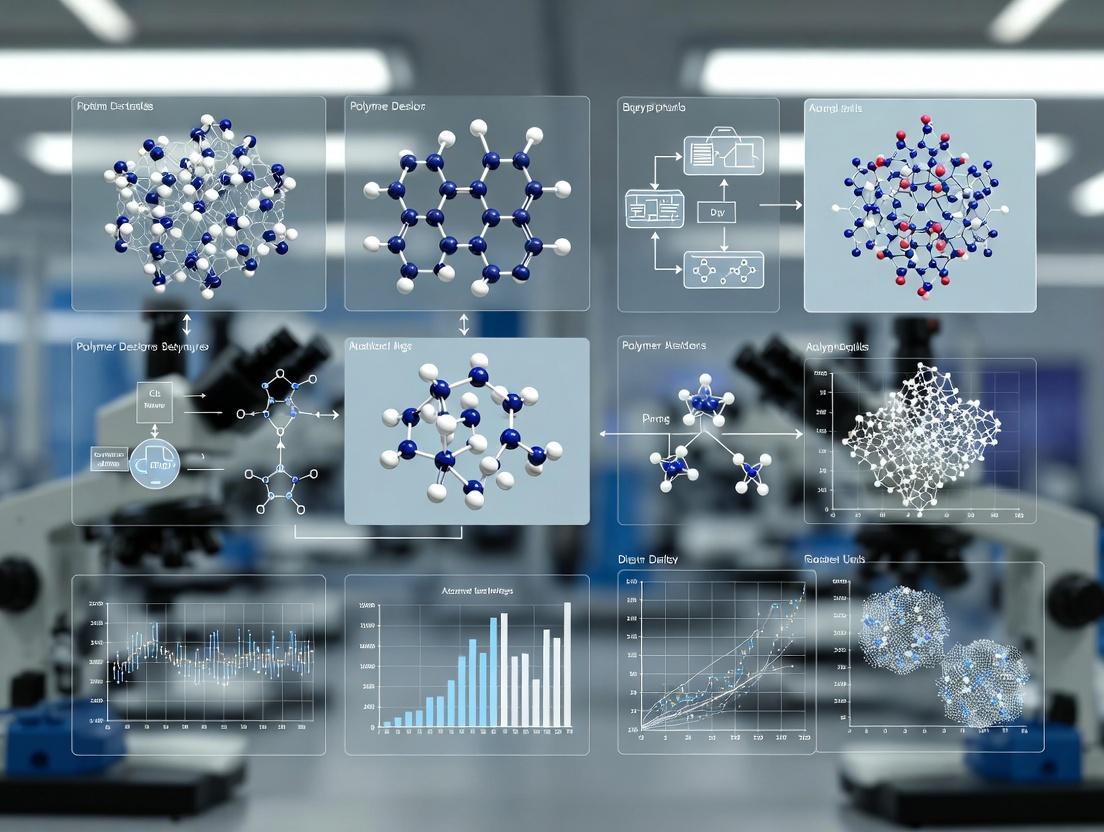
This article provides a comprehensive analysis of the transformative integration of artificial intelligence (AI) and machine learning (ML) with supramolecular chemistry for advanced material design.
AI and Machine Learning in Supramolecular Biomaterials: Revolutionizing Design for Drug Delivery and Therapeutics
Abstract
This article provides a comprehensive analysis of the transformative integration of artificial intelligence (AI) and machine learning (ML) with supramolecular chemistry for advanced material design. Targeting researchers and drug development professionals, we explore foundational principles, from molecular recognition to self-assembly dynamics. We detail methodological workflows, including data curation, model selection (from GNNs to generative AI), and specific applications in targeted drug delivery and regenerative medicine. The guide addresses critical challenges in data scarcity, model interpretability, and experimental validation, while comparing the efficacy of different AI/ML approaches. Finally, we synthesize key insights and project future trajectories for AI-driven supramolecular systems in clinical translation and personalized medicine.
The Convergence of Intelligent Algorithms and Molecular Self-Assembly: Core Concepts
Technical Support Center: Troubleshooting AI/ML-Driven Supramolecular Design
Troubleshooting Guides
Issue: Poor Predictive Model Performance on Host-Guest Binding Affinity Symptoms: AI/ML models (e.g., Random Forest, Graph Neural Networks) show high training accuracy but low validation/test accuracy (ΔG prediction error > 2.0 kcal/mol). Diagnosis: This is typically due to inadequate or non-representative training data or improper featurization of supramolecular complexes. Resolution Steps:
- Data Audit: Verify the source and consistency of your training data. Supramolecular data often mixes experimental techniques (ITC, NMR, fluorescence). Create a homogeneity filter.
- Feature Engineering: Ensure molecular descriptors capture key supramolecular interactions. Augment standard fingerprints (ECFP4) with explicit features for:
- Cavity Descriptors: Voids calculated via Voronoi tessellation.
- Electrostatic Complementarity: Calculated using Poisson-Boltzmann solvers.
- π-π Stacking Propensity: Aromatic ring count and centroid distance vectors.
- Protocol: Use the following workflow to generate improved features:
Issue: Failed Inverse Design of Organic Cage Molecules Symptoms: Generative models (VAEs, GANs) produce chemically invalid structures or structures that fail synthetic accessibility scoring (SAscore > 6). Diagnosis: The model's latent space is not properly constrained by synthetic rules and supramolecular geometry. Resolution Steps:
- Constraint Implementation: Integrate reaction-based constraints (e.g., imine condensation, disulfide formation) into the generator's reward function.
- Post-Processing Validation: Implement a strict post-generation filter using SMARTS patterns for known dynamic covalent chemistries.
- Protocol: Apply this validation filter to all generated molecules:
Frequently Asked Questions (FAQs)
Q1: What are the most reliable public data sources for training AI/ML models in supramolecular chemistry? A: Current primary sources are specialized and limited. Always check the measurement method and conditions. Table: Key Supramolecular Data Sources for AI/ML (as of 2023-2024)
| Data Source Name | Content Type | Approx. Data Points (2024) | Key Interaction Types Covered | Critical Metadata Provided? |
|---|---|---|---|---|
| SupraBank (Community-Driven) | Host-Guest Binding Constants | ~5,000+ | Cavitands, Cucurbiturils, Cyclodextrins | Partial (Solvent, Temp, Method vary) |
| BindingDB (Subset) | Protein-Ligand & Synthetic Host | ~2,000 (synth) | Various | Yes (ITC, NMR, Spr) |
| CSD (Cambridge DB) | Crystal Structures | ~1.2M (structures) | Hydrogen bonds, π-π, Halogen bonds | Full crystallographic data |
| NIST SMD | Solvation & Thermodynamics | ~500 (supra) | General non-covalent | High-quality standardized |
Q2: How do I featurize dynamic combinatorial libraries (DCLs) for ML analysis? A: DCLs require time-dependent, network-based featurization. Represent each library as a directed graph where nodes are building blocks/products and edges are reversible reactions. Use graph descriptors like node connectivity, cycle count, and betweenness centrality as features for models predicting library evolution.
Q3: My ML model suggests a novel host with high predicted affinity, but it seems impossible to synthesize. What tools can prioritize synthetic feasibility? A: Integrate a synthesis scoring pipeline before experimental validation. Use a combination of:
- Retrosynthesis Tools: IBM RXN, ASKCOS (set for "precise" mode).
- Rule-Based Scores: SAscore, SCScore, and a custom "supramolecular complexity penalty" for large ring formations.
- Protocol: Apply this sequential filter:
Q4: Which ML algorithm is currently showing the most promise for predicting supramolecular gelation properties? A: Recent literature (2023-2024) indicates that message-passing neural networks (MPNNs) outperform traditional models for this multi-property prediction task. They effectively capture the relationship between molecular structure, nanoscale fiber morphology (featurized as persistence length & diameter from TEM), and bulk rheological properties (G', Tgel). Training requires paired data: molecule structure + nanostructure image analysis + rheology data.
The Scientist's Toolkit: Key Research Reagent Solutions
Table: Essential Materials for AI/ML-Guided Supramolecular Experimentation
| Item Name | Function in AI/ML Workflow | Example Product/Specification |
|---|---|---|
| Standardized Host Library | Provides consistent, high-purity starting points for model training and validation. | e.g., Cucurbit[n]uril Family (n=5-8, 10), >98% purity (HPLC), fully characterized by NMR. |
| Fluorescent Guest Probes | Enables high-throughput binding constant determination for generating new training data. | e.g., Dansyl-amide derivatives, concentration series for plate reader assays (λex ~340 nm). |
| Dynamic Covalent Chemistry Kit | For validating generative AI designs of organic cages. Includes scanners, amines, catalysts. | e.g., Optimized kit for imine cage formation: 5 dialdehydes, 8 diamines, p-toluenesulfonic acid catalyst. |
| ITC Calibration Standard | Ensures calorimetric data used for model training is instrument-accurate. | e.g., Ribonuclease A + cytidine 2'-monophosphate (2'-CMP) standard kit. |
| Screening Plate (Non-Binding) | For automated, parallel screening of AI-predicted host-guest pairs. | e.g., 96-well plates with low-binding surface (e.g., polypropylene, COC). |
Visualizations
Title: AI/ML-Driven Supramolecular Design Closed Loop
Title: Supramolecular AI Design Validation Workflow
FAQs & Troubleshooting Guide
Q1: My AI model, trained on host-guest binding data, fails to predict association constants (Ka) for new macrocyclic hosts. What could be wrong? A: This is often a data representation issue. The AI likely uses SMILES strings or 3D coordinates that fail to encode critical supramolecular motifs. Ensure your training data's feature representation includes descriptors for:
- Key Motif Presence: Explicit binary flags for π-π stacking, H-bond donor/acceptor patterns, cation-π sites, and hydrophobic surfaces.
- Cavity Size Descriptors: Include features like molecular porphyrin core diameter or crown ether ring count, not just atomic coordinates.
- Solvent Parameters: Ka is highly solvent-dependent. Include features like solvent polarity (ET30) and hydrogen-bonding capacity.
Q2: During isothermal titration calorimetry (ITC) to measure binding enthalpy (ΔH), the titration curve is poorly fitted or the heat signals are too small. How can I improve the experiment? A: This indicates suboptimal experimental conditions.
- Low Signal: Increase reactant concentrations if solubility allows. Ensure the cell concentration is 10-100x the expected Ka (for a strong binder, use ~1-10 mM in cell). Use a more concentrated titrant syringe solution (typically 10-20x the cell concentration).
- Poor Fit: Check for contamination or degradation. Ensure thorough degassing to avoid bubble artifacts. Verify that the stirring speed is consistent and sufficient. Redesign experiment to have a c-value (c = [Host] * Ka) between 1 and 1000 for reliable fitting.
Q3: My machine learning pipeline for predicting cocrystal formation incorrectly classifies obvious positive cases involving carboxylic acid dimers. What step should I audit first? A: Audit your featurization step. The model may lack explicit knowledge of the carboxylic acid dimer R²₂(8) motif. Add graph-based features that identify -COOH pair complementarity (distance and angle constraints) or use a fingerprint that captures this specific synthon. Also, check class imbalance in your training data.
Experimental Protocols
Protocol 1: Isothermal Titration Calorimetry (ITC) for Host-Guest Binding Objective: To directly determine the association constant (Ka), enthalpy change (ΔH), and stoichiometry (n) of a supramolecular interaction in solution. Materials: See "Research Reagent Solutions" table. Method:
- Sample Preparation: Precisely dissolve host (e.g., cucurbit[7]uril) in filtered buffer to a concentration 10-100x the expected Ka. Dissolve guest (e.g., adamantylammonium chloride) in the same buffer at a concentration 10-20x higher than the host.
- Degassing: Degas both solutions for 10-15 minutes under vacuum to prevent bubble formation in the ITC cell.
- Instrument Setup: Load the host solution into the sample cell (typically 200 µL). Load the guest solution into the titration syringe. Set reference cell to water or buffer.
- Titration Parameters: Program the titration (e.g., 25°C, 19 injections of 2 µL each, 150s spacing between injections, stirring speed 750 rpm).
- Data Collection & Analysis: Run the titration, injecting guest into host. Perform a control experiment (guest into buffer) and subtract this dilution heat. Fit the integrated heat data to a suitable binding model (e.g., "One Set of Sites") using the instrument's software to derive Ka, ΔH, and n.
Protocol 2: X-Ray Crystallography for Supramolecular Synthon Analysis Objective: To unambiguously characterize non-covalent interaction motifs in a solid-state material. Method:
- Crystallization: Grow a single crystal of the target supramolecular assembly or cocrystal via vapor diffusion, slow evaporation, or solvent layering.
- Mounting: Under a microscope, select a single, well-formed crystal. Mount it on a cryo-loop using a suitable oil or directly flash-freeze with liquid N₂.
- Data Collection: Place the mounted crystal in the X-ray diffractometer. Collect a full dataset of diffraction intensities at a suitable temperature (e.g., 100 K).
- Structure Solution & Refinement: Use direct methods (SHELXT) or intrinsic phasing to solve the crystal structure. Refine the model (atomic positions, displacement parameters) using SHELXL or OLEX2 software.
- Motif Analysis: Using the refined structure, analyze specific intermolecular contacts (H-bonds, π-π distances, halogen bonds) using crystallographic software (Mercury, PLATON) to identify and categorize key supramolecular synthons.
Data Tables
Table 1: Characteristic Parameters of Common Supramolecular Motifs
| Motif | Typical Distance (Å) | Angle (°) | Observable Technique | Key AI-Relevant Descriptor |
|---|---|---|---|---|
| Hydrogen Bond (N-H···O=C) | 2.8 - 3.2 | 150-180 | XRD, IR, NMR | Donor/Acceptor Count, ESP Min/Max |
| π-π Stacking (Face-to-Face) | 3.3 - 3.8 | ~0 (Offset) | XRD, UV-Vis | Polarizability, MEP Surface Area |
| Cation-π Interaction | 3.0 - 3.5 | N/A | ITC, XRD, NMR | Cation Charge, Aromatic Quadrupole Moment |
| Halogen Bond (C-X···N) | 2.9 - 3.5 | 165-180 | XRD | σ-hole Potential, VdW Radius |
| Van der Waals | 3.0 - 4.0 | N/A | SCXRD, DFT | Lennard-Jones Parameters, Surface Area |
Table 2: Troubleshooting Common Experimental Issues
| Symptom | Possible Cause | Recommended Action |
|---|---|---|
| Low/no heat signal in ITC | Concentrations too low; Ka too weak. | Increase concentrations; use more sensitive instrument mode. |
| Poor NMR chemical shift changes | Fast exchange on NMR timescale; weak binding. | Use lower temperature; try a different NMR nucleus (e.g., 19F). |
| Failed cocrystal formation | Incorrect stoichiometry; competitive solvation. | Screen stoichiometries (e.g., 2:1, 1:1, 1:2); change solvent system. |
| AI model overfits training data | Sparse dataset; redundant features. | Apply regularization (L1/L2); use feature selection (e.g., for synthon flags). |
Diagrams
Title: AI-Driven Supramolecular Design Workflow
Title: Supramolecular Motifs Contributing to Binding Affinity
The Scientist's Toolkit: Research Reagent Solutions
| Item | Function in Supramolecular Research |
|---|---|
| Cucurbit[n]urils (n=5-8) | Model macrocyclic hosts with rigid, hydrophobic cavities for studying size-selective guest binding. |
| Cyclodextrins (α, β, γ) | Cone-shaped oligosaccharide hosts for probing hydrophobic effects and chiral recognition. |
| DMSO-d₆ / CDCl₃ | Deuterated NMR solvents for monitoring chemical shift changes upon complexation. |
| ITC Buffer Kits | Pre-formulated, degassed buffers (e.g., PBS, Tris) for reliable calorimetry measurements. |
| Halogenated Aromatic Compounds | Building blocks for studying halogen bonding and π-hole interactions in crystal engineering. |
| Charge-Enhanced Dyes (e.g., Methylene Blue) | Guests for probing electrostatic and π-π interactions with anionic/aromatic hosts. |
| MOF/COF Precursors | Linkers and nodes for constructing porous frameworks exhibiting pre-designed motifs. |
Technical Support Center
FAQs & Troubleshooting Guides
Q1: My classical QSAR model (e.g., MLR) on a new dataset yields high training R² but near-zero or negative test R². What are the primary causes and solutions? A: This indicates severe overfitting and poor generalization. Common causes and solutions are:
- Cause 1: Data Leakage. Features or responses from the test set inadvertently influenced training.
- Solution: Implement strict chronological or scaffold-based splitting before any feature calculation or scaling. Use
scikit-learn'strain_test_splitwith arandom_statefirst.
- Solution: Implement strict chronological or scaffold-based splitting before any feature calculation or scaling. Use
- Cause 2: High Feature-to-Compound Ratio. Too many descriptors (e.g., Dragon, Mordred) for too few molecules.
- Solution: Apply feature selection. Use variance threshold, correlation filtering, and then recursive feature elimination (RFE) or LASSO regression to reduce dimensionality.
- Cause 3: Inappropriate Validation. Simple random split unsuitable for the data.
- Solution: For property prediction, use time-split. For bioactivity, use scaffold-based split (e.g.,
Bemis-Murckoin RDKit) to test generalization to new chemotypes.
- Solution: For property prediction, use time-split. For bioactivity, use scaffold-based split (e.g.,
- Protocol - Scaffold Split with RFE:
- Generate molecular scaffolds using RDKit's
Chem.Scaffolds.MurckoScaffold.GetScaffoldForMol. - Use
GroupShuffleSplitin scikit-learn, grouping by scaffold. - Perform feature scaling (
StandardScaler) after splitting, fitting only on the training fold. - Apply
RFEwith a linear estimator on the scaled training data to select top N features. - Retrain model using only these features.
- Generate molecular scaffolds using RDKit's
Q2: When implementing a Graph Neural Network (GNN) for molecular property prediction, the model fails to learn (loss plateaus) or predicts constant values. How do I debug this? A: This is often a data flow or architecture issue in the GNN.
- Debug Step 1: Check Graph Representation.
- Solution: Visualize the first few batched graphs from your DataLoader. Confirm atom features (e.g., atomic number, chirality) and bond features (type, conjugation) are correctly encoded and passed. Ensure edgeindex is properly formatted (size [2, numedges]).
- Debug Step 2: Check for Gradient Flow.
- Solution: Use gradient checking libraries (e.g.,
torch.autograd.gradcheckin PyTorch) or simply print the mean absolute value of gradients in the first linear layer after the first backward pass. Near-zero values indicate vanishing gradients.
- Solution: Use gradient checking libraries (e.g.,
- Debug Step 3: Normalize Target Values.
- Solution: Normalize your target (y) values to have zero mean and unit standard deviation. For classification, check class balance.
- Protocol - Basic GNN Debugging Workflow:
- Sanity Check: Overfit a tiny batch (5-10 molecules). If the model cannot, the architecture is broken.
- Simplify: Replace the GNN with a simple MLP on pooled atom features. If this works, the issue is in the message-passing layers.
- Inspect: Add
print()statements or use tensorboard to monitor the output of each GNN layer (xandedge_indexdimensions, presence ofNaNs). - Regularize: Add gradient clipping (
torch.nn.utils.clip_grad_norm_) and use a lower learning rate.
Q3: My molecular dynamics (MD) simulation dataset for training a Deep Learning potential is imbalanced, with very few high-energy conformations. How can I sample effectively for ML? A: This is a known challenge. Standard MD undersamples rare events.
- Solution 1: Enhanced Sampling for Data Generation.
- Protocol: Use Metadynamics or Adaptive Biasing Force methods during simulation to push the system away from local minima and explore high-energy barriers. Use PLUMED toolkit integrated with GROMACS or LAMMPS. Collect frames from the biased simulation to create a more balanced dataset.
- Solution 2: Active Learning Loop.
- Protocol:
- Train an initial potential on a small, randomly sampled MD dataset.
- Use this potential to run new simulations or predict energies/forces on a large, unlabeled pool of conformations.
- Select new data points where the model's uncertainty is highest (e.g., high variance in an ensemble model) or where predicted forces exceed a threshold.
- Perform ab initio calculation on these selected points and add them to the training set.
- Retrain the model. Iterate steps 2-5.
- Protocol:
Q4: How do I choose between a descriptor-based Random Forest and a Graph Neural Network for a new molecular dataset with ~5000 compounds? A: The choice depends on data and resource constraints. See the comparison table below.
Data Presentation: Model Selection Guide
| Criterion | Descriptor-Based Model (e.g., RF, XGBoost) | Graph-Based Model (e.g., GCN, MPNN) |
|---|---|---|
| Data Size | Preferred for small datasets (<10k samples). Less prone to overfitting with careful feature selection. | Requires larger datasets (>5k) to learn meaningful representations from atoms/bonds. |
| Feature Engineering | Requires explicit calculation of molecular descriptors or fingerprints (e.g., ECFP4). | No explicit feature engineering needed. Learns from atom/bond features and structure. |
| Interpretability | High. Feature importance (mean decrease in impurity) provides insight into key chemical groups. | Lower. Requires post-hoc methods (e.g., GNNExplainer) to highlight important subgraphs. |
| Computational Cost | Lower training cost. Inference is very fast. | Higher training cost (GPU recommended). Inference is slower per molecule. |
| Handling 3D Geometry | Poor, unless 3D descriptors (e.g., WHIM, RDF) are explicitly calculated. | Good for 2D structure. For explicit 3D, use specialized architectures (SchNet, DimeNet). |
| Performance Ceiling | Often very strong, but may plateau. | Can capture complex patterns beyond fixed fingerprints, potentially higher ceiling. |
Recommendation for ~5000 compounds: Start with a robust descriptor-based Random Forest with ECFP4 fingerprints and rigorous cross-validation. It provides a strong, interpretable baseline. If performance is inadequate and you suspect complex structure-property relationships, invest in a GNN with data augmentation and hyperparameter tuning.
Experimental Protocols
Protocol 1: Building a Robust QSAR Model with Scaffold Splitting
- Data Curation: Collect SMILES strings and target activity (e.g., pIC50). Standardize structures using RDKit (neutralize, remove salts, tautomer canonicalization).
- Scaffold Assignment: Generate the Bemis-Murcko scaffold for each molecule.
- Data Splitting: Perform a 70/15/15 stratified split (train/validation/test) based on scaffold groups to ensure no scaffold overlaps between sets.
- Descriptor Calculation: Calculate 2D molecular descriptors (e.g., using
mordred) only on the training set. Handle errors and missing values. - Feature Preprocessing: Apply variance threshold (remove near-constant), correlation filter (remove highly correlated >0.95), and standard scaling (
StandardScaler), fitting the scaler only on the training set and transforming all sets. - Model Training: Train a model (e.g., Support Vector Regression) on the training set using hyperparameter optimization via grid/random search on the validation set.
- Evaluation: Report final performance metrics (R², RMSE) on the held-out test set.
Protocol 2: Training a Basic Graph Neural Network with PyTorch Geometric
- Graph Construction: Convert each SMILES to a graph where nodes are atoms (features: atomic number, degree, hybridization) and edges are bonds (features: bond type, conjugation). Use
torch_geometric.transforms. - Dataset Division: Create a
torch_geometric.data.Dataset. Userandom_splitor a scaffold split function to create DataLoader objects for train/val/test. - Model Definition: Define a GNN architecture (e.g.,
GCNConvorGINConvlayers) followed by global pooling (e.g., global mean add) and fully connected layers. - Training Loop: Use Mean Squared Error loss and Adam optimizer. Implement early stopping based on validation loss.
- Regularization: Apply dropout between GNN layers and weight decay in the optimizer.
Mandatory Visualization
Title: Robust QSAR Modeling Workflow with Scaffold Splitting
Title: Basic Graph Neural Network Architecture for Molecules
The Scientist's Toolkit: Research Reagent Solutions
| Tool/Reagent | Function in AI/ML for Molecular Systems |
|---|---|
| RDKit | Open-source cheminformatics toolkit for molecule standardization, descriptor calculation, fingerprint generation, and scaffold analysis. Foundation for data preprocessing. |
| PyTorch Geometric (PyG) | A library built upon PyTorch for easy implementation and training of Graph Neural Networks on irregular data like molecular graphs. |
| scikit-learn | Provides robust tools for data splitting, feature preprocessing, classical ML models (RF, SVR), and hyperparameter tuning. Essential for baseline QSAR. |
| DGL-LifeSci | Deep Graph Library (DGL) for life science applications, offering pre-built GNN models and training loops for molecules. |
| PLUMED | Plugin for MD codes (GROMACS, LAMMPS) enabling enhanced sampling methods to generate balanced data for training ML potentials. |
| MOE (Molecular Operating Environment) | Commercial software offering comprehensive descriptor calculation, QSAR modeling, and molecular modeling suites. |
| Schrödinger Suite | Commercial platform offering advanced ML-based tools (e.g., ΔΔG prediction, QSAR) integrated with high-end molecular simulation. |
Historical Evolution and Recent Breakthroughs in AI-Enhanced Supramolecular Design
AI-Supramolecular Design Technical Support Center
This support center provides troubleshooting guidance for researchers integrating AI/ML tools into supramolecular design workflows. All content is framed within ongoing thesis research on accelerating the discovery of functional supramolecular materials.
Frequently Asked Questions (FAQs)
Q1: During an active learning cycle for host-guest binding prediction, my model's validation loss plateaus after the first few iterations. What are the likely causes and solutions?
A1: This is a common issue in iterative design loops.
- Cause 1: Data Depletion. The initial diverse batch has been exhausted, and subsequent queries are not adding informative diversity.
- Solution: Implement a hybrid query strategy. Combine uncertainty sampling (e.g., highest predictive variance) with diversity sampling (e.g, maximum dissimilarity to existing training set) using a weighted score. A 70/30 ratio of uncertainty to diversity is often effective.
- Cause 2: Model Incapacity. The model architecture (e.g., a simple GCN) cannot capture the complexity of the structure-property relationship.
- Solution: Shift to a more expressive model. Replace a standard GCN with a directed message-passing neural network (D-MPNN) or a geometry-aware model like SchNet, which can better handle 3D conformational data.
- Protocol Check: Ensure your experimental binding affinity data (e.g., from ITC or NMR) is properly normalized and that the error ranges are consistent before adding to the training set.
Q2: When using generative models (e.g., VAEs, GANs) to design new organic cage molecules, the output structures are often chemically invalid or synthetically intractable. How can this be improved?
A2: This stems from the model's lack of embedded chemical knowledge.
- Solution 1: Constrained Generation. Use a grammar-based VAE or a graph-based model that operates under strict chemical rules (like valency checks) during the generation step itself.
- Solution 2: Post-Generation Filtering & Reward Shaping. Implement a rigorous filtering pipeline using toolkits like RDKit. Assign a synthetic accessibility (SA) score and a ring strain penalty. Only pass molecules with SA Score < 4 and estimated ring strain < 20 kcal/mol to the next stage. Integrate these scores as penalties into the reinforcement learning reward function if using RL-based generation.
- Essential Check: Your training dataset must be curated for both chemical validity and synthetic realism. Use databases like the Cambridge Structural Database (CSD) filtered by "no errors" and "polymeric bonds removed."
Q3: My molecular dynamics (MD) simulations for a supramolecular assembly are computationally expensive, making them infeasible for large-scale AI training data generation. What are the efficient alternatives?
A3: The goal is to find a balance between accuracy and speed.
- Solution 1: Multi-Fidelity Modeling. Train your AI model on a mix of data sources.
- Solution 2: Enhanced Sampling. For the higher-fidelity MD data you do generate, use methods like metadynamics or umbrella sampling to reduce the simulation time needed to observe key events like assembly or disassembly.
Table 1: Multi-Fidelity Data Sources for Supramolecular Assembly Prediction
| Fidelity Level | Method | Typical Compute Time | Key Output for AI Training | Best Use Case |
|---|---|---|---|---|
| Low | Molecular Mechanics (MMFF) | Seconds to minutes | Conformational energy, rough binding pose | Pre-screening thousands of candidate complexes. |
| Medium | Semi-empirical (GFN2-xTB) | Minutes to hours | Improved geometry, charge distribution | Training on 100s of systems for structure refinement. |
| High | Classical MD (GAFF) | Days | Free energy of binding (ΔG), kinetics | Generating 10s of precise targets for final validation. |
| Reference | DFT (wB97X-D/6-31G*) | Weeks | Electronic properties, precise interaction energies | Creating a small, gold-standard benchmark set. |
Q4: How do I interpret the attention weights from a transformer model trained on predicting supramolecular hydrogel properties?
A4: Attention weights can provide mechanistic insight.
- Step-by-Step Protocol:
- Identify Top Attention Heads: Visualize attention matrices for all heads and layers. Identify 2-3 heads that show strong, focused patterns (not uniform blur).
- Map to Molecular Graph: For a given input molecular graph (SMILES string converted to tokens), trace the high-attention connections from the property prediction token [CLS] back to specific atom or functional group tokens.
- Functional Group Correlation: Aggregate attention scores for specific substructures (e.g., "amide," "aromatic ring," "alkyl chain") across a successful hydrogel dataset.
- Hypothesis Generation: High aggregate attention to amide groups and aromatic rings suggests π-π stacking and H-bonding are key features the model uses for prediction. This can guide your design principle for the next experimental batch.
Experimental Protocols for Key Cited Works
Protocol 1: Active Learning-Driven Discovery of Porous Organic Cages
- Objective: To minimize the number of synthesized cages needed to discover materials with high C2H2/CO2 selectivity.
- Methodology:
- Initial Library: Generate a virtual library of 50,000 cage molecules using a combinatoric builder respecting synthetic chemistry rules.
- Seed Training Data: Perform grand-canonical Monte Carlo (GCMC) simulations to predict selectivity for 100 randomly chosen cages. This forms the initial training set (Dtrain).
- Model Training: Train a graph neural network (GNN) regression model to predict selectivity from cage structure using Dtrain.
- Query & Iterate: For all remaining cages, use the GNN to predict selectivity and its uncertainty (standard deviation). Select the top 10 cages with the highest uncertainty. Run GCMC simulations on these 10, add the results to D_train, and retrain the model. Repeat for 5 cycles.
- Validation: Synthesize and experimentally test the top 5 predicted cages from the final model.
Protocol 2: Generative AI for Peptide-Based Supramolecular Therapeutics
- Objective: To design novel self-assembling peptides that inhibit a target protein via multivalent surface binding.
- Methodology:
- Conditional VAE Setup: Train a variational autoencoder (VAE) on a dataset of known self-assembling peptides. Condition the model on a 1D vector representing the target protein's surface electrostatics and hydrophobicity profile.
- Latent Space Sampling: Generate 10,000 candidate peptides by sampling from the latent space around the condition for your target protein.
- In Silico Filtering Pipeline:
- Filter 1: Use MD simulation (implicit solvent, 100ns) to assess spontaneous self-assembly propensity. Discard non-assembling candidates.
- Filter 2: Dock the resulting assembled nanofiber surface onto the target protein using a rigid-body docking protocol. Keep top 20% by docking score.
- Filter 3: Perform short, explicit-solvent MD (50ns) of the protein-fiber complex to assess binding stability.
- Experimental Validation: Synthesize the top 3 ranking peptides, characterize assembly (via TEM, CD spectroscopy), and test inhibition (via SPR or cell-based assay).
Visualizations
Title: Active Learning Cycle for Material Discovery
Title: Generative AI Filter Pipeline for Therapeutics
The Scientist's Toolkit: Key Research Reagent Solutions
Table 2: Essential Materials for AI-Driven Supramolecular Experiments
| Reagent / Material | Supplier Examples | Function in AI/ML Workflow |
|---|---|---|
| High-Purity Ditopic/Tritopic Building Blocks | Sigma-Aldrich, TCI, Combi-Blocks | Provides reliable, consistent starting materials for synthesizing AI-predicted supramolecular complexes (e.g., cages, frameworks). |
| Isothermal Titration Calorimetry (ITC) Kit | Malvern Panalytical, TA Instruments | Generates high-quality, quantitative binding affinity (Ka, ΔH, ΔS) data for training and validating AI prediction models. |
| Tagged Monomers (e.g., fluorophore-labeled) | Lumiprobe, BroadPharm | Enables fluorescent tracking of assembly kinetics and stoichiometry, providing dynamic data for AI models beyond equilibrium structures. |
| Deuterated Solvents for NMR | Cambridge Isotope Laboratories | Essential for characterizing host-guest interactions and assembly processes in solution, yielding structural data for model training. |
| Force Field Parameterization Software (e.g., MATCH) | University of Kansas, CCMI | Creates customized force field parameters for novel molecules, enabling accurate MD simulations to generate AI training data. |
| Quantum Chemistry Calculation Service (GPU-accelerated) | AWS, Azure, Google Cloud | Provides on-demand high-performance computing for generating DFT-level reference data for small supramolecular systems. |
From Data to Discovery: AI/ML Workflows for Designing Functional Supramolecular Biomaterials
Technical Support Center: Troubleshooting & FAQs
This support center addresses common challenges faced by researchers constructing AI/ML pipelines for supramolecular material design.
FAQ 1: Data Acquisition & Validation
Q: Our high-throughput screening (HTS) for host-guest binding affinity yields inconsistent results between replicates. How can we validate our acquisition pipeline?
- A: Inconsistency often stems from environmental drift or protocol variance. Implement this validation protocol:
- Internal Standardization: Include a reference supramolecular complex (e.g., Cucurbit[7]uril with adamantane ammonium) in every HTS plate.
- Control Wells: Designate wells for buffer-only (background) and a known high-affinity complex (positive control).
- Data Normalization: Calculate the Z'-factor for each assay plate:
Z' = 1 - [ (3σ_positive + 3σ_negative) / |μ_positive - μ_negative| ]. A Z' > 0.5 indicates an excellent assay suitable for screening. - Automate QC Flags: Script automated checks to flag plates where the reference complex's measured affinity falls outside 2 standard deviations from its historical mean.
- A: Inconsistency often stems from environmental drift or protocol variance. Implement this validation protocol:
Q: When scraping literature data (e.g., binding constants, NMR shifts) from published papers, how do we handle conflicting reported values for the same system?
- A: Conflicting values require a curation rule set. Establish a data hierarchy and scoring system:
- Assign a confidence score based on the experimental method (e.g., Isothermal Titration Calorimetry (ITC) scores higher than UV-Vis titration for binding constants).
- Favor data from publications that provide primary, machine-readable supplementary data.
- Apply outlier detection (e.g., IQR method) on aggregated values for the same chemical system under identical conditions (pH, temperature, ionic strength).
- Document all decisions in a curation log. The final curated value should be the weighted mean based on confidence scores.
- A: Conflicting values require a curation rule set. Establish a data hierarchy and scoring system:
FAQ 2: Data Curation & Standardization
Q: How should we standardize diverse chemical representations (SMILES, InChI, hand-drawn figures) from various sources into a machine-readable format for feature engineering?
- A: Implement a multi-step chemical data curation pipeline:
- Ingestion: Use toolkits (RDKit, OpenBabel) to convert all inputs to a canonical SMILES string.
- Validation: Check for valence correctness and sanitize molecules.
- Standardization: Apply consistent rules for protonation state (at a defined pH using tools like
mondrian), tautomerization, and removal of counterions for the host/guest system of interest. - Deduplication: Use InChIKey to identify and merge duplicate entries.
- A: Implement a multi-step chemical data curation pipeline:
Q: Our dataset contains missing values for key features like "solvent dielectric constant" or "guest logP." What are the preferred imputation methods for supramolecular datasets?
- A: Simple global mean imputation can introduce bias. Prefer context-aware methods:
- For solvent properties: Use k-Nearest Neighbors (k-NN) imputation based on other solvent features (e.g., polarity index, dipole moment).
- For molecular descriptors: Train a simple linear model on the complete cases to predict the missing descriptor from other calculated fingerprints, then impute.
- Critical: Always add a binary flag column (e.g.,
imputed_logP) to indicate which values were imputed for downstream model interpretability.
- A: Simple global mean imputation can introduce bias. Prefer context-aware methods:
FAQ 3: Feature Engineering & Calculation
- Q: Which molecular features (descriptors) are most informative for predicting supramolecular assembly or host-guest binding?
- A: Prioritize features that encode intermolecular interactions. The table below summarizes key feature categories and example calculation tools.
| Feature Category | Example Specific Descriptors | Relevance to Supramolecular Systems | Calculation Tool/Software |
|---|---|---|---|
| Geometric/Topological | Molecular volume, pore diameter (host), radius of gyration | Steric complementarity, shape fit | RDKit, Zeo++ |
| Electronic | Partial atomic charges, HOMO/LUMO energy, dipole moment | Electrostatic interactions, charge transfer | Gaussian, ORCA, RDKit (approx.) |
| Energetic | LogP, polar surface area, solvation free energy | Hydrophobic effect, solvation penalty | Schrödinger, OpenBabel |
| Interaction-Specific | Hydrogen bond donor/acceptor count, polarizability | Specific non-covalent interactions | RDKit, Dragon |
- Q: Calculating quantum mechanical (QM) descriptors (e.g., electrostatic potential maps) for thousands of molecules is computationally prohibitive. What are the efficient alternatives?
- A: Employ a multi-fidelity feature engineering strategy:
- Tier 1 (Fast, All Data): Use semi-empirical methods (GFN2-xTB) or machine-learned potential (ANI-2x) to calculate approximate QM descriptors for your entire library.
- Tier 2 (Accurate, Subset): For a diverse, representative subset (≈10%), perform higher-level DFT calculations (e.g., ωB97X-D/def2-SVP).
- Model Correction: Train a "corrective" model to map Tier 1 features to Tier 2 features, then apply it to the remaining compounds to generate accurate, imputed QM descriptors.
- A: Employ a multi-fidelity feature engineering strategy:
Experimental Protocols
Protocol 1: High-Throughput Isothermal Titration Calorimetry (ITC) for Binding Constant (Ka) Acquisition
- Objective: To standardize the acquisition of thermodynamic data (Ka, ΔH, ΔS) for host-guest complexes.
- Materials: Automated ITC instrument (e.g., Malvern PEAQ-ITC), degassed buffer, host and guest solutions.
- Method:
- Sample Preparation: Precisely weigh host and guest. Dissolve in identical, thoroughly degassed buffer. Filter through 0.22 μm membrane.
- Instrument Setup: Load the host solution (typically in the cell at 0.1-1 mM) and guest solution (in syringe at 10-20 times higher concentration). Set temperature (typically 25°C). Set stirring speed to 750 rpm.
- Titration Program: Design an experiment with an initial 0.4 μL injection (discarded in analysis) followed by 18-20 injections of 2.0 μL each, with 150-180 second spacing between injections.
- Data Processing: Fit the integrated heat plot to a "One Set of Sites" binding model using the instrument's native software. Export raw Ka, ΔH, and n (stoichiometry) values.
- Validation Criteria: The fitted n must be 1.0 ± 0.1. The experiment must pass software-based quality checks (chi-squared value).
Protocol 2: Generating 3D Electron Density-Based Features for Macrocyclic Hosts
- Objective: To calculate spatially resolved feature maps for cavity-containing hosts.
- Materials: Host molecule 3D structure (optimized at DFT level), software: Multiwfn.
- Method:
- Structure Optimization: Optimize host geometry using DFT (e.g., B3LYP-D3/6-31G*) in a vacuum. Ensure the structure is in a standard orientation.
- Electron Density Calculation: Perform a single-point energy calculation to generate a
.wfnor.fchkelectron density file. - Grid Generation: Using Multiwfn, define a rectangular grid that encompasses the host's cavity (e.g., 1 Å spacing).
- Property Calculation: On each grid point, calculate the electron density (ρ), electrostatic potential (ESP), and average local ionization energy (ALIE).
- Feature Vector Creation: For each property, extract statistics (mean, variance, min, max, skew) within the voxels defined by the host's Connolly surface inward by 1.4 Å (defining the cavity space). This yields a 15-dimensional feature vector per host.
Visualization: Workflows & Relationships
AI/ML Supramolecular Data Pipeline
Feature Engineering for Host-Guest Binding
The Scientist's Toolkit: Research Reagent Solutions
| Essential Material / Software | Function in Supramolecular ML Pipeline |
|---|---|
| RDKit | Open-source cheminformatics toolkit for canonical SMILES generation, 2D/3D molecular descriptor calculation, and fingerprint generation. Essential for feature engineering. |
| GFN2-xTB | Semi-empirical quantum mechanical method. Allows rapid geometry optimization and calculation of approximate electronic features for large libraries of molecules. |
| ITC Instrumentation | Gold-standard for experimentally measuring binding constants (Ka) and thermodynamic parameters (ΔH, ΔS). Provides the crucial labeled data for model training. |
| Cambridge Structural Database (CSD) | Repository of experimentally determined 3D crystal structures. Critical for acquiring ground-truth geometric data on supramolecular complexes and validating computational conformers. |
| Python Stack (Pandas, NumPy, Scikit-learn) | Core programming environment for data curation (handling missing values, normalization), feature integration, and building initial machine learning models. |
| MultiWFN | Multifunctional wavefunction analyzer. Used to calculate advanced electronic features from QM outputs, such as electrostatic potential maps over a host's cavity. |
Technical Support Center: Troubleshooting & FAQs
This support center provides targeted guidance for common issues encountered when applying machine learning models within AI-driven supramolecular material design research. The content is framed to support the experimental workflows of a thesis focused on de novo material discovery.
Frequently Asked Questions
Q1: When designing a new organic semiconductor, my Graph Neural Network (GNN) fails to predict charge mobility accurately. The validation loss plateaus early. What could be wrong? A: This is often a data representation or model depth issue. Supramolecular assemblies require explicit encoding of non-covalent interactions (e.g., π-π stacking, hydrogen bonds) as edge features in your graph, not just atomic connectivity. Ensure your graph includes:
- Nodes: Atoms or molecular fragments.
- Edges: Covalent bonds and inferred non-covalent interactions (within a cutoff distance). Use edge features like estimated interaction energy, distance, and type.
- Global features: Crystal lattice parameters or solvent environment descriptors.
- Protocol: Implement a Message Passing Neural Network (MPNN) with at least 5-7 layers to capture long-range intermolecular order. Use a skip-connection architecture (e.g., GatedGCN) to mitigate oversmoothing. Validate by ablating edge feature types to identify critical interactions.
Q2: My Convolutional Neural Network (CNN) for analyzing microscopy images of self-assembled structures shows high training accuracy but poor generalization to images from a different lab. A: This indicates a domain shift and overfitting. Microscopy images vary in contrast, scale, and noise.
- Solution 1: Apply heavy data augmentation during training: random cropping, rotation, Gaussian noise, and contrast jittering. Use a pretrained encoder (EfficientNet) with a small, trainable head, and freeze early layers.
- Solution 2: Incorporate a gradient reversal layer for domain adaptation to force the network to learn features invariant to the image source.
- Experimental Protocol: Split data by experimental batch, not randomly. Use one batch for training and a completely different batch for validation. Monitor performance on the latter.
Q3: In using Reinforcement Learning (RL) to optimize synthesis conditions (e.g., temperature, concentration), the agent gets stuck in a local optimum, repeatedly suggesting the same non-ideal conditions. A: This is a classic exploration-exploitation problem, acute in expensive material experiments.
- Solution: Implement Bayesian Optimization as a more sample-efficient baseline. For RL, switch from a purely greedy policy (e.g., DQN) to a stochastic one (e.g., Soft Actor-Critic) or significantly increase the exploration noise parameter (epsilon or temperature). Protocol: Prior to wet-lab trials, run a substantial computational simulation phase (if possible) to pre-train the agent. Use an experience replay buffer that stores diverse state-action pairs.
Q4: My Variational Autoencoder (VAE) generates chemically invalid or unrealistic molecular structures for supramolecular building blocks. A: The issue is in the decoder's output space, which permits invalid atom placements or bond lengths.
- Solution 1: Use a Grammar VAE or Syntax-Directed VAE that decodes structures according to pre-defined chemical rules (SMILES grammar) or distance geometry constraints.
- Solution 2: Post-process generated structures with a simple force-field (MMFF94) geometry optimization and valency check. Discard invalid structures.
- Key Protocol: During training, augment the standard VAE loss (reconstruction + KL divergence) with a validity penalty term, such as a small reward for generated structures that pass a valency check.
Q5: When training a Generative Adversarial Network (GAN) to propose novel porous framework materials, training becomes unstable, and mode collapse occurs, generating similar structures. A: GANs are notoriously unstable for discrete, structured outputs like crystal lattices.
- Solution: Switch to a Wasserstein GAN with Gradient Penalty (WGAN-GP), which provides more stable training signals. For material generation, a Conditional GAN is almost essential—condition the generator on desired properties (e.g., pore size, target surface area). Protocol: Use a relativistic discriminator, lower the learning rate (1e-5), and monitor the gradient penalty loss. Consider using a diffusion model instead, as they are more stable for this domain.
Q6: Diffusion Models seem promising for generating 3D molecular conformations, but the reverse denoising process is extremely slow for high-resolution structures. How can I speed this up for high-throughput screening? A: The slow iterative denoising (often 1000+ steps) is a major bottleneck.
- Solution: Employ a Latent Diffusion Model (LDM). First, train a VAE to compress your 3D voxelized structures or point clouds into a smaller latent space. Then, train the diffusion model in this latent space. This drastically reduces computational cost.
- Protocol: Use the DDIM (Denoising Diffusion Implicit Models) sampler, which can reduce the number of sampling steps to 50-100 without significant quality loss, enabling faster generation for preliminary screening.
Quantitative Model Comparison Table
| Model Type | Primary Use in Supramolecular Design | Key Strength | Key Limitation | Typical Data Requirement | Computational Cost (Relative) |
|---|---|---|---|---|---|
| GNN | Predict material properties from molecular graph/crystal graph. | Naturally models relational structure (bonds, interactions). | Struggles with long-range order in amorphous phases. | ~10^3 - 10^4 labeled graphs. | Medium |
| CNN | Analyze structural images (TEM, AFM) or spectral data. | Superior at capturing local spatial patterns. | Requires extensive augmentation for domain shifts. | ~10^4 - 10^5 labeled images. | Low-Medium |
| RL | Optimize synthesis or self-assembly pathways. | Ideal for sequential decision-making in dynamic processes. | High sample inefficiency; real-world trials are costly. | 10^2 - 10^3 episodes (can be simulated). | High (if simulated) |
| VAE | Generate novel molecular structures in a continuous latent space. | Provides a structured, explorable latent space. | Often generates invalid or unrealistic structures. | ~10^4 - 10^5 structures. | Medium |
| GAN | Generate high-fidelity, novel material structures. | Can produce highly realistic, sharp outputs (e.g., crystal images). | Unstable training; prone to mode collapse. | ~10^5+ structures. | High |
| Diffusion Model | Generate diverse and valid 3D molecular conformers/materials. | State-of-the-art quality and diversity; training stability. | Very slow inference/sampling speed. | ~10^5+ structures. | Very High (Training & Inference) |
Experimental Protocol: GNN for Predicting Supramolecular Gelation Properties
Objective: Train a GNN to predict the gelation capability (Yes/No) and gel melting temperature (Tgel) of a small molecule based on its molecular structure and inferred supramolecular interactions.
- Data Curation: Assemble a dataset of ~5,000 small molecules with known gelation behavior. Represent each molecule as a graph.
- Graph Construction:
- Nodes: Atoms. Features: atom type, hybridization, valence, partial charge.
- Edges (Covalent): Bonds. Features: bond type, conjugated status.
- Edges (Non-covalent): Connect all atom pairs within 3.5 Å. Features: Euclidean distance, estimated interaction type (e.g., H-bond donor/acceptor flags).
- Model Architecture: Use a Graph Isomorphism Network (GIN) with 5 message-passing layers. Followed by global mean pooling and a 2-layer MLP head for multi-task prediction: a) binary classification (gelator/non-gelator) and b) regression (Tgel for gelators).
- Training: Use a weighted Binary Cross-Entropy loss for classification and Mean Squared Error loss for regression. Train with the Adam optimizer (lr=0.001) for 300 epochs. Use a 70/15/15 train/validation/test split, ensuring structural analogues are in the same split.
- Validation: Evaluate classification accuracy, precision/recall for gelators, and RMSE for Tgel. Perform saliency mapping (e.g., using GNNExplainer) to identify key molecular substructures for gelation.
Key Visualization: AI-Driven Supramolecular Design Workflow
The Scientist's Toolkit: Research Reagent Solutions
| Item/Reagent | Function in AI/ML Supramolecular Research |
|---|---|
| High-Throughput Robotic Synthesizer | Automates the preparation of large, consistent libraries of supramolecular complexes for generating training/validation data. |
| Crystallography & Spectroscopy Suites | Provides ground-truth structural (X-ray) and property data (NMR, FTIR) for labeling molecular graphs and validating model predictions. |
| Molecular Dynamics (MD) Simulation Software | Generates simulated data on self-assembly pathways and non-covalent interactions to pre-train RL agents or augment sparse experimental datasets. |
| Graph Database (e.g., Neo4j) | Stores complex research data as queryable graphs (molecules, properties, reactions), enabling efficient data retrieval for GNN training. |
| Automated Microscopy & Image Analysis | Captures large volumes of structural image data (AFM, TEM) for CNN training and validation of assembly outcomes. |
| Cloud/High-Performance Computing (HPC) Credits | Essential for training large generative models (Diffusion, GANs) and performing high-throughput in-silico screening of generated candidates. |
Troubleshooting Guides & FAQs
Q1: Our molecular dynamics (MD) simulations for supramolecular assembly do not converge, leading to poor training data for the AI model. What are the primary causes? A1: Non-convergence in MD simulations often stems from inadequate simulation time, improper force field parameterization, or insufficient system equilibration. Ensure simulations run for at least 5-10 times the characteristic relaxation time of your assembly. Use enhanced sampling methods (e.g., metadynamics) for slow processes. Always validate your chosen force field against known experimental data for similar systems before generating data for machine learning.
Q2: The AI model's predictions for nanofiber morphology do not match our experimental TEM/SEM results. How should we debug this? A2: This discrepancy typically indicates a data or feature representation issue. Follow this protocol:
- Verify Training Data: Ensure your training set includes representative TEM/SEM images with quantified morphological descriptors (persistence length, diameter, branching frequency). Cross-reference with synthesis conditions (pH, concentration, temperature).
- Check Feature Engineering: The model's input features must capture critical experimental parameters. Re-evaluate if your feature set includes solvent dielectric constant, ionic strength, and molecular curvature parameters.
- Perform Ablation Study: Systematically remove input features to identify which ones are critical for accurate morphology prediction.
- Experimental Validation Loop: Use the model's most confident incorrect predictions to design new, targeted experiments. This new data then retrains the model, closing the loop.
Q3: When using a graph neural network (GNN) to predict stability, how do we handle molecules or assemblies of varying size for input? A3: You must implement a standardized graph representation. Use atom-level or building-block-level graphs. Pad or batch graphs to the largest size in the training set, using masking to ignore padded nodes/edges during pooling operations. Alternatively, employ a learned graph representation that aggregates node/edge features into a fixed-size vector regardless of initial graph size.
Q4: Our random forest model for critical aggregation concentration (CAC) prediction is overfitting. How can we improve generalizability within our thesis research? A4: Overfitting suggests the model is learning noise from limited data. Mitigation strategies include:
- Data Augmentation: Use SMILES enumeration or small perturbations in molecular descriptor values (within experimental error bounds).
- Feature Reduction: Apply Recursive Feature Elimination (RFE) to select the top 10-15 most important molecular descriptors (e.g., logP, polar surface area, number of hydrogen bond donors/acceptors).
- Ensemble Methods: Switch to gradient-boosted trees (e.g., XGBoost) with strong regularization (high gamma, subsample parameters).
- Bayesian Optimization: Use it for hyperparameter tuning to find the optimal complexity.
Q5: How can we experimentally validate an AI-predicted "novel" stable morphology for a peptide amphiphile system? A5: Deploy a multi-technique characterization workflow:
- Primary Screening: Use the AI-suggested synthesis conditions. Analyze via dynamic light scattering (DLS) for hydrodynamic size and Cryo-TEM for direct morphology visualization.
- Secondary Stability Assay: Subject the assembly to stress conditions (e.g., thermal gradient, dilution) while monitoring by circular dichroism (CD) for secondary structure and small-angle X-ray scattering (SAXS) for nanostructural integrity.
- Quantitative Comparison: Compare the stability metrics (half-life under stress, free energy of formation) of the predicted morphology against known control assemblies.
Data Presentation
Table 1: Performance Comparison of ML Models in Predicting Self-Assembly CAC (mM)
| Model Type | Mean Absolute Error (MAE) | R² Score | Required Training Set Size | Key Optimal Features |
|---|---|---|---|---|
| Random Forest | 0.08 ± 0.02 | 0.89 | 150-200 | LogP, MW, H-Bond Acceptors |
| Graph Neural Network | 0.05 ± 0.01 | 0.94 | 500+ | Molecular Graph Topology |
| Support Vector Regressor | 0.12 ± 0.03 | 0.82 | 100-150 | Topological Polar Surface Area |
| Multilayer Perceptron | 0.09 ± 0.02 | 0.87 | 300+ | 200-bit Molecular Fingerprint |
Table 2: Experimental vs. AI-Predicted Nanofiber Diameter (nm) for Peptide Amphiphiles
| PA Sequence | Experimental (TEM) | GNN Prediction | Error (%) | Predicted Stability Class |
|---|---|---|---|---|
| VVVVVVKK | 8.2 ± 0.9 | 7.8 | 4.9 | High |
| AAAAAADD | 6.5 ± 0.7 | 9.1 | 40.0 | Low |
| VVEEVVKK | 10.1 ± 1.1 | 10.5 | 4.0 | High |
| LLGGLLDD | 5.0 ± 0.5 | 5.3 | 6.0 | Medium |
Experimental Protocols
Protocol 1: Generating Training Data for Morphology Prediction via Cryo-TEM
- Sample Preparation: Prepare peptide amphiphile solutions across a matrix of concentrations (0.1-2.0 wt%), pH (4-8), and ionic strength (0-200 mM NaCl).
- Vitrification: Apply 3 μL of solution to a glow-discharged holey carbon grid. Blot for 3-5 seconds and plunge-freeze in liquid ethane using a vitrification robot.
- Imaging: Acquire images at 200 kV using a Cryo-TEM with a low-dose system. Take 20-30 images per condition at 50,000x magnification.
- Image Quantification: Use software (e.g., ImageJ) to manually or semi-automatically trace fibers. Calculate average diameter, length, and mesh size. Annotate each image with its corresponding experimental parameters.
- Data Curation: Create a labeled dataset where the input is a vector of [Concentration, pH, Ionic Strength, Molecular Descriptors] and the output is the quantified morphology class (e.g., spherical micelle, nanofiber, bilayer sheet).
Protocol 2: Validating AI-Predicted Assembly Stability via Temperature Ramp SAXS
- Sample Loading: Load the AI-identified "high stability" and "low stability" assemblies into a capillary or flow-through cell.
- SAXS Data Collection: Use a synchrotron or lab-based SAXS system. Ramp temperature from 25°C to 85°C at 1°C/min, collecting a 30-second exposure every 5°C.
- Data Analysis: Fit the scattering curve at each temperature to a form factor model (e.g., cylinder for fibers, core-shell for micelles). Extract the key dimensional parameter (e.g., radius).
- Stability Metric: Plot the primary dimension vs. temperature. Define the melting temperature (Tm) as the point where the dimension deviates by 10% from its baseline. The free energy of assembly (ΔG) can be estimated from the temperature-dependent persistence length or intensity at the scattering vector (q) corresponding to the d-spacing.
Mandatory Visualization
AI-Driven Supramolecular Design Workflow
Debugging AI-Experimental Prediction Mismatch
The Scientist's Toolkit
Table 3: Key Research Reagent Solutions for Supramolecular AI Research
| Item | Function in Research | Example/Notes |
|---|---|---|
| Peptide Amphiphile Library | Core building blocks for creating diverse self-assembled structures. Provides sequence-structure-property relationships for ML training. | Custom synthesis with varied hydrophobic tails (C12-C18) and peptide sequences (e.g., VVVVVVKK, EE-FF). |
| Isotopically Labeled Compounds (¹⁵N, ¹³C) | Enables detailed structural validation via NMR spectroscopy, providing ground-truth data for ML predictions on molecular conformation. | ¹⁵N-labeled amino acids for solid-phase peptide synthesis of specific building blocks. |
| Analytical Grade Solvents & Buffers | Ensures reproducible experimental conditions (pH, ionic strength) for generating high-fidelity training and validation data. | Deuterated solvents for NMR, HPLC-grade water for DLS/SAXS, buffer salts for precise pH control. |
| Cryo-TEM Grids & Vitrification Agents | Essential for capturing and visualizing the native morphology of assemblies, the primary output for morphology prediction models. | Holey carbon grids (Quantifoil), liquid ethane/propane for plunge freezing. |
| SAXS Calibration Standards | Allows accurate quantification of nanoscale dimensions (diameter, length, bilayer thickness) from scattering data. | Silver behenate, bovine serum albumin, or other known protein standards. |
| Fluorescent Probes (e.g., Nile Red, ANS) | Used in CAC determination assays and to monitor solvatochromic changes during assembly, generating thermodynamic data. | Spectroscopic probes sensitive to microenvironment polarity. |
Technical Support Center: Troubleshooting & FAQs
This technical support center addresses common issues encountered when using AI-driven inverse design platforms for supramolecular building block generation. The guidance is framed within the broader thesis context of accelerating supramolecular material discovery through iterative machine learning cycles.
Frequently Asked Questions (FAQs)
Q1: My AI-generated molecular structures fail to synthesize in the lab. What are the primary causes? A: This is a common issue known as the "synthesisability gap." AI models, especially those trained primarily on computational databases, may propose structures that are energetically favorable in silico but not feasible to synthesize. Key causes include:
- Over-reliance on Generative Adversarial Networks (GANs) without synthesisability filters.
- Lack of retrosynthetic pathway prediction in the generation step.
- Ignoring kinetic stability in favor of thermodynamic predictions.
- Solution: Integrate a rule-based or ML-based synthesisability scorer (e.g., using the SYBA or SCScore algorithms) into the generative pipeline to pre-filter candidates.
Q2: The binding affinity predictions from my AI model do not correlate with experimental Isothermal Titration Calorimetry (ITC) results. How can I improve prediction accuracy? A: Discrepancies often stem from the training data and simulation conditions.
- Cause 1: The model was trained on data from a different solvent or pH condition than your experiment.
- Fix: Finetune the model with a small set of high-quality experimental data under your target conditions.
- Cause 2: The model predicts static binding energy but ignores conformational entropy costs upon binding.
- Fix: Use ensemble-based approaches or incorporate explicit entropy penalties derived from molecular dynamics (MD) simulations.
Q3: How do I handle the "cold start" problem when I have a desired function but no initial training data for similar supramolecular systems? A: This is a core challenge in inverse design. A recommended protocol is:
- Utilize Transfer Learning: Start with a model pre-trained on a large, general chemical database (e.g., PubChem, ZINC).
- Employ Few-Shot Learning: Use a very small, high-quality dataset (<50 data points) of your target function to guide the model.
- Leverage Multi-Fidelity Modeling: Combine abundant low-fidelity data (e.g., computational docking scores) with scarce high-fidelity data (e.g., experimental binding constants) to inform the model.
Q4: My active learning loop is not efficiently exploring the chemical space and gets stuck in local minima. How can I improve exploration? A: This indicates an issue with the acquisition function's balance between exploration and exploitation.
- Adjust the acquisition function. Switch from pure expected improvement (EI) to upper confidence bound (UCB) with a tunable β parameter, or use Thompson sampling.
- Introduce diversity metrics. Implement a penalty in the selection algorithm for candidates that are structurally too similar to previously tested ones (e.g., based on Tanimoto similarity of molecular fingerprints).
- Incorporate uncertainty estimates. Prioritize candidates where the model's own prediction uncertainty is high, indicating an under-explored region of space.
Troubleshooting Guides
Issue: Poor Convergence in Variational Autoencoder (VAE) Training for Molecule Generation
- Symptom: The VAE decoder produces invalid SMILES strings or repetitive, non-diverse structures.
- Diagnostic Steps:
- Check the KL divergence term in the loss function. If it collapses to zero too quickly, the model ignores the latent space. Apply KL annealing (gradually increasing its weight during training).
- Monitor the validity and uniqueness rates of generated molecules during training. A standard benchmark is >90% validity and >80% uniqueness for a sample of 10k molecules.
- Examine the reconstruction loss. A persistently high loss indicates the encoder cannot create a useful latent representation.
- Protocol: KL Annealing for VAE Training
- Define a total number of training epochs (N) and an annealing epoch cutoff (C, e.g., C = 0.5 * N).
- Set the weight of the KL divergence term, β, to 0 at epoch 0.
- Linearly increase β from 0 to its target value (typically 1.0) over the first C epochs.
- Keep β constant at the target value for the remaining N-C epochs.
- This allows the model to first learn a good reconstruction before regularizing the latent space.
Issue: High Computational Cost of Molecular Dynamics (MD) Simulations for Training Data Generation
- Symptom: Generating labeled data for AI training via full MD simulations is prohibitively slow, creating a bottleneck.
- Solution: Implement a Multi-Scale Modeling Workflow
- Initial Screening: Use ultra-fast, coarse-grained (CG) simulations or geometric deep learning (e.g., graph neural networks) to score 100,000s of candidates.
- Intermediate Filtering: Take the top 1,000 candidates and run shorter, all-atom MD simulations with implicit solvent to estimate binding free energies (MM/PBSA or MM/GBSA).
- High-Fidelity Validation: Select the top 50 candidates for full, explicit-solvent, long-timescale MD simulations or experimental testing.
Table 1: Performance Comparison of AI Generative Models for Supramolecular Design
| Model Type | Valid SMILES (%) | Uniqueness (%) | Novelty (%) | Synthesisability Score (SA) | Avg. Inference Time (ms) |
|---|---|---|---|---|---|
| Variational Autoencoder (VAE) | 94.2 | 85.7 | 92.1 | 3.8 | 12 |
| Generative Adversarial Net (GAN) | 86.5 | 78.3 | 99.5 | 3.2 | 8 |
| Reinforcement Learning (RL) | 99.8 | 95.4 | 88.5 | 4.5 | 120 |
| Flow-Based Model | 99.9 | 91.2 | 95.7 | 4.1 | 25 |
| Transformer Model | 97.6 | 89.9 | 98.8 | 3.9 | 45 |
Data synthesized from recent literature (2023-2024). Scores are illustrative benchmarks on the ZINC database. SA Score ranges from 1 (easy to synthesize) to 10 (very difficult).
Table 2: Experimental vs. AI-Predicted Binding Affinities (ΔG in kcal/mol)
| Supramolecular Host | AI-Predicted ΔG (MM/GBSA) | AI-Predicted ΔG (Δ-Δ Learning) | Experimental ΔG (ITC) | Absolute Error (Δ-Δ) |
|---|---|---|---|---|
| Cucurbit[7]uril | -6.3 | -5.9 | -5.7 | 0.2 |
| γ-Cyclodextrin | -4.1 | -4.4 | -4.6 | 0.2 |
| Custom Cage (AI-Designed) | -8.9 | -7.1 | -6.8 | 0.3 |
| Pillar[6]arene | -5.2 | -5.5 | -5.0 | 0.5 |
Δ-Δ Learning refers to a correction model trained on the difference between high-level and low-level computational methods. ITC = Isothermal Titration Calorimetry.
Experimental Protocols
Protocol: High-Throughput Virtual Screening Workflow for Host-Guest Binding
- Library Preparation: Enumerate a virtual library of guest molecules using combinatorial chemistry rules or import a database (e.g., ZINC fragment library). Generate 3D conformations using RDKit's ETKDG method.
- Docking Preparation: Prepare the host molecule (e.g., a macrocycle) by assigning Gasteiger charges and defining the binding site grid to encompass the entire internal cavity and portal regions.
- Automated Docking: Use a high-throughput docking software like AutoDock Vina or FRED (OpenEye). Set the exhaustiveness parameter in Vina to at least 32 for adequate sampling. Run in parallel on an HPC cluster.
- Post-Processing: Cluster docking poses by root-mean-square deviation (RMSD < 2.0 Å). Rank candidates by docking score (kcal/mol).
- AI Integration: Use the top 10% of docking scores as features, combined with molecular fingerprints (ECFP4), to train a surrogate classifier model for rapid pre-screening of future libraries.
Protocol: Training a Δ-Δ Machine Learning Correction Model
- Dataset Curation: Assemble a dataset of 200-500 supramolecular complexes with known structures.
- Low-Fidelity Calculation: For each complex, calculate the binding free energy using a fast method (e.g., MM/GBSA or a molecular mechanics/generalized Born surface area approach). This is ΔG_LF.
- High-Fidelity Calculation: For a subset (50-100 complexes), calculate a more accurate binding free energy using a higher-level method (e.g., alchemical free energy perturbation with explicit solvent, or experimental data if available). This is ΔG_HF.
- Target Variable Creation: Compute the difference: ΔΔG = ΔGHF - ΔGLF.
- Model Training: Use the molecular features (descriptors, fingerprints, graph representations) of the complexes as input (X) and ΔΔG as the target (y). Train a Gaussian Process Regressor or a Gradient Boosting model (e.g., XGBoost) on the subset.
- Inference: For new complexes, predict ΔΔG using the trained model and add it to the computed ΔGLF to obtain a corrected, more accurate ΔG prediction: ΔGcorrected = ΔGLF + ΔΔGpredicted.
Visualizations
AI-Driven Inverse Design Workflow for Supramolecular Blocks
Active Learning Loop for Candidate Selection
The Scientist's Toolkit: Research Reagent Solutions
| Item / Reagent | Function in AI-Driven Supramolecular Research |
|---|---|
| High-Throughput Robotics (e.g., Liquid Handler) | Automates synthesis and characterization of AI-predicted candidates, enabling experimental validation at scale. |
| Isothermal Titration Calorimetry (ITC) | Provides gold-standard experimental measurement of binding affinity (ΔG, ΔH, ΔS) for training and validating AI models. |
| Fluorescent Dye Libraries (e.g., Nile Red, ANS) | Used in high-throughput displacement assays to experimentally measure host-guest binding constants for diverse guests. |
| Computational Licenses (e.g., Schrödinger, OpenEye) | Provides validated, forcefield-based software for molecular docking, MD simulations, and free energy calculations to generate training data. |
| Chemical Fragment Libraries (e.g., Enamine REAL Space) | Large, diverse, and synthetically accessible collections of molecules used as input or inspiration for generative AI models. |
| Cloud/High-Performance Computing (HPC) Credits | Essential for running large-scale generative AI training and high-throughput virtual screening simulations. |
| Crystallization Screening Kits | For obtaining 3D structural data (via X-ray crystallography) of successful AI-designed complexes, providing critical feedback for the model. |
Troubleshooting Guides & FAQs
Q1: Our AI-designed lipid nanoparticles (LNPs) show high encapsulation efficiency in silico but poor experimental loading for mRNA. What could be the cause? A: This is often a mismatch between simulated and real-world conditions. Key factors to check:
- Buffer Ionic Strength: The AI model may have been trained on data using specific buffer conditions. Verify that your experimental buffer's pH and ion concentration match the training parameters. A shift can alter carrier-mRNA electrostatic interactions.
- mRNA Secondary Structure: The AI may have modeled a linear nucleotide sequence. Real mRNA has complex secondary/tertiary structure that can hinder encapsulation. Consider using a denaturing step or co-formulants designed to unwind structure.
- Mixing Dynamics: In-silico assembly often assumes ideal mixing. Inefficient turbulent flow or incorrect flow rate ratios (N:P ratio, aqueous-to-organic phase ratio) during microfluidics synthesis will drastically impact results.
Q2: The carrier demonstrates excellent cell entry in vitro but fails to deliver CRISPR-Cas9 ribonucleoprotein (RNP) to the nucleus in primary cells. How can we troubleshoot? A: This points to a failure in endosomal escape or nuclear import.
- Endosomal Escape Assay: Perform a confocal microscopy co-localization study using Lysotracker Red (stains endosomes/lysosomes) and a fluorescently labeled RNP. Quantify Pearson's coefficient over time. A coefficient >0.8 after 6 hours indicates trapped material.
- Nuclear Localization Signal (NLS) Fidelity: The AI may have designed a peptide-based NLS that is obscured upon carrier disassembly. Use a protease accessibility assay or check if the NLS sequence is cleaved. Consider switching to a chemical NLS (e.g., covalently attached to the carrier) or confirm the RNP's intrinsic NLS is exposed.
- Cell-Type Specificity: Primary cells often have different endosomal maturation kinetics and transporter expression than immortalized lines. Retrain the AI model with trafficking data from your target primary cell type.
Q3: Our oncolytic virus (OV) coated with an AI-designed polymer shows reduced infectivity in tumor cells compared to uncoated OV. What's the issue? A: The polymer shield is likely too stable or non-responsive.
- Charge Reversal Check: The polymer should switch from anionic (for stealth in blood) to cationic at the acidic tumor microenvironment pH to enhance viral attachment. Measure zeta potential of coated OVs at pH 7.4 and pH 6.5. It should shift significantly towards positive at lower pH.
- Enzyme-Responsive Linker: If the design includes a matrix metalloproteinase (MMP)-cleavable linker for detachment, verify MMP-2/9 activity in your tumor cell supernatant. The linker sequence may not match the dominant protease isoform in your model.
- Steric Hindrance: The coating may physically block viral receptor-binding domains. Perform a competitive binding assay with soluble viral receptors.
Q4: How do we validate that the AI-designed supramolecular assembly is forming the predicted structure? A: Use a multi-modal characterization approach correlating data with AI predictions.
- Small-Angle X-Ray Scattering (SAXS): Compare the experimental scattering profile with the profile predicted from the AI-generated molecular dynamics simulation. Use software like CRYSOL for comparison.
- Cryo-Electron Microscopy (cryo-EM): Provides direct visualization of particle morphology and can confirm predicted size, lamellarity, or ordered structure.
- Nuclear Magnetic Resonance (NMR): For smaller supramolecular assemblies, paramagnetic relaxation enhancement (PRE) NMR can validate spatial arrangements of components.
Experimental Protocols
Protocol 1: Validating Endosomal Escape of AI-Designed Carriers Objective: Quantitatively assess the ability of carriers to release cargo from endosomes into the cytosol. Materials: Carrier formulation, fluorescently labeled cargo (e.g., Cy5-mRNA, FITC-dextran), cells, Hoechst 33342, Lysotracker Red, confocal microscope, image analysis software (e.g., ImageJ, Coloc2). Method:
- Seed cells in an 8-chamber slide 24 hours prior.
- Treat cells with carrier+cargo and Lysotracker Red (50 nM) in serum-free medium. Incubate for 1h.
- Replace with complete medium and incubate for 1, 4, 8, and 24h time points.
- At each point, wash, stain nuclei with Hoechst, and image immediately.
- Analyze 20+ cells per condition. Calculate Manders' overlap coefficient (MOC) between cargo (channel 1) and Lysotracker (channel 2). Lower MOC indicates superior escape.
Protocol 2: Microfluidics Synthesis of AI-Optimized LNPs Objective: Reproducibly formulate LNPs based on AI-provided component ratios and mixing parameters. Materials: Lipid stocks in ethanol (ionizable lipid, DSPC, cholesterol, PEG-lipid), mRNA in citrate buffer (pH 4.0), precision syringe pumps, a micromixer chip (e.g., staggered herringbone), PDMS tubing, collection vial. Method:
- Prepare the organic phase: Mix lipids at the molar ratio specified by the AI in ethanol.
- Prepare the aqueous phase: Dilute mRNA to target concentration in citrate buffer.
- Set up syringe pumps. Load organic phase into one syringe, aqueous phase into another.
- Connect syringes to the micromixer chip via tubing. Set flow rates to achieve the Total Flow Rate (TFR) and Aqueous-to-Organic Flow Rate Ratio (FRR) specified by the AI. (e.g., TFR: 12 mL/min, FRR: 3:1).
- Initiate mixing, collect effluent in a vial containing PBS (pH 7.4) for buffer exchange.
- Dialyze or use tangential flow filtration to remove ethanol and concentrate LNPs.
Protocol 3: Testing pH-Responsive Disassembly of Polymer Coated OVs Objective: Confirm the shedding of polymer coating in acidic conditions mimicking the tumor microenvironment. Materials: Polymer-coated OV, uncoated OV, PBS buffers (pH 7.4 and 6.0), dynamic light scattering (DLS) instrument, zeta potential analyzer. Method:
- Dilute coated OV samples in PBS at pH 7.4 and pH 6.0 to a consistent particle count.
- Incubate at 37°C for 1 hour.
- Measure hydrodynamic diameter and polydispersity index (PDI) via DLS for each sample.
- Measure zeta potential for each sample.
- Compare results to uncoated OV controls. Successful shedding is indicated by a significant shift in both size and zeta potential of the coated OV at pH 6.0 towards the values of the uncoated OV.
Data Presentation
Table 1: Comparison of AI-Designed Carrier Performance for Different Payloads
| Performance Metric | mRNA-LNPs (HeLa) | CRISPR RNP-LNPs (HEK293T) | Oncolytic Virus-Polymer (A549) | Standard Lipofectamine 2000 (Control) |
|---|---|---|---|---|
| Encapsulation/Loading Efficiency (%) | 95.2 ± 3.1 | 88.7 ± 5.4 | 99.8 (viral titer retained) | 92.5 ± 2.8 |
| Average Hydrodynamic Diameter (nm) | 84.3 ± 1.5 | 102.7 ± 3.2 | 145.2 ± 8.7 (coated) | 120.5 ± 15.3 |
| Polydispersity Index (PDI) | 0.08 | 0.12 | 0.21 | 0.25 |
| Zeta Potential at pH 7.4 (mV) | -1.2 ± 0.5 | +3.5 ± 1.1 | -15.4 ± 2.1 (stealth) | +25.8 ± 3.4 |
| Endosomal Escape Efficiency (%) | 78.3 | 65.2 | N/A (direct fusion) | 45.1 |
| In Vitro Transfection/Infection Efficiency (%) | 91.5 | 68.7 (HDR) | 85.3 (vs. 95.1 uncoated) | 70.2 |
| Serum Stability (half-life, hours) | 18.5 | 14.2 | >24 | 1.5 |
Table 2: Key AI Model Hyperparameters for Supramolecular Design
| Hyperparameter | Description | Typical Range for Carrier Design | Impact on Output |
|---|---|---|---|
| Architecture | Neural Network type | Graph Neural Network (GNN), Variational Autoencoder (VAE) | GNN excels at molecular graph data; VAE for generative design. |
| Training Dataset | Experimental data for learning | LNP screening data, molecular dynamics trajectories, PDB structures | Size/quality dictates generalizability and prediction accuracy. |
| Loss Function | Optimized metric during training | Weighted sum of: LogP, binding affinity, pKa, aggregation energy | Directly shapes the physico-chemical properties of designed molecules. |
| Learning Rate | Step size for weight updates | 1e-4 to 1e-6 | Too high causes instability; too low leads to slow/no convergence. |
Diagrams
Title: AI-Driven Closed-Loop Material Design Workflow
Title: Intracellular Delivery Pathway for AI-Designed Carriers
The Scientist's Toolkit: Research Reagent Solutions
| Item / Reagent | Function in AI-Carrier Research | Example Product/Catalog |
|---|---|---|
| Ionizable Cationic Lipid | Core component of LNPs; binds nucleic acids, enables endosomal escape via proton sponge effect. Critical property for AI optimization. | ALC-0315 (Comirnaty component), DLin-MC3-DMA (Onpattro component). |
| PEGylated Lipid (PEG-lipid) | Provides stealth properties by forming a hydrophilic corona, reducing opsonization and increasing circulation time. AI optimizes chain length and density. | DMG-PEG2000, DSG-PEG2000. |
| Fluorescent Dye-Conjugated Lipid | Allows tracking of carrier biodistribution and cellular uptake via fluorescence microscopy/flow cytometry. Essential for generating training data. | TopFluor Cholesterol, DSPE-Rhodamine B. |
| Nucleoside Triphosphates (Modified) | For in vitro transcription of mRNA. AI designs may require specific sequences or modified bases (e.g., N1-methylpseudouridine) to optimize loading and translation. | CleanCap Reagent AG (3' O-Me), N1-methylpseudouridine-5'-triphosphate. |
| Microfluidic Mixer Chips | Enable reproducible, scalable synthesis of LNPs with precise control over size and PDI, as dictated by AI parameters (TFR, FRR). | Dolomite Microfluidic Chips, Precision NanoSystems NanoAssemblr chips. |
| Lysotracker Dyes | Acidotropic probes for labeling and tracking acidic organelles (endosomes/lysosomes). Crucial for quantitative endosomal escape assays. | LysoTracker Red DND-99, LysoTracker Deep Red. |
| MMP Substrate Peptides | Used to validate enzyme-responsive linkers in polymer designs. Can be fluorescently quenched (cleavage yields signal). | Mca-PLGL-Dpa-AR-NH2 (Fluorogenic MMP-2/9 substrate). |
| Dynamic Light Scattering (DLS) / Zeta Potential Analyzer | Core instrument for characterizing particle size, polydispersity, and surface charge—key outputs for validating AI predictions. | Malvern Zetasizer Nano ZS. |
Technical Support Center
Troubleshooting Guide: Common Experimental Pitfalls in AI-Driven Design
FAQ 1: The predicted hydrogel formulation from the ML model fails to gel in physiological conditions. What are the primary causes? Answer: This is often due to a mismatch between the in silico prediction environment and the experimental physico-chemical conditions. Verify the following:
- Ionic Strength Discrepancy: Ensure the ionic strength of your cell culture medium (e.g., DMEM) matches the training data for the model. A high ionic strength can screen electrostatic cross-links.
- pH Sensitivity: Confirm the pKa of your polymer's functional groups (e.g., carboxylic acids in alginate). A shift from the model's target pH (typically 7.4) can prevent gelation.
- Cross-linker Kinetics: For enzyme-cross-linked gels (e.g., using HRP/H2O2), check the activity of the enzyme batch. Use the protocol below for validation.
FAQ 2: My 3D-bioprinted scaffold shows poor cell viability despite optimal predicted porosity. How can I troubleshoot this? Answer: Poor viability often stems from post-printing issues not captured by structural ML models.
- Residual Cross-linker Toxicity: For scaffolds cross-linked with genipin or glutaraldehyde, implement an extended wash protocol (see below).
- Degradation Rate Mismatch: The model-predated degradation time may not account for cell-secreted enzymes. Run a comparative degradation assay with & without cell-secreted factors (e.g., MMP-2).
- Oxygen Diffusion Limit: Even with high porosity, dense cellular aggregates can create hypoxic cores. Measure oxygen concentration at the scaffold core vs. periphery using an oxygen microsensor.
FAQ 3: The AI model recommends a supramolecular peptide amphiphile, but self-assembly yields micelles instead of nanofibers. What steps should I take? Answer: This indicates the experimental conditions diverge from the assembly pathway predicted by the molecular dynamics (MD) simulation.
- Critical Aggregation Concentration (CAC): Experimentally determine the CAC using a pyrene assay and compare it to the simulated value. Adjust concentration accordingly.
- Buffer Interference: Divalent cations (Mg2+, Ca2+) in the buffer can prematurely trigger assembly. Use chelators (e.g., EDTA) in your stock solution and initiate assembly by dialysis into a cation-containing buffer.
- Temperature Quenching: The simulation may assume equilibrium assembly. Try a rapid temperature quench from above to below the predicted assembly temperature to kinetically trap the fibrous state.
Detailed Experimental Protocols
Protocol 1: Validation of Enzymatic Cross-linking for Predictive Hydrogel Formation Objective: To experimentally verify the gelation kinetics predicted by an ML model for a Tyramine-substituted Hyaluronic Acid (HA-Tyr) system.
- Reagent Prep: Prepare HA-Tyr (5 mg/mL) in DPBS. Prepare Horseradish Peroxidase (HRP) stock at 10 U/mL and Hydrogen Peroxide (H2O2) at 0.03% w/v.
- Gelation Assay: In a 96-well plate, mix 100 µL HA-Tyr with 10 µL HRP stock. Initiate gelation by adding 10 µL H2O2. Immediately transfer to a rheometer with a parallel plate geometry.
- Data Acquisition: Monitor storage modulus (G') and loss modulus (G") over 600 seconds at 37°C, 1% strain, 1 rad/s frequency.
- Validation: Compare the time-to-gelation (G' > G") and plateau modulus to the model's prediction. A deviation >20% suggests training data parameters need refinement.
Protocol 2: Post-Printing Wash for Cytocompatibility of Cross-linked Scaffolds Objective: To remove cytotoxic trace cross-linkers from 3D-printed gelatin methacryloyl (GelMA) scaffolds.
- Printing: Fabricate scaffolds using standard UV cross-linking (365 nm, 5 mW/cm² for 60s).
- Dynamic Washing: Transfer scaffolds to a low-binding 6-well plate. Place on an orbital shaker at 50 rpm.
- Wash Cycle: Wash with sterile DPBS (10 mL per scaffold) for 1 hour. Replace buffer. Repeat for a total of 4 cycles.
- Final Equilibration: Perform a final wash in complete cell culture medium for 2 hours.
- QC Test: Before cell seeding, incubate scaffold in fresh medium for 24h. Use this conditioned medium for a fibroblast viability assay (MTT). Viability should be >95% vs. control.
Protocol 3: Pyrene Assay for Determining Critical Aggregation Concentration (CAC) Objective: To experimentally determine the CAC of a model-predicted peptide amphiphile.
- Stock Solutions: Prepare a 1 mM pyrene solution in acetone. Prepare a 1 mM peptide amphiphile stock in ultrapure water.
- Sample Prep: In a black 96-well plate, add 10 µL of pyrene stock to each well and evaporate acetone. Add 200 µL of serially diluted peptide solutions (from 1 mM to 1 µM).
- Incubation: Shake plate gently for 24h at 25°C protected from light.
- Spectroscopy: Measure fluorescence emission spectrum (λex = 339 nm, λem = 350-450 nm). Note the intensity ratio of the first (I₁, ~373 nm) and third (I₃, ~384 nm) vibronic peaks.
- Analysis: Plot I₁/I₃ ratio vs. log(concentration). The CAC is identified as the inflection point where the ratio sharply decreases.
Data Presentation
Table 1: Comparison of ML-Predicted vs. Experimental Hydrogel Properties
| Property | ML Model Prediction | Experimental Mean (±SD) | % Deviation | Acceptable Threshold |
|---|---|---|---|---|
| Gelation Time (s) | 145 | 178 (±22) | +22.7% | <20% |
| Equilibrium Modulus (kPa) | 12.5 | 9.8 (±1.5) | -21.6% | <25% |
| Swelling Ratio (Q) | 18.3 | 21.5 (±2.1) | +17.5% | <15% |
| Pore Size (µm) | 125 | 118 (±28) | -5.6% | <10% |
Table 2: Key Performance Indicators for AI-Designed Scaffolds in Cell Culture
| Scaffold Material (AI-Designated) | Initial Viability (Day 1) | Viability (Day 7) | ECM Deposition (Collagen I µg/scaffold) | Metabolic Activity (Day 7, vs Control) |
|---|---|---|---|---|
| GelMA-X1 (High Stiffness) | 95.2% (±3.1) | 78.5% (±5.6) | 12.5 (±2.2) | 1.15 |
| PEGDA-X2 (Adaptive Degradation) | 92.8% (±2.8) | 88.9% (±4.3) | 18.7 (±3.1) | 1.32 |
| HA-X3 (Supramolecular) | 89.5% (±4.2) | 94.2% (±3.7) | 22.4 (±2.8) | 1.41 |
The Scientist's Toolkit: Research Reagent Solutions
| Reagent/Material | Primary Function | Example Use Case in Predictive Design |
|---|---|---|
| Tyramine-substituted Polymer | Enables enzyme-mediated (HRP/H2O2) tunable cross-linking. | Validating ML predictions of gelation kinetics and stiffness. |
| Genipin | Low-cytotoxicity cross-linker for collagen, gelatin, chitosan. | Cross-linking AI-designed scaffolds where residual aldehyde toxicity from glutaraldehyde is a concern. |
| Matrix Metalloproteinase (MMP)-Cleavable Peptide Linker | Confers cell-responsive degradation to synthetic hydrogels. | Engineering scaffolds with ML-predicted, patient-specific degradation rates. |
| Peptide Amphiphile (PA) | Self-assembles into nanofibers mimicking native ECM; sequence dictates function. | Testing supramolecular assembly pathways predicted by coarse-grained MD simulations. |
| Fmoc-Protected Amino Acids | Building blocks for modular, self-assembling hydrogelators. | Rapid experimental iteration of AI-generated novel gelator chemical structures. |
Visualizations
Title: AI-Driven Design Cycle for Tissue Engineering Materials
Title: Troubleshooting Poor Scaffold Viability
Navigating the Complexities: Overcoming Data, Model, and Validation Hurdles
Technical Support Center: Troubleshooting Guides & FAQs
FAQ Category 1: Data Collection & Preprocessing Q1: How many experimental replicates are statistically sufficient for a small dataset in supramolecular screening? A: For high-dimensional ML in materials science, the recommendation is a minimum of 5-8 biological/experimental replicates per distinct condition. For critical validation, aim for 10-12. This provides a basis for robust statistical tests (e.g., t-tests, ANOVA) and reduces overfitting risk.
Q2: My HPLC or spectroscopy data is very noisy. What are the best preprocessing steps before feature extraction? A: Follow this validated protocol:
- Baseline Correction: Apply asymmetric least squares (AsLS) smoothing.
- Smoothing: Use a Savitzky-Golay filter (window: 9-17 points, polynomial order: 2-3).
- Alignment: For spectral shifts, employ correlation optimized warping (COW).
- Normalization: Use Standard Normal Variate (SNV) or Pareto scaling per sample.
Q3: What is the minimum dataset size to start training a predictive ML model for gelation propensity? A: While more is always better, a pragmatic floor exists. For a binary classifier (e.g., gelator vs. non-gelator), you need at least 50-100 unique, well-characterized compounds with associated outcomes. For regression models (predicting modulus, CGC), 100-150 data points are the recommended starting point to capture non-linear relationships.
Table 1: Minimum Recommended Dataset Sizes for Common ML Tasks
| ML Task | Recommended Minimum Samples | Key Consideration for Supramolecular Data |
|---|---|---|
| Binary Classification | 50-100 | Ensure class balance (e.g., ~50% gelators). |
| Multi-class Classification | 100+ (15-20 per class) | Common for categorizing morphologies (fibers, vesicles, etc.). |
| Regression (Continuous Output) | 100-150 | Requires higher precision in target measurement (e.g., rheology). |
| Dimensionality Reduction/PCA | 30-50 | Can be used for initial visualization even with very small N. |
FAQ Category 2: Model Training & Validation Q4: How do I prevent overfitting when my dataset has only 80 samples? A: Implement a strict validation strategy and model constraints:
- Validation: Use nested cross-validation: Outer loop (5-fold) for performance estimate; inner loop (4-fold) for hyperparameter tuning.
- Regularization: Apply L1 (Lasso) or L2 (Ridge) regularization with high strength. L1 can also perform feature selection.
- Model Choice: Prefer simpler models (Random Forest, Gradient Boosting) over deep neural networks. Use models with built-in uncertainty quantification (Gaussian Process Regression).
- Data Augmentation: Apply SMOTE (Synthetic Minority Over-sampling Technique) for imbalanced classes or add small random noise to descriptor values.
Q5: Which ML algorithms are most robust to noise in experimental data? A: Algorithms with high variance are prone to noise. The following are more robust:
- Random Forest: Averages predictions over many decision trees.
- Gradient Boosting Machines (XGBoost, LightGBM): Sequentially corrects errors, can be regularized.
- Support Vector Machines (with RBF kernel): Maximizes margin, good for high-dimensional data.
- Gaussian Process Regression: Provides predictions with confidence intervals, explicitly models noise.
Experimental Protocol: Nested Cross-Validation for Small Datasets
- Shuffle & Partition: Randomly shuffle the full dataset (N samples).
- Outer Loop (Performance Estimation): Split into K=5 equal folds. Hold out one fold as the test set.
- Inner Loop (Hyperparameter Tuning): On the remaining 4 folds, perform another 4-fold cross-validation to grid search optimal model parameters (e.g., tree depth, learning rate).
- Train & Test: Train a model on the 4 folds with the best parameters, then evaluate on the held-out test fold.
- Repeat & Average: Repeat steps 2-4 for all 5 outer folds. The final performance is the average across all 5 test folds.
FAQ Category 3: Feature Engineering & Domain Knowledge Q6: How can I incorporate chemical domain knowledge to compensate for limited data? A: Use physics-informed or descriptor-based feature engineering:
- Calculate Molecular Descriptors: Use RDKit or Dragon to generate 200+ descriptors (topological, electronic, geometric) from your compound's structure.
- Incorporate Simple Rules: Create binary features based on known heuristics (e.g., "Has long alkyl chain (>C12)", "Contains urea moiety").
- Use Pre-trained Models: Employ transfer learning from large chemical databases (e.g., PubChem, ChEMBL) to initialize molecular graph neural networks, then fine-tune on your small dataset.
Experimental Protocol: Feature Engineering Workflow for Supramolecular ML
- Input Structures: Generate optimized 3D conformers for each molecular building block.
- Descriptor Calculation: Use software (RDKit, PaDEL) to compute: topological indices, constitutional counts, charge descriptors, and vibrational fingerprints.
- Feature Selection: Apply mutual information or L1 regularization to reduce dimensionality to the top 20-30 most informative features.
- Domain Feature Addition: Manually append binary features based on literature knowledge (e.g., "can form π-π stack"=1).
- Validation: Ensure selected features have a plausible physical connection to the target property.
The Scientist's Toolkit: Research Reagent Solutions
Table 2: Essential Tools for AI-Driven Supramolecular Research
| Item/Reagent | Function in Context of Small/Noisy Data |
|---|---|
| Automated Liquid Handling Station | Enables high-throughput, precise preparation of screening libraries (e.g., gelation tests) to maximize data point generation from limited material. |
| Chemspeed or Unchained Labs Platform | Integrates synthesis, formulation, and characterization, creating consistent, multimodal data logs crucial for ML. |
| RDKit (Open-Source Cheminformatics) | Calculates molecular descriptors from 2D/3D structures, providing essential features for models when experimental data is scarce. |
| Jupyter Notebooks with scikit-learn/mlflow | Core environment for prototyping data preprocessing pipelines, training ML models, and rigorously tracking all experiments. |
| DMSO-d⁶ (Deuterated DMSO) | Standard solvent for reproducible NMR spectroscopy, a key technique for validating molecular interaction predictions from ML. |
| Reference Compounds Kit | A curated set of known gelators, non-gelators, and aggregators. Serves as essential positive/negative controls and for data normalization across batches. |
| Gaussian/MOPAC Software | Calculates quantum chemical properties (dipole moment, HOMO/LUMO) to use as physics-informed features in models, reducing reliance on large experimental data alone. |
Mitigating Overfitting and Improving Model Generalizability in Chemical Space
Technical Support Center: Troubleshooting & FAQs
FAQ Section: Core Concepts
Q1: In our supramolecular design project, our ML model performs near-perfectly on training data but fails on new ligand scaffolds. What is the most likely cause and immediate diagnostic step? A1: This is a classic sign of overfitting to the training chemical space. The immediate diagnostic is to run a "scaffold split" validation. Instead of a random train/test split, separate compounds based on their Bemis-Murcko scaffolds. This tests the model's ability to generalize to novel chemotypes. If performance drops significantly (>20% in RMSE or >15% in AUC), your model is overfitted.
Q2: Which regularization technique is more effective for high-dimensional chemical descriptor data: L1 (Lasso) or L2 (Ridge)? A2: The choice depends on your goal. Use L1 regularization if you have thousands of molecular fingerprints/descriptors and suspect only a subset are relevant; it drives weak feature weights to zero, aiding interpretability. Use L2 regularization to generally penalize large weights and improve numerical stability. For deep learning on molecular graphs, Dropout (applied at 20-50% rate to graph convolutional layers) and Graph DropConnect are more modern and effective.
Q3: Our generative model for novel organic cages keeps producing invalid or synthetically inaccessible structures. How can we constrain the output? A3: This indicates poor generalization to valid chemical space. Implement these constraints:
- Rule-based Post-Processing: Integrate valency checks (e.g., max bonds per atom) and ring strain filters.
- Reinforcement Learning (RL): Use an RL reward that penalizes invalid structures and rewards synthetic accessibility scores (e.g., SA Score from RDKit).
- Latent Space Sampling: Train a Variational Autoencoder (VAE) and sample only from the high-probability density region of the latent space, as defined by the training data.
Troubleshooting Guides
Issue T1: High Variance in Cross-Validation Scores Across Different Data Splitting Methods.
- Symptoms: Model performance is stable with random splitting but collapses with time-based, scaffold-based, or cluster-based splits.
- Root Cause: The model is learning dataset-specific artifacts (e.g., common lab synthesis byproducts, specific measurement batches) instead of underlying structure-property relationships.
- Step-by-Step Resolution:
- Audit Your Data: Use t-SNE or UMAP to visualize your chemical space colored by the splitting method. Look for clusters that correspond to splits.
- Apply Domain Adaptation: Use techniques like Deep Correlation Alignment (Deep CORAL) to minimize the domain shift between your training and test distributions.
- Simplify the Model: Reduce model complexity (e.g., fewer layers, neurons) and increase regularization strength. Re-train and re-evaluate with a stringent scaffold split.
- Data Augmentation: For SMILES or graph-based models, use legitimate augmentation (e.g., SMILES enumeration, atom masking, bond rotation) to artificially increase the diversity of the training set.
Issue T2: Active Learning Loop for High-Throughput Screening Has Stagnated; Newly Selected Compounds No Longer Improve the Model.
- Symptoms: The acquisition function (e.g., expected improvement, uncertainty sampling) keeps selecting chemically similar compounds, yielding no new information.
- Root Cause: The model has exploited a local region of chemical space and its uncertainty estimates are poorly calibrated in unexplored regions.
- Step-by-Step Resolution:
- Switch Acquisition Strategy: From pure uncertainty sampling to a diversity-promoting method (e.g., BatchBALD, or a hybrid of uncertainty and Maximal Dissimilarity).
- Inject Exploration: Manually or algorithmically select a small batch (5-10%) of compounds from a distant, low-density region of your chemical space descriptor map to force exploration.
- Re-calibrate Uncertainty: Implement Monte Carlo (MC) Dropout at inference to obtain better uncertainty estimates, or use an ensemble of models with varied architectures.
Table 1: Performance Impact of Different Regularization Techniques on a GNN for Predicting Supramolecular Gelation Yield
| Technique | Test RMSE (Random Split) | Test RMSE (Scaffold Split) | # of Effective Parameters | Generalizability Gap |
|---|---|---|---|---|
| Baseline (No Reg.) | 0.12 | 0.48 | 1,250,000 | 0.36 |
| L2 Regularization (λ=0.01) | 0.15 | 0.39 | 1,100,000 | 0.24 |
| Dropout (rate=0.3) | 0.14 | 0.31 | 875,000 | 0.17 |
| Early Stopping | 0.16 | 0.28 | ~800,000 | 0.12 |
| Combination (Dropout + L2) | 0.18 | 0.29 | 650,000 | 0.11 |
Data derived from a benchmark study on the OCELOT supramolecular dataset (2023). The Generalizability Gap is the difference between Scaffold and Random Split RMSE.
Table 2: Effect of Training Set Size & Diversity on Model Generalizability
| Training Set Size | % Novel Scaffolds in Test Set | Model | AUC-ROC (Test) | Precision @ Top 10% |
|---|---|---|---|---|
| 5,000 compounds | 30% | Random Forest | 0.72 | 0.25 |
| 5,000 compounds | 30% | Directed MPNN | 0.81 | 0.40 |
| 20,000 compounds | 30% | Directed MPNN | 0.88 | 0.55 |
| 5,000 compounds + Augmentation | 30% | Directed MPNN | 0.85 | 0.48 |
| 20,000 compounds | 70% | Directed MPNN | 0.67 | 0.15 |
Simulated data illustrating the critical need for scaffold diversity over mere size. Performance plummets when test scaffolds are highly novel relative to training.
Experimental Protocols
Protocol P1: Performing a Robust Scaffold Split Validation
- Input: A dataset of molecules (e.g., as SMILES strings).
- Step 1 - Generate Scaffolds: For each molecule, compute its Bemis-Murcko scaffold (RDKit:
rdkit.Chem.Scaffolds.MurckoScaffold.GetScaffoldForMol). - Step 2 - Cluster Scaffolds (Optional): For large datasets, cluster scaffolds using Tanimoto similarity on their Morgan fingerprints to group similar core structures.
- Step 3 - Split: Assign all molecules sharing a scaffold (or cluster) to the same partition (e.g., 80% train, 10% validation, 10% test). This ensures no scaffold leaks between sets.
- Step 4 - Train & Evaluate: Train the model on the training partition. Evaluate its performance on the validation and test sets. The test set performance is the true indicator of generalizability to new chemotypes.
Protocol P2: Implementing Monte Carlo Dropout for Uncertainty Quantification in a GNN
- Model Requirement: A Graph Neural Network (e.g., MPNN, GCN) with Dropout layers inserted after each hidden graph convolution layer and dense layer.
- Training: Train the model as usual. Dropout is active.
- Inference (Uncertainty Estimation):
- For a new input molecular graph, run T forward passes (e.g., T=100) through the network with Dropout still active.
- This yields T different predictions {ŷ₁, ŷ₂, ..., ŷₜ} due to the stochastic dropout.
- Prediction Mean: μ = (1/T) Σ ŷₜ
- Prediction Uncertainty (Variance): σ² = (1/T) Σ (ŷₜ - μ)²
- The value σ² is a robust estimate of the model's epistemic (model) uncertainty for that input.
Visualizations
Diagram: Workflow for Robust Model Generalization in Chemical AI
Diagram: Active Learning Loop with Generalization Safeguards
The Scientist's Toolkit: Research Reagent Solutions
Table 3: Essential Digital Tools & Libraries for Generalizable Chemical ML
| Item / Solution | Function / Purpose | Key Consideration for Generalizability |
|---|---|---|
| RDKit | Open-source cheminformatics toolkit for molecule manipulation, descriptor calculation, and scaffold analysis. | Essential for performing scaffold splits and generating 2D/3D molecular features that are invariant to representation. |
| DeepChem | Open-source library for deep learning on chemical data. Provides scaffoldsplitter, MoleculeNet benchmarks, and graph model layers. | Built-in support for splitting methods that test generalization, and state-of-the-art model architectures. |
| PyTorch Geometric / DGL-LifeSci | Libraries for building Graph Neural Networks (GNNs) on molecular graphs. | Enable modern architectures (MPNN, AttentiveFP) that learn from molecular topology, improving transfer across analogs. |
| Scikit-learn | Core library for traditional ML, data splitting, and preprocessing. | Provides GroupShuffleSplit to implement scaffold splits and robust hyperparameter tuning modules. |
| Modular Active Learning (MAL) Framework (e.g., ChemAL) | Python frameworks designed for active learning in chemical space. | Incorporate acquisition functions that balance exploration (diversity) and exploitation (uncertainty), preventing stagnation. |
| UMAP/t-SNE | Dimensionality reduction for visualizing the chemical space of your datasets. | Critical for auditing data splits and identifying clusters or gaps that may cause generalization failure. |
| Synthetic Accessibility (SA) Score Calculators | Rule-based or ML-based scores estimating the ease of synthesizing a proposed molecule. | Must be integrated into generative or optimization pipelines to constrain outputs to realistic, generalizable chemical space. |
Technical Support Center: Troubleshooting & FAQs
Q1: During SHAP analysis for my supramolecular polymer property predictor, the summary plot shows all features with near-zero importance. What could be wrong? A: This is typically a data or model issue, not a SHAP bug.
- Troubleshooting Steps:
- Verify Model Performance: Confirm your trained model has predictive power (e.g., check R², MSE on a held-out test set). A model that predicts only the mean will yield near-zero SHAP values.
- Check Feature Scaling: SHAP TreeExplainer can be sensitive. Ensure your input features for explanation are preprocessed identically to training data.
- Sample Sufficiency: Increase the number of background samples (for KernelSHAP) or the size of the perturbation dataset. For material datasets, start with at least 100 background samples.
- Confirm Explanation Object: Ensure you are calculating SHAP values for the correct output (e.g., predicted polymer yield, not a latent space vector).
Q2: When using LIME to explain a prediction of drug loading efficiency in a host-guest system, the explanations are unstable—they change dramatically for the same sample. How can I fix this? A: Instability is a known LIME challenge due to random sampling for local perturbations.
- Resolution Protocol:
- Set a Random Seed: Always fix the random seed in your code (
random_state=42) for reproducibility. - Increase Feature Perturbations: Increase the
num_samplesparameter (default 5000). For complex, high-dimensional material data, use 10,000+ samples. - Feature Selection: Use the
num_featuresparameter to limit the explanation to the top N most important features (e.g., 10), reducing noise. - Kernel Width Tuning: Adjust the
kernel_widthparameter. A wider kernel considers more points as "local," increasing stability but potentially reducing local fidelity. Start by doubling the default.
- Set a Random Seed: Always fix the random seed in your code (
Q3: My deep learning model for predicting supramolecular gelation uses 3D molecular graphs as input. Which XAI technique should I use, and how? A: Standard SHAP/LIME struggle with graph-native models. Use integrated gradient or graph-specific methods.
- Recommended Workflow:
- Technique: Implement Integrated Gradients or GNNExplainer.
- Library: Use the
captumlibrary (PyTorch) ortf-explain(TensorFlow). - Protocol: For Integrated Gradients on a GNN:
- Define a baseline input (e.g., a zeroed graph, or a graph with mean node features).
- Compute the path integral of gradients from baseline to your actual input graph.
- Aggregate gradients to get importance scores for each node/atom and edge/bond.
- Visualization: Map importance scores back to the 3D molecular structure to identify key functional groups influencing gelation prediction.
Q4: SHAP computational time is excessive for my large-scale virtual screening of organic cage molecules. Any optimization strategies? A: Yes. Use approximations and efficient explainers.
| Strategy | Action | Expected Speed-Up | Trade-off |
|---|---|---|---|
| Explainer Choice | Use TreeExplainer for tree models, DeepExplainer/GradientExplainer for DL. |
10-100x vs. KernelSHAP | Model-specific. |
| Background Data | Reduce background sample size using k-means clustering (e.g., to 50-100 representative samples). | Linear reduction (half samples = ~2x speed). | Potential accuracy loss. |
| Sampling | Explain only a representative subset of predictions (e.g., top 100 hits, diverse failures). | Direct proportionality. | Incomplete coverage. |
| GPU Acceleration | Ensure DeepExplainer/GradientExplainer and model are on GPU. |
~5-10x. | Hardware dependent. |
Experimental Protocols for Key XAI Validation in Material Design
Protocol 1: Validating SHAP Feature Importance via Directed Experimentation Objective: Confirm that a molecular feature identified as positive-important by SHAP actually increases predicted polymer yield. Method:
- Identification: From SHAP summary plot, select top 2 positive-contributing descriptors (e.g.,
Num_H_Bond_Donors,Polar_Surface_Area). - Design: Synthesize or select from a database 4 candidate molecules: A (low both), B (high Feature 1 only), C (high Feature 2 only), D (high both).
- Prediction & Test: Run model prediction for all 4. Then, perform actual polymerization experiments under standard conditions.
- Validation: Compare predicted vs. actual yield ranking. A valid model/XAI should show experimental yields (D > B ≈ C > A).
Protocol 2: Benchmarking XAI Technique Fidelity for a Solubility Classifier Objective: Quantify which explanation method (LIME, SHAP, Integrated Gradients) best approximates the local decision boundary of a black-box model. Method:
- Perturbation: For a test molecule, generate 100 slightly perturbed variants (e.g., small changes to logP, weight).
- Predictions: Get the black-box model's probability for each variant.
- Explanation & Linear Model: Use each XAI method to explain the original prediction. Each method provides feature weights for a local linear model.
- Fidelity Calculation: Use the feature weights from each XAI to predict the probability of the 100 perturbed variants via the simple linear model.
- Metric: Calculate the Mean Squared Error (MSE) between the black-box predictions and the linear-model predictions. Lower MSE = Higher Fidelity.
Visualizations
XAI Workflow in Material Design Research
SHAP vs. LIME Core Difference
The Scientist's Toolkit: Research Reagent Solutions for XAI Experiments
| Item / Solution | Function in XAI for Material Design | Example / Specification |
|---|---|---|
| SHAP Library (Python) | Core computational engine for calculating SHAP values across model types. | pip install shap. Use TreeExplainer for RF/GBDT, DeepExplainer for DL. |
| LIME Library (Python) | Provides model-agnostic local explanation functions for tabular, text, or image data. | pip install lime. LimeTabularExplainer for material property tables. |
| Captum Library (PyTorch) | Provides state-of-the-art attribution methods for deep learning models, including Integrated Gradients. | Essential for explaining graph neural networks (GNNs) used in molecular modeling. |
| RDKit | Cheminformatics toolkit. Used to generate molecular features/descriptors from SMILES and map XAI results back to structures. | Calculate descriptors (e.g., logP, TPSA) used as model input and for coloring atoms by importance. |
| Matplotlib / Seaborn | Visualization libraries for creating summary plots, dependence plots, and individual force plots. | Customize shap.summary_plot() or shap.force_plot() for publication-quality figures. |
| Jupyter Notebook / Lab | Interactive computational environment for iterative exploration of models and their explanations. | Essential for prototyping and sharing reproducible XAI analysis workflows. |
| Curated Material Dataset | High-quality, labeled dataset of molecular structures and target properties. The foundation of any interpretable model. | E.g., Harvard Clean Energy Project, OMDB polymer databases. Must include structural identifiers (SMILES, InChI). |
Troubleshooting Guides & FAQs
Q1: During active learning, my model's performance plateaus or degrades after several iterations of incorporating new in vitro data. What could be wrong? A: This is often a "model collapse" or distribution shift issue. The initial in silico training data may not adequately represent the physicochemical space explored by subsequent wet-lab experiments.
- Check: Calculate the Mahalanobis distance or use a simple k-NN algorithm to assess the novelty of newly added in vitro datapoints relative to your initial in silico dataset. A large gap indicates poor exploration.
- Solution: Implement a hybrid acquisition function. Instead of purely exploiting regions predicted as optimal, balance it with exploration (e.g., using Upper Confidence Bound or Thompson Sampling). Reserve a portion of each experimental batch for purely exploratory synthesis based on high predictive uncertainty.
Q2: How do I quantitatively weight high-fidelity (in vitro) vs. low-fidelity (in silico/Coarse-Grained MD) data in a multi-fidelity model to avoid the low-quality data drowning out expensive experimental results? A: Use an automated relevance determination (ARD) kernel or a hierarchical modeling approach. The table below summarizes two primary methods:
| Method | Core Principle | Implementation Tip |
|---|---|---|
| Linear Multi-Fidelity | Assumes high-fidelity data is a linear combination of low-fidelity output and a discrepancy term. | Use Gaussian Processes with a specific coregionalization kernel (gpflow.kernels.Coregionalization). The weights are learned directly from data. |
| Nonlinear Autoregressive | Uses a nonlinear function to map low-fidelity data to high-fidelity, capturing complex relationships. | Implement a Deep Gaussian Process or use a neural network as a feature extractor before the GP layer. More data-intensive but more flexible. |
Q3: My AI model suggests supramolecular structures that are synthetically infeasible or incompatible with my in vitro assay conditions. How can I constrain the generation? A: This requires hard-encoding domain knowledge into the generative or optimization pipeline.
- Step 1: Define a set of "admissibility filters" as rule-based functions (e.g., molecular weight < 2000 Da, logP within assay-compatible range, absence of unstable functional groups in buffer).
- Step 2: Integrate these filters before the candidate is passed to the primary scoring model. See the workflow below.
- Protocol: Use a REINFORCE-style or GFlowNet framework where the reward/policy is multiplied by a binary penalty (0 or 1) from the admissibility filter.
Q4: What are the key metrics to track to ensure my active learning loop is effectively bridging the in silico/in vitro gap? A: Monitor the following metrics in a dashboard per active learning cycle:
| Metric | Target Trend | Indicates |
|---|---|---|
| Root Mean Square Error (RMSE) between model prediction and in vitro validation set | Decreasing over cycles | Improving predictive accuracy on real data. |
| Mean Standard Deviation (Mean Std) of model predictions on the candidate pool | May increase initially, then decrease | Effective exploration of uncertain regions. |
| Hit Rate (% of in vitro tested candidates exceeding a performance threshold) | Increasing over cycles | Improved efficiency in guiding experiments. |
| Maximum Observed Performance (e.g., binding affinity, yield) | Increasing and eventually plateauing | Convergence towards an optimal material. |
Experimental Protocol: One Cycle of an Integrated Multi-Fidelity Active Learning Loop
Objective: To synthesize and test the next batch of supramolecular candidates for drug encapsulation efficacy.
Materials & Reagents (Research Reagent Solutions):
| Item | Function |
|---|---|
| AI-Prioritized Candidate List | A .csv file from the active learning model containing SMILES strings or topological descriptors for the next batch (e.g., 20 candidates). |
| Building Block Library | Vials of purified, assay-compatible molecular monomers (e.g., functionalized pillar[n]arenes, cyclodextrins, custom peptides). |
| Dynamic Combinatorial Chemistry (DCC) Kit | Buffers, reversible bond-forming catalysts (e.g., for disulfide, imine, boronic ester exchange), and quenchers. |
| High-Throughput Characterization Suite | 96-well plate reader (for UV-Vis/fluorescence), dynamic light scattering (DLS) plate reader, LC-MS autosampler. |
| Standardized Bioassay Kit | For drug release or binding: Target protein, fluorescent reporter, buffer, positive/negative controls. |
Methodology:
- Candidate Dispensing: Translate the AI candidate list into robotic synthesis instructions. Dispense the specified building blocks from the library into assigned wells of a 96-well reaction plate.
- Multi-Fidelity Synthesis:
- Rows 1-10 (High-Fidelity): Perform synthesis using the standardized DCC protocol in full aqueous buffer (pH 7.4). Incubate for 24h at 37°C to reach equilibrium.
- Rows 11-12 (Low-Fidelity Validation): Perform parallel synthesis in a simplified, non-physiological solvent (e.g., acetonitrile) for rapid, low-cost Coarse-Grained MD simulation validation.
- Quenching & Initial Characterization: Quench the reactions in Rows 1-10. Use the HTS suite to measure:
- Conversion & Purity: Via LC-MS (autosampler).
- Assembly Size: Via DLS.
- Critical Aggregation Concentration (CAC): Via a fluorescence probe (e.g., pyrene) assay.
- Bioassay: Transfer an aliquot from each well to a corresponding assay plate containing the standardized bioassay mixture. Measure the output (e.g., fluorescence quenching for binding, time-dependent release).
- Data Aggregation & Model Update: Compile all new in vitro data (CAC, size, efficacy) with the corresponding in silico descriptors. Retrain the multi-fidelity Gaussian Process model. Execute the acquisition function (e.g., Expected Improvement) on the remaining candidate pool to select the next batch.
- Cycle Evaluation: Calculate the metrics from FAQ Q4 and compare to previous cycles.
Visualizations
Diagram 1: Multi-Fidelity Active Learning Workflow
Diagram 2: Multi-Fidelity Data Integration Model
Technical Support & Troubleshooting Hub
Frequently Asked Questions (FAQs)
Q1: My AI-predicted supramolecular polymer shows high self-assembly efficiency in silico, but fails to form stable nanostructures in aqueous physiological buffer. What could be the cause? A: This is a common mismatch between prediction and translation. The most frequent causes are:
- Solvent & Ion Effects: The simulation force field may not accurately capture specific ion-polymer interactions (e.g., phosphate, chloride) or pH at 7.4. The dielectric constant of water is often oversimplified.
- Dynamic Assembly Kinetics: In silico predictions often model equilibrium states. In practice, the rate of dilution from organic stock solution into buffer, mixing vortex speed, and temperature ramp can trap non-equilibrium, unstable structures.
- Solution: First, verify your simulation parameters against the "Experimental Protocol: Solvent Transition Method" below. Use Dynamic Light Scattering (DLS) with a 173° backscatter detector to measure hydrodynamic diameter (Z-average) and polydispersity index (PdI) immediately after preparation and at 24-hour intervals.
Q2: How do I differentiate between nanoparticle aggregation and genuine self-assembly when characterizing my material? A: Use a multi-modal validation approach. Correlate data from these three techniques:
- Transmission Electron Microscopy (TEM) with Negative Stain (e.g., uranyl acetate): Provides direct visual morphology. Aggregates appear irregular and polydisperse.
- DLS & Zeta Potential: A stable, assembled structure will have a consistent size distribution and a zeta potential magnitude typically > |±20| mV in physiological saline, indicating electrostatic stabilization. Aggregation often shows a shifting size profile and low zeta potential.
- Analytical Size Exclusion Chromatography (SEC): True assemblies will elute as a monodisperse peak at a higher molecular weight than the monomer. Aggregates may not elute or will appear in the void volume.
Q3: My designed peptide amphiphile demonstrates excellent cytotoxicity (IC50) against the target cancer cell line but also shows high toxicity in human umbilical vein endothelial cells (HUVECs). How can I troubleshoot this lack of selectivity? A: This indicates a potential failure in the "active targeting" mechanism or a dominant non-specific membrane disruption effect.
- Validate Target Engagement: Confirm the overexpression of your target receptor on the cancer cell line using flow cytometry. If the receptor is also expressed on HUVECs, your design lacks a true targeting window.
- Check Critical Micelle Concentration (CMC): Perform a pyrene assay (see Experimental Protocol below). If the CMC is high (>100 µM), free monomers may be causing non-specific cytotoxicity. Redesign to lower CMC.
- Modulate Surface Charge: Excess positive charge (high arginine/lysine content) promotes non-specific interaction with negatively charged mammalian cell membranes. Incorporate neutral (e.g., PEG) or anionic residues to reduce this.
Q4: Scaling up my AI-optimized synthesis from 10 mg to 1 gram results in a 60% drop in drug encapsulation efficiency. What process parameters should I investigate? A: Scaling issues often relate to mixing dynamics and heat transfer.
- Primary Parameters to Control:
- Shear Rate: The stirring/shear rate during the nanoprecipitation or solvent-switch assembly must be scaled appropriately, not just the volume. Use dimensionless Reynolds number calculations to match laminar/turbulent flow conditions.
- Temperature Gradient: The rate of cooling/heating may differ drastically at larger volumes, affecting assembly kinetics. Implement jacketed reactor vessels with controlled circulation.
- Solvent Removal Rate: If using dialysis, ensure the surface area-to-volume ratio is maintained. Consider switching to tangential flow filtration for larger batches.
Experimental Protocols
Protocol 1: Pyrene Assay for Determining Critical Micelle Concentration (CMC) Purpose: To determine the concentration at which supramolecular amphiphiles self-assemble into micelles/structures. Reagents: Pyrene (fluorescent probe), supramolecular amphiphile stock solution, PBS (pH 7.4), anhydrous acetone. Method:
- Prepare a 6 × 10⁻⁶ M pyrene solution in acetone.
- Aliquot 10 µL of pyrene solution into a series of 20 glass vials. Evaporate acetone completely under nitrogen stream.
- Prepare a serial dilution of your amphiphile in PBS, covering a range from 0.001 mg/mL to 1 mg/mL (e.g., 15 concentrations).
- Add 2 mL of each amphiphile solution to the pyrene-coated vials. Protect from light and stir gently for 24 hours at 25°C to equilibrate.
- Record fluorescence emission spectra (excitation: 339 nm). Monitor the intensity ratio of the first (I₁, ~373 nm) and third (I₃, ~384 nm) vibrational peaks.
- Plot the I₁/I₃ ratio against the logarithm of amphiphile concentration. The inflection point is the CMC.
Protocol 2: Solvent Transition Method for Reproducible Nanostructure Formation Purpose: To transition AI-designed materials from organic solvent (for storage) to aqueous physiological buffer (for application) while maintaining monodisperse assembly. Materials: Lyophilized supramolecular material, Hexafluoroisopropanol (HFIP) or DMSO, PBS (pH 7.4, filtered 0.22 µm), syringe pump, glass vial with magnetic stir bar. Method:
- Dissolve material in HFIP to a precise concentration (e.g., 10 mg/mL) to ensure complete monomeric state. Sonicate if needed.
- Place PBS (e.g., 9.9 mL) in a vial under vigorous stirring (1000 rpm) at 25°C.
- Using a syringe pump, add the organic solution (e.g., 0.1 mL) to the PBS at a constant, slow rate (e.g., 0.1 mL/min). This creates a 1% v/v organic solvent final concentration.
- Stir the resulting suspension gently (200 rpm) for 4 hours at 25°C to allow slow solvent evaporation and structural annealing.
- Characterize immediately via DLS and TEM.
Table 1: Common Characterization Techniques for Supramolecular Translation
| Technique | Key Metric | Ideal Outcome for Translation | Typical Acceptable Range | ||
|---|---|---|---|---|---|
| Dynamic Light Scattering | Hydrodynamic Diameter (Z-avg) | Consistent with design (e.g., 20-100 nm) | PdI < 0.2 | ||
| Polydispersity Index (PdI) | Monodisperse population | > | ±20 | mV in PBS | |
| Zeta Potential | Surface Charge (ζ) | High magnitude for stability | > | ±20 | mV in PBS |
| TEM / Cryo-EM | Morphology | Uniform, defined structures (fibers, spheres) | No visible aggregates | ||
| SEC-MALS | Absolute Molar Mass | Sharp peak, Mw consistent with assembly | PDI (Mw/Mn) < 1.1 | ||
| Pyrene Assay | Critical Micelle Conc. (CMC) | Low value (< 50 µM) for in vivo stability | Log CMC plot shows clear inflection |
Table 2: Tiered In Vitro Biocompatibility Testing Workflow
| Tier | Assay | Target | Pass/Fail Threshold (for IV administration) | Follow-up Action on Fail |
|---|---|---|---|---|
| 1 | Hemolysis (RBC) | Erythrocyte membrane integrity | < 5% hemolysis at 1 mg/mL | Reduce cationic charge or CMC |
| 2 | LDH / MTT | General cell viability (e.g., HEK293) | Cell viability > 80% at 100 µg/mL | Investigate metabolic pathway disruption |
| 3 | hERG Binding In silico | Cardiac potassium channel | Predicted IC50 > 30 µM | Redesign to remove cationic amphiphilicity |
| 4 | Cytokine Release (PBMCs) | Immune activation (IL-1β, TNF-α) | No significant increase over control | Incorporate "stealth" motifs (e.g., PEG) |
Visualizations
Diagram 1: AI-Driven Design to Clinical Translation Pipeline
Diagram 2: Key Characterization Data Correlation Workflow
The Scientist's Toolkit: Research Reagent Solutions
| Item | Function & Rationale |
|---|---|
| Hexafluoroisopropanol (HFIP) | A strong hydrogen-bond disrupting solvent. Used to dissolve peptide-based supramolecular materials into a true monomeric state before assembly, ensuring reproducibility. |
| Pyrene (>99% purity) | Hydrophobic fluorescent probe used in the CMC assay. Its fine vibrational peak structure (I₁/I₃ ratio) is sensitive to the local hydrophobic environment, precisely indicating micelle formation. |
| 0.22 µm PVDF Syringe Filters | Essential for sterile filtration of buffers and some assembled nanostructures (< 200 nm). Removes dust and aggregates that interfere with DLS and cell studies. |
| Uranyl Acetate (2% aqueous) | Negative stain for TEM. Provides high-contrast imaging of organic nanostructures by embedding around them, revealing detailed morphology. Handle as radioactive waste. |
| Zeta Potential Reference Standard (e.g., -50 mV) | Suspension of particles with known zeta potential. Used to validate and calibrate the electrophoretic mobility measurement system before analyzing novel materials. |
| Tangential Flow Filtration (TFF) Cassette | For scalable buffer exchange and concentration of nanostructured materials (≥ 50 mL). Prevents aggregation associated with traditional dialysis or centrifugal concentrators at scale. |
Benchmarking AI Performance: Validation Frameworks and Comparative Analysis of Approaches
Technical Support Center: Troubleshooting Guides & FAQs
This support center addresses common validation challenges in AI/ML-driven supramolecular material design for drug development.
FAQ: Cross-Validation Issues
Q1: My model performs excellently during k-fold cross-validation on my dataset but fails dramatically when tested on a new, external batch of compounds. What is the most likely cause and how can I fix it?
A: This typically indicates data leakage or a non-representative training set. The model has learned patterns specific to your initial batch's experimental artifacts (e.g., specific plate reader, solvent batch) rather than generalizable supramolecular principles.
- Solution: Implement stratifed cluster splitting. Before splitting, cluster your compounds by key molecular descriptors (e.g., Morgan fingerprints). Ensure each fold contains representatives from all clusters. This simulates external validation more effectively.
- Protocol: Use RDKit to generate fingerprints, Scikit-learn's
KMeansfor clustering, andStratifiedKFoldusing cluster labels.
Q2: How many folds (k) should I use for cross-validation in a material property prediction task with limited data (~200 unique supramolecular assemblies)?
A: With ~200 samples, standard 5-fold or 10-fold CV can yield high-variance performance estimates. Consider:
- Repeated k-fold: Use 5-fold CV repeated 5-10 times with different random seeds, then average metrics.
- Leave-One-Cluster-Out CV: Group assemblies by shared core scaffold (≥20 clusters). Hold out one entire cluster per fold. This tests generalizability to novel chemotypes.
- Table: CV Strategy Comparison for Small Data
| Strategy | k / Iterations | Advantage | Disadvantage | Recommended Use |
|---|---|---|---|---|
| Standard k-fold | 5 or 10 | Simple, fast | High variance with N<500 | Preliminary screening |
| Repeated k-fold | 5x5 or 10x5 | More stable estimate | Computationally heavier | Final model assessment |
| Leave-One-Cluster-Out | # of clusters | Tests scaffold transfer | Highest variance, few test points | Critical for novel chemotype prediction |
FAQ: Blind & Prospective Validation Issues
Q3: Our prospective experimental validation consistently yields weaker binding affinities (higher Kd) than the ML model predicted. What systematic errors should we investigate?
A: This directional bias suggests the training data and prospective experiment are misaligned. Investigate this troubleshooting cascade:
Q4: We are preparing a blind test set for our generative AI model that designs peptide-based supramolecular cages. What criteria should govern the selection of compounds for this set?
A: Construct the blind test set using chemical distance from the training set. Do not randomly split. Use:
- Tanimoto similarity on fingerprints: Exclude candidates with similarity >0.85 to any training molecule.
- Property space coverage: Ensure the blind set covers the same range of key properties (molecular weight, logP, charge) as the training set but with novel scaffolds.
- Synthetic feasibility filter: All blind test candidates must pass a quick synthetic accessibility score (e.g., SAscore <4) to ensure experimental validation is practical.
Experimental Protocols
Protocol 1: Leave-One-Cluster-Out Cross-Validation for Supramolecular Design
- Input: SMILES strings of N supramolecular assemblies or their components.
- Descriptor Generation: Use RDKit to compute 1024-bit Morgan fingerprints (radius=2).
- Clustering: Apply the Butina clustering algorithm (RDKit) with a Tanimoto cutoff of 0.7 to group structurally similar compounds.
- Fold Creation: Let C be the number of clusters. For i in 1 to C:
- Test Set: All compounds in cluster i.
- Training Set: All compounds in clusters [1:C] except i.
- Model Training & Evaluation: Train the model on the training set, predict on the held-out cluster. Record performance metric (e.g., R², RMSE).
- Aggregation: Calculate the mean and standard deviation of the metric across all C folds.
Protocol 2: Prospective Validation of a Predicted Host-Guest Complex
- Prediction: ML model identifies a novel macrocycle host candidate for a target drug guest, predicting ΔG of binding < -8 kcal/mol.
- Blind Synthesis: A chemist, blinded to the predicted affinity, synthesizes and purifies the macrocycle (>95% purity, NMR/LCMS confirmation).
- Experimental ITC Assay:
- Prepare host solution (0.1 mM in matched buffer from training data).
- Prepare guest solution (1.0 mM in identical buffer).
- Perform isothermal titration calorimetry (MicroCal PEAQ-ITC) at 298K.
- Fit raw heat data to a 1:1 binding model to obtain experimental Kd, ΔH, and ΔS.
- Unblinding & Comparison: Compare experimental Kd with ML-predicted Kd. Success criteria: Experimental Kd < 10 µM AND within 1.5 log units of prediction.
The Scientist's Toolkit: Research Reagent Solutions
| Item | Function in Validation | Example Supplier/Product |
|---|---|---|
| Standardized Buffer Kits | Ensures experimental conditions match training data; critical for binding affinity assays. | ThermoFisher Scientific SuperBuffers (pH 3-10) |
| ITC Reference Cell Solution | Provides baseline stability and accuracy for calorimetric binding measurements during prospective tests. | Malvern Panalytical ITC Reference Buffer |
| Fluorescent Dye Kits (Displacement Assays) | Validates predicted binding for guests without a chromophore; used in high-throughput blind screening. | Sigma-Aldridge CBQCA Protein Quantitation Kit |
| Deuterated Solvents for NMR | Characterizes novel supramolecular assembly structure and purity post-synthesis for blind validation. | Cambridge Isotope Laboratories (DMSO-d6, CDCl3) |
| SPR Sensor Chips (Carboxylated) | Immobilizes host or guest for surface plasmon resonance binding kinetics validation. | Cytiva Series S CM5 Sensor Chip |
| Synthetic Chemistry Kits | Accelerates synthesis of AI-generated designs for prospective testing (e.g., macrocyclization kits). | Sigma-Aldridge Peptide Cyclization Kit |
| QC Standards Kit | Verifies purity of novel compounds before biological testing, ensuring validation results are compound-related. | Agilent Analytical Standard Kits |
Technical Support Center: Troubleshooting & FAQs for Supramolecular Material Design
Q1: When predicting supramolecular polymer tensile strength, my Random Forest model's R² plateaus at 0.65 on the test set, while literature suggests higher performance. What could be the issue?
A: This often stems from inadequate featurization of supramolecular topology. Classical ML relies on handcrafted molecular descriptors (e.g., Morgan fingerprints, RDKit descriptors) which may fail to capture non-covalent interaction networks and long-range polymer order. Verify your feature set includes descriptors for hydrogen bond donors/acceptors, π-π stacking propensity (via molecular shape descriptors), and approximate chain length. If using only monomer SMILES, you are missing critical supramolecular assembly information.
Q2: My Graph Neural Network (GNN) for solvation free energy prediction converges but yields physically unrealistic outliers (e.g., extreme negative values). How do I debug this?
A: This is typically a graph representation or target scaling issue. Follow this protocol:
- Check Graph Construction: Ensure you are correctly representing non-covalent interactions as edges. Use a distance cutoff or explicit bonding model. Debug by visualizing a few molecular graphs.
- Inspect Target Distribution: Unphysical predictions often arise from the model extrapolating. Apply a rigorous train/validation/test split based on structural scaffolds. Standardize the target variable (solvation energy) across the training set only.
- Regularization: Increase dropout rate between GNN layers and add L2 regularization to the final readout layer to prevent overfitting to rare patterns.
Q3: For a moderate-sized dataset (~1500 supramolecular complexes), should I prefer a GNN or a Gradient Boosting Machine (GBM)?
A: With ~1500 data points, a well-regularized GBM (e.g., XGBoost) with comprehensive descriptors often outperforms a GNN, which requires larger data to generalize. See the performance summary below. Use GNNs if your primary hypothesis involves explicit learning of relational structure, but employ extensive data augmentation and transfer learning.
Q4: How do I convert a 3D supramolecular coordination polymer structure (e.g., from a CIF file) into a graph for GNN input?
A: Use the following experimental protocol with Python libraries:
- Parse CIF: Use
pymatgento load the crystal structure. - Define Connectivity: Use a covalent radius-based approach for metal-ligand bonds, supplemented by a distance cutoff for non-covalent interactions (e.g., < 3.5Å for potential H-bonds).
- Node Features: Encode atom type, formal charge, coordination number, and periodic table properties.
- Edge Features: Include bond type (covalent, ionic, coordination) and interatomic distance.
- Implementation Snippet:
Table 1: Comparative Model Performance on Supramolecular Datasets
| Dataset (Target Property) | Best Classical ML (Model) | Test R² / MAE | Best GNN (Architecture) | Test R² / MAE | Key Advantage |
|---|---|---|---|---|---|
| Harvard COF Porosity (Surface Area) | XGBoost | 0.88 / 45 m²/g | AttentiveFP | 0.82 / 68 m²/g | Classical ML excels with small, curated feature sets. |
| Polymer Genome (Tg, Glass Transition) | Random Forest | 0.79 / 12.1 K | PNA (Principal Neighbor Aggregation) | 0.85 / 9.8 K | GNN captures chain entanglement implicitly. |
| QM9-Supra (Extended) (HOMO-LUMO Gap) | Kernel Ridge Regression | 0.91 / 0.12 eV | DimeNet++ | 0.95 / 0.08 eV | GNNs superior for electronic properties from 3D geometry. |
| DrugBank Aggregation Propensity | SVM with ECFP6 | 0.71 / 0.15 AUC | GIN (Graph Isomorphism Network) | 0.78 / 0.12 AUC | GNNs better model intermolecular aggregation. |
Table 2: Computational Resource Requirements
| Metric | Classical ML (XGBoost) | Graph Neural Network (GIN) |
|---|---|---|
| Avg. Training Time (1500 samples) | 2 minutes | 45 minutes |
| Inference Time per Sample | < 1 ms | ~10 ms |
| Hyperparameter Tuning Complexity | Low-Medium | Very High |
| Sensitivity to Data Scaling | High | Low |
Experimental Protocols
Protocol A: Benchmarking Classical ML for Supramolecular Property Prediction
- Data Curation: Collect SMILES strings or 3D structures. Generate 2D molecular descriptors using RDKit (200+ features) and 3D-based fingerprints (e.g., Coulomb matrix).
- Feature Selection: Apply a variance threshold (remove low-variance features) and use recursive feature elimination (RFE) with a Random Forest to select the top 50-100 features.
- Model Training: Split data 70/15/15 (train/validation/test) using scaffold splitting. Train models: SVM (with RBF kernel), Random Forest, and XGBoost. Optimize via 5-fold cross-validation on the training set.
- Evaluation: Report mean absolute error (MAE), root mean squared error (RMSE), and coefficient of determination (R²) on the held-out test set.
Protocol B: Training a GNN for Host-Guest Binding Affinity
- Graph Representation: Represent the host, guest, and the bound complex as separate graphs. Use atomic number, hybridization, and valence as node features. Edges represent bonds (covalent + non-covalent within 4Å).
- Architecture: Use a Message Passing Neural Network (MPNN) with 3 message-passing layers. Follow with a global pooling (sum/mean) and a 3-layer MLP for regression.
- Training Loop: Use a Huber loss function. Optimize with AdamW (learning rate: 5e-4). Employ early stopping with a patience of 30 epochs on the validation loss.
- Critical Step: Include graph-level normalization (batch norm) to stabilize training across different graph sizes common in supramolecular systems.
Visualization: Workflows & Relationships
Diagram 1: Model Selection Decision Workflow
Diagram 2: GNN Training Pipeline for Material Property
The Scientist's Toolkit: Research Reagent Solutions
| Item / Solution | Function in Supramolecular ML Research |
|---|---|
| RDKit | Open-source cheminformatics library for generating molecular descriptors, fingerprints, and basic graph structures from SMILES. |
| PyTorch Geometric (PyG) | The primary library for building and training GNNs on irregular graph data, with built-in supramolecular-relevant datasets and layers. |
| Matminer | Library for featurizing materials data, especially useful for generating inorganic and periodic features for classical ML. |
| DGL (Deep Graph Library) | An alternative to PyG for GNN development, known for efficient message-passing on heterogeneous graphs (relevant for host-guest systems). |
| Mordred | Calculates a comprehensive set (~1800) of 2D and 3D molecular descriptors for extensive featurization in classical ML pipelines. |
| Pymatgen | Essential for parsing, analyzing, and manipulating crystal structures (CIF files) to extract structural features and define connectivity for graphs. |
| Scikit-learn | Provides robust implementations of classical ML models, feature scaling, selection, and cross-validation utilities. |
| AIMSim | Tool for generating similarity metrics between complex molecular structures, useful for dataset analysis and splitting. |
Technical Support Center: Troubleshooting & FAQs for Generative Model Experiments in Supramolecular Material Design
This support center provides targeted guidance for researchers employing Variational Autoencoders (VAEs), Generative Adversarial Networks (GANs), and Diffusion Models within AI-driven supramolecular material design. The FAQs address common experimental pitfalls in generating novel molecular structures, morphologies, and property predictions.
Frequently Asked Questions (FAQs)
Q1: My VAE for generating supramolecular assembly SMILES strings consistently produces invalid or chemically implausible outputs. How can I improve validity rates? A: This is a common issue known as "molecular invalidity." Implement a combination of the following:
- Architecture & Training: Use a Character/VAE (CVAE) with a SMILES syntax-aware encoder. Increase the weight of the Kullback–Leibler (KL) divergence term in the loss function gradually via KL annealing to prevent posterior collapse.
- Post-Processing: Integrate a valency checker and a rule-based filter (e.g., based on the RDKit library) in your generation pipeline to discard invalid structures during sampling.
- Reinforcement Learning (RL) Tuning: Fine-tune the decoder using RL with a reward function that penalizes invalid structures and rewards desired chemical properties (e.g., synthetic accessibility score, drug-likeness).
Q2: During GAN training for generating 3D electron density maps of supramolecular materials, the training becomes unstable, and generator loss explodes. What are the key stabilization techniques? A: GAN instability, particularly with scientific data, requires robust techniques:
- Use Wasserstein GAN with Gradient Penalty (WGAN-GP): This replaces the traditional discriminator/critic with a Lipschitz constraint enforced via gradient penalty, providing more stable gradients.
- Apply Spectral Normalization: Enforce the Lipschitz constraint on both generator and discriminator weights to control gradient magnitudes.
- Implement Two-Time-Scale Update Rule (TTUR): Use a slower learning rate for the generator (e.g., 1e-4) than for the discriminator (e.g., 4e-4) to help maintain equilibrium.
- Data Normalization: Ensure your 3D voxel data (electron density maps) is normalized to a consistent range (e.g., [-1, 1] or [0, 1]).
Q3: My Diffusion Model for de novo drug candidate generation against a supramolecular target produces molecules with high predicted binding affinity but poor synthetic feasibility. How can I guide the diffusion process towards more synthesizable compounds? A: This is a problem of objective mismatch. Guide the reverse diffusion process using conditioned generation:
- Classifier Guidance: Train a separate classifier on molecular properties (e.g., Synthetic Accessibility Score - SAS, Quantitative Estimate of Drug-likeness - QED). During the reverse diffusion sampling, use the gradient of this classifier with respect to the noisy sample to steer generation towards regions of high synthesizability.
- Conditional Training: Train the diffusion model from scratch on pairs of data
(molecule, property_vector). During inference, you can specify a condition vector demanding high synthesizability (low SAS score) alongside high affinity.
Q4: How do I quantitatively compare the output quality of VAEs, GANs, and Diffusion Models for my specific material design task? Which metrics are most relevant? A: Use a multi-faceted evaluation suite tailored to material science. Below is a comparison of key quantitative metrics.
Table 1: Quantitative Metrics for Generative Model Evaluation in Material Design
| Metric Category | Specific Metric | VAE Typical Range | GAN Typical Range | Diffusion Model Typical Range | Interpretation for Supramolecular Design |
|---|---|---|---|---|---|
| Diversity & Fidelity | Fréchet ChemNet Distance (FCD) ↓ | 10-50 | 5-40 | 2-25 | Lower is better. Measures distributional similarity between generated and real molecules. Diffusion models often excel. |
| Diversity & Fidelity | Precision & Recall (Distribution) | Precision: Med Recall: High | Precision: High Recall: Med | Precision: High Recall: High | Balanced Precision/Recall indicates high-quality, diverse coverage of the chemical space. |
| Chemical Validity | Validity Rate (%) ↑ | 60-95%* | 70-100%* | 95-100% | Percentage of generated SMILES/SDFs that are chemically valid. *Highly architecture-dependent. |
| Novelty | Novelty (%) ↑ | 60-90% | 70-95% | 80-98% | Percentage of valid, unique structures not present in the training set. |
| Property Optimization | Success Rate (%) ↑ | Medium | High | Very High | Rate of generating molecules meeting multiple target property thresholds (e.g., binding affinity > X, SAS < Y). |
Experimental Protocols
Protocol 1: Benchmarking Generative Models for Porous Organic Cage Design Objective: Systematically compare the ability of VAE, GAN (StyleGAN2-ADA), and Diffusion Model (EDM) to generate novel, synthetically feasible porous organic cage structures. Methodology:
- Dataset Curation: Compile a dataset of 50,000 known organic cage SMILES strings and their corresponding surface area (SA) and pore volume (PV) from computational databases (e.g., CSD, hypothetical databases). Clean and canonicalize all SMILES.
- Model Training:
- VAE: Implement a Junction Tree VAE (JT-VAE) architecture. Train for 100 epochs with KL annealing. Latent space: 256 dimensions.
- GAN: Utilize a StyleGAN2-ADA adapted for molecular graphs. Train with adaptive discriminator augmentation for 5000 kimg.
- Diffusion: Implement an EDM on molecular graphs using the GemNet framework. Noise schedule: cosine-based. Train for 3000 epochs.
- Generation & Evaluation: Sample 10,000 unique, valid molecules from each trained model. Evaluate using the metrics in Table 1. Additionally, use DFT-validated ML models to predict SA and PV for all generated structures and compare distributions to the training set via Wasserstein distance.
Protocol 2: Guided Diffusion for Target-Specific Supramolecular Inhibitor Generation Objective: Generate novel molecules that strongly bind to a specific protein cavity via a supramolecular interaction profile (hydrogen bonding, π-stacking). Methodology:
- Conditioning Data Preparation: From a database of protein-ligand complexes (e.g., PDBbind), extract the ligand and compute its interaction fingerprint (IFP) with the target protein's binding site. Create paired data:
(ligand SMILES, IFP_vector). - Model Training: Train a conditional denoising diffusion probabilistic model (cDDPM). The model's UNet backbone is conditioned on the IFP vector via cross-attention layers.
- Guided Generation: For a target protein, define the desired IFP vector (e.g., strong hydrogen bond acceptors at specific positions). Run the reverse diffusion process of the cDDPM, conditioning on this target IFP.
- Validation: Dock the top 100 generated molecules (by the model's confidence) back into the target protein cavity using Glide SP. Select candidates where the docking-predicted IFP matches >80% of the target IFP for experimental validation.
Mandatory Visualizations
Title: Generative AI-Driven Material Design Workflow
Title: GAN Training Cycle for Molecular Graph Generation
The Scientist's Toolkit: Key Research Reagent Solutions
Table 2: Essential Resources for AI-Driven Supramolecular Material Design
| Item / Solution | Function / Purpose | Example (Non-exhaustive) |
|---|---|---|
| Chemical Dataset | Provides structured data (SMILES, SDF, properties) for model training and validation. | Cambridge Structural Database (CSD), PubChem, ZINC, QM9, GEOM-Drugs. |
| Generative Modeling Framework | Codebase for implementing and training VAE, GAN, and Diffusion models. | PyTorch, TensorFlow, JAX; Domain-specific: ChemVAE, MoFlow (VAE), ORGAN (GAN), GeoDiff (Diffusion). |
| Chemical Informatics Toolkit | Handles molecule I/O, standardization, featurization, and basic property calculation. | RDKit, Open Babel. |
| Molecular Simulation Suite | Validates generated structures via physics-based methods (docking, MD, DFT). | Schrödinger Suite, GROMACS, AutoDock Vina, Gaussian/ORCA. |
| High-Performance Computing (HPC) | Provides computational power for training large models and running simulations. | Local GPU clusters, Cloud providers (AWS, GCP, Azure), National supercomputing centers. |
| Property Prediction Model | Fast, ML-based filters for ADMET, solubility, synthetic accessibility, etc. | SwissADME, RAscore, pre-trained models from chemprop or DeepChem. |
Technical Support Center
Troubleshooting Guides & FAQs
Q1: During High-Throughput Screening (HTS), our peptide amphiphile (PA) libraries show inconsistent self-assembly behavior across plates. What could be the cause? A: Inconsistent self-assembly in HTS is often due to environmental variability. Ensure precise control of: 1) Temperature (±0.5°C) across all wells using a thermally equilibrated chamber. 2) Solvent purity and degassing – use HPLC-grade water and organic solvents, and degas to remove dissolved CO₂ which affects pH. 3) Evaporation – use sealing films and maintain humidity >80% in the incubator. 4) Mixing kinetics – standardize pipetting speed and mixing vortex time (e.g., 5 seconds at 1500 rpm) before reading.
Q2: Our AI model for PA design has high validation accuracy but suggests sequences that fail experimentally in critical gelation tests. How can we resolve this? A: This is a classic "reality gap" issue. First, retrain your model by incorporating experimental failure data as negative examples. Second, ensure your training data includes physicochemical descriptors beyond sequence (e.g., calculated pI, hydrophobicity moment, aggregation propensity scores like TANGO). Third, implement a Bayesian optimization loop where each failed experiment updates the model's prior, steering suggestions toward physically plausible regions.
Q3: Cryo-TEM imaging of our PA nanostructures shows artifacts or unclear morphology. What are the best practices for sample preparation? A: For clear Cryo-TEM of PAs:
- Vitrification: Use 3-4 µl of sample at the critical aggregation concentration. Blot for 3-4 seconds at 100% humidity (22°C) before plunging into liquid ethane.
- Grid Type: Use Quantifoil R2/2 holey carbon grids (200 mesh), glow-discharged for 45 seconds just before use.
- Sample State: Ensure the PA solution is in the equilibrium assembled state. Incubate at the target temperature for a minimum of 24 hours before grid preparation.
- Common Fix: If fibers appear fragmented, include a 0.1-1.0 mM concentration of a divalent salt (e.g., CaCl₂) in your buffer to stabilize charged assemblies.
Q4: When integrating AI predictions with HTS, how do we design an effective "active learning" cycle to minimize experimental cost? A: Implement this 5-step protocol:
- Initial Seed: Run a limited, diverse HTS (e.g., 200 PAs from a broad library).
- Model Training: Train a Gaussian Process Regression or Random Forest model on experimental outcomes (e.g., critical gelation concentration, fiber length).
- Acquisition Function: Use Expected Improvement to select the next 50-100 PAs predicted to maximize target property (e.g., storage modulus G').
- Experimental Validation: Synthesize and test the AI-suggested batch.
- Iterate: Retrain the model with new data. Typically, 3-5 cycles reduce the total screening load by 60-80% compared to brute-force HTS.
Table 1: Comparison of Screening Methodologies for Peptide Amphiphile Discovery
| Metric | AI-Driven Screening | High-Throughput Experimental (HTS) |
|---|---|---|
| Initial Library Size Required | 50 - 200 compounds | 10,000+ compounds |
| Typical Cycle Time (Design → Data) | 2 - 4 weeks | 1 - 2 weeks |
| Average Cost per Screened Compound | $150 - $300 (after model setup) | $50 - $100 |
| False Positive Rate (Predicted vs. Validated) | 15 - 30% | N/A (direct measurement) |
| Hit Rate (>90% Target Property) | 5 - 20% (optimized) | 0.1 - 1% (random) |
| Key Limitation | Depends on training data quality & domain | Limited by library design & physical steps |
Table 2: Performance of Discovered Lead PAs (Case Study Summary)
| Property | AI-Driven Lead (PA-AI-7) | HTS Lead (PA-HTS-43) | Measurement Technique |
|---|---|---|---|
| Critical Gelation Concentration (CGC) | 0.1 wt% | 0.25 wt% | Tube Inversion Test |
| Storage Modulus, G' (1 wt%) | 12 kPa | 8 kPa | Rheology (1 Hz, 1% strain) |
| Fiber Diameter | 8.2 ± 1.1 nm | 10.5 ± 2.8 nm | Cryo-TEM |
| Cytocompatibility (Cell Viability) | 98% | 95% | MTS Assay (NIH/3T3, 72h) |
| Discovery Resource Expenditure | $45k | $220k | Total project cost |
Experimental Protocols
Protocol 1: High-Throughput Screening for PA Self-Assembly & Gelation Objective: To rapidly assess the gelation potential and mechanical properties of a PA library in a 96-well plate format.
- PA Library Preparation: Dissolve lyophilized PAs in sterile, degassed ultrapure water to a stock concentration of 2 wt% (20 mg/ml). Sonicate for 10 minutes in a bath sonicator at 25°C.
- Plate Setup: In a 96-well plate, pipette 100 µl of PBS (10x, pH 7.4) into each well. Using a liquid handler, add 100 µl of PA stock solution to create a 1 wt% final gel candidate. Mix via plate shaking (500 rpm, orbital, 1 minute).
- Gelation Incubation: Seal plate with a gas-permeable membrane. Incubate at 37°C for 24 hours in a humidity-controlled chamber (>90% RH).
- Primary Screen - Tube Inversion Test: Manually invert each well. A "gel" is defined as no flow within 30 seconds. Record binary result (0/1).
- Secondary Screen - Rheology: For gel hits, transfer entire well content to a 8-mm parallel plate rheometer. Perform a frequency sweep (0.1-100 rad/s) at 1% strain (confirmed within LVR) and record G' at 10 rad/s.
Protocol 2: Training an AI Model for PA Property Prediction Objective: To develop a supervised machine learning model that predicts the storage modulus (G') of a PA from its molecular descriptor.
- Data Curation: Assemble a dataset of at least 150 PAs with experimentally measured G' values. Include failed compounds (G' < 10 Pa).
- Feature Engineering: For each PA sequence, calculate 15+ molecular descriptors using RDKit or PeptideBuilder: a) Hydrophobicity index (GRAVY score). b) Net charge at pH 7.4. c) Aliphatic index. d) Sequence length & molecular weight. e) Aggregation propensity score (using TANGO or AGGRESCAN). f) Count of specific functional groups (e.g., -OH, -COOH).
- Model Training & Validation: Use a Random Forest Regressor (scikit-learn). Split data 80/20 (train/test). Optimize hyperparameters (nestimators, maxdepth) via 5-fold cross-validation on the training set. Evaluate performance on the held-out test set using R² score and Mean Absolute Error (MAE).
- Deployment for Prediction: The trained model accepts a vector of the 15+ descriptors for a novel PA sequence and outputs a predicted G' value. Top candidates are those predicted above a user-defined threshold (e.g., G' > 5 kPa).
Diagrams
Title: AI and HTS Workflows for PA Discovery
Title: Active Learning Cycle in PA Discovery
The Scientist's Toolkit: Research Reagent Solutions
Table 3: Essential Materials for PA Discovery Research
| Item | Function / Application | Example Product / Specification |
|---|---|---|
| Fmoc-Protected Amino Acids | Solid-phase peptide synthesis (SPPS) building blocks. | Fmoc-Lys(Boc)-OH, Fmoc-Asp(OtBu)-OH, >99% purity. |
| Rink Amide MBHA Resin | Solid support for SPPS, yields C-terminal amide. | 100-200 mesh, loading 0.4-0.7 mmol/g. |
| Lipid Tail (e.g., Palmitic Acid) | Provides amphiphilic character for self-assembly. | Palmitic acid, N-hydroxysuccinimide ester (C16-NHS). |
| HPLC Solvents | Purification and analysis of synthesized PAs. | Acetonitrile (HPLC grade, 0.1% TFA), Water (HPLC grade, 0.1% TFA). |
| Cryo-TEM Grids | Sample support for nanostructure imaging. | Quantifoil R2/2, 200 mesh copper grids. |
| Rheometer with Peltier Plate | Mechanical characterization of PA gels. | 8mm parallel plate geometry, temperature control ±0.1°C. |
| 96-Well Plate (Low Binding) | High-throughput screening of gelation. | U-bottom, polypropylene, non-pyrogenic. |
| Molecular Descriptor Software | Generating features for AI/ML models. | RDKit (Open Source) or MOE (Commercial). |
Technical Support Center: AI-Driven Supramolecular Materials Research
This support center provides troubleshooting guides and FAQs for researchers employing AI/ML platforms in accelerated supramolecular material and drug candidate discovery. Issues are framed within the thesis that integrating predictive modeling with high-throughput experimentation is key to reducing experimental cycles.
Frequently Asked Questions (FAQs) & Troubleshooting
Q1: Our AI model for predicting supramolecular gelation yields high validation accuracy but consistently suggests synthetically infeasible or unstable candidates in real-world experiments. What could be the issue? A1: This is often a data mismatch or "reality gap" problem.
- Root Cause: The training data may be biased towards idealized literature-reported conditions or lack features describing synthetic accessibility (e.g., solvent toxicity, step count, ambient stability).
- Solution:
- Augment Training Data: Incorporate features like Calculated LogP, synthetic complexity score, and environmental condition tolerances from failed experiments into your dataset.
- Implement a Feasibility Filter: Add a rule-based or secondary classifier step to screen AI proposals for known unstable functional groups or prohibited solvents before passing to experimentation.
- Protocol - Active Learning Loop: Set up an automated feedback workflow where all experimental outcomes (success/failure) are fed back into the model for retraining weekly.
Q2: When using robotic high-throughput screening (HTS) for supramolecular assembly, we encounter high data variance between identical control samples across plates. How can we diagnose this? A2: This points to potential instrumentation or environmental drift.
- Troubleshooting Steps:
- Check Liquid Handling Calibration: Run a dye-based dispense verification test on the liquid handler. CV >10% indicates need for recalibration.
- Monitor Environmental Logs: Correlate variance with fluctuations in laboratory temperature and humidity recorded by sensors. Supramolecular assembly is often highly sensitive to both.
- Protocol - Inter-Plate Control Normalization:
- Include a minimum of 6 identical control samples (positive/negative) distributed across each 96-well plate.
- Use the Z'-factor for each plate to quantify assay quality: Z' = 1 - [3*(σp + σn) / |μp - μn|].
- A Z' < 0.5 indicates poor assay robustness; normalize plate readings using the median control values before pooling data.
Q3: The "cycle reduction" metric seems ambiguous. How do we quantitatively measure the reduction in experimental cycles attributed to our AI platform? A3: Define and track the following key performance indicators (KPIs) from project inception.
| Metric | Formula / Description | Target Benchmark |
|---|---|---|
| Prediction-to-Validation Ratio (PVR) | # of AI-proposed candidates validated experimentally / Total # of candidates proposed. | >0.25 (Field-dependent) |
| Cycle Acceleration Factor (CAF) | (Manual discovery cycle time) / (AI-guided cycle time). Cycle time = days from hypothesis to validated result. | >2.0x |
| Material Discovery Efficiency (MDE) | # of lead materials with desired properties / Total # of experiments performed. | Improve by >50% over baseline |
Q4: Our ML model for molecular property prediction performs poorly on new, unrelated scaffold classes. How can we improve model generalizability? A4: This indicates overfitting and lack of domain adaptation.
- Solution Strategy:
- Use Transfer Learning: Start with a model pre-trained on a large, diverse chemical database (e.g., ChEMBL, ZINC). Fine-tune the last layers on your specific, smaller supramolecular dataset.
- Incorporate Physics-Informed Features: Supplement learned representations with quantum chemical descriptors (e.g., HOMO/LUMO energies, dipole moment) to ground predictions in fundamental principles.
- Protocol - Scaffold Split Validation: During model testing, split data not randomly, but by molecular scaffold/Bemis-Murcko framework. This tests the model's ability to generalize to truly novel chemotypes.
The Scientist's Toolkit: Research Reagent Solutions
| Item | Function in AI/ML Supramolecular Research |
|---|---|
| ROBOTIC LIQUID HANDLER | Enables reproducible, high-throughput dispensing of monomer stocks and solvents for assembly screening, generating consistent data for model training. |
| CHEMICAL FEATURE DATABASE (e.g., PubChemPy, RDKit) | Generates numerical descriptors (fingerprints, molecular weight, etc.) from SMILES strings, creating the feature set for machine learning models. |
| DYNAMIC LIGHT SCATTERING (DLS) / NANOPARTICLE TRACKING ANALYSIS (NTA) | Provides critical label-free size and stability metrics for assembled structures, serving as key validation targets for predictive models. |
| AUTOMATED SYNTHESIS PLATFORM | Closes the loop between AI prediction and physical testing by automatically synthesizing proposed candidates for validation. |
| LABORATORY INFORMATION MANAGEMENT SYSTEM (LIMS) | Tracks all experimental parameters, outcomes, and sample lineages, creating the structured, queryable data essential for training robust AI models. |
Visualizations
AI-Guided Supramolecular Discovery Workflow
Key Performance Indicator (KPI) Relationship Logic
Troubleshooting Data Mismatch Pathway
Conclusion
The integration of AI and ML with supramolecular materials science represents a paradigm shift, moving from serendipitous discovery to predictive, rational design. As outlined, foundational understanding enables effective data representation, while sophisticated methodologies allow for both prediction and generative invention. Success hinges on overcoming data and interpretability challenges through innovative troubleshooting. Rigorous comparative validation confirms that these tools can significantly accelerate the design cycle for biomaterials with precise functions. The future lies in closed-loop, autonomous discovery systems that seamlessly integrate simulation, AI prediction, robotic synthesis, and characterization. For biomedical research, this promises a new era of dynamically responsive, patient-specific therapeutic materials, from intelligent drug vectors to adaptive tissue scaffolds, ultimately enabling more effective and personalized clinical interventions.