Antimicrobial Polymers in Biomedicine: Mechanisms, Applications, and Future Frontiers
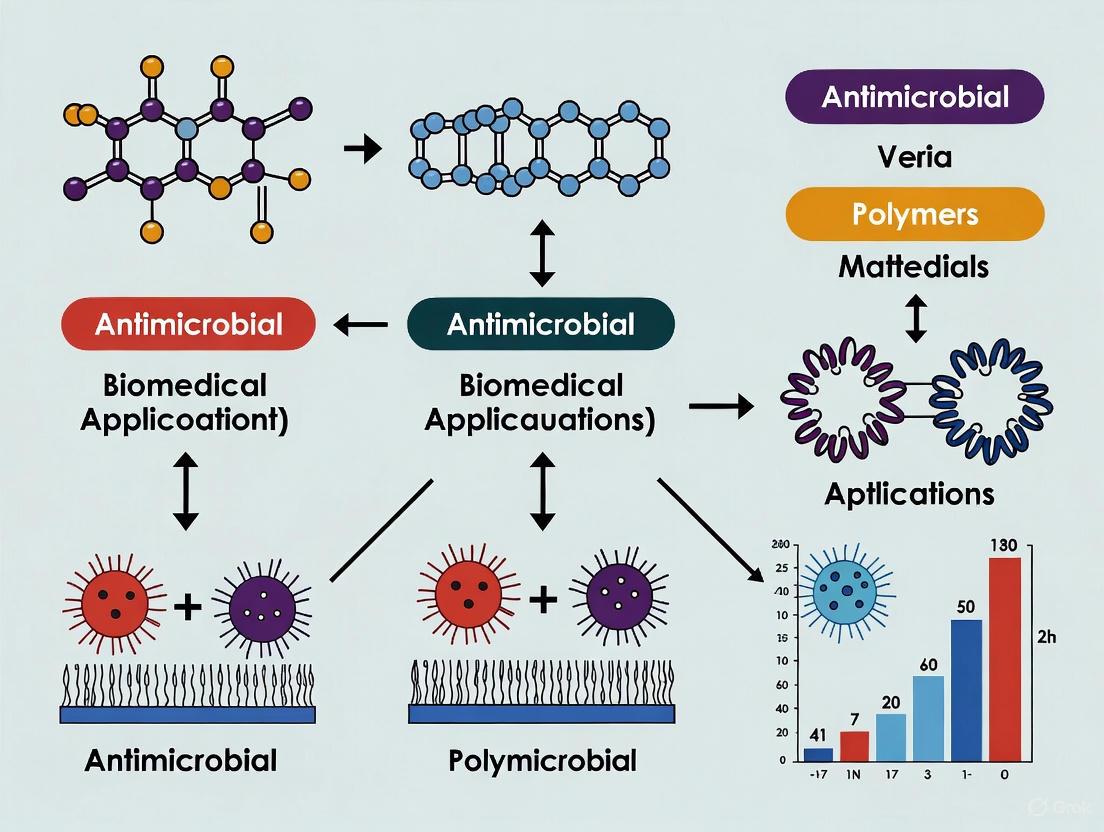
This article provides a comprehensive review of antimicrobial polymers (APs) for researchers, scientists, and drug development professionals.
Antimicrobial Polymers in Biomedicine: Mechanisms, Applications, and Future Frontiers
Abstract
This article provides a comprehensive review of antimicrobial polymers (APs) for researchers, scientists, and drug development professionals. It explores the foundational concepts of APs, including their classification and mechanisms of action against multidrug-resistant threats like the ESKAPE pathogens. The scope covers methodological advances in material design, from bio-based polymers and nanostructures to novel non-amphiphilic systems, detailing their applications in drug delivery, medical implants, and tissue engineering. It further addresses key challenges in biocompatibility, selectivity, and industrial scalability, while offering comparative analyses of material performance and translational potential to guide future research and clinical application.
Understanding Antimicrobial Polymers: Definitions, Mechanisms, and the Fight Against Drug-Resistant Infections
Antimicrobial polymers represent a sophisticated class of functional materials engineered to inhibit or eliminate pathogenic microorganisms. These materials have gained significant importance in biomedical engineering as alternatives to conventional antibiotics, particularly in addressing the global challenge of antimicrobial resistance [1]. The classification system for these polymers is fundamentally structured around three distinct categories based on their mechanism of action: biocidal polymers, polymeric biocides, and biocide-releasing systems [2]. This taxonomy is crucial for researchers and product development professionals as it directly correlates with application performance, regulatory pathways, and biological safety profiles.
The global market for antimicrobial biomedical polymers has demonstrated substantial growth, reaching approximately $1.2 billion in 2022 with projections indicating expansion to $2.1 billion by 2028, reflecting a compound annual growth rate of 8.7% [3]. This market trajectory underscores the increasing importance of these materials across medical devices, wound dressings, and pharmaceutical applications. Within this landscape, a precise understanding of the classification framework enables targeted development of antimicrobial solutions with optimized efficacy and minimal toxicity.
Table 1: Fundamental Categories of Antimicrobial Polymers
| Category | Structural Principle | Mechanism of Action | Key Characteristics |
|---|---|---|---|
| Biocidal Polymers | Antimicrobial activity emerges from the entire macromolecular structure [2] | Membrane disruption via electrostatic interactions and insertion [2] [4] | Selective toxicity, non-leaching, resistance prevention |
| Polymeric Biocides | Biocidal groups attached to polymer backbone as repeating units [1] [2] | Dependent on tethered biocidal groups (e.g., quaternary ammonium) [5] | Activity potentially reduced compared to monomers |
| Biocide-Releasing Systems | Polymer matrix acts as carrier for antimicrobial agents [1] | Controlled release of encapsulated biocides (e.g., antibiotics, metal ions) [1] [3] | High initial efficacy, potential for reservoir depletion |
Systematic Classification of Antimicrobial Polymers
Biocidal Polymers
Biocidal polymers represent materials whose antimicrobial activity is an emergent property of the entire macromolecular architecture rather than individual functional groups [2]. These polymers are designed to mimic the mechanism of natural host defense peptides (HDPs), which provide broad-spectrum antimicrobial activity through membrane disruption without inducing significant resistance [4]. The structural hallmarks of these biomimetic polymers include: (1) cationic charge density for electrostatic attraction to negatively charged bacterial membranes, (2) optimal amphiphilic balance to facilitate membrane integration, and (3) precisely tuned molecular weight to enable multivalent interactions with microbial cells [4].
The mechanism of action for biocidal polymers primarily involves initial electrostatic attraction to anionic components of bacterial membranes, followed by hydrophobic insertion into the lipid bilayer, ultimately leading to membrane disruption and cell lysis [2] [4]. This non-specific mechanism presents a high barrier to resistance development compared to traditional antibiotics that target specific metabolic pathways. Research has demonstrated that systematic optimization of copolymer composition, chain length, hydrophobicity, and cationic charge can yield materials with exceptional broad-spectrum activity and high biocompatibility [4].
Polymeric Biocides
Polymeric biocides constitute macromolecules where biocidal functional groups are covalently incorporated as repeating units along the polymer backbone [1] [2]. Unlike biocidal polymers where activity emerges from the macromolecular structure, polymeric biocides essentially function as multiple interconnected biocides that ideally retain the mechanism of action of their monomeric counterparts [2]. Common examples include polymers functionalized with quaternary ammonium compounds, N-halamines, or antimicrobial peptides [5].
A significant consideration in designing polymeric biocides is that polymerization does not always preserve antimicrobial activity. Steric hindrance from the polymer backbone or reduced accessibility to biocidal groups can diminish efficacy compared to monomeric analogues [2]. For instance, while quaternary ammonium compounds maintain their membrane-disrupting capability when polymerized, some antibiotics lose activity when tethered via non-cleavable bonds [2]. Successful implementation requires careful structural design to ensure biocidal groups remain accessible to microbial targets.
Biocide-Releasing Systems
Biocide-releasing systems utilize polymers as reservoirs or matrices for antimicrobial agents that are released into the surrounding environment upon contact with moisture or specific stimuli [1]. These systems provide high local concentrations of antimicrobials at the infection site and include formulations such as polymer micelles, vesicles, nanoparticles, and hydrogels [1]. Common released agents include antibiotics, silver ions, zinc compounds, and natural antimicrobials [3].
These systems offer the advantage of rapid and potent antimicrobial action but face challenges related to finite reservoir capacity and potential environmental contamination from released biocides [2]. Recent advances have focused on developing "smart" release mechanisms triggered by environmental stimuli such as pH changes, enzyme presence, or bacterial metabolites, enabling targeted antimicrobial delivery only when needed [3]. This approach extends functional lifetime while minimizing unnecessary biocide release that could contribute to resistance development.
Diagram 1: Classification framework for antimicrobial polymers showing three primary categories and their fundamental characteristics.
Quantitative Analysis and Structure-Activity Relationships
The biological performance of antimicrobial polymers is governed by precise structure-activity relationships that balance efficacy against microorganisms with safety toward host cells. Key parameters include cationic charge density, hydrophobic content, molecular weight, and architectural topology [4]. Quantitative metrics such as minimum inhibitory concentration (MIC) and minimum bactericidal concentration (MBC) provide standardized measurements for comparing antimicrobial efficacy across different polymer systems.
Table 2: Performance Metrics of Representative Antimicrobial Polymer Classes
| Polymer Class | Representative Structure | MIC Range (μg/mL) | Hemolytic Concentration (HC50, μg/mL) | Therapeutic Index (HC50/MIC) | Primary Targets |
|---|---|---|---|---|---|
| Biocidal Polymers | Poly(methacrylate) with chlorhexidine-like side groups [2] | 1-25 [4] | >1000 [4] | >40 [4] | Broad-spectrum (Gram+/Gram-) |
| Polymeric Biocides | Quaternary ammonium-functionalized polymers [5] | 5-100 [5] | 100-500 [5] | 2-20 [5] | Gram-positive bacteria |
| Biocide-Releasing Systems | Silver nanoparticle-impregnated polymers [3] | 0.1-50 [3] | >200 [3] | >4 [3] | Broad-spectrum (bacteria, fungi) |
| Antimicrobial Peptide Mimetics | β-peptides, peptoids [4] | 2-30 [4] | 100-2000 [4] | 10-100 [4] | Multidrug-resistant pathogens |
The therapeutic index (typically calculated as HC50/MIC) represents a crucial parameter for evaluating the selectivity of antimicrobial polymers, with higher values indicating greater selectivity for microbial cells over mammalian cells [4]. Biocidal polymers often demonstrate superior therapeutic indices due to their biomimetic mechanisms that exploit structural differences between bacterial and mammalian membranes [4]. This selectivity stems from the higher negative charge density and distinct lipid composition of bacterial membranes compared to the neutral cholesterol-rich mammalian cell membranes.
Experimental Protocols and Characterization Methods
Protocol 1: Evaluation of Antimicrobial Efficacy
Objective: Determine minimum inhibitory concentration (MIC) and minimum bactericidal concentration (MBC) of antimicrobial polymers against reference bacterial strains.
Materials and Reagents:
- Cation-adjusted Mueller-Hinton broth (for bacteria) or Sabouraud dextrose broth (for fungi)
- Phosphate buffered saline (PBS, pH 7.4)
- Standard bacterial strains (e.g., Staphylococcus aureus ATCC 29213, Escherichia coli ATCC 25922)
- Sterile 96-well polypropylene microtiter plates with lids
- Dimethyl sulfoxide (DMSO) or sterile water for polymer dissolution
Procedure:
- Prepare stock solutions of test polymer in appropriate solvent (DMSO concentration should not exceed 1% in final assay)
- Perform twofold serial dilutions of polymer in culture medium across microtiter plate (100 μL/well)
- Prepare bacterial inoculum from fresh overnight culture, adjusting to ~5 × 10^5 CFU/mL in broth
- Add 100 μL bacterial inoculum to each well, resulting in final inoculum of ~5 × 10^4 CFU/mL
- Include growth control (inoculum without polymer) and sterility control (medium only)
- Incubate plates at 35±2°C for 16-20 hours without shaking
- Determine MIC as lowest polymer concentration showing no visible growth
- For MBC determination, subculture 10 μL from clear wells onto agar plates and incubate 24 hours
- Calculate MBC as lowest concentration achieving ≥99.9% reduction in viable count [1] [4]
Quality Control: Include reference antibiotics as positive controls; verify inoculum viability by plating serial dilutions.
Protocol 2: Cytotoxicity and Hemocompatibility Assessment
Objective: Evaluate cytotoxic effects of antimicrobial polymers on mammalian cells and hemolytic activity on erythrocytes.
Materials and Reagents:
- Mammalian cell line (e.g., HEK293, HaCaT, or primary fibroblasts)
- Complete cell culture medium with serum supplements
- Fresh human or animal erythrocytes in anticoagulant solution
- AlamarBlue, MTT, or similar metabolic activity indicator
- 96-well tissue culture-treated plates
- Centrifuge tubes and microplate reader
Procedure for Cytotoxicity Testing:
- Seed cells in 96-well plates at optimal density (typically 10,000 cells/well)
- Incubate 24 hours to allow cell attachment
- Prepare serial dilutions of test polymer in culture medium
- Replace medium with polymer solutions and incubate 24-48 hours
- Add viability indicator (e.g., 10% AlamarBlue) and incubate 2-4 hours
- Measure fluorescence/absorbance using microplate reader
- Calculate IC50 (concentration causing 50% reduction in viability) [4]
Procedure for Hemolysis Assay:
- Wash erythrocytes 3× with PBS and prepare 2% (v/v) suspension
- Mix erythrocyte suspension with equal volume polymer solutions
- Include negative control (PBS) and positive control (1% Triton X-100)
- Incubate 1 hour at 37°C with gentle mixing
- Centrifuge and measure hemoglobin release at 540 nm
- Calculate hemolysis percentage relative to positive control [4]
Interpretation: HC50 (concentration causing 50% hemolysis) should be significantly higher than MIC for selective antimicrobial action.
Research Reagent Solutions: Essential Materials Toolkit
Table 3: Key Reagents and Materials for Antimicrobial Polymer Research
| Category | Specific Examples | Function/Application | Supplier Notes |
|---|---|---|---|
| Cationic Monomers | 2-(Dimethylamino)ethyl methacrylate (DMAEMA), Quaternary ammonium methacrylates (QAMs) | Impart positive charge for electrostatic binding to microbial cells | Sigma-Aldrich, TCI America; requires purification before polymerization |
| Hydrophobic Comonomers | Butyl methacrylate, Hexyl methacrylate, Styrene | Control amphiphilic balance for membrane insertion | Available in high purity from major chemical suppliers |
| Polymerization Reagents | Azobisisobutyronitrile (AIBN), Ammonium persulfate (APS) | Free-radical initiators for polymer synthesis | Recrystallize AIBN before use for optimal results |
| Microbiological Media | Mueller-Hinton broth, Tryptic Soy Agar | Standardized antimicrobial susceptibility testing | BD Diagnostics, Thermo Fisher Scientific |
| Reference Strains | S. aureus ATCC 29213, E. coli ATCC 25922, P. aeruginosa ATCC 27853 | Quality control and standardized efficacy assessment | American Type Culture Collection (ATCC) |
| Cytotoxicity Assays | AlamarBlue, MTT, LDH assay kits | Assessment of mammalian cell compatibility | Thermo Fisher, Promega, Roche |
| Characterization Standards | Phosphate buffered saline, Dimethyl sulfoxide | Solvent and buffer systems for biological testing | Use tissue-culture grade for biological assays |
Diagram 2: Mechanism of membrane disruption by biocidal polymers showing sequential steps from initial attraction to final cell lysis.
Application Protocols for Biomedical Implementations
Protocol 3: Fabrication of Antimicrobial Coatings for Medical Devices
Objective: Apply durable antimicrobial polymer coatings to medical device surfaces to prevent biofilm formation.
Materials and Equipment:
- Plasma cleaner or corona treater for surface activation
- Polymer solution (1-5% w/v in appropriate solvent)
- Dip-coating apparatus or spray coater
- Curing oven or UV crosslinking system
- Medical-grade substrate (polyurethane, silicone, titanium)
- Characterization tools: contact angle goniometer, FTIR, SEM
Procedure:
- Clean substrate surfaces with sequential washes (detergent, water, ethanol)
- Activate surfaces using oxygen plasma (100-200 W, 1-5 minutes) to generate reactive groups
- Prepare antimicrobial polymer solution ensuring complete dissolution
- Apply coating using dip-coating (withdrawal speed 1-10 mm/s) or spray coating (multiple thin layers)
- Crosslink coating using appropriate method:
- Thermal curing: 60-120°C for 1-4 hours
- UV crosslinking: 254-365 nm, 5-30 minutes with photoinitiator
- Wash coated surfaces extensively to remove unbound polymer
- Characterize coating thickness, uniformity, and stability [3] [2]
Quality Assessment:
- Perform adhesion testing via tape test or cross-hatch method
- Evaluate coating durability in simulated physiological conditions
- Verify antimicrobial efficacy using ISO 22196 or similar standardized methods
Protocol 4: Formulation of Stimuli-Responsive Antimicrobial Hydrogels
Objective: Develop hydrogel systems that release antimicrobial agents in response to specific environmental triggers.
Materials and Reagents:
- Polymer matrix (e.g., polyethylene glycol, chitosan, hyaluronic acid)
- Crosslinker (e.g., N,N'-methylenebisacrylamide, genipin)
- Antimicrobial payload (antibiotics, silver nanoparticles, antimicrobial peptides)
- Stimuli-responsive monomers (pH-sensitive, enzyme-cleavable, thermoresponsive)
- Molding apparatus or 3D printing system
Procedure:
- Prepare polymer solution in appropriate buffer (2-10% w/v)
- Incorporate antimicrobial payload with gentle mixing
- Add crosslinking initiator system (chemical, photo-, or thermal)
- Transfer to mold or directly print into desired architecture
- Crosslink using appropriate conditions:
- Chemical crosslinking: 37°C for 2-24 hours
- Photocrosslinking: 365-405 nm, 5-15 minutes
- Wash hydrogel to remove unreacted components
- Characterize swelling ratio, mechanical properties, and release kinetics [1] [3]
Trigger Evaluation:
- pH-responsive: Measure release across pH 5.0-7.4
- Enzyme-responsive: Incubate with specific enzymes (e.g., matrix metalloproteinases)
- Bacterial metabolite-responsive: Test in presence of bacterial culture supernatants
Performance Validation: Assess antimicrobial activity against clinically relevant biofilm models using colony counting or metabolic activity assays.
The structured classification of antimicrobial polymers into biocidal polymers, polymeric biocides, and biocide-releasing systems provides a rational framework for research and development in this rapidly advancing field. Each category offers distinct advantages and limitations that dictate appropriate application contexts. Biocidal polymers demonstrate exceptional potential for long-term, resistance-resistant antimicrobial surfaces, while biocide-releasing systems offer potent, immediate protection in clinical scenarios where rapid microbial elimination is paramount.
Future directions in antimicrobial polymer development include creating multi-mechanistic systems that combine elements from multiple categories, advanced stimuli-responsive "smart" materials with precisely controlled activation, and hybrid natural-synthetic polymers that maximize biocompatibility while maintaining efficacy [6] [3]. Additionally, the growing emphasis on environmental sustainability is driving research toward biodegradable antimicrobial polymers that minimize ecological impact after use.
As antimicrobial resistance continues to pose grave challenges to global health, these functional polymeric materials represent increasingly vital tools in the multidisciplinary effort to develop effective anti-infective strategies. The standardized protocols and classification systems presented in this work provide researchers with a foundation for systematic development, characterization, and implementation of these advanced materials in biomedical applications.
Antimicrobial polymers (AMPs) represent a promising class of agents in the fight against multidrug-resistant pathogens. A primary mechanism by which these polymers exert their effects is through membrane disruption culminating in cell lysis. This process is initiated by electrostatic interactions between the cationic charges on the polymer and the anionic components of the microbial membrane [7] [8] [9]. This interaction is fundamental because bacterial membranes are rich in anionic phospholipids like phosphatidylglycerol (PG) and cardiolipin (CL), in contrast to the more neutral mammalian cell membranes that contain zwitterionic lipids such as phosphatidylcholine (PC) and cholesterol [8]. This charge differential provides a basis for the selective targeting of microbial cells over host cells, a crucial advantage for therapeutic applications [10].
Following the initial electrostatic attraction, the amphipathic nature of many antimicrobial polymers—possessing both hydrophobic and hydrophilic regions—enables their insertion into and subsequent disruption of the lipid bilayer [7] [9]. This disruption can follow several models, including the toroidal-pore, barrel-stave, and carpet models, all of which ultimately compromise the membrane's integrity [11] [8]. The loss of membrane integrity leads to uncontrolled ion flux, leakage of cellular contents, and eventually, cell lysis and death [7] [12]. Due to the physical nature of this mechanism, it presents a significantly higher barrier to the development of microbial resistance compared to conventional antibiotics that target specific proteins or biochemical pathways [13] [10].
Diagram: Mechanism of Microbial Membrane Disruption by Cationic Polymer
Quantitative Data on Antimicrobial Polymer Parameters
The antimicrobial efficacy of polymers is influenced by several key physicochemical parameters. The cationic charge density facilitates the initial binding to negatively charged microbial surfaces, while hydrophobicity promotes the subsequent insertion into the lipid bilayer [9] [13]. The molecular weight and architecture (e.g., linear, branched) further modulate this activity by influencing the polymer's ability to aggregate on and disrupt the membrane [9]. The Minimum Inhibitory Concentration (MIC) is a standard metric used to quantify the potency of these antimicrobial agents, representing the lowest concentration that prevents visible microbial growth [10].
Table 1: Key Physicochemical Parameters Influencing Antimicrobial Polymer Activity
| Parameter | Structural Feature | Impact on Antimicrobial Activity | Optimal Range/Example |
|---|---|---|---|
| Cationic Charge | Quaternary ammonium, guanidinium groups | Enables electrostatic attraction to anionic microbial membranes; essential for initial binding [9] [14] | High charge density (e.g., polyethylenimine) [14] |
| Hydrophobicity | Alkyl chains, aromatic groups | Mediates insertion into the hydrophobic core of the lipid bilayer; enhances membrane disruption [7] [9] | Balanced to avoid excessive host cell toxicity [7] |
| Molecular Weight | Polymer chain length | Influences membrane penetration capability and multivalent interactions; high MW often correlates with higher activity [9] | Varies by polymer (e.g., high MW PEI is highly active) [9] |
| Amphipathicity | Presence of both cationic and hydrophobic regions | Allows for initial binding (via cationic face) followed by membrane integration (via hydrophobic face) [7] | Fundamental design principle for many synthetic AMPs [10] |
Table 2: Example Antimicrobial Polymers and Their Reported Efficacy
| Antimicrobial Polymer | Target Microorganism(s) | Reported Efficacy (MIC or % Reduction) | Primary Mechanism / Notes |
|---|---|---|---|
| N-alkyl-polyethylenimine | Broad-spectrum (airborne and waterborne bacteria, fungi) | ~100% cell inactivation when surface-immobilized [9] | Membrane disruption; nontoxic to mammalian cells [9] |
| Poly-ε-lysine | Gram-positive bacteria (e.g., B. subtilis) | Effective at low concentrations (specific MIC values not listed) [9] | Electrostatic interaction and cell wall penetration [9] |
| Chitosan | Gram-negative bacteria, Gram-positive bacteria, Fungi | More effective on fungi than yeasts; greater effect on Gram-negative than Gram-positive bacteria [9] | Efficacy depends on pH, influencing electrostatic vs. chelating/hydrophobic interactions [9] |
| Polyguanidines | Broad-spectrum (greater on Gram-positive) | High efficacy with low toxicity; high water solubility [9] | Electrostatic forces; high MW polymers penetrate Gram-positive bacteria more effectively [9] |
Experimental Protocols
Protocol 1: Assessing Bacterial Membrane Disruption via Cytoplasmic Leakage
This protocol details a method to evaluate the membrane disruption activity of antimicrobial polymers by measuring the release of intracellular components, such as nucleic acids, from bacterial cells.
1. Principle: Upon polymer-induced membrane damage, the cytoplasmic membrane becomes permeable, allowing intracellular materials like DNA and RNA to leak into the surrounding supernatant. The concentration of these nucleic acids can be quantified by measuring the absorbance at 260 nm, providing a quantitative indicator of membrane disruption [11] [15].
2. Materials:
- Test Organism: Mid-logarithmic phase culture of target bacteria (e.g., Escherichia coli ATCC 25922, Staphylococcus aureus ATCC 29213).
- Antimicrobial Polymer Solution: Prepared in an appropriate solvent (e.g., deionized water, buffer).
- Control Solutions: A growth medium negative control and a positive disruption control (e.g., 1% Triton X-100).
- Spectrophotometer or microplate reader capable of measuring absorbance at 260 nm.
- Centrifuge and microcentrifuge tubes.
- Appropriate Buffer: e.g., Phosphate-Buffered Saline (PBS) or a low-absorbance growth medium.
3. Procedure: 1. Culture Preparation: Grow the bacterial strain to mid-logarithmic phase in a suitable broth (e.g., Mueller-Hinton Broth). Harvest cells by centrifugation (e.g., 5,000 × g for 10 minutes). 2. Cell Washing: Wash the cell pellet twice with buffer to remove residual medium and extracellular nucleic acids. Resuspend the final pellet in buffer to an optical density (OD~600~) of approximately 0.5, representing ~10^8^ CFU/mL. 3. Polymer Exposure: In a microcentrifuge tube, mix 450 µL of the cell suspension with 50 µL of the antimicrobial polymer solution at the desired test concentration. Include negative (buffer only) and positive (detergent) controls. 4. Incubation: Incubate the mixture at 37°C with shaking for a predetermined time (e.g., 1-2 hours). 5. Pellet Removal: Centrifuge the samples at 12,000 × g for 5 minutes to pellet intact cells and cellular debris. 6. Supernatant Measurement: Carefully transfer 200 µL of the clear supernatant to a quartz cuvette or a UV-transparent microplate. Measure the absorbance at 260 nm (A~260~) against a buffer blank.
4. Data Analysis: Calculate the percentage of cytoplasmic leakage relative to the positive control (100% leakage) using the formula: [ \text{Leakage} = \frac{(A{sample} - A{negative control})}{(A{positive control} - A{negative control})} \times 100\% ] A significant increase in A~260~ in the polymer-treated samples compared to the negative control indicates substantial membrane disruption and cell lysis [15].
Protocol 2: Visualizing Membrane Damage using Fluorescent Dye Uptake
This protocol uses membrane-impermeant fluorescent dyes to visually confirm the loss of membrane integrity induced by antimicrobial polymers.
1. Principle: Propidium iodide (PI) is a fluorescent dye that is excluded from cells with intact membranes. When the cytoplasmic membrane is compromised, PI enters the cell, binds to nucleic acids, and exhibits a strong red fluorescence. This allows for the direct observation of damaged cells via fluorescence microscopy [11].
2. Materials:
- Bacterial Culture: Prepared as described in Protocol 1, step 1.
- Antimicrobial Polymer Solution.
- Propidium Iodide (PI) Stock Solution: (e.g., 1 mg/mL in water).
- Fluorescence Microscope equipped with appropriate filter sets for PI (excitation/emission ~535/617 nm).
- Microscope slides and coverslips.
- Incubator.
3. Procedure: 1. Cell Preparation: Prepare a bacterial cell suspension as in Protocol 1, steps 1-2. 2. Staining and Treatment: Mix 995 µL of cell suspension with 5 µL of PI stock solution. Add the antimicrobial polymer to the desired final concentration. 3. Incubation: Incubate the mixture in the dark at 37°C for 30-60 minutes. 4. Microscopy: Place a 10 µL aliquot of the stained cell suspension on a microscope slide, cover with a coverslip, and immediately observe under the fluorescence microscope. 5. Image Acquisition: Capture images using both brightfield and fluorescence channels. Cells with compromised membranes will show bright red fluorescence.
4. Data Analysis: Compare the number of fluorescent (PI-positive) cells in the polymer-treated sample to the negative control. A high percentage of PI-positive cells confirms that the polymer's mechanism of action involves permeabilization of the bacterial cytoplasmic membrane [11].
Diagram: Experimental Workflow for Membrane Disruption Analysis
The Scientist's Toolkit: Research Reagent Solutions
Table 3: Essential Reagents and Materials for Membrane Disruption Studies
| Reagent / Material | Function / Application | Example Use Case / Notes |
|---|---|---|
| Cationic Polymers (e.g., Polyethylenimine, Chitosan) | Direct antimicrobial agents for mechanism of action studies. | Used as positive controls or benchmark materials; assess impact of MW and charge density [9] [14]. |
| Propidium Iodide (PI) | Membrane-impermeant fluorescent nucleic acid stain. | Vital for fluorescence microscopy protocols to visualize loss of membrane integrity in treated cells [11]. |
| SYTOX Green / Other Viability Stains | Alternative membrane-impermeant dyes for flow cytometry or high-throughput screening. | Provides quantitative data on the percentage of permeabilized cells in a population [11]. |
| Detergents (e.g., Triton X-100, SDS) | Positive control reagents for total lysis and membrane disruption. | Used to define 100% leakage or killing in cytotoxicity and leakage assays [12] [15]. |
| Luria-Bertani (LB) / Mueller-Hinton Broth | Standard media for culturing gram-negative and gram-positive bacterial test strains. | Ensures robust and reproducible cell growth prior to polymer exposure [15]. |
| Phosphate-Buffered Saline (PBS) | Buffer for washing and resuspending cells during experimental procedures. | Provides an isotonic and chemically defined environment, free from interfering substances [15]. |
| High-Pressure Homogenizer / Sonicator | Equipment for mechanical cell lysis. | Used as a reference method for total cell disruption and content release or in preparatory methods [12] [16]. |
The ESKAPE pathogens—Enterococcus faecium, Staphylococcus aureus, Klebsiella pneumoniae, Acinetobacter baumannii, Pseudomonas aeruginosa, and Enterobacter species—represent a critical group of multidrug-resistant (MDR) bacteria that pose a severe threat to global health [17]. These pathogens are the leading cause of healthcare-associated infections (HAIs), responsible for significant morbidity, mortality, and healthcare costs worldwide [18]. In 2019 alone, antimicrobial resistance (AMR) was associated with 4.95 million deaths globally, with ESKAPE pathogens being major contributors to this burden [19]. The clinical management of ESKAPE infections is complicated by their extensive antibiotic resistance profiles and ability to rapidly develop resistance to new antimicrobial agents, including those recently developed or still in clinical trials [20]. This application note provides a comprehensive overview of current research and detailed protocols for targeting these formidable bacterial threats within the context of developing innovative biomedical solutions, particularly antimicrobial polymers.
Current Threat Assessment and Resistance Profiles
ESKAPE pathogens demonstrate alarming resistance rates across healthcare settings. A seven-year retrospective study (2018-2024) at a tertiary hospital revealed that from 2,483 positive blood cultures, 3,724 ESKAPE pathogens were isolated [18]. S. aureus and K. pneumoniae predominated, particularly in intensive care and hematology wards [18]. The Intensive Care Unit (ICU) yielded the highest number of isolates, with S. aureus (25.7%), K. pneumoniae (25.6%), and A. baumannii (23.4%) being most prevalent [18].
Table 1: Prevalence and Key Resistance Profiles of ESKAPE Pathogens in Bloodstream Infections (2018-2024)
| Pathogen | No. of Isolates | ICU Prevalence (%) | Key Resistance Markers | Reserve Antibiotic Susceptibility |
|---|---|---|---|---|
| Enterococcus faecium | 508 | 6.7 | Vancomycin Resistance (VRE) | Linezolid (preserved) |
| Staphylococcus aureus | 1284 | 25.7 | Methicillin Resistance (MRSA) | - |
| Klebsiella pneumoniae | 963 | 25.6 | ESBL Production, Carbapenemase Producers (including NDM+OXA-48) | Modern β-lactam/β-lactamase inhibitor combinations |
| Acinetobacter baumannii | 461 | 23.4 | Near-universal Multidrug Resistance | Colistin (preserved) |
| Pseudomonas aeruginosa | 328 | - | Lower overall resistance | Colistin (preserved) |
| Enterobacter spp. | 182 | - | - | Carbapenem-susceptible |
Beyond clinical settings, ESKAPE pathogens are increasingly detected in aquatic environments, acting as reservoirs for resistance genes and posing transmission risks through water systems [21]. Anthropogenic activities such as farming and wastewater influx introduce these pathogens into water bodies, creating environmental reservoirs that contribute to the spread of AMR [21].
Mechanisms of Antimicrobial Resistance
ESKAPE pathogens employ sophisticated biochemical strategies to evade antimicrobial treatments, with Gram-negative species presenting additional challenges due to their complex cell envelope structure [17] [22].
Primary Resistance Mechanisms
Drug Uptake Limitations: The Gram-negative outer membrane, characterized by its asymmetric lipid bilayer with an outer leaflet of lipopolysaccharides (LPS), creates a formidable physicochemical barrier to both hydrophilic and hydrophobic antimicrobial compounds [22].
Enzymatic Drug Inactivation: Production of hydrolytic enzymes like β-lactamases that degrade critical antibiotics, particularly in Gram-negative ESKAPE pathogens [17].
Efflux Pump Systems: Expression of broad-spectrum efflux pumps that actively transport antimicrobials out of bacterial cells [17] [22].
Target Site Modification: Alteration of antibiotic binding sites through mutation or enzymatic modification [17].
Biofilm Formation: Development of structured microbial communities encased in extracellular polymeric substances that provide collective protection against antibiotics and host defenses [23].
Table 2: Major Resistance Mechanisms in ESKAPE Pathogens
| Mechanism | Functional Category | Example in ESKAPE Pathogens |
|---|---|---|
| Outer Membrane Permeability Barrier | Intrinsic Resistance | LPS structure in Gram-negative ESKAPE [22] |
| Antibiotic-Inactivating Enzymes | Acquired Resistance | β-lactamases in K. pneumoniae and A. baumannii [17] |
| Efflux Pump Systems | Intrinsic/Acquired Resistance | RND pumps in P. aeruginosa and A. baumannii [17] |
| Target Site Modification | Acquired Resistance | VanA gene cluster in E. faecium (VRE) [19] |
| Biofilm Formation | Adaptive Resistance | Polysaccharide matrix in S. aureus and P. aeruginosa [23] |
Biofilm-Associated Resistance
Biofilms represent a significant resistance mechanism wherein microbial communities develop within an extracellular polymeric substance (EPS) matrix [23]. The biofilm lifecycle progresses through initial reversible attachment, irreversible attachment, maturation, and dispersion phases [23]. This structured environment creates chemical and physical gradients that generate heterogeneous microbial subpopulations with varying metabolic states and antibiotic susceptibility profiles [23]. The EPS matrix itself acts as a diffusion barrier, impeding antibiotic penetration while facilitating horizontal gene transfer of resistance determinants [23].
Diagram 1: Biofilm Development and Resistance Mechanisms
Emerging Therapeutic Approaches
Antimicrobial Polymers
Synthetic nanoengineered antimicrobial polymers (SNAPs) represent a promising approach to combat MDR ESKAPE pathogens [22]. These polymers mimic the physicochemical properties of antimicrobial peptides (AMPs) but offer advantages in manufacturing cost, stability, and tunability [22]. SNAPs containing N-isopropylacrylamide (NIPAM) as hydrophobic constituents and N-(2-aminoethyl) acrylamide (AEAM) as cationic constituents demonstrate potent activity against Gram-negative pathogens like P. aeruginosa by targeting LPS and disrupting membrane integrity [22].
A particularly innovative approach involves oligoamidine (OA1) integrated into a thermoresponsive hydrogel (OA1-PF127), which exerts a triple antibacterial mechanism involving membrane disruption, DNA binding, and ROS generation [24]. This system offers convenient application to infected skin wounds and maintains full antimicrobial efficacy against MDR pathogens [24].
Phage Therapy
Bacteriophage therapy has re-emerged as a promising alternative to antibiotics, utilizing viruses that specifically infect and lyse bacterial cells [19] [25]. Phages offer strain-specific targeting, preserve the microbiome, and can co-evolve with bacteria, making them a flexible tool against resistance [19]. Recent advances include engineered phage cocktails and combination therapies with antibiotics, such as phage OMKO1 which targets bacterial efflux pumps in P. aeruginosa and increases antibiotic sensitivity when combined with ceftazidime [19].
Table 3: Emerging Therapeutic Approaches Against ESKAPE Pathogens
| Therapeutic Approach | Mechanism of Action | Advantages | Current Status |
|---|---|---|---|
| Synthetic Nanoengineered Antimicrobial Polymers (SNAPs) | Membrane disruption via LPS targeting, pore formation [22] | Low toxicity, cost-effective production, multiple targets [22] | Preclinical research |
| Oligoamidine (OA1) Hydrogel | Triple mechanism: membrane disruption, DNA binding, ROS generation [24] | Biocompatible, wound-conforming, effective against MDR pathogens [24] | Ex vivo testing (pig skin model) |
| Bacteriophage Therapy | Bacterial cell lysis, biofilm disruption, enzymatic degradation [19] [25] | High specificity, co-evolution with bacteria, immune modulation [25] | Clinical trials and compassionate use |
| Phage-Antibiotic Synergy | Combined attack on bacterial structures and functions [19] | Enhanced efficacy, reduced resistance development [19] | Early clinical reports |
Experimental Protocols
Protocol: Laboratory Evolution of Antibiotic Resistance
Purpose: To characterize the potential for resistance development in ESKAPE pathogens against novel antimicrobial compounds [20].
Materials:
- Bacterial strains: ESKAPE pathogens (e.g., E. coli, K. pneumoniae, A. baumannii, P. aeruginosa)
- Antimicrobial compounds: Test and control antibiotics
- Culture media: Mueller-Hinton broth/agar
- Equipment: Microplate readers, automated systems (VITEK 2), incubators
Procedure:
- Strain Selection and Initial MIC Determination: Select MDR and drug-sensitive strains. Determine initial MICs for all antibiotics using broth microdilution following EUCAST/CLSI guidelines [20] [18].
- Spontaneous Frequency-of-Resistance (FoR) Analysis:
- Adaptive Laboratory Evolution (ALE):
- Resistance Mechanism Characterization:
Diagram 2: Antibiotic Resistance Evolution Study Workflow
Protocol: Antimicrobial Susceptibility Testing for Surveillance Studies
Purpose: To monitor resistance patterns of ESKAPE pathogens in clinical settings [18].
Materials:
- Clinical isolates from blood cultures
- Blood culture bottles (aerobic and anaerobic)
- Identification systems: MALDI-TOF MS, VITEK 2
- Antimicrobial panels: AST cards for Gram-positive and Gram-negative bacteria
- Quality control strains: P. aeruginosa ATCC 27853, E. coli ATCC 25922, S. aureus ATCC 29213
Procedure:
- Sample Collection and Processing:
- Pathogen Identification:
- Antimicrobial Susceptibility Testing:
- Resistance Mechanism Detection:
- Perform phenotypic ESBL detection with double-disk synergy tests [18].
- Detect carbapenemase production using PCR-based methods or immunochromatographic assays [18].
- Identify methicillin resistance in S. aureus using cefoxitin disk diffusion [18].
- Confirm vancomycin resistance in Enterococcus with E-test (MIC ≥32 μg/mL) [18].
Protocol: Evaluation of Antimicrobial Polymer Efficacy
Purpose: To assess the antibacterial activity and mechanism of action of synthetic antimicrobial polymers against ESKAPE pathogens [22].
Materials:
- Bacterial strains: P. aeruginosa LESB58 (clinical cystic fibrosis isolate)
- Antimicrobial polymers: SNAPs (e.g., a-D50 and a-T100 copolymers)
- Culture media: cation-adjusted Mueller-Hinton broth (caMHB)
- Analytical techniques: Scanning electron microscopy, atomic force microscopy, neutron reflectometry
Procedure:
- Bacterial Culture Preparation:
- MIC Determination:
- Morphological Analysis:
- Membrane Interaction Studies:
The Scientist's Toolkit: Research Reagent Solutions
Table 4: Essential Research Reagents for ESKAPE Pathogen Studies
| Reagent/System | Function | Application Example |
|---|---|---|
| VITEK 2 System (bioMérieux) | Automated identification and antimicrobial susceptibility testing | AST-N334 cards for Gram-negative bacteria in surveillance studies [18] |
| BacT/ALERT Virtuo (bioMérieux) | Automated blood culture system | Detection of bloodstream infections from clinical samples [18] |
| MALDI-TOF MS (VITEK MS) | Rapid microbial identification | Species identification of ESKAPE pathogens from positive cultures [18] |
| Cation-Adjusted Mueller-Hinton Broth (caMHB) | Standardized susceptibility testing medium | MIC determination for antimicrobial polymers [22] |
| Synthetic Nanoengineered Antimicrobial Polymers (SNAPs) | Novel antimicrobial agents targeting bacterial membranes | Mechanism of action studies against P. aeruginosa [22] |
| Oligoamidine (OA1) | Cationic antimicrobial oligomer | Incorporation into hydrogels for wound infection treatment [24] |
| Biomimetic Asymmetric Membranes | Model bacterial outer membranes | Neutron reflectometry studies of polymer-membrane interactions [22] |
| RESIST-5 OOKNV Immunochromatographic Assay | Rapid carbapenemase detection | Identification of resistance mechanisms in K. pneumoniae and A. baumannii [18] |
The continuous evolution of antimicrobial resistance in ESKAPE pathogens necessitates innovative approaches that can overcome conventional resistance mechanisms. The integration of advanced antimicrobial polymers with traditional and emerging therapeutic strategies offers promising avenues for addressing this critical healthcare challenge. The protocols and applications detailed in this document provide researchers with standardized methods for evaluating resistance development, monitoring epidemiological trends, and assessing novel interventions. As the field progresses, combination approaches leveraging multiple mechanisms of action—such as membrane disruption, nucleic acid binding, and immune modulation—will be essential for developing effective countermeasures against these formidable bacterial threats.
The Urgency of Antimicrobial Resistance (AMR) and the Role of Polymeric Solutions
Antimicrobial resistance (AMR) represents a critical and escalating global health crisis, directly responsible for 1.27 million deaths annually and contributing to nearly five million more [26]. Surveillance data from the World Health Organization (WHO) reveals that one in six laboratory-confirmed bacterial infections globally are resistant to antibiotic treatments, with resistance rates increasing at an alarming 5-15% per year for over 40% of monitored antibiotic-bacteria combinations [27] [26]. This "silent pandemic" disproportionately affects regions with developing health systems and is particularly driven by the rise of multidrug-resistant Gram-negative bacteria [27] [28]. In this context, antimicrobial polymers emerge as a promising frontier in biomedical research, offering unique mechanisms of action that can circumvent traditional resistance pathways and provide new solutions for preventing and treating infections.
Global AMR Surveillance: Quantifying the Crisis
The following tables consolidate key quantitative findings from the latest WHO Global Antibiotic Resistance Surveillance Report (2025) and supporting data, providing a snapshot of the current AMR landscape.
Table 1: Global Regional Resistance Prevalence (2023)
| WHO Region | Prevalence of Resistant Infections | Key Observations |
|---|---|---|
| Global Average | 1 in 6 infections [27] | Baseline for global comparison |
| South-East Asia & Eastern Mediterranean | 1 in 3 infections [27] [26] | Highest regional prevalence |
| African Region | 1 in 5 infections [27] | Resistance exceeds 70% for some pathogens |
| Region of the Americas | 1 in 7 infections [27] | Slightly better than global average |
Table 2: Resistance in Key Gram-negative Pathogens
| Pathogen | Antibiotic Class | Global Resistance Rate | Regional Highlights |
|---|---|---|---|
| Klebsiella pneumoniae | Third-generation cephalosporins | >55% [27] [26] | >70% in African Region [27] |
| Escherichia coli | Third-generation cephalosporins | >40% [27] [26] | Leading drug-resistant pathogen in bloodstream infections [27] |
| E. coli, K. pneumoniae, Salmonella, Acinetobacter | Carbapenems and Fluoroquinolones | Increasing, narrowing treatment options [27] [26] | Carbapenem resistance, once rare, is becoming more frequent [27] |
Antimicrobial polymers are designed to mimic host defense peptides and can be categorized based on their structure and mode of action. Their primary advantage lies in mechanisms that make it difficult for microbes to develop resistance, primarily through non-specific membrane disruption.
Classification and Mechanisms
The following diagram illustrates the logical classification of antimicrobial polymers and their primary mechanisms of action, which form the foundation for their application in biomedical research.
Membrane Lysis Mechanisms
Cationic polymers, rich in groups like quaternary ammonium or guanidinium, target the negatively charged bacterial membranes. The following workflow details the experimental process for synthesizing and evaluating the efficacy of such cationic antimicrobial polymers.
Experimental Protocols for Antimicrobial Polymer Evaluation
This section provides detailed methodologies for key experiments in developing and characterizing antimicrobial polymers, designed for reproducibility in a research setting.
Protocol 1: Synthesis of Cationic Amphiphilic Polymers
Objective: To synthesize a cationic amphiphilic polymer with membrane-lysing properties [8]. Materials:
- Cationic Monomer: e.g., (3-Acrylamidopropyl)trimethylammonium chloride (ATMAC)
- Hydrophobic Monomer: e.g., Butyl methacrylate (BMA)
- Initiator: Azobisisobutyronitrile (AIBN)
- Solvent: Anhydrous methanol or ethanol
- Dialysis Tubing: Molecular weight cut-off (MWCO) appropriate for target polymer size
Procedure:
- Monomer Mixture Preparation: In a round-bottom flask, dissolve the cationic and hydrophobic monomers in a molar ratio of 70:30 (cationic:hydrophobic) in 50 mL of anhydrous solvent to achieve a total monomer concentration of 1.0 M.
- Initiator Addition: Add AIBN initiator at 1 mol% relative to total monomers. Purge the reaction mixture with nitrogen or argon for 20 minutes to remove oxygen.
- Polymerization: Heat the reaction mixture to 70°C with continuous stirring under an inert atmosphere for 18-24 hours.
- Purification: Cool the reaction mixture to room temperature. Precipitate the polymer by slowly dripping the solution into a large excess of cold diethyl ether or acetone. Re-dissolve the precipitate in deionized water and dialyze (using tubing with an appropriate MWCO, e.g., 3.5-7 kDa) against deionized water for 48 hours, changing the water every 12 hours.
- Characterization: Lyophilize the purified polymer. Characterize using ( ^1H )-NMR for composition and Gel Permeation Chromatography (GPC) for molecular weight and dispersity (Ð).
Protocol 2: Determining Minimum Inhibitory Concentration (MIC)
Objective: To determine the minimum concentration of the synthesized polymer that inhibits visible bacterial growth, based on standard broth microdilution methods [29] [13]. Materials:
- Test Organisms: Standard strains from the ESKAPE panel (e.g., Staphylococcus aureus ATCC 29213, Pseudomonas aeruginosa ATCC 27853).
- Growth Medium: Cation-adjusted Mueller-Hinton Broth (CA-MHB).
- Sterile 96-well Polystyrene Microtiter Plate
- Positive Control: Broad-spectrum antibiotic (e.g., Ciprofloxacin).
- Negative Control: CA-MHB only.
Procedure:
- Inoculum Preparation: Adjust the turbidity of mid-logarithmic phase bacterial cultures in CA-MHB to 0.5 McFarland standard, then further dilute in CA-MHB to achieve a final concentration of approximately ( 5 \times 10^5 ) CFU/mL in the assay.
- Polymer Dilution: Prepare a stock solution of the test polymer in sterile water or DMSO (if poorly water-soluble). Create a two-fold serial dilution of the polymer directly in the microtiter plate using CA-MHB, typically covering a range from 1-512 µg/mL.
- Inoculation and Incubation: Add 100 µL of the prepared bacterial inoculum to each well containing 100 µL of the polymer dilution, mixing gently. Include growth control (bacteria + CA-MHB), sterility control (CA-MHB only), and a positive control well.
- Incubation: Cover the plate and incubate at 37°C for 18-24 hours without shaking.
- Result Interpretation: The MIC is the lowest concentration of the polymer that completely inhibits visible turbidity. Confirm the results by measuring the optical density at 600 nm (OD₆₀₀) using a microplate reader.
Protocol 3: Membrane Integrity Assay via Cytoplasmic β-Galactosidase Activity
Objective: To confirm membrane-lysing activity by detecting the release of the cytoplasmic enzyme β-galactosidase from E. coli [8]. Materials:
- Bacterial Strain: E. coli ML-35 (constitutive for β-galactosidase).
- Assay Buffer: 0.1 M Phosphate Buffered Saline (PBS), pH 7.0.
- Enzyme Substrate: Ortho-Nitrophenyl-β-galactoside (ONPG), prepared as a 10 mM solution in PBS.
- Stop Solution: 1 M Sodium Carbonate (Na₂CO₃)
Procedure:
- Cell Preparation: Grow E. coli ML-35 to mid-log phase. Harvest cells by centrifugation, wash twice, and resuspend in PBS to an OD₆₀₀ of ~0.5.
- Polymer Exposure: Mix 450 µL of cell suspension with 50 µL of the test polymer solution at 1x and 2x the predetermined MIC. Include a negative control (cells + PBS) and a positive control (cells lysed with 0.1% Triton X-100).
- Reaction Initiation: Incubate the mixtures at 37°C for 60 minutes. Add 100 µL of 10 mM ONPG solution to each tube to start the reaction.
- Reaction Termination and Measurement: Incubate until a yellow color develops in the positive control (typically 10-30 minutes). Stop the reaction by adding 500 µL of 1 M Na₂CO₃. Remove cell debris by centrifugation and measure the absorbance of the supernatant at 420 nm.
- Analysis: Compare the absorbance of test samples to controls. A significant increase in absorbance compared to the negative control indicates membrane damage and the release of β-galactosidase.
The Scientist's Toolkit: Research Reagent Solutions
The following table catalogs essential materials and reagents for research in antimicrobial polymers, as derived from the experimental protocols and literature.
Table 3: Key Research Reagents for Antimicrobial Polymer Development
| Item | Function/Application | Example & Notes |
|---|---|---|
| Cationic Monomers | Imparts positive charge for electrostatic binding to bacterial membranes [8] | (3-Acrylamidopropyl)trimethylammonium chloride (ATMAC); Quaternized ammonium compounds. |
| Hydrophobic Monomers | Enables insertion and disruption of the lipid bilayer [8] | Butyl methacrylate (BMA); Modifies Hydrophobic-Lipophilic Balance (HLB). |
| Initiators | Starts polymerization reaction. | Azobisisobutyronitrile (AIBN); For free-radical polymerization. |
| Standard Bacterial Strains | For in vitro efficacy and mechanism testing [29]. | ESKAPE panel strains: e.g., S. aureus (ATCC 29213), P. aeruginosa (ATCC 27853). |
| Cell Culture Lines | For assessing cytotoxicity and selectivity [8]. | Mammalian cell lines (e.g., HEK293, HaCaT); Used in hemolysis and MTT assays. |
| Spectrophotometric Substrates | Detecting enzyme release from cytosol upon membrane damage. | Ortho-Nitrophenyl-β-galactoside (ONPG); Yields yellow product (o-nitrophenol) upon cleavage. |
Design and Deployment: Synthetic Strategies and Biomedical Applications of Antimicrobial Polymers
The escalating challenge of antibiotic resistance has catalyzed the exploration of advanced materials for antimicrobial applications. Within this landscape, polymers—both bio-based and synthetic—have emerged as pivotal tools. Bio-based polymers, such as chitosan (derived from chitin) and poly(lactic-co-glycolic acid) (PLGA), offer exceptional biocompatibility and innate biological activity [30] [31]. Conversely, synthetic polymers like polyurethanes and polyesters provide unparalleled versatility, tunable mechanical properties, and widespread industrial utility [32] [33] [34]. This document frames these material classes within the context of antimicrobial biomedical research, providing application notes and detailed experimental protocols for researchers, scientists, and drug development professionals. The focus is on leveraging the intrinsic properties of these polymers and their hybrid systems to develop next-generation antimicrobial strategies.
Bio-Based Polymers
Chitosan
Chitosan is a linear polysaccharide derived from the deacetylation of chitin, a primary component of crustacean shells and fungal cell walls. Its structure comprises β-(1→4)-linked N-acetyl-D-glucosamine and D-glucosamine units [30]. The material is celebrated for its biocompatibility, biodegradability, and low toxicity [30] [31].
Antimicrobial Mechanism: The primary mechanism of action is electrostatic. The protonated amino groups (NH₃⁺) on the glucosamine units of chitosan interact with the negatively charged components of microbial cell membranes (e.g., lipopolysaccharides in gram-negative bacteria, teichoic acids in gram-positive bacteria) [30]. This interaction increases membrane permeability, leading to cell leakage and death [30]. Additional mechanisms include the chelation of essential metals and the penetration into the cell to bind DNA, inhibiting RNA and protein synthesis [30].
Key Properties for Biomedical Use: The antimicrobial efficacy and overall performance of chitosan are governed by several factors, which are summarized in the table below.
Table 1: Key Properties of Chitosan and Their Impact on Biomedical Applications
| Property | Description | Impact on Antimicrobial Activity & Biomedical Use |
|---|---|---|
| Degree of Deacetylation (DDA) | The proportion of D-glucosamine units in the polymer chain. | A higher DDA increases the density of cationic amine groups, enhancing antimicrobial efficacy, particularly at low pH [30]. |
| Molecular Weight | The size of the polymer chain. | Low molecular weight (LMW) chitosan can penetrate cell walls more effectively, while high molecular weight (HMW) chitosan may form a more extensive polymer film on cell surfaces [30]. LMW chitosan also demonstrates superior antioxidant activity [30]. |
| Solubility | Soluble in dilute acidic solutions (pH < 6.3) [30]. | Poor water solubility at neutral and basic pH is a major limitation for its application in physiological environments [30] [31]. |
| Mucoadhesivity | Ability to adhere to mucosal surfaces. | Enhances residence time at infection sites, promoting sustained antimicrobial action and improved drug delivery [30]. |
PLGA (Poly(lactic-co-glycolic acid))
PLGA is a synthetic, biodegradable copolymer that is FDA-approved for therapeutic use in humans. It hydrolyzes into its monomeric acids, lactic acid and glycolic acid, which are metabolized via the Krebs cycle [35]. While not intrinsically antimicrobial, its role as a controlled-release carrier for antimicrobial agents is indispensable.
Role in Antimicrobial Applications: PLGA serves as a protective reservoir for encapsulated drugs, shielding them from degradation and enabling controlled release kinetics. This prolongs the therapeutic presence of antimicrobials at the infection site, potentially reducing dosing frequency and improving efficacy against biofilms [35].
Key Formulation Considerations: The properties of PLGA can be tuned for specific drug delivery needs.
Table 2: Key Tunable Parameters of PLGA for Drug Delivery
| Parameter | Options | Impact on Drug Delivery |
|---|---|---|
| Lactide:Glycolide (L:G) Ratio | 50:50, 65:35, 75:25, 85:15 | A higher glycolide content generally leads to faster degradation and drug release rates due to increased hydrophilicity [36]. |
| Molecular Weight | Varies (e.g., 7,000-20,000 Da) | Higher molecular weight polymers degrade more slowly, leading to sustained drug release over a longer period. |
| End Group | Carboxylate (acid-capped) or Ester (ester-capped) | Acid-capped PLGA degrades faster than ester-capped due to autocatalysis by the terminal carboxylic acid groups. |
Chitosan-PLGA Hybrid Systems
The combination of chitosan and PLGA creates a synergistic system that merges the favorable properties of both polymers. The cationic surface of chitosan enhances mucoadhesion and interaction with bacterial membranes, while the PLGA core provides robust, controllable drug encapsulation [36] [35]. Furthermore, coating PLGA with chitosan can improve the stability of colloidal systems and enhance cellular uptake [35].
Protocol 1: Synthesis of Chitosan-Coated PLGA Nanoparticles via Double Emulsion (W/O/W) Method
This protocol is adapted from methods used to encapsulate cepharanthine and other hydrophilic drugs [35].
- 1. Aim: To fabricate and characterize antibiotic-loaded PLGA nanoparticles with a chitosan coat to enhance antimicrobial activity and stability.
- 2. Materials:
- Polymer: PLGA (50:50, acid-terminated, Mw ~11,000 Da)
- Coating Polymer: Chitosan (Low Molecular Weight, ~14,000 Da, viscosity 20-100 mPa·s)
- Drug: Water-soluble antibiotic (e.g., Ciprofloxacin)
- Solvents: Dichloromethane (DCM), Acetone
- Aqueous Phases: Deionized Water, 1-5% (v/v) Acetic Acid solution
- Surfactants: Polyvinyl alcohol (PVA), Poloxamer 188 (F68)
- Equipment: Probe sonicator, Magnetic stirrer/hot plate, Centrifuge, Lyophilizer, Dynamic Light Scattering (DLS) system for size and zeta potential measurement, HPLC system for encapsulation efficiency.
- 3. Workflow Diagram:
- 4. Experimental Procedure:
- Inner Aqueous Phase (W1): Dissolve the hydrophilic antibiotic (e.g., 10 mg) in 1 mL of deionized water.
- Organic Phase (O): Dissolve 100 mg of PLGA in 3 mL of DCM.
- Primary Emulsion (W1/O): Add the W1 phase to the O phase. Emulsify using a probe sonicator (e.g., 50-70 W power) on ice for 60-90 seconds to form a stable water-in-oil (W1/O) emulsion.
- Outer Aqueous Phase (W2): Dissolve 100 mg of PVA and 20-50 mg of chitosan in 100 mL of a 1% (v/v) acetic acid solution. Adjust the pH to ~4.5-5.0 if necessary.
- Secondary Emulsion (W1/O/W2): Pour the primary W1/O emulsion into the W2 phase under constant stirring (500-700 rpm). Subsequently, sonicate the mixture on ice for 2-3 minutes to form the double (W1/O/W2) emulsion.
- Solvent Evaporation: Stir the double emulsion continuously at room temperature for 4-6 hours or overnight to allow for complete evaporation of DCM and nanoparticle hardening.
- Purification: Centrifuge the nanoparticle suspension at high speed (e.g., 20,000 rpm for 30 minutes at 4°C). Wash the pellet with deionized water to remove free surfactants and unencapsulated drug. Repeat centrifugation.
- Lyophilization: Re-suspend the final nanoparticle pellet in a minimal volume of water and lyophilize for 48 hours to obtain a dry powder for storage and further use.
- 5. Characterization:
- Size and Zeta Potential: Hydration particle size, polydispersity index (PDI), and zeta potential are measured by dynamic light scattering (DLS). A successful chitosan coating is indicated by a positive zeta potential shift (e.g., from negative for plain PLGA to +20 to +40 mV) [35].
- Encapsulation Efficiency (EE): Determine by HPLC. Briefly, dissolve a known amount of nanoparticles in acetonitrile to break the matrix and release the drug. Filter and analyze the drug content via HPLC. Calculate EE% = (Amount of drug in nanoparticles / Total amount of drug used) × 100. Values above 80% are achievable [35].
- Morphology: Use Scanning Electron Microscopy (SEM) or Transmission Electron Microscopy (TEM) to confirm spherical morphology and monodisperse size distribution.
Synthetic Polymers
Polyurethanes
Polyurethanes (PUs) are a class of polymers characterized by carbamate (urethane) linkages in their backbone, formed by the reaction between a diisocyanate and a polyol [33]. Their properties can be finely tuned from soft elastomers to rigid foams by selecting appropriate starting materials.
Antimicrobial Mechanism (Cationic Poly(ester urethane)s): A significant advancement in antimicrobial PUs is the design of facially amphiphilic poly(ester urethane)s [32]. These polymers mimic antimicrobial peptides by incorporating cationic groups (e.g., quaternary ammonium) and hydrophobic segments uniformly along the polymer chain. The cationic groups electrostatically target negatively charged bacterial membranes, while the hydrophobic moieties integrate into and disrupt the lipid bilayer, causing leakage of cellular contents and cell death [32].
Structure-Activity Relationship: The balance between cationic charge density and hydrophobic character is critical for maximizing antimicrobial activity while minimizing toxicity to human cells (hemolysis) [32].
Table 3: Key Features and Applications of Synthetic Polymers
| Polymer | Key Monomers / Features | Primary Antimicrobial Mechanism | Example Biomedical Applications |
|---|---|---|---|
| Polyurethanes | Diisocyanate (e.g., TDI, MDI, H₁₂MDI) + Polyol (e.g., polyether, polyester) [33]. | Membrane disruption via cationic-hydrophobic balance in designed polymers [32]. | Antimicrobial coatings on medical devices (catheters, endotracheal tubes), wound dressings [32] [33]. |
| Polyesters | Diacid (e.g., Terephthalic Acid) + Diol (e.g., Ethylene Glycol) [34]. | Primarily as a drug delivery vehicle (e.g., PLGA). Some inherent activity in natural polyesters. | Sutures, drug delivery systems (nanoparticles, microparticles), tissue engineering scaffolds [37] [34]. |
Polyesters
Polyesters contain ester functional groups in their main chain. While PLGA is a prominent biodegradable polyester in biomedicine, the broader class includes commodity plastics like polyethylene terephthalate (PET) [37] [34]. In antimicrobial applications, they primarily function as carriers for active compounds, though some aliphatic polyesters like polylactic acid (PLA) exhibit mild acidic antimicrobial effects upon degradation.
The Scientist's Toolkit: Essential Research Reagents & Materials
Table 4: Essential Research Reagents and Materials for Antimicrobial Polymer Research
| Item | Function/Description | Example Use Case |
|---|---|---|
| Low Molecular Weight Chitosan | Provides a higher solubility and potentially better penetration. Defined by viscosity and degree of deacetylation. | Coating nanoparticles for enhanced mucoadhesion and antimicrobial effect [30] [35]. |
| PLGA (50:50, acid-terminated) | A standard, rapidly degrading copolymer for controlled drug release. | Forming the core matrix of drug-loaded nanoparticles [36] [35]. |
| N-Hydroxysuccinimide (NHS) / EDC | Carbodiimide crosslinker system for activating carboxylic acids for amide bond formation. | Conjugating polymers (e.g., PLGA to chitosan) or attaching targeting ligands [36]. |
| Polyvinyl Alcohol (PVA) | A common surfactant and stabilizer in emulsion-based nanoparticle synthesis. | Preventing aggregation of nanoparticles during formulation [35]. |
| Cationic Diisocyanate Monomer | A diisocyanate functionalized with a pending or inherent cationic group (e.g., quaternary ammonium). | Synthesizing intrinsically antimicrobial polyurethanes [32]. |
| Methylene Diphenyl Diisocyanate (MDI) | An aromatic diisocyanate monomer. | Forming the urethane linkages in polyurethane synthesis; provides mechanical strength [33]. |
| Polyether Polyol | A polyol with ether linkages, providing hydrolytic stability and flexibility. | Creating the soft segment in polyurethanes for flexible applications like wound dressings [33]. |
Advanced Application Notes & Testing Protocols
Application Note: Combating Staphylococcus aureus Pneumonia with a Chitosan-PLGA Nanoemulsion
Background: Staphylococcus aureus pneumonia (SAP), particularly methicillin-resistant (MRSA) strains, poses a significant therapeutic challenge due to antibiotic resistance and the need for drugs to penetrate the lung epithelium [35].
Solution: A cepharanthine-loaded, chitosan-coated PLGA nanoemulsion (CCPN) was developed [35]. The PLGA core provides sustained release of the anti-inflammatory and antibacterial drug cepharanthine, while the chitosan coating enhances stability, mucoadhesion in the lung, and intrinsic antibacterial activity.
Outcome: In a murine model of SAP, the CCPN system demonstrated:
- Significant reduction in bacterial load in lung tissue.
- Down-regulation of pro-inflammatory cytokines (e.g., TNF-α, IL-6).
- Inhibition of bacterial biofilm formation in vitro.
- Improved pathological scores of lung tissue compared to free drug [35].
This application highlights the synergy of a bio-based polymer (chitosan) and a synthetic polyester (PLGA) in creating an effective antimicrobial therapeutic system.
Protocol 2: In Vitro Assessment of Antimicrobial Polymer Activity
- 1. Aim: To evaluate the minimum inhibitory concentration (MIC) and bactericidal kinetics of an antimicrobial polymer (e.g., a cationic poly(ester urethane) or chitosan derivatives).
- 2. Materials:
- Test polymer solution
- Mueller-Hinton Broth (MHB)
- Sterile 96-well microtiter plates
- Overnight culture of test organisms (e.g., S. aureus, E. coli)
- Phosphate Buffered Saline (PBS)
- Multi-channel pipette
- Microplate reader
- 3. Workflow Diagram:
- 4. Experimental Procedure (MIC/MBC):
- Broth Dilution: Perform two-fold serial dilutions of the test polymer in MHB across a 96-well plate.
- Inoculation: Dilute a fresh overnight bacterial culture in MHB to achieve a concentration of approximately 5 x 10⁵ CFU/mL. Add an equal volume of this bacterial suspension to each well containing the polymer dilutions. Include growth control (bacteria only) and sterility control (media only) wells.
- Incubation: Incubate the plate at 37°C for 16-20 hours.
- MIC Determination: The Minimum Inhibitory Concentration (MIC) is the lowest concentration of polymer that completely inhibits visible growth, as observed visually or by measuring optical density at 600 nm (OD600).
- MBC Determination: From the wells showing no visible growth, subculture a sample (e.g., 10 µL) onto fresh agar plates. Incubate these plates for 24 hours. The Minimum Bactericidal Concentration (MBC) is the lowest polymer concentration that results in ≥99.9% killing of the initial inoculum (i.e., no growth on the subculture plate).
Protocol 3: Synthesis of Cationic Amphiphilic Poly(ester urethane)s
- 1. Aim: To synthesize a poly(ester urethane) with uniform distribution of cationic and hydrophobic groups for membrane-disrupting antimicrobial activity [32].
- 2. Materials:
- Cationic diol monomer (containing e.g., quaternary ammonium group)
- Hydrophobic diol monomer (e.g., polycaprolactone diol)
- Diisocyanate (e.g., HDI or MDI)
- Catalyst (e.g., Dibutyltin dilaurate, DBTDL)
- Anhydrous solvent (e.g., DMF or DMSO)
- Schlenk line or round-bottom flask with nitrogen inlet
- 3. Experimental Procedure:
- Monomer Preparation: Dry all monomers and solvents thoroughly before use.
- Reaction: In a flame-dried flask under an inert nitrogen atmosphere, dissolve the cationic diol and hydrophobic diol in anhydrous solvent. Add the diisocyanate monomer in a slight stoichiometric excess relative to the total OH groups.
- Catalysis: Add a few drops of the catalyst (e.g., DBTDL).
- Polymerization: Heat the reaction mixture to 70-85°C with stirring for 6-24 hours. The reaction progress can be monitored by FT-IR, observing the disappearance of the isocyanate peak (~2270 cm⁻¹).
- Purification: Precipitate the resulting polymer into a large excess of a non-solvent (e.g., diethyl ether or cold methanol). Filter and dry the purified polymer under vacuum.
The strategic use of bio-based and synthetic polymers offers a powerful arsenal for developing advanced antimicrobial solutions. Chitosan provides a naturally derived, active platform, while PLGA offers a proven, controllable delivery vehicle. Synthetic polymers like polyurethanes and polyesters contribute tunable mechanical and chemical properties, with the capacity for sophisticated molecular design to impart intrinsic antimicrobial activity. The future of this field lies in the intelligent design of hybrid materials and copolymers that maximize synergy between components, ultimately leading to more effective therapies against drug-resistant infections.
The escalating threat of antimicrobial resistance (AMR) necessitates the development of novel materials that can effectively combat pathogenic microbes without inducing resistance. Polymeric materials, particularly those with inherent antimicrobial activity, have emerged as a cornerstone of this effort, offering versatile platforms for biomedical applications such as medical devices, wound dressings, and drug delivery systems [38] [6]. The global market for polymeric biomaterials is projected to reach 169.88 billion USD by 2029, reflecting the intense research and commercial interest in this field [6]. The efficacy of these materials is intrinsically linked to sophisticated synthesis and functionalization strategies, including quaternization, grafting, and nanostructure fabrication, which allow for precise control over their biological interactions. This document provides detailed application notes and experimental protocols for key methodologies employed in the development of advanced antimicrobial polymers, framed within a thesis on biomedical applications.
Application Notes & Quantitative Data
Quaternary Ammonium Compounds (QACs) as Antimicrobial Agents
The incorporation of quaternary ammonium centers (QACs) into polymers is a primary strategy for creating contact-killing, non-releasing antimicrobial surfaces. These cationic groups interact electrostatically with negatively charged bacterial cell envelopes, disrupting membranes and causing cell death [38]. A critical factor influencing biocidal activity is the structure of the QAC, particularly the length of the alkyl chain.
Table 1: Antibacterial Efficacy of Quaternary Ammonium Surfmeters with Different Alkyl Chain Lengths
| Surfrmer / Compound | Alkyl Chain Length | Test Organism | Minimal Inhibition Concentration (MIC, μmol L⁻¹) | Minimum Bactericidal Concentration (MBC, μmol L⁻¹) | Killing Efficiency (log CFU) |
|---|---|---|---|---|---|
| 12QAS [39] | C12 | S. aureus | 15.00 | 60.00 | > 1.69 |
| 14QAS [39] | C14 | S. aureus | 3.75 | 15.00 | 2.86 |
| 16QAS [39] | C16 | S. aureus | 1.875 | 7.50 | 3.59 |
| 18QAS [39] | C18 | S. aureus | 0.937 | 3.75 | 4.23 |
| 16QAS [39] | C16 | E. coli | 16.13 | 32.25 | 2.61 |
| CTAB (Control) [39] | C16 | S. aureus | 1.875 | 7.50 | 3.59 |
Data from [39] demonstrate a clear structure-activity relationship. Against S. aureus, antibacterial potency increases with alkyl chain length, with 18QAS showing the lowest MIC and highest killing efficiency. Furthermore, the study highlights that QACs are generally more effective against Gram-positive bacteria (S. aureus) than Gram-negative bacteria (E. coli) due to differences in their cell wall structures [39].
Beyond small molecules, QACs can be integrated into polymer resins for water treatment. Research on quaternary ammonium pyridine resins (QAPRs) identified hexyl (C6) chains as the optimal alkyl group for antibacterial performance. A novel resin, Py-61, was synthesized by grafting a hexyl-bearing QAC onto a poly(4-vinylpyridine) backbone, achieving an exceptional antibacterial efficiency of 99.995% in water disinfection, successfully reducing viable bacteria from 3600 CFU/mL to 17 CFU/mL to meet drinking water standards [40].
Grafting Techniques for Antimicrobial Surfaces
Creating non-releasing, antimicrobial surfaces often requires covalently attaching polymer chains to a substrate. The choice of grafting methodology significantly impacts the density and efficacy of the resulting coating.
Table 2: Comparison of Grafting Methodologies for Antimicrobial Polymer Surfaces
| Grafting Method | Mechanism | Key Features | Antimicrobial Outcome |
|---|---|---|---|
| "Grafting From" (e.g., SI-ATRP, SI-RAFT) [38] [41] | Polymerization initiator is immobilized on the surface, and polymer chains grow directly from the substrate. | Achieves high grafting density and uniform coating. Requires surface pre-functionalization with an initiator. | Produces surfaces with high charge density (up to 10¹⁶ charges/cm²), leading to quick bacterial cell death upon contact [38]. |
| "Grafting To" [38] [41] | Pre-synthesized polymer chains are attached to the surface via a coupling reaction. | Simpler but suffers from low grafting density due to steric hindrance from already-attached chains. | Lower charge density (∼10¹⁴ charges/cm²) and consequently lower biocidal efficacy compared to "grafting from" [38]. |
| Radiation-Induced Grafting [42] | Gamma radiation generates active sites on a polymer substrate (e.g., silicone), initiating monomer polymerization. | No initiators or catalysts needed; a pure and versatile method. Can be performed at room temperature. | Used to graft poly(N-vinylimidazole) onto silicone catheters, which were subsequently quaternized or loaded with antibiotics to impart antimicrobial functionality [42]. |
Experimental Protocols
Protocol 1: Two-Stage Synthesis of an Antimicrobial Quaternary Ammonium Pyridine Resin (Py-61)
This protocol outlines the synthesis of a highly efficient antibacterial resin for water disinfection, based on the procedure described in [40].
Principle: A two-stage quaternization process is used to first functionalize the surface of a poly(4-vinylpyridine) resin with a highly efficient antibacterial alkyl group (hexyl), followed by comprehensive bulk modification to maximize cationic charge density.
Materials:
- Poly(4-vinylpyridine) resin (Py-0, 25% cross-linkage)
- N, N-dimethylhexylamine
- 1,3-dibromopropane
- Iodomethane
- Absolute ethanol, acetone, methanol
- 15% (wt./wt.) Sodium chloride (NaCl) solution
- Nitrogen (N₂) gas
Procedure:
- Synthesis of Brominated QAC (Br-QAC-C6):
- In a round-bottom flask under N₂ atmosphere, react N, N-dimethylhexylamine (0.15 mol) with 1,3-dibromopropane (0.15 mol) at 76°C for 6 hours.
- Cool to room temperature and purify the product to obtain Br-QAC-C6.
Surface-Selective Functionalization:
- Charge a 500 mL three-necked flask with poly(4-vinylpyridine) resin (Py-0, 20 g) and 60 mL absolute ethanol.
- Add the synthesized Br-QAC-C6 (0.009 mol) dropwise to the stirring suspension.
- Continuously stir the system at 200 rpm at 38°C under reflux for 24 hours.
- Filter the resin and wash thoroughly with acetone, methanol, and absolute ethanol. Label this product as Py-6N.
Bulk Quaternization:
- Transfer the Py-6N resin to a clean three-necked flask containing 60 mL absolute ethanol and 60 g of iodomethane.
- Stir continuously at 200 rpm at 38°C under reflux for 48 hours.
- Filter the obtained resin and extract sequentially with acetone, methanol, and absolute ethanol. Label this intermediate as Py-61-I.
Anion Exchange and Activation:
- Activate the Py-61-I resin by stirring it in a 15% (wt./wt.) NaCl solution for 4 hours to exchange counter anions (Br⁻ and I⁻) for Cl⁻, reducing the potential for toxic disinfection byproducts.
- Wash the resin five times with ultrapure water. The final product is Py-61.
Quality Control: The surficial N⁺ charge density can be determined using a dye-binding assay with sodium tetraphenylborate [40]. Antibacterial efficiency should be evaluated against model strains like E. coli and S. aureus.
Protocol 2: "Grafting From" Poly(DMAEMA) Brushes via Surface-Initiated ATRP
This protocol details the formation of a polymer brush coating with quaternizable amines on a glass surface, adapted from [38] [41].
Principle: Atom Transfer Radical Polymerization (ATRP) is initiated from initiator molecules covalently attached to a glass surface, allowing for controlled growth of polymer chains with high density.
Materials:
- Glass substrates (e.g., slides, wafers)
- (3-Aminopropyl)triethoxysilane (APTES)
- 2-Bromoisobutyryl bromide (BiBB)
- Monomer: 2-(Dimethylamino)ethyl methacrylate (DMAEMA)
- Copper(I) bromide (CuBr), Copper(II) bromide (CuBr₂)
- Ligand: N,N,N',N'',N''-Pentamethyldiethylenetriamine (PMDETA)
- Solvents: Toluene, Dichloromethane (DCM), Methanol, Anisole
- Triethylamine
Procedure:
- Surface Hydroxylation: Clean glass substrates thoroughly and treat with oxygen plasma to generate a high density of surface hydroxyl groups.
Initiator Immobilization:
- Silanize the glass by immersing it in a 2% (v/v) solution of APTES in toluene for 4 hours. Rinse with toluene and methanol, then cure at 110°C for 1 hour.
- React the aminated surface with BiBB to attach the ATRP initiator. Submerge the slides in a solution of BiBB (1.5 equiv.) and triethylamine (2.0 equiv.) in DCM under N₂ atmosphere for 1 hour.
- Rinse extensively with DCM and dry under vacuum.
Surface-Initiated ATRP:
- In a Schlenk flask, prepare the polymerization mixture: DMAEMA (5 mL, 30 mmol), anisole (5 mL), PMDETA (60 μL, 0.29 mmol), and CuBr₂ (3.3 mg, 0.015 mmol). Degass with N₂ for 20 minutes.
- In a separate vial, charge CuBr (21.5 mg, 0.15 mmol) and seal. After degassing the monomer solution, transfer it to the vial containing CuBr to form the active catalyst.
- Quickly transfer the final mixture to a flask containing the initiator-functionalized glass substrates. Seal and polymerize at 40°C for 4 hours.
Post-Polymerization and Quaternization:
- Remove the grafted substrates and wash with methanol to remove any physisorbed polymer.
- To quaternize the poly(DMAEMA) brushes, immerse the grafted substrate in a solution of alkyl halide (e.g., 1-iodohexane or methyl iodide) in a suitable solvent (e.g., acetonitrile) for 24 hours.
- Wash thoroughly with solvent and water, then dry.
Quality Control: The grafting density and thickness can be characterized by ellipsometry or X-ray photoelectron spectroscopy (XPS). Antimicrobial activity should be tested against E. coli and B. subtilis [38].
Protocol 3: Radiation-Induced Grafting of N-Vinylimidazole onto Silicone Catheters
This protocol describes the modification of medical-grade silicone catheters to create a responsive platform for subsequent antimicrobial functionalization, as per [42].
Principle: Gamma radiation creates free radicals on the silicone polymer backbone, which initiate the free-radical polymerization of N-vinylimidazole monomers, resulting in covalently grafted chains.
Materials:
- Medical-grade silicone catheter (SC)
- N-vinylimidazole (NVI) monomer
- Methanol (solvent)
- Gamma radiation source
Procedure:
- Sample Preparation: Cut the silicone catheter into segments. Wash with ethanol and dry.
- Reaction Mixture: In a sealed glass ampoule, immerse the catheter segments in a methanolic solution of N-vinylimidazole (40-60 vol% NVI is optimal [42]).
- Irradiation: Purge the ampoule with an inert gas (e.g., N₂) to remove oxygen. Irradiate the ampoule at room temperature with a total absorbed dose of 40-60 kGy.
- Post-Irradiation Processing: After irradiation, remove the grafted catheter (now SC-g-PNVI). Wash extensively with methanol to remove homopolymer and unreacted monomer. Dry the sample under vacuum until constant weight.
Functionalization for Antimicrobial Activity: The grafted poly(N-vinylimidazole) chains can be functionalized via:
- Quaternization: React SC-g-PNVI with alkyl halides (e.g., iodomethane, bromoethane) to create biocidal quaternary ammonium imidazolium groups [42].
- Metal Immobilization: Immerse SC-g-PNVI in a solution of silver nitrate to complex Ag⁺ ions with the imidazole nitrogen atoms [42].
- Antibiotic Loading: Load the modified catheter with antibiotics like ampicillin by soaking in a concentrated drug solution [42].
Quality Control: The grafting percentage is calculated from the weight increase: Grafting (%) = [(W_g - W_0) / W_0] * 100, where W₀ and W_g are the weights of the initial and grafted catheter, respectively. Confirm grafting by ATR-FTIR (appearance of C=N stretches ~1650 cm⁻¹) [42].
The Scientist's Toolkit: Research Reagent Solutions
Table 3: Essential Reagents for Antimicrobial Polymer Synthesis
| Reagent / Material | Function / Application | Key Consideration |
|---|---|---|
| Poly(4-vinylpyridine) Resin [40] | Backbone polymer for creating quaternary ammonium pyridine resins (QAPRs) via quaternization. | The degree of cross-linkage (e.g., 25%) affects swelling, porosity, and accessibility of functional groups. |
| 2-(Dimethylamino)ethyl methacrylate (DMAEMA) [38] [41] | A versatile monomer whose tertiary amine side group can be quaternized to create QACs on polymer brushes. | Enables the creation of "smart" surfaces; the degree of quaternization and alkyl chain length used for quaternization dictate activity. |
| N-Vinylimidazole (NVI) [42] | A monomer that provides a pH-responsive heterocyclic amine group for grafting and subsequent functionalization. | The imidazole ring can be quaternized or complex metal ions, offering multiple pathways to impart antimicrobial features. |
| Alkyl Halides (e.g., 1-Iodohexane, Bromoethane) [40] [39] [42] | Agents for quaternizing amine-functional polymers (e.g., from DMAEMA or NVI) to create permanent QACs. | The alkyl chain length (C1-C18) is a critical parameter that directly influences antimicrobial efficacy and cytotoxicity. |
| ATRP Initiator (e.g., 2-Bromoisobutyryl bromide) [41] | Immobilized on surfaces to initiate the controlled "grafting from" polymerization of vinyl monomers like DMAEMA. | Purity is essential for achieving a high initiation efficiency and uniform polymer brush growth. |
| Chain Transfer Agent (CTA) for RAFT [38] [41] | Controls radical polymerization in RAFT, allowing synthesis of well-defined polymers for "grafting to" or "grafting from". | The CTA must be carefully selected to match the monomer being polymerized. |
Workflow and Mechanism Visualization
The following diagram illustrates the logical workflow for selecting and implementing synthesis strategies to achieve target antimicrobial functionalities.
The increasing threat of antimicrobial resistance has necessitated the development of novel therapeutic strategies within the biomedical field. Antimicrobial polymers have emerged as a promising class of materials to combat infections, particularly in applications related to medical devices, targeted drug delivery, and tissue regeneration [8] [14]. These polymers offer distinct advantages over traditional antibiotics, including reduced susceptibility to resistance mechanisms, versatility in design and functionalization, and the ability to be integrated into multifunctional systems [8]. This document outlines specific application notes and experimental protocols for three key advanced applications, providing a practical framework for researchers and drug development professionals working within the broader context of antimicrobial polymer research.
Application Notes
Drug-Loaded Nanoparticles for Bone Infection Treatment
Application Principle: Biocompatible and biodegradable polymeric nanoparticles (NPs) serve as controlled-release carriers for antimicrobial agents, enhancing local drug concentration at the infection site while minimizing systemic toxicity and overcoming issues of low antibiotic permeability in necrotic bone tissue [43].
Key Quantitative Findings:
| Polymeric System | Loaded Agent | Target Pathogen | Key Efficacy Metric | Result | Reference |
|---|---|---|---|---|---|
| Mesoporous Silica Nanoparticles (MSN) | Vancomycin & Lysozyme | Staphylococcus aureus | Minimum Inhibitory Concentration | Notable antibacterial efficacy | [43] |
| PLGA Films | 4-Hexylresorcinol (4-HR) | Gram-positive & Gram-negative bacteria, yeasts, fungi | Minimum Inhibitory Concentration (MIC) | MIC values down to 0.4% (w/w) | [44] |
| Polyether sulfone Membranes | Polyethylenimine (PEI) | Viruses (in water) | Viral Reduction / Membrane Permeability | Substantial viral reduction with ~22% permeability loss | [14] |
Overcoming Treatment Challenges: Traditional systemic administration of antibiotics for bone infections, such as osteomyelitis, often results in sub-therapeutic local drug concentrations and can promote resistance [43]. Scaffold-based drug delivery systems address this by providing a localized and sustained release of antimicrobial agents directly at the defect site. This approach is particularly effective against biofilms, which are up to 1000 times more resistant to antibiotics than planktonic bacteria [8]. The release kinetics can be engineered to provide an initial burst release to rapidly reduce bacterial load, followed by a sustained release to prevent re-infection, all while promoting a regenerative microenvironment [45].
Antibacterial Coatings for Orthopedic Implants
Application Principle: Medical implants are functionalized with intrinsically antimicrobial polymers via surface coatings to prevent device-associated infections by creating a contact-killing surface that resists microbial colonization and biofilm formation [8] [14].
Key Quantitative Findings:
| Coating Polymer | Substrate | Target Pathogen | Reduction Efficacy | Reference |
|---|---|---|---|---|
| Polyethyleneimine (PEI) Ultrathin Film | Silicon | Staphylococcus aureus | 95% reduction over 24 hours | [14] |
| Polyethyleneimine (PEI) Ultrathin Film | Silicon | Pseudomonas aeruginosa | 80% reduction over 8 hours | [14] |
| Maleic anhydride-N-vinylpyrrolidone copolymer (Aminophenol-functionalized) | Glass, Metal | Not Specified | Demonstrated antimicrobial action | [14] |
Mechanisms of Action: Cationic polymers, such as PEI, are particularly effective for surface coatings. Their mode of action is primarily through electrostatic interactions with the negatively charged bacterial cell envelope [8] [14]. This interaction disrupts the cell membrane, leading to increased permeability, leakage of cellular contents, and ultimately, bacterial lysis and death. This mechanism is often referred to as the "carpet" model, where antimicrobial agents disrupt the phospholipid bilayer at multiple sites simultaneously [8]. This membrane-lytic action makes it difficult for bacteria to develop resistance, providing a significant advantage over traditional antibiotics that target specific molecular pathways.
Antimicrobial Scaffolds for Tissue Engineering
Application Principle: In the context of infected bone defects, tissue engineering scaffolds serve a dual purpose: providing a three-dimensional structural support for new bone tissue growth (osteoconduction) and functioning as a local drug delivery system to manage infection [43] [45].
Design and Material Considerations: The ideal scaffold for treating bone infections combines several key properties:
- Strong Mechanical Strength: To withstand physiological loads in orthopedic applications [43].
- High Porosity and Interconnected Pore Network: Essential for cell migration, vascularization, nutrient/waste exchange, and efficient drug encapsulation and release [45].
- Biocompatibility and Biodegradability: The scaffold should integrate with host tissue and degrade at a rate matching new bone formation without releasing toxic byproducts [45].
- Osteoconductivity: The ability to support bone-forming cells (osteoblasts) for integration with native bone [43].
Synergistic Effects: The scaffold's porous structure allows for the efficient encapsulation of various antimicrobial agents, including antibiotics, antimicrobial peptides (AMPs), and nano-metal particles [43]. By controlling the release profile of these agents, the scaffold can create a localized zone of protection, effectively managing the infection while the body's natural healing processes, supported by the scaffold's structure, work to regenerate the bone tissue [43] [45].
Experimental Protocols
Protocol: Fabrication and Evaluation of 4-Hexylresorcinol (4-HR) Loaded PLGA Films
This protocol details the formation of antimicrobial polymer composite films via solvent casting and their quantitative assessment using an agar overlay assay, adapted from the work detailed in the search results [44].
Research Reagent Solutions:
| Reagent / Material | Function | Specification / Note |
|---|---|---|
| Poly(lactic-co-glycolic acid) (PLGA) | Biodegradable polymer matrix | FDA-approved, tunable mechanical properties |
| 4-Hexylresorcinol (4-HR) | Antimicrobial agent (Hydrophobic) | Log Po/w: 3.88; Molar mass: 194.27 g/mol |
| Dichloromethane (DCM) | Organic solvent | For dissolving PLGA and 4-HR |
| Coverslips (Glass) | Coating substrate | Substitute for a medical device surface |
| Microbial Strains | Assay indicators | Gram-positive/-negative bacteria, yeasts, fungi |
| Agar | Microbiological media | For lawn and overlay |
Part A: Fabrication of PLGA-4-HR Composite Films by Solvent Casting
- Preparation of Polymer Solution: Dissolve PLGA in dichloromethane (DCM) to achieve a consistent working concentration (e.g., 100 mg/mL). Vortex until fully dissolved.
- Drug Incorporation: Add 4-HR to the PLGA solution at target loadings (e.g., from 0.03 to 0.5 mg 4-HR per mg PLGA). Vigorously stir the mixture to ensure uniform dispersion of the drug within the polymer matrix.
- Casting and Drying: Pipette a precise volume of the PLGA-4-HR solution onto clean glass coverslips. Allow the solvent to evaporate completely under a fume hood, leaving a translucent white polymer film on the substrate.
- Characterization: Measure the thickness and density of the resulting films. Thickness can be measured using a micrometer, and density (ρ) is calculated as ρ = m/(A × d), where m is the film mass, A is the surface area, and d is the thickness [44].
Part B: Quantitative Assessment of Antimicrobial Activity via Agar Overlay Assay
- Lawn Preparation: Create a fresh microbial lawn by spreading a standardized suspension (e.g., 10^7 CFU/mL) of the test microorganism onto an appropriate nutrient agar plate.
- Film Embedding: Aseptically place the PLGA-4-HR composite film (on its coverslip) face-down onto the surface of the seeded microbial lawn. Ensure full contact.
- Incubation and Diffusion: Incubate the plates under optimal conditions for the test strain (e.g., 37°C for 24 hours) to allow the 4-HR to diffuse from the film into the agar.
- Zone of Inhibition Analysis: Measure the diameter of the clear zone around the sample where microbial growth has been inhibited.
- MIC Determination: Use model-dependent analysis for agar diffusion, correlating the zone of inhibition with the amount of drug released to calculate the minimum inhibitory concentration (MIC) of the entrapped drug [44].
The workflow for this protocol is as follows:
Protocol: Coating Surfaces with Intrinsically Antimicrobial Polymers (e.g., PEI)
This protocol describes a simple dip-coating method for applying ultrathin films of cationic polymers like polyethyleneimine (PEI) onto material surfaces to impart antimicrobial properties [14].
Research Reagent Solutions:
| Reagent / Material | Function | Specification / Note |
|---|---|---|
| Polyethyleneimine (PEI) | Cationic antimicrobial polymer | Molecular weight: 25-750 kDa |
| Sodium Chloride (NaCl) | Electrolyte | Enhances polymer adsorption in solution |
| Hydrochloric Acid (HCl) | pH adjustment | For creating low pH polymer solution |
| Silicon/SiO₂ wafers, Metals, Polymers | Coating substrate | Surface should be clean and oxidized |
Method: Dip-Coating for Ultrathin Film Formation
- Surface Activation: Clean the substrate (e.g., silicon) and treat with oxygen plasma to create a negatively charged, oxidized surface.
- Polymer Solution Preparation: Prepare a solution of the antimicrobial polymer (e.g., PEI at 1 mg/mL) in a suitable solvent, such as 0.5 M NaCl adjusted to pH 4. The acidic pH ensures protonation of the polymer's amine groups, enhancing its cationic nature and electrostatic interaction with the surface.
- Coating Process: Immerse the activated substrate into the polymer solution for a defined period (e.g., 1 hour) to allow for electrostatic adsorption and film formation.
- Rinsing and Drying: Remove the substrate from the solution and rinse thoroughly with deionized water to remove any loosely bound polymer. Dry the coated substrate under a stream of inert gas (e.g., nitrogen).
- Characterization and Testing: Use techniques like ellipsometry or atomic force microscopy (AFM) to confirm film thickness (e.g., ~3.5 nm) and uniformity. The antimicrobial efficacy of the coated surface is then evaluated against relevant pathogens using standard contact-kill assays or live/dead staining [14].
Mechanisms and Pathways
The biological activity of antimicrobial polymers is governed by their specific interactions with microbial cells. The following diagram summarizes the primary mechanisms of action for different polymer types against Gram-positive and Gram-negative bacteria.
Mechanism Elaboration:
- Electrostatic Attraction: The primary step for many cationic antimicrobial polymers. The positively charged functional groups (e.g., amine, guanidinium) on the polymer are attracted to the negatively charged components of the bacterial surface, such as teichoic acids in Gram-positive bacteria and lipopolysaccharides (LPS) in Gram-negative bacteria [8] [14].
- Membrane Disruption: Following attachment, the polymers interact with the phospholipid bilayer of the cytoplasmic membrane. In the "carpet" model, the polymer covers the membrane surface, disrupting its integrity and causing the formation of pores or widespread disintegration, which leads to leakage of cellular contents [8].
- Protein Target Inhibition: Some advanced polymers or peptidomimetics can target specific essential proteins in the bacterial envelope. For example, they may inhibit LptD (involved in LPS assembly) or BamA (a chaperone for outer membrane proteins) in Gram-negative bacteria, disrupting vital cellular functions [8].
- Cell Lysis and Death: The combined effects of membrane disruption and intracellular content leakage lead to the irreversible death of the bacterial cell.
Zwitterionic polymers represent a third-generation of antifouling materials, emerging as superior alternatives to traditional polyethylene glycol (PEG)-based coatings. These polymers contain both cationic and anionic groups within the same repeating unit, maintaining net electrical neutrality while exhibiting high polarity and strong ionic solvation capabilities [46] [47]. This unique molecular structure enables the formation of a dense and stable hydration layer through electrostatic interactions, which creates a physical and energetic barrier that effectively resists the nonspecific adsorption of proteins, bacteria, and other biological contaminants [46] [47]. Unlike "active" antimicrobial strategies that rely on releasing biocidal agents or contact-killing mechanisms, zwitterionic polymers primarily function through "passive" fouling resistance, thereby reducing the risk of inducing microbial resistance [48].
Their exceptional properties have positioned zwitterionic polymers as innovative biomaterials for advanced biomedical applications, including medical implants, wound dressings, drug delivery systems, and biosensors [46] [47]. This document outlines the key performance metrics, provides detailed experimental protocols for creating zwitterionic coatings, and explains the underlying mechanisms, serving as a practical guide for researchers and scientists developing next-generation antimicrobial biomaterials.
Quantitative Performance Data
The efficacy of zwitterionic polymer coatings is demonstrated through quantitative metrics against proteins and pathogens. The table below summarizes key performance data from recent studies.
Table 1: Performance Metrics of Zwitterionic Polymer Formulations
| Polymer/Coating System | Key Performance Metrics | Test Organisms/Proteins | Reference |
|---|---|---|---|
| P(GMA-co-DMAPS-co-DMC) (Zwitterionic/Cationic Copolymer) | >90% reduction in protein adsorption; Bactericidal rates of 98.6% and 96.6% | Staphylococcus aureus, Escherichia coli, Proteins | [49] |
| PEI-g-SBMA on TA–Fe3+/PET (Zwitterionic Coating) | Significant reduction in BSA adsorption; Improved hydrophilic and lubricating properties | Bovine Serum Albumin (BSA) | [50] |
| PSBMA-modified PMP (Zwitterionic Coating) | 70.58% reduction in protein adsorption | Proteins | [50] |
| Sulfo-betaine zwitterionic hydrogel microgel | Water contact angle reduced to 6.9°; Friction coefficient of 0.0017 | Blood components | [50] |
Experimental Protocols
Protocol: Fabrication of a Hydrophilic and Antifouling Coating via Tannic Acid and Zwitterionic Polymers
This protocol describes a method to create a stable, lubricious, and antifouling coating on biomedical substrates like polyethylene terephthalate (PET), suitable for catheters and blood-contacting devices [50].
Materials and Reagents
- Substrate: Polyethylene terephthalate (PET) sheets.
- Tannic Acid (TA): Serves as a universal adhesive layer.
- Ferric Chloride Hexahydrate (FeCl₃·6H₂O): Coordinates with TA to form a stable complex.
- Polyethyleneimine (PEI), branched, Mw = 10000: Acts as a backbone polymer.
- Sulfobetaine Methacrylate (SBMA): The zwitterionic monomer.
- tert-Butyl hydroperoxide (TBHP): Initiator for the grafting reaction.
- Phosphate-Buffered Saline (PBS), pH = 8.5: Reaction buffer.
- Deionized water (18.5 MΩ·cm resistivity).
Step-by-Step Procedure
Synthesis of PEI-g-SBMA Graft Copolymer:
- Dissolve PEI and SBMA in PBS buffer (pH 8.5). The mass percentage of SBMA in the feed can be varied to produce copolymers labeled as PEI-g-SBMAx (where x is the SBMA mass percentage).
- Add tert-butyl hydroperoxide (TBHP) as an initiator.
- Allow the Michael addition reaction to proceed for a specified period to graft PSBMA chains onto the PEI backbone [50].
Surface Deposition of TA–Fe³⁺ Complex (Two-pot method):
- Pre-soak the PET substrate in ethanol for surface wetting.
- Step 1 - TA Adsorption: Immerse the substrate in an aqueous TA solution (4 mg mL⁻¹) for 5 minutes. Remove and rinse with deionized water to remove loosely adsorbed molecules.
- Step 2 - Fe³⁺ Coordination: Transfer the substrate to an FeCl₃·6H₂O solution (1 mg mL⁻¹) for 5 minutes.
- Remove the substrate, rinse with deionized water, and dry under a nitrogen stream. This cycle can be repeated (1, 3, or 5 times) to build up the layer [50].
Immobilization of Zwitterionic Copolymer:
- Prepare an aqueous solution of the synthesized PEI-g-SBMA (20 mg mL⁻¹ in PBS, pH 8.5).
- Immerse the TA–Fe³⁺/PET substrate in this solution for 12 hours to allow the Schiff-base reaction between the amine groups of PEI and the catechol/quinone groups of the TA layer.
- Remove the substrate, rinse gently with deionized water, and dry under nitrogen [50].
Characterization and Validation
- Surface Analysis: Use X-ray Photoelectron Spectroscopy (XPS) and Scanning Electron Microscopy with Energy Dispersive Spectroscopy (SEM-EDS) to confirm the successful deposition of elements (e.g., N, S from the polymer; Fe from the complex).
- Hydrophilicity: Measure the Water Contact Angle (WCA). A successful coating will show a significantly lower WCA than unmodified PET.
- Antifouling Performance: Quantify protein adsorption using a Bovine Serum Albumin (BSA) solution and a BCA Protein Assay Kit.
- Lubricity: Perform friction coefficient tests to demonstrate enhanced lubricating properties.
- Hemocompatibility: Conduct hemolysis tests to ensure the coating does not rupture red blood cells [50].
Diagram 1: Workflow for fabricating a TA/zwitterionic polymer coating on PET substrates.
Protocol: Synthesis of an Antifouling and Bactericidal Zwitterionic/Cationic Copolymer Coating
This protocol is for creating a coating with synergistic "defending" (antifouling) and "attacking" (bactericidal) properties on stainless steel substrates [49].
Materials and Reagents
- Monomers:
- DMAPS ([2-(methacryloyloxy)ethyl]dimethyl-(3-sulfopropyl)ammonium hydroxide): Zwitterionic monomer for antifouling.
- DMC ([2-(methacryloyloxy)ethyl]trimethylammonium chloride): Cationic monomer for contact-killing.
- GMA (Glycidyl methacrylate): Provides epoxy groups for surface anchoring.
- Substrate: Stainless steel.
- Initiator: Appropriate radical initiator (e.g., AIBN).
- Solvents: As required for synthesis.
Step-by-Step Procedure
Copolymer Synthesis:
- Synthesize the zwitterionic/cationic copolymer P(GMA-co-DMAPS-co-DMC) via free radical polymerization.
- Use a distinct feed ratio of monomers. Studies indicate an optimal molar ratio exists for synergistic performance [49].
- Purify the resulting copolymer.
Surface Grafting:
- The coating is chemically bonded to the hydroxylated stainless steel surface via an addition-elimination reaction between the epoxy groups of the GMA units in the copolymer and the hydroxyl groups on the substrate [49].
- The specific grafting conditions (e.g., solvent, temperature, time) should be optimized for the system.
Characterization and Validation
- Antifouling: Test for resistance to protein adsorption (e.g., using a fluorescence-labeled protein assay). A successful coating should show >90% reduction compared to an uncoated control [49].
- Bactericidal Activity: Perform standard plate counting assays against model Gram-positive (e.g., S. aureus) and Gram-negative (e.g., E. coli) bacteria. Efficacy is reported as bactericidal rates, with optimal formulations achieving >96% killing [49].
The Scientist's Toolkit: Research Reagent Solutions
Table 2: Essential Reagents for Zwitterionic Polymer Research
| Reagent / Material | Function / Role | Key Characteristics |
|---|---|---|
| Sulfobetaine Methacrylate (SBMA) | Zwitterionic monomer for creating sulfobetaine-based polymers. | Imparts ultra-hydrophilicity and antifouling; forms a robust hydration layer via ionic solvation [50]. |
| Carboxybetaine Methacrylate (CBMA) | Zwitterionic monomer for carboxybetaine-based polymers. | Offers antifouling and may provide pH-responsive behavior and additional sites for bioconjugation [46] [51]. |
| Phosphorylcholine Methacrylate (PMPC) | Zwitterionic monomer that mimics cell membranes. | Provides high biocompatibility and antifouling; biomimetic of lipid bilayer structures [46] [47]. |
| DMAPS & DMC Monomers | Create copolymers with combined antifouling (DMAPS) and bactericidal (DMC) properties. | Enables dual-functionality; DMC's quaternary ammonium groups disrupt bacterial membranes on contact [49]. |
| Tannic Acid (TA) | Bio-inspired adhesive for surface priming. | Forms a universal coating via coordination with metal ions (e.g., Fe³⁺), providing a platform for secondary reactions [50]. |
| Polyethyleneimine (PEI) | Cationic polymer backbone for grafting. | Serves as a "primer" layer; its amine groups react with TA and can be grafted with zwitterionic polymers [50]. |
| Laponite XLG Nanoclay | Nanocomposite physical crosslinker. | Reinforces hydrogel mechanical properties; enhances toughness and can introduce self-healing capabilities [52]. |
Mechanisms of Action and Functional Pathways
The antifouling performance of zwitterionic polymers is governed by a physicochemical mechanism rather than a biological signaling pathway. Their unique molecular structure is the key to their functionality.
Diagram 2: The antifouling mechanism of zwitterionic polymers, driven by the formation of a hydration barrier.
The mechanism begins with the simultaneous presence of cationic and anionic groups (e.g., ammonium and sulfonate in SBMA) within the polymer, resulting in a net neutral but highly polar structure [47]. This polarity drives the strong electrostatic interaction with water molecules, a process known as ionic solvation [46] [51]. This interaction is more robust than the hydrogen bonding that hydrates materials like PEG, leading to the formation of a dense and stable hydration layer at the material's surface [52]. When proteins, bacteria, or other foulants approach this surface, they encounter this tightly bound water. Displacing this layer requires a high energy input, creating a steric and energetic barrier that thermodynamically discourages adsorption and adhesion [46]. This fundamental process results in effective resistance to non-specific adsorption, preventing the initial step in biofilm formation [48].
For formulations that incorporate cationic groups (like DMC), an additional contact-killing mechanism is introduced. The positively charged surfaces can electrostatically attract negatively charged bacterial membranes, leading to membrane disruption, leakage of cellular contents, and cell death [48] [49]. This creates a powerful synergistic effect, where the zwitterionic component defends against adhesion and the cationic component attacks and kills bacteria that make contact.
Overcoming Hurdles: Balancing Efficacy, Biocompatibility, and Manufacturing in AP Development
The rise of multidrug-resistant pathogens presents a severe global health threat, intensifying the need for novel antimicrobial agents [10]. Synthetic antimicrobial polymers (SAPs) have emerged as promising candidates to combat drug-resistant infections, offering potential advantages over traditional antibiotics, including broad-spectrum activity and reduced susceptibility to resistance development [10]. However, a central challenge in their clinical translation is overcoming host cytotoxicity, as the therapeutic utility of these polymers is critically dependent on their selective action against microbial over mammalian cells [10] [53]. This application note, framed within a broader thesis on antimicrobial polymer research, details the key design strategies and experimental protocols for enhancing this selectivity. The fundamental goal is to engineer polymers that exploit key biochemical differences between microbial and mammalian cell membranes, thereby maximizing antimicrobial efficacy while minimizing harm to host cells [10] [54].
The biological basis for selectivity lies in membrane composition. Bacterial cell membranes are rich in anionic phospholipids, such as phosphatidylglycerol and cardiolipin, stabilized by divalent cations. In contrast, the outer leaflets of mammalian cell membranes are predominantly composed of zwitterionic phospholipids like phosphatidylcholine and sphingomyelin, and contain cholesterol, which provides structural stability [53] [54]. This discrepancy in surface charge allows cationic antimicrobial polymers to preferentially interact with and disrupt microbial membranes through electrostatic interactions, while largely sparing the neutral mammalian cells [10] [53].
Strategic Design Principles for Selective Antimicrobial Polymers
Molecular Design Parameters
Achieving high selectivity requires careful optimization of several interconnected polymer properties. The following table summarizes the key design parameters and their influence on antimicrobial activity and selectivity.
Table 1: Key Design Parameters for Enhancing Selectivity of Antimicrobial Polymers
| Design Parameter | Impact on Antimicrobial Activity | Impact on Selectivity & Toxicity | Optimization Strategy |
|---|---|---|---|
| Cationic Charge | Enables electrostatic binding to negatively charged bacterial surfaces [10] [53]. | High charge density can increase non-selective binding to mammalian cells via heparan sulfate proteoglycans [53]. | Use moderate charge density; explore alternative cationic groups (e.g., sulfonium, imidazolium) [53] [55]. |
| Hydrophobicity | Promotes insertion into and disruption of the lipid bilayer [53]. | Excessive hydrophobicity leads to nonspecific membrane partitioning and high hemolytic activity [53]. | Balance hydrophobic content with cationic charge; use moderate alkyl chain lengths [53]. |
| Amphiphilic Balance | Crucial for membrane permeabilization and bactericidal efficacy [53]. | An optimal balance is the primary determinant for discriminating between microbial and mammalian membranes [53]. | Systematically vary the ratio of cationic to hydrophobic monomers to find the "sweet spot" [53]. |
| Molecular Weight | Influences polymer conformation, charge multivalency, and membrane disruption efficiency [53]. | Very high MW may increase toxicity; low MW may reduce efficacy. Limits cell internalization, reducing off-target effects [10]. | Target an optimal MW range (often oligomeric); use controlled polymerization techniques [53] [55]. |
| Architecture & Topology | Affects spatial presentation of charge and hydrophobic groups [53]. | Certain architectures (e.g., star, cyclic) can enhance membrane selectivity [53]. | Employ controlled polymerization (e.g., RAFT, ATRP) to design specific architectures [53]. |
| Biodegradability | May not directly affect activity but is crucial for in vivo safety [55]. | Reduces long-term polymer accumulation and associated chronic toxicity [55]. | Incorporate hydrolytically labile bonds (e.g., esters) into the polymer backbone [55]. |
Chemical Moieties and Novel Designs
Beyond tuning physical parameters, the chemical nature of the polymer backbone and functional groups plays a critical role. Recent research has expanded beyond traditional quaternary ammonium compounds to explore new cationic centers.
- Sulfonium-Based Polymers: A recent study engineered polysulfoniums via ring-opening polymerization of polypeptoids. By systematically modulating hydrophobic/hydrophilic balance and chain length, researchers achieved potent broad-spectrum antibacterial activity with "extremely minimal hemolysis," demonstrating high selectivity [56].
- Poly(imidazolium ester)s (PIEs): These biodegradable alternating copolymers were optimized for selectivity. The lead compound, P8, showed a high therapeutic selectivity index (>208), attributed to its optimal degradation rate and balanced structure, which allowed it to target intracellular nucleic acids without significant mammalian cell toxicity [55].
- Amphiphilic Peptoids: Peptoids, or N-substituted glycine oligomers, are protease-resistant mimics of host defense peptides. Their side-chain relocation from α-carbons to backbone nitrogen atoms confers superior proteolytic stability and allows for precise tuning of amphiphilicity, leading to polymers with enhanced selectivity profiles [57].
Table 2: Representative Selective Antimicrobial Polymers and Their Performance Metrics
| Polymer Name/Class | Chemical Description | Key Performance Metrics | Proposed Mechanism of Action |
|---|---|---|---|
| Optimized Polysulfonium [56] | Sulfonium-based polypeptoid | Potent activity vs. multidrug-resistant bacteria; extremely minimal hemolysis. | Bacterial membrane disruption, biofilm inhibition. |
| PIE (P8) [55] | Biodegradable poly(imidazolium ester) oligomer | MICGM: 4.9 µg/mL vs. ESKAPE pathogens; Selectivity Index: >208. | Forms intracellular biomolecular condensates with nucleic acids, inhibiting transcription. |
| Amphiphilic α-Peptoid Polymer [57] | N-substituted glycine polymer | Broad-spectrum activity; low propensity for resistance; high proteolytic stability. | Membrane disruption; some designs may have intracellular targets. |
Experimental Protocols for Assessing Selectivity
A critical component of developing safe antimicrobial polymers is the rigorous and standardized evaluation of their selectivity. The following protocols outline key in vitro experiments.
Protocol 1: Determining Minimum Inhibitory Concentration (MIC) and Mammalian Cell Cytotoxicity
This protocol provides a standardized method for quantifying the basic therapeutic window of a polymer by comparing its antimicrobial potency with its toxicity to mammalian cells [10].
I. Materials and Reagents
- Test Substance: Synthetic antimicrobial polymer (sterile solution).
- Bacterial Strains: Representative Gram-positive (e.g., S. aureus) and Gram-negative (e.g., E. coli) strains, including drug-resistant clinical isolates if applicable.
- Mammalian Cells: Adherent cell line (e.g., 3T3 mouse fibroblasts, HEK293 human embryonic kidney cells).
- Culture Media: Mueller-Hinton Broth (MHB) for bacteria; DMEM or RPMI-1640 supplemented with 10% FBS for mammalian cells.
- Assay Kits: WST-8 or MTT cell viability assay kit.
- Equipment: 96-well tissue culture-treated microplates, CO₂ incubator, microplate spectrophotometer.
II. Procedure
- MIC Determination (Broth Microdilution, CLSI guidelines):
- Prepare a 2-fold serial dilution of the polymer in MHB across a 96-well plate.
- Standardize the bacterial inoculum to ~5 × 10⁵ CFU/mL in MHB and add to each well.
- Incubate the plate at 37°C for 16-20 hours.
- The MIC is recorded as the lowest polymer concentration that completely inhibits visible growth.
- Mammalian Cell Cytotoxicity (WST-8/MTT Assay):
- Seed mammalian cells in a 96-well plate at a density of 1 × 10⁴ cells/well and culture for 24 hours to allow adhesion.
- Replace the medium with fresh medium containing a 2-fold serial dilution of the polymer.
- Incubate for 24 or 48 hours.
- Add WST-8 reagent and incubate for 1-4 hours. Measure the absorbance at 450 nm.
- Calculate the half-maximal inhibitory concentration (IC₅₀) using non-linear regression.
III. Data Analysis and Interpretation
- Calculate the Selectivity Index (SI) for each polymer and cell line: SI = IC₅₀ (mammalian cells) / MIC (bacteria).
- A higher SI value indicates a wider therapeutic window and greater selectivity. An SI > 10 is often considered a promising starting point for further development, though this threshold varies by application [55].
Protocol 2: Hemolysis Assay
The hemolysis assay is a crucial, rapid test to evaluate the polymer's tendency to cause non-specific lysis of red blood cells (RBCs), a key indicator of general membrane toxicity [53] [56].
I. Materials and Reagents
- Test Substance: Synthetic antimicrobial polymer (sterile solution).
- Blood Sample: Freshly drawn human or animal blood with anticoagulant.
- Buffers: Phosphate-Buffered Saline (PBS), pH 7.4.
- Controls: 1% Triton X-100 (100% lysis control), PBS (0% lysis control).
- Equipment: Microcentrifuge, 96-well V-bottom plates, microplate spectrophotometer.
II. Procedure
- RBC Preparation:
- Centrifuge blood at 1,000 × g for 5 min. Remove plasma and buffy coat.
- Wash RBCs three times with PBS.
- Prepare a 4% (v/v) suspension of RBCs in PBS.
- Hemolysis Test:
- In a 96-well V-bottom plate, mix 100 µL of the polymer solution (at various concentrations) with 100 µL of the 4% RBC suspension.
- Include positive (100 µL 1% Triton X-100 + 100 µL RBCs) and negative (100 µL PBS + 100 µL RBCs) controls.
- Incubate the plate at 37°C for 1 hour with gentle shaking.
- Centrifuge the plate at 1,000 × g for 5 min.
- Carefully transfer 100 µL of the supernatant from each well to a new flat-bottom 96-well plate.
- Measure the absorbance of the supernatant at 540 nm (hemoglobin release).
III. Data Analysis and Interpretation
- Calculate the percentage hemolysis at each concentration:
% Hemolysis = [(Abs_sample - Abs_negative control) / (Abs_positive control - Abs_negative control)] × 100 - Report the HC₁₀ and HC₅₀ values, which are the polymer concentrations causing 10% and 50% hemolysis, respectively. A high HC₁₀ value relative to the MIC is a strong indicator of good selectivity for bacteria over host cells [56].
Diagram 1: A workflow for the iterative design and screening of selective antimicrobial polymers. Key steps include parallel assessment of antimicrobial and toxicological endpoints to calculate a quantitative Selectivity Index (SI). BCP: Bacterial Cytological Profiling.
The Scientist's Toolkit: Essential Reagents and Materials
Table 3: Key Research Reagent Solutions for Evaluating Antimicrobial Polymer Selectivity
| Category / Reagent | Function / Application | Key Considerations |
|---|---|---|
| Controlled Polymerization Kits (RAFT, ATRP) [53] | Enables precise synthesis of polymers with defined architecture, molecular weight, and composition. | Critical for establishing structure-activity relationships. |
| Refined Lipid Models [54] | Liposomes with compositions mimicking bacterial (e.g., PG/CL) vs. mammalian (e.g., PC/Cholesterol) membranes for biophysical studies. | Essential for understanding selective membrane disruption mechanisms in vitro. |
| ESKAPE Pathogen Panels [55] | Standardized panels of clinically relevant drug-resistant bacterial strains for activity screening. | Ensures relevance to the current antimicrobial resistance landscape. |
| Cell Lines for Toxicity (e.g., 3T3, HEK293, A549) [55] | Representative mammalian cells for evaluating general cytotoxicity. | Using multiple cell types provides a more comprehensive safety profile. |
| Hemolysis Assay Kits | Standardized kits for quantifying red blood cell lysis. | A high-throughput primary screen for membrane-based toxicity. |
Enhancing the selectivity of antimicrobial polymers for microbial over mammalian cells is a multifaceted challenge that requires a rational design strategy. As outlined in this note, the key lies in systematically optimizing the amphiphilic balance, molecular weight, cationic group selection, and architecture of the polymer. The incorporation of biodegradability features further enhances the safety profile for potential in vivo applications. The experimental protocols for determining MIC, cytotoxicity, and hemolysis provide a foundational framework for quantitatively assessing selectivity during the development process. By adhering to these strategic principles and rigorous experimental standards, researchers can advance the development of safer and more effective antimicrobial polymers, moving them closer to clinical application in the fight against drug-resistant infections.
The escalating threat of antimicrobial resistance (AMR) has catalyzed the search for alternatives to conventional antibiotics, with antimicrobial polymers standing at the forefront of this research [53]. The efficacy of these polymers is not governed by a single parameter but by a delicate, interconnected balance of key physicochemical properties: charge density, hydrophobicity, and hydrogen bonding [48] [58] [53]. Optimizing this balance is critical for developing materials that are potent against microbial pathogens while remaining compatible with host cells, a fundamental challenge in biomedical applications such as medical implants, wound dressings, and antimicrobial coatings [48] [59]. This document provides a structured framework for researchers and drug development professionals to quantify, analyze, and optimize these core properties through standardized experimental protocols and analytical techniques. The insights herein are framed within a broader thesis on advancing antimicrobial polymer design for clinical translation.
Core Physicochemical Properties and Their Quantitative Interplay
The biological activity of antimicrobial polymers is directly determined by their physicochemical characteristics. The table below summarizes the role, optimization goal, and key analytical techniques for each property.
Table 1: Core Physicochemical Properties Governing Antimicrobial Polymer Activity
| Property | Role in Antimicrobial Activity | Optimal Balance & Target Values | Primary Analytical Techniques |
|---|---|---|---|
| Charge Density | Facilitates initial electrostatic binding to negatively charged bacterial membranes [48] [53]. | A minimum threshold (~10¹³–10¹⁴ N⁺/cm²) is required for effective membrane disruption [48]. High charge improves selectivity for bacteria over mammalian cells [60]. | Zeta potential measurement, acid-base titration for pKa determination [58]. |
| Hydrophobicity | Mediates insertion into and disruption of the lipid bilayer of cell membranes [58] [53]. | Critical for balancing activity and cytotoxicity. Excessive hydrophobicity leads to non-specific toxicity against human cells [53] [60]. | Reverse-Phase High-Performance Liquid Chromatography (RP-HPLC), contact angle measurement [58]. |
| Hydrogen Bonding | Influences hydration, antifouling properties, and stability of polymer assemblies [61] [60]. | Used in passive strategies to create a hydration barrier that repels bacterial adhesion [48] [62]. | Fourier-Transform Infrared Spectroscopy (FT-IR). |
The relationship between these properties is non-linear and synergistic. The following diagram illustrates the logical pathway from molecular design to biological function.
Diagram 1: From Polymer Design to Biological Function
Application Notes: Property Optimization and Performance Data
Impact of Polymer Architecture on Physicochemical Behavior
The spatial arrangement of polymer chains—its architecture—profoundly influences its properties and efficacy, even when chemical composition is held constant.
Table 2: Comparative Analysis of Linear vs. Bottlebrush Polymer Architectures
| Parameter | Linear Polymer (L50) | Bottlebrush Polymer (B50) | Experimental Implication |
|---|---|---|---|
| pKa Value | 8.8 [58] | 7.9 [58] | Bottlebrush architecture creates a compact charge field, lowering pKa and modulating charge density. |
| MRSA Efficacy (MIC) | >1024 µg mL⁻¹ [58] | 64 µg mL⁻¹ [58] | Compact brush structure prevents entrapment in peptidoglycan layer, granting superior activity against Gram-positive bacteria. |
| Membrane Interaction | Slower, multimolecular attachment [58] | Faster, unimolecular attachment and insertion [58] | Multivalent, confined side chains enable more efficient and destructive interaction with bacterial membranes. |
| Therapeutic Index | Lower (data specific to polymer) [63] | Higher (data specific to polymer) [63] | Carefully balancing arm number and length optimizes the selectivity for bacteria over human cells. |
Quantifying the Hydrophobic-Hydrophilic Balance
The ratio of hydrophobic to cationic units is a primary lever for controlling activity and selectivity. The following table provides quantitative data from seminal studies.
Table 3: Performance Data of Polymers with Variated Hydrophobic/Hydrophilic Balance
| Polymer Description | Cationic Group / Hydrophobe Ratio | Minimum Inhibitory Concentration (MIC) | Hemolytic Activity (HC₅₀) | Therapeutic Index (HC₅₀/MIC) | Ref. |
|---|---|---|---|---|---|
| Ammonium Polymer | 0.12 | 24 µg mL⁻¹ (E. coli) | 1600 µg mL⁻¹ | ~67 | [53] |
| Ammonium Polymer | 0.29 | 21 µg mL⁻¹ (E. coli) | 800 µg mL⁻¹ | ~38 | [53] |
| Star Polypeptide (16-arm) | Optimized arm count | High activity | Lower cytotoxicity | High (specific value not provided) | [63] |
| Peptoid 3 (Polyamine) | High local cationic density | Potent activity | High hemocompatibility | Remarkably improved | [60] |
Experimental Protocols
Protocol 1: Synthesis of Star-Polypeptide Nanoparticles via NCA Polymerization
This protocol describes the synthesis of star-shaped antimicrobial polypeptides with concentrated surface charge, a strategy proven to enhance antimicrobial activity [63].
Workflow Overview:
Diagram 2: Star-Polypeptide Synthesis Workflow
Step-by-Step Procedure:
- Initiation: Begin with a poly(amido amine) (PAMAM) dendrimer macroinitiator. The terminal amine groups of the dendrimer will serve as the initiation points for polymer growth [63].
- NCA Ring-Opening Polymerization:
- Under an inert atmosphere (e.g., nitrogen or argon), dissolve the PAMAM dendrimer in anhydrous dimethylformamide (DMF).
- Co-polymerize N-carboxyanhydrides (NCAs) of cationic amino acids (e.g., NCA-Lysine) and hydrophobic amino acids (e.g., NCA-Valine) by adding them to the reaction vessel [63].
- Allow the reaction to proceed with stirring for 24-72 hours at room temperature. The primary amines on the PAMAM will open the NCA rings, propagating the polypeptide chains.
- Purification and Dialysis: Precipitate the resulting star-like polypeptide nanoparticles into a cold non-solvent such as diethyl ether. Collect the precipitate via centrifugation. Further purify the product by dialysis against deionized water using a membrane with an appropriate molecular weight cutoff (e.g., 3.5 kDa) to remove unreacted monomers and solvent. Finally, lyophilize the product to obtain a solid [63].
- Characterization:
- Antimicrobial Activity: Determine the Minimum Inhibitory Concentration (MIC) against relevant Gram-negative (e.g., E. coli) and Gram-positive bacteria (e.g., S. aureus) using standard broth microdilution methods (refer to Protocol 3) [63].
- Morphology and Interaction: Use super-resolution fluorescence microscopy (e.g., 3D-SIM) with fluorescently tagged polypeptides and bacterial membrane dyes to visualize the interaction between the nanoparticles and bacterial membranes, confirming membrane destabilization [63].
Protocol 2: Fabrication of a Stimuli-Responsive Smart Polymer Film
This protocol outlines the creation of a multifunctional polyvinyl alcohol (PVA)-based film for smart wound dressing applications, capable of controlled drug release and ammonia sensing [61].
Workflow Overview:
Diagram 3: Smart Polymer Film Fabrication Workflow
Step-by-Step Procedure:
- Synthesis of MET.HOF Drug Carrier:
- Mix 25 mg of metronidazole (MET) with 50 mg of 1,3,5-Benzenetricarboxylic acid (BTC) in 5 mL of tetrahydrofuran (THF).
- Sonicate the mixture for 5 hours to ensure homogeneity.
- Allow the solvent to evaporate slowly at room temperature (27°C) to crystallize the MET.HOF inclusion complex [61].
- Extraction of Anthocyanin (ACN):
- Dry saffron petals (or other anthocyanin-rich source) in the dark and grind them into a powder.
- Mix the powder with water at a 1:30 (w/v) ratio and shake in the dark for 24 hours.
- Filter and centrifuge the mixture multiple times at 4000 rpm for 10 minutes. Store the purified ACN solution at 4°C in the dark [61].
- Polymer Solution Preparation and Electrospinning:
- Dissolve 1.0 g of PVA powder in 10 mL of deionized water at 80°C for 8 hours to form a clear solution. Allow it to cool.
- Add 20 mL of the purified ACN solution to the PVA solution and stir for 12 hours to form a uniform PVA-ACN mixture.
- Add 0.5 g of the synthesized MET.HOF nanoparticles to the PVA-ACN solution. Sonicate for 2 minutes and stir for 3 hours to achieve a homogeneous dispersion [61].
- Film Fabrication via Electrospinning:
- Load the final solution into an electrospinning apparatus.
- Use a high voltage of 30 kV, a flow rate of 2 mL h⁻¹, a spinning distance of 6 cm, and a drum speed of 100 rpm at room temperature to produce the polymer film [61].
- Drug Release and Sensing Testing:
- Drug Release: Submerge film samples (e.g., 0.5 x 0.5 cm) in phosphate-buffered saline (PBS) at different pH levels (5.5, 7.4, 9.0) and temperatures (37°C, 40°C). Withdraw supernatant at intervals and quantify released MET concentration using UV-Vis spectrophotometry [61].
- Ammonia Sensing: Expose the film to ammonia vapor or solution. Use smartphone imaging or an RGB colorimetric detector to quantitatively analyze the color change of the embedded anthocyanin, which functions as a pH indicator [61].
Protocol 3: Standardized Biological Evaluation of Antimicrobial Activity
A core requirement for evaluating any new antimicrobial polymer is the standardized assessment of its efficacy and cytotoxicity.
Step-by-Step Procedure:
- Minimum Inhibitory/Bactericidal Concentration (MIC/MBC):
- Prepare a stock solution of the test polymer and perform serial two-fold dilutions in a suitable broth (e.g., Mueller-Hinton Broth) in a 96-well plate.
- Inoculate each well with a standardized bacterial suspension (~5 × 10⁵ CFU/mL) of the target strain (e.g., S. aureus, E. coli).
- Incubate the plate at 37°C for 16-20 hours. The MIC is the lowest concentration that completely inhibits visible growth [61] [60].
- To determine MBC, subculture broth from wells showing no growth onto agar plates. The MBC is the lowest concentration that kills ≥99.9% of the initial inoculum.
- Hemocompatibility (Hemolysis Assay):
- Incubate various concentrations of the polymer with fresh human red blood cells (RBCs) for 1 hour at 37°C.
- Centrifuge the samples and measure the hemoglobin released in the supernatant by absorbance at 540 nm.
- Calculate the percentage hemolysis, with Triton X-100 representing 100% lysis and PBS representing 0% lysis. Report the HC₁₀ and HC₅₀ values (concentrations causing 10% and 50% hemolysis, respectively) to quantify toxicity [53] [60].
- Therapeutic Index (TI) Calculation:
The Scientist's Toolkit: Essential Research Reagents and Materials
Table 4: Key Reagents and Materials for Antimicrobial Polymer Research
| Reagent/Material | Function/Application | Key Characteristics & Rationale |
|---|---|---|
| PAMAM Dendrimer | Macroinitiator for synthesizing star-shaped or highly branched polymers [63]. | Defined nanoscale, globular architecture with numerous surface amine groups for initiating multi-arm polymerization. |
| Amino Acid N-Carboxyanhydrides (NCAs) | Monomers for ring-opening polymerization to create polypeptide-based antimicrobials [63]. | Enable synthesis of well-defined polypeptides with controlled sequences and architectures. |
| Cationic Monomers (e.g., AEAm) | Introduce positive charge into polymer chains for electrostatic binding to bacterial membranes [58] [53]. | Monomers like amino ethyl acrylamide (AEAm) provide primary amines whose charge is tunable by pH. |
| RAFT Chain Transfer Agents | Mediate Reversible Addition-Fragmentation chain Transfer (RAFT) polymerization [58] [53]. | Allows precise control over molecular weight, architecture (e.g., bottlebrush), and composition of advanced copolymers. |
| Model Membrane Systems (e.g., Liposomes) | Simplistic models to study polymer-membrane interactions in a controlled environment [58]. | Composed of phospholipids mimicking bacterial membranes; used in leakage, binding, and neutron reflectometry assays. |
Challenges in Long-Term Stability, Degradation Profile Control, and Scalable Production
Application Note: Evaluating Long-Term Functional Stability
The long-term functional stability of antimicrobial polymers is a critical parameter determining their viability for biomedical applications, such as medical implants and wound dressings. These materials must maintain their structural integrity and biocidal efficacy over extended periods under physiological conditions. Key challenges include the loss of activity due to premature degradation, depletion of active agents, and polymer aging. This application note outlines standardized methodologies for assessing the functional stability of antimicrobial polymeric systems.
Quantitative Stability Data of Representative Systems
Table 1: Long-Term Stability and Degradation Profiles of Selected Antimicrobial Polymers
| Polymer System | Key Stability Feature | Degradation Trigger/Conditions | Reported Stability Duration | Key Quantitative Finding |
|---|---|---|---|---|
| Poly(imidazolium ester) (PIE P8) [55] | Biodegradable ester linkages | Hydrolysis in PBS (pH 7.2, 37°C) | Maintained activity during infection model studies | β- and γ-PIEs showed optimal balance with MICGM = 4.9 µg/mL post-degradation |
| DABCO-based Polymers [64] | Stable carbon backbone | Physiological conditions (PBS, 37°C) | ≥ 28 days | Maintained molecular weight integrity; MIC against S. aureus: 8 µg/mL |
| Lipoic Acid-based Polymers [65] | Redox-responsive disulfide bonds | Glutathione (reducing environment) | Controlled degradation post-activity | 70-90% degradation within 24-48 hours under 10 mM GSH |
| PLA/PHB Blends [66] | Ester backbone hydrolysis | Enzymatic/Environmental | Tunable from weeks to months | Degradation rate controllable via blend ratio and compatibilizers |
Experimental Protocol: Accelerated Aging and Stability Assessment
Principle: To simulate long-term stability under accelerated conditions and quantify the retention of antimicrobial efficacy.
Materials:
- Polymer samples (films, coatings, or solid specimens)
- Phosphate Buffered Saline (PBS), pH 7.4
- Incubator capable of maintaining 37°C ± 1°C and 50°C ± 1°C
- Sterile containers or immersion cells
- Equipment for subsequent antimicrobial efficacy testing (e.g., JIS Z 2801:2010 or ASTM E2149)
Procedure:
- Sample Preparation: Prepare polymer specimens (e.g., 1 cm x 1 cm films) in triplicate. Record initial weight (W₀) and thickness.
- Baseline Antimicrobial Testing: Determine the baseline antimicrobial activity of pristine samples against relevant pathogens (e.g., S. aureus, E. coli, P. aeruginosa) using a standardized quantitative method.
- Accelerated Aging:
- Immerse samples in PBS (10 mL per specimen) in sealed containers.
- Incubate at 50°C for a predetermined period (e.g., 30 days). Control samples may be stored at 4°C.
- Alternatively, for real-time aging, incubate at 37°C for up to 90 days.
- Periodic Sampling and Analysis:
- At defined intervals (e.g., 7, 14, 30 days), remove samples in triplicate.
- Rinse with deionized water and dry to constant weight under vacuum. Record final weight (Wₜ).
- Calculate mass loss:
Mass Loss (%) = [(W₀ - Wₜ) / W₀] * 100.
- Post-Aging Efficacy Testing: Re-evaluate the antimicrobial activity of the aged samples using the identical protocol from Step 2.
- Data Analysis: Calculate the percentage retention of antimicrobial efficacy. Plot mass loss and efficacy retention over time to model functional stability.
Visualization of Stability Assessment Workflow:
Application Note: Controlling Degradation Profiles
Controlling the degradation profile of antimicrobial polymers is essential for matching material lifetime to application requirements, ensuring patient safety by clearing degradation products, and maintaining a therapeutic dose of active agents. Strategies involve molecular engineering of the polymer backbone, side chains, and composite structures.
Experimental Protocol: Tuning Degradation via Backbone Chemistry
Principle: To systematically study how the chemical structure of the polymer backbone, specifically the proximity of hydrolytically labile groups to cationic centers, influences the degradation rate and antimicrobial performance.
Materials:
- Monomers with varying hydrolytic lability (e.g., α-, β-, γ-bromide esters [55])
- Polymerization reagents and equipment (e.g., for polycondensation)
- Gel Permeation Chromatography (GPC) system
- NMR spectrometer
- PBS, pH 7.2 ± 0.2
- Water bath or incubator at 37°C
- Antimicrobial susceptibility testing materials
Procedure:
- Polymer Synthesis: Synthesize a library of polymers differing in the stability of their labile linkages. For example, synthesize perfect alternating Poly(imidazolium ester)s (PIEs) with ester linkages (EL) at α (P=1), β (P=2), and γ (P=3) positions relative to the cationic imidazolium ring [55].
- Polymer Characterization: Characterize all polymers using NMR and GPC to confirm structure and initial molecular weight (Mₙ).
- In Vitro Degradation Study:
- Dissolve each polymer in PBS (e.g., 1 mg/mL) and incubate at 37°C.
- At predetermined time points, remove aliquots for analysis.
- Monitor degradation via ¹H NMR by tracking the disappearance of key protons and the appearance of degradation products.
- Use GPC to observe the shift in molecular weight distribution towards lower masses over time.
- Correlation with Antimicrobial Activity:
- Determine the Minimum Inhibitory Concentration (MIC) of the pristine polymers and polymers pre-incubated in PBS for different durations against ESKAPE pathogens.
- Calculate the geometric mean MIC (MICGM) for each polymer and time point.
- Data Analysis: Correlate the degradation half-life (from GPC/NMR) with the retention of antimicrobial activity. Identify the optimal degradation rate that maintains efficacy for the desired duration.
Visualization of Structure-Degradation-Activity Relationship:
Application Note: Scalable Production of Antimicrobial Polymers
Transitioning from lab-scale synthesis to scalable, cost-effective, and reproducible manufacturing is a significant hurdle in commercializing antimicrobial polymers. Key challenges include controlling molecular weight distribution, achieving high monomer conversion, and ensuring batch-to-batch consistency of the final product's properties.
Quantitative Synthesis Data
Table 2: Scalable Polymerization Techniques for Antimicrobial Polymers
| Polymerization Technique | Key Feature for Scalability | Reported Scale/ Molecular Weight Control | Antimicrobial Outcome | Key Challenge |
|---|---|---|---|---|
| Ring-Opening Metathesis Polymerization (ROMP) [64] | Controlled living polymerization; defined MW | Targeted Mn: 1k, 5k, 15k Da; Achieved: 1.2k - 13.2k Da | MIC against S. aureus: 8 µg/mL (D-subs 15kDa) | Catalyst removal and cost |
| Reversible Addition-Fragmentation Chain Transfer (RAFT) [65] | Controlled radical polymerization; functional group tolerance | Targeted DP: 50; Low Đ (narrow distribution) | Active against P. aeruginosa; HC50 ≥ 1024 µg/mL | Oxygen sensitivity; process optimization |
| Polycondensation [55] | Simple reaction setup; no catalyst | Low MW oligomers (Mn ~760-1081 Da) | MICGM = 4.9 µg/mL (P8) | Molecular weight control; end-group fidelity |
Experimental Protocol: Scalable Synthesis via RAFT Polymerization
Principle: To demonstrate a scalable and controlled synthesis of an antimicrobial polymer with a targeted molecular weight and composition, using RAFT polymerization, which is amenable to larger-scale production.
Materials:
- Monomers: Cationic monomer (e.g., Boc-AEAm), hydrophobic monomer (e.g., Benzyl Lipoate - BL), hydrophilic co-monomer (e.g., PEGMEA or HEAm) [65]
- RAFT chain transfer agent (CTA), e.g., 2-(Butylthiocarbonothioylthio)propanoic acid (BTPA)
- Initiator: Azobisisobutyronitrile (AIBN)
- Solvent (e.g., 1,4-Dioxane, DMF)
- Schlenk line or nitrogen/vacuum manifold
- Heated stirrer with temperature control
- Purification equipment (dialysis tubing, precipitation flasks)
Procedure:
- Reaction Setup:
- In a reaction vial, dissolve the monomers (at a predetermined molar ratio, e.g., 40% cationic, 10% BL, 50% PEGMEA), CTA, and AIBN ([CTA]:[I] ≈ 5:1) in solvent to achieve ~30-50% w/v concentration.
- Degas the solution by performing at least three freeze-pump-thaw cycles or by sparging with inert gas (N₂) for 30 minutes.
- Polymerization:
- Place the sealed reaction vessel in an oil bath pre-heated to 70°C with constant stirring.
- Allow the polymerization to proceed for 36 hours.
- Termination and Purification:
- Stop the reaction by cooling and exposing the solution to air.
- Precipitate the polymer into a cold non-solvent (e.g., diethyl ether or hexanes), collect by filtration, and dry.
- Further purify by dialysis (using an appropriate MWCO membrane, e.g., 1 kDa) against DI water for 2-3 days, followed by lyophilization.
- Characterization and Quality Control:
- Determine monomer conversion by ¹H NMR.
- Analyze molecular weight (Mₙ) and dispersity (Đ) by GPC.
- Confirm final composition and end-group fidelity by ¹H NMR.
- For consistent bioactivity, verify that all batches meet predefined specifications for Mₙ, Đ, and composition before proceeding to biological testing.
Visualization of Scalable Synthesis Workflow:
The Scientist's Toolkit: Research Reagent Solutions
Table 3: Essential Reagents and Materials for Antimicrobial Polymer R&D
| Reagent/Material | Function/Application | Example Use Case |
|---|---|---|
| Benzyl Lipoate (BL) [65] | Hydrophobic monomer introducing redox-responsive, degradable disulfide bonds into polymer backbone. | Synthesis of self-immolative antimicrobial polymers that degrade in reducing environments (e.g., high glutathione). |
| DABCO-based Monomers [64] | Monomer providing a di-cationic charge center to enhance electrostatic interaction with bacterial membranes. | Synthesis of homopolymers and copolymers via ROMP mimicking host-defense peptides. |
| Cationic AEAm Monomers [65] | Primary amine-containing monomers (often Boc-protected) that provide the cationic charge for membrane interaction. | RAFT polymerization for creating polymers with high cationic density. |
| PEG-based Monomers (PEGMEA) [65] | Hydrophilic co-monomer to improve aqueous solubility, enhance hemocompatibility, and modulate antimicrobial activity. | Balancing amphiphilicity in terpolymer designs to reduce cytotoxicity while maintaining efficacy. |
| RAFT Chain Transfer Agents (e.g., BTPA) [65] | Mediates controlled radical polymerization, enabling precise control over molecular weight and low dispersity (Ð). | Scalable synthesis of well-defined antimicrobial polymers with reproducible properties. |
| Grubbs Catalysts [64] | Catalysts for Ring-Opening Metathesis Polymerization (ROMP), a workhorse for controlled polymerization. | Synthesis of nylon-based backbone polymers with precise molecular weights and narrow distribution. |
| Joncryl ADR [66] | Commercial compatibilizer (epoxy-functionalized polymer) used to improve miscibility in polymer blends. | Enhancing the properties of biodegradable polymer blends (e.g., PLA/PBAT) for packaging or biomedical devices. |
Navigating Regulatory Landscapes and Environmental Impact Assessments
For researchers and drug development professionals working on antimicrobial polymers for biomedical applications, navigating the evolving regulatory landscape and conducting thorough environmental impact assessments are critical for successful translation from lab to clinic. These polymers, designed to inhibit microbial growth on devices or for controlled drug release, face stringent global regulations and growing pressure to demonstrate sustainability [13]. This document provides application notes and experimental protocols to guide this process, framed within a research context focused on bringing innovative, safe, and environmentally conscious antimicrobial polymer solutions to market.
Global Regulatory Navigation
A proactive understanding of regional regulatory frameworks is essential for the development and approval of biomedical antimicrobial polymers. The following table summarizes key regulatory bodies and focus areas.
Table 1: Key Regulatory Considerations for Antimicrobial Polymers in Biomedical Applications
| Region | Regulatory Body/Body | Key Legislation/Focus Areas |
|---|---|---|
| United States | U.S. Food and Drug Administration (FDA) | Medical Device Regulation (e.g., classification, pre-market submission), accelerated approval pathways, framework for AI in medical devices [67]. |
| European Union | European Medicines Agency (EMA) | Medical Devices Regulation (MDR)/In Vitro Diagnostics Regulation (IVDR), ongoing legislative revisions, Biocidal Products Regulation (BPR) for surface-treated articles, Health Technology Assessment [68] [67]. |
| United Kingdom | Medicines and Healthcare products Regulatory Agency (MHRA) | UK Medical Devices Regulations (UKMDR), post-market surveillance, international reliance pathways [67]. |
| China | National Medical Products Administration (NMPA) | Medical Device Administrative Law (MDAL), heightened penalties for non-compliance, new policies for cross-border manufacturing [67]. |
| Japan | Ministry of Health, Labour and Welfare (MHLW) | Act on Pharmaceutical and Medical Devices (PMD Act), efforts to reduce "drug lag," approval process for software as a medical device (SaMD) [67]. |
| India | Central Drugs Standard Control Organization (CDSCO) | Simplified regulations, enforcement of Good Manufacturing Practices (GMP) under Schedule M [67]. |
Application Notes on Regulatory Strategy
- Early Engagement: Consult with regulatory experts and relevant agencies during the R&D phase to align testing strategies with regional expectations, especially for novel polymer mechanisms of action [13].
- Biocidal Claims: For polymers that incorporate active biocidal agents (e.g., silver ions, organic biocides), compliance with the EU Biocidal Products Regulation (BPR) or US Environmental Protection Agency (EPA) standards is often required, in addition to medical device regulations [68].
- Quality and Manufacturing: Adherence to Good Manufacturing Practices (GMP) is a global baseline. India's CDSCO, for example, is expanding GMP requirements to sterile equipment manufacturers and small pharmaceutical companies by the end of 2025 [67].
Environmental Impact Assessment Protocols
A comprehensive Life Cycle Assessment (LCA) is the cornerstone of evaluating the environmental footprint of antimicrobial polymers, from raw material extraction to end-of-life disposal [69] [70]. This is crucial for validating sustainability claims, particularly for bio-based and biodegradable alternatives.
Protocol: Conducting a Life Cycle Assessment (LCA) for Antimicrobial Polymers
This protocol is based on the ISO 14040 and 14044 standards.
1. Goal and Scope Definition
- Objective: Define the purpose of the LCA (e.g., compare a novel PLA-hemp-nanosilver biocomposite with conventional polypropylene) [70].
- Functional Unit: Define a quantifiable unit for fair comparison (e.g., "providing antimicrobial protection for one square meter of surface area for one year").
- System Boundaries: Establish the lifecycle stages to be included (cradle-to-grave: raw material acquisition, production, transportation, use, end-of-life).
2. Life Cycle Inventory (LCI)
- Data Collection: Quantify all relevant energy and material inputs and environmental releases across the defined system boundaries.
- Critical Data Points:
- Energy for Nanoparticle Synthesis: The production of additives like silver nanoparticles (AgNP) can be highly energy-intensive and dominate the environmental impact profile [70].
- Agricultural Footprint: For bio-based polymers (e.g., PLA, hemp), data on land use, water consumption, and fertilizer/pesticide application must be collected [69].
- End-of-Life Scenarios: Model different disposal routes (landfilling, incineration, composting, recycling) and their emissions.
3. Life Cycle Impact Assessment (LCIA)
- Impact Categories: Analyze the LCI data to evaluate potential environmental impacts. Key categories for antimicrobial polymers include:
- Global Warming Potential (carbon footprint)
- Energy Demand (cumulative energy demand)
- Ecotoxicity (potential leaching of antimicrobial agents like AgNP)
- Water Consumption
- Eutrophication
4. Interpretation
- Analyze results to identify significant environmental hotspots, assess uncertainties, and provide conclusions and recommendations to improve the product's environmental profile [70].
Table 2: Key Environmental Impact Considerations and Mitigation Strategies
| Impact Category | Common Hotspots for Antimicrobial Polymers | Potential Mitigation Strategies |
|---|---|---|
| Global Warming & Energy Demand | High energy requirements for synthesizing nanoscale additives (e.g., AgNP); fossil-based polymer feedstocks [70]. | Optimize synthesis routes for lower energy consumption; utilize bio-based feedstocks (e.g., PLA); leverage renewable energy in manufacturing. |
| Ecotoxicity | Potential leaching of toxic agents (e.g., silver ions, organic biocides) into soil and water systems [71] [70]. | Use non-leaching, contact-killing polymers; employ biodegradable matrices that fully degrade into non-toxic components; adhere to strict migration limits (e.g., EU Directive 2002/72/EC) [70]. |
| Resource Depletion & Land Use | Competition for agricultural land and resources for bio-based polymer production [69]. | Utilize waste or residue feedstocks (e.g., hemp hurd) instead of food crops; implement sustainable agricultural practices [70]. |
| Waste Generation | Single-use nature of many biomedical plastic products; non-biodegradable composites [69]. | Design for recyclability; develop compostable materials for appropriate applications; explore reusable product concepts with durable antimicrobial surfaces. |
Visualization of the LCA Workflow
The following diagram outlines the key stages of a standardized Life Cycle Assessment.
Experimental Protocols for Efficacy and Safety
Rigorous and standardized testing is required to validate antimicrobial efficacy and ensure material safety.
Protocol: Evaluating Antibacterial Efficacy of Polymer Surfaces
This protocol is adapted from international standards such as ISO 22196 (Measurement of antibacterial activity on plastics and other non-porous surfaces) [71].
1. Sample Preparation
- Prepare sterile, flat test specimens (at least 50 mm x 50 mm) of the antimicrobial polymer and a control polymer without the active agent.
- Sterilize samples using an appropriate method (e.g., UV irradiation, ethylene oxide) that does not compromise the antimicrobial agent.
2. Inoculation
- Prepare a bacterial suspension of the test organism (e.g., Staphylococcus aureus [Gram-positive] or Escherichia coli [Gram-negative]) in a nutrient broth to a concentration of approximately 1–5 x 10^5 CFU/mL.
- Apply a specific volume (e.g., 0.4 mL) of the inoculum onto the test and control surfaces.
- Immediately cover the inoculum with a sterile, thin film (e.g., polyethylene) to spread it evenly and prevent evaporation.
3. Incubation
- Incubate the inoculated samples at 35°C ± 1°C and relative humidity >90% for a contact time of 24 hours.
4. Neutralization and Viable Cell Count
- After incubation, transfer each sample to a container with a defined volume of neutralizer solution (e.g., containing polysorbate 80, lecithin, etc.) to stop antimicrobial action.
- Shake or sonicate vigorously to resuspend the viable bacteria.
- Perform serial dilutions of the suspension and plate onto nutrient agar.
- Incubate the plates for 24–48 hours at 37°C and count the resulting colonies.
5. Calculation of Antibacterial Activity
- Calculate the antibacterial activity value R = (Ut – U0) – (At – U0) = Ut – At, where:
- U0: Average number of viable cells on control samples immediately after inoculation.
- Ut: Average number of viable cells on control samples after 24 hours.
- At: Average number of viable cells on antimicrobial samples after 24 hours.
- A value of R ≥ 2.0 (i.e., a 99% reduction) typically indicates significant antibacterial activity.
Mechanism of Action Analysis
Understanding the mechanism of action is vital for safety assessments and predicting the potential for microbial resistance. Cationic antimicrobial polymers (APs) often mimic host-defense peptides [72].
Figure 2: Generalized mechanism of action for cationic antimicrobial polymers targeting bacterial membranes [8] [72].
The Scientist's Toolkit: Research Reagent Solutions
Table 3: Essential Materials and Reagents for Antimicrobial Polymer Research
| Reagent/Material | Function/Application | Examples & Notes |
|---|---|---|
| Antimicrobial Agents | Impart biocidal properties to the polymer matrix. | Silver Nanoparticles (AgNP): Broad-spectrum, size-dependent efficacy [70]. Cationic Monomers: (e.g., quaternary ammonium salts) for creating membrane-disrupting polymers [29] [72]. Organic Biocides: Triclosan (facing increased scrutiny). Zinc Oxide: Antimicrobial and UV-stabilizing properties [71] [73]. |
| Polymer Matrices | The bulk material forming the device or coating. | Biodegradable: Polylactic acid (PLA), Polyhydroxyalkanoates (PHA) [69] [70]. Conventional: Polypropylene (PP), Polyethylene (PE), Polyvinyl chloride (PVC) [73] [68]. Specialty: Thermoplastic Polyurethane (TPU) for flexibility [68]. |
| Natural Fiber Fillers | Reinforce composites, improve sustainability profile. | Hemp Hurd: Agro-industrial residue, improves sustainability [70]. Chitosan: Biopolymer with intrinsic antimicrobial activity [69]. |
| Standard Test Strains | For in vitro efficacy testing. | Gram-positive: Staphylococcus aureus (including MRSA) [29]. Gram-negative: Escherichia coli, Pseudomonas aeruginosa [29]. Fungal: Candida albicans [29]. ESKAPE pathogens are critical for clinical relevance [8] [29]. |
| Cell Lines | For in vitro cytotoxicity and biocompatibility testing. | Mammalian Cells: Red blood cells for hemolysis assays (HC10), fibroblasts (e.g., L929) for viability tests (IC50) [72]. Selectivity index (HC10/MIC50) is a key safety metric [72]. |
Performance and Prospects: Evaluating Efficacy, Commercial Landscape, and Clinical Translation
Within biomedical research, particularly in the development of antimicrobial polymers (AMPs) to counter drug-resistant infections, standardized in vitro evaluation is critical for assessing efficacy, elucidating mechanisms of action, and facilitating the translation of new therapeutics. The reliability and reproducibility of this data hinge on the use of rigorously validated testing methodologies. This application note details the core standardized assays—Minimum Inhibitory Concentration (MIC), Minimum Bactericidal Concentration (MBC), and key Biofilm Inhibition Assays—framed within the context of antimicrobial polymers research. Adherence to guidelines from recognized bodies such as the European Committee on Antimicrobial Susceptibility Testing (EUCAST) and the Clinical & Laboratory Standards Institute (CLSI) ensures that research data is clinically relevant, comparable across studies, and foundational for the development of effective biomedical applications [74] [75].
Minimum Inhibitory Concentration (MIC) Assays
The Minimum Inhibitory Concentration (MIC) is defined as the lowest concentration of an antimicrobial agent that inhibits the visible growth of a microorganism after a standardized incubation period. It serves as the fundamental quantitative measure for determining the in vitro susceptibility of bacterial strains to a test compound [74]. For antimicrobial polymers, which often target bacterial membranes, the MIC provides a crucial first-tier assessment of potency [10].
Protocol: Broth Microdilution for MIC Determination
The broth microdilution method is a robust, gold-standard technique for MIC determination, aligning with both EUCAST and CLSI guidelines [74] [75]. The following protocol is adapted for evaluating antimicrobial polymers.
Step 1: Preparation of Inoculum
- Streak the test bacterium from a frozen stock onto an appropriate agar plate (e.g., Mueller-Hinton Agar) and incubate at 37°C for 18-24 hours [74].
- Select several well-isolated colonies and suspend in sterile saline or Mueller-Hinton Broth.
- Adjust the turbidity of the suspension to a 0.5 McFarland standard, which equates to approximately 1-2 x 10^8 Colony Forming Units (CFU)/mL [74] [76].
- Further dilute this suspension in broth to achieve a final working inoculum of approximately 5 x 10^5 CFU/mL [74].
Step 2: Preparation of Antimicrobial Polymer Dilutions
- Prepare a stock solution of the antimicrobial polymer in an appropriate solvent (e.g., sterile water, DMSO). Note: the solvent must be non-toxic to bacteria and should not exceed 1% of the total test volume.
- In a sterile 96-well microtiter plate, perform two-fold serial dilutions of the polymer in the broth medium. A typical dilution series may range from, for example, 100 µg/mL to 0.78 µg/mL.
Step 3: Inoculation and Incubation
- Add an equal volume of the prepared bacterial inoculum to each well of the dilution plate. The final volume in each well is typically 200 µL, and the final bacterial concentration is ~2.5 x 10^5 CFU/mL [74] [77].
- Include necessary controls:
- Growth Control: Broth + inoculum (no polymer).
- Sterility Control: Broth only (no polymer, no inoculum).
- Solvent Control: Broth + inoculum + highest solvent concentration used.
- Seal the plate and incubate statically at 37°C for 16-20 hours [74].
Step 4: Determination of MIC Value
Table 1: Key Research Reagent Solutions for MIC Assays
| Reagent/Material | Function/Description | Example Usage |
|---|---|---|
| Cation-Adjusted Mueller Hinton Broth | Standardized growth medium for susceptibility testing, ensures consistent cation concentrations. | Recommended for all routine MIC assays against non-fastidious organisms [74]. |
| Sterile Saline (0.85% w/v) | Used for making bacterial suspensions and dilutions. | Standardizing inoculum turbidity to 0.5 McFarland standard [74]. |
| 96-Well Microtiter Plate | Platform for housing broth microdilution tests. | Holding serial dilutions of polymer and bacterial inoculum [77]. |
| Quality Control Strains | Strains with known MIC ranges to validate assay performance. | E. coli ATCC 25922 is commonly used per EUCAST guidelines [74]. |
Workflow Diagram: MIC Determination
The following diagram visualizes the workflow of the MIC determination process.
Minimum Bactericidal Concentration (MBC) Assays
While the MIC indicates inhibition of growth, the Minimum Bactericidal Concentration (MBC) determines the lowest concentration of an antimicrobial agent required to kill a bacterium. It is defined as the lowest concentration that results in a pre-determined reduction (e.g., ≥99.9%) of the initial bacterial inoculum [78]. For antimicrobial polymers that claim a bactericidal mode of action, such as membrane disruption, determining the MBC is essential [10] [77].
Protocol: MBC Determination
The MBC test is performed as a follow-up to the MIC assay.
Step 1: Sub-culturing from the MIC Plate
- After reading the MIC, select wells that show no visible turbidity. These typically include the MIC well and at least two wells with higher concentrations of the antimicrobial polymer.
- Vigorously mix the contents of each selected well.
- Using a sterile loop or pipette, streak a small volume (e.g., 10 µL) from each well onto a fresh, nutrient-rich agar plate (e.g., Tryptic Soy Agar). Alternatively, for a more quantitative approach, perform a serial dilution in sterile saline and plate out 100 µL to enumerate viable cells [74] [78].
Step 2: Incubation and Enumeration
- Incubate the sub-culture plates at 37°C for 18-24 hours.
- After incubation, count the number of colonies that have grown on each plate.
Step 3: Calculation of MBC
- Calculate the percentage of the original inoculum that was killed. The MBC is identified as the lowest concentration of the antimicrobial polymer that reduces the viable cell count by ≥99.9% compared to the starting inoculum [78].
Table 2: Key Parameters in MIC and MBC Interpretation
| Parameter | Definition | Interpretation in Antimicrobial Polymer Research |
|---|---|---|
| MIC Value | Lowest concentration inhibiting visible growth. | Primary indicator of in vitro potency. Lower MIC indicates higher potency [74]. |
| MBC Value | Lowest concentration achieving ≥99.9% kill. | Confirms bactericidal (killing) activity of the polymer [78]. |
| MBC/MIC Ratio | Ratio of MBC to MIC value. | ≤4: Suggests bactericidal activity. >4: Suggests bacteriostatic (growth-inhibiting) activity [78]. |
Biofilm Inhibition and Eradication Assays
Biofilms are structured communities of bacteria encased in an extracellular polymeric substance, conferring significant tolerance to antimicrobials. As biofilms are implicated in over 65% of all microbial infections, assessing the activity of antimicrobial polymers against biofilms is paramount [79] [80]. Standard assays include the Minimum Biofilm Inhibitory Concentration (MBIC) and the Minimum Biofilm Eradication Concentration (MBEC).
Protocol: MBIC and MBEC Determination
Step 1: Biofilm Formation
- Grow a planktonic culture of the test organism to the mid-log phase.
- Dilute the culture and inoculate a 96-well microtiter plate. A common method is to use a polystyrene plate, as many bacteria readily adhere to it.
- Incubate the plate under conditions that promote biofilm formation (e.g., 37°C for 24-48 hours, often with minimal agitation) [80].
Step 2: Biofilm Inhibition (MBIC) Assay
- To measure prevention of biofilm formation, add the antimicrobial polymer in serial dilutions to the plate at the same time as the bacterial inoculum.
- Incubate to allow for biofilm development.
- After incubation, quantify the total biofilm biomass using a crystal violet stain or assess metabolic activity with a resazurin assay. The MBIC is the lowest concentration that significantly inhibits biofilm formation compared to the untreated control [80].
Step 3: Biofilm Eradication (MBEC) Assay
- To measure disruption of pre-formed biofilms, first allow a mature biofilm to form in the plate (as in Step 1).
- Gently wash the wells with sterile saline to remove non-adherent planktonic cells.
- Add serial dilutions of the antimicrobial polymer to the wells containing the pre-formed biofilm.
- Incubate for a further 24 hours.
- After incubation, determine viability by disrupting the biofilm via sonication or scraping, followed by serial dilution and plating for CFU enumeration. The MBEC is the lowest concentration that reduces the viable biofilm cell count by ≥99.9% [80].
Workflow Diagram: Biofilm Susceptibility Testing
The logical relationship between planktonic and biofilm susceptibility testing is outlined below.
Application in Antimicrobial Polymers Research
The standardized application of MIC, MBC, and biofilm assays is critical for advancing antimicrobial polymers. For instance, a 2025 study on polyaspartamide-based antimicrobials reported MIC values of 7.8 µg/mL against both S. aureus and E. coli, demonstrating high potency. The study further used MBC assessment and membrane integrity studies to confirm a bactericidal, membrane-disrupting mechanism, a common mode of action for cationic polymers [77]. Another study highlighted the critical need for biofilm-specific testing, showing that the MBEC for Gram-negative bacilli could be "significantly higher than MIC," sometimes making the biofilm resistant to all tested conventional antibiotics [80]. This underscores why polymers with biofilm-penetrating capabilities, such as certain mixed-charge brush polymers, are a major research focus [79].
Table 3: Comparative Susceptibility Testing of Planktonic vs. Biofilm Cells
| Assay Type | Target Population | Clinical/Research Significance |
|---|---|---|
| MIC / MBC | Planktonic (free-floating) cells. | Predicts efficacy against acute, disseminating infections. Serves as initial screening [74] [80]. |
| MBIC | Biofilm formation process. | Measures ability to prevent biofilm establishment on surfaces (e.g., medical implants) [80]. |
| MBEC | Mature, established biofilm. | Measures ability to eradicate a recalcitrant, chronic biofilm infection. MBEC values are often drastically higher than MIC [80]. |
The rigorous and standardized evaluation of antimicrobial polymers using MIC, MBC, and biofilm assays provides the indispensable foundation for credible research and development. These protocols enable accurate quantification of efficacy, help elucidate the mechanism of action, and generate comparable data across different studies. As the field progresses to combat multidrug-resistant and biofilm-associated infections, adherence to these standardized methods, coupled with the use of appropriate controls and quality assurance strains, will be paramount in translating promising antimicrobial polymers from the laboratory to clinical biomedical applications.
Comparative Analysis of Antimicrobial Polymers vs. Conventional Antibiotics and Peptides
The escalating global antimicrobial resistance (AMR) crisis necessitates the development of novel therapeutic strategies. The World Health Organization estimates that AMR could cause up to 10 million deaths annually by 2050, signaling an urgent need for alternatives to conventional antibiotics [81] [82]. Within this context, antimicrobial polymers have emerged as promising candidates, offering distinct advantages over traditional antibiotics and antimicrobial peptides (AMPs). This analysis provides a comparative assessment of these three antimicrobial strategies, focusing on their mechanisms of action, efficacy, and practical applications within biomedical research.
Table 1: Fundamental Characteristics of Antimicrobial Agents
| Characteristic | Conventional Antibiotics | Antimicrobial Peptides (AMPs) | Antimicrobial Polymers |
|---|---|---|---|
| Primary Source | Natural (fungi, bacteria) or synthetic | Natural from living organisms | Mostly synthetic or semi-synthetic |
| Molecular Weight | Low (<1000 Da) | Low to medium (1.5-6 kDa) | Medium to high (>10 kDa) |
| Mechanism of Action | Target-specific (e.g., protein synthesis, cell wall) | Membrane disruption & immunomodulation | Membrane disruption & degradation into active units |
| Resistance Development | High | Moderate to low | Low (theoretical) |
| Stability | High | Low (susceptible to proteases) | High (protease-resistant) |
| Production Cost | Low to moderate | High | Moderate |
Mechanisms of Action: A Comparative Perspective
Conventional Antibiotics
Traditional antibiotics employ target-specific mechanisms that disrupt essential bacterial cellular processes. These include:
- Cell wall synthesis inhibition (e.g., β-lactams)
- Protein synthesis inhibition (e.g., tetracyclines, macrolides)
- Nucleic acid synthesis inhibition (e.g., quinolones)
- Metabolic pathway interference (e.g., sulfonamides) [81]
The high specificity of these mechanisms, while therapeutically advantageous, creates selective pressure that facilitates resistance development through target modification, enzymatic inactivation, or efflux pumps [83].
Antimicrobial Peptides (AMPs)
AMPs, as components of innate immunity, exhibit broad-spectrum activity through multifaceted mechanisms:
- Membrane disruption via carpet, toroidal pore, or barrel-stave models
- Intracellular targeting of nucleic acids and proteins
- Immunomodulation through chemotaxis and inflammation regulation [82] [84]
Their amphipathic structure facilitates interaction with negatively charged bacterial membranes, leading to membrane permeabilization and cell death. The LL-37 peptide, for instance, influences neutrophil functions while providing antimicrobial activity [82].
Antimicrobial Polymers
Antimicrobial polymers combine membrane-disruptive capability with enhanced stability. Their mechanisms include:
- Membrane disruption through electrostatic interactions with bacterial membranes
- Degradable designs that release antibacterial units (e.g., depside polymers) [85]
- Contact-killing surfaces that prevent biofilm formation
The UCLA team demonstrated a breakthrough approach with depside polymers that degrade into antibiotic molecules, requiring bacteria to evolve simultaneous resistance to polymers, oligomers, and monomers—a significantly higher evolutionary barrier [85]. Similarly, polyaspartamides exert bactericidal effects by disrupting bacterial membrane integrity without inducing significant resistance after multiple generations [77].
Diagram 1: Comparative mechanisms of antimicrobial agents. Antimicrobial polymers combine physical membrane disruption with degradable properties that create higher evolutionary barriers for resistance.
Quantitative Efficacy Assessment
Table 2: Quantitative Performance Comparison
| Parameter | Conventional Antibiotics | Antimicrobial Peptides | Antimicrobial Polymers |
|---|---|---|---|
| MIC against S. aureus | Variable (strain-dependent) | 1-10 μg/mL (e.g., LL-37) | 7.8 μg/mL (PASP10DA6) [77] |
| MIC against E. coli | Variable (strain-dependent) | 1-10 μg/mL (e.g., Buforin 2) | 7.8 μg/mL (PASP10DA6) [77] |
| Selectivity Index | High (typically >100) | Moderate (typically 10-100) | High (e.g., 96 for PASP10DA6) [77] |
| Resistance Development | Rapid (years) | Slow (decades) | Not detected (15+ generations) [77] |
| Cytotoxicity (IC50) | High therapeutic index | Variable (nephrotoxic at high doses) | >750 μg/mL (PASP10DA6) [77] |
| Biofilm Prevention | Limited | Moderate | High [85] |
Experimental Protocols
Protocol: Minimum Inhibitory Concentration (MIC) Assay for Antimicrobial Polymers
Purpose: Determine the minimum concentration of antimicrobial polymers that inhibits bacterial growth.
Materials:
- Cationic polyaspartamides (e.g., PASP10DA6) [77]
- Bacterial strains (S. aureus, E. coli, MRSA)
- Mueller-Hinton (MH) broth
- 96-well microtiter plate
- Sterile deionized water
Procedure:
- Prepare overnight bacterial cultures in LB broth at 37°C with shaking at 120 rpm.
- Dilute bacterial suspensions in MH broth to approximately 1 × 10^6 CFU/mL.
- Dissolve polymer compounds in sterile deionized water to prepare 1 mg/mL stock solution.
- Perform two-fold serial dilutions in deionized water in a 96-well microtiter plate (100 μL per well).
- Inoculate each well with 100 μL of diluted bacterial suspension (final inoculum: 5 × 10^5 CFU/mL).
- Include positive control (bacteria + water) and negative control (MH broth + water).
- Incubate plates at 37°C for 24 hours.
- Measure absorbance at 600 nm to assess bacterial growth.
- Calculate MIC as the lowest concentration that completely inhibits visible growth.
Validation: PASP10DA6 demonstrated MIC of 7.8 μg/mL against both S. aureus and E. coli using this protocol [77].
Protocol: Cytotoxicity Assessment (MTT Assay)
Purpose: Evaluate mammalian cell viability after exposure to antimicrobial polymers.
Materials:
- L929 mouse fibroblast cells
- DMEM with 10% fetal bovine serum
- 96-well cell culture plates
- MTT solution (5 mg/mL in PBS)
- DMSO
Procedure:
- Seed L929 cells in 96-well plates at 1 × 10^4 cells per well and incubate for 24 hours.
- Prepare serial dilutions of antimicrobial polymers in cell culture medium.
- Replace medium with polymer solutions and incubate for 24 hours.
- Add 10 μL MTT solution to each well and incubate for 4 hours.
- Discard MTT solution and dissolve formazan crystals in 150 μL DMSO per well.
- Measure absorbance at 492 nm using a microplate reader.
- Calculate cell viability percentage relative to untreated controls.
Validation: PASP10DA6 exhibited IC50 >750 μg/mL, indicating high biocompatibility [77].
Protocol: In Vivo Wound Infection Model
Purpose: Assess efficacy of antimicrobial polymers in infected wounds.
Materials:
- Female Kunming mice (6-8 weeks old)
- S. aureus bacterial suspension
- Test polymers (e.g., PASP10DA6)
- Standard antibiotic control
Procedure:
- Create standardized wounds (10 mm diameter) on mouse epidermis.
- Infect wounds with S. aureus suspension and incubate for 24 hours.
- Apply polymer treatments daily to wound sites.
- Monitor wound healing, bacterial load, and histological changes over 7-14 days.
- Compare therapeutic efficacy against untreated and antibiotic-treated controls.
Validation: PASP10DA6 demonstrated superior therapeutic performance compared to conventional antibiotics in this model [77].
Diagram 2: Comprehensive experimental workflow for developing antimicrobial polymers, spanning synthesis to in vivo validation.
The Scientist's Toolkit: Research Reagent Solutions
Table 3: Essential Research Materials for Antimicrobial Polymer Studies
| Reagent/Material | Function/Application | Examples/Specifications |
|---|---|---|
| Polymer Building Blocks | Base units for antimicrobial polymer synthesis | Depside analogs [85], Poly(β-benzyl-L-aspartate) (PBLA) [77] |
| Diamines for Aminolysis | Side chain modification of polyaspartamides | 1,6-hexamethylenediamine (for PASP10DA6) [77] |
| Bacterial Strains | Efficacy assessment targets | S. aureus (ATCC 25923), E. coli (ATCC 25922), MRSA (clinical isolates) |
| Cell Lines | Cytotoxicity evaluation | L929 mouse fibroblast cells [77] |
| Culture Media | Bacterial and mammalian cell maintenance | Mueller-Hinton broth (for MIC), DMEM + 10% FBS (for cells) |
| Analytical Tools | Polymer characterization and efficacy assessment | Dialysis membranes (MWCO 200 Da), microplate reader, HPLC |
Antimicrobial polymers represent a transformative approach to addressing antimicrobial resistance, combining the membrane-targeting advantages of AMPs with enhanced stability and reduced production complexity. Their multifactorial mechanism of action, including membrane disruption and degradable properties that release antimicrobial units, presents a significant barrier to resistance development compared to conventional antibiotics. The robust experimental frameworks presented herein provide validated methodologies for advancing these promising compounds through preclinical development toward clinical application. As the AMR crisis intensifies, antimicrobial polymers offer a versatile platform for developing next-generation antimicrobial strategies with applications ranging from systemic therapeutics to medical device coatings.
The global market for antimicrobial polymers in medical devices demonstrates robust growth, driven by the critical need to reduce healthcare-associated infections (HAIs) and the rising demand for advanced infection control solutions. [86] [87]
Table 1: Global Market Forecasts for Antimicrobial Plastics and Medical Device Coatings
| Market Segment | Market Size (Year) | Projected Market Size (Year) | Compound Annual Growth Rate (CAGR) | Key Drivers |
|---|---|---|---|---|
| Antimicrobial Plastics Market [86] | USD 62.99 Billion (2025) | USD 116.58 Billion (2033) | 7.90% | Demand in healthcare, food & beverage packaging, and consumer goods. |
| Antimicrobial Medical Device Coatings Market [87] | USD 16.43 Billion (2025) | USD 43.69 Billion (2033) | 13% | Escalating target population for HAIs; need for infection-resistant devices. |
| Antimicrobial-coated Medical Devices Market [88] | USD 1.9 Billion (2025) | USD 6.2 Billion (2035) | 12.5% | Prioritization of patient safety and operational efficiency in clinical settings. |
Table 2: Regional Market Dynamics and Segment Leadership
| Region | Market Role / Segment | Market Share or Key Statistic | Rationale for Growth/Leadership |
|---|---|---|---|
| Asia Pacific [86] [89] | Largest market for antimicrobial plastics | 41% share in 2025 | Rapid urbanization, expanding healthcare infrastructure, and government infection control initiatives. |
| North America [86] [89] | Fastest-growing region for antimicrobial plastics | - | Advanced healthcare infrastructure, high HAI prevalence, and stringent patient safety regulations. |
| North America [87] [88] | Dominant region for medical device coatings | 36.2% market share | High concentration of medical coating manufacturers and strong industry partnerships. |
| Catheters [87] [88] | Leading device type for coatings | 40% market share | Widespread use in critical care; high risk of catheter-associated infections. |
| Metallic Coatings [87] [88] | Leading coating material | 45%-53.8% share (varies by device) | Superior antimicrobial properties of silver, copper, and zinc against a wide microbial spectrum. |
Application Notes: Key Medical Device Segments
Application Note: Antimicrobial-Coated Catheters
- Clinical Rationale: Catheters are the leading application segment for antimicrobial coatings, accounting for approximately 40% of the market revenue. [88] Prolonged use of vascular and urinary catheters creates a significant risk for microbial colonization and biofilm formation, leading to catheter-associated infections which are a major contributor to HAIs. [87]
- Technology & Mechanism: These devices primarily utilize metallic coatings, with silver holding a substantial share. [88] The coating functions through a controlled release of antimicrobial ions (e.g., Ag⁺) from the device surface. These ions disrupt key bacterial cellular processes, including cell membrane integrity, enzyme function, and DNA replication, thereby preventing colonization and biofilm formation on the catheter surface. [87]
- Key Industry Players: Major companies actively developing and supplying technologies for antimicrobial catheters include Covalon Technologies Ltd., Hydromer Inc., and BASF SE. [88]
Application Note: Orthopedic and Implantable Devices
- Clinical Rationale: The rise in surgical procedures for joint replacements and other implants, coupled with an aging population, has increased the risk of postoperative and device-related infections. [87] Antimicrobial coatings on implants are designed to provide localized, long-term protection against microbial pathogens during the critical healing phase. [87]
- Technology & Mechanism: Metallic coatings, particularly silver and copper, are dominant in this segment due to their broad-spectrum efficacy and durability. [87] [88] Advanced coating techniques ensure a uniform application and controlled release of antimicrobial agents from the implant surface, which is crucial for maintaining efficacy without compromising biocompatibility or leading to premature coating degradation. [87]
- Key Industry Players: Companies like BioCote Limited and Sciessent LLC provide advanced antimicrobial additives and technologies that can be integrated into implantable polymers and coatings. [90] [88]
Emerging Frontier: Smart and Sustainable Formulations
The market is witnessing a shift towards next-generation antimicrobial polymers driven by sustainability concerns and the demand for multifunctionality. [90]
- Sustainability: There is a growing emphasis on developing biodegradable and bio-based polymers for applications like single-use medical devices and packaging to address plastic waste concerns. [90] [91]
- Nanotechnology: The integration of nanoparticles (e.g., silver, zinc oxide, graphene) enhances durability, mechanical strength, and antimicrobial efficacy, enabling advanced solutions for medical applications. [90]
- Smart Solutions: Research is progressing towards "smart" antimicrobial films that incorporate sensors for detecting contamination, enabling proactive infection control measures. [90]
Experimental Protocols for Coating Efficacy and Safety
Evaluating antimicrobial medical device coatings requires standardized testing to validate efficacy, durability, and safety. The following protocols outline key methodologies.
Protocol: JIS Z 2801 / ISO 22196 for Assessment of Antimicrobial Activity on Plastics
This is a standard quantitative method for evaluating the antibacterial activity of non-porous plastic surfaces. [91] [89]
Workflow: Antibacterial Efficacy Testing
Procedure Steps:
- Specimen Preparation: Prepare identical test specimens (with antimicrobial coating) and control specimens (without coating). Sterilize all specimens using an appropriate method that does not degrade the coating (e.g., UV radiation, ethylene oxide). [91]
- Inoculation: Inoculate the surface of both test and control specimens with 400 µL of a bacterial suspension (e.g., Staphylococcus aureus ATCC 6538P or Escherichia coli ATCC 8739) adjusted to a concentration of 3.5 × 10^5 CFU/mL. [89]
- Covering and Incubation: Immediately cover the inoculated area with a sterile, thin polyethylene film (approx. 40 µm thick) to spread the inoculum evenly and prevent evaporation. Incubate the specimens for 24 hours at 35°C ± 1°C and over 90% relative humidity. [91]
- Viable Cell Recovery: After incubation, wash and vortex each specimen in 10 mL of a neutralizing solution (e.g., containing Lecithin and Polysorbate 80) to recover viable bacteria. Perform serial dilutions of this solution. [89]
- Enumeration and Calculation: Plate appropriate dilutions onto nutrient agar and incubate for 24-48 hours at 37°C. Count the number of colonies (CFU) on the control and test plates. Calculate the antimicrobial activity (R) using the formula: R = Log (CFU from control specimen after 24h) - Log (CFU from test specimen after 24h). An R value ≥ 2.0 is typically considered significant antibacterial activity. [89]
Protocol: Simulated-Use Durability and Biocompatibility Testing
For medical devices, proving efficacy after simulated use and ensuring safety are critical for regulatory approval.
Workflow: Durability and Safety Assessment
Procedure Steps:
- Durability Testing:
- Mechanical Abrasion: Subject the coated device to a standardized abrasion test (e.g., ASTM D4060 Taber Abrasion) using CS-10 wheels under a specified load for a set number of cycles to simulate physical wear. [89]
- Chemical/ Sterilization Challenge: Expose the device to multiple cycles of cleaning agents (e.g., disinfectants) and sterilization methods (e.g., autoclaving, gamma radiation, EtO) that it would encounter in clinical use. [87] [89]
- Post-Durability Efficacy Test: After durability testing, re-evaluate the antimicrobial efficacy of the device using the JIS Z 2801 protocol described above. This confirms the coating's longevity and functional durability. [89]
- Biocompatibility Testing: Conduct a battery of tests as outlined in the ISO 10993 series to ensure patient safety. [87] Key assays include:
- Cytotoxicity (ISO 10993-5): Assess if the coating releases substances toxic to cultured mammalian cells (e.g., L929 mouse fibroblast cells) using elution or direct contact methods.
- Sensitization (ISO 10993-10): Evaluate the potential for the coating to cause an allergic skin reaction, typically using a validated model like the Murine Local Lymph Node Assay (LLNA).
- Irritation (ISO 10993-10): Determine the potential for the coating to cause skin or intracutaneous irritation.
The Scientist's Toolkit: Key Research Reagents and Materials
Table 3: Essential Reagents and Materials for Antimicrobial Polymer Research
| Item | Function/Description | Example Use in Protocol |
|---|---|---|
| Test Microorganisms [89] | Reference strains for standardized efficacy testing (e.g., S. aureus ATCC 6538, E. coli ATCC 8739, P. aeruginosa ATCC 9027). | JIS Z 2801 antibacterial activity assay. |
| Neutralizing Buffer [89] | Contains agents (e.g., Lecithin, Polysorbate 80) to halt antimicrobial action and recover viable cells without inhibiting growth. | Viable cell recovery after incubation in efficacy testing. |
| Cell Lines for Biocompatibility [87] | Mammalian cell lines like L929 mouse fibroblasts used to assess material cytotoxicity as per ISO 10993-5. | In vitro cytotoxicity testing of polymer extracts. |
| Taber Abraser [89] | Standardized instrument for performing mechanical abrasion tests (ASTM D4060) on coated surfaces. | Simulating physical wear and tear on device coatings. |
| Antimicrobial Additives [86] [90] | Active agents incorporated into polymers (e.g., Silver ions, Zinc oxide nanoparticles, Organic compounds like Triclosan). | Formulating and manufacturing the antimicrobial plastic or coating. |
| Polymer Resins [86] [92] | Base materials (e.g., Polyurethane, Polycarbonate, Nylon, Silicone) that are compounded with antimicrobial additives. | Serves as the matrix for creating the final medical device component. |
Key Market Players and Strategic Initiatives
The competitive landscape includes established chemical giants and specialized technology firms driving innovation through R&D and strategic partnerships.
Table 4: Key Market Players and Recent Strategic Developments
| Company | Strategic Focus | Recent Initiative / Product Launch |
|---|---|---|
| BASF SE [86] | Bio-based and biodegradable antimicrobial plastics. | Launched Ecovio Biomaster, a bio-based, biodegradable plastic with antimicrobial properties for food packaging and medical devices. (May 2023) |
| Microban International [86] [89] | Broad-spectrum antimicrobial and odor-control technologies for coatings, polymers, and textiles. | Launched AkoTech, a customizable multifunctional coating platform with heavy-metal-free antimicrobial agents. (March 2025) |
| Dow Inc. [86] [90] | High-performance polymer materials with a focus on sustainability and safety for packaging and healthcare. | Expanded its antimicrobial plastics portfolio with Sorona Antimicrobial and Hytrel Antimicrobial polymers. (June 2023) |
| Avient Corporation [86] [89] | Specialty and sustainable material solutions and services. | Introduced Cesa Withstand additive to inhibit bacteria, mold, and fungi growth on plastic surfaces like medical beds. (Dec 2023) |
| Hydromer Inc. [88] | Specialty coating services for the medical device industry. | Announced a significant partnership with Avinger, Inc. for coating and services, accelerating market expansion. |
| BioCote Limited [90] [88] | Antimicrobial additive technologies for plastics and other materials. | Showcased recent advancements in plastic antimicrobial coating solutions, increasing its yearly revenue. |
The escalating global health threat posed by antimicrobial resistance (AMR) necessitates the development of novel therapeutic strategies. Synthetic antimicrobial polymers (SAPs) have emerged as promising alternatives to conventional antibiotics, demonstrating potent broad-spectrum activity and a lower susceptibility to resistance development due to their multifactorial mechanisms of action [10]. These polymers, designed to mimic the physicochemical properties of natural antimicrobial peptides (AMPs), offer advantages including ease of synthesis, tunable properties, and cost-effective large-scale production [22] [93]. However, the transition from demonstrating promising in vitro activity to achieving consistent in vivo efficacy and eventual clinical adoption remains a significant challenge. This Application Note provides a structured framework of quantitative assessments, detailed experimental protocols, and strategic considerations to guide researchers in systematically navigating this critical translation pathway for antimicrobial polymer-based therapeutics.
Quantitative Profiling of Promising Antimicrobial Polymer Classes
A critical first step in bridging the translational gap is the thorough in vitro characterization of lead polymer candidates. Key parameters such as Minimum Inhibitory Concentration (MIC), cytotoxicity, and selectivity must be quantitatively evaluated and benchmarked. The table below summarizes the performance profiles of several advanced polymer classes reported in recent literature, providing a reference for the expected efficacy and safety of potential candidates.
Table 1: Performance Profile of Advanced Antimicrobial Polymer Classes
| Polymer Class | Key Structural Features | Target Pathogens (MIC range, µg/mL) | Cytotoxicity (IC50/SI) | Proposed Primary Mechanism | Key Reference |
|---|---|---|---|---|---|
| Poly(imidazolium ester) (P8) [55] | Biodegradable, cationic oligomer | ESKAPE pathogens (4.9 GM) | IC50 >1024 µg/mL (SI >208) | Intracellular nucleic acid condensation & biomolecular condensate formation | [55] |
| DABCO-based Homopolymers [64] | Cationic, double-charged quaternary ammonium groups | S. aureus (8), E. coli (16-64), P. aeruginosa (32-64) | HC50 ≥1024 µg/mL | Membrane disruption via "carpet model" | [64] |
| SNAPs (a-D50, a-T100) [22] | NIPAM (hydrophobic) & AEAM (cationic) blocks | P. aeruginosa LESB58 (Strain/Media dependent) | Low toxicity reported | LPS targeting; membrane asymmetry loss, pore formation, dissolution | [22] |
| Cationic Peptidomimetics (e.g., Murepavadin) [84] | Engineered to target specific outer membrane proteins | P. aeruginosa (N/A) | High selectivity reported | Targets LptD protein, disrupting LPS assembly | [84] |
Core Experimental Protocols for Translational Research
Protocol: ComprehensiveIn VitroAntimicrobial Activity and Cytotoxicity Profiling
This protocol outlines a standardized methodology for establishing the baseline efficacy and safety of antimicrobial polymer candidates.
I. Research Reagent Solutions Table 2: Essential Reagents for In Vitro Profiling
| Reagent/Material | Function/Application |
|---|---|
| Cation-adjusted Mueller-Hinton Broth (caMHB) | Standardized medium for MIC determination [22]. |
| ESKAPE Pathogen Panel | Clinically relevant Gram-positive and Gram-negative strains for broad-spectrum assessment [93] [55]. |
| 3T3 Fibroblast/HEK 293/A549 Cells | Mammalian cell lines for in vitro cytotoxicity evaluation (IC50) [55]. |
| AlamarBlue/MTT Assay Kit | Colorimetric or fluorometric measurement of cell viability and metabolic activity. |
| Sheep Red Blood Cells (sRBCs) | Assessment of hemolytic activity (HC50) as a key toxicity metric [64]. |
II. Step-by-Step Workflow
Minimum Inhibitory Concentration (MIC) Assay:
- Prepare a fresh inoculum of the target pathogen (e.g., P. aeruginosa LESB58) in caMHB and grow to mid-exponential phase (OD600 ~0.5) [22].
- Dilute the bacterial suspension to a final density of ~5 × 10^5 CFU/mL in a 96-well plate.
- Serially dilute the polymer candidate (e.g., two-fold dilutions) across the plate. Include a growth control (bacteria, no polymer) and a sterility control (media only).
- Incubate the plate at 37°C for 16-20 hours.
- The MIC is defined as the lowest polymer concentration that completely inhibits visible growth.
Cytotoxicity Assay (IC50 Determination):
- Seed mammalian cells (e.g., 3T3 fibroblasts) in a 96-well plate at a density of 10,000 cells/well and culture for 24 hours.
- Expose the cells to a serial dilution of the polymer candidate for 24-48 hours.
- Add AlamarBlue or MTT reagent and incubate as per manufacturer's instructions.
- Measure the absorbance/fluorescence. Calculate the IC50 (concentration that reduces cell viability by 50%) using non-linear regression analysis.
Hemocompatibility Assay (HC50 Determination):
- Wash sheep red blood cells (sRBCs) and prepare a 2-4% suspension in PBS.
- Incubate the sRBC suspension with serial dilutions of the polymer. Use PBS and 1% Triton X-100 as negative and positive controls for 0% and 100% hemolysis, respectively.
- Centrifuge the samples and measure the hemoglobin release in the supernatant at 540 nm.
- The HC50 is the polymer concentration that causes 50% hemolysis.
III. Data Analysis Calculate the Selectivity Index (SI) for both mammalian cells and red blood cells using the formulae:
- SI (Mammalian Cells) = IC50 (3T3, etc.) / MICGM (where MICGM is the geometric mean MIC against relevant pathogens) [55].
- SI (Hemolysis) = HC50 / MICGM. An SI value greater than 10 is generally considered indicative of a promising therapeutic window for further development.
Protocol: Elucidating the Mechanism of Action (MoA)
Understanding the MoA is crucial for rational design and for anticipating resistance. This protocol utilizes multiple techniques to distinguish between membrane-disruptive and non-membrane disruptive mechanisms.
I. Research Reagent Solutions Table 3: Key Reagents for Mechanism of Action Studies
| Reagent/Material | Function/Application |
|---|---|
| SYTOX Green/Propidium Iodide | Membrane-impermeant nucleic acid stains for monitoring membrane integrity. |
| Lipopolysaccharide (LPS) from P. aeruginosa | For in vitro binding studies to confirm LPS as a primary target [22]. |
| DNase I / RNase A | Enzymes for treating biomolecular condensates in intracellular targeting studies [55]. |
| Biomimetic Floating Asymmetric Membranes | Model systems mimicking the Gram-negative outer membrane for neutron reflectometry studies [22]. |
II. Step-by-Step Workflow
Membrane Permeabilization Assay:
- Incubate mid-exponential phase bacteria with SYTOX Green stain.
- Add the polymer at 1x MIC and 2x MIC concentrations [22].
- Monitor fluorescence increase in real-time using a plate reader. A rapid fluorescence increase is indicative of membrane disruption and pore formation.
Bacterial Cytological Profiling (BCP):
- Treat bacteria with the polymer at its MIC for a defined period.
- Fix the cells and stain with fluorescent dyes that target DNA, membrane, and/or cell wall.
- Image using high-resolution fluorescence or super-resolution microscopy. Compare the cytological profiles to those induced by antibiotics with known mechanisms to infer the target pathway [55].
Visualization of Ultrastructural Damage:
- Treat bacterial cells with the polymer (at MIC and 2x MIC) for 1 hour at 37°C [22].
- Pellet cells by centrifugation and fix with 2.5% glutaraldehyde.
- Process samples for Scanning Electron Microscopy (SEM) to visualize surface deformations, blebbing, and cell lysis, or for Transmission Electron Microscopy (TEM) to observe internal structural damage and the formation of intracellular condensates [55] [64].
Diagram 1: Mechanism of Action Decision Tree for Antimicrobial Polymers. This workflow guides the experimental identification of a polymer's primary bactericidal mechanism, distinguishing between membrane disruption and intracellular targeting.
The Translational Pathway: FromIn Vitroto Clinical Application
Success in animal models is a prerequisite for clinical trials. The following diagram and protocol outline the critical path for in vivo validation.
Diagram 2: Preclinical to Clinical Translation Workflow. This chart visualizes the key stages and decision points in advancing a lead antimicrobial polymer candidate from laboratory validation towards clinical application.
Protocol: AssessingIn VivoEfficacy in Murine Infection Models
I. Research Reagent Solutions
- Immunocompromised Mice (e.g., neutropenic mice) for enhanced susceptibility to infection.
- Clinical Isolate Strains (e.g., MRSA, MDR P. aeruginosa).
- Polymer Formulation Vehicles (e.g., sterile PBS, PEG-based solutions, or nanoparticle formulations for enhanced stability [94]).
II. Step-by-Step Workflow (Thigh Infection Model)
Model Induction:
- Render mice neutropenic via cyclophosphamide administration.
- Inoculate the thighs of anesthetized mice with a standardized inoculum (e.g., ~10^6 CFU) of the target pathogen.
Treatment and Assessment:
- At a predefined time post-infection (e.g., 2 hours), administer the polymer candidate intravenously or intramuscularly at multiple dosages. Include untreated control and a standard-of-care antibiotic group.
- At 24 hours post-treatment, euthanize the animals and aseptically remove the thighs.
- Homogenize the thigh tissues and perform serial dilutions for plating and CFU enumeration.
- Statistically compare the mean bacterial burden (log10 CFU/thigh) between treatment and control groups. A significant reduction (e.g., >1-2 log10) indicates in vivo efficacy [55].
III. Data Analysis
- Establish a dose-response relationship.
- Calculate the in vivo PD index (e.g., fAUC/MIC) to inform optimal dosing regimens.
The Scientist's Toolkit: Key Research Reagent Solutions
Table 4: Essential Toolkit for Antimicrobial Polymer Research & Development
| Category / Reagent | Specific Example | Function in Research |
|---|---|---|
| Polymerization Techniques | Ring-Opening Metathesis Polymerization (ROMP) [64] | Enables synthesis of defined, low-dispersity amphiphilic polymers. |
| Characterization Tools | Neutron Reflectometry [22] | Provides molecular-level structural insight into polymer-membrane interactions. |
| Advanced Imaging | Bacterial Cytological Profiling (BCP) [55] | A high-resolution microscopy method to rapidly infer the mechanism of action. |
| Infection Model Organisms | Murine Thigh/Lung/Systemic Infection Models [55] | Gold-standard in vivo systems for evaluating therapeutic efficacy and PK/PD. |
| Stimuli-Responsive Materials | Polydopamine Nanoparticles (PDA NPs) [94] | Smart nanomaterials with intrinsic antimicrobial and photothermal properties for targeted delivery. |
| Biomimetic Model Systems | Floating Asymmetric Lipid Bilayers [22] | In vitro systems that accurately mimic the complex outer membrane of Gram-negative bacteria. |
The journey from in vitro success to clinical adoption of antimicrobial polymers is complex and demands a systematic, multidisciplinary approach. By adhering to rigorous quantitative profiling, employing detailed and standardized protocols for mechanism elucidation and in vivo validation, and strategically leveraging advanced reagent toolkits, researchers can significantly de-risk the development pathway. The frameworks and data presented herein are intended to serve as a foundational guide for advancing the next generation of antimicrobial polymers from the laboratory bench to the patient bedside, ultimately helping to curb the global AMR crisis.
Conclusion
Antimicrobial polymers represent a paradigm shift in combating multidrug-resistant infections, offering versatile platforms for biomedical engineering. Key takeaways confirm their broad-spectrum activity, tunable properties for specific applications, and reduced susceptibility to resistance development. Future progress hinges on innovating smarter, more selective polymer designs such as non-amphiphilic and zwitterionic systems, standardizing efficacy and safety testing, and fostering interdisciplinary collaboration to successfully translate these promising materials from the laboratory to clinical practice, ultimately reshaping infection control in medicine.
References
- 1. On Antimicrobial Polymers: Development, Mechanism of ... [https://pmc.ncbi.nlm.nih.gov/articles/PMC10975620/]
- 2. Antimicrobial Polymers in Solution and on Surfaces [https://www.mdpi.com/2073-4360/4/1/46]
- 3. Research on Antimicrobial Properties of Biomedical ... [https://eureka.patsnap.com/report-research-on-antimicrobial-properties-of-biomedical-polymers]
- 4. Biomimetic antimicrobial polymers: recent advances in ... [https://pubs.rsc.org/en/content/articlehtml/2018/py/c8py00012c]
- 5. Recent Advances in Antimicrobial Polymers: A Mini-Review [https://pmc.ncbi.nlm.nih.gov/articles/PMC5037843/]
- 6. Polymeric Materials in Biomedical Engineering: A Bibliometric ... [https://pmc.ncbi.nlm.nih.gov/articles/PMC12608308/]
- 7. The Biochemistry of Antimicrobial Peptides [https://www.numberanalytics.com/blog/biochemistry-antimicrobial-peptides-combating-resistance]
- 8. The Mechanisms and the Applications of Antibacterial ... [https://pmc.ncbi.nlm.nih.gov/articles/PMC7686044/]
- 9. - Wikipedia Antimicrobial polymer [https://en.wikipedia.org/wiki/Antimicrobial_polymer]
- 10. Progress and prospects of synthetic antimicrobial polymers ... [https://www.sciencedirect.com/science/article/abs/pii/S1773224725005295]
- 11. Unveiling mechanisms of antimicrobial peptide: Actions beyond the... [https://pmc.ncbi.nlm.nih.gov/articles/PMC11462253/]
- 12. Introduction to cell lysis for cellular analysis [https://www.abcam.com/en-us/knowledge-center/cell-biology/cell-lysis]
- 13. On Antimicrobial Polymers: Development, Mechanism of ... [https://www.mdpi.com/2073-4360/16/6/771]
- 14. showing intrinsic Polymers activity - Chemical Society... antimicrobial [https://pubs.rsc.org/en/content/articlehtml/2022/cs/d2cs00558a]
- 15. A Review on Macroscale and Microscale Cell Lysis Methods [https://pmc.ncbi.nlm.nih.gov/articles/PMC6190294/]
- 16. Cell Lysis Protocol for Protein Isolation: Key Insights for [https://www.pion-inc.com/blog/cell-lysis-protocol-for-protein-isolation-key-insights-for-researchers]
- 17. Mechanisms of Multidrug Antimicrobial Resistance in Gram ... [https://www.mdpi.com/2079-6382/14/1/63]
- 18. ESKAPE Pathogens in Bloodstream Infections - PubMed Central [https://pmc.ncbi.nlm.nih.gov/articles/PMC12524968/]
- 19. Overcoming antimicrobial resistance: Phage therapy as a ... [https://www.sciencedirect.com/science/article/abs/pii/S0924857925001955]
- 20. ESKAPE pathogens rapidly develop resistance against ... [https://www.nature.com/articles/s41564-024-01891-8]
- 21. The Prevalence of ESKAPE Pathogens and Their Drug ... [https://www.mdpi.com/2036-7481/16/9/201]
- 22. Assessing the Mechanism of Action of Synthetic ... [https://pmc.ncbi.nlm.nih.gov/articles/PMC12522136/]
- 23. Biofilms: structure, resistance mechanism, emerging control ... [https://pubs.rsc.org/en/content/articlehtml/2025/pm/d5pm00094g]
- 24. A biodegradable antimicrobial oligomer-containing ... [https://www.sciencedirect.com/science/article/pii/S2773216925000297]
- 25. Phage therapeutic delivery methods and clinical trials for ... [https://pmc.ncbi.nlm.nih.gov/articles/PMC11875505/]
- 26. Antibiotic resistance surges globally, UN health agency warns [https://news.un.org/en/story/2025/10/1166087]
- 27. WHO warns of widespread resistance to common ... [https://www.paho.org/en/news/13-10-2025-who-warns-widespread-resistance-common-antibiotics-worldwide]
- 28. Global antibiotic resistance surveillance report 2025 [https://www.amr-insights.eu/global-antibiotic-resistance-surveillance-report-2025/]
- 29. Recent Developments in Antimicrobial Polymers: A Review [https://pmc.ncbi.nlm.nih.gov/articles/PMC5456892/]
- 30. Biomedical Applications of Chitosan and Its Derivative ... [https://pmc.ncbi.nlm.nih.gov/articles/PMC6415442/]
- 31. Chitosan and its biomedical applications: A review [https://www.sciencedirect.com/science/article/pii/S2949822825007889]
- 32. Structure-Activity Study of Antibacterial Poly(ester urethane ... [https://pubmed.ncbi.nlm.nih.gov/30844254/]
- 33. Polyurethane [https://en.wikipedia.org/wiki/Polyurethane]
- 34. Polyesters [https://www.essentialchemicalindustry.org/polymers/polyesters.html]
- 35. Characterization of chitosan-coated PLGA nanoemulsion ... [https://www.sciencedirect.com/science/article/abs/pii/S0378517325002327]
- 36. Investigating Novel Syntheses of a Series of Unique Hybrid ... [https://pmc.ncbi.nlm.nih.gov/articles/PMC7249265/]
- 37. Polyester [https://en.wikipedia.org/wiki/Polyester]
- 38. Antimicrobial Polymer Surfaces Containing Quaternary ... [https://www.mdpi.com/1422-0067/25/14/7587]
- 39. Quaternary ammonium surfmers: synthesis, characterization ... [https://pubs.rsc.org/en/content/articlehtml/2025/lf/d5lf00182j]
- 40. A Novel Synthesis of Highly Efficient Antimicrobial ... [https://www.mdpi.com/2073-4360/17/13/1885]
- 41. Advances in Glass Functionalization through RDRP ... [https://pmc.ncbi.nlm.nih.gov/articles/PMC12344650/]
- 42. Antimicrobial Functionalization of Silicone-graft-poly(N- ... [https://www.mdpi.com/1420-3049/29/10/2225]
- 43. The application and challenges of antimicrobial drug ... [https://pubs.rsc.org/en/content/articlehtml/2025/nh/d5nh00378d]
- 44. Quantitative Assessment of Antimicrobial Activity of PLGA ... [https://pmc.ncbi.nlm.nih.gov/articles/PMC5872090/]
- 45. Recent progress in multifaceted polymeric scaffolds as ... [https://www.sciencedirect.com/science/article/pii/S2666978125000935]
- 46. Recent advances in zwitterionic polymers-based non- ... [https://www.sciencedirect.com/science/article/abs/pii/S2468519424003380]
- 47. Zwitterionic Polymers for Advanced Biomedical Applications [https://www.plasticsengineering.org/2025/05/zwitterionic-polymers-for-advanced-biomedical-applications-008738/]
- 48. Strategies and applications of antibacterial surface-modified ... [https://pmc.ncbi.nlm.nih.gov/articles/PMC12274879/]
- 49. Antifouling and Bactericidal Zwitterionic Polymer Coatings ... [https://pubmed.ncbi.nlm.nih.gov/39843251]
- 50. Preparation of hydrophilic and antifouling coatings via tannic ... [https://pubs.rsc.org/en/content/articlehtml/2025/ra/d5ra00643k]
- 51. Injectable Zwitterionic Hydrogels for Biomedical Applications [https://www.sciencedirect.com/science/article/abs/pii/S1742706125008463]
- 52. Recent Advances in High-Strength Zwitterionic Polymer ... [https://link.springer.com/article/10.1007/s12209-025-00440-6]
- 53. amphiphilic copolymers as antimicrobial materials [https://pubs.rsc.org/en/content/articlehtml/2025/ma/d5ma00335k]
- 54. Unlocking the power of membrane biophysics - PubMed Central [https://pmc.ncbi.nlm.nih.gov/articles/PMC12075066/]
- 55. Poly(imidazolium ester) antibiotic forms intracellular ... [https://www.nature.com/articles/s41467-025-64828-7]
- 56. Engineering polysulfoniums for enhanced antibacterial ... [https://pubs.rsc.org/en/content/articlelanding/2025/py/d5py00613a]
- 57. Synthesis and antimicrobial applications of α-peptoid polymers [https://pubs.rsc.org/en/content/articlehtml/2025/sc/d5sc03968a]
- 58. Antimicrobial Polymers at the Membrane Interface [https://pmc.ncbi.nlm.nih.gov/articles/PMC11855246/]
- 59. Innovative Antibacterial Polymer Coatings [https://www.mdpi.com/2076-3417/15/4/1780]
- 60. Local enhancement of cationic charge density via ... [https://www.sciencedirect.com/science/article/abs/pii/S0223523425006853]
- 61. Development of a smart polymer film based on hydrogen ... [https://www.nature.com/articles/s41598-025-16952-z]
- 62. The choice of antimicrobial polymers: Hydrophilic or ... [https://www.sciencedirect.com/science/article/abs/pii/S1001841724002870]
- 63. Advances in peptide/polymer antimicrobial assemblies [https://pubs.rsc.org/en/content/articlehtml/2025/tb/d4tb02144d]
- 64. New Generation Antibiotics Derived from DABCO-Based ... [https://pmc.ncbi.nlm.nih.gov/articles/PMC12466546/]
- 65. Lipoic Acid Based Redox‐Responsive Degradable ... [https://pmc.ncbi.nlm.nih.gov/articles/PMC12412199/]
- 66. Recent advances in biodegradable polymer blends and their ... [https://pubs.rsc.org/en/content/articlehtml/2025/gc/d5gc01294e]
- 67. Life Sciences Regulatory Outlook 2025: Areas to Watch in ... [https://www.ropesgray.com/en/insights/viewpoints/102jzc4/life-sciences-regulatory-outlook-2025-areas-to-watch-in-the-u-s-eu-uk-and-as]
- 68. Come See Us at K2025 for Innovative Solutions [https://www.biocote.com/k2025-antimicrobial-plastics/]
- 69. Sustainable antimicrobial and antioxidant packaging [https://www.sciencedirect.com/science/article/abs/pii/S2212429225005231]
- 70. Life Cycle Assessment of Novel Antibacterial Polylactide- ... [https://link.springer.com/article/10.1007/s10924-025-03512-9]
- 71. How Antibacterial Plastic Works — In One Simple Flow ... [https://www.linkedin.com/pulse/how-antibacterial-plastic-works-one-simple-flow-2025-aspire-insight-ocjtf/]
- 72. Bioinspired Cationic Antimicrobial Polymers - PMC [https://pmc.ncbi.nlm.nih.gov/articles/PMC12144884/]
- 73. Antimicrobial Additives in the Plastic Manufacturing Process [https://phoenixplastics.com/antimicrobial-additives/]
- 74. Antibiotic susceptibility testing using minimum inhibitory ... [https://www.nature.com/articles/s44259-024-00051-6]
- 75. MIC Determination [https://www.eucast.org/bacteria/methodology-and-instructions/mic-determination/]
- 76. Determining the minimum inhibitory concentrations of ... [https://www.frontiersin.org/journals/microbiology/articles/10.3389/fmicb.2025.1688772/full]
- 77. Polyaspartamide-based antimicrobials for combatting ... [https://pubs.rsc.org/en/content/articlehtml/2025/bm/d5bm00994d]
- 78. Minimum Bactericidal Concentration (MBC) Test [https://microchemlab.com/test/minimum-bactericidal-concentration-mbc-test/]
- 79. Biofilm penetrating and disrupting polymers to effectively ... [https://www.sciencedirect.com/science/article/abs/pii/S1742706125004738]
- 80. Comparative In Vitro Study of Biofilm Formation and ... [https://pmc.ncbi.nlm.nih.gov/articles/PMC9430931/]
- 81. Failure or future? Exploring alternative antibacterials [https://www.frontiersin.org/journals/microbiology/articles/10.3389/fmicb.2025.1526250/full]
- 82. Antimicrobial Peptides: Mechanisms, Applications, and ... [https://pmc.ncbi.nlm.nih.gov/articles/PMC12399857/]
- 83. Current Status of the Application of Antimicrobial Peptides ... [https://www.mdpi.com/1420-3049/30/15/3070]
- 84. Antimicrobial peptide biological activity, delivery systems and ... [https://translational-medicine.biomedcentral.com/articles/10.1186/s12967-025-06321-9]
- 85. UCLA Researchers Achieve Breakthrough in Antibiotics [https://cnsi.ucla.edu/june-25-2025-ucla-researchers-achieve-breakthrough-in-antibiotics/]
- 86. Antimicrobial Plastics Market Revenue to Attain USD ... [https://www.precedenceresearch.com/press-release/antimicrobial-plastics-market]
- 87. Antimicrobial Medical Device Coatings Market Size, Share ... [https://straitsresearch.com/report/antimicrobial-medical-device-coatings-market]
- 88. Antimicrobial-coated Medical Devices Market [https://www.futuremarketinsights.com/reports/antimicrobial-coated-medical-devices-market]
- 89. Antimicrobial Plastics Market Size & Opportunities 2025-2032 [https://www.coherentmarketinsights.com/market-insight/antimicrobial-plastics-market-6087]
- 90. Top 20 Companies in Antimicrobial Polymer Films Market ... [https://www.sphericalinsights.com/blogs/top-20-companies-in-antimicrobial-polymer-films-market-2025-strategic-overview-and-future-trends-2024-2035]
- 91. Advances in antimicrobial polymeric coatings for food ... [https://www.sciencedirect.com/science/article/pii/S2950194625003796]
- 92. Medical Polymer Market worth $66.29 billion by 2030 [https://www.marketsandmarkets.com/PressReleases/medical-polymer.asp]
- 93. Antimicrobial Polymers: The Potential Replacement of Existing ... [https://pmc.ncbi.nlm.nih.gov/articles/PMC6600223/]
- 94. Recent progress of polydopamine nanoparticles as ... [https://www.frontiersin.org/journals/bioengineering-and-biotechnology/articles/10.3389/fbioe.2025.1678136/full]