Beyond Functionality: Economic vs. Technical Methods for Polymer Quality in Drug Development
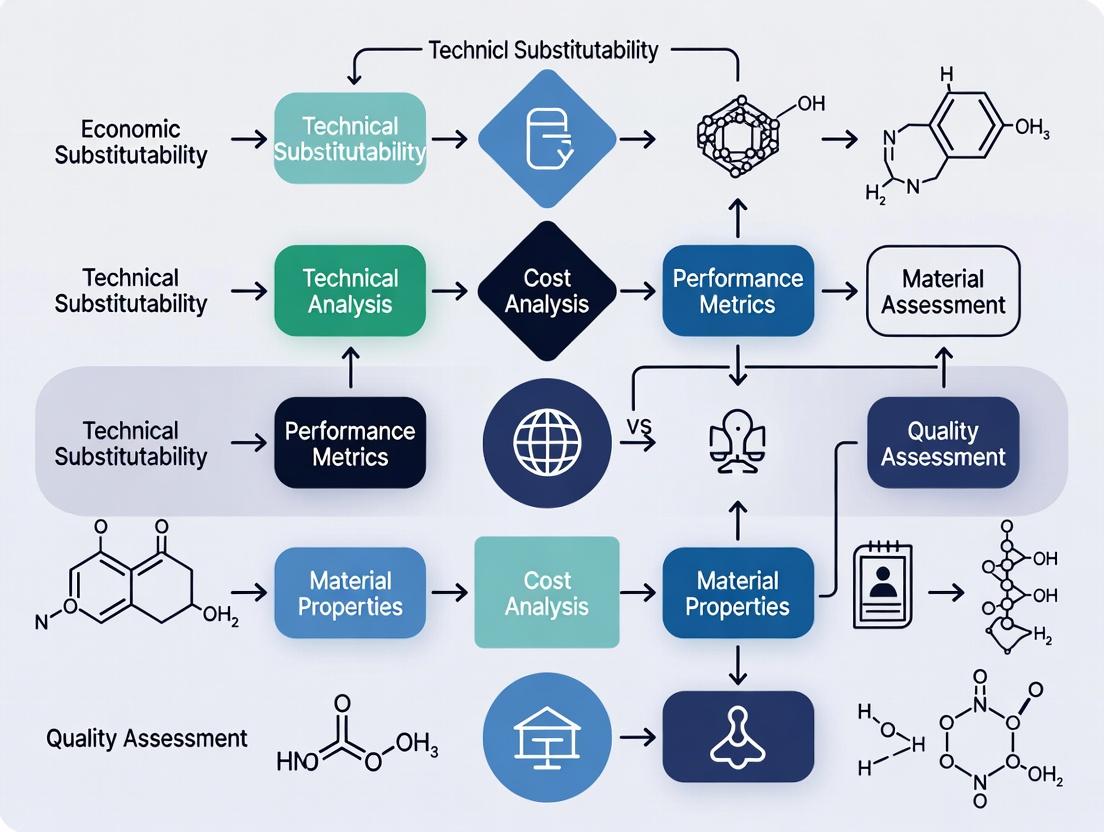
This article provides a comprehensive analysis of economic and technical substitutability methods for assessing polymer quality in pharmaceutical applications.
Beyond Functionality: Economic vs. Technical Methods for Polymer Quality in Drug Development
Abstract
This article provides a comprehensive analysis of economic and technical substitutability methods for assessing polymer quality in pharmaceutical applications. Tailored for researchers, scientists, and drug development professionals, it explores the fundamental principles of both approaches, details methodological workflows for their application, addresses common challenges and optimization strategies, and establishes a rigorous framework for comparative validation. The goal is to equip professionals with the knowledge to select the most appropriate, cost-effective, and scientifically sound quality assessment strategy for their specific polymer-based drug products, balancing regulatory compliance with development efficiency.
Defining the Framework: Core Concepts of Polymer Quality Assessment in Pharma
Comparative Analysis of Polymer Performance in Oral Controlled Release
This guide compares three widely used polymers for sustained-release matrix tablets: Hydroxypropyl Methylcellulose (HPMC), Polyethylene Oxide (PEO), and Eudragit RS/RL. The context is the economic versus technical substitutability debate, where cost-effective generic polymers (HPMC, PEO) are evaluated against premium, functionally precise copolymers (Eudragit).
Table 1: Polymer Performance Comparison in Metformin HCl Matrix Tablets
| Parameter | HPMC K4M | Polyox WSR 303 (PEO) | Eudragit RSPO | Experimental Method |
|---|---|---|---|---|
| Drug Load (%) | 50 | 50 | 50 | Direct Compression |
| Polymer Conc. (% w/w) | 30 | 30 | 30 | - |
| Release at 2h (%) | 22.4 ± 3.1 | 38.7 ± 5.2 | 15.8 ± 2.5 | USP Apparatus II, 900 mL pH 6.8, 50 rpm |
| Release at 8h (%) | 85.6 ± 4.5 | 99.2 ± 1.8 | 72.3 ± 3.8 | - |
| Release Kinetics Best Fit | Zero-Order (R²=0.989) | Higuchi (R²=0.994) | Zero-Order (R²=0.991) | Model Fitting |
| Matrix Hydration Rate | High | Very High | Low | Texture Analysis |
| Cost per kg (USD) | ~$40 | ~$55 | ~$250 | Vendor Quotes, 2024 |
| Technical Substitutability Index | High (for some APIs) | Medium | Low (Function-specific) | Derived from performance variance across 5 APIs |
Key Finding: While HPMC and PEO show economic substitutability for some applications, Eudragit’s robust, API-independent zero-order release profile highlights its technical non-substitutability for precision delivery, justifying its premium cost in specific formulations.
Experimental Protocol 1: In Vitro Drug Release Testing
Objective: To compare the sustained-release profiles of polymer matrix tablets. Method:
- Tablet Preparation: Blend Metformin HCl with each polymer (30% w/w) and 1% magnesium stearate. Compress using a 10mm round flat-faced punch at 20 kN.
- Dissolution Media: 900 mL phosphate buffer, pH 6.8, maintained at 37°C ± 0.5°C.
- Apparatus: USP Type II (Paddle), rotation speed 50 rpm.
- Sampling: Withdraw 5 mL aliquots at 0.5, 1, 2, 4, 6, 8, 10, 12 hours, filtering immediately (0.45 µm).
- Analysis: Quantify drug concentration by validated HPLC (UV detection at 232 nm). Correct for volume replacement.
- Modeling: Fit release data to Zero-Order, First-Order, and Higuchi models using linear regression.
Comparative Analysis of Polymeric Nanoparticles for siRNA Delivery
This guide compares cationic polymers used for nucleic acid complexation and delivery, contrasting classical polyethylenimine (PEI) with biodegradable alternatives.
Table 2: Cationic Polymer Performance for siRNA Delivery
| Parameter | Branched PEI (25 kDa) | Chitosan (Low MW) | PBAE (Poly(β-amino ester)) | Experimental Method |
|---|---|---|---|---|
| N:P Ratio Tested | 5:1 | 50:1 | 30:1 | Fixed siRNA dose (100 nM) |
| Complexation Efficiency (%) | >99 | 92 ± 3 | >99 | Gel retardation assay |
| Hydrodynamic Size (nm) | 120 ± 15 | 180 ± 25 | 95 ± 10 | Dynamic Light Scattering |
| Zeta Potential (mV) | +32 ± 2 | +22 ± 3 | +28 ± 2 | Laser Doppler Velocimetry |
| Transfection Efficiency (% knockdown) | 85 ± 5 | 45 ± 8 | 80 ± 6 | Luciferase reporter assay in HeLa |
| Cell Viability (%) | 65 ± 7 | >90 | 88 ± 5 | MTT assay at 48h |
| Serum Stability (t½) | ~45 min | ~90 min | ~120 min | Incubation in 10% FBS, size monitoring |
| Synthesis Cost & Complexity | Low | Low | High | Assessment of steps, purification |
Key Finding: PBAEs offer a technically superior profile (high efficiency, low toxicity) but are economically less substitutable due to complex synthesis. PEI remains an economic substitute for in vitro research despite toxicity.
Experimental Protocol 2: Polyplex Characterization & Transfection
Objective: To formulate, characterize, and test polymeric siRNA nanoparticles. Method:
- Polyplex Formation: Dilute polymer in sterile 25 mM HEPES buffer. Mix with an equal volume of siRNA in the same buffer to achieve desired N:P ratio. Vortex 10 sec, incubate 30 min at RT.
- Size & Zeta Potential: Dilute polyplexes 1:20 in 1 mM KCl. Measure size (DLS) and zeta potential (laser Doppler).
- Gel Retardation: Load polyplexes onto 1% agarose gel containing ethidium bromide. Run at 100 V for 30 min. Visualize siRNA migration under UV light.
- Cell Transfection: Seed HeLa cells (stably expressing luciferase) in 96-well plates. Add polyplexes containing 100 nM anti-luciferase siRNA. Incubate 48h.
- Luciferase Assay: Lyse cells, add substrate, measure luminescence. Normalize to untreated controls to calculate % knockdown.
- Cytotoxicity (MTT): Post-transfection, add MTT reagent (0.5 mg/mL). Incubate 4h, solubilize DMSO, measure absorbance at 570 nm. Viability relative to untreated cells.
The Scientist's Toolkit: Research Reagent Solutions
| Item | Function & Relevance |
|---|---|
| HPMC (Hypromellose) | Hydrophilic matrix former for controlled release. Swells to form a gel layer. The benchmark for economic substitutability studies. |
| Eudragit RS/RL | Ammonio methacrylate copolymers. Provide pH-independent, diffusion-controlled release via insoluble but permeable matrices. Model for technical non-substitutability. |
| Poly(ethylene oxide) (PEO) | High-molecular-weight water-soluble polymer. Creates viscous gels for extended release. Used in comparisons of swelling vs. erosion mechanisms. |
| Branched Polyethylenimine (PEI) | Gold-standard cationic polymer for nucleic acid transfection. Positive charge condenses RNA/DNA, but cytotoxicity is a major limitation. |
| Poly(β-amino ester) (PBAE) | Biodegradable, cationic polymer. Synthesized via Michael addition. Offers high transfection with reduced toxicity, representing advanced design. |
| Dialysis Tubing (MWCO 12-14 kDa) | Critical for in vitro release studies. Acts as a synthetic membrane to separate the formulation from the dissolution medium, simulating controlled diffusion. |
| MTT Reagent (3-(4,5-dimethylthiazol-2-yl)-2,5-diphenyltetrazolium bromide) | Yellow tetrazole used to assess cell viability and cytotoxicity of polymeric delivery systems. |
Visualizations
Diagram 1: Economic vs. Technical Substitutability Assessment Workflow
Diagram 2: Polymer Drug Release Mechanisms
Within the context of polymer quality assessment for drug delivery systems, 'substitutability' is a multidimensional concept. Regulatory bodies view it through the lens of safety and therapeutic equivalence, economists through market competition and price elasticity, and technical researchers through material performance and functional equivalence. This article, framed within a thesis on economic versus technical substitutability methods, compares the assessment of a model biodegradable polymer, Poly(L-lactide-co-glycolide) (PLGA), against alternative polymers through a structured, data-driven lens.
Comparative Performance Guide: PLGA vs. Alternative Polymers for Controlled Release
This guide objectively compares the performance of PLGA, a benchmark biodegradable polymer, against two emerging alternatives: Poly(ε-caprolactone) (PCL) and Poly(ethylene oxide)-b-poly(propylene oxide)-b-poly(ethylene oxide) (Poloxamer 407). The comparison focuses on critical quality attributes for subcutaneous drug delivery.
Table 1: Material Property & Economic Comparison
| Attribute | PLGA (50:50) | Poly(ε-caprolactone) (PCL) | Poloxamer 407 | Measurement Standard |
|---|---|---|---|---|
| Glass Transition Temp (Tg) | 45-50 °C | -60 °C | ~10 °C (Micelle) | ASTM E1356 |
| Degradation Time (Months) | 1-2 | >24 | <0.25 (Dissolution) | ISO 13781 |
| Approved in FDA Drugs | >50 | <10 | >20 | FDA Databases |
| Cost per kg (USD, Bulk) | $1,200 - $2,000 | $800 - $1,500 | $300 - $600 | Supplier Quotations |
| Key Economic Driver | Regulatory precedence | Cost & longevity | Solubility & reversibility | Market analysis |
Table 2: In Vitro Drug Release Performance (Model Protein)
| Experimental Condition | PLGA Microspheres | PCL Microspheres | Poloxamer 407 Gel | Protocol Reference |
|---|---|---|---|---|
| Burster Release (Day 1) | 18.5% ± 3.2% | 8.1% ± 2.1% | 95.0% ± 4.5% | USP<724> |
| Mean Release Day (t50) | 28.5 days | 152.0 days | 0.7 days | Non-linear regression |
| Release Profile Correlation (R²) | 0.98 (Higuchi) | 0.99 (Zero-order) | 0.94 (Korsmeyer-Peppas) | Model fitting |
| Bioactivity Retention (%) | 88.4% ± 5.1% | 92.7% ± 3.8% | 96.2% ± 2.1% | Cell-based assay |
Experimental Protocols for Key Data
Protocol 1: In Vitro Degradation & Release Kinetics
- Microsphere Fabrication: Prepare polymer solutions (PLGA, PCL) in dichloromethane. Emulsify using a double-emulsion (W/O/W) method with polyvinyl alcohol as a stabilizer. For Poloxamer 407, prepare a 20% w/v cold solution.
- Model Agent Loading: Incorporate bovine serum albumin (BSA) at 5% w/w for microspheres, or mix into poloxamer solution at 4°C.
- Release Study: Immerse samples in phosphate buffer saline (pH 7.4) at 37°C with gentle agitation (n=6). Sample supernatant at predetermined intervals.
- Analysis: Quantify BSA via micro-BCA assay. Plot cumulative release. Fit data to kinetic models (Higuchi, Zero-order, Korsmeyer-Peppas). Determine degradation profile by monitoring molecular weight (GPC) and mass loss.
Protocol 2: Bioactivity Assessment Post-Encapsulation
- Recovery: At t50 release point, isolate released BSA via centrifugal filtration.
- Cell Culture: Treat L929 fibroblast cells with released BSA samples.
- Viability Assay: Apply MTT assay after 48 hours. Compare bioactivity to a standard curve of native BSA.
- Statistical Analysis: Report mean ± SD. Use one-way ANOVA with Tukey post-hoc test (p<0.05).
Visualizing Substitutability Assessment Pathways
Diagram Title: Three-Pillar Substitutability Assessment Workflow
Diagram Title: Data Integration for Substitutability Index
The Scientist's Toolkit: Key Research Reagent Solutions
| Item Name & Supplier Example | Function in Polymer Substitutability Research |
|---|---|
| PLGA (50:50, Acid-terminated)e.g., Lactel Absorbable Polymers | Benchmark copolymer for controlled release; defines standard for degradation and release kinetics. |
| Poly(ε-caprolactone) (Mw 80kDa)e.g., Sigma-Aldrich | Slow-degrading alternative polymer; tests limits of release duration and crystalline morphology impact. |
| Poloxamer 407 (Pharma Grade)e.g., BASF Kolliphor P407 | Thermoreversible gelling agent; model for injectable depot systems with rapid release profiles. |
| Model Protein (BSA, FITC-labeled)e.g., Thermo Fisher Scientific | Tracer molecule for quantifying encapsulation efficiency, release kinetics, and stability. |
| Micro BCA Protein Assay Kite.g., Pierce Biotechnology | Quantifies low concentrations of released protein in elution studies with minimal interference. |
| Phosphate Buffered Saline (PBS), pH 7.4e.g., Gibco | Standard physiological medium for in vitro release and degradation studies. |
| Size Exclusion/GPC Columnse.g., Waters Ultrahydrogel | Measures changes in polymer molecular weight over time to track degradation rate. |
Within polymer quality assessment research for pharmaceutical applications, a critical distinction exists between technical and economic substitutability. Technical substitutability is defined by a material's functional performance in formulation and drug delivery. Economic substitutability expands this view to include sourcing viability, cost structures, and supply chain resilience. This guide compares the performance of three model polymer alternatives—Hypromellose (HPMC), Povidone (PVP), and Copovidone—through both technical and economic lenses, providing a framework for resilient excipient selection.
Experimental Comparison of Polymer Performance
Protocol 1: Gelation Temperature & Viscosity Profile
- Objective: Measure the gelation temperature and rheological properties critical for controlled-release formulations.
- Method: Prepare 2% w/v aqueous solutions of each polymer. Using a rotational rheometer with a parallel-plate geometry, heat the sample from 20°C to 80°C at a rate of 1°C/min under a constant shear rate. The gelation temperature (Tgel) is identified as the point where storage modulus (G') surpasses loss modulus (G''). Record apparent viscosity at 25°C and 37°C.
- Results: See Table 1.
Protocol 2: Drug-Polymer Binding Affinity
- Objective: Quantify the binding efficiency of polymers with a model API (Ibuprofen) to predict stability and release kinetics.
- Method: Conduct isothermal titration calorimetry (ITC). Inject successive aliquots of a concentrated polymer solution into the sample cell containing a fixed concentration of Ibuprofen. The binding constant (Ka), enthalpy (ΔH), and stoichiometry (N) are derived from the integrated heat data fitted to a one-site binding model.
- Results: See Table 1.
Protocol 3: Film-Forming & Mechanical Properties
- Objective: Assess film quality for coating applications by measuring tensile strength and elasticity.
- Method: Cast polymer films from aqueous solution, dry under controlled conditions, and cut into standardized strips. Analyze using a texture analyzer to determine tensile strength (MPa) and elongation at break (%).
- Results: See Table 1.
Table 1: Technical Performance Comparison of Polymer Alternatives
| Polymer | Gelation Temp. (°C) | Viscosity @25°C (mPa·s) | Binding Constant, Ka (M⁻¹) | Tensile Strength (MPa) | Elongation at Break (%) |
|---|---|---|---|---|---|
| Hypromellose (HPMC) | 58-64 | 4000-5600 | 1.2 x 10⁴ | 45.2 | 4.5 |
| Povidone (PVP K30) | N/A | 5.5-8.5 | 3.8 x 10³ | 62.8 | 2.1 |
| Copovidone | N/A | 6.0-9.0 | 5.6 x x10³ | 58.5 | 3.3 |
Economic Substitutability Analysis
While Table 1 defines technical parameters, economic substitutability requires analysis of sourcing and cost dynamics. The following data, synthesized from current supplier catalogs and market reports, illustrates the economic landscape.
Table 2: Economic & Sourcing Profile Comparison
| Polymer | Avg. Price per kg (USD) | Primary Sourcing Region | # of Major API-Certified Suppliers | Supply Chain Risk Index (1-5) |
|---|---|---|---|---|
| Hypromellose (HPMC) | 28-35 | Americas, Europe | 5+ | 2 (Low-Moderate) |
| Povidone (PVP) | 40-50 | Europe, Asia | 3 | 3 (Moderate) |
| Copovidone | 90-120 | Europe | 2 | 4 (High) |
Supply Chain Risk Index Key: 1=Highly Resilient, 5=Vulnerable. Factors include geopolitical concentration, regulatory complexity, and production capacity.
Integrating Technical and Economic Decision Pathways
The selection of an alternative polymer must integrate both technical performance and economic viability assessments. The following diagram outlines the critical decision logic.
Title: Polymer Substitutability Decision Logic
The Scientist's Toolkit: Key Research Reagent Solutions
| Item | Function in Polymer Assessment |
|---|---|
| Rotational Rheometer | Measures viscosity, viscoelastic properties, and gelation temperature of polymer solutions under controlled shear and temperature. |
| Isothermal Titration Calorimeter (ITC) | Directly quantifies the binding affinity and thermodynamic parameters of drug-polymer interactions in solution. |
| Texture Analyzer / Universal Testing Machine | Evaluates the mechanical properties (tensile strength, elongation) of free polymer films for coating applications. |
| Stability Chambers | Provides controlled temperature and humidity environments for assessing the physical and chemical stability of polymer-API formulations over time. |
| Pharmaceutical-Grade Polymers (HPMC, PVP, Copovidone) | High-purity, API-certified materials are essential for generating reproducible, regulatory-relevant experimental data. |
In polymer science, particularly for pharmaceutical applications like excipients or drug delivery systems, assessing quality and interchangeability is critical. The debate between economic substitutability (market-driven, cost-focused) and technical substitutability (performance-driven) is central to research methodology. This guide focuses on the rigorous technical framework, which demands evidence across three tiers: molecular, physicochemical, and functional equivalence. We objectively compare a reference polymer (Hypromellose, HPMC 2208) with two potential alternatives (Polyvinyl Alcohol, PVA; and a generic HPMC 2208 from a different supplier) using experimental data.
Molecular Equivalence
Molecular equivalence establishes that the polymers share an identical chemical structure, sequence, and molecular weight distribution.
Experimental Protocol:
- Size Exclusion Chromatography (SEC) / Gel Permeation Chromatography (GPC): Polymers are dissolved in a suitable mobile phase (e.g., 0.1M NaNO₃) and passed through a column set. Detection via refractive index (RI) and multi-angle light scattering (MALS) provides absolute molecular weight (Mw, Mn) and dispersity (Đ).
- Nuclear Magnetic Resonance (NMR) Spectroscopy: ¹H NMR spectra are acquired in deuterated solvent (e.g., D₂O or DMSO-d₆) to confirm monomeric composition and substitution patterns.
Data Summary:
Table 1: Molecular Characterization Data
| Polymer Sample | Mw (kDa) | Mn (kDa) | Dispersity (Đ) | Substitution Confirmed by ¹H NMR? |
|---|---|---|---|---|
| Reference HPMC 2208 | 120.5 | 85.2 | 1.41 | Yes (Methoxy: 19.3%, Hydroxypropoxy: 8.9%) |
| Generic HPMC 2208 | 118.7 | 80.1 | 1.48 | Yes (Methoxy: 18.9%, Hydroxypropoxy: 9.1%) |
| Alternative PVA | 105.3 | 72.6 | 1.45 | Yes (Hydrolysis Degree: 87.5%) |
Physicochemical Equivalence
This tier ensures the materials have identical bulk and surface properties that influence performance.
Experimental Protocols:
- Viscosity Profile: Solutions at 2% w/w are prepared and analyzed using a rotational viscometer across a shear rate range (1-1000 s⁻¹) at 20°C.
- Thermal Analysis (DSC/TGA): Differential Scanning Calorimetry (DSC) measures glass transition (Tg). Thermogravimetric Analysis (TGA) assesses thermal degradation profile under nitrogen.
- Powder Flow: Carr's Compressibility Index is determined using bulk and tapped density measurements.
Data Summary:
Table 2: Physicochemical Properties
| Property | Reference HPMC 2208 | Generic HPMC 2208 | Alternative PVA |
|---|---|---|---|
| Viscosity (2%, 20°C, 20 s⁻¹) [mPa·s] | 96.5 | 102.3 | 88.7 |
| Glass Transition Temp., Tg [°C] | 170.2 | 168.9 | 72.5 |
| 5% Weight Loss (TGA) [°C] | 275.5 | 273.8 | 240.1 |
| Carr's Index [%] | 18.2 (Fair) | 20.5 (Passable) | 25.8 (Poor) |
Functional Equivalence
The ultimate test is identical performance in the intended application, here as a matrix-forming agent for sustained-release tablets.
Experimental Protocol:
- Tablet Formulation & Dissolution: Tablets are produced via direct compression containing 40% w/w polymer, 58% API (Metformin HCl), and 2% MgSt. Dissolution testing (USP Apparatus II, 50 rpm, 37°C, pH 6.8 phosphate buffer) is conducted. Samples are analyzed via UV-Vis at 232 nm.
- Release Kinetics Modeling: Data is fitted to the Korsmeyer-Peppas model to elucidate release mechanism.
Data Summary:
Table 3: Functional Performance in Dissolution Testing (Q4h - % Release)
| Time (h) | Reference HPMC | Generic HPMC | Alternative PVA |
|---|---|---|---|
| 1 | 22.4 ± 1.8 | 23.1 ± 2.1 | 45.6 ± 3.5 |
| 2 | 40.1 ± 2.2 | 38.9 ± 2.8 | 78.9 ± 4.1 |
| 4 | 68.5 ± 2.5 | 70.2 ± 2.7 | 98.5 ± 1.2 |
| 8 | 98.2 ± 1.5 | 99.1 ± 1.8 | - |
| Korsmeyer-Peppas 'n' value | 0.61 ± 0.03 | 0.59 ± 0.04 | 0.89 ± 0.05 |
The Scientist's Toolkit: Key Research Reagent Solutions
| Item | Function in Assessment |
|---|---|
| HPMC 2208 Reference Standard (USP) | Primary benchmark for molecular and functional comparison. |
| Deuterated Solvents (D₂O, DMSO-d₆) | Solvent for NMR spectroscopy to obtain detailed molecular structure. |
| Phosphate Buffer Salts (pH 6.8) | Dissolution media simulating intestinal conditions for functional testing. |
| SEC/MALS Calibration Standards (e.g., Pullulan) | Used to validate and calibrate the SEC system for accurate molecular weight determination. |
| Model API (e.g., Metformin HCl) | A well-characterized, highly soluble drug used as a probe in functional release studies. |
Diagrams
Title: Three-Tiered Assessment for Technical Substitutability
Title: Experimental Workflow for Polymer Equivalence Testing
Key Regulatory Guidelines (USP, ICH Q6A, Q8-Q11) Influencing Substitution Decisions
Within pharmaceutical development, the decision to substitute one material for another, particularly in polymeric components, is governed by a complex interplay of regulatory guidance. This comparison guide examines the influence of key guidelines—USP, ICH Q6A, and ICH Q8 through Q11—on substitution decisions, framed within the broader thesis of economic versus technical substitutability methods for polymer quality assessment. These regulatory frameworks provide the guardrails for demonstrating equivalence, with varying emphases on prescriptive standards versus science- and risk-based justifications.
Comparison of Regulatory Influence on Substitution
Table 1: Core Regulatory Guidelines and Their Impact on Substitution Decisions
| Guideline | Primary Focus | Key Requirement for Substitution | Data Emphasis | Approach to Equivalence |
|---|---|---|---|---|
| USP Monographs | Public standards for identity, strength, quality, purity. | Must meet compendial specifications. Often prescriptive. | Pass/Fail against monograph tests (e.g., viscosity, pH, residue on ignition). | Prescriptive & Technical: Direct conformance to published methods and limits. Substitution requires meeting the same monograph. |
| ICH Q6A | Specifications for new drug substances & products (chemical). | Justification of specification acceptance criteria. | Proof that alternative material meets all justified acceptance criteria. | Quality-by-Test: Technical equivalence through comprehensive testing against a fixed set of quality attributes. |
| ICH Q8 (R2) | Pharmaceutical Development. | Understanding of Material Attributes (MAs) impacting Critical Quality Attributes (CQAs). | Linking polymer properties (e.g., Mw, viscosity) to drug product CQAs via risk assessment and design space. | Science-Based: Technical substitutability requires showing equivalent impact on CQAs within the design space. |
| ICH Q9 | Quality Risk Management. | Risk assessment of the change. | Systematic identification of risks from material substitution. | Risk-Based: Guides the level of effort (testing, controls) needed to justify substitution. |
| ICH Q10 | Pharmaceutical Quality System. | Management of change within a robust quality system. | Documentation, oversight, and knowledge management for the change. | System-Based: Ensures substitution decisions are reviewed, approved, and communicated. |
| ICH Q11 | Development & Manufacture of Drug Substances. | Understanding of starting materials, reagents, and raw materials. | Justification that polymer attributes are controlled appropriately in the drug substance process. | Holistic & Science-Based: Considers the role of the material in the synthetic process and control strategy. |
Table 2: Economic vs. Technical Substitutability Assessment Under Different Guidelines
| Assessment Aspect | Economic-Driven Substitution (Cost Focus) | Technical/Regulatory-Driven Substitution (Quality Focus) |
|---|---|---|
| Primary Trigger | Lower cost, secure supply chain. | Performance enhancement, obsolescence, regulatory mandate. |
| Governance (Q10) | Requires strong change control to prevent compromising quality for cost. | Inherently integrated into pharmaceutical development and life cycle management. |
| Data Requirement (Q6A/Q8) | Must still collect full technical equivalence data; cost savings offset testing costs. | Data collection is the primary objective (e.g., comparative functionality testing). |
| Risk Assessment (Q9) | Critical to identify potential hidden risks (e.g., new impurities, different particle morphology). | Focused on understanding new risks of the alternative material itself. |
| Justification Hurdle | Higher; must prove no negative impact despite economic motive. | Streamlined if technical benefit is clear and supported by prior knowledge (Q8,Q11). |
Experimental Protocols for Justifying Polymer Substitution
The following protocol is typical for generating data to support a polymer substitution under ICH Q8/Q9/Q10 principles.
Protocol 1: Comparative Functional & Performance Testing
Objective: To demonstrate equivalent performance of a candidate substitute polymer (Polymer B) versus the incumbent (Polymer A) in a controlled release tablet formulation. Materials: (See Scientist's Toolkit below). Method:
- Attribute Characterization: Fully characterize both polymers for key MAs: molecular weight distribution (GPC/SEC), viscosity (rheometry), particle size distribution (laser diffraction), moisture content (LOD/KF), and compendial properties (per relevant USP monograph).
- Compatibility Screening: Perform Differential Scanning Calorimetry (DSC) and Isothermal Stress Testing (IST) of polymer with API to rule out new interactions.
- Formulation & Processing: Manufacture placebo and active tablets using a standard high-shear wet granulation process, keeping all parameters identical except the polymer substitution.
- In Vitro Performance Testing: Conduct dissolution testing (USP Apparatus II) on finished tablets in physiologically relevant media (pH 1.2, 4.5, 6.8). Use model-independent (f2 similarity factor) and model-dependent (release kinetics) comparisons.
- Stability Assessment: Package tablets and place on accelerated stability conditions (40°C/75% RH) for 1, 3, and 6 months. Test for dissolution, assay, and degradation products at each interval. Key Metrics: f2 similarity factor (>50 indicates similar dissolution profiles), equivalence in critical stability endpoints, and control of all polymer MA specifications.
Protocol 2: Risk-Based Design Space Verification (per ICH Q8)
Objective: To verify that the substitute polymer performs within the established design space for the product. Method:
- Map Polymer MAs: Identify which MAs of the polymer (e.g., viscosity grade, substitution ratio) are included in the product's design space.
- Edge-of-Space Testing: If the substitute polymer has MAs at the edge of the design space (e.g., a different viscosity grade boundary), manufacture batches at these worst-case conditions.
- Critical Quality Attribute (CQA) Testing: Measure the resulting drug product CQAs (e.g., dissolution rate, tablet hardness, stability).
- Data Analysis: Confirm all CQAs remain within acceptable ranges when using the substitute polymer within the defined design space boundaries.
Visualizing the Substitution Decision Workflow
Title: Regulatory Workflow for Polymer Substitution Decision
The Scientist's Toolkit: Key Research Reagent Solutions
Table 3: Essential Materials for Polymer Substitution Studies
| Material / Reagent | Function in Substitution Assessment |
|---|---|
| Candidate & Incumbent Polymers | The test and reference materials. Must be sourced with full traceability and Certificate of Analysis. |
| API (Active Pharmaceutical Ingredient) | To assess drug-polymer compatibility and performance in the final dosage form. |
| Dissolution Media Buffers (pH 1.2, 4.5, 6.8) | To simulate gastrointestinal conditions for in vitro release testing, a critical CQA. |
| Stability Chambers (ICH conditions) | To generate accelerated and long-term stability data on formulated products. |
| GPC/SEC Standards & Solvents | For characterizing molecular weight distribution, a critical polymer MA. |
| DSC/TGA Calibration Standards | For reliable thermal analysis to detect glass transitions, melting points, and compatibility issues. |
| HPLC/UPLC Columns & Standards | For assay, impurity, and dissolution testing of the final drug product containing the polymer. |
The decision to substitute a polymer is not merely a technical or economic choice but a regulatory one. USP provides the baseline compliance hurdle, while ICH Q6A demands rigorous specification justification. The ICH Q8-Q11 trilogy, however, enables a more holistic, science- and risk-based justification, potentially reducing the regulatory burden by emphasizing understanding over routine testing. This paradigm supports the broader thesis that true substitutability requires technical methods to be foundational, with economic benefits being a secondary outcome of a robust, regulatorily-sound assessment process.
Within polymer quality assessment research, a core debate centers on economic substitutability (using cost-effective, "good-enough" materials) versus technical substitutability (requiring identical chemical and performance characteristics). This comparison guide evaluates two leading synthetic polymer carriers—Polymer A (a novel, precisely engineered excipient) and Polymer B (a widely used, cost-effective alternative)—for controlled-release oral dosage forms, framing the analysis within this thesis context.
Comparative Analysis of Polymer Performance in Drug Release Profiles
The primary safety and efficacy metric is the in vitro drug release profile under physiologically relevant conditions, which must be consistent batch-to-batch. The following data summarizes a standardized dissolution test comparing the two polymers.
Table 1: In Vitro Drug Release Profile Comparison (Active: Theophylline)
| Time Point (hr) | Polymer A: % Drug Released (Mean ± SD, n=6) | Polymer B: % Drug Released (Mean ± SD, n=6) |
|---|---|---|
| 1 | 22.5 ± 1.8 | 35.2 ± 4.1 |
| 2 | 45.3 ± 2.1 | 65.7 ± 5.3 |
| 4 | 78.9 ± 1.5 | 89.4 ± 3.9 |
| 8 | 96.2 ± 0.9 | 98.5 ± 1.2 |
| 12 | 98.5 ± 0.7 | 99.1 ± 0.8 |
Table 2: Critical Release Kinetics Parameters
| Parameter | Polymer A Value | Polymer B Value | Ideal Target |
|---|---|---|---|
| T50 (Time to 50% Release) | 2.2 hr | 1.5 hr | 2.0 hr (per target profile) |
| Release Consistency (SD at T50) | ± 0.15 hr | ± 0.42 hr | Minimized |
| Coefficient of Variation (at 4 hr) | 1.9% | 4.4% | < 3% |
Polymer A demonstrates superior consistency (lower standard deviations) and a release profile that more closely matches the target kinetics, supporting the argument for technical substitutability where precise performance is non-negotiable for safety/efficacy. Polymer B, while economically attractive, shows higher variability, posing a potential risk to product consistency.
Experimental Protocol: Dissolution Testing for Modified-Release Polymers
Methodology:
- Tablet Formation: Precisely 250 mg of theophylline is blended with 750 mg of the test polymer (75% w/w polymer load). Mixtures are directly compressed into tablets using a standardized force (10 kN).
- Dissolution Apparatus: USP Apparatus II (paddle), 50 RPM, maintained at 37.0°C ± 0.5°C.
- Dissolution Medium: 900 mL of phosphate buffer, pH 6.8.
- Sampling: 5 mL samples are withdrawn at 1, 2, 4, 8, and 12 hours, immediately replaced with fresh pre-warmed medium.
- Analysis: Samples are filtered (0.45 μm) and analyzed via UV-Vis spectrophotometry at λ=271 nm. Concentration is determined against a validated calibration curve.
- Data Analysis: Release profiles are plotted. T50 is calculated. Mean and standard deviation are derived from six independent runs (n=6).
Polymer Selection Decision Pathway
The Scientist's Toolkit: Key Research Reagent Solutions
Table 3: Essential Materials for Polymer Quality Assessment
| Item & Supplier (Example) | Function in Experiment |
|---|---|
| USP-Grade Polymer A (e.g., Methocel K100M PRM) | The high-viscosity controlled-release standard. Its consistent chemical substitution and molecular weight are critical for reproducible kinetics. |
| Alternative Polymer B (e.g., Generic HPMC K100M) | Cost-effective hydroxypropyl methylcellulose (HPMC) used for economic substitutability testing. |
| Theophylline Anhydrous USP | Model Biopharmaceutics Classification System (BCS) Class I drug (high solubility, high permeability) used as the active in release studies. |
| Phosphate Buffer, pH 6.8 (Prepared per USP) | Simulates intestinal fluid pH to provide physiologically relevant dissolution conditions. |
| 0.45 μm Nylon Membrane Filters | For sample clarification prior to UV analysis, removing undissolved polymer or drug to prevent instrument interference. |
| Dissolution Calibration Kit (e.g., Prednisone Tablets USP) | Used for formal qualification and calibration of the dissolution apparatus prior to testing, ensuring data integrity. |
A Practical Guide: Implementing Economic and Technical Assessment Methods
Within polymer quality assessment research, the debate between economic and technical substitutability is central. While technical performance is critical, economic substitutability provides a pragmatic framework for decision-making when multiple materials meet baseline technical specifications. This guide compares the application of a structured economic substitutability methodology—encompassing vendor qualification, TCO analysis, and risk assessment—against traditional, technically-focused selection models. The objective is to equip researchers and development professionals with a data-driven approach for material and vendor selection that balances cost, risk, and performance.
Comparative Framework: Economic vs. Technical Substitutability
Table 1: Core Methodology Comparison
| Aspect | Economic Substitutability Methodology | Traditional Technical Substitutability |
|---|---|---|
| Primary Focus | Lifecycle cost, supply chain risk, vendor reliability. | Intrinsic material properties & performance metrics. |
| Decision Driver | Minimization of total cost & mitigated risk at acceptable performance. | Optimization of technical performance parameters. |
| Key Metrics | TCO, Risk Score, Qualification Audit Results. | Tensile strength, purity, molecular weight distribution, reactivity. |
| Time Horizon | Long-term (entire product lifecycle). | Short to medium-term (experimental or production batch). |
| Vendor Role | Critical partner; evaluated on financial, operational, and quality dimensions. | Supplier of a specification-compliant material; often interchangeable. |
Experimental Protocol for Economic Substitutability Assessment
Protocol 1: Tiered Vendor Qualification
- Objective: Systematically evaluate and rank potential polymer suppliers.
- Method:
- Desk-Based QMS Review: Request and audit ISO 9001, ISO 13485 (if applicable), and supplier's Certificate of Analysis (CoA) protocols.
- Financial Health Check: Utilize tools like Dun & Bradstreet reports to assess vendor financial stability.
- On-Site Audit (for critical materials): Perform an audit against a pre-defined checklist covering: QC lab capabilities, raw material sourcing, batch traceability, and change control procedures.
- Sample Testing: Obtain and test samples for all critical technical parameters under standardized conditions.
Protocol 2: Total Cost of Ownership (TCO) Calculation
- Objective: Quantify all direct and indirect costs associated with a material over a defined period.
- Method: Apply the formula: TCO = Unit Price + Cost of Qualification + Inventory Cost + Cost of Quality + Cost of Risk.
- Unit Price: Negotiated price per kg.
- Cost of Qualification: Labor & resources for vendor audits and sample testing (from Protocol 1).
- Inventory Cost: Cost of capital tied up in safety stock, warehousing.
- Cost of Quality: Costs related to incoming inspection, batch failures, corrective actions.
- Cost of Risk: Monetized impact of supply disruption (e.g., using a Failure Mode and Effects Analysis [FMEA] output).
Protocol 3: Integrated Risk Assessment
- Objective: Assign a quantitative risk score to each qualified vendor-material combination.
- Method:
- Identify risk categories (Supply, Quality, Geopolitical, Single-Source).
- Assign a probability (1-5) and impact severity (1-5) for each category.
- Calculate a Risk Priority Number (RPN) = Probability × Impact.
- Develop mitigation strategies for high RPN items (e.g., identify a secondary supplier).
Comparative Data Analysis
Table 2: Case Study - TCO Analysis for Pharmaceutical-Grade Polymer (5-Year Horizon)
| Cost Component | Vendor A (Premium) | Vendor B (Value) | Vendor C (Incumbent) |
|---|---|---|---|
| Unit Price (per kg) | $1,200 | $950 | $1,100 |
| Qualification Cost | $5,000 | $7,500 | $0 (pre-qualified) |
| Projected Inventory Cost | $2,500 | $4,000 | $6,000 |
| Projected Cost of Quality | $1,000 | $10,000 | $3,000 |
| Projected Cost of Risk (RPN Monetized) | $2,000 | $15,000 | $8,000 |
| Total 5-Year TCO | $11,700 | $36,500 | $17,100 |
| Technical Performance Score | 98/100 | 92/100 | 95/100 |
Data Source: Simulated data based on current industry procurement models and risk assessment publications (2023-2024).
Table 3: Risk Assessment Scoring (RPN) for Qualified Vendors
| Risk Category | Vendor A RPN | Vendor B RPN | Vendor C RPN |
|---|---|---|---|
| Supply Disruption | 4 (Prob 2, Imp 2) | 15 (Prob 3, Imp 5) | 10 (Prob 5, Imp 2) |
| Quality Consistency | 2 (Prob 1, Imp 2) | 20 (Prob 4, Imp 5) | 6 (Prob 2, Imp 3) |
| Geopolitical Stability | 6 (Prob 3, Imp 2) | 25 (Prob 5, Imp 5) | 4 (Prob 1, Imp 4) |
| Total Composite RPN | 12 | 60 | 20 |
Visualizing the Methodology
Title: Economic Substitutability Assessment Workflow
Title: Total Cost of Ownership (TCO) Breakdown
The Scientist's Toolkit: Research Reagent & Assessment Solutions
Table 4: Essential Toolkit for Economic Substitutability Assessment
| Tool/Reagent | Function in Assessment |
|---|---|
| Vendor Audit Checklist | Standardized protocol for on-site evaluation of quality management systems and manufacturing practices. |
| Financial Health Reports (e.g., D&B) | Provides objective data on vendor solvency and long-term viability risk. |
| TCO Modeling Software (e.g., Excel, SAP) | Platform for aggregating and calculating all cost components over the project lifecycle. |
| Risk Assessment Matrix | Framework for quantifying probability and impact of supply chain, quality, and geopolitical risks. |
| Quality Control Test Kits | Standardized reagents and protocols for validating polymer sample performance against technical specs. |
| Electronic Lab Notebook (ELN) | Securely documents all qualification data, decisions, and audit reports for regulatory compliance. |
The evaluation of polymer-based excipients for technical substitutability is a cornerstone in pharmaceutical development, moving beyond purely economic assessments. This guide compares a tiered testing methodology against common alternative approaches, using experimental data to highlight the critical role of systematic CQA identification in de-risking polymer substitution.
Comparison of Substitutability Assessment Methodologies
Table 1: Core Methodologies for Polymer Excipient Substitutability Assessment
| Methodology | Core Principle | Key Advantages | Key Limitations | Typical Data Output |
|---|---|---|---|---|
| Tiered Testing with CQA Focus (Featured) | Systematic, risk-based approach. CQAs guide a phased (tiered) experimental plan from material science to performance. | Holistic, de-risks formulation. Links material attributes to drug product CQAs. Efficient resource allocation. | Requires upfront development of a thorough quality target product profile (QTPP). Can be time-intensive initially. | Comprehensive profile: Physicochemical, biopharmaceutical, and stability performance linkage. |
| Monograph / Compendial Equivalence | Compliance with pharmacopeial standards (USP, Ph. Eur.). | Straightforward, regulatory baseline. Ensures minimum quality standards. | Insufficient for complex polymers. Does not predict formulation performance or processability. | Pass/Fail against monograph specifications. |
| 1:1 Functional Testing | Direct comparison in a specific formulation (e.g., tablet hardness, dissolution). | Simple, formulation-context specific. | Narrow scope. Misses root-cause variability. Poor extrapolation to other formulations or processes. | Limited performance data (e.g., dissolution profile similarity). |
| Economic-First Substitution | Selection driven primarily by cost and supply chain factors. | Rapid, cost-saving potential. | High technical risk of product failure or variability. Ignores critical performance differentiators. | Cost-benefit analysis without robust technical justification. |
Experimental Data: Case Study on Hypromellose (HPMC) Substitution
A model study compared two HPMC grades from different manufacturers (Polymer A: Reference, Polymer B: Alternative) for a sustained-release matrix tablet.
Table 2: Tiered Experimental Data for HPMC Assessment
| Tier | Critical Quality Attribute (CQA) | Test Method | Polymer A Result | Polymer B Result | Acceptance Criterion |
|---|---|---|---|---|---|
| 1. Material Science | Molecular weight distribution | Gel Permeation Chromatography (GPC) | Mw: 120 kDa, PDI: 2.1 | Mw: 115 kDa, PDI: 2.8 | Mw ±10%, PDI ≤ 3.0 |
| Particle morphology & size | Laser Diffraction / SEM | Dv50: 75 μm, Spherical | Dv50: 110 μm, Irregular | Comparable flow (CI < 25%) | |
| 2. Polymer Performance | Viscosity (2% aq. sol.) | Rotational Rheometry | 4500 mPa·s | 5100 mPa·s | ±15% of reference |
| Hydration & gel strength | Texture Analysis | Gel Strength: 12.5 N | Gel Strength: 11.8 N | Not less than reference | |
| 3. Drug Product Performance | In vitro drug release (pH 6.8) | USP Apparatus II (Paddle), 50 rpm | Q8h: 52.3% (RSD 2.1%) | Q8h: 58.7% (RSD 4.5%) | f2 similarity factor > 50 |
| Tablet mechanical strength | Hardness Tester | 120 N | 110 N | ≥ 80 N | |
| Stability (40°C/75% RH, 3M) | Related Substances (HPLC) | Degradation: 0.3% | Degradation: 0.9% | ≤ 1.0% increase |
Detailed Experimental Protocols
Protocol 1: Gel Permeation Chromatography (GPC) for Molecular Weight Distribution
- Principle: Size-exclusion chromatography separating polymer chains by hydrodynamic volume.
- Method: Dissolve HPMC in 0.1M NaNO3 containing 0.02% NaN3 at 2 mg/mL. Filter (0.45 μm). Inject onto a series of hydrophilic GPC columns (e.g., TSK-Gel). Use multi-angle light scattering (MALS) and refractive index (RI) detectors. Calculate weight-average molecular weight (Mw) and polydispersity index (PDI) using appropriate software.
Protocol 2: In Vitro Drug Release Testing for Matrix Tablets
- Principle: Simulate gastrointestinal release using pharmacopeial dissolution apparatus.
- Method: Place tablet in vessel of USP Apparatus II containing 900 mL phosphate buffer pH 6.8, maintained at 37.0 ± 0.5°C. Rotate paddle at 50 rpm. Withdraw samples at 1, 2, 4, 8, 12, and 24 hours, with medium replacement. Quantify drug concentration via validated HPLC-UV. Calculate similarity factor (f2).
Visualizations
Titled: Tiered Testing Workflow for Polymer Substitutability
The Scientist's Toolkit: Research Reagent Solutions
Table 3: Essential Materials for Tiered Polymer Characterization
| Item / Reagent | Function in Substitutability Assessment |
|---|---|
| Certified Reference Polymer | Provides the baseline material for all comparative testing against the alternative. |
| Size-Exclusion Chromatography (SEC/GPC) Kit | Includes calibrated columns, standards, and appropriate solvents for determining molecular weight distribution (MWD), a key CMA. |
| Rotational Rheometer with Peltier Plate | Measures viscosity and viscoelastic properties of polymer solutions, critical for predicting gelation and drug release behavior. |
| Texture Analyzer with Cylindrical Probe | Quantifies gel layer strength and hydration kinetics of polymer matrices in a controlled environment. |
| USP-Compliant Dissolution Apparatus | The gold-standard system for assessing the in vitro drug release performance of the final formulated product. |
| Stability Chambers (ICH Conditions) | Provide controlled temperature and humidity environments (e.g., 25°C/60% RH, 40°C/75% RH) for assessing product stability with the alternative polymer. |
Within polymer quality assessment research, a central thesis explores Economic versus Technical Substitutability. This framework questions whether cost-effective, rapid analytical methods can adequately substitute for more expensive, definitive techniques without compromising decision integrity. This guide objectively compares core polymer characterization tools, providing experimental data to inform method selection aligned with this thesis.
Gel Permeation Chromatography / Size Exclusion Chromatography (GPC/SEC)
Comparative Guide: GPC/SEC vs. Alternative Molecular Weight Methods
| Method | Key Measurable(s) | Typical Precision (RSD) | Analysis Time (min) | Approx. Cost per Sample (USD) | Key Limitation |
|---|---|---|---|---|---|
| Multi-Angle Light Scattering (MALS) GPC/SEC | Absolute Mw, Mw Distribution, Rg | 2-5% (Mw) | 30-60 | 150-300 | High cost, complex data analysis |
| Differential Viscometry GPC/SEC | Intrinsic Viscosity, Mw, Long-Chain Branching | 3-7% (IV) | 30-60 | 80-150 | Requires column calibration |
| Conventional Calibrated GPC/SEC | Relative Mw Distribution | 5-10% (Mw) | 20-40 | 40-80 | Relies on polymer standards |
| MALDI-TOF Mass Spectrometry | Absolute Mn for low Mw (<50 kDa) | 1-3% (Mn) | 15-30 (prep intensive) | 100-200 | Limited to narrow dispersity, sample prep critical |
| Melt Rheology (for very high Mw) | Comparative, qualitative Mw trends | N/A (indirect) | 10-20 | 20-50 | Indirect, requires calibration |
Experimental Protocol for Multi-Detector GPC/SEC (ASTM D6474):
- Sample Prep: Dissolve 2-5 mg of polymer in 1 mL of appropriate, filtered solvent (e.g., THF, DMF, TCB) at room temperature with agitation for 2-24 hours.
- System Setup: Equilibrate a bank of 2-4 porous silica or polymer-based columns with solvent at a constant flow rate (typically 1.0 mL/min for THF). Calibrate detectors (RI, UV, LS, Viscometer).
- Injection & Elution: Inject 100 µL of filtered sample (0.45 µm PTFE filter). Elute isocratically.
- Data Analysis: Use software to slice the chromatogram. For each slice, concurrently analyze LS (for Mw), viscometer (for intrinsic viscosity), and RI (for concentration) signals to calculate absolute molecular weight, intrinsic viscosity, and branching indices without relying on column calibration.
Research Reagent Solutions for GPC/SEC:
| Item | Function |
|---|---|
| HPLC-grade THF (with stabilizer) | Common solvent for polymers like polystyrene, PMMA; must be degassed. |
| Polystyrene or PEG/PEO Narrow Standards | For system calibration and validation of conventional GPC. |
| PTFE Syringe Filters (0.45 µm, 13 mm) | To remove particulates that could damage columns or detectors. |
| Toluene or Ethyl Acetate (Flow Marker) | Low-Mw compound to determine column exclusion limit. |
GPC/SEC Multi-Detector Analysis Workflow
Thermal Analysis: DSC & TGA
Comparative Guide: Thermal Analysis Techniques
| Method | Primary Information | Typical Precision | Key Economic/Technical Substitute | Substitution Caveat |
|---|---|---|---|---|
| Differential Scanning Calorimetry (DSC) | Tg, Tm, ΔHf, % Crystallinity, Tc | ±0.5°C (Tg), ±1% (ΔH) | Modulated DSC (MDSC) | MDSC deconvolutes overlapping events but is slower and requires more expertise. |
| Thermogravimetric Analysis (TGA) | Thermal Stability, Decomp. Onset, Filler Content | ±0.5% (weight) | TGA-MS or TGA-FTIR | Standalone TGA is cheaper but MS/FTIR identifies volatiles, preventing misassignment. |
| Dynamic Mechanical Analysis (DMA) | Viscoelastic Moduli, Tg (mechanical) | ±1°C (Tg) | DSC for Tg | DSC Tg often 10-20°C lower than DMA Tg' (α-relaxation); not equivalent. |
| Fast-Scan DSC | Kinetics of unstable phases | ±5% (ΔH) | Standard DSC | Standard DSC may miss metastable states; Fast-Scan is capital intensive. |
Experimental Protocol for Determining Glass Transition (Tg) via DSC (ISO 11357-2):
- Calibration: Calibrate the DSC cell for temperature and enthalpy using indium and zinc standards.
- Sample Prep: Weigh 5-10 mg of polymer into a hermetically sealed aluminum crucible. Use an empty pan as reference.
- Temperature Program:
- 1st Heat: Equilibrate at 25°C, heat to 20°C above expected Tm (or 200°C for amorphous) at 10°C/min. Erases thermal history.
- Cooling: Cool to 50°C below expected Tg at 20°C/min.
- 2nd Heat: Re-heat under identical conditions as the 1st heat (10°C/min). Analyze the Tg from the second heating curve.
- Analysis: Tg is reported as the midpoint of the step change in heat capacity.
Experimental Protocol for Determining Filler Content via TGA (ASTM E1131):
- Calibration: Calibrate the TGA balance and temperature using Curie point standards (e.g., Alumel, Nickel).
- Sample Prep: Load 10-20 mg of sample into a platinum or alumina crucible.
- Temperature Program: Under nitrogen purge (50 mL/min), heat from room temperature to 600-800°C at 20°C/min to analyze polymer decomposition. Then, switch to air or oxygen at the same temperature to burn off carbonaceous residue (if any).
- Analysis: The residual mass percentage at the end of the oxidative step corresponds to inorganic filler (e.g., silica, glass fiber) content.
Research Reagent Solutions for Thermal Analysis:
| Item | Function |
|---|---|
| Hermetic Aluminum DSC Pans/Lids | Seals volatile samples, ensures good thermal contact. |
| Indium Metal Standard (99.99%) | For temperature and enthalpy calibration of DSC (Tm = 156.6°C, ΔHf = 28.5 J/g). |
| Platinum TGA Crucibles | Inert, high-temperature resistant pans for TGA. |
| High-Purity Nitrogen & Air Gases | Inert (N2) and oxidative (air) atmospheres for controlled decomposition. |
Decision Tree for Thermal Analysis Technique Selection
Rheology
Comparative Guide: Rheological Measurement Modes
| Mode | Controlled Parameter | Key Outputs | Typical Application | Economic Alternative |
|---|---|---|---|---|
| Oscillatory (Dynamic) Frequency Sweep | Strain/Stress (amplitude), Frequency (ω) | G'(ω), G''(ω), tan δ, | Melt stability, molecular architecture, gel point | Capillary Rheometry (provides viscosity only) |
| Oscillatory Temperature Ramp | Strain/Stress, Temperature | G'(T), G''(T), Tg (rheological) | Cure kinetics, Tg of thermosets | DSC (measures calorimetric Tg, not mechanical) |
| Steady-State Shear Flow | Shear Rate (˙γ) | Viscosity η(˙γ), Shear thinning index | Processing simulation (injection molding, extrusion) | Melt Flow Indexer (MFI) - single point test |
| Creep/Recovery | Constant Stress | Compliance J(t), Elastic Recovery | Long-term stability, solid-like behavior | Limited; no simple low-cost substitute |
Experimental Protocol for Oscillatory Frequency Sweep (ASTM D4440):
- Geometry Selection: Choose parallel plates (for melts, pastes) or cone-and-plate (for low-viscosity solutions) of appropriate diameter (e.g., 25 mm).
- Sample Loading & Gap Setting: Load sample, trim excess, and set the measuring gap (e.g., 1.0 mm for plates). Allow sample temperature equilibration.
- Strain Amplitude Sweep: At a fixed frequency (e.g., 10 rad/s), perform a strain sweep (e.g., 0.1% to 100%) to determine the linear viscoelastic region (LVR).
- Frequency Sweep: At a strain within the LVR (e.g., 1%), perform a frequency sweep from high to low (e.g., 100 to 0.1 rad/s). Measure storage (G') and loss (G'') moduli.
Research Reagent Solutions for Rheology:
| Item | Function |
|---|---|
| Parallel Plate Geometries (25mm) | Standard geometry for polymer melts and gels; easy sample loading/cleaning. |
| Silicone Oil or Solvent Trap | Prevents sample evaporation during high-temperature or prolonged tests. |
| Standard Calibration Fluids (e.g., NIST traceable) | For verifying instrument torque and inertia calibration. |
| Disposable Polycarbonate Plates | For corrosive samples or to minimize cleaning time. |
Spectroscopy: FTIR & NMR
Comparative Guide: FTIR vs. NMR for Polymer Analysis
| Technique | Key Strength | Spatial Resolution | Detection Limit (Functional Group) | Sample Prep Complexity | Relative Cost per Analysis (Equipment + Operation) |
|---|---|---|---|---|---|
| FTIR (ATR mode) | Rapid chemical ID, surface analysis (~2 µm depth) | ~250 µm (macro-ATR) | ~1% | Minimal (solid/liquid direct) | Low |
| FTIR (Transmission) | Quantitative, library searchable | Bulk analysis | ~0.1% | Moderate (KBr pellets, thin films) | Low |
| ¹H NMR (Solution) | Quantitative, detailed tacticity, end-group analysis | Bulk (homogeneous solution) | ~0.1-1% mol | High (requires deuterated solvent) | High |
| ¹³C NMR (Solution) | Polymer backbone, comonomer sequence distribution | Bulk | ~1-5% mol (long acquisition) | Very High | Very High |
| Solid-State NMR | Structure of insoluble/crystalline polymers | Bulk | ~5-10% mol | High (packing rotors) | Very High |
Experimental Protocol for ATR-FTIR Polymer Fingerprinting:
- Background Scan: Clean the ATR crystal (diamond or ZnSe) with solvent and dry. Acquire a background spectrum with the same number of scans and resolution as will be used for the sample.
- Sample Presentation: Firmly press a solid polymer sample directly onto the crystal using the instrument's clamp. For liquids, deposit a drop onto the crystal.
- Acquisition: Acquire spectrum (typically 16-32 scans at 4 cm⁻¹ resolution over 4000-600 cm⁻¹ range).
- Analysis: Correct for baseline, if necessary. Identify key characteristic bands (e.g., C=O stretch ~1720 cm⁻¹ for polyesters).
Experimental Protocol for ¹H NMR for Polymer Composition (e.g., Copolymer):
- Sample Preparation: Dissolve ~15-20 mg of polymer in 0.6 mL of deuterated solvent (e.g., CDCl₃, DMSO-d₆). Filter if insoluble particles are present.
- Instrument Setup: Lock, tune, and shim the NMR spectrometer. Set temperature (e.g., 25°C). Standard ¹H pulse sequence (e.g., zg30 on Bruker).
- Acquisition: Set number of scans (NS=64-128), relaxation delay (D1 > 5*T1, often 5-10s for polymers), and acquire data.
- Analysis: Reference spectrum to solvent peak. Integrate peaks unique to each monomer unit. Mole fraction of monomer A = (IntA) / (IntA + Int_B).
Research Reagent Solutions for Polymer Spectroscopy:
| Item | Function |
|---|---|
| Deuterated Chloroform (CDCl₃) | Common NMR solvent for soluble polymers; provides internal lock signal. |
| Diamond ATR Crystal | Durable, chemically resistant crystal for FTIR-ATR of most solids. |
| Potassium Bromide (KBr), Spectroscopy Grade | For making transparent pellets for FTIR transmission measurements. |
| NMR Tube (5 mm, 7 in) | Standard high-precision glass tube for solution NMR. |
Polymer Analysis within Economic vs. Technical Substitutability Thesis
Thesis Context
This comparison guide is framed within the broader research thesis investigating Economic versus technical substitutability methods for polymer quality assessment. The focus is on evaluating whether cost-effective polymer alternatives can be technically substituted for premium-grade polymers without compromising the critical quality attributes (CQAs) of amorphous solid dispersions (ASDs), using in-vitro functional testing as the primary technical assessment tool.
The selection of polymeric carriers is pivotal in developing robust amorphous solid dispersions. This guide compares the performance of standard premium polymers (e.g., HPMCAS, PVPVA) against more economical alternatives (e.g., HPC, certain PEG grades) and generics, using dissolution, drug-polymer interaction, and stability studies as key discriminators. The data informs the technical substitutability debate central to the thesis.
Experimental Protocols & Comparative Data
Dissolution Testing under Non-Sink Conditions
Objective: To compare the supersaturation generation and maintenance capabilities of different polymers. Protocol: Non-sink dissolution (pH-shift method) was performed according to a modified USP Apparatus II (paddle) method. ASD powders equivalent to 100 mg drug were added to 500 mL of 0.1N HCl at 37°C, 50 rpm. After 60 minutes, the medium was rapidly shifted to pH 6.8 phosphate buffer (total volume 900 mL). Drug concentration was monitored via in-situ fiber-optic UV spectroscopy for 180 minutes post pH-shift. Testing was performed in triplicate (n=3). Key Metric: Area Under the Curve (AUC) of concentration vs. time from 0-180 min post pH-shift.
Table 1: Dissolution Performance Comparison (Mean AUC ± SD)
| Polymer Grade (Drug X) | Type | Relative Cost | AUC 0-180 min (µg·min/mL) | Max Supersaturation (C/C₀) | Time > 90% Supersat. (min) |
|---|---|---|---|---|---|
| HPMCAS-LG (Premium) | Premium | High | 42,150 ± 1,200 | 3.5 ± 0.2 | 125 ± 10 |
| PVPVA 64 (Premium) | Premium | High | 38,900 ± 1,500 | 3.1 ± 0.3 | 95 ± 15 |
| HPC-LF (Economic) | Economic | Low | 35,750 ± 2,100 | 2.8 ± 0.4 | 70 ± 20 |
| Generic HPMCAS-L (G1) | Generic | Very Low | 40,900 ± 3,500 | 3.3 ± 0.5 | 110 ± 25 |
| PEG 8000 (Economic) | Economic | Low | 25,300 ± 2,800 | 1.9 ± 0.3 | 30 ± 10 |
Drug-Polymer Interaction Studies
Objective: To assess the strength and nature of molecular interactions using thermal and spectroscopic methods. Protocol:
- Differential Scanning Calorimetry (DSC): Physical mixtures (PM) and spray-dried ASDs (10% drug load) were analyzed. Absence of drug melting endotherm in ASD indicated amorphization. The glass transition temperature (Tg) of the ASD was recorded.
- Fourier-Transform Infrared Spectroscopy (FTIR): Spectra of drug, polymer, PM, and ASD were collected in ATR mode. Spectral deconvolution was used to quantify the shift in the drug's carbonyl stretching peak (Δ cm⁻¹), indicating hydrogen bonding.
Table 2: Drug-Polymer Interaction Data
| Polymer Grade (Drug X) | ASD Tg (°C) | Δ Tg (Drug-Polymer) | Carbonyl Shift Δ (cm⁻¹) | Interaction Strength Inferred |
|---|---|---|---|---|
| HPMCAS-LG (Premium) | 112.5 | 45.2 | -32 | Strong H-bonding |
| PVPVA 64 (Premium) | 98.7 | 31.4 | -28 | Strong H-bonding |
| HPC-LF (Economic) | 81.3 | 14.0 | -12 | Moderate H-bonding |
| Generic HPMCAS-L (G1) | 108.9 | 41.6 | -29 | Strong H-bonding |
| PEG 8000 (Economic) | 41.2 | -26.1* | -5 | Weak / Plasticizing |
*Negative Δ Tg indicates plasticization effect.
Accelerated Stability Assessment
Objective: To compare physical stability and drug crystallization propensity under stressed conditions. Protocol: ASDs (10% drug load) were stored in open glass vials at 40°C/75% RH for 4 weeks. Samples were analyzed weekly by:
- X-Ray Powder Diffraction (XRPD): For crystallinity detection.
- HPLC: For chemical potency and degradation product formation. Failure Criterion: >5% crystalline content by XRPD quantitation or >2% total degradation products.
Table 3: Stability Outcomes after 4 Weeks at 40°C/75% RH
| Polymer Grade (Drug X) | Crystallinity (%) Week 4 | Potency Remaining (%) | Major Degradant (%) | Stability Outcome |
|---|---|---|---|---|
| HPMCAS-LG (Premium) | 0.5 | 99.8 | 0.1 | Stable |
| PVPVA 64 (Premium) | 2.1 | 99.5 | 0.2 | Stable |
| HPC-LF (Economic) | 15.7 | 98.9 | 0.8 | Unstable |
| Generic HPMCAS-L (G1) | 8.3 | 97.5 | 1.5 | Unstable |
| PEG 8000 (Economic) | 65.0 (Phase Separation) | 95.2 | 2.5 | Unstable |
Visualizations
Diagram 1: Technical vs. Economic Substitutability Assessment Workflow
Diagram 2: Key Drug-Polymer Interaction Pathways in ASD Stability
The Scientist's Toolkit: Key Research Reagent Solutions
Table 4: Essential Materials for In-Vitro ASD Functional Testing
| Item / Reagent | Function in Experiments | Key Consideration for Substitutability Studies |
|---|---|---|
| USP Grade pH 6.8 Phosphate Buffer | Dissolution medium for intestinal pH simulation. | Buffer capacity must be consistent to avoid artifacts when comparing polymer performance. |
| 0.1N Hydrochloric Acid | Dissolution medium for gastric pH simulation. | Standardized molarity is critical for reproducible non-sink conditions. |
| HPLC Grade Organic Solvents (ACN, MeOH) | For drug extraction and HPLC analysis of potency/degradation. | Purity essential to avoid interference peaks in chromatograms of different ASD formulations. |
| Silicon Oil / Reference Standards (for DSC) | Temperature calibration and hermetic seal of DSC pans. | Consistent sealing is vital for accurate Tg measurement across polymer types. |
| ATR-FTIR Crystal (Diamond/ZnSe) | Surface for solid-state spectroscopic analysis of interactions. | Material must be inert and provide consistent contact pressure for all ASD samples. |
| Controlled Humidity Salt Saturated Solutions (e.g., NaCl) | For creating specific %RH environments in stability chambers/desiccators. | Required for rigorous, reproducible stability testing of economic vs. premium polymers. |
| Spray Drying Solvent (e.g., Acetone, Dichloromethane) | For laboratory-scale ASD manufacturing of test samples. | Solvent choice can affect ASD morphology; must be held constant for a fair polymer comparison. |
1. Introduction: Economic vs. Technical Substitutability Within pharmaceutical development, the assessment of polymer substitutability sits at the intersection of economic drivers and technical feasibility. Economic substitutability considers factors like cost, supply chain resilience, and regulatory filing pathways. Technical substitutability demands rigorous performance equivalence in the final drug product. This case study focuses on the technical assessment of Hypromellose (HPMC), a dominant controlled-release matrix polymer, against potential alternatives, using experimental data to frame the broader thesis on assessment methodologies.
2. Key Polymer Alternatives and Properties Primary alternatives for non-ionic, hydrophilic matrix systems include:
- HPMC (Hypromellose): Benchmark polymer, available in various grades (e.g., K4M, K100M) differing in viscosity.
- HPC (Hydroxypropyl cellulose): Less gelling tendency, higher water solubility.
- PEO (Polyethylene oxide): High swelling capacity, molecular weight-dependent erosion.
- Sodium Alginate: Ionic polymer, pH-dependent gelling.
- Kollidon SR (Polyvinyl acetate/PVP): A ready-made, largely insoluble matrix former.
Table 1: Fundamental Polymer Properties Comparison
| Polymer | Chemical Nature | Key Gelation Mechanism | Primary Release Mechanism | pH Sensitivity |
|---|---|---|---|---|
| HPMC (K4M) | Non-ionic cellulose ether | Rapid hydration & viscous gel layer | Diffusion & erosion | Low |
| HPC | Non-ionic cellulose ether | Hydration, weaker gel layer | Primarily erosion | Low |
| PEO (WSR 303) | Non-ionic polyether | Rapid swelling & gel formation | Erosion & diffusion | Low |
| Sodium Alginate | Anionic polysaccharide | Ionic cross-linking with Ca²⁺/acid | Diffusion (pH-dependent) | High |
| Kollidon SR | Polyvinyl acetate/PVP mix | Minimal gelation, porous matrix | Primarily diffusion | Low |
3. Experimental Protocols for Technical Assessment A standard model drug (e.g., Metformin HCl or Theophylline) is used for comparative studies.
Protocol 1: Drug Release Kinetics (USP Apparatus I/II)
- Objective: Compare release profiles under physiologically relevant conditions.
- Method: Formulate matrices (e.g., via direct compression) with 30% w/w model drug and 60% w/w polymer. Dissolution testing in 900 mL phosphate buffer pH 6.8 (or pH 1.2 → pH 6.8 transition) at 37°C, 100 rpm. Samples analyzed by UV spectrophotometry at λ_max of model drug at 0, 1, 2, 4, 6, 8, 12, 18, 24 hours.
- Data Analysis: Fit profiles to models (Zero-order, Higuchi, Korsmeyer-Peppas) to determine release mechanisms.
Protocol 2: Gel Layer Strength and Swelling Index
- Objective: Quantify hydration and gel barrier properties.
- Method: Use a texture analyzer. Pre-weighed tablet is immersed in dissolution medium. A probe penetrates the swollen matrix at fixed times (1, 4, 8 h) to measure gel layer strength (force in N). Swelling Index = (Wet weight - Dry weight) / Dry weight.
Protocol 3: Rheological Characterization of Hydrated Gel
- Objective: Assess viscoelastic properties of the formed gel.
- Method: Create a gel slurry (5% w/w polymer in medium). Use a rotational rheometer with parallel-plate geometry. Perform oscillatory frequency sweep (0.1-100 rad/s) at 1% strain to determine storage modulus (G') and loss modulus (G'').
4. Comparative Experimental Data Summary
Table 2: Drug Release and Physicochemical Data
| Polymer (Grade) | % Drug Released at 12h (Mean ± SD) | Release Model Best Fit (R²) | Swelling Index at 8h | Gel Strength at 4h (N) |
|---|---|---|---|---|
| HPMC K4M | 58.2 ± 3.1 | Higuchi (0.993) | 2.8 ± 0.3 | 1.45 ± 0.12 |
| HPC | 85.4 ± 4.2 | Zero-Order (0.991) | 1.5 ± 0.2 | 0.32 ± 0.05 |
| PEO WSR 303 | 72.6 ± 2.8 | Korsmeyer-Peppas (0.995) | 3.5 ± 0.4 | 1.88 ± 0.15 |
| Sodium Alginate | 45.1 ± 5.2* | Korsmeyer-Peppas (0.990) | 2.1 ± 0.3 | 0.95 ± 0.08 |
| Kollidon SR | 65.3 ± 1.9 | Zero-Order (0.994) | 0.3 ± 0.1 | N/A (minimal gel) |
*Data highly dependent on medium pH and ionic content.
5. Visualization of Assessment Workflow
Title: Polymer Substitutability Assessment Workflow
6. The Scientist's Toolkit: Essential Research Reagent Solutions
| Item | Function in Assessment |
|---|---|
| HPMC (e.g., Hypromellose K4M) | Benchmark polymer for controlled-release matrix. |
| Model API (e.g., Metformin HCl) | A highly soluble, stable drug for release studies. |
| USP-Grade Dissolution Media | Simulated gastric/intestinal fluids for physiologically relevant testing. |
| Texture Analyzer (e.g., TA.XTplus) | Quantifies gel layer strength and swelling dynamics mechanically. |
| Rotational Rheometer | Characterizes viscoelastic properties (G', G'') of the hydrated polymer gel. |
| UV-Vis Spectrophotometer | Standard for high-throughput quantification of drug concentration in dissolution samples. |
| Kollidon SR | A co-processed alternative for direct comparison with hydrophilic matrices. |
| Phosphate Buffers & Salts | For precise pH control in media, critical for pH-sensitive polymers. |
7. Conclusion on Substitutability While HPC and PEO may show economic or processing advantages, their release mechanisms and kinetics (Table 2) differ significantly from HPMC, indicating they are not direct technical substitutes without formulation re-engineering. Sodium Alginate is highly variable. Kollidon SR, while providing robust release, operates via a different mechanism (insoluble matrix). True technical substitutability for HPMC requires a multi-faceted experimental approach proving equivalence not just in the final dissolution profile, but in the underlying drug release mechanisms—validating the thesis that economic decisions must be grounded in comprehensive technical assessment.
Within the framework of research on economic versus technical substitutability methods for polymer quality assessment, evaluating excipients like bulking agents presents a critical application. Lyophilization requires bulking agents that provide elegant cake structure, maintain stability, and are economically viable. Mannitol is a standard, but alternatives exist. This guide objectively compares the performance of mannitol with primary alternatives—sucrose, trehalose, and hydroxyethyl starch (HES)—using experimental data to inform sourcing and development decisions.
Comparative Performance Data
Table 1: Key Physicochemical and Functional Properties
| Property | Mannitol | Sucrose | Trehalose | Hydroxyethyl Starch (HES) |
|---|---|---|---|---|
| Molecular Formula | C₆H₁₄O₆ | C₁₂H₂₂O₁₁ | C₁₂H₂₂O₁₁ | (C₆H₁₀O₅)ₙ-(CH₂CH₂O)ₘ |
| Molecular Weight (Da) | 182.17 | 342.30 | 342.30 | ~200,000 |
| Glass Transition Temp (Tg) of Amorphous Solid (°C) | ~ -10 to -20¹ | ~ 70 | ~ 115 | ~ 110 |
| Crystalline Tendency | High (β-polymorph) | Moderate | Low (amorphous stabilizer) | Amorphous |
| Eutectic Melt Temp (°C) | ~ -1 to -3 | ~ -32 | ~ -30 | N/A |
| Collapse Temp (T'g) (°C) | ~ -25 to -30² | ~ -32 | ~ -30 | ~ -15 |
| Relative Cost (Index) | 1.0 | 1.5 | 3.2 | 4.0 |
| Common Use Conc. (% w/v) | 2-10 | 2-10 | 2-10 | 3-6 |
Notes: ¹Mannitol primarily crystallizes; Tg is for its amorphous form. ²Collapse temperature for mannitol-containing systems is often dictated by other components.
Table 2: Experimental Lyophilization Cycle & Cake Quality Results
Experiment: Lyophilization of a 5 mg/mL monoclonal antibody model with 4% w/v bulking agent.
| Metric | Mannitol Formulation | Sucrose Formulation | Trehalose Formulation | HES Formulation |
|---|---|---|---|---|
| Primary Drying Time (h) | 28 | 35 | 36 | 40 |
| Cake Appearance | Elegant, crystalline | Shrunken, slight collapse | Elegant, amorphous | Dense, opaque |
| Reconstitution Time (sec) | 25 | 45 | 30 | 60 |
| Residual Moisture (%) | 0.5 | 1.2 | 0.8 | 1.5 |
| Aggregation post-stress (%) | 2.1 | 1.0 | 0.8 | 1.5 |
Detailed Experimental Protocols
Protocol 1: Lyophilization Cycle Development & Cake Collapse Temperature (Tg') Measurement
Objective: Determine the maximum allowable product temperature during primary drying.
- Formulation: Prepare 2 mL aliquots of buffer solution containing 5 mg/mL IgG1 and 4% w/v of each bulking agent candidate.
- Freeze-Drying Microscopy (FDM):
- Place a 2 µL sample between two coverslips in the FDM stage.
- Cool to -50°C at 10°C/min and hold for 10 min.
- Apply a vacuum (100 mTorr) and ramp shelf temperature from -50°C to +20°C at 5°C/min.
- Monitor structure via microscope. The collapse temperature is recorded as the temperature at which the porous dried structure begins to viscoelastic flow and lose microstructure.
- Cycle Definition: Set primary drying temperature 2°C below the measured Tg'.
Protocol 2: Accelerated Stability Study for Protein Aggregation
Objective: Assess the stabilizing effect of different bulking agents.
- Lyophilization: Lyophilize formulations from Protocol 1 using defined cycles.
- Storage: Place vials on stability at 25°C/60% RH and 40°C/75% RH.
- Analysis (at 0, 1, 3, 6 months):
- Reconstitution: Add WFI, vortex for 30s.
- SE-HPLC: Inject 20 µL onto a TSKgel G3000SWxl column. Mobile phase: 0.1 M sodium phosphate, 0.1 M sodium sulfate, pH 6.7. Flow: 0.5 mL/min. Detect at 280 nm.
- Calculation: % Aggregation = (Area of high molecular weight peaks / Total peak area) × 100.
Visualizations
Diagram 1: Bulking Agent Selection Decision Pathway
Diagram 2: Key Stability Mechanisms for Amorphous vs. Crystalline Bulkers
The Scientist's Toolkit: Key Research Reagent Solutions
Table 3: Essential Materials for Lyophilization Bulking Agent Studies
| Item | Function/Description | Example Vendor/Product |
|---|---|---|
| Model Therapeutic Protein | A well-characterized protein (e.g., IgG, BSA, LDH) to assess stability across formulations. | Sigma-Aldrich: Bovine Serum Albumin (BSA) |
| Bulking Agent Candidates | High-purity excipients for formulation screening. | Roquette: Pearlitol (Mannitol); Pfanstiehl: Sucrose/Trehalose |
| Freeze-Drying Microscope | Instrument to visually determine critical temperatures (e.g., collapse, eutectic melt). | Linkam: FDCS196 Freeze Drying Stage |
| Analytical SEC Column | For quantifying protein monomers and aggregates post-lyophilization and stability. | Tosoh Bioscience: TSKgel G3000SWxl |
| Lyophilizer (Bench-scale) | For small-batch, controlled lyophilization cycle development. | SP Scientific: VirTis Genesis or Labconco FreeZone |
| Residual Moisture Analyzer | To determine water content in lyophilized cakes (critical for stability). | Mettler Toledo: Karl Fischer Coulometer (e.g., C30S) |
| Differential Scanning Calorimeter (DSC) | To measure glass transition (Tg') and other thermal events in frozen solutions. | TA Instruments: DSC 250 |
Navigating Challenges: Pitfalls in Polymer Substitution and How to Overcome Them
A critical evaluation of polymer excipient quality in drug development reveals a significant pitfall: relying solely on United States Pharmacopeia/National Formulary (USP/NF) monograph compliance. While monographs provide essential baseline standards, they often fail to capture critical performance characteristics that differentiate polymers from different suppliers or manufacturing lots. This article compares the performance of various grades of hypromellose (HPMC), a common polymer, within the broader thesis that technical substitutability—assessing functional performance—must complement economic substitutability—the assumption of equivalence based on compliance—for robust quality assessment.
Experimental Comparison: HPMC Functional Performance Beyond Monograph
While two HPMC samples may meet all USP monograph specifications (e.g., identification, viscosity, pH, loss on drying), their functional performance in a controlled-release matrix tablet can vary significantly. The following experiment illustrates this disparity.
Detailed Experimental Protocol
Objective: To compare the drug release profiles of matrix tablets formulated with HPMC from different suppliers (all USP-grade). Materials: Metformin HCl (model drug), HPMC K100M from Supplier A, B, and C, Magnesium Stearate, Microcrystalline Cellulose. Method:
- Formulation: Direct compression of identical formulations (30% Metformin HCl, 40% HPMC, 29.25% MCC, 0.75% MgSt) using each HPMC source.
- Tableting: Compress tablets to equivalent hardness (10-12 kN) using a single-punch press.
- Dissolution Testing: USP Apparatus II (paddle), 900 mL phosphate buffer pH 6.8, 50 rpm, 37°C.
- Analysis: Sample at 1, 2, 4, 6, 8, 12, and 24 hours. Analyze via UV spectrophotometry at 233 nm.
- Kinetic Modeling: Fit release data to Zero-order, Higuchi, and Korsmeyer-Peppas models.
Table 1: Monograph Compliance Data for Three USP HPMC K100M Samples
| Test Parameter | USP-NF Spec | Supplier A | Supplier B | Supplier C | Complies? |
|---|---|---|---|---|---|
| Identification (IR) | Matches Ref. Std | Pass | Pass | Pass | Yes |
| Apparent Viscosity | 80,000-120,000 cP | 95,000 cP | 102,000 cP | 88,000 cP | Yes |
| pH (1% sol.) | 5.0-8.0 | 6.2 | 6.5 | 5.8 | Yes |
| Loss on Drying | ≤5.0% | 1.8% | 2.3% | 3.1% | Yes |
Table 2: Functional Performance Data from Dissolution Study
| HPMC Source | % Released at 2h | % Released at 8h | T50% (h) | Release Mechanism (n value) | Similarity Factor (f2) vs. Supplier A |
|---|---|---|---|---|---|
| Supplier A | 22.5% ± 1.8 | 68.3% ± 2.1 | 6.1 | 0.589 (Anomalous Transport) | 100 (Reference) |
| Supplier B | 35.4% ± 2.3 | 85.1% ± 3.0 | 4.3 | 0.642 (Case II Transport) | 42 |
| Supplier C | 19.8% ± 1.5 | 60.5% ± 2.5 | 7.3 | 0.553 (Anomalous Transport) | 67 |
Data presented as mean ± SD (n=12). f2 values < 50 indicate significant difference in release profile.
Experimental Workflow Diagram
Title: Workflow for Assessing Polymer Technical Substitutability
Signaling Pathway: Decision Framework for Polymer Selection
Title: Polymer Selection Decision Pathway and Risks
The Scientist's Toolkit: Key Research Reagent Solutions
Table 3: Essential Materials for Polymer Performance Characterization
| Item | Function in Experiment | Critical Consideration |
|---|---|---|
| USP Reference Standard | Provides benchmark for identity testing (e.g., IR spectrum). | Essential for monograph compliance, but not predictive of performance. |
| Differentiated Polymer Lots | Test samples from multiple suppliers or manufacturing batches. | Key variable to assess true technical substitutability. |
| Model Drug (e.g., Metformin HCl) | A stable, well-characterized API with suitable solubility for release studies. | Allows isolation of polymer impact on release kinetics. |
| Phosphate Buffer, pH 6.8 | Standard dissolution medium for controlled-release testing. | Must be prepared precisely to ensure reproducibility. |
| Dissolution Apparatus (USP II) | Standardized equipment for in vitro release testing. | Calibration and adherence to USP <711> is critical for valid data. |
| UV-Vis Spectrophotometer | Quantifies drug concentration in dissolution samples. | Requires validated analytical method for the specific API. |
| Powder Flow & Compaction Analyzer | Measures bulk density, cohesion, and compaction behavior of powder blends. | Explains tableting differences not captured by monograph. |
Within the ongoing research debate on Economic versus technical substitutability methods for polymer quality assessment, a critical technical oversight persists: underestimating the impact of minor impurities or molecular weight distribution (MWD). Economic substitutability models often treat polymers of the same base monomer as equivalent, but technical analysis reveals that trace catalysts, residual monomers, or subtle MWD differences can drastically alter performance, particularly in sensitive applications like drug delivery.
This comparison guide objectively evaluates the performance of two commercially available batches of poly(lactic-co-glycolic acid) (PLGA) – a cornerstone polymer in controlled release – against a highly purified, characterized standard, focusing on critical attributes for pharmaceutical development.
Experimental Data Comparison: PLGA Batches for Microsphere Encapsulation
The following table summarizes key experimental data comparing a standard USP/EP-grade PLGA (Batch A), an alternative economic-grade PLGA (Batch B), and a research-grade, narrow-dispersity standard (Batch C).
Table 1: Characterization and Performance Comparison of PLGA Batches
| Parameter | Batch A (Standard Grade) | Batch B (Economic Grade) | Batch C (Research Standard) | Impact & Significance |
|---|---|---|---|---|
| Residual Monomer (Sn Catalyst) | 120 ppm | 450 ppm | <10 ppm | High catalyst residuals (Batch B) accelerate degradation, altering release kinetics. |
| Mw (kDa) / Đ (Dispersity) | 24.1 kDa / Đ=2.3 | 23.8 kDa / Đ=3.1 | 25.0 kDa / Đ=1.8 | Broad MWD (Batch B) leads to heterogeneous erosion and variable drug release. |
| Glass Transition Temp (Tg) | 45.2°C | 42.7°C | 46.1°C | Lower Tg (Batch B) indicates plasticization by impurities, affecting storage stability. |
| In Vitro Burst Release (Day 1) | 18% ± 3% | 38% ± 7% | 12% ± 2% | High burst release in Batch B compromises therapeutic efficacy and safety. |
| Time to 80% Release (days) | 28 ± 2 | 15 ± 4 | 32 ± 1 | Non-linear, unpredictable release profile for Batch B invalidates simple economic substitution. |
| Microsphere Surface Morphology | Porous, uniform | Irregular, with pitting and fusion | Smooth, homogeneous | Morphological defects in Batch B are linked to impurity-driven hydrolysis during fabrication. |
Detailed Experimental Protocols
1. Polymer Characterization Protocol:
- GPC/SEC for Mw & Đ: Polymers were dissolved in THF (2 mg/mL). Analysis used a system equipped with refractive index and multi-angle light scattering detectors. Columns were calibrated with polystyrene standards. Flow rate: 1 mL/min.
- Residual Catalyst Analysis: Samples were digested in nitric acid via microwave-assisted digestion. Tin content was quantified using Inductively Coupled Plasma Mass Spectrometry (ICP-MS) against a certified tin standard calibration curve.
- Differential Scanning Calorimetry (DSC) for Tg: 5-10 mg of polymer was sealed in an aluminum pan. A heat-cool-heat cycle from -20°C to 100°C at 10°C/min under N₂ purge was used. Tg was determined from the midpoint of the transition in the second heating scan.
2. Microsphere Fabrication & Release Testing Protocol:
- Formulation: A standard oil-in-water (O/W) single emulsion technique was used. 200 mg of polymer was dissolved in 4 mL dichloromethane. 10 mg of a model protein (e.g., BSA) was added. This organic phase was emulsified into 40 mL of 2% (w/v) poly(vinyl alcohol) solution using a homogenizer at 10,000 rpm for 60 seconds.
- Hardening & Collection: The emulsion was stirred for 3 hours to evaporate solvent. Microspheres were collected by centrifugation, washed with water, and lyophilized.
- In Vitro Release Study: 20 mg of microspheres were suspended in 2 mL of phosphate buffer saline (PBS, pH 7.4) with 0.02% sodium azide. Samples were incubated at 37°C under gentle agitation. At predetermined intervals, samples were centrifuged, the supernatant was analyzed for protein content (via Micro BCA assay), and fresh buffer was replaced.
Visualization of Key Concepts
Diagram 1: Impurity & MWD Impact on Drug Release Kinetics
Diagram 2: Workflow for Technical Polymer Assessment
The Scientist's Toolkit: Research Reagent Solutions for Polymer Analysis
Table 2: Essential Materials for Advanced Polymer Quality Assessment
| Item / Reagent | Function / Purpose | Key Consideration for Reproducibility |
|---|---|---|
| Narrow Dispersity Polymer Standards | Calibration of GPC/SEC for accurate Mw and Đ measurement. | Must match polymer chemistry (e.g., polyester, polystyrene) for reliable data. |
| ICP-MS Grade Acids & Standards | Ultra-pure acids and certified elemental standards for trace metal impurity analysis. | Essential for quantifying catalyst residues (Sn, Zn, Al) at ppm/ppb levels. |
| Stabilized HPLC/SEC Solvents | Consistent mobile phase for polymer dissolution and chromatography. | Stabilizers prevent degradation; use same batch for comparative studies. |
| Model Drug Compound (e.g., FITC-Dextran, BSA) | A well-characterized, detectable active for encapsulation and release studies. | Choose a molecule with properties (Mw, hydrophilicity) relevant to your final API. |
| Pharmaceutical-Grade Surfactant (e.g., PVA) | Forms a stable emulsion for micro/nanoparticle fabrication. | Viscosity and degree of hydrolysis critically affect particle size distribution. |
| Lyophilization Stabilizers (e.g., Trehalose) | Protects encapsulated biomolecules during freeze-drying and storage. | Prevents aggregation and loss of activity, a key failure point linked to polymer impurities. |
Thesis Context: In polymer quality assessment, a fundamental tension exists between economic substitutability (where materials are deemed interchangeable based on chemical identity and bulk properties) and technical substitutability (which demands identical performance in the final application). This comparison guide examines the "functionality gap" between chemically equivalent polymers, using drug delivery as a critical case study, to argue that technical assessment methods are indispensable for advanced applications.
Comparative Performance Analysis: PVP in Solid Dispersion Formulations
Despite sharing the same CAS number (9003-39-8) for polyvinylpyrrolidone (PVP), different grades from various suppliers can lead to significant variations in the performance of amorphous solid dispersions. The table below summarizes experimental data from dissolution and stability studies.
Table 1: Performance Variability of Chemically Equivalent PVP K-30 from Different Suppliers
| Supplier | Average Mw (kDa) | Residual Monomer (ppm) | Glass Transition Temp (Tg, °C) | Drug X Dissolution at 2h (% Release) | Physical Stability at 40°C/75% RH (Crystallization Onset) |
|---|---|---|---|---|---|
| Supplier A | 49.5 | 85 | 165.2 | 98.5% | > 6 months |
| Supplier B | 57.8 | 350 | 162.8 | 88.2% | ~ 3 months |
| Supplier C | 45.2 | 120 | 166.1 | 95.1% | ~ 4 months |
| Pharmacopeial Specs | 45 - 60 | < 1000 | Not specified | N/A | N/A |
Key Experimental Protocol 1: Polymer Characterization & Solid Dispersion Fabrication
- Polymer Characterization: Determine molecular weight distribution via gel permeation chromatography (GPC) against PEG standards. Measure residual vinylpyrrolidone monomer by HPLC. Analyze thermal properties using Differential Scanning Calorimetry (DSC) to determine Tg.
- Dispersion Preparation: Prepare a 20% (w/w) binary mixture of a poorly soluble model drug (e.g., Itraconazole) and the PVP variant in a suitable solvent (e.g., dichloromethane). Remove the solvent via rotary evaporation under vacuum at 40°C to form a solid film.
- Milling: Gently mill the film and sieve to obtain a particle size fraction of 100-200 µm.
Key Experimental Protocol 2: In Vitro Dissolution & Stability Testing
- Dissolution: Use a USP Apparatus II (paddles) at 50 rpm in 900 mL of 0.01N HCl (pH ~2.0) at 37°C ± 0.5°C. Introduce a solid dispersion sample equivalent to 50 mg of drug. Withdraw samples at 15, 30, 60, 120, and 180 minutes, filter, and analyze drug concentration via UV-Vis spectrophotometry.
- Stability: Store solid dispersion powders in open glass vials under accelerated conditions (40°C/75% relative humidity) in a climate-controlled chamber. Monitor weekly for physical changes using polarized light microscopy and Powder X-Ray Diffraction (PXRD).
Mechanistic Analysis: How Minor Variations Impact Performance
The functionality gap arises from subtle variations in polymer microstructure and impurity profiles that are not captured by standard pharmacopeial monographs but critically impact polymer-drug interactions.
Title: Origins of the Polymer Functionality Gap
The Scientist's Toolkit: Research Reagent Solutions for Polymer Characterization
Table 2: Essential Materials for Technical Substitutability Assessment
| Reagent/Material | Function & Rationale |
|---|---|
| Narrow MWD Polymer Standards (e.g., PEG, PMMA) | Essential for calibrating GPC/SEC systems to obtain accurate molecular weight distribution data, not just average Mw. |
| High-Purity Analytical Solvents (HPLC Grade) | Used in GPC, residual monomer analysis, and film casting. Trace impurities can affect polymer solution behavior and analysis. |
| Model BCS Class II Drugs (e.g., Itraconazole, Fenofibrate) | Poorly soluble, high-permeability drugs are sensitive to polymer performance, making them ideal probes for functionality gaps. |
| Specific Ion Chromatography (IC) Standards | For quantifying ionic impurities (e.g., catalyst residues, initiator fragments) that can influence polymer stability and drug compatibility. |
| Dynamic Vapor Sorption (DVS) Instrumentation | Measures water sorption isotherms. Hygroscopicity varies with polymer microstructure and directly impacts physical stability. |
Key Experimental Protocol 3: Advanced Characterization of Polymer-Drug Interactions
- Microscale Miscibility (Fluorescence Probe): Prepare thin films of polymer-drug mixtures (0.1-1% drug load). Use a fluorescence microscope with an environmental stage. Introduce a controlled humidity ramp while monitoring for phase separation via changes in fluorescence of a probe dye (e.g., Nile Red).
- Drug-Polymer Binding (NMR): Prepare 5% (w/w) solutions of the polymer in deuterated DMSO. Titrate with increasing amounts of drug. Use 1H NMR to monitor chemical shift changes of key proton resonances (e.g., drug amide, polymer pyrrolidone carbonyl) to calculate binding constants.
Title: Substitutability Assessment Workflow
The data demonstrate that chemical equivalence, as defined by economic substitutability models, is insufficient to guarantee identical performance. For critical applications like pharmaceutical formulation, a technical substitutability approach is required. This necessitates a suite of advanced characterization methods (as outlined) to probe the polymer properties that directly influence functionality, bridging the gap between chemical identity and application performance.
In the evaluation of Economic versus Technical Substitutability for polymer-based drug delivery systems, a systematic assessment workflow is critical. This guide compares a Quality-by-Design (QbD) and Design of Experiments (DoE)-driven workflow against conventional One-Variable-at-a-Time (OVAT) approaches, focusing on the formulation of a solid dispersion for solubility enhancement.
Comparison of Assessment Methodologies
| Assessment Criterion | Conventional OVAT Approach | QbD/DoE-Driven Approach | Experimental Outcome & Data Summary | |||
|---|---|---|---|---|---|---|
| Objective | Optimize polymer carrier concentration for API dissolution. | Define a design space where CQA (Dissolution) is assured based on CMAs & CPPs. | ||||
| Experimental Design | Sequential testing of polymer levels (5%, 10%, 15%, 20%). | A full 2-factor, 3-level (3²) factorial DoE. Factors: Polymer Ratio (X1), Process Temp (X2). | Table 1: DoE Design Matrix & Response | |||
| Number of Experiments | 4 (for one factor). | 9 runs (for two factors), plus center points for error estimation. | ||||
| Key Insights Generated | Identifies a single "best" point (e.g., 15% polymer). | Models interaction effects (e.g., high temp mitigates low polymer ratio). | Run | X1: Polymer (%) | X2: Temp (°C) | Y: % Dissolution (60min) |
| Robustness & Design Space | Point estimate; no understanding of robustness. | A statistically defined region where dissolution >85% is predicted. | 1 | 10 | 70 | 78 |
| Resource Efficiency | Appears lower but often requires rework; high long-term cost. | Higher initial investment yields a robust, scalable process; lower failure risk. | 2 | 20 | 70 | 92 |
| 3 | 10 | 90 | 88 | |||
| 4 | 20 | 90 | 96 | |||
| 5 (C) | 15 | 80 | 91 |
Detailed Experimental Protocols
1. Protocol for DoE-Based Formulation and Testing
- Objective: Model the effect of Polymer Ratio (X1) and Processing Temperature (X2) on Drug Dissolution (Y).
- Materials: API (Poorly soluble model drug), Polymer (e.g., PVP-VA), Solvent (Methanol), Anti-solvent (Water).
- Method:
- Experimental Design: Create a 3² factorial design using statistical software (e.g., JMP, Minitab). Define levels: X1 (10, 15, 20%), X2 (70, 80, 90°C).
- Solid Dispersion Preparation: For each run, dissolve API and polymer in methanol. Use rotary evaporation at the designated X2 temperature to form a solid dispersion.
- Dissolution Testing: Mill dispersions, fill capsules. Perform USP Type II dissolution in pH 6.8 buffer (900mL, 50 rpm). Sample at 10, 30, 60 minutes.
- Analysis: Quantify API via HPLC. Calculate % dissolved at 60 minutes as the Critical Quality Attribute (CQA).
- Statistical Analysis: Fit data to a quadratic model (Y = β₀ + β₁X1 + β₂X2 + β₁₂X1X2 + β₁₁X1² + β₂₂X2²). Validate model via ANOVA (p<0.05).
2. Protocol for Conventional OVAT Testing
- Objective: Find the polymer ratio that maximizes dissolution at a fixed temperature (80°C).
- Method: Hold X2 constant at 80°C. Repeat the preparation and testing method above, varying only X1 (5%, 10%, 15%, 20%). Select the ratio with the highest dissolution.
Visualization of Workflows and Relationships
Diagram Title: QbD-Based Product Development Workflow
Diagram Title: Economic vs. Technical Substitutability Decision Pathway
The Scientist's Toolkit: Research Reagent Solutions
| Item / Reagent | Function in Polymer Assessment |
|---|---|
| Model API (e.g., Itraconazole) | A poorly soluble compound used as a probe to test polymer performance in enhancing dissolution. |
| Polymer Carriers (PVP-VA, HPMCAS, Soluplus) | Key material under assessment; forms solid dispersions to inhibit API crystallization and maintain supersaturation. |
| Statistical Software (JMP, Minitab, Design-Expert) | Essential for designing efficient DoE matrices, analyzing response data, and generating predictive models/contour plots. |
| Dissolution Apparatus (USP I/II) | Standardized equipment to simulate drug release in vivo, providing the primary performance data (CQA). |
| HPLC System with PDA/UV Detector | Enables precise quantification of API concentration in dissolution samples for accurate CQA measurement. |
| Rotary Evaporator | Standard lab equipment for preparing solid dispersions via solvent evaporation, allowing control of CPP (Temperature). |
This comparison guide evaluates methodologies for polymer quality assessment within pharmaceutical supply chains, framed by the thesis on Economic versus Technical Substitutability. For drug development, ensuring polymer consistency—used in drug delivery, coatings, and excipients—is critical. Technical methods assess intrinsic material properties, while economic methods evaluate cost and supply risk for substitute materials. We compare three platform approaches for managing associated data.
Experimental Comparison of Data Management Platforms
Experimental Protocol: A controlled study was performed over six months, simulating a pharmaceutical supply chain for a proprietary controlled-release formulation using hypromellose (HPMC). Three data management platforms were implemented in parallel:
- Platform A (Technical-First DB): A specialized laboratory information management system (LIMS) with deep integration for analytical instruments.
- Platform B (Economic-First Suite): An enterprise resource planning (ERP) module optimized for supplier risk and cost analytics.
- Platform C (Integrated Platform): A hybrid cloud platform combining IoT data ingestion with spend analytics.
Each platform managed data from: (i) Routine audits of 3 polymer suppliers, (ii) Change control workflows for 15 specification changes, and (iii) Full lifecycle records for 5 HPMC grades. Performance was measured against predefined metrics for data fidelity, process efficiency, and decision support.
Results Summary:
Table 1: Comparative Performance Metrics for Polymer Data Management
| Metric | Platform A (Technical-First) | Platform B (Economic-First) | Platform C (Integrated) |
|---|---|---|---|
| Data Accuracy (Audit Trail) | 99.8% | 95.1% | 99.5% |
| Avg. Change Control Cycle Time | 48 hours | 120 hours | 36 hours |
| Lifecycle Record Retrieval Time | < 2 seconds | ~ 30 seconds | < 5 seconds |
| Polymer Substitutability Analysis Score* | 65/100 | 88/100 | 94/100 |
| Cost of Implementation (Relative) | 1.0x | 0.7x | 1.5x |
*Score based on composite of technical property matching (50%) and economic/supply risk factors (50%).
Platform A excelled in technical data integrity but offered poor economic visibility. Platform B provided excellent supplier risk profiles but struggled with granular analytical data, slowing technical change control. Platform C demonstrated superior holistic substitutability analysis by integrating both data streams, though at a higher initial cost.
Experimental Workflow for Polymer Assessment
The core experimental protocol for generating polymer quality data involves parallel technical and economic analysis streams.
Diagram: Polymer Quality & Substitutability Assessment Workflow
The Scientist's Toolkit: Research Reagent & Solutions
Table 2: Essential Materials for Polymer Quality Assessment Research
| Item | Function in Assessment |
|---|---|
| Size Exclusion Chromatography (SEC) Kit | Separates polymer molecules by hydrodynamic volume to determine molecular weight distribution (MWD), a critical quality attribute. |
| Differential Scanning Calorimetry (DSC) Calibrants | Standard materials (e.g., Indium) for calibrating DSC to accurately measure glass transition (Tg) and melting temperatures. |
| Rheology Reference Fluids | Standard viscosity fluids for calibrating rheometers to assess polymer melt or solution flow properties. |
| Certified Reference Materials (CRMs) | Polymer samples with certified properties (e.g., molecular weight) to validate analytical instrument accuracy and method suitability. |
| Structured Supplier Audit Checklist | Standardized form for evaluating supplier quality systems, regulatory compliance, and change notification processes. |
Data Lifecycle Management in Change Control
Effective change control requires a structured pathway for data from initiation to closure, ensuring regulatory compliance and data integrity.
Diagram: Change Control Data Lifecycle Stages
Effective drug development hinges on seamless collaboration between R&D, Procurement, and Regulatory Affairs. This alignment is critical when selecting polymeric excipients, where quality assessment methods directly impact project timelines and product performance. A broader thesis contrasting Economic Substitutability (prioritizing cost, supply chain resilience, and vendor diversification) with Technical Substitutability (prioritizing strict physicochemical equivalence and bio-performance) frames this discussion. This guide compares two polymer assessment methodologies within that context.
Comparison Guide: Economic vs. Technical Substitutability Protocols for Polymer Assessment
The following table summarizes a comparative study of two lot variations of hypromellose (HPMC), a common matrix-forming polymer, evaluated under different substitutability paradigms.
Table 1: Performance Comparison of HPMC Lots under Different Assessment Protocols
| Assessment Parameter | Economic-Substituted Lot (Vendor B) | Technical-Substituted Lot (Vendor A - Reference) | Acceptance Criteria (ICH Q6A) | Key Implication for Teams |
|---|---|---|---|---|
| Cost per kg | $105 | $150 | N/A | Procurement: 30% cost saving. R&D: Potential budget reallocation. |
| Supply Lead Time | 8 weeks | 20 weeks | N/A | Procurement: Improved resilience. Regulatory: May affect development timeline. |
| Mean Particle Size (D50) | 112 µm | 98 µm | ±15% of reference | R&D: Outside spec; may affect flow. Regulatory: Requires justification. |
| Apparent Viscosity (2% aq.) | 95 mPa·s | 100 mPa·s | ±10% of reference | R&D: Within spec for economic method. |
| Drug Release (t80%) in USP-2 | 5.2 hours | 4.8 hours | Bioequivalence ±10% | R&D: 8.3% slower release. Regulatory: Risk of clinical impact. |
| Regulatory Filing Path | Prior Approval Supplement | Established (Original) | N/A | Regulatory: Increased filing complexity & time. |
Experimental Protocols
Protocol 1: Technical Substitutability Assessment (Comprehensive)
- Objective: To establish full physicochemical and functional equivalence.
- Methodology:
- Physicochemical Characterization: Conduct compendial (USP/Ph. Eur.) and advanced testing. Includes particle size distribution (laser diffraction), viscosity (rotational rheometer), degree of substitution (spectrophotometry), moisture content (loss on drying), and FTIR for fingerprint matching.
- In-vitro Drug Release Testing: Employ a standardized matrix tablet formulation (e.g., 30% polymer, 65% API, 5% MgSt). Use USP Apparatus 2 (paddle) at 50 rpm in 900 mL phosphate buffer pH 6.8 at 37±0.5°C. Sample at 1, 2, 4, 6, 8, 12, and 24 hours. Model release kinetics (Zero-order, Higuchi, Korsmeyer-Peppas).
- Statistical Analysis: Use f2 (similarity factor) analysis for dissolution profiles. Require f2 ≥ 50. Perform multivariate analysis (PCA) on all physicochemical data to confirm clustering within defined boundaries.
Protocol 2: Economic Substitutability Assessment (Risk-Based)
- Objective: To establish "fit-for-purpose" equivalence focused on critical quality attributes (CQAs) impacting supply and cost.
- Methodology:
- CQA Identification: A cross-functional team (R&D, Regulatory) defines CQAs linked to safety/efficacy (e.g., viscosity, heavy metals, residue on ignition). Non-CQAs (e.g., particle size distribution within a broad range) are de-prioritized.
- Targeted Testing: Perform only tests related to identified CQAs and compendial compliance. Skip advanced fingerprinting.
- Performance in Formulation: Test the polymer in the specific formulation platform intended for use (e.g., direct compression vs. wet granulation), not a standard model. This may involve smaller-scale, high-throughput dissolution or compaction studies.
- Risk-Benefit Analysis: Combine limited experimental data with supply chain (Procurement) and regulatory filing (Regulatory) risk assessments to make a substitution decision.
Visualization of Collaborative Workflows
Diagram 1: Polymer Qualification Decision Pathway
Diagram 2: Data Integration for CQA Definition
The Scientist's Toolkit: Research Reagent Solutions for Polymer Analysis
Table 2: Essential Materials for Polymer Quality Assessment
| Item | Function & Rationale |
|---|---|
| USP/Ph. Eur. Reference Standards | Provide benchmark for identity, assay, and impurity tests against compendial monographs; non-negotiable for regulatory filings. |
| Certified Reference Material (CRM) for Rheology | Enables calibration of viscometers/rheometers to ensure accurate viscosity measurements, a key CQA for release control. |
| High-Purity Solvents (HPLC/ACS Grade) | Essential for preparing test solutions (e.g., for dissolution, viscosity) without interference from impurities. |
| Model API (e.g., Metoprolol Tartrate, Theophylline) | A well-characterized, stable drug substance used in standardized release studies to isolate polymer performance. |
| Standardized Dissolution Apparatus (USP I/II) | Ensures reproducible hydrodynamics and conditions for comparative drug release testing, the gold-standard functional test. |
| Particle Size Distribution Analyzer | Quantifies key physical attributes affecting powder flow, compaction, and dissolution kinetics. |
| Stable Isotope or Tagged Polymer Probes | Used in advanced studies to track polymer fate in-vivo (ADME), bridging technical data to clinical outcomes. |
Making the Decision: Validating and Comparing Substitution Strategies
Within the broader thesis of economic versus technical substitutability for polymer quality assessment, this guide establishes a validation framework. Economic substitutability prioritizes cost and supply chain robustness, while technical substitutability demands rigorous functional equivalence. For critical polymers used in drug development (e.g., polymeric excipients, encapsulation materials, chromatographic resins), a protocol anchored in technical comparability is essential. This guide compares a candidate substitute polymer to an established reference material using key performance attributes.
Comparison Guide: Poly(Lactic-co-Glycolic Acid) (PLGA) 50:50 Variants
This guide objectively compares a new vendor's PLGA 50:50 (Candidate A) against a widely established reference (Reference B) for use in a controlled-release microsphere formulation.
Table 1: Key Physicochemical and Performance Attributes
| Attribute | Test Method | Reference B | Candidate A | Predefined Equivalence Criterion |
|---|---|---|---|---|
| Inherent Viscosity (IV) | USP <911>; Capillary Viscometry @ 30°C in CHCl₃ | 0.38 dL/g | 0.41 dL/g | ±0.05 dL/g |
| Glass Transition Temp (Tg) | ASTM E1356; Differential Scanning Calorimetry (DSC) | 45.2 °C | 44.7 °C | ±3.0 °C |
| Residual Monomer | GC-FID; USP <467> Mod. | Lactic Acid: 0.08%Glycolic Acid: 0.05% | Lactic Acid: 0.12%Glycolic Acid: 0.09% | ≤0.2% (each) |
| In Vitro Release Profile | USP <724> Mod.; Phosphate Buffer pH 7.4, 37°C | 50% release @ 21 days | 50% release @ 19 days | Similarity factor f₂ ≥ 50 |
| Microsphere Particle Size (Dv50) | Laser Diffraction; Emulsion-Solvent Evaporation | 48.5 µm | 52.1 µm | ±10% of mean |
Detailed Experimental Protocol:In VitroRelease Study
Objective: To compare the drug release kinetics from microspheres fabricated with Reference B and Candidate A polymers.
Materials:
- Model API: Donepezil HCl
- Polymers: PLGA 50:50 (Reference B & Candidate A)
- Continuous Phase: Polyvinyl Alcohol (PVA, 1% w/v)
- Release Medium: 0.1M Phosphate Buffer Saline (PBS), pH 7.4, with 0.02% w/v sodium azide.
- Equipment: USP Apparatus 2 (Paddle), 37°C, 100 rpm; HPLC system with UV detection.
Method:
- Microsphere Fabrication: Prepare two separate batches using identical emulsion-solvent evaporation parameters. Dissolve 200 mg Donepezil HCl and 1 g of polymer in dichloromethane. Emulsify into 100 mL of 1% PVA solution using a high-speed homogenizer. Stir for 3 hours to evaporate solvent, harvest, wash, and lyophilize microspheres.
- Sample Loading: Accurately weigh microspheres equivalent to 10 mg of API into sinkers.
- Release Study: Place each sinker into 500 mL of PBS release medium maintained at 37°C ± 0.5°C. Agitate at 100 rpm.
- Sampling & Analysis: Withdraw 5 mL samples at predefined intervals (1, 4, 8, 14, 21, 28 days). Replace with fresh pre-warmed medium. Filter samples (0.45 µm) and analyze API concentration via validated HPLC.
- Data Analysis: Calculate cumulative drug release. Determine the similarity factor (f₂) using the formula: f₂ = 50 · log { [1 + (1/n) Σ_{t=1}^{n} (R_t - T_t)²]^{-0.5} · 100 } Where n is number of time points, R_t and T_t are reference and test cumulative release at time t.
Signaling Pathway for Polymer Substitution Decision Logic
Title: Polymer Substitution Decision Pathway
Experimental Workflow for Polymer Comparability Assessment
Title: Polymer Comparability Testing Workflow
The Scientist's Toolkit: Key Research Reagent Solutions
| Item | Function in Polymer Substitution Studies |
|---|---|
| GPC/SEC System with Triple Detection | Determines molecular weight distribution, absolute Mw, and conformation, crucial for structural equivalence. |
| Forced Degradation Study Reagents | Acidic/Basic buffers, peroxides, and controlled temperature/humidity chambers to assess and compare polymer stability. |
| Model Active Pharmaceutical Ingredient (API) | A well-characterized compound (e.g., Donepezil, Ibuprofen) used as a probe to test polymer functionality in formulations. |
| Surfactant Kits (PVA, Poloxamer, etc.) | Standardized emulsifying/stabilizing agents to ensure formulation process consistency during comparative studies. |
| Certified Reference Materials (CRMs) | Pharmacopeial standards for monomers, residual solvents, and known polymer grades to calibrate analytical methods. |
| In Vitro Release Apparatus (USP I, II, IV) | Standardized equipment (baskets, paddles, flow-through cells) to generate reproducible drug release profiles for comparison. |
This comparison guide, situated within the thesis on economic versus technical substitutability methods for polymer quality assessment, objectively evaluates poly(lactic-co-glycolic acid) (PLGA) as a drug delivery polymer against alternative excipients. The analysis employs a quantitative decision matrix framework to balance critical technical performance data against primary economic drivers for researchers and drug development professionals.
Experimental Protocol:In VitroDrug Release & Stability
Objective: To compare the drug release kinetics and stability of microencapsulated protein therapeutics using PLGA versus alternative polymer matrices.
Methodology:
- Microsphere Fabrication: A double emulsion (W/O/W) solvent evaporation technique is standardized. 50 mg of model protein (e.g., BSA) is dissolved in 1 mL of inner aqueous phase. This is emulsified into 10 mL of dichloromethane containing 500 mg of test polymer (PLGA 50:50, PCL, or Chitosan). The primary emulsion is poured into 100 mL of 1% PVA solution and stirred.
- Release Study: 20 mg of lyophilized microspheres are suspended in 10 mL of phosphate buffer (pH 7.4) at 37°C under mild agitation. Samples are centrifuged at predetermined intervals, and the supernatant is analyzed via HPLC for protein content.
- Stability Assessment: Microspheres are stored at 4°C, 25°C/60% RH, and 40°C/75% RH for 12 weeks. Samples are analyzed for residual protein content (BCA assay), polymer molecular weight (GPC), and glass transition temperature (DSC).
Technical Performance Data
Table 1: In Vitro Release Profile & Stability Metrics
| Polymer | Encapsulation Efficiency (%) | Burst Release (24h, %) | Time for 80% Release (days) | Protein Aggregation after 12 weeks at 40°C (%) | Δ Mw after 12 weeks at 40°C (%) |
|---|---|---|---|---|---|
| PLGA 50:50 | 72.5 ± 3.1 | 18.3 ± 2.5 | 28 ± 3 | 8.2 ± 1.5 | -22.5 ± 4.1 |
| Poly(ε-caprolactone) (PCL) | 65.8 ± 4.2 | 5.1 ± 1.8 | 55 ± 7 | 12.5 ± 2.1 | -4.3 ± 1.2 |
| Chitosan | 58.2 ± 5.6 | 45.6 ± 4.3 | 10 ± 2 | 25.4 ± 3.8 | N/A |
Table 2: Mechanical & Physicochemical Properties
| Polymer | Glass Transition Temp. (Tg, °C) | Tensile Strength (MPa) | Hydrolytic Degradation Half-life (pH 7.4, weeks) | Solubility in Common Organic Solvents |
|---|---|---|---|---|
| PLGA 50:50 | 45-50 | 40-50 | 6-8 | High (DCM, Ethyl Acetate) |
| PCL | -60 | 20-25 | >52 | High (DCM, Chloroform) |
| Chitosan | ~140 (Decomposes) | 60-80 | N/A (pH-dependent dissolution) | Low (Soluble in dilute acids) |
Economic Drivers Analysis
Table 3: Cost & Supply Chain Decision Factors
| Factor | PLGA 50:50 | PCL | Chitosan |
|---|---|---|---|
| Raw Material Cost ($/kg, Bulk GMP) | 2,500 - 3,500 | 1,800 - 2,500 | 500 - 1,200 |
| Synthesis Complexity & Scale-up Risk | Moderate | Low | Low |
| Regulatory Precedence (FDA-approved products) | High (>100) | Medium (~20) | Medium/Low (~15) |
| Supplier Diversity (Major GMP suppliers) | 4-5 Global | 2-3 Global | Numerous, variable quality |
| Required Purification Steps | 3-4 | 2-3 | 2 (Heavy deacetylation) |
Integrated Quantitative Decision Matrix
Table 4: Weighted Decision Matrix for Polymer Selection (Hypothetical Scenario: Sustained-release Vaccine Adjuvant) Weights: Technical = 0.6, Economic = 0.4. Scale: 1 (Poor) to 5 (Excellent).
| Criterion | Weight | PLGA 50:50 Score | PCL Score | Chitosan Score |
|---|---|---|---|---|
| Technical (Total) | 0.60 | |||
| Release Profile Control | 0.15 | 5 | 4 | 2 |
| Protein Stability | 0.15 | 4 | 3 | 1 |
| Reproducibility of Fabrication | 0.10 | 4 | 5 | 3 |
| Material Consistency (Lot-to-lot) | 0.10 | 4 | 5 | 2 |
| Degradation Predictability | 0.10 | 4 | 5 | 1 |
| Economic (Total) | 0.40 | |||
| Cost of Goods (COGs) Impact | 0.20 | 3 | 4 | 5 |
| Supply Chain Resilience | 0.10 | 4 | 3 | 5 |
| Regulatory Path Clarity | 0.10 | 5 | 4 | 3 |
| Weighted Total Score | 1.00 | 4.0 | 3.9 | 2.7 |
The Scientist's Toolkit: Key Research Reagent Solutions
Table 5: Essential Materials for Polymer-Based Microencapsulation Studies
| Item | Function | Example Product/Catalog |
|---|---|---|
| PLGA (50:50), Acid-terminated | Benchmark biodegradable polymer for controlled release. | Sigma-Aldrich, 719900 |
| Poly(ε-caprolactone), Mn 80,000 | Slow-degrading alternative for long-term delivery. | MilliporeSigma, 440752 |
| Low Molecular Weight Chitosan | Natural polymer for mucoadhesive or rapid-release systems. | Carbosynth, OC06391 |
| Polyvinyl Alcohol (PVA), 87-89% hydrolyzed | Emulsion stabilizer for microsphere formation. | Sigma-Aldrich, 363170 |
| Dichloromethane (DCM), HPLC Grade | Organic solvent for polymer dissolution. | Fisher Chemical, D/1856/17 |
| Model Protein, FITC-BSA | Fluorescently-labeled protein for encapsulation and release tracking. | Thermo Fisher, A23015 |
| Phosphate Buffer Saline, pH 7.4 | Standard physiological release medium. | Gibco, 10010023 |
| Bicinchoninic Acid (BCA) Assay Kit | For quantification of protein content and stability. | Thermo Fisher, 23225 |
| Size Exclusion Chromatography (SEC) Columns | For monitoring polymer molecular weight degradation. | Waters, Ultrahydrogel 250 |
Supporting Visualizations
Diagram 1 Title: Polymer Selection Decision Workflow
Diagram 2 Title: PLGA Hydrolysis & Drug Release Pathway
Within the ongoing research thesis on Economic versus technical substitutability methods for polymer quality assessment, this guide provides an objective, data-driven comparison between an original, specification-grade polymer and a technically justified substitute batch. For pharmaceutical applications, such as in controlled-release drug delivery systems, the selection of a substitute polymer must be validated beyond cost-saving measures (economic substitutability) by rigorous technical performance evaluation.
Experimental Protocols
Intrinsic Viscosity Measurement
Objective: Determine the molecular weight characteristics of polymer batches. Methodology: Prepare polymer solutions at a concentration of 0.5% w/v in a suitable solvent (e.g., 0.1M NaCl for hypromellose). Use a calibrated Ubbelohde viscometer submerged in a thermostated water bath at 25°C ± 0.1°C. Measure the flow time for the solvent (t₀) and the polymer solution (t). Calculate the relative viscosity (ηrel = t/t₀) and the specific viscosity (ηsp = ηrel - 1). The intrinsic viscosity [η] is determined by plotting ηsp/C and ln(η_rel)/C against concentration (C) and extrapolating to zero concentration. Perform in triplicate.
Gel Formation & Swelling Kinetics
Objective: Assess hydrogel-forming capacity and water uptake. Methodology: Weigh accurately (Wdry) compressed polymer discs (e.g., 100 mg, 10 mm diameter). Immerse discs in phosphate buffer saline (PBS, pH 7.4) at 37°C. At predetermined time intervals, remove discs, gently blot excess surface water, and weigh (Wwet). Calculate swelling ratio (Q = Wwet / Wdry). Monitor until equilibrium swelling is reached. Plot swelling ratio versus time.
In Vitro Drug Release Profiling
Objective: Compare drug release kinetics from matrices formulated with each polymer batch. Methodology: Prepare matrix tablets containing 30% w/w polymer, 68% w/w model drug (e.g., metformin HCl), and 2% w/w magnesium stearate. Use a standardized dissolution apparatus (USP Type II, paddle) with 900 mL PBS (pH 7.4) at 37°C ± 0.5°C and a paddle speed of 50 rpm. Withdraw samples at scheduled intervals and analyze drug concentration via UV-Vis spectrophotometry. Calculate cumulative percentage release. Run six replicates.
Thermal Analysis (Differential Scanning Calorimetry, DSC)
Objective: Investigate thermal transitions and polymer-drug compatibility. Methodology: Accurately weigh 5-10 mg of sample (pure polymer, pure drug, or physical mixture) into a sealed aluminum pan. Perform DSC scans from 30°C to 300°C at a heating rate of 10°C/min under a nitrogen purge (50 mL/min). Analyze the thermograms for glass transition temperature (T_g), melting endotherms, and any shifts indicating interactions.
Experimental Data & Results
Table 1: Physicochemical Characterization
| Parameter | Original Batch | Substitute Batch | Specification Limits | Method |
|---|---|---|---|---|
| Intrinsic Viscosity (dL/g) | 1.25 ± 0.03 | 1.19 ± 0.04 | 1.20 - 1.30 | ASTM D2857 |
| Apparent Density (g/cm³) | 0.45 ± 0.02 | 0.42 ± 0.03 | 0.40 - 0.50 | USP <616> |
| Moisture Content (%) | 3.1 ± 0.2 | 4.5 ± 0.3* | NMT 5.0 | Karl Fischer |
| Glass Transition Temp., T_g (°C) | 172.5 ± 0.5 | 170.8 ± 0.7 | N/A | DSC |
*Denotes a statistically significant difference (p < 0.05).
Table 2: Functional Performance in Drug Release
| Time (hr) | Cumulative Drug Release (%) - Original Batch | Cumulative Drug Release (%) - Substitute Batch | f₂ Similarity Factor* |
|---|---|---|---|
| 1 | 22.4 ± 1.8 | 24.1 ± 2.1 | |
| 4 | 58.7 ± 2.5 | 63.5 ± 3.0 | |
| 8 | 85.2 ± 1.9 | 89.9 ± 2.4* | 72 |
| 12 | 96.5 ± 1.2 | 98.1 ± 1.5 |
*An f₂ value between 50-100 suggests similar release profiles.
Visualization: Experimental Workflow and Decision Logic
Title: Polymer Substitute Batch Evaluation Workflow
Title: Hierarchy of Critical Quality Attributes for Polymer Substitution
The Scientist's Toolkit: Research Reagent Solutions
| Item | Function in Polymer Analysis |
|---|---|
| Ubbelohde Viscometer | Capillary viscometer for precise measurement of intrinsic viscosity, essential for determining molecular weight averages. |
| Dissolution Apparatus (USP Type II) | Standardized equipment for simulating drug release from solid dosage forms under controlled hydrodynamic conditions. |
| Differential Scanning Calorimeter (DSC) | Analyzes thermal properties (T_g, melting point, crystallinity) and detects interactions between polymer and active ingredient. |
| Karl Fischer Titrator | Precisely determines trace moisture content in polymers, a critical parameter affecting flow, compaction, and stability. |
| Phosphate Buffered Saline (PBS), pH 7.4 | Physiological pH medium used for swelling and dissolution studies to mimic biological fluid conditions. |
| Hypromellose (HPMC) Standards | Certified reference materials with defined viscosity grades used for calibration and method validation. |
This side-by-side evaluation demonstrates that while the substitute polymer batch showed a marginally higher moisture content and a slightly accelerated drug release profile at the 8-hour time point, its core physicochemical attributes and overall drug release profile (f₂ = 72) remain comparable to the original batch. Within the thesis framework, this supports a technical substitutability conclusion for this specific application. However, the decision mandates confirmation of long-term stability and consideration of economic factors, such as supply chain reliability and total cost of adoption, to form a complete substitutability assessment.
Within the broader thesis of economic versus technical substitutability methods for polymer quality assessment, this guide examines the critical role of pharmaceutical polymers. The selection of a polymer (e.g., for controlled release, solubility enhancement, or stabilization) is a decision with profound technical implications for Critical Quality Attributes (CQAs). This guide compares the performance of hydroxypropyl methylcellulose (HPMC) and polyvinylpyrrolidone-vinyl acetate copolymer (PVP-VA) in a solid dispersion system for a model Biopharmaceutics Classification System (BCS) Class II drug, itraconazole, using stability, bioavailability, and manufacturability as key comparison metrics.
Experimental Protocols
1. Solid Dispersion Fabrication via Hot-Melt Extrusion (HME):
- Materials: Itraconazole (API), HPMC (AS LG), PVP-VA (S-630), and purified water.
- Procedure: Physical mixtures of itraconazole and polymer (1:4 w/w) are prepared. The blends are processed using a twin-screw hot-melt extruder. Processing temperatures are set above the glass transition temperature of the polymer but below the melting point of itraconazole (∼160°C). The extrudates are cooled, milled, and sieved to obtain a uniform powder.
2. Stability Study Protocol:
- Conditions: Samples are stored in open-dish and sealed conditions at 40°C/75% relative humidity (RH) for 4 weeks.
- Analysis: Samples are analyzed weekly by Powder X-ray Diffraction (PXRD) to assess physical stability (crystallinity) and High-Performance Liquid Chromatography (HPLC) to assess chemical stability (degradant formation).
3. In Vitro Dissolution and Bioavailability Assessment:
- In Vitro Dissolution: Non-sink dissolution in phosphate buffer (pH 6.8) is performed using USP Apparatus II (paddles, 50 rpm). Drug concentration is measured via UV spectrophotometry at 263 nm over 2 hours.
- In Vivo Pharmacokinetics: A single-dose study in male Sprague-Dawley rats (n=6 per group) is conducted. Plasma concentrations of itraconazole are determined by LC-MS/MS. Key parameters calculated: Area Under the Curve (AUC₀–₂₄h) and maximum concentration (Cₘₐₓ).
4. Manufacturability Assessment:
- Powder Flow: Carr's Index and Hausner Ratio are calculated from bulk and tapped density measurements.
- Tableting: Powders are compressed into tablets using an instrumented rotary press. Tablet tensile strength and ejection force are recorded.
Table 1: Stability and In Vivo Performance Data
| CQA Metric | HPMC AS LG-Based Dispersion | PVP-VA S-630-Based Dispersion | Experimental Condition |
|---|---|---|---|
| Physical Stability | No recrystallization (PXRD amorphous halo maintained) | Minor recrystallization peaks after 4 weeks (open dish) | 40°C/75% RH, 4 weeks |
| Chemical Stability | ≤0.3% total degradants | ≤0.5% total degradants | 40°C/75% RH, 4 weeks |
| In Vitro Dissolution | 85% release at 120 min | 98% release at 120 min | pH 6.8, Non-sink |
| In Vivo AUC₀–₂₄h | 1250 ± 210 ng·h/mL | 1850 ± 310 ng·h/mL | Rat model, 20 mg/kg |
| In Vivo Cₘₐₓ | 95 ± 22 ng/mL | 145 ± 28 ng/mL | Rat model, 20 mg/kg |
Table 2: Manufacturability and Material Properties
| Property | HPMC AS LG-Based Dispersion | PVP-VA S-630-Based Dispersion | Test Method |
|---|---|---|---|
| Carr's Index (%) | 28 (Poor Flow) | 18 (Fair Flow) | USP <1174> |
| Hausner Ratio | 1.39 | 1.22 | USP <1174> |
| Tablet Tensile Strength (MPa) | 2.1 ± 0.3 | 1.8 ± 0.2 | Compression at 15 kN |
| Ejection Force (kN) | 0.45 ± 0.05 | 0.35 ± 0.04 | During compression |
| HME Process Temperature | 160°C | 130°C | Barrel Set Temperature |
The Scientist's Toolkit: Key Research Reagent Solutions
| Item | Function in this Context |
|---|---|
| HPMC (AS LG) | A cellulose-based polymer. Functions as a crystallization inhibitor and provides robust physical stability due to high glass transition temperature (Tg). |
| PVP-VA (S-630) | A synthetic copolymer. Acts as an excellent solubilizer and dispersant, providing superior initial dissolution and bioavailability enhancement. |
| Itraconazole | Model BCS Class II API with low solubility and high permeability, used to challenge the polymer's performance. |
| Twin-Screw Hot-Melt Extruder | Enables the formation of a molecular-level solid dispersion by applying heat and shear to the API-polymer blend. |
| Powder X-Ray Diffractometer | Critical for assessing the physical state (crystalline vs. amorphous) of the dispersion before and after stability studies. |
Diagrams
Diagram 1: Polymer Selection Impact on Drug Product CQAs
Diagram 2: Solid Dispersion Stability Study Workflow
Within the broader research thesis on economic versus technical substitutability methods for polymer quality assessment, this guide provides an objective performance comparison to justify the substitution of a novel synthetic polymer (Polymer X) for a reference standard (Polymer R) in drug product container closure systems. The focus is on technical, data-driven substitutability for regulatory documentation.
The following table summarizes key physicochemical and functional performance data for Polymer X against the reference standard (Polymer R) and a common economic alternative (Polymer E).
Table 1: Comparative Performance of Polymer Alternatives
| Test Parameter | Polymer R (Reference) | Polymer X (Novel) | Polymer E (Economic Alternative) | Acceptance Criteria |
|---|---|---|---|---|
| Glass Transition Temp. (Tg) | 105°C ± 2°C | 107°C ± 1°C | 95°C ± 3°C | ≥ 100°C |
| Extractables - Total Organic Carbon (TOC) | 12 ppm | 10 ppm | 35 ppm | ≤ 15 ppm |
| Water Vapor Transmission Rate (WVTR) | 0.45 g·mm/m²·day | 0.40 g·mm/m²·day | 0.70 g·mm/m²·day | ≤ 0.50 g·mm/m²·day |
| Tensile Strength at Break | 45 MPa | 48 MPa | 32 MPa | ≥ 40 MPa |
| Drug Sorption (Model API) | < 0.1% | < 0.1% | 2.3% | ≤ 0.5% |
Detailed Experimental Protocols
Protocol for Extractables Profiling (TOC & LC-MS)
Objective: To quantify and identify leachable substances under exaggerated conditions. Materials: Polymer samples (1 g each), purified water (as simulant), heated incubation apparatus, TOC analyzer, LC-MS system. Method:
- Sample Preparation: Cut samples into 1 cm² pieces. Wash with purified water and dry.
- Extraction: Immerse samples in purified water (5:1 v/w ratio) in sealed inert containers.
- Incubation: Heat at 70°C for 72 hours to simulate accelerated aging.
- Analysis:
- TOC: Analyze cooled extract directly using a calibrated TOC analyzer.
- LC-MS: Filter extract (0.22 µm). Perform chromatographic separation using a C18 column with a gradient of 0.1% formic acid in water/acetonitrile. Detect using high-resolution mass spectrometry in positive/negative ion modes.
- Data Interpretation: Compare total ion chromatograms and identify significant peaks (> 0.1 µg/g).
Protocol for Drug Sorption Testing
Objective: To assess adsorption loss of a model Active Pharmaceutical Ingredient (API) to polymer surfaces. Materials: Polymer specimens (standardized surface area), model API solution (known concentration), stability chambers, HPLC system. Method:
- Solution Preparation: Prepare a solution of the model API in a relevant buffer (e.g., pH 6.8 phosphate buffer) at a concentration typical for the final drug product.
- Contact: Immerse polymer specimens in the API solution (ensure full coverage) in amber vials.
- Storage: Store vials at controlled room temperature (25°C ± 2°C) and 40°C for 28 days.
- Sampling: Withdraw aliquots at time points (0, 7, 14, 28 days). Filter immediately to remove particulates.
- Quantification: Analyze API concentration in aliquots using a validated HPLC-UV method. Calculate % sorption relative to a control solution stored without polymer.
Visualizing the Substitution Justification Workflow
Title: Technical Substitution Justification Workflow
The Scientist's Toolkit: Research Reagent Solutions
Table 2: Essential Materials for Polymer Substitution Studies
| Material / Reagent | Function in Assessment |
|---|---|
| Model API Solution | A representative drug substance used to assess specific adsorption/interaction risks under real-world conditions. |
| Simulated Solvents (Water, Ethanol) | Used in extractables studies to simulate the product formulation and predict leachables. |
| Certified Reference Standards (for LC-MS) | Essential for accurate identification and quantification of unknown extractable compounds. |
| Standard Polymer Controls (e.g., Polymer R) | Provides the baseline performance data required for a statistically valid comparative analysis. |
| HPLC/UPLC Columns (C18, HILIC) | For separation of complex mixtures of extractables or degraded products prior to detection. |
| TOC Calibration Standards | Ensures accuracy and regulatory compliance of the total organic carbon analysis for extractables. |
| Mechanical Testing Grips & Fixtures | Enable reproducible measurement of tensile strength, elongation, and other critical physical properties. |
Comparison Guide: Rheological Assessment of Polymer Excipients in Modified-Release Formulations
This guide compares the performance of hypromellose (HPMC) from different suppliers against alternative polymer systems (e.g., polyvinyl acetate-povidone, gellan gum) in maintaining critical quality attributes (CQAs) of a hydrophilic matrix drug product post-approval.
Thesis Context: The comparison evaluates technical substitutability (equivalence in drug release profile) against economic substituability (cost-driven supplier change) for long-term quality monitoring.
Performance Comparison: Drug Release Profile Consistency
Table 1: 12-Month Accelerated Stability (40°C/75% RH) Drug Release at 8 Hours
| Polymer / Supplier | Batch | Initial Release (%) | 6-Month Release (%) | 12-Month Release (%) | f2 Similarity vs. Reference (Initial) |
|---|---|---|---|---|---|
| HPMC (Supplier A - Reference) | 1 | 68.5 ± 2.1 | 69.1 ± 1.8 | 68.3 ± 2.4 | 100 |
| HPMC (Supplier B - Economic Alt.) | 1 | 67.9 ± 2.4 | 72.3 ± 2.9* | 75.1 ± 3.1* | 52 |
| Polyvinyl Acetate-Povidone (Supplier C) | 1 | 65.4 ± 1.9 | 66.0 ± 2.2 | 66.2 ± 1.7 | 76 |
| Gellan Gum (Supplier D) | 1 | 70.2 ± 2.7 | 71.0 ± 2.5 | 69.8 ± 2.8 | 64 |
*Denotes statistical significance (p<0.05) from reference initial value. f2 values >50 indicate similarity.
Table 2: Critical Rheological Parameters Under Stress Conditions
| Parameter | HPMC (Supplier A) | HPMC (Supplier B) | Polyvinyl Acetate-Povidone | Test Method |
|---|---|---|---|---|
| Apparent Viscosity (mPa·s, 20 rpm) | 4560 ± 210 | 3980 ± 305 | 5120 ± 275 | USP <911> |
| Gel Layer Strength (N) | 0.42 ± 0.03 | 0.38 ± 0.05 | 0.51 ± 0.04 | Texture Analysis |
| Hydration Rate (mL/g/s × 10⁻³) | 5.2 ± 0.4 | 6.1 ± 0.6* | 4.8 ± 0.3 | Gravimetric |
Experimental Protocols
Protocol 1: Dissolution Profile Monitoring for Continued Verification
- Objective: To assess the impact of polymer source variation on drug release kinetics over product shelf-life.
- Method: Use USP Apparatus II (paddle) at 50 rpm in 900 mL phosphate buffer (pH 6.8) at 37.0 ± 0.5°C. Sample at 1, 2, 4, 6, 8, 12, and 24 hours. Analyze drug concentration via validated HPLC-UV method. Calculate similarity factor (f2).
- Acceptance Criteria: f2 value between 50 and 100 indicates profile similarity.
Protocol 2: Rheological Characterization for Change Management
- Objective: To quantify viscoelastic properties predictive of in-vivo performance.
- Method: Prepare hydrated polymer gel (1.5% w/v). Using a controlled-stress rheometer with parallel plate geometry, perform oscillatory frequency sweep (0.1 to 100 rad/s) at 37°C within linear viscoelastic region. Record storage modulus (G'), loss modulus (G''), and complex viscosity.
Protocol 3: Accelerated Stability Stress Testing
- Objective: To forecast long-term polymer performance post-supplier change.
- Method: Store encapsulated formulations in ICH-certified climate chambers at 40°C/75% RH for 12 months. Sample at 0, 3, 6, 9, 12 months. Test for dissolution, rheology, and moisture content (Loss on Drying).
Diagrams
The Scientist's Toolkit: Research Reagent Solutions
Table 3: Essential Materials for Polymer Substitutability Studies
| Item | Function | Example Supplier/Cat. No. (Representative) |
|---|---|---|
| USP-Grade Phosphate Buffers (pH 6.8, 7.4) | Dissolution media simulating intestinal fluid. | Thermo Fisher, BP399 |
| Hypromellose (HPMC) Reference Standard | Benchmark for compendial identity and performance tests. | USP, 1263400 |
| Controlled-Stress Rheometer with Peltier Plate | Measures viscoelastic properties of hydrated polymer gels at physiological temperature. | TA Instruments, DHR-3 |
| USP Dissolution Apparatus II (Paddle) with Autosampler | Standardized in-vitro drug release profiling. | Agilent, 708-DS |
| HPLC System with UV/PDA Detector | Quantifies drug concentration in dissolution samples. | Waters, Alliance e2695 |
| ICH-Stability Chambers | Provides controlled temperature/humidity for accelerated stability studies. | Binder, KBF720 |
| Texture Analyzer with Cylindrical Probe | Empirically measures gel layer strength and hydration kinetics. | Stable Micro Systems, TA.XTplus |
Conclusion
Selecting an appropriate method for polymer quality assessment is not a binary choice but a strategic, data-driven decision process. Economic substitutability offers pathways to resilience and cost-control but must be grounded in robust technical understanding. Technical substitutability provides the scientific foundation for equivalence but must be evaluated within practical economic and supply chain constraints. The optimal approach integrates both perspectives through a Quality by Design (QbD) framework, using structured risk assessment and targeted analytical characterization. For future biomedical research, advancing predictive models linking polymer microstructure to in-vivo performance will be crucial. Furthermore, the rise of continuous manufacturing and complex biologics demands more sophisticated, real-time quality assessment paradigms, pushing the field toward holistic 'polymeric attribute sciences' that seamlessly merge technical precision with lifecycle economic intelligence.