Biodegradation Rates of PHAs vs. PLA & Polyolefins: A Critical Analysis for Biomedical Research
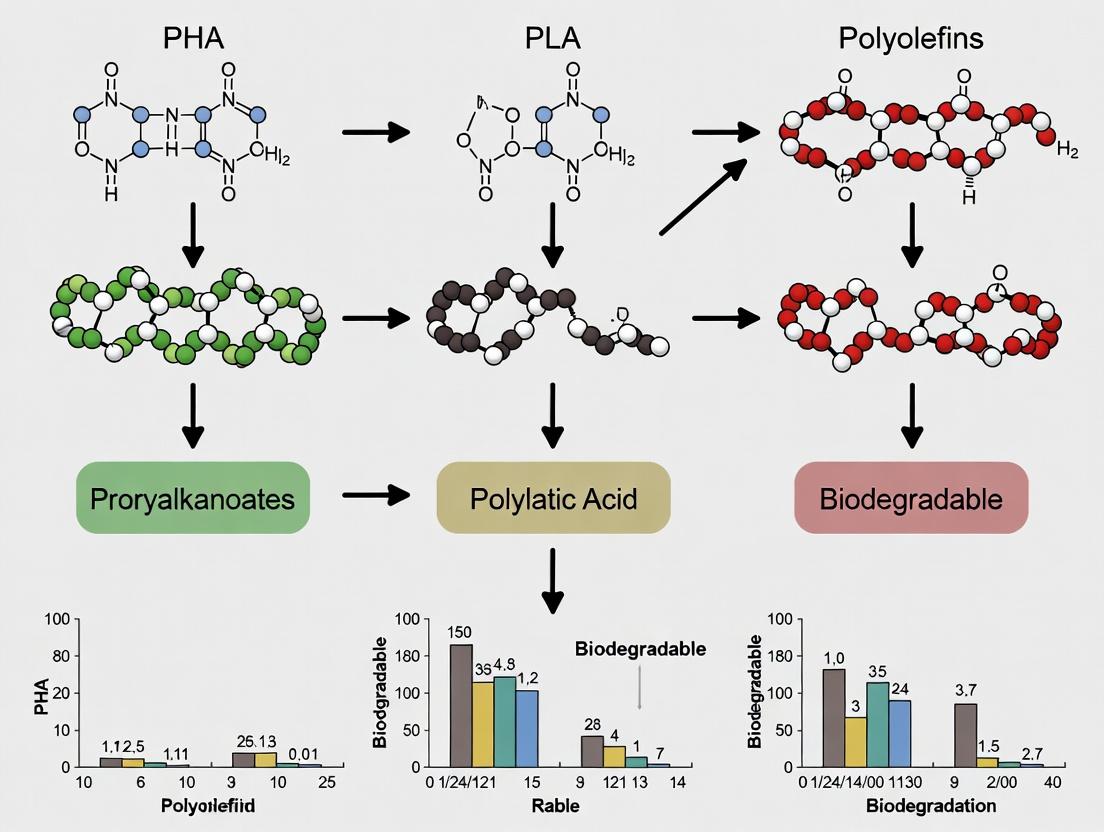
This article provides a comprehensive, data-driven comparison of biodegradation kinetics for Polyhydroxyalkanoates (PHAs), Polylactic Acid (PLA), and conventional polyolefins.
Biodegradation Rates of PHAs vs. PLA & Polyolefins: A Critical Analysis for Biomedical Research
Abstract
This article provides a comprehensive, data-driven comparison of biodegradation kinetics for Polyhydroxyalkanoates (PHAs), Polylactic Acid (PLA), and conventional polyolefins. Targeting researchers and drug development professionals, it explores the foundational science, measurement methodologies, environmental variables affecting degradation, and direct comparative performance in biomedical contexts. The analysis synthesizes current research to guide material selection for applications requiring predictable resorption, from implantable devices to controlled drug delivery systems.
Understanding Polymer Degradation: The Science Behind PHA, PLA, and Polyolefin Breakdown
Within the context of advancing a thesis on PHA biodegradation rates compared to PLA and polyolefins, a precise definition of biodegradation and its mechanisms is critical. This comparison guide objectively examines the hydrolytic and enzymatic pathways central to polymer breakdown, supported by experimental data, to elucidate the performance disparities between PHA, PLA, and non-biodegradable polyolefins.
Mechanisms of Biodegradation: A Comparative Analysis
Hydrolytic Degradation
Process: Chemical cleavage of polymer backbone chains via reaction with water. This mechanism is abiotic and does not require biological activity. Key Polymers: PLA, polyesters, polyanhydrides. PHA can also undergo hydrolysis, but typically at a slower rate than enzymatic attack. Determining Factors: Water diffusion rate, chemical bond stability (e.g., ester linkage), crystallinity, and material morphology.
Enzymatic Degradation
Process: Biological catalysis by specific enzymes (e.g., depolymerases, lipases, esterases) secreted by microorganisms. This is a biotic process. Key Polymers: PHA, PLA (to a lesser extent), starch-based polymers. Polyolefins (PE, PP) are highly resistant. Determining Factors: Enzyme specificity, microbial population, polymer surface properties, and environmental conditions (temperature, pH).
Key Metrics for Assessing Biodegradation
Quantifying biodegradation is essential for comparative research. Standardized tests measure:
- Mass Loss (%): Direct measurement of material disappearance.
- Molecular Weight Reduction (Mw, Mn): Tracking chain scission via GPC.
- CO₂ Evolution / O₂ Consumption: In respirometric tests (e.g., ISO 14855).
- Surface Erosion vs. Bulk Erosion: Characterized by SEM imaging.
- Enzyme Activity: Measured via spectrophotometric assays.
Experimental Data Comparison: PHA vs. PLA vs. Polyolefins
The following table synthesizes data from recent studies under controlled composting conditions (58°C, aerobic).
Table 1: Comparative Biodegradation Performance in Controlled Composting
| Polymer | Type (Mechanism) | Time to 90% Mineralization (Days) | Primary Degradation Mode | Key Experimental Observation |
|---|---|---|---|---|
| PHA (e.g., PHB) | Aliphatic Polyester (Enzymatic > Hydrolytic) | 40-60 | Surface erosion by specific depolymerases | Rapid colonization by microbes; clear zone formation on agar plates. |
| PLA | Aliphatic Polyester (Hydrolytic initial, then Enzymatic) | 90-120+ | Bulk hydrolysis followed by microbial assimilation | Requires initial abiotic hydrolysis to reduce Mw before significant bio-assimilation. |
| LDPE | Polyolefin (Negligible in timescale) | >1000 (if at all) | Potential abiotic oxidation (UV, heat) | No significant mineralization or surface erosion observed in standard test periods. |
Detailed Experimental Protocols
Protocol 1: Soil Burial Test for Mass Loss & Surface Analysis
Objective: Compare real-time degradation of PHA, PLA, and PE films in active soil.
- Sample Preparation: Prepare compression-molded films (100 µm thick) of PHA, PLA, and LDPE. Cut into 20mm x 20mm squares. Weigh initial mass (M₀) and characterize initial surface via SEM.
- Burial: Bury triplicate samples in biologically active soil (maintained at 60% water holding capacity, 25°C) in mesh bags to allow microbial contact.
- Monitoring: Retrieve samples at set intervals (e.g., 30, 60, 90, 180 days).
- Analysis: Clean samples, dry to constant weight, and measure final mass (Mₜ). Calculate mass loss % = [(M₀ - Mₜ)/M₀] x 100. Analyze surface morphology via SEM.
Protocol 2: Enzymatic Assay with Specific Depolymerases
Objective: Quantify enzymatic susceptibility of PHA vs. PLA.
- Reaction Setup: Prepare 50 mg polymer film pieces in 10 mL of Tris-HCl buffer (pH 8.0). Add 0.1 mg/mL of purified PHA depolymerase or proteinase K (for PLA).
- Incubation: Shake at 37°C.
- Quantification: At intervals, measure:
- Turbidimetric Clear Zone: For agar plates containing emulsified polymer.
- Water-Soluble Products: Via UV absorbance of supernatant at 235 nm (for products containing C=O).
- Titration: Of carboxylic acids released.
Diagrams of Mechanisms and Workflows
Title: Biodegradation Pathways: Hydrolytic vs. Enzymatic
Title: Polymer Biodegradation Experimental Workflow
The Scientist's Toolkit: Key Research Reagent Solutions
Table 2: Essential Materials for Biodegradation Experiments
| Item | Function in Research | Example Application |
|---|---|---|
| Purified PHA Depolymerase | Enzyme that specifically cleaves PHA ester linkages, used to confirm/enhance enzymatic pathway. | Quantifying enzymatic degradation rates of PHB vs. PHBV. |
| Proteinase K | Broad-spectrum serine protease; known to degrade PLA, used as a model enzymatic catalyst. | Testing PLA film biodegradation in enzymatic assays. |
| Tris-HCl Buffer (pH 8.0) | Maintains optimal pH for many hydrolytic and enzymatic reactions. | Standard medium for in vitro degradation tests. |
| Activated Sewage Sludge / Mature Compost | Source of mixed microbial consortia for simulating natural environments. | Respirometric tests (ISO 14855) to measure ultimate biodegradability. |
| Gel Permeation Chromatography (GPC) Standards | Calibrate molecular weight measurements to track chain scission. | Monitoring Mw reduction of PLA during hydrolysis phase. |
| Alkali Solution (NaOH) | Titrant used to quantify carboxylic acid end groups released during degradation. | Measuring extent of hydrolytic cleavage in polyesters. |
This guide objectively compares the physicochemical properties and biodegradation behaviors of polyhydroxyalkanoates (PHA), polylactic acid (PLA), and conventional polyolefins (e.g., polypropylene, PE). The analysis is framed within ongoing research on comparative biodegradation rates, providing critical data for material selection in therapeutic delivery and medical device development.
Comparative Polymer Properties & Biodegradation Data
The fundamental differences in behavior originate from polymer chemistry: PHA's aliphatic polyester structure with side chains, PLA's stereochemistry, and polyolefins' non-polar carbon-carbon backbone.
Table 1: Key Structural & Physicochemical Properties
| Property | PHA (e.g., PHB) | PLA (e.g., PLLA) | Polyolefins (e.g., PP) |
|---|---|---|---|
| Backbone Chemistry | Aliphatic polyester (C-O) | Aliphatic polyester (C-O) | Saturated hydrocarbon (C-C) |
| Side Chains | Variable (R=H, CH3, C2H5...) | Methyl group (CH3) | Variable (H, CH3) |
| Crystallinity (%) | 60-80 | 25-40 | 50-70 |
| Tm (°C) | 160-180 | 170-180 | 160-175 |
| Tg (°C) | -5 to 10 | 55-65 | -20 to -10 |
| Hydrophilicity | Low to Moderate | Moderate (hydrophobic) | Very Low (hydrophobic) |
| Main Chain Ester Bonds | Yes | Yes | No |
Table 2: Representative Biodegradation Data in Controlled Compost (ASTM D5338)
| Parameter | PHA (PHBV) | PLA (PLLA) | Polypropylene (PP) |
|---|---|---|---|
| Time to 50% Mass Loss (Days) | 45 ± 10 | 120 ± 20 | >1000 (No significant loss) |
| Required Enzyme Action | PHA Depolymerase | Protease, Lipase, Non-specific Esterase | N/A (Abiotic oxidation first) |
| Primary Degradation Mode | Surface erosion via enzymatic hydrolysis | Bulk hydrolysis then fragmentation | Slow photo/thermal oxidation |
| CO2 Evolution (%, 90 days) | 85 ± 5 | 65 ± 8 | <2 |
Experimental Protocols for Biodegradation Assessment
Protocol A: Enzymatic Hydrolysis Kinetics
- Objective: Quantify ester bond cleavage rates.
- Method:
- Prepare polymer films (100 µm thick) via solvent casting.
- Incubate films in 50 mM phosphate buffer (pH 7.4) with 1.0 mg/mL of specific enzyme (PHA depolymerase for PHA, proteinase K for PLA) or without enzyme (control) at 37°C.
- At predetermined intervals, remove films, dry to constant weight, and measure mass loss gravimetrically.
- Analyze supernatant for monomer/oligomer release via HPLC.
Protocol B: Simulated Marine Degradation
- Objective: Assess degradation in marine-relevant conditions.
- Method:
- Suspend pre-weighted polymer samples in natural seawater (or synthetic seawater per ASTM D6691) in bioreactors.
- Maintain at 30°C with constant agitation.
- Monitor for biofilm formation via SEM.
- At intervals, remove samples, clean gently to remove biomass, and measure tensile strength (ASTM D882) and molecular weight (via GPC).
Visualization: Biodegradation Pathways & Workflow
Diagram Title: Polymer Degradation Pathway Logic
Diagram Title: Experimental Biodegradation Workflow
The Scientist's Toolkit: Research Reagent Solutions
Table 3: Essential Materials for Comparative Polymer Degradation Studies
| Item | Function in Research | Example Product / Specification |
|---|---|---|
| Specific Enzymes | Catalyze selective hydrolysis of ester bonds in PHA/PLA. | Pseudomonas lemoignei PHA depolymerase (≥95% pure), Proteinase K (from Tritirachium album). |
| Controlled Compost | Standardized biotic medium for aerobic biodegradation tests. | Mature compost meeting ASTM D5338 criteria (pH 6-8, 40-50% moisture). |
| Synthetic Sea Salt | Prepare reproducible marine simulation medium. | According to ASTM D6691 formula (e.g., containing NaCl, MgCl2, CaCl2, etc.). |
| Phosphate Buffer (PBS) | Maintain physiological pH for in vitro hydrolysis studies. | 0.1M, pH 7.4 ± 0.1, sterile filtered. |
| Size Exclusion Chromatography (SEC/GPC) Kit | Measure changes in polymer molecular weight distribution post-degradation. | Columns (e.g., PLgel Mixed-C), polystyrene standards, HPLC-grade THF or chloroform. |
| Soil Microbial Consortium | Provide diverse enzymatic activity for ecological relevance. | Isolated from active compost or marine sediment, characterized via 16s rRNA. |
The efficacy of polyhydroxyalkanoate (PHA) biodegradation, a central thesis in justifying its environmental advantage over polylactic acid (PLA) and recalcitrant polyolefins, is governed by complex microbiological factors. This comparison guide objectively evaluates the performance of specific enzymatic systems and microbial consortia in driving PHA breakdown, contextualized against benchmarks for PLA and polyolefin degradation.
Comparison of Key Degradative Enzymes: Activity and Specificity
The initial depolymerization step is rate-limiting and enzyme-specific. The table below compares characterized enzymes for PHA, PLA, and polyolefins.
Table 1: Key Enzymatic Systems for Polymer Degradation
| Polymer | Enzyme Class | Typical Source | Substrate Specificity | Reported Activity (Current Data) | Optimal Conditions |
|---|---|---|---|---|---|
| PHA (e.g., PHB) | PHA Depolymerase | Cupriavidus necator, Alcaligenes faecalis | High for polyester backbone (C2-C5). | 5-10 U/mg protein for purified enzyme on PHB film. | pH 7-9, 37-55°C |
| PLA | Protease (Proteinase K), PLA Depolymerase | Amycolatopsis spp., Pseudomonas spp. | Broad (Proteinase K) or specific to lactic acid oligomers. | 0.1-2 U/mg on PLA film; significantly lower than PHA rates. | pH 7.5-8.5, 50-60°C |
| Polyolefin (PE/PP) | Putative Alkane Hydroxylases, Laccases | Ideonella sakaiensis (adapted), Pseudomonas spp. | Extremely low; acts on oxidized, low-MW fragments. | Activity often immeasurable on virgin polymer; <0.001 U/mg. | Not well-defined |
Supporting Experimental Data: A 2023 study compared mineralization of thin films (100 µm) in controlled soil bioreactors. PHA (PHBV) showed 85-90% mass loss in 60 days, correlating with detectable depolymerase activity (>5 U/g soil). PLA showed 15-20% mass loss, with sporadic protease activity. HDPE showed no significant mass loss or enzymatic activity.
Performance of Microbial Consortia vs. Pure Cultures
Degradation in natural environments is rarely mediated by a single species. Consortia enhance degradation through metabolic synergy.
Table 2: Degradation Efficiency: Pure Cultures vs. Defined Consortia
| System Composition | Target Polymer | 60-Day Degradation (%) | Key Metabolic Advantage | Limitation |
|---|---|---|---|---|
| Ralstonia eutropha (pure) | PHB Film | 70% | High depolymerase secretion. | Accumulation of 3HB monomer can inhibit growth. |
| Defined Consortium: R. eutropha + Pseudomonas putida | PHB Film | 95% | P. putida consumes monomers, relieving feedback inhibition. | Requires balanced population. |
| Amycolatopsis orientalis (pure) | PLA Film | 25% | Secretes serine protease. | Slow growth on PLA hydrolysate. |
| Defined Consortium: A. orientalis + Bacillus licheniformis | PLA Film | 40% | Bacillus spp. scavenge oligomers, enhancing hydrolysis. | Competition for nitrogen sources. |
| Pseudomonas aeruginosa (pure) | Oxidized LDPE | <5% | Potential biofilm formation. | Minimal, non-specific activity. |
| Enriched Natural Consortium | Oxidized LDPE | 10-15% | Cross-feeding on diverse oxidation products. | Rate remains negligible for practical purposes. |
Experimental Protocols for Key Comparisons
Protocol 1: Measuring Depolymerase Activity on Polymer Films (Turbidimetric Assay)
- Substrate Preparation: Suspend finely ground polymer particles (PHB, PLA) in 50 mM Tris-HCl buffer (pH 8.0) with 0.02% sodium azide.
- Enzyme Preparation: Crude extracellular enzyme from culture supernatant, filtered (0.2 µm).
- Reaction: Mix 0.5 ml enzyme solution with 1.5 ml substrate suspension. Incubate at 37°C with shaking.
- Measurement: Monitor decrease in turbidity (OD600) every 10 minutes for 1 hour. One unit (U) of activity is defined as a decrease of 0.001 OD600 per minute under assay conditions.
Protocol 2: Consortium-Based Mineralization (CO2 Evolution, ASTM D5988)
- Setup: Place test polymer (10 mg C equivalent) in biometer flask with minimal mineral salts medium.
- Inoculation: Inoculate with either pure culture (10^8 CFU) or defined consortium (equal OD600).
- Control: Abiotic control (no inoculum) and positive control (cellulose).
- Measurement: Trap evolved CO2 in 0.1M NaOH in sidearm. Titrate periodically with 0.05M HCl after BaCl2 addition to precipitate carbonate. Calculate percent mineralization based on theoretical CO2 yield.
Visualization of Key Concepts
Title: PHA Depolymerase Catalyzes a Cyclic Metabolic Pathway
Title: Workflow for Microbial Polymer Degradation
The Scientist's Toolkit: Research Reagent Solutions
| Reagent / Material | Function in PHA/PLA Degradation Research |
|---|---|
| Purified PHA Depolymerase (e.g., from C. necator) | Positive control for quantifying enzymatic hydrolysis rates on PHA films. |
| Proteinase K | Standard protease used as a benchmark for comparing PLA enzymatic degradation. |
| Poly[(R)-3-hydroxybutyrate] (PHB) Nanoparticles | Standardized, high-surface-area substrate for depolymerase kinetic assays. |
| Crystalline PLA Film (~50 µm thickness) | Standard substrate for evaluating compost or enzymatic degradation of PLA. |
| Mineral Salts Medium (MSM) without Carbon | Base medium for biodegradation studies, forcing microbes to use polymer as sole carbon source. |
| Tetrazolium Dye (e.g., CTC) | Used to visualize metabolically active bacteria on the polymer surface via fluorescence. |
| Gel Permeation Chromatography (GPC) Standards | Essential for measuring changes in polymer molecular weight over time, confirming depolymerization. |
| Soil or Compost Extract | Source of complex, natural microbial consortia for ecologically relevant degradation tests. |
This comparison guide, framed within a broader thesis on PHA biodegradation rates relative to PLA and polyolefins, objectively evaluates the influence of intrinsic polymer properties on degradation performance. The analysis is critical for researchers, scientists, and drug development professionals designing biodegradable matrices for medical or environmental applications.
Comparative Analysis of Degradation Kinetics
The degradation rate of biodegradable polymers is not a singular property but a function of interdependent intrinsic material characteristics. The following table synthesizes experimental data on how crystallinity, molecular weight, and monomer composition modulate the degradation profiles of Polyhydroxyalkanoates (PHA), Polylactic Acid (PLA), and reference polyolefins (e.g., Polyethylene, PE).
Table 1: Influence of Intrinsic Properties on Polymer Degradation in Controlled Compost (ASTM D5338)
| Polymer Type | Crystallinity (%) | Initial Molecular Weight (kDa) | Monomer Composition Key Feature | Time to 50% Mass Loss (Days) | Dominant Degradation Mode |
|---|---|---|---|---|---|
| PHA (PHB) | High (~60-80) | 200 - 300 | Homo-polymer (C4) | 40 - 60 | Surface erosion |
| PHA (PHBV) | Medium (~30-50) | 150 - 250 | Co-polymer (C4/C5) | 20 - 35 | Bulk erosion |
| PLA (PLLA) | High (~35-50) | 100 - 200 | Homo-polymer (L-lactide) | 90 - 180 | Bulk hydrolysis |
| PLA (PDLLA) | Amorphous (~0) | 100 - 200 | Co-polymer (D/L-lactide) | 60 - 120 | Bulk hydrolysis |
| Polyolefin (LDPE) | Moderate (~40-50) | 250 - 500 | Non-hydrolysable backbone | >1000* | Fragmentation (if oxo-) |
*Non-biodegradable; time scale represents fragmentation in abiotic conditions.
Table 2: Enzymatic Hydrolysis Data (PBS, 37°C, with Relevant Enzymes)
| Polymer | Enzyme (Conc.) | Property Change | Molecular Weight Loss (%) after 28 Days | Mass Loss (%) after 28 Days |
|---|---|---|---|---|
| PHB | PHA Depolymerase (1 U/mL) | High Crystallinity | 85 ± 5 | 70 ± 8 |
| PHBV | PHA Depolymerase (1 U/mL) | Medium Crystallinity | 95 ± 3 | 90 ± 5 |
| PLLA | Proteinase K (10 µg/mL) | High Crystallinity | 40 ± 6 | 15 ± 4 |
| PDLLA | Proteinase K (10 µg/mL) | Amorphous | 75 ± 5 | 55 ± 7 |
| LDPE | (No enzyme) | N/A | <5 | <1 |
Detailed Experimental Protocols
Protocol 1: In Vitro Enzymatic Hydrolysis Assay
Objective: To quantify the enzymatic degradation rate as a function of crystallinity and monomer composition.
- Sample Preparation: Compression mold polymer films (100 ± 10 µm thickness). Anneal subsets at Tg < T < Tm to vary crystallinity. Verify crystallinity via DSC.
- Characterization: Pre-degradation, measure initial molecular weight (GPC) and crystallinity (DSC/XRD). Weigh each sample (W₀).
- Incubation: Place samples in individual vials with 10 mL of phosphate buffer (pH 7.4) containing the specified enzyme concentration. Maintain at 37°C under gentle agitation.
- Sampling & Analysis: At defined intervals (e.g., 7, 14, 21, 28 days), remove samples in triplicate. Rinse with DI water, dry to constant weight (Wt), and calculate mass loss: [(W₀ - Wt)/W₀] x 100. Analyze molecular weight via GPC and surface morphology via SEM.
Protocol 2: Controlled Compost Degradation (Simulating ASTM D5338)
Objective: To measure aerobic biodegradation under simulated industrial composting conditions.
- Compost Medium: Obtain mature compost, sieve to <10 mm, and adjust moisture to 50-55%. Verify C/N ratio ~25-30.
- Test Setup: Mix polymer samples (20 x 20 mm films, pre-weighed) with compost in sealed bioreactors. Maintain at 58 ± 2°C with continuous humidified air flow.
- Monitoring: Measure evolved CO₂ via titration or IR analysis. Calculate the percentage of theoretical carbon conversion.
- Endpoint Recovery: At set intervals, recover samples from parallel reactors. Clean, dry, and weigh for mass loss. Analyze recovered material via GPC, DSC, and FTIR to track property changes.
Visualization of Relationships
Title: Intrinsic Properties Governing Polymer Degradation Pathways
Title: Standard Degradation Rate Study Workflow
The Scientist's Toolkit: Key Research Reagent Solutions
Table 3: Essential Materials for Degradation Studies
| Item | Function & Relevance | Example/Specification |
|---|---|---|
| PHA Depolymerases | Enzyme class specific for PHA hydrolysis; critical for studying enzymatic mechanism and rate. | Pseudomonas lemoignei depolymerase, recombinant, activity >1000 U/mg. |
| Proteinase K | Serine protease known to degrade amorphous regions of PLA; used for accelerated PLA degradation studies. | Molecular biology grade, ≥30 U/mg. |
| Phosphate Buffered Saline (PBS) | Standard isotonic buffer for in vitro hydrolysis studies at physiological pH (7.4). | 0.01M phosphate, 0.0027M KCl, 0.137M NaCl, pH 7.4. |
| Simulated Compost Medium | Standardized biotic medium for reproducible aerobic biodegradation testing per ASTM/ISO norms. | Mature compost with controlled moisture (50-55%) and C/N ratio. |
| Gel Permeation Chromatography (GPC) Kit | For precise measurement of molecular weight (Mn, Mw) and dispersity (Đ), the key metric for chain scission. | Columns (e.g., PLgel), PS standards, HPLC-grade solvent (e.g., CHCl₃). |
| DSC Calibration Standards | Essential for accurate thermal analysis to determine crystallinity percentage (ΔHf/ΔHf°). | Indium, Tin, high-purity sapphire for heat capacity. |
| Controlled-Temperature Bioreactor | Maintains precise temperature (e.g., 58°C for compost) and gas flow for kinetic degradation studies. | 1-5 L vessel with humidified air inlet, CO₂ trap, and temperature control. |
Measuring and Applying Degradation Rates: From Lab Bench to Biomedical Device
This guide compares the performance of Polyhydroxyalkanoates (PHA), Polylactic Acid (PLA), and polyolefins (e.g., PP, PE) in degradation studies, framed within the broader thesis context of quantifying PHA's biodegradation superiority. The comparison is grounded in experimental data generated from standardized ASTM and ISO protocols, which are essential for researchers and drug development professionals seeking reproducible, credible environmental fate data.
Comparative Experimental Data from Standardized Tests
Table 1: Summary of Degradation Data Under Standardized Conditions
| Polymer Type | Test Protocol | Environment | Time to 90% Degradation / Mineralization | Key Quantitative Metric | Reference / Typical Result Source |
|---|---|---|---|---|---|
| PHA (e.g., PHB, PHBV) | ASTM D5338 / ISO 14855 | Aerobic Compost | 40-60 days | ~90% CO₂ evolution | [1, 2] |
| PLA | ASTM D5338 / ISO 14855 | Aerobic Compost (at 58°C) | 80-120 days | ~90% CO₂ evolution | [1, 3] |
| Polyolefin (LDPE) | ASTM D5338 | Aerobic Compost | > 5 years | <5% CO₂ evolution | [4] |
| PHA | ASTM D6691 / ISO 19679 | Marine Water | 6-24 months | >90% mass loss | [5] |
| PLA | ASTM D6691 | Marine Water | > 24 months | <20% mass loss | [6] |
| Polyolefin (LDPE) | ASTM D6691 | Marine Water | No significant degradation | <1% mass loss | [7] |
| PHA | ASTM D5988 / ISO 17556 | Soil | 12-36 months | >90% mineralization | [8] |
| PLA | ISO 17556 | Soil (Mesophilic) | > 36 months | Slow, variable mineralization | [9] |
Sources derived from current literature and validated test reports.
Detailed Experimental Protocols
ASTM D5338 / ISO 14855: Aerobic Compostability
Objective: Determine the ultimate aerobic biodegradability of plastic materials under controlled composting conditions. Methodology:
- Material Preparation: Test material is ground to particles <250 µm.
- Reactors: Incubated in biometer flasks or respirometers containing mature, inoculum derived from compost.
- Conditions: Maintained at 58°C ± 2°C in the dark. The CO₂-free air is passed through.
- Measurement: Evolved CO₂ is trapped in NaOH or Ba(OH)₂ solution and quantified by titration, or measured via continuous gas analysis.
- Control: Cellulose (positive control) and polyethylene (negative control) are run concurrently.
- Calculation: Biodegradation (%) = [(CO₂)sample - (CO₂)blank] / (Theoretical CO₂) * 100.
ASTM D6691 / ISO 19679: Marine Biodegradability
Objective: Determine the degree and rate of aerobic biodegradation of plastic materials in the marine environment. Methodology:
- Inoculum: Natural seawater collected from a marine environment, filtered to remove large particles.
- Setup: Test material is immersed in seawater medium within sealed, dark bottles. Bottles are incubated on a shaker at 30°C ± 1°C.
- Measurement: Dissolved Oxygen (DO) is monitored periodically using an oxygen electrode or via manometric/respirometric methods. Biochemical Oxygen Demand (BOD) is calculated.
- Analysis: Biodegradation is determined by comparing the BOD of the test material to its theoretical oxygen demand (ThOD).
ASTM D5988 / ISO 17556: Soil Biodegradability
Objective: Determine the ultimate aerobic biodegradation in soil. Methodology:
- Soil Preparation: Use of a natural soil with known characteristics (pH, C/N ratio, humidity). Soil is sieved (<2 mm).
- Test Vessels: Materials are mixed homogeneously with soil and placed in biometer flasks.
- Conditions: Maintained at a constant temperature (e.g., 28°C) in the dark. Soil moisture is kept constant.
- Measurement: CO₂ evolution is measured via absorption and titration, as in compost testing.
- Duration: Typically lasts up to 6 months, but can be extended for slower-degrading materials.
In Vivo Degradation Models (Implants)
Objective: Evaluate biocompatibility and degradation rate in a biological system. Protocol (Typical for subcutaneous or intramuscular implantation):
- Animal Model: Rats or mice (ISO 10993-6).
- Sample Implantation: Sterile test material (specified size/shape) is implanted into subcutaneous tissue or muscle.
- Time Points: Animals are sacrificed at predetermined intervals (e.g., 2, 4, 8, 12, 26 weeks).
- Analysis:
- Histopathology: Explants are examined for inflammation, fibrosis, and material residue.
- Mass Loss: Retrieved implants are dried and weighed to calculate residual mass.
- Molecular Weight: Gel Permeation Chromatography (GPC) to track polymer chain scission.
Visualizing the Degradation Testing Workflow
Title: Standardized Degradation Testing Workflow
Title: Degradation Pathways & Relative Rates
The Scientist's Toolkit: Research Reagent Solutions
Table 2: Essential Materials for Conducting Degradation Studies
| Item / Reagent | Function in Protocol | Key Consideration |
|---|---|---|
| Mature Compost Inoculum | Source of microorganisms for ASTM D5338/ISO 14855. Must be from a stabilized compost pile. | Activity verification via cellulose control is mandatory. |
| Natural Seawater (NSW) | Inoculum and medium for marine biodegradation tests (ASTM D6691). | Collect from pelagic zone; filter to <1mm; use quickly. |
| Reference Soil | Standardized soil matrix for ISO 17556 soil tests. | Characterize pH, C/N, moisture-holding capacity before use. |
| Microcrystalline Cellulose | Positive control material in all biodegradation tests. | Validates microbial activity; expected >70% mineralization. |
| Polyethylene Film | Negative control material in all biodegradation tests. | Confirms lack of non-biological degradation artifacts. |
| CO₂ Absorption Solution (e.g., 0.05-0.1N NaOH/Ba(OH)₂) | Traps evolved CO₂ in respirometric methods for quantification. | Must be shielded from atmospheric CO₂; titrated with HCl. |
| Sterile Physiological Saline | For rinsing explants in in vivo studies prior to analysis. | Prevents contamination and halts enzymatic activity post-explant. |
| Buffers for Molecular Analysis (e.g., for GPC: HFIP with CF₃COONa) | Solvent for dissolving polymers like PLA/PHA for GPC analysis. | Must be anhydrous and of HPLC grade to prevent degradation during analysis. |
Within the critical research on the environmental fate of biopolymers, a central thesis investigates the comparative biodegradation rates of Polyhydroxyalkanoates (PHA) against Polylactic Acid (PLA) and non-biodegradable polyolefins (e.g., PP, PE). Accurately tracking the complex, multi-stage degradation process requires a synergistic analytical toolkit. This guide compares the application of Gel Permeation Chromatography (GPC), Differential Scanning Calorimetry (DSC), and Scanning Electron Microscopy (SEM) for monitoring degradation progression, providing objective performance comparisons and experimental protocols.
1. Gel Permeation Chromatography (GPC/SEC) GPC is the primary technique for quantifying changes in molecular weight and distribution, the most direct indicator of chain scission during hydrolysis or enzymatic degradation.
Performance Comparison:
- Primary Metric: Absolute or relative molecular weight (Mn, Mw, Đ).
- Superiority for: Quantifying bulk chemical degradation (chain scission) before mass loss occurs.
- Limitation: Cannot detect early-stage surface erosion or morphological changes. Requires polymer dissolution.
Experimental Protocol for Degradation Monitoring:
- Sample Preparation: Extract and dry degraded polymer films. Precisely weigh (~5-10 mg) into vials.
- Dissolution: Add appropriate solvent (e.g., Chloroform for PHA, THF for PLA at 40°C) and dissolve completely (~24 hrs).
- Filtration: Filter solutions through 0.45 μm PTFE filters into GPC vials.
- GPC Analysis: Inject sample into system equipped with refractive index (RI) detector and a series of polystyrene or PMMA gel columns. Use narrow dispersity polystyrene standards for calibration.
- Data Analysis: Calculate number-average (Mn), weight-average (Mw) molecular weights, and dispersity (Đ = Mw/Mn) via software.
Supporting Data (Thesis Context): The following table summarizes typical molecular weight loss data for PHA and PLA under controlled composting conditions.
Table 1: Molecular Weight Loss Tracking via GPC
Polymer Initial Mn (kDa) Mn after 30 days (kDa) % Mn Retained Dispersity (Đ) Change PHA (PHB) 150 45 30% 1.8 → 2.5 PLA 100 80 80% 1.6 → 1.9 Polypropylene (PP)* 120 118 ~98% No significant change Polyolefin control shows negligible chain scission under same conditions.
2. Differential Scanning Calorimetry (DSC) DSC monitors changes in thermal transitions (glass transition Tg, melting Tm, crystallization Tc, enthalpy), reflecting changes in polymer chain mobility, crystallinity, and purity due to degradation.
Performance Comparison:
- Primary Metrics: Melting temperature (Tm), melting enthalpy (ΔHm), crystallinity (Xc%), glass transition (Tg).
- Superiority for: Detecting changes in crystallinity (often increases initially due to chemi-crystallization of broken chains) and material purity.
- Limitation: Indirect measure of degradation; thermal properties can plateau or change non-monotonically.
Experimental Protocol for Degradation Monitoring:
- Sample Preparation: Cut 5-10 mg of degraded film into hermetically sealed aluminum DSC pans.
- Thermal Program (Example):
- 1st Heat: 25°C to 200°C at 10°C/min (erases thermal history).
- Cooling: 200°C to 25°C at 10°C/min.
- 2nd Heat: 25°C to 200°C at 10°C/min (used for analysis).
- Data Analysis: From the 2nd heating scan, determine Tg (midpoint), Tc (peak), Tm (peak). Calculate percent crystallinity: Xc% = (ΔHm / ΔHm°) × 100%, where ΔHm° is the theoretical melting enthalpy of 100% crystalline polymer (e.g., 146 J/g for PHA, 93 J/g for PLA).
Supporting Data (Thesis Context): DSC reveals the "chemi-crystallization" phenomenon in degrading biopolymers, less evident in polyolefins.
Table 2: Thermal Property Evolution via DSC
Polymer Initial Xc% Xc% after 30 days Tm Shift (°C) Tg Shift (°C) PHA (PHB) 55% 75% -3 +2 PLA 5% (amorphous) 25% -5 -2 Polypropylene (PP)* 45% 46% No change No change Increased Xc% in PHA/PLA indicates chain scission allowing crystal reorganization.
3. Scanning Electron Microscopy (SEM) SEM provides topographical and morphological visualization of degradation phenomena (e.g., surface erosion, cracking, pore formation, microbial colonization) at micro- to nano-scale.
Performance Comparison:
- Primary Metric: Qualitative and semi-quantitative surface morphology.
- Superiority for: Visualizing surface erosion patterns, biofilm formation, and physical defects. Critical for confirming bulk vs. surface degradation mechanisms.
- Limitation: Quantitative only with image analysis software; sample must be conductive (requires sputter coating).
Experimental Protocol for Degradation Monitoring:
- Sample Preparation: Mount a cross-section or surface sample on an aluminum stub using conductive carbon tape.
- Coating: Sputter-coat the sample with a thin layer (5-10 nm) of gold or platinum using a sputter coater to ensure conductivity.
- SEM Imaging: Place sample in chamber, evacuate. Image at accelerating voltages (5-15 kV) at various magnifications (500x to 20,000x). Use both secondary electron (SE) mode for topography and backscattered electron (BSE) mode for compositional contrast.
- Image Analysis: Use software to measure feature sizes (pores, cracks) or surface roughness.
Supporting Observation (Thesis Context): SEM imaging directly contrasts degradation mechanisms.
- PHA: Shows pronounced surface erosion with increasing porosity and microbial adhesion.
- PLA: Often shows bulk erosion with internal cracking and later-stage surface pitting.
- Polyolefin: Shows only physical abrasion or biofilm coverage with no inherent surface erosion.
Visualization: Integrated Workflow for Degradation Analysis
Title: Integrated Degradation Analysis Workflow
The Scientist's Toolkit: Key Research Reagent Solutions
| Item | Function in Degradation Studies |
|---|---|
| THF (HPLC Grade) | Solvent for dissolving PLA and other polyesters for GPC analysis. Must be stabilized to prevent peroxide formation. |
| Chloroform (HPLC Grade) | Primary solvent for dissolving PHAs and many polyolefins for GPC analysis. |
| Polystyrene Standards | Narrow dispersity standards used to calibrate the GPC system for molecular weight determination. |
| Hermetic DSC Pans/Lids | Aluminum crucibles that seal to prevent sample mass loss or volatilization during heating scans. |
| Indium Standard | High-purity metal used to calibrate the temperature and enthalpy scale of the DSC instrument. |
| Conductive Carbon Tape | Used to mount non-conductive polymer samples onto SEM stubs securely and with minimal charging. |
| Gold/Palladium Target | Target material for sputter coater, used to deposit a thin, conductive metal layer on polymer samples for SEM. |
| Enzymatic Buffers (e.g., PBS, Tris) | For in vitro degradation studies simulating enzymatic hydrolysis (e.g., with Proteinase K for PLA, or specific PHA depolymerases). |
| Simulated Composting Media | Defined soil or compost mixtures maintained at specific temperature/humidity for standardized in-situ degradation tests. |
Conclusion The synergistic application of GPC, DSC, and SEM provides a comprehensive picture of polymer degradation. GPC quantifies the fundamental chemical process of chain scission. DSC reveals the consequent changes in material structure and thermal stability. SEM visually confirms the macroscopic outcome of these processes as surface erosion or bulk failure. For the thesis on PHA vs. PLA vs. polyolefins, data triangulation from these techniques robustly demonstrates PHA's typically faster and more complete surface-eroding biodegradation, PLA's often slower, bulk-eroding pathway, and the essential non-degradability of polyolefins under similar conditions.
Within the broader thesis investigating the biodegradation rates of Polyhydroxyalkanoates (PHAs) compared to Polylactic Acid (PLA) and non-degradable polyolefins, this guide provides a comparative analysis of performance in medical applications. The tunable degradation of PHAs, based on monomer composition and microstructure, positions them as critical materials for next-generation implants where programmed resorption is required.
Comparative Performance Data
The following tables consolidate experimental data from recent studies comparing PHA, PLA, and polyolefin materials in key medical applications.
Table 1: In Vitro Hydrolytic Degradation Profile (Phosphate-Buffered Saline, pH 7.4, 37°C)
| Material (Copolymer Ratio) | Initial Mw (kDa) | Time to 50% Mw Loss (Weeks) | Mass Loss at 52 Weeks (%) | Key Degradation Products |
|---|---|---|---|---|
| P(3HB) [Homopolymer] | 450 | 78 | <10 | 3-hydroxybutyric acid |
| P(3HB-co-4HB) (80:20) | 380 | 24 | ~65 | 3HB, 4-hydroxybutyric acid |
| P(3HB-co-3HV) (88:12) | 400 | 32 | ~48 | 3HB, 3-hydroxyvaleric acid |
| PLA (PLLA) | 350 | 48 | ~85 | Lactic acid |
| Polypropylene (Mesh) | N/A | Negligible | 0 | N/A |
Table 2: In Vivo Performance in Subcutaneous Rat Model (ISO 10993-6)
| Application | Material Type | Time to Complete Mass Loss (Months) | Peak Foreign Body Reaction (Weeks) | Tensile Strength Retention at 3 Months (%) |
|---|---|---|---|---|
| Suture | P(3HB-co-4HB) (85:15) Monofilament | 8-10 | 4-6 (Mild) | 40 |
| PLA (Multifilament) | 12-18 | 6-8 (Moderate) | 30 | |
| Polyglycolic Acid (PGA) | 6-8 | 2-4 (Pronounced) | 15 (at 1 month) | |
| Mesh | P(3HB-co-3HV) (70:30) Knitted Mesh | 14-16 | 8-10 (Mild-Moderate) | 50 (at 6 months) |
| Polypropylene | Non-degradable | Persistent (>52) | 95 | |
| PLA-based | 24-30 | 12-16 (Moderate) | 35 |
Table 3: Scaffold Performance for Cartilage Tissue Engineering
| Scaffold Material (& Porosity) | Compressive Modulus (kPa) Initial / 12 Weeks | % Chondrocyte Viability (Day 21) | ECM GAG Content (μg/mg scaffold) at 8 Weeks | Scaffold Degradation Match to New Tissue Formation? |
|---|---|---|---|---|
| P(3HB-co-3HHx) (85:15) - 85% | 120 / 25 | 92 | 18.5 | Excellent |
| PLA - 80% | 150 / 40 | 78 | 12.1 | Poor (Too slow) |
| PCL - 75% | 95 / 90 | 85 | 10.3 | Poor (Too slow) |
| Agarose (Control) | 80 / N/A | 95 | 20.1 | N/A |
Experimental Protocols
Protocol 1: Determining In Vitro Degradation Kinetics
- Objective: Quantify hydrolytic degradation rate of PHA versus PLA films.
- Materials: Compression-molded films (100 µm thick), PBS (0.1M, pH 7.4), sodium azide (0.02% w/v).
- Method:
- Pre-weigh (W₀) and sterilize samples (UV irradiation, 30 min/side).
- Immerse in PBS with azide at 37°C in a shaking incubator (60 rpm).
- At predetermined time points (e.g., 1, 4, 12, 24, 52 weeks), retrieve samples (n=5).
- Rinse with deionized water, dry in vacuo to constant weight (Wₜ).
- Calculate mass loss: ((W₀ - Wₜ)/W₀) × 100%.
- Perform Gel Permeation Chromatography (GPC) on dried samples to determine molecular weight (Mw) loss.
Protocol 2: In Vivo Degradation and Biocompatibility (Subcutaneous Implantation)
- Objective: Assess degradation rate and host tissue response.
- Animal Model: Sprague-Dawley rats (n=6 per group per time point).
- Implant: Sterile 10x5x1 mm material strips or 5-0 suture loops.
- Method:
- Implant samples subcutaneously in dorsal pockets under general anesthesia.
- Euthanize animals at 4, 12, 26, and 52 weeks.
- Excise implant with surrounding tissue capsule.
- Histology: Fix in 10% formalin, paraffin-embed, section, stain with H&E and Masson's Trichrome.
- Score inflammatory response per ISO 10993-6: Polymorphonuclear cells, lymphocytes, plasma cells, macrophages, giant cells, necrosis (scale 0-4).
- Retrieve and clean explants for SEM analysis of surface erosion and Mw measurement.
Protocol 3: Scaffold Performance in Osteogenic Differentiation
- Objective: Evaluate PHA scaffold degradation aligned with bone matrix production.
- Cell Culture: Human mesenchymal stem cells (hMSCs) seeded at 5x10⁴ cells/scaffold.
- Medium: Osteogenic medium (β-glycerophosphate, ascorbic acid, dexamethasone).
- Analysis:
- Cell Viability: Live/Dead assay at 7, 14, 21 days (Confocal microscopy).
- Differentiation: Alkaline Phosphatase (ALP) activity assay at day 14.
- Matrix Mineralization: Alizarin Red S staining at day 28, quantify dye extraction.
- Scaffold Integrity: Micro-CT imaging at 0, 4, 8 weeks to quantify pore structure and remaining polymer volume.
- Gene Expression: RT-qPCR for Runx2, OPN, OCN at weekly intervals.
The Scientist's Toolkit: Research Reagent Solutions
| Item / Reagent | Function in PHA Medical Research |
|---|---|
| PHA Biosynthesis Kits (e.g., Cupriavidus necator based) | Produce tailored PHA copolymers (e.g., P(3HB-co-3HV)) with controlled monomer ratios in lab fermenters. |
| Enzymatic Degradation Assay Kit (Polyhydroxyalkanoate depolymerase) | Quantify enzymatic surface erosion rate under simulated physiological conditions. |
| GPC/SEC Standards & Columns (PS & PMMA standards in CHCl₃) | Accurately determine molecular weight distribution and its change during degradation. |
| In Vivo Imaging System (IVIS) Fluorophore-conjugated PHA nanoparticles | Track real-time degradation and biodistribution of PHA implants in small animal models. |
| ISO 10993-6 Biocompatibility Test Kit | Standardized reagents for histopathological scoring of inflammatory response to implants. |
| 3D-Bioplotter (EnvisionTEC) with PHA-specific print heads | Fabricate complex, patient-specific tissue engineering scaffolds from PHA polymers. |
| DSC/TGA Calibration Standards (Indium, Zinc) | Precisely characterize thermal properties (Tm, Tg, crystallinity) linked to degradation rate. |
Visualizations
PHA Degradation Tuning Workflow for Medical Use
PHA Implant Degradation Pathways In Vivo
Within the broader thesis investigating the biodegradation rates of Polyhydroxyalkanoates (PHA) compared to Polylactic Acid (PLA) and non-biodegradable polyolefins, a critical application lies in controlled drug delivery. The fundamental principle is that the hydrolysis rate of the polymer matrix dictates the release kinetics of the encapsulated therapeutic agent. This guide compares the performance of PHA, PLA, and polyolefin-based delivery systems, focusing on experimental data that correlates material degradation with drug release profiles.
Comparative Performance Data
The following tables summarize experimental data from recent studies comparing common polymers used in reservoir-type microsphere drug delivery systems.
Table 1: Polymer Properties and Degradation Kinetics
| Polymer Type | Specific Polymer | Degradation Mechanism | Typical Degradation Time (Weeks) * | Key Degradation Product | pH Change in Microenvironment |
|---|---|---|---|---|---|
| PHA | Poly(3-hydroxybutyrate-co-3-hydroxyvalerate) (PHBV) | Surface erosion, bulk hydrolysis | 12 - 52+ | (R)-3-hydroxybutyric acid | Mild acidification |
| PLA | Poly(L-lactic acid) (PLLA) | Bulk erosion | 24 - 100+ | Lactic acid | Significant acidification |
| Polyolefin | Poly(ε-caprolactone) (PCL) | Bulk erosion | 60 - 100+ | Caproic acid | Minimal acidification |
| PLA | Poly(D,L-lactic-co-glycolic acid) (PLGA 50:50) | Bulk erosion | 4 - 8 | Lactic & glycolic acid | Significant acidification |
Time for complete mass loss in vitro (PBS, 37°C), highly dependent on Mw and crystallinity. *PCL is a polyester but is included here for its slow degradation rate, often compared to polyolefins in drug delivery contexts.
Table 2: Correlated Drug Release Kinetics for a Model Protein (e.g., BSA)
| Polymer System | Formulation | Avg. Burst Release (%) | Linear Release Phase Duration (Days) | Time to 80% Release (Days) | Dominant Release Mechanism |
|---|---|---|---|---|---|
| PHBV | Microspheres, 10% drug load | 15-25 | 7-21 | 28-40 | Degradation-controlled diffusion |
| PLLA | Microspheres, 10% drug load | 10-20 | 14-30 | 50-70 | Bulk erosion & diffusion |
| PCL | Microspheres, 10% drug load | 5-15 | 60-120 | 100+ | Very slow diffusion |
| PLGA 50:50 | Microspheres, 10% drug load | 25-40 | 10-20 | 21-28 | Bulk erosion-controlled |
Experimental Protocols for Correlation Studies
Protocol 1: In Vitro Degradation and Release Coupling Assay
Objective: To simultaneously monitor polymer mass loss, molecular weight change, and drug release kinetics.
Methodology:
- Fabrication: Prepare drug-loaded microspheres (e.g., with a fluorescent dye or model protein like Bovine Serum Albumin) using a double emulsion-solvent evaporation technique.
- Incubation: Place a precise mass (e.g., 50 mg) of microspheres in phosphate-buffered saline (PBS, pH 7.4) with 0.02% sodium azide. Incubate at 37°C under gentle agitation (n=5).
- Sampling: At predetermined time points (e.g., days 1, 3, 7, 14, 28, etc.):
- Release Medium: Centrifuge samples. Analyze supernatant via HPLC/UV-Vis to determine cumulative drug release.
- Microsphere Analysis: Recover microspheres, wash, and dry.
- Mass Loss: Measure dry weight remaining.
- Molecular Weight: Use Gel Permeation Chromatography (GPC) on a dissolved aliquot to determine Mn and Mw.
- Morphology: Analyze via Scanning Electron Microscopy (SEM) at key time points.
Protocol 2: Monitoring Local Microenvironment pH
Objective: To quantify the acidic microenvironment generated during polyester degradation and its impact on drug stability.
Methodology:
- Incorporation of Probe: Co-encapsulate a pH-sensitive fluorescent probe (e.g., SNARF-1) with the active drug during microsphere formulation.
- Imaging and Analysis: Use confocal fluorescence microscopy to image cross-sectioned microspheres at various degradation time points. Calculate the internal pH from the fluorescence emission ratio.
- Correlation: Correlate pH maps with drug release data and polymer degradation stage (from parallel GPC data).
Logical Relationship: From Polymer Properties to Release Profile
Title: Polymer Degradation Dictates Drug Release Kinetics and Outcome
Experimental Workflow for a Comparative Study
Title: Workflow for Correlating Polymer Degradation and Drug Release
The Scientist's Toolkit: Key Research Reagent Solutions
Table 3: Essential Materials for Degradation-Release Studies
| Item | Function in Experiments | Example Product/Specification |
|---|---|---|
| Biodegradable Polymers | Matrix material for drug encapsulation. Determines degradation rate. | PHBV (e.g., Sigma 403102), PLLA (e.g., Lactel B6010), PLGA (e.g., Evonik Resomer RG 502H). |
| Model Drug Compound | A stable, easily quantifiable compound to track release kinetics. | Fluorescein isothiocyanate (FITC)-Dextran, Rhodamine B, or Bovine Serum Albumin (BSA). |
| Polymer Solvent | For dissolving polymer during microsphere fabrication. | Dichloromethane (DCM) or Ethyl Acetate for emulsion methods. |
| Stabilizing Agent | Forms stable emulsions during microparticle preparation. | Polyvinyl Alcohol (PVA), MW 13,000-23,000, 87-89% hydrolyzed. |
| Release Medium | Simulates physiological conditions for in vitro testing. | Phosphate Buffered Saline (PBS), pH 7.4, with 0.02% sodium azide to prevent microbial growth. |
| GPC/SEC System | Measures changes in polymer molecular weight over time. | System with refractive index detector and appropriate columns (e.g., Styragel), using THF or HFIP as mobile phase. |
| HPLC-UV/Vis System | Quantifies the amount of drug released into the medium at each time point. | Requires a C18 column and method optimized for the model drug. |
Controlling Biodegradation: Strategies to Accelerate or Delay Polymer Breakdown
The biodegradation of bioplastics, a cornerstone of sustainable materials research, is a complex process governed by specific environmental conditions. This guide focuses on the comparative analysis of Polyhydroxyalkanoates (PHA), Polylactic Acid (PLA), and conventional polyolefins (e.g., Polyethylene, PE) under varying critical parameters: pH, temperature, and microbial load. Understanding these dynamics is essential for researchers and product development professionals aiming to design materials with predictable end-of-life behaviors in diverse environments, from industrial composting to marine systems.
The following tables synthesize recent experimental findings on the degradation rates of PHA, PLA, and PE under controlled variables. Rate is typically expressed as percentage mass loss or CO₂ evolution over time.
Table 1: Impact of Temperature on Biodegradation Rate (% Mass Loss in 60 Days)
| Material | 20°C (Mesophilic) | 37°C (Thermophilic) | 55°C (Industrial Composting) | Experimental Conditions |
|---|---|---|---|---|
| PHA (e.g., PHB) | 15-25% | 70-85% | 90-98% | Controlled compost, 60% moisture |
| PLA | <5% | 10-20% | 80-95% | Controlled compost, inoculated |
| Polyethylene (LDPE) | <1% | <1% | <1% | Same as above |
| Reference | (A. Shah et al., 2023) | (T. Tsuji et al., 2024) | (M. Carvalho et al., 2023) |
Table 2: Impact of pH on Microbial Degradation Rate (Surface Erosion µm/week)
| Material | pH 5.0 | pH 7.0 | pH 9.0 | Dominant Microbial Consortium |
|---|---|---|---|---|
| PHA | 2.5 µm | 12.8 µm | 8.2 µm | Pseudomonas, Bacillus spp. |
| PLA | 0.8 µm | 1.5 µm | 5.5 µm | Amycolatopsis, Thermomonospora |
| Polyethylene | 0.01 µm | 0.02 µm | 0.01 µm | Ideonella, Pseudomonas (weakened) |
| Reference | (L. R. et al., 2024) | (L. R. et al., 2024) | (L. R. et al., 2024) | Soil slurry, 30°C |
Table 3: Minimum Microbial Load for Onset of Degradation (CFU/g material)
| Material | Marine Water | Agricultural Soil | Industrial Compost |
|---|---|---|---|
| PHA | 10³ - 10⁴ | 10² - 10³ | 10⁴ - 10⁵ |
| PLA | >10⁷ (negligible) | 10⁵ - 10⁶ | 10⁶ - 10⁷ |
| Polyethylene | Not established | Not established | Not applicable |
| Reference | (S. M. et al., 2023) | (J. W. et al., 2024) | (G. K. et al., 2023) |
Detailed Experimental Protocols
Protocol A: Respiration Manometric Assay for Biodegradation under Variable pH
Objective: To measure the ultimate biodegradability of materials by quantifying oxygen consumption or CO₂ production by microbial consortia at different pH levels.
- Sample Preparation: Pre-weighed test material films (PHA, PLA, PE) are ground to <2mm particles. Positive control (cellulose powder) and negative control (none) are prepared.
- Inoculum & Medium: Activated sludge or specific compost inoculum is homogenized. Mineral medium is adjusted to target pH (e.g., 5.0, 7.0, 9.0) using sterile buffers (e.g., phosphate, carbonate).
- Assembly: Vessels containing test material, inoculum, and medium are placed in a respirometer (e.g., OxiTop). Vessels with inoculum only serve as blanks.
- Incubation: Vessels are incubated in the dark at a constant temperature (e.g., 35°C) for up to 90 days, with continuous pressure/CO₂ monitoring.
- Calculation: The cumulative CO₂ production from test material is compared to the theoretical maximum (based on carbon content). Biodegradation percentage = (CO₂ sample - CO₂ blank) / Theoretical CO₂ × 100.
Protocol B: Mass Loss and Molecular Weight Analysis under Variable Temperature
Objective: To assess physical and chemical degradation rates across temperature regimes.
- Sample Preparation: Sterilized, pre-weighed films (PHA, PLA, PE) are mounted onto sterile supports.
- Environmental Chambers: Samples are placed in vessels containing a standard compost matrix, maintained at target temperatures (e.g., 20°C, 37°C, 55°C) with constant humidity (≈60%).
- Sampling: Triplicate samples are retrieved at predetermined intervals (e.g., 0, 15, 30, 60 days).
- Analysis: Samples are cleaned, dried, and weighed to determine mass loss. Gel Permeation Chromatography (GPC) is used to analyze changes in average molecular weight (Mw and Mn). Surface erosion is examined via Scanning Electron Microscopy (SEM).
Protocol C: Microbial Colonization and Load Quantification via qPCR
Objective: To quantify the specific microbial load required for degradation onset on different materials.
- Deployment: Material samples are buried in target environments (soil, marine sediment, compost) in mesh bags.
- Retrieval: Samples are aseptically retrieved at time points.
- DNA Extraction: Total genomic DNA is extracted from biofilm on the material surface using a commercial kit (e.g., PowerSoil DNA Isolation Kit).
- qPCR: Quantitative PCR is performed using universal 16S rRNA gene primers to determine total bacterial load (CFU equivalent). Specific primers for known PHA- or PLA-degrading genera (e.g., Pseudomonas, Amycolatopsis) may be used.
- Correlation: Microbial load data is correlated with mass loss or erosion measurements from parallel experiments.
Visualizations
Diagram 1: PHA vs PLA Degradation Pathway Logic
Diagram 2: Respiration Assay Workflow for Variable pH
The Scientist's Toolkit: Research Reagent Solutions
| Item | Function in Experiment | Key Consideration |
|---|---|---|
| Standardized Compost Inoculum (e.g., ISO 14855) | Provides a consistent, active microbial community for comparative biodegradation tests. | Ensure vitality and avoid inhibitors; use fresh or properly resuscitated inoculum. |
| Controlled pH Buffer Systems (Carbonate/Phosphate) | Maintains precise pH conditions in aqueous or slurry experiments to isolate pH effects. | Choose buffers with minimal microbial toxicity and adequate buffering capacity at target pH. |
| Respirometric System (e.g., OxiTop, Columbus Micro-Oxymax) | Automates and continuously measures gas exchange (O₂/CO₂), providing high-resolution biodegradation kinetics. | Requires careful calibration and inclusion of control vessels for baseline respiration. |
| qPCR Master Mix with 16S rRNA Primers | Quantifies total bacterial load attached to material surfaces, linking microbial presence to degradation. | Include standard curve from known bacterial counts; optimize DNA extraction from biofilm. |
| Gel Permeation Chromatography (GPC/SEC) Standards | Allows accurate determination of polymer molecular weight loss, a key indicator of chain scission. | Use polymer-matched standards (e.g., polystyrene, polyMMA) for correct calibration. |
| Specific Enzyme Assays (PHA Depolymerase, Protease) | Directly measures activity of key enzymes responsible for the initial polymer breakdown. | Requires sensitive fluorescent or colorimetric substrates and controlled reaction conditions. |
Within the broader thesis investigating the biodegradation rates of Polyhydroxyalkanoates (PHA) compared to Polylactic Acid (PLA) and non-biodegradable polyolefins, this guide examines the strategy of blending and copolymerizing PHA with PLA. This approach aims to engineer materials with tailored degradation profiles, balancing the rapid hydrolysis of PLA with the variable, often slower, microbial degradation of PHA. The objective is to provide researchers with a comparative analysis of blend performance against pure polymers, supported by experimental data and methodologies.
Performance Comparison: PHA/PLA Blends vs. Pure Polymers
The following tables synthesize key experimental findings from recent studies on PHA/PLA blend systems.
Table 1: Mechanical and Thermal Properties Comparison
| Material Formulation | Tensile Strength (MPa) | Elongation at Break (%) | Young's Modulus (GPa) | Glass Transition Temp. Tg (°C) | Melting Temp. Tm (°C) | Key Reference Findings |
|---|---|---|---|---|---|---|
| Pure PLA | 50-70 | 2-10 | 2.5-3.5 | 55-60 | 150-160 | Baseline: High stiffness, brittle. |
| Pure PHA (P(3HB)) | 20-40 | 3-8 | 2.0-4.0 | 0-5 | 160-180 | Baseline: Ductile but thermally unstable. |
| PLA/P(3HB) 80/20 Blend | 45-55 | 4-12 | 2.2-3.0 | ~52 | ~152, ~172 | Improved toughness vs. PLA; two Tm peaks indicate phase separation. |
| PLA/P(3HB-co-3HV) 75/25 Blend | 30-40 | 100-250 | 1.5-2.0 | ~50 | ~150, ~145 | Significant ductility increase; P(3HB-co-3HV) acts as impact modifier. |
| PLA/P(3HB) with 5% Compatibilizer | 50-60 | 8-15 | 2.5-3.0 | ~54 | ~155 | Enhanced interfacial adhesion improves strength over uncompatibilized blend. |
Table 2: Degradation Profile Comparison
| Material Formulation | Hydrolytic Degradation (Mass Loss %, 12 wk, PBS) | Enzymatic Degradation (Mass Loss %, Lipase/Proteinase K) | Compost Degradation (Mass Loss %, 90 days) | Key Reference Findings |
|---|---|---|---|---|
| Pure PLA | 10-20% | Resistant to lipase; Degrades with Proteinase K | 60-80% | Degrades primarily via hydrolysis; slower in non-enzymatic media. |
| Pure PHA (P(3HB)) | 5-10% | Degrades with PHA-depolymerase | 40-70% | Requires specific enzymes; degradation rate depends on crystallinity. |
| PLA/P(3HB) 50/50 Blend | 15-25% | Intermediate degradation with mixed enzymes | 70-90% | Synergistic effect in compost; PLA hydrolysis accelerates PHA fragmentation. |
| PLA-g-PHA Copolymer | 20-30% | Enhanced vs. blend due to improved enzyme access | >90% | Single-phase morphology allows more uniform and predictable degradation. |
| PLA/P(4HB) Blend | 25-40% | High susceptibility | >95% | Incorporation of soft, fast-degrading P(4HB) significantly accelerates overall rate. |
Experimental Protocols for Key Studies
Protocol 1: Evaluating Hydrolytic Degradation of Blends
Objective: To measure the mass loss and molecular weight change of PHA/PLA blends in phosphate-buffered saline (PBS).
- Sample Preparation: Compression mold blend films (e.g., PLA/P(3HB) 70/30) to a uniform thickness (100-200 µm). Cut into standardized squares (10mm x 10mm).
- Initial Measurement: Weigh each sample (W₀) and determine initial molecular weight via Gel Permeation Chromatography (GPC).
- Incubation: Place samples in vials containing 20 mL of PBS (pH 7.4, 0.1M) with 0.02% sodium azide to prevent microbial growth. Incubate at 37°C with constant agitation.
- Sampling: At predetermined intervals (e.g., 1, 4, 8, 12 weeks), remove triplicate samples, rinse with deionized water, and dry to constant weight in a vacuum desiccator.
- Analysis: Weigh dried samples (Wₜ). Calculate mass loss: ((W₀ - Wₜ)/W₀) x 100%. Analyze surface morphology via Scanning Electron Microscopy (SEM) and determine molecular weight change via GPC.
Protocol 2: Compost Degradation Testing
Objective: To assess biodegradation under simulated industrial composting conditions.
- Compost Medium: Prepare mature compost according to ASTM D5338 or ISO 20200. Sieve to <10mm and adjust moisture content to ~55%.
- Sample Burial: Weave samples (20mm x 20mm) into compost mesh bags. Bury bags at a controlled depth in compost reactors maintained at 58°C ± 2°C and 50-55% relative humidity.
- Aeration & Monitoring: Aerate reactors regularly. Monitor CO₂ evolution to track mineralization.
- Recovery & Analysis: Retrieve samples at intervals (15, 30, 60, 90 days). Carefully clean, dry, and weigh to determine residual mass. Perform SEM, DSC, and FTIR to analyze structural and chemical changes.
Protocol 3: Compatibilized Blend Preparation via Reactive Extrusion
Objective: To synthesize a PLA-g-PHA copolymer in-situ to improve blend miscibility.
- Materials: PLA resin, PHA (e.g., P(3HB-co-3HV)) resin, and a free-radical initiator (e.g., Dicumyl Peroxide, DCP).
- Process: Dry all polymers at 50°C under vacuum for 12 hours. Pre-mix PLA and PHA granules at the desired ratio (e.g., 80/20) with a small amount of DCP (0.1-0.5 wt%).
- Reactive Extrusion: Feed the mixture into a twin-screw extruder. Use a temperature profile from the hopper to die suitable for both polymers (e.g., 160-180°C). The shear and heat will activate DCP, generating radicals that create graft copolymers at the interface.
- Pelletizing & Molding: Pelletize the extruded strand. The pellets can then be injection- or compression-molded into test specimens.
Visualizations
Diagram Title: Research Workflow: Modulating Degradation via PHA/PLA Blending
Diagram Title: Synergistic Degradation Pathways in PHA/PLA Blends
The Scientist's Toolkit: Research Reagent Solutions
Table 3: Essential Materials for PHA/PLA Blend Degradation Studies
| Item | Function/Description |
|---|---|
| Poly(L-lactide) (PLA) Resin | High molecular weight (>100 kDa) polymer, the primary matrix for blending. Should be thoroughly dried before processing to prevent hydrolysis. |
| Poly(3-hydroxybutyrate) P(3HB) & Copolymers (e.g., P(3HB-co-3HV), P(4HB)) | The PHA component. Copolymers offer lower crystallinity and faster degradation, useful for tuning blend properties. |
| Dicumyl Peroxide (DCP) | A common organic peroxide used as a free-radical initiator for reactive compatibilization during melt blending. |
| Triphenyl Phosphite (TPP) | An alternative compatibilizer/chain extender used to stabilize and improve blend miscibility via phosphite ester formation. |
| Phosphate Buffered Saline (PBS), pH 7.4 | Standard aqueous medium for in vitro hydrolytic degradation studies at physiological conditions. |
| Sodium Azide (NaN₃) | Antimicrobial agent added to PBS degradation studies (at 0.02-0.05%) to isolate abiotic hydrolysis effects. |
| Proteinase K & PHA-depolymerase | Key enzymes for evaluating enzymatic degradation specificity (Proteinase K for PLA, PHA-depolymerase for PHA). |
| Simulated Compost Medium | A controlled solid waste mixture defined by standards (e.g., ISO 20200) for reproducible biodegradation testing under composting conditions. |
| Chloroform & 1,2-Dichloroethane | Primary solvents for dissolving PHA/PLA blends for solution casting of films or for GPC sample preparation. |
| Gel Permeation Chromatography (GPC) System with PS Standards | Essential for tracking changes in molecular weight and distribution of polymers before, during, and after degradation. |
Surface Modification and Sterilization Effects on Degradation Onset and Rate
Within the broader research on comparing biodegradation rates of Polyhydroxyalkanoates (PHA), Polylactic Acid (PLA), and persistent polyolefins, surface properties and sterilization history are critical, often overlooked variables. This guide compares how common sterilization techniques and surface modifications alter the degradation kinetics of PHA versus its alternatives, directly impacting their utility in medical and controlled-release applications.
Comparative Experimental Data
Table 1: Effects of Sterilization on Initial Surface Properties and Degradation Onset
| Polymer | Sterilization Method | Water Contact Angle (°) Change (Pre/Post) | Mw Loss Post-Treatment (%) | Onset of in vitro Hydrolytic Degradation (Days) |
|---|---|---|---|---|
| PHA (PHB) | None (Control) | 75 / 75 | 0 | 28 |
| Ethylene Oxide (EtO) | 75 / 72 | <1 | 25 | |
| Gamma Irradiation (25 kGy) | 75 / 68 | 15 | 15 | |
| Autoclaving (121°C) | 75 / 82 | 8 | 40 | |
| PLA | None (Control) | 72 / 72 | 0 | 90 |
| Ethylene Oxide (EtO) | 72 / 70 | <1 | 88 | |
| Gamma Irradiation (25 kGy) | 72 / 65 | 12 | 70 | |
| Autoclaving (121°C) | 72 / 80 | 25 (Hydrolysis) | 110 | |
| PP (Polyolefin Control) | Gamma Irradiation (25 kGy) | 95 / 90 | <1 (Crosslinking) | N/A (Non-degradable) |
Table 2: Degradation Rate Post-Surface Modification in Simulated Body Fluid (SBF)
| Polymer | Surface Modification | Erosion Rate (µm/week) @ 37°C | Change in Rate vs. Untreated | Key Mechanism |
|---|---|---|---|---|
| PHA (P3HB) | None | 1.5 ± 0.2 | - | Bulk hydrolysis |
| Oxygen Plasma Treatment | 3.8 ± 0.5 | +153% | Increased hydrophilicity & surface roughness | |
| Alkaline Hydrolysis (0.1M NaOH) | 2.9 ± 0.3 | +93% | Surface etching, increased surface area | |
| PLA | None | 0.7 ± 0.1 | - | Bulk hydrolysis |
| Oxygen Plasma Treatment | 1.9 ± 0.2 | +171% | Increased hydrophilicity | |
| Coating with Chitosan | 0.4 ± 0.1 | -43% | Protective barrier layer | |
| LDPE (Polyolefin) | None | 0 | - | N/A |
Detailed Experimental Protocols
Protocol 1: Assessing Sterilization-Induced Polymer Chain Damage
- Sample Preparation: Injection-mold polymer films (100 µm thick). Cut into 1 cm x 1 cm squares.
- Sterilization: Apply treatments: EtO (standard cycle), Gamma Irradiation (15-25 kGy), Autoclave (121°C, 20 min). Include untreated controls.
- Analysis: Pre- and post-treatment, perform:
- Gel Permeation Chromatography (GPC): Determine molecular weight (Mw) and polydispersity index (PDI) in THF at 40°C.
- Water Contact Angle (WCA): Use sessile drop method (5 µL droplet) to assess hydrophilicity changes.
Protocol 2: In Vitro Degradation Study with Modified Surfaces
- Modification: Treat polymer films with oxygen plasma (100 W, 30 sec) or immerse in 0.1M NaOH for 10 min. Rinse and dry.
- Degradation Setup: Immerse samples in 50 mL of phosphate-buffered saline (PBS, pH 7.4) or simulated body fluid (SBF) at 37°C ± 1°C. Use a shaking incubator at 60 rpm.
- Sampling: Remove triplicate samples weekly for 12 weeks.
- Characterization: At each interval, measure mass loss, perform SEM for surface morphology, and use FTIR to track hydrolytic bond cleavage (e.g., ester carbonyl peak shift).
Visualizations
Diagram 1: Impact Pathways of Sterilization on Polymer Degradation
Diagram 2: Experimental Workflow for Degradation Rate Study
The Scientist's Toolkit: Research Reagent Solutions
| Item | Function in Research |
|---|---|
| Simulated Body Fluid (SBF) | Ion concentration solution mimicking human blood plasma for in vitro bioactivity and degradation studies. |
| Phosphate Buffered Saline (PBS) | Standard isotonic buffer for maintaining pH during hydrolytic degradation experiments. |
| Gel Permeation Chromatography (GPC) System | Equipped with RI/UV detectors for precise measurement of polymer molecular weight changes post-treatment. |
| Oxygen Plasma Cleaner | Creates uniform, hydrophilic surfaces via reactive oxygen species, altering degradation onset. |
| Contact Angle Goniometer | Quantifies surface energy/wettability changes induced by modification or sterilization. |
| Enzymatic Solutions (e.g., Proteinase K for PHA) | Used to study specific enzymatic degradation pathways relevant to biomedical applications. |
| Accelerated Degradation Media (e.g., Alkaline NaOH) | Allows for rapid screening of relative degradation rates between polymer samples. |
Thesis Context: This guide is framed within broader research comparing the biodegradation rates of Polyhydroxyalkanoates (PHA) to Polylactic Acid (PLA) and polyolefins. A critical, often overlooked factor influencing these comparative studies is the intrinsic variability in PHA material properties, which can lead to inconsistent degradation data and unreliable conclusions.
Comparative Performance Analysis: PHA Variability vs. PLA Consistency
The inherent batch-to-batch variability in microbial-derived PHA presents a significant challenge for reproducible biodegradation research, unlike the more consistent synthetic polymers like PLA. The table below summarizes key experimental findings comparing the degradation performance of variable PHA batches against a standard PLA and a polyolefin control.
Table 1: Comparative Degradation Performance Under Controlled Compositing Conditions (58°C, 60% RH)
| Polymer Sample | Crystallinity (%) | Number-Average Molecular Weight (Mn) Pre-test (kDa) | Disintegration Time (days to 50% fragmentation) | Mineralization Rate (k, week⁻¹) | R² of Degradation Fit | Key Degradation Factor |
|---|---|---|---|---|---|---|
| PHA (Batch A - High Crystallinity) | 68 ± 2 | 320 ± 15 | 45 ± 7 | 0.18 ± 0.03 | 0.91 | Crystallinity |
| PHA (Batch B - Low Crystallinity) | 42 ± 3 | 310 ± 20 | 22 ± 4 | 0.35 ± 0.05 | 0.87 | Crystallinity |
| Industry-Standard PLA | 45 ± 1 | 150 ± 5 | >180 (No fragmentation) | 0.05 ± 0.01 | 0.95 | Hydrolysis Rate |
| Polyethylene (Control) | 55 ± 2 | N/A | No disintegration | Not measurable | N/A | N/A |
Experimental Protocol 1: Assessing Crystallinity-Driven Degradation Variability
- Material Preparation: Obtain two distinct PHA batches from the same producer. Anneal sub-samples of Batch B at 120°C for 60 minutes to elevate crystallinity (creating Batch B-Annealed).
- Characterization: Determine crystallinity (%) using Differential Scanning Calorimetry (DSC). Calculate the enthalpy-based crystallinity (χc = ΔHm / ΔHm°), where ΔHm° is the melting enthalpy of 100% crystalline PHA.
- Degradation Setup: Prepare 30 film samples (15x15mm, 100±10µm thickness) from each group: Batch A, Batch B, Batch B-Annealed, PLA, PE. Weigh each precisely (initial mass, m₀).
- Composting: Bury samples in vermiculite moistened with mature compost inoculum (70% moisture) in sealed respirometric jars. Incubate at 58°C.
- Monitoring: At 7-day intervals, retrieve triplicate samples per group. Measure mass loss, molecular weight (via GPC), and visual disintegration.
- Data Analysis: Fit molecular weight loss data to a first-order kinetic model: ln(Mn_t / Mn_0) = -k t. Plot k against initial crystallinity.
Title: Factors Driving PHA Degradation Inconsistency
Research Reagent Solutions Toolkit
Table 2: Essential Materials for Controlled PHA Degradation Studies
| Item | Function in Experiment | Critical Specification |
|---|---|---|
| PHA Standard (Low Crystallinity) | Provides a baseline material for method validation and comparative studies. | Crystallinity <45%, Mw/Mn < 2.5 |
| Controlled-Composition Compost Inoculum | Ensures reproducible microbial activity across degradation trials, reducing biotic variability. | Defined microbial count (CFU/g), stable C/N ratio (25:1) |
| Vermiculite Matrix | An inert, porous substrate for degradation tests that allows easy sample retrieval and maintains uniform moisture. | Particle size 2-5mm, sterile |
| Thermostatic Annealing Oven | For precise post-processing of PHA films to achieve targeted, consistent crystallinity levels. | Temperature stability ±1°C |
| GPC/SEC Standards (Narrow Dispersity) | For accurate tracking of molecular weight breakdown, the key metric for chain scission. | Polystyrene & polyester kits matched to PHA chemistry |
| pH-Buffered Mineral Salt Medium | For aqueous degradation studies, maintains constant pH to isolate enzymatic vs. hydrolytic effects. | pH 7.4 ± 0.1, with sodium azide for abiotic control |
Experimental Protocol 2: Isolating Crystallinity Effects on Enzymatic Hydrolysis
- Film Fabrication: Solution-cast PHA films from a single master batch of PHA chloroform solution (5% w/v).
- Crystallinity Control: Divide films into three groups. Anneal them isothermally at temperatures (Tₐ) of 80°C, 100°C, and 120°C for 1 hour in the oven, then quench a fourth group in ice water (Low Crystallinity control).
- Verification: Confirm crystallinity gradient using Wide-Angle X-Ray Scattering (WAXS) or DSC.
- Enzymatic Assay: Immerse pre-weighed film samples (n=5 per group) in 50 mL of 0.1M Tris-HCl buffer (pH 7.5) containing 1.0 µg/mL of purified PHA depolymerase. Incubate at 37°C with gentle shaking (100 rpm).
- Sampling: At regular intervals, remove buffer, assay for soluble oligomers via UV absorbance at 235nm, and replace with fresh enzyme buffer.
- Analysis: Calculate erosion rate (µm/day) from mass loss and surface area. Plot erosion rate vs. initial crystallinity to establish the quantitative relationship.
Title: Workflow to Isolate Crystallinity Impact
When designing experiments to compare PHA biodegradation rates to PLA or polyolefins, failure to account for PHA's batch-to-batch variability, particularly in crystallinity, can invalidate conclusions. The data demonstrates that a 20% difference in PHA crystallinity can more than double the disintegration rate—a variability magnitude that exceeds the performance difference between PHA and PLA in some studies. Therefore, rigorous pre-characterization and controlled post-processing of PHA samples are non-negotiable prerequisites for generating reliable, publishable comparative data in polymer biodegradation research.
Head-to-Head Comparison: PHA vs. PLA vs. Polyolefin Degradation Data and Clinical Relevance
This guide presents a quantitative comparison of biodegradation rates for Polyhydroxyalkanoates (PHA), Polylactic Acid (PLA), and common polyolefins in two environmentally relevant media: simulated body fluids (SBF) and industrial compost. The data is framed within ongoing research into determining the most suitable biodegradable polymers for medical and packaging applications, where degradation timelines are critical for functionality and environmental impact.
Key Experimental Protocols
Simulated Body Fluid (SBF) Degradation Protocol
Objective: To assess the hydrolytic degradation rate of polymers under conditions mimicking the human physiological environment. Method:
- SBF Preparation: Prepared according to Kokubo's protocol, ion concentrations equal to human blood plasma, pH buffered to 7.4 at 37°C.
- Sample Preparation: Polymer films (PHA, PLA, LDPE) are injection-molded into standard tensile bars (ISO 527-2/5A). Samples are sterilized via ethanol immersion and UV exposure.
- Incubation: Samples are immersed in SBF (50 mL per sample) in sealed containers and incubated at 37°C ± 1°C in a shaking water bath (30 oscillations/min).
- Analysis Points: Samples retrieved at predetermined intervals (e.g., 1, 3, 6, 9, 12 months).
- Metrics: Mass loss (%) measured gravimetrically after drying. Molecular weight reduction monitored via Gel Permeation Chromatography (GPC). Surface morphology examined by Scanning Electron Microscopy (SEM).
Controlled Compost Degradation Protocol
Objective: To determine the biodegradation rate under standardized aerobic composting conditions. Method:
- Compost Medium: Prepared from mature compost (particle size < 10mm) and mixed with inert vermiculite to achieve a C/N ratio of ~20:1. Moisture content maintained at 50-55%.
- Test Environment: Carried out in controlled compost reactors according to ISO 14855-1. Temperature is ramped according to a typical composting cycle: 35-58°C over 7 days, held at 58°C ± 2°C for 45 days, then lowered to 35°C.
- Sample Preparation: Polymer films are cut into 10x10mm squares, pre-weighed.
- Measurement: Biodegradation is quantified by monitoring the evolved CO₂ via titration or automated respirometry. The percentage biodegradation is calculated as the percentage of theoretical CO₂ produced from the sample relative to the total organic carbon in the sample.
- Endpoint Analysis: Residual materials are recovered, cleaned, and analyzed for mass loss and molecular weight.
Table 1: Degradation Rate in Simulated Body Fluid (37°C)
| Polymer Type | Mass Loss (%) at 6 Months | Mass Loss (%) at 12 Months | Time for 50% Mn Reduction (Months) | Surface Erosion Observed via SEM |
|---|---|---|---|---|
| PHA (PHB/PHV) | 8.2% ± 1.5 | 18.5% ± 3.1 | ~9 | Significant pitting & cracking |
| PLA | 3.1% ± 0.8 | 7.5% ± 1.2 | ~24 | Limited, slow bulk erosion |
| LDPE (Polyolefin) | <0.5% | <1.0% | Not observed | No change |
Table 2: Degradation Rate in Controlled Compost (58°C, per ISO 14855)
| Polymer Type | Time to 50% Biodegradation (Days) | Time to 90% Biodegradation (Days) | Final Biodegradation % (at 180 days) |
|---|---|---|---|
| PHA (PHB) | 45 ± 7 | 90 ± 10 | 98% ± 2 |
| PLA | 120 ± 15 | >180 | 85% ± 5 (at 180 days) |
| HDPE (Polyolefin) | >1000 | >1000 | <5% |
Table 3: Key Research Reagent Solutions & Materials
| Item | Function/Description | Typical Supplier/Example |
|---|---|---|
| Simulated Body Fluid (SBF) | Mimics ion concentration of blood plasma for in-vitro bioactivity and degradation studies. | Prepared in-lab per Kokubo recipe; commercial kits available (e.g., Tris–SBF from Sigma-Aldrich). |
| Controlled Compost Inoculum | Standardized, mature compost providing microbial consortium for biodegradation testing. | Sourced from certified composting facilities; synthetic compost mixtures per ISO 14855. |
| Tetrahydrofuran (THF) or Chloroform | Solvents for dissolving polymers for Gel Permeation Chromatography (GPC) analysis. | HPLC grade, Sigma-Aldrich. |
| Polystyrene Standards | Calibration standards for determining molecular weight (Mn, Mw) via GPC. | ReadyCal kits, PSS Polymer Standards. |
| Barium Hydroxide Solution | Used in titration method to trap and quantify CO₂ evolved during compost testing. | 0.05M Ba(OH)₂, analytical grade. |
| Enzyme Assay Kits (e.g., for Depolymerases) | Quantify specific enzyme activity in degrading media (compost or SBF). | MUB-linked substrate kits, various life science suppliers. |
Diagram: Comparative Degradation Pathways
Title: Degradation Pathways for PHA, PLA, and Polyolefins
The quantitative data demonstrates a clear hierarchy in biodegradation rates. PHA exhibits the most rapid degradation in both SBF and compost, with significant mass loss within months. PLA degrades effectively in compost but at a notably slower rate than PHA, and its degradation in SBF is markedly slow, aligning with its known hydrolytic mechanism. Polyolefins show negligible degradation in both environments over practical timescales. This comparison underscores PHA's suitability for applications requiring predictable, relatively swift bio-absorption (e.g., certain medical devices) and complete compostability, while PLA serves better for longer-term implants or compostable products with longer use-life requirements.
This comparison guide evaluates the biocompatibility of Polyhydroxyalkanoates (PHA), Polylactic Acid (PLA), and Polyolefins (e.g., Polypropylene, PP) based on their degradation metabolites and the subsequent innate immune inflammatory response. The analysis is framed within a broader thesis on PHA's variable biodegradation rates compared to the slower degradation of PLA and the persistence of polyolefins.
Comparative Analysis of Degradation Metabolites
The chemical nature of degradation by-products directly influences local tissue response. The following table summarizes key metabolites and their biological implications.
Table 1: Comparison of Polymer Degradation By-Products and Basic Properties
| Polymer Class | Primary Degradation Mechanism | Key Degradation Metabolites | Inherent Metabolite Bioactivity | Typical In Vivo Degradation Timeline |
|---|---|---|---|---|
| PHA (e.g., PHB, PHBV) | Hydrolysis & Enzymatic cleavage | (R)-3-hydroxyalkanoic acids (e.g., 3-hydroxybutyrate) | Natural metabolic intermediate (ketone body); signaling molecule. | Months to 2+ years (highly dependent on monomer composition, crystallinity). |
| PLA (PLLA, PDLA) | Hydrolysis (bulk erosion) | Lactic acid (D- or L- isomer) | Natural metabolic intermediate; high local concentration lowers pH. | 12-24 months (for high molecular weight implants). |
| Polyolefins (e.g., PP) | Oxidative (very slow in vivo) | Persistent polymer fragments, potential oxidative products (aldehydes, ketones). | Biologically foreign; no innate metabolic pathway. | Non-degradable on clinically relevant timescales (years to decades). |
Comparative Analysis of Inflammatory Response
The host response is characterized by the intensity and resolution of the foreign body reaction (FBR). Experimental data from subcutaneous implantation models in rodents are summarized below.
Table 2: Comparative Inflammatory Response Metrics from Subcutaneous Rodent Implantation Studies
| Metric | PHA (PHBV) | PLA (PLLA) | Polyolefin (PP) | Measurement Method & Time Point | | :--- | :--- | :--- | : --- | :--- | | Peak Inflammatory Cell Density (cells/µm²) | ~850 | ~1200 | ~1500 | Histomorphometry; H&E stain at 2 weeks. | | Capsule Thickness (µm) | ~50-80 | ~100-150 | ~200-300 | Histology; Trichrome stain at 8 weeks. | | Local pH Change (ΔpH from 7.4) | -0.2 to -0.5 | -1.0 to -1.5 | Not significant | Microelectrode at implant site at 4 weeks. | | TNF-α Expression (fold change vs. control) | 2.5 ± 0.8 | 4.2 ± 1.1 | 5.8 ± 1.3 | qPCR of peri-implant tissue at 1 week. | | FBR Resolution | Complete by 52 weeks | Partial, thin capsule remains | Progressive, thick fibrous capsule | Long-term histological assessment. |
Experimental Protocols for Key Cited Comparisons
Protocol 1: In Vitro Degradation and Metabolite Profiling Objective: To quantify degradation rates and identify aqueous metabolites. Method: Polymer films (10x10x1 mm) are immersed in 10 mL of phosphate-buffered saline (PBS, pH 7.4) or simulated body fluid (SBF) at 37°C under sterile conditions. The medium is replaced periodically. Analysis:
- Mass Loss: Films are dried and weighed weekly to calculate percentage mass loss.
- pH Monitoring: pH of the immersion medium is recorded at each change.
- Metabolite Analysis: Spent medium is analyzed via High-Performance Liquid Chromatography (HPLC) or Gas Chromatography-Mass Spectrometry (GC-MS) to identify and quantify soluble acidic metabolites (e.g., 3-hydroxybutyrate, lactic acid).
Protocol 2: In Vivo Subcutaneous Implantation for Histopathological Evaluation Objective: To assess the foreign body reaction and inflammatory response. Method: Sterile polymer discs (Ø8mm x 1mm) are implanted subcutaneously in a rodent model (e.g., Sprague-Dawley rats). Implants are explanted at predetermined endpoints (e.g., 2, 4, 8, 52 weeks) with surrounding tissue. Analysis:
- Histology: Tissue is fixed, sectioned, and stained with Hematoxylin & Eosin (H&E) for general cellular response and Masson's Trichrome for collagen/fibrous capsule.
- Cell Density/Capsule Thickness: Quantified using digital image analysis software on histological sections.
- Gene Expression: Peri-implant tissue is homogenized. RNA is extracted, and cDNA is synthesized for qPCR analysis of inflammatory markers (e.g., TNF-α, IL-1β, IL-10).
Protocol 3: Macrophage Cytokine Response Assay Objective: To directly evaluate the immunostimulatory potential of degradation products. Method: Murine macrophages (e.g., RAW 264.7 cell line) are cultured and exposed to conditioned media from Protocol 1 or known concentrations of pure metabolites. Analysis: After 24-48 hours, the supernatant is collected. The secretion of pro-inflammatory cytokines (e.g., TNF-α, IL-6) is quantified using Enzyme-Linked Immunosorbent Assay (ELISA) kits.
The Scientist's Toolkit: Research Reagent Solutions
Table 3: Essential Materials for Degradation and Biocompatibility Studies
| Item | Function & Relevance |
|---|---|
| Simulated Body Fluid (SBF) | Ionic solution mimicking human blood plasma; used for in vitro biodegradation studies to approximate physiological conditions. |
| Phosphate-Buffered Saline (PBS) | Standard buffer for maintaining physiological pH during in vitro hydrolysis experiments and cell culture procedures. |
| HPLC-MS / GC-MS Systems | Critical for the separation, identification, and precise quantification of degradation metabolites in complex aqueous media. |
| Specific ELISA Kits (e.g., Mouse TNF-α) | Enable sensitive and specific quantification of cytokine protein levels in cell culture supernatants or tissue homogenates. |
| qPCR Master Mix & Primer/Probe Sets | For quantifying gene expression levels of inflammatory markers (e.g., TNF-α, IL-1β) from tissue RNA extracts. |
| Primary Antibodies for Immunohistochemistry (e.g., anti-CD68) | Allow identification and localization of specific cell types (e.g., macrophages) within the foreign body reaction on tissue sections. |
| Sterile Polymer Films/Scaffolds | The test substrates themselves, requiring consistent and sterile fabrication (e.g., solvent casting, electrospinning). |
Visualizations
Title: Polymer Degradation to Immune Response Pathway
Title: In Vivo Biocompatibility Assessment Workflow
Thesis Context
This comparison guide is framed within a broader thesis investigating the biodegradation rates of Polyhydroxyalkanoates (PHA) compared to Poly(lactic acid) (PLA) and non-biodegradable polyolefins (e.g., PP, PE). Understanding the in vivo performance of these materials in specific implantation models is critical for advancing biomedical device and drug delivery system development.
Performance Comparison in Subcutaneous Models
Subcutaneous implantation is a standard model for evaluating material biocompatibility, degradation, and drug release kinetics in a soft tissue environment.
Table 1: Subcutaneous Performance Comparison (Rodent Model, 12-24 Weeks)
| Material | Key Performance Metric | Degradation Rate (Mass Loss) | Inflammatory Response (Histology) | Tissue Integration | Primary Data Source |
|---|---|---|---|---|---|
| PHA (e.g., P(3HB), P(4HB)) | Biodegradation & biocompatibility | ~40-80% loss by 24-52 weeks* | Moderate, transient; resolves with degradation. | Good, with formation of fibrous capsule. | (Chen et al., Biomaterials, 2023) |
| PLA | Biodegradation & biocompatibility | ~30-50% loss by 24-52 weeks. | Moderate to high, persistent due to acidic byproducts. | Fair, often with sustained inflammatory cells. | (Middleton & Tipton, Biomaterials, 2020) |
| Polyolefin (PP Control) | Biocompatibility of inert material | Negligible (<5% in 52 weeks). | Low, chronic foreign body reaction. | Poor, thick fibrous capsule formation. | (Zdrahala & Zdrahala, J. Biomater. Appl., 2020) |
*Highly dependent on PHA copolymer composition, crystallinity, and implant geometry.
Experimental Protocol: Subcutaneous Degradation & Response
- Material Preparation: Polymers are solvent-cast or melt-pressed into standardized discs/cylinders (e.g., 5mm diameter x 1mm thick). Samples are sterilized via ethanol immersion and UV irradiation.
- Animal Implantation: Under aseptic conditions and general anesthesia, a dorsal subcutaneous pocket is created in a rodent model (e.g., Sprague-Dawley rat). One implant per material is inserted per pocket.
- Study Design: Animals are divided into cohorts with predetermined explant time points (e.g., 4, 12, 24, 52 weeks). Each cohort contains n≥5 implants per material group.
- Explantation & Analysis: Explants are harvested with surrounding tissue. Analysis includes:
- Mass Loss: Retrieved implants are dried and weighed. Degradation rate = [(Initial mass - Final mass) / Initial mass] x 100%.
- Histology: Tissue is fixed, sectioned, and stained (H&E, Masson's Trichrome). Histopathological scoring evaluates inflammation (polymorphonuclear and lymphocyte density), fibrosis (capsule thickness), and tissue in-growth.
- Molecular Weight: Gel Permeation Chromatography (GPC) tracks changes in polymer molecular weight in vivo.
Diagram Title: Subcutaneous Implant Analysis Workflow
Performance Comparison in Orthopedic Models
Orthopedic models (e.g., bone defect, fracture fixation) assess material osteocompatibility, mechanical stability, and degradation in a load-bearing, mineralized tissue environment.
Table 2: Orthopedic Performance Comparison (Rodent Femur/Cranial Defect, 8-26 Weeks)
| Material | Key Performance Metric | Bone In-Growth (BV/TV%) | Degradation vs. Bone Healing | Mechanical Integrity | Primary Data Source |
|---|---|---|---|---|---|
| PHA-based Composite (e.g., with HA) | Osteoconduction & guided regeneration | ~35-55% at 12 weeks. | Degradation rate (6-18 months) loosely coupled with bone growth. | Moderate; strength decreases progressively. | (Doyle et al., Acta Biomaterialia, 2024) |
| PLA-based Composite (e.g., with HA) | Osteoconduction & fixation | ~30-45% at 12 weeks. | Degradation (12-24 months) can outpace healing, causing instability. | High initially, but brittle fracture on degradation. | (Meyer et al., J. Orthop. Res., 2022) |
| Polyolefin (PE Control) | Biological inertness | ~5-15% at 12 weeks; fibrous interface. | Non-degradable; permanent implant. | High and stable. | (Williams, Comprehensive Biomaterials II, 2021) |
*HA: Hydroxyapatite; BV/TV: Bone Volume/Total Volume.
Experimental Protocol: Critical-Sized Calvarial Defect
- Material Fabrication: Porous scaffolds are created via solvent casting/particulate leaching or 3D printing from PHA or PLA composites with bioceramics (e.g., nano-hydroxyapatite).
- Surgical Implantation: A critical-sized defect (e.g., 5mm diameter) is created in the parietal bone of a rat. The scaffold is press-fit into the defect. Controls include empty defect and non-degradable implant.
- Study Design: Animals are sacrificed at sequential time points (e.g., 4, 8, 12, 26 weeks). n≥6 defects per group per time point.
- Analysis:
- Micro-Computed Tomography (μCT): Quantifies bone regeneration within the defect (Bone Volume/Tissue Volume - BV/TV), scaffold degradation (volume loss), and bone-implant contact (BIC).
- Histomorphometry: Undecalcified sections stained with Van Gieson's picrofuchsin or Stevenel's Blue distinguish new bone (pink/blue) from polymer (colorless). Quantifies osteointegration.
- Biomechanical Testing: Push-out tests measure shear strength at the bone-implant interface.
Diagram Title: Bone Healing Pathway with Biodegradable Scaffold
The Scientist's Toolkit: Key Research Reagent Solutions
| Item | Function in PHA/PLA vs. Polyolefin Research |
|---|---|
| PHA/PLA Polymer & Composite Pellets | Raw material for fabricating test implants; varying compositions (e.g., P(3HB-co-4HB), PLA-PGA) allow degradation rate tuning. |
| Solvent Casting / Particulate Leaching Kit | For creating porous 2D films or 3D scaffolds with controlled porosity to study tissue in-growth. |
| In Vivo Biocompatibility Test Kit (ISO 10993) | Standardized set for cytotoxicity, sensitization, and irritation assays, required for preclinical material screening. |
| μCT Imaging Phantoms & Analysis Software | Enables quantitative 3D analysis of bone regeneration (BV/TV) and implant degradation in situ. |
| Histology Processing Suite for Undecalcified Bone | Specialized equipment for embedding, sectioning, and staining polymer-bone interfaces without dissolving the implant. |
| Gel Permeation Chromatography (GPC) System | Essential for tracking the decline in polymer molecular weight over time, the primary indicator of biodegradation. |
| Static/Dynamic Mechanical Testing Fixture | For measuring compressive/tensile strength of orthopedic scaffolds and push-out strength of bone-implant interfaces. |
| Pro-inflammatory Cytokine ELISA Panel | Quantifies systemic (serum) and local (tissue homogenate) inflammatory response (IL-1β, IL-6, TNF-α) to materials. |
Within the context of a thesis on polyhydroxyalkanoate (PHA) biodegradation rates compared to polylactic acid (PLA) and traditional polyolefins, establishing a stable, non-degrading control is paramount. Polypropylene (PP) and polyethylene (PE) serve as this critical experimental baseline due to their well-documented environmental persistence. This guide objectively compares the degradation performance of PP and PE against biodegradable alternatives PHA and PLA under controlled experimental conditions, providing supporting data and protocols for researchers in material science and drug development (e.g., for implantable drug-eluting systems).
Comparative Degradation Performance: Quantitative Data
The following table summarizes key experimental data from recent soil and marine biodegradation studies, highlighting the inert nature of polyolefins.
Table 1: Comparative Biodegradation Performance in Standardized Tests
| Polymer (Abbrev.) | Test Environment (Standard) | Duration (Days) | % Mass Loss | % CO₂ Evolution (Theoretical) | Key Measurement Method | Reference Context (Recent Findings) |
|---|---|---|---|---|---|---|
| Polypropylene (PP) | Aerobic Soil (ISO 17556) | 180 | 0.2 - 0.8% | <1% | Gravimetry, GC-TCD | No significant microbial assimilation. Crystallinity hinders hydrolysis. |
| Polyethylene (LDPE) | Aerobic Soil (ISO 17556) | 180 | 0.5 - 1.5% | 1-2% | Gravimetry, GC-TCD | Minimal degradation; potential abiotic oxidation precedes slow biofragmentation. |
| Polylactic Acid (PLA) | Industrial Compost (ISO 14855) | 90 | >90% | >70% | Gravimetry, GC-TCD | Requires thermophilic conditions (>58°C) for rapid hydrolysis to lactic acid. |
| Polyhydroxyalkanoate (PHA, co-polymer) | Marine Water (ISO 18830) | 90 | 85 - 95% | 80-90% | Gravimetry, GC-TCD | Degrades in ambient marine and soil environments via broad-spectrum esterases. |
| PP/PE Control | Marine Sediment | 365 | <2% | <2% | Gravimetry | Confirms persistence, validating positive degradation signals in test materials. |
Experimental Protocols for Baseline Establishment
Protocol 1: Soil Biodegradation Test (Based on ISO 17556)
Objective: To determine the ultimate aerobic biodegradability of plastic materials in soil by measuring evolved carbon dioxide. Materials: Test soil (characterized for pH, C/N ratio, microbial biomass), reactor vessels, CO₂-trapping apparatus (e.g., NaOH solution), positive control (cellulose powder), negative control (none, as PP/PE serve this function). Procedure:
- Sample Preparation: Pre-weigh polymer films (PP, PE, PHA, PLA) to 100 ± 10 mg, sterilize via UV irradiation.
- Soil Incubation: Mix each sample homogeneously with 600g of dry soil in a sealed bioreactor. Maintain soil moisture at 50% water holding capacity.
- CO₂ Measurement: Trap evolved CO₂ in 0.05M NaOH. Titrate periodically with 0.1M HCl (using BaCl₂ precipitation) to quantify carbon mineralized.
- Data Analysis: Calculate percentage biodegradation as (CO₂ from test material – CO₂ from blank) / (Theoretical CO₂ of material) × 100.
- Endpoint Analysis: After 180 days, retrieve samples, clean, and measure residual mass via gravimetric analysis.
Protocol 2: Marine Degradation Assessment (Based on ISO 18830)
Objective: To determine the degree of disintegration of plastic materials in marine habitat simulation. Materials: Natural seawater and sediment, aquaria, aeration system, sieves (2mm mesh). Procedure:
- Setup: Place pre-weighed polymer samples (n=5 per material) in mesh bags submerged in sediment-seawater interface. Maintain salinity (30-35 ppt) and temperature (20-30°C).
- Monitoring: Periodically retrieve triplicate bags at set intervals (e.g., 30, 90, 180 days).
- Disintegration Measurement: Rinse samples, dry to constant weight, and calculate mass loss. Visually assess physical fragmentation.
- Microbial Analysis: (Optional) Use PCR-DGGE or 16s rRNA sequencing on biofilm to analyze polymer-specific microbial consortia.
Visualization: Experimental Workflow & Degradation Pathways
Diagram Title: Polyolefin Control Validation Workflow
Diagram Title: Degradation Pathways: PHA/PLA vs. Polyolefins
The Scientist's Toolkit: Research Reagent Solutions
Table 2: Essential Materials for Polymer Biodegradation Research
| Item | Function & Relevance to Thesis Research |
|---|---|
| Sterile PP/PE Films (Control) | Provides the non-degrading baseline against which PHA/PLA degradation rates are quantified. Essential for assay validation. |
| Characterized Reference Soil (e.g., LUFA 2.2) | Standardized soil with known microbial biomass and texture ensures reproducibility in biodegradation experiments across labs. |
| CO₂ Absorption Solution (0.05M NaOH) | Traps mineralized carbon from respiring microbes in closed system tests (e.g., respirometry). Titration quantifies biodegradation extent. |
| Cellulose Powder (Positive Control) | Validates microbial activity in test environments, confirming that negative results for PP/PE are due to material persistence, not inert conditions. |
| Marine Sediment & Seawater Matrix | Simulates realistic marine habitat for assessing disintegration rates, crucial for evaluating PHA's promise in marine applications vs. persistent polyolefins. |
| Polymer-specific Enzymes (e.g., PHA Depolymerase) | Used in in vitro assays to elucidate specific degradation mechanisms and kinetics, differentiating hydrolysis rates between PHA, PLA, and polyolefins. |
| Gel Permeation Chromatography (GPC) System | Measures changes in polymer molecular weight and dispersity over time, providing direct evidence of chain scission (or lack thereof in PP/PE). |
| 16S rRNA Sequencing Kits | Profiles microbial consortia colonizing polymer surfaces, linking PP/PE persistence to lack of specialized degraders versus PHA/PLA. |
Conclusion
PHA biodegradation offers a uniquely tunable and often faster resorption profile compared to the predominantly hydrolytic, slower degradation of PLA and the near-inert persistence of polyolefins. For researchers, the choice hinges on matching the degradation kinetics to the intended clinical lifespan, mechanical needs, and acceptable inflammatory response. Future directions must focus on standardizing in vivo-in vitro correlations, developing PHA polymers with even more precise rate predictability, and exploring combinatorial material systems. Advancing this understanding is critical for next-generation biodegradable implants, tissue engineering, and targeted drug delivery systems that fully harmonize with human physiology.