Biopolymer Blends and Composites: Advanced Materials for Next-Generation Biomedical Applications
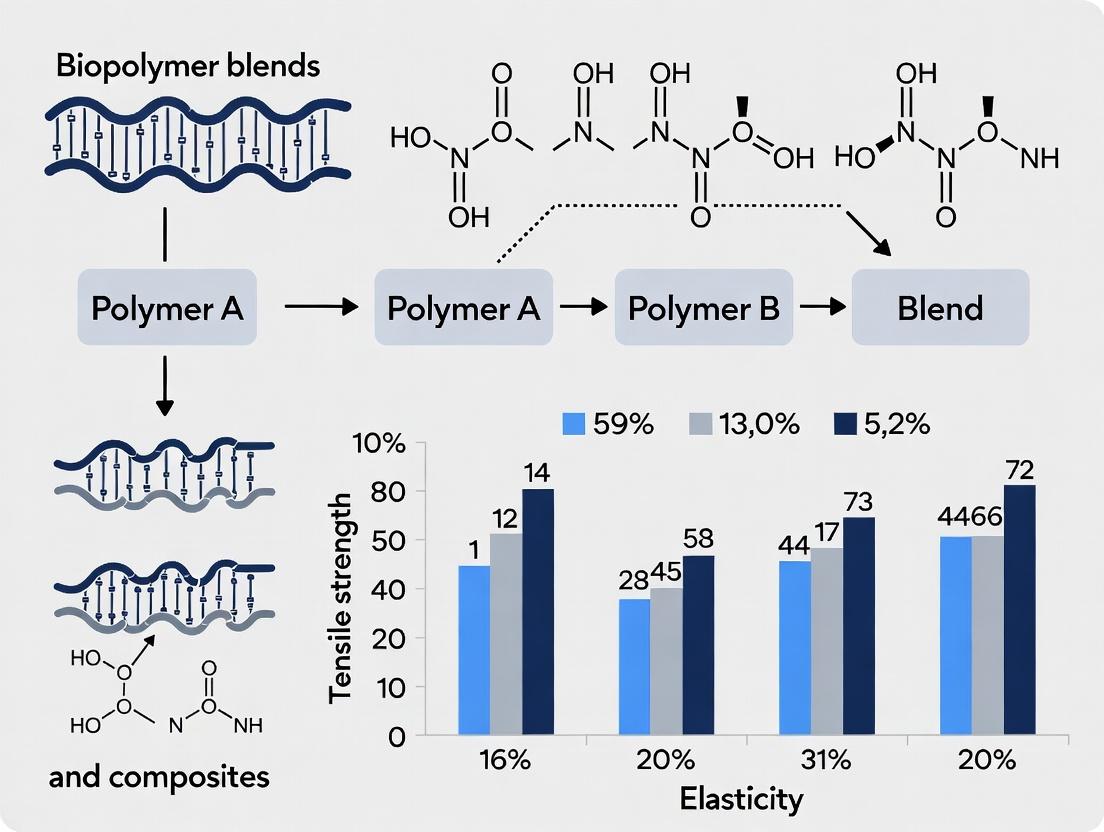
This article provides a comprehensive overview of biopolymer blends and composites, tailored for researchers and drug development professionals.
Biopolymer Blends and Composites: Advanced Materials for Next-Generation Biomedical Applications
Abstract
This article provides a comprehensive overview of biopolymer blends and composites, tailored for researchers and drug development professionals. It explores the foundational principles of biopolymers, details advanced fabrication and characterization methodologies, addresses critical challenges in optimization and scale-up, and presents comparative analyses of material performance. By synthesizing current research and emerging trends, this guide serves as a strategic resource for developing innovative, biocompatible materials for drug delivery, tissue engineering, and regenerative medicine.
Building Blocks of Biomaterials: Understanding Biopolymer Fundamentals and Synergy
Within the burgeoning field of biopolymer blends and composites research, the precise definition and sourcing of the foundational materials are critical. This technical guide defines biopolymers in the context of biomedical applications, categorizing them by origin—natural, synthetic, and microbial. Understanding their distinct properties, sourcing, and modification pathways is essential for engineering advanced biomaterials for drug delivery, tissue engineering, and regenerative medicine.
Biopolymers are polymers produced by living organisms or synthesized from biological starting materials. For biomedical use, they are classified into three primary source categories.
Natural Biopolymers: Derived directly from plants or animals. Examples include collagen (from bovine/porcine tissue or marine byproducts), chitosan (from crustacean exoskeletons), alginate (from brown seaweed), hyaluronic acid (from rooster combs or bacterial fermentation), and silk fibroin (from silkworm cocoons).
Synthetic Biopolymers: Chemically synthesized from bio-derived monomers. The most prominent are poly(lactic acid) (PLA), poly(glycolic acid) (PGA), and their copolymer poly(lactic-co-glycolic acid) (PLGA), synthesized via ring-opening polymerization of lactide and glycolide.
Microbial Biopolymers: Produced by microorganisms through fermentation processes. This class includes bacterial cellulose, polyhydroxyalkanoates (PHAs) like poly(3-hydroxybutyrate) (PHB), xanthan gum, and gellan gum.
Table 1: Key Properties of Representative Biopolymers for Biomedical Use
| Biopolymer | Source Category | Monomer/Composition | Degradation Time | Key Biomedical Properties |
|---|---|---|---|---|
| Collagen Type I | Natural (Animal) | Amino acids (Gly-X-Y) | Weeks to months | Excellent cell adhesion, low immunogenicity, weak mechanical strength |
| Chitosan | Natural (Animal) | D-glucosamine, N-acetylglucosamine | Months | Antimicrobial, mucoadhesive, hemostatic |
| PLGA (50:50) | Synthetic | Lactic acid, Glycolic acid | ~1-2 months | Tunable degradation, good mechanical properties, FDA-approved |
| Poly(3-hydroxybutyrate) (PHB) | Microbial (Bacteria) | 3-hydroxybutyrate | >12 months | High crystallinity, biodegradable, biocompatible |
| Bacterial Cellulose | Microbial (Bacteria) | β-1,4-glucose | Slow (non-enzymatic) | High purity, nanoporous, high wet tensile strength |
| Alginate | Natural (Plant/Algae) | β-D-mannuronate, α-L-guluronate | Non-degrading (ionically crosslinked) | Gentle gelation with Ca²⁺, encapsulation efficiency |
Experimental Protocols for Key Characterizations
Protocol: Enzymatic Degradation Kinetics
Objective: To quantify the in vitro degradation profile of a protein-based biopolymer (e.g., collagen).
- Sample Preparation: Cut material into discs (10 mm diameter, 2 mm thick). Pre-weigh (W₀) after drying in vacuo for 24h.
- Incubation: Place each disc in 5 mL of phosphate-buffered saline (PBS, pH 7.4) containing 1.0 µg/mL collagenase Type I at 37°C under gentle agitation.
- Sampling: At predetermined time points (e.g., 1, 3, 7, 14 days), remove samples (n=5), rinse thoroughly with deionized water, and dry in vacuo for 24h.
- Analysis: Weigh dry sample (Wₜ). Calculate mass remaining (%) = (Wₜ / W₀) * 100. Plot degradation curve. Complementary GPC can monitor molecular weight changes.
Protocol: Microbial Fermentation for PHA Production
Objective: To produce polyhydroxyalkanoates (PHA) using Cupriavidus necator.
- Inoculum Prep: Grow C. necator DSM 428 in nutrient broth for 24h at 30°C.
- Fermentation: Inoculate (2% v/v) a mineral salts medium with 20 g/L fructose as carbon source. Ferment at 30°C, 200 rpm for 72h. Nitrogen limitation is induced after 24h to trigger PHA accumulation.
- Harvest & Extraction: Centrifuge biomass at 8000xg. Lyophilize cells. Extract PHA from dry biomass using hot chloroform in a Soxhlet apparatus for 8h.
- Purification: Precipitate PHA by adding the chloroform extract to 10 volumes of cold methanol. Filter and dry the precipitate.
Signaling Pathways in Biopolymer-Cell Interactions
Diagram 1: Integrin-Mediated Cell Adhesion on Collagen
Title: Cell Adhesion Pathway on Collagen Matrix
Diagram 2: Workflow for Developing a Biopolymer Blend
Title: Biopolymer Blend R&D Workflow
The Scientist's Toolkit: Research Reagent Solutions
Table 2: Essential Reagents and Materials for Biopolymer Research
| Reagent/Material | Supplier Examples | Function in Research |
|---|---|---|
| Collagenase Type I | Worthington, Sigma-Aldrich | Enzymatic degradation studies of collagen-based materials. |
| Lysozyme | Sigma-Aldrich, Roche | Degradation studies of chitosan and bacterial cell wall components. |
| MTT Reagent (3-(4,5-dimethylthiazol-2-yl)-2,5-diphenyltetrazolium bromide) | Thermo Fisher, Abcam | Colorimetric assay for measuring cell viability and proliferation on biopolymer scaffolds. |
| Lipase from Pseudomonas sp. | Sigma-Aldrich | Used to study enzymatic hydrolysis of aliphatic polyesters (e.g., PHA, PLGA). |
| Dulbecco's Modified Eagle Medium (DMEM) | Gibco (Thermo Fisher) | Standard cell culture medium for in vitro cytocompatibility testing of materials. |
| Calcium Chloride (CaCl₂) | Sigma-Aldrich, Merck | Ionic crosslinker for alginate hydrogel formation. |
| Genipin | Wako Chemicals, Sigma-Aldrich | Natural, low-toxicity crosslinker for proteinaceous biopolymers (e.g., collagen, gelatin). |
| Phosphate Buffered Saline (PBS) | Sigma-Aldrich, VWR | Universal buffer for material washing, degradation studies, and cell culture. |
| Fetal Bovine Serum (FBS) | Gibco (Thermo Fisher) | Essential supplement for cell culture media used in biocompatibility assays. |
| SYTO 9/Propidium Iodide | Thermo Fisher (Live/Dead Kit) | Fluorescent dyes for visualizing live and dead cells on biopolymer surfaces. |
The field of biopolymer research is driven by the need to develop sustainable, biocompatible, and functionally advanced materials. Single biopolymers, such as poly(lactic acid) (PLA), polyhydroxyalkanoates (PHAs), chitosan, or starch, often exhibit a narrow range of properties, limiting their application in demanding fields like controlled drug delivery, high-performance packaging, or biomedical implants. The central thesis of modern biopolymer science is that blending and compositing—the physical or chemical combination of two or more distinct phases—provide a versatile and powerful strategy to engineer materials with property profiles unattainable by their individual components. This whitepaper details the technical rationale, methodologies, and outcomes of this approach, providing a guide for researchers and drug development professionals.
Core Rationale: Synergistic Property Enhancement
Blending and compositing aim to create a synergistic effect where the final material's performance exceeds the arithmetic sum of its parts. The key enhancement areas include:
- Mechanical Performance: Overcoming brittleness (e.g., of PLA) or excessive flexibility by blending with toughening agents or reinforcing with fibers/nanoparticles.
- Barrier Properties: Enhancing resistance to oxygen, water vapor, or UV light for packaging applications through layered structures or nanocomposites.
- Degradation Kinetics: Tailoring hydrolytic or enzymatic degradation rates for specific drug release profiles or environmental disintegration.
- Bioactivity & Functionality: Introducing antimicrobial, osteoconductive, or cell-adhesive properties via bioactive fillers (e.g., hydroxyapatite, silver nanoparticles).
- Processability: Improving melt strength, reducing viscosity, or stabilizing thermal degradation during extrusion or injection molding.
Table 1: Mechanical and Barrier Property Enhancements in Biopolymer Blends/Composites
| Base Polymer | Additive/Blend Partner | Type | Key Property Enhancement | Quantitative Result (vs. Neat Polymer) | Reference Year |
|---|---|---|---|---|---|
| Poly(lactic acid) (PLA) | Poly(butylene adipate-co-terephthalate) (PBAT) | Blend | Tensile Toughness | Increase from ~2 MJ/m³ to ~80 MJ/m³ | 2023 |
| Poly(3-hydroxybutyrate-co-3-hydroxyvalerate) (PHBV) | Cellulose Nanocrystals (CNC) | Composite (1-5% wt) | Tensile Strength | Increase from 25 MPa to 38 MPa | 2024 |
| Chitosan | Poly(vinyl alcohol) (PVA) / Graphene Oxide (GO) | Composite Film | Water Vapor Permeability | Decrease by ~52% | 2023 |
| Thermoplastic Starch (TPS) | Lignin Nanoparticles | Composite | UV-Blocking | Blocks >99% UV light (280-315 nm) | 2024 |
| Poly(ε-caprolactone) (PCL) | Bioactive Glass Nanoparticles | Composite Scaffold | Compressive Modulus | Increase from 0.8 MPa to 2.5 MPa | 2023 |
Table 2: Drug Release & Degradation Profile Modulations
| Polymer Matrix | Active Compound | Composite System | Release/Degradation Modulation | Outcome (vs. Control) |
|---|---|---|---|---|
| Alginate | Metronidazole | Halloysite Nanotube Composite Beads | Sustained Release | ~70% release over 12h vs. burst release in 2h |
| Gelatin Methacryloyl (GelMA) | Vascular Endothelial Growth Factor (VEGF) | Silk Fibroin Microsphere Composite Hydrogel | Sequential Dual Release | Sustained VEGF release over 21 days |
| PLA | - | Wood Fiber Composite | Degradation Rate in Compost | 85% weight loss in 60 days vs. 40% for neat PLA |
Experimental Protocols: Key Methodologies
Protocol: Solvent Casting for Blend/Composite Film Formation
Objective: To create uniform films of polymer blends or nanocomposites for packaging or coating applications.
- Solution Preparation: Dissolve the primary biopolymer (e.g., chitosan, 2% w/v) in a suitable solvent (e.g., 1% acetic acid). Separately, disperse the secondary polymer (e.g., PVA) or nanofiller (e.g., cellulose nanocrystals) in its compatible solvent (e.g., water) using magnetic stirring and/or sonication (30 min, 40 kHz).
- Blending: Combine the two solutions under vigorous stirring for 2-4 hours to achieve a homogeneous mixture.
- Casting: Pour the final solution onto a leveled, clean Petri dish or glass plate.
- Drying: Allow the solvent to evaporate at ambient conditions for 24-48 hours, or in a controlled oven at 30-40°C.
- Post-processing: Peel the dried film and condition it in a desiccator at controlled relative humidity (e.g., 50% RH) before testing.
Protocol: Melt Compounding and Extrusion for Thermoplastic Blends
Objective: To produce homogenized blends of thermoplastics (e.g., PLA/PBAT) for industrial-scale processing.
- Pre-drying: Dry all polymer pellets in a vacuum oven at 60°C for 12 hours to prevent hydrolytic degradation.
- Dry Blending: Manually pre-mix the polymer pellets and any additives (plasticizers, compatibilizers) in a zip-lock bag to ensure a preliminary uniform distribution.
- Melt Compounding: Feed the dry blend into a twin-screw extruder. Set temperature profile according to polymer melting points (e.g., 160-180°C for PLA/PBAT). Maintain a specific screw speed (e.g., 100 rpm) and consistent feed rate.
- Strand Formation & Pelletizing: The extruded melt is cooled in a water bath and pelletized using a strand cutter.
- Injection Molding/Compression Molding: The pellets are used to fabricate standard test specimens (e.g., ASTM D638 tensile bars) using an injection molding machine or hot press.
Protocol: In-situ Formation of Composite Hydrogels for Drug Delivery
Objective: To encapsulate and control the release of a therapeutic agent from a cross-linked composite hydrogel.
- Polymer & Drug Solution: Dissolve the hydrogel polymer (e.g., sodium alginate, 3% w/v) and the drug (e.g., an antibiotic) in deionized water or buffer.
- Filler Incorporation: Uniformly disperse inorganic nanoparticles (e.g., montmorillonite clay) or a second polymer phase (e.g., gelatin particles) into the solution via probe sonication.
- Cross-linking: Add the cross-linking agent (e.g., calcium chloride solution for alginate) dropwise under stirring, or transfer the mixture into a mold and immerse it in a cross-linking bath.
- Gelation & Washing: Allow complete gelation (30-60 min). Wash the formed hydrogel with buffer to remove unreacted reagents and surface-bound drug.
- Release Study: Immerse the hydrogel in a release medium (e.g., PBS, pH 7.4) at 37°C under mild agitation. Withdraw samples at predetermined intervals and analyze drug concentration via HPLC or UV-Vis spectroscopy.
Visualization: Workflows and Relationships
Title: Biopolymer Blend/Composite Development Workflow
Title: Structure-Property Relationship in Blends/Composites
The Scientist's Toolkit: Key Research Reagent Solutions
Table 3: Essential Materials for Biopolymer Blend/Composite Research
| Item | Function & Rationale | Example(s) |
|---|---|---|
| Compatibilizers/Cross-linkers | Improve interfacial adhesion between immiscible phases or create 3D networks. Critical for stress transfer and stability. | Joncryl ADR chain extenders, Maleic anhydride-grafted polymers (e.g., PLA-g-MA), Genipin (for chitosan/collagen), Calcium chloride (for alginate). |
| Biodegradable Plasticizers | Increase chain mobility, reduce glass transition temperature (Tg), and improve processability/flexibility. | Acetyl tributyl citrate (ATBC), Poly(ethylene glycol) (PEG), Glycerol (for starch). |
| Nanoscale Reinforcements | Provide mechanical reinforcement, barrier enhancement, and functional properties at low loadings. | Cellulose nanocrystals (CNC), Chitin nanofibers, Montmorillonite (MMT) clay, Graphene oxide (GO), Bioactive glass nanoparticles. |
| Model Active Compounds | Used in release studies to simulate drug delivery behavior without regulatory complexities. | Methylene Blue, Rhodamine B, Caffeine, Theophylline, Bovine Serum Albumin (BSA). |
| Enzymatic Degradation Agents | Simulate specific biological or environmental degradation pathways. | Proteinase K (for PHA/PLA), Lysozyme (for chitosan), α-Amylase (for starch). |
| Solvents for Solution Processing | Dissolve biopolymers for film casting, electrospinning, or coating. Choice affects morphology and crystallinity. | Chloroform/DCM (for PLA/PCL), 1% Acetic Acid (for chitosan), Hexafluoroisopropanol - HFIP (for silk fibroin), Trifluoroacetic Acid - TFA (for collagen). |
| Melt Processing Additives | Stabilize polymers against thermal degradation during high-temperature processing like extrusion. | Antioxidants (e.g., Irganox 1010), Thermal stabilizers. |
Within the burgeoning field of biopolymer blends and composites research, the successful translation of a material from bench to bedside hinges on the precise characterization and tuning of three cornerstone properties: biocompatibility, degradation kinetics, and mechanical performance. This guide provides a technical deep dive into these properties, essential for researchers and drug development professionals designing next-generation medical devices, implants, and drug delivery systems.
Biocompatibility: The Fundamental Prerequisite
Biocompatibility is not a single event but a series of appropriate host responses. It demands that a material performs its intended function without eliciting any undesirable local or systemic effects.
Key Assessment Methodologies
In Vitro Cytotoxicity (ISO 10993-5): This is the primary screening test.
- Protocol (MTT Assay):
- Material Extraction: Sterilize the biopolymer sample and incubate in cell culture medium (e.g., DMEM with 10% FBS) at a surface area-to-volume ratio of 3-6 cm²/mL for 24±2 hours at 37°C.
- Cell Seeding: Seed L-929 mouse fibroblast or other relevant cell lines in a 96-well plate at a density of 1x10⁴ cells/well and culture for 24 hours.
- Exposure: Replace the medium in each well with 100 µL of the material extract. Include negative (high-density polyethylene) and positive (latex or zinc diethyldithiocarbamate) controls.
- Incubation: Incubate for 24-72 hours.
- Viability Measurement: Add 10 µL of MTT (3-(4,5-dimethylthiazol-2-yl)-2,5-diphenyltetrazolium bromide) solution (5 mg/mL) to each well. Incubate for 4 hours to allow formazan crystal formation.
- Solubilization: Remove the medium, add 100 µL of dimethyl sulfoxide (DMSO) to each well, and shake gently.
- Analysis: Measure absorbance at 570 nm using a microplate reader. Calculate cell viability relative to the negative control. A viability >70% is typically considered non-cytotoxic.
Hemocompatibility (ISO 10993-4): Critical for blood-contacting devices.
- Protocol (Hemolysis Assay):
- Collect fresh whole blood in an anticoagulant (e.g., sodium citrate).
- Prepare material extracts in saline as described above.
- Mix 1 mL of extract with 0.1 mL of diluted whole blood. Incubate at 37°C for 3 hours.
- Centrifuge and measure the absorbance of the supernatant at 545 nm.
- Use saline (0% hemolysis) and distilled water (100% hemolysis) as controls. Hemolysis ratio should generally be <5%.
In Vivo Implantation (ISO 10993-6): The definitive test for local effects.
- Protocol (Subcutaneous Implantation in Rodents):
- Sterilize test and control materials (e.g., USP polyethylene) and shape them into sterile, smooth-edged cylinders or films.
- Anesthetize rats or mice and make a small dorsal midline incision.
- Create subcutaneous pockets laterally using blunt dissection.
- Insert one implant per pocket, typically with 4 implants per animal (2 test, 2 control).
- Sacrifice animals at endpoints (e.g., 1, 4, 12, 26 weeks). Excise the implant with surrounding tissue.
- Process for histology (H&E staining). Score the tissue response based on inflammatory cell types, necrosis, fibrosis, and neovascularization.
Research Reagent Solutions Toolkit
| Reagent/Material | Function in Biocompatibility Testing |
|---|---|
| L-929 Fibroblast Cell Line | Standardized cell type for initial cytotoxicity screening (ISO 10993-5). |
| AlamarBlue or MTT Reagent | Cell viability indicators; measure metabolic activity via reduction reactions. |
| Lipopolysaccharide (LPS) | Positive control for inflammatory response studies (e.g., macrophage activation). |
| ELISA Kits (TNF-α, IL-1β, IL-6) | Quantify pro-inflammatory cytokine secretion from immune cells exposed to materials. |
| Whole Human Blood (Anticoagulated) | Required for direct hemocompatibility testing (hemolysis, thrombogenicity). |
| Histology Stains (H&E, Masson's Trichrome) | Visualize tissue integration, capsule formation, and inflammatory cell infiltration in vivo. |
Biocompatibility Assessment Pathways
Degradation Kinetics: Controlled Lifespan
Degradation profiles must match the clinical requirement, from slow (orthopedic implants) to rapid (drug-eluting matrices). Key mechanisms include hydrolysis (bulk/surface erosion) and enzymatic cleavage.
Quantitative Characterization Data
Table 1: Degradation Profiles of Common Biopolymers in PBS (pH 7.4, 37°C)
| Biopolymer | Degradation Mechanism | Approx. Time for 50% Mass Loss | Primary Degradation Products |
|---|---|---|---|
| PLA (Poly(lactic acid)) | Bulk hydrolysis of ester bonds | 12-24 months | Lactic acid |
| PGA (Poly(glycolic acid)) | Bulk hydrolysis of ester bonds | 4-6 months | Glycolic acid |
| PLGA 50:50 | Bulk hydrolysis | 1-2 months | Lactic & glycolic acid |
| PCL (Poly(ε-caprolactone)) | Surface erosion, slow hydrolysis | >24 months | Caproic acid |
| Chitosan | Enzymatic (lysozyme), hydrolysis | Variable (weeks-months) | Glucosamine, oligosaccharides |
| Alginate | Ion exchange, slow hydrolysis | Very slow | Mannuronic & guluronic acids |
Experimental Protocol:In VitroDegradation Study
- Sample Preparation: Prepare sterile, weighed (W₀) dry samples (e.g., films, discs) of known dimensions.
- Immersion: Immerse each sample in a vial containing phosphate-buffered saline (PBS, pH 7.4) or simulated body fluid (SBF). Maintain at 37°C under gentle agitation. Ensure a constant volume-to-sample surface area ratio.
- Time-Point Analysis: At predetermined intervals (e.g., day 1, 3, 7, then weekly):
- Mass Loss: Remove samples, rinse with deionized water, dry in vacuo to constant weight (Wₜ). Calculate mass remaining:
(Wₜ / W₀) * 100%. - Molecular Weight: Analyze a subset via Gel Permeation Chromatography (GPC) to track changes in Mₙ and Mₚ.
- pH Monitoring: Record pH of the degradation medium, as acidic products accelerate hydrolysis.
- Morphology: Use Scanning Electron Microscopy (SEM) to visualize surface erosion, cracks, or porosity development.
- Mass Loss: Remove samples, rinse with deionized water, dry in vacuo to constant weight (Wₜ). Calculate mass remaining:
- Kinetic Modeling: Fit data to models (e.g., first-order, cube-root law for surface erosion) to predict long-term behavior.
Biopolymer Degradation Pathways
Mechanical Performance: Matching Native Tissue
The mechanical properties of a biopolymer composite must satisfy the load-bearing and functional requirements of the target tissue to avoid stress shielding or mechanical failure.
Quantitative Mechanical Data
Table 2: Mechanical Properties of Biopolymers vs. Native Tissues
| Material/Tissue | Tensile Strength (MPa) | Young's Modulus (GPa) | Elongation at Break (%) | Key Testing Standard |
|---|---|---|---|---|
| PLA (amorphous) | 50-70 | 3.0-3.5 | 2-6 | ASTM D638 |
| PCL | 20-40 | 0.3-0.5 | 300-1000 | ASTM D638 |
| PLGA 85:15 | 40-55 | 2.0-2.7 | 3-10 | ASTM D638 |
| Chitosan Film | 20-60 | 1.2-2.0 | 5-30 | ASTM D882 |
| Collagen (Bone) | 50-150 | 5-23 | 1-2 | - |
| Articular Cartilage | 10-40 | 0.001-0.01 | 60-120 | - |
| Skin | 5-30 | 0.001-0.1 | 35-115 | - |
Experimental Protocol: Tensile Testing for Films
- Sample Preparation: Prepare biopolymer films. Die-cut into "dog-bone" shapes (Type V per ASTM D638) using a precision die. Measure thickness accurately at multiple points.
- Conditioning: Condition samples at a controlled temperature and humidity (e.g., 23°C, 50% RH) for 24 hours prior to testing.
- Setup: Mount the sample in a universal testing machine (UTM) using pneumatic or manual grips. Ensure proper alignment to avoid shear forces. Apply a pre-load to remove slack.
- Testing: Execute the test at a constant crosshead speed (e.g., 1-10 mm/min for polymers) until failure. Simultaneously record force (N) and displacement (mm).
- Data Analysis:
- Stress:
σ = Force / Original Cross-sectional Area. - Strain:
ε = (Change in length) / Original gauge length. - Young's Modulus (E): Slope of the linear elastic region of the stress-strain curve.
- Ultimate Tensile Strength (UTS): Maximum stress endured.
- Elongation at Break: Strain at the point of failure.
- Stress:
Integrating the Triad for Research
The interplay of these properties dictates material success. For instance, blending fast-degrading PLGA with slow-degrading PCL tunes both degradation kinetics and modulus. Incorporating bioactive fillers like hydroxyapatite can improve both mechanical strength and biocompatibility. The central challenge in biopolymer composites research remains the optimization of this triad—ensuring a harmonious balance where adequate mechanical integrity is maintained throughout the designed degradation timeline, all while eliciting a benign or therapeutic biological response.
Within the broader thesis on Introduction to Biopolymer Blends and Composites Research, this whitepaper provides a technical examination of key binary and ternary blending systems. The strategic combination of synthetic (PLA, PCL) and natural (Chitosan, Alginate, Collagen, Silk) biopolymers aims to engineer materials with synergistic properties for advanced biomedical applications, including controlled drug delivery and tissue engineering scaffolds.
Material Properties & Blending Rationale
Table 1: Fundamental Properties of Primary Blending Partners
| Biopolymer | Source | Key Properties | Degradation Profile | Primary Blending Rationale |
|---|---|---|---|---|
| PLA | Synthetic (lactic acid) | High tensile strength, brittle, hydrophobic | Hydrolytic, 12-24 months | Provides structural integrity; modulates degradation rate. |
| PCL | Synthetic (ε-caprolactone) | Highly elastic, low tensile strength, hydrophobic | Hydrolytic, slow (>24 months) | Enhances toughness & elongation; slows degradation. |
| Chitosan | Natural (crustacean shells) | Cationic, antimicrobial, mucoadhesive | Enzymatic (lysozyme) | Introduces bioactivity, charge for drug binding, gelation. |
| Alginate | Natural (seaweed) | Anionic, rapid ionotropic gelation, hydrophilic | Ion exchange, mild conditions | Enables mild encapsulation, pH-responsive swelling. |
| Collagen | Natural (animal tissue) | Triple helix, cell-adhesive (RGD sites), low antigenicity | Enzymatic (collagenases) | Provides superior biomimetic cues for cell attachment. |
| Silk Fibroin | Natural (B. mori) | High tensile strength, β-sheet crystallinity, tunable degradation | Proteolytic, tunable (weeks-years) | Augments mechanical strength while maintaining biocompatibility. |
Key Blending Systems & Experimental Protocols
PLA-Chitosan Blends for Antimicrobial Membranes
Objective: Combine PLA's mechanical properties with chitosan's bioactivity. Protocol:
- Solution Preparation: Dissolve PLA in chloroform (10% w/v). Separately, dissolve chitosan in 1% v/v aqueous acetic acid (2% w/v).
- Emulsification: Add the chitosan solution dropwise to the PLA solution under high-speed homogenization (10,000 rpm, 10 mins) to form a water-in-oil emulsion.
- Film Casting: Pour the emulsion onto a glass plate. Evaporate the solvent at room temperature for 24h, then dry under vacuum at 40°C for 48h.
- Post-treatment: Neutralize films by immersion in 1M NaOH for 1h, followed by thorough washing with DI water. Key Data: Blends with 30% chitosan show a 99.5% reduction in S. aureus viability while maintaining a tensile strength of ~45 MPa.
PCL-Alginate Core-Shell Fibers for Drug Delivery
Objective: Create sustained release fibers using coaxial electrospinning. Protocol:
- Solution Preparation:
- Core: Dissolve PCL (12% w/v) and a model drug (e.g., Diclofenac) in a 7:3 mixture of chloroform and dimethylformamide.
- Shell: Prepare 3% w/v sodium alginate in deionized water.
- Coaxial Electrospinning: Load solutions into separate syringes connected to a coaxial spinneret. Apply a flow rate of 0.8 mL/h (core) and 0.3 mL/h (shell). Use a high voltage of 18 kV and a collection distance of 15 cm.
- Crosslinking: Collect fibers on a mandrel and expose to calcium chloride vapor for 30 mins to ionically crosslink the alginate shell.
- Release Study: Immerse fibers in PBS (pH 7.4, 37°C). Withdraw aliquots at set intervals and analyze via UV-Vis spectrophotometry.
Table 2: Drug Release Kinetics from Core-Shell Fibers
| Shell Alginate Thickness (nm) | Burst Release (1h) | Time for 80% Release (Days) | Release Model (R²) |
|---|---|---|---|
| 50 ± 10 | 15% | 7 | Higuchi (0.98) |
| 120 ± 20 | 8% | 14 | Zero-Order (0.99) |
| 200 ± 30 | <5% | 21 | Zero-Order (0.99) |
Silk-Collagen-Chitosan Ternary Hydrogels for 3D Cell Culture
Objective: Form a mechanically robust, cell-adhesive hydrogel. Protocol:
- Biopolymer Processing:
- Silk Fibroin: Generate aqueous silk solution via standard LiBr method and dialysis.
- Collagen: Mix acid-soluble Type I collagen (8 mg/mL) on ice.
- Chitosan: Prepare 2% w/v in 0.2M acetic acid.
- Hydrogel Formation: Mix components on ice at a mass ratio of 50:30:20 (Silk:Collagen:Chitosan). Adjust pH to ~7.0 using 1M NaOH. Add 20 µL of microbial transglutaminase (10 U/mL) as crosslinker per mL of blend.
- Gelation: Transfer to molds and incubate at 37°C for 2 hours.
- Cell Seeding: Seed with human fibroblasts (50,000 cells/mL) after gelation. Culture in DMEM and assess viability (Live/Dead assay) and proliferation (AlamarBlue) over 7 days. Key Data: The ternary gel exhibits a storage modulus (G') of 12 kPa and supports 95% cell viability at day 7.
Visualizing Workflows & Relationships
Diagram 1: Ternary Hydrogel Formation Workflow
Diagram 2: Drug Release Pathways from Composite Fiber
The Scientist's Toolkit: Essential Research Reagents & Materials
Table 3: Key Research Reagent Solutions
| Item | Function in Blending Research | Example Supplier / Cat. No. |
|---|---|---|
| Poly(L-lactide) (PLA) | High-strength synthetic matrix polymer. Provides mechanical backbone. | Sigma-Aldrich, 38534 |
| Poly(ε-caprolactone) (PCL) | Flexible, slow-degrading synthetic polymer. Improves blend toughness. | Sigma-Aldrich, 440744 |
| Medium Molecular Weight Chitosan | Cationic natural polymer. Imparts bioadhesion & antimicrobial activity. | Sigma-Aldrich, 448877 |
| Sodium Alginate (High G-Content) | Anionic natural polymer for ionic gelation. Enables mild encapsulation. | Sigma-Aldrich, 71238 |
| Type I Collagen, Acid-Soluble | Gold-standard natural ECM protein. Provides cell-adhesive RGD motifs. | Thermo Fisher, A1048301 |
| Silk Fibroin Aqueous Solution | High-strength natural protein. Enhances mechanical resilience. | Advanced Biomatrix, 5101 |
| Calcium Chloride (CaCl₂) | Ionic crosslinker for alginate, forming stable "egg-box" structures. | VWR, 97061-286 |
| Microbial Transglutaminase (mTG) | Enzymatic crosslinker for protein blends (e.g., silk, collagen). | Modernist Pantry, MTG-100 |
| Phosphate Buffered Saline (PBS) | Standard medium for degradation, swelling, and drug release studies. | Gibco, 10010023 |
| AlamarBlue Cell Viability Reagent | Resazurin-based assay for quantifying metabolic activity in 3D scaffolds. | Thermo Fisher, DAL1025 |
Within the broader research thesis on Introduction to Biopolymer Blends and Composites, understanding interfacial adhesion and phase compatibility is paramount. These two factors are the primary determinants of a blend's final morphological, mechanical, and functional properties. For drug development professionals, this directly impacts the performance of polymeric drug delivery systems, scaffolds, and encapsulation matrices. This guide provides an in-depth technical analysis of the governing principles, measurement techniques, and methodologies for optimizing blend performance.
Core Scientific Principles
Thermodynamic Basis of Phase Compatibility
The miscibility of polymer pairs is governed by the Gibbs free energy of mixing (ΔGmix = ΔHmix – TΔSmix). For most high-molecular-weight biopolymers, the entropy contribution is minimal, making the enthalpy term (ΔHmix) dominant. A negative or near-zero ΔHmix, often estimated via the Flory-Huggins interaction parameter (χ), indicates compatibility. χ < χcritical (a threshold value) suggests miscibility.
The Role of Interfacial Adhesion
In immiscible blends, which are more common, the interface between phases is critical. Strong interfacial adhesion reduces interfacial tension, promotes stress transfer under load, and stabilizes dispersed phase morphology. Adhesion is often quantified by the work of adhesion (Wa), related to the surface energies (γ) of the components: [ Wa = \gamma1 + \gamma2 - \gamma{12} ] where γ1 and γ2 are the surface energies of the individual polymers, and γ12 is the interfacial energy.
Quantitative Data on Common Biopolymer Systems
Table 1: Flory-Huggins Interaction Parameter (χ) and Mechanical Properties of Selected Biopolymer Blends
| Blend System (A/B) | Weight Ratio | χ Value (Experimental) | Resulting Morphology | Tensile Strength (MPa) | Elongation at Break (%) | Key Application |
|---|---|---|---|---|---|---|
| Poly(lactic acid) (PLA) / Poly(ε-caprolactone) (PCL) | 70/30 | 0.08 - 0.15 | Co-continuous / Phase-separated | 25 - 35 | 8 - 15 | Resorbable implants |
| Chitosan / Poly(vinyl alcohol) (PVA) | 50/50 | ~0.03 | Miscible / Homogeneous | 40 - 60 | 10 - 25 | Wound dressings |
| Starch / Poly(butylene adipate-co-terephthalate) (PBAT) | 60/40 | >0.5 | Dispersed droplets | 15 - 20 | 200 - 500 | Biodegradable films |
| Gelatin / Hyaluronic Acid | 80/20 | <0.01 | Fully miscible hydrogel | 0.5 - 2.0* (Compressive) | N/A | Tissue engineering scaffolds |
| Polyhydroxyalkanoate (PHA) / PLA | 50/50 | 0.10 - 0.20 | Coarse dispersion | 20 - 30 | 5 - 10 | Packaging, drug carriers |
Data compiled from recent literature (2022-2024). Values are representative ranges.
Table 2: Surface Energy Components and Calculated Work of Adhesion (W_a)
| Polymer | Dispersive Component (γ^D) [mJ/m²] | Polar Component (γ^P) [mJ/m²] | Total Surface Energy (γ) [mJ/m²] | Interfacial Energy with PLA (γ_12) [mJ/m²] | W_a with PLA [mJ/m²] |
|---|---|---|---|---|---|
| PLA | 33.2 | 8.6 | 41.8 | -- | -- |
| PCL | 40.1 | 4.2 | 44.3 | 3.1 ± 0.5 | 83.0 |
| Chitosan | 24.5 | 22.0 | 46.5 | 1.8 ± 0.3 | 86.5 |
| Starch | 30.0 | 18.0 | 48.0 | 5.5 ± 0.7 | 84.3 |
| PBAT | 37.0 | 5.5 | 42.5 | 4.2 ± 0.6 | 80.1 |
Experimental Protocols for Characterization
Protocol: Determination of Phase Morphology via Scanning Electron Microscopy (SEM)
- Objective: To visualize the blend morphology (dispersed, co-continuous, or layered) and assess interfacial integrity.
- Materials: Cryo-fractured blend sample, conductive carbon tape, sputter coater (gold/palladium), high-resolution SEM.
- Method:
- Sample Preparation: Immerse the blend in liquid nitrogen for 5-10 minutes. Fracture immediately to obtain a clean cross-section. Mount the sample on an SEM stub using conductive tape.
- Coating: Sputter-coat the sample with a 5-10 nm layer of Au/Pd to prevent charging.
- Imaging: Insert the stub into the SEM chamber. Evacuate to high vacuum (<10^-3 Pa). Image at accelerating voltages of 5-10 kV. Capture micrographs at multiple magnifications (500x to 50,000x).
- Analysis: Use image analysis software (e.g., ImageJ) to determine dispersed phase domain size distribution and shape.
Protocol: Quantifying Interfacial Adhesion via Micromechanical Testing (Single Fiber Pull-Out)
- Objective: To directly measure the interfacial shear strength (IFSS) between two blend components.
- Materials: Micro-fiber of polymer A (e.g., PCL), matrix film of polymer B (e.g., PLA), micro-tensile tester, micro-vise, optical microscope.
- Method:
- Embedding: Partially embed a single micro-fiber (length ~10 mm) into a molten or solubilized matrix polymer film, leaving a known embedded length (Le, typically 100-500 µm).
- Curing/Solidification: Allow the matrix to fully solidify under controlled conditions.
- Testing: Mount the sample in the micro-tensile tester. Grip the free end of the fiber and apply a tensile force at a constant displacement rate (e.g., 1 µm/s) until the fiber is completely pulled out.
- Calculation: Record the maximum debonding force (Fmax). Calculate IFSS using: IFSS = Fmax / (π * d * Le), where d is the fiber diameter.
Visualization of Key Concepts and Workflows
Determinants of Blend Properties
Blend Development & Optimization Workflow
The Scientist's Toolkit: Research Reagent Solutions
Table 3: Essential Materials for Biopolymer Blend Research
| Item / Reagent | Function & Rationale | Example Product/Chemical |
|---|---|---|
| Poly(lactic acid) (PLA) | A versatile, biodegradable matrix polymer with tunable crystallinity. Serves as a standard for blend studies. | NatureWorks Ingeo 4043D, Sigma-Aldrich L-lactic acid based polymer. |
| Poly(ε-caprolactone) (PCL) | A ductile, semi-crystalline biopolymer used to toughen brittle matrices like PLA. | Perstorp Capa 6500, Sigma-Aldrich PCL (Mn 80,000). |
| Chitosan (medium MW, >75% deacetylation) | A cationic polysaccharide providing bioactive, mucoadhesive, and antimicrobial properties to blends. | Sigma-Aldrich 448877, Primex ChitoClear. |
| PLA-PCL-PLA Triblock Copolymer | A polymeric compatibilizer. The PLA blocks entangle with the PLA phase, PCL blocks with the PCL phase, reducing interfacial tension. | Synthesized via ring-opening polymerization. |
| Methylene Diphenyl Diisocyanate (MDI) | A reactive compatibilizer. The isocyanate groups react with -OH or -COOH end groups of polyesters, creating covalent linkages at the interface. | Sigma-Aldrich 256409 (handled in fume hood). |
| Glycerol / Sorbitol | Plasticizers used to improve processability and flexibility of starch or protein-based blends by reducing intermolecular forces. | Fisher Scientific G33-1 (Glycerol), D-Sorbitol (S1876). |
| Chloroform / Trifluoroacetic Acid (TFA) | Common solvents for dissolving a wide range of biopolymers (PLA, PCL, chitosan) for solvent-casting blend preparation. | Sigma-Aldrich C2432 (Chloroform), 302031 (TFA). |
| Model Drug Compound (e.g., Rhodamine B, Theophylline) | A fluorescent marker or active pharmaceutical ingredient used to study distribution and release kinetics from the blend matrix. | Sigma-Aldrich R6626 (Rhodamine B), T1633 (Theophylline). |
From Lab to Application: Fabrication Techniques and Targeted Biomedical Uses
Within the research domain of biopolymer blends and composites, the selection of an appropriate fabrication method is paramount. These techniques dictate the final architecture, mechanical properties, degradation profile, and biofunctionality of the material, directly influencing its suitability for applications in drug delivery, tissue engineering, and medical devices. This guide provides an in-depth technical analysis of four core fabrication methods: solvent casting, electrospinning, melt processing, and 3D/ bioprinting, contextualized for advanced research and development.
Solvent Casting
A foundational technique for creating thin films or simple 3D structures from biopolymer solutions.
Experimental Protocol
- Solution Preparation: Dissolve the biopolymer blend (e.g., PCL-PLA blends, chitosan-alginate composites) in a suitable volatile solvent (e.g., chloroform, acetic acid, DMSO) under magnetic stirring until a homogeneous solution is achieved. Concentration typically ranges from 1-10% (w/v).
- Casting: Pour the solution onto a leveled, flat surface (glass plate, Teflon dish, or Petri dish).
- Drying: Allow the solvent to evaporate slowly under ambient conditions or in a controlled environment (e.g., laminar flow hood, vacuum oven) over 24-48 hours to prevent bubble formation and ensure uniform thickness.
- Post-Processing: Peel the dried film from the substrate. Annealing or secondary drying may be performed to remove residual solvent.
Key Parameters & Data
Table 1: Key Parameters in Solvent Casting
| Parameter | Typical Range | Impact on Final Product |
|---|---|---|
| Polymer Concentration | 1-10% (w/v) | Film thickness & mechanical strength |
| Solvent Evaporation Rate | Ambient to 40°C under vacuum | Crystallinity & surface morphology |
| Drying Time | 24-72 hours | Residual solvent content |
| Film Thickness | 10-500 µm | Controlled by solution volume & area |
Electrospinning
A method to produce fibrous meshes with high surface-area-to-volume ratios and tunable porosity, mimicking the extracellular matrix.
Experimental Protocol
- Solution/Paste Preparation: Prepare a spinnable solution or melt of the biopolymer composite. Solution parameters (viscosity, conductivity, surface tension) are critical. Additives (e.g., salts, surfactants) may be used to adjust conductivity.
- Apparatus Setup: Load the solution into a syringe with a metallic needle. Connect the needle to a high-voltage DC power supply (typically 10-30 kV). A grounded collector (static or rotating) is placed at a set distance (10-25 cm).
- Fiber Formation: Apply voltage to create a Taylor cone at the needle tip. A charged polymer jet is ejected and undergoes whipping instability, stretching and thinning as solvents evaporate, depositing nanoscale fibers on the collector.
- Collection: Collect the non-woven mat. Post-treatment (e.g., crosslinking, vacuum drying) is often required to stabilize the structure.
Diagram Title: Electrospinning Experimental Workflow
Key Parameters & Data
Table 2: Critical Electrospinning Process Parameters
| Parameter | Effect on Fiber Morphology | Typical Research Range |
|---|---|---|
| Voltage | Diameter, Bead Formation | 10-30 kV |
| Flow Rate | Diameter, Fiber Uniformity | 0.5-3 mL/h |
| Collector Distance | Solvent Evaporation, Diameter | 10-25 cm |
| Solution Concentration | Fiber Formation, Diameter | 5-25% (w/v) |
| Solution Conductivity | Jet Stability, Diameter | Modified by salts |
Melt Processing
Thermoplastic fabrication methods including extrusion, injection molding, and compression molding, suitable for biopolymers with adequate thermal stability.
Experimental Protocol (Melt Extrusion)
- Material Drying: Pre-dry biopolymer pellets/composite powders (e.g., PLA-starch, PHB-cellulose) in a vacuum oven to minimize hydrolytic degradation.
- Extrusion: Feed the material into a heated barrel of a twin-screw or single-screw extruder. The material is melted, mixed, and conveyed through a series of heated zones (temperature profile specific to polymer blend, e.g., 150-200°C for PLA-based blends).
- Shaping & Cooling: The homogeneous melt is forced through a die to create filaments, sheets, or other profiles. The extrudate is immediately cooled on a conveyor belt or in a water bath to solidify the shape.
- Pelletizing/Granulating: The cooled strand is often pelletized for use in subsequent processes like 3D printing or injection molding.
Diagram Title: Melt Extrusion Process Flow
3D/Bioprinting
An additive manufacturing technique for creating complex, three-dimensional structures, with bioprinting specifically incorporating living cells.
Experimental Protocol (Extrusion-Based Bioprinting)
- Bioink Formulation: Develop a biocompatible ink containing biopolymer(s) (e.g., gelatin methacryloyl, alginate, hyaluronic acid) and optionally, encapsulated cells, growth factors, or drugs. Rheological properties are tuned for printability.
- Print Path Design: Create a digital 3D model (e.g., .stl file) and slice it into 2D layers using dedicated software to generate the toolpath (G-code) for the printer.
- Printing Process: Load the bioink into a temperature-controlled syringe. Use pneumatic or mechanical (piston/screw) force to extrude the ink through a micronozzle according to the G-code, depositing material layer-by-layer onto a substrate (often heated or cooled).
- Crosslinking: Perform immediate post-printing stabilization via physical (temperature, ionic) or photochemical (UV light) crosslinking to ensure structural integrity.
- Cell Culture (if applicable): Transfer the printed construct to a bioreactor or incubator for maturation.
Diagram Title: Extrusion-Based Bioprinting Workflow
Key Parameters & Data
Table 3: Comparative Analysis of Core Fabrication Methods
| Method | Typical Resolution | Key Advantages | Major Limitations | Common Biopolymers Used |
|---|---|---|---|---|
| Solvent Casting | >100 µm (film thickness) | Simple, low-cost, good for films | Solvent residue, limited geometry, poor scale-up | PLA, PCL, Chitosan, Alginate |
| Electrospinning | 50 nm - 5 µm (fiber diameter) | High SA:V, ECM-mimetic, tunable porosity | Low mechanical strength, residual solvent | PCL, PLGA, Collagen, Silk Fibroin |
| Melt Processing | ~100 µm (filament diameter) | Scalable, no solvents, high throughput | High temp. degrades some polymers/additives | PLA, PHA, PBS, Starch Blends |
| 3D/Bioprinting | 50 - 500 µm (strand width) | Complex geometries, spatial control, personalization | Slow, limited materials, may require crosslinking | GelMA, Alginate, Hyaluronan, Fibrin |
The Scientist's Toolkit: Research Reagent Solutions
Table 4: Essential Materials for Biopolymer Fabrication Research
| Item | Function & Application | Example (Research-Grade) |
|---|---|---|
| Biodegradable Polymers | Primary structural material. | Poly(lactic acid) (PLA), Polycaprolactone (PCL), Chitosan, Sodium Alginate |
| Crosslinkers | Induce chemical or physical network formation for stability. | Calcium chloride (for alginate), Genipin (for chitosan/proteins), Photoinitiators (Irgacure 2959 for UV curing) |
| Plasticizers | Improve processability and flexibility of brittle biopolymers. | Glycerol, Polyethylene glycol (PEG), Citrate esters |
| Biocompatible Solvents | Dissolve polymers for solution-based processing. | Dimethyl sulfoxide (DMSO), Trifluoroethanol (TFE), Acetic acid (dilute) |
| Conductivity Salts | Modify solution conductivity for electrospinning. | Sodium chloride (NaCl), Benzyl triethylammonium chloride |
| Cell-Adhesion Peptides | Functionalize surfaces to enhance cell attachment (bioprinting). | Arginine-Glycine-Aspartic acid (RGD) peptide sequences |
| Rheology Modifiers | Tune viscosity and shear-thinning behavior for printability. | Nanocellulose, Gellan gum, Methylcellulose |
This whitepaper serves as a core technical chapter within a broader thesis, Introduction to Biopolymer Blends and Composites Research. It delves into the advanced functionalization of these materials through the strategic incorporation of bioactive additives. While base biopolymers (e.g., PCL, PLA, collagen, chitosan) provide structural and biocompatible frameworks, their functional performance for targeted applications in tissue engineering and regenerative medicine is often limited. This guide details the methodologies, characterization techniques, and mechanistic insights for integrating four key additive classes—drugs, growth factors, nanofillers, and bioactive glass—to engineer next-generation composite systems with tailored therapeutic, mechanical, and osteogenic properties.
Table 1: Representative Functional Additives and Their Effects in Biopolymer Composites
| Additive Class | Specific Example | Typical Loading (wt%) | Key Outcome in Composite | Measured Metric Change (vs. Neat Polymer) | Reference Year |
|---|---|---|---|---|---|
| Drug | Doxycycline | 1-5% | Controlled antibacterial release | >99% bacterial reduction over 14 days; release kinetics: 60% burst in 24h, sustained for 28 days. | 2023 |
| Growth Factor | rhBMP-2 | 0.001-0.01% (w/v) | Enhanced osteogenic differentiation | 3.5-fold increase in ALP activity at day 14; 2.8-fold increase in calcium deposition at day 21. | 2024 |
| Nanofiller | Graphene Oxide (GO) | 0.5-2% | Improved mechanical strength & conductivity | Tensile modulus: +150%; Electrical conductivity: 10^-3 S/cm (from insulating). | 2023 |
| Bioactive Glass | 45S5 Bioglass | 10-30% | Bioactivity & osteoconduction | Hydroxyapatite layer formation in SBF within 7 days; Compressive strength: +120%. | 2024 |
Table 2: Common Characterization Techniques for Additive-Loaded Composites
| Technique | Primary Function | Key Measurable Parameters |
|---|---|---|
| In Vitro Release Kinetics | Quantify additive release profile | Cumulative release (%), Release rate (µg/day), Kinetic model fitting (Korsmeyer-Peppas, Higuchi) |
| Mechanical Testing | Assess structural integrity | Tensile/Compressive Modulus (MPa), Ultimate Strength (MPa), Strain at Break (%) |
| Cell Viability/Cytotoxicity (ISO 10993-5) | Evaluate biocompatibility | Cell viability (%) via MTT/AlamarBlue, IC50 value |
| Differentiation Assays | Measure bioactivity of factors | Alkaline Phosphatase (ALP) activity, Calcium quantification, Gene expression (qPCR) |
| Surface Characterization (SEM/EDS) | Visualize morphology & element mapping | Pore size (µm), Surface topography, Ca/P ratio on surface |
Experimental Protocols
Protocol: Coaxial Electrospinning for Dual Drug/Growth Factor Delivery
Objective: To fabricate core-shell nanofibers with spatially separated cargoes (e.g., antibiotic in shell, growth factor in core).
- Solution Preparation:
- Shell Solution: Dissolve a hydrophobic polymer (e.g., PCL, 12% w/v) and a hydrophilic drug (e.g., Vancomycin HCl, 5% w/w of polymer) in a 7:3 (v/v) mixture of CHCl₃ and DMF. Stir for 12h.
- Core Solution: Dissolve a hydrophilic polymer (e.g., PEG, 8% w/v) in deionized water. Gently mix with lyophilized growth factor (e.g., VEGF, 100 ng/mL solution) just before spinning.
- Electrospinning Setup:
- Use a coaxial spinneret. Connect core solution to inner syringe (flow rate: 0.2 mL/h) and shell solution to outer syringe (flow rate: 1.0 mL/h).
- Apply high voltage (15-20 kV) to the spinneret. Maintain a tip-to-collector distance of 15 cm. Use a rotating mandrel (1000 rpm) as collector.
- Post-Processing: Collect fibrous mat. Vacuum-dry for 48h to remove residual solvents. Store at -20°C under desiccation.
Protocol: In Vitro Bioactivity Assessment of Bioactive Glass Composites
Objective: To confirm the formation of a hydroxycarbonate apatite (HCA) layer on composite surfaces per ISO 23317.
- Simulated Body Fluid (SBF) Preparation: Prepare 1L of SBF with ion concentrations equal to human blood plasma, following Kokubo's recipe. Maintain pH at 7.40 at 37°C.
- Sample Immersion: Cut composite samples (10x10x2 mm). Immerse in SBF (sample surface area to SBF volume ratio = 0.1 cm⁻¹) in sterile polypropylene bottles. Place in a shaking incubator at 37°C, 60 rpm.
- Time-Point Analysis:
- SEM/EDS (Days 1, 3, 7, 14): Rinse samples with DI water, dry, and sputter-coat with gold. Image via SEM. Perform EDS to determine Ca/P molar ratio (target: ~1.67).
- FTIR (Days 7, 14): Analyze samples in ATR mode. Look for the emergence of doublet peaks at ~560 and 600 cm⁻¹ (P-O bending of crystalline phosphate) and a broad band at ~870 cm⁻¹ (C-O of carbonate).
Signaling Pathways & Workflows
Diagram Title: BMP-2 Induced Osteogenic Signaling Pathway
Diagram Title: Multifunctional Composite Fabrication & Testing Workflow
The Scientist's Toolkit: Research Reagent Solutions
Table 3: Essential Materials for Composite Functionalization Research
| Item (Example Product) | Function/Application in Research | Key Consideration |
|---|---|---|
| Polycaprolactone (PCL), MW 80kDa | Synthetic, biodegradable polymer base for composite scaffolds. Provides mechanical integrity and tunable degradation. | Choose MW based on desired degradation rate and processability (e.g., electrospinning vs. melt extrusion). |
| Recombinant Human BMP-2 (rhBMP-2) | Gold-standard osteoinductive growth factor. Used to functionalize composites for bone regeneration. | Highly labile. Requires mild incorporation methods (e.g., physical adsorption, heparin-binding) to preserve activity. |
| Graphene Oxide (GO) Dispersion, 4 mg/mL | 2D nanofiller to enhance mechanical properties, electrical conductivity, and sometimes drug loading capacity. | Sonication quality is critical for dispersion. Purity and sheet size affect biological response. |
| 45S5 Bioactive Glass Particles, < 20µm | Provides osteoconductivity and bioactivity. Raises pH locally, exerting antibacterial effect. | High concentrations (>40%) can make composites brittle. Surface functionalization improves polymer adhesion. |
| Simulated Body Fluid (SBF) Kit | Standardized solution for in vitro bioactivity testing of bioactive glasses and calcium phosphates. | Must be prepared and used under strict, sterile, temperature-controlled conditions for reproducible results. |
| AlamarBlue Cell Viability Reagent | Fluorescent resazurin-based assay for quantifying cytotoxicity and proliferation on composite samples. | More sensitive than MTT. Allows longitudinal tracking on same sample due to non-toxic nature. |
This whitepaper addresses controlled drug delivery mechanisms, a critical application area within the broader thesis on Introduction to Biopolymer Blends and Composites Research. The design of composite scaffolds and particles from engineered biopolymer blends (e.g., PLGA, chitosan, alginate, gelatin, silk fibroin) enables precise spatiotemporal control over therapeutic release. This is fundamental for advancing tissue engineering, regenerative medicine, and targeted cancer therapy. The integration of functional composites—incorporating clays, mesoporous silica, or bioactive glass—further modulates degradation kinetics and drug-polymer interactions, allowing for release profiles tailored to specific physiological and pathological milestones.
Core Controlled Release Mechanisms
Controlled release from biopolymer composites is governed by a combination of diffusion, swelling, erosion, and stimulus-responsive mechanisms.
- Diffusion-Controlled Release: Drug migrates through pores or the polymer matrix. Composite fillers can alter tortuosity and diffusivity.
- Degradation/Erosion-Controlled Release: Release is coupled to the hydrolytic or enzymatic cleavage of polymer chains. Blending fast- and slow-degrading polymers (e.g., PLGA with chitosan) creates intermediate profiles.
- Swelling-Controlled Release: The ingress of biological fluid swells the hydrogel-based composite (e.g., alginate-gelatin), increasing mesh size and enabling drug diffusion.
- Stimuli-Responsive Release: Composites are engineered to respond to specific triggers:
- pH: Use of chitosan (pH-sensitive solubility) or poly(acrylic acid) for targeted gut or tumor release.
- Enzymes: Incorporation of peptide crosslinks cleavable by matrix metalloproteinases (MMPs) at disease sites.
- Magnetic/Thermal: Embedding iron oxide nanoparticles for hyperthermia-induced release.
Quantitative Data on Release Kinetics
Recent studies highlight how composite formulation dictates release parameters. The data below summarize key findings from current literature.
Table 1: Drug Release Profiles from Selected Composite Scaffold Systems
| Biopolymer Composite System | Loaded Therapeutic | Key Composite Modifier | Approx. Burst Release (%) | Time for 80% Release (Days) | Primary Release Mechanism | Ref. (Example) |
|---|---|---|---|---|---|---|
| PLGA / Mesoporous Silica SBA-15 | Doxorubicin | SBA-15 (15 wt%) | 22% | 28 | Diffusion + Degradation | [1] |
| Chitosan / Alginate Hydrogel | Vancomycin | Halloysite Nanotubes (5%) | 15% | 14 | Swelling + Diffusion | [2] |
| Gelatin Methacryloyl (GelMA) / Silk Fibroin | VEGF | Silk Fibroin Microspheres | <10% | 35 | Degradation-controlled | [3] |
| PCL / Bioactive Glass (4555) | Ibuprofen | 4555 Bioglass (10%) | 30% | 21 | Diffusion + Ion Exchange | [4] |
Table 2: Impact of Particle Characteristics on Release Kinetics from Microparticles
| Particle Type (Core-Shell) | Mean Diameter (µm) | Zeta Potential (mV) | Encapsulation Efficiency (%) | Sustained Release Duration | Trigger (if any) |
|---|---|---|---|---|---|
| PLGA-Chitosan (Double Emulsion) | 5.2 ± 1.1 | +28.5 ± 3.2 | 78.5 | 30 days | None (pH-sensitive shell) |
| Alginate-Ca²⁺ / Chitosan Coated | 800 (Bead) | +35.0 ± 2.5 | 92.0 | 12 hrs - 2 days | pH < 5.5 (shell dissolution) |
| Liposome-in-Gelatin Composite | 0.15 (Liposome) | -12.0 ± 1.8 | 65.0 | 48 hrs (biphasic) | Enzymatic (MMP-2) |
Experimental Protocols
Protocol 1: Fabrication of PLGA/Montmorillonite Composite Scaffolds for Sustained Release
Aim: To create porous scaffolds with reduced burst release via clay incorporation. Materials: PLGA (50:50, MW 50kDa), Cloisite 30B organoclay, Dichloromethane (DCM), Porogen (NaCl, 250-425 µm), Model drug (e.g., Fluorescein). Method:
- Composite Preparation: Dissolve PLGA (1 g) in DCM (10 mL). Disperse Cloisite 30B (2-10 wt% relative to polymer) in the solution via probe sonication (50 W, 2 min, pulse cycle).
- Porogen Mixing: Add sieved NaCl (porogen:polymer ratio = 9:1) to the viscous solution and mix thoroughly to form a paste.
- Molding & Solvent Evaporation: Press the paste into a Teflon mold (5 mm thick). Evaporate DCM at room temp for 24 hrs.
- Porogen Leaching: Immerse the solid in deionized water (100 mL) for 48 hrs, changing water every 12 hrs, to dissolve NaCl.
- Drug Loading (Post-fabrication): Soak scaffolds in a concentrated drug solution (e.g., 5 mg/mL antibiotic in ethanol/water) for 6 hrs. Lyophilize.
- Characterization: Use SEM to confirm porosity, TGA to verify clay content, and HPLC for drug loading quantification.
Protocol 2: In Vitro Drug Release Study under Physiological and Triggered Conditions
Aim: To quantify release kinetics and stimulus responsiveness. Materials: Drug-loaded composite particles/scaffolds, PBS (pH 7.4), Acetate buffer (pH 5.0), Simulated physiological fluid, Enzymes (e.g., Collagenase, MMP-2), USP Apparatus 4 (Flow-through cell) or shaker incubator. Method:
- Sample Preparation: Weigh triplicate samples (scaffold discs or 10 mg particles) precisely.
- Release Medium: Place each sample in 10 mL of primary release medium (PBS, pH 7.4) in a centrifuge tube.
- Incubation: Agitate in an orbital shaker (37°C, 100 rpm).
- Sampling: At predetermined intervals (0.5, 1, 2, 4, 8, 24, 48 hrs, then daily), centrifuge tubes (3000 rpm, 5 min). Withdraw 1 mL of supernatant for analysis.
- Replenishment: Immediately replace with 1 mL of fresh, pre-warmed medium to maintain sink conditions.
- Trigger Application (For Stimuli-Responsive Systems): After 24 hrs of baseline release, replace the entire medium with a trigger-containing medium (e.g., pH 5.0 buffer or enzyme solution at 100 U/mL). Continue sampling.
- Analysis: Quantify drug concentration in samples via UV-Vis spectroscopy or HPLC. Calculate cumulative release as a percentage of total loaded drug.
Visualizing Experimental Workflows and Signaling Pathways
Diagram 1: Composite Drug Delivery System Workflow (83 chars)
Diagram 2: Release Phases and Biological Action (71 chars)
The Scientist's Toolkit: Key Research Reagents & Materials
Table 3: Essential Materials for Composite Drug Delivery Research
| Item / Reagent | Primary Function & Rationale |
|---|---|
| PLGA (50:50 & 85:15) | Benchmark polymer. Tunable degradation rate from weeks to months based on lactide:glycolide ratio. Forms scaffolds and particles via multiple methods. |
| Chitosan (Low & High MW) | Cationic, mucoadhesive biopolymer. Enables pH-responsive release and enhances penetration across biological barriers. Used for coatings and blends. |
| Gelatin Methacryloyl (GelMA) | Photo-crosslinkable hydrogel. Provides biocompatible, cell-responsive networks with tunable mechanical properties for encapsulated delivery. |
| Mesoporous Silica (SBA-15, MCM-41) | High-surface-area carrier. Provides immense drug loading capacity and can be surface-functionalized for gated, stimuli-responsive release. |
| Halloysite Nanotubes (HNTs) | Natural clay nanotube. Acts as a sustained-release nanocontainer for drugs, reducing burst effect in composite scaffolds. |
| Poly(ethylene glycol) diacrylate (PEGDA) | Hydrogel crosslinker. Creates hydrophilic, non-fouling networks for controlled diffusion; often used in hybrid systems. |
| Dichloromethane (DCM) / Dimethylformamide (DMF) | Common solvents for hydrophobic polymers. Used in emulsion and electrospinning fabrication. |
| Pluronic F-127 | Surfactant & porogen. Stabilizes emulsions for particle formation and can be used as a sacrificial material to create macroporosity. |
| Crosslinking Agents (e.g., Genipin, Glutaraldehyde) | Stabilizes biopolymers. Genipin is a less-cytotoxic alternative for crosslinking chitosan, gelatin, or silk, modulating degradation and release. |
| Fluorescein / Rhodamine B | Model hydrophilic/hydrophobic drugs. Used for proof-of-concept release studies and visualization of distribution within composites. |
The pursuit of engineered tissues capable of repairing or replacing damaged organs is a cornerstone of regenerative medicine. Within the thesis framework of Introduction to Biopolymer Blends and Composites Research, this whitepaper addresses a critical application: the design and fabrication of three-dimensional scaffolds that recapitulate the native extracellular matrix (ECM). The native ECM is not a passive filler; it is a dynamic, instructive microenvironment that provides structural support, regulates cell adhesion, proliferation, differentiation, and orchestrates complex biochemical signaling. The central challenge in scaffold design is to mimic this multifaceted role using synthetic or natural biopolymer blends, where composite strategies allow for the precise tailoring of two paramount physical properties: porosity and stiffness. This guide details the technical principles, quantitative benchmarks, and experimental protocols for achieving this biomimicry.
Core Design Principles: Porosity and Stiffness
Porosity: Architecture for Mass Transport and Invasion
Porosity dictates the scaffold's permeability, influencing nutrient diffusion, waste removal, and ultimately, cell migration and vascularization. It is characterized by interconnected pore networks.
Key Quantitative Parameters:
- Porosity (%): Volume fraction of void space. Target: >90% for high cell infiltration.
- Pore Size (µm): Diameter of pores. Critical for specific cell functions.
- Interconnectivity: Degree of pore linkage, crucial for tissue integration.
Table 1: Target Porosity and Pore Size for Tissue Types
| Tissue Type | Optimal Porosity Range | Optimal Pore Size Range | Primary Function |
|---|---|---|---|
| Bone Regeneration | 70-90% | 200-350 µm | Allows osteoblast migration & vascularization. |
| Cartilage Repair | 80-92% | 150-300 µm | Supports chondrocyte encapsulation & ECM deposition. |
| Skin Regeneration | 85-95% | 100-250 µm | Promotes fibroblast infiltration & rapid vascularization. |
| Neural Guidance | 70-85% | 50-150 µm | Directs neurite extension and glial cell alignment. |
Stiffness: Mechanical Cues for Cell Fate
Scaffold stiffness (elastic modulus, E) is a primary mechanical cue that directs stem cell lineage specification through mechanotransduction pathways. It must match the native tissue modulus to avoid stress shielding or mechanical mismatch.
Table 2: Elastic Modulus of Native Tissues and Scaffold Targets
| Native Tissue | Approximate Elastic Modulus (kPa) | Target Scaffold Modulus Range | Key Cell Response |
|---|---|---|---|
| Brain | 0.1 - 1 kPa | 0.5 - 2 kPa | Promotes neurogenesis. |
| Adipose | 2 - 5 kPa | 2 - 8 kPa | Supports adipogenesis. |
| Muscle | 10 - 50 kPa | 15 - 60 kPa | Drives myogenic differentiation. |
| Cartilage | 0.5 - 1 MPa | 0.2 - 1 MPa | Maintains chondrocyte phenotype. |
| Bone (Trabecular) | 10 MPa - 2 GPa | 50 MPa - 3 GPa | Induces osteogenesis. |
Fabrication Techniques for Tailored Properties
Experimental Protocol: Gas Foaming for Porosity Control
Objective: To create highly porous scaffolds from biopolymer blends (e.g., PLGA, PCL) without organic solvents. Materials: Biopolymer granules, Ammonium bicarbonate (porogen), Hydraulic press, High-pressure CO₂ chamber. Procedure:
- Thoroughly mix biopolymer granules with ammonium bicarbonate particles (100-300 µm) at a 1:9 polymer:porogen ratio.
- Compress the mixture into a disc under 1500 psi for 1 minute.
- Place the disc in a high-pressure vessel. Expose to CO₂ at 800 psi for 48 hours at room temperature to saturate the polymer.
- Rapidly release the pressure to atmospheric conditions. This creates a thermodynamic instability, causing CO₂ to nucleate and expand, generating pores.
- Immerse the scaffold in a warm water bath (60°C) for 4 hours to leach out the ammonium bicarbonate, enhancing pore interconnectivity.
- Lyophilize for 24 hours to remove residual water.
Experimental Protocol: Electrospinning for Nano- to Micro-scale Fiber Networks
Objective: To fabricate fibrous scaffolds mimicking collagen fibrils, with tunable fiber diameter and alignment. Materials: Biopolymer solution (e.g., 10% w/v PCL in DCM:DMF 7:3), Syringe pump, High-voltage power supply, Rotating mandrel collector. Procedure:
- Load the polymer solution into a syringe fitted with a blunt needle (gauge 21-23).
- Set the syringe pump to a flow rate of 1.0 mL/h.
- Apply a high voltage (12-15 kV) to the needle tip.
- Position a grounded rotating mandrel collector at a distance of 15 cm from the needle. For aligned fibers, set mandrel speed to >2000 rpm.
- Initiate the pump. The electric field draws a polymer jet, which whips and stretches, evaporating the solvent to deposit solid fibers on the collector.
- Collect for a predetermined time (e.g., 4 hours) to achieve desired scaffold thickness.
- Vacuum-dry scaffolds for 48 hours to remove residual solvent.
Mechanotransduction Signaling Pathway
Scaffold stiffness is sensed by cells via integrin-mediated adhesions, triggering intracellular signaling that dictates gene expression.
Diagram Title: Mechanotransduction from Stiffness to Fate
Integrated Workflow for Scaffold Development
A systematic approach from design to validation is required for functional scaffold development.
Diagram Title: Scaffold R&D Iterative Workflow
The Scientist's Toolkit: Key Research Reagent Solutions
Table 3: Essential Materials for Scaffold Fabrication and Analysis
| Item (Example) | Function & Rationale |
|---|---|
| Polycaprolactone (PCL) | Synthetic, FDA-approved polyester; offers tunable degradation kinetics and excellent blend compatibility for stiffness modulation. |
| Gelatin Methacryloyl (GelMA) | Photo-crosslinkable natural biopolymer; provides cell-adhesive RGD motifs and enables stereolithography for precise porosity control. |
| Alginate (High G-Content) | Natural polysaccharide; rapid ionic crosslinking with Ca²⁺ allows gentle cell encapsulation and stiffness control via concentration. |
| Ammonium Bicarbonate (NH₄HCO₃) | Sacrificial porogen; sublimates/leaches easily to create highly interconnected macropores in gas foaming and particulate leaching. |
| Bone Morphogenetic Protein-2 (BMP-2) | Growth factor; incorporated into scaffolds to synergistically combine biochemical (differentiation) and biophysical (stiffness) cues for osteogenesis. |
| Cell Counting Kit-8 (CCK-8) | Colorimetric assay; uses WST-8 reagent to quantify metabolically active cells on 3D scaffolds, assessing cytocompatibility. |
| Phalloidin (TRITC conjugate) | High-affinity F-actin stain; visualizes cytoskeletal organization and cell spreading on scaffolds, indicative of mechanosensing. |
| Anti-Runx2 Antibody | Transcription factor marker; used in immunofluorescence to assess early osteogenic differentiation driven by scaffold properties. |
| Micro-CT Scanner | Imaging system; non-destructively quantifies 3D porosity, pore size distribution, and interconnectivity of fabricated scaffolds. |
| Atomic Force Microscopy (AFM) | Nanomechanical probe; measures local elastic modulus of scaffold surfaces via force-distance curves, validating stiffness design. |
1. Introduction
This whitepaper explores the application of engineered biopolymer blends and composites in three critical areas of medical technology: wound dressings, surgical implants, and bioadhesives. Framed within the broader thesis of Introduction to biopolymer blends and composites research, this document underscores the strategic combination of natural and synthetic polymers to create materials with synergistic properties—biocompatibility, tunable degradation, and enhanced mechanical integrity—that surpass the capabilities of single-component systems.
2. Key Material Systems and Quantitative Performance
The efficacy of these materials is quantified through key performance indicators (KPIs) such as mechanical strength, degradation rate, and biological activity. The following tables summarize recent data from current research (2023-2024).
Table 1: Mechanical & Degradation Properties of Representative Blends for Implants
| Biopolymer Blend System | Tensile Strength (MPa) | Young's Modulus (GPa) | Degradation Time (Months, in vitro) | Key Additive/Crosslinker |
|---|---|---|---|---|
| PLLA/Chitosan (70/30) | 45 - 60 | 2.1 - 2.8 | 12 - 18 | Genipin |
| Silk Fibroin/Gelatin (50/50) | 15 - 25 | 0.8 - 1.2 | 6 - 9 | Glycerol, EDC/NHS |
| PCL/Starch (80/20) | 22 - 30 | 0.4 - 0.6 | 24+ | Citric Acid |
| Collagen/Hyaluronic Acid/PLGA | 5 - 15 | 0.1 - 0.3 | 3 - 6 | Riboflavin (UV crosslinking) |
Table 2: Performance Metrics of Advanced Bioadhesive Blends
| Adhesive System | Adhesive Strength (kPa) | Curing/Set Time (s) | Tissue Type Tested | Remarkable Feature |
|---|---|---|---|---|
| Gelatin Methacryloyl (GelMA)/Dopamine | 85 - 120 | 30 - 60 (UV) | Cardiac, Skin | Conductive, promotes myocyte alignment |
| Chitosan/Plant Polyphenol (Tannic Acid) | 70 - 95 | < 60 (Wet) | Intestinal, Liver | Strong wet adhesion, antioxidant |
| Dextran-based Hydrogel/Polyurethane | 150 - 200 | 10 - 20 (Pressure-sensitive) | Bone, Cartilage | High mechanical toughness |
| Hyaluronic Acid/PEG-based Crosslinker | 40 - 70 | 90 - 120 (Light) | Cornea, Neural | Transparent, injectable |
3. Detailed Experimental Protocols
Protocol 3.1: Fabrication and Characterization of a GelMA/Dopamine Conductive Bioadhesive (Representative Method)
- Solution Preparation: Dissolve 10% w/v GelMA (from porcine skin, 70% methacrylation) and 2% w/v dopamine-HCl in 0.25% w/v lithium phenyl-2,4,6-trimethylbenzoylphosphinate (LAP) photoinitiator solution in PBS at 37°C, protected from light.
- Hydrogel Formation: Pipette 100 µL of the precursor solution onto the target tissue substrate. Expose to 365 nm UV light (6 mW/cm²) for 30 seconds to initiate crosslinking.
- Adhesive Strength Test (Lap Shear): Following ASTM F2255, bond two rectangular strips of porcine skin (1 cm x 4 cm) with a 1 cm² overlap using the cured adhesive. Mount in a universal testing machine. Perform tensile shear test at a crosshead speed of 10 mm/min. Record the maximum force before failure and calculate shear strength (Force/Area).
- Cytocompatibility (ISO 10993-5): Extract the cured hydrogel in DMEM medium (3 cm²/mL, 37°C, 24h). Filter sterilize (0.22 µm). Culture L929 fibroblasts in 96-well plates with extract dilutions (100%, 50%, 25%) for 24h. Assess cell viability via MTT assay, comparing to cells cultured in fresh medium only (100% viability control).
Protocol 3.2: Electrospinning of PLLA/Chitosan Blend for Antimicrobial Wound Dressings
- Polymer Dope Preparation: Prepare separate solutions: 12% w/v PLLA in 7:3 (v/v) Dichloromethane/Dimethylformamide (DCM/DMF), and 3% w/v chitosan (medium MW) in 70% acetic acid. Blend at a 70:30 (PLLA:Chitosan) volume ratio under magnetic stirring for 6 hours.
- Electrospinning: Load blend into a 10 mL syringe with a 21-gauge blunt needle. Use a flow rate of 1.0 mL/h, an applied voltage of 18 kV, and a tip-to-collector distance of 15 cm. Collect fibers on a rotating mandrel (drum speed: 800 rpm) covered with aluminum foil.
- Post-processing: Dry fibers under vacuum for 48h. Crosslink by vapor-phase exposure to 2% genipin in ethanol for 4 hours, followed by drying.
- Antimicrobial Assay (ISO 22196): Cut 1 cm² mats, sterilize under UV for 30 min per side. Inoculate with 100 µL of S. aureus or E. coli suspension (10⁵ CFU/mL) and cover with a sterile film. Incubate for 24h at 37°C. Recover bacteria in 10 mL SCDLP broth, vortex, serially dilute, plate on agar, and count colonies after 24h.
4. Visualizing Signaling Pathways in Biomaterial-Tissue Interaction
Diagram 1: Integrin-Mediated Cell Response to Biomaterials
Diagram 2: Biomaterial Development & Testing Workflow
5. The Scientist's Toolkit: Research Reagent Solutions
Table 3: Essential Materials for Biopolymer Blend Research
| Reagent/Material | Function & Application | Example Supplier/Product Code |
|---|---|---|
| Gelatin Methacryloyl (GelMA) | Photocrosslinkable hydrogel base for bioinks, adhesives, and dressings. Provides cell-adhesive RGD motifs. | Sigma-Aldrich (9000-70-8), Advanced BioMatrix (ABM-GM-10) |
| Genipin | Natural, low-cytotoxicity crosslinker for chitosan, gelatin, and collagen. Replaces glutaraldehyde. | Wako Chemicals (G-4796), Challenge Bioproducts |
| Lithium Phenyl-2,4,6-trimethylbenzoylphosphinate (LAP) | Highly efficient water-soluble photoinitiator for UV (365-405 nm) crosslinking of hydrogels. | Sigma-Aldrich (900889) |
| 1-Ethyl-3-(3-dimethylaminopropyl)carbodiimide (EDC) | Zero-length crosslinker for carboxyl-to-amine conjugation (e.g., collagen-hyaluronic acid networks). | Thermo Fisher Scientific (22980) |
| Poly(L-lactic acid) (PLLA) | Synthetic, biodegradable polymer for high-strength implants and fibrous meshes. Provides structural integrity. | Corbion (PURASORB PL), Sigma-Aldrich (81225) |
| Chitosan (Medium M.W., >75% Deacetylated) | Cationic polysaccharide imparting antimicrobial activity and hemostatic properties to blends. | Sigma-Aldrich (448877), Primex (ChitoClear) |
| Dopamine Hydrochloride | Precursor for catechol-functionalization, enabling wet adhesion and surface modification. | Sigma-Aldrich (H8502) |
| AlamarBlue / MTT Reagent | Metabolic indicators for in vitro cytocompatibility and cytotoxicity testing per ISO 10993-5. | Thermo Fisher Scientific (DAL1025, M6494) |
Overcoming Development Hurdles: Stability, Sterilization, and Scale-Up Strategies
Within the broader thesis on Introduction to Biopolymer Blends and Composites Research, this technical guide addresses three critical, interlinked challenges that define the translational gap between laboratory innovation and commercial, clinically viable products. Biopolymers such as poly(lactic-co-glycolic acid) (PLGA), chitosan, alginate, and hyaluronic acid offer exceptional biocompatibility and tunability. However, their inherent hydrophilicity, natural source-driven batch variability, and susceptibility to premature hydrolytic or enzymatic degradation can compromise the performance and reproducibility of drug delivery systems, tissue scaffolds, and implantable devices. This whitepaper provides an in-depth analysis of these issues, supported by current data, standardized experimental protocols, and practical reagent solutions for researchers and drug development professionals.
Table 1: Common Biopolymers and Their Hydrophilic/Degradation Properties
| Biopolymer | Water Contact Angle (°) | Typical Degradation Time (In Vivo) | Key Degradation Mechanism | Primary Source of Batch Variability |
|---|---|---|---|---|
| PLGA (50:50) | 60-75 | 1-2 months | Hydrolysis (bulk erosion) | Monomer ratio variance, residual initiators, molecular weight distribution |
| Chitosan | 30-50 | Weeks to months (variable) | Enzymatic (lysozyme) | Degree of deacetylation (DDA), molecular weight, ash content |
| Sodium Alginate | 20-40 | Stable (ionically crosslinked) | Ion exchange / dissolution | M/G ratio, guluronic block length, purity |
| Hyaluronic Acid | <20 | 1-2 days (native) | Enzymatic (hyaluronidase) | Molecular weight distribution, fermentation vs. extraction |
| Polycaprolactone (PCL) | 70-90 | >24 months | Hydrolysis (slow, surface erosion) | End-group composition, crystallinity |
Table 2: Impact of Modifications on Key Biopolymer Properties (Recent Data)
| Modification Strategy | Target Biopolymer | Resultant Contact Angle Change | Reported Change in Degradation Time | Effect on Batch Consistency |
|---|---|---|---|---|
| PLGA-PEG Diblock Copolymer | PLGA | Decrease by 20-30° | Increase by ~20% | Improves (PEG segment is synthetic, consistent) |
| Lauric Acid Grafting | Chitosan | Increase by 25-40° | Slows enzymatic degradation | Reduces (hydrophobic graft masks DDA variability) |
| Methacrylation & UV Crosslinking | Alginate | Increase by 10-20° | Can be tuned from days to months | Greatly improves (crosslinking density is controlled) |
| PLA Blending (70:30) | PCL | Minimal change | Reduces to 12-18 months | Improves (blend ratio is a controlled variable) |
Experimental Protocols
Protocol 3.1: Standardized Hydrophilicity Assessment via Dynamic Water Contact Angle (WCA)
- Objective: Quantify surface wettability of biopolymer films or scaffolds.
- Materials: Biopolymer sample (film/scaffold), goniometer, ultrapure water, syringe with blunt needle, data acquisition software.
- Method:
- Cast biopolymer samples onto clean glass slides or in Teflon molds to ensure consistent surface roughness.
- Condition samples at controlled relative humidity (e.g., 50% RH) for 24h.
- Mount sample on goniometer stage. Using a micro-syringe, dispense a 5 µL ultrapure water droplet onto the sample surface.
- Capture the droplet image immediately (0s) for static WCA.
- For dynamic assessment, record WCA every 10s for 2 minutes to assess water absorption kinetics. Alternatively, measure advancing and receding angles.
- Analyze a minimum of 5 droplets per sample batch, across 3 independent batches (n=15).
Protocol 3.2: Monitoring In Vitro Hydrolytic Degradation & Mass Loss
- Objective: Track premature degradation under simulated physiological conditions.
- Materials: Pre-weighed biopolymer samples (W₀), phosphate-buffered saline (PBS, pH 7.4), sodium azide (0.02% w/v), orbital shaker incubator (37°C), vacuum oven, analytical balance.
- Method:
- Immerse pre-weighed samples (W₀) in PBS (with 0.02% sodium azide to prevent microbial growth) at 37°C under gentle agitation (50 rpm).
- At predetermined time points (e.g., days 1, 3, 7, 14, 28), remove samples (n=3 per time point).
- Rinse samples with deionized water and dry to constant mass in a vacuum oven at 37°C.
- Weigh dried samples (Wₜ). Calculate mass loss: % Mass Loss = [(W₀ - Wₜ) / W₀] * 100.
- Parallelly, analyze the pH of the degradation medium and perform GPC/SEC on samples to track molecular weight (Mw) loss.
Protocol 3.3: Assessing Batch-to-Batch Variability via FTIR and GPC
- Objective: Fingerprint different batches to identify compositional inconsistencies.
- Materials: Batches (≥3) of the same biopolymer from a supplier or synthesis runs, FTIR spectrometer, GPC/SEC system with appropriate standards.
- FTIR Method: Prepare KBr pellets or use ATR mode. Acquire spectra from 4000-400 cm⁻¹. Normalize spectra and compare key peaks (e.g., amine/acetamide ratio for chitosan, ester bands for PLGA). Use statistical correlation tools.
- GPC Method: Dissolve samples in appropriate eluent (e.g., DMF for PLGA, acetate buffer for chitosan). Inject and run against narrow Mw standards. Record Mn, Mw, and dispersity (Đ). High Đ (>2.0) often indicates poor batch control.
Visualization: Diagrams and Workflows
Title: Batch Consistency Evaluation Workflow
Title: Hydrophilicity Leading to Premature Degradation
The Scientist's Toolkit: Key Research Reagent Solutions
Table 3: Essential Materials for Addressing Core Issues
| Reagent / Material | Primary Function | Relevance to Core Issues |
|---|---|---|
| Methoxy-PEG-NHS Ester | Hydrophilic polymer for grafting/block copolymer synthesis. | Hydrophilicity Control: Increases surface hydrophilicity, reduces protein adsorption, enhances "stealth" properties. |
| Dodecyl Aldehyde (or other fatty acids) | Hydrophobic agent for chemical grafting. | Hydrophilicity/Degradation: Reduces water uptake, slows degradation rate, can mask batch variability in natural polymers. |
| Genipin | Natural, low-toxicity crosslinker (alternative to glutaraldehyde). | Degradation Control: Slows degradation of chitosan, collagen, gelatin by creating stable covalent networks. |
| (3-Glycidyloxypropyl)trimethoxysilane | Coupling agent for surface modification. | Batch Variability: Creates a consistent, functionalized surface layer on variable bulk material. |
| Poloxamer 407 (Pluronic F127) | Amphiphilic triblock copolymer surfactant. | Hydrophilicity/Batch: Used as a blending agent to improve wettability and process consistency. |
| Lysozyme (from chicken egg white) | Model hydrolytic enzyme for chitosan degradation studies. | Degradation Studies: Essential for in vitro enzymatic degradation assays to predict in vivo behavior. |
| Ninhydrin Reagent | Detection reagent for primary amines. | Batch Analysis: Quantifies free amine groups in chitosan, directly measuring Degree of Deacetylation (DDA), a key variability parameter. |
| Molecular Weight Standards (for GPC/SEC) | Calibrants for size-exclusion chromatography. | Batch Analysis: Critical for accurately determining Mn, Mw, and Đ to quantify polymer synthesis consistency. |
Within the burgeoning field of biopolymer blends and composites research, a critical translational challenge is ensuring material stability through terminal sterilization. The transition from laboratory-scale formulation to commercial medical or pharmaceutical product necessitates sterilization, which can induce profound physicochemical changes. This guide evaluates three dominant industrial sterilization modalities—Gamma Radiation, Ethylene Oxide (ETO), and Electron Beam (e-Beam)—focusing on their effects on the mechanical, thermal, and morphological integrity of advanced composite materials. Understanding these interactions is paramount for researchers designing next-generation, sterilization-compatible biomaterials.
Sterilization Modalities: Mechanisms and Protocols
2.1 Gamma Radiation
- Mechanism: Utilizes Cobalt-60 or Cesium-137 isotopes to emit high-energy photons (typically 1.17-1.33 MeV). These photons penetrate deeply, generating free radicals and ions within the material, leading to microbial inactivation via DNA strand breakage.
- Standard Experimental Protocol:
- Conditioning: Condition composite samples (e.g., 10mm x 100mm tensile bars, 5mm thick discs) at 23±2°C and 50±5% RH for 48 hours.
- Dosimetry: Place calibrated radiochromic or alanine dosimeters alongside samples to verify target dose.
- Irradiation: Expose samples to a target dose (e.g., 25 kGy, 50 kGy) in a commercial irradiator. Dose rate is typically 1-10 kGy/hr.
- Post-Processing: Store irradiated samples under inert atmosphere (N₂) or vacuum for 24h post-treatment to quench long-lived radicals, if required for testing.
- Analysis Timeline: Perform characterization (FTIR, GPC, DSC, Mechanical) within 2 weeks of irradiation.
2.2 Ethylene Oxide (ETO)
- Mechanism: Alkylation of proteins, DNA, and RNA within microbial cells by the highly reactive ETO molecule. It requires a multi-phase cycle involving humidity, gas introduction, exposure, and degassing.
- Standard Experimental Protocol:
- Preconditioning (Humidification): Place samples in a chamber at 50±10% RH and 40-60°C for 8-12 hours to increase microbial susceptibility and gas penetration.
- Gas Introduction & Exposure: Introduce a humidified ETO mixture (commonly 100% ETO or 10-20% in CO₂) to a concentration of 450-1200 mg/L. Maintain chamber at 37-63°C and 40-80% RH for 2-6 hours.
- Degassing (Aeration): Perform multiple vacuum and nitrogen purge cycles to remove residual ETO. Follow with diffuse aeration at 50-60°C for 8-12 hours (or longer) to desorb residuals.
- Residual Testing: Quantify ETO and Ethylene Chlorohydrin (ECH) residues per ISO 10993-7 before material analysis.
2.3 Electron Beam (e-Beam)
- Mechanism: Accelerated electrons (typically 3-10 MeV) impart energy directly, causing ionization and radical formation. Penetration is shallower than gamma, and dose rates are significantly higher (10³-10⁶ kGy/s).
- Standard Experimental Protocol:
- Sample Preparation: Use thin samples (<5 cm thickness for 10 MeV) to ensure uniform dose delivery. Orient samples to optimize electron path.
- Dosimetry: Use cellulose triacetate or polymethyl methacrylate (PMMA) dosimeters placed on the front and back surfaces.
- Irradiation: Process samples on a conveyor system passing under the scanned electron beam. Typical exposure time is seconds to minutes for doses of 25-50 kGy.
- Post-Processing: Similar to gamma, analyze promptly. Note potential for significant local heating due to high dose rate.
Comparative Effects on Composite Integrity: Quantitative Data
Table 1: Effects of Sterilization on Key Composite Properties (Generalized Trends)
| Property | Gamma Radiation (25 kGy) | ETO Sterilization | e-Beam (25 kGy) |
|---|---|---|---|
| Tensile Strength | Decrease of 10-40% (Chain scission dominant) | Minimal change (±5%) if properly degassed | Decrease of 5-30% (Surface effects more pronounced) |
| Elongation at Break | Often decreases significantly due to embrittlement | Generally stable | Can decrease, but less than gamma for some matrices |
| Molecular Weight (Mw) | Marked reduction (20-60%) via random scission; crosslinking possible in polyolefins | No significant change | Reduction (15-50%), distribution depends on dose uniformity |
| Glass Transition (Tg) | Can decrease (increased chain mobility post-scission) or increase (crosslinking) | Typically unchanged | Similar directional changes as gamma, but magnitude may differ |
| Color Formation | Common (yellowing) due to radical-induced chromophores | Rare, unless from excessive heat | Possible, often less than gamma for same dose |
| Residuals | None (radioactive residuals not possible) | Must be monitored (ETO, ECH) - can plasticize surface | None |
| Polymer Matrix Concerns | Severe degradation of PLA, PHA; crosslinking in PP, PE | Hydrolysis risk for moisture-sensitive polyesters (PLA, PGA) | High local heat can melt low-Tg polymers; surface degradation |
| Filler/Interface Impact | Can degrade natural fibers (cellulose, chitosan); disrupt bonds | Moisture can weaken hydrophilic filler-matrix interfaces | Potential for charge buildup and arcing with conductive fillers |
Table 2: Recommended Sterilization Method by Composite Type
| Composite Matrix Type | Preferred Method | Key Rationale & Considerations |
|---|---|---|
| Poly(lactic acid) (PLA) Blends | ETO (with caution) | Gamma/e-beam cause severe chain scission. Must control ETO cycle humidity to prevent hydrolysis. |
| Polyhydroxyalkanoates (PHA) | ETO | Highly sensitive to radiation-induced embrittlement. |
| Polypropylene (PP) based | Gamma or e-Beam | Crosslinking dominates, potentially improving some properties. ETO residuals problematic in PP. |
| Polyethylene (PE) based | Gamma or e-Beam | Similar to PP. Good radiation resistance. |
| Starch-based Blends | ETO | Radiation causes severe glycosidic bond cleavage and embrittlement. |
| Natural Fiber Reinforced | ETO | Radiation degrades lignocellulosic fibers, reducing reinforcement efficacy. |
Experimental Workflow for Sterilization Compatibility Study
Diagram Title: Sterilization Compatibility Testing Workflow
The Scientist's Toolkit: Essential Research Reagents & Materials
| Item / Solution | Function in Sterilization Studies |
|---|---|
| Radiochromic Dosimeters (e.g., FWT-60) | Verifies absorbed radiation dose during gamma/e-beam exposure by measurable color change. |
| Alaninedosimeters | Reference-standard dosimeter for high-dose (1-100 kGy) radiation, read via ESR spectroscopy. |
| FTIR Spectroscopy Kit (ATR accessory) | Identifies chemical bond changes (carbonyl formation, chain scission) post-sterilization. |
| Gel Permeation Chromatography (GPC) Standards | Calibrates GPC system to accurately measure shifts in molecular weight distribution (Mw, Mn) post-sterilization. |
| Residual Gas Analysis Kit (for ETO) | Quantifies levels of residual ETO and Ethylene Chlorohydrin (ECH) in/on composites post-aeration (GC-MS based). |
| Controlled Humidity Chambers | For preconditioning samples pre-ETO and post-sterilization stability studies under defined RH. |
| Tensile Test Specimen Dies (ASTM D638) | Ensures consistent, comparable geometry for mechanical property evaluation before/after sterilization. |
| Accelerated Aging Ovens | Simulates long-term aging effects of sterilization-induced damage (e.g., radical decay, continued oxidation). |
| ESR (EPR) Spectroscopy Consumables | Directly detects and quantifies free radical populations in irradiated composites. |
| Inert Atmosphere Storage Bags (Aluminum foil lined) | For post-irradiation sample storage to prevent oxygen-mediated long-term oxidative degradation (post-effect). |
Within the burgeoning field of biopolymer blends and composites research, the translation of laboratory-scale success to robust, commercially viable manufacturing remains a critical challenge. The inherent variability of bio-derived materials—such as polylactic acid (PLA), polyhydroxyalkanoates (PHA), starch-based polymers, and cellulose composites—demands unprecedented rigor in process parameter control. This whitepaper asserts that systematic process optimization for reproducibility is not merely an engineering concern but a foundational scientific requirement for advancing biopolymer applications in drug delivery systems, medical devices, and sustainable packaging. The transition from a novel composite formulation to a reliable product hinges on the precise identification, monitoring, and control of critical process parameters (CPPs) that dictate critical quality attributes (CQAs).
Critical Process Parameters (CPPs) in Biopolymer Processing
For biopolymer blends, CPPs extend beyond traditional thermoplastic processing variables due to sensitivity to thermal, shear, and hydrolytic degradation. The following table summarizes key CPPs and their impact on reproducibility.
Table 1: Critical Process Parameters and Their Impact on Biopolymer Composite CQAs
| Processing Stage | Critical Process Parameter (CPP) | Typical Target Range (Example: PLA/PHA Blend) | Directly Influenced Critical Quality Attribute (CQA) | Rationale for Biopolymer Sensitivity |
|---|---|---|---|---|
| Material Pre-treatment | Moisture Content | < 250 ppm | Molecular Weight, Mechanical Strength | Hydrolytic degradation during processing. |
| Melt Processing (Extrusion) | Melt Temperature | 160-190 °C (PLA-specific) | Crystallinity, Degradation, Dispersity | Narrow window between melt point and degradation temperature. |
| Screw Shear Rate / RPM | 50-200 RPM | Fiber Length (in composites), Blend Homogeneity | Excessive shear degrades polymer chains and natural fibers. | |
| Residence Time | 3-7 minutes | Molecular Weight Distribution, Color | Longer times promote thermal degradation. | |
| Forming (Injection Molding) | Mold Temperature | 25-110 °C (depends on crystallinity) | Dimensional Stability, Crystallinity, Warpage | Crucial for managing crystallization kinetics of semi-crystalline biopolymers. |
| Holding Pressure & Time | 500-1000 bar, 5-15 s | Part Density, Sink Marks, Residual Stress | Affects packing of viscous, often shear-thinning melts. | |
| Post-Processing | Annealing Temperature/Time | 80-120 °C / 10-30 min | Final Crystallinity, Mechanical Properties | Used to optimize properties but must be tightly controlled. |
Experimental Protocols for Parameter Optimization
Protocol 3.1: Systematic DoE for Extrusion Parameter Optimization
Objective: To determine the optimal combination of melt temperature (T_m), screw speed (RPM), and residence time for a PLA/Cellulose Nanofiber (CNF) composite to maximize tensile strength and minimize molecular weight reduction.
Materials: Dried PLA pellets (Ingeo 3001D), spray-dried CNF powder, antioxidant (e.g., Irganox 1010).
Equipment: Twin-screw co-rotating extruder (e.g., Leistritz ZSE-18), strand pelletizer, moisture analyzer, inert gas (N2) purging capability.
Methodology:
- Pre-drying: Dry PLA pellets and CNF at 80 °C in a vacuum oven for 12 hours. Verify moisture content < 250 ppm.
- DoE Matrix: Implement a Central Composite Design (CCD) with three factors:
- Factor A: Melt Temperature (170°C, 180°C, 190°C)
- Factor B: Screw Speed (100 RPM, 200 RPM, 300 RPM)
- Factor C: Feed Rate (to modulate residence time: 2 kg/hr, 4 kg/hr, 6 kg/hr).
- Processing: For each run, pre-mix PLA with 2 wt% CNF and 0.1 wt% antioxidant. Purge extruder barrel with N2 at startup. Set barrel temperature profile according to T_m. Allow process to stabilize for 5x residence time before collection.
- Sampling & Analysis: Collect extrudate strands.
- CQA1 - Molecular Weight: Analyze by Gel Permeation Chromatography (GPC).
- CQA2 - Mechanical Properties: Injection mold standard tensile bars; test per ASTM D638.
- CQA3 - Dispersity: Analyze fracture surface via Scanning Electron Microscopy (SEM).
- Data Analysis: Use Response Surface Methodology (RSM) to model the relationship between CPPs and CQAs, identifying the "robust" operating window.
Protocol 3.2: In-line Rheology for Real-Time Viscosity Monitoring
Objective: To implement real-time, closed-loop control of blend homogeneity during compounding.
Equipment: Extrusion line fitted with a slit-die rheometer (e.g., Gottfert Rheograph) with pressure transducers and melt thermocouple.
Methodology:
- Install the slit-die rheometer at the extruder die.
- Correlate pressure drop and melt temperature measurements with apparent viscosity using established non-Newtonian flow equations.
- Establish a target viscosity range for the optimized composite from Protocol 3.1.
- Implement a Proportional-Integral-Derivative (PID) control loop where deviations from the target viscosity trigger automatic adjustments to the primary zone barrel temperature.
- Validate reproducibility by running three consecutive batches and measuring the standard deviation of final composite viscosity.
Visualizing the Optimization Workflow and Relationships
Title: Biopolymer Process Optimization Workflow
Title: CPP to CQA Impact Map for Biopolymers
The Scientist's Toolkit: Key Research Reagent Solutions
Table 2: Essential Materials and Reagents for Biopolymer Process Research
| Item | Function/Benefit | Example (Supplier) | Key Consideration for Reproducibility |
|---|---|---|---|
| High-Purity Biopolymer Resins | Base matrix material with consistent initial molecular weight and thermal properties. | Ingeo PLA (NatureWorks), ENMAT PHA (TianAn) | Request Certificate of Analysis for each lot; verify Mw, D-lactide content (for PLA), and melt flow index. |
| Functional Additives | Stabilize biopolymers against thermo-oxidative and hydrolytic degradation during processing. | Irganox 1010 (Phenolic Antioxidant, BASF), Biomax Strong (Chain Extender, DuPont) | Precisely control loading (<1% wt). Use masterbatches for improved dispersion. |
| Bio-derived Fillers & Reinforcements | Modify mechanical, barrier, or degradation properties of the blend. | Cellulose Nanofibers (CNF), Chitosan, Nano-hydroxyapatite | Characterize particle size distribution, surface chemistry, and moisture content pre-use. |
| Compatibilizers | Improve interfacial adhesion in immiscible biopolymer blends (e.g., PLA/Starch). | PLA-g-MA (Maleic Anhydride grafted PLA), Multi-functional epoxides. | Efficiency is dose and processing-dependent. Optimize via torque rheometry. |
| Processing Aids & Lubricants | Reduce melt viscosity, prevent sticking, and aid release from molds. | Vegetal-based stearates, Acrawax C (ethylene bis-stearamide). | Can affect composite crystallinity and transparency; use minimal effective concentration. |
| In-line Process Analytical Technology (PAT) | Enables real-time monitoring of CPPs (e.g., viscosity, color, composition). | Slit-die Rheometer, Near-Infrared (NIR) Spectrometer | Must be calibrated against offline reference methods for the specific composite. |
Achieving reproducibility in manufacturing biopolymer blends and composites is a multidimensional challenge rooted in material science and demanding rigorous process engineering. By systematically linking CPPs—from feedstock moisture to post-mold annealing—to the definitive CQAs of the final product, researchers can move beyond empirical formulation. The integration of structured DoE, predictive modeling, and real-time process control forms the cornerstone of a robust, scalable, and economically viable manufacturing process. This disciplined approach to parameter control is essential for transforming the promise of sustainable, high-performance biopolymer composites from laboratory curiosities into reliable products for drug delivery, medical technology, and beyond.
Enhancing Mechanical and Barrier Properties Through Plasticizers and Crosslinking
The exploration of biopolymer blends and composites is a cornerstone of sustainable materials science, aiming to replace conventional plastics. However, many biopolymers, such as starch, protein isolates (e.g., whey, zein), and poly(lactic acid) (PLA), often exhibit inherent brittleness, poor moisture resistance, and variable mechanical performance. This whitepaper details two pivotal strategies—plasticization and crosslinking—employed to engineer these materials for advanced applications, including active food packaging and controlled drug delivery systems.
Core Mechanisms: Plasticization vs. Crosslinking
Plasticization involves the incorporation of low-molecular-weight compounds to increase chain mobility, reducing glass transition temperature (Tg) and improving flexibility and extensibility. Crosslinking introduces covalent or physical bonds between polymer chains, forming a network that enhances tensile strength, thermal stability, and barrier properties, often at the expense of elongation.
Table 1: Impact of Common Plasticizers on Biopolymer Films
| Biopolymer | Plasticizer (Concentration) | Tensile Strength (MPa) | Elongation at Break (%) | Water Vapor Permeability (WVP) (g·mm/m²·day·kPa) | Source |
|---|---|---|---|---|---|
| Potato Starch | Glycerol (30% w/w) | 5.2 ± 0.8 | 45.3 ± 6.1 | 8.9 ± 0.3 | (Current Literature) |
| Whey Protein | Sorbitol (40% w/w) | 10.5 ± 1.2 | 35.7 ± 4.5 | 6.5 ± 0.4 | (Current Literature) |
| PLA | Poly(ethylene glycol) (PEG 400, 15% w/w) | 32.0 ± 2.5 | 12.5 ± 2.0 | 1.8 ± 0.1 | (Current Literature) |
Table 2: Effect of Crosslinking Agents on Biopolymer Properties
| Biopolymer | Crosslinker (Concentration) | Tensile Strength (MPa) | Elongation at Break (%) | WVP (g·mm/m²·day·kPa) | Solubility (%) |
|---|---|---|---|---|---|
| Chitosan | Genipin (0.5% w/w) | 45.6 ± 3.1 | 15.2 ± 2.1 | 4.2 ± 0.2 | 18 ± 3 |
| Gelatin | Transglutaminase (10 U/g) | 38.9 ± 2.8 | 8.7 ± 1.5 | 5.1 ± 0.3 | 22 ± 4 |
| Starch-PVA Blend | Citric Acid (15% w/w) | 28.4 ± 1.9 | 5.3 ± 0.9 | 3.8 ± 0.2 | 12 ± 2 |
Detailed Experimental Protocols
Protocol 1: Solution Casting with Combined Plasticizer/Crosslinker Objective: Fabricate crosslinked, plasticized chitosan films for barrier packaging.
- Solution Preparation: Dissolve 2g chitosan in 100ml 1% v/v aqueous acetic acid. Stir for 6h at 40°C.
- Additive Incorporation: Add glycerol (25% w/w of chitosan) as plasticizer. For crosslinking, add genipin (0.4% w/w) dissolved in ethanol.
- Casting & Drying: Pour 30g solution onto polystyrene Petri dishes (9cm diameter). Dry at 50°C for 24h in a forced-air oven.
- Conditioning: Peel films and condition at 50% RH, 25°C for 48h before testing.
Protocol 2: Melt Processing with Reactive Extrusion for PLA Objective: Enhance PLA toughness and thermal stability via crosslinking during extrusion.
- Pre-mixing: Dry PLA pellets at 80°C for 4h. Dry-blend with 8% w/w triacetin (plasticizer) and 0.5% w/w peroxide initiator (e.g., dicumyl peroxide).
- Reactive Extrusion: Feed mixture into a twin-screw extruder. Use temperature profile: 160-180-185-175°C from feed to die. Screw speed: 100 rpm.
- Pelletizing & Film Blowing: Extrudate is water-cooled and pelletized. Pellets are re-dried and processed in a film-blowing unit at 170°C.
- Post-Processing: Anneal films at 90°C for 30min to complete crosslinking reactions.
Visualizations
Title: Mechanism of Plasticizer Action on Polymer Chains
Title: Experimental Workflow for Chemical Crosslinking
Title: Synergistic Optimization of Biopolymer Properties
The Scientist's Toolkit: Research Reagent Solutions
Table 3: Essential Materials for Plasticization & Crosslinking Experiments
| Item | Function & Rationale |
|---|---|
| Glycerol | A ubiquitous polyol plasticizer; disrupts hydrogen bonds, increases free volume, and reduces Tg. |
| Genipin | Natural, low-toxicity crosslinker; forms stable intra/intermolecular covalent bonds with amine groups (e.g., in chitosan, gelatin). |
| Citric Acid | Multi-functional: acts as acidulant, plasticizer, and crosslinker via esterification with hydroxyl groups under heat. |
| Poly(ethylene glycol) (PEG 400) | Hydrophilic polymer plasticizer; improves PLA flexibility and accelerates degradation. |
| Transglutaminase (MTGase) | Enzyme crosslinker; catalyzes acyl transfer between glutamine and lysine residues in proteins, forming isopeptide bonds. |
| Tripolyphosphate (TPP) | Ionic crosslinker for cationic polymers (e.g., chitosan); forms gels via electrostatic interactions. |
| Dicylimidyl Glutarate | Homobifunctional NHS-ester crosslinker for amine-containing biopolymers in aqueous-organic solutions. |
Accelerated and Real-Time Stability Testing for Predictive Performance Modeling
In the field of biopolymer blends and composites for drug delivery and medical devices, the long-term stability of the material is paramount to its therapeutic performance and safety. Traditional real-time stability studies, conducted over months or years, are incompatible with rapid development timelines. Accelerated stability testing (AST) and emerging real-time in-situ analytical techniques provide a framework for predictive performance modeling, enabling researchers to extrapolate shelf-life, understand degradation pathways, and model the performance of drug-loaded composites under varied environmental stresses. This guide details the technical protocols and data interpretation strategies for integrating these methods into biopolymer composite research.
Core Principles and Predictive Modeling Approaches
AST subjects a biopolymer composite to elevated stress conditions (e.g., temperature, humidity, pH) to accelerate physical and chemical degradation. Data is then analyzed using kinetic models, most commonly the Arrhenius equation, to predict stability under standard storage conditions.
Fundamental Arrhenius Equation for Predictive Modeling:
k = A * exp(-Ea/(R*T))
Where k is the degradation rate constant, A is the pre-exponential factor, Ea is the activation energy (kJ/mol), R is the gas constant, and T is the absolute temperature.
Key Quantitative Parameters Monitored in Biopolymer Composites:
- Chemical Stability: Drug content, polymer molecular weight, impurity formation.
- Physical Stability: Glass transition temperature (Tg), crystallinity, swelling index, mass loss.
- Performance Metrics: Drug release rate, mechanical strength (Young's modulus, tensile strength), erosion rate.
Experimental Protocols for Accelerated Stability Testing
Protocol 3.1: Forced Degradation Study for Model Calibration
Objective: To determine the primary degradation pathways and establish a correlation between degradation rate and stress factor intensity.
Methodology:
- Sample Preparation: Prepare identical films/particles of the drug-loaded biopolymer composite (e.g., PLGA-PEG blend).
- Stress Conditions: Aliquot samples into controlled climate chambers.
- Thermal Stress: 4°C, 25°C, 40°C, 60°C at constant humidity (e.g., 60% RH).
- Hydrolytic Stress: Immerse in phosphate buffer at pH 4.0, 7.4, and 9.0 at 37°C.
- Oxidative Stress: Expose to 3% H₂O₂ at room temperature.
- Sampling Interval: Remove triplicate samples at predefined time points (e.g., 0, 1, 2, 4, 8, 12 weeks).
- Analysis: Quantify residual drug (HPLC), polymer molecular weight (GPC), and mass loss.
Protocol 3.2: Real-TimeIn-SituMonitoring of Drug Release & Erosion
Objective: To correlate real-time performance (drug release) with composite erosion kinetics without disruptive sampling.
Methodology:
- Setup: Use a USP-IV flow-through cell apparatus or an in-situ fiber optic UV probe integrated into a dissolution vessel.
- Operation: Place the composite sample in the medium (PBS, pH 7.4, 37°C). Continuously monitor UV absorbance at the drug's λ-max.
- Parallel Measurement: Simultaneously, use an in-situ pH probe or conductance probe to monitor polymer erosion by-products (e.g., lactic acid).
- Data Correlation: Model the drug release rate against the real-time erosion profile to establish a predictive release equation.
Table 1: Typical Degradation Data for PLGA-Based Composites under Thermal Stress
| Stress Condition (60% RH) | Time Point (Weeks) | Avg. Molecular Weight (kDa) | % Drug Remaining | Tg Change (°C) |
|---|---|---|---|---|
| 4°C (Control) | 12 | 98.5 ± 2.1 | 99.1 ± 0.5 | -0.5 ± 0.2 |
| 25°C | 12 | 95.2 ± 1.8 | 98.5 ± 0.7 | -1.2 ± 0.3 |
| 40°C | 12 | 82.4 ± 3.5 | 96.8 ± 1.2 | -3.8 ± 0.5 |
| 60°C | 4 | 65.1 ± 4.7 | 92.1 ± 2.1 | -7.5 ± 0.8 |
Table 2: Activation Energy (Ea) for Common Degradation Pathways in Biopolymers
| Biopolymer System | Degradation Mode | Typical Ea Range (kJ/mol) | Key Performance Indicator Affected |
|---|---|---|---|
| PLA / PLGA | Hydrolytic Cleavage | 70 - 90 | Molecular Weight, Mass Loss |
| Chitosan | Oxidative Depolymerization | 50 - 70 | Viscosity, Drug Release Rate |
| Gelatin Cross-linked | Thermo-Oxidative | 80 - 110 | Gel Strength, Swelling Ratio |
Visualization of Workflows and Relationships
Workflow for Predictive Stability Modeling
Key Degradation Pathways and Outcomes
The Scientist's Toolkit: Essential Research Reagents & Materials
Table 3: Key Reagent Solutions for Stability Testing of Biopolymer Composites
| Item/Reagent | Function in Stability Testing | Example & Notes |
|---|---|---|
| Controlled Climate Chambers | Provide precise, long-term control of temperature and relative humidity for ICH-condition studies (e.g., 25°C/60% RH, 40°C/75% RH). | Espec, Binder, ThermoFisher. Critical for AST. |
| Phosphate Buffered Saline (PBS) pH 7.4 | Standard physiological medium for hydrolytic stability and drug release testing under simulated biological conditions. | Contains ions that may catalyze hydrolysis. |
| Size Exclusion/GPC Columns | Analyze changes in polymer molecular weight distribution over time, a key indicator of backbone scission. | TSKgel columns (TOSOH) with RI/MALS detection. |
| Fiber-Optic UV Probes | Enable real-time, in-situ quantification of drug concentration in release media without manual sampling. | Ocean Insight, Hellma. Allows continuous profile generation. |
| Quartz Crystal Microbalance with Dissipation (QCM-D) | Monitors real-time mass change (hydration, erosion) and viscoelastic properties of thin composite films in fluid. | Biolin Scientific. Provides nano-gram sensitivity. |
| Forced Degradation Reagents (e.g., H₂O₂, NaOH, HCl) | Used in stress testing to identify likely degradation products and validate analytical method stability-indicating power. | Use ACS grade. Prepare fresh solutions for oxidative stress. |
| Model-Fitting Software | Applies kinetic models (Arrhenius, zero/first-order, Weibull) to accelerated data for shelf-life prediction. | JMP, Minitab, or custom routines in Python/R. |
Benchmarking Performance: Analytical Techniques and Comparative Material Analysis
In the research of biopolymer blends and composites, a multifaceted characterization approach is paramount to link material synthesis and processing with final properties and performance. This guide details five core analytical techniques—Differential Scanning Calorimetry (DSC), Fourier-Transform Infrared Spectroscopy (FTIR), Scanning Electron Microscopy (SEM), Rheology, and In Vitro Degradation Studies—that form an essential toolkit for scientists developing novel biomaterials for pharmaceutical, tissue engineering, and controlled-release applications.
Differential Scanning Calorimetry (DSC)
DSC measures heat flow associated with material transitions as a function of temperature or time, providing critical data on thermal stability, crystallinity, melting behavior, glass transition temperature (Tg), and component miscibility in blends.
Experimental Protocol:
- Sample Preparation: Precisely weigh 3-10 mg of dried biopolymer sample into a standard aluminum crucible and seal hermetically. An empty, sealed crucible serves as the reference.
- Method Programming: A typical temperature program includes:
- Equilibration at -50°C.
- First heating ramp from -50°C to 220°C at 10°C/min under N₂ purge (50 mL/min) to erase thermal history.
- Cooling cycle from 220°C to -50°C at 10°C/min.
- Second heating ramp identical to the first to obtain the definitive thermogram.
- Data Analysis: Analyze the second heating curve. Determine Tg as the midpoint of the heat capacity step, melting temperature (Tm) and enthalpy (ΔHm) from endothermic peaks, and crystallization temperature (Tc) and enthalpy (ΔHc) from exothermic peaks.
Quantitative Data (Representative Values for Common Biopolymers):
| Biopolymer | Glass Transition (Tg) °C | Melting Point (Tm) °C | Enthalpy of Fusion (ΔHm) J/g | Degree of Crystallinity* % |
|---|---|---|---|---|
| Poly(L-lactic acid) (PLLA) | 55 - 65 | 170 - 180 | 50 - 95 | 35 - 70 |
| Polycaprolactone (PCL) | -60 | 58 - 64 | 60 - 135 | 45 - 69 |
| Poly(3-hydroxybutyrate) (PHB) | ~5 | 175 - 180 | 80 - 100 | 55 - 70 |
| Gelatin (dry) | ~210 | - | - | Amorphous |
| Chitosan | ~140 | - | - | Amorphous |
*Calculated using ΔHm⁰ values for 100% crystalline polymer: PLLA (106 J/g), PCL (139.5 J/g), PHB (146 J/g).
DSC Experimental Workflow and Key Outputs
Fourier-Transform Infrared Spectroscopy (FTIR)
FTIR identifies chemical functional groups and monitors molecular interactions, such as hydrogen bonding, in biopolymer blends and composites by measuring the absorption of infrared radiation.
Experimental Protocol (ATR-FTIR):
- Background Scan: Clean the ATR crystal (diamond or ZnSe) with solvent and air-dry. Collect a background spectrum with the same parameters.
- Sample Loading: Place a solid film or powder directly onto the crystal. Apply consistent pressure via the anvil to ensure good contact.
- Spectral Acquisition: Acquire spectrum over 4000-400 cm⁻¹ range at 4 cm⁻¹ resolution, averaging 32-64 scans to improve signal-to-noise ratio.
- Data Processing: Subtract background, apply baseline correction, and optionally perform normalization (e.g., to the C-H stretch band at ~2900 cm⁻¹).
Key Spectral Assignments:
| Wavenumber (cm⁻¹) | Assignment | Biopolymer Relevance |
|---|---|---|
| ~3300 | O-H & N-H Stretch | Hydrogen bonding in chitosan, gelatin, PVA |
| ~2900 | C-H Stretch | Aliphatic chains in all polymers |
| ~1750 | C=O Stretch | Ester carbonyl in PLA, PCL, PHB |
| ~1650 (Amide I) | C=O Stretch | Proteins (gelatin, collagen) |
| ~1550 (Amide II) | N-H Bend / C-N Stretch | Proteins (gelatin, collagen) |
| ~1150-1050 | C-O-C Stretch | Polysaccharides (chitosan, alginate) |
Scanning Electron Microscopy (SEM)
SEM provides high-resolution images of surface morphology, phase distribution, porosity, and fracture surfaces in biopolymer composites.
Experimental Protocol:
- Sample Preparation: Cryo-fracture samples in liquid nitrogen or mount cross-sections. Mount on aluminum stub using conductive carbon tape.
- Sputter Coating: Coat sample with a 5-15 nm layer of gold/palladium using a sputter coater to prevent charging.
- Imaging Parameters: Transfer to SEM chamber. Operate at low accelerating voltage (3-10 kV) for biopolymers. Use secondary electron (SE) detector for topography. Work at appropriate working distance (5-10 mm).
- Energy Dispersive X-ray Spectroscopy (EDS): If equipped, perform EDS mapping at higher kV (15-20 kV) to identify elemental composition of fillers or inorganic phases.
SEM Sample Preparation and Imaging Workflow
Rheology
Rheology characterizes the viscoelastic properties and processability of biopolymer melts or solutions, essential for understanding blend behavior during extrusion, 3D printing, or injection molding.
Experimental Protocol (Oscillatory Shear for Melts):
- Sample Loading: Pre-dry polymer pellets/blends. Load onto parallel-plate geometry (e.g., 25 mm diameter) preheated to test temperature. Trim excess, close gap to 1.0 mm.
- Strain Sweep: At a fixed frequency (e.g., 1 Hz), perform a strain sweep (0.01% to 100%) to determine the linear viscoelastic region (LVR).
- Frequency Sweep: Within the LVR (e.g., 1% strain), perform a frequency sweep from 100 to 0.1 rad/s at constant temperature. Measure storage modulus (G'), loss modulus (G''), and complex viscosity (η*).
- Temperature Ramp: At fixed frequency and strain, measure G' and G'' over a relevant temperature range (e.g., 80°C to 200°C) to assess thermal transitions.
Quantitative Rheological Parameters:
| Parameter | Symbol | Unit | Physical Meaning | Significance for Blends |
|---|---|---|---|---|
| Storage Modulus | G' | Pa | Elastic/Solid-like Response | Indicates structural integrity, gel point. |
| Loss Modulus | G'' | Pa | Viscous/Liquid-like Response | Related to flow, damping. |
| Complex Viscosity | η* | Pa·s | Resistance to Flow | Indicates processability (extrusion, printing). |
| Crossover Point | G' = G'' | rad/s, °C | Sol-Gel Transition | Identifies gelation frequency/temperature. |
| Loss Tangent | tan δ = G''/G' | - | Material Damping | tan δ > 1: viscous; tan δ < 1: elastic. |
In Vitro Degradation Studies
This study monitors mass loss, morphology change, molecular weight decrease, and pH change of biopolymers in simulated physiological conditions, predicting in vivo behavior.
Experimental Protocol (Hydrolytic Degradation in PBS):
- Sample Preparation: Prepare pre-weighed (W₀) discs/films (~10 mm diameter, ~0.5 mm thickness). Record initial molecular weight (GPC) and morphology (SEM).
- Immersion: Place individual samples in vials containing 10-20 mL of phosphate-buffered saline (PBS, pH 7.4) with 0.02% sodium azide (to prevent microbial growth). Incubate at 37°C under gentle agitation.
- Monitoring: At predetermined time points (e.g., 1, 7, 14, 28, 56 days):
- Remove samples, rinse with deionized water, and dry to constant weight (Wt).
- Measure pH of the degradation medium.
- Analyze molecular weight via GPC.
- Image surface/cross-section via SEM.
- Data Analysis: Calculate mass loss (%) = [(W₀ - Wt) / W₀] × 100. Plot mass loss, molecular weight, and pH change versus time.
Typical Degradation Profile (PLLA vs. PCL in PBS at 37°C):
| Time Point | PLLA Mass Loss % | PLLA Mw Retention % | PBS pH | PCL Mass Loss % | PCL Mw Retention % |
|---|---|---|---|---|---|
| Initial | 0 | 100 | 7.4 | 0 | 100 |
| 4 weeks | 1-3 | 70-85 | ~7.3 | <1 | >95 |
| 12 weeks | 5-10 | 40-60 | ~7.1-7.2 | 1-2 | >90 |
| 26 weeks | 15-40 | 10-30 | <7.0 (acidic) | 3-5 | 80-90 |
Research Reagent Solutions & Essential Materials
| Item | Function/Benefit | Example Use Case |
|---|---|---|
| Phosphate Buffered Saline (PBS), pH 7.4 | Simulates physiological ionic strength and pH for degradation studies. | In vitro hydrolytic degradation medium. |
| Sodium Azide (NaN₃) | Bacteriostatic agent to prevent microbial growth in long-term aqueous studies. | Added to PBS (0.02% w/v) for degradation. |
| Deuterated Solvents (e.g., CDCl₃, DMSO-d₆) | Solvents for NMR analysis; do not interfere with spectral region of interest. | Dissolving biopolymers for ¹H-NMR characterization. |
| Potassium Bromide (KBr), Optical Grade | Hygroscopic salt used to prepare pellets for FTIR transmission mode. | Milled with polymer for FTIR analysis. |
| Sputter Coating Targets (Au/Pd) | Conductive alloy target for sputter coating non-conductive biopolymers for SEM. | Creating a conductive ~10 nm layer on polymer films. |
| HPLC Grade Organic Solvents (CHCl₃, HFIP) | Ultra-pure solvents for polymer dissolution and Gel Permeation Chromatography (GPC). | Preparing solutions for molecular weight analysis. |
| Aluminum DSC Crucibles (Hermetic) | Inert, sealed pans to prevent sample evaporation during DSC heating cycles. | Encapsulating biopolymer samples for thermal analysis. |
| Parallel Plate Rheometry Tools (e.g., 25 mm) | Standard geometry for measuring viscoelastic properties of polymer melts. | Rheological analysis of biopolymer blends at processing temperatures. |
Interrelationship of Characterization Techniques in Biopolymer Research
The integrated application of DSC, FTIR, SEM, rheology, and in vitro degradation studies provides a comprehensive picture of biopolymer blend and composite systems—from chemical identity and thermal transitions to morphology, processability, and breakdown kinetics. This multi-technique toolkit is fundamental for rationally designing and optimizing biomaterials with tailored properties for advanced biomedical applications.
This whitepaper presents a comparative analysis of three fundamental material classes—blends, composites, and homopolymers—within the framework of a broader thesis on Introduction to biopolymer blends and composites research. As the demand for sustainable, high-performance materials grows in biomedical and pharmaceutical applications, understanding the structure-property relationships of these systems is critical for researchers and drug development professionals. This guide delves into the core principles, experimental characterization, and application-specific selection criteria for these material classes.
Definitions and Core Principles
- Homopolymers: Polymers synthesized from a single type of monomer. They offer consistent, predictable properties but often lack the performance balance required for advanced applications (e.g., poly(lactic acid) (PLA) homopolymer is brittle).
- Blends: Physical mixtures of two or more polymers, typically without covalent bonding between the constituent polymers. They can be immiscible (phase-separated) or miscible, aiming to combine the desirable properties of each component (e.g., PLA/Polycaprolactone (PCL) blends for improved toughness).
- Composites: Materials where a polymer matrix (homopolymer or blend) is reinforced with a distinct filler phase (e.g., fibers, nanoparticles, hydroxyapatite). The filler imparts new properties like enhanced strength, modulus, or bioactivity (e.g., PLA/nanocellulose composites for bone tissue engineering).
Quantitative Performance Comparison
The following tables summarize key property data for common biopolymer systems relevant to biomedical applications.
Table 1: Mechanical Properties of Representative Systems
| Material System | Type | Tensile Strength (MPa) | Young's Modulus (GPa) | Elongation at Break (%) | Key Application Note |
|---|---|---|---|---|---|
| PLA Homopolymer | Homopolymer | 50-70 | 3.0-3.5 | 4-10 | Brittle; suitable for rigid implants |
| PCL Homopolymer | Homopolymer | 20-35 | 0.2-0.4 | 300-1000 | Ductile; low strength |
| PLA/PCL (70/30) Blend | Blend | 30-45 | 1.5-2.0 | 50-200 | Balanced strength/toughness |
| PLA/15% Nanoclay Composite | Composite | 60-80 | 4.0-5.0 | 3-8 | Enhanced stiffness & barrier |
| PLA/20% Hydroxyapatite Composite | Composite | 40-55 | 5.0-8.0 | 2-5 | Bioactive for bone contact |
Table 2: Degradation & Biological Properties
| Material System | Degradation Time (Months)* | Cytocompatibility (In Vitro) | Protein Adsorption Profile |
|---|---|---|---|
| PLA Homopolymer | 12-24 | High | Moderate |
| PCL Homopolymer | >24 | High | Low |
| PLA/PCL Blend | 6-18 (tunable) | High | Moderate to High |
| PLA/Chitosan Composite | 3-12 | High | High (promotes cell adhesion) |
| Collagen Homopolymer (e.g., film) | 0.5-2 (enzymatic) | Very High | Very High |
*Degradation time is highly dependent on molecular weight, crystallinity, and environment (in vitro vs. in vivo).
Experimental Protocols for Characterization
Protocol: Assessing Miscibility in Polymer Blends via Differential Scanning Calorimetry (DSC)
Objective: Determine if a polymer blend is miscible (single glass transition temperature, Tg) or immiscible (multiple Tgs). Methodology:
- Sample Prep: Prepare 5-10 mg samples of each homopolymer and the blend (e.g., 50/50 wt%).
- Equipment: Use a calibrated DSC. Purge with nitrogen (50 mL/min).
- First Heat: Heat from -50°C to 200°C at 10°C/min to erase thermal history.
- Cooling: Cool to -50°C at 20°C/min.
- Second Heat: Re-heat to 200°C at 10°C/min. Record this thermogram.
- Analysis: Identify the Tg(s) as the midpoint of the heat capacity step change. A miscible blend will show a single Tg between the values of the pure components. An immiscible blend will show two distinct Tgs corresponding to the pure components.
Protocol: Mechanical Testing of Composites (ASTM D638)
Objective: Quantify tensile properties of composite films. Methodology:
- Sample Fabrication: Solution-cast or compression mold material into thin films. Die-cut into Type V dog-bone specimens.
- Conditioning: Condition specimens at 23°C and 50% RH for 48 hours.
- Equipment: Use a universal testing machine with a 1 kN load cell.
- Testing: Set gauge length to 7.6 mm. Apply tension at a crosshead speed of 1 mm/min until failure.
- Data Analysis: Calculate tensile strength (peak stress), modulus (slope of initial linear region), and elongation at break from the stress-strain curve (n ≥ 5).
Diagrams for Material Selection & Analysis
Diagram 1: Material Class Selection Logic Flow
Diagram 2: Polymer Blend Characterization Workflow
The Scientist's Toolkit: Key Research Reagent Solutions
| Item | Function in Research | Example Vendor/Product |
|---|---|---|
| Poly(L-lactide) (PLLA) | High-strength, brittle homopolymer matrix; reference material. | Corbion Purac, Sigma-Aldrich |
| Poly(ε-caprolactone) (PCL) | Ductile, slow-degrading homopolymer; blend component for toughening. | Perstorp Capa, Sigma-Aldrich |
| Chitosan (Medium MW) | Bioactive, cationic polysaccharide; filler for composites to enhance cell interaction. | Primex, Sigma-Aldrich |
| Nano-Hydroxyapatite (nHA) | Bioactive ceramic nanoparticle; filler in composites for bone regeneration. | Berkeley Advanced Biomaterials, Fluidinova |
| Cellulose Nanocrystals (CNC) | High-strength, renewable nanofiller; reinforces mechanical properties. | CelluForce, University of Maine Process Development Center |
| Compatibilizer (e.g., PLA-g-MA) | Maleic anhydride-grafted polymer; improves adhesion between immiscible blend phases or matrix/filler. | Specific Chemicals, Synthesized in-lab |
| Solvent for Processing (ACS Grade) | Dissolves polymers for solution casting or electrospinning (e.g., Chloroform, DCM, HFIP). | Fisher Scientific, Sigma-Aldrich |
| MTT/XTT Assay Kit | Standardized colorimetric assay for quantifying cytocompatibility in vitro. | Abcam, Thermo Fisher Scientific |
| Simulated Body Fluid (SBF) | Buffered solution with ionic concentration similar to blood plasma; tests bioactivity of composites (e.g., apatite formation). | Prepared per Kokubo recipe, BioSEED |
| Enzymatic Solutions (e.g., Proteinase K for PLA) | Controlled enzymatic degradation studies for predictable material lifetime analysis. | Sigma-Aldrich, New England Biolabs |
The development of novel biopolymer blends and composites for biomedical applications—such as tissue engineering scaffolds, drug delivery systems, and implantable devices—necessitates rigorous in vitro biocompatibility assessment. This evaluation is a critical precursor to in vivo studies and clinical translation, ensuring that new materials do not elicit adverse biological responses. This guide details the core in vitro standards, focusing on cytotoxicity, hemocompatibility, and cell proliferation assays, which form the foundational triad for screening the safety and efficacy of emerging biopolymeric materials.
Cytotoxicity Assays
Cytotoxicity testing evaluates the potential of a material or its extracts to cause cell death or inhibit cell metabolic activity. It is the first line of screening per ISO 10993-5.
Key Experimental Protocols
Direct Contact & Extract Assay (ISO 10993-5)
- Sample Preparation: Sterilize the biopolymer composite. For extract assays, incubate the material in cell culture medium (e.g., DMEM) with serum at 37°C for 24±2 hours at a surface area-to-volume ratio of 3-6 cm²/mL.
- Cell Culture: Seed L-929 mouse fibroblast cells or other relevant mammalian cells (e.g., MG-63 for bone applications) in a multi-well plate and incubate to achieve near-confluency.
- Exposure: For direct contact, place the test material directly onto the cell monolayer. For extract assays, replace the culture medium with the material extract.
- Incubation: Incubate cells with the test material/extract for 24-48 hours.
- Viability Assessment: Quantify viability using an MTT or XTT assay. Add the tetrazolium salt solution, incubate for 2-4 hours to allow formazan crystal formation, solubilize with DMSO, and measure absorbance at 570 nm.
- Analysis: Calculate cell viability as a percentage relative to negative control (cells cultured with high-density polyethylene or latex as a positive control).
Flowchart for Cytotoxicity Assessment Workflow
Quantitative Data Summary: Common Cytotoxicity Assays
| Assay Name | Principle | Detection Signal | Typical Threshold for Biocompatibility | Key Advantage |
|---|---|---|---|---|
| MTT | Mitochondrial reductase reduces tetrazolium to purple formazan. | Absorbance (570 nm) | >70% cell viability (vs. control) | Robust, established standard. |
| XTT | Similar to MTT, but product is water-soluble. | Absorbance (450-500 nm) | >70% cell viability | No solubilization step required. |
| Resazurin (Alamar Blue) | Viable cells reduce resazurin to fluorescent resorufin. | Fluorescence (Ex 560/Em 590) or Absorbance | >70% cell viability | Non-toxic, allows continuous monitoring. |
| LDH Release | Measures lactate dehydrogenase released from damaged membranes. | Absorbance (490 nm) | <30% LDH release (vs. total lysis) | Measures membrane integrity, death endpoint. |
Hemocompatibility Assays
Hemocompatibility assessment, guided by ISO 10993-4, is paramount for materials contacting blood. It evaluates hemolysis (RBC lysis), thrombosis, and coagulation.
Key Experimental Protocols
Hemolysis Assay (Static)
- Sample Preparation: Incubate biopolymer samples in sterile saline at 37°C for 30 min. Use saline as negative control (0% hemolysis) and distilled water as positive control (100% hemolysis).
- Blood Preparation: Dilute fresh, anticoagulated human or rabbit blood with sterile saline (4:5 v/v).
- Incubation: Add diluted blood to each sample tube. Mix gently and incubate at 37°C for 60 min.
- Centrifugation: Centrifuge tubes at 800-1000 g for 10-15 min.
- Measurement: Transfer supernatant to a 96-well plate. Measure absorbance at 540 nm (peak for hemoglobin).
- Calculation: Calculate percentage hemolysis:
% Hemolysis = [(OD_sample - OD_negative) / (OD_positive - OD_negative)] * 100. A value <5% is generally considered non-hemolytic.
Platelet Adhesion & Activation
- Sample Exposure: Incubate material samples with platelet-rich plasma (PRP) for 60-120 min at 37°C.
- Rinsing: Gently rinse samples with PBS to remove non-adherent platelets.
- Fixation & Imaging: Fix adherent platelets with glutaraldehyde, dehydrate, and sputter-coat for SEM imaging. Quantify platelet count/area and assess morphology (rounded = activated, dendritic/spread = highly thrombogenic).
- Activation Marker Assay: Alternatively, measure soluble activation markers (e.g., PF4, β-thromboglobulin) in the plasma supernatant via ELISA.
Pathway of Blood-Material Interaction Leading to Thrombosis
Cell Proliferation Assays
These assays determine if a biopolymer composite supports long-term cell growth and function, crucial for scaffolds and implants.
Key Experimental Protocol: Direct Seeding on 3D Scaffolds
- Scaffold Preparation: Sterilize porous biopolymer scaffolds (e.g., via ethanol immersion, UV, or ethylene oxide). Pre-wet in culture medium for 24 hours.
- Cell Seeding: Seed at a high density (e.g., 50,000 - 200,000 cells/scaffold) via static pipetting or dynamic seeding. Allow 2-4 hours for attachment.
- Long-term Culture: Transfer scaffolds to new plates, add fresh medium, and culture for 1, 3, 7, 14, or 21 days.
- Proliferation Quantification:
- DNA Content (PicoGreen): Lyse cells, bind DNA with fluorescent dye, measure fluorescence (Ex 480/Em 520). Correlates directly with cell number.
- Metabolic Activity (Alamar Blue): At each time point, incubate scaffolds with resazurin for 1-4 hours and measure fluorescence of the medium. This is a non-destructive method.
- Morphology Assessment: Fix scaffolds at time points, perform critical point drying, and analyze via SEM to confirm cell infiltration, spreading, and morphology.
Quantitative Data Summary: Cell Proliferation on Model Biopolymer Composites
| Biopolymer Composite | Cell Type | Proliferation Assay | Key Finding (vs. Control) | Reference Year |
|---|---|---|---|---|
| PCL/Chitosan Blend | Human mesenchymal stem cells (hMSCs) | DNA content (PicoGreen) | 2.5-fold increase in DNA from day 1 to day 14. | Current Literature |
| PLA/Gelatin Electrospun Mat | NIH/3T3 Fibroblasts | Alamar Blue (Fluorescence) | Steady increase in metabolic activity over 7 days, ~180% of day 1 by day 7. | Current Literature |
| Silk Fibroin/Collagen Scaffold | MC3T3-E1 Osteoblasts | CCK-8 (similar to XTT) | Significantly higher OD values at day 7 compared to silk-only scaffolds (p<0.01). | Current Literature |
The Scientist's Toolkit: Research Reagent Solutions
| Reagent/Material | Function in Biocompatibility Testing |
|---|---|
| L-929 Mouse Fibroblast Cell Line | Standardized cell line for cytotoxicity testing per ISO 10993-5. |
| Human Umbilical Vein Endothelial Cells (HUVECs) | Relevant for testing vascular graft materials and hemocompatibility. |
| MTT/XTT/CCK-8 Kits | Ready-to-use tetrazolium salt formulations for standardized metabolic activity assays. |
| Resazurin Sodium Salt (Alamar Blue) | Non-toxic, reversible dye for longitudinal monitoring of proliferation in the same sample. |
| Quant-iT PicoGreen dsDNA Assay Kit | Highly sensitive fluorescent assay for quantifying cell number on 3D scaffolds via DNA content. |
| Platelet-Rich Plasma (PRP) | Preparation from human blood for platelet adhesion and activation studies. |
| Hemoglobin Standard | Used to create a calibration curve for accurate quantification in hemolysis assays. |
| PF4 (Platelet Factor 4) ELISA Kit | For quantifying soluble platelet activation markers in plasma supernatant. |
| Scanning Electron Microscope (SEM) | Essential for high-resolution imaging of cell morphology and platelet adhesion on material surfaces. |
The development of controlled-release systems from biopolymer blends and composites represents a cornerstone of modern drug delivery research. The functional performance of these systems is critically evaluated through two interdependent, yet distinct, kinetic profiles: the drug release profile and the material degradation rate. Within a thesis on biopolymer research, understanding the nuanced relationship between these two processes—whether they are coupled, decoupled, or engineered for specific sequences—is fundamental. This guide provides a technical framework for designing experiments, interpreting data, and optimizing systems where release kinetics are governed not merely by diffusion but by the engineered degradation of the composite matrix.
Foundational Concepts: Mechanisms and Interplay
Drug release from biopolymer matrices typically occurs via three primary mechanisms: diffusion, swelling, and erosion (bulk or surface). Degradation, often hydrolytic or enzymatic, involves the scission of polymer chains, leading to a reduction in molecular weight and eventual mass loss. The interplay defines performance:
- Erosion-Controlled Release: Release is directly coupled to the degradation front. Common in poly(lactic-co-glycolic acid) (PLGA) and some polyanhydrides.
- Diffusion-Controlled Release with Degradation Feedback: Initial release via diffusion through a hydrated matrix, with degradation accelerating release at later stages. Common in chitosan, alginate, and gelatin blends.
- Surface-Erosion vs. Bulk-Erosion Profiles: Surface-eroding polymers (e.g., polyanhydrides) offer near-zero-order release, while bulk-eroding polymers (e.g., PLGA) often exhibit biphasic (lag then burst) profiles.
Experimental Protocols for Concurrent Analysis
Protocol 1:In VitroDegradation and Release Kinetics Study
Objective: To simultaneously monitor mass loss, molecular weight change, and drug release from a biopolymer film or microparticle.
Materials: Biopolymer composite (e.g., PLA-PEG blend), model drug (e.g., fluorescein, vancomycin), phosphate-buffered saline (PBS, pH 7.4) with/without enzymes (e.g., lysozyme, esterase), orbital shaker incubator, vacuum oven, gel permeation chromatography (GPC), UV-Vis spectrophotometer or HPLC.
Methodology:
- Sample Preparation: Fabricate drug-loaded films/particles (n=5 per time point). Accurately weigh initial mass (M₀).
- Immersion: Immerse samples in release medium (e.g., 10 mL PBS at 37°C). Maintain sink conditions.
- Sampling: At predetermined intervals (e.g., 1, 3, 7, 14, 28 days):
- Withdraw and replace release medium.
- Analyze aliquot for drug concentration via HPLC/UV-Vis.
- Remove one set of samples (n=5), rinse with deionized water, lyophilize, and weigh dry mass (Mₜ).
- Dissolve a portion of dried sample for GPC analysis to determine residual molecular weight (Mₙ, M𝁈).
- Data Calculation:
- Cumulative Drug Release (%) = (Cumulative drug released / Total drug loaded) x 100.
- Mass Loss (%) = [(M₀ - Mₜ) / M₀] x 100.
Protocol 2: Real-Time Monitoring via Advanced Analytics
Objective: To correlate real-time morphological changes with release kinetics.
Materials: As above, plus scanning electron microscope (SEM) or micro-computed tomography (μCT), quartz crystal microbalance with dissipation (QCM-D) for thin films.
Methodology:
- Perform Protocol 1 with parallel sample sets dedicated to morphology.
- At each time point, image degraded samples via SEM to visualize surface pitting, pore formation, or cracking.
- Alternatively, use QCM-D to monitor real-time mass loss and viscoelastic changes of a polymer film upon exposure to degradation media.
Quantitative Data Comparison
Table 1: Degradation and Release Profiles of Common Biopolymers
| Biopolymer/Blend | Degradation Mode | Typical Degradation Half-life (Days)* | Dominant Release Mechanism | Time for 80% Release (Days)* |
|---|---|---|---|---|
| PLGA (50:50) | Bulk Erosion | 20-30 | Diffusion > Erosion | 14-28 |
| PLGA (85:15) | Bulk Erosion | 90-120 | Diffusion >> Erosion | 50-100 |
| Chitosan (High Mw) | Surface/Erosion | 50+ | Swelling/Diffusion | 10-40 |
| Alginate-Ca²⁺ | Dissolution/Ion Exchange | N/A (Dissolution) | Diffusion/Dissolution | 2-12 (Tuneable) |
| PCL | Bulk Erosion (Slow) | >500 | Diffusion | 100+ |
| PLA-PEG-PLA Triblock | Bulk Erosion | 30-60 | Swelling/Erosion | 20-50 |
* Values are approximate and highly dependent on Mw, crystallinity, geometry, and environmental conditions.
Table 2: Impact of Composite Additives on Performance
| Base Polymer | Additive/Composite | Effect on Degradation Rate | Impact on Release Profile |
|---|---|---|---|
| PLGA | Hydroxyapatite NPs | Decreased (pH buffering) | More linear, reduced burst release |
| Chitosan | Tripolyphosphate (Crosslinker) | Decreased | Sustained release, reduced initial burst |
| Alginate | Laponite Clay Nanosheets | Variable (Tuneable) | Slower release, improved rigidity |
| PCL | Gelatin Microspheres | Increased (Hydrophilicity) | Biphasic release from two components |
Visualization of Experimental and Conceptual Workflows
Experimental Workflow for Concurrent Analysis
Factors Linking Degradation and Release
The Scientist's Toolkit: Key Research Reagent Solutions
Table 3: Essential Materials for Degradation & Release Studies
| Item | Function & Rationale |
|---|---|
| Poly(D,L-lactide-co-glycolide) (PLGA) | A benchmark biodegradable, bulk-eroding polymer with tunable degradation rates via lactide:glycolide ratio. |
| Lysozyme (from chicken egg white) | A model enzyme for studying enzymatic degradation of chitosan (hydrolyzes β-(1→4) linkages) and other polysaccharides. |
| Esterase (Porcine liver) | Hydrolyzes ester bonds, crucial for studying enzymatic degradation of polyesters like PLGA, PLA, and PCL. |
| Phosphate Buffered Saline (PBS) | Standard isotonic medium for in vitro hydrolytic degradation studies at physiological pH (7.4). |
| Simulated Body Fluids (SBF) | Ionically similar to human blood plasma, used for more physiologically relevant degradation studies, especially for bioceramic composites. |
| Sodium Lauryl Sulfate (SLS) | A surfactant sometimes added to release media to maintain sink conditions for poorly water-soluble drugs. |
| Fluorescein Isothiocyanate (FITC)-Dextran | A fluorescent, water-soluble model drug with various molecular weights, used to probe pore size and diffusion pathways. |
| Bicinchoninic Acid (BCA) Assay Kit | Quantifies protein/peptide drug concentration in release medium and can also detect soluble polymer fragments. |
| Dialysis Membranes (SnakeSkin) | Used in the dialysis bag method for release studies from nanoparticles, separating free drug from encapsulated. |
| Quartz Crystal Microbalance (QCM-D) Sensors (SiO₂ coated) | For real-time, label-free monitoring of polymer film degradation, mass adsorption, and viscoelastic changes. |
Thesis Context: This analysis is framed within a broader thesis on Introduction to biopolymer blends and composites research, which explores the design, processing, and characterization of sustainable polymeric materials derived from biological sources for advanced applications, including drug delivery and medical devices.
The performance of biopolymer blends is governed by thermodynamic compatibility, interfacial adhesion, and processing conditions. Successful blends exhibit synergistic property enhancements, while suboptimal systems suffer from phase separation and poor mechanical integrity. This guide presents recent case studies, highlighting critical factors determining blend success.
Successful Blend System: Chitosan/Hyaluronic Acid (CS/HA) Nanoparticles for Drug Delivery
Experimental Protocol
Objective: To prepare pH-responsive nanoparticles for targeted antibiotic delivery. Materials: Medium molecular weight Chitosan (CS), Hyaluronic acid (HA) (15 kDa), Acetic acid, Sodium tripolyphosphate (TPP), Levofloxacin. Method:
- CS Solution: Dissolve CS (1.0 mg/mL) in 1% v/v acetic acid under magnetic stirring.
- HA Solution: Dissolve HA (1.0 mg/mL) in deionized water.
- Ionic Gelation & Polyelectrolyte Complexation: Under constant stirring (600 rpm), add the HA solution dropwise to the CS solution at a 1:1 volume ratio. Stir for 30 min.
- Cross-linking & Drug Loading: Add TPP solution (0.5 mg/mL) dropwise to the CS/HA mixture. Simultaneously, dissolve Levofloxacin (0.1 mg/mL) in the TPP solution for active loading.
- Purification: Stir for 1 hour. Centrifuge the suspension at 12,000 rpm for 30 min. Wash pellet twice with DI water. Resuspend in PBS buffer (pH 7.4) for characterization.
Key Data and Outcomes
The success of this blend is quantified in Table 1.
Table 1: Characterization Data for Successful CS/HA Nanoparticles
| Parameter | Result | Significance |
|---|---|---|
| Average Particle Size (DLS) | 152 ± 8 nm | Ideal for cellular uptake (<200 nm). |
| Polydispersity Index (PDI) | 0.18 ± 0.02 | Indicates a monodisperse, homogeneous system. |
| Zeta Potential | +32.5 ± 1.5 mV | High positive surface charge ensures colloidal stability. |
| Encapsulation Efficiency (Levofloxacin) | 88.4 ± 3.1% | High loading capacity due to ionic interactions. |
| Cumulative Drug Release (pH 5.5, 48h) | 78% | Demonstrates pH-responsive release in acidic (e.g., infection/inflammatory) environments. |
| Antibacterial Efficacy (MIC vs. S. aureus) | 4-fold reduction vs. free drug | Enhanced therapeutic effect due to targeted delivery. |
Visualization: CS/HA Nanoparticle Formation Pathway
Diagram Title: Formation Pathway of CS/HA Nanoparticles
Suboptimal Blend System: Polylactic Acid/Starch (PLA/Starch) Films for Packaging
Experimental Protocol
Objective: To create biodegradable films by blending thermoplastic starch (TPS) with PLA. Materials: Poly(L-lactic acid) (PLA 2003D), Native corn starch, Glycerol (plasticizer), Chloroform. Method:
- TPS Preparation: Mix starch with 30% glycerol (w/w, dry starch basis) and water. Heat at 90°C with shear mixing for 30 min to form a gelatinized melt.
- Solution Blending: Dissolve PLA pellets (70% w/w) in chloroform (5% w/v). Separately, disperse TPS (30% w/w) in chloroform using ultrasonication.
- Blending & Casting: Mix the PLA and TPS dispersions by mechanical stirring (1 hr). Cast the mixture onto glass Petri dishes.
- Drying: Allow films to dry at room temperature for 48 hours, followed by vacuum drying at 40°C for 24 hrs to remove residual solvent.
Key Data and Outcomes
The suboptimal performance of this blend is quantified in Table 2.
Table 2: Characterization Data for Suboptimal PLA/Starch Blend Films
| Parameter | Result | Significance of Failure |
|---|---|---|
| Tensile Strength | 18 ± 4 MPa (vs. 55 MPa for neat PLA) | Severe reduction (~67%) indicates poor stress transfer. |
| Elongation at Break | 3.5 ± 0.8% | Brittle material, indicative of phase separation. |
| SEM Analysis | Large, irregular starch domains (1-10 µm) in PLA matrix. | Clear evidence of macrophase separation due to incompatibility. |
| Water Vapor Permeability | Increased by 300% vs. neat PLA. | Hydrophilic starch phases create high permeability pathways. |
| DSC Analysis | Two distinct Tg's, unchanged from pure components. | Confirms lack of polymer chain mixing (immiscibility). |
Visualization: Phase Separation in Suboptimal Blends
Diagram Title: Mechanism Leading to Suboptimal Blends
The Scientist's Toolkit: Key Research Reagent Solutions
Table 3: Essential Materials for Biopolymer Blend Research
| Reagent/Material | Function/Principle | Example Use Case |
|---|---|---|
| Sodium Tripolyphosphate (TPP) | Ionic crosslinker for cationic polymers (e.g., Chitosan). Forms hydrogels via electrostatic bridges. | Nanoparticle formation via ionotropic gelation. |
| 1-Ethyl-3-(3-dimethylaminopropyl)carbodiimide (EDC) | Zero-length crosslinker for carboxyl-amine coupling. Activates -COOH groups for amide bond formation. | Covalent coupling of HA to protein-based polymers. |
| Glycerol | Small polyol plasticizer. Reduces intramolecular forces, increases chain mobility. | Plasticization of starch to form TPS for flexible films. |
| Poly(ethylene glycol) (PEG) | Polymeric compatibilizer and plasticizer. Reduces interfacial tension between blend phases. | Improving miscibility in PLA/PBAT blends. |
| Glutaraldehyde | Bifunctional aldehyde crosslinker. Reacts with amine groups (e.g., in gelatin, chitosan). | Forming stable, water-resistant networks in protein films. |
| Dialdehyde Starch | Macromolecular crosslinker from oxidized starch. Provides biodegradable, less cytotoxic alternative to small crosslinkers. | Enhancing mechanical strength of collagen scaffolds. |
Conclusion
Biopolymer blends and composites represent a dynamic and essential frontier in biomaterials science, offering unprecedented tunability for demanding biomedical applications. The journey from foundational polymer science through meticulous fabrication and rigorous troubleshooting to comprehensive validation is critical for clinical translation. Future directions point toward intelligent, stimuli-responsive systems, personalized implants via advanced manufacturing, and a stronger emphasis on sustainable sourcing and end-of-life material strategies. For researchers and drug developers, mastering this multidisciplinary field is key to engineering the next generation of therapeutic devices that are not only effective but also fully integrated with biological systems.