Comparative Analysis of Polymer Degradation Methods: Mechanisms, Applications, and Advancements for Biomedical Research
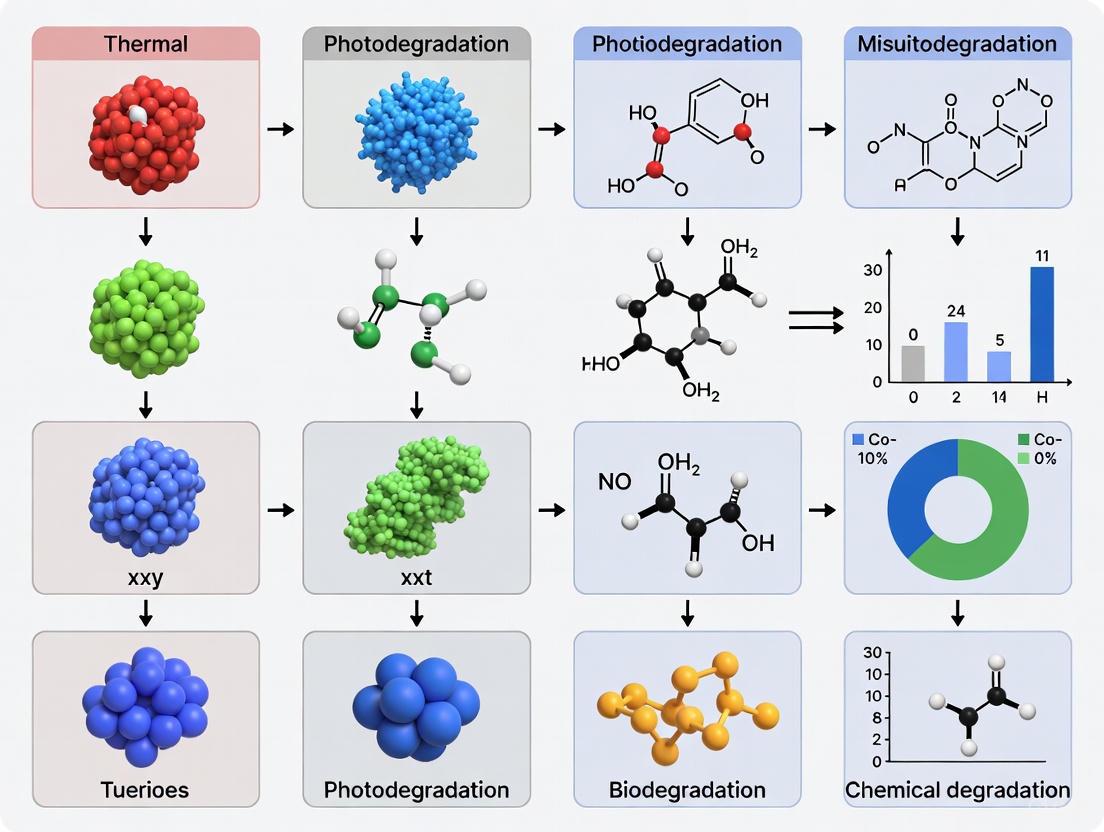
This article provides a comprehensive comparative analysis of polymer degradation methods, tailored for researchers and professionals in drug development and biomedical fields.
Comparative Analysis of Polymer Degradation Methods: Mechanisms, Applications, and Advancements for Biomedical Research
Abstract
This article provides a comprehensive comparative analysis of polymer degradation methods, tailored for researchers and professionals in drug development and biomedical fields. It explores the fundamental mechanisms—including thermal, oxidative, hydrolytic, and enzymatic pathways—that govern polymer breakdown. The scope extends to advanced methodological applications in conventional processing, additive manufacturing, and material testing, alongside strategic troubleshooting for optimizing polymer stability and controlled degradation. By critically evaluating and validating analytical techniques from chromatography to spectroscopy, this review serves as a foundational guide for selecting appropriate degradation methods to achieve precise material performance in biomedical applications, from drug delivery systems to implantable devices.
Unraveling Core Mechanisms: A Deep Dive into the Fundamental Pathways of Polymer Degradation
Polymer degradation is defined as a change in the properties—such as tensile strength, color, shape, and molecular weight—of a polymer or polymer-based product under the influence of one or more environmental factors like heat, light, or chemicals [1]. These alterations are primarily due to changes in the polymer's chemical composition and structure, ultimately leading to a decrease in its molecular weight through mechanisms like random or specific chain scission [1]. This process can be undesirable, leading to product failure, or desirable, as in programmed biodegradation or recycling [1]. The susceptibility of a polymer to degradation is heavily influenced by its specific structure; for instance, polymers with aromatic rings are vulnerable to ultraviolet (UV) light, while hydrocarbon-based polymers are more prone to thermal degradation [1].
Understanding these changes is critical for selecting materials in research and development, particularly in fields like drug delivery and sustainable materials, where performance under environmental stress is paramount.
Comparative Analysis of Polymer Degradation
The following tables summarize quantitative data on how different polymers and their properties are affected by various degradation conditions, providing a clear, comparative overview for researchers.
Changes in Mechanical Properties of 3D-Printed ABS Plus After Accelerated Aging [2]
| Polymer Color | Aging Duration (hours) | Tensile Strength (MPa) | Change from Reference (%) | Flexural Strength (MPa or N) |
|---|---|---|---|---|
| Yellow (Reference) | 0 | 33.46 | - | - |
| Blue | 337 | 34.33 | +9.58% | - |
| Green | 225 | 33.54 | +0.23% | - |
| Blue | 450 | 31.38 | -6.22% | - |
| Green | 450 | 30.75 | -8.09% | - |
| Purple | 337 | 24.63 | - | - |
| Red | 450 | - | - | 45.27 N |
Degradation Susceptibility of Common Polymer Types [1]
| Polymer Type/Structure | Primary Degradation Factor | Typical Degradation Mechanism | Key Property Changes |
|---|---|---|---|
| Epoxies, Aromatic polymers | Ultraviolet (UV) Light | Photo-oxidation | Loss of color, surface cracking, reduced tensile strength |
| Hydrocarbon-based Polymers (e.g., PE, PP) | Heat (Thermal) | Random scission, oxidation | Molecular weight decrease, embrittlement, shape distortion |
| Poly-α-methylstyrene | Heat (Thermal) | Specific chain scission ("unzipping") | Reversion to monomer |
| Polyesters (e.g., PCL, PBSA) | Biological Activity (Enzymatic) | Hydrolysis of ester bonds | Weight loss, reduction in tensile strength, surface erosion |
Comparative Degradability of Biodegradable Polymers in a Marine Environment [3] [4]
| Polymer | Synthesis Method | Key Degrading Enzyme | Primary Degradation Products/Metrics |
|---|---|---|---|
| PHBH (e.g., PHBH) | Biological | poly(3HB) depolymerase | Monomers (3-hydroxybutyrate, 3-hydroxyhexanoate) |
| PCL, PBSA, PBAT | Chemical | Lipase, Cutinase | Dissolved Organic Carbon (DOC), CO₂ |
| Conventional Plastics (PE, PP, PS) | Chemical | Limited abiotic initiation | Persistent microplastics, slow CO₂ evolution |
Experimental Protocols for Studying Polymer Degradation
Accelerated Aging via Xenon Arc Lamp Weathering
This protocol simulates long-term environmental exposure to sunlight, rain, and dew in a controlled, accelerated manner [2].
- Objective: To investigate the effects of combined light, heat, and moisture on the mechanical and optical properties of polymers.
- Materials: Polymer specimens (e.g., injection-molded or 3D-printed sheets), xenon arc lamp weathering chamber.
- Methodology:
- Sample Preparation: Prepare polymer specimens with standardized dimensions according to relevant testing standards (e.g., for tensile, flexural tests).
- Aging Conditions: Expose specimens to continuous light from a xenon arc lamp, which closely mimics the full solar spectrum. Conditions are often set at a specific black standard temperature (e.g., 48°C) and relative humidity (e.g., 50%) [2].
- Duration: Exposure times can vary from hundreds to over a thousand hours, with samples extracted at intervals (e.g., 112, 225, 337, 450 hours) for analysis [2].
- Post-Exposure Analysis:
- Mechanical Testing: Perform tensile, flexural, and hardness tests on aged and unaged control samples.
- Optical Analysis: Measure color change (ΔE) and gloss retention using spectrophotometers and glossmeters.
- Morphological Inspection: Examine fracture surfaces and micro-cracking using Scanning Electron Microscopy (SEM) [2].
Sequential Abiotic and Biotic Degradation Assay
This comprehensive protocol assesses combined degradation pathways, providing a more realistic environmental fate than biotic tests alone [4].
- Objective: To quantify polymer degradation through both abiotic (non-living) and biotic (microbial) processes, tracking carbon mobilization.
- Materials: Polymer films or powders, simulated seawater, marine microbial inoculum, photoreactor, bioreactors.
- Methodology:
- Abiotic Phase (Photodegradation and Hydrolysis):
- Expose polymer samples to simulated sunlight in a photoreactor while submerged in simulated seawater.
- Monitor the release of Dissolved Organic Carbon (DOC) from the polymer into the water, a key indicator of abiotic breakdown [4].
- Biotic Phase (Biodegradation):
- Inoculate the photodegraded polymer and its leachate with a defined marine microbial community.
- Monitor multiple endpoints over 28-60 days:
- Abiotic Phase (Photodegradation and Hydrolysis):
- Key Insight: Relying solely on CO₂ measurement (as in standard tests like ASTM 6691-17) can underestimate total degradation by up to two-fold, as it misses carbon converted to biomass and DOC [4].
Pathways and Workflows in Polymer Degradation
Autocatalytic Oxidation Pathway
The following diagram illustrates the generally accepted autocatalytic cycle of thermal- and photo-oxidative polymer degradation, a key pathway leading to chain scission and loss of properties [1].
Experimental Workflow for Comparative Degradation Analysis
This workflow maps out a integrated approach for comparing the degradation behavior of different polymer materials, from preparation to multi-faceted analysis [3] [4].
The Scientist's Toolkit: Essential Reagents and Materials
This table details key reagents, materials, and instruments essential for conducting polymer degradation research.
| Item Name | Function/Application | Specific Example/Context |
|---|---|---|
| Xenon Arc Lamp Chamber | Accelerated weathering; simulates full-spectrum sunlight, heat, and moisture to catalyze photodegradation. | Testing weatherability of ABS Plus for outdoor applications; exposure for hundreds of hours simulates years of outdoor use [2]. |
| Marine Microbial Inoculum | Provides a natural consortium of microorganisms for biotic degradation assays in marine-relevant conditions. | Sourced from brackish water or tidal flats; used to test the biodegradability of polymers like PCL, PBSA, and PHBH [3] [4]. |
| Fourier Transform Infrared (FTIR) Spectrometer | Detects changes in chemical structure (formation/degradation of functional groups) during oxidation. | Monitoring the growth of carbonyl groups (C=O) at ~1710 cm⁻¹, a key indicator of oxidative degradation [1] [5]. |
| Gel Permeation Chromatography (GPC) | Measures changes in molecular weight and molecular weight distribution, indicating chain scission or cross-linking. | Quantifying the reduction in average molecular weight (Mw) after thermal or photo-oxidative degradation [1]. |
| Dissolved Organic Carbon (DOC) Analyzer | Quantifies carbon leached from a polymer into solution, a critical metric for abiotic degradation and bioavailable carbon. | Used in sequential abiotic-biotic assays to track carbon mobilization before microbial inoculation [4]. |
| Specific Hydrolases | Enzyme-based degradation; used to probe polymer degradability via specific chemical bonds (e.g., esters). | Lipase and cutinase for chemically synthesized polyesters (PCL, PBSA); poly(3HB) depolymerase for PHAs like PHBH [3]. |
| Scanning Electron Microscope (SEM) | Visualizes surface topography, cracks, cavities, and biofilm formation on degraded polymer samples. | Examining the fracture surfaces of tensile-tested specimens or microbial colonization on the polymer surface (plastisphere) [5] [2]. |
Thermal degradation of polymers refers to the molecular deterioration that occurs at elevated temperatures, typically between 150–200 °C and above, where primary chemical bonds begin to separate [6]. This process fundamentally changes a polymer's properties—including tensile strength, color, and shape—and is a critical consideration for both industrial applications and environmental sustainability [6]. Understanding these mechanisms is particularly vital for researchers and drug development professionals working with polymeric nanoparticles in targeted drug delivery systems, where thermal stability directly impacts shelf life, biocompatibility, and functional integrity [7].
The specific pathway a polymer follows during thermal decomposition depends primarily on its chemical structure and the presence of unstable impurities or additives [6]. Among the several types of degradation, three primary thermal degradation mechanisms dominate: chain depolymerization, random scission, and substituent reactions [6]. This guide provides a comparative analysis of these mechanisms, supported by experimental data and methodologies relevant to ongoing research in polymer science and pharmaceutical development.
Comparative Analysis of Degradation Mechanisms
The following table summarizes the core characteristics, influencing factors, and representative polymers for the three primary thermal degradation mechanisms.
Table 1: Fundamental Mechanisms of Polymer Thermal Degradation
| Mechanism | Chemical Process Description | Key Influencing Factors | Representative Polymers |
|---|---|---|---|
| Chain Depolymerization | A "unzipping" process where monomers are successively released from the chain end, often regenerating a high yield of the original monomer. | Stability of the chain-end radical; resonance stabilization of the monomer; steric hindrance. | Poly(methyl methacrylate) [6], Poly(α-methylstyrene) [6], Poly(tetrafluoroethylene) [6]. |
| Random Scission | The polymer backbone breaks at random points along the chain, resulting in a mixture of oligomers and smaller fragments rather than pure monomer. | Bond dissociation energies along the backbone; temperature; presence of catalysts or impurities. | Polyethylene [6], Aliphatic Polyamides (e.g., PA310, PA510) [8]. |
| Substituent Reactions | Side groups (substituents) are cleaved from the polymer backbone, which may or may not cause chain scission. The backbone often cross-links afterward. | Stability of the side-group bond; reactivity of the radical left on the backbone. | Poly(vinyl chloride) [6]. |
The degradation pathway is strongly influenced by the aliphatic chain length. In short-chain polyamides, degradation is often dominated by C–N bond cleavage and cyclization, whereas in long-chain polyamides, reactions like β-CH hydrogen transfer become predominant [8].
Experimental Investigation of Degradation Mechanisms
Key Analytical Techniques and Methodologies
Elucidating thermal degradation mechanisms requires a multi-technique approach that correlates mass loss with chemical and structural changes. The following workflow outlines a standard experimental protocol for a comprehensive analysis.
Diagram 1: Experimental Workflow for Analyzing Thermal Degradation
- Thermogravimetric Analysis (TGA): This foundational technique measures the mass change of a sample as a function of temperature or time in a controlled atmosphere. The resulting mass-loss profile is used to determine the degradation temperature and kinetics [8].
- Volatile Product Analysis: Coupling the TGA to a Fourier Transform Infrared Spectrometer (TG-FTIR) or a Gas Chromatograph-Mass Spectrometer (Py/GC–MS) allows for the real-time identification of gases and volatile products released during degradation. This is crucial for deducing the chemical pathways of scission [8].
- Kinetic Analysis: Models like the Kissinger method and the Flynn-Wall-Ozawa method are applied to TGA data obtained at different heating rates to calculate the apparent activation energy (Eₐ) of the degradation process without assuming a specific reaction model. This helps quantify thermal stability [8].
- Structural Characterization: Techniques like X-ray Diffraction (XRD) track the evolution of crystal structure during heating, revealing phase transitions or loss of crystallinity that accompany degradation [9].
- Molecular Dynamics (MD) Simulations: Computational methods like MD can model the behavior of polymer chains under thermal stress at the atomic level, providing insights into initial breakdown events and verifying proposed mechanisms [10].
The Scientist's Toolkit: Essential Research Reagents and Materials
Table 2: Key Materials and Reagents for Polymer Degradation Studies
| Item | Function/Application | Representative Examples from Literature |
|---|---|---|
| Model Polymers | Serve as well-defined systems for studying structure-degradation relationships. | Bio-based aliphatic polyamides (PA310, PA510) [8]; Polyhydroxyalkanoate (PHA) polyesters [4]. |
| Catalysts / Additives | Can be added to study their effect on degradation kinetics or to simulate industrial formulations. | Ammonium polyphosphate (fire-retardant) [8]. |
| Solvents for Synthesis & Processing | Used in polymer synthesis, purification, and preparation of samples for analysis (e.g., film casting). | N-methylpyrrolidone (NMP) for slurry preparation [9]. |
| Characterization Standards | Used for instrument calibration and ensuring data comparability. | Not specified in sources, but universally includes melting point standards, IR calibration films, etc. |
| Inert / Reactive Gases | Create controlled atmospheres (nitrogen for thermal, oxygen for thermo-oxidative degradation) during TGA. | Nitrogen, air [8]. |
Comparative Experimental Data and Case Studies
Case Study: Bio-based Aliphatic Polyamides
A 2025 study on bio-based polyamides provides excellent quantitative data on how structure influences mechanism and stability [8]. The research successfully synthesized PA310 and PA312 from 1,3-propanediamine and compared them with commercial PA510.
Table 3: Experimental Kinetic Data for Bio-based Polyamides [8]
| Polymer | Activation Energy (Eₐ) | Degradation Mechanism Notes | Key Volatile Products Identified |
|---|---|---|---|
| PA510 | Highest Eₐ | More stable, requiring higher energy for degradation initiation. | Cyclopentanone, hydrocarbons, amines (from chain scission). |
| PA310 | Intermediate Eₐ | Higher amide bond density influences pathway. | Similar to PA510, but product distribution varied. |
| PA312 | Lowest Eₐ | Less thermally stable under the tested conditions. | Similar to PA510, but product distribution varied. |
Experimental Protocol Summary [8]:
- Synthesis: PA310 and PA312 were synthesized via melt polymerization (MP) followed by solid-state polymerization (SSP) using 1,3-propanediamine and bio-based dicarboxylic acids.
- Characterization: Molecular weight was determined viscometrically. Crystallinity and thermal properties (melting point) were analyzed using techniques like Differential Scanning Calorimetry (DSC).
- Thermal Degradation Kinetics: TGA was performed at multiple heating rates in a nitrogen atmosphere. The Kissinger and Flynn-Wall-Ozawa methods were applied to the mass-loss data to calculate Eₐ.
- Mechanism Elucidation: TG-FTIR and Py/GC–MS were used to identify volatile degradation products, enabling the reconstruction of the dominant scission pathways.
Beyond conventional heating, the energy input method can drastically alter the degradation mechanism. A 2025 study on C-phycocyanin (CPC) demonstrated that microwave heating caused more significant degradation and structural changes at lower temperatures and in shorter times compared to conventional water bath heating [10]. This was analyzed using:
- Spectroscopy: Color index, UV-Vis absorbance, fluorescence, and circular dichroism.
- Degradation Kinetics: Modeled with the Weibull model.
- Molecular Dynamics (MD) Simulations: Revealed that microwave heating at 55 °C led to increased structural fluctuations and disrupted inter-residue interactions more severely than conventional heating.
This highlights that the "experimental protocol" itself—specifically the heating method—is a critical variable in any comparative study of degradation mechanisms.
The comparative analysis of thermal degradation mechanisms reveals a clear structure-property relationship. The dominant pathway—whether chain depolymerization, random scission, or substituent reaction—is intrinsically linked to the polymer's chemical architecture. For researchers in drug development, understanding these mechanisms is not merely academic. It is essential for:
- Designing Polymeric Nanoparticles (PNPs): Selecting polymers with known and stable thermal profiles ensures the integrity of the drug delivery system during processing (e.g., sterilization, lyophilization) and storage [7].
- Predicting Product Lifespan: Kinetic parameters like activation energy (Eₐ) allow for the modeling of long-term stability.
- Developing "Smart" Polymers: Knowledge of degradation triggers (heat, pH) is the foundation for designing stimuli-responsive PNPs that release their payload in a controlled manner at the target site [7].
Future research will continue to leverage the experimental toolkit outlined here—especially the coupling of advanced spectroscopy with computational simulations—to unravel more complex degradation phenomena in next-generation polymeric materials, ultimately enabling more predictive and precise material design for both industrial and pharmaceutical applications.
Oxidative degradation is a fundamental chemical process that dictates the lifetime, stability, and ultimate fate of polymeric materials. At the heart of understanding this phenomenon lies the Bolland and Gee basic autoxidation scheme (BAS), a foundational mechanistic framework derived from studies of rubbers and lipids in the 1940s [11] [12] [6]. This scheme describes a chain reaction process comprising initiation, propagation, and termination steps to explain how polymers degrade in the presence of oxygen, with oxygen-centered radicals playing the central role. For decades, the BAS has served as the universal model for explaining the oxidative degradation of virtually all polymers. Its core premise is that propagation of damage occurs primarily via a hydrogen atom transfer from the polymer chain (RH) to a peroxyl radical (ROO•), generating a hydroperoxide (ROOH) and a new carbon-centered radical (R•) that perpetuates the chain reaction [11] [6].
However, contemporary research has revealed significant limitations and paradoxes within this classical model, particularly when applied to saturated polymers. This guide provides a comparative analysis of the traditional Bolland and Gee framework against emerging alternative mechanisms, supported by current experimental data. It is structured to assist researchers in selecting appropriate analytical protocols and interpreting results within a modernized understanding of polymer degradation.
Critical Comparative Analysis: Classical vs. Modern Paradigms
The following table summarizes the core principles, supporting evidence, and key limitations of the classical autoxidation scheme compared with modern perspectives.
Table 1: Comparative Analysis of the Bolland and Gee Scheme and Modern Degradation Paradigms
| Aspect | Classical Bolland and Gee (BAS) Framework | Modern Perspectives and Alternative Mechanisms |
|---|---|---|
| Core Propagation Mechanism | Relies on hydrogen atom transfer (HAT) from polymer (RH) to peroxyl radical (ROO•): ROO• + RH → ROOH + R• [11] [6]. | HAT is thermodynamically disfavored for saturated polymers. Peroxyl radical termination and other pathways may dominate, forming alkoxy radicals that readily undergo chain scission [11]. |
| Role of Polymer Structure | Implicitly treats most polymers similarly, with HAT as the default propagation path [11]. | Polymer structure is critical. Branching and substitution (e.g., tertiary carbons) majorly influence stability and degradation products. Unsaturated defect sites may be primary loci for HAT [11]. |
| Role of Oxygen | Oxygen universally accelerates degradation via perpetual radical chain propagation [11]. | Counterintuitively, oxygen can sometimes slow degradation (e.g., in polyolefins, PMMA), potentially by stabilizing radicals or altering dominant pathways [11]. |
| Key Radical Intermediates | Peroxyl radicals (ROO•) are the primary propagators. Carbon-centered radicals (R•) are precursors to ROO• [12] [6]. | A wider range of radicals is considered significant, including alkoxy radicals (RO•) from termination events and specific carbonyl radicals (•C(O)-) identified via spin trapping [11] [12]. |
| Initiation Sources | Often focuses on thermal or radical initiation. | Expands to include other reactive species: ozone, hydroperoxyl radical, hydroxyl radical, which can initiate hydroperoxide formation without invoking classical peroxyl transfer [11]. |
Advanced Experimental Protocols for Radical Analysis
Validating and differentiating between degradation mechanisms requires sophisticated methodologies capable of detecting and quantifying transient radical species and their products.
Electron Spin Resonance (ESR) Spin Trapping
This technique is essential for direct observation of short-lived radical intermediates, overcoming the limitation of their transient nature [12].
- Objective: To directly identify and characterize short-lived free radicals (e.g., alkyl, alkoxy, peroxyl) generated during the thermo-oxidative degradation of polymers.
- Protocol:
- Sample Preparation: Antioxidant-free polymer granules (e.g., polypropylene) are used. A spin-trapping reagent (e.g., TTBNB) is uniformly impregnated into the polymer matrix using a swelling method with supercritical CO₂ to ensure deep penetration [12].
- Oxidative Aging: Samples are subjected to controlled thermo-oxidative aging (e.g., 90°C under 100 mL/min oxygen flow for 1000 hours) [12].
- Radical Generation & Trapping: During thermal treatment, generated short-lived radicals (•R) react with the spin trap (ST) to form a stable, detectable spin adduct (ST-•R).
- ESR Measurement: The ESR spectrum of the spin adduct is recorded. The hyperfine coupling constants (hfcc) of the spectrum are analyzed to identify the molecular structure of the original trapped radical [12].
- Key Data Output: Identification of specific radical types. For instance, studies on oxidized PP have detected carbonyl radicals (•C(O)-), whose concentration is highest in homopolymers, indicating higher susceptibility to oxygen attack compared to copolymers [12].
Chemiluminescence (CL) Analysis
CL is a highly sensitive method for monitoring the early stages of oxidation, particularly the formation and decomposition of hydroperoxides [13].
- Objective: To track the kinetics of oxidation in real-time by measuring the light emission associated with radical termination reactions.
- Protocol:
- Sample Setup: Polymer samples (e.g., powder, film) are placed in a heated chamber under a controlled atmosphere (oxygen or nitrogen) [13].
- Temperature Programming: Experiments can be run in either isothermal (constant temperature) or non-isothermal (ramped temperature) modes. A common range is 40–220°C [13].
- Light Detection: A photomultiplier tube detects the weak light (chemiluminescence) emitted when two peroxyl radicals terminate (ROO• + ROO• → products + hν) [13].
- Data Interpretation: The induction time to a rapid autoaccelerating increase in CL intensity and the maximum intensity are correlated with the material's oxidative stability. The presence of antioxidants shifts the induction time to longer durations [13].
- Key Data Output: CL-intensity vs. time/temperature curves that provide information on oxidation induction time and rate.
Cryogenic EPR for Radical Quantification
This specialized EPR approach is used to probe the radical landscape in aged materials, particularly for lifetime prediction in critical applications [14].
- Objective: To quantify and characterize stable and trapped radicals in aged polymer samples as a measure of aging degree and antioxidant efficacy.
- Protocol:
- Aging and Sampling: Polymer materials (e.g., cross-linked polyethylene for cable insulation) are subjected to gamma radiation aging at different dose rates.
- Probe Irradiation: Aged samples are frozen in liquid nitrogen and uniformly irradiated with a low dose of gamma radiation. This "probe" radiation generates a new, measurable population of radicals whose type and stability are influenced by the material's prior aging history.
- Cryogenic EPR Measurement: EPR spectra are acquired at low temperatures (e.g., 100 K) and then at stepwise increasing temperatures to monitor radical recombination kinetics.
- Radical Identification: Spectra are deconvoluted to quantify the relative concentrations of alkyl (Alk•) and peroxyl (POO•) radicals [14].
- Key Data Output: Ratios of peroxy-to-alkyl radicals and their decay kinetics, which serve as indicators of the material's aging state and the depletion level of its antioxidants [14].
Visualization of Key Degradation Pathways and Workflows
The Basic Autoxidation Scheme and Modern Extensions
This diagram illustrates the core steps of the classical Bolland-Gee scheme and integrates key modern modifications, such as alternative termination pathways and the role of alkoxy radicals.
Experimental Workflow for Radical Identification
This flowchart outlines the integrated experimental workflow for analyzing radical intermediates using ESR spin trapping and chemiluminescence.
The Scientist's Toolkit: Essential Research Reagents and Materials
The following table details key reagents, materials, and instruments critical for conducting research on oxidative degradation pathways.
Table 2: Essential Research Reagents and Materials for Oxidative Degradation Studies
| Item Name | Function / Application | Specific Example / Note |
|---|---|---|
| Antioxidant-Free Polymer Granules | Provides a baseline material free of interfering stabilizers, allowing study of the pure polymer's degradation mechanism. | Isotactic PP homopolymer, random copolymer, block copolymer [12]. |
| Spin Trapping Reagents | Compounds that react with short-lived radicals to form stable, detectable spin adducts for ESR analysis. | TTBNB; impregnated into polymer matrix using supercritical CO₂ [12]. |
| Supercritical CO₂ System | Used as a swelling medium to deeply and uniformly impregnate spin traps or other reagents into the polymer matrix. | Ensures homogeneous distribution of the spin trap throughout the sample [12]. |
| Chemiluminescence Apparatus | Instrument to measure the weak light emission from termination reactions during oxidation; used for determining oxidative induction time. | Can be operated in isothermal or temperature-ramp modes [13]. |
| Cryogenic EPR Setup | System for low-temperature EPR measurements, essential for stabilizing and studying transient radical species generated by probe irradiation. | Used to track radical recombination kinetics from 100 K to room temperature [14]. |
| Controlled Atmosphere Oven | For subjecting polymer samples to precise thermo-oxidative aging conditions (temperature, gas environment, duration). | E.g., 90°C under 100 mL/min O₂ flow for 1000 hours [12]. |
| Organic Catalysts (for Degradation Studies) | Potent catalysts used in studies of chemical recycling via degradation, highlighting the lability of certain bonds. | 1,5,7-Triazabicyclo[4.4.0]dec-5-ene (TBD) catalyzes polyester and polycarbonate degradation [15]. |
The Bolland and Gee basic autoxidation scheme remains a foundational model for understanding polymer oxidation. However, contemporary research underscores that it is not universally applicable. The dominant degradation pathways are highly dependent on polymer structure, with termination reactions and alkoxy radical chemistry competing effectively with the classical propagation via hydrogen transfer in many saturated systems. For researchers, this necessitates a critical approach: mechanistic models must be chosen and applied with consideration of the specific polymer chemistry. Advanced techniques like ESR spin trapping and chemiluminescence provide the necessary experimental data to move beyond assumptions and build accurate, material-specific degradation models that are crucial for developing stable polymers or efficient recycling strategies.
Biodegradable polyesters, such as Polylactic Acid (PLA) and Polyhydroxyalkanoates (PHA), represent a promising sustainable alternative to conventional petroleum-based plastics. Understanding their degradation mechanisms is paramount for applications ranging from drug delivery systems to environmental remediation [16]. The end-of-life fate of these materials is primarily governed by two key processes: hydrolytic degradation, which is an abiotic chemical process, and enzymatic degradation, which is mediated by microorganisms [17] [18]. This guide provides a comparative analysis of the degradation profiles of PLA and PHA, underpinned by experimental data and protocols, to inform researchers and scientists in the field of polymer science and drug development.
Comparative Analysis of Degradation Mechanisms
The biodegradation of polymers is a complex process initiated by the breakdown of large polymer chains into smaller fragments, which are subsequently assimilated by microorganisms [16]. For biodegradable polyesters like PLA and PHA, this process predominantly occurs through the scission of ester bonds in their backbone [17] [18]. While both polymers are susceptible to hydrolysis and enzymatic attack, the primary pathways, responsible enzymes, and degradation kinetics differ significantly due to their distinct chemical origins and physical structures.
PLA, a synthetic polyester derived from renewable resources like corn, undergoes degradation mainly via chemical hydrolysis in aqueous environments, which can be accelerated by temperature [18]. Its enzymatic degradation is more specific and is facilitated by enzymes such as proteases, lipases, cutinases, and esterases secreted by microorganisms [19]. Notably, PLA-degrading enzymes are categorized into two types: Type I (protease-based), which is specific to PLLA, and Type II (lipase/cutinase-based), which shows a preference for PDLA [18]. A critical challenge with PLA is its resistance to degradation in many natural environments, such as freshwater and seawater at low temperatures, due to its hydrophobic nature and the low prevalence of active depolymerizing enzymes in these settings [18] [20]. Its degradation is highly dependent on environmental conditions and material properties, such as crystallinity—amorphous regions degrade more readily than crystalline ones [18].
In contrast, PHA is a natural polyester accumulated as an energy reserve by various microorganisms [21]. Its degradation is predominantly enzymatic, driven by extracellular PHA depolymerases secreted by a wide range of bacteria and fungi found in diverse ecosystems [21]. These enzymes are highly effective and allow PHA to be more readily biodegradable in natural environments, including soil, freshwater, and marine systems, compared to PLA [20]. PHA degradation is influenced by polymer composition, crystallinity, and the presence of specific microbial communities [21].
Table 1: Comparative Overview of PLA and PHA Degradation Profiles
| Characteristic | Polylactic Acid (PLA) | Polyhydroxyalkanoates (PHA) |
|---|---|---|
| Primary Degradation Mechanism | Chemical hydrolysis (abiotic), followed by enzymatic attack [18]. | Primarily enzymatic hydrolysis via microbial depolymerases [21]. |
| Key Enzymes Involved | Proteases, lipases, cutinases, esterases (Type I & II depolymerases) [19] [18]. | Extracellular PHA-specific depolymerases [21]. |
| Typical Degradation Environments | Industrial compost, soil, wastewater; slow in freshwater/seawater [18] [20]. | Soil, compost, marine and freshwater environments, activated sludge [21]. |
| Influence of Crystallinity | High crystallinity slows degradation; amorphous regions degrade first [19] [18]. | High crystallinity (e.g., in PHB) can slow degradation; copolymers like PHBV degrade faster [21]. |
| Representative Degradation Products | Lactic acid monomers, oligomers, micro/nanoplastics [20]. | Hydroxyalkanoate monomers/oligomers, CO₂, H₂O [21]. |
| Relative Degradation Rate in Compost | Fast (can degrade within months under industrial composting) [18]. | Fast to Very Fast (depending on copolymer composition) [21]. |
Table 2: Key Microbial Strains and Their Associated Degrading Enzymes
| Polymer | Source of Degrading Microbes/Enzymes | Key Microbial Genera / Enzyme Types |
|---|---|---|
| PLA | Actinomycetes, bacteria, fungi [18]. | Actinomycetes, Bacillus, Pseudomonas, Streptomyces, Rhodococcus, Amycolatopsis; Proteases, Lipases, Cutinases [19] [18]. |
| PHA | Soil, sludge, freshwater, marine habitats, extreme environments [21]. | Pseudomonas, Bacillus, Cupriavidus, Alcaligenes, Comamonas, Acidovorax; PHA Depolymerases [21]. |
Visualizing the Degradation Pathways
The following diagram illustrates the parallel hydrolytic and enzymatic degradation pathways for PLA and PHA, highlighting the key steps and differences in their breakdown processes.
Experimental Protocols for Degradation Assessment
A comprehensive assessment of polymer degradation requires a multi-faceted approach, evaluating physical, chemical, and mechanical property changes over time. The following protocols outline standardized methods for in vitro degradation studies.
Gravimetric Analysis (Mass Loss)
This is a fundamental method for tracking the physical erosion of a polymer sample.
- Principle: Measure the mass loss of a polymer sample after immersion in a degradation medium over time [22].
- Procedure:
- Sample Preparation: Prepare polymer films or specimens with known dimensions (e.g., 10 mm x 10 mm x 0.5 mm). Dry in a vacuum desiccator until a constant initial dry mass (M₀) is achieved.
- Immersion: Incubate samples in a degradation medium (e.g., phosphate-buffered saline (PBS) at pH 7.4, 37°C, or specific enzyme solutions) under sterile conditions [22].
- Sampling: At predetermined time points, remove samples from the medium (in triplicate), rinse gently with deionized water, and dry again to a constant weight (Mₜ).
- Calculation: Determine the remaining mass percentage using the formula: > Remaining Mass (%) = (Mₜ / M₀) × 100 [22].
Molecular Weight Determination via Gel Permeation Chromatography (GPC)
This technique monitors the chemical degradation of the polymer backbone by tracking the reduction in molecular weight, which often precedes measurable mass loss [23].
- Principle: Also known as Size Exclusion Chromatography (SEC), GPC separates polymer molecules by their hydrodynamic volume, providing data on the average molecular weight (Mₙ, M𝄯) and polydispersity index (PDI) [23] [22].
- Procedure:
- Pre-degradation Baseline: Analyze the molecular weight of the initial, undegraded polymer sample.
- Post-degradation Analysis: At selected time points, retrieve samples from the degradation study, dry them, and dissolve them in a suitable chromatographic solvent (e.g., tetrahydrofuran for PLA and PHA).
- Chromatography: Pass the filtered solution through a GPC system equipped with a refractive index detector. Compare the retention times against a calibration curve built with polymer standards of known molecular weights [23].
- Data Interpretation: A steady decrease in molecular weight over time indicates bulk hydrolysis of the polymer's ester bonds.
Enzymatic Degradation Assay
This protocol specifically quantifies the enzymatic susceptibility of a polymer.
- Principle: Measure the rate of polymer breakdown in the presence of a specific, purified enzyme, often by monitoring the release of soluble degradation products [19].
- Procedure:
- Reaction Setup: Prepare a solution of the target enzyme (e.g., Proteinase K for PLA or a PHA depolymerase for PHA) in an appropriate buffer (e.g., Tris-HCl, pH 8.0). The enzyme solution should be filtered sterilized.
- Incubation: Add a known mass of polymer film or powder to the enzyme solution. Maintain under optimal temperature and agitation conditions for the enzyme (e.g., 37°C for Proteinase K). A control without the enzyme must be run in parallel.
- Quantification:
- Method A (UV-Vis): Periodically, withdraw aliquots from the supernatant and measure the concentration of soluble peptides/oligomers using a UV-Vis spectrophotometer (e.g., at 280 nm for aromatic residues) or via the Lowry/BCA assay [5].
- Method B (Titration): For polymers that release acidic monomers (like lactic acid from PLA), the degradation can be tracked by titrating the acid released or by monitoring a pH stat [19].
- Analysis: The rate of product formation is directly proportional to the enzymatic activity on the polymer substrate.
Table 3: Summary of Key Analytical Techniques for Degradation Assessment
| Technique | Parameter Measured | Primary Application | Key Advantages | Key Limitations |
|---|---|---|---|---|
| Gravimetric Analysis | Mass loss / Surface erosion [22]. | Quantifies physical disintegration of solid samples. | Simple, cost-effective, provides direct evidence of material loss. | Cannot detect initial bulk hydrolysis; mass loss may be mistaken for dissolution [22]. |
| GPC / SEC | Molecular weight distribution [23] [22]. | Tracks chain scission and chemical degradation in the polymer bulk. | Highly sensitive to early-stage degradation; provides quantitative Mₙ, M𝄯 data. | Requires soluble samples; specialized, costly equipment [22]. |
| SEM | Surface morphology and erosion [23] [5]. | Visualizes physical changes, cracks, pits, and microbial colonization on the surface. | Provides direct visual evidence of degradation; high resolution. | Qualitative; sample preparation can be destructive; infers but does not confirm degradation [22]. |
| HPLC / GC-MS | Identification and quantification of monomers/oligomers [22] [20]. | Chemical analysis of degradation products in the surrounding medium. | Highly specific and sensitive; can identify toxic leachates. | Requires method development; long analysis times; expensive [5]. |
| FTIR Spectroscopy | Changes in chemical functional groups [23]. | Identifies chemical changes on the polymer surface (e.g., ester bond reduction). | Rapid, non-destructive; can be used for solid and liquid samples. | Less sensitive than chromatographic methods; can be semi-quantitative. |
The Scientist's Toolkit: Essential Reagents and Materials
Successful experimentation in polymer degradation requires specific reagents and analytical tools. The following table lists key items and their functions.
Table 4: Essential Research Reagents and Solutions
| Reagent / Material | Function / Application | Specific Examples |
|---|---|---|
| Polymer Samples | The subject of degradation studies; available in various forms (film, powder, scaffold). | PLA (PLLA, PDLA), PHA (PHB, PHBV) [19] [21]. |
| Buffer Solutions | Maintain a stable pH in degradation media to simulate physiological or environmental conditions. | Phosphate Buffered Saline (PBS), Tris-HCl Buffer [22]. |
| Purified Enzymes | To study specific enzymatic degradation pathways and kinetics. | Proteinase K (for PLA), PHA Depolymerases, Lipases, Cutinases [19] [21] [18]. |
| Chromatographic Solvents | To dissolve polymers for molecular weight analysis via GPC. | High-purity Tetrahydrofuran (THF), Chloroform [23]. |
| Molecular Weight Standards | To calibrate GPC systems for accurate molecular weight determination. | Narrow-dispersity Polystyrene (PS) or Poly(methyl methacrylate) (PMMA) standards [23]. |
| Simulated Body Fluids (SBF) | To test biodegradation and bioabsorption of materials for biomedical applications. | Kokubo's SBF recipe [17]. |
| Microbial Strains | To investigate biotic degradation under more complex, environmentally relevant conditions. | Pseudomonas sp., Bacillus sp., Streptomyces sp. [21] [18]. |
The Impact of Polymer Structure and Bond Dissociation Energies on Stability
The stability of polymers is a fundamental property that dictates their application, processing, and lifespan. This stability is intrinsically governed by the strength of the chemical bonds within their structure, quantified by bond dissociation energies (BDEs). Understanding the relationship between polymer structure, BDE, and stability is crucial for researchers and scientists developing new materials, especially in demanding fields like drug delivery and high-performance composites. This guide provides a comparative analysis of how different polymer structures and their associated BDEs influence stability against thermal, chemical, and environmental degradation, equipping professionals with the data and methodologies to make informed material selections.
Fundamental Principles: Bond Dissociation Energy and Radical Stability
Bond Dissociation Energy (BDE) is the energy required to break a chemical bond homolytically, resulting in two neutral free radicals. As such, it serves as a direct measure of bond strength. A critical principle is the inverse relationship between BDE and the stability of the generated radicals: a lower BDE often indicates that the resulting free radicals are more stable [24].
Several structural factors influence radical stability and, consequently, BDE:
- Substitution Level: Radical stability increases in the order methyl < primary < secondary < tertiary, leading to a decrease in C–H BDE [24].
- Resonance: Conjugation significantly stabilizes radicals, substantially lowering BDE. For example, a primary C–H bond adjacent to two alkenes (doubly allylic) has a BDE as low as 76 kcal/mol due to extensive resonance delocalization [24].
- Adjacent Atoms: Atoms with lone pairs can stabilize an adjacent radical, while increasing electronegativity destabilizes radicals, resulting in higher BDEs (e.g., H–F BDE is 136 kcal/mol) [24].
- Hybridization: Bonds to atoms with higher s-character (e.g., sp-hybridized carbons in acetylene) have higher BDEs because the orbital is held closer to the nucleus [24].
Table 1: Bond Dissociation Energies (BDEs) and Influencing Factors
| Bond Type | Example Molecule | BDE (kcal/mol) | Key Influencing Factor |
|---|---|---|---|
| C–H (Methyl) | H–CH₃ | 104 | Reference value |
| C–H (Primary) | H–CH₂CH₃ | 98 | Substitution level |
| C–H (Tertiary) | H–C(CH₃)₃ | 96 | Substitution level |
| C–H (Allylic) | H–CH₂CH=CH₂ | 88 | Resonance stabilization |
| C–H (Doubly Allylic) | H–CH(CH=CH₂)₂ | 76 | Enhanced resonance |
| O–H | H–OH | 119 | High electronegativity of O |
| C–H (sp²) | H–CH=CH₂ | 109 | sp² Hybridization |
| Disulfide | R–S–S–R | ~60 [25] | Dynamic covalent bond |
Comparative Analysis of Polymer Stability
Thermal Stability of Fluorinated Polymers
Fluorinated polymers are benchmarks for thermal stability. The high strength of the carbon-fluorine (C–F) bond places polytetrafluoroethylene (PTFE) at the performance top, with a continuous service temperature of 260°C [26]. The thermal stability of linear vinyl polymers is closely related to the BDE of the backbone carbon-carbon (C–C) bond. Studies using model compounds and thermodynamic cycles show PTFE has a C–C bond strength 30–40 kJ/mol higher than polyethylene (PE) [26].
The stability trend based on weight loss during thermal degradation is: PTFE > ETFE > PVDF ≈ PE > ECTFE > PCTFE [26]. This hierarchy can be attributed to the bond energies and the susceptibility to elimination reactions. Partially fluorinated polymers like PVDF and ECTFE are prone to HF and HCl elimination, respectively, which lowers their relative thermal stability compared to PTFE [26].
Table 2: Comparative Thermal Stability of Select Polymers
| Polymer | Full Name | Key Bonds in Backbone | Relative Thermal Stability (Weight Loss) | Notable Degradation Pathways |
|---|---|---|---|---|
| PTFE | Polytetrafluoroethylene | C–C, C–F | Highest | Depolymerization at high T |
| ETFE | Ethylene-Tetrafluoroethylene Alternating Copolymer | C–C, C–F, C–H | High | Complete depolymerization |
| PE | Polyethylene | C–C, C–H | Medium | Chain scission |
| PVDF | Polyvinylidene Fluoride | C–C, C–F, C–H | Medium | HF elimination |
| ECTFE | Ethylene-Chlorotrifluoroethylene Alternating Copolymer | C–C, C–F, C–H, C–Cl | Lower | HCl elimination |
| PCTFE | Polychlorotrifluoroethylene | C–C, C–F, C–Cl | Lowest | HCl elimination |
Susceptibility to Different Degradation Methods
Different degradation technologies target bonds with specific energies and chemistries. Condensation polymers are often more amenable to chemical recycling than polyolefins because ester bond cleavage is energetically more favorable than C–C bond cleavage [15].
- Organocatalyzed Degradation: Organic catalysts like 1,5,7-triazabicyclo[4.4.0]dec-5-ene (TBD) are highly effective in degrading condensation polymers (e.g., polyesters, polycarbonates) via transesterification. TBD operates through a dual hydrogen-bonding mechanism, activating both the ester carbonyl and the hydroxyl group of the nucleophile (e.g., alcohol) [15].
- Enzymatic Degradation: Enzymes break down polymers through specific biochemical pathways. Hydrolases target ester bonds in polyesters via hydrolysis, inserting water molecules to break polymer chains into monomers. Oxidoreductases break down hydrocarbon-based plastics like polyethylene (PE) and polypropylene (PP) by oxidizing strong carbon-carbon bonds [27].
The following diagram illustrates the relationship between polymer structure, bond energy, and its susceptibility to various degradation methods.
Experimental Protocols for Stability Assessment
Protocol: Thermogravimetric Analysis (TGA) for Thermal Stability
Objective: To evaluate the thermal stability and decomposition profile of a polymer by measuring its mass change as a function of temperature under a controlled atmosphere [26].
Methodology:
- Sample Preparation: Precisely weigh 5-20 mg of the polymer sample into a pristine TGA crucible.
- Instrument Setup: Load the sample into the TGA and purge the furnace with an inert gas (e.g., nitrogen) at a flow rate of 50-100 mL/min to create an oxygen-free environment.
- Temperature Program: Heat the sample from room temperature to a high temperature (e.g., 800°C) at a constant heating rate (e.g., 10°C/min).
- Data Collection: Continuously record the mass (or percentage mass loss) and temperature. The first derivative of the TGA curve (DTG) can be calculated to identify precise decomposition temperatures.
- Data Analysis: Determine key parameters from the TGA curve:
- Onset Decomposition Temperature (Tₒₙₛₑₜ): The temperature at which decomposition begins, often identified by the intersection of tangents.
- Midpoint Decomposition Temperature (Tₘᵢ𝒹): The temperature at which 50% mass loss occurs.
- Char Yield: The percentage of residual mass at the final temperature.
Protocol: Investigating Pre-polymerization Interactions via Computational and Experimental Methods
Objective: To rationally design molecularly imprinted polymers (MIPs) by screening functional monomers based on their interaction energy with a template molecule, thereby improving imprinting efficiency [28].
Methodology:
- Quantum Chemical (QC) Calculations:
- Structure Optimization: Use computational software (e.g., Gaussian) to optimize the geometry of the template and potential functional monomers at a level like B3LYP/6-31G(d).
- Interaction Energy Calculation: Model the 1:1 template–monomer complex. Calculate the binding energy (ΔEbind) in vacuum using the formula: ΔEbind = E(complex) - [E(template) + E(monomer)]. More negative ΔEbind values indicate stronger interactions [28].
- Natural Bond Orbital (NBO) Analysis: Perform NBO analysis to examine the charge characteristics of hydrogen bond donors and acceptors [28].
- Molecular Dynamics (MD) Simulations:
- System Setup: Simulate a pre-polymerization system containing the template, functional monomer, crosslinker, and solvent (e.g., acetonitrile) in an explicit solvent model.
- Quantitative Parameter Definition: Analyze the simulation trajectories to define parameters like the Effective Binding Number (EBN) and maximum Hydrogen Bond Number (HBNMax). Higher values indicate higher effective binding efficiency between the template and monomer [28].
- Experimental Validation:
- Polymer Synthesis: Prepare MIPs based on the optimal monomer identified from simulations, typically using surface-initiated polymerization techniques.
- Adsorption Tests: Evaluate the binding capacity and selectivity of the synthesized MIPs to validate the computational predictions [28].
The Scientist's Toolkit: Essential Research Reagents and Materials
This table details key reagents and materials used in the experimental protocols and research areas discussed in this guide.
Table 3: Key Research Reagent Solutions
| Reagent/Material | Function/Application | Specific Example |
|---|---|---|
| Diphenylphosphate (DPP) | Brønsted acid catalyst for controlled ring-opening polymerization of disulfide-containing lactones, offering remarkable tolerance to disulfide bonds [25]. | Synthesis of poly(disulfide)s with narrow molecular weight distributions (PDI < 1.1) [25]. |
| 1,5,7-Triazabicyclo[4.4.0]dec-5-ene (TBD) | Organocatalyst for the degradation and chemical recycling of condensation polymers via a dual hydrogen-bonding activation mechanism [15]. | Glycolysis of PET to bis(hydroxyethyl)terephthalate (BHET) [15]. |
| PETase Enzyme | Hydrolase enzyme that specifically targets and cleaves ester bonds in polyethylene terephthalate (PET) via hydrolysis [27]. | Enzymatic depolymerization of PET waste at ambient conditions [27]. |
| Methacrylic Acid (MAA) | Functional monomer for Molecularly Imprinted Polymers (MIPs); carboxylic acid group forms strong interactions with template molecules [28]. | Pre-polymerization complex with sulfadimethoxine (SDM) for MIP development [28]. |
| Benzyl Alcohol (BnOH) | Initiator for controlled lactone ring-opening polymerization [25]. | Initiation of 1,4,5-oxadithiepan-2-one (OTP) polymerization to produce well-defined poly(disulfide)s [25]. |
| Ethylene Glycol (EG) | Nucleophile (diol) for glycolysis reactions in polymer degradation [15]. | Solvent and reactant for organocatalyzed degradation of PET [15]. |
Advanced Concepts and Future Directions
Theory-Guided Machine Learning (TGML) for Property Prediction
A emerging approach to predict mechanical properties like tensile strength across different temperatures and strain rates is Theory-Guided Machine Learning (TGML). This framework integrates physically-based strength theoretical models with machine learning algorithms (e.g., Decision Tree, Random Forest, Gradient Boosting) [29]. TGML offers superior performance under small-sample conditions, enhanced prediction accuracy, and better generalizability compared to purely data-driven black-box models by incorporating fundamental physical principles [29].
Analytical Techniques for Polymer Aging
Understanding long-term stability requires advanced analytical techniques to study polymer aging. Key methods include [30]:
- Gel Permeation Chromatography (GPC): Tracks changes in molecular weight distribution, revealing chain scission or cross-linking.
- Fourier Transform Infrared Spectroscopy (FTIR): Identifies formation or disappearance of functional groups, providing a chemical fingerprint of degradation.
- Electron Spin Resonance (ESR) Spectroscopy: Detects and quantifies free radicals that drive oxidative degradation.
- Pyrolysis Gas Chromatography–Mass Spectrometry (Py-GC/MS): Analyzes polymer breakdown products and migrating additives.
The integration of these methods provides a comprehensive view of degradation mechanisms, moving beyond single-metric assessments [30]. Furthermore, machine learning is emerging as a tool to process complex datasets from these techniques to build predictive models of polymer lifespan [30].
The stability of polymers is an intricate property directly derived from their molecular structure and the bond dissociation energies of their constituent bonds. This comparative guide demonstrates that while strong C–F and C–C bonds impart high thermal stability, as seen in PTFE, they can make polymers recalcitrant to recycling. Conversely, polymers with lower BDE bonds, such as esters and disulfides, offer pathways for controlled degradation and recycling, which is crucial for a circular economy. The choice of polymer for any application, particularly in drug development and high-tech industries, must therefore balance the need for operational stability with end-of-life considerations. The experimental protocols and advanced analytical techniques outlined provide a foundation for researchers to systematically evaluate and engineer polymers with tailored stability profiles.
From Theory to Practice: Analytical Methods and Applications in Processing and Biomedicine
Chromatographic techniques are indispensable tools for characterizing polymers and their degradation products. For researchers investigating polymer degradation, two techniques are paramount: Gas Chromatography (GC) for determining the composition of low-molecular-weight additives, residual monomers, and degradation volatiles, and Size Exclusion Chromatography (SEC) / Gel Permeation Chromatography (GPC) for measuring the molecular weight and molecular weight distribution of polymer chains. The selection between these methods is dictated by the analytical goal: GC is optimal for separating and identifying volatile and semi-volatile compounds within a polymer matrix, providing a detailed picture of its chemical composition. In contrast, SEC/GPC separates dissolved polymer molecules based on their hydrodynamic volume in solution, directly yielding the molecular weight distribution, a parameter critically sensitive to chain scission and cross-linking events during degradation. A thorough comparative analysis of these techniques provides scientists with a foundational framework for selecting the optimal methodology to monitor chemical and physical changes throughout the polymer lifecycle, from formulation and processing to aging and environmental breakdown.
Comparative Analysis: GC vs. SEC/GPC
The following table provides a direct comparison of the core characteristics, applications, and outputs of GC and SEC/GPC, highlighting their complementary roles in polymer analysis.
Table 1: Comparative Analysis of GC and SEC/GPC for Polymer Characterization
| Feature | Gas Chromatography (GC) | Size Exclusion Chromatography/Gel Permeation Chromatography (SEC/GPC) |
|---|---|---|
| Primary Analytical Focus | Composition and purity of low-molecular-weight components [31]. | Molecular weight (MW) and molecular weight distribution (MWD) of polymers [32] [33]. |
| Separation Principle | Volatility and partitioning between a mobile gas phase and a stationary liquid phase [34]. | Hydrodynamic volume (size in solution) [35] [32]. |
| Ideal Analytes | Volatile and semi-volatile compounds: plasticizers (e.g., DOA), stabilizers (e.g., PBNA), residual monomers, solvents, and degradation volatiles [31] [34]. | Soluble macromolecules: synthetic polymers, proteins, and other large molecules [32] [33]. |
| Key Measured Outputs | Retention time, peak area/height for identification and quantification [31]. | Elution volume, which is calibrated to molecular weight; intrinsic viscosity [35] [32]. |
| Typical Detectors | Flame Ionization (FID), Mass Spectrometry (MS), Thermal Conductivity (TCD) [36]. | Refractive Index (RI), Light Scattering (LS), Viscometer [32] [33]. |
| Role in Degradation Studies | Identifies and quantifies small molecules leached, emitted, or formed during degradation [34]. | Tracks changes in average MW (Mn, Mw) and MWD, indicating chain scission or cross-linking [33]. |
| Sample Preparation | Often requires extraction, headspace sampling, or derivatization to increase volatility [34]. | Requires complete dissolution in an appropriate solvent [35] [33]. |
Advanced Detection and Data Interpretation
Modern chromatographic analysis extends beyond simple separation, leveraging advanced detection systems to provide deeper structural insights. In SEC/GPC, the use of a triple-detector array (refractive index, light scattering, and viscometer) has become a powerful tool. This combination allows for the determination of absolute molecular weight without reliance on column calibration standards, while also providing information on molecular conformation, branching density, and intrinsic viscosity [32]. The Mark-Houwink plot, which graphs intrinsic viscosity against molecular weight, is a key output from such a system; deviations from a linear trend can clearly reveal the presence of branching in a polymer, a structural feature that significantly influences degradation behavior and mechanical properties [32].
For GC, coupling to mass spectrometry (GC-MS) is the gold standard for unambiguous identification of unknown compounds in complex mixtures, such as degradation products or impurities. Furthermore, comprehensive two-dimensional GC (GC×GC) greatly enhances the separation power and peak capacity, making it invaluable for characterizing complex samples like packaging volatiles that migrate into food, thereby providing a detailed fingerprint of a material's composition and its interactions with the environment [34].
Experimental Protocols for Polymer Characterization
Protocol 1: GC Analysis of Organic Additives in a Polymer Matrix
This protocol, adapted from a study on solid propellant ingredients, outlines a unified GC method for analyzing multiple organic additives—such as plasticizers, curing agents, and stabilizers—in a single run [31].
- 1. Sample Preparation: Weigh approximately 20-50 mg of the polymer sample. For solid polymers, cryo-grind the material to a fine powder to increase surface area. Extract the organic additives using a suitable solvent (e.g., acetonitrile for analytes like dioctyl adipate (DOA) and phenyl-2-naphthylamine (PBNA)) in an ultrasonic bath for 30-60 minutes [31]. Filter the extract through a 0.45 µm syringe filter to remove any particulate matter.
- 2. Instrumental Conditions:
- GC System: Configured with a split/splitless inlet and a flame ionization detector (FID) or mass spectrometer (MS).
- Column: Use a 100% poly-dimethyl siloxane (GSBP-1 or equivalent) capillary column (e.g., 30 m length, 0.25 mm internal diameter, 0.25 µm film thickness) for broad-range separation [31].
- Temperature Program: Employ a ramped oven temperature. An example program is: initial temperature 60°C, hold for 2 minutes; ramp at 10°C/min to 300°C; hold for 10 minutes [31].
- Carrier Gas: Helium or hydrogen, at a constant linear velocity (e.g., 1.0 mL/min).
- Injection: Split mode (e.g., 10:1 split ratio) with a 1 µL injection volume.
- 3. Calibration and Quantification: Prepare a series of calibration standards with known concentrations of the target analytes (e.g., DOA, TDI, PBNA). Inject these standards to establish a linear calibration curve (peak area vs. concentration). The correlation coefficient (R²) should be >0.995 for accurate quantification [31].
- 4. Data Analysis: Identify compounds based on their retention times compared to standards. Quantify using the established calibration curves. Report the concentration of each additive as a percentage (%) in the original polymer sample, along with the relative standard deviation (RSD) for repeatability [31].
Protocol 2: SEC/GPC for Absolute Molecular Weight and Branching Analysis
This protocol details the use of a triple-detection SEC/GPC system to obtain absolute molecular weight data and characterize polymer branching, which is critical for understanding degradation mechanisms [32].
- 1. Sample Preparation: Accurately weigh 2-10 mg of polymer into a vial. Add a known mass of solvent (e.g., Tetrahydrofuran, THF, for synthetic polymers) to achieve a target concentration. The ideal concentration is dependent on the polymer's molecular weight and dispersity; broadly distributed samples can tolerate higher concentrations (e.g., 2-4 mg/mL), while high-MW or narrowly distributed samples require lower concentrations (e.g., 1 mg/mL) to avoid undesirable "overloading" effects that distort peak shape and elution volume [35]. Stir or agitate gently until fully dissolved, which may take several hours. Finally, filter the solution through a 0.2 µm syringe filter.
- 2. Instrumental Conditions:
- System: A triple-detection system comprising a Refractive Index (RI) detector, a Multi-Angle Light Scattering (MALS) detector, and a viscometer.
- Columns: A set of SEC columns (e.g., mixed-bed columns providing a suitable molecular weight separation range).
- Mobile Phase: HPLC-grade solvent (e.g., THF), degassed and maintained at a constant flow rate (e.g., 1.0 mL/min).
- Temperature: Maintain a constant temperature in the column oven and detectors (e.g., 35°C) for stable baselines and reproducible results [32].
- 3. System Calibration: While traditional GPC requires a column calibration curve, the use of a light scattering detector provides an absolute molecular weight measurement. The system must be calibrated for the detector normalization and inter-detector delay volumes using a narrow-dispersity polymer standard (e.g., polystyrene) of known molecular weight. The dn/dc value (specific refractive index increment) for the polymer-solvent pair must be known, either from literature or by offline measurement [32].
- 4. Data Analysis: The software calculates the absolute weight-average molecular weight (Mw) and number-average molecular weight (Mn) directly from the light scattering data. The polydispersity index (PDI) is calculated as Mw/Mn. The intrinsic viscosity (IV) is obtained from the viscometer. Generate a Mark-Houwink plot (log IV vs. log M). A plot for a linear polymer will show a consistent upward trend, while a branched polymer will appear as a parallel line offset to lower intrinsic viscosity or show a downward curve, depending on the branching architecture [32].
Visualizing the Analytical Workflows
The following diagrams illustrate the logical sequence of steps for both GC and SEC/GPC analyses, providing a clear overview of the workflows for researchers.
Diagram Title: GC and SEC/GPC Polymer Analysis Workflows
The Scientist's Toolkit: Essential Research Reagents and Materials
Successful chromatographic analysis relies on a suite of high-purity reagents and consumables. The following table details the essential items for performing the experiments described in this guide.
Table 2: Essential Research Reagents and Materials for Chromatographic Analysis
| Item | Function / Application |
|---|---|
| GC Capillary Column (e.g., 100% PDMS) | The stationary phase for separating volatile compounds; a non-polar phase like polydimethylsiloxane offers broad applicability [31]. |
| SEC/GPC Columns (e.g., mixed-bed) | The packed bed that separates polymer molecules by their size in solution [32]. |
| HPLC-grade Solvents (e.g., Acetonitrile, THF) | High-purity mobile phases and solvents for sample preparation, free from impurities that can interfere with detection [31] [32]. |
| Narrow Dispersity Polymer Standards (e.g., Polystyrene) | Used for system calibration in traditional GPC and for verifying the performance of light scattering detectors [32]. |
| Certified Reference Materials (e.g., Dioctyl Adipate, Toluene Diisocyanate) | High-purity chemical standards for calibrating GC and LC methods, ensuring accurate identification and quantification [31]. |
| Syringe Filters (0.2 µm and 0.45 µm) | For removing particulate matter from samples prior to injection, protecting the chromatographic column from blockage [31] [32]. |
| dn/dc Value (for polymer-solvent pair) | A critical constant required for absolute molecular weight determination using light scattering detection [32]. |
Gas Chromatography and Size Exclusion Chromatography are not competing techniques but rather complementary pillars of comprehensive polymer characterization. GC excels in providing a detailed inventory of the small molecules that comprise a formulation or are generated during its degradation, directly impacting material purity, safety, and performance. In contrast, SEC/GPC, especially when equipped with advanced detection, offers an unparalleled view into the macromolecular architecture, quantifying the molecular weight distribution and structural features like branching that govern bulk physical properties. For researchers conducting a comparative analysis of polymer degradation, the strategic application of both methods is imperative. By integrating compositional data from GC with structural and molecular weight data from SEC/GPC, scientists can construct a complete mechanistic picture of degradation pathways, enabling the development of more durable and predictable polymeric materials for pharmaceutical and advanced technological applications.
In the field of materials science, particularly in the comparative analysis of polymer degradation methods, understanding molecular and crystalline structure is paramount. Advanced characterization techniques are indispensable for elucidating changes in polymer architecture, crystallinity, and chemical functionality during degradation processes. Among the most powerful tools for this purpose are Nuclear Magnetic Resonance (NMR) spectroscopy, Fourier-Transform Infrared (FTIR) spectroscopy, and X-Ray Diffraction (XRD). These techniques provide complementary information across different length scales, from atomic-level molecular dynamics to long-range crystalline order. This guide provides an objective comparison of these core spectroscopic techniques, detailing their fundamental principles, specific applications in polymer degradation research, and experimental protocols, supported by current experimental data.
The following table provides a high-level comparison of the three core techniques, highlighting their primary functions, physical principles, and key output metrics relevant to polymer degradation studies.
Table 1: Core Spectroscopic Techniques for Polymer Structural Analysis
| Technique | Primary Information | Underlying Principle | Key Metrics for Degradation | Sample Form |
|---|---|---|---|---|
| NMR | Molecular structure, dynamics, chemical environment, quantitative composition [37] [38] | Interaction of atomic nuclei (e.g., ^1H, ^13C) with magnetic fields and RF pulses [37] | Relaxation times (T₁, T₂), chemical shift, residual dipolar coupling [37] [38] | Solid or liquid |
| FTIR | Chemical bonding, functional groups, molecular vibrations [37] [39] | Absorption of IR radiation by vibrating chemical bonds [39] | Presence/absence of characteristic bands (e.g., C=O, O-H), band shifts [37] [40] | Solid, liquid, gas |
| XRD | Crystalline structure, phase identification, crystallite size, degree of crystallinity [41] [42] | Constructive interference of X-rays scattered by crystalline planes (Bragg's Law) [41] | Crystallinity Index (CI), crystal lattice parameters, peak position & width [41] [42] | Solid (crystalline) |
Principles and Specific Applications in Polymer Degradation
Nuclear Magnetic Resonance (NMR) Spectroscopy
NMR spectroscopy probes the local magnetic fields around atomic nuclei. When placed in a strong external magnetic field, nuclei like ^1H and ^13C absorb and re-emit electromagnetic radiation at frequencies characteristic of their chemical environment [37]. This provides unparalleled insight into molecular structure, dynamics, and composition.
In polymer degradation studies, advanced NMR methods are crucial. 1D and 2D NMR relaxometry can characterize the dynamics of polymer chains and monitor changes during degradation by measuring spin-spin (T₂) and spin-lattice (T₁) relaxation times [37]. For instance, the degradation of electrospun nanofibers made from polymers like PVA, chitosan, and fish gelatin has been characterized using T₂ distributions and 2D EXSY T₂-T₂ exchange maps [37]. Furthermore, solid-state ^13C Cross-Polarization Magic Angle Spinning (CP-MAS) NMR is a gold-standard method for determining the crystallinity index of cellulose by deconvoluting the C4 carbon region into crystalline and amorphous contributions [42]. Double-quantum (DQ) NMR measurements can also probe residual dipolar coupling in rigid components of complex organo-mineral fertilizers, filtering out signals from highly mobile chains [38].
Fourier-Transform Infrared (FTIR) Spectroscopy
FTIR spectroscopy operates on the principle that chemical bonds vibrate at specific frequencies when exposed to infrared light. The technique measures the absorption of this light, creating a molecular "fingerprint" based on the vibrational modes of the functional groups present (e.g., stretching, bending) [39]. The Fourier transform process converts the raw interferogram signal into a readable spectrum [39].
FTIR is extensively used to monitor chemical changes during polymer degradation. It can identify the formation of new functional groups, such as carbonyl groups (C=O) from oxidation, which appear around 1700 cm⁻¹, or the disappearance of others due to chain scission [39] [4]. It is also employed to calculate the Crystallinity Index (CI) in polymers like cellulose, often by using height ratios of bands sensitive to crystalline and amorphous regions (e.g., the A1370/A2900 method) [42]. The Attenuated Total Reflectance (ATR) mode enables rapid, minimal sample preparation analysis of solids and liquids, making it ideal for screening falsified drugs and analyzing degraded polymer surfaces [40].
X-Ray Diffraction (XRD)
XRD relies on Bragg's Law to analyze the atomic structure of crystalline materials. When a monochromatic X-ray beam strikes a crystalline sample, it is diffracted at specific angles that correspond to the spacings between atomic planes [41]. The resulting diffractogram is a unique pattern that acts as a fingerprint for crystalline phases.
The primary application of XRD in polymer science is the quantification of crystallinity. The Crystallinity Index (CI) can be calculated using several methods, with the Segal method being a common, though rough, estimate [41] [42]. More accurate methods involve deconvoluting the diffraction pattern into crystalline peaks (often modeled with Voigt functions) and an amorphous halo [41]. The area under the crystalline peaks relative to the total area gives the CI. Polymer degradation often leads to changes in crystallinity; for example, abiotic or enzymatic breakdown typically targets amorphous regions first, potentially increasing the overall CI, while further degradation can dismantle crystalline domains [27] [4]. XRD is also used to identify crystal phase changes (e.g., from cellulose I to cellulose II) induced by chemical treatments [42].
Experimental Protocols and Data Interpretation
Detailed Methodologies for Key Experiments
Protocol 1: Determining Cellulose Crystallinity Index via XRD Deconvolution [41]
- Sample Preparation: Cellulose samples are dried and mounted on a quartz substrate. For amorphous reference, a separate sample is ball-milled for 6.5 hours.
- Data Acquisition: XRD patterns are collected using a diffractometer with CuKα radiation (λ = 1.5418 Å), typically over a 2θ range of 5° to 50°.
- Deconvolution & CI Calculation:
- The amorphous profile from the ball-milled sample is fitted with a Fourier series to accurately model its contribution.
- The diffraction pattern of the semi-crystalline sample is deconvoluted using crystalline peaks (Voigt functions) and the Fourier-series-fitted amorphous profile.
- CI is calculated as the ratio of the integrated area of the crystalline peaks to the total area of the diffractogram.
Protocol 2: Structural Characterization of Electrospun Nanofibers by NMR [37]
- Sample Preparation: Nanofibers are prepared via electrospinning of polymer solutions (e.g., Chitosan/PVA, Fish Gelatin/PVA) and used as-is.
- Data Acquisition:
- 1D NMR: A Carr-Purcell-Meiboom-Gill (CPMG) pulse sequence is used to measure T₂ relaxation times, followed by an Inverse Laplace Transform to obtain a T₂ distribution.
- 2D NMR: T₁-T₂ and T₂-T₂ (EXSY) correlation experiments are performed to study chemical exchange and dynamics between different polymer phases.
- Data Interpretation: A longer T₂ component is associated with more mobile (often amorphous) polymer chains, while a shorter T₂ component corresponds to rigid (often crystalline) regions. Changes in these components indicate morphological alterations due to degradation.
Protocol 3: Monitoring Polymer Degradation via ATR-FTIR [4]
- Sample Preparation: Polymer films or fragments are placed directly onto the ATR crystal. Minimal pressure is applied to ensure good contact.
- Data Acquisition: Spectra are recorded in the range of 4000-400 cm⁻¹ with a resolution of 4 cm⁻¹, averaging 64 scans to improve the signal-to-noise ratio. A background scan of the clean crystal is collected first.
- Data Interpretation: Spectra are baseline-corrected and normalized. The appearance of new peaks (e.g., -OH around 3400 cm⁻¹ from hydrolysis, or C=O from oxidation) or changes in the relative intensity of existing peaks (e.g., the crystallinity-sensitive bands in cellulose) are tracked over degradation time.
Quantitative Data Comparison
The following table summarizes experimental data obtained from the literature, demonstrating the quantitative output of these techniques in practical research scenarios.
Table 2: Experimental Data from Polymer Characterization Studies
| Study Material | Technique | Key Quantitative Result | Interpretation |
|---|---|---|---|
| Electrospun PVA Nanofibers [37] | 1D/2D NMR | Order degree range: 0.27 to 0.61 (from ANN analysis of NMR data) | More ordered structure than natural polymer nanofibers. |
| Electrospun Chitosan/Fish Gelatin Nanofibers [37] | 1D/2D NMR | Order degree range: 0.051 to 0.312 (from ANN analysis of NMR data) | Less ordered, more amorphous structure compared to PVA. |
| Cellulose (Various Sources) [41] | XRD (Fourier Deconvolution) | Crystallinity Index (CI) values consistent with literature. | Validates the Fourier deconvolution method for accurate CI estimation. |
| Cellulose (Avicel PH-101) [42] | XRD (Segal Method) | CI ≈ 67% | Overestimates CI compared to deconvolution and NMR methods. |
| Cellulose (Avicel PH-101) [42] | ^13C CP-MAS NMR | CI ≈ 49% | Considered a more accurate measure of crystallinity. |
| Organo-Mineral Fertilizers [38] | Low-Field ¹H NMR | Rigid component >90% in T₂ distribution | Explains the broad NMR spectra and indicates high rigidity of the fertilizer matrix. |
Integrated Workflow and Decision Pathways
The following diagram illustrates a typical analytical workflow for characterizing an unknown polymer or monitoring its degradation, integrating the three techniques based on the type of information required.
Figure 1: Integrated analytical workflow for polymer characterization, showing how NMR, FTIR, and XRD provide complementary data.
Essential Research Reagent Solutions
The following table lists key materials and reagents commonly used in experiments involving NMR, FTIR, and XRD for polymer analysis.
Table 3: Essential Research Reagents and Materials
| Item | Function/Application | Example Use-Case |
|---|---|---|
| Deuterated Solvents (e.g., D₂O, CDCl₃) | Provides a non-interfering signal lock for NMR spectroscopy [37]. | Dissolving polymer samples for high-resolution solution-state NMR. |
| ATR Crystals (Diamond, ZnSe) | Enables direct measurement of solids and liquids in FTIR with minimal prep [40]. | Analyzing the surface chemistry of a degraded polymer film. |
| Silica or Quartz Substrate | Holds powdered samples for XRD analysis; produces low background signal [41]. | Mounting cellulose powder for XRD crystallinity measurement. |
| Internal Standard (e.g., TMS) | Reference compound for calibrating chemical shifts in NMR spectra. | Precise chemical shift referencing in ¹H or ¹³C NMR. |
| KBr (Potassium Bromide) | Transparent to mid-IR light, used for preparing pellets for transmission FTIR. | Creating a transparent pellet for FTIR analysis of a powdered polymer. |
| Organic Catalysts (e.g., TBD, DBU) | Catalyze transesterification in condensation polymer degradation studies [15]. | Chemically recycling PET via glycolysis or aminolysis. |
Thermal analysis techniques are indispensable tools in materials science for studying how physical and chemical properties of a substance change with temperature. For researchers investigating polymer degradation, three methods form the cornerstone of thermal characterization: Differential Scanning Calorimetry (DSC), Thermogravimetric Analysis (TGA), and Differential Thermal Analysis (DTA). These techniques provide complementary data on degradation mechanisms, stability, and compositional changes under controlled thermal conditions.
Understanding the distinct capabilities of each technique is crucial for designing experiments that accurately monitor degradation pathways. DSC measures heat flow associated with thermal transitions, providing quantitative data on endothermic and exothermic processes. TGA tracks mass changes as a function of temperature or time, offering insights into decomposition profiles and thermal stability. DTA detects temperature differences between a sample and reference, identifying thermal events qualitatively. Together, these methods form a powerful arsenal for researchers studying polymer degradation mechanisms, stability, and compositional changes, enabling the development of more durable materials across pharmaceutical, materials science, and industrial applications [43] [44].
Fundamental Principles and Comparisons
Each thermal analysis technique operates on distinct physical principles, yielding different types of information critical for degradation monitoring:
DSC (Differential Scanning Calorimetry): This technique measures the heat flow difference between a sample and an inert reference as they undergo identical thermal programs. The primary output is a plot of heat flow versus temperature or time, enabling quantification of energy changes during transitions. DSC excels at detecting endothermic events (melting, evaporation) and exothermic processes (crystallization, oxidation, curing). For degradation studies, DSC provides crucial data on glass transition temperatures (Tg), melting points, crystallization behavior, and reaction enthalpies [43] [45] [44].
TGA (Thermogravimetric Analysis): TGA monitors mass changes in a sample as temperature varies under controlled atmospheres. The resulting thermogram plots mass or mass percentage against temperature or time. This technique directly measures processes involving mass loss (decomposition, dehydration, desorption) or mass gain (oxidation). For polymer degradation, TGA determines thermal stability, decomposition temperatures, residual ash content, and moisture/volatile content [43] [46].
DTA (Differential Thermal Analysis): DTA measures the temperature difference (ΔT) between a sample and inert reference during heating or cooling cycles. The output curve identifies thermal events through peaks but does not quantify heat flow directly. DTA detects phase transitions, exothermic, and endothermic reactions, serving as a qualitative tool for identifying transformation temperatures during degradation [43] [47].
Table 1: Fundamental Characteristics of DSC, TGA, and DTA
| Aspect | DSC | TGA | DTA |
|---|---|---|---|
| Measurement Focus | Heat flow (energy changes) | Mass change (weight loss/gain) | Temperature difference (ΔT) |
| Primary Output | Heat flow vs. temperature curve | Mass vs. temperature curve | Temperature difference curve |
| Quantitative Data | Yes (Joules) | Yes (mass) | No (qualitative) |
| Key Parameters | Melting point, Tg, crystallization, enthalpy | Decomposition temperature, residual mass | Phase transition temperatures |
| Sample Environment | Controlled atmosphere (N₂, O₂, air) | Controlled atmosphere (inert, oxidative) | Controlled atmosphere |
Comparative Strengths and Applications
The selection of an appropriate thermal analysis technique depends on the specific degradation information required. DSC provides superior capability for investigating thermal transitions that involve energy changes without mass loss, making it ideal for studying glass transitions in amorphous polymers, melting behavior in semi-crystalline materials, and cross-linking reactions. For polymer degradation studies, DSC can detect changes in crystallinity that indicate structural breakdown and measure oxidation induction times (OIT) for stability assessment [45] [44].
TGA offers direct measurement of decomposition processes, filler content, and thermal stability limits. It excels at quantifying polymer composition through distinctive decomposition steps and determining the thermal stability range for processing and application. TGA can identify multi-stage degradation processes in complex polymer systems and copolymer compositions [43] [46].
DTA serves as a valuable qualitative screening tool, particularly for high-temperature applications where DSC may be limited. While it provides less quantitative information than DSC, DTA effectively identifies temperature ranges where significant thermal events occur during degradation, guiding further investigation with complementary techniques [43] [47].
Table 2: Application-Based Comparison for Degradation Monitoring
| Application | Recommended Technique | Data Obtained |
|---|---|---|
| Thermal Stability | TGA | Decomposition onset temperature, weight loss profile |
| Glass Transition | DSC | Tg value, change in heat capacity |
| Melting Behavior | DSC/DTA | Melting point, heat of fusion |
| Oxidative Degradation | DSC (with O₂) | Oxidation onset temperature, oxidation induction time |
| Compositional Analysis | TGA | Filler content, polymer blend ratios, carbon black |
| Phase Transitions | DSC/DTA | Transition temperatures, crystallinity |
| Reaction Kinetics | DSC | Enthalpy, activation energy |
| Moisture/Volatile Content | TGA | Percentage mass loss at specific temperatures |
Experimental Methodologies for Degradation Monitoring
Standard Experimental Protocols
Implementing proper experimental protocols is essential for obtaining reliable, reproducible degradation data. While specific parameters vary based on material properties and research objectives, standard methodologies have been established for each technique.
DSC Experimental Protocol for Polymer Degradation:
- Sample Preparation: Encapsulate 5-10 mg of sample in hermetic or vented pans based on degradation gas evolution. Use inert pans (aluminum) for temperatures below 600°C [44] [48].
- Instrument Calibration: Calibrate temperature and enthalpy using certified reference materials (e.g., indium for melting point and enthalpy) [44].
- Temperature Program: For degradation studies, implement a heat-cool-heat cycle:
- First heating: 0°C to 300°C at 10°C/min (removes thermal history)
- Cooling: 300°C to 0°C at 10°C/min
- Second heating: 0°C to 300°C at 10°C/min (provides comparable data) [46]
- Atmosphere Control: Use inert gas (nitrogen) for baseline characterization or oxidative atmosphere (air or oxygen) for oxidative stability testing [44].
- Data Analysis: Determine glass transition temperature (midpoint), melting temperature (peak), enthalpy (area under peak), and oxidation induction time (isothermal) [45] [44].
TGA Experimental Protocol for Decomposition Analysis:
- Sample Preparation: Load 10-20 mg of sample into a platinum or alumina crucible to minimize interaction [46].
- Method Development:
- Equilibrate at 40°C
- Ramp from 40°C to 900°C at 10-20°C/min under nitrogen atmosphere
- Optional: Switch to air or oxygen at 500-600°C to characterize carbonaceous residues [46]
- Data Interpretation: Identify decomposition steps, calculate percentage mass loss at each stage, and determine onset temperature of degradation using tangent method [43] [46].
DTA Experimental Protocol:
- Sample Preparation: Place 10-50 mg of sample in a crucible matched with similar inert reference material [47].
- Temperature Program: Heat at constant rate (10-20°C/min) through temperature range of interest.
- Atmosphere Control: Maintain consistent gas flow (air, nitrogen) at 50-100 mL/min [47].
- Data Collection: Record temperature difference (ΔT) between sample and reference as function of temperature [43].
Advanced and Combined Techniques
For complex degradation analysis, advanced implementations and technique combinations provide enhanced capabilities:
- High-Pressure DSC: Enables studies under processing-relevant pressures (up to 150 bar) or investigation of oxidative stability at elevated oxygen pressures [48].
- Temperature-Modulated DSC (TMDSC): Separates reversible (heat capacity) and non-reversible (kinetic) thermal events, particularly useful for distinguishing enthalpy relaxation from degradation processes [45] [49].
- Simultaneous TGA-DSC (STA): Combines mass change and heat flow measurements in a single experiment, providing correlated data on decomposition energetics [44].
- TGA-FTIR/MS Coupling: Evolved gas analysis (EGA) interfaces TGA with FTIR or mass spectrometry to identify gaseous decomposition products in real-time [44].
Research-Grade Experimental Data and Case Studies
Quantitative Degradation Monitoring in Nylon 6,6
A comprehensive study on Nylon 6,6 demonstrates the complementary application of TGA and DSC for monitoring controlled thermal degradation. Researchers precisely controlled degradation levels using TGA before characterizing thermal property changes with DSC [46].
Table 3: TGA-Controlled Degradation of Nylon 6,6 and DSC Characterization
| Degree of Degradation (wt%) | TGA Maximum Temperature (°C) | DSC Glass Transition (°C) | DSC Melting Point (°C) |
|---|---|---|---|
| 0% (Reference) | 296.6 | 61.3 | 262.6 |
| 1% | 381.0 | 58.4 | 258.4 |
| 2% | 391.1 | 57.5 | 257.2 |
| 3% | 397.6 | 56.8 | 255.2 |
| 4% | 402.2 | 52.2 | 252.7 |
The data reveals a clear trend: increasing degradation causes progressive depression of both glass transition and melting temperatures. This behavior results from molecular weight reduction through chain scission during thermal degradation, which enhances chain mobility and reduces thermal stability. The linear relationship between melting temperature depression and degradation percentage enables creation of calibration curves for quantifying degradation in unknown samples [46].
Polymer Biodegradation Quantification Using DSC
Research on polymer biodegradation demonstrates DSC's utility for quantifying degradation progress with minimal sample preparation. The study validated DSC against traditional weight loss methods for monitoring biodegradation of polyhydroxybutyrate (PHB), cellulose acetate, and lignin during compost exposure [50].
The methodology involved:
- Sample Preparation: Coating carrier particles with polymers and subjecting them to compost environments
- DSC Analysis: Measuring thermal transitions before and after degradation periods
- Data Interpretation: Integrating peak areas in specific temperature intervals correlated with remaining polymer mass
Results demonstrated strong correlation between DSC measurements and traditional weight loss methods, with DSC offering additional advantages:
- Detection of crystallinity changes indicating incomplete biodegradation
- Minimal sample requirement (few milligrams)
- Simple sample preparation without purification
- Ability to analyze heterogeneous materials [50]
Catalyst Degradation Assessment Using DTA
DTA effectively screened catalyst stability for combustion applications by monitoring thermal events during methane oxidation. The study compared cobalt oxide (Co₃O₄) with commercial palladium/alumina catalysts under controlled atmospheres [47].
Experimental parameters:
- Temperature Range: 250-450°C
- Atmosphere: 1% methane in dry air
- Flow Rate: 100 mL/min
- Sample Mass: Varied to assess signal response
DTA detected exothermic events corresponding to catalytic combustion, with signal intensity correlating with catalyst activity. The methodology enabled rapid prescreening of catalyst formulations, identifying promising candidates for further development. Simultaneous mass spectrometry confirmed that thermal events corresponded to methane consumption, validating DTA for catalytic activity assessment [47].
The Scientist's Toolkit: Essential Research Reagents and Materials
Table 4: Essential Research Materials for Thermal Degradation Studies
| Item | Function/Application | Technical Specifications |
|---|---|---|
| Aluminum Crucibles (Hermetic) | DSC sample encapsulation for volatile materials | Pressure-resistant, temperature range: -150°C to 600°C |
| Platinum Crucibles | TGA samples for high-temperature degradation | Inert, temperature range to 1600°C, reusable |
| Reference Materials (Indium, Zinc) | Temperature and enthalpy calibration for DSC | Certified purity >99.999%, known melting points and enthalpies |
| Sapphire (Al₂O₃) Standard | Heat capacity calibration for DSC | Certified specific heat capacity values |
| High-Purity Gases (N₂, O₂, Air) | Atmosphere control for oxidative/inert degradation studies | Moisture and hydrocarbon traps recommended |
| Mass Flow Controllers | Precise gas atmosphere regulation | Computer-controlled, multiple gas capability |
| Autosampler Systems | High-throughput degradation screening | Capacity for 20-192 samples [48] |
| High-Pressure Crucibles | DSC studies under processing-relevant conditions | Pressure range to 150 bar [48] |
DSC, TGA, and DTA offer complementary approaches for monitoring polymer degradation, each providing unique insights into different aspects of the process. DSC excels at quantifying energy changes during thermal transitions, TGA directly measures mass changes during decomposition, and DTA serves as an effective qualitative screening tool. The experimental data presented demonstrates how these techniques can detect and quantify degradation levels through measurable changes in thermal properties.
For comprehensive degradation analysis, combined techniques such as simultaneous TGA-DSC and hyphenated methods like TGA-FTIR provide the most complete characterization. Selection of appropriate methodology should be guided by the specific degradation information required, material properties, and experimental constraints. When properly implemented, these thermal analysis techniques form a powerful toolkit for understanding degradation mechanisms, predicting material lifetime, and developing more stable polymeric materials for pharmaceutical, industrial, and research applications.
Degradation in Conventional Processing vs. Additive Manufacturing (3D Printing)
The pursuit of sustainable manufacturing practices has intensified the focus on understanding polymer degradation, a critical factor influencing material performance, product lifetime, and environmental impact. Degradation, defined as the irreversible alteration of a polymer's molecular structure, manifests through changes in chain length, dispersity, and the formation of new functional groups, ultimately dictating key material properties [51]. As manufacturing paradigms diversify, a comparative analysis of degradation pathways in Conventional Manufacturing (CM), such as extrusion and injection molding, versus Additive Manufacturing (AM) or 3D printing, becomes essential for researchers and industry professionals. This guide objectively compares the performance of polymers under these processing regimes, drawing on experimental data to elucidate the distinct degradation mechanisms, kinetics, and final material characteristics. The insights are framed within the broader thesis that a fundamental understanding of these differences is crucial for selecting appropriate manufacturing technologies, designing new polymers, and advancing towards a circular economy model [51].
Comparative Analysis of Degradation Characteristics
The following table summarizes the core degradation characteristics across conventional and additive manufacturing processes, providing a high-level overview for researchers.
Table 1: Comparative Summary of Polymer Degradation in Conventional vs. Additive Manufacturing
| Aspect | Conventional Manufacturing (e.g., Extrusion, Injection Molding) | Additive Manufacturing (e.g., Fused Filament Fabrication) |
|---|---|---|
| Primary Degradation Stimuli | High thermal load, significant shear forces, potential thermal-oxidative degradation [51]. | Multiple thermal cycles, lower shear in nozzle, thermal-oxidative degradation at the melt surface [51]. |
| Kinetics & Severity | Single, intense exposure; degradation can be significant but localized [51]. | Longer exposure to elevated temperatures; cumulative damage over multiple steps [51]. |
| Key Degradation Pathways | Thermo-mechanical (chain scission from shear), thermal-oxidative [51]. | Dominated by thermal and thermal-oxidative pathways; hydrolysis from moisture in feedstock [51]. |
| Impact on Molar Mass | Pronounced decrease in average molar mass due to mechano-chemical chain scission [51]. | Decrease in molar mass, with potential for broader dispersity due to layer-by-layer processing [51]. |
| Material Waste & Circularity | Often subtractive, generating significant waste [52]. | Near-zero waste during processing, promotes material efficiency [53]. |
| Influence of Complexity | Cost and waste increase significantly with geometric complexity [52]. | Complexity is largely independent of cost, enabling degradable, customized designs [52]. |
Molecular Pathways and Degradation Mechanisms
The degradation of polymers during processing is initiated by a combination of heat, mechanical stress, oxygen, and moisture. The molecular pathways, however, are consistent across CM and AM, as both involve the thermal processing of thermoplastics. The core difference lies in the intensity and duration of the applied stimuli [51].
Common Degradation Pathways
- Thermal Degradation: Driven by heat, this involves the breaking of polymer bonds. Key pathways include:
- Random Chain Scission: The polymer chain breaks at random points, generating large macroradicals and leading to a rapid decrease in average molar mass [51].
- End-Chain β-Scission (Depolymerization): Monomers are sequentially split off from the chain ends, resulting in a slow initial decrease in molar mass but significant volatile formation [51].
- Thermo-Oxidative Degradation: When oxygen is present, it reacts with mid-chain radicals (MCRs) formed during thermal or mechanical degradation. This initiates an auto-oxidation cycle involving peroxyl and alkoxyl radicals, leading to chain scission, cross-linking, and the formation of carbonyl groups [51].
- Hydrolysis: Particularly critical for polyesters (e.g., PLA, PCL), this reaction involves the cleavage of ester bonds by water molecules, leading to chain scission. The rate is highly dependent on temperature and the presence of moisture in the polymer feedstock [51].
The following diagram illustrates the logical sequence of these degradation pathways, showing how different stimuli lead to specific mechanisms and molecular outcomes.
Diagram 1: Polymer Degradation Pathways during Processing. This diagram maps how different processing stimuli trigger specific degradation mechanisms, leading to distinct molecular-level changes in the polymer.
Experimental Protocols for Assessing Polymer Degradation
A robust comparative analysis relies on standardized experimental protocols to quantify degradation. The following section details key methodologies cited in research, providing a toolkit for scientists to replicate studies.
Conventional Analytical Techniques
These methods are well-established for detecting and measuring significant levels of polymer degradation (>10% depolymerization) [5].
- Gel Permeation Chromatography (GPC): This is a primary technique for determining changes in average molecular weight and dispersity (Đ). Chain scission events lead to a measurable decrease in molecular weight, providing a direct quantification of degradation extent [5] [51].
- Fourier-Transform Infrared Spectroscopy (FTIR): Used to detect the formation of new functional groups, such as carbonyl groups (C=O stretch ~1700 cm⁻¹) resulting from thermo-oxidative degradation. Attenuated Total Reflection (ATR) mode is particularly useful for surface analysis [5].
- Thermogravimetric Analysis (TGA): Measures the weight loss of a polymer as a function of temperature. This reveals changes in thermal stability, such as a reduction in the onset temperature of decomposition, which can be induced by degradation [51].
- Mechanical Testing: Tensile, compressive, and impact tests are performed to correlate molecular degradation with macroscopic property loss, such as reduced tensile strength or elongation at break [51] [53].
Emerging and High-Sensitivity Techniques
For detecting early-stage degradation or for high-throughput biocatalyst screening, more sensitive techniques are employed [5].
- Raman Spectroscopy & Fluorometry: Offer high sensitivity for detecting subtle chemical changes and surface interactions, often with shorter data acquisition times [5].
- X-ray Photoelectron Spectroscopy (XPS): Provides quantitative information on surface composition and the formation of oxidized functional groups at the polymer-air interface [5].
- Quartz Crystal Microbalance (QCM): An extremely sensitive gravimetric method that can detect mass changes at the nanogram level, useful for studying early-stage surface erosion or enzyme-polymer interactions [5].
- Spectroscopic Ellipsometry: Measures the change in polarization of light reflected from a film to determine its thickness and optical properties, allowing for the detection of minute surface erosion [5].
The workflow for a comprehensive degradation study, integrating both abiotic and biotic factors, is illustrated below.
Diagram 2: Experimental Workflow for Polymer Degradation. This workflow outlines the key stages for a holistic assessment, from initial characterization to combined abiotic and biotic testing, as recommended for environmentally relevant studies [4].
The Scientist's Toolkit: Key Research Reagent Solutions
To execute the experimental protocols described, researchers require specific reagents and materials. The following table details essential solutions for studying polymer degradation.
Table 2: Essential Research Reagents and Materials for Polymer Degradation Studies
| Reagent/Material | Function in Degradation Research | Specific Application Examples |
|---|---|---|
| Biodegradable Polymers (PLA, PHA, PBS, PCL) | Serve as sustainable, degradable model substrates to study structure-degradation relationships and develop eco-friendly materials [54] [55]. | PLA and PHA are widely used in FDM 3D printing to assess the impact of thermal cycling on molar mass and mechanical properties [54] [53]. |
| Marine Microbial Inocula | Provide a consortium of natural microorganisms to evaluate the ultimate biotic degradation and bioavailability of polymer-derived carbon in marine environments [4]. | Used in biodegradation tests per ASTM D6691 to measure CO₂ evolution and DOC consumption from photo-weathered plastics [4]. |
| Lab-Synthesized Polyesters (e.g., P(3HP-6HA)) | Enable systematic study of how chemical structure (e.g., co-monomer ratio, crystallinity) dictates degradation rates without confounding additives [4]. | Copolymers of 3-hydroxypivalic acid and 6-hydroxyhexanoic acid used to correlate crystallinity with susceptibility to hydrolysis and photodegradation [4]. |
| Stabilizers & Additives | Compounds added to polymer formulations to inhibit specific degradation pathways (e.g., antioxidants for thermo-oxidative degradation) during processing [51]. | Used in controlled experiments to compare degradation extent in stabilized vs. unstabilized polymers subjected to multiple extrusion cycles or FDM printing [51]. |
| Certified Reference Materials (PE, PP, PS) | Well-characterized, commodity polymers used as controls to benchmark the performance of novel materials and validate new analytical methodologies [5] [4]. | Included in degradation screening assays to calibrate equipment and provide a baseline for comparing degradation rates of new biodegradable polymers [4]. |
The degradation of polymers is an inherent consequence of both conventional and additive manufacturing, but the dominant mechanisms, kinetics, and environmental implications differ significantly. CM, with its high-shear, high-energy processes, induces substantial thermo-mechanical degradation. In contrast, AM subjects polymers to multiple thermal cycles, favoring thermal-oxidative pathways and hydrolysis, particularly in multi-step processes like FFF. The experimental data clearly shows that AM offers superior material efficiency and design freedom for complex parts, which is a critical advantage for producing customized, degradable biomedical implants [53]. However, its environmental superiority is not absolute and is highly dependent on energy sources and material selection [52]. The future of sustainable manufacturing lies in leveraging these comparative insights—for instance, by designing polymers with structures tailored for specific processing routes and by adopting holistic experimental workflows that combine abiotic and biotic degradation assessments. This approach will accelerate the development of next-generation materials and processes aligned with the principles of a circular economy.
The selection of appropriate biopolymers is a critical determinant of success in biomedical engineering, influencing everything from implant longevity to drug release profiles. Polylactic acid (PLA), Polyhydroxyalkanoates (PHA), including its common type Polyhydroxybutyrate (PHB), and Polybutylene Succinate (PBS) represent a class of sustainable materials that combine biocompatibility with controlled degradability [56] [57]. Framed within a broader thesis on comparative analysis of polymer degradation methods, this guide provides an objective comparison of these biopolymers for researchers, scientists, and drug development professionals. It synthesizes current experimental data on their properties, degradation behavior, and performance in biomedical contexts, supported by structured quantitative comparisons and detailed experimental protocols.
PLA, PHA, and PBS are aliphatic polyesters whose distinct structural characteristics dictate their functionality in biological environments.
- PLA is a thermoplastic polyester derived from renewable resources like corn starch or sugarcane [58] [59]. It is characterized by its rigidity, high tensile strength, and clarity but suffers from inherent brittleness and low heat resistance [58] [59].
- PHA is a family of polyesters synthesized directly by microorganisms during bacterial fermentation of sugars or lipids [58] [60]. This biological origin contributes to its exceptional biodegradability profile. PHB is the most widely studied polymer in the PHA family [58].
- PBS is known for its flexibility and toughness, offering a good balance of mechanical properties and processability. While traditionally petroleum-based, bio-based versions are increasingly available [58] [59].
Table 1: Comparative Overview of Key Biopolymer Properties for Biomedical Applications
| Property | PLA | PHA (PHB) | PBS |
|---|---|---|---|
| Full Name | Polylactic Acid | Polyhydroxyalkanoates (Polyhydroxybutyrate) | Polybutylene Succinate |
| Source | Bio-based (plant starch) [58] | Bio-based (bacterial) [58] | Fossil/Bio-based [58] |
| Flexibility | Rigid, Brittle [58] [59] | Variable; PHB is brittle [58] | Flexible / Moderate [58] [59] |
| Tensile Strength | High (Rigid) [59] | High (Stiff) [58] | Good, Balanced [59] |
| Elongation at Break | Low [58] | Low (PHB) [58] | High [59] |
| Thermal Resistance | Low (HDT ~55-65°C) [59] | Moderate to Good [58] | Moderate to Good [58] [59] |
| Biodegradability | Industrial Compost [58] | Soil, Compost, Marine [58] | Soil, Industrial Compost [58] |
| Biocompatibility | Good, but can provoke inflammation [56] | Excellent [56] | Good [59] |
| Primary Biomedical Uses | Sutures, bone screws, drug delivery [57] | Surgical sutures, drug carriers, tissue scaffolds [58] [61] | Syringes, catheters, wound dressings [59] |
Comparative Performance and Experimental Data
Mechanical and Thermal Performance
The mechanical performance of these polymers directly impacts their suitability for specific biomedical applications, from load-bearing bone scaffolds to flexible drug-eluting membranes. Experimental data reveals clear trade-offs between strength and ductility.
Table 2: Experimental Data on Mechanical and Thermal Properties
| Parameter | PLA | PHA (PHB) | PBS |
|---|---|---|---|
| Tensile Strength (MPa) | High ( comparable to PS or PET) [58] | High (comparable to PP) [58] | Good (similar to PP and PE) [58] [59] |
| Elongation at Break (%) | Low (<10%) [58] | Low, Brittle [58] [60] | High, Ductile [59] |
| Young's Modulus (MPa) | High [58] | High, Stiff [58] | Lower than PLA, Flexible [59] |
| Melting Point (°C) | ~170 [60] | ~175-180 (PHB) [60] | ~90-120 [59] [60] |
| Heat Deflection Temperature | 55-65 °C [59] | Moderate to Good [58] | Good [59] |
| Degradation Rate (in vivo) | Medium (6-24 months) [59] | Tailorable, can be fast [61] | Slow [58] |
Biodegradation Behavior and Kinetics
Degradation is a complex process involving water diffusion, bond cleavage, and mass loss. Understanding the kinetics is essential for predicting the functional lifespan of an implant or drug delivery system. Experimental studies show that degradation rates are influenced by polymer structure, environment, and physical form.
- PLA degrades primarily through hydrolysis of its ester bonds in the backbone, which can be accelerated by enzymes [56]. Its degradation in natural environments like soil or seawater is notably slow, with studies showing no significant molecular weight change or mass loss after six months in seawater [60]. It is typically certified for industrial composting conditions (≥58°C) [60] [62].
- PHA/PHB are renowned for their superior biodegradability across diverse environments, including marine settings [60]. They undergo enzymatic degradation and show significant mass loss in water within weeks [60]. Under anaerobic conditions, PHB can yield up to 496 Nm³ of methane per ton, indicating high biodegradability [63].
- PBS also degrades via hydrolysis of ester bonds but is reported to have poor degradation capabilities in marine environments [60]. Its biodegradation is more effective in compost or soil.
Table 3: Experimental Degradation Data from Scientific Studies
| Polymer | Test Condition | Duration | Key Result | Source |
|---|---|---|---|---|
| PLA | Artificial Seawater (Bulk 3D-printed) | 6 months | No significant molecular weight change; Slow marine degradation | [60] |
| PLA | Industrial Composting (Simulated, ISO 20200) | 90 days | Achieved complete disintegration in certified products | [62] |
| PHB | Anaerobic Aqueous Conditions | 77 days | 83.9 ± 1.3% biodegradation; Methane yield of 496 Nm³/ton | [63] |
| PHB | Artificial Seawater | 56 days | Significant mass loss due to higher water absorption | [60] |
| PBS/PHB Blend (50/50) | Artificial Seawater (Bulk 3D-printed) | 6 months | 3.3-fold reduction in ultimate strength; Pronounced mechanical deterioration | [60] |
| PBS | Marine Environment | Literature | Poor degradation capabilities reported | [60] |
The following diagram illustrates the multi-stage degradation journey of a biodegradable polymer from initial implantation to final resorption, which is crucial for understanding the long-term behavior of biomedical devices.
Polymer Degradation Pathway. The diagram depicts the sequential stages of hydration, bulk erosion, strength loss, mass loss, and final resorption that biodegradable polymers undergo in a biological environment.
Experimental Protocols for Degradation Analysis
Standardized and rigorous experimental protocols are fundamental for generating comparable data on polymer degradation, a core aspect of the broader thesis on polymer degradation methods.
Laboratory-Scale Disintegration Test (ISO 20200)
This method simulates industrial composting conditions to determine the disintegration degree of plastic materials [62].
- Objective: To assess the physical fragmentation of plastic materials under simulated composting conditions.
- Methodology Overview:
- Sample Preparation: Plastic products are cut into small pieces (e.g., ≤25mm x 25mm) [62].
- Compost Medium: A synthetic solid waste mixture is prepared, comprising sand, sawdust, compost, and rabbit food, with a moisture content of 55% [62].
- Incubation: The test samples are mixed with the compost medium in containers and incubated in a controlled environment at 58°C for 90 days [62].
- Analysis: After incubation, the compost is sieved (e.g., with a 2.0 mm mesh), and the remaining plastic fragments are collected, washed, dried, and weighed. The degree of disintegration is calculated based on the dry mass loss [62].
- Key Measurements: Dry mass loss; visual inspection for microplastics in the compost undersieve.
Hydrolytic Degradation in Simulated Marine Environment
This protocol assesses the long-term durability and environmental fate of polymers in marine applications, using bulk 3D-printed specimens to better mimic real-world products [60].
- Objective: To evaluate the environmental degradation of bulk-scale biodegradable polyester parts in seawater.
- Methodology Overview:
- Specimen Fabrication: Bulk dumbbell specimens are produced via Fused Filament Fabrication (FFF) using specific polymer blends (e.g., PBS/PLA, PBS/PHB) and infill patterns [60].
- Immersion Test: Specimens are immersed in artificial seawater (prepared with salts like NaCl, Na₂SO₄, etc.) and maintained under static conditions at a controlled temperature (e.g., 30°C) for extended periods (e.g., 6 months) [60].
- Water Sorption Analysis: Specimens are periodically removed, weighed, and returned to the medium to monitor water uptake, which is modeled using a three-stage sorption model (Fickian diffusion, hydrolysis, leaching) [60].
- Post-Test Analysis: After immersion, specimens undergo mechanical testing (tensile), morphological examination (SEM), and thermal analysis (DSC) to quantify degradation [60].
- Key Measurements: Water absorption over time; changes in ultimate tensile strength and elastic modulus; morphological changes via SEM; changes in crystallinity via DSC.
The workflow for designing, executing, and analyzing a polymer degradation study is outlined below.
Degradation Study Workflow. The diagram shows the key phases of a degradation study: material preparation, environmental exposure, periodic monitoring, and terminal analysis with its core modules.
The Scientist's Toolkit: Essential Research Reagents and Materials
This section details key materials and reagents used in the featured experiments, providing a practical resource for researchers aiming to replicate or design degradation studies.
Table 4: Key Research Reagents and Materials for Biopolymer Degradation Studies
| Item Name | Function / Role in Experiment | Example from Search Results |
|---|---|---|
| Polymer Blends (PBS/PLA, PBS/PHB) | Serve as the test material to study the effect of blending on degradation kinetics and mechanical performance. | PBS/PHB and PBS/PLA blends at 5/5 and 7/3 ratios [60]. |
| Artificial Seawater | Simulates the chemical conditions of a marine environment for studying environmental degradation. | Prepared from salts: NaCl, Na₂SO₄, NaHCO₃, KBr, H₃BO₃, NaF [60]. |
| Synthetic Compost Solid Waste | Provides a standardized medium for disintegration tests simulating industrial composting. | Mixture of sand, sawdust, compost, and rabbit food [62]. |
| Chain Extender (e.g., Carbodilite) | Used during polymer blend processing to control molecular weight and viscosity, influencing degradation. | Carbodilite HMV-15CA [60]. |
| Organic Catalyst (e.g., TBD) | Mediates controlled degradation (e.g., glycolysis) for chemical recycling/upcycling studies. | 1,5,7-triazabicyclo[4.4.0]dec-5-ene (TBD) for PET glycolysis [15]. |
PLA, PHA, and PBS offer distinct portfolios of properties for biomedical engineering. PLA provides rigidity and is well-suited for rigid implants and devices, PHA offers exceptional biodegradability and biocompatibility for tissue engineering, and PBS delivers flexibility and durability for soft tissue applications. The choice of material must be guided by a precise understanding of the required mechanical performance, the desired degradation profile, and the specific in-vivo environment. Future development will continue to focus on overcoming limitations such as the brittleness of PLA and PHB, the cost of PHA, and the slow natural degradation of PBS through advanced blending, composite strategies, and molecular design. This comparative analysis provides a framework for the informed selection and further development of these biopolymers, contributing to the advancement of sustainable and effective biomedical solutions.
Controlling the Process: Stabilization Strategies and Troubleshooting for Optimal Performance
The Role of Antioxidants and Stabilizers in Inhibiting Oxidation
Within the field of polymer science, the oxidative degradation of materials is a fundamental challenge that compromises the integrity and functionality of products across the packaging, automotive, and medical industries. This degradation, an autocatalytic process initiated by heat, light, or mechanical stress, leads to chain scission, cross-linking, and ultimately, a loss of mechanical properties and discoloration [64]. Antioxidants and stabilizers are therefore critical additives, designed to interrupt these radical-mediated processes and extend material service life. This guide provides a comparative analysis of antioxidant performance, focusing on the efficiency of conventional synthetic stabilizers versus emerging sustainable alternatives. Framed within a broader thesis on polymer degradation methods, this objective comparison, supported by experimental data and detailed protocols, is intended to aid researchers and scientists in making informed decisions for material development and stabilization strategies.
Mechanisms of Oxidative Degradation and Stabilization
The Lipid Oxidation Model in Polymers
The autoxidation of unsaturated polymers follows a classic free-radical chain mechanism, analogous to lipid oxidation, comprising initiation, propagation, and termination steps [65]. During initiation, external factors like heat or shear stress cause the abstraction of a hydrogen atom from a polymer backbone (LH), forming a carbon-centered alkyl radical (L•). In the propagation phase, this radical rapidly reacts with oxygen to form a peroxyl radical (LOO•), which can then abstract a hydrogen from another polymer chain, generating a hydroperoxide (LOOH) and a new alkyl radical, thus propagating the chain reaction. The termination step occurs when two radicals combine to form non-radical products.
How Antioxidants Intervene
Antioxidants function by disrupting this radical chain cycle and are categorized by their mechanism of action [64]:
Primary Antioxidants (Radical Scavengers): These compounds, typically hindered phenols or aromatic amines, donate a labile hydrogen atom to a peroxyl radical (LOO•), converting it into a more stable hydroperoxide (LOOH) and generating a resonance-stabilized antioxidant radical that is too unreactive to continue the propagation cycle [65] [64]. The reaction is represented as:
ArOH + LOO• → ArO• + LOOH[65]Secondary Antioxidants (Hydroperoxide Decomposers): These stabilizers, such as phosphites and thioethers, preemptively decompose hydroperoxides (LOOH) into non-radical, stable products like alcohols, thereby preventing their homolytic cleavage into new alkoxyl and hydroxyl radicals that would further accelerate degradation [64].
The synergistic combination of primary and secondary antioxidants often yields superior stabilization, as they address complementary stages of the oxidation process [64].
Diagram 1: Polymer oxidation cycle and antioxidant inhibition mechanisms.
Comparative Performance Data of Antioxidants
The efficacy of an antioxidant is quantified through key parameters such as the Oxidation Induction Time (OIT) and Oxidation Induction Temperature (OIToff), which measure the time or temperature required for a material to undergo accelerated oxidation under controlled conditions. A longer OIT or higher OIToff indicates better stabilization performance [66] [67].
Table 1: Comparative performance of conventional and sustainable antioxidants in different polymer matrices.
| Antioxidant | Polymer Matrix | Concentration (wt.%) | Key Performance Indicator | Experimental Value | Reference/Control |
|---|---|---|---|---|---|
| Irganox 1076 (Conventional) | Polyolefin (PP/PE Blend) | 0.1-0.3% | OIT / Thermal Stability | High (Baseline) | [67] |
| Protocatechuate Ester (Bio-based) | Polyolefin (PP/PE Blend) | 0.1-0.3% | OIT / Thermal Stability | Comparable to Irganox 1076 | [67] |
| 4-HB Ester (Bio-based) | Polyolefin (PP/PE Blend) | 0.1-0.3% | OIT / Thermal Stability | Lower than Irganox 1076 | [67] |
| Irganox 1010 (Conventional) | Poly(butylene succinate) (PBS) | 0.5% | ΔOIToff (vs. neat polymer) | +17.7 °C | [66] |
| Grape Pomace (RWP-P-23) (Bio-based) | Poly(butylene succinate) (PBS) | 5% | ΔOIToff (vs. neat polymer) | +21.7 °C | [66] |
| Grape Pomace Extract (RWP-Ex-23) (Bio-based) | Poly(butylene succinate) (PBS) | 1% | ΔOIToff (vs. neat polymer) | +14.5 °C | [66] |
| Chlorogenic Acid Derivative (Octyl-Dodecyl) | Oil-in-Water Emulsion | Not Specified | Induction Period (tind) | Maximum in series | [65] |
Detailed Experimental Protocols
To ensure the reproducibility of comparative studies, the following standardized methodologies are critical.
Monitoring Lipid Oxidation in Emulsions
This protocol is used to determine the induction period (tind), a key metric of antioxidant efficiency in inhibiting the onset of rapid oxidation [65].
- Principle: The early stage of lipid oxidation is monitored by measuring the formation of conjugated dienes (CDs), which have a strong absorbance at 234 nm.
- Workflow:
- Sample Preparation: Prepare oil-in-water emulsions containing the unsaturated lipid (e.g., a representative fatty acid) and the antioxidant at a specific concentration.
- Incubation: Incubate the samples under controlled conditions (e.g., constant temperature, dark) to avoid forced degradation from light or variable temperatures.
- Spectrophotometric Analysis: At regular intervals, aliquot samples and measure the absorbance at 234 nm using a UV-spectrophotometer.
- Data Analysis: Plot the CD formation over time, which typically follows a sigmoidal curve. The induction period (tind) is determined as the time-axis intercept of the tangent drawn at the point of maximum slope of the curve.
- Key Insight: The length of the induction period has been shown to run parallel to the effective concentration of the antioxidant at the oil-water interfacial region, highlighting the importance of antioxidant partitioning [65].
Diagram 2: Experimental workflow for determining oxidation induction time.
Accelerated Aging and OIT Analysis via DSC
This protocol utilizes Differential Scanning Calorimetry (DSC) to accelerate oxidation and quantitatively measure material stability [66] [67].
- Principle: A polymer sample is subjected to an oxidative atmosphere (oxygen) at a constant, high heating rate. The OIT is the time until a sharp exothermic transition occurs, indicating the onset of rapid, uncontrolled oxidation.
- Workflow:
- Formulation & Processing: Incorporate the antioxidant into the polymer matrix using a melt-mixing technique like twin-screw extrusion to ensure homogeneous dispersion.
- Sample Preparation: Precisely cut small, flat discs of the formulated polymer to ensure consistent thermal contact.
- DSC Run: Place the sample in a DSC pan and insert it into the instrument. Equilibrate at a specific temperature (e.g., 190°C for Polyolefins) under an inert nitrogen purge. Once stable, switch the purge gas to oxygen and maintain the isothermal temperature.
- Data Collection: Monitor the heat flow until a sharp exothermic deviation is observed. The time between the gas switch and this exothermic onset is recorded as the OIT.
- For OIToff: The temperature is ramped at a constant rate under oxygen, and the temperature at which exothermic oxidation begins is recorded.
- Application: This method is widely used to compare the effectiveness of different antioxidants, such as Irganox 1076 versus bio-based alternatives like protocatechuate esters, in polymers like PBS and PLA [66] [67].
The Scientist's Toolkit: Essential Research Reagents
Table 2: Key reagents and materials for studying polymer oxidation and stabilization.
| Reagent/Material | Function in Research | Key Characteristics & Considerations |
|---|---|---|
| Hindered Phenols (e.g., Irganox 1076/1010, BHT) | Primary antioxidant; serves as a conventional reference standard. | High reactivity with peroxyl radicals; steric hindrance stabilizes the phenoxyl radical; high molar mass reduces volatility [67] [64]. |
| Phosphites (e.g., Triphenyl Phosphite) | Secondary antioxidant; used synergistically with phenols. | Decomposes hydroperoxides into stable alcohols; improves color retention and processing stability [64]. |
| Sustainable Phenolic Acids (e.g., Protocatechuic Acid, 4-HB) | Bio-based primary antioxidant precursors. | Derived from biomass; can be chemically esterified to modify hydrophobicity and improve compatibility with apolar polymers [67]. |
| Resveratrol | Natural polyphenol used as a bio-based antioxidant reference. | Known antioxidant activity in food/pharma; reported to be superior to BHT; can be obtained via microbial engineering [67]. |
| Grape Pomace & Extracts | Complex, biogenic antioxidant additive. | Wine industry by-product; contains a mixture of phenolic compounds; efficiency depends on vintage and extraction method [66]. |
| Polymer Matrices (PP, PE, PBS, PLA) | Substrate for oxidation studies. | Vary in intrinsic stability (PBS/PLA are more sensitive); choice of matrix critically affects antioxidant performance and compatibility [66] [67]. |
| Azo-initiators (e.g., AAPH, AMVN) | Chemical initiator to generate free radicals at a known, constant rate. | Provides controlled initiation for precise kinetic studies of oxidation rates (rᵢ) [65]. |
The comparative data unequivocally demonstrates that while conventional antioxidants like Irganox 1076 remain highly effective benchmarks, several sustainable alternatives offer comparable, and in specific cases, superior stabilization performance. The efficiency of an antioxidant is not an intrinsic property but a function of its molecular structure, its effective concentration at the reaction site (e.g., the interface in emulsions), and its compatibility with the polymer matrix [65] [67]. The emergence of potent bio-based options, such as esterified phenolic acids and grape pomace extracts, signals a viable path toward more sustainable material science. For researchers, the selection process must be guided by a systematic comparison using standardized protocols like OIT measurement and accelerated aging, tailored to the specific polymer and application environment. Future research directions will likely focus on optimizing the synergistic effects between primary and secondary bio-antioxidants and enhancing their thermal stability and dispersibility through advanced chemical modification and nano-engineering.
Optimizing Processing Parameters to Minimize Thermo-Mechanical Degradation
Thermo-mechanical degradation is a prevalent issue encountered during the processing of polymers, a complex phenomenon initiated by the combined effects of heat and mechanical shear [68]. When polymers are subjected to conditions of high temperature and mechanical stress—such as those within an extruder or injection molding machine—the polymer chains can undergo irreversible structural changes [68]. This degradation manifests through several mechanisms, including chain scission (the breaking of polymer chains), which leads to a reduction in molecular weight and a consequent deterioration of critical material properties [68] [69]. The results are often visible as product defects, including loss of gloss, discoloration, charring, and burnt odors, ultimately compromising the mechanical performance and service life of the final product [69].
Understanding and mitigating this degradation is not merely a technical challenge but a cornerstone for advancing polymer science towards a more sustainable circular economy [68]. As industries increasingly incorporate recycled and bio-based feedstocks, which are often more sensitive to heat and oxygen, the imperative for robust optimization strategies becomes even more pronounced [69]. This guide provides a comparative analysis of the primary methodologies employed to control and minimize thermo-mechanical degradation, offering researchers a framework for selecting the most appropriate techniques for their specific applications.
Fundamental Degradation Mechanisms and Pathways
At the molecular level, thermo-mechanical degradation involves a series of complex reactions. The primary pathways, as summarized in Table 1, are initiated by thermal energy and mechanical stresses that break chemical bonds, generating unstable, highly reactive species known as free radicals [70] [68].
Table 1: Primary Mechanisms of Thermo-Mechanical Polymer Degradation
| Mechanism | Primary Initiator | Molecular Consequence | Impact on Polymer Properties |
|---|---|---|---|
| Chain Scission | Thermal energy & Mechanical shear | Random breaking of polymer backbone into large macroradicals [68]. | Rapid decrease in molecular weight & viscosity; loss of mechanical strength [68] [69]. |
| End-Chain β-Scission (Depolymerization) | Thermal energy at chain ends | Sequential splitting of monomers from chain ends [68]. | Slow decrease in molecular weight; significant monomer formation [68]. |
| Thermo-Oxidation | Heat & Oxygen | Free radicals react with oxygen, forming peroxides and hydroperoxides [69]. | Accelerated chain scission; crosslinking; increased carbonyl index; discoloration [68] [69]. |
| Side-Group Elimination | Heat | Elimination of side groups attached to the polymer backbone [68]. | Formation of volatile products and main-chain unsaturation [68]. |
The following diagram illustrates the logical sequence of these degradation pathways, highlighting how initial radical formation leads to different chain-breaking events.
Comparative Analysis of Optimization Methodologies
Optimizing processing parameters to mitigate degradation is a multi-faceted problem. Researchers can approach it through experimental design, computational modeling, or a hybrid of both. The choice of methodology depends on the complexity of the problem, available resources, and desired accuracy. Below is a detailed comparison of the prominent strategies.
Design of Experiments (DoE) and Response Surface Methodology (RSM)
RSM is a powerful and efficient statistical tool for modeling and analyzing problems where the response of interest is influenced by several variables [71] [72]. It is particularly suited for optimizing processing parameters with a minimal number of experimental runs.
- Box-Behnken Design (BBD): A study optimizing color consistency in polycarbonate during compounding found BBD to be highly effective. It achieved a minimum color deviation (dE*) of 0.26 with a maximum desirability of 87%, marginally outperforming a three-level full-factorial design (3LFFD). Analysis of variance (ANOVA) confirmed that screw speed, temperature, and feed rate significantly impacted color parameters and specific mechanical energy (SME) [71].
- Experimental Protocol for RSM (Color Optimization in Compounding):
- Define Variables: Identify independent variables (e.g., extrusion temperature, screw speed, feed rate) and responses (e.g., color deviation dE, SME).
- Design Matrix: Generate an experimental run sequence using a software tool (e.g., Design Expert) based on BBD or another RSM design.
- Material Processing: Process the polymer (e.g., polycarbonate with specific pigments) using a twin-screw extruder according to the design matrix.
- Response Measurement: Pelletize the output, produce test specimens via injection molding, and measure color coordinates (L, a, b) using a spectrophotometer. Calculate SME for each run.
- Model Building & Validation: Use the software to build a quadratic regression model and perform ANOVA to identify significant terms. Validate the model with confirmation experiments at the predicted optimal settings [71].
Hybrid Artificial Intelligence (AI) Models
For highly non-linear and complex relationships between parameters and responses, hybrid AI models can offer superior predictive accuracy.
- ANFIS-GA (Adaptive-Network-Based Fuzzy Inference System - Genetic Algorithm): This hybrid method was successfully used to minimize warpage in a thin-walled automobile audio shell. The ANFIS learned the high-dimensional non-linear relationship between injection molding process parameters and warpage, and the GA globally optimized this model. The result was an 88.25% reduction in warpage, bringing it down to 0.0925 mm [73].
- Experimental Protocol for ANFIS-GA (Warpage Optimization in Injection Molding):
- Data Generation: Use either simulation software (e.g., Moldflow) or physical experiments to generate a dataset linking input parameters (e.g., melt temperature, injection pressure, cooling time) to the warpage response.
- ANFIS Training: Construct an ANFIS model and train it on the generated dataset to function as a high-fidelity predictive model for warpage.
- Genetic Algorithm Optimization: Employ the GA to explore the input parameter space, using the trained ANFIS to evaluate the warpage for each candidate solution. The GA evolves populations of solutions towards the global minimum for warpage.
- Verification: The optimal set of parameters identified is used in simulation and actual manufacture to verify the performance of the optimization [73].
Table 2: Comparison of Optimization Methodologies for Minimizing Degradation
| Methodology | Key Features | Reported Performance | Best Suited For | Limitations |
|---|---|---|---|---|
| Response Surface Methodology (RSM) | Statistically based; models variable interactions; cost-effective [71]. | BBD achieved dE* = 0.26 (color) in polycarbonate compounding [71]. | Initial process analysis; problems with moderate non-linearity [71]. | Less effective for highly non-linear, complex systems [71]. |
| Hybrid AI (ANFIS-GA) | Handles high non-linearity; global search capability; high accuracy [73]. | 88.25% warpage reduction in injection molding [73]. | Complex processes like injection molding; high-precision requirements [73]. | Requires more data and computational resources [71] [73]. |
| Engineering & Equipment Solutions | Physical modifications to equipment; addresses root causes of degradation [69]. | Not quantitatively reported, but foundational to all processing. | All industrial-scale polymer processing applications. | Requires capital investment; does not replace formulation optimization. |
The Scientist's Toolkit: Research Reagent Solutions
Successful experimentation in this field relies on a suite of specialized materials and analytical tools. The following table details key reagents and their functions in studying and preventing thermo-mechanical degradation.
Table 3: Essential Research Reagents and Analytical Techniques
| Item / Technique | Function / Purpose | Application Example |
|---|---|---|
| Primary Antioxidants (e.g., Hindered Phenols) | Donate hydrogen atoms to neutralize free radicals, stopping the propagation of degradation [69]. | Added to polypropylene to scavenge radicals generated during multiple extrusion passes, maintaining melt stability [69]. |
| Secondary Antioxidants (e.g., Phosphites) | Decompose hydroperoxides into stable, non-radical products, preventing chain-initiation [69]. | Used synergistically with primary antioxidants in polyolefins for enhanced stabilization during high-temperature processing [69]. |
| Graphene Oxide (GO) / Reduced GO | Acts as a barrier, reducing heat transfer and diffusion of volatile species; can neutralize macroradicals [70]. | Incorporating 1 wt.% functionalized GO increased the thermal stability of a PP/EPR blend by 35°C at T_max [70]. |
| Gel Permeation Chromatography (GPC) | Tracks changes in molecular weight distribution, directly measuring chain scission [30]. | Quantifying the reduction in average molar mass of polyethylene after repeated extrusion cycles [30] [74]. |
| Fourier Transform Infrared (FTIR) Spectroscopy | Identifies formation of new functional groups (e.g., carbonyl groups from oxidation), providing a chemical fingerprint of degradation [30]. | Monitoring the increase in the carbonyl index of polypropylene as a function of processing time and temperature [30]. |
| Thermogravimetric Analysis (TGA) | Measures weight loss as a function of temperature, used to study thermal stability and degradation kinetics [70]. | Determining the initial decomposition temperature (T_i) of HDPE composites with fullerene-C60 decorated GO [70]. |
The workflow below integrates these tools into a coherent experimental strategy for optimizing processing parameters.
The comparative analysis presented in this guide demonstrates that there is no single "best" method for optimizing processing parameters to minimize thermo-mechanical degradation. Instead, the choice hinges on the specific research and development context. Response Surface Methodology (RSM) offers an excellent balance of efficiency and interpretability for initial analysis and problems with moderate complexity [71] [72]. In contrast, for highly non-linear problems such as precision injection molding, hybrid AI models like ANFIS-GA provide superior predictive accuracy and optimization power, albeit with greater computational demands [73].
Underpinning any computational strategy is the critical role of material stabilization through antioxidants and advanced nanomaterials like functionalized graphene oxide, coupled with rigorous analytical validation using techniques such as GPC and FTIR [70] [30] [69]. A holistic approach, combining intelligent experimental design, robust material formulations, and precise engineering controls, is paramount for extending polymer service life, enhancing product quality, and advancing the goals of a sustainable, circular plastics economy [68].
Challenges in Mechanical Recycling and Maintaining Material Properties
Mechanical recycling, the process of reprocessing plastic waste into new products through physical means like grinding, melting, and reforming, represents a cornerstone of global efforts to establish a circular plastics economy. This approach is favored for its relatively lower energy demands, reduced carbon footprint, and high scalability compared to virgin plastic production and other recycling methods [75]. However, a significant challenge impedes its widespread adoption: the progressive degradation of polymer properties during repeated processing cycles. As plastics undergo multiple rounds of mechanical recycling, they experience thermo-mechanical and thermo-oxidative degradation that alters their molecular structure, ultimately diminishing the mechanical, thermal, and optical properties of the recycled material [76] [77]. This degradation restricts the use of recycled content in high-value applications and creates economic barriers due to the inherent quality deterioration [75].
Understanding these degradation mechanisms is not merely an academic exercise; it is crucial for improving recycling processes, developing stabilizer additives, and designing plastic products for enhanced recyclability. The structural evolution of polymers during recycling varies significantly by polymer type, processing conditions, and the presence of contaminants or additives [78]. This comparative analysis examines the degradation behaviors of several key polymers—polyamide, polyethylene, and polylactic acid—through the lens of recent scientific investigations, providing researchers with experimental data and methodologies to quantify and mitigate these critical challenges.
Comparative Analysis of Polymer Degradation During Mechanical Recycling
Polyamide Degradation: Competing Chain Scission Mechanisms
Polyamide 6 (PA6) is an important engineering polymer used in textiles, automotive components, and consumer goods due to its excellent mechanical properties, including high strength, stiffness, and ductility [76]. During mechanical recycling, PA6 undergoes melt reprocessing, which often results in degradation and deterioration of properties. A recent investigation subjected PA6 to five consecutive extrusion cycles to simulate mechanical recycling and employed multiple analytical techniques to decipher the predominant degradation mechanism [76].
The study revealed that degradation occurs primarily through chain scission, with a strong indication that the N-alkylamide bond scission is a key mechanism. This was evidenced by a marked increase in melt flow rate (MFR) from 21.5 g/10 min (0 pass) to 40.8 g/10 min (5th pass), indicating reduced viscosity and molecular weight. Gel Permeation Chromatography (GPC) confirmed a continuous decrease in molecular weight with increasing extrusion passes, supporting the dominance of chain scission over cross-linking [76]. X-ray Photoelectron Spectroscopy (XPS) further supported these findings by showing a reduction in the C–N peak area, directly indicating scission at the N-alkylamide bond. Interestingly, despite these molecular changes, Fourier Transform Infrared Spectroscopy (FTIR) and Nuclear Magnetic Resonance (NMR) results showed minimal changes to the overall chemical structure and no new functional groups, suggesting that the degradation is subtle and primarily affects specific vulnerable bonds in the polymer backbone [76].
A separate study on both PA6 and PA66 corroborated these findings, showing that mechanical properties experienced only slight changes until the sixth recycling cycle, except for the percentage of elongation, which was significantly affected. Flexural strength and Young's modulus followed a decreasing trend, while imperfections in the crystalline regions of PA6 increased with recycling cycles [79]. This crystalline structure damage contributes to the gradual deterioration of mechanical performance, limiting the number of times polyamides can be effectively recycled without substantial property loss.
Table 1: Property Changes in Polyamide 6 During Multiple Extrusion Cycles
| Extrusion Pass | Melt Flow Rate (g/10 min) | Molecular Weight (GPC) | Tensile Strength | Elongation at Break |
|---|---|---|---|---|
| 0 (Virgin) | 21.5 | Baseline | Baseline | Baseline |
| 1st | 24.0 | Slight decrease | Minimal change | Slight decrease |
| 3rd | 31.2 | Moderate decrease | Noticeable decrease | Moderate decrease |
| 5th | 40.8 | Significant decrease | Significant decrease | Significant decrease |
Polyethylene Recycling: Competing Scission and Branching Mechanisms
High-density polyethylene (HDPE) represents one of the most widely recycled polyolefins, accounting for a significant portion of packaging waste. Unlike polyamides, polyethylene degradation during mechanical recycling is characterized by a complex competition between chain scission and long-chain branching mechanisms, with the dominant pathway heavily influenced by processing conditions, particularly the presence of oxygen [78].
Research exploring the limits of HDPE recyclability has demonstrated that in an oxygen-limited environment (e.g., N₂ atmosphere), chain scission initially dominates, resulting in shorter polymer chains. However, these shorter fragments remain susceptible to attack from longer-chain macroradicals, potentially leading to branching as recycling cycles increase [78]. Conversely, in oxygen-rich environments (air), the degradation mechanism shifts markedly toward long-chain branching (LCB) formation. This occurs through the formation of linkages between new carbonyl end groups along the polymer backbone, where carbonyls act as intermolecular radical acceptors, promoting macroradical attack and causing LCB [78].
The practical implications of these structural changes are significant for recyclate quality. Studies simulating extensive recycling of HDPE have shown unfavorable effects on processability, with melt flow index (MFI) dropping practically to zero after 30 extrusion cycles, while viscosity significantly increased between the 5th and 20th cycles [77]. These rheological changes directly impact processability in subsequent manufacturing steps and can lead to diminished mechanical properties in finished products. The same study reported that impact strength decreased considerably after the 10th extrusion cycle, highlighting the practical limitations of multiple recycling loops for polyethylene products.
Table 2: Dominant Degradation Mechanisms in Polyethylene Under Different Recycling Conditions
| Processing Condition | Dominant Mechanism | Effect on Molecular Structure | Impact on Rheological Properties |
|---|---|---|---|
| Inert Atmosphere (N₂) | Primary: Chain Scission | Reduction in molecular weight; possible subsequent branching | Initial viscosity decrease followed by potential increase |
| Oxidizing Environment (Air) | Primary: Long-Chain Branching | Increased branching density; potential cross-linking | Significant viscosity increase; more elastic melt behavior |
| High Shear Stress | Accelerated Chain Scission | Molecular weight reduction; free radical formation | Reduced viscosity; increased melt flow index |
| Contaminated Feedstock | Complex/Mixed Mechanisms | Simultaneous scission and branching; unpredictable structural changes | Highly variable rheology; processing instability |
PLA Mechanical Recycling: Hydrolysis and Chain Scission
Polylactic acid (PLA), as a bio-based and biodegradable alternative to conventional petroleum-based plastics, faces unique challenges in mechanical recycling. Research on commercial PLA-based water bottles subjected to six consecutive extrusion cycles revealed progressive degradation evidenced by a drastic reduction in molar mass (up to 40% after six cycles) and a significant increase in melt flow index [80]. This degradation was attributed to both chain scission from thermal degradation and shear stresses during extrusion, and specifically hydrolysis at the ester linkage of the polymer, a vulnerability inherent to PLA's chemical structure.
Unlike polyolefins, PLA undergoes substantial changes in crystalline structure during recycling. The crystallinity of the studied PLA increased dramatically from 6.9% to 39.5% after six reprocessing cycles, with the cold crystallization process disappearing entirely [80]. This increase in crystallinity has complex effects on material properties: while it typically improves stiffness and heat resistance, it also reduces toughness and significantly impacts biodegradation rates. Interestingly, despite the substantial reduction in molecular weight, the increased crystallinity of recycled PLA actually slowed its biodegradation rate, presenting an important consideration for end-of-life management [80].
Additionally, recycled PLA exhibited darkening of color and a continuous decrease in thermal stability, along with significantly affected barrier properties that were further exacerbated by increases in relative humidity [80]. These changes present substantial challenges for closed-loop recycling of PLA, particularly for food contact applications where strict property specifications must be met.
Experimental Approaches for Studying Recycling Degradation
Methodologies for Simulating and Analyzing Mechanical Recycling
Researchers have developed sophisticated experimental protocols to simulate mechanical recycling and analyze the resulting degradation in controlled laboratory settings. These methodologies enable the systematic investigation of degradation mechanisms under various processing conditions, providing insights crucial for improving recycling technologies.
For polyamide degradation studies, a comprehensive approach involves multiple extrusion passes using a twin-screw extruder to simulate industrial recycling conditions [76]. The experimental protocol typically includes:
- Material Preparation: Commercial-grade PA6 granules are dried and stabilized prior to processing to minimize hydrolysis.
- Reprocessing Simulation: Material is passed through the extruder multiple times (typically 3-5 cycles) at controlled temperatures appropriate for the polymer (e.g., 240-260°C for PA6).
- Analysis After Each Pass: Samples are collected after each extrusion cycle and subjected to a battery of tests including:
- Melt Flow Rate (MFR): Measured using an extrusion plastometer to track viscosity changes.
- Gel Permeation Chromatography (GPC): Determines molecular weight distribution and quantifies chain scission.
- Spectroscopic Techniques: FTIR and XPS identify chemical structure changes and specific bond scission.
- Mechanical Testing: Tensile and impact properties are evaluated according to ISO standards.
For polyethylene, recent advances include rheology-simulated recycling experiments that mimic extrusion conditions using oscillatory shear applied at extrusion temperatures [78]. This method offers advantages of being less laborious, expensive, and time-intensive than multiple extrusion experiments while still providing valid simulations of the structural changes occurring during mechanical recycling. The protocol involves:
- Bespoke Rheological Experimental Design: Consecutive frequency sweeps performed over several hours in controlled gaseous environments (air and N₂).
- Van Gurp-Palmen (vGP) Plot Analysis: Qualitatively studies thermo-rheological complexity by measuring phase angle as a function of complex modulus.
- Complex Viscosity Monitoring: Tracks changes in η* at specific angular frequencies (e.g., 10 rad s⁻¹, approximating extruder rotation at 100 rpm).
The Scientist's Toolkit: Essential Research Reagents and Materials
Table 3: Key Research Reagents and Materials for Studying Polymer Recycling Degradation
| Reagent/Material | Function in Research | Application Examples |
|---|---|---|
| Twin-Screw Extruder | Simulates industrial recycling processes through controlled melt processing | Multiple pass extrusion studies of PA6 and PLA [76] [80] |
| Rheometer with Environmental Control | Measures viscoelastic properties under different atmospheric conditions | Studying O₂ influence on PE degradation mechanisms [78] |
| Gel Permeation Chromatography (GPC) | Quantifies molecular weight distribution changes and chain scission | Documenting MW reduction in PA6 and PLA after repeated processing [76] [80] |
| X-ray Photoelectron Spectroscopy (XPS) | Identifies elemental composition and specific bond scission | Detecting C-N bond reduction in degraded PA6 [76] |
| FTIR Spectroscopy | Monitors chemical structure changes and new functional group formation | Tracking oxidation products in thermally degraded polyolefins [76] |
Visualizing Polymer Degradation Pathways
The degradation pathways of polymers during mechanical recycling involve complex competing mechanisms that can be visualized to enhance understanding. The following diagram illustrates the primary competing degradation pathways for polymers like polyamide during mechanical recycling:
The experimental workflow for investigating these degradation mechanisms typically follows a systematic approach that integrates processing simulation with comprehensive characterization:
The comparative analysis of mechanical recycling challenges across different polymer families reveals both universal themes and material-specific degradation pathways. Chain scission emerges as a common degradation mechanism, but the specific bonds vulnerable to cleavage vary by polymer chemistry—N-alkylamide bonds in polyamides, ester linkages in PLA, and carbon-carbon bonds in polyolefins under specific conditions. The competing mechanisms of chain scission versus long-chain branching further complicate the prediction of recyclate properties, particularly for polyolefins where processing atmosphere significantly influences degradation pathways.
For researchers and industry professionals, these findings highlight several critical considerations. First, polymer-specific recycling protocols must be developed that account for the unique degradation mechanisms of each material class. Second, atmosphere control during processing may offer a pathway to mitigate undesirable degradation in sensitive polymers. Third, the relationship between structural changes and material properties must be better understood to predict the performance of recyclates in specific applications.
The experimental methodologies summarized here—particularly the advanced rheological techniques and multi-modal characterization approaches—provide powerful tools for quantifying degradation and developing strategies to maintain material properties through multiple recycling loops. As mechanical recycling continues to evolve as a key component of circular economy strategies, this fundamental understanding of degradation mechanisms will be essential for designing more recyclable plastics, optimizing recycling processes, and expanding the applications for high-quality recycled materials.
Hydrolysis, a fundamental chemical process involving cleavage of chemical bonds by water, presents both a challenge and an opportunity across scientific disciplines. In polymer science, uncontrolled hydrolysis leads to material degradation and failure, while in fields like biomass processing and drug delivery, controlled hydrolysis enables valuable transformations. Effective management of moisture and temperature during processing is therefore critical for achieving desired outcomes, whether the goal is to prevent premature material breakdown or to facilitate targeted reactions. This guide provides a comparative analysis of hydrolysis control methods across different applications, with a focus on experimental approaches for researchers and scientists working in material science, drug development, and related fields.
The critical importance of hydrolysis management is particularly evident in the context of developing sustainable polymers. As Tantawi et al. (2025) emphasize, understanding environmental processes that govern plastic degradation is essential for informing the novel design of sustainable polymers [4]. Their research highlights that combined abiotic (including hydrolysis) and biotic processes substantially contribute to polymer degradation, mobilizing dissolved organic carbon that marine microbial organisms can consume [4]. This expanded view of "environmental degradability"—tracking CO₂, biomass, and dissolved carbon release—enables more comprehensive test frameworks for elucidating how polymer structure imparts degradability to a material [4].
Comparative Analysis of Hydrolysis Control Across Applications
Polymer Degradation Management
Controlling Hydrolytic Degradation in Additively Manufactured PLA Research by Lee and Wee (2024) systematically investigated the effect of temperature and relative humidity on the hydrolytic degradation of additively manufactured polylactic acid (PLA) [81]. Their work demonstrates that both factors significantly influence degradation kinetics, with implications for ensuring the reliability of 3D-printed PLA as a structural material. The researchers conducted accelerated degradation under six different temperature and humidity conditions, analyzing changes in tensile properties, surface damage, thermal behavior, and molecular weight [81]. A key finding was the strong correlation between deconvoluted molecular weight and material properties, enabling the development of an artificial neural network (ANN) model for predicting mechanical properties and lifespan based on printing orientation, degradation temperature, humidity, and degradation period [81].
Table 1: Experimental Conditions and Key Findings for PLA Hydrolytic Degradation [81]
| Temperature (°C) | Relative Humidity (%) | Key Findings | Experimental Duration |
|---|---|---|---|
| 37 | Not specified | Measurable degradation through molecular weight and mass loss | Up to 80 days |
| 60 | Not specified | Significant property decay observed | Up to 80 days |
| Various accelerated conditions | Various | Different printing angles (0° vs. 90°) exhibited distinct degradation behaviors | Varying periods |
| Multiple combinations | Multiple | ANN model successfully predicted mechanical properties based on environmental conditions | N/A |
The experimental protocol for this research involved manufacturing tensile specimens according to ASTM D638 type 5 standards using a Flashforge Adventure3 3D printer with PLA filament [81]. The printing parameters included a layer height of 0.18 mm, printing speed of 30 mm/s, travel speed of 40 mm/s, platform temperature of 70°C, extruder temperature of 230°C, and 100% infill rate [81]. Specimens with different printing orientations (0° and 90°) were subjected to accelerated degradation conditions, followed by tensile testing, surface damage analysis, thermal analysis, molecular weight analysis, and molecular weight deconvolution [81].
Advanced Degradation Technologies for Condensation Polymers A 2025 review by researchers in the field of polymer degradation highlights catalytic degradation technologies for condensation polymers such as polyesters and polycarbonates [15]. The study notes that organic catalysts, particularly 1,5,7-triazabicyclo[4.4.0]dec-7-ene (TBD), demonstrate exceptional efficiency in degrading various condensation polymers, including aliphatic polycarbonates and liquid-crystalline wholly aromatic polyesters, through a dual hydrogen-bonding activation mechanism [15]. This catalytic approach enables more controlled hydrolysis processes compared to non-catalyzed reactions.
The experimental methodology for organic catalyst-mediated hydrolysis typically involves heating the polymer with a catalytic amount of organocatalyst (e.g., 1-10 mol%) in the presence of a nucleophile such as ethylene glycol or amines at temperatures ranging from 120°C to 190°C [15]. For instance, TBD-catalyzed glycolysis of polyethylene terephthalate (PET) can be completed within 3.5 hours at 190°C with 1 mol% catalyst loading [15]. The catalytic mechanism involves dual hydrogen bonding—the Lewis acidic N–H group activates the carbonyl group, while the Lewis basic imine activates the hydroxyl group of an alcohol [15].
Biomass Processing Through Hydrolysis
Comparative Hydrolysis Methods for Agricultural Straw Research on the effects of different hydrolysis methods on corn and sorghum straw provides valuable insights into optimizing hydrolysis conditions for biomass processing [82]. The study compared six hydrolysis methods: hydrothermal, acid, alkali, hydrothermal-enzyme, acid-enzyme, and alkali-enzyme, with the goal of enhancing photo-fermentative hydrogen production performance [82].
Table 2: Comparison of Hydrolysis Methods for Agricultural Straw [82]
| Hydrolysis Method | Reducing Sugar Yield (g·g⁻¹-straw) | Hydrogen Yield (mL·g⁻¹-TS) | Key Advantages | Key Disadvantages |
|---|---|---|---|---|
| Acid | 0.42 (highest among one-step methods) | 40.46% higher than acid alone for CS | Directly hydrolyzes hemicellulose | Produces inhibitory products (furfural, phenolic compounds) |
| Alkali | Lower than acid method | Not specified | Dissolves lignin, increases porosity | Produces salts, generates dark black liquor |
| Hydrothermal | Lower yield | Not specified | Clean, less pollution | High energy consumption |
| Acid-enzyme | 0.42 for both straw types | 122.72 for CS, 170.04 for SS | Highest hydrogen yield | Multi-step process |
| Alkali-enzyme | Lower yield | Not specified | Combines advantages of alkali and enzymatic methods | Complex process |
| Hydrothermal-enzyme | Lower yield | Not specified | Environmentally friendly | High energy consumption |
The experimental protocol for this research involved preparing corn and sorghum straw by drying and shattering into 60 meshes before hydrolysis [82]. For single-step hydrolysis processes, straw was hydrolyzed at 108°C for 30 minutes with a solid-liquid ratio of 1:10 (w/v) using appropriate chemicals depending on the method [82]. In two-step hydrolysis processes, the hydrolysate mixture obtained through the previous step was adjusted to pH 4.8 with 1M HCl/NaOH, followed by addition of 2.25 g cellulase and maintenance at 50°C for 10 hours [82]. The resulting supernatant was obtained by vacuum filtration for subsequent analysis and photo-fermentative hydrogen production experiments [82].
Mechanistic Models for Enzymatic Hydrolysis Research on the enzymatic hydrolysis of AFEX-treated wheat straw provides valuable insights into modeling and optimizing hydrolysis processes [83]. The study compared different mechanistic models, finding that the HCH-1 model best fitted the experimental data among three-parameter models, while the Michaelis-Menten model provided the best fit among two-parameter models [83]. The HCH-1 model includes a fractional coverage parameter (φ) that accounts for the number of reactive sites covered by enzymes, contributing to its superior performance [83]. The research determined an activation energy (Ea) of 47.6 kJ/mol and an enthalpy change of adsorption (ΔH) of -118 kJ/mol for Trichoderma reesei enzymes on AFEX-treated wheat straw [83].
Material Modification and Nuclear Forensics
Controlled Storage Conditions for Nuclear Materials Research on the impact of controlled storage conditions on the hydrolysis and surface morphology of amorphous UO₃ (A-UO₃) provides a sophisticated example of experimental design for understanding hydrolysis processes [84]. The study employed a three-factor circumscribed central composite design of experiment to examine target aging times from 2.57 to 25.4 days, temperatures from 5.51 to 54.5°C, and relative humidities from 14.2% to 95.8% [84].
The experimental methodology involved synthesizing A-UO₃ via the washed uranyl peroxide route, followed by aging under controlled conditions [84]. Aging vessels consisted of an outer high-density polyethylene (HDPE) vial containing saturated aqueous salt solution to control relative humidity and an inner HDPE vial containing the sample [84]. Following aging, researchers quantified crystallographic changes using powder X-ray diffraction with an internal standard Rietveld refinement method and quantified particle morphology from scanning electron microscopy images using both specialized software and machine learning approaches [84]. Predictive modeling via response surface methodology determined that while aging time, temperature, and relative humidity all have quantifiable effects on crystallographic and morphological changes, relative humidity has the most significant impact [84].
Thermal Alkaline Hydrolysis for Nanomaterial Modification A novel application of controlled hydrolysis appears in research on "hot" alkaline hydrolysis of UiO-66 to enhance quercetin loading capacity [85]. This approach demonstrates how hydrolysis can be leveraged for material modification rather than just degradation. The experimental protocol involved dispersing UiO-66 in a 0.2 M potassium hydroxide solution with a solid-liquid ratio of 0.1 g:30 mL, followed by hydrothermal treatment at 120°C for precisely 3 hours in sealed polytetrafluoroethylene-lined autoclaves [85]. This thermal alkaline hydrolysis treatment stripped terephthalic acid ligands from UiO-66, resulting in a new material (UiO-66-BH-100) with significantly increased porosity (specific surface area increased from 107 to 292 m²/g) and surface hydroxyl density (1.7 × 10¹⁹/m²) [85]. The modified material showed dramatically enhanced adsorption capacity for quercetin (302.60 vs. 135.57 mg/g for the original UiO-66) and improved in vitro release behavior [85].
Experimental Design and Methodology
Fundamental Principles of Hydrolysis Control
Effective management of hydrolysis during processing requires understanding several fundamental principles. First, the hydrolysis rate typically increases with temperature, following the Arrhenius equation, as demonstrated in the enzymatic hydrolysis of AFEX-treated wheat straw, where researchers determined an activation energy of 47.6 kJ/mol [83]. Second, relative humidity control is critical, with studies on UO₃ showing that relative humidity has a more significant impact on hydrolysis than temperature or time alone [84]. Third, catalytic systems can dramatically accelerate hydrolysis rates, with organic catalysts like TBD enabling degradation of aromatic polyesters and polycarbonates through specific activation mechanisms [15].
The choice of hydrolysis conditions depends fundamentally on the desired outcome. For polymer preservation, minimizing temperature and moisture exposure is critical, as demonstrated in the PLA degradation studies [81]. Conversely, for biomass processing or chemical recycling, maximizing hydrolysis efficiency while controlling byproduct formation is essential, as shown in the comparative study of straw hydrolysis methods [82].
Standard Experimental Protocols
Based on the analyzed research, several standard experimental approaches emerge for studying and controlling hydrolysis:
Accelerated Aging Studies: As employed in PLA research [81], this approach exposes materials to elevated temperatures and humidities to simulate long-term degradation in a shortened timeframe. Key parameters include precise control of environmental chambers, regular sampling for property assessment, and use of analytical techniques such as tensile testing, molecular weight analysis, and thermal analysis.
Design of Experiment (DOE) Approaches: The UO₃ study [84] demonstrates the power of structured experimental designs like the three-factor circumscribed central composite design for efficiently exploring multiple variables and their interactions. This approach allows researchers to develop predictive models through response surface methodology.
Catalytic Hydrolysis Systems: For controlled degradation of condensation polymers, experimental setups typically involve heating the polymer with catalytic amounts of organocatalysts in the presence of nucleophiles like ethylene glycol or amines [15]. Temperature control, catalyst loading, and reaction time are critical parameters.
Combined Abiotic-Biotic Testing: As proposed by Tantawi et al. [4], comprehensive degradation assessment involves sequential abiotic (photodegradation and hydrolysis) and biotic degradation tests. This approach provides a more complete picture of environmental fate than traditional methods focusing solely on CO₂ formation.
Diagram 1: Experimental workflow for hydrolysis studies illustrating the relationship between controlled factors, methodology, and analysis techniques.
The Scientist's Toolkit: Essential Research Reagents and Materials
Table 3: Key Research Reagent Solutions for Hydrolysis Studies
| Reagent/Material | Function in Hydrolysis Studies | Example Applications |
|---|---|---|
| Polylactic Acid (PLA) Filament | Model biodegradable polymer for studying hydrolytic degradation | Investigating effects of temperature and humidity on 3D-printed structures [81] |
| Organic Catalysts (TBD, DBU) | Mediate controlled degradation of condensation polymers via transesterification | Chemical recycling of polyesters and polycarbonates [15] |
| Saturated Aqueous Salt Solutions | Maintain constant relative humidity in controlled environments | Aging studies for nuclear materials and polymer degradation [84] |
| Cellulase Enzymes | Catalyze hydrolysis of cellulose in biomass processing | Saccharification of agricultural straw for biofuel production [82] |
| Inorganic Acids (e.g., H₂SO₄) | Catalyze chemical hydrolysis of biomass components | Pretreatment of lignocellulosic materials [82] |
| Inorganic Bases (e.g., KOH, NaOH) | Facilitate alkaline hydrolysis and material modification | "Hot" alkaline hydrolysis of UiO-66 for enhanced drug loading [85] |
| AFEX-treated Biomass | Standardized substrate for enzymatic hydrolysis studies | Comparing mechanistic models of cellulose hydrolysis [83] |
Effective management of hydrolysis during processing requires careful consideration of multiple factors, with temperature and moisture control being paramount across applications. The comparative analysis presented in this guide demonstrates that optimal hydrolysis conditions are highly application-dependent. For polymer preservation, minimizing exposure to elevated temperatures and humidities is essential, while for biomass processing and chemical recycling, carefully controlled aggressive conditions can maximize desired outcomes. Emerging approaches, including the use of organic catalysts, combined abiotic-biotic testing, and advanced modeling techniques, offer new opportunities for precise hydrolysis control. As sustainable material design advances, understanding and managing hydrolysis will remain critical for developing products with appropriate lifetime profiles and end-of-life characteristics.
Formulating with Compatibilizers and Additives for Enhanced Durability
In the pursuit of a circular plastics economy, the mechanical recycling of mixed polymer waste presents a formidable scientific challenge. The inherent immiscibility of many polymers leads to phase separation and weak interfacial adhesion in blends, resulting in poor mechanical performance—particularly inferior impact strength—that limits their application in high-value products. Within this context, compatibilizers have emerged as transformative additives that can significantly enhance the durability of recycled polymer blends. These specialized compounds act as molecular bridges at polymer-polymer interfaces, reducing interfacial tension and enabling stress transfer between phases. The growing demand for sustainable plastic solutions, especially in sectors such as automotive and packaging, has accelerated research into advanced compatibilization strategies. This guide provides a comparative analysis of commercial compatibilizers and impact modifiers, presenting experimental data and standardized protocols to aid researchers in selecting optimal formulations for enhanced durability in recycled polymer systems.
Table 1: Key Commercial Compatibilizers and Their Characteristics
| Commercial Name | Chemical Type | Compatible Polymer Systems | Key Functional Attributes |
|---|---|---|---|
| Lotader AX8900 [86] | Ethylene-Methyl Acrylate-Glycidyl Methacrylate (E-MA-GMA) terpolymer | PC, ABS, PC/ABS | Epoxy functionality for reactive compatibilization, enhances impact strength |
| Europrene SOL THX3300 [86] | Maleic Anhydride-grafted Hydrogenated Styrene-Butadiene-Styrene (SEBS-g-MAH) | Polyolefins, engineering plastics | Improved toughness, excellent weatherability |
| Dutral CX 2907 [86] | Maleic Anhydride-grafted Ethylene-Propylene Copolymer (EPDM-g-MAH) | Polyolefin blends, impact modification | Enhanced impact resistance, flexibility |
| Paraloid EXL-2650J [86] | Methyl Methacrylate/Butadiene-Styrene (MBS) core-shell | Polyesters, polyamides, PC | Transparency retention, good impact modification |
| Setabond ABS [86] | Maleic Anhydride-grafted ABS (ABS-g-MAH) | ABS composites, ABS/polyolefin blends | Improved filler adhesion and blend compatibility |
| Joncryl [87] | Styrene-Acrylic Copolymer | Biodegradable polymer blends | Chain extension, compatibility for PLA/PBAT blends |
Comparative Performance Analysis of Commercial Compatibilizers
Performance Screening in PC/ABS Recycling Applications
A comprehensive screening study evaluated seven commercial compatibilizers in post-industrial PC/ABS automotive waste with variable compositions (MN1: 69% ABS, 6% PC, 25% PC/ABS; MN2: 88% ABS, 3% PC, 9% PC/ABS). Additives were incorporated at 3 wt.% and 5 wt.% concentrations, with notched Izod impact strength serving as the primary durability metric [86].
The ethylene-methyl acrylate-glycidyl methacrylate (E-MA-GMA) terpolymer (Lotader AX8900) demonstrated superior performance, particularly in PC-rich formulations. Subsequent mixture design experimentation revealed that impact resistance increased progressively with E-MA-GMA content (0-10 wt.%), with the most significant improvements observed in compositions with higher PC fractions. Rheological and thermal analyses supported these findings, indicating enhanced matrix compatibility and reduced degradation during processing [86].
Table 2: Comparative Performance of Compatibilizers in PC/ABS Recyclates
| Compatibilizer | Chemical Class | Optimal Loading (wt.%) | Impact Strength Improvement | Key Observations |
|---|---|---|---|---|
| Lotader AX8900 [86] | E-MA-GMA terpolymer | 5-10% | Significant increase (PC-rich) | Most effective overall; reactive epoxy groups |
| SEBS-g-MAH [86] | Maleic anhydride-grafted styrenic | 3-5% | Moderate improvement | Good balance of properties |
| MBS core-shell [86] | Acrylic core-shell | 3-5% | Selective improvement | Maintains transparency |
| EPDM-g-MAH [86] | Maleic anhydride-grafted olefinic | 3-5% | Moderate improvement | Better for flexible blends |
| ABS-g-MAH [86] | Maleic anhydride-grafted ABS | 3-5% | Moderate improvement | Specific to ABS-rich systems |
Advanced Compatibilizer Technologies for Mixed Plastic Recycling
Innovative compatibilizer technologies are emerging to address the challenge of recycling mixed plastic waste, particularly immiscible pairs such as polyethylene (PE) and isotactic polypropylene (iPP). Recent NSF-funded research has developed non-reactive, multi-graft copolymers capable of compatibilizing PE/iPP blends with exceptional efficiency. These advanced architectures leverage interlocked molecular entanglements and co-crystallization to achieve strong adhesion between otherwise immiscible phases [88].
This technology demonstrates remarkable capability—compatibilizing up to 30% iPP contamination in PE using as little as 1 wt.% additive—and generates blended materials with superior tensile strength, impact resistance, and rigidity that potentially rival or exceed homopolymer performance [88]. Such innovations are particularly valuable for recycling mixed plastic streams where density-based separation proves difficult.
Experimental Protocols for Compatibilizer Evaluation
Standardized Screening Methodology
Objective: Systematically evaluate compatibilizer efficacy in recycled polymer blends through a phased experimental approach.
Materials Preparation:
- Polymer Matrix: Characterize post-industrial or post-consumer recyclate composition using FT-IR and mechanical testing [86]. For controlled studies, prepare model blends with known ratios of virgin polymers (e.g., PC/ABS: 70/30, 50/50, 30/70).
- Compatibilizers: Select a panel of commercial and experimental compatibilizers representing different chemical classes (reactive, non-reactive, grafted, core-shell).
- Processing Additives: Include standard stabilizers (antioxidants, process stabilizers) to prevent degradation during processing.
Processing Protocol:
- Pre-drying: Dry all polymer materials and additives at 80°C under vacuum for 12 hours to minimize hydrolysis.
- Melt Compounding: Utilize twin-screw extruder with temperature profile appropriate for polymer system (e.g., 240-260°C for PC/ABS). Employ co-rotating screws with specialized mixing sections.
- Additive Incorporation: Introduce compatibilizers via side-feeder or masterbatch approach to ensure dispersion.
- Injection Molding: Process compounded material into standard test specimens (Izod, tensile, flexural) using optimized molding parameters.
Characterization Methods:
- Mechanical Testing:
- Notched Izod Impact Strength (ASTM D256)
- Tensile Properties (ASTM D638)
- Flexural Modulus and Strength (ASTM D790)
- Thermal Analysis:
- Differential Scanning Calorimetry (DSC) for crystallinity and melting behavior
- Thermogravimetric Analysis (TGA) for thermal stability
- Oxidation Induction Time (OIT) for oxidative stability [89]
- Morphological Characterization:
- Scanning Electron Microscopy (SEM) of cryo-fractured and etched surfaces
- Analysis of phase domain size and interfacial adhesion
- Rheological Characterization:
- Melt Flow Index (MFI) or capillary rheometry
- Dynamic mechanical analysis (DMA) for viscoelastic properties
Mixture Design Optimization Approach
For comprehensive compatibilizer evaluation, researchers should employ statistical design of experiments (DoE) methodologies:
Four-Component Mixture Design:
- Variables: Three polymer components (e.g., PC, ABS, PC/ABS) plus compatibilizer content
- Range: Compatibilizer concentration 0-10 wt.%
- Response Variables: Impact strength, tensile properties, thermal stability
- Modeling: Develop predictive response surface models to identify optimal compositions across the entire design space [86]
This approach enables researchers to account for compositional variability in recycled streams and predict performance beyond tested formulations, providing practical tools for industrial optimization.
The Scientist's Toolkit: Essential Research Reagents and Materials
Table 3: Essential Research Reagents for Compatibilization Studies
| Reagent/Material | Function in Research | Application Notes |
|---|---|---|
| E-MA-GMA Terpolymer [86] | Reactive compatibilizer with epoxy functionality | Effective for engineering plastics (PC, ABS, polyesters); glycidyl methacrylate reacts with carboxyl/hydroxyl groups |
| SEBS-g-MAH [86] | Toughness modifier for polyolefins and blends | Hydrogenated backbone provides UV stability; maleic anhydride grafts to polar polymers |
| MBS Core-Shell [86] | Impact modifier for transparent applications | Maintains clarity in transparent blends; effective in PVC, PC, polyesters |
| Joncryl ADR [87] | Chain extender/reactive compatibilizer | Epoxy-functionalized; rebuilds molecular weight in recycled polyesters; enhances compatibility in blends |
| Maleic Anhydride-Grafted Polyolefins [87] | Standard compatibilizer for polyolefin blends | Cost-effective for PE/PP blends; improves filler adhesion in composites |
| Organocatalysts (TBD, DBU) [15] | Catalyze transesterification in reactive blending | Facilitates in situ compatibilization; especially effective for condensation polymers |
Mechanism of Action: How Compatibilizers Enhance Durability
Compatibilizers enhance durability through multiple synergistic mechanisms that operate at the molecular and microstructural levels. First, they reduce interfacial tension between immiscible polymer phases, enabling finer dispersion of the minor phase during melt processing. Second, they locate preferentially at polymer-polymer interfaces, creating molecular bridges through physical entanglement or chemical bonding with both phases. Third, they stabilize the blend morphology against coalescence during subsequent processing steps. Fourth, they enable efficient stress transfer across phase boundaries under load, preventing interfacial failure initiation [86].
The specific mechanism depends on compatibilizer architecture. Reactive compatibilizers (e.g., E-MA-GMA, maleic anhydride-grafted polymers) form covalent bonds with polymer chains during processing, creating permanent linkages. Non-reactive compatibilizers (e.g., block copolymers) rely on physical entanglement and thermodynamic affinity for both phases. Recent advances include multi-graft architectures that employ interlocked molecular entanglements and co-crystallization to provide exceptionally strong adhesion between immiscible polymers like PE and iPP [88].
Emerging Trends and Future Research Directions
The compatibilizer landscape is evolving rapidly, driven by sustainability imperatives and advances in materials science. Key emerging trends include:
Bio-based and Sustainable Formulations: Growing regulatory pressure and consumer preferences are accelerating development of bio-based compatibilizers derived from renewable resources. Epoxidized vegetable oils, modified rosins, and functionalized biopolymers are being investigated as sustainable alternatives to petroleum-based compatibilizers [90] [91].
Advanced Architectures for Mixed Waste: Innovative copolymer designs, such as multi-graft structures and Janus particles, show promise for compatibilizing complex mixed waste streams without requiring precise stoichiometry [88].
Reactive Extrusion Technologies: In situ compatibilization during processing through reactive extrusion offers economic and performance advantages, particularly for post-consumer recyclates with variable composition [87].
Multi-functional Additive Systems: The integration of compatibilization with additional functionalities—such as stabilization, nucleation, and barrier enhancement—represents an important trend toward simplified compounding and improved cost efficiency.
The global plastic additives market, valued at $51.3 billion in 2025 and projected to reach $75.1 billion by 2032, reflects the growing importance of these technologies in enabling a circular plastics economy [91]. Compatibilizers will play an increasingly critical role in achieving regulatory targets for recycled content while maintaining performance standards in demanding applications.
Benchmarking Performance: Validation Techniques and Comparative Analysis of Degradation Methods
Respirometric Methods and Meta-Analysis for Quantifying Biodegradation
Respirometric methods are fundamental techniques for quantifying the biodegradation of polymers and other organic materials by measuring microbial metabolic activity. These methods operate on the principle that microbial breakdown of organic substrates consumes oxygen (aerobic conditions) or produces gases like methane and carbon dioxide (anaerobic conditions), providing a direct proxy for degradation rates [92] [93]. The accurate assessment of biodegradation is crucial for developing sustainable polymers, evaluating environmental fate of materials, and complying with regulatory standards such as those outlined in OECD 301 guidelines [94].
The growing urgency of plastic pollution has intensified the need for robust, standardized biodegradation assessment methods [95]. Respirometry offers significant advantages over other degradation assessment techniques by providing continuous, real-time data on microbial activity and enabling calculation of kinetic parameters essential for predictive modeling [93]. Unlike conventional techniques that only detect extensive physical changes in materials, respirometry can identify early-stage biodegradation through subtle changes in metabolic rates, making it particularly valuable for screening new biodegradable polymer formulations [5].
Comparative Analysis of Respirometry Systems
System Types and Measurement Principles
Respirometric systems employ different measurement principles and endpoints to quantify biodegradation, each with distinct advantages and limitations. Intermittent-flow respirometry has emerged as a particularly powerful method for water-breathing organisms and environmental microbiomes, alternating between 'closed' measurement phases and 'flush' phases that replenish oxygen and remove metabolic wastes [92]. This approach enables real-time monitoring of oxygen uptake over extended periods without creating hypoxic conditions that might influence measurement accuracy [92]. Traditional closed respirometry continuously measures oxygen decline in a sealed system but risks hypoxia and waste accumulation, while flow-through respirometry measures oxygen differences between inflow and outflow but may lag behind actual metabolic changes due to dilution effects [92].
Commercial respirometry systems vary in their specific implementation and detection methods. A recent comparative study evaluated three commercial systems (BSBdigi-CO2, OxiTop, and ECHO ER12) for testing polyethylene glycol biodegradation by municipal wastewater microbiomes following OECD 301 B/F guidelines [94]. Despite different measurement principles, all three systems produced similar biodegradation curves, with PEG degradation exceeding 75% after 28 days, demonstrating methodological robustness for standardized testing [94].
Performance Comparison of Respirometric Systems
Table 1: Comparison of Commercial Respirometry Systems for Polymer Biodegradation Testing
| System | Measurement Principle | Key Applications | Throughput | Complementary Techniques | Reported Performance |
|---|---|---|---|---|---|
| BSBdigi-CO2 | CO2 evolution measurement | Standardized biodegradation testing following OECD guidelines | Moderate | DOC measurements | >75% PEG degradation in 28 days [94] |
| OxiTop | Manometric pressure change | Aerobic biodegradation in wastewater microbiomes | Moderate | Chemical analysis of metabolites | >75% PEG degradation in 28 days [94] |
| ECHO ER12 | Electrochemical oxygen sensing | Continuous microbial oxygen consumption monitoring | High | Complementary analytical techniques | >75% PEG degradation in 28 days [94] |
| Novel Anaerobic System | Methane production measurement | Anaerobic digesters with mixed cultures | Low | Kinetic parameter calculation | Measured km values for acetate (14.6 g COD/g CODx-d) and H2 (48 g COD/g CODx-d) [93] |
The comparative study of three commercial systems revealed that while all produced similar biodegradation curves for polyethylene glycol, they differed in practical implementation aspects including system setup, data validation and processing approaches, and compatibility with complementary analytical techniques [94]. These practical considerations rather than fundamental measurement accuracy often guide system selection for specific research applications.
For anaerobic systems, a novel respirometric method was developed specifically to address the challenge of measuring kinetic parameters in mixed-culture environments with significant inert organic solids [93]. This method demonstrated substantial variability in methanogen activity (km values varying by 1-3 orders of magnitude) across different biomass sources, highlighting the importance of system-specific biodegradation assessment rather than relying on literature values from pure cultures [93].
Experimental Protocols for Respirometric Analysis
Standardized Aerobic Biodegradation Testing
Protocols for aerobic biodegradation testing typically follow established international standards to ensure reproducibility and comparability across studies. The OECD 301 B/F guidelines provide a robust framework for assessing ready biodegradability of chemicals, including water-soluble polymers [94]. A typical experimental workflow involves inoculating test materials with activated sludge microbiomes from municipal wastewater treatment plants and monitoring oxygen consumption or carbon dioxide evolution over 28 days [94]. The test medium must contain essential nutrients to support microbial growth while maintaining pH buffering capacity, with temperature controlled at typical environmental conditions (20-25°C) [94].
Critical validation steps include running parallel positive control compounds with known biodegradation profiles (such as sodium acetate or aniline) and negative controls without inoculum to account for abiotic degradation [94]. For respirometric systems measuring CO2 evolution, traps containing alkali solutions are used to capture evolved carbon dioxide, which is subsequently quantified by titration or gravimetric analysis [94]. Complementary dissolved organic carbon (DOC) measurements provide additional confirmation of polymer mineralization by tracking the removal of organic carbon from the test solution [94].
Novel Anaerobic Respirometric Protocol
A specialized protocol for anaerobic systems was developed to determine Monod kinetic parameters (km and Ks) and active methanogen concentrations (Xac and Xh2) in full-scale anaerobic digesters [93]. This method addresses the significant challenge of working with mixed cultures containing inert organic solids, which complicate traditional biomass quantification approaches [93].
The experimental procedure involves measuring cumulative methane production from specific substrates (acetate or H2) in triplicate batch reactors with 250 mL effective volume until methane production ceases [93]. Glass media bottles with total volume of 298 ± 2.5 mL are sparged with a 7:3 N2:CO2 gas mixture to maintain anaerobic conditions [93]. Net methane production is calculated by subtracting methane from blank reactors containing only biomass, which typically accounts for less than 5% of substrate-induced production [93]. The resulting data enables calculation of key kinetic parameters essential for modeling anaerobic digestion processes.
Diagram 1: Respirometric Experimental Workflow for Biodegradation Assessment
Meta-Analysis Protocols for Biodegradation Data
Systematic meta-analysis approaches enable quantitative synthesis of biodegradation data across multiple studies, providing robust performance benchmarks for different polymer types and environmental conditions [96]. The protocol begins with exhaustive literature searching using structured keyword strategies, followed by screening based on predefined inclusion criteria requiring specific experimental controls and data reporting [96].
For agronomic performance studies of biodegradable mulches, response ratios are calculated as BDM performance divided by polyethylene mulch (PEM) performance for key parameters including crop yield, weed abundance, soil temperature, and soil moisture [96]. The natural log of response ratios linearizes the data to improve normality, with observations weighted by replication intensity across studies [96]. Non-parametric bootstrap confidence intervals (95%) are calculated using first-order normal approximation with extensive iterations (e.g., 4999) to determine statistical significance [96]. This approach enables quantitative comparison across different mulch types, geographical regions, growing environments, and crop types despite methodological variability among individual studies.
Key Research Reagent Solutions for Respirometric Studies
Table 2: Essential Research Reagents and Materials for Respirometric Biodegradation Studies
| Reagent/Material | Function | Application Context | Specification Guidelines |
|---|---|---|---|
| Activated Sludge Inoculum | Source of wastewater microbiomes for biodegradation testing | Aerobic polymer degradation studies | Municipal wastewater treatment plants; pre-conditioned to remove readily degradable carbon [94] |
| Nutrient Media | Provide essential elements for microbial growth | Standardized OECD tests | Nitrogen (as NH₄Cl) and phosphorus (as KH₂PO₄) at specified concentrations [97] |
| Positive Control Compounds | Validate microbial activity in test systems | Method verification | Sodium acetate, aniline, or other compounds with known biodegradability profiles [94] |
| Anaerobic Gas Mixture | Maintain anaerobic conditions for methanogenic studies | Anaerobic respirometry | 7:3 ratio of N₂:CO₂ for sparging batch reactors [93] |
| Buffer Solutions | Maintain optimal pH for microbial activity | All respirometric systems | pH 7.4 for most systems; specific pH adjustments for specialized environments [22] |
| Polymer Substrates | Target materials for biodegradation assessment | Experimental treatments | Specific polymers (PEG, PCL, PBSA, PBS, PBAT, PHBH) with defined molecular weights [94] [97] |
Advanced Applications and Data Interpretation
Integration with Omics Technologies
Modern respirometric studies increasingly integrate with multi-omics approaches to provide comprehensive insights into biodegradation mechanisms. Large-scale microbiome and metabolome datasets enable researchers to connect metabolic activity measurements with specific microbial taxa and functional genes responsible for polymer degradation [97]. For instance, time-series sampling during polymer degradation has revealed distinct successional patterns where initial pioneer microbes are succeeded by specialized polymer-degrading organisms, followed by biofilm constructers that gradually increase in abundance [97].
Metagenomic prediction from respirometric experiments has demonstrated functional changes during biodegradation, flagging free-swimming microbes with flagella that initially adhere stochastically to polymer surfaces, after which certain microbes initiate biofilm construction [97]. The presence of specific hydrolase genes (including 3HB depolymerase, lipase, and cutinase) in microbial communities represents a key determinant of polymer-specific degradation capabilities, explaining observed differences in microbial community composition between polymer types [97].
Computational Prediction of Biodegradability
Machine learning approaches complement experimental respirometry by enabling computational prediction of polymer biodegradability based on chemical structure. Quantitative Structure-Activity Relationship (QSAR) models trained on extensive biodegradability datasets can classify materials as "ready biodegradable" (RB) or "not ready biodegradable" (NRB) with reasonable accuracy [98]. These models typically use molecular descriptors or fingerprints calculated from chemical structures to predict biodegradation potential [98].
Recent advances in graph convolutional networks (GCNs) have demonstrated advantages over traditional QSAR models for biodegradability prediction, showing more straightforward implementation and greater stability without requiring specific descriptor selection [98]. In comparative studies, GCN models achieved nearly identical specificity and sensitivity values without complex feature engineering, suggesting potential to replace conventional QSAR prediction models for various molecule types and properties [98]. These computational approaches are particularly valuable for prioritizing candidate polymers for experimental respirometric testing, accelerating the development of biodegradable materials.
Diagram 2: Multi-Method Data Integration for Comprehensive Biodegradation Analysis
Respirometric methods provide indispensable tools for quantifying polymer biodegradation across diverse environmental conditions. The comparative analysis presented in this guide demonstrates that while different respirometric systems vary in their practical implementation and specific applications, they can produce consistent and reliable biodegradation data when properly standardized. The integration of respirometric measurements with meta-analysis approaches, omics technologies, and computational predictions represents the future of comprehensive biodegradation assessment, enabling researchers to bridge the gap between laboratory measurements and real-world environmental fate. As polymer pollution continues to pose significant ecological challenges, these methodological advances will play a crucial role in developing truly biodegradable materials and effective waste management strategies.
The escalating crisis of plastic pollution has driven the search for sustainable polymer alternatives, with biopolymers standing at the forefront of this transition [99]. While natural biopolymers are widely regarded as biodegradable, their semisynthetic derivatives—chemically modified to enhance material properties—occupy a critical grey area in environmental sustainability [100]. Understanding the mineralization kinetics of these materials is paramount for predicting their environmental fate and validating their credentials as genuine eco-friendly alternatives. Mineralization, the complete breakdown of organic material to carbon dioxide, water, and inorganic compounds, represents the ultimate endpoint in biodegradation [16]. This review synthesizes experimental data to provide a comparative kinetic analysis of natural and semisynthetic biopolymer mineralization, offering researchers a quantitative framework for assessing environmental persistence within a broader thesis on polymer degradation methods.
Quantitative Comparison of Mineralization Kinetics
Table 1: Kinetic Parameters for Biopolymer Mineralization in Different Environments
| Biopolymer | Degree of Substitution (DS) | Environment | Pseudo First-Order Rate Constant | Projected Half-Life | Projected Lifetime (5 half-lives) | % Mineralization (Time Point) |
|---|---|---|---|---|---|---|
| Cellulose (Natural) | 0 | Soil Compost (60°C) | - | - | - | ~80% (30 days) [100] |
| Cellulose (Natural) | 0 | Wastewater (30°C) | - | - | - | ~70% (30 days) [100] |
| Carboxymethyl Cellulose (CMC) | Partial | Soil Compost | - | - | - | ~60% (30 days) [100] |
| Cellulose Acetate (CA) | High | Soil Compost | - | - | - | ~10% (30 days) [100] |
| Hydroxypropyl Methylcellulose (HPMC) | High | Soil Compost | - | - | - | ~15% (30 days) [100] |
| Polylactic Acid (PLA) | - | Standard Test Conditions | - | - | - | Varies with crystallinity [17] |
Key Observations:
- Natural polymers like cellulose and guar exhibit rapid and significant mineralization in both wastewater and compost environments, often exceeding 70% mineralization over 30-day test periods [100].
- Partially substituted semisynthetic biopolymers (e.g., some CMC types) demonstrate measurable but reduced biodegradation. Kinetic analysis suggests this degradation can often be accounted for by the unsubstituted fraction of the polymer backbone [100].
- Highly substituted semisynthetic biopolymers (e.g., certain CA, HPMC, EC) show dramatically reduced mineralization rates, with some achieving less than 15% mineralization over standard test durations. Their persistence can be on par with conventional plastics [100].
- The composting environment (typically at 60°C) consistently provides faster mineralization rates compared to wastewater (at 30°C) for the same material, likely due to enhanced microbial activity at higher temperatures [100].
Factors Governing Biopolymer Mineralization Rates
Impact of Chemical Structure and Substitution
The kinetics of biopolymer mineralization are profoundly influenced by molecular architecture. Natural polymers such as cellulose, starch, and guar are composed of repeating sugar units linked by glycosidic bonds, which are readily targeted by microbial enzymes like cellulase and amylase [17] [101]. Synthetic modification introduces substituent groups (e.g., carboxymethyl, hydroxypropyl, acetate) onto the polymer backbone, creating a steric hindrance that physically blocks enzymatic access to the scissile bonds [100]. The Degree of Substitution (DS), defined as the average number of substituted hydroxyl groups per monomer unit, is a critical quantitative parameter. Studies reveal a strong inverse correlation between DS and the mineralization rate, where a higher DS directly translates to slower degradation and greater environmental persistence [100]. For some highly substituted derivatives, kinetic modeling indicates that any observed mineralization can be entirely attributed to the degradation of the remaining unsubstituted fraction of the polymer [100].
Environmental and Material Factors
Beyond chemical structure, several extrinsic and intrinsic factors determine the biodegradation kinetics:
- Environmental Conditions: Temperature, pH, and the diversity and concentration of the microbial inoculum are major drivers. Industrial composting conditions (e.g., 60°C) significantly accelerate degradation compared to ambient wastewater or soil environments [100] [102].
- Polymer Morphology: Crystalline regions within a polymer are more resistant to enzymatic attack than amorphous regions. The degree of crystallinity and polymer melting point (Tm) are key indicators of degradability [16].
- Surface Area and Hydrophilicity: A higher surface area facilitates microbial colonization. Furthermore, hydrophilic polymers tend to allow greater water penetration, facilitating hydrolytic degradation which often precedes full mineralization [101].
Experimental Protocols for Mineralization Kinetics
Respirometric Methods for Mineralization Measurement
The determination of mineralization kinetics primarily relies on respirometric methods, which measure the metabolic conversion of polymer carbon into carbon dioxide (CO₂).
Protocol for Soil Compost Mineralization (based on ASTM D5338) [100]:
- Compost Preparation: Sieve compost (e.g., 14 mesh), adjust moisture content to 60% (w/w), and equilibrate overnight.
- Sample Preparation: Mill polymer test materials to a fine powder (e.g., 40 mesh) to maximize surface area.
- Experimental Setup: Load respiration chambers (e.g., 500 mL) with 40.0 g of compost and 0.500 g of milled test material. Mix contents thoroughly.
- Incubation and Measurement: Place chambers in a respirometer (e.g., Micro-Oxymax) within a temperature-controlled incubator maintained at 60°C ± 0.5°C, simulating industrial composting standards.
- Data Analysis: Continuously monitor CO₂ accumulation in the headspace. Calculate the net CO₂ production for each treatment by subtracting the baseline production from compost-only controls. Determine the percent mineralization based on the theoretical CO₂ yield if 100% of the sample carbon were mineralized.
Protocol for Aerobic Wastewater Mineralization (based on ISO 14851) [100]:
- Medium Preparation: Prepare a standard mineral test medium containing essential nutrients (e.g., phosphates, ammonium chloride, magnesium sulfate, calcium chloride).
- Inoculum Addition: Use activated sludge from a municipal wastewater treatment plant, filtered (e.g., through a 16-mesh sieve) to achieve a specified solids content (e.g., 830 mg dry weight per chamber).
- Experimental Setup: Add 0.500 g of test material to respirometer chambers containing the medium and inoculum.
- Incubation and Measurement: Conduct the test in an incubator at 30°C (±0.5°C), representative of ambient aquatic environments. Continuously record CO₂ production.
- Calculation: As with the compost method, percent mineralization is calculated from the cumulative CO₂ produced relative to the theoretical maximum.
Data Analysis and Kinetic Modeling
The resulting CO₂ evolution data is typically fitted using a pseudo first-order kinetic model [100]. This model allows for the extrapolation of key parameters:
- Half-life: The time required for 50% of the material to mineralize.
- Lifetime: Often defined as five half-lives, representing ~97% conversion of the material.
The model provides a facile and robust way to quantitatively compare the biodegradability of different materials and predict their long-term environmental fate.
Figure 1: Experimental Workflow for Determining Biopolymer Mineralization Kinetics. The process begins with sample preparation and branches based on the target environment (compost or wastewater), following standardized protocols culminating in kinetic parameter extrapolation.
The Scientist's Toolkit: Key Reagents and Materials
Table 2: Essential Research Reagents for Biopolymer Mineralization Studies
| Reagent/Material | Function in Experiment | Key Considerations |
|---|---|---|
| Activated Sludge | Serves as the microbial inoculum for wastewater simulations, providing a diverse consortium of degradative organisms. | Source (e.g., municipal wastewater plant), freshness, and solids content must be standardized [100]. |
| Standard Compost | Serves as the microbial inoculum and matrix for soil biodegradation tests, simulating industrial composting. | Moisture content (e.g., 60%), pH, and organic matter content should be controlled per standards [100]. |
| Cellulose (Microcrystalline) | Acts as a positive control reference material due to its well-established and rapid biodegradability. | Purity and particle size should be consistent to ensure reproducible degradation rates [100] [101]. |
| Mineral Salt Medium | Provides essential nutrients (N, P, K, trace elements) to maintain microbial activity during aqueous tests without introducing external carbon [100]. | Composition is critical to ensure microbial health while preventing interference with carbon source tracking. |
| Respirometer | Instrument that automatically and continuously measures CO₂ and/or O₂ concentrations in the headspace of test vessels. | Critical for generating high-resolution kinetic data without disturbing the test system [100]. |
The comparative kinetic analysis unequivocally demonstrates that the biodegradability of biopolymers is a spectrum, significantly modulated by chemical modification. While natural polymers like cellulose and guar undergo relatively rapid mineralization, synthetic derivatization can drastically retard this process, to the extent that highly substituted semisynthetic biopolymers can exhibit persistence akin to conventional plastics [100]. The degree of substitution (DS) emerges as a primary lever controlling the mineralization rate. This has critical implications for the design and regulation of new polymer materials marketed as sustainable. Accurate assessment requires standardized respirometric protocols and kinetic modeling to extrapolate half-lives and project environmental lifetimes. Moving forward, the development of truly sustainable semisynthetic polymers must strategically balance desired material performance with environmental end-of-life considerations, ensuring that green claims are backed by robust kinetic data.
In structural applications from wind energy to aerospace, fibre-reinforced polymer (FRP) composites are designed for service lifetimes of 25 years or more. Their performance is inevitably compromised by environmental ageing—the deleterious change in chemical structure and physical properties when exposed to temperature, moisture, UV radiation, and mechanical stress [103]. Qualifying new composite materials through experimental testing alone presents a formidable bottleneck; in aviation programs, certification costs can exceed USD 100 million, while automotive material testing often costs over EUR 500,000 [103]. Consequently, the composite industry is increasingly moving to replace extensive physical testing with durability prediction models [103].
Multiscale modelling has emerged as a powerful alternative, providing a framework to predict material property deterioration based on fundamental scientific principles. This approach systematically links chemical and physical processes across different scales—from molecular interactions to macroscopic component behavior—enabling substantial reductions in qualification costs and timelines [103] [104]. This guide provides a comparative analysis of multiscale modelling methodologies for predicting environmental ageing, offering researchers a structured evaluation of approaches, experimental protocols, and computational tools.
Comparative Analysis of Modelling Approaches
Multiscale modelling methods for environmental ageing can be broadly categorized into modular approaches that integrate separate sub-models for different ageing mechanisms, and hierarchical approaches that explicitly bridge length scales. The table below compares these predominant methodologies.
Table 1: Comparative Analysis of Multiscale Modelling Approaches for Polymer Durability
| Modelling Approach | Fundamental Principle | Data Requirements | Prediction Capabilities | Limitations |
|---|---|---|---|---|
| Modular Ageing Models | Integrates separate sub-models for matrix, fibre, and interphase ageing [103]. | Short-term experimental data on constituent properties and environmental conditions [103]. | Service lifetime under coupled environmental-mechanical loading [103]. | Relies on accurate coupling between often complex sub-models [103]. |
| Hierarchical Multiscale Models | Links processes across scales: molecular → micro → macro [103]. | Material characterization at multiple scales; more intensive computational resources [103]. | Long-term mechanical properties (strength, stiffness) from molecular principles [103]. | Computationally expensive; requires validation at each scale [103]. |
| Continuum Damage Mechanics | Uses internal state variables to represent averaged damage effects [104]. | Macroscopic stress-strain data; damage evolution laws from accelerated testing [104]. | Stiffness reduction and failure under cyclic loading or creep [104]. | Less predictive for new material chemistries without empirical calibration [104]. |
Essential Methodologies: Experimental Protocols for Model Input and Validation
Quantitative modelling requires carefully designed experiments to provide input parameters and validate predictions. Below are detailed protocols for key characterization methods.
Accelerated Hydrothermal Ageing Protocol
Objective: To characterize moisture absorption kinetics and hydroplasticization effects on polymer matrices for input into diffusion-reaction models [103] [104].
- Specimen Preparation: Prepare polymer film or composite coupons (e.g., 50 mm x 50 mm). Dry in a vacuum oven at 60°C until constant mass (m_dry) is achieved.
- Environmental Exposure: Immerse specimens in distilled water baths at a minimum of three different controlled temperatures (e.g., 40°C, 60°C, 80°C). Ensure sufficient replication (n≥5 per condition).
- Gravimetric Monitoring: Periodically remove specimens, blot dry to remove surface water, and weigh to determine wet mass (m_wet). Return specimens to the baths promptly. Continue until mass equilibrium (saturation) is observed.
- Data Analysis: Calculate moisture content, M_t, at time t as: M_t = (mwet - mdry) / mdry. Fit the data to a Fickian or Langmuir diffusion model to determine key parameters like saturation moisture content (Msat) and diffusion coefficient (D).
- Post-Hydration Testing: After saturation, subject specimens to dynamic mechanical analysis (DMA) or tensile testing to quantify the reduction in glass transition temperature (T_g) and elastic modulus due to hydroplasticization.
Accelerated UV Ageing and Chemiluminescence Imaging
Objective: To quantify photo-oxidative degradation rates and spatially resolve oxidation initiation sites for mechanistic model validation [103].
- Ageing Setup: Expose specimen surfaces to a UV light source (e.g., QUV tester) with controlled irradiance and chamber temperature. Cycle with moisture condensation if needed.
- In-Situ Oxidation Monitoring: At predetermined intervals, transfer specimens to a chemiluminescence (CL) imaging system. Place the specimen in a dark, nitrogen-purged chamber equipped with a cooled CCD camera.
- Image Acquisition: Expose the specimen to a specific wavelength of light (or rely on thermal excitation) and capture the emitted low-level luminescence from hydroperoxide decomposition. Integrate the signal over a defined period (e.g., 5-10 minutes).
- Data Processing: Convert CL images to spatial maps of oxidation intensity. Correlate the intensity with the extent of chain scission and carbonyl group formation measured via FTIR.
- Model Correlation: Use the CL intensity maps and FTIR data to validate and calibrate kinetic parameters in photo-oxidation reaction-diffusion models.
Organocatalyzed Degradation for Chemical Recycling
Objective: To experimentally determine the kinetics of catalytic polymer degradation, relevant for modelling end-of-life scenarios and biodegradable polymer performance [15].
- Reaction Setup: Charge a round-bottom flask with polymer (e.g., PET, PLA) and a glycol (e.g., ethylene glycol) or amine nucleophile. The system can be solvent-free or use a high-booint solvent.
- Catalyst Addition: Add a defined molar percentage (e.g., 1-10 mol%) of an organocatalyst, such as 1,5,7-triazabicyclo[4.4.0]dec-5-ene (TBD), to the mixture [15].
- Controlled Degradation: Heat the reaction mixture with stirring under an inert atmosphere at a set temperature (e.g., 190°C for PET). Monitor reaction progress over time.
- Product Analysis: Withdraw aliquots at timed intervals. Analyze by gel permeation chromatography (GPC) to track molecular weight reduction, and by NMR or HPLC to identify and quantify monomers/oligomers like bis(hydroxyethyl)terephthalate (BHET) [15].
- Kinetic Modelling: Fit the time-dependent molecular weight and monomer yield data to a kinetic model (e.g., a first-order or autocatalytic model) to extract rate constants for the catalytically-mediated chain scission process.
The Scientist's Toolkit: Essential Research Reagents and Materials
Successful experimentation and modelling require specific, high-quality materials and reagents. The following table details critical components for studies on environmental ageing and degradation.
Table 2: Essential Research Reagents and Materials for Degradation Studies
| Reagent/Material | Specification/Function | Application Context |
|---|---|---|
| 1,5,7-Triazabicyclo[4.4.0]dec-5-ene (TBD) | Organic superbase catalyst; activates ester carbonyls and hydroxyls via dual hydrogen bonding for efficient degradation [15]. | Chemical recycling and upcycling of condensation polymers (e.g., PET, aliphatic polycarbonates) [15]. |
| Fibre Reinforcements | Carbon, glass, or natural fibres; provide primary structural strength and stiffness, influencing pathways for fluid ingress [103]. | Fabrication of model composite specimens for hydrothermal and mechanical ageing studies [103]. |
| Model Polymer Resins | Epoxy, unsaturated polyester, or biodegradable polymers (e.g., PLA); the matrix material whose ageing dictates composite durability [103] [104]. | Fundamental studies of hydrolytic, thermo-oxidative, and UV-driven degradation mechanisms [103]. |
| Deuterated Solvents | e.g., DMSO-d6, CDCl3; used for NMR spectroscopy to quantify chemical structure changes and monitor degradation products [15]. | Molecular-level analysis of degradation pathways and validation of mechanistic models [15]. |
Visualizing Workflows and Ageing Pathways
The logical relationships and experimental workflows central to multiscale durability modelling are visualized below.
Multiscale Ageing Modelling Workflow
Polymer Degradation Pathways
Multiscale modelling represents a paradigm shift in how the durability of polymers and composites is validated. By integrating mechanistic insights from molecular and microscale phenomena, these models provide a powerful, cost-effective tool for predicting long-term material performance under complex environmental conditions. The continued development and standardization of accelerated experimental protocols, coupled with advances in computational power and data-driven modelling, are poised to further enhance predictive accuracy. For researchers and industries aiming to design next-generation materials with tailored service lifetimes and reduced environmental impact, a deep understanding of these comparative modelling approaches is indispensable.
The pervasive environmental persistence of plastic waste necessitates a critical understanding of how different polymer classes degrade. This comparative analysis examines the degradation profiles of three major polymer families: polyesters, styrenics, and polyolefins. Framed within a broader thesis on polymer degradation methods, this guide provides researchers and scientists with objective, data-driven insights into the mechanisms, rates, and experimental assessment of polymer breakdown. The fundamental differences in their chemical structures—specifically, the presence of hydrolysable ester bonds in polyesters versus the robust carbon-carbon backbones of styrenics and polyolefins—dictate their vastly different fates in natural and managed environments [105] [106]. This analysis synthesizes current research to offer a structured comparison of their degradation behavior, supporting the development of sustainable material strategies and waste management solutions.
Polymer Degradation Mechanisms
Polymer degradation occurs through abiotic (non-biological) and biotic (biological) pathways, which often act synergistically. The following diagram illustrates the primary mechanisms and their complex interrelationships.
The degradation process typically begins with abiotic factors like ultraviolet (UV) radiation, heat, and physical stress, which fragment the polymer and introduce oxidative functional groups into the backbone [106]. This weathering is a critical first step for polyolefins and styrenics, making them more susceptible to subsequent biotic degradation [106]. In this biological phase, microorganisms colonize the material, form biofilms, and secrete extracellular enzymes (exoenzymes) that catalyze the cleavage of polymer chains into shorter fragments like oligomers, dimers, and monomers [105]. These smaller molecules are then assimilated through the cell membrane and used as carbon and energy sources, ultimately mineralizing into carbon dioxide, water, and biomass under aerobic conditions [105].
Comparative Analysis of Polymer Degradation
Key Characteristics and Degradability
The inherent degradability of a polymer is primarily a function of its molecular structure and physical properties. The table below summarizes the defining characteristics and degradation profiles of the three polymer classes.
Table 1: Comparative Polymer Characteristics and Degradability
| Polymer Class | Representative Polymers | Key Structural Feature | Inherent Biodegradability | Primary Degradation Mechanism | Typical Degradation Environment |
|---|---|---|---|---|---|
| Polyesters | PLA, PCL, PHA, PBAT, PBS | Ester bonds (-COO-) in backbone | High | Hydrolysis (abiotic) & Enzymatic Cleavage (biotic) | Industrial Composting, Soil, Marine |
| Styrenics | Polystyrene (PS), ABS, SAN | Carbon-carbon backbone with phenyl rings | Very Low | Thermal Depolymerization (abiotic), Limited Biotic | High-Temperature Pyrolysis, Limited Microbial Action |
| Polyolefins | Polyethylene (PE), Polypropylene (PP) | Long, saturated carbon-carbon backbone | Very Low | Photo/Thermo-oxidation (abiotic) followed by Slow Biotic | Oxo-biodegradation, Managed Waste Systems with Additives |
Polyesters, such as Polylactic acid (PLA) and Polyhydroxyalkanoates (PHA), contain hydrolysable ester bonds in their main chain. This structure makes them highly susceptible to both abiotic hydrolysis (reaction with water) and enzymatic cleavage by microbes, leading to relatively rapid breakdown in suitable environments [105] [106]. In contrast, Polyolefins like Polyethylene (PE) and Styrenics like Polystyrene (PS) possess non-polar, hydrophobic carbon-carbon backbones with high bond dissociation energies, rendering them highly resistant to hydrolysis and microbial enzymes [105] [106]. Their degradation is a slow, multi-stage process that requires an initial abiotic oxidation step, often catalyzed by UV light or heat, to introduce oxygen-containing functional groups and break the long chains into smaller fragments that microbes can potentially metabolize [106].
Degradation Performance and Experimental Data
Experimental data from controlled studies highlights the dramatic differences in degradation rates and outcomes between these polymer classes.
Table 2: Summary of Experimental Degradation Data
| Polymer | Experimental Conditions | Key Metrics & Results | Reference / Mechanism Notes |
|---|---|---|---|
| PLA (Polyester) | Controlled composting (∼58°C) | >90% mineralization to CO₂ within 6 months. | Standard for industrial compostability [106]. |
| PHA (Polyester) | Marine Water / Soil | Complete disintegration in <2 years. | Serves as a carbon source for native marine bacteria [106]. |
| PE (Polyolefin) | Abiotic UV Weathering | ~90% tensile strength loss in months; surface embrittlement. | PP degrades faster than PE due to tertiary carbons [106]. |
| PE (Polyolefin) | Biotic (Microbial) | Minimal degradation (<5% mass loss) observed over years in natural environments. | Requires pre-oxidation; specific microbial strains (e.g., Streptomyces) can slowly metabolize [106]. |
| Polystyrene (Styrenic) | Thermal Depolymerization (Simulation, 2000 K) | Monomer yield: ~67 wt% (NNP-MD simulation). | NNP-MD accurately simulated depolymerization and monomer recovery [107]. |
| Polystyrene (Styrenic) | Biotic (Microbial) | Highly resistant; no significant biodegradation reported in ambient conditions. | Saliva enzymes from Galleria mellonella larvae can oxidize PE, suggesting potential for PS [106]. |
The data confirms that polyesters are the most readily biodegradable among the three classes, with degradation rates highly dependent on environmental conditions like temperature and microbial activity [106]. Polyolefins show significant abiotic weathering but very slow and often incomplete biodegradation, leading to concerns about microplastic formation [105] [106]. Styrenics like Polystyrene are the most persistent, with substantial degradation typically requiring high-energy processes like thermal depolymerization, as simulated computationally [107].
Experimental Methodologies for Assessing Degradation
A combination of standardized tests and advanced characterization techniques is employed to evaluate polymer degradation. The workflow below outlines a typical integrated approach.
Core Experimental Protocols
Researchers follow a systematic process to generate reliable and comparable data:
- Environment Selection: Samples are exposed to target environments such as compost, soil, marine water, or controlled laboratory simulations (e.g., UV weatherometers, aqueous media with specific microbes) [105] [106].
- Application of Standardized Protocols: International standards from organizations like ASTM International and ISO provide consistent methodologies. For example, ASTM D5338 governs testing aerobic composting conditions, while ISO 14855 assesses ultimate aerobic biodegradability under controlled composting conditions [105].
- Inclusion of Controls: Experiments always include negative controls (no microorganisms) and positive controls (a known biodegradable polymer like cellulose) to validate the test system's activity [105].
- Monitoring and Analysis: Degradation is tracked over time using a suite of techniques, which can be categorized as follows:
- Physical/Chemical Analysis: Monitoring changes in molecular weight (GPC), surface morphology (SEM, FTIR), and thermal properties (DSC) [105].
- Biological Analysis: Assessing microbial biofilm formation on the polymer surface (SEM, confocal microscopy) and measuring enzyme activity [105] [106].
- Mineralization Analysis: Quantifying the ultimate evidence of biodegradation by measuring the production of CO₂ (aerobic) or CH₄ (anaerobic) [105] [106].
The Scientist's Toolkit: Research Reagent Solutions
Essential materials, reagents, and tools for conducting polymer degradation research are listed in the table below.
Table 3: Essential Reagents and Materials for Polymer Degradation Research
| Item | Function / Application | Relevance to Polymer Type |
|---|---|---|
| Reference Polymers | Positive & negative controls for assays. | Cellulose (positive control); Virgin PE/PS (negative control) [105]. |
| Specific Microbial Strains | Inoculum for biotic degradation studies. | Bacteria (e.g., Streptomyces, Brevibacillus); Fungi for polyolefins [106]. PHA-degrading marine consortia for polyesters [106]. |
| Enzymes | Study specific depolymerization mechanisms. | Esterases, Lipases for polyesters [106]. Phenol Oxidases (e.g., from Galleria mellonella) for polyolefins [106]. |
| Pro-Oxidant Additives | Study and enhance oxo-biodegradation. | Transition metal complexes (e.g., cobalt stearate) for PE/PP [106]. |
| Mineral Salt Media | Provide essential nutrients without external carbon, forcing microbes to use polymer. | Used in standard biodegradation tests for all polymer types to confirm utilization as carbon source [105]. |
| Simulation Software | Model degradation pathways and predict outcomes. | Neural Network Potential (NNP) and ReaxFF for simulating thermal depolymerization (e.g., of PS) [107]. |
This case study comparison reveals a clear hierarchy in polymer degradability: polyesters are inherently biodegradable, while styrenics and polyolefins are highly persistent in the environment. The fundamental driver of this difference is molecular structure. The presence of hydrolysable ester bonds allows polyesters to be broken down by both abiotic and biotic mechanisms on commercially relevant timescales. In contrast, the robust carbon-carbon backbones of styrenics and polyolefins necessitate an initial, and often rate-limiting, abiotic oxidation step before slow microbial assimilation can occur. For these conventional plastics, complete biodegradation is not guaranteed and can lead to the accumulation of microplastics.
This analysis underscores that there is no universal solution for plastic waste. The choice of polymer for a given application must align with its intended end-of-life pathway. Future research must focus on standardizing degradation tests for a wider range of environments, developing advanced modification techniques and enzymes to break down persistent plastics, and integrating these findings into a comprehensive circular economy framework that prioritizes both material performance and environmental responsibility.
Correlating Molecular-Level Changes with Macroscopic Property Loss
Understanding the relationship between molecular-level changes and the resultant macroscopic property loss in polymers is a fundamental challenge in material science, with critical implications for applications ranging from drug delivery to sustainable material design. As polymers age or degrade, initial chemical events such as bond scission, cross-linking, and formation of new functional groups trigger a cascade of effects that ultimately dictate material performance and lifespan. This review provides a comparative analysis of advanced methodologies used to probe these complex relationships. By synthesizing insights from recent research on stimuli-responsive drug delivery systems, environmental degradation, and predictive computational models, this guide aims to equip researchers with a comprehensive framework for evaluating polymer degradation across multiple scales, linking experimental data with emerging computational tools to advance material development and assessment.
Comparative Analysis of Degradation Methodologies
Table 1: Comparison of Polymer Degradation Characterization Methods
| Methodology | Molecular-Level Probes | Macroscopic Property Measurements | Key Correlative Findings | Experimental Duration |
|---|---|---|---|---|
| Stimuli-Responsive Nanoparticle Degradation | Polymer degradation kinetics via pH/light sensitivity; Surface charge analysis [108] | Drug release profiles; Cytotoxicity assays (e.g., breast cancer cell lines) [108] | Accelerated degradation in acidic environments correlates with enhanced drug release; Combined light/pH response enables spatiotemporal control | Hours to days |
| Tribological Analysis | Molecular dynamics simulations of nanoparticle adsorption; Carbon quantum dot (CQD) interfacial behavior [109] | Coefficient of friction; Wear volume; Lubrication film stability [109] | CQDs (2.201±0.86 nm) reduce friction by 30% and wear by >60% via tribofilm formation and self-repair mechanisms | Minutes to hours |
| Organocatalyzed Polymer Degradation | Transesterification kinetics; Catalyst efficiency (TBD, DBU); Molecular weight reduction [15] | Monomer recovery yield; Repolymerization potential [15] | TBD catalyzes PET glycolysis in 3.5h (1 mol%) at 190°C; Dual hydrogen-bonding activation mechanism enables upcycling to terephthalamides | Minutes to hours |
| UV Aging Analysis | Carbonyl/Sulfoxide index (FTIR); Asphaltene content; Molecular weight distribution [110] | Complex modulus; Elastic recovery; Strain at break [110] | Asphaltene content increases to >46% (up to 55% in KL asphalt); Correlation >0.7 between carbonyl index and rheological hardening | Days to weeks |
| Sequential Abiotic-Biotic Degradation | DOC release; Mineralization to CO₂; Functional group changes [4] | Mass loss; Microbial bioavailability assessment [4] | Photodegradation mobilizes DOC that is 100% bioavailable; Standard biodegradation tests underestimate total degradation by up to 2-fold | 28+ days |
Experimental Protocols for Multi-Scale Degradation Analysis
Stimuli-Responsive Nanoparticle Degradation Protocol
Objective: To evaluate pH- and light-responsive degradation of polymeric nanoparticles and correlate with drug release kinetics [108].
Materials Preparation:
- Synthesize pH-responsive polymer poly(1,4-phenyleneacetone dimethylene ketal) (PPADK)
- Incorporate light-responsive ortho-nitrobenzyl groups (o-NB-PPADK) via copolymerization
- Prepare nanoparticles using solvent displacement method
- Incorporate model substance (e.g., Lumogen Red fluorescent dye)
Methodology:
- Nanoparticle Characterization:
- Determine hydrodynamic diameter and size distribution via dynamic light scattering
- Analyze surface charge (zeta potential)
- Visualize surface morphology using atomic force microscopy
Degradation Studies:
- Incubate nanoparticles at physiological (pH 7.4) and acidic (pH 5.0-6.0) conditions
- Expose to UV-Vis light (wavelength specific to o-nitrobenzyl group activation)
- Monitor degradation kinetics via size distribution changes and dye release
Biological Correlation:
- Evaluate cytotoxicity in relevant cell lines (e.g., breast cancer cells)
- Correlate degradation profiles with drug release kinetics and therapeutic efficacy
Data Analysis: Compare degradation half-lives under different conditions; Establish correlation between molecular degradation events and macroscopic release profiles.
Machine Learning-Driven Aging Prediction Protocol
Objective: To predict polymer aging lifetime by integrating multi-mechanism coupling and cross-scale modeling [111].
Data Collection:
- Input Features:
- Environmental parameters (temperature, humidity, UV dose)
- Material properties (molecular weight, functional groups, crystallinity)
- Mechanical stresses (cyclic loading, impact history)
- Real-time monitoring data (if available)
- Output Validation:
- Macroscopic failures (cracking, hardening/softening, discoloration)
- Microscopic defects (chain scission, crosslinking, pore formation)
- Mechanical property retention (tensile strength, elongation at break)
Methodology:
- Algorithm Selection:
- Support Vector Machines (SVM): Capture nonlinear interactions in multi-stress environments
- Neural Networks: Enable cross-scale modeling from molecular dynamics to macroscopic failure
- Decision Tree Models: Provide interpretable feature importance quantification
- Hybrid Approaches: Synergistically combine complementary strengths
Model Training:
- Utilize historical aging data across multiple stress conditions
- Implement physics-constrained learning to incorporate known degradation mechanisms
- Validate against accelerated aging tests
Prediction and Validation:
- Generate lifetime predictions under complex service conditions
- Identify critical degradation pathways and susceptibility factors
- Correlate molecular descriptors with macroscopic failure modes
Data Analysis: Quantify prediction accuracy against experimental data; Identify key molecular features driving macroscopic property loss.
Visualization of Degradation Pathways and Methodologies
Comparative Analysis Workflow for Polymer Degradation
Molecular to Macroscopic Degradation Pathways
The Scientist's Toolkit: Essential Research Reagents and Materials
Table 2: Research Reagent Solutions for Polymer Degradation Studies
| Category | Specific Reagents/Materials | Function in Degradation Studies |
|---|---|---|
| Responsive Polymers | poly(1,4-phenyleneacetone dimethylene ketal) (PPADK); ortho-nitrobenzyl modified polymers [108] | Enable stimuli-responsive degradation for controlled release applications |
| Organic Catalysts | 1,5,7-triazabicyclo[4.4.0]dec-5-ene (TBD); 1,8-diazabicyclo[5.4.0]undec-7-ene (DBU) [15] | Facilitate controlled degradation of condensation polymers via transesterification |
| Nanoparticle Additives | Ionic liquid-modified carbon quantum dots (Ser–CA/CQDs, ~2.2 nm) [109] | Serve as tribological probes and nanoscale degradation indicators |
| Characterization Standards | Carbonyl index reference materials; Sulfoxide group standards [110] | Quantify oxidative degradation extent in UV-aged polymers |
| Biodegradation Assay Components | Marine microbial inocula; DOC reference materials; CO₂ trapping systems [4] | Assess biotic degradation potential and environmental fate |
| Computational Tools | Bayesian optimization algorithms; Convolutional neural networks for NMR analysis [112] | Predict degradation behavior and optimize material design |
The correlation between molecular-level changes and macroscopic property loss represents a critical frontier in polymer science, with significant implications for material design, drug development, and environmental sustainability. This comparative analysis demonstrates that advanced characterization methods—including stimuli-responsive degradation platforms, machine learning predictions, and multi-scale analytical approaches—provide powerful tools to bridge the gap between molecular events and bulk material performance. The integration of experimental data with computational models offers unprecedented ability to predict material lifetime and design polymers with tailored degradation profiles. As these methodologies continue to evolve, they will enable more precise control over polymer performance across diverse applications, from targeted drug delivery systems to environmentally sustainable materials with programmed lifespans.
Conclusion
This comparative analysis underscores that no single polymer degradation method is universally superior; the optimal choice is intrinsically linked to the intended biomedical application, desired material lifetime, and end-of-life scenario. A profound understanding of fundamental degradation mechanisms—thermal, oxidative, and hydrolytic—enables the rational design of polymers with tailored stability or controlled breakdown, crucial for drug delivery systems and biodegradable implants. The future of biomedical polymer research lies in the continued development of sophisticated, multi-method analytical frameworks that combine experimental data with predictive modeling. This will accelerate the design of next-generation, sustainable polymer materials with precisely engineered degradation profiles, ultimately enhancing therapeutic efficacy and patient outcomes while advancing the principles of a circular economy in healthcare.
References
- 1. Polymer Degradation - an overview [https://www.sciencedirect.com/topics/engineering/polymer-degradation]
- 2. Investigation of the Mechanical and Optical Properties ... [https://pmc.ncbi.nlm.nih.gov/articles/PMC12608994/]
- 3. Large-scale omics dataset of polymer degradation ... [https://www.nature.com/articles/s43705-023-00275-z]
- 4. the importance of considering biotic and abiotic polymer ... [https://pubs.rsc.org/en/content/articlehtml/2025/em/d5em00079c]
- 5. Review Analytical tools to assess polymer biodegradation [https://www.sciencedirect.com/science/article/abs/pii/S0048969724070773]
- 6. Polymer Degradation - an overview [https://www.sciencedirect.com/topics/chemistry/polymer-degradation]
- 7. Polymeric Nanoparticles in Targeted Drug Delivery: Unveiling ... [https://pmc.ncbi.nlm.nih.gov/articles/PMC11991310/]
- 8. Thermal Degradation Mechanism and Kinetics of Bio ... [https://www.sciencedirect.com/science/article/abs/pii/S0141391025005397]
- 9. Unveiling the thermal degradation mechanisms of co-free ... [https://www.sciencedirect.com/science/article/abs/pii/S1385894725105160]
- 10. Comparative study on the degradation mechanism of C ... [https://pubmed.ncbi.nlm.nih.gov/40795558/]
- 11. The Fate of the Peroxyl Radical in Autoxidation [https://pubmed.ncbi.nlm.nih.gov/30016062/]
- 12. Spin Trapping Analysis of Radical Intermediates on the ... [https://www.mdpi.com/2073-4360/15/1/200]
- 13. Chapter 11 The Role of Oxidation in Degradation of Polymers [https://www.sciencedirect.com/science/article/abs/pii/S0166526X0800411X]
- 14. PMC - PubMed Central [https://pmc.ncbi.nlm.nih.gov/articles/PMC9414847/]
- 15. Degradation technologies for condensation polymers ... [https://www.nature.com/articles/s41428-025-01069-x]
- 16. Recent advances in biodegradable polymers for ... [https://www.nature.com/articles/s41529-022-00277-7]
- 17. Review of the Synthesis and Degradation Mechanisms ... [https://pmc.ncbi.nlm.nih.gov/articles/PMC11723253/]
- 18. A Comparative Review on Biodegradation of Poly(Lactic ... [https://www.mdpi.com/2673-9623/5/1/1]
- 19. Enzymatic degradation of polylactic acid (PLA) - PMC [https://pmc.ncbi.nlm.nih.gov/articles/PMC11236915/]
- 20. A review on the release and environmental effects of ... [https://enveurope.springeropen.com/articles/10.1186/s12302-025-01140-7]
- 21. Biodegradation of polyhydroxyalkanoates: current state ... [https://www.frontiersin.org/journals/microbiology/articles/10.3389/fmicb.2025.1542468/full]
- 22. A review of biomaterial degradation assessment ... [https://www.nature.com/articles/s41529-024-00487-1]
- 23. Methods of Analyses for Biodegradable Polymers: A Review [https://pmc.ncbi.nlm.nih.gov/articles/PMC9694517/]
- 24. Bond Strengths And Radical Stability [https://www.masterorganicchemistry.com/2013/08/14/bond-strengths-radical-stability/]
- 25. Synthesis of poly(disulfide)s with narrow molecular weight ... [https://pubs.rsc.org/en/content/articlehtml/2020/sc/d0sc00834f]
- 26. Thermal stability and bond dissociation energy of ... [https://www.sciencedirect.com/science/article/abs/pii/S0022113905000175]
- 27. Enzymatic Polymer Degradation: How Does It Work? [https://www.plasticsengineering.org/2025/05/enzymatic-polymer-degradation-how-does-it-work-008609/]
- 28. Computational and Experimental Comparison of ... [https://www.mdpi.com/1420-3049/29/17/4236]
- 29. Theory-guided machine learning for strength prediction of ... [https://www.sciencedirect.com/science/article/abs/pii/S2352492825020318]
- 30. Unlocking the Secrets of Polymer Aging for a Sustainable ... [https://highways.today/2025/08/22/polymer-aging/]
- 31. Integrated GC and tri-GPC methods for purity evaluation ... [https://www.sciencedirect.com/science/article/abs/pii/S1570023225001709]
- 32. GPC Analysis of Polymers: Measuring Molecular Weight ... [https://www.sepscience.com/gpc-analysis-of-polymers-measuring-molecular-weight-and-distribution-12025]
- 33. Molecular Weight Analysis - SGS PSI [https://www.polymersolutions.com/testing/molecular-weight-analysis-medical-device-testing/]
- 34. A Year in Review: Key Trends in Gas Chromatography for ... [https://www.chromatographyonline.com/view/a-year-in-review-key-trends-in-gas-chromatography-for-2024]
- 35. Influence of Concentration in Conventional GPC/SEC and ... [https://www.chromatographyonline.com/view/influence-of-concentration-in-conventional-gpc-sec-and-advanced-detection-gpc-sec]
- 36. Benchtop Gas Chromatographs in 2025 at Pittcon and ... [https://www.chromatographyonline.com/view/benchtop-gas-chromatographs-in-2025-at-pittcon-and-beyond]
- 37. NMR, FT-IR, XRD, SEM, and ANN Complex ... [https://pmc.ncbi.nlm.nih.gov/articles/PMC12607992/]
- 38. Advanced Nuclear Magnetic Resonance, Fourier ... [https://www.mdpi.com/2077-0472/14/10/1826]
- 39. Fourier transform infrared spectroscopic technique for analysis ... [https://pubs.rsc.org/en/content/articlehtml/2025/na/d5na00522a]
- 40. The usefulness of infrared spectroscopy and X-ray powder ... [https://www.frontiersin.org/journals/chemistry/articles/10.3389/fchem.2025.1536209/full]
- 41. Use of Fourier Series in X-ray Diffraction (XRD) Analysis ... [https://www.mdpi.com/2073-4360/14/23/5199]
- 42. Cellulose crystallinity index: measurement techniques and ... [https://biotechnologyforbiofuels.biomedcentral.com/articles/10.1186/1754-6834-3-10]
- 43. DTA, TGA, and DSC Analysis - Differences You Need to ... [https://www.worldoftest.com/articles/dta-tga-and-dsc-analysis-differences]
- 44. Thermal Analysis Applications - Instrument Specialists Inc. [https://instrument-specialists.com/thermal-analysis-applications/]
- 45. Differential Scanning Calorimetry Techniques: Applications in ... [https://pmc.ncbi.nlm.nih.gov/articles/PMC2977967/]
- 46. Effect of Thermal Degradation on Polymer ... [https://www.tainstruments.com/applications-notes/effect-of-thermal-degradation-on-polymer-thermal-properties/]
- 47. Differential thermal analysis techniques as a tool for ... [https://www.nature.com/articles/s41598-023-36878-8]
- 48. Differential Scanning Calorimeter (DSC/DTA) [https://analyzing-testing.netzsch.com/en-US/products/differential-scanning-calorimeter-dsc-differential-thermal-analyzer-dta]
- 49. Experimental investigation of specific heat and thermal ... [https://www.sciencedirect.com/science/article/abs/pii/S0735193325005147]
- 50. Differential scanning calorimetry for quantification of ... [https://www.sciencedirect.com/science/article/abs/pii/S0964830519310947]
- 51. Molecular Pathways for Polymer Degradation during ... [https://www.mdpi.com/1420-3049/28/5/2344]
- 52. A Review of Conventional versus Additive Manufacturing ... [https://www.mdpi.com/2071-1050/15/16/12299]
- 53. Additive manufacturing of polymers and composites for ... [https://www.frontiersin.org/journals/chemical-engineering/articles/10.3389/fceng.2025.1722765/full]
- 54. Advances in 3D printing with eco-friendly materials [https://pubs.rsc.org/en/content/articlehtml/2025/su/d4su00718b]
- 55. Biodegradable polymers and biocomposites in sustainable ... [https://pubmed.ncbi.nlm.nih.gov/41175996/]
- 56. Advanced Biocompatible and Biodegradable Polymers [https://pmc.ncbi.nlm.nih.gov/articles/PMC12611034/]
- 57. Polymeric Materials in Biomedical Engineering: A Bibliometric ... [https://pmc.ncbi.nlm.nih.gov/articles/PMC12608308/]
- 58. PHA, PHB, PBAT, PLA, PBS, PCL, and TPS Explained [https://specialty-polymer.com/biodegradable-compared-pha-phb-pbat-pla-pbs-pcl-and-tps/]
- 59. PBS vs PLA: Comparing These Two Famous Bioplastics [https://europlas.com.vn/en-US/blog-1/pbs-vs-pla-comparing-these-two-famous-bioplastics]
- 60. Environmental degradation and durability of bulk 3D-printed ... [https://pubs.rsc.org/en/content/articlehtml/2025/su/d5su00275c]
- 61. How to distinguish between PLA/PHA and PBS/PBAT [https://sincdoo.com/blogs/news/how-to-distinguish-between-pla-pha-and-pbs-pbat]
- 62. Disintegration of commercial biodegradable plastic ... [https://www.nature.com/articles/s41598-025-91647-z]
- 63. Biodegradation of bioplastics under aerobic and anaerobic ... [https://www.sciencedirect.com/science/article/pii/S0960852421016072]
- 64. Antioxidant Polymer: Stabilizers and Recent Advances - Wellt [https://welltchemicals.com/blog/antioxidant-polymer-stabilizers-and-recent-advances/]
- 65. Analysis of the Efficiency of Antioxidants in Inhibiting Lipid ... [https://pmc.ncbi.nlm.nih.gov/articles/PMC11118216/]
- 66. Comparison of the stabilization efficiency of a conventional ... [https://www.sciencedirect.com/science/article/pii/S0141391025003441]
- 67. Synthesis and Assessment of Novel Sustainable ... [https://pmc.ncbi.nlm.nih.gov/articles/PMC10857301/]
- 68. Molecular Pathways for Polymer Degradation during ... [https://pmc.ncbi.nlm.nih.gov/articles/PMC10004996/]
- 69. Why Do Polymers During Extrusion and How Can You Limit It? Degrade [https://www.xplore-together.com/2025/10/16/why-do-polymers-degrade-during-extrusion-and-how-can-you-limit-it/]
- 70. Thermal Degradation of Polymer - an overview [https://www.sciencedirect.com/topics/materials-science/thermal-degradation-of-polymer]
- 71. A Comparative Study Using BBD and 3LFFD - PubMed Central [https://pmc.ncbi.nlm.nih.gov/articles/PMC12251690/]
- 72. Optimization of Polymer Processing: A Review (Part I— ... [https://www.mdpi.com/1996-1944/15/1/384]
- 73. Experimental-based optimization of polymer injection ... [https://link.springer.com/article/10.1007/s12206-022-0211-x]
- 74. The effect of process and structural parameters on the stability... [https://link.springer.com/article/10.1007/s10973-020-09344-0]
- 75. A systematic review of plastic recycling - PubMed Central - NIH [https://pmc.ncbi.nlm.nih.gov/articles/PMC12301532/]
- 76. The impact of mechanical recycling on the degradation ... [https://www.sciencedirect.com/science/article/abs/pii/S0141391024001174]
- 77. Processability and mechanical properties of extensively ... [https://www.sciencedirect.com/science/article/abs/pii/S0141391015000233]
- 78. Defining quality by quantifying degradation in the ... [https://www.nature.com/articles/s41467-024-52856-8]
- 79. Mechanical Recycling and Its Effects on the Physical and ... [https://pmc.ncbi.nlm.nih.gov/articles/PMC10708457/]
- 80. Effect of Degradation During Multiple Primary Mechanical ... [https://www.mdpi.com/2073-4360/17/18/2542]
- 81. Effect of temperature and relative humidity on hydrolytic ... [https://www.sciencedirect.com/science/article/abs/pii/S0141391024003987]
- 82. Effects of Different Hydrolysis Methods on the Hydrolysate ... [https://www.mdpi.com/1996-1073/16/1/301]
- 83. Comparison of mechanistic models in the initial rate enzymatic ... [https://biotechnologyforbiofuels.biomedcentral.com/articles/10.1186/1754-6834-3-6]
- 84. Impact of Controlled Storage Conditions on the Hydrolysis and ... [https://pmc.ncbi.nlm.nih.gov/articles/PMC8015116/]
- 85. “Hot” alkaline hydrolysis of UiO-66 to enhance quercetin ... [https://www.frontiersin.org/journals/nutrition/articles/10.3389/fnut.2025.1697265/full]
- 86. Mitigating Composition Variability in Post-Industrial PC ... [https://pmc.ncbi.nlm.nih.gov/articles/PMC12608508/]
- 87. Recent advances in biodegradable polymer blends and their ... [https://pubs.rsc.org/en/content/articlehtml/2025/gc/d5gc01294e]
- 88. Advanced compatibilization for mixed plastic recycling [https://nsf.elsevierpure.com/en/projects/sttr-phaseadvanced-compatibilization-for-mixed-plastic-recycling/]
- 89. Effect of Additives on Thermal Degradation and Crack ... [https://www.mdpi.com/2073-4360/16/14/2060/review_report]
- 90. Recent advances in bio-based functional additives for ... [https://www.sciencedirect.com/science/article/pii/S0079642523001184]
- 91. Plastic Additives Market Share & Future Scope, 2032 [https://www.persistencemarketresearch.com/market-research/plastic-additives-market.asp]
- 92. Guidelines for reporting methods to estimate metabolic ... [https://pmc.ncbi.nlm.nih.gov/articles/PMC8467026/]
- 93. Novel Respirometry Measurement and Comparison of ... [https://pmc.ncbi.nlm.nih.gov/articles/PMC12268969/]
- 94. a case study with polyethylene glycol and activated sludge ... [https://chemrxiv.org/engage/chemrxiv/article-details/68864d7bfc5f0acb524418e3]
- 95. Systematic critical review of studies and methods ... [https://pubmed.ncbi.nlm.nih.gov/40857947/]
- 96. Benchmarking the Agronomic Performance of ... [https://www.mdpi.com/2073-4395/10/10/1618]
- 97. Large-scale omics dataset of polymer degradation provides ... [https://pmc.ncbi.nlm.nih.gov/articles/PMC10317964/]
- 98. A Comparative Study of the Performance for Predicting ... [https://pmc.ncbi.nlm.nih.gov/articles/PMC8811760/]
- 99. Editorial: Recent Advances in Sustainable Polymer Materials [https://www.frontiersin.org/journals/materials/articles/10.3389/fmats.2025.1576384/abstract]
- 100. Predicting environmental biodegradability using initial rates [https://www.frontiersin.org/journals/materials/articles/10.3389/fmats.2023.1331308/full]
- 101. What can we learn from biodegradation of natural polymers for ... [https://enveurope.springeropen.com/articles/10.1186/s12302-023-00755-y]
- 102. Biodegradable plastics in soils: sources, degradation, and ... [https://pubs.rsc.org/en/content/articlehtml/2025/em/d4em00754a]
- 103. Modelling of Environmental Ageing of Polymers and ... [https://www.mdpi.com/2073-4360/14/1/216]
- 104. Modelling of environmental ageing of polymers and ... [https://research.tudelft.nl/en/publications/modelling-of-environmental-ageing-of-polymers-and-polymer-composi-2]
- 105. State-of-the-Art Review of Aliphatic Polyesters and ... [https://www.mdpi.com/2624-5558/4/4/29]
- 106. Degradable Alternatives to Single-Use Plastics [https://www.mdpi.com/1420-3049/30/21/4301]
- 107. Comparison of Computational Methods for Simulating ... [https://pmc.ncbi.nlm.nih.gov/articles/PMC11840784/]
- 108. Enlightening release strategies: Accelerated nanoparticle ... [https://pubmed.ncbi.nlm.nih.gov/40886807/]
- 109. Macroscopic tribological properties and molecular ... [https://www.sciencedirect.com/science/article/abs/pii/S0008622325002520]
- 110. Correlating the Effects of UV Aging on the Macro-Micro ... [https://www.mdpi.com/1996-1944/18/10/2165]
- 111. Machine Learning-Driven Paradigm for Polymer Aging ... [https://www.mdpi.com/2073-4360/17/22/2991]
- 112. Bayesian optimization of biodegradable polymers via ... [https://www.nature.com/articles/s41529-025-00613-7]