Compression Molding of Biopolymer Composites: A Complete Guide for Biomedical Researchers and Drug Development
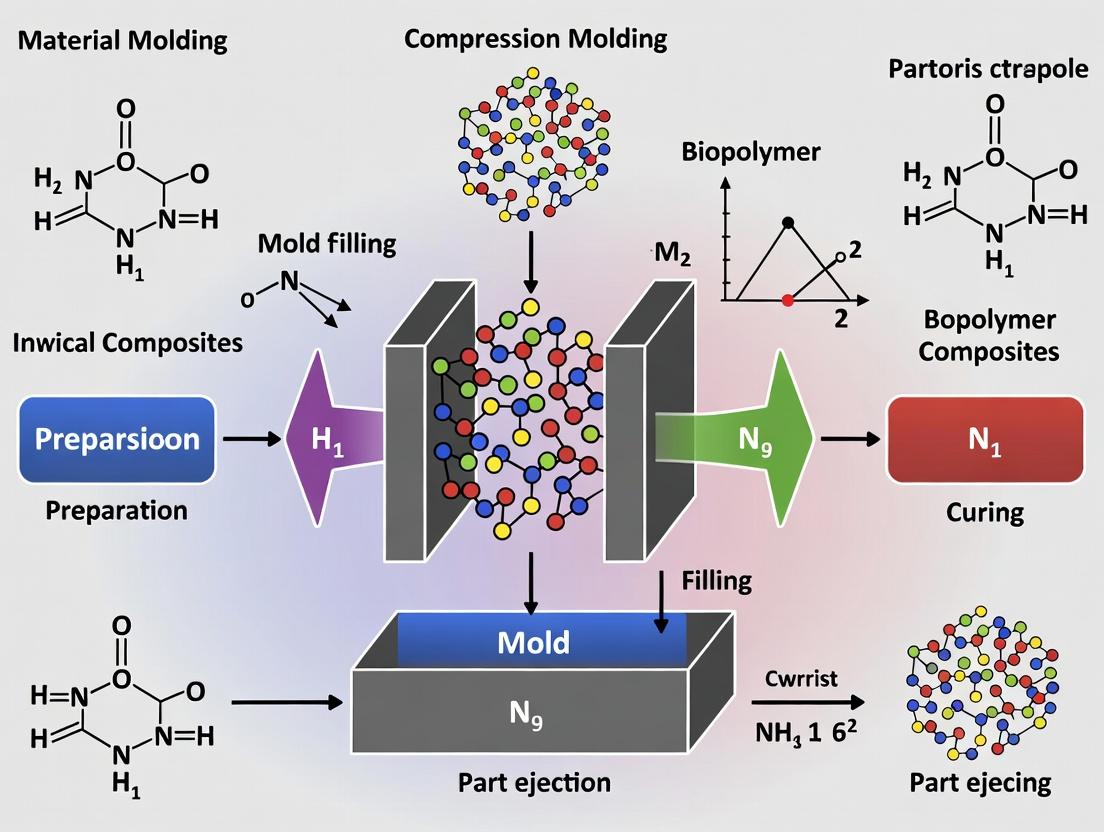
This comprehensive article explores compression molding as a critical manufacturing technique for biopolymer composites, specifically tailored for biomedical and pharmaceutical applications.
Compression Molding of Biopolymer Composites: A Complete Guide for Biomedical Researchers and Drug Development
Abstract
This comprehensive article explores compression molding as a critical manufacturing technique for biopolymer composites, specifically tailored for biomedical and pharmaceutical applications. It provides a foundational understanding of material selection (PLA, PHA, starch, chitosan blends) and composite design principles. The guide details a step-by-step methodological protocol for processing these often heat-sensitive materials, addresses common troubleshooting and optimization challenges like degradation and poor interfacial adhesion, and validates the technique through comparative analysis with alternative methods like injection molding and 3D printing. It concludes by synthesizing the role of compression molding in fabricating reliable, scalable implants and drug delivery devices, outlining future research directions for clinical translation.
The Science of Biopolymer Composites: Materials, Matrices, and Reinforcement Fundamentals
Within the scope of thesis research on compression molding of biopolymer composites, selecting the appropriate base materials is critical. This note defines key biopolymers and their composites for biomedical applications, presenting quantitative data and protocols for their processing and evaluation.
Table 1: Key Properties of Selected Biopolymers
| Biopolymer | Source | Degradation Time (Approx.) | Tensile Strength (MPa) | Young's Modulus (GPa) | Key Biomedical Applications |
|---|---|---|---|---|---|
| PLA (Poly(lactic acid)) | Corn starch, sugarcane | 12-24 months | 50-70 | 3.0-4.0 | Sutures, bone screws, drug delivery matrices, tissue engineering scaffolds. |
| PHA (Polyhydroxyalkanoates) | Bacterial fermentation | 3-24 months (type-dependent) | 20-40 (for PHB) | 3.5-4.0 (for PHB) | Resorbable meshes, cardiovascular patches, controlled drug release. |
| Starch | Corn, potato, wheat | Variable (hydrolytic) | 5-10 (neat thermoplastic) | 0.1-0.5 | Hydrogels, wound dressings, bone cements (as composite filler). |
| Chitosan | Crustacean shells, fungi | Controllable via deacetylation | 60-110 (fiber form) | 2.0-7.0 | Hemostatic agents, antimicrobial wound dressings, tissue scaffolds. |
Table 2: Common Composite Formulations & Enhanced Properties
| Base Polymer | Typical Fillers/Additives | Function of Additive | Resultant Composite Property Improvement |
|---|---|---|---|
| PLA | Hydroxyapatite (HA), Tricalcium Phosphate (TCP) | Bioactivity, osteoconduction | Increased bone bonding; modulus from ~3.5 to ~6-8 GPa. |
| PHA (e.g., P3HB) | Clay nanoparticles (e.g., Montmorillonite) | Reinforcement, barrier properties | Enhanced tensile strength (up to 30%), reduced gas permeability. |
| Thermoplastic Starch | Chitosan fibers, Glycerol (plasticizer) | Reinforcement, antimicrobial activity | Reduced hydrophilicity, improved mechanical strength, antimicrobial action. |
| Chitosan | Bioactive glass, Silver nanoparticles | Bioactivity, antimicrobial activity | Enhanced osteogenesis and strong, broad-spectrum antimicrobial efficacy. |
Protocol 1: Compression Molding of PLA/Hydroxyapatite Composite for Bone Pin Fabrication
Objective: Fabricate a biocomposite test specimen (e.g., ASTM D638 Type V) for mechanical and in vitro degradation testing.
Materials & Equipment:
- PLA pellets (medical grade, e.g., Purac L series).
- Nano-hydroxyapatite (nHA) powder (particle size <200 nm).
- Twin-screw extruder or high-shear mixer for pre-blending.
- Hydraulic compression molding press with heated platens.
- ASTM-standard mold (e.g., dog-bone or disc).
- Vacuum oven.
- Desiccator.
Procedure:
- Pre-drying: Dry PLA pellets and nHA powder at 80°C under vacuum for 12 hours to remove moisture.
- Dry Blending: Mechanically mix PLA and nHA (typical ratio: 70/30 wt%) in a sealed container until visually homogeneous.
- Melt Blending (Alternative): For better dispersion, use a twin-screw micro-compounder (Temp: 175-185°C, Speed: 60 rpm, Residence time: 3 min).
- Compression Molding Setup: Preheat the press platens to 180°C. Place the blend into the pre-heated mold cavity.
- Molding Cycle:
- Pre-melt: Apply minimal contact pressure (<1 MPa) for 3 minutes to allow uniform heating.
- Full Pressure: Increase pressure to 10-15 MPa for 5 minutes.
- Cooling: Maintain pressure while cooling the platens to 40°C using the press's cooling system (approx. 15-20 min).
- Demolding & Conditioning: Carefully remove the specimen. Condition at 23°C and 50% relative humidity in a desiccator for 48 hours before testing.
Protocol 2:In VitroDegradation Study of Compression-Molded Samples
Objective: Assess mass loss and pH change of composite samples in simulated physiological fluid.
Materials & Equipment:
- Phosphate Buffered Saline (PBS, pH 7.4) or Simulated Body Fluid (SBF).
- Incubator/shaker maintained at 37°C.
- Analytical balance (accuracy 0.1 mg).
- pH meter.
- Vacuum oven.
Procedure:
- Baseline Measurement: Weigh each dried sample (W₀) and record initial dimensions.
- Immersion: Place each sample in a sealed vial containing 20 mL of sterile PBS. Incubate at 37°C with gentle agitation (60 rpm).
- Monitoring: At predetermined time points (e.g., 1, 4, 8, 12 weeks):
- Remove samples, rinse with deionized water, and dry to constant weight in a vacuum oven (Wₜ).
- Measure the pH of the immersion medium.
- Replace with fresh PBS to maintain sink conditions.
- Analysis:
- Calculate mass loss:
Mass Loss (%) = [(W₀ - Wₜ) / W₀] * 100. - Plot mass loss and pH change versus time.
- Calculate mass loss:
Visualizations
Compression Molding Process Workflow
Composite Degradation Pathways In Vitro
The Scientist's Toolkit: Research Reagent Solutions
Table 3: Essential Materials for Biopolymer Composite Research
| Item | Function & Relevance to Research |
|---|---|
| Medical-Grade PLA (Purasorb PL, Ingeo) | High-purity, reproducible base polymer for implantable devices; consistent degradation profile. |
| Nano-Hydroxyapatite (nHA) Powder | Bioactive ceramic filler mimicking bone mineral; enhances osteointegration and composite modulus. |
| Medium Molecular Weight Chitosan (≥75% DDA) | Versatile biopolymer for blends/composites; provides antimicrobial and hemostatic properties. |
| Glycerol (ACS Reagent Grade) | Common plasticizer for thermoplastic starch; reduces brittleness and processing temperature. |
| Phosphate Buffered Saline (PBS), pH 7.4 | Standard medium for in vitro degradation and biocompatibility studies (ISO 10993). |
| Simulated Body Fluid (SBF) | Ion concentration similar to human blood plasma; for assessing bioactivity (e.g., apatite formation). |
| MTT Assay Kit (ISO 10993-5) | Colorimetric assay for measuring cellular metabolic activity; standard for in vitro cytotoxicity. |
| Silane Coupling Agent (e.g., (3-Aminopropyl)triethoxysilane) | Surface treatment for inorganic fillers (HA, glass) to improve interfacial adhesion with polymer matrix. |
Application Notes
Within the thesis on Compression Molding of Biopolymer Composites, this document details the application of natural reinforcements to enhance the functional properties of matrices like poly(lactic acid) (PLA), polyhydroxyalkanoates (PHAs), and starch-based polymers. The integration of these bio-sourced fillers aims to improve mechanical performance, introduce bioactive functionality, and tailor composite properties for advanced applications, including biomedical devices and controlled-release matrices.
1. Cellulose Nanofibers (CNFs): CNFs provide exceptional mechanical reinforcement due to their high tensile strength (~1-3 GPa) and modulus (100-140 GPa). Their high aspect ratio and surface area facilitate strong interfacial adhesion with biopolymer matrices via hydrogen bonding. In compression molding, CNFs significantly increase the tensile strength and modulus of the composite while maintaining optical transparency at low loadings. Surface modification (e.g., acetylation, silanization) is often employed to improve dispersion in hydrophobic matrices.
2. Chitin Nanofibrils/Chitosan: Chitin, particularly in nanoform, offers reinforcement coupled with intrinsic antibacterial and wound-healing properties. Its cationic nature when derivatized to chitosan allows for ionic interactions with anionic bioactive molecules (e.g., growth factors, certain drugs). Composites reinforced with chitin demonstrate improved barrier properties against oxygen and microbes, making them suitable for active food packaging and wound dressing scaffolds.
3. Bioactive Fillers (e.g., Hydroxyapatite, Bioactive Glass): These ceramic fillers are incorporated to provide osteoconductivity and bioactivity. In compression-molded composites for bone tissue engineering, they facilitate the formation of a hydroxyapatite layer in vivo and enhance compressive modulus. Their combination with fibrous reinforcements like CNFs creates synergistic effects, improving both toughness and bioactivity.
Table 1: Comparative Properties of Natural Reinforcements in Biopolymer Composites
| Reinforcement Type | Typical Source | Key Properties | Common Matrix | Typical Loading (wt.%) | Primary Effect on Composite |
|---|---|---|---|---|---|
| Cellulose Nanofibers (CNF) | Wood, Agricultural Waste | High Stiffness, High Surface Area, Hydrophilic | PLA, PHA, Starch | 1-10 | ↑ Tensile Strength (30-100%), ↑ Modulus, ↑ Barrier |
| Chitin Nanofibrils | Crustacean Shells | Antibacterial, Biocompatible, Cationic | Chitosan, PLA, PVA | 1-5 | ↑ Tensile Strength, ↑ Antimicrobial Activity, ↑ Cell Adhesion |
| Nano-Hydroxyapatite (nHA) | Synthetic, Biological | Osteoconductive, Bioactive, High Compressive Strength | PLA, PCL, Chitosan | 10-30 | ↑ Compressive Modulus (200-500%), ↑ Bioactivity, ↓ Ductility |
| Bioactive Glass (BAG) | Synthetic (SiO₂-CaO-P₂O₅) | Highly Bioactive, Antibacterial, Ion Releasing | PLA, PCL | 5-20 | ↑ Bioactivity Rate, ↑ Surface Reactivity, ↑ Antibacterial Effect |
Experimental Protocols
Protocol 1: Compression Molding of CNF/PLA Nanocomposite Sheets Objective: To produce homogeneous PLA sheets reinforced with cellulose nanofibers for mechanical testing. Materials: PLA resin (dried, 3 mm pellets), TEMPO-oxidized CNF suspension (1 wt.%), vacuum oven, twin-screw compounder, laboratory-scale compression molding press with heated platens, Teflon sheets, mold frame.
- CNF Masterbatch Preparation: Dry-blend dried PLA pellets with freeze-dried CNF powder to a target final composite concentration of 5 wt.% CNF. Alternatively, solvent-blend PLA with CNF suspension and dry.
- Melt Compounding: Feed the blend into a twin-screw extruder (temp. profile: 165-185°C). Pelletize the extrudate.
- Preform Preparation: Dry all pellets at 80°C for 12 hours. Weigh pellets to achieve desired sheet thickness (e.g., 1 mm).
- Compression Molding: Preheat press platens to 185°C. Place pellets between Teflon sheets in a mold frame. Pre-heat for 5 min without pressure. Apply 5 MPa pressure for 2 min. Increase pressure to 10 MPa for 3 min.
- Cooling: Transfer the mold to a cooling station and apply 10 MPa pressure until platens cool below 50°C.
- Demolding: Remove the composite sheet and store in a desiccator.
Protocol 2: Incorporation of Bioactive Fillers for Osteoconductive Composites Objective: To fabricate a PLA/nHA/CNF ternary composite with enhanced stiffness and bioactivity. Materials: PLA pellets, nano-hydroxyapatite (nHA, <100 nm), CNF powder, compatibilizer (e.g., PEG), acetic acid.
- Surface Modification of nHA (Optional): Disperse nHA in a 2% acetic acid solution containing 1% PEG. Stir for 2h, filter, and dry to improve dispersion in PLA.
- Dry Mixing: Manually pre-mix dried PLA pellets with nHA (20 wt.%) and CNF (3 wt.%).
- Melt Compounding: Compound the mixture via twin-screw extrusion (temp. profile: 170-190°C). Pelletize.
- Compression Molding: Follow Protocol 1, using a mold designed for standard ASTM tensile/compressive test specimens (e.g., dog-bone, cylindrical).
- Bioactivity Assessment (SBF Test): Immerse molded samples in Simulated Body Fluid (SBF) at 37°C for 7, 14, and 21 days. Analyze surface via SEM/EDS for hydroxyapatite crystal formation.
Protocol 3: Assessing Antimicrobial Activity of Chitin/PLA Composites Objective: To evaluate the antimicrobial efficacy of compression-molded chitin-reinforced PLA films. Materials: PLA, chitin nanofibrils (ChtNF), Staphylococcus aureus (ATCC 6538), Escherichia coli (ATCC 8739), nutrient agar, phosphate-buffered saline (PBS).
- Composite Fabrication: Compound PLA with 3 wt.% ChtNF via extrusion (175-185°C). Compression mold into ~100 µm thick films (Protocol 1).
- Sample Preparation: Cut films into 1 cm x 1 cm squares. Sterilize under UV light for 30 min per side.
- Microbial Inoculation: Prepare bacterial suspensions in PBS at ~10⁶ CFU/mL. Place sterile film samples in wells of a 24-well plate. Add 1 mL of bacterial suspension to each well. Incubate at 37°C for 24h.
- Analysis: Perform serial dilutions of the supernatant and plate on nutrient agar. Count colonies after 24h incubation. Calculate reduction in CFU/mL compared to neat PLA control.
Visualizations
Diagram 1: Workflow for Bioactive Composite Development
Diagram 2: Bioactivity Signaling Pathway for HA-Based Composites
The Scientist's Toolkit
Table 2: Essential Research Reagent Solutions & Materials
| Item | Function/Description | Typical Specification/Note |
|---|---|---|
| Poly(lactic acid) (PLA) | Primary biodegradable matrix polymer. | Injection/compression molding grade, dried before use (≤ 0.025% moisture). |
| TEMPO-Oxidized CNF | High-strength natural reinforcement. | 1-2 wt.% aqueous suspension, ~5 nm width, several µm length. |
| Chitin Nanofibrils (ChtNF) | Antimicrobial natural reinforcement. | Suspension in water or acetic acid, width 10-50 nm. |
| Nano-Hydroxyapatite (nHA) | Osteoconductive bioactive filler. | Particle size < 200 nm, Ca/P ratio ~1.67. |
| Bioactive Glass (45S5) | Highly reactive bioactive filler. | Particulate, particle size < 45 µm. |
| Simulated Body Fluid (SBF) | In vitro test for bioactivity. | Ion concentration nearly equal to human blood plasma, pH 7.4. |
| Polyethylene Glycol (PEG) | Compatibilizer/Plasticizer. | Improves filler dispersion and matrix processability. |
| Silane Coupling Agent | Surface modifier for fillers. | (e.g., (3-Aminopropyl)triethoxysilane) to enhance polymer-filler adhesion. |
Application Notes
Within the broader thesis on compression molding of biopolymer composites, optimizing the molding window is paramount. This requires a fundamental understanding of three interdependent material properties: Thermal Stability, Melt Viscosity, and Degradation Kinetics. For drug development (e.g., implantable matrices) and material science research, these properties dictate composite processability, structural integrity, and functional performance (e.g., drug release profile).
- Thermal Stability: Defines the upper-temperature limit before irreversible chemical decomposition. For biopolymers like PLA, PHA, or starch blends, this limit is often narrow and close to the melting/softening point. Exceeding it during molding leads to chain scission, loss of mechanical properties, and potential generation of toxic by-products.
- Melt Viscosity: Determines the flow behavior and pressure required to fill a mold. It is highly dependent on temperature, shear rate, and molecular weight. Understanding viscosity is critical for achieving complete mold filling, proper fiber impregnation in composites, and controlling the final part density.
- Degradation Kinetics: Quantifies the rate of molecular weight decrease (often via hydrolysis or thermal cleavage) as a function of temperature and time. Kinetic models (e.g., Arrhenius) allow researchers to predict molecular weight loss during the molding cycle, which is directly linked to the performance of the final composite.
The interrelationship is critical: heating reduces viscosity but accelerates degradation, which in turn alters viscosity and compromises thermal stability. The optimal processing window is the temperature-time region where viscosity is sufficiently low for molding but degradation remains within acceptable limits.
Table 1: Key Thermal & Rheological Properties of Common Biopolymers for Compression Molding
| Biopolymer | Glass Transition Temp. (Tg) [°C] | Melting Temp. (Tm) [°C] | Onset of Degradation (Td, onset) [°C] | Typical Zero-Shear Viscosity at 180°C [Pa·s] (Mw ~100 kDa) | Primary Degradation Mechanism |
|---|---|---|---|---|---|
| Poly(L-lactic acid) (PLLA) | 55 - 65 | 170 - 180 | ~220 - 250 | 2,000 - 5,000 | Hydrolytic/Thermal Cleavage |
| Poly(hydroxybutyrate) (PHB) | 0 - 5 | 170 - 180 | ~220 - 240 | 1,500 - 4,000 | Thermal Elimination (β-scission) |
| Thermoplastic Starch (TPS) | -50 - 0 (dep. plast.) | N/A (no true Tm) | ~220 - 250 | Highly variable, shear-thinning | Dehydration, Chain Scission |
| Poly(ε-caprolactone) (PCL) | -60 | 58 - 64 | ~350 | 200 - 500 (at 80°C) | Oxidative/Thermal |
Table 2: Degradation Kinetic Parameters for PLLA (Exemplary Data)
| Method | Activation Energy (Ea) [kJ/mol] | Pre-exponential Factor (ln A) [1/min] | Kinetic Model | Reference Temperature Range |
|---|---|---|---|---|
| Thermogravimetric Analysis (TGA) | 120 - 145 | 20 - 28 | Friedman | 250 - 400°C |
| Isothermal Viscosity Drop | 80 - 100 | 15 - 20 | Zero-Order / Chain Scission | 180 - 220°C |
Experimental Protocols
Protocol 1: Determining Thermal Stability & Degradation Kinetics via TGA Objective: To determine the onset temperature of decomposition (Td, onset) and calculate degradation kinetic parameters.
- Sample Prep: Dry 5-10 mg of biopolymer composite powder/pellets in a vacuum oven overnight.
- Instrumentation: Load sample into a platinum TGA pan. Use nitrogen (inert) and air (oxidative) atmospheres (50 mL/min flow).
- Temperature Program:
- For Td, onset: Heat from 30°C to 600°C at 10°C/min. Record weight loss. Td, onset is taken at the intersection of the baseline and the tangent to the weight loss curve.
- For Isothermal Kinetics: Rapidly heat to a target isothermal temperature (e.g., 180, 190, 200°C) and hold for 60-120 mins, monitoring weight loss.
- For Dynamic Kinetics: Run multiple dynamic scans at different heating rates (e.g., 5, 10, 15, 20°C/min).
- Kinetic Analysis: Use the Flynn-Wall-Ozawa or Friedman method on dynamic data to calculate apparent activation energy (Ea) without assuming a reaction model.
Protocol 2: Measuring Melt Viscosity via Parallel-Plate Rheometry Objective: To characterize the shear-rate and temperature-dependent viscosity of the biopolymer melt.
- Sample Prep: Compression mold a disk (e.g., 25mm diameter, 1mm thick) at the lowest possible temperature to create a pre-form.
- Instrumentation: Load pre-form between parallel plates of a rotational rheometer. Set gap to 1.0 mm. Trim excess material.
- Temperature Equilibration: Heat to the test temperature (e.g., 180°C) under nitrogen purge. Allow 5 minutes for temperature and stress equilibration.
- Flow Sweep Test: Conduct a steady-state flow sweep, measuring viscosity (η) over a shear rate (γ̇) range from 0.01 to 100 s⁻¹. Use a logarithmic progression.
- Temperature Ramp Test: At a constant shear rate (0.1 or 1 s⁻¹), perform a temperature ramp from 160°C to 220°C at 2°C/min to simulate processing conditions.
- Data Modeling: Fit viscosity data to the Carreau-Yasuda or Power Law model: η = η₀ / [1 + (λγ̇)^a]^((n-1)/a).
Protocol 3: Simulating Molding Degradation via Isothermal Torque Rheometry Objective: To simulate the shear and thermal history of compounding/molding and track molecular degradation via melt torque.
- Instrumentation: Pre-heat an internal mixer (e.g., 50 cc chamber) to the target molding temperature (e.g., 185°C).
- Loading: Quickly add a specified volume (e.g., 70% fill factor) of biopolymer composite pellets.
- Test Conditions: Set rotor speed to a fixed rate (e.g., 50 rpm) representative of low-shear mixing.
- Data Acquisition: Record torque and temperature for 10-15 minutes. Torque is proportional to melt viscosity.
- Analysis: Plot normalized torque vs. time. The time at which torque drops to 90% of its peak stable value can be used as a practical indicator of the onset of severe chain scission under shear.
Diagrams
Diagram Title: Interplay of Key Properties Defining Molding Window
Diagram Title: Experimental Protocol for Molding Parameter Definition
The Scientist's Toolkit: Research Reagent Solutions
Table 3: Essential Materials & Reagents for Characterization
| Item | Function/Benefit | Example (for Biopolymers) |
|---|---|---|
| High-Purity Nitrogen Gas | Provides inert atmosphere during TGA/rheometry to isolate thermal from oxidative degradation. | >99.999% purity, with oxygen trap. |
| Thermal Stabilizer/ Antioxidant | Extends processing window by scavenging free radicals, allowing higher temps without degradation. | Irgafos 168, Vitamin E (for PHB). |
| Plasticizer | Lowers Tg and melt viscosity, reducing required processing temperature and shear stress. | Glycerol (for starch), Polyethylene glycol (PEG) (for PLA). |
| Chain Extender | Counteracts degradation by re-linking cleaved chains, restoring melt viscosity and strength. | Joncryl ADR (epoxy-functionalized). |
| Calibration Standards | Ensures accuracy of thermal and rheological measurements. | Indium, Tin (for DSC), Silicone Oils (for Rheometer). |
| Desiccant | Prevents hydrolytic degradation during testing by keeping materials dry. | Molecular sieves (3Å) in drying oven/vacuum desiccator. |
Application Notes
Within a thesis on compression molding of biopolymer composites, the precise tailoring of material properties is paramount for translating laboratory research into viable medical devices or drug delivery systems. Compression molding offers a scalable, solvent-free method to fabricate robust composites. The interrelationship between mechanical strength, degradation rate, and drug loading is complex and must be engineered in unison based on the target application (e.g., load-bearing bone fixation vs. soft tissue drug-eluting implants).
Key Interdependencies:
- Mechanical Strength & Degradation: Increasing ceramic filler (e.g., hydroxyapatite) content enhances modulus and strength but can accelerate degradation via increased brittleness and microcracking. Conversely, higher crystalline poly(L-lactide) (PLLA) content increases strength and slows degradation.
- Degradation Rate & Drug Release: A bulk-eroding polymer (e.g., PLGA) matrix leads to a lag phase followed by burst release, while a surface-eroding polymer (e.g., poly(anhydride)) can provide near-zero-order release. Incorporation of hydrophilic additives (e.g., polyethylene glycol) accelerates both water ingress/drug diffusion and degradation.
- Drug Loading & Mechanical Properties: High loadings of small molecule drugs can plasticize the polymer, reducing tensile strength and glass transition temperature (Tg), while particulate drug carriers can act as reinforcing fillers up to a percolation threshold.
Table 1: Quantitative Design Guidelines for Compression-Molded Biopolymer Composites
| Target Function | Recommended Composite Formulation | Typical Data Range | Key Influencing Factors |
|---|---|---|---|
| High Mechanical Strength | PLLA (High Mw) + 30wt% micro-HA + 5wt% graphene oxide nanoplates | Tensile Strength: 50-70 MPaYoung's Modulus: 4-6 GPa | Polymer Mw & crystallinity, filler aspect ratio, interfacial adhesion, molding pressure/temperature. |
| Tunable Degradation Rate | PLGA (50:50) + 0-20wt% TCP (β-tricalcium phosphate) | Mass Loss (PBS, 37°C):50% in 4-6 weeks (0% TCP)50% in 2-4 weeks (20% TCP) | PLGA LA:GA ratio, porosity, hydrophilic filler content, implant geometry. |
| Sustained Drug Loading | PCL/Chitosan (70/30) blend + 10wt% model drug (e.g., Vancomycin) | Encapsulation Efficiency: >85%Release Duration: 14-28 days | Drug-polymer compatibility, drug particle size, use of barrier layers in multi-layer compression molding. |
Experimental Protocols
Protocol 2.1: Compression Molding of a Reinforced, Drug-Loaded Composite Disk This protocol details the fabrication of a PLGA/Hydroxyapatite (HA)/Doxycycline composite for bone repair.
Research Reagent Solutions & Materials:
| Item | Function |
|---|---|
| PLGA (75:25, IV 0.8 dL/g) | Biodegradable matrix providing structural integrity and controlled release. |
| Nano-Hydroxyapatite (nHA) | Bioactive ceramic filler to enhance osteoconductivity and compressive modulus. |
| Doxycycline Hyclate | Broad-spectrum antibiotic model drug for local delivery. |
| Dichloromethane (DCM) | Solvent for creating a homogeneous pre-mix via solvent casting. |
| Carver Laboratory Press | Heated hydraulic press for melting and consolidating the composite. |
| Polished Steel Molds (10mm dia.) | To form standardized disks for testing. |
| Phosphate Buffered Saline (PBS), pH 7.4 | Degradation and drug release medium simulating physiological conditions. |
Procedure:
- Pre-Mix Preparation: Dissolve 1.0g PLGA in 20mL DCM. Suspend 0.3g nHA and 0.1g doxycycline in the solution. Sonicate for 15 minutes. Cast the suspension into a glass Petri dish and evaporate solvent overnight to form a composite film.
- Granulation: Cryo-grind the film into a coarse powder (<500 µm) using a mortar and pestle under liquid N2.
- Compression Molding: Load powder into a mold pre-heated to 75°C (above PLGA Tg). Apply 5 MPa pressure for 1 minute to allow melting. Increase pressure to 15 MPa, hold for 5 minutes.
- Cooling & Demolding: Cool the mold under pressure to 25°C at ~20°C/min using circulating water. Demold the finished disk.
- Post-Processing: Anneal disks at 45°C for 12h under vacuum to relieve internal stresses and stabilize crystallinity.
Protocol 2.2: In Vitro Degradation and Drug Release Study This protocol assesses mass loss, mechanical decay, and drug release kinetics.
Procedure:
- Sample Preparation: Weigh (W₀) and measure initial diameter/thickness of molded disks (n=5 per time point). Measure initial dry tensile strength (TS₀) using a subset (n=5) on a microtester.
- Immersion: Immerse each disk in 5.0 mL PBS (with 0.02% sodium azide) in sealed vials. Incubate at 37°C under gentle orbital shaking (60 rpm).
- Sampling: At predetermined intervals (e.g., 1, 3, 7, 14, 28 days), remove vials (n=5 per interval).
- Analysis:
- Drug Release: Analyze the PBS medium via UV-Vis spectroscopy (λ=274 nm for doxycycline) against a standard curve. Replace with fresh PBS after sampling.
- Mass Loss: Retrieve disks, rinse with DI water, lyophilize for 48h, and weigh (Wₐ). Calculate mass loss % = [(W₀ - Wₐ)/W₀] x 100.
- Mechanical Property Decay: Perform tensile testing on the dried, degraded disks to determine remaining strength (TSₐ).
Protocol 2.3: Quasi-Static Mechanical Testing of Composite Disks Protocol for determining tensile properties per ASTM D638 (Type V specimen adaptation).
Procedure:
- Specimen Preparation: Compression mold composite into sheets (1mm thick). Die-cut into dog-bone shaped specimens (gage length ~7mm, width ~2mm).
- Conditioning: Condition specimens at 25°C and 50% RH for 48h.
- Tensile Testing: Mount specimen in universal testing machine. Apply a monotonic tensile load at a crosshead speed of 1 mm/min until failure.
- Data Analysis: Record force-displacement data. Calculate Tensile Strength (max stress), Young's Modulus (slope of linear elastic region), and Elongation at Break.
Visualizations
Diagram 1: Composite Design Logic Flow
Diagram 2: Drug Release Pathways from Composite
Diagram 3: Compression Molding Experimental Workflow
Step-by-Step Protocol: Compression Molding Biocomposites for Implants and Drug Delivery Systems
Within the context of a broader thesis on compression molding of biopolymer composites for biomedical applications (e.g., drug delivery devices, implantable matrices), rigorous pre-processing is paramount. The consistency, homogeneity, and final performance of the molded composite are directly contingent upon the protocols detailed herein. These application notes provide standardized methodologies for drying, mixing, and preform preparation tailored to hygroscopic biopolymers like poly(lactic acid) (PLA), polycaprolactone (PCL), and starch-based matrices, often compounded with active pharmaceutical ingredients (APIs) or functional fillers.
Drying Protocols
Hygroscopic biopolymers absorb significant moisture from the atmosphere, which can lead to hydrolytic degradation during high-temperature processing, resulting in molecular weight reduction, void formation, and compromised mechanical/drug release properties.
Protocol 2.1: Vacuum Oven Drying for Biopolymer Pellets/Powders
- Objective: To reduce moisture content to < 0.02% (w/w) prior to processing.
- Materials: Biopolymer resin (e.g., PLA), vacuum oven (< 100 mBar), desiccant (silica gel or molecular sieves), aluminum foil pans, moisture analyzer.
- Procedure:
- Spread the polymer in a thin layer (< 1 cm depth) in an aluminum pan.
- Place the sample in a vacuum oven. Ensure the desiccant is fresh and active.
- Set the oven temperature below the polymer's glass transition temperature (Tg) to prevent agglomeration. For PLA (Tg ~60°C), use 50 ± 2°C.
- Apply vacuum to ≤ 50 mBar.
- Dry for a minimum of 12 hours. For highly hygroscopic materials, 24 hours may be required.
- Upon completion, transfer dried material directly to a desiccator or the mixing environment to prevent reabsorption.
- Validation: Moisture content should be verified using a calibrated moisture analyzer (e.g., Karl Fischer titration) on a representative sample.
Protocol 2.2: Dynamic Drying in a Desiccant Hopper-Dryer
- Objective: Continuous, in-line drying for feeding an extruder or direct molding.
- Materials: Desiccant hopper-dryer (e.g., with molecular sieve desiccant), dry compressed air or nitrogen supply, thermocouple.
- Procedure:
- Set the drying air temperature per polymer specifications (typically 50-80°C for PLA/PCL).
- Ensure the dew point of the circulating air is <-40°C.
- Set the material residence time in the hopper to 2-4 hours based on throughput rate.
- Monitor the hopper temperature at multiple levels to ensure consistent heating.
Table 1: Recommended Drying Parameters for Common Biopolymers
| Biopolymer | Recommended Drying Method | Temperature (°C) | Time (Hours) | Target Moisture (% w/w) |
|---|---|---|---|---|
| PLA | Vacuum Oven | 50 ± 2 | 12-24 | < 0.02 |
| PCL | Vacuum Oven | 40 ± 2 | 8-12 | < 0.03 |
| PHBV | Vacuum Oven | 60 ± 2 | 24 | < 0.02 |
| Starch-Based | Vacuum Oven | 50 ± 2 | 24-48 | < 1.0 (context-dependent) |
Powder Mixing and Homogenization
Achieving a uniform dispersion of API, plasticizer (e.g., citrate esters), or reinforcing filler (e.g., hydroxyapatite, cellulose nanocrystals) within the biopolymer matrix is critical for reproducible composite properties.
Protocol 3.1: Dry Powder Blending using Turbula or V-Blender
- Objective: To achieve a homogeneous premix of biopolymer powder and additive(s) before melt compounding or direct compression.
- Materials: Biopolymer powder (dried), additive powder (sieved), Turbula mixer or V-blender, analytical balance.
- Procedure:
- Weigh out components according to the desired formulation (e.g., 95% PLA, 5% gentamicin sulfate by weight).
- Pre-blend the minor component with an equal volume of the major component via geometric mixing using a spatula.
- Transfer the entire mixture to the blending container.
- Set the blender to a speed that induces a tumbling and diffusive motion (e.g., 49 rpm for a Turbula mixer).
- Blend for 30 minutes. For cohesive powders, intermittent stops for manual agitation may be necessary.
- Validate homogeneity by sampling from the top, middle, and bottom of the blend for compositional analysis (e.g., HPLC for API, TGA for filler).
Table 2: Common Mixing Parameters for Biopolymer-Composite Blends
| Mixer Type | Speed/Setting | Typical Time (min) | Suitable For |
|---|---|---|---|
| Turbula | 49 rpm | 20-60 | Fragile API blends, low-shear homogenization. |
| V-Blender | N/A (rotation) | 30-90 | Free-flowing powders, larger batch sizes (>100g). |
| Ball Mill | 200-300 rpm | 10-30 (pulverizing) | Hard filler deagglomeration & intensive mixing. |
Preform Preparation
Preforms are compacted powder mixtures of defined mass and geometry, facilitating consistent feeding into a compression mold, ensuring uniform density and minimizing air entrapment.
Protocol 4.1: Uniaxial Die Compaction of Preforms
- Objective: To produce consistent, disk-shaped preforms from a powder blend.
- Materials: Powder blend, hydraulic press, hardened steel die, upper/lower punches, balance, calipers.
- Procedure:
- Weigh the exact mass of powder required to achieve the target preform density (typically 60-80% of the polymer's solid density).
- Fill the die cavity evenly with the powder.
- Insert the punches into the die.
- Place the assembly in the hydraulic press.
- Apply a uniaxial pressure of 50-150 MPa for 30-60 seconds. Optimization Note: Pressure must be sufficient for cohesion but below the melting point of the polymer.
- Eject the preform carefully.
- Measure the diameter and thickness of each preform to ensure dimensional consistency (± 2% tolerance).
The Scientist's Toolkit: Research Reagent Solutions
Table 3: Essential Materials for Pre-processing Biopolymer Composites
| Item/Category | Example Product/Name | Function & Critical Note |
|---|---|---|
| Biopolymer Resin | Poly(L-lactic acid) (PLLA, MW 100-200 kDa) | Primary matrix. Must specify inherent viscosity, enantiomeric purity (D-content), and end-cap type. |
| Desiccant | 3Å Molecular Sieves, Indicating Silica Gel | Removes moisture from storage environments and drying apparatus. Regenerate per manufacturer specs. |
| Plasticizer | Triethyl Citrate (TEC), Poly(ethylene glycol) (PEG 400) | Reduces Tg and processing temperature, minimizing thermal degradation of API. Biocompatibility is key. |
| API/Filler | Gentamicin sulfate, Hydroxyapatite nanopowder (<100 nm) | Provides therapeutic or reinforcing function. Particle size distribution critically affects dispersion. |
| Anti-adherent | Magnesium Stearate, Talc (USP grade) | Prevents sticking to die walls during preform compaction. Use at low concentrations (<1% w/w). |
| Solvent (for QC) | Anhydrous Dichloromethane, Chloroform | For dissolving composites for GPC or HPLC analysis to assess degradation or API content. |
Visualized Workflows
Title: Biopolymer Drying Protocol Workflow
Title: Mixing and Preform Preparation Flow
Application Notes for Compression Molding of Biopolymer Composites
Within the research thesis on the compression molding of biopolymer composites, the precise control of Critical Process Parameters (CPPs) is paramount for determining the final material's microstructure, mechanical properties, and performance in applications such as medical devices or drug delivery systems. This document outlines the protocols and analytical frameworks for investigating these CPPs.
1. Temperature Profiles: The thermal history dictates polymer chain mobility, crystallization kinetics, and fiber-matrix adhesion in composites. An optimal profile ensures complete melting without thermal degradation of the biopolymer (e.g., PLA, PHA) or natural fibers. 2. Pressure Cycles: Applied pressure consolidates the composite, minimizes void content, and influences fiber orientation and wettability. The timing of pressure application relative to the melt state is critical. 3. Cooling Rates: This parameter is the primary determinant of the crystallinity and morphology of the semi-crystalline biopolymer matrix, directly affecting tensile strength, modulus, and degradation rates.
Experimental Protocols
Protocol 1: Determining Optimal Melt Temperature & Dwell Time
Objective: To identify the temperature range for complete polymer melting without initiating thermal degradation. Materials: Biopolymer pellets (e.g., Polylactic Acid - PLA), natural fiber mat (e.g., flax), antioxidant additive (if needed). Equipment: Laboratory-scale compression molding press with programmable platens, thermocouples, differential scanning calorimeter (DSC), thermogravimetric analyzer (TGA). Procedure:
- Dry PLA pellets and fibers at 80°C in a vacuum oven for 12 hours.
- Manually pre-mix fibers and polymer for a target composition (e.g., 30% wt. fiber).
- Load the mixture into the mold preheated to a set temperature (T1) between 160-200°C.
- Apply a minimal contact pressure (1 MPa) and hold for a dwell time (t1) of 3-10 minutes.
- Quickly cool the mold to 50°C under pressure.
- Repeat steps 3-5 for different T1 and t1 combinations (full factorial or DoE).
- Analyze samples via DSC to confirm melting completeness and via TGA to measure % weight loss indicative of degradation.
Protocol 2: Optimizing Pressure Cycle for Void Reduction
Objective: To establish a pressure cycle that minimizes void content and maximizes composite density. Materials: Pre-compounded biopolymer/fiber composite sheets. Equipment: Compression molding press with pressure transducer, density measurement kit (balance, Archimedes' principle), scanning electron microscope (SEM). Procedure:
- Place a pre-weighed composite sheet into the mold at the optimized melt temperature (from Protocol 1).
- Implement a two-stage pressure cycle:
- Stage 1: Apply a low pressure (P1 = 2-5 MPa) during the final minute of the melt dwell to allow gas escape.
- Stage 2: After dwell, ramp to a high consolidation pressure (P2 = 10-20 MPa) for 2 minutes.
- Cool under full pressure.
- Measure the density of the sample (ρ_sample) using Archimedes' principle.
- Calculate the theoretical density (ρ_theoretical) based on rule of mixtures.
- Calculate void content (%) = [(ρtheoretical - ρsample) / ρ_theoretical] * 100.
- Correlate void content with P1 and P2 levels. Validate with SEM micrography of fracture surfaces.
Protocol 3: Investigating Crystallinity via Controlled Cooling Rates
Objective: To correlate cooling rate with percent crystallinity and resulting mechanical properties. Materials: Neat biopolymer plaques. Equipment: Compression molder with programmable cooling, DSC, universal testing machine (UTM), polarized optical microscope (POM). Procedure:
- Melt and consolidate neat polymer plaques using optimized temperature and pressure parameters.
- Cool from the melt using programmed rates: Quench (≈50°C/min), Fast (10°C/min), Slow (1°C/min), and Annealed (cool to crystallization temperature and hold).
- For each sample:
- Determine percent crystallinity (Xc) via DSC: Xc = (ΔHm / ΔHm°) * 100%, where ΔHm° is the theoretical melt enthalpy for 100% crystalline polymer.
- Perform tensile testing (ASTM D638) to obtain Young's modulus and tensile strength.
- Observe spherulitic morphology using POM.
Data Tables
Table 1: Effect of Melt Temperature on PLA-30% Flax Composite Properties
| Melt Temp (°C) | Dwell Time (min) | DSC Melting Peak (°C) | TGA Onset Degradation (°C) | Composite Flexural Strength (MPa) |
|---|---|---|---|---|
| 165 | 5 | 168.2 | 275.1 | 85.4 |
| 175 | 5 | 170.5 | 273.8 | 92.7 |
| 185 | 5 | 171.1 | 269.5 | 88.3 |
| 175 | 3 | 169.8 | 274.2 | 89.1 |
| 175 | 7 | 170.9 | 272.9 | 93.5 |
Table 2: Void Content and Density at Different Pressure Cycles
| Pressure Cycle (P1/P2 in MPa) | Measured Density (g/cm³) | Theoretical Density (g/cm³) | Void Content (%) | SEM Void Rating (1-5 Low-High) |
|---|---|---|---|---|
| 2 / 10 | 1.24 | 1.28 | 3.13 | 3 |
| 2 / 15 | 1.26 | 1.28 | 1.56 | 2 |
| 5 / 10 | 1.25 | 1.28 | 2.34 | 2 |
| 5 / 15 | 1.27 | 1.28 | 0.78 | 1 |
Table 3: Influence of Cooling Rate on PLA Crystallinity & Mechanics
| Cooling Regime | Avg. Cooling Rate (°C/min) | Crystallinity, Xc (%) | Tensile Modulus (GPa) | Tensile Strength (MPa) |
|---|---|---|---|---|
| Quenched | >50 | 8.2 | 3.1 | 55 |
| Fast (10°C/min) | 10 | 24.5 | 3.5 | 62 |
| Slow (1°C/min) | 1 | 45.7 | 4.0 | 70 |
| Annealed (110°C) | N/A | 52.3 | 4.2 | 68 |
Diagrams
Title: CPP Impact on Composite Properties
Title: Cooling Rate Experimental Workflow
The Scientist's Toolkit: Research Reagent Solutions
| Item | Function & Rationale |
|---|---|
| Polylactic Acid (PLA) Pellets | A standard, commercially available biopolymer matrix. Provides a baseline for process optimization due to its well-characterized thermal and mechanical behavior. |
| Polyhydroxyalkanoate (PHA) Pellets | An alternative microbial biopolymer with different melt viscosity and crystallization kinetics, useful for comparative studies on CPP sensitivity. |
| Surface-Treated Natural Fibers (e.g., Silanized Flax) | Fibers modified with coupling agents (e.g., aminosilane) to study the CPP impact on interfacial adhesion and stress transfer in the composite. |
| Thermal Stabilizer/Antioxidant (e.g., Irganox 1010) | Added in small quantities (0.1-0.5 wt.%) to extend the processing window at higher melt temperatures by inhibiting oxidative degradation. |
| Pure Indium & Zinc Calibration Standards | For calibration of Differential Scanning Calorimetry (DSC) enthalpy and temperature readings, ensuring accurate crystallinity calculations. |
| Density Gradient Column Kit | An alternative to Archimedes' principle for highly accurate measurement of composite density and void content using calibrated organic liquid columns. |
| Hot-Compression Mold Release Agent (e.g., PTFE Spray) | Applied to mold surfaces to ensure consistent sample ejection and prevent adhesion-induced stress during demolding, especially for slow-cooled samples. |
Mold Design Considerations for Complex Biomedical Geometries (e.g., Bone Plates, Microneedle Arrays)
Within the broader research on Compression molding of biopolymer composites, the successful replication of complex biomedical geometries presents a significant challenge. The mold design phase is critical, as it directly dictates the fidelity, mechanical properties, and ultimate functionality of medical devices such as resorbable bone plates and transdermal microneedle arrays. This document outlines key considerations, protocols, and material solutions for researchers and development professionals engaged in this advanced manufacturing field.
Key Mold Design Considerations and Quantitative Data
Table 1: Primary Mold Design Challenges & Mitigation Strategies for Complex Geometries
| Design Challenge | Impact on Biopolymer Part | Recommended Mitigation Strategy | Critical Mold Design Parameter |
|---|---|---|---|
| High Aspect Ratio Features (e.g., microneedles) | Incomplete filling, tip breaking, residual stress. | Use of venting channels, vacuum-assisted molding, optimized gate design. | Draft angle ≥ 1° per side; Vent depth: 5-15 µm. |
| Undercuts & Complex Contours (e.g., bone plate screw holes) | Part damage during demolding, increased ejection force. | Design of collapsible cores or side-action mold components. | Side-action actuator force > calculated friction force (typically >120% safety factor). |
| Micro-scale Surface Textures (for cell adhesion) | Loss of detail, sticking in mold. | Precision machining (e.g., micro-milling, EDM), use of non-adhesive coatings. | Surface roughness (Ra) of mold < 10% of target feature size. |
| Thermal Management | Non-uniform crystallization, warpage, degraded polymer. | Conformal cooling channels near critical features. | Cooling channel diameter: 8-12 mm; Distance to cavity: 1.5-2 x diameter. |
| Material Shrinkage (e.g., PLA, PCL composites) | Dimensional inaccuracy, sink marks. | Accurate shrinkage factor application in cavity scaling. | Cavity scale = 1 / (1 - Shrinkage Factor). For PLA composites: 1.5-3.0%. |
Table 2: Biopolymer Composite Processing Windows for Compression Molding
| Biopolymer Composite | Recommended Mold Temperature (°C) | Recommended Pressure (MPa) | Dwell Time (min/mm thickness) | Typical Shrinkage Factor (%) |
|---|---|---|---|---|
| PLA + β-TCP (30 wt%) | 75 - 85 | 10 - 15 | 1.0 - 1.5 | 2.2 - 2.8 |
| PCL + Hydroxyapatite (20 wt%) | 60 - 70 | 5 - 10 | 1.5 - 2.0 | 1.8 - 2.2 |
| PHBV + Magnesium Particles (15 wt%) | 110 - 120 | 12 - 18 | 1.2 - 1.8 | 2.5 - 3.0 |
| PLGA 85:15 + Drug Particulate | 55 - 65 | 8 - 12 | 0.8 - 1.2 | 0.5 - 1.0 |
Experimental Protocols
Protocol 1: Fabrication of a Compression Mold for a Microneedle Array Master
Objective: To create a negative metal mold master for a 10x10 microneedle array (500 µm height, 200 µm base width). Materials: See "The Scientist's Toolkit" (Section 5). Procedure:
- Design & Simulation: Using CAD software (e.g., SolidWorks), design the needle array with a 2° draft angle. Perform finite element analysis (FEA) of filling and stress during demolding.
- Mold Blank Preparation: Machine a mold blank from tool steel (e.g., P20) to final block dimensions, leaving 500 µm stock for the needle cavities.
- Micro-machining: Employ a precision CNC micro-milling machine with a 100 µm diameter end mill. Use a stepped machining strategy:
- Roughing pass at 50,000 RPM, 100 mm/min feed rate.
- Finishing pass at 80,000 RPM, 50 mm/min feed rate.
- Coolant: Mist of isopropyl alcohol.
- Surface Finishing: Polish the cavity surfaces using a series of diamond abrasive pasts (30 µm down to 1 µm) on a custom-shaped wooden tool.
- Coating Application: Apply a permanent, non-stick Diamond-Like Carbon (DLC) coating via Physical Vapor Deposition (PVD). Process parameters: 200°C substrate temperature, 45 min deposition time.
- Validation: Characterize the mold cavity dimensions using laser scanning confocal microscopy. Compare to CAD model.
Protocol 2: Compression Molding of a Resorbable Bone Plate Prototype
Objective: To mold a poly(L-lactide-co-glycolide) (PLGA) / hydroxyapatite (HA) composite bone plate prototype. Materials: Pre-dried PLGA 82:18 pellets, nano-hydroxyapatite powder (50 nm avg.), aluminum mold with conformal cooling. Procedure:
- Material Preparation: Dry PLGA pellets at 60°C under vacuum for 12 hours. Dry-mix with 15 wt% HA powder in a tumbler mixer for 45 minutes.
- Mold Preparation: Preheat the compression mold to 70°C. Apply a biodegradable release agent (e.g., poloxamer 407 solution) sparingly via an aerosol spray.
- Loading & Closing: Weigh the required charge of composite material and place it in the center of the lower cavity. Close the mold and apply minimal contact pressure (0.5 MPa).
- Melting & Dwell: Increase mold temperature to the set point of 85°C at a rate of 10°C/min. Once achieved, apply full molding pressure of 12 MPa. Maintain for a dwell time of 8 minutes (for a 4 mm thick part).
- Cooling & Demolding: Activate the conformal cooling system with water at 25°C. Cool the mold to 40°C (below the composite's glass transition temperature). Release pressure and carefully eject the part using the integrated ejector pins.
- Post-Processing: Anneal the molded bone plate at 65°C (Tg + 10°C) for 60 minutes in a vacuum oven to relieve residual stresses.
Mandatory Visualizations
The Scientist's Toolkit: Research Reagent Solutions
Table 3: Essential Materials for Mold Design and Biopolymer Compression Molding
| Item | Function & Relevance | Example Product/Specification |
|---|---|---|
| Tool Steel (P20/H13) | Standard mold material for production runs. Offers good balance of machinability, polishability, and wear resistance against abrasive composites. | DIN 1.2311 / AISI P20 steel, pre-hardened to 30-34 HRC. |
| High-Speed Micro-End Mills | For direct machining of micro-features (e.g., microneedle cavities) into mold steel. | Tungsten carbide, 2-flute, diameters from 50 µm to 500 µm. |
| Diamond-Like Carbon (DLC) Coating | A thin, hard, chemically inert coating applied to mold surfaces. Reduces stiction and wear, eases demolding of sticky biopolymers. | Amorphous hydrogenated DLC (a-C:H) coating, thickness 2-4 µm. |
| Silicone-Based High-Temp Release Agent | A spray-on barrier to prevent polymer adhesion to the mold during early-stage prototyping. | Non-aerosol, dimethyl silicone, stable up to 260°C. |
| Biopolymer Composite Pellets | The feedstock material. Must be dried and have known thermal/rheological properties for process design. | PLA with 20% β-Tricalcium Phosphate, 3 mm pellet, IV 2.4 dL/g. |
| Conformal Cooling Channel Kit | Flexible tubing or pre-formed channels for building efficient cooling systems around complex mold geometries. | Soft temper copper tubing, OD 8 mm, or 3D printed stainless steel inserts. |
| Non-Contact 3D Profilometer | Critical for measuring mold cavity geometry and part dimensional fidelity at micro-scale. | Laser scanning confocal microscope or structured light scanner. |
Within the broader thesis on compression molding of biopolymer composites for biomedical applications (e.g., drug-eluting implants, tissue engineering scaffolds), post-processing is a critical phase. It determines the final component's dimensional accuracy, mechanical performance, and, ultimately, its clinical applicability. This application note details protocols for demolding, annealing, and assessing sterilization compatibility—key steps bridging fabrication and in vitro or in vivo use.
Demolding: Protocols and Best Practices
Demolding releases the molded biopolymer composite from the tool without inducing cracks, warpage, or surface defects.
Protocol 1.1: Standard Thermal Demolding for Biopolymer Composites
Objective: To safely eject a compression-molded PLA/Hydroxyapatite (30 wt%) composite disc (Ø10mm x 2mm) from a polished steel mold. Materials: See Scientist's Toolkit. Method:
- After holding at molding temperature (e.g., 180°C for PLA) and pressure (100 bar) for the prescribed time (5 min), transfer the entire mold assembly to a laboratory bench.
- Cooling Phase: Allow the mold to cool to a demolding temperature, typically 20-30°C below the polymer's glass transition temperature (Tg). For PLA (Tg ~60°C), cool to 40°C using forced air or controlled fan.
- Ejection: a. Place the cooled mold on the ejection press base. b. Align the ejector pins carefully. c. Apply slow, steady pressure (≤ 5 bar) via the press to initiate part release. d. Once released, use vacuum tweezers or soft-tip tweezers to transfer the part to a low-particulate tray.
- Inspection: Visually inspect under 10x magnification for surface flaws or adherence of flash.
Table 1: Demolding Parameters for Common Biopolymers
| Biopolymer Composite | Molding Temp (°C) | Recommended Demold Temp (°C) | Max Ejection Pressure (bar) | Common Defects if Improper |
|---|---|---|---|---|
| PLA / 30% HA | 175-185 | 35-45 | 5 | Cracking, surface tearing |
| PCL / 20% TCP | 70-90 | 25-30 (below Tm) | 3 | Warping, deformation |
| PHBV / 15% Clay | 170-180 | 40-50 | 4 | Sticking, flash retention |
| Starch-based / Fiber | 140-160 | 50-60 | 6 | Brittle fracture |
Annealing for Enhanced Crystallinity and Stability
Annealing relieves internal stresses and increases crystallinity in semi-crystalline biopolymers, improving mechanical properties and dimensional stability.
Protocol 2.1: Controlled Annealing of PCL-Based Composite Scaffolds
Objective: To increase the crystallinity and modulus of a compression-molded PCL/β-TCP scaffold. Method:
- Place demolded scaffolds on a flat, heat-resistant ceramic plate lined with aluminum foil.
- Load the plate into a preheated convection oven at a temperature ( Ta ), where ( Ta ) is between the glass transition temperature (Tg) and the melting temperature (Tm). For PCL (Tg ~ -60°C, Tm ~ 60°C), use ( T_a = 45°C ).
- Anneal for a duration (t) determined by thickness (h). Use a rule of thumb: t (min) = 15 * h (mm). For a 3mm scaffold, anneal for 45 minutes.
- After annealing, perform controlled cooling: turn off the oven and allow the parts to cool slowly to room temperature inside the oven (approx. 2-3 hours).
- Characterize crystallinity via Differential Scanning Calorimetry (DSC) and modulus via dynamic mechanical analysis (DMA).
Table 2: Annealing Effects on Biopolymer Composite Properties
| Composite (Annealed vs. As-Molded) | Annealing Condition (Temp, Time) | Crystallinity Increase (%) | Tensile Modulus Change | Dimensional Change (Shrinkage %) |
|---|---|---|---|---|
| PLA / HA | 100°C, 30 min | 8-12% | +15-25% | -0.5 to -0.8% |
| PCL / TCP | 45°C, 45 min | 10-15% | +20-30% | -0.2 to -0.4% |
| PHBV | 110°C, 20 min | 5-10% | +10-20% | -0.7 to -1.0% |
Sterilization Compatibility Assessment
Sterilization is mandatory for implantable devices. This protocol assesses the stability of composite properties post-sterilization.
Protocol 3.1: Comparative Sterilization Study for Drug-Loaded Composites
Objective: To evaluate the impact of common sterilization methods on a compression-molded PLA composite containing a model drug (e.g., Rifampicin). Method:
- Sample Preparation: Prepare identical sets of compression-molded discs (n=10 per group).
- Sterilization Methods: a. Autoclaving (Steam): 121°C, 15 psi, 20 minutes. Use immediately after drying. b. Ethylene Oxide (EtO): 55°C, 60% humidity, 500 mg/L EtO for 120 min, followed by 48-hr aeration. c. Gamma Irradiation: 25 kGy standard dose from a Co-60 source. d. Control: Unsterilized, as-molded and annealed samples.
- Post-Sterilization Analysis: a. Mass/Drug Content: Use HPLC to measure drug degradation or loss. b. Mechanical Testing: Perform tensile testing (ASTM D638). c. Morphology: Examine surface via SEM for cracks or porosity changes. d. Thermal Analysis: DSC to observe changes in crystallinity and Tm.
Table 3: Sterilization Method Impact on PLA/20% Drug Composite
| Sterilization Method | Drug Activity Recovery (%) | Δ in Tensile Strength | Surface Morphology (SEM) | Recommended for Composite? |
|---|---|---|---|---|
| Control (None) | 100.0 ± 2.5 | 0% (baseline) | Smooth, intact | N/A |
| Autoclaving (Steam) | 75.3 ± 5.1 | -25% to -35% | Severe deformation | No |
| Ethylene Oxide | 98.5 ± 1.8 | -3% to -5% | No change | Yes |
| Gamma Irradiation | 92.0 ± 3.4 | -8% to -12% | Slight micro-cracking | Conditional (Low Dose) |
The Scientist's Toolkit: Research Reagent Solutions
Table 4: Essential Materials for Post-Processing Biopolymer Composites
| Item & Supplier Example | Function in Post-Processing |
|---|---|
| Polished Steel Mold (e.g., LabTech) | Provides smooth surface finish; critical for low-stress demolding. |
| Vacuum Tweezer (e.g., Ted Pella) | Handles delicate, sterilized parts without contamination or damage. |
| Programmable Oven (e.g., Binder) | Allows precise, controlled annealing temperature profiles. |
| Differential Scanning Calorimeter (e.g., TA Instruments DSC) | Measures crystallinity changes post-annealing/sterilization. |
| HPLC System w/PDA Detector (e.g., Agilent) | Quantifies drug stability and release kinetics post-sterilization. |
| Ethylene Oxide Sterilizer (e.g., Andersen) | Provides low-temperature sterilization compatible with biopolymers. |
| Laboratory Press w/Ejection Kit (e.g, Carver) | Enables controlled, low-pressure demolding. |
Workflow and Pathway Visualizations
Title: Demolding Process Workflow for Biocomposites
Title: Annealing Induced Structural and Property Changes
Title: Sterilization Method Decision Pathway
Solving Common Challenges: Optimizing Molding Parameters to Prevent Defects and Degradation
1. Introduction Within the broader thesis on compression molding of biopolymer composites for biomedical applications (e.g., implantable drug-eluting scaffolds), controlling degradation during processing is paramount. Thermal and hydrolytic degradation during molding can severely compromise the molecular weight, mechanical integrity, and intended drug release profile of the final composite. These application notes provide targeted protocols for researchers to identify, quantify, and mitigate these degradation pathways.
2. Quantitative Data on Degradation Triggers Table 1: Critical Processing Parameters and Their Degradation Impact on Common Biopolymers
| Biopolymer | Critical Melt Temp (°C) | Max Recommended Residence Time (min) | Key Hydrolytic Susceptibility | Main Degradation Products |
|---|---|---|---|---|
| Poly(L-lactic acid) (PLLA) | 170-180 | 3-5 (at 180°C) | High (ester bonds) | Lactide oligomers, carboxylic end groups |
| Poly(hydroxybutyrate-co-valerate) (PHBV) | 160-175 | 2-4 (at 170°C) | Moderate | Crotonic acid, valerate oligomers |
| Poly(ε-caprolactone) (PCL) | 60-100 | 10-15 (at 80°C) | Low (slower hydrolysis) | Caproic acid, hydroxycaproic acid |
| Thermoplastic Starch (TPS) | 110-130 | < 2 (at 120°C) | Very High | Glucose, maltodextrins |
3. Experimental Protocols
Protocol 3.1: Real-Time Monitoring of Molecular Weight During Simulated Processing Objective: To simulate compression molding thermal history and track molecular weight (Mw) loss via inline or rapid offline analysis. Materials: See Scientist's Toolkit. Methodology:
- Sample Preparation: Dry biopolymer pellets in a vacuum oven at 40°C for 24 hours.
- Thermal Simulation: Use a torque rheometer with a sealed mixing head. Set temperature to target molding temperature (e.g., 180°C for PLLA).
- Controlled Humidity: Introduce a defined moisture content (e.g., 0.02%, 0.1%, 0.5% w/w) by injecting precise amounts of water into the chamber.
- Time-Point Sampling: Extract small aliquots (~10 mg) at t=0.5, 1, 2, 3, 5 minutes under inert atmosphere.
- Analysis: Immediately dissolve samples in appropriate solvent (e.g., CHCl₃ for PLLA) and determine Mw via Gel Permeation Chromatography (GPC). Correlate Mw drop vs. time/temperature/moisture.
Protocol 3.2: Quantification of Hydrolytic Scission via End-Group Analysis Objective: To quantify the concentration of carboxylic acid end-groups generated by hydrolytic chain scission. Materials: See Scientist's Toolkit. Methodology:
- Processed Sample: Obtain thin films from compression-molded biopolymer composite.
- Dissolution: Dissolve 0.5g of sample in 50mL of hot, dry toluene (for polyesters).
- Titration: Titrate potentiometrically with 0.01M ethanolic potassium hydroxide (KOH) solution using an automatic titrator.
- Calculation: Calculate the carboxyl end-group concentration ([COOH]) using the titration equivalence point. Relate this to the number of chain scission events per initial molecule.
Protocol 3.3: Mitigation via Stabilizer Screening Protocol Objective: To evaluate the efficacy of thermal stabilizers and moisture scavengers. Methodology:
- Composite Formulation: Prepare biopolymer composites with (0.1-1.0 wt%) additives: Carbodiimide (hydrolysis scavenger), Pentaerythritol (branching agent), or Organic phosphites (thermal stabilizer).
- Accelerated Aging: Process via protocol 3.1 with controlled moisture ingress.
- Assessment: Measure Mw retention (GPC), color formation (Yellowness Index), and thermal stability (TGA onset shift) vs. control.
4. Visualization of Degradation Pathways & Workflows
Diagram 1: Primary Degradation Pathways in Biopolymer Processing
Diagram 2: Degradation Identification & Mitigation Workflow
5. The Scientist's Toolkit: Key Research Reagent Solutions
Table 2: Essential Materials for Degradation Studies
| Item | Function in Protocol | Key Consideration |
|---|---|---|
| Vacuum Oven (P2O5 desiccant) | Complete drying of biopolymers to establish baseline moisture. | Residual moisture is the primary variable for hydrolysis. |
| Torque Rheometer with Sealed Mixer | Precisely simulates shear & thermal history of compression molding. | Enables time-point sampling under controlled atmosphere. |
| Humidity-Controlled Glove Box | For formulating composites with precise water content. | Critical for hydrolytic degradation studies. |
| GPC/SEC System with RI/Viscometer Detectors | Measures molecular weight distribution (Mw, Mn) pre- and post-processing. | The gold standard for tracking chain scission. |
| Automatic Potentiometric Titrator | Quantifies acidic end-groups from hydrolysis. | More accurate than colorimetric assays for dark composites. |
| Carbodiimide (e.g., SAX)} | Hydrolysis scavenger; reacts with carboxyl groups, slowing autocatalysis. | Effective at low loadings (0.1-0.5 wt%). |
| Organic Phosphite (e.g., Tris(nonylphenyl)) | Thermal antioxidant; neutralizes peroxides and free radicals. | Prevents oxidative degradation alongside thermal stress. |
| TGA-DSC Coupled System | Measures thermal decomposition onset and enthalpy changes. | Identifies stabilizer efficacy and optimal processing window. |
Addressing Poor Interfacial Adhesion and Void Formation in Composites
Application Notes
Within the context of a broader thesis on compression molding of biopolymer composites, poor interfacial adhesion and void formation are critical defects that compromise mechanical properties, barrier performance, and long-term stability. For researchers, especially those targeting biomedical and pharmaceutical applications (e.g., implant scaffolds, drug-eluting devices), controlling these parameters is non-negotiable for predictable performance.
Key Insights:
- Interfacial Adhesion: The hydrophilic nature of many biopolymers (e.g., PLA, PHA) clashes with hydrophobic or inert natural fibers (e.g., flax, hemp) or synthetic reinforcements, leading to weak stress transfer. Current research emphasizes eco-friendly coupling agents and surface etching techniques.
- Void Formation: Voids arise from trapped volatiles (moisture), inadequate consolidation pressure/time, and off-gassing during degradation of bio-fillers. They act as stress concentrators and accelerate hydrolytic degradation.
- Synergistic Effect: Poor adhesion often exacerbates void formation at the interface, creating composite weak points.
Summarized Quantitative Data
Table 1: Effect of Surface Treatments on Interfacial Shear Strength (IFSS) in PLA/Flax Composites
| Treatment Type | Specific Agent/ Method | IFSS (MPa) | % Change vs. Untreated | Key Mechanism |
|---|---|---|---|---|
| Untreated | — | 8.2 ± 1.1 | — | Mechanical interlocking only |
| Alkali | 5% NaOH | 12.5 ± 1.4 | +52% | Surface roughening, hydroxyl exposure |
| Silane | 3-aminopropyltriethoxysilane | 18.7 ± 1.8 | +128% | Covalent bonding bridge |
| Plasma | Low-pressure O₂ plasma | 16.3 ± 1.6 | +99% | Surface oxidation, increased polarity |
| Enzymatic | Pectinase | 11.8 ± 1.3 | +44% | Selective removal of amorphous components |
Table 2: Processing Parameters vs. Void Content in Compression Molded PHB/Cellulose Composites
| Mold Temp. (°C) | Pressure (MPa) | Drying Time (hr) | Hold Time (min) | Measured Void Content (%) |
|---|---|---|---|---|
| 170 | 5 | 12 | 5 | 6.8 ± 0.9 |
| 170 | 10 | 12 | 5 | 4.2 ± 0.7 |
| 180 | 10 | 12 | 5 | 3.1 ± 0.5 |
| 180 | 10 | 24 | 5 | 2.0 ± 0.3 |
| 180 | 10 | 24 | 10 | 1.5 ± 0.2 |
Experimental Protocols
Protocol 1: Alkali and Silane Treatment of Natural Fibers for Improved Adhesion
- Objective: To functionalize fiber surfaces for enhanced chemical compatibility with a biopolymer matrix.
- Materials: Flax fibers (or other lignocellulosic), Sodium hydroxide (NaOH), Acetic acid, (3-Aminopropyl)triethoxysilane (APTES), Ethanol (95%), Deionized water.
- Procedure:
- Alkali Treatment: Immerse fibers in 5% (w/v) NaOH solution at 80°C for 60 minutes using a 30:1 liquor-to-fiber ratio.
- Neutralization & Washing: Remove fibers, rinse thoroughly with DI water. Neutralize with dilute acetic acid. Rinse again until pH neutral. Oven-dry at 80°C for 24h.
- Silane Solution Preparation: Hydrolyze APTES in ethanol/water solution (80/20 v/v, pH adjusted to 4-5 with acetic acid) at a concentration of 2% (v/v) for 60 minutes under stirring.
- Silane Treatment: Immerse alkali-treated fibers in the silane solution for 90 minutes at room temperature.
- Curing & Drying: Remove fibers, cure at 110°C for 20 minutes. Finally, dry in a vacuum oven at 80°C for 12 hours before composite fabrication.
Protocol 2: Compression Molding Protocol for Minimal Void Content
- Objective: To produce biopolymer composite plaques with controlled, low void content.
- Materials: Biopolymer resin (e.g., PLA pellets), Treated fibers, Vacuum oven, Lab-scale compression molding press with heated platens, Mold release agent, K-type thermocouple.
- Procedure:
- Material Drying: Dry both polymer matrix and treated fibers separately in a vacuum oven at 80°C for a minimum of 24 hours. Store in a desiccator.
- Manual Pre-mixing: Manually mix the dried components at the desired weight ratio in a sealed bag to minimize moisture uptake.
- Mold Preparation: Apply a thin layer of non-silicone release agent (e.g., PTFE-based) to clean mold surfaces. Pre-heat the mold within the press to the target temperature (e.g., 180°C for PLA).
- Loading & De-gassing: Spread the pre-mix evenly in the mold cavity. Close the press to a "kiss point" (minimal pressure) and hold for 2-3 minutes to allow residual volatiles to escape.
- Consolidation: Apply full pressure (e.g., 10 MPa). Maintain temperature and pressure for the optimized hold time (e.g., 10 minutes).
- Cooling: Transfer the entire mold to a cold press or cool under pressure (maintained at 5 MPa) to below the polymer's glass transition temperature before demolding.
- Void Analysis: Determine void content via density measurement (Archimedes' principle) or image analysis of polished cross-sections under optical microscopy.
Diagrams
Workflow for Fiber Surface Treatment
Compression Molding Void Control Protocol
The Scientist's Toolkit
Table 3: Essential Research Reagent Solutions for Composite Interface Optimization
| Item | Function/Application | Key Consideration for Biocomposites |
|---|---|---|
| (3-Aminopropyl)triethoxysilane (APTES) | Coupling agent; forms covalent bonds between hydroxylated fibers and polymer matrix. | Preferred for its reactivity with common biopolymers; can influence degradation kinetics. |
| Sodium Hydroxide (NaOH) Pellets | Alkali treatment agent; cleans fiber surface, increases roughness and reactive sites. | Concentration and time must be optimized to prevent excessive fiber degradation. |
| Low-Temperature Plasma System | Surface activation via energetic ions; increases surface energy without chemicals. | Excellent for temperature-sensitive biomaterials; enables uniform nano-scale etching. |
| Polylactic Acid (PLA) / Polyhydroxyalkanoate (PHA) | Model biopolymer matrices. | Dryness is critical. Molecular weight and D-isomer content affect crystallinity and adhesion. |
| Vacuum Oven with Digital Control | Essential for thorough drying of hygroscopic biopolymers and natural fibers. | Prevents void formation from moisture; precise temperature control prevents agglomeration. |
| Non-Silicone Mold Release Agent (PTFE-based) | Prevents composite sticking to mold. | Silicone-based agents can contaminate surfaces, interfering with later analysis or bonding. |
| Density Gradient Columns or Pycnometer | Accurately measures composite density to calculate void content (% porosity). | Non-destructive method critical for establishing processing-property relationships. |
Optimizing Pressure and Temperature for Homogeneous Filler Dispersion
Within the broader thesis on Compression Molding of Biopolymer Composites, achieving a homogeneous dispersion of functional fillers (e.g., drug particles, cellulose nanocrystals, bioactive glass) is paramount. This dispersion directly dictates the composite's final properties, including mechanical strength, degradation rate, and drug release kinetics. Pressure and temperature are the two most critical processing parameters in compression molding, governing polymer rheology, filler mobility, and interfacial adhesion. This application note details protocols and data for systematically optimizing these parameters to prevent filler agglomeration and ensure uniform composite matrices for applications in tissue engineering and controlled drug delivery.
Table 1: Effect of Processing Parameters on Dispersion Quality & Composite Properties
| Parameter Set | Temperature (°C) | Pressure (MPa) | Hold Time (min) | Dispersion Index (DI)* | Tensile Modulus (GPa) | Drug Release % (24h) |
|---|---|---|---|---|---|---|
| Low Energy | 160 | 5 | 5 | 0.65 ± 0.08 | 1.2 ± 0.2 | 95 ± 3 |
| Moderate (Optimal) | 175 | 15 | 10 | 0.92 ± 0.03 | 2.8 ± 0.3 | 58 ± 4 |
| High Energy | 190 | 25 | 10 | 0.90 ± 0.05 | 2.5 ± 0.2 | 45 ± 5 |
| High Temp/Low Press | 190 | 5 | 10 | 0.70 ± 0.07 | 1.5 ± 0.3 | 85 ± 6 |
*Dispersion Index (DI): 1 = perfect homogeneity; analyzed via SEM image thresholding.
Table 2: Recommended Parameter Windows for Common Biopolymer Systems
| Biopolymer Matrix | Filler Type | Optimal Temp. Range (°C) | Optimal Pressure Range (MPa) | Key Consideration |
|---|---|---|---|---|
| Poly(L-lactic acid) (PLLA) | Hydroxyapatite Nano-powder | 175 - 185 | 10 - 20 | Avoid >190°C to prevent degradation. |
| Polycaprolactone (PCL) | Rifampin Drug Particles | 70 - 85 | 5 - 15 | Low temp. to protect drug activity. |
| Starch-Polyester Blend | Cellulose Nanocrystals (CNC) | 160 - 170 | 15 - 25 | Higher pressure needed to overcome CNC hydrogen bonding. |
| Chitosan-Glycerol Film | Silver Nanoparticles | 95 - 110 (Hydrated) | 2 - 8 | Very low pressure to preserve porous structure. |
Experimental Protocols
Protocol 3.1: Systematic Optimization of Pressure/Temperature
Objective: To determine the optimal pressure (P) and temperature (T) combination for homogeneous dispersion of a model filler (e.g., 5% w/w nano-hydroxyapatite) in a PLLA matrix. Materials: See "Scientist's Toolkit" (Section 5). Method:
- Pre-mixing: Dry blend PLLA granules and nHA powder for 15 min using a tumbler mixer.
- Pre-heating: Load mixture into a pre-cleaned, mold release-coated compression mold. Place in preheated hydraulic press. Use a two-stage heating:
- Stage 1: Contact pressure (1 MPa) at target T for 3 min to ensure uniform melt.
- Stage 2: Apply full target pressure (e.g., 5, 15, 25 MPa) for 10 min.
- Cooling: Transfer mold to a cooling press maintained at 25°C under the same pressure for 5 min.
- Characterization:
- Dispersion Analysis: Take SEM micrographs (3 per sample, 5000x magnification). Convert to binary images and calculate Dispersion Index using
DI = 1 - (Agglomerate Area / Total Filler Area). - Mechanical Test: Cut samples into ASTM D638 Type V dumbbells. Test tensile properties at 1 mm/min.
- Dispersion Analysis: Take SEM micrographs (3 per sample, 5000x magnification). Convert to binary images and calculate Dispersion Index using
Protocol 3.2: In-situ Rheological Monitoring During Curing
Objective: To correlate melt viscosity with applied pressure for real-time process control. Method:
- Instrument a compression mold with a pressure transducer and a linear variable differential transformer (LVDT) to monitor platen displacement.
- For a given temperature, apply a stepwise increasing pressure profile.
- Record the displacement over time. The slope (
dV/dt) during the constant-pressure hold is inversely proportional to the melt viscosity. - Optimal Point: The pressure at which
dV/dtapproaches zero indicates complete cavity fill and minimal viscosity, suggesting optimal conditions for filler dispersion before polymer degradation begins.
Diagrams & Visualizations
Title: Compression Molding Optimization Workflow
Title: Pressure-Temperature-Dispersion Interplay
The Scientist's Toolkit
Table 3: Essential Research Reagent Solutions & Materials
| Item | Function/Explanation | Example Supplier/Product |
|---|---|---|
| Hydraulic Hot Press | Provides precise control of temperature (±1°C) and pressure (±0.1 MPa). Essential for reproducible compression molding. | Carver, Inc. (Auto Series) |
| Water-Cooled Platens | Enables rapid, controlled cooling after molding to "freeze-in" the filler dispersion state and minimize crystallinity changes. | Integrated with press or custom-built. |
| Tumbler Blender | For initial dry blending of polymer and filler powders. Achieves a uniform pre-mix, critical for final dispersion. | Waring Laboratory, Patterson-Kelley |
| Mold Release Agent | A non-reactive coating (e.g., PTDA) applied to molds to prevent sticking and ensure easy, non-destructive sample ejection. | Miller-Stephenson (MS-122FD) |
| Poly(L-lactic acid) (PLLA) | A common, biodegradable, and FDA-approved polymer matrix for composite research. High strength, tunable degradation. | Corbion (Purasorb PL), Sigma-Aldrich |
| Model Fillers | Nano-hydroxyapatite (bone analogy), Methylene Blue (model drug), Cellulose Nanocrystals (reinforcement). | Sigma-Aldrich, University of Maine (CNC) |
| ImageJ / FIJI Software | Open-source software for quantitative image analysis of SEM micrographs to calculate Dispersion Index (DI). | NIH Public Domain |
| Desktop Scanning Electron Microscope (SEM) | For high-resolution imaging of filler dispersion within the polymer matrix. Requires sputter coater for non-conductive samples. | Phenom, Hitachi (Tabletop Models) |
Strategies for Controlling Crystallinity and Final Material Properties
Within the broader research on compression molding of biopolymer composites, controlling crystallinity is a critical determinant of final material properties. Crystallinity influences mechanical strength, thermal stability, degradation rate, and drug release profiles in bioactive composite systems. This application note details protocols and strategies for modulating crystalline morphology during compression molding.
Table 1: Effect of Processing Parameters on Crystallinity and Material Properties
| Parameter & Range | Crystallinity (%) Change | Tensile Modulus (GPa) Impact | Degradation Rate (Mass Loss %/week) | Key Mechanism |
|---|---|---|---|---|
| Cooling Rate: 1°C/min | 45-55 (High) | 3.5 - 4.2 | 5-7 | High nucleation density |
| Cooling Rate: 50°C/min | 20-30 (Low) | 1.8 - 2.5 | 10-12 | Quenched amorphous phase |
| Mold Temp: 110°C | 50-60 | 3.8 - 4.5 | 4-6 | Enhanced chain mobility & reorganization |
| Mold Temp: 25°C | 15-25 | 1.5 - 2.0 | 12-15 | Restricted crystal growth |
| Annealing (120°C, 2h) | Increase by 15-25% | Increase by 20-35% | Decrease by 30-50% | Secondary crystallization & perfection |
| Nucleating Agent (1 wt%) | Increase by 10-20% | Increase by 15-25% | Varies by agent | Heterogeneous nucleation |
Table 2: Common Biopolymers and Their Crystallization Behavior
| Biopolymer | Typical Max Crystallinity (%) | Half-Crystallization Time at 100°C (min) | Equilibrium Melting Point (°C) | Common Nucleating Agents |
|---|---|---|---|---|
| PLLA (Poly-L-lactide) | 35-40 | 5-10 | 170-180 | Talc, PDLA (stereocomplex) |
| PHBV (Poly(3-hydroxybutyrate-co-3-hydroxyvalerate)) | 50-70 | 2-5 | 175-180 | Boron nitride, thymine |
| PCL (Polycaprolactone) | 45-55 | 1-3 | 60-65 | Clay nanocrystals |
| Starch-based | 15-30 | N/A | N/A | Crystalline cellulose |
Experimental Protocols
Protocol 1: Controlled Cooling for Crystallinity Modulation in PLLA Composites
Objective: To produce PLLA composite films with defined crystallinity levels via controlled cooling during compression molding. Materials: See Scientist's Toolkit. Procedure:
- Pre-drying: Dry PLLA pellets and composite fillers (e.g., cellulose nanocrystals) at 80°C under vacuum for 12 hours.
- Mixing: Manually pre-mix polymer and filler in a sealed bag. Use a twin-screw micro-compounder at 190°C, 100 rpm for 5 minutes under nitrogen purge.
- Compression Molding:
- Load compound into a preheated picture-frame mold (190°C) between polished steel plates lined with PTFE release film.
- Place in a hot press preheated to 190°C. Apply minimal contact pressure for 2 minutes to melt.
- Apply 5 MPa pressure for 3 minutes.
- Cooling Strategy:
- High Crystallinity: Transfer mold to a press pre-set to 110°C. Hold under 5 MPa for 20 minutes for isothermal crystallization. Cool slowly to room temperature at 2°C/min.
- Low Crystallinity: Keep mold in 190°C press. Apply full cooling water flow to platens to quench (~50°C/min cooling rate).
- Characterization: Determine crystallinity by Differential Scanning Calorimetry (DSC). Heat sample at 10°C/min from -20°C to 200°C. Calculate crystallinity (%Xc) using: %Xc = [(ΔHm - ΔHcc) / (ΔHm° * w)] * 100%, where ΔHm° is the theoretical melt enthalpy for 100% crystalline polymer, and w is the polymer weight fraction in the composite.
Protocol 2: Annealing to Perfect Crystal Structure
Objective: To increase the degree of crystallinity and perfect crystal lamellae in molded composites. Procedure:
- Prepare amorphous or low-crystallinity samples using the quenching method from Protocol 1.
- Place the sample in an oven or on a hot plate set to a temperature 10-20°C below the polymer's melting point (Tm) (e.g., 140°C for PLLA).
- Anneal under vacuum or inert atmosphere for a predetermined time (30 minutes to 24 hours).
- Cool the sample slowly to room temperature (~5°C/min).
- Note: Annealing time and temperature must be optimized for each composite system to avoid physical aging or degradation.
Protocol 3: Incorporating Nucleating Agents
Objective: To enhance crystallization rate and control spherulite size. Procedure:
- Select a nucleating agent (e.g., talc, stereocomplex PDLA, functionalized cellulose).
- Pre-disperse the agent (typically 0.1-2.0 wt%) in a solvent (e.g., chloroform for PLLA) using ultrasonication for 30 minutes.
- Dissolve the biopolymer matrix in the suspension. Cast a film to evaporate the solvent, then granulate to create pre-composite pellets.
- Process these pellets via Protocol 1, using a standard cooling rate (e.g., 10°C/min).
- Characterize using Polarized Optical Microscopy (POM) to observe spherulite density and size.
Visualizations
Diagram Title: Crystallinity Control Workflow for Compression Molding
Diagram Title: How Key Factors Influence Final Properties
The Scientist's Toolkit: Research Reagent Solutions
Table 3: Essential Materials for Controlling Crystallinity
| Item | Function & Rationale | Example Product/Chemical |
|---|---|---|
| Thermoplastic Biopolymer | The matrix whose crystalline structure is being controlled. Determines base properties and processing window. | Poly(L-lactide) (PLLA), Ingeo 2003D |
| Nucleating Agent | Provides heterogeneous nucleation sites to increase crystallization rate, reduce spherulite size, and often increase overall crystallinity. | Talc (Mg3Si4O10(OH)2), PDLA for stereocomplexation |
| Plasticizer | Lowers glass transition temperature (Tg), increases chain mobility, and can modify crystallization kinetics. | Polyethylene glycol (PEG), Acetyl Tributyl Citrate |
| Composite Filler | Can act as a nucleating agent or impede crystal growth; reinforces mechanical properties. | Cellulose Nanocrystals (CNC), Hydroxyapatite (HA) |
| Solvent for Dispersion | Aids in pre-dispersing nanofillers or nucleating agents for uniform distribution in the polymer matrix. | Chloroform, Dichloromethane (for PLLA) |
| Release Agent | Prevents adhesion to mold surfaces, ensuring pristine surfaces for characterization. | PTFE (Teflon) Film, Aqueous Silicone Spray |
| DSC Calibration Standards | For accurate measurement of thermal transitions and enthalpy, critical for crystallinity calculation. | Indium, Tin, Zinc (high purity metals) |
Benchmarking Performance: How Compression Molding Stacks Up Against Other Fabrication Techniques
This application note, framed within a thesis on compression molding of biopolymer composites, provides a systematic comparison of mechanical and physical properties achievable via compression molding, injection molding, and 3D printing (specifically Fused Filament Fabrication - FFF). It details experimental protocols for generating comparable data and includes key reagent solutions for researchers and scientists in materials development, including biomedical and pharmaceutical applications.
Table 1: Comparative Mechanical & Physical Properties of Common Biopolymers (PLA) Processed via Different Methods
| Property | Compression Molding | Injection Molding | FFF 3D Printing | Test Standard |
|---|---|---|---|---|
| Tensile Strength (MPa) | 55 - 65 | 58 - 70 | 30 - 50 (Anisotropic) | ASTM D638 |
| Tensile Modulus (GPa) | 3.2 - 3.6 | 3.3 - 3.8 | 1.8 - 3.0 | ASTM D638 |
| Flexural Strength (MPa) | 90 - 100 | 95 - 110 | 45 - 75 | ASTM D790 |
| Impact Strength (J/m) | 25 - 35 | 20 - 30 | 15 - 25 (Layer-dependent) | ASTM D256 (Izod) |
| Density (% of theoretical) | 98 - 99.5% | 99 - 99.8% | 85 - 95% (Void-dependent) | ASTM D792 |
| Surface Roughness, Ra (µm) | 0.2 - 0.8 | 0.1 - 0.5 | 5 - 20 (Layer lines) | ISO 4287 |
| Dimensional Accuracy | High | Very High | Medium-Low (Shrink/Warp) | - |
| Fiber Orientation (Composites) | Planar Random | Highly Aligned in Flow | Aligned in Print Path | - |
Table 2: Process Parameters & Material Considerations
| Factor | Compression Molding | Injection Molding | FFF 3D Printing |
|---|---|---|---|
| Typical Temp. (°C) | 160 - 200 | 180 - 220 | 190 - 220 |
| Pressure (MPa) | 10 - 50 | 70 - 150 | N/A (Extrusion) |
| Cycle Time | Minutes | Seconds-Minutes | Hours (Part-dependent) |
| Biopolymer Suitability | Excellent for heat-sensitive/thermosets | Good for thermoplastics | Excellent for prototyping |
| Fiber Load (Composite) | High (up to 60-70 wt%) | Medium (up to 40-50 wt%) | Low (<30 wt%) |
| Key Limitation | Slow, simple geometries | High tooling cost, shear degradation | Anisotropy, voids, low resolution |
Experimental Protocols
Protocol 1: Standardized Tensile Testing for Comparative Analysis
Objective: To generate comparable tensile property data for a biopolymer (e.g., PLA) sample produced via three manufacturing methods. Materials: PLA pellets or filament, Compression mold, Injection molding machine, FFF 3D printer. Equipment: Universal Testing Machine (UTM), Micrometer, Temperature-controlled chamber. Procedure:
- Sample Fabrication:
- Compression Molding: Preheat platen to 180°C. Place 5g of PLA pellets in a dog-bone shaped mold (ASTM D638 Type V). Apply 15 MPa pressure for 5 minutes. Cool under pressure at 30°C/min.
- Injection Molding: Set barrel zones to 190-205°C, mold to 40°C. Inject PLA into ASTM D638 Type V mold at 80 MPa holding pressure.
- 3D Printing: Use PLA filament. Print ASTM D638 Type V specimen flat on bed. Settings: Nozzle 210°C, bed 60°C, 100% infill, 0.2mm layer height, raster angle ±45°.
- Conditioning: Condition all specimens at 23°C and 50% RH for 48 hours.
- Measurement: Measure cross-section dimensions at 5 points using a micrometer.
- Testing: Mount sample in UTM grips with 115mm initial distance. Test at a crosshead speed of 5 mm/min until failure. Record stress-strain curve.
- Analysis: Calculate tensile strength, modulus, and elongation at break from the stress-strain data. Report mean and standard deviation for n=5.
Protocol 2: Density and Void Fraction Measurement
Objective: Determine the apparent density and calculate void fraction, critical for understanding property differences. Materials: Samples from Protocol 1, Distilled water, Analytical balance. Equipment: Density Determination Kit (Archimedes' principle). Procedure:
- Dry Weight (W_d): Weigh the sample in air.
- Saturated Weight (W_s): Immerse sample in water. Apply vacuum for 30 minutes to infiltrate pores. Weigh while suspended in water.
- Wet Weight (W_w): Pat sample dry and weigh in air immediately after removal from water.
- Calculation:
- Apparent Density (ρapp) = (Wd / (Ww - Ws)) * ρwater
- Void Fraction (%) = ((ρtheoretical - ρapp) / ρtheoretical) * 100
- (Use ρtheoreticalPLA = 1.24 g/cm³)
The Scientist's Toolkit: Research Reagent Solutions
Table 3: Essential Materials for Biopolymer Composite Processing Research
| Item | Function | Example/Supplier Note |
|---|---|---|
| Polylactic Acid (PLA) Pellets | Primary biopolymer matrix. | NatureWorks Ingeo 4043D (Semi-crystalline). |
| PLA 3D Printing Filament | Feedstock for FFF comparison. | Ensure consistent diameter (±0.05mm) and dried state. |
| Natural Fiber/Additive | Composite reinforcement (e.g., wood flour, hemp, chitosan). | Size: 100-200 mesh for uniform dispersion. |
| Coupling Agent | Improves interfacial adhesion in composites. | Silane (e.g., (3-Aminopropyl)triethoxysilane) or Maleic Anhydride grafted PLA. |
| Plasticizer | Modifies flexibility & processability of biopolymers. | Polyethylene glycol (PEG) or Citrate esters (e.g., ATBC). |
| Release Agent | Prevents sticking to molds. | Non-silicone, plant-based spray or film. |
| Desiccant | Dries hygroscopic biopolymers before processing. | Use a vacuum oven with molecular sieve beads. |
| Standardized Test Dye | For flow front visualization in molding studies. | Thermally stable colorant masterbatch. |
Diagrams
Title: Comparative Processing Workflow for Biopolymer Composites
Title: Process-Structure-Property Relationships
Cost-Benefit Analysis for Scalable Production of Biomedical Devices
This application note integrates cost-benefit analysis (CBA) with experimental protocols for compression molding of biopolymer composites, a key scalable manufacturing process for biomedical devices. The analysis is framed within a thesis investigating poly(lactic acid) (PLA) and polycaprolactone (PCL) composites reinforced with natural fibers (e.g., cellulose, chitosan) for orthopedic and drug-eluting implants. Current market and research data indicate that while initial tooling costs are high (€50,000-€200,000), compression molding offers significant per-unit cost reduction at scale (>10,000 units) due to rapid cycle times (2-5 minutes) and low material waste (<5%).
Table 1: Comparative Cost Analysis of Fabrication Methods for Biopolymer Implants
| Parameter | Compression Molding | 3D Printing (FDM) | Injection Molding | Solvent Casting |
|---|---|---|---|---|
| Typical Setup Cost (€) | 50,000 - 200,000 | 5,000 - 50,000 | 150,000 - 500,000 | 10,000 - 30,000 |
| Cost per Unit at 1k Units (€) | 85 - 120 | 150 - 300 | 180 - 250 | 200 - 350 |
| Cost per Unit at 10k Units (€) | 12 - 25 | 120 - 250 | 15 - 30 | 180 - 320 |
| Cycle Time | 2-5 min | 30-90 min | 1-2 min | 24-72 hr (curing) |
| Material Waste | <5% | 10-25% | 5-15% | 40-60% |
| Typical Tensile Strength (MPa) | 40-60 | 30-45 | 45-65 | 20-35 |
| Best For | High-volume, simple geometries | Prototyping, complex lattices | Ultra-high volume, complexity | Thin films, lab-scale |
Table 2: Benefit Metrics for PLA/Chitosan Composite Bone Pins
| Metric | Laboratory Scale (Batch of 10) | Pilot Scale (1,000 units) | Full Scale (10,000 units) |
|---|---|---|---|
| Manufacturing Yield | 85% | 92% | 96% |
| Average Degradation Rate (weeks) | 12 ± 3 | 11.5 ± 1.5 | 11.8 ± 1.0 |
| Drug Elution Consistency (CV) | 22% | 12% | 7% |
| Estimated COGS per Unit (€) | 310.00 | 45.50 | 18.75 |
| Energy Consumption per Unit (kWh) | 1.8 | 0.9 | 0.4 |
Experimental Protocols
Protocol 1: Compression Molding of PLA/Cellulose Fiber Composite Sheets
Objective: Produce consistent, high-strength composite sheets for device blanking.
Materials:PLA pellets (Ingeo 4032D), microcrystalline cellulose (MCC, 50 µm), plasticizer (acetyl tributyl citrate), mold release agent.
Procedure:
- Dry Materials: Dry PLA pellets and MCC at 80°C under vacuum for 8 hours.
- Pre-mix: Blend PLA, 15% w/w MCC, and 2% w/w plasticizer in a twin-screw extruder at 170-185°C. Pelletize the composite.
- Pre-press: Weigh pellets to achieve desired final part thickness (e.g., 40g for a 3mm thick, 100cm² sheet). Pre-heat in the mold at 175°C for 5 minutes without pressure.
- Compression Mold: Apply 10 MPa pressure for 3 minutes at 175°C using a heated platen press (e.g., Carver Model 4122).
- Cool: Maintain pressure and cool mold to 40°C using internal cooling channels (~5 minutes).
- Demold & Post-Process: Eject the sheet. Anneal at 90°C for 1 hour to relieve internal stresses. Quality Check: Measure thickness variance (<±5%), perform DSC for crystallinity, and tensile test (ASTM D638).
Protocol 2: Cost-Benefit Data Collection for Thesis Integration
Objective: Systematically capture economic and performance data for CBA.
Materials:Production logs, equipment monitors, material invoices, QC test results.
Procedure:
- Define System Boundaries: Limit analysis to "cradle-to-gate" (raw material to finished molded device).
- Track Direct Costs: For each batch, record:
- Material mass used vs. finished part mass.
- Machine time (heating, pressing, cooling) and energy meter readings.
- Labor hours for operation, setup, and QC.
- Tooling amortization cost per batch.
- Track Performance Data: For a sampled unit from each batch (n=5), record:
- Mechanical properties (tensile/flexural strength).
- Physical properties (density, porosity via micro-CT).
- In vitro degradation rate (mass loss in PBS at 37°C over 4 weeks).
- Calculate and Normalize: Compute Cost of Goods Sold (COGS) per unit. Normalize performance data (e.g., €/MPa of strength, €/week of controlled degradation). Plot COGS vs. production volume to identify economies of scale inflection points.
Visualizations
CBA Workflow for Thesis Research
Key Cost Drivers in Compression Molding
The Scientist's Toolkit: Research Reagent Solutions
Table 3: Essential Materials for Compression Molding Research
| Item | Typical Product Example | Function in Research Context |
|---|---|---|
| Thermoplastic Biopolymer | Poly(L-lactic acid) (PLLA, Ingeo 7001D) | Primary matrix material; provides baseline mechanical properties and biodegradability. |
| Bioactive Reinforcements | Nano-hydroxyapatite (nHA, Sigma-Aldrich 677418) or Chitosan (medium MW) | Enhances mechanical strength, osteoconductivity, or enables drug binding for elution. |
| Compatibilizer | Poly(ethylene glycol) (PEG 6000) or Maleic Anhydride-grafted PLA | Improves interfacial adhesion between hydrophobic polymer and hydrophilic bio-fillers. |
| Plasticizer | Acetyl Tributyl Citrate (ATBC) | Lowers processing temperature and glass transition temperature (Tg), reducing polymer degradation during molding. |
| Mold Release Agent | AquaNet Professional Hairspray or semi-permanent fluoropolymer coatings | Prevents composite from sticking to aluminum or steel molds, ensuring easy demolding. |
| Degradation Medium | Phosphate Buffered Saline (PBS), pH 7.4, with 0.02% sodium azide | Simulates physiological fluid for in vitro degradation and drug release studies. |
| Characterization Reagent | Bicinchoninic Acid (BCA) Protein Assay Kit | Quantifies protein adsorption on molded composite surfaces, indicating bioactivity. |
Evaluating Drug Release Profiles and Bioactivity in Molded Composite Systems
Within the thesis framework of Compression Molding of Biopolymer Composites, this application note addresses a critical downstream analytical phase. The primary thesis explores processing parameters (temperature, pressure, time) and composite formulations (biopolymer matrix, reinforcing agents, plasticizers) to fabricate robust, biocompatible structures. This document specifically details the protocols for evaluating the functional performance of drug-loaded composites produced via that molding process. The core objective is to establish standardized methods to quantify in vitro drug release kinetics and verify the retained biological activity of the released therapeutic agent, thereby linking material processing to pharmacological efficacy.
Research Reagent Solutions & Essential Materials
| Item | Function / Explanation |
|---|---|
| Compression Molded Composite Disc | The test article, typically a 10-15mm diameter disc, containing a known loading of the active pharmaceutical ingredient (API) within a biopolymer matrix (e.g., PLA, chitosan, starch blends). |
| Phosphate Buffered Saline (PBS), pH 7.4 | Standard physiological release medium, simulating ionic strength and pH of bodily fluids. May be supplemented with surfactants (e.g., 0.1% w/v Tween 80) for hydrophobic drugs. |
| Simulated Gastrointestinal Fluids (SGF/SIF) | For oral delivery studies. SGF (pH 1.2, pepsin) and SIF (pH 6.8, pancreatin) provide biologically relevant release environments. |
| Enzymatic Solutions (e.g., Lysozyme, Collagenase) | Used to model bioactive, enzyme-mediated degradation of biopolymers like chitosan or gelatin, influencing release profiles. |
| Cell Culture Kit (for Bioassay) | Typically includes relevant cell line (e.g., NIH/3T3 for cytotoxicity, RAW 264.7 for anti-inflammatory assay), culture media, and viability reagents (MTT/XTT). |
| HPLC/UPLC System with PDA/FLD Detector | Gold standard for quantifying API concentration in release samples. Provides high specificity and sensitivity. |
| UV-Vis Spectrophotometer | For concentration measurement of APIs with strong chromophores, offering a high-throughput, albeit less specific, alternative. |
| Franz Diffusion Cell Apparatus | For studying transdermal or mucosal release, providing data on flux across a membrane into a receptor compartment. |
Experimental Protocols
Protocol 3.1:In VitroDrug Release Study (USP Apparatus II / Paddle Method)
Objective: To determine the cumulative release profile of an API from a molded composite in a controlled, sink-condition environment.
Methodology:
- Sample Preparation: Precisely weigh triplicate composite discs (e.g., 100 ± 5 mg). Record exact weights (W_disc).
- Release Medium: Prepare 500 mL of pre-warmed (37.0 ± 0.5 °C) PBS in the vessel of the dissolution apparatus.
- Experiment Setup: Place each disc into a sinker/mesh basket to prevent floating. Lower into medium. Set paddle speed to 50 ± 2 rpm. Maintain temperature at 37 °C.
- Sampling: At predetermined time points (e.g., 0.5, 1, 2, 4, 6, 8, 24, 48, 72h), withdraw 3 mL aliquots from a fixed zone. Immediately replace with 3 mL of fresh, pre-warmed medium to maintain constant volume.
- Filtration & Analysis: Filter samples through a 0.45 µm PVDF syringe filter. Analyze API concentration using a validated HPLC or UV-Vis method against a standard calibration curve.
- Data Calculation: Calculate cumulative drug release (%) using standard formulas, correcting for sample removal.
Data Presentation (Example): Table 1: Cumulative Drug Release (%) from PLA/Chitosan Composite Discs (10% Drug Load)
| Time (h) | Batch A (150°C Mold) | Batch B (170°C Mold) | Batch C (170°C Mold + 15% Plasticizer) |
|---|---|---|---|
| 2 | 12.5 ± 1.8 | 8.2 ± 0.9 | 22.4 ± 2.1 |
| 8 | 35.7 ± 2.5 | 24.1 ± 1.7 | 58.9 ± 3.3 |
| 24 | 72.3 ± 3.1 | 51.6 ± 2.8 | 89.7 ± 2.5 |
| 48 | 88.9 ± 2.7 | 78.4 ± 3.0 | 96.2 ± 1.8 |
| 72 | 95.1 ± 1.5 | 92.5 ± 2.1 | 98.5 ± 1.1 |
Protocol 3.2: Cell-Based Bioactivity Assay (MTT Viability/Cytotoxicity)
Objective: To confirm the bioactivity of the released drug and assess any potential cytotoxicity of composite degradation products.
Methodology:
- Conditioned Medium Preparation: Collect release medium from Protocol 3.1 at a key time point (e.g., 24h). Sterilize by 0.22 µm filtration. This is the "Conditioned Release Medium" (CRM).
- Cell Seeding: Seed a relevant cell line (e.g., cancer cells for a chemotherapeutic) in a 96-well plate at 5x10³ cells/well in 100 µL growth medium. Incubate (37°C, 5% CO₂) for 24h.
- Treatment: Aspirate growth medium. Add 100 µL of: a) Fresh medium (control), b) CRM, c) CRM spiked with pure API at equivalent concentration (activity control), d) Medium with 0.1% Triton X-100 (death control). Use 6 replicates per condition.
- Incubation & Viability Assessment: Incubate for 24-48h. Add 10 µL of MTT reagent (5 mg/mL) per well. Incubate 4h. Carefully aspirate medium, add 100 µL DMSO to solubilize formazan crystals.
- Quantification: Measure absorbance at 570 nm (reference 630 nm) using a plate reader. Calculate cell viability as a percentage of the untreated control.
- Data Analysis: Compare viability in CRM vs. API-spiked CRM to confirm bioactivity retention. Compare to control to assess composite cytotoxicity.
Data Presentation (Example): Table 2: Bioactivity and Cytotoxicity Assessment (24h Treatment)
| Sample Description | Cell Viability (%) | Bioactivity Index (vs. Control) | Notes |
|---|---|---|---|
| Untreated Control | 100.0 ± 5.2 | 1.00 | Baseline |
| Pure Drug Solution (10 µg/mL) | 42.3 ± 3.8 | 0.42 | Expected bioactive response |
| CRM from Composite Disc | 45.1 ± 4.5 | 0.45 | Confirms retained bioactivity |
| Degradation Products Only* | 94.7 ± 6.1 | 0.95 | Indicates minimal cytotoxicity |
| *Medium incubated with drug-free composite disc. |
Visualizations
Drug Release & Bioassay Workflow
Key Drug Release Mechanisms
Conclusion
Compression molding emerges as a uniquely balanced, scalable, and controllable manufacturing method for biopolymer composites in biomedical research. It excels in processing thermally sensitive biopolymers and bioactive fillers with minimal degradation, offering superior control over anisotropy and composite architecture compared to many additive techniques. While challenges in optimizing interfacial adhesion and cycle times remain, its compatibility with sterilization and potential for high-volume production make it indispensable for translating lab-scale formulations into reliable implants and drug delivery devices. Future research should focus on developing standardized protocols for novel bio-inks, integrating in-line process monitoring for quality control, and conducting long-term in vivo validation studies to fully harness compression molding's potential for next-generation clinical solutions.