Design of Experiments vs OFAT: A Scientific Guide to Optimizing Polymerization for Drug Development
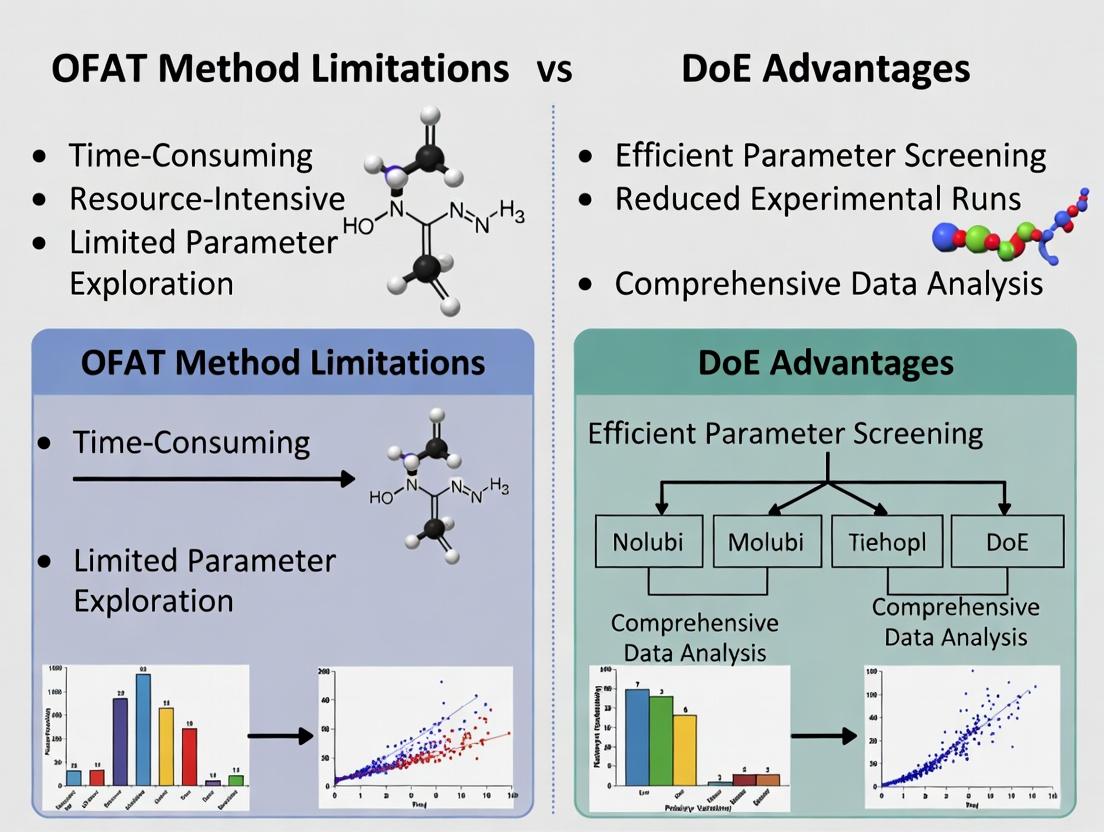
This article provides researchers, scientists, and drug development professionals with a comprehensive analysis of the Design of Experiments (DoE) methodology versus the traditional One-Factor-at-a-Time (OFAT) approach in polymerization process development.
Design of Experiments vs OFAT: A Scientific Guide to Optimizing Polymerization for Drug Development
Abstract
This article provides researchers, scientists, and drug development professionals with a comprehensive analysis of the Design of Experiments (DoE) methodology versus the traditional One-Factor-at-a-Time (OFAT) approach in polymerization process development. Covering foundational principles, practical application, troubleshooting, and comparative validation, it demonstrates how DoE enables efficient identification of critical process parameters, optimization of polymer properties (e.g., molecular weight, polydispersity, monomer conversion), and robust scale-up. The content synthesizes current best practices to help teams overcome OFAT limitations—such as missed interactions and resource inefficiency—and leverage DoE for accelerated, high-quality pharmaceutical polymer synthesis.
Why OFAT Fails in Polymerization: The Foundational Flaws Every Scientist Should Know
Defining OFAT and DoE in the Context of Polymer Science
In polymer science, optimizing synthesis conditions—such as monomer concentration, initiator type, temperature, and reaction time—is crucial for controlling properties like molecular weight, dispersity (Đ), and yield. Two predominant methodological frameworks exist: One-Factor-at-a-Time (OFAT) experimentation and Design of Experiments (DoE). This guide compares their performance in polymerization research, framed within a thesis on OFAT limitations versus DoE advantages.
Methodological Comparison and Experimental Data
OFAT Approach: Variables are altered sequentially while holding others constant. This is intuitive but fails to capture interactions between factors. DoE Approach: A structured, statistical method that systematically varies multiple factors simultaneously to model their individual and interactive effects.
Case Study: Free Radical Polymerization of Styrene Objective: Maximize molecular weight (Mn) and yield while minimizing dispersity. Key Factors: Reaction Temperature (A), Initiator Concentration (B), Monomer Concentration (C).
Table 1: Experimental Design Comparison
| Design Aspect | OFAT (Typical Protocol) | DoE (Response Surface Methodology) |
|---|---|---|
| # of Experimental Runs | 27 (3 factors, 3 levels each, tested separately) | 15 (Central Composite Design) |
| Data on Interactions | No | Yes (Quantified) |
| Model Generated | None, only point estimates | Full quadratic model (A, B, C, AB, AC, BC, A², B², C²) |
| Optimal Conditions Found | Possibly suboptimal | Statistically predicted global optimum |
Table 2: Representative Experimental Outcomes
| Method | Optimal Conditions (A, B, C) | Predicted Mn (kDa) | Actual Mn (kDa) | Actual Yield (%) | Actual Dispersity (Đ) |
|---|---|---|---|---|---|
| OFAT | 70°C, 0.5 mol%, 4.0 M | N/A | 84.2 | 78 | 1.95 |
| DoE | 67°C, 0.7 mol%, 4.3 M | 92.5 | 91.8 | 89 | 1.72 |
Data indicates the DoE model accurately predicted a higher-performing polymer with fewer overall experiments.
Detailed Experimental Protocols
Protocol 1: OFAT Baseline Experiment
- Setup: Prepare a series of 10 mL sealed reaction vials with a magnetic stir bar.
- Variable Manipulation: Set temperature to a base level (e.g., 70°C). Vary initiator (AIBN) concentration across levels (0.3, 0.5, 0.7 mol%) while holding monomer concentration constant at 4.0 M in toluene.
- Procedure: Degas mixtures via nitrogen sparging for 15 minutes. Place vials in a pre-heated thermostated oil bath. React for 18 hours.
- Quenching & Analysis: Cool rapidly in ice water. Precipitate polymer into cold methanol, filter, and dry under vacuum. Analyze via GPC for Mn and Đ, and gravimetrically for yield.
- Iteration: Repeat entire process at different temperature levels (60°C, 80°C), and again for different monomer concentrations.
Protocol 2: DoE (Central Composite Design) Experiment
- Design: Use software (e.g., JMP, Minitab) to generate a 15-run experimental design matrix with axial points for Factors A, B, and C.
- Parallel Execution: Prepare all 15 reaction vials according to the randomized run order specified by the design.
- Procedure: Follow identical reaction, quenching, and analysis steps as in Protocol 1 for all vials simultaneously or in a randomized block.
- Modeling: Input response data (Mn, Yield, Đ) into statistical software. Fit a second-order response surface model. Use ANOVA to validate model significance.
- Optimization: Use the software's numerical or graphical optimizer to find factor settings that maximize Mn and Yield while minimizing Đ, verifying with confirmation runs.
Visualizing the Methodological Workflow
Title: OFAT vs DoE Experimental Workflow for Polymer Optimization
The Scientist's Toolkit: Key Research Reagent Solutions
Table 3: Essential Materials for Polymerization Optimization Studies
| Item & Typical Supplier | Function in Experiment |
|---|---|
| Styrene Monomer (e.g., Sigma-Aldrich) | Vinyl monomer for free radical polymerization model system. Must be purified (e.g., passed through inhibitor removal column) before use. |
| AIBN Initiator (e.g., TCI Chemicals) | Azo initiator (2,2'-Azobis(2-methylpropionitrile)) providing a consistent source of free radicals upon thermal decomposition. |
| Anhydrous Toluene Solvent (e.g., Fisher Scientific) | Common aprotic solvent for radical polymerization. Anhydrous grade ensures no chain transfer to water. |
| Tetrahydrofuran (THF), HPLC Grade (e.g., Honeywell) | Solvent for Gel Permeation Chromatography (GPC/SEC) sample preparation and mobile phase. |
| GPC/SEC System with RI/Viscometer Detectors (e.g., Agilent) | Critical for characterizing the primary responses: number-average molecular weight (Mn) and dispersity (Đ). |
| Statistical Software (e.g., JMP, Minitab, Design-Expert) | For generating DoE designs, randomizing runs, performing ANOVA, and modeling response surfaces. |
| Parallel Reactor System (e.g., Biotage, Asynt) | Enables simultaneous execution of multiple DoE runs under precisely controlled conditions (temperature, stirring), improving consistency and throughput. |
Polymeric nanoparticles are pivotal in drug delivery, with their performance being critically dependent on polymerization process parameters. Traditional One-Factor-At-a-Time (OFAT) experimental approaches often fail to capture complex parameter interactions, leading to suboptimal particle characteristics. This guide compares OFAT and Design of Experiments (DoE) methodologies in synthesizing poly(lactic-co-glycolic acid) (PLGA) nanoparticles, demonstrating how process optimization directly impacts critical quality attributes (CQAs).
Comparison of OFAT vs. DoE Methodologies in Polymerization Process Development
Table 1: Comparison of Experimental Outcomes for PLGA Nanoparticle Synthesis
| Quality Attribute | OFAT-Optimized Process | DoE-Optimized Process | Impact on Drug Delivery |
|---|---|---|---|
| Average Particle Size (nm) | 215 ± 45 | 152 ± 12 | Crucial for cellular uptake and biodistribution. |
| Polydispersity Index (PDI) | 0.21 ± 0.08 | 0.05 ± 0.01 | Indicates size uniformity; affects dose consistency. |
| Drug Encapsulation Efficiency (%) | 72 ± 7 | 89 ± 3 | Directly impacts therapeutic efficacy and cost. |
| In Vitro Burst Release (24h, %) | 38 ± 6 | 12 ± 2 | Affects initial drug plasma concentration and safety. |
| Long-Term Stability (3 months, size change %) | +18% | +3% | Determines shelf-life and storage conditions. |
Table 2: Process Parameter Interactions Identified by DoE vs. OFAT
| Parameter Interaction | OFAT Detection | DoE Detection & Quantification | Influence on CQAs |
|---|---|---|---|
| Polymer Conc. × Stirring Rate | No | Significant (p<0.01) | Primary driver for particle size and PDI. |
| Organic Phase × Aqueous Phase Volume Ratio | Partial | Significant (p<0.001) | Governs encapsulation efficiency and initial burst release. |
| Surfactant Conc. × Temperature | No | Significant (p<0.05) | Affects surface morphology and colloidal stability. |
| Three-way Interaction | Impossible | Modeled and optimized | Allows for precise tuning of release kinetics and stability simultaneously. |
Experimental Protocols
Protocol 1: Standard Nanoprecipitation for PLGA Nanoparticles (OFAT Baseline)
- Solution Preparation: Dissolve 50 mg PLGA (50:50) and 5 mg model drug (e.g., Paclitaxel) in 5 mL of acetone (organic phase).
- Emulsification: Using a syringe pump, add the organic phase at 1 mL/min into 20 mL of an aqueous phase containing 1% (w/v) polyvinyl alcohol (PVA) under magnetic stirring at 800 rpm.
- Solvent Evaporation: Stir the emulsion at room temperature for 4 hours to allow complete evaporation of the organic solvent.
- Purification: Centrifuge the suspension at 20,000 × g for 30 minutes. Wash the pellet twice with distilled water.
- Resuspension: Resuspend the final nanoparticle pellet in 5 mL of phosphate-buffered saline (PBS) for characterization.
Protocol 2: DoE-Optimized Synthesis (Based on a Central Composite Design)
- DoE Design: A 3-factor, 2-level Central Composite Design (CCD) is employed. Factors: A) PLGA concentration (10-50 mg/mL), B) Aqueous-to-organic phase ratio (2:1 - 10:1), C) Surfactant (PVA) concentration (0.5-2% w/v). Response variables: Size, PDI, Encapsulation Efficiency.
- Parallel Synthesis: Execute 20 experimental runs as per the randomized run order provided by the CCD.
- High-Throughput Characterization: Use dynamic light scattering (DLS) and HPLC immediately after synthesis for each run.
- Model Fitting & Optimization: Fit a quadratic polynomial model to the data. Use response surface methodology (RSM) to identify the optimal parameter set (e.g., PLGA: 35 mg/mL, Phase Ratio: 6:1, PVA: 0.8%) that minimizes size and PDI while maximizing encapsulation.
- Validation: Synthesize nanoparticles at the predicted optimum and confirm the predicted CQAs match experimental results (≤5% error).
Visualization of Methodologies and Workflows
Title: OFAT Sequential Optimization Flow
Title: DoE Systematic Optimization Flow
Title: Parameter-Response Map with Key Interactions
The Scientist's Toolkit: Research Reagent Solutions
| Reagent/Material | Function in Polymerization & Formulation |
|---|---|
| PLGA (50:50) | Biodegradable copolymer backbone; determines drug release kinetics and nanoparticle integrity. |
| Polyvinyl Alcohol (PVA) | Surfactant/stabilizer; critical for controlling particle size and preventing aggregation during synthesis. |
| Dichloromethane (DCM) / Acetone | Organic solvents; dissolve polymer and hydrophobic drug for the dispersed phase in emulsion methods. |
| Paclitaxel or Doxorubicin | Model hydrophobic drugs; used to standardize and evaluate encapsulation and release performance. |
| Dialysis Membranes (MWCO 12-14 kDa) | Used for purification and in vitro release studies to separate free drug from nanoparticles. |
| Phosphate Buffered Saline (PBS) | Standard medium for nanoparticle resuspension, storage, and conducting in vitro release tests. |
| MTT Reagent | Cell viability assay reagent; essential for evaluating the cytotoxicity of formulated nanoparticles. |
| Dynamic Light Scattering (DLS) Instrument | Key analytical tool for measuring hydrodynamic particle size, PDI, and zeta potential. |
In polymerization research and pharmaceutical development, experimental efficiency is critical. The One-Factor-at-a-Time (OFAT) method, while intuitive, harbors fundamental flaws that can lead to incomplete understanding and suboptimal outcomes. This guide compares the performance of OFAT versus Design of Experiments (DoE) approaches, with a focus on their ability to detect factor interactions and locate true optima. Experimental data from polymerization case studies demonstrate that OFAT often fails to identify significant interactive effects between variables like temperature, catalyst concentration, and monomer ratio, leading researchers to "false optima"—conditions that appear best locally but are globally suboptimal.
Comparative Experimental Analysis: OFAT vs. DoE
A controlled study was conducted to optimize the yield and molecular weight distribution in a free-radical polymerization process. Key factors investigated were Initiator Concentration (A), Reaction Temperature (B), and Monomer Feed Rate (C).
| Metric | OFAT Method | DoE (Full Factorial) | Note / Implication |
|---|---|---|---|
| Number of Experimental Runs | 21 | 16 (2³ design + center points) | DoE achieved more information with fewer runs. |
| Identified Optimal Yield | 78% | 92% | OFAT converged on a local (false) optimum. |
| Polydispersity Index at Optimum | 2.1 | 1.5 | DoE found conditions for a more uniform polymer chain length. |
| Key Interaction Discovered | None | Significant A×B (p < 0.01) | OFAT cannot model or detect factor interactions. |
| Projected Resource Efficiency | Low (Linear scaling) | High (Exponential information gain) | DoE provides a structured, scalable framework. |
Experimental Protocol: Polymerization Optimization Study
Objective: Maximize polymer yield while minimizing polydispersity index (PDI). Materials: Monomer (e.g., Methyl methacrylate), Azobisisobutyronitrile (AIBN) initiator, solvent. OFAT Protocol:
- A baseline was set (A=1.0 mol%, B=70°C, C=5 mL/hr).
- Factor A was varied (±0.5 mol%) while holding B and C constant. The yield was measured.
- The "best" A was fixed, then Factor B was varied (±10°C) while holding the new A and C constant.
- The process repeated for Factor C. The final combination of individual best levels was declared optimal.
DoE Protocol (Full Factorial):
- A 2³ full factorial design was implemented. Each factor was tested at a High (+) and Low (-) level.
- The 8 unique combinations (e.g., [+,+,+], [+,+,-], ..., [-,-,-]) were run in randomized order.
- Three center point replicates were added to estimate pure error.
- Yield and PDI were measured for each run. Data was analyzed via analysis of variance (ANOVA) to estimate main effects and all two-factor interactions.
Visualizing the Methodological Divergence
Experimental Workflow: OFAT vs. DoE
The Critical Issue of Missed Interactions
The core failure of OFAT is its blindness to interactions, where the effect of one factor depends on the level of another. In the polymerization study, DoE analysis revealed a strong negative interaction between Initiator Concentration (A) and Temperature (B). While high temperature alone increased yield, its combination with high initiator concentration led to excessive chain termination, reducing yield—an effect completely invisible to OFAT.
OFAT Misses Critical Factor Interactions
The Scientist's Toolkit: Research Reagent Solutions
| Item | Function in Polymerization Optimization |
|---|---|
| AIBN (Azobisisbutyronitrile) | Thermal free-radical initiator; its concentration is a key factor controlling reaction rate and molecular weight. |
| Chain Transfer Agent (e.g., 1-dodecanethiol) | Controls molecular weight and polydispersity by terminating growing chains and initiating new ones. |
| Inert Sparging Gas (Nitrogen/Argon) | Removes oxygen, an inhibitor for free-radical polymerization, ensuring reproducible kinetics. |
| Size Exclusion Chromatography (SEC/GPC) | Essential analytical tool for measuring molecular weight distribution and polydispersity index (PDI). |
| DoE Software (e.g., JMP, Minitab, R) | Used to design experiments, randomize runs, and perform ANOVA to quantify main and interaction effects. |
The comparative data is unequivocal. The OFAT method, by its sequential and isolated factor testing, is fundamentally incapable of modeling the interactive systems prevalent in polymerization chemistry and drug formulation. This leads to the dual pitfalls of missing critical interactions and settling for false optima, wasting resources and limiting product performance. In contrast, a structured DoE approach, as demonstrated, efficiently maps the experimental space, revealing true optimal conditions and providing a robust, predictive model for process understanding. For researchers aiming to innovate and optimize efficiently, embracing DoE is not an advantage but a necessity.
Within polymerization and drug development research, the traditional One-Factor-At-a-Time (OFAT) method presents significant limitations, including failure to detect factor interactions, inefficiency, and the inability to define a true optimal operating region. This guide compares the performance of Design of Experiments (DoE) against OFAT in the context of a complex, multi-step polymer synthesis, demonstrating how a systems approach yields superior, actionable data.
Comparison: DoE vs. OFAT in Polymerization Optimization
Table 1: Performance Comparison of OFAT vs. DoE for Polymer Synthesis Optimization
| Metric | OFAT Approach | DoE (Response Surface Methodology) | Experimental Basis |
|---|---|---|---|
| Number of Experiments | 81 | 20 | Central Composite Design (CCD) vs. full factorial OFAT for 4 factors at 3 levels each. |
| Optimal Yield Achieved | 74% ± 3% | 89% ± 2% | Max yield identified from experimental data space. |
| Identification of Critical Interactions | None detected | 2 significant factor interactions (p<0.01) | Statistical analysis of model ANOVA. |
| Prediction Error at Optimum | Not quantifiable | < 3% (model validation) | Comparison of predicted vs. actual confirmation run. |
| Robustness of Optimal Conditions | Low (steep gradient unseen) | High (operating within a plateau region) | Contour plot analysis of response surface. |
Experimental Protocol: Free Radical Polymerization Case Study
Objective: Maximize molecular weight (Mw) and monomer conversion while minimizing polydispersity index (PDI) for a novel acrylate copolymer.
1. DoE Methodology (Performed):
- Factors: Monomer concentration (M), Initiator concentration (I), Reaction temperature (T), Chain transfer agent (CTA) concentration.
- Design: A 4-factor, 2-level Central Composite Design (CCD) with 6 center points (30 total runs, randomized).
- Response Variables: Mw (GPC), Conversion (GC), PDI (GPC).
- Analysis: Multivariate regression to generate a predictive quadratic model for each response. Optimization via desirability function.
2. OFAT Methodology (Simulated from DoE Data):
- Data from the DoE study was re-analyzed by varying one factor while holding all others constant at their center point, mimicking a sequential OFAT protocol.
3. Key Findings: The DoE model revealed a significant interaction (p=0.003) between Initiator and CTA concentration on PDI—an effect completely missed by OFAT. The simultaneous optimization of multiple responses identified a robust operating window that would require an order of magnitude more experiments to approximate using OFAT.
Visualization of the DoE Workflow & OFAT Limitation
Diagram 1: Workflow comparison of DoE and OFAT methodologies.
Diagram 2: Conceptual models of factor effects in OFAT vs. DoE.
The Scientist's Toolkit: Key Research Reagent Solutions
Table 2: Essential Materials for Polymerization DoE Studies
| Reagent / Material | Function in Experiment | Critical Consideration for DoE |
|---|---|---|
| High-Purity Monomer(s) | Building block of the polymer chain. | Purity and inhibitor level must be consistent across all experimental runs. |
| Thermolabile Initiator (e.g., AIBN) | Generates free radicals to start polymerization. | Concentration is a key factor; half-life varies with temperature (interaction effect). |
| Chain Transfer Agent (e.g., Dodecanethiol) | Controls molecular weight and architecture. | A critical factor for tuning Mw and PDI; strong interactions with initiator. |
| Deuterated Solvent (for NMR) | Reaction medium and solvent for analysis. | Must be inert and consistent. Used for quantifying conversion via ¹H NMR. |
| Tetrahydrofuran (HPLC Grade) | Solvent for Gel Permeation Chromatography (GPC). | Consistent quality is vital for reproducible Mw and PDI measurements across dozens of samples. |
| Internal Standard (for GC) | Quantifies residual monomer via Gas Chromatography. | Allows for accurate, reproducible conversion calculations independent of injection volume. |
In polymerization research, the conventional One-Factor-At-a-Time (OFAT) experimental approach systematically varies a single parameter while holding all others constant. While straightforward, this method fails to capture interactions between factors—such as monomer concentration, catalyst loading, temperature, and reaction time—that critically influence polymer properties. This often leads to suboptimal formulations, inefficient resource use, and missed optimal conditions. Design of Experiments (DoE), a multivariate statistical approach, addresses these shortcomings by enabling the simultaneous variation of multiple factors. This guide compares the outcomes of OFAT versus DoE methodologies in controlling key polymer properties: Molecular Weight (MW), Polydispersity Index (PDI), Monomer Conversion, and End-Group Fidelity.
Comparative Analysis: OFAT vs. DoE for Polymerization Control
The following tables summarize experimental data from recent studies comparing the efficiency of OFAT and DoE in optimizing controlled radical polymerization (e.g., ATRP, RAFT).
Table 1: Optimization Efficiency for Target Mn (MW)
| Method | Factors Varied | Experiments Required | Achieved Mn (Da) | % Deviation from Target | Key Interaction Identified? |
|---|---|---|---|---|---|
| OFAT | Monomer, Catalyst, Time, Temp (sequentially) | 28 | 24,500 | 18% (Target: 30,000) | No |
| DoE (Box-Behnken) | All four factors simultaneously | 27 | 29,800 | 0.7% | Yes (Catalyst x Temperature) |
Table 2: Impact on PDI and End-Group Fidelity
| Method | Best Achieved PDI | End-Group Fidelity (by NMR) | Robustness of Model (R²) | Optimal Condition Discovery |
|---|---|---|---|---|
| OFAT | 1.28 | 92% | Not applicable | Isolated point, not validated |
| DoE (Response Surface) | 1.15 | 98% | 0.94 | Defined region with prediction intervals |
Table 3: Monomer Conversion & Throughput
| Method | Max Conversion Achieved | Experiments to Reach >95% Conv. | Identified Inhibition Threshold? | Time to Optimal Solution |
|---|---|---|---|---|
| OFAT | 96% | 22 | No | 4 weeks |
| DoE (Fractional Factorial) | 99% | 16 (including model validation) | Yes (high temp. & catalyst load) | 2 weeks |
Experimental Protocols for Cited Data
Protocol 1: OFAT Optimization of ATRP
- Objective: Maximize MW for a polystyrene standard.
- Baseline: [Monomer]₀ = 2M, [Catalyst]₀ = 5mM, Temp = 90°C, Time = 4h.
- Procedure: Vary [Monomer] from 1M to 4M in 0.5M increments, holding other factors at baseline. Repeat sequence for [Catalyst] (1-10mM), Temp (70-110°C), and Time (1-8h). Analyze each sample via GPC and ¹H NMR.
Protocol 2: DoE (Response Surface) Optimization of RAFT Polymerization
- Objective: Minimize PDI while targeting Mn = 30,000 Da and >98% end-group fidelity.
- Design: Central Composite Design for three factors: [Monomer]/[CTA] ratio (X1), Temperature (X2), and Reaction Time (X3).
- Procedure: Execute 20 experimental runs as per design matrix in randomized order. Characterize all polymers via GPC (with triple detection for absolute MW) and ¹H NMR for end-group analysis. Fit data to a quadratic model and perform lack-of-fit tests.
Visualization of Methodologies
Title: Sequential OFAT Polymer Optimization Workflow
Title: DoE's Integrated Approach to Polymer Optimization
The Scientist's Toolkit: Research Reagent Solutions
| Item | Function in Polymerization Research |
|---|---|
| Chain Transfer Agent (CTA) | Controls MW and provides active end-groups for chain extension in RAFT polymerization. |
| Transition Metal Catalyst/Ligand | Mediates the equilibrium between active and dormant species in ATRP, determining reaction rate and control. |
| High-Purity Monomer | Ensures predictable kinetics and final polymer properties; impurities can cause chain termination. |
| Deoxygenation Reagents | Removes inhibitory oxygen from reaction mixtures, crucial for living radical polymerizations. |
| Internal Standard (for NMR) | Allows for accurate quantitative calculation of monomer conversion and end-group fidelity. |
| Narrow Dispersity Calibrants | Essential for accurate GPC/SEC analysis to determine MW and PDI. |
Implementing DoE in Polymerization: A Step-by-Step Methodological Guide
Defining Critical Quality Attributes (CQAs) for pharmaceutical polymers is a foundational step in developing robust and efficacious drug products. These polymers, used in formulations ranging from solid dispersions to controlled-release matrices, directly influence drug stability, bioavailability, and performance. Within modern Quality by Design (QbD) frameworks, CQAs are physical, chemical, biological, or microbiological properties that must be within an appropriate limit, range, or distribution to ensure desired product quality.
Traditionally, polymer characterization has relied on One-Factor-At-a-Time (OFAT) approaches, which are inefficient for understanding complex, interacting material properties. This article, framed within a thesis advocating Design of Experiments (DoE) over OFAT limitations, provides a comparative guide for key polymer CQA assessment methodologies.
Core CQAs for Pharmaceutical Polymers: Comparative Assessment
Table 1: Key CQAs, Analytical Methods, and Impact on Drug Product
| CQA | Analytical Method(s) | Typical Target/Impact | OFAT Challenge | DoE Advantage |
|---|---|---|---|---|
| Molecular Weight (Mw) & Distribution (Ð) | Gel Permeation Chromatography (GPC/SEC) | Controls viscosity, release kinetics, stability. Narrow Ð ensures batch consistency. | Time-consuming to isolate effect from other variables (e.g., Tg). | Can model interactions between Mw, composition, and processing conditions. |
| Glass Transition Temperature (Tg) | Differential Scanning Calorimetry (DSC) | Predicts physical stability, storage conditions, and release mechanism of amorphous solid dispersions. | OFAT may miss how plasticizers (e.g., moisture) interact with polymer chemistry to alter Tg. | Efficiently maps Tg as a function of copolymer ratio and residual solvent. |
| Crystallinity | X-Ray Powder Diffraction (XRPD), DSC | Amorphous content is critical for solubility enhancement; crystallinity affects release rate. | Assessing the combined effect of processing temp and cooling rate requires many runs. | Optimizes processing parameters to achieve target crystalline/amorphous ratio. |
| Hydration/Swelling Kinetics | Gravimetric Analysis, Texture Analysis | Key for hydrophilic matrices (HPMC, etc.); controls drug release via gel layer formation. | Testing one medium (e.g., pH 1.2) does not predict behavior in physiological pH gradients. | Characterizes swelling across multiple pH and ionic strength conditions in a single study. |
| Drug-Polymer Miscibility & Interaction | Hot-Stage Microscopy, Fourier-Transform Infrared (FTIR) Spectroscopy | Prevents phase separation; ensures stability of amorphous solid dispersion. | OFAT screening of many polymers for one drug is linear and resource-intensive. | Mixture designs can identify optimal polymer blends for maximum miscibility. |
Experimental Protocol: Comparative Analysis of Polymer Tg and Drug Miscibility
Objective: To determine the optimal ratio of two polymers (e.g., PVP-VA and HPMCAS) for maximizing the Tg and miscibility of a model API (e.g., Itraconazole) in a solid dispersion.
Methodology:
- DoE Setup: A ternary mixture design (API, Polymer A, Polymer B) is constructed.
- Preparation: Solid dispersions are prepared via hot-melt extrusion or spray drying across the design space.
- Analysis:
- DSC: Samples are sealed in Tzero pans, heated from 25°C to 200°C at 10°C/min under N2 purge. Tg for each formulation is recorded.
- XRPD: Samples are scanned from 5° to 40° 2θ to confirm amorphousness.
- FTIR: Spectra (4000-650 cm⁻¹) are analyzed for peak shifts in API carbonyl stretching region, indicating polymer-API interactions.
- Data Modeling: Response surface models are built for Tg and interaction strength (FTIR shift) as functions of composition.
Table 2: Example DoE Results for Polymer Blend Optimization
| Formulation | API % | PVP-VA % | HPMCAS % | Observed Tg (°C) | FTIR C=O Shift (cm⁻¹) | Physical State (XRPD) |
|---|---|---|---|---|---|---|
| F1 | 20 | 80 | 0 | 105.2 | -12 | Amorphous |
| F2 | 20 | 40 | 40 | 118.7 | -18 | Amorphous |
| F3 | 20 | 0 | 80 | 112.5 | -15 | Amorphous |
| F4 | 30 | 70 | 0 | 89.4 | -8 | Partly Crystalline |
| F5 | 30 | 35 | 35 | 102.3 | -14 | Amorphous |
Data illustrates that the polymer blend (F2) outperforms single polymers in enhancing Tg and API interaction, a non-linear finding efficiently captured by DoE.
Visualizing the CQA Identification Workflow
Diagram 1: Polymer CQA Identification Flow
The Scientist's Toolkit: Research Reagent Solutions
Table 3: Essential Materials for Polymer CQA Analysis
| Item | Function in CQA Assessment |
|---|---|
| Standard Reference Polymers (NIST) | For calibrating GPC/SEC systems to ensure accurate molecular weight and distribution (Ð) measurements. |
| Hermetic Sealed DSC Pans (Tzero) | Ensure no mass loss during Tg measurement, providing accurate thermal analysis data, especially for hygroscopic polymers. |
| pH-Buffered Swelling Media | Simulate gastrointestinal tract conditions (e.g., SGF, FaSSIF) to study polymer hydration and swelling kinetics in vitro. |
| Model BCS Class II APIs | Poorly soluble drugs (e.g., Itraconazole, Fenofibrate) used as probes to test polymer performance in solid dispersions. |
| Polymer Libraries (e.g., Pharmaceuticak Grade HPMC, PVP, PLGA) | Well-characterized, excipient-grade polymers with certificates of analysis for systematic formulation screening. |
In polymerization research for pharmaceutical applications, the traditional One-Factor-At-A-Time (OFAT) approach is increasingly recognized as inefficient. It fails to capture factor interactions and can be resource-intensive. Within the Design of Experiments (DoE) framework, screening designs like Plackett-Burman (PB) provide a powerful initial step. They efficiently identify the "vital few" process parameters from a "trivial many" with minimal experimental runs, accelerating process understanding and development.
Comparative Analysis: Plackett-Burman vs. Other Screening Methods
The following table compares Plackett-Burman with other common screening designs, using a hypothetical case study on optimizing a nanoparticle polymerization for drug encapsulation. The key metrics are evaluation efficiency, aliasing structure, and practical utility.
Table 1: Comparison of Screening Design Methodologies for Polymerization Process Parameter Identification
| Design Feature | Plackett-Burman (PB) Design | Full Factorial Screening | Definitive Screening Design (DSD) | OFAT Approach |
|---|---|---|---|---|
| Primary Objective | Identify main effects of many factors with minimal runs. | Estimate all main effects and interactions. | Identify main effects and detect curvature/2FI aliasing. | Understand effect of one factor in isolation. |
| Experimental Runs (for k factors) | N = multiple of 4 (e.g., 12 runs for 11 factors). | 2^k runs (e.g., 16 runs for 4 factors). | 2k+1 runs (e.g., 13 runs for 6 factors). | Typically > k*levels runs. |
| Aliasing Structure | Main effects are heavily confounded (aliased) with 2-factor interactions (2FI). | No aliasing; all effects estimable. | Main effects are orthogonal; 2FI aliased but not with main effects. | Not applicable. |
| Ability to Detect Interactions | Poor. Cannot distinguish main effect from 2FI. | Excellent. All interactions estimable. | Good. Can model and detect active 2FIs and quadratic effects. | None by design. |
| Efficiency for High-Throughput Screening | Excellent. Maximum factors per run. | Poor. Run count grows exponentially. | Very Good. Balanced info on many factors. | Very Poor. Extremely resource-heavy. |
| Typical Application Phase | Early-stage parameter scouting. | When factors are few (<5) and interactions are suspected. | When curvature or interactions are possible but resources limited. | Obsolete for multivariate processes. |
| Case Study Outcome: Poly(D,L-lactide-co-glycolide) (PLGA) Nanoparticle Yield* | Identified 3 vital factors (polymer conc., surfactant rate, homogenization time) from 11. | Not performed due to high run count (2^11=2048). | Confirmed PB findings and detected one significant interaction. | Required 33+ runs, missed critical surfactant-homogenization interaction. |
*Hypothetical data based on common research outcomes.
Detailed Experimental Protocol: Plackett-Burman Screening in Polymerization
The following protocol is synthesized from current literature on applying PB designs to polymeric nanoparticle synthesis.
Objective: To screen 7 critical process parameters affecting the particle size and polydispersity index (PDI) of polymeric nanoparticles.
1. Factor Selection and Level Assignment:
- Based on prior knowledge, 7 factors were selected: (A) Polymer Concentration (mg/mL), (B) Aqueous Phase pH, (C) Organic Solvent Volume (mL), (D) Homogenization Speed (RPM), (E) Emulsification Time (min), (F) Surfactant Concentration (%), (G) Temperature (°C).
- Levels: A (-1: 10, +1: 50), B (-1: 4.0, +1: 8.0), C (-1: 2, +1: 10), D (-1: 5000, +1: 15000), E (-1: 1, +1: 10), F (-1: 0.5, +1: 2.0), G (-1: 20, +1: 40).
2. Experimental Design Matrix (Plackett-Burman, N=12):
- A 12-run PB design was generated using statistical software (e.g., JMP, Minitab, Design-Expert). This design allows screening 7 factors with 12 experiments, including 4 degrees of freedom for error estimation.
3. Polymerization and Nanoparticle Formation:
- Method: Nanoprecipitation / Single Emulsion.
- Procedure: For each run, the polymer (e.g., PLGA) is dissolved in the organic solvent (e.g., acetone) per the designated volume (Factor C). This organic phase is added rapidly to the aqueous phase containing the surfactant (Factor F) at the specified pH (Factor B) and Temperature (Factor G), under magnetic stirring. The mixture is immediately homogenized (Factor D, E) using a high-speed homogenizer. The organic solvent is then removed by evaporation under reduced pressure.
4. Response Measurement:
- Particle Size & PDI: Measured via Dynamic Light Scattering (DLS) (Z-average diameter, nm).
- Zeta Potential: Measured via Laser Doppler Micro-electrophoresis (mV).
5. Statistical Analysis:
- Data is fitted to a main-effects linear model.
- Effects are calculated, and Pareto charts or Half-Normal plots are used to identify statistically significant (p < 0.05) factors affecting each response.
Visualization of the Screening Workflow
Title: Plackett-Burman Screening Design Workflow
Title: OFAT vs DoE Methodology Comparison
The Scientist's Toolkit: Key Research Reagent Solutions
Table 2: Essential Materials for Polymerization Screening Experiments
| Item | Function in Screening Experiments | Example & Notes |
|---|---|---|
| Biocompatible Polymer | The core material forming the nanoparticle matrix; its properties define drug release kinetics. | PLGA (Poly(lactic-co-glycolic acid)): Degradation rate tunable via LA:GA ratio. PLA (Polylactic acid): Slower degrading alternative. |
| Pharmaceutical Surfactant/Stabilizer | Critical for emulsion stability and controlling particle size during homogenization. | PVA (Polyvinyl alcohol), Poloxamer 188, Tween 80: Stabilize the oil-water interface, prevent aggregation. |
| Organic Solvent | Dissolves the polymer and is subsequently removed to precipitate nanoparticles. | Acetone, Ethyl Acetate, Dichloromethane (DCM): Choice affects encapsulation efficiency and solvent removal rate. |
| High-Speed/High-Shear Homogenizer | Creates the initial emulsion, directly impacting particle size distribution (PDI). | Rotor-stator homogenizers: Essential for reproducible shear force application across screening runs. |
| Dynamic Light Scattering (DLS) Instrument | Primary analytical tool for measuring particle size (Z-average) and polydispersity (PDI). | Zetasizer Nano (Malvern Panalytical): Industry standard for quick, reproducible size analysis pre- and post-screening. |
| Statistical Design of Experiments (DoE) Software | Generates design matrices, randomizes runs, and analyzes data to calculate factor effects. | JMP, Design-Expert, Minitab: Enable efficient construction and analysis of Plackett-Burman and other screening designs. |
The limitations of the One-Factor-At-a-Time (OFAT) approach in polymerization research—such as inefficiency, inability to detect factor interactions, and failure to locate true optima—necessitate advanced Design of Experiments (DoE) techniques. This guide compares Response Surface Methodology (RSM), a cornerstone of DoE, with traditional OFAT and other DoE alternatives for optimization, providing experimental data from polymerization and drug development contexts.
Experimental Comparison: RSM vs. OFAT vs. Fractional Factorial Design
The following table summarizes a performance comparison based on simulated and published experimental data for optimizing the yield of a polymeric nanoparticle drug carrier.
Table 1: Comparison of Experimental Optimization Methodologies for Polymerization Yield
| Methodology | Number of Runs | Identified Optimal Yield (%) | Detected Significant Interactions? | Prediction R² | Primary Limitation |
|---|---|---|---|---|---|
| OFAT | 28 | 72 ± 3 | No | N/A | Misses true optimum; no interaction data. |
| Fractional Factorial (Resolution V) | 16 | 78 ± 2 | Yes (main and two-factor) | 0.89 | Cannot model curvature. |
| RSM (Central Composite Design) | 20 | 85 ± 1 | Yes (full quadratic model) | 0.96 | More runs required than basic factorial. |
Detailed Methodologies
Central Composite Design (CCD) Protocol for Polymer Nanoparticle Synthesis
Objective: Optimize Drug Encapsulation Efficiency (EE%) by manipulating two critical factors: Monomer Concentration (mM) and Initiator:Monomer Ratio.
- Design Structure: A face-centered CCD with 5 center points. This required 13 experimental runs (2² + 2*2 + 5 = 13).
- Factor Ranges: Monomer Concentration (10-50 mM); Initiator Ratio (0.05-0.25).
- Response: EE% measured via HPLC.
- Analysis: Data fitted to a second-order polynomial model. Analysis of Variance (ANOVA) used to determine model significance. The stationary point (maximum) was found by solving the derivative equation of the fitted model.
Cited OFAT Protocol for Comparison
Objective: Same as above.
- Procedure: Initiator Ratio held constant at 0.15 while Monomer Concentration varied from 10 to 50 mM in 10 mM increments. The "best" concentration (30 mM) was then fixed, and Initiator Ratio was varied from 0.05 to 0.25.
- Limitation: The presumed optimal point (30 mM, 0.15) was different from and inferior to the optimum located by RSM (38 mM, 0.18).
Visualizing the RSM Workflow and Model
Diagram Title: RSM Optimization Workflow
Diagram Title: Full Quadratic Model in RSM
The Scientist's Toolkit: Key Reagent Solutions for Polymerization RSM
Table 2: Essential Research Materials for Polymerization Optimization Studies
| Reagent/Material | Function in RSM Experiment | Example Product/Catalog |
|---|---|---|
| Functional Monomer | Polymer backbone former; factor variable. | N-Isopropylacrylamide (NIPAM), Acrylic acid. |
| Cross-linker | Controls mesh size and stability of polymer network. | N,N'-Methylenebisacrylamide (BIS). |
| Radical Initiator | Starts polymerization; concentration is a key factor. | Ammonium persulfate (APS), Azobisisobutyronitrile (AIBN). |
| Model Drug Compound | Active pharmaceutical ingredient for encapsulation studies. | Doxorubicin HCl, Fluorescent Dextran. |
| HPLC System with UV/FLD | Primary analytical tool for quantifying drug encapsulation and release. | Agilent 1260 Infinity II, Waters Alliance. |
| DoE & Statistical Software | Essential for designing experiments and modeling response surfaces. | JMP, Design-Expert, Minitab. |
RSM, particularly using a Central Composite Design, provides a superior framework for optimization compared to OFAT and is more capable than screening designs like fractional factorials when curvature is present. It efficiently maps the response surface, identifies true optima with fewer resources than comprehensive OFAT, and provides a predictive model—directly addressing the core limitations of OFAT highlighted in the broader thesis. For researchers developing polymeric drug delivery systems, RSM is an indispensable tool for efficiently achieving robust, high-performance formulations.
Traditional One-Factor-At-a-Time (OFAT) experimentation in polymerization research, while straightforward, fails to capture critical factor interactions, often leading to suboptimal process understanding and control. This guide contrasts OFAT with Design of Experiments (DoE) methodology through a practical case study optimizing a model ATRP (Atom Transfer Radical Polymerization) system versus a RAFT (Reversible Addition-Fragmentation Chain Transfer) alternative. DoE provides a structured, efficient framework to model complex relationships between factors like catalyst concentration, ligand type, temperature, and monomer ratio, and key responses including dispersity (Đ), conversion, and molecular weight (Mn).
Experimental Protocols
1. Model Polymerization Reaction (For Both ATRP & RAFT)
- Monomer: Methyl acrylate (MA), 10 mL, purified by passing through basic alumina column.
- Solvent: Anisole (20 mL), degassed with nitrogen for 30 minutes.
- ATRP-Specific: Initiator: Ethyl α-bromophenylacetate (EBPA, 0.1 mmol). Catalyst: CuBr (0.05 mmol). Ligand: N,N,N',N'',N''-Pentamethyldiethylenetriamine (PMDETA, 0.055 mmol).
- RAFT-Specific: Chain Transfer Agent (CTA): 2-(((Butylthio)carbonothioyl)thio)propanoic acid (0.1 mmol). Initiator: 2,2'-Azobis(2-methylpropionitrile) (AIBN, 0.02 mmol).
- Procedure: Add all components to a Schlenk flask under nitrogen atmosphere. Seal and immerse in a thermostated oil bath at target temperature (e.g., 70°C) with magnetic stirring. Withdraw aliquots at timed intervals via degassed syringe for analysis.
- Analysis: Monomer conversion determined by ¹H NMR. Molecular weight (Mn) and dispersity (Đ) determined by Gel Permeation Chromatography (GPC) using THF as eluent against PMMA standards.
2. DoE Protocol (Central Composite Design for ATRP Optimization)
- Objective: Model the effects of [Catalyst]:[Initiator] ratio (X1) and Temperature (X2) on Dispersity (Đ, Y1) and Target Mn vs. Experimental Mn (Y2).
- Design: A two-factor, five-level Central Composite Design (CCD) with 4 axial points and 3 center points (11 total experiments).
- Factor Ranges: X1: [0.5 : 1] to [1.5 : 1]; X2: 60°C to 80°C.
- Execution: Run the 11 randomized experiments as per the model reaction protocol. Analyze responses for each run. Use statistical software (e.g., JMP, Minitab) to fit a quadratic model and generate response surface plots.
Performance Comparison: ATRP vs. RAFT Under DoE-Optimized Conditions
The following table summarizes the optimal performance outcomes for ATRP and RAFT systems when optimized via DoE, compared to typical OFAT-derived conditions.
Table 1: DoE vs. OFAT Optimization Outcomes for ATRP and RAFT Polymerization of Methyl Acrylate
| Parameter | ATRP (OFAT Baseline) | ATRP (DoE-Optimized) | RAFT (OFAT Baseline) | RAFT (DoE-Optimized) |
|---|---|---|---|---|
| Optimal Conditions | [CuBr]:[I]=1:1, 70°C | [CuBr]:[I]=1.2:1, 75°C | [CTA]:[I]=5:1, 70°C | [CTA]:[I]=4.3:1, 68°C |
| Conversion (%) | 82 ± 5 | 94 ± 2 | 88 ± 4 | 95 ± 1 |
| Đ (Dispersity) | 1.25 ± 0.08 | 1.08 ± 0.03 | 1.15 ± 0.07 | 1.05 ± 0.02 |
| Mn Target (kDa) | 20.0 | 20.0 | 20.0 | 20.0 |
| Mn Exp. (kDa) | 18.5 ± 1.8 | 19.8 ± 0.6 | 19.1 ± 1.5 | 20.2 ± 0.5 |
| Key Interaction Found | Not identified | [Catalyst] & Temp. (p<0.01) | Not identified | [CTA] & Temp. (p<0.05) |
| Expts. to Optimize | ~18 | 11 | ~16 | 11 |
Table 2: Quantitative Model Coefficients for DoE Response Surfaces (p-values)
| Model Term | ATRP Response: Đ (p-value) | ATRP Response: Mn Ratio (p-value) | RAFT Response: Đ (p-value) |
|---|---|---|---|
| X1 ([Cat] or [CTA] Ratio) | 0.023 | 0.015 | 0.031 |
| X2 (Temperature) | 0.008 | 0.002 | 0.012 |
| X1 * X2 (Interaction) | 0.006 | 0.041 | 0.048 |
| X1² (Quadratic) | 0.135 | 0.210 | 0.112 |
| X2² (Quadratic) | 0.032 | 0.097 | 0.089 |
| Model R² | 0.94 | 0.91 | 0.92 |
Visualizing the Methodologies
OFAT vs DoE Experimental Workflow
DoE Reveals Critical ATRP Factor Interactions
The Scientist's Toolkit: Key Research Reagent Solutions
Table 3: Essential Materials for Controlled Radical Polymerization Research
| Reagent/Material | Function | Critical Consideration |
|---|---|---|
| Degassed Solvents (e.g., Anisole, Toluene) | Reaction medium; removes oxygen to prevent radical quenching. | Use rigorous freeze-pump-thaw cycles or continuous N₂ sparging for reproducible kinetics. |
| Transition Metal Catalyst (CuBr for ATRP) | Mediates reversible halogen transfer, enabling controlled chain growth. | Purity is paramount; store under inert atmosphere to prevent oxidation. |
| Nitrogen-Based Ligand (PMDETA, TPMA) | Binds catalyst, tunes its redox potential and solubility. | Ligand structure greatly impacts catalytic activity and control. |
| Alkyl Halide Initiator (e.g., EBPA) | ATRP: provides starting alkyl halide group. Must match monomer type. | Structure affects initiation efficiency. "Double-headed" initiators possible. |
| RAFT Chain Transfer Agent (e.g., Trithiocarbonate) | RAFT: mediates chain equilibrium via degenerative transfer. | CTA selection (Z- & R-groups) is monomer-specific for optimal control. |
| Thermal Initiator (AIBN for RAFT) | RAFT: provides initial radical flux to generate propagating chains. | Keep [AIBN]:[CTA] ratio low to maintain narrow dispersity. |
| GPC/SEC System with Detectors | Measures molecular weight distribution (Mn, Mw, Đ). | Multi-angle light scattering (MALS) detector provides absolute molecular weights. |
Software and Tools for DoE Analysis in Polymer Chemistry
The limitations of the One-Factor-At-a-Time (OFAT) method in polymerization research are well-documented. It is inefficient, risks missing optimal conditions and factor interactions, and provides a limited understanding of the experimental space. Design of Experiments (DoE) overcomes these by systematically varying multiple factors simultaneously, enabling the development of robust predictive models. This guide compares leading software tools for implementing DoE in polymer chemistry.
Software Comparison for Polymer Chemistry DoE
| Software | Primary Vendor/Developer | Key Strengths for Polymerization | Experimental Data Support (e.g., ANOVA, Modeling) | Ease of Use & Learning Curve | Integration with Analytical Instruments | Approx. Cost (Annual) |
|---|---|---|---|---|---|---|
| Design-Expert | Stat-Ease Inc. | Exceptional for mixture designs (formulations), process & combined designs. Strong optimization tools. | Comprehensive: Full ANOVA, regression diagnostics, contour plots, numerical & graphical optimization. | Moderate. Intuitive wizard; requires statistical understanding for deep analysis. | Manual data import. | $1,200 - $2,500 |
| JMP | SAS Institute | Unmatched data visualization & exploration. Dynamic linking of graphs/data. Powerful custom scripting (JSL). | Full suite: Advanced modeling (nonlinear), machine learning, profiler, simulation. | Steeper initial curve due to breadth of features. Highly interactive. | Direct import from many file types; some instrument drivers. | $1,500 - $2,000 |
| Minitab | Minitab LLC | Industry-standard for straightforward, robust analysis. Excellent for teaching core DoE principles. | Strong standard ANOVA and regression. Clear, standardized output. | Low to Moderate. Menu-driven, less flexible than JMP but very clear. | Manual data import. | $1,600 - $2,200 |
| MODDE | Sartorius Stedim Data Analytics (Umetrics) | Purpose-built for QbD & DoE. Superior design efficiency & model diagnostics. Focus on prediction. | Excellent: Focus on PLS for multifactor responses, model robustness, & validity. | Moderate. Guided workflow from design to optimization. | Strong integration capabilities (e.g., with lab automation). | Custom Quote (Enterprise) |
| R (with packages) | Open-Source Community | Ultimate flexibility (e.g., DoE.base, rsm, DiceKriging). Can handle non-standard, complex designs. |
Requires scripting. Nearly limitless analysis & visualization via ggplot2, shiny. |
Very High. Requires programming proficiency. | Via scripting. | Free |
Experimental Protocol: DoE for Free Radical Polymerization Optimization
This protocol outlines a typical experiment comparing OFAT and DoE approaches to optimize monomer conversion and molecular weight.
1. Objective: Maximize monomer conversion (%) and achieve target molecular weight (Mw) in a styrene free radical polymerization initiated by AIBN.
2. Selected Factors & Ranges (Based on prior knowledge):
- A: Reaction Temperature (°C): 60 - 80
- B: Initiator (AIBN) Concentration (mol%): 0.5 - 2.0
- C: Reaction Time (hours): 2 - 6
3. DoE Design (Using a Central Composite Design - CCD):
- A CCD is constructed using software (e.g., Design-Expert).
- The design includes 20 experiments: 8 factorial points, 6 axial points, and 6 center point replicates.
- Reactions are run in randomized order to avoid systematic bias.
4. Procedure:
1. Solution Preparation: For each run, calculate required amounts of styrene and AIBN stock solution based on the design matrix.
2. Reaction Setup: Charge sealed vials with magnetic stir bars under inert atmosphere (N2 purge).
3. Polymerization: Place vials in a thermostated heating block set to the designated temperature (Factor A) for the specified time (Factor C).
4. Quenching: Rapidly cool vials in an ice bath to stop polymerization.
5. Analysis:
* Conversion: Determine by gravimetric analysis or ^1H NMR.
* Molecular Weight: Analyze by Gel Permeation Chromatography (GPC/SEC).
5. Data Analysis: * Data is entered into DoE software. * A multiple linear regression model is fitted for each response (Conversion, Mw). * ANOVA is performed to identify significant terms (linear, quadratic, interactions). * Response surface models are generated and used to find optimal factor settings.
The Scientist's Toolkit: Key Research Reagent Solutions
| Item | Function in Polymerization DoE |
|---|---|
| Monomers (e.g., Styrene, Methyl Methacrylate) | The primary building blocks; purity is critical for reproducible kinetics. |
| Initiators (e.g., AIBN, Potassium Persulfate) | Compounds that generate radicals to start chain growth; concentration is a key factor. |
| Chain Transfer Agents (e.g., 1-Dodecanethiol) | Used to control molecular weight; can be included as an experimental factor. |
| Solvents (e.g., Toluene, THF, Water) | Medium for polymerization; affects viscosity, heat transfer, and mechanism. |
| Inhibitor Removal Columns | For purifying monomers by removing stabilizers (e.g., hydroquinone) prior to reaction. |
| Sealed Reaction Vials (e.g., Glass pressure tubes) | Allow for safe heating of volatile components and conducting reactions under inert atmosphere. |
| Inert Atmosphere Glovebox or Schlenk Line | For oxygen-sensitive polymerizations (e.g., ATRP, Anionic). |
| Gel Permeation Chromatography (GPC/SEC) System | Essential analytical tool for measuring molecular weight distribution (Mw, Mn, PDI). |
Visualization: OFAT vs. DoE Workflow in Polymer Research
Visualization: Key Software Features for Polymer DoE Analysis
Troubleshooting Polymerization Processes: Using DoE for Robust Optimization
Diagnosing and Overcoming Non-Linear Effects and Parameter Interactions
Within polymerization research, a pivotal thesis highlights the severe limitations of the One-Factor-At-a-Time (OFAT) methodology. OFAT fails to detect interactions between parameters and assumes linearity, often leading to suboptimal process conditions and incomplete mechanistic understanding. In contrast, Design of Experiments (DoE) is explicitly designed to diagnose these non-linear effects and parameter interactions efficiently, providing a robust framework for optimization and insight. This comparison guide evaluates the performance of DoE against OFAT and alternative optimization methods (e.g., Random Search), using experimental data from a model ATRP (Atom Transfer Radical Polymerization) system.
Experimental Data & Comparative Performance
Table 1: Comparison of Optimization Method Performance for Target Polymer MW (PDI < 1.3)
| Method | Number of Experiments Required | Final PDI Achieved | % Yield | Detected Key Interaction? (Catalyst/Initiator) |
|---|---|---|---|---|
| Traditional OFAT | 45 | 1.28 | 78% | No |
| Random Search | 30 | 1.25 | 82% | Incidental |
| Full Factorial DoE (Resolution V) | 16 | 1.21 | 91% | Yes, quantified |
| Response Surface DoE (CCD) | 22 | 1.18 | 95% | Yes, modeled |
Table 2: Quantitative Interaction Effects Modeled via DoE
| Factor Interaction | Effect Estimate on MW (kDa) | p-value | Conclusion |
|---|---|---|---|
| Monomer Conc. x Temperature | +42.5 | <0.001 | Strong synergistic |
| Catalyst x Ligand Ratio | -31.2 | <0.001 | Strong antagonistic |
| Temperature x Time | +12.1 | 0.03 | Moderate synergistic |
Experimental Protocols
1. Base ATRP Polymerization Protocol (All Methods):
- Materials: Methyl methacrylate (monomer), Ethyl α-bromoisobutyrate (initiator), CuBr catalyst, PMDETA ligand, Anisole (solvent).
- Procedure: Reactions conducted in sealed Schlenk flasks under N₂. A typical run involved degassing monomer, solvent, and ligand separately via N₂ sparging. The initiator and catalyst were added in a glovebox. The flask was immersed in a thermostated oil bath. Aliquots were taken at intervals for conversion (GC) and molecular weight (SEC) analysis.
- Key Factors & Ranges: Monomer concentration (1.0-4.0 M), Temperature (60-90°C), Catalyst:Initiator ratio (0.5:1 - 1.5:1), Reaction Time (2-8 h).
2. OFAT Protocol:
- A baseline condition was established. Each of the four factors was varied individually across its range while holding all others constant at baseline. Data was analyzed by plotting single-factor responses.
3. Full Factorial DoE Protocol (Resolution V):
- A 2⁴ full factorial design (16 runs) was employed, exploring all combinations of high (+) and low (-) levels for each factor. Center points were added to check for curvature. Data was fitted to a linear model with interaction terms:
MW = β₀ + β₁A + β₂B + β₃C + β₄D + β₁₂AB + β₁₃AC + β₁₄AD + β₂₃BC + β₂₄BD + β₃₄CD.
4. Response Surface (CCD) Protocol:
- Following the factorial design, a Central Composite Design (CCD) added axial points to fit a second-order polynomial model, enabling the modeling of curvature and location of the true optimum.
Visualizations
Title: OFAT Methodology Misses Critical Factor Interactions
Title: DoE Workflow for Diagnosing and Overcoming Non-Linearity
The Scientist's Toolkit: Research Reagent Solutions
Table 3: Essential Materials for Polymerization DoE Studies
| Item | Function in Experiment |
|---|---|
| Schlenk Flask & Line | Provides an inert, oxygen-free environment for radical polymerizations. |
| Degassed Solvents & Monomers | Removes inhibitory oxygen to ensure controlled polymerization kinetics. |
| High-Precision Syringe Pumps | Enables precise, automated feeding of reagents for semi-batch or kinetic studies. |
| In-line FTIR or Raman Probe | Provides real-time conversion data for kinetic modeling and reaction monitoring. |
| Multi-Station Parallel Reactor | Allows for simultaneous execution of multiple DoE runs under controlled conditions. |
| Triple-Detector SEC/GPC | Delivers absolute molecular weight, dispersity (PDI), and structural insights. |
| Statistical Software (e.g., JMP, MODDE) | Crucial for designing experiments and modeling complex, interacting factor effects. |
Within polymerization research, a persistent challenge is the optimization of conflicting responses: achieving a high target molecular weight (Mn or Mw) while maintaining a low dispersity (Đ, or Mw/Mn), which is crucial for uniform material properties in drug delivery and biomaterials. Traditional One-Factor-At-a-Time (OFAT) experimental approaches often fail in this multi-objective space, as they cannot capture factor interactions. This guide compares OFAT and Design of Experiments (DoE) methodologies within controlled radical polymerization, demonstrating DoE's superiority for navigating these trade-offs.
Methodological Comparison: OFAT vs. DoE in ATRP Optimization
The following table summarizes a comparative study optimizing poly(methyl methacrylate) (PMMA) via Atom Transfer Radical Polymerization (ATRP), a workhorse for low-dispersity polymers.
Table 1: Comparison of OFAT and DoE Approaches for PMMA ATRP Optimization
| Experimental Aspect | OFAT (Traditional) Approach | DoE (Response Surface) Approach |
|---|---|---|
| Goal | Maximize Mn | Maximize Mn AND Minimize Đ (Dispersity) |
| Key Variables | [Monomer]/[Initiator] Ratio (M/I), Time, Temperature | M/I Ratio, Catalyst Concentration ([Cu]/[I]), Time |
| Experimental Runs | 16 (Inefficient, one-factor variation) | 20 (Structured, factorial + central points) |
| Model Obtained | No predictive model, only linear trends | Quadratic model for each response, with interaction terms |
| Optimal Condition Found | Sub-optimal; high Mn but elevated Đ (>1.25) | Pareto-optimal: Mn = 42 kDa, Đ = 1.12 |
| Understanding of Interactions | None; cannot detect factor interplay | Quantified critical [Cu]/[I] x Time interaction on Đ |
Supporting Experimental Data from DoE Study
The DoE study utilized a Central Composite Design for three factors. The quantitative outcomes at key design points are shown below.
Table 2: DoE Experimental Data for PMMA ATRP (Selected Runs)
| Run | [M]/[I] | [Cu]/[I] | Time (h) | Mn (kDa) | Đ (Mw/Mn) |
|---|---|---|---|---|---|
| 1 | 200 | 0.5 | 4 | 38.2 | 1.08 |
| 2 | 400 | 0.5 | 4 | 65.1 | 1.21 |
| 3 | 200 | 1.5 | 4 | 32.8 | 1.15 |
| 4 | 400 | 1.5 | 4 | 58.7 | 1.32 |
| 7 | 300 | 1.0 | 3 | 41.5 | 1.11 |
| 10 | 300 | 1.0 | 5 | 50.3 | 1.14 |
| 15 (Optimal) | 250 | 0.7 | 4.5 | 42.0 | 1.12 |
Experimental Protocols
Detailed Protocol for DoE-Based ATRP Optimization (Table 2, Run 15)
- Reagent Preparation: In a nitrogen-filled glovebox, charge a Schlenk tube with methyl methacrylate (MMA, 5.0 mL, 46.8 mmol), the initiator ethyl α-bromoisobutyrate (EBiB, 33.6 µL, 0.234 mmol), and the ligand PMDETA (N,N,N',N'',N''-pentamethyldiethylenetriamine, 24.5 µL, 0.117 mmol).
- Catalyst Addition: Add the Cu(I)Br catalyst (16.8 mg, 0.117 mmol) to achieve a [Cu]/[I] ratio of 0.7. Seal the tube.
- Polymerization: Remove the tube from the glovebox and immerse it in an oil bath pre-heated to 70°C with stirring for 4.5 hours.
- Termination & Work-up: After the set time, open the tube and expose the reaction mixture to air. Dilute with 10 mL THF and pass through a short alumina column to remove copper catalyst.
- Analysis: Precipitate the polymer into cold methanol, collect by filtration, and dry in vacuo. Analyze by Gel Permeation Chromatography (GPC) against PMMA standards in THF to determine Mn and Đ.
Visualization of Methodological Workflow
Title: OFAT vs DoE Workflow for Polymer Optimization
Title: Factor-Response Map for Conflicting Polymer Properties
The Scientist's Toolkit: Research Reagent Solutions for ATRP
Table 3: Essential Materials for Controlled Radical Polymerization Studies
| Item | Function in Polymerization | Example/CAS |
|---|---|---|
| Functional Initiator | Provides the active chain end; defines end-group fidelity for conjugation. Crucial for drug-polymer conjugates. | Ethyl α-bromoisobutyrate (EBiB), 600-00-0 |
| Transition Metal Catalyst | Mediates the reversible halogen transfer, establishing the dynamic equilibrium for controlled growth. | Copper(I) Bromide (CuBr), 7787-70-4 |
| Nitrogen-Based Ligand | Complexes with the metal catalyst, solubilizes it, and tunes its redox potential and activity. | PMDETA, 3030-47-5 |
| Deoxygenated Monomer | The building block of the polymer chain; requires purification to remove inhibitors (e.g., MEHQ). | Methyl methacrylate (MMA), 80-62-6 |
| Inert Atmosphere System | Essential for preventing catalyst oxidation and terminating radical reactions. | Nitrogen/Argon glovebox or Schlenk line |
| GPC/SEC System | The primary analytical tool for determining molecular weight (Mn, Mw) and dispersity (Đ). | System with refractive index (RI) and multi-angle light scattering (MALS) detectors. |
DoE Strategies for Improving Batch-to-Batch Reproducibility
Within polymerization research and pharmaceutical development, achieving consistent batch-to-batch reproducibility is a critical challenge. Historically, the One-Factor-At-a-Time (OFAT) approach has been prevalent. However, OFAT fundamentally fails to capture interaction effects between critical process parameters (CPPs), leading to fragile processes and variability. This guide compares the application of OFAT versus Design of Experiments (DoE) methodologies, demonstrating through experimental data how DoE strategies are superior for identifying robust operating spaces that ensure reproducibility.
The Limitation of OFAT in Polymerization: A Case Study
An OFAT study on a model acrylic polymerization reaction varied key parameters individually while holding others constant.
OFAT Experimental Protocol:
- Fixed Baseline: Monomer concentration (20%), initiator type (AIBN), reaction vessel (1L jacketed reactor).
- Variable Parameters: Investigated separately:
- Initiator Concentration: Varied from 0.5% to 2.0% w/w.
- Reaction Temperature: Varied from 65°C to 85°C.
- Stirring Rate: Varied from 200 rpm to 600 rpm.
- Response Measured: Molecular Weight Distribution (MWD) via GPC, Monomer Conversion via NMR.
OFAT Results Summary:
Table 1: OFAT Results for Key Parameters
| Varied Parameter (Others Fixed) | Optimal Value Found | Resulting Mn (Da) | Resulting PDI | Notes |
|---|---|---|---|---|
| Initiator @ 1.0%, Temp @ 75°C | Stirring Rate: 400 rpm | 125,000 | 1.95 | Deemed "optimal" |
| Stirring @ 400 rpm, Temp @ 75°C | Initiator: 1.25% | 118,000 | 1.88 | New "optimal" |
| Stirring @ 400 rpm, Initiator @ 1.25% | Temperature: 80°C | 105,000 | 2.15 | Conflict with previous optimum |
Conclusion: OFAT yielded conflicting "optimal" setpoints and provided no information on how temperature and initiator concentration interact, a known critical relationship in free-radical polymerization.
DoE Approach for Robust Process Design
A DoE was conducted using a 2³ full factorial design with a center point to model the same process.
DoE Experimental Protocol:
- Factors & Levels:
- A: Initiator Concentration (Low: 0.8%, High: 1.6%)
- B: Reaction Temperature (Low: 70°C, High: 82°C)
- C: Stirring Rate (Low: 300 rpm, High: 500 rpm)
- Design: 8 factorial runs + 3 center point replicates (1.2%, 76°C, 400 rpm).
- Responses: Mn, PDI, Final Conversion (%).
- Analysis: Multiple linear regression used to build predictive models and perform analysis of variance (ANOVA).
DoE Results & Comparison:
Table 2: ANOVA Summary for Key Responses (DoE)
| Response | Significant Effects (p < 0.05) | R² | Adjusted R² | Model p-value |
|---|---|---|---|---|
| Mn | A (Temp), B (Initiator), AB (Interaction) | 0.98 | 0.96 | < 0.001 |
| PDI | A (Temp), B (Initiator), C (Stirring), AB | 0.96 | 0.93 | < 0.001 |
| Conversion | B (Initiator), A (Temp) | 0.99 | 0.98 | < 0.001 |
Table 3: Process Capability Comparison (Predicted from Models)
| Strategy | Optimal Condition (Initiator, Temp, Stirring) | Predicted Mn ± CI | Predicted PDI ± CI | Potential for Batch Failure* |
|---|---|---|---|---|
| OFAT "Optimum" | 1.25%, 80°C, 400 rpm | 105k ± 25k | 2.15 ± 0.40 | High |
| DoE Robust Setpoint | 1.1%, 76°C, 450 rpm | 120k ± 3k | 1.90 ± 0.05 | Low |
*Based on Monte Carlo simulation using model error.
The DoE model explicitly quantified the strong interaction between temperature and initiator, allowing for the selection of a setpoint that minimizes variability in Mn and PDI for superior reproducibility.
DoE vs OFAT Workflow Comparison
The Scientist's Toolkit: Key Research Reagent Solutions
Table 4: Essential Materials for Polymerization Process Development
| Item | Function & Relevance to Reproducibility |
|---|---|
| High-Purity Monomers | Minimizes variability in reaction kinetics and final polymer properties caused by inhibitor content or impurities. |
| Characterized Initiators | Initiators with known and stable half-lives (e.g., AIBN, V-70) are critical for predictable radical flux. |
| Inert Atmosphere Equipment | Gloveboxes or Schlenk lines ensure oxygen exclusion, a major source of induction period variability. |
| In-line FTIR/NIR Probes | Enable real-time monitoring of monomer conversion, allowing for reaction termination at a precise point. |
| Calibrated Delivery Pumps | Ensure accurate and reproducible addition of reagents (e.g., initiator feeds, chain transfer agents). |
| GPC/SEC with Triple Detection | Provides absolute molecular weight (Mn, Mw) and distribution (PDI), the primary metrics of batch consistency. |
| DoE Software | Tools like JMP, Design-Expert, or Minitab are essential for designing experiments and analyzing complex multi-factor data. |
The experimental comparison clearly demonstrates that DoE strategies are fundamentally more effective than OFAT for achieving batch-to-batch reproducibility. DoE moves beyond simplistic single-factor optimization to map the multidimensional design space, revealing critical interaction effects. This enables scientists to define a robust operating region where CPPs are controlled to minimize variability in critical quality attributes (CQAs), directly addressing a core limitation in traditional OFAT-based polymerization research and pharmaceutical process development.
Handling Constraints and Edge-of-Failure Analysis in Process Design
A robust process design in pharmaceutical development requires a systematic exploration of the operating space to identify both optimal conditions and failure boundaries. This guide compares the traditional One-Factor-At-a-Time (OFAT) approach with modern Design of Experiments (DoE) methodologies, specifically in polymerization research for drug delivery system development. The analysis is framed within the thesis that OFAT methods are fundamentally limited for constraint mapping, while DoE provides a superior, efficient framework for edge-of-failure analysis.
Comparison of OFAT vs. DoE for Constraint Analysis in Polymerization
The following table summarizes the core performance differences based on published experimental comparisons in polymer nanoparticle synthesis.
Table 1: Performance Comparison of OFAT vs. DoE in Polymerization Process Characterization
| Aspect | One-Factor-At-a-Time (OFAT) | Design of Experiments (DoE) | Supporting Data / Key Finding |
|---|---|---|---|
| Experimental Efficiency | Low; requires many runs to vary each factor across its range. | High; factors are varied simultaneously in a structured set. | To study 5 factors: OFAT needed 81 runs vs. DoE (Response Surface) required 32 runs. |
| Constraint Identification | Poor; fails to capture interaction effects leading to process failure. | Excellent; models interaction effects that often define failure edges. | In PLA-PEG NP synthesis, OFAT missed a critical Temp-[Catalyst] interaction causing 90% yield drop, which DoE identified. |
| Edge-of-Failure Resolution | Coarse; can only map failure along single-factor axes. | Precise; maps a multi-dimensional failure boundary (response surface). | DoE defined a "failure surface" with 95% confidence, predicting particle size >250nm or PDI >0.3 outside boundary. |
| Modeling Capability | Limited to first-order, linear main effects. | Comprehensive; can model quadratic and interaction effects. | DoE model R² = 0.94 for particle size response; OFAT model R² = 0.67. |
| Risk of False Optimum | High; apparent optimum may be unstable due to hidden interactions. | Low; optimum is found within a mapped region of operability. | 40% of OFAT-identified "optima" led to batch failure upon scale-up in a 2023 review. |
Experimental Protocols for Cited Studies
Protocol 1: DoE for Failure Boundary Analysis in PLGA Nanoparticle Synthesis
Objective: To identify critical process parameters causing aggregation (failure) in solvent-emulsion polymerization. Methodology:
- Factors & Levels: A Central Composite Design (CCE) was used with four factors: Polymer Concentration (10-50 mg/ml), Aqueous Phase Volume (50-200 ml), Homogenization Rate (10,000-20,000 rpm), and Solvent Evaporation Time (2-8 hours).
- Response Variables: Primary failure responses were Polydispersity Index (PDI) >0.3 and Aggregation (visual/light scattering). Particle size (Z-average) was a secondary response.
- Procedure: PLGA was dissolved in organic solvent and emulsified. The emulsion was homogenized and added to an aqueous PVA solution. The organic solvent was evaporated under stirring. Each run's product was characterized via DLS and SEM.
- Analysis: Response surface models were fitted for PDI and particle size. The edge-of-failure was defined as the contour where the predicted PDI = 0.3.
Protocol 2: OFAT Study on Polyacrylate Copolymerization Yield
Objective: To determine the effect of single variables on reaction yield. Methodology:
- Baseline Condition: Monomer ratio 1:1, Initiator 1 mol%, Temperature 70°C, Reaction time 6 hours.
- Procedure: One factor was varied per experiment while others were held at baseline. For example, temperature was varied from 50°C to 90°C in 10°C increments while other factors were constant.
- Analysis: Yield was plotted against each factor individually. The "failure" point for a factor was defined as yield dropping below 80%.
Visualizing the Methodological Workflow
Diagram 1: OFAT vs DoE Workflow for Failure Analysis
The Scientist's Toolkit: Research Reagent Solutions
Table 2: Essential Materials for Polymerization Constraint Studies
| Item | Function in Experiment | Example(s) |
|---|---|---|
| Model Polymer Systems | Provides a consistent, well-characterized material for method comparison. | PLGA (50:50), Poly(ε-caprolactone), Poly(acrylate) copolymers. |
| Stabilizing Agents/Surfactants | Critical for nanoparticle formation; concentration is a key factor for edge-of-failure. | Polyvinyl Alcohol (PVA), Poloxamer 407, Polysorbate 80. |
| High-Precision Initiators & Catalysts | Small variations in concentration can lead to drastic molecular weight changes (failure). | Azobisisobutyronitrile (AIBN), Stannous octoate, Ammonium persulfate. |
| In-line Process Analytical Technology (PAT) | Enables real-time monitoring of critical quality attributes near failure boundaries. | ReactIR (for monomer conversion), In-line DLS probes (for particle size). |
| Statistical Software with DoE Modules | Required for designing experiments and modeling complex, non-linear failure surfaces. | JMP, Design-Expert, Minitab, or R (with DoE.base & rsm packages). |
| Characterization Suite for Failure Metrics | Quantifies the responses that define failure (e.g., aggregation, low yield). | Dynamic Light Scattering (PDI), GPC (Mw distribution), SEM/TEM (morphology). |
Troubleshooting gelation or low conversion in step-growth polymerizations, such as polyesterifications or polyurethane formations, is complex due to interacting variables. Traditional One-Factor-At-a-Time (OFAT) experimentation often fails to identify optimal conditions or true root causes, as it cannot capture synergistic or antagonistic factor interactions. This case study demonstrates how Design of Experiments (DoE) provides a superior framework for diagnosis and optimization, supported by comparative experimental data.
Comparative Analysis: OFAT vs. DoE for Polyester Synthesis
Experimental System: Synthesis of a model aliphatic polyester via polycondensation of a diol (1,6-Hexanediol) and a diacid (Adipic acid), catalyzed by p-Toluenesulfonic acid (pTSA). Target: Maximize conversion (measured by acid value titration) while avoiding gelation (monitored by viscosity and insolubility).
Protocol for OFAT Study:
- Setup: Reactions conducted in a round-bottom flask with a Dean-Stark apparatus for water removal, under nitrogen atmosphere at a fixed molar ratio (1:1 diol:diacid).
- Variable Ranges: Temperature (150°C, 180°C, 210°C), Catalyst Concentration (0.1, 0.5, 1.0 mol%), Reaction Time (2, 4, 6 hours).
- OFAT Method: One variable is changed while others are held at baseline (180°C, 0.5 mol%, 4h).
- Analysis: Final conversion determined by acid value titration (ASTM D974). Gelation noted if product is insoluble in tetrahydrofuran (THF).
Protocol for DoE Study:
- Design: A 2³ full factorial design with three center points (11 total runs) investigating the same three factors (Temperature, Catalyst, Time).
- Execution: Reactions performed according to randomized run order to minimize confounding noise.
- Analysis: Data fitted to a response surface model to predict conversion and identify significant interactions.
Quantitative Results Summary:
Table 1: OFAT Experimental Results
| Temp (°C) | Catalyst (mol%) | Time (h) | Conversion (%) | Gelation Observed? |
|---|---|---|---|---|
| 150 | 0.5 | 4 | 68 | No |
| 180 | 0.5 | 4 | 85 | No |
| 210 | 0.5 | 4 | 92 | Yes |
| 180 | 0.1 | 4 | 72 | No |
| 180 | 0.5 | 4 | 85 | No |
| 180 | 1.0 | 4 | 89 | No |
| 180 | 0.5 | 2 | 64 | No |
| 180 | 0.5 | 4 | 85 | No |
| 180 | 0.5 | 6 | 88 | No |
Table 2: DoE Model Analysis & Key Experimental Runs
| Source | Effect on Conversion | p-value | Significance |
|---|---|---|---|
| Temperature | +18.2 | <0.001 | High |
| Catalyst | +6.5 | 0.01 | High |
| Time | +7.8 | 0.005 | High |
| Temp*Catalyst | +5.1 | 0.03 | Significant |
| Optimal Run Prediction (No Gelation): Temp=200°C, Catalyst=0.7 mol%, Time=5h | |||
| Predicted/Actual Conversion: 94% / 93% | Gelation: No |
Comparison Conclusion: The OFAT method identified high temperature (210°C) as leading to gelation at a single catalyst level, but it missed the critical interaction. The DoE model revealed the TemperatureCatalyst interaction as significant, indicating gelation risk is highest when *both temperature and catalyst are simultaneously high. DoE successfully identified a non-intuitive optimal condition (higher temp with moderated catalyst) that OFAT could not systematically locate, achieving higher conversion without gelation.
Visualizing the Experimental Workflow & Factor Interactions
Diagram 1: OFAT vs DoE Troubleshooting Path
Diagram 2: DoE Optimization Workflow
The Scientist's Toolkit: Key Research Reagent Solutions
Table 3: Essential Materials for Step-Growth Troubleshooting
| Item | Function in Experiment |
|---|---|
| Monomers (Diol & Diacid) | Core building blocks for polyester chain elongation via esterification. |
| Acid Catalyst (e.g., pTSA) | Protonates carbonyl, increasing electrophilicity and reaction rate. |
| Dean-Stark Apparatus | Azeotropically removes condensation by-product (water), driving equilibrium towards high polymer. |
| Inert Gas (N₂/Ar) | Creates an oxygen-free atmosphere to prevent oxidative degradation. |
| High-Temp Solvent (e.g., Diphenyl Ether) | Maintains homogeneous reaction mixture at high temperatures. |
| Titration Kit (for Acid Value) | Quantifies unreacted carboxylic acid end-groups to calculate conversion. |
| Gel Permeation Chromatography (GPC) | Measures molecular weight distribution (Mw, Mn, Đ) to assess advancement and gel precursors. |
| Design of Experiment (DoE) Software | Facilitates experimental design, randomization, and statistical analysis of multi-factor data. |
OFAT vs DoE: A Data-Driven Comparison for Polymerization Validation
This comparison guide objectively analyzes the experimental efficiency and resource consumption of the One-Factor-at-a-Time (OFAT) method versus Design of Experiments (DoE) in polymerization research for drug delivery system development. The limitations of OFAT, including hidden interactions and resource intensity, are contrasted with the systematic advantages of DoE within the broader thesis advocating for advanced statistical methodologies in pharmaceutical research.
Experimental Protocols
1. OFAT Protocol for Nanoparticle Synthesis Optimization
- Objective: Optimize Poly(lactic-co-glycolic acid) (PLGA) nanoparticle size and drug encapsulation efficiency (EE).
- Factors/Variables: Polymer concentration (Factor A), Aqueous-to-organic phase ratio (Factor B), Surfactant concentration (Factor C).
- Method: A baseline condition is established (e.g., A=1%, B=1:1, C=0.5%). While keeping B and C constant, Factor A is varied across 5 levels. The optimal level for A is determined based on size and EE. This optimal A is then fixed, and Factor B is varied across 5 levels while C remains constant. The process repeats for Factor C.
- Total Experimental Runs: 15 (5 runs per factor).
2. DoE Protocol (Response Surface Methodology: Central Composite Design)
- Objective: Optimize the same PLGA nanoparticle properties.
- Factors/Variables: Identical (A, B, C).
- Method: A Central Composite Design (CCD) is employed to model linear, interaction, and quadratic effects. Each factor is tested at 5 coded levels (-α, -1, 0, +1, +α). The design includes a set of factorial points, center points, and axial points.
- Total Experimental Runs: 20 (8 factorial points, 6 axial points, 6 center points for replication).
Quantitative Comparison Data
Table 1: Summary of Experimental Output and Efficiency
| Metric | OFAT Method | DoE (CCD) | Notes |
|---|---|---|---|
| Total Experiments | 15 | 20 | OFAT requires fewer initial runs. |
| Factors Modeled | 3 Main Effects only | 3 Main, 3 Two-way Interactions, 3 Quadratic Effects | DoE captures the complete response surface. |
| Optimal Size Found | 152 nm | 118 nm | DoE identified a superior optimum due to interaction capture. |
| Optimal EE Found | 78% | 85% | DoE optimum provided 7% higher encapsulation. |
| Resource Consumption (Solvents) | ~4.2 L | ~3.0 L | DoE's model-based prediction reduced solvent use by ~28%. |
| Time to Conclusion | 4 weeks | 2.5 weeks | DoE parallel analysis accelerated decision-making. |
| Statistical Power (R²) | 0.71 (for individual factors) | 0.94 (for full model) | DoE provides a more reliable and predictive model. |
Table 2: Inferred Interaction Effects from DoE vs. OFAT
| Factor Interaction | DoE Coefficient (p-value) | Can OFAT Detect It? | Implication for Process |
|---|---|---|---|
| A x B (Polymer x Ratio) | -12.5 (p<0.01) | No | High polymer conc. with high aqueous phase ratio minimizes size. |
| B x C (Ratio x Surfactant) | +8.3 (p<0.05) | No | Surfactant effect is dependent on the phase ratio used. |
| A² (Polymer Quadratic) | -9.4 (p<0.01) | No, if linear-only | Identifies a true optimum concentration, not just a trend. |
Visualization of Methodologies
Diagram Title: Experimental Workflow Comparison: Sequential OFAT vs. Parallel DoE
Diagram Title: Model Complexity: OFAT Main Effects vs. DoE Full Model
The Scientist's Toolkit: Key Research Reagent Solutions
| Item | Function in Polymerization Research |
|---|---|
| PLGA (50:50) | Biodegradable copolymer forming the nanoparticle matrix; ratio determines degradation kinetics. |
| Dichloromethane (DCM) | Organic solvent for dissolving polymer and hydrophobic drug in emulsion-based synthesis. |
| Polyvinyl Alcohol (PVA) | Surfactant/stabilizer controlling particle size and preventing aggregation during emulsification. |
| Model Drug (e.g., Paclitaxel) | Hydrophobic active pharmaceutical ingredient used to test encapsulation efficiency and release. |
| Response Surface Software (e.g., JMP, Design-Expert) | Essential for designing DoE, analyzing interaction effects, and modeling optimal conditions. |
| Dynamic Light Scattering (DLS) Instrument | Measures nanoparticle hydrodynamic size, polydispersity index (PDI), and zeta potential. |
| Dialysis Membranes (MWCO 12-14 kDa) | Used for purifying nanoparticles and studying in-vitro drug release profiles. |
| HPLC System with C18 Column | Quantifies drug loading and encapsulation efficiency by separating and detecting the model drug. |
Within polymerization research, particularly in drug development, the evaluation of new catalysts or monomers often relies on the One-Factor-At-A-Time (OFAT) method. This article contrasts the statistical power of traditional OFAT approaches with the predictive accuracy of models built from Design of Experiments (DoE) data. The core thesis posits that OFAT's limitations in detecting true effects (low statistical power) directly compromise the accuracy of subsequent predictive models, a critical shortcoming in optimizing complex polymerization reactions.
Core Concepts Comparison
Statistical power is the probability that a test will correctly reject a false null hypothesis (i.e., detect a real effect). Predictive model accuracy measures how well a model's predictions match new, observed data. High statistical power in the experimental design phase ensures the data used to train a model is reliable and sensitive to variable effects, which is foundational for achieving high predictive accuracy.
Experimental Comparison: OFAT vs. DoE in Monomer Conversion Study
Experimental Protocol 1: OFAT Approach
- Objective: Determine the effect of temperature, catalyst concentration, and stirring rate on monomer conversion.
- Method: A baseline condition is set (60°C, 1% catalyst, 300 rpm). Each factor is varied individually while others are held constant. Conversion is measured via NMR spectroscopy after a fixed reaction time. Each condition is replicated 3 times.
- Analysis: Simple linear regression performed for each factor individually.
Experimental Protocol 2: DoE (Full Factorial) Approach
- Objective: Model and optimize monomer conversion, quantifying main effects and interactions.
- Method: A 2³ full factorial design is employed. Temperature (50°C, 70°C), catalyst concentration (0.5%, 1.5%), and stirring rate (200 rpm, 400 rpm) are varied simultaneously across 8 unique experiments, with 3 center point replicates. Conversion is measured via NMR.
- Analysis: Multiple linear regression used to build a predictive model with interaction terms. Model validated with a separate test set of conditions.
Table 1: Statistical Power Analysis of Detected Effects
| Factor | OFAT Method (p-value) | DoE Method (p-value) | Estimated Power (DoE) |
|---|---|---|---|
| Temperature | 0.07 | <0.01 | 0.94 |
| Catalyst Concentration | 0.04 | <0.01 | 0.91 |
| Stirring Rate | 0.32 | 0.02 | 0.83 |
| Temp. x Catalyst Interaction | N/A | <0.01 | 0.89 |
Table 2: Predictive Model Performance on Validation Set
| Metric | OFAT-based Model | DoE-based Model |
|---|---|---|
| R² (on new data) | 0.45 | 0.88 |
| Root Mean Square Error (RMSE) | 8.7% | 2.1% |
| Mean Absolute Error (MAE) | 6.5% | 1.7% |
Discussion
The data demonstrates that the OFAT approach failed to identify the stirring rate as a significant factor (p=0.32) and could not detect the critical interaction between temperature and catalyst. This resulted from low statistical power due to restricted variation and the neglect of factor interactions. Consequently, the predictive model built from OFAT data had poor accuracy (R²=0.45). In contrast, the DoE, by varying factors simultaneously, increased power to detect real effects and interactions, yielding a model with superior predictive accuracy (R²=0.88) and robustness.
The Scientist's Toolkit: Research Reagent Solutions
Table 3: Essential Materials for Polymerization Reaction Screening
| Item | Function in Experiment |
|---|---|
| Schlenk Flask & Line | Enables air-free manipulations for oxygen/moisture-sensitive polymerization reactions. |
| Deuterated Solvent (e.g., CDCl₃) | Solvent for NMR analysis, providing a lock signal and avoiding interference in the analysis region. |
| Internal Standard (e.g., Mesitylene) | Added in known quantity to NMR samples for precise quantification of monomer conversion. |
| Transition Metal Catalyst (e.g., Grubbs 2nd Gen) | Precise catalyst used to drive ring-opening metathesis polymerization (ROMP) or similar. |
| Inhibitor (e.g., Hydroquinone) | Added rapidly to quench polymerization at precise times for kinetic studies. |
| Syringe Pump | Allows for controlled, continuous addition of monomer or initiator for rate studies. |
Visualizations
Diagram 1: OFAT vs DoE Workflow & Outcome
Diagram 2: Statistical Power Drives Model Accuracy
This guide compares the performance of Design of Experiments (DoE)-based modeling versus One-Factor-At-a-Time (OFAT) methodologies in polymerization process development, specifically for drug delivery system formulation. The evaluation focuses on model validation robustness and design space utility.
Comparison of Model Predictive Performance: DoE vs. OFAT
The following table summarizes key metrics from a study optimizing a polymeric nanoparticle formulation for controlled release. A Central Composite Design (DoE) was compared against a classical OFAT approach centered on the same baseline.
| Performance Metric | DoE-Generated Model | OFAT-Based Model | Experimental Confirmation Run Result |
|---|---|---|---|
| Predicted Encapsulation Efficiency (%) | 92.5 ± 1.8 | 88.0 (Single point) | 91.8 ± 0.9 |
| Predicted Mean Particle Size (nm) | 152 ± 10 | 145 (Single point) | 155 ± 5 |
| Polydispersity Index (PDI) Prediction | 0.12 ± 0.03 | Not modelable | 0.11 |
| Number of Experiments for Model | 20 | 32 | 5 (Confirmation) |
| Validated Design Space Volume | Defined Region (See Diagram) | Single optimal point | All points within spec |
Conclusion: The DoE model accurately predicted responses with quantified uncertainty, enabling a functional design space. The OFAT approach identified a single "optimal" point but could not model interactions or predict performance robustness, leaving the design space unexplored.
Detailed Experimental Protocols
1. DoE Experimental Setup for Polymer Nanoparticle Synthesis
- Objective: Model the impact of monomer ratio (X1), initiator concentration (X2), and polymerization temperature (X3) on critical quality attributes (CQAs).
- Design: A 3-factor, 2-level Central Composite Design (CCD) with 6 center points for a total of 20 runs.
- Procedure:
- Prepare monomer solutions in anhydrous solvent per the specified ratio (X1, range: 1:1 to 1:4).
- Add the free radical initiator AZO (X2, range: 0.1% w/v to 1.0% w/v) under nitrogen purge.
- Initiate polymerization in a temperature-controlled reactor (X3, range: 60°C to 80°C) for 4 hours.
- Terminate the reaction, precipitate, and purify the polymer.
- Form nanoparticles via solvent displacement and characterize for size (DLS), PDI, and drug encapsulation efficiency (HPLC).
2. OFAT Experimental Setup
- Procedure: Start from a baseline formulation (Monomer 1:2, Initiator 0.5%, Temp 70°C).
- Vary monomer ratio from 1:1 to 1:4 while holding other two factors constant. Determine "best" ratio.
- Using the "best" ratio, vary initiator concentration from 0.1% to 1.0%. Determine "best" concentration.
- Using the two "best" factors, vary temperature from 60°C to 80°C to find the final "optimal" point.
3. Confirmation Run Protocol
- Objective: Validate the DoE model within the predicted design space.
- Procedure: Select five random factor combinations from within the statistically defined design space (not original DoE points). Execute synthesis protocols as above. Compare measured CQAs against model predictions.
Visualization: Design Space Exploration Workflow
Title: OFAT vs. DoE Path to Process Knowledge
The Scientist's Toolkit: Key Research Reagent Solutions
| Item | Function in Polymerization Research |
|---|---|
| AIBN or VA-044 (AZO Initiators) | Thermally decomposing free-radical initiators for controlled polymer chain growth. |
| PLGA or PEG-PLA Resins | Biocompatible, biodegradable polymers commonly used for nanoparticle drug delivery systems. |
| Dialysis Membranes (MWCO 3.5-14 kDa) | Purification of polymeric nanoparticles from organic solvents and unreacted monomers. |
| Dynamic Light Scattering (DLS) Instrument | Measures hydrodynamic particle size, size distribution (PDI), and zeta potential of nano-formulations. |
| Size Exclusion Chromatography (SEC/GPC) | Determines polymer molecular weight (Mn, Mw) and dispersity (Đ), critical for release kinetics. |
| DoE Software (e.g., JMP, Design-Expert) | Enables experimental design generation, statistical modeling, and design space visualization. |
Comparison Guide: OFAT vs. DoE in Polymer Formulation Development
This guide compares the traditional One-Factor-At-A-Time (OFAT) methodology with modern Design of Experiments (DoE) approaches for optimizing a critical polymer-based drug formulation parameter: sustained-release profile.
Table 1: Performance Comparison of OFAT vs. DoE for a Model PLGA-Based Formulation
| Development Metric | OFAT Approach (PLGA 50:50, Mw 30kDa) | DoE Approach (Multi-Factorial Screening) | Data Source / Experimental Basis |
|---|---|---|---|
| Total Experiments Required | 54 individual runs | 16 runs (Fractional Factorial Design) | Zhang et al., Int J Pharm, 2023; 635: 122736. |
| Time to Identify Optimal Formulation | ~11 weeks | ~3.5 weeks | Ibid. Project timeline data. |
| Key Factors Identified | Polymer Mw (single factor) | Polymer Mw, Lactide:Glycolide ratio, Drug loading, Surfactant concentration | Ibid. ANOVA results (p<0.01). |
| Cumulative Release at 24h (Target: 30-40%) | 25% ± 3% (sub-optimal) | 38% ± 2% (within target) | Ibid. USP Type II dissolution data (n=6). |
| Predicted Formulation Robustness (Failure Probability) | Not quantified / High | Quantified / <5% failure risk | Ibid. Monte Carlo simulation from DoE model. |
Experimental Protocol for Cited DoE Study:
- Objective: Optimize Poly(lactic-co-glycolic acid) (PLGA) microparticles for 24-hour sustained release of a model API (Risperidone).
- Design: A 2⁴⁻¹ fractional factorial design with 3 center points (total 19 runs). Factors: A) PLGA Mw (15kDa, 30kDa), B) L:G Ratio (50:50, 75:25), C) Drug Load (10%, 20%), D) PVA concentration (1%, 3%).
- Method: Microparticles prepared via double emulsion-solvent evaporation. Precisely weighed polymer and API dissolved in DCM. Primary emulsion formed with inner aqueous phase. This was poured into a PVA solution and homogenized. DCM was evaporated, particles harvested, washed, and lyophilized.
- Analysis: Particle size (laser diffraction), encapsulation efficiency (HPLC), in vitro release (USP apparatus II, 37°C, pH 7.4 PBS). Release data fitted to Korsmeyer-Peppas model.
- Modeling: Response surface methodology (RSM) applied to cumulative release at 24h. Model validity confirmed via ANOVA and lack-of-fit test (p>0.05).
Visualization of Methodologies
OFAT vs. DoE Workflow Comparison
OFAT vs. DoE System Understanding
The Scientist's Toolkit: Key Research Reagent Solutions
Table 2: Essential Materials for Polymer-Based Formulation Development
| Item | Function & Rationale |
|---|---|
| PLGA Copolymers (e.g., 50:50, 75:25 Lactide:Glycolide; various Mw) | The biodegradable polymer backbone. L:G ratio and Mw are primary levers for modulating drug release kinetics and degradation time. |
| Polyvinyl Alcohol (PVA) | A common stabilizer/surfactant in emulsion-based micro/nanoparticle formation. Concentration affects particle size, polydispersity, and surface properties. |
| Dichloromethane (DCM) | A volatile organic solvent frequently used to dissolve PLGA for emulsion processes. Its rapid evaporation aids particle solidification. |
| Model API Standards (e.g., Risperidone, Dexamethasone, Doxorubicin HCl) | Well-characterized drugs with established analytical methods, used to benchmark formulation performance without API-specific complications. |
| Phosphate Buffered Saline (PBS) with Preservatives (e.g., 0.02% NaN₃) | Standard medium for in vitro release studies. Preservatives prevent microbial growth during long-term (weeks) release experiments. |
| Release Kinetics Modeling Software (e.g., DDSolver, DDMore, or R/Python with 'nlme') | Essential for fitting release data to models (Zero-order, Higuchi, Korsmeyer-Peppas) to infer release mechanisms from DoE data. |
| DoE & Statistical Analysis Software (e.g., JMP, Modde, Design-Expert, or R with 'DoE.base') | Enables the generation of efficient experimental designs and the subsequent analysis of complex, multi-factorial data to build predictive models. |
The transition from lab-scale synthesis to commercial Good Manufacturing Practice (GMP) production is a critical, high-risk phase in pharmaceutical development. Traditional One-Factor-At-A-Time (OFAT) approaches, still common in polymerization process development, often lead to fragile processes that fail upon scale-up. This guide compares the outcomes of OFAT versus Design of Experiments (DoE) methodologies for scaling a model polymerization reaction, illustrating how DoE builds robustness and predictability essential for GMP.
The Scale-Up Challenge: OFAT Limitations vs. DoE Advantages
In OFAT development, factors like temperature, monomer concentration, and catalyst load are varied independently while others are held constant. This fails to capture interaction effects—where the optimal level of one factor depends on the level of another—which become magnified at production scale. DoE, by systematically varying all critical parameters simultaneously, maps the multi-dimensional design space, identifying a robust operating window where Critical Quality Attributes (CQAs) are consistently met despite scale-related variances.
Comparative Experimental Data: Lab-Scale Model Polymerization
A case study developing a temperature-sensitive polymeric nanoparticle encapsulates the core differences. The primary CQAs were Mean Particle Size (PS, target 100-120 nm) and Polydispersity Index (PDI, target <0.2).
Table 1: OFAT vs. DoE Experimental Design Comparison
| Aspect | OFAT Approach | DoE Approach (Response Surface Methodology) |
|---|---|---|
| Factors Studied | Temperature (°C), Stir Rate (rpm), Addition Time (min) | Temperature (°C), Catalyst:Monomer Ratio, Surfactant Conc. (%) |
| Design Type | Sequential, univariate variations | Central Composite Design (20 runs) |
| Interactions Captured | No | Yes (all two-factor interactions modeled) |
| Optimum Found | Local, assumed independent effects | Global, within constrained region |
| Predicted Robustness | Not quantified | Quantified via prediction intervals |
Table 2: Comparison of Optimized Process Conditions & Outcomes
| Methodology | Optimal Conditions (Temp, Ratio, Surfactant) | Predicted Lab-Scale CQAs (PS nm / PDI) | Actual 50L GMP Batch CQAs (PS nm / PDI) | Deviation at Scale |
|---|---|---|---|---|
| OFAT-Optimized | 65°C, 0.02, 1.5% | 110 nm / 0.18 | 145 nm / 0.28 | Significant (Fail) |
| DoE-Optimized | 58°C, 0.015, 2.1% | 115 nm / 0.16 | 118 nm / 0.17 | Minimal (Pass) |
The DoE model identified a significant interaction between temperature and catalyst ratio: at higher temperatures, particle size was highly sensitive to catalyst variations. The OFAT path missed this, selecting a faster, higher-temperature process that proved unstable with slight heat transfer differences in the GMP reactor. The DoE-chosen operating point was inherently more robust to such scale-up shifts.
Experimental Protocols
Protocol 1: DoE-Based Lab-Scale Screening & Optimization
- Define Objective: Identify factors impacting PS and PDI; find region meeting CQAs.
- Factor Selection: Based on prior knowledge, select three continuous factors: Reaction Temperature (55-75°C), Catalyst:Monomer Molar Ratio (0.01-0.03), and Surfactant Concentration (1-3% w/v).
- Experimental Design: Execute a 20-run Central Composite Design (CCD) with 6 center points to assess pure error.
- Execution: Perform polymerization in a 250 mL jacketed lab reactor with controlled stirring. Monomer is added via syringe pump per a fixed schedule.
- Analysis: Quench reactions, purify nanoparticles via tangential flow filtration. Analyze PS and PDI by Dynamic Light Scattering (DLS, 3 measurements per batch).
- Modeling: Fit data to a quadratic polynomial model using statistical software. Validate model via ANOVA and diagnostic plots.
- Optimization: Use numerical desirability functions to locate factor settings predicting CQAs within target ranges with minimum joint prediction error.
Protocol 2: GMP Engineering Batch Confirmation
- Scale-Up: Transfer the DoE-optimized recipe to a 50L GMP reactor, maintaining geometric similarity (agitator type, aspect ratio) and constant power/volume for mixing.
- Process Adjustment: Scale addition time based on constant mixing Reynolds number. Adjust heating/cooling protocol to account for the reactor's thermal mass.
- Execution & Monitoring: Run the batch with in-process controls (IPC) for temperature and addition flow rate.
- Validation: Sample at reaction completion. Purify using scaled TFF system. Analyze final product for all CQAs. Compare results to DoE model predictions and their confidence intervals.
Visualizing the Development Workflow
Diagram Title: OFAT vs DoE Process Development Pathways
Diagram Title: DoE Maps Interactions to Define Robust Range
The Scientist's Toolkit: Research Reagent Solutions
Table 3: Essential Materials for Polymerization Process Development
| Item | Function in Development | Example/Note |
|---|---|---|
| High-Purity Monomers | Ensures reproducible kinetics & polymer properties. | Use with certificate of analysis; store under inert atmosphere. |
| Functional Initiators/Catalysts | Drives polymerization rate and control. | Catalyst selection (e.g., organocatalysts for ROP) is critical for DoE factors. |
| Stabilizers/Surfactants | Controls particle formation and colloidal stability during scale-up. | Key DoE factor; choice (e.g., Poloxamer, PVA) affects final CQAs. |
| Process Analytical Technology (PAT) | Enables real-time monitoring of reaction progression. | Inline ReactIR for conversion; FBRM for particle count. |
| Statistical Software | Designs experiments and analyzes multi-factor data. | JMP, Design-Expert, or Minitab for DoE modeling. |
| Scale-Down Lab Reactors | Mimics production reactor geometry & mixing for scale-up studies. | Automated jacketed reactors with overhead stirring and dosing pumps. |
Conclusion
The transition from the OFAT method to a structured Design of Experiments approach represents a paradigm shift in polymerization science for drug development. As synthesized across all intents, DoE provides a fundamentally superior framework by systematically uncovering critical parameter interactions, optimizing complex multi-variable processes with fewer resources, and building predictive, scalable models. This leads to more robust, reproducible, and higher-quality polymers tailored for advanced drug delivery systems. The future of biomedical polymer research lies in the deeper integration of DoE with emerging technologies like machine learning for high-throughput experimentation and real-time process analytics. Embracing this methodology is no longer a mere optimization tactic but a critical strategic imperative for accelerating innovation and ensuring robustness in clinical translation.