Fabrication of Polymer Nanocomposites: Advanced Methods, Biomedical Applications, and Future Directions
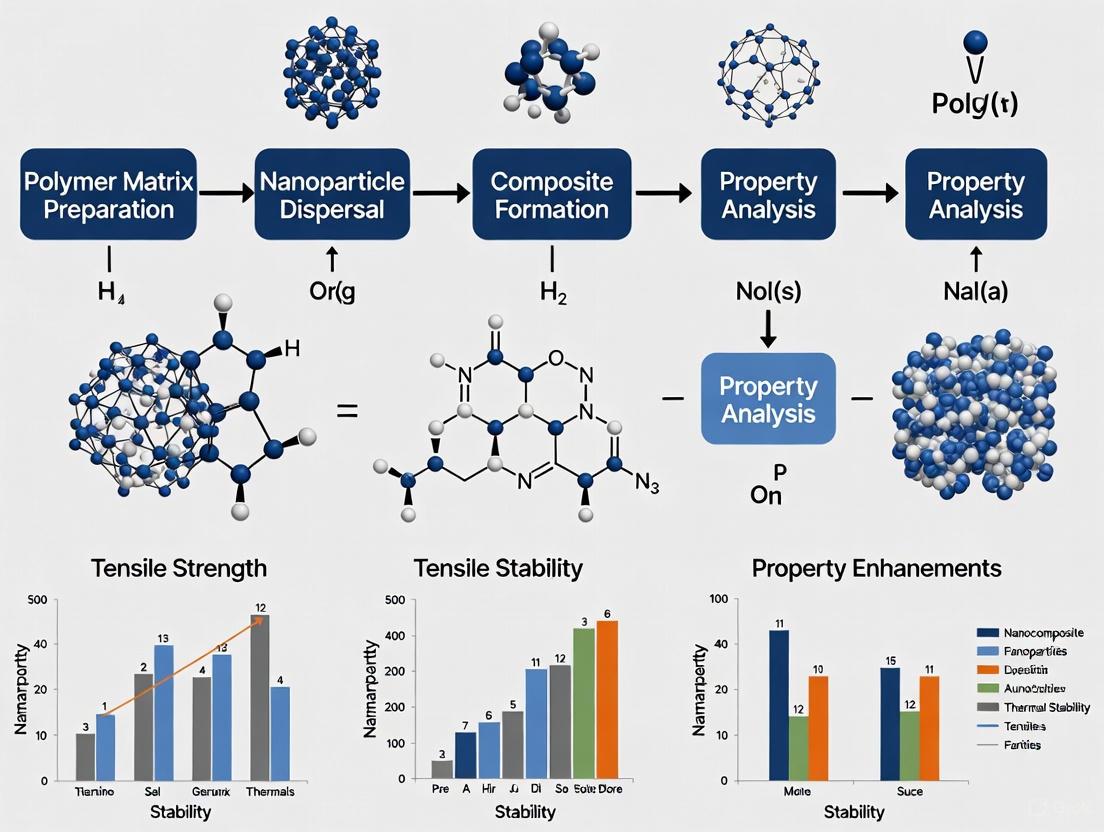
This article provides a comprehensive examination of polymer nanocomposite fabrication, tailored for researchers and drug development professionals.
Fabrication of Polymer Nanocomposites: Advanced Methods, Biomedical Applications, and Future Directions
Abstract
This article provides a comprehensive examination of polymer nanocomposite fabrication, tailored for researchers and drug development professionals. It explores the foundational science behind nanomaterials like graphene, carbon nanodots, and metal oxides, and details advanced fabrication methodologies from solution casting to 3D printing. The content addresses critical challenges in optimization and dispersion, while also covering validation techniques for biomedical applications, including drug delivery, antimicrobial coatings, and bioimaging. By synthesizing current research and future trends, this review serves as a strategic guide for leveraging these advanced materials in next-generation therapeutic and diagnostic solutions.
The Building Blocks: Understanding Nanomaterials and Polymer Matrices for Advanced Composites
In the realm of materials science, polymer nanocomposites (PNCs) represent a significant advancement, achieved by dispersing nanoscale fillers into polymer matrices. These nanofillers, typically with at least one dimension less than 100 nanometers, impart transformative properties to the base polymer, resulting in materials with enhanced mechanical, thermal, electrical, and barrier characteristics [1]. The immense surface area of well-dispersed nanofillers creates a substantial polymer-filler interfacial region, known as the interphase, which governs the composite's ultimate properties [2]. Based on their chemical composition and origin, nanofillers are fundamentally categorized into three core classes: carbon-based, organic, and inorganic. This document delineates these classes, their properties, and standard protocols for their incorporation into polymers, providing a framework for research and development aimed at fabricating advanced functional materials.
Classification and Properties of Core Nanofiller Classes
Carbon-Based Nanofillers
Carbon-based nanofillers are renowned for their exceptional electrical and thermal conductivity, high mechanical strength, and large specific surface area [3]. When incorporated into polymeric matrices, they facilitate the creation of nanocomposites for advanced applications in electronics, energy storage, and aerospace [4].
- Carbon Nanotubes (CNTs): CNTs are cylindrical nanostructures composed of rolled graphene sheets, classified as either single-walled (SWCNT) or multi-walled (MWCNT) [1]. They exhibit an elastic modulus on the order of 1 TPa and a tensile strength that can reach 300 GPa for defect-free structures [1]. Their high aspect ratio and electrical conductivity make them ideal for creating conductive networks within polymers at low percolation thresholds.
- Graphene and its Derivatives: Graphene is a single layer of sp²-hybridized carbon atoms arranged in a two-dimensional honeycomb lattice [1]. It possesses a Young's modulus of approximately 1 TPa, a fracture strength of 125 GPa, and exceptional electrical and thermal conductivity [1]. Graphene oxide (GO) is a solution-processable derivative of graphene, decorated with oxygen-containing functional groups (e.g., hydroxyl, epoxide, carboxyl), which makes it amphiphilic and amenable to chemical functionalization for improved dispersion [3].
- Other Carbon Allotropes: This class also includes nanodiamond, fullerenes, and carbon dots, each offering unique optical, electronic, and mechanical properties for specialized applications [3].
Table 1: Key Characteristics of Carbon-Based Nanofillers
| Nanofiller Type | Structure/Dimensions | Key Properties | Exemplary Applications |
|---|---|---|---|
| Single-Walled Carbon Nanotubes (SWCNTs) | Single graphene cylinder; Diameter: ~1-2 nm [1] | Elastic Modulus: ~1 TPa; Superior electrical & thermal conductivity [1] | Conductive films, transistors, sensors [3] |
| Multi-Walled Carbon Nanotubes (MWCNTs) | Multiple concentric graphene cylinders; Diameter: 5-20 nm [1] | High tensile strength; Good electrical conductivity [1] | Polymer reinforcement, flexible electrodes, antistatic coatings [3] [4] |
| Graphene | 2D sheet; Thickness: ~0.34 nm [1] | Young's Modulus: ~1 TPa; Electrical conductivity: up to 6000 S/cm [1] | Barrier films, composite reinforcement, transparent conductors |
| Graphene Oxide (GO) | Functionalized graphene sheet with O-groups [3] | Solution-processable; Amphiphilic; Insulating [3] | Precursor to conductive graphene, membrane materials, composite filler |
| Carbon Black | Nanoparticle aggregates [4] | Conductive; High surface area; UV absorbing | Static dissipation, laser welding additives, pigment [4] |
Inorganic Nanofillers
Inorganic nanofillers include a wide range of metal oxides, clays, and other ceramic nanoparticles. They are primarily used to enhance mechanical strength, thermal stability, flame retardancy, and gas barrier properties of polymers [5] [1].
- Layered Silicates (Nanoclays): Nanoclays, such as montmorillonite, are layered silicates that can be dispersed in polymers to form intercalated or exfoliated structures [5] [1]. An exfoliated structure, where individual silicate layers are uniformly dispersed in the polymer matrix, leads to significant improvements in modulus and gas barrier properties due to the high aspect ratio and creation of a "tortuous path" for diffusing molecules [1].
- Metal Oxide Nanoparticles: Nanoparticles like titanium dioxide (TiO₂), silica (SiO₂), and alumina (Al₂O₃) are common inorganic fillers. For instance, TiO₂ nanoparticles are known for their UV resistance, hardness, and antibacterial activity [6]. Silica nanoparticles are widely used to reinforce polymers, improving mechanical properties like fracture strength [5].
- Other Inorganic Fillers: This category also includes boron nitride (BN) for thermal conductivity, layered double hydroxides (LDH), and molybdenum disulphide (MoS₂) [2].
Table 2: Key Characteristics of Inorganic Nanofillers
| Nanofiller Type | Structure/Dimensions | Key Properties | Exemplary Applications |
|---|---|---|---|
| Montmorillonite Clay | Layered silicate; Layer thickness: ~1 nm [1] | High aspect ratio (~100-1500); Improves modulus & gas barrier [1] [2] | Food packaging, automotive parts, flame-retardant materials |
| Titanium Dioxide (TiO₂) | Nanoparticle; ~30 nm size [6] | UV resistance; Hardness; Antibacterial; Photocatalytic [6] | Self-cleaning coatings, UV-protective films, biomedical composites |
| Nano-Silica (SiO₂) | Spherical nanoparticle [5] | Improves fracture strength, thermal & chemical resistance [5] | Reinforcing filler for tires, adhesives, and transparent composites |
| Boron Nitride (BN) | Layered structure (similar to graphite) [2] | High thermal conductivity; Electrically insulating [2] | Thermal interface materials, electronic packaging |
Organic Nanofillers
Organic nanofillers are derived from natural or synthetic carbon-based sources and are often prized for their sustainability, biodegradability, and low cost. They can improve mechanical properties and impart specific functionalities like antimicrobial activity [6].
- Cellulose Nanocrystals (CNC) and Nanofibrils (CNF): These are derived from plant biomass and possess high tensile strength and stiffness. They are used to create reinforced biocomposites with improved mechanical and barrier properties [2].
- Bio-based Nanoparticles: This includes nanoparticles derived from agricultural waste, such as date seed nanoparticles (DSNP). DSNP, composed mainly of mannan hemicellulose, can enhance the microhardness, wear resistance, and compressive modulus of polymers like PMMA, offering an economical and eco-friendly reinforcing option [6].
- Engineered Polymer Particles: Nanoscale particles of one polymer can be used as a filler in a matrix of another polymer to create tailored morphologies and properties.
Table 3: Key Characteristics of Organic Nanofillers
| Nanofiller Type | Structure/Dimensions | Key Properties | Exemplary Applications |
|---|---|---|---|
| Date Seed Nanoparticles (DSNP) | Irregular organic particles; ~20 nm size [6] | Improves microhardness & wear resistance; Low cost; Eco-friendly [6] | Reinforcing bio-filler for PMMA in dental applications [6] |
| Nanocellulose | Rod-like crystals or fibrils; Width: 5-20 nm [2] | High stiffness; Biodegradable; Renewable | High-strength biodegradable plastics, barrier coatings |
Experimental Protocols for Nanocomposite Fabrication
Protocol: Melt Compounding of Silica/PMMA Nanocomposites
This protocol describes a simple, industrially viable method for dispersing unmodified silica nanoparticles into a thermoplastic polymer (e.g., PMMA) without surface modification or complex chemical reactions [5].
1. Research Reagent Solutions & Materials
- Polymer Matrix: Poly(methyl methacrylate) (PMMA) pellets.
- Nanofiller: Colloidal silica nanoparticles (e.g., Aerosil).
- Equipment: Twin-screw extruder, vacuum oven, hydraulic press, injection molding machine.
2. Step-by-Step Procedure 1. Drying: Dry PMMA pellets in a vacuum oven at 80°C for at least 12 hours to remove moisture. 2. Dry Mixing: Manually pre-mix the dried PMMA pellets with the desired weight percentage (e.g., 1-10 wt%) of silica nanoparticles in a zip-lock bag. 3. Melt Compounding: Feed the pre-mix into a twin-screw extruder. Utilize a temperature profile appropriate for PMMA (e.g., 180-220°C from feed to die) and a high screw speed (e.g., 200-300 rpm) to generate sufficient shear stress. The shear forces in the molten polymer break down the loose silica agglomerates, leading to dispersion [5]. 4. Pelletizing: The extruded strand is passed through a water bath and subsequently pelletized. 5. Post-processing & Molding: Dry the composite pellets and then injection mold or compression mold them into standard test specimens (e.g., ASTM D638 for tensile testing) for characterization.
3. Critical Control Points
- Moisture Control: Ensure polymers and fillers are thoroughly dried to prevent void formation and polymer degradation.
- Shear Optimization: Screw speed and design must be optimized to provide enough shear for deagglomeration without degrading the polymer matrix.
- Safety: Standard personal protective equipment (PPE) including a lab coat, safety glasses, and heat-resistant gloves must be worn.
Protocol: In Situ Polymerization for PANI/CNT Nanocomposites
This protocol involves the oxidative polymerization of aniline in the presence of carbon nanotubes, resulting in a uniform coating of polyaniline (PANI) on the CNT surface, which is beneficial for sensor and supercapacitor applications [3] [7].
1. Research Reagent Solutions & Materials
- Monomer: Aniline.
- Nanofiller: Single-walled or multi-walled carbon nanotubes.
- Oxidizing Agent: Ammonium persulfate (APS).
- Acid Dopant: 1M Hydrochloric acid (HCl).
- Solvent: Deionized water.
- Equipment: Ultrasonic bath, three-neck flask, mechanical stirrer, ice bath, vacuum filtration setup.
2. Step-by-Step Procedure 1. CNT Dispersion: Disperse a known weight of CNTs (e.g., 1-5 wt% relative to aniline) in 1M HCl using an ultrasonic bath for 30-60 minutes to achieve a homogeneous dispersion. 2. Monomer Addition: Transfer the CNT dispersion to a three-neck flask equipped with a mechanical stirrer. Add the aniline monomer to the flask and continue stirring in an ice bath (0-5°C). 3. Initiator Preparation: Dissolve ammonium persulfate in 1M HCl in a separate beaker, pre-cooled in the ice bath. 4. Polymerization: Slowly add the APS solution dropwise to the stirring CNT/aniline mixture. The reaction mixture will gradually darken. 5. Reaction Completion: Allow the reaction to proceed with continuous stirring for 4-12 hours in the ice bath. 6. Isolation and Washing: Recover the resulting PANI/CNT nanocomposite by vacuum filtration. Wash the precipitate repeatedly with deionized water and ethanol until the filtrate is clear and neutral. 7. Drying: Dry the final product in a vacuum oven at 60°C for 24 hours.
3. Critical Control Points
- Temperature Control: Maintaining a low temperature (0-5°C) is crucial for controlling the polymerization rate and obtaining the desired emeraldine salt form of PANI.
- Dispersion Quality: Homogeneous initial dispersion of CNTs is essential to prevent aggregation during polymerization and to ensure a uniform coating.
- Safety: Aniline is toxic, and APS is a strong oxidizer. Handling must be conducted in a fume hood with appropriate PPE.
Protocol: Solvent Casting for PMMA/DSNP Biocomposites
This protocol outlines the preparation of PMMA composites reinforced with organic date seed nanoparticles for dental applications, utilizing a simple solvent casting and self-curing method [6].
1. Research Reagent Solutions & Materials
- Polymer Matrix: Poly(methyl methacrylate) powder and methyl methacrylate monomer liquid.
- Nanofiller: Date seed nanoparticles (DSNP, ~20 nm) [6].
- Solvent: Not required for self-curing.
- Equipment: Analytical balance, mixing vessel, cylindrical molds, pressure pot.
2. Step-by-Step Procedure 1. Weighing: Accurately weigh the PMMA powder and the desired weight percentage of DSNP (e.g., 0.3 to 1.5 wt%) [6]. 2. Dry Mixing: Manually mix the PMMA powder and DSNP in a container to achieve a homogeneous dry pre-mix. 3. Monomer Addition: Add the PMMA monomer liquid (hardener) to the powder mixture at a recommended ratio (e.g., 1:2 monomer-to-powder by weight). Mix thoroughly for a set time (e.g., 20 minutes) to form a homogeneous dough [6]. 4. Packing and Curing: Pack the dough into a cylindrical mold. Cure the composite at room temperature and under pressure (e.g., 1.4 bar) for 2 hours to obtain the final specimen [6]. 5. Post-processing: The cured samples are then demolded and can be cut into specific dimensions for testing.
3. Critical Control Points
- Mixing Homogeneity: Ensuring a uniform distribution of DSNP in the PMMA powder before adding the monomer is critical to avoid agglomerates in the final composite.
- Curing Conditions: Time, temperature, and pressure during curing must be controlled to achieve optimal polymerization and prevent porosity.
- Filler Loading: Optimal mechanical properties (e.g., microhardness, compressive modulus) are typically observed at specific filler loadings (e.g., 1.2 wt% for DSNP); exceeding this can lead to agglomeration and property deterioration [6].
The Scientist's Toolkit: Essential Research Reagents & Materials
Table 4: Key Reagents and Materials for Nanocomposite Fabrication
| Item Name | Function/Application | Critical Notes |
|---|---|---|
| Twin-Screw Extruder | Melt compounding & dispersion of nanofillers in thermoplastics [5] | Provides high shear stress essential for breaking down nanofiller agglomerates. |
| Ultrasonic Bath/Probe | Dispersion of nanofillers in solvents or monomers for in-situ or solution methods [3] | Crucial for achieving initial homogeneous dispersion and preventing re-agglomeration. |
| Carbon Nanotubes (MWCNT/SWCNT) | Conductive filler for creating electrically active composites [3] [1] | Prone to aggregation; often requires functionalization or surfactant use for good dispersion. |
| Graphene Oxide (GO) | Versatile, solution-processable 2D nanofiller [3] | Serves as a precursor to conductive graphene; functional groups allow for covalent modification. |
| Montmorillonite Clay | Layered silicate for improving mechanical strength & gas barrier properties [1] [2] | Often requires organic modification (e.g., with alkylammonium salts) to be compatible with hydrophobic polymers. |
| Date Seed Nanoparticles (DSNP) | Economical & eco-friendly organic filler for reinforcement [6] | Example of a sustainable filler from waste biomass; can be competitive with inorganic fillers. |
| Ammonium Persulfate (APS) | Oxidizing initiator for in-situ polymerization of aniline [7] | Reaction must be conducted at low temperatures (0-5°C) for controlled polymerization. |
Visualization of Nanocomposite Fabrication Workflows
Diagram 1: Primary fabrication methods for polymer nanocomposites, highlighting key dispersion and consolidation steps.
Diagram 2: Morphology types for layered filler (e.g., clay) nanocomposites, determining final properties.
The selection of an appropriate polymer matrix is a critical first step in the fabrication of polymer nanocomposites, dictating the final material's properties, processability, and suitability for advanced applications. Polymer matrices are broadly categorized as either synthetic or biopolymer (natural) in origin, each with distinct advantages and limitations [8] [9]. This selection is paramount in biomedical fields such as drug delivery, tissue engineering, and regenerative medicine, where the matrix must meet stringent requirements for biocompatibility, biodegradation kinetics, and mechanical performance [8] [10].
Synthetic polymers are chemically synthesized, offering tunable mechanical properties, predictable biodegradation rates, and high batch-to-batch consistency [10] [11]. In contrast, biopolymers are derived from natural sources such as plants, animals, or microorganisms, and typically exhibit inherent biocompatibility, bioactivity, and often, enhanced sustainability profiles [12] [9]. The emerging trend involves blending or creating composites from both types to develop materials that synergize the performance and processability of synthetic polymers with the bio-recognition and low immunogenicity of biopolymers [8] [11]. This document provides a structured comparison and detailed protocols to guide researchers in selecting and processing polymer matrices for nanocomposites fabrication.
Comparative Analysis: Synthetic Polymers vs. Biopolymers
The choice between synthetic and biopolymer matrices involves a multi-faceted trade-off. The tables below summarize key characteristics, common polymers, and their applications to inform this decision.
Table 1: Characteristics and Applications of Common Synthetic Polymer Matrices
| Polymer | Key Characteristics | Typical Applications in Nanocomposites | Limitations |
|---|---|---|---|
| Polylactic Acid (PLA) | Biodegradable, biocompatible, good mechanical strength, brittle [12] [10] | Tissue engineering scaffolds, drug delivery systems, packaging [12] [8] | Hydrophobic, slow degradation rate, poor toughness [8] |
| Polycaprolactone (PCL) | Biodegradable, semi-crystalline, high elongation at break, slow degradation [8] [10] | Long-term implantable devices, drug delivery capsules, tissue engineering [8] | Low mechanical strength, hydrophobic [8] |
| Polyvinyl Alcohol (PVA) | Water-soluble, biodegradable, highly biocompatible, excellent film-forming ability [11] | Hydrogel matrices for wound dressings, drug delivery, emulsifier [8] [11] | Insufficient elasticity in pure form [11] |
| Polyethylene Glycol (PEG) | Hydrophilic, biocompatible, resistant to protein adsorption [8] [11] | Drug conjugation, hydrogel matrices for tissue engineering, surface functionalization [8] | Non-biodegradable in low MW forms [8] |
| Polypropylene (PP) | High chemical resistance, good mechanical properties, low cost, non-biodegradable [10] | Medical devices, sutures, prosthetic meshes [10] | Poor UV resistance, flammable, limited functional groups for modification [10] |
Table 2: Characteristics and Applications of Common Biopolymer Matrices
| Polymer | Key Characteristics | Typical Applications in Nanocomposites | Limitations |
|---|---|---|---|
| Chitosan | Biodegradable, biocompatible, antimicrobial, cationic, hemostatic [12] [11] | Wound healing dressings, drug delivery, tissue engineering scaffolds [12] [11] | Poor stability in aqueous solutions, low mechanical strength [12] |
| Alginate | Biocompatible, biodegradable, forms hydrogels with divalent cations [12] [11] | Cell encapsulation, wound dressings, model biofilms [12] | Low mechanical strength, limited cell adhesion [8] |
| Hyaluronic Acid (HA) | Major ECM component, high water retention, biodegradable, biocompatible [11] | Tissue regeneration, drug delivery, viscoelastic supplements [11] | Rapid degradation, poor mechanical properties [8] |
| Cellulose (and Bacterial Cellulose) | Most abundant biopolymer, high mechanical strength, biodegradable, hydrophilic [11] | Wound dressing membranes, reinforcement in composites [11] | Lacks intrinsic antibacterial activity, difficult to process [11] |
| Starch | Abundant, low-cost, biodegradable, good film-forming ability [11] | Drug delivery carriers, biodegradable packaging composites [11] | Water sensitivity, brittle [11] |
Table 3: Decision Matrix for Polymer Selection Based on Application Requirements
| Application Requirement | Recommended Polymer Type | Specific Examples & Rationale |
|---|---|---|
| High Mechanical Strength | Synthetic Polymers | PCL for ductility; PLA for stiffness. Biopolymers generally require reinforcement [8] [10]. |
| Rapid Biodegradation | Biopolymers (generally) | Chitosan, alginate, HA degrade more rapidly than many synthetics. PLA and PCL rates are tunable but slower [12] [8]. |
| Inherent Bioactivity | Biopolymers | Chitosan (antimicrobial), HA (cell signaling), collagen (cell adhesion) offer intrinsic biological functions [12] [11]. |
| Controlled Drug Release | Synthetic Polymers | PLGA, PLA offer highly predictable and tunable degradation kinetics for controlled release profiles [8]. |
| Tissue Engineering Scaffolds | Blend/Composite | Synthetic (e.g., PLA, PCL) for structural integrity; Biopolymer (e.g., collagen, HA) for bioactivity [8] [9]. |
| Minimal Immunogenic Response | Synthetic Polymers | High-purity synthetic polymers (e.g., PEG, PLA) typically evoke a lower immune response than animal-derived biopolymers [10]. |
Polymer Selection Workflow
The following diagram outlines a systematic decision-making workflow for selecting a polymer matrix based on key application requirements.
Experimental Protocols for Nanocomposite Fabrication
This section details standard protocols for incorporating nanofillers into polymer matrices, a critical step in fabricating advanced nanocomposites.
Protocol: In Situ Polymerization for 2D Material Nanocomposites
This method is suitable for creating nanocomposites with graphene oxide, MXenes, or other 2D materials, resulting in strong interfacial bonding and homogeneous dispersion [13].
1. Principle: The monomer is polymerized in the presence of a pre-dispersed nanofiller. The growing polymer chains graft onto or interact with the filler's surface, leading to a composite with excellent filler dispersion and strong matrix-filler interaction [13].
2. Materials:
- Nanofiller: e.g., Graphene Oxide (GO) flakes.
- Monomer: e.g., Methyl methacrylate (MMA), ε-Caprolactone, or other suitable monomers.
- Initiator: e.g., Azobisisobutyronitrile (AIBN) for thermal initiation.
- Solvent: e.g., Toluene, DMF, or water, depending on monomer and filler solubility/dispersibility.
- Equipment: Ultrasonic bath/probe, round-bottom flask, reflux condenser, magnetic stirrer, heating mantle, inert gas (N₂) supply.
3. Step-by-Step Procedure: 1. Nanofiller Dispersion: Weigh the required amount of nanofiller (e.g., 1-5 wt% of expected polymer yield) and disperse it in the solvent using probe ultrasonication for 30-60 minutes to create a homogeneous suspension. 2. Reaction Mixture Preparation: Transfer the dispersion to a clean, dry round-bottom flask. Add the purified monomer and initiator (e.g., 1 wt% relative to monomer). 3. Deoxygenation: Seal the flask and purge the mixture with inert gas (N₂ or Ar) for 20-30 minutes while stirring to remove oxygen, which can inhibit free-radical polymerization. 4. Polymerization: Under a continuous inert atmosphere, heat the reaction mixture to the initiator's decomposition temperature (e.g., 60-80°C for AIBN) with constant stirring for a predetermined time (e.g., 6-24 hours). 5. Precipitation & Purification: After cooling, precipitate the resulting nanocomposite by slowly pouring the reaction mixture into a large excess of a non-solvent (e.g., methanol for PMMA) under vigorous stirring. 6. Isolation & Drying: Collect the precipitated solid via filtration or centrifugation. Wash repeatedly with non-solvent to remove residual monomer and un-grafted polymer. Dry the final product under vacuum at 40-60°C until constant weight is achieved.
4. Critical Parameters for Reproducibility:
- Filler Dispersion Quality: The duration and power of ultrasonication are critical to exfoliate and disperse the nanofiller without causing degradation.
- Oxygen Exclusion: Strict deoxygenation is essential for high monomer conversion and molecular weight in free-radical polymerizations.
- Filler:Monomer Ratio: This ratio directly impacts final composite properties and processability; it must be optimized for each system.
Protocol: Solution Blending and Casting for Biopolymer Nanocomposites
This versatile and simple method is ideal for heat-sensitive biopolymers like chitosan, alginate, and proteins, and is applicable for incorporating various nanofillers (e.g., ZnO, Ag NPs, cellulose nanofibers) [12] [14].
1. Principle: The polymer and nanofiller are separately dissolved/dispersed in a common solvent and then mixed. The solvent is evaporated, leading to the formation of a solid nanocomposite film or matrix [13].
2. Materials:
- Biopolymer: e.g., Chitosan (medium molecular weight).
- Nanofiller: e.g., Zinc Oxide nanoparticles (ZnO NPs).
- Solvent: e.g., 1% v/v acetic acid solution for chitosan.
- Crosslinker (Optional): e.g., Genipin or Tripolyphosphate (TPP).
- Equipment: Magnetic stirrer, ultrasonic bath, vacuum filtration setup, glass petri dishes, vacuum oven.
3. Step-by-Step Procedure: 1. Polymer Solution Preparation: Dissolve the biopolymer (e.g., 2g of chitosan in 100 mL of 1% acetic acid) by stirring for several hours until a clear, viscous solution is obtained. 2. Filler Dispersion: Weigh the nanofiller (e.g., 1-10 wt% relative to polymer) and disperse it in the same solvent using ultrasonication for 20-30 minutes. 3. Blending: Add the nanofiller dispersion dropwise to the polymer solution under vigorous mechanical stirring. Continue stirring for 1-2 hours to ensure homogeneous mixing. 4. Crosslinking (Optional): For hydrogels or to improve stability, a crosslinking agent can be added at this stage with gentle stirring. 5. Casting: Pour the final mixture into a leveled glass petri dish. 6. Solvent Evaporation: Allow the solvent to evaporate at room temperature or in an oven at 40°C for 24-48 hours. 7. Post-processing: Carefully peel the resulting film from the petri dish. For further drying, place the film in a vacuum oven at 40°C to remove residual solvent.
4. Critical Parameters for Reproducibility:
- Solution Homogeneity: Ensure the polymer is fully dissolved and the nanofiller is uniformly dispersed before blending to prevent agglomerates.
- Solvent Evaporation Rate: A slow, controlled evaporation rate helps in forming films with uniform morphology and prevents bubble formation.
- pH Control: For biopolymers like chitosan and alginate, the solution pH can drastically affect chain conformation and crosslinking efficiency.
Experimental Workflow for Nanocomposite Fabrication and Analysis
The following diagram illustrates the general workflow for fabricating and characterizing a polymer nanocomposite, integrating the protocols above.
The Scientist's Toolkit: Research Reagent Solutions
Table 4: Essential Materials and Reagents for Polymer Nanocomposites Research
| Reagent / Material | Function & Application Notes | Key Considerations |
|---|---|---|
| Polylactic Acid (PLA) | A versatile, biodegradable synthetic polymer matrix for scaffolds and drug delivery [12] [8]. | Grade: Opt for medical-grade or high-purity to ensure biocompatibility. Crystallinity: Amorphous (PLLA) vs. semi-crystalline (PDLLA) affects degradation and mechanics. |
| Chitosan | A cationic biopolymer matrix with inherent antimicrobial properties for wound dressings and tissue engineering [12] [11]. | Degree of Deacetylation: Impacts solubility, biodegradability, and bioactivity. Molecular Weight: Affects solution viscosity and mechanical strength of final product. |
| Polycaprolactone (PCL) | A synthetic, slow-degrading, ductile polymer matrix for long-term implants and tissue engineering [8] [10]. | Molecular Weight: Higher MW increases melt viscosity and mechanical strength. Application: Ideal for electrospinning and 3D printing due to its low melting point. |
| Graphene Oxide (GO) | A 2D nanofiller for reinforcement, electrical conductivity, and functionalization in composites [13]. | Dispersion: Requires intense ultrasonication in aqueous or polar solvents. Functionalization: Surface -OH and -COOH groups allow for covalent bonding with polymer matrices. |
| Zinc Oxide (ZnO) Nanoparticles | A nanofiller imparting antimicrobial and reinforcing properties to biopolymer matrices like chitosan [12]. | Concentration: Optimal loading (typically 1-5%) is critical; higher loads can cause agglomeration and brittleness. Cytotoxicity: Dose-dependent effects must be evaluated for biomedical use. |
| Azobisisobutyronitrile (AIBN) | A common thermal free-radical initiator for in situ polymerizations [13]. | Handling: Store refrigerated. Decomposition: Half-life of ~10 hours at 65°C; used to calculate polymerization time. |
| Genipin | A natural, low-toxicity crosslinking agent for biopolymers like chitosan and collagen [12]. | Reaction: Forms stable blue pigments upon crosslinking. Safety: Preferable over glutaraldehyde due to significantly lower cytotoxicity. |
| Tripolyphosphate (TPP) | An ionic crosslinker used to form chitosan nanoparticles and hydrogels via electrostatic interaction [12]. | Process: Crosslinking is pH-dependent and occurs rapidly upon mixing. Application: Primarily used for ionic gelation and controlled release systems. |
Polymer nanocomposites (PNCs) represent a advanced class of materials formed by incorporating nanofillers, with at least one dimension between 1-100 nm, into a polymer matrix [1] [15]. The integration of these nanoscale fillers leads to exceptional property enhancements that are often unattainable with conventional micro-scale fillers, due to the high surface area-to-volume ratio and unique nano-effects of the additives [16] [17]. These materials have demonstrated transformative potential across aerospace, automotive, electronics, and biomedical sectors [15] [18]. This application note details the key mechanical, electrical, and thermal property enhancements achievable with nanofillers, providing structured quantitative data and standardized experimental protocols to support research and development activities.
Key Property Enhancements by Nanofiller Type
Table 1: Mechanical property enhancements achieved with various nanofillers.
| Nanofiller Type | Polymer Matrix | Filler Loading | Tensile Strength Increase | Modulus Increase | Reference System |
|---|---|---|---|---|---|
| Graphene Oxide-Nanosilica Hybrid | Isophthalic Polyester | 0.3 wt% GO + 3 wt% NS | 38% | 25% | Neat resin [19] |
| Multi-Walled Carbon Nanotubes (MWCNTs) | Silicone Rubber | 3 phr | - | 125% (Compressive) | Control sample [17] |
| Ag Nanoparticles | PVA/CMC/PEDOT:PSS | 7 mg | - | - | Base film [20] |
| Triple-Filler Hybrid (CNT, Clay, Fe) | Silicone Rubber | Hybrid system | Significant improvement | 137% (Compressive) | Control sample [17] |
Table 2: Electrical and thermal property enhancements achieved with various nanofillers.
| Nanofiller Type | Polymer Matrix | Filler Loading | Electrical Conductivity | Thermal Conductivity | Reference System |
|---|---|---|---|---|---|
| Ag Nanoparticles | PVA/CMC/PEDOT:PSS | 7 mg | 2.29 × 10⁻⁷ S·cm⁻¹ | - | 1.98 × 10⁻⁹ S·cm⁻¹ [20] |
| Boron Nitride with Lead Oxide | Polymer Nanocomposite | 13 wt% | - | 18.874 W/(m·K) | Base composite [17] |
| Reduced Graphene Oxide | Polyetherimide | 20 wt% | ~10⁻⁷ S/cm | - | Base polymer [17] |
| Carbon Nanotubes | Various Polymers | 0.5-5 wt% | Reaches percolation threshold | Significant improvement | Insulating polymer [1] [21] |
Mechanical Properties Enhancement
Nanofillers remarkably enhance mechanical properties including tensile strength, modulus, stiffness, and fracture toughness through several reinforcing mechanisms. The high aspect ratio of nanofillers like carbon nanotubes (CNTs) and graphene enables efficient stress transfer from the polymer matrix to the stiff nanofillers [1] [22]. The enormous surface area of nanofillers creates extensive polymer-filler interfaces, facilitating strong interfacial interactions and restricting polymer chain mobility [16] [17]. Hybrid filler systems demonstrate synergistic effects; for instance, combining one-dimensional CNTs with two-dimensional graphene creates a robust network that significantly improves load transfer and mechanical strength [23] [19].
Electrical Properties Enhancement
The incorporation of conductive nanofillers transforms insulating polymers into conductive composites through the formation of percolative networks. Carbon-based nanofillers including CNTs, graphene, and carbon black impart electrical conductivity when their concentration exceeds the percolation threshold, forming continuous conductive pathways [1] [21]. The electrical conductivity of nanocomposites exhibits a sharp, non-linear increase at this critical filler concentration, with enhancements reaching several orders of magnitude [1] [20]. Nanofillers with high aspect ratios, such as CNTs and graphene nanoribbons, achieve percolation at lower loadings due to their network-forming capability [21]. Research demonstrates that Ag nanoparticles significantly increase DC conductivity from 1.98 × 10⁻⁹ to 2.29 × 10⁻⁷ S·cm⁻¹ in PVA/CMC/PEDOT:PSS systems [20].
Thermal Properties Enhancement
Thermal stability and conductivity are substantially improved through nanofiller incorporation. Thermally conductive nanofillers such as graphene, boron nitride, and CNTs create percolating networks for efficient heat transport, with graphene composites achieving exceptional thermal conductivity up to 5000 W/m·K in isolated forms [1] [15]. Nanofillers act as superior insulators and mass transport barriers, enhancing thermal stability and flame retardancy by forming protective char layers that delay combustion [22] [19]. Studies report thermal conductivity reaching 18.874 W/(m·K) in boron nitride and lead oxide nanocomposites at 13 wt% loading [17]. Additionally, nanocomposites demonstrate improved glass transition temperatures and maximum thermal decomposition temperatures, expanding their operational temperature ranges [19].
Experimental Protocols
Solution Casting for Nanocomposite Fabrication
Table 3: Key research reagents for solution casting protocol.
| Reagent/Material | Specification | Function in Protocol |
|---|---|---|
| Polyvinylidene Fluoride (PVDF) | Average MW ~534,000 g/mol | Polymer Matrix [23] |
| Multi-Walled Carbon Nanotubes (MWCNTs) | Purity >95%, OD: 10-20 nm, L: 0.5-2 μm | Conductive Nanofiller [23] |
| N,N-Dimethylformamide (DMF) | Analytical grade, purity ≥99.8% | Solvent [23] |
| Graphite Nanoparticles | From mechanical pencil lead (0.7 mm) | Reinforcing Nanofiller [23] |
Figure 1: Solution casting workflow for nanocomposites.
Procedure:
- Polymer Dissolution: Dissolve 1 g polymer (e.g., PVDF, PVA) in 50 ml of appropriate solvent (e.g., DMF, deionized water) with constant stirring at elevated temperature (70-90°C) until completely dissolved [23] [20].
- Filler Incorporation: Gradually add nanofillers (e.g., 20 mg MWCNTs + 30 mg graphite nanoparticles for PVDF system) to the polymer solution under continuous stirring [23].
- Homogenization: Subject the mixture to ultrasonication using a bath sonicator for 1 hour to deagglomerate nanoparticles and ensure uniform dispersion [23] [20].
- Casting: Pour the homogeneous solution into polystyrene Petri dishes, ensuring even distribution.
- Solvent Evaporation: Allow solvent evaporation undisturbed overnight at room temperature [23].
- Drying: Transfer the cast film to a hot air oven at 100°C for 2 hours to remove residual solvent [23].
Critical Parameters:
- Solvent selection based on polymer-nanofiller compatibility
- Ultrasonication time and power to prevent nanofiller damage
- Controlled evaporation rate to avoid bubble formation
- Drying temperature below polymer degradation point
Melt Blending Protocol
Figure 2: Melt blending process for nanocomposites.
Procedure:
- Material Preparation: Pre-dry polymer pellets and nanofillers to remove moisture content.
- Melting: Feed polymer into a twin-screw extruder with temperature zones set according to polymer melting point (e.g., 180°C for PLA) [18].
- Filler Incorporation: Add nanofillers dropwise into the melting polymer through the feeder port.
- Melt Blending: Process the mixture in a Haake MiniLab II co-rotating twin-screw extruder for 15 minutes retention time at 20 rpm to achieve homogeneous dispersion [18] [16].
- Pelletization: Extrude the nanocomposite through a die and pelletize the strands for further processing.
- Molding: Process pellets using injection molding or compression molding to form final products.
Critical Parameters:
- Optimized temperature profile to prevent thermal degradation
- Screw speed and design to control shear forces
- Residence time for complete dispersion without filler damage
- Cooling rate to control crystallization behavior
Advanced Dispersion Techniques
Physical Dispersion Methods
Achieving optimal nanofiller dispersion remains critical for maximizing property enhancements in PNCs. Advanced physical dispersion techniques include:
Ultrasonication: Uses high-frequency sound waves to create cavitation bubbles that generate intense local pressure and shear forces, effectively breaking apart nanoparticle clusters [16]. Particularly effective for CNT dispersion, but excessive ultrasonication can cause nanotube shortening and surface defects [16].
Bead Milling: Grinds nanoparticle aggregates between small beads in a rotating chamber, generating high shear stress suitable for producing stable dispersions at larger scales [16]. Effective for high-viscosity systems but requires optimization of bead size and material to prevent contamination.
Three-Roll Milling: A shear-intensive technique particularly effective for dispersing nanoparticles in highly viscous matrices by passing the mixture through three rollers [16]. Commonly used for graphene and clay composites where uniform dispersion of plate-like particles is necessary.
Twin-Screw Extrusion: Applies both shear and thermal energy through intermeshing screws, making it suitable for industrial-scale production [16]. Offers continuous processing capability with controllable shear forces.
The strategic incorporation of nanofillers into polymer matrices enables remarkable enhancements in mechanical, electrical, and thermal properties, far exceeding the capabilities of traditional composites. The quantitative data and standardized protocols provided in this application note serve as essential guidelines for researchers developing next-generation polymer nanocomposites for advanced applications. Property enhancements are critically dependent on achieving optimal nanofiller dispersion and polymer-filler interfacial interactions, which can be accomplished through the detailed fabrication and characterization methods outlined. As research progresses, the development of hybrid nanofiller systems and sustainable nanocomposites presents promising avenues for creating multifunctional materials with tailored properties for specialized applications across diverse industrial sectors.
Interfacial Interactions and Bonding Mechanisms in Nanocomposites
In the field of polymer nanocomposites fabrication, the interface between the nanofiller and the polymer matrix is not merely a boundary but a dynamic, three-dimensional region that governs overall material performance. The properties of this interfacial region—dictated by chemical, physical, and mechanical bonding mechanisms—determine the efficiency of stress transfer, environmental stability, and ultimately, the composite's suitability for advanced applications. Achieving optimal properties in polymer nanocomposites requires a deep understanding of these interfacial interactions, which can be engineered through surface treatments, precise processing, and selective material pairing. This document provides detailed application notes and experimental protocols for characterizing and manipulating these critical interfaces, with particular relevance for scientific researchers and drug development professionals who require precise control over material properties in complex biological or structural environments.
Fundamental Bonding Mechanisms and Interfacial Phenomena
Primary Interaction Mechanisms
The interfacial region in polymer nanocomposites facilitates property enhancement through several distinct but often overlapping bonding mechanisms. Physical adsorption occurs through secondary interactions including van der Waals forces, hydrogen bonding, and electrostatic attractions, which although individually weak, become significant at the nanoscale due to the enormous specific surface area of nanofillers [24]. Chemical bonding provides stronger, more durable interfaces through covalent attachment between functionalized nanoparticle surfaces and polymer chains, often mediated by coupling agents such as silanes [25]. Additionally, mechanical interlocking contributes to interfacial strength when polymer chains physically entangle with surface features or porous structures on nanofillers. The dominance of any particular mechanism depends on the chemical nature of both components and the processing conditions employed.
Bilayer Interfacial Architecture in Polar Polymers
Recent advanced characterization techniques have revealed that the interfacial region around nanoparticles in polar polymers exhibits a complex bilayer architecture rather than a simple monolayer. Direct observation using techniques like AFM-IR and PFM has identified:
- An inner bound layer (~10 nm thick) where polymer chains are strongly adsorbed to the nanoparticle surface with aligned molecular dipoles and higher segment density [26]. This layer exhibits distinct polar conformation and remains stable under mechanical and thermal stress.
- An outer polar layer (extending over 100 nm) with randomly oriented dipoles that gradually transition to bulk polymer properties [26]. This extended interfacial zone demonstrates that nanoparticle influence permeates far beyond immediate surface contact.
The spatial distribution and properties of these interfacial layers are significantly affected by interparticle distance. At low nanoparticle loadings where interparticle distances are large, complete polar interfacial regions form around isolated nanoparticles. As loading increases and interparticle distance decreases, overlapping interfacial regions can weaken polar conformation development, while interconnected nanoparticles create continuous interfacial pathways [26].
Table 1: Comparative Analysis of Nanofiller Types and Their Interfacial Characteristics
| Nanofiller Type | Representative Materials | Typical Dimensions | Key Interfacial Advantages | Primary Bonding Mechanisms |
|---|---|---|---|---|
| 2D Layered | Clay montmorillonite (MMT), Graphene | 1-5 nm thickness, 100-500 nm diameter [24] | High aspect ratio (>50) enabling efficient stress transfer [24] | Ion-dipole bonding, physical adsorption, mechanical interlocking |
| 1D Fibrous | Carbon nanotubes (CNT) | Diameter: nanometers, Length: micrometers [24] | High axial strength (50-150 GPa) and modulus (1 TPa) [24] | Covalent functionalization, π-π stacking, van der Waals forces |
| 0D Spherical | Silica (SiO₂), Titanium Dioxide (TiO₂) | 25-35 nm diameter [25] [26] | Isotropic reinforcement, surface modification versatility | Covalent bonding (via silanes), hydrogen bonding, physical adsorption |
Experimental Protocols for Interface Engineering and Characterization
Protocol: Surface Modification of SiO₂ Nanoparticles Using GPTMS
This protocol describes the silanization of fumed silica nanoparticles with glycidoxypropyltrimethoxysilane (GPTMS) to enhance compatibility with epoxy resin systems, based on established methodology with demonstrated improvements in mechanical and bonding properties [25].
Materials and Equipment
- Fumed silica nanoparticles (primary particle size: 25-35 nm)
- Glycidoxypropyltrimethoxysilane (GPTMS)
- Absolute ethanol (99.98%)
- Acetic acid
- Deionized water
- Ultrasonic bath (frequency: 40 kHz)
- Centrifuge
- Vacuum oven
- Round-bottom flask with stirring capability
Step-by-Step Procedure
Calculate stoichiometric silane requirement using the established relationship [25]:
- ( m{GPTMS} = 6\frac{{M{GPTMS} \cdot m{sio2} \cdot n{OH} \cdot S{sio2} \cdot 10^{18} }}{{N{A} }} )
- Where ( m{GPTMS} ) and ( M{GPTMS} ) are the mass and molecular mass of GPTMS, ( m{sio2} ) is the mass of silica, ( n{OH} ) is the number of hydroxyl groups, ( S{sio2} ) is the specific surface area, and ( N{A} ) is Avogadro's number.
Prepare nanoparticle suspension:
- Disperse 0.5 g of fumed silica in 70 g of ethanol.
- Sonicate the suspension at 30°C for 1 hour to achieve preliminary de-agglomeration.
Hydrolyze the silane coupling agent:
- Prepare a solution of GPTMS in ethanol, with water and acetic acid at a weight ratio of 0.1:0.05 (GPTMS:water:acetic acid).
- Adjust to optimal pH (typically 4.5-5.5) as determined by zeta potential analysis.
Execute surface modification:
- Place the silica suspension in a round-bottom flask with continuous stirring.
- Add the hydrolyzed GPTMS solution dropwise over 30 minutes.
- Continue mixing for 4 hours at room temperature to complete the reaction.
Recover modified nanoparticles:
- Centrifuge the solution to separate functionalized nanoparticles.
- Wash sediments three times with acetone to remove unreacted silane.
- Dry in an oven at 90°C for 12 hours to complete condensation.
Verify grafting success through characterization techniques:
- FTIR: Look for epoxy group signatures (~910 cm⁻¹) and disappearance of silane methoxy groups.
- TGA: Quantify organic content through weight loss in controlled atmosphere.
- XPS: Confirm elemental composition changes indicating successful grafting.
Optimization Notes
For enhanced grafting ratios, testing silane concentrations at 1X, 5X, 10X, and 20X of the stoichiometric calculation (where X represents the stoichiometric concentration) is recommended. Research indicates optimal performance often occurs at 10X concentration [25].
Protocol: Fabrication and Characterization of Epoxy Nanocomposite Adhesives
This protocol outlines the preparation of silica-reinforced epoxy nanocomposites for structural bonding applications, specifically targeting enhanced concrete-steel rebar adhesion.
Materials and Equipment
- Epoxy resin system (e.g., Nanya NPEL-128 resin with Epikure F205 hardener)
- Pure or silanized silica nanoparticles (from Protocol 3.1)
- n-butanol (dispersion medium)
- Vacuum mixer
- Ultrasonic processor (200 W, 40 kHz)
- Testing molds (for tensile, compressive, and pull-test specimens)
- Curing oven
Nanocomposite Preparation Procedure
Disperse nanoparticles in resin:
- Add nanoparticles (0.5, 1, 3, or 5 wt%) to n-butanol.
- Sonicate at 28°C and 200 W for 1 hour to achieve homogeneous dispersion.
- Gently add the suspension to epoxy resin while mixing at 350 rpm for 30 minutes.
Remove solvent:
- Transfer the mixture to a vacuum oven to evaporate n-butanol.
- Apply slow rolling or mixing during this process to prevent settling.
Add curing agent and cast:
- Incorporate hardener at 1:2 weight ratio (hardener:resin) with gentle mixing to minimize air entrapment.
- Pour into pre-treated molds according to required specimen geometry.
Execute curing cycle:
- Allow initial solidification under ambient conditions for 10 hours.
- Perform post-curing at 100°C for 5 hours to maximize cross-linking.
Mechanical and Bonding Performance Assessment
Tensile testing:
- Conduct according to ASTM D638 using dog-bone specimens.
- Reported improvements: 56% increase in strength and 81% increase in modulus compared to pristine epoxy when using silanized nanoparticles [25].
Compressive testing:
- Perform according to ASTM D695 using cylindrical specimens.
- Documented enhancements: 200% improvement in compressive strength and 66% increase in compressive modulus versus unmodified epoxy [25].
Pullout testing for concrete-steel adhesion:
- Embed steel rebar in concrete blocks using nanocomposite adhesive.
- Test bond strength using standardized pullout apparatus.
- Recorded data: 40% improvement in pullout strength, 33% enhancement in displacement, and 130% increase in adhesion energy compared to pristine epoxy adhesive [25].
Microstructural characterization:
- Analyze fractured surfaces using FE-SEM to assess nanoparticle dispersion and failure mechanisms.
- Identify interfacial failure versus cohesive failure patterns.
Protocol: Direct Characterization of Bilayer Interfacial Regions
This advanced protocol utilizes scanning probe techniques to directly observe and characterize the bilayer interfacial structure in polar polymer nanocomposites, based on recently published methodology [26].
Materials and Specialized Equipment
- Polar polymer matrix (e.g., poly(vinylidene fluoride) - PVDF)
- Nanoparticles (e.g., TiO₂, BaTiO₃)
- Atomic force microscope with IR capability (AFM-IR)
- Piezoresponse force microscopy (PFM)
- Scanning electron microscope
- Silicon wafer substrates
- Spin coater
Sample Preparation for Interface Detection
Create protruded nanoparticle configuration:
- Spin-coat a pure polymer layer onto silicon wafer to eliminate substrate effects.
- Prepare nanocomposite with controlled film thickness (t) less than nanoparticle diameter (D) to force nanoparticle protrusion.
- Optimize spin-coating parameters to achieve precise thickness control.
Identify interfacial regions:
- Use SEM and HADDF imaging to locate nanoparticles and observe bound polymer layer.
- Perform carbon mapping to identify regions with higher polymer density.
Interfacial Characterization Steps
Chemical mapping with AFM-IR:
- Acquire IR spectra at characteristic wavenumbers (e.g., 840 cm⁻¹ for polar TTTT conformation and 766 cm⁻¹ for non-polar TGTG conformation in PVDF).
- Map spatial distribution of polar and non-polar conformations around protruded nanoparticles.
- Measure thickness of interfacial regions showing predominant polar conformation.
Dipole orientation analysis with PFM:
- Perform lateral PFM measurements along x and y directions.
- Conduct vertical PFM to determine out-of-plane dipole components.
- Combine phase images to reconstruct three-dimensional dipole orientation.
Data interpretation:
- Identify inner bound layer (∼10 nm) with aligned dipoles perpendicular to nanoparticle surface.
- Measure outer polar layer (over 100 nm) with randomly oriented dipoles.
- Correlate interfacial structure with bulk property measurements.
Research Reagent Solutions and Essential Materials
Table 2: Essential Research Reagents for Nanocomposite Interface Studies
| Reagent/Material | Function/Application | Key Characteristics | Representative Examples |
|---|---|---|---|
| Silane Coupling Agents | Surface modification of hydrophilic nanofillers for compatibility with hydrophobic polymers | Bifunctional structure with organoreactive and hydrolysable groups | GPTMS for epoxy systems [25] |
| Fumed Silica Nanoparticles | Reinforcement filler for polymer matrices | High specific surface area, tunable surface chemistry | 25-35 nm primary particle size [25] |
| Polar Polymer Matrices | Matrix material for studying interfacial polarization effects | Strong molecular dipoles, responsive to external fields | PVDF and its copolymers [26] |
| Metal/Oxide Nanoparticles | Functional fillers for electrical, dielectric, or biological applications | High permittivity, catalytic activity, biocompatibility | TiO₂, BaTiO₃ for dielectric properties [26] |
| Carbonaceous Nanofillers | Reinforcement for electrical and thermal conductivity | High aspect ratio, exceptional mechanical properties | CNTs, graphene [24] |
| Clay Montmorillonite | Two-dimensional reinforcement for barrier and mechanical properties | High aspect ratio platelet structure, ion exchange capacity | Naturally occurring layered silicate [24] |
Visualization of Interfacial Structures and Processes
Bilayer Interfacial Structure Around Nanoparticle
Surface Modification and Nanocomposite Fabrication Workflow
The Role of Surface Functionalization for Biomedical Compatibility
Surface functionalization has emerged as a critical engineering strategy for transforming synthetic materials into biocompatible interfaces for advanced biomedical applications. Within the context of polymer nanocomposite fabrication, surface functionalization enables precise control over the interactions between nanomaterial interfaces and biological systems [27]. This process involves the deliberate modification of nanomaterial surfaces with specific chemical groups, polymers, or biomolecules to enhance their compatibility, functionality, and safety in biological environments [28].
The fundamental challenge in biomedical nanocomposite development lies in the inherent mismatch between synthetic material properties and biological system requirements. While nanomaterials such as metals, metal oxides, carbon-based structures, and MXenes offer exceptional electrical, mechanical, and functional properties, their native surfaces often exhibit poor biocompatibility, potential cytotoxicity, or undesirable immune responses [27] [29]. Surface functionalization bridges this critical gap by engineering bio-instructive interfaces that can modulate protein adsorption, cellular adhesion, immune recognition, and degradation profiles [28].
For researchers and drug development professionals working with polymer nanocomposites, mastering surface functionalization techniques is essential for developing innovative solutions in drug delivery systems, tissue engineering scaffolds, biosensors, and implantable medical devices. This protocol details the methodologies, characterization techniques, and biocompatibility assessment required to ensure the successful translation of functionalized nanocomposites from laboratory research to clinical application.
Key Functionalization Strategies and Mechanisms
Chemical Functionalization Approaches
Table 1: Chemical Surface Functionalization Methods for Nanomaterials
| Method | Key Reagents | Mechanism | Resulting Surface Properties | Common Applications |
|---|---|---|---|---|
| Silanization | APTES, Carboxyethylsilanetriol | Covalent grafting of organosilanes to surface hydroxyl groups | -NH₂ or -COOH groups; Controlled charge density [28] | Metal oxide NPs, Silica-based composites |
| Oxidation | HNO₃/H₂SO₄, H₂O₂ | Introduction of oxygen-containing groups via strong oxidizers | -COOH, -OH, -C=O groups; Negative surface charge [28] | Carbon nanotubes, Graphene, MXenes |
| Click Chemistry | Azides, Alkynes, Cu(I) catalysts | Bioorthogonal cycloaddition for specific ligand attachment | Site-specific functionalization; Controlled orientation [28] | Targeted drug delivery, Bioconjugation |
| Polymer Grafting | PEI, Chitosan, PAA, PSS | Physisorption or covalent attachment of charged polymers | Tunable charge; Multivalent binding sites; Enhanced stability [28] | DNA/RNA delivery, Protein adsorption |
Physicochemical Mechanisms of Biointeraction
Surface functionalization modulates biological responses through several fundamental mechanisms that govern nanomaterial-behavior interactions:
Electrostatic Interactions: Surface charge engineering enables selective adsorption of biomolecules through attraction between oppositely charged surfaces. The isoelectric point (pI) of target biomolecules and environmental pH critically determine interaction strength and specificity [28].
Steric Stabilization: Polymer coatings create physical barriers that prevent nonspecific protein adsorption and nanoparticle aggregation, thereby improving colloidal stability and circulation time in biological fluids [28].
Hydrogen Bonding and Specific Interactions: Functional groups such as hydroxyls, carboxyls, and amines form directional hydrogen bonds with biological counterparts, adding specificity to binding interactions [28].
Protein Corona Modulation: Engineered surfaces can control the composition and behavior of the hard and soft protein coronas that define biological identity and cellular responses [28].
Experimental Protocols for Surface Functionalization
Protocol 1: Amine Functionalization via Silanization
Purpose: To introduce amine groups onto metal oxide nanoparticles for enhanced adsorption of negatively charged biomolecules and improved biocompatibility.
Materials:
- Metal oxide nanoparticles (TiO₂, Fe₃O₄, SiO₂)
- (3-Aminopropyl)triethoxysilane (APTES)
- Anhydrous toluene
- Ethanol (absolute)
- Inert atmosphere glove box
Procedure:
- Nanoparticle Pretreatment: Dry nanoparticles at 120°C for 12 hours to remove adsorbed water.
- Silanization Reaction:
- Prepare 5% (v/v) APTES solution in anhydrous toluene
- Add nanoparticles at 10 mg/mL concentration
- React under inert atmosphere with stirring for 24 hours at room temperature
- Purification:
- Centrifuge functionalized nanoparticles at 14,000 × g for 15 minutes
- Wash sequentially with toluene, ethanol, and deionized water (3 cycles each)
- Resuspend in desired buffer for characterization
- Validation:
- Confirm functionalization success using FTIR (characteristic peaks at 3300 cm⁻¹ and 1640 cm⁻¹)
- Quantify amine density via acid-base titration
Protocol 2: Polymer Coating for Electrostatic Enhancement
Purpose: To apply cationic polymer coatings for improved adsorption of anionic therapeutic biomolecules (DNA, RNA, proteins).
Materials:
- Polyethyleneimine (PEI, branched, MW 25,000)
- Nanoparticle suspension (1 mg/mL in DI water)
- Phosphate buffered saline (PBS, pH 7.4)
- Centrifugal filters (100 kDa MWCO)
Procedure:
- Polymer Solution Preparation: Dissolve PEI in PBS to 2 mg/mL concentration
- Coating Process:
- Add PEI solution dropwise to nanoparticle suspension under vortex mixing (1:1 v/v)
- Incubate mixture for 1 hour with gentle agitation
- Purification:
- Remove unbound polymer using centrifugal filtration (3 cycles at 10,000 × g)
- Resuspend coated nanoparticles in storage buffer
- Quality Control:
- Measure zeta potential to confirm charge reversal to positive values
- Determine hydrodynamic size by dynamic light scattering
- Verify colloidal stability by monitoring aggregation over 72 hours
Experimental Workflow for Comprehensive Evaluation
The following workflow outlines the complete process for developing and evaluating surface-functionalized nanocomposites:
Workflow: Surface Functionalization Evaluation
Characterization Techniques for Functionalized Surfaces
Table 2: Characterization Methods for Surface-Functionalized Nanocomposites
| Technique | Parameters Measured | Functionalization Insights | Sample Requirements |
|---|---|---|---|
| Zeta Potential | Surface charge, Colloidal stability | Successful charge modification, Stability prediction | Aqueous suspension, Dilute concentration |
| FTIR Spectroscopy | Chemical bonds, Functional groups | Presence of specific moieties (-NH₂, -COOH) | Powder or KBr pellet |
| XPS | Elemental composition, Chemical state | Surface elemental analysis, Grafting confirmation | Dry powder, Vacuum compatible |
| TEM with EDS | Morphology, Elemental mapping | Particle size, Surface coating uniformity | Ultrathin sections, Grid-mounted |
| TGA | Weight loss with temperature | Grafting density, Thermal stability | 5-10 mg dry powder |
| DLS | Hydrodynamic size, PDI | Aggregation state, Stability in media | Dilute aqueous suspension |
Biocompatibility Assessment Protocols
Regulatory Framework and Essential Testing
Biocompatibility evaluation of surface-functionalized nanocomposites for medical devices follows the ISO 10993 series standards within a risk management framework [30] [31]. The assessment must consider the final finished form of the device, including all processing steps and potential interactions between components [30].
The "Big Three" biocompatibility tests required for nearly all medical devices include:
- Cytotoxicity Testing (ISO 10993-5)
- Sensitization Assessment
- Irritation Testing [31]
Additional tests such as genotoxicity, systemic toxicity, hemocompatibility, and implantation studies may be required based on the device nature and intended use [31].
Protocol 3: Cytotoxicity Testing per ISO 10993-5
Purpose: To evaluate the potential toxic effects of leachables from surface-functionalized nanocomposites on mammalian cells.
Materials:
- L929 or Balb/3T3 fibroblast cells
- Dulbecco's Modified Eagle Medium (DMEM) with 10% FBS
- Extract vehicles: serum-free media, saline, DMSO
- 96-well tissue culture plates
- MTT reagent (3-(4,5-dimethylthiazol-2-yl)-2,5-diphenyl-2H-tetrazolium bromide)
- ELISA plate reader
Procedure:
- Extract Preparation:
- Use 0.1 g/mL or 6 cm²/mL surface area ratio in extraction vehicle
- Incubate at 37°C for 24±2 hours with agitation
- Filter sterilize (0.22 μm) if necessary
- Cell Culture:
- Seed cells at 1×10⁴ cells/well in 96-well plates
- Incubate for 24 hours to achieve 80% confluency
- Extract Exposure:
- Replace medium with material extracts (100 μL/well)
- Include negative (HDPE) and positive (latex) controls
- Incubate for 24±2 hours at 37°C, 5% CO₂
- Viability Assessment:
- Add MTT solution (10 μL of 5 mg/mL)
- Incubate 2-4 hours until formazan crystals form
- Dissolve crystals in acidified isopropanol (100 μL)
- Measure absorbance at 570 nm with 630 nm reference
- Data Analysis:
- Calculate cell viability: (ODsample/ODnegative control) × 100%
- Acceptable biocompatibility: ≥70% cell viability relative to negative control
Biocompatibility Testing Decision Framework
The appropriate biocompatibility testing regimen depends on the device's nature of body contact and contact duration:
Diagram: Biocompatibility Testing Strategy
Research Reagent Solutions
Table 3: Essential Research Reagents for Surface Functionalization Studies
| Reagent Category | Specific Examples | Function in Research | Considerations |
|---|---|---|---|
| Coupling Agents | APTES, MPTMS, Silane-PEG | Covalent surface modification | Moisture sensitivity, Reaction pH dependence |
| Cationic Polymers | PEI, Chitosan, Poly-L-lysine | Positive charge introduction, Nucleic acid binding | Molecular weight effects, Charge density |
| Anionic Polymers | PAA, PSS, Heparin | Negative charge modulation, Antifouling | Concentration optimization, Coating stability |
| Characterization Kits | Zeta potential standards, MTT assay kits | Performance validation, Biocompatibility assessment | Storage conditions, Shelf life |
| Cell Culture Models | L929 fibroblasts, HUVECs, MSC | Biocompatibility screening, Functional assessment | Cell line relevance, Passage number effects |
Applications in Polymer Nanocomposites
Surface-functionalized nanocomposites enable advanced biomedical applications through tailored biointerfaces:
Drug Delivery Systems: Functionalized surfaces enhance electrostatic adsorption of therapeutic biomolecules while providing targeting capabilities and controlled release profiles [28].
Tissue Engineering Scaffolds: Conductive polymer composites with appropriate surface chemistry support cell adhesion, proliferation, and differentiation for neural, cardiac, and bone tissue regeneration [32].
Biosensors and Diagnostics: Precisely engineered surfaces improve biomarker binding specificity and signal-to-noise ratios in diagnostic applications [27] [32].
Antimicrobial Surfaces: Functionalization with antimicrobial nanoparticles (Ag, ZnO) or cationic polymers creates surfaces that resist microbial colonization while maintaining host compatibility [33].
The successful development of these applications requires iterative optimization of surface functionalization parameters based on comprehensive characterization and biological validation data.
From Lab to Clinic: Fabrication Techniques and Emerging Biomedical Applications
The development of polymer nanocomposites represents a significant advancement in materials science, combining a polymer matrix with nanoscale fillers to create materials with superior mechanical, thermal, electrical, and barrier properties. The performance of these nanocomposites is profoundly influenced by the dispersion state of the nanofillers within the polymer matrix, which is in turn governed by the fabrication method employed [34]. This article details the three principal fabrication techniques—solution casting, in situ polymerization, and melt blending—within the context of advanced research and development. It provides structured protocols, comparative data, and practical guidance tailored for researchers, scientists, and drug development professionals working in the field of polymer nanocomposites. Achieving a uniform dispersion of nanofillers is the central challenge in nanocomposite fabrication, as agglomeration can lead to defect sites and diminished properties [1]. The selection of an appropriate fabrication method is therefore critical to obtaining the full potential of property enhancements, balancing factors such as processing efficiency, filler compatibility, and final application requirements [5] [35].
Solution Casting
Solution casting is a foundational technique for fabricating polymer nanocomposites, particularly in laboratory settings. This method involves dispersing nanoparticles within a polymer solution, followed by casting and drying to form a solid film or sheet [35]. The core principle relies on using a solvent to reduce the polymer's viscosity and separate its chains, thereby facilitating the incorporation and dispersion of nanofillers through stirring or sonication. As the solvent is removed via evaporation or precipitation, the polymer structure re-forms, trapping the nanoparticles in place [36]. This method is highly regarded for its ability to achieve a good dispersion of nanofillers, especially for materials that are sensitive to high temperatures [34]. However, its drawbacks include the consumption of large amounts of solvents—some of which may be toxic—and the potential for nanofiller re-agglomeration if solvent removal occurs over a prolonged period [34] [37].
Experimental Protocol
Materials and Equipment:
- Polymer (e.g., Poly(vinyl alcohol) - PVA, Poly(lactic acid) - PLA)
- Nanofiller (e.g., Graphene Oxide - GO, Carbon Nanotubes - CNTs)
- Solvent (e.g., water, DMF, chloroform, xylene; the choice depends on polymer solubility)
- Magnetic stirrer or mechanical overhead stirrer
- Ultrasonic bath or probe sonicator
- Casting dish (e.g., glass Petri dish)
- Oven or controlled environment for drying
Step-by-Step Procedure:
- Prepare Polymer Solution: Dissolve a precise mass of the polymer in a suitable solvent with continuous mechanical stirring until a homogeneous solution is obtained. This may require several hours and controlled heating, depending on the polymer.
- Disperse Nanofiller: In a separate container, disperse a calculated mass of the nanofiller in the same solvent. Subject this mixture to ultrasonication (e.g., probe sonication at 400 W for 30 minutes) to break down agglomerates and create a stable suspension [36].
- Combine Mixtures: Gradually add the nanofiller suspension to the polymer solution under vigorous mechanical stirring. Continue stirring for several hours to ensure uniform mixing.
- Cast the Solution: Pour the final mixture into a clean casting dish, ensuring an even thickness across the substrate.
- Remove Solvent: Allow the solvent to evaporate in a controlled environment (e.g., in an oven at 40-50°C for 24-48 hours). Alternatively, induce precipitation by immersing the cast film in a non-solvent bath (e.g., methanol), followed by drying [34] [36].
- Post-Processing: Peel the resulting composite film from the dish and condition it before further testing or application.
Application Notes
Solution casting is particularly advantageous for processing thermally sensitive polymers and for creating thin films for applications such as gas-separation membranes [5], contact lenses [5], and electrochemical sensors [37]. The use of green solvents, such as Cyrene, has been recently explored to improve the environmental sustainability of this method [37]. A key challenge is preventing the re-aggregation of nanofillers during the solvent evaporation phase. Optimizing the solvent removal rate and using surfactants or functionalized nanoparticles can help mitigate this issue [34].
In Situ Polymerization
In situ polymerization involves the synthesis of a polymer from its monomer precursors in the direct presence of the nanofillers. This method is distinct as it does not involve pre-formed polymers [5] [34]. The monomers, being small molecules with low viscosity, can readily intercalate into the galleries of layered nanofillers or wet the surface of nanoparticles. Subsequent polymerization uses heat, radiation, or initiators to grow the polymer chains, effectively pushing the nanofiller layers apart (exfoliation) or grafting polymer chains onto the nanoparticle surfaces [5] [38]. This approach often results in a strong interfacial adhesion and a superior dispersion of the nanofiller, as the particles tend to nucleate and grow on the active sites of the developing macromolecular chains [34]. It is especially useful for polymers that are difficult to process by melting or dissolving and for fabricating nanocomposites with thermosetting matrices. A limitation is the potential for increasing viscosity during polymerization, which can complicate process control [34].
Experimental Protocol
Materials and Equipment:
- Monomer (e.g., ε-caprolactam, methyl methacrylate, styrene)
- Nanofiller (e.g., organically modified layered silicates [cation:1], multi-walled carbon nanotubes - MWCNTs [34])
- Polymerization initiator or catalyst (specific to the monomer system)
- Reaction vessel with temperature control and inert atmosphere (e.g., N₂ glove box)
- Mechanical stirrer
Step-by-Step Procedure:
- Disperse Nanofiller in Monomer: Add the nanofiller to the liquid monomer. Use vigorous stirring and/or ultrasonication to achieve a homogeneous dispersion. For layered silicates, this step is crucial for monomer intercalation.
- Initiate Polymerization: Transfer the mixture to a reaction vessel. Introduce the catalyst or initiator and begin polymerization under a controlled atmosphere and temperature. For example, nylon 6/MWCNT nanocomposites can be synthesized via the in-situ polymerization of ε-caprolactam [34].
- Control Reaction Conditions: Maintain constant stirring and temperature throughout the reaction to ensure uniform heat and mass transfer and to prevent local gelation or agglomeration.
- Terminate and Recover: Once polymerization is complete, the resulting nanocomposite can be recovered as a solid block, which may be pelletized or powdered for subsequent processing steps like compression molding or extrusion.
Application Notes
In situ polymerization is widely used to create high-performance nanocomposites. A notable example is the synthesis of nylon 6/MWCNT nanocomposites, which exhibit an enhanced storage modulus and glass transition temperature [34]. This method is also pivotal in the intercalation method for creating polymer/clay nanocomposites, where the silicate layers must often be organically modified to be miscible with the monomer [5]. Furthermore, it enables the "in situ generation" of metal nanoparticles (e.g., silver, gold) directly on and within polymeric materials, which is highly valuable for creating textiles with strong, durable antimicrobial properties [34]. Researchers must carefully control parameters such as initiator concentration, temperature, and the presence of surface modifiers to manage the polymer's molecular weight and final properties.
Melt Blending
Melt blending, also known as melt compounding, is a versatile and industrially favored method for fabricating polymer nanocomposites. It involves the physical mixing of nanofillers with a molten polymer matrix under high shear forces, typically in an extruder or internal mixer [5] [35]. The process relies on elevated temperatures (above the polymer's melting or glass transition temperature) and mechanical shear to break apart nanofiller agglomerates and distribute them throughout the polymer melt [5]. The primary advantages of this method are its solvent-free nature, compatibility with standard industrial equipment like twin-screw extruders, and high throughput [5] [34]. It is particularly suitable for thermoplastics. A significant limitation, however, is the exposure of both the polymer and nanofiller to high temperatures, which can lead to thermal degradation. Furthermore, achieving exfoliation or a nanoscale dispersion can be more challenging compared to in-situ methods, as the high viscosity of polymer melts can resist the separation of nanofiller aggregates [5].
Experimental Protocol
Materials and Equipment:
- Polymer in pellet or powder form (e.g., Polyamide 12 - PA12, Isotactic Polypropylene - iPP, Polylactic acid - PLA)
- Nanofiller (e.g., Graphene, Organoclay, functionalized CNTs)
- Twin-screw extruder or internal mixer (e.g., Haake Rheomix)
- Granulator and injection molding machine (optional)
Step-by-Step Procedure:
- Dry Materials: Pre-dry the polymer pellets and nanofiller (if hygroscopic) in an oven to remove moisture, which can cause defects during processing.
- Pre-mix (Optional): Manually tumble-blend the polymer pellets with the nanofiller to create a rough premix, or use a masterbatch approach for better handling.
- Melt Compounding: Feed the mixture into a twin-screw extruder. The extruder zones should be set to a temperature profile that ensures complete melting of the polymer without degradation. High shear forces generated by the rotating screws are responsible for distributive and dispersive mixing.
- Example Parameters: For PET/clay nanocomposites, processing can be done at 265°C under a nitrogen atmosphere [34].
- Extrude and Pelletize: The homogenized melt is extruded through a die, cooled in a water bath, and pelletized into composite granules.
- Form Final Product: The pellets can be used to fabricate test specimens or final products using techniques like injection molding or compression molding.
Application Notes
Melt blending is extensively used in industries for the large-scale production of nanocomposites. For instance, well-dispersed, electrically conductive PA12/graphene nanocomposites with a low percolation threshold of 0.3 vol% have been prepared by melt mixing at 220°C [34]. Similarly, organoclay has been melt-compounded with a blend of iPP and PEO to impart optical transparency [34]. A key to success in melt blending is the use of functionalized nanofillers. For example, the use of hydroxyl-functionalized CNTs (MWCNT-OH) in PLA composites for melt mixing improves affinity with the polymer matrix, leading to better dispersion and enhanced electrical and mechanical properties [36].
Comparative Analysis of Fabrication Methods
The choice of fabrication method significantly impacts the final structure, properties, cost, and suitability of the polymer nanocomposite for specific applications. The following table provides a direct comparison of the three core methods.
Table 1: Comparative analysis of solution casting, in situ polymerization, and melt blending
| Feature | Solution Casting | In Situ Polymerization | Melt Blending |
|---|---|---|---|
| Key Principle | Dissolving polymer and dispersing filler in a solvent, then evaporating the solvent [35] | Polymerizing monomers in the presence of nanofillers [34] | Mixing nanofillers with a molten polymer under high shear [5] |
| Filler Dispersion | Good, but prone to re-agglomeration during drying [34] | Typically excellent; strong interfacial adhesion [34] | Good to moderate; depends highly on shear force and compatibility [5] |
| Process Complexity | Relatively simple, but time-consuming | Complex; requires control over chemical reactions [34] | Industrially robust and efficient [5] |
| Environmental Impact | High (use and disposal of solvents) [37] | Varies (depends on monomers and solvents used) | Low (solvent-free) [5] [34] |
| Industrial Scalability | Low, primarily lab-scale | Moderate, can be scaled for specific systems | High, widely used in industry [5] |
| Typical Applications | Thin films, membranes, sensors [5] [37] | Molecular hybrids, composites with exfoliated structures, coated textiles [5] [34] | Structural components, electrically conductive parts, commodity plastics [34] |
To further elucidate the decision-making process for selecting a fabrication method, the following workflow diagrams the key considerations.
Figure 1: Decision workflow for selecting a fabrication method.
The Scientist's Toolkit: Essential Research Reagents and Materials
Successful fabrication of polymer nanocomposites requires careful selection of materials. The following table lists key reagents and their functions in the featured methods.
Table 2: Essential materials for polymer nanocomposites fabrication
| Material Category | Examples | Function in Nanocomposites | Key Considerations |
|---|---|---|---|
| Polymer Matrices | PLA, PA12, PP, PVA, Polyurethane [34] [37] [35] | Forms the continuous phase; determines baseline processability and mechanical properties. | Molecular weight, crystallinity, thermal stability, and presence of functional groups for grafting. |
| Nanofillers | Carbon Nanotubes (CNTs), Graphene, Nanoclays (e.g., Montmorillonite), Silver NPs [34] [1] [36] | Provides reinforcement; imparts enhanced mechanical, electrical, thermal, or barrier properties. | Aspect ratio, specific surface area, tendency to agglomerate, and surface chemistry. |
| Solvents | DMF, Xylene, Chloroform, Water, Cyrene (green solvent) [34] [37] | Dissolves the polymer and suspends the nanofiller in solution casting. | Polarity, boiling point, toxicity, and environmental impact. |
| Surface Modifiers | Alkylammonium salts (for clay), Acid treatments (for CNTs) [5] [1] | Improves compatibility between hydrophobic polymers and hydrophilic nanofillers; enhances dispersion. | Thermal stability of the modifier (critical for melt blending) and its chemical affinity with the matrix. |
| Polymerization Agents | Ammonium Persulfate (APS), various catalysts for ring-opening polymerization [5] [39] | Initiates and propagates the chain reaction in in situ polymerization. | Activity temperature, compatibility with nanofiller surfaces, and effect on final polymer molecular weight. |
Solution casting, in situ polymerization, and melt blending each offer distinct pathways for fabricating polymer nanocomposites, with inherent trade-offs between dispersion quality, scalability, and process complexity. Solution casting excels in lab-scale production of thin films, in situ polymerization achieves superior filler integration for high-performance applications, and melt blending stands out for its industrial viability and efficiency. The strategic selection of a fabrication method, guided by the target properties of the final composite and the nature of the materials involved, is paramount. As the field progresses, the development of hybrid techniques, greener solvents, and more sophisticated nanofiller functionalization will continue to push the boundaries of what is possible with polymer nanocomposites, unlocking new applications across biomedical, electronics, aerospace, and environmental sectors.
Additive manufacturing (AM), or 3D printing, has revolutionized the production of polymer nanocomposites (PNCs) by enabling the fabrication of complex, customized parts with minimal material waste [40] [41]. This manufacturing paradigm involves creating objects layer-by-layer directly from digital models, offering unparalleled design freedom [42]. The integration of nanoscale fillers—such as nanoparticles, carbon nanotubes, and graphene—into polymer matrices has unlocked new dimensions in material performance, enhancing mechanical properties, thermal stability, and introducing functional characteristics like electrical conductivity and antibacterial activity [42] [43]. This document provides detailed application notes and experimental protocols for the fabrication and characterization of 3D-printed nanocomposites, framed within broader research on polymer nanocomposite fabrication.
The significance of AM for PNCs lies in its ability to precisely control both the macroscopic geometry and the microscopic distribution of nanofillers. This capability is critical for applications across biomedical engineering, aerospace, soft robotics, and electronics [44] [41]. For instance, in biomedical applications, AM allows the creation of scaffolds with tailored porosity and mechanical properties that match biological tissues [41]. However, a primary challenge in this field is the inherent fragility of parts printed with a single material, which has driven research into nanocomposites as a means to enhance robustness and functionality [42] [45]. The synergistic combination of nanoparticles with various 3D printing technologies, particularly material extrusion (MEX), enables the production of architectures and devices with unprecedented levels of functional integration [45].
Key Manufacturing Techniques and Material Systems
Several AM techniques are commonly employed for fabricating polymer nanocomposites, each with distinct mechanisms, advantages, and limitations. The choice of technique depends on the required resolution, material properties, and application domain.
Table 1: Comparison of Common AM Techniques for Nanocomposite Fabrication
| AM Technique | Mechanism | Materials | Advantages | Disadvantages | Citations |
|---|---|---|---|---|---|
| Material Extrusion (MEX) / Fused Filament Fabrication (FFF) | Heated nozzle deposits thermoplastic filament layer-by-layer. | Thermoplastic composites (e.g., PLA, ABS, PC, HDPE) with nanofillers. | Low cost, wide material selection, multi-material capability. | Moderate resolution, visible layer lines, potential for weak interlayer adhesion. | [40] [42] [46] |
| Vat Photopolymerization (VPP) (e.g., SLA, DLP) | UV light selectively cures liquid photopolymer resin in a vat. | Photopolymer resins with nanoparticle fillers (e.g., ceramics, graphene). | High resolution, excellent surface finish. | Limited material properties, resin can be brittle, post-processing often required. | [40] [42] [46] |
| Powder Bed Fusion (PBF) (e.g., SLS) | Laser fuses powdered material layer-by-layer. | Thermoplastic powders (e.g., PA12) with particle reinforcements. | No need for support structures, good mechanical properties. | Rough surface finish, porous parts, limited material options. | [40] [42] |
| Material Jetting (MJT) | Droplets of photopolymer are jetted and cured by UV light. | Photopolymers; suitable for nanoparticle-reinforced composites. | High accuracy, ability to create multi-material parts. | Limited material strength, high cost, small build volumes. | [46] |
Common Polymer Nanocomposite Systems
The functionality of 3D-printed parts is largely determined by the matrix and nanofiller selection. Common systems include:
- Thermoplastic Matrices: Polylactic acid (PLA), Acrylonitrile Butadiene Styrene (ABS), Polyamide 12 (PA12), Polycarbonate (PC), and High-Density Polyethylene (HDPE) are widely used for their printability and mechanical properties [40] [47].
- Nanofillers: Ceramics (e.g., Titanium Nitride - TiN), carbon-based materials (e.g., Graphene Nanoplatelets - GNP, Multi-Walled Carbon Nanotubes - MWCNT), and metallic powders are incorporated to enhance mechanical strength, thermal stability, and electrical conductivity, or to introduce antibacterial properties [47] [48] [43].
Quantitative Performance Data of 3D-Printed Nanocomposites
The incorporation of nanofillers can significantly alter the mechanical, thermal, and functional properties of the base polymer. The following tables summarize experimental data from recent studies.
Table 2: Mechanical Property Enhancement of 3D-Printed Nanocomposites
| Matrix Material | Nanofiller | Filler Loading (wt.%) | Tensile Strength (MPa) | Flexural Strength (MPa) | Key Findings | Citations |
|---|---|---|---|---|---|---|
| High-Density Polyethylene (HDPE) | Titanium Nitride (TiN) | 0 (Neat) | Baseline | Baseline | Tensile strength improved by 24.3%; Flexural strength improved by 26.5% at optimal loading. | [47] |
| 6.0 | +24.3% | +26.5% | ||||
| Polycarbonate (PC) | Antibacterial Nanopowder | 0 (Neat) | Baseline | - | Tensile strength improved by 29.1% at 4 wt.% loading. | [43] |
| 4.0 | +29.1% | - | ||||
| Polylactic Acid (PLA) | Hydroxyapatite (HA) | Varies | - | - | Significant improvement in bioactivity and compressive strength for load-bearing implants. | [41] |
Table 3: Non-Mechanical Properties of 3D-Printed Nanocomposites
| Matrix Material | Nanofiller | Filler Loading (wt.%) | Functional Properties | Key Findings | Citations |
|---|---|---|---|---|---|
| Polycarbonate (PC) | Antibacterial Nanopowder | 2.0 - 12.0 | Antibacterial | Showed sufficient antibacterial performance against S. aureus and E. coli. | [43] |
| Various (e.g., PLA, ABS) | Carbon-based (CNT, GNP) | 1.5 - 9.0 | Electrical Conductivity | Enables creation of conductive structures; electrical percolation threshold can be achieved. | [48] [46] |
| HDPE | TiN | 6.0 | Print Quality & Porosity | Micro-computed tomography indicated great results for porosity improvement. | [47] |
Detailed Experimental Protocols
Protocol 1: Fabrication of HDPE/TiN Nanocomposites via MEX
This protocol details the synthesis of HDPE reinforced with Titanium Nitride (TiN) nanoparticles and subsequent 3D printing via Material Extrusion (MEX), adapted from a 2024 study [47].
Research Reagent Solutions
Table 4: Essential Materials for HDPE/TiN Nanocomposite Fabrication
| Material/Equipment | Specifications | Function/Role |
|---|---|---|
| HDPE Powder | Industrial grade, density 0.960 g/cm³, MFR 7.5 g/10 min | Polymer matrix material. |
| Titanium Nitride (TiN) | 99.2% purity, particle size 20 nm, cubic shape, density 5.3 g/cm³ | Ceramic nanofiller to enhance mechanical properties. |
| Twin-Screw Extruder | e.g., COLLIN Teach-Line | For thermomechanical compounding of nanocomposite pellets. |
| Single-Screw Extruder | Filament maker, temperature control | For producing 1.75 mm diameter filament from nanocomposite pellets. |
| MEX 3D Printer | e.g., German RepRap X-400 Pro | For fabricating test specimens from the filament. |
Step-by-Step Methodology
Material Preparation and Compounding:
- Weigh the industrial-grade HDPE powder and TiN nanopowder to prepare composites with loadings ranging from 2.0 to 8.0 wt.% in 2.0 wt.% increments.
- Mix the powders thoroughly to achieve a homogeneous pre-mixture.
- Feed the mixture into a twin-screw extruder. Perform melt compounding at a temperature profile between 170–180°C and a screw speed of 40 rpm.
- Collect the extruded strand, cool it in a water bath, and pelletize it to form the HDPE/TiN nanocomposite pellets.
Filament Fabrication:
- Feed the nanocomposite pellets into a single-screw filament extruder.
- Extrude the filament at a temperature range of 170–180°C and a screw speed of 10 rpm.
- Pass the extruded filament through a water bath maintained at 60°C for quenching and dimensional stabilization.
- Spool the filament with precise diameter control (target: 1.75 mm) for 3D printing.
3D Printing of Test Specimens:
- Load the synthesized HDPE/TiN filament into a MEX 3D printer.
- Set the following printing parameters on the printer (e.g., German RepRap X-400 Pro):
- Nozzle Temperature: 200°C
- Print Bed Temperature: 65°C
- Printing Speed: 1000 mm/min
- Infill Pattern: Rhomboidal
- Slice the standard test specimen models (e.g., for tensile, flexural, impact tests) and initiate the printing process.
Post-Processing and Characterization:
- Remove the printed specimens from the build platform.
- Subject the specimens to a series of tests according to international standards:
- Mechanical Testing: Tensile, flexural, and impact tests.
- Thermal Analysis: Thermogravimetric Analysis (TGA) and Differential Scanning Calorimetry (DSC).
- Structural and Morphological Analysis: Scanning Electron Microscopy (SEM), Energy-Dispersive X-ray Spectroscopy (EDS), and micro-computed tomography (μ-CT) for porosity assessment.
Protocol 2: Fabrication of Conductive PLA/GNP/MWCNT Nanocomposites
This protocol outlines the preparation of electrically conductive bi-filler nanocomposites using PLA, Graphene Nanoplatelets (GNP), and Multi-Walled Carbon Nanotubes (MWCNT) for MEX printing [48].
Research Reagent Solutions
Table 5: Essential Materials for Conductive PLA Nanocomposite Fabrication
| Material/Equipment | Specifications | Function/Role |
|---|---|---|
| PLA Pellets | Commercial grade | Biodegradable polymer matrix. |
| GNP & MWCNT | Nanoscale carbon fillers | Provide electrical conductivity; GNP offers 2D, MWCNT offers 1D conduction paths. |
| Twin-Screw Extruder | Collin Teach-Line ZK25T | For masterbatch preparation and bi-filler composite mixing. |
| Single-Screw Extruder | Friend Machinery Co. | For filament fabrication. |
Step-by-Step Methodology
Masterbatch Preparation:
- Grind PLA pellets into a powder to facilitate better mixing.
- Separately mix PLA powder with 6 wt.% of GNP and 6 wt.% of MWCNT using a twin-screw extruder (COLLIN Teach-Line ZK25T) at temperatures between 170–180°C and a screw speed of 40 rpm. This produces mono-filler masterbatches.
Bi-filler Composite Preparation:
- For bi-filler composites with a total filler content of 6 wt.%, mix the appropriate proportions of the GNP/PLA and MWCNT/PLA masterbatches in a second run through the twin-screw extruder under the same temperature and speed conditions.
Filament and Specimen Fabrication:
- Convert the resulting composite pellets into a 1.75 mm diameter filament using a single-screw extruder at 170–180°C and 10 rpm, followed by quenching in a 60°C water bath.
- 3D print test specimens using the FDM technique with a nozzle temperature of 200°C, a printing speed of 1000 mm/min, and a build platform temperature of 65°C. Use a rhomboidal infill pattern for the specimens.
- Alternatively, prepare hot-pressed specimens from the pellets by pressing at 180°C and 1 bar pressure for comparative analysis.
Workflow Visualization and Data Interpretation
The following diagram illustrates the logical sequence and decision points involved in the AM of polymer nanocomposites, from material design to final application.
Critical Data Interpretation and Analysis
- Optimal Filler Loading: Data from Table 2 indicates that mechanical properties like tensile and flexural strength often peak at a specific nanofiller concentration (e.g., 6.0 wt.% for HDPE/TiN, 4.0 wt.% for PC/Antibacterial). Beyond this optimum, agglomeration of nanoparticles can occur, leading to stress concentration and a decline in properties [47] [43]. This non-linear relationship must be characterized for each new material system.
- Multi-Functionality Integration: The success of PC/antibacterial nanocomposites demonstrates that AM can be used to create parts with multifunctional performance, combining enhanced mechanical strength with biological activity [43]. Similarly, the incorporation of carbon-based fillers like GNP and MWCNT enables the printing of conductive structures, expanding applications into electronics and sensors [48].
- Quality Assessment: The use of micro-computed tomography (μ-CT) to assess dimensional deviation and porosity is a critical step in validating the print quality and effectiveness of the compounding process. Low porosity, as achieved with the optimal HDPE/TiN formulation, is indicative of good layer adhesion and filler dispersion [47].
The protocols and data presented herein provide a framework for the advanced manufacturing of polymer nanocomposites via 3D printing. The integration of nanofillers into polymers, followed by processing through techniques like Material Extrusion, enables the creation of parts with superior and tailored properties. Key to success is the careful optimization of each step—from material selection and compounding to printing parameter optimization—to ensure optimal dispersion of the nanofiller and strong interfacial adhesion. As the field progresses, emerging trends such as artificial intelligence-assisted material optimization [44], in-situ alignment of fibers during printing [46], and the development of sustainable composite materials [41] are poised to further expand the possibilities of 3D-printed nanocomposites.
Graphene-polymer composites and carbon nanodots represent a revolutionary class of nanomaterials for advanced drug delivery applications. Their unique physicochemical properties enable the development of highly efficient, targeted, and controlled-release systems that address critical limitations of conventional drug administration, including poor bioavailability, uncontrolled release kinetics, and systemic toxicity [49]. Graphene, a two-dimensional honeycomb lattice of sp²-hybridized carbon atoms, provides exceptional electrical conductivity (∼1 TPa Young's modulus), remarkable mechanical strength, ultra-high surface area (theoretical ∼2630 m²/g), and rich surface chemistry for functionalization [50] [49]. Carbon dots (CDs), typically less than 10 nm in diameter, are zero-dimensional carbon-based nanomaterials characterized by excellent biocompatibility, tunable fluorescence, low toxicity, and abundant surface functional groups [51] [52]. When integrated with biodegradable polymers, these carbon nanomaterials form nanocomposites that synergistically combine the functional advantages of nanomaterials with the safety and processability of polymers, creating ideal platforms for sophisticated drug delivery applications [49].
Table 1: Key Properties of Carbon-Based Nanomaterials for Drug Delivery
| Property | Graphene/Graphene Oxide | Carbon Nanodots (CDs) | Significance for Drug Delivery |
|---|---|---|---|
| Surface Area | Very High (~2630 m²/g theoretical) [49] | High | Enables high drug loading capacity |
| Mechanical Strength | Exceptional (Young's modulus ~1 TPa) [50] | Moderate | Provides structural integrity to composites |
| Biocompatibility | Good (especially after functionalization) [49] | Excellent [51] | Essential for biomedical applications |
| Fluorescence | Limited (except for GQDs) | Tunable, strong photoluminescence [51] | Allows for bioimaging and tracking |
| Surface Chemistry | Rich (can be functionalized with -COOH, -OH) [53] | Abundant functional groups (-OH, -COOH) [51] | Facilitates drug conjugation and polymer grafting |
| Drug Loading Mechanism | Primarily π-π stacking, hydrophobic interactions [49] | Surface adsorption, conjugation [51] | Determines loading efficiency and release profile |
Synthesis and Fabrication Protocols
Synthesis of Graphene Oxide (GO) and Derivatives
Protocol: Synthesis of Graphene Oxide via Modified Hummer's Method [53]
- Objective: To produce single or few-layer graphene oxide sheets from graphite powder for subsequent functionalization and composite fabrication.
Materials:
- Graphite powder (1 g)
- Sodium nitrate (NaNO₃, 1 g)
- Concentrated sulfuric acid (H₂SO₄, 46 mL)
- Potassium permanganate (KMnO₄, 6 g)
- Deionized/Double distilled water (DD water, 292 mL total)
- Hydrogen peroxide (H₂O₂, 30%, 20 mL)
- Hydrochloric acid (HCl, 10% solution)
- Ice bath
- Round-bottom flask, magnetic stirrer, heating mantle, 0.2 μm Nylon membrane filter
Procedure:
- In a round-bottom flask placed in an ice-water bath, mix 1 g of NaNO₃ and 1 g of graphite powder.
- Slowly add 46 mL of concentrated H₂SO₄ dropwise with continuous stirring. Maintain the temperature below 20°C.
- After complete addition, gradually add 6 g of KMnO₄ to the slurry while stirring. Control the addition rate to prevent the temperature from exceeding 32°C.
- Stir the mixture for 4 hours at 32°C.
- Carefully add 92 mL of DD water to the mixture. The reaction is exothermic; the temperature can be raised to 95°C.
- Maintain the reaction at 95°C for 2 hours with continuous stirring.
- Dilute the reaction mixture with an additional 200 mL of DD water and stir for 1 hour.
- Add 20 mL of H₂O₂ at room temperature to reduce residual permanganate, indicated by a color change to brilliant yellow.
- Stir for a further 1 hour.
- Purify the product by washing with 10% HCl solution, followed by repeated washing with abundant ion-free water via centrifugation or filtration until the supernatant reaches neutral pH.
- Filter the final product using a 0.2 μm Nylon membrane and dry to obtain graphene oxide powder.
Synthesis of Graphene Oxide via Modified Hummer's Method
Synthesis of Carbon Dots (CDs)
Protocol: Hydrothermal Synthesis of Carbon Dots from Citric Acid [51] [52]
- Objective: To synthesize fluorescent, biocompatible carbon dots using a bottom-up hydrothermal approach.
Materials:
- Citric acid (e.g., 2 g)
- Ethylenediamine or other nitrogen/functional group sources (for doping)
- Deionized water
- Teflon-lined stainless-steel autoclave
- Oven or heating mantle (150-200°C capability)
- Dialysis tubing (MWCO 500-1000 Da) or filtration apparatus
Procedure:
- Dissolve 2 g of citric acid in 20 mL of deionized water in a beaker.
- Add the desired amount of ethylenediamine (e.g., 1-2 mL) or other doping agents under stirring to form a clear solution.
- Transfer the solution into a Teflon-lined autoclave, seal it securely.
- Place the autoclave in an oven and heat at 150-200°C for 2-5 hours.
- Allow the autoclave to cool naturally to room temperature.
- Recover the resulting yellow-to-brown solution containing CDs.
- Purify the crude product by dialysis against deionized water for 24-48 hours to remove unreacted precursors or by filtration through a 0.22 μm membrane.
- The purified CD solution can be stored at 4°C or lyophilized to obtain a solid powder.
Table 2: Common Synthesis Methods for Carbon-Based Nanomaterials
| Method | Category | Key Features | Common Precursors/Materials | Typical Applications |
|---|---|---|---|---|
| Modified Hummer's [53] | Top-down (for GO) | High oxidation, introduces -OH, -COOH groups | Graphite powder, H₂SO₄, KMnO₄ | Base material for functionalization |
| Hydrothermal/Solvothermal [51] [54] | Bottom-up (for CDs) | Simple, controllable size, green synthesis | Citric acid, carbohydrates, amino acids | Fluorescent CDs for theranostics |
| Chemical Vapor Deposition (CVD) [50] | Bottom-up (for Graphene) | High-quality, large-area films | Metal substrates (Cu, Ni), CH₄ gas | High-performance electronics, coatings |
| Laser Ablation [51] | Top-down | High purity, good optical properties | Graphite target in solvent | High-quality CDs for imaging |
| Electrochemical Exfoliation [51] | Top-down | High purity, consistent properties | Graphite electrodes, electrolyte | CDs and graphene for sensors |
Functionalization and Drug Loading Strategies
Surface Functionalization of Graphene Oxide
Functionalization is critical to enhance dispersibility, biocompatibility, and targeting capability. Two primary approaches are employed:
- Covalent Functionalization: Reactive oxygen-containing groups (e.g., carboxyl, epoxy) on GO serve as anchors. Carbodiimide chemistry (using EDC/NHS) is commonly used to conjugate amine-containing polymers (e.g., chitosan, polyethylene glycol - PEG) to carboxyl groups on GO, improving stability and stealth properties [49] [53].
- Non-Covalent Functionalization: Involves π-π stacking, hydrophobic interactions, or electrostatic binding. Aromatic drug molecules can adsorb onto the GO basal plane via π-π stacking, while polymers can wrap around GO sheets via hydrophobic interactions [49].
Protocol: PEGylation of Graphene Oxide for Enhanced Biocompatibility
- Objective: To covalently attach Polyethylene Glycol (PEG) to GO sheets to improve physiological stability and circulation time.
- Materials: GO dispersion (1 mg/mL in water), PEG-diamine (MW 2000-5000), N-(3-Dimethylaminopropyl)-N'-ethylcarbodiimide (EDC), N-Hydroxysuccinimide (NHS), MES buffer (pH 6.0) or other suitable buffer, dialysis tubing.
- Procedure:
- Activate carboxyl groups on GO by reacting a purified GO dispersion with EDC and NHS (molar excess) in MES buffer for 30-60 minutes under stirring.
- Add PEG-diamine to the activated GO solution and adjust the pH to ~8.0.
- Stir the reaction mixture for 12-24 hours at room temperature.
- Purify the PEGylated GO (GO-PEG) by extensive dialysis against water to remove unreacted reagents and byproducts.
- Characterize the product via FT-IR (appearance of PEG characteristic peaks) and TGA (to quantify grafting ratio).
Drug Loading Mechanisms
Drug loading can be achieved through several mechanisms, depending on the drug and nanocarrier properties:
- Physical Adsorption: Incubating the drug solution with the nanocarrier (GO or CDs) under stirring, allowing molecules to adsorb onto the high-surface-area material via hydrophobic interactions or π-π stacking [52] [49].
- Covalent Conjugation: Chemically linking drug molecules to functional groups on the nanocarrier surface, often via cleavable linkers (e.g., pH-sensitive or enzyme-sensitive bonds) for controlled release [51].
- Encapsulation in Polymer Matrix: For composites, drugs can be encapsulated within the polymer matrix during the composite formation process (e.g., during in-situ polymerization or solution mixing) [55].
Drug Loading and Release Mechanisms
Experimental Protocols for Composite Fabrication and Drug Delivery
Fabrication of Biodegradable Graphene-Polymer Nanocomposite Films
Protocol: Solution Casting for GO-Polyvinyl Alcohol (PVA) Composite Films [49]
- Objective: To fabricate a homogeneous, flexible composite film of GO and a biodegradable polymer (PVA) for potential use in controlled release matrices or tissue engineering scaffolds.
Materials:
- Aqueous GO dispersion (1-2 mg/mL)
- Polyvinyl Alcohol (PVA) powder
- Deionized water
- Magnetic stirrer/hotplate
- Ultrasonic bath
- Petri dish or Teflon casting tray
- Oven or vacuum oven
Procedure:
- Prepare a 5% w/v PVA solution by dissolving PVA powder in deionized water at 80-90°C with vigorous stirring until fully dissolved.
- Mix the GO dispersion and PVA solution in desired weight ratios (e.g., 1:10, 1:20 GO:PVA) under stirring.
- Sonicate the mixture for 30-60 minutes to ensure homogeneous dispersion of GO in the polymer solution.
- Pour the resulting mixture into a Petri dish or Teflon casting tray.
- Allow the solvent to evaporate slowly at room temperature or in an oven at 40-50°C for 24-48 hours.
- Peel off the resulting free-standing composite film from the substrate.
- Further dry the film in a vacuum oven to remove residual solvent.
In-vitro Drug Release Study Protocol
- Objective: To quantify the release profile of a loaded drug from a graphene-based nanocarrier or composite under simulated physiological conditions.
Materials:
- Drug-loaded nanocarrier/composite
- Phosphate Buffered Saline (PBS) at different pH values (e.g., pH 7.4 for blood, pH 5.0-6.5 for tumor microenvironment)
- Dialysis tubing (appropriate MWCO) or centrifugal filter devices
- Shaking water bath or incubator
- UV-Vis Spectrophotometer or HPLC system
Procedure:
- Precisely weigh a known amount of the drug-loaded material and suspend it in a small volume of release medium (PBS, pH 7.4).
- Place the suspension inside a dialysis bag, seal it, and immerse it in a large volume of release medium (sink condition). Alternatively, use a centrifuge tube with periodic centrifugation and medium replacement.
- Incubate the system in a shaking water bath at 37°C.
- At predetermined time intervals, withdraw a known volume of the external release medium and replace it with an equal volume of fresh pre-warmed medium to maintain sink conditions.
- Analyze the concentration of the released drug in the withdrawn samples using a pre-calibrated UV-Vis spectrophotometer (at the drug's λmax) or HPLC.
- Calculate the cumulative drug release percentage and plot the release profile over time.
Table 3: Research Reagent Solutions for Drug Delivery Studies
| Reagent/Material | Function/Description | Example Use Case |
|---|---|---|
| Graphene Oxide (GO) | Primary nanocarrier; provides high surface area for drug loading via π-π stacking and hydrophobic interactions [49] | Base material for constructing targeted DDS |
| Carbon Dots (CDs) | Fluorescent nanocarrier; enables concurrent drug delivery and bioimaging [51] | Theranostic agents for tracking drug distribution |
| Polyethylene Glycol (PEG) | Polymer for surface functionalization; improves biocompatibility and circulation half-life ("stealth" effect) [56] [49] | Coating for GO or CDs to reduce immune clearance |
| Chitosan | Biodegradable, biocompatible polymer; enhances mucoadhesion and cellular uptake [49] | Component of composite for oral or mucosal drug delivery |
| N-Hydroxysuccinimide (NHS) | Coupling agent; activates carboxyl groups for covalent conjugation with amines [49] | Functionalizing GO with drugs or targeting ligands |
| Phosphate Buffered Saline (PBS) | Physiological buffer; simulates ionic strength and pH of body fluids for in-vitro tests | Standard medium for drug release studies |
| Dialysis Tubing | Semi-permeable membrane; allows separation of released drug from the carrier during release studies | In-vitro release kinetics experiments |
Antibiofilm and Antimicrobial Nanocomposite Coatings
Application Notes
Antibiofilm and antimicrobial nanocomposite coatings represent an advanced strategy to prevent microbial colonization on surfaces, thereby addressing a critical challenge in healthcare-associated infections (HAIs) and industrial biofouling. These coatings integrate nanotechnology with material science to create surfaces that either passively resist microbial adhesion or actively kill microorganisms upon contact.
The Problem of Biofilm-Associated Infections
Biofilms are structured communities of microbial cells enclosed within a self-produced extracellular polymeric substance (EPS) that adhere to living tissues or inert surfaces [57]. This EPS matrix shields microorganisms from antimicrobial agents and host immune responses, making biofilm-associated infections remarkably difficult to eradicate [57]. Notably, biofilms contribute to 65–80% of all human microbial infections, leading to significant global mortality and morbidity [57]. Beyond healthcare, biofilms pose serious challenges in industrial water systems, food processing, and marine infrastructure, resulting in fouling, clogging, and contamination [57].
In healthcare settings, biofilm formation on medical devices and implants leads to biomaterial-associated infections (BAIs) that compromise device functionality and patient safety [58]. The skin and mucous membranes of healthy individuals harbor bacterial strains with low virulence potential that can cause serious infections when they form biofilms on implanted biomaterials [58]. Devices that penetrate the skin (e.g., central venous catheters) or are fully implanted (e.g., artificial joints) are particularly vulnerable to biofilm colonization [59].
Nanocomposite Coating Solutions
Nanocomposite coatings address biofilm formation through multiple mechanisms by combining a matrix material (typically polymer or ceramic) with nanofillers that possess intrinsic antimicrobial properties [60]. The high surface area-to-volume ratio of nanomaterials enhances their interaction with microbial cells, making them effective even at relatively low concentrations [58].
Table 1: Promising Nanocomposite Systems for Antibiofilm Applications
| Nanocomposite System | Key Components | Target Microorganisms | Reported Efficacy | Potential Applications |
|---|---|---|---|---|
| rGO/AgNPs [57] | Reduced graphene oxide, Silver nanoparticles | S. aureus, S. mutans, P. aeruginosa, C. albicans | 50-70% reduction in biofilm biomass | Medical devices, Industrial water systems |
| PEO-CMC-PANI/GO-Si₃N₄ [61] | Polymer blend, Graphene oxide, Silicon nitride | E. coli, S. mutans | Significant inhibition of biofilm formation | Surgical tools, Operating room surfaces |
| Photocatalytic TiO₂-based [62] | Titanium suboxide, Polymer matrix | Broad-spectrum (light-activated) | Visible light-triggered antibiofilm activity | High-touch surfaces, Medical equipment |
| Cationic Polymer Nanocomposites [63] | Quaternary ammonium compounds, Metal nanoparticles | Fungal species (Candida, Aspergillus) | Potent antifungal effects | Antifungal coatings, Agricultural applications |
Advantages Over Conventional Approaches
Nanocomposite coatings offer distinct advantages over traditional antibiotic treatments and disinfectants:
- Multiple Antimicrobial Mechanisms: Nanocomposites can simultaneously disrupt microbial membranes, generate reactive oxygen species (ROS), inhibit enzyme activity, and damage DNA, making it difficult for microbes to develop resistance [58].
- Continuous Action: Unlike conventional disinfectants that require repeated application, nanocomposite coatings provide continuous antimicrobial protection [64].
- Broad-Spectrum Activity: Properly formulated nanocomposites can target both Gram-positive and Gram-negative bacteria, fungi, and viruses [64].
- Reduced Resistance Development: The multi-mechanistic approach of nanocomposites lowers the probability of resistance development compared to single-target antibiotics [59].
Experimental Protocols
Green Synthesis of Reduced Graphene Oxide-Silver Nanocomposite (rGO/AgNPs)
Materials
- Graphite powder (precursor for graphene oxide)
- Silver nitrate (AgNO₃) as silver ion source
- Fresh Citrus limetta (sweet lime) fruit peels
- Deionized water
- Acetone, ethanol for purification [57]
Methodology
Step 1: Preparation of Biological Green Extract
- Collect fresh Citrus limetta fruit peels and cut into small pieces.
- Dry the peel pieces overnight in an oven at 60°C.
- Prepare an aqueous extract by boiling the dried peels in deionized water (10% w/v) for 30 minutes.
- Filter the extract through Whatman No. 1 filter paper to remove particulate matter [57].
Step 2: Synthesis of rGO/AgNPs Nanocomposite
- Prepare graphene oxide (GO) from graphite powder using modified Hummers' method.
- Dispense GO in deionized water and sonicate for 1 hour to achieve uniform dispersion.
- Add silver nitrate solution to the GO dispersion under constant stirring.
- Gradually add the biological green extract to the mixture at a ratio of 1:2 (v/v).
- Maintain the reaction at 60°C for 4 hours with continuous stirring.
- Observe color change from brown to black, indicating reduction of GO and formation of AgNPs.
- Centrifuge the resulting nanocomposite at 10,000 rpm for 15 minutes.
- Wash the precipitate with deionized water and ethanol to remove unreacted components.
- Dry the purified rGO/AgNPs nanocomposite in a vacuum oven at 50°C overnight [57].
Characterization
- Transmission Electron Microscopy (TEM): Use Hitachi HT7700 120 kV TEM to analyze particle size, distribution, and morphology.
- X-ray Diffraction (XRD): Analyze crystalline structure using Rigaku MiniFlex diffractometer with Cu-Kα radiation (10-90° range).
- Field Emission Scanning Electron Microscopy (FE-SEM): Examine surface morphology using JSM-7800F Prime FE-SEM.
- Fourier-Transform Infrared Spectroscopy (FTIR): Identify functional groups and confirm reduction of GO [57].
Fabrication of PEO-CMC-PANI/GO-Si₃N₄ Nanocomposite Coating
Materials
- Polyethylene oxide (PEO)
- Carboxymethyl cellulose (CMC)
- Polyaniline (PANI)
- Graphene oxide (GO)
- Silicon nitride (Si₃N₄) nanoparticles
- Solvent (deionized water) [61]
Methodology
Step 1: Preparation of Polymer Blend
- Dissolve PEO and CMC in deionized water at 60°C with constant stirring to form a homogeneous solution.
- Add conductive polyaniline (PANI) to the polymer blend at 5% (w/w) concentration.
- Maintain the mixture at 60°C with continuous stirring for 2 hours to ensure complete dissolution and blending [61].
Step 2: Incorporation of Nanomaterials
- Prepare hybrid graphene oxide (fixed ratio = 0.05%) and silicon nitride nanoparticles at varying loading ratios (0.05%, 0.25%, and 0.45%).
- Disperse the hybrid GO-Si₃N₄ nanomaterials in deionized water using probe sonication for 30 minutes.
- Gradually add the nanomaterial dispersion to the polymer blend with constant mechanical stirring.
- Employ acoustic-ultrasonic method for final composite fabrication to ensure homogeneous dispersion [61].
Step 3: Coating Formation
- Deposit the nanocomposite solution onto pre-cleaned substrates (e.g., glass, medical-grade stainless steel) using spin coating or dip coating techniques.
- Dry the coated substrates at room temperature for 24 hours followed by vacuum drying at 40°C for 6 hours to remove residual solvent [61].
Characterization
- XRD: Analyze semicrystalline performance and interfacial interactions.
- FTIR: Identify chemical bonding and functional groups.
- FESEM: Examine homogenous samples with fine nanomaterial dispersion in the matrix.
- UV-Vis Spectroscopy: Determine transparency and optical band gap (reduction from 3.5 to 2.6-2.8 eV indicates enhanced electron transitions) [61].
Antibiofilm Efficacy Assessment
Microbiological Materials
- Test microorganisms: Staphylococcus aureus (ATCC 43300), Pseudomonas aeruginosa (ATCC 27853), Streptococcus mutans (ATCC 25175), Candida albicans (SC5314) [57]
- Culture media: Brain heart infusion (BHI) broth and agar [57]
- Phosphate buffered saline (PBS) [57]
- Crystal violet dye (0.1% w/v) [57]
Biofilm Formation Assay (Crystal Violet Method)
Step 1: Preparation of Microbial Inoculum
- Revive microbial strains from glycerol stock cultures in BHI broth.
- Incubate overnight at 37°C in 5% CO₂ atmosphere.
- Subculture consecutively to obtain logarithmic phase cultures.
- Adjust microbial suspension to 0.5 McFarland standard (approximately 1.5 × 10⁸ CFU/mL) in fresh BHI broth [57].
Step 2: Biofilm Formation on Nanocomposite-Coated Surfaces
- Prepare nanocomposite-coated and uncoated control surfaces in 24-well plates.
- Add 1 mL of standardized microbial suspension to each well.
- Incubate for 24-48 hours at 37°C to allow biofilm development.
- Gently wash the wells with PBS to remove non-adherent cells [57].
Step 3: Biofilm Quantification
- Fix the adhered biofilm with 99% methanol for 15 minutes.
- Air-dry the fixed biofilm and stain with 0.1% crystal violet for 15 minutes.
- Wash extensively with deionized water to remove excess stain.
- Dissolve the bound crystal violet in 33% acetic acid.
- Measure the optical density of the solution at 570-595 nm using a microplate reader [57].
- Calculate percentage reduction in biofilm biomass compared to untreated controls [57].
Advanced Assessment Techniques
Scanning Electron Microscopy (SEM) for Biofilm Visualization
- Fix the biofilm-coated samples with 2.5% glutaraldehyde for 4 hours.
- Dehydrate through a graded ethanol series (30%, 50%, 70%, 90%, 100%).
- Critical point dry the samples and sputter-coat with gold.
- Observe under SEM to examine biofilm architecture and cellular morphology [57].
Molecular Docking Studies
- Perform in silico studies to investigate interactions between nanoparticles and biofilm-associated proteins.
- Use docking software (e.g., AutoDock Vina) to simulate binding affinities.
- Analyze robust binding of AgNPs to proteins to support mechanism of action [57].
Visualization of Mechanisms and Workflows
Biofilm Formation and Nanocomposite Action Mechanism
Diagram 1: Biofilm Formation Process and Nanocomposite Intervention Points. This workflow illustrates the stages of biofilm development and the multiple points where nanocomposite coatings intervene to prevent or disrupt the process.
Antimicrobial Mechanisms of Nanocomposite Coatings
Diagram 2: Antimicrobial Mechanisms of Nanocomposite Components. This diagram shows the multiple mechanisms through which different components of nanocomposite coatings exert their antimicrobial effects on microbial cells.
The Scientist's Toolkit: Research Reagent Solutions
Table 2: Essential Materials for Nanocomposite Coating Research
| Research Reagent | Function | Example Applications | Key Considerations |
|---|---|---|---|
| Graphene Oxide (GO) | Provides high surface area for nanoparticle attachment; induces physical damage to microbial membranes | rGO/AgNPs nanocomposites [57]; PEO-CMC-PANI/GO-Si₃N₄ composites [61] | Purity, sheet size, and oxygen content affect biocompatibility and antimicrobial efficacy |
| Silver Nanoparticles (AgNPs) | Broad-spectrum antimicrobial activity through multiple mechanisms including ROS generation and membrane disruption | rGO/AgNPs nanocomposite [57]; Medical device coatings [58] | Particle size, shape, and surface chemistry influence toxicity and antimicrobial potency |
| Silicon Nitride (Si₃N₄) | Enhances mechanical properties; exhibits inherent antimicrobial activity through surface chemistry | PEO-CMC-PANI/GO-Si₃N₄ composites [61]; Orthopedic implants [61] | Loading ratio critical for balancing antimicrobial activity and material properties |
| Cationic Polymers | Electrostatic interaction with negatively charged microbial membranes leads to disruption | Antifungal nanocomposites [63]; Quaternary ammonium compounds [64] | Charge density and molecular weight determine antimicrobial activity and mammalian cell toxicity |
| Photocatalytic Materials | Generate reactive oxygen species under light irradiation for antimicrobial activity | Titanium suboxide-polymer nanocomposites [62] | Light wavelength, intensity, and exposure duration affect activation and efficacy |
| Biological Reducing Agents | Green synthesis of nanoparticles; provide stabilizing and capping functions | Citrus limetta peel extract for rGO/AgNPs [57] | Plant species, extraction method, and concentration influence reduction efficiency |
Antibiofilm and antimicrobial nanocomposite coatings represent a promising multidisciplinary approach to address the significant challenges posed by biofilm-associated infections in both healthcare and industrial settings. The protocols outlined herein provide researchers with standardized methodologies for synthesizing, characterizing, and evaluating novel nanocomposite coatings. The multiple mechanisms of action employed by these advanced materials—including membrane disruption, ROS generation, and enzymatic inhibition—make them less susceptible to resistance development compared to conventional antibiotics. As research in this field advances, focus should be placed on optimizing biocompatibility, long-term stability, and large-scale manufacturing processes to facilitate clinical translation and commercial application of these innovative coatings.
Stimuli-Responsive and Smart Polymers for Targeted Therapy
Stimuli-responsive polymers (SRPs), or "smart" polymers, represent a transformative class of materials within the broader field of polymer nanocomposites fabrication. These advanced materials are engineered to undergo precise, controlled changes in their physical or chemical properties in response to specific external or internal stimuli [65] [66]. This capability is pivotal for targeted therapy, as it enables the spatial and temporal control of drug release, thereby maximizing therapeutic efficacy at the disease site while minimizing systemic side effects [67]. The integration of SRPs into nanocomposites—through the incorporation of nanofillers like carbon nanotubes, graphene, or metal nanoparticles—further enhances their functionality, leading to improved mechanical properties, electrical conductivity, and thermal stability [68] [69]. This document provides detailed application notes and experimental protocols for the development and utilization of SRP-based nanocomposites, framed within the context of advanced materials fabrication research for targeted drug delivery.
Quantitative Data and Material Properties
The performance of SRPs is governed by their responsive mechanisms. The table below summarizes the key stimuli, representative polymer systems, and their specific applications in targeted therapy.
Table 1: Characteristics and Applications of Major Stimuli-Responsive Polymer Classes
| Stimulus Type | Representative Polymer/Nanocomposite | Key Responsive Mechanism | Primary Therapeutic Application |
|---|---|---|---|
| pH | Polyacrylic acid (PAA)-gated mesoporous silica [65] | Swelling/contracting or degradation in acidic environments (e.g., tumor sites) [65] | Targeted cancer chemotherapy [65] |
| Temperature | Poly(N-isopropylacrylamide) (PNIPAM) & its hybrids [65] [66] | Phase transition (e.g., LCST*) at specific temperatures [66] | Drug release in inflamed or diseased tissues [65] |
| Light | Polymers with photochromic compounds (e.g., spiropyran) [66] | Change in molecular structure or polarity upon light irradiation [66] | Precise, spatiotemporally controlled drug release [66] |
| Magnetic Field | Magnetic nanoparticle-polymer composites [65] [70] | Heat generation or physical actuation under alternating magnetic fields [70] | Triggered drug release and hyperthermia therapy [65] |
| Enzymes | Peptide- or polysaccharide-based polymer chains [71] | Degradation by disease-specific enzymes (e.g., matrix metalloproteinases) [71] | Site-specific drug delivery in pathological tissues [71] |
| Multi-Responsive | PNIPAM-co-PAA hydrogels [66] | Combined response to multiple stimuli (e.g., pH and temperature) [66] | Enhanced targeting precision for complex disease microenvironments [66] |
*LCST: Lower Critical Solution Temperature
The global market for these advanced delivery systems is projected to grow from US$10.0 Billion in 2024 to US$24.9 Billion by 2030, reflecting a robust compound annual growth rate (CAGR) of 16.5% and underscoring their significant commercial and therapeutic potential [67].
Detailed Experimental Protocols
Protocol: Fabrication of pH/Temperature-Dual Responsive PNIPAM-co-PAA Nanocomposite Hydrogel
This protocol details the synthesis of a dual-responsive hydrogel via free radical copolymerization, incorporating nanoclay for enhanced mechanical strength [66] [70].
Research Reagent Solutions:
- Monomer Solution: N-Isopropylacrylamide (NIPAM) (primary monomer, provides thermoresponsiveness). Acrylic Acid (AA) (comonomer, provides pH-responsiveness). Prepare a 1M solution in deionized water.
- Crosslinker: N,N'-Methylenebis(acrylamide) (MBA). Prepare a 2% (w/v) aqueous solution.
- Initiator System: Ammonium Persulfate (APS). Prepare a 10% (w/v) fresh solution in deionized water.
- Nanofiller Dispersion: Montmorillonite Nanoclay. Disperse at 1% (w/v) in deionized water using ultrasonication for 30 minutes.
- Solvent: Deionized water, degassed with nitrogen for 30 minutes.
Procedure:
- Reaction Mixture Preparation: In a 100 mL three-necked round-bottom flask, dissolve 1.13 g of NIPAM (10 mmol) and 0.072 g of AA (1 mmol) in 50 mL of degassed, deionized water. Stir under a nitrogen atmosphere.
- Nanofiller Incorporation: Add 5 mL of the pre-dispersed nanoclay suspension (1% w/v) to the flask. Continue stirring under nitrogen to ensure homogeneous dispersion.
- Crosslinking: Introduce 1 mL of the MBA crosslinker solution (2% w/v) to the mixture.
- Initiation: Place the flask in a temperature-controlled water bath at 25°C. Add 0.5 mL of the APS initiator solution (10% w/v) to start the polymerization reaction.
- Polymerization: Allow the reaction to proceed for 12 hours under constant nitrogen purge and stirring.
- Purification: Post-polymerization, transfer the formed hydrogel to a dialysis membrane (MWCO 12-14 kDa) and dialyze against deionized water for 72 hours, changing the water every 12 hours to remove unreacted monomers and initiator.
- Lyophilization: Freeze the purified hydrogel at -80°C and lyophilize for 48 hours to obtain a dry, porous scaffold.
Protocol: In Vitro Drug Release and Characterization
Research Reagent Solutions:
- Model Drug Solution: Doxorubicin Hydrochloride (DOX). Prepare a 1 mg/mL solution in phosphate-buffered saline (PBS).
- Release Media: PBS at pH 7.4 and pH 5.0.
Procedure:
- Drug Loading: Weigh 50 mg of the lyophilized nanocomposite hydrogel. Immerse it in 10 mL of the DOX solution (1 mg/mL) for 24 hours at 4°C to allow for drug diffusion and loading via the swelling method.
- Stimuli-Responsive Release: a. Transfer the drug-loaded hydrogel to a flask containing 100 mL of PBS at pH 7.4 and 37°C (simulating physiological conditions). Agitate at 100 rpm. b. At predetermined time intervals, withdraw 1 mL of the release medium and replace it with an equal volume of fresh PBS to maintain sink conditions. c. After 6 hours, switch the release medium to PBS at pH 5.0 and 40°C (simulating the acidic and slightly hyperthermic tumor microenvironment). Continue sampling.
- Quantitative Analysis: Measure the concentration of released DOX in the samples using UV-Vis spectroscopy at a wavelength of 480 nm. Calculate the cumulative drug release percentage.
- Material Characterization: a. Morphology: Analyze the porous structure of the lyophilized hydrogel using Scanning Electron Microscopy (SEM). b. Thermal Response: Confirm the LCST of the copolymer by measuring the transmittance of a hydrogel aqueous solution at 500 nm across a temperature gradient of 25-45°C using UV-Vis spectroscopy [66].
Signaling Pathways and Workflow Visualizations
SRP Activation and Drug Release Logic
The following diagram illustrates the logical decision-making pathway of a multi-stimuli-responsive drug delivery system upon encountering a diseased cell's microenvironment.
Diagram 1: SRP activation and drug release logic pathway.
Nanocomposite Fabrication and Testing Workflow
This workflow outlines the key stages in the research and development of polymer nanocomposites for therapeutic applications, from synthesis to biological validation.
Diagram 2: Polymer nanocomposite fabrication and testing workflow.
The Scientist's Toolkit: Research Reagent Solutions
Table 2: Essential Materials for SRP Nanocomposite Fabrication and Testing
| Item/Category | Function/Description | Example Applications |
|---|---|---|
| N-Isopropylacrylamide (NIPAM) | Primary monomer for synthesizing thermoresponsive polymers with an LCST near physiological temperature [66]. | Fabrication of temperature-sensitive hydrogels and nanocarriers. |
| Acrylic Acid (AA) | Functional comonomer that introduces pH-responsive carboxylic acid groups into the polymer chain [66]. | Creating dual pH/temperature-responsive copolymer systems. |
| Montmorillonite Nanoclay | Inorganic nanofiller used to enhance mechanical strength, control drug release kinetics, and improve stability of the composite [68] [70]. | Reinforcing polymeric hydrogels and films. |
| Ammonium Persulfate (APS) | Initiator for free radical polymerization reactions in aqueous systems. | Synthesizing polyacrylamide-based hydrogels and nanoparticles. |
| N,N'-Methylenebis(acrylamide) (MBA) | Crosslinking agent that forms covalent bonds between polymer chains, creating a three-dimensional network. | Controlling mesh size and swelling properties of hydrogels. |
| Doxorubicin (DOX) | A model chemotherapeutic drug widely used for in vitro and in vivo release studies. | Evaluating drug loading capacity and release profiles from nanocarriers. |
| Dialysis Membrane (MWCO 12-14 kDa) | A semi-permeable membrane used for purifying polymeric nanoparticles and hydrogels from unreacted small molecules. | Post-synthesis purification and in vitro drug release studies. |
Nanocomposites in Tissue Engineering and Orthopedic Implants
The field of orthopedics has been transformed by the integration of nanotechnology, which addresses critical challenges such as implant failure, infection, and poor osseointegration. Orthopedic implants are essential for treating musculoskeletal injuries and degenerative diseases, yet conventional materials face limitations including bacterial adhesion, inadequate cell proliferation, corrosion, and stress-shielding effects [72] [73]. The global orthopedic implant market, projected to reach $79.5 billion by 2030, reflects the growing demand for innovative solutions that enhance implant performance and longevity [73]. Nanocomposite materials have emerged as promising candidates due to their ability to mimic the hierarchical structure of native bone, provide enhanced mechanical properties, and deliver bioactive molecules in a controlled manner [72] [74].
Polymer-based nanocomposites represent a particularly advanced class of materials formed by dispersing nanoscale fillers within a polymer matrix. These composites exhibit superior strength, conductivity, and durability compared to conventional polymers alone, making them highly versatile for biomedical applications [75]. The incorporation of nanoscale components such as metal nanoparticles, carbon-based materials, or ceramics into biopolymers like alginate, chitosan, or synthetic polymers creates materials with tailored properties that address specific clinical needs in tissue engineering and orthopedic implants [76] [74]. This advancement has enabled the development of scaffolds that not only provide structural support but also actively participate in the regeneration process by influencing cell behavior and tissue formation.
Table 1: Key Advantages of Nanocomposites in Orthopedic Applications
| Advantage | Mechanism | Clinical Benefit |
|---|---|---|
| Enhanced Osseointegration | Nanoscale features mimic bone topography, promoting osteoblast adhesion and differentiation [72] | Improved implant stability and reduced loosening |
| Antimicrobial Properties | Incorporation of nanoparticles (e.g., ZnO, MgO, Ag) that generate reactive oxygen species or disrupt bacterial cell walls [77] [78] | Reduced infection rates without antibiotics |
| Controlled Degradation | Tunable polymer-nanoparticle interactions allow degradation rates matching tissue regeneration [74] | Elimination of secondary removal surgeries |
| Mechanical Properties | Nanofillers reinforce polymer matrices, creating bone-mimetic mechanical properties [75] | Reduced stress-shielding and associated bone resorption |
| Drug Delivery Capability | Nanoparticles act as reservoirs for controlled release of therapeutic agents [79] | Localized treatment of inflammation, infection, or enhanced regeneration |
Key Applications and Material Systems
Alginate-Based Nanocomposite Systems
Alginate, a naturally occurring anionic polymer derived from brown seaweed, has gained significant attention in tissue engineering due to its biocompatibility, mild gelation conditions, and ease of modification [77] [80]. The combination of different nanomaterials with alginate matrices enhances the resulting nanocomposites' physicochemical properties, including mechanical strength, electrical conductivity, and biological functionality [80]. These alginate-based nanocomposites find applications across multiple tissue engineering domains, including bone, cardiac, and neural tissue engineering, as well as wound healing and skin regeneration [80].
A notable example is the development of ZnO@CTAB-SA polymer nanocomposites, where zinc oxide nanoparticles are incorporated into a matrix of sodium alginate and cetyltrimethylammonium bromide. These composites demonstrate significant antibacterial effectiveness against Staphylococcus aureus and Escherichia coli, in addition to antifungal activity against Aspergillus niger [77]. The composites also exhibit improved photocatalytic degradation of commercial dyes, suggesting their potential for multifunctional applications in both biomedical and environmental contexts [77]. The unique combination of ZnO with sodium alginate improves nanoparticle stabilization, enhances adsorption capacity, and boosts antimicrobial activity through synergistic effects.
Metallic Nanocomposite Implants
Metallic implants represent a mainstay in orthopedic applications, with magnesium alloys emerging as transformative candidates for biodegradable orthopedic implants. Mg alloys offer a unique combination of biodegradability, biocompatibility, and an elastic modulus (10-30 GPa) closely matching that of cortical bone (15-25 GPa), which helps mitigate stress-shielding effects [78]. However, the clinical adoption of Mg alloys has been hindered by rapid corrosion rates (exceeding 2-4 mm/year for pure Mg) and hydrogen gas evolution (0.1-0.3 mL/cm²/day) in physiological environments [78].
Surface engineering approaches have significantly advanced the performance of Mg alloys. Micro-arc oxidation creates ceramic oxide layers that reduce corrosion rates to 0.3-0.8 mm/year, while hydroxyapatite coatings further decrease corrosion to 0.25 mm/year and enhance osteoconductivity [78]. The incorporation of nanoscale MgO particles has demonstrated remarkable benefits, promoting osteoblast adhesion (40% increase), collagen synthesis, and reducing bacterial colonization by 78% through surface energy modulation [78]. These nano-engineered Mg alloys represent a shift toward multifunctional platforms that combine biodegradation control, antimicrobial properties, and bone regeneration capabilities.
Table 2: Performance Metrics of Engineered Nanocomposite Implants
| Material System | Key Properties | Performance Metrics | Reference |
|---|---|---|---|
| ZnO@CTAB-SA Nanocomposites | Antimicrobial, photocatalytic | Effective against S. aureus, E. coli, A. niger; Degrades Rhodamine B and Alizarin Red S | [77] |
| Nano-Mg Alloys with Surface Engineering | Biodegradable, osteoconductive | Corrosion rate: 0.1-0.8 mm/year; H₂ evolution: 0.12 mL/cm²/day; 40% increase in osteoblast adhesion | [78] |
| Nanostructured Titanium | Enhanced osseointegration | 20-fold increase in cell proliferation compared to conventional titanium (200 nm vs 4,500 nm) | [72] |
| Antibacterial Coated Implants (NanoCept) | Infection prevention | High bacterial kill rate through mechanical cell wall disruption; FDA approved for tumor and revision arthroplasty | [73] |
Experimental Protocols
Synthesis of ZnO@CTAB-SA Polymer Nanocomposites
Principle: This protocol describes the synthesis of zinc oxide-based polymer nanocomposites using sodium alginate and cetyltrimethylammonium bromide as matrices via in-situ polymerization. The resulting composites exhibit significant biological activity against pathogenic microorganisms and photocatalytic degradation capabilities [77].
Materials:
- Zinc acetate dihydrate (99% purity)
- Sodium hydroxide pellets
- Cetyltrimethylammonium bromide (CTAB, 99% purity)
- Sodium alginate polymer
- Ethanol (99% purity)
- Deionized water
Procedure:
- Synthesis of Zinc Oxide Nanoparticles:
- Dissolve 2 g of zinc acetate dihydrate in 15 mL of distilled water with continuous stirring for 5 minutes.
- Prepare a separate solution of 8 g sodium hydroxide in 10 mL distilled water with stirring for 5 minutes.
- Slowly add the sodium hydroxide solution to the zinc acetate solution under continuous magnetic stirring.
- Titrate 100 mL of ethanol dropwise into the mixture using a burette.
- Collect the resulting white precipitate and wash three times with deionized water and ethanol.
- Dry the washed precipitate at 120°C in a hot air oven.
- Calcinate the dried precursor at 900°C for 2 hours to form wurtzite ZnO phase (JCPDS 36-1,451) [77].
- Preparation of ZnO@CTAB-SA Polymer Nanocomposites:
- Suspend 0.7 mmol of the synthesized ZnO nanoparticles in 50 mL deionized water using ultrasonication for 30 minutes.
- Prepare an equimolar mixture of CTAB and sodium alginate.
- Combine the ZnO suspension with the CTAB-SA mixture under controlled conditions to form the nanocomposite.
- Purify the resulting nanocomposite through appropriate washing and drying protocols.
Characterization:
- Fourier Transform Infrared Spectroscopy to confirm functional groups and chemical structure.
- Powder X-ray Diffraction to analyze crystallinity and phase composition.
- Scanning Electron Microscopy with EDAX to examine morphology and elemental composition.
- Evaluation of antibacterial activity against Gram-positive and Gram-negative bacteria.
- Assessment of photocatalytic degradation using dyes such as Rhodamine B and Alizarin Red S.
Surface Engineering of Nano Magnesium Alloys
Principle: This protocol outlines surface modification techniques to enhance the corrosion resistance and bioactivity of magnesium-based nanocomposites for orthopedic applications. Surface engineering addresses the rapid degradation and gas evolution limitations of Mg alloys while promoting osseointegration and antimicrobial properties [78].
Materials:
- Magnesium alloy substrates (e.g., Mg-Zn-Ca)
- electrolytes for micro-arc oxidation
- Hydroxyapatite powder
- Chitosan-polycaprolactone nanocomposite coating solution
- Simulated body fluid
Procedure:
- Substrate Preparation:
- Machine Mg alloy samples to desired dimensions.
- Clean surfaces sequentially with acetone, ethanol, and deionized water.
- Dry in inert atmosphere or vacuum.
Micro-arc Oxidation Treatment:
- Prepare alkaline silicate-phosphate electrolyte solution.
- Immerse Mg alloy sample as anode in electrolyte bath.
- Apply voltage of 300-500 V with current density 50-200 mA/cm².
- Maintain processing time of 10-30 minutes with active cooling.
- Reseulting ceramic oxide layer.
Hydroxyapatite Coating Application:
- Prepare hydroxyapatite suspension in simulated body fluid.
- Apply to MAO-treated surface using electrophoretic deposition.
- Use current density of 5-10 mA/cm² for 10-20 minutes.
- Sinter at 300-400°C for 1 hour to enhance adhesion.
Biopolymer Composite Coating:
- Prepare chitosan-polycaprolactone solution in dilute acetic acid.
- Incorporate antimicrobial nanoparticles if required.
- Apply using dip-coating or spray-coating method.
- Crosslink with genipin or glutaraldehyde vapor.
Evaluation:
- Corrosion rate measurement in simulated body fluid using electrochemical methods.
- Hydrogen evolution monitoring through collection and quantification.
- Mechanical testing including compression and tensile strength.
- In vitro bioactivity assessment via osteoblast cell culture.
- Antimicrobial testing against S. aureus and E. coli.
The Scientist's Toolkit: Essential Research Reagents
Table 3: Key Research Reagent Solutions for Nanocomposite Fabrication
| Reagent/Material | Function | Application Notes |
|---|---|---|
| Sodium Alginate | Natural polymer matrix providing biocompatibility and gelation properties | Derived from brown seaweed; forms hydrogels with divalent cations; easily modified [77] [80] |
| CTAB (Cetyltrimethylammonium Bromide) | Cationic surfactant for nanoparticle dispersion and stabilization | Controls size and shape of nanoparticles; establishes stable interface between nanoparticles and polymer matrix [77] |
| Zinc Oxide Nanoparticles | Functional nanofiller providing antimicrobial and photocatalytic properties | Synthesized via sol-gel method; wurtzite crystal structure; concentration-dependent biological effects [77] |
| Hydroxyapatite | Calcium phosphate ceramic enhancing osteoconductivity | Chemical similarity to bone mineral; applied as coating or composite filler; promotes bone bonding [73] [78] |
| Magnesium Alloys | Biodegradable metallic substrate for orthopedic implants | Mg-Zn-Ca systems show optimal degradation profiles; requires surface modification for clinical use [78] |
Signaling Pathways in Nanocomposite-Mediated Bone Regeneration
The therapeutic effects of nanocomposites in bone regeneration are mediated through specific molecular signaling pathways. Understanding these mechanisms is crucial for designing advanced materials with enhanced bioactivity.
Magnesium-based nanocomposites promote bone regeneration through multiple interconnected pathways. Mg²⁺ ions released during degradation activate the Wnt/β-catenin pathway, a key regulator of osteoblast differentiation and trabecular bone formation [78]. Simultaneously, magnesium bioavailability enhances type I collagen synthesis, the primary organic component of bone matrix, and upregulates vascular endothelial growth factor expression, fostering vascular infiltration essential for osseointegration of orthopedic implants [78]. These coordinated processes ultimately lead to enhanced bone mineralization and integration at the implant-tissue interface.
Nanocomposites can be engineered to specifically target these pathways through controlled ion release, surface topography, and incorporation of bioactive molecules. The strategic design of materials to interact with these biological signaling networks represents the forefront of advanced biomaterials development for orthopedic applications.
Overcoming Production Hurdles: Dispersion, Scalability, and Biocompatibility Challenges
In the fabrication of polymer nanocomposites, achieving a homogeneous dispersion of nanofillers is a paramount challenge that directly dictates the final material's properties. The agglomeration of nanoparticles represents a critical bottleneck, often leading to compromised mechanical integrity, diminished thermal stability, and erratic electrical performance [15] [1]. The efficacy of nanocomposites is rooted in the immense interfacial area between the nanofiller and the polymer matrix; this interface is maximized only when individual nanoparticles are uniformly separated and distributed [1]. The pursuit of homogeneous dispersion thus transcends mere processing optimization—it is a fundamental prerequisite for unlocking the full potential of nanocomposites in advanced applications, from aerospace and flexible electronics to targeted drug delivery systems. This document outlines advanced techniques and quantitative analysis methods essential for overcoming dispersion barriers, providing a structured protocol for researchers engaged in polymer nanocomposites fabrication.
Nanofiller Dispersion Techniques
A variety of sophisticated methods have been developed to integrate and disperse nanofillers within polymer matrices. The choice of technique is critical, as it profoundly influences the final composite morphology, which can range from conventional microcomposites to intercalated or fully exfoliated nanostructures [1]. The table below summarizes the core characteristics of these morphologies.
Table 1: Classification of Nanocomposite Morphologies and Their Characteristics
| Morphology Type | Structural Description | Key Characteristic | Expected Property Enhancement |
|---|---|---|---|
| Conventional Composite | Separate phases of polymer and aggregated filler [1]. | No polymer intercalation between silicate layers [1]. | Similar to traditional micro-composites [1]. |
| Intercalated Structure | Well-ordered multilayer morphology with polymer chains inserted between clay layers [1]. | Extended polymer chains intercalated between silicate layers [1]. | Moderate improvement due to limited interface [1]. |
| Exfoliated Structure | Silicate layers completely and uniformly dispersed in a continuous polymer matrix [1]. | Maximum polymer/filler interfacial contact [1]. | Maximum reinforcement due to large interfacial area [1]. |
The following sections detail the primary fabrication routes for achieving these desired morphologies.
In-Situ Polymerization
This method involves dispersing the nanofiller within a liquid monomer followed by polymerization. The technique offers superior dispersion as the low-viscosity monomer readily penetrates nanofiller agglomerates, and the subsequent polymerization can exert forces that further separate the nanoparticles [1]. It has been successfully applied for nanoclays and carbon-based materials, allowing for high filler loadings with minimal agglomeration.
Solvent-Assisted Processing
Solvent processing is a widely used strategy, particularly for carbon-based nanofillers like graphene and carbon nanotubes (CNTs). The process involves dispersing the nanofiller in a suitable solvent, often with the aid of surfactants or functionalization, followed by mixing with a polymer solution and finally evaporating the solvent [81] [1]. A key advantage is the ability to pre-disperse nanoparticles before incorporating the polymer, which helps overcome viscosity issues encountered in melt mixing. However, challenges include the potential for re-agglomeration during solvent evaporation and the use of often hazardous organic solvents [82].
Melt Mixing
Melt blending involves mixing the nanofiller directly into a molten polymer using high-shear equipment like extruders or internal mixers. It is an industrially attractive method due to its speed, absence of solvents, and compatibility with existing manufacturing infrastructure [83]. The application of high shear forces is crucial for breaking down nanoparticle agglomerates. The effectiveness of this method is highly dependent on processing parameters such as shear rate, temperature, and residence time [83]. For instance, high shear conditions are essential for effectively exfoliating and dispersing individual nanoparticles throughout a polymer matrix [83].
Advanced and Single-Step Fabrication
Innovative methods are emerging to overcome the limitations of traditional techniques. One promising approach is the use of buckypapers—pre-formed, dense networks of CNTs—which are then infiltrated with a polymer resin [81]. This method bypasses the difficulties of dispersing individual nanotubes in a viscous polymer and allows for the targeted integration of very high nanotube loadings (up to 8 wt.%) without inducing matrix depletion defects [81].
Another advanced technique is single-step flame spray pyrolysis combined with polymer spraying [82]. This process integrates the synthesis of nanoparticles, their mixing with a polymer solution, and composite deposition into a single, continuous operation. This method achieves homogeneously dispersed nanoparticles at high loadings (e.g., >24 vol%) without the need for chemical modification of the filler or multiple processing steps, thereby minimizing agglomeration and contamination [82].
Table 2: Comparison of Primary Nanofiller Dispersion Techniques
| Technique | Key Principle | Advantages | Limitations/Challenges |
|---|---|---|---|
| In-Situ Polymerization | Polymerize monomer with pre-dispersed nanofiller [1]. | Excellent dispersion; good for intractable polymers [1]. | Limited to applicable monomer/filler systems; residual catalyst [1]. |
| Solvent Processing | Disperse filler and polymer in solvent; evaporate [81] [1]. | Effective dispersion for carbon nanofillers; lower viscosity [81]. | Solvent removal; re-agglomeration risks; environmental/health concerns [82]. |
| Melt Mixing | Apply high shear to mix filler into molten polymer [83]. | Industrially scalable; no solvent; fast [83]. | High shear energy needed; potential for filler damage/agglomeration [83]. |
| Buckypaper Infiltration | Infuse polymer into pre-formed CNT network [81]. | Very high, controlled CNT loadings; avoids dispersion issues [81]. | Limited to specific filler forms; complex pre-form manufacturing [81]. |
| Single-Step Vapor Deposition | Simultaneous nanoparticle synthesis & polymer composite deposition [82]. | High, homogeneous loading; no agglomeration; rapid [82]. | Expensive equipment; mostly for spherical metallic fillers [82]. |
Quantitative Analysis of Dispersion Quality
Evaluating the success of a dispersion protocol requires robust analytical methods that can quantify the degree of nanofiller distribution and dispersion. Reliable characterization is crucial for establishing processing-structure-property relationships.
Advanced Thermal Analysis
An innovative thermal methodology uses the excess heat capacity recorded during quasi-isothermal crystallization of the polymer matrix as a quantitative measure of dispersion [83]. The principle is that the magnitude of this excess heat capacity is directly related to changes in the polymer's crystalline morphology induced by the matrix/filler interface. A greater interfacial area, which results from better dispersion, creates more pronounced changes, thereby providing a reliable metric for the degree of dispersion, as corroborated by morphological studies [83].
Image Processing and Fractal Analysis
This method involves analyzing optical or electron micrographs of the nanocomposite. The images are first converted to binary format, and then the distribution of light and dark areas (representing filler and matrix, respectively) is analyzed [84]. Fractal dimension analysis and statistical feature extraction are applied to these binary images to quantitatively assess dispersion homogeneity [84]. This technique has been successfully correlated with thermogravimetric analysis (TGA) results for evaluating flame-retardant behavior, confirming that the image-based dispersion quality directly influences material performance [84].
Protocol: Quantifying Dispersion via Image Analysis
Application: This protocol provides a step-by-step method for quantifying the dispersion quality of nanofillers in thin polymeric films using image analysis, adapted from published research [84].
Materials and Equipment:
- Thin-film nanocomposite sample
- Optical or electron microscope
- Computer with image processing software (e.g., ImageJ/FIJI) and capability for fractal dimension calculation
Procedure:
- Sample Imaging: Capture multiple, representative light microscopy or SEM images from different areas of the polymeric film at a consistent magnification [84].
- Image Pre-processing: Import images into the analysis software. Apply uniform thresholding to convert each micrograph into a binary image, where nanofillers are clearly distinguished from the polymer matrix [84].
- Feature Extraction:
- Binary Statistics: Calculate first-order statistical features (e.g., mean, variance, skewness) from the binary pixel values across the image [84].
- Fractal Dimension (FD): Calculate the fractal dimension of the binary image. The FD is a measure of complexity and space-filling capacity; a more homogeneous dispersion will exhibit a characteristic FD value that differs from an aggregated state [84].
- Data Correlation: Compare the extracted image features (binary statistics and FD) with performance data from other characterization techniques, such as the residue yield from Thermogravimetric Analysis (TGA). A good agreement between the image-based dispersion score and the performance metric validates the analysis [84].
The Scientist's Toolkit: Research Reagent Solutions
The following table details essential materials and their functions for fabricating and analyzing polymer nanocomposites, with a focus on achieving homogeneous dispersion.
Table 3: Essential Research Reagents and Materials for Nanocomposite Fabrication
| Reagent/Material | Function/Description | Application Context |
|---|---|---|
| Poly(4-vinylpyridine) (P4VP) | Acts as an in-situ stabilizer to achieve homogeneous dispersion of boron nitride (BN) nanofillers in an epoxy matrix [85]. | Dispersion Aid / Stabilizer |
| Carboxylic Acid-Functionalized CNTs | Surface treatment with HNO₃/H₂SO₄ introduces -COOH groups, improving chemical compatibility with the polymer matrix and reducing agglomeration [1]. | Nanofiller Surface Modification |
| Montmorillonite (MMT) Nanoclay | A layered silicate nanofiller used to enhance mechanical strength, thermal stability, and barrier properties [84] [1]. | Nanofiller (Layered Silicate) |
| Boron Nitride Nanotubes (BNNTs) | Used as a nanofiller to significantly enhance the thermal conductivity of epoxy composites when homogeneously dispersed [85]. | Nanofiller (Thermal Management) |
| Hexamethyldisiloxane | Precursor molecule used in flame spray pyrolysis for the in-situ synthesis of silica (SiO₂) nanoparticles within a single-step fabrication process [82]. | Nanoparticle Synthesis Precursor |
Experimental Protocol: Homogeneous h-BN/Epoxy Composite Fabrication
Application: This protocol details a method for preparing an epoxy composite with homogenously dispersed hexagonal Boron Nitride (h-BN) nanofillers, leveraging in-situ stabilizers for enhanced thermal conductivity, based on a published study [85].
Materials and Equipment:
- Epoxy resin and hardener
- Hexagonal Boron Nitride (h-BN) nanofillers
- Poly(4-vinylpyridine) (P4VP) as in-situ stabilizer
- Solvent (compatible with the epoxy system, e.g., acetone)
- High-shear mixer or ultrasonic homogenizer
- Vacuum oven
- Molds for composite curing
- Thermal conductivity analyzer
Procedure:
- Preparation of Stabilizer Solution: Dissolve a predetermined quantity of P4VP in a suitable solvent to create a homogeneous stabilizer solution [85].
- Nanofiller Pre-dispersion: Add the h-BN nanofillers to the stabilizer solution. Subject the mixture to high-shear mixing or probe ultrasonication to break up initial agglomerates and allow the P4VP to adsorb onto the BN surface, forming a stable suspension [85].
- Matrix Integration: Combine the stabilized h-BN suspension with the epoxy resin. Use mechanical stirring to ensure uniform mixing. Remove the solvent completely using a vacuum oven to prevent void formation [85].
- Curing: Add the stoichiometric amount of hardener to the mixture, degas under vacuum to remove entrapped air, and pour into preheated molds. Cure the composite following the epoxy manufacturer's recommended temperature-time cycle [85].
- Analysis: Measure the thermal conductivity of the cured composite. Experimental results have shown that composites prepared with this method can achieve a thermal conductivity of ~3.3 W/mK, with a ~27% enhancement at the same h-BN concentration compared to unstabilized composites [85].
Workflow Visualization
The following diagram illustrates the logical workflow and decision-making process for selecting and implementing dispersion techniques and analyses, as detailed in this application note.
Scalability and Manufacturing Consistency in Industrial Production
The translation of polymer nanocomposite (PNC) formulations from laboratory-scale success to robust, cost-effective industrial manufacturing represents a critical frontier in advanced materials science. Achieving consistent product quality and properties at a commercial scale is a complex challenge, as the enhanced properties of PNCs—such as improved mechanical strength, electrical conductivity, and thermal stability—are highly dependent on the nanoscale dispersion of fillers and the stability of the resulting composite structure [1] [86]. The inherent tendency of nanoparticles to agglomerate due to strong van der Waals forces creates a significant technical barrier to achieving uniform dispersion in bulk production, which directly impacts the consistency of the final material's performance [68] [87]. Furthermore, the industry faces additional pressures from evolving environmental regulations and a growing emphasis on integrating sustainable practices, including the use of bio-based polymer matrices and recyclable nanocomposite formulations [88] [89]. This document outlines the primary challenges, provides standardized experimental protocols for process evaluation, and presents quantitative data to guide the scaling of PNC fabrication.
Core Manufacturing Challenges in Scale-Up
The industrial production of PNCs is governed by a set of interconnected challenges that must be systematically addressed to ensure manufacturing consistency.
- Nanofiller Dispersion and Distribution: A homogeneous distribution of nanofillers (e.g., CNTs, graphene, nanoclays) is the cornerstone of PNC performance. At scale, achieving and maintaining this dispersion with low agglomeration is difficult. The dispersion state can be classified as agglomerated (microcomposite), intercalated, or exfoliated, with the exfoliated structure providing the maximum reinforcement due to the largest surface area of contact [1].
- Interfacial Compatibility and Stability: The interface between the polymer matrix and the nanofiller is critical for effective stress transfer and property enhancement. Incompatibility can lead to poor interfacial adhesion, resulting in defective products and compromised mechanical properties [86] [90]. Surface modification of nanomaterials through functionalization or the use of compatibilizers is often essential to improve interfacial interaction [1] [87].
- Process Parameter Control and Monitoring: Scaling up from batch processing in the lab to continuous production in the plant introduces variability. Key parameters such as shear forces, temperature profiles, and residence time must be tightly controlled. Industry 4.0 technologies, including digital twins and AI-driven real-time process monitoring, are being deployed to optimize synthesis and compounding, thereby reducing waste and enhancing material uniformity [88].
- Economic and Regulatory Viability: The high cost of nanomaterials and the energy-intensive nature of dispersion techniques like ultrasonication impact final product cost. Additionally, global regulatory frameworks for nanomaterials are still evolving, requiring manufacturers to navigate guidelines concerning safety, lifecycle assessment, and end-of-life management [88] [89].
Quantitative Analysis of Process-Property Relationships
The following tables summarize key quantitative data from scaled processes, illustrating the relationship between manufacturing parameters, filler characteristics, and final composite properties.
Table 1: Influence of Carbon Nanotube (CNT) Loading on Epoxy Nanocomposite Properties [91]
| MWCNT Loading (wt.%) | Tensile Strength (MPa) | Flexural Modulus (GPa) | Electrical Percolation Status | Key Observation |
|---|---|---|---|---|
| 0.0 (Pure Epoxy) | Baseline | Baseline | Insulating | Reference material properties |
| 0.05 | - | Optimum Flexural Strength | - | Performance peak for flexural strength |
| 0.1 | Optimum | - | - | Peak tensile performance |
| 0.25 | - | Optimum | - | Peak modulus performance |
| 0.5 | - | - | Percolation Threshold | Onset of electrical conductivity |
| >0.5 | Declines | Declines | Conductive | Agglomeration leads to mechanical decline |
Table 2: Impact of Nanoparticle and Process Parameters on Composite Performance [92] [1] [86]
| Parameter | Target Material | Impact on Properties | Key Finding |
|---|---|---|---|
| Silica Nanoparticle Addition (3%) | Polyimide Piezocomposite | Piezoelectric-Elastic Response | 39% improvement in transverse Young's modulus, 37% improvement in piezoelectric coefficient at 60% fiber volume fraction [92]. |
| Reduced Nanoparticle Diameter | Polyimide/Silica; General PCs | Electrical & Piezoelectric Properties | Enhanced properties with smaller nanoparticle diameter; electrical conductivity increases more with reduced nanoparticle size [92]. |
| Nanofiller Aspect Ratio & Dispersion | General PNCs | Electrical Conductivity & Mechanical Reinforcement | Higher aspect ratio fillers (e.g., CNTs) lower electrical percolation threshold; uniform dispersion is critical for mechanical enhancement [1] [90]. |
| Infill Density (20-30%) | 3D-Printed Carbon/Glass Fiber PLA | Mechanical Strength vs. Weight | Optimal range for load-bearing components under bending stress; higher densities provide no significant benefit while increasing weight [92]. |
Standardized Experimental Protocols for Process Evaluation
To ensure consistency and facilitate scale-up, the following standardized protocols for key manufacturing methods are provided.
Protocol: Melt Compounding of Thermoplastic Nanocomposites
1. Objective: To achieve a uniform dispersion of nanofillers (e.g., nanoclays, CNTs) within a thermoplastic matrix (e.g., Polyamide, Polypropylene) using twin-screw extrusion.
2. Materials:
- Polymer Matrix: Thermoplastic pellets (e.g., Polyamide 6).
- Nanofiller: Surface-modified nanofiller (e.g., organically modified montmorillonite nanoclay, functionalized MWCNTs).
- Compatibilizer (if required): e.g., Maleic anhydride-grafted polyolefin.
3. Equipment:
- Twin-screw extruder (co-rotating, L/D ratio ≥ 40).
- Weighing balance (accuracy ±0.001 g).
- Vacuum oven.
- Water bath and pelletizer.
4. Procedure:
- Step 1: Drying. Dry the polymer pellets and nanofiller in a vacuum oven at 80°C for 8 hours to remove moisture.
- Step 2: Premixing. Pre-mix the dried polymer pellets and nanofiller at the target weight fraction (typically 1-5 wt.%) using a high-speed mixer for 10-15 minutes.
- Step 3: Extrusion. Feed the pre-mix into the twin-screw extruder using a calibrated feeder. Set the temperature profile according to the polymer's melting point (e.g., for PA6: zones from 230°C to 260°C). Maintain a constant screw speed (e.g., 200-300 rpm) and torque.
- Step 4: Strand Pelletizing. The extruded melt is passed through a die to form strands, which are cooled in a water bath and subsequently pelletized.
- Step 5: Drying. Dry the composite pellets again before injection molding or further processing.
5. Quality Control:
- Mechanical Testing: Perform tensile and flexural tests on injection-molded specimens (ASTM D638, D790).
- Morphological Analysis: Analyze the degree of filler dispersion and exfoliation using X-ray Diffraction (XRD) and Scanning Electron Microscopy (SEM) [1] [91].
Protocol: In Situ Polymerization for Thermoset Nanocomposites
1. Objective: To synthesize a polymer nanocomposite by polymerizing a monomer in the presence of a nanofiller, promoting excellent filler dispersion.
2. Materials:
- Monomer(s): e.g., Epoxy resin (Bisphenol-A), hardener (aliphatic amine).
- Nanofiller: e.g., Amine-functionalized Multi-Walled Carbon Nanotubes (F-MWCNTs).
- Solvent (if applicable): selected based on monomer solubility.
3. Equipment:
- Three-neck round-bottom flask.
- Mechanical overhead stirrer with controller.
- Ultrasonic bath or probe sonicator.
- Thermostatic water/oil bath.
- Vacuum pump and desiccator.
4. Procedure:
- Step 1: Filler Dispersion. Disperse the nanofiller (e.g., 0.1-0.4 wt.%) in the liquid monomer or a suitable solvent using high-intensity probe sonication (e.g., 120 min, pulsed mode) to break up agglomerates [91].
- Step 2: In Situ Polymerization. Transfer the dispersion to the reaction flask. Under continuous mechanical stirring (350 rpm), gradually add the curing agent/initiator. Maintain the reaction at the prescribed temperature and time [87].
- Step 3: Degassing. Place the mixture in a vacuum chamber to remove entrapped air bubbles. Cycle between vacuum and atmospheric pressure if necessary to reduce viscosity and relieve trapped bubbles [91].
- Step 4: Curing. Pour the degassed mixture into a pre-treated mold and cure as per the resin system's specifications (e.g., at room temperature or in a stepped-temperature oven cycle).
5. Quality Control:
- Spectroscopic Analysis: Use FTIR to confirm complete polymerization.
- Thermal Analysis: Use Differential Scanning Calorimetry (DSC) to determine glass transition temperature (Tg) and Thermogravimetric Analysis (TGA) for thermal stability [91] [68].
The Scientist's Toolkit: Research Reagent Solutions
Table 3: Essential Materials for Polymer Nanocomposite Fabrication
| Item | Function & Rationale | Example Applications |
|---|---|---|
| Functionalized MWCNTs | Improve dispersion and interfacial adhesion via surface chemical groups (e.g., -COOH, -NH₂), leading to enhanced mechanical/electrical properties [91] [87]. | Epoxy nanocomposites for structural components [91]. |
| Organo-Modified Nanoclays (e.g., Montmorillonite) | Layered silicates modified with organic surfactants to facilitate polymer intercalation/exfoliation, improving barrier and mechanical properties [1] [68]. | Food packaging films, automotive parts [1] [89]. |
| Graphene Nanoplatelets | Provide exceptional electrical/thermal conductivity and mechanical reinforcement at low loadings due to high surface area and aspect ratio [1] [90]. | Conductive composites for electronics, thermal interface materials [88]. |
| Compatibilizers (e.g., Maleic Anhydride grafted polymers) | Act as a molecular bridge between hydrophobic polymer matrix and hydrophilic nanofillers, reducing interfacial tension and improving stress transfer [86] [87]. | Polyolefin-based nanocomposites, polymer blend matrices [92] [86]. |
| Solvents for Solution Blending (e.g., DMF, Toluene) | Dissolve the polymer matrix to lower viscosity, enabling nanofiller dispersion via magnetic stirring and ultrasonication [87]. | Processing of high-performance polymers (e.g., PES, PEEK) [92] [87]. |
Achieving scalability and manufacturing consistency in the industrial production of polymer nanocomposites requires a holistic approach that integrates advanced material science with precision engineering and process control. The path to success lies in the meticulous optimization of fabrication protocols—melt compounding, in situ polymerization, and solution blending—with a relentless focus on controlling nanofiller dispersion, interfacial chemistry, and process parameters. The adoption of Industry 4.0 technologies for real-time monitoring and data analytics is poised to play a transformative role in ensuring batch-to-batch consistency. Furthermore, the ongoing development of sustainable and bio-based nanocomposites will be crucial for meeting future regulatory demands and environmental goals. By adhering to structured experimental protocols and leveraging quantitative insights into process-property relationships, researchers and manufacturers can reliably translate the promising properties of PNCs from the laboratory to the global marketplace.
Addressing Biocompatibility and Long-Term Toxicity Concerns
The integration of nanotechnology into the biomedical field has ushered in a new era of innovation, particularly with polymer nanocomposites (PNCs). These materials, which consist of a polymer matrix reinforced with nanoscale fillers, offer groundbreaking potential for drug delivery, tissue engineering, and medical implants [68] [93]. However, their translation from laboratory research to clinical application is critically dependent on a thorough and systematic evaluation of their biocompatibility and long-term toxicity. The high surface-area-to-volume ratio of nanofillers, while responsible for the enhanced properties of PNCs, also increases their potential for unforeseen biological interactions [68]. This document outlines standardized application notes and experimental protocols to rigorously assess the safety profile of PNCs, providing a framework for researchers and drug development professionals to ensure the safe deployment of these advanced materials. The goal is to bridge the gap between material fabrication and clinical safety, addressing concerns such as oxidative stress, inflammatory responses, and long-term accumulation in biological systems [94] [95].
Key Biocompatibility & Toxicity Testing Methodologies
A comprehensive assessment of PNCs requires a multi-faceted approach, evaluating everything from initial cell viability to long-term genetic and immunological impacts. The table below summarizes the core in vitro testing methodologies essential for a robust biocompatibility screening protocol.
Table 1: Key In Vitro Assays for Biocompatibility and Toxicity Assessment
| Test Name | Primary Measured Endpoint | Principle of Detection | Key Measurable Outputs |
|---|---|---|---|
| MTT Assay [94] | Cell Viability & Metabolic Activity | Reduction of yellow tetrazolium salt (MTT) to purple formazan by mitochondrial succinate dehydrogenase in living cells. | Colorimetric absorbance (~570 nm); Cell viability (%) relative to control. |
| XTT Assay [94] | Cell Viability & Metabolic Activity | Reduction of orange tetrazolium salt (XTT) to a water-soluble orange formazan product by mitochondrial enzymes. | Colorimetric absorbance (~475 nm); Cell viability (%); eliminates solubilisation step. |
| TUNEL Assay [94] | Apoptosis (Programmed Cell Death) | Enzymatic labeling of DNA strand breaks (nicks) with fluorescent-dUTP via Terminal deoxynucleotidyl Transferase (TdT). | Fluorescence intensity; Percentage of TUNEL-positive cells. |
| Comet Assay (SCGE) [94] | DNA Damage (Single/Double Strand Breaks) | Microelectrophoresis of single cells; DNA fragments migrate from the nucleus forming a "comet tail" under alkaline conditions. | Tail length, % tail DNA, Tail moment; quantifies genotoxicity. |
| Flow Cytometry [94] | Cell Cycle Distribution, Apoptosis, Viability | Laser-based scattering and fluorescence detection of cells stained with DNA-binding dyes (e.g., Propidium Iodide, DAPI). | DNA content histograms; Cell cycle phase percentages (G1, S, G2/M); Sub-G1 peak for apoptosis. |
These tests form the foundation of a tiered testing strategy. It is crucial to select multiple assays with different mechanistic bases to avoid false negatives and gain a comprehensive understanding of cellular responses. For instance, while MTT and XTT assays probe metabolic activity, the TUNEL and Comet assays provide direct evidence of cell death and genetic damage, respectively [94].
Detailed Experimental Protocols
Protocol for MTT Assay for Cell Viability
The MTT assay is a standard colorimetric method for assessing the metabolic activity of cells, serving as a proxy for cell viability and proliferation in response to PNC exposure [94].
Principle: Living cells reduce the yellow, water-soluble MTT (3-(4,5-dimethylthiazol-2-yl)-2,5-diphenyltetrazolium bromide) to purple, insoluble formazan crystals via mitochondrial reductase enzymes. The quantity of formazan produced is proportional to the number of metabolically active cells [94].
Materials:
- Sterile cell culture plate (e.g., 96-well)
- PNC test material in suspension
- Cell line of interest (e.g., human fibroblast cells)
- MTT reagent (e.g., 5 mg/mL in PBS)
- Culture medium without supplements
- Solubilisation solution (e.g., DMSO, acidic isopropanol)
- Microplate reader
Procedure:
- Cell Seeding and Incubation: Seed cells at an optimal density (e.g., 1x10⁴ cells/well) in a 96-well plate and culture for 24 hours to allow adherence.
- PNC Exposure: Prepare serial dilutions of the PNC suspension in culture medium. Remove the medium from the cells and replace it with the PNC-containing medium. Include a negative control (medium only) and a positive control (e.g., cells with a known cytotoxic agent). Incubate for the desired exposure period (e.g., 24, 48, 72 hours).
- MTT Incubation: After exposure, carefully remove the treatment medium. Add fresh medium containing 10% of the MTT stock solution (e.g., 50 μL of 5 mg/mL MTT per 500 μL medium) to each well. Incubate for 2-4 hours at 37°C.
- Formazan Solubilization: Gently remove the MTT-containing medium without disturbing the formed formazan crystals. Add an appropriate volume of solubilisation solution (e.g., 100 μL DMSO per well) to dissolve the crystals. Agitate the plate gently on an orbital shaker for 15 minutes.
- Absorbance Measurement: Using a microplate reader, measure the absorbance of each well at a wavelength of 570 nm, with a reference wavelength of 630-650 nm to correct for background.
- Data Analysis: Calculate the percentage of cell viability using the formula: Viability (%) = (Absorbance of Test Well / Absorbance of Negative Control Well) × 100
Protocol for Alkaline Comet Assay for Genotoxicity
The Comet Assay, or Single Cell Gel Electrophoresis (SCGE), is a highly sensitive technique for detecting DNA strand breaks at the level of individual cells, a key endpoint for assessing the genotoxic potential of PNCs [94].
Principle: Under alkaline conditions (pH >13), cells embedded in agarose on a microscope slide are lysed, and their DNA is denatured. During electrophoresis, fragmented DNA (resulting from strand breaks) migrates from the nucleus towards the anode, forming a fluorescent "comet tail." The intensity of the tail relative to the head reflects the level of DNA damage [94].
Materials:
- Microscope slides, pre-coated with a normal melting point agarose
- Low melting point agarose (LMPA)
- Lysis solution (e.g., 2.5 M NaCl, 100 mM EDTA, 10 mM Tris, 1% Triton X-100, pH 10)
- Electrophoresis tank and power supply
- Alkaline electrophoresis buffer (300 mM NaOH, 1 mM EDTA, pH >13)
- Neutralization buffer (0.4 M Tris, pH 7.5)
- Fluorescent DNA-binding dye (e.g., SYBR Gold, Ethidium Bromide)
- Fluorescence microscope with image analysis software
Procedure:
- Cell Harvesting and PNC Exposure: Harvest cells after the desired PNC exposure period. Ensure a single-cell suspension.
- Slide Preparation (Agarose Embedding): Mix approximately 10,000 cells with 100 μL of molten LMPA (37°C). Quickly pipette this mixture onto a pre-coated slide, place a coverslip on top, and allow the agarose to solidify at 4°C for 10 minutes.
- Cell Lysis: Gently remove the coverslip and submerge the slides in a coplin jar filled with freshly prepared, cold lysis solution. Incubate at 4°C in the dark for a minimum of 1 hour (or overnight for increased sensitivity).
- DNA Unwinding: Carefully remove the slides from the lysis solution and place them side-by-side in the electrophoresis tank. Fill the tank with cold alkaline electrophoresis buffer until the slides are completely immersed. Allow DNA to unwind for 20-40 minutes.
- Electrophoresis: Apply an electric field (e.g., 1 V/cm, 300 mA) for 20-30 minutes. The duration and voltage must be optimized for the specific cell type.
- Neutralization: Gently remove the slides and neutralize by washing in neutralization buffer (3 x 5 minutes).
- Staining and Analysis: Stain the DNA by adding 50-100 μL of diluted fluorescent dye to each slide. Visualize and score 50-100 randomly selected comets per sample using fluorescence microscopy and automated image analysis software. Report parameters such as % Tail DNA, Tail Length, and Olive Tail Moment.
Visualizing Testing Workflows and Pathways
High-Throughput Biocompatibility Screening Workflow
The following diagram illustrates a logical workflow for the tiered, high-throughput screening of polymer nanocomposites, integrating the assays described in this document.
Nanocomposite-Cell Interaction Signaling Pathways
Understanding the molecular pathways activated by PNC exposure is critical for de-risking their long-term toxicity. This diagram outlines key signaling pathways that can lead to adverse cellular outcomes.
The Scientist's Toolkit: Research Reagent Solutions
A successful biocompatibility study relies on high-quality, well-characterized reagents. The following table details essential materials and their functions in the featured experiments.
Table 2: Essential Research Reagents for Biocompatibility Testing
| Reagent/Material | Function in Experiment | Example Application Notes |
|---|---|---|
| MTT / XTT Reagents [94] | Tetrazolium salts used as substrates for mitochondrial dehydrogenases in living cells, enabling colorimetric quantification of cell viability. | MTT formazan requires solubilization (DMSO); XTT yields a water-soluble formazan, simplifying protocol. Test concentration and incubation time for linear range. |
| Terminal Deoxynucleotidyl Transferase (TdT) [94] | Enzyme used in TUNEL assay to catalyze the addition of fluorescently-labeled dUTP to the 3'-OH ends of fragmented DNA, marking apoptotic cells. | Requires careful optimization of enzyme concentration and incubation time to minimize background and maximize specific signal. |
| Propidium Iodide (PI) [94] | Fluorescent intercalating dye that stains cellular DNA. As it is membrane-impermeant, it labels dead cells or cells in late apoptosis for flow cytometry. | Often used in conjunction with Annexin V for distinguishing early vs. late apoptosis. Must be protected from light. |
| Agarose (LMPA & NMPA) [94] | Polysaccharide polymer used to create a supportive gel matrix for embedding cells in the Comet Assay. LMPA is used for the cell-containing layer. | Purity is critical to prevent background DNA damage. LMPA must be kept molten at 37-40°C before embedding cells. |
| Superparamagnetic Iron Oxide Nanoparticles (SPIONs) [94] | Common inorganic nanofiller with known biocompatibility profile; often used as a reference or benchmark material in toxicity studies. | Chronic iron toxicity threshold in liver is ~4 mg Fe/g [94]. Serve as a model for studying magnetic NP-cell interactions. |
| Polyethylene Glycol (PEG) [95] | Polymer used for surface functionalization ("PEGylation") of nanomaterials to improve biocompatibility, reduce protein adsorption, and prolong circulation time. | PEGylation has been shown to reduce toxicity of graphene oxides in vivo, allowing for higher doses (e.g., 20 mg/kg) without appreciable toxicity [95]. |
Optimizing Process Parameters for Enhanced Performance
Process optimization is a fundamental objective in industrial engineering and materials science, aimed at enhancing the efficiency, reliability, and performance of fabrication processes while minimizing waste and resource consumption [96]. Within the context of polymer nanocomposite fabrication, optimization involves the precise control of material and processing variables to achieve desired morphological, mechanical, electrical, and thermal properties in the final product [5] [97]. The global polymer nanocomposites market, valued at USD 8.42 billion in 2024 and projected to reach USD 21.67 billion by 2034, underscores the economic and industrial significance of these advanced materials and the processes that create them [98]. This growth is largely driven by burgeoning applications in packaging, automotive, aerospace, electronics, and healthcare sectors, where consistently high performance is paramount [98].
The transition of polymer nanocomposites from laboratory curiosities to commercially viable materials hinges on overcoming significant fabrication challenges, primarily concerning the uniform dispersion of nanofillers within polymer matrices and the scaling of production methods [98] [5]. Inorganic nanofillers possess extremely high surface activity, leading to a pronounced tendency to form micron-sized aggregates, which severely compromises the properties of the resulting composite [5]. Furthermore, the optimization task is complicated by the interplay between numerous parameters—including filler type, concentration, matrix selection, and processing conditions—and their collective impact on multiple, sometimes competing, performance characteristics [97]. Consequently, a systematic approach to process optimization is not merely beneficial but essential for the successful development and industrialization of high-performance polymer nanocomposites.
Key Process Parameters and Their Impact on Performance
The properties of polymer nanocomposites are influenced by a complex interplay of material composition and processing conditions. Understanding these parameters is the first step toward systematic optimization.
Table 1: Key Material and Processing Parameters in Polymer Nanocomposite Fabrication
| Parameter Category | Specific Parameter | Influence on Nanocomposite Properties | Industrial Consideration |
|---|---|---|---|
| Filler Material | Carbon Nanotubes (CNTs) | Enhances electrical & thermal conductivity; improves tensile strength & modulus [97]. | Cost has decreased but remains a factor (~USD 40/kg in 2024) [98]. |
| Filler Material | Nano-Silica | Improves mechanical properties, thermal resistance, and dimensional stability [5]. | Requires strategies to break down loose agglomerates during compounding [5]. |
| Filler Material | Nanoclays | Significantly improves barrier properties (e.g., reduces O₂ permeability by up to 50%) [98]. | Often requires organic modification for compatibility with hydrophobic polymers [5]. |
| Matrix Material | Thermoplastic Polyurethane (TPU) | Offers flexibility, wide hardness range, and versatility in applications [97]. | Pure TPU has low stiffness and thermal conductivity, needing filler enhancement [97]. |
| Filler Loading | Weight Percentage (wt%) | Electrical conductivity and tensile strength typically increase with higher filler loading [97]. | High loadings can lead to aggregation and increased viscosity, complicating processing [5]. |
| Processing Method | Melt-Compounding | A simple, industrially scalable method for dispersing unmodified nanoparticles [5]. | Requires sufficient shear stress to break down filler agglomerates [5]. |
| Processing Method | In Situ Polymerization | Allows for excellent filler dispersion by incorporating particles during polymer formation [5]. | Involves complex chemical reactions and may limit polymer selection [5]. |
Quantitative analysis reveals how specific parameter combinations determine final composite performance. For instance, in TPU/CNT/Fe composites, an optimal composition of 88% TPU, 8% CNT, and 4% Fe was identified to maximize overall performance, balancing electrical conductivity, thermal properties, and mechanical strength [97]. Another study demonstrated that blending block copolymers of different molecular weights (e.g., PS-b-P2VP) allows for linear tuning of lamellae periodicities from 46 nm to 91 nm, which directly translates to structural colors across the visible spectrum upon solvent-induced swelling [99]. These examples underscore that optimization is not about maximizing a single parameter, but finding the synergistic balance that delivers the target multi-performance characteristic index.
Experimental Protocols for Fabrication and Optimization
Direct Melt-Compounding Protocol for Silica/Polymer Nanocomposites
This protocol describes a simple, industrially relevant method for fabricating silica/polymer nanocomposites without the need for surface modification of the nanofillers, based on the work reviewed in [5].
1. Primary Objective: To achieve a uniform dispersion of unmodified spherical silica nanoparticles within a thermoplastic polymer matrix via shear-induced breakdown of colloidal silica agglomerates.
2. Materials and Equipment:
- Polymer Matrix: Thermoplastic polymer in pellet or powder form (e.g., polypropylene, polyethylene).
- Nanofiller: Colloidal silica spheres (unmodified, typically forming loose, powdery agglomerates).
- Equipment: Torque rheometer with a mixing chamber or a twin-screw extruder; hot press; characterization equipment (SEM, tensile tester).
3. Step-by-Step Procedure: 1. Drying: Dry the polymer pellets and silica powder in a vacuum oven at 80°C for at least 12 hours to remove moisture. 2. Pre-mixing: Manually pre-mix the dried polymer and silica at the desired weight ratio in a container to achieve a roughly homogeneous dry blend. 3. Melt-Compounding: - Set the temperature of the mixing chamber or extruder barrels to a temperature 20-30°C above the melting point (for crystalline polymers) or glass transition temperature (for amorphous polymers) of the polymer matrix. - Add the pre-mixed material to the equipment. - Process the mixture at a defined rotor speed (e.g., 50-100 rpm) for a specific time (e.g., 10-20 minutes) under a nitrogen atmosphere if available to prevent oxidative degradation. - Critical Step Monitoring: Monitor the torque or melt pressure. A steady state indicates that the dispersion process is complete and the melt is homogeneous. 4. Collection and Shaping: After compounding, collect the molten composite and immediately mold it into sheets or tensile bars using a hot press pre-heated to the same processing temperature. Apply pressure (e.g., 10 MPa) for 5-10 minutes, then cool under pressure. 5. Post-Processing: Machine the molded sheets into standard test specimens as required for subsequent characterization.
4. Key Parameters for Optimization:
- Shear Stress: The applied shear stress during compounding must exceed the fracture strength of the silica agglomerates to achieve dispersion without degrading the polymer.
- Temperature Profile: Must be high enough to ensure sufficient polymer melt flow but low enough to prevent thermal degradation.
- Residence Time: Must be sufficient for agglomerate breakdown and filler distribution.
Multi-Response Optimization Protocol for TPU/CNT/Fe Composites
This protocol employs a Taguchi-based design of experiments (DoE) coupled with the TOPSIS multi-criteria decision-making method, as detailed in [97], to optimize a complex multi-functional composite system.
1. Primary Objective: To determine the optimal composition of TPU, CNT, and Fe powder that maximizes a Multi-Performance Characteristic Index (MPCI) encompassing thermal conductivity, electrical conductivity, shore hardness, tensile strength, and water absorption.
2. Materials and Equipment:
- Matrix: Thermoplastic Polyurethane (TPU) granules.
- Fillers: Conductive Carbon Nanotubes (CNTs); Iron (Fe) powder.
- Equipment: Open-casting setup; ultrasonic processor; equipment for property characterization.
3. Step-by-Step Procedure: 1. Experimental Design: - Select control factors: TPU wt%, CNT wt%, and Fe wt%. - Use an L9 or L18 Taguchi orthogonal array to define the experimental runs, which efficiently varies the factors across their levels. 2. Composite Fabrication (Open-Casting): - For each experimental run, weigh the components according to the DoE. - Dissolve the TPU granules in a suitable solvent (e.g., DMF) under mechanical stirring. - Disperse the CNTs and Fe powder in a separate portion of the solvent using high-shear mixing and/or ultrasonication to break up agglomerates. - Combine the filler dispersion with the TPU solution and mix thoroughly. - Cast the mixture into a mold and allow the solvent to evaporate fully, followed by drying in a vacuum oven to remove residual solvent. 3. Characterization: Test the resulting composite samples for all pre-defined performance criteria (e.g., thermal conductivity, electrical conductivity, shore hardness, tensile strength, water absorption). 4. Data Analysis and Optimization: - Normalization: Normalize the experimental results for each response to make them dimensionless and comparable. - TOPSIS Application: - Calculate the Euclidean distance of each experimental run from the "Ideal Solution" (best performance on all criteria) and the "Negative-Ideal Solution" (worst performance on all criteria). - Compute the Relative Closeness (MPCI) to the ideal solution for each run. - Taguchi Analysis: Use the MPCI values as the single response variable. Analyze the signal-to-noise (S/N) ratios to determine the factor levels that maximize the MPCI. - Validation: Confirm the optimal parameters by fabricating and testing a composite with the predicted best composition.
4. Key Parameters for Optimization:
- Selection of performance criteria and their relative importance.
- The levels chosen for each control factor in the DoE.
- The dispersion quality of fillers during the solution mixing step.
Visualization of Workflows and Relationships
The following diagrams, generated using Graphviz DOT language, illustrate the logical relationships and experimental workflows central to optimizing polymer nanocomposites.
Diagram 1: Process Parameter Optimization Logic
Diagram 2: Nanocomposite Fabrication Methods
The Scientist's Toolkit: Essential Research Reagents and Materials
Successful fabrication and optimization of polymer nanocomposites require a carefully selected suite of materials and reagents, each serving a specific function in the process.
Table 2: Essential Research Reagents and Materials for Polymer Nanocomposite Fabrication
| Material/Reagent | Function/Role | Key Considerations |
|---|---|---|
| Carbon Nanotubes (CNTs) | Conductive nanofiller to enhance electrical/thermal conductivity and mechanical strength [97]. | High aspect ratio; prone to aggregation; requires effective dispersion techniques (sonication, shear mixing) [97]. |
| Spherical Silica Nanoparticles | Inorganic filler to improve mechanical properties, thermal stability, and chemical resistance [5]. | Often supplied as loose agglomerates; dispersion relies on applying sufficient shear stress during compounding [5]. |
| Organically Modified Layered Silicates (e.g., Nanoclay) | Plate-like nanofiller to dramatically improve gas barrier properties [98] [5]. | Must be organically modified (e.g., with ammonium ions) to be compatible with hydrophobic polymer matrices [5]. |
| Thermoplastic Polyurethane (TPU) | Versatile polymer matrix known for its flexibility and wide range of hardness [97]. | Pure TPU has limitations (low stiffness, thermal conductivity) that are addressed by nanofiller incorporation [97]. |
| Solvents (e.g., DMF, THF) | Medium for solution-based processing and casting of composites [97]. | Choice depends on polymer solubility; must be fully removed post-processing to avoid plasticizing effects. |
| Quaternizing Agents (e.g., alkyl halides) | To modify polymers like P2VP, enabling selective swelling for photonic applications [99]. | Allows for tuning of domain spacing and refractive index in block copolymer systems for structural color [99]. |
| Metal Alkoxides (e.g., Si(OR)₄) | Precursors for the in-situ formation of inorganic networks via sol-gel chemistry [5]. | Enables creation of molecular hybrids; requires careful control of hydrolysis and condensation reactions [5]. |
Strategies for Controlling Nanomaterial Aggregation and Alignment
In the fabrication of polymer nanocomposites, controlling the dispersion and spatial orientation of nanoscale fillers is a fundamental challenge that directly dictates the final material's properties. Nanomaterials, such as carbon nanotubes (CNTs), graphene, and other two-dimensional (2D) materials, possess exceptionally high specific surface areas and surface energies. This often leads to significant aggregation and agglomeration due to strong van der Waals forces, which compromises interfacial area, load transfer, and ultimately, the mechanical, electrical, and thermal properties of the composite [100] [101]. Overcoming these thermodynamic hurdles is critical for translating the superb intrinsic properties of individual nanoparticles to the macroscopic performance of the composite material [102]. This document outlines key strategies, provides detailed protocols, and summarizes quantitative data for controlling nanomaterial aggregation and alignment, framed within the context of advanced polymer nanocomposites fabrication.
Core Strategies and Quantitative Comparisons
The strategies for achieving optimal nanofiller integration can be broadly categorized into dispersion techniques and alignment methods. The selection of a specific strategy depends on the nanofiller type, polymer matrix, and target application.
Table 1: Core Strategies for Controlling Nanomaterial Dispersion
| Strategy Category | Specific Technique | Underlying Principle | Key Controlling Parameters | Reported Efficacy/Impact |
|---|---|---|---|---|
| Physical Dispersion | Ultrasonication [16] | Uses high-frequency sound waves to create cavitation bubbles, generating local shear forces to break apart clusters. | Ultrasonic power, duration, pulse sequence, temperature. | Can improve uniformity but excessive power can shorten CNTs and create defects [16]. |
| Twin-/Quad-Screw Extrusion [103] [16] | Applies high shear and thermal energy through intermeshing screws to deagglomerate and distribute nanoparticles. | Screw rotation speed, screw design, temperature profile, feed rate. | Higher screw speed (e.g., 600 rpm) reduces polymer chain length (Mw from 280k to 210k Da), lowers viscosity, and enhances CNT dispersion, leading to a 400% increase in electrical conductivity [103]. | |
| Three-Roll Milling [16] | Subjects the mixture to intense shear forces between three rollers to disperse nanoparticles, especially in viscous matrices. | Roller gap, speed ratio, number of passes. | Effective for graphene and clay composites; excessive shear can damage nanofillers [16]. | |
| Chemical/Matrix Modification | Polymer Chain Engineering [103] | Physically controlling the polymer chain length and viscosity to improve compatibility and reduce nanofiller aggregation. | Screw speed in extrusion, molecular weight distribution. | Lowering melt viscosity via shorter chains (PDI from 6.2 to 3.8) promotes uniform MWCNT dispersion and enhances electrical conductivity [103]. |
| Surface Functionalization [102] [68] | Modifying nanofiller surfaces with covalent or non-covalent agents to reduce surface energy and improve compatibility with the matrix. | Type of functional group (e.g., -OH, -COOH), concentration. | Covalent functionalization can introduce defects; non-covalent preserves structure but offers weaker bonds [102]. | |
| In-Situ Alignment | Shear-Induced Alignment [102] | Aligns nanofillers in the direction of polymer flow during processing (e.g., injection molding, resin infusion). | Shear rate, nanotube concentration, aspect ratio, total shear. | High shear rates facilitate deagglomeration and orientation; low rates can cause agglomerate build-up [102]. |
| Electric/Magnetic Field Alignment [102] | Uses an external field to torque and orient anisotropic nanomaterials (e.g., CNTs, graphene) within a polymer solution or melt. | Field strength, frequency, duration, viscosity of medium. | Enables precise control over nanofiller orientation, creating anisotropic properties (e.g., directional electrical/thermal conductivity) [102]. | |
| Mechanical Stretching [102] | Stretching the polymer composite after or during processing to align the embedded nanofillers. | Draw ratio, temperature, strain rate. | Effective for creating aligned structures in films and fibers. | |
| Ex-Situ Alignment | Vertically Grown Nanomaterials [102] | Nanomaterials (e.g., CNTs, rGO) are pre-synthesized and aligned on a substrate, followed by polymer infiltration. | CVD growth parameters, infiltration method. | Challenges include maintaining alignment during polymer infiltration, as capillarity forces can cause buckling [102]. |
Table 2: Impact of Nanoparticle Dispersion and Alignment on Composite Properties
| Property | Impact of Improved Dispersion & Alignment | Reported Magnitude of Improvement |
|---|---|---|
| Mechanical Strength | Aligned 2D sheets (e.g., graphene) can approach theoretical reinforcement limits, maximizing load transfer [100]. | Graphene nanoparticles can increase tensile strength by up to 45% [104]. Theoretical models show a 300-400% potential increase in tensile strength and modulus by avoiding dispersion steps [105]. |
| Electrical Conductivity | Uniform dispersion reduces inter-particle distance, facilitating electron tunneling percolation networks. Alignment creates directional pathways [103] [102]. | Electrical conductivity of nanocomposites increased 400% with optimized polymer chain structure for better MWCNT dispersion [103]. |
| Thermal Conductivity | Alignment of high-aspect-ratio fillers creates continuous pathways for phonon transport. | Graphene incorporation can increase thermal conductivity by more than 60% [104]. |
| Barrier Properties | Aligned, high-aspect-ratio 2D flakes (e.g., clay, graphene) create a "tortuous path" drastically slowing gas/liquid permeation [100]. | Significant reduction in permeability; highly anisotropic (effective in-plane) [100]. |
Experimental Protocols
Protocol: Quad-Screw Extrusion for Enhanced CNT Dispersion in Polypropylene
This protocol is adapted from studies using quad-screw extrusion (QSE) to control polymer chain structure and improve nanofiller dispersion [103].
1. Objective: To achieve uniform dispersion of multi-walled carbon nanotubes (MWCNTs) in a polypropylene (PP) matrix by engineering the polymer chain length via high-shear extrusion.
2. Materials:
- Polymer Matrix: Polypropylene (e.g., LOTTE CHEMICAL Y-120A).
- Nanofiller: Raw, unmodified MWCNTs (e.g., Jenotube 8).
- Equipment: Quad-screw extruder, injection molding machine, characterization tools (GPC, FT-IR, melt flow indexer, electrical conductivity meter).
3. Workflow Diagram:
4. Step-by-Step Procedure:
- Step 1: Pre-mixing. Dry blend PP pellets and MWCNTs (e.g., at a designated wt.%) in an internal mixer to achieve a preliminary mixture.
- Step 2: Quad-Screw Extrusion. Process the pre-mixed blend through the QSE. Systematically vary the screw rotation speed (e.g., 200, 400, 600 rpm) while maintaining a constant temperature profile suitable for PP (e.g., 180-210°C). Collect the extrudate.
- Step 3: Polymer Characterization.
- Use Gel Permeation Chromatography (GPC) to determine the molecular weight (Mw) and polydispersity index (PDI) of the processed PP.
- Perform Melt Flow Index (MFI) testing to assess processability changes.
- Step 4: Specimen Fabrication. Fabricate standardized test specimens (e.g., for tensile, impact, electrical tests) using injection molding.
- Step 5: Nanocomposite Evaluation.
- Dispersion Quality: Examine the morphology and dispersion state of MWCNTs using Scanning Electron Microscopy (SEM) on cryo-fractured surfaces.
- Electrical Properties: Measure volume electrical conductivity using a four-point probe method or impedance analyzer.
- Mechanical/Sensing Properties: Conduct tensile tests and evaluate strain-sensing performance.
5. Key Analysis & Expected Outcomes:
- A successful experiment will show a correlation between increased QSE speed, reduced polymer Mw and PDI, increased MFI, and improved uniformity of MWCNT dispersion in SEM images.
- This enhanced dispersion should yield a sharp increase in electrical conductivity due to the formation of a more efficient percolation network and improved mechanical/sensing properties.
Protocol: Electric Field Alignment of CNTs in a Polymer Matrix
This protocol outlines a method for aligning CNTs in a liquid polymer resin using an alternating current (AC) electric field [102].
1. Objective: To create aligned networks of CNTs within an epoxy resin to achieve anisotropic electrical and mechanical properties.
2. Materials:
- Polymer Matrix: Low-viscosity, uncured epoxy resin.
- Nanofiller: CNTs (functionalized or pristine).
- Equipment: Function generator, high-voltage amplifier, parallel plate electrodes (e.g., ITO-coated glass), ultrasonic bath, vacuum oven.
3. Workflow Diagram:
4. Step-by-Step Procedure:
- Step 1: Suspension Preparation. Disperse a low concentration of CNTs (e.g., 0.1-0.5 wt.%) in the uncured epoxy resin using controlled ultrasonication in a bath sonicator to avoid bubble formation. Degas the suspension in a vacuum oven to remove entrapped air.
- Step 2: Cell Assembly. Place a spacer (defining sample thickness, e.g., 100-500 µm) between two parallel electrodes. Inject the CNT/epoxy suspension into the cavity.
- Step 3: Field Application. Connect the electrodes to a high-voltage amplifier driven by a function generator. Apply an AC electric field (e.g., 1-10 V/µm, frequency 10 Hz - 1 MHz) for a set duration (e.g., 10-30 minutes). The AC field prevents electrophoretic deposition.
- Step 4: In-Situ Curing. While the electric field is maintained, initiate the curing process of the epoxy by placing the cell in an oven or using UV light, depending on the resin system. This "locks" the aligned CNT structure in place.
- Step 5: Post-Processing & Characterization. After full cure, disassemble the cell. Characterize the alignment using SEM on fractured cross-sections, polarized Raman spectroscopy, and by measuring electrical conductivity parallel and perpendicular to the alignment direction.
5. Key Analysis & Expected Outcomes:
- SEM images should show CNTs oriented along the direction of the electric field lines.
- Electrical conductivity measured parallel to the alignment direction will be significantly higher than the perpendicular direction, confirming the creation of an anisotropic conductive network.
The Scientist's Toolkit: Research Reagent Solutions
Table 3: Essential Materials for Nanocomposite Fabrication and Characterization
| Item Name | Function/Application | Specific Examples / Notes |
|---|---|---|
| Conductive Nanofillers | Provide electrical/thermal conductivity and mechanical reinforcement. | Multi-walled CNTs (MWCNTs) [103], Graphene nanoplatelets (GNPs) [102], two-dimensional materials (MoS₂, hBN) [100]. |
| Polymer Matrices | Serve as the continuous phase, providing shape and processability. | Thermoplastics (Polypropylene [103], PMMA [100]), Thermosets (Epoxy [102]), Biopolymers (PLA [16]). |
| Surface Modifiers | Improve compatibility and dispersion between hydrophobic nanofillers and polymer matrices. | Surfactants, silane coupling agents, covalent functionalization (e.g., -COOH on CNTs) [102]. |
| High-Shear Processing Equipment | Deagglomerate and distribute nanoparticles uniformly within the polymer melt. | Twin-/Quad-Screw Extruders [103] [16], Three-Roll Mills [16]. |
| Field Alignment Setup | Provides controlled external force to orient anisotropic nanomaterials. | Function Generator, High-Voltage Amplifier, Electromagnet (for magnetic alignment) [102]. |
| Dispersion Quality Characterization | Visualize and quantify the state of nanoparticle dispersion and alignment. | Scanning Electron Microscopy (SEM) [103], Transmission Electron Microscopy (TEM). |
| Anisotropy & Structural Analysis | Determine the degree of nanofiller orientation and composite crystalline structure. | Polarized Raman Spectroscopy, X-ray Diffraction (XRD). |
| Functional Property Testers | Measure the enhanced mechanical, electrical, and thermal properties of the final composite. | Universal Testing Machine, Four-Point Probe/Impedance Analyzer, Thermal Conductivity Analyzer. |
Theoretical and Practical Considerations
The Impact of Nanoparticle Size and Aggregation
Theoretical models highlight the profound impact of nanoparticle size and aggregation. For spherical nanoparticles, the total interfacial area (A) with the polymer matrix is inversely proportional to the nanoparticle radius (R), as given by ( A = \frac{3Wf}{dfR} ), where ( Wf ) is the weight and ( df ) is the density of the filler [101]. This means smaller particles create a vastly larger interface for stress transfer and matrix interaction. For example, 2g of well-dispersed 10nm nanoparticles can create an interfacial area of approximately 250 m² with the polymer, whereas aggregating them into 50nm clusters reduces this area by a factor of five [101].
Aggregation, effectively increasing the effective 'R', detrimentally affects interfacial parameters and composite strength. The interfacial parameter 'B' in the Pukanszky model for tensile strength is given by ( B=(1+3\frac{t}{R})\ln(\frac{\sigmai}{\sigmam}) ), where 't' is interphase thickness and ( \sigmai ) and ( \sigmam ) are the strength of the interphase and matrix, respectively [101]. A thick interphase surrounding large aggregated particles yields a much lower 'B' value compared to a thick interphase around well-dispersed, small particles. Consequently, achieving a high-performance nanocomposite requires not just a strong interphase but also small, well-dispersed nanoparticles.
Advanced and Emerging Strategies
Beyond conventional methods, several advanced strategies are emerging:
- "Creating instead of Adding": This approach bypasses the dispersion problem altogether. One method involves the cold drawing of polymer blends, transforming the minor component into uniformly dispersed nanofibrils, resulting in a nanofibrillar polymer-polymer composite [105].
- Use of Large-Area, High-Quality 2D Materials: Employing chemical vapor deposition (CVD)-grown, continuous 2D sheets (graphene, hBN) as fillers allows for the construction of composites where the filler spans the physical dimension of the composite body. This represents an ideal case of alignment and dispersion, promising reinforcement at the theoretical limit [100].
- Additive Manufacturing (3D Printing): Techniques like continuous fiber 3D printing allow for precise control over the deposition and orientation of nanomaterial-reinforced polymer filaments, enabling the creation of complex geometries with tailored alignment [104].
Performance and Safety Assessment: Characterization, Testing, and Comparative Analysis
The integration of nanoscale fillers into polymer matrices has revolutionized the field of materials science, enabling the creation of polymer nanocomposites with superior mechanical, thermal, and functional properties. The performance of these advanced materials is critically dependent on their structural and morphological characteristics, which are governed by the distribution of nanofillers, interfacial interactions, and overall composite architecture. Consequently, comprehensive characterization using complementary analytical techniques is indispensable for establishing robust structure-property relationships. This application note provides detailed protocols and methodologies for the multifaceted characterization of polymer nanocomposites, focusing specifically on X-ray Diffraction (XRD), Field Emission Scanning Electron Microscopy (FE-SEM), and Fourier Transform Infrared Spectroscopy (FTIR). Framed within the context of polymer nanocomposites fabrication research, this guide serves as an essential resource for researchers, scientists, and drug development professionals seeking to validate material structure, morphology, and chemical functionality for applications ranging from drug delivery systems to tissue engineering scaffolds.
Theoretical Foundations of Characterization Techniques
Complementary Analytical Approaches
The three core techniques discussed herein provide complementary information that, when combined, offer a holistic view of the nanocomposite's structure-property relationships. XRD probes the nanoscale and atomic-scale structure, including crystallinity, phase composition, and filler dispersion. FE-SEM visualizes the micro- and nano-morphology, providing direct evidence of filler distribution, interfacial adhesion, and fracture mechanisms. FTIR characterizes the molecular structure and chemical interactions, identifying functional groups and bonding that dictate biological functionality and material compatibility. The synergistic application of these techniques enables researchers to correlate macroscopic composite properties with underlying structural features.
Technique Interrelationships and Workflow
The characterization workflow typically begins with FTIR to verify successful composite formation through chemical bonding analysis, proceeds to XRD to examine structural organization and nanofiller dispersion, and culminates with FE-SEM for morphological validation. This logical progression from molecular-level information to microstructural analysis provides a comprehensive characterization pipeline essential for quality assurance in nanocomposite fabrication.
Fourier Transform Infrared Spectroscopy (FTIR)
Principle and Applications
FTIR spectroscopy is a powerful analytical technique that identifies chemical functional groups and molecular structures by measuring the absorption of infrared radiation at specific frequencies corresponding to molecular vibrations [106]. When applied to polymer nanocomposites, FTIR provides critical information about molecular interactions, successful composite formation, surface functionalization, and the nature of interfacial bonding between nanofillers and the polymer matrix [107]. The technique operates on the principle that chemical bonds vibrate at characteristic frequencies when exposed to IR radiation, and changes in these vibrational patterns reveal information about molecular environment, bonding strength, and chemical interactions.
Key FTIR Interpretations for Polymer Nanocomposites
Table 1: Characteristic FTIR Absorption Bands in Polymer Nanocomposites
| Wave Number (cm⁻¹) | Bond/Vibration Type | Functional Group/Assignment | Significance in Nanocomposites |
|---|---|---|---|
| 3600-3200 | O-H stretching | Hydroxyl groups | Humidity, polymer hydrophilicity, filler surface chemistry |
| 2930-2850 | C-H stretching | Aliphatic chains | Polymer backbone conformation, alkyl chain modifications |
| 2240-2260 | C≡N stretching | Nitrile groups | Specialty polymers, functionalized nanotubes |
| 1720-1700 | C=O stretching | Carbonyl, esters, acids | Polymer oxidation, degradation, specific functional groups |
| 1650-1630 | C=C stretching | Alkenes, aromatic rings | Unsaturation in polymer chains, carbon-based nanofillers |
| 1590-1510 | N-H bending, C=C aromatic | Amines, aromatic skeletons | Protein-based composites, lignin, aromatic polymers |
| 1450-1370 | C-H bending | Methyl, methylene groups | Crystallinity, chain packing, side chain vibrations |
| 1300-1000 | C-O, C-N stretching | Alcohols, ethers, amines | Polymer-filler interactions, hydrogen bonding networks |
| 1100-1000 | Si-O-Si stretching | Silicate fillers | Clay nanocomposites, mineral-filled systems |
| < 1000 | Metal-oxygen bonds | Inorganic fillers | Presence of oxide nanoparticles (e.g., TiO₂, ZnCuFe₂O₄) |
Experimental Protocol for FTIR Analysis
Materials and Equipment:
- FTIR spectrometer with attenuated total reflectance (ATR) accessory
- Polymer nanocomposite samples in solid form (powder, film, or fragment)
- Forceps and sample handling tools
- Cleaning solvents (methanol, ethanol)
- KBr for transmission mode (if required)
Sample Preparation Procedure:
- ATR Mode Preparation (Recommended):
- Clean the ATR crystal thoroughly with suitable solvents and ensure it is completely dry.
- Place a small amount of solid nanocomposite directly onto the ATR crystal.
- Apply consistent pressure using the instrument's pressure arm to ensure good contact between the sample and crystal.
- For thin films, ensure complete coverage of the crystal surface without overlapping layers.
- Transmission Mode Preparation (Alternative):
- Grind 1-2 mg of nanocomposite sample with 100-200 mg of dry KBr in a mortar and pestle.
- Compress the mixture into a transparent pellet using a hydraulic press.
- Ensure pellet is uniform and without cracks or cloudiness.
Data Acquisition Parameters:
- Spectral range: 4000-400 cm⁻¹
- Resolution: 4 cm⁻¹ [108] [109]
- Number of scans: 32-64 (optimize for signal-to-noise ratio)
- Background scans: 32 (collect before sample analysis)
- Apodization: Happ-Genzel
- Velocity: 2.8 kHz (instrument dependent)
- Detector: DTGS (deuterated triglycine sulfate) or MCT (mercury cadmium telluride)
Data Interpretation Guidelines:
- Always subtract background spectrum (ambient air or clean ATR crystal).
- Identify characteristic absorption bands with reference to known spectra.
- Look for peak shifts indicating molecular interactions (e.g., hydrogen bonding).
- Note changes in relative peak intensities suggesting conformational changes.
- Identify appearance/disappearance of peaks confirming chemical reactions.
- Compare with pristine polymer and nanofiller spectra to confirm composite formation.
Quality Control Measures:
- Verify instrument calibration using polystyrene standard.
- Ensure consistent pressure application for ATR measurements.
- Maintain dry environment to minimize water vapor contributions.
- Replicate measurements across different sample batches.
X-Ray Diffraction (XRD)
Principle and Applications
XRD is an essential technique for characterizing the crystalline structure of materials, providing information about crystal phases, orientation, degree of crystallinity, and structural parameters such as crystallite size and lattice strain. In polymer nanocomposites, XRD is particularly valuable for assessing the dispersion of layered nanofillers (e.g., clays, graphene) and investigating polymer-filler interactions through changes in crystallinity patterns [110]. The technique operates on Bragg's Law (nλ = 2dsinθ), where constructive interference of X-rays occurs at specific angles corresponding to the atomic plane separations within crystalline materials.
Key XRD Interpretations for Polymer Nanocomposites
Table 2: XRD Parameters and Their Significance in Polymer Nanocomposites
| Parameter | Description | Significance in Nanocomposites |
|---|---|---|
| Peak Position (2θ) | Angle of diffraction | Determines d-spacing between atomic planes; shifts indicate intercalation |
| d-spacing | Interplanar distance calculated from Bragg's Law | Expansion suggests polymer intercalation in layered fillers |
| Peak Intensity | Height of diffraction peak | Related to filler concentration, orientation, and degree of exfoliation |
| Full Width at Half Maximum (FWHM) | Peak width at half its maximum height | Inversely related to crystallite size; broader peaks indicate smaller crystallites |
| Crystallite Size | Size of coherently diffracting domains | Calculated using Scherrer equation; indicates nanofiller dimensions |
| Degree of Crystallinity | Ratio of crystalline to amorphous areas | Reveals effect of nanofillers on polymer crystallization behavior |
| Baseline Shape | Background scattering pattern | Characteristic of amorphous content in the composite |
Experimental Protocol for XRD Analysis
Materials and Equipment:
- X-ray diffractometer with Cu Kα radiation (λ = 1.5418 Å)
- Sample holder with zero-background plate
- Standard reference materials for calibration
- Glass slide and spatula for sample preparation
- Mortar and pestle for powdering (if required)
Sample Preparation Procedure:
- Powder Sample Preparation:
- Grind the nanocomposite to a fine, homogeneous powder using a mortar and pestle.
- Place the powder sample in the sample holder cavity.
- Use a glass slide to flatten the surface, ensuring a smooth, level presentation.
- Avoid preferred orientation by not applying excessive pressure.
- Thin Film Preparation:
- For film samples, cut a piece to appropriate size for the sample holder.
- Mount the film securely to prevent movement during analysis.
- Ensure uniform thickness and avoid wrinkles or curvature.
Data Acquisition Parameters:
- X-ray source: Cu Kα (1.5418 Å)
- Generator settings: 40 kV, 40 mA
- Scan range: 2° to 80° (2θ) [110]
- Step size: 0.02° to 0.05°
- Scan speed: 1°-2° per minute
- Divergence slit: 1°
- Receiving slit: 0.3 mm
- Detector: Solid-state silicon strip or scintillation counter
Data Analysis Procedures:
- Phase Identification:
- Compare diffraction patterns with reference patterns from ICDD database.
- Identify characteristic peaks of nanofillers and polymer crystalline phases.
d-spacing Calculation:
- Apply Bragg's Law: d = λ/(2sinθ)
- Calculate interlayer spacing for layered nanomaterials.
Crystallite Size Determination:
- Use Scherrer equation: D = Kλ/(βcosθ)
- Where K is shape factor (~0.9), λ is X-ray wavelength, β is FWHM in radians, and θ is Bragg angle.
Degree of Crystallinity:
- Separate crystalline and amorphous contributions using peak fitting software.
- Calculate crystallinity index: Xc = Ac/(Ac + Aa) × 100%, where Ac and Aa are areas of crystalline and amorphous regions.
Quality Control Measures:
- Calibrate instrument using silicon or other standard reference material.
- Ensure consistent sample preparation to minimize preferred orientation.
- Maintain stable laboratory temperature during measurements.
- Replicate measurements to ensure reproducibility.
Field Emission Scanning Electron Microscopy (FE-SEM)
Principle and Applications
FE-SEM provides high-resolution imaging of material surfaces by scanning a focused electron beam across the sample and detecting various signals generated by electron-matter interactions. The field emission source produces a much brighter and smaller electron probe than conventional thermionic sources, enabling superior spatial resolution at low accelerating voltages [108]. For polymer nanocomposites, FE-SEM is indispensable for visualizing nanofiller dispersion, distribution, orientation, and interfacial adhesion with the polymer matrix, as well as for analyzing fracture surfaces and composite morphology.
Key FE-SEM Interpretations for Polymer Nanocomposites
Table 3: FE-SEM Morphological Features and Their Significance in Polymer Nanocomposites
| Morphological Feature | Description | Significance in Nanocomposites |
|---|---|---|
| Filler Dispersion | Spatial distribution of nanofillers | Homogeneous dispersion indicates optimal processing; agglomerates suggest poor compatibility |
| Filler-Matrix Interface | Boundary region between filler and polymer | Clear interface suggests poor adhesion; interphase region indicates strong interaction |
| Surface Roughness | Topographical variations on composite surface | Related to processing conditions and filler protrusion; affects mechanical properties |
| Fracture Surface Morphology | Features observed on failed surfaces | Brittle fracture shows smooth surfaces; tough fracture exhibits ductile features, pull-out |
| Agglomerate Size & Distribution | Clusters of nanofillers | Large agglomerates act as stress concentrators, reducing mechanical performance |
| Void Content | Presence of pores or empty spaces | Indicates incomplete processing or solvent evaporation; affects mechanical properties |
Experimental Protocol for FE-SEM Analysis
Materials and Equipment:
- Field emission scanning electron microscope
- Sputter coater with gold or platinum target
- Conductive adhesive tape (carbon or copper)
- Sample stubs
- Sharp cutter for sample preparation
- Dust-free environment
Sample Preparation Procedure:
- Sample Sectioning:
- For bulk composites, cut samples to appropriate size (typically 5×5 mm) using a sharp cutter.
- For fracture analysis, carefully section through the fractured region to expose the failure surface.
- Avoid smearing or damaging the surface of interest.
Mounting:
- Secure the sample to an aluminum stub using conductive adhesive tape.
- Ensure good electrical contact between sample and stub.
- For non-conductive polymers, consider applying conductive paint between sample and stub.
Conductive Coating (Critical for Non-Conductive Polymers):
- Place mounted samples in a sputter coater.
- Apply a thin layer (5-15 nm) of gold or platinum using sputter coating.
- Optimize coating thickness to prevent charging while preserving surface details.
Imaging Parameters:
- Accelerating voltage: 5-15 kV (optimize for material) [108]
- Working distance: 5-10 mm
- Probe current: Adjust for optimal signal-to-noise
- Detectors: Secondary electron (SE) for topography; backscattered electron (BSE) for composition
- Magnification: Series from 500X to 100,000X
- Spot size: Adjust for resolution requirements
Image Interpretation Guidelines:
- Dispersion Quality Assessment:
- Examine multiple regions at different magnifications for representative analysis.
- Identify uniform distribution versus agglomeration of nanofillers.
Interfacial Analysis:
- Look for gaps between filler and matrix indicating poor adhesion.
- Identify evidence of strong bonding such as polymer coating on fillers.
Fracture Surface Analysis:
- Note filler pull-out versus fracture through particles.
- Observe matrix deformation characteristics around fillers.
- Identify crack propagation pathways.
Quality Control Measures:
- Establish consistent coating parameters for comparable results.
- Image multiple regions to ensure representative sampling.
- Document imaging parameters for each session.
- Regularly clean and align microscope for optimal performance.
Integrated Case Studies in Polymer Nanocomposites
GG-AG Hydrogel/g-C₃N₄/ZnCuFe₂O₄ Nanobiocomposite
In a comprehensive study on gellan gum-acacia gum hydrogel nanocomposite, integrated characterization revealed critical structure-property relationships [108]. XRD analysis confirmed the incorporation of ZnCuFe₂O₄ nanoparticles within the hydrogel matrix through the appearance of characteristic metal oxide diffraction peaks. FE-SEM imaging revealed spherical morphology attributed to the metal oxide nanoparticles distributed throughout the hydrogel structure, with uniform dispersion at optimal loading concentrations. FTIR spectroscopy demonstrated successful composite formation through shifts in characteristic absorption bands of GG and AG polymers, indicating hydrogen bonding interactions between polymer chains and nanofillers. This multitechnique approach correlated the structural features with exceptional biological performance, including 95.11% cell viability after 24 hours and 87% inhibition of Pseudomonas aeruginosa biofilm growth.
PMMA/TiO₂/IL Nanocomposite for Photocatalytic Applications
Research on poly(methyl methacrylate)/titanium dioxide nanocomposites prepared using ionic liquid-based surfactant-free microemulsion showcased the power of integrated characterization [111]. FE-SEM analysis confirmed that utilizing ionic liquid without conventional surfactants ensured monodispersity of TiO₂ nanoparticles within the polymer matrix. XRD patterns verified the crystalline nature of TiO₂ and successful integration into the PMMA matrix without phase separation. FTIR spectroscopy identified specific interactions between polymer functional groups and the ionic liquid, explaining the enhanced dispersion and photocatalytic performance. The structural insights guided optimization leading to 93.9% photocatalytic degradation efficiency of methyl orange dye under visible light irradiation.
HDPE/Organoclay Nanocomposites
Characterization of high-density polyethylene/organoclay nanocomposites demonstrated the value of combining XRD with other analytical techniques [110]. XRD analysis provided evidence of nanocomposite formation through changes in d-spacing of the organoclay, with peak shifts indicating polymer intercalation between clay layers. The structural information obtained from XRD complemented proton spin-lattice relaxation studies, which revealed changes in molecular mobility after organoclay incorporation. This combined approach elucidated how processing parameters (twin-screw extruder at 60 vs. 90 rpm) affected nanoscale structure and molecular dynamics, ultimately determining macroscopic properties.
Research Reagent Solutions
Table 4: Essential Materials for Nanocomposite Characterization
| Reagent/Material | Application | Function/Purpose |
|---|---|---|
| Potassium Bromide (KBr) | FTIR sample preparation | Matrix for transmission measurements; transparent to IR radiation |
| Gold/Palladium Target | FE-SEM sample coating | Creates conductive layer on non-conductive samples to prevent charging |
| Conductive Carbon Tape | FE-SEM sample mounting | Secures sample to stub while providing electrical conductivity |
| Silicon Standard | XRD calibration | Reference material for instrument alignment and angle calibration |
| ATR Crystal (Diamond, ZnSe) | FTIR-ATR measurements | Provides internal reflection element for direct solid sample analysis |
| Polystyrene Film | FTIR validation | Standard reference material for wavenumber verification |
| Liquid Nitrogen | FE-SEM operation | Required for cooling of detectors, particularly for EDX analysis |
The multidimensional characterization of polymer nanocomposites through XRD, FE-SEM, and FTIR provides complementary insights that are fundamental to understanding structure-property relationships in these advanced materials. XRD reveals the crystalline architecture and nanofiller integration, FE-SEM visualizes the morphological features and filler distribution, while FTIR probes the molecular interactions and chemical bonding at the interface. The integrated application of these techniques, following the standardized protocols outlined in this document, enables researchers to optimize nanocomposite fabrication processes, validate material structure, and predict performance in targeted applications. As polymer nanocomposites continue to enable innovations across biomedical, environmental, and industrial domains, rigorous structural and morphological characterization remains the cornerstone of rational materials design and development.
Optical and Electronic Property Analysis for Bio-imaging Applications
The integration of advanced material science with biology has positioned polymer nanocomposites as a transformative platform for bio-imaging. These materials, which consist of a polymer matrix integrated with nanoscale fillers, exhibit enhanced optical and electronic properties that are critical for developing sophisticated bio-imaging applications. The convergence of supramolecular chemistry with nanocomposite engineering has further enabled the creation of "smart" biomedical materials with dynamically tunable structures that respond to biological stimuli [112]. This application note details the methodologies for analyzing the key optical and electronic properties of these nanomaterials, providing a structured framework for researchers developing novel bio-imaging agents within the broader context of polymer nanocomposites fabrication. The quantitative characterization of these properties is not merely descriptive but fundamental to predicting nanocomposite performance in complex biological environments, enabling rational design of next-generation bio-imaging platforms with enhanced specificity, contrast, and functionality.
Key Optical and Electronic Properties for Bio-imaging
The efficacy of polymer nanocomposites in bio-imaging applications is governed by a set of fundamental optical and electronic properties. These characteristics determine how the material interacts with light and its surrounding biological environment, directly impacting imaging quality, specificity, and biocompatibility.
Optical Properties: The absorption coefficient is a critical parameter, indicating how strongly a material absorbs light at specific wavelengths. Materials with higher absorption coefficients in the visible region, such as TY carbon and T carbon which demonstrate coefficients similar to or higher than GaAs, are particularly valuable for photoelectric applications and bio-imaging [113]. Photoluminescence, including the properties of semiconductor quantum dots (QDs) with their broad excitation and narrow emission spectra, high quantum yield, and size-tunable emission, enables highly sensitive optical imaging [112]. The refractive index (RI) must also be carefully matched between the nanocomposite, immersion medium, and biological sample to minimize optical aberrations and maximize image resolution [114].
Electronic Properties: The band gap, a semiconductor's fundamental electronic property, dictates the energy of light it can absorb or emit. Indirect band gaps, like that of diamond-Si, can limit application in photoelectric devices, whereas direct band gap materials like tP16 carbon (1.6 eV band gap) and 3-yne-diamond (2.9 eV band gap) are more efficient for optoelectronic applications [113]. Charge carrier mobility influences the electrical responsiveness and signal transduction capabilities of the nanocomposite, which can be crucial for integrated sensing and imaging platforms.
Table 1: Key Optical and Electronic Properties and Their Relevance to Bio-imaging
| Property | Description | Significance in Bio-imaging |
|---|---|---|
| Absorption Coefficient | Measure of how strongly a material absorbs light at a given wavelength. | Determines brightness and signal strength; higher absorption in visible region is favorable for bio-imaging [113]. |
| Photoluminescence Quantum Yield | Efficiency of converting absorbed light into emitted light. | Directly impacts the brightness of fluorescent probes; high quantum yield is desirable for sensitive detection [112]. |
| Band Gap | Energy difference between valence and conduction bands. | Defines the wavelengths of light a material can absorb/emit; ideal band gaps are in visible/NIR for tissue penetration [113]. |
| Refractive Index (RI) | Measure of how light bends when passing through a material. | RI matching is critical for minimizing light scattering and achieving high-resolution images [114]. |
Experimental Protocols for Property Analysis
A rigorous, multi-technique approach is essential for the comprehensive characterization of polymer nanocomposites. The following protocols outline standardized methodologies for determining the optical and electronic properties most relevant to bio-imaging applications.
Protocol for UV-Vis-NIR Spectroscopy
Purpose: To determine the absorption profile, absorption coefficient, and electronic band gap of the nanocomposite.
Materials and Reagents:
- Nanocomposite powder or thin-film sample
- UV-Vis-NIR spectrophotometer (e.g., PerkinElmer Lambda Series)
- Spectralon or barium sulfate as a reference standard for diffuse reflectance
- Integrating sphere accessory (for powder samples)
- Quartz cuvettes (for liquid dispersions)
- KBr or KCl pellets (for FT-IR correlation, if needed)
Methodology:
- Sample Preparation:
- For solid films: Prepare a uniform thin film of the nanocomposite on a quartz substrate.
- For powders: Finely grind the nanocomposite and load it into the sample holder of an integrating sphere for diffuse reflectance measurements.
- For liquid dispersions: Disperse the nanocomposite in a suitable solvent (e.g., ethanol, water) and sonicate to ensure homogeneity. Transfer to a quartz cuvette.
Instrument Calibration:
- Perform a baseline correction with a blank reference (e.g., empty integrating sphere, solvent-filled cuvette, or clean quartz substrate).
- Ensure the spectrophotometer is calibrated for wavelength accuracy using a holmium oxide filter.
Data Acquisition:
- Acquire spectra over a wavelength range of 200–1100 nm to cover UV, visible, and near-infrared regions.
- Measure the absorbance (for liquids/films) or diffuse reflectance (for powders).
- For reflectance data (R), convert to absorbance using the Kubelka-Munk function: F(R) = (1 - R)² / 2R.
Data Analysis:
- Absorption Coefficient (α): Derived from absorbance (A) and sample thickness (t) using the formula: α = 2.303 * A / t.
- Band Gap (E_g): Tauc plot analysis is used. Plot (αhν)^(1/n) versus photon energy (hν), where n=1/2 for direct band gaps and n=2 for indirect band gaps. The band gap is extrapolated from the linear region of the plot to the x-axis.
Protocol for Photoluminescence (PL) Spectroscopy
Purpose: To characterize the emission properties, including fluorescence quantum yield and stability.
Materials and Reagents:
- Fluorometer or spectrofluorometer (e.g., Horiba Fluorolog)
- Calibrated light source for quantum yield measurements
- Reference standards with known quantum yield (e.g., quinine sulfate, rhodamine 6G)
- Non-fluorescent quartz cuvettes
Methodology:
- Sample Preparation: Prepare a highly diluted, optically dense dispersion of the nanocomposite to avoid inner-filter effects.
- Emission Scan: Set the excitation wavelength to the absorption maximum of the nanocomposite and acquire the emission spectrum across a suitable wavelength range.
- Quantum Yield Determination: Use the comparative method. Measure the integrated photoluminescence intensity (I) and absorbance (A) at the excitation wavelength for both the sample and a reference standard. Calculate the quantum yield (QY) using: QYsample = QYstandard * (Isample / Istandard) * (Astandard / Asample) * (ηsample² / ηstandard²) where η is the refractive index of the solvent.
Protocol for Electronic Band Structure Calculation
Purpose: To theoretically determine electronic properties like band gap, density of states (DOS), and optical absorption spectra using first-principles calculations.
Materials and Software:
- High-performance computing cluster
- DFT software packages (e.g., CASTEP, VASP, Quantum ESPRESSO)
- Crystal structure file of the nanocomposite (.cif format)
Methodology:
- Geometric Optimization:
- Import the initial crystal structure of the nanocomposite model.
- Select an appropriate exchange-correlation functional (e.g., PBE-GGA for efficiency, HSE06 hybrid functional for accurate band gaps).
- Set convergence criteria for energy, force, and stress (e.g., within 0.001 eV/atom, 0.01 eV/Å, and 0.02 GPa, respectively) [113].
- Run the optimization to obtain the ground-state equilibrium structure.
- Property Calculation:
- Using the optimized structure, perform a single-point energy calculation to obtain the electronic band structure and density of states (DOS).
- Calculate the frequency-dependent complex dielectric function to derive the optical absorption spectrum.
Computational Parameters (Example from CASTEP):
- Plane-wave cutoff energy: 520 eV [113]
- k-point separation: ~0.025 Å⁻¹ × 2π [113]
- Pseudopotentials: Ultrasoft or norm-conserving
- SCF tolerance: 5 × 10⁻⁶ eV/atom [113]
Application in Bio-imaging: Workflow and Analysis
The pathway from material characterization to functional bio-imaging application involves a interconnected sequence of steps. The following workflow and quantitative data illustrate this process for a representative nanocomposite system.
Diagram 1: Bio-imaging Application Workflow. This diagram outlines the critical path from nanocomposite fabrication through to image analysis, highlighting the iterative feedback loops essential for optimizing performance.
Quantitative Performance of Representative Nanocomposites
The following table synthesizes key characterization data for selected material systems, highlighting the correlation between their intrinsic properties and their performance in bio-imaging and related applications.
Table 2: Optical and Electronic Properties of Selected Materials for Bio-imaging Applications
| Material System | Band Gap (eV) | Absorption Coefficient | Key Characteristics | Potential Bio-imaging Role |
|---|---|---|---|---|
| TY Carbon / T Carbon | Not Specified | Higher or similar to GaAs (Visible region) [113] | Low density, sp²-sp³ hybridization | Photoelectric semiconductor for detection [113] |
| tP16 Carbon | 1.6 (Direct) [113] | Not Specified | Direct band gap semiconductor | Efficient emitter for fluorescence imaging [113] |
| 3-yne-diamond | 2.9 (Direct) [113] | Not Specified | Energetically favorable structure, direct band gap | UV/Blue fluorescence emitter [113] |
| Cubane-yne / Cubane-diyne | 3.1 / 2.5 (Indirect) [113] | Not Specified | Semiconductor, mechanically and dynamically stable | Matrix for sensing and imaging [113] |
| ZnS/PMMA-RF Nanocomposite | Not Specified | Not Specified (UV-Vis quantified) | pH-responsive RF release, sustained release profile [115] | Controlled release carrier, potential theranostics [115] |
| Semiconductor QDs in Polymer | Size-tunable | Not Specified | Broad excitation, narrow emission, high quantum yield [112] | Fluorescent probe for targeted imaging [112] |
The Scientist's Toolkit: Essential Research Reagents and Materials
The fabrication and characterization of polymer nanocomposites for bio-imaging require a carefully selected suite of materials and instruments. The following table details the key components and their functions.
Table 3: Essential Research Reagents and Materials for Nanocomposite Bio-imaging Research
| Category / Item | Specific Examples | Function / Application |
|---|---|---|
| Polymer Matrix | Poly(methyl methacrylate) (PMMA), polyvinylpyrrolidone (PVP), hydrogels (e.g., poly(AMPS-co-AAm)) [115] [112] | Provides structural integrity, biocompatibility, and can enable stimuli-responsive behavior (e.g., pH, temperature). |
| Nanofillers | Semiconductor Quantum Dots (QDs), Zinc Sulfide (ZnS), Carbon Nanotubes (CNTs), Graphene Oxide (GO) [115] [112] | Confers optical (e.g., fluorescence) and electronic properties. Can improve mechanical strength and enable photothermal responses. |
| Precursors & Initiators | Zinc acetate dihydrate, Thioacetamide, Methyl methacrylate (MMA) monomer, Azobisisobutyronitrile (AIBN) [115] | Raw materials for the in-situ synthesis of nanofillers and polymerization of the matrix. |
| Staining & Contrast Agents | Iodine-based solutions (Lugol's, I₂E), Phosphotungstic Acid, Osmium Tetroxide [116] | Enhances X-ray attenuation for micro-CT imaging of soft tissues in biological samples. |
| Characterization Instruments | UV-Vis-NIR Spectrophotometer, Fluorometer, FE-SEM, FT-IR Spectrometer, micro-CT Scanner [115] [116] | For structural, morphological, and optical/electronic property analysis of nanocomposites and biological samples. |
| Computational Tools | DFT Software (CASTEP, VASP) [113] | For theoretical prediction of electronic structure, band gaps, and optical properties prior to synthesis. |
Mechanical and Dielectric Property Benchmarking
Within the broader scope of a thesis on polymer nanocomposites fabrication, the systematic benchmarking of mechanical and dielectric properties is a critical pillar. These characterizations are indispensable for correlating synthesis parameters with performance in target applications such as energy storage, flexible electronics, and advanced sensors [76] [117]. This document provides detailed application notes and standardized protocols for the key characterization methods essential for this research, serving as a guide for researchers and scientists.
Key Characterization Parameters and Benchmarking Data
Accurate benchmarking requires monitoring a set of fundamental parameters that define the functional performance of polymer nanocomposites. The quantitative benchmarks for these properties vary significantly with the material's composition and the intended application.
Table 1: Key Parameters for Dielectric and Mechanical Property Benchmarking
| Property Category | Specific Parameter | Significance | Typical Benchmark Values/Goals |
|---|---|---|---|
| Dielectric Properties | Dielectric Constant (εᵣ) | Determines energy storage capacity (Uₑ); higher values generally increase energy density [118]. | Aim for a significant increase over the pure polymer matrix (e.g., from 2.46 to 11.93 with TiO₂ fillers) [119]. |
| Dielectric Loss (tan δ) | Indicates energy dissipation as heat; lower values are critical for efficiency and thermal stability [118]. | Target <0.01 at application-relevant temperatures and frequencies to minimize wasted energy [118] [117]. | |
| Breakdown Strength (Eᵦ) | The maximum electric field a material can withstand; crucial for capacitor miniaturization and high-voltage operation [120]. | Enhance by 40–160% via interface engineering, using coatings, and low-dimensional fillers [120]. | |
| Energy Density (Uₑ) | Total energy stored per unit volume. For linear dielectrics, Uₑ = 1/2 ε₀εᵣEᵦ² [118]. | Achieve >5 J/cm³ in high-performance systems; reported values can reach 5.12×10⁻⁵ J/m³ in PVA/Cs/TiO₂ films [119] [117]. | |
| Charge-Discharge Efficiency (η) | Ratio of energy discharged to energy charged during a cycle; key for pulse power applications [118]. | Maintain >90% efficiency across the operational temperature range [118]. | |
| Mechanical Properties | Tensile Strength | Maximum stress the material can withstand while being stretched [121]. | Improve over neat polymer matrix; specific targets depend on application (e.g., flexible electronics vs. structural components) [76] [121]. |
| Young's Modulus | Stiffness; resistance to elastic deformation under stress [122]. | Can be enhanced with rigid nanofillers; optimal value balances flexibility and structural integrity [122] [121]. | |
| Surface Roughness | Topographical characteristic influencing electrical properties like breakdown strength [119]. | Monitor changes due to filler incorporation (e.g., increase from 13 nm to 32 nm with TiO₂) [119]. |
Experimental Protocols for Fabrication and Characterization
Synthesis Protocol: Solution Casting for Thin-Film Nanocomposites
This protocol is adapted from procedures used for fabricating polyethersulfone (PESU) and polyvinyl alcohol/chitosan (PVA/Cs)-based nanocomposites [119] [123].
1. Principle: A polymer is dissolved in a suitable solvent, and nanofillers are dispersed into this solution. The mixture is then cast onto a substrate, and the solvent is evaporated, resulting in a solid nanocomposite film [119] [123].
2. Materials:
- Polymer Matrix: (e.g., PESU, PVA, Chitosan, Epoxy).
- Nanofillers: (e.g., TiO₂, SiO₂, BaTiO₃, carbon-based fillers).
- Solvent: Appropriate for the polymer (e.g., N-Methyl-2-pyrrolidone (NMP) for PESU, water/acetic acid for PVA/Chitosan) [119] [123].
- Equipment: Ultrasonic bath or probe sonicator, magnetic stirrer/hotplate, precision balance, doctor blade or film applicator, flat substrate (e.g., glass plate), vacuum oven.
3. Step-by-Step Procedure: 1. Solution Preparation: Dissolve the polymer matrix in the solvent with continuous stirring at room temperature for 24 hours to ensure complete dissolution. 2. Filler Dispersion: Separately, disperse the pre-dried nanofillers into a portion of the solvent. Subject this mixture to sonication for 2 hours to break up agglomerates and create a homogeneous dispersion [123]. 3. Mixing: Combine the filler dispersion with the polymer solution. Stir the final mixture at 600 rpm for 24 hours at room temperature to ensure uniform distribution of nanofillers [123]. 4. Casting & Drying: Pour the mixture onto a clean, level substrate (e.g., a glass plate) and use a doctor blade to spread it to a uniform thickness. 5. Solvent Evaporation: Allow the solvent to evaporate slowly, initially at room temperature and then in a vacuum oven at elevated temperatures (e.g., 40-60°C) for 24 hours to remove residual solvent [119]. 6. Post-Processing: Peel the free-standing film from the substrate for further testing.
Characterization Protocol: Dielectric Spectroscopy
1. Principle: This technique measures the complex permittivity (εᵣ and tan δ) of a material as a function of frequency and temperature by applying a small alternating voltage and measuring the material's response [118].
2. Materials & Equipment:
- Nanocomposite film sample with sputtered or painted electrodes on both sides.
- Impedance Analyzer or LCR Meter.
- Temperature-controlled chamber (e.g., a temperature fixture or oven).
3. Step-by-Step Procedure: 1. Sample Preparation: Cut the film into a defined geometry (e.g., a circle or square). Apply conductive electrodes (e.g., gold or silver paint) on both sides to ensure good electrical contact. 2. Setup: Place the sample between the probes of the measurement fixture, ensuring firm and even contact. 3. Frequency Sweep: At a constant temperature (e.g., 25°C), sweep the frequency across a wide range (e.g., 10 Hz to 1 MHz) and record the capacitance (C) and dissipation factor (D). 4. Temperature Ramp: At a fixed frequency (e.g., 1 kHz), ramp the temperature from room temperature to the maximum operating temperature (e.g., 150°C) and record C and D at regular intervals. 5. Data Analysis: Calculate the dielectric constant using the formula: εᵣ = (C * d) / (ε₀ * A), where C is capacitance, d is sample thickness, A is electrode area, and ε₀ is vacuum permittivity. The dissipation factor (D) is directly reported as tan δ.
Characterization Protocol: Breakdown Strength Measurement
1. Principle: A continuously increasing voltage (ramp voltage) is applied across the sample until an abrupt increase in current indicates failure. A Weibull statistical analysis is performed on multiple measurements to determine the characteristic breakdown strength [120].
2. Materials & Equipment:
- Nanocomposite film sample.
- Withstand Voltage Tester or High-Voltage Source Measure Unit.
- Test fixture with spherical electrodes immersed in insulating oil to prevent surface flashover.
3. Step-by-Step Procedure: 1. Sample Mounting: Place the sample between two spherical electrodes in a cell filled with dielectric insulating oil (e.g., silicone oil). 2. Voltage Ramp: Apply an AC or DC ramp voltage at a constant rate (e.g., 500 V/s) across the sample. 3. Monitoring: Monitor the current. The voltage at which a sudden, irreversible increase in current occurs is recorded as the breakdown voltage for that sample. 4. Replication: Repeat steps 1-3 on a minimum of 10-15 samples to obtain a statistically significant dataset. 5. Weibull Analysis: Plot the data on a Weibull probability plot. The characteristic breakdown strength (Eᵦ) is the field strength at the 63.2% cumulative failure probability, calculated from the breakdown voltage and sample thickness.
Property Interrelationships and Design Logic
The performance of polymer nanocomposites is governed by a complex interplay of material selection, interfacial design, and resulting properties. The following diagram illustrates the logical pathway from material design to final application performance, highlighting key relationships and optimization strategies.
Diagram 1: Logic map of material-property-performance relationships in polymer nanocomposites. The diagram traces the pathway from initial design choices to final application performance. Critical relationships are highlighted, such as the role of the interfacial zone in governing dielectric response and the necessity of thermal stability for long-term reliability.
The Scientist's Toolkit: Essential Research Reagents and Materials
Successful fabrication and benchmarking of polymer nanocomposites rely on a carefully selected set of materials and reagents.
Table 2: Essential Research Reagents and Materials for Nanocomposite Fabrication
| Category | Item | Function/Benefit | Examples & Notes |
|---|---|---|---|
| Polymer Matrices | Poly(vinylidene fluoride) (PVDF) & Copolymers | High intrinsic dielectric constant; ferroelectric properties [120] [117]. | PVDF, P(VDF-TrFE), P(VDF-HFP). Often used as a benchmark matrix. |
| Polyimide (PI), Polyethersulfone (PESU) | Excellent thermal stability and mechanical strength for high-temperature applications [123] [117]. | Suitable for aerospace and automotive applications (>200°C). | |
| Epoxy Resins | Good mechanical properties, ease of processing; widely used for insulation [123]. | Often requires a curing agent (hardener). | |
| Poly(vinyl alcohol) (PVA), Chitosan | Biocompatible, water-soluble; useful for model studies and specific biocomposites [119]. | PVA/Chitosan/TiO₂ is a common model system [119]. | |
| Nanofillers | Ceramic Oxides (High-κ) | Increase dielectric constant (εᵣ) of the composite via their high intrinsic permittivity [119] [122]. | TiO₂, BaTiO₃, SrTiO₃. Particle size and crystallinity (anatase vs. rutile for TiO₂) affect properties [122]. |
| Clay & Silicates | Improve mechanical strength and modulus; act as barrier materials to enhance breakdown strength [76]. | Montmorillonite, layered double hydroxides. Often require surface modification. | |
| Carbon-Based Fillers | Can dramatically increase electrical conductivity near percolation threshold; used cautiously in dielectrics [117]. | Carbon nanotubes (CNTs), graphene. Aggregation is a major challenge. | |
| Key Reagents | Coupling Agents | Modify filler surface to improve compatibility and adhesion with polymer matrix, strengthening the interface [120]. | Silane-based agents (e.g., (3-Aminopropyl)triethoxysilane). |
| Solvents | Dissolve polymer matrix and facilitate filler dispersion during processing [119] [123]. | NMP (for PESU, PI), DMF (for PVDF), Water (for PVA). Choice is critical for solution casting. | |
| Dispersing Aids | Aid in de-agglomeration and stable dispersion of nanoparticles in the polymer solution or melt [122]. | Surfactants, polymers. |
In Vitro and In Vivo Biological Performance Evaluation
The integration of polymer nanocomposites into biomedical applications represents a paradigm shift in modern therapeutics, necessitating robust biological evaluation to ensure their efficacy and safety. [124] These advanced materials, which incorporate nanoscale fillers such as carbon-based nanomaterials, metal nanoparticles, or ceramic nanoparticles into a polymeric matrix, exhibit unique physicochemical properties that significantly enhance drug delivery capabilities. [15] [69] The biological performance assessment of these nanocomposites occurs through a hierarchical evaluation process, progressing from controlled in vitro systems to complex in vivo environments, ultimately predicting their clinical behavior. This comprehensive evaluation is particularly critical for applications in targeted drug delivery, where nanocomposites must demonstrate enhanced cellular uptake, controlled drug release kinetics, and minimal off-target effects. [124] [125] The following sections provide detailed application notes and experimental protocols for evaluating polymer nanocomposites within the broader context of advanced fabrication research, specifically tailored for researchers and drug development professionals working at the intersection of materials science and pharmaceutics.
Quantitative Performance Data of Polymer Nanocomposites
The biological performance of polymer nanocomposites is quantified through a series of standardized assays that measure their interactions with biological systems. The table below summarizes key quantitative parameters essential for characterizing nanocomposite performance in drug delivery applications.
Table 1: Key Quantitative Parameters for Biological Evaluation of Polymer Nanocomposites
| Evaluation Parameter | Experimental Method | Target Value Range | Significance in Drug Delivery |
|---|---|---|---|
| Encapsulation Efficiency | HPLC, UV-Vis Spectroscopy | >80% | Maximizes drug loading, reduces waste [125] |
| Drug Loading Capacity | Centrifugation, Spectrophotometry | 5-30% (w/w) | Determines therapeutic payload [125] |
| Particle Size | Dynamic Light Scattering | 50-200 nm | Enhances cellular uptake, EPR effect [126] |
| Surface Charge (Zeta Potential) | Laser Doppler Electrophoresis | ±10-30 mV | Indicates colloidal stability [125] |
| Polydispersity Index | Dynamic Light Scattering | <0.3 | Ensures uniform particle distribution [125] |
| In Vitro Drug Release | Dialysis, Franz Diffusion | Sustained over 24-72 hours | Controls therapeutic kinetics [124] |
| Hemocompatibility | Hemolysis Assay | <5% hemolysis | Ensures blood compatibility [127] |
| Cell Viability | MTT, XTT, WST-1 Assays | >80% at therapeutic dose | Confirms cytocompatibility [125] |
| IC50 Value | Dose-response curves | Compound-dependent | Measures potency [124] |
The performance of nanocomposites varies significantly based on their composition and application target. For instance, polymeric nanocomposites designed for cancer therapy often leverage the Enhanced Permeability and Retention (EPR) effect, requiring precise size control between 50-200 nanometers for optimal tumor accumulation. [126] Similarly, surface charge modulation through functionalization with polyethylene glycol (PEG) or chitosan can enhance mucosal penetration while reducing mucin binding, significantly improving bioavailability for ocular and oral delivery routes. [125]
Table 2: Advanced Characterization Techniques for Nanocomposite Biological Evaluation
| Characterization Technique | Information Obtained | Experimental Conditions | Sample Requirements |
|---|---|---|---|
| Transmission Electron Microscopy | Internal structure, morphology | 60-120 kV accelerating voltage | Ultrathin sections, negative staining [124] |
| Scanning Electron Microscopy | Surface topography, size | 5-20 kV, sputter coating | Dry powder or lyophilized [124] |
| Fourier Transform Infrared Spectroscopy | Chemical structure, interactions | 4000-400 cm⁻¹ range, KBr pellets | Dry sample, minimal moisture [124] |
| X-ray Diffraction | Crystallinity, phase identification | 5-80° 2θ, Cu Kα radiation | Powdered sample [124] |
| Differential Scanning Calorimetry | Thermal transitions, stability | 25-300°C, 10°C/min under N₂ | 3-10 mg sealed pan [124] |
| Thermogravimetric Analysis | Thermal decomposition | 25-600°C, 10°C/min under N₂ | 5-15 mg platinum pan [124] |
Experimental Protocols for Biological Evaluation
In Vitro Cytocompatibility and Cell Viability Assessment
Principle: This protocol evaluates the biocompatibility of polymer nanocomposites by measuring metabolic activity of cells after exposure, using the MTT (3-(4,5-dimethylthiazol-2-yl)-2,5-diphenyltetrazolium bromide) assay, which is based on the reduction of yellow tetrazolium salt to purple formazan crystals by viable cells. [125]
Materials:
- Polymer nanocomposites (test formulations)
- Cell lines (relevant to target application, e.g., Caco-2 for intestinal, HEK-293 for general toxicity)
- Complete cell culture medium (DMEM with 10% FBS and 1% penicillin-streptomycin)
- MTT reagent (5 mg/mL in PBS)
- Dimethyl sulfoxide (DMSO, tissue culture grade)
- 96-well tissue culture plates
- CO₂ incubator (37°C, 5% CO₂)
- Microplate reader
Procedure:
- Cell Seeding: Harvest exponentially growing cells and prepare a suspension of 1×10⁴ cells/100 μL per well. Seed cells in 96-well plates and incubate for 24 hours at 37°C in 5% CO₂ to allow cell attachment.
- Nanocomposite Treatment: Prepare serial dilutions of polymer nanocomposites in complete medium (typically 1-1000 μg/mL range). Remove culture medium from wells and add 100 μL of each nanocomposite concentration to test wells. Include controls (cells with medium only) and blank (medium without cells).
- Incubation: Incubate plates for 24, 48, or 72 hours based on experimental design at 37°C in 5% CO₂.
- MTT Assay: After incubation, carefully remove treatment media and add 100 μL of fresh medium containing 10% MTT solution (0.5 mg/mL final concentration). Incubate for 3-4 hours at 37°C.
- Formazan Solubilization: Carefully remove MTT-containing medium and add 100 μL DMSO to each well to dissolve formed formazan crystals. Shake plates gently for 10 minutes.
- Absorbance Measurement: Measure absorbance at 570 nm with a reference wavelength of 630 nm using a microplate reader.
- Calculation: Calculate cell viability percentage using the formula: % Viability = (Absorbance of treated cells - Absorbance of blank) / (Absorbance of control - Absorbance of blank) × 100
Quality Control:
- Perform experiments in triplicate with at least three independent replicates.
- Ensure nanocomposites are sterile-filtered (0.22 μm) or prepared under aseptic conditions.
- Include a positive control (e.g., cells with 1% Triton X-100 for 0% viability).
In Vitro Drug Release Kinetics
Principle: This protocol determines the release profile of encapsulated therapeutic agents from polymer nanocomposites under simulated physiological conditions using dialysis methods, providing critical data on release kinetics for formulation optimization. [124] [125]
Materials:
- Drug-loaded nanocomposites
- Release medium (PBS pH 7.4, or simulated gastric/intestinal fluid as applicable)
- Dialysis membrane (appropriate molecular weight cutoff, typically 12-14 kDa)
- Franz diffusion cells or shaking water bath
- UV-Vis spectrophotometer or HPLC system
- Centrifuge tubes
Procedure:
- Sample Preparation: Accurately weigh nanocomposites equivalent to 1-5 mg of encapsulated drug and disperse in 2 mL of release medium.
- Dialysis Setup: Place the nanocomposite dispersion in a dialysis bag and seal both ends securely. Immerse the bag in 50 mL of release medium maintained at 37°C with continuous stirring at 100 rpm.
- Sampling: At predetermined time intervals (0.5, 1, 2, 4, 8, 12, 24, 48, 72 hours), withdraw 1 mL of external medium and replace with an equal volume of fresh pre-warmed release medium to maintain sink conditions.
- Analysis: Quantify drug concentration in withdrawn samples using validated analytical methods (UV-Vis at λmax or HPLC with appropriate mobile phase and detection).
- Data Processing: Calculate cumulative drug release using the following formula: Cumulative Release (%) = (Cₙ × V + Σ(Cᵢ × Vᵢ)) / Mₜ × 100 Where Cₙ = concentration at time n, V = total volume of release medium, Cᵢ = concentration at time i, Vᵢ = sample volume at time i, and Mₜ = total drug content in nanocomposites.
Quality Control:
- Maintain sink conditions throughout the experiment (drug concentration ≤30% of saturation solubility).
- Conduct experiments in triplicate under constant temperature.
- Include free drug solution as control to confirm membrane integrity.
In Vivo Efficacy in Disease Models
Principle: This protocol evaluates the therapeutic efficacy of drug-loaded polymer nanocomposites in appropriate animal models, providing critical preclinical data on biodistribution, therapeutic effect, and potential toxicity. [128]
Materials:
- Experimental animals (species and strain appropriate for disease model)
- Drug-loaded nanocomposites and control formulations
- Anesthesia equipment and reagents
- Imaging system (if using fluorescent/radio-labeled nanocomposites)
- Clinical chemistry analyzers
- Tissue processing equipment
Procedure:
- Disease Model Induction: Establish appropriate disease model (e.g., collagen-induced arthritis for rheumatoid arthritis, tumor xenografts for cancer).
- Group Allocation: Randomly assign animals to treatment groups (n=6-10 per group): (1) blank nanocomposites, (2) free drug, (3) drug-loaded nanocomposites, (4) healthy control.
- Dosing Administration: Administer formulations via appropriate route (intravenous, oral, etc.) at predetermined doses and schedules based on preliminary pharmacokinetic studies.
- Efficacy Monitoring: Record disease-specific parameters regularly (tumor volume, clinical arthritis scores, etc.).
- Biodistribution Study: At selected time points, euthanize animals and collect tissues (liver, spleen, kidney, heart, lung, target tissue). Homogenize tissues and quantify drug concentration using validated analytical methods.
- Histopathological Analysis: Fix tissues in 10% neutral buffered formalin, process, embed in paraffin, section, and stain with H&E for microscopic evaluation.
- Statistical Analysis: Compare results using appropriate statistical tests (one-way ANOVA with post-hoc tests).
Quality Control:
- Follow institutional and national guidelines for animal experimentation.
- Blind evaluations to prevent observer bias.
- Include positive and negative controls in all experiments.
Visualization of Experimental Workflows and Biological Pathways
Experimental Workflow for Biological Evaluation
Figure 1: Comprehensive Workflow for Biological Evaluation of Polymer Nanocomposites
Cellular Uptake Mechanisms of Nanocomposites
Figure 2: Cellular Uptake Mechanisms of Polymer Nanocomposites
The Scientist's Toolkit: Essential Research Reagents
Table 3: Essential Research Reagents for Biological Evaluation of Polymer Nanocomposites
| Reagent/Material | Function | Application Example | Considerations |
|---|---|---|---|
| Poly(lactic-co-glycolic acid) | Biodegradable polymer matrix | Controlled release formulations | Varying lactide:glycolide ratios modulate degradation [129] |
| Chitosan | Natural mucoadhesive polymer | Oral, nasal, and ocular delivery | Degree of deacetylation affects performance [127] |
| Polyethylene Glycol | Stealth coating agent | Improving circulation half-life | Molecular weight affects immunogenicity [125] |
| MTT Reagent | Cell viability indicator | Cytocompatibility testing | Light-sensitive, requires fresh preparation [125] |
| Dialysis Membranes | Molecular separation | Drug release studies | MWCO should be 3-5× smaller than nanocomposite [125] |
| Fetal Bovine Serum | Cell culture supplement | Maintaining cell lines | Batch-to-batch variability requires testing [125] |
| Polyvinyl Alcohol | Stabilizing agent | Nanoparticle formulation | Degree of hydrolysis affects emulsification [129] |
| DMSO | Solvent, cryoprotectant | Sample preparation, storage | Cell culture grade required for biological assays [125] |
| Fluorescent Dyes | Tracking labels | Cellular uptake studies | Photobleaching may affect quantitative analysis [125] |
| Enzyme-Linked Assays | Biomarker detection | Inflammatory response evaluation | Standard curves required for quantification [128] |
The selection of appropriate research reagents is critical for generating reliable and reproducible data in the biological evaluation of polymer nanocomposites. Biodegradable polymers such as PLGA and chitosan form the foundation of many nanocomposite systems, with their degradation kinetics directly influencing drug release profiles. [129] [127] Similarly, surface-modifying agents like polyethylene glycol play a crucial role in enhancing blood circulation time by reducing opsonization and reticuloendothelial system clearance. [125] For analytical procedures, the choice of tracking agents and viability indicators must be validated for each nanocomposite system, as nanomaterials can sometimes interfere with assay readings through adsorption or catalytic activities. Proper quality control of all reagents, including verification of molecular weights, purity levels, and storage conditions, is essential for maintaining experimental integrity throughout the biological evaluation workflow.
Comparative Analysis of Different Nanocomposite Formulations
Polymer nanocomposites (PNCs) represent a advanced class of materials where nanoscale fillers are dispersed within a polymer matrix, resulting in properties significantly superior to conventional composites [130]. The global PNC market, valued at $14.1 billion in 2024, is projected to reach $42.9 billion by 2033, growing at a compound annual growth rate (CAGR) of 13.15% [130]. This growth is driven by increasing demands from the automotive, aerospace, electronics, and packaging industries for materials that offer improved mechanical strength, thermal stability, barrier properties, and electrical conductivity while reducing weight [131] [130]. The fabrication of these materials requires precise control over processing parameters, nanoparticle dispersion, and interfacial interactions to achieve the desired performance characteristics. This article provides a comparative analysis of different nanocomposite formulations and detailed experimental protocols within the broader context of polymer nanocomposites fabrication research, serving the needs of researchers, scientists, and development professionals working in advanced materials design and application.
Comparative Analysis of Nanocomposite Systems
Quantitative Comparison of Nanocomposite Formulations
Table 1: Comparative analysis of major polymer nanocomposite systems
| Nanocomposite System | Key Properties & Advantages | Common Polymer Matrices | Primary Applications | Key Challenges |
|---|---|---|---|---|
| Carbon Nanotube (CNT)-Based | Excellent electrical conductivity, superior tensile strength, thermal stability [130] [132] | Epoxy, polyurethane, thermoplastics [132] | Electromagnetic shielding, sensors, structural composites, microelectromechanical systems (MEMS) [130] [132] | Dispersion difficulties, alignment control, interfacial bonding [132] |
| Nanoclay-Based | Improved barrier properties, flame retardancy, mechanical strength, reduced weight [130] | Thermoplastics (e.g., polypropylene), epoxies [130] | Food packaging, automotive parts (catalytic converters, exhaust systems) [130] | Exfoliation control, moisture sensitivity, compatibility issues |
| Nano-Oxide-Based | UV resistance, catalytic activity, hardness, optical properties | Polyethylene, thermosetting polymers [130] | Paints and coatings, cosmetics, biomedical applications [130] | Agglomeration prevention, surface functionalization requirements |
| Perovskite Nanocrystal (PNC) | Optoelectronic properties, quantum confinement effects, tunable emission [133] | UV/heat curable resins (e.g., epoxy, urethane), Ni(AcO)₂ matrix [133] | LEDs, displays, photodetectors, solar cells [133] | Environmental stability, lead content toxicity, precursor sensitivity [133] |
Market Analysis and Application Trends
Table 2: Polymer nanocomposites market segmentation and growth analysis
| Segmentation Parameter | Categories | Market Notes & Trends |
|---|---|---|
| By Nanomaterial Type | Carbon Nanotubes, Nanoclays, Nanofibers, Nano-oxides, Others [130] | Carbon nanotubes show significant growth in conductive applications; nanoclays dominate packaging sector [130] |
| By Polymer Type | Thermoplastics, Thermosetting [130] | Thermoplastics lead market share due to processing advantages and recyclability [130] |
| By Application | Automotive, Construction, Electrical & Electronics, Packaging, Others [130] | Automotive sector represents largest application segment (lightweighting); packaging is fastest-growing [130] [131] |
| By Region | Asia-Pacific, North America, Europe, Latin America, Middle East & Africa [130] | Asia-Pacific is largest and fastest-growing market (2024); driven by industrial expansion in China, Japan, and India [130] |
The polymer nanocomposites market demonstrates robust growth dynamics, with the automotive sector utilizing PNCs for manufacturing lightweight automobile parts including suspension and braking systems, exhaust systems, catalytic converters, and tires to enhance overall performance, reduce vehicle weight, and minimize carbon emissions [130]. The packaging industry represents another significant growth area, where PNCs provide lightweight options with enhanced mechanical strength, barrier properties, and customization potential [131]. According to recent analyses, German exports of packaging machinery reached a value of $6.86 billion in 2023, marking a 9.8% increase from the previous year, indicating substantial market expansion [131].
Technological advancements represent a pivotal trend driving innovation in the PNC market. Major industry players are focusing on developing advanced products such as high-performance polyamide compounds to enhance material properties, reduce weight, and improve durability across various applications [131]. For instance, in November 2022, Lummus Novolen Technology GmbH introduced Novolen Pure polypropylene technology, representing a significant advancement in producing high-quality polymers with substantial energy savings through improved hydrogen response with the catalyst [131].
Experimental Protocols for Nanocomposite Fabrication
Protocol 1: In Situ Synthesis of Perovskite Nanocrystal Nanocomposite Thin Films
This protocol details the annealing-free and antisolvent-free synthesis of CH₃NH₃PbBr₃ (MAPbBr₃) perovskite nanocrystals (PNCs) inside a Ni(CH₃COO)₂ (Ni(AcO)₂) matrix to form nanocomposite thin films, enabling precise control over nanocrystal size through precursor concentration and relative humidity manipulation [133].
Materials and Equipment
- REAGENTS: Methylammonium bromide (MABr, >99.5%), Lead bromide (PbBr₂, >98.0%), N,N-dimethylformamide (DMF, anhydrous, 99.8%), Nickel(II) acetate tetrahydrate (Ni(AcO)₂, 98%), Hellmanex III for cleaning [133]
- SUBSTRATES: Glass microscope slides (76 × 26 mm) [133]
- EQUIPMENT: Spin-coater (Laurell WS-650 Model), Humidity-controlled chambers, UV-ozone cleaner (Ossila), Analytical balance, Nitrogen glovebox (MBraun), Spectrophotometer (UV-Vis and PL) [133]
Step-by-Step Procedure
Safety Precautions: Due to the toxicity of lead, all procedures must be conducted with appropriate personal protective equipment (PPE) including gloves, goggles, and a respirator in a well-ventilated area. Develop a Standard Operating Procedure (SOP) for handling, storage, and disposal of lead-containing materials [133].
Precursor Solution Preparation:
- Prepare MAPbBr₃ precursor solution by dissolving MABr and PbBr₂ in anhydrous DMF at concentrations ranging from 0.1 M to 1 M [133].
- Prepare separate Ni(AcO)₂ solution in DMF at 2 M concentration [133].
- Mix the precursor solutions to achieve a final ratio of 0.25:1 MAPbBr₃:Ni(AcO)₂ (M) [133].
- Filter the final stock solution through a 0.22 μm PVDF membrane to remove particulates [133].
- Note: Prepare the final stock solution fresh for each experiment to avoid premature aging [133].
Substrate Preparation:
Spin-Coating Deposition:
- Perform deposition in humidity-controlled chambers using saturated salt solutions to maintain specific relative humidity levels:
- Lithium chloride (11% RH at 25°C)
- Potassium acetate (23% RH at 25°C)
- Magnesium chloride (33% RH at 25°C)
- Sodium chloride (75% RH at 25°C) [133]
- Deposit the precursor solution onto substrates using a spin-coater at optimized parameters (typically 3000-4000 rpm for 30-60 seconds) [133].
- Control final nanocrystal size by varying relative humidity during crystallization: higher humidity generally produces larger nanocrystals [133].
- Perform deposition in humidity-controlled chambers using saturated salt solutions to maintain specific relative humidity levels:
Characterization:
Protocol 2: Manufacturing of 3D Microstructured Nanocomposites via Microfluidic Infiltration
This protocol describes the fabrication of three-dimensionally reinforced composite beams through directed and localized infiltration of nanocomposites into 3D porous microfluidic networks, enabling precise control over reinforcement placement in composite structures [132].
Materials and Equipment
- MATERIALS: Fugitive ink (microcrystalline wax/petroleum jelly, 40:60 w/w), Epoxy resin (e.g., Epon 828 with hardener), Single-walled carbon nanotubes, Surfactant (zinc protoporphyrin IX), Solvents (acetone or dichloromethane) [132]
- EQUIPMENT: Dispensing robot with 3-axis control, Syringe barrels (3 ml) and deposition nozzles (150-510 μm ID), Ultrasonic bath, Three-roll mill mixer, Oven for curing, Precision saw [132]
Step-by-Step Procedure
Fabrication of 3D Microfluidic Networks:
- Melt fugitive ink at 80°C and load into a 3 ml syringe barrel [132].
- Program dispensing robot path using CAD software to create desired 3D scaffold design (typical dimensions: 60 mm length × 7.5 mm width × 1.7 mm thickness with 0.25 mm filament spacing) [132].
- Deposit fugitive ink filaments layer-by-layer on epoxy substrate using dispensing robot (typical parameters: 4.7 mm/sec speed, 1.9 MPa pressure, 150 μm nozzle) [132].
- Increment z-position by filament diameter between layers to build 3D structure [132].
- Mix encapsulating epoxy resin and hardener, degas under vacuum (0.15 bar for 30 min) [132].
- Carefully infiltrate epoxy into scaffold structure using fluid dispenser, allowing capillary action to fill interfilament spaces [132].
- Cure epoxy at room temperature for 24 hours, then post-cure at 60°C in oven [132].
- Remove fugitive ink by heating at 90°C for 30 minutes to liquefy, followed by washing with hot distilled water (5 min) and hexane (5 min) to create interconnected 3D microfluidic network [132].
Nanocomposite Preparation:
- Add single-walled carbon nanotubes (150 mg for 0.5% wt final concentration) to surfactant solution (zinc protoporphyrin IX in acetone or dichloromethane) [132].
- Sonicate suspension in ultrasonic bath for 30 minutes to debundle nanotube aggregates [132].
- Mix resin (epoxy or urethane) with nanotube suspension over magnetic stirring hot plate at 50°C for 4 hours [132].
- Apply additional sonication with simultaneous heating (40-50°C) for 1 hour [132].
- Evaporate residual solvent by heating nanocomposite at 30°C for 12 hours followed by 50°C for 24 hours under vacuum (~0.1 bar) [132].
- Shear mix using three-roll mill mixer with progressively smaller gaps (5 passes at 25 μm, 5 passes at 10 μm, 10 passes at 5 μm) at 250 rpm apron roll speed [132].
- Degas final mixture under vacuum before infiltration [132].
Nanocomposite Infiltration and Curing:
- Apply pressure gradient between two ends of microfluidic network (vacuum or vacuum-assisted microinjection) to infiltrate with nanocomposite suspension [132].
- Control infiltration pressure and duration to ensure complete filling without voids [132].
- Cure infiltrated nanocomposite under UV exposure or heat cure according to resin specifications [132].
- Characterize resulting 3D-reinforced composite structure for mechanical and functional properties [132].
Visualization of Experimental Workflows
Workflow for PNC Thin Film Fabrication
PNC Thin Film Fabrication Flow
Workflow for 3D Microstructured Nanocomposites
3D Nanocomposite Fabrication Flow
The Scientist's Toolkit: Essential Research Reagents and Materials
Table 3: Key research reagents and materials for nanocomposite fabrication
| Reagent/Material | Function/Purpose | Examples/Specifications | Application Notes |
|---|---|---|---|
| Methylammonium Bromide (MABr) | Organic precursor for perovskite crystal formation [133] | TCI, >99.5% purity, CAS 6876-37-5 [133] | Moisture-sensitive; requires dry storage and handling |
| Lead Bromide (PbBr₂) | Inorganic lead source for perovskite formation [133] | Sigma-Aldrich, >98.0%, CAS 10031-22-8 [133] | Highly toxic; requires strict PPE and waste management [133] |
| Nickel(II) Acetate Tetrahydrate | Matrix material for PNC nanocomposites [133] | Sigma-Aldrich, 98%, CAS 6018-89-9 [133] | Provides stability against degradation factors [133] |
| N,N-Dimethylformamide (DMF) | Polar aprotic solvent for precursor dissolution [133] | Anhydrous, 99.8%, CAS 68-12-2 [133] | Hygroscopic; store with molecular sieves under inert atmosphere |
| Single-Walled Carbon Nanotubes (SWCNTs) | Nanofiller for reinforcement and conductivity enhancement [132] | Various suppliers (e.g., Nanocyl), different purity grades [131] [132] | Require functionalization or compatibilization for optimal dispersion |
| Zinc Protoporphyrin IX | Surfactant for CNT dispersion [132] | Specific concentration (0.1 mM in solvent) [132] | Improves nanotube debundling and compatibility with polymer matrix |
| Fugitive Ink | Sacrificial material for creating 3D microfluidic networks [132] | Microcrystalline wax/petroleum jelly (40:60 w/w) [132] | Low melting point (80°C) enables easy removal after encapsulation |
| Dual-Cure Resins (UV/Heat) | Polymer matrix for nanocomposites [132] | Epoxy or urethane-based formulations [132] | Enable processing flexibility with UV pre-cure and thermal post-cure |
The comparative analysis presented in this work demonstrates the diverse formulation strategies and processing methodologies available for fabricating advanced polymer nanocomposites. The in situ approach for perovskite nanocrystals offers precise control over nanocrystal size and distribution through manipulation of precursor concentration and environmental conditions, while the microfluidic infiltration technique enables complex three-dimensional reinforcement architectures unachievable through conventional processing methods. The continued growth of the polymer nanocomposites market, projected to reach $42.9 billion by 2033, underscores the importance of these advanced materials across automotive, aerospace, electronics, and packaging applications [130]. Future research directions will likely focus on enhancing nanoparticle dispersion and alignment, developing more sustainable and environmentally benign nanocomposite systems, improving interfacial interactions between nanofillers and polymer matrices, and scaling up laboratory protocols for industrial manufacturing. The experimental protocols and comparative analysis provided herein serve as a foundation for researchers and development professionals working to advance the field of polymer nanocomposites fabrication and application.
Standards and Protocols for Pre-clinical Validation
The integration of polymer nanocomposites (PNCs) into drug delivery systems represents a paradigm shift in nanomedicine, offering unprecedented control over therapeutic agent pharmacokinetics and biodistribution. These sophisticated systems, which incorporate nanoscale fillers within a polymeric matrix, can be engineered to cross biological barriers, such as the blood-brain barrier (BBB), and achieve targeted delivery to disease sites [134]. However, their structural complexity and multifunctional nature demand rigorous, standardized pre-clinical validation to ensure safety, efficacy, and batch-to-batch reproducibility before clinical translation. This document outlines critical standards and experimental protocols for the pre-clinical validation of PNC-based drug delivery systems, providing a structured framework for researchers and drug development professionals working within the context of advanced fabrication research.
Table 1: Key Characterization Parameters for Polymer Nanocomposites in Drug Delivery
| Parameter Category | Specific Parameter | Recommended Technique(s) | Target Range/Profile |
|---|---|---|---|
| Physicochemical Properties | Particle Size & Distribution | Dynamic Light Scattering (DLS) | 1-300 nm (systemic delivery) [134] |
| Surface Charge (Zeta Potential) | Electrophoretic Light Scattering | > ±30 mV for high colloidal stability [135] | |
| Drug Loading Capacity & Efficiency | HPLC, UV-Vis Spectroscopy | High, system-dependent (e.g., ~90% for GO systems) [135] | |
| Surface Morphology | SEM, TEM | Spherical, fibrous, or other defined morphology | |
| Structural & Material Properties | Polymer Crystallinity | Differential Scanning Calorimetry (DSC) | System-dependent (affects degradation) |
| Chemical Structure & Functional Groups | Fourier-Transform Infrared Spectroscopy (FTIR) | Confirmation of desired chemical composition | |
| Nanofiller Dispersion & Exfoliation | X-ray Diffraction (XRD), TEM | Absence of large aggregates |
Pre-clinical Validation Workflow
A systematic, phase-gated approach is essential for de-risking the development of PNC-based therapeutics. The workflow progresses from comprehensive material characterization and in vitro modeling to definitive in vivo efficacy and safety studies.
Diagram 1: Pre-clinical Validation Workflow
Material Characterization & Standardization Protocols
Protocol: Comprehensive Physicochemical Profiling
Objective: To establish a standardized panel of assays for characterizing critical quality attributes (CQAs) of PNCs.
Materials:
- Nanocomposite Suspension: Purified PNCs in relevant buffer (e.g., PBS, pH 7.4).
- Dynamic Light Scattering (DLS) Instrument: For hydrodynamic diameter and PDI measurement.
- Zeta Potential Analyzer: For surface charge measurement.
- Electron Microscopy: SEM or TEM for morphological analysis.
Method:
- Sample Preparation: Dilute the PNC suspension in a filtered appropriate aqueous buffer to a concentration suitable for the instrument. For DLS and zeta potential, a concentration of 0.1-1 mg/mL is typically sufficient. For EM, prepare a dilute sample and deposit on a grid, followed by staining if necessary.
- Size and PDI Measurement (DLS): Equilibrate the sample in the DLS instrument at 25°C. Perform a minimum of three measurements, each consisting of no less than 10 sub-runs. Report the Z-average hydrodynamic diameter and the Polydispersity Index (PDI) as a measure of size distribution. A PDI value below 0.2 is generally considered acceptable for monodisperse systems [134].
- Zeta Potential Measurement: Using the same sample, introduce it into the zeta potential cell. Perform a minimum of 10-20 runs per measurement. Report the average zeta potential and standard deviation. A magnitude greater than ±30 mV indicates good colloidal stability based on electrostatic repulsion [135].
- Morphological Analysis (SEM/TEM): Image the samples at accelerating voltages of 10-20 kV (SEM) or 80-200 kV (TEM). Capture images at multiple magnifications to assess both individual particle morphology and overall population homogeneity.
The Scientist's Toolkit: Essential Reagents & Materials
Table 2: Key Research Reagent Solutions for PNC Fabrication and Validation
| Reagent/Material | Function/Application | Example & Notes |
|---|---|---|
| Biodegradable Polymers | Form the core matrix of the nanocomposite; determine biodegradation rate and biocompatibility. | PLGA: FDA-approved; tunable degradation [134]. Chitosan: Biocompatible, mucoadhesive; suitable for nucleic acid delivery [134]. |
| Nanoscale Fillers | Enhance mechanical properties, electrical conductivity, or enable additional functionality (e.g., drug loading). | Carbon Nanotubes (CNTs): Improve mechanical strength in composites [136]. Graphene Oxide (GO): High drug loading capacity via π-π stacking [135]. |
| Surface Stabilizers | Prevent nanoparticle aggregation and improve colloidal stability in biological fluids. | Polysorbate 80: Coating shown to enhance BBB crossing for PBCA nanoparticles [134]. Poloaxmer 188: Improves circulation time and stability [134]. |
| Targeting Ligands | Facilitate active targeting to specific cells or tissues, enhancing therapeutic efficacy. | TAT peptide: Enhances cellular uptake and BBB translocation [134]. Transferrin receptor antibodies: Target receptors overexpressed on certain cell types [134]. |
In Vitro Validation Protocols
Protocol: Drug Release Kinetics Study
Objective: To quantify the rate and extent of drug release from the PNC under simulated physiological conditions.
Materials:
- Dialyzation Method: Dialysis tubing with appropriate molecular weight cutoff (MWCO: 2-3.5x the drug molecular weight).
- Release Media: PBS (pH 7.4) for systemic simulation, or optionally, SGF/SIF for oral delivery.
- Sampling and Analysis: HPLC system equipped with a UV/Vis or MS detector.
Method:
- Place an accurately measured volume of drug-loaded PNCs (equivalent to 1-5 mg of drug) into a pre-hydrated dialysis bag. Seal the bag securely.
- Immerse the dialysis bag in a large volume of release medium (e.g., 200-500 times the volume inside the bag) under sink conditions. Maintain the system at 37°C with constant agitation.
- At predetermined time intervals (e.g., 0.5, 1, 2, 4, 8, 24, 48, 72 hours), withdraw a known volume of the external release medium for analysis and replace it with an equal volume of fresh, pre-warmed medium to maintain sink conditions.
- Analyze the drug concentration in the samples using a validated HPLC method.
- Calculate the cumulative drug release percentage and plot it against time to generate the release profile. Model the data using relevant kinetic models (e.g., Zero-order, First-order, Higuchi, Korsmeyer-Peppas) to understand the release mechanism.
Protocol: Biocompatibility and Cytotoxicity Assessment (MTT Assay)
Objective: To evaluate the in vitro cytotoxicity of PNCs on relevant cell lines.
Materials:
- Cell Line: e.g., Human endothelial cells (HUVECs), macrophage cell lines (e.g., RAW 264.7), or other target-specific cells.
- Test Article: PNCs at various concentrations, blank polymer, and free drug controls.
- Reagents: MTT (3-(4,5-dimethylthiazol-2-yl)-2,5-diphenyltetrazolium bromide) reagent, DMSO.
Method:
- Seed cells in a 96-well plate at a density of 5,000-10,000 cells per well and incubate for 24 hours to allow adherence.
- Treat the cells with a concentration range of the PNCs (e.g., 0.1 - 1000 μg/mL), including a negative control (media only) and a positive control (e.g., 1% Triton X-100).
- After the desired incubation period (e.g., 24, 48, 72 hours), carefully remove the treatment media and add fresh media containing MTT reagent (0.5 mg/mL final concentration).
- Incubate for 2-4 hours at 37°C to allow formazan crystal formation.
- Carefully remove the MTT solution and solubilize the formed formazan crystals in DMSO.
- Measure the absorbance of each well at 570 nm using a microplate reader.
- Calculate the cell viability as a percentage of the negative control. The IC₅₀ value (concentration that inhibits 50% of cell growth) can be determined from the dose-response curve.
Table 3: Key In Vitro and In Vivo Assays for Pre-clinical Safety and Efficacy
| Validation Tier | Assay Type | Measured Endpoint | Significance & Relevance |
|---|---|---|---|
| In Vitro | MTT/XTT Assay | Cell Viability, IC₅₀ | Quantifies baseline cytotoxicity and therapeutic window [137]. |
| Hemolysis Assay | % Hemoglobin Release | Predicts intravenous compatibility and blood safety. | |
| Drug Release Profile | % Cumulative Release over Time | Predicts in vivo pharmacokinetics; ensures controlled release. | |
| In Vivo | Pharmacokinetics (PK) | Cmax, Tmax, AUC, t₁/₂ | Defines drug exposure, bioavailability, and dosing regimen. |
| Biodistribution Study | Drug/PNC concentration in organs | Identifies target engagement and potential off-target accumulation. | |
| Maximum Tolerated Dose (MTD) | Dose-limiting toxicities | Establishes safe dosing range for future studies. |
In Vivo Validation Protocols
In vivo studies are the cornerstone of pre-clinical validation, bridging the gap between cell-based assays and human trials. The following protocol outlines a standard pharmacokinetic and biodistribution study.
Diagram 2: In Vivo PK & Biodistribution Workflow
Protocol: Pharmacokinetic and Biodistribution Study in Rodents
Objective: To determine the fate of the PNC and/or its encapsulated drug in a live animal model, including its absorption, distribution, metabolism, and excretion (ADME).
Materials:
- Animal Model: Healthy adult rodents (e.g., Sprague-Dawley rats or BALB/c mice), ethically approved.
- Test Article: PNC formulation, preferably containing a radioactive isotope (e.g., ¹¹In, ⁹⁹mTc) or a near-infrared (NIR) fluorophore for sensitive tracking. A solution of the free drug should be used as a control.
- Instrumentation: Gamma counter, IVIS imaging system, or LC-MS/MS.
Method:
- Formulation & Dosing: Prepare a sterile, pyrogen-free suspension of the labeled PNCs in saline or a suitable vehicle. Administer a single dose via the intended clinical route (e.g., intravenous injection via the tail vein) to groups of animals (n=5-6 per time point).
- Blood Sampling: At predetermined time points post-administration (e.g., 5 min, 0.5, 1, 2, 4, 8, 12, 24 hours), collect blood samples (e.g., via retro-orbital or tail vein bleeding) into heparinized tubes. Centrifuge the blood to obtain plasma.
- Tissue Harvesting: At terminal time points (e.g., 4, 24, 72 hours), euthanize the animals humanely and harvest key organs of interest (e.g., liver, spleen, kidneys, heart, lungs, brain, and tumor if applicable). Weigh each organ accurately.
- Sample Analysis:
- For radiolabeled PNCs: Digest weighed tissue samples and count the radioactivity in a gamma counter. Analyze plasma samples similarly.
- For fluorescent PNCs: Image excised organs using an IVIS system to visualize distribution. Quantify fluorescence intensity.
- For drug quantification: Homogenize tissues and extract the drug. Use LC-MS/MS to quantify the drug concentration in both plasma and tissue homogenates.
- Data Analysis:
- Pharmacokinetics: Plot plasma concentration versus time. Use non-compartmental analysis to calculate AUC (Area Under the Curve), Cmax (Maximum Concentration), t₁/₂ (Half-life), and Clearance.
- Biodistribution: Express the amount of drug or label in tissues as the percentage of injected dose per gram of tissue (%ID/g). This identifies target accumulation and potential sites of toxicity.
The path to clinical translation for polymer nanocomposite-based drug delivery systems is paved with rigorous and standardized pre-clinical validation. By adhering to the structured protocols outlined in this document—encompassing robust physicochemical characterization, predictive in vitro models, and conclusive in vivo studies—researchers can systematically de-risk their formulations. This framework not only ensures the generation of high-quality, reproducible data but also builds a compelling case for the safety and efficacy of these advanced therapeutic platforms, ultimately accelerating their journey from the laboratory to the clinic.
Conclusion
The fabrication of polymer nanocomposites represents a transformative frontier in biomedical materials, offering unprecedented control over material properties for advanced drug delivery, antimicrobial applications, and tissue engineering. Success hinges on mastering the interplay between nanomaterial selection, fabrication methodology, and rigorous validation. Future advancements will likely focus on developing multifunctional, intelligent systems that integrate real-time monitoring and personalized therapeutic approaches. For clinical translation, concerted efforts are needed to address scalability, long-term biocompatibility, and regulatory requirements, ultimately paving the way for these sophisticated materials to revolutionize patient-specific treatments and diagnostic tools.
References
- 1. Polymer Nanocomposites with Different Types of Nanofiller | IntechOpen [https://www.intechopen.com/chapters/64843]
- 2. A review on the very high nanofiller-content nanocomposites: Their preparation methods and properties with high aspect ratio fillers - ScienceDirect [https://www.sciencedirect.com/science/article/abs/pii/S0079670017302551]
- 3. - Carbon for High-Performance... Based Polymer Nanocomposites [https://pmc.ncbi.nlm.nih.gov/articles/PMC7240536/]
- 4. Frontiers | Editorial: Carbon Filled Nanomaterial Composites... Polymer [https://www.frontiersin.org/journals/materials/articles/10.3389/fmats.2022.843571/full]
- 5. Development of Fabrication Methods of Filler / Polymer ... [https://pmc.ncbi.nlm.nih.gov/articles/PMC5445874/]
- 6. An investigated organic and inorganic reinforcement as an effective economical filler of poly (methyl methacrylate) nanocomposites | Scientific Reports [https://www.nature.com/articles/s41598-022-20393-3]
- 7. (PDF) Developing conducting polymer with nanocomposites ... carbon [https://www.academia.edu/3340042/Developing_conducting_polymer_nanocomposites_with_carbon_nanomaterials_for_molecular_detection_and_fuel_cell_applications]
- 8. A Comparative Review of Natural and Synthetic Biopolymer Composite Scaffolds [https://www.mdpi.com/2073-4360/13/7/1105]
- 9. A Comparative Review of Natural and Synthetic ... Biopolymer [https://pmc.ncbi.nlm.nih.gov/articles/PMC8037451/]
- 10. A review on the recent applications of synthetic in... biopolymers [https://link.springer.com/article/10.1007/s10856-023-06765-9]
- 11. Biopolymer and Synthetic Polymer-Based Nanocomposites in Wound Dressing Applications: A Review - PMC [https://pmc.ncbi.nlm.nih.gov/articles/PMC8232021/]
- 12. Biopolymer Composites: Synthesis, Properties, and Applications - PMC [https://pmc.ncbi.nlm.nih.gov/articles/PMC8874641/]
- 13. Selecting A Synthesis for 2D Material Method Polymers [https://www.azonano.com/article.aspx?ArticleID=6568]
- 14. Nanocomposite Polymer : Classification, Matrices ... Synthesis Methods [https://link.springer.com/referenceworkentry/10.1007/978-3-030-10614-0_51-1]
- 15. Nano-Enhanced Polymer Composite Materials: A Review of Current Advancements and Challenges - PMC [https://pmc.ncbi.nlm.nih.gov/articles/PMC11991163/]
- 16. Polymer Nanocomposites with Optimized Nanoparticle Dispersion and Enhanced Functionalities for Industrial Applications [https://www.mdpi.com/2227-9717/13/4/994]
- 17. New Horizons in Nanofiller-Based Polymer Composites II - PMC [https://pmc.ncbi.nlm.nih.gov/articles/PMC10649845/]
- 18. for Environmental and Industrial... Polymeric Nanocomposites [https://pmc.ncbi.nlm.nih.gov/articles/PMC8835668/]
- 19. Optimization of graphene oxide–nanosilica hybrid nanofillers for enhanced basalt fiber–reinforced polyester composites using machine learning | Journal of Polymer Research [https://link.springer.com/article/10.1007/s10965-025-04632-5]
- 20. Investigation on optical, structural and electrical of... properties [https://www.nature.com/articles/s41598-022-25304-0?error=cookies_not_supported&code=5c540ad3-815a-4173-8afa-01c9109a8042]
- 21. of Electrical | SpringerLink Properties Nanofillers [https://link.springer.com/rwe/10.1007/978-981-96-2407-2_35]
- 22. Review of natural and synthetic nanofiller -enhanced natural fibre... [https://mnsl-journal.springeropen.com/articles/10.1186/s40486-025-00240-6]
- 23. Synthesis and characterization of carbon based polymer composites reinforced with MWCNTs and graphite in PVDF matrix | Scientific Reports [https://www.nature.com/articles/s41598-025-13421-5]
- 24. Polymer Nanocomposites—A Comparison between Carbon Nanotubes, Graphene, and Clay as Nanofillers [https://www.mdpi.com/1996-1944/9/4/262]
- 25. Achieving outstanding mechanical / bonding performances by epoxy... [https://www.nature.com/articles/s41598-023-36462-0?error=cookies_not_supported&code=3e1709de-f2b4-4f2c-8c4d-43dfb9757aae]
- 26. Unraveling bilayer interfacial features and... | Nature Communications [https://www.nature.com/articles/s41467-023-41479-0?error=cookies_not_supported&code=03d42786-2ac9-49d5-a800-873b613394ee]
- 27. Tailoring the dynamic nanocomposite hydrogels through... [https://pubs.rsc.org/en/content/articlelanding/2025/cs/d5cs00975h]
- 28. Surface Functionalization of Nanoparticles for Enhanced ... [https://www.mdpi.com/1420-3049/30/15/3206]
- 29. MXenes- polymer for nanocomposites applications... biomedical [https://pmc.ncbi.nlm.nih.gov/articles/PMC11165207/]
- 30. Basics of Biocompatibility: Information Needed for ... [https://www.fda.gov/medical-devices/biocompatibility-assessment-resource-center/basics-biocompatibility-information-needed-assessment-fda]
- 31. The “Big Three” in biocompatibility testing of medical devices [https://pmc.ncbi.nlm.nih.gov/articles/PMC10800850/]
- 32. Frontiers | Functionalized conductive polymer composites for tissue... [https://www.frontiersin.org/journals/bioengineering-and-biotechnology/articles/10.3389/fbioe.2025.1533944/full]
- 33. Green polymer nanocomposites: bridging material ... [https://www.frontiersin.org/journals/materials/articles/10.3389/fmats.2025.1701086/full]
- 34. Generation of Nanoparticles on and within In Materials... Situ Polymeric [https://pmc.ncbi.nlm.nih.gov/articles/PMC11174848/]
- 35. : A Comprehensive Guide Polymer Nanocomposites [https://www.numberanalytics.com/blog/polymer-nanocomposites-ultimate-guide]
- 36. Morphological, Rheological and Electromagnetic Properties of Nanocarbon/Poly(lactic) Acid for 3D Printing: Solution Blending vs. Melt Mixing - PMC [https://pmc.ncbi.nlm.nih.gov/articles/PMC6267612/]
- 37. Sustainable 3D printing of enhanced carbon nanotube-based... [https://link.springer.com/article/10.1007/s00170-024-13337-w]
- 38. Papers - Academia.edu In Situ Polymerization Research [https://www.academia.edu/Documents/in/In_Situ_Polymerization]
- 39. Poly I-lactide-layered double hydroxide nanocomposites via in ... situ [https://orbit.dtu.dk/en/publications/poly-i-lactide-layered-double-hydroxide-nanocomposites-via-in-sit]
- 40. Additive manufacturing of polymer nanocomposites: Needs ... [https://www.sciencedirect.com/science/article/pii/S2238785421006797]
- 41. Additive manufacturing of polymers and composites for ... [https://www.frontiersin.org/journals/chemical-engineering/articles/10.3389/fceng.2025.1722765/full]
- 42. Recent advancement in 3-D printing: nanocomposites with ... [https://pmc.ncbi.nlm.nih.gov/articles/PMC8556779/]
- 43. Polycarbonate/antibacterial blend nanocomposites in ... [https://www.sciencedirect.com/science/article/pii/S2667099225000167]
- 44. Fabrication of Organic/Inorganic Nanocomposites [https://pmc.ncbi.nlm.nih.gov/articles/PMC12447040/]
- 45. Influence of nanocomposites in extrusion-based 3D printing [https://www.sciencedirect.com/science/article/pii/S2773207X23000520]
- 46. Recent advances in design optimization and additive ... [https://www.nature.com/articles/s44334-025-00040-1]
- 47. Optimization Course of Titanium Nitride Nanofiller Loading ... [https://pmc.ncbi.nlm.nih.gov/articles/PMC11207989/]
- 48. 2.1. Preparation of Nanocomposites and Test Samples [https://bio-protocol.org/exchange/minidetail?id=8103518&type=30]
- 49. Biodegradable graphene nanocomposites as functional biomaterials... [https://pubs.rsc.org/en/content/articlehtml/2025/ra/d5ra06280b]
- 50. Graphene-Based Nanocomposites: Synthesis, Mechanical Properties, and Characterizations - PMC [https://pmc.ncbi.nlm.nih.gov/articles/PMC8434110/]
- 51. Frontiers | Carbon dots-based drug for bone regeneration delivery [https://www.frontiersin.org/journals/bioengineering-and-biotechnology/articles/10.3389/fbioe.2025.1613901/full]
- 52. nanomaterials for Carbon and tissue engineering - PMC drug delivery [https://pmc.ncbi.nlm.nih.gov/articles/PMC9510755/]
- 53. Theranostics Application of Graphene-Based Materials in Cancer Imaging, Targeting and Treatment | IntechOpen [https://www.intechopen.com/chapters/71342]
- 54. of Synthesis quantum dots and their applications in graphene ... drug [https://jnanobiotechnology.biomedcentral.com/articles/10.1186/s12951-020-00698-z]
- 55. (PDF) Fabrication of Polymer - Graphene Nanocomposites [https://www.academia.edu/102141004/Fabrication_of_Polymer_Graphene_Nanocomposites]
- 56. Advances in Drug Delivery Nanosystems Using Graphene-Based Materials and Carbon Nanotubes - PMC [https://www.ncbi.nlm.nih.gov/pmc/articles/PMC7956197/]
- 57. efficacy of a green graphene oxide-silver Antibiofilm ... nanocomposite [https://pubs.rsc.org/en/content/articlehtml/2025/su/d5su00093a]
- 58. of Nano- Development Biomaterials for Biomedical... Antimicrobial [https://pmc.ncbi.nlm.nih.gov/articles/PMC7122509/]
- 59. Frontiers | The role of nanocomposites against biofilm infections in humans [https://www.frontiersin.org/journals/cellular-and-infection-microbiology/articles/10.3389/fcimb.2023.1104615/full]
- 60. Antimicrobial and Antibiofilm Properties of Nanocomposite Surfaces with Biomedical Applications | IntechOpen [https://www.intechopen.com/chapters/89605]
- 61. Fabrication of Antibiofilm -Based-Polymer Nanocomposite for... [https://tis.wu.ac.th/index.php/tis/article/view/9762]
- 62. Highly durable photocatalytic titanium suboxide–polymer nanocomposite films with visible light-triggered antibiofilm activity - ScienceDirect [https://www.sciencedirect.com/science/article/pii/S1385894722054511]
- 63. Frontiers | Antifungal Polymeric and Materials Nanocomposites [https://www.frontiersin.org/journals/bioengineering-and-biotechnology/articles/10.3389/fbioe.2021.780328/full]
- 64. Antimicrobial polymeric composites for high-touch surfaces in healthcare applications - PMC [https://pmc.ncbi.nlm.nih.gov/articles/PMC8995198/]
- 65. - Stimuli For Drug Release In Responsive ... Polymers Targeted [https://journals.stmjournals.com/jopc/article=2025/view=211785/]
- 66. Advances in Stimuli-Responsive Polymers: Design Strategies, Synthesis Methods, and Emerging Nanotechnology Applications [https://www.jchemrev.com/article_218833.html]
- 67. Targeted Drug Research Business Report Delivery : Global... 2025 [https://www.businesswire.com/news/home/20250529615982/en/Targeted-Drug-Delivery-Research-Business-Report-2025-Global-Market-to-Reach-%2424.9-Billion-by-2030---Smart-Polymers-and-External-Stimuli-Open-New-Frontiers-in-Precision-Delivery---ResearchAndMarkets.com]
- 68. Nano-Enhanced Polymer Composite Materials: A Review of Current Advancements and Challenges [https://www.mdpi.com/2073-4360/17/7/893]
- 69. Advanced fabrication techniques for polymer–metal nanocomposite films: state-of-the-art innovations in energy and electronic applications - PMC [https://pmc.ncbi.nlm.nih.gov/articles/PMC11789674/]
- 70. Frontiers | Anisotropic stimuli-responsive polymeric materials: chemistry and applications [https://www.frontiersin.org/journals/materials/articles/10.3389/fmats.2025.1533330/full]
- 71. Recent Advances in Smart -based Therapeutics in... Polymers [https://www.dovepress.com/recent-advances-in-smart-polymers-based-therapeutics-in-ophthalmology-peer-reviewed-fulltext-article-IJN]
- 72. Current developments and future perspectives of nanotechnology in orthopedic implants: an updated review - PMC [https://pmc.ncbi.nlm.nih.gov/articles/PMC10986186/]
- 73. Current developments in orthopaedic implant technology | Journal of Orthopaedic Surgery and Research | Full Text [https://josr-online.biomedcentral.com/articles/10.1186/s13018-025-06279-w]
- 74. Biomaterials for Nanocomposite ... | IntechOpen Tissue Engineering [https://www.intechopen.com/chapters/80617]
- 75. -Based Polymer : Nanocomposites , Properties, And... Synthesis [https://journals.stmjournals.com/article/article=2025/view=224143/]
- 76. A review of synthesis , and characterization techniques of... methods [https://link.springer.com/article/10.1007/s43939-024-00119-0]
- 77. Frontiers | Synthesis and characterization of ZnO@CTAB-SA polymer ... [https://www.frontiersin.org/journals/nanotechnology/articles/10.3389/fnano.2025.1674700/full]
- 78. Frontiers | Surface engineering of nano magnesium alloys for orthopedic implants: a systematic review of strategies to mitigate corrosion and promote bone regeneration [https://www.frontiersin.org/journals/bioengineering-and-biotechnology/articles/10.3389/fbioe.2025.1617585/full]
- 79. Advances in Orthopedic Care with Biocompatible Nanomaterials: Current | IJN [https://www.dovepress.com/nanotechnology-in-orthopedic-care-advances-in-drug-delivery-implants-a-peer-reviewed-fulltext-article-IJN]
- 80. A review of recent progress in alginate-based nanocomposite ... [https://pubmed.ncbi.nlm.nih.gov/39814276/]
- 81. Buckypapers in Polymer-Based Nanocomposites: A Pathway to Superior Thermal Stability - PMC [https://pmc.ncbi.nlm.nih.gov/articles/PMC12298909/]
- 82. Single-Step Fabrication of Polymer Nanocomposite Films - PMC [https://pmc.ncbi.nlm.nih.gov/articles/PMC6073108/]
- 83. (PDF) Quantifying the degree of nanofiller by advanced... dispersion [https://www.academia.edu/62105292/Quantifying_the_degree_of_nanofiller_dispersion_by_advanced_thermal_analysis_application_to_polyester_nanocomposites_prepared_by_various_elaboration_methods]
- 84. Evaluation of nano - filler quality in polymeric films... | AVESİS dispersion [https://avesis.marmara.edu.tr/yayin/a825b04c-a590-47fd-ae2c-636feaa62d22/evaluation-of-nano-filler-dispersion-quality-in-polymeric-films-with-binary-feature-characteristics-and-fractal-analysis]
- 85. Effect of Polymeric In Situ Stabilizers on Dispersion of... Homogeneity [https://pubmed.ncbi.nlm.nih.gov/32345023/]
- 86. High-performance polymer : advanced nanocomposites ... fabrication [https://link.springer.com/article/10.1007/s10965-024-04025-0]
- 87. sciencedirect.com/topics/materials-science/ polymer - nanocomposites [https://www.sciencedirect.com/topics/materials-science/polymer-nanocomposites]
- 88. Market Size, Share & Forecast to 2030 Polymer Nanocomposite [https://www.researchandmarkets.com/report/polymer-nanocomposites]
- 89. Market Size, Share & Trends – 2034 Polymer Nanocomposites [https://www.gminsights.com/industry-analysis/polymer-nanocomposites-market]
- 90. Unlocking the Potential of Polymer Nanocomposites [https://www.numberanalytics.com/blog/unlocking-polymer-nanocomposites-potential]
- 91. Statistical Analysis of Polymer Nanocomposites for Mechanical Properties - PMC [https://pmc.ncbi.nlm.nih.gov/articles/PMC8307380/]
- 92. Modeling of Polymer Composites and Nanocomposites [https://www.mdpi.com/2073-4360/17/14/1944]
- 93. A Review on the Three Types of Nanocomposites Synthesis, Characterization and Their Applications in Different Areas.[v1] | Preprints.org [https://www.preprints.org/manuscript/202401.1201]
- 94. Nanoparticles Toxicity and Biocompatibility Tests [https://www.jnanoparticle.com/full-text/nanoparticles-toxicity-and-biocompatibility-tests]
- 95. Graphene Nanomaterials: Synthesis, Biocompatibility , and... [https://pmc.ncbi.nlm.nih.gov/articles/PMC6274822/]
- 96. Implementation of a Sustainable Framework for Process Optimization Through the Integration of Robotic Process Automation and Big Data in the Evolution of Industry 4.0 [https://www.mdpi.com/2227-9717/13/2/536]
- 97. of open-casting process Optimization for parameters of... fabrication [https://link.springer.com/article/10.1007/s00170-025-15365-6]
- 98. reportsanddata.com/report-detail/ polymer - nanocomposites -market [https://www.reportsanddata.com/report-detail/polymer-nanocomposites-market]
- 99. Interactive structural color displays of nano-architectonic 1-dimensional block copolymer photonic crystals: FOCUS ISSUE REVIEW - PMC [https://pmc.ncbi.nlm.nih.gov/articles/PMC9828630/]
- 100. Polymer nanocomposites with aligned two-dimensional ... [https://www.sciencedirect.com/science/article/abs/pii/S0079670021000071]
- 101. Effects of Size and Aggregation/Agglomeration of Nanoparticles on the Interfacial/Interphase Properties and Tensile Strength of Polymer Nanocomposites | Discover Nano [https://link.springer.com/article/10.1186/s11671-018-2624-0]
- 102. Multifunctional Polymer Nanocomposites Reinforced by ... [https://pmc.ncbi.nlm.nih.gov/articles/PMC6415419/]
- 103. Facile engineering strategy to control polymer chain structure for enhanced dispersion, electrical and sensing properties of nanocomposites - ScienceDirect [https://www.sciencedirect.com/science/article/abs/pii/S1359835X23004037]
- 104. Composite Materials in 2025: Advances and Applications [https://inspenet.com/en/articulo/advanced-composite-materials-in-2025/]
- 105. Genuine polymer nanocomposites with anticipated ... [https://www.sciencedirect.com/science/article/pii/S2542504825000648]
- 106. Fourier Transform Infrared Spectroscopy - an overview | ScienceDirect Topics [https://www.sciencedirect.com/topics/materials-science/fourier-transform-infrared-spectroscopy]
- 107. Fourier transform infrared spectroscopy: A power full method for creating fingerprint of molecules of nanomaterials - ScienceDirect [https://www.sciencedirect.com/science/article/abs/pii/S0022286024029624]
- 108. Synthesis of novel antibacterial and biocompatible polymer ... [https://pmc.ncbi.nlm.nih.gov/articles/PMC10556060/]
- 109. Green synthesis and characterization of CuO/PANI nanocomposite ... [https://www.nature.com/articles/s41598-024-81970-2?error=cookies_not_supported&code=5215fdcd-3616-4f0c-b715-90037a7b8754]
- 110. (PDF) Characterization of High Density Polyethylene/Organoclay... [https://www.academia.edu/88961444/Characterization_of_High_Density_Polyethylene_Organoclay_Nanocomposite_by_X_Ray_Diffraction_and_Low_Field_NMR]
- 111. Ionic liquid based surfactant-free microemulsion as a new protocol for preparation of visible light active poly(methyl methacrylate)/TiO2 nanocomposite | Scientific Reports [https://www.nature.com/articles/s41598-024-66872-7]
- 112. Supramolecular Polymer for Biomedical... Nanocomposites [https://pmc.ncbi.nlm.nih.gov/articles/PMC7915403/]
- 113. Optical, Electronic Properties and Anisotropy in Mechanical Properties of “X” Type Carbon Allotropes - PMC [https://pmc.ncbi.nlm.nih.gov/articles/PMC7254239/]
- 114. A biologist’s guide to planning and performing quantitative ... [https://journals.plos.org/plosbiology/article?id=10.1371/journal.pbio.3002167]
- 115. - Bio and Characterization of Zinc Sulfide/ Fabrication ... Polymer [https://jns.kashanu.ac.ir/article_115063.html]
- 116. Frontiers | Bioimaging marine crustacean brain: quantitative ... [https://www.frontiersin.org/journals/neuroscience/articles/10.3389/fnins.2024.1428825/full]
- 117. for... | Nature Nanotechnology Polymer nanocomposite dielectrics [https://www.nature.com/articles/s41565-023-01541-w?error=cookies_not_supported&code=60d10812-1feb-4dd7-825d-4d8c2adc7eeb]
- 118. Recent advances in elevated-temperature flexible composite dielectrics for energy storage applications [https://www.oaepublish.com/articles/microstructures.2025.14]
- 119. (PDF) Polymer for Nanocomposites Use Dielectric [https://www.academia.edu/106127788/Fabrication_Structural_Properties_and_Electrical_Characterization_of_Polymer_Nanocomposite_Materials_for_Dielectric_Applications]
- 120. The search for enhanced dielectric strength of polymer ‐based... [https://colab.ws/articles/10.1002%2Fapp.49379]
- 121. Synthesis, fabrication and testing of polymer nanocomposites: A review - ScienceDirect [https://www.sciencedirect.com/science/article/abs/pii/S2214785321013481]
- 122. Polymer-Nanoparticle Composites: From Synthesis to Modern Applications - PMC [https://pmc.ncbi.nlm.nih.gov/articles/PMC5521756/]
- 123. Machine learning-driven interfacial characterization and dielectric breakdown prediction in polymer nanocomposites - ScienceDirect [https://www.sciencedirect.com/science/article/pii/S1359836825001167]
- 124. Nanocomposites in focus: tailoring drug delivery for enhanced therapeutic outcomes | Future Journal of Pharmaceutical Sciences | Full Text [https://fjps.springeropen.com/articles/10.1186/s43094-025-00789-4]
- 125. Polymeric Nanoparticles in Targeted Drug Delivery: Unveiling the Impact of Polymer Characterization and Fabrication - PMC [https://pmc.ncbi.nlm.nih.gov/articles/PMC11991310/]
- 126. Nano based drug delivery systems: recent developments and future prospects | Journal of Nanobiotechnology | Full Text [https://jnanobiotechnology.biomedcentral.com/articles/10.1186/s12951-018-0392-8]
- 127. A Review of Biodegradable Natural Polymer-Based Nanoparticles for Drug Delivery Applications - PMC [https://pmc.ncbi.nlm.nih.gov/articles/PMC7600772/]
- 128. Auxiliary in and vitro of hydrogen... in vivo biological evaluation [https://orbit.dtu.dk/en/publications/auxiliary-in-vitro-and-in-vivo-biological-evaluation-of-hydrogen-]
- 129. Polymeric Nanoparticles for Drug Delivery: Recent Developments and Future Prospects - PMC [https://pmc.ncbi.nlm.nih.gov/articles/PMC7408012/]
- 130. Market Share, Size, Growth, Opportunity... Polymer Nanocomposites [https://www.imarcgroup.com/polymer-nanocomposites-market]
- 131. Global Market Report Polymer Nanocomposites 2025 [https://www.researchandmarkets.com/reports/5820094/polymer-nanocomposites-global-market-report]
- 132. Manufacturing of Three-dimensionally Microstructured... [https://www.jove.com/t/51512/manufacturing-three-dimensionally-microstructured-nanocomposites]
- 133. for the synthesis of perovskite nanocrystal thin films via in situ... Protocol [https://pmc.ncbi.nlm.nih.gov/articles/PMC10560831/]
- 134. Polymeric Nanoparticles for Drug Delivery to the Central Nervous System - PMC [https://pmc.ncbi.nlm.nih.gov/articles/PMC3323692/]
- 135. Graphene Oxide Research: Current Developments and Future Directions - PMC [https://pmc.ncbi.nlm.nih.gov/articles/PMC11990175/]
- 136. and Mechanical Analysis of Fabrication ... Polymer Nanocomposites [https://link.springer.com/article/10.1007/s10904-025-03690-y]
- 137. Frontiers | Green Polymer : Bridging Material... Nanocomposites [https://www.frontiersin.org/journals/materials/articles/10.3389/fmats.2025.1701086/abstract]