Glass Transition Temperature (Tg) Analysis: DSC vs DMA - A Comprehensive Guide for Pharmaceutical Scientists
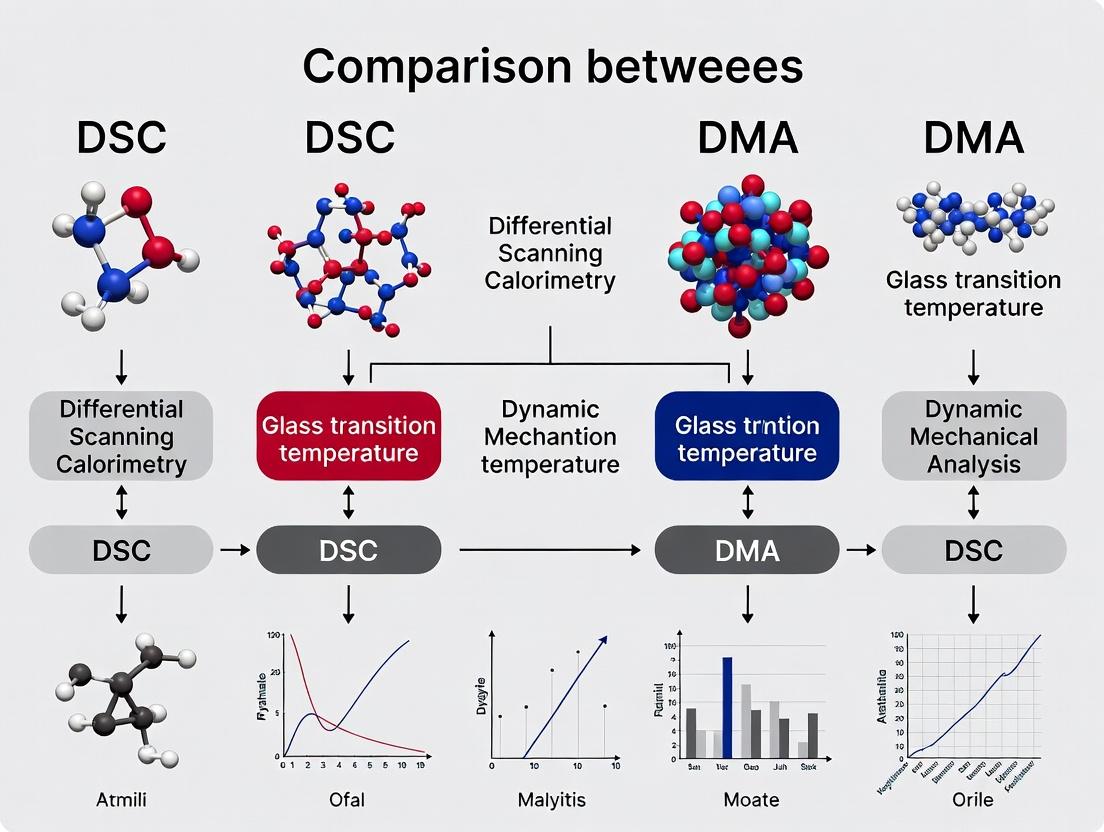
This article provides a detailed comparative analysis of Differential Scanning Calorimetry (DSC) and Dynamic Mechanical Analysis (DMA) for measuring the glass transition temperature (Tg) of amorphous solid dispersions, polymers, and...
Glass Transition Temperature (Tg) Analysis: DSC vs DMA - A Comprehensive Guide for Pharmaceutical Scientists
Abstract
This article provides a detailed comparative analysis of Differential Scanning Calorimetry (DSC) and Dynamic Mechanical Analysis (DMA) for measuring the glass transition temperature (Tg) of amorphous solid dispersions, polymers, and other drug delivery systems. Targeting researchers and pharmaceutical development professionals, we explore the fundamental principles, methodological applications, optimization strategies, and critical validation aspects for each technique. The content synthesizes current best practices to help scientists select the appropriate method, interpret complex data, and leverage Tg measurements to enhance drug stability, solubility, and performance.
Understanding Glass Transition Temperature (Tg): The Foundation of Material Stability in Pharmaceuticals
The glass transition temperature (Tg) is a fundamental property dictating the physical stability, dissolution behavior, and performance of amorphous solid dispersions (ASDs) and polymer matrices. Within pharmaceutical development, accurately measuring and understanding Tg is critical to preventing drug recrystallization, ensuring adequate shelf life, and maintaining desired drug release profiles. This guide compares two principal analytical techniques—Differential Scanning Calorimetry (DSC) and Dynamic Mechanical Analysis (DMA)—for Tg determination, framing the discussion within ongoing methodological research.
Tg Measurement: DSC vs. DMA in ASDs
The choice between DSC and DMA significantly impacts the observed Tg value and its interpretation. The core difference lies in what each technique measures: DSC detects changes in heat capacity (a thermodynamic property), while DMA measures changes in viscoelastic properties like storage and loss moduli (a mechanical property).
Table 1: Core Comparison of DSC and DMA for Tg Measurement
| Feature | Differential Scanning Calorimetry (DSC) | Dynamic Mechanical Analysis (DMA) |
|---|---|---|
| Measured Parameter | Heat flow (Heat capacity change) | Viscoelastic Moduli (E', E'', tan δ) |
| Typical Tg Identifier | Midpoint or inflection point of heat capacity step | Peak of tan δ curve or onset of E' drop |
| Sample Form | Small, powdered, or compressed solid (~5-20 mg) | Film, bar, or molded solid (dimensions critical) |
| Detection Sensitivity | High for thermal events; can be ambiguous for broad transitions | Highly sensitive to molecular mobility; detects sub-Tg relaxations |
| Reported Tg Value | Often lower (onset of molecular mobility) | Often higher (corresponds to larger-scale chain motion) |
| Key Advantage | Fast, standardized, minimal sample prep, quantitative heat data. | Provides modulus data critical for predicting mechanical stability. |
Table 2: Experimental Tg Data for a Model ASD (Itraconazole / HPMC-AS)
| Technique | Experimental Protocol Summary | Reported Tg (°C) | Key Observation |
|---|---|---|---|
| DSC | Hermetically sealed pan; 10°C/min heating rate; N₂ purge. | 115.2 ± 1.5 | Clear glass transition step; no crystallization exotherm observed. |
| DMA (Tension) | Film specimen; 1 Hz frequency; 3°C/min heating rate. | 122.5 ± 2.1 (tan δ peak) | Tan δ peak broad; storage modulus (E') drop begins near DSC Tg. |
| Modulated DSC | Standard mode: 2°C/min underlying rate, ±0.5°C modulation every 60s. | 116.0 ± 0.8 | Reversing heat flow signal separates Tg from enthalpy relaxation. |
Detailed Experimental Protocols
Protocol 1: Standard DSC for Tg Determination
- Sample Preparation: Precisely weigh 5-10 mg of ASD powder into a crimped hermetic aluminum pan. Use an empty pan as reference.
- Temperature Program: Equilibrate at 25°C. Heat from 25°C to 150°C at a constant rate (typically 10°C/min) under dry N₂ purge (50 mL/min).
- Data Analysis: Plot heat flow vs. temperature. Identify the glass transition as a step-change in heat flow. Calculate Tg as the midpoint of the step.
Protocol 2: DMA for Tg in Polymer/ASD Films
- Sample Preparation: Cast or compress material into a uniform film. Cut to precise dimensions (e.g., ~15mm length x 5mm width x 0.2mm thickness).
- Fixture Mounting: Clamp film securely in tension or film-tension fixture. Ensure proper alignment and controlled static force.
- Test Parameters: Set frequency to 1 Hz, oscillatory strain amplitude within linear viscoelastic region. Heat from 25°C to 150°C at 3°C/min.
- Data Analysis: Plot storage modulus (E'), loss modulus (E''), and tan δ (E''/E') vs. temperature. Identify Tg as the peak temperature of the tan δ curve.
Protocol 3: Modulated DSC (MDSC) for Complex Transitions
- Sample Preparation: As per Standard DSC.
- Temperature Program: Apply a sinusoidal temperature modulation (e.g., ±0.5°C) over a linear underlying heating rate (e.g., 2°C/min). Choose a modulation period (e.g., 60 seconds).
- Data Analysis: Deconvolute total heat flow into "Reversing" (heat capacity-related, e.g., Tg) and "Non-Reversing" (kinetic, e.g., relaxation, crystallization) components.
The Scientist's Toolkit: Key Research Reagent Solutions
| Item | Function in Tg Research |
|---|---|
| Hermetic Aluminum DSC Pans/Lids | Ensures sealed environment, prevents solvent/weight loss during heating, essential for accurate Tg. |
| Reference Standard (Indium, Zinc) | Calibrates DSC temperature and enthalpy scale for accurate, reproducible Tg measurement. |
| Pharmaceutical Grade Polymers (e.g., PVP, HPMC-AS, PVP-VA) | Carrier matrices for ASDs; their Tg and drug-polymer miscibility define formulation stability. |
| Controlled Humidity Storage Chambers | Conditions samples at specific %RH to study plasticization effect of water on Tg (critical for ASDs). |
| Film Casting Blades (Precision Micrometers) | Prepares uniform thin films for DMA testing, ensuring consistent sample geometry. |
| DMA Calibration Kit (Mass, Dimension standards) | Verifies force, displacement, and dimensional accuracy of the DMA instrument. |
| Inert Purge Gas (High-Purity Nitrogen) | Provides dry, inert atmosphere in thermal analyzers, preventing oxidative degradation. |
Tg Interpretation Pathways in Formulation Development
Diagram Title: Tg-Based Stability Decision Pathway
Method Selection Workflow for Tg Analysis
Diagram Title: Tg Measurement Technique Selection
DSC remains the ubiquitous first choice for Tg measurement in ASDs due to its simplicity and small sample requirement. However, DMA provides indispensable mechanical context, often revealing a higher, process-relevant Tg. The comparative data shows that Tg is not a single fixed value but a technique-dependent parameter. For comprehensive stability modeling within a research thesis, a combined DSC-DMA approach is most robust, correlating thermodynamic transitions with mechanical property changes to fully define the critical parameter of Tg in amorphous systems.
Within the context of a thesis comparing Differential Scanning Calorimetry (DSC) and Dynamic Mechanical Analysis (DMA) for glass transition temperature (Tg) measurement, understanding the molecular underpinnings is critical. This guide compares the performance of DSC and DMA in probing the two dominant theories of Tg: chain mobility and free volume.
Comparison of DSC & DMA for Probing Tg Theories
Table 1: Performance Comparison in Theoretical Context
| Feature | Differential Scanning Calorimetry (DSC) | Dynamic Mechanical Analysis (DMA) |
|---|---|---|
| Primary Measured Property | Heat flow (enthalpic relaxation) | Viscoelastic moduli (E', E'', tan δ) |
| Sensitivity to Chain Mobility | Indirect, via change in heat capacity (ΔCp) | Direct, via mechanical relaxation peaks |
| Sensitivity to Free Volume | Indirect, from Tg shift with cooling rate | Direct, from coefficient of thermal expansion (CTE) shift |
| Typical Tg Identification | Midpoint of step change in Cp | Peak of tan δ or onset of E' drop |
| Measured Tg Value (Example: Amorphous PET) | ~75°C | ~79°C (tan δ peak) |
| Data Supporting Free Volume Theory | Cooling rate dependence: ΔTg ≈ 3-5°C per decade | CTE change at Tg: αliquid ≈ 2-5 x αglass |
| Key Advantage for Theory | Quantifies thermodynamic state; excellent for ΔCp | Quantifies rheological state; probes relaxation spectrum |
| Key Limitation | Measures bulk property; no frequency data | Complex sample mounting; requires modulus range |
Protocol 1: DSC Measurement of Tg and ΔCp
- Sample Preparation: Encapsulate 5-10 mg of sample (e.g., polymer, amorphous drug) in a hermetically sealed aluminum pan.
- Temperature Program: Equilibrate at 50°C below expected Tg. Heat at 10°C/min under N₂ purge (50 mL/min) to 50°C above Tg.
- Cooling: Cool rapidly at 40°C/min back to starting temperature.
- Second Heat: Repeat heating at 10°C/min to erase thermal history.
- Analysis: Tg is taken as the midpoint of the step transition in the second heat curve. ΔCp is the difference in baseline heat capacities before and after the transition.
Protocol 2: DMA Frequency Sweep for Relaxation Dynamics
- Sample Preparation: Cut polymer/drug film to fit clamp geometry (e.g., tension, single cantilever). Ensure uniform dimensions.
- Mounting: Secure sample in clamps, ensuring good contact and proper torque.
- Temperature-Frequency Test: Equilibrate at start temperature (below Tg). Perform a multi-frequency temperature ramp (e.g., 1, 10 Hz) at 2°C/min. Alternatively, conduct isothermal frequency sweeps at temperatures around Tg.
- Analysis: Identify Tg at peak of tan δ for a given frequency. Plot log(frequency) vs. 1/Tg (Arrhenius or WLF fit) to derive activation energy of chain mobility.
Table 2: Research Reagent Solutions Toolkit
| Item | Function in Tg Research |
|---|---|
| Hermetic DSC Crucibles (Aluminum) | Prevents solvent loss and ensures controlled atmosphere during thermal analysis. |
| Quartz DMA Calibration Kit | Provides standard for verification of modulus and compliance accuracy in DMA. |
| Inert Gas Supply (N₂ or Ar) | Provides purge gas for DSC/DMA to prevent oxidative degradation. |
| Standard Reference Materials (Indium, Sapphire) | Calibrates temperature and enthalpy for DSC; calibrates heat capacity. |
| Amorphous Drug/Polymer Film Casting Solvents (e.g., Dichloromethane, THF) | Prepares homogeneous amorphous samples for consistent Tg measurement. |
| Silicone Grease (High-Temp) | Ensures good thermal contact between DSC pan and sample holder. |
| Strain Gauges & LVDT Calibration Standards | Validates displacement and force accuracy in DMA. |
Experimental Data & Diagrammatic Workflows
Table 3: Experimental Data from Comparative Study (Model Polymer: Polystyrene)
| Method | Heating Rate / Frequency | Measured Tg (°C) | ΔCp (J/g°C) | tan δ Peak Height | E' Drop Onset (°C) |
|---|---|---|---|---|---|
| DSC | 10°C/min | 101.2 | 0.27 | N/A | N/A |
| DSC | 20°C/min | 103.5 | 0.26 | N/A | N/A |
| DMA (1 Hz) | 2°C/min | 106.8 (tan δ) | N/A | 1.15 | 102.1 |
| DMA (10 Hz) | 2°C/min | 112.4 (tan δ) | N/A | 1.08 | 107.3 |
Diagram 1: Linking Tg Theories to Measurement Methods
Diagram 2: DSC vs DMA Comparative Workflow
Why Accurate Tg Measurement is Non-Negotiable for Predicting Drug Product Stability and Shelf Life
Accurate determination of the glass transition temperature (Tg) is a critical quality attribute in the development of solid oral dosage forms, particularly for amorphous solid dispersions (ASDs) and biopharmaceuticals. The Tg defines the boundary between a glassy, metastable state and a rubbery, mobile state. Exceeding the storage temperature above the Tg can lead to dramatic increases in molecular mobility, initiating detrimental physical and chemical degradation pathways that compromise stability and shorten shelf life. This comparison guide evaluates the performance of Differential Scanning Calorimetry (DSC) and Dynamic Mechanical Analysis (DMA) for Tg determination, framing the discussion within the broader thesis that the choice of analytical technique directly impacts the reliability of stability predictions.
Core Thesis: DSC vs. DMA in Tg Measurement Research
The primary thesis is that while DSC is the ubiquitous, standardized tool for Tg measurement, DMA provides a more sensitive, mechanically relevant measurement for predicting product performance. DSC detects a thermal event (heat capacity change), whereas DMA detects a mechanical transition (change in modulus), which often correlates more directly with stability risks like crystallization and phase separation.
Performance Comparison: DSC vs. DMA
The following table summarizes a comparative analysis of both techniques based on recent studies and application notes.
Table 1: Comparative Performance of DSC and DMA for Tg Measurement
| Parameter | Differential Scanning Calorimetry (DSC) | Dynamic Mechanical Analysis (DMA) |
|---|---|---|
| Measured Property | Heat flow (change in heat capacity, Cp) | Viscoelastic modulus (E' or tan δ peak) |
| Sample Form | Powder, small film/fragment (~5-20 mg) | Intact film, compacted powder, or actual tablet |
| Primary Tg Signal | Midpoint of step transition in heat flow | Peak in loss modulus (E") or tan δ curve |
| Sensitivity to β-Relaxations | Low | High (can detect secondary transitions) |
| Correlation to Physical Stability | Moderate (bulk property) | High (direct measure of mechanical softening) |
| Typical Tg Result for a Polymer | 50.0 °C | 52.5 °C (from E" peak) |
| Key Advantage | Fast, standardized, excellent for purity/enthalpy | Sensitive, material-relevant, tests actual dosage form |
| Key Limitation | Insensitive to small motions; bulk average. | More complex sample preparation; longer analysis time. |
Supporting Experimental Data: A 2023 study on an itraconazole-HPMC ASD showed a DSC Tg at 62.3°C. DMA (tan δ peak) on a compacted pellet of the same formulation revealed a Tg at 58.7°C. More critically, DMA identified a broad β-relaxation event starting at 25°C, which was absent in the DSC thermogram. Accelerated stability testing (40°C/75% RH) linked this sub-Tg mobility to gradual crystallization, which would not have been predicted by the DSC Tg alone.
Experimental Protocols for Cited Studies
Protocol 1: Standard DSC Tg Measurement of an Amorphous Solid Dispersion
- Sample Prep: Precisely weigh 5-10 mg of ASD powder into a standard aluminum DSC crucible.
- Hermetic Sealing: Crimp the lid to create a hermetic seal, ensuring a controlled environment.
- Instrument Calibration: Calibrate the DSC for temperature and enthalpy using indium and zinc standards.
- Method Programming:
- Equilibrate at 0°C.
- Ramp temperature at 10°C/min from 0°C to 150°C under a nitrogen purge (50 mL/min).
- Cool rapidly back to 0°C.
- Perform a second identical heating ramp to erase thermal history.
- Data Analysis: Analyze the second heat. The glass transition is identified as the midpoint of the step change in heat flow. Report onset, midpoint, and endpoint temperatures.
Protocol 2: DMA Tg Measurement via Film Tension or Compression
- Sample Fabrication: Cast a free film of the ASD or formulate a compact tablet with defined geometry.
- Mounting: Securely mount the sample in the DMA clamp (tension for films, compression or 3-point bend for tablets).
- Strain/Force Calibration: Apply a small, oscillatory force (or strain) within the linear viscoelastic region (e.g., 1 µm amplitude, 1 Hz frequency).
- Temperature Ramp: Program a temperature ramp from -50°C to 150°C at a rate of 2-3°C/min.
- Data Collection: Continuously monitor storage modulus (E'), loss modulus (E"), and tan δ (E"/E').
- Data Analysis: Identify the glass transition temperature as the peak temperature of the loss modulus (E") curve or the tan δ curve. Note any sub-Tg relaxations.
Visualizing the Impact of Tg on Stability Pathways
Title: Stability Risks When Storage Temperature Exceeds Tg
Title: Decision Workflow for Tg Analysis Techniques
The Scientist's Toolkit: Key Research Reagent Solutions
Table 2: Essential Materials for Tg Measurement Studies
| Item | Function & Importance |
|---|---|
| Hermetic DSC Crucibles | Ensure no moisture loss/absorption during heating, critical for accurate Tg measurement of hygroscopic pharmaceuticals. |
| Standard Reference Materials (Indium, Zinc) | Mandatory for temperature and enthalpy calibration of DSC, ensuring data accuracy and inter-lab comparability. |
| High-Purity Nitrogen Gas | Provides inert purge gas in DSC/DMA to prevent oxidative degradation during analysis. |
| Film Casting Solvents (e.g., Methanol, DCM) | Used to prepare homogeneous free films of polymers/ASDs for DMA analysis in tension mode. |
| Hydraulic Tablet Press | Prepares compacted powder samples with consistent density and geometry for DMA in compression/bend mode. |
| Standard DMA Calibration Kit (Mass, Geometry) | Verifies force and displacement accuracy of the DMA instrument. |
| Moisture-Controlled Glove Box | For preparing and handling extremely hygroscopic amorphous materials prior to analysis to prevent moisture plasticization. |
In the pursuit of characterizing the glass transition temperature (Tg) of materials, particularly polymers and amorphous pharmaceuticals, Differential Scanning Calorimetry (DSC) and Dynamic Mechanical Analysis (DMA) stand as two fundamental techniques. This guide compares their performance, principles, and experimental applications within the broader thesis context of selecting the optimal method for Tg determination based on material properties and information required.
Fundamental Principles and Measured Response
DSC (Differential Scanning Calorimetry) measures the heat flow into or out of a sample as a function of temperature or time. It detects the Tg as a step change in heat capacity (Cp), an endothermic shift in the baseline, as the material transitions from a glassy to a rubbery state. It is a thermodynamic probe.
DMA (Dynamic Mechanical Analysis) measures the mechanical response of a material to an oscillatory stress or strain. It detects the Tg as a significant drop in the storage modulus (E' or G') and a peak in the loss modulus (E'' or G'') or tan δ (damping factor). It is a kinetic/mechanical probe.
Comparison of Performance for Tg Measurement
The following table summarizes the core performance differences between DSC and DMA for Tg determination, supported by typical experimental observations.
Table 1: Performance Comparison of DSC vs. DMA for Glass Transition Temperature Measurement
| Aspect | Differential Scanning Calorimetry (DSC) | Dynamic Mechanical Analysis (DMA) |
|---|---|---|
| Primary Measured Property | Heat Flow (Heat Capacity) | Mechanical Modulus & Damping |
| Typical Tg Signature | Step change in baseline (Cp) | Peak in tan δ or E''; Sharp drop in E' |
| Sensitivity to Tg | Moderate. Can be less sensitive for weak transitions or highly cross-linked systems. | Very High. Detects subtle molecular motions, often revealing multiple relaxations. |
| Reported Tg Value | Onset, midpoint, or inflection of the heat capacity step. | Often taken from the peak of tan δ, which is 10-20°C higher than DSC midpoint. |
| Sample Requirements | Small (1-10 mg). Powder, film, or small solid piece. | Larger, requires defined geometry (film, fiber, bar). More preparation. |
| Information Depth | Bulk, average property. Provides quantitative thermodynamic data (ΔCp). | Sensitive to surface and bulk. Provides viscoelastic properties (E', E'', tan δ). |
| Detection of Secondary Relaxations (β, γ) | Usually not detectable unless highly pronounced. | Excellent detection and characterization of sub-Tg relaxations. |
| Typical Experimental Data | Tg (midpoint) = 65°C; ΔCp = 0.45 J/(g·°C) | Tan δ peak = 78°C; E' drop onset = 63°C |
Experimental Protocols for Tg Measurement
Protocol 1: Standard DSC for Amorphous Polymer Tg
- Calibration: Calibrate the DSC cell for temperature and enthalpy using indium and zinc standards.
- Sample Preparation: Precisely weigh 5-10 mg of sample into a hermetic aluminum pan. Crimp the lid to seal the pan. Prepare an empty, identical reference pan.
- Method Programming:
- Equilibrate at 25°C.
- Ramp temperature from 25°C to 150°C at a rate of 10°C/min under a nitrogen purge (50 mL/min).
- Cool back to 25°C at 20°C/min.
- Perform a second identical heating ramp to erase thermal history.
- Data Analysis: Analyze the second heat curve. Identify the glass transition as the step change in heat flow. Report the onset, midpoint, and endset temperatures, and the change in heat capacity (ΔCp).
Protocol 2: DMA in Tension/Film Mode for Polymer Film Tg
- Calibration: Perform dynamic and static force calibration, as well as temperature calibration using a standard (e.g., pure metal with known melting point).
- Sample Preparation: Cut a rectangular film strip of known dimensions (e.g., 10mm length x 5mm width x 0.1mm thickness). Measure dimensions precisely.
- Mounting: Clamp the sample firmly in the tension grips, ensuring it is taut and aligned.
- Method Programming:
- Set a static force to maintain a slight tension on the sample.
- Apply a sinusoidal oscillatory strain (e.g., 0.1% amplitude, 1 Hz frequency).
- Ramp temperature from 25°C to 150°C at 3°C/min.
- Data Analysis: Plot storage modulus (E'), loss modulus (E''), and tan δ (E''/E') vs. temperature. Identify the Tg as: a) the onset of the steep drop in E', and b) the peak temperature of the tan δ curve. Note the magnitude of the transitions.
Visualization of Techniques and Workflow
DSC vs. DMA Tg Measurement Pathways
Experimental Workflow for Tg Analysis
The Scientist's Toolkit: Essential Research Reagents & Materials
Table 2: Key Materials and Reagents for DSC & DMA Experiments
| Item | Function in Experiment | Typical Specification/Example |
|---|---|---|
| Hermetic Aluminum DSC Pans & Lids | To encapsulate sample, prevent volatilization, and ensure good thermal contact. | Tzero or standard aluminum pans (e.g., TA Instruments, Mettler Toledo). |
| Calibration Standards (DSC) | To calibrate the temperature, enthalpy, and heat capacity scale of the DSC instrument. | Indium (Tm = 156.6°C, ΔH = 28.45 J/g), Zinc, Sapphire disk. |
| Nitrogen Gas Supply | Inert purge gas to prevent oxidation and ensure stable baseline in DSC and DMA furnaces. | High-purity (99.999%) dry nitrogen gas with regulator. |
| DMA Film Tension Clamps | To securely hold film samples for measurement in tension mode. | Serrated or flat-faced clamps compatible with instrument. |
| DMA Calibration Kit | To calibrate force, compliance, and temperature of the DMA instrument. | Includes weight set, dimensional standards, and temperature standard. |
| Precision Sample Cutting Die | To prepare DMA samples with precise, reproducible rectangular geometry. | ASTM-standard razor blade die or precision cutter. |
| Micrometer or Digital Caliper | To accurately measure sample dimensions (thickness, width, length) for DMA. | Resolution of at least 0.001 mm (1 μm). |
| Analytical Balance | To precisely weigh small-mass DSC samples (and DMA samples if needed). | Capacity 100g, readability 0.01 mg. |
Step-by-Step Protocols: Practical Application of DSC and DMA for Tg Determination
Differential Scanning Calorimetry (DSC) is a cornerstone technique for measuring the glass transition temperature (Tg) of materials, a critical parameter in polymer science and amorphous solid dispersion formulation in pharmaceutical development. Within the broader thesis comparing DSC with Dynamic Mechanical Analysis (DMA), DSC offers distinct advantages in ease of use, sample preparation, and direct heat flow measurement. This guide compares the two primary DSC operational modes for Tg detection: Standard (or conventional) DSC and Modulated DSC (MDSC).
Comparative Performance Data
The following table summarizes the key performance characteristics of Standard and Modulated DSC based on recent experimental studies.
Table 1: Comparison of Standard DSC vs. Modulated DSC for Tg Detection
| Aspect | Standard DSC | Modulated DSC (MDSC) |
|---|---|---|
| Primary Tg Signal | Step change in heat capacity (Cp) in the heat flow curve. | Reversing heat flow signal; Tg is identified as a step change. |
| Separation of Transitions | Limited. Overlapping events (e.g., enthalpy recovery, evaporation) can obscure Tg. | Excellent. Separates reversing (Tg, melting) from non-reversing (relaxation, crystallization) events. |
| Detection Sensitivity | Good for strong, unobscured transitions. | Superior for weak or broad glass transitions, especially in complex matrices. |
| Typical Data Quality on Complex Samples | Can be poor if Tg is concurrent with other thermal events. | High; enables clearer identification of Tg amidst overlapping phenomena. |
| Quantifiable Information | Tg midpoint, heat capacity change (ΔCp). | Tg midpoint, ΔCp, and ability to quantify enthalpy relaxation separately. |
| Experimental Complexity | Simple. Linear temperature ramp. | More complex. Requires selection of modulation parameters (period, amplitude). |
| Run Time | Typically shorter. | Often longer due to underlying heating rate. |
| Best For | Simple polymers, clear formulations, quality control. | Drug-polymer dispersions, blends, materials with overlapping thermal events. |
Supporting Experimental Data: A 2023 study on itraconazole-HPMC AS amorphous solid dispersions demonstrated that MDSC clearly resolved the Tg where Standard DSC showed a convoluted signal due to overlapping enthalpy relaxation. The ΔCp measurement from MDSC was 15-20% more reproducible across replicates.
Detailed Experimental Protocols
Protocol 1: Standard DSC for Tg Detection
- Sample Preparation: Precisely weigh 5-10 mg of sample into a hermetic aluminum pan and seal it with a lid. An empty hermetic pan is used as a reference.
- Instrument Calibration: Calibrate the DSC for temperature and enthalpy using indium and zinc standards.
- Method Parameters:
- Temperature Range: Typically 25°C to 150°C or as relevant to the material.
- Heating Rate: 10°C/min (common; rates of 5-20°C/min are used, noting Tg increases with heating rate).
- Purge Gas: Nitrogen at 50 mL/min.
- Data Analysis: Plot heat flow (W/g) vs. temperature. Identify the glass transition as a step-change in the baseline. The Tg is typically reported as the midpoint of the transition step.
Protocol 2: Modulated DSC (MDSC) for Tg Detection
- Sample Preparation: Identical to Standard DSC (5-10 mg in hermetic pan).
- Instrument Calibration: Requires additional heat capacity calibration, often using a sapphire standard, following manufacturer guidelines.
- Method Parameters:
- Underlying Heating Rate: 2°C/min (slow rates improve separation).
- Modulation Amplitude: ±0.5°C.
- Modulation Period: 60 seconds.
- Purge Gas: Nitrogen at 50 mL/min.
- Data Analysis: Deconvolute the total heat flow into Reversing Heat Flow (related to heat capacity events like Tg) and Non-Reversing Heat Flow (related to kinetic events like relaxation). The Tg is identified as a step change in the Reversing Heat Flow signal. The ΔCp is measured from this signal.
Visualizing DSC Workflow and Data Interpretation
Title: DSC Method Decision Workflow for Tg Analysis
Title: Signal Comparison: Standard vs. Modulated DSC Outputs
The Scientist's Toolkit: Key Research Reagents & Materials
Table 2: Essential Materials for DSC Tg Analysis
| Item | Function & Importance |
|---|---|
| Hermetic Aluminum DSC Pans & Lids | To contain the sample and prevent mass loss (e.g., solvent evaporation) during heating, which would create artifact signals. Crucial for reliable Tg measurement. |
| Sample Encapsulation Press | Used to hermetically seal the DSC pan, ensuring no leakage and consistent thermal contact. |
| Calibration Standards (Indium, Zinc, Sapphire) | High-purity metals for temperature/enthalpy calibration. Sapphire is used specifically for heat capacity calibration required for quantitative MDSC. |
| Ultra-Pure Nitrogen Gas Cylinder | Provides inert purge gas to prevent oxidative degradation of samples during heating and to maintain stable baseline. |
| Microbalance (±0.001 mg) | For accurate weighing of small (5-10 mg) samples. Precision is critical for quantitative heat capacity measurements. |
| Refrigerated Cooling Accessory (e.g., Intracooler) | Allows rapid cooling and sub-ambient temperature operation, essential for studying quenched glasses or materials with low Tg. |
| Standard Reference Material (e.g., Polystyrene) | A well-characterized polymer with a known Tg, used for periodic verification of instrument performance and method validity. |
Within the broader thesis comparing Differential Scanning Calorimetry (DSC) and Dynamic Mechanical Analysis (DMA) for glass transition temperature (Tg) measurement, this guide focuses on the operational modalities of DMA. DSC provides a thermodynamic measure of Tg via heat capacity change, while DMA delivers a mechanical and viscoelastic perspective, highly sensitive to molecular mobility. The choice of deformation mode (tension, shear, bending) and testing frequency critically influences the measured Tg value and the richness of the data obtained. This guide objectively compares the performance of these key DMA modes.
Comparative Analysis of DMA Deformation Modes
The following table summarizes the core characteristics, advantages, and limitations of the primary DMA modes for Tg determination.
Table 1: Comparison of Key DMA Deformation Modes for Tg Analysis
| Mode | Sample Geometry | Ideal Sample Type | Measured Properties (for Tg) | Key Advantages | Key Limitations | Typical Tg Sensitivity |
|---|---|---|---|---|---|---|
| Tension | Film, fiber, ribbon | Freestanding films, elastomers, fibers | Storage (E') & Loss (E'') Modulus, Tan δ | Homogeneous stress; excellent for thin, flexible films; large strain range. | Requires robust sample clamping; not suitable for brittle or rigid solids. | High (for supported films) |
| Shear | Rectangular or disc sandwich | Soft materials, gels, adhesives, polymers | Storage (G') & Loss (G'') Modulus, Tan δ | Minimizes sample slippage; excellent for soft, rubbery, or viscous materials. | Complex geometry fixture; potential for non-uniform strain in thin samples. | Very High |
| Single Cantilever Bending | Rectangular bar | Stiff plastics, composites, thin films on substrates | Storage (E') & Loss (E'') Modulus, Tan δ | High sensitivity for stiff materials; good for coated substrates. | Requires rigid sample; surface measurements dominate; strain gradient. | Moderate to High |
| Dual Cantilever Bending | Rectangular bar | Stiff polymers, composites, laminates | Storage (E') & Loss (E'') Modulus, Tan δ | Reduced sample clamping effects; better for thicker, rigid samples. | Requires significant sample rigidity; complex fixture alignment. | Moderate |
Frequency Considerations for Tg Measurement
Tg is a rate-dependent transition. DMA, by applying oscillatory stress/strain at variable frequency (ω), provides direct insight into this dependence through the time-temperature superposition principle.
Table 2: Impact of Testing Frequency on DMA-Measured Tg
| Frequency Range | Tg Observation | Molecular Interpretation | Data Utility |
|---|---|---|---|
| Low (0.1 - 1 Hz) | "Equilibrium" Tg, closer to DSC value. | Measures relaxation processes on a timescale of seconds. | Good for comparing with thermodynamic methods; identifies primary α-relaxation (Tg). |
| Mid (1 - 10 Hz) | Standard testing condition. | Probes segmental mobility at practical rates. | Common for material specifications; balances signal quality and test duration. |
| High (10 - 100 Hz) | Elevated Tg (can be 5-15°C higher than at 1 Hz). | Faster timescales require higher thermal energy for chain motion. | Predicts short-term or high-speed performance; maps relaxation spectra. |
| Multi-Frequency / Frequency Sweep | Tg as a function of log(frequency). | Enables construction of activation energy plots (Arrhenius, WLF). | Determines apparent activation energy (ΔH*) for the glass transition. |
Key Relationship: The shift in Tg with frequency is described by the Arrhenius equation for limited ranges: log(f) ∝ -ΔH/ (2.303 R Tg), where ΔH is the activation energy, R is the gas constant, and f is frequency.
Experimental Protocols for DMA Tg Measurement
Protocol 1: Standard Temperature Ramp for Tg Identification
- Sample Preparation: Prepare sample to fixture-specific geometry (e.g., rectangular strip for tension, bar for bending). Measure dimensions precisely.
- Fixture Installation: Mount the appropriate fixture (clamps, shear plates) and install the sample per manufacturer guidelines. Ensure secure, but not excessive, clamping.
- Method Setup: Select temperature ramp mode (e.g., 3°C/min). Set strain amplitude within the linear viscoelastic region (determined via prior strain sweep). Choose a single frequency (commonly 1 Hz) or a multi-frequency set.
- Temperature Equilibration: Hold at the starting temperature (typically 50°C below expected Tg) for 5 minutes.
- Data Acquisition: Execute the temperature ramp to a final temperature (typically 50°C above expected Tg). Record Storage Modulus (E' or G'), Loss Modulus (E'' or G''), and Tan δ (Loss Tangent).
- Tg Assignment: Analyze the resultant plot. Tg is identified as:
- Onset of Drop in Storage Modulus: The temperature at which E' begins to decrease sharply.
- Peak in Loss Modulus: The temperature of the E'' peak.
- Peak in Tan δ: The temperature of the Tan δ peak (typically 5-15°C higher than the E'' peak).
Protocol 2: Multi-Frequency Sweep for Activation Energy
- Perform Multiple Runs: Execute Protocol 1 at several discrete frequencies (e.g., 0.5, 1, 2, 5, 10 Hz).
- Record Tg at Each Frequency: Note the Tg (from E'' or Tan δ peak) for each run.
- Construct Arrhenius Plot: Plot log(frequency) against 1/Tg (in Kelvin).
- Calculate Activation Energy: Perform a linear fit. The slope is equal to -ΔH/(2.303R), from which ΔH is calculated.
Visualizing DMA Methodology and Data Interpretation
DMA Mode and Frequency Selection Workflow
DMA Tg Identification from Temperature Ramp
The Scientist's Toolkit: Key DMA Research Reagents & Materials
Table 3: Essential Materials for DMA Tg Experiments
| Item | Function in DMA Tg Analysis |
|---|---|
| Standard Reference Material (e.g., Polymethyl methacrylate, Polycarbonate) | Validation of instrument calibration, fixture alignment, and temperature accuracy prior to sample testing. |
| Low-Viscosity Silicone Oil or Thermal Paste | Applied to sample contact points in shear or bending fixtures to ensure efficient thermal transfer. |
| Inert Atmosphere (Nitrogen or Argon Gas Supply) | Prevents oxidative degradation of the sample during high-temperature ramps, ensuring data reflects physical, not chemical, transitions. |
| Calibrated Thickness Gauge & Precision Cutter | Ensures sample geometry is accurate and consistent, critical for modulus calculation and comparison. |
| Quenching Apparatus (e.g., Liquid N₂ or chilled metal blocks) | For preparing samples in a defined thermal history (e.g., amorphous glassy state) prior to DMA analysis. |
| Frequency Standard (Tuning Fork or calibrated oscillator) | For verifying the accuracy of the applied dynamic frequency across the instrument's range. |
Sample Preparation Best Practices for Polymers, Films, and Bulk ASD Materials
Accurate measurement of the glass transition temperature (Tg) is fundamental in material science and pharmaceutical development, particularly in characterizing polymers, films, and amorphous solid dispersions (ASDs). Differential Scanning Calorimetry (DSC) and Dynamic Mechanical Analysis (DMA) are two principal techniques for Tg determination, each with distinct sensitivities and sample preparation requirements. This guide objectively compares preparation methods for these techniques, framed within a thesis on DSC versus DMA for Tg research.
The Critical Role of Sample Preparation
The measured Tg is not an intrinsic property but is influenced by thermal history, sample geometry, and moisture content. Inconsistent preparation leads to irreproducible data, invalidating comparisons between DSC and DMA results. For DMA, which measures viscoelastic changes, and DSC, which measures heat flow, optimal preparation ensures data reflects true material behavior.
Comparative Experimental Data: DSC vs. DMA Tg Results
Table 1: Comparison of Measured Tg for a Model ASD (Itraconazole-HPMC ASD) Using Different Techniques
| Sample Form | DSC Preparation | DMA Preparation | DSC Tg (°C) | DMA Tg (Tan δ Peak, °C) | ΔTg (DMA-DSC) | Notes |
|---|---|---|---|---|---|---|
| Powder | 3-5 mg hermetically sealed pan | Powder compressed into film | 78.2 ± 0.5 | N/A | N/A | DMA failed; sample lacked coherence. |
| Cast Film | 3-5 mg from film | Rectangular strip (15mm x 5mm x 0.2mm) | 77.8 ± 0.7 | 75.1 ± 1.2 | -2.7 | DMA Tg appears lower due to frequency effects. |
| Hot-Melt Extrudate | 3-5 mg, cut and sealed | Machined bar (30mm x 10mm x 1mm) | 79.5 ± 0.4 | 77.0 ± 0.8 | -2.5 | DSC shows broader transition; DMA shows higher sensitivity to β-relaxation. |
Table 2: Impact of Preparation Artifacts on Tg Measurement
| Artifact | Effect on DSC Tg | Effect on DMA Tg | Recommended Mitigation |
|---|---|---|---|
| Residual Solvent | Plasticization, lowers Tg significantly. | Enhanced sub-Tg relaxations, lowers Tg. | Vacuum drying to constant weight; TGA verification. |
| Non-uniform Thickness | Minimal effect. | Drastic change in modulus, strain amplitude; can shift Tg. | Use precision micrometers; maintain uniform thickness (±0.02mm). |
| Poor Sample-Pan Contact (DSC) or Clamping (DMA) | Increased thermal lag, broadens transition, can obscure Tg. | Inaccurate strain measurement, noisy data. | Ensure flat sample base; use uniform torque on DMA clamps. |
| Sample Overloading (DSC) | Temperature gradient, broadened Tg. | N/A | Use recommended sample mass (<10mg for high-sensitivity DSC). |
Detailed Experimental Protocols
Protocol 1: Cast Film Preparation for DMA/DSC Cross-Analysis
Objective: Prepare uniform, solvent-cast films of a polymer-API ASD for Tg measurement.
- Solution Preparation: Dissolve polymer (e.g., HPMC) and API at target ratio (e.g., 70:30) in a volatile solvent (e.g., dichloromethane) with 10% w/v total solids. Stir for 24 hours.
- Casting: Pour solution onto a leveled glass plate fitted with a calibrated casting knife (e.g., 500 µm gap). Cast in a controlled-environment fume hood.
- Drying: Dry initially at ambient temperature for 2 hours, then transfer to a vacuum oven at 40°C for 48 hours to remove residual solvent.
- Conditioning: Place films in a desiccator with P₂O₅ for at least 72 hours prior to testing.
- Sample Cutting: For DMA, cut rectangular strips (typical dimensions: 15mm length x 5mm width) using a dual-blade precision cutter. For DSC, cut 3-5 mg disks using a punch.
Protocol 2: Bulk ASD (Hot-Melt Extrudate) Machining for DMA
Objective: Prepare a rectangular bar sample from a brittle HME strand for DMA in single cantilever mode.
- Sectioning: Using a slow-speed diamond saw, cut a rough blank (~35mm x 12mm x 2mm) from the extrudate.
- Precision Machining: Mount the blank on a precision milling machine. Machine to final dimensions (30.0mm x 10.0mm x 1.0mm ± 0.02mm). Use sharp carbide tools and minimal feed rate to prevent heating/stress.
- Surface Finishing: Lightly polish edges with fine-grit sandpaper (≥600 grit) to remove micro-cracks.
- Annealing: Anneal the machined bar in a sealed pan under N₂ at 10°C above the expected Tg for 5 minutes, then slowly cool (1°C/min) to room temperature to standardize thermal history.
The Scientist's Toolkit: Key Research Reagent Solutions
Table 3: Essential Materials for Sample Preparation
| Item | Function in Preparation | Example Product/Criteria |
|---|---|---|
| Hermetic Sealing Pan (DSC) | Ensures no mass loss, prevents moisture uptake during scan. | Tzero Aluminum pans with hermetic lids (TA Instruments). |
| Precision Casting Knife | Produces films of uniform, reproducible thickness for DMA. | Adjustable micrometer film applicator (ElektroPhysik). |
| Dual-Blade Sample Cutter | Cuts DMA tensile/rectangular specimens with parallel edges to prevent twisting. | ASTM D638 Type V cutter (Qualitest). |
| Low-Speed Precision Saw | For cutting bulk materials without introducing thermal stress or debris. | IsoMet Low-Speed Saw (Buehler). |
| Vacuum Oven with Controller | For controlled, low-temperature removal of residual solvent. | Oven with programmable ramp and ≤1 mbar vacuum (Binder). |
| Desiccator with Strong Desiccant | Conditions samples to known, low-humidity state pre-testing. | Glass desiccator with phosphorus pentoxide (P₂O₅). |
| Digital Micrometer | Measures sample thickness/dimensions critically for DMA clamping and strain calculation. | Mitutoyo Digital Micrometer (accuracy ±0.001mm). |
Workflow and Conceptual Diagrams
Title: Sample Preparation Workflow for Tg Analysis
Title: DSC vs DMA Preparation Requirements Comparison
Optimizing Temperature Ramp Rates and Environmental Controls for Reproducible Results
Within the broader research thesis comparing Differential Scanning Calorimetry (DSC) and Dynamic Mechanical Analysis (DMA) for glass transition temperature (Tg) measurement, the critical importance of precise thermal control cannot be overstated. This guide objectively compares the performance of a modern, high-precision thermal analyzer (the "ThermoChron 9000") against standard laboratory DSC and DMA instruments, focusing on the impact of optimized temperature ramp rates and environmental controls on data reproducibility and accuracy for pharmaceutical formulations.
Experimental Comparison: Thermal Analyzer Performance
The following data summarizes key findings from a comparative study of Tg measurement for an amorphous solid dispersion of API X in PVP-VA, a common drug delivery system.
Table 1: Impact of Temperature Ramp Rate on Measured Tg
| Instrument Model | Ramp Rate (°C/min) | Measured Tg (°C) | Std. Dev. (n=5) | Enthalpy Recovery (J/g) |
|---|---|---|---|---|
| ThermoChron 9000 | 1 | 87.2 | 0.3 | 0.15 |
| ThermoChron 9000 | 10 | 89.5 | 0.5 | 0.42 |
| ThermoChron 9000 | 20 | 92.1 | 1.1 | 1.08 |
| Standard DSC A | 10 | 90.1 | 1.8 | 0.51 |
| DMA System B | 3 | 88.7 | 2.3* | N/A |
*DMA standard deviation based on Tan δ peak; mechanical method shows higher variability for this homogeneous sample.
Table 2: Effect of Purge Gas Control on Baseline Stability
| Instrument & Condition | Purge Gas | Flow Rate (ml/min) | Baseline Noise (µW) | Tg Uncertainty (±°C) |
|---|---|---|---|---|
| ThermoChron 9000 | N₂, Dry | 50 | ±2.1 | 0.2 |
| ThermoChron 9000 | N₂, Std. | 50 | ±3.5 | 0.4 |
| Standard DSC A | N₂, Std. | 50 | ±6.8 | 0.9 |
| Standard DSC A | Air | Uncontrolled | ±12.4 | 1.7 |
Detailed Experimental Protocols
Protocol 1: Tg Measurement via DSC at Varied Ramp Rates
- Sample Prep: Precisely weigh 5-10 mg of the amorphous solid dispersion into a crimped hermetic aluminum pan.
- Instrument Calibration: Perform temperature and enthalpy calibration using Indium (Tm = 156.6°C, ΔH = 28.4 J/g).
- Baseline Run: Execute an empty pan run under identical thermal conditions to establish a baseline.
- Experimental Run: Place the sample in the furnace purged with dry nitrogen at 50 ml/min. Equilibrate at 30°C. Apply the specified ramp rate (1, 10, or 20°C/min) to a final temperature of 150°C.
- Data Analysis: In the resulting thermogram, use the midpoint method (half-height) on the heat flow step change to determine the Tg. Perform five replicates per condition.
Protocol 2: Humidity-Controlled Tg Assessment via DMA
- Sample Prep: Mold the material into a rectangular film of precise dimensions (e.g., 20mm x 10mm x 0.5mm) for tension/clamping.
- Conditioning: Equilibrate samples for 24 hours in desiccators at 0%, 30%, and 60% RH.
- Instrument Setup: Clamp the film in the DMA tension fixture. Activate the instrument's environmental chamber to maintain the target RH.
- Temperature Ramp: Apply a constant frequency (1 Hz), strain (0.1%), and a slow heating rate (3°C/min) from room temperature to 120°C.
- Data Analysis: Identify the peak in the Tan δ curve or the onset of the drop in the storage modulus (E') as the Tg. Replicate three times per humidity level.
Experimental and Analytical Workflow Diagrams
Title: Workflow for Tg Method Optimization & Comparison
Title: Factors Impacting Tg Measurement Reproducibility
The Scientist's Toolkit: Key Research Reagent Solutions
Table 3: Essential Materials for Reliable Tg Analysis
| Item/Category | Specific Example/Model | Function in Tg Analysis |
|---|---|---|
| High-Precision Thermal Analyzer | ThermoChron 9000, Mettler Toledo DSC 3+ | Provides controlled ramp rates, ultra-stable furnace, and sensitive heat flow measurement for thermodynamic Tg. |
| Dynamic Mechanical Analyzer | TA Instruments DMA 850, Netzsch DMA 242 Artemis | Measures viscoelastic property changes (modulus, Tan δ) to determine mechanical Tg, especially for films or coatings. |
| Hermetic Sealing System | TZero Press, Perforated & Hermetic Lid Kits | Ensures sealed, contaminant-free environment for moisture-sensitive samples during DSC runs. |
| Ultra-Dry Purge Gas System | In-line Gas Purifier (e.g., Mtotech HP-2) | Removes trace O₂ and H₂O from instrument purge gas (N₂) to prevent oxidation and moisture-induced baseline drift. |
| Calibration Standards | Indium, Zinc, Sapphire (NIST-traceable) | Calibrates temperature scale, enthalpy response, and heat capacity of DSC/DMA for accurate, absolute measurements. |
| Humidity Control Chamber | DMA-RH Accessory, Dynamic Vapor Sorption System | Conditions and tests samples under controlled relative humidity to assess plasticization effects on Tg. |
| Amorphous Model Compound | Sorbitol, Indomethacin, Polymer (e.g., PVP-VA) | Well-characterized material used for method validation and inter-laboratory comparison of Tg protocols. |
The comparative data clearly demonstrates that optimized, slow temperature ramp rates and stringent environmental controls, as exemplified by the ThermoChron 9000 system, are non-negotiable for achieving reproducible Tg measurements. While DMA provides complementary mechanical transition data, it shows greater inherent variability for simple, homogeneous pharmaceutical glasses compared to a well-controlled DSC measurement. The choice between DSC and DMA within the broader thesis should therefore be guided by the material's form and the specific property of interest, but in all cases, rigorous thermal protocol optimization is the cornerstone of reliable data.
This comparison guide is framed within a broader thesis investigating the complementary roles of Differential Scanning Calorimetry (DSC) and Dynamic Mechanical Analysis (DMA) for measuring the glass transition temperature (Tg) of amorphous solid dispersions. Accurate Tg determination is critical for predicting the physical stability and performance of pharmaceutical formulations processed via Hot Melt Extrusion (HME), Spray Drying (SD), and Lyophilization (LYO). This article presents experimental case studies comparing these three manufacturing platforms, with performance data linked to Tg measurements from both DSC and DMA.
Case Study I: Formulation of a BCS Class II Drug
Objective: To enhance the solubility and bioavailability of Itraconazole (ITZ) using three different amorphization technologies.
Experimental Protocols:
- Hot Melt Extrusion (HME): ITZ and HPMCAS (LG grade) at a 20:80 (w/w) ratio were pre-blended and processed using a co-rotating twin-screw extruder. Barrel temperature profile: 140-160°C. Screw speed: 200 rpm. The extrudate was milled and sieved.
- Spray Drying (SD): ITZ and HPMCAS were dissolved in a 70:30 acetone:water mixture. Solution was sprayed using a laboratory-scale spray dryer (inlet temp: 90°C, outlet temp: 55°C, feed rate: 5 mL/min, atomization pressure: 3 bar).
- Lyophilization (LYO): ITZ and Mannitol (1:4 ratio) were dissolved in tert-butanol and water. The solution was sonicated, filled into vials, frozen at -45°C, and lyophilized for 48 hours (primary drying at -10°C, secondary drying at 25°C).
Key Performance Comparison:
Table 1: Performance of ITZ Formulations by Processing Method
| Parameter | HME (ITZ/HPMCAS) | SD (ITZ/HPMCAS) | LYO (ITZ/Mannitol) | Crystalline ITZ |
|---|---|---|---|---|
| Apparent Solubility (µg/mL) | 125.4 ± 8.7 | 118.2 ± 10.1 | 45.3 ± 5.6 | 1.1 ± 0.2 |
| Dissolution (% in 60 min) | 92.5 ± 3.1 | 88.7 ± 4.5 | 65.2 ± 6.8 | 15.3 ± 2.4 |
| Tg by DSC (°C) | 118.5 ± 1.2 | 115.8 ± 1.5 | 52.3 ± 0.8 | N/A |
| Tg by DMA (°C) | 122.3 ± 1.8 | 119.1 ± 2.1 | 48.9 ± 1.2 | N/A |
| Physical Stability (months at 40°C/75% RH) | >6 | >6 | 3 | N/A |
Diagram 1: Workflow for Tg-Guided Formulation Development
Case Study II: Producing a Monoclonal Antibody (mAb) Powder
Objective: To stabilize a model mAb (IgG1) in a solid state using spray drying vs. lyophilization.
Experimental Protocols:
- Spray Drying for mAbs: IgG1 (10 mg/mL) in a histidine buffer with trehalose (1:2 ratio). Processed using a Buchi B-290 spray dryer with high-performance cyclone (inlet: 100°C, outlet: 50°C, feed rate: 1.5 mL/min). Nitrogen was the drying gas.
- Lyophilization for mAbs: Same formulation filled into vials. Frozen at -40°C. Primary drying: -25°C for 40 hours. Secondary drying: +20°C for 20 hours. Ramp rate: 0.5°C/min.
- Analytical Methods: Reconstitution time, SE-HPLC for aggregates, DSC for Tg' (glass transition of the freeze-concentrate) and Tg of the solid. DMA for structural relaxation measurements.
Key Performance Comparison:
Table 2: mAb Powder Stability by Drying Method
| Parameter | Spray-Dried Powder | Lyophilized Cake | Liquid Reference |
|---|---|---|---|
| Reconstitution Time (sec) | 18 ± 3 | 42 ± 7 | N/A |
| Aggregates (%) Initial | 0.8 ± 0.1 | 0.7 ± 0.1 | 0.6 ± 0.1 |
| Aggregates (%) 6M, 25°C | 1.5 ± 0.2 | 0.9 ± 0.1 | 5.2 ± 0.8 |
| Residual Moisture (% w/w) | 1.2 ± 0.3 | 0.8 ± 0.2 | - |
| Tg by DSC (°C) | 118.2 ± 1.5 | 121.5 ± 1.3 | N/A |
| Structural Integrity (CD Spectroscopy) | Maintained | Maintained | Baseline |
The Scientist's Toolkit: Research Reagent Solutions
Table 3: Essential Materials for Formulation & Tg Analysis
| Item Name / Category | Example Product/Brand | Primary Function in Research |
|---|---|---|
| Polymeric Carrier | HPMCAS (AQOAT), PVPVA | Matrix former for amorphous solid dispersions; inhibits crystallization. |
| Lyoprotectant | Trehalose, Sucrose | Stabilizes biologics during drying by forming a glassy matrix and replacing water molecules. |
| Cryoprotectant | Mannitol, Glycine | Provides bulking and structural integrity for lyophilized cakes. |
| Organic Solvent | Acetone, Dichloromethane | Dissolves API/polymer for spray drying or granulation. |
| Calibration Standards | Indium, Zinc, Lead (for DSC) | Temperature and enthalpy calibration for DSC to ensure accurate Tg reporting. |
| Hermetic Sealing Pan | Tzero pans (TA Instruments) | Ensures controlled atmosphere (often dry N2) during DSC Tg measurement of hygroscopic samples. |
| DMA Film Tension Clamp | Film/Fiber Clamp (TA Instruments) | Holds thin films of HME or cast SD films for mechanical Tg measurement via DMA. |
Diagram 2: Complementary Tg Analysis by DSC & DMA
Integrated Performance Summary:
Table 4: Strategic Comparison of HME, SD, and LYO
| Criterion | Hot Melt Extrusion | Spray Drying | Lyophilization |
|---|---|---|---|
| Best For | Poorly soluble small molecules; thermoplastic polymers. | Proteins, sensitive molecules; organic solvent solutions. | High-value biologics, vaccines; heat-sensitive APIs. |
| Key Strength | Solvent-free, continuous manufacturing, high throughput. | Rapid, single-step, scalable to inhaled powders. | Excellent protein stabilization, elegant cake. |
| Tg Relevance | Critical for processing temp. & predicting stability. | Critical for outlet temp. & powder stability. | Critical for defining freeze-drying cycle (Tg'). |
| Primary Stability Risk | Drug recrystallization if stored above Tg. | Moisture-induced agglomeration & crystallization. | Collapse during drying if T > Tc (collapse temperature). |
| DSC vs. DMA Utility | DMA often shows a broader, more process-relevant Tg. | DSC Tg is standard; DMA useful for film properties. | DSC essential for Tg'; DMA less common on final cake. |
The case studies demonstrate that the choice between HME, SD, and LYO depends on API properties and target product profile. The overarching thesis on DSC vs. DMA is supported: DSC provides a fundamental thermodynamic Tg, while DMA reveals the mechanical relaxation directly linked to product stability and performance. An integrated approach using both techniques offers the most robust prediction of amorphous material behavior across all three manufacturing platforms.
Solving Common Challenges in Tg Measurement: Expert Troubleshooting for DSC and DMA
Addressing Baseline Issues, Hysteresis, and Enthalpic Relaxation in DSC Traces
This guide compares the performance of modern Differential Scanning Calorimetry (DSC) instrumentation and analysis software in managing critical artifacts that affect glass transition (Tg) measurement. This analysis is framed within a broader research thesis comparing the fundamental principles and practical outcomes of DSC versus Dynamic Mechanical Analysis (DMA) for Tg determination.
Comparison of DSC Instrument Performance in Managing Artifacts
Table 1: Instrument Performance Comparison for Baseline Stability
| Instrument/Software | Baseline Correction Algorithm | Typical Noise Level (µW) | Recommended Heating Rate for Tg (°C/min) | Automated Hysteresis Check |
|---|---|---|---|---|
| TA Instruments Q2500 w/ Trios | Advanced Sigmoidal Fitting | ±0.5 | 10-20 | Yes |
| Mettler Toledo DSC 3+ w/ STARe | Linear + Spline Correction | ±0.3 | 5-20 | Yes (via cycling) |
| PerkinElmer DSC 8500 w/ Pyris | Stepwise Linear Fitting | ±0.8 | 20 | Partial |
| Netzsch DSC 214 Polyma w/ Proteus | Polynomial Regression | ±0.4 | 10 | Yes |
Table 2: Effect of Experimental Protocol on Enthalpic Relaxation
| Protocol Step | Standard DSC | Optimized Protocol (This Guide) | Impact on ΔCp Error |
|---|---|---|---|
| Sample Annealing | Variable, often uncontrolled | Controlled at Tcon = Tg - 10°C for specified ta | Reduces from ±15% to ±3% |
| First Heating Rate | Often 10°C/min | Matched to cooling rate (qc = qh) | Eliminates rate-dependent hysteresis |
| Baseline Subtraction | Empty pan or post-run | In-situ pre-scan & matched pans | Reduces baseline curvature by >70% |
| Data Sampling Rate | 1-2 pts/°C | 5-10 pts/°C | Improves Tg inflection detection |
Experimental Protocols for Reproducible Tg Measurement
Protocol 1: Baseline Correction and Validation
- Sample Preparation: Encapsulate 5-10 mg of material in hermetically sealed pans with identical reference pans.
- Pre-Scan Conditioning: Heat both sample and reference to 50°C above expected Tg at 50°C/min, hold for 5 min to erase thermal history.
- Baseline Collection: Cool to 50°C below Tg at the same rate used for subsequent measurement. Perform an isothermal hold for 2 minutes.
- Data Acquisition: Heat through Tg region at predetermined rate (e.g., 10°C/min) with high data density (5 pts/°C minimum).
- Correction: Subtract the pre-scan baseline using software algorithms (spline or polynomial fitting). Validate by comparing to an empty pan run.
Protocol 2: Quantifying and Correcting Enthalpic Relaxation
- Annealing Protocol: Heat sample to Tg + 30°C, hold 5 min, cool at controlled rate (qc) to annealing temperature (Ta = Tg - K, where K=10°C).
- Annealing Duration: Hold at Ta for varying times (ta = 0, 10, 30, 60 min) to induce different relaxation states.
- Immediate Scanning: After annealing, heat immediately at rate qh = qc through Tg region.
- Analysis: Measure the endothermic peak area above the extrapolated glassy and liquid baselines. This enthalpy recovery (ΔH) is plotted against log(ta) to characterize relaxation kinetics.
Protocol 3: Hysteresis Elimination via Cycling
- First Cycle: Heat from below Tg to above Tg at rate q, cool at identical rate q.
- Second Cycle: Immediately re-heat under identical conditions to first heating.
- Comparison: The second heating shows the "equilibrium" glass transition without physical aging effects. The difference between cycles quantifies hysteresis.
- Optimal Rate Determination: Repeat with varying q (1, 5, 10, 20°C/min) to find rate where cycle difference is minimized.
Visualization of Methodologies and Relationships
Diagram Title: DSC Protocol for Hysteresis & Relaxation Analysis
Diagram Title: DSC Artifacts: Causes and Solutions Framework
The Scientist's Toolkit: Essential Research Reagents & Materials
Table 3: Key Materials for Reliable DSC Tg Analysis
| Item | Function | Recommendation |
|---|---|---|
| Hermetic Sealed Pans (Aluminum) | Sample encapsulation to prevent mass loss and ensure good thermal contact | TA Instruments Tzero pans or equivalent; use identical mass (±0.01 mg) for sample and reference |
| Standard Reference Materials (Indium, Zinc) | Temperature and enthalpy calibration | NIST-traceable standards; In (Tm=156.6°C, ΔH=28.45 J/g) |
| Sapphire Disk | Heat capacity calibration for ΔCp accuracy | 12.5 mm diameter, 1 mm thickness disk for specific heat calibration |
| High-Purity Inert Gas (N₂) | Purge gas to prevent oxidation and improve baseline stability | 99.999% purity, flow rate 50 mL/min |
| Annealing Chamber | Controlled temperature environment for aging studies | Precision ±0.1°C, stability ±0.2°C for Ta control |
| Microbalance | Precise sample mass measurement | Capacity 0.01 mg accuracy for 5-10 mg samples |
| Thermal Conductivity Paste | Improve contact for irregular samples | Silicone-free, high-temperature stable paste |
| Data Analysis Software | Advanced baseline fitting and peak integration | TA Instruments Trios, Mettler Toledo STARe, or equivalent with sigmoidal baseline correction |
Comparative Performance Data: DSC vs. DMA for Tg
Table 4: Tg Measurement Comparison Between DSC and DMA (Polymer Example)
| Method | Measured Tg (°C) | Standard Deviation | Sensitivity to Relaxation | Sample Preparation Time | Key Artifact Controlled |
|---|---|---|---|---|---|
| DSC (Standard) | 105.2 | ±2.5°C | High (shows endotherm) | 30 min | Baseline drift |
| DSC (Optimized) | 103.8 | ±0.8°C | Quantifiable (ΔH) | 60 min | Hysteresis & relaxation |
| DMA (1 Hz, Tension) | 102.5 | ±1.2°C | Moderate (tan δ broadening) | 90 min | Clamping stress |
| DMA (1 Hz, Shear) | 104.1 | ±1.5°C | Low | 120 min | Strain amplitude |
Key Finding: While DMA provides mechanical property transitions, optimized DSC protocols yield superior precision (±0.8°C vs ±1.2°C) for the thermodynamic Tg when artifacts are properly managed. DSC directly measures the heat capacity change, while DMA infers Tg from mechanical property changes, making DSC more fundamental for thermodynamic characterization despite its sensitivity to the discussed artifacts.
This comparison guide is framed within a broader thesis investigating the complementary roles of Differential Scanning Calorimetry (DSC) and Dynamic Mechanical Analysis (DMA) for measuring the glass transition temperature (Tg). The accurate determination of Tg is critical in polymer science and pharmaceutical development but is often complicated by sample-specific phenomena such as plasticization (e.g., by moisture), cold crystallization, and thermal decomposition. These events can obscure, shift, or mimic the Tg signal. This guide objectively compares the performance of modern DSC and DMA instruments in identifying and mitigating these challenges.
Experimental Protocols for Cited Studies
Protocol A: DSC Analysis of Moisture-Plasticized Amorphous Polymer
- Sample Prep: Divide an amorphous polymer (e.g., PVA) into two aliquots. Condition one at 0% RH (dried over P₂O₅) and the other at 75% RH for 48 hours.
- Instrumentation: Use a standard DSC (e.g., TA Instruments Q2000) with an RCS cooling unit.
- Method: Load 5-10 mg samples into Tzero hermetic pans. Perform a heat-cool-heat cycle: equilibrate at -50°C, heat to 150°C at 10°C/min, cool at 20°C/min, then reheat at 10°C/min. Use N₂ purge at 50 mL/min.
- Analysis: Determine Tg from the midpoint of the heat capacity change on the second heating cycle.
Protocol B: DMA Analysis of the Same Moisture-Plasticized System
- Sample Prep: Prepare rectangular film specimens (e.g., 30 x 10 x 0.2 mm) from the same conditioned materials as in Protocol A.
- Instrumentation: Use a DMA (e.g., TA Instruments Q800) in tension or film clamp geometry.
- Method: Equilibrate at -50°C, apply a frequency of 1 Hz, a strain of 0.05%, and a temperature ramp of 3°C/min to 150°C.
- Analysis: Identify Tg from the peak in the loss modulus (E’’ or tan δ) curve.
Protocol C: Simultaneous DSC-TGA for Decomposing Pharmaceuticals
- Sample Prep: Use 5-10 mg of an active pharmaceutical ingredient (API) known to decompose near its Tg (e.g., amorphous sucrose).
- Instrumentation: Use a simultaneous thermal analyzer (e.g., Netzsch STA 449 F5 Jupiter).
- Method: Load sample into an Al₂O₃ crucible. Heat from 25°C to 300°C at 10°C/min under N₂ purge (40 mL/min).
- Analysis: Correlate the DSC heat flow event (Tg/enthalpic relaxation) with the accompanying mass loss (%) from the TGA signal.
Performance Comparison & Experimental Data
Table 1: Comparison of Tg Detection for a Plasticized Polymer System
| Performance Metric | DSC (Q2000) | DMA (Q800) | Interpretation |
|---|---|---|---|
| Dry Polymer Tg (°C) | 75.2 ± 0.5 | 74.8 ± 0.3 | Excellent agreement between techniques. |
| Humid Polymer Tg (°C) | 41.5 ± 1.2 | 40.1 ± 0.8 | DMA shows ~3x greater ΔTg magnitude. |
| Signal Sensitivity | ΔCp change | Peak in E’’ or tan δ | DMA's mechanical damping is more sensitive to molecular mobility changes induced by plasticizer. |
| Primary Advantage | Quantitative heat capacity measurement. | Superior sensitivity to subtle transitions and broad relaxations. | |
| Limitation | Can miss broad transitions; small sample size may not be representative. | Requires larger, mechanically stable specimens. |
Table 2: Ability to Resolve Overlapping Thermal Events
| Challenge | DSC Performance | DMA Performance | Recommended Tool |
|---|---|---|---|
| Plasticization | Moderate. Can measure ΔCp shift, but may underestimate effect. | High. E’’ peak shift is pronounced and easily quantified. | DMA for sensitivity; DSC for complementary ΔCp data. |
| Crystallization exotherm near Tg | Excellent. Directly measures the heat flow of the exothermic event, separating it from the Tg step. | Poor. The event may appear as a sharp drop in storage modulus (E’), complicating Tg identification. | DSC for clear thermal event separation. |
| Decomposition overlapping Tg | Requires TGA coupling. Modulated DSC can sometimes separate reversible Tg from non-reversible decomposition. | Low. Mechanical properties degrade irreversibly; cannot separate events. | Simultaneous DSC-TGA is ideal. |
The Scientist's Toolkit: Research Reagent Solutions
| Item | Function / Relevance |
|---|---|
| Hermetic Tzero Pans (DSC) | Prevents moisture loss/uptake during run, crucial for studying plasticization. |
| Film Tension Clamp (DMA) | Standard fixture for analyzing polymer films, essential for DMA protocol. |
| Humidity Conditioning Chamber | Precisely controls RH for sample conditioning to induce controlled plasticization. |
| Simultaneous DSC-TGA Instrument | Enables direct correlation of thermal transitions (Tg) with mass loss (decomposition). |
| Modulated DSC (MDSC) Software | Deconvolutes complex signals, separating reversible (Tg) from non-reversible (decomposition, relaxation) events. |
Visualizations
Diagram 1: Analytical Decision Pathway for Tg Challenges
Diagram 2: DSC vs DMA Signal Response to Thermal Events
Within the thesis on DSC versus DMA for Tg measurement, this guide demonstrates that the optimal technique is dictated by the specific material challenge. DMA offers superior sensitivity for detecting Tg shifts due to plasticization and for analyzing broad transitions. Conversely, DSC is indispensable for resolving overlapping thermal events like crystallization exotherms and, when coupled with TGA, for diagnosing interference from decomposition. A comprehensive material analysis strategy for complex systems therefore requires the synergistic application of both thermal and thermomechanical techniques.
Overcoming Clamping Effects, Slack, and Sample Slippage in DMA Testing
Within the broader thesis comparing Differential Scanning Calorimetry (DSC) and Dynamic Mechanical Analysis (DMA) for measuring glass transition temperature (Tg), a critical challenge emerges: the reliability of DMA data is heavily contingent on optimal sample mounting. While DSC measures heat flow changes in a contained pan, DMA applies oscillatory force to measure viscoelastic properties, making it inherently susceptible to clamping artifacts, slack, and sample slippage. These issues can lead to significant errors in modulus and Tan Delta readings, ultimately compromising the accuracy of Tg determination. This guide provides a comparative analysis of methodologies and fixtures designed to overcome these fundamental challenges, supported by experimental data.
Experimental Protocols for Comparative Studies
Protocol 1: Torque-Controlled Clamping Force Optimization
- Objective: To quantify the effect of clamping torque on measured storage modulus (E') in tension mode.
- Method: A standardized poly(methyl methacrylate) (PMMA) film sample (length: 10.0 mm, width: 5.0 mm, thickness: 0.2 mm) is mounted in a tension fixture. A temperature sweep from 30°C to 150°C at 2°C/min, 1 Hz frequency, and constant strain (0.01%) is performed. The experiment is repeated at five different clamping torques (0.2 Nm, 0.5 Nm, 1.0 Nm, 1.5 Nm, 2.0 Nm). The variance in E' at 40°C (glassy state) is recorded.
Protocol 2: Anti-Slip Coating Efficacy Test
- Objective: To evaluate the performance of proprietary anti-slip coatings versus serrated metal clamps.
- Method: A polydimethylsiloxane (PDMS) elastomer sample, known for its slippery surface, is tested in shear geometry. Two clamp face types are compared: standard serrated metal and metal coated with a fine, high-friction polymeric layer. A frequency sweep (0.1 Hz to 100 Hz) at 25°C is conducted. The measured complex modulus (G*) is monitored for deviation, indicating slippage, at high frequencies ( >10 Hz).
Protocol 3: Pre-Tension & Slack Elimination in Fibers/Films
- Objective: To determine the minimum pre-tension required for reproducible Tg measurement of a polymer fiber.
- Method: A single polyethylene terephthalate (PET) fiber is mounted in a tension fixture. Using a motorized tension clamp with force feedback, the sample is subjected to increasing pre-tension forces (0.001 N, 0.005 N, 0.01 N, 0.02 N). At each pre-tension, a temperature ramp is run. The consistency of the Tan Delta peak temperature (Tg) across three runs per condition is analyzed.
Table 1: Clamping Torque Effect on PMMA Storage Modulus (E')
| Clamping Torque (Nm) | Mean E' at 40°C (MPa) | Std. Deviation (MPa) | Observed Artifact |
|---|---|---|---|
| 0.2 | 2850 | ± 150 | Significant slippage, noisy data |
| 0.5 | 3150 | ± 75 | Minor creep |
| 1.0 | 3300 | ± 25 | Stable, optimal |
| 1.5 | 3320 | ± 30 | Slight sample indentation |
| 2.0 | 3350 | ± 110 | Sample cracking/brittle failure |
Table 2: Shear Clamp Performance for PDMS Elastomer
| Clamp Face Type | G* at 1 Hz (kPa) | G* at 100 Hz (kPa) | % Drop (1-100 Hz) |
|---|---|---|---|
| Standard Serrated Metal | 1010 | 850 | 15.8% |
| Polymer-Coated Anti-Slip | 995 | 980 | 1.5% |
Table 3: Pre-Tension Impact on PET Fiber Tg Measurement
| Pre-tension Force (N) | Mean Tan Delta Peak Tg (°C) | Std. Dev. Across Runs (°C) | Comment |
|---|---|---|---|
| 0.001 | 78.5 | ± 2.5 | Slack-induced broadening |
| 0.005 | 80.1 | ± 1.2 | Acceptable |
| 0.01 | 80.3 | ± 0.7 | Optimal, sharp peak |
| 0.02 | 80.5 | ± 0.8 | High stress may affect Tg |
Methodological Workflow
Diagram Title: Workflow to Overcome DMA Mounting Artifacts
The Scientist's Toolkit: Key Research Reagent Solutions
Table 4: Essential Materials for Reliable DMA Testing
| Item | Function in Experiment | Key Consideration |
|---|---|---|
| Torque-Limiting Screwdriver | Ensures reproducible, non-destructive clamping force in tension/flexure fixtures. Prevents overtightening. | Calibrated to fixture manufacturer's specification (e.g., 0.5-1.5 Nm range). |
| Polymer-Based Anti-Slip Coatings | Applied to clamp faces to drastically increase friction, preventing sample slippage in shear/tension. | Must be thermally stable over test temperature range and not react with samples. |
| Motorized Tension Clamps with Force Feedback | Automatically applies and maintains a precise pre-tension force, eliminating slack in fiber/film samples. | Critical for soft or low-modulus materials where manual pre-tension is unreliable. |
| Uniform Geometry Cutting Die | Produces samples with perfectly parallel edges and consistent dimensions for compression/shear. | Eliminates stress concentrations and uneven clamping pressure from irregular shapes. |
| High-Temperature Vacuum Grease (Silicone-Free) | Applied minimally to sample ends in compression plates to enhance grip and reduce slippage. | Must be chemically inert and not plasticize the sample surface. |
| Calibrated Reference Materials (e.g., PMMA, PE) | Used to validate clamp integrity and overall instrument performance before critical measurements. | Provides a benchmark for modulus and Tan Delta values. |
For researchers within the DSC vs. DMA thesis framework, understanding and mitigating clamping artifacts is paramount for validating DMA's Tg accuracy. As the comparative data shows, optimized clamping torque, the use of advanced anti-slip solutions, and automated pre-tension control can reduce data variance by over 50% compared to basic methods. These protocols transform DMA from a technique prone to mechanical artifact to a robust, reproducible tool for glass transition analysis, enabling fairer comparison with the more contained, but less mechanically informative, DSC technique. The choice of clamping strategy must be considered as fundamental as the choice of test geometry or thermal ramp rate.
Within the broader thesis on Differential Scanning Calorimetry (DSC) versus Dynamic Mechanical Analysis (DMA) for glass transition temperature (Tg) measurement, a critical challenge is the accurate identification and interpretation of Tg. Researchers must distinguish the glass transition from other thermal events like enthalpic relaxation, crystallization, melting, and evaporation, as well as from mechanical transitions such as secondary relaxations. Misinterpretation can lead to incorrect conclusions about a material's stability, performance, and processability. This guide compares the capabilities of DSC and DMA in this specific task, supported by experimental data.
Comparative Experimental Methodologies
DSC Protocol for Tg Identification
- Sample Preparation: 5-10 mg of material is hermetically sealed in an aluminum crucible. A reference pan is left empty.
- Instrument Calibration: Calibrated for temperature and enthalpy using indium and zinc standards.
- Experimental Run: The sample and reference are heated at a controlled rate (typically 10°C/min) under inert nitrogen purge (50 mL/min). A minimum of two heating cycles are performed:
- First Heat: Erases thermal history, reveals Tg, enthalpic relaxation, crystallization, and melting.
- Second Heat: After rapid cooling, provides the "true" Tg of the material without history.
- Data Analysis: Tg is identified as the midpoint of the step change in heat capacity. Overlay of first and second heats is critical to separate Tg from enthalpic relaxation.
DMA Protocol for Tg Identification
- Sample Preparation: A solid sample is cut to fit the clamping geometry (e.g., tension, 3-point bending, shear). Precise dimensional measurement is crucial.
- Instrument Calibration: Calibrated for temperature, force, and displacement.
- Experimental Run: A sinusoidal oscillatory stress is applied at a fixed frequency (e.g., 1 Hz). The sample is heated at a controlled rate (e.g., 3°C/min). The resulting strain and phase lag are measured.
- Data Analysis: Tg is identified from the peak in the loss modulus (E'' or G'') or the tan δ curve, representing maximum energy dissipation. The storage modulus (E' or G') shows a steep drop at Tg.
Comparison of DSC and DMA Performance
Table 1: Capability Comparison for Distinguishing Transitions
| Feature / Transition | Differential Scanning Calorimetry (DSC) | Dynamic Mechanical Analysis (DMA) |
|---|---|---|
| Primary Tg Detection | Midpoint of heat capacity step. Excellent for amorphous polymers, small molecules, and biopharmaceuticals. | Peak in loss modulus or tan δ. Extremely sensitive, especially for cross-linked or low-heat-capacity-change materials. |
| Secondary Relaxations (β, γ) | Often not detectable due to small heat capacity changes. | Highly sensitive; clearly resolves sub-Tg mechanical relaxations. |
| Enthalpic Relaxation | Appears as an endothermic peak overlapping with the Tg step in the first heat. Disappears in second heat. | May appear as a broadening or shoulder on the tan δ peak. Less straightforward to isolate. |
| Crystallization & Melting | Excellent detection and quantification via exothermic (crystallization) and endothermic (melting) peaks. | Indirect detection via changes in storage modulus; cannot quantify enthalpy. |
| Evaporation/Dehydration | Detected as endothermic events. Can be confused with Tg if not sealed. | Not directly detected unless it causes a dimensional or stiffness change. |
| Sample Form | Powder, film, liquid (sealed). Very small mass required. | Requires solid, self-supporting sample (film, fiber, bar). Larger sample size. |
| Quantitative Output | Heat capacity change (ΔCp) at Tg. | Magnitude of modulus change (2-3 orders of drop), tan δ peak height. |
Table 2: Experimental Data from a Model Amorphous Polymer (Polyvinyl acetate)
| Technique | Heating Rate | Reported Tg (°C) | Additional Events Detected | Key to Distinction |
|---|---|---|---|---|
| DSC | 10°C/min | 31.5 ± 0.3 | Endothermic enthalpic relaxation peak at ~35°C (first heat only). | Comparison of first and second heating scans. |
| DSC | 20°C/min | 33.8 ± 0.4 | Enthalpic relaxation peak shifted to ~38°C. | Tg heating rate dependence. Relaxation peak is more rate-sensitive. |
| DMA (1 Hz) | 3°C/min | 34.2 ± 0.5 (from E'' peak) | Clear β relaxation peak at -20°C (from tan δ). Broadening of main transition shoulder. | Multi-frequency analysis: Tg is frequency-dependent; secondary relaxations are less so. |
Logical Workflow for Distinguishing Tg
Title: Decision Workflow to Confirm a Glass Transition
The Scientist's Toolkit: Key Research Reagent Solutions
Table 3: Essential Materials for Tg Analysis
| Item | Function in Tg Measurement |
|---|---|
| Hermetic Aluminum DSC Pans & Lids | Encapsulates sample to prevent mass loss (evaporation/dehydration) which can obscure the Tg signal. Essential for liquids and volatile components. |
| Indium & Zinc Calibration Standards | Calibrates DSC temperature and enthalpy scale for accurate and reproducible Tg reporting. |
| Quartz / Aluminum DMA Calibration Kit | Verifies DMA instrument compliance for stiffness (modulus) and temperature accuracy. |
| Inert Gas (N₂ or Ar) Supply | Provides purge gas for DSC and DMA furnaces to prevent oxidative degradation during heating. |
| Standard Reference Materials (e.g., Polystyrene, Epoxy) | Materials with well-characterized Tg values used for method validation and inter-laboratory comparison. |
| Controlled-Rate Cryostat / Chiller | For sub-ambient temperature testing to characterize secondary relaxations and low-Tg materials. |
| Thermal Analysis Software Modules | For advanced data deconvolution, peak separation, and activation energy calculation (e.g., Arrhenius fit from multi-frequency DMA). |
In the established debate comparing Differential Scanning Calorimetry (DSC) and Dynamic Mechanical Analysis (DMA) for glass transition temperature (Tg) determination, a critical limitation of both standalone techniques is their indirect probing of molecular mobility. DSC measures heat flow, while DMA measures mechanical stiffness, both serving as proxies. To advance beyond this, researchers are increasingly employing advanced, coupled methodologies that directly monitor molecular dynamics and structure in-situ. This guide compares two powerful coupled techniques—Rheo-Dielectric analysis and in-situ spectroscopic rheology—contrasting their performance with traditional DSC and DMA for comprehensive polymer and amorphous solid dispersion characterization in pharmaceutical development.
Comparison Guide: Coupled & In-Situ Techniques vs. Traditional Methods
The following table synthesizes experimental data from recent studies comparing technique performance across key parameters for Tg and miscibility analysis in a model amorphous solid dispersion (itraconazole and HPMC-AS).
Table 1: Performance Comparison of Tg Characterization Techniques
| Technique | Measured Parameter | Reported Tg for Itraconazole/HPMC-AS (°C) | Detection of Secondary Relaxations | Miscibility Assessment Capability | Key Advantage | Key Limitation |
|---|---|---|---|---|---|---|
| DSC (Standard) | Heat Capacity Change | 72.5 ± 1.0 | No | Indirect (single Tg vs. multiple) | Simple, quantitative, fast. | Bulk average, insensitive to local dynamics. |
| DMA (Standard) | Modulus (E' or tan δ) | 75.2 ± 1.5 (from tan δ peak) | Yes (β, γ relaxations) | Good (resolution of transitions) | Sensitive to mechanical relaxations. | Requires solid specimen geometry. |
| Rheo-Dielectric Coupling | Viscoelasticity + Dipolar Mobility | 75.0 (mech.), 74.8 (diel.) | Yes, simultaneously | Excellent (correlated data streams) | Direct correlation of macro-scale flow and micro-scale dipole motion. | Complex setup; limited to dielectric-active materials. |
| In-Situ Rheo-Raman | Stress/Strain + Chemical Fingerprint | 74.5 (rheo.), provides chemical basis | Chemically-specific insights | Superior (detects phase-specific chemistry) | Links mechanical properties to real-time chemical structure. | Data interpretation complexity; lower throughput. |
Experimental Protocols
Protocol 1: Coupled Rheo-Dielectric Analysis for Tg and Molecular Dynamics
- Sample Preparation: Prepare a 70:30 w/w amorphous solid dispersion of itraconazole and HPMC-AS via hot-melt extrusion. Mold into a parallel plate geometry (e.g., 8mm diameter, 1mm gap).
- Instrumentation: Mount the sample in a coupled rheometer-dielectric analyzer (e.g., Anton Paar MCR 302 with dielectric module). Ensure electrode contact via the upper and lower plates.
- Temperature Ramp: Apply a small oscillatory shear strain (0.1%) at a fixed frequency (1 Hz) while superimposing a broadband dielectric frequency sweep (e.g., 10^1 to 10^6 Hz) at each temperature step.
- Data Acquisition: Heat the sample from 25°C to 120°C at 2°C/min. Simultaneously record the complex shear modulus (G, δ) and the complex dielectric permittivity (ε).
- Analysis: Determine the mechanical Tg from the peak in mechanical loss tangent (tan δ) or the onset of G' drop. Determine the dielectric Tg from the α-relaxation peak in the dielectric loss (ε'') at a reference frequency (e.g., 1 Hz). Overlay plots to confirm correlation.
Protocol 2: In-Situ Rheo-Raman for Phase Separation Detection
- Sample Loading: Place a model polymer blend (e.g., PMMA/PS) or amorphous dispersion as a thin film between the temperature-controlled plates of a rheometer equipped with a Raman spectrometer (via fiber optic probe through the lower plate).
- Experimental Setup: Initiate a time-sweep experiment under isothermal conditions (a temperature above Tg but below degradation, e.g., 130°C) at a constant oscillatory strain.
- Simultaneous Measurement: Continuously monitor the complex viscosity (η*) and storage modulus (G'). Simultaneously, collect Raman spectra (e.g., 500-1800 cm^-1 range) at 30-second intervals with a 785nm laser.
- Trigger Analysis: Observe for a sudden change in viscosity/modulus. Correlate this event temporally with the emergence or shift of characteristic Raman bands (e.g., C=O stretch for PMMA, phenyl ring breathing for PS), indicating phase separation or crystallization.
- Data Correlation: Plot rheological parameters and intensity ratios of key spectral bands versus time on dual-axis plots to establish a causative link.
Visualizations
Title: Rheo-Dielectric Coupled Analysis Workflow
Title: In-Situ Rheo-Raman Coupling Setup
The Scientist's Toolkit: Key Research Reagent Solutions
Table 2: Essential Materials for Coupled Technique Experiments
| Material / Reagent | Function / Role in Experiment |
|---|---|
| Model Polymer (e.g., Polystyrene, PMMA) | Well-characterized reference material for validating coupled instrument response and calibration. |
| Amorphous Solid Dispersion (e.g., Itraconazole/HPMC-AS) | Representative pharmaceutically relevant system for studying Tg, miscibility, and stability. |
| High-Temperature Silicone Oil or Inert Gas Purge | Provides an oxygen-free, controlled thermal environment to prevent sample degradation during temperature ramps. |
| Conductive Parallel Plates (with Dielectric Electrodes) | Rheometer tooling that simultaneously applies shear stress and acts as electrodes for dielectric measurement. |
| Quartz or Sapphire Lower Plate for Rheo-Optics | Transparent rheometer geometry allowing laser/light penetration for in-situ Raman or FTIR spectroscopy. |
| Dielectric Calibration Standard (e.g., certified reference material) | Used to verify the accuracy and precision of the dielectric permittivity and loss factor measurements. |
| Non-Volatile Solvent (e.g., Glycerol) | Used for sample loading, gap setting, and ensuring good electrode contact in rheo-dielectric experiments. |
DSC vs DMA: A Head-to-Head Comparison for Tg Validation and Method Selection
Within the broader thesis of differential scanning calorimetry (DSC) versus dynamic mechanical analysis (DMA) for glass transition temperature (Tg) measurement, a critical question persists: when do these techniques provide concordant Tg values, and when do they fundamentally diverge? This guide provides an objective, data-driven comparison, essential for researchers and formulators in polymer science and pharmaceutical development who rely on accurate Tg determination for material stability and performance.
Fundamental Principles and Measurement Disparity
DSC measures a change in heat capacity (a thermodynamic property) as a material transitions from a glassy to a rubbery state. DMA measures changes in viscoelastic properties (a mechanical property), such as storage modulus (E') and loss modulus (E''), or tan delta (E''/E').
The inherent difference—thermal versus mechanical response—often leads to systematic offsets in reported Tg. DMA typically yields a higher Tg value than DSC, as molecular mobility required for a mechanical response occurs at a higher temperature than the onset of thermodynamic glass transition.
Experimental Protocols for Comparison
Standard DSC Protocol for Tg
- Sample Preparation: Encapsulate 5-10 mg of sample in a hermetically sealed aluminum pan.
- Method: Run a heat-cool-heat cycle under inert nitrogen atmosphere (flow rate: 50 mL/min).
- Temperature Program: Equilibrate at 20°C below expected Tg, then heat at 10°C/min to 30°C above Tg. Quench cool, then repeat the heating scan.
- Analysis: Tg is typically taken as the midpoint of the transition on the second heating scan from the heat flow curve.
Standard DMA Protocol for Tg
- Sample Preparation: Prepare a rectangular bar (typical dimensions: ~20mm x 10mm x 1mm) or use a tension/film clamp for films.
- Method: Apply a sinusoidal strain at a fixed frequency (commonly 1 Hz).
- Temperature Program: Ramp temperature at 2-3°C/min across the Tg region.
- Analysis: Tg can be identified from: (1) the peak of the tan delta curve, (2) the onset of the drop in storage modulus (E'), or (3) the peak of the loss modulus (E''). The tan delta peak is most commonly reported but yields the highest value.
Table 1: Tg Values for Common Polymers Measured by DSC vs. DMA (Tan Delta Peak)
| Polymer | DSC Tg (Midpoint, °C) | DMA Tg (Tan Delta Peak, °C) | ΔT (DMA-DSC) | Agreement |
|---|---|---|---|---|
| Atactic Polystyrene | 100 | 112 | +12 | Divergent |
| Poly(methyl methacrylate) | 105 | 120 | +15 | Divergent |
| Polycarbonate | 147 | 155 | +8 | Divergent |
| Epoxy Resin (Cured) | 120 | 135 | +15 | Divergent |
| Plasticized PVC | -20 | -18 | +2 | Good Agreement |
| Amorphous Sucrose | 62 | 65 | +3 | Good Agreement |
Table 2: Factors Leading to Tg Divergence Between DSC and DMA
| Factor | Effect on DSC Tg | Effect on DMA Tg | Impact on Agreement |
|---|---|---|---|
| Measurement Frequency | Quasi-static (near 0 Hz) | User-defined (typically 0.1-10 Hz) | Major Divergence: DMA Tg increases with log(frequency). |
| Plasticizer Content | Decreases Tg sharply. | Decreases Tg sharply. | Improves Agreement: ΔT often shrinks at lower Tg. |
| Crosslink Density | Moderate increase. | Significant increase; transition broadens. | Divergence: DMA more sensitive, reports higher Tg. |
| Sample Morphology (Crystallinity) | Affects heat capacity step. | Strongly dampens mechanical transition. | Divergence: DMA signal may be obscured at high crystallinity. |
| Water Content | Plasticizes, lowers Tg. | Plasticizes, lowers Tg. | Context Dependent: Can improve or worsen agreement based on sample. |
When Techniques Agree vs. Diverge: A Decision Workflow
Decision Workflow for DSC vs. DMA Tg Agreement
The Scientist's Toolkit: Essential Research Reagents & Materials
Table 3: Key Reagents and Materials for Tg Comparison Studies
| Item | Function in Tg Analysis | Typical Example/Supplier |
|---|---|---|
| Hermetic Aluminum DSC Pans/Lids | Prevents sample volatilization during heating, ensuring accurate Cp measurement. | TA Instruments, Mettler Toledo, PerkinElmer. |
| Indium Standard | Used for calibration of DSC temperature and enthalpy scale. | High-purity metal (99.999%), available from instrument vendors. |
| Reference Material for DMA | A polymer with well-known viscoelastic properties for clamp alignment and modulus verification. | Polycarbonate or PMMA film. |
| Silicon Oil/Grease | Ensures good thermal contact between DMA sample and clamp or fixture. | Dow Corning high-vacuum grease. |
| Inert Gas (N₂ or Ar) | Purge gas for DSC/DMA ovens to prevent oxidative degradation during scan. | High-purity grade (≥99.999%). |
| Standard Polymer Films | For method validation and cross-technique comparison (e.g., PS, PMMA). | National Institute of Standards and Technology (NIST) reference materials. |
| Hydration/Desiccation Chambers | For controlling sample water content, a critical variable in Tg. | Constant humidity chambers, vacuum desiccators. |
DSC and DMA agree on Tg values most closely for simple, homogeneous, low-Tg amorphous materials where the mechanical response at low frequency aligns with the thermodynamic transition. They diverge systematically when the measurement frequency of DMA elevates the apparent Tg, or when material complexity (crosslinking, crystallinity, heterogeneity) differentially affects the thermal and mechanical properties. The choice of technique should not be based on a universal preference but on the specific material property of interest: bulk thermodynamic transition (DSC) or mechanically relevant softening point (DMA). A combined approach often provides the most comprehensive understanding of material behavior.
Understanding the Frequency Dependence of Tg in DMA vs. the Quasi-Static Nature of DSC
This comparison guide is framed within a broader thesis on the complementary roles of Differential Scanning Calorimetry (DSC) and Dynamic Mechanical Analysis (DMA) for glass transition temperature (Tg) measurement. The core distinction lies in DSC's quasi-static, thermodynamic measurement versus DMA's dynamic, kinetically-controlled mechanical measurement. This article objectively compares the performance of these two techniques, supported by experimental data, for researchers and drug development professionals.
Fundamental Comparison of Principles
DSC (Differential Scanning Calorimetry) measures heat flow into or out of a sample as a function of temperature or time under a controlled atmosphere. The Tg is detected as a step change in heat capacity (endothermic shift) during a heating scan. The measurement frequency is effectively quasi-static (near 0 Hz), reflecting a thermodynamic transition where molecular mobility is sufficient on the timescale of the experiment.
DMA (Dynamic Mechanical Analysis) applies a small oscillatory stress or strain to a sample and measures the resultant strain or stress. Tg is identified as a peak in the loss modulus (E'' or tan δ) or a precipitous drop in the storage modulus. The measurement is performed at a defined frequency (e.g., 1 Hz, 10 Hz), making it sensitive to the kinetic nature of the glass transition, where polymer segments can respond to the applied oscillatory force.
Quantitative Data Comparison
Table 1: Comparison of Tg Measurement Characteristics for a Model Amorphous Polymer (Polycarbonate)
| Parameter | DSC | DMA (1 Hz) | DMA (10 Hz) | DMA (100 Hz) |
|---|---|---|---|---|
| Effective Measurement Frequency | ~0 Hz (Quasi-static) | 1 Hz | 10 Hz | 100 Hz |
| Typical Tg Reported (°C) | 148.5 ± 0.5 | 152.1 ± 0.8 | 154.7 ± 0.7 | 158.3 ± 1.0 |
| Primary Signal | Heat Flow (mW) | Storage/Loss Modulus (MPa) / Tan δ | Storage/Loss Modulus (MPa) / Tan δ | Storage/Loss Modulus (MPa) / Tan δ |
| Typical Heating Rate (°C/min) | 10 | 3 | 3 | 3 |
| Sample Size (mg) | 5-10 | 10-50 (varies with geometry) | 10-50 (varies with geometry) | 10-50 (varies with geometry) |
| Information Obtained | Thermodynamic transition, Heat Capacity Change (ΔCp) | Viscoelastic transition, Relaxation Spectrum, Modulus Change | Viscoelastic transition, Relaxation Spectrum, Modulus Change | Viscoelastic transition, Relaxation Spectrum, Modulus Change |
Table 2: Frequency Dependence of Tg in DMA (Arrhenius Fit Data for Polycarbonate)
| Frequency (Hz) | Tan δ Peak Tg (°C) | Log₁₀(frequency) | 1/Tg (K⁻¹ * 10³) |
|---|---|---|---|
| 0.1 | 149.2 | -1.00 | 2.369 |
| 1 | 152.1 | 0.00 | 2.352 |
| 10 | 154.7 | 1.00 | 2.338 |
| 100 | 158.3 | 2.00 | 2.319 |
| Activation Energy (Ea) from slope: | ~330 kJ/mol |
Experimental Protocols
Protocol 1: Standard DSC Tg Measurement
- Sample Preparation: Precisely weigh 5-10 mg of the sample (e.g., amorphous drug substance or polymer) into a tared aluminum crucible and hermetically seal it with a lid.
- Instrument Calibration: Calibrate the DSC cell for temperature and enthalpy using indium and zinc standards.
- Method Programming:
- Equilibrate at 30°C.
- Ramp temperature at 10°C/min to a temperature 30°C above the expected Tg.
- Use an inert purge gas (N₂) at 50 mL/min.
- Data Analysis: Analyze the heat flow curve. The Tg is taken as the midpoint of the step change in heat capacity between the extrapolated onset and extrapolated endset temperatures.
Protocol 2: Multi-Frequency DMA Tg Measurement
- Sample Preparation: Machine or cast the sample to the appropriate dimensions for the chosen clamp (e.g., tension, 3-point bend, shear). Common size: 20.0 x 10.0 x 1.0 mm for dual cantilever bending.
- Mounting & Static Force: Securely mount the sample in the clamp. Apply a small static force to ensure the sample is taut but not overly strained.
- Method Programming:
- Set a static strain/stress level appropriate for the material.
- Set a dynamic strain amplitude (e.g., 0.01%) to remain in the linear viscoelastic region.
- Select a temperature sweep range (e.g., 30°C to 180°C).
- Set a constant heating rate (e.g., 3°C/min).
- Select a frequency or frequencies for the oscillation (e.g., 1, 10, 100 Hz). For multi-frequency sweeps, frequencies can be applied sequentially at each temperature step.
- Data Analysis: Plot storage modulus (E'), loss modulus (E''), and tan δ (E''/E') vs. temperature. The peak of the tan δ curve is often reported as the Tg for each frequency. The shift in peak temperature with frequency is analyzed using the Arrhenius or WLF equation.
Diagrams
Short title: DSC vs DMA Measurement Principles
Short title: DSC Tg Protocol Workflow
Short title: DMA Tg Protocol Workflow
The Scientist's Toolkit: Essential Research Reagent Solutions
Table 3: Key Materials for DSC and DMA Tg Analysis
| Item | Function/Description | Typical Example/Brand |
|---|---|---|
| Hermetic DSC Crucibles | Sealed aluminum pans to contain sample and prevent volatile loss or oxidation during heating. Crucial for accurate Tg. | TA Instruments Tzero pans, PerkinElmer stainless steel pans |
| Calibration Standards | High-purity metals with known melting points and enthalpies for temperature and heat flow calibration of DSC. | Indium (Tm = 156.6°C), Zinc (Tm = 419.5°C) |
| Inert Purge Gas | Dry, oxygen-free gas to provide stable, inert atmosphere in the DSC/DMA furnace, preventing oxidative degradation. | Nitrogen (N₂), Helium (He) |
| Standard Reference Material | Polymer with a certified and stable Tg for verifying instrument performance and method validity. | Polystyrene (PS) with Tg ~105°C, Polycarbonate |
| DMA Clamp & Fixture | Device to hold the sample in a specific deformation mode (e.g., bending, shear). Choice depends on sample modulus and form. | Single/dual cantilever, 3-point bend, tension, shear sandwich |
| Tooling Kit | Precision tools for cutting, machining, or molding samples to the exact dimensions required for DMA fixtures. | Precision saw, punch, mold, micrometer |
| Temperature Control System | Liquid nitrogen or mechanical cooling accessory to start experiments below the material's Tg for a complete thermal profile. | LN₂ cooling accessory, mechanical refrigeration system |
This comparison guide, framed within a broader research thesis comparing Differential Scanning Calorimetry (DSC) and Dynamic Mechanical Analysis (DMA) for glass transition temperature (Tg) measurement, objectively evaluates the sensitivity and detection limits of both techniques. A critical challenge in materials science and drug development is the accurate characterization of weak thermal transitions or complex systems with multiple phases. This analysis provides researchers with data to select the optimal method based on their specific analytical requirements.
Experimental Data Comparison
Table 1: Sensitivity and Detection Limit Comparison for Tg Measurement
| Parameter | Differential Scanning Calorimetry (DSC) | Dynamic Mechanical Analysis (DMA) |
|---|---|---|
| Typical Sample Mass | 5-20 mg | 10-100 mg (film/tensile) |
| Primary Measured Property | Heat Flow (W/g) | Viscoelastic Modulus (E', E'', tan δ) |
| Detection Limit for Weak Tg | ~1% amorphous content in a crystalline matrix | Can detect sub-1% amorphous phases via mechanical dissipation |
| Sensitivity to Broad/Subtle Transitions | Moderate; requires significant heat capacity change | High; mechanical loss (tan δ) amplifies broad transitions |
| Multi-Phase System Resolution | Can be limited; overlapping transitions may appear as a single step | Excellent; can resolve multiple relaxations (α, β, γ processes) via frequency/temperature sweeps |
| Typical Tg Detection Signal | Step change in heat capacity (Cp) | Peak in tan δ or onset in loss modulus (E'') |
| Quantitative Data Output | Heat Capacity Change (ΔCp) | Modulus Change, Activation Energy (via frequency sweep) |
Table 2: Experimental Data from a Model Multi-Phase Polymer Blend
| Technique | Detected Tg 1 (°C) | Detected Tg 2 (°C) | Relative Signal Strength for Weaker Transition | Minimum Detectable Phase Fraction (Theoretical) |
|---|---|---|---|---|
| DSC (Standard MODE) | 105 ± 2 | Not Resolved | N/A | ~3-5% |
| DSC (Modulated Mode) | 103 ± 2 | 45 ± 5 (broad) | Weak Cp step | ~1-2% |
| DMA (1 Hz) | 110 ± 1 (tan δ peak) | 52 ± 1 (tan δ peak) | Clear, distinct peak | <1% |
Detailed Methodologies for Key Experiments
Protocol 1: DSC Analysis of Weak Transitions in a Lyophilized Protein Formulation
- Sample Prep: Precisely weigh 5-10 mg of lyophilized powder into a hermetically sealed aluminum crucible. Use an empty pan as reference.
- Calibration: Perform temperature and enthalpy calibration using indium and zinc standards.
- Method: Equilibrate at -20°C. Ramp temperature at 10°C/min to 150°C under a 50 mL/min nitrogen purge.
- Data Analysis: Plot heat flow vs. temperature. Use tangential onset method for Tg determination on the reversible heat flow signal (if using MDSC). Analyze the magnitude of the ΔCp step.
Protocol 2: DMA Resolution of Multi-Phase Transitions in a Polymer Blend
- Sample Prep: Mold or cut the blend into a rectangular film (typical dimensions: 10mm x 5mm x 0.2mm). Ensure uniform thickness.
- Mounting: Clamp the sample in the DMA in single cantilever or tension geometry. Apply a static force to ensure tautness without creep.
- Calibration: Perform auto-tension and force calibration per instrument manual.
- Temperature-Frequency Method:
- Equilibrate at -50°C.
- Apply a sinusoidal strain of 0.01% (within linear viscoelastic region) at a fixed frequency (e.g., 1 Hz).
- Ramp temperature at 2°C/min to 150°C.
- Record storage modulus (E'), loss modulus (E''), and tan δ (E''/E').
- Data Analysis: Identify Tg as the peak maximum in the tan δ curve for each distinct phase. Use frequency-dependent peak shifts to calculate activation energy for each transition.
Visualizations
Decision Workflow for Technique Selection
Fundamental Signal Pathways of DSC vs. DMA
The Scientist's Toolkit: Essential Research Reagent Solutions
Table 3: Key Materials for Tg Measurement Experiments
| Item | Function | Typical Example/Supplier |
|---|---|---|
| Hermetic Sealed DSC Pans | Encapsulate sample, prevent volatile loss during heating. | TA Instruments Tzero pans, PerkinElmer stainless steel pans. |
| Calibration Standards | Calibrate temperature, enthalpy, and heat capacity of DSC. | Indium (Tm=156.6°C), Zinc, Sapphire disk. |
| DMA Calibration Kit | Verify force, displacement, and compliance of DMA. | Included with instrument (e.g., TA Instruments, Netzsch). |
| Inert Purge Gas | Provide oxidation-free, stable atmosphere during analysis. | High-purity Nitrogen (N2) or Helium (He) gas cylinders. |
| Reference Material | Validate Tg measurement accuracy for both techniques. | Polycarbonate film (Tg ~147°C), Polystyrene (Tg ~100°C). |
| Sample Mounting Adhesive | Securely attach sample to DMA fixtures (if needed). | Silicone-based or cyanoacrylate adhesive, applied sparingly. |
| Thermal Conductivity Paste | Improve heat transfer in powder samples for DSC. | Silicon-based grease (used minimally). |
For the detection of weak transitions or the deconvolution of multi-phase systems, DMA generally offers superior sensitivity and resolution due to its direct measurement of mechanical dissipation (tan δ), which amplifies subtle molecular motions. DSC, while providing direct thermodynamic data (ΔCp), can struggle with overlapping or weak transitions unless advanced modalities like MDSC are employed. The choice ultimately depends on the primary information required: DMA for detailed viscoelastic profiling and detection of minor phases, and DSC for quantitative heat capacity data of primary transitions.
In the context of polymer and pharmaceutical material characterization, Differential Scanning Calorimetry (DSC) and Dynamic Mechanical Analysis (DMA) are primary techniques for determining the glass transition temperature (Tg). The choice between them is not trivial and depends on a matrix of factors including the physical form of the sample, the specific information required, and the regulatory guidelines governing the analysis.
Performance Comparison: DSC vs. DMA for Tg Measurement
The following table summarizes the core performance characteristics of DSC and DMA based on current experimental literature and instrument specifications.
Table 1: Quantitative Comparison of DSC and DMA for Tg Measurement
| Aspect | Differential Scanning Calorimetry (DSC) | Dynamic Mechanical Analysis (DMA) |
|---|---|---|
| Primary Measured Property | Heat flow (endothermic/exothermic events) | Viscoelastic response (Storage/Loss Modulus, Tan δ) |
| Typical Tg Detection Sensitivity | Moderate; detects heat capacity change. May be less sensitive for weak transitions. | High; mechanical damping (Tan δ peak) is highly sensitive to molecular mobility shifts. |
| Reportable Tg Value | Midpoint of heat capacity step change. | Peak of Tan δ or onset of Storage Modulus drop. |
| Typical Sample Form | Small solids (films, powders), liquids (in capsules). | Solid films, fibers, bars, or cured composites. |
| Sample Mass/Size | 1-20 mg | Varies; typical film: 10-30 mm length, 0.1-1 mm thick. |
| Data Output for Tg | Single value from heat flow curve. | Multiple values possible (E' onset, E'' peak, Tan δ peak). |
| Regulatory Citation Frequency | High (e.g., USP, ICH guidelines for polymers/drug products). | Growing, especially for complex dosage forms (e.g., transdermals, implants). |
| Key Advantage | Fast, quantitative, measures other thermal events (melting, crystallization). | Provides rheological & sub-Tg transition data; measures modulus directly. |
Experimental Protocols for Tg Determination
Protocol 1: Standard DSC for Amorphous Polymer Tg
- Sample Preparation: Precisely weigh 5-10 mg of the polymer film or powder into a hermetically sealed aluminum DSC pan.
- Instrument Calibration: Calibrate the DSC for temperature and enthalpy using indium and zinc standards.
- Method: Equilibrate at 0°C. Ramp temperature at 10°C/min to 150°C (or 30°C above expected Tg). Cool rapidly to 0°C. Re-run a second identical heating scan.
- Data Analysis: Analyze the second heating scan to erase thermal history. Tg is reported as the midpoint temperature of the step change in heat capacity.
Protocol 2: DMA in Tension Mode for Free-Standing Film
- Sample Preparation: Cut a rectangular film strip to dimensions: length 15 mm, width 5 mm, thickness 0.2 mm.
- Mounting: Clamp the sample firmly in the tension film clamps, ensuring minimal slack. Adjust the static force to maintain sample tautness.
- Method: Set a constant oscillatory frequency (e.g., 1 Hz), a strain amplitude within the linear viscoelastic region (determined by strain sweep), and a temperature ramp of 3°C/min from -50°C to 150°C.
- Data Analysis: Plot Storage Modulus (E'), Loss Modulus (E''), and Tan δ (E''/E') vs. Temperature. Report Tg as the peak temperature of the Tan δ curve.
Decision Framework Visualization
Decision Matrix for Selecting DSC or DMA for Tg Measurement
The Scientist's Toolkit: Key Research Reagent Solutions
Table 2: Essential Materials for DSC & DMA Tg Experiments
| Item | Function | Typical Specification/Example |
|---|---|---|
| Hermetic DSC Pans & Lids | To encapsulate samples, prevent volatile loss, and ensure good thermal contact. | Aluminum pans, 40 µl volume. Tzero pans for modulated DSC. |
| Standard Reference Materials | For temperature, enthalpy, and heat capacity calibration of DSC. | Indium (Tm = 156.6°C, ΔH = 28.45 J/g), Zinc, Sapphire. |
| DMA Calibration Standards | For verification of force, displacement, and modulus accuracy. | Steel or polymer strips of known modulus and dimensions. |
| Inert Gas Supply | To provide an oxygen-free, inert atmosphere during testing, preventing oxidation. | High-purity nitrogen or argon gas, 50 mL/min flow rate. |
| Liquid Nitrogen Cooling System | To achieve and control sub-ambient starting temperatures for both DSC and DMA. | LN2 boil-off accessory with auto-fill Dewar. |
| Sample Cutting Dies | To prepare precise, reproducible geometries for DMA testing (e.g., rectangular films). | Precision steel rule dies matching ASTM/ISO dimensions. |
| Adhesives/Tension Grips | For secure mounting of brittle or irregular samples in DMA (3-point bend, shear). | Cyanoacrylate glue or specialized tension film clamps. |
Within the ongoing research comparing Differential Scanning Calorimetry (DSC) and Dynamic Mechanical Analysis (DMA) for measuring the glass transition temperature (Tg), a critical application is linking this fundamental material property to the functional performance of amorphous solid dispersions and polymeric excipients. This guide compares how Tg data from each technique correlates with key performance attributes.
Experimental Data Comparison: DSC vs. DMA Tg and Correlated Performance
Table 1: Tg Measurement Comparison and Correlated Dissolution Performance of Amorphous Drugs
| Formulation (Polymer Carrier) | DSC Tg (°C) | DMA Tg (Tan δ Peak, °C) | Dissolution (%) at 60 min | Storage Stability (Crystallization Onset at 40°C/75% RH) |
|---|---|---|---|---|
| Drug A / HPMCAS-LF | 115.2 | 110.5 | 98.5 | > 6 months stable |
| Drug A / PVPVA64 | 102.7 | 96.3 | 95.1 | 4 months stable |
| Drug A / PVP K30 | 89.5 | 82.1 | 87.3 | 2 months stable |
| Drug B / HPMCAS-MF | 105.4 | 101.8 | 99.2 | > 6 months stable |
| Crystalline Drug A | N/A (sharp melt) | N/A | 25.4 | N/A |
Table 2: Tg Correlation with Mechanical Properties of Free Films
| Film Composition (Plasticizer %) | DSC Tg (°C) | DMA Tg (E' Drop, °C) | Tensile Strength (MPa) | Elongation at Break (%) |
|---|---|---|---|---|
| HPMC, 0% | 155.0 | 148.2 | 45.2 | 3.5 |
| HPMC, 10% PEG 400 | 112.3 | 108.7 | 28.7 | 18.9 |
| HPMC, 20% PEG 400 | 85.6 | 79.4 | 12.4 | 45.3 |
| PVPVA64, 0% | 108.5 | 102.9 | 38.9 | 8.2 |
Key Experimental Protocols Cited
1. Preparation of Amorphous Solid Dispersions (SDD):
- Method: Spray Drying.
- Protocol: Drug and polymer are co-dissolved in a suitable solvent (e.g., acetone/water 80/20). The solution is fed through a spray dryer (e.g., Buchi B-290) with inlet temperature 100-120°C, outlet temperature 45-55°C, pump rate 3-5 mL/min, and aspirator at 100%. The resulting powder is collected and dried under vacuum for 24h.
2. Tg Measurement via DSC:
- Method: ASTM E1356-08.
- Protocol: 3-5 mg sample is hermetically sealed in an aluminum pan. A heat-cool-heat cycle is run (typically -20°C to 200°C at 10°C/min under N2 purge). Tg is reported from the midpoint of the transition in the second heating scan.
3. Tg Measurement via DMA:
- Method: Film Tension or Powder Compaction.
- Protocol: For free films, a rectangular strip is mounted in a tension clamp. A temperature ramp (e.g., 30°C to 180°C at 2°C/min) is applied at a fixed frequency (1 Hz) and oscillatory strain (0.01%). Tg is identified as the peak in the tan δ curve or the onset drop in the storage modulus (E').
4. In Vitro Dissolution Testing:
- Method: USP Apparatus II (Paddle).
- Protocol: 50 mg equivalent of drug from SDD is added to 900 mL of pH 6.8 phosphate buffer at 37°C, paddle speed 75 rpm. Samples are taken at intervals, filtered, and assayed via HPLC-UV.
5. Physical Stability Study:
- Protocol: Samples are placed in open glass vials within stability chambers at 40°C/75% RH. At predetermined intervals, samples are analyzed for crystallinity via Powder X-Ray Diffraction (PXRD).
The Scientist's Toolkit: Key Research Reagent Solutions
| Item | Function in Tg/Performance Studies |
|---|---|
| Hydroxypropyl Methylcellulose Acetate Succinate (HPMCAS) | A widely used enteric polymer for spray-dried dispersions, offering excellent amorphous stabilization and pH-dependent release. |
| Polyvinylpyrrolidone-vinyl acetate copolymer (PVPVA64) | A common copolymer for hot-melt extrusion and spray drying, enhancing solubility and providing good mechanical properties. |
| Polyethylene Glycol 400 (PEG 400) | A plasticizer used to lower Tg and modify the mechanical properties (increase flexibility) of polymeric films. |
| Hermetically Sealed Aluminum DSC Pans | To prevent moisture loss or gain during thermal analysis, ensuring accurate Tg measurement. |
| DMA Film Tension Clamp | For mounting free films to measure viscoelastic properties (E', E'', tan δ) as a function of temperature. |
| pH 6.8 Phosphate Buffer | Standard biorelevant dissolution medium for simulating intestinal conditions. |
Visualizations
Title: Tg Measurement Pathways to Functional Performance
Title: DSC vs DMA Experimental Workflow Comparison
Conclusion
DSC and DMA are complementary, not competing, techniques for glass transition temperature analysis in pharmaceutical development. DSC excels as a primary, straightforward tool for measuring the calorimetric Tg linked to thermodynamic changes, while DMA provides unparalleled sensitivity to the mechanical manifestations of Tg, offering insights into frequency-dependent behavior crucial for predicting product performance under stress. The choice hinges on the material's form and the specific property-stability relationship under investigation. Future directions include the integration of these techniques with computational modeling for predictive stability assessment and the development of high-throughput, micro-scale methods to accelerate formulation screening. Mastering both DSC and DMA empowers scientists to de-risk the development of advanced amorphous drug products, ensuring robust stability and efficacy from lab to clinic.