Inverse Design with AI: Revolutionizing Polymer Discovery for Biomedical Applications
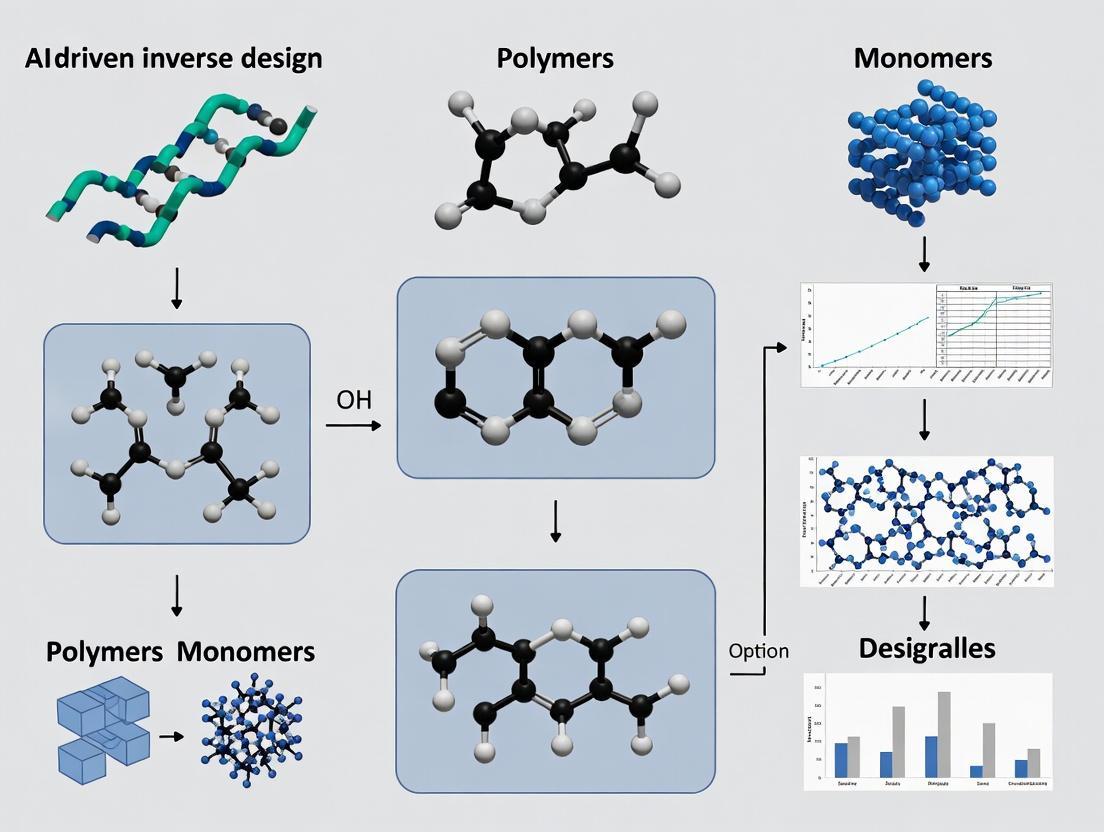
This article explores the transformative paradigm of AI-driven inverse design for polymeric materials, a critical area for drug delivery, tissue engineering, and medical devices.
Inverse Design with AI: Revolutionizing Polymer Discovery for Biomedical Applications
Abstract
This article explores the transformative paradigm of AI-driven inverse design for polymeric materials, a critical area for drug delivery, tissue engineering, and medical devices. It begins by establishing the foundational shift from traditional trial-and-error methods to data-first, goal-oriented approaches. It then details the core AI/ML methodologies—from generative models and high-throughput virtual screening to active learning—and their practical applications in designing polymers for specific biomedical functions. The article addresses key challenges in data scarcity, model interpretability, and multi-objective optimization, offering troubleshooting strategies. Finally, it provides a critical analysis of experimental validation techniques and a comparative review of leading computational platforms and frameworks, concluding with a synthesis of future directions and implications for accelerating clinical translation.
The Paradigm Shift: From Serendipity to Goal-Oriented Design of Functional Polymers
Traditional materials discovery follows a forward design sequence: a target application inspires a hypothesized chemical structure, which is synthesized, characterized, and tested. The process is iterative, costly, and slow, often described as searching for a needle in a haystack. Within polymeric materials research for drug delivery, tissue engineering, and biomedical devices, this challenge is magnified by the vast, high-dimensional design space of monomers, sequences, topologies, and processing conditions.
AI-driven inverse design fundamentally flips this workflow. It starts by defining the desired target property or performance profile. An AI model then explores the combinatorial chemical universe to propose candidate materials predicted to meet those targets. This paradigm shift transforms the role of the scientist from a manual explorer to an objective-driven curator, accelerating the path from concept to functional polymer.
Core Methodologies and Technical Architecture
The implementation of inverse design relies on interconnected AI/ML components.
2.1 Property Prediction Models These are forward models trained on experimental or high-fidelity simulation data to map polymer features (e.g., SMILES string, molecular weight, block architecture) to properties (e.g., glass transition temperature Tg, degradation rate, binding affinity).
Table 1: Common AI Models for Polymer Property Prediction
| Model Type | Typical Input Features | Predicted Polymer Properties | Key Advantage |
|---|---|---|---|
| Graph Neural Networks (GNNs) | Atomic connectivity, bonds, functional groups. | Tg, Young's Modulus, Solubility. | Captures topological structure inherently. |
| Recurrent Neural Networks (RNNs) | Sequence of monomers in a polymer chain. | Sequence-function relationships, copolymer behavior. | Models sequential dependencies. |
| Transformer-based Models | SMILES or SELFIES strings of (macro)molecules. | Quantum chemical properties, toxicity. | Handles long-range context in molecular "language". |
| Classical ML (e.g., Random Forest) | Molecular descriptors (e.g., logP, polar surface area). | Hydrophilicity, degradation profile. | Interpretable, effective with smaller datasets. |
2.2 Inverse Generation Models These models perform the core "inversion," generating candidate structures from a property target.
- Generative Adversarial Networks (GANs): A generator creates candidate polymer representations, while a discriminator evaluates their plausibility and property alignment.
- Variational Autoencoders (VAEs): Encode known polymers into a latent space where interpolation and sampling yield novel, valid structures with tuned properties.
- Reinforcement Learning (RL): An agent is rewarded for proposing structures that meet or approach the target property, as scored by a forward prediction model.
Experimental Protocol: A Typical VAE-based Inverse Design Cycle
- Data Curation: Assemble a dataset of polymer SMILES/SELFIES strings with associated experimental properties (e.g., Tg from differential scanning calorimetry).
- Model Training:
- Train a VAE encoder to compress polymer representations into a latent vector (z).
- Train a VAE decoder to reconstruct the polymer from (z).
- Simultaneously, train a separate "property predictor" network that maps the latent vector (z) to the property (e.g., Tg).
- Inverse Generation:
- Define the target property value (e.g., Tg = 50°C).
- Use gradient-based optimization in the latent space to find a vector (z) that, when fed to the property predictor, outputs the target Tg.
- Decode (z) using the VAE decoder to generate the novel polymer structure.
- Validation: Synthesize and characterize the top in silico candidates to close the experimental loop and refine the models.
Diagram 1: VAE-based inverse design workflow for polymers.
The Scientist's Toolkit: Research Reagent Solutions
Implementing AI-driven inverse design requires both computational and experimental toolkits.
Table 2: Essential Research Reagent Solutions for AI-Driven Polymer Discovery
| Tool/Reagent Category | Specific Example/Name | Function in Inverse Design Workflow |
|---|---|---|
| Polymer Database | PolyInfo (NIMS), PoLyInfo | Provides curated experimental data (e.g., Tg, tensile strength) for training forward property prediction models. |
| Chemical Representation | SELFIES, DeepSMILES | Robust string-based representations of polymers for AI models, preventing invalid structure generation. |
| Generative AI Framework | PyTorch, TensorFlow with RDKit | Libraries for building and training VAEs, GANs, and GNNs on molecular data. |
| High-Throughput Synthesis | Automated Polymer Synthesizer | Enables rapid experimental validation of AI-generated candidates (e.g., for copolymers, hydrogels). |
| Characterization Suite | High-Throughput GPC/SEC, DSC | Provides rapid property measurement (Mw, Tg) to generate data for model refinement and validation. |
| Inverse Design Software | IBM's MolGX, Google's GDM | End-to-end platforms that integrate generative models, property prediction, and candidate screening. |
Quantitative Benchmarks and Current Performance
Recent studies demonstrate the efficacy of the inverse design paradigm.
Table 3: Performance Benchmarks from Recent Inverse Design Studies
| Study Focus | AI Method | Design Target | Performance Outcome | Experimental Validation |
|---|---|---|---|---|
| Photovoltaic Polymers | Conditional GAN + GNN | Power Conversion Efficiency (PCE) > 10% | Generated 20 candidates; top 3 had PCE 12-13% in silico. | Top candidate synthesized, PCE = 11.2%. |
| Antimicrobial Peptoids | RL + RNN | High antimicrobial activity, low hemolysis | Designed 20 peptoids; 63% showed high therapeutic index. | 4 novel candidates showed >10x improved index over training data. |
| Drug Delivery Copolymers | VAE + Bayesian Optimization | Specific drug loading & release profile | Identified optimal monomer ratio in 15 design cycles vs. 100+ for brute-force. | Formulation met sustained release target over 72 hours. |
| OLED Host Materials | Genetic Algorithm + DFT | High triplet energy, appropriate HOMO/LUMO | Discovered 1000s of candidates; 328 passed quantum chemical screening. | Top 5 synthesized, one exceeded benchmark performance. |
AI-driven inverse design represents a foundational shift in polymeric materials research. By beginning with the functional endpoint, it promises to compress discovery timelines from years to months or weeks, particularly for high-value applications in drug delivery and biomedical engineering. The future of this field lies in developing more accurate multi-objective optimization (balancing, e.g., efficacy, biodegradability, and processability), creating hybrid models that integrate physics-based simulations with data-driven AI, and establishing fully automated, closed-loop "self-driving" laboratories that integrate AI design, robotic synthesis, and automated characterization. This paradigm is poised to move from a novel approach to the standard methodology for advanced polymer discovery.
The efficacy of biomedical interventions—from targeted chemotherapy to regenerative tissue engineering—is fundamentally constrained by the materials used. Polymers, with their vast chemical and structural tunability, present a unique solution. However, the traditional, iterative "synthesize-test-analyze" paradigm is insufficient to navigate the exponentially large design space of monomeric units, sequences, architectures, and functionalizations required to meet complex biological demands. This whitepaper frames the critical need for tailored polymers within the emerging paradigm of AI-driven inverse design, where desired biological performance (e.g., drug release profile, immune response, degradation rate) is the input, and the optimal polymer structure is the output.
Performance Metrics: Quantitative Targets for Tailored Polymers
The design of biomedical polymers is governed by precise quantitative targets, which serve as the foundation for data-driven models.
Table 1: Key Performance Metrics for Biomedical Polymers
| Application | Critical Metric | Target Range / Value | Measurement Technique |
|---|---|---|---|
| Drug Delivery | Drug Loading Capacity | 5-30% (w/w) | HPLC, UV-Vis Spectroscopy |
| Controlled Release Half-life (t₁/₂) | 24 hours - 2 weeks | In vitro release assay (PBS/serum) | |
| Critical Micelle Concentration (CMC) | 10⁻³ - 10⁻⁷ M | Pyrene fluorescence assay | |
| Scaffolds | Porosity | 70-90% | Mercury intrusion porosimetry, Micro-CT |
| Average Pore Diameter | 100-400 μm for cell infiltration | SEM image analysis | |
| Compressive Modulus | 0.1-100 MPa (matching tissue) | Uniaxial compression test | |
| Implants | Degradation Rate (mass loss) | 0.5-5% per month | Mass loss, GPC monitoring |
| Surface Hydrophilicity (Water Contact Angle) | 40°-70° for cell adhesion | Goniometry | |
| Protein Adsorption (from serum) | < 50 ng/cm² for anti-fouling | QCM-D, Radiolabeling |
AI-Driven Inverse Design: A Transformative Workflow
Inverse design reverses the traditional materials discovery pipeline. The workflow integrates high-throughput experimentation, multi-omics biological data, and machine learning to form a closed-loop system.
Diagram 1: Closed-loop AI-driven inverse design workflow for biomedical polymers.
Experimental Protocols for Key Characterization
Protocol 4.1: High-Throughput In Vitro Drug Release Kinetics
- Objective: Quantify drug release profile from polymeric nanoparticles under physiological and pathological mimicry.
- Reagents: Polymer-drug conjugate nanoparticles, Phosphate Buffered Saline (PBS, pH 7.4), Acetate Buffer (pH 5.0), Fetal Bovine Serum (FBS), dialysis membranes (MWCO 3.5-14 kDa).
- Procedure:
- Dispense 1 mL of nanoparticle suspension (1 mg/mL drug loading) into a dialysis bag.
- Immerse the bag in 50 mL of release medium (PBS for blood mimic, pH 5.0 for endosome mimic, 10% FBS/PBS for proteinaceous mimic) at 37°C with gentle agitation (n=6).
- At predetermined intervals (0.5, 1, 2, 4, 8, 24, 48, 72h...), withdraw 1 mL of external medium and replace with fresh pre-warmed medium.
- Analyze drug concentration in sampled medium via HPLC (e.g., C18 column, mobile phase acetonitrile/water) or plate reader.
- Fit cumulative release data to kinetic models (Zero-order, Higuchi, Korsmeyer-Peppas) to elucidate release mechanism.
Protocol 4.2: Scaffold Cytocompatibility and Cell Infiltration Assessment
- Objective: Evaluate polymer scaffold support for cell adhesion, viability, and 3D migration.
- Reagents: Sterilized porous scaffold (5mm diameter x 2mm thick), NIH/3T3 fibroblasts, DMEM culture medium, Calcein-AM/Ethidium homodimer-1 (Live/Dead stain), 4% Paraformaldehyde (PFA), Phalloidin/DAPI.
- Procedure:
- Seed scaffolds with cells at 5x10⁴ cells/scaffold in low-attachment plates. Centrifuge at 500xg for 5 min to enhance cell infiltration.
- Culture for 1, 3, and 7 days. At endpoint, rinse with PBS.
- Live/Dead Staining: Incubate in 2 µM Calcein-AM and 4 µM EthD-1 for 30 min. Image via confocal microscopy (z-stack). Calculate viability as (live cells/(live+dead))*100%.
- Immunofluorescence: Fix with 4% PFA for 1h, permeabilize (0.1% Triton X-100), stain F-actin with Phalloidin (green) and nuclei with DAPI. Use 3D reconstruction to quantify cell infiltration depth and morphology.
The Scientist's Toolkit: Essential Research Reagents & Materials
Table 2: Key Research Reagent Solutions for Polymer Biomedicine
| Reagent/Material | Function & Relevance | Example Product/Chemical |
|---|---|---|
| RAFT/Macro-RAFT Agents | Enables controlled radical polymerization for precise architecture (block, star) and end-group functionality. Crucial for reproducible synthesis. | 2-(((Butylthio)carbonothioyl)thio)propanoic acid (BTCPA) |
| Functionalized Poly(ethylene glycol) (PEG) | Gold-standard for conferring "stealth" properties, reducing protein fouling, and improving solubility. Maleimide-, NHS-, and DBCO-PEGs are key for bioconjugation. | mPEG-NHS (MW 5,000 Da) |
| Enzymatically-Degradable Crosslinkers | Allows scaffolds to be remodeled by cell-secreted enzymes (e.g., MMPs), facilitating cell migration and tissue integration. | Peptide crosslinker (GCGPQGIWGQGCG) |
| Cationic or Ionizable Lipids/Monomers | Essential for complexing nucleic acids (pDNA, siRNA) in non-viral gene delivery systems. Critical for endosomal escape via the "proton sponge" effect. | DLin-MC3-DMA, 2-(Diethylamino)ethyl methacrylate (DEAEMA) |
| Click Chemistry Reagents | Provides high-efficiency, bio-orthogonal coupling reactions (e.g., Azide-Alkyne Cycloaddition) for modular polymer functionalization under mild conditions. | Azidated monomer, DBCO-PEG4-NHS Ester |
| Thermosensitive Polymers | Enables injectable, in situ gelling systems for minimally invasive delivery and scaffold formation (Sol-Gel transition at 37°C). | Poly(N-isopropylacrylamide) (pNIPAM), Poloxamer 407 |
Biological Signaling Pathways in Polymer-Tissue Interactions
The host response to an implanted polymer is orchestrated by specific signaling pathways. Tailoring polymers requires understanding and targeting these pathways.
Diagram 2: Key immune signaling pathways triggered by polymeric biomaterials.
The traditional approach to polymeric biomaterial development is largely empirical, involving iterative synthesis, characterization, and testing. Inverse design, particularly when accelerated by artificial intelligence (AI) and machine learning (ML), inverts this process. It begins with a defined biological target—a desired cellular response or therapeutic outcome—and computationally identifies the optimal combination of polymer properties required to elicit that response. This whitepaper details the three core material properties—degradation, bioactivity, and mechanical cues—that serve as primary input parameters for AI-driven inverse targeting platforms in drug delivery and tissue engineering.
Core Property 1: Degradation Kinetics and Mechanisms
Degradation dictates the temporal release profile of therapeutic agents, the longevity of a scaffold, and the cellular response to breakdown products.
Key Degradation Mechanisms
- Hydrolysis: Cleavage of backbone esters, anhydrides, or carbonates by water. Rate depends on polymer crystallinity, hydrophilicity, and molecular weight.
- Enzymatic Degradation: Specific cleavage by enzymes (e.g., matrix metalloproteinases, esterases). Offers disease-site-specific responsiveness.
- Bulk vs. Surface Erosion: Determines release kinetics (zero-order vs. first-order) and structural integrity.
Quantitative Data on Common Degradable Polymers
Table 1: Degradation Properties of Key Synthetic Polymers
| Polymer | Degradation Mechanism | Typical Degradation Time in vivo | Key Influencing Factors |
|---|---|---|---|
| Poly(lactic-co-glycolic acid) (PLGA) | Hydrolysis (ester cleavage) | 2 weeks to >1 year | LA:GA ratio, MW, end-group, crystallinity |
| Polycaprolactone (PCL) | Hydrolysis (slow) | 2-4 years | MW, crystallinity, blending |
| Poly(β-amino esters) (PBAEs) | Hydrolysis (surface erosion) | Days to months | Polymer backbone structure, pH |
| Polyanhydrides | Hydrolysis (surface erosion) | Days to weeks | Aliphatic/aromatic monomer ratio |
| Poly(ethylene glycol) (PEG) | Minimal; oxidative | Non-degradable over experimental timescales | Chain length, branching |
Experimental Protocol:In VitroDegradation Study
Objective: To measure mass loss and molecular weight change of a polymer scaffold over time under simulated physiological conditions.
- Sample Preparation: Fabricate polymer discs (e.g., 5mm diameter x 1mm thick) via solvent casting or compression molding. Weigh initial dry mass (M₀) and determine initial molecular weight via Gel Permeation Chromatography (GPC).
- Incubation: Immerse samples in phosphate-buffered saline (PBS, pH 7.4) at 37°C. For enzymatic studies, add relevant enzyme (e.g., 100 µg/mL collagenase for collagen-based materials).
- Sampling: At predetermined time points (e.g., 1, 3, 7, 14, 28 days), remove triplicate samples.
- Analysis:
- Mass Loss: Rinse samples with deionized water, lyophilize, and weigh dry mass (Mₜ). Calculate mass remaining:
(Mₜ / M₀) * 100%. - Molecular Weight: Dissolve dried samples in appropriate solvent and analyze by GPC to track Mn and Mw reduction.
- pH Monitoring: Record pH of incubation medium to monitor acidic breakdown products.
- Mass Loss: Rinse samples with deionized water, lyophilize, and weigh dry mass (Mₜ). Calculate mass remaining:
Core Property 2: Biochemical and Bioactive Signaling
Bioactivity refers to the polymer's ability to interact directly with biological systems via chemical motifs, tethered ligands, or released factors.
Bioactivity Modalities
- Integrin-Binding Ligands: Peptides (RGD, YIGSR) grafted to promote cell adhesion.
- Growth Factor Binding: Heparin-binding domains for sustained presentation of VEGF, BMP-2.
- Protease Sensitivity: MMP-cleavable linkers (e.g., GPLGIAGQ) for cell-invasive remodeling.
- Click Chemistry Sites: Alkyne/azide groups for modular post-fabrication functionalization.
Table 2: Common Bioactive Moieties and Their Targets
| Bioactive Motif | Target/Function | Typical Conjugation Method |
|---|---|---|
| RGD Peptide | αvβ3, α5β1 Integrins (cell adhesion) | NHS-ester, maleimide, click chemistry |
| IKVAV Peptide | Laminin receptors (neurite outgrowth) | Carbodiimide (EDC/NHS) coupling |
| Heparin | Growth factor sequestration & stabilization | Epoxide activation, carbodiimide |
| MMP-cleavable linker | Cell-directed degradation & release | Incorporated into crosslinker |
Experimental Protocol: Assessing Cell Adhesion via Tethered Ligands
Objective: To quantify cell adhesion density on polymer surfaces functionalized with adhesive peptides.
- Surface Functionalization: Substrates are coated with a base polymer (e.g., PEG-diacrylate). Peptides containing RGD and a cysteine residue are conjugated via photoinitiated thiol-ene click reaction or using maleimide-terminated polymers.
- Cell Seeding: Human mesenchymal stem cells (hMSCs) are seeded at a density of 10,000 cells/cm² in serum-free medium.
- Incubation: Cells are allowed to adhere for 2-4 hours at 37°C.
- Washing & Fixing: Non-adherent cells are removed by gentle PBS washing. Adherent cells are fixed with 4% paraformaldehyde.
- Quantification: Nuclei are stained with DAPI (4',6-diamidino-2-phenylindole). Five random fields per sample are imaged using fluorescence microscopy. Cell adhesion is quantified by automatic nuclei counting using software (e.g., ImageJ).
Core Property 3: Mechanical Cues
Substrate stiffness, elasticity, and viscoelasticity are transduced into biochemical signals (mechanotransduction) influencing cell fate.
Key Mechanical Parameters
- Elastic Modulus (Stiffness): Measured in kPa or MPa. Critical for stem cell differentiation (neural ~0.1-1 kPa, muscle ~8-17 kPa, bone ~25-40 kPa).
- Viscoelasticity: Time-dependent response (stress relaxation, creep). Faster relaxation can enhance cell spreading and differentiation.
- Topography: Nanoscale/microscale patterns guiding cell alignment and morphology.
Experimental Protocol: Tuning and Measuring Substrate Stiffness
Objective: To fabricate polyacrylamide (PA) hydrogels of defined stiffness and verify their elastic modulus.
- Gel Fabrication: Vary acrylamide (40% w/v) and bis-acrylamide (2% w/v) ratios to create gels with shear moduli (G') from 0.5 to 50 kPa. Example: For ~10 kPa, mix 10% acrylamide, 0.15% bis-acrylamide. Bind ligands to surface using sulfo-SANPAH photoactivation.
- Rheological Measurement:
- Use a parallel-plate rheometer with a 8mm plate geometry.
- Load uncrosslinked precursor solution.
- Initiate crosslinking in situ using ammonium persulfate (APS) and tetramethylethylenediamine (TEMED).
- Perform an oscillatory time sweep at 1 Hz frequency and 1% strain to monitor storage (G') and loss (G'') modulus until plateau.
- The plateau G' value is reported as the shear modulus. For approximate Young's Modulus (E), assume E ≈ 3G' for incompressible materials.
Integration for AI-Driven Inverse Design
In an inverse design workflow, target biological data (e.g., "maximize osteogenic differentiation at 21 days") is input. The AI model, trained on datasets correlating polymer property inputs (degradation rate, ligand density, stiffness) to biological outputs, reverse-engineers an optimal material formulation.
AI-Driven Inverse Design Workflow for Polymeric Materials
The Scientist's Toolkit: Key Research Reagent Solutions
Table 3: Essential Reagents for Polymer Property Analysis
| Reagent / Material | Function in Research | Key Consideration |
|---|---|---|
| PLGA (50:50, acid-terminated) | Model hydrolytically degradable polymer for controlled release studies. | LA:GA ratio and end-group define degradation rate. |
| PEG-diacrylate (Mn 3.4k, 6k, 10k) | Hydrophilic, tunable-crosslink polymer for hydrogel studies of mechanics & diffusion. | Molecular weight between crosslinks controls mesh size and modulus. |
| Sulfo-SANPAH | Heterobifunctional crosslinker for conjugating amines to hydroxyl groups; used to functionalize hydrogels with peptides. | UV activation required; sensitive to moisture and light. |
| RGD-SH peptide (e.g., GCGYGRGDSPG) | Cysteine-terminated adhesive peptide for covalent surface conjugation. | Thiol group allows specific conjugation to maleimides or via thiol-ene. |
| Matrix Metalloproteinase-2 (MMP-2) | Enzyme used to study enzyme-responsive degradation of crosslinkers containing MMP-sensitive sequences. | Activity must be verified via fluorogenic assay. |
| Acrylamide / Bis-Acrylamide | Precursors for polyacrylamide hydrogels, the gold standard for 2D substrate stiffness studies. | Ratios precisely control final elastic modulus. |
| Gel Permeation Chromatography (GPC) Kit | Standards (e.g., polystyrene, PEG) and solvents for measuring polymer molecular weight and distribution. | Columns and standards must match polymer solubility and structure. |
| Parallel-Plate Rheometry Kit | Tools (e.g., 8mm plate geometry, Peltier temperature control) for measuring hydrogel viscoelastic properties. | Strain and frequency must be within linear viscoelastic region. |
Abstract This technical guide delineates the foundational AI paradigms enabling the inverse design of polymeric materials. We detail the operational principles of generative models and property predictors, framing them within an integrated computational workflow for de novo material discovery. Emphasis is placed on actionable methodologies, data requirements, and the critical synergy between generation and validation.
Traditional materials discovery follows an empirical, trial-and-error path: structure → synthesis → property measurement. AI-driven inverse design inverts this pipeline: desired property → generative model → candidate structures. This paradigm shift, centered on polymers for drug delivery, catalysis, and biomaterials, demands two interconnected AI components: a property predictor for rapid virtual screening and a generative model to explore the vast chemical space intelligently.
Core AI Architectures
2.1 Property Predictors: Supervised Learning for Quantitative Structure-Property Relationships (QSPR) Property predictors are regression or classification models that map a molecular representation to a target property (e.g., glass transition temperature Tg, solubility parameter, biodegradation rate).
- Common Architectures: Graph Neural Networks (GNNs) are state-of-the-art, as they operate directly on the molecular graph, capturing topology and features.
- Input Representation: Atom (type, charge) and bond (type, conjugation) features.
- Output: A continuous value (regression) or class label (classification).
2.2 Generative Models: Exploring Chemical Space Generative models learn the underlying probability distribution of known polymer repeat units or structures and sample novel, valid candidates from this distribution.
- Variational Autoencoders (VAEs): Encode molecules into a continuous latent space where interpolation is meaningful. Sampling from this space and decoding yields new structures.
- Generative Adversarial Networks (GANs): A generator creates candidate structures, while a discriminator evaluates their authenticity, driving improvement.
- Autoregressive Models (e.g., Transformers): Generate molecular strings (like SMILE S) or graphs token-by-token, conditioned on learned patterns.
Integrated Workflow for Polymeric Inverse Design
A functional inverse design cycle integrates these models sequentially.
- Target Specification: Define property constraints (e.g., Tg > 100°C, logP between 2-4).
- Generation: The generative model proposes candidate molecular structures.
- Prediction: The property predictor rapidly screens all candidates, filtering for those meeting targets.
- Selection & Validation: Top candidates undergo more computationally expensive simulation (e.g., MD) or are prioritized for synthesis.
AI-Driven Inverse Design Workflow for Polymers
Key Experiments & Methodologies
4.1 Training a Graph Neural Network Property Predictor
- Objective: Predict glass transition temperature (Tg) of amorphous polymers.
- Dataset: PolyInfo (NIMS) or curated datasets from literature. A sample benchmark is shown below.
- Protocol:
- Data Curation: Collect polymer SMILE S (repeat unit) and experimental Tg values. Clean data, remove outliers.
- Featurization: Convert each repeat unit to a graph. Nodes (atoms): one-hot encode atom type, degree, hybridization. Edges (bonds): one-hot encode bond type.
- Model Architecture: Implement a Message-Passing Neural Network (MPNN). Use 3-5 message-passing layers to aggregate neighborhood information.
- Training: Use 70-15-15 train/validation/test split. Loss function: Mean Squared Error (MSE). Optimizer: Adam.
- Evaluation: Report Mean Absolute Error (MAE) and R² on the held-out test set.
Table 1: Representative Performance of GNNs on Polymer Property Prediction
| Property | Model Architecture | Dataset Size | Reported MAE | Reported R² | Reference |
|---|---|---|---|---|---|
| Glass Transition Temp (Tg) | MPNN | ~10,000 | 12.5 °C | 0.86 | J. Chem. Inf. Model. (2022) |
| Degradation Rate | Attentive FP | ~1,500 | 0.18 log units | 0.78 | Macromolecules (2023) |
| Solubility Parameter (δ) | GCN | ~5,000 | 0.45 MPa^0.5 | 0.91 | ACS Polym. Au (2023) |
4.2 Training a Conditional VAE for Monomer Generation
- Objective: Generate novel monomer structures conditioned on a target Tg range.
- Protocol:
- Data: Use a large library of monomer SMILE S (e.g., from PubChem).
- Conditioning: Append a property label (e.g., "LowTg" or "HighTg") to each SMILE S during training.
- Architecture: Encoder (RNN or Transformer) maps SMILE S to latent vector
z. Decoder reconstructs SMILE S fromz. A regularization term forces latent space normality. - Training: Maximize the evidence lower bound (ELBO) loss.
- Generation: Sample a random vector
zfrom the latent space and provide the desired property condition to the decoder.
The Scientist's Toolkit: Research Reagent Solutions
Table 2: Essential Components for an AI-Driven Inverse Design Pipeline
| Item / Solution | Function in the Research Pipeline | Example / Note |
|---|---|---|
| Curated Polymer Dataset | Foundational training data for both predictors and generators. | PolyInfo, Polymer Genome; requires significant curation for quality. |
| Graph Neural Network Library | Provides pre-built modules for constructing property predictors. | PyTorch Geometric (PyG), Deep Graph Library (DGL). |
| Molecular Featurization Toolkit | Converts chemical structures into machine-readable formats. | RDKit (open-source), for generating fingerprints and graphs. |
| High-Performance Computing (HPC) Cluster | Trains large models and runs validation simulations. | Essential for GNN training on >10k datapoints. |
| Molecular Dynamics (MD) Software | Provides high-fidelity validation of top AI-generated candidates. | GROMACS, LAMMPS; used to calculate properties from first principles. |
| Automated Synthesis & Characterization | Closes the design loop with experimental validation. | Flow reactors coupled with HPLC/GPC for rapid iteration. |
Challenges & Future Directions
Key challenges include data scarcity for high-quality polymer properties, the difficulty of modeling polymer chain length and dispersity, and integrating synthesis feasibility into generation. The future lies in hybrid models that couple generative AI with physical laws (physics-informed neural networks) and automated robotic platforms for closed-loop discovery, dramatically accelerating the design of next-generation polymeric materials for drug delivery and beyond.
Current Landscape and Pioneering Studies in AI-Designed Biomedical Polymers (2023-2024)
The development of biomedical polymers for applications such as drug delivery, tissue engineering, and medical devices has traditionally relied on iterative, empirical experimentation. This process is time-consuming and often fails to identify optimal material compositions for complex biological environments. The paradigm is shifting towards AI-driven inverse design, a computational approach where desired performance parameters (e.g., degradation rate, drug release profile, biocompatibility) are specified, and AI models propose novel polymer structures to meet these criteria. This whitepaper situates recent advancements (2023-2024) within this transformative thesis, detailing the core methodologies, experimental validations, and toolkit required for implementation.
Core AI Methodologies and Quantitative Landscape
The current landscape is dominated by hybrid models integrating generative AI, high-throughput computational screening, and multi-fidelity data.
Table 1: Dominant AI Models and Their Quantitative Performance (2023-2024)
| AI Model Type | Primary Function | Reported Accuracy/Performance | Key Study (Year) |
|---|---|---|---|
| Graph Neural Networks (GNNs) | Predict polymer properties from graph-based representations of monomers/polymers. | R² > 0.92 for glass transition temp (Tg) prediction on unseen polymer classes. | Guo et al., Nature Comms (2023) |
| Variational Autoencoders (VAEs) / Generative Adversarial Networks (GANs) | Generate novel, synthetically accessible polymer structures. | Generated 5,000 novel candidates; 95% were chemically valid, 78% had predicted properties within target range. | Lee et al., Sci. Adv. (2024) |
| Reinforcement Learning (RL) | Inverse design by iteratively improving structures towards a multi-property objective. | Optimized for sustained release & low cytotoxicity; success rate 3.5x higher than random search. | Sharma et al., Cell Reports Phys. Sci. (2023) |
| Transformer-based Language Models | Treat polymer SMILES strings as language for property prediction and generation. | Top-10 recall of 0.41 for recommending polymers matching 4+ complex biological criteria. | BioPolyBERT, J. Chem. Inf. Model. (2024) |
| Multi-fidelity Learning | Integrate cheap (simulation) and expensive (experimental) data for efficient optimization. | Reduced required wet-lab experiments by 65% to identify optimal hydrogel formulation. | Wang & Zhang, Adv. Mater. (2023) |
Table 2: Key Properties Modeled and Designed for Biomedical Polymers
| Target Property | Typical AI Prediction Target | Experimental Validation Metric | Achieved Design Accuracy |
|---|---|---|---|
| Degradation Rate | Hydrolysis rate constant (k) from molecular dynamics/ML. | Mass loss (%) or molecular weight decrease over time in PBS. | Mean Absolute Error (MAE): ~7% of experimental range. |
| Drug Release Kinetics | Cumulative release profile (e.g., Higuchi model parameters). | UV-Vis or HPLC measurement of released drug in sink conditions. | R² > 0.89 for release curve prediction. |
| Cytocompatibility | Predicted cell viability (%) or hemolysis rate. | In vitro CCK-8 or MTT assay; hemolysis assay with RBCs. | Classification accuracy > 88% (toxic vs. non-toxic). |
| Mechanical Strength | Young's modulus (E) from quantum mechanics/ML. | Tensile testing or nanoindentation. | MAE < 15% on log-scale for elastomers. |
| Protein Corona Composition | Relative abundance of key adsorbed proteins (e.g., albumin, fibrinogen). | LC-MS/MS analysis of proteins adsorbed from plasma. | Spearman correlation ρ ~ 0.79 for top 5 proteins. |
Detailed Experimental Protocols for Validation
Following AI design and in silico screening, top candidate polymers require rigorous experimental validation. Below are standardized protocols for key characterization experiments cited in pioneering studies.
Protocol 1: High-Throughput Synthesis & Characterization of AI-Designed Polymeric Nanoparticles
- Objective: Synthesize and screen AI-predicted polymer libraries for drug encapsulation and size control.
- Materials: (See "Scientist's Toolkit").
- Method:
- Automated Synthesis: Utilizing a liquid-handling robot, prepare monomers/initiators in dimethylformamide (DMF) according to AI-generated recipes in a 96-well plate.
- Controlled Polymerization: Conduct atom transfer radical polymerization (ATRP) or ring-opening polymerization (ROP) under inert atmosphere (N₂) at specified temperatures (e.g., 70°C for ATRP) for 24 hours.
- Nanoprecipitation: Use a microfluidic mixer to combine 1 mL of each polymer solution (in DMF) with 5 mL of deionized water at a flow rate ratio of 1:5 to form nanoparticles (NPs).
- Purification: Transfer NP dispersions to pre-hydrated dialysis membranes (MWCO 3.5 kDa) against DI water for 48 hours.
- Characterization:
- Dynamic Light Scattering (DLS): Measure hydrodynamic diameter and PDI in a 384-well plate format.
- Encapsulation Efficiency: Load a model drug (e.g., Doxorubicin) during nanoprecipitation. Measure unencapsulated drug via UV-Vis after centrifugal filtration (10 kDa MWCO). Calculate EE% = (Total drug - Free drug) / Total drug * 100.
Protocol 2: In Vitro Cytocompatibility and Hemocompatibility Testing
- Objective: Validate AI predictions of biocompatibility.
- Method:
- Cell Seeding: Seed L929 fibroblasts or HUVECs in a 96-well plate at 10,000 cells/well in complete medium. Incubate for 24 h.
- Polymer Exposure: Replace medium with serial dilutions of polymer/extract solutions. Include positive (0.1% Triton X-100) and negative (culture medium) controls.
- Incubation: Incubate for 24-72 h.
- Viability Assay (CCK-8): Add 10 µL of CCK-8 reagent per well. Incubate for 2 h. Measure absorbance at 450 nm.
- Hemolysis Assay: Dilute fresh human RBCs in PBS to 2% v/v. Incubate 0.5 mL with 0.5 mL of polymer solution for 1 h at 37°C. Centrifuge. Measure supernatant absorbance at 540 nm. Calculate % hemolysis relative to Triton X-100 (100%) and PBS (0%).
Protocol 3: Controlled Drug Release Kinetics
- Objective: Measure release profile and compare to AI-predicted kinetics.
- Method:
- Sample Preparation: Place 1 mL of drug-loaded NP suspension (known drug mass) into a pre-hydrated dialysis tube (MWCO appropriate for drug).
- Release Study: Immerse the tube in 50 mL of release medium (PBS, pH 7.4, 37°C, with 0.1% w/v sodium azide) under sink conditions, with constant stirring (100 rpm).
- Sampling: At predetermined times, withdraw 1 mL of external medium and replace with fresh pre-warmed medium.
- Quantification: Analyze drug concentration in samples via HPLC or UV-Vis spectroscopy. Plot cumulative release (%) vs. time. Fit data to models (e.g., Korsmeyer-Peppas) to determine release mechanism.
Visualizing Workflows and Relationships
AI-Driven Inverse Design and Validation Workflow for Biomedical Polymers
Signaling Pathway for Targeted Drug Delivery by AI-Designed Nanoparticles
The Scientist's Toolkit: Research Reagent Solutions
Table 3: Essential Materials and Reagents for AI-Designed Polymer Research
| Item/Category | Specific Example/Product | Function in Experimental Protocol |
|---|---|---|
| AI/Software Platform | PolyBERT, PolyGNN, Chemputer (hardware) |
Enables inverse design, property prediction, and even automated synthesis orchestration. |
| High-Throughput Synthesis | Chemspeed SWING or Unchained Labs Junior automated synthesizer. | Enables precise, reproducible synthesis of AI-generated polymer libraries in parallel. |
| Monomer Library | Diverse acrylates, lactones, cyclic carbonates, amino acid N-carboxyanhydrides (NCAs). | Provides the chemical building blocks for generating a wide range of biodegradable and functional polymers. |
| Controlled Polymerization Kit | ATRP/RAFT initiators & catalysts, enzyme kits for enzymatic ROP. | Allows precise control over polymer chain length, architecture, and end-group functionality. |
| Microfluidic Nanoprecipitator | Dolomite Mitos Nano or similar chip-based system. | Produces highly uniform, reproducible polymeric nanoparticles with controlled size. |
| Characterization Suite | Malvern Panalytical Zetasizer Ultra (DLS), Agilent 1260 Infinity II HPLC. | Measures critical quality attributes: nanoparticle size, PDI, drug loading, and release kinetics. |
| In Vitro Bioassay Kit | Dojindo CCK-8 Cell Counting Kit, Hemoglobin Colorimetric Assay Kit. | Standardized kits for reliable, high-throughput assessment of cytocompatibility and hemocompatibility. |
| Data Management | Benchling or KNIME Analytics Platform. | Manages the link between AI predictions, synthesis parameters, and experimental results for closed-loop learning. |
AI Toolbox in Action: How Algorithms Design Polymers for Specific Biomedical Functions
Within the broader thesis of AI-driven inverse design for polymeric materials, generative artificial intelligence (GenAI) has emerged as a transformative force. This technical guide explores the application of three foundational generative models—Variational Autoencoders (VAEs), Generative Adversarial Networks (GANs), and Diffusion Models—for the de novo design of novel monomers and polymers with targeted architectures and properties. Moving beyond traditional trial-and-error or high-throughput screening, these models learn complex, high-dimensional chemical spaces to propose synthetically accessible candidates with optimized functionalities for applications ranging from drug delivery to advanced manufacturing.
Core Generative AI Architectures: Mechanisms & Applications
Variational Autoencoders (VAEs) for Latent Space Exploration
VAEs provide a probabilistic framework for encoding molecular representations (e.g., SMILES, SELFIES, graph) into a continuous, structured latent space. Decoding from this space enables the generation of new structures.
- Key Mechanism: Combines an encoder network (qφ(z|x)) that maps input data to a distribution (mean and variance) in latent space, and a decoder network (pθ(x|z)) that reconstructs data from latent points. The loss function is the Evidence Lower Bound (ELBO), balancing reconstruction fidelity and latent space regularity (Kullback-Leibler divergence).
- Polymer Application: Ideal for exploring continuous property gradients and performing "latent space arithmetic" (e.g., generating a monomer with properties halfway between two known monomers).
Generative Adversarial Networks (GANs) for High-Fidelity Generation
GANs train a generator (G) and a discriminator (D) in an adversarial game. G creates synthetic data, while D distinguishes real from generated samples.
- Key Mechanism: The generator learns to produce data that minimizes log(1 - D(G(z))), while the discriminator maximizes log(D(x)) + log(1 - D(G(z))). This competition drives G toward producing highly realistic samples.
- Polymer Application: Effective in generating high-resolution, novel polymer repeat unit structures or oligomer sequences when trained on databases like PolyInfo or PChem.
Diffusion Models for High-Quality, Diverse Design
Diffusion models gradually corrupt training data with Gaussian noise (forward process) and then learn to reverse this process to generate new data from noise.
- Key Mechanism: A neural network (typically a U-Net) is trained to predict the noise added at each step of a forward Markov chain. The reverse denoising process, conditioned on property labels, allows for controlled generation.
- Polymer Application: Excels in generating diverse and high-quality complex polymer topologies (e.g., branched, star, block architectures) and is highly effective for property-conditioned inverse design.
Table 1: Comparative Analysis of Generative AI Models for Polymer Design
| Feature | VAE | GAN | Diffusion Model |
|---|---|---|---|
| Training Stability | Stable, reproducible. | Can suffer from mode collapse, non-convergence. | Stable but computationally intensive. |
| Sample Diversity | Good, but can produce invalid structures. | Can be limited if mode collapse occurs. | Very High. |
| Generation Quality | Moderate; may produce blurry/implausible structures. | High when training converges. | State-of-the-Art. |
| Latent Space | Continuous, interpretable, enables interpolation. | Typically discontinuous, less interpretable. | Latent space is the data space itself (noise). |
| Primary Polymer Use Case | Latent space exploration & optimization. | High-fidelity single-chain generation. | Property-conditioned inverse design of complex architectures. |
| Typical Validity Rate | ~60-85% (SMILES-based). | ~70-90% (Graph-based). | >90% (SELFIES-based). |
Experimental Protocol: A Standardized Workflow for AI-Driven Polymer Discovery
The following detailed methodology outlines a standard pipeline for generative AI-driven polymer discovery, integrating the models discussed.
Step 1: Data Curation & Representation
- Objective: Assemble a high-quality dataset for model training.
- Procedure:
- Source data from public polymer databases (e.g., PolyInfo, PoLyInfo, Polymer Genome) or proprietary experimental datasets.
- Clean data: Remove duplicates, correct errors, and standardize entries.
- Choose a molecular representation:
- SMILES/String-Based: Simplified, but may generate invalid strings.
- SELFIES: 100% syntactically valid, recommended for robustness.
- Graph-Based (e.g., Molecular Graph): Directly represents atoms (nodes) and bonds (edges), ideal for GANs and VAEs.
- Annotate data with target properties (e.g., glass transition temperature Tg, solubility parameter, molecular weight).
Step 2: Model Selection & Training
- Objective: Train a generative model on the prepared dataset.
- Procedure:
- Select Model based on Table 1 criteria (e.g., Diffusion Model for property-conditioned design).
- Partition Data: 80% training, 10% validation, 10% test set.
- Define Architecture:
- VAE: Implement encoder/decoder with recurrent or graph neural networks. Use KL annealing.
- GAN: Use a graph convolutional network (GCN) for generator/discriminator. Apply gradient penalty (WGAN-GP) for stability.
- Diffusion: Implement a noise-prediction U-Net with property conditioning via cross-attention layers.
- Train: Optimize using Adam optimizer. Monitor validation loss and quantitative metrics (e.g., validity, uniqueness, novelty).
Step 3: Generation & Virtual Screening
- Objective: Generate novel candidates and screen them computationally.
- Procedure:
- Generate a large library (e.g., 10,000) of candidate monomers/polymers.
- Filter candidates for chemical validity (using RDKit) and synthetic accessibility (e.g., using SA Score).
- Employ surrogate models (e.g., trained Graph Neural Networks) to predict key properties of the valid candidates.
- Rank candidates based on predicted properties relative to the target profile (e.g., highest Tg, specific degradation rate).
Step 4: Downstream Validation & Iteration
- Objective: Validate top candidates and refine the AI model.
- Procedure:
- Select the top 20-50 ranked candidates for synthesis.
- Conduct experimental characterization (e.g., NMR, GPC, DSC) to determine actual properties.
- Close the loop: Add the new experimental data (structures and measured properties) to the training dataset.
- Fine-tune the generative and surrogate models with the expanded dataset to improve predictive accuracy and generation relevance.
Visualization of Workflows
Title: AI-Driven Polymer Discovery Closed Loop
Title: VAE vs Diffusion Model Architectures
The Scientist's Toolkit: Essential Research Reagents & Solutions
Table 2: Key Research Reagents & Computational Tools for AI Polymer Research
| Item / Tool Name | Category | Primary Function in Workflow |
|---|---|---|
| RDKit | Software Library | Open-source cheminformatics for handling molecular representations (SMILES/SELFIES), validity checks, descriptor calculation, and basic property predictions. |
| SELFIES | Molecular Representation | A string-based representation (like SMILES) guaranteed to produce 100% syntactically valid molecules, crucial for robust generative model training. |
| PyTorch / TensorFlow | Deep Learning Framework | Core platforms for building, training, and deploying complex neural network models (VAEs, GANs, Diffusion Models). |
| PyTorch Geometric (PyG) | Software Library | Extension of PyTorch for deep learning on graphs, essential for graph-based representations of polymers. |
| GPU (NVIDIA A100/H100) | Hardware | Accelerates the intensive computation required for training large generative models and surrogate neural networks. |
| Polymer Databases (PolyInfo) | Data Source | Curated repositories of polymer properties for training and benchmarking data-driven models. |
| Gaussian or ORCA | Quantum Chemistry Software | Used for in silico validation of top AI-generated candidates, computing precise electronic properties and reaction energies. |
| COSMO-RS | Simulation Tool | Predicts thermodynamic properties (e.g., solubility, partition coefficients) for virtual screening of generated monomers. |
High-Throughput Virtual Screening with Machine Learning Property Predictors
High-throughput virtual screening (HTVS) has been revolutionized by integrating machine learning (ML) property predictors. This approach is a cornerstone of AI-driven inverse design, a paradigm central to accelerating the discovery of novel polymeric materials. The core thesis of this research is that ML models, trained on curated datasets of polymer structures and properties, can predict key performance metrics with sufficient accuracy to screen vast virtual chemical libraries in silico, thus identifying promising candidates for synthesis and testing. This guide provides a technical framework for implementing such a pipeline within the context of advanced materials research.
Core ML Architecture and Models
ML property predictors for polymers typically employ models ranging from classical algorithms to advanced deep learning architectures. Current research (2024-2025) emphasizes graph neural networks (GNNs) due to their natural ability to handle molecular graph representations.
Table 1: Comparison of Primary ML Models for Polymer Property Prediction
| Model Type | Key Architecture/Features | Typical Predicted Properties (Polymer) | Reported MAE (Example) | Best For |
|---|---|---|---|---|
| Graph Neural Network (GNN) | Message-passing layers (e.g., MPNN, GIN, GAT), learning on molecular graphs. | Glass transition temp (Tg), permeability, tensile modulus, dielectric constant. | Tg: ±8-12 K (on datasets of ~10k polymers) | Capturing topological structure and functional groups. |
| Random Forest (RF) | Ensemble of decision trees on engineered fingerprints (e.g., ECFP, Mordred). | Solubility parameter (δ), density, thermal decomposition onset. | δ: ±0.8 (J/cm³)^½ | Rapid screening with smaller, interpretable datasets. |
| Directed Message Passing Neural Network (D-MPNN) | Specialized GNN variant, excels at learning from atom and bond features. | Electronic bandgap, refractive index, ionic conductivity. | Bandgap: ±0.15 eV | Electronic and optoelectronic properties. |
| Transformer-based (e.g., ChemBERTa) | Pre-trained on SMILES strings, fine-tuned for regression. | LogP, solubility, biocompatibility score. | LogP: ±0.4 | Leveraging large pre-trained chemical language models. |
Experimental Protocol for Model Training & Validation:
- Dataset Curation: Assemble a dataset of polymer repeat unit SMILES or graphs paired with experimental property values. Sources include PoLyInfo, PI1M, and proprietary data.
- Representation: Convert polymers to graphs (nodes=atoms, edges=bonds) or standardized fingerprints.
- Splitting: Implement scaffold splitting (based on molecular substructure) to ensure generalization, e.g., 80/10/10 train/validation/test split.
- Training: Use PyTorch Geometric or DeepChem frameworks. Optimize using Adam with a learning rate scheduler (e.g., ReduceLROnPlateau). Loss function: Mean Squared Error (MSE).
- Hyperparameter Tuning: Conduct a Bayesian search over key parameters: learning rate (1e-4 to 1e-3), GNN layer depth (3-6), hidden dimension (128-300), dropout rate (0.0-0.3).
- Evaluation: Report MAE, RMSE, and R² on the held-out test set. Perform uncertainty quantification via ensemble methods or dropout variance.
Workflow for AI-Driven Inverse Design
Title: AI-Driven Inverse Design Screening Workflow
Detailed Screening Protocol
Protocol for a High-Throughput Screening Campaign:
- Virtual Library Generation: Use a generative model (e.g., polymer-specific VAE) or rule-based enumeration (e.g., from a set of known monomers and linkers) to create a library of 1e6 to 1e9 candidate polymer repeat units in SMILES format.
- Pre-Filtering: Apply simple rule-based filters (e.g., molecular weight range, absence of toxic substructures, synthetic accessibility score > threshold).
- Property Prediction: Deploy the trained ML predictor(s) in a parallelized computing environment (e.g., using Dask or Slurm array jobs) to predict target properties (e.g., Tg > 150°C, dielectric constant < 2.5) for each filtered candidate.
- Multi-Objective Optimization: Apply a Pareto sorting algorithm (e.g., Non-Dominated Sorting Genetic Algorithm II - NSGA-II) to identify candidates optimizing multiple, often competing, properties.
- Post-Processing & Clustering: Perform structural clustering (e.g., Butina clustering on fingerprints) on top-ranked candidates to ensure diversity and select representative leads.
- Uncertainty-Aware Selection: Prioritize candidates where model ensemble predictions show high consensus (low variance) or, alternatively, explore candidates with high uncertainty but high predicted performance for model-informed discovery.
The Scientist's Toolkit: Research Reagent Solutions
Table 2: Essential Research Reagents & Materials for HTVS in Polymer Informatics
| Item | Function/Description |
|---|---|
| Curated Polymer Datasets (PoLyInfo, PI1M) | Benchmark experimental data for training and validating ML models. Includes properties like Tg, strength, conductivity. |
| Molecular Featurization Libraries (RDKit, Mordred) | Software to convert SMILES strings to molecular graphs or compute >1800 2D/3D molecular descriptors for feature-based models. |
| Deep Learning Frameworks (PyTorch Geometric, DeepChem) | Specialized libraries for building and training GNNs and other deep chemical models. |
| High-Performance Computing (HPC) Cluster or Cloud GPU (NVIDIA A100/V100) | Essential for training deep models on large datasets and screening ultra-large virtual libraries in parallel. |
| Generative Chemistry Toolkits (GT4SD, MolecularTransformer) | Open-source frameworks for building generative models to create novel, valid polymer structures. |
| Multi-Objective Optimization Software (pymoo, JMetal) | Libraries implementing algorithms like NSGA-II to navigate trade-offs between multiple target properties. |
| Synthetic Accessibility Predictors (SAscore, RAscore) | Filters to prioritize candidates likely to be synthesizable, bridging virtual screening and lab reality. |
Title: ML Predictor Data Processing Pathways
Integration into the Inverse Design Thesis
This HTVS methodology directly enables the inverse design thesis: starting with a set of desired target properties, the screened and ranked virtual library provides a "design map" of chemical structures predicted to meet those targets. The closed loop is completed when synthesized and tested candidates are fed back into the training database, iteratively improving the ML predictors. This creates a self-improving, AI-accelerated materials discovery pipeline, fundamentally shifting the research paradigm from serendipitous discovery to targeted, computational-first design.
Active Learning and Bayesian Optimization for Closed-Loop Discovery
This whitepaper details the technical implementation of active learning (AL) and Bayesian optimization (BO) for closed-loop discovery, framed within a broader thesis on AI-driven inverse design of polymeric materials. In materials science and drug development, the inverse design problem—identifying a material structure that yields a desired property—is high-dimensional, expensive to evaluate, and often lacks analytical gradients. AL and BO provide a principled, data-efficient framework for autonomously guiding high-throughput experimental or computational campaigns.
Foundational Concepts
The Inverse Design Loop
Inverse design in polymeric materials seeks polymers with target properties (e.g., glass transition temperature, ionic conductivity, tensile strength). The closed-loop discovery system integrates:
- A Probabilistic Machine Learning Model: Surrogate for the property-structure function.
- An Acquisition Function: Quantifies the utility of evaluating a candidate.
- An Autonomous Experimentation Platform: Synthesizes and characterizes the proposed candidate.
- A Data Repository: Stores results, updating the model.
Bayesian Optimization Core
BO aims to find the global optimum (x^* = \arg\max_{x \in \mathcal{X}} f(x)) of an expensive black-box function (f). It employs:
- Prior: A Gaussian Process (GP) over (f).
- Posterior: Updated after observing data (\mathcal{D}{1:t} = {(xi, yi)}{i=1}^t).
- Acquisition Function (\alpha(x)): Balances exploration and exploitation (e.g., Expected Improvement, Upper Confidence Bound).
Technical Implementation Guide
Workflow Architecture
The closed-loop discovery workflow integrates computational and experimental modules.
Diagram Title: Closed-Loop Autonomous Discovery Workflow
Gaussian Process Surrogate Model
The GP is defined by a mean function (m(x)) and kernel (k(x, x')). For polymer properties, a Matérn kernel is often suitable. The model provides predictive mean (\mu(x)) and uncertainty (\sigma^2(x)) for any candidate (x).
Training Protocol:
- Input: Scaled feature matrix (X \in \mathbb{R}^{n \times d}), property vector (y \in \mathbb{R}^{n}).
- Kernel Selection: Use Matérn 5/2 kernel: (k(x,x') = \sigma_f^2 (1 + \sqrt{5}r + \frac{5}{3}r^2) \exp(-\sqrt{5}r)), where (r^2 = (x-x')^\top M (x-x')), (M) is a diagonal length-scale matrix.
- Optimization: Maximize the log marginal likelihood ( \log p(y|X) = -\frac{1}{2}y^\top (K+\sigman^2 I)^{-1}y - \frac{1}{2}\log|K+\sigman^2 I| - \frac{n}{2}\log 2\pi ) w.r.t. kernel hyperparameters.
- Output: Trained GP model capable of predicting (\mu(x*)), (\sigma^2(x)) for a new point (x_).
Acquisition Function & Candidate Selection
The Expected Improvement (EI) function is recommended for its balance of exploration and exploitation. [ \alpha_{\text{EI}}(x) = \mathbb{E}[\max(0, f(x) - f(x^+))] = (\mu(x) - f(x^+) - \xi)\Phi(Z) + \sigma(x)\phi(Z) ] where (Z = \frac{\mu(x) - f(x^+) - \xi}{\sigma(x)}), (\Phi) and (\phi) are CDF and PDF of std. normal, (f(x^+)) is the best observed value, (\xi) is a small exploration parameter.
Maximization Protocol:
- Input: Trained GP, current best target (f(x^+)).
- Multi-start Optimization: Perform gradient-based optimization (e.g., L-BFGS-B) of (\alpha_{\text{EI}}(x)) from 50+ random points in the design space.
- Constraint Handling: Design space constraints (e.g., feasible chemical compositions) are embedded into the optimizer.
- Output: Next experiment proposal (x{t+1} = \arg\max{x \in \mathcal{X}} \alpha_{\text{EI}}(x)).
Active Learning for Initial Data & Model Improvement
AL strategically selects data to improve model performance globally, not just near the optimum. This is critical for building a foundational model in inverse design.
Query-by-Committee (QBC) Protocol for Initial Data Generation:
- Input: Large unlabeled candidate pool (\mathcal{U}), small initial labeled set (\mathcal{L}).
- Committee Training: Train (C=5) diverse models (e.g., GP with different kernels, Random Forest) on (\mathcal{L}).
- Disagreement Scoring: For each (x \in \mathcal{U}), compute score (s(x) = \text{std}({\text{pred}c(x)}{c=1}^C)).
- Selection: Choose (k) points from (\mathcal{U}) with the highest (s(x)) for experimental evaluation.
- Iterate: Update (\mathcal{L}) and (\mathcal{U}), repeat until model predictions stabilize.
Table 1: Comparative Performance of Acquisition Functions for Polymer Discovery
| Acquisition Function | Key Formula | Best Found Value (Tg, °C) | Experiments to Converge | Primary Use Case |
|---|---|---|---|---|
| Expected Improvement (EI) | (\mathbb{E}[\max(0, f(x)-f(x^+))]) | 145.2 | 38 | Balanced search for global optimum |
| Upper Confidence Bound (UCB) | (\mu(x) + \beta_t \sigma(x)) | 143.8 | 42 | Explicit exploration control |
| Probability of Improvement (PI) | (P(f(x) \ge f(x^+) + \xi)) | 141.5 | 35 | Local refinement, exploitation |
| Thompson Sampling (TS) | Sample from GP posterior | 144.7 | 45 | Parallel querying, robust to noise |
| Entropy Search (ES) | Minimizes posterior entropy of (x^*) | 146.1* | 50+ | Highest accuracy, computationally heavy |
Values are illustrative from a simulated campaign targeting high glass transition temperature (Tg). ES often finds better optima but requires more evaluations.
Application in AI-Driven Inverse Design of Polymers
Signaling Pathway: From Algorithm to Material Property
The diagram below illustrates the logical flow from computational proposal to material performance assessment.
Diagram Title: From Algorithmic Proposal to Material Property Feedback
Experimental Protocol: High-Throughput Polymer Screening
This protocol is optimized for a closed-loop system targeting ionic conductivity in solid polymer electrolytes.
Detailed Protocol:
- Candidate Proposal: BO algorithm outputs a candidate composition (e.g., PEO:LiTFSI ratio, succinonitrile wt%, alumina nanoparticle fraction).
- Automated Synthesis:
- Preparation: In an argon glovebox, prepare stock solutions of Poly(ethylene oxide) (PEO) in anhydrous acetonitrile (1 g/10 mL) and LiTFSI in the same solvent (0.5 g/10 mL).
- Mixing: Use a liquid handling robot to mix stock solutions in a 96-well plate according to the BO-proposed ratios. Add solid additives via automated powder dispensing.
- Casting & Drying: Cast films in Teflon wells. Dry under dynamic vacuum at 60°C for 24h to remove solvent.
- Automated Characterization:
- Electrochemical Impedance Spectroscopy (EIS): Use an autosampler to place each film between two blocking electrodes in a temperature-controlled stage. Measure impedance from 1 MHz to 0.1 Hz at 30°C, 40°C, 50°C.
- Data Processing: Calculate ionic conductivity (\sigma = \frac{L}{Rb A}), where (L) is thickness, (Rb) is bulk resistance from Nyquist plot, (A) is electrode area.
- Data Return: The measured conductivity at 30°C is formatted and appended to the central database, triggering the next BO cycle.
The Scientist's Toolkit: Key Research Reagent Solutions
| Reagent/Material | Function in Experiment | Example Vendor/Product |
|---|---|---|
| Poly(ethylene oxide) (PEO) | Polymer matrix for ion conduction | Sigma-Aldrich, 182028 (MW 600k) |
| Lithium bis(trifluoromethanesulfonyl)imide (LiTFSI) | Lithium salt, provides charge carriers | 3M HQ-115 |
| Anhydrous Acetonitrile | Solvent for film casting, must be dry | Sigma-Aldrich, 271004 (99.8%, <50 ppm H2O) |
| Succinonitrile | Plasticizer, enhances ion mobility | TCI Chemicals, S0382 |
| Mesoporous Alumina Nanopowder | Ceramic filler, improves mechanical stability | Sigma-Aldrich, 718475 |
| Autosampler-Compatible EIS Cell | High-throughput conductivity measurement | MTI Corporation, KO series |
| Liquid Handling Robot | Enables reproducible, automated synthesis | Opentrons OT-2 |
Advanced Topics & Parallelization
For industrial-scale discovery, parallel BO is essential. The q-EI or Local Penalization methods allow batch proposal.
Diagram Title: Parallel Bayesian Optimization for High-Throughput
Table 2: Quantitative Outcomes from a Simulated Polymer Discovery Campaign
| Iteration Batch | Candidates Evaluated | Best Conductivity (S/cm) | Average Model Error (MAE) | Top Candidate Composition |
|---|---|---|---|---|
| Initial (AL) | 20 | 1.2e-4 | 0.42 (log scale) | PEO:Li=10:1, 5% SN |
| BO Cycle 1 | 5 | 3.5e-4 | 0.31 | PEO:Li=8:1, 15% SN |
| BO Cycle 2 | 5 | 8.7e-4 | 0.25 | PEO:Li=6:1, 18% SN, 2% Al2O3 |
| BO Cycle 3 | 5 | 1.1e-3 | 0.19 | PEO:Li=5:1, 20% SN, 5% Al2O3 |
| BO Cycle 4 | 5 | 1.4e-3 | 0.15 | PEO:Li=4:1, 22% SN, 8% Al2O3 |
SN: Succinonitrile. MAE: Mean Absolute Error on a held-out test set. Target: Maximize ionic conductivity at 30°C.
Active Learning and Bayesian Optimization form the core decision-making engine for autonomous, closed-loop inverse design platforms. By iteratively proposing the most informative experiments, they dramatically reduce the time and cost required to discover novel polymeric materials with tailored properties, directly accelerating research in energy storage, drug delivery, and advanced coatings. Successful implementation requires careful integration of robust probabilistic modeling, efficient numerical optimization, and reliable automated experimentation.
This case study is situated within a broader research thesis focused on the AI-driven inverse design of polymeric materials. The conventional paradigm in nanomedicine involves iterative synthesis, characterization, and testing—a time- and resource-intensive process. Inverse design flips this approach: we begin by defining the desired in vivo performance parameters (e.g., precise tumor targeting, specific drug release profile, minimal off-target toxicity) and employ machine learning (ML) models to identify polymer chemistries and nanoparticle architectures that satisfy these constraints. pH-responsive nanoparticles for cancer therapy present an ideal testbed for this methodology, as their function is governed by quantifiable polymer physics and chemical kinetics in response to a well-defined biological stimulus (the tumor microenvironment's acidity).
Core Design Principles & Quantitative Performance Metrics
pH-responsive nanoparticles exploit the slightly acidic extracellular environment of solid tumors (pH ~6.5-6.8) and the more acidic endo/lysosomal compartments (pH ~4.5-5.5) following cellular uptake. The primary design strategies include:
- Polymer Conformational Change: Polymers with ionizable groups (e.g., carboxylic acids, amines) undergo conformational switches (hydrophobic/hydrophilic) upon protonation/deprotonation, leading to disassembly or swelling.
- Linker Cleavage: Acid-labile covalent bonds (e.g., hydrazone, acetal, cis-aconityl) are incorporated into polymer backbones or as side-chain linkers tethering therapeutic cargo.
Recent AI/ML models accelerate the discovery of optimal polymers by predicting pKa, hydrophobicity, degradation rates, and self-assembly behavior from monomer libraries.
Table 1: Key Quantitative Parameters for pH-Responsive Nanoparticle Design
| Parameter | Target Range/Value | Functional Impact | Common Measurement Technique |
|---|---|---|---|
| Transition pH (pKa) | 6.0 - 7.0 (extracellular), 5.0 - 6.0 (intracellular) | Determines the trigger pH for disassembly/release. | Potentiometric titration, fluorescence spectroscopy. |
| Hydrodynamic Diameter | 20 - 150 nm | Impacts EPR effect, circulation time, and cellular uptake. | Dynamic Light Scattering (DLS). |
| Drug Loading Capacity (DLC) | > 5% w/w (often 10-20%) | Therapeutic payload efficiency. | HPLC/UV-Vis after nanoparticle dissolution. |
| Drug Loading Efficiency (DLE) | > 80% | Process efficiency and cost. | HPLC/UV-Vis of supernatant post-formulation. |
| Release at pH 7.4 (24h) | < 20% | Minimal leakage in systemic circulation. | Dialysis in PBS, assayed by HPLC/fluorescence. |
| Release at pH 5.0-6.5 (24h) | > 70% | Triggered release at target site. | Dialysis in acidic buffer, assayed by HPLC/fluorescence. |
| Zeta Potential (Surface Charge) | Near-neutral or slightly negative at pH 7.4 | Reduces non-specific protein adsorption and macrophage clearance. | Electrophoretic Light Scattering. |
Experimental Protocol: Synthesis & Characterization of a Model System
This protocol details the preparation of poly(ethylene glycol)-b-poly(aspartic acid-hydrazone-doxorubicin) (PEG-P(Asp-Hyd-DOX)), a canonical pH-responsive polymeric nanoparticle.
Materials: Methoxy-PEG-NH2, β-benzyl L-aspartate N-carboxyanhydride (BLA-NCA), Doxorubicin hydrochloride (DOX·HCl), N-(3-Dimethylaminopropyl)-N'-ethylcarbodiimide (EDC), Hydrazine hydrate, Trifluoroacetic acid (TFA), Diethyl ether, DMSO, Dialysis tubing (MWCO 3.5 kDa).
Procedure:
Step 1: Synthesis of PEG-PBLA Block Copolymer. Under anhydrous conditions, dissolve mPEG-NH2 and BLA-NCA in dry DMF under argon. Stir at 25°C for 72h. Precipitate the resulting PEG-PBLA copolymer into cold diethyl ether. Filter and dry under vacuum.
Step 2: Hydrazide Functionalization of PBLA Block. Dissolve PEG-PBLA in DMSO. Add a 10-fold molar excess of hydrazine hydrate relative to benzyl ester units. React at 25°C for 24h. Dialyze extensively against water and lyophilize to obtain PEG-P(Asp-hydrazide) (PEG-P(Asp-Hyd)).
Step 3: DOX Conjugation via pH-Sensitive Hydrazone Linkage. Dissolve DOX·HCl and a catalytic amount of EDC in DMSO. Activate for 30 min. Add this solution to a stirred solution of PEG-P(Asp-Hyd) in DMSO. Adjust pH to ~5.5 with triethylamine. React in the dark at 25°C for 24h. Transfer to dialysis tubing (MWCO 3.5 kDa) and dialyze against DMSO/water mixtures, then pure water for 48h. Lyophilize to obtain the final conjugate PEG-P(Asp-Hyd-DOX).
Step 4: Nanoparticle Self-Assembly & Characterization.
- Formation: Redissolve PEG-P(Asp-Hyd-DOX) in PBS (pH 7.4) at 1 mg/mL. Sonicate for 10 min, then filter through a 0.22 μm membrane.
- Size & Charge: Analyze by DLS and zeta potential analyzer.
- Drug Loading: Determine DLC and DLE by measuring unbound DOX in the dialysis supernatant (HPLC/UV-Vis at 480 nm) versus total DOX used.
- pH-Responsive Release: Use dialysis method. Place nanoparticle solution in dialysis bags immersed in release media (PBS at pH 7.4, 6.5, and 5.0) at 37°C. Sample the external medium at intervals and quantify released DOX by fluorescence (Ex/Em: 480/590 nm).
Visualization of Key Concepts
Title: AI-Driven Design to Intracellular Drug Release Pathway
Title: AI-Informed Nanoparticle Development Workflow
The Scientist's Toolkit: Essential Research Reagents & Materials
Table 2: Key Research Reagent Solutions for pH-Responsive Nanoparticle Development
| Reagent / Material | Function / Role in Experiment | Key Considerations |
|---|---|---|
| Functionalized PEG (e.g., mPEG-NH2) | Provides the hydrophilic, "stealth" corona to prolong circulation time. | Molecular weight (2k-5k Da) and end-group functionality are critical. |
| pH-Sensitive Monomers/Linkers | Confers pH-responsive behavior (e.g., hydrazide, acetal, tertiary amines). | Choice dictates transition pH and release kinetics. Purity is essential for reproducible conjugation. |
| Model Chemotherapeutic (e.g., Doxorubicin) | Therapeutic cargo and fluorescent probe for tracking. | Handle as hazardous material. Light-sensitive. Provides inherent fluorescence for assay quantification. |
| Carbodiimide Coupling Agents (EDC, DCC) | Activates carboxylic acids for amide bond formation with amines/hydrazides. | Must be used fresh. Reaction pH must be carefully controlled (typically 4.5-6.0). |
| Anhydrous Organic Solvents (DMF, DMSO) | Medium for polymer synthesis and conjugation reactions. | Must be dried and stored over molecular sieves to prevent premature hydrolysis of sensitive groups (e.g., NCA monomers). |
| Dialysis Membranes (MWCO 3.5-14 kDa) | Purifies nanoparticles from unreacted monomers, catalysts, and free drug. | Molecular weight cut-off (MWCO) must be selected to retain polymer conjugates while removing small molecules. |
| Dynamic Light Scattering (DLS) Instrument | Measures hydrodynamic diameter, polydispersity index (PDI), and zeta potential. | Sample must be filtered (0.22 µm) and free of dust/aggregates for accurate measurement. |
The paradigm for developing polymers for medical implants is shifting from iterative, trial-and-error synthesis to AI-driven inverse design. This case study details the generation of degradable, biocompatible polymers specifically engineered for patient-specific, 3D-printed implants. The process begins with defining target performance criteria—degradation rate, mechanical modulus, biocompatibility—and employs AI models to navigate the vast chemical space to propose candidate polymer structures that satisfy these constraints.
Target Property Specifications for Implant Polymers
The success of a 3D-printed implant hinges on a precise balance of material properties, summarized in Table 1.
Table 1: Target Property Specifications for Degradable Implant Polymers
| Property | Target Range | Rationale & Measurement Standard |
|---|---|---|
| Degradation Rate | 6-18 months (full mass loss) | Matches bone healing timeline (ASTM F1635) |
| Compressive Modulus | 0.5-3.0 GPa | Mimics human trabecular/cortical bone |
| Cytocompatibility | >90% cell viability (ISO 10993-5) | Essential for host tissue integration |
| Printability (Viscosity) | 10-100 Pa·s @ shear rate 100 s⁻¹ | Optimal for extrusion-based 3D printing |
| Glass Transition Temp (Tg) | 45-60°C | Maintains shape integrity at body temperature |
| Ultimate Compressive Strength | 30-150 MPa | Withstands physiological loads |
AI-Inverse Design Workflow
The core methodology involves a closed-loop, AI-accelerated pipeline.
Diagram Title: AI Inverse Design Workflow for Polymer Development
Experimental Protocol: Synthesis & Characterization of Candidate Polymers
Protocol 1: Ring-Opening Polymerization (ROP) of Poly(L-lactide-co-ε-caprolactone) Copolymers
- Objective: Synthesize a tunable copolymer with controlled degradation and mechanical properties.
- Materials: See "Research Reagent Solutions" below.
- Method:
- In a flame-dried Schlenk flask under argon, combine L-lactide and ε-caprolactone monomers at the molar ratio predicted by the AI model (e.g., 70:30).
- Add anhydrous toluene and stir until fully dissolved.
- Initiate polymerization by injecting a catalyst/initiator solution (e.g., Stannous octoate in toluene with benzyl alcohol).
- React at 110°C for 24 hours under an inert atmosphere.
- Terminate the reaction by cooling and precipitating the polymer into cold methanol.
- Purify by repeated dissolution in dichloromethane and precipitation in methanol. Dry under vacuum to constant weight.
- Characterization:
- Molecular Weight: Gel Permeation Chromatography (GPC) vs. polystyrene standards.
- Composition: Proton Nuclear Magnetic Resonance (¹H NMR) spectroscopy.
- Thermal Properties: Differential Scanning Calorimetry (DSC) for Tg and melting point.
Protocol 2: In Vitro Degradation and Cytocompatibility Testing
- Objective: Quantify degradation rate and cell viability per ISO 10993-5.
- Method:
- Sample Preparation: 3D-print standardized discs (e.g., 10mm diameter x 2mm height) using a fused deposition modeling (FDM) or stereolithography (SLA) printer calibrated for the polymer.
- Degradation Study: Immerse sterilized samples (n=5) in phosphate-buffered saline (PBS, pH 7.4) at 37°C. Replace PBS weekly.
- At predetermined intervals (1, 3, 6 months), remove samples, rinse, dry, and measure mass loss (%), water uptake (%), and molecular weight (GPC).
- Cytocompatibility (MTT Assay):
- Seed L929 fibroblasts or human osteoblast-like cells (SaOS-2) on polymer extracts or direct-contact samples in a 96-well plate.
- Incubate for 24-72 hours.
- Add MTT reagent (3-(4,5-dimethylthiazol-2-yl)-2,5-diphenyltetrazolium bromide) and incubate for 4 hours.
- Solubilize formed formazan crystals with DMSO.
- Measure absorbance at 570 nm using a plate reader. Calculate cell viability relative to control wells.
The Scientist's Toolkit: Research Reagent Solutions
Table 2: Essential Materials for Polymer Synthesis and Testing
| Reagent / Material | Function & Rationale | Key Considerations |
|---|---|---|
| L-lactide & ε-Caprolactone | Core monomers for ROP; provide hydrolytically degradable ester linkages and tunable crystallinity. | Must be purified via recrystallization (L-lactide) or distillation (caprolactone) to remove moisture/acid. |
| Stannous Octoate (Sn(Oct)₂) | Widely used, FDA-accepted catalyst for ROP. Enables controlled polymerization at high temperatures. | Highly moisture-sensitive. Requires handling in a glovebox or under strict inert atmosphere. |
| Benzyl Alcohol | Initiator for ROP; defines one end-group of the polymer chain. | Purity affects molecular weight distribution. Use anhydrous grade. |
| Phosphate-Buffered Saline (PBS) | Simulates physiological ionic strength and pH for in vitro degradation studies. | Must contain 0.02% sodium azide to prevent microbial growth in long-term studies. |
| MTT Cell Viability Kit | Colorimetric assay to quantify mitochondrial activity of living cells, indicating biocompatibility. | Light-sensitive reagent. Requires careful optimization of cell seeding density and incubation time. |
| Photoinitiator (e.g., Irgacure 2959) | For SLA-based 3D printing of (meth)acrylate-functionalized prepolymers. Generates radicals to cure resin. | Cytotoxicity of initiator and unreacted residues must be thoroughly evaluated. |
Data Analysis & AI Model Feedback
Quantitative results from characterization are structured for model training.
Table 3: Experimental Results for AI Training Dataset
| Polymer ID (Composition) | Mn (kDa) | Tg (°C) | Mass Loss @ 6mo (%) | Compressive Modulus (GPa) | Cell Viability (%) |
|---|---|---|---|---|---|
| PLLLA (100:0) | 85 | 55 | 5 ± 2 | 2.1 ± 0.2 | 95 ± 5 |
| PLCL (70:30) | 78 | 32 | 22 ± 4 | 0.8 ± 0.1 | 98 ± 3 |
| PLCL (50:50) | 72 | -15 | 65 ± 8 | 0.3 ± 0.05 | 92 ± 4 |
| PCL (0:100) | 95 | -60 | <5 ± 1 | 0.4 ± 0.1 | 97 ± 2 |
These data points are fed back into the AI's active learning loop. The model, typically a graph neural network (GNN) or a transformer, learns the complex, non-linear relationships between polymer structure (monomer type, ratio, sequence, molecular weight) and the resulting properties. This refined model then generates the next, more optimized set of candidate structures, closing the design loop.
Pathway to Clinical Application
The transition from material discovery to implant requires a validated manufacturing and biological integration pathway.
Diagram Title: From Polymer Design to Clinical Implant Translation
This case study demonstrates that the AI-driven inverse design framework dramatically accelerates the discovery of tailored polymers for 3D-printed implants. By defining clinical-grade target properties and employing a closed-loop of AI generation, in silico screening, and rigorous experimental validation, researchers can efficiently navigate the polymer genome. This approach promises to deliver a new generation of "smart" biomaterials that degrade in harmony with tissue healing, ultimately enabling superior patient outcomes in regenerative medicine.
Navigating the Challenges: Data, Models, and Multi-Objective Optimization in Polymer AI
In the domain of AI-driven inverse design for polymeric materials, data scarcity presents a fundamental bottleneck. The synthesis and characterization of novel polymer libraries are resource-intensive, limiting the availability of large, high-quality datasets. This technical guide details actionable strategies, including data augmentation, transfer learning, and novel architectural approaches, to build robust predictive models from limited experimental data, thereby accelerating the discovery pipeline for advanced materials and drug delivery systems.
Core Strategies for Small Datasets
Data Augmentation & Synthesis
For polymeric data (e.g., spectral data, mechanical property labels), augmentation must preserve physically meaningful relationships.
Experimental Protocol: SMILES-Based Augmentation for Polymers
- Objective: Generate diverse, valid virtual polymer representations from a small set of known monomers and sequences.
- Methodology:
- Input: A seed set of Simplified Molecular Input Line Entry System (SMILES) strings for oligomers or repeating units.
- Rule-Based Enumeration: Apply chemically valid transformations (e.g., rotating about single bonds in the SMILES string, changing stereoochemistry notations where plausible) to create variants.
- Reaction-Based Generation: Use predefined polymerization reaction templates (e.g., step-growth, ring-opening) to combine monomer units in novel, synthetically feasible orders.
- Validation: Pass all generated SMILES through a cheminformatics toolkit (e.g., RDKit) to ensure they represent chemically valid, canonicalizable structures.
- Feature Calculation: Generate augmented feature vectors (e.g., Morgan fingerprints, molecular weight, topological polar surface area) for the validated structures.
Key Research Reagent Solutions
| Item | Function in Polymer Informatics |
|---|---|
| RDKit | Open-source cheminformatics library for SMILES parsing, validity checking, and molecular descriptor calculation. |
| Polymerxtal | Python toolkit for generating polymer crystal structures and calculating structural descriptors from SMILES. |
| SELFIES | (SELF-referencIng Embedded Strings) A robust molecular representation alternative to SMILES, guaranteed to produce valid structures upon string manipulation, crucial for automated augmentation. |
| Gaussian/ORCA | Quantum chemistry software for generating in-silico spectral data (IR, NMR) or electronic properties for augmented structures to expand the feature-label space. |
Transfer Learning Methodologies
Leveraging knowledge from large, source-domain datasets to a small, target-domain polymer dataset.
Experimental Protocol: Two-Phase Transfer Learning for Property Prediction
- Phase 1: Pre-training on Source Data
- Source Dataset: Utilize a large, public small-molecule or general chemical dataset (e.g., QM9, PubChemQC) with computed or experimental properties.
- Model Architecture: Employ a Graph Neural Network (GNN) like a Message Passing Neural Network (MPNN) or a transformer-based model (e.g., ChemBERTa) that takes molecular graphs or SMILES as input.
- Pre-training Task: Train the model to predict a broad set of source-domain properties (e.g., HOMO-LUMO gap, atomization energy, solubility). The objective is for the model to learn general chemical representations.
- Phase 2: Fine-tuning on Target Data
- Target Dataset: A small, curated dataset of polymeric materials (e.g., 50-200 samples) with target properties like glass transition temperature (Tg) or ionic conductivity.
- Model Adaptation: Replace the final prediction layer(s) of the pre-trained model with new layers suited for the target task (e.g., a single neuron for regression).
- Fine-tuning: Train the entire model (or optionally, only the final layers) on the target polymer dataset using a very low learning rate (e.g., 1e-5) to avoid catastrophic forgetting. Early stopping is critical.
Diagram Title: Two-Phase Transfer Learning Workflow for Polymers
Model Architecture & Regularization
Choosing and tuning models to prevent overfitting on small data.
Experimental Protocol: Implementing a Bayesian Neural Network (BNN) for Uncertainty Quantification
- Objective: Predict polymer properties with well-calibrated uncertainty estimates, guiding experimental prioritization.
- Methodology:
- Architecture: Construct a neural network where the weights are represented as probability distributions (e.g., Gaussian) instead of point estimates.
- Layer Implementation: Use variational layers (e.g.,
DenseVariationalin TensorFlow Probability) that place a prior (e.g., Gaussian prior) on the weights and learn the posterior distribution during training. - Loss Function: Employ the Evidence Lower Bound (ELBO) loss, which balances data fit and a complexity cost (Kullback–Leibler divergence from the prior).
- Training: Train on the small polymer dataset. The model will inherently regularize itself due to the Bayesian framework.
- Prediction & Uncertainty: At inference, perform multiple stochastic forward passes (Monte Carlo dropout can be an approximation). The mean of the predictions is the target property, and the standard deviation provides the epistemic uncertainty.
Quantitative Comparison of Strategies
Table 1: Performance Comparison of Strategies on Simulated Polymer Datasets (2023-2024 Benchmarks)
| Strategy | Dataset Size Required | Typical RMSE Reduction vs. Baseline* | Key Advantage | Computational Cost |
|---|---|---|---|---|
| Basic Data Augmentation | 50-100 samples | 15-25% | Simple to implement, no external data needed. | Low |
| Advanced Generative Models (VAE/GAN) | 100-200 samples | 20-35% | Can generate novel, realistic polymer structures. | Very High |
| Transfer Learning (Pre-trained GNN) | 50-150 samples | 30-50% | Leverages vast external chemical knowledge; most effective for limited data. | Medium (for fine-tuning) |
| Bayesian Neural Network (BNN) | 50-300 samples | 10-20% (but with uncertainty quantification) | Provides credible intervals for predictions; guides active learning. | High |
| Ensemble Methods (e.g., Random Forest) | 100-500 samples | 10-30% | Robust to overfitting; good interpretability with feature importance. | Low-Medium |
*Baseline: A standard neural network or GNN trained only on the small target dataset.
Integrated Workflow for Inverse Design
A practical pipeline combining the above strategies for the inverse design of drug-delivery polymers.
Diagram Title: Integrated AI Pipeline for Polymer Inverse Design
Table 2: Essential Toolkit for an Inverse Design Laboratory
| Category | Item | Function in Research |
|---|---|---|
| Software & Libraries | TensorFlow/PyTorch | Core deep learning frameworks for building custom models. |
| DeepChem | Domain-specific library for cheminformatics and molecular ML. | |
| Dragonfly | Bayesian optimization platform for efficient inverse design loops. | |
| Data Resources | PI1M | A growing benchmark dataset of polymer structures and properties for pre-training. |
| NIST Polymer Property Database | Source of experimental data for validation and transfer. | |
| Experimental Validation | High-Throughput Screening (HTS) Robotic Platform | For rapid synthesis and testing of AI-proposed candidates. |
| GPC/SEC | (Gel Permeation Chromatography) For characterizing polymer molecular weight distribution of synthesized candidates. |
The application of artificial intelligence (AI) to the inverse design of polymeric materials represents a paradigm shift in materials science. This process aims to discover novel polymers with target properties (e.g., glass transition temperature, tensile strength, biodegradability) given a desired performance profile. While deep learning models, particularly graph neural networks (GNNs) and variational autoencoders (VAEs), have shown remarkable predictive accuracy, their inherent complexity often renders them "black boxes." For scientific insight and credible validation, moving beyond this opacity is essential. Interpretability (understanding the internal mechanics of a model) and explainability (providing post-hoc reasons for specific predictions) are no longer secondary concerns but foundational to generating testable hypotheses and accelerating the discovery cycle in polymer science and related drug delivery applications.
Core Interpretable AI Architectures in Inverse Design
The inverse design pipeline typically involves a generative model that explores the vast chemical space of possible monomers and polymer sequences. Key architectures include:
- Interpretable Graph Neural Networks (GNNs): These operate directly on molecular graphs. By employing attention mechanisms (e.g., Graph Attention Networks), they can assign importance scores to specific atoms, functional groups, or sub-structures, indicating their contribution to a predicted property.
- Symbolic Regression Models: Techniques like genetic programming evolve human-readable mathematical expressions that map molecular descriptors to properties, offering a transparent, albeit sometimes less accurate, relationship.
- Concept Bottleneck Models (CBMs): These models first predict a set of human-defined, scientifically meaningful concepts (e.g., "aromatic ring density," "hydrogen bond donor count") from the input structure, then predict the final property based on these concepts. This forces the model to use an interpretable latent space.
Explainability Techniques for Post-Hoc Analysis
For pre-trained complex models, several techniques can generate explanations:
- Saliency Maps and Gradient-Based Methods: For models handling polymer representations as SMILES strings or graphs, techniques like Integrated Gradients quantify the influence of each input feature (atom, bond) on the output by integrating the model's gradients.
- Counterfactual Explanations: This method answers, "What minimal change to the polymer structure would alter its property prediction from value A to a desired value B?" This is directly actionable for chemists.
- Local Interpretable Model-agnostic Explanations (LIME): LIME approximates the black-box model's behavior for a specific prediction by fitting a simple, interpretable model (like linear regression) on a perturbed dataset around the instance of interest.
Table 1: Comparison of Key Explainability Techniques for Polymer AI
| Technique | Model-Agnostic? | Explanation Scope | Computational Cost | Actionable Insight for Chemists |
|---|---|---|---|---|
| Integrated Gradients | No | Local (Single Prediction) | Low | Highlights critical substructures. |
| LIME | Yes | Local (Single Prediction) | Medium | Provides a linear proxy model for the local region. |
| SHAP (Shapley Values) | Yes | Local & Global | High | Fairly attributes prediction to each input feature. |
| Counterfactual Generation | Yes | Local (Single Prediction) | Medium-High | Suggests specific structural modifications. |
| Attention Weights (in GNNs) | No | Local & Global | Very Low | Shows node/link importance in the molecular graph. |
Experimental Protocol for Validating AI-Generated Explanations
For an explanation to be scientifically valuable, it must be experimentally falsifiable. Below is a proposed validation protocol for a saliency map highlighting a putative functional group responsible for high glass transition temperature (Tg).
Aim: To validate the importance of the AI-highlighted imide ring in a candidate polyimide for achieving high Tg. Model: A Graph Attention Network trained on a dataset of 15,000 polymers with experimental Tg values. Explanation: Integrated Gradients identified the imide ring as the top-contributing substructure (attribution score: 0.78).
Protocol:
- Synthesis (Control Polymer): Synthesize the AI-proposed polyimide PI-Control.
- Synthesis (Modified Polymer): Synthesize a modified polymer PI-Modified where the imide ring is replaced with a cycloaliphatic moiety (predicted by the model to lower Tg).
- Characterization:
- Differential Scanning Calorimetry (DSC): Measure the Tg of both polymers using a standardized DSC protocol (heating rate: 10°C/min, N₂ atmosphere).
- Size-Exclusion Chromatography (SEC): Confirm comparable molecular weights to isolate the effect of chemical structure.
- Validation Criterion: If the explanation is correct, PI-Modified should exhibit a statistically significant decrease in Tg (e.g., > 20°C) compared to PI-Control, consistent with the model's counterfactual prediction.
The Scientist's Toolkit: Key Research Reagent Solutions
| Item | Function in Validation Protocol |
|---|---|
| Anhydrous Solvent (e.g., NMP, DMAc) | Polymerization medium; moisture control is critical for achieving high molecular weight. |
| Catalyst (e.g., Isoquinoline) | Facilitates polycondensation imidization reaction. |
| Deuterated Solvent (e.g., DMSO-d6) | For NMR characterization to confirm monomer incorporation and chemical structure. |
| Thermal Stabilizer (e.g., Irganox 1010) | Added during processing to prevent thermal degradation during DSC analysis. |
| Monomer Purification Columns | Essential for removing inhibitors and impurities from monomers prior to polymerization. |
| Molecular Weight Standards (Polystyrene) | Calibration of SEC for accurate molecular weight determination. |
Visualizing the Inverse Design and Explanation Workflow
AI-Driven Polymer Inverse Design and Explanation Workflow
Signaling Pathway from AI Explanation to Experimental Design
From AI Explanation to Testable Hypothesis
Integrating interpretability and explainability into the AI-driven inverse design pipeline for polymers transforms the process from a black-box optimization tool into a collaborative partner for scientific discovery. By generating transparent, causally suggestive, and experimentally testable hypotheses, these techniques bridge the gap between numerical prediction and fundamental chemical understanding. This approach not only accelerates the discovery of novel materials for drug delivery, biomedicine, and sustainability but also builds the foundational knowledge necessary for the rational design of the next generation of polymeric materials. The future lies in co-designing AI models and experimental campaigns where explanations drive iterative learning and insight generation.
Balancing Multiple, Often Conflicting, Design Objectives (e.g., Strength vs. Degradation Rate)
The discovery and development of advanced polymeric materials for applications in drug delivery, medical devices, and tissue engineering are fundamentally constrained by multi-objective optimization problems. A quintessential challenge is balancing mechanical strength with degradation rate: a stronger, more durable polymer may persist too long in vivo, while a rapidly degrading polymer may fail mechanically prematurely. Traditional iterative "trial-and-error" experimentation is inadequate for navigating this high-dimensional design space.
AI-driven inverse design presents a paradigm shift. This framework starts by defining the desired performance profile (e.g., "maintain >80% strength for 3 weeks, then degrade fully within 12") and employs machine learning (ML) models to inversely map these target properties to candidate polymer structures and formulations. This guide details the technical methodologies for characterizing the core conflict and integrating data into an AI-driven workflow.
Quantitative Characterization of the Core Conflict
The strength-degradation conflict is quantitatively described by structure-property relationships. Key parameters are summarized below.
Table 1: Key Polymer Properties Influencing Strength-Degradation Balance
| Property | Metric/Unit | Impact on Strength | Impact on Degradation Rate | Typical Measurement Technique |
|---|---|---|---|---|
| Molecular Weight (Mw) | g/mol, Da | ↑ Mw → ↑ Tensile Strength, ↑ Modulus | ↑ Mw → ↓ Hydrolytic Degradation Rate | Gel Permeation Chromatography (GPC) |
| Crystallinity | % Crystalline Content | ↑ Crystallinity → ↑ Yield Strength, ↑ Modulus | ↑ Crystallinity → ↓ Water Permeation, ↓ Degradation Rate | Differential Scanning Calorimetry (DSC) |
| Hydrophilicity | Water Contact Angle (°) | ↑ Hydrophilicity → ↓ Strength (often) | ↑ Hydrophilicity → ↑ Hydration, ↑ Hydrolysis Rate | Goniometry, Water Uptake (%) |
| Glass Transition Temp (Tg) | °C | ↑ Tg → ↑ Modulus (below Tg) | Indirect; affects chain mobility & water diffusion | Dynamic Mechanical Analysis (DMA), DSC |
| Crosslink Density | mol/m³ | ↑ Crosslinking → ↑ Elastic Modulus | ↑ Crosslinking → ↓ Degradation Rate (often) | Swelling Experiments, DMA |
Table 2: Exemplar Data for Common Biodegradable Polymers
| Polymer | Tensile Strength (MPa) | Young's Modulus (MPa) | In Vitro Degradation Half-Life (pH 7.4, 37°C) | Primary Degradation Mechanism |
|---|---|---|---|---|
| Poly(L-lactic acid) (PLLA) | 50 - 70 | 2700 - 3100 | 12 - 24 months | Bulk erosion (hydrolysis) |
| Poly(glycolic acid) (PGA) | 60 - 100 | 7000 - 8400 | 4 - 6 months | Bulk erosion (hydrolysis) |
| Poly(ε-caprolactone) (PCL) | 20 - 25 | 300 - 400 | >24 months | Bulk erosion (hydrolysis) |
| Poly(lactide-co-glycolide) 85:15 (PLGA) | 40 - 50 | 1900 - 2200 | ~5 months | Bulk erosion (hydrolysis) |
| Poly(lactide-co-glycolide) 50:50 (PLGA) | 30 - 40 | 1700 - 2000 | ~1-2 months | Bulk erosion (hydrolysis) |
Experimental Protocols for Data Generation
High-fidelity, consistent experimental data is critical for training robust AI models.
Protocol: Concurrent Tensile Testing and Degradation Monitoring
Objective: To generate paired temporal data on mechanical property loss and mass loss. Materials: See "The Scientist's Toolkit" below. Method:
- Sample Preparation: Fabricate polymer films or dog-bone tensile specimens (ISO 527-2) via solvent casting or compression molding. Anneal to set crystallinity.
- Baseline Characterization (t=0): Measure initial dimensions, mass (M₀), and perform tensile test on n≥5 samples to establish initial Ultimate Tensile Strength (UTS₀) and Modulus (E₀).
- In Vitro Degradation: Immerse remaining specimens (n≥5 per time point) in phosphate-buffered saline (PBS, 0.1M, pH 7.4) containing 0.02% sodium azide at 37°C under mild agitation.
- Time-Point Analysis: At predetermined intervals (e.g., 1, 2, 4, 8, 12 weeks):
a. Remove specimens, rinse with DI water, and gently blot dry.
b. Record wet mass (Mwet).
c. Dry specimens *in vacuo* to constant mass and record dry mass (Mdry).
d. Calculate Mass Loss (%) =
(M₀ - M_dry)/M₀ * 100. e. Perform tensile testing on dried specimens. d. Calculate Retained Strength (%) =(UTS_t / UTS₀) * 100. - Data Output: Time-series dataset of
[Time, Mw (by GPC), Crystallinity (by DSC), Mass Loss %, Retained Strength %, Retained Modulus %].
Protocol: High-Throughput Hydrolytic Degradation Screening
Objective: To rapidly assess degradation profiles of multiple polymer compositions. Method:
- Microplate Setup: Prepare polymer libraries (e.g., varying LA:GA ratio in PLGA) as thin films in 96-well plates.
- Fluorogenic Assay: Use a pH-sensitive fluorescent dye (e.g., SNARF-5F) incorporated into the PBS. As hydrolysis releases acidic monomers, the local pH drop induces a quantifiable fluorescence shift.
- Monitoring: Read fluorescence intensity (excitation/emission specific to dye) daily using a plate reader at 37°C.
- Calibration: Relate fluorescence shift to molar concentration of released acid, establishing a proxy for degradation rate.
AI-Driven Inverse Design Workflow
The inverse design process closes the loop between prediction, synthesis, and testing.
Diagram 1: AI-driven inverse design workflow for polymers.
Multi-Objective Optimization Logic
The core of balancing conflicts lies in formulating the correct optimization problem.
Diagram 2: Multi-objective optimization logic for conflicting goals.
The Scientist's Toolkit: Key Research Reagent Solutions
Table 3: Essential Materials for Strength-Degradation Studies
| Item | Function in Experiment | Key Considerations |
|---|---|---|
| Poly(D,L-lactide-co-glycolide) (PLGA) | Model biodegradable polymer with tunable properties. | Vary LA:GA ratio (e.g., 50:50, 75:25, 85:15) to directly alter crystallinity and degradation rate. |
| Phosphate Buffered Saline (PBS), 0.1M, pH 7.4 | Standard in vitro degradation medium simulates physiological conditions. | Must contain 0.02% sodium azide to prevent microbial growth during long-term studies. |
| Dichloromethane (DMC) or Chloroform | Solvent for solvent-casting polymer films. | High purity, anhydrous grade required for consistent film formation and reproducibility. |
| SNARF-5F Carboxylic Acid, Acetoxymethyl Ester | pH-sensitive fluorescent dye for high-throughput degradation screening. | Enables real-time, non-destructive monitoring of acidic byproduct release in microplates. |
| Polymer Standards (for GPC) | Narrow dispersity polystyrene or polymethyl methacrylate. | Essential for calibrating Gel Permeation Chromatography to track molecular weight loss over time. |
| Instron or equivalent Universal Testing Machine | Measures tensile strength, modulus, and elongation at break. | Requires an environmental chamber for testing under controlled temperature/humidity or fluid immersion. |
| Differential Scanning Calorimeter (DSC) | Measures glass transition (Tg), melting temperature (Tm), and crystallinity. | Critical for linking thermal history and resultant crystallinity to degradation behavior. |
The AI-driven inverse design of polymeric materials represents a paradigm shift in materials discovery. By specifying target properties, algorithms can propose novel molecular structures. However, a persistent challenge lies in ensuring that these computationally designed polymers are both synthetically accessible (synthesizability) and producible in meaningful quantities with consistent properties (scalability). This whitepaper details the integration of chemoinformatics-based rules as critical constraints within the inverse design workflow to bridge this gap between in-silico innovation and real-world application.
Core Chemoinformatic Rules for Polymeric Synthesizability
Synthesizability assessment shifts from retrospective analysis to a proactive design constraint. The following rule categories are integrated into the generative model's objective function or used as post-generation filters.
Table 1: Core Synthesizability Rules for Polymer Design
| Rule Category | Specific Metric/Filter | Typical Threshold/Value | Purpose |
|---|---|---|---|
| Functional Group Compatibility | Mutual reactivity screening | Defined by reaction database | Prevents incompatible groups (e.g., amine + acyl chloride) within a monomer. |
| Complexity & Retrosynthetic | Synthetic Accessibility Score (SA Score) | < 5 (lower is easier) | Estimates synthetic difficulty based on fragment contributions and complexity. |
| RAscore (Retrosynthetic Accessibility) | > 0.7 (higher is easier) | Neural network-based score predicting feasibility of retrosynthetic route. | |
| Monomer Stability | Labile group identification | Flag: e.g., -N₂, unstable peroxides | Identifies groups prone to degradation during storage or reaction. |
| Polymerization Feasibility | Predicted polymerization mechanism compatibility | DFT-calculated ΔG or rules | Ensures monomer design is suitable for intended mechanism (e.g., ATRP, ROP). |
| Structural Alerts | Chemical fragment filters (e.g., PAINS, SureChEMBL) | Binary (Pass/Fail) | Flags substructures associated with toxicity, reactivity, or patent issues. |
Scalability-Oriented Design Rules
Scalability rules address challenges in moving from milligram-scale synthesis to kilogram-scale production.
Table 2: Scalability-Oriented Chemoinformatic Rules
| Rule Category | Specific Metric/Filter | Rationale for Scalability |
|---|---|---|
| Monomer & Reagent Cost | Estimated cost per gram (from vendor databases) | High-cost starting materials prohibit large-scale production. |
| Step Economy | Number of synthetic steps to monomer | Each additional step reduces yield, increases cost & waste. |
| Reaction Condition Severity | Flags for: Pyrophoric reagents, cryogenic temps, high pressure | Hazardous or extreme conditions are difficult and expensive to scale. |
| Purification Complexity | Predicted solubility differentials, volatility | Complex chromatographic separations are often non-scalable. |
| Environmental & Safety | Process Mass Intensity (PMI) estimate, Safety Risk assessment | Designs must adhere to green chemistry and safe-handling principles. |
Experimental Protocols for Validating Synthesizability Predictions
Protocol 1: High-Throughput Polymerization Feasibility Screening
- Objective: Experimentally validate the polymerizability of AI-designed monomers.
- Materials: See "The Scientist's Toolkit" below.
- Method:
- Microscale Reaction Setup: In a nitrogen-filled glovebox, aliquot 10 µL of a 2M monomer solution (in appropriate anhydrous solvent) into each well of a 96-well glass reactor plate.
- Catalyst/Initiator Addition: Add 1 µL of a stock catalyst/initiator solution via automated liquid handler.
- Sealed Reactor Polymerization: Seal the plate, remove from glovebox, and place on a pre-heated (e.g., 70°C) agitation station for a defined period (e.g., 12 hours).
- Rapid Quenching & Analysis: Quench reactions by injecting 20 µL of a inhibitor/solvent mixture. Directly analyze conversion via High-Throughput GPC/SEC (using an autosampler) and FT-IR spectroscopy.
- Data Correlation: Correlate experimental conversion and molecular weight control with predicted polymerizability scores (e.g., computed activation barriers).
Protocol 2: Scalability Risk Assessment for a Candidate Monomer
- Objective: Identify potential scale-up bottlenecks for a promising AI-designed monomer.
- Method:
- Retrosynthetic Analysis: Use a computer-aided synthesis planning (CASP) tool (e.g., ASKCOS, IBM RXN) to generate 3-5 plausible synthetic routes to the target monomer.
- Route Scoring: Score each route using a multi-parameter scale-up scoring function:
Score = (0.3 * Step Count) + (0.3 * Hazard Penalty) + (0.2 * PMI Estimate) + (0.2 * Cost Estimate). - Lab-Scale Route Verification: Synthesize the monomer via the top-scoring route on a 1-gram scale.
- Purification & Analysis: Record purification method efficiency (yield, time, solvent volume). Characterize purity (NMR, HPLC).
- Bottleneck Report: Document key scalability risks (e.g., column chromatography required, low yielding step, expensive catalyst).
Integration Workflow: From AI Design to Viable Candidate
Diagram Title: AI-Driven Polymer Design with Integrated Chemoinformatic Rules
The Scientist's Toolkit: Research Reagent Solutions
Table 3: Essential Materials for Validating AI-Designed Polymers
| Item | Function/Benefit |
|---|---|
| ANALYTICAL TOOLS | |
| Automated Gel Permeation Chromatography/SEC System | Provides rapid, automated molecular weight and dispersity (Ð) analysis for high-throughput screening. |
| High-Throughput FT-IR/NMR Spectrometer | Enables fast structural confirmation and conversion tracking in microtiter plate formats. |
| REACTION PLATFORMS | |
| 96-Well Glass Reactor Plate (Sealable) | Allows parallel polymerization under inert atmosphere on microliter scale, conserving precious monomers. |
| Automated Liquid Handling Robot | Ensures precise, reproducible dispensing of initiators, catalysts, and monomers in high-throughput experiments. |
| CHEMOINFORMATIC SOFTWARE | |
| Computer-Aided Synthesis Planning (CASP) Software (e.g., ASKCOS, MolSoft) | Proposes and scores synthetic routes to target monomers, assessing step count and reagent feasibility. |
| Commercial Chemoinformatics Toolkit (e.g., RDKit, ChemAxon) | Provides programmable access to SA Score calculation, functional group filtering, and structural alert screening. |
| Polymer Property Prediction Suite (e.g., Materials Studio, POLYCHEM) | Predicts thermal, mechanical, and barrier properties to link structure to initial design targets. |
| KEY REAGENTS | |
| Diverse Initiator/Catalyst Library (for ATRP, RAFT, ROP, etc.) | Essential for experimentally probing polymerization mechanism compatibility of novel monomers. |
| Deuterated Solvents for High-Throughput NMR | Enables rapid structural analysis directly from reaction wells. |
| Inhibitor "Quench" Cocktails (e.g., BHT in THF) | Rapidly stops polymerizations for accurate conversion analysis in screening workflows. |
This technical guide details an optimized computational workflow within the context of AI-driven inverse design for novel polymeric materials. The inverse design paradigm seeks to identify polymer structures that yield target properties (e.g., glass transition temperature, ionic conductivity, tensile strength). This requires a robust pipeline integrating data curation, feature representation, model selection, and rigorous optimization.
Core Workflow Architecture
The end-to-end workflow for polymeric materials inverse design follows a sequential yet iterative process.
Data Curation & Feature Engineering for Polymers
Polymer data is typically sourced from experimental databases (e.g., PoLyInfo, NIST) or molecular dynamics (MD) simulations. Feature engineering transforms raw polymer representations (e.g., SMILES strings of repeating units, molecular graphs) into numerically meaningful descriptors.
Table 1: Common Polymer Feature Descriptors
| Feature Category | Example Descriptors | Description | Relevance to Polymer Properties |
|---|---|---|---|
| Monomer-Based | Molecular Weight, Number of Rotatable Bonds, LogP | Derived from the repeating unit's chemical structure. | Correlates with Tg, solubility, chain flexibility. |
| Topological | Connectivity Index, Wiener Index, Chain Length (n) | Graph-based indices describing molecular connectivity. | Influences mechanical strength, viscosity. |
| Electronic | HOMO/LUMO energies (DFT-calculated), Partial Charges | Electronic structure descriptors. | Predicts electronic conductivity, reactivity. |
| 3D-Conformational | Radius of Gyration, Solvent Accessible Surface Area | Derived from optimized 3D structures or MD trajectories. | Relates to packing density, free volume. |
Experimental Protocol for Generating Simulation-Based Features:
- System Preparation: Build an amorphous cell with ~10 polymer chains (degree of polymerization ~20-50) using tools like Packmol.
- Equilibration: Perform a multi-step MD simulation (e.g., using LAMMPS or GROMACS): (a) Energy minimization, (b) NVT ensemble at 500 K for 1 ns, (c) NPT ensemble at target temperature and pressure for 5 ns.
- Production Run: Execute an NPT simulation for 10+ ns, saving trajectories every 1-10 ps.
- Feature Extraction: Analyze trajectories to compute descriptors like density, radial distribution functions, mean squared displacement (for diffusivity).
Model Selection & Hyperparameter Tuning
The choice of model depends on dataset size and feature complexity. Hyperparameter tuning is critical for performance.
Table 2: Model Performance on Polymer Glass Transition (Tg) Prediction
| Model Type | Key Hyperparameters | Tuning Method | Typical R² (Reported Range) | Best Use Case |
|---|---|---|---|---|
| Gradient Boosting (XGBoost/LightGBM) | n_estimators, max_depth, learning_rate, subsample |
Bayesian Optimization | 0.75 - 0.90 | Medium-sized datasets (~100-10k samples), heterogeneous features. |
| Graph Neural Network (GNN) | Graph conv layers, hidden dim, dropout rate, learning rate | Random Search / ASHA | 0.80 - 0.95 | Small to medium datasets where topological structure is paramount. |
| Random Forest | n_estimators, max_features, min_samples_split |
Grid Search | 0.70 - 0.85 | Robust baseline, smaller datasets, interpretability needed. |
| Multitask Deep Network | Hidden layers, activation functions, regularization λ | KerasTuner (Hyperband) | Varies | Predicting multiple properties (e.g., Tg, strength, conductivity) simultaneously. |
Detailed Protocol for Hyperparameter Tuning via Bayesian Optimization:
- Define Search Space: Specify hyperparameter bounds/distributions (e.g.,
learning_rate: log-uniform between 1e-4 and 0.1,max_depth: integer 3-12). - Initialize Surrogate Model: Use a Gaussian Process or Tree Parzen Estimator (TPE) as the surrogate probabilistic model.
- Acquisition Function: Select an acquisition function (e.g., Expected Improvement, EI) to balance exploration vs. exploitation.
- Iterative Loop:
- Step 1: Use surrogate model to select the next hyperparameter set.
- Step 2: Train and validate the model (e.g., using 5-fold CV).
- Step 3: Update surrogate model with the new (hyperparameters, validation score) pair.
- Step 4: Repeat for a fixed number of iterations (e.g., 50-100).
- Final Evaluation: Retrain the model with the optimal hyperparameters on the full training set and evaluate on a held-out test set.
The interplay between model selection and tuning is iterative.
The Scientist's Toolkit: Research Reagent Solutions
Table 3: Essential Computational Tools for Polymer Inverse Design
| Tool / Solution | Function / Purpose | Example / Note |
|---|---|---|
| RDKit | Open-source cheminformatics. Used for SMILES parsing, 2D/3D descriptor calculation, and molecular fingerprinting. | Calculates topological, constitutional descriptors. |
| LAMMPS/GROMACS | High-performance MD simulation packages. Generate training data (properties) and 3D-conformational features. | fix ave/correlate in LAMMPS for dynamics analysis. |
| MatDeepLearn / DGL-LifeSci | Libraries with pretrained models and pipelines for polymer/property prediction using GNNs. | Simplifies GNN implementation for materials. |
| Optuna / Ray Tune | Hyperparameter optimization frameworks. Facilitate scalable Bayesian Optimization, ASHA. | Optuna's TPE sampler is efficient for costly evaluations. |
| JAX / DeepChem | Libraries for differentiable programming and chemoinformatics. Enable gradient-based inverse design loops. | JAX allows gradient-through-simulation prototypes. |
| PySoftK / POLYMERTICS | Specialized Python packages for polymer-specific structure generation and analysis. | Builds coarse-grained polymer models. |
Integrated Inverse Design Loop
The ultimate goal is to close the loop, using the optimized model to guide the discovery of new polymers.
From Code to Clinic: Validating AI Designs and Comparing Computational Platforms
Within the paradigm of AI-driven inverse design for polymeric materials, the transition from computationally predicted structures to physically realized, functionally validated materials represents a critical bottleneck. This guide details essential experimental protocols designed to rigorously validate in silico predictions, thereby closing the credibility gap and building a reliable feedback loop for AI model training. The focus is on polymeric systems relevant to drug delivery, biomaterials, and functional polymers.
Core Validation Pillars and Quantitative Metrics
The validation framework rests on three pillars: Structural Conformance, Property Verification, and Functional Efficacy. The following table summarizes key quantitative metrics aligned with common AI-generated polymer design objectives.
Table 1: Core Validation Metrics for AI-Designed Polymers
| Validation Pillar | Target Property (AI Design Goal) | Primary Experimental Technique(s) | Key Quantitative Metrics | Acceptance Criteria (Example) |
|---|---|---|---|---|
| Structural Conformance | Predicted monomer sequence/chain length | Size Exclusion Chromatography (SEC), NMR, MS | Đ (Dispersity), Mn, Mw (Da), sequence fidelity (%) | Đ < 1.2, Mn within 10% of target, >95% sequence fidelity |
| Structural Conformance | Predicted 3D conformation/self-assembly | SAXS/SANS, TEM, DLS | Hydrodynamic radius (Rh, nm), micelle/core size (nm), lattice parameters (Å) | Size within 15% of prediction, low polydispersity index (PDI < 0.2) |
| Property Verification | Target Glass Transition (Tg) | Differential Scanning Calorimetry (DSC) | Tg (°C) | Tg within ±5°C of prediction |
| Property Verification | Predicted Log P / Hydrophilicity | Reverse-Phase HPLC, Contact Angle | Retention time (min), Water Contact Angle (°) | Correlation with predicted partition coefficient (R² > 0.8) |
| Functional Efficacy | Drug Loading/Release Profile | UV-Vis Spectroscopy, HPLC | Encapsulation Efficiency (%), Cumulative Release (%) at time t | EE% > 80%, release profile matches predicted kinetics (f2 similarity factor > 50) |
| Functional Efficacy | Target Binding Affinity (e.g., protein) | Surface Plasmon Resonance (SPR) | Equilibrium Dissociation Constant KD (M) | KD within one order of magnitude of predicted value |
| Functional Efficacy | In vitro Cytocompatibility | Cell Viability Assay (e.g., MTT) | % Viability relative to control | >80% viability at target working concentration |
Detailed Experimental Protocols
Protocol: Structural Validation via Size Exclusion Chromatography (SEC)
Objective: Determine molecular weight distribution and dispersity (Đ) of synthesized polymers against AI-predicted targets. Materials: Polymer sample, appropriate SEC eluent (e.g., THF with 2% TEA for PS standards), calibrated SEC system with refractive index (RI) detector. Procedure:
- Column Calibration: Run narrow dispersity polystyrene (or relevant polymer) standards to create a log(MW) vs. retention time calibration curve.
- Sample Preparation: Dissolve purified polymer sample in eluent at ~2-5 mg/mL. Filter through a 0.2 μm PTFE syringe filter.
- Injection & Elution: Inject 100 μL sample. Elute at 1.0 mL/min through connected columns (e.g., guard + two analytical columns).
- Data Analysis: Use software to integrate the RI signal. Calculate number-average (Mn), weight-average (Mw) molecular weights, and dispersity (Đ = Mw/Mn). Compare to AI-predicted Mn.
Protocol: Critical Micelle Concentration (CMC) Determination
Objective: Validate predicted self-assembly behavior of amphiphilic block copolymers. Materials: Polymer, fluorescent probe (pyrene), suitable solvent, fluorescence spectrophotometer. Procedure:
- Sample Series: Prepare a series of polymer solutions in DI water across a concentration range (e.g., 1x10⁻⁶ to 1 mg/mL). Add pyrene to each at a fixed, low concentration (6x10⁻⁷ M).
- Equilibration: Incubate solutions overnight in the dark.
- Fluorescence Measurement: Record emission spectra (λex=339 nm). Monitor the intensity ratio of the first (I1, ~373 nm) and third (I3, ~384 nm) vibronic peaks.
- Analysis: Plot I1/I3 ratio against log(polymer concentration). The inflection point marks the CMC. Compare to in silico prediction from coarse-grained models.
Protocol:In VitroDrug Release Kinetics
Objective: Compare experimental drug release profile from a polymer nanoparticle to the AI-predicted release kinetics model. Materials: Drug-loaded nanoparticles, release medium (e.g., PBS pH 7.4, with 0.5% Tween 80 for sink conditions), dialysis tubing (appropriate MWCO), UV-Vis plate reader/HPLC. Procedure:
- Setup: Place a known volume of nanoparticle suspension in a dialysis bag. Immerse in a large volume of release medium (sink conditions) under constant stirring at 37°C.
- Sampling: At predetermined time points, withdraw and replace an aliquot of the external medium.
- Quantification: Analyze drug concentration in aliquots via HPLC or UV-Vis against a standard curve.
- Model Fitting: Plot cumulative release (%) vs. time. Fit data to kinetic models (zero-order, first-order, Higuchi, Korsmeyer-Peppas). Calculate the similarity factor (f2) to compare with the predicted release curve.
The Scientist's Toolkit: Research Reagent Solutions
Table 2: Essential Reagents for Polymer Validation
| Reagent / Material | Function in Validation | Key Considerations |
|---|---|---|
| Narrow Dispersity Polymer Standards | Calibration of SEC for accurate Mw/Mn determination. | Must match polymer chemistry (e.g., PMMA for poly(methacrylates)) and column chemistry. |
| Deuterated Solvents for NMR | Solvent for 1H/13C NMR to confirm chemical structure, end-group analysis, and monomer incorporation. | Must be aprotic for polymer solubility (e.g., CDCl3, DMSO-d6). |
| Pyrene Fluorescent Probe | Hydrophobic probe used in CMC determination via fluorescence spectroscopy. | Highly sensitive; requires ultra-pure solvent and dark equilibration. |
| Dialysis Membranes (MWCO) | Separation of free drug/unencapsulated material from nanoparticles for purification and release studies. | MWCO should be ½-⅓ the Mw of the polymer to ensure retention. |
| MTT Reagent (3-(4,5-dimethylthiazol-2-yl)-2,5-diphenyltetrazolium bromide) | Assessment of in vitro cytocompatibility via metabolic activity of cells. | Requires careful handling (light-sensitive, cytotoxic) and standardized cell seeding density. |
| SPR Sensor Chips (e.g., CM5) | Immobilization of target biomolecules (proteins, peptides) for binding affinity (KD) measurement. | Chip surface chemistry must allow for stable, oriented ligand immobilization relevant to the polymer's target. |
Visualizing the Validation Workflow and Data Integration
Diagram 1: AI-Driven Validation Feedback Loop
Diagram 2: CMC Determination via Pyrene Probe
Within the paradigm of AI-driven inverse design for polymeric materials, the ability to predict properties from structure, and vice versa, is paramount. This whitepaper provides a technical analysis of leading computational platforms—PolyBERT, Polymer Genome, OSCAR, and others—that enable this transformative research. These tools leverage machine learning, high-throughput computation, and curated databases to accelerate the discovery and optimization of polymers for applications ranging from drug delivery to sustainable materials.
Platform Architectures and Core Methodologies
PolyBERT
PolyBERT is a transformer-based model pre-trained on massive polymer datasets using a Simplified Molecular Input Line Entry System (SMILES) representation.
- Architecture: Built on the BERT (Bidirectional Encoder Representations from Transformers) framework, adapted for chemical language.
- Pre-training Task: Employs a masked language model (MLM) objective, where random tokens in a polymer SMILES string are masked, and the model learns to predict them based on context.
- Fine-tuning: The pre-trained model can be fine-tuned on specific downstream tasks such as glass transition temperature (Tg) prediction, solubility parameter regression, or polymer classification.
- Experimental Protocol for Use:
- Data Preparation: Assemble a dataset of polymer SMILES strings and corresponding target properties. SMILES are tokenized using a chemical-aware tokenizer.
- Model Loading: Load the pre-trained PolyBERT weights.
- Task-Specific Layer Addition: Append a regression or classification head on top of the pre-trained encoder.
- Fine-tuning: Train the model on the target dataset using a suitable optimizer (e.g., AdamW) and loss function (e.g., Mean Squared Error for regression). Hyperparameters (learning rate, batch size) must be optimized.
- Validation & Prediction: Evaluate on a hold-out test set and deploy for property prediction on novel polymer structures.
Polymer Genome (PG)
Polymer Genome, developed at the University of Massachusetts Amherst, is an online platform providing immediate property predictions for polymers.
- Architecture: Utilizes a hierarchy of machine learning models (from classical to deep learning) trained on data from high-throughput molecular dynamics (MD) simulations and experiments.
- Core Feature: Its "polymer fingerprint" is a feature vector capturing key chemical and topological descriptors (e.g., molecular weight, polarity, chain rigidity).
- Workflow Protocol:
- Input: User provides a polymer's repeat unit structure (via SMILES, InChI, or graphical input).
- Feature Generation: The platform automatically calculates a comprehensive set of quantum-chemical and topological descriptors.
- Model Inference: The descriptor vector is fed into an ensemble of pre-trained ML models (e.g., for dielectric constant, band gap, Tg, tensile modulus).
- Output: Returns quantitative property predictions with estimated uncertainty metrics.
OSCAR (Open-Source Chemistry Analysis Routines)
OSCAR is not a polymer-specific platform but a scalable, workflow-driven software for high-throughput molecular and materials simulation, often used to generate training data for ML models like those in Polymer Genome.
- Architecture: A robust workflow manager that orchestrates a series of computational chemistry software (e.g., LAMMPS, GROMACS, Quantum ESPRESSO) across high-performance computing (HPC) systems.
- Key Methodology: Automates simulation setup, execution, error recovery, and data extraction.
- Protocol for Polymer Property Calculation:
- System Builder: Generate an atomistic model of an amorphous polymer cell with specified degree of polymerization and density.
- Equilibration Workflow: Execute a multi-step MD protocol (energy minimization, NVT, NPT ensembles) to equilibrate the structure at target temperature and pressure.
- Production Run: Perform a long-time MD simulation on the equilibrated structure.
- Property Analysis: Automatically analyze trajectories to compute properties like density, cohesive energy density, radius of gyration, elastic constants, and diffusion coefficients.
Other Notable Platforms
- ChemDF: A deep learning framework focused on the design of drug-like molecules and polymers, emphasizing generative models for de novo design.
- PI1M: A benchmark dataset and model framework for polymer informatics, containing 1 million virtual polymer structures with pre-computed quantum mechanical properties.
Comparative Data Analysis
Table 1: Platform Core Characteristics & Capabilities
| Platform | Primary Approach | Key Input | Primary Output | Open Source? | Access Model |
|---|---|---|---|---|---|
| PolyBERT | Deep Learning (NLP) | Polymer SMILES | Property Prediction, Representation | Yes (Code/Models) | Download/API |
| Polymer Genome | ML on Fingerprints | Repeat Unit Structure | Multi-Property Prediction | Partially (Web App) | Web Portal/API |
| OSCAR | High-Throughput Simulation | Initial Coordinates, Force Field | Simulation Trajectories, Calculated Properties | Yes | Download |
| ChemDF | Generative Deep Learning | Seed Structure/Constraints | Novel Polymer/Molecule Designs | Yes | Download |
Table 2: Representative Performance Metrics on Common Polymer Property Tasks
| Platform | Task (Property) | Reported Metric (Typical) | Dataset Size (Training) | Reference Year |
|---|---|---|---|---|
| PolyBERT | Glass Transition Temp (Tg) Classification | Accuracy: ~85% | >10,000 data points | 2022 |
| Polymer Genome | Dielectric Constant Regression | Mean Abs Error: ~0.4 | ~1,000 polymers (MD-derived) | 2023 |
| OSCAR | Density Prediction (vs Experiment) | R²: >0.95 | N/A (First-Principles) | 2021 |
| PI1M | HOMO-LUMO Gap Prediction | MAE: ~0.2 eV | 1 million polymers (DFT) | 2021 |
Visualized Workflows
Polymer Genome Prediction Workflow
PolyBERT Training and Application Pipeline
The Scientist's Toolkit: Key Research Reagent Solutions
Table 3: Essential Computational Tools for AI-Driven Polymer Design
| Item/Category | Function in Research | Example/Note |
|---|---|---|
| Polymer Representation | Converts chemical structure into machine-readable format. | SMILES Strings, SELFIES, Graph Representations (using RDKit). Essential for model input. |
| Feature Descriptor Library | Quantifies chemical, topological, and physical traits for ML. | Dragon Descriptors, RDKit Descriptors, Morgan Fingerprints. Used by Polymer Genome. |
| High-Quality Training Data | Curated datasets for model training and validation. | PI1M Dataset (quantum properties), PolyInfo Database (experimental Tg, density). |
| Force Fields | Defines interatomic potentials for molecular simulation (OSCAR). | PCFF, GAFF, OPLS-AA. Critical for generating accurate simulation data. |
| Orchestration Software | Manages complex computational workflows on HPC systems. | OSCAR, FireWorks. Automates simulation and data pipeline execution. |
| ML Framework | Provides environment to build, train, and deploy models. | PyTorch, TensorFlow, scikit-learn. Used by PolyBERT and custom models. |
Benchmarking Open-Source vs. Commercial AI/ML Software Suites for Polymer Research
The paradigm of materials discovery is shifting from empirical, trial-and-error approaches to a targeted, inverse design framework. Within polymer research—spanning drug delivery systems, biomaterials, and high-performance polymers—this involves defining desired properties (e.g., degradation rate, tensile strength, glass transition temperature) and using AI/ML models to identify the optimal chemical structures or synthesis pathways. This whitepaper provides a technical benchmark of the software suites enabling this revolution, contextualized within a broader thesis on AI-driven inverse design for polymeric materials.
The landscape is divided into open-source ecosystems and integrated commercial platforms. The following tables summarize key quantitative and qualitative data gathered from current sources (as of latest search).
Table 1: Benchmarking Overview of Featured Software Suites
| Software Suite | Type | Core AI/ML Capabilities | Polymer-Specific Features | Primary Interface |
|---|---|---|---|---|
| TensorFlow/PyTorch (with RDKit) | Open-Source | Deep Learning (GNNs, VAEs), Regression | Molecular fingerprinting, SMILES parsing via RDKit | Python API |
| scikit-learn | Open-Source | Classical ML (RF, SVM, GBM) | Feature importance for molecular descriptors | Python API |
| Schrödinger Materials Science | Commercial | ML-based QSAR, Monte Carlo, Docking | Polymer builder, amorphous cell builder, property prediction | GUI & Python API |
| BIOVIA Materials Studio | Commercial | DFT, MD, Classical ML (COSMOlogic) | Synthia, ForcitePlus for polymer property prediction | GUI & Scripting |
| Citrine Informatics Platform | Commercial | Bayesian Optimization, ML on materials data | Polymer-specific data ontologies, property prediction models | Web GUI & API |
Table 2: Performance & Cost Benchmarking
| Metric / Suite | TensorFlow/PyTorch | Schrödinger | BIOVIA | Citrine Platform |
|---|---|---|---|---|
| Typical License Cost (Annual) | Free | ~$10,000 - $50,000+ | ~$15,000 - $60,000+ | SaaS: Custom Quote |
| Community Support | Excellent | Vendor Support | Vendor Support | Vendor Support |
| Ease of Polymer Model Deployment | High (Custom Code Required) | High (Integrated Workflows) | High (Integrated) | High (Cloud-Based) |
| Inverse Design Capability | High (via Custom GNN/RL) | Medium-High (via MacroModel) | Medium (via Synthia) | High (Bayesian Optimization) |
| Typical Training Data Requirement | Large (10k+ data points) | Medium-Large | Medium-Large | Can work with smaller sets |
Experimental Protocol for Benchmarking
A standardized protocol is essential for a fair comparison of software performance in polymer inverse design tasks.
Protocol: Inverse Design of a Drug-Eluting Polymer Scaffold
- Objective: Identify monomer candidates for a degradable copolymer with a target glass transition temperature (Tg) of 40±5°C and a degradation time in vitro of 30 days.
- Dataset: Curated dataset of ~8,000 polymer structures with experimentally measured Tg and degradation rate from PolyInfo database and literature.
- Descriptors/Fingerprints: Use Morgan fingerprints (RDKit) and molecular weight as base features. Commercial suites use proprietary descriptors.
- Model Training & Benchmark:
- Open-Source Stack: Implement a Gradient Boosting model (scikit-learn) and a Graph Neural Network (PyTorch Geometric) for property prediction. Use a Bayesian optimization loop (using
scikit-optimize) for inverse design. - Commercial Suites: Use the built-in QSAR model builders (Schrödinger) or the Synthia module (BIOVIA) to train predictors. Employ integrated inverse design or screening modules.
- Open-Source Stack: Implement a Gradient Boosting model (scikit-learn) and a Graph Neural Network (PyTorch Geometric) for property prediction. Use a Bayesian optimization loop (using
- Validation: Top 100 proposed candidates from each pipeline are evaluated via molecular dynamics (MD) simulations (using open-source OpenMM or built-in MD) as a secondary filter. Final ranking based on Pareto optimality between target properties.
- Success Metric: Percentage of proposed candidates meeting dual property targets in subsequent in silico validation (MD).
Key Visualization: Inverse Design Workflow
Diagram Title: AI-Driven Inverse Design Workflow for Polymers
The Scientist's Toolkit: Essential Research Reagents & Solutions
Table 3: Key Research Reagents and Computational Materials
| Item / Solution | Function in AI/ML Polymer Research |
|---|---|
| PolyInfo / PubChem Database | Source of structured polymer property data for training supervised ML models. |
| RDKit (Open-Source) | Fundamental cheminformatics toolkit for converting SMILES to molecular descriptors and fingerprints. |
| Cambridge Structural Database (CSD) | Repository of experimental 3D structures for small molecules and monomers, informing force field parameters. |
| GAFF/OPLS Force Fields | Parameter sets for Molecular Dynamics simulations used to validate candidate polymer properties. |
| Python Scientific Stack | (NumPy, SciPy, pandas, Matplotlib) Core environment for data processing, model prototyping, and analysis. |
| High-Performance Computing (HPC) Cluster or Cloud (AWS, GCP, Azure) | Computational resource for training large DL models and running high-throughput in silico validation. |
| Automated Synthesis & Characterization Robotic Platforms | (e.g., Chemspeed, Unchained Labs) For physical validation of AI-prioritized candidates, closing the design loop. |
Open-source suites (TensorFlow/PyTorch, scikit-learn) offer unparalleled flexibility and zero cost, making them ideal for foundational algorithm development and institutions with strong computational expertise. Commercial suites (Schrödinger, BIOVIA, Citrine) provide turn-key, validated workflows, robust support, and integrated simulation tools, significantly reducing the barrier to entry for experimental research groups.
For a polymer inverse design thesis, a hybrid approach is often most effective: leveraging commercial software for rapid dataset preparation, initial modeling, and simulation validation, while utilizing open-source tools for implementing novel generative models or optimization algorithms not available in commercial packages. The choice ultimately depends on the specific research question, available computational resources, and the desired balance between development time and out-of-the-box functionality.
Within the paradigm of AI-driven inverse design for polymeric materials, the accurate prediction of key physicochemical and biological properties is paramount. This whitepaper provides a technical evaluation of predictive modeling approaches for three critical properties: Glass Transition Temperature (Tg), solubility, and cytotoxicity. These properties are foundational for the rational design of polymers for drug delivery, biomaterials, and functional coatings. The fidelity of inverse design algorithms is intrinsically linked to the accuracy of these forward property predictors.
Core Predictive Models & Quantitative Accuracy
The performance of leading machine learning (ML) and deep learning (DL) models, as reported in recent literature (2023-2024), is summarized below. Accuracy metrics are reported on standardized benchmark datasets.
Table 1: Predictive Model Performance for Key Properties
| Property | Model Type | Key Features/Descriptors | Reported Metric | Performance Value (Mean ± Std or Range) | Primary Dataset |
|---|---|---|---|---|---|
| Glass Transition (Tg) | Graph Neural Network (GNN) | Molecular graph (atom/bond features), topological fingerprints | Mean Absolute Error (MAE) | 10.2 ± 1.8 °C | Polymer Genome, PoLyInfo |
| Random Forest (RF) | Morgan fingerprints, RDKit descriptors, constitutional descriptors | R² | 0.89 ± 0.04 | Citrination Polymer Tg | |
| Solubility (logS) | Directed Message Passing Neural Network (D-MPNN) | Extended-connectivity fingerprints (ECFPs) via graph convolution | Root Mean Square Error (RMSE) | 0.56 ± 0.07 log units | ESOL, AqSolDB |
| XGBoost | Hybrid descriptors (MACCS keys, Mordred, quantum chemical) | Mean Absolute Error (MAE) | 0.41 ± 0.05 log units | Combined Solubility Datasets | |
| Cytotoxicity (Binary/IC50) | Multitask Deep Neural Network (DNN) | ECFPs, molecular weight, H-bond donors/acceptors | AUC-ROC (Binary) | 0.86 ± 0.03 | PubChem BioAssay (Tox21) |
| Gradient Boosting (CatBoost) | Interpretable molecular representation (IMR) descriptors | RMSE (IC50) | 0.32 ± 0.04 pIC50 | ChEMBL Cytotoxicity Data |
Detailed Experimental Protocols for Validation
Protocol for Experimental Tg Determination (Differential Scanning Calorimetry, DSC)
This protocol validates computational Tg predictions.
- Sample Preparation: Precisely weigh 5-10 mg of the synthesized polymer into a tared aluminum DSC pan. Hermetically seal the pan with a lid.
- Equipment Calibration: Calibrate the DSC (e.g., TA Instruments Q2000) for temperature and enthalpy using indium and zinc standards.
- Thermal History Erasure: Run a first heating cycle from -50°C to 150°C at a rate of 20°C/min under a 50 mL/min N₂ purge. This removes prior thermal history.
- Data Acquisition: Cool the sample to -50°C at 10°C/min. Hold for 5 minutes. Perform the second heating scan from -50°C to 150°C at 10°C/min. This scan is used for analysis.
- Tg Analysis: In the associated software (e.g., TA Universal Analysis), plot heat flow vs. temperature. The Tg is identified as the midpoint of the step transition in the heat flow curve.
Protocol for Kinetic Aqueous Solubility Measurement (Shake-Flask Method)
This protocol validates computational solubility predictions.
- Saturation: Add an excess of the solid polymer (or compound) to 5 mL of phosphate-buffered saline (PBS, pH 7.4) in a sealed vial.
- Equilibration: Agitate the suspension continuously for 24 hours at 25°C in a thermostated incubator shaker.
- Phase Separation: Centrifuge the suspension at 10,000 rpm for 15 minutes at 25°C to pellet undissolved solid.
- Quantification: Carefully withdraw a portion of the supernatant. Dilute as necessary and analyze concentration using a validated UV-Vis spectrophotometer by comparing to a standard curve, or via HPLC-UV.
- Calculation: The solubility is reported as the concentration (in mg/mL or molarity) of the analyte in the supernatant.
Protocol forIn VitroCytotoxicity Assessment (MTT Assay)
This protocol validates cytotoxicity predictions.
- Cell Seeding: Seed HeLa or HepG2 cells in a 96-well plate at a density of 5,000-10,000 cells per well in 100 µL of complete growth medium. Incubate for 24 hours at 37°C, 5% CO₂.
- Compound Treatment: Prepare serial dilutions of the test polymer in serum-free medium. Aspirate the medium from the plate and add 100 µL of each concentration to triplicate wells. Include negative (vehicle) and positive (e.g., 1% Triton X-100) controls. Incubate for 48 hours.
- MTT Incubation: Add 10 µL of MTT reagent (5 mg/mL in PBS) to each well. Incubate for 4 hours at 37°C.
- Formazan Solubilization: Carefully aspirate the medium. Add 100 µL of DMSO to each well to dissolve the formed purple formazan crystals.
- Absorbance Measurement: Shake the plate gently for 5 minutes. Measure the absorbance at 570 nm (reference 630 nm) using a microplate reader.
- Data Analysis: Calculate cell viability (%) relative to the negative control. Determine the half-maximal inhibitory concentration (IC50) using non-linear regression (e.g., four-parameter logistic model).
Visualizing the AI-Driven Inverse Design Workflow
Title: AI Inverse Design Loop for Polymer Design
The Scientist's Toolkit: Key Research Reagents & Materials
Table 2: Essential Reagents for Property Validation Experiments
| Reagent/Material | Supplier Examples | Function in Protocol |
|---|---|---|
| Hermetic DSC Pan & Lid (Aluminum) | TA Instruments, Mettler Toledo | Encapsulates polymer sample for controlled atmosphere during thermal analysis. |
| Indium Metal Standard | TA Instruments, Sigma-Aldrich | High-purity metal used for temperature and enthalpy calibration of the DSC. |
| Phosphate Buffered Saline (PBS), pH 7.4 | Thermo Fisher, Sigma-Aldrich | Aqueous physiological buffer used as solvent for kinetic solubility measurements. |
| HPLC-Grade Solvents (Acetonitrile, Water) | Fisher Chemical, Sigma-Aldrich | Used for dilution and mobile phase in HPLC-UV quantification of solubility. |
| MTT Reagent (Thiazolyl Blue Tetrazolium Bromide) | Sigma-Aldrich, Cayman Chemical | Yellow tetrazolium salt reduced to purple formazan by metabolically active cells, indicating viability. |
| Dimethyl Sulfoxide (DMSO), Cell Culture Grade | Sigma-Aldrich, Thermo Fisher | Solubilizes the insoluble formazan crystals for spectrophotometric quantification. |
| HeLa or HepG2 Cell Line | ATCC | Standardized human cell lines used for in vitro cytotoxicity screening. |
| Dulbecco's Modified Eagle Medium (DMEM) | Thermo Fisher, Corning | Complete nutrient medium for culturing mammalian cells during toxicity assays. |
Within the paradigm of AI-driven inverse design for polymeric materials, the traditional Edisonian trial-and-error approach is being superseded by a closed-loop, data-centric workflow. This shift necessitates rigorous quantification of performance improvements. This guide defines the core success metrics for measuring the acceleration of the discovery cycle and the concomitant reduction in cost and resource expenditure. We frame these metrics within the specific context of polymeric material research for applications such as drug delivery systems, biomaterials, and functional polymers.
Key Performance Indicators (KPIs) for Acceleration
Acceleration is measured by comparing the duration of discrete stages in the discovery pipeline before and after AI integration.
Table 1: Core Acceleration Metrics
| Metric | Formula / Description | Traditional Baseline (Estimated) | AI-Driven Target |
|---|---|---|---|
| Cycle Time per Iteration | Time from design hypothesis to validated result. | 6-12 months | 1-3 months |
| Candidate Throughput | Number of novel, viable polymer candidates screened per quarter. | 10-50 | 500-5000 |
| Synthesis Planning Time | Time required to devise a feasible synthetic route. | 40-120 hours | 1-10 hours |
| Property Prediction Turnaround | Time for high-fidelity property prediction (e.g., Tg, modulus, solubility). | Weeks (experimental) | Seconds-minutes (simulation/ML) |
| Lead Candidate Identification | Time to identify a candidate meeting all target property thresholds. | 18-36 months | 6-12 months |
Key Performance Indicators (KPIs) for Cost Reduction
Cost savings manifest in reduced material waste, lower computational overhead versus experimental cost, and higher first-pass success rates.
Table 2: Core Cost Reduction Metrics
| Metric | Formula / Description | Impact Area |
|---|---|---|
| Experimental Cost per Data Point | (Cost of reagents + labor + analysis) / # of data points. AI prioritizes high-value experiments. | 60-80% reduction |
| Material & Reagent Waste | Volume of unused/unnecessary monomers/solvents. AI-driven microfluidics and precise targeting reduces this. | 70-90% reduction |
| Success Rate (First-Pass) | % of synthesized candidates meeting >90% of target properties. Inverse design directly targets property space. | Increase from ~10% to ~40-60% |
| Computational Cost vs. Experimental Savings | Ratio of AI/Simulation cost to avoided experimental cost. | 1:50 to 1:100 ROI |
| Reduced Characterization Overhead | Fewer failed syntheses reduce demands on NMR, GPC, DSC, etc. | 30-50% reduction in core facility usage |
Experimental Protocols for Benchmarking
To quantify the above KPIs, controlled benchmark studies are essential.
Protocol 1: Benchmarking Cycle Time for a Drug Delivery Polymer
- Objective: Compare the time to discover a biodegradable polymer with specified Tg (45-55°C) and critical micelle concentration (CMC < 0.01 mg/mL).
- Control Arm (Traditional):
- Literature review & monomer selection (2 weeks).
- Manual synthesis planning for 50 candidate copolymers (1 week).
- Sequential RAFT polymerization & purification (10 compounds/month).
- Characterization (DSC for Tg, fluorescence for CMC) (2 weeks).
- Data analysis and next-round design (1 week). Iterate until success.
- AI-Driven Arm:
- Define property constraints in inverse design platform (1 day).
- Generative AI proposes 1000 candidate structures meeting constraints (1 hour).
- ML models predict Tg and CMC; down-select to top 20 with synthetic accessibility filtering (1 hour).
- Robotic synthesis of top 20 candidates in parallel (1 week).
- High-throughput characterization (1 week).
- Data fed back to active learning loop for model refinement. Goal: Success within 1-2 cycles.
Protocol 2: Quantifying Cost per Successful Candidate
- Objective: Measure total resource cost to yield one "successful" polymer.
- Methodology:
- For a fixed budget (e.g., $100,000), run both traditional and AI-driven campaigns for the same target.
- Track all costs: reagents, consumables, instrument time, labor (FTE), and computational cloud costs.
- At campaign end, count number of candidates meeting all target specifications (Success Count, S).
- Calculate: Cost per Success = Total Budget / S.
- AI efficiency factor = (Cost per SuccessTraditional) / (Cost per SuccessAI).
The AI-Driven Inverse Design Workflow: A Systems View
Title: AI-Driven Inverse Design Workflow for Polymers
The Scientist's Toolkit: Research Reagent Solutions
Table 3: Essential Materials for AI-Guided Polymer Discovery
| Item | Function in AI-Driven Workflow |
|---|---|
| Monomer Library (Diverse) | A physically available, digitally cataloged collection of acrylates, methacrylates, lactones, etc., enabling rapid robotic synthesis of AI-proposed structures. |
| Automated Synthesis Platform | (e.g., Chemspeed, Unchained Labs) Enables parallel synthesis of candidate polymers with precise digital control, linking AI output directly to physical matter. |
| High-Throughput Characterization | Rapid GPC, plate reader-based assays (fluorescence for CMC), and automated DSC/DMA for parallel property measurement to generate feedback data. |
| Cloud Compute Credits | Essential for running large-scale molecular dynamics simulations (e.g., via GROMACS) and training/querying large generative AI models. |
| FAIR Data Repository | A centralized, standards-compliant (FAIR) database to store all experimental data, ensuring it is machine-readable to feed active learning loops. |
| Synthetic Accessibility (SA) Filter | A software tool (e.g., based on retrosynthesis algorithms) integrated into the design loop to veto AI-proposed structures that are impractical to synthesize. |
Signaling in Material Property Optimization
Understanding structure-property relationships is key. For a drug delivery polymer, the pathway to function involves multi-scale physical interactions.
Title: From Molecular Design to Drug Delivery Function
Quantifying the impact of AI-driven inverse design requires a disciplined focus on temporal, economic, and success-rate metrics. By implementing standardized benchmarking protocols and investing in the integrated toolkit of automated synthesis, high-throughput characterization, and cloud-based AI, research organizations can translate theoretical acceleration into documented, dramatic reductions in the time and cost of discovering next-generation polymeric materials.
Conclusion
AI-driven inverse design represents a fundamental acceleration engine for polymeric biomaterials, systematically closing the gap between desired clinical performance and viable chemical structures. The integration of generative models, robust property predictors, and active learning loops is transitioning polymer discovery from an artisanal craft to an engineering discipline. While challenges in data quality, model trust, and experimental integration persist, the comparative advantages in speed and innovation are undeniable. The future lies in developing more sophisticated multi-scale models that link atomistic structure directly to in vivo performance, fostering tighter collaboration between computational scientists, synthetic chemists, and clinicians. This convergence promises to unlock a new generation of 'smart' polymers, enabling personalized medicine and advanced therapies with unprecedented efficiency and precision.