Mastering Freeze-Drying: A Comprehensive Guide to Optimizing Lyophilization Cycles with Tg' and Tc Data
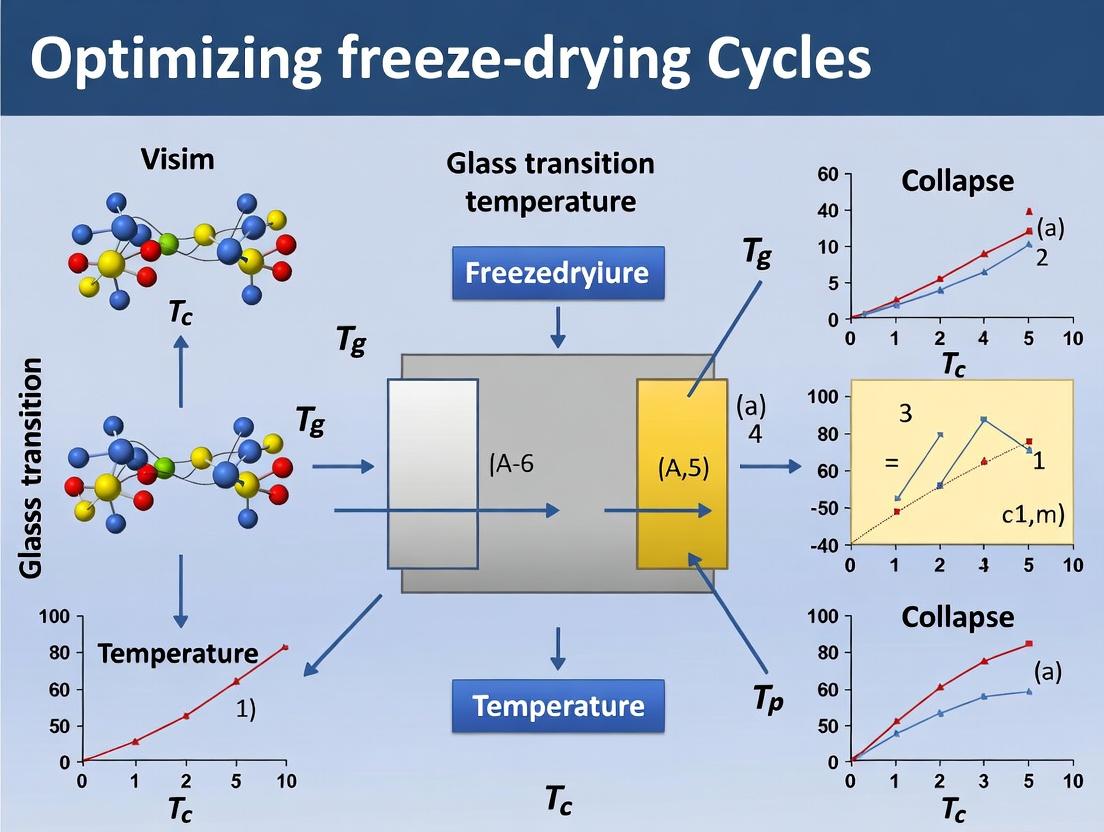
This article provides a targeted guide for researchers and formulation scientists on leveraging critical temperature parameters—glass transition (Tg') and collapse temperature (Tc)—to optimize pharmaceutical freeze-drying cycles.
Mastering Freeze-Drying: A Comprehensive Guide to Optimizing Lyophilization Cycles with Tg' and Tc Data
Abstract
This article provides a targeted guide for researchers and formulation scientists on leveraging critical temperature parameters—glass transition (Tg') and collapse temperature (Tc)—to optimize pharmaceutical freeze-drying cycles. We cover the foundational science behind these thermal properties, methodologies for accurate measurement and application, troubleshooting strategies for common challenges, and comparative validation of cycle optimization techniques. The goal is to equip professionals with a data-driven framework to enhance process efficiency, ensure product stability, and accelerate drug development timelines.
The Science of Stability: Understanding Tg' and Tc as Critical Quality Attributes in Lyophilization
In the research on optimizing freeze-drying cycles using Tg' and Tc data, understanding these critical temperatures is fundamental. They are key determinants of product stability and process efficiency.
- Tg' (Glass Transition Temperature of the Maximally Freeze-Concentrated Solution): This is the temperature at which the amorphous, unfrozen fraction of a product becomes rigid and glassy upon cooling. Below Tg', molecular mobility is drastically reduced, stabilizing the product against degradation and collapse during primary drying.
- Tc (Collapse Temperature): This is the highest temperature at which the frozen product structure can be maintained without viscous flow and loss of microstructure (collapse or eutectic melt) during primary drying. It is the practical limit for the product temperature during primary drying.
For most amorphous formulations, Tc is observed to be several degrees higher than Tg'. The optimal primary drying temperature lies between these two values, safely below Tc.
Key Data Table: Representative Tg' and Tc Values for Common Excipients
| Excipient / Formulation | Tg' (°C) | Tc (°C) | Critical Note |
|---|---|---|---|
| Sucrose (10% w/v) | -32 | -30 to -29 | Classic model system; Tc ~2-3°C above Tg'. |
| Trehalose (10% w/v) | -29 | -27 to -26 | Higher Tg' than sucrose, often preferred. |
| Mannitol (10% w/v) | N/A (Crystallizes) | -1.5 to -1.0 | Forms a crystalline matrix; Tc is eutectic melt temp. |
| Sucrose (5%) + Monoclonal Antibody | -33 | -30 | Presence of protein can depress values slightly. |
FAQs and Troubleshooting
Q1: During cycle development, my cake collapsed even though my product temperature was below the published Tg'. Why? A: Published Tg' values are system-specific. Your formulation's unique composition (API, buffers, salts) depresses Tg'. The measured Tg' for your specific batch is likely lower than the pure excipient value. You must determine it experimentally via DSC.
Q2: My DSC thermogram shows a very weak Tg' inflection point, making it hard to determine. What can I do? A: This is common in dilute or complex formulations. Troubleshooting steps:
- Increase solute concentration in the sample for analysis (e.g., from 10 mg/mL to 50 mg/mL).
- Use a modulated DSC (mDSC) to separate reversing (glass transition) from non-reversing events.
- Ensure proper annealing in the DSC protocol to promote maximal freeze-concentration.
Q3: How do I determine the Tc for my formulation if it's not clear from DSC? A: Use Freeze-Drying Microscopy (FDM). It visually observes collapse, melt, or eutectic events in a thin film, providing a direct measurement of Tc.
Q4: For a crystalline formulation (like mannitol-based), is Tg' relevant? A: No. For predominantly crystalline systems, the critical temperature is the eutectic melting temperature (Teu), which is equivalent to Tc. The primary drying temperature must remain below Teu to prevent melt-back and loss of structure.
Experimental Protocols
Protocol 1: Determining Tg' by Differential Scanning Calorimetry (DSC)
- Sample Prep: Place 10-30 mg of your liquid formulation in a hermetic DSC pan. Seal the pan to prevent evaporation.
- Cooling: Cool the sample to at least -50°C at a rate of 5-10°C/min to ensure complete freezing.
- Heating Scan: Heat the sample to 0°C at a scan rate of 5°C/min.
- Analysis: In the resulting heat flow curve, identify the Tg' as a step-change in the baseline. Use the midpoint of the transition as the reported value. For weak signals, use the onset.
Protocol 2: Determining Tc by Freeze-Drying Microscopy (FDM)
- Sample Prep: Place a small droplet (1-2 µL) of the formulation on a temperature-controlled FDM stage, covered with a thin glass cover.
- Freezing: Cool the stage rapidly to -50°C to freeze the sample.
- Vacuum & Heating: Apply vacuum to the chamber. Gradually increase the stage temperature (e.g., at 2°C/min) while observing under the microscope.
- Analysis: Identify Tc as the temperature at which the frozen microstructure first shows signs of viscous flow, shrinkage, or loss of pores (collapse). For crystalline materials, note the temperature of eutectic melting.
Visualization: Freeze-Drying Cycle Optimization Logic
Title: Tg' and Tc Guide for Cycle Development
The Scientist's Toolkit: Key Research Reagents & Materials
| Item | Function in Tg'/Tc Research |
|---|---|
| Differential Scanning Calorimeter (DSC) | The primary instrument for measuring Tg' via heat flow changes during a controlled temperature program. |
| Hermetic DSC Pans & Lids | Sealed containers to hold liquid samples during DSC runs, preventing solvent loss. |
| Modulated DSC (mDSC) Software | An optional but valuable technique to deconvolute complex thermal events and clarify weak Tg' signals. |
| Freeze-Drying Microscope (FDM) | Essential for direct visual determination of Tc (collapse or eutectic melt temperature). |
| Temperature-Controlled FDM Stage | Precisely controls and ramps the temperature of the sample while under vacuum. |
| Model Excipients (Sucrose, Trehalose) | Used as standards to calibrate methods and understand baseline behavior of amorphous systems. |
| Model Crystalline Former (Mannitol) | Used as a standard for studying eutectic melting behavior. |
| Lyophilization Stabilizers (e.g., Dextran) | Used to elevate Tg' in formulations with low molecular weight or challenging APIs. |
Troubleshooting Guides & FAQs
Q1: During primary drying, my product visually collapses, becoming dense and sticky. What is the likely cause and how can I confirm it? A: This is a classic sign of exceeding the collapse temperature (Tc). Collapse occurs when the viscous flow of the amorphous phase is sufficient to cause a macroscopic loss of structure, often because the product temperature (Tp) exceeds Tc. To confirm:
- Use Freeze-Dry Microscopy (FDM) to visually observe the collapse event in a small sample.
- Compare your shelf temperature (Ts) and product temperature data. If Tp approaches or exceeds the literature or measured Tc for your formulation, collapse is likely.
- Analyze the final product: collapsed products often have higher residual moisture, poor reconstitution time, and reduced specific surface area.
Q2: My lyophilized cake appears intact but shows a reduction in biological activity. Could this be related to Tg'? A: Yes. Even without macroscopic collapse, exceeding the glass transition temperature of the maximally freeze-concentrated solute (Tg') during primary drying or subsequent steps can cause microscopic collapse (shrinkage) and increased molecular mobility. This can lead to:
- Degradation of active pharmaceutical ingredients (APIs).
- Aggregation of proteins.
- Loss of activity.
- Troubleshooting Step: Perform a Differential Scanning Calorimetry (DSC) run on your frozen solution to determine the actual Tg'. Ensure your primary drying product temperature (Tp) remains at least 2-3°C below this value.
Q3: How do I determine the critical temperatures (Tg' and Tc) for my novel formulation? A: You need to establish these via experiment. Here are the core protocols:
Protocol 1: Determining Tg' via Differential Scanning Calorimetry (DSC)
- Sample Prep: Load 5-20 mg of your formulated solution into a sealed DSC pan.
- Freezing: Cool the sample to -60°C at a rate of 5-10°C/min.
- Heating Scan: Heat the sample (e.g., from -60°C to +20°C) at a slow scan rate (2-5°C/min).
- Analysis: Identify Tg' as the midpoint of the step-change in heat capacity in the thermogram of the frozen solution. It signifies the onset of unfrozen water mobility.
Protocol 2: Determining Tc via Freeze-Dry Microscopy (FDM)
- Sample Prep: Place a small droplet (~1 µL) of formulation between two thin cover slips on the FDM stage.
- Freezing: Rapidly freeze the sample to -50°C or below.
- Primary Drying Simulation: Under vacuum, controllably increase the stage temperature while observing the sample structure through cross-polarized light.
- Analysis: Tc is recorded as the temperature at which the first sign of structural loss (collapse, shrinkage, or flow) is observed in the dried region.
Q4: Why are my measured Tg' and Tc values sometimes different from literature values for the same excipient? A: Tg' and Tc are system properties, not pure component properties. They are profoundly affected by:
- Formulation Composition: The presence of salts, buffers, APIs, and multiple stabilizers will alter values.
- Solution Concentration: Higher solid content can shift Tg'.
- Freezing Rate: Very fast freezing can lead to a less concentrated glass and a lower Tg'.
- Measurement Technique & Analysis: Always report the method and analysis criteria used.
Data Presentation
Table 1: Representative Tg' and Tc Values for Common Lyophilization Excipients
| Excipient (10% w/v, unless noted) | Approximate Tg' (°C) | Approximate Tc (°C) | Key Note |
|---|---|---|---|
| Sucrose | -32 to -34 | -31 to -33 | Classic stabilizer, low Tg'. |
| Trehalose | -29 to -31 | -28 to -30 | Higher Tg' than sucrose, preferred for many biologics. |
| Hydroxypropyl Betacyclodextrin | -9 to -11 | -8 to -10 | Much higher Tg', useful for complex formulations. |
| Mannitol (5%) | ~ -30 (for amorphous fraction) | N/A | Crystallizing excipient; use with amorphous bulking agents. |
| Polyvinylpyrrolidone (PVP) K30 | -19 to -22 | -18 to -21 | Polymer, often used to raise Tc. |
| Dextran 40 | -10 to -12 | -9 to -11 | High molecular weight polymer, high Tg'. |
Table 2: Troubleshooting Matrix: Symptoms, Causes, and Solutions
| Observed Problem | Likely Critical Temp Exceeded | Root Cause | Corrective Action |
|---|---|---|---|
| Macroscopic Collapse (melted, dense cake) | Tc | Product temp (Tp) > Tc during primary drying. | Lower shelf temp (Ts) in primary drying. Reduce chamber pressure. Reformulate to increase Tc (e.g., add polymer). |
| Micro-Collapse / Shrinkage (good structure but poor stability) | Tg' | Tp > Tg' during late primary drying or secondary drying ramp. | More conservative primary drying. Slow, controlled ramp into secondary drying. Ensure Tp < Tg' during transition. |
| Melt-Back (liquid in flask) | Eutectic Melt (Te) or Tc | Product temperature exceeds the eutectic melting point of crystalline components. | Confirm complete crystallization of bulking agent (e.g., mannitol) during freezing. Use annealing if needed. |
| Poor Reconstitution | Tc or Tg' | Collapse sealed in pores, reducing wettability. | As above. Ensure drying below collapse temperature. |
Mandatory Visualization
Title: Freeze-Drying Cycle Optimization Logic Flow
Title: Relationship Between Tg', Tc, and Product States
The Scientist's Toolkit: Research Reagent Solutions
| Item | Function in Tg'/Tc Research |
|---|---|
| Differential Scanning Calorimeter (DSC) | The primary instrument for measuring the glass transition temperature (Tg') of frozen solutions. Detects changes in heat capacity. |
| Freeze-Dry Microscope (FDM) | Essential for direct visual determination of the collapse temperature (Tc) and other structural events like eutectic melting. |
| Laboratory-Scale Freeze-Dryer | Fitted with product temperature probes (e.g., thermocouples, RTDs) to monitor Tp in real-time and validate cycle parameters against Tc/Tg'. |
| Lyoguard Trays or Mini-Bells | Enable representative small-scale (gram-quantity) lyophilization runs for formulation screening with minimal API use. |
| Standard Excipients (Sucrose, Trehalose) | Well-characterized amorphous stabilizers with known Tg' profiles, used as benchmarks or formulation components. |
| Crystallizing Excipients (Mannitol, Glycine) | Bulking agents that can elevate Tc if fully crystallized; require annealing studies. |
| Polymers (PVP, Dextran, Ficoll) | Used to raise the Tc of a formulation, providing a larger safety margin for primary drying. |
| Residual Moisture Analyzer (e.g., Karl Fischer) | Critical for correlating final product quality and stability with the thermal history during drying. |
Within the context of optimizing freeze-drying cycles using Tg' (glass transition of the maximally freeze-concentrated solute) and Tc (collapse temperature) data, selecting the appropriate analytical technique is critical. Differential Scanning Calorimetry (DSC) and Freeze-Dry Microscopy (FDM) are two cornerstone methods for determining these key parameters. This technical support center provides troubleshooting and methodological guidance for researchers and drug development professionals employing these techniques.
Core Comparison Table
| Parameter | Differential Scanning Calorimetry (DSC) | Freeze-Dry Microscopy (FDM) |
|---|---|---|
| Primary Measurement | Heat flow (endothermic/exothermic events) as a function of temperature. | Direct visual observation of structural changes (collapse, melting, eutectic melt) under controlled temperature/vacuum. |
| Key Output for Freeze-Drying | Tg' (glass transition), Tm (melting), crystallization events. | Tc (collapse temperature), Teu (eutectic melt temperature), visual structure. |
| Sample State | Bulk, sealed pans (mg quantities). Representative volume. | Thin film between coverslips, simulating drying front (microscale). |
| Data Nature | Thermodynamic, indirect indicator of collapse. | Morphological, direct observation of collapse. |
| Typical Tc/Tg' Relationship | Tc is often 1-3°C higher than Tg' for amorphous systems. | Directly measures Tc. Tc ≤ Tg' + 2-3°C is a common practical rule. |
| Throughput | Moderate to High (automated runs). | Low to Moderate (manual observation per sample). |
| Capital Cost | High. | Moderate. |
Troubleshooting Guides & FAQs
Differential Scanning Calorimetry (DSC)
Q1: Our DSC thermogram for a sucrose formulation shows a very weak or undetectable Tg' transition. What could be the cause and how can we resolve it? A: A weak Tg' signal is common for low-concentration solutions or sugars with small heat capacity changes.
- Solution 1: Increase sample concentration. Prepare formulations at 5-10% (w/v) solid content to amplify the thermal event.
- Solution 2: Optimize thermal protocol. Use a slow cooling rate (5-10°C/min) to ensure maximum freeze-concentration. Employ a fast heating rate (10-20°C/min) to improve the transition's sensitivity and sharpness.
- Solution 3: Check sample mass. Use a larger sample mass (10-20 mg) within the instrument's recommended limit to enhance signal-to-noise.
- Solution 4: Re-run the sample. Annealing the sample (hold at -5 to -10°C above Tg' for 10-30 min after initial freeze) can promote complete crystallization of ice and freeze-concentration, sharpening the Tg' step change.
Q2: We observe ice melting (endothermic peak) before or obscuring the Tg' event during the heating scan. How do we separate these events? A: This indicates incomplete freeze-concentration or unstable annealing.
- Solution: Implement a step-annealing protocol.
- Cool rapidly from 25°C to -50°C (or below expected Tg').
- Heat to a temperature just below the onset of the interfering ice melt (e.g., Tg' - 5°C).
- Hold (anneal) for 30-60 minutes to allow for ice crystal growth and solute freeze-concentration.
- Cool back to -50°C.
- Perform the final heating scan for analysis. This often separates and clarifies the Tg' transition.
Q3: Our DSC data shows high variability in Tg' values between replicate runs. What are the key factors to control? A: Consistency is key for cycle optimization.
- Control 1: Hermetic Seal Integrity. Ensure sample pans are perfectly sealed to prevent sample loss or water evaporation, which changes concentration.
- Control 2: Thermal History. Replicate the exact same cooling and heating rates between runs. Document the protocol meticulously.
- Control 3: Sample Preparation. Use a consistent method for loading the sample into the pan. For solutions, ensure homogeneity before pipetting.
Freeze-Dry Microscopy (FDM)
Q4: During FDM, our sample film cracks or detaches from the coverslips before collapse, obscuring observation. How can we improve film quality? A: This is a common sample preparation issue.
- Solution 1: Optimize Sample Volume. Use a smaller volume (0.5-2 µL) to create a thin, even film. Too much liquid causes a thick, unstable layer prone to cracking.
- Solution 2: Control Drying/Freezing. Allow the sample to settle for 30 seconds before carefully placing the top coverslip. For initial freezing, lower the stage temperature slowly (e.g., -20°C/min) to reduce thermal stress cracks.
- Solution 3: Use a Spacer. Employ a thin metal or polymer spacer between the coverslips to create a more consistent cavity.
Q5: How do we objectively determine the exact Tc from the visual changes observed in FDM? The transition from rigid to viscous flow can be subtle. A: Defining collapse onset requires a standardized criterion.
- Protocol: Use the following visual scale and define Tc as the temperature at which Step 2 is first observed:
- Full Structure: Porous cake structure is intact, walls are sharp.
- Onset of Collapse (Tc): First observation of loss of primary structure - pore walls begin to thicken, round, or show initial flow. A slight "wrinkling" or "receding" at the edge of the dried region.
- Full Collapse: Complete loss of porous structure, forming a dense, often transparent film.
- Best Practice: Record a video of the run. Have multiple analysts review the recording to define the onset temperature, ensuring consistency.
Q6: Our FDM observed Tc is significantly lower than the DSC-measured Tg'. Which value should we use for cycle development? A: FDM Tc is the directly relevant parameter for primary drying.
- Guidance: Always use the FDM Tc as the conservative upper limit for the shelf temperature in primary drying. The discrepancy could be due to:
- Sample geometry differences (thin film vs. bulk).
- Drying stress present in FDM but not in sealed DSC pans.
- Definition difference (thermal event vs. macroscopic flow).
- Action: Set the primary drying shelf temperature at least 2-5°C below the FDM-measured Tc to ensure product stability and an adequate safety margin.
Experimental Protocols
Protocol 1: Determining Tg' by DSC
Objective: Measure the glass transition temperature of the maximally freeze-concentrated solute (Tg'). Materials: See "Scientist's Toolkit" below. Method:
- Sample Preparation: Load 5-20 µL of formulation (5-10% solids) into a pre-weighed Tzero or standard aluminum DSC pan. Seal the pan hermetically using a press. Prepare an empty, sealed reference pan.
- Instrument Equilibration: Load sample and reference pans. Purge the cell with dry nitrogen (50 mL/min).
- Thermal Program: a. Equilibrate at 25°C. b. Cool: -25°C/min to -50°C. c. Heat (First Scan): 10°C/min to 5°C. Observe for any melting events. d. Annealing (Optional but Recommended): Cool to -50°C. Heat to Tg' + 2°C (estimated). Hold for 30 min. Cool to -50°C. e. Heat (Analysis Scan): 5-10°C/min to 25°C.
- Data Analysis: In the analysis software, plot heat flow vs. temperature from the final heating scan (e). Use the tangent method to identify the onset, midpoint, and endpoint of the glass transition step change. Report the onset temperature as Tg'.
Protocol 2: Determining Tc by Freeze-Dry Microscopy
Objective: Visually determine the collapse temperature (Tc) of a formulation under vacuum. Materials: See "Scientist's Toolkit" below. Method:
- Sample Stage Preparation: Clean the silver stage block and sapphire viewing windows with ethanol and lint-free wipes. Ensure the vacuum seal is clean.
- Sample Loading: Pipette 1 µL of formulation onto the center of the bottom sapphire window. Gently place the top coverslip over the droplet, allowing it to spread into a thin film. Do not press.
- Mounting & Evacuation: Secure the stage in the microscope. Close and evacuate the chamber to ~100 mTorr (13 Pa).
- Thermal Program & Observation: a. Freeze: Cool the stage rapidly (e.g., -20°C/min) from room temperature to -50°C. Hold for 5 min. b. Primary Drying Simulation: Set the temperature controller to ramp slowly (0.5-2°C/min) from -50°C to a final temperature well above the expected collapse (e.g., 0°C). c. Data Collection: Continuously observe the sample under 100-200x magnification. Record video. Note the temperature at which the frozen matrix begins to dry (sublimation front becomes visible). d. Identify Tc: As temperature rises, watch for the first sign of structural loss in the dried region (pore wall thickening, rounding, flow). Record this temperature as Tc.
- Analysis: Review the video recording to confirm the Tc onset temperature. Report Tc as the mean of triplicate runs.
Visualizations
Title: DSC and FDM Data Integration Workflow
Title: FDM Collapse Temperature (Tc) Determination Protocol
The Scientist's Toolkit: Essential Research Reagent Solutions
| Item | Function in Tg'/Tc Analysis |
|---|---|
| Hermetic DSC Pans & Lids (Tzero recommended) | Seals sample during analysis to prevent moisture loss, ensuring consistent thermal history. Crucial for accurate Tg' measurement. |
| Standard Reference Materials (Indium, Gallium) | Calibrates DSC temperature and enthalpy scale. Required for instrument validation and data integrity. |
| Dry Nitrogen Gas Supply | Purges the DSC cell to prevent ice condensation on the sensor and ensure a stable, dry baseline. |
| FDM Sample Stage with Sapphire Windows | Provides a clear, temperature-controlled, vacuum-sealed viewing chamber. Sapphire offers excellent thermal conductivity and optical clarity. |
| High-Vacuum Grease (Apiezon L or equivalent) | Creates a vacuum-tight seal on the FDM stage. Must be low-volatility to maintain high vacuum during runs. |
| Precision Micro-syringes/Pipettes (1-10 µL) | Enables accurate, repeatable loading of small sample volumes onto DSC pans and FDM stages. |
| Lint-Free Wipes & HPLC-Grade Solvents | For meticulous cleaning of FDM stage components and coverslips to avoid contamination and artifacts. |
| High-Speed Camera or Video Recording System | Essential for documenting FDM runs, allowing post-hoc analysis and consensus scoring of the Tc event. |
Technical Support Center
Troubleshooting Guide & FAQs
Q1: During freeze-drying cycle development, my product collapsed even though the shelf temperature was maintained below the Tg' I measured. What could be the cause? A: This is a common issue. The most likely cause is that the measured Tg' was not representative of the actual formulation in the vial due to heterogeneity or an inaccurate measurement technique. Ensure your DSC sample preparation mimics the actual freezing conditions in the vial (e.g., cooling rate). Furthermore, the collapse temperature (Tc) is often 2-5°C higher than Tg' for many amorphous formulations. If you used Tg' as the sole limit, you may have exceeded the Tc. Always determine both values.
Q2: How do I choose between sucrose and trehalose as a stabilizer, and how will this choice affect my Tg'? A: Both are excellent stabilizers. Trehalose typically yields a higher Tg' than sucrose at the same weight ratio. For example, a 10% (w/w) solution may have a Tg' of approximately -32°C for trehalose versus -34°C for sucrose. Trehalose is more resistant to acid hydrolysis. Sucrose may be preferred for its lower cost. The choice should be based on stability studies, but if a higher process temperature is desired for primary drying, trehalose might be advantageous.
Q3: My formulation contains a buffer salt (e.g., sodium phosphate). My Tg' is unexpectedly low and my freeze-dried cake looks poor. What's happening? A: Buffer salts can crystallize during freezing, leading to pH shifts and phase separation. This can depress the Tg' of the amorphous phase dramatically. For instance, disodium phosphate can crystallize as Na₂HPO₄·12H₂O, concentrating the acidic component and lowering the pH. This process leaves a solute-rich amorphous phase with a very low Tg'. Consider using non-crystallizing buffers like histidine or Tris, or use buffer concentrations as low as possible (e.g., 10 mM).
Q4: I am adding a surfactant (e.g., polysorbate 80) to my protein formulation. Will it affect Tg' and Tc? A: Yes. Surfactants are typically low molecular weight excipients that act as plasticizers. They can significantly lower both Tg' and Tc. Even a small concentration (e.g., 0.01% w/v) can depress Tg' by several degrees. You must measure Tg' and Tc with the surfactant present in the formulation. Do not rely on data from surfactant-free samples.
Q5: My DSC thermogram for Tg' determination shows a very weak transition that is hard to quantify. How can I improve the signal? A: A weak transition often indicates a low concentration of amorphous solute or interference from crystallizing components. Ensure a high enough solute concentration (e.g., > 20 mg/mL total solids). Use a modulated DSC (mDSC) technique to separate the reversing heat flow (containing the Tg' signal) from non-reversing events (like crystallization). Increase sample size within the DSC pan's limits and use a slow scanning rate (e.g., 2-5°C/min).
Experimental Protocols & Data
Protocol 1: Determination of Tg' and Tc by Differential Scanning Calorimetry (DSC)
- Sample Preparation: Prepare the liquid formulation. Pipette 10-30 µL (5-20 mg of solid) into a standard aluminum DSC pan.
- Hermetic Sealing: Seal the pan with a lid using a crimper. Ensure it is hermetically sealed to prevent evaporation.
- Freezing in Situ: Load the pan into the DSC. Equilibrate at 25°C. Cool to -60°C at a rate of 5-10°C/min to simulate freezing.
- Rewarming Scan: Heat the sample to 20°C at a controlled rate (2-5°C/min). This first warming scan reveals the Tg' (midpoint of the glass transition step) and the Tc (onset of the ice melting endotherm peak).
- Analysis: Use the instrument software to identify Tg' from the step change in heat flow and Tc from the onset of the endothermic devitrification or melt event.
Protocol 2: Freeze-Drying Microscopy (FDM) for Direct Observation of Collapse
- Stage Setup: Place a small droplet (~2 µL) of the formulation on a temperature-controlled FDM stage.
- Freezing: Rapidly cool the stage to below -50°C to fully freeze the sample.
- Vacuum Application: Apply a vacuum to the sample chamber.
- Controlled Warming: Gradually increase the stage temperature at a rate of 2°C/min while observing under the microscope.
- Observation: The temperature at which the frozen structure begins to lose its rigid, porous morphology and visibly flows or shrinks is recorded as the visual collapse temperature (Tc).
Table 1: Influence of Common Excipients and Solutes on Tg'
| Excipient/Solute | Typical Function | Approximate Tg' of 10% (w/w) Solution (°C) | Key Consideration |
|---|---|---|---|
| Sucrose | Stabilizer, Bulking Agent | -34 to -32 | Can hydrolyze at low pH, lowering Tg'. |
| Trehalose | Stabilizer, Bulking Agent | -32 to -30 | Higher inherent Tg' than sucrose; more chemically inert. |
| Mannitol | Bulking Agent | Crystallizes | Often crystallizes, yielding a high Tg' for the amorphous fraction. Requires annealing. |
| Glycine | Bulking Agent, Buffer | Crystallizes | Like mannitol, tends to crystallize, affecting the amorphous phase. |
| Sodium Chloride | Tonicity Adjuster | ~ -40 (if amorphous) | Strongly depresses Tg' if it remains amorphous; often crystallizes. |
| Polysorbate 80 | Surfactant | N/A (plasticizer) | Significantly depresses Tg' (plasticizing effect); use minimal concentration. |
| Sodium Phosphate Buffer | pH Control | Can be very low (< -50) | Crystallization and phase separation severely depress Tg' of the amorphous matrix. |
Table 2: Troubleshooting Summary for Tg'/Tc-Related Product Defects
| Observed Defect | Potential Cause | Recommended Corrective Action |
|---|---|---|
| Collapse/Melt-Back | Primary drying temperature > Tc. | Lower shelf temperature during primary drying. Re-measure Tc using FDM. |
| Poor Reconstitution | High crystallinity (e.g., mannitol hemihydrate). | Implement an annealing step to promote complete crystallization of bulking agents. |
| Heterogeneous Cake Appearance | Phase separation during freezing. | Reformulate to avoid crystallizing components; change buffer system. |
| Low Tg' Value | High concentration of low MW solutes/salts. | Reduce salt concentration; replace with higher MW alternatives (e.g., histidine for phosphate). |
Diagrams
Title: Workflow for Tg'/Tc-Guided Cycle Development
Title: Key Factors Influencing Tg' and Tc
The Scientist's Toolkit: Essential Research Reagent Solutions
| Item | Function in Tg'/Tc Research |
|---|---|
| Modulated DSC (mDSC) | Gold-standard instrument for thermal analysis. Separates Tg' (reversing heat flow) from crystallization events, providing clearer data. |
| Freeze-Drying Microscope (FDM) | Allows direct visual observation of collapse, melt, and eutectic melt temperatures, complementing DSC data. |
| Hermetic DSC Pans & Crimper | Essential for preparing non-volatile samples for DSC analysis to prevent sample dehydration during scans. |
| High-Purity Disaccharides (Sucrose/Trehalose) | Primary stabilizers and amorphous matrix formers. Critical reference materials for formulation development. |
| Controlled Ice Nucleation Agent (e.g., INCO) | Standardizes the ice nucleation temperature during freezing, reducing inter-vial heterogeneity and improving Tg'/Tc measurement consistency. |
| Non-Crystallizing Buffer Salts (Histidine, Tris) | Used to replace crystallizing buffers (e.g., phosphate) to avoid pH shifts and severe Tg' depression in the amorphous phase. |
| Standard Reference Materials (Indium, Gallium) | Used for temperature and enthalpy calibration of the DSC instrument to ensure accurate Tg' and Tc measurements. |
Technical Support Center: Troubleshooting Freeze-Drying (Lyophilization) Cycles
This support center provides targeted guidance for researchers optimizing freeze-drying cycles based on glass transition (Tg) and collapse temperature (Tc) data. The following FAQs and protocols are framed within the thesis context: Optimizing freeze-drying cycles using Tg and Tc data research.
Frequently Asked Questions (FAQs)
Q1: During primary drying, my cake shows signs of collapse or melt-back. What is the most likely thermodynamic cause and how can I adjust my cycle? A: Collapse typically occurs when the product temperature exceeds the critical temperature, which is either the Tg' (for amorphous systems) or the Teu (eutectic temperature, for crystalline systems). This increases molecular mobility, causing viscous flow. Immediately lower the shelf temperature to ensure the product temperature remains at least 2-3°C below the Tg' or Tc. Verify your thermocouple placement and calibration. Consider extending the primary drying time at this lower temperature to ensure complete sublimation before proceeding.
Q2: My reconstitution time is unacceptably long. How can molecular mobility data guide a formulation or process change to improve this? A: Long reconstitution times often indicate an overly dense or collapsed cake structure with low porosity, stemming from excessive molecular mobility during drying. First, analyze the Tg of your final dry product. A formulation with a higher Tg (achieved by adding stabilizers like sucrose or trehalose) will have lower molecular mobility at storage temperatures, promoting a more porous, friable cake. Secondly, ensure primary drying was conducted well below the Tg'/Tc to preserve the amorphous matrix's porous structure. Increasing the cake porosity by adjusting the freezing rate or annealing step can also improve wetting.
Q3: After stability testing, I observe protein aggregation or loss of activity in my lyophilized product. What role does molecular mobility play, and how can I use Tg data to correct it? A: Degradation reactions in the solid state are heavily dependent on molecular mobility. If storage temperature is above the Tg of the lyophilized cake, the matrix is in a rubbery state, enabling diffusion and reactivity. Measure the Tg of your stable formulation using DSC. To stabilize, reformulate to increase the product Tg well above your intended storage temperature (e.g., >20°C margin). This reduces molecular mobility to near-zero. Ensure your cycle avoids collapse, as it can create local high-mobility regions. Use DSC to confirm the absence of plasticizers (like residual moisture) that depress Tg.
Q4: My DSC thermogram for determining Tg' or Tc is unclear or shows no distinct transition. What are the common experimental errors, and how do I obtain a reliable measurement? A: This is often due to insufficient sample concentration, a slow scan rate, or an improperly prepared sample. Follow this protocol: 1) Concentrate your solution to a solids content representative of the freeze-concentrated phase (typically 10-25% w/w). 2) Use a fast enough cooling rate (e.g., 10°C/min) to mimic freezing in the lyophilizer. 3) For Tg', use a hermetic pan and ensure a small sample size (<10 mg) for good thermal contact. 4) If the transition is still broad, consider using modulated DSC (MDSC) to separate reversing heat flow. Run in triplicate.
Troubleshooting Guides & Experimental Protocols
Protocol 1: Determination of Critical Formulation Temperatures (Tg', Tc, Teu) via DSC
Objective: To accurately measure the key thermodynamic parameters that define the maximum product temperature during primary drying. Materials: Differential Scanning Calorimeter (DSC), hermetic aluminum pans and lids, microbalance, lyophilization formulation. Method:
- Prepare a concentrated solution of the formulation (e.g., 20% solids).
- Precisely weigh 5-10 mg of the solution into a tared hermetic DSC pan. Seal the pan immediately to prevent moisture loss.
- Load the pan and an empty reference pan into the DSC.
- Program the method:
- Equilibrate at 25°C.
- Cool to -60°C at 5-10°C/min.
- Hold isothermal for 5 min.
- Heat to 20°C at 2-5°C/min. This scan reveals the thermal events.
- Analyze the thermogram:
- Tg': The midpoint of the glass transition step change in heat flow for the maximally freeze-concentrated solution.
- Tc (Collapse Temperature): The onset of the endothermic devitrification peak following Tg'.
- Teu: A sharp endothermic peak indicating melting of a crystalline component.
Table 1: Representative Critical Temperatures for Common Excipients
| Excipient/Formulation | Tg' (°C) | Tc (°C) | Key Function & Note |
|---|---|---|---|
| Sucrose (10% w/w) | -32 to -34 | -31 to -33 | Amorphous stabilizer, Tg' sets primary drying limit. |
| Trehalose (10% w/w) | -30 to -32 | -28 to -30 | Higher Tg' than sucrose, superior stability. |
| Mannitol (5% w/w) | N/A | Approx. -20 to -25 | Crystalline bulking agent; shows Teu, not Tg'. |
| Sucrose (5%) + Mannitol (2%) | -32 (from sucrose) | Dictated by sucrose | Sucrose remains amorphous, mannitol may crystallize. |
| BSA in Sucrose Matrix | -32 to -34 | -30 to -32 | Protein acts as a plasticizer, may slightly depress Tg'. |
Protocol 2: Freeze-Drying Microscopy (FDM) for Direct Tc Observation
Objective: To visually confirm the collapse temperature and observe structural changes in the frozen matrix during heating. Materials: Freeze-drying microscope stage, thin glass sample cell, vacuum pump, temperature controller, camera. Method:
- Place a small droplet (~1 µL) of formulation between two thin glass coverslips on the FDM stage.
- Rapidly freeze the sample to -50°C.
- Apply a vacuum to the stage chamber.
- Gradually increase the temperature at a controlled rate (e.g., 2°C/min) while observing the sample under polarized or brightfield light.
- Record the temperature at which the frozen structure begins to lose its porous, rigid framework and undergoes viscous flow (collapse). This is the visually determined Tc.
- Correlate this Tc with the value obtained from DSC.
Table 2: Key Thermal Data for Cycle Optimization
| Parameter | Symbol | Typical Range | Impact on Cycle | Target for Primary Drying |
|---|---|---|---|---|
| Glass Transition | Tg' | -40°C to -25°C | Maximum allowable product temp for amorphous systems. | Tproduct < Tg' - 2°C |
| Collapse Temperature | Tc | Usually 1-3°C > Tg' | Practical upper limit to avoid structural loss. | Tproduct < Tc - 2°C |
| Eutectic Melt | Teu | -20°C to -0.5°C | Maximum allowable product temp for crystalline systems. | Tproduct < Teu - 2°C |
| Dry Layer Resistance | Rp | Increases with cake thickness | Controls sublimation rate; higher Rp requires a higher ΔT. | Monitor via pressure rise tests. |
The Scientist's Toolkit: Research Reagent Solutions
Table 3: Essential Materials for Tg/Tc-Based Cycle Development
| Item | Function & Relevance to Thermodynamic Stability |
|---|---|
| Differential Scanning Calorimeter (DSC) | The primary tool for measuring Tg, Tg', and Teu. Essential for defining the critical temperature limits of a formulation. |
| Freeze-Drying Microscope (FDM) | Provides direct visual confirmation of collapse and melt-back events, supplementing DSC data with morphological insight. |
| Tunable Diode Laser Absorption Spectroscopy (TDLAS) | Monitors water vapor concentration and flow velocity in the lyophilizer in real-time, allowing dynamic adjustment of shelf temperature based on product resistance, linked to cake structure (which depends on staying below Tc). |
| Hermetic DSC Pans | Prevent sample dehydration during analysis, which is critical for obtaining accurate Tg' measurements of aqueous solutions. |
| Modeling Software (e.g., LyoPRONTO) | Uses thermodynamic parameters (Tg', Rp) and heat/mass transfer principles to simulate and predict optimal freeze-drying cycles in silico. |
Process Optimization Workflow Diagram
Molecular Mobility & Stability Relationship Diagram
From Data to Cycle Design: A Step-by-Step Method for Applying Thermal Analysis
Technical Support Center
Troubleshooting Guide
Issue 1: High Variability in Tg Measurements After Lyophilization
- Q: Why are my measured glass transition temperatures (Tg') for my protein formulation inconsistent between runs, even when using the same protocol?
- A: This is often a sample preparation issue. Inconsistent residual moisture is the primary culprit. Ensure your freeze-drying cycle is perfectly replicated and that vials are sealed under identical, controlled conditions (e.g., under dry nitrogen). Use a validated moisture analysis method (e.g., Karl Fischer titration) on a subset of vials to correlate with DSC results. Check that your Differential Scanning Calorimetry (DSC) sample pan sealing is hermetic and consistent.
Issue 2: Unreliable Collapse Temperature (Tc) Data from Freeze-Drying Microscopy (FDM)
- Q: My FDM images show ambiguous collapse events, making Tc hard to pinpoint. What can I do?
- A: This typically relates to sample preparation or calibration. First, ensure your sample film thickness on the FDM stage is uniform and thin. A thick sample can cause temperature gradients. Second, verify the calibration of the FDM thermal stage using standard melting point references (e.g., indium, benzoic acid). Third, use a controlled rate of temperature increase (e.g., 5°C/min) for consistent observation.
Issue 3: DSC Baseline Drift or Noise During Tg' Analysis
- Q: My DSC thermograms have significant baseline drift or noise, obscuring the Tg' inflection point. How can I improve signal quality?
- A: This is primarily an instrument calibration and sample preparation problem. Perform a full DSC calibration (baseline, temperature, enthalpy) using certified standards like indium and zinc. Ensure sample and reference pans are matched in weight (±0.1 mg). For biological samples, use a sufficient sample mass (typically 5-20 mg) and match the reference pan with an equal mass of aluminum or a dummy sample. Purge the instrument with high-purity, dry nitrogen at a consistent flow rate (e.g., 50 mL/min).
Issue 4: Inconsistent Reconstitution Times for Lyophilized Products
- Q: Samples from the same lyophilization batch reconstitute at different rates. Could this be linked to my analytical workflow?
- A: Yes. Inconsistent reconstitution often points to heterogeneity in cake structure, which originates from the freezing step. During sample preparation for analysis, ensure your freezing protocol (e.g., shelf-ramped freezing vs. annealing) is rigorously controlled. Use thermal probes (e.g., product resistance or temperature probes) to verify consistency. Analytical techniques like micro-CT scanning of sample vials can visualize cake morphology differences.
Frequently Asked Questions (FAQs)
Q1: How often should I calibrate my DSC and FDM instruments when conducting Tg/Tc studies?
- A: For research-critical data, perform a two-point temperature and enthalpy calibration on the DSC at the start of each week or when analyzing a new formulation type. Daily, verify baseline stability and perform a quick check with a known standard like indium. The FDM thermal stage should be calibrated monthly or whenever the objective lens or stage is changed.
Q2: What is the optimal sample concentration for DSC analysis of protein formulations?
- A: While it varies, a total solid content of 10-100 mg/mL is typical. The key is to have enough solute to produce a detectable thermal event but not so much that the sample matrix dominates or thermal conductivity suffers. See Table 1 for recommended parameters.
Q3: Can I use the same sample for both FDM and DSC?
- A: No. FDM requires a thin film between two coverslips, while DSC requires a hermetically sealed pan. They are destructive tests. Prepare separate, but ideologically identical, samples from the same homogenous bulk solution for each technique.
Q4: How do I determine if a thermal event in my DSC thermogram is Tg' versus an ice melt?
- A: Tg' is a second-order transition appearing as a step-change in heat capacity. Ice melting is a first-order endothermic peak. To confirm, run a sample that has been "annealed" (held at a temperature just below the suspected Tg') for 30-60 minutes. This annealing can enhance the Tg' step, while the ice melt peak should diminish if devitrification and recrystallization have occurred.
Q5: What is the most critical step in sample preparation for reproducible Tg' data?
- A: Consistent and rapid cooling of the DSC sample pan from the liquid state to the fully frozen state. Always use the same protocol: equilibrate at 5°C, then cool at the maximum controlled rate (e.g., 50°C/min) to at least -50°C. This ensures a reproducible initial frozen state.
Table 1: Recommended Parameters for Thermal Analysis in Lyophilization Development
| Parameter | Differential Scanning Calorimetry (DSC) | Freeze-Drying Microscopy (FDM) |
|---|---|---|
| Sample Volume | 10-30 µL (in a standard pan) | 1-3 µL |
| Sample Mass | 5-20 mg | N/A (volume-based) |
| Scanning Rate | 5-10°C/min for Tg' detection | 2-5°C/min for visual observation |
| Temperature Range | -70°C to +30°C for Tg' | -50°C to -10°C for Tc |
| Key Calibration Standards | Indium (Tm=156.6°C, ΔH=28.45 J/g), Zinc, Cyclohexane | Indium, Benzoic Acid (Tm=122.4°C) |
| Typical Tg' Range (Sugars) | -45°C to -30°C (Sucrose, Trehalose) | N/A |
| Typical Tc Range | N/A | 1-5°C above Tg' |
Table 2: Impact of Common Excipients on Thermal Properties
| Excipient (10% w/v) | Typical Tg' (°C) | Effect on Tc relative to Tg' |
|---|---|---|
| Sucrose | -32 ± 2 | Tc is typically 2-4°C > Tg' |
| Trehalose | -30 ± 2 | Tc is typically 1-3°C > Tg' |
| Mannitol | Does not exhibit Tg' (crystallizes) | Collapse occurs at eutectic melt (~ -1°C) |
| Glycine | Varies (can crystallize) | Collapse at eutectic melt or depends on form |
Experimental Protocols
Protocol 1: Sample Preparation for DSC Analysis of a Lyophilization Formulation
- Solution Preparation: Prepare a filtered (0.22 µm), homogeneous solution of the drug product and excipients at the target concentration.
- Pan Loading: Using a precision pipette, dispense 20 µL of the solution into a tared, clean aluminum DSC crucible.
- Pan Sealing: Quickly place a lid on the crucible and seal it hermetically using a sample press. Ensure the seal is complete to prevent evaporation.
- Weight Verification: Weigh the sealed pan to determine the exact sample mass (target 10-15 mg).
- Freezing: Load the pan into the DSC cell pre-equilibrated at 5°C. Immediately run a method to cool the sample at 50°C/min to -50°C.
- Analysis: Initiate the heating scan from -50°C to +30°C at a rate of 10°C/min under a dry nitrogen purge (50 mL/min).
Protocol 2: Calibration of a Differential Scanning Calorimeter (DSC)
- Baseline Calibration: Run a heating cycle from -90°C to 150°C with two empty, sealed crucibles in the sample and reference cells. Store this baseline curve.
- Temperature & Enthalpy Calibration:
- Place a 5-10 mg sealed standard pan containing pure indium (99.999%) in the sample holder.
- Run a heating scan from 120°C to 180°C at 10°C/min.
- Analyze the resulting endothermic peak. The onset temperature should be 156.6°C and the enthalpy of fusion 28.45 J/g. Adjust the instrument's calibration constants to match these values.
- Repeat with a second standard (e.g., zinc, Tm=419.5°C) for a broader calibration range.
Protocol 3: Determining Collapse Temperature (Tc) via Freeze-Drying Microscopy
- Stage Preparation: Place a small o-ring on the temperature-controlled stage of the FDM.
- Sample Application: Pipette 2 µL of the sample solution onto a clear coverslip.
- Sample Encapsulation: Carefully lower a second coverslip onto the first, allowing the liquid to spread into a thin film within the o-ring.
- Loading: Place the sandwiched coverslips onto the stage and secure the thermal chamber.
- Freezing: Cool the stage rapidly to -50°C and hold for 5 minutes to ensure complete freezing.
- Drying & Observation: Evacuate the chamber to ~100 mTorr. While maintaining vacuum, gradually increase the stage temperature at 2°C/min. Continuously monitor the sample structure under polarized light. Record the temperature at which the frozen matrix loses its structure and begins to flow (collapse). This is the Tc.
Visualizations
Title: Thermal Analysis Workflow for Lyophilization Development
Title: Troubleshooting Logic for Tg/Tc Measurement Issues
The Scientist's Toolkit: Research Reagent Solutions
| Item | Function in Tg/Tc Research |
|---|---|
| Hermetic DSC Crucibles & Sealer | To encapsulate samples without moisture loss during analysis, crucial for accurate Tg' measurement. |
| High-Purity Calibration Standards (Indium, Zinc) | For precise temperature and enthalpy calibration of thermal instruments, ensuring data accuracy. |
| Freeze-Drying Microscopy Stage with Vacuum Chamber | Allows direct visual observation of collapse events in a thin film under lyophilization conditions. |
| Karl Fischer Titration Kit | To quantitatively measure residual moisture in lyophilized cakes, correlating with Tg shifts. |
| Annealed, High-Purity Water (HPLC Grade) | As a control and for preparing solutions to minimize interference from impurities. |
| Standard Excipients (Sucrose, Trehalose, Mannitol) | Used as model systems for method development and as stabilizers in protein formulations. |
| Temperature & Resistance Probes (for Pilot Lyophilizers) | For mapping product temperature during cycle development, to link process data with Tg/Tc. |
Technical Support Center & FAQs
Q1: In our freeze-drying cycle development, we use DSC to measure the glass transition of the maximally freeze-concentrated solute (Tg'). However, our thermograms sometimes show multiple thermal events. Which one is the true Tg'?
A: The true Tg' is identified as the onset of the glass transition step-change in the heat flow, not a peak. It represents the point where the amorphous freeze-concentrate begins to soften. A common issue is misinterpreting a nearby ice melting endotherm (often seen as a large, sharp peak at a higher temperature) or a sub-Tg relaxation peak. Ensure your DSC protocol uses a slow scan rate (2-5°C/min) and a rewarming cycle after fast cooling. The Tg' should be reproducible upon rescan. For confirmation, correlate with FDM: the collapse temperature observed by FDM should be very close to or just above this Tg' onset value.
Q2: When using Freeze-Dry Microscopy (FDM), how do we definitively distinguish between collapse and meltback to identify the true collapse temperature (Tc)?
A: Collapse is characterized by a viscous flow and loss of structure in the dried region, typically beginning at the interface with the frozen region. Meltback involves the visible retreat of the ice crystal front and a clear, liquid phase. The true Tc is the temperature at which the first sign of structural loss (e.g., buckling, pore closure) is observed under isothermal conditions after a controlled ramp. To troubleshoot ambiguous images:
- Use a controlled temperature ramp (e.g., 0.5-2°C/min).
- Monitor the ice interface: If it remains stationary during structural loss, it's collapse. If it moves, it's meltback.
- Reference your DSC Tg': Tc from FDM should generally be within +2-3°C of the DSC-derived Tg' for many amorphous formulations.
Q3: Our DSC and FDM data for the same formulation show a significant discrepancy (>5°C) between the measured Tg' and Tc. What could cause this and which value should we use for cycle development?
A: A significant discrepancy points to methodological or sample issues. Follow this troubleshooting guide:
| Possible Cause | DSC Impact | FDM Impact | Recommended Action |
|---|---|---|---|
| Sample Preparation | Non-uniform filling affects thermal contact. | Thin film thickness varies, altering heat transfer. | Standardize filling (DSC) and use calibrated spin-coating (FDM). |
| Thermal History | Annealing step omitted, leading to non-equilibrium freeze-concentration. | Ice crystal size/distribution not optimized, affecting structure. | Incorporate an annealing step just below the ice melt onset in both protocols. |
| Scanning Rate | Rate too fast (>10°C/min) overestimates Tg'. | Ramp rate too fast, missing initial collapse. | Use slow, comparable rates (2°C/min for DSC, 0.5-2°C/min for FDM). |
| True Property Difference | Tg' measures a bulk glass transition. | Tc measures macroscopic structural failure at the interface. | The more conservative (lower) value is generally safer for primary drying. Set shelf temperature 2-3°C below the lower of the two values. |
Q4: What is the detailed experimental protocol for a combined DSC-FDM analysis to determine Tg' and Tc for cycle optimization?
A: Combined Experimental Protocol for Tg'/Tc Determination
Objective: To reliably determine the glass transition temperature of the maximally freeze-concentrated solute (Tg') and the collapse temperature (Tc) for freeze-drying cycle development.
Part A: Differential Scanning Calorimetry (DSC) for Tg'
- Sample Preparation: Load 5-20 mg of the formulated drug solution into a hermetically sealed DSC pan. Use an empty sealed pan as a reference.
- Freezing & Annealing: Cool the sample to -50°C at 10°C/min. Hold isothermally for 5-10 min. Warm to -5°C to -10°C (above Tg' but below the ice melting onset) at 5°C/min. Anneal for 30-60 minutes to promote maximal freeze-concentration.
- Measurement Scan: Re-cool to -50°C at 10°C/min. Finally, heat the sample at a slow, controlled rate of 2°C/min through the transition region (e.g., -50°C to +10°C).
- Data Analysis: Identify Tg' as the onset of the step-change in heat flow in the second heating scan (using the instrument's tangent method). Record the midpoint for informational purposes.
Part B: Freeze-Dry Microscopy (FDM) for Tc
- Sample Preparation: Place a small droplet (~2 µL) of the same formulation on a temperature-controlled FDM stage. Cover with a thin coverslip to create a thin film.
- Freezing & Annealing: Repeat the thermal history from DSC: Cool to -50°C, then anneal at the same temperature used in Part A.
- Ramp & Observation: Under vacuum (~100 mTorr), slowly increase the stage temperature at 0.5-2°C/min while recording video. Illuminate from below to observe structure.
- Data Analysis: Review the recording. The collapse temperature (Tc) is defined as the temperature at which the first sign of structural loss (e.g., buckling, loss of pore boundaries) is observed in the dried region. Note the temperature of any meltback.
Correlation: Compare Tg' (onset) from DSC with Tc from FDM. The values should be closely aligned for reliable cycle optimization.
The Scientist's Toolkit: Research Reagent & Essential Materials
| Item | Function in Tg'/Tc Analysis |
|---|---|
| Hermetic DSC Pans & Lids | Prevents sample evaporation during thermal cycling, ensuring accurate heat flow measurement. |
| Freeze-Dry Microscopy Stage | A temperature-controlled, vacuum-compatible chamber that allows real-time visualization of freezing, drying, and collapse. |
| Standard Reference Materials (e.g., Indium) | Used for calibration of DSC temperature and enthalpy scales to ensure data accuracy. |
| High-Purity Water/Solvents | Critical for preparing control samples and ensuring no impurities interfere with thermal events. |
| Model Formulations (e.g., Sucrose, Mannitol) | Well-characterized excipients used as system suitability checks to validate DSC and FDM performance. |
| Image Analysis Software | Used to frame-by-frame analyze FDM videos to pinpoint the exact temperature of incipient collapse. |
Experimental Workflow Diagram
Data Interpretation Logic Diagram
Technical Support Center
Troubleshooting Guides
Problem 1: Collapse or Melt-Back During Primary Drying
- Q: My product shows signs of collapse (shrinking, viscous flow) or melt-back during primary drying even though I set the shelf temperature below my product's collapse temperature (Tc). What could be wrong?
- A: This is a common issue. The golden rule (Tproduct < Tc - 2°C to 5°C) is a safety margin. Failure can occur due to:
- Inaccurate Tc Measurement: Your characterized Tc may be incorrect. Ensure Tc is determined via a reliable method like freeze-dry microscopy (FDM) or modulated DSC for the exact formulation and concentration.
- Thermal Gradients: The product temperature (Tproduct) is not uniform. The edge vials on a shelf are warmer than center vials. Your setpoint might be safe for the center but cause collapse at the edges. Consider using a lower shelf temperature or improving chamber pressure uniformity.
- Exceeding Tc Locally: The product temperature at the sublimation interface is the critical one. If the shelf temperature is too high, the heat of sublimation can cause this interface to approach or exceed Tc, even if the average product temperature seems safe.
Problem 2: Excessively Long Primary Drying Time
- Q: I am following the rule, but my primary drying takes an impractically long time. How can I optimize this without risking collapse?
- A: The safety margin (2-5°C) is a starting point. Optimization is possible:
- Precise Tc Data: A more accurately and precisely measured Tc (using advanced DSC or FDM) allows you to safely use a smaller safety margin (e.g., Tproduct = Tc - 3°C instead of Tc - 5°C), permitting a higher shelf temperature.
- Controlled Nucleation: Implementing controlled ice nucleation techniques creates a more uniform ice structure with larger pores, reducing resistance to vapor flow (Rp). This allows faster sublimation at the same product temperature.
- Optimize Chamber Pressure: There is an optimal chamber pressure for heat transfer. Use manometric temperature measurement (MTM) or comparative pressure measurement to find the pressure that maximizes heat transfer to the sublimation front without causing choke flow.
Problem 3: Inconsistent Results Across Batch Scale-Up
- Q: My cycle worked in the lab (pilot scale) but fails at manufacturing scale. I maintained the same Tproduct < Tc - 5°C rule. Why?
- A: Scale-up introduces new variables not captured by the simple rule:
- Heat Transfer Differences: Larger shelves and different shelf materials can change the heat transfer dynamics to the vial. The product temperature may be different at the same shelf setpoint.
- Pressure Gradients: Larger chambers can have significant pressure differences from the chamber to the condenser, affecting vapor flow and product temperature.
- Solution: Implement Process Analytical Technology (PAT). Use techniques like MTM or wireless temperature sensors (e.g., TEMPRIS) to measure actual Tproduct in the manufacturing lyophilizer and adjust the shelf temperature setpoint accordingly, while still adhering to the fundamental constraint (Tproduct < Tc - X°C).
Frequently Asked Questions (FAQs)
- Q: How do I determine the exact Tc for my formulation?
A: Tc is best determined experimentally. The primary method is Freeze-Dry Microscopy (FDM), which visually observes the collapse of a thin film of the product under controlled temperature and vacuum. Modulated Differential Scanning Calorimetry (mDSC) can also be used to detect the onset of molecular mobility, providing a Tg' (glass transition of the maximally freeze-concentrated solute) which is often closely related to, but not identical to, the macroscopic collapse temperature Tc. FDM typically gives a direct and higher value.
Q: Should I use Tg' or Tc for the golden rule?
A: Always use Tc for setting primary drying temperature. Tg' is a thermodynamic glass transition, while Tc is the macroscopic collapse temperature, which is the actual product failure point. Tc is almost always several degrees higher than Tg'. Using Tg' would lead to an overly conservative and inefficient cycle. The rule is Tproduct < Tc - X°C.
Q: How do I choose between 2°C and 5°C for the safety margin?
A: The margin depends on the reliability of your Tc data and the criticality of the product. Use a 5°C margin for:
- Early development with less characterized formulations.
- Products where stability is extremely sensitive to collapse.
- Processes with known large thermal gradients (e.g., poorly performing equipment). A 2-3°C margin can be used for well-characterized products on reliable equipment, often guided by PAT tools to verify product temperature.
Q: What tools can I use to monitor Tproduct during a run?
- A: You cannot measure the sublimation interface temperature directly with a standard thermocouple. Key PAT tools include:
- Manometric Temperature Measurement (MTM): A software-based method that calculates the product temperature at the sublimation interface from pressure rise data.
- Wireless Temperature Probes (e.g., TEMPRIS): Small probes placed in product vials that measure the temperature of the product itself during the run.
- Tunable Diode Laser Absorption Spectroscopy (TDLAS): Measures vapor flow and gas temperature, which can be used to model product temperature.
Data Presentation
Table 1: Characteristic Temperatures for Common Lyophilized Formulations
| Formulation Type | Typical Tg' Range (°C) | Typical Tc Range (°C) | Recommended Safety Margin (Tc - Tproduct) | Typical Optimal Primary Drying Tproduct Range (°C) |
|---|---|---|---|---|
| 5% Sucrose | -32 to -34 | -30 to -32 | 3-5°C | -35 to -37 |
| 5% Mannitol | -25 to -30 | -20 to -25 | 2-4°C | -24 to -29 |
| 5% Trehalose | -28 to -32 | -26 to -30 | 3-5°C | -31 to -35 |
| Protein + Sucrose (1:3 ratio) | -35 to -40 | -30 to -35 | 4-5°C | -35 to -40 |
| Buffer (e.g., phosphate) | Can be very low | Can be very low | ≥5°C | Must be determined empirically |
Table 2: Comparison of Tc Determination Methods
| Method | Principle | Output | Advantages | Limitations |
|---|---|---|---|---|
| Freeze-Dry Microscopy (FDM) | Visual observation of structural collapse under controlled conditions. | Direct measurement of macroscopic collapse temperature (Tc). | Direct, visual, considered the gold standard for Tc. | Small sample, requires specialized equipment, operator dependent. |
| Modulated DSC (mDSC) | Measures heat flow and heat capacity changes during warming. | Detects glass transition temperature (Tg'). | Quantitative, provides other thermal data (e.g., enthalpy), standardized. | Measures Tg', not Tc directly. Tc is typically higher than Tg'. |
| Electrical Impedance (BRT) | Measures resistance changes as ice melts and ions become mobile. | Collapse temperature (Tc). | Can be performed in a vial, potential for in-line use. | Less common, data interpretation can be complex. |
Experimental Protocols
Protocol 1: Determining Collapse Temperature (Tc) by Freeze-Dry Microscopy
Objective: To visually determine the temperature at which a frozen formulation loses its microstructure during primary drying. Materials: See "The Scientist's Toolkit" below. Procedure:
- Place a small droplet (2-5 µL) of the formulation on a temperature-controlled FDM stage.
- Rapidly freeze the sample to at least -50°C.
- Apply a vacuum to the stage chamber (typically < 100 mTorr).
- Gradually increase the stage temperature at a controlled rate (e.g., 2°C/min) while illuminating the sample with polarized light.
- Continuously observe the sample structure via the microscope camera. The initial porous, dendritic structure of the frozen solute will be maintained.
- Identify the temperature at which the porous structure begins to visibly recede, flow, or lose definition. This onset temperature is recorded as the Collapse Temperature (Tc).
- Repeat in triplicate for statistical reliability.
Protocol 2: Optimizing Shelf Temperature Using the Golden Rule and MTM
Objective: To establish a safe and efficient primary drying shelf temperature setpoint. Prerequisite: Tc of the formulation is known (e.g., from FDM). Procedure:
- Load product vials on the lyophilizer shelf. Include a vial with a thermocouple for shelf temperature monitoring (not product temperature).
- Initiate the freeze-drying cycle with a conservative shelf temperature (e.g., setpoint calculated for Tproduct = Tc - 5°C). Use standard freezing protocol.
- Begin primary drying. Activate the MTM software to perform periodic pressure rise tests.
- The MTM algorithm will calculate the product temperature at the sublimation front (Tproduct) and the resistance of the dried product layer (Rp).
- If the MTM-derived Tproduct is consistently and significantly lower than the target (Tc - X°C), the shelf temperature setpoint can be cautiously increased in a stepwise fashion (e.g., +2°C increments).
- After each change, allow the process to reach a new steady state and monitor MTM data to confirm the new Tproduct remains safely below Tc.
- The optimal setpoint is the highest shelf temperature that maintains Tproduct < Tc - X°C throughout primary drying, minimizing drying time without risk of collapse.
Mandatory Visualization
Diagram Title: Freeze-Drying Cycle Optimization Workflow Using Tc
Diagram Title: Key Temperature Relationships During Primary Drying
The Scientist's Toolkit
| Research Reagent / Material | Function in Freeze-Drying Optimization |
|---|---|
| Freeze-Dry Microscope (FDM) | Specialized microscope with a temperature-controlled vacuum stage. Function: To visually determine the collapse temperature (Tc) of a formulation. |
| Modulated DSC (mDSC) | A thermal analysis instrument. Function: To measure the glass transition temperature (Tg') and other thermal events (e.g., eutectic melt) of the frozen formulation. |
| Lyophilizer with PAT Capabilities | A freeze-dryer equipped with additional sensors and software. Function: Enables real-time monitoring and control (e.g., via MTM, TDLAS) for cycle development and optimization. |
| Manometric Temperature Measurement (MTM) Software | A software tool for lyophilizers. Function: Analyzes brief pressure rise data to calculate the product temperature at the sublimation interface and the dry layer resistance. |
| Wireless Temperature Probes (e.g., TEMPRIS) | Small, battery-free RFID temperature sensors placed inside product vials. Function: Provide direct product temperature profiles during cycle development and scale-up. |
| Controlled Nucleation Device | Equipment (e.g., ice fog generator, depressurization system) to induce ice formation at a defined time/temperature. Function: Creates a more uniform ice crystal structure, improving drying efficiency and product consistency. |
Technical Support Center
Troubleshooting Guides & FAQs
Q1: During primary drying, my product temperature exceeds the measured Tg' (or Tc). What immediate steps should I take? A1: This indicates potential collapse. Immediately reduce the shelf temperature to its minimum setting (e.g., -40°C to -50°C) to re-solidify the product. Hold until the product temperature drops 3-5°C below Tg'/Tc. To resume, implement a new, more conservative ramp: calculate the maximum allowable heating rate (Rmax) using the formula Rmax = (Tg' - T_product) / t, where t is the time constant of your vial/system (often determined empirically). A safer approach is to use a ramp of 0.05-0.1°C/min and monitor closely with comparative pressure measurement or Pirani gauge data.
Q2: How do I determine if my optimized ramp rate from a small study will scale to production? A2: Scale-up failure often stems from heat transfer differences. Before full production, run a "mini-batch" using the following protocol:
- Fill representative vials (same type as production) at the target fill depth.
- Instrument vials with thermocouples in the center of the cake, at the bottom center, and near the glass wall.
- Run the optimized cycle on a single shelf.
- Compare the product temperature profile and primary drying time to your laboratory data. Key scaling parameters to tabulate:
| Parameter | Lab Scale (Pilot) | Production Scale | Acceptable Difference |
|---|---|---|---|
| Shelf Temperature Uniformity | ±0.5°C | ±1.0°C | ≤ 1.0°C |
| Product Temperature Range (across batch) | ±1.0°C | ±2.5°C | ≤ 3.0°C |
| Primary Drying Time (to reach endpoint) | tpdlab | tpdprod | Increase ≤ 20% |
Q3: My DSC data shows a broad Tg' transition, making it hard to pin down an exact value for ramp design. What should I use? A3: Use the onset temperature from the DSC curve as your conservative Tg' benchmark for ramp calculations. The onset represents the initial loss of structural integrity. For ramp optimization, calculate a "safe zone" buffer. For example:
| Thermal Data Point | Temperature (°C) | Use in Ramp Calculation |
|---|---|---|
| Tg' (Onset) | -32.0 | Absolute maximum product temp limit. |
| Tg' (Midpoint) | -30.5 | Target for process monitoring alerts. |
| Tg' (Endpoint) | -29.0 | Indicates failure/collapse is imminent. |
| Recommended Buffer | -35.0 | Set initial ramp target 3-5°C below onset. |
Q4: After optimizing the heating ramp, my primary drying time is longer. Is this normal? A4: Yes, often. A slower, optimized ramp that keeps product temperature just below Tg'/Tc prevents micro-collapse, which can trap water and increase drying time. The trade-off is a shorter secondary drying time and a higher-quality product. Compare the total cycle efficiency:
| Cycle Strategy | Primary Drying Time (hrs) | Secondary Drying Time (hrs) | Total Cycle Time (hrs) | Residual Moisture (%) |
|---|---|---|---|---|
| Aggressive Ramp | 40 | 10 | 50 | 0.8 |
| Optimized (Tg'-based) Ramp | 48 | 6 | 54 | 0.3 |
Experimental Protocol: Determining Maximum Safe Heating Rate
Objective: To empirically determine the maximum heating rate that prevents the product temperature from exceeding a target Tc (collapse temperature) during primary drying.
Materials & Equipment:
- Freeze-dryer with controllable shelf temperature and condenser < -50°C.
- Vials (representative of final product).
- Thermocouples (calibrated, fine wire).
- T-type thermocouples and data logger.
- The formulated product.
- Manometric Temperature Measurement (MTM) or Comparative Pressure Measurement (Pirani vs. Capacitance Manometer) capability.
Procedure:
- Preparation: Fill vials with the target formulation at the intended fill volume. Insert thermocouples into the center of the product cake in selected vials.
- Freezing: Cool shelves to -45°C at 1°C/min and hold for 2 hours. Apply an annealing step if required by protocol (e.g., heat to -15°C, hold, re-cool).
- Primary Drying - Test Ramp:
- Set the chamber pressure to the target primary drying pressure (e.g., 100 mTorr).
- Set the initial shelf temperature to -40°C.
- Initiate a linear shelf temperature ramp at your test rate (e.g., 0.3°C/min, 0.5°C/min).
- Continuously monitor and log the product temperature (Tc) from thermocouples and the shelf temperature (Ts).
- Monitoring: Use MTM or the Pirani/Capacitance gauge divergence to monitor the drying front progression. Watch for the moment the product temperature (Tp) approaches within 2°C of the target Tc.
- Endpoint: The test is concluded when either:
- Tp reaches the target Tc (the ramp is too aggressive), or
- The product temperature curve plateaus significantly below Tc, and MTM/diverge indicates drying is ~70% complete (the ramp is acceptable).
- Analysis: Plot Tp and Ts vs. Time. The maximum safe heating rate is the fastest ramp where Tp remains ≥2°C below Tc throughout primary drying.
The Scientist's Toolkit: Research Reagent & Essential Materials
| Item | Function in Tg'/Tc-Based Cycle Optimization |
|---|---|
| Differential Scanning Calorimeter (DSC) | Determines the glass transition temperature of the maximally freeze-concentrated solution (Tg') and the crystallization temperature (Tc) of excipients. |
| Freeze-Drying Microscope (FDM) | Visually observes collapse, eutectic melt, and crystallization events in a thin film under freeze-drying conditions, providing a direct visual Tc. |
| Manometric Temperature Measurement (MTM) | Software-based tool to determine product temperature and dry layer resistance in situ without thermocouples. Critical for non-invasive monitoring. |
| T-type Thermocouples (Fine Wire) | Provides direct, in-situ product temperature data. Essential for validating MTM data and mapping vial-to-vial uniformity. |
| Pirani & Capacitance Manometer Gauges | Comparing their readings provides a qualitative endpoint for primary drying, as the Pirani gauge reading falls to match the capacitance manometer when ice is gone. |
| Lyophilization Data Logging Software | Captures and analyzes time-series data for shelf temperature, product temperature, and pressures for post-cycle analysis and optimization modeling. |
Visualizations
Diagram 1: Cycle Optimization Using Tg/Tc Data
Diagram 2: Heat & Mass Transfer During Primary Drying
Integrating Thermal Data into Cycle Development Software and PAT (Process Analytical Technology)
Troubleshooting Guides & FAQs
Q1: The Tg' value from my DSC analysis is inconsistent between replicates when analyzing the same formulation. What could be causing this? A: Inconsistent Tg' measurements often stem from improper sample preparation or DSC instrument calibration. Ensure the sample is fully amorphous by using a fast cooling rate (e.g., 50°C/min) during the quench step. Verify that the sample size is small (typically 5-20 mg) to avoid thermal gradients. Crucially, calibrate the DSC for temperature and enthalpy using indium and zinc standards before the analysis run. Residual moisture is a common culprit; ensure samples are sealed hermetically and consider Karl Fischer titration to confirm low moisture content (<1%).
Q2: When integrating a wireless temperature probe (e.g., Tandem) into my freeze-dryer, the software fails to recognize the signal. How do I resolve this? A: First, confirm the probe is correctly paired with its base station and that the station is powered. Within your cycle development software (e.g, SMART), ensure the correct communication port (COM) is selected in the hardware settings. Check for firmware updates for both the probe system and the freeze-dryer controller. Often, a mismatch in data transmission protocols is the issue; consult the probe manufacturer's guide for the correct software driver or plugin required for integration with your specific PAT software suite.
Q3: My PAT tools (e.g., NIR, manometric temperature measurement) indicate primary drying is complete, but residual moisture analysis shows high values. Why the discrepancy? A: This suggests a failure to detect the endpoint of primary drying accurately, leading to an early progression to secondary drying. For manometric methods, ensure the pressure rise test is conducted with sufficient valve closure time (≥5 minutes) and that the baseline chamber pressure is stable. For NIR, verify that the calibration model is validated for your specific formulation and container closure system. A common root cause is heterogeneity in cake resistance; the PAT sensor may be monitoring a vial that dries faster than the bulk. Use multiple sensor locations to account for edge effects and tray positioning.
Q4: How do I reconcile differences between the collapse temperature (Tc) from freeze-dry microscopy and the glass transition (Tg') from DSC when setting my product temperature limit? A: Tc and Tg' are related but distinct parameters. Always use the more conservative (lower) value as your initial product temperature limit for primary drying. The following table summarizes the key differences and recommended actions:
| Parameter | Method | Typical Value Relationship | Recommended Action for Cycle Design |
|---|---|---|---|
| Glass Transition (Tg') | Differential Scanning Calorimetry (DSC) | Often 2-5°C below Tc | Safe limit for long-term stability; ideal target for robust cycles. |
| Collapse Temperature (Tc) | Freeze-Dry Microscopy (FDM) | Often 2-5°C above Tg' | Absolute maximum limit; exceeding causes visible collapse. |
| Eutectic Melt (Te) | DSC | For crystalline systems only | The maximum product temperature during primary drying. |
Experimental Protocol: Determining Tg' via DSC
- Sample Prep: Place 5-10 mg of liquid formulation in a hermetically sealed DSC pan.
- Quench Cool: Cool the sample from room temperature to -60°C at a rate of 50°C/min.
- Annealing (Optional): Hold at -25°C for 30 minutes to promote crystallization of any crystalline components (e.g., mannitol).
- Reheating Scan: Heat the sample to 40°C at a standard rate of 10°C/min.
- Analysis: Use the software's midpoint or inflection point analysis on the resulting thermogram's step change in heat flow to identify the Tg'.
Experimental Protocol: Freeze-Dry Microscopy for Tc
- Sample Prep: Place a small droplet (2-5 µL) of formulation between two thin glass coverslips on the FDM stage.
- Freezing: Cool the stage to -50°C at a controlled rate (e.g., 5°C/min) to fully freeze the sample.
- Primary Drying Simulation: Evacuate the chamber to a pressure typical for primary drying (e.g., 100 mTorr). Gradually increase the stage temperature at 0.5-2°C/min while observing the sample under polarized light.
- Endpoint Detection: The temperature at which the microstructure begins to lose its original structure (e.g., pore boundaries recede, viscous flow occurs) is recorded as the Tc. Perform in triplicate.
Diagram: Thermal Data Integration Workflow for Cycle Optimization
Title: Thermal Data-Driven Cycle Development and PAT Feedback Loop
The Scientist's Toolkit: Key Research Reagent Solutions
| Item | Function in Tg'/Tc Research |
|---|---|
| Hermetic DSC Pans & Lids | To prevent sample sublimation/dehydration during analysis, ensuring accurate thermal data. |
| Standard Reference Materials (Indium, Zinc) | For critical calibration of DSC temperature and enthalpy scales. |
| Freeze-Dry Microscopy Stage with Vacuum Chamber | Allows visual observation of collapse behavior under simulated freeze-drying conditions. |
| Wireless Temperature Probes (e.g., Tandem) | Provide direct product temperature data during cycle development without compromising sterility. |
| Lyophilization Stabilizers (e.g., Sucrose, Trehalose) | Common amorphous bulking agents used to elevate Tg' and improve product stability. |
| Karl Fischer Titration Apparatus | Determines residual moisture in lyophilized cakes, crucial for correlating with thermal data. |
| PAT Software Suite (e.g., Pi, Syncade) | Platforms for integrating data from multiple sources (DSC, FDM, in-line sensors) for holistic analysis. |
Solving Lyophilization Challenges: Advanced Troubleshooting Using Thermal Parameters
Technical Support & Troubleshooting Center
Welcome to the technical support center for freeze-drying cycle optimization. This resource addresses common issues encountered when working with glass transition (Tg) and collapse temperature (Tc) data to prevent product collapse.
Frequently Asked Questions (FAQs)
Q1: Our lyophilized cake exhibits partial or complete collapse, even though we dried below the measured Tc. What are the primary causes? A: This discrepancy often arises from three key issues:
- Inaccurate Tc Determination: The measured Tc (e.g., via freeze-dry microscopy, FDM) may not reflect the true critical temperature for your specific formulation and drying conditions. Annealing steps can influence Tc.
- Product Temperature Heterogeneity: The product temperature at the sublimation interface may exceed the average shelf temperature or vial bottom temperature. Inadequate control of chamber pressure can cause the product temperature to rise above Tc.
- Time-Dependent Collapse: Collapse is not solely a function of temperature but also of time. Prolonged exposure to temperatures even slightly below Tc can lead to viscous flow and eventual collapse.
Q2: How does the relationship between Tg' and Tc inform primary drying parameters? A: Tg' (the glass transition temperature of the maximally freeze-concentrated solution) is typically 2-3°C lower than Tc. For amorphous formulations, the primary drying product temperature (Tp) must be maintained below both. A safe rule of thumb is to set Tp < Tg' for maximum stability, though optimal drying often occurs between Tg' and Tc. The difference is critical for cycle optimization.
Q3: What are the best practices for accurately measuring Tc? A: Freeze-Dry Microscopy (FDM) is the gold standard. Key protocol steps:
- Place a small sample aliquot between two cover slips on a FDM stage.
- Freeze the sample to at least -40°C.
- Apply a vacuum and gradually increase temperature at a controlled rate (e.g., 0.5°C/min).
- Observe microscopically for the onset of viscous flow and structural loss (collapse). This temperature is recorded as Tc.
- Validate the FDM-measured Tc with a small-scale lyophilization run using a thermocouple-equipped vial.
Q4: Why might a crystalline formulation still collapse? A: True crystalline APIs have no Tc and dry well above eutectic temperatures. However, collapse can occur if:
- The formulation contains amorphous bulking agents (e.g., some mannitol forms) or stabilizers (e.g., polymers, disaccharides) that can undergo collapse.
- There is incomplete crystallization of the API or excipient, leaving an amorphous fraction. Annealing can promote complete crystallization.
Key Experimental Protocols
Protocol 1: Determining Collapse Temperature via Freeze-Dry Microscopy
- Sample Prep: Prepare a representative solution at the target concentration.
- Loading: Using a micropipette, place 2-5 µL of sample on a clean quartz crucible or cover slip.
- Mounting: Carefully cover with a second slip to create a thin film. Place in the FDM stage.
- Freezing: Cool the stage to -50°C at a rate of 10°C/min. Hold for 5-10 minutes.
- Evacuation: Apply vacuum to the chamber (< 100 mTorr).
- Ramp & Observe: Increase stage temperature at 0.5°C/min while continuously recording video. Monitor for the first visible sign of structural deformation, flow, or loss of original porous structure.
- Analysis: Review recording. The temperature at which the first sustained deformation occurs is designated as Tc. Perform in triplicate.
Protocol 2: Small-Scale Cycle Validation for Tc
- Instrument: Use a laboratory-scale lyophilizer equipped with product temperature probes (thermocouples or resistance temperature detectors).
- Setup: Fill 10-20 vials with the recommended fill volume. Insert temperature probes into the center of the product in representative vials, ensuring the sensor tip is suspended in the liquid.
- Cycle: Execute a primary drying phase with a shelf temperature setpoint 2-5°C above the expected Tc, at a chamber pressure of 50-200 mTorr (based on formulation).
- Monitor: Continuously log product temperature (Tp) from the probes. The critical parameter is the maximum Tp during primary drying.
- Assessment: After cycle completion, visually inspect cakes. If Tp exceeded Tc and cakes are collapsed, the FDM-derived Tc is validated. If Tp was below Tc but collapse occurred, re-evaluate Tc measurement or check for time-dependent collapse.
Data Presentation: Key Temperature Relationships
Table 1: Representative Tg', Tc, and Safe Drying Temperatures for Common Formulations
| Formulation Type | Example Components | Typical Tg' (°C) | Typical Tc (°C) | Recommended Max Product Temp, Tp (°C) |
|---|---|---|---|---|
| Sucrose-Based (Amorphous) | 5% Sucrose, 1% NaCl | -32 | -30 | -33 to -35 |
| Protein Stabilizer | 5% Sucrose, 1% mAb | -34 | -31 | -35 to -37 |
| Mannitol-Based (Crystalline) | 4% Mannitol, 1% Sucrose | N/A (Crystalline) | > -10* | -5 to -10* |
| Polymer-Stabilized | 2% Dextran 40, 1% BSA | -24 | -21 | -25 to -27 |
*For crystalline mannitol, the limiting temperature is the eutectic melting point, not Tc.
The Scientist's Toolkit: Research Reagent Solutions
Table 2: Essential Materials for Tg/Tc Research
| Item | Function & Importance |
|---|---|
| Freeze-Dry Microscope (FDM) | Directly visualizes structural collapse of a thin film under controlled temp/vacuum. Critical for empirical Tc measurement. |
| Differential Scanning Calorimeter (DSC) | Measures Tg' and ice melting events. Complements FDM data but does not directly measure macroscopic collapse. |
| Laboratory-Scale Lyophilizer | Enables cycle development and validation with instrumented vials to correlate product temperature with collapse. |
| Resistance Temperature Detectors (RTDs) | Preferred over thermocouples for accurate, stable product temperature measurement during lyophilization cycles. |
| Specific Excipients (e.g., Trehalose, Sucrose) | Amorphous stabilizers that raise Tg'/Tc, enhancing product resistance to collapse. |
| Bulking Agents (e.g., Crystalline Mannitol, Glycine) | Provide crystalline structure and cake elegance, preventing collapse of amorphous phases. |
| Thermal Analysis Software | For analyzing DSC thermograms to determine Tg' onset, midpoint, and endpoint. |
Diagnostic & Preventive Workflow Diagrams
Title: Collapse Diagnosis and Prevention Decision Tree
Title: Freeze-Drying Cycle Optimization Workflow Using Tc
Frequently Asked Questions (FAQs) & Troubleshooting
Q1: My product has a high glass transition temperature of the maximally freeze-concentrated solute (Tg'). While this suggests good stability, primary drying is extremely slow and inefficient. How can I reconcile high Tg' with a practical cycle time?
- A: A high Tg' is desirable for long-term stability but often correlates with slow sublimation rates. The key is to optimize the primary drying temperature (Tp) to be as close as possible to, but safely below, the collapse temperature (Tc), which can be slightly higher than Tg'. Use the following protocol to determine this safe margin.
Q2: What is the most accurate method to determine the practical collapse temperature (Tc) for my formulation?
- A: While Tg' from DSC is a starting point, Tc is best determined empirically via Freeze-Drying Microscopy (FDM). The following protocol is recommended.
Q3: I have Tg' and Tc data. How do I systematically design an efficient primary drying cycle?
- A: Follow the stepwise protocol below, which uses your thermal data to set chamber pressure and shelf temperature for optimal efficiency.
Experimental Protocols & Data
Protocol 1: Determining the Safe Primary Drying Temperature (Tp) Objective: To establish the highest allowable product temperature during primary drying without inducing collapse.
- Materials: Your formulation, freeze-drying microscope, differential scanning calorimeter (DSC).
- Procedure: a. Measure the Tg' of the formulation using DSC (10°C/min heating rate). b. Perform Freeze-Drying Microscopy (FDM) on a thin film of the formulation. Observe the temperature at which the freeze-dried microstructure begins to lose its porous structure (collapse) or undergoes viscous flow. Record this as Tc. c. Calculate the Safe Primary Drying Temperature (Tp) as: Tp = Tc - (2°C to 5°C Safety Margin). The margin depends on batch homogeneity and equipment capability.
- Data Interpretation: Use Tp as the target product temperature for primary drying cycle development.
Protocol 2: Optimizing Chamber Pressure for Efficient Drying Objective: To find the chamber pressure that maximizes heat transfer to the product without causing melt-back or inhibiting vapor flow.
- Materials: Pilot-scale freeze-dryer, product in vials, thermocouples.
- Procedure: a. Set the shelf temperature to achieve the target product temperature (Tp) from Protocol 1. b. Run a series of short primary drying cycles at different chamber pressures (e.g., 50 mTorr, 100 mTorr, 150 mTorr). c. Monitor the product temperature and sublimation rate (via tunable diode laser absorption spectroscopy, TDLAS, or gravimetric testing).
- Data Interpretation: Select the pressure that yields the highest sublimation rate while maintaining product temperature below Tp. Typically, a moderate pressure (80-120 mTorr) optimizes heat transfer for many formulations.
Table 1: Thermal Data and Cycle Parameters for Model Formulations
| Formulation | Tg' (°C) | Tc (via FDM) (°C) | Recommended Tp (°C) | Optimized Chamber Pressure (mTorr) | Primary Drying Time (hr) |
|---|---|---|---|---|---|
| 5% Sucrose | -32 | -31 | -34 | 100 | 48 |
| 5% Sucrose + 1% BSA | -30 | -24 | -27 | 110 | 52 |
| 5% Trehalose | -29 | -27 | -30 | 80 | 45 |
Table 2: The Scientist's Toolkit: Key Research Reagent Solutions
| Item | Function in Tg'/Tc Research |
|---|---|
| Differential Scanning Calorimeter (DSC) | Measures thermal transitions, specifically the Tg' of the freeze-concentrated amorphous phase. |
| Freeze-Drying Microscope (FDM) | Visually determines the collapse temperature (Tc) and other structural transition temperatures of a frozen sample under vacuum. |
| Tunable Diode Laser Absorption Spectroscopy (TDLAS) | Measures vapor flow and sublimation rate in real-time during drying, enabling dynamic cycle optimization. |
| Resistance Temperature Detectors (RTDs) or Thermocouples | Accurately measure product temperature during a freeze-drying cycle when placed in representative vials. |
| Lyophilization Stopper | Specialized rubber stopper that allows for vapor flow during drying and can be fully seated under vacuum to seal the vial. |
Visualizations
Diagram 1: Tg' and Tc in Cycle Optimization Logic
Diagram 2: Primary Drying Parameter Optimization Workflow
Troubleshooting Guides & FAQs
FAQ 1: What are the primary causes of cake collapse (melt-back) during primary drying?
- Answer: Melt-back is primarily caused by exceeding the collapse temperature (Tc) of the formulation. This occurs when the product temperature (Tp) at the ice interface rises above Tc, leading to viscous flow and loss of microstructure. Common operational causes include:
- Excessive Shelf Temperature (Ts): A Ts set too high for the given chamber pressure provides too much heat, driving Tp above Tc.
- Insufficient Chamber Pressure Control: Pressure that is too high (e.g., due to choked flow or controller error) increases heat transfer, raising Tp. Pressure that is too low can reduce sublimation efficiency in some cases, leading to prolonged exposure to heat.
- Inhomogeneous Thermal Distribution: Poor contact between vial and shelf or edge vial effects create localized hot spots.
FAQ 2: Why does my cake develop large radial or concentric cracks?
- Answer: Cracking is typically a manifestation of excessive thermal-mechanical stress within the dried cake layer, often related to rapid or non-uniform heating. Key mechanisms include:
- Overly Aggressive Secondary Drying Ramp: A rapid increase in shelf temperature during secondary drying creates steep thermal gradients between the top and bottom of the already-dried cake, inducing stress.
- High Primary Drying Rate Gradient: An excessively high Ts during primary drying can create a steep temperature gradient between the frozen core and the already-dried layer, causing differential shrinkage and fracture.
- Low Cake Tensile Strength: Formulations with low solid content or amorphous structures below their glass transition (Tg') have weak mechanical properties and are more prone to fracture under stress.
FAQ 3: How can I determine the safe maximum product temperature for my formulation?
- Answer: The safe maximum temperature is defined by critical formulation temperatures measured via lyophilization microscopy and Differential Scanning Calorimetry (DSC). The hierarchy is:
Tc (collapse temperature) ≤ Tg' (glass transition of the maximally freeze-concentrated solution) ≤ Teu (eutectic temperature, for crystalline systems).The operational product temperature must be kept several degrees below the lowest of these values during primary drying to ensure structural stability.
Table 1: Key Formulation Thermal Properties & Their Operational Impact
| Thermal Property | Measurement Technique | Typical Range | Operational Implication for Primary Drying |
|---|---|---|---|
| Collapse Temperature (Tc) | Lyophilization Microscopy | -35°C to -10°C (amorphous) | Critical Limit. Shelf Temp (Ts) must be set so product temp (Tp) < Tc. |
| Glass Transition (Tg') | Differential Scanning Calorimetry (DSC) | -40°C to -10°C | Conservative proxy for Tc. Drying below Tg' ensures stability but may be overly conservative, extending cycle time. |
| Eutectic Temp (Teu) | DSC | ~-1°C (e.g., NaCl, mannitol) | For crystalline solutes. Tp can be raised above Teu without collapse, but other excipients may limit it. |
| Critical Product Temp (Tp_crit) | Minimum of (Tc, Tg', Teu) | Formulation-specific | The absolute maximum allowable product temperature at the sublimation interface. |
FAQ 4: What is a systematic protocol to optimize a cycle and prevent these defects?
- Answer: A Three-Step Thermal Gradient Management Protocol.
Step 1: Pre-cycle Formulation Characterization.
- Objective: Establish the fundamental thermal map (Tg', Tc, Teu).
- Protocol:
- Prepare 3 mL of formulation in a DSC pan.
- Run a standard DSC thermal scan (e.g., -60°C to +20°C at 2°C/min).
- Identify Tg' (midpoint of inflection) and Teu (melting peak onset).
- Using a lyo-microscope, place a small droplet between cover slides on a temperature-controlled stage.
- Freeze to -50°C, then anneal if needed. Raise temperature slowly (0.5°C/min) until the dried structure is observed to collapse/viscously flow. Record this as Tc.
Step 2: Conservative Primary Drying (Nucleation & Heat Transfer Control).
- Objective: Sublime ice without exceeding Tp_crit.
- Protocol:
- Load vials and perform an annealing step (e.g., -10°C for 2-4 hrs after initial freezing) to promote uniform, large ice crystals, reducing drying resistance.
- Set initial shelf temperature (Ts) to achieve a target product temperature (Tp) 5-10°C below Tpcrit. (e.g., If Tc = -25°C, target Tp ~ -32°C).
- Set chamber pressure to a moderate value (e.g., 50-100 mTorr) to ensure efficient heat and mass transfer without excessive gas conduction.
- Use Manometric Temperature Measurement (MTM) or Tunable Diode Laser Absorption Spectroscopy (TDLAS) to monitor Ptrend and Tp in real-time.
- Gradually ramp Ts (e.g., +5°C increments every 5-10 hours) based on Tp feedback, maintaining Tp safely below Tp_crit until sublimation is complete (indicated by a pressure rise test or converging Pirani/capacitance manometer readings).
Step 3: Controlled Secondary Drying (Stress Management).
- Objective: Remove bound water without inducing cake stress.
- Protocol:
- After primary drying, increase shelf temperature slowly (e.g., 0.1-0.2°C/min) to the final secondary drying target (e.g., 25-40°C). This minimizes the thermal gradient across the cake.
- Hold at the final temperature for a defined period (e.g., 4-10 hours) at low chamber pressure (< 50 mTorr).
- Use a moisture analysis probe (or stoppered vials tested by Karl Fischer) to determine endpoint residual moisture (typically 0.5-2.0%).
Table 2: Research Reagent Solutions for Thermal Gradient Studies
| Item | Function/Description |
|---|---|
| Differential Scanning Calorimeter (DSC) | Measures Tg', Teu, and other thermal transitions to define fundamental formulation properties. |
| Lyophilization Microscope with Stage | Directly visualizes freezing, annealing, and collapse behavior to determine Tc. |
| Manometric Temperature Measurement (MTM) | Software-based tool to estimate product temperature and dried layer resistance in real-time without probes. |
| Tunable Diode Laser Absorption Spectroscopy (TDLAS) | Non-invasive sensor that measures water vapor concentration and flow velocity, enabling calculation of sublimation rate and endpoint. |
| Wireless Temperature Probes (e.g., TEMPRIS) | Small, sterilizable probes placed in product vials to provide direct, real-time Tp data throughout the cycle. |
| Controlled Ice Nucleation Device (e.g., Vacuum-Induced Nucleation) | Ensures uniform, high ice nucleation across the batch, reducing inter-vial heterogeneity and drying time. |
| Formulation Excipients (e.g., Sucrose, Trehalose) | Stabilizers that raise Tc/Tg', improving cake resistance to collapse at higher temperatures. |
| Thermal Conductivity Gas (e.g., Argon) | Used in pressure control; higher molecular weight than nitrogen, can increase heat transfer and requires cycle adjustment. |
Technical Support Center: Troubleshooting Freeze-Drying of Biologics
Frequently Asked Questions (FAQs)
Q1: During lyophilization of a high-concentration mAb (>100 mg/mL), my cake collapses. What are the primary formulation-related causes and adjustments? A: Cake collapse at high concentrations is often due to exceeding the collapse temperature (Tc). High protein concentration increases viscosity, which can depress the Tc. Primary adjustments include:
- Increase Stabilizer Concentration: Add or increase sucrose or trehalose to raise Tc.
- Adjust Buffer Type/Concentration: High ionic strength can depress Tc. Consider switching from phosphate to histidine buffer or lowering salt concentration.
- Optimize Bulking Agent Ratio: For products requiring both cake structure and protein stabilization, adjust the ratio of bulking agent (e.g., mannitol) to stabilizer. Ensure mannitol crystallizes properly.
Q2: My sensitive biologic shows aggregation after reconstitution despite a good-looking lyophilized cake. Where should I troubleshoot? A: Post-reconstitution aggregation often indicates instability during the freezing or primary drying phase. Focus on:
- pH Shift During Freezing: Buffer crystallization (e.g., disodium phosphate) can cause drastic pH changes. Use amorphous buffers (e.g., Tris, citrate) or buffer combinations that resist crystallization.
- Interface-Induced Stress: Increased air-water interface during drying can denature protein. Add non-ionic surfactants (e.g., polysorbate 20/80) at 0.01-0.1% w/v.
- Incomplete Drying: Residual moisture above 3% can promote degradation. Ensure secondary drying is sufficient, guided by Tg midpoint (Tg') data.
Q3: How do I determine the maximum safe primary drying temperature for my novel biologic formulation? A: The maximum safe temperature is typically 2-5°C below the critical formulation temperature. You must determine this empirically:
- Measure Tc: Using freeze-dry microscopy (FDM) to visually observe collapse.
- Measure Tg': Using differential scanning calorimetry (DSC) on frozen solution.
- Set Safe Temperature: The conservative limit is
T_drying = min(Tc, Tg') - 2°C. For amorphous-only formulations, Tg' is the key indicator. For formulations with crystallizing excipients, Tc is often higher and more relevant.
Q4: What are the signs of "meltback" or eutectic melting, and how can it be prevented in formulations with crystallizing components like mannitol? A: Signs include gross cake collapse, shiny or glassy areas in the cake, and product melt. Prevention strategies:
- Ensure Complete Crystallization: Anneal the product during freezing. Hold at a temperature above Tg' but below the eutectic melt point (e.g., -20°C) for several hours to promote mannitol hemihydrate crystallization.
- Formulation Ratio: Ensure mannitol is present at a concentration sufficient to form a crystalline matrix (typically > 20 mg/mL and as a major component).
- Control Cooling Rate: A slow controlled freezing rate (0.5-1°C/min) can facilitate proper crystallization.
Experimental Protocols for Key Characterization
Protocol 1: Determining Tg' and Teu via Differential Scanning Calorimetry (DSC) Objective: To characterize the thermal properties of a frozen formulation. Materials: DSC instrument, hermetic Tzero pans, liquid nitrogen, formulation sample. Method:
- Pipette 10-30 µL of formulation into a Tzero pan and hermetically seal.
- Load the pan and an empty reference pan into the DSC.
- Run a thermal cycle: Equilibrate at 25°C. Cool to -60°C at 5°C/min. Hold for 5 min. Heat to 25°C at 5°C/min.
- Analyze the heating scan. Tg' is identified as a shift in the baseline heat flow (midpoint). Teu (eutectic melt) appears as an endothermic peak.
- Report Tg' midpoint and Teu onset temperature from triplicate runs.
Protocol 2: Determining Collapse Temperature (Tc) via Freeze-Dry Microscopy (FDM) Objective: To visually observe the structural collapse of a frozen sample under vacuum. Materials: Freeze-dry microscope, vacuum pump, temperature stage, glass slide with well. Method:
- Place a small droplet (2-5 µL) of formulation in the well of a FDM slide.
- Load the slide onto the temperature-controlled stage.
- Rapidly freeze the sample to -50°C.
- Apply vacuum to the stage (< 200 mTorr).
- Ramp the temperature upward at a controlled rate (e.g., 2°C/min) while observing via microscope.
- Record the temperature at which the frozen structure begins to lose rigidity and visibly collapse. This is the Tc.
- Perform in triplicate.
Data Presentation
Table 1: Impact of Formulation Adjustments on Critical Temperatures for a Model mAb (120 mg/mL)
| Formulation Code | Sucrose (w/v %) | Polysorbate 80 (w/v %) | Buffer System | Tg' (°C) ± SD | Tc (°C) ± SD | Primary Drying Temp Setpoint (°C) | Cake Appearance (Post-Lyophilization) |
|---|---|---|---|---|---|---|---|
| F-1 | 5 | 0.01 | 10 mM Histidine | -32.1 ± 0.5 | -31.5 ± 0.8 | -35 | Elegant, slight shrinkage |
| F-2 | 3 | 0.01 | 10 mM Histidine | -35.4 ± 0.3 | -34.2 ± 0.6 | -38 | Elegant |
| F-3 | 5 | 0.04 | 10 mM Histidine | -32.0 ± 0.6 | -31.8 ± 0.7 | -35 | Elegant |
| F-4 | 5 | 0.01 | 20 mM Phosphate | -33.5 ± 0.4 | -28.1 ± 1.0* | -33 | Minor Collapse |
Note: The lower Tc in F-4 is attributed to buffer crystallization and pH shift.
Table 2: Case Study Results: Reconstitution Stability for a Sensitive Enzyme
| Formulation | Annealing Step | Surfactant | Aggregation by SEC-HPLC (%) at t=0h | Aggregation by SEC-HPLC (%) at t=24h (RT) |
|---|---|---|---|---|
| Mannitol : Sucrose (4:1 ratio) | No | None | 0.8 | 12.5 |
| Mannitol : Sucrose (4:1 ratio) | Yes (-20°C for 3h) | None | 0.9 | 5.2 |
| Sucrose only | No | 0.02% PS 80 | 0.6 | 1.8 |
| Mannitol : Sucrose (4:1 ratio) | Yes (-20°C for 3h) | 0.02% PS 80 | 0.7 | 1.2 |
Mandatory Visualizations
Title: Troubleshooting Flowchart for Lyophilization Cake Collapse
Title: Formulation Development Workflow for Lyophilized Biologics
The Scientist's Toolkit: Research Reagent Solutions
| Item | Primary Function in Formulation | Key Consideration |
|---|---|---|
| Sucrose/Trehalose | Stabilizer (Cryo & Lyo-protectant). Forms amorphous matrix, raises Tg', protects protein via water substitution. | Concentration typically 2-10% w/v. Must remain amorphous. |
| Mannitol | Bulking Agent. Provides elegant cake structure, can crystallize. | Requires annealing for reliable crystallization. Risk of mannitol hemihydrate. |
| Histidine Buffer | pH Control. Amorphous buffer, resists crystallization/pH shift during freezing. | Preferred over phosphate for sensitive biologics. |
| Polysorbate 80/20 | Surfactant. Reduces interfacial stress at air-water/solid interfaces. | Use low concentration (0.01-0.1%). Monitor for degradation (peroxides). |
| DSC Instrument | Thermal Analysis. Measures Tg', Teu, and other thermal events. | Requires high sensitivity for dilute protein solutions. |
| Freeze-Dry Microscope | Visual Analysis. Directly measures collapse temperature (Tc). | Critical for defining maximum primary drying temperature. |
| Lyophilization Vials | Primary Container. Must have consistent thermal properties and glass quality. | Consider molded vs. tubing glass. Vial bottom curvature affects heat transfer. |
Troubleshooting Guides & FAQs
FAQ 1: What is Tg' and why is it critical for assessing batch consistency in lyophilization?
Answer: Tg' is the glass transition temperature of the maximally freeze-concentrated solute matrix. It is a critical physical property that defines the optimal primary drying temperature. Variations in Tg' between batches indicate differences in the formulation's composition or solute structure, which can lead to inefficient cycles or product collapse. Consistent Tg' values are a marker for formulation and pre-lyo process consistency.
FAQ 2: During DSC analysis, my Tg' measurement is inconsistent between replicate samples from the same batch. What could be wrong?
Answer: Potential Causes & Solutions:
- Sample Preparation: Inhomogeneous freezing or incorrect sample mass. Use a controlled, consistent freezing protocol (e.g., plunge-freezing in liquid nitrogen) and ensure identical pan sealing.
- DSC Calibration: Temperature or enthalpy calibration may be off. Perform regular calibration using indium and water/decane standards.
- Heating Rate: Tg' is kinetically influenced. Use a standardized, slow heating rate (e.g., 2-5°C/min). Document this rate precisely.
- Thermal History: Differences in freezing rate affect ice crystal size and solute distribution. Implement a standardized thermal history protocol before analysis.
FAQ 3: Our Tg' values are consistently lower than literature values for the same solute concentration. How should we proceed?
Answer: This indicates your formulation may not be achieving maximal freeze concentration. Follow this protocol:
Experimental Protocol: Check for Annealing Requirement
- Prepare your formulation solution as per standard batch procedure.
- Load into DSC pans (10-20 µL, mass recorded).
- First Cool: Cool to -50°C at 5°C/min.
- Annealing Step: Hold at a temperature above the suspected Tg' but below the equilibrium melting point (e.g., -25°C to -15°C) for 30-60 minutes. This allows for ice crystal growth and solute exclusion.
- Second Cool: Re-cool to -50°C at 5°C/min.
- Final Heat: Heat to +20°C at 2°C/min. Analyze the thermogram for Tg'.
- Compare the Tg' value from the annealed cycle to your standard cycle. An increase confirms that annealing is necessary for your system to reach maximal freeze concentration.
FAQ 4: How do I determine if a measured Tg' difference between two batches is statistically significant or a real variability issue?
Answer: You must establish a system suitability and repeatability metric for your DSC.
- Procedure: Run a standard reference formulation (e.g., 10% sucrose) 5-6 times to establish the baseline variability of your instrument.
- Data Analysis: Calculate the mean and standard deviation (SD) of Tg' for the reference.
- Decision Rule: A batch-to-batch variation in your product Tg' that exceeds 3x the SD of your reference system is likely a significant formulation inconsistency.
Quantitative Data Summary: Expected Tg' Ranges & Variability
Table 1: Common Lyoprotectants and Their Characteristic Tg' Values
| Solute | Typical Concentration | Expected Tg' Range (°C) | Notes on Batch Sensitivity |
|---|---|---|---|
| Sucrose | 5-10% (w/v) | -32 to -34 °C | Highly pure batches show <1°C variation. |
| Trehalose | 5-10% (w/v) | -30 to -32 °C | Sensitive to residual moisture from dihydrate. |
| Mannitol | 3-5% (w/v) | Approx. -30 °C* | *Crystallizes easily; Tg' may not be detectable if fully crystalline. |
| Dextran 40 | 5% (w/v) | -15 to -10 °C | High molecular weight leads to less batch variability. |
Table 2: DSC System Suitability Check (Example: 10% Sucrose)
| Run # | Tg' Measured (°C) | Deviation from Mean |
|---|---|---|
| 1 | -33.2 | +0.1 |
| 2 | -33.5 | -0.2 |
| 3 | -33.3 | 0.0 |
| 4 | -33.0 | +0.3 |
| 5 | -33.6 | -0.3 |
| Mean | -33.3 °C | |
| Std Dev (σ) | 0.23 °C | |
| Acceptance Range (Mean ± 3σ) | -34.0 to -32.6 °C |
Detailed Experimental Protocol: Measuring Tg' for Batch Consistency
Title: Differential Scanning Calorimetry (DSC) Protocol for Tg' Determination.
Objective: To obtain a reproducible and accurate measurement of Tg' for direct comparison between formulation batches.
Materials & Equipment:
- Differential Scanning Calorimeter (calibrated)
- Hermetic Tzero pans/lids (or equivalent)
- Analytical balance
- Liquid Nitrogen or controlled cooling accessory
- Standard reference materials (Indium, water/decane)
Procedure:
- Sample Preparation: Precisely weigh 10-20 µL of your liquid formulation into a pre-tared DSC pan. Record the exact mass. Seal the pan hermetically.
- Instrument Setup: Purge the DSC cell with dry nitrogen (50 mL/min). Set the following temperature program:
- Equilibration: +25°C for 2 min.
- Cooling: -50°C at 5°C/min.
- Hold: -50°C for 5 min.
- Heating: +20°C at 2°C/min (Critical for Tg' detection).
- Run: Place the sample pan in the cell and start the program. Run an empty sealed pan as a reference.
- Data Analysis: In the resulting thermogram, identify the Tg' as the midpoint of the change in heat capacity (a step-change in the baseline). Use the instrument's software tangent tool for consistency.
- Replication: Perform a minimum of n=3 replicates per batch.
The Scientist's Toolkit: Research Reagent Solutions
Table 3: Essential Materials for Tg' Analysis & Cycle Optimization
| Item | Function/Description | Critical for... |
|---|---|---|
| Hermetic Tzero DSC Pans | Aluminum pans with sealed lids to prevent sample evaporation during analysis. | Reliable Tg' measurement. |
| High-Purity Lyoprotectants (e.g., Sucrose, Trehalose) | USP/Ph. Eur. grade excipients with controlled moisture content and purity. | Minimizing inherent batch variability. |
| Standard Reference Materials (Indium, Decane) | Calibration standards for temperature and enthalpy. | Ensuring DSC data accuracy and inter-lab comparability. |
| Controlled-Rate Freezer or LN2 | Provides a consistent, rapid initial freezing step for sample prep. | Standardizing thermal history pre-DSC. |
| Lyophilization Formulation Buffer (e.g., Histidine, Phosphate) | High-purity, low-concentration buffers tailored for protein stability. | Creating representative formulation matrices. |
Visualizations
Title: Tg' as a Batch Consistency Decision Gate
Title: Standard DSC Workflow for Tg' Measurement
Proving the Paradigm: Validating and Comparing Cycle Optimization Strategies
Technical Support Center: Troubleshooting Freeze-Drying Cycle Development
Frequently Asked Questions (FAQs) & Troubleshooting
Q1: Our primary drying phase takes an excessively long time, risking cake collapse. What Tg'/Tc data should we check, and how can we adjust the cycle? A: A long primary drying time often indicates a product temperature (Tp) significantly below the collapse temperature (Tc). To optimize:
- Check Data: Confirm your measured Tc (via freeze-dry microscopy) or Tg' (via DSC). The maximum allowable product temperature during primary drying is typically 2-3°C below Tc.
- Protocol: Perform a series of primary drying runs where you incrementally increase the shelf temperature (Ts) while monitoring product temperature via thermocouples or Pirani/BTM. The goal is to maintain Tp at the optimized target (Tc - 2°C).
- Adjustment: If your current Tp is 5°C below Tc, you can safely increase Ts. Calculate the new Ts: New Ts = Current Ts + (Tc - 2°C - Current Tp). Re-evaluate chamber pressure to ensure efficient vapor removal.
Q2: We observe melt-back or collapse in some vials but not others. Is this related to Tg' variation? A: Yes, this is a classic sign of formulation or freezing heterogeneity, leading to varied Tg' values across vials.
- Troubleshooting Step: Verify the homogeneity of your solution and your freezing protocol. Implement controlled nucleation (e.g., using an ice fog technique) to ensure uniform ice crystal structure and consistent Tg'/Tc across all vials.
- Data Required: Measure Tg' for samples from collapsed and intact vials via DSC. A spread >2°C indicates a problem.
- Solution: Implement a controlled, ramped freezing protocol. Consider adding a thermal "annealing" step (hold above Tg' but below the equilibrium melting point) to homogenize the amorphous phase and elevate Tc.
Q3: How do we accurately determine the endpoint of primary drying when using a Tg'-guided approach? A: The Tg'-guided approach complements endpoint detection.
- Method: Use comparative pressure measurement (Pirani vs. Capacitance Manometer). The endpoint is signaled when the Pirani gauge reading converges with the capacitance manometer reading.
- Tg' Context: Knowing Tg' informs the safety of the endpoint. If the product temperature (Tp) remained well below Tc throughout, the endpoint detection is valid. If Tp approached Tc, residual ice might remain in warmer vials, risking collapse if secondary drying starts prematurely.
- Protocol: Always extend primary drying for a "soak time" (e.g., 20-30% of estimated primary drying time) after the first vials appear dry to ensure all vials are ice-free.
Q4: Our product shows poor stability despite achieving low residual moisture. Could the empirical cycle have damaged the product? A: Potentially. Empirical cycles that use aggressive heating can cause "micro-collapse" or exceed the glass transition temperature during secondary drying (Tg), leading to instability.
- Investigation: Perform a modulated DSC (mDSC) scan on your lyophilized product to determine its Tg. Compare the cycle's secondary drying shelf temperature to the product's Tg.
- Guided Solution: Ensure the product temperature during secondary drying does not exceed Tg. Use a stepped secondary drying approach: start 20°C below Tg, then ramp slowly, monitoring desorption rates.
- Key Data: See Table 2 for stability outcomes related to drying above/below Tg.
Data Tables
Table 1: Cycle Development Time & Resource Comparison
| Development Metric | Empirical Trial-and-Error Approach | Tg'/Tc-Guided Approach |
|---|---|---|
| Average Number of Pilot Batches | 8 - 15 | 3 - 5 |
| Typical Development Time | 4 - 8 months | 1.5 - 3 months |
| Primary Drying Time (Example) | 60 hrs (conservative, safe) | 38 hrs (optimized to Tc) |
| Risk of Collapse/Failure | High (tested empirically) | Low (boundaries defined) |
| API Consumed in Development | High (∼ 50g) | Low (∼ 15g) |
Table 2: Product Quality & Stability Outcomes
| Quality Attribute | Empirical Cycle (Sub-Optimal) | Tg'/Tc-Optimized Cycle |
|---|---|---|
| Residual Moisture (%) | 1.5 ± 0.8 (high variability) | 0.5 ± 0.1 |
| Reconstitution Time (seconds) | 45 ± 15 | 25 ± 5 |
| % Collapsed Vials (Batch) | 5% | 0% |
| Aggregation after 6m/25°C (%) | 5.2% | 1.8% |
| Bioactivity Retention (%) | 94% | 99% |
Experimental Protocols
Protocol 1: Determining Tg' and Tc via Differential Scanning Calorimetry (DSC) Objective: To characterize the glass transition of the maximally freeze-concentrated solute (Tg') and the onset of ice melting.
- Sample Prep: Load 10-20 mg of formulated drug solution into a Tzero hermetic pan. Seal crucible.
- Run Method:
- Equilibrate at 20°C.
- Cool to -60°C at 5°C/min.
- Isotherm for 5 min.
- Heat to 20°C at 2-3°C/min (use modulated DSC if available).
- Analysis: Tg' is identified as the midpoint of the step change in heat flow in the warming scan. The onset of the endothermic ice melting peak is recorded.
Protocol 2: Determining Collapse Temperature (Tc) via Freeze-Dry Microscopy (FDM) Objective: To visually observe the structural collapse of the freeze-dried cake.
- Setup: Place a small droplet (∼2 µL) of formulation on a temperature-controlled FDM stage. Cover with a coverslip.
- Freezing: Cool the stage rapidly to -50°C to freeze the sample.
- Drying & Observation: Evacuate the chamber to ∼100 mTorr. Slowly increase the stage temperature (0.5-2°C/min) while observing with polarized light.
- Analysis: Tc is recorded as the temperature at which the frozen microstructure begins to lose its rigid, porous form and exhibits viscous flow (collapse).
Protocol 3: Running a Tc-Guided Primary Drying Experiment Objective: To establish the maximum safe shelf temperature (Ts_max) for primary drying.
- Prerequisite: Know Tc from FDM (e.g., -32°C).
- Target Tp: Set target product temperature (Tp_target) = Tc - 2°C (e.g., -34°C).
- Initial Run: Set Ts = Tp_target + 5°C (e.g., -29°C). Set chamber pressure (Pc) based on resistance data (e.g., 80 mTorr). Run.
- Monitor & Adjust: Use product thermocouples or BTM to monitor Tp. If Tp is significantly below Tptarget (e.g., -38°C), incrementally increase Ts in 2°C steps in subsequent runs until Tp stabilizes at Tptarget.
- Optimize Pressure: With Ts fixed, adjust Pc in subsequent runs to minimize drying time while maintaining Tp at Tp_target.
Visualizations
Title: Two Freeze-Drying Cycle Development Pathways
Title: Critical Temperatures and Product State Transitions
The Scientist's Toolkit: Key Research Reagent Solutions
| Item | Function & Relevance to Tg'/Tc Research |
|---|---|
| Modulated Differential Scanning Calorimeter (mDSC) | Essential for accurately measuring the glass transition temperature (Tg') of the maximally freeze-concentrated solution without interference from overlapping thermal events (e.g., enthalpy relaxation). |
| Freeze-Dry Microscope (FDM) with Stage Controller | Directly visualizes the collapse, eutectic melt, or other structural changes in a thin frozen film under vacuum, providing the direct measurement of collapse temperature (Tc). |
| Lab-Scale Freeze-Dryer with BTM | A freeze-dryer equipped with a controlled ice condenser and, critically, a Barometric Temperature Measurement (BTM) system or tunable diode laser absorption spectroscopy (TDLAS) to non-invasively monitor product temperature and endpoint during cycle development. |
| Hermetic Tzero DSC Pans & Sealer | For preparing liquid formulation samples for DSC analysis without loss of volatile components, ensuring accurate Tg' measurement. |
| Residual Moisture Analyzer (e.g., Karl Fischer Coulometer) | To precisely measure the final moisture content of lyophilized cakes, correlating it with secondary drying parameters relative to Tg. |
| Controlled Nucleation Device (Ice Fog Generator) | Introduces ice crystals at a defined time/temperature to create uniform freezing across all vials, reducing inter-vial heterogeneity in Tg' and Tc. |
| Stability Chambers | For storing lyophilized product under ICH conditions (e.g., 25°C/60%RH, 40°C/75%RH) to validate that cycles developed using Tg/Tc data produce stable products. |
Technical Support Center: Troubleshooting Cycle Robustness Experiments
FAQs and Troubleshooting Guides
Q1: During our shelf temperature variation experiment, our product collapsed at +5°C above the setpoint. How do we determine if this was due to exceeding a critical formulation temperature? A1: This indicates a likely exceedance of the critical formulation temperature, either the glass transition temperature of the freeze-concentrate (Tg') or the collapse temperature (Tc). To diagnose:
- Review your formulation data: Confirm the measured Tg'/Tc for your specific formulation (see Table 1).
- Analyze cycle data: Correlate the shelf temperature spike with the product temperature data from your probes. If the product temperature approached or exceeded the known Tg'/Tc, collapse is expected.
- Protocol - Modulated DSC (mDSC) for Tg' Determination:
- Sample Prep: Pipette 10-20 µL of your formulated solution into a standard Tzero aluminum DSC pan. Hermetically seal the pan.
- Protocol: Cool the sample to -60°C at 5°C/min. Hold isothermally for 5 mins. Heat to 20°C at 2°C/min with a modulation amplitude of ±0.5°C every 60 seconds.
- Analysis: Analyze the reversing heat flow signal. Tg' is identified as the midpoint of the step change in heat capacity.
Q2: We observed incomplete drying (high residual moisture) in vials from the -5°C variation run. What is the primary cause and solution? A2: A sustained -5°C deficit reduces the driving force for sublimation (vapor pressure difference between ice and the chamber). Primary causes and solutions:
- Cause 1: Premature Primary Drying Termination: The cycle ended based on a fixed time or a pressure rise test that was not sensitive enough.
- Solution: Implement a comparative pressure rise test. Use a more conservative endpoint (e.g., <5% pressure rise over 60 seconds vs. 10%) for robustness cycles.
- Cause 2: Ice Thickness Variability: Uneven fill volumes or shelf contact can exacerbate the slowing effect.
- Solution: Ensure uniform fill depth and use controlled nesting trays to maximize vial contact.
Q3: How should we instrument our study to effectively capture the impact of ±5°C shelf variations? A3: Comprehensive instrumentation is key. Deploy the sensors listed in the toolkit below. Focus on correlating shelf temperature (from calibrated sensors) with product temperature (from multiple probes) in real-time. Use the data to calculate the steady-state product temperature and sublimation rate during primary drying.
Key Research Reagent Solutions & Materials
| Item | Function in Cycle Robustness Studies |
|---|---|
| Resistance Temperature Detectors (RTDs) | Precisely measure actual shelf surface temperature at multiple points to verify the ±5°C variation. |
| Wireless Product Temp. Probes (e.g., Pirani/TDLAS) | Monitor product temperature without vial placement disruption, crucial for mapping thermal gradients. |
| Formulated Product w/ known Tg'/Tc | The test article. Critical temperatures must be pre-characterized via mDSC to serve as a benchmark. |
| Controlled Ice Nucleation Agent (e.g., based on ice-fishing bacteria) | Reduces inter-vial heterogeneity in ice structure, providing a more uniform baseline to isolate temperature effects. |
| Tzero Hermetic DSC Pans & Sealer | Essential for preparing samples for accurate Tg'/Tc determination via mDSC. |
| Manometric Temperature Measurement (MTM) Software | Allows non-invasive product temperature and dry layer resistance monitoring during the run. |
Quantitative Data Summary
Table 1: Exemplary Impact of ±5°C Shelf Variation on Cycle Metrics (for a model formulation with Tg' = -35°C)
| Cycle Condition | Avg. Product Temp (Primary Drying) | Primary Drying Time | Residual Moisture (% LOD) | Visual Appearance (Cake) |
|---|---|---|---|---|
| Control (Setpoint -30°C) | -33.5°C | 48 hours | 0.5% | Elegant, full cake |
| +5°C Variation (-25°C) | -28.2°C | 40 hours | 3.5% | Partial Collapse |
| -5°C Variation (-35°C) | -36.1°C | 68 hours | 0.7% | Full cake, slightly denser |
Table 2: Critical Temperature Data for Common Excipients (from recent literature)
| Excipient | Typical Tg' (°C) | Typical Tc (°C) | Notes |
|---|---|---|---|
| Sucrose | -32 to -34 | -31 to -33 | Collapse often ~1-2°C above Tg'. |
| Trehalose | -29 to -31 | -28 to -30 | More stable, higher Tg' than sucrose. |
| Mannitol | -30 to -32 (amorphous) | N/A | Crystallizes readily; risk of vial breakage if crystalline. |
Experimental Protocol: Assessing Robustness via Intentional Shelf Temperature Deviations
Objective: To validate that a primary drying shelf temperature setpoint (T_shelf) of -30°C can tolerate ±5°C variations without critical failure (collapse or unacceptable moisture).
1. Pre-experimental Characterization:
- Determine the Tg' and/or Tc of your formulation using the mDSC protocol in FAQ A1.
2. Cycle Setup:
- Use three identical freeze-dryers, or three consecutive runs on the same unit.
- Run 1 (Control): Execute the standard cycle with Tshelfprimary = -30°C.
- Run 2 (High Stress): Introduce a +5°C offset. Program the controller to hold at -25°C for the duration of primary drying.
- Run 3 (Low Stress): Introduce a -5°C offset, holding at -35°C.
- Constant Parameters: Keep all other parameters identical: chamber pressure (e.g., 100 mTorr), freezing ramp and annealing steps, vial type, fill volume.
3. Instrumentation & Data Collection:
- Place calibrated RTDs on the shelf.
- Load multiple product temperature probes (thermocouples) in different vial locations (center, front, edge).
- Record product temperature, shelf temperature, and condenser pressure every 5 minutes.
4. Endpoints & Analysis:
- Terminate primary drying using an identical, conservative pressure rise test for all runs.
- Measure residual moisture via Karl Fischer titration (n=10 vials per run).
- Perform visual inspection for collapse and cake structure.
- Correlate product temperature profiles with the known Tg'/Tc.
Diagrams
Title: Cycle Robustness Validation Logic Flow
Title: Primary Drying Heat & Mass Transfer
Technical Support Center: Freeze-Drying Optimization Troubleshooting
Welcome, Researchers. This support center is designed to assist you in troubleshooting key analytical experiments critical to our thesis on Optimizing freeze-drying cycles using Tg and Tc data. The following FAQs address common issues when measuring the three pivotal metrics: Residual Moisture (RM), Reconstitution Time, and Protein Activity.
Frequently Asked Questions (FAQs)
Q1: Our residual moisture analysis via Karl Fischer titration shows high variability between replicates from the same vial batch. What could be causing this? A: High variability often stems from inadequate sample handling. Moisture from the ambient environment can quickly be absorbed by the hygroscopic freeze-dried cake.
- Protocol & Troubleshooting: Use a glove box or dry bag purged with dry nitrogen or air (<5% RH) for all sample handling. Crush the cake inside this controlled environment immediately before analysis. Ensure the titrator is calibrated daily with fresh standard reagents. Sample size should be consistent; we recommend 20-50 mg of accurately weighed powder.
Q2: Reconstitution of our monoclonal antibody formulation consistently takes over 3 minutes, exceeding our target of <1 minute. How can we diagnose the cause? A: Prolonged reconstitution is typically a function of cake structure. A collapsed or melt-back cake has low porosity, hindering water ingress.
- Protocol & Troubleshooting: First, visually inspect cakes using light microscopy. A collapsed cake appears shrunken, dense, and often glossy. This indicates the primary drying temperature exceeded the collapse temperature (Tc). Review your freeze-drying cycle: ensure shelf temperature during primary drying is at least 2-3°C below the Tc measured by freeze-dry microscopy (FDM). Perform a comparative study using the provided table.
Q3: After an optimized cycle (based on Tg' data), our enzyme still shows >20% loss in activity post-lyophilization. Where should we focus? A: Activity loss indicates stabilization failure during freezing and/or drying, even if the cake structure is elegant.
- Protocol & Troubleshooting: This points to inadequate formulation. Ensure you are using a sufficient concentration (e.g., 1-5% w/v) of a suitable stabilizer, such as sucrose or trehalose. The stabilizer must remain amorphous and form a molecular matrix around the protein. Check the glass transition temperature of the dry cake (Tg) via DSC. A high Tg (e.g., >70°C) is desirable for stability. If activity loss occurs primarily during freezing, consider adding a cryoprotectant (e.g., glycerol). Use the activity assay protocol below.
Key Experimental Protocols
1. Protocol for Determining Reconstitution Time
- Objective: To standardize the measurement of the time required for complete dissolution of a lyophilized cake.
- Materials: Stopwatch, vial of lyophilized product, specified volume of room-temperature WFI (Water for Injection), clean workbench.
- Method:
- Place the vial on a stable surface.
- Inject the full volume of WFI onto the cake center using a syringe.
- Simultaneously start the stopwatch.
- Gently swirl the vial in a circular motion without shaking.
- Stop the stopwatch the moment no visible particles or gel phases remain, and the solution is visually clear and uniform.
- Record time in seconds. Perform in triplicate.
2. Protocol for Measuring Protein Activity Post-Lyophilization
- Objective: To quantify the functional recovery of an enzyme after freeze-drying.
- Materials: Reconstituted protein sample, assay buffer, substrate, microplate reader, microplate.
- Method:
- Reconstitute the lyophilized protein as per the drug product instructions.
- Prepare a dilution of the protein in assay buffer to fit the linear range of the assay.
- Load the sample, controls (non-lyophilized reference standard), and appropriate blanks into a microplate.
- Initiate the reaction by adding the specific substrate.
- Monitor the change in absorbance or fluorescence per the assay specifications (e.g., every 30 sec for 10 min).
- Calculate the initial reaction rate (V0). Express the activity of the lyophilized sample as a percentage of the V0 of the reference standard.
Data Presentation
Table 1: Impact of Exceeding Tc on Final Product Metrics
| Cycle Description | Primary Drying Temp vs. Tc | Cake Appearance | Residual Moisture (%) | Reconstitution Time (s) | Protein Activity Recovery (%) |
|---|---|---|---|---|---|
| Conservative Cycle | -5°C below Tc | Elegant, porous | 0.5 ± 0.1 | 45 ± 5 | 98 ± 2 |
| Aggressive Cycle | +2°C above Tc | Collapsed, dense | 1.8 ± 0.3 | 190 ± 15 | 95 ± 3 |
| Target Specification | N/A | Elegant | <1.0 | <60 | >95 |
Table 2: The Scientist's Toolkit: Essential Research Reagents & Materials
| Item | Function in Freeze-Drying Optimization |
|---|---|
| Sucrose/Trehalose (Lyoprotectant) | Forms an amorphous glassy matrix, stabilizes protein native structure by water substitution during drying. |
| Potassium Chloride (KCl) | Used as a system suitability standard for determining Tg' via Differential Scanning Calorimetry (DSC). |
| Tert-Butyl Alcohol (TBA) | A co-solvent that can enhance cake porosity and reduce reconstitution time when used at low concentrations. |
| Mannitol (Bulking Agent) | Crystallizes during freezing, providing structural support to the cake. Requires monitoring of its polymorphic form. |
| Fluorescent Dye (e.g., FITC) | Used to label proteins for visualization of distribution in the cake or to study adsorption to vial surfaces. |
Visualizations
Title: Relationship Between Cycle Data, Product Metrics, and Success
Title: Factors Influencing Reconstitution Time Workflow
Troubleshooting Guide & FAQs for Lyophilization Cycle Optimization
Q1: During primary drying, my product temperature (Tp) rises above the target, approaching the collapse temperature (Tc). What immediate steps should I take?
A: This indicates a risk of product collapse and loss of structural integrity.
- Immediate Action: Reduce the shelf temperature by 5-10°C to decrease the heat input driving sublimation.
- Check Chamber Pressure: A pressure rise above setpoint can reduce heat transfer efficiency, forcing Tp higher. Ensure the vacuum system is functioning correctly.
- Long-term Solution: Re-evaluate your Tc determination method (e.g., lyo-microscope, freeze-dry microscopy) and adjust your primary drying shelf temperature to maintain Tp at least 2-3°C below Tc.
Q2: My residual moisture content is inconsistent or too high after secondary drying. What are the key parameters to troubleshoot?
A: Inconsistent moisture often stems from non-uniform temperature distribution or an insufficient secondary drying phase.
- Check Shelf Temperature Uniformity: Validate the shelf temperature across multiple points using calibrated sensors.
- Review Ramp Rate: A too-rapid temperature ramp can cause cake collapse, trapping moisture. Ensure a gradual ramp (e.g., 0.1-0.5°C/min) into secondary drying.
- Optimize Hold Time & Pressure: Extend the secondary drying hold time. Consider a lower chamber pressure (e.g., 10-50 µbar) during this phase to enhance desorption, provided it does not compromise sterility or cause vial blow-out.
Q3: How can I determine if my primary drying is complete without interrupting the cycle?
A: Use in-line process analytical technologies (PAT).
- Pressure Rise Test (PRT): Briefly isolate the chamber from the condenser and measure the pressure rise rate. A rate below 5-10 µbar/min over 30 seconds typically indicates the end of primary drying.
- Manometric Temperature Measurement (MTM): Provides estimates of product temperature and sublimation endpoint without physical probes.
- Comparative Pressure Measurement: Using a Pirani gauge (total pressure) vs. a capacitance manometer (non-condensable gas pressure). Convergence of their readings suggests sublimation is complete.
Q4: My formulation exhibits a low glass transition temperature of the freeze-concentrate (Tg'), limiting my primary drying temperature and extending cycle time. What formulation strategies can I explore?
A: To elevate Tg' and enable more aggressive, shorter cycles:
- Consider Bulking Agents: Add crystalline bulking agents like mannitol or glycine. They crystallize, providing structural support independent of the amorphous phase, allowing primary drying above Tg' without collapse.
- Optimize Stabilizer Type/Concentration: Increase the concentration of amorphous stabilizers (e.g., sucrose, trehalose) or use polymers like dextran, which have higher Tg' values.
- Buffer Selection: Use salts that crystallize readily (e.g., potassium phosphate buffers) over those that remain amorphous (e.g., sodium phosphate), as they can raise the effective Tg'.
Key Research Reagent Solutions Table
| Item | Function in Lyophilization Optimization |
|---|---|
| Sucrose/Trehalose | Amorphous stabilizers. Form a stable glassy matrix, protect biologics, and their Tg' is a critical parameter for cycle design. |
| Mannitol (for crystallization) | Bulking agent. Provides crystalline structure, allowing drying above the amorphous phase Tg' without collapse, enabling shorter cycles. |
| Tert-butyl alcohol (TBA) | Co-solvent. Creates a porous, fibrous frozen structure that drastically reduces resistance to vapor flow, cutting primary drying time by up to 70%. |
| Lyo-Microscope Slide | Specialized sample stage for Freeze-Dry Microscopy (FDM) to visually determine collapse (Tc) and eutectic melt temperatures. |
| Thermocouples (e.g., T-type) | For measuring product temperature (Tp) in vials during cycle development. Essential for correlating Tp with Tc/Tg' data. |
| Tunable Diode Laser Absorbance Spectroscopy (TDLAS) | PAT tool for non-invasive, real-time measurement of water vapor concentration and gas flow velocity in the spool, enabling precise endpoint detection. |
Experimental Protocol: Determination of Critical Temperatures (Tg' and Tc)
Objective: To determine the glass transition temperature of the maximally freeze-concentrated solution (Tg') and the collapse temperature (Tc) for formulation XYZ-123.
Materials: Differential Scanning Calorimeter (DSC), Freeze-Dry Microscope (FDM), formulation solution, standard aluminum DSC pans, lyo-microscope slide and cover.
Method A: DSC for Tg'
- Pipette 10-20 µL of formulation into a pre-weighed DSC pan.
- Hermetically seal the pan and record its exact mass.
- Load into the DSC. Perform a controlled cooling cycle from +25°C to -60°C at 5°C/min.
- Hold isothermally for 5 minutes.
- Perform a heating scan from -60°C to +10°C at 5°C/min.
- Analyze the heating thermogram. Tg' is identified as the midpoint of the step-change in heat capacity in the region typically between -50°C and -30°C.
Method B: FDM for Tc
- Place a small droplet (~2 µL) of formulation on the FDM stage.
- Cover with a coverslip and secure.
- Program the stage to replicate a freeze-drying cycle: rapid freeze to -50°C, hold, then ramp temperature slowly (e.g., 0.5°C/min) through the region of interest.
- Observe via the microscope. The collapse temperature (Tc) is recorded as the temperature at which the microstructure of the dried region begins to lose its original, frozen morphology and visibly "flows" or shrinks.
Table 1: Cycle Time & Energy Savings via Tg'/Tc-Optimized Cycles
| Formulation Type | Traditional Cycle (Primary Drying) | Optimized Cycle (Using PAT & Tc Data) | Time Saved per Batch | Estimated Energy Reduction |
|---|---|---|---|---|
| High-Concentration mAb (Low Tg') | 120 hrs at -30°C | 72 hrs at -25°C (with bulking agent) | 48 hrs (40%) | ~35% |
| Vaccine Adjuvant (High Solids) | 90 hrs at -15°C | 60 hrs at -10°C (TDLAS endpoint control) | 30 hrs (33%) | ~28% |
| Small Molecule (Crystalline) | 70 hrs at -5°C | 40 hrs at +10°C (above Tg', supported by crystallinity) | 30 hrs (43%) | ~40% |
Table 2: Economic Impact of Reduced Cycle Time (Model: 20-Batch/Year Campaign)
| Metric | Traditional Cycle (100 hrs avg.) | Optimized Cycle (65 hrs avg.) | Annual Benefit |
|---|---|---|---|
| Production Capacity | 17.5 batches/year | 26.9 batches/year | +9.4 batches |
| Facility Throughput | 1750 batch-hrs/yr | 1749 batch-hrs/yr | Same hours, 54% more output |
| Idle Time for Maintenance | 20 days/year | 20 days/year | Reallocated to production |
Visualizations
Diagram 1: Lyophilization Cycle Optimization Workflow
Diagram 2: Key Temperature Relationships in Freeze-Drying
Technical Support Center: Troubleshooting & FAQs
FAQ: Cycle Development & Regulatory Justification
Q1: What is the primary regulatory expectation when justifying freeze-drying cycle parameters in CMC documentation? A: Regulatory agencies (e.g., FDA, EMA) expect a science- and risk-based rationale. You must demonstrate that your chosen parameters (e.g., shelf temperature, chamber pressure, time) are optimized to produce a product with the intended critical quality attributes (CQAs). The justification should link cycle parameters to the control of critical material attributes (CMAs) of the formulation, primarily using thermal analysis data (Tg', Tc, Teu).
Q2: How do I determine if my primary drying temperature is justified? A: The maximum product temperature during primary drying must be below the collapse temperature (Tc). For crystalline materials, it must be below the eutectic melt temperature (Teu). You justify this by presenting Differential Scanning Calorimetry (DSC) data showing Tc/Teu and explaining your setpoint is a safe margin (typically 2-5°C) below this value.
Q3: What specific data should be included in the CMC section to support the cycle? A: Include summarized data and reference full reports. Key elements are:
- Thermal Properties Table: Tg', Tc, Teu.
- Cycle Parameters Table: All setpoints and durations for freezing, annealing, primary & secondary drying.
- Process Monitoring Data: Examples showing product temperature vs. Tc throughout primary drying.
- Final Product Quality Data: Residual moisture, reconstitution time, potency, and stability data.
Q4: A regulator asks for the rationale behind my annealing step. How should I respond? A: Justify annealing by explaining its purpose for your specific formulation. Common reasons include: ensuring complete crystallization of a bulking agent (e.g., mannitol) to avoid amorphous content, increasing crystal size to improve drying rate, or homogenizing the ice crystal size distribution. Provide DSC or freeze-dry microscopy data showing the need for and effect of the step.
Q5: How can I troubleshoot high residual moisture in my final product? A: High moisture often indicates insufficient secondary drying. Check:
- Temperature: Is shelf temperature high enough? Justify based on Tg (glass transition of dry product) from DSC.
- Time: Was duration sufficient? Use vial sampling to create a moisture vs. time curve.
- Pressure: Is chamber pressure low enough to allow desorption?
- Cake Collapse: If partial collapse occurred, moisture may be trapped. Review primary drying parameters against Tc.
Key Research Reagent Solutions & Materials
| Item | Function in Freeze-Drying Cycle Development |
|---|---|
| Differential Scanning Calorimeter (DSC) | Measures glass transition (Tg'), eutectic melt (Teu), and crystallization events during freezing. Critical for defining maximum product temperature. |
| Freeze-Dry Microscope (FDM) | Visually observes collapse, melt, and crystallization events in a thin film, providing direct measurement of collapse temperature (Tc). |
| Resistance Temperature Detectors (RTDs) | Monitors product temperature in representative vials during cycle development and scale-up. Provides data for justifying shelf temperature setpoints. |
| Tunable Diode Laser Absorption Spectroscopy (TDLAS) | Measures water vapor concentration and gas flow velocity in the duct in real-time, used to determine endpoint of primary drying. |
| Karl Fischer Titrator | Precisely measures residual moisture in lyophilized cakes. Essential for validating secondary drying efficiency. |
| Manometric Temperature Measurement (MTM) | A software-based method to estimate product temperature and dry layer resistance during primary drying from pressure rise data. |
| Model Formulation Solutions | Placebo or active formulations with known thermal properties (e.g., sucrose for high Tg', mannitol for crystallization studies) used for method development and equipment qualification. |
Experimental Protocols
Protocol 1: Determining Collapse Temperature (Tc) via Freeze-Dry Microscopy
- Sample Preparation: Place a small droplet (~2 µL) of the formulated solution on a temperature-controlled FDM stage.
- Freezing: Cool the stage rapidly to below -50°C to fully freeze the sample.
- Vacuum & Drying: Apply vacuum to the microscopy chamber. Set the stage to a constant, low temperature (e.g., -45°C).
- Ramp & Observe: Gradually increase the stage temperature at a controlled rate (e.g., 0.5°C/min) while illuminating with polarized light.
- Data Recording: Continuously record video. The temperature at which the frozen structure begins to lose rigidity and viscous flow (collapse) is observed is recorded as the Tc. Perform in triplicate.
Protocol 2: Determining Glass Transition (Tg') and Eutectic Melt (Teu) via DSC
- Instrument Calibration: Calibrate the DSC for temperature and enthalpy using indium and water.
- Sample Loading: Pipette 10-30 µL of formulation into a hermetically sealed DSC pan. Use an empty pan as reference.
- Thermal Cycle: Run a protocol mimicking the freeze-drying cycle:
- Equilibrate at 25°C.
- Cool to -50°C at 5-10°C/min.
- Hold isothermally for 5-10 min.
- Heat to 25°C at a slow scan rate (2-5°C/min) for analysis.
- Data Analysis: On the heating scan, identify Tg' as a step-change in heat flow (midpoint). Identify Teu as a sharp endothermic peak. Software analysis provides precise values.
Data Presentation Tables
Table 1: Thermal Properties of Model Formulations
| Formulation | Tg' (°C) | Tc (°C) | Teu (°C) | Key Characteristic |
|---|---|---|---|---|
| 5% Sucrose | -32 | -31 | N/A | Amorphous, low Tc |
| 5% Mannitol | -25 | -20 | -1.5 | Crystalline, has Teu |
| 1:1 Suc:Mann | -30 | -25 | -2.0 | Partially crystalline |
Table 2: Example Justified Cycle Parameters for a Low-Tc Product
| Process Step | Parameter | Justified Setpoint | Rationale & Supporting Data |
|---|---|---|---|
| Freezing | Shelf Temp | -45°C for 2 hrs | Ensures complete solidification. DSC shows complete freezing by -40°C. |
| Primary Drying | Shelf Temp | +10°C | FDM Tc = -31°C. Setpoint keeps product ~5°C below Tc. |
| Chamber Pressure | 100 mTorr | Provides efficient vapor flow; optimized via MTM/drying rate studies. | |
| Duration | 48 hrs | Determined by TDLAS endpoint detection and comparative weighing. | |
| Secondary Drying | Shelf Temp | +25°C | DSC Tg of dry product = 65°C. Setpoint is 40°C below Tg to ensure stability while promoting desorption. |
| Duration | 8 hrs | Karl Fischer data shows moisture plateaus below 1% after 6 hrs. |
Visualizations
Scientific Workflow for Cycle Optimization
Linking Thermal Data to Cycle Justification
Conclusion
Optimizing freeze-drying cycles using Tg' and Tc data transforms lyophilization from an empirical art into a predictable, science-driven process. By grounding cycle development in the fundamental thermal properties of the formulation—from foundational understanding through methodological application, troubleshooting, and final validation—researchers can achieve cycles that are not only faster and more energy-efficient but also inherently robust, ensuring the critical quality attributes of sensitive biopharmaceuticals. The future lies in the deeper integration of this thermal data with advanced modeling, real-time PAT, and AI-driven cycle control, paving the way for adaptive, first-time-right lyophilization processes that accelerate the delivery of stable, life-changing therapies to patients.