Mastering FTIR Analysis for Fiber Composite Compatibility: A Complete Guide for Biomedical Researchers
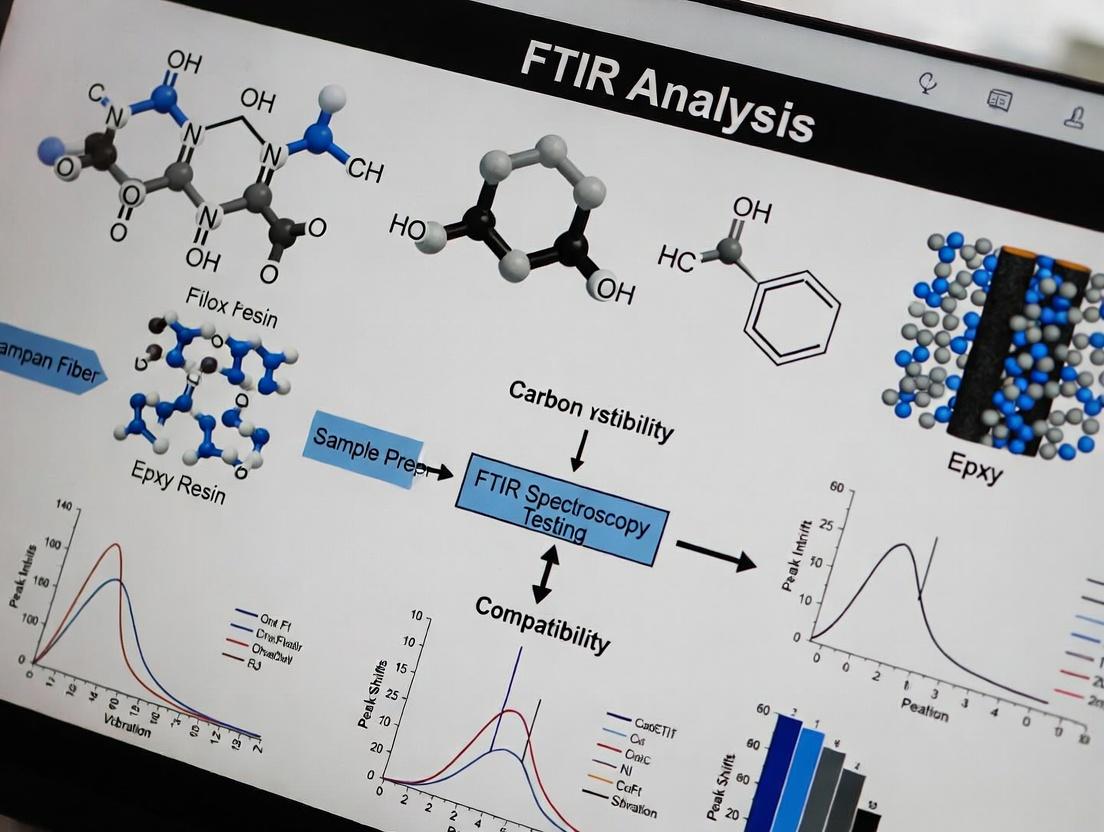
This comprehensive guide explores Fourier-Transform Infrared (FTIR) Spectroscopy as a critical tool for assessing chemical compatibility in fiber-reinforced polymer composites, particularly for biomedical applications.
Mastering FTIR Analysis for Fiber Composite Compatibility: A Complete Guide for Biomedical Researchers
Abstract
This comprehensive guide explores Fourier-Transform Infrared (FTIR) Spectroscopy as a critical tool for assessing chemical compatibility in fiber-reinforced polymer composites, particularly for biomedical applications. It covers foundational principles, advanced methodological protocols, troubleshooting strategies for common analytical challenges, and validation techniques for comparing composite interfaces. Aimed at researchers and drug development professionals, the article provides practical insights for ensuring material integrity, predicting long-term performance, and preventing failure in implantable devices and drug delivery systems through precise chemical interaction analysis.
Understanding the Basics: How FTIR Spectroscopy Decodes Composite Chemistry
Fundamental Principles
Fourier-Transform Infrared (FTIR) spectroscopy is a pivotal analytical technique for identifying organic, polymeric, and, in many cases, inorganic materials based on their absorption of infrared radiation. When IR radiation passes through a sample, specific frequencies are absorbed by molecular bonds, causing them to vibrate. This absorption is quantized and corresponds to discrete vibrational energy levels, creating a unique "fingerprint" spectrum for the material.
Molecular Vibrations and IR Absorption
For a vibration to be IR-active, it must result in a change in the dipole moment of the molecule. The fundamental vibrational modes include stretching (symmetric and asymmetric) and bending (scissoring, rocking, wagging, twisting). The frequency of absorption (ν) is related to the bond strength (force constant, k) and reduced mass (μ) of the atoms involved, as described by the harmonic oscillator approximation: ν = (1/2πc)√(k/μ), where c is the speed of light.
Core Components and Workflow of an FTIR Spectrometer
The key advantage of FTIR over dispersive IR is the Fellgett (multiplex) and Connes (accuracy) advantages, leading to faster, more sensitive, and precise measurements.
Instrumentation Workflow
FTIR Instrumentation and Signal Flow
Experimental Protocols for Composite Analysis
In fiber composites research, FTIR is critical for assessing chemical compatibility, degradation, and interfacial bonding between matrix and reinforcement.
Protocol: Attenuated Total Reflectance (ATR) Analysis of Composite Surface
Objective: To characterize surface functional groups and potential contamination or degradation on a composite sample.
- Instrument Setup: Equip spectrometer with a single-reflection diamond or germanium ATR crystal. Clean crystal with isopropyl alcohol and background spectrum.
- Sample Preparation: Cut a small, flat section of composite (≈5x5 mm). Ensure surface is clean and free of loose debris.
- Data Acquisition: Place sample firmly onto ATR crystal. Apply consistent pressure via the instrument's anvil. Acquire spectrum over 4000-400 cm⁻¹ range with 4 cm⁻¹ resolution and 64 scans.
- Data Processing: Apply atmospheric suppression (CO₂, H₂O) and ATR correction (if not automated). Normalize spectra (e.g., to the 2920 cm⁻¹ C-H stretch) for comparison.
Protocol: Transmission Analysis of Composite Matrix Resin
Objective: To identify the chemical structure of the uncured or extracted resin matrix.
- Sample Preparation (KBr Pellet Method):
- Dry approximately 1 mg of finely ground resin sample with 100 mg of spectroscopic-grade potassium bromide (KBr).
- Mix thoroughly in a mortar and pestle.
- Press mixture in a hydraulic press (≈10 tons) under vacuum for 1-2 minutes to form a transparent pellet.
- Data Acquisition: Place pellet in transmission holder. Acquire background with empty holder. Insert pellet and acquire sample spectrum (4000-400 cm⁻¹, 4 cm⁻¹, 32 scans).
Key Spectral Data for Composite Materials
Characteristic absorption bands for common functional groups in polymer matrices and composite interphases.
Table 1: Key FTIR Absorption Frequencies in Composite Materials
| Wavenumber (cm⁻¹) | Bond/Vibration | Functional Group | Typical Assignment in Composites |
|---|---|---|---|
| 3700-3600 | O-H stretch | Hydroxyl | Moisture, silanol on glass fibers |
| 3050-3000 | =C-H stretch | Aromatic | Epoxy, phenolic resins |
| 2960-2850 | C-H stretch | Alkyl | Polymer backbones, curing agents |
| 2270-2240 | -N=C=O stretch | Isocyanate | PU matrices, coupling agents |
| 1740-1720 | C=O stretch | Carbonyl | Ester (polyester), degradation |
| 1650-1630 | C=C stretch | Vinyl, Aromatic | Styrene (in vinyl ester), C=C |
| 1600-1585 | C=C stretch | Aromatic ring | Benzene ring in resins |
| 1510-1505 | N-H bend | Amide II | Aramid fibers (e.g., Kevlar) |
| 1245-1230 | C-O-C stretch | Aryl alkyl ether | Epoxy resin (Diglycidyl ether) |
| 1100-1000 | Si-O-Si stretch | Siloxane | Glass fibers, silane coupling agents |
Table 2: Quantitative Metrics for Composite Degradation via FTIR
| Metric | Calculation | Significance in Compatibility |
|---|---|---|
| Carbonyl Index (CI) | A(≈1710 cm⁻¹) / A(Reference Peak) | Measures oxidative degradation of matrix. |
| Hydroxyl Index (HI) | A(≈3400 cm⁻¹) / A(Reference Peak) | Indicates hydrolysis or moisture uptake. |
| Cure Conversion | 1 - [A(Epoxy 915 cm⁻¹)t / A(Epoxy 915 cm⁻¹)t0] | Degree of epoxy resin crosslinking. |
| Interphase Quality | Shift in Siloxane peak (≈1100 cm⁻¹) | Indicates bonding strength via coupling agents. |
The Scientist's Toolkit: Essential Research Reagents & Materials
Table 3: Key Research Reagent Solutions for FTIR Analysis in Composites
| Item | Function/Brief Explanation |
|---|---|
| Potassium Bromide (KBr), Spectroscopy Grade | Hygroscopic salt used to create transparent pellets for transmission analysis of powdered samples. |
| Diamond ATR Crystal | Durable, chemically inert crystal for attenuated total reflectance sampling of solid composites. |
| Isopropyl Alcohol (≥99.9%) | High-purity solvent for cleaning ATR crystals and sample surfaces to remove contaminants. |
| Silane Coupling Agent Solutions (e.g., 3-Aminopropyltriethoxysilane) | Used to treat fiber surfaces; FTIR verifies their presence and hydrolysis/condensation. |
| Deuterated Triglycine Sulfate (DTGS) Detector | Standard room-temperature IR detector for general-purpose analysis. |
| Mercury Cadmium Telluride (MCT) Detector | Liquid-N₂-cooled detector for high-sensitivity, rapid-scan applications. |
| Nujol (Mineral Oil) | Mulling agent for preparing solid samples when KBr is unsuitable (e.g., for moisture-sensitive samples). |
| Polystyrene Film Standard | Used for instrument performance validation (wavenumber accuracy and resolution checks). |
Data Interpretation Pathway for Chemical Compatibility
The logical flow from raw data to a compatibility conclusion.
FTIR Data Interpretation Workflow
The Critical Role of Chemical Compatibility in Composite Performance
The long-term performance and structural integrity of fiber-reinforced composites are critically dependent on the chemical compatibility between the reinforcing fibers, the polymer matrix, and any environmental agents they encounter. Within the broader thesis on Fourier-Transform Infrared (FTIR) spectroscopy analysis for chemical compatibility in composites research, this guide establishes the foundational principles. FTIR serves as a pivotal tool for detecting interfacial chemical bonding, monitoring degradation, and predicting service life by identifying characteristic molecular vibrations and chemical changes.
Quantitative Data on Chemical Exposure Effects
Recent studies quantify the impact of chemical exposure on composite mechanical properties. The following tables summarize key findings.
Table 1: Effect of Alkaline Exposure (pH 13) on E-Glass/Epoxy Composite after 30 Days Immersion
| Property | Control Sample | Exposed Sample | % Retention |
|---|---|---|---|
| Tensile Strength (MPa) | 450 ± 15 | 315 ± 25 | 70.0% |
| Flexural Modulus (GPa) | 22.5 ± 0.8 | 18.2 ± 1.1 | 80.9% |
| Interlaminar Shear Strength (MPa) | 35.2 ± 2.1 | 22.5 ± 2.8 | 63.9% |
Table 2: FTIR Spectral Shifts Indicative of Chemical Bonding/ Degradation
| Wavenumber Shift (cm⁻¹) | Bond/Functional Group | Interpretation | Compatibility Implication |
|---|---|---|---|
| 1710 → 1735 | C=O stretch | Ester formation from reaction with acid | Improved interfacial adhesion |
| 1510 → 1495 | Aromatic C=C | Benzene ring cleavage | Matrix oxidative degradation |
| 3300 (broadening) | O-H stretch | Hydroxyl group formation | Fiber surface hydrolysis |
Experimental Protocols for FTIR-Based Compatibility Assessment
Protocol: FTIR Analysis of the Fiber-Matrix Interface
Objective: To characterize chemical bonding at the interface between silane-treated glass fibers and an epoxy matrix.
- Sample Preparation:
- Prepare a thin film of the cured epoxy matrix (~100 µm) for reference.
- Extract single fibers from the composite via matrix burnout at 500°C in a muffle furnace (controlled atmosphere).
- For micro-ATR FTIR, polish a cross-sectional sample of the composite to a 1 µm finish.
- Instrumentation: Use an FTIR spectrometer equipped with an Attenuated Total Reflectance (ATR) accessory. A micro-ATR crystal (e.g., germanium) is essential for interfacial analysis.
- Data Acquisition:
- Collect background spectrum against clean ATR crystal.
- For extracted fibers, place multiple fibers perpendicular to the crystal axis to maximize contact. Apply consistent pressure.
- For cross-sections, carefully position the interface on the crystal.
- Settings: 64 scans, 4 cm⁻¹ resolution, spectral range 4000-600 cm⁻¹.
- Analysis: Subtract the reference epoxy spectrum from the fiber spectrum. Identify peaks corresponding to Si-O-Si (1100-1000 cm⁻¹) and Si-O-C (950-920 cm⁻¹) bonds indicating covalent coupling.
Protocol: Accelerated Aging and Chemical Resistance Testing
Objective: To evaluate composite durability and chemical compatibility under simulated service environments.
- Sample Preparation: Cut composite laminates into standardized coupons per ASTM D3039 (tensile) and D790 (flexural).
- Immersion Procedure: Immerse triplicate samples in selected reagents (e.g., 1M NaOH, 3.5% NaCl, Synthetic Seawater, Jet Fuel) at 50°C for accelerated aging. Maintain an immersion ratio of 50 mL per gram of sample.
- Monitoring: Remove samples at intervals (1, 7, 30, 90 days). Rinse with deionized water and dry to constant weight.
- Post-Exposure Analysis:
- Weigh samples to determine fluid uptake (% mass change).
- Perform FTIR-ATR on the exposed surface to identify functional group changes.
- Subject samples to mechanical testing and compare to unexposed controls.
Visualization of Workflows and Pathways
Title: FTIR Analysis Pathways for Composite Chemical Compatibility
Title: FTIR Experimental Workflow for Compatibility Testing
The Scientist's Toolkit: Key Research Reagent Solutions & Materials
Table 3: Essential Materials for Chemical Compatibility Research
| Item | Function in Research | Key Consideration |
|---|---|---|
| Silane Coupling Agents (e.g., (3-Aminopropyl)triethoxysilane) | Promote covalent bonding between inorganic fibers and organic matrix, enhancing interfacial adhesion. | Selection depends on matrix chemistry (epoxy, polyester, etc.). |
| Model Immersion Reagents (e.g., 1M NaOH, 3.5% NaCl, Jet Fuel Simulant) | Simulate aggressive chemical environments for accelerated aging studies. | Purity and concentration must be strictly controlled for reproducibility. |
| Deuterated Solvents (e.g., DMSO-d6, Chloroform-d) | Used for swelling composites to probe the inner matrix via FTIR without dissolving. | Minimizes spectral interference in the C-H and O-H regions. |
| Internal Standard Materials (e.g., Potassium Bromide for pellets, Stable polymer films) | Provide reference peaks for spectral normalization and correction. | Must be chemically inert and non-hygroscopic. |
| High-Purity Inert Gases (e.g., Nitrogen, Argon) | Create inert atmosphere during high-temperature curing or FTIR analysis to prevent oxidation. | Essential for studying thermal degradation mechanisms. |
| Specialized ATR Crystals (Germanium, Diamond) | Enable high-resolution micro-ATR FTIR of composite interfaces and surfaces. | Germanium offers excellent spatial resolution for fiber analysis. |
Key Functional Groups and Their Signature FTIR Absorbance Bands
This technical guide details the critical Fourier-Transform Infrared (FTIR) spectroscopy absorbance bands for key functional groups, framed within chemical compatibility research for advanced fiber composites. Accurate identification of these bands is essential for assessing interfacial bonding, curing efficacy, and environmental degradation in composite materials, which directly informs their performance in aerospace, automotive, and biomedical applications.
In fiber composites research, the chemical compatibility between the reinforcing fiber, matrix resin, and any coupling agents dictates the final material's mechanical properties and durability. FTIR spectroscopy serves as a cornerstone analytical technique for probing these interfacial chemistries. This guide provides an in-depth reference to signature FTIR bands, enabling researchers to diagnose surface modifications, verify cross-linking reactions, and identify contaminants or degradation products.
Core Functional Groups & FTIR Bands
The following table consolidates the characteristic infrared absorption frequencies for functional groups most relevant to composite materials. Bands are reported in wavenumbers (cm⁻¹) and intensities are denoted as: s (strong), m (medium), w (weak), br (broad), var (variable).
Table 1: Signature FTIR Absorbance Bands of Key Functional Groups
| Functional Group | Bond Vibration Type | Characteristic Absorbance Range (cm⁻¹) | Typical Intensity & Notes |
|---|---|---|---|
| O-H (Alcohol, Phenol) | Stretch | 3200 - 3600 | s, br (H-bonded) |
| O-H (Carboxylic Acid) | Stretch | 2500 - 3300 | s, very br |
| N-H (Amine) | Stretch | 3300 - 3500 | m |
| C-H (Alkane) | Stretch | 2850 - 2960 | s |
| C-H (Alkene) | Stretch | 3000 - 3100 | m |
| C-H (Aromatic) | Stretch | 3000 - 3100 | var |
| C≡N (Nitrile) | Stretch | 2220 - 2260 | s |
| C=O (Carbonyl) | Stretch | 1650 - 1800 | s, precise position is diagnostic |
| - Aldehyde | Stretch | 1720 - 1740 | s |
| - Ketone | Stretch | 1705 - 1725 | s |
| - Ester | Stretch | 1735 - 1750 | s |
| - Carboxylic Acid | Stretch | 1700 - 1725 | s |
| - Amide (1°) | Stretch | 1640 - 1690 | s (Amide I band) |
| C=C (Alkene) | Stretch | 1620 - 1680 | var |
| C=C (Aromatic) | Skeletal vibrations | 1400 - 1600 | var, often multiple bands |
| C-O (Alcohol, Ether, Ester) | Stretch | 1000 - 1300 | s |
| C-N (Amine) | Stretch | 1000 - 1250 | m |
| N-H (Amine, 1°/2°) | Bend | 1500 - 1650 (1°), ~1550 (2°) | m |
Experimental Protocols for Composite Analysis
Protocol 1: Attenuated Total Reflectance (ATR)-FTIR of Fiber Surfaces
Objective: To characterize surface functional groups on untreated and chemically modified reinforcing fibers (e.g., carbon, glass, aramid). Methodology:
- Sample Preparation: Clean the fiber tow with a suitable solvent (e.g., acetone) in an ultrasonic bath for 10 minutes. Dry in a vacuum oven at 60°C for 2 hours. For solid laminates, a clean cross-section can be analyzed.
- Instrument Setup: Clean the ATR crystal (diamond or ZnSe) with isopropanol. Place the fiber bundle or sample firmly onto the crystal to ensure good optical contact. Apply consistent pressure via the instrument's anvil.
- Data Acquisition: Acquire background spectrum with a clean crystal. Collect sample spectra over a range of 4000-600 cm⁻¹. Use 64 scans at a resolution of 4 cm⁻¹. Perform baseline correction and atmospheric suppression (for H₂O/CO₂) during processing.
- Analysis: Compare spectra of modified fibers to unmodified controls. Identify new absorbance bands (e.g., C=O from sizing agents, Si-O from silane coupling agents) and changes in band intensity.
Protocol 2: Transmission FTIR of Cured Resin Films
Objective: To monitor the curing reaction of a polymer matrix (e.g., epoxy, polyester) and assess final conversion. Methodology:
- Sample Preparation: Cast a thin, uniform film of uncured resin between two potassium bromide (KBr) windows or on a disposable IR card. For in-situ curing, use a heated transmission cell.
- Instrument Setup: Place the sample in the transmission holder. For kinetic studies, calibrate the temperature of the heated stage.
- Data Acquisition: Collect initial spectrum of the uncured resin. If monitoring curing, collect spectra at regular time/temperature intervals. Standard parameters: 32 scans, 4 cm⁻¹ resolution.
- Analysis: Track the disappearance of the monomer's reactive group band (e.g., epoxy ring ~915 cm⁻¹, C=C in vinyl ester ~1630 cm⁻¹) and the growth of the product band (e.g., C-O from ether formation ~1100 cm⁻¹). Calculate degree of conversion via the ratio of band intensities normalized to an internal reference band (e.g., aromatic C-H stretch).
Protocol 3: FTIR Microspectroscopy of Composite Interphase
Objective: To spatially map chemical composition across the fiber-matrix interphase region. Methodology:
- Sample Preparation: Prepare a polished cross-section of the embedded fiber composite using standard metallographic techniques to a mirror finish.
- Instrument Setup: Use an FTIR microscope coupled to the spectrometer. Select an aperture (e.g., 10 µm x 10 µm) to define the analysis area.
- Data Acquisition: Operate in reflection or transmission mode. Define a grid map across the fiber, interphase, and bulk matrix. Collect a full spectrum at each pixel.
- Analysis: Use chemical imaging software to generate maps based on the intensity of specific functional group bands (e.g., map carbonyl groups from a coupling agent). Plot line profiles to visualize chemical gradient.
FTIR Workflow for Composite Chemical Analysis
FTIR Analysis Workflow for Composites
The Scientist's Toolkit: Essential Reagents & Materials
Table 2: Key Research Reagent Solutions for FTIR Analysis in Composites
| Item | Function in FTIR Analysis |
|---|---|
| Potassium Bromide (KBr), Optical Grade | Hygroscopic salt used to create pellets for transmission FTIR of solid powders or to make windows for liquid cells. |
| Solvents (HPLC Grade): Acetone, Isopropanol, Ethanol | Used for cleaning ATR crystals, sample surfaces, and optical components without leaving interfering residues. |
| Silane Coupling Agent Solutions (e.g., 3-aminopropyltriethoxysilane) | Standard reagents for surface modification of glass or mineral fibers; their grafted signatures (Si-O-C, C-N) are tracked by FTIR. |
| Deuterated Solvents (e.g., CDCl₃, DMSO-d₆) | For solution-state FTIR of extracted components; minimizes interference from C-H/O-H bands in the solvent. |
| ATR Crystals: Diamond, ZnSe, Ge | Diamond: robust, chemically inert for most samples. ZnSe: higher sensitivity but soluble in acid. Ge: high refractive index for low-penetrance analysis. |
| Internal Standard Compounds (e.g., Potassium Thiocyanate, KSCN) | Added in known concentration to mixtures to create a reference band for quantitative intensity comparisons. |
| Calibration Films: Polystyrene, Polyethylene Terephthalate (PET) | Provide known, sharp absorbance bands for routine wavelength/ intensity calibration and validation of spectrometer performance. |
| Infrared Polarizer | Used to study molecular orientation in drawn fibers or composites by analyzing dichroic ratios of specific vibrational bands. |
The performance of fiber-reinforced composites is governed not by the constituents alone but by the quality of the interfacial region. This interface, the boundary between reinforcing fiber and polymer matrix, is universally recognized as the critical stress transfer medium and the primary locus of failure. Within a broader thesis investigating Fourier-Transform Infrared (FTIR) spectroscopy for chemical compatibility assessment in composite materials, this guide explores the fundamental reasons for interfacial weakness. FTIR analysis provides a direct, non-destructive method to probe the molecular-level interactions—or lack thereof—at this junction, correlating spectroscopic signatures with macroscopic mechanical performance and failure modes.
The Fundamental Causes of Interfacial Weakness
The weakness of the fiber-matrix interface stems from a combination of chemical, physical, and mechanical factors:
- Chemical Incompatibility: Most high-performance fibers (e.g., carbon, aramid, glass) possess relatively inert, smooth surfaces that do not form strong chemical bonds with polymer matrices (e.g., epoxies, polyamides). This results in poor adhesion, relying primarily on weak van der Waals forces.
- Thermoelastic Mismatch: Differences in coefficients of thermal expansion (CTE) between fiber and matrix induce significant residual stresses during the composite curing and cooling process, leading to microcracking and debonding.
- Stress Concentration: The geometric discontinuity at the interface creates a region of high stress concentration. Voids, impurities, or uneven fiber coatings further exacerbate these localized stresses.
- Environmental Degradation: Interfaces are preferential pathways for moisture ingress and chemical attack, leading to hydrolytic or oxidative degradation that further weakens the bond.
Quantitative Data on Interfacial Properties
The following tables summarize key quantitative data illustrating the interfacial challenge.
Table 1: Comparative Interfacial Shear Strength (IFSS) for Different Fiber/Matrix Systems
| Fiber Type | Matrix Type | Surface Treatment | Avg. IFSS (MPa) | Measurement Method | Key Reference (Type) |
|---|---|---|---|---|---|
| Carbon (AS4) | Epoxy (LY556) | None | 32.5 ± 4.1 | Microdroplet Debond | Sharma et al., 2022 (Journal) |
| Carbon (AS4) | Epoxy (LY556) | Oxidative (Nitric Acid) | 58.7 ± 5.6 | Microdroplet Debond | Sharma et al., 2022 (Journal) |
| Glass (E) | Epoxy | Silane Coupling Agent (A-1100) | 45.2 ± 3.8 | Fragmentation Test | Jones & Bi, 2023 (Review) |
| Glass (E) | Epoxy | None | 18.9 ± 2.5 | Fragmentation Test | Jones & Bi, 2023 (Review) |
| Aramid (Kevlar 49) | Epoxy | Plasma Treatment | 41.1 ± 4.3 | Microbond Pull-out | Chen & Li, 2023 (Journal) |
Table 2: FTIR Spectral Band Shifts Indicative of Interfacial Bond Formation
| Functional Group | Wavenumber (cm⁻¹) Untreated Fiber | Wavenumber (cm⁻¹) After Matrix Cure | Shift & Interpretation | Associated Interface Property |
|---|---|---|---|---|
| C=O (Carbon Fiber) | ~1710 | ~1705 | -5 cm⁻¹: H-bonding with matrix amine groups | Improved wetting & adhesion |
| Si-OH (Glass Fiber) | ~3740 | Broadband ~3200-3600 | Broadening: H-bonding network with matrix | Enhanced chemical coupling |
| N-H (Matrix Epoxy hardener) | ~3370 | ~3335 | -35 cm⁻¹: Strong reaction with fiber oxide groups | Covalent bond formation |
Experimental Protocols for Interfacial Characterization
Protocol: Microdroplet Debond Test for IFSS Measurement
Objective: To measure the interfacial shear strength (IFSS) between a single fiber and a matrix. Materials: Single filament fiber, uncured resin system, micro-syringe, curing oven, precision tensile tester. Procedure:
- Mount a single fiber vertically under a microscope.
- Using a micro-syringe, deposit a precisely sized microdroplet (50-100 µm diameter) of uncured matrix resin onto the fiber.
- Cure the droplet according to the matrix manufacturer's specifications.
- Mount the specimen in a micro-tensile tester equipped with two precision blades.
- Align the blades to grip the cured droplet without touching the fiber.
- Apply a tensile load to debond the droplet from the fiber at a constant crosshead speed (typically 0.1-1 µm/s).
- Record the maximum debond force (F_max).
- Calculate IFSS using the formula: IFSS = Fmax / (π * df * Le), where df is the fiber diameter and L_e is the embedded length.
- Repeat for >30 samples to obtain a statistical average.
Protocol: In-Situ FTIR Analysis of Interfacial Reactions
Objective: To monitor chemical bond formation at the fiber-matrix interface during curing. Materials: Attenuated Total Reflectance (ATR)-FTIR spectrometer with temperature stage, thin film of matrix, single fiber mat or model compound representing fiber surface. Procedure:
- Place a representative fiber sample (e.g., a thin mat of sized fibers) on the ATR crystal.
- Apply a thin, controlled layer of uncured resin system over the fibers.
- Initiate a time-resolved FTIR scan, collecting spectra at regular intervals (e.g., every 30 seconds).
- Initiate the cure cycle, ramping the temperature stage according to the specified profile.
- Monitor specific absorption bands (see Table 2) for changes in intensity, shape, and wavenumber.
- Analyze the shift in key peaks (e.g., epoxy ring ~915 cm⁻¹ disappearance, amine consumption) to determine reaction kinetics and the potential formation of bonds with fiber surface functional groups.
- Correlate spectroscopic conversion data with IFSS from mechanical tests on equivalently prepared samples.
Visualization of Concepts and Workflows
Title: Causes and Consequences of a Weak Fiber-Matrix Interface
Title: FTIR Workflow for Interfacial Chemical Analysis
The Scientist's Toolkit: Key Research Reagent Solutions
| Item / Reagent | Primary Function in Interface Research | Key Consideration for FTIR Studies |
|---|---|---|
| Silane Coupling Agents (e.g., Aminopropyltriethoxysilane) | Forms covalent bonds between inorganic fiber (glass) and organic matrix, dramatically improving wetting and adhesion. | FTIR monitors Si-O-C and Si-O-Si bond formation (~1000-1100 cm⁻¹) and confirms hydrolysis of ethoxy groups. |
| Oxidative Etchants (e.g., Nitric Acid, Plasma) | Increases surface roughness and introduces oxygen-containing functional groups (-COOH, -OH) on carbon fibers. | FTIR detects C=O and O-H stretch intensities to quantify surface modification level pre-composite manufacture. |
| Sizing Emulsions | Commercial fiber coatings protect filaments and often contain primers to enhance matrix bonding. | FTIR analysis of sized vs. desized fibers is crucial to deconvolute sizing/matrix interactions. |
| Deuterated Solvents (e.g., D₂O, CDCl₃) | Used in solvent-based adhesion tests or to study moisture effects. Allows monitoring of H-D exchange at interface via FTIR. | Enables isolation of specific O-H or N-H peaks by shifting them out of key spectral regions. |
| Model Compounds (e.g., with -COOH, -NH₂ groups) | Simulate fiber surface chemistry for controlled study of reaction kinetics with matrix molecules via FTIR. | Simplifies complex composite spectrum to focus on specific interfacial reaction pathways. |
Recent Advances in FTIR Instrumentation (e.g., ATR, Imaging)
Within the context of a broader thesis on FTIR analysis for chemical compatibility in fiber composites research, instrumentation advancements are pivotal. The diffusion of fluids, degradation of matrix polymers, and integrity of fiber-matrix interfaces upon chemical exposure are critical parameters. Modern FTIR techniques, namely Attenuated Total Reflectance (ATR) and FTIR Imaging (Microscopy), now provide unprecedented spatial, temporal, and spectral resolution to interrogate these complex phenomena at a micro-scale. This guide details these core advances, their quantitative capabilities, and protocols for their application in composite materials science, tailored for researchers and development professionals.
Core Technical Advances
Attenuated Total Reflectance (ATR) Innovations
Modern ATR accessories have evolved beyond single-bounce, monolithic crystal designs. Key advances include:
- Multi-Bounce, Large-Area ATR: Increases effective pathlength and sampling area for heterogeneous composite surfaces, improving signal-to-noise ratio (S/N) for low-concentration analytes like absorbed solvents.
- Diamond ATR Crystals with High-Pressure Clamps: Diamond's durability allows for direct, non-destructive contact with hard, uneven composite surfaces. Motorized pressure clamps ensure reproducible contact, critical for quantitative analysis of material gradients.
- Ge and ZnSe Crystal Options: Germanium crystals provide a shallow depth of penetration (~0.66 µm at 1700 cm⁻¹), ideal for analyzing thin surface coatings or the initial stages of chemical attack on a composite surface.
- Heated and Flow-Through ATR Cells: Enable in-situ monitoring of composite-fluid interactions at elevated temperatures, simulating real-world service conditions.
FTIR Imaging (Microscopy) and Focal Plane Array (FPA) Detectors
The transition from single-point FTIR microscopy to wide-field imaging represents a paradigm shift. The core enabling technology is the Focal Plane Array (FPA) detector, a grid of individual IR-sensitive detector elements (e.g., 128x128 or 256x256 pixels).
- Principle: Each pixel in the array collects a full FTIR spectrum simultaneously. When coupled with an IR microscope, this creates a hyperspectral data cube where every (x,y) coordinate has an associated spectrum.
- Advantage for Composites: This allows for the rapid, label-free chemical mapping of phases in a composite (e.g., epoxy matrix, carbon/glass fiber, filler particles, and absorbed chemical species) with spatial resolution at the diffraction limit (~3-10 µm, depending on wavelength). Delamination and chemical ingress pathways can be visualized directly.
Table 1: Comparison of Advanced FTIR Sampling Techniques for Composite Analysis
| Feature | Traditional Transmission FTIR | Advanced Single-Point ATR | FTIR Imaging (FPA Detector) |
|---|---|---|---|
| Spatial Resolution | Low (mm-cm scale) | ~100-250 µm (crystal contact area) | High (~3-10 µm) |
| Sample Preparation | Extensive (KBr pellets, microtoming) | Minimal (direct surface contact) | Moderate (flat, thin sections optimal) |
| Analysis Speed for Mapping | Very Slow (point-by-point) | Slow (point-by-point) | Very Fast (simultaneous pixel acquisition) |
| Primary Application in Composites | Bulk material identification | Surface chemistry, degradation profiling, depth profiling (with variable angle) | Chemical heterogeneity, interface analysis, diffusion mapping |
| Typical Data Acquisition Time for a 1mm² Map | Hours-Days | Minutes-Hours | Seconds-Minutes |
| Key Limitation | Requires thin, transparent samples | Contact required; spatial resolution limited by crystal size | Cost; complex data handling; sample flatness critical |
Table 2: Performance Metrics of Common ATR Crystal Materials
| Crystal Material | IR Range (cm⁻¹) | Depth of Penetration (approx. at 1700 cm⁻¹) | Hardness (Mohs) | Best For Composite Applications |
|---|---|---|---|---|
| Diamond | 45,000 - <50 | ~2.0 µm | 10.0 | General purpose; hard, rough composite surfaces |
| Germanium (Ge) | 5,500 - 600 | ~0.66 µm | 6.0 | Shallow surface analysis, thin coating characterization |
| Zinc Selenide (ZnSe) | 20,000 - 500 | ~2.0 µm | 2.5 | Soft, polished composite surfaces; lower cost alternative |
Experimental Protocols
Protocol 1: Chemical Compatibility Assessment viaIn-SituATR-FTIR
Objective: To monitor in real-time the diffusion of a solvent (e.g., deionized water, jet fuel) into an epoxy composite surface and identify any concomitant chemical degradation. Materials: Composite coupon (e.g., carbon fiber/epoxy), FTIR spectrometer with liquid-tight, flow-through diamond ATR accessory, solvent reservoir, peristaltic pump, temperature controller. Methodology:
- Baseline Acquisition: Clamp the dry composite coupon securely onto the ATR crystal. Acquire a background spectrum (64 scans, 4 cm⁻¹ resolution). Acquire a spectrum of the dry sample surface.
- System Setup: Connect the flow cell to the solvent reservoir via inert tubing. Ensure no air bubbles are present in the line.
- Initiate Experiment: Start data acquisition software in time-series mode (1 spectrum per minute, 16 scans each). Simultaneously, start the pump to introduce solvent into the ATR cell, fully immersing the sample surface.
- Data Collection: Continuously collect spectra for the desired duration (e.g., 24-72 hours). Maintain constant temperature.
- Analysis: Plot the absorbance of key bands (e.g., epoxy ring band ~915 cm⁻¹, solvent band ~1640 cm⁻¹ for water) versus time. Calculate diffusion coefficients from the initial Fickian uptake profile.
Protocol 2: Chemical Mapping of a Composite Cross-Section via FTIR Imaging
Objective: To spatially resolve the distribution of matrix, fiber, and any chemical contaminants or degradation products across a polished cross-section of a composite exposed to fluid. Materials: Exposed composite sample, mounting epoxy, automated polisher, FTIR microscope equipped with a 128x128 or larger FPA detector, mercury cadmium telluride (MCT) detector optional for higher sensitivity. Methodology:
- Sample Preparation: Pot the composite sample in a slow-cure epoxy resin. Once cured, polish the cross-section using a sequential abrasive slurry system (e.g., 9 µm, 3 µm, 1 µm diamond) to a mirror finish. Clean ultrasonically and dry.
- Microscope Alignment: Place the sample on the microscope stage. Using the visible light camera, locate the region of interest (ROI) containing the fiber-matrix interface and potential degradation front.
- Acquisition Parameters: Switch to IR mode. Define the measurement ROI (e.g., 700 µm x 700 µm). Set spectral resolution to 4 or 8 cm⁻¹. Co-add 128-256 scans per pixel to ensure adequate S/N.
- Background Acquisition: Acquire a background spectrum from a clean, reflective gold mirror or a pristine area of the sample.
- Spectral Data Cube Acquisition: Initiate the imaging run. The system will collect all pixel spectra simultaneously. Acquisition time is typically 5-15 minutes.
- Data Processing & Mapping: Using chemometric software (e.g., principal component analysis - PCA, or cluster analysis), identify spectral end-members. Generate false-color chemical maps based on the integrated area or peak height of characteristic bands (e.g., carbonyl band ~1730 cm⁻¹ for ester degradation, silicate band ~1040 cm⁻¹ for glass fiber).
Diagrams
DOT Script for Experimental Workflow
Title: FTIR Analysis Workflow for Composites
DOT Script for FTIR Imaging Data Pathway
Title: FTIR Imaging Data Generation Flow
The Scientist's Toolkit: Research Reagent Solutions
Table 3: Essential Materials for Advanced FTIR Analysis of Composites
| Item | Function/Description |
|---|---|
| Diamond ATR Crystal Assembly | Hard, chemically inert crystal for direct, non-destructive surface analysis of composites under high pressure. |
| Ge or ZnSe ATR Crystals | For specific applications requiring shallow depth of penetration (Ge) or a wider spectral range on smooth surfaces (ZnSe). |
| Focal Plane Array (FPA) Detector | Grid detector (e.g., 128x128 MCT) enabling simultaneous FTIR spectral acquisition across thousands of spatial points for rapid imaging. |
| Micro-compression ATR Cell | Accessory for applying controlled, localized pressure to small or uneven composite samples to ensure optimal crystal contact. |
| In-Situ Flow-Through ATR Cell | Allows real-time monitoring of fluid-composite interactions by flowing solvents or gases over the sample on the ATR crystal. |
| Polishing Jig & Diamond Slurries | For preparing flat, polished cross-sections of composite materials required for high-quality FTIR transmission or imaging. |
| Chemometric Software Suite | Essential for processing hyperspectral imaging data (e.g., PCA, MCR, cluster analysis) to extract chemical distribution maps. |
| Calibration Standards | Thin polymer films or certified reference materials for daily wavelength/ intensity calibration and system validation. |
| Background Reference Material | High-reflectivity gold mirror or infrared-transparent substrate (e.g., BaF₂ window) for acquiring background spectra in imaging. |
Within the broader thesis investigating Fourier-Transform Infrared (FTIR) spectroscopy as a principal tool for assessing chemical compatibility in fiber-reinforced polymeric composites, this case study focuses on hydrolytic degradation. For researchers in composites science and drug development (where polymeric delivery systems are critical), understanding interfacial stability and bulk matrix changes upon water ingress is paramount. FTIR provides a non-destructive, chemically specific method to monitor the hydrolysis of ester linkages, formation of new functional groups (e.g., carboxylic acids, alcohols), and potential plasticization effects, thereby revealing degradation mechanisms and kinetics critical for predicting material lifetime and biocompatibility.
Hydrolytic Degradation Mechanisms & FTIR Detectable Changes
Hydrolysis in polyesters (e.g., PLA, PCL, epoxy-based systems) and their composites involves the nucleophilic attack of water on the carbonyl carbon of an ester group. FTIR tracks this by monitoring characteristic band intensities and shifts.
Key Spectral Regions for Monitoring:
- Carbonyl (C=O) Stretch: ~1700-1750 cm⁻¹. A decrease in intensity and/or a shift to lower wavenumbers indicates ester consumption and potential carboxylic acid formation.
- Ester C-O-C Stretch: ~1000-1300 cm⁻¹. A decrease in intensity signifies cleavage of the ester linkage.
- Hydroxyl (O-H) Stretch: ~3200-3600 cm⁻¹. A broadening and increase in intensity indicates the formation of new hydroxyl groups from hydrolysis and absorbed water.
- Carboxylic Acid O-H Stretch & C=O: A broad band centered ~2500-3300 cm⁻¹ and a C=O shift to ~1710-1720 cm⁻¹ confirm acid end-group formation.
Experimental Protocol for Accelerated Hydrolytic Aging & FTIR Analysis
Materials: Glass/Carbon fiber reinforced poly(lactic acid) (PLA) or epoxy composite specimens (e.g., 10mm x 10mm x 2mm). Control: Neat polymer matrix samples.
Procedure:
- Baseline Characterization: Acquire FTIR spectra (transmission or ATR mode) of dried specimens prior to aging. Use 32 scans at 4 cm⁻¹ resolution.
- Accelerated Hydrolytic Aging:
- Immerse specimens in phosphate-buffered saline (PBS) at pH 7.4 ± 0.2, maintained at 60°C ± 1°C in an environmental chamber.
- Use a elevated temperature (per Arrhenius principles) to accelerate degradation while maintaining the hydrolysis mechanism.
- Remove triplicate samples at predetermined intervals (e.g., 1, 2, 4, 8, 12 weeks).
- Post-aging Preparation:
- Rinse samples with deionized water and gently blot surface moisture.
- Dry in a vacuum desiccator at room temperature for 48 hours to remove unbound water, ensuring FTIR detects chemical changes rather than absorbed H₂O.
- FTIR Analysis:
- Obtain post-aging spectra using identical instrument parameters as baseline.
- For ATR mode, apply consistent pressure and ensure good surface contact. Apply ATR correction algorithms.
- Perform spectral normalization using an internal reference band (e.g., C-H stretch at ~2900-3000 cm⁻¹) that remains stable throughout hydrolysis.
Data Presentation: Quantitative FTIR Metrics
Table 1: Key FTIR Band Assignments for Hydrolytic Degradation Tracking
| Functional Group | Vibration Mode | Wavenumber Range (cm⁻¹) | Change Indicative of Hydrolysis |
|---|---|---|---|
| Ester Carbonyl | C=O Stretch | 1730-1750 | Decrease in Intensity, Shift to ~1710-1720 |
| Aliphatic Ester | C-O-C Stretch | 1150-1250 | Decrease in Intensity |
| Carboxylic Acid | O-H Stretch (broad) | 2500-3300 | Appearance/Increase in Intensity |
| Hydroxyl / Water | O-H Stretch | 3200-3600 | Broadening & Increase in Intensity |
| Methylene | C-H Stretch | 2840-3000 | Stable (Used for Normalization) |
Table 2: Exemplar Quantitative FTIR Data for PLA Composite after 8 Weeks at 60°C PBS
| Sample | Normalized C=O Peak Area (1735 cm⁻¹) | Normalized O-H Peak Area (3450 cm⁻¹) | Carbonyl Index (I{C=O}/I{CH}) | Hydroxyl Index (I{OH}/I{CH}) |
|---|---|---|---|---|
| Neat PLA (t=0) | 1.00 ± 0.03 | 0.15 ± 0.02 | 1.00 | 0.15 |
| Neat PLA (8 wk) | 0.62 ± 0.05 | 0.78 ± 0.06 | 0.62 | 0.78 |
| PLA/Glass Fiber (t=0) | 0.98 ± 0.04 | 0.18 ± 0.03 | 0.98 | 0.18 |
| PLA/Glass Fiber (8 wk) | 0.45 ± 0.07 | 1.05 ± 0.08 | 0.45 | 1.05 |
Note: I_{CH} is the area of the C-H stretch reference band. Data is illustrative.
Visualizing the Workflow and Degradation Pathway
FTIR Hydrolytic Degradation Analysis Workflow
Chemical Pathway of Hydrolysis in Polyesters
The Scientist's Toolkit: Key Research Reagent Solutions & Materials
Table 3: Essential Materials for Hydrolytic Degradation FTIR Studies
| Item | Function & Relevance |
|---|---|
| Phosphate Buffered Saline (PBS), pH 7.4 | Simulates physiological or neutral aqueous environments for accelerated aging. Maintains constant ionic strength and pH. |
| Deuterated Solvents (e.g., CDCl₃, D₂O) | For solvent-casting polymer films or controlling moisture in FTIR sample prep. D₂O can be used for humidity control. |
| Potassium Bromide (KBr), FTIR Grade | For preparing pellets in transmission FTIR analysis of powdered composite samples. |
| Internal Standard Polymer | A polymer with a stable, non-reactive FTIR band (e.g., polystyrene) for precise quantitative mixture analysis. |
| ATR Crystal Cleaning Kit | (Isopropanol, lint-free wipes) Ensures no cross-contamination between composite sample analyses on the ATR accessory. |
| Vacuum Desiccator with Drierite | For complete and consistent drying of samples post-aging to remove physically absorbed water prior to FTIR scan. |
| Temperature-Controlled Immersion Bath | Provides precise, stable temperature control for reproducible accelerated hydrolytic aging experiments. |
| Calibration Films (e.g., Polystyrene) | For routine wavelength and intensity calibration of the FTIR spectrometer, ensuring data consistency. |
Step-by-Step Protocols: Applying FTIR for Composite Analysis in the Lab
Sample Preparation Best Practices for Fibers, Matrices, and Laminates
The reliability of Fourier-Transform Infrared (FTIR) spectroscopy data in fiber composite research is fundamentally contingent upon meticulous sample preparation. For studies focused on chemical compatibility—such as assessing interfacial bonding, curing efficiency, polymer degradation, or solvent resistance—the preparation protocol directly influences spectral quality, reproducibility, and interpretability. Inadequate preparation can introduce artifacts, scatter, or non-representative surfaces, leading to erroneous conclusions about chemical interactions within the composite system. This guide details standardized, validated practices for preparing fibers, polymer matrices, and laminates to ensure data fidelity in FTIR-based compatibility research.
Foundational Principles for FTIR-Compatible Samples
For transmission, Attenuated Total Reflectance (ATR), or reflectance FTIR, samples must satisfy core requirements:
- Optical Transparency/Contact: Must be thin enough for transmission or have a flat, uniform surface for intimate ATR crystal contact.
- Surface Representativeness: The analyzed surface must accurately reflect the bulk or interfacial chemistry of interest.
- Contamination Control: Strict avoidance of external contaminants (e.g., oils, mold release agents, moisture) that introduce spurious IR bands.
- Minimal Scattering: Preparation must reduce light scattering from fiber ends or filler particles, which distorts baselines.
Best Practices by Material Type
Fiber Samples
Preparation varies by fiber type (glass, carbon, aramid, natural) and analysis goal (sizing characterization, surface treatment, contamination).
| Fiber Type | Primary Preparation Method | Key FTIR Mode | Critical Parameter | Typical Spectrum Quality (Signal-to-Noise Ratio) |
|---|---|---|---|---|
| Single Filament | Mounting under tension on a specialized card with a laser-cut aperture. | Transmission | Fiber diameter < 10 µm for optimal transmission. | > 100:1 |
| Fiber Tow/Bundle | Micro-compression into a thin, translucent wafer using a diamond anvil cell. | Transmission | Uniform pressure ( ~ 2-3 tons) to create a homogeneous mat. | 50:1 - 80:1 |
| Loose Fibers | Deposition onto an adhesive tape or direct placement onto ATR crystal. | ATR (flat plate) | Consistent, minimal pressure to ensure contact without breaking fibers. | Varies widely |
| Sized Fibers | Solvent extraction (e.g., Soxhlet with acetone for 6h) followed by drying (60°C under vacuum for 12h) to isolate the sizing layer for analysis. | ATR (single reflection) | Control of extraction time and temperature to prevent sizing degradation. | Dependent on sizing thickness |
Experimental Protocol: Micro-compression for Fiber Bundles (Transmission FTIR)
- Material: ~0.5 mg of clean, dry fiber bundle.
- Equipment: Diamond anvil cell (DAC) or miniature hydraulic press with KBr windows.
- Procedure: a. Loosely arrange fibers in the center of a KBr window. b. Carefully place the second window on top. c. Insert the assembly into the press/DAC. d. Apply gradual pressure up to 2-3 tons, held for 60 seconds. e. Release pressure and mount the compressed fiber wafer in a standard holder.
- Validation: Check wafer uniformity via optical microscopy. A translucent, evenly colored wafer indicates suitable thickness.
Polymer Matrix Samples
Matrices (epoxies, polyimides, vinyl esters, thermoplastics) require preparation tailored to their state.
| Matrix Form | Primary Preparation Method | Key FTIR Mode | Typical Thickness/Depth | Curing/Processing Note |
|---|---|---|---|---|
| Uncured Resin/Hardener | Casting between two IR-transparent windows (e.g., KBr, NaCl) with a fixed-pathlength spacer. | Transmission | 10 - 100 µm | Use spacers inert to the resin system. |
| Cured Neat Resin | Microtoming (cryogenic if brittle) to produce thin films. Polishing of cast plaques. | Transmission, ATR | 5 - 50 µm (Transmission) | Ensure curing cycle is complete before sectioning. |
| Powdered Cured Resin | Grinding with dried KBr (1:100 wt%) and pressing into a pellet. | Transmission (Pellet) | Pellet: 1-2 mm, 13 mm diameter | Grinding must not induce thermal degradation. |
| Liquid/Gel Resin | Direct application to ATR crystal, ensuring full contact. | ATR (single reflection) | Penetration depth: 0.5 - 2 µm | Clean crystal meticulously between samples. |
Experimental Protocol: Cast Film Preparation for Transmission FTIR (Uncured Epoxy)
- Materials: Two polished KBr windows, a lead or PTFE spacer (e.g., 25 µm thick), syringe.
- Procedure: a. Clean windows with spectroscopic-grade solvent (e.g., HPLC-grade acetone) and dry in a lint-free environment. b. Place the spacer on the face of one window. c. Using a syringe, deposit a small excess of the mixed, degassed resin into the center of the spacer ring. d. Gently lower the second window onto the first, allowing the resin to spread evenly without bubbles. e. Clamp the assembly lightly in a holder. f. For kinetic studies: Place the holder directly in the FTIR's temperature-controlled chamber.
- Critical: Windows must be sealed if the resin is volatile or moisture-sensitive.
Laminate & Composite Samples
The most challenging samples, requiring isolation of the interface or careful surface generation.
| Sample Type | Preparation Goal | Method | FTIR Mode | Challenge Mitigated |
|---|---|---|---|---|
| Cross-Section | Expose the fiber-matrix interface for analysis. | Precision polishing (sequential grits down to 0.05 µm alumina) or microtoming. | ATR (Ge crystal recommended for hardness) | Smearing of polymer over fibers, which obscures the interface. |
| Interphase Analysis | Isolate fibers with interfacial region (interphase) from the bulk matrix. | Electrolytic/thermal decomposition of matrix (e.g., for carbon/epoxy), followed by gentle solvent wash. | Micro-ATR on single extracted fiber | Complete removal of bulk matrix without damaging the interphase sizing/coating. |
| Surface Layer | Analyze in-situ chemical changes on laminate surface (e.g., after UV, plasma treatment). | Dry cutting to create a small, flat coupon. Direct analysis. | ATR (flat plate or imaging) | Ensure surface is free of cutting debris (clean with dry air). |
| Delamination/Fracture Surface | Analyze chemical composition of failure surfaces. | Analyze directly post-fracture (Mode I/II test). | Micro-ATR, Reflectance | Avoid touching the fracture surface. |
Experimental Protocol: Cross-Sectional Polishing for Interface ATR-FTIR
- Embedding: Pot the composite coupon in a slow-cure, low-exotherm epoxy mount to support edges.
- Coarse Sectioning: Use a diamond saw with water-based lubricant to cut near the plane of interest.
- Sequential Polishing: a. Begin with wet silicon carbide paper (e.g., 240 grit) under flowing water, applying minimal pressure. b. Progress through finer grits (400, 600, 800, 1200). c. Switch to diamond suspensions on polishing cloths: 9 µm, 3 µm, 1 µm, and finally 0.05 µm alumina slurry. d. Clean ultrasonically in deionized water for 2 minutes between each stage. e. Dry thoroughly with clean, dry air or nitrogen.
- Analysis: Immediately place the polished cross-section in contact with the ATR crystal. Use a microscope to select a region of interest (e.g., a single fiber's interface).
The Scientist's Toolkit: Key Research Reagent Solutions & Materials
| Item | Function in Sample Preparation | Critical Specification/Note |
|---|---|---|
| Potassium Bromide (KBr) | IR-transparent matrix for producing pressed pellets of powdered samples. | Must be spectroscopic grade, dried at 120°C for 24h and stored in a desiccator. |
| Spectroscopic-Grade Solvents (Acetone, Methanol, Isopropanol) | Cleaning of substrates, tools, and ATR crystals; solvent extraction of sizing/contaminants. | ≥99.9% purity, low water content, to avoid introducing impurity IR bands. |
| Diamond Anvil Cell (DAC) | Applying high pressure to a small sample area to create a thin, transparent wafer for transmission. | Use with type IIa diamond windows for broadest IR range. |
| Ge or Diamond ATR Crystal | Internal reflectance element for surface analysis of hard, rough, or absorbing samples. | Ge (n=4.0) provides better contact for hard samples; Diamond (n=2.4) is durable and chemically inert. |
| Cryogenic Microtome | Sectioning brittle or rubbery polymer/composite samples to produce thin, undamaged slices. | Maintain sample at -20°C to -60°C during cutting to prevent deformation. |
| Precision Polishing System | Creating optically flat, scratch-free cross-sections for interfacial analysis. | Use automatic polishers for reproducibility; include a final stage with colloidal silica or alumina. |
| Infrared-Transparent Windows (KBr, NaCl, CaF2, ZnSe) | Creating liquid cells or cast film sandwiches for transmission FTIR. | Choice depends on spectral range and solubility: CaF2 (UV-Vis to ~1100 cm⁻¹) is water-resistant. |
Workflow & Data Interpretation Considerations
FTIR Sample Preparation Decision Workflow
Spectral Artifact Identification & Troubleshooting
Conclusion Adherence to these material-specific best practices in sample preparation is non-negotiable for generating chemically meaningful FTIR data. In the context of a thesis on chemical compatibility, consistent and validated preparation ensures that observed spectral shifts, new band formations, or changes in band ratios can be confidently attributed to intrinsic chemical interactions—such as bonding at the fiber-matrix interface, curing state variability, or environmental degradation—rather than to artifacts of poor sample handling. This discipline forms the bedrock of credible, publishable research in advanced composite materials development.
Within fiber composites research, ensuring chemical compatibility between fibers, matrices, and sizing agents is paramount for achieving optimal mechanical performance and durability. Fourier Transform Infrared (FTIR) spectroscopy is a cornerstone analytical technique for probing these chemical interactions. The choice between Transmission and Attenuated Total Reflectance (ATR) sampling modes significantly impacts data quality, sample preparation requirements, and interpretability. This guide provides an in-depth technical comparison, framed within a thesis on FTIR for chemical compatibility assessment in advanced composites.
Fundamental Principles and Comparison
Transmission FTIR
In transmission mode, infrared light passes directly through a thin, prepared sample. The absorbance spectrum is calculated from the ratio of the transmitted beam intensity to the incident beam intensity. This method requires samples that are transparent to IR light and typically thin enough (often <20 µm for polymers) to avoid complete signal attenuation.
Attenuated Total Reflectance (ATR)-FTIR
ATR relies on the phenomenon of total internal reflection. The IR beam is directed through an infrared-transparent crystal with a high refractive index (e.g., diamond, germanium). The beam reflects internally, generating an evanescent wave that penetrates a short distance (typically 0.5-5 µm) into the sample in contact with the crystal. Absorption of the evanescent wave by the sample produces the spectrum.
Table 1: Core Quantitative Comparison of Transmission vs. ATR-FTIR for Composites Analysis
| Parameter | Transmission FTIR | ATR-FTIR |
|---|---|---|
| Typical Sample Thickness | 1-20 µm (microtomed) | Bulk, unlimited; surface must contact crystal |
| Effective Penetration Depth | Entire sample thickness | 0.5 - 5 µm (depends on crystal, wavelength, sample) |
| Typical Spectral Range | Full Mid-IR (4000-400 cm⁻¹) | High-wavenumber attenuation; lower signal <700 cm⁻¹ |
| Sample Preparation Complexity | High (sectioning, KBr pellets) | Very Low (minimal or none) |
| Primary Information Obtained | Bulk, volume-averaged chemistry | Surface/near-surface chemistry (critical for interface studies) |
| Pressure/Sample Contact Requirement | Not applicable | Critical; requires consistent, firm pressure |
| Common Quantitative Method | Beer-Lambert Law (Absorbance ∝ concentration) | Modified Beer-Lambert (Evanescent decay correction) |
Table 2: Selection Guide Based on Composite Research Objective
| Research Objective | Recommended Mode | Key Rationale |
|---|---|---|
| Bulk resin cure kinetics | Transmission | Provides uniform signal through entire resin volume. |
| Fiber surface sizing characterization | ATR | Probes the critical fiber-matrix interface region directly. |
| Uniformity of additive dispersion | Transmission (microtomed thin sections) | Averages signal across the sample cross-section. |
| Chemical degradation at composite surface | ATR | Selectively analyzes the degraded surface layer. |
| Analysis of single reinforcing fiber | ATR with micro-crystal | Enables analysis of small, single-filament samples. |
Experimental Protocols
Protocol 1: Transmission FTIR for Bulk Resin Cure Analysis
- Sample Preparation: Mix uncured resin/hardener per manufacturer spec. Cast a thin film between two release-coated glass slides using a calibrated spacer (e.g., 15 µm). Cure in an oven under specified conditions. Alternatively, prepare a KBr pellet: mix ~1 mg of finely ground cured composite with 100 mg of dry KBr powder, press under vacuum at ~10 tons for 2 minutes.
- Instrument Setup: Mount sample in transmission holder. Purge spectrometer with dry N₂ for >5 minutes. Collect background spectrum on empty holder or pure KBr pellet.
- Data Acquisition: Acquire sample spectrum at 4 cm⁻¹ resolution with 32-64 co-added scans.
- Data Analysis: Monitor the decrease in the absorbance peak of the reactive group (e.g., epoxy ring ~915 cm⁻¹) and the increase in the absorbance of the cured product (e.g., ether linkage ~1100 cm⁻¹). Calculate degree of cure via peak height or area ratios.
Protocol 2: Micro-ATR for Single Fiber or Interface Characterization
- Sample Preparation: For single fibers, mount a fiber taut across a sample holder to ensure contact with the ATR crystal. For a cross-section, prepare a polished composite block using standard metallographic techniques to expose the fiber-matrix interface.
- Instrument Setup: Select a micro-ATR accessory with a germanium or diamond crystal (Ge offers higher refractive index for better spatial resolution). Ensure microscope is aligned.
- Data Acquisition: Locate the region of interest (single fiber or interface) using the video microscope. Engage the ATR crystal onto the sample with consistent pressure (use consistent torque/force setting if available). Collect background on a clean area of the crystal. Acquire sample spectrum at 4-8 cm⁻¹ resolution with 64-128 co-adds to improve SNR from the tiny sampling area.
- Data Analysis: Compare spectra from the fiber, matrix, and interfacial region. Look for shifts in characteristic peaks (e.g., carbonyl, amine) indicating chemical bonding or changes in peak ratios suggesting preferential migration of components.
Visualizing the FTIR Workflow for Composite Compatibility
Title: FTIR Mode Selection Workflow for Composites
The Scientist's Toolkit: Key Research Reagent Solutions
Table 3: Essential Materials for FTIR Analysis of Composites
| Item | Function in Composites FTIR Analysis |
|---|---|
| Potassium Bromide (KBr), Infrared Grade | Hygroscopic salt used to prepare pellets for transmission analysis of powdered composite samples, providing a transparent IR matrix. |
| Diamond ATR Crystal | Hard, chemically inert crystal for micro-ATR; essential for analyzing hard, abrasive composite surfaces without damage. |
| Germanium ATR Crystal | High refractive index crystal for micro-ATR; provides superior spatial resolution for single-fiber analysis. |
| Tungsten Carbide Microtome Blades | Used to prepare ultra-thin (μm) cross-sectional slices of composite laminates for transmission FTIR mapping. |
| Liquid Nitrogen | Required for cooling during microtomy of tough thermoset composites to achieve clean, thin sections. |
| Optical Cleaning Solvent (e.g., HPLC-grade Methanol) | For cleaning ATR crystals between samples to prevent cross-contamination of spectra. |
| Torque-Limiting ATR Pressure Arm | Ensures consistent, reproducible pressure on the sample-crystal contact, critical for quantitative ATR comparisons. |
| Certified IR Calibration Film (Polystyrene) | Used to validate instrument wavelength accuracy and photometric linearity for both transmission and ATR modes. |
The selection between Transmission and ATR-FTIR is not merely instrumental but strategic, defining the chemical depth of analysis in composite materials. Transmission FTIR remains the gold standard for quantitative bulk analysis, such as resin cure studies. In contrast, ATR-FTIR is indispensable for probing the chemically critical fiber-matrix interface and surface phenomena. Within a thesis on chemical compatibility, integrating both modes provides a comprehensive view: ATR reveals interfacial bonding and surface segregation, while transmission confirms bulk uniformity, together elucidating the full picture of chemical compatibility in advanced fiber composites.
Mapping and Imaging FTIR for Spatial Heterogeneity Analysis
This technical guide details the application of mapping and imaging Fourier-Transform Infrared (FTIR) spectroscopy for analyzing spatial chemical heterogeneity within fiber composite materials. Framed within a broader thesis on FTIR for chemical compatibility assessment in composites research, this document provides a rigorous methodological foundation for researchers engaged in materials science and pharmaceutical development, where understanding interfacial chemistry and component distribution is critical.
The performance of fiber composites—such as carbon fiber reinforced polymers (CFRPs) or glass fiber composites—is intrinsically linked to the chemical compatibility and interfacial adhesion between the fiber and the polymer matrix. Traditional bulk FTIR provides an average chemical fingerprint but fails to resolve micron-scale spatial variations in chemistry, such as gradients in curing agent concentration, fiber surface treatments, or regions of degraded matrix. Mapping and Imaging FTIR bridge this gap by systematically collecting spectra across a defined area, generating hyperspectral data cubes that correlate spatial coordinates (x, y) with full IR absorption spectra (λ).
Core Principles and Instrumentation
FTIR Imaging vs. Mapping
While the terms are often used interchangeably, a technical distinction exists:
- FTIR Mapping: Involves sequential collection of spectra from discrete points using a single-element detector and an automated stage. Aperture size defines spatial resolution. Suited for analyses of specific features or linescans.
- FTIR Imaging: Utilizes a focal plane array (FPA) or linear array detector to collect spectra from thousands of spatial elements simultaneously. Provides rapid, high-throughput visualization of chemical distribution.
Key Performance Parameters
Spatial resolution in FTIR microspectroscopy is governed by the diffraction limit of IR light, typically 10-20 µm for mid-IR, though advanced techniques like synchrotron radiation can achieve ~3-5 µm.
Table 1: Common FTIR Spatial Analysis Modalities
| Modality | Detector Type | Typical Spatial Resolution | Acquisition Speed | Ideal Use Case |
|---|---|---|---|---|
| Point Mapping | Single-element MCT | 5 - 30 µm | Slow | High spectral quality at targeted points |
| Line Mapping | Linear Array MCT | 5 - 25 µm | Medium | Profiling across interfaces |
| FPA Imaging | FPA (e.g., 128x128) | 5 - 40 µm | Very Fast | Large-area heterogeneity screening |
| ATR Imaging | FPA or Single-element | 0.5 - 5 µm (contact) | Fast/Medium | Sub-surface, high-resolution mapping |
Experimental Protocols for Composite Analysis
Sample Preparation
- Cross-sectional Analysis: Embed composite sample in epoxy resin. Polish sequentially with silicon carbide paper (320 to 4000 grit) and diamond suspension (9 µm to 0.25 µm) to achieve an optically flat surface devoid of scratches that cause scattering artifacts. Clean ultrasonically in ethanol and dry.
- Thin-Section Microtomy: For polymer-rich regions, generate thin sections (5-20 µm thick) using a diamond knife microtome to enable transmission mode analysis.
- Fiber-Matrix Interface Focus: For interfacial studies, prepare samples with fibers oriented perpendicular to the polishing plane to expose the interface length.
Data Acquisition Protocol (Reflection Mode Mapping)
- Instrument Setup: Mount sample in FTIR microscope equipped with motorized stage. Use a mercury cadmium telluride (MCT) detector cooled with liquid N₂.
- Region Selection: Using the visible camera, define the map area encompassing the fiber, matrix, and interface.
- Spectral Parameters: Set spectral range to 4000 - 800 cm⁻¹, resolution to 4 or 8 cm⁻¹ (optimal S/N balance), and co-add 64 scans per pixel.
- Spatial Parameters: Define step size (e.g., 10 µm) equal to or smaller than the projected aperture size (e.g., 15 µm x 15 µm) to avoid undersampling.
- Background Collection: Collect a background spectrum from a clean, gold-coated mirror at the same aperture settings and regularly thereafter (every 30-60 minutes).
- Automated Acquisition: Initiate the stage-controlled mapping routine. Map duration = (Number of points) x (Scan time per point).
Data Processing Workflow
- Pre-processing: Apply atmospheric correction (H₂O/CO₂) to all spectra. Perform vector normalization on the spectral dataset.
- Chemical Imaging: Generate functional group maps by integrating the area under characteristic absorption bands (e.g., carbonyl C=O stretch ~1730 cm⁻¹ for polyester; epoxy ring band ~915 cm⁻¹).
- Multivariate Analysis: Use principal component analysis (PCA) or cluster analysis (e.g., k-means) on the hyperspectral cube to identify distinct chemical phases without a priori assumptions.
- Quantification (if calibrated): Create concentration maps using univariate calibration curves (peak height/area vs. concentration) for known additives or degradation products.
FTIR Mapping Data Analysis Workflow
Application in Composite Chemical Compatibility
Case Study: Silane Coupling Agent Distribution
A core thesis investigation involves assessing the spatial uniformity of aminosilane coupling agents on glass fiber surfaces, which critically impacts interfacial shear strength.
Protocol for Silane Distribution Mapping:
- Prepare a model composite sample with a single silane-treated glass fiber in a thin epoxy film.
- Perform ATR-FTIR mapping along the fiber length using a Ge crystal (ensuring consistent pressure).
- Target the characteristic Si-O-C/Si-O-Si stretching vibrations (1090-1000 cm⁻¹) and the N-H deformation of the amino group (~1550 cm⁻¹).
- Map the ratio of the N-H / Si-O peak areas to assess the uniformity of the aminosilane coating.
Table 2: Quantitative Results from a Hypothetical Silane Distribution Map
| Position Along Fiber (µm) | N-H Peak Area (a.u.) | Si-O Peak Area (a.u.) | N-H / Si-O Ratio | Interpretation |
|---|---|---|---|---|
| 0 (Start) | 0.85 | 12.3 | 0.069 | High silane loading |
| 50 | 0.82 | 11.9 | 0.069 | Uniform |
| 100 | 0.84 | 12.1 | 0.069 | Uniform |
| 150 | 0.41 | 11.8 | 0.035 | Defect region: Low aminosilane |
| 200 | 0.83 | 12.0 | 0.069 | Uniform |
The Scientist's Toolkit: Essential Research Reagents & Materials
Table 3: Key Research Reagents and Materials for FTIR Mapping of Composites
| Item | Function/Benefit | Typical Application in Protocol |
|---|---|---|
| Low-Viscosity Epoxy Embedding Resin | Provides rigid, stable support for polishing without interfering with composite IR signals. | Sample preparation for cross-section analysis. |
| Diamond Polishing Suspensions (e.g., 9µm, 3µm, 1µm, 0.25µm) | Achieves a mirror-finish, scratch-free surface critical for reflection-mode FTIR to minimize light scattering. | Sequential polishing of embedded composite samples. |
| Infranil or Fine-Grained Potassium Bromide (KBr) | An IR-transparent material used to create a smooth, non-absorbing background for transmission mapping of loose fibers or powders. | Background substrate for transmission analysis of extracted fibers. |
| Liquid Nitrogen | Cools Mercury Cadmium Telluride (MCT) detectors to reduce thermal noise and dramatically improve signal-to-noise ratio. | Essential for all mapping/imaging experiments using MCT detectors. |
| Gold-Coated Mirror | Provides a near-100% reflective, non-oxidizing surface for collecting a consistent background spectrum in reflection modes. | Daily/regular background collection for reflection and ATR modes. |
| Germanium (Ge) ATR Crystal | High refractive index material for attenuated total reflection (ATR) mode, enabling high spatial resolution mapping of surface chemistry. | ATR-FTIR mapping of fiber surfaces or polished cross-sections. |
| Microtome with Diamond Knife | Produces ultra-thin, uniform sections of composite material for transmission FTIR imaging, avoiding diffraction limits of reflection mode. | Preparation of thin sections for high-resolution transmission imaging. |
Advanced Techniques and Data Integration
Correlative Microscopy for Composite Analysis
Mapping and Imaging FTIR provide an indispensable, non-destructive platform for quantifying spatial chemical heterogeneity in fiber composites. By transitioning from bulk analysis to spatially resolved chemical imaging, researchers can directly visualize the distribution of coupling agents, matrix components, and degradation products at the critical fiber-matrix interface. This capability is central to validating chemical compatibility models and designing composites with optimized performance and longevity. The integration of FTIR imaging with complementary techniques like Raman microscopy and SEM forms the cornerstone of advanced correlative microscopy in modern materials research.
Quantifying Degree of Cure and Cross-Linking Density
In fiber composites research, the chemical compatibility between the polymer matrix and reinforcing fibers is paramount for optimal mechanical performance and longevity. A core aspect of assessing this compatibility is understanding the polymerization state of the matrix. This whitepaper details the quantification of two critical parameters: the Degree of Cure (DoC) and Cross-Linking Density (CLD). These metrics, when determined via Fourier-Transform Infrared (FTIR) spectroscopy, provide essential data for evaluating cure kinetics, network formation, and ultimately, the suitability of a resin system for specific fiber composite applications within a broader chemical compatibility thesis.
Core Principles and Quantitative Data
Degree of Cure (DoC)
DoC represents the fraction of reactive functional groups that have reacted during polymerization. In FTIR, it is tracked by monitoring the decrease in absorbance of a characteristic peak from the reacting moiety (e.g., epoxy, C=C) relative to an internal reference peak.
Commonly Monitored FTIR Peaks for Thermoset Resins:
| Resin System | Reactive Peak (cm⁻¹) | Reference Peak (cm⁻¹) | Reaction Type |
|---|---|---|---|
| Epoxy/Amine | 915 (oxirane) | 830 or 1510 (aromatic) | Ring-opening |
| Unsaturated Polyester | 1630 (C=C) | 1710 (C=O) | Free-radical |
| Acrylate | 810 (C=C) | 1720 (C=O) | Free-radical |
| Phenolic | 3350 (OH) | 1610 (C=C aromatic) | Condensation |
Table 1: Standard DoC Calculation Formulas:
| Method | Formula | Variables |
|---|---|---|
| Peak Height Ratio | ( DoC(\%) = (1 - \frac{(A{react,t}/A{ref,t})}{(A{react,0}/A{ref,0})}) \times 100 ) | A=Absorbance, t=time, 0=initial |
| Peak Area Ratio | ( DoC(\%) = (1 - \frac{(Area{react,t}/Area{ref,t})}{(Area{react,0}/Area{ref,0})}) \times 100 ) | Area=Integrated peak area |
Cross-Linking Density (CLD)
CLD quantifies the number of elastically active network chains per unit volume. It is derived from the plateau modulus in the rubbery region via Dynamical Mechanical Analysis (DMA) and can be correlated with FTIR-derived DoC.
Table 2: CLD Calculation from DMA Data:
| Model | Formula | Parameters & Constants |
|---|---|---|
| Theory of Rubber Elasticity | ( \nu_e = \frac{E'}{3RT} ) | ( \nu_e)=CLD (mol/m³), E'=Storage Modulus at Tg+~40°C (Pa), R=Gas Constant (8.314 J/mol·K), T=Absolute Temperature (K) |
| Phantom Network Model | ( \nu_e = \frac{E'}{2(1+\mu)RT} ) | ( \mu)=Poisson's ratio (~0.5 for rubbers) |
Table 3: Typical Correlation Data Between DoC and CLD for an Epoxy System:
| DoC (%) | Tg (°C) via DSC | E' at Tg+40°C (MPa) | CLD, ( \nu_e ) (10³ mol/m³) |
|---|---|---|---|
| 70 | 85 | 2.1 | 0.83 |
| 85 | 115 | 5.8 | 2.18 |
| 95 | 135 | 8.9 | 3.26 |
| 100 | 145 | 10.2 | 3.69 |
Experimental Protocols
Protocol A: FTIR Monitoring of Cure Kinetics
Objective: To determine the Degree of Cure as a function of time/temperature. Materials: Un-cured resin, KBr pellets or ATR crystal (diamond/Ge), FTIR spectrometer, temperature-controlled cell. Procedure:
- Baseline Scan: Obtain a background spectrum of the clean ATR crystal or empty sample chamber.
- Initial Spectrum (t=0): Apply a small, uniform amount of un-cured resin onto the ATR crystal or between KBr windows. Acquire the first FTIR spectrum (e.g., 16 scans, 4 cm⁻¹ resolution).
- In-Situ Monitoring: Initiate the cure cycle (isothermal or ramped temperature). Collect spectra at regular, short time intervals.
- Data Processing: For each spectrum, measure the height or area of the reactive peak and the chosen reference peak.
- Calculation: Apply the formula from Table 1 to calculate DoC for each time point.
Protocol B: Correlation of FTIR-DoC with DMA-CLD
Objective: To establish a predictive relationship between FTIR measurements and mechanical network properties. Materials: Identical resin samples, FTIR spectrometer, Dynamical Mechanical Analyzer (DMA), mold for sample casting. Procedure:
- Sample Preparation: Cure multiple identical resin samples in a mold, removing them at different cure times to achieve a DoC range (e.g., 60%, 75%, 90%, 100%).
- FTIR Measurement: Use Protocol A (or ex-situ ATR) to determine the precise DoC of each sample.
- DMA Measurement: Cut precise rectangular bars from each cured sample. Run a temperature ramp (e.g., 30°C to 250°C, 3°C/min, 1Hz frequency) in tension or dual-cantilever mode.
- Data Analysis: From the DMA curve, determine the storage modulus (E') in the rubbery plateau region (typically Tg + 40°C). Calculate CLD using the formulas in Table 2.
- Correlation: Plot CLD vs. DoC and perform regression analysis to derive an empirical relationship.
Visualizations
FTIR Workflow for Degree of Cure
Parameter Interrelationships for Composite Analysis
The Scientist's Toolkit: Research Reagent Solutions
Table 4: Essential Materials for DoC and CLD Quantification
| Item | Function & Explanation |
|---|---|
| FTIR Spectrometer with ATR | Enables non-destructive, rapid surface analysis of curing samples without extensive preparation. Diamond ATR is robust; Ge offers higher sensitivity for strong absorbers. |
| Temperature-Controlled ATR Cell | Allows for in-situ monitoring of cure reactions under precise isothermal or programmed temperature conditions. |
| Dynamical Mechanical Analyzer (DMA) | The primary instrument for measuring viscoelastic properties (storage/loss modulus) from which cross-link density is calculated using rubber elasticity theory. |
| Calibrated Curing Oven/Mold | For preparing identical, dimensionally accurate samples for DMA testing at various stages of cure. |
| Internal Standard (Deuterated Compound) | When added in known concentration, provides a stable reference peak for more robust quantitative analysis in transmission FTIR modes. |
| Spectral Analysis Software | Essential for peak deconvolution, baseline correction, and automated calculation of peak height/area ratios over hundreds of spectra. |
| Chemometrics Software | For advanced multivariate analysis (e.g., PLS regression) to build predictive models linking FTIR spectral changes directly to CLD or mechanical properties. |
Detecting Interfacial Diffusion and Reaction Products
Interfacial interactions in fiber-reinforced composites dictate bulk material performance. Within the broader thesis on FTIR analysis for chemical compatibility, this guide details the specific methodologies for detecting and characterizing diffusion processes and chemical reaction products at the fiber-matrix interface. These interfacial phenomena are critical for predicting long-term durability, especially in demanding environments. For pharmaceutical scientists, analogous principles apply to drug-polymer interactions in controlled-release formulations or composite excipient systems.
Core Principles and Mechanisms
Interfacial diffusion involves the mass transport of chemical species across the boundary between two phases. Subsequent reactions can form interphases—regions with distinct chemical and mechanical properties. The primary mechanisms include:
- Fickian Diffusion: Solvent or plasticizer ingress into a matrix or fiber.
- Reactive Coupling: Direct chemical bonding between coupling agents (e.g., silanes) and matrix/fiber functional groups.
- Degradation-Driven Reactions: Hydrolysis or oxidation at the interface generating new ionic or low-molecular-weight species.
Experimental Protocols for Detection
FTIR Microspectroscopy (FTIR-M) Mapping
Objective: To spatially resolve chemical composition across the fiber-matrix interface with micron-scale resolution.
Detailed Protocol:
- Sample Preparation: Prepare a thin cross-sectional slice (1-10 µm) of the composite using microtomy. Ensure the interface is perpendicular to the IR beam path.
- Instrument Setup: Employ a Fourier Transform Infrared spectrometer coupled with an infrared microscope. Use a mercury-cadmium-telluride (MCT) detector for optimal sensitivity. Set spectral resolution to 4 cm⁻¹.
- Mapping: Define a rectangular map grid encompassing the fiber, matrix, and interface. Set aperture size to 10 µm x 10 µm. Collect spectra in transmission or reflection-absorption mode at each step.
- Data Analysis: Process spectra (baseline correction, atmospheric suppression). Generate chemical maps by integrating the area under characteristic peaks (e.g., carbonyl stretch at ~1730 cm⁻¹ for ester hydrolysis). Plot intensity profiles across the interface to identify diffusion gradients.
Attenuated Total Reflectance (ATR)-FTIR with Time-Resolved In-Situ Monitoring
Objective: To monitor real-time interfacial diffusion and reaction kinetics under controlled environmental conditions.
Detailed Protocol:
- Cell Design: Use a liquid cell with an ATR crystal (ZnSe or diamond). The composite sample or isolated fiber mat is pressed firmly against the crystal.
- Fluid Exposure: Introduce a probe fluid (e.g., water, buffer solution, organic solvent) into the cell while maintaining constant temperature (e.g., 37°C).
- Kinetic Data Collection: Initiate continuous, rapid-scan FTIR acquisition immediately upon fluid contact. Collect spectra every 5-30 seconds for a period of hours to days.
- Quantification: Track the evolution of peak intensities associated with the fluid (e.g., O-H stretch of water at ~3300 cm⁻¹ for diffusion) and newly formed products (e.g., Si-O-C stretch at ~1100 cm⁻¹ for silane reaction). Apply appropriate diffusion models (e.g., Fick's second law) to calculate diffusion coefficients.
Data Presentation
Table 1: Characteristic FTIR Bands for Interfacial Products in Common Composite Systems
| Composite System | Interfacial Event | Product/Detected Species | FTIR Band Position (cm⁻¹) | Band Assignment |
|---|---|---|---|---|
| Glass Fiber/Epoxy | Silane Coupling Reaction | Si-O-C (Alkoxy) Linkage | 1090-1110 (broad) | Asymmetric Stretch |
| Carbon Fiber/PEEK | Thermal Oxidative Degradation | Carboxylic Acids | 1710-1725 | C=O Stretch |
| Natural Fiber/PLA | Hydrolytic Degradation | Lactic Acid Oligomers | 1755-1760 | Ester C=O Stretch |
| Model Drug/Polymer | Diffusion & Partitioning | Associated Drug Crystallites | Shift from 1680 to 1700 | C=O Stretch Frequency Shift |
| Quantitative Metric | Typical Range | Measurement Technique | ||
| Diffusion Coefficient (D) | 10⁻¹² to 10⁻¹⁵ m²/s | ATR-FTIR Kinetic Uptake | ||
| Interphase Width | 0.5 - 5 µm | FTIR-M Line Profile FWHM* | ||
| Degree of Conversion | 60 - 95% | Peak Ratio (Reactive/Reference) |
*FWHM: Full Width at Half Maximum of the chemical gradient profile.
Visualization of Workflows and Pathways
Title: FTIR Workflow for Interfacial Analysis
Title: Interfacial Reaction Pathway
The Scientist's Toolkit: Research Reagent Solutions & Essential Materials
Table 2: Key Materials for Interfacial Diffusion/Reaction Studies via FTIR
| Item | Function in Experiment |
|---|---|
| Microtome (Cryogenic) | Prepares thin, undamaged cross-sections of composites for FTIR mapping, preserving the interfacial region. |
| ATR Crystal (Diamond/ZnSe) | Enables surface-sensitive FTIR measurement; diamond is durable for harsh environments, ZnSe offers a wider spectral range. |
| Environmental Control Cell | Allows in-situ FTIR monitoring under precise temperature and fluid exposure conditions, critical for kinetic studies. |
| Deuterated Triglyceride (DTG) Probe | An IR-active tracer molecule used to quantify diffusion coefficients in hydrophobic polymer matrices. |
| Silane Coupling Agent (e.g., APS) | A model reactive diffusant (Aminopropyltriethoxysilane) used to study interfacial bonding reactions with glass fibers. |
| Spectral Library Software | Database containing reference spectra of polymers, fibers, and potential degradation products for automated identification. |
| Hyperspectral Imaging Analysis Suite | Software for processing FTIR map data, performing multivariate analysis (PCA, MCR), and generating chemical images. |
| Calibrated Humidity Generator | Provides precise control of relative humidity for studies on moisture-induced interfacial degradation. |
This article explores the application of Fourier Transform Infrared (FTIR) Spectroscopy in assessing the biocompatibility of polymeric and composite implant materials. This topic is framed within the broader thesis that advanced FTIR techniques are critical for establishing chemical compatibility and predicting long-term performance in fiber-reinforced polymer (FRP) composites for biomedical applications. Just as interfacial adhesion and chemical stability are paramount in structural composites, the biointerface—where an implant material meets biological tissue—determines clinical success. FTIR provides the molecular-level analysis necessary to verify material integrity, monitor degradation, and detect leachable compounds that could provoke adverse biological responses.
Core Principles: FTIR for Surface and Bulk Analysis
FTIR spectroscopy identifies organic and inorganic compounds by measuring the absorption of infrared light at wavelengths corresponding to molecular vibrations. Key modes for implant analysis include:
- Attenuated Total Reflectance (ATR-FTIR): The predominant method for surface analysis (<2 µm depth), ideal for characterizing the implant's bioactive coating or adsorbed proteins.
- Transmission FTIR: Used for analyzing thin sections or powdered materials to assess bulk properties.
- Microscopy (μ-FTIR): Enables mapping of chemical heterogeneity across a sample surface.
Table 1: Key FTIR Spectral Regions for Implant Material Analysis
| Wavenumber Range (cm⁻¹) | Bond Vibration | Associated Chemical Group | Relevance to Implant Biocompatibility |
|---|---|---|---|
| 3700-3100 | O-H, N-H Stretch | Water, Proteins, Polyols | Hydration, protein adsorption, hydrogel implants |
| 2940-2840 | C-H Stretch | Aliphatic hydrocarbons | Polymer backbone (e.g., UHMWPE, PLGA) degradation |
| 1750-1650 | C=O Stretch (Amide I) | Esters, Carbonates, Amides | Polyester degradation (PLA, PCL), protein conformation |
| 1650-1550 | N-H Bend (Amide II) | Proteins | Biofilm formation, serum protein adhesion |
| 1300-1000 | C-O-C, C-O Stretch | Ethers, Alcohols, Siloxanes | PEEK, silicone implants, polymer oxidation |
| 1100-1000 | P-O Stretch | Phosphates | Hydroxyapatite coatings, calcium phosphate cements |
| 900-700 | C-H Bend | Aromatics, Vinyls | Cross-linking density, residual monomer (e.g., MMA from PMMA) |
Experimental Protocols for Biocompatibility Assessment
Protocol 3.1: Accelerated Hydrolytic Degradation Study (e.g., for PLA-based implants)
- Sample Preparation: Cut polymer/composite samples into standardized discs (e.g., 10 mm diameter x 2 mm thickness). Weigh initial mass (M₀) and measure initial thickness.
- Immersion: Immerse samples in phosphate-buffered saline (PBS) at pH 7.4, maintained at 37°C (standard) and 70°C (accelerated). Use a sample-to-solution volume ratio of 1 cm²/mL.
- Time-Point Sampling: Remove samples in triplicate at predetermined intervals (e.g., 1, 4, 12, 26 weeks).
- FTIR Analysis:
a. Rinse samples with deionized water and dry under vacuum.
b. Acquire ATR-FTIR spectra (resolution: 4 cm⁻¹, scans: 64) from multiple surface points.
c. Monitor the Carbonyl Index (CI) as a key degradation metric:
CI = (Aᶜᵒ) / (Aᶜʰ), where Aᶜᵒ is the area of the ester C=O peak (~1750 cm⁻¹) and Aᶜʰ is the area of a reference C-H peak (~1450 cm⁻¹). - Data Correlation: Correlate CI changes with mass loss, molecular weight (via GPC), and solution pH changes.
Protocol 3.2: Analysis of Protein Adsorption on Implant Surfaces
- Surface Conditioning: Sterilize implant material samples (e.g., titanium with hydroxyapatite coating).
- Protein Incubation: Incubate samples in a solution of a model protein (e.g., Bovine Serum Albumin, Fibrinogen at 1 mg/mL in PBS) for 1 hour at 37°C.
- Washing: Gently rinse samples with PBS to remove loosely bound protein.
- FTIR Analysis: a. Perform ATR-FTIR analysis on dried samples. b. Use a clean, protein-free sample as a background reference. c. Analyze the Amide I (1650 cm⁻¹) and Amide II (1550 cm⁻¹) band intensities and positions. d. Apply secondary derivative analysis and deconvolution to the Amide I region to estimate changes in protein secondary structure (α-helix, β-sheet) upon adsorption.
Data Presentation: Quantitative Findings
Table 2: FTIR Metrics in PLGA (50:50) Implant Degradation Study (Accelerated, 70°C PBS)
| Time (Weeks) | Carbonyl Index (CI) | Normalized Peak Area (C-O-C, 1090 cm⁻¹) | pH of Immersion Medium | Observed Physical Change |
|---|---|---|---|---|
| 0 | 1.00 ± 0.05 | 1.00 ± 0.03 | 7.40 | None |
| 2 | 1.12 ± 0.07 | 0.95 ± 0.04 | 7.32 | Slight surface roughening |
| 8 | 0.85 ± 0.10 | 0.72 ± 0.06 | 7.05 | Notable swelling, opacity |
| 16 | 0.60 ± 0.15 | 0.41 ± 0.08 | 6.70 | Fragmentation, mass loss >20% |
Table 3: Key Research Reagent Solutions for FTIR-Based Biocompatibility Testing
| Reagent/Material | Function in Experiment | Key Consideration |
|---|---|---|
| Phosphate-Buffered Saline (PBS), pH 7.4 | Standard physiological immersion medium for degradation studies. | Must be sterile; contains ions (Na⁺, K⁺, Cl⁻, PO₄³⁻) for ionic strength simulation. |
| Bovine Serum Albumin (BSA) | Model protein for studying nonspecific adsorption to implant surfaces. | High purity (>98%) required to avoid spectral contamination. |
| Simulated Body Fluid (SBF) | Ionic solution supersaturated with Ca²⁺ and PO₄³⁻ for testing bioactivity (apatite formation). | Composition must follow Kokubo recipe; pH critical. |
| Deuterium Oxide (D₂O) | Solvent for transmission FTIR of extracted leachables; eliminates strong H₂O IR absorption. | Hygroscopic; requires dry handling to prevent H₂O contamination. |
| Potassium Bromide (KBr) | IR-transparent matrix for creating pellets for transmission analysis of powdered materials. | Must be spectral grade and thoroughly dried. |
Visualizations
FTIR Workflow for Implant Biocompatibility Testing
Molecular Events at Biointerface Detected by FTIR
Integrating FTIR spectroscopy into the biocompatibility testing pipeline for implant materials provides indispensable, non-destructive chemical evidence that complements biological assays. By quantifying degradation kinetics, profiling protein interactions, and verifying intended surface chemistry, FTIR directly supports the core thesis of predicting long-term chemical compatibility. This molecular-level insight is as critical for the stability of a biomedical implant as it is for the interfacial durability of fiber composites in demanding environments, ultimately guiding the development of safer, more reliable biomaterials.
Solving Common Problems: Optimizing Your FTIR Analysis for Accurate Results
Overcoming Challenges with Highly Reflective or Opaque Fibers (e.g., Carbon)
Within the broader thesis on Fourier-Transform Infrared (FTIR) spectroscopy for chemical compatibility assessment in fiber-reinforced polymer composites, a primary methodological challenge is the direct analysis of the reinforcing fibers themselves. Fibers such as carbon are highly absorbing and reflective in the mid-IR range, making transmission and standard reflectance modes ineffective. This guide details advanced techniques to overcome these challenges, enabling researchers to obtain critical chemical data on fiber surfaces, sizing agents, and interphase regions.
Core Challenges in FTIR Analysis of Opaque Fibers
Traditional FTIR modes fail with opaque, conductive fibers:
- Transmission Mode: IR beam is completely absorbed; no signal passes through.
- Specular Reflectance: Produces distorted, derivative-like spectra due to the superposition of absorption and reflection phenomena (Kramers-Kronig effect).
- Diffuse Reflectance (DRIFTS): Often yields weak signals as light is not sufficiently scattered by smooth, continuous fibers.
Advanced Methodological Solutions
Attenuated Total Reflectance (ATR) Spectroscopy
ATR is the most accessible and effective method for analyzing opaque fibers. It relies on an evanescent wave that penetrates 0.5–2 µm into a sample in contact with a high-index crystal.
Experimental Protocol: Micro-ATR on Single Fiber or Tow
- Sample Prep: Isolate a single filament or a small, aligned tow of carbon fibers. Secure it across a solid substrate using adhesive tape at the ends to ensure flat, stable contact with the ATR crystal.
- Crystal Selection: Use a diamond ATR crystal for durability and small sampling area. Germanium (Ge) crystals offer higher refractive index for better contact pressure but are more fragile.
- Measurement: Place the fiber perpendicularly across the crystal apex. Apply consistent, firm pressure via the spectrometer's pressure clamp. Ensure good optical contact.
- Background: Collect a background spectrum with the crystal clean and free of sample.
- Acquisition: Acquire spectrum at 4 cm⁻¹ resolution with 64–128 scans. For single fibers, use a microscope-coupled ATR accessory.
Photoacoustic FTIR (PA-FTIR) Spectroscopy
PA-FTIR is a non-contact, depth-profiling technique ideal for highly absorbing materials. The sample absorbs modulated IR light, heats up, and generates pressure waves (sound) in a closed gas cell, which are detected by a microphone.
Experimental Protocol: PA-FTIR of Carbon Fiber Bundles
- Sample Prep: Lightly pack a small amount of chopped or continuous fiber into a dedicated PA-FTIR sample cup. Do not overfill.
- Cell Purge: Ensure the PA cell is purged with dry, helium gas for 5 minutes. Helium enhances thermal coupling and signal strength.
- Velocity & Modulation: Set the interferometer mirror velocity to a slow speed (e.g., 0.10–0.20 cm/s) to optimize signal generation in the desired frequency range.
- Background: Use a carbon black reference standard for background collection.
- Acquisition: Acquire spectrum at 8 cm⁻¹ resolution with 256 scans. Varying the mirror velocity can provide crude depth profiling information.
Reflection-Absorption Spectroscopy (RAIRS) on Fiber Mats
For fibers coated with ultrathin sizing layers, RAIRS at grazing incidence angle (≥80°) on aligned fiber mats can enhance surface sensitivity.
Experimental Protocol: Grazing Angle RAIRS
- Substrate Prep: Create a highly reflective substrate, such as a gold-coated silicon wafer.
- Fiber Alignment: Align and densely pack a monolayer of fibers onto the substrate using a custom comb tool.
- Accessory Alignment: Mount the sample in a grazing angle accessory (e.g., 80°–85° incidence). Precisely align to maximize reflected beam throughput.
- Polarization: Use p-polarized light to maximize the electric field component perpendicular to the surface.
- Background: Collect a background spectrum from the clean gold substrate.
- Acquisition: Acquire spectrum at 4 cm⁻¹ resolution with 512 scans.
Comparative Performance Data
Table 1: Comparison of FTIR Techniques for Carbon Fiber Analysis
| Technique | Sampling Depth | Best For | Key Limitation | Typical Spectral Quality (S/N)* |
|---|---|---|---|---|
| Micro-ATR | 0.5 - 2.0 µm | Surface sizing, contamination, single fibers | Pressure-sensitive samples, contact required | High (8-10) |
| PA-FTIR | 1 - 50 µm (velocity-dependent) | Bulk fiber chemistry, depth profiling, porous tows | Requires He purge, slower scan speeds | Medium (5-7) |
| Grazing Angle RAIRS | < 0.5 µm (enhanced) | Ultrathin coatings (<10 nm), monolayer analysis | Requires flat, reflective substrate, complex alignment | Low-Medium (4-6) |
*Signal-to-Noise (S/N) estimated on a scale of 1-10 for typical epoxy-sized carbon fiber.
Table 2: Characteristic FTIR Bands for Carbon Fiber Sizing Agents
| Chemical Component | Expected FTIR Peaks (cm⁻¹) | Assignment | Recommended Technique |
|---|---|---|---|
| Epoxy Sizing | ~3050-2850, 1605, 1508, 1242, 1036, 830 | C-H stretch, aromatic ring, C-O-C stretch | Micro-ATR, PA-FTIR |
| Polyurethane Sizing | ~3320, 2920, 2850, 1725, 1525, 1220 | N-H stretch, C=O stretch, amide II | Micro-ATR |
| Polyimide Sizing | ~1775, 1720, 1375, 1100, 720 | Imide I (C=O asym), Imide II (C-N-C) | Grazing Angle RAIRS |
| Amino Silane Coupling Agent | ~3300-3200, 2930, 2880, 1560, 1410, 1100-1000 | N-H stretch, C-H stretch, Si-O-Si stretch | Micro-ATR |
The Scientist's Toolkit: Essential Research Reagents & Materials
| Item | Function in Analysis |
|---|---|
| Diamond ATR Crystal | Durable, chemically inert crystal for micro-ATR; provides small sampling area for single fibers. |
| Germanium (Ge) ATR Crystal | Higher refractive index crystal for improved contact with hard, smooth fibers; requires careful handling. |
| Carbon Black Reference | A total absorber used for background collection in PA-FTIR spectroscopy. |
| High-Purity Helium Gas | Purge gas for PA-FTIR cell; improves thermal conductivity and signal intensity. |
| Gold-Coated Mirrors/Silicon Wafers | Highly reflective substrates required for grazing angle RAIRS measurements on fiber mats. |
| Precision Fiber Comb | Tool for aligning continuous fibers into parallel arrays for RAIRS or controlled ATR analysis. |
| Micro-Pressure Clamp | Provides controlled, repeatable pressure for ATR crystal contact, crucial for quantitative comparison. |
| Dry Air/N₂ Purge System | Eliminates atmospheric CO₂ and H₂O vapor from the optical path, essential for baseline stability. |
Experimental Workflow and Logical Pathway
FTIR Technique Selection Workflow for Opaque Fibers
Signal Generation in Key FTIR Techniques
Correcting for Scattering Effects and Baseline Drift
In Fourier-Transform Infrared (FTIR) spectroscopy for chemical compatibility assessment of fiber composites, spectral fidelity is paramount. Scattering effects and baseline drift constitute two primary sources of systematic error that can obscure the true absorption profile, leading to incorrect interpretations of polymer matrix degradation, interfacial bonding, and contaminant presence. This technical guide details advanced correction methodologies essential for ensuring quantitative reliability in composites research and related fields like pharmaceutical formulation development.
Fundamentals of Artifact Generation
Scattering Effects (Mie and Rayleigh): In heterogeneous composites, light scattering from embedded fibers or particulates produces additive or multiplicative spectral artifacts, manifesting as sloped baselines and reduced peak intensities. Mie scattering, from particles comparable to the IR wavelength, is particularly problematic.
Baseline Drift: Instrumental instabilities (e.g., source aging, humidity changes) and sample-related effects (e.g., uneven sample thickness, thermal emission) introduce low-frequency, non-linear offsets. This drift invalidates the fundamental assumption of a zero-absorption baseline, critically impacting peak height and area measurements for kinetic studies of degradation.
Quantitative Impact of Uncorrected Artifacts
Table 1: Impact of Artifacts on Key FTIR Metrics for a Model Epoxy-Carbon Fiber Composite
| Spectral Metric | Uncorrected Error Range | Primary Consequence |
|---|---|---|
| Peak Height (e.g., C=O stretch) | 15-40% | Over/under-estimation of oxidation extent. |
| Peak Area (for quantification) | 20-60% | Incorrect calculation of reactant consumption or product formation rates. |
| Band Ratio (e.g., OH/C-H) | 10-35% | Faulty assessment of hydrolysis vs. cross-linking. |
| Spectral Shift (cm⁻¹) | 2-8 cm⁻¹ | Misassignment of functional groups or stress states. |
Detailed Correction Methodologies
Experimental Protocol for Collecting Correction-Capable Data
- Background Collection: Use a clean, dry diamond ATR crystal or a sealed empty chamber for transmission. Collect under identical atmospheric conditions as sample runs.
- Sample Preparation (ATR): Ensure consistent, uniform pressure via a torque-controlled clamp. For composites, a flat, polished cross-section is ideal.
- Data Acquisition Parameters:
- Resolution: 4 cm⁻¹ (optimal signal-to-noise for most polymers).
- Scans: 64-128 for background; 128-256 for composite samples.
- Spectral Range: 4000-600 cm⁻¹.
- Store data as Absorbance (A = log₁₀(R₀/R)), not transmittance.
Algorithmic Correction for Baseline Drift
Protocol: Modified Adaptive Iteratively Reweighted Penalized Least Squares (AirPLS)
- Input raw spectrum A(ν), where ν is wavenumber.
- Set smoothing parameter λ (typically 10⁵ to 10⁷). Higher λ yields a smoother baseline.
- Assign initial equal weights wᵢ = 1 to all data points.
- Iterate until convergence (||wⁿᵉʷ - wᵒˡᵈ|| < threshold): a. Compute baseline z by minimizing: Σ wᵢ (Aᵢ - zᵢ)² + λ Σ (Δ²zᵢ)², where Δ² is the second difference. b. Update weights for points where Aᵢ > zᵢ: wᵢ = 0; for others: wᵢ = exp((Aᵢ - zᵢ) / d), where d is a damping factor.
- Subtract fitted baseline z from A to obtain corrected spectrum. Note: This method avoids fitting peaks by down-weighting points above the estimated baseline.
Algorithmic Correction for Scattering (Multiplicative Scatter Correction - MSC)
Protocol: Standard Normal Variate followed by MSC (SNV-MSC)
- SNV Pre-processing: For each spectrum Aᵢ:
- Calculate mean (μᵢ) and standard deviation (σᵢ) of absorbance values across all wavenumbers for that single spectrum.
- Transform: Aᵢ,ₛₙᵥ(ν) = [Aᵢ(ν) - μᵢ] / σᵢ.
- This centers and scales each spectrum individually, reducing path length effects.
- MSC Core Algorithm:
a. Compute the mean spectrum Ā(ν) from all SNV-treated spectra in the calibration set.
b. For each individual SNV spectrum Aᵢ,ₛₙᵥ(ν), perform a linear regression against the mean spectrum: Aᵢ,ₛₙᵥ(ν) = mᵢ * Ā(ν) + bᵢ + eᵢ(ν).
c. Correct the original (non-SNV) spectrum: Aᵢ,ₘₛ꜀(ν) = [Aᵢ(ν) - bᵢ] / mᵢ.
- mᵢ (slope) corrects multiplicative scattering.
- bᵢ (intercept) corrects additive baseline effects.
Integrated Correction Workflow
Title: Integrated FTIR Spectral Correction Workflow
Validation Experiment Protocol
Objective: Quantify correction efficacy using a known composite system.
- Materials: Polypropylene matrix with controlled silica fiber loadings (5%, 15%, 30% w/w).
- FTIR Acquisition: Acquire spectra (ATR mode) for 10 replicates per loading.
- Reference Metric: Measure the invariant peak area of the CH₂ bending mode (~1460 cm⁻¹) per unit mass. Its true value should be load-independent.
- Processing: Apply no correction, baseline-only, scatter-only, and the full integrated workflow.
- Analysis: Calculate coefficient of variation (CV%) for the invariant peak area across loadings for each method. Lower CV indicates superior correction of scattering artifacts.
Table 2: Validation Results for Polypropylene-Silica Composite
| Correction Method | CV% of Invariant Peak Area | Residual Baseline Slope | Interpretability Score (1-5) |
|---|---|---|---|
| None | 42.7% | High | 1 |
| AirPLS Only | 28.5% | Low | 3 |
| SNV-MSC Only | 12.3% | Medium | 4 |
| Full Workflow (SNV-MSC -> AirPLS) | 4.8% | Low | 5 |
The Scientist's Toolkit: Key Research Reagent Solutions
Table 3: Essential Materials for Reliable FTIR Analysis in Composites Research
| Item | Function & Rationale |
|---|---|
| High-Purity Potassium Bromide (KBr) | For preparing transmission pellets of extracted composite matrix material; ensures no interfering IR absorption. |
| Certified ATR Crystal Cleaner | Specific solvent mixture for cleaning diamond/ZnSe crystals without damage, preventing cross-contamination. |
| NIST-Traceable Polystyrene Film | Standard reference material for verifying spectrometer wavelength accuracy and photometric linearity. |
| Desiccant (e.g., Drierite) | Maintains dry atmosphere in spectrometer chamber to minimize water vapor and CO₂ bands in background. |
| Torque-Controlled ATR Clamp | Provides reproducible, even pressure on composite samples, minimizing scattering variations from poor contact. |
| Spectral Correction Software (e.g., with AirPLS, E-MSC) | Dedicated algorithms (beyond default instrument software) essential for implementing advanced corrections detailed herein. |
Deconvolution and Peak Fitting for Overlapping Absorbance Bands
This technical guide details advanced spectral analysis techniques within the broader thesis context: "Advancing Fourier-Transform Infrared (FTIR) Spectroscopy for Chemical Compatibility Assessment in Fiber-Reinforced Polymer Composites." Accurate resolution of overlapping absorbance bands is critical for identifying interfacial chemical bonding, detecting degradation products, and quantifying component ratios in composite materials. This process is equally vital in pharmaceutical research for polymorph identification and drug-polymer interaction studies.
Theoretical Foundation of Band Deconvolution
Overlapping bands in FTIR spectra arise from the vibrational modes of different functional groups with closely spaced absorption energies. The observed spectrum ( y(\tilde{\nu}) ) is a convolution of individual band shapes and can be modeled as:
[ y(\tilde{\nu}) = \sum{i=1}^{n} Ai \cdot \Phii(\tilde{\nu}; \tilde{\nu}{0,i}, \gamma_i) + \epsilon(\tilde{\nu}) ]
Where (Ai) is the amplitude, (\tilde{\nu}{0,i}) is the central wavenumber, (\gammai) is the width parameter, (\Phii) is the line shape function (e.g., Gaussian, Lorentzian, or Voigt), and (\epsilon) is the noise.
Common Line Shape Functions
- Gaussian: ( G(x) = \frac{1}{\gamma\sqrt{\pi/ \ln2}} \exp\left[-\ln2\left(\frac{x-x_0}{\gamma}\right)^2\right] )
- Dominated by inhomogeneous broadening (e.g., stress distributions in composites).
- Lorentzian: ( L(x) = \frac{1}{\pi} \frac{\gamma}{(x-x_0)^2 + \gamma^2} )
- Dominated by homogeneous broadening (e.g., finite lifetime of excited state).
- Voigt Profile: ( V(x) = \int G(x') L(x-x') dx' )
- A convolution of Gaussian and Lorentzian, often representing real-world systems.
Experimental Protocols for Reliable Deconvolution
Pre-Deconvolution Spectral Preprocessing
A rigorous, standardized preprocessing workflow is essential prior to deconvolution.
Protocol:
- Atmospheric Compensation: Collect a background spectrum under identical conditions and subtract using instrument software.
- Baseline Correction: Apply a concave rubber-band correction (typically with 64 iterations) or a modified polynomial fit (order 2-3) to remove scattering effects, common in composite surfaces.
- Smoothing: Apply a Savitzky-Golay filter (2nd-order polynomial, 9-13 points) to improve signal-to-noise ratio without distorting band shapes.
- Normalization: Normalize spectra to a non-overlapping, invariant internal reference band (e.g., the aromatic C-H stretch at ~3030 cm⁻¹ in certain polymer matrices) for quantitative comparison.
Core Deconvolution and Peak Fitting Workflow
Protocol:
- Initial Peak Identification: Perform second-derivative analysis or use Continuous Wavelet Transform (CWT) to identify the number and approximate positions of underlying bands.
- Define Model: Select a混合 line shape (typically 70-80% Gaussian, 20-30% Lorentzian is a common starting point for polymers).
- Parameter Initialization: Manually assign initial estimates for position, height, and full width at half maximum (FWHM) for each component band.
- Iterative Fitting: Employ a non-linear least squares algorithm (e.g., Levenberg-Marquardt) to minimize the residual sum of squares (RSS) between the model and the experimental data.
- Validation: Apply statistical checks: assess the coefficient of determination (R² > 0.995), examine the randomness of residuals, and use the Akaike Information Criterion (AIC) to prevent overfitting.
Diagram Title: FTIR Peak Deconvolution and Fitting Workflow
Key Research Reagent Solutions & Materials
Table 1: Essential Toolkit for FTIR Analysis of Composites
| Item | Function in Analysis | Example/Specification |
|---|---|---|
| FTIR Spectrometer | Core analytical instrument for spectral acquisition. | Must have DTGS or MCT detector, resolution ≤ 4 cm⁻¹. |
| ATR Accessory | Enables surface analysis of solid composites without extensive sample prep. | Diamond/ZnSe crystal; consistent pressure applicator required. |
| Background Reference | For atmospheric correction. | High-purity dried air or nitrogen purge system. |
| Spectral Library | For component identification and band assignment. | Commercial (e.g., Hummel, Thermo) or custom-built composite database. |
| Deconvolution Software | Performs mathematical fitting and quantification. | PeakFit, OriginPro, GRAMS/AI, or open-source (e.g., Fityk, Python lmfit). |
| Internal Standard | For spectral normalization in quantitative work. | Potassium thiocyanate (KSCN) film or stable polymer band. |
| Calibration Materials | For verifying wavenumber accuracy. | Polystyrene film (ASTM E1252). |
Data Presentation & Quantification
Table 2: Example Deconvolution Results for Epoxy-Carbon Fiber Interphase C=O Region
| Band Assignment | Center (cm⁻¹) | FWHM (cm⁻¹) | Area (%) | %Gaussian | Proposed Origin in Composite |
|---|---|---|---|---|---|
| Ester C=O Stretch | 1735 ± 0.5 | 18 ± 1 | 45.2 | 70 | Unreacted epoxy hardener |
| Amide I (Carbonyl) | 1710 ± 0.7 | 22 ± 2 | 32.8 | 65 | Fiber sizing/interface reaction product |
| Carboxylic Acid C=O | 1685 ± 1.0 | 25 ± 3 | 15.5 | 60 | Oxidation or hydrolytic degradation |
| Residual Sum of Squares (RSS) | 2.34E-5 | ||||
| Adjusted R² | 0.9987 |
Table 3: Impact of Deconvolution on Composite Compatibility Metrics
| Analysis Method | Calculated Interface Bond Index | Detected Degradation Product (%) | Time per Analysis (min) |
|---|---|---|---|
| Simple Peak Height | 1.45 ± 0.20 | Not Detectable | 2 |
| Manual Peak Area | 1.82 ± 0.15 | 2.1 ± 1.5 | 10 |
| Full Band Deconvolution | 2.38 ± 0.08 | 5.7 ± 0.4 | 45 |
Applications in Composite & Pharmaceutical Research
- Composite Interphase Characterization: Quantifying the ratio of reacted vs. unreacted carbonyl groups at the fiber-matrix interface provides a direct "Chemical Compatibility Index."
- Degradation Kinetics: Monitoring the growth of sub-bands associated with oxidation (e.g., carboxylic acids at ~1710 cm⁻¹) enables precise tracking of environmental aging.
- Pharmaceutical Polymorphism: Resolving overlapping C=O and N-H bands distinguishes between amorphous and crystalline forms of a drug within a polymer matrix.
Diagram Title: Application Pathways of Spectral Deconvolution
Advanced Considerations and Validation
- Constrained Fitting: Apply scientifically justified constraints (e.g., FWHM ratios between related bands, fixed positions for known components) to ensure physically meaningful results.
- Error Propagation: Use Monte Carlo or bootstrap methods to estimate confidence intervals for deconvoluted parameters, which are often correlated.
- Multi-Modal Correlation: Validate deconvolution results by correlating FTIR band areas with complementary data (e.g., XPS atomic percentages, DSC crystallinity measurements).
Mitigating Moisture and Atmospheric Interference (CO2, H2O)
Within the critical domain of FTIR (Fourier Transform Infrared) spectroscopy for chemical compatibility analysis in fiber composites research, the pervasive interference from atmospheric gases, primarily water vapor (H₂O) and carbon dioxide (CO₂), presents a formidable analytical challenge. These interferents introduce significant, non-reproducible absorption bands that obscure the spectral signatures of composite matrix polymers, sizing agents, and degradation products. This in-depth guide details advanced methodologies for mitigating these effects to ensure data fidelity, which is paramount for assessing composite durability, interfacial bonding, and long-term performance in thesis-level research.
Fundamentals of Interference
H₂O and CO₂ exhibit strong, broad rotational-vibrational absorption bands in the infrared region. Key interfering ranges are:
- H₂O Vapor: ~1300-2000 cm⁻¹ and a broad region >3500 cm⁻¹.
- CO₂: Strong doublet at ~2350 cm⁻¹ and ~667 cm⁻¹. These bands can overlap with critical analyte signals, such as carbonyl stretches (C=O, ~1700 cm⁻¹) and hydroxyl groups (O-H, ~3200-3600 cm⁻¹), complicating the analysis of polymer oxidation or hydrolysis in composites.
Table 1: Primary Atmospheric Interference Bands in FTIR
| Interferent | Spectral Range (cm⁻¹) | Band Type | Potential Overlap with Composite Analytes |
|---|---|---|---|
| Water Vapor (H₂O) | 3900 - 3500 | ν(O-H) stretch | Polymer O-H, N-H stretches |
| 2000 - 1300 | Combination bands | C=O stretch, C=C aromatic | |
| Carbon Dioxide (CO₂) | 2400 - 2270 | ν₃ asymmetric stretch | C≡N stretch, uncommon polymer bands |
| 720 - 660 | ν₂ bending mode | Polymer out-of-plane bends |
Experimental Mitigation Protocols
Purge System Configuration & Optimization
A robust, high-flow dry air or nitrogen purge is the first line of defense.
- Protocol: Employ a compressor-grade, oil-free dry air generator or liquid N₂ boil-off source connected via sealed tubing to the FTIR spectrometer's purge ports. Activate purge for a minimum of 2-4 hours before data acquisition to achieve a stable, dry atmosphere. For ultra-high sensitivity (e.g., monitoring weak interfacial bonds), continuous purge during sample loading via a glove bag attached to the sample compartment is recommended.
- Validation: Monitor the stability of the 2350 cm⁻¹ CO₂ band in frequent background scans. A satisfactory purge reduces this peak to a flat, near-zero baseline.
Advanced Background Subtraction Techniques
Dynamic background correction is essential for long-term studies.
- Protocol (Water Vapor Subtraction):
- Collect a high-resolution (e.g., 2 cm⁻¹) single-beam background spectrum of the purged, empty chamber.
- Immediately collect the sample spectrum under identical conditions.
- Using instrument software, apply a linear or scaled subtraction of a pre-recorded water vapor reference spectrum from the sample spectrum. Iteratively adjust the subtraction factor until the regions around 1900-1800 cm⁻¹ (where water vapor has features but most polymers do not) are flattened.
Sample Preparation and Environmental Control
- Protocol (Desiccation for Composite Samples):
- For hygroscopic composites (e.g., natural fiber-reinforced or polyamide matrices), dry samples in a vacuum oven at a temperature below the matrix glass transition (Tg) (e.g., 40-60°C for epoxy) for 24-48 hours.
- Store dried samples in a desiccator over P₂O₅ or silica gel until immediate FTIR analysis.
- For ATR-FTIR, ensure the crystal (e.g., diamond) surface is clean and dry before applying the sample, and minimize atmospheric exposure during measurement.
Data Processing Workflow
Diagram 1: FTIR moisture mitigation workflow.
The Scientist's Toolkit: Essential Research Reagents & Materials
Table 2: Key Materials for Mitigating Atmospheric Interference in FTIR
| Item | Function & Rationale |
|---|---|
| High-Purity Nitrogen (N₂) Gas Cylinder | Inert, dry purge gas for displacing ambient air containing H₂O and CO₂ from the optical path. |
| Laboratory Dry Air Generator | Provides continuous, oil-free dry air for purging, eliminating ongoing costs and logistics of gas cylinders. |
| Desiccator Cabinet (with P₂O₅ or Silica Gel) | Provides a dry storage environment for hygroscopic composite samples prior to analysis to prevent surface moisture adsorption. |
| Vacuum Oven | Removes absorbed moisture from composite samples at controlled, sub-Tg temperatures to prevent matrix damage. |
| Sealed Purge Chamber / Glove Bag | Allows for sample introduction into the spectrometer without breaking the purged atmosphere, critical for ultra-dry measurements. |
| ATR Crystal Cleaning Kit (e.g., Isopropanol, Lint-Free Wipes) | Ensures a clean, dry contact surface for ATR measurements, removing contaminants that can contribute spurious bands. |
Effective mitigation of H₂O and CO₂ interference is non-negotiable for producing publication-quality FTIR data in fiber composites research. A systematic approach combining rigorous instrumental purging, meticulous sample preparation, and advanced spectral processing is required. By implementing the protocols outlined in this guide, researchers can isolate the true chemical signatures of composite materials, enabling accurate thesis conclusions regarding interfacial compatibility, environmental degradation, and the efficacy of coupling agents or matrix formulations.
Optimizing Spectral Resolution and Scan Numbers for Sensitivity
Thesis Context: This technical guide is framed within a broader research thesis investigating the chemical compatibility of fiber-matrix interfaces in advanced composites using FTIR spectroscopy. Precise optimization of spectral parameters is critical for detecting subtle interfacial degradation products and weak molecular interactions.
In Fourier-Transform Infrared (FTIR) spectroscopy, the sensitivity required to detect trace contaminants, interfacial phases, or degradation products in composite materials is directly governed by two interdependent instrumental parameters: spectral resolution and the number of scans. This guide details their optimization for maximum analytical sensitivity.
Core Principles & Trade-offs
- Spectral Resolution: Defined as the minimum wavenumber separation at which two spectral peaks can be distinguished. It is inversely proportional to the optical path difference (OPD) of the interferometer.
- Number of Scans (N): The number of interferogram co-additions. The signal-to-noise ratio (SNR) improves with the square root of N.
- The Fundamental Trade-off: Higher resolution requires a longer mirror travel, increasing scan time. For a fixed total acquisition time, one must balance between higher resolution (better peak separation) and higher scan numbers (better SNR).
Quantitative Impact on Sensitivity
The following table summarizes the quantitative relationship between these parameters, scan time, and the resulting SNR, based on fundamental FTIR principles and experimental data.
Table 1: Impact of Resolution and Scan Number on FTIR Performance
| Spectral Resolution (cm⁻¹) | Optical Path Difference (OPD) (cm) | Relative Scan Time per Scan | Recommended Min Scans for Composites | Approx. SNR Improvement Factor (vs 16 cm⁻¹, 16 scans) | Primary Application in Composites Research |
|---|---|---|---|---|---|
| 16 | 0.0625 | 1x (Baseline) | 16 - 32 | 1.0 (Baseline) | Rapid survey of bulk matrix chemistry. |
| 8 | 0.125 | ~2x | 64 - 128 | ~2.8 | Identifying major resin constituents & plasticizers. |
| 4 | 0.25 | ~4x | 128 - 256 | ~5.6 | Detecting overlapping peaks (e.g., carbonyl region in polyesters). |
| 2 | 0.5 | ~8x | 256 - 512 | ~11.3 | Resolving weak interfacial species, trace additives. |
| 1 | 1.0 | ~16x | 512+ | ~22.6 | High-resolution gas-phase analysis of volatiles, ultra-trace detection. |
SNR Improvement assumes total acquisition time is scaled proportionally to OPD x N.
Experimental Protocols for Parameter Optimization
Protocol 4.1: Establishing the Required Resolution
Objective: Determine the minimum resolution needed to resolve critical spectral features without unnecessary time penalty. Method:
- Select a representative composite sample with a known, sharp absorption band (e.g., the 1600 cm⁻¹ band from an aromatic ring in the epoxy).
- Acquire spectra at progressively higher resolutions (e.g., 16, 8, 4, 2 cm⁻¹) with a fixed, moderate number of scans (e.g., 32).
- Observe the full width at half maximum (FWHM) of the target band. The practical resolution is sufficient when further increases do not narrow the FWHM or reveal new shoulders.
- For compatibility studies, ensure the chosen resolution separates peaks of known degradation products (e.g., ester vs. acid carbonyl bands near 1730 cm⁻¹).
Protocol 4.2: Optimizing Scan Number for Target Sensitivity
Objective: Determine the number of scans required to achieve a detectable signal for a weak absorption band of interest. Method:
- At the resolution determined in Protocol 4.1, collect a series of spectra on the sample region of interest, increasing the number of scans (e.g., 16, 64, 256, 1024).
- Also collect a background spectrum at each corresponding scan number.
- In the resulting absorbance spectra, measure the RMS noise in a transparent region (e.g., 2200-2000 cm⁻¹).
- Plot RMS Noise vs. 1/√(Number of Scans). The linear relationship confirms noise is random. The number of scans required for the weakest target band to have an absorbance >5x RMS noise is defined as optimal.
Recommended Workflow for Composite Compatibility Studies
The following diagram outlines the systematic decision process for parameter selection.
Diagram Title: FTIR Sensitivity Optimization Workflow
The Scientist's Toolkit: Key Research Reagent Solutions & Materials
Table 2: Essential Materials for FTIR-based Composite Compatibility Studies
| Item | Function in Research | Specific Application Example |
|---|---|---|
| ATR Crystal (Diamond/Ge) | Enables surface-specific, minimal sample preparation measurement. | Mapping the chemical composition at the fiber-matrix interface. |
| Micro-compression Cell | Applies controlled pressure to a micro-sample for improved ATR contact. | Analyzing individual fiber fragments or minute degradation particles. |
| Deuterated Triglycine Sulfate (DTGS) Detector | A room-operated, broadband thermal detector for routine analysis. | General survey scans of composite specimens under varied environmental conditions. |
| Mercury Cadmium Telluride (MCT) Detector | Liquid-N2-cooled, high-sensitivity detector for fast, low-noise measurement. | Critical for high-resolution mapping or detecting extremely weak interfacial signals. |
| Kinetic Reaction Chamber | A controlled environment (temp, gas flow) mounted in the spectrometer sample compartment. | In-situ monitoring of interfacial oxidation or hydrolysis reactions. |
| Calibrated Step Film (Polystyrene) | A reference material with known, sharp absorption bands. | Verifying and calibrating spectral resolution and wavenumber accuracy. |
| Spectral Library Software | Database of reference spectra for polymer, fiber, and degradation products. | Identifying unknown peaks resulting from chemical incompatibility. |
In fiber composites research, the interfacial compatibility between the reinforcing fiber (e.g., carbon, glass, aramid) and the polymer matrix is paramount to the final material's mechanical performance. Fourier Transform Infrared (FTIR) spectroscopy is a cornerstone analytical technique for probing these interfaces, capable of detecting subtle molecular interactions. A central challenge lies in accurately interpreting spectral shifts to distinguish between mere physical adsorption (physisorption) and the formation of covalent chemical bonds (chemisorption). This distinction directly informs strategies for surface treatments, sizing formulations, and compatibility assessments, ultimately dictating composite properties like shear strength, toughness, and environmental resistance. This guide provides an in-depth technical framework for making this critical distinction via FTIR analysis.
Fundamental Principles: Physisorption vs. Chemisorption
Physical Adsorption involves weak, reversible interactions such as van der Waals forces, dipole-dipole interactions, and hydrogen bonding. In FTIR, these typically induce small shifts in peak positions (< 50 cm⁻¹), minor changes in bandwidth, and reversible intensity changes with environmental conditions (e.g., temperature, pressure).
Chemical Bonding involves the formation of new covalent or ionic bonds through chemical reactions at the interface. FTIR signatures include significant peak shifts (> 50 cm⁻¹, often 100-400 cm⁻¹), the appearance of entirely new vibrational bands, permanent changes in intensity, and the disappearance of reactant functional group peaks.
Table 1: Diagnostic FTIR Spectral Features for Distinguishing Interaction Types
| Spectral Feature | Physical Adsorption (e.g., H-bonding) | Chemical Bonding (e.g., Esterification) | Representative Example in Composites |
|---|---|---|---|
| Peak Shift Magnitude | Small (5-50 cm⁻¹) | Large (50-400 cm⁻¹) | C=O stretch: 1720 → 1740 cm⁻¹ (H-bond) vs. 1720 → 1745+ cm⁻¹ (ester) |
| Bandwidth Change | Often broadens | May sharpen or broaden | O-H stretch broadens significantly with H-bonding |
| Reversibility | Reversible with temperature/vacuum | Irreversible | H-bonded OH recovers upon heating; covalent ester does not |
| New Band Formation | Rare; may see weak complexes | Common, indicative of new functional groups | Appearance of ester C-O-C band at ~1250 cm⁻¹ |
| Intensity Change | Proportional to adsorbate coverage | Non-linear, follows reaction kinetics | C=O of anhydride decreasing as it reacts with OH on fiber |
| Peak Disappearance | No | Yes, of reactant groups | Disappearance of –NCO peak at ~2270 cm⁻¹ after reaction with OH |
Table 2: Characteristic FTIR Bands for Common Composite Functional Groups & Shifts
| Functional Group | Typical Vibrational Mode | Standard Position (cm⁻¹) | Shift due to Physisorption (cm⁻¹) | Shift due to Chemisorption (cm⁻¹) |
|---|---|---|---|---|
| Hydroxyl (-OH) | Stretch (H-bonded) | 3200-3400 (broad) | Shift to lower freq., broadening | Disappears or shifts if involved in covalent bond |
| Carbonyl (C=O) | Stretch | 1710-1725 | ↓ 10-30 (H-bond to C=O) | ↑ 20-40 (ester formation) |
| Epoxy Ring | Asym. Stretch | ~910-920 | Minor shift (< 10) | Disappears upon ring opening |
| Isocyanate (-NCO) | Stretch | 2270-2250 | Minimal | Disappears upon reaction |
| Silanol (Si-OH) | Stretch | ~3700-3200 | Broadening | Shift or disappearance upon silane coupling |
Experimental Protocols for FTIR Analysis in Composite Interfaces
Protocol A: Transmission FTIR of Fiber Sizings
- Sample Prep: Desize control fibers (Soxhlet extraction). Apply experimental sizing or coupling agent to fibers via dip-coating. Dry/cure per protocol.
- Pellet Making: Gently grind a few milligrams of sized fibers with 100-200 mg of dried KBr powder. Press into a transparent pellet under vacuum.
- Data Acquisition: Collect background spectrum with pure KBr pellet. Acquire sample spectrum at 4 cm⁻¹ resolution, 64-128 scans.
- Analysis: Subtract spectrum of unsized fiber (or bare KBr). Identify new peaks and precise peak positions. Compare to reference spectra of pure sizing agents.
Protocol B: Attenuated Total Reflectance (ATR)-FTIR of Treated Surfaces
- Sample Prep: Treat composite lamina or fiber fabric. Ensure flat, clean surface for good ATR crystal contact.
- Data Acquisition: Use diamond or Ge ATR crystal. Apply consistent pressure via anvil. Acquire spectrum at 4 cm⁻¹ resolution, 32-64 scans.
- In-situ Studies: For reversibility tests, acquire spectra while stage is heated incrementally (e.g., 25°C to 150°C). Cool and re-measure.
Protocol C: Difference Spectroscopy for Interaction Monitoring
- Acquire Reference Spectra: Obtain high-quality spectra of pristine polymer matrix and untreated fiber.
- Acquire Interface Spectrum: Spectrum of the combined system (e.g., micro-composite, thin film on fiber).
- Spectral Subtraction: Computationally subtract scaled reference spectra from the interface spectrum. The residual "difference spectrum" highlights changes due to interactions.
- Interpretation: Positive bands indicate new species; negative bands indicate depleted reactants. Band shifts are revealed in derivative-like features.
Visualization of Analysis Workflow and Pathways
Diagram Title: FTIR Workflow for Adsorption vs. Bonding Analysis
Diagram Title: Interfacial Interaction Pathways in Composites
The Scientist's Toolkit: Key Research Reagent Solutions & Materials
Table 3: Essential Materials for FTIR-based Interface Studies in Composites
| Item | Function/Description | Example in Use |
|---|---|---|
| ATR-FTIR Spectrometer | Equipped with Diamond/Ge crystal. Essential for surface analysis of fibers and composites without extensive prep. | Analyzing silane-treated glass fiber mats directly. |
| Potassium Bromide (KBr), IR Grade | For preparing transmission pellets of powdered fiber samples. Must be kept dry in desiccator. | Making pellets of milled carbon fibers to study bulk functionalization. |
| Deuterated Triglycine Sulfate (DTGS) Detector | Standard mid-IR detector for general use. | Routine stability studies of cured composite interfaces. |
| Mercury Cadmium Telluride (MCT) Detector | Liquid N2-cooled, higher sensitivity detector for weak signals or micro-spectroscopy. | Mapping chemical gradients across a single fiber-matrix interface. |
| Temperature-Controlled ATR Stage | Allows in-situ heating/cooling to test reversibility of interactions. | Distinguishing H-bonding (reversible) from covalent bonds (stable). |
| Model Coupling Agents | Pure silanes, titanates, or functionalized polymers for controlled surface treatment. | Aminopropyltriethoxysilane (APS) as a model for glass fiber treatment. |
| Deuterated Solvents (e.g., DMSO-d6) | For solution-state FTIR to obtain reference spectra of sizing agents without interference. | Acquiring pristine spectrum of a novel polyimide sizing agent. |
| High-Precision Hydraulic Pellet Press | For creating uniform, transparent KBr pellets for transmission FTIR. | Preparing reproducible fiber/KBr pellets for quantitative analysis. |
| Soxhlet Extraction Apparatus | For removing commercial sizings from fibers to obtain a "blank" surface. | Cleaning fibers prior to application of experimental coupling agents. |
| Spectroscopic Software with Advanced Algorithms | For difference spectroscopy, deconvolution, peak fitting, and 2D-COSY analysis. | Resolving overlapping peaks (e.g., bonded vs. free carbonyl) to quantify extent of reaction. |
Accurately distinguishing physical adsorption from chemical bonding via FTIR spectroscopy requires a meticulous, multi-faceted approach. Researchers must combine precise spectral acquisition (using protocols like ATR temperature studies or difference spectroscopy), rigorous analysis of shift magnitudes and band shapes, and correlation with data from complementary techniques. Within fiber composites research, this interpretative skill is critical for validating the efficacy of surface treatments, rationally designing interfaces, and ultimately substantiating the core thesis that targeted chemical compatibility is the foundation of advanced composite performance.
Beyond the Spectrum: Validating FTIR Data and Comparative Methodologies
Correlating FTIR Findings with Mechanical Test Data (DMA, Tensile)
Within fiber composites research, establishing chemical compatibility between matrix and reinforcement is paramount for predicting and optimizing final performance. Fourier Transform Infrared (FTIR) spectroscopy serves as a primary tool for identifying chemical interactions, bonding, and degradation. However, its true predictive power is unlocked when findings are rigorously correlated with mechanical performance metrics from Dynamic Mechanical Analysis (DMA) and tensile testing. This guide details methodologies for establishing these critical correlations, enabling researchers to move from chemical fingerprinting to performance forecasting.
Core Experimental Protocols
FTIR Spectroscopy for Composite Interfaces
Objective: To chemically characterize the composite's interphase, identify functional groups, and detect evidence of covalent bonding, physical interactions, or chemical degradation. Protocol:
- Sample Preparation: Prepare thin films of the pure matrix and fiber sizing. For the composite, use a microtome to produce a thin cross-section (~10-20 µm) exposing the fiber-matrix interphase. Alternatively, perform Attenuated Total Reflectance (ATR) analysis on a freshly fractured surface.
- Instrument Setup: Use an FTIR spectrometer with a resolution of 4 cm⁻¹ over a range of 4000-400 cm⁻¹. Accumulate 32-64 scans per spectrum to ensure a high signal-to-noise ratio.
- Data Collection: Collect spectra for the neat matrix, treated/untreated fibers, and the composite interphase region.
- Analysis: Perform baseline correction and normalization. Key analyses include:
- Peak Assignment: Identify characteristic absorption bands (e.g., C=O stretch at ~1720 cm⁻¹, O-H stretch at ~3200-3400 cm⁻¹, Si-O-Si from glass fibers at ~1000-1100 cm⁻¹).
- Difference Spectroscopy: Subtract the spectrum of the neat matrix from the composite spectrum to highlight interactions specific to the interphase.
- Peak Shift/Width Analysis: Monitor shifts in peak position (indicative of covalent bonding or strong dipole interactions) and changes in full-width at half-maximum (FWHM), related to changes in molecular mobility.
Dynamic Mechanical Analysis (DMA)
Objective: To measure viscoelastic properties, specifically the glass transition temperature (Tg) and storage/loss moduli, which are sensitive to interfacial bonding and crosslink density. Protocol:
- Sample Preparation: Machine composite specimens to dimensions suitable for the clamp (e.g., tension or dual-cantilever bending). Typical dimensions: length 35-40 mm, width 5-10 mm, thickness 1-3 mm.
- Instrument Setup: Configure DMA in a controlled strain mode. Select an appropriate frequency (commonly 1 Hz) and a strain amplitude verified to be within the linear viscoelastic region via a strain sweep.
- Temperature Ramp: Run a temperature sweep from room temperature to a temperature well above the expected Tg (e.g., 30°C to 200°C) at a heating rate of 2-3°C/min.
- Data Acquisition: Record storage modulus (E'), loss modulus (E''), and tan delta (E''/E') as functions of temperature. Identify Tg from the peak of the tan delta curve or the onset of the drop in E'.
Quasi-Static Tensile Testing
Objective: To determine ultimate tensile strength (UTS), Young's modulus (E), and failure strain, which are macroscale indicators of interfacial load transfer efficiency. Protocol:
- Sample Preparation: Prepare dog-bone shaped composite coupons according to a standard (e.g., ASTM D3039). Ensure alignment of fibers along the loading axis.
- Instrument Setup: Use a universal testing machine equipped with an extensometer. Set a constant crosshead displacement rate (e.g., 2 mm/min).
- Testing: Load specimens to failure while simultaneously recording load and displacement. Convert to engineering stress (load/original cross-sectional area) and strain (displacement/original gauge length).
- Analysis: Calculate Young's modulus from the initial linear slope of the stress-strain curve. Determine UTS and failure strain from the curve's maximum point and final point, respectively.
Data Correlation and Interpretation
The correlation links chemical signatures from FTIR with mechanical performance parameters.
FTIR-DMA Correlation Table
Table 1: Correlation between FTIR Spectral Features and DMA Parameters
| FTIR Observation (Composite Interphase) | Probable Chemical Interpretation | Expected Change in DMA Data | Implication for Interfacial Bonding |
|---|---|---|---|
| Shift of carbonyl (C=O) peak to lower wavenumber | Formation of covalent bonds (e.g., esterification) between fiber sizing and matrix | Increase in Tg; possible broadening of tan delta peak | Strong covalent bonding improves thermal stability of the interphase. |
| Reduction in -OH peak intensity | Consumption of hydroxyl groups via coupling reactions | Increase in rubbery plateau modulus | Higher crosslink density at the interface restricts polymer chain mobility. |
| Appearance of a new peak not present in neat components | Formation of a new chemical species (interphase) | Development of a secondary relaxation peak in tan delta | Indicates a distinct interphase region with its own relaxation dynamics. |
| Broadening of Si-O-Si peak (glass fibers) | Increased heterogeneity of the siloxane network at the interface | Increase in the height/width of the tan delta peak | Less efficient stress transfer, potentially due to a weaker or more diffuse interphase. |
FTIR-Tensile Property Correlation Table
Table 2: Correlation between FTIR Spectral Features and Tensile Properties
| FTIR Observation (Composite Interphase) | Probable Chemical Interpretation | Expected Change in Tensile Properties | Implication for Load Transfer |
|---|---|---|---|
| High-intensity characteristic bond peaks from coupling agent | Successful application and reaction of a silane or other coupling agent | Significant increase in UTS and modulus | Efficient chemical load transfer from matrix to fiber. |
| Minimal change in spectra vs. neat matrix | Primarily physical adhesion (van der Waals) | Low UTS; failure at fiber-matrix interface (seen via microscopy) | Poor interfacial adhesion, leading to premature debonding. |
| Evidence of matrix degradation (e.g., chain scission peaks) in interphase | Chemical attack or poor processing conditions | Reduced failure strain and possible reduction in UTS | Brittle interphase leads to low energy fracture. |
Integrated Workflow for Correlation
Diagram 1: Workflow for correlating FTIR and mechanical data.
The Scientist's Toolkit: Key Research Reagents & Materials
Table 3: Essential Materials for FTIR-Mechanical Correlation Studies
| Item | Function in Research |
|---|---|
| Silane Coupling Agents (e.g., 3-aminopropyltriethoxysilane, 3-glycidyloxypropyltrimethoxysilane) | Promote covalent bonding between inorganic fibers (glass, carbon) and organic polymer matrices, directly altering the FTIR spectrum and mechanical interphase. |
| Functionalized Polymer Matrices (e.g., epoxies with -COOH, -NH₂ end groups) | Provide reactive sites for chemical interaction with fiber surfaces, enabling detection of new bond formation via FTIR peak shifts. |
| Model Composite Systems (e.g., single fiber fragmentation test coupons) | Simplify the complex composite geometry to isolate and magnify interfacial effects for both FTIR micro-sampling and micromechanical testing. |
| Microtome with Diamond Blade | Enables precise sectioning of composites to produce thin samples for transmission FTIR, targeting the fiber-matrix interphase region. |
| ATR-FTIR Crystal (Diamond or Germanium) | Allows for direct surface analysis of fibers and fractured composite surfaces without extensive sample preparation. |
| High-Precision Extensometer | Accurately measures small strain displacements during tensile testing, critical for calculating the Young's modulus used in correlations. |
| Environmental DMA Chamber | Enables mechanical testing under controlled humidity/temperature, correlating FTIR-detected hygrothermal degradation with changes in viscoelastic properties. |
Diagram 2: Causal pathway from chemical treatment to mechanical improvement.
1. Introduction and Thesis Context This analysis is framed within a thesis investigating the chemical compatibility of sizing agents and polymer matrices in carbon fiber composites using FTIR spectroscopy. The integrity of the fiber-matrix interface is critical for composite performance. While FTIR provides foundational data on bulk chemical interactions, a comprehensive interface study requires complementary surface-sensitive techniques. This guide provides a comparative analysis of Fourier-Transform Infrared (FTIR), Raman Spectroscopy, and X-ray Photoelectron Spectroscopy (XPS) for elucidating chemical states, bonding, and interactions at composite interfaces.
2. Core Principles and Comparison
Table 1: Fundamental Comparison of Techniques
| Parameter | FTIR Spectroscopy | Raman Spectroscopy | X-Ray Photoelectron Spectroscopy (XPS) |
|---|---|---|---|
| Primary Probe | Infrared light (absorption) | Visible/NIR light (scattering) | X-rays (emission) |
| Measured Phenomenon | Molecular dipole moment changes | Molecular polarizability changes | Kinetic energy of ejected core electrons |
| Information Depth | 0.5 - 5 µm (transmission); < 1 µm (ATR) | 0.5 - 2 µm (confocal) | 5 - 10 nm |
| Lateral Resolution | 10 - 100 µm (micro-FTIR) | ~0.5 - 1 µm (confocal) | 10 - 200 µm (micrometre probe) |
| Key Output | Functional group identification | Molecular fingerprint, crystal structure | Elemental composition, chemical state, oxidation state |
| Sensitivity | Excellent for polar bonds (C=O, O-H, N-H) | Excellent for non-polar/covalent bonds (C-C, C=C, S-S) | Excellent for all elements except H, He |
| Quantification | Semi-quantitative (Beer-Lambert law) | Semi-quantitative | Quantitative (atomic %) |
| Sample Requirement | Thin films, powders, ATR for solids | Minimal preparation, solids/liquids | Vacuum compatible, solid, UHV required |
| Key Limitation for Interfaces | Bulk/subsurface probing, water interference | Fluorescence interference, weak signal | Ultra-high vacuum, extreme surface sensitivity |
Table 2: Application to Fiber Composite Interface Analysis
| Analysis Goal | FTIR (ATR mode) | Raman (Mapping) | XPS |
|---|---|---|---|
| Sizing Agent ID | Excellent for organic functional groups | Good for carbonaceous materials, crystals | Excellent for elemental markers (Si, N, etc.) |
| Matrix Cure State | Excellent (monomer vs. polymer peaks) | Good (monitoring band shifts) | Limited |
| Interfacial Reaction | Indirect, via band shifts/broadening | Good for forming new covalent bonds | Excellent for new chemical states (e.g., C-O-Si) |
| Contamination | Good for organic contaminants | Good for particulates (e.g., graphite) | Excellent for surface contaminants (adventitious carbon) |
| Spatial Mapping | Limited (macro-ATR) | Excellent (confocal mapping) | Good (line scans, imaging) |
| Depth Profiling | Limited (varying pressure ATR) | Good (optical sectioning) | Excellent (with ion sputtering) |
3. Experimental Protocols for Composite Interface Analysis
Protocol A: Micro-ATR FTIR for Sizing Agent Characterization
- Sample Prep: Isolate single carbon fibers or a small fiber tow. Mount on a glass slide.
- Instrument Setup: Use an FTIR spectrometer coupled with a micro-ATR accessory (Germanium or Diamond crystal). Set resolution to 4 cm⁻¹, 64 scans.
- Data Acquisition: Lower crystal onto fiber with consistent pressure. Acquire spectrum from 4000-650 cm⁻¹.
- Background: Acquire background on clean crystal.
- Analysis: Compare spectra to reference databases. Look for key sizing bands (epoxy: 915 cm⁻¹, 1250 cm⁻¹; polyimide: 1720 cm⁻¹, 1380 cm⁻¹).
Protocol B: Confocal Raman Mapping Across Fiber-Matrix Interface
- Sample Prep: Prepare a polished cross-section of the composite embedded in epoxy resin.
- Instrument Setup: Use a confocal Raman microscope with a 532 nm or 785 nm laser to minimize fluorescence. Set grating for appropriate spectral range.
- Mapping Definition: Define a line scan (~20 µm) perpendicular to the fiber surface, from fiber into the matrix.
- Acquisition: Set step size to 0.5 µm, integration time 1-5 seconds per point. Acquire full spectrum at each point.
- Analysis: Generate chemical maps based on peak intensity (e.g., D/G band ratio for fiber, 1610 cm⁻¹ for aromatic matrix). Plot intensity profiles to assess interfacial region width.
Protocol C: XPS Depth Profiling of the Interphase Region
- Sample Prep: Extract a single fiber from composite, ensuring matrix residue remains on surface. Mount on conductive tape/stub.
- Instrument Setup: Load into UHV chamber of XPS system. Use monochromatic Al Kα source (1486.6 eV).
- Surface Scan: Acquire wide survey scan (0-1100 eV) to identify elements present.
- High-Resolution Scans: Acquire high-res spectra of C 1s, O 1s, Si 2p (if relevant) regions to deconvolute chemical states.
- Depth Profiling: Use an Ar⁺ ion gun (1-4 keV) to sputter the surface for 5-30 second intervals, alternating with high-res scans. Continue until substrate fiber signals dominate.
- Analysis: Quantify atomic % vs. sputter time. Track changes in C-C/C-H, C-O, C=O, O-C=O, and silicate (Si-O-C) components to reconstruct interfacial chemistry.
4. Visualization of Workflow and Data Correlation
Workflow for Correlative Interface Analysis
5. The Scientist's Toolkit: Essential Research Reagents & Materials
Table 3: Key Materials for Interface Spectroscopy in Composites
| Item | Function & Specification |
|---|---|
| Diamond ATR Crystal | Internal reflection element for micro-ATR FTIR. Provides high refractive index and durability for fiber analysis. |
| Germanium ATR Crystal | Alternative for high penetration depth studies; useful for softer coatings. |
| 785 nm Laser Diode | Near-infrared laser for Raman spectroscopy; critical for reducing fluorescence from carbon fibers and epoxy. |
| Conductive Carbon Tape | For mounting non-conductive composite samples for XPS analysis to prevent charging. |
| Argon Ion Gun Sputter Source | For XPS depth profiling to etch the surface and reveal chemical composition as a function of depth. |
| Reference Sizing Agents | Pure chemicals (e.g., γ-APS, epoxy films) for obtaining reference FTIR/Raman/XPS spectra for calibration. |
| Low-Fluorescence Epoxy Mounting Resin | For preparing polished cross-sections for Raman mapping, minimizing background signal. |
| Certified XPS Reference Samples | (e.g., Au foil for binding energy calibration, SiO₂ for resolution check) to ensure instrument accuracy. |
Validating Accelerated Aging Studies with FTIR Spectral Trends
The pursuit of advanced materials, particularly fiber-reinforced polymer (FRP) composites, hinges on their long-term performance in diverse environments. A core component of this research is assessing chemical compatibility—how the matrix, fiber, and interphase degrade when exposed to solvents, fuels, or humid conditions. Accelerated aging studies are indispensable for predicting service life, but they introduce a critical assumption: that the accelerated conditions produce the same chemical degradation mechanisms as real-time aging. This whitepaper details the validation of these studies using Fourier Transform Infrared (FTIR) spectroscopy. By tracking specific spectral trends, researchers can confirm the fidelity of the accelerated protocol, ensuring that predictions of chemical incompatibility and lifetime are scientifically sound.
Core Principles: Spectral Trends as Degradation Markers
FTIR spectroscopy monitors molecular vibrations, providing a fingerprint of chemical bonds. Degradation mechanisms such as hydrolysis, oxidation, and chain scission create or destroy specific functional groups, leading to quantifiable changes in the IR spectrum.
Key Spectral Trends for Validation:
- Hydrolysis (e.g., ester groups in polyesters/epoxies): Decrease in C=O stretch (~1730 cm⁻¹) and increase in O-H stretch (~3400 cm⁻¹).
- Oxidation: Formation of new carbonyls (C=O, ~1710-1740 cm⁻¹), hydroxyls (O-H), and sometimes peroxy groups.
- Post-Curing/Further Crosslinking: Changes in the fingerprint region (e.g., 800-1000 cm⁻¹ for epoxy rings) and consistent decrease in uncured resin peaks.
- Plasticizer Leaching or Additive Depletion: Reduction in characteristic peaks of specific additives.
Experimental Protocols for Validation
Protocol A: Parallel Aging and FTIR Sampling
Objective: To collect chemically comparable FTIR data from both accelerated and real-time aged samples.
- Sample Preparation: Prepare identical composite laminate panels. Cut coupons of specified dimensions (e.g., 25mm x 10mm).
- Aging Regimens:
- Accelerated: Condition coupons in an environmental chamber at elevated temperature and relative humidity (e.g., 70°C, 85% RH). Sample subsets are removed at predetermined intervals (e.g., 1, 3, 7, 14, 28 days).
- Real-Time: Condition identical coupons at ambient or service condition benchmarks (e.g., 25°C, 60% RH). Sample at equivalent intervals (e.g., 30, 90, 180, 360 days).
- FTIR Analysis:
- Employ Attenuated Total Reflectance (ATR) mode for surface/interfacial analysis.
- For bulk analysis, use microtomed thin sections (~50-100 µm) and Transmission mode.
- Settings: 32-64 scans, 4 cm⁻¹ resolution, spectral range 4000-600 cm⁻¹.
- Data Processing: Normalize all spectra to an internal reference band (e.g., aromatic C-C stretch at ~1510 cm⁻¹, which is often stable). Calculate peak height or area ratios for key degradation markers.
Protocol B: In-Situ or Periodic Monitoring
Objective: To track degradation kinetics non-destructively.
- Use a humidity-controlled FTIR accessory or a flow cell coupled to an aging oven.
- Mount a pristine composite sample and acquire a baseline spectrum.
- Introduce the aging environment (heated, humid air) and collect spectra at programmed intervals without moving the sample.
- Analyze the time-dependent evolution of key peaks.
Data Presentation: Quantitative Trend Analysis
Table 1: Representative FTIR Peak Ratios for an Epoxy/Carbon Fiber Composite During Hygrothermal Aging
| Aging Time (Accel. @ 70°C/85% RH) | Equivalent Real-Time (Est. @ 25°C/60% RH) | Peak Ratio: C=O / Aromatic (1730 cm⁻¹ / 1510 cm⁻¹) | Peak Ratio: O-H / Aromatic (3400 cm⁻¹ / 1510 cm⁻¹) | Proposed Primary Mechanism |
|---|---|---|---|---|
| 0 days | 0 days | 1.00 ± 0.05 | 0.15 ± 0.03 | Baseline |
| 7 days | ~90 days | 0.95 ± 0.06 | 0.41 ± 0.05 | Hydrolysis Initiation |
| 14 days | ~180 days | 0.88 ± 0.07 | 0.72 ± 0.06 | Hydrolysis Dominant |
| 28 days | ~360 days | 0.82 ± 0.08 | 1.15 ± 0.08 | Severe Hydrolysis & Possible Oxidation |
Table 2: Validation Metrics from Accelerated vs. Real-Time Data Correlation
| Spectral Trend Metric | Accelerated Study (28-day data) | Real-Time Study (1-year data) | Correlation Coefficient (R²) | Validation Outcome |
|---|---|---|---|---|
| O-H Band Growth Rate | 0.036 units/day | 0.0030 units/day | 0.98 | Strong - Protocol Valid |
| C=O Band Loss Rate | -0.0064 units/day | -0.00053 units/day | 0.95 | Strong - Protocol Valid |
| Shift in C=O Peak Position | +2.5 cm⁻¹ | +1.8 cm⁻¹ | 0.65 | Weak - Mechanism May Differ |
Visualizing the Validation Workflow
Diagram 1: FTIR Validation Workflow for Aging Studies (96 chars)
The Scientist's Toolkit: Essential Research Reagent Solutions
Table 3: Key Materials and Reagents for FTIR-Based Aging Validation
| Item | Function in Experiment |
|---|---|
| FTIR Spectrometer with ATR Accessory | Enables rapid, non-destructive surface analysis of composite samples. Diamond ATR is preferred for hardness. |
| Environmental Chamber (Temp. & Humidity Control) | Precisely controls accelerated aging conditions (e.g., 40-95°C, 10-98% RH). |
| Microtome | Sections composite samples to <100 µm thickness for transmission FTIR, enabling bulk chemical analysis. |
| Hydrated Salt Slabs or Saturated Salt Solutions | Inexpensive method for creating constant humidity environments in sealed desiccators for real-time aging. |
| Spectroscopic Grade Potassium Bromide (KBr) | For preparing pellets if transmission FTIR of powdered composite material is required. |
| Static/Dynamic Mechanical Analyzer (DMA) | Complementary tool to correlate FTIR chemical changes with viscoelastic property loss (Tg, modulus). |
| Internal Standard Polymer Film (e.g., PS, PET) | Thin film with stable IR peaks, used to verify spectrometer performance consistency over long studies. |
| Data Analysis Software (e.g., with 2D-COS capability) | For advanced analysis of sequential spectra to deduce the order of molecular events during degradation. |
Statistical Approaches for Reproducibility and Multivariate Analysis (PCA, PLS)
Within fiber composites research, Fourier-Transform Infrared (FTIR) spectroscopy is a cornerstone technique for evaluating chemical compatibility, degradation, and interfacial bonding. The interpretation of complex, high-dimensional spectral datasets necessitates robust statistical frameworks. This whitepaper details the application of Principal Component Analysis (PCA) and Partial Least Squares (PLS) regression, emphasizing protocols for ensuring reproducibility—a critical concern in materials science and pharmaceutical development.
Foundational Concepts: Reproducibility in Spectroscopic Analysis
Reproducibility ensures that experimental findings can be consistently replicated under similar conditions. For FTIR analysis of composites, key factors include:
- Instrument Calibration: Regular background scans and wavelength verification.
- Sample Preparation Standardization: Precise control of particle size, pressure (for KBr pellets), and coating thickness.
- Environmental Control: Management of humidity and temperature during analysis.
- Data Preprocessing: Consistent application of smoothing, baseline correction, and normalization across all samples.
Multivariate Analysis: Core Methodologies
Principal Component Analysis (PCA)
PCA is an unsupervised dimensionality reduction technique that identifies orthogonal axes (Principal Components, PCs) of maximum variance in the data, facilitating exploration of sample clustering, outliers, and dominant spectral patterns.
Experimental Protocol for PCA in FTIR of Composites:
- Data Matrix Construction: Assemble a matrix X (n × p), where n is the number of spectra (samples) and p is the number of wavenumber variables.
- Preprocessing: Apply Standard Normal Variate (SNV) or Min-Max normalization to each spectrum. Follow with mean-centering.
- Covariance Matrix Decomposition: Perform singular value decomposition (SVD) on the preprocessed matrix: X = UΣVᵀ. The columns of V are the loadings (spectral signatures of PCs), and UΣ are the scores (sample projections).
- Model Validation: Use leave-one-out cross-validation to assess the significance of PCs via residual variance. A scree plot aids in determining the number of PCs to retain.
Partial Least Squares (PLS) Regression
PLS is a supervised method that finds latent variables maximizing covariance between the spectral matrix X and a response vector/matrix Y (e.g., tensile strength, degradation rate). It is ideal for building predictive quantitative models.
Experimental Protocol for PLS in Quantitative FTIR:
- Reference Data Acquisition: For each composite sample, obtain the quantitative property of interest (Y) via standardized mechanical or chemical testing.
- Data Splitting: Divide the dataset into calibration/training (≈70%) and validation/test (≈30%) sets, ensuring representative distribution.
- Model Training: The PLS algorithm iteratively extracts components that explain variance in both X and Y. The optimal number of latent variables (LVs) is determined by minimizing the Root Mean Square Error of Cross-Validation (RMSECV).
- Model Testing & Validation: Apply the model to the independent test set. Evaluate using Root Mean Square Error of Prediction (RMSEP), coefficient of determination (R²), and the Residual Prediction Deviation (RPD).
Table 1: Key Metrics for Evaluating PCA and PLS Model Performance
| Metric | Formula | PCA Application | PLS Application | Ideal Value |
|---|---|---|---|---|
| Explained Variance | Σλᵢ/Σλₜₒₜₐₗ (λ=eigenvalue) | % variance captured by selected PCs | N/A | Cumulative > 70-80% |
| RMSECV | √( Σ(yᵢ-ŷᵢ)² / n ) | Used in cross-validated PCA for component selection | Error in calibration during cross-validation | As low as possible |
| RMSEP | √( Σ(yᵢ-ŷᵢ)² / n ) | N/A | Error on independent test set | As low as possible |
| R² (Prediction) | 1 - (Σ(yᵢ-ŷᵢ)²/Σ(yᵢ-ȳ)²) | N/A | Goodness of fit for test set predictions | Close to 1 |
| RPD | SD / RMSEP | N/A | Model robustness for prediction | >2.5 indicates good model |
Table 2: Representative PLS Model Output for FTIR-Predicted Composite Property
| Sample Set | # of LVs | R² (Calibration) | R² (Prediction) | RMSEP | RPD |
|---|---|---|---|---|---|
| Epoxy/Silica Interface Strength | 4 | 0.94 | 0.89 | 1.2 MPa | 3.1 |
| PLA/Cellulose Degradation Index | 3 | 0.88 | 0.82 | 0.15 units | 2.4 |
| Resin Cure Degree Prediction | 5 | 0.97 | 0.93 | 2.1 % | 3.8 |
Visualizing Workflows and Relationships
Diagram 1: PCA workflow for FTIR spectral analysis.
Diagram 2: PLS regression modeling and validation workflow.
The Scientist's Toolkit: Essential Research Reagents & Materials
Table 3: Key Research Reagent Solutions for FTIR Analysis of Composites
| Item | Function / Rationale | Example Product/Standard |
|---|---|---|
| Potassium Bromide (KBr), FTIR Grade | Hygroscopic salt used for preparing transparent pellets for transmission-mode analysis of powder samples. | Sigma-Aldrich FTIR Grade KBr (≥99%) |
| Attenuated Total Reflectance (ATR) Crystal | Durable crystal (e.g., diamond, ZnSe) enabling direct, non-destructive surface analysis of composite films/solid samples. | Diamond/ZnSe ATR accessories |
| NIST-Traceable Polystyrene Film | Standard reference material for wavelength/ intensity calibration of the FTIR spectrometer, ensuring reproducibility. | NIST SRM 1921 or equivalent |
| Deuterated Triglycine Sulfate (DTGS) Detector | Common thermal detector for mid-IR, offering good sensitivity for routine analysis of composite materials. | Standard in most FTIR systems |
| Dry Air/Nitrogen Purge System | Removes atmospheric CO₂ and water vapor from the optical path, eliminating interfering bands in spectra. | Lab-specific purge gas generators |
| Spectral Preprocessing Software | Enables consistent application of smoothing, derivative, and normalization algorithms across all datasets. | MATLAB PLS_Toolbox, Python Scikit-learn, OPUS |
| Mechanical Testing System | Generates the quantitative property data (Y-matrix) for PLS modeling (e.g., tensile strength, adhesion force). | Instron Universal Testers |
1. Introduction
This whitepates the foundational context of a broader thesis investigating chemical compatibility in advanced fiber composites. In the development of novel polymer matrices for composite materials, ensuring compatibility between fibers, resins, and additives is paramount for optimal mechanical performance and long-term stability. Fourier-Transform Infrared (FTIR) spectroscopy serves as a critical, non-destructive analytical tool for probing molecular interactions, curing kinetics, and potential degradation. This guide details a rigorous FTIR-based methodology for benchmarking novel composite formulations against established commercial benchmarks, providing researchers with a protocol to quantify chemical compatibility.
2. Experimental Protocols for FTIR Analysis of Composites
2.1 Sample Preparation
- Materials: Neat resin (commercial & novel), cured composite laminates, reinforcing fibers (e.g., carbon, glass), solvent for cleaning (analytical grade acetone).
- Protocol for Resin Analysis: Prepare thin films by casting a few drops of uncured resin onto a polished potassium bromide (KBr) pellet or a diamond crystal ATR accessory. Ensure uniform, non-scattering coverage.
- Protocol for Composite Analysis: For cured laminates, use a micro-cutting tool to obtain a small, flat fragment (<5mm²) that can be placed securely under an Attenuated Total Reflectance (ATR) crystal. The surface must be clean and free of contaminants; gentle abrasion with a clean abrasive pad may be used to expose a fresh surface, followed by solvent wiping and drying.
2.2 FTIR Instrumentation and Data Acquisition
- Instrument: FTIR Spectrometer equipped with a Deuterated Triglycine Sulfate (DTGS) detector and a diamond/ZnSe ATR accessory.
- Acquisition Parameters:
- Spectral Range: 4000 - 600 cm⁻¹
- Resolution: 4 cm⁻¹
- Scans per Spectrum: 64 for background, 64 for sample
- ATR Pressure: Apply consistent, firm pressure to ensure good crystal contact; use the instrument's pressure monitor if available.
- Procedure: Acquire a background spectrum with a clean ATR crystal. Place the sample on the crystal, apply pressure, and acquire the sample spectrum. For kinetic studies (e.g., curing), collect spectra at consistent time intervals.
2.3 Data Processing and Analysis
- Software: Spectral processing software (e.g., Omnic, Spectragryph, OPUS).
- Steps: 1) Apply ATR correction (if not automated). 2) Perform baseline correction (typically polynomial or concave rubber band). 3) Normalize spectra to a key, invariant peak (e.g., aromatic C=C stretch at ~1510 cm⁻¹ for epoxies) for quantitative comparison. 4) For curing studies, track the decrease in the characteristic peak of the reactive group (e.g., epoxy ring at ~915 cm⁻¹) relative to a reference peak.
3. Key Data Comparison: Commercial vs. Novel Formulations
The following tables summarize typical quantitative FTIR metrics derived from a comparative analysis.
Table 1: Functional Group Analysis of Uncured Resins
| Functional Group & Wavenumber (cm⁻¹) | Commercial Resin Peak Height (Norm.) | Novel Formulation A Peak Height (Norm.) | Novel Formulation B Peak Height (Norm.) | Interpretation |
|---|---|---|---|---|
| Epoxy Ring (~915 cm⁻¹) | 1.00 | 0.98 | 0.72 | Indicates epoxy content relative to benchmark. |
| Primary Amine (~3300 cm⁻¹) | 0.45 | 0.47 | 0.50 | Indicates hardener stoichiometry. |
| Carbonyl Ester (~1730 cm⁻¹) | 0.00 | 0.15 | 0.00 | Indicates presence of toughening agent. |
| Siloxane (~1100 cm⁻¹) | 0.00 | 0.00 | 0.25 | Suggests a silane coupling agent additive. |
Table 2: Curing Kinetics via FTIR (Degree of Cure at Time t)
| Time (min) | Commercial Resin (% Cure) | Novel Formulation A (% Cure) | Novel Formulation B (% Cure) |
|---|---|---|---|
| 0 | 0 | 0 | 0 |
| 30 | 65 | 58 | 82 |
| 60 | 89 | 85 | 96 |
| 120 | 98 | 97 | 99 |
| Final Extent of Cure (%) | 98.5 | 97.8 | 99.1 |
4. The Scientist's Toolkit: Essential Research Reagents & Materials
| Item | Function in FTIR Composite Analysis |
|---|---|
| Diamond/ZnSe ATR Crystal | Provides robust, chemically inert surface for direct measurement of solid and liquid samples with minimal preparation. |
| Potassium Bromide (KBr) Pellets | Used for transmission mode analysis of powders or very thin films of neat resin. |
| High-Purity Solvents (Acetone, IPA) | For cleaning ATR crystals and composite samples to prevent spectral contamination. |
| Calibration Standard (Polystyrene Film) | For verifying instrument wavelength accuracy and resolution performance. |
| Micro-cutting Tool (Precision Snips) | For obtaining small, manageable samples from cured composite laminates. |
| Spectral Library Software | Database of reference spectra for identifying unknown peaks or contaminants. |
| Pressure Clamp for ATR | Ensures consistent and reproducible contact between sample and crystal. |
5. Visualizing the Analysis Workflow and Molecular Interactions
FTIR Analysis Workflow for Composites
ATR-FTIR Probing of Composite Interface
6. Conclusion
This technical guide establishes a robust FTIR-based framework for benchmarking the chemical composition and curing behavior of novel composite formulations against commercial standards. The protocols for sample preparation, data acquisition, and quantitative analysis enable researchers to critically assess resin-fiber compatibility, catalytic efficiency, and the presence of functional additives. When integrated into a broader thesis on composite compatibility, this methodology provides indispensable molecular-level evidence to correlate material formulation with final performance, de-risking the development of next-generation composite materials.
Establishing Acceptance Criteria and Spectral Libraries for Quality Control
Fourier-Transform Infrared (FTIR) spectroscopy is a cornerstone analytical technique in fiber composites research, particularly for assessing chemical compatibility, interfacial bonding, and degradation mechanisms. Within the broader thesis on FTIR analysis for chemical compatibility, this guide details the systematic establishment of acceptance criteria and spectral libraries. These elements are critical for ensuring data integrity, enabling reliable comparisons, and facilitating the transition from research to quality-controlled manufacturing and, by methodological analogy, to regulated drug development.
Core Components: Spectral Libraries and Acceptance Criteria
Spectral Libraries are curated, reference databases containing "fingerprint" spectra of known materials, processed states, or degradation products. Acceptance Criteria are the quantitative and qualitative benchmarks that a sample's spectrum must meet to be deemed "acceptable" or "a match."
The following table summarizes the primary data types and parameters involved: Table 1: Core Data Components for QC with FTIR in Composites Research
| Component | Type | Description | Key Parameters |
|---|---|---|---|
| Reference Spectrum | Qualitative | A verified spectrum of a pristine, unaltered material (e.g., epoxy resin, carbon fiber sizing, composite standard). | Peak positions (cm⁻¹), relative intensities, band shapes. |
| Spectral Library Entry | Qualitative/Quantitative | A single reference spectrum annotated with metadata (material ID, processing conditions, date, analyst). | All reference spectrum parameters + metadata fields. |
| Acceptance Threshold (Match Score) | Quantitative | The minimum statistical value required for a sample spectrum to be considered a match to a library entry. | Hit Quality Index (HQI) ≥ 0.95, or Pearson's r ≥ 0.98. |
| Critical Peak Absorbance | Quantitative | The allowable absorbance range for a key functional group to indicate correct formulation or absence of degradation. | e.g., Epoxy ring peak (915 cm⁻¹) absorbance: 0.50 ± 0.05 a.u. |
| Peak Shift Tolerance | Quantitative | The allowable wavenumber shift for a characteristic peak, indicating stress or interfacial interaction. | e.g., C=O stretch (1730 cm⁻¹) shift tolerance: ± 3 cm⁻¹. |
Experimental Protocol: Building a QC Spectral Library
Protocol 1: Creation of a Primary Reference Library
- Sample Preparation: Prepare standard samples (e.g., neat resin, fiber tow with sizing, cured laminate) using a documented, controlled process. For attenuated total reflectance (ATR)-FTIR, ensure a clean, smooth surface and consistent, firm pressure on the crystal.
- Instrument Standardization: Perform daily instrument performance checks using a polystyrene film. Verify key peak positions and resolution meet specifications (e.g., 1601.4 cm⁻¹ peak within ±0.5 cm⁻¹).
- Spectral Acquisition:
- Mode: ATR or Transmission (as appropriate).
- Spectral Range: 4000 - 600 cm⁻¹.
- Resolution: 4 cm⁻¹.
- Scans: 64 scans per spectrum (background and sample).
- Atmosphere: Purge with dry air or nitrogen for 5 minutes prior to and during collection.
- Data Processing (Pre-library Entry): Apply consistent processing to all spectra: atmospheric correction (CO₂/H₂O), ATR correction (if applicable), vector normalization over the entire range, and Savitzky-Golay smoothing (if required).
- Library Entry Creation: Save the processed spectrum into the library software. Annotate with mandatory metadata: Material Name, Batch/Lot #, Date, Analyst, Preparation Method, and Instrument ID.
Protocol 2: Defining Acceptance Criteria via Control Charts
- Long-Term Reproducibility Study: Collect spectra (n=30) of the same QC standard material over multiple days, by multiple analysts, using the same instrument protocol.
- Parameter Measurement: For each spectrum, measure (a) the Hit Quality Index (HQI) against the primary reference, and (b) the absorbance of 2-3 critical peaks.
- Statistical Analysis: Calculate the mean (μ) and standard deviation (σ) for each parameter. Establish preliminary acceptance criteria as μ ± 3σ.
- Validation: Test the criteria against intentionally "good" and "bad" samples (e.g., off-ratio mix, contaminated resin). Adjust criteria if necessary to avoid false negatives/positives.
Table 2: Example Acceptance Criteria Derived from Control Chart Data
| Parameter | Target Value | Acceptance Range (μ ± 3σ) | Action Limit (μ ± 2σ) |
|---|---|---|---|
| HQI vs. Epoxy Ref. | 1.000 | ≥ 0.985 | ≥ 0.990 |
| C=O Peak Abs (1730 cm⁻¹) | 0.45 a.u. | 0.42 – 0.48 a.u. | 0.43 – 0.47 a.u. |
| Epoxy Peak Abs (915 cm⁻¹) | 0.38 a.u. | 0.35 – 0.41 a.u. | 0.36 – 0.40 a.u. |
The Scientist's Toolkit: Essential Research Reagents & Materials
Table 3: Key Research Reagent Solutions for FTIR QC in Composites
| Item | Function/Description |
|---|---|
| Polystyrene Film | An NIST-traceable standard for daily instrument validation of wavenumber accuracy and resolution. |
| Background/Grade Solvent | High-purity solvent (e.g., ACS grade acetone, isopropanol) for cleaning the ATR crystal and sample surfaces to prevent cross-contamination. |
| Dry Air/N₂ Purge Gas | Eliminates atmospheric water vapor and CO₂ interference from spectra, critical for library consistency and detecting subtle sample changes. |
| ATR Crystal Cleaner & Polish Kit | Specialized slurry and pads for periodic deep cleaning and repolishing of diamond or ZnSe crystals to maintain optimal signal intensity. |
| Certified Reference Materials | Well-characterized samples of fibers, resins, or composites for inter-laboratory calibration and library benchmarking. |
| Degradation Chamber Materials | Controlled environments (UV lamps, thermal ovens, humidity chambers) for generating accelerated aging spectra for library inclusion. |
Workflow and Pathway Visualizations
FTIR QC Framework: Library & Criteria Development
FTIR QC Decision Logic for Composite Analysis
Conclusion
FTIR spectroscopy stands as an indispensable, versatile tool for the non-destructive evaluation of chemical compatibility in fiber composites, crucial for advancing biomedical materials. By mastering foundational principles, robust methodologies, troubleshooting techniques, and validation frameworks, researchers can reliably predict and enhance composite longevity and performance. Future directions point toward integrating FTIR with machine learning for predictive modeling, in-situ monitoring of composite degradation, and tailoring interfaces for next-generation smart implants and targeted drug delivery systems, ultimately accelerating the translation of safe and effective composite materials into clinical practice.