Maximizing Biopolymer Yield in Fermentation: Advanced Strategies for Biomedical Research and Drug Development
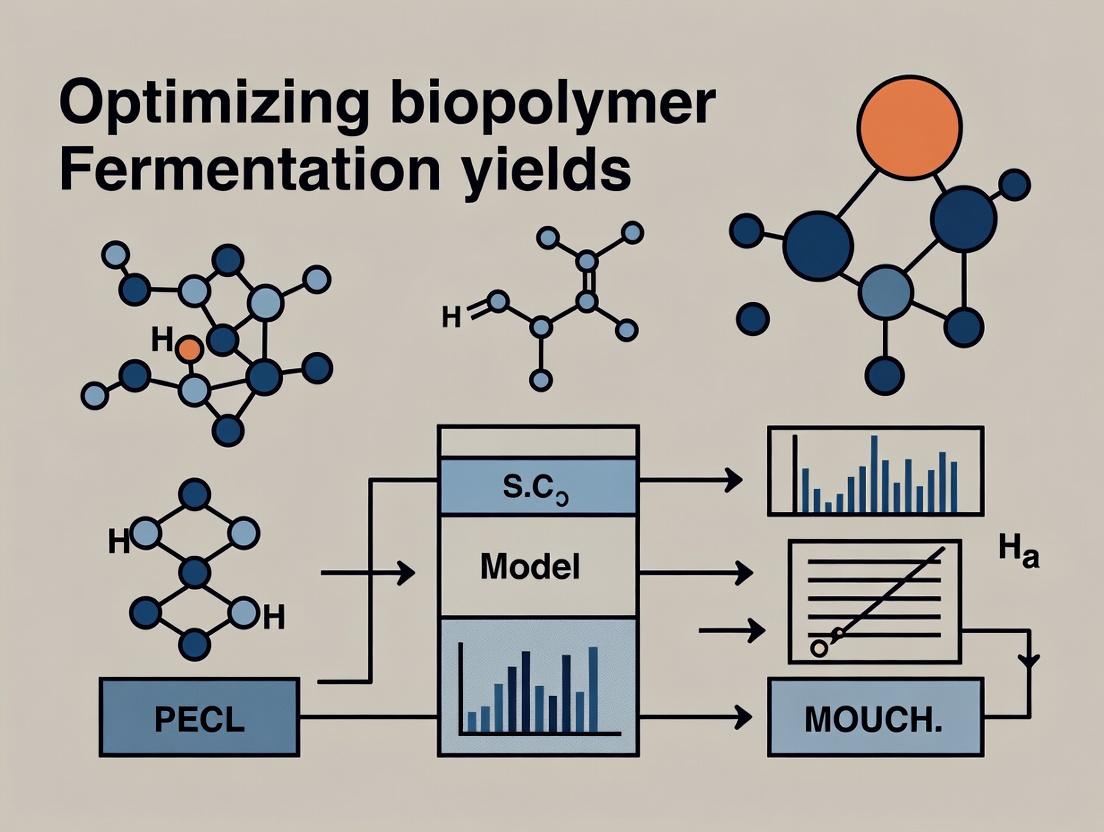
This comprehensive guide explores the critical factors and cutting-edge methodologies for optimizing biopolymer fermentation yields, tailored for researchers and drug development professionals.
Maximizing Biopolymer Yield in Fermentation: Advanced Strategies for Biomedical Research and Drug Development
Abstract
This comprehensive guide explores the critical factors and cutting-edge methodologies for optimizing biopolymer fermentation yields, tailored for researchers and drug development professionals. We cover the fundamental science of microbial and enzymatic production systems, delve into advanced process engineering and metabolic pathway manipulation techniques, address common challenges and systematic optimization protocols, and provide frameworks for analytical validation and process comparison. The article synthesizes actionable strategies to enhance titre, productivity, and product quality for biopolymers used in therapeutics, drug delivery, and biomedical applications.
The Science of Biopolymer Fermentation: From Microbial Hosts to Target Molecules
Technical Support Center: Troubleshooting for Biopolymer Fermentation Yield Optimization
This support center addresses common experimental challenges within the thesis framework: Optimizing biopolymer fermentation yields research. The FAQs and guides target yield, purity, and reproducibility issues.
Frequently Asked Questions (FAQs) & Troubleshooting Guides
Q1: During PHA (e.g., PHB) fermentation, my bacterial culture shows very low polymer accumulation despite high cell density. What could be the cause? A: This often indicates an imbalanced C:N ratio or inadequate nutrient limitation. PHAs are typically accumulated under stress conditions.
- Primary Check: Verify that the nitrogen (or phosphorus) source is fully depleted when inducing PHA synthesis. Use assay kits to confirm.
- Troubleshooting Steps:
- Measure residual ammonium/nitrate in the broth.
- Re-optimize the feed strategy. Consider a pulsed or continuous feeding of carbon (e.g., glucose, fatty acids) after nitrogen depletion.
- Check dissolved oxygen (DO). Low DO can co-induce PHA synthesis in some strains; ensure DO control is consistent.
- Confirm strain integrity. Plate on selective media to check for contamination or genetic drift.
Q2: How can I minimize the molecular weight degradation of Polyhydroxyalkanoates (PHAs) during extraction and purification? A: Degradation is commonly caused by thermal or enzymatic (endogenous depolymerase) activity.
- Protocol Modification: Use a multi-step extraction:
- Cell Harvest: Centrifuge and wash cells with chilled deionized water.
- Drying: Lyophilize cells instead of oven-drying to prevent thermal degradation.
- Extraction: Use a cold chloroform extraction (Soxhlet) at lower temperatures (< 60°C) instead of hot solvent digestion. Alternatively, use non-halogenated solvents like acetone or dimethyl carbonate in a pressurized system for shorter durations.
- Precipitation: Precipitate PHA into cold, well-stirred methanol or ethanol. Filter and vacuum-dry at room temperature.
Q3: I am experiencing low yield and high viscosity during bacterial polysaccharide (e.g., alginate, hyaluronic acid) fermentation, hindering oxygen transfer. How can I improve this? A: High viscosity is a critical scale-up challenge due to non-Newtonian behavior.
- Solutions:
- Fermentation Parameters: Increase agitation speed incrementally while monitoring shear stress on cells. Use baffled flasks or bioreactors.
- Dilution Strategy: Implement a fed-batch process with controlled carbon feed to maintain a lower, more manageable concentration during growth, allowing high final titers.
- Enzymatic Control: For alginates, research indicates adding mannuronan C-5-epimerase in situ can alter polymer structure and potentially reduce viscosity. Consider post-fermentation dilution and enzymatic treatment before purification.
- Equipment: Consider using a bioreactor with a helical ribbon impeller designed for high-viscosity fluids.
Q4: What are the critical points for maintaining the correct secondary structure of engineered proteins (e.g., silk-elastin-like polymers) during microbial expression and purification? A: Improper folding and inclusion body formation are major issues.
- Preventive Protocol:
- Expression: Lower the induction temperature (e.g., to 18-25°C), reduce inducer (IPTG) concentration, and use a slower-growing host strain (e.g., E. coli BL21(DE3) pLysS) to slow protein synthesis and favor correct folding.
- Lysis & Solubilization: Perform gentle lysis using lysozyme and non-ionic detergents. If inclusion bodies form, solubilize carefully with 6-8 M urea or guanidine HCl, followed by a step-wise dialysis refolding process. Monitor structure via circular dichroism (CD) spectroscopy.
- Purification: Use affinity chromatography (e.g., His-tag) under native conditions. Buffer must include stabilizing agents like low concentrations of arginine or glycerol.
Q5: For polyester (e.g., PLA-like poly(lactate-co-3-hydroxybutyrate)) production in engineered E. coli, my GC-MS analysis shows unexpected monomer incorporation ratios. How do I troubleshoot? A: This points to issues in the precursor supply or enzyme (PHA synthase) specificity.
- Systematic Check:
- Validate Feedstock Uptake: Ensure lactyl-CoA and 3-hydroxybutyryl-CoA precursors are being generated at expected rates. Assay key enzymes (e.g., propionyl-CoA transferase, β-ketothiolase).
- Characterize Synthase Activity: Perform in vitro enzyme assays with varying monomer-CoA ratios to determine substrate preference.
- Check for Degradation: Analyze for intracellular depolymerase activity that might preferentially cleave one monomer type, skewing the final composition.
- Metabolic Modeling: Use a flux balance analysis model to predict precursor flux changes under your fermentation conditions.
Table 1: Comparative Fermentation Performance of Key Biopolymers
| Biopolymer Class | Example Polymer | Typical Host Organism | Reported High Yield (Recent) | Critical Optimization Parameter | Key Challenge |
|---|---|---|---|---|---|
| PHAs | Poly(3-hydroxybutyrate), PHB | Cupriavidus necator | 180 g/L, 80% CDW | C:N:P ratio; O2 transfer; feed strategy | Downstream extraction cost |
| Polysaccharides | Hyaluronic Acid | Engineered Bacillus subtilis | 12-15 g/L | DO control; pH (6.5-7.0); anti-foam agents | Viscosity, product degradation |
| Polyesters | P(3HB-co-LA) | Engineered E. coli | 60% CDW, 10 mol% LA | Lactate supply; CoA transferase efficiency | Monomer ratio control |
| Engineered Proteins | Silk-Elastin-Like Polymer (SELP) | E. coli BL21(DE3) | 1-2 g/L (shake flask) | Induction timing/temp; codon optimization | Proteolytic degradation, folding |
Table 2: Troubleshooting Matrix: Symptom vs. Likely Cause & Action
| Symptom | Likely Causes | Immediate Diagnostic Action | Corrective Protocol Step |
|---|---|---|---|
| Low Final Titer | Suboptimal C/N, Contamination, Toxic Metabolites | Plate for purity, HPLC for substrate, Measure OD600 vs. dry weight | Re-optimize feed strategy, Use antibiotics/strain markers |
| High Viscosity (Polysaccharides) | Polymer Conc. > 10 g/L, Low Shear Mixing | Measure broth rheology, Check impeller type | Switch to fed-batch, Increase agitation, Add processing enzyme |
| Low Molecular Weight | Thermal/Shear Degradation, Depolymerase Activity | GPC pre- and post-extraction, Assay for lytic enzymes | Lower extraction temp, Use protease/depolymerase inhibitors |
| Inconsistent Monomer Ratio (Copolymers) | Unstable Plasmid, Inconsistent Feed | Sequence construct, Analyze feed pump calibration | Use antibiotic marker, Implement precise fed-batch control |
Experimental Protocols
Protocol 1: Fed-Batch Fermentation for High-Yield PHA Production using Cupriavidus necator Objective: To achieve high cell density and >75% PHA content of cell dry weight (CDW).
- Seed Culture: Inoculate 100 mL LB from a single colony. Incubate at 30°C, 200 rpm for 12-16h.
- Batch Phase: Transfer seed to bioreactor with defined mineral medium (e.g., 20 g/L fructose, 2 g/L (NH4)2SO4). Operate at 30°C, pH 6.8, DO >30%.
- Nitrogen Depletion: Monitor ammonium concentration. Upon depletion (sharp DO spike), initiate carbon feed.
- PHA Accumulation Phase: Begin exponential feeding of carbon source (e.g., 500 g/L fructose solution) at a rate limiting growth but supporting PHA synthesis. Maintain DO >20% via cascaded O2/N2/air mixing.
- Harvest: When feed is complete or growth ceases, cool broth to 10°C. Centrifuge cells, wash, and lyophilize for analysis.
Protocol 2: Extraction and Quantification of Intracellular PHA via HPLC
- Depolymerization: Weigh 5-10 mg of lyophilized cell biomass into a glass vial. Add 2 mL acidic methanol (15% H2SO4 v/v) and 2 mL chloroform containing 0.5 mg/mL benzoic acid as internal standard.
- Methanolysis: Heat at 100°C for 4 hours to convert PHA to methyl esters of constituent hydroxyacids.
- Extraction: Cool, add 1 mL H2O, vortex vigorously. Let phases separate.
- Analysis: Inject 1 µL of the organic (lower) phase into an HPLC system with a reversed-phase C18 column. Use a gradient of water and acetonitrile. Detect at 210 nm. Quantify using calibration curves for methyl-3-hydroxybutyrate, methyl-3-hydroxyvalerate, etc.
The Scientist's Toolkit: Research Reagent Solutions
Table 3: Essential Materials for Biopolymer Fermentation & Analysis
| Item | Function & Application | Example Product/Catalog |
|---|---|---|
| Defined Mineral Salts Medium | Provides essential ions (Mg, K, Fe, etc.) without organic interference for yield studies. | M9 Minimal Salts, M63 Salts |
| Coenzyme A (CoA) & Acetyl-CoA | Substrates for in vitro assays of PHA synthase or metabolic pathway enzymes. | Sigma-Aldrich C3144, A2181 |
| Polymer Precipitation Solvents | High-purity methanol, ethanol, or hexane for precipitating and washing polymers. | Sigma-Aldridch 34860, 459828 |
| Molecular Weight Standards | Polystyrene or poly(methyl methacrylate) standards for GPC/SEC calibration. | Agilent PL Polystyrene Calibration Kit |
| Protease Inhibitor Cocktail | Prevents degradation of engineered protein polymers during cell lysis. | Roche cOmplete EDTA-free |
| DO & pH Probes (Sterilizable) | For real-time monitoring and control of critical fermentation parameters. | Mettler Toledo InPro 6800, 4050 |
| Lysozyme | For gentle cell wall lysis in Gram-positive bacteria for polysaccharide release. | Sigma-Aldrich L6876 |
| Substrate Assay Kits | Enzymatic kits for quantifying residual glucose, ammonium, or organic acids. | Megazyme K-GLUC, R-Biopharm Ammonia |
Diagrams
Title: PHA Yield Troubleshooting Logic
Title: Biopolymer Fermentation & Analysis Workflow
Technical Support Center: Troubleshooting Guides & FAQs
FAQs for Host Selection & Fermentation Optimization
Q1: My recombinant protein forms insoluble aggregates (inclusion bodies) in E. coli. How can I improve solubility? A: This is common when expressing eukaryotic or complex proteins in prokaryotes.
- Troubleshooting Steps:
- Reduce Expression Rate: Lower the induction temperature (e.g., to 18-25°C), use a weaker promoter, or reduce inducer concentration (IPTG) to slow protein synthesis and allow proper folding.
- Change Strain: Use E. coli strains designed for disulfide bond formation (e.g., SHuffle) or equipped with chaperones (e.g., Rosetta-gami).
- Modify Culture Medium: Adjust pH, add osmolytes (sorbitol, betaine), or co-express specific molecular chaperones.
- Fusion Tags: Utilize solubility-enhancing fusion tags like MBP, GST, or SUMO, which can later be cleaved off.
- Protocol: Testing Solubility via Temperature Shift:
- Inoculate a primary culture in LB with antibiotic. Grow overnight at 37°C.
- Dilute secondary culture to OD600 ~0.1. Grow at 37°C to OD600 ~0.6-0.8.
- Split culture into two flasks. Induce one at 37°C and the other at 18°C with appropriate IPTG.
- Continue growth for 16-20 hours (18°C) or 3-4 hours (37°C).
- Harvest cells, lyse via sonication, and centrifuge at 15,000 x g for 20 min.
- Analyze supernatant (soluble) and pellet (insoluble) fractions by SDS-PAGE.
Q2: I am experiencing low secretion yields with Bacillus subtilis. What could be the cause? A: Secretion bottlenecks are often due to inefficient signal peptide processing or degradation.
- Troubleshooting Steps:
- Signal Peptide Screening: Test different native or heterologous signal peptides (e.g., AmyE, LipA, WapA) fused to your target protein.
- Protease Knockout: Use protease-deficient strains (e.g., B. subtilis WB800 series with 8 extracellular protease knockouts) to minimize degradation.
- Medium Optimization: High concentrations of certain carbon sources (e.g., glucose) can repress secretion pathways. Use a controlled feed or alternative carbon source.
- Harvest Time: Perform time-course experiments; harvest earlier to catch peak secretion before degradation accumulates.
Q3: S. cerevisiae is hyperglycosylating my therapeutic protein, affecting its activity. How can I control this? A: Yeast can add high-mannose glycosylation patterns unsuitable for human therapeutics.
- Troubleshooting Steps:
- Use Engineered Strains: Employ glyco-engineered yeast platforms like Pichia pastoris (Komagataella phaffii) GlycoSwitch strains, which produce humanized N-glycans.
- Eliminate Glycosylation Sites: Use site-directed mutagenesis (e.g., N→Q) on consensus sequons (N-X-S/T) if the site is non-critical for function.
- In Vitro Treatment: Post-purification, treat with endoglycosidases (e.g., Endo H) to trim glycans, though this adds process steps.
- Protocol: Analyzing Glycosylation Pattern by SDS-PAGE Shift:
- Purify the target protein from culture supernatant or lysate.
- Treat half the sample with Endoglycosidase H (Endo H) following manufacturer's protocol.
- Run both treated and untreated samples on a high-resolution SDS-PAGE gel.
- A noticeable increase in electrophoretic mobility (faster migration) in the treated sample confirms N-linked hyperglycosylation.
Q4: My filamentous fungi (e.g., Aspergillus niger) fermentation shows high viscosity, limiting oxygen transfer. How can I mitigate this? A: High viscosity is caused by filamentous morphology and secretion of polysaccharides.
- Troubleshooting Steps:
- Morphology Engineering: Modify culture conditions to promote pellet morphology over mycelial mats. This can be achieved by adjusting inoculum spore concentration, adding microparticles (e.g., talc), or manipulating agitation speed.
- Strain Engineering: Develop morphological mutants or use RNAi to target genes involved in hyphal branching.
- Media Engineering: Reduce the concentration of polysaccharide-forming carbon sources. Implement fed-batch strategies to control growth rate.
- Bioreactor Parameters: Increase agitation and aeration rates, though mindful of shear stress. Consider rheology modifiers.
Quantitative Host Comparison Data
Table 1: Comparative Analysis of Production Hosts for Biopolymer Fermentation
| Feature | Escherichia coli | Bacillus subtilis | Saccharomyces cerevisiae | Filamentous Fungi (e.g., Aspergillus spp.) |
|---|---|---|---|---|
| Typical Growth Rate | Very Fast (doubling ~20 min) | Fast (doubling ~30 min) | Moderate (doubling ~90 min) | Slow (doubling ~2-6 hrs) |
| Max. Titer Example (Protein) | 1-5 g/L (intracellular) | 0.5-3 g/L (secreted) | 0.1-2 g/L (secreted) | 10-100 g/L (secreted enzymes) |
| Secretion Capacity | Poor (requires lysis) | Excellent (Gram+) | Good (via secretory pathway) | Exceptional (native hyper-secreter) |
| Post-Translational Modifications | None (no glycosylation) | Limited (no complex glycosylation) | High-mannose glycosylation | Complex glycosylation (can be humanized) |
| GC Content | ~50% | ~43% | ~38% | ~50% (variable) |
| Typial Fermentation Scale | Lab to Industrial (1L - 100,000L) | Lab to Industrial (1L - 50,000L) | Lab to Industrial (1L - 200,000L) | Lab to Industrial (10L - 200,000L) |
| Key Metabolic Advantage | Simple, fast, high yield of simple proteins | Efficient secretion, GRAS status, sporulation | Robust, eukaryotic PTMs, GRAS status | Extreme secretion, diverse secondary metabolism |
| Primary Downstream Challenge | Inclusion body recovery, endotoxin removal | Protease degradation, spore removal | Glycan heterogeneity, cell wall disruption | High viscosity, complex broth, mycotoxin risk |
Experimental Protocols
Protocol 1: High-Throughput Microtiter Plate Screening for Host Selection Objective: To rapidly compare expression yield and growth of a target gene across different host systems. Materials: Sterile 96-well deep-well plates, plate shaker/incubator, plate reader, appropriate selective media. Method:
- Clone & Transform: Clone the gene encoding your target biopolymer (e.g., enzyme, therapeutic protein) into expression vectors compatible with each host (E. coli, Bacillus, yeast, fungal).
- Inoculation: Pick single colonies into 1 mL of selective media in 96-deep-well plate. Seal with breathable film. Grow overnight (host-specific temperature).
- Expression: For auto-induction, proceed. For chemical induction, dilute cultures 1:20 into fresh medium with inducer (e.g., IPTG, methanol for Pichia). Incubate with shaking for 24-72 hours (host-dependent).
- Analysis: Measure OD600 for growth. Centrifuge plates. For secreted products, assay supernatant. For intracellular products, perform a lysis step (e.g., freeze-thaw, chemical lysis) before assay.
- Data Normalization: Normalize product activity/concentration (e.g., via ELISA or enzymatic assay) to final OD600 to get yield per unit biomass.
Protocol 2: Fed-Batch Fermentation Protocol for Pichia pastoris (Komagataella phaffii) Objective: To achieve high-cell-density fermentation for maximizing recombinant protein yield. Materials: Bioreactor, basal salts medium (BSM), PTM1 trace salts, glycerol, methanol, ammonium hydroxide, pH probe, dissolved oxygen (DO) probe. Method:
- Batch Phase: Inoculate bioreactor containing BSM + glycerol with a large inoculum (10% v/v). Maintain at 30°C, pH 5.0 (with NH4OH), and DO >30% via cascade control (agitation, then O2 enrichment).
- Glycerol Fed-Batch Phase: Upon glycerol depletion (DO spike), initiate a limited glycerol feed (50% w/v) for ~4 hours to increase biomass without allowing fermentation.
- Methanol Induction Phase: Switch feed to 100% methanol containing PTM1 trace salts. Start at a low rate (e.g., 3 mL/L/h) and gradually increase over 24 hours to the maximum rate the bioreactor can handle (maintaining DO >20%). This phase lasts 60-100 hours.
- Harvest: Cool the culture and centrifuge to separate cells. Filter the supernatant through a 0.22 µm filter before downstream purification.
Visualizations
Title: Decision Tree for Biopolymer Production Host Selection
Title: Typical Biopolymer Fermentation Optimization Workflow
The Scientist's Toolkit: Research Reagent Solutions
Table 2: Essential Materials for Host Selection & Fermentation Experiments
| Item | Function & Application | Example(s) |
|---|---|---|
| Inducers | Chemically triggers expression of the target gene from an inducible promoter. | IPTG (for lac-based promoters in E. coli), Methanol (for AOX1 promoter in P. pastoris), Tetracycline (for Tet-on systems). |
| Protease Inhibitor Cocktails | Prevents degradation of recombinant proteins during cell lysis and purification. | Commercially available tablets/liquids containing inhibitors for serine, cysteine, metallo, and aspartic proteases. |
| Signal Peptide Libraries | Enables screening for optimal secretion efficiency in bacterial or fungal hosts. | Commercial or custom plasmid sets with diverse secretion signals (e.g., for B. subtilis or P. pastoris). |
| Antifoaming Agents | Controls foam formation in aerated bioreactors to prevent overflow and contamination. | Polypropylene glycol-based (PPG) or silicone-based emulsions (e.g., Antifoam 204). |
| Trace Element Salts Solutions | Supplies vital micronutrients (e.g., Cu, Mn, Zn) for high-cell-density microbial growth. | PTM1 solution for Pichia fermentation, Balch's metals for anaerobic cultures. |
| Glycosylation Analysis Kits | Detects and characterizes N-linked and O-linked glycosylation patterns on proteins. | Kits using enzymes like PNGase F or Endo H, coupled with electrophoresis or LC-MS. |
| Competent Cells (Host-Specific) | Genetically engineered strains with high efficiency for DNA transformation. | E. coli: BL21(DE3), Rosetta. B. subtilis: SCK6. Yeast: P. pastoris X-33, S. cerevisiae BY4741. |
| Dissolved Oxygen & pH Probes | Critical sensors for monitoring and controlling bioreactor environment to optimize yield. | Sterilizable, amperometric DO probes; combination pH electrodes with bioreactor ports. |
Technical Support Center
Troubleshooting Guides & FAQs
Q1: My fermentation yield with lignocellulosic hydrolysate is consistently lower than with pure glucose. What could be the issue? A: This is commonly due to inhibitor presence. Lignocellulosic waste streams contain fermentation inhibitors like furfurals, phenolic compounds, and weak acids.
- Troubleshooting Steps:
- Analyze Feedstock: Run HPLC or GC-MS on your hydrolysate to quantify acetate, formate, furfural, and HMF levels.
- Detoxification Test: Implement a detoxification step (e.g., overliming with Ca(OH)₂, activated charcoal treatment, or enzymatic treatment with laccase/peroxidase). Run a parallel fermentation with treated vs. untreated hydrolysate.
- Strain Adaptation: Consider adaptive laboratory evolution (ALE) of your production strain by serial passaging in increasing concentrations of the hydrolysate to develop inhibitor tolerance.
- Nutrient Supplementation: Ensure sufficient nitrogen (e.g., (NH₄)₂SO₄) and vitamin (e.g., yeast extract) supplementation, as inhibitors can stress metabolism and increase demand.
Q2: I am experiencing diauxic growth when using glycerol-sugar blends, causing prolonged fermentation times. How can I mitigate this? A: Diauxie indicates catabolite repression, where the cell prefers one carbon source over another.
- Troubleshooting Steps:
- Confirm Repressor System: For E. coli, this is often the cAMP-Crp system repressed by glucose. For yeasts, check glucose repression (Mig1p) pathways.
- Optimize Feed Rate: In fed-batch processes, use a controlled co-feeding strategy. Maintain both carbon sources at low, growth-limiting concentrations to force simultaneous uptake. A DO-stat or pH-stat can help automate this.
- Strain Engineering: Consider using strains with deletions in key repressor genes (e.g., crp or cyaA mutants in E. coli that are less sensitive to catabolite repression).
- Pre-culture Adaptation: Always pre-culture your inoculum in a medium containing the blend you intend to use in the main fermentation, not just a single preferred sugar.
Q3: My cost analysis shows crude glycerol is the cheapest, but my product titer is low. What process parameters should I optimize? A: Crude glycerol contains salts, methanol, and fatty acids that can impede growth.
- Troubleshooting Steps:
- Characterize Your Source: Obtain a certificate of analysis from your supplier for methanol (<0.1% is ideal) and salt (NaCl, typically 5-7%) content.
- Dilution & Supplementation: High salt can cause osmotic stress. Optimize the glycerol concentration in your medium (often 20-40 g/L is a start). Ensure your nitrogen source is robust (e.g., try peptone or corn steep liquor).
- Aeration Enhancement: Glycerol metabolism is more reductive than glucose, often requiring more NAD+ regeneration and thus higher oxygen transfer rates (OTR). Increase agitation and aeration. Monitor dissolved oxygen (DO) and aim to keep it above 20-30% saturation.
- pH Control: Methanol degradation can affect pH. Maintain tight pH control (±0.1) using NH₄OH or KOH, which also serve as nitrogen/potassium sources.
Q4: When switching from a lab-grade sugar to an industrial waste stream, my bioreactor shows excessive foaming. How can I manage this? A: Waste streams often contain proteins and surfactants that act as foaming agents.
- Troubleshooting Steps:
- Antifoam Strategy: Implement a combination of chemical and mechanical antifoam.
- Chemical: Add a polypropylene glycol (PPG) or silicone-based antifoam agent. Use an automated antifoam dosing probe linked to a peristaltic pump. Perform a compatibility test first to ensure it doesn't inhibit your strain or downstream purification.
- Mechanical: Install a mechanical foam breaker on the bioreactor agitator shaft.
- Headspace Design: Ensure your bioreactor has sufficient headspace (often >30% of total volume) to accommodate foam.
- Feed Pre-treatment: If possible, heat-treat or filter the waste stream feedstock to denature and remove soluble proteins before sterilization.
- Antifoam Strategy: Implement a combination of chemical and mechanical antifoam.
Table 1: Comparative Analysis of Carbon Sources for Polyhydroxyalkanoate (PHA) Fermentation
| Carbon Source | Typical Concentration (g/L) | Max Reported PHA Yield (g/g substrate) | Estimated Raw Material Cost ($/kg product)* | Key Advantages | Key Challenges |
|---|---|---|---|---|---|
| Pure Glucose | 20-80 | 0.30-0.48 | 3.50 - 5.00 | Defined, consistent, high yield | High cost, food-fuel conflict |
| Industrial Cane Molasses | 30-100 | 0.25-0.38 | 1.20 - 2.50 | Very low cost, nutrient-rich | Highly variable composition, pigments |
| Crude Glycerol (Biodiesel) | 20-50 | 0.20-0.35 | 0.80 - 1.80 | Lowest cost, abundant waste stream | Inhibitors (methanol, salts), variable quality |
| Lignocellulosic Hydrolysate | 30-60 | 0.15-0.30 | 1.50 - 3.00 | Non-food feedstock, sustainable | Potent inhibitors, requires pretreatment |
*Cost estimates are for raw carbon source to produce 1 kg of biopolymer, based on recent commodity prices and literature yields. Excludes processing and downstream costs.
Table 2: Troubleshooting Matrix: Common Symptoms & Solutions
| Symptom | Likely Culprit (Carbon Source) | Immediate Action | Long-Term Solution |
|---|---|---|---|
| Extended Lag Phase | Waste Stream (Inhibitors) | Dilute feedstock 2x; add 2 g/L yeast extract | Implement & optimize a detoxification pre-treatment step |
| Sudden Drop in DO & pH Rise | Glycerol (Methanol co-consumption) | Add acid/base to stabilize pH; increase airflow | Source glycerol with lower methanol content; engineer methanol utilization pathway |
| Low Final Titer, High Residual Sugar | Mixed Sugars (Catabolite Repression) | Sample for specific sugar analysis (e.g., glucose vs. xylose) | Switch to co-feeding fermentation mode; use diauxie-deficient mutant strain |
| High Viscosity, Poor Mixing | Starch/Sucrose (Polymer hydrolysis) | Add hydrolytic enzyme (amylase/invertase) directly to bioreactor | Pre-hydrolyze feedstock in a separate tank before sterilization and feeding |
Experimental Protocols
Protocol 1: Detoxification of Lignocellulosic Hydrolysate via Overliming Objective: To reduce concentration of fermentation inhibitors (furans, phenolics) in acid-pretreated biomass hydrolysate. Materials: Acid-pretreated hydrolysate, Ca(OH)₂, pH meter, heating stir plate, filter paper or centrifuge. Method:
- Place 100 mL of hydrolysate in a 250 mL beaker on a stir plate.
- Slowly add solid Ca(OH)₂ powder while stirring vigorously until pH reaches 10.0.
- Continue stirring and maintain pH at 10.0 ± 0.2 for 30 minutes at 50°C.
- Adjust pH back to your target fermentation pH (e.g., 6.8) using concentrated H₂SO₄ or HCl.
- Allow precipitate to settle for 1 hour or centrifuge at 10,000 x g for 10 minutes.
- Filter supernatant through 0.22 µm membrane. Analyze for inhibitors (HPLC) and fermentable sugars before use.
Protocol 2: Fed-Batch Co-feeding of Glycerol and Lactose for Induced Systems Objective: To maintain growth and product formation while avoiding catabolite repression and controlling induction timing. Materials: Bioreactor, glycerol feed (500 g/L), lactose feed (200 g/L), inducer (e.g., IPTG), DO and pH probes, pumps. Method:
- Begin with a batch phase containing 20 g/L glycerol until the initial carbon is depleted (marked by a sharp DO spike).
- Initiate a co-feed of sterile glycerol (500 g/L) and lactose (200 g/L) solutions at a combined feed rate to maintain a low specific growth rate (e.g., µ = 0.10 h⁻¹).
- Monitor residual glycerol and lactose concentrations hourly via HPLC or enzymatic assays.
- When lactose concentration in the broth reaches ~2 g/L (confirming metabolic shift), add the chemical inducer (e.g., IPTG to 0.5 mM).
- Continue co-feeding until the target volume or substrate quota is reached. Maintain DO >20% via cascade control.
Diagrams
Carbon Source Catabolism & Regulation in E. coli
Waste Stream Fermentation Optimization Workflow
The Scientist's Toolkit: Research Reagent Solutions
Table 3: Essential Materials for Carbon Source Evaluation Experiments
| Item | Function/Benefit | Example Product/Catalog |
|---|---|---|
| Enzymatic Assay Kits (Glucose, Glycerol, Lactose) | Rapid, specific quantification of individual carbon sources in complex broths without HPLC. | Megazyme K-GLUC, K-GCROL, K-LACG |
| HPLC Column for Organic Acids & Sugars | Separates and quantifies substrates (sugars, glycerol) and inhibitors (organic acids, furans) in one run. | Bio-Rad Aminex HPX-87H, Rezex ROA-Organic Acid |
| Yeast Extract, Pharmedocertified | Consistent, high-quality complex nitrogen/vitamin source to support growth on challenging waste streams. | BD Bacto Yeast Extract |
| Defined Trace Metal & Vitamin Solutions | Eliminates variability from crude nutrients; essential for metabolic flux studies. | ATCC Trace Minerals, NS-8801 Vitamin Mix |
| Chemical Antifoam Emulsion (PPG-based) | Controls foam from proteins in waste streams; sterilizable and compatible with many cell lines. | Sigma Antifoam 204 |
| cAMP ELISA Kit | Measures intracellular cAMP levels to diagnose catabolite repression status in real-time. | Cayman Chemical cAMP ELISA Kit |
| Activated Charcoal (Powder, for Detoxification) | Binds phenolic inhibitors from lignocellulosic hydrolysates in pretreatment steps. | Sigma 242276 |
| Dialysis Tubing (MWCO 12-14 kDa) | For desalting crude glycerol or hydrolysate samples in small-scale pretreatment tests. | Spectrum Labs Spectra/Por 4 |
Troubleshooting Guide & FAQs
Q1: My fermentation shows a sudden, sustained drop in dissolved oxygen (DO) coupled with a rapid rise in OUR (Oxygen Uptake Rate), but final product titer is low. What is happening?
A: This is indicative of an oxygen-limited condition, often caused by a nutrient feed that is too aggressive. The cells experience a "feast" scenario, increasing their metabolic flux and oxygen demand beyond the reactor's mass transfer capability (kLa). This leads to oxygen limitation, potential Crabtree-like effects, and metabolic shifts toward inefficient pathways or byproduct formation (e.g., acetate in E. coli, lactate in mammalian cells), reducing yield.
Troubleshooting Steps:
- Immediate Action: Reduce or pause the nutrient feed to lower metabolic activity.
- Process Adjustment: Implement or switch to a DO-stat feeding strategy, where the nutrient feed is triggered by a rise in DO above a setpoint, ensuring feed is linked to actual oxygen availability.
- Investigation: Measure byproduct accumulation (e.g., acetate, lactate). Correlate the spike in OUR with nutrient feed rate logs.
- Preventive Protocol: Perform a kLa characterization of your bioreactor prior to the production run to establish the maximum oxygen transfer capacity.
Q2: pH drifts consistently outside the optimal range despite base/acid addition, impacting cell viability. What should I check?
A: Uncontrollable pH drift is typically a sign of unbalanced metabolism, often tied to the nutrient feed strategy.
FAQs & Solutions:
- Q: pH is falling uncontrollably.
- A: This is caused by acid production. In microbial systems, check for organic acid byproducts (acetic, lactic). In cell culture, it may indicate high lactate production. Solution: Reduce glucose/glycolytic substrate concentration in the feed (consider a lower feed rate or switch to a balanced carbon source like galactose for some cell lines) to minimize overflow metabolism.
- Q: pH is rising uncontrollably.
- A: This is often due to excessive metabolism of amino acids like glutamine, which release ammonia. Solution: Implement a glutamine-controlled feed or use dipeptides (e.g., GlutaMAX) that provide a more stable, slow-release nitrogen source.
Detailed Protocol: Analyzing Acid/Base Addition as a Metabolic Proxy
- Log the cumulative acid/base addition volume over time.
- Plot this data against nutrient feed rates and growth phase.
- A strong correlation between feed rate and base addition suggests ammonia production from amino acid metabolism.
- A strong correlation between feed rate and acid addition suggests organic acid formation.
- Use this data to refine the feed medium composition, reducing the component linked to the drift.
Q3: How do I determine the optimal temperature shift strategy for a recombinant protein production process?
A: Temperature is a key lever for decoupling growth from production. A lower temperature often reduces growth rate, increases cell-specific productivity, and improves protein folding. The optimal strategy is organism-specific.
Experimental Protocol: Temperature Shift Optimization Objective: To identify the optimal time and magnitude of a temperature downshift for recombinant protein yield in E. coli.
- Setup: Run parallel bioreactor batches with identical conditions (DO >30%, pH controlled, defined feed).
- Variable: Implement a temperature shift from 37°C to a range of lower temperatures (e.g., 25°C, 28°C, 30°C) at different cell densities (OD600 of 20, 40, 60).
- Monitoring: Track post-shift metrics: specific growth rate, OUR, CER (Carbon Dioxide Evolution Rate), and product titer via HPLC.
- Analysis: Calculate the volumetric productivity (titer * volume / time) and cell-specific productivity (product per cell) for each condition. The highest values indicate the optimal shift point and temperature.
Table 1: Representative Data from Temperature Shift Experiment (Model Data)
| Shift OD600 | Shift Temp (°C) | Final Titer (g/L) | Volumetric Productivity (g/L/h) | Cell-Specific Productivity (arbitrary units) |
|---|---|---|---|---|
| 20 | 30 | 4.2 | 0.12 | 1.0 |
| 20 | 25 | 5.1 | 0.11 | 1.4 |
| 40 | 30 | 6.8 | 0.18 | 1.2 |
| 40 | 25 | 7.5 | 0.16 | 1.6 |
| 60 | 30 | 6.0 | 0.19 | 0.9 |
| 60 | 25 | 6.3 | 0.17 | 0.8 |
Q4: What are the core nutrient feed strategies, and when should I use each one?
A: The choice of feed strategy directly impacts the critical process parameters (CPPs) and final yield.
Table 2: Comparison of Core Nutrient Feed Strategies
| Strategy | Principle | Impact on CPPs | Best For |
|---|---|---|---|
| Constant Rate | Fixed volume/rate feed added continuously. | Simple. DO tends to drop over time as biomass increases. pH may drift. | Robust processes with low metabolic burden. Early-stage process development. |
| Exponential | Feed rate increases exponentially to match the theoretical exponential growth of cells. | Maintains a steady growth rate. DO and pH are easier to control if model is accurate. | High-density fermentations (microbial) where sustaining maximum growth is key. |
| DO-Stat | Nutrient feed is triggered when Dissolved Oxygen rises above a setpoint (indicating nutrient depletion). | Directly couples feeding to oxygen availability, preventing limitation. Excellent for controlling metabolic overflow. | Processes prone to oxygen limitation or byproduct formation. |
| pH-Stat | Feed is triggered by a rise in pH (often from ammonia consumption). | Controls pH via metabolism. Efficient use of nutrients. | Processes where ammonia is a primary nitrogen source and pH rise is predictable. |
The Scientist's Toolkit: Key Research Reagent Solutions
| Item / Reagent | Function in Optimizing Biopolymer Fermentation |
|---|---|
| DO & pH Probes (Sterilizable, In-line) | Real-time, continuous monitoring of the two most critical CPPs. Essential for feedback control and data-rich process analysis. |
| Off-Gas Analyzer (Mass Spectrometer or Infrared) | Measures O2 and CO2 in exhaust gas. Allows calculation of OUR, CER, and RQ (Respiratory Quotient), providing a window into cellular metabolism. |
| Balanced Feed Media (Chemically Defined) | Eliminates variability from complex ingredients. Enables precise nutrient control and metabolic modeling. Essential for fed-batch optimization. |
| Byproduct Assay Kits (e.g., Acetate, Lactate, Ammonia) | Quantifies metabolic byproducts that inhibit growth and reduce yield. Critical for diagnosing feed strategy issues. |
| Alternative Carbon Sources (e.g., Galactose, Glycerol, Methanol) | Used to replace glucose in specific hosts to reduce overflow metabolism and improve protein folding or product quality. |
| Anti-Foam Agents (Structured Silicones or Non-Silicone) | Controls foam to prevent probe fouling and vessel overflow, which can disrupt DO and pH measurements and cause volume loss. |
| Induction Agents (IPTG, Tetracycline, etc.) / Expression Systems | Precise temporal control of recombinant gene expression, allowing separation of growth and production phases. |
Process Optimization & Metabolic Pathways
Title: CPPs Influence on Metabolism and Yield
Title: Fed-Batch Process with Feed Strategy Branch
The Role of Precursors and Cofactors in Driving Metabolic Flux Toward Polymer Synthesis
Technical Support Center
Troubleshooting Guide: Common Issues in Metabolic Flux Experiments
Issue 1: Low Polymer Yield Despite High Cell Density
- Problem: Fermentation reaches high optical density (OD600) but final polymer titer is low.
- Potential Cause & Solution:
- Cause: Insufficient precursor (e.g., acetyl-CoA, malonyl-CoA) pools. High biomass drain competes with polymer synthesis.
- Solution: Implement dynamic pathway control. Use growth-phase dependent promoters to decouple growth from production. Supplement media with precursor boosters (e.g., betaine, TCA cycle intermediates) after exponential phase.
- Protocol: Sample 10 mL culture at OD600 2.0, 4.0, and 6.0. Quench metabolism rapidly in 60% methanol at -40°C. Perform LC-MS analysis for intracellular CoA ester concentrations. Compare profiles between high- and low-yield batches.
Issue 2: Accumulation of Undesired Metabolic Intermediates
- Problem: HPLC analysis shows buildup of shunt pathway intermediates (e.g., organic acids), not the target polymer.
- Potential Cause & Solution:
- Cause: Imbalanced cofactor (NADPH/ATP) or redox ratio, causing pathway bottlenecks.
- Solution: Overexpress cofactor regeneration enzymes (e.g., transhydrogenase PntAB for NADPH, soluble ATPases). Consider engineering a synthetic cofactor cycling system.
- Protocol: Assay intracellular cofactor ratios using enzymatic cycling assays (e.g., Sigma MAK038 for NADP+/NADPH) on cell lysates from mid-production phase. Correlate ratios with intermediate accumulation data.
Issue 3: Inconsistent Batch-to-Batch Fermentation Results
- Problem: Polymer yield varies significantly between replicate fermentations using the same strain and protocol.
- Potential Cause & Solution:
- Cause: Inconsistent trace metal and vitamin (cofactor precursor) composition in complex media components (e.g., yeast extract).
- Solution: Shift to defined minimal media with precise control of trace elements (Fe, Mn, Mg) and cofactor precursors (e.g., pantothenate for CoA).
- Protocol: Prepare a defined media base. Run a design of experiment (DoE) varying MgSO4, FeCl3, and pantothenic acid concentrations across 12 bioreactor runs. Measure final polymer dry weight and analyze variance.
Frequently Asked Questions (FAQs)
Q1: How can I quantitatively determine if precursor supply is the limiting factor for my polymer pathway? A: Perform a Metabolic Flux Analysis (MFA) using 13C-labeled glucose or glycerol. Calculate the flux distribution at the branch point leading to your polymer. A flux ratio of <15% toward the polymer branch versus biomass precursors strongly indicates a supply limitation. Computational tools like COBRApy can model this.
Q2: Which cofactors are most commonly limiting for polyhydroxyalkanoate (PHA) versus polyketide synthesis? A: The limiting cofactors differ by polymer class, as summarized below:
| Polymer Class | Key Precursor | Primary Cofactor Demand | Common Limiting Cofactor |
|---|---|---|---|
| Polyhydroxyalkanoates (PHAs) | Acetyl-CoA, Reducing Equivalents | NADPH, ATP | NADPH (for monomer reduction) |
| Polyketides (e.g., Erythromycin) | Malonyl-CoA, Methylmalonyl-CoA | NADPH, ATP | Malonyl-CoA (precursor) & NADPH (for ketoreduction) |
| Polylactic Acid (Microbial) | Pyruvate | NADH | ATP (for cell maintenance under low pH) |
Q3: What is a robust protocol for assaying intracellular ATP/ADP/AMP levels during fermentation? A: Luciferase-based ATP Assay Protocol:
- Sampling: Rapidly sample 1 mL broth from bioreactor directly into 2 mL of ice-cold 6% perchloric acid. Vortex immediately.
- Neutralization: Centrifuge (13,000 g, 4°C, 5 min). Transfer supernatant to a fresh tube. Neutralize with 5M K2CO3 to pH 6.5-7.0. Centrifuge to remove KClO4 precipitate.
- Analysis: Use the cleared supernatant in a commercial luminescent ATP assay kit (e.g., Promega FF2000). Prepare standards (0.1-10 µM ATP) in the same neutralization buffer. Measure luminescence with a plate reader.
- Normalization: Measure protein concentration from the cell pellet for data normalization (µmol ATP/g protein).
Q4: Are there standardized genetic parts to boost acetyl-CoA precursor pools in E. coli? A: Yes, a common module includes:
pdh(pyruvate dehydrogenase) upregulation: Use a strong constitutive promoter (e.g., J23100) to drive the native pdh operon.ppsA(phosphoenolpyruvate synthase) overexpression: To redirect flux from PEP to pyruvate.- Deletion of
poxB(pyruvate oxidase): To prevent acetate overflow. acs(acetyl-CoA synthetase) overexpression: To recycle acetate back to acetyl-CoA during production phase.
Diagrams
Diagram 1: Metabolic Flux at Key Branch Point
Diagram 2: Cofactor Regeneration Strategy
The Scientist's Toolkit: Research Reagent Solutions
| Reagent / Material | Function in Context | Key Consideration for Purchase |
|---|---|---|
| 13C-Glucose (U-13C) | Substrate for Metabolic Flux Analysis (MFA) to quantify precise carbon flux through competing pathways. | Ensure isotopic purity >99%. Purchase as sterile, pyrogen-free solution for bioreactor use. |
| Coenzyme A (CoA) Assay Kit | Colorimetric/fluorometric quantification of intracellular free and acyl-CoA precursor pools. | Select a kit compatible with bacterial cell lysates and sensitive in the pmol/µL range. |
| NADP/NADPH Assay Kit (Luminescent) | Quantifies redox cofactor ratios critical for reductive biosynthetic steps in polymer chains. | Choose a kit that can distinguish between oxidized and reduced forms without cross-reactivity. |
| Polymerase for Gibson Assembly | For seamless construction of multi-gene pathways (precursor + cofactor modules). | High-fidelity, long-fragment master mixes reduce cloning time for large constructs. |
| Defined Trace Metal Mix | Precise control over divalent cations (Mg2+, Fe2+) that act as enzyme cofactors in polymerases. | Purchase or formulate to exclude carry-over organic compounds found in yeast extract. |
| Anti-Foam Emulsion (Structured Silicone) | Controls foam in aerobic fermentations without negatively impacting oxygen mass transfer or downstream purification. | Validate for biocompatibility—some antifoams can adsorb to cell membranes and inhibit growth. |
Process Intensification and Metabolic Engineering for Enhanced Yield
Fed-Batch and Continuous Fermentation Strategies for Maximizing Titre and Productivity
Technical Support Center: Troubleshooting & FAQs
This support center addresses common operational challenges in fed-batch and continuous fermentation processes within biopolymer production research. The guidance is framed within the thesis context: Optimizing biopolymer fermentation yields.
Frequently Asked Questions (FAQs)
Q1: During fed-batch fermentation for polyhydroxyalkanoate (PHA) production, our titre plateaus early despite continuous feeding. What could be the cause? A: Early plateau often indicates a nutrient imbalance or oxygen limitation. Common causes are:
- Carbon-to-Nitrogen (C:N) Ratio: An excessive carbon feed rate without sufficient nitrogen can lead to metabolic overflow not directed toward polymer synthesis. Implement a controlled feeding strategy based on the stoichiometric demand.
- Dissolved Oxygen (DO) Crash: High cell density from fed-batch operation can exceed the system's oxygen transfer capacity (OTR). Monitor DO and correlate with feeding rate. Reduce feed or increase agitation/aeration when DO drops below 20-30% saturation.
- Accumulation of Inhibitory Metabolites: Consider measuring acetate or other by-products. A shift in feeding profile (e.g., to exponential or pH-stat feeding) may prevent overflow metabolism.
Q2: In continuous fermentation for exopolysaccharide (EPS) production, we observe a gradual decline in productivity over time. How can we stabilize the system? A: Declining productivity in chemostats is frequently due to:
- Contamination or Phage Infection: Implement stricter sterile sampling procedures and check for signs of contamination (e.g., drop in DO, pH anomalies).
- Genetic Instability: Continuous selective pressure can favor mutants that do not produce the desired biopolymer. Consider using genetically robust strains, periodic re-inoculation, or two-stage continuous systems where growth and production are separated.
- Wall Growth or Biofilm Formation: This alters the effective dilution rate and cell retention. Increase fermentor cleaning rigor and consider anti-foam agents that minimize adhesion.
Q3: How do we accurately determine the critical dilution rate (D_crit) for a continuous fermentation process?
A: D_crit is specific to your organism and conditions. Perform a steady-state experiment:
- Set the fermentor to a low dilution rate (D) (e.g., 0.05 h⁻¹).
- Allow at least 5-7 volume changes to reach steady state (evidenced by constant biomass, substrate, and product concentrations).
- Measure the steady-state biomass concentration (X) and residual substrate (S).
- Gradually increase D in small increments (0.02-0.05 h⁻¹), repeating steps 2-3 at each new D.
D_critis identified when the residual substrate concentration suddenly increases and biomass concentration drops sharply (wash-out). Operate at a D significantly below this (typically 70-80% of D_crit) for stable production.
Q4: What is the most effective method for transitioning from batch to fed-batch mode? A: The transition should be initiated based on a reliable indicator to avoid substrate accumulation:
- Recommended Protocol (DO-based):
- Start with a standard batch phase.
- Monitor DO closely. When the DO spike occurs (indicating carbon source depletion), begin the feed.
- Start feed at a low, pre-calculated rate (e.g., based on specific growth rate μ) to avoid overflow.
- Use a feedback control loop (DO-stat or pH-stat) to dynamically adjust the feed rate if possible.
Table 1: Performance Metrics of Fermentation Strategies for Common Biopolymers
| Biopolymer | Strategy | Max. Titre (g/L) | Productivity (g/L/h) | Key Challenge | Mitigation Strategy |
|---|---|---|---|---|---|
| PHA (mcl) | Fed-Batch | 120-150 | 2.0-3.5 | Oxygen Transfer | Oxygen-enriched air, variable agitation |
| PHA (mcl) | Continuous | 40-60 | 1.5-2.5 | Genetic Instability | Two-stage system, periodic reseeding |
| Xanthan Gum | Fed-Batch | 25-35 | 0.8-1.2 | High Broth Viscosity | High-shear impellers, dilution protocol |
| Xanthan Gum | Continuous | 10-15 | 2.5-4.0 | Degradation at Low D | Tight temperature control, D > 0.05 h⁻¹ |
| Hyaluronic Acid | Fed-Batch | 6-10 | 0.15-0.25 | Substrate Inhibition | Pulse feeding, online monitoring of glucose |
| Hyaluronic Acid | Continuous | 3-5 | 0.35-0.50 | Wall Growth | Silicone coating, frequent maintenance cycles |
Detailed Experimental Protocols
Protocol: Two-Stage Continuous Fermentation for PHA Production Objective: Decouple growth and production phases to maximize productivity and genetic stability. Methodology:
- Stage 1 (Growth Chemostat): Operate the first fermentor under carbon-limited, nutrient-rich conditions to maximize biomass generation at a dilution rate (D₁) of 70-80% of μ_max.
- Stage 2 (Production Chemostat): Connect the effluent from Stage 1 directly to a second fermentor. Maintain Stage 2 under nitrogen or phosphorus limitation with excess carbon. The dilution rate (D₂) is set equal to D₁.
- Monitoring: Achieve steady state in both vessels (5-7 residence times). Measure biomass (OD600, dry cell weight), residual nutrients, and PHA content (GC-MS or HPLC) from each stage separately.
- Calculation: Overall productivity = (PHA concentration in Stage 2 effluent) × D₂.
Protocol: Exponential Feeding for Fed-Batch PHA Fermentation Objective: Maintain a constant specific growth rate (μ) to achieve high cell density without overflow metabolism. Methodology:
- Determine Parameters: Establish the desired μ (h⁻¹) and the biomass yield on substrate (Y˅x/s, g/g).
- Calculate Initial Conditions: Start with an initial substrate concentration (S₀) and biomass (X₀).
- Feeding Equation: Program the feed pump to deliver substrate exponentially. The feed rate F(t) = (μ * X₀ * V₀ / Y˅x/s * Sf) * exp(μ * t), where V₀ is initial volume, and Sf is substrate concentration in the feed reservoir.
- Implementation: Initiate feeding post-batch phase. Use a balance under the fermentor to feedback control the pump for accurate volume tracking.
Visualization: Process Flows & Strategies
Fed-Batch Operational Workflow
Two-Stage Continuous Strategy
The Scientist's Toolkit: Research Reagent Solutions
Table 2: Essential Materials for Biopolymer Fermentation Optimization
| Item | Function & Rationale |
|---|---|
| On-Line DO & pH Probes | Critical for real-time monitoring and feedback control of fed-batch feeds (e.g., DO-stat) and chemostat stability. |
| Precision Peristaltic Pumps | For accurate, continuous addition of feed medium in fed-batch or fresh medium in continuous processes. |
| In-Line Biomass Sensors (e.g., Capacitance) | Enables real-time monitoring of viable cell density, crucial for determining feed rates and detecting wash-out. |
| HPLC System with RID/UV | For quantitative analysis of substrates (e.g., glucose, organic acids) and biopolymer precursors/metabolites. |
| GC-MS System | Essential for identifying and quantifying intracellular biopolymers like PHA after methanolysis. |
| Lyophilizer | For dry weight determination and stable storage of sensitive biopolymer products (e.g., certain EPS). |
| Defoaming Agent (Silicone-based) | Controls foam in high-density fermentations without negatively impacting oxygen transfer or downstream processing. |
| Sterile Sample Valves | Allows aseptic sampling from continuous or long-term fed-batch processes to prevent contamination. |
CRISPR and ML-Guided Strain Engineering to Overcome Metabolic Bottlenecks
Troubleshooting Guides and FAQs
This technical support center addresses common issues encountered when applying CRISPR and machine learning (ML) to engineer microbial strains for optimized biopolymer fermentation, such as PHA or PLA production.
FAQ 1: My CRISPR-mediated gene knockout is inefficient, leading to low transformation efficiency or poor colony growth. What could be wrong?
- Answer: This is often due to gRNA off-target effects or excessive metabolic burden. First, verify your gRNA design using an updated ML-powered prediction tool (e.g., CHOPCHOP, Cas-Designer) to minimize off-targets. Second, use a tightly inducible promoter (e.g., araBAD, tetA) for Cas9 expression to limit cytotoxicity. Third, for essential gene knockdowns, consider CRISPRi with dCas9 instead of knockout. Ensure your repair template has sufficient homology arms (≥40 bp flanking each side).
FAQ 2: My ML model predicting metabolic flux bottlenecks is not correlating with experimental fermentation yields. How can I improve it?
- Answer: This discrepancy usually stems from poor quality or insufficient training data. Ensure your training dataset includes multi-omics data (transcriptomics, proteomics) from fermentation under various conditions (e.g., different pH, O2 levels). Implement feature selection algorithms to eliminate noise. Use ensemble modeling (e.g., Random Forest) for robustness. Continuously feed experimental yield results back into the model for retraining in an active learning loop.
FAQ 3: After overcoming a predicted bottleneck, my strain shows reduced growth rate, negating yield improvements. What's the next step?
- Answer: This indicates a newly created metabolic burden or an unbalanced cofactor pool. Employ dynamic pathway regulation instead of static knockout. Use ML to design and implement CRISPR-based feedback loops where gene expression is tuned by metabolite sensors. Alternatively, use multi-objective optimization algorithms in your ML pipeline to simultaneously maximize yield and growth rate, not just yield alone.
FAQ 4: Fermentation titers plateau after initial scale-up from shake flask to bioreactor. Is this a strain or process issue?
- Answer: It is likely both. The strain engineered in controlled lab conditions may face heterogeneous stresses in a bioreactor. Use your ML framework to analyze real-time bioreactor data (pH, DO, feeding rates) and identify new, scale-dependent bottlenecks. Then, design gRNAs to target genes involved in stress response (e.g., rpoS) alongside metabolic genes. Consider engineering robustness from the start by training ML models on data from micro/mini-bioreactors.
FAQ 5: How do I validate that a predicted bottleneck is truly limiting, and not a downstream regulatory effect?
- Answer: Implement a multi-step experimental protocol combining genetic and analytical methods:
- Overexpress the gene(s) immediately upstream of the predicted bottleneck node.
- Measure intermediate metabolite concentrations using LC-MS/MS before and after the engineering step.
- Perform 13C Metabolic Flux Analysis (MFA) to confirm changes in flux distribution.
- Use RNA-seq to check for compensatory regulatory changes in the broader network.
Key Experimental Protocols
Protocol 1: CRISPR-Cas9 Mediated Gene Knock-In for Pathway Amplification
Objective: Integrate a heterologous gene cassette (phbCAB) into the E. coli chromosome under a strong promoter.
- Design: Use ML tool (e.g., sgRNA Scorer 2.0) to pick a high-efficiency, low off-target gRNA targeting a neutral genomic "landing pad" (e.g., attTn7 site).
- Construct: Clone gRNA into pCRISPR-sgRNA plasmid. Synthesize repair template with ~500 bp homology arms flanking the phbCAB operon and a selectable marker (e.g., kanR).
- Transformation: Co-electroporate the pCRISPR-sgRNA plasmid (with Cas9) and the linear repair template into competent cells.
- Selection: Plate on LB + Kanamycin (25 µg/mL). Incubate at 30°C for 48h.
- Screening: Screen colonies by colony PCR using one primer outside the homology arm and one inside the inserted cassette.
- Curing: Grow positive colony at 37°C without antibiotic to lose the CRISPR plasmid.
Protocol 2: ML-Guided Identification of Cofactor Imbalance Bottlenecks
Objective: Identify NADPH/NADH imbalances limiting biopolymer precursor (malonyl-CoA) synthesis.
- Data Collection: Cultivate wild-type and 3 engineered strains in batch fermentation (n=4). Collect time-series data: extracellular metabolites (HPLC), transcriptomics (RNA-seq at 3 time points), and growth metrics.
- Model Building: Input data into a genome-scale metabolic model (GEM) like iML1515. Use Constraint-Based Reconstruction and Analysis (COBRApy) to simulate flux distributions.
- ML Analysis: Train a supervised learning model (Gradient Boosting Regressor) to predict malonyl-CoA yield from reaction fluxes. Use SHAP (SHapley Additive exPlanations) values to interpret the model and rank reactions (e.g., pntAB transhydrogenase) by their impact on yield.
- Prediction: The model outputs a ranked list of potential cofactor-balancing gene targets for experimental testing.
Table 1: Comparison of CRISPR Tools for Metabolic Engineering
| Tool Name | Type (Cas) | Best For | Efficiency in E. coli | Key Consideration |
|---|---|---|---|---|
| CRISPR-Cas9 (Knockout) | Cas9 | Permanent gene deletion | ~80-95% | Potential off-target effects; cytotoxic. |
| CRISPRi (Interference) | dCas9 | Tunable gene knockdown | ~70-90% (reduction) | Requires fine-tuning of sgRNA expression. |
| CRISPRa (Activation) | dCas9-activator | Gene overexpression | Variable (2-10x) | Activation strength depends on promoter architecture. |
| Base Editing | Cas9-DdA1 | Point mutations (e.g., promoter swap) | ~10-50% | No DSB; limited by targeting window. |
| MAGE-CRISPR | Cas9 + ssDNA | Multiplexed editing | ~30-90% per locus | High complexity; requires specialized oligo design. |
Table 2: Impact of Bottleneck Removal Strategies on PHA Yield in E. coli
| Targeted Bottleneck | Engineering Strategy | Fermentation Titer (g/L) | Growth Rate (h⁻¹) | Scale | Reference Year |
|---|---|---|---|---|---|
| Precursor (Acetyl-CoA) Availability | Knockout: pta, ackA | 3.2 | 0.28 | Shake Flask | 2019 |
| Overexpression: acs | 4.1 | 0.31 | Shake Flask | 2020 | |
| Redox (NADPH) Limitation | Overexpression: pntAB | 5.8 | 0.29 | Shake Flask | 2021 |
| Dynamic CRISPRi on zwf | 6.5 | 0.33 | 5L Bioreactor | 2022 | |
| Competing Pathway (TCA) | Knockout: sdhA | 4.5 | 0.25 | Shake Flask | 2020 |
| ML-guided gltA downregulation | 7.1 | 0.35 | 10L Bioreactor | 2023 | |
| Polymerase Activity (PhaC) | Saturation mutagenesis (ML-designed library) | 8.4 | 0.32 | 50L Bioreactor | 2024 |
Visualizations
Title: ML-CRISPR Strain Engineering Feedback Loop
Title: Metabolic Pathway for PHA Showing Engineering Targets
The Scientist's Toolkit: Research Reagent Solutions
| Item | Function in CRISPR/ML Strain Engineering | Example/Supplier |
|---|---|---|
| High-Efficiency Cas9 Plasmid | Expresses a codon-optimized Cas9 nuclease with high activity in the host organism. | pCas9 (Addgene #42876), pCRISPR-sgRNA. |
| sgRNA Cloning Kit | Streamlines the insertion of designed target sequences into the sgRNA expression scaffold. | Synthego Precision gRNA Synthesis Kit, NEB Golden Gate Assembly Kit. |
| NGS-based Off-Target Validation Kit | Comprehensively identifies CRISPR off-target effects genome-wide. | Illumina TruSeq CRISPR Amplicon Sequencing, IDT xGen Off-Target Panel. |
| Genome-Scale Metabolic Model (GEM) | Computational representation of metabolism for in silico flux prediction. | E. coli iML1515, S. cerevisiae Yeast8. Available from BiGG Models database. |
| COBRA Software Package | Toolbox for constraint-based modeling and simulation of GEMs. | COBRApy (Python), Matlab COBRA Toolbox. |
| Active Learning ML Platform | Integrates experimental design, model training, and prediction to prioritize targets. | Jupyter Notebooks with scikit-learn + TensorFlow, Descartes Labs. |
| Microfluidic/Mini-Bioreactor System | Generates high-quality, parallelized fermentation data for ML model training. | BioLector (m2p-labs), Ambr (Sartorius). |
| Rapid Metabolite Extraction Kit | Quenches metabolism and extracts intracellular metabolites for LC-MS analysis. | Biocrates AbsoluteIDQ kit, Qiagen Metabolite Assay Kits. |
This technical support center provides troubleshooting guides and FAQs for bioreactor operations within the context of optimizing biopolymer (e.g., PHA, PLA) fermentation yields. The content is designed to support scalable bioprocess development.
Frequently Asked Questions (FAQs) & Troubleshooting
Q1: During scale-up from a 5L benchtop to a 50L pilot-scale bioreactor for PHA production, our volumetric oxygen transfer coefficient (kLa) has dropped significantly, leading to oxygen limitation and reduced yield. What are the primary causes and solutions?
A: This is a common scale-up challenge. The kLa is affected by agitation, aeration, and broth rheology.
- Primary Causes: At pilot scale, the impeller tip speed is often reduced to avoid excessive shear, decreasing turbulence. Sparger design may not be optimized for larger volumes, creating larger, less efficient bubbles. Increased broth viscosity from higher cell densities can further impede oxygen transfer.
- Solutions:
- Impeller Optimization: Switch to high-efficiency impellers (e.g., Rushton turbine for gas dispersion, or hydrofoils like pitched-blade for axial flow). Consider a multi-impeller configuration.
- Aeration Strategy: Increase the air flow rate within limits to avoid foaming. Consider installing a micro-sparger or ring sparger for finer bubbles. Evaluate the use of oxygen-enriched air.
- Pressure Increase: Moderately increasing the headspace pressure (e.g., 0.3-0.5 bar) can directly enhance the driving force for oxygen transfer without increasing shear.
Q2: We observe inconsistent biopolymer (e.g., Polyhydroxyalkanoate) yields between replicate runs in our pilot-scale bioreactor, even with identical setpoints. What could be causing this?
A: Inconsistency often points to inhomogeneity or monitoring gaps.
- Key Investigations:
- Mixing Dead Zones: Use tracer studies to identify poorly mixed regions. Sub-optimal mixing leads to gradients in nutrient concentration (e.g., carbon/nitrogen ratio critical for PHA induction), pH, and dissolved oxygen.
- Feedstock Variability: Characterize different lots of your carbon source (e.g., glucose, fatty acids). Impurities can affect metabolism.
- Calibration Drift: Rigorously recalibrate all probes (pH, DO, temperature) before each run. Pilot-scale sensors experience more mechanical stress.
- Inoculum History: Strictly standardize the seed train protocol. Passage number and pre-culture conditions must be identical.
Q3: Our advanced monitoring system (e.g., for Raman or Dielectric Spectroscopy) is providing noisy or unreliable data. How can we validate the signals and improve data quality?
A: Advanced process analytical technology (PAT) requires careful implementation.
- Troubleshooting Steps:
- Probe Placement & Alignment: Ensure the probe window is clean, properly seated in the vessel, and aligned with the laser (for Raman). Check for air bubbles or cell fouling on the window.
- Reference Analytics: Correlate PAT data with frequent off-line samples analyzed via reference methods (e.g., GC-MS for substrates/products, dry cell weight). Build a robust chemometric model.
- Environmental Checks: Verify that vibrations from large agitators or pumps are not interfering with sensitive optical components. Ensure stable power supply.
Experimental Protocols for Biopolymer Yield Optimization
Protocol 1: Determination of Critical Process Parameters (CPPs) for kLa Maximization
Objective: To empirically determine the optimal agitation and aeration rates for oxygen transfer in a viscous, high-cell-density biopolymer fermentation. Method:
- Setup: Perform experiments in your pilot-scale bioreactor filled with water or a simulated fermentation medium (e.g., CMC solution to mimic viscosity).
- Gassing Out Method: Deoxygenate the medium by sparging nitrogen until dissolved oxygen (DO) is near 0%.
- kLa Measurement: Switch to air sparging at a fixed flow rate (e.g., 0.5 VVM). Record the DO increase over time. The slope of the ln(1-DO) curve is the kLa.
- Design of Experiment (DOE): Create a matrix testing multiple agitation speeds (RPM) and aeration rates (VVM). Repeat step 3 for each combination.
- Analysis: Plot kLa vs. power input and aeration rate. Identify the combination that achieves the target kLa (e.g., >150 h⁻¹) without excessive foaming or shear.
Protocol 2: Fed-Batch Strategy for Nutrient-Limited Biopolymer Accumulation
Objective: To implement a carbon-feeding strategy that maximizes biopolymer accumulation while minimizing by-product formation. Method:
- Growth Phase: Begin batch fermentation with a defined medium containing all nutrients. Maintain dissolved oxygen >30% and pH at optimal setpoint.
- Limitation Induction: Allow the culture to consume the limiting nutrient (typically nitrogen or phosphorus) until depletion, indicated by a sudden rise in DO or pH.
- Production Phase (Fed-Batch): Initiate a controlled feed of the carbon source (e.g., glucose or octanoate for PHA).
- Option A – DO-Stat: Link the feed pump to the DO signal. A rise in DO triggers feeding.
- Option B – Exponential Feed: Program an exponential feed profile based on the maximum specific growth rate (μmax) to maintain a desired, sub-maximal growth rate.
- Monitoring: Take periodic samples for off-line analysis of cell dry weight, residual carbon, and biopolymer content (e.g., via GC or FTIR).
Data Presentation
Table 1: Comparison of Bioreactor Parameters and Outcomes Across Scales for PHA Fermentation
| Parameter | 5L Benchtop Scale | 50L Pilot Scale (Initial) | 50L Pilot Scale (Optimized) | Notes |
|---|---|---|---|---|
| Agitation (RPM) | 800 | 300 | 450 | Increased with optimized impeller. |
| Aeration (VVM) | 1.0 | 1.0 | 0.8 + O₂ Enrichment (25%) | Reduced gas flow, higher O₂%. |
| Measured kLa (h⁻¹) | 180 | 75 | 160 | Target restored via optimization. |
| Max OD₆₀₀ | 85 | 52 | 80 | Final cell density recovered. |
| PHA Content (%) | 72% | 58% | 70% | Yield consistency improved. |
| PHA Productivity (g/L/h) | 1.21 | 0.65 | 1.15 | Close to bench-scale performance. |
Visualizations
Diagram 1: Nutrient Limitation Strategy for Biopolymer Yield
Diagram 2: Bioreactor Scale-Up and Optimization Workflow
The Scientist's Toolkit: Research Reagent & Material Solutions
Table 2: Essential Materials for Advanced Biopolymer Fermentation Research
| Item | Function & Relevance to Biopolymer Yield Optimization |
|---|---|
| High-Efficiency Impellers (e.g., Rushton, Pitched-Blade) | Provides critical mass transfer (oxygen, nutrients) and homogeneous mixing, directly impacting cell growth and polymer synthesis rates. |
| In-Situ Sterilizable Probes (pH, DO, pCO₂) | Enables real-time monitoring and control of Critical Process Parameters (CPPs) that dictate metabolic pathways towards product formation. |
| PAT Tools (Raman Spectrometer, NIR) | Allows for real-time, non-invasive monitoring of substrate consumption and product formation (e.g., PHA accumulation), enabling dynamic feeding control. |
| Off-Gas Analyzer (Mass Spectrometer) | Measures O₂ consumption and CO₂ evolution rates (OUR, CER). Used to calculate metabolic quotients (e.g., qO₂) and monitor metabolic shifts. |
| Defoaming Agent (Silicone-based, PPG) | Controls foam in aerated, protein-rich broths. Essential for maintaining working volume and preventing probe fouling or filter blockage. |
| Defined Fermentation Media Kits | Provides consistent, lot-to-lot reproducible nutrient sources, eliminating variability from complex ingredients like yeast extract or peptone. |
| Sterile, Scalable Harvesting Systems (Tangential Flow Filtration) | For efficient cell concentration and medium exchange post-fermentation, crucial for downstream processing of intracellular biopolymers. |
In-situ Product Recovery Techniques to Mitigate Feedback Inhibition
Technical Support Center
Frequently Asked Questions (FAQs)
Q1: My fermentation yield plateaued early despite high cell density. Is feedback inhibition the likely cause? A: Yes, this is a classic symptom. When the target product (e.g., organic acid, antibiotic, biofuel) accumulates in the bioreactor, it can inhibit the enzymes or pathways responsible for its own synthesis. In-situ product recovery (ISPR) techniques are designed to continuously remove the inhibitory product, maintaining its concentration below the inhibitory threshold.
Q2: Which ISPR technique should I choose for my hydrophobic biopolymer? A: For hydrophobic products (e.g., certain microbial polyhydroxyalkanoates, carotenoids), liquid-liquid extraction or adsorption onto hydrophobic resins (e.g., XAD series) are often most effective. Ensure the extractant or resin is biocompatible to avoid cell toxicity. Perstraction (membrane-supported extraction) is an excellent option to separate the organic solvent phase from the fermentation broth.
Q3: I'm using resin adsorption, but product recovery efficiency is low. What could be wrong? A: Common troubleshooting steps:
- Check Resin Saturation: The resin may be saturated. Implement a continuous or semi-continuous column setup with periodic in-situ regeneration.
- pH Dependency: Ensure the broth pH optimizes the product's affinity for the resin (e.g., protonated forms of organic acids adsorb better to non-ionic resins).
- Mass Transfer: Increase mixing or recirculation rate to improve contact between the broth and resin particles.
Q4: During membrane-based ISPR, I observed a decline in flux over time. How can I address this? A: This is likely due to membrane fouling or concentration polarization.
- Pre-filtration: Use a pre-filter to remove cells and large debris.
- Backwashing: If the system allows, implement periodic backwashing.
- Turbulence: Increase cross-flow velocity to reduce the boundary layer buildup on the membrane surface.
- Cleaning: Establish a clean-in-place (CIP) protocol with appropriate solvents or caustic solutions.
Q5: Are there risks of product or nutrient loss with ISPR techniques? A: Yes. Non-selective removal can occur.
- Product Loss: May co-adsorb or co-extract with impurities. Use more selective resins/solvents or multi-stage separation.
- Nutrient Loss: Essential media components may bind to adsorbents. Supplement the feed with key nutrients or choose a more selective ISPR material. Always run a mass balance to account for losses.
Troubleshooting Guides
Issue: Cytotoxicity from Solvent in Liquid-Liquid Extraction
- Symptoms: Reduced cell growth, loss of viability, altered morphology.
- Solutions:
- Biocompatibility Test: Prior to fermentation, test solvent toxicity in shake flasks.
- Use Perstraction: Implement a membrane barrier between the broth and the extractant.
- Alternative Solvents: Research biocompatible solvents like oleyl alcohol or long-chain alkanes.
- Immobilized Cells: Protect cells by immobilization in alginate or chitosan beads.
Issue: Poor Selectivity in Adsorption Column
- Symptoms: Low product purity in the eluate, difficulty in downstream purification.
- Solutions:
- Resin Screening: Test different resin functionalities (ionic, non-ionic, hydrophobic).
- pH & Ionic Strength Optimization: Adjust broth conditions to maximize target adsorption and minimize impurity binding.
- Graded Elution: Use a series of eluents (e.g., water, then methanol, then acetone) to selectively recover different compounds.
Issue: Foaming in Fermenter with Gas Stripping ISPR
- Symptoms: Excessive foam leading to potential loss of broth and contamination.
- Solutions:
- Antifoam Agents: Use biocompatible antifoams (e.g., polypropylene glycol PPG, silicon-based). Test for impact on cell growth and product separation.
- Mechanical Foam Breaker: Install an impeller or rotary foam breaker in the headspace.
- Reduced Gas Flow: Temporarily lower the stripping gas flow rate until foam subsides, then gradually increase.
Quantitative Data Comparison of Common ISPR Techniques
Table 1: Performance Metrics of Key ISPR Techniques
| Technique | Typical Product Class | Max % Yield Increase* | Product Conc. Factor* | Key Advantage | Key Limitation |
|---|---|---|---|---|---|
| Adsorption (Resin) | Organic acids, antibiotics, flavonoids | 40-200% | 5-20x | High selectivity, simple integration | Resin fouling, periodic regeneration needed |
| Liquid-Liquid Extraction | Hydrophobic products (alcohols, acids) | 30-150% | 3-10x | High capacity, continuous operation | Solvent toxicity, emulsion formation |
| Perstraction | Solvent-sensitive products | 50-180% | 4-15x | Solvent/cell separation, biocompatible | Membrane fouling, added complexity |
| Gas Stripping | Volatile products (ethanol, acetone) | 20-100% | 2-8x | Extremely simple, low cost | Low selectivity, high energy for condensation |
| Membrane Filtration | Macromolecules (proteins, polymers) | 25-80% | 2-5x | Good for cell-associated products | Membrane fouling, concentration polarization |
| Crystallization | High-titer solid products | 15-60% | N/A | Directly yields pure solid | Difficult to control in-situ, may foul equipment |
*Reported ranges based on recent literature (2020-2023) for various fermentation systems. Actual performance is highly system-dependent.
Detailed Experimental Protocol: Integrated Fermentation with In-situ Adsorption
Objective: To enhance the yield of itaconic acid fermentation by Aspergillus terreus using resin-based ISPR to mitigate feedback inhibition.
Materials:
- Aspergillus terreus NRRL 1960
- Modified glucose-mineral salts medium
- Bioreactor (5-10 L working volume) with pH, DO, temperature control
- Polypropylene column packed with Amberlite IRA-92 anion exchange resin (pre-treated)
- Peristaltic pumps and tubing
- HPLC system for analysis
Methodology:
- Resin Preparation: Wash Amberlite IRA-92 resin sequentially with 1M NaOH, deionized water, 1M HCl, and water again. Convert to the OH⁻ form with 1M NaOH before final rinsing and autoclaving.
- Fermentation Setup: Inoculate the bioreactor containing production medium with a 10% (v/v) seed culture. Maintain at 35°C, pH 3.0, >30% DO.
- ISPR Integration (at 24h): Once itaconic acid concentration reaches ~20 g/L (the inhibitory threshold), start recirculating the fermentation broth (cell-free via an in-line 0.2 µm filter) through the external adsorption column at a flow rate of 1-2 bed volumes per hour.
- Broth Return: Return the effluent from the column directly back to the fermenter.
- Monitoring: Monitor glucose and itaconic acid concentrations hourly via HPLC. Continue fermentation until glucose is depleted.
- Product Recovery: Stop recirculation. Elute adsorbed itaconic acid from the column using 1M HCl. Concentrate the eluate by evaporation and recover crystals via cooling crystallization.
Visualizations
Title: ISPR Implementation Decision Workflow
Title: Product Feedback Inhibition Pathway
The Scientist's Toolkit: Key Research Reagent Solutions
Table 2: Essential Materials for ISPR-Enhanced Fermentation Experiments
| Item | Function in ISPR Experiment | Example/Brand Notes |
|---|---|---|
| Macroporous Adsorption Resins | Hydrophobic/ionic interaction-based product removal from broth. | Amberlite XAD-4 (hydrophobic), Amberlite IRA-92 (anion exchange). Choice depends on product polarity/charge. |
| Biocompatible Extraction Solvents | Liquid-liquid extraction of products without cell toxicity. | Oleyl Alcohol, Dodecanol, Dibutyl sebacate. Must be tested for biocompatibility. |
| Hollow Fiber Membrane Cartridges | For perstraction or cell retention; separates broth from extractant. | Polypropylene or Polysulfone membranes, 0.2 µm pore size for cell-free perfusion. |
| Antifoam Agents | Controls foam in vigorously aerated/stripped fermentations. | Polypropylene Glycol (PPG) 2000, Antifoam 204 (Sigma). Use at minimal effective concentration. |
| In-line Filtration Probes | Allows continuous cell-free sampling or broth recirculation in ISPR loop. | 0.2 µm ceramic or steel membrane probes (e.g., from Flownamics). Prevents resin/membrane fouling by cells. |
| pH & Ion Strength Modulators | Optimizes product form (e.g., protonated) for adsorption/extraction. | HCl, NaOH, H₂SO₄ for pH control. Salts (NaCl, (NH₄)₂SO₄) to adjust ionic strength. |
| Analytical Standards | For accurate quantification of product and potential impurities/co-adsorbates. | Certified reference materials for target product (e.g., Itaconic acid, Succinic acid, PHA monomers). |
Applying Omics Data (Genomics, Transcriptomics, Proteomics) for Rational Process Design
Technical Support Center
Troubleshooting Guides & FAQs
Q1: In our E. coli biopolymer fermentation, we observe a rapid decline in yield after 20 hours. Genomic analysis shows no contamination. What omics approach should we prioritize to diagnose the metabolic bottleneck?
A1: Prioritize time-series transcriptomics and proteomics.
- Issue: Likely a metabolic shift or stress response not visible in the genome.
- Diagnostic Protocol:
- Take samples at 10h (high yield), 18h (peak), and 22h (decline).
- Perform RNA-Seq (transcriptomics) to identify sharply downregulated genes in central carbon metabolism (e.g., pgl, edd, eda in the Entner-Doudoroff pathway).
- Perform LC-MS/MS (proteomics) on the same samples to check if protein levels correlate with mRNA trends. A disconnect suggests post-transcriptional regulation.
- Solution: If the phosphoenolpyruvate-carbohydrate phosphotransferase system (PTS) is downregulated, consider switching to a non-PTS carbon feed like glycerol.
Q2: Our proteomic data for S. cerevisiae shows high abundance of stress proteins (e.g., Hsp70), but transcriptomic data does not show upregulated HSP70 genes. How is this possible, and what does it mean for process optimization?
A2: This indicates post-transcriptional regulation or protein stabilization.
- Cause: The stress response may be regulated translationally or the proteins may have long half-lives. The stress trigger (e.g., ethanol buildup, low pH) occurred earlier and proteins persist.
- Actionable Steps:
- Check metabolite data (metabolomics) for ethanol, acetate, or reactive oxygen species (ROS).
- Review fermentation parameters (pH, dissolved O2) from the time preceding the sample.
- Process Adjustment: Implement a gradual feeding strategy to reduce metabolic burden and prevent pulse-induced stress. Consider adjusting pH control setpoints earlier in the run.
Q3: When integrating multi-omics data (genome-scale model, transcriptome, proteome) to design a feeding strategy, which layer should be given the most weight for dynamic control?
A3: For dynamic control, prioritize proteomic and metabolomic data as they are closer to the functional phenotype, but use transcriptomics for early warnings.
- Rationale: Transcript changes are rapid but may not manifest in metabolism. Protein and metabolite levels directly determine flux.
- Implementation Table:
| Omics Layer | Response Time | Best for Controlling | Example Feed Adjustment |
|---|---|---|---|
| Transcriptomics | Minutes | Anticipatory shifts | Gradual increase in feed rate if catabolic genes are upregulated. |
| Proteomics | Hours | Pathway capacity | Limit precursor feed if enzyme levels for a pathway are low. |
| Metabolomics | Seconds/Minutes | Real-time flux | Directly control glucose pump rate based on intracellular ADP/ATP ratio. |
Q4: We used genomics to knock out a competing pathway in B. subtilis for biopolymer precursor overproduction, but yield improved only marginally. What omics triage should we perform?
A4: Conduct Transcriptomics and Flux Balance Analysis (FBA) on a Genome-Scale Metabolic Model (GSMM).
- Protocol:
- Re-sequence the mutant strain to confirm the knockout and check for compensatory mutations.
- Perform RNA-Seq on WT and mutant strains during mid-log phase.
- Identify significantly upregulated/downregulated pathways adjacent to the knockout.
- Integrate transcriptomic data into a GSMM (as constraints) to run FBA. This will predict if flux has simply rerouted to another competing side pathway.
- Likely Finding: The analysis often reveals a parallel, unregulated isozyme or an alternative metabolic route consuming the precursor. The solution is a combinatorial knockout.
The Scientist's Toolkit: Research Reagent Solutions
| Item | Function in Omics-Guided Process Design |
|---|---|
| RNase Inhibitor (e.g., Recombinant RNasin) | Preserves RNA integrity during sampling for transcriptomics, critical for accurate expression data. |
| Protease Inhibitor Cocktail (EDTA-free) | Prevents protein degradation during cell lysis for proteomic analysis. Essential for quantifying low-abundance enzymes. |
| Internal Standard Spikes (e.g., SIRMs for MS) | Labeled internal standards for mass spectrometry ensure quantitative accuracy in proteomic/metabolomic assays. |
| Stable Isotope Labeled Substrates (¹³C-Glucose) | Enables Fluxomics analysis (e.g., ¹³C-MFA) to measure in vivo metabolic flux, the ultimate validation for omics predictions. |
| Next-Gen Sequencing Library Prep Kit | Prepares cDNA libraries from fermentation samples for RNA-Seq, allowing genome-wide expression profiling. |
| Phusion High-Fidelity DNA Polymerase | For accurate PCR amplification during genomic validation (e.g., checking engineered knockouts). |
| Cellular Lysis Beads (e.g., 0.5mm Zirconia) | Provides efficient mechanical disruption of microbial cells for simultaneous omics sampling from a single culture aliquot. |
Experimental Protocols
Protocol 1: Integrated Multi-Omics Sampling from a Single Fermentation Broth Aliquot
Objective: To extract DNA, RNA, protein, and metabolites from a single, representative sample of a microbial fermentation to ensure data consistency across omics layers.
- Sampling: Rapidly withdraw 10-15 mL of broth into a pre-chilled tube. Immediately place on ice.
- Quenching & Washing: Centrifuge at 4°C for 5 min. Discard supernatant. Resuspend pellet in 10 mL cold 0.9% NaCl saline. Centrifuge again. Repeat wash.
- Cell Lysis (Bead Beating): Resuspend pellet in 1 mL of a TRIzol-like monophasic reagent. Transfer to a tube containing 0.5mm zirconia beads. Lyse using a bead beater for 3 cycles of 45 seconds on, 60 seconds on ice.
- Phase Separation: Add 200 µL chloroform, vortex, incubate 3 min, centrifuge at 12,000g at 4°C for 15 min. The mixture separates into: a lower organic (phenol-chloroform) phase (proteins), an interphase (DNA), and an upper aqueous phase (RNA).
- RNA Recovery: Transfer the aqueous phase to a new tube. Precipitate RNA with isopropanol. Wash with 75% ethanol.
- DNA Recovery: Re-extract the interphase and organic phase with back-extraction buffer. Precipitate DNA with ethanol.
- Protein Recovery: Precipitate proteins from the organic phase with isopropanol. Wash pellet with guanidine-HCl in ethanol, then with 100% ethanol.
- Metabolite Extraction: A separate, rapid sampling (~1 mL broth into -40°C methanol) is recommended for optimal metabolomics.
Protocol 2: RNA-Seq Data Analysis Workflow for Identifying Yield-Limiting Genes
- Quality Control: Use FastQC on raw FASTQ files. Trim adapters and low-quality bases with Trimmomatic.
- Alignment: Map reads to the reference genome of your production host using STAR or HISAT2.
- Quantification: Use featureCounts or HTSeq to count reads aligned to genes.
- Differential Expression: Use DESeq2 or edgeR in R to compare gene counts between high-yield and low-yield time points or conditions. Identify genes with an adjusted p-value (FDR) < 0.05 and |log2FoldChange| > 1.
- Pathway Enrichment: Input significant gene lists into KEGG or GO enrichment analysis tools (e.g., clusterProfiler) to find over-represented metabolic pathways.
- Integration: Correlate expression of key pathway genes with process parameters (feed rate, O2) and yield data.
Table 1: Impact of Omics-Guided Interventions on Biopolymer Yield
| Host Organism | Target Biopolymer | Omics Method Used | Key Finding | Rational Intervention | Reported Yield Increase |
|---|---|---|---|---|---|
| Escherichia coli | Polyhydroxyalkanoate (PHA) | Transcriptomics & Fluxomics | TCA cycle drain under low N | Knockout of sdhA (succinate dehydrogenase) | 40% |
| Saccharomyces cerevisiae | Hyaluronic Acid | Proteomics | UDP-precursor limitation | Overexpression of hasB (UDP-GDH) & pgm2 (phosphoglucomutase) | 2.5-fold |
| Bacillus subtilis | γ-Polyglutamic Acid (γ-PGA) | Genomics & Transcriptomics | Degradation by pgtE protease | Deletion of pgtE gene | 60% |
| Pseudomonas putida | Medium-Chain-Length PHA | Multi-Omics Model | Fatty acid β-oxidation competition | Dynamic repression of fadBA operon via CRISPRi | 3.1-fold |
Table 2: Comparison of Major Omics Technologies for Fermentation Analysis
| Technology | Typical Platform | Key Measured Molecule | Time to Result | Primary Use in Process Design | Cost per Sample (Relative) |
|---|---|---|---|---|---|
| Genomics | Illumina Next-Gen Sequencing | DNA Sequence | Days-Weaks | Strain verification, SNP analysis, contaminant detection | $$ |
| Transcriptomics | RNA-Seq (Illumina) | mRNA abundance | 2-5 days | Identifying metabolic bottlenecks, stress responses, regulon activity | $$ |
| Proteomics | LC-MS/MS (Q-Exactive) | Peptide/Protein abundance | 3-7 days | Quantifying enzyme levels, post-translational modifications | $$$ |
| Metabolomics | GC-MS / LC-MS | Metabolite concentration | 1-3 days | Measuring flux, identifying secretion/byproducts, nutrient depletion | $$ |
Visualizations
Title: Multi-Omics Workflow for Bioprocess Optimization
Title: Key Metabolic Nodes & Issues in Biopolymer Synthesis
Diagnosing Low Yields and Implementing Systematic Optimization Protocols
Technical Support Center
Troubleshooting Guides & FAQs
Q1: My bacterial culture exhibits an extended lag phase and sub-optimal growth rate. What are the primary causes and solutions? A: Sub-optimal growth is often linked to nutrient limitations, suboptimal pH, or inadequate inoculation. Ensure your pre-culture is in mid-exponential phase (OD600 ~0.6-0.8) and use a 2-5% (v/v) inoculation volume. Check the batch composition of complex media like yeast extract or tryptone, as variability can affect growth. Dissolved oxygen (DO) should be maintained above 30% saturation for aerobic fermentations. Monitor pH actively; for E. coli, maintain pH 6.8-7.2 using automated acid/base addition.
Q2: How can I minimize the formation of inhibitory byproducts like acetate in E. coli fermentations? A: Acetate formation, a common pitfall in recombinant protein production, is typically a result of overflow metabolism under conditions of excess carbon (glucose) and limited oxygen (Crabtree effect). Implement a fed-batch strategy with exponential glucose feeding to maintain a low, growth-limiting substrate concentration. Control the specific growth rate (µ) below the critical rate where acetate formation accelerates (for E. coli BL21, often µ < 0.3 h⁻¹). Real-time monitoring with in-line sensors for glucose and acetate is recommended.
Q3: I observe significant plasmid loss and product yield inconsistency over prolonged fermentation. How do I ensure plasmid stability? A: Plasmid instability arises from selective pressure relaxation and genetic rearrangements. Always include a selective antibiotic in the medium, though be aware its degradation during fermentation can reduce pressure. For antibiotic-free systems, use genetically stable host-plasmid systems with post-segregational killing (e.g., hok/sok) or essential gene complementation. Limit the number of generations by using a high cell density strategy with a short production phase. Avoid metabolic burden by using tightly regulated promoters (e.g., T7/lac, pBAD/ara) that minimize target gene expression during the growth phase.
Q4: My fed-batch process suddenly yields lower biomass. What should I check? A: Follow this diagnostic workflow:
- Check Feed Stock: Verify the concentration and sterility of the carbon source feed. Test a fresh batch.
- Calibrate Sensors: Recalibrate pH, DO, and feed pump flow rate sensors.
- Analyse Off-gas: A sudden drop in oxygen uptake rate (OUR) or carbon dioxide evolution rate (CER) indicates metabolic activity decline.
- Test for Contamination: Plate on non-selective media and observe under a microscope.
- Review Process Logs: Identify any deviations in temperature, pH, or agitation speed.
Q5: What are the best practices for scaling up a fermentation process from shake flask to bioreactor to avoid these pitfalls? A: Scale-up requires maintaining key physiological parameters constant. The primary scaling parameter is oxygen transfer, characterized by the volumetric oxygen transfer coefficient (kLa). Maintain similar kLa values across scales by adjusting agitation and aeration. Keep the power input per unit volume (P/V) and the mixing time in consideration. Additionally, scale the inoculation procedure proportionally and ensure the same controlled feeding strategy is applied.
Data Presentation
Table 1: Common Inhibitory Byproducts in Bacterial Fermentations
| Organism | Primary Byproduct | Condition for Formation | Typical Inhibitory Concentration | Mitigation Strategy |
|---|---|---|---|---|
| Escherichia coli | Acetate | High glucose, O₂ limitation | >5 g/L | Fed-batch, reduce μ, increase aeration |
| Saccharomyces cerevisiae | Ethanol | High glucose (Crabtree effect) | >50 g/L | Glucose-limited fed-batch |
| Bacillus subtilis | Acetoin, Lactate | Oxygen limitation | Variable | DO control, optimize C/N ratio |
| Lactobacillus spp. | Lactic Acid | Product accumulation | >50 g/L | pH control, in-situ product removal |
Table 2: Plasmid Stability Comparison for Common E. coli Expression Systems
| Plasmid System | Selection | Regulation | Stability (Generations without selection) | Recommended Use Case |
|---|---|---|---|---|
| pET series | Antibiotic (e.g., KanR) | T7/lac | Moderate (~15-20) | High-level, short-duration protein production |
| pBAD series | Antibiotic (AmpR) | araBAD | High (>30) | Tight control, metabolic burden-sensitive pathways |
| CDF duet | Antibiotic (StrR) | T7/lac | Moderate | Co-expression of two genes |
| Genome-integrated | N/A (chromosomal) | Native/T7 | Very High | Stable, long-term continuous fermentation |
Experimental Protocols
Protocol 1: Acetate Quantification via Enzymatic Assay (Kit-Based)
- Sample Preparation: Centrifuge 1 mL fermentation broth at 13,000 x g for 5 min. Filter supernatant through a 0.2 µm membrane. Dilute as necessary within kit range (typically 0.05-1.0 g/L).
- Reaction Setup: For each sample/standard, add to a cuvette: 1.0 mL Master Reaction Mix (Buffer, NAD+, CoA), 20 µL sample, 2 µL Acetate Kinase. Mix.
- Measurement: Incubate 5 min at 25°C. Measure initial absorbance at 340 nm (A1). Add 2 µL Citrate Synthase, mix, incubate 10 min. Measure final absorbance (A2).
- Calculation: ΔA = A2 - A1. Plot ΔA of standards vs. concentration. Determine sample acetate concentration from the standard curve.
Protocol 2: Assessing Plasmid Stability in Batch Fermentation
- Inoculation: Start a batch fermentation from a single colony in selective medium.
- Serial Passaging: At regular intervals (e.g., every 4-6 hours, or once per day), dilute the culture 1:1000 into fresh non-selective medium to maintain exponential growth. Repeat for ~50-60 generations.
- Plating and Analysis: At each passage point, plate appropriate dilutions on both non-selective and selective agar plates. Incubate overnight.
- Calculating Retention Rate: Count colony-forming units (CFU). Plasmid retention rate (%) = (CFU on selective plate / CFU on non-selective plate) * 100.
- Plotting: Plot retention rate (%) against the number of generations.
Mandatory Visualization
Title: Troubleshooting Logic for Fermentation Pitfalls
Title: Overflow Metabolism Leading to Byproduct Formation
The Scientist's Toolkit
Table 3: Key Research Reagent Solutions for Biopolymer Fermentation Optimization
| Item | Function | Example/Supplier Note |
|---|---|---|
| Defined Fermentation Media | Provides reproducible, consistent nutrient base for controlled experiments, critical for understanding metabolic fluxes. | Custom formulations (e.g., M9, MOPS), or commercial defined media kits. |
| Fed-Batch Feeding Solutions | Concentrated carbon/nitrogen source for controlled substrate delivery to prevent overflow metabolism and achieve high cell density. | 500 g/L Glucose solution, proprietary feed concentrates (e.g., BioFlo Feed). |
| Acetate Quantification Kit | Enzymatic assay for precise, rapid measurement of acetate concentrations in broth supernatants. | R-Biopharm, Megazyme, or Sigma-Aldrich kits. |
| Plasmid Stability Test Agar | Non-selective and antibiotic-selective agar plates for quantifying plasmid retention rate over generations. | LB Agar with/without appropriate antibiotic (e.g., Kanamycin 50 µg/mL). |
| Dissolved Oxygen (DO) Probe | Sterilizable sensor for real-time monitoring of oxygen levels, crucial for aerobic process control. | Mettler Toledo InPro 6800 series, Hamilton VisiFerm DO. |
| Antifoam Agents | Non-toxic chemicals to control foam formation which can interfere with probes and vessel integrity. | Sigma 204, Antifoam C emulsion. Use at minimal effective concentration. |
| Protease Inhibitor Cocktails | Added to cell lysis buffers during sample analysis to prevent recombinant protein degradation. | EDTA-free cocktails recommended for downstream purification. |
Design of Experiments (DoE) for Efficient Multi-Parameter Optimization
Technical Support Center: Troubleshooting Guides & FAQs
Q1: During screening experiments, my Plackett-Burman design shows inconsistent yield results. What could be causing this high noise? A: High variability in biopolymer (e.g., PHA) fermentation during initial screening is often due to uncontrolled categorical factors. Ensure these are fixed:
- Microbial Strain Inoculum Health: Use cryo-preserved stock from a single colony, not repeatedly sub-cultured cells. Standardize to an OD600 of 0.1 ± 0.02.
- Fermenter Agitation & Dissolved Oxygen (DO): Calibrate DO probes daily. For non-indented flasks, maintain a fixed fill volume (e.g., 20% of total volume) and shaking speed (± 5 rpm). Consider using baffled flasks for better oxygen transfer.
- Preculture Medium Consistency: Use identical complex media (e.g., LB) for all precultures, grown for a fixed time (e.g., 16 hours), not just to stationary phase.
Q2: My Central Composite Design (CCD) suggests an optimal point outside my tested experimental range. How should I proceed? A: This indicates the "peak" of your response surface (e.g., biopolymer yield) may lie beyond the original bounds. Do not blindly accept extrapolated optima. Perform a confirmatory "ridge analysis":
- Run new experiments along the vector from the center point of your CCD towards the predicted optimum, in 10-20% step increments.
- Monitor for a plateau or decrease in yield. This defines the new practical boundary for factors like temperature or C/N ratio.
- If yield keeps increasing, re-center your DoE with a new factorial design around this advanced point.
Q3: How do I handle categorical variables (e.g., carbon source type) in a primarily continuous DoE for fermentation? A: Use a split-plot or D-optimal design. You cannot continuously vary "carbon source," but it critically impacts yield.
- Strategy: Treat hard-to-change categorical factors (fermenter type, carbon source) as "Whole Plot" factors. Continuously variable factors (pH, feeding rate) that are easy to change are "Sub-Plot" factors.
- Protocol: For 2 carbon sources (Glucose, Glycerol) and 4 pH levels:
- Randomly assign glucose to Fermenter A, glycerol to Fermenter B (Whole Plot randomization).
- Within each fermenter, randomize the order of the 4 pH levels (Sub-Plot randomization).
- Analyze using a mixed-model ANOVA in your DoE software to correctly account for variance sources.
Q4: My model from a Response Surface Methodology (RSM) design has a low R² but a significant lack-of-fit. What does this mean and how can I fix it? A: A significant lack-of-fit (p-value < 0.05) indicates your model (e.g., quadratic) fails to capture the true relationship between factors (like nitrogen concentration and aeration) and yield. This often occurs due to:
- Undetected Factor Interactions or Curvature: You may need a higher-order model or have missed a key interacting parameter.
- Actionable Protocol:
- Add Center Points: If you didn't include them, add at least 4-6 replicated center points to your design to better estimate pure error.
- Transform Your Response (Y): Apply a Box-Cox transformation analysis. Biopolymer yield data often benefit from a log or square root transform to stabilize variance.
- Expand Your Design: Augment your existing design with additional axial points or a small factorial design to explore a broader region and fit a more complex model.
Q5: When performing sequential DoE, how do I statistically validate that the new optimum from the second round is a significant improvement? A: Use an overlap analysis of confidence intervals for the predicted mean response.
- From your first model (e.g., a factorial design), calculate the 95% confidence interval (CI) for the predicted yield at its identified optimum.
- From your second, refined model (e.g., an RSM around the new region), calculate the 95% CI for the predicted yield at its new optimum.
- Validation: If the lower bound of the CI for the new optimum is greater than the upper bound of the CI for the old optimum, you have statistically significant improvement (at α=0.05). Always back this with 3-5 confirmation runs at the new optimum conditions.
Data Presentation: Key DoE Design Comparisons for Bioprocess Optimization
Table 1: Comparison of Common DoE Designs for Fermentation Parameter Screening & Optimization
| Design Type | Primary Use | Key Advantages | Limitations | Ideal Stage in Biopolymer Research |
|---|---|---|---|---|
| Full Factorial | Screen 2-4 critical factors | Estimates all main effects & interactions; simple analysis. | Runs grow exponentially (2^k). | Early-stage, pilot-scale with very few key variables (e.g., Temp, pH). |
| Fractional Factorial (e.g., 2^(k-p)) | Screen 5+ factors | Highly efficient; identifies vital few from many. | Aliasing (confounding) of effects; lower resolution. | Initial screening of media components (C, N, salt sources). |
| Plackett-Burman | Very high-factor screening (>7) | Extremely efficient for main effects only (N= multiple of 4). | Cannot estimate interactions; risk of false positives. | Ultra-high-throughput microtiter plate screening of 12+ nutrients. |
| Central Composite (CCD) | Response Surface Modeling | Precisely models curvature; finds optimum. | More runs required (2^k + 2k + cp). | Final optimization of 2-4 continuous parameters post-screening. |
| Box-Behnken | Response Surface Modeling | Fewer runs than CCD; no axial points outside cube. | Cannot estimate extreme conditions well. | Optimization when operating at factor extremes is unsafe/impractical. |
| D-Optimal | Irregular design spaces; mix of categorical/continuous | Handles constraints; flexible & efficient. | Model-dependent; unique design for each situation. | Optimizing with pre-existing data or equipment constraints (e.g., limited bioreactor availability). |
Table 2: Example CCD Results for PHA Yield Optimization (Thesis Context)
| Std Order | Run Order | Factor A: C/N Ratio | Factor B: Temperature (°C) | Factor C: Agitation (RPM) | Response: PHA Yield (g/L) |
|---|---|---|---|---|---|
| 10 | 1 | 20.0 (0) | 34.0 (0) | 250 (0) | 8.2 |
| 14 | 2 | 20.0 (0) | 34.0 (0) | 250 (0) | 8.5 |
| 4 | 3 | 30.0 (+1) | 37.0 (+1) | 200 (-1) | 7.1 |
| 8 | 4 | 10.0 (-1) | 37.0 (+1) | 300 (+1) | 5.8 |
| 13 | 5 | 20.0 (0) | 34.0 (0) | 250 (0) | 8.4 |
| 1 | 6 | 10.0 (-1) | 31.0 (-1) | 200 (-1) | 6.3 |
| 11 | 7 | 20.0 (0) | 34.0 (0) | 167 (-α) | 6.9 |
| 6 | 8 | 30.0 (+1) | 31.0 (-1) | 300 (+1) | 7.9 |
| 3 | 9 | 30.0 (+1) | 31.0 (-1) | 200 (-1) | 7.4 |
| 2 | 10 | 10.0 (-1) | 37.0 (+1) | 200 (-1) | 5.2 |
| 5 | 11 | 10.0 (-1) | 31.0 (-1) | 300 (+1) | 7.0 |
| 7 | 12 | 30.0 (+1) | 37.0 (+1) | 300 (+1) | 6.5 |
| 12 | 13 | 20.0 (0) | 34.0 (0) | 333 (+α) | 7.7 |
| 9 | 14 | 20.0 (0) | 29.0 (-α) | 250 (0) | 5.0 |
| 15 | 15 | 20.0 (0) | 39.0 (+α) | 250 (0) | 4.8 |
Analysis from fitted model indicated a stationary point (maximum) at C/N=22.5, Temp=33.2°C, Agitation=275 RPM, with a predicted yield of 8.6 g/L.
Experimental Protocols
Protocol 1: Execution of a Plackett-Burman Screening Design for 11 Media Components Objective: Identify which of 11 nutrient supplements significantly affect polyhydroxyalkanoate (PHA) yield. Materials: See "Scientist's Toolkit" below. Procedure:
- Design Setup: Generate a 12-run Plackett-Burman design matrix for 11 factors at 2 levels (±1), with a 12th dummy factor for error estimation.
- Inoculum Prep: Inoculate 50 mL of sterile base mineral salts medium with a single colony of Cupriavidus necator from a fresh agar plate. Incubate at 30°C, 200 rpm for 24h.
- Fermentation Setup: For each of the 12 experimental runs, prepare 250 mL baffled flasks with 50 mL of medium. Following the design matrix, add high (+) or low (-) concentrations of each supplement (e.g., high phosphate = 2 g/L KH2PO4, low = 0.5 g/L).
- Inoculation & Growth: Inoculate each flask with preculture to an initial OD600 of 0.1. Incubate at 30°C, 200 rpm for 72 hours.
- Harvest & Analysis: Centrifuge 10 mL of culture at 10,000 x g for 10 min. Wash cell pellet with distilled water. Perform methanolysis of the dried pellet and analyze PHA content via Gas Chromatography (GC).
- Statistical Analysis: Input yield data into DoE software. Rank factors by the absolute magnitude of their main effect. Identify significant factors using a half-normal probability plot or Pareto chart (p < 0.1).
Protocol 2: Response Surface Optimization Using a Central Composite Design (CCD) Objective: Model the relationship between 3 key factors and find the optimum for maximum yield. Materials: As per Toolkit; controlled bioreactor system required. Procedure:
- Design Setup: Construct a face-centered CCD with 3 factors (C/N ratio, Temperature, pH), 8 factorial points (2³), 6 axial points (α=±1), and 6 center point replicates (total 20 runs). Randomize run order.
- Bioreactor Operation: For each run, set up a 2L bioreactor with 1L working volume of defined medium. Set temperature and pH according to the design matrix, using automated controllers. Maintain dissolved oxygen >30% via cascaded agitation.
- Fed-Batch Protocol: Initiate as batch. Start carbon source feed (e.g., glucose solution) when initial carbon is depleted (DO spike). Maintain feeding rate as per constant calculated from C/N factor level.
- Termination & Analysis: Harvest culture at 48h. Measure dry cell weight (DCW). Quantify intracellular PHA via GC as in Protocol 1. Calculate yield as (g PHA / L culture).
- Modeling: Fit a quadratic polynomial model (Y = β0 + ΣβiXi + ΣβiiXi² + ΣβijXiXj) using least squares regression. Perform ANOVA to assess model significance. Generate 3D response surface plots. Use the solver function to find factor levels that maximize the predicted yield.
Mandatory Visualization
DoE Sequential Strategy for Process Optimization
DoE-Driven Experimental Workflow
The Scientist's Toolkit: Research Reagent Solutions
Table 3: Essential Materials for DoE in Biopolymer Fermentation
| Item | Function in DoE Context | Example Product/Specification |
|---|---|---|
| Defined Mineral Salts Medium | Provides consistent basal nutrients; allows precise manipulation of individual factor levels (N, P, Mg, etc.). | M9 Minimal Salts Base, or custom formulation with (NH4)2SO4, KH2PO4, MgSO4·7H2O, trace element solution. |
| High-Purity Carbon & Nitrogen Sources | Key continuous factors in RSM. Purity minimizes uncontrolled variation. | D-Glucose (anhydrous, cell culture grade), Glycerol (ACS grade), Ammonium Sulfate (≥99.0%). |
| Sterile, Baffled Tissue Culture Flasks | Provides consistent, high oxygen transfer rate (OTR) for parallel small-scale fermentations. | 250 mL Erlenmeyer flasks with baffles, vented caps; pre-sterilized. |
| Automated Microbioreactor/Multiferm System | Enables high-throughput, parallel DoE with tight control of pH, DO, temperature, and feeding. | Systems like DASGIP Parallel Bioreactor, Micro-Matrix. Critical for CCD validation. |
| Design of Experiments Software | Creates design matrices, randomizes runs, performs statistical analysis (ANOVA, regression), and generates optimization plots. | JMP, Minitab, Design-Expert, or R (with DoE.base, rsm packages). |
| GC-MS System with Methanolysis Kit | Quantifies biopolymer (e.g., PHA) yield and monomer composition—the primary response variable. | Gas Chromatograph with FID detector. Standards: 3-Hydroxybutyric acid, 3-Hydroxyvaleric acid. |
| Benchtop Centrifuge with Large Capacity Rotors | For rapid, consistent biomass harvesting from numerous parallel cultures. | Refrigerated centrifuge capable of 10,000 x g with rotor for 50 mL tubes. |
| Lyophilizer (Freeze Dryer) | Prepares dry cell biomass for accurate gravimetric analysis and standardized GC sample prep. | Essential for calculating Dry Cell Weight (DCW) and %PHA content. |
Advanced Analytics for Real-Time Process Control and Feed Trajectory Adjustment
Technical Support & Troubleshooting Center
FAQs and Troubleshooting for Real-Time Bioprocess Optimization
Q1: Our online biomass estimator shows significant deviation from offline dry cell weight (DCW) measurements. What could be the cause and how can we correct it? A: This is commonly caused by changes in cellular morphology or metabolite composition altering the optical density (OD) correlation. First, verify the calibration curve is current for your strain and medium. Second, check for probe fouling. Implement a drift correction algorithm using periodic offline samples. Recalibrate the soft sensor using a multivariate model incorporating OD, capacitance, and exhaust gas analysis for robust in-situ estimation.
Q2: During a fed-batch fermentation for polyhydroxyalkanoate (PHA) production, real-time control shifts to a suboptimal feed trajectory. What immediate steps should we take? A: Follow this protocol:
- Pause adaptive controller: Switch to a predefined, conservative feeding profile.
- Diagnose sensor integrity: Check pH, DO, and substrate analyzer readings for faults or drift.
- Analyze key ratios: Calculate the oxygen uptake rate (OUR) to carbon evolution rate (CER) ratio (Respiratory Quotient, RQ). An RQ spike often indicates metabolic overflow.
- Take a rapid offline sample: Analyze for acetate (or other metabolic byproduct) accumulation and residual substrate.
- Adjust setpoints: If byproducts are high, reduce feed rate. Resume advanced control only after metabolic state is restored, potentially with re-tuned controller parameters.
Q3: The multivariate statistical process control (MSPC) model triggers frequent "Hotelling's T2" alarms after a medium lot change, though the process seems normal. How should we proceed? A: The model is detecting a systematic shift in the correlation structure of process variables. Do not ignore alarms.
- Confirm the change: Document the new medium lot.
- Assess process performance: Check if critical quality attributes (CQA) like yield or productivity remain within historical ranges.
- Update the model:
- Short-term: Create a new "model state" for the new lot if CQAs are acceptable.
- Long-term: Add the new data to your calibration set and rebuild the MSPC model to improve robustness to acceptable raw material variability.
Q4: Our real-time Raman spectroscopy model for product titer prediction is losing accuracy in later stages of fermentation. How can we maintain prediction reliability? A: This is typical due to pathlength changes from cell density and bubble interference.
- Implement in-line dilution: For high biomass, use an automated probe interface for constant optical path length.
- Apply dynamic calibration updating (DCU): Use strategically timed offline HPLC samples to automatically recalibrate the PLS model during the run.
- Pre-process spectra: Apply standard normal variate (SNV) or extended multiplicative signal correction (EMSC) to minimize light scattering effects.
Q5: The dissolved oxygen (DO) spike method for estimating oxygen transfer coefficient (kLa) is interfering with my sensitive cell line. Are there alternatives? A: Yes, use non-invasive gas-phase analysis for real-time kLa estimation. Protocol:
- Measure inlet and outlet O2 and CO2 concentrations at high frequency.
- Calculate the oxygen uptake rate (OUR) from steady-state mass balance.
- Use the equation:
kLa = OUR / (C* - C_L), where C* is the saturated DO concentration and C_L is the actual DO setpoint. - Perform this calculation dynamically during non-disturbing steady-state periods to track kLa throughout the fermentation.
Data Presentation
Table 1: Comparison of Real-Time Monitoring Technologies for Biopolymer Fermentation
| Technology | Measured Parameter(s) | Update Frequency | Latency | Key Advantage for Feed Control |
|---|---|---|---|---|
| In-line Raman Spectroscopy | Substrate, Product, Metabolite Concentrations | 30-60 seconds | Low (Model-dependent) | Direct chemical measurement; enables predictive feedforward control |
| Dielectric Spectroscopy | Biovolume, Cell Viability | 1-5 seconds | Very Low | Distinguishes viable cell mass; crucial for growth-phase tracking |
| Exhaust Gas Analysis (EGA) | O2, CO2 Concentrations | 5-10 seconds | Low (Gas transit) | Calculates OUR, CER, RQ; essential for metabolic state inference |
| Flow Cytometry (At-line) | Cell Cycle, Viability, Morphology | 15-30 minutes | Medium | Detects population heterogeneity early |
| Soft Sensors (Model-based) | Estimated Substrate, Product, Growth Rate | 1-60 seconds | Very Low | Fuses multiple signals for unmeasurable critical variables |
Table 2: Troubleshooting Common Real-Time Analytics Deviations
| Symptom | Likely Cause | Diagnostic Check | Corrective Action |
|---|---|---|---|
| Abrupt RQ drop to <0.8 | Substrate limitation, feed pump fault | 1. Check feed line/pump. 2. Test for residual glucose. | Increase feed rate incrementally; inspect pump. |
| Gradual kLa decline | Filter fouling, increased viscosity | 1. Check headplate pressure. 2. Observe broth rheology. | Increase agitation if possible; plan antifoam adjustment. |
| Raman prediction drift | Probe window fouling, cell density change | 1. Inspect probe. 2. Compare recent spectra to baseline. | Clean probe; apply SNV correction; update model with offline sample. |
| MSPC model "Q-residual" spike | Single sensor fault | 1. Review contribution plots. 2. Physically inspect flagged sensor. | Isolate faulty sensor; use reconstructed value from model. |
Experimental Protocols
Protocol: Calibration of a Soft Sensor for Real-Time Biomass and Substrate Estimation Objective: To develop a data-driven model for inferring biomass and glucose concentration from online signals (OD, capacitance, DO, pH, base addition, EGA). Materials: Bioreactor, standard fermentation equipment, in-line OD and capacitance probes, exhaust gas analyzer, offline sampling kit for DCW and HPLC. Procedure:
- Perform 3-5 design-of-experiment (DoE) based fermentations, varying initial conditions and feed profiles to capture process variability.
- Collect all online sensor data at 1-minute intervals.
- Take offline samples every 2-4 hours for DCW and substrate analysis (e.g., HPLC, YSI analyzer).
- Synchronize all online and offline data timestamps.
- Use 70% of the runs for training. Pre-process data (normalize, handle missing data).
- Train a Partial Least Squares (PLS) or Artificial Neural Network (ANN) model with online data as inputs and offline measurements as targets.
- Validate the model on the remaining 30% of runs. The model is now ready for real-time inference in new batches.
Protocol: Implementing Model Predictive Control (MPC) for Substrate Feeding Objective: To automatically adjust the substrate feed rate to maintain a desired specific growth rate (µ) or substrate concentration. Materials: Bioreactor with automated feed pump, validated soft sensor (from Protocol 1), MPC software platform (e.g., MATLAB, Python-based, or DCS-integrated). Procedure:
- Define Model: Use a validated, simplified dynamic mass-balance model (e.g., Monod kinetics) of your fermentation process.
- Configure Controller: Set objective (e.g., maximize PHA yield), constraints (e.g., max feed rate, DO limits), and tuning parameters (prediction horizon = 10-20 steps, control horizon = 2-5 steps).
- Integration: Link the MPC controller to the real-time data stream (soft sensor outputs, direct sensors).
- Closed-Loop Operation: Initiate controller after batch phase. The MPC solves an optimization problem at each time step to determine the optimal feed trajectory over the prediction horizon and implements the first step.
- Monitoring: Supervise controller performance via trend plots of setpoints, predictions, and manipulated variables (feed rate).
Mandatory Visualization
Real-Time Analytics Control Loop for Bioreactor
Key Metabolic Pathways in PHA Production
The Scientist's Toolkit
Table 3: Essential Research Reagent Solutions for Advanced Bioprocess Analytics
| Item | Function in Real-Time Analytics | Example/Notes |
|---|---|---|
| Fluorescent Dyes (at-line) | Viability & physiological state via flow cytometry. | Propidium iodide (membrane integrity), CFDA (esterase activity). |
| Calibration Standards for HPLC | Validating soft sensor & Raman model predictions. | Use certified analyte standards (e.g., glucose, organic acids, monomer standards). |
| Sterile Sampling Kits | Obtaining consistent, contamination-free offline samples for model recalibration. | Disposable, integrated needle/filter/tube systems. |
| Probe Cleaning Solutions | Maintaining signal fidelity of in-line optical probes (pH, DO, Raman). | Diluted HCl or NaOH, enzymatic cleaners for biofilm. |
| kLa Tracer Solution | Direct measurement of oxygen transfer capacity. | Sodium sulfite solution (for chemical method). |
| Multivariate Analysis Software | Building PLS models for spectroscopy & MSPC models for fault detection. | SIMCA, MATLAB PLS Toolbox, Python (scikit-learn). |
| Process Control Platform | Implementing MPC & adaptive feed algorithms. | BioCommand, LabVIEW, custom Python/Julia scripts. |
| Stable Isotope Tracers (13C-Glucose) | Advanced metabolic flux analysis (MFA) to map real-time carbon flow. | Used with MS for validating metabolic model assumptions. |
Strategies for Controlling Polymer Molecular Weight and Purity During Fermentation
Technical Support Center
Troubleshooting Guides & FAQs
Q1: Why is my final biopolymer molecular weight (Mw) lower than expected, and how can I increase it? A: Low Mw often indicates premature chain termination. Key strategies:
- Control Carbon Source Feeding: Implement a fed-batch strategy with a limiting carbon source (e.g., glucose) to avoid the Crabtree effect and maintain a specific growth rate (µ) that favors polymerization over cell division. Aim for µ < 0.15 h⁻¹ for many polyhydroxyalkanoate (PHA) producers.
- Optimize C:N Ratio: A high carbon-to-nitrogen ratio is critical. Nitrogen limitation shifts metabolism from growth to polymer storage. For PHA in Cupriavidus necator, a C:N ratio >20:1 (mol/mol) is typical.
- Reduce Hydrolase Activity: Check for extracellular or intracellular depolymerase activity. Use protease inhibitors or consider genetic knockout of depolymerase genes in your production strain.
Q2: How can I minimize batch-to-batch variability in polymer molecular weight distribution (Đ)? A: High polydispersity (Đ) indicates inconsistent polymerization conditions.
- Precise Dissolved Oxygen (DO) Control: Fluctuating DO levels alter the redox state (NADH/NAD⁺ ratio), directly affecting monomer supply and polymerase activity. Maintain DO above 30% saturation with tightly controlled agitation and aeration.
- Standardize Inoculum Physiology: Use inoculum from the same growth phase (e.g., late exponential) and optical density (OD₆₀₀). Variability here leads to different metabolic starting points.
- Monitor and Control pH Drift: Maintain pH within ±0.2 of the optimal setpoint (often pH 7.0). Drift can inactivate synthases or depolymerases.
Q3: What are the primary sources of non-polymer cellular debris (NPCD) impurities, and how are they removed? A: NPCD includes proteins, lipids, nucleic acids, and cell wall fragments co-precipitated with the polymer.
- Source: Inefficient cell lysis and subsequent separation. Harsh lysis (e.g., bead milling) creates fine debris that is hard to separate.
- Solution: Use a multi-step purification:
- Gentle Chemical Lysis: Use surfactants (e.g., SDS) or hypochlorite digestion under controlled conditions.
- Solvent Extraction: Use a selective solvent (e.g., hot chloroform for PHA) to dissolve only the polymer.
- Precipitation & Washing: Precipitate polymer into a non-solvent (e.g., methanol or ice-cold ethanol) and wash thoroughly.
Q4: My polymer has unwanted color or odor. What causes this and how do I eliminate it? A: Color/Odor indicates contamination with medium components (e.g., yeast extract) or metabolic by-products (e.g., lipopolysaccharides, cyclic esters).
- Cause: Incomplete removal of solvents, residual lipids, or endotoxins during downstream processing.
- Solution:
- Activated Charcoal Treatment: Add 1-2% (w/v) activated charcoal during the solvent dissolution step to adsorb pigments and odors.
- Repeated Precipitation: Perform multiple dissolution-precipitation cycles.
- Dialytic Purification: For water-soluble polymers (e.g., hyaluronic acid), use diafiltration or dialysis against purified water.
Table 1: Impact of Process Parameters on PHA Molecular Weight (Mw) and Yield
| Parameter | Optimal Range for High Mw | Effect of Deviation | Typical Impact on Mw (kDa) |
|---|---|---|---|
| Specific Growth Rate (µ) | 0.08 - 0.12 h⁻¹ | High µ (>0.15 h⁻¹) | Decrease from ~800 to <400 |
| Dissolved Oxygen (DO) | >30% saturation | Low DO (<10%) | Decrease by 30-50% |
| C:N Ratio (mol/mol) | 20:1 to 40:1 | Low Ratio (<10:1) | Drastic decrease; low yield |
| Temperature | Strain-specific (e.g., 30°C) | Increase (+5°C) | Moderate decrease (10-20%) |
| pH | 7.0 ± 0.2 | Acidic shift (pH <6.5) | Decrease and broader Đ |
Table 2: Common Purification Methods and Their Efficacy
| Method | Target Impurity | Removal Efficiency | Impact on Polymer Purity |
|---|---|---|---|
| SDS Digestion (60°C, 1h) | Proteins, Lipids | ~85-95% | Good; may retain endotoxins |
| Sodium Hypochlorite Digestion | Non-polymer cellular mass | >95% | High risk of Mw degradation |
| Chloroform Extraction + Precipitation | Broad spectrum | >98% | Excellent; requires solvent recovery |
| Enzyme (Protease/RNase) Treatment | Proteins, Nucleic Acids | ~90% | High purity, high cost |
Experimental Protocols
Protocol 1: Fed-Batch Fermentation for Controlled High-MW PHA Production
- Objective: Produce poly(3-hydroxybutyrate) [P(3HB)] with Mw > 800 kDa using Cupriavidus necator H16.
- Materials: See Scientist's Toolkit below.
- Method:
- Seed Culture: Grow inoculum in nutrient-rich broth (e.g., LB) for 16-18h.
- Batch Phase: Transfer to mineral salts medium with 20 g/L fructose. Ferment at 30°C, pH 7.0, DO 30% until carbon exhaustion (≈18h).
- Fed-Batch Phase: Initiate carbon-limited feed of fructose solution (500 g/L) at a constant rate to maintain µ ≈ 0.10 h⁻¹. Maintain nitrogen (ammonium sulfate) limitation.
- Monitoring: Sample periodically for OD₆₀₀, residual carbon, and PHA content (via GC-MS after methanolysis).
- Harvest: When feed is complete, cool culture to 10°C and harvest cells by centrifugation.
Protocol 2: Solvent-Based Purification with Color Removal
- Objective: Extract and purify PHA to >99% purity with minimal color.
- Method:
- Cell Lysis: Resuspend frozen cell pellet in 1% (w/v) SDS solution. Incubate at 60°C for 1h with stirring.
- Washing: Centrifuge (10,000 x g, 20 min). Wash pellet sequentially with water, acetone, and ethanol. Air-dry biomass.
- Solvent Extraction: Reflux dry biomass in chloroform (100 mL/g biomass) at 65°C for 4-6h. Filter through 0.45µm PTFE filter.
- Decolorization: Add 2% (w/v) activated charcoal to the hot filtrate, stir for 20 min, and re-filter.
- Precipitation: Slowly pour filtrate into 10x volume of vigorously stirred ice-cold methanol.
- Recovery: Collect precipitated polymer fibers by filtration, wash with fresh methanol, and dry under vacuum.
Diagrams
The Scientist's Toolkit: Research Reagent Solutions
Table 3: Essential Materials for Fermentation & Purification Experiments
| Item | Function | Example/Note |
|---|---|---|
| Mineral Salts Medium | Defined medium for controlled fermentation. Contains (NH₄)₂SO₄, MgSO₄, trace elements. | Allows precise manipulation of C:N ratio. |
| Limiting Carbon Source | Polymer precursor feed (e.g., glucose, fructose, fatty acids). | Use high-purity >99% for reproducible Mw. |
| DO & pH Probes | For real-time monitoring and control of critical process parameters. | Essential for scaling from shake flask to bioreactor. |
| Surfactant (SDS) | For gentle chemical lysis of cells to release polymer granules. | Prevents excessive shear vs. mechanical methods. |
| Selective Solvent | Dissolves target polymer but not most impurities. | Chloroform (PHA), DMSO (some polyesters). |
| Non-Solvent | Precipitates polymer from solvent solution. | Methanol, Ethanol, Hexane. Choice affects powder morphology. |
| Activated Charcoal | Adsorbs colored impurities and odorants during extraction. | Must be removed by fine filtration. |
| 0.45µm PTFE Filter | For sterile filtration of solvent extracts prior to precipitation. | Removes fine particulates for high clarity. |
Technical Support Center
Troubleshooting Guide & FAQs
Q1: During the scale-up of my alginate fermentation from 2L to 2000L, my volumetric yield (g/L) dropped by 40%. What are the primary causes?
A: This is a classic scale-up challenge. The drop is likely due to inadequate oxygen transfer (kLa) and shear stress differences. In small-scale bioreactors, oxygen mixing is efficient. In large tanks, poor mixing creates gradients, leading to zones of oxygen/nutrient deprivation. High shear from large impellers can also damage sensitive microbial cells or alter polymer chain length.
Protocol for Diagnosis: Conduct a kLa (Volumetric Oxygen Transfer Coefficient) measurement in your production-scale bioreactor. Use the dynamic gassing-out method.
- Deoxygenate the broth by sparging with N₂ until dissolved oxygen (DO) is near 0%.
- Switch to air sparging at your standard agitation speed.
- Record the time for DO to rise from 20% to 80% saturation.
- Calculate kLa using the formula:
kLa = (ln( (C* - C0) / (C* - C1) )) / (t1 - t0), where C* is saturation DO, C0 is DO at time t0, and C1 is DO at time t1. - Compare this value to the kLa achieved in your high-yielding lab-scale fermenter.
Solution: Implement a scale-up strategy based on constant kLa or constant tip speed (for shear-sensitive organisms). Consider adding baffles, modifying impeller design (e.g., using hydrofoils), or implementing a fed-batch strategy to control substrate concentration.
Q2: My hyaluronic acid batch in a 10,000L vessel shows high viscosity and poor homogeneity. Sampling shows inconsistent molecular weight. How can I improve mixing?
A: High-viscosity fermentations are particularly prone to mixing issues. The problem is non-Newtonian, shear-thinning behavior, leading to stagnant zones.
Protocol for Homogeneity Assessment: Perform a "Tracer Response Test" to characterize mixing time.
- Inject a pulse of a non-reactive tracer (e.g., acid/base for pH shift, conductive salt) at a known location (often near the top).
- Use multiple pH or conductivity probes at different locations (top, middle, bottom, near walls) to record the response over time.
- The time for all probes to reach 95% of the final steady-state value is the mixing time. For high-viscosity broths, this can be exceedingly long.
Solution: Optimize agitator configuration. Use large-diameter impellers (like anchors or helical ribbons) close to the tank walls for viscous fluids. Consider co-current airlift systems for gentle mixing. Strategic addition of depolymerizing enzymes in situ can temporarily reduce viscosity to improve mass transfer before inactivating them to preserve final product MW.
Q3: Upon scaling my bacterial cellulose production, the pellicle morphology becomes irregular, and contamination risk increases. What process parameters are critical?
A: Bacterial cellulose forms a solid pellicle at the air-liquid interface. Scale-up disrupts the uniform surface environment.
- Protocol for Surface Parameter Control: Maintain constant "Surface-to-Volume Ratio" or "Oxygen Transfer per Unit Surface Area" during scale-up is impractical. Instead, focus on:
- Headspace Pressure & Gas Composition: Control with increased precision. Use a mixture of air, O₂, and CO₂ to maintain dissolved O₂ and pH without excessive foaming.
- Surface Agitation: Implement surface-level stirrers or gentle rocking/shaking mechanisms for very large shallow tanks.
- Sterility: Design seals and entry ports for large vessels to withstand repeated sterilization cycles (SIP - Steam-in-Place). Use continuous, validated sterile air filtration.
Table 1: Common Scale-Up Parameters & Their Impact on Biopolymer Yield
| Scale-Up Parameter | Laboratory Scale (5L) | Pilot Scale (500L) | Production Scale (10,000L) | Impact on Yield/Homogeneity |
|---|---|---|---|---|
| kLa (h⁻¹) | 150-250 | 80-120 | 20-60 | Directly affects growth rate & product formation. Low kLa limits aerobic metabolism. |
| Mixing Time (s) | 1-5 | 10-30 | 60-300 | Longer times cause gradients in pH, nutrients, DO, leading to heterogeneity. |
| Power/Volume (kW/m³) | 5-10 | 2-5 | 0.5-2 | Lower P/V reduces mixing efficiency, especially critical for viscous broths. |
| Heat Transfer Area/Volume (m²/m³) | ~15 | ~5 | ~1.5 | Limits cooling capacity, can lead to temperature spikes killing culture. |
| Shear Rate (s⁻¹) | Highly variable | More uniform zones | Large gradients (high at impeller, low elsewhere) | Can damage cells or fragment polymer chains, altering product quality. |
Table 2: Research Reagent Solutions for Scale-Up Optimization Studies
| Reagent / Material | Function in Scale-Up Context |
|---|---|
| Dissolved Oxygen (DO) Probes (Sterilizable) | Critical for real-time monitoring of oxygen availability, the most common limiting factor. |
| Tracer Compounds (NaCl, NaOH/HCl) | Used in Residence Time Distribution (RTD) and mixing time studies to quantify homogeneity. |
| Antifoam Agents (Silicone, PEO-based) | Control foam which reduces working volume and can damage exhaust filters. Must be compatible with downstream purification. |
| Viscosity Modifiers (Xanthan Gum) / Simulated Broths | Used in cold (non-fermenting) mock runs to study mixing and power draw in high-viscosity conditions. |
| Sterile Sampling Systems (Pressure-Retaining) | Allow for aseptic removal of small volumes for offline analysis (pH, substrate, product titer, contamination check). |
| Inline pH & Metabolite Probes (e.g., for Glucose) | Enable feedback control for fed-batch processes, maintaining optimal substrate levels to avoid overflow metabolism. |
Experimental Workflow for Scale-Up
Title: Biopolymer Fermentation Scale-Up Workflow
Key Metabolic Pathways in Limiting Conditions
Title: Metabolic Shifts Under Scale-Up Stress
Benchmarking Success: Analytical Validation and Comparative Process Economics
Technical Support Center: Troubleshooting & FAQs
This support center addresses common issues encountered when using HPLC, GC-MS, NMR, and SEC for the analysis and characterization of biopolymers (e.g., PHA, PLA) derived from fermentation processes within Optimizing Biopolymer Fermentation Yields research.
HPLC for Yield Quantification
FAQ: Q1: My HPLC chromatogram for monomer yield (e.g., lactic acid, hydroxyalkanoates) shows broad peaks with poor resolution. What could be the cause? A1: This is often due to column degradation or suboptimal mobile phase conditions.
- Troubleshooting: First, check the column efficiency using a standard test mixture. If reduced, the column may be fouled with fermentation matrix components (proteins, salts). Implement a guard column. For reversed-phase C18 columns analyzing acidic monomers, ensure the mobile phase pH is adequately controlled (e.g., 25 mM phosphate buffer at pH 2.5-2.8) to suppress ionization and sharpen peaks.
- Protocol (HPLC Analysis of Lactic Acid):
- Sample Prep: Clarify fermentation broth by centrifugation (13,000 rpm, 10 min) and filtration (0.22 µm nylon filter). Dilute with mobile phase as needed.
- Column: C18, 5 µm, 250 x 4.6 mm.
- Mobile Phase: 25 mM Potassium Phosphate Monobasic, pH 2.5 (adjusted with H3PO4) : Acetonitrile (97:3, v/v).
- Flow Rate: 1.0 mL/min.
- Detection: UV at 210 nm.
- Temperature: 30°C.
- Quantification: Use a 5-point calibration curve of pure lactic acid standard (0.1-5.0 g/L).
Q2: My sample injection causes a pressure spike or unstable baseline. A2: Particulates or a viscosity mismatch between sample and mobile phase are likely.
- Troubleshooting: Always filter samples (0.22 µm) post-fermentation. For viscous biopolymer hydrolysates, dilute the sample with mobile phase to match viscosity. Ensure the injection loop is properly purged.
GC-MS for Monomer Composition & Metabolomics
FAQ: Q3: After derivatizing my PHA sample for GC-MS, I see multiple extra peaks or a high baseline in the chromatogram. A3: This indicates incomplete derivatization or contamination.
- Troubleshooting: Ensure derivatization agents (e.g., methanol for methanolysis of PHA to hydroxyacyl methyl esters) are fresh, anhydrous, and used in excess. Completely evaporate the derivatizing solvent (e.g., chloroform) under a gentle nitrogen stream before reconstitution. Run a procedural blank.
- Protocol (PHA Monomer Analysis via GC-MS):
- Derivatization: Lyophilize 5-10 mg of purified PHA. Add 2 mL chloroform and 2 mL acidified methanol (15% H2SO4, v/v). Heat at 100°C for 2-4 hours.
- Extraction: Cool, add 1 mL water, and vortex. Let phases separate.
- Analysis: Inject 1 µL of the organic (bottom) phase.
- GC Column: HP-5MS (30m x 0.25mm x 0.25µm).
- Oven Program: 80°C (2 min) -> 10°C/min -> 250°C (5 min).
- Ionization: EI at 70 eV. Scan mode: m/z 50-550.
Q4: My quantification of fermentation metabolites (e.g., organic acids) by GC-MS is inconsistent. A4: Inconsistent derivatization efficiency or sample loss is probable.
- Troubleshooting: Use an internal standard (IS) for quantification. A suitable IS for acid analysis is deuterated succinic acid (d4-succinate). Add a consistent amount of IS to every sample before the derivatization step to correct for variability.
NMR for Structural Elucidation
FAQ: Q5: My 1H NMR spectrum of a purified biopolymer has a poor signal-to-noise ratio, even with many scans. A5: This is common for biopolymers with limited solubility or at low concentrations.
- Troubleshooting: Use a fully deuterated solvent that effectively dissolves the polymer (e.g., deuterated chloroform for PHAs, DMSO-d6 for polysaccharides). Concentrate the sample as much as possible. Ensure the NMR tube is properly shimmed for each sample. For 13C NMR, accept that overnight runs (12-16 hours) are typical for polymer characterization.
Q6: How do I determine the copolymer composition (e.g., PHB-co-HV) from NMR data? A6: Use peak integration of distinctive proton resonances.
- Protocol (PHB/HV Ratio Calculation):
- Dissolve ~20 mg of purified PHA in 0.7 mL CDCl3.
- Acquire 1H NMR spectrum (500 MHz, 256 scans).
- Identify the doublet for the 3HV methyl group at ~0.89 ppm and the doublet for the 3HB methyl group at ~1.27 ppm.
- Integrate both peaks.
- Calculation: Let IHV be the 0.89 ppm integral (3H) and IHB be the 1.27 ppm integral (3H).
- Mole Fraction HV = IHV / (IHV + IHB)
- Mole Fraction HB = IHB / (IHV + IHB)
- HV wt% = (MHV * Mole Fraction HV) / [ (MHV * Mole Fraction HV) + (MHB * Mole Fraction HB) ] * 100 (MHV = 100.1 g/mol for HV unit; M_HB = 86.1 g/mol for HB unit).
SEC for Molecular Weight Distribution
FAQ: Q7: My SEC chromatogram shows an abnormal elution profile (fronting, tailing, or multiple peaks) for my biopolymer. A7: This suggests non-size-exclusion interactions (e.g., adsorption) or poor column calibration.
- Troubleshooting: Add salt (e.g., 0.1 M NaNO3) to the mobile phase to shield ionic interactions. For hydrophobic polymers, add a small percentage of organic solvent (e.g., 5% THF in DMF) if compatible with the column. Crucially, calibrate the system with narrow dispersity polymer standards of the same chemical structure (e.g., polystyrene sulfonate for polyanions, pullulan for polysaccharides) for accurate molecular weight determination.
Q8: My calculated molecular weight from SEC seems too high/low compared to literature. A8: This is almost always due to using an inappropriate calibration standard.
- Troubleshooting: Always perform analysis using a multi-angle light scattering (MALS) detector coupled with SEC (SEC-MALS) for absolute molecular weight determination, independent of polymer conformation or calibration standards. Alternatively, use a viscometer detector (SEC-VIS) to gain insight into intrinsic viscosity and branching.
Table 1: Typical Analytical Parameters for Biopolymer Characterization
| Method | Primary Use in Biopolymer Research | Key Quantitative Outputs | Typical Sample Prep |
|---|---|---|---|
| HPLC | Monomer/acid yield from broth | Concentration (g/L), Purity (%) | Centrifugation, 0.22 µm filtration, dilution |
| GC-MS | Monomer composition (PHA), Metabolite profiling | Mole %, Relative abundance, m/z identification | Derivatization (methanolysis), solvent extraction |
| NMR | Structural confirmation, Copolymer ratio, End-group analysis | Chemical shift (ppm), Integration ratio, Coupling constant (Hz) | Dissolution in deuterated solvent |
| SEC-MALS | Molecular weight (Mw, Mn), Dispersity (Ð), Branching | Mw (Da), Mn (Da), Ð (Mw/Mn), Rg (nm) | Dissolution in filtered eluent (e.g., DMF, water), 0.1-0.45 µm filtration |
Table 2: Troubleshooting Quick Reference
| Symptom (Method) | Most Likely Causes | Immediate Actions |
|---|---|---|
| Broad Peaks (HPLC) | Column degradation, pH mismatch, guard column saturation | Test column, adjust pH, replace guard column |
| High Baseline/Noise (GC-MS) | Dirty ion source, column bleed, contaminated liner | Maintain instrument: clean source, cut column, change liner |
| Low S/N (NMR) | Low concentration, poor shimming, incorrect parameters | Concentrate sample, re-shim, increase scan number |
| Abnormal Elution (SEC) | Column interactions, poor solubility, aggregation | Modify mobile phase (add salt), ensure complete dissolution |
Experimental Workflow Visualization
Biopolymer Analysis from Broth to Data
HPLC Peak Shape Troubleshooting Logic
The Scientist's Toolkit: Research Reagent Solutions
| Essential Material | Function in Biopolymer Analysis |
|---|---|
| Deuterated Chloroform (CDCl3) | Standard NMR solvent for hydrophobic biopolymers like PHAs, providing the deuterium lock signal. |
| N,O-Bis(trimethylsilyl)trifluoroacetamide (BSTFA) | GC-MS derivatization agent for silylation of polar functional groups (e.g., -OH, -COOH) in metabolites. |
| Narrow Dispersity Polymer Standards (e.g., Polystyrene sulfonates, Pullulans) | Essential for calibrating SEC systems to obtain accurate molecular weight distributions for specific polymer classes. |
| 0.22 µm Nylon/PVDF Syringe Filters | For clarifying fermentation broth and prepared samples prior to HPLC, GC-MS, or SEC to prevent column damage. |
| Triphenylphosphine (PPh3) - Internal Standard | Used as a quantitation standard in 31P NMR for end-group analysis of polymers after phosphitylation. |
| Anhydrous Methanol with 3% H2SO4 (v/v) | Standard methanolysis reagent for cleaving PHA polyesters into constituent methyl ester monomers for GC-MS. |
| Tetrahydrofuran (THF) with BHT Stabilizer | Common SEC eluent and solvent for synthetic biopolymers like PLA; BHT prevents degradation during analysis. |
Establishing Process Performance Qualification (PPQ) Criteria for Consistent High Yield
Technical Support Center
This support center provides troubleshooting guidance for establishing robust PPQ criteria within the context of Optimizing Biopolymer Fermentation Yields research.
Troubleshooting Guides & FAQs
Q1: During PPQ, our biopolymer (e.g., PHA) titer shows high batch-to-batch variability despite controlled inputs. What are the primary investigational steps? A: This indicates insufficient process understanding. Follow this protocol:
- Data Audit: Correlate titer variability with raw material lot numbers (especially carbon source purity), pre-culture viability, and dissolved oxygen (DO) spike patterns.
- In-Process Control (IPC) Enhancement: Add an IPC at the mid-exponential phase: measure optical density (OD600), substrate concentration (e.g., glucose via HPLC), and a direct measure of polymer accumulation (e.g., Nile Red staining flow cytometry).
- Scale-Down Model Verification: Ensure your lab-scale model replicates the production-scale mixing time and substrate feed profile. Perform a mixing study using a tracer.
Q2: How do we statistically justify the number of PPQ batches (often 3 consecutive) for a fermentation process? A: The number is based on risk and statistical power. Perform a retrospective capability analysis (Ppk) on your process characterization data.
- Protocol: Using data from >10 design-of-experiment (DoE) runs, calculate the Ppk for the critical quality attribute (CQA), e.g., Yield (g product/g substrate).
- Decision: If the lower confidence bound of Ppk is >>1.33, three batches may suffice. If near 1.33, more batches or continued process verification may be needed. Justification must be documented in the PPQ protocol.
Q3: We observe inconsistent polymer chain length (molecular weight) at harvest. Which fermentation parameters should be investigated? A: Molecular weight distribution is often sensitive to substrate feeding rate and redox balance.
- Experiment: Hold all parameters constant except the carbon feed rate in the polymerization phase. Run three conditions: (1) Baseline, (2) 20% slower feed, (3) 20% faster feed.
- Analysis: Sample hourly from the feed shift until harvest. Analyze for residual carbon, intracellular NADH/NAD+ ratio (using a commercial assay kit), and finally, polymer Mw via GPC.
- Target: Establish a proven acceptable range (PAR) for the feed rate that controls Mw.
Q4: What are key acceptance criteria for media preparation, a critical ancillary step? A: PPQ must cover media synthesis. Key criteria include:
- Sterility: All media batches must pass post-sterilization bioburden tests (0 CFU/mL).
- Composition: Certificate of Analysis (CoA) verification for key components (e.g., ammonium sulfate concentration ±2% of target).
- pH & Osmolality: Post-reconstitution, pH must be within ±0.1 units and osmolality within ±5% of the target specification.
Data Presentation: Critical Process Parameters (CPPs) & Their Impact on Yield
Table 1 summarizes quantitative data from recent studies on microbial biopolymer fermentation, linking CPPs to Critical Quality Attributes (CQAs).
Table 1: Impact of Key CPPs on Fermentation CQAs for Biopolymer Production
| Critical Process Parameter (CPP) | Proven Acceptable Range (PAR) | Controlled CQA | Typical Impact (Outside PAR) |
|---|---|---|---|
| Inoculum Viability | ≥ 90% viable cells | Final Titer (g/L) | -20% to -40% yield due to prolonged lag phase |
| Dissolved Oxygen (DO) in Growth Phase | 30-50% air saturation | Biomass (OD600) | -25% max biomass if too low; metabolic shift if too high |
| Carbon Feed Rate (Polymerization) | 5.0 ± 0.5 g/L/hr | Yield (g/g) & Mw | Yield: -15%; Mw: Broadened distribution |
| C:N Ratio Shift Timing | Mid-exponential phase (OD600 12.0 ± 1.0) | Polymer Content (% CDW) | -30% content if too early; -20% if too late |
| Harvest pH | 7.0 ± 0.2 | Polymer Purity (%) | Increased host cell protein contamination (>5%) |
Experimental Protocol: Establishing a PAR for Carbon Feed Rate
Objective: To define the Proven Acceptable Range for carbon feed rate that ensures consistent high yield and target molecular weight. Method:
- Fermentation Setup: Use a standardized 5L bioreactor with identical genetically engineered E. coli or Pseudomonas strain, base media, and inoculation protocol.
- Process: Run the standard growth phase. At the point of C:N ratio shift, initiate the carbon feed (e.g., glucose or fatty acids) at three different constant rates: 4.5 g/L/hr (Low), 5.0 g/L/hr (Target), and 5.5 g/L/hr (High).
- Sampling: Take samples every 2 hours for 10 hours post-shift. Analyze immediately for residual substrate, OD600, and pH. Preserve cells for offline Nile Red staining and future GPC analysis.
- Endpoint Analysis: At harvest (constant cell lysis time post-feed), determine final titer (g/L), yield (g product/g substrate), and polymer molecular weight (Mw) via GPC.
- Statistical Analysis: Perform ANOVA on yield and Mw data. The PAR is the range of feed rates where both yield and Mw are not statistically different (p > 0.05) from the target condition and meet all pre-defined specifications.
Mandatory Visualizations
Diagram 1: PPQ Critical Path Workflow
Diagram 2: Key Factors Influencing Fermentation Yield
The Scientist's Toolkit: Research Reagent Solutions
Table 2: Essential Materials for Biopolymer Fermentation PPQ Studies
| Item | Function in PPQ Context | Example/Note |
|---|---|---|
| Defined Chemostat Media | Provides consistent, lot-to-lot reproducible base for cell growth and polymer synthesis. Eliminates variability from complex nutrients (e.g., yeast extract). | Custom formulations from companies like HyClone or Sigma-Aldrich (SAFC). |
| Carbon Source (Analytical Grade) | Primary yield-determining substrate. High purity is critical for consistent feeding and metabolism. | D-Glucose (≥99.5%), Sodium Octanoate. Use single, large lot for all PPQ batches. |
| Nile Red Stain | Fluorescent dye for rapid, in-process quantification of intracellular hydrophobic biopolymer (e.g., PHA) granules via flow cytometry. | Invitrogen N1142. Enables real-time process monitoring. |
| NAD/NADH Assay Kit | Quantifies cellular redox state (NADH/NAD+ ratio), a key metabolic indicator that impacts polymer yield and molecular weight. | Colorimetric kits from Abcam (ab65348) or Sigma (MAK037). |
| Molecular Weight Standards | Essential for calibrating Gel Permeation Chromatography (GPC) to determine polymer Mw distribution, a key CQA. | Polymer Laboratories Polystyrene or PolyMMA kits. |
| Sterile, Single-Use Bioreactors | Minimizes cross-contamination risk and eliminates cleaning validation variables during PPQ execution. | Sartorius Ambr 250 or Cytiva ReadyToProcess WAVE systems for scale-down models. |
Technical Support Center
FAQs & Troubleshooting for Optimizing Biopolymer Fermentation Yields
Q1: My microbial fermentation for PHA production shows low yields despite high initial cell density. What could be the issue? A: This is often due to an imbalanced C:N ratio or oxygen limitation. For PHA synthesis, a high C:N ratio (e.g., 20:1) is crucial to trigger nitrogen limitation, diverting carbon flux toward PHA accumulation. Verify dissolved oxygen (DO) levels remain above 20% saturation; if not, increase agitation or oxygen partial pressure. Check for early carbon source exhaustion by monitoring residual glucose.
Q2: During enzymatic synthesis of oligosaccharides, my reaction yield plateaus at 60%. How can I improve conversion? A: Enzymatic synthesis equilibrium limits are common. Implement a continuous product removal strategy. Use membrane reactors or add adsorbents (e.g., activated charcoal) to selectively remove the product, shifting the equilibrium toward synthesis. Also, verify enzyme-to-substrate ratio; a ratio of 1:10 (w/w) is often a starting point for optimization.
Q3: My chemical synthesis route for a polymer precursor results in excessive byproducts and difficult purification. Any alternatives? A: This is a classic drawback of chemical routes. Consider switching to a chemo-enzymatic approach. Use a regioselective enzyme (e.g., a lipase for acetylation) for the problematic step to reduce side reactions. This hybrid protocol can simplify downstream processing significantly.
Q4: I'm experiencing high shear stress causing cell lysis in my aerobic fermentation. How can I mitigate this? A: High shear is common with high agitation for O2 transfer. Solutions include: (1) Using shear-protective additives like Pluronic F-68 (0.01-0.1% w/v), (2) Switching to a bladed impeller design (e.g., pitched blade) over Rushton turbines, or (3) Exploring microbial strains with robust cell walls (e.g., some Bacillus species).
Q5: My immobilized enzyme system for polymer synthesis shows a rapid drop in activity after 3 cycles. What's wrong? A: This indicates poor immobilization stability or enzyme leaching. Ensure your covalent immobilization protocol uses a spacer arm (e.g., glutaraldehyde) to reduce steric hindrance. Pre-treat the carrier (e.g., silica, chitosan beads) with a crosslinker like (3-aminopropyl)triethoxysilane (APTES) to enhance binding. Monitor the wash buffer for protein content to confirm leaching.
Experimental Protocols
Protocol 1: High-Density Fermentation for PHA (e.g., PHB) Using Ralstonia eutropha Objective: Achieve cell dry weight (CDW) > 100 g/L with PHB content > 80% of CDW.
- Medium: Mineral salts medium with 20 g/L fructose as primary carbon source, C:N ratio adjusted to 20:1 using ammonium sulfate.
- Inoculum: Prepare a 48h seed culture in a shake flask.
- Bioreactor Setup: Use a 5L bioreactor with a working volume of 3L. Set initial conditions: pH 6.8 (controlled with NH4OH, which also serves as nitrogen source), temperature 30°C, DO at 100% saturation via cascaded agitation (300-800 rpm) and aeration (0.5-2 vvm).
- Fed-Batch Process: Allow batch phase until initial carbon is depleted (~24h). Initiate carbon-limited fed-batch with a concentrated fructose solution (500 g/L) at a rate matching consumption (approx. 10-20 mL/h/L). Maintain DO >20%.
- Harvest: At 96h, or when DO spikes indicating growth cessation, centrifuge culture at 8000 x g for 20 min. Lyophilize cell pellet for CDW and analyze PHB via GC-MS after methanolysis.
Protocol 2: Enzymatic Synthesis of Hyaluronic Acid Oligomers Using Immobilized Hyaluronan Synthase Objective: Synthesize defined low-MW HA oligomers.
- Enzyme Immobilization: Covalently immobilize recombinant hyaluronan synthase on epoxy-activated agarose beads. Mix 100 mg enzyme with 10 mL beads in 0.1 M phosphate buffer (pH 7.5) for 24h at 4°C. Block with 1M glycine. Wash extensively.
- Reaction Setup: Pack immobilized enzyme into a column reactor (10 cm x 1 cm). Continuously perfuse with substrate solution containing 10 mM UDP-GlcA and 10 mM UDP-GlcNAc in 50 mM Tris-HCl, 10 mM MgCl2, pH 7.2.
- Process Control: Maintain flow rate at 0.5 mL/min, temperature at 30°C. Monitor product formation offline via HPAEC-PAD.
- Product Recovery: Collect effluent and precipitate oligomers with 3 volumes of cold ethanol. Centrifuge and lyophilize.
Protocol 3: Chemical Synthesis of PLA Precursor (L,L-Lactide) via Zinc-Catalyzed Depolymerization Objective: Produce high-purity L,L-lactide for ring-opening polymerization.
- Setup: In a 500 mL round-bottom flask, place 100 g of low-MW PLA prepolymer (from L-lactic acid polycondensation) and 0.5 wt% zinc oxide catalyst.
- Reaction: Attach to a short-path distillation apparatus under reduced pressure (10 mmHg). Heat to 230°C with stirring under nitrogen atmosphere.
- Product Collection: The lactide dimer sublimates and is collected in a receiver flask cooled to 40°C.
- Purification: Recrystallize the crude lactide from dry ethyl acetate (3x) to achieve >99.5% optical purity (verify by chiral HPLC).
Data Presentation
Table 1: Comparative Metrics for Polylactic Acid (PLA) Production Routes
| Metric | Microbial Fermentation (L. lactis) | Enzymatic Synthesis (Lipase-Catalyzed ROP) | Chemical Synthesis (Metal-Catalyzed ROP) |
|---|---|---|---|
| Typical Yield | 90-95% (from glucose) | 85-92% (monomer conversion) | >98% (monomer conversion) |
| Reaction Time | 48-72 hours | 24-48 hours | 1-4 hours |
| Temperature | 30-37°C | 60-80°C | 130-180°C |
| Pressure | Ambient | Ambient | Reduced Pressure (<50 mmHg) |
| Stereospecificity | High (≥99% L-isomer) | Moderate to High (depends on enzyme) | Controlled by catalyst (e.g., Sn(Oct)₂) |
| Key Impurity | Cellular proteins, endotoxins | Residual monomer, enzyme | Metal catalyst residues, meso-lactide |
| Downstream Complexity | High (cell lysis, purification) | Moderate (enzyme removal) | Low (catalyst filtration) |
| Scalability (TRL) | High (TRL 9) | Medium (TRL 5-7) | High (TRL 9) |
Table 2: Troubleshooting Common Yield-Limiting Factors
| Issue | Microbial Fermentation | Enzymatic Synthesis | Chemical Route |
|---|---|---|---|
| Low Conversion | Suboptimal C/N/P ratio; check with DoE. | Poor enzyme stability; add stabilizers (e.g., glycerol). | Inadequate catalyst activation; pre-activate under inert gas. |
| Byproduct Formation | Metabolic overflow (e.g., acetate); use lower feed rate. | Hydrolytic side-reactions; control water activity (<0.3). | Racemization; use purer monomers and lower temp. |
| Catalyst/Enzyme Loss | Cell viability drop; check for phage/toxins. | Leaching from support; check covalent binding. | Catalyst poisoning; rigorously dry solvents/monomers. |
| Product Degradation | Native protease activity; use protease-ko strain. | Microbial contamination; sterile filter substrates. | Thermal degradation; reduce residence time at high temp. |
Visualizations
Diagram 1: High-level workflow comparison of three production routes.
Diagram 2: Systematic troubleshooting logic for low yield.
The Scientist's Toolkit: Research Reagent Solutions
| Item | Function | Example Use Case |
|---|---|---|
| Pluronic F-68 | Non-ionic surfactant; reduces shear stress and cell clumping in fermentation. | High-density bacterial or mammalian cell cultures. |
| UDP-sugars (e.g., UDP-GlcA) | Activated nucleotide sugars; essential substrates for enzymatic polysaccharide synthesis. | In vitro synthesis of HA, chondroitin with synthases. |
| Sn(Oct)₂ | Tin(II) 2-ethylhexanoate; common and efficient catalyst for ring-opening polymerization (ROP). | Bulk polymerization of lactide to PLA. |
| APTES | (3-Aminopropyl)triethoxysilane; coupling agent for covalent enzyme immobilization on silica/surfaces. | Creating robust immobilized enzyme columns for synthesis. |
| HPLC-grade Organic Modifiers | High-purity solvents for analysis and purification (e.g., acetonitrile, TFA). | Polarity-based separation and analysis of biopolymers (HPLC). |
| DoE Software | Design of Experiments software for systematic optimization of multiple process parameters. | Optimizing C:N:P:DO in fermentation for maximum yield. |
Techno-Economic Assessment (TEA) and Life Cycle Analysis (LCA) for Process Selection
Technical Support Center: Troubleshooting Low Biopolymer Yields in Fermentation
This support center is designed to assist researchers within the thesis Optimizing Biopolymer Fermentation Yields in diagnosing and resolving common experimental issues by integrating TEA and LCA considerations early in process development.
FAQs & Troubleshooting Guides
Q1: My batch fermentation for PHA production shows high substrate consumption but low polymer yield. What could be the primary cause? A: This often indicates an imbalance in nutrient availability, particularly a nitrogen (N), phosphorus (P), or oxygen (O₂) limitation. For high-yield polymer synthesis, a nutrient limitation (often N) is required to shift metabolism from growth to product formation. Verify your media recipe and feeding strategy. Premature limitation can also cause low cell mass, reducing total output. From a TEA perspective, this inefficiency directly increases the cost per gram of product ($/g). An LCA would flag the wasted substrate as an avoidable environmental burden.
Q2: My bioreactor scales from 5L to 50L, but yield and productivity drop significantly. How do I troubleshoot this scale-up effect? A: Scale-up failure commonly stems from changes in mass transfer (oxygen, nutrients) and mixing homogeneity. Follow this protocol:
- Measure Kᵢa: Quantify the volumetric oxygen transfer coefficient in both scales. A lower Kᵢa at 50L indicates oxygen limitation.
- Profile Key Parameters: Continuously monitor dissolved oxygen (DO), pH, and substrate concentration. Compare profiles between scales.
- Adjust Agitation & Aeration: If DO is consistently low, incrementally increase agitation speed and/or aeration rate while monitoring for shear stress effects on your specific microbe. TEA/LCA Context: Poor scale-up increases capital and operating costs (TEA) and reduces resource efficiency, harming LCA metrics like Cumulative Energy Demand (CED).
Q3: How do I choose between continuous and fed-batch fermentation using TEA and LCA principles? A: Perform a comparative analysis based on the following experimental data table:
Table 1: Comparative Analysis of Fermentation Modes for Biopolymer Production
| Metric | Fed-Batch (Typical Range) | Continuous (Typical Range) | TEA Implication | LCA Implication |
|---|---|---|---|---|
| Volumetric Productivity (g/L/h) | 0.5 - 2.0 | 1.5 - 4.0 | Higher productivity reduces bioreactor capex and operational costs. | Smaller reactor footprint, lower embodied material impact. |
| Maximum Titer (g/L) | 80 - 150 | 20 - 60 | Higher titer reduces downstream processing costs per unit mass. | Lower water and energy use in DSP per unit product. |
| Operational Complexity | Moderate | High | Continuous systems have higher control/validation costs. | Potential for more consistent, lower-waste operation if stable. |
| Sterilization Downtime | Significant between batches | Minimal | Continuous mode improves asset utilization. | Reduces steam/energy spikes from frequent sterilization. |
| Process Stability | High (per batch) | Moderate to Low (risk of contamination/ drift) | Instability increases risk and cost of failed batches. | Failed runs create waste, impacting resource efficiency. |
Protocol for Mode Selection: Run controlled experiments in lab-scale bioreactors for both modes for your specific organism. Measure the above metrics, then model the full-scale costs (TEA) and lifecycle impacts (LCA) using software like SuperPro Designer or OpenLCA.
Q4: Downstream processing (DSP) for cell lysis and purification is energy-intensive. How can I optimize it experimentally? A: Integrate DSP considerations into upstream development. Test mutants or fermentation conditions that produce a more easily lysed cell wall or secrete the polymer. Experiment with mild chemical lysis (e.g., hypo-chlorite, surfactant) vs. mechanical lysis (homogenizer, bead milling). Experimental Protocol for Lysis Efficiency:
- Harvest cells from identical fermentation runs.
- Split biomass into aliquots for different lysis treatments.
- Treat aliquots with: (a) 1% NaOCl for 60 min at 30°C, (b) High-pressure homogenization at 800 bar for 3 passes, (c) Enzymatic lysis cocktail.
- Measure lysis efficiency via cell counting and quantify polymer purity (GC-MS).
- Measure energy input for each method (homogenizer power log, heating energy). TEA/LCA Context: This data feeds directly into DSP cost models (TEA) and energy use inventories for LCA.
The Scientist's Toolkit: Key Research Reagent Solutions
Table 2: Essential Materials for Biopolymer Fermentation Optimization
| Item | Function/Application |
|---|---|
| DO-Stat Feeding Controller | Automates substrate feeding based on dissolved oxygen spikes, optimizing fed-batch yield and reproducibility. |
| GC-MS System with Thermal Desorption | For direct, quantitative analysis of biopolymers (e.g., PHAs) in cell biomass without extensive solvent extraction. |
| Benchtop Bioreactor with Multi-Parameter Probes | Essential for monitoring and controlling pH, DO, temperature, and substrate concentration in real-time. |
| Specific Fluorophore (e.g., Nile Blue A, Nile Red) | Stains intracellular biopolymer granules for rapid semi-quantitative yield analysis via fluorescence microscopy or plate readers. |
| Lysozyme & Detergent Lysis Kit | For testing gentle, enzyme-based cell disruption methods to reduce downstream energy consumption. |
| Process Modeling Software (e.g., SuperPro Designer) | To build techno-economic models from experimental data and identify cost/environmental hotspots. |
Visualization: Integrated Decision Workflow
Decision Flow for Bioprocess Selection
Metabolic Shift to Biopolymer Synthesis
Troubleshooting Guide & FAQs
Q1: Our Streptococcus zooepidemicus fermentation for Hyaluronic Acid (HA) shows high viscosity early, leading to poor mixing and oxygen transfer. What can we do? A: This is a common bottleneck. Implement a strategy of fed-batch fermentation with controlled carbon source (glucose/sucrose) feeding to avoid catabolite repression and reduce initial bulk viscosity. Consider enzymatic (hyaluronidase) or physical (sonication) broth dilution ex situ to improve oxygen solubility. Ensure agitator design is optimized for high-viscosity fluids (e.g., use helical ribbon impellers).
Q2: We observe low Poly-γ-glutamic Acid (PGA) yields in Bacillus subtilis despite high cell density. What might be the issue? A: PGA synthesis is tightly linked to glutamate metabolism and requires a robust tricarboxylic acid (TCA) cycle. Your issue likely stems from an imbalance in the glutamate precursor pool. Shift to a two-stage fermentation: first, promote cell growth with citrate; second, induce PGA synthesis by limiting citrate and supplementing with high concentrations of L-glutamate (60-80 g/L) and glycerol. Check for oxygen limitation, as it is critical for TCA cycle activity.
Q3: Our Polyhydroxybutyrate (PHB) extraction from Cupriavidus necator results in low polymer purity and molecular weight degradation. How can we improve the protocol? A: Traditional chloroform-based Soxhlet extraction can degrade PHB. Switch to a digestion-based method using sodium hypochlorite (NaClO) to solubilize non-PHB cellular material, followed by solvent washing. Optimize NaClO concentration (e.g., 4-6% v/v) and exposure time (30-60 mins at 30°C) to minimize polymer hydrolysis. Alternatively, use green solvents like dimethyl carbonate.
Q4: During PLA (from lactic acid) polymerization, we get broad molecular weight distribution. Which parameters are most critical to control? A: For ring-opening polymerization of lactide, ensure absolute moisture exclusion (<50 ppm). Precisely control catalyst (e.g., Sn(Oct)₂) to initiator (e.g., alcohol) ratio—this dictates the number of growing chains. Maintain a consistent, moderate temperature (140-160°C); higher temperatures promote transesterification, broadening the distribution. Use high-purity, optically pure lactide monomers.
Experimental Protocols
Protocol 1: Fed-Batch Fermentation for High-Molecular-Weight Hyaluronic Acid
- Seed Culture: Inoculate S. zooepidemicus (ATCC 39920) in 100 mL THY medium (Todd-Hewitt broth with 2% yeast extract). Incubate at 37°C, 200 rpm for 12h.
- Bioreactor Setup: Transfer seed culture to a 5L bioreactor containing 3L basal medium (sucrose 40 g/L, yeast extract 20 g/L, K₂HPO₄ 2 g/L, MgSO₄ 0.5 g/L). Set initial conditions: 37°C, pH 7.0 (controlled with 2M NaOH/1M HCl), dissolved oxygen (DO) at 30% saturation via agitation cascade.
- Fed-Batch Operation: Upon sucrose depletion (typically at ~12h), initiate exponential feed of concentrated sucrose solution (500 g/L) at a rate to maintain a residual concentration <5 g/L. Maintain DO >20% by increasing agitation and pure oxygen supplementation.
- Harvest: At 48h, rapidly cool broth to 4°C. Add 1% (w/v) sodium dodecyl sulfate (SDS), mix, and incubate for 1h. Precipitate HA with 2 volumes of isopropanol, then dry.
Protocol 2: Two-Stage PGA Production inB. subtilis
- Growth Phase: Inoculate B. subtilis (e.g., strain ATCC 6051) into 5L bioreactor with 3L M medium (citrate 20 g/L, NH₄Cl 7 g/L, K₂HPO₄ 0.5 g/L, MgSO₄ 0.1 g/L, FeCl₃·6H₂O 0.03 g/L). Culture at 37°C, pH 7.2, DO 30% until citrate is depleted (OD₆₀₀ ~35).
- Production Phase: Initiate production medium feed containing: L-glutamate 70 g/L, glycerol 30 g/L, NH₄Cl 1 g/L, MgSO₄ 0.5 g/L. Reduce agitation to lower shear stress. Maintain pH at 7.5 to favor PGA synthesis over cell growth.
- Monitoring: Sample every 4h to measure glutamate consumption and PGA yield (precipitation with 4 volumes of ethanol and gravimetric analysis).
- Termination: Harvest at 72h total fermentation time.
Table 1: Comparative Yield Optimization Strategies & Outcomes
| Polymer | Microorganism | Key Strategy | Critical Parameters | Reported Yield Improvement | Reference Year |
|---|---|---|---|---|---|
| Hyaluronic Acid | S. zooepidemicus | Fed-batch with DO control | Sucrose feed rate, DO >20%, pH 7.0 | 6.5 g/L to 8.2 g/L (+26%) | 2023 |
| PGA | B. subtilis | Two-stage fermentation | Glutamate (70 g/L), Glycerol co-substrate, pH 7.5 | 25 g/L to 42 g/L (+68%) | 2022 |
| PHB | C. necator | Nitrogen limitation | C/N ratio >20 (mol/mol), O₂ limitation phase | 65% CDW to 82% CDW | 2023 |
| PLA Precursor (Lactic Acid) | L. lactis | In situ product removal | Electrodialysis, pH 6.0 | Volumetric productivity: 5.2 g/L·h | 2024 |
Table 2: Common Fermentation Issues & Resolutions
| Symptom | Likely Cause | Diagnostic Test | Recommended Action |
|---|---|---|---|
| Sudden drop in DO, slow growth | Nutrient depletion/toxin accumulation | HPLC for carbon source, assay for organic acids | Initiate fed-batch feed or switch to production medium. |
| High viscosity, poor mixing | Polymer accumulation (esp. HA) | Viscometer reading | Optimize impeller, add controlled hyaluronidase, dilute broth. |
| Low final polymer concentration | Precursor limitation | Assay for glutamate/lactate | Increase precursor feed concentration; check metabolic pathway genes. |
| Low molecular weight product | High shear stress or enzymatic degradation | GPC analysis | Reduce agitation post-growth; add protease inhibitors; shorten extraction time. |
Visualizations
Hyaluronic Acid Biosynthesis Pathway in S. zooepidemicus
Biopolymer Yield Optimization Iterative Workflow
The Scientist's Toolkit: Research Reagent Solutions
| Item | Function in Optimization | Example/Note |
|---|---|---|
| DO & pH Probes | Critical for real-time monitoring of fermentation conditions, ensuring optimal metabolic flux. | Use steam-sterilizable probes with in-situ calibration. |
| HPLC System | Quantifies substrate consumption (sugars, organic acids) and product formation (lactic acid). | Essential for fed-batch feed rate calculation. |
| Viscometer (Rheometer) | Measures broth viscosity directly; key for HA fermentations to anticipate mixing issues. | On-line or at-line capillary viscometers are ideal. |
| Enzymatic Assay Kits | Specific quantification of precursors (e.g., L-glutamate, D-lactate) and polymers (e.g., HA). | Faster than HPLC for specific targets. |
| Green Solvents (Dimethyl Carbonate) | For efficient, environmentally friendly extraction of PHB/PLA with minimal MW degradation. | Alternative to chloroform and dichloromethane. |
| Gas Blending System | Precisely controls O₂, N₂, and CO₂ supply to the bioreactor for inducing metabolic shifts. | Crucial for PHB production under O₂ limitation. |
| Sonication Homogenizer | Disrupts cells for intracellular polymer (PHB) analysis or reduces broth viscosity for sampling. | Use with cooling to prevent thermal degradation. |
Conclusion
Optimizing biopolymer fermentation yields is a multi-faceted endeavor requiring integration of foundational microbiology, advanced process engineering, and data-driven troubleshooting. Success hinges on selecting the right host-pathway pair, intensifying the fermentation process through precise control and strain engineering, and employing systematic optimization frameworks like DoE. Robust analytical validation and comparative economic analysis are non-negotiable for translating lab-scale success to commercially and clinically viable processes. Future directions point toward the integration of AI/ML for predictive bioprocessing, the development of novel chassis organisms, and the sustainable use of alternative feedstocks. These advancements will directly accelerate the development of next-generation biopolymer-based drugs, delivery systems, and biomedical implants, making high-yield, robust fermentation processes a cornerstone of modern biomanufacturing.