Molecular Dynamics Simulations for Polymer Design: From Fundamentals to Advanced Applications in Biomedical Research
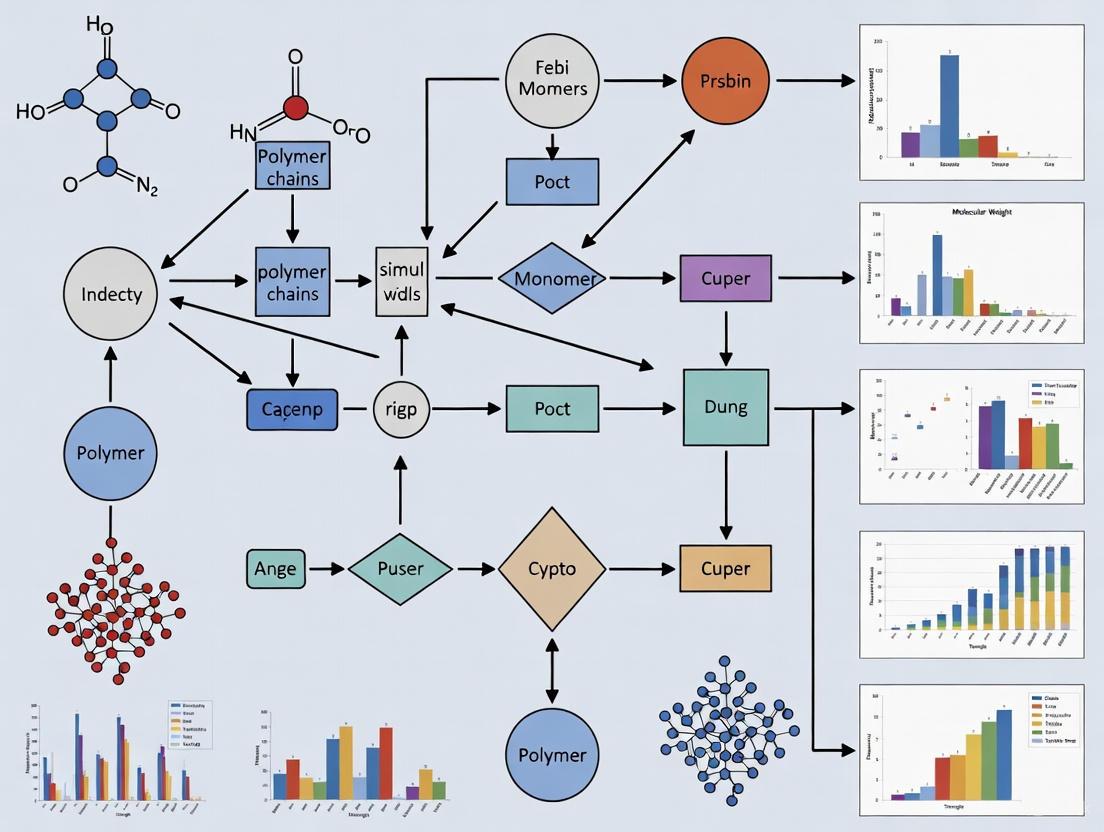
This comprehensive review explores the pivotal role of molecular dynamics (MD) simulations in the design and optimization of advanced polymer materials.
Molecular Dynamics Simulations for Polymer Design: From Fundamentals to Advanced Applications in Biomedical Research
Abstract
This comprehensive review explores the pivotal role of molecular dynamics (MD) simulations in the design and optimization of advanced polymer materials. Targeting researchers, scientists, and drug development professionals, the article systematically covers foundational principles, methodological approaches, optimization strategies, and validation techniques. It highlights how MD simulations provide atomic-scale insights into polymer behavior, enable prediction of structure-property relationships, and accelerate the development of polymers for biomedical applications including drug delivery systems, bioconjugates, and engineered tissues. By integrating recent advances in coarse-grained modeling, machine learning integration, and multiscale approaches, this resource demonstrates how computational methods are transforming polymer design paradigms while reducing experimental burden.
Fundamental Principles: How Molecular Dynamics Reveals Polymer Behavior at Atomic Scale
Molecular dynamics (MD) simulation is a computational method for analyzing the physical movements of atoms and molecules over time. The trajectories of atoms and molecules are determined by numerically solving Newton's equations of motion for a system of interacting particles, where forces between particles and their potential energies are calculated using interatomic potentials or molecular mechanical force fields [1]. This method is fundamentally applied in chemical physics, materials science, and biophysics, providing atomic-level insights into the behavior of complex systems that are impossible to determine through analytical methods alone [1]. For researchers in polymer design, MD serves as a powerful in silico microscope, enabling the observation of polymer-oil interactions, the prediction of the impact of polymer wettability changes on recovery efficiency, and the systematic optimization of polymer properties for specific application environments [2].
The core components of any MD simulation consist of three essential elements: a force field that describes the potential energy of the system as a function of particle coordinates; a choice of statistical ensemble that defines the thermodynamic conditions of the simulation; and an integration algorithm that solves the equations of motion to propagate the system through time [1]. The careful selection and implementation of these components are critical for generating physically meaningful and statistically valid results. For the simulation of polymers in particular, such as those used in enhanced oil recovery, this framework allows scientists to probe the stability and rheological properties of polymers under high-temperature and high-salinity conditions, thereby guiding the design of novel materials like biopolymers and nanoparticle-enhanced polymers [2].
Force Fields: The Energy Landscape Foundation
Mathematical Formulation and Components
A force field refers to the combination of a mathematical formula and associated parameters that describe the energy of a molecular system as a function of its atomic coordinates [3]. The total potential energy (( U_{\text{total}} )) in a typical classical, pairwise additive force field is a sum of several contributions, generally categorized as bonded and non-bonded interactions [4]. The canonical form is expressed in the equation below, which is central to molecular mechanics calculations:
The first three terms represent bonded interactions: bond stretching (harmonic potential), angle bending (harmonic potential), and torsional rotations (periodic potential). The final term describes non-bonded interactions, which include van der Waals forces (typically modeled by the Lennard-Jones potential) and electrostatic interactions (described by Coulomb's law) [4] [5]. The Lennard-Jones potential, one of the most frequently used intermolecular potentials, is particularly important for describing repulsive and dispersive forces [1]. The accurate calculation of non-bonded interactions, especially long-range electrostatics, is paramount for charged macromolecules and is often handled using sophisticated methods like the Particle Mesh Ewald technique to avoid artifacts from simple truncation [4].
Classification and Selection of Force Fields
Force fields can be broadly classified based on their representation of the system and their treatment of electronic polarization. The choice of force field is a critical decision that depends on the specific system under study and the desired balance between accuracy and computational efficiency [5].
Table 1: Classification of Molecular Dynamics Force Fields
| Force Field Type | Description | Common Examples | Typical Applications |
|---|---|---|---|
| Empirical (Classical) | Parameterized using experimental data and quantum mechanical calculations; typically non-polarizable. | CHARMM, AMBER, GROMOS, OPLS-AA [3] [5] | Proteins, nucleic acids, organic molecules [4] [3] |
| Polarizable | Incorporate effects of induced dipoles and electronic polarization for more accurate electrostatics. | AMOEBA, Drude oscillator [5] | Ionic liquids, polarizable environments [5] |
| Reactive | Describe formation and breaking of chemical bonds. | ReaxFF, AIREBO [5] | Chemical reactions, bond breaking/formation [5] |
| Coarse-Grained | Reduce detail by grouping atoms into larger interaction sites; enable larger spatial and temporal scales. | MARTINI, ELBA [5] | Lipid membranes, large protein assemblies, polymer systems [2] [5] |
For polymer design research, particularly for oil-displacement polymers, the selection is crucial. All-atom force fields like OPLS-AA or CHARMM are often used for detailed studies of specific polymer-solvent interactions [2] [3]. However, to simulate the large-scale behavior of polymers at interfaces or in complex formulations, coarse-grained force fields like MARTINI are increasingly employed, as they allow access to longer timescales and larger system sizes relevant to macroscopic properties [2] [5].
Statistical Ensembles: Controlling Thermodynamic State
In molecular dynamics, the statistical ensemble defines the thermodynamic macrostate of the system and is conserved by the equations of motion and the application of thermostat and barostat algorithms. The most common ensembles used in MD simulations include:
- NVE (Microcanonical Ensemble): The system is isolated with constant Number of particles (N), constant Volume (V), and constant total Energy (E). This is the natural ensemble produced by Newton's equations of motion without modification.
- NVT (Canonical Ensemble): The system has constant Number of particles (N), constant Volume (V), and constant Temperature (T). Temperature is controlled using thermostats (e.g., Nosé-Hoover, Berendsen, velocity rescaling).
- NPT (Isothermal-Isobaric Ensemble): The system has constant Number of particles (N), constant Pressure (P), and constant Temperature (T). This is the most common ensemble for simulating experimental conditions, requiring both a thermostat and a barostat (e.g., Parrinello-Rahman).
For systems that obey the ergodic hypothesis, the time averages of a single MD simulation correspond to the ensemble averages, allowing for the determination of macroscopic thermodynamic properties from the simulation [1]. The choice of ensemble directly impacts the properties that can be calculated. For example, polymer design for oil displacement often requires simulations in the NPT ensemble to model the behavior of polymers under specific reservoir pressure and temperature conditions [2].
Integration Algorithms: Propagating the System Through Time
Fundamental Algorithms and Their Characteristics
Integration algorithms are numerical methods for solving the coupled differential equations of motion (Newton's equations) for all particles in the system. These algorithms update particle positions and velocities over discrete timesteps (∆t). The stability and accuracy of the simulation are highly dependent on the choice of both the algorithm and the timestep [1]. Common timesteps for classical MD are on the order of 1-2 femtoseconds (10⁻¹⁵ s), often extended by constraining the bonds to hydrogen atoms using algorithms like SHAKE [1].
Table 2: Comparison of Common Integration Algorithms in Molecular Dynamics
| Algorithm | Mechanism | Key Properties | Advantages | Limitations |
|---|---|---|---|---|
| Verlet | Updates positions using current positions, previous positions, and acceleration. | Time-reversible, symplectic. | Simple, good long-term energy conservation [1] [5]. | Limited accuracy; velocities not directly calculated [5]. |
| Velocity Verlet | Explicitly calculates positions and velocities at the same time point. | Time-reversible, symplectic. | Better energy conservation; velocities are directly available [5]. | Slightly more complex than basic Verlet. |
| Leapfrog | Updates positions and velocities at interleaved time points. | Time-reversible, symplectic. | Computationally efficient, good energy conservation [5]. | Positions and velocities not synchronized. |
| Multiple Timestep (RESPA) | Uses different timesteps for different interaction types (e.g., fast-bonded vs. slow-nonbonded). | Improves computational efficiency. | Allows larger effective timesteps, faster simulations [5]. | Requires careful tuning of timestep sizes for stability [5]. |
Workflow for Integration and Force Calculation
The following diagram illustrates the logical relationship and continuous cycle between the force field, the force calculation, and the integration algorithm within an MD simulation.
Application Notes and Protocols for Polymer Design
Protocol: Simulating Polymer-Oil Interactions for EOR
This protocol outlines the key steps for using molecular dynamics to study the interaction between oil-displacement polymers and crude oil components at the atomic scale, a critical process for enhancing oil recovery (EOR) [2].
System Construction
- Polymer Modeling: Build an all-atom or coarse-grained model of the polymer (e.g., Partially Hydrolyzed Polyacrylamide (HPAM) or a novel biopolymer) using a tool like Avogadro or CHARMM-GUI. For coarse-grained models, use a mapping procedure specific to the force field (e.g., MARTINI).
- Oil Model: Create a representative model of the reservoir oil. This can be a simple hydrocarbon like n-decane or a more complex mixture of alkanes and aromatics.
- Solvation and Ions: Solvate the polymer and oil in a water box using an appropriate water model (e.g., SPC, TIP3P, TIP4P for all-atom; the corresponding coarse-grained water for MARTINI). Add ions (e.g., Na⁺, Cl⁻) to match the salinity of the target reservoir.
Simulation Setup
- Force Field Selection: Apply a suitable force field. For all-atom simulations, OPLS-AA or CHARMM are common choices. For coarse-grained studies aiming for larger scales, use MARTINI [2] [5].
- Energy Minimization: Run an energy minimization (e.g., via steepest descent or conjugate gradient method) to remove any steric clashes and bad contacts in the initial configuration, typically for 5,000-50,000 steps.
- Equilibration:
- NVT Equilibration: Equilibrate the system for 100-500 ps while holding the temperature constant (e.g., 300 K or the reservoir temperature) using a thermostat (e.g., Nosé-Hoover).
- NPT Equilibration: Further equilibrate the system for 100-500 ps while holding both temperature and pressure constant (e.g., 1 bar or reservoir pressure) using a thermostat and a barostat (e.g., Parrinello-Rahman).
Production Run
- Run a long-term simulation in the NPT ensemble for a duration sufficient to observe the phenomena of interest (nanoseconds to microseconds, depending on the system and model resolution). Use a time-reversible and symplectic integrator like Velocity Verlet with a timestep of 1-2 fs (all-atom) or 10-20 fs (coarse-grained).
- Employ periodic boundary conditions in all three dimensions.
- For long-range electrostatics, use the Particle Mesh Ewald (PME) method [4]. For non-bonded interactions, apply a cutoff (e.g., 1.0-1.2 nm).
Analysis
- Radial Distribution Function (RDF): Analyze the g(r) between polymer functional groups and oil molecules to quantify their interaction strength and preferred binding sites.
- Mean Squared Displacement (MSD): Calculate the MSD of oil molecules to study diffusivity changes in the presence of the polymer.
- Interfacial Properties: Measure the interfacial tension between the aqueous polymer solution and the oil phase.
- Polymer Conformation: Monitor the radius of gyration and end-to-end distance of the polymer to understand its conformation at the interface.
The Scientist's Toolkit: Essential Research Reagents and Materials
Table 3: Essential Materials and Computational Tools for MD in Polymer Design
| Item Name | Function/Description | Example Use Case |
|---|---|---|
| Biomolecular Force Fields (CHARMM, AMBER, OPLS-AA) | Provide parameter sets for simulating polymers, proteins, and other organic molecules. | Simulating hydrolyzed polyacrylamide (HPAM) and its interactions [3]. |
| Coarse-Grained Force Fields (MARTINI) | Enable simulation of larger systems and longer timescales by grouping atoms into beads. | Studying large-scale polymer aggregation or polymer-membrane interactions [5]. |
| Water Models (SPC, TIP3P, TIP4P) | Explicitly represent water molecules in the simulation box. | Solvating polymer-oil systems to model aqueous reservoir conditions [4]. |
| MD Software Packages (GROMACS, NAMD, AMBER, LAMMPS) | Software suites that perform the numerical integration, force calculation, and analysis. | Running production simulations; GROMACS is noted for its efficiency and scalability [4]. |
| Enhanced Sampling Algorithms (Replica Exchange, Metadynamics) | Accelerate the sampling of conformational space and rare events. | Studying polymer folding or the crossing of high energy barriers at oil-water interfaces [6]. |
Molecular dynamics (MD) simulation has emerged as an indispensable tool in polymer science, providing atomic-scale resolution into the properties and behaviors that govern polymer performance. For researchers and scientists engaged in polymer design, particularly for advanced applications in drug development and high-performance materials, MD offers critical insights that are often challenging to obtain experimentally. This application note details protocols and methodologies for investigating three fundamental polymer properties—glass transition, chain dynamics, and conformational analysis—within the broader context of molecular dynamics simulations for polymer design research. By integrating these computational approaches, researchers can establish robust structure-property relationships essential for rational polymer design, potentially accelerating development cycles for polymeric therapeutics and advanced materials.
Glass Transition Temperature (Tg) Analysis
Theoretical Background and Significance
The glass transition temperature (Tg) marks the critical transition where a polymer changes from a rigid, glassy state to a flexible, rubbery state. This property fundamentally governs polymer processing, mechanical behavior, and application temperature ranges. For polymer electrolytes in energy storage devices, Tg dictates the onset of segmental motion within polymer chains, which leads to increased chain mobility and facilitates coupled ion transport as understood through free volume theory [7]. In MD simulations, Tg is determined by monitoring the change in polymer density during cooling, where the transition manifests as a distinct slope change in the density versus temperature profile [7].
Computational Protocols
System Preparation and Equilibration
- Initial Configuration: Build polymer system using tools like GroPoB or the Amorphous Cell module in Materials Studio [7] [8].
- Energy Minimization: Employ steepest descent algorithm to eliminate high-energy atomic clashes [7].
- Equilibration Steps:
- Conduct NVT (constant number, volume, and temperature) ensemble simulation at elevated temperature (e.g., 400 K) for 10 ns to stabilize temperature [7].
- Perform NPT (constant number, pressure, and temperature) ensemble simulation with temperature cycling (e.g., 400 K to 1000 K and back to 400 K) for 10 ns to ensure complete amorphousness [7].
- Execute final NPT run at target temperature (e.g., 400 K) for 10 ns to stabilize density [7].
Annealing Methods for Tg Determination Two primary annealing approaches have been established for Tg determination:
Stepwise Cooling Protocol [7]:
- Run multiple NPT simulations from high to low temperature range (e.g., 540 K to 40 K) with defined step size (e.g., 20 K).
- At each temperature, perform 2 ns equilibration followed by 2 ns production run.
- Total simulation time: approximately 100 ns.
Continuous Cooling Protocol [7]:
- Conduct single NPT simulation from high to low temperature (e.g., 540 K to 40 K) at specific cooling rates.
- Cooling rates typically range from 5 K/ns to 5000 K/ns, with slower rates (5-50 K/ns) providing better agreement with experimental data.
- To assess thermal history effects, follow initial cooling with heating and second cooling simulation.
Table 1: Comparison of Annealing Methods for Tg Determination
| Parameter | Stepwise Cooling | Continuous Cooling |
|---|---|---|
| Computational Cost | Higher (~100 ns) | Variable (0.1-100 ns) |
| Cooling Rate Control | Discrete steps | Continuous range |
| Density Profile | Smooth, defined transitions | Rate-dependent |
| Recommended Use | High-precision studies | Screening multiple systems |
Data Analysis Methods
- Bilinear Fitting: Plot specific volume or density against temperature; fit separate regression lines to high-temperature (rubbery) and low-temperature (glassy) regions; Tg is the intersection point [7].
- Slope-Temperature Analysis: Calculate the slope from linear regression of densities within a moving temperature window (e.g., [T, T+50 K]); Tg corresponds to the transition point where slope changes significantly [7]. This method reduces human bias in selecting fitting ranges.
Critical Parameters and Validation
MD simulations consistently overestimate experimental Tg values by approximately 80-120 K, primarily due to extremely fast cooling rates (10^9 K/s in MD versus 10^-2-10^-1 K/s in experiments) and force field limitations [7]. Researchers should utilize normalized temperatures (T - Tg) when comparing simulation results with experimental data [7]. Validation through experimental comparison is essential, with reported Tg values for PEO systems ranging from 250-320 K depending on molecular weight and force field used [7].
Polymer Chain Dynamics
Segmental Motion and Relaxation
Chain dynamics encompass the molecular motions of polymer chains, ranging from local segmental movements to whole-chain relaxations. These dynamics fundamentally influence polymer processing, mechanical properties, and performance in applications such as drug delivery systems. MD simulations enable direct investigation of these motions across multiple time and length scales. At solid-melt interfaces, chain dynamics are significantly altered, with studies showing that all relaxation processes of chains located within a couple of radii of gyration from the surface are considerably slowed down [9].
Analysis Methods for Chain Dynamics
Mean Square Displacement (MSD) MSD analysis quantifies molecular mobility and diffusion coefficients through the relationship: MSD(τ) = ⟨|r(t+τ) - r(t)|²⟩, where r(t) is position at time t, and τ is time lag [8]. For polymer electrolytes, MSD helps understand ionic conductivity mechanisms by tracing polymer segmental motion and ion transport coupling [7].
Radius of Gyration (Rg) Rg measures chain compactness and conformation defined as: Rg² = (1/N)Σᵢ|rᵢ - rcm|², where N is number of atoms, rᵢ is atom position, and rcm is center of mass [10]. This parameter helps understand chain folding, swelling, and conformational changes in response to environmental stimuli.
Local Radius of Gyration For adsorbed polymer chains, the local radius of gyration serves as a segmental-scale structural descriptor to quantify conformational changes under mechanical strain, revealing distinct modes including tail elongation, loop-to-tail transition, and chain desorption [10].
Table 2: Key Metrics for Analyzing Polymer Chain Dynamics
| Metric | Definition | Information Obtained | Application Example | ||
|---|---|---|---|---|---|
| Mean Square Displacement (MSD) | ⟨ | r(t+τ) - r(t) | ²⟩ | Chain mobility, diffusion coefficients | Ion transport in polymer electrolytes [7] |
| Radius of Gyration (Rg) | √[(1/N)Σᵢ | rᵢ - r_cm | ²] | Chain compactness, conformation | Thermosensitive gelation [11] |
| Local Rg | Rg calculated for specific segments | Segmental conformational changes | Polymer-metal adhesion [10] |
Conformational Analysis
Chain Conformations at Interfaces
Conformational analysis examines the spatial arrangement of polymer chains, which directly influences material properties and performance. At polymer-solid interfaces, chains adopt distinct conformations characterized by three segment sequences: trains (segments directly adsorbed), loops (segments bridging between adsorption points), and tails (free ends) [10]. MD simulations reveal that these interfacial conformations respond differently to mechanical strain compared to bulk chains, significantly impacting adhesion strength in polymer-metal composites [10].
Advanced Conformational Characterization
Local Conformational Descriptors The introduction of segmental-scale structural descriptors, such as the local radius of gyration, enables quantitative analysis of conformational changes in adsorbed chains under deformation. This approach has revealed three distinct conformational modes in polyamide-alumina interfaces under tensile strain: tail elongation, loop-to-tail transition, and chain desorption [10].
Radial Distribution Function (RDF) RDF analysis, denoted as g(r), quantifies the probability of finding atom pairs at specific distances, revealing short-range ordering and intermolecular interactions [8] [11]. In thermosensitive MPC-g-MC hydrogels, RDF of oxygen atoms around -OH groups demonstrated reduced hydration shells with increasing temperature, confirming the role of hydrophobic interactions in gelation [11].
Solvent Accessible Surface Area (SASA) SASA measures surface area accessible to solvent molecules, helping quantify hydrophobic interactions during temperature-induced transitions. In MPC-g-MC hydrogel studies, hydrophobic SASA decreased more significantly than hydrophilic SASA during heating, identifying hydrophobic interactions as the major thermodynamic driver of gelation [11].
Research Reagent Solutions
Table 3: Essential Computational Tools for Polymer MD Simulations
| Tool Category | Specific Tools | Function | Application Example |
|---|---|---|---|
| Force Fields | OPLS, GAFF, COMPASS II, TraPPE-UA, pcff+ | Define mathematical forms and parameters governing intermolecular interactions | OPLS-AA for PEO/LiTFSI systems [7] |
| Simulation Software | GROMACS, LAMMPS, Materials Studio | Perform energy minimization, equilibration, and production MD simulations | GROMACS for hydrogel studies [11] |
| Analysis Tools | Built-in trajectory analysis, VMD, MDTraj | Calculate properties (RDF, MSD, Rg), visualize trajectories | Hydrogen bonding analysis in hydrogels [11] |
| System Building | GroPoB, Amorphous Cell | Construct initial polymer configurations | GroPoB for polymer electrolytes [7] |
Workflow Visualization
MD simulations provide powerful methodologies for investigating fundamental polymer properties including glass transition, chain dynamics, and conformational changes. The protocols detailed in this application note establish robust frameworks for extracting critical design parameters essential for advanced polymer development. As MD capabilities continue to advance through integration with machine learning approaches and enhanced computing power, these simulation techniques will play increasingly pivotal roles in rational polymer design for pharmaceutical applications and advanced materials engineering.
The design of advanced polymeric materials is fundamentally governed by the complex relationship between their molecular architecture and their resulting macroscopic behavior. A polymeric structure, composed of multiple simpler chemical units called monomers, sees its properties—from microstructures to physical and mechanical behaviors—governed by the chemical structure of these monomers and their specific arrangements [12] [13]. Understanding the sequence-structure-property relationships is therefore critical for tailoring materials with superior performance for applications in energy, environmental conservation, and biomedicine [12] [14].
However, a significant challenge persists in bridging the vast gap between the atomic scale, where monomers interact, and the macroscopic scale, where material properties are observed. Traditional design approaches are often hampered by the immense complexity of the chemical space, as well as prohibitive costs and time requirements [12] [13]. For instance, a polymer chain of just 30 units composed of two monomer types can have over 500 million possible sequences, making exhaustive experimental investigation impossible [12]. Fortunately, the integration of computational methods, particularly molecular dynamics (MD) simulations, with emerging machine learning (ML) techniques, provides a powerful platform to overcome these bottlenecks, enabling the prediction and inverse design of polymers with targeted properties [12] [13].
Computational Framework: Bridging the Scale Divide
The Role of Molecular Dynamics Simulations
Molecular dynamics simulations serve as a computational microscope, allowing researchers to observe and quantify the behavior of polymer chains at resolutions that are often difficult to achieve experimentally. MD has demonstrated robustness in capturing essential physical and mechanical properties of polymers, including glass transition temperature, viscosity, dynamics and relaxation, phase separation, crystallization, and mechanical properties like Young’s modulus and yield strength [13].
Table 1: Key Properties Accessible via Molecular Dynamics Simulations
| Property Category | Specific Examples | Relevance to Macroscopic Behavior |
|---|---|---|
| Thermal Properties | Glass Transition Temperature (Tg) | Determines service temperature and processing conditions. |
| Mechanical Properties | Young's Modulus, Yield Strength | Predicts material stiffness, strength, and durability. |
| Dynamic Properties | Viscosity, Relaxation Dynamics | Informs processability and long-term stability. |
| Morphological Properties | Phase Separation, Crystallization | Controls optical, barrier, and mechanical properties. |
Among different MD techniques, coarse-grained molecular dynamics (CGMD) is particularly valuable for bridging scales. CGMD reduces computational cost and complexity by grouping multiple atoms into a single "bead" or interaction site, thereby simplifying the chemical space while maintaining sufficient modeling accuracy [12] [13]. This approach allows simulations to access longer time and length scales, which are crucial for observing polymer chain folding, self-assembly, and other mesoscale phenomena that directly influence macroscopic material behavior [12].
Integration with Machine Learning
While powerful, MD simulations alone can be computationally prohibitive for exploring vast polymer design spaces. The integration of machine learning with CGMD has emerged as a transformative strategy [12]. In this hybrid approach:
- CGMD simulations are leveraged to generate high-quality training datasets for specific polymer systems.
- ML-based surrogate models are then developed to learn the complex relationships between monomer sequence, chain configuration, and functional properties from this data [12] [13].
This computational hybridization establishes reliable sequence-functional behavior relationships and guides the selection of optimal polymer chain candidates from a virtually limitless chemical space, all with a fraction of the computational cost and time of traditional simulation-only approaches [12]. Key applications of this integration fall into three areas: polymeric configuration characterization, feed-forward property prediction, and inverse molecular design [12].
Application Notes: From Theory to Practice
Understanding and Designing Sequence-Defined Polymers
The development of synthetic sequence-defined polymers offers enormous opportunities for materials design with tailored microstructure and mechanical properties [12] [13]. Monomer sequence dictates critical chain-level properties such as polymer configurations, radius of gyration, and self-assembly behaviors through inter- and intra-molecular interactions [13]. The CGMD/ML integration allows researchers to answer fundamental questions, such as to what extent chain sequence influences mechanical properties and how monomer sequence scales to the chain length scale [13].
Case Study: Microstructure-Engineered Polymers for Sustainability
Engineering polymer microstructures—including chain length distribution, regio-/stereoregularity, monomer sequence, and chain architecture—provides a powerful toolbox for designing materials for energy and environmental applications [14].
Table 2: Impact of Polymer Microstructure on Material Function
| Microstructural Feature | Application Example | Structure-Function Relationship |
|---|---|---|
| Chain Length Distribution (Dispersity, Đ) | Antifouling surfaces [14], Membrane modification [14] | High dispersity (Đ = 1.95) PAA brushes form thicker films in response to pH, enabling more efficient bacterial detachment [14]. Polydisperse graft copolymer side chains enhance hydration and lubrication in nanofiltration membranes [14]. |
| Regioregularity (RR) | Conjugated Polymers for Photovoltaics [14] | High RR P3HT (e.g., 95.2%) enables more ordered chain packing, leading to significantly larger short-circuit current density and higher power conversion efficiency in solar cells compared to lower RR (90.7%) [14]. |
| Monomer Sequence | Self-assembly, Phase Separation [12] | Controlled monomer sequences in block copolymers can lead to desired phase separation or crystallization of microstructure, dictating final material properties [12]. |
For instance, in conjugated polymers like poly(3-hexylthiophene) (P3HT), the regioregularity—defined by the fraction of head-to-tail linkages—profoundly influences chain packing and optoelectronic properties [14]. High RR P3HTs undergo more ordered chain packing to form microcrystalline lamellae that promote stronger intra- and interplane orbital coupling and charge transfer [14]. This microstructure-property relationship directly impacts the performance of bulk heterojunction solar cells, where blends containing P3HT of 95.2% RR displayed twice the short-circuit current density and three times the power conversion efficiency compared to blends with 90.7% RR P3HTs [14].
Experimental Protocols
A Streamlined Workflow for All-Atomistic MD Simulation of Polymers
Accurate modeling of amorphous polymers, including porous organic polymers (POPs), requires careful parameterization and system setup. The following protocol, implemented in the PolyPal Python package, provides a streamlined workflow for all-atomistic MD simulations [15].
Force Field Parametrization
- Objective: Generate accurate, molecule-specific force field parameters, particularly for nonstandard monomers common in POPs (e.g., triptycene) [15].
- Procedure:
- Oligomer Construction: Build an oligomer of the target polymer that is large enough to account for dispersion effects across monomer units, flexible dihedrals between monomers, and potential stereochemistry. The oligomer should not be excessively long to avoid prohibitive computational cost for Density Functional Theory (DFT) computations [15].
- Quantum Mechanical Calculation: Use a quantum chemistry package (e.g., ORCA or Gaussian) to generate QM data for the oligomer [15].
- Force Field Generation: Utilize Q-Force to derive all-atomistic force field parameters from the QM data. Q-Force employs a fragmentation scheme to partition the oligomer into chemically meaningful smaller fragments, reducing the cost of computing potential energy scans for flexible dihedrals while retaining the nonbonding parameters of established transferable force fields (e.g., OPLS, GROMOS) [15].
Polymer Chain Assembly and System Preparation
- Objective: Create polymer chains of defined composition and length and prepare them for simulation [15].
- Procedure:
- Monomer Input: Using the force field generated from the oligomer, define the monomer building blocks in Assemble! [15].
- Chain Generation: In Assemble!, specify the desired polymer composition and chain length. The program uses virtual "hooks" connected to the terminal atoms of molecular subunits to arrange the monomer sequence. It checks for atomic clashes during chain buildup, perturbing dihedral angles iteratively until clashes are resolved, resulting in a locally relaxed polymer chain [15].
- Partial Charge Calculation: Calculate partial charges for the polymer chains using the ASCII method [15].
- System Packing: Pack the generated polymer chains into a simulation box using a MD simulation package like GROMACS [15].
Simulation Execution
- Objective: Equilibrate and run production simulations to study polymer properties.
- Procedure:
- Energy Minimization: Minimize the energy of the packed system to remove any residual steric clashes.
- Equilibration: Perform equilibration runs in appropriate ensembles (e.g., NPT, NVT) to relax the density and structure of the system. This may include annealing cycles to properly sample the configuration space [15].
- Production Simulation: Run a longer production simulation under the desired conditions (temperature, pressure) to collect trajectory data for analysis [15].
Protocol for Scale-Bridging Pyrolysis Modeling
For processes involving chemical reactions, such as pyrolysis, a scale-bridging approach using reactive force fields is required.
Pyrolysis Kinetics with ReaxFF-MD
- Objective: Elucidate the pyrolysis kinetics of a crosslinked polymer (e.g., phenolic formaldehyde resin) [16].
- Procedure:
- System Setup: Construct a model of the crosslinked polymer network.
- Reactive Simulation: Perform MD simulations using a reactive force field (ReaxFF) potential, which allows for bond breaking and formation.
- Thermal Decomposition Analysis: Heat the system incrementally (e.g., from 300 K to 2500 K) and monitor the decomposition products. Pyrolysis initiation temperature (∼500 K for phenolic resin) and the sequence of chemical events (e.g., removal of -OH groups and H atoms releasing H2O, followed by C-ring fragmentation) can be identified [16].
- Kinetic Parameter Extraction: Calculate pyrolysis rates from the MD simulations, which can be used to develop a larger-scale thermal material response model for predicting performance under operational conditions (e.g., heat shielding) [16].
The Scientist's Toolkit
Table 3: Essential Research Reagent Solutions for Polymer Simulation
| Tool Name | Type | Primary Function | Key Features |
|---|---|---|---|
| GROMACS [15] | Molecular Dynamics Engine | High-performance MD simulation | Free, open-source, highly optimized for CPU/GPU. |
| LAMMPS [15] | Molecular Dynamics Engine | Large-scale atomic/molecular simulator | Open-source, highly versatile, supports many force fields. |
| ORCA [15] | Quantum Chemistry Package | Electronic structure calculations | Generates QM data for force field parametrization. |
| Q-Force [15] | Force Field Generator | Derives molecule-specific FF parameters | Uses fragmentation to reduce QM computation cost. |
| Assemble! [15] | Polymer Builder | Constructs polymer chains of defined sequence | Uses "hooks" to connect monomers, checks for clashes. |
| PolyPal [15] | Python Package | Streamlines workflow between different programs | Bridges Q-Force, Assemble!, and GROMACS/LAMMPS. |
| ReaxFF [16] | Reactive Force Field | Models chemical reactions in MD | Enables simulation of bond breaking/formation (e.g., pyrolysis). |
The integration of multi-scale molecular dynamics simulations—from all-atomistic to coarse-grained models—with machine learning algorithms represents a paradigm shift in polymer materials design. This computational framework successfully bridges the traditional divide between monomer-level interactions and macroscopic material behavior, enabling the establishment of critical sequence-structure-property relationships. As methodologies for force field parametrization, system assembly, and simulation continue to be streamlined into accessible workflows and software packages, the barrier to performing predictive modeling for complex polymer systems is significantly lowered. This advancement paves the way for the rapid, rational design of next-generation polymers with tailored properties for sustainability, energy conversion, and advanced technological applications, accelerating the journey from molecular insight to functional material.
Within the broader scope of a thesis on molecular dynamics (MD) simulations for advanced polymer design, this application note addresses the critical foundation of any reliable simulation: the correct setup of environmental controls. The accurate parameterization of temperature, pressure, and the subsequent analysis of density is not merely a preliminary step but a fundamental determinant of the physical realism of the simulation outcomes. These parameters directly control polymer phenomena under investigation, from the glass transition and thermal expansion to mechanical response and gas diffusion properties. This document provides detailed protocols for establishing these controls, with a specific focus on achieving experimental concordance in polymer systems.
Fundamental Ensemble Controls
Temperature Coupling Algorithms
Maintaining a stable and accurate temperature is critical for simulating the thermodynamic states of polymers. The choice of thermostat significantly influences the quality of the generated trajectory.
- Berendsen Thermostat: Recommended for the equilibration phase of polymer systems due to its strong coupling to a heat bath, which provides rapid relaxation to the target temperature. A damping constant of 100 fs is typically effective for achieving thermal stability [17].
- Nosé-Hoover Langevin Thermostat: Ideal for the production phase of simulations, as it correctly generates a canonical (NVT) ensemble. It provides a more physically realistic representation of temperature fluctuations compared to the Berendsen thermostat [18].
The simulated annealing procedure, used for finding low-energy configurations or calculating properties like the glass transition temperature (Tg), requires a defined temperature program. This involves a series of linear temperature ramps and plateaus. For instance, a robust protocol heats the system from 298.15 K to 598.15 K in 25 K increments, with each step consisting of a 30,000-step heating period followed by a 10,000-step sampling period at the plateau temperature, before cooling back to the initial temperature [17].
Pressure Coupling Algorithms
Isotropic pressure control is essential for simulating realistic densities and volumes of polymer systems, especially under the isothermal-isobaric (NPT) ensemble.
- Berendsen Barostat: Effective during equilibration for its ability to efficiently scale the simulation box dimensions to reach the desired pressure. A damping constant of 500 fs is commonly used to maintain a pressure of 1 atm [17].
- Parrinello-Rahman Barostat: Preferred during production runs because it generates a correct isothermal-isobaric ensemble, allowing for legitimate fluctuations in the box size [19].
Core Application: Determining the Glass Transition Temperature
The glass transition temperature (Tg) is a critical property dictating a polymer's application temperature range. Molecular dynamics simulation allows for its calculation from the change in the temperature-density relationship.
Protocol for Tg Calculation via Density Analysis
The following workflow outlines the primary method for determining Tg from the specific volume versus temperature profile obtained from an annealing simulation [17] [7].
Step-by-Step Methodology:
System Preparation and Equilibration:
- Construct an amorphous polymer cell using a tool like
GroPoB[7]. - Perform energy minimization using the steepest descent algorithm.
- Equilibrate the system in the NVT ensemble at 400 K for 10 ns to stabilize the temperature.
- Further equilibrate in the NPT ensemble with a temperature cycle (e.g., 400 K → 1000 K → 400 K over 10 ns) to ensure complete amorphization and erase historical memory of the initial configuration.
- Conduct a final 10 ns NPT run at the starting temperature of the annealing cycle (e.g., 400 K) to stabilize the density [7].
- Construct an amorphous polymer cell using a tool like
Annealing Simulation: Two primary methods are employed, each with distinct advantages.
- Method A: Stepwise Cooling: Run sequential NPT simulations from a high (e.g., 540 K) to a low temperature (e.g., 40 K) with a step size of 20 K. At each temperature, perform a 2 ns equilibration followed by a 2 ns production run to sample the density. This method, while computationally intensive, provides well-equilibrated data points [7].
- Method B: Continuous Cooling: Run a single, continuous NPT simulation from high to low temperature. The cooling rate must be chosen carefully, as it significantly impacts the result. Slower cooling rates (e.g., 5-50 K/ns) yield densities and Tg values closer to those from stepwise cooling and experimental results. Faster rates (e.g., 5000 K/ns) can lead to unrealistic densities and an overestimation of Tg [7].
Data Analysis for Tg:
- Extract the average density from the production phase at each temperature.
- Plot density (or specific volume) as a function of temperature.
- Perform two linear regressions: one through the data points in the high-temperature (rubbery) region and another through the points in the low-temperature (glassy) region.
- The glass transition temperature, Tg, is defined as the intersection point of these two fitted lines [17].
Table 1: Impact of Simulation Parameters on Calculated Glass Transition Temperature (Tg)
| Parameter | Effect on Simulated Tg | Recommendation for Realistic Results |
|---|---|---|
| Cooling Rate | Faster rates lead to higher Tg due to non-equilibrium conditions [7]. | Use slow cooling (e.g., 5-50 K/ns) or stepwise annealing [7]. |
| Molecular Weight | Tg increases with molecular weight, plateauing above a threshold [19]. | Use a chain length above the critical molecular weight (e.g., ~11,240 g/mol for PEO) [19]. |
| Force Field | Different force fields have varying parameterizations for bonded and non-bonded interactions. | Select a force field validated for polymers (e.g., COMPASS, OPLS-AA) [7] [20]. |
| Presence of Salt | Adding ions (e.g., LiTFSI) can increase Tg by 20-30 K by restricting chain motion [7]. | Account for this plasticizing effect in polymer electrolyte simulations. |
Advanced Considerations for Property Calculation
Thermal and Mechanical Properties
Beyond Tg, the protocols described enable the calculation of other key properties.
- Coefficient of Thermal Expansion (CTE): The slope of the specific volume vs. temperature plot in the rubbery and glassy states corresponds to the CTE of the polymer in those regimes [19].
- Thermo-Mechanical Properties: By analyzing stress-strain relationships from simulated deformation, properties like Young's modulus can be derived. Simulations of crosslinked epoxies, for example, show that higher crosslinking degrees enhance the overall mechanical properties [21].
Diffusion and Sorption Properties
For applications like gas separation membranes or packaging, simulating the diffusion of small molecules in polymers is essential.
- Free Volume Analysis: The Fractional Free Volume (FFV) is a key metric. Under tensile strain, the FFV and pore size distribution in polymers like 6FDA-durene polyimide change, directly impacting gas diffusivity and selectivity [22].
- Mean Squared Displacement (MSD): The diffusion coefficient (D) of a penetrant gas (e.g., H2O, O2, H2) can be calculated from the slope of its MSD over time using the Einstein relation. Studies on polypropylene show that clustering of polar molecules like H2O and H2O2 can significantly reduce their diffusion coefficients [20].
Table 2: Key Analysis Methods for Polymer Properties from MD Simulations
| Target Property | Simulation Analysis Method | Example Application |
|---|---|---|
| Glass Transition Temperature (Tg) | Intersection of linear fits to density-temperature data from annealing [17] [7]. | Optimizing epoxy resin reliability in electrical insulators [21]. |
| Thermal Expansion | Slope of specific volume vs. temperature plot [19]. | Predicting dimensional stability of components under thermal cycling. |
| Mechanical Properties | Stress-strain response from simulated uniaxial deformation [22]. | Screening polyimide membranes for mechanical robustness under strain [22]. |
| Gas Diffusion Coefficient | Slope of mean squared displacement (MSD) vs. time [20]. | Designing polypropylene for food packaging with low oxygen permeability [20]. |
| Sorption Loading | Grand Canonical Monte Carlo (GCMC) simulations [20]. | Predicting saturation concentration of H2O in polypropylene [20]. |
The Scientist's Toolkit
The following table lists essential software and computational resources used in the protocols cited in this document.
Table 3: Research Reagent Solutions - Key Software for Polymer MD
| Software / Resource | Function | Relevance to Polymer Simulations |
|---|---|---|
| AMS/ReaxFF [17] | Molecular dynamics software with reactive force fields. | Used for simulating cross-linking reactions and calculating Tg from density profiles. |
| GROMACS [23] | High-performance MD simulation package. | Widely used for biomolecular and polymer simulations due to its high efficiency and rich analysis tools. |
| LAMMPS [24] | Classical molecular dynamics simulator. | Highly versatile for a wide range of materials, including polymers, metals, and soft matter, with extensive force field support. |
| Materials Studio [21] [20] | Modeling and simulation environment. | Provides a comprehensive GUI for model building (e.g., amorphous cell), simulation setup, and analysis of polymer systems. |
| COMPASS Force Field [20] | Atomistic force field. | Optimized for condensed-phase applications, providing accurate predictions of structural, vibrational, and thermophysical properties for polymers. |
| GroPoB [7] | Protocol/GitHub repository. | A step-by-step guide and tools for building initial configurations and input files for polymer electrolyte systems. |
The following diagram synthesizes the logical relationships between the controlled simulation parameters, the analyzed properties, and the resulting polymer performance characteristics, as established by the cited research.
Advanced Simulation Methods and Their Applications in Polymer Design and Biomedical Innovation
Molecular dynamics (MD) simulations are indispensable tools in computational biology and materials science, enabling the study of molecular systems at atomic resolution. All-atom molecular dynamics (AAMD) simulations provide high accuracy by explicitly representing every atom, making them particularly adept at capturing detailed interfacial interactions [25]. However, the computational expense of AAMD limits the accessible temporal and spatial scales. Coarse-grained molecular dynamics (CGMD) addresses this limitation by simplifying molecular structures into representative beads, reducing the number of degrees of freedom and computational cost, thereby extending simulation capabilities from picoseconds to microseconds and from nanometers to micrometers [26] [25]. This application note examines the balance between accuracy and computational efficiency in AAMD and CGMD, providing structured comparisons, detailed protocols, and practical guidance for researchers engaged in polymer design and drug development.
Comparative Analysis of MD Approaches
The choice between AAMD and CGMD involves trade-offs between resolution, computational demand, and the specific research questions being addressed. The table below summarizes the core characteristics of each approach.
Table 1: Fundamental Characteristics of All-Atom and Coarse-Grained MD
| Feature | All-Atom MD (AAMD) | Coarse-Grained MD (CGMD) |
|---|---|---|
| Spatial Resolution | Atomic detail (individual atoms) | Reduced detail (groups of atoms as single beads) [27] |
| Temporal Scale | Picoseconds to nanoseconds [28] | Nanoseconds to microseconds, even milliseconds [25] [29] |
| Computational Cost | High | Significantly lower [27] |
| Primary Strength | High accuracy for local interactions and specific binding | Studying large-scale dynamics and collective behavior [30] [26] |
| Key Limitation | Computationally prohibitive for large/long systems | Loss of atomic detail; potential need for re-parametrization [25] |
| Typical Force Fields | CHARMM, AMBER, GROMOS, OPLS [31] | MARTINI, SIRAH, AICG2+ [30] [27] [32] |
Beyond these fundamental characteristics, the performance and output of these methods can be quantified. The following table compares key performance metrics and typical application outputs, providing a concrete basis for selection.
Table 2: Performance and Output Comparison
| Aspect | All-Atom MD (AAMD) | Coarse-Grained MD (CGMD) |
|---|---|---|
| Simulation Speed | ~8.5 ns/day on an 8-core CPU [33] | Orders of magnitude faster than AAMD [27] |
| System Size Limit | Realistically up to millions of atoms | Viruses, chromatin, large polymer assemblies [32] |
| Representative Output | Atomic-level trajectories, ligand binding poses, interaction energies | Large-scale conformational changes, self-assembly pathways, free energy landscapes |
| Property Reproduction | Density, atomic RMSD, binding free energies | Density, radius of gyration (Rg), large-scale dynamics [27] [25] |
Methodological Workflows
A successful MD study requires a structured workflow, from system preparation to analysis. The general pathways for AAMD and CGMD share similarities but involve distinct steps and considerations.
All-Atom MD Protocol for Protein-Ligand Systems
This protocol provides a detailed workflow for setting up and running an all-atom molecular dynamics simulation to study the interactions of a peripheral membrane protein with a model lipid bilayer, adaptable for various protein-ligand systems [31].
Initial System Setup and Parameterization
- Structure Preparation: Obtain the initial atomic coordinates from a database like the Protein Data Bank (PDB). Use a tool like PDBFixer to add missing atoms, protonate the structure (add hydrogens), and correct for any missing residues [33].
- Force Field Assignment: Apply a well-validated all-atom force field. For proteins and nucleic acids, AMBER or CHARMM force fields are standard. For small molecules (e.g., ligands), use the General AMBER Force Field (GAFF) or its successor GAFF2 to generate parameters [31] [33].
- Solvation: Place the molecular system in a solvent box (e.g., a rectangular or cubic box) using a water model such as TIP3P. The box size should provide sufficient padding (e.g., 1.0 to 1.5 nm) between the solute and the box edges to avoid periodicity artifacts [31] [33].
- Neutralization and Ion Concentration: Add ions (e.g., Na⁺, Cl⁻) to neutralize the system's net charge. Further ions can be added to achieve a physiologically relevant ionic concentration (e.g., 150 mM NaCl) [31].
Simulation Execution
- Energy Minimization: Run an energy minimization step to remove any bad steric clashes and relieve residual strain in the initial structure. This is typically done using a steepest descent or conjugate gradient algorithm for a few thousand steps.
- Equilibration: a. Restrained Equilibration (NVT): Perform the first equilibration in the canonical (NVT) ensemble, applying positional restraints on the heavy atoms of the protein and ligand. This allows the solvent and ions to relax around the solute. b. Unrestrained Equilibration (NPT): Conduct a second equilibration in the isothermal-isobaric (NPT) ensemble without restraints, allowing the entire system to reach the correct density and temperature (e.g., 303 K) and pressure (1 atm) [31] [33].
- Production Simulation: Run the final, unrestrained production simulation in the NPT ensemble. This generates the trajectory used for analysis. The length of this simulation depends on the biological process under investigation, but modern studies often range from hundreds of nanoseconds to microseconds [28].
Analysis
- Trajectory Analysis: Analyze the production trajectory to compute properties of interest. Common metrics include:
- Root Mean Square Deviation (RMSD): Measures structural stability.
- Root Mean Square Fluctuation (RMSF): Quantifies residue-wise flexibility.
- Binding Free Energy: Calculated using methods like MMPBSA (Molecular Mechanics Poisson-Boltzmann Surface Area), which requires ~15 minutes per calculation in a typical setup [33].
Coarse-Grained MD Protocol for Biomolecules
This protocol outlines the steps for conducting coarse-grained simulations using the GROMACS software package, which is widely used for its high performance and extensive analysis tools [27].
System Construction and Force Field Selection
- CG Mapping: Convert the all-atom structure to a coarse-grained representation. The mapping scheme is defined by the chosen force field. For example, in the SIRAH force field, the protein backbone and side chains may have different resolutions, while the MARTINI force field typically maps 2-5 heavy atoms onto a single CG bead [30] [27].
- Topology Generation: Create the system topology using the chosen CG force field (e.g., MARTINI, SIRAH, ELBA, or CGenFF). This defines the bonded (bonds, angles) and non-bonded (van der Waals, electrostatic) interactions between CG beads [27]. Automated web servers like the CGMD Platform can assist in preparing input files [34].
- Solvation: Solvate the system with CG water models, which are simplified representations of explicit water, or use an implicit solvent model to further speed up calculations [32].
Simulation and Analysis
- Energy Minimization and Equilibration: Similar to AAMD, the CG system must be energy-minimized and equilibrated under NVT and NPT conditions to ensure stability before production runs.
- Production Simulation: Run the production CGMD simulation. The integration time step can often be increased (e.g., 20-40 fs) compared to AAMD (1-2 fs) due to the smoother energy landscape. This, combined with the reduced number of particles, allows for microsecond-scale simulations [27].
- Analysis of CG Trajectories: Analyze the trajectory using GROMACS tools or other software. Key analyses include:
- Backmapping (Optional): For a higher-resolution view of specific conformations, the CG trajectory can be "backmapped" to reconstruct an all-atom model. This allows for detailed analysis of interactions that are lost at the CG level [34].
The Scientist's Toolkit
This section details essential software, force fields, and resources required for implementing the protocols described in this application note.
Table 3: Essential Research Reagents and Software Solutions
| Tool Name | Type/Category | Primary Function | Key Feature |
|---|---|---|---|
| CHARMM-GUI | Web Server | Input Generator for MD | Provides a graphical interface for building complex systems (e.g., membranes, polymers) for various simulation packages [31] |
| GROMACS | Software Package | MD Simulation Engine | Highly optimized for performance on CPUs and GPUs; extensive support for both AA and CG force fields [27] |
| CGMD Platform | Web Server | CG Simulation Preparation & Analysis | Integrated servers for preparing, running, and analyzing CG simulations with Martini and SIRAH force fields [34] |
| MARTINI | Force Field | Coarse-Grained | Top-down approach; calibrated against thermodynamic data; generalizable for many biomolecules and materials [27] [25] |
| SIRAH | Force Field | Coarse-Grained | Used for nucleosome dynamics studies; employs a hybrid-resolution approach for different molecular parts [30] [27] |
| GENESIS-CG-tool | Toolbox | Input File Generator | Generates GROMACS-style input files for residue-level CG models of proteins and nucleic acids in a unified format [32] |
| Bayesian Optimization | Optimization Method | Force Field Refinement | Machine learning approach to refine CG force field parameters (e.g., Martini3) for specialized applications [25] |
The strategic selection between All-Atom and Coarse-Grained MD simulations is pivotal for the success of research projects in polymer design and drug development. AAMD remains the gold standard for probing atomic-level interactions, such as specific ligand binding, where high resolution is non-negotiable. In contrast, CGMD is the method of choice for investigating large-scale phenomena—such as polymer self-assembly, chromatin folding, and membrane remodeling—over biologically relevant time and length scales. The emerging trend of multi-scale modeling, which integrates both approaches, is particularly powerful. For instance, one can use CGMD to simulate a large-scale event and then "backmap" the result to an all-atom representation for detailed analysis [28] [34]. Furthermore, machine learning methods like Bayesian Optimization are now being employed to refine CG force fields, enhancing their accuracy for specific polymer classes without sacrificing computational efficiency [25]. By understanding the strengths and limitations of each method and leveraging the protocols and tools outlined in this document, researchers can effectively harness the power of molecular dynamics to drive innovation in their fields.
Polymer bioconjugates represent a transformative class of biomaterials that integrate the functional specificity of biomolecules with the versatility of synthetic polymers. These hybrids leverage the biological activity, targeting capability, and catalytic functions of proteins, peptides, and nucleic acids, while polymers enhance stability, solubility, pharmacokinetics, and introduce stimulus-responsiveness. Molecular dynamics (MD) simulations have emerged as a powerful computational microscope, enabling researchers to probe the structure, dynamics, and interfacial interactions of polymer bioconjugates at atomic and mesoscopic scales. This protocol details the integrated application of atomistic and coarse-grained MD simulations for the rational design of polymer bioconjugates, specifically focusing on reduction-sensitive systems for intracellular drug delivery and protein-polymer conjugates synthesized via controlled radical polymerization. We provide comprehensive methodologies for model construction, simulation parameterization, and property prediction, supported by experimental validation techniques. The insights derived from these computational approaches accelerate the development of sophisticated bioconjugates for targeted therapeutic applications, reducing reliance on costly and time-consuming empirical screening.
The rational design of polymer bioconjugates for biomedical applications requires a fundamental understanding of the structure-property-function relationships that govern their performance in physiological environments. Molecular dynamics simulations provide a critical bridge between molecular structure and macroscopic behavior by simulating the physical movements of atoms and molecules over time. For polymer bioconjugates, this computational approach enables researchers to predict conformational dynamics, thermodynamic stability, and interaction patterns with biological components before undertaking complex synthetic procedures.
The design process typically involves multi-scale modeling strategies. Atomistic simulations provide detailed insights into specific intermolecular interactions, such as hydrogen bonding, electrostatic forces, and van der Waals contacts at the bioconjugate interface. These simulations employ force fields like GAFF (General Amber Force Field) which have demonstrated success in reproducing liquid crystal phase transition temperatures and phase structures, making them suitable for complex polymeric systems [35]. For larger systems and longer timescales, coarse-grained (CG) models group multiple atoms into single interaction beads, dramatically reducing computational cost while maintaining essential physical characteristics. The integration of machine learning with CG molecular dynamics (CGMD) has further enhanced predictive capabilities by establishing monomer sequence-functional behavior relationships and enabling inverse design in undiscovered chemical space [12].
Table 1: Key MD Simulation Parameters for Polymer Bioconjugate Studies
| Parameter Category | Specific Parameters | Typical Values/Ranges | Performance Implications |
|---|---|---|---|
| Temporal Parameters | Simulation Time Step | 1-2 femtoseconds (fs) [36] | Affects numerical stability; shorter steps increase accuracy but computational cost |
| Total Simulation Duration | Nanoseconds to microseconds | Determines observation of relevant biomolecular processes | |
| Ensemble Conditions | Temperature Control | 300-400K for biological systems [35] | Maintains physiological relevance or specific experimental conditions |
| Pressure Control | 1 bar (isotropic or anisotropic barostat) [35] | Ensures appropriate system density and periodic boundary conditions | |
| Force Field Selection | Atomistic Resolution | GAFF, AMBER, CHARMM [35] | Determines accuracy of intermolecular interaction modeling |
| Coarse-Grained Resolution | MARTINI, SDK, other custom force fields [12] | Balances computational efficiency with physical accuracy | |
| System Composition | Solvation Models | Explicit water (SPC, TIP3P, TIP4P) | Critical for modeling hydrophobic/hydrophilic interactions |
| Ion Concentration | Physiological salt conditions (0.15M NaCl) | Affects electrostatic screening and biomolecular stability |
Molecular Dynamics Simulation Fundamentals
Basic Principles and Force Fields
Molecular dynamics simulations operate on the fundamental principle of numerically solving Newton's equations of motion for a system of interacting particles. The core of any MD simulation is the force field - a mathematical expression comprising various energy terms that describe the potential energy of the system as a function of the nuclear coordinates. The total potential energy typically includes bonded terms (bond stretching, angle bending, torsional rotations) and non-bonded terms (van der Waals interactions described by Lennard-Jones potentials and electrostatic interactions described by Coulomb's law) [36].
For polymer bioconjugate systems, the selection of appropriate force field parameters is critical. The General Amber Force Field (GAFF) has shown particular utility for organic molecules and polymeric systems, with demonstrated ability to reproduce density and enthalpy of vaporization accurately [35]. Parameterization typically involves geometry optimization at the B3LYP/6-31G(d) level of density functional theory (DFT) with atomic charges determined using the RESP method to ensure accurate electrostatic interactions [35].
Enhanced Sampling Techniques
Conventional MD simulations may struggle to access biologically relevant timescales for certain processes in polymer bioconjugates, such as large conformational changes or protein unfolding events. Enhanced sampling techniques address this limitation by modifying the underlying energy landscape or by running multiple simulations in parallel. Key methods include metadynamics and variationally enhanced sampling, which provide effective means for more precise potential energy calculations and simulations over longer timescales [36].
These techniques are particularly valuable for studying processes like the environmental responsiveness of reduction-sensitive bioconjugates, which contain disulfide linkages that remain stable in extracellular fluids but undergo rapid degradation in the reductive environment of intracellular compartments such as the cytoplasm and cell nucleus [37]. Enhanced sampling allows researchers to simulate these transition states and quantify the kinetic parameters governing stimulus-responsive behavior.
Application Notes: Reduction-Sensitive Bioconjugates
Design Rationale and Mechanisms
Reduction-sensitive biodegradable polymers and conjugates have emerged as particularly promising platforms for intracellular delivery of therapeutic agents. The design rationale typically involves incorporation of disulfide linkages in the main chain, at the side chain, or within cross-linkers [37]. These systems exploit the significant redox potential gradient between extracellular and intracellular milieus, with glutathione (GSH) concentrations approximately 100-1000 times higher in the cytoplasm than in extracellular fluids or circulation.
MD simulations enable researchers to model the structural dynamics of these reduction-sensitive systems under various redox conditions. By applying different redox potentials in simulations, researchers can predict degradation profiles, cargo release kinetics, and structural reorganization upon disulfide cleavage. These insights guide the strategic placement of disulfide linkages to optimize stability during circulation while ensuring rapid release upon reaching target intracellular compartments.
Simulation Protocol for Reductive Environment Modeling
System Setup:
- Initial Structure Preparation: Construct the polymer bioconjugate with disulfide linkages using molecular building tools. For atomistic simulations, ensure proper parameterization of sulfur-sulfur bonds and adjacent atoms.
- Solvation: Embed the bioconjugate in an explicit solvent box with appropriate dimensions (typically 1.0-1.5 nm padding around the solute). Use TIP3P or SPC water models.
- Ion Placement: Add ions to achieve physiological salt concentration (0.15M NaCl). Include specific counterions to neutralize system charge.
- Reductive Environment: To simulate intracellular conditions, incorporate glutathione molecules at appropriate concentrations (typically 1-10mM) [37].
Simulation Parameters:
- Force Field: Use GAFF or CHARMM for organic polymer components and standard protein force fields for biological segments.
- Temperature Coupling: Maintain 310K using Nosé-Hoover or Berendsen thermostats.
- Pressure Coupling: Use isotropic Parrinello-Rahman barostat at 1 bar.
- Electrostatics: Employ Particle Mesh Ewald (PME) method for long-range electrostatic interactions.
- Constraint Algorithms: Apply LINCS or SHAKE algorithms to constrain bonds involving hydrogen atoms.
- Simulation Duration: Run production simulations for 100-500ns, depending on system size and observed dynamics.
Analysis Metrics:
- Distance Monitoring: Track sulfur-sulfur distances in disulfide bonds to identify cleavage events.
- Radius of Gyration: Measure polymer compaction or expansion upon reductive degradation.
- Solvent Accessible Surface Area: Calculate exposure of hydrophobic domains during structural rearrangement.
- Interaction Energies: Quantize interactions between polymer components and therapeutic cargo during release process.
Table 2: Key Research Reagent Solutions for Polymer Bioconjugate Synthesis and Characterization
| Reagent Category | Specific Examples | Function in Bioconjugate Development | Simulation Correlation |
|---|---|---|---|
| Controlled Radical Polymerization Agents | ATRP initiators, RAFT agents, CuBr₂/Me₆TREN [38] | Enable "grafting from" bioconjugate synthesis with controlled molecular weight and dispersity | MD parameters: bonding forces, repulsive forces, electrostatic forces [36] |
| Biomacroinitiators | BSA-Br, HSA-Br, enzyme-Br conjugates [38] | Provide protein platforms for polymer growth while maintaining biological function | Coarse-grained bead representation in MD; parameterization of protein-polymer interfaces |
| Stimulus-Responsive Monomers | Disulfide-containing monomers, pH-sensitive monomers | Confer environment-responsive degradation or structural changes | Enhanced sampling simulations of chemical transitions; free energy calculations |
| Characterization Standards | SEC standards, PAGE markers, NMR reference compounds | Enable accurate determination of bioconjugate structure and purity | Validation of simulation results against experimental hydrodynamic properties and structural data |
Application Notes: Protein-Polymer Bioconjugates
Synthesis Methodologies and Simulation Correlates
Protein-polymer bioconjugates are typically synthesized via "grafting to" or "grafting from" approaches. The "grafting to" method involves pre-synthesized polymers with end-group functionality that are conjugated to proteins, while "grafting from" approaches utilize immobilized initiators on protein surfaces to grow polymers directly from the biomacromolecule [38]. Recent advances in oxygen-tolerant photoinduced controlled radical polymerization have enabled quantitative yields of protein-polymer conjugates within 2 hours without damaging protein secondary structure [38].
MD simulations play a crucial role in optimizing these conjugation strategies by predicting:
- Accessibility of conjugation sites on protein surfaces
- Steric effects of growing polymer chains on protein structure and function
- Solvent accessibility changes upon polymer conjugation
- Thermodynamic stability of the resulting bioconjugates
For example, simulations of bovine serum albumin (BSA) conjugated with polystyrene via ATRP initiators have revealed how polymer grafting affects protein dynamics and surface properties [38]. These insights help guide the selection of conjugation sites that minimize disruption to biologically active regions while maximizing the beneficial effects of polymer attachment.
Protocol for Protein-Polymer Interface Modeling
System Construction:
- Initial Protein Structure: Obtain high-resolution crystal structure from Protein Data Bank or generate homology model.
- Polymer Attachment: Covalently link polymer chains to specified residues (typically cysteine, lysine, or tyrosine) using molecular editing tools.
- Solvation: Place the bioconjugate in a water box with dimensions ensuring minimal periodicity artifacts.
- Neutralization: Add appropriate counterions to neutralize system charge.
- Equilibration: Gradually relax the system through energy minimization and stepped equilibration.
Simulation Approach:
- Enhanced Sampling: For large conformational changes, employ metadynamics or replica exchange MD to improve sampling efficiency.
- Multiple Trajectories: Run parallel simulations with different initial velocities to improve statistical significance.
- Time Scales: Allocate sufficient simulation time (typically 100ns-1μs) to capture relevant protein and polymer dynamics.
Analysis Framework:
- Root Mean Square Deviation (RMSD): Monitor structural stability of protein core during simulation.
- Root Mean Square Fluctuation (RMSF): Identify regions of increased flexibility upon polymer conjugation.
- Secondary Structure Analysis: Track preservation of α-helices and β-sheets using DSSP or similar algorithms.
- Contact Map Analysis: Quantify interfacial contacts between polymer and protein domains.
- Solvent Accessible Surface Area: Calculate changes in protein surface exposure upon polymer attachment.
Advanced Integration with Machine Learning
The integration of machine learning with molecular dynamics simulations has created powerful new paradigms for polymer bioconjugate design. ML algorithms can identify complex patterns in high-dimensional simulation data that are difficult to discern through conventional analysis. Specifically, ML approaches enable:
Feed-forward property prediction: Establishing quantitative structure-property relationships between bioconjugate sequence/structure and functional behaviors such as drug release profiles, targeting efficiency, and biocompatibility [12].
Inverse design: Generating novel bioconjugate structures with desired properties by searching vast chemical space efficiently. For a polymer chain composed of thirty monomers of two types, the possibilities exceed 500 million configurations [12], making exhaustive simulation impossible but tractable through ML-guided exploration.
Accelerated sampling: Using ML-derived collective variables to enhance sampling of rare events, such as protein unfolding or polymer phase transitions.
Force field development: Employing neural networks to develop more accurate potential energy surfaces from quantum mechanical calculations.
The combination of CGMD and ML is particularly powerful for establishing monomer sequence-functional behavior relationships and guiding the design of sequence-specific polymers with superior properties [12]. This approach has been successfully applied to optimize polymeric configuration characterization, predict self-assembly behavior, and design biomaterials with tailored drug release profiles.
Experimental Validation and Case Studies
Validation Techniques
Computational predictions require experimental validation to confirm their biological relevance. Key validation methods for polymer bioconjugates include:
Size Exclusion Chromatography (SEC): Determines hydrodynamic volume and molecular weight distribution, validating simulation predictions of bioconjugate size and shape [38].
Native Polyacrylamide Gel Electrophoresis (PAGE): Assesses biomacromolecule mobility shifts upon polymer conjugation, corroborating simulation predictions of changes in hydrodynamic properties [38].
Nuclear Magnetic Resonance (NMR) Spectroscopy: Confirms successful conjugation and provides information on local chemical environments, validating atomic-level interaction patterns observed in simulations.
Scattering Techniques (SAXS, SANS): Provide structural information on solution conformation and assembly states, offering direct comparison with simulation-derived structural models.
Fluorescence Spectroscopy: Monitors environmental responsiveness and cargo release, validating predicted stimulus-responsive behavior.
Therapeutic Implementation Case Study
A compelling example of computationally-guided bioconjugate development is the creation of fluorescent tumor-targeted polymer-bioconjugates for theranostic applications. Researchers have developed biotin-functionalized polymer bioconjugates (PFBT-B) that exhibit inherent fluorescence and tumor targeting capabilities [39]. These conjugates served as cytocompatible coatings for magnetite nanoparticles, enabling simultaneous magnetic hyperthermia, drug delivery, and fluorescence imaging.
MD simulations contributed to this development by:
- Predicting the optimal spacer length between targeting moieties and the polymer backbone
- Modeling the interaction between polymer coatings and nanoparticle surfaces
- Simulating pH-dependent drug release profiles that matched experimental observations (~6.64 μg drug/μg PFBT-B loading capacity with accelerated release in acidic environments) [39]
- Predicting preferential localization in cancer cells versus normal cells, later validated through cell studies
This integrated computational-experimental approach resulted in a multifunctional platform that successfully combined diagnostic capabilities with therapeutic intervention, demonstrating the power of rational design in advanced bioconjugate development.
The rational design of polymer bioconjugates through molecular dynamics simulations represents a paradigm shift in biomaterials development. By providing atomic-level insights into structure, dynamics, and interactions, MD simulations enable researchers to move beyond empirical optimization toward predictive design. The protocols outlined herein for reduction-sensitive systems and protein-polymer conjugates provide a framework for leveraging computational approaches to accelerate the development of advanced bioconjugates.
Future advancements in this field will likely focus on several key areas:
- Multiscale modeling methodologies that seamlessly integrate quantum mechanical, atomistic, coarse-grained, and continuum approaches
- Exploration of high-performance computing technologies to access longer timescales and larger systems
- Tighter integration of experimental and simulation data through Bayesian inference and maximum entropy methods
- Increased attention to environmental impact through the development of biodegradable polymer components
As these computational methodologies continue to mature alongside synthetic capabilities, we anticipate accelerated development of sophisticated polymer bioconjugates with precisely tailored properties for diverse biomedical applications, ultimately enabling more effective therapeutic interventions with reduced side effects.
Simulating Polymer-Nanomaterial Composites for Enhanced Mechanical and Functional Properties
Application Notes
Molecular dynamics (MD) simulations have become an indispensable tool for characterizing polymer nanocomposites, predicting their properties, and guiding the design of new materials with enhanced performance. These computational techniques provide atomic-level insights that are often challenging to obtain experimentally, enabling researchers to understand reinforcement mechanisms, interfacial interactions, and structure-property relationships.
Key Application Areas
Interfacial Characterization and Compatibility MD simulations excel at quantifying interfacial properties between polymer matrices and nanofillers, which critically determine composite performance. Studies on calcium carbonate (CaCO₃) nanoparticle-filled PLA/PPC composites reveal how interfacial interaction energy varies with nanoparticle content, identifying a 3 wt% filling threshold for optimal performance [40]. Radial distribution function (RDF) analysis further characterizes these interactions as hydrogen bonding (dominant between PLA and CaCO₃) and van der Waals forces (dominant between PPC and CaCO₃) [40]. The glass transition temperature (Tg) shifts observed in these simulations provide crucial insights into the compatibility between polymer chains and nanoparticles.
Mechanical and Thermal Property Enhancement MD simulations demonstrate how nanofillers enhance mechanical and thermal properties. Crosslinking analysis in epoxy resin systems reveals that higher crosslinking degrees (0% to 93%) significantly improve overall mechanical properties, with formulas containing fillers and anhydride curing agents showing particularly enhanced specific mechanical indices [21]. Al₂O₃ fillers effectively raise the glass transition temperature of epoxy resins while substantially improving thermal conductivity [21]. Similarly, carbon-based nanomaterials including carbon nanotubes (CNTs) and graphene sheets provide exceptional mechanical reinforcement through their high surface area and intrinsic strength [41] [42].
Functional Property Optimization Beyond mechanical reinforcement, MD simulations guide the design of composites with tailored functional properties. For water vapor barrier applications in biodegradable packaging, simulations of PLA/PPC/CaCO₃ nanocomposites analyze water adsorption sites, energy distribution, mean square displacements (MSD) of water molecules, and diffusion coefficients [40]. The results demonstrate that 3 wt% CaCO₃ filler reduces system free volume and widens the water vapor diffusion channel, creating promising materials for food packaging or agricultural waterproofing [40].
Table 1: Quantitative Enhancement of Polymer Properties through Nanomaterial Incorporation
| Polymer System | Nanomaterial | Property Enhanced | Enhancement Factor/Value | Optimal Loading |
|---|---|---|---|---|
| PLA/PPC Blend [40] | CaCO₃ nanoparticles | Interfacial interaction energy | Maximum at 3 wt% | 3 wt% |
| PLA/PPC Blend [40] | CaCO₃ nanoparticles | Water vapor barrier | Reduced free volume & diffusion | 3 wt% |
| Epoxy resin [21] | Al₂O₃ filler | Glass transition temperature | Significant increase | Not specified |
| Epoxy resin [21] | Al₂O₃ filler | Thermal conductivity | Significant improvement | Not specified |
| Polymer composites [42] | Carbon nanotubes | Mechanical strength | Exceptional enhancement | Varies by system |
| Polymer composites [42] | Graphene | Electrical conductivity | Remarkable improvement | Varies by system |
Advanced Computational Frameworks
The field is advancing toward automated computational workflows that integrate MD with machine learning. The SPACIER system represents a cutting-edge approach, incorporating RadonPy—a Python library for fully automated polymer physical property calculations based on all-atom classical MD—into Bayesian optimization-based polymer design [43]. This integration enables autonomous identification of polymer structures that constitute Pareto frontiers or desired property regions, dramatically accelerating materials discovery.
Multiscale modeling approaches bridge phenomena across length and time scales, from quantum mechanical calculations to continuum models [44]. These strategies are essential for comprehensively understanding the hierarchical structure and properties of polymer nanocomposites, connecting molecular-level interactions to macroscopic performance.
Experimental Protocols
Molecular Dynamics Simulation Protocol for Polymer Nanocomposites
Objective: To simulate and characterize the properties of polymer-nanomaterial composites using all-atom molecular dynamics.
Materials and Software Requirements
Table 2: Essential Research Reagent Solutions for MD Simulations of Polymer Nanocomposites
| Reagent/Software | Function/Application | Specific Examples |
|---|---|---|
| Polymer Matrices | Base material for composite | PLA, PPC, Epoxy resins (DGEBA) |
| Nanofillers | Reinforcement component | CaCO₃ nanoparticles, Al₂O₃, CNTs, Graphene |
| Curing Agents | Crosslinking for thermosets | 33DDS, MeTHPA |
| Force Fields | Define interatomic interactions | GAFF2, AMBER, CHARMM |
| MD Software | Simulation execution | LAMMPS, GROMACS, Materials Studio |
| Analysis Tools | Data processing and visualization | VMD, Python (MDAnalysis), RadonPy |
Step-by-Step Procedure
System Construction
- Polymer Modeling: Build polymer chains with specified degree of polymerization. For amorphous polymers, create initial configurations with random walk chains.
- Nanofiller Placement: Incorporate nanomaterials (e.g., CaCO₃ nanoparticles, CNTs, graphene) at desired mass fractions within the polymer matrix.
- Crosslinking (for thermosets): Implement crosslinking algorithms using scripts (e.g., Perl) to achieve target crosslinking degrees (0-93%) [21].
Force Field Selection and Parameterization
- Select appropriate force fields (e.g., GAFF2 for organic molecules) [43].
- Assign partial atomic charges using quantum mechanical calculations or database values.
- Define bonded (bonds, angles, dihedrals) and non-bonded (van der Waals, electrostatic) interactions.
Energy Minimization
- Perform energy minimization to eliminate bad contacts and high-energy configurations using algorithms like steepest descent or conjugate gradient.
- Apply position restraints if necessary to prevent unrealistic atomic displacements.
Equilibration Procedure
- NVT Ensemble: Equilibrate the system at constant number of particles, volume, and temperature (e.g., 300 K) using thermostats (Nosé-Hoover, Berendsen).
- NPT Ensemble: Further equilibrate at constant number of particles, pressure, and temperature (e.g., 1 atm) using barostats (Parrinello-Rahman, Berendsen).
- Monitor convergence of energy, temperature, pressure, and density to ensure equilibrium.
Production Run
- Conduct extended MD simulations in the NPT ensemble with a timestep of 1-2 fs.
- Ensure simulation duration exceeds the relaxation times of the polymers (typically nanoseconds to microseconds).
- Save trajectory frames at regular intervals for subsequent analysis.
Property Calculation
- Mechanical Properties: Calculate elastic constants (bulk modulus, shear modulus, Young's modulus) from stress-strain relationships or fluctuation methods.
- Thermal Properties: Determine glass transition temperature (Tg) from specific volume vs. temperature plots.
- Interfacial Properties: Compute interfacial interaction energy as the difference between total energy of the composite and sum of isolated components [40].
- Transport Properties: Calculate diffusion coefficients from mean square displacement (MSD) of penetrant molecules [40].
- Structural Analysis: Perform radial distribution function (RDF) analysis to characterize intermolecular interactions [40].
Diagram 1: MD Simulation Workflow for Polymer Nanocomposites
Protocol for Automated Polymer Design with Machine Learning Integration
Objective: To implement an automated workflow combining MD simulations with machine learning for accelerated discovery of polymer nanocomposites.
Procedure:
Candidate Generation
- Generate virtual polymer library using rule-based polymerization reaction models (e.g., SMiPoly with 22 polymerization reaction rules) [43].
- Apply filtering to exclude redundant polymers and those containing specific elemental species.
Descriptor Calculation
- Translate compositional and structural features of repeating units into mathematical descriptors (e.g., 170-dimensional force-field kernel mean descriptor) [43].
Initial Dataset Construction
- Select diverse initial candidate set from the library.
- Calculate properties using automated MD (RadonPy) to establish initial training data [43].
Surrogate Model Training
- Train Gaussian Process (GP) regression model with radial basis function kernel to map polymer descriptors to calculated properties.
- Implement calibration to address systematic biases between calculated and experimental values.
Bayesian Optimization Loop
- Calculate acquisition function (e.g., Probability of Improvement, Expected Hypervolume Improvement) for all candidates in the library.
- Select top candidates maximizing acquisition function.
- Calculate properties of selected candidates using automated MD.
- Augment training dataset with new results.
- Retrain surrogate model with expanded dataset.
- Repeat until convergence or resource exhaustion.
Validation and Synthesis
- Select promising candidates from optimization results.
- Synthesize and experimentally validate predicted properties.
Diagram 2: Machine Learning-Integrated Polymer Design Workflow
Critical Analysis and Technical Considerations
Validation of Simulation Results
Validating MD simulation results against experimental data remains crucial for establishing credibility. The systematic biases in computed properties necessitate calibration—for instance, classical MD simulations overestimate specific heat capacity (Cp) compared to experimental values due to quantum effects [43]. Developing linear calibrators from experimental and calculated data corrects these systematic deviations, improving prediction accuracy for real-world applications.
Technical Challenges and Solutions
Nanoparticle Dispersion: Achieving and maintaining uniform nanoparticle dispersion in polymer matrices presents significant challenges in simulations and experiments. Agglomeration tendencies can be mitigated through surface modifications and compatibility agents.
Computational Cost: All-atom MD simulations of polymer nanocomposites demand substantial computational resources. Coarse-grained models offer an alternative for accessing larger length and time scales, though with potential loss of atomic-level detail [44].
Crosslinking Control: For thermosetting polymers, controlling crosslinking degree and distribution remains challenging. Automated crosslinking algorithms with realistic reaction criteria help create more representative network structures [21].
Table 3: Key Technical Challenges and Mitigation Strategies in Polymer Nanocomposite Simulations
| Challenge | Impact on Simulation | Mitigation Strategies |
|---|---|---|
| Nanoparticle Dispersion | Affects interfacial area and property enhancement | Surface modifications, compatibility agents, careful initial configuration |
| Computational Cost | Limits system size and simulation time | Coarse-grained models, advanced sampling, high-performance computing |
| Crosslinking Control | Influences mechanical and thermal properties | Automated crosslinking algorithms with realistic reaction criteria |
| Force Field Accuracy | Affects reliability of property predictions | Parameterization against quantum calculations or experimental data |
| Time and Length Scales | Restricts observation of long-timescale phenomena | Multiscale modeling approaches [44] |
Molecular dynamics simulations provide powerful methodologies for designing and characterizing polymer-nanomaterial composites with enhanced mechanical and functional properties. The protocols outlined herein offer researchers comprehensive guidance for implementing these computational techniques, from basic MD simulations to advanced machine-learning-integrated workflows. As computational resources expand and algorithms refine, these in silico approaches will play an increasingly pivotal role in accelerating the development of next-generation polymer nanocomposites for diverse applications spanning packaging, electronics, biomedical devices, and structural materials. The integration of simulation, machine learning, and experimental validation represents the future paradigm for advanced materials design and discovery.
High-Performance Computing and Machine Learning Integration for Accelerated Polymer Discovery
The discovery and development of novel polymers with tailored properties are critical for advancements in numerous fields, including drug delivery, biomedical devices, and sustainable materials. Traditional, trial-and-error experimental approaches are often prohibitively time-consuming and resource-intensive. The integration of High-Performance Computing (HPC) and Machine Learning (ML) has emerged as a transformative paradigm, accelerating the polymer discovery process by enabling rapid in silico screening and design. This methodology is firmly rooted in the context of molecular dynamics (MD) simulations, which provide a fundamental, atomistic understanding of polymer behavior and morphology. MD serves as the critical bridge, generating high-quality data for ML models and validating their predictions within a robust physical framework [45] [46].
This document presents detailed application notes and protocols for employing an HPC/ML-integrated workflow. It is structured to provide researchers and drug development professionals with both the theoretical underpinnings and the practical methodologies required to implement this approach, complete with standardized data presentation and explicit experimental protocols.
Computational Infrastructure and HPC Protocols
The foundation of accelerated polymer discovery lies in robust HPC infrastructure, which makes large-scale MD simulations feasible.
HPC System Architecture for Molecular Dynamics
An HPC system for MD simulations is typically a cluster comprising multiple compute nodes connected via a high-speed, low-latency interconnect such as InfiniBand. Each node contains multiple CPUs and, increasingly, GPUs or other accelerators crucial for offloading the computationally intensive force calculations that dominate MD runtime [47] [48]. These components are managed by parallel programming models like the Message Passing Interface (MPI) for distributed-memory communication across nodes and OpenMP for shared-memory parallelism within a single node [48].
Protocol: HPC Cluster Configuration for MD Simulations
- Hardware Specification: Configure compute nodes with recent multi-core CPUs (e.g., AMD EPYC or Intel Xeon series) and high-performance GPUs (e.g., NVIDIA A100 or H100). The GPU memory is a key determinant of the maximum system size that can be simulated.
- Software Environment: Install a Linux-based operating system (e.g., CentOS, Rocky Linux). Use environment module systems (e.g., Lmod) to manage software versions. Essential software includes:
- MD Simulation Packages: AMBER, GROMACS, NAMD, or LAMMPS, compiled with GPU and MPI support.
- Compilers: Intel, GCC, or NVIDIA HPC SDK.
- MPI Implementation: OpenMPI or Intel MPI.
- Job Scheduling: Employ a job scheduler (e.g., SLURM, PBS Pro) to manage computational resources and submit simulation jobs. A sample SLURM script for an AMBER MD run is provided below.
Accelerating MD Force Calculations
The core computational challenge in MD is the calculation of non-bonded forces (Lennard-Jones and Coulombic) between particle pairs. The short-range force computation is the primary bottleneck and the main target for acceleration [47].
Table 1: Key Optimizations for MD Force Computation on HPC Systems
| Optimization Type | Description | Impact on Performance/Precision |
|---|---|---|
| Particle-Pair Filtering | Novel algorithms and space-partitioning methods to identify and process only particle pairs with non-negligible mutual force, reducing superfluous calculations by ~85% [47]. | Dramatically increases computational efficiency with minimal impact on simulation quality. |
| Force Pipeline Arithmetic | Using direct computation with single-precision floating-point combined with higher-precision fixed-point, rather than table lookup [47]. | Maximizes pipeline throughput on FPGAs and GPUs while maintaining required precision. |
| FPGA Implementation | Implementing multiple force pipelines (e.g., 8 pipelines at 200 MHz) on a single FPGA [47]. | Achieved a reported 80-fold per-core speed-up for short-range force calculations. |
Protocol: MD Simulation of a Pre-polymerization Mixture
This protocol outlines the setup and execution of an all-atom MD simulation for a molecularly imprinted polymer (MIP) pre-polymerization mixture using the AMBER software suite [45].
- System Construction:
- Use chemical visualization software (e.g., Avogadro) to create initial 3D structures of the template, functional monomer(s), cross-linker, and solvent molecules [45].
- Employ a packing tool (e.g., PACKMOL) to build the initial simulation box, placing all components (template, functional monomers, cross-linker, solvent) at realistic concentrations and densities [45].
- Force Field Parameterization:
- Assign parameters using a general force field (e.g., GAFF). Ensure partial charges for all components are derived consistently, typically via quantum mechanical calculations [45].
- Simulation Execution on HPC Cluster:
- Energy Minimization: Relax the initial structure to remove bad contacts.
- Equilibration: Gradually heat the system to the target temperature (e.g., 300 K) under appropriate ensemble conditions (NVT, NPT) until density and energy stabilize.
- Production Run: Execute a multi-nanosecond MD simulation in the NPT ensemble to collect trajectory data for analysis. The following is a sample SLURM script for this step:
- Trajectory Analysis:
- Analyze the saved trajectory files to quantify template-functional monomer interactions (e.g., hydrogen bonding, hydrophobic contacts). Tools like
cpptrajin AMBER are commonly used. - Calculate radial distribution functions (RDFs) and interaction energies to understand complex formation and stability [45].
- Analyze the saved trajectory files to quantify template-functional monomer interactions (e.g., hydrogen bonding, hydrophobic contacts). Tools like
The following diagram illustrates the integrated HPC workflow for MD simulations, from system preparation to analysis.
Machine Learning Integration and Protocols
The massive datasets generated by HPC-driven MD simulations serve as the training ground for ML models, which learn complex structure-property relationships to predict polymer behavior without the need for exhaustive simulation.
Polymer Informatics and ML Model Selection
The field of polymer informatics leverages diverse ML models coupled with various molecular representations to predict key properties such as glass transition temperature (Tg), gas permeability, and density [49]. Key model types include:
- Quantile Random Forests (QRF): Provides robust predictions and uncertainty quantification [49].
- Graph Neural Networks (GNNs): Models like Graph Isomorphism Networks (GIN) naturally learn from the graph representation of polymer repeating units, capturing important topological features [49].
- Multilayer Perceptrons with Dropout (MLP-D): A standard neural network where dropout layers can be used to estimate epistemic uncertainty [49].
- Pretrained Large Language Models (LLMs): An emerging approach where models pretrained on vast chemical datasets are adapted for polymer property prediction via in-context learning [49].
Uncertainty Quantification and Synthesizability
Two critical aspects for reliable ML-driven discovery are uncertainty quantification (UQ) and synthesizability assessment.
- Uncertainty Quantification: It is essential to distinguish between aleatoric uncertainty (inherent noise in data) and epistemic uncertainty (model uncertainty due to limited data). Ensemble methods like QRF and techniques like Monte Carlo Dropout in MLP-D are used to quantify epistemic uncertainty, guiding researchers on the confidence of predictions, especially for novel polymer structures [49].
- Synthesizability Assessment: A predicted polymer is only useful if it can be made. Unlike small molecules, polymer synthesizability requires considering polymerization reactions. Template-based polymerization assessment tools are being developed to evaluate the feasibility of synthesizing ML-predicted polymers, ensuring practical relevance [49].
Table 2: Machine Learning Models for Polymer Property Prediction
| Model | Polymer Representation | Key Strengths | Applicable Properties |
|---|---|---|---|
| Quantile Random Forest (QRF) | Morgan, MACCS, RDKit, Atom Pair fingerprints [49]. | Handles small datasets well; provides native uncertainty quantification [49]. | Tg, Tm, density, gas permeability [49]. |
| Graph Neural Network (GNN) | Graph-based (atoms as nodes, bonds as edges) [49]. | Learns features directly from molecular structure; high predictive accuracy [49]. | Tg, fractional free volume, thermal conductivity [49]. |
| Multilayer Perceptron with Dropout (MLP-D) | Fingerprint-based or numerical descriptors [49]. | Simple, effective; dropout enables uncertainty estimation [49]. | Broadly applicable to various properties [49]. |
| Pretrained Large Language Model (LLM) | Simplified Molecular-Input Line-Entry System (SMILES) or SELFIES strings [49]. | Leverages transfer learning; potential for high generalization with limited data [49]. | Under active investigation [49]. |
Protocol: Building an ML Model for Glass Transition Temperature (Tg) Prediction
This protocol uses the POINT2 database, a comprehensive benchmark for polymer informatics, to train a model for Tg prediction [49].
- Data Acquisition and Curation:
- Access the POINT2 database or similar curated datasets (e.g., PolyInfo).
- Curate the data, handling missing values and removing outliers. The dataset should contain polymer structures (as SMILES strings or graphs) and corresponding experimental Tg values.
- Polymer Representation (Featurization):
- Fingerprint-based: Convert the polymer repeating unit into a Morgan fingerprint (radius 2, 1024 bits) using RDKit.
- Graph-based: Represent the repeating unit as a graph where atoms are nodes and bonds are edges, used as direct input for GNNs.
- Model Training and Validation:
- Split the data into training (70%), validation (15%), and test (15%) sets.
- Train a QRF model using the training set. Optimize hyperparameters (number of trees, maximum depth) using the validation set via grid or random search.
- For GNNs, use a model like a Graph Isomorphism Network (GIN) and train with cross-entropy loss.
- Model Evaluation and Uncertainty:
- Evaluate the final model on the held-out test set. Report standard metrics: Mean Absolute Error (MAE) and R².
- Use the inherent quantile output of the QRF to provide prediction intervals (e.g., 5th and 95th percentiles) for a new polymer's predicted Tg.
The following diagram illustrates the complete integrated HPC-ML workflow for polymer discovery, from initial design to final validation.
The Scientist's Toolkit: Research Reagent Solutions
This section details key computational tools and data resources essential for implementing the described HPC/ML workflow.
Table 3: Essential Computational Tools for Integrated HPC/ML Polymer Discovery
| Tool Name | Type | Primary Function in Workflow |
|---|---|---|
| AMBER [45] | MD Software Suite | Executes all-atom MD simulations of pre-polymerization mixtures; includes tools for system setup (tleap) and trajectory analysis (cpptraj). |
| POINT2 Database [49] | Benchmark Database | Provides a standardized dataset of polymer structures and properties for training, testing, and benchmarking ML models. |
| RDKit [49] | Cheminformatics Library | Used for converting polymer SMILES into molecular graphs and chemical fingerprints (e.g., Morgan, MACCS) for ML model input. |
| Avogadro [45] | Molecular Editor | Creates and visualizes 3D molecular structures of monomers, templates, and cross-linkers for initial system setup. |
| PACKMOL [45] | Packing Tool | Builds initial configurations for MD simulations by placing molecules in a simulation box, avoiding overlaps. |
| GNN Tools (e.g., PyTorch Geometric) [49] | ML Library | Provides implementations of Graph Neural Networks (GCN, GIN) for learning from graph-based polymer representations. |
Overcoming Computational Challenges: Best Practices for Robust and Accurate Polymer Simulations
Molecular dynamics (MD) simulation is a powerful tool that provides exceptional spatiotemporal resolution for studying physical systems, but it suffers from severe time-scale limitations [50]. This is particularly problematic for complex polymer systems, where key phenomena like glass transitions, chain reptation, and phase separations occur over timescales that are often inaccessible to conventional MD [51] [52]. Enhanced sampling techniques have been developed specifically to overcome these energy barriers and improve the exploration of configurational space [52]. These methods are now revolutionizing polymer science by enabling the study of properties that were previously computationally prohibitive, such as glass transition temperatures (Tg) and density predictions for novel polymer formulations [51].
The fundamental challenge in polymer simulations stems from the rough energy landscapes governing biomolecular motion, characterized by numerous local minima separated by high-energy barriers [52]. For polymeric materials, this complexity is compounded by their multi-scale nature, with diverse local interactions within monomer structures and long-range interactions between polymer chains collectively determining bulk properties and processing behaviors [51]. Enhanced sampling addresses this by systematically accelerating the exploration of these complex energy landscapes, making it possible to observe rare events and achieve proper thermodynamic sampling within feasible simulation timescales.
Enhanced Sampling Methodologies
Categorization of Sampling Approaches
Enhanced sampling methods can be broadly categorized into three distinct groups, each with specific mechanisms and applications in polymer science [50]:
Biasing Methods: These approaches modify the simulation to focus on important configurations by using a small number of key variables to emphasize specific paths or states. This targeted biasing leads to faster sampling of conditions relevant to polymer behavior, such as chain conformations or intermolecular packing. Methods like metadynamics fall into this category and can be enhanced with machine learning for more sophisticated bias potential estimation [50].
Adaptive Sampling Methods: These techniques adjust the simulation strategy based on which areas of the configurational space have not been sufficiently explored. By generating new simulations around under-sampled states, they optimize the chances of discovering new configurations relevant to polymer physics. Reinforcement learning approaches are increasingly being applied to adaptive sampling to optimize the initialization of new simulations and balance exploration of new states with exploitation of known areas [50].
Generalized Ensemble Methods: These allow the simulation to switch between different thermodynamic conditions, such as temperature or pressure variations. This approach facilitates overcoming energy barriers and discovering states inaccessible under regular conditions. Replica-exchange molecular dynamics is a prominent example that has proven valuable for studying polymer thermal transitions and phase behavior [52].
The Role of Collective Variables
In enhanced sampling, scientists frequently employ collective variables (CVs) to represent the state of a system in a simplified manner [50]. CVs provide a mechanism to distill complex atomic-level information into fewer dimensions that capture the essential physics of the system. For polymer systems, relevant CVs might include radius of gyration, end-to-end distance, torsion angles, coordination numbers, or potential energy. The selection of appropriate CVs is crucial—poor choices can lead to inefficient sampling and physically incorrect results [50].
Machine learning has emerged as a powerful tool for automating CV selection by analyzing simulation data and identifying the most relevant variables for describing system behavior. Dimensionality reduction techniques can identify slow modes from MD simulations, creating a lower-dimensional manifold that captures essential features of polymer configurations [50]. Similarly, reaction coordinates (RCs), which are essential for understanding system behavior along reaction pathways, can be discovered through ML methods that process initial simulation data and suggest optimal coordinates for further analysis [50].
Table 1: Collective Variables for Polymer Systems
| Collective Variable | Description | Polymer Application |
|---|---|---|
| Radius of Gyration | Measure of chain compactness | Characterizing chain folding and expansion |
| End-to-End Distance | Distance between chain termini | Studying elasticity and chain orientation |
| Torsion Angles | Dihedral angles along backbone | Capturing conformational transitions |
| Coordination Number | Measure of local chain packing | Probing glass transitions and density |
| Potential Energy | System's total potential energy | Tracking phase transitions |
Machine Learning-Enhanced Sampling
The integration of machine learning with enhanced sampling represents a natural synergy that addresses common challenges in molecular dynamics [50]. ML techniques bring data-driven capabilities that complement the physics-based approach of traditional MD, creating powerful hybrid methodologies for polymer research.
ML Approaches for Sampling Enhancement
Dimensionality Reduction and CV Identification: Machine learning algorithms can automatically identify relevant collective variables by processing large amounts of simulation data and detecting the most important features that describe transitions between different states [50]. Transfer operator approximation approaches help identify the slowest eigenfunctions that describe system evolution over time, enabling more effective deduction of long-timescale behavior [50].
Reinforcement Learning in Adaptive Sampling: By defining appropriate reward functions, reinforcement learning optimizes the initialization of new simulations to balance exploration of new states and exploitation of known areas [50]. This approach is particularly valuable for complex polymer systems where the relevant states may not be obvious a priori.
Biasing Methods Enhanced with ML: Traditional biasing methods like metadynamics can be improved with neural networks that provide sophisticated models for estimating free energy surfaces more efficiently [50]. These ML-enhanced approaches can lead to faster convergence and more accurate results for polymer systems.
Flow-Based Models for Free Energy Estimation: Flow-based models transform complex data distributions into simpler forms while maintaining dimensionality, allowing researchers to estimate free energies more accurately for systems with complicated behavior [50]. This capability is particularly valuable for polymer blends and block copolymers with intricate phase behavior.
ML Force Fields for Polymers
Recent advances have demonstrated the power of machine learning force fields (MLFFs) like Vivace, which is a local SE(3)-equivariant graph neural network engineered for the speed and accuracy required for large-scale atomistic polymer simulations [51]. Unlike conventional force fields that often lack transferability and cannot model chemical reactions, MLFFs combine quantum-chemical accuracy with computational efficiency, enabling ab initio prediction of macroscopic polymer properties without fitting to experimental data [51].
MLFFs have shown particular promise for predicting polymer densities and capturing second-order phase transitions, enabling estimation of glass transition temperatures [51]. Universal or foundational MLFFs have demonstrated transferability across diverse chemical systems, addressing a critical limitation of classical force fields in polymer science [51].
Experimental Protocols and Application Notes
Protocol 1: Metadynamics for Glass Transition Temperature
Purpose: To determine the glass transition temperature (Tg) of an amorphous polymer using metadynamics-enhanced sampling.
Materials and Methods:
- Simulation Software: LAMMPS (Large-scale Atomic/Molecular Massively Parallel Simulator) with PLUMED plugin [53]
- Force Field: Machine Learning Force Field (e.g., Vivace) or classical force field (e.g., Interface Force Field) [51] [53]
- System Size: 15,000-40,000 atoms for optimal precision/efficiency balance [53]
- Collective Variables: Potential energy, volume, or radius of gyration [50]
Procedure:
- System Preparation: Build initial polymer structure with appropriate molecular weight and tacticity. For cross-linked systems, use REACTER protocol in LAMMPS with bond formation cutoff distance of 7 Å and probability of 1.0 for each reaction [53].
- Equilibration: Perform energy minimization using conjugate-gradient method with energy tolerance of 10–4 and force tolerance of 10–6 kcal/mol-Å [53]. Equilibrate in NPT ensemble at 27°C and 1 atm pressure for 2 ns with timestep of 0.1 fs using Nose-Hoover thermostat and barostat [53].
- Metadynamics Setup: Select appropriate collective variables (density, potential energy). Set Gaussian hill height and deposition rate based on system size and temperature range.
- Sampling Phase: Conduct well-tempered metadynamics simulation across temperature range of 200-500K. Apply bias potential to selected CVs to accelerate phase space exploration.
- Analysis: Calculate free energy surface as function of temperature and density. Identify Tg as the change in slope of density versus temperature curve [51].
Notes: System size significantly affects precision; models below 15,000 atoms may show unacceptable variance in predicted properties [53].
Protocol 2: Replica-Exchange MD for Conformational Sampling
Purpose: To enhance conformational sampling of polymer chains through temperature-based replica exchange.
Materials and Methods:
- Software: LAMMPS or GROMACS with replica exchange capability
- Force Field: MLFF or classical force field appropriate for polymer chemistry
- Temperature Range: 300-600K with 16-64 replicas
- Exchange Attempt Frequency: Every 100-1000 steps
Procedure:
- Replica Setup: Prepare identical systems at different temperatures spanning range from below to above Tg.
- Equilibration: Briefly equilibrate each replica at its assigned temperature.
- Exchange Protocol: Attempt configuration exchanges between adjacent temperatures at regular intervals based on Metropolis criterion.
- Production Run: Conduct extended sampling with replica exchanges for sufficient time to achieve convergence of properties of interest.
- Analysis: Use weighted histogram analysis method (WHAM) to reconstruct thermodynamic properties across temperatures.
Notes: Replica-exchange MD is particularly well-suited for characterizing flexible polymer systems and studying temperature-dependent properties [52].
Table 2: Optimal System Sizes for Polymer MD Simulations
| Property of Interest | Recommended System Size (atoms) | Convergence Criteria |
|---|---|---|
| Mass Density | 5,000-15,000 | Standard deviation < 0.01 g/cm³ |
| Glass Transition Temperature (Tg) | 40,000 | Convergence to within ±5K |
| Elastic Modulus | 15,000-40,000 | Standard deviation < 0.5 GPa |
| Yield Strength | 40,000 | Convergence to within ±10 MPa |
| Thermal Properties | 15,000 | Stable across multiple replicates |
Research Reagent Solutions
Table 3: Essential Research Reagents and Computational Tools
| Item | Function/Description | Example Applications |
|---|---|---|
| LAMMPS | Large-scale Atomic/Molecular Massively Parallel Simulator software package [53] | General MD simulations, cross-linking reactions, property prediction |
| REACTER Protocol | Automated topology mapping for chemical reactions [53] | Epoxy cross-linking, polymerization simulation, degradation studies |
| Interface Force Field (IFF) | Force field for atomic interactions in complex materials [53] | Predicting physical, mechanical, and thermal properties of polymers |
| ML Force Fields (e.g., Vivace) | Machine learning force fields trained on quantum-chemical data [51] | Ab initio property prediction, reactive systems, transferable simulations |
| PLUMED | Plugin for free-energy calculations in molecular systems | Metadynamics, umbrella sampling, collective variable analysis |
| PolyData | Quantum-chemical dataset specifically designed for training MLFFs on polymer systems [51] | Training and validation of MLFFs for polymer applications |
Workflow Visualization
Enhanced Sampling Workflow for Polymer Systems
ML-Enhanced Sampling Process
Enhanced sampling techniques, particularly when integrated with machine learning approaches, represent a transformative advancement for molecular dynamics simulations of complex polymer systems. These methods directly address the fundamental time-scale limitations of conventional MD, enabling accurate prediction of critical polymer properties such as density and glass transition temperature [51]. The development of specialized ML force fields like Vivace, combined with robust enhanced sampling protocols, provides researchers with powerful tools to explore polymer behavior across multiple length and time scales [51]. As these methodologies continue to evolve, they promise to accelerate the design and development of next-generation polymeric materials for applications ranging from drug delivery to advanced composites.
Optimizing Force Field Parameters for Specific Polymer Chemistries and Conditions
In molecular dynamics (MD) simulations, a force field refers to the functional forms and parameter sets used to calculate the potential energy of a system based on its atomic coordinates [54]. The accuracy of these simulations in polymer design research is fundamentally limited by the quality and specificity of the underlying force field parameters [55]. While general-purpose force fields provide a valuable starting point, optimizing parameters for specific polymer chemistries and environmental conditions is often essential for achieving predictive accuracy. This application note outlines practical protocols for force field parameter optimization, framed within the context of polymer design research.
Force Field Fundamentals and Optimization Tools
Force Field Components
The total energy in a typical classical force field is decomposed into bonded and non-bonded interactions [54]. The general form is:
[ E{\text{total}} = E{\text{bonded}} + E_{\text{nonbonded}} ]
Where:
- ( E{\text{bonded}} = E{\text{bond}} + E{\text{angle}} + E{\text{dihedral}} )
- ( E{\text{nonbonded}} = E{\text{electrostatic}} + E_{\text{van der Waals}} )
The bonded terms describe interactions between covalently linked atoms, typically using harmonic potentials for bonds and angles, and periodic functions for dihedral angles [54]. The non-bonded terms describe long-range interactions, including van der Waals forces (often modeled with Lennard-Jones potentials) and electrostatic interactions (described by Coulomb's law) [54].
Available Parameterization Tools
Several specialized software tools facilitate the optimization of force field parameters. Key examples include:
Table 1: Software Tools for Force Field Parameter Optimization
| Tool Name | Primary Application | Methodology | Key Features |
|---|---|---|---|
| Paramfit [56] [57] | General biomolecules | Fits parameters to match QM energies/forces | Automated parameter generation; part of AmberTools |
| easyPARM [58] | Metal-containing molecules | Seminario method using Hessian matrix | Unique labeling strategy for coordinating atoms |
| FF Optimizer/ParAMS [59] | Reactive force fields (ReaxFF) | Global optimization methods | Monte Carlo and evolution strategy algorithms |
These tools typically optimize parameters by minimizing the difference between quantum mechanical (QM) reference data (such as energies, forces, or vibrational frequencies) and the corresponding values calculated with the classical force field [56] [57] [58].
Protocol for Polymer Force Field Optimization
This protocol provides a step-by-step methodology for optimizing force field parameters for a specific polymer chemistry, using poly(ε-caprolactone) (PCL) as a case study [55].
System Preparation and Initial Parameter Selection
Step 1: Define Molecular Representation
- Construct all-atom model of the polymer repeating unit using molecular editing software (e.g., Avogadro) [55].
- For PCL diacrylates, define all atom types for carbon, oxygen, and hydrogen atoms in different chemical environments [55].
Step 2: Select Base Force Field
- Choose an appropriate base force field compatible with your polymer chemistry:
- OPLS-AA: Well-suited for biomolecular interactions and organic compounds [55].
- PCFF: A class II force field specifically parameterized for synthetic polymeric materials [55].
- CHARMM: Provides broad coverage of biological molecules and supports carbohydrates, lipids, and proteins [60].
- AMBER: Continually improved for proteins and biomolecules, with variants like ff99SB for specific applications [60].
Step 3: Identify Missing/Inadequate Parameters
- Perform initial geometry optimization and molecular dynamics simulation.
- Compare results with available experimental data (e.g., melt density, transition temperatures) or QM calculations to identify parameters requiring optimization [55].
Parameter Optimization Workflow
The following diagram illustrates the complete parameter optimization workflow:
Step 4: Generate Quantum Mechanical Target Data
- Perform QM calculations on representative molecular fragments of the polymer:
- Conduct geometry optimization at the DFT level (e.g., B3LYP/6-311G) [61].
- Calculate bond dissociation curves by constraining bond lengths and optimizing remaining coordinates [61].
- Compute angular distortion potentials for key angles in the polymer backbone [61].
- Generate torsional profiles for rotatable bonds by scanning dihedral angles [62].
- Calculate vibrational frequencies to derive force constants [58].
- Determine atomic partial charges using electrostatic potential (ESP) fitting methods [55] [58].
Step 5: Optimize Parameters Using Specialized Tools
- For bonded parameters (bonds, angles, dihedrals):
- For non-bonded parameters (atomic charges, van der Waals):
Step 6: Iterate Until Convergence
- Compare force field performance against QM target data.
- Iteratively adjust parameters until the difference between QM and force field values falls below acceptable thresholds (e.g., energy differences < 1 kcal/mol) [56].
Validation Against Experimental Data
Step 7: Validate with Bulk Properties
- Perform MD simulations of the bulk polymer using the optimized parameters.
- Calculate key thermodynamic and mechanical properties:
- Iterate parameter refinement if significant discrepancies with experimental data are observed.
Special Considerations for Polymer Systems
Handling Metal-Containing Polymers
For polymers containing metal centers (e.g., catalysts, coordination complexes):
- Use easyPARM with its Unique Labeling Strategy (ULS), which assigns different atom types to each coordinating atom, even of the same element, to properly describe non-equivalent coordination geometries [58].
- Provide the Cartesian Hessian matrix and geometry files from QM calculations as input [58].
- The tool automatically generates AMBER-format parameters compatible with major MD packages [58].
Addressing Polarization Effects
For polymers in heterogeneous environments or with significant electronic polarization:
- Consider polarizable force fields like the Drude model or AMOEBA, which incorporate electronic polarization by attaching virtual particles to atoms [60].
- The Drude polarizable force field, for instance, uses classical charged particles connected to core atoms by harmonic springs to model electronic degrees of freedom [60].
The Scientist's Toolkit
Table 2: Essential Research Reagent Solutions for Force Field Optimization
| Tool/Category | Specific Examples | Function/Purpose |
|---|---|---|
| Force Fields | OPLS-AA, PCFF, CHARMM, AMBER | Provide base parameter sets for different material classes |
| Parameter Optimization Tools | Paramfit, easyPARM, FFOptimizer/ParAMS | Automate fitting of parameters to QM and experimental data |
| Quantum Chemistry Packages | Gaussian, ORCA | Generate target data for parameter optimization |
| Molecular Dynamics Engines | NAMD, LAMMPS, AMBER, OpenMM | Perform simulations with optimized parameters |
| Molecular Visualization/Editing | Avogadro | Construct and visualize molecular models |
| Force Field Databases | MolMod, TraPPE, openKim | Provide transferable parameters for common functional groups |
Optimizing force field parameters for specific polymer chemistries is essential for achieving accurate molecular dynamics simulations in polymer design research. The protocol outlined here provides a systematic approach, from initial system preparation through quantum mechanical target generation to experimental validation. By leveraging specialized tools like Paramfit and easyPARM, and following the workflow described, researchers can develop customized parameters that reliably predict structural, thermodynamic, and mechanical properties of polymer systems under various conditions.
Molecular dynamics (MD) simulation is a powerful tool for predicting the thermo-mechanical properties of materials at the molecular level, playing a particularly valuable role in the computationally-driven design of advanced polymers and composite materials [53]. However, the computational rigor required to simulate realistic material systems remains a significant constraint, limiting simulations to nanometer and nanosecond scales [53]. For researchers pursuing polymer design, strategic management of computational resources is not merely a technical consideration but a fundamental aspect of effective research methodology. This application note provides detailed protocols and frameworks for two primary strategies—system size optimization and coarse-graining—enabling researchers to make informed decisions that balance computational cost with predictive precision.
Strategic Approach 1: System Size Reduction
Fundamental Principles and Statistical Considerations
System size reduction involves simulating the smallest representative volume of a material that still captures its essential properties. MD simulations of periodic material systems utilize thermodynamic ensembles to simulate molecular behavior under chosen conditions [53]. For amorphous polymers—where material periodicity occurs at length scales far exceeding the nanometer range—sufficiently large simulation boxes are required to predict nanoscale properties that statistically represent macroscopic behavior [53].
A critical consideration often overlooked is that computational simulations, akin to wet lab experimentation, are subject to statistical fluctuations [63]. Assessing the magnitude of these fluctuations through uncertainty quantification is essential for drawing statistically reliable conclusions [63]. Recent investigations into purported box size effects on thermodynamic quantities have demonstrated that many apparent dependencies disappear with increased sampling, indicating that simulation box size minimally affects both thermodynamics and kinetics when proper statistical rigor is applied [63].
Quantitative Guidance for System Sizing
Table 1: Optimal System Size Recommendations from Literature
| Material System | Recommended Atom Count | Properties Converged | Key Findings |
|---|---|---|---|
| Epoxy Resin (DGEBF/DETDA) [53] | 15,000 atoms | Mass density, elastic properties, strength, thermal properties | Optimal for fastest simulations without sacrificing precision |
| Epoxy Systems [53] | 40,000 atoms | Elastic modulus, Tg, yield strength | Convergence for mechanical properties |
| Sodium Borosilicate Glasses [53] | 1,600 atoms | Physical & mechanical properties | Precision convergence point |
| General Polymers [53] | >3,744 atoms | Reduced standard deviation in properties | Improved precision with larger models |
The optimal system size depends significantly on the specific properties of interest. For epoxy resins, a size of 15,000 atoms provides the fastest simulations without sacrificing precision in predicting mass density, elastic properties, strength, and thermal properties [53]. However, certain properties like elastic modulus, glass-transition temperature (Tg), and yield strength may require larger systems of approximately 40,000 atoms for convergence [53].
For minimal system setup, the simulation box should exceed twice the non-bonded cut-off radius in all three spatial dimensions [63]. Maintaining at least 1 nm between the solute surface and the box edge prevents artifacts; reducing this distance to approximately 0.5 nm introduces artifacts where water screening becomes insufficient and solvation shells of periodic images can interact [63].
Experimental Protocol: System Size Optimization
Protocol 1: Determining Optimal System Size for a New Polymer System
Objective: To establish the minimal system size that provides statistically reliable properties for a new polymer system while minimizing computational cost.
Materials and Reagents:
- Simulation Software: LAMMPS (Large-scale Atomic/Molecular Massively Parallel Simulator) [53]
- Force Field: Interface Force Field (IFF) or other appropriate potential [53]
- System Preparation Tools: Packmol or similar molecular builder
Procedure:
- System Preparation:
- Build multiple independent replicates (N=5 recommended) for each system size ranging from 5,000 to 40,000 atoms [53].
- Use consistent stoichiometric ratios across all system sizes.
- Employ different initial velocity distributions for each replicate to ensure statistically independent atomic trajectories [53].
Equilibration Protocol:
- Perform energy minimization using the conjugate-gradient method with energy tolerance of 10⁻⁴ and force tolerance of 10⁻⁶ kcal/mol-Å [53].
- Equilibrate in the NPT ensemble (constant pressure and temperature) at target temperature and 1 atm pressure.
- Use a timestep of 0.1-1.0 fs depending on system stiffness.
- Apply Nose-Hoover thermostat and barostat for temperature and pressure control [53].
Property Calculation:
- Calculate mass density from equilibrated trajectory.
- Determine mechanical properties (elastic modulus, strength) via deformation simulations.
- Compute thermal properties (Tg) through temperature ramping simulations.
Statistical Analysis:
- Calculate mean and standard deviation for each property across replicates.
- Plot property values versus system size to identify convergence points.
- Perform statistical tests (e.g., ANOVA) to confirm insignificant differences beyond certain sizes.
Expected Outcomes: The optimal system size is identified when property means stabilize and standard deviations minimize, typically between 15,000-40,000 atoms for most amorphous polymers [53].
Strategic Approach 2: Coarse-Graining Methodologies
Fundamental Principles of Coarse-Graining
Coarse-grained molecular dynamics (CGMD) represents a complementary approach where groups of atoms are consolidated into single interaction sites or "beads." In this methodology, the continuum-level energy is given by an ensemble average over atomic motions where atomic positions are constrained to give the proper coarse-scale field [64]. This approach preserves the thermodynamic average effect of fine-scale quantities not included in the coarse-scale motion [64].
CGMD serves as a bridge between atomistic simulation and finite element analysis, recovering MD equations in the atomistic limit and continuum elastic theory in the macroscopic limit [64]. This enables a single simulation to contain MD regions running concurrently and seamlessly with improved finite element regions much larger in size [64].
Coarse-Graining Methodologies and Applications
Table 2: Coarse-Graining Approaches and Characteristics
| Method | Mapping Scale | Key Features | Applications |
|---|---|---|---|
| CGMD [64] | 3-5 heavy atoms + pendent H per bead | Larger timestep (10-50 fs); Straightforward extension of atomistic MD | Polymer melts, simple biomolecules |
| DPD [64] | Dozens of atoms per bead | Soft, purely repulsive beads; Better hydrodynamic & thermodynamic behavior | Polymers, self-assemblies, DNA, colloids |
| DDFT [64] | Implicit particle model | No actual beads; uses bead density fields | Complex polymer phases |
The mapping scale significantly impacts the reliability of coarse-grained models. CGMD typically maps 3-5 heavy atoms and their pendant hydrogen atoms to a single bead, using potentials with similar functional forms as atomistic MD but with larger timesteps (10-50 fs versus 1-2 fs), resulting in at least an order of magnitude increase in computational efficiency [64].
As the mapping scale increases to dozens of heavy atoms per bead, dissipative particle dynamics (DPD) provides an alternative with softer, purely repulsive beads that better capture hydrodynamic and thermodynamic behavior [64]. For even greater abstraction, dynamic density functional theory (DDFT) adopts an implicit particle model using bead density fields instead of discrete particles [64].
Experimental Protocol: Coarse-Grained Model Development
Protocol 2: Developing a Coarse-Grained Polymer Model
Objective: To create a computationally efficient coarse-grained model that preserves essential atomistic behavior for large-scale polymer simulations.
Materials and Reagents:
- Reference Atomistic Trajectories: Fully equilibrated all-atom MD simulations
- Mapping Scheme: Definition of beads and their constituent atoms
- Parameterization Tools: Force-matching, Boltzmann inversion, or iterative optimization algorithms
Procedure:
- System Mapping:
- Define coarse-grained mapping where each bead represents 3-5 heavy atoms and their pendant hydrogens [64].
- Establish connectivity between beads based on molecular topology.
Potential Derivation:
- Bonded Interactions: Calculate bond and angle distributions from atomistic trajectories.
- Non-bonded Interactions: Use force-matching or iterative Boltzmann inversion to derive effective potentials.
- Parameter Optimization: Adjust interaction parameters to reproduce target structural properties (e.g., radial distribution functions).
Model Validation:
- Compare structural properties (density, RDF) between CG and atomistic models.
- Validate transferability across different state points.
- Check dynamic properties (diffusion coefficients) if applicable.
Production Simulation:
- Implement model in MD software (LAMMPS, GROMACS).
- Use timestep of 10-50 fs based on bead size and interactions [64].
- Apply appropriate thermostat (e.g., Lowe-Andersen for DPD) to maintain correct hydrodynamics.
Expected Outcomes: A validated coarse-grained model capable of simulating larger length and time scales while preserving essential structural and thermodynamic properties of the reference atomistic system.
Decision Framework and Integration
Selection Guide: System Size vs. Coarse-Graining
The choice between all-atom simulation with optimized system size and coarse-grained approaches depends on the specific research questions and target properties.
Table 3: Decision Matrix for Computational Strategy Selection
| Research Objective | Recommended Approach | Rationale | Expected Speed Gain |
|---|---|---|---|
| Atomic-resolution detail | All-atom with optimal system size (15,000-40,000 atoms) | Preserves chemical specificity | 1-5x (from size optimization) |
| Large-scale structure formation | CGMD (3-5:1 mapping) | Balances chemical specificity with scale | 10-50x (from mapping + timestep) |
| Mesoscale hydrodynamics | DPD | Captures correct fluid mechanics | 100-1000x |
| Equilibrium thermodynamic properties | CGMD or DPD | Sufficient for phase behavior | 50-500x |
For properties requiring atomic detail (e.g., specific chemical interactions, reaction mechanisms), all-atom simulations with optimized system sizes are preferable. For investigating large-scale structure formation, mesoscale hydrodynamics, or long-time relaxation processes, coarse-grained methods offer significant advantages.
Research Reagent Solutions
Table 4: Essential Research Reagents and Computational Tools
| Item | Function | Example Applications | Implementation Notes |
|---|---|---|---|
| LAMMPS [53] | MD simulation engine | Cross-linking, mechanical testing, thermal analysis | Open-source; highly customizable |
| REACTER Protocol [53] | Simulates chemical reactions in MD | Polymer cross-linking, degradation | Compatible with LAMMPS |
| IFF Force Field [53] | Describes atomic interactions | Predicting physical, mechanical, thermal properties | Accurate for polymers |
| DPD Thermostat [64] | Maintains correct hydrodynamics | Soft matter systems, complex fluids | Preserves hydrodynamic correlations |
Integrated Workflow Visualization
Diagram 1: Computational Strategy Decision Workflow. This flowchart guides researchers in selecting between all-atom system size optimization and coarse-grained approaches based on their specific research objectives.
Strategic management of computational cost through system size optimization and coarse-graining enables researchers to extract maximum scientific insight from molecular dynamics simulations within practical computational constraints. For all-atom simulations, targeting system sizes of 15,000-40,000 atoms typically provides optimal balance between computational efficiency and statistical precision for polymer properties [53]. When larger scales or longer times are necessary, coarse-grained methods with appropriate mapping resolutions and interaction potentials can extend accessible domains by 1-3 orders of magnitude while preserving essential physics [64]. By applying the protocols and decision frameworks outlined in this application note, researchers can design efficient computational campaigns that deliver reliable, statistically-robust results for polymer design and development.
Molecular dynamics (MD) simulation has emerged as a powerful computational technique for analyzing the physical movements of atoms and molecules over time, providing invaluable atomic-level insights that are often difficult to obtain experimentally [1]. In the field of polymer design and drug development, MD simulations enable researchers to examine structural conformations, intermolecular interactions, and dynamic properties critical for understanding material behavior and biological function [65]. However, the predictive reliability of these simulations hinges on rigorous validation against experimental data—without which simulation results remain computationally elegant but scientifically unverified hypotheses.
The fundamental challenge in MD simulation stems from its inherent computational approximations, including mathematical ill-conditioning that generates cumulative errors in numerical integration, force field limitations that simplify complex quantum mechanical interactions, and sampling constraints that may miss rare but biologically significant events [1]. Validation serves as the essential bridge between computational models and physical reality, ensuring that simulations accurately capture relevant biological and material phenomena. This application note establishes comprehensive protocols for validating MD simulations against experimental data, with specific emphasis on polymer systems and biomolecular applications relevant to drug development.
Foundational Validation Concepts and Framework
Method Development Versus Method Validation
In the context of simulation protocols, a crucial distinction exists between method development and method validation. Method development encompasses the process of defining how to obtain results from a simulation, including parameter selection, force field optimization, and simulation setup. Method validation, conversely, involves a series of tests to demonstrate how well a developed method can reproduce results consistently and reliably [66]. The relationship between these processes is iterative: development establishes the protocol, validation tests its reliability, and findings from validation inform refinements to the development process.
For regulatory applications, particularly in pharmaceutical development, validation demonstrates that methods consistently produce true results across multiple analyses, confirming their accuracy, precision, specificity, and range of effectiveness [67]. This rigorous approach strengthens regulatory submissions by providing defensible evidence that simulation protocols meet relevant FDA, EMA, and other regulatory guidelines [67].
Key Validation Metrics for Molecular Dynamics
Comprehensive validation of MD simulations should address multiple statistical and physical metrics:
- Accuracy Assessment: Demonstrating that the method consistently produces results aligned with experimental ground truths [67]
- Repeatability/Precision Testing: Confirming method consistency through multiple analyses under identical conditions [67]
- Specificity Verification: Ensuring the technique measures the appropriate parameter without being influenced by matrix effects or confounding variables [67]
- Temporal Validation: Establishing that simulations capture relevant time scales of natural processes, from nanoseconds to microseconds [1]
- Convergence Testing: Verifying that simulations adequately sample the phase space of the system
Table 1: Strategic Selection of Experimental Validation Methods Based on System Characteristics
| System Dimension | Recommended Experimental Techniques | Key Validated Parameters | Typical Time Scales |
|---|---|---|---|
| Small Biomolecules (< 5 kDa) | PFG-NMR, 15N Spin Relaxation, FTIR | Translational diffusion (Dtr), Residual structure, Solvent interactions | Nanoseconds to microseconds |
| Polymers & Biopolymers | TGA, DSC, FTIR, GC-MS, SAXS | Thermal stability, Decomposition pathways, Glass transition, Volatile products | Picoseconds to nanoseconds |
| Nucleic Acids | X-ray Crystallography, NMR Ensemble Analysis | Helical parameters, Backbone torsions, Base pairing dynamics | Nanoseconds to microseconds |
| Complex Polymer Nanocomposites | Mechanical Testing, DMA, Blue Light 3D Scanning | Dimensional accuracy, Shape fidelity, Mechanical properties | Microseconds to milliseconds |
Experimental Validation Methodologies and Protocols
NMR Diffusion for Biomolecular Conformational Validation
Pulsed field gradient NMR (PFG-NMR) provides a powerful method for validating the conformational ensembles of intrinsically disordered proteins (IDPs) and peptides generated through MD simulations. This technique measures the translational diffusion coefficient (Dtr), which reflects the compactness and hydrodynamic radius of biomolecular structures [68].
Experimental Protocol:
- Sample Preparation: Prepare a 0.5-1.0 mM solution of the target peptide (e.g., 25-residue N-terminal fragment of histone H4) in appropriate buffer (e.g., 20 mM phosphate buffer, pH 6.5). Add 10% D₂O for lock signal [68]
- NMR Data Acquisition: Conduct PFG-NMR experiments on a spectrometer equipped with a gradient amplifier. Use a stimulated echo pulse sequence with bipolar gradients. Set the diffusion time (Δ) between 50-100 ms and the gradient pulse length (δ) between 1-5 ms
- Data Processing: Fit the signal decay to the Stejskal-Tanner equation: A = A₀exp[-Dtr(γGδ)²(Δ-δ/3)], where A is signal intensity, γ is gyromagnetic ratio, and G is gradient strength
- MD Simulation Setup: Perform simulations using multiple water models (TIP4P-D, OPC, TIP4P-Ew). Employ a Bussi-Parrinello velocity rescaling thermostat rather than Langevin dynamics to preserve hydrodynamic properties [68]
- Dtr Calculation from MD: Extract mean-square displacement (MSD) of the peptide center of mass from the trajectory. Calculate Dtr using the Einstein relation: Dtr = lim(t→∞) MSD/6t
- Validation Analysis: Compare simulation-derived Dtr values with experimental measurements. Statistical agreement indicates the simulation force field produces physically realistic conformational ensembles
Interpretation Guidelines: Recent studies indicate that some popular empirical methods for predicting Dtr from MD snapshots, such as HYDROPRO, can produce misleading results for IDPs [68]. First-principle calculations from full MD trajectories provide more reliable benchmarks. For the N-H4 peptide, simulations using TIP4P-D and OPC water models showed agreement with experimental Dtr, while TIP4P-Ew produced overly compact conformations [68].
Thermal Analysis for Polymer Nanocomposite Validation
Thermogravimetric analysis (TGA) coupled with spectroscopic techniques provides robust validation for MD simulations of polymer thermal degradation and stabilization mechanisms, particularly in nanocomposite systems.
Experimental Protocol:
- Sample Preparation:
- Base Polymer: cis-1,4-polyisoprene (Mw ≈ 38,000 g/mol)
- Nanocomposite: Prepare with 30 wt% and 60 wt% nano-silica via melt mixing followed by compression molding into 1 mm thick sheets [69]
- Pyrolysis: Conduct in lab-scale tubular reactor (20 mm diameter, 300 mm length) under nitrogen flow up to 500°C
- TGA Analysis: Perform thermogravimetric analysis using STA 504 instrument under nitrogen atmosphere. Heating rate: 10°C/min from 25°C to 600°C
- Product Characterization:
- FTIR: Identify functional groups and degradation products
- GC-MS: Analyze volatile pyrolysis products including isoprene (C₅H₈), ethylene (C₂H₄), and methane (CH₄)
- Kinetic Analysis: Calculate activation energy using Flynn-Wall-Ozawa isoconversional method
- Reactive MD Simulation:
- Force Field: ReaxFF parameterized for C/H/O/Si systems
- System Construction: 10 polymer chains with up to 2 nano-silica units (576 atoms each) in 150 Å periodic box
- Simulation Parameters: NVT ensemble with Nosé–Hoover thermostat, time step of 0.25 fs, duration of 42 ps, temperatures from 1500-2500 K [69]
- Validation Metrics: Compare degradation onset temperatures, product profiles, and activation energies between simulation and experiment
Validation Outcomes: In a recent study of cis-1,4-polyisoprene nanocomposites, the ReaxFF MD simulations successfully predicted the stabilizing effect of nano-silica, with 60 wt% nano-silica increasing experimental activation energy from 121.9 to 133.8 kJ/mol (9.77% rise) and extending degradation time by approximately 100% [69]. Simulations revealed the mechanistic basis: radical-driven scission near double bonds with nano-silica modulating both rate and pathway of decomposition.
Structural Ensemble Validation for Nucleic Acids
For nucleic acid systems, validation against experimental structural ensembles provides critical assessment of MD force field accuracy in capturing sequence-dependent flexibility and conformational dynamics.
Experimental Protocol:
- Structural Database Mining: Identify all PDB entries containing identical nucleic acid sequences. For example, the dodecamer CGCGAATTCGCG appears in 184 PDB entries with 106 independent structures [70]
- Trajectory Construction:
- Split NMR models into separate structural files
- Identify DNA/RNA chains forming duplexes and extract them
- Apply crystallographic symmetry operations as specified in PDB REMARK 350 records
- Filter structures based on strand length matching, sequence consistency, and essential atom presence
- Helical Parameter Analysis: Process the experimental structural ensemble using Curves+ program to extract backbone torsions, axis base pair parameters, intra-base pair helical parameters, and inter-base pair parameters
- MD Simulation Comparison: Run extended MD simulations (≥1 μs) of the same nucleic acid sequence. Calculate identical helical parameters from the MD trajectory
- Quantitative Comparison: Generate 2D density plots for α-γ and ε-ζ backbone torsions, comparing MD (black) and experimental (red) distributions. Calculate average values and standard deviations for all helical parameters across both ensembles
Validation Insights: This approach enables direct assessment of whether MD force fields reproduce the intrinsic flexibility and conformational preferences observed in experimental structural ensembles, moving beyond single-structure comparisons to evaluate ensemble-averaged properties [70].
Integrated Validation Workflow
A robust validation strategy integrates multiple experimental techniques to comprehensively assess different aspects of MD simulation performance. The following workflow diagram illustrates a systematic approach to validation:
Essential Research Reagents and Computational Tools
Successful validation requires appropriate selection of research reagents and computational tools. The following table details essential components for experimental and computational validation studies:
Table 2: Essential Research Reagent Solutions for Validation Studies
| Category | Specific Items | Function in Validation | Example Applications |
|---|---|---|---|
| Force Fields | AMBER, CHARMM, OPLS, ReaxFF | Define interatomic potentials and bonding relationships | ReaxFF for reactive systems (pyrolysis) [69]; AMBER for biomolecules [65] |
| Water Models | TIP4P-Ew, TIP4P-D, OPC, SPC/E | Simulate solvation effects and hydrogen bonding | TIP4P-D for accurate IDP conformational sampling [68] |
| Polymer Systems | cis-1,4-polyisoprene, ABS M30, PLA, RGD 720 photopolymer | Provide base materials for experimental validation | cis-1,4-polyisoprene for thermal degradation studies [69] |
| Nanocomposite Fillers | Nano-silica, Carbon black, Layered silicates, Graphene | Modify material properties for mechanistic studies | Nano-silica for thermal stabilization in polymers [69] |
| Experimental Validation Instruments | TGA, DSC, FTIR, GC-MS, NMR Spectrometer | Provide experimental data for simulation validation | PFG-NMR for diffusion measurements [68]; TGA for thermal stability [69] |
| Analysis Software | LAMMPS, GROMACS, Curves+, HYDROPRO | Conduct simulations and analyze trajectories | Curves+ for nucleic acid helical parameters [70]; LAMMPS for ReaxFF simulations [69] |
Case Study: Integrated Validation of Polymer Nanocomposite Pyrolysis
The following case study illustrates the application of integrated validation protocols to a specific polymer system:
This validation study demonstrated that ReaxFF MD simulations successfully predicted both quantitative metrics (activation energies) and qualitative mechanisms (radical-driven scission modulation by nano-silica) observed experimentally [69]. The validated simulation protocol provides a predictive framework for designing heat-resistant rubber nanocomposites and advancing sustainable pyrolysis-based recycling technologies.
Validation of molecular dynamics simulations against experimental data is not merely an academic exercise but a fundamental requirement for ensuring predictive reliability in polymer design and drug development. The protocols outlined in this application note provide a structured framework for establishing confidence in simulation results through rigorous experimental comparison.
Key recommendations emerging from these validation studies include:
- Employ Multiple Validation Techniques: No single experimental method comprehensively validates all aspects of MD simulations. Combined approaches (structural, dynamic, thermodynamic) provide the most robust validation
- Address Force Field Limitations Explicitly: Recognize that all force fields incorporate approximations. Validation identifies systems where these approximations become significant
- Prioritize Experimental Relevance: Design simulations to match experimental conditions as closely as possible (concentrations, temperatures, time scales)
- Validate Mechanisms, Not Just Numbers: Beyond quantitative agreement, assess whether simulations reproduce correct molecular-level mechanisms
- Document Validation Comprehensively: For regulatory submissions, maintain detailed records of both development and validation studies [67]
As MD simulations continue to grow in complexity and application scope, establishing standardized validation protocols becomes increasingly critical. The frameworks presented here provide researchers with practical methodologies for demonstrating simulation reliability, ultimately enhancing confidence in computational predictions and supporting the development of novel materials and therapeutics.
Benchmarking and Validation: Ensuring Predictive Accuracy Across Polymer Classes and Applications
Molecular dynamics (MD) simulations have become an indispensable tool in the realm of polymer science, enabling researchers to bridge the gap between molecular structure and macroscopic material properties. For researchers and drug development professionals, selecting the appropriate simulation method is paramount for generating reliable, predictive data. This application note provides a comparative analysis of three dominant MD approaches—all-atom, coarse-grained, and cross-linking specialized protocols—framed within the context of polymer design research. We evaluate the strengths, limitations, and cost-accuracy trade-offs of each method for different polymer systems, supported by quantitative data and detailed experimental protocols. The insights herein are designed to guide the selection and optimization of simulation strategies for specific research objectives, from screening polymer electrolytes to designing aging-resistant materials and polymer networks.
Methodologies at a Glance: A Quantitative Comparison
The table below summarizes the key characteristics, performance metrics, and optimal applications of the primary simulation methods discussed in this note.
Table 1: Comparative Overview of Molecular Dynamics Simulation Methods for Polymer Systems
| Simulation Method | Spatial Resolution | Temporal Reach | Key Force Fields | Computational Cost | Ideal for Polymer Systems | Primary Limitations |
|---|---|---|---|---|---|---|
| All-Atom (AA) | Atomic level (1–1.5 Å) | Nanoseconds to microseconds | CHARMM36 [71], AMBER, OPLS | High | Ion transport in electrolytes [72], specific atomic interactions | Limited spatial/temporal sampling, high resource demand |
| Coarse-Grained (CG) | Bead-based (3–5 per bead) | Microseconds to milliseconds | Martini 2 & 3 [73], Martini Straight [74] | Medium | Lipid bilayers [71] [73], bulk polymer properties, large-scale dynamics | Loss of atomic detail, parameterization complexity |
| Specialized Cross-Linking Protocols | Bead-based for network strands | Sufficient for network formation | Kremer-Grest [75] (FENE + WCA) | Low to Medium | Polymer networks (TPNs, SPNs), elastomers, gels [75] | System-specific protocol development required |
All-Atom Simulations: High-Fidelity for Ion Transport
Strengths and Applications
All-atom simulations with Class I force fields provide the highest resolution, making them exceptionally capable of probing specific molecular interactions and quantifying properties that depend on precise atomic arrangements. A key application is the computational screening of lithium polymer electrolytes, where accurately modeling ion coordination and transport is critical [72]. These simulations can predict key properties like lithium-ion diffusivity and ionic conductivity, serving as a virtual screening tool before synthesis.
Limitations and Considerations
The primary limitation of all-atom methods is their high computational cost, which restricts the accessible time and length scales. This is particularly problematic for polymers, where long-chain dynamics and phase behavior occur on microsecond or longer timescales. Furthermore, the accuracy of the results is highly dependent on the force field and simulation protocol choices. For instance, inaccuracies in modeling the polymer's glass-transition temperature (Tg) can propagate into significant errors in predicted ion transport properties [72].
Detailed Protocol: Ion Transport in Polymer Electrolytes
This protocol is adapted from high-throughput screening studies of polymer electrolytes [72].
System Setup:
- Construction: Build a polymer chain (e.g., 50-100 monomers) using a polymer builder tool.
- Solvation: Place the polymer and a specified number of Li+ ions (e.g., to achieve a desired O:Li ratio in PEO-based systems) in a simulation box.
- Neutralization: Add counterions if necessary and solvate with explicit solvent molecules (if applicable) using a tool like CHARMM-GUI [71].
Force Field and Parameters:
- Apply a Class I additive force field like CHARMM36 [71].
- Use a water model like TIP3P if the system is aqueous.
Energy Minimization:
- Employ the steepest descent algorithm for 50,000 steps or until the maximum force is below a threshold (e.g., 1000 kJ/mol/nm).
Equilibration:
- Perform equilibration in the NVT ensemble for 1 ns, gradually heating the system to the target temperature (e.g., 400-500 K for polymer electrolytes).
- Follow with equilibration in the NPT ensemble for 5-10 ns using a barostat (e.g., Parrinello-Rahman) to achieve the correct experimental density.
Production Run:
- Run a production simulation in the NVT or NPT ensemble for a duration sufficient for property convergence (e.g., >100 ns, noting that longer times, up to 200-500 ns, may be needed for diffusivity calculations) [72].
- Use a time step of 1-2 fs.
- Treat long-range electrostatics with Particle Mesh Ewald (PME) and use a Lennard-Jones cutoff of 1.0-1.2 nm.
Property Analysis:
- Ion Diffusivity (D): Calculate from the mean squared displacement (MSD) of Li+ ions using the Einstein relation: ( D = \frac{1}{6N{a}t} \left \langle \sum{i=1}^{N{a}} |\vec{r}i(t) - \vec{r}_i(0)|^{2} \right \rangle ), where Na is the number of atoms, and t is time.
- Ionic Conductivity (σ): Estimate from diffusivity using the Nernst-Einstein equation: ( \sigma = \frac{D e^{2} N{ions}}{V k{B} T} ), where e is electron charge, Nions is the number of ions, V is volume, kB is Boltzmann's constant, and T is temperature [72].
Coarse-Grained Simulations: Achieving Mesoscale Reach
Strengths and Applications
Coarse-grained (CG) simulations, most notably those using the Martini force field, dramatically enhance computational efficiency by grouping multiple atoms into a single interaction "bead." This allows researchers to access microsecond to millisecond timescales and study larger systems, such as lipid bilayers, block copolymer mesophases, and protein-polymer composites [73]. The Martini model's origins in lipid simulations make it particularly strong in this domain [73], and its ongoing development extends its applicability to a broader range of chemical systems [73].
Limitations and Considerations
The gain in efficiency comes at the cost of atomic detail. Chemical specificity is reduced, making CG models less suitable for studying processes reliant on precise chemical interactions, such as specific catalytic mechanisms or hydrogen bonding. Furthermore, parameterizing new molecule types for Martini can be complex. Transferability between MD software packages was historically a challenge, though recent implementations, such as the one in OpenMM, are improving interoperability [73].
Detailed Protocol: Martini Simulation in OpenMM
This protocol outlines running a Martini simulation using the implementation in OpenMM, which offers flexibility for method development [73].
System Preparation:
- Generate the initial structure and topology for your molecule (e.g., polymer, lipid) using standard Martini tools, typically resulting in a GROMACS topology file (
.topand.itp).
- Generate the initial structure and topology for your molecule (e.g., polymer, lipid) using standard Martini tools, typically resulting in a GROMACS topology file (
Topology Parsing and System Creation:
- Use the provided custom Python scripts to parse the GROMACS topology files.
- The script will create an OpenMM
Systemobject, automatically adding all necessary forces, including custom bonds, angles, and dihedrals specific to Martini.
Virtual Site Handling:
- The parser automatically handles Martini's linear virtual sites, reconstructing them in OpenMM to improve numerical stability and allow for larger time steps [73].
Simulation Parameterization:
- Integrator: Use a Langevin integrator for constant temperature control.
- Non-bonded interactions: Employ a straight cutoff (11-12 Å) for Lennard-Jones interactions or a reaction-field method for electrostatics to boost performance [74]. Shifted potentials, used in older Martini protocols, are more computationally expensive [74].
- Time step: Use a 20-40 fs time step, enabled by the coarse-graining and use of virtual sites.
- Constraints: Use the CCMA algorithm in OpenMM. Note that some molecules, like the standard Martini 2 cholesterol, may have constraint networks that require topology modification for stability in OpenMM [73].
Running and Analysis:
- Run the simulation using the generated OpenMM script.
- Analyze trajectories using standard analysis packages, cross-referencing with the Martini literature for appropriate analysis techniques.
Specialized Protocols for Polymer Network Formation
Strengths and Applications
Specialized simulation protocols are essential for studying the formation, structure, and mechanical properties of cross-linked polymer networks, such as rubbers and gels. These protocols can directly model the kinetics of cross-linking and systematically identify and count elastically effective junctions and strands, as well as defects like loops and dangling ends, which are crucial for accurate mechanical prediction [75]. This allows for direct comparison between different network architectures, such as Telechelic Polymer Networks (TPNs) and Star Polymer Networks (SPNs) [75].
Limitations and Considerations
These protocols are often highly customized for specific systems and research questions. The results can be sensitive to the chosen cross-linking algorithm (e.g., the criterion radius for bond formation) and the subsequent defect-removal analysis [75]. They may not be readily generalizable without significant modification.
Detailed Protocol: Cross-Linking and Analysis of Polymer Networks
This protocol is based on coarse-grained MD studies of end-linked polymer networks [75].
Coarse-Grained Model Setup:
- Represent polymer chains and cross-linkers using the Kremer-Grest bead-spring model.
- Use the Finite Extensible Nonlinear Elastic (FENE) potential for bonded interactions between beads.
- Use the repulsive Weeks-Chandler-Andersen (WCA) potential for non-bonded interactions to simulate an athermal solvent condition.
System Initialization:
- Randomly place a mixture of A-type and B-type reactive macromers (e.g., 3- or 4-armed stars for SPNs; linear telechelic polymers and multi-functional cross-linkers for TPNs) in a simulation box at a desired number density (e.g., ρN = 0.85 σ-3).
Cross-Linking Simulation:
- Perform an initial structural relaxation (e.g., 106 τ, where τ is the reduced time unit).
- Initiate the cross-linking reaction: at every MD step, if an A and a B reactive bead come within a critical reaction radius (e.g., rc = 1.3 σ), form a bond between them with a certain acceptance rate (e.g., 0.01) [75]. This bond is typically a permanent, static constraint.
Mechanical Testing:
- After cross-linking and equilibration, perform uniaxial elongation simulations on the resulting network to measure its stress-strain response.
Structural Analysis via Iterative Defect Removal:
- Identify the Percolated Network: Find the largest connected set of junctions.
- Remove Primitive Defects: Iteratively remove dangling ends (junctions with only one connected strand) and loops (structures not connected to the percolated network).
- Count Effective Junctions: Apply the Scanlan–Case criterion, where a junction is considered elastically effective if it is connected to the percolated network via at least three independent paths [75].
- Calculate Shear Modulus: Compute the shear modulus (G) from the mechanical test and compare it to the phantom network model prediction (Gph) using the density of effective strands and junctions. Studies show G ≈ 2Gph for model networks [75].
Decision Framework for Method Selection
The following flowchart provides a guided approach to selecting the most appropriate simulation method based on your research goals and system characteristics.
The Scientist's Toolkit: Essential Research Reagents and Solutions
Table 2: Key Software Tools, Force Fields, and Analysis Methods for Polymer Simulations
| Category | Tool / Reagent | Primary Function | Application Note |
|---|---|---|---|
| Software Platforms | GROMACS | High-performance MD engine, native for Martini | Optimal for large-scale production runs on HPC clusters [74]. |
| OpenMM | GPU-accelerated, highly extensible MD toolkit | Ideal for method development, custom forces, and Martini simulations [73]. | |
| CHARMM-GUI | Web-based input generator | Simplifies setup of complex systems (membranes, polymers) for multiple codes [71]. | |
| Force Fields | CHARMM36 | All-atom additive force field | Well-suited for biomolecules and polymers; requires careful protocol selection [71]. |
| Martini (2 & 3) | Coarse-grained force field | Excellent for lipids, polymers, and mesoscale phenomena; requires topology mapping [73]. | |
| Kremer-Grest | Coarse-grained bead-spring model | Standard model for polymer melt and network dynamics [75]. | |
| Analysis Methods | Iterative Defect Removal Algorithm | Identifies elastically ineffective structures in networks | Critical for accurate calculation of shear modulus in cross-linked systems [75]. |
| Mean Squared Displacement (MSD) Analysis | Calculates diffusion coefficients from trajectories | Fundamental for quantifying ion mobility in electrolytes [72]. |
Molecular dynamics (MD) simulations have become an indispensable tool for polymer design, enabling researchers to predict macroscopic material properties from first principles and molecular structure. This capability is particularly valuable for cross-linked polymer networks, where the relationship between molecular architecture and bulk mechanical properties is complex and difficult to elucidate through experimentation alone. This case study examines the current state of MD simulation for validating mechanical properties in cross-linked polymer networks, focusing specifically on epoxy polymers and polyurethane systems. We explore the integration of machine learning with MD simulations to enhance predictive accuracy and efficiency, presenting quantitative validation data, detailed protocols, and essential computational tools for researchers in the field.
The validation of MD predictions against experimental data remains a critical challenge in computational materials science. While MD simulations can provide atomistic insights into polymer behavior, their predictive reliability must be rigorously established before they can be confidently employed in materials design pipelines. This case study addresses this challenge by presenting structured validation data and methodologies that bridge the gap between simulation and experimental measurement.
Current State of MD Validation for Polymer Networks
Integration of MD and Machine Learning
Recent advances have demonstrated the powerful synergy between molecular dynamics and machine learning (ML) for predicting polymer properties. In a comprehensive 2025 study, researchers developed an ML-based technique to predict mechanical properties of epoxy polymers from basic structural features using MD simulation results as training data [76]. This approach explored both conventional and novel hardeners for EPON-862 based epoxy polymers, investigating additional parameters such as curing agent proportion and extent of curing. The study demonstrated that ML models could accurately predict properties like yield strength and elastic modulus from structural features of polymer constituents, enabling more efficient design of epoxy polymers with desired mechanical characteristics [76].
The emerging paradigm combines MD simulations to generate extensive training data with ML models to identify complex structure-property relationships that would be difficult to discern through either method alone. This integrated approach significantly reduces the computational cost compared to pure MD simulation while maintaining physical accuracy, opening new possibilities for high-throughput computational screening of polymer formulations.
Machine Learning Force Fields
A significant innovation in the field is the development of machine learning force fields (MLFFs) that offer improved accuracy and transferability over classical force fields. The SimPoly project, introduced in late 2025, demonstrates that macroscopic properties for a broad range of polymers can be predicted ab initio without fitting to experimental data [51]. Their MLFF approach, named Vivace, accurately predicted polymer densities and captured second-order phase transitions, enabling prediction of glass transition temperatures (Tg) - a longstanding challenge in polymer modeling [51].
Unlike classical force fields which often lack transferability and cannot model chemical reactions, MLFFs are trained on quantum-chemical data and can describe bond-breaking and bond-forming transformations without extensive reparameterization [51]. This capability is particularly valuable for simulating cross-linking processes and polymer degradation, significantly expanding the scope of accessible phenomena compared to traditional simulation approaches.
Quantitative Validation Data
Cross-linking Density Effects on Mechanical Properties
Table 1: Mechanical Properties of PBT-Based Polymers at Different Cross-Linking Densities from MD Simulations [77]
| Cross-linking Density | Young's Modulus (GPa) | Tensile Strength (MPa) | Glass Transition Temperature (Tg) | System Energy (kcal/mol) |
|---|---|---|---|---|
| 0% | 0.15 | 8.2 | 215 K | 12,450 |
| 50% | 0.38 | 15.7 | 238 K | 9,820 |
| 60% | 0.45 | 18.3 | 245 K | 9,510 |
| 70% | 0.59 | 22.1 | 253 K | 8,940 |
| 80% | 0.76 | 26.8 | 261 K | 8,210 |
| 90% | 0.92 | 31.5 | 272 K | 7,580 |
MD simulations of 3,3-bis(azidomethyl)oxetane-tetrahydrofuran copolymer (PBT)-based systems demonstrate a strong correlation between cross-linking density and mechanical properties [77]. As cross-linking density increases from 0% to 90%, the Young's modulus increases approximately six-fold, while tensile strength shows nearly a four-fold enhancement. This mechanical reinforcement is accompanied by a systematic increase in glass transition temperature (Tg) and a significant reduction in total system energy, primarily due to reductions in non-bonded energy [77]. The simulations also revealed that higher cross-linking densities resulted in increased strain rate sensitivity, with the 90% cross-link density system showing a 42.1% increase in stress growth rate as the stretching rate increased from 1.0 × 10¹¹ s⁻¹ to 2.0 × 10¹¹ s⁻¹, compared to only an 18.7% increase for the 50% cross-link density system [77].
Dynamic Cross-linked Polyurethane Systems
Table 2: Experimental Mechanical Properties of DAG-PU Elastomers with Varying Cross-linking Density [78]
| Sample | Young's Modulus (MPa) | Tensile Strength (MPa) | Fracture Strain (%) | Damping Capacity at 100% Strain | Glass Transition Temperature (Tg) |
|---|---|---|---|---|---|
| DAG-PU-1 | 3.8 ± 1.0 | 19.5 ± 1.6 | 1039.7 ± 32.8 | 0.72 | -15.2°C |
| DAG-PU-2 | 12.3 ± 2.0 | 28.6 ± 8.1 | 717.3 ± 23.3 | 0.68 | 18.5°C |
| DAG-PU-3 | 29.7 ± 0.9 | 45.0 ± 1.7 | 567.3 ± 37.8 | 0.64 | 33.8°C |
Experimental validation of dynamically cross-linked polyurethane systems using diaminoglyoxime (DAG) as a tetrafunctional cross-linker demonstrates how increasing cross-linking density simultaneously enhances both tensile properties and processability - a unusual combination in polymer science [78]. The DAG cross-linker creates a network integrated with triple dynamic bonds (oxime-carbamate bonds and amidine-urea bonds rich in hydrogen bonds), which enables exceptional mechanical performance at room temperature while maintaining processability at elevated temperatures [78]. This system challenges the conventional structure-property relationship where cross-linking inherently limits plasticity, demonstrating that networks with higher cross-linking densities can exhibit superior processability due to their higher content of dynamic bonds [78].
Experimental Protocols
MD Simulation of Cross-linking Process
Protocol 1: Cross-linked Network Construction and Validation [77] [79]
Initial Model Construction
- Build molecular models of polymer chains, cross-linker, and additives in their specific proportions using an amorphous cell builder
- Set initial density to 0.8 g/cm³ to allow for conformational sampling and rearrangement
- Utilize the packing function of the Amorphous Cell module to distribute components according to the molar ratio of active functional groups
Energy Minimization
- Perform global optimization using the Smart algorithm with convergence tolerance of 0.001 kcal/mol (energy), 0.005 kcal/mol/Å (force), and 0.005 Å (displacement)
- Conduct maximum of 10,000 iterations to eliminate high-energy regions and ensure convergence
Dynamic Cross-linking Simulation
- Implement Perl script programming to precisely control the dynamic cross-linking reaction
- Simulate cross-linking using molecular dynamics with the COMPASS II force field in an isothermal-isobaric (NPT) ensemble
- Set simulation duration to 200 ps with an integration step of 1 fs
- Monitor energy fluctuation until dynamic stability is reached
Network Validation
- Calculate radial distribution function (RDF) to verify covalent bond formation between molecular chains
- Analyze root mean square displacement (MSD) to confirm reduced chain degrees of freedom
- Determine cross-linking density by quantifying reacted functional groups
Mechanical Property Calculation via MD
Protocol 2: Uniaxial Tensile Simulation and Property Extraction [77]
Equilibration Phase
- Perform high-temperature annealing of the cross-linked molecular model
- Use isothermal-isobaric (NPT) ensemble for 200 ps at target temperature
- Monitor density convergence to ensure proper equilibration
Uniaxial Deformation
- Apply uniaxial tensile strain at constant rates ranging from 1.0 × 10¹¹ s⁻¹ to 2.0 × 10¹¹ s⁻¹
- Use NVT ensemble (constant number of atoms, volume, and temperature) during deformation
- Record stress tensor components at regular strain intervals
Property Calculation
- Calculate Young's modulus from the initial linear region of the stress-strain curve (typically <2% strain)
- Determine yield strength as the point of deviation from linear elastic behavior
- Compute ultimate tensile strength as the maximum stress before failure
- Extract Poisson's ratio from transverse strain measurements
Glass Transition Temperature Determination
- Perform series of NPT simulations at temperatures ranging from 100K to 400K
- Calculate specific volume (density⁻¹) at each temperature
- Identify Tg as the intersection point of linear fits to the glassy and rubbery regions
ML-Augmented Property Prediction
Protocol 3: Feature-Based Machine Learning Prediction [76]
Feature Engineering
- Extract structural features of hardeners (molecular weight, functional groups, ring structures)
- Calculate molecular descriptors using Mordred and RDKit packages
- Apply principal component analysis (PCA) for dimensionality reduction
Model Training
- Use MD simulation results as training data for machine learning models
- Train ensemble models (random forest, gradient boosting) for property prediction
- Implement k-fold cross-validation to assess model performance
Feature-Property Correlation
- Analyze feature importance to identify key structural descriptors
- Establish quantitative structure-property relationships (QSPRs)
- Validate models against experimental data for unseen formulations
Workflow Visualization
Integrated MD-ML Validation Workflow: This diagram illustrates the comprehensive pipeline for validating MD predictions of mechanical properties in cross-linked polymer networks, integrating molecular dynamics simulations with machine learning augmentation.
Research Reagent Solutions
Table 3: Essential Computational Tools for MD Simulation of Cross-linked Polymers
| Tool Category | Specific Software/Force Field | Application in Polymer Simulation | Key Features |
|---|---|---|---|
| Simulation Software | Materials Studio [77] | Cross-linked network construction, mechanical property calculation | Amorphous Cell module, COMPASS II force field integration |
| QuantumATK [76] | Epoxy polymer simulation with OPLS-AA potential | Tremolo-X Calculator, cross-linking procedure implementation | |
| Force Fields | OPLS-AA [76] | Simulation of epoxy polymers (EPON-862 systems) | Optimized Potentials for Liquid Simulations, accurate for organic molecules |
| COMPASS II [77] | PBT-based propellant cross-linking simulations | Quantum mechanics-based, predicts structural and thermophysical properties | |
| Machine Learning | Mordred/RDKit [76] | Molecular descriptor calculation for ML feature engineering | 1800+ molecular descriptors, integration with Python |
| Vivace (MLFF) [51] | Machine learning force field for ab initio property prediction | SE(3)-equivariant graph neural network, multi-cutoff strategy | |
| Cross-linking Algorithms | Perl Script Programming [77] | Precise control of dynamic cross-linking reactions | Automated cross-linking, density control, network defect management |
Discussion and Future Perspectives
The validation case studies presented demonstrate significant progress in MD prediction of mechanical properties for cross-linked polymer networks. The integration of machine learning with molecular dynamics has particularly enhanced our ability to establish quantitative structure-property relationships that guide materials design. However, several challenges remain, including the accurate simulation of long-timescale relaxation processes and the transferability of force fields across diverse chemical systems.
The development of machine learning force fields represents a promising direction for addressing these challenges. As demonstrated by the SimPoly project, MLFFs can achieve accuracy comparable to quantum-chemical methods at a fraction of the computational cost, while offering better transferability than classical force fields [51]. Furthermore, the incorporation of dynamic covalent bonds in cross-linked networks, as shown in the DAG-PU system, opens new possibilities for designing polymers that combine mechanical strength with reprocessability [78].
Future work should focus on expanding the validation of MD predictions across broader chemical spaces and more complex multi-component systems. The creation of standardized benchmarks like PolyArena [51] will facilitate more rigorous comparison between different simulation approaches and accelerate the development of more accurate and efficient computational tools for polymer design.
Molecular dynamics (MD) simulations have emerged as a powerful tool for polymer design, enabling researchers to predict material behavior at an atomic scale before synthesis. This application note provides a detailed protocol for correlating simulation data with empirical performance metrics, focusing on high-performance polymers for automotive and electronics applications. By establishing robust experimental correlations, researchers can accelerate the development of polymers with tailored properties for specific industrial applications, reducing reliance on costly and time-consuming empirical testing.
Market Context and Performance Requirements
The global high-performance polymers market is projected to grow from USD 23.6 billion in 2024 to USD 35.8 billion by 2033, representing a compound annual growth rate (CAGR) of 4.7% [80]. This growth is primarily driven by increasing demand from automotive and electronics sectors, where materials must withstand extreme operational conditions while meeting stringent regulatory requirements for efficiency and sustainability.
Table 1: Global High-Performance Polymers Market Outlook
| Metric | 2024/2025 Value | 2033/2035 Projection | CAGR | Key Drivers |
|---|---|---|---|---|
| Overall Market | USD 23.6 billion (2024) [80] | USD 35.8 billion (2033) [80] | 4.7% [80] | Lightweighting, miniaturization, thermal stability |
| Automotive Segment | USD 6.5 billion (2025) [81] | USD 10.2 billion (2035) [81] | 4.6% [81] | Electric vehicle adoption, fuel efficiency standards |
| Electronics Consumption | 130,000 metric tons (2023) [80] | N/A | N/A | 5G infrastructure, connectivity demands |
| Polyamide Dominance | 41.0% market share (2025) [81] | N/A | N/A | High-temperature resistance, mechanical properties |
Quantitative Polymer Performance Metrics
Table 2: Experimentally Determined Performance Metrics for High-Performance Polymers
| Polymer Type | Global Consumption (2023) | Key Performance Properties | Dominant Applications |
|---|---|---|---|
| Fluoro Polymers (PTFE, PVDF, FEP) | 190,000 metric tons [80] | Chemical inertness, dielectric constant <2.1, operating temperature >250°C [80] | Wire insulation, semiconductor processing, chemical processing [80] |
| Liquid Crystal Polymers (LCP) | 42,000 metric tons [80] | Tensile strength >150 MPa, modulus >4 GPa, moisture absorption <0.04% [80] | Miniaturized connectors, mobile devices (320+ million units in 2023) [80] |
| Polyamides (PA 6T, PA 9T, PPA) | 78,000 metric tons [80] | Continuous service temperature >200°C, flexural strength >120 MPa [80] | Under-hood components (47% market share), fuel systems [81] [80] |
| Polyimides | 59,000 metric tons [80] | Heat resistance up to 400°C [80] | Flexible electronics, aerospace insulation, motor winding films [80] |
| Polyketones (PEEK, PEKK) | 23,000 metric tons [80] | Tensile strength >100 MPa, biocompatibility [80] | Aerospace structural elements, orthopedic implants [80] |
Experimental Protocol: Correlating MD Simulations with Empirical Data
MD Simulation of Polyethylene Glycol (PEG) - Base Protocol
Principle: This protocol establishes a methodology for simulating polymer behavior in solution using PEG as a model system, enabling correlation between simulation predictions and experimental observations [82].
Materials:
- PEG molecules (300 Da to 3500 Da)
- Yasara Structure software package (version 10.2.1 or higher)
- Cluster computer environment (Linux OS recommended)
- TIP3P water model
Procedure:
- System Setup: Import PEG molecules into simulation software using OpenBabel plug-in and SMILES file format to create perfectly linear initial structures [82].
- Simulation Box: Create a simulation box around the PEG molecule with a distance of 5 nm, with sizes ranging from 28.33 × 24.23 × 23.59 Å for n=6 subunits to 309.14 × 23.59 × 23.59 Å for n=81 subunits [82].
- Boundary Conditions: Set periodic boundary conditions and fill simulation box with water molecules to density of 1 g/cc [82].
- Energy Minimization: Perform steepest descent energy minimization to relieve steric clashes [82].
- MD Simulation: Run 5-30 ns molecular dynamics simulation at 298K, taking snapshots every 5 ps [82].
- Parameter Calculation: For each snapshot, analyze dihedral angles, bond angles, bond lengths, H-bond networks, solvent accessible surface (SAS) of CH-groups, O-atoms, and OH-groups, and solvent accessible volume (SAV) with 1.4Å probe radius [82].
Experimental Validation Protocol
Principle: Validate MD simulation predictions through experimental measurement of polymer solution behavior and phase formation.
Materials:
- PEG of varying molecular weights (300-3500 Da)
- Phosphate solutions
- Tecan Freedom EVO 200 robotic platform
- UV-Vis spectrophotometer
- Dynamic light scattering apparatus
Procedure:
- Binodal Curve Determination: Use cloud point method modified for liquid handling platforms to determine phase transition points [82].
- Hydrodynamic Radius Measurement: Employ dynamic light scattering to determine experimental hydrodynamic radius for comparison with simulation predictions [82].
- Surface Hydrophobicity Quantification: Use solvatochromic dyes to measure solvent polarity and correlate with SAS calculated from MD simulations [82].
- Helical Content Determination: Compare simulated helicality (ratio of CC dihedrals in gauche conformation) with experimental measurements from circular dichroism or XRD [82].
Data Visualization Framework
The Scientist's Toolkit: Research Reagent Solutions
Table 3: Essential Materials and Computational Tools for Polymer Performance Research
| Reagent/Software | Function | Application Context |
|---|---|---|
| Yasara Structure | Molecular dynamics simulation software | All-atom MD simulations of polymers in explicit solvent [82] |
| Amber03 Force Field | Empirical energy functions for molecular modeling | Protein-polymer combined MD simulations with automatic parametrization [82] |
| TIP3P Water Model | Three-site transferable intermolecular potential | Explicit solvent simulation with accurate H-bond network representation [82] |
| PEG Molecules (300-3500 Da) | Model polymer for method validation | Establishing baseline correlations between simulation and experiment [82] |
| Solvatochromic Dyes | Polarity-sensitive spectroscopic probes | Experimental measurement of surface hydrophobicity [82] |
| RColorBrewer Palette | Color-blind-friendly visualization | Accessible data presentation in publications [83] |
| Carbon Charts | Accessible data visualization library | Creating compliant charts for research dissemination [84] |
Interpretation and Quality Control
Data Correlation Methodology:
- Establish quantitative relationships between simulated parameters (SAS of CH-groups) and experimental measurements (surface hydrophobicity via solvatochromic dyes) [82].
- Validate structural predictions by comparing simulated helical content with experimental crystallographic data [82].
- Correlate simulated radius of gyration with experimentally determined hydrodynamic radius [82].
Quality Control Measures:
- Verify force field accuracy by comparing simulated PEG structures with high-quality crystallographic data [82].
- Ensure simulation convergence by monitoring stability of geometric parameters over 5-30 ns time scale [82].
- Validate phase behavior predictions by comparing simulated polymer-solvent interactions with experimental binodal curves [82].
Application to Industrial Challenges
The correlation framework enables predictive design of polymers for specific applications:
Electric Vehicle Components: MD simulations can predict thermal stability of polyamides (PA 6T, PA 9T) for under-hood components, which must withstand temperatures >200°C while providing 25-30% weight reduction compared to metal alternatives [80].
Electronics Miniaturization: Simulations of LCPs enable design of connectors with wall thicknesses below 0.25 mm while maintaining mechanical strength (>150 MPa tensile strength) and dimensional stability required for mobile devices [80].
Sustainable Material Design: The protocol facilitates development of bio-based and recyclable high-performance polymers that meet regulatory requirements while maintaining performance standards in automotive and electronics applications [85] [81].
These application notes provide a detailed protocol for ensuring the reproducibility and reliability of Molecular Dynamics (MD) simulations in polymer research. The validation of polymer simulations is critical for accurate prediction of material properties. This protocol outlines a comprehensive, cross-platform validation strategy encompassing simulation setup, physical validation tests, and analysis, enabling researchers to generate reliable, publication-quality results. The growing use of MD simulations in polymer science demands robust validation, as unphysical behavior can significantly influence results. For instance, the dynamics of peptides and polymers can be affected by the choice of thermostat, and liquid properties may depend on the simulation time step [86]. This document provides a standardized approach to mitigate these risks within the context of polymer design research.
Experimental Protocols and Workflows
Pre-Simulation System Setup and Equilibration Protocol
Objective: To construct and equilibrate a polymer system for production MD simulations, ensuring a stable and physically realistic starting configuration.
Materials:
- Polymer Structure: Initial atomistic coordinates (e.g., from a SMILES string or PDB file).
- Software: A molecular dynamics package (e.g., GROMACS, NAMD, LAMMPS).
- Force Field: A suitable classical force field for organic polymers (e.g., OPLS-AA, CHARMM, GAFF).
Methodology:
- System Construction:
- Input: Generate the initial polymer structure using a tool like RDKit or Avogadro.
- Solvation: Place the polymer in a simulation box (e.g., cubic, dodecahedron) and solvate with an appropriate solvent (e.g., water, organic solvent) using the
solvatemodule of your MD package. - Neutralization: Add ions (e.g., Na⁺, Cl⁻) to neutralize the system's net charge using the
genionmodule.
Energy Minimization:
- Goal: Remove steric clashes and bad contacts from the initial structure.
- Protocol: Perform steepest descent or conjugate gradient minimization until the maximum force is below a specified tolerance (e.g., 1000 kJ/mol/nm).
- Command (GROMACS example):
Equilibration Phases:
- NVT Ensemble (Constant Number of particles, Volume, and Temperature):
- Goal: Stabilize the system temperature.
- Protocol: Run for 50-100 ps. Use a thermostat (e.g., Nosé-Hoover, v-rescale) to maintain the target temperature (e.g., 300 K). Restrain the polymer's heavy atom positions.
- NPT Ensemble (Constant Number of particles, Pressure, and Temperature):
- Goal: Stabilize the system density and pressure.
- Protocol: Run for 100-200 ps. Use a thermostat and a barostat (e.g., Parrinello-Rahman, Berendsen) to maintain the target pressure (e.g., 1 bar). Continue with positional restraints on the polymer.
- NVT Ensemble (Constant Number of particles, Volume, and Temperature):
Unrestrained Equilibration:
- Goal: Allow the entire system to equilibrate fully without restraints.
- Protocol: Run in the NPT ensemble for 1-10 ns, or until system properties (e.g., density, potential energy) have stabilized.
Validation Check: Monitor the potential energy, temperature, pressure, and density throughout the equilibration phases. The values should fluctuate around a stable average before proceeding to production runs.
Physical Validation Testing Protocol
Objective: To perform essential tests that catch common simulation errors violating physical assumptions [86].
Materials:
- Software: The
physical-validationPython library (https://physical-validation.readthedocs.io) [86]. - Input: The equilibrated system and production simulation trajectory.
Methodology:
- Ensemble Equipartition Test:
- Principle: Validates that the kinetic energy is correctly partitioned among all degrees of freedom, ensuring the simulation is sampling from the correct equilibrium ensemble.
- Protocol:
- Run a short simulation (e.g., 1-10 ns) in the NVT ensemble.
- Use the
physical-validationtool to compare the kinetic energy distributions of different groups of atoms (e.g., solvent vs. polymer). - The tool performs a statistical test (e.g., a G-test) to check for deviations from the expected Boltzmann distribution.
Ergodicity Test:
- Principle: Checks that the system can access all relevant conformational states within the simulation time, ensuring the results are representative of the true equilibrium.
- Protocol:
- Run multiple independent simulations starting from different initial velocities.
- Use
physical-validationto compare the distributions of key observables (e.g., radius of gyration, end-to-end distance of the polymer) from the different trajectories. - The distributions should be statistically indistinguishable, indicating ergodic sampling.
Integrator Conservative Test:
- Principle: Verifies that the numerical integrator conserves energy satisfactorily in NVE (microcanonical) simulations, a fundamental requirement for accurate dynamics.
- Protocol:
- Run a short simulation in the NVE ensemble.
- Use
physical-validationto analyze the total energy drift over time. - The energy drift should be minimal over the course of the simulation.
Analysis and Property Calculation Protocol
Objective: To compute key polymer properties from the validated production trajectory.
Materials:
- Software: Analysis tools such as
mdciao[87] [88],MDTraj, or built-in functions in MD packages. - Input: The production simulation trajectory and topology file.
Methodology:
- Glass Transition Temperature (Tg):
- Protocol: Run multiple simulations at different temperatures. Plot the specific volume or density against temperature. The Tg is identified as the point where a change in slope occurs in the plot.
- Fractional Free Volume (FFV):
- Protocol: Use a grid-based method (e.g., using
gmx freevolumein GROMACS or a custom script withMDTraj) to calculate the volume not occupied by the polymer atoms, typically using a probe radius.
- Protocol: Use a grid-based method (e.g., using
- Radius of Gyration (Rg):
- Protocol: Calculate the root-mean-square distance of the atoms from the polymer's center of mass for each frame. This is a standard function in tools like
MDTrajandmdciao. - Command (MDTraj example):
- Protocol: Calculate the root-mean-square distance of the atoms from the polymer's center of mass for each frame. This is a standard function in tools like
- Inter-Residue Contacts:
- Protocol: Use
mdciaoto compute contact frequencies between residues or monomer units, which can reveal stable structural motifs [87]. - Command (mdciao example):
- Protocol: Use
The following workflow diagram integrates these protocols into a single, coherent validation pipeline.
Quantitative Data Presentation
Table 1: Key Polymer Properties for Validation
This table summarizes the primary properties of interest in polymer simulation and their typical validation methods [89].
| Property | Symbol | Unit | Validation Method | Target Value (Example) |
|---|---|---|---|---|
| Glass Transition Temperature | Tg | K | Density vs. Temperature plot inflection point | ~373 K (for Polystyrene) |
| Fractional Free Volume | FFV | Unitless | Grid-based calculation with probe radius | 0.1 - 0.3 |
| Thermal Conductivity | Tc | W/m·K | Green-Kubo relation or direct method | ~0.2 W/m·K |
| Density | ρ | g/cm³ | Average over stable NPT trajectory | ~1.05 g/cm³ |
| Radius of Gyration | Rg | Å | Fluctuation analysis over trajectory | Model-dependent |
Table 2: Physical Validation Tests and Acceptance Criteria
This table outlines the core physical validation tests, their objectives, and the expected outcomes for a valid simulation [86].
| Test Name | Physical Principle Checked | Methodology | Acceptance Criteria |
|---|---|---|---|
| Ensemble Equipartition | Boltzmann distribution of kinetic energy | G-test on KE distributions of different atom groups | p-value > 0.05 |
| Ergodicity | Equivalence of ensemble and time averages | Compare observables from multiple independent runs | Distributions are statistically identical |
| Integrator Conservative | Energy conservation in NVE ensemble | Analyze total energy drift over time | Drift < 1% of average fluctuation |
The Scientist's Toolkit
Table 3: Essential Research Reagents and Computational Solutions
This table details the key software and computational tools required for implementing the cross-platform validation protocol.
| Tool Name | Type/Function | Key Features | Relevance to Protocol |
|---|---|---|---|
| GROMACS [86] | MD Simulation Software | High performance, extensive analysis suite, includes physical validation tests. | Primary engine for running simulations. Its built-in tests are part of the validation suite. |
| physical-validation [86] | Python Validation Library | Implements tests for physical sanity (equipartition, ergodicity, integrator). | Core component for performing the physical validation tests outlined in Section 2.2. |
| mdciao [87] [88] | Analysis & Visualization Python API | Computes contact frequencies, produces publication-ready figures, user-friendly. | Used for analyzing the production trajectory, particularly for contact maps and other structural metrics. |
| MDTraj [87] | Analysis Python Library | Fast analysis of MD trajectories, computes standard metrics (e.g., Rg, RMSD). | Can be used as an alternative or supplement for calculating properties like Rg and FFV. |
| VMD/PyMOL [87] | Visualization Software | Visual inspection and rendering of trajectories and molecular structures. | Used for qualitative system checks and preparing visual representations of the polymer. |
Advanced Multi-Scale Workflow
For a more comprehensive understanding that connects atomistic details to macroscopic properties, a combined quantum mechanics/molecular dynamics (QM/MD) or sequential Density Functional Theory/MD (DFT/MD) protocol can be employed. This is particularly valuable for studying charge transport in organic electronic polymers [90]. The following diagram illustrates this integrated workflow.
Protocol for Combined DFT/MD [90]:
- Input: Use snapshots from the validated atomistic MD simulation trajectory.
- Quantum Chemical Calculation: Perform DFT calculations on these snapshots (or representative clusters extracted from them) to obtain electronic properties. Key calculations include:
- Reorganization Energy (λ): The energy cost associated with the geometric change of a molecule upon gaining or losing a charge.
- Electronic Coupling (V): The interaction energy between the frontier orbitals of adjacent molecules, governing the charge transfer integral.
- Charge Transport Modeling: Input the computed parameters (λ and V) into the Marcus theory model to calculate the rate of charge transfer between sites.
- Upscaling: Use kinetic Monte Carlo (kMC) or other methods to simulate the movement of charges across the material, ultimately predicting macroscopic charge carrier mobility.
This multi-scale approach directly links the simulated morphology from MD to critical performance metrics for devices like organic transistors and solar cells [90].
Conclusion
Molecular dynamics simulations have emerged as an indispensable tool in the polymer design toolkit, providing unprecedented atomic-level insights that bridge the gap between molecular structure and macroscopic properties. The integration of MD with emerging technologies—particularly machine learning and high-performance computing—is poised to further accelerate the discovery and optimization of next-generation polymers for biomedical applications. Future directions should focus on developing more accurate force fields for complex polymer chemistries, advancing multiscale modeling frameworks that connect quantum, atomic, and continuum scales, and strengthening the feedback loop between simulation and experimental validation. As these computational approaches mature, they will increasingly enable rational design of polymers with tailored properties for specific drug delivery, diagnostic, and tissue engineering applications, ultimately reducing development timelines and experimental costs while driving innovation in biomedical research and clinical translation.
References
- 1. Molecular dynamics - Wikipedia [https://en.wikipedia.org/wiki/Molecular_dynamics]
- 2. Frontier advances in molecular simulations for the dynamics ... design [https://pubs.rsc.org/en/content/articlehtml/2025/ra/d5ra00059a]
- 3. Comparison of protein force for fields ... molecular dynamics [https://pubmed.ncbi.nlm.nih.gov/18446282/]
- 4. for Classical Force | SpringerLink Fields Molecular Dynamics [https://link.springer.com/protocol/10.1007/978-1-62703-017-5_8]
- 5. and Force | fields ... | Fiveable integration algorithms Molecular [https://fiveable.me/molecular-physics/unit-15/force-fields-integration-algorithms/study-guide/tiZAb3riZgoVeWjm]
- 6. Generalized-ensemble algorithms for molecular simulations of biopolymers - PubMed [https://pubmed.ncbi.nlm.nih.gov/11455545/]
- 7. How to Determine Glass Temperature of Transition ... Polymer [https://pmc.ncbi.nlm.nih.gov/articles/PMC11533182/]
- 8. Investigation of Compatibility Mechanisms and Diffusion Behavior of Polymer SBS-Modified Asphalt Compatibilizer Using Molecular Dynamics Simulation [https://www.mdpi.com/1996-1944/18/10/2238]
- 9. (PDF) Structure, conformation and dynamics of polymer at... chains [https://www.academia.edu/84867067/Structure_conformation_and_dynamics_of_polymer_chains_at_solid_melt_interfaces]
- 10. Chemical functionalities govern polyamide–alumina adhesion through... [https://www.nature.com/articles/s43246-025-00977-y?error=cookies_not_supported&code=19d5bd76-c80a-48e6-9d14-92db887dc067]
- 11. Molecular Dynamics Simulation of the Thermosensitive Gelation Mechanism of Phosphorylcholine Groups-Conjugated Methylcellulose Hydrogel - PMC [https://pmc.ncbi.nlm.nih.gov/articles/PMC12294316/]
- 12. Frontiers | Integration of Machine Learning and Coarse-Grained Molecular Simulations for Polymer Materials: Physical Understandings and Molecular Design [https://www.frontiersin.org/journals/chemistry/articles/10.3389/fchem.2021.820417/full]
- 13. Integration of Machine Learning and Coarse-Grained Molecular Simulations for Polymer Materials: Physical Understandings and Molecular Design - PMC [https://pmc.ncbi.nlm.nih.gov/articles/PMC8819075/]
- 14. Design of Microstructure-Engineered Polymers for Energy and Environmental Conservation - PMC [https://pmc.ncbi.nlm.nih.gov/articles/PMC10207122/]
- 15. PolyPal: A Python Package for Molecular Dynamics Simulation of Amorphous Polymers - PMC [https://pmc.ncbi.nlm.nih.gov/articles/PMC12249339/]
- 16. Ablative thermal protection systems: Pyrolysis... - Illinois Experts [https://experts.illinois.edu/en/publications/ablative-thermal-protection-systems-pyrolysis-modeling-by-scale-b/]
- 17. Glass transition temperature — Tutorials 2025 .1 documentation [https://www.scm.com/doc/Tutorials/MolecularDynamicsAndMonteCarlo/PolymersGlassTransitionTemp.html]
- 18. Theory of Polymer-Nanopore Interactions Refined Using Molecular Dynamics Simulations - PMC [https://pmc.ncbi.nlm.nih.gov/articles/PMC3704344/]
- 19. -weight and cooling-rate dependence of Molecular ... polymer [https://www.nature.com/articles/s41428-020-00443-1?error=cookies_not_supported&code=0cc27a1b-8e53-4a6c-8970-267269555ce3]
- 20. of polypropylene: diffusion and... Molecular dynamics simulation [https://link.springer.com/article/10.1007/s10965-022-03304-y]
- 21. Based Enhancement of... Molecular Dynamics Simulation [https://aece.ro/abstractplus.php?year=2025&number=2&article=1]
- 22. Molecular dynamics simulation of strained controlled gas diffusion in polyimide membranes - ScienceDirect [https://www.sciencedirect.com/science/article/abs/pii/S2352492824000795]
- 23. Welcome to GROMACS — GROMACS webpage https://www.gromacs.org documentation [https://www.gromacs.org/]
- 24. LAMMPS Molecular Dynamics Simulator [https://www.lammps.org/]
- 25. Refining coarse - grained molecular topologies: a Bayesian optimization... [https://www.nature.com/articles/s41524-025-01729-9?error=cookies_not_supported]
- 26. Approaches and Perspective of Coarse-Grained Modeling and Simulation for Polymer–Nanoparticle Hybrid Systems - PMC [https://pmc.ncbi.nlm.nih.gov/articles/PMC9798744/]
- 27. Protocol for the development of coarse-grained structures for macromolecular simulation using GROMACS - PMC [https://pmc.ncbi.nlm.nih.gov/articles/PMC10399882/]
- 28. All-Atom and Coarse-Grained Molecular Dynamics Simulations of a Membrane Protein Stabilizing Polymer - PMC [https://www.ncbi.nlm.nih.gov/pmc/articles/PMC3214636/]
- 29. Theory and Practice of Coarse-Grained Molecular Dynamics of Biologically Important Systems - PMC [https://pmc.ncbi.nlm.nih.gov/articles/PMC8465211/]
- 30. Unveiling nucleosome dynamics: A comparative study using all - atom ... [https://pubmed.ncbi.nlm.nih.gov/39927543/]
- 31. Setting Up All - Atom Molecular Dynamics Simulations to Study the... [https://experiments.springernature.com/articles/10.1007/978-1-4939-9136-5_22?error=cookies_not_supported&code=9dbbc87c-19e9-4fc2-83c5-0dd9f1f08ea0]
- 32. Implementation of residue-level coarse-grained models in GENESIS for large-scale molecular dynamics simulations | PLOS Computational Biology [https://journals.plos.org/ploscompbiol/article?id=10.1371/journal.pcbi.1009578]
- 33. AlchemistYuan/MDPipeline: All - atom molecular dynamics simulation ... [https://github.com/AlchemistYuan/MDPipeline]
- 34. CGMD Platform: Integrated Web Servers for the Preparation, Running, and Analysis of Coarse-Grained Molecular Dynamics Simulations - PubMed [https://pubmed.ncbi.nlm.nih.gov/33333836/]
- 35. In Silico Polymerisation and Characterisation of Auxetic Liquid Crystalline Elastomers Using Atomistic Molecular Dynamics Simulations [https://www.mdpi.com/2073-4360/17/22/3011]
- 36. Frontier advances in molecular dynamics simulations for the design and optimization of oil-displacement polymers - PMC [https://pmc.ncbi.nlm.nih.gov/articles/PMC12138808/]
- 37. Reduction-sensitive polymers and bioconjugates for biomedical ... [https://pubmed.ncbi.nlm.nih.gov/19200596/]
- 38. Protein- polymer via... | Nature Communications bioconjugates [https://www.nature.com/articles/s41467-020-15259-z?error=cookies_not_supported&code=d791d179-076e-4acc-bee1-7331a5aa4e25]
- 39. Fluorescent tumor-targeted polymer - bioconjugate : A potent... | CoLab [https://colab.ws/articles/10.1016%2Fj.eurpolymj.2020.109661]
- 40. Molecular dynamics simulation of calcium carbonate nano filled PLA/PPC composites: interfacial properties and water vapor barrier - PubMed [https://pubmed.ncbi.nlm.nih.gov/40392426/]
- 41. A review on enhancement of mechanical and tribological properties ... [https://colab.ws/articles/10.1016/j.compositesb.2018.12.026]
- 42. Nano-Enhanced Polymer Composite Materials: A Review of Current Advancements and Challenges - PMC [https://pmc.ncbi.nlm.nih.gov/articles/PMC11991163/]
- 43. SPACIER: on-demand polymer design with fully automated all-atom classical molecular dynamics integrated into machine learning pipelines | npj Computational Materials [https://www.nature.com/articles/s41524-024-01492-3]
- 44. Multiscale modeling and simulation of polymer nanocomposites - ScienceDirect [https://www.sciencedirect.com/science/article/abs/pii/S0079670007001049]
- 45. Using Molecular in the Study of Molecularly... | SpringerLink Dynamics [https://link.springer.com/protocol/10.1007/978-1-0716-1629-1_21]
- 46. CECAM - When data science meets molecular dynamicsWhen data science meets molecular dynamics [https://www.cecam.org/workshop-details/when-data-science-meets-molecular-dynamics-1386]
- 47. Molecular Dynamics Simulations on High-Performance Reconfigurable Computing Systems - PMC [https://pmc.ncbi.nlm.nih.gov/articles/PMC3109751/]
- 48. Why HPC Matters More Than Ever in 2025 - MR CFD [https://www.mr-cfd.com/why-high-performance-computing-matters-2025-ansys-fluent/]
- 49. POINT2: A Polymer Informatics Training and Testing Database [https://arxiv.org/html/2503.23491v1]
- 50. Advancing Molecular with Dynamics Enhanced Sampling Techniques [https://scisimple.com/en/articles/2025-10-25-advancing-molecular-dynamics-with-enhanced-sampling-techniques--a9voxqq]
- 51. SimPoly: Simulation of Polymers with Machine Learning Force Fields... [https://arxiv.org/html/2510.13696v1]
- 52. in Enhanced simulations... sampling techniques molecular dynamics [https://pubmed.ncbi.nlm.nih.gov/25450171/]
- 53. Optimal Molecular Dynamics System Size for Increased Precision and... [https://pmc.ncbi.nlm.nih.gov/articles/PMC11075082/]
- 54. Force field (chemistry) - Wikipedia [https://en.wikipedia.org/wiki/Force_field_(chemistry)]
- 55. Full-Atomistic Optimized Potentials for Liquid Simulations and Polymer Consistent Force Field Models for Biocompatible Shape-Memory Poly(ε-caprolactone) - PMC [https://pmc.ncbi.nlm.nih.gov/articles/PMC9169671/]
- 56. Paramfit: Automated optimization of force ... | CoLab field parameters [https://colab.ws/articles/10.1002%2Fjcc.23775]
- 57. Paramfit: automated optimization of force for... field parameters [https://pubmed.ncbi.nlm.nih.gov/25413259/]
- 58. easyPARM: Automated, Versatile, and Reliable Force Field Parameters for Metal-Containing Molecules with Unique Labeling of Coordinating Atoms - PMC [https://pmc.ncbi.nlm.nih.gov/articles/PMC12124717/]
- 59. FF Optimizer: framework for force ... field parameter optimization [https://www.scm.com/doc/OldReaxFF/FFOptimizer.html]
- 60. Current Status of Protein Force Fields for Molecular Dynamics - PMC [https://pmc.ncbi.nlm.nih.gov/articles/PMC4554537/]
- 61. Included force fields — ReaxFF 2025.1 documentation [https://www.scm.com/doc/ReaxFF/Included_Forcefields.html]
- 62. General Force - Field Parameterization Scheme for Molecular ... [https://researchportal.hw.ac.uk/en/publications/general-force-field-parameterization-scheme-for-molecular-dynamic]
- 63. On the importance of statistics in molecular for... simulations [https://elifesciences.org/articles/57589]
- 64. sciencedirect.com/topics/engineering/ coarse - grained - molecular ... [https://www.sciencedirect.com/topics/engineering/coarse-grained-molecular-dynamic]
- 65. Molecular Dynamics Simulations of BDMAEE and Predictions of... [https://www.bdmaee.net/molecular-dynamics-simulations-of-bdmaee-and-predictions-of-solution-behavior/]
- 66. Method development: The Key to Better Test Results & Long Term Cost Savings [https://www.polymersolutions.com/method-development/]
- 67. Method Development & Validation - Cambridge Polymer Group, Inc. [https://www.campoly.com/services/performance-quality-testing/method-development-validation/]
- 68. Using NMR diffusion data to validate MD models of disordered proteins... [https://pmc.ncbi.nlm.nih.gov/articles/PMC10808029/]
- 69. Reactive molecular and dynamics ... simulation experimental [https://link.springer.com/article/10.1007/s00894-025-06577-4]
- 70. Multiscale Genomics Virtual Research Environment [https://www.multiscalegenomics.eu/MuGVRE/modules/BigNASimMuG/help.php?id=expTraj]
- 71. CHARMM-GUI Input Generator for NAMD, GROMACS, AMBER ... [https://pubmed.ncbi.nlm.nih.gov/26631602/]
- 72. Benchmarking Classical Molecular for... Dynamics Simulations [https://chemrxiv.org/engage/chemrxiv/article-details/67f445e1fa469535b92cad31]
- 73. An implementation of the Martini coarse-grained force field in OpenMM - PMC [https://pmc.ncbi.nlm.nih.gov/articles/PMC10398343/]
- 74. Martini straight: Boosting performance using a shorter cutoff and GPUs - ScienceDirect [https://www.sciencedirect.com/science/article/abs/pii/S0010465515003628]
- 75. Coarse-grained molecular dynamics simulations and structural analysis of end-linked polymer networks under different cross-linking protocols | Polymer Journal [https://www.nature.com/articles/s41428-025-01089-7]
- 76. Feature-based prediction of properties of cross - linked epoxy... [https://arxiv.org/html/2312.07149v2]
- 77. Molecular Simulation Study on the Impact of a Cross - Linked ... [https://pmc.ncbi.nlm.nih.gov/articles/PMC11990679/]
- 78. Dynamic cross-linked topological network reconciles the longstanding contradictory properties of polymers - PMC [https://pmc.ncbi.nlm.nih.gov/articles/PMC11922047/]
- 79. (PDF) Chemical Crosslinking of PVA and Prediction of Material... [https://www.academia.edu/1969617/Chemical_Crosslinking_of_PVA_and_Prediction_of_Material_Properties_by_Means_of_Fully_Atomistic_MD_Simulations]
- 80. High- Performance Market Size, Growth | Report [2033] Polymers [https://www.marketreportsworld.com/market-reports/high-performance-polymers-market-14716188]
- 81. High Performance Market | Global Market Analysis Report... Polymers [https://www.factmr.com/report/high-performance-polymers-market]
- 82. on aqueous two-phase systems... Molecular dynamics simulations [https://bmcbiophys.biomedcentral.com/articles/10.1186/2046-1682-5-14]
- 83. Colors (ggplot2) [http://www.cookbook-r.com/Graphs/Colors_(ggplot2)/]
- 84. Color palettes and accessibility features for data visualization | by Shixie | _carbondesign | Medium [https://medium.com/carbondesign/color-palettes-and-accessibility-features-for-data-visualization-7869f4874fca]
- 85. 2025 High performance Market Outlook Report: Industry... Polymers [https://www.researchandmarkets.com/reports/5689355/2025-high-performance-polymers-market-outlook]
- 86. Testing for physical validity in molecular simulations [https://pubmed.ncbi.nlm.nih.gov/30188933/]
- 87. mdciao: Accessible Analysis and Visualization of Molecular Dynamics Simulation Data - PMC [https://pmc.ncbi.nlm.nih.gov/articles/PMC12011235/]
- 88. mdciao: Accessible Analysis and Visualization of Molecular Dynamics Simulation Data - PubMed [https://pubmed.ncbi.nlm.nih.gov/40258031/]
- 89. GitHub - Pedurabo/NeurIPS---Open- Polymer -Prediction- 2025 [https://github.com/Pedurabo/NeurIPS---Open-Polymer-Prediction-2025]
- 90. Combined DFT/ MD for the Protocol of Organic Simulation Polymers [https://sbp.physics.unitn.it/research/combined-dft-md-protocol-for-the-simulation-of-organic-polymers/]