Novel Polymer Materials: From Sustainable Discovery to Advanced Drug Delivery Applications
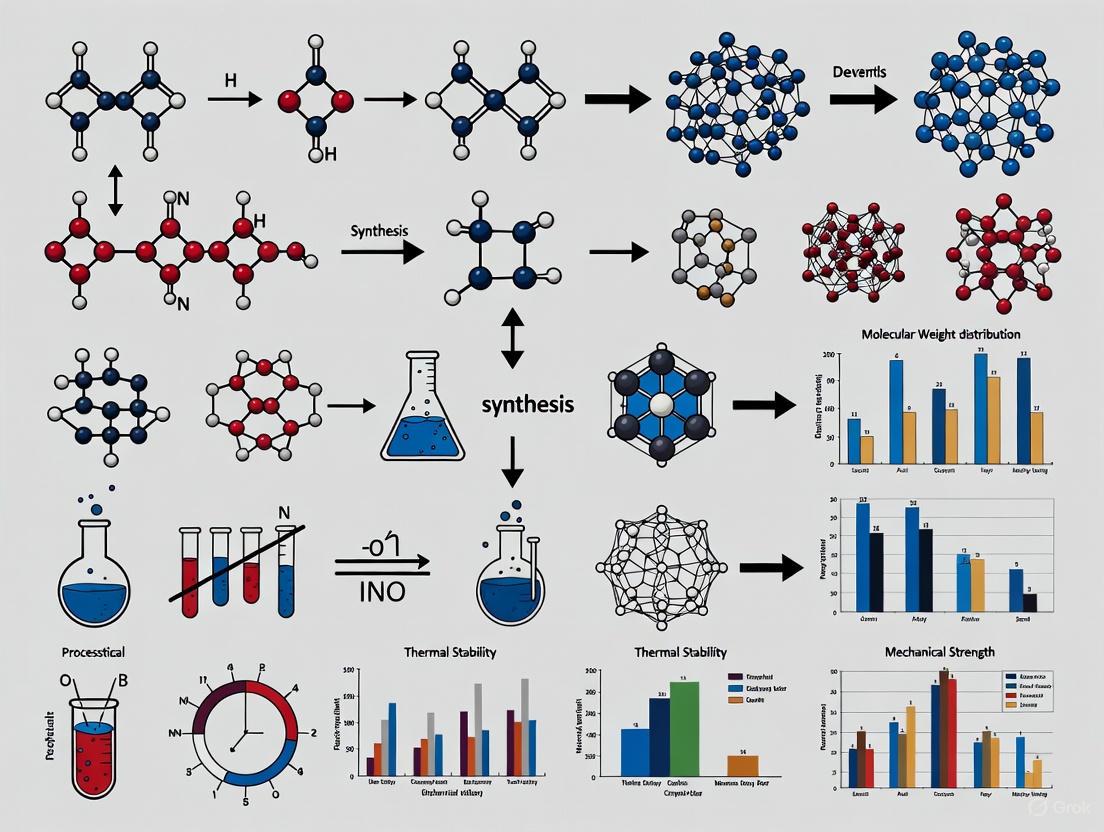
This article provides a comprehensive overview of the latest advancements in novel polymer materials, tailored for researchers, scientists, and drug development professionals.
Novel Polymer Materials: From Sustainable Discovery to Advanced Drug Delivery Applications
Abstract
This article provides a comprehensive overview of the latest advancements in novel polymer materials, tailored for researchers, scientists, and drug development professionals. It explores the foundational chemistry of emerging polymers, including sustainable alternatives, multilayer 3D structures, and molecularly imprinted polymers (MIPs). The scope extends to advanced synthesis methodologies, characterization techniques, and direct applications in controlled drug delivery, biomedical devices, and intelligent systems. The content also addresses key challenges in optimization and scalability, while offering comparative analyses of material performance to validate their potential in revolutionizing biomedical research and clinical applications.
Exploring the Next Generation: The Chemistry and Types of Novel Polymers
The field of polymer science is undergoing a profound transformation, driven by the dual imperatives of environmental sustainability and advanced functionality. Novel polymer materials are no longer defined solely by their mechanical properties or cost-effectiveness but by their lifecycle impact and intelligent, adaptive behaviors. This evolution frames a new research paradigm where materials are designed from their inception for circularity, smart responsiveness, and application-specific performance. The integration of sustainability goals with cutting-edge polymer chemistry and processing techniques is paving the way for next-generation materials capable of addressing some of the most pressing global challenges in healthcare, energy, and environmental management [1] [2].
This whitepaper delineates the core principles and methodologies defining this new class of polymers. It explores the scientific foundation of sustainable feedstocks and end-of-life solutions, the engineering of polymers that respond dynamically to environmental stimuli, and the sophisticated characterization techniques required to understand their complex structures and behaviors. Aimed at researchers and scientists, this document provides a technical framework for the discovery and development of advanced polymeric materials, complete with experimental protocols, analytical tools, and data presentation standards essential for rigorous research in this rapidly advancing field.
The Pillars of Sustainable Polymer Design
Sustainable polymer design is built upon a multi-faceted strategy that encompasses the entire lifecycle of the material, from its origin to its ultimate fate. This approach is critical for reducing the environmental footprint of polymeric materials while maintaining the performance required for modern applications.
Bio-based and Renewable Feedstocks
The shift from petroleum-based monomers to feedstocks derived from biomass—such as plants, algae, and waste biological matter—represents a cornerstone of sustainable polymer science. These renewable raw materials not only decrease reliance on fossil fuels but can also offer novel chemical structures that lead to unique material properties. The challenge lies in developing efficient catalytic and metabolic pathways for the conversion of complex biomolecules into polymerizable monomers without incurring prohibitive energy costs or environmental damage [2].
Recyclability and Circular Economy Integration
Designing for circularity is paramount. This involves creating polymers that can be efficiently broken down and repurposed after use. Key strategies include:
- Mechanical Recycling: The physical reprocessing of plastics, which requires materials that can withstand multiple processing cycles without significant degradation of properties.
- Chemical Recycling: The depolymerization of plastics back to their monomers or other valuable chemicals, allowing for the production of new polymers of virgin quality. Innovative processes, such as the solid dielectric heatable coating for expanded polypropylene (ePP) that is reversible in hot water, exemplify this approach by enabling the recycling of complex welded components [2].
- Biodegradability: For applications where recycling is not feasible, designing polymers that can safely biodegrade in specific environments (e.g., industrial composting, marine environments) without leaving behind persistent microplastics or toxic residues [1].
The research highlights the importance of not demonizing traditional, fuel-based polymers but instead improving their circularity, as they remain essential for many high-performance applications in medicine, energy, and engineering [2].
Smart and Functional Polymer Systems
Smart polymers are engineered to exhibit significant, predetermined changes in their properties in response to subtle environmental stimuli. This responsiveness enables sophisticated functions for advanced technologies.
Table 1: Classes of Smart Polymers and Their Applications
| Stimulus | Polymer Class Example | Mechanism of Action | Potential Application |
|---|---|---|---|
| Temperature | Poly(N-isopropylacrylamide) | Chain collapse/expansion at Lower/Upper Critical Solution Temperature (LCST/UCST) | Switchable filtration devices, drug delivery [3] |
| pH | Polyacids/Polybases | Protonation/Deprotonation alters chain charge & solubility | Oral drug delivery (responsive to gut pH) |
| Light | Azobenzene-containing polymers | Photo-isomerization induces mechanical stress | Optical data storage, micro-actuators |
| Chemical/Biomolecule | Molecularly Imprinted Polymers (MIPs) | Selective binding to tailored cavities | Sensors, selective extraction (e.g., PGA from urine) [2] |
A prime example of advanced functionality is the development of Molecularly Imprinted Polymers (MIPs). As demonstrated by Jamoussi et al., a novel MIP for phenyl glyoxylic acid (PGA) was synthesized using a central statistical design. The MIP showed exceptional selectivity and affinity, with recoveries of 97.32% to 99.06% from urine samples and the potential for at least three reuses without significant performance loss [2]. This showcases the potential of smart polymers for precise chemical recognition and separation.
Furthermore, the modification of traditional materials with smart chemistry can yield significant improvements. The functionalization of historical violin varnishes with the cross-linking agent GLYMO resulted in enhanced durability, greater photostability, and improved scratch resistance, demonstrating the potential for smart modifications to preserve cultural heritage [2].
Essential Characterization Techniques for Novel Polymers
A thorough understanding of a polymer's chemical structure, morphology, and properties is critical for both research and development. Characterization is typically approached in tiers, from basic identification to deep de-formulation.
Table 2: Tiered Polymer Characterization Techniques
| Tier | Technique | Key Information Obtained | Application Example |
|---|---|---|---|
| Tier I | Fourier-Transform Infrared Spectroscopy (FTIR) | Chemical functional groups, polymer type | Rapid identification of a generic polymer family (e.g., PP, PA) [4] |
| Tier II | Differential Scanning Calorimetry (DSC) | Glass transition (Tg), melting point (Tm), crystallinity | Determining processing temperatures and thermal stability. |
| Tier III | Nuclear Magnetic Resonance (NMR) | Precolymer backbone structure, tacticity, copolymer composition | Deconstructing complex molecules like thermoplastic urethanes [4] |
| Tier III | Gel Permeation Chromatography (GPC) | Molecular weight (Mn, Mw) and dispersity (Đ) | Relating molecular weight distribution to processability and mechanical performance [4] |
| Tier III | Mass Spectrometry (GC/MS, LC/MS) | Identification of low-concentration additives (e.g., antioxidants, slip agents) | Reverse-engineering a polymer's additive package at ppm levels [4] |
| Surface | Contact Angle Goniometry | Critical surface tension, surface free energy, hydrophilicity/hydrophobicity | Predicting adhesion, coating, and biocompatibility [5] |
Tier III analysis is particularly crucial for understanding advanced and smart polymers, as it reveals the additives and subtle structural features that dictate their specialized performance. Techniques like NMR can construct the backbone structure, while GPC provides an exact measurement of molecular weight and distribution, which affects both processability and final mechanical properties [4]. For smart polymers, whose function often depends on specific interactions at the molecular level, this depth of analysis is indispensable.
Experimental Protocols and Methodologies
Design of Experiments (DoE) for Polymerization Optimization
The conventional "one-factor-at-a-time" (OFAT) approach to experimentation is inefficient and can fail to reveal critical interactions between process variables. Design of Experiments (DoE) is a powerful statistical method that systematically explores the entire experimental space to build predictive models and identify optimal conditions with minimal resource expenditure [3].
The following workflow diagram outlines the key stages of a DoE-based optimization for a polymerization process, such as the RAFT polymerization of methacrylamide (MAAm) detailed in the search results [3].
Protocol: Optimizing a Thermally Initiated RAFT Polymerization using DoE [3]
- 1. Objective Definition: Define the target properties of the polymer. For a RAFT polymerization, this typically includes high monomer conversion, target molecular weight (Mn, th), and low dispersity (Đ).
- 2. Factor and Range Selection: Identify the numerical factors to be investigated and their high/low levels. For RAFT of MAAm, this includes:
- Factor A: Reaction Temperature (T)
- Factor B: Reaction Time (t)
- Factor C: Monomer-to-RAFT agent ratio (RM)
- Factor D: Initiator-to-RAFT agent ratio (RI)
- Factor E: Solids content in solvent (ws)
- 3. Experimental Design: Select an appropriate design, such as a Face-Centered Central Composite Design (FC-CCD), which efficiently explores the factor space and allows for the modeling of quadratic effects.
- 4. Polymerization Execution: Conduct all polymerizations as per the experimental design matrix.
- Materials: Methacrylamide (MAAm), RAFT agent (e.g., CTCA), thermal initiator (e.g., ACVA), solvent (e.g., water), and an internal standard for NMR (e.g., DMF).
- Procedure: a. Dissolve MAAm and CTCA in the solvent. b. Add the initiator (ACVA) via a stock solution. c. Add internal standard DMF. d. Homogenize the mixture and purge with N2 for 10 min. e. Stir the reaction vessel at the target temperature for the specified time. f. Quench the polymerization by rapid cooling and exposure to air. g. Sample for 1H NMR analysis to determine monomer conversion. h. Precipitate the polymer into ice-cold acetone, filter, and dry in vacuo.
- 5. Data Analysis and Modeling: Analyze the responses (conversion, Mn, Đ) for each experiment. Use statistical software to perform regression analysis and build a Response Surface Model for each output. The model will generate equations that predict the outcomes based on the factor levels.
- 6. Validation: Run additional experiments at the optimal conditions predicted by the model to validate its accuracy.
Protocol for Polymer Blend Compatibilization
Immiscible polymer blends require compatibilizers to improve interfacial adhesion and achieve desired properties.
- Objective: To enhance the properties of a 50/50 immiscible blend of isotactic Polypropylene (iPP) and Polyamide 6 (PA6).
- Materials: iPP, PA6, and interfacial agents like succinic anhydride-grafted atactic polypropylene (aPP-SASA or aPP-SFSA).
- Procedure:
- Dry both iPP and PA6 pellets thoroughly to prevent hydrolysis during processing.
- Pre-mix the iPP and PA6 pellets at a 50/50 ratio by weight.
- Add the interfacial agent (e.g., 2-5 wt% of the total blend).
- Compound the mixture using a twin-screw extruder or an internal mixer under controlled temperature and shear conditions.
- Injection mold the compounded material into test specimens under confined flow conditions.
- Analysis: Characterize the compatibilized blend using:
- Dynamic Mechanical Analysis (DMA): To observe shifts in the tan δ peaks, indicating improved interfacial adhesion [2].
- Scanning Electron Microscopy (SEM): To analyze the morphology and reduction in domain size of the dispersed phase.
- Wide-Angle/Small-Angle X-ray Scattering (WAXS/SAXS): To investigate crystal morphology and confirm the absence of co-crystallization [2].
The Scientist's Toolkit: Research Reagent Solutions
The following table details key reagents and materials essential for research in novel polymer synthesis and analysis.
Table 3: Essential Reagents and Materials for Polymer Research
| Reagent/Material | Function/Application | Example Use Case |
|---|---|---|
| RAFT/MADIX Agents | Mediate Controlled Radical Polymerization, enabling precise control over Mn and Đ. | Synthesis of well-defined block copolymers and smart materials like UCST polymers [3]. |
| Functional Monomers | Provide stimuli-responsiveness or specific chemical handles for post-polymerization. | Synthesis of Molecularly Imprinted Polymers (MIPs) for sensor applications [2]. |
| Cross-linking Agents | Increase network density, improving mechanical strength and chemical resistance. | Enhancing the durability of traditional varnishes (e.g., with GLYMO) [2]. |
| Interfacial Agents | Act as compatibilizers in immiscible polymer blends, reducing interfacial tension. | Stabilizing the morphology of iPP/PA6 blends for improved performance [2]. |
| Hansen Solubility Parameters | Predict polymer solubility, swelling, and compatibility with solvents/other polymers. | Used in data tables to guide solvent selection for processing and analysis [5]. |
Data Presentation and Standardization
Effective communication of polymer research data requires clear and consistent presentation, especially for quantitative results.
Table 4: Key Quantitative Data from Cited Research
| Polymer System | Key Parameter | Reported Value | Experimental Condition | Characterization Method |
|---|---|---|---|---|
| PMAAm (RAFT) | Monomer Conversion | 42.7% | RM=350, T=80°C, t=260 min | 1H NMR [3] |
| PMAAm (RAFT) | Theoretical Mn (Mn, th) | 12.8 kDa | RM=350, T=80°C, t=260 min | Calculation [3] |
| PMAAm (RAFT) | Apparent Mn | 6.2 kDa | RM=350, T=80°C, t=260 min | GPC [3] |
| PMAAm (RAFT) | Dispersity (Đ) | 1.0 (Target) | RM=350, T=80°C, t=260 min | GPC [3] |
| MIP for PGA | Analyte Recovery | 97.32 - 99.06% | Optimized MISPE conditions | HPLC [2] |
| MIP for PGA | Reusability Cycles | 3 | -- | HPLC [2] |
| iPP/PA6 Blend | Interfacial Agent | 2-5 wt% | 50/50 iPP/PA6 blend | DMA, WAXS/SAXS [2] |
For surface property characterization, data should be presented as the arithmetic mean with standard deviation and the number of data points (n) clearly indicated, as this accounts for variance across different methodologies and laboratories [5]. This practice is essential for ensuring the reliability and reproducibility of research data, which is the bedrock of scientific advancement in polymer science.
The global plastics industry faces a pivotal challenge: reconciling the indispensable utility of polymers with their escalating environmental impact. Sustainable polymers—encompassing biobased, biodegradable, and recyclable solutions—represent a paradigm shift toward mitigating this impact. Framed within the context of novel polymer research, this transition is not merely a substitution of feedstocks but a fundamental reimagining of material design, functionality, and end-of-life. The drive for sustainability is catalyzed by the urgent need to defossilize the materials sector; approximately two-thirds of the total carbon footprint of plastics originates from the fossil carbon embedded within the polymer itself [6]. Without intervention, the embedded carbon from plastics production could reach three gigatonnes of CO₂ by 2050, profoundly impacting the remaining global carbon budget [6]. This whitepaper provides a comprehensive technical guide to the current state, discovery methodologies, and applications of sustainable polymers, serving researchers and scientists dedicated to pioneering the next generation of materials.
Technical Foundations of Sustainable Polymers
Definitions and Key Concepts
- Biobased Polymers: Polymers derived from renewable biological resources, such as biomass. Their key identifier is the renewable carbon content, measurable via standards like ASTM D6866 [7]. It is critical to note that "biobased" does not inherently imply "biodegradable."
- Biodegradable Polymers: Materials capable of being broken down by microorganisms into natural byproducts like water, carbon dioxide, and biomass. This process depends on chemical structure more than the raw material source and occurs through specific biological and abiotic mechanisms [8] [7].
- Circular Economy: An industrial system that is restorative by design, aiming to eliminate waste and keep materials in continuous loops of use. For polymers, this integrates renewable feedstocks, design for recyclability, and effective end-of-life management to create closed-loop systems [9].
Mechanisms of Polymer Biodegradation
Biodegradation is a complex process influenced by polymer structure and environmental conditions. The primary mechanism occurs in three sequential stages [7] [10]:
- Biodeterioration: Abiotic environmental factors (heat, moisture, UV light) compromise the polymer's physical and chemical integrity, increasing surface area for microbial attack.
- Biofragmentation: Microorganisms secrete extracellular enzymes that cleave polymer chains into lower molecular weight fragments and oligomers.
- Assimilation: Microbial cells uptake these fragments and metabolize them for energy, producing final byproducts such as CO₂, H₂O, and CH₄.
The rate and extent of degradation are governed by factors including chemical composition, molecular weight, crystallinity, and environmental conditions (e.g., pH, temperature, microbial consortia) [8] [7]. The diagram below illustrates this sequential process.
Major Classes of Sustainable Polymers: A Comparative Analysis
Sustainable polymers are categorized by their origin and biodegradability, each with distinct properties, trade-offs, and applications.
Table 1: Comparative Analysis of Key Sustainable Polymers [8] [11] [7]
| Polymer | Type (Bio-based/ Biodegradable) | Key Properties | Advantages | Limitations | Primary Applications |
|---|---|---|---|---|---|
| PLA (Polylactic Acid) | Bio-based, Biodegradable | High strength, stiffness, clarity | Renewable sourcing, compostable | Brittleness, low heat resistance | Packaging, textiles, 3D printing |
| PHA (Polyhydroxy-alkanoates) | Bio-based, Biodegradable | Biocompatibility, versatile properties | Marine biodegradable, high biocompatibility | High production cost, complex processing | Biomedical, agriculture, packaging |
| PCL (Polycaprolactone) | Synthetic, Biodegradable | Low melting point, high elasticity | Easy to process, good blend compatibility | Low mechanical strength | Drug delivery, compost bags |
| Cellulose Derivatives (CA, CMC) | Bio-based, Biodegradable | Excellent film-forming, gas barrier | Abundant feedstock, good barrier properties | Moisture sensitivity | Films, coatings, encapsulation |
| Starch Composites | Bio-based, Biodegradable | Low cost, readily available | Low cost, highly biodegradable | Poor mechanical, high water permeability | Loose-fill packaging, bags |
Market Landscape and Growth Trajectory
The sustainable polymer market is experiencing dynamic growth, significantly outpacing the conventional polymer market. Current data and projections illustrate this trend.
Table 2: Global Market Overview and Projections for Bio-based Polymers [11] [12]
| Metric | Current Status (2024-2025) | Projection (2035) | Compound Annual Growth Rate (CAGR) |
|---|---|---|---|
| Global Production Volume | ~4.2 million tonnes | 25-30 million tonnes | 13-15% |
| % of Total Polymer Production | ~1% | 4-5% | - |
| USA Market Value | USD 2.3 billion | USD 5.5 billion | 9.0% |
| Leading Application (by share) | Packaging (62%) | - | - |
| Fastest-growing Regional Market | - | - | West USA (10.4% CAGR) |
Advanced Discovery Methodologies for Novel Polymers
The discovery of new polymer materials is being revolutionized by high-throughput and computational approaches that dramatically accelerate the exploration of a vast chemical design space.
Autonomous Discovery Workflows
A cutting-edge approach involves closed-loop systems that integrate algorithmic design with robotic experimentation. As demonstrated by MIT researchers, one such platform can identify, mix, and test up to 700 polymer blends per day [13]. The workflow employs a genetic algorithm that treats polymer blend compositions as digital chromosomes, iteratively improving them based on experimental feedback. This method has proven particularly effective for optimizing properties like thermal stability for enzymes, where the best-performing blends often outperform their individual components [13]. The process is illustrated below.
AI and Machine Learning in Polymer Informatics
Beyond physical experimentation, in silico screening is becoming a powerful tool. Machine learning (ML) models, particularly feed-forward neural networks, are trained on existing polymer data to predict key properties such as thermal stability and dielectric performance before synthesis [14]. This approach allows for the high-throughput virtual screening of thousands of potential structures, prioritizing the most promising candidates for laboratory validation. The goal of these digital tools is to navigate the immense chemical space of potential polymers, a task that is "impossible in reasonable time with conventional methods" [15].
The Scientist's Toolkit: Key Research Reagents and Materials
Table 3: Essential Reagents and Materials for Sustainable Polymer Research
| Item | Function in R&D | Application Context |
|---|---|---|
| Polylactic Acid (PLA) | A benchmark biopolymer; often used as a base resin for blending and composite formation. | Packaging, 3D printing, biodegradation studies [8] [10]. |
| Polyhydroxyalkanoates (PHA) | Model bio-polyester for studying microbial production and true biodegradability in various environments. | Marine biodegradation, biomedical implants [8] [11]. |
| Chitosan (CN) | A natural biopolymer used to impart antimicrobial properties and improve film barrier performance. | Active food packaging, wound dressings [7] [10]. |
| Starch (SC) | A low-cost, renewable filler or matrix component for creating biodegradable composites. | Disposable packaging, agricultural films [7] [10]. |
| Carboxymethyl Cellulose (CMC) | A water-soluble cellulose derivative used for its film-forming and thickening capabilities. | Edible coatings, hydrogel matrices [7] [10]. |
| Compatibilizers | Chemicals added to improve adhesion between immiscible polymer phases in a blend. | Essential for creating high-performance PLA/starch or PLA/PHA blends [8] [7]. |
| Organic Peroxides | Free-radical initiators used to crosslink polymer chains, enhancing thermal and mechanical properties. | Improving heat resistance of biopolymers like PLA [7]. |
Applications and Performance in Key Sectors
Sustainable Packaging
Packaging is the largest application segment for sustainable polymers, accounting for approximately 62% of demand in the USA [12]. The primary drivers include regulatory pressure on single-use plastics and brand sustainability commitments. Biopolymers like PLA and PHA are used in rigid containers, flexible films, and coatings. A major research focus is overcoming inherent limitations such as inferior gas barrier properties and moisture sensitivity compared to conventional plastics like PET and PP [10] [6]. Strategies to enhance performance include:
- Nanocomposites: Reinforcing polymers with nano-sized clays or cellulose nanocrystals to improve barrier and mechanical properties.
- Multilayer Structures: Combining layers of different biopolymers to achieve a collective performance that a single material cannot, while maintaining overall compostability [9] [10].
Biomedical and Electronics Applications
The biocompatibility and controlled degradability of certain polymers make them ideal for advanced applications.
- Biomedical: PHAs and PLAs are used for resorbable sutures, drug delivery vehicles, and tissue engineering scaffolds [8] [7]. Their degradation rates can be tuned via molecular weight and crystallinity.
- Green Electronics: Research is exploring biodegradable polymers for transient electronics, triboelectric nanogenerators, and as dielectric materials in supercapacitors [8] [14]. For instance, machine learning has recently accelerated the discovery of polysulfates as excellent heat-resistant dielectric polymers for energy storage [14].
Challenges and Future Research Directions
Despite significant progress, several scientific and technical hurdles remain.
- Performance-Cost Trade-off: Balancing the mechanical/barrier properties and production cost of biopolymers to compete with incumbents [10] [6].
- Controlled Degradation: Ensuring predictable degradation rates under specific real-world conditions (e.g., marine, soil, industrial compost) remains a challenge [8] [7].
- End-of-Life Management: Confusion around terms like "biodegradable" and "compostable" leads to contamination in recycling streams. A clear regulatory framework and improved waste infrastructure are critical [10] [6].
- Scalable Production: Transitioning from lab-scale synthesis to cost-effective industrial manufacturing for novel polymers like PEF and PHAs [11].
Future research needs to focus on:
- AI-Driven Material Design: Fully leveraging machine learning for the inverse design of polymers with predefined properties [8] [15].
- Novel Feedstocks: Utilizing non-food biomass, CO₂, and waste streams as carbon sources for polymer production to enhance sustainability and reduce land-use impact [11] [6].
- Advanced Recycling: Developing chemical and enzymatic recycling pathways to handle biodegradable polymers and create a true circular economy [9].
The rise of sustainable polymers is an integral component of the global strategy to defossilize the materials sector and establish a circular economy. The field is rapidly evolving, driven by multidisciplinary research that combines traditional polymer science with breakthroughs in biotechnology, robotic automation, and artificial intelligence. While challenges in performance, cost, and end-of-life management persist, the convergence of technological innovation, regulatory support, and shifting market dynamics is creating unprecedented momentum. For researchers and scientists, this landscape offers a fertile ground for discovery, with the potential to develop novel polymer materials that meet the highest technical standards while aligning with the imperative of environmental sustainability.
The convergence of advanced polymer science and functional material design has catalyzed the emergence of multilayer three-dimensional (3D) polymers with controlled chiral properties. These architectures represent a paradigm shift in polymer materials research, moving beyond traditional linear polymers to complex 3D networks with precisely engineered interfaces and functionality gradients. Chirality, the geometric property of molecular non-superimposability on mirror images, plays a critical role in determining optical, mechanical, and biological interactions in polymeric systems [16]. The hierarchical emergence of chirality—from molecular building blocks to supramolecular assemblies—enables unprecedented control over material properties including optical activity, mechanical response, and molecular recognition capabilities [16].
This technical guide examines recent breakthroughs in the synthesis, characterization, and application of multilayer 3D chiral polymers, with particular emphasis on their implications for pharmaceutical development and advanced material systems. The integration of chiral control within multilayer 3D architectures establishes a foundation for next-generation smart materials with applications spanning drug separation membranes, optoelectronics, and biomedical devices [17] [18] [19].
Fundamental Chirality Concepts in Polymer Science
Hierarchical Chirality Manifestations
Chirality in polymeric systems manifests across multiple structural hierarchies, each contributing distinct functional attributes:
Central Chirality: Originates from stereogenic centers within monomeric building blocks, typically carbon atoms with four different substituents [16] [20]. This atomic-level asymmetry forms the foundation for higher-order chiral structures.
Backbone/Helical Chirality: Emerges from the constrained conformation of polymer main chains, forming helical structures with preferred handedness [16]. This secondary chirality directly influences macromolecular properties including optical activity and mechanical anisotropy.
Supramolecular Chirality: Arises from the organized self-assembly of multiple polymer chains into higher-order structures with chiral morphology [16]. This level of organization enables advanced functions such as chiral recognition and enantioselective transport.
Table 1: Hierarchical Manifestations of Chirality in Polymeric Systems
| Chirality Level | Structural Origin | Key Characterization Techniques | Functional Significance |
|---|---|---|---|
| Central Chirality | Stereogenic centers in monomers | Chiral HPLC, Optical Polarimetry | Determines fundamental interactions with biological systems |
| Backbone/Helical Chirality | Polymer chain conformation | Circular Dichroism (CD), VCD | Controls optical properties and mechanical anisotropy |
| Supramolecular Chirality | Chain assembly morphology | AFM-IR, Cryo-EM, Scanning Electron Microscopy | Enables chiral recognition and selective transport |
Pharmaceutical Significance of Chirality
The biological activity of chiral compounds exhibits profound stereodependence, where enantiomers can demonstrate dramatically different pharmacological profiles [21] [20]. This principle underpins regulatory preferences for single-enantiomer drugs, with approximately 40% of pharmaceuticals possessing chiral characteristics [18] [20]. Tragic historical examples, most notably thalidomide—where one enantiomer provided therapeutic effect while its mirror image caused severe birth defects—highlight the critical importance of chiral control in drug development [21] [20]. Beyond pharmacology, chiral polymers enable advanced separation technologies essential for producing enantiopure pharmaceuticals at industrial scales [18].
Synthesis of Multilayer 3D Chiral Polymers
Synthetic Approaches and Methodologies
Recent advances have established robust methodologies for constructing multilayer 3D polymers with controlled chirality:
Suzuki Cross-Coupling Polymerization: A pioneering approach utilizes 1,3,5-tris(4,4,5,5-tetramethyl-1,3,2-dioxaborolan-2-yl)benzene coupled with 1,8-dibromonaphthalene derivatives via 1,3,5-position coupling to generate multilayered 3D architectures [17]. This method enables precise spatial control over polymer growth, forming well-defined 3D networks rather than linear chains.
Chiral SuFEx Click Chemistry: Sulfur Fluoride Exchange (SuFEx) polymerization represents an emerging sustainable approach for creating chiral polymers with controlled stereochemistry [16]. This click-chemistry method facilitates the efficient assembly of chiral building blocks into high-molecular-weight polymers while maintaining enantiopurity.
Multi-Material Additive Manufacturing: Advanced fabrication techniques enable the direct printing of metal-polymer heterogeneous architectures with integrated functionality [22]. Methods such as Electrical Field-assisted Heterogeneous Material Printing (EF-HMP) allow precise metal patterning on polymer substrates at room temperature, creating composite structures with tailored properties [22].
Experimental Protocol: Suzuki Cross-Coupling Polymerization
Materials and Equipment:
- 1,3,5-Tris(4,4,5,5-tetramethyl-1,3,2-dioxaborolan-2-yl)benzene (316.8 mg, 0.8 mmol)
- 1,8-Dibromonaphthalene (228.8 mg, 0.8 mmol) or derivatives
- Palladium catalyst (Pd[S-BINAP]Cl₂, 32 mg, 0.04 mmol)
- Potassium carbonate (K₂CO₃, 439 mg, 3.2 mmol)
- Anhydrous tetrahydrofuran (THF, 10 mL)
- Degassed water (2 mL)
- Schlenk line or argon/vacuum manifold
- Heated oil bath with temperature control
Procedure:
- Charge an oven-dried 50 mL round-bottom flask with boronic ester monomer, dibromonaphthalene monomer, palladium catalyst, and potassium carbonate under inert atmosphere.
- Add anhydrous THF and degassed water to the reaction vessel.
- Degas the reaction mixture via freeze-pump-thaw cycling (3 cycles) or argon purging.
- Heat the reaction at 88°C for 96 hours with continuous stirring.
- Cool the mixture to room temperature and precipitate into acidified methanol (HCl/MeOH).
- Isolate the polymer via Buchner funnel filtration, followed by sequential washing with methanol and water.
- Dry the resulting solid under vacuum to constant weight, yielding dark green polymeric product [17] [19].
Key Considerations:
- Strict exclusion of oxygen and moisture is critical for achieving high molecular weights.
- Chiral reaction conditions can be introduced through chiral ligands or chiral monomers to impart helicity to the polymer backbone.
- Molecular weight control can be achieved through monomer stoichiometry adjustments and reaction time optimization.
Table 2: Characterization Data for Synthesized Multilayer 3D Polymers
| Polymer | Yield (%) | Mw (Da) | Mn (Da) | PDI | [α]D²⁰ (in THF) | Reaction Conditions |
|---|---|---|---|---|---|---|
| 3 | 54 | 10,168 | 9,867 | 1.030 | — | Achiral |
| 4 | 35 | 7,781 | 7,325 | 1.062 | -4° (c=0.1) | Chiral |
| 5 | 35 | 8,183 | 5,520 | 1.482 | — | Achiral |
| 6 | 41 | 5,235 | 4,153 | 1.261 | -5° (c=0.1) | Chiral |
Characterization Techniques for Chiral Polymers
Bulk Characterization Methods
Comprehensive characterization of multilayer 3D chiral polymers requires multi-modal analytical approaches:
Gel Permeation Chromatography (GPC): Determines molecular weight distributions and polydispersity indices (PDI). Typical instrumentation includes TOSOH EcoSEC HLC-8420 GPC system with refractive index and UV detectors, using polystyrene standards for calibration [17] [19].
Circular Dichroism (CD) Spectroscopy: Probes chiral organization at molecular and supramolecular levels through differential absorption of left and right circularly polarized light. CD provides critical information about helical secondary structures and their stability under varying environmental conditions [17] [16].
Vibrational Circular Dichroism (VCD): Extends CD principles to infrared region, enabling characterization of chiral structures through their vibrational transitions. VCD offers enhanced sensitivity to local stereochemical environments [16].
Chiral High-Performance Liquid Chromatography (Chiral-HPLC): The primary analytical method for determining enantiomeric purity and monitoring chiral inversion processes. This technique is essential for quality control in pharmaceutical applications [20].
Single-Molecule and Nanoscale Characterization
Advanced techniques now enable characterization at previously inaccessible length scales:
Atomic Force Microscopy with Infrared Spectroscopy (AFM-IR): Combines topographical imaging with chemical analysis at nanoscale resolution. Recent developments in acoustical-mechanical suppressed AFM-IR achieve single-chain sensitivity on non-metallic surfaces, enabling correlation between morphology and chemical structure [16].
Photothermal Infrared Nanospectroscopy: Allows chemical-structural analysis of individual polymer chains by detecting local thermal expansion induced by infrared absorption. This method has been crucial for identifying the hierarchical emergence of chirality from monomers to supramolecular assemblies [16].
Cryogenic Electron Microscopy (Cryo-EM): Provides high-resolution (sub-nanometer) imaging of helical polymer structures under native conditions, though limited by computational reconstruction requirements and sampling constraints [16].
Pharmaceutical and Separation Applications
Chiral Separation Membranes
Solid chiral membranes represent a transformative technology for enantiomeric separation in pharmaceutical manufacturing:
Membrane Fabrication Methods:
- Direct Membrane Formation: Creating freestanding chiral polymeric films through solution casting or in-situ polymerization [18].
- Substrate Modification: Functionalizing existing membrane supports with chiral selectors through surface immobilization or grafting [18].
- Molecular Imprinting: Generating specific chiral recognition sites within polymer matrices complementary to target enantiomer geometry [18].
Separation Mechanisms:
- Direct Blocking: Selective exclusion of one enantiomer based on size and stereochemical compatibility [18].
- Promoted Transport: Facilitated diffusion of the preferred enantiomer through specific chiral interactions [18].
- Delayed Transport: Differential retardation of one enantiomer due to stronger interactions with chiral selectors [18].
Material Platforms:
- Cyclodextrin-Based Membranes: Utilize naturally chiral cyclodextrin cavities for enantioselective inclusion complex formation [18].
- Chiral Covalent Organic Frameworks (COFs): Engineered crystalline porous materials with predetermined chirality for high-resolution separations [18].
- Biomimetic Polymer Membranes: Incorporate biological chiral selectors such as bovine serum albumin (BSA) or cellulose derivatives [18].
Drug Development Applications
The intersection of chiral polymers and pharmaceuticals manifests in several critical applications:
Enantiopure Drug Synthesis: Multilayer 3D chiral polymers serve as heterogeneous catalysts or reusable platforms for asymmetric synthesis, enabling efficient production of single-enantiomer pharmaceuticals [21] [20].
Drug Delivery Systems: Chiral polymer architectures provide platforms for controlled drug release with enantioselective delivery capabilities, potentially enhancing therapeutic efficacy while minimizing side effects [21].
Analytical Separation Media: Chiral stationary phases based on multilayer 3D polymers offer enhanced resolution for analytical and preparative separation of enantiomers during drug development and quality control [18] [20].
Research Reagent Solutions
Table 3: Essential Research Reagents for Chiral Polymer Synthesis and Characterization
| Reagent/Material | Function/Purpose | Specific Examples | Application Notes |
|---|---|---|---|
| Boronic Ester Monomers | Suzuki coupling precursors for 2D/3D polymer growth | 1,3,5-Tris(4,4,5,5-tetramethyl-1,3,2-dioxaborolan-2-yl)benzene | Key for 1,3,5-position coupling to create multilayered architectures [17] |
| Dihalo Aromatic Monomers | Cross-coupling partners in Suzuki polymerization | 1,8-Dibromonaphthalene, 1,8-Dibromo-2,7-dimethoxynaphthalene | Planar structures promote π-π stacking and ordered assembly [17] [19] |
| Chiral Ligands/Catalysts | Impart and control helicity in polymer backbones | Pd[S-BINAP]Cl₂, Chiral phosphines | Critical for achieving enantioselective polymerization [19] [16] |
| Chiral Selectors | Create enantioselective recognition sites | Cyclodextrins, BSA, Amino acids | Essential for fabricating chiral separation membranes [18] |
| Chiral HPLC Columns | Analyze enantiomeric purity | Cyclodextrin-based, Protein-based, Pirkle-type | Required for quality control of chiral polymers and separation efficiency [20] |
Emerging Trends and Future Perspectives
The field of multilayer 3D chiral polymers continues to evolve rapidly, with several emerging trends shaping future research directions:
Multi-Material Additive Manufacturing: Advanced printing techniques enable the fabrication of heterogenous metal-polymer components with integrated functionalities [22]. Methods such as Electrical Field-assisted Heterogeneous Material Printing (EF-HMP) allow precise metal patterning on polymer substrates at room temperature, opening possibilities for chiral electronic devices and sensors [22].
Single-Molecule Characterization: Ultra-sensitive techniques like AFM-IR now enable chemical-structural analysis of individual polymer chains, providing unprecedented insights into the hierarchical emergence of chirality [16]. This capability is crucial for establishing definitive structure-property relationships in chiral polymer systems.
Sustainable Chiral Polymers: Emerging environmentally friendly polymerization methods, such as SuFEx click chemistry, offer sustainable routes to chiral polymers with controlled stereochemistry [16]. These approaches align with growing emphasis on green chemistry principles in materials research.
Advanced Separation Membranes: Continued innovation in chiral membrane technology addresses key challenges in pharmaceutical manufacturing, particularly through development of composite materials with enhanced selectivity and flux characteristics [18].
The integration of chiral control within multilayer 3D polymer architectures represents a frontier in advanced materials research with profound implications for pharmaceutical development, separation science, and functional materials design. As characterization techniques approach single-molecule resolution and synthetic methods achieve unprecedented stereochemical precision, this field promises to enable new generations of smart materials with tailored chiral functionality.
Molecularly Imprinted Polymers (MIPs) as Biomimetic Recognition Platforms
Molecularly Imprinted Polymers (MIPs) represent a class of synthetic, biomimetic materials designed with specific recognition sites for target molecules, artificially created through a polymerization process in the presence of a molecular template [23] [24]. These polymers effectively mimic natural molecular recognition mechanisms, such as antibody-antigen interactions, offering a versatile and robust alternative to biological recognition elements [25] [26]. The growing demand for early and precise disease diagnosis, coupled with the need for reliable environmental monitoring, has positioned MIPs as a transformative solution in modern precision medicine and analytical science [25]. Their significance in the broader context of novel polymer materials research lies in their customizability, stability, and cost-effectiveness, providing a platform technology for diverse applications ranging from clinical diagnostics to environmental remediation [27].
The fundamental principle behind molecular imprinting involves forming a polymer matrix around a target template molecule. Subsequent removal of this template leaves behind cavities that are complementary in shape, size, and functional group orientation, enabling the polymer to selectively rebind the target molecule [28]. This "lock and key" mechanism, first postulated by Emil Fischer, allows MIPs to recognize target molecules with high sensitivity and specificity, making them highly promising for numerous applications [23]. As research progresses, advancements in polymerization techniques, computational design, and sustainable materials are further enhancing the performance and scope of MIPs, solidifying their role as a critical component in the next generation of smart polymeric materials [29] [27].
Fundamental Principles and Synthesis of MIPs
Core Components and Molecular Recognition
The creation of a Molecularly Imprinted Polymer requires a precise combination of several key components, each playing a critical role in the formation of effective recognition sites. The process begins with a template molecule, which is the target analyte or a structurally similar analogue whose molecular features are to be imprinted [28]. Functional monomers are chosen for their ability to interact with the template via covalent, non-covalent, or semi-covalent bonds, forming a complex before polymerization [23]. The most common non-covalent interactions include hydrogen bonding, ionic interactions, van der Waals forces, and hydrophobic effects [28]. A cross-linker is incorporated to stabilize the template-monomer complex, impart mechanical stability to the polymer matrix, and create a rigid, porous three-dimensional structure that preserves the binding cavities after template removal [23]. The reaction is carried out in a porogenic solvent, which governs the porosity of the polymer and facilitates the diffusion of the template and other reagents. Finally, an initiator is used to start the polymerization reaction, which can be triggered by heat or light [23] [28].
The synthesis protocol follows a logical sequence, as illustrated in the workflow below.
Polymerization Methods
Various polymerization techniques are employed to synthesize MIPs, each conferring distinct morphological characteristics and suited for different applications [23].
- Bulk Polymerization: This is a conventional method where the template, functional monomers, cross-linker, initiator, and porogen are mixed in a solvent and polymerized via thermal or photo-initiation. The resulting monolithic polymer block is then ground, sieved, and the template is extracted. While simple, this method is time-consuming and produces irregularly shaped particles [23].
- Precipitation Polymerization: In this method, the monomer and initiator are dissolved in a solvent without stabilizers, leading to the precipitation of spherical MIPs as the polymer chains grow and become insoluble. This technique yields uniform, spherical particles in the nanometer to micrometer range [23].
- Suspension Polymerization: This is a one-step radical polymerization process where the pre-polymerization mixture (dispersed phase) is suspended as droplets in a continuous aqueous phase, often stabilized by a suspending agent like polyvinyl alcohol. It results in spherical MIP beads and allows control over particle size and porosity through the amount of porogen used [23].
- Emulsion Polymerization: This technique involves radical polymerization within micelles formed in an oil-in-water (O/W) emulsion system. A key difference from suspension polymerization is the use of a water-soluble initiator, which must diffuse into the micelles to initiate the reaction. Emulsion polymerization typically produces spherical nanoparticles with sizes ranging from 10 to 100 nm [23].
Table 1: Common Reagents for MIP Synthesis [23]
| Component Type | Example Reagents |
|---|---|
| Functional Monomers | Methacrylic acid (MAA), 4-Vinylpyridine, Acrylamide, N-Vinylimidazole |
| Cross-linkers | Ethylene glycol dimethacrylate (EGDMA), Divinyl benzene, N,N'-Methylenebis(acrylamide) |
| Initiators | Azobisisobutyronitrile (AIBN), Ammonium persulfate, Benzoyl peroxide |
| Porogenic Solvents | Acetonitrile, Toluene, Chloroform |
Computational Design and Rational Development
The traditional trial-and-error approach to MIP development is increasingly being supplanted by rational design strategies leveraging computational chemistry. This shift addresses the challenge of optimizing the numerous components and parameters involved in the imprinting process, which otherwise demands substantial resources [30]. Computational modeling now plays a pivotal role in predicting the behavior of the pre-polymerization mixture and selecting optimal components for a highly efficient MIP [30].
Quantum Chemical (QC) Calculations and Molecular Dynamics (MD) Simulations
Quantum Chemical (QC) Calculations are used at the initial stage to screen functional monomers and predict their interaction with the template molecule. By optimizing the geometries of the template and monomers and performing natural bond orbital (NBO) analysis, researchers can calculate the binding energy (∆Ebind) of different template-monomer complexes [30]. For instance, a study on sulfadimethoxine (SDM) found that carboxylic acid monomers like trifluoromethylacrylic acid (TFMAA) formed complexes with a high binding energy of -91.63 kJ/mol, indicating a stable pre-polymerization complex [30]. QC calculations help identify the most probable binding sites and the strongest-interacting monomers before any experimental work begins.
Molecular Dynamics (MD) Simulations build upon QC data by modeling the dynamic behavior of the entire pre-polymerization system in an explicit solvent. MD simulations can reveal how many monomer molecules can effectively bind to a single template and analyze hydrogen bond formation from perspectives such as hydrogen bond occupancy and radial distribution function (RDF) [30]. Recent research has defined quantitative parameters from MD simulations to evaluate imprinting efficiency:
- Effective Binding Number (EBN): The number of monomer molecules effectively bound to the template.
- Maximum Hydrogen Bond Number (HBNMax): The maximum number of hydrogen bonds formed between the template and monomers [30]. Higher values of EBN and HBNMax indicate a higher effective binding efficiency, guiding the selection of the optimal template-to-monomer ratio. For example, for SDM, MD simulations suggested that only two monomer molecules could bind to one template molecule, leading to an experimentally validated optimal molar ratio of 1:3 [30].
The synergy between computational and experimental methods is key to modern MIP development, as shown in the following logical flow.
Advanced MIP Formats and Applications
MIPs in Sensing and Clinical Diagnostics
The application of MIPs in sensing, particularly for clinical biomarker detection, has seen remarkable growth from 2021 to 2025 [25]. MIP-based sensors enhance the sensitivity and specificity of typical optical and electrochemical platforms by providing precise binding to analytes of choice in complex biological samples like serum, urine, and blood [25] [23]. They are employed in the detection of a wide array of clinically relevant targets:
- Cancer Biomarkers: Detection of Prostate-Specific Antigen (PSA), Alpha-Fetoprotein (AFP), Cancer Antigen 15-3 (CA15-3), and Human Epidermal Growth Factor Receptor 2 (HER-2) [26].
- Cardiac Biomarkers: Monitoring of Cardiac Troponin I (cTnI) for acute myocardial infarction (AMI) and Brain Natriuretic Peptide (BNP) for heart failure [26].
- Neurodegenerative Disease Biomarkers: Detection of proteins associated with Parkinson's disease (PD) and Alzheimer's disease (AD) [26].
- Viruses and Proteins: Development of sensors for direct detection of hepatitis C virus envelope protein and SARS-CoV-2 spike protein [25] [26].
A significant advancement in this area is the use of epitope imprinting for large biomolecules like proteins. Instead of imprinting the whole protein, which is costly and can lead to conformational issues, this method uses a short, characteristic peptide fragment (epitope) of the protein as the template [24]. This approach creates binding sites that selectively recognize the entire protein, offering improved binding affinity, specificity, and ease of template removal compared to whole-protein imprinting [24].
MIPs in Environmental Remediation and Other Fields
MIPs play a substantial role in addressing environmental hazards and chemical contaminants. Their high selectivity makes them ideal for the extraction and sensing of various pollutants in water [28] [27]:
- Pesticides: Malathion, chlorpyrifos, diazinon, and carbamates.
- Heavy Metals: Lead (Pb(II)) and zinc (Zn(II)) ions, often using ion-imprinted polymers (IIPs), a subset of MIPs [27]. One Pb(II)-IIP exhibited an adsorption capacity of 41.83 mg·g⁻¹ [27].
- Pharmaceutical Pollutants: Antibiotics, analgesics, hormones, and endocrine-disrupting chemicals (EDCs) like estradiol [27]. A composite nanofiber MIP for 17β-estradiol showed a fast binding capacity of 160.05 µg·g⁻¹ [27].
- Other Pollutants: Dyes and polycyclic aromatic hydrocarbons (PAHs).
Beyond sensing and environmental cleanup, MIPs are extensively used in chromatographic separation as stationary phases for the selective separation of enantiomers and other chemically similar compounds [28]. They are also explored in drug delivery systems for the controlled release of therapeutics [23] [28] and in catalysis, where they create tailored active sites that mimic enzymatic catalysis [29].
Emerging Trends and Future Perspectives
Sustainable and Biomass-Based MIPs
A prominent trend in MIP research is the move toward sustainability through the development of biomass-based MIPs (bio-based MIPs) [29]. These polymers are derived from biological resources and are characterized by their environmentally friendly properties, low cost, and abundant active functional groups. Bio-based MIPs are mainly categorized into:
- Biomass-derived carbon-based MIPs
- Polysaccharide-based MIPs (e.g., using chitosan, cellulose) [29].
The design strategies for these green MIPs emphasize computational modelling, controlled morphology, and stimuli-responsive design. Their applications are rapidly expanding into food analysis, biomedicine, environmental remediation, and catalysis, contributing to the creation of greener and more sustainable analytical methods [29].
Commercialization Challenges and Outlook
Despite a marked increase in scientific publications and proven potential in academic research, the commercialization of MIP-based sensors and devices remains limited [31]. Key challenges that need to be addressed to bridge this gap include:
- Classification and Standardization: There is ongoing debate and confusion in the literature regarding the classification of MIPs as chemosensors or biosensors, which needs resolution [31].
- Performance in Complex Media: Enhancing the performance and reliability of MIPs in real-world, complex samples like blood or wastewater is crucial.
- Scalability and Reproducibility: Developing manufacturing processes that ensure large-scale production with consistent quality is essential for commercial viability.
- Collaboration: Future progress hinges on more robust collaboration between academia and industry to translate laboratory innovations into marketable products [31].
The future research direction will likely focus on integrating MIPs with other advanced nanomaterials like graphene and carbon nanotubes to improve sensitivity, further leveraging computational tools for rational design, and expanding the library of templates for new and emerging analytes [27] [26].
The Scientist's Toolkit: Key Research Reagent Solutions
Table 2: Essential Materials for MIP Research and Development
| Reagent/Material | Function in MIP Development | Specific Examples & Notes |
|---|---|---|
| Functional Monomers | Interact with template to form pre-polymerization complex; define chemical complementarity of binding sites. | Methacrylic acid (MAA; for H-bonding/basic groups), 4-Vinylpyridine (for acidic templates), Acrylamide (for polar templates) [23] [30]. |
| Cross-linkers | Stabilize the polymer matrix; create rigid structure to preserve binding cavities after template removal. | Ethylene glycol dimethacrylate (EGDMA; common for methacrylate polymers), Divinyl benzene (for styrene-based systems) [23]. |
| Initiators | Generate free radicals to initiate the polymerization reaction. | Azobisisobutyronitrile (AIBN; thermal initiator), Ammonium persulfate (APS; often used with TEMED for redox initiation) [23]. |
| Porogenic Solvents | Dissolve all components and create pore structure during polymerization; control morphology. | Acetonitrile (common for non-covalent imprinting), Toluene. Choice affects porosity and surface area [23] [30]. |
| Computational Software | Model pre-polymerization mixtures; predict optimal monomers/template ratios; calculate binding energies. | QC software (Gaussian), MD simulation packages (GROMACS). Used to define parameters like EBN and HBNMax [30]. |
Key Drivers and Global Market Trends in Polymer Innovation
The field of polymer science is undergoing a transformative shift, driven by the dual engines of sustainability demands and advanced manufacturing technologies. The global polymers market, poised to grow from approximately $685 billion in 2025 to over $1.1 trillion by 2035, reflects this dynamism, with a compound annual growth rate (CAGR) of around 5.1% [32]. Innovation is no longer confined to traditional material properties but is increasingly defined by smart, responsive behaviors and data-driven discovery. Researchers are developing polymers that are not only high-performing but also capable of self-healing, shape-shifting, and adapting to environmental stimuli [33]. Concurrently, methods like Design of Experiments (DoE) and machine learning are revolutionizing research workflows, accelerating the design of novel polymers for applications ranging from drug delivery to energy storage [34] [35]. This whitepaper examines the key drivers, market trends, and cutting-edge experimental methodologies that are framing the discovery of novel polymer materials within a broader thesis context.
The polymer industry's growth is underpinned by its critical role in diverse sectors, with regional variations and material segments evolving at different paces.
Market Size and Projections
Table 1: Global Polymers Market Size and Growth Projections (2025-2035)
| Year | Market Size (USD Billion) | Notes |
|---|---|---|
| 2025 | 685.0 [32] | Base year for projection. |
| 2030 | 879.3 [32] | Contributing 44.2% of total decade-long growth. |
| 2035 | 1,126.5 [32] | Total growth of 64.2% from 2025; CAGR of 5.1%. |
Table 2: Alternative Market Size Projections (2024-2034) [36]
| Year | Market Size (USD Billion) | CAGR |
|---|---|---|
| 2024 | 796.53 | - |
| 2034 | 1,351.59 | 5.43% |
Primary Market Drivers
- Sustainability and the Circular Economy: Regulatory pressure and environmental responsibility are pushing manufacturers toward bio-based polymers, biodegradable materials, and advanced recycling technologies [37] [32] [36]. This includes the development of polymers from biomass and the creation of chemical recycling methods for a closed-loop system.
- Demand from Key Industries:
- Packaging: The dominant application segment, accounting for approximately 35% of polymer consumption in 2025, is fueled by e-commerce expansion and the need for protective, lightweight materials [32] [36].
- Automotive and Transportation: The industry's shift toward lightweighting to improve fuel efficiency and reduce emissions is a significant driver for high-performance polymers [32].
- Medical Devices: This segment is experiencing the fastest growth, driven by demand for high-performance, biocompatible polymers used in surgical instruments, implants, and drug delivery systems [36].
- Advanced Manufacturing and Digitalization: The integration of Industry 4.0 technologies—including AI, robotics, and IoT—is enhancing production efficiency, enabling predictive maintenance, and facilitating rapid customization [37]. Furthermore, data-driven polymer design using machine learning is shortening the traditional 15-25 year development cycle for new materials [35].
- Supply Chain Resilience: Recent global disruptions have accelerated a push toward reshoring and regionalizing supply chains. This trend benefits manufacturers who can provide reliable, locally-produced polymer components, particularly for critical sectors like healthcare [37].
Emerging Trends in Polymer Innovation
Beyond market forces, scientific breakthroughs are defining the next generation of polymeric materials.
Responsive and "Smart" Materials
These materials are engineered to sense and react to external stimuli, opening new frontiers in robotics and medicine:
- Shape-Morphing Polymers: Researchers have developed bistable polymer structures, akin to "Chinese lanterns," that can snap between distinct 3D shapes. These structures store and release energy, making them suitable for soft robotics applications like grippers that can capture small objects or control fluid flow [33].
- Self-Healing Composites: Inspired by human skin, new thermoplastics are being reinforced with 3D-printed healing agents. When damage occurs, embedded heating layers can be activated to melt the healing agent, flowing into cracks and microstructures. This process has been demonstrated to be effective for at least 100 repair cycles, significantly enhancing material lifetime [33].
- Energy-Generating Textiles: Exploratory research involves modifying textiles with amphiphiles to generate electricity from friction. Proof-of-concept tests have shown the ability to generate up to 300 volts from a small piece of material, potentially powering wearable electronics while improving wearer comfort [33].
Sustainable and Functional Polymers
- CO2-Utilizing Coordination Polymers: A novel development involves highly porous coordination polymers (MOFs) that adsorb carbon dioxide and simultaneously act as green catalysts. The adsorbed CO2 reacts with epoxides (which can be derived from biomass) to produce valuable organic carbonates, used in electrolytes for lithium-ion batteries and as green solvents. This process achieves 100% atomic efficiency, representing a waste-free method for CO2 utilization [38].
- Chemically Recyclable Polymers: Research efforts are increasingly focused on designing polymers with built-in chemical "recycling points." This allows the materials to be efficiently broken down into their constituent monomers after use, enabling true chemical recycling and reducing plastic waste [39].
Data-Driven Polymer Design
The traditional trial-and-error approach to polymer development is being supplanted by informatics. The central challenge is the astronomically large combinatorial sequence space of polymers; for example, a simple AB copolymer with 50 units has over 10^15 possible sequences [35]. Data-driven methods address this via:
- Polymer Featurization: Representing polymer structures in machine-readable numerical formats, such as SMILES strings or other molecular fingerprints, is the foundational step for any computational analysis [35].
- Machine Learning (ML) and Prediction Models: ML models are trained on existing experimental or simulation data to predict polymer properties, dramatically accelerating the screening of new candidate materials [35].
- High-Throughput Simulations: Molecular simulation packages (e.g., LAMMPS, GROMACS for classical mechanics; VASP for quantum chemistry) are used to rapidly generate large volumes of property data for training these ML models [35].
Experimental Protocols in Modern Polymer Research
To illustrate the evolution of research methodologies, this section details two key experimental approaches: the statistical optimization of polymerizations and the fabrication of novel functional materials.
Protocol 1: Optimizing a RAFT Polymerization Using Design of Experiments (DoE)
Objective: To systematically optimize a thermally initiated Reversible Addition-Fragmentation Chain-Transfer (RAFT) polymerization of methacrylamide (MAAm) to achieve target molecular weights and low dispersity (Ð), moving beyond the inefficient "one-factor-at-a-time" (OFAT) approach [34].
Background: RAFT polymerization is a versatile controlled radical technique for synthesizing complex polymer architectures. Key factors influencing the outcome include temperature, time, and reactant concentrations [34].
Methodology:
Factor Selection: Identify the numeric factors to be optimized. In this case:
- Reaction Temperature (T)
- Reaction Time (t)
- Monomer-to-RAFT agent ratio (R~M~) - primarily controls molecular weight.
- RAFT agent-to-Initiator ratio (R~I~) - impacts initiator efficiency and livingness.
- Total monomer concentration (w~s~) - the weight fraction of solids in the solvent.
Experimental Design: A Face-Centered Central Composite Design (FC-CCD) is employed under the Response Surface Methodology (RSM) framework. This design efficiently explores the multi-dimensional factor space and models nonlinear responses and factor interactions.
Polymerization Procedure:
- Formulation: Precisely weigh MAAm, the RAFT agent (e.g., CTCA), and solvent (e.g., water) into a reaction vial. The masses are calculated based on the designed R~M~ and w~s~ values.
- Initiator Addition: Add the thermal initiator (e.g., ACVA) using a micropipette from a stock solution to achieve the desired R~I~. Add an internal standard (e.g., DMF) for subsequent conversion analysis via ^1^H NMR spectroscopy.
- Reaction Execution: Homogenize the mixture, purge with N₂ to remove oxygen, and place the sealed vial in a pre-heated thermal block for the designated time and temperature.
- Analysis: Terminate the reaction and analyze monomer conversion via ^1^H NMR. Determine the molecular weight and dispersity of the purified polymer using Size Exclusion Chromatography (SEC).
Data Modeling and Optimization: The experimental data for responses (conversion, M~n~, Ð) are fitted to mathematical models. These prediction equations allow researchers to identify the optimal combination of factor levels for any desired synthetic outcome without further exhaustive experimentation [34].
Protocol 2: Synthesis of CO2-Utilizing Coordination Polymers
Objective: To fabricate a highly porous coordination polymer capable of adsorbing CO₂ and subsequently catalyzing its conversion into cyclic organic carbonates [38].
Background: This protocol describes the synthesis of a functional metal-organic framework (MOF) material that contributes to a circular carbon economy.
Methodology:
Synthesis of the Coordination Polymer:
- Reagents: 1,4-Naphthalenedicarboxylic acid, 4-aminotriazole (or 5-aminotetrazole), and aluminum ion clusters.
- Procedure: Combine the reagents in a suitable solvent system. The synthesis is described as simple, environmentally safe, and low-cost, resulting in highly porous crystalline structures with a specific surface area of 400–700 m²/g [38].
CO2 Adsorption:
- The synthesized polymer, in powder or compressed pellet form, is exposed to a stream of air or flue gas (e.g., from industrial production or power plants).
- The material strongly adsorbs CO₂ into its porous structure, analogous to a water sponge.
Catalytic Conversion of CO2:
- Reactor Setup: Transfer the CO₂-loaded polymer catalyst to a chemical reactor.
- Reaction: Introduce an epoxide (e.g., ethylene oxide, or biomass-derived epoxides like limonene oxide) into the reactor.
- The polymer acts as a highly selective catalyst, facilitating the reaction between the adsorbed CO₂ and the epoxide to form a cyclic organic carbonate.
- Conditions: The reaction proceeds with 100% atom efficiency and does not require toxic substances [38].
Catalyst Recovery and Reuse: After the reaction, the polymer catalyst can be easily recovered via filtration or centrifugation. It demonstrates stability up to 400°C and can be reused multiple times without losing its catalytic properties [38].
The Scientist's Toolkit: Essential Research Reagents and Materials
Table 3: Key Reagents and Materials for Advanced Polymer Research
| Item | Function/Application | Research Context |
|---|---|---|
| RAFT Agents (e.g., CTCA) | Mediate controlled radical polymerization, enabling precise control over molecular weight and architecture. | Synthesis of block copolymers for smart materials like nanocarriers [34]. |
| Functional Monomers (e.g., Methacrylamide) | Building blocks for polymers with specific properties, such as Upper Critical Solution Temperature (UCST) behavior. | Creating "smart" responsive polymers [34]. |
| Thermal Initiators (e.g., ACVA) | Decompose upon heating to generate free radicals, initiating the polymerization reaction. | Thermally initiated RAFT polymerizations [34]. |
| Coordination Polymer Linkers (e.g., 1,4-Naphthalenedicarboxylic acid) | Organic molecules that connect metal clusters to form porous Metal-Organic Frameworks (MOFs). | Fabrication of CO2-adsorbing and catalytic polymers [38]. |
| Epoxides (e.g., Limonene Oxide) | Reactive cyclic ethers that act as substrates for reactions with CO₂. | Production of cyclic organic carbonates using captured CO2 [38]. |
| Liquid Metal Droplets (e.g., Eutectic Gallium-Indium) | Conductive, self-healing materials for creating self-assembling electronic patterns. | Research into self-assembling electronic devices and circuits [33]. |
| Ferromagnetic Elastomers | Rubber-like materials filled with magnetic particles, enabling remote actuation. | Development of soft actuators for origami robots in biomedical applications [33]. |
| Healing Agent (Thermoplastic) | A material that flows upon heating to repair damage in a composite matrix. | Components of self-healing composites for extended product lifecycles [33]. |
Synthesis and Implementation: Techniques and Drug Delivery Applications
The discovery of novel polymer materials is pivotal for advancing numerous technological and biomedical fields. Within this research domain, two advanced synthesis methods—Pickering emulsion and controlled radical polymerization (CRP)—have emerged as powerful and versatile techniques. Pickering emulsion utilizes solid particles to create stabilized emulsions with exceptional stability and biocompatibility, making it highly suitable for applications like biocatalysis and drug delivery [40]. Concurrently, controlled radical polymerization techniques provide unprecedented command over polymer architecture, molecular weight, and functionality, enabling the synthesis of sophisticated polymer nanostructures for targeted therapeutic applications [41]. This whitepaper provides an in-depth technical guide on these two methodologies, detailing their fundamental principles, experimental protocols, and characterization techniques, framed within the context of novel polymer material discovery for an audience of researchers, scientists, and drug development professionals.
Controlled Radical Polymerization (CRP) for Polymer Nanostructures
Principles and Design Considerations
Controlled radical polymerization represents a suite of techniques that allow for the precise synthesis of polymers with well-defined nanostructures, including star polymers, polymer brushes, and hyperbranched polymers [41]. These methods, such as Atom Transfer Radical Polymerization (ATRP) and Reversible Addition-Fragmentation Chain-Transfer (RAFT) polymerization, provide superior control over nanoscale size, morphology, and composition compared to traditional free-radical polymerization. This precision is critical for designing drug delivery systems, as the physical properties of the nanoparticle carrier—including its size, surface charge, and architecture—directly influence its pharmacokinetics, biodistribution, and therapeutic efficacy [41].
A primary design goal for anticancer drug delivery vehicles is to leverage the Enhanced Permeability and Retention (EPR) effect, a form of passive targeting that exploits the leaky vasculature and impaired lymphatic drainage of solid tumors [41]. To utilize the EPR effect effectively, carriers must maintain a plasma concentration for over six hours, which requires a size above the renal clearance threshold (typically >40 kDa or >5 nm in diameter) and the ability to avoid the reticuloendothelial system (RES) [41]. Key design parameters include:
- Size: Vehicles smaller than approximately 50 nm in diameter demonstrate the most effective tumor penetration, while larger vehicles are often restricted to the perivascular space [41].
- Surface Charge: Neutral or slightly negatively charged particles typically exhibit improved tumor penetration compared to cationic counterparts, which interact more strongly with the anionic cell membranes and extracellular matrix [41].
- Stealth Properties: Modification with poly(ethylene glycol) (PEG) at high grafting density (creating a "brush" conformation) is a common strategy to reduce opsonization and prolong circulation half-life [41].
Active targeting through ligands such as folate, transferrin, or antibodies can further improve tumor accumulation. The selection of these ligands requires careful consideration of their binding affinity, size, ease of synthesis and conjugation, and ability to mediate receptor-mediated endocytosis [41].
Quantitative Comparison of CRP Techniques
The table below summarizes the key characteristics of major CRP techniques and one related metal-catalyzed method for synthesizing polymer nanostructures.
Table 1: Controlled Polymerization Techniques for Advanced Polymer Architectures
| Polymerization Technique | Full Name | Key Features | Common Initiators/Catalysts | Typical Polymer Architectures |
|---|---|---|---|---|
| ATRP | Atom Transfer Radical Polymerization | Uses a halogen atom transfer mechanism with a metal catalyst (e.g., Cu complexes); excellent control over MW and PDI. | Alkyl halides, Cu(I)/Ligand complexes | Block copolymers, star polymers, polymer brushes |
| RAFT | Reversible Addition-Fragmentation Chain-Transfer | Employs chain-transfer agents (thiocarbonylthio compounds); versatile for a wide range of monomers. | Thiocarbonylthio compounds (e.g., dithioesters) | Block copolymers, hyperbranched polymers, micelles |
| ROMP | Ring-Opening Metathesis Polymerization | Not a radical process; based on metal-catalyzed alkene metathesis; suitable for strained cyclic olefins. | Ruthenium carbene complexes (e.g., Grubbs' catalyst) | Macrocyclic polymers, functionalized polymers |
| NMP | Nitroxide-Mediated Polymerization | Uses a stable nitroxide radical as a controlling agent; simple system without metal catalyst. | Alkoxyamines (e.g., TEMPO-based compounds) | Block copolymers, graft copolymers |
Experimental Protocol: Synthesis of a Drug-Loaded Star Polymer via ATRP
This protocol outlines the synthesis of a star-shaped polymer nanoparticle for drug delivery, incorporating a hydrophobic core for drug encapsulation and a PEG shell for stealth properties.
Materials:
- Monomer: Poly(ethylene glycol) methyl ether methacrylate (PEGMA, 1.0 g).
- Crosslinker: Ethylene glycol dimethacrylate (EGDMA, 0.1 g).
- Initiator: Ethyl α-bromoisobutyrate (EBiB, 5.0 mg).
- Catalyst: Copper(I) bromide (CuBr, 3.0 mg).
- Ligand: N,N,N',N'',N''-Pentamethyldiethylenetriamine (PMDETA, 7.0 µL).
- Solvent: Anisole (5 mL).
- Drug Model: A hydrophobic anticancer drug (e.g., Paclitaxel, 50 mg).
Procedure:
- Schlenk Line Setup: Conduct all steps under an inert atmosphere (e.g., nitrogen or argon) using a Schlenk line or glovebox to prevent catalyst deactivation by oxygen.
- Reaction Mixture Preparation: In a Schlenk tube, dissolve the PEGMA monomer, EGDMA crosslinker, EBiB initiator, and the drug model in anisole. Seal the tube with a rubber septum.
- Degassing: Degas the solution by performing at least three freeze-pump-thaw cycles to remove dissolved oxygen.
- Catalyst Addition: In a separate vial, combine CuBr and PMDETA ligand with a small amount of anisole to form the catalyst complex. Degass this catalyst solution briefly.
- Polymerization Initiation: Using a gas-tight syringe, transfer the catalyst solution to the main Schlenk tube under a positive pressure of inert gas. Place the reaction vessel in an oil bath pre-heated to 70°C and stir vigorously.
- Reaction Monitoring: Allow the polymerization to proceed for 6-8 hours. Monitor monomer conversion by periodically sampling the reaction mixture and analyzing it via ( ^1H ) NMR spectroscopy or gel permeation chromatography (GPC).
- Reaction Termination: After the desired conversion is reached, stop the reaction by rapidly cooling the Schlenk tube in an ice bath and exposing the contents to air.
- Purification: Pass the crude mixture through a neutral alumina column to remove the copper catalyst. Precipitate the purified star polymer into cold diethyl ether or hexane. Isolate the polymer by filtration or centrifugation.
- Drying: Dry the final product under vacuum overnight to obtain a solid powder. The drug loading can be determined using techniques such as UV-Vis spectroscopy or HPLC.
Characterization Data for Polymer Nanostructures
After synthesis, the resulting polymer nanostructures must be thoroughly characterized to confirm their suitability for drug delivery applications.
Table 2: Key Characterization Techniques for Polymer Nanostructures
| Characterization Technique | Parameter Measured | Target Value/Outcome for Drug Delivery |
|---|---|---|
| Gel Permeation Chromatography (GPC) | Molecular weight (MW) and dispersity (Đ) | Đ < 1.3 indicates good control; MW tailored for >40 kDa to avoid renal clearance [41]. |
| Dynamic Light Scattering (DLS) | Hydrodynamic diameter, size distribution | Size < 50 nm for optimal tumor penetration [41]; low polydispersity index (PDI). |
| Zeta Potential Measurement | Surface charge | Neutral or slightly negative charge (approx. -10 to 0 mV) for improved tumor penetration and reduced RES uptake [41]. |
| Nuclear Magnetic Resonance (NMR) | Chemical structure, monomer conversion, end-group fidelity | Confirms successful polymerization and block structure. |
| Transmission Electron Microscopy (TEM) | Nanoparticle morphology, size, and dispersion | Visual confirmation of star-shaped or other designed morphology. |
| UV-Vis Spectroscopy / HPLC | Drug loading capacity and encapsulation efficiency | High loading to minimize carrier material dose. |
Diagram 1: CRP synthesis workflow for drug-loaded star polymer.
Pickering Emulsions in Biocatalysis and Material Synthesis
Fundamental Principles and Formation
A Pickering emulsion is a stabilized biphasic system where solid particles, rather than traditional molecular surfactants, adsorb irreversibly at the interface between two immiscible liquids (e.g., oil and water) [42]. This stabilization is thermodynamically favored due to the enormous energy required to desorb a particle, given by the detachment energy (ΔE) equation [42]: ΔE = γOWπRsphere2(1 - |cos θ|)2 where γOW is the oil-water interfacial tension, Rsphere is the particle radius, and θ is the three-phase contact angle. A key parameter for stabilization is the three-phase contact angle. Particles with a contact angle of roughly 90° are optimal for forming highly stable emulsions [42].
The interest in Pickering emulsions has been revitalized due to their superior stability, reduced toxicity, lower cost, and simple recovery compared to surfactant-stabilized emulsions [42]. They are particularly attractive in biocatalysis, where they solve the problem of incompatible solubilities between hydrophilic biocatalysts (e.g., enzymes) and hydrophobic organic substrates [40]. The emulsion creates a large interfacial area, dramatically enhancing mass transfer and reaction efficiency. Recent trends also explore their use in flow biocatalysis and stimuli-responsive systems [40].
Experimental Protocol: Establishing a Pickering Emulsion for Interfacial Biocatalysis
This protocol describes the formation of a water-in-oil (W/O) Pickering emulsion for hosting an enzymatic reaction, using silica nanoparticles as the stabilizer.
Materials:
- Stabilizing Particles: Hydrophobic silica nanoparticles (50 mg, 20 nm diameter).
- Aqueous Phase: Buffer solution (e.g., 50 mM phosphate buffer, pH 7.0, 5 mL) containing the enzyme (e.g., lipase, 20 mg).
- Oil Phase: Organic solvent (e.g., n-hexane or isooctane, 20 mL) containing the hydrophobic substrate (e.g., an ester, 100 mM).
- Equipment: High-intensity ultrasonic probe homogenizer.
Procedure:
- Particle Dispersion: Disperse the silica nanoparticles in the organic (oil) phase by gentle stirring or brief sonication to ensure a homogeneous suspension.
- Emulsification: Combine the aqueous phase (containing the enzyme) with the particle-dispersed oil phase in a suitable container.
- Homogenization: Use a high-intensity ultrasonic probe homogenizer to emulsify the mixture. Operate the homogenizer at an amplitude of 70% for 2 minutes in pulsed mode (5 seconds on, 2 seconds off) while keeping the sample in an ice bath to prevent overheating and enzyme denaturation.
- Emulsion Characterization: Immediately analyze the freshly formed emulsion for droplet size and distribution using dynamic light scattering (DLS) or optical microscopy.
- Biocatalytic Reaction: Transfer the emulsion to a sealed reactor and incubate at the enzyme's optimal temperature (e.g., 37°C) with constant shaking.
- Reaction Monitoring: Monitor the reaction progress by periodically sampling the organic phase and analyzing it via gas chromatography (GC) or thin-layer chromatography (TLC).
- Separation and Reuse: After the reaction, separate the emulsion by centrifugation. The aqueous phase (containing the enzyme) and the solid particles can often be recovered and reused for subsequent reaction cycles, demonstrating the reusability of the system [40].
Characterization of Pickering Emulsions
The quality and stability of a Pickering emulsion are critical for its application and are assessed through several key parameters.
Table 3: Characterization Techniques for Pickering Emulsions
| Characterization Technique | Parameter Measured | Significance & Target Outcome |
|---|---|---|
| Optical / Confocal Microscopy | Droplet size, size distribution, morphology, and particle location at interface. | Determines emulsion type (O/W or W/O) and uniformity. Confocal microscopy can visualize fluorescently tagged particles. |
| Dynamic Light Scattering (DLS) | Droplet size distribution (in the nano-range) and stability index. | Provides quantitative data on droplet diameter and polydispersity. |
| Interfacial Tensiometry | Oil-water interfacial tension (γOW). | Measures the reduction in interfacial tension due to particle adsorption. |
| Three-Phase Contact Angle Measurement | Wettability of the stabilizing particles (θ). | A contact angle near 90° indicates optimal stabilization potential [42]. |
| Turbiscan / Multiple Light Scattering | Physical stability over time (creaming, sedimentation, coalescence). | Quantifies instability mechanisms without dilution; provides a stability index. |
| Rheometry | Viscoelastic properties, shear viscosity, emulsion type (yield stress). | Stable Pickering emulsions often exhibit solid-like (gel) behavior and a high yield stress [42]. |
Diagram 2: Pickering emulsion formation for biocatalysis.
The Scientist's Toolkit: Essential Research Reagents and Materials
The following table details key reagents and materials essential for conducting research in Pickering emulsion and controlled radical polymerization.
Table 4: Essential Research Reagents and Materials
| Item Name | Function / Purpose | Key Characteristics / Examples |
|---|---|---|
| ATRP Initiator | Initiates and controls the growth of polymer chains. | Alkyl halides (e.g., Ethyl α-bromoisobutyrate). Must match the monomer and catalyst system. |
| RAFT Agent | Mediates chain transfer to control molecular weight and dispersity. | Thiocarbonylthio compounds (e.g., cyanomethyl dodecyl trithiocarbonate). |
| Metal Catalyst (for ATRP) | Mediates the reversible halogen transfer in ATRP. | Copper(I) bromide complexed with ligands like PMDETA or TPMA. |
| Functional Monomers | Building blocks of the polymer; impart specific properties. | PEGMA (stealth properties), acrylic acid (for pH responsiveness), DMAEMA (cationic). |
| Stabilizing Particles (for Pickering) | Adsorb at the liquid-liquid interface to stabilize emulsions. | Silica nanoparticles, cellulose nanocrystals, chitosan particles. Wettability is critical [42]. |
| Biocatalyst | Catalyzes the desired reaction in Pickering emulsion systems. | Enzymes (e.g., lipases, oxidases). Can be in the aqueous or organic phase depending on specificity [40]. |
| Crosslinker | Connates polymer chains to form 3D networks (e.g., in star polymers). | EGDMA, divinylbenzene (DVB). Controls the mesh size and stability of the nanostructure. |
Water-Compatible Imprinting and Supercritical Fluid Technologies
The discovery of novel polymer materials is pivotal for advancing technologies in drug delivery, environmental remediation, and biosensing. Within this domain, Molecularly Imprinted Polymers (MIPs) stand out as tailor-made synthetic materials capable of mimicking biological receptors by possessing specific recognition sites for target molecules [43]. A significant challenge in the field has been the traditional reliance on organic solvents during synthesis, which often results in MIPs with poor performance in aqueous environments—a major limitation for biological and pharmaceutical applications [44] [45]. The emergence of water-compatible imprinting strategies, combined with the use of supercritical fluid technology, particularly supercritical carbon dioxide (scCO₂), represents a transformative approach to overcoming these drawbacks. This paradigm shift aligns with green chemistry principles and enables the creation of robust, selective polymeric materials with enhanced performance in aqueous media [46]. This technical guide details the core methodologies, experimental protocols, and material considerations essential for leveraging these advanced technologies in novel polymer research.
Fundamentals of Water-Compatible Molecular Imprinting
The Challenge of Aqueous Recognition
Traditional MIPs synthesized in organic solvents via non-covalent imprinting rely on hydrogen bonding, ionic, and van der Waals interactions between the functional monomer and the template. In aqueous environments, water molecules compete for these interactions, leading to significantly weaker binding affinity and selectivity [44]. This "water-compatibility" problem has historically restricted the application of MIPs in biomedicine and analytical chemistry where aqueous conditions are prevalent.
Key Strategies for Water-Compatibility
Several advanced strategies have been developed to confer water-compatibility to MIPs:
- Hydrophilic Functional Monomers and Cross-linkers: Incorporating hydrophilic co-monomers, such as 2-hydroxyethyl methacrylate (HEMA) or acrylamide, into the polymer matrix improves surface hydrophilicity. This helps to minimize non-specific hydrophobic interactions with interfering compounds in water [45].
- Surface Grafting of Polymer Brushes: A highly effective method involves grafting stimuli-responsive polymer brushes, such as poly(N-isopropylacrylamide) (PNIPAAm), onto pre-formed MIP particles using controlled radical polymerization techniques like Reversible Addition-Fragmentation chain Transfer (RAFT). The PNIPAAm brushes significantly enhance surface hydrophilicity at ambient temperature, imparting pure water-compatibility and thermo-responsive binding properties [45].
- Use of β-Cyclodextrin Derivatives: Functionalizing monomers with β-cyclodextrin (β-CD) is a powerful approach. β-CD is an amphiphilic cyclic oligosaccharide with a hydrophobic internal cavity capable of forming inclusion complexes with template molecules in water. Creating monomers like methacrylic acid-functionalized β-cyclodextrin (MAA-β-CD) allows for host-guest interactions that remain stable in aqueous media, greatly improving binding affinity and selectivity [44].
Supercritical Fluid Technology in MIP Synthesis
Advantages of Supercritical Carbon Dioxide (scCO₂)
Supercritical carbon dioxide has emerged as a green and efficient alternative to conventional organic solvents for polymer synthesis and processing [46]. Its appeal lies in its unique set of properties:
- Critical Point Accessibility: Easily achievable critical point (Pc = 73.8 bar, Tc = 31.1 °C) allows for mild reaction conditions [46].
- Tunable Solvent Properties: Properties such as density and solvating power can be finely adjusted with small changes in pressure and temperature [46].
- Enhanced Mass Transfer: Exhibits gas-like diffusivity and viscosity, coupled with liquid-like density, leading to higher diffusion coefficients and more efficient template removal compared to organic solvents [46].
- Clean Processing: scCO₂ is non-toxic, non-flammable, inert, and can be removed completely without residue by simple depressurization, yielding dry, ready-to-use powder products [46].
Synthesis and Template Removal Protocols
Protocol 1: scCO₂-Assisted Free Radical Polymerization for MIP Synthesis [46]
This general protocol is suitable for a wide range of MIP formulations.
- Reagent Preparation: In a high-pressure reactor, combine the template, functional monomer, and cross-linker (e.g., ethylene glycol dimethacrylate or trimethylolpropane trimethacrylate). A free-radical initiator, such as azobisisobutyronitrile (AIBN), must be included. A stabilizer like carboxylic acid end-capped perfluoropolyether oil can be used to control morphology.
- Pressurization and Reaction: Seal the reactor and pressurize it with CO₂ to the desired pressure (typically above 73.8 bar). Heat the system to the target temperature (typically 40-60°C) to initiate the free-radical polymerization. Maintain these conditions for a defined period, often 24 hours for batch processes.
- Product Recovery: After the reaction is complete, gradually depressurize the system to release the CO₂. The resulting MIP is obtained as a dry, fine powder, eliminating the need for subsequent crushing and sieving.
Protocol 2: scCO₂ for Template Removal and Purification [46]
Removing the template molecule is a critical step to create the specific recognition cavities.
- Equipment Setup: Pack the synthesized MIP into a tubular column.
- Continuous Flow Extraction: Subject the packed column to a continuous flow of scCO₂. Typical operating conditions are 40°C and 200 bar for approximately 3 hours.
- Cosolvent Addition (Optional): For templates with low solubility in pure scCO₂, a small volume of a compatible organic cosolvent (e.g., methanol) can be introduced into the CO₂ stream using a high-pressure cosolvent cell to enhance extraction efficiency.
- Validation: Complete removal of the template should be verified using an appropriate analytical method (e.g., HPLC-UV).
Table 1: Performance of Selected MIPs Synthesized via scCO₂ Technology
| Template Molecule | Polymer Matrix | Application | Key Performance Metric | Reference |
|---|---|---|---|---|
| Acetylsalicylic Acid | Poly(DEGDMA) | Drug Delivery | Controlled release profile correlated with imprinted amount up to 3.8% w/w drug loading | [46] |
| Boc-L-Tryptophan | P(NIPAAm-co-EGDMA) | Chiral Separation | Effective enantiomeric separation of L- and D-Tryptophan (samples 0.25-4 mM) | [46] |
| Propranolol, Ibuprofen | Various | Drug Delivery | Successful synthesis and controlled release demonstrated | [46] |
Integrated Experimental Workflow: A Case Study on pH-Responsive MIPs
The following section provides a detailed methodology for creating a water-compatible, pH-responsive MIP microsphere system for controlled drug delivery, integrating the strategies discussed above.
Protocol 3: Synthesis of pH-Sensitive MIP Microspheres Using MAA-β-CD for Atropine Delivery [44]
This protocol demonstrates the combination of a hydrophilic β-cyclodextrin derivative with thermally-initiated precipitation polymerization.
Synthesis of MAA-β-CD Monomer:
- In a reactor containing 20 mL of dimethylacetamide (DMAC), mix 2.855 mL of 2,4-toluene diisocyanate (TDI) and 0.848 mL of methacrylic acid (MAA).
- Add 0.02 mL of dibutyltin dilaurate (DBTDL) as a catalyst. Degas the solution with N₂ for 10 minutes with magnetic stirring.
- Stir the mixture at room temperature for 1 hour.
- Dissolve 0.5 M of β-cyclodextrin in 5 mL of DMAC and add it to the reactor.
- Continue stirring for an additional 2 hours.
- Purify the resulting MAA-β-CD product by precipitating it in 20 mL of methanol, followed by re-precipitation in cold ultrapure water. Repeat this purification cycle three times.
Preparation of MIP Microspheres:
- In a polymerization vessel, combine the template (atropine), the synthesized MAA-β-CD functional monomer, and the cross-linker trimethylolpropane trimethacrylate (TRIM) in a molar ratio of 1:4:20 (ATP:MAA-β-CD:TRIM).
- Add an initiator, such as AIBN, and disperse the components in a suitable porogen.
- Purge the mixture with nitrogen to create an inert atmosphere and initiate polymerization thermally (e.g., 60°C for 24 hours) under continuous stirring.
- After polymerization, collect the microspheres and wash them thoroughly. Remove the atropine template using scCO₂ extraction as described in Protocol 2.
In-Vitro Drug Release Study:
- Load a known quantity of the purified MIP microspheres with atropine by incubating them in a saturated drug solution.
- Place the drug-loaded MIPs in release media simulating different physiological conditions: simulated gastric fluid (pH 1.5) and simulated intestinal fluid (pH 7.4), maintained at 37°C with constant agitation.
- At predetermined time intervals, withdraw samples and analyze the atropine concentration using a validated analytical method such as LC-MS/MS.
- Compare the release profile of the MIP with a non-imprinted polymer (NIP) control to demonstrate the imprinting effect and controlled release capability.
Table 2: Research Reagent Solutions for Water-Compatible MIPs
| Reagent Category | Specific Examples | Function & Rationale | Key References |
|---|---|---|---|
| Functional Monomers | MAA-β-CD, Acrylamide, 4-Vinylpyridine (4-VP) | Provides interaction sites with the template; β-CD enables host-guest complexes in water. | [44] [45] |
| Cross-linkers | Trimethylolpropane trimethacrylate (TRIM), Ethylene glycol dimethacrylate (EGDMA) | Creates a rigid 3D polymer network, stabilizing the imprinted binding cavities. | [44] [43] |
| Initiators | α,α′-Azobisisobutyronitrile (AIBN) | Free-radical source to initiate polymerization under thermal or UV energy. | [44] [43] |
| Stabilizers / Surfactants | Perfluoropolyether oil | Used in scCO₂ synthesis to control particle morphology and prevent agglomeration. | [46] |
| Green Solvents / Technology | Supercritical CO₂ (scCO₂) | Replaces toxic organic solvents for synthesis and template removal, yielding dry products. | [46] |
| Stimuli-Responsive Monomers | N-Isopropylacrylamide (NIPAAm) | Imparts temperature-responsive properties to the MIP for smart drug release. | [45] [46] |
Characterization and Performance Evaluation
Rigorous characterization is essential to validate the success of the imprinting process and the material's performance.
- Binding Analysis: Equilibrium binding data should be fitted to isotherm models like Langmuir and Freundlich to quantify binding capacity (Qmax) and affinity. The MIP should demonstrate significantly higher binding for the template compared to the NIP control [44].
- Morphology and Structure: Techniques such as Scanning Electron Microscopy (SEM) are used to confirm the spherical morphology and uniform size distribution of microspheres. Fourier-Transform Infrared Spectroscopy (FTIR) verifies successful polymerization and template removal [44] [47].
- Stimuli-Responsive Release: For smart drug delivery systems, the release profile must be evaluated under different stimuli. As demonstrated in the atropine case study, a pH-responsive MIP will show a distinct, controlled release profile at different pH values (e.g., pH 1.5 vs. 7.4), outperforming non-imprinted polymers which typically exhibit rapid, non-specific release [44].
The confluence of water-compatible imprinting strategies and supercritical fluid technology marks a significant leap forward in the design and discovery of novel polymer materials. By addressing the critical challenge of aqueous recognition through chemical design and adopting the green, efficient paradigm of scCO₂-based synthesis, researchers can now produce MIPs with superior performance characteristics. These advanced materials hold immense potential for applications demanding high specificity under physiological or environmental conditions, such as targeted drug delivery, advanced biosensors, and precision environmental decontamination. The experimental frameworks and protocols detailed in this guide provide a foundational toolkit for scientists and drug development professionals to pioneer the next generation of biomimetic polymers.
Molecularly Imprinted Polymers (MIPs) are synthetic receptors known as "artificial antibodies" that possess specific recognition capabilities for target molecules. They are created by polymerizing functional monomers in the presence of a template molecule, resulting in cavities that are spatially and chemically complementary to the target [48]. Upon template removal, these cavities can selectively rebind the target molecule with high affinity [49]. While conventional MIPs have proven highly successful for small molecules, protein imprinting presents significant challenges due to proteins' large size, structural complexity, conformational flexibility, and sensitivity to their environment [49] [50]. Despite these challenges, advanced imprinting strategies have emerged to address these limitations, opening new possibilities for protein detection, biomarker discovery, and therapeutic applications in biomedical research and drug development [51] [50].
The evolution of protein imprinting methodologies has progressed from traditional bulk approaches to more sophisticated epitope and surface imprinting strategies. These advanced techniques have enabled researchers to overcome fundamental challenges in protein imprinting, such as maintaining protein structural integrity during polymerization, facilitating template removal, improving binding site accessibility, and enhancing binding kinetics [49] [50]. This technical guide examines the three core protein imprinting strategies—bulk, epitope, and surface imprinting—within the broader context of novel polymer materials research, providing researchers with comprehensive methodological frameworks and comparative analysis to inform their experimental designs.
Core Protein Imprinting Strategies
Bulk Imprinting
Bulk imprinting represents the traditional approach to molecular imprinting, where the target protein is incorporated directly into the polymer matrix during polymerization. The process involves creating a pre-polymerization mixture containing the template protein, functional monomers, cross-linker, and initiator in a suitable solvent. Polymerization is then initiated, typically via heat or UV radiation, resulting in a highly cross-linked polymer network with the protein embedded throughout the matrix [48]. Subsequent template removal through extensive washing leaves behind cavities complementary to the target protein.
Despite its conceptual simplicity, bulk imprinting faces significant limitations for protein templates. The harsh polymerization conditions, including organic solvents and radical polymerization chemistry, can denature proteins and compromise their native structure [50]. Additionally, the dense polymer network makes template extraction difficult, often leading to incomplete removal and permanently trapped proteins that reduce binding capacity and create nonspecific binding sites [49]. The slow mass transfer kinetics within the bulk material further limit binding efficiency, while the irregular shape of crushed bulk MIPs creates challenges for consistent performance in sensing applications [48].
Recent innovations have attempted to address these limitations. The development of biocompatible monomers and mild polymerization conditions has helped preserve protein structure [50]. Additionally, the integration of computational design and machine learning approaches has optimized monomer selection and polymerization parameters to enhance specificity while maintaining protein compatibility [50] [52].
Epitope Imprinting
Epitope imprinting represents a groundbreaking strategy that addresses the challenges associated with imprinting entire proteins. Instead of using the complete protein as a template, this approach employs a short, characteristic peptide fragment (epitope) that represents a specific surface region of the target protein [50]. The epitope serves as a surrogate template during polymerization, creating binding sites that are complementary to both the epitope and the corresponding region on the native protein.
This approach offers several significant advantages. Epitopes are more stable than whole proteins under polymerization conditions, maintaining their structural integrity throughout the process [50]. Their smaller size facilitates easier removal from the polymer matrix after polymerization, addressing the critical issue of incomplete template extraction [50]. Epitope-imprinted polymers can recognize both the peptide fragment and the intact native protein from which it was derived, providing versatility in application [50]. Furthermore, epitope imprinting is more cost-effective as it requires only small amounts of readily synthesized peptides rather than expensive, purified full-length proteins [50].
The publication trend reflects the growing adoption of this method, with the number of articles on epitope imprinting increasing nearly 20-fold from 2012 to 2022 according to Web of Science data [50]. This approach has proven particularly valuable in biomedical applications, including the development of MIP-based therapeutics that can selectively target disease-related proteins by mimicking natural antibody-epitope interactions [50].
Epitope Imprinting Workflow
Surface Imprinting
Surface imprinting addresses protein recognition challenges by creating binding sites exclusively at the polymer surface. This approach involves immobilizing template proteins on a solid support before polymer formation, confining the recognition cavities to the material surface [49]. Various surface imprinting techniques have been developed, including core/shell configurations where a thin imprinted polymer layer is formed around solid cores such as silica nanoparticles [49].
Surface-imprinted core/shell nanoparticles (CS-MI-NPs) offer particularly advantageous properties for protein recognition [49]. The thin imprinted shell provides enhanced binding site accessibility, significantly improving binding kinetics compared to bulk polymers [49]. The surface-localized binding sites eliminate mass transfer limitations associated with diffusion through dense polymer networks [49]. Additionally, the approach allows for precise control over nanoparticle size and shell thickness, enabling optimization of binding capacity and specificity [49]. The method also facilitates better performance in aqueous environments compatible with biological samples [49].
Recent research has demonstrated the effectiveness of optimized core/shell molecularly imprinted nanoparticles, with studies reporting significant improvements in binding performance including a 260-270% increase in specific surface area and target protein retention rates of 34-37%, compared to only 6-12% in non-imprinted controls [49]. These systems have been successfully integrated with quartz crystal microbalance with dissipation monitoring (QCM-D) sensors, achieving detection limits as low as 2.8 nM for proteins like streptavidin [49].
Comparative Analysis of Imprinting Strategies
Table 1: Technical Comparison of Protein Imprinting Strategies
| Parameter | Bulk Imprinting | Epitope Imprinting | Surface Imprinting |
|---|---|---|---|
| Template Integrity | High risk of denaturation | Preserved epitope structure | Maintains native conformation |
| Template Removal | Difficult, often incomplete | Easy and complete | Moderate efficiency |
| Binding Site Accessibility | Limited, deep within matrix | Moderate | High, surface-exposed |
| Binding Kinetics | Slow mass transfer | Moderate | Fast |
| Recognition Specificity | Moderate, polyclonal-like | High for specific epitopes | High for surface topography |
| Material Format | Irregular particles | Regular nanoparticles | Core/shell structures |
| Production Scalability | High | Moderate to high | Moderate |
| Best Application Fit | Small proteins, robust targets | Complex proteins, specific domains | Large proteins, biosensing |
Table 2: Performance Metrics of Advanced Imprinting Approaches
| Performance Metric | Epitope Imprinting | Core/Shell Surface Imprinting |
|---|---|---|
| Binding Affinity | High (K_d in nM range) | Very high (K_d in low nM range) |
| Target Retention | 20-30% | 34-37% |
| Non-Specific Binding | Low (5-10% of total) | Very low (6-12% in controls) |
| Detection Limit | Moderate (nM range) | High (2.8 nM demonstrated) |
| Reorderability | Good (5-10 cycles) | Excellent (10+ cycles) |
| Stability | Months at room temperature | >6 months at room temperature |
Advanced Methodologies and Experimental Protocols
Core/Shell Surface Imprinting Protocol
The following optimized protocol for core/shell molecularly imprinted nanoparticles (CS-MI-NPs) is adapted from recent research demonstrating high specificity for protein targets [49]:
Materials Preparation:
- Core material: Tetraethyl orthosilicate (TEOS) for silica cores
- Functionalization agents: 3-(trimethoxysilyl)propyl methacrylate (TMPMA) or (3-aminopropyl)triethoxysilane (APTES)
- Functional monomers: 2-hydroxyethyl methacrylate (2-HEMA), 2-(dimethylamino)ethyl acrylate (DMAEA)
- Cross-linker: Trimethylolpropane trimethacrylate (TRIM)
- Initiator: 2,2'-azobis(2-methylpropionitrile) (AIBN)
- Template: Target protein (e.g., streptavidin, 53 kDa)
- Solvents: Absolute ethanol, phosphate buffered saline (PBS, pH 7.4)
Synthesis Procedure:
Core Nanoparticle Formation: Synthesize silica core nanoparticles via sol-gel process using TEOS. Typical sizes range from 22-63 nm, controlled by reaction time and catalyst concentration [49].
Surface Functionalization: Treat core nanoparticles with TMPMA or APTES to introduce reactive methacrylate or amine groups. This functional layer enables covalent attachment of the imprinted shell.
Imprinted Shell Formation: Prepare pre-polymerization mixture containing:
- Functional monomers (2-HEMA, DMAEA) optimized for target protein
- Cross-linker (TRIM) at 60-80% molar ratio
- Initiator (AIBN) at 1-2% w/w
- Template protein (0.1-1 mg/mL)
- Disperse functionalized core nanoparticles in mixture
Polymerization: Conduct polymerization under controlled conditions:
- Temperature: 60-70°C
- Atmosphere: Nitrogen or argon
- Time: 4-12 hours
- Agitation: Constant mechanical stirring
Template Removal: Extract template proteins using:
- SDS solution (1-5% w/v)
- Acetic acid (10% v/v)
- Multiple washing cycles with PBS buffer
Characterization: Analyze nanoparticle size (Photon Correlation Spectroscopy), binding capacity (Langmuir isotherms), and specificity (competitive binding assays) [49].
Table 3: Essential Research Reagents for Core/Shell Protein Imprinting
| Reagent Category | Specific Examples | Function in Imprinting Process |
|---|---|---|
| Core Materials | Tetraethyl orthosilicate (TEOS) | Forms silica nanoparticle core |
| Functionalization Agents | TMPMA, APTES | Provides reactive surface groups for shell attachment |
| Functional Monomers | 2-HEMA, DMAEA, MMA | Interacts with template to create complementary binding sites |
| Cross-linkers | TRIM, DHEBA | Creates rigid polymer network to maintain cavity structure |
| Initiators | AIBN | Generates free radicals to initiate polymerization |
| Template Proteins | Streptavidin, BSA, Target antigens | Creates specific recognition cavities |
| Solvents/Buffers | PBS, Ethanol, DMSO | Provides suitable environment for polymerization |
Organ Lysate Imprinting for Biomarker Discovery
A novel approach termed "Molecular Organ Lysate Imprinting" has emerged for precision recognition of organ-derived proteins, demonstrating particular relevance for cardiovascular disease biomarkers [51] [53]. This methodology employs dopamine polymers that leverage adhesive properties through hydrophobic interactions, π-π stacking, hydrogen bonding, and van der Waals forces with various substrates [51].
Experimental Workflow:
Template Preparation: Extract proteins from mouse heart lysate to create a complex template mixture representing cardiac tissue proteome.
Polymer Synthesis: Polymerize dopamine in the presence of polystyrene beads and urea, with the organ lysate template creating diverse imprint sites.
Protein Retrieval: Apply the resulting molecularly imprinted polymer to human plasma samples from cardiovascular disease patients.
Biomarker Detection: Identify captured proteins including troponin T, fatty acid-binding protein, creatine kinase, lactate dehydrogenase, and myosin-binding protein C using liquid chromatography-mass spectrometry (LC-MS) [51].
This approach successfully addresses the challenge of detecting low-abundance proteins in complex matrices like plasma, where protein concentrations span over 12 orders of magnitude and high-abundance proteins like albumin constitute up to 55% of content, typically masking valuable lower-abundance biomarkers [51].
Organ Lysate Imprinting Process
Emerging Applications and Future Perspectives
Therapeutic Applications of Protein-Imprinted Nanomaterials
Molecularly imprinted polymeric nanoparticles (nanoMIPs) are emerging as innovative therapeutic agents beyond their traditional diagnostic applications [50]. These materials offer distinct advantages over conventional biologics, including exceptional stability, resistance to enzymatic degradation, and cost-effective production [50]. Current research focuses on developing nanoMIPs as enzymatic inhibitors/activators and cell receptor blockers, showing promise in preventing cancer progression and disrupting host cell-virus interactions [50].
The therapeutic application of nanoMIPs represents a paradigm shift in molecular imprinting technology, transitioning from analytical tools to active therapeutic agents. This expansion necessitates addressing critical challenges including toxicity profiles, blood circulation time, clearance mechanisms, and scalable production under quality-controlled conditions [50]. Ongoing research aims to optimize these parameters while maintaining the high specificity and affinity that make nanoMIPs attractive therapeutic candidates.
Integration with Advanced Manufacturing and Computational Design
The future of protein imprinting strategies lies in the integration of advanced manufacturing technologies with computational design approaches. Autonomous experimental platforms utilizing closed-loop workflows can now efficiently identify optimal polymer blends through algorithmic selection [13]. These systems employ genetic algorithms that encode polymer composition into digital "chromosomes," which are iteratively improved to identify optimal combinations [13]. This approach has demonstrated the ability to generate and test up to 700 new polymer blends daily, dramatically accelerating materials discovery [13].
Computational methods are increasingly employed to optimize functional monomer selection and predict binding interactions before experimental validation [50] [52]. The number of publications dedicated to computational design of MIPs has increased by nearly 70% from 2012 to 2022, reflecting the growing importance of these in silico approaches [50]. Machine learning algorithms further enhance this process by identifying complex patterns in polymerization parameters and their relationship to binding performance, enabling more efficient optimization of imprinting formulations for specific protein targets [52].
The convergence of these advanced technologies—autonomous experimentation, computational design, and novel imprinting strategies—promises to accelerate the development of next-generation protein-imprinted materials with enhanced specificity and functionality. These advances will open new possibilities in biomedical research, clinical diagnostics, and therapeutic development, ultimately contributing to personalized medical strategies and improved patient outcomes.
MIPs for Targeted and Controlled-Release Drug Delivery Systems
Molecularly Imprinted Polymers (MIPs) represent a transformative approach in the design of advanced drug delivery systems, offering unparalleled specificity and control for therapeutic applications. These synthetic polymeric networks are engineered to possess specific recognition sites for target molecules, functioning on a "lock-and-key" principle akin to natural biological receptors [54]. Within the broader context of novel polymer material research, MIPs have emerged as particularly promising candidates for overcoming persistent challenges in pharmaceutical development, including poor bioavailability, severe side effects, and inadequate targeting of conventional formulations [55]. The versatility of molecular imprinting technology enables the creation of tailored drug delivery vehicles that provide enhanced drug loading, sustained release profiles, and selective targeting capabilities [55] [56]. This technical guide comprehensively examines the fundamental principles, synthesis methodologies, characterization techniques, and pharmaceutical applications of MIPs, with particular emphasis on their burgeoning role in targeted and controlled-release drug delivery systems for researchers, scientists, and drug development professionals.
Fundamental Principles of Molecular Imprinting
The molecular imprinting process creates synthetic polymers with specific binding cavities complementary to a template molecule in size, shape, and functional group orientation [56]. This technology leverages molecular memory within the polymer matrix, enabling selective recognition of the target molecule after template removal. The fundamental process involves several critical steps that collectively confer MIPs with their distinctive properties.
The molecular imprinting mechanism operates through three primary approaches: covalent, non-covalent, and semi-covalent imprinting [56]. The non-covalent approach, the most widely utilized method, relies on reversible interactions such as hydrogen bonding, ionic interactions, π-π interactions, and van der Waals forces between the template and functional monomers during pre-polymerization complex formation [56]. This method offers significant advantages in simplicity and versatility, accommodating a broad range of template molecules. After polymerization and template removal, the resulting binding sites can selectively rebind the target molecule through the same non-covalent interactions.
Covalent imprinting involves the formation of reversible covalent bonds between the template and functional monomers, which are cleaved after polymerization [56]. While this approach typically creates more homogeneous binding sites, it requires specialized template molecules with appropriate functional groups and suffers from slower binding kinetics. The semi-covalent method represents a hybrid approach, where templates are covalently bound during polymerization but rebinding occurs through non-covalent interactions [56].
The following diagram illustrates the generalized non-covalent molecular imprinting process for drug delivery applications:
Table 1: Essential Components for MIP Synthesis
| Component | Function | Representative Examples | Considerations |
|---|---|---|---|
| Template | Serves as mold for creating specific binding cavities | Drugs (5-Fluorouracil, theophylline), biomarkers, naphthoquinone derivatives [57] [58] | Should be chemically inert during polymerization; contains functional groups for complex formation |
| Functional Monomer | Forms interactions with template; creates recognition sites | Methacrylic acid, acrylic acid, vinylpyridine [58] [56] | Selected based on complementary functionality to template; typically used in excess relative to template |
| Cross-linker | Provides structural rigidity; stabilizes binding sites | Ethylene glycol dimethacrylate (EGDMA), trimethylolpropane trimethacrylate [58] [56] | High degree (70-90%) creates stable cavities; affects morphology and binding capacity |
| Initiator | Starts polymerization reaction | Azobisisobutyronitrile (AIBN), ammonium persulfate [58] [56] | Decomposes thermally or photochemically; typically used at 1 mol% relative to polymerizable groups |
| Porogenic Solvent | Dissolves components; creates pore structure | Acetonitrile, chloroform, toluene, water [56] [59] | Affects template-monomer complex formation; determines porosity and surface area |
MIPs exhibit several advantageous properties that make them particularly suitable for drug delivery applications, including high physical and chemical stability under harsh conditions (extreme pH, organic solvents, high temperature) [55], remarkable robustness allowing long-term storage without losing recognition properties [55], and the ability to be synthesized with tailored responsiveness to biological stimuli such as pH, temperature, or specific enzymes [55] [56].
Synthesis Methods and Experimental Protocols
The synthesis of MIPs with optimal recognition properties and drug delivery performance requires careful selection of appropriate methodologies. Several well-established polymerization techniques have been adapted for MIP fabrication, each offering distinct advantages for particular applications.
Precipitation Polymerization
Precipitation polymerization represents a straightforward approach for producing irregularly shaped polymer particles in the micrometer range. In this method, all components (template, functional monomer, cross-linker, and initiator) are dissolved in a solvent that dissolves the monomers but precipitates the resulting polymer [59]. As polymerization proceeds, the growing polymer chains become insoluble and precipitate from the solution, forming particles.
Detailed Protocol:
- Solution Preparation: Dissolve the template molecule (e.g., 0.5-1.0 mmol), functional monomer (e.g., methacrylic acid, 2.0-4.0 mmol), and cross-linker (e.g., EGDMA, 20.0-25.0 mmol) in an appropriate porogenic solvent (e.g., acetonitrile, 100-250 mL) in a round-bottom flask [59].
- Initiation: Add the radical initiator (e.g., AIBN, 0.5-1.0 mol% relative to total double bonds) and purge the solution with nitrogen or argon for 10-15 minutes to eliminate oxygen, which inhibits free radical polymerization.
- Polymerization: Seal the reaction vessel and place it in a water bath or heating mantle at the required temperature (typically 60°C for AIBN) for 12-24 hours with constant stirring.
- Recovery: Collect the resulting polymer particles by filtration or centrifugation.
- Template Removal: Wash the polymer extensively with appropriate solvents (often methanol-acetic acid mixtures) using Soxhlet extraction or repeated washing cycles until no template is detectable in the washings by HPLC or UV analysis [55] [56].
- Drying: Dry the resulting MIP under vacuum at room temperature and store in a desiccator.
Emulsion Polymerization
Emulsion polymerization enables the production of spherical, nanoscale MIP particles (nanoMIPs) with narrow size distribution, which are particularly advantageous for biological applications requiring efficient cellular penetration [59]. This method utilizes surfactants to stabilize monomer droplets in an aqueous continuous phase.
Detailed Protocol:
- Aqueous Phase Preparation: Dissolve an appropriate surfactant (e.g., sodium dodecyl sulfate, 0.5-2.0% w/v) in deionized water (100-200 mL) in a reactor equipped with a mechanical stirrer and nitrogen inlet.
- Organic Phase Preparation: Dissolve the template (0.2-0.5 mmol), functional monomer (1.0-2.0 mmol), cross-linker (5.0-10.0 mmol), and a hydrophobic initiator (e.g., AIBN) in a minimal amount of organic solvent (if necessary).
- Emulsification: Slowly add the organic phase to the aqueous phase with vigorous stirring (500-1000 rpm) to form a stable emulsion. Continue stirring for 30-60 minutes under nitrogen atmosphere.
- Polymerization: Heat the emulsion to 60-70°C while maintaining stirring for 6-12 hours to complete the polymerization.
- Purification: Break the emulsion by adding electrolytes or changing pH, then recover the particles by centrifugation. Remove the template by repeated washing with appropriate solvents [59].
- Surfactant Removal: Dialyze the nanoparticle suspension against water or use ion-exchange resins to remove residual surfactant, which is critical for biomedical applications [59].
Solid-Phase Synthesis
Solid-phase synthesis has emerged as a powerful approach for producing high-quality nanoMIPs with more homogeneous binding sites and minimal template leakage [55] [54]. This method involves immobilizing the template molecule on a solid support before polymerization.
Detailed Protocol:
- Template Immobilization: Covalently immobilize the template molecule onto functionalized solid supports (e.g., glass beads, silica particles) using appropriate coupling chemistry.
- Monomer Incubation: Incubate the template-functionalized support with a solution containing functional monomers, cross-linker, and initiator to allow pre-organization of monomers around the immobilized template.
- Polymerization: Initiate polymerization either thermally or photochemically to form a thin polymer layer around the support material.
- Polymer Recovery: Mechanically disrupt the polymer layer from the support or dissolve the sacrificial support to release the MIP nanoparticles.
- Template Removal: Wash the resulting MIP nanoparticles to remove any residual template molecules; this step is typically more efficient than in conventional methods since the template was immobilized [55].
Table 2: Comparison of MIP Synthesis Methods for Drug Delivery Applications
| Method | Particle Size | Advantages | Limitations | Optimal Applications |
|---|---|---|---|---|
| Precipitation Polymerization | 0.1-10 μm | Simple procedure; no surfactant needed; high binding capacity | Broad size distribution; large solvent volumes | Oral drug delivery; sustained release systems |
| Emulsion Polymerization | 50-500 nm | Narrow size distribution; spherical particles; high yield | Surfactant removal challenging; potential toxicity concerns | Injectable formulations; targeted delivery |
| Sol-Gel Polymerization | Varies | Mild synthesis conditions; biocompatible materials | Limited to specific monomers; slower polymerization | Biocompatible implants; protein delivery |
| Solid-Phase Synthesis | 20-200 nm | Homogeneous binding sites; minimal template leakage; excellent reproducibility | Complex setup; requires template immobilization | Targeted nanomedicine; theranostic applications [54] |
The following workflow diagram illustrates the strategic selection of synthesis methods based on desired MIP characteristics and final application requirements:
Characterization Techniques for MIP-Based DDS
Comprehensive characterization of MIPs is essential to validate their structural properties, binding performance, and drug delivery capabilities. The following section outlines key experimental protocols for evaluating MIP properties critical to drug delivery applications.
Binding Performance Analysis
Binding Capacity and Affinity Experiments:
- Equilibrium Binding Experiments: Weigh 5-10 mg of dried MIP into a series of vials. Add fixed volumes (e.g., 5 mL) of drug solutions with varying concentrations (typically 0.1-5.0 mg/L) in appropriate buffer [58]. Seal the vials and incubate with shaking for 12-24 hours at constant temperature (e.g., 25°C) to reach equilibrium. Separate the polymer by centrifugation or filtration and analyze the supernatant concentration using HPLC, UV-Vis, or other appropriate analytical methods. Calculate the amount bound using the mass balance equation: Q = (C₀ - Cₑ) × V/m, where Q is the amount bound, C₀ and Cₑ are initial and equilibrium concentrations, V is solution volume, and m is polymer mass [58].
- Binding Isotherm Modeling: Fit the equilibrium binding data to appropriate isotherm models (Langmuir, Freundlich, or Langmuir-Freundlich) using nonlinear regression to determine binding parameters including maximum binding capacity (Qmax), dissociation constant (Kd), and heterogeneity index [58].
- Selectivity Experiments: Perform parallel binding experiments with structural analogs of the target drug to evaluate selectivity. Calculate the imprinting factor (IF) as IF = QMIP/QNIP, where QMIP and QNIP represent binding capacities of imprinted and non-imprinted polymers, respectively [58] [56]. Determine the selectivity coefficient (k) as k = IFtemplate/IFanalog.
Morphological and Structural Characterization
Surface Area and Porosity Analysis:
- Nitrogen Physisorption: Degas 50-100 mg of MIP sample under vacuum at 60-80°C for 6-12 hours to remove adsorbed contaminants. Perform nitrogen adsorption-desorption measurements at -196°C using a surface area analyzer. Calculate the specific surface area using the Brunauer-Emmett-Teller (BET) method in the relative pressure range of 0.05-0.30. Determine pore size distribution using the Barrett-Joyner-Halenda (BJH) method from the adsorption or desorption branch of the isotherm [58] [60].
- Thermal Analysis: Perform thermogravimetric analysis (TGA) using 5-10 mg of MIP sample heated from room temperature to 600-800°C under nitrogen atmosphere at a heating rate of 10°C/min to determine thermal stability and template content. Conduct differential scanning calorimetry (DSC) to identify thermal transitions and evaluate polymer stability.
In Vitro Drug Release Studies
Release Kinetics Protocol:
- Drug Loading: Incubate a known amount of MIP (50-100 mg) with a concentrated drug solution in appropriate buffer (typically 10-50 mL) for 12-24 hours to achieve loading. Separate the drug-loaded MIP by centrifugation or filtration and wash briefly with minimal solvent to remove surface-adsorbed drug [58].
- Release Experiments: Place the drug-loaded MIP into a dissolution vessel containing 500-900 mL of appropriate release medium (e.g., phosphate buffer, simulated gastric or intestinal fluid) maintained at 37°C with constant stirring at 50-100 rpm. Withdraw aliquots (1-5 mL) at predetermined time intervals and replace with fresh medium to maintain sink conditions. Analyze samples using HPLC or UV-Vis spectroscopy to determine drug concentration [58].
- Release Kinetics Modeling: Fit the cumulative release data to various mathematical models (zero-order, first-order, Higuchi, Korsmeyer-Peppas) to identify the predominant release mechanism [58].
Table 3: Key Characterization Parameters for MIP-Based Drug Delivery Systems
| Parameter Category | Specific Parameters | Analytical Techniques | Target Values/Performance Indicators |
|---|---|---|---|
| Binding Performance | Binding capacity, Imprinting factor (IF), Selectivity coefficient, Dissociation constant (Kd) | Equilibrium binding studies, HPLC/UV-Vis analysis | IF > 2.0; High binding capacity; Kd in nM-μM range; Structural selectivity |
| Structural Properties | Specific surface area, Pore volume, Pore size distribution, Particle size and morphology | BET surface area analysis, SEM, TEM, Dynamic light scattering | Surface area: 50-500 m²/g; Controlled pore size (2-50 nm); Regular morphology |
| Thermal Properties | Glass transition temperature (Tg), Thermal decomposition temperature, Residual template content | TGA, DSC | High thermal stability; Minimal template residue (<1%) |
| Drug Release | Encapsulation efficiency, Drug loading capacity, Release profile, Release mechanism | In vitro release studies, Kinetic modeling | Sustained release over hours to days; Reduced burst release; Controlled release mechanism |
MIPs in Controlled Drug Delivery: Mechanisms and Applications
MIP-based drug delivery systems can be engineered to operate through various release mechanisms, providing precise temporal and spatial control over drug delivery. These mechanisms can be broadly categorized into rate-programmed, stimuli-responsive, and active targeting approaches [55].
Rate-Programmed Drug Delivery
In rate-programmed delivery systems, MIPs function as excipients that control drug diffusion through the polymer matrix, enabling sustained release profiles that maintain therapeutic drug concentrations over extended periods [55]. The cross-linked structure of MIPs, with their specific binding cavities, naturally restricts drug mobility and modulates release kinetics.
Application Example: Sustained Antibacterial Delivery In a recent study, MIPs were developed for the controlled release of naphthoquinone derivatives with antimicrobial activity [58]. The researchers synthesized MIPs using methacrylic acid (MA) or lactic acid (LA) as functional monomers and ethylene glycol dimethacrylate (EGDMA) as cross-linker. The MIPs demonstrated high retention capacities (>90%) compared to non-imprinted controls (maximum 63.43%), confirming the presence of specific binding cavities [58]. Release studies conducted in physiological media demonstrated controlled release profiles influenced by surface charge potential and polymer composition, with the MIP systems effectively inhibiting growth of Staphylococcus aureus and Escherichia coli while maintaining biocompatibility with human dermal fibroblast cells [58].
Stimuli-Responsive Drug Delivery
Stimuli-responsive MIPs represent an advanced category of "smart" drug delivery systems that release their payload in response to specific physiological or external triggers [55] [56]. These systems can be designed to respond to pH, temperature, enzymes, redox potential, or other biological cues.
pH-Responsive MIPs: pH-responsive systems leverage the pH variations in different anatomical compartments or disease states (e.g., tumor microenvironment, inflammatory sites, gastrointestinal tract) to trigger drug release. These MIPs typically incorporate ionizable functional groups that undergo conformational changes or altered binding affinity with changing pH [55] [56].
Experimental Protocol for pH-Responsive MIPs:
- Monomer Selection: Incorporate pH-sensitive monomers such as methacrylic acid (pKa ~4.8) for anionic response or dimethylaminoethyl methacrylate (pKa ~8.4) for cationic response.
- Synthesis: Follow standard MIP synthesis protocols with the selected monomer composition.
- Release Testing: Conduct drug release studies in buffers simulating different physiological environments (e.g., gastric fluid pH 1.2, intestinal fluid pH 6.8-7.4, tumor microenvironment pH 6.5-6.8).
- Characterization: Compare release profiles across different pH values to validate pH-responsive behavior.
Application Example: Tumor-Targeted Doxorubicin Delivery A pH-responsive MIP system was developed using mesoporous ZSM-5 zeolite coated with chitosan for targeted delivery of doxorubicin to osteosarcoma cells [61]. The chitosan layer, containing numerous amino groups, remains protonated at physiological pH (7.4), sealing the mesopores and preventing drug release. When the system encounters the acidic tumor microenvironment (pH ~6.5-6.8), the amino groups deprotonate, losing their positive charge and allowing doxorubicin release specifically at the tumor site [61]. This system achieved an impressive 97.7% drug loading efficiency and significantly reduced tumor growth in rat models compared to free doxorubicin, demonstrating enhanced efficacy and reduced systemic toxicity [61].
Active Targeting Drug Delivery
Active targeting MIPs provide spatial control of drug release by incorporating targeting moieties that recognize specific cell types, receptors, or biological markers [55]. These systems combine the molecular recognition of MIP technology with active targeting strategies to achieve enhanced specificity.
Research Example: Targeted Cancer Therapy MIP nanoparticles have been engineered to recognize specific epitopes on cancer cell membranes, enabling selective drug delivery to tumor cells while minimizing exposure to healthy tissues [62] [54]. In one approach, MIPs were synthesized using solid-phase imprinting with cancer-specific biomarkers as templates, creating nanoparticles that selectively bind to target cancer cells [54]. These targeted nanoMIPs demonstrated superior cellular uptake in cancer cells compared to non-targeted controls and significantly improved therapeutic efficacy in preclinical models [54].
The Scientist's Toolkit: Essential Research Reagents and Materials
Successful development of MIP-based drug delivery systems requires careful selection of research reagents and materials. The following table provides a comprehensive overview of essential components and their functions in MIP research and development.
Table 4: Essential Research Reagent Solutions for MIP Drug Delivery Development
| Reagent Category | Specific Examples | Function/Application | Selection Considerations |
|---|---|---|---|
| Functional Monomers | Methacrylic acid (MAA), Acrylic acid (AA), Vinylpyridine, Acrylamide | Form interactions with template; create recognition sites | Complementarity to template functionality; polymerizability; biocompatibility |
| Cross-linking Agents | Ethylene glycol dimethacrylate (EGDMA), Trimethylolpropane trimethacrylate (TRIM), N,N'-Methylenebis(acrylamide) | Provide structural rigidity; stabilize binding cavities; control mesh size | Degree of cross-linking (typically 70-90%); flexibility; biocompatibility |
| Initiation Systems | Azobisisobutyronitrile (AIBN), Ammonium persulfate (APS)/Tetramethylethylenediamine (TEMED) | Generate free radicals to initiate polymerization | Thermal (AIBN: 60-70°C) or redox (APS/TEMED: room temp) initiation |
| Porogenic Solvents | Acetonitrile, Chloroform, Toluene, Dimethyl sulfoxide (DMSO) | Dissolve components; create pore structure; affect molecular interactions | Polarity; template and monomer solubility; environmental and safety concerns |
| Template Molecules | 5-Fluorouracil [57], Naphthoquinone derivatives [58], Theophylline [55], Antibiotics [58] | Create specific recognition cavities; often the drug itself | Stability during polymerization; functional groups for interaction; cost and availability |
| Characterization Reagents | HPLC solvents (methanol, acetonitrile), Buffer components (phosphate, acetate), Staining agents | Analyze binding performance; evaluate release profiles; characterize physical properties | Purity; compatibility with analytical instruments; stability |
Molecularly Imprinted Polymers represent a rapidly advancing frontier in the development of sophisticated drug delivery systems with enhanced targeting and control capabilities. As synthetic recognition materials, MIPs offer distinct advantages over biological systems, including superior stability, reusability, and cost-effectiveness, while maintaining remarkable specificity for their target molecules [55] [56]. The integration of MIP technology with stimuli-responsive polymers and nanoscale fabrication methods has enabled unprecedented control over drug release profiles and targeting precision [55] [54].
Despite significant progress, several challenges remain for the widespread clinical translation of MIP-based drug delivery systems. These include comprehensive evaluation of long-term biocompatibility and toxicity, development of standardized manufacturing protocols suitable for industrial scale-up, and demonstration of consistent performance in complex biological environments [55] [56]. Future research directions likely to advance the field include the development of multi-responsive MIPs capable of responding to multiple biological stimuli, the integration of MIPs with diagnostic capabilities for theranostic applications [62], and the implementation of computational design approaches and artificial intelligence to optimize MIP composition and performance [59].
As research in novel polymer materials continues to evolve, MIP technology stands poised to make substantial contributions to personalized medicine through the creation of highly tailored drug delivery systems that respond to individual patient needs and specific disease states. The unique combination of molecular recognition, controlled release kinetics, and design flexibility positions MIPs as powerful tools in the ongoing quest to develop more effective, targeted, and patient-friendly therapeutic interventions.
Application in Microdevices and Biomimetic Sensors for Personalized Therapy
The convergence of biomimetic sensors and microdevices is revolutionizing the framework of personalized therapy. These systems leverage biologically-inspired designs and advanced materials to create highly specific, sensitive, and adaptable platforms for continuous health monitoring and targeted treatment. This paradigm shift is intrinsically linked to the discovery of novel polymer materials, particularly conductive polymer hydrogels, which serve as the foundational element enabling this integration of biological sensing principles with microelectronic functionality [63]. Their unique combination of electrical conductivity, biocompatibility, and tunable mechanical properties allows them to effectively bridge the gap between biological interfaces and electronic components.
The drive towards personalized therapy demands a move away from one-size-fits-all diagnostic and treatment approaches. Biomimetic microdevices address this need by enabling non-invasive, real-time monitoring of physiological signals and biomarkers, facilitating timely and individualized intervention [64]. This technical guide explores the core materials, fabrication methodologies, sensor architectures, and applications of these systems, with a specific focus on their role within a broader research context aimed at discovering and utilizing novel functional polymers.
Fundamental Materials for Biomimetic Sensing
The performance of biomimetic sensors is dictated by the properties of their constituent materials. A critical advancement has been the development of conductive hydrogels, which form the core of many modern bio-interfacial devices.
Conductive Polymer Hydrogels
Traditional hydrogels are hydrophilic polymer networks that absorb significant amounts of water, mimicking the properties of soft biological tissues. However, they typically lack electrical conductivity. Conductive polymer hydrogels overcome this limitation by integrating intrinsically conducting polymers (CPs) into the hydrogel matrix, creating a material that is both ionically and electronically conductive [63].
- Composition and Synthesis: The most common CPs used are polyaniline (PANI), polypyrrole (PPy), and poly(3,4-ethylenedioxythiophene) (PEDOT) [63]. These materials feature conjugated backbones with delocalized π-electrons, enabling charge transport. They are typically incorporated into hydrogels via in situ polymerization within the hydrogel network or by physically blending pre-formed conductive polymers with hydrogel precursors.
- Crosslinking Mechanisms: The hydrogel network can be formed through:
- Chemical Crosslinking: Creates permanent covalent bonds between polymer chains via methods like radical polymerization or Michael addition [63].
- Physical Crosslinking: Relies on reversible, non-covalent interactions such as hydrogen bonding and electrostatic forces, resulting in a dynamic and often self-healing architecture [63].
Functional Nanomaterial Composites
The properties of conductive hydrogels can be significantly enhanced by forming composites with nanoscale materials, leading to improved electrical conductivity, mechanical resilience, and novel sensing capabilities.
Table 1: Key Nanomaterials for Enhancing Conductive Hydrogels
| Nanomaterial Category | Key Examples | Primary Functions and Enhancements |
|---|---|---|
| Carbon-Based | Graphene, Carbon Nanotubes (CNTs) | Enhance electrical conductivity and mechanical strength (e.g., toughness, flexibility) [63]. |
| Metallic | Gold, Silver Nanoparticles | Improve electrical performance and can offer catalytic properties [63]. |
| Polymeric (MIPs) | Molecularly Imprinted Polymers | Act as "artificial antibodies," providing high-selectivity recognition sites for specific molecules like nutrients or metabolites [65]. |
Synthesis, Fabrication, and Characterization
The transformation of novel polymer materials into functional microdevices requires specialized fabrication and characterization protocols.
Synthesis and Fabrication Techniques
The development of these devices involves a multi-stage process from material synthesis to device integration.
Material Synthesis:
- In situ polymerization: Monomers of conductive polymers are polymerized within a pre-formed hydrogel matrix, ensuring an intimate intertwining of the two networks [63].
- Crosslinking and Hybrid Assembly: Nanomaterials like graphene oxide can be incorporated before crosslinking, becoming integral to the hydrogel's structure [63].
Device Fabrication:
- Micro-molding: This technique is used to pattern hydrogel structures into specific, often complex, shapes required for microdevices [63].
- 3D Printing: An emerging method for fabricating high-resolution, multi-material hydrogel structures, allowing for the creation of complex, customized device architectures [63].
- Laser Engraving: Used to create precise patterns on materials such as laser-engraved graphene (LEG), which can serve as flexible electrodes in wearable sensors [65].
The following workflow diagram illustrates the integrated process of creating a functional sensor from material synthesis to final application.
Experimental Characterization Protocols
Rigorous characterization is essential to validate the material properties and sensor performance. The table below summarizes key techniques and their applications.
Table 2: Standard Protocols for Monitoring and Characterizing Conductive Hydrogels
| Characterization Technique | Primary Measured Parameters | Application in Sensor Development |
|---|---|---|
| Electrochemical Impedance Spectroscopy (EIS) | Electrical impedance, charge transfer resistance | Label-free detection of binding events; used in cell-based biosensors to monitor taste transduction [66]. |
| Cyclic Voltammetry (CV) | Redox properties, electrochemical stability | Assessment of electron transfer kinetics and sensor durability [63]. |
| UV-Vis Spectroscopy | Optical absorption, band gap | Monitoring the progress of polymerization and doping levels in conductive polymers [63]. |
| Scanning Electron Microscopy (SEM) | Surface morphology, porosity, nanomaterial distribution | Verification of successful composite formation and structural integrity [63]. |
Biomimetic Sensor Architectures and Applications
Biomimetic sensors can be categorized based on their sensing mechanism and biological inspiration, each with distinct applications in personalized therapy.
Sensor Types and Operating Principles
- Biomimetic Electronic Tongue (Taste Sensors): These sensors use an array of semi-selective sensors modified with biomimetic materials (e.g., lipid/polymer membranes) to emulate the global selectivity of the human tongue. They are used for the qualitative and quantitative analysis of the five basic tastes (sweet, bitter, sour, salty, umami), finding applications in pharmaceutical and food quality control [66].
- Cell- and Tissue-Based Biosensors: These incorporate biological functional elements, such as taste receptor cells, tissues, or nerves, as the primary sensing component. When a target molecule binds to the receptors, it generates a cellular potential change that is transduced and measured, often via microelectrode arrays (MEAs) [66].
- Wearable Biomimetic Sensors: These systems integrate biomimetic sensing into a portable, autonomous form factor. A prime example is the "NutriTrek" platform, which uses MIP-based sensors on a flexible patch for continuous, non-invasive monitoring of metabolites and nutrients in sweat [65]. The platform includes modules for sweat induction, sampling, and sensor calibration.
- Microwave Biosensors: These sensors detect changes in the dielectric properties of a sample. One glucose sensor utilizes a triple-ring microstrip patch antenna integrated with a biomimetic microfluidic device. Glucose concentration shifts the sensor's resonant frequency, allowing for quantitative detection with high sensitivity [67].
Quantitative Performance of Representative Sensors
The following table summarizes the performance metrics of several advanced biomimetic sensors documented in recent literature.
Table 3: Performance Metrics of Advanced Biomimetic Sensors
| Sensor Type / Target | Biomimetic Element | Key Performance Metrics | Reference Application |
|---|---|---|---|
| Microwave Glucose Sensor | Biomimetic microfluidic device | Sensitivity: 0.25 MHz/(mg/dL)Detection Limit: 7.7 mg/dLResponse Time: ~150 msCorrelation Coefficient (R): 0.996 | Non-invasive blood glucose level monitoring [67] |
| Wearable Sweat Nutrient Sensor (NutriTrek) | Molecularly Imprinted Polymers (MIPs) as "artificial antibodies" | Enables detection of essential amino acids and vitaminsAllows in situ sensor regenerationIntegrated with wireless communication | Personalized nutritional monitoring and management of metabolic syndrome [65] |
| Taste Biosensor | Taste receptor cells on Microelectrode Array (MEA) | Capable of bitter taste specific recognitionUtilizes extracellular potential recordingCan discriminate tastants from complex mixtures | Analysis of tastants for food and pharmaceutical industries [66] |
The operating principle of a biomimetic binding sensor, common to MIP-based and cell-based approaches, is illustrated below.
The Scientist's Toolkit: Essential Research Reagents and Materials
The development and implementation of biomimetic sensors rely on a suite of specialized reagents and materials. The following table details key components and their functions in experimental setups.
Table 4: Essential Research Reagents and Materials for Biomimetic Sensor Development
| Category / Item | Specific Examples | Function in Experimentation |
|---|---|---|
| Conductive Polymers | Polyaniline (PANI), Polypyrrole (PPy), PEDOT:PSS | Form the conductive network within hydrogels; enable electron transport and electrochemical sensing [63]. |
| Nanomaterials | Graphene, Carbon Nanotubes, Gold Nanoparticles | Enhance electrical conductivity and mechanical strength of the composite material; provide high surface area for sensing [63]. |
| Molecularly Imprinted Polymers (MIPs) | Electropolymerized MIPs for amino acids, vitamins | Serve as synthetic, stable recognition elements ("artificial antibodies") for specific target analytes in complex fluids like sweat [65]. |
| Microfluidic Substrates | Polydimethylsiloxane (PDMS), Teflon, Glass | Fabricate channels for controlled, automated handling of minute fluid volumes (e.g., sweat, glucose solutions) [67]. |
| Sweat Induction Agents | Carbachol (in hydrogel formulation) | Used in iontophoresis modules to locally and sustainably induce sweat secretion for wearable nutrient monitoring [65]. |
| Cell Culture Reagents | Taste receptor cells, Culture media | Maintain biological sensing elements for cell- and tissue-based biosensors used in taste transduction studies [66]. |
Future Perspectives and Challenges
Despite significant progress, the widespread clinical adoption of biomimetic sensors faces several challenges. The long-term stability and biofouling resistance of sensors in complex biological environments require further improvement [63]. Scaling up the manufacturing of these often intricate microdevices to ensure reproducibility and cost-effectiveness remains a critical hurdle [68]. Furthermore, the integration of artificial intelligence for advanced data analysis and the development of multi-analyte sensing platforms on a single, robust microdevice are key areas for future research [64]. The continued discovery of novel polymer materials with tailored functionalities is paramount to overcoming these obstacles and fully realizing the potential of biomimetic microdevices in delivering truly personalized therapeutic interventions.
Overcoming Challenges: Optimization Strategies for Performance and Scalability
Addressing Brittleness and Shrinkage in Polymer-Derived Ceramics (PDCs)
Polymer-derived ceramics (PDCs) represent a groundbreaking class of materials formed through the pyrolysis of preceramic polymers (PCPs), offering unique advantages for creating complex-shaped components with ceramic-like properties. Their significance in novel polymer materials research lies in their exceptional thermal stability, processing flexibility, and tunable mechanical properties, making them ideal for extreme environment applications in aerospace, biomedical, and energy sectors [69]. Unlike traditional powder sintering approaches, PDC technology enables ceramic formation at relatively low temperatures (typically 900-1400°C) while ensuring high purity and compositional control [69]. This process allows fabrication of ceramics in diverse forms including coatings, fibers, foams, and monolithic bodies using conventional manufacturing techniques as well as advanced additive manufacturing [70] [69].
Despite these advantages, two fundamental limitations impede the broader application of PDCs: inherent brittleness and significant shrinkage during pyrolysis. The ceramic conversion process involves the removal of organic moieties from the polymer backbone, resulting in substantial gas release (typically methane, benzene, and hydrogen) and a dramatic increase in density from 0.8-1.2 g/cm³ to approximately 2.2 g/cm³ for silicon-based ceramics [69]. This transformation inevitably leads to volumetric shrinkage, potential bubble formation, and defect generation, while the ceramic end-product exhibits characteristic brittle fracture behavior [69]. These challenges necessitate strategic material and processing interventions to enable the next generation of PDC applications.
Mechanisms of Shrinkage and Brittleness in PDCs
The Polymer-to-Ceramic Transformation Process
The conversion of preceramic polymers to ceramics follows a well-defined four-step process: shaping, curing, pyrolysis, and annealing [69]. During shaping, the PCP is formed into the desired geometry using techniques ranging from conventional methods (tape casting, injection molding) to additive manufacturing. The curing stage involves cross-linking the polymer to create a three-dimensional network, which is crucial for maintaining structural integrity during subsequent pyrolysis. The pyrolysis step, typically conducted at 900-1400°C in an inert atmosphere, facilitates the transformation from polymer to amorphous ceramic through complex molecular rearrangement and the release of low molecular mass gases [69]. Finally, annealing at elevated temperatures can induce crystallization of the amorphous ceramic into specific crystalline phases.
The primary challenge in this transformation lies in the substantial gas evolution and associated mass transport phenomena that occur during pyrolysis. As the polymer undergoes ceramization, the elimination of organic side groups generates gaseous byproducts that must escape the material. When this gas release is excessive or poorly managed, it can lead to the formation of pores, bubbles, and macroscopic defects that compromise the mechanical integrity and functional performance of the final ceramic component [69]. Additionally, the density increase during the transformation from a relatively open polymer structure to a more densely packed ceramic structure inevitably produces significant linear shrinkage, often exceeding 20-30%.
Root Causes of Brittle Fracture Behavior
The brittleness of PDCs stems from their ceramic nature, characterized by strong covalent bonding and limited plastic deformation mechanisms. Unlike metals or polymers, ceramics lack dislocation mobility and other energy-dissipating mechanisms that enable plastic deformation, making them highly susceptible to catastrophic crack propagation under mechanical stress [71]. This inherent brittleness is exacerbated by the defects introduced during the polymer-to-ceramic transformation, including pores, microcracks, and heterogeneous regions that act as stress concentrators.
Research on ceramic fracture mechanisms has identified several critical failure modes relevant to PDCs. Under contact loading, brittle ceramic layers supported on compliant substrates (analogous to dental restorations) are vulnerable to multiple damage modes: outer cone cracks originating at the contact surface, median cracks propagating from subsurface yield zones, and flexural radial cracks developing at the internal cementation surface [71]. The dominance of specific fracture modes depends on material properties and geometrical factors, with radial cracks being particularly detrimental in thin ceramic sections (≤1 mm) where they can rapidly propagate through the entire structure [71].
Strategic Approaches for Mitigating Shrinkage and Brittleness
Incorporation of Nanoscale Fillers
The strategic incorporation of one-dimensional (1D) and two-dimensional (2D) nanofillers represents a powerful approach for simultaneously addressing shrinkage and brittleness in PDCs. These nanoscale reinforcements serve multiple functions: they act as passive fillers that occupy volume and reduce overall shrinkage, create tortuous paths for crack propagation, and provide reinforcing mechanisms that enhance fracture toughness through crack deflection and bridging.
Table 1: One-Dimensional (1D) Nanofillers for PDC Reinforcement
| Nanofiller Type | Key Properties | Primary Benefits | Ideal Application Environments |
|---|---|---|---|
| Carbon Nanotubes (CNTs) | Exceptional mechanical properties, high electrical conductivity | Enhanced structural strength, electrical conductivity | Applications requiring structural strength and conductive properties [69] |
| Boron Nitride Nanotubes (BNNTs) | Electrical insulation, high-temperature stability, effective neutron shielding | Thermal stability, electrical insulation | High-temperature environments requiring electrical insulation and neutron shielding [69] |
| Silicon Carbide Nanowires (SiCnw) | Excellent thermal and chemical resistance | Enhanced resistance to thermal and chemical stress | Environments with high thermal and chemical stress [69] |
| Carbon Nanofibers (CNFs) | High aspect ratio, good mechanical properties | Improved fracture toughness, reduced shrinkage | General reinforcement applications [69] |
Table 2: Two-Dimensional (2D) Nanofillers for PDC Reinforcement
| Nanofiller Type | Key Properties | Primary Benefits | Ideal Application Environments |
|---|---|---|---|
| Graphene | Exceptional thermal and electrical conductivity, high mechanical strength | Thermal management, electronics, enhanced mechanical properties | Applications requiring combined thermal and electrical conductivity [69] |
| MXene | Excellent conductivity, electromagnetic shielding capability | Electromagnetic interference shielding, conductive composites | Electronics, communications, electromagnetic shielding applications [69] |
| Hexagonal Boron Nitride (h-BN) | Thermal conductivity combined with electrical insulation | High-temperature insulative applications | Systems requiring thermal management without electrical conduction [69] |
| Molybdenum Disulfide (MoS₂) | Semiconducting properties, lubricating characteristics | Electronic and photonic applications | Semiconductor devices, friction reduction [69] |
| 2D Metal-Organic Frameworks (MOFs) | High surface area, tunable porosity | Tailored reactivity, functional properties | Catalysis, sensing, gas storage [69] |
The effectiveness of nanofiller incorporation depends critically on dispersion quality, interfacial bonding, and distribution homogeneity. Agglomeration of nanofillers can create defect sites that actually worsen mechanical properties, while poor interfacial bonding limits stress transfer efficiency. Advanced processing techniques including solution mixing, in-situ polymerization, and surface functionalization are employed to optimize these critical parameters.
Process Optimization and Advanced Manufacturing
Beyond material composition, processing parameters play a decisive role in determining the final properties of PDCs. Optimizing the curing conditions, pyrolysis atmosphere, heating rates, and temperature profiles can significantly reduce defects and improve mechanical performance.
Research on perhydropolysilazane (PHPS)-derived silica coatings demonstrates the profound impact of curing methods on final material properties. Studies have shown that deep UV irradiation with simultaneous heating at 100°C enables rapid conversion of PHPS to silica with excellent barrier properties, achieving water vapor transmission rates of 10⁻³ g/(m²·day) and oxygen transmission rates below 10⁻¹ cm³/(m²·day·bar) [72] [73]. This optimized curing method promotes complete polymer-to-ceramic transformation while minimizing defect formation, resulting in dense, homogeneous ceramic coatings.
For complex geometries, additive manufacturing (AM) technologies offer unprecedented capability to fabricate PDC components with controlled architecture. Techniques including vat photopolymerization, material jetting, binder jetting, material extrusion and powder bed fusion provide significant flexibility and precision in fabricating complex ceramic structures [70]. The layer-by-layer nature of AM enables the creation of tailored porosity and graded structures that can mitigate stress concentration and reduce cracking during pyrolysis.
Architectural Design and Multilayer Approaches
Strategic architectural design represents another powerful approach for addressing brittleness in PDCs. By engineering multilayer structures, graded compositions, and tailored porosity, researchers can redirect crack propagation pathways and dissipate fracture energy more effectively.
Research on encapsulation systems has demonstrated the efficacy of multilayer architectures for improving mechanical reliability. A study investigating barrier layers for organic solar cells created a five-layer stack configuration (PET/PHPS/PHPS/PVA/PHPS/PHPS) that significantly outperformed single-layer barriers in protecting underlying devices from degradation [72]. This multilayered approach effectively arrests crack propagation at layer interfaces and provides redundant protection against environmental permeation.
The emerging field of 4D printing—additively manufactured structures that can change shape or properties over time in response to external stimuli—offers intriguing possibilities for managing shrinkage stresses in PDCs [70]. By designing structures that can adapt their geometry during the pyrolysis process, it may be possible to redistribute internal stresses and minimize distortion or cracking.
Experimental Protocols and Methodologies
Optimized Curing Protocol for PHPS-Derived Silica Coatings
The following detailed methodology outlines the process-optimized conversion of perhydropolysilazane (PHPS) to silica with minimal defects and excellent barrier properties, based on published experimental work [72]:
Materials and Equipment:
- Perhydropolysilazane (PHPS, typically NN 120-20 formulation diluted in di-n-butyl ether)
- Deep UV source (low-pressure mercury lamp with 185 nm and 254 nm emission)
- Programmable hotplate or oven
- FTIR spectrometer for conversion monitoring
- Blade coating apparatus
- Controlled environment chamber (for humidity/oxygen control)
Step-by-Step Procedure:
Substrate Preparation: Clean substrate thoroughly (typically glass, silicon wafer, or polymer film) using standard cleaning protocols to ensure contaminant-free surface.
Solution Preparation: Use PHPS solution as received or adjust concentration with appropriate solvent (di-n-butyl ether) to achieve desired viscosity for coating process.
Film Deposition: Apply PHPS solution using blade coating technique with controlled gap setting (typically 50-200 µm) and uniform coating speed (10-100 mm/s) to achieve homogeneous wet film.
Solvent Evaporation: Allow freshly coated film to stand at room temperature for 1-5 minutes to facilitate solvent evaporation, forming a tack-free surface.
Simultaneous Deep UV and Thermal Curing:
- Position sample 5-15 cm from deep UV source (185 nm wavelength)
- Maintain substrate temperature at 100°C using hotplate
- Exposure duration: 5-30 minutes (depending on film thickness)
- Atmosphere: ambient air or controlled environment (optimized at 100 ppm oxygen)
Post-Treatment Assessment: Monitor conversion progress using FTIR spectroscopy by tracking disappearance of Si-H (2150 cm⁻¹) and N-H (3350 cm⁻¹) bonds and appearance of Si-O-Si network (1050-1100 cm⁻¹).
Barrier Property Testing: Evaluate cured films for water vapor transmission rate (WVTR) and oxygen transmission rate (OTR) using standardized permeation test methods.
Key Optimization Parameters:
- UV Irradiation Distance: Shorter distances (5-10 cm) enhance conversion efficiency but risk overheating
- Substrate Temperature: 100°C optimal for balancing reaction kinetics and substrate stability
- Atmosphere Control: Low oxygen environments (100 ppm) reduce inhibition and improve conversion
- Film Thickness: Multiple thin layers (100-500 nm) preferable to single thick layers for complete conversion
This optimized protocol achieves complete PHPS-to-silica conversion with minimal residual stresses, producing films with exceptional barrier properties (WVTR ≈ 10⁻³ g/(m²·day)) suitable for electronic encapsulation applications [72].
Nanofiller Incorporation Methodology for PDCs
The following protocol details the effective incorporation of 1D/2D nanofillers into preceramic polymers to produce reinforced ceramic composites:
Materials:
- Preceramic polymer (polysilazane, polysiloxane, or polycarbosilane)
- Selected nanofillers (CNTs, graphene, BNNTs, MXene, etc.)
- Appropriate solvents (toluene, THF, isopropanol based on polymer/nanofiller compatibility)
- Surface modification agents (silane coupling agents, surfactants)
Dispersion and Mixing Procedure:
Nanofiller Pre-Treatment:
- Functionalize nanofillers using acid treatment (for CNTs) or silane coupling agents (for ceramic nanofillers) to improve compatibility
- Purify nanofillers to remove catalyst residues or synthesis byproducts
Solution Preparation:
- Disperse nanofillers in compatible solvent using probe ultrasonication (100-500 W, 15-60 minutes with pulse cycling to prevent overheating)
- Centrifuge lightly (1000-3000 rpm, 5-10 minutes) to remove undispersed aggregates
Polymer-Nanofiller Integration:
- Mix preceramic polymer with nanofiller dispersion at controlled ratios (typically 0.5-5 wt% nanofiller loading)
- Employ additional mixing via magnetic stirring, planetary mixing, or three-roll milling for homogeneous distribution
Solvent Removal:
- Evaporate solvent gradually under reduced pressure (rotary evaporator) with controlled temperature
- Ensure complete solvent removal while preventing premature cross-linking
Shaping and Cross-Linking:
- Form composite into desired geometry (coating, fiber, bulk specimen)
- Cross-link using appropriate method (thermal, UV, or catalytic) based on polymer chemistry
Pyrolysis:
- Heat to target temperature (900-1400°C) under inert atmosphere with controlled heating rate (1-5°C/min through decomposition regime)
- Maintain at peak temperature for 1-2 hours to complete ceramization
Characterization:
- Assess microstructure using SEM/TEM to evaluate nanofiller distribution and interface quality
- Measure mechanical properties (flexural strength, fracture toughness) using standardized tests
- Quantify shrinkage by comparing green body and pyrolyzed dimensions
Critical Success Factors:
- Dispersion Quality: Achieve individual nanofiller separation without significant aspect ratio degradation
- Interface Engineering: Ensure strong bonding between nanofiller and matrix through surface functionalization
- Pyrolysis Control: Implement optimized heating profile to manage gas evolution and minimize defect formation
Visualization of PDC Development Workflow
The following diagram illustrates the integrated workflow for developing high-performance PDCs with minimized brittleness and shrinkage, incorporating material and processing strategies:
Diagram 1: Integrated workflow for addressing brittleness and shrinkage in PDCs (76 characters)
The Scientist's Toolkit: Essential Research Reagents and Materials
Table 3: Essential Research Reagents for PDC Development
| Material/Reagent | Function/Application | Key Considerations |
|---|---|---|
| Perhydropolysilazane (PHPS) | Preceramic polymer for silica-based PDCs | Reacts with moisture/oxygen to form pure silica; enables low-temperature processing [72] |
| Polysilazanes | Preceramic polymers for SiCN-based ceramics | Silicon-nitrogen backbone; composition determines final ceramic properties [69] |
| Polysiloxanes | Preceramic polymers for SiCO-based ceramics | Silicon-oxygen backbone; versatile polymer system [69] |
| Polycarbosilanes | Preceramic polymers for SiC-based ceramics | Silicon-carbon backbone; high ceramic yield [69] |
| Carbon Nanotubes (CNTs) | 1D nanofiller for reinforcement and conductivity | Aspect ratio, functionalization, and dispersion critical for effectiveness [69] |
| Graphene & Derivatives | 2D nanofiller for multifunctional enhancement | Platelet size, defect density, and surface chemistry impact performance [69] |
| Boron Nitride Nanotubes (BNNTs) | 1D nanofiller for thermal stability and insulation | Excellent high-temperature stability and electrical insulation [69] |
| MXene (Ti₃C₂Tₓ) | 2D nanofiller for electrical conductivity and EM shielding | Surface termination and layer separation important for dispersion [69] |
| Deep UV Source (185/254 nm) | Polymer conversion and cross-linking | Wavelength specificity crucial for bond cleavage and transformation [72] |
| Controlled Atmosphere Chamber | Optimization of curing environment | Oxygen and moisture levels significantly impact conversion efficiency [72] |
Emerging Frontiers and Future Research Directions
The future of PDC research points toward increasingly sophisticated material systems and manufacturing approaches. Multifunctional nanofillers that combine reinforcement with additional capabilities (self-healing, sensing, energy storage) represent a promising frontier [69]. Similarly, the integration of artificial intelligence and machine learning into materials development processes offers transformative potential for accelerating the discovery of novel PDC compositions with optimized properties [74] [75].
The concept of self-driving laboratories (SDLs)—combining automation, robotics, and AI-guided experimentation—promises to dramatically accelerate the optimization of PDC processing parameters and formulations [74]. These systems can autonomously explore complex parameter spaces (filler loading, curing conditions, pyrolysis profiles) to identify optimal conditions that minimize shrinkage while maximizing mechanical performance.
Advanced characterization techniques including in-situ spectroscopy, synchrotron X-ray monitoring, and electron microscopy during the polymer-to-ceramic transformation are providing unprecedented insights into the fundamental mechanisms of shrinkage and defect formation. This deeper understanding enables more targeted intervention strategies and predictive models for microstructural evolution.
The growing emphasis on sustainability and green manufacturing is driving research into PDCs derived from bio-based precursors and the development of energy-efficient processing routes. The ability to produce high-performance ceramics at lower temperatures (enabled by optimized curing methods like deep UV irradiation) represents a significant advancement toward more sustainable ceramic manufacturing [72].
As these emerging technologies mature, the historical limitations of brittleness and shrinkage in PDCs will increasingly become manageable engineering parameters rather than fundamental constraints, unlocking new application domains from energy storage and conversion to biomedical implants and advanced sensors.
The integration of nanoscale fillers into polymeric matrices represents a frontier in the discovery of novel polymer materials. The fundamental premise of this approach lies in the creation of an "interaction zone" at the filler-matrix interface, which profoundly alters polymer behavior, morphology, space charge distribution, and bond dispersion [76]. For researchers and scientists pursuing advanced materials, mastering this interface is paramount. The strategic incorporation of nanoparticles and nanotubes can impart transformative electrical, thermal, and mechanical properties to otherwise conventional polymers, enabling breakthroughs from targeted drug delivery to structural aerospace components [77] [78].
The core challenge in this domain is multifaceted: achieving uniform nanofiller dispersion to prevent agglomeration, engineering strong interfacial bonding for effective stress transfer, and selecting appropriate functionalization strategies to ensure compatibility with the host polymer [78]. Success in these areas allows for the creation of polymer nanocomposites (PNCs) where the synergistic combination of materials leads to unique macroscopic properties unattainable with either component alone [76]. This guide details the quantitative benchmarks, experimental methodologies, and material considerations essential for optimizing filler integration within the context of advanced polymer research.
Quantitative Performance Data of Nanofillers
The selection of an appropriate nanofiller is guided by the target properties of the final composite. The following tables provide a comparative overview of the key mechanical, electrical, and thermal properties of common nanofillers and traditional materials, offering a data-driven foundation for material selection.
Table 1: Mechanical Properties of Carbon Nanotubes vs. Conventional Materials
| Material | Density (g/cm³) | Tensile Strength (GPa) | Young's Modulus (GPa) | Specific Strength (MPa·cm³/g) | Specific Stiffness (GPa·cm³/g) |
|---|---|---|---|---|---|
| SWNT/MWNT | ~0.7–1.7 [79] | ~100–200 [79] | ~1000 [79] | ~500 [78] | ~50 [78] |
| CNT Polymer Composite | 1.3 [78] | - | - | 500 [78] | 50 [78] |
| High Tensile Steel | 7.8 [79] | 1.3 [79] | 210 [79] | - | - |
| Toray Carbon Fibers | 1.75 [79] | 3.5 [79] | 230 [79] | - | - |
| Aluminum | 2.7 [78] | - | - | - | - |
| Titanium | 4.5 [78] | - | - | - | - |
Table 2: Electrical and Thermal Conductivity of Nanofillers
| Material | Electrical Conductivity (S/m) | Thermal Conductivity (W/m·K) |
|---|---|---|
| Carbon Nanotubes | 10⁶ - 10⁷ [79] | >3000 [79] [78] |
| Copper | 6 × 10⁷ [79] | 400 [79] |
| Carbon Fiber-PAN | 6.5–14 × 10⁶ [79] | 8–105 [79] |
Experimental Protocols for Filler Integration
Functionalization and Dispersion Techniques
Protocol 1: Covalent Functionalization of Carbon Nanotubes for Enhanced Polymer Compatibility
- Objective: To introduce polar functional groups (e.g., carboxyl, amine) onto CNT surfaces to improve dispersion and interfacial bonding with a polymer matrix.
- Materials: Pristine MWCNTs or SWCNTs, concentrated nitric acid (HNO₃) or a 3:1 mixture of concentrated sulfuric acid (H₂SO₄) and HNO₃, thionyl chloride (SOCl₂), polyethyleneimine (PEI) or other amine-containing compounds, deionized water, solvent (e.g., DMF, NMP).
- Methodology:
- Acid Oxidation: Reflux 100 mg of pristine CNTs in 20 mL of 3M HNO₃ (or the H₂SO₄/HNO₃ mixture) at 120°C for 4-6 hours. This step creates carboxyl (-COOH) groups on the CNT sidewalls and ends [78].
- Washing: Cool the mixture to room temperature. Dilute with 200 mL deionized water and vacuum-filter through a 0.2 µm polytetrafluoroethylene (PTFE) membrane until the filtrate reaches neutral pH. Dry the resulting "CNT-COOH" solid in a vacuum oven at 60°C overnight.
- Acyl Chloridation: Suspend the dried CNT-COOH in 20 mL of SOCl₂ and stir at 60°C for 24 hours. This converts carboxyl groups to acyl chloride (-COCl) groups, which are more reactive. Remove excess SOCl₂ by distillation and dry the resulting CNT-COCl under vacuum.
- Amidation: Disperse the CNT-COCl in 20 mL of DMF. Add a 10-fold molar excess of PEI (or other amine) and stir the reaction at 70°C for 72 hours. This step grafts amine chains onto the CNT surface, creating "CNT-NH₂" [78].
- Purification: Filter the final product and wash thoroughly with DMF and ethanol to remove unreacted species. Dry under vacuum.
Protocol 2: Non-Covalent Functionalization for Bio-Applications
- Objective: To disperse CNTs using surfactants or polymers without altering their chemical structure, preserving their intrinsic electronic properties for applications like biosensing.
- Materials: Pristine SWCNTs, biocompatible surfactant (e.g., sodium cholate, sodium dodecyl sulfate - SDS), or amphiphilic polymer (e.g., Pluronic F127), phosphate-buffered saline (PBS) or water.
- Methodology:
- Surfactant Solution Preparation: Prepare a 1-2% w/v solution of the surfactant in the desired aqueous buffer [76].
- Dispersion: Add 1 mg of pristine SWCNTs per 1 mL of surfactant solution.
- Sonication: Sonicate the mixture using a tip sonicator (e.g., 400 J energy output) while cooling in an ice bath to prevent overheating. Alternatively, use a bath sonicator for a longer duration (e.g., 1-2 hours).
- Centrifugation: Centrifuge the dispersion at high speed (e.g., 15,000 - 20,000 rpm for 30 minutes) to remove any large aggregates and bundles.
- Collection: Carefully decant or pipette the supernatant, which contains individually dispersed, functionalized SWCNTs. This stable colloid is ready for incorporation into hydrogels or for direct use in bio-applications [76].
Advanced Fabrication and Characterization Methods
Protocol 3: Fabrication of CNT-Polymer Composites via 3D Printing
- Objective: To create complex composite structures with precise CNT alignment using additive manufacturing.
- Materials: Functionalized CNTs (from Protocol 1 or 2), polymer matrix (e.g., PLA, ABS, or a UV-curable resin), compatible solvent (if required for mixing), laboratory-scale fused deposition modeling (FDM) or stereolithography (SLA) 3D printer.
- Methodology:
- Filament Preparation: For FDM, compound CNTs with the polymer pellets at a loading of 0.5-5% by weight using a twin-screw extruder. The extrudate is cooled and pelletized, then re-extruded into 1.75mm or 2.85mm diameter filament [78].
- Resin Preparation (for SLA): For UV-curable resins, disperse CNTs into the liquid resin at 0.1-1% by weight. Use a combination of mechanical stirring and sonication to ensure homogeneity, followed by degassing to remove air bubbles.
- Printing: Load the CNT-composite filament or resin into the 3D printer. Utilize print parameters that promote layer adhesion and, in the case of extrusion printing, leverage shear forces during deposition to align CNTs along the print path [78].
- Post-Processing: For SLA-printed parts, perform post-curing under UV light according to resin specifications. Annealing of FDM parts at temperatures slightly below the polymer's melting point can enhance crystallinity and interfacial bonding.
Protocol 4: Characterizing Segmental Dynamics in Magnetic Nanocomposites
- Objective: To understand the effect of magnetic nanoparticle (MNP) fillers on polymer chain dynamics, which governs mechanical performance and drug release profiles.
- Materials: MNP-polymer composite (e.g., Fe₃O₄ in a PDMS or PLGA matrix), reference sample of pure polymer, neutron scattering facility or broadband dielectric spectrometer.
- Methodology:
- Sample Preparation: Prepare thin, uniform films of the composite and pure polymer for analysis.
- Neutron Scattering (Quasielastic Neutron Scattering - QENS): If available, use QENS to probe the localized motion of polymer segments at the interface with MNPs. The energy transfer of scattered neutrons provides a direct measure of segmental relaxation times [76].
- Dielectric Spectroscopy: As a more accessible alternative, measure the dielectric loss (ε'') of the samples over a broad frequency (e.g., 10⁻² to 10⁶ Hz) and temperature range. The frequency of the peak in ε'' is related to the segmental relaxation time (τ) via τ = 1/(2πf_peak).
- Data Analysis: Compare the relaxation times (τ) of the composite and pure polymer. A significant increase in τ for the composite indicates slowed segmental dynamics due to strong MNP-polymer interactions, which typically correlates with increased stiffness and modified drug release kinetics [76].
Workflow Visualization for Filler Integration
The following diagram illustrates the critical decision pathways and experimental processes for developing optimized polymer nanocomposites, integrating the protocols detailed above.
Polymer Nanocomposite Development Workflow
The Scientist's Toolkit: Research Reagent Solutions
Table 3: Essential Materials for Nanocomposite Research
| Reagent / Material | Function & Rationale |
|---|---|
| Single-Walled Carbon Nanotubes (SWCNTs) | High-purity (>99.9% semiconducting/metallic) SWCNTs are essential for electronic and quantum applications [80]. Their one-dimensional structure provides exceptional electrical and thermal properties [81]. |
| Multi-Walled Carbon Nanotubes (MWCNTs) | A cost-effective choice for mechanical reinforcement in structural composites and as conductive additives in lithium-ion batteries [82] [78]. |
| Magnetic Nanoparticles (e.g., Fe₃O₄) | Functional fillers for biomedical applications such as drug delivery, theranostics, and biosensing. Their response to external magnetic fields enables targeted delivery and imaging [76]. |
| Covalent Functionalization Reagents (HNO₃, SOCl₂, PEI) | Used to graft chemical groups (e.g., -COOH, -NH₂) onto nanofiller surfaces. This enhances compatibility with the polymer matrix, improves dispersion, and strengthens interfacial bonding for superior stress transfer [78]. |
| Non-Covalent Surfactants (Sodium Cholate, Pluronic F127) | Disperses nanofillers in aqueous or polymeric solutions without covalent modification. This preserves the filler's innate electronic structure, which is critical for sensors and conductive films [76]. |
| Polymer Matrices (PLA, PDMS, Epoxy, PLGA) | The continuous phase that determines processability, biodegradability, and overall chemical stability. Selection is guided by application: PLGA for drug delivery, epoxy for high-strength composites, PDMS for flexible electronics [76]. |
| Dispersion Solvents (NMP, DMF) | High-boiling-point solvents with appropriate surface tension to facilitate the de-bundling and stable suspension of CNTs during processing prior to integration into the polymer [78]. |
Improving Fracture Toughness and Elastic Modulus through Material Design
The pursuit of advanced polymeric materials necessitates the simultaneous enhancement of seemingly contradictory properties: fracture toughness, which is the material's resistance to crack propagation, and the elastic modulus, which reflects its inherent stiffness. This design challenge is rooted in a fundamental molecular-level trade-off. Highly crosslinked, rigid networks typically yield a high elastic modulus but are often brittle, exhibiting low fracture toughness. Conversely, flexible, dissipative networks can achieve high toughness but at the expense of stiffness and shape recovery, leading to high hysteresis [83]. Overcoming this trade-off is a central goal in modern polymer science, critical for applications ranging from soft robotics and stretchable electronics to biomedical devices and high-performance composites [83].
Framed within the broader thesis of discovering novel polymer materials, this guide explores the material design strategies, advanced characterization techniques, and data-driven methodologies that are breaking this paradigm. The integration of machine learning (ML) and generative models is poised to revolutionize this field, enabling the inverse design of polymer structures with tailored property combinations that were previously inaccessible through traditional trial-and-error approaches [84] [85] [86].
Theoretical Foundations: The Toughness-Elasticity Trade-off
The mechanical behavior of crosslinked polymers is governed by their network structure. The inherent conflict between fracture resistance and elasticity arises from their distinct molecular requirements.
- Entropic Elasticity: The elasticity of soft polymeric materials is primarily entropic. Polymer chains naturally adopt a coiled, high-entropy state. When stretched, they straighten into a more ordered, low-entropy state. Upon release of the stress, the chains spontaneously recoil, recovering their original shape. This mechanism provides excellent elasticity but offers limited energy dissipation, making the material susceptible to fracture [83].
- Energy Dissipation for Toughness: Enhancing fracture resistance requires mechanisms to dissipate substantial energy before failure. This is often achieved by incorporating structural features that undergo plastic deformation, such as sacrificial bonds, dynamic crosslinks, or fiber pull-out. While these mechanisms greatly increase the energy required to propagate a crack (toughness), they can permanently alter the network, preventing full elastic recovery and leading to high hysteresis [83].
The Lake–Thomas model provides a theoretical framework for this trade-off, illustrating how the fracture energy is related to the energy required to break the polymer chains in the crosslinked network. Models like Griffith and Orowan–Irwin further describe fracture mechanics from energy balance and plastic dissipation perspectives, respectively [83].
Material Design Strategies for Enhanced Performance
Innovative network designs offer pathways to circumvent the traditional toughness-elasticity compromise. The following table summarizes key strategies.
Table 1: Material Design Strategies to Improve Fracture Toughness and Elastic Modulus
| Design Strategy | Mechanism of Action | Impact on Fracture Toughness | Impact on Elastic Modulus |
|---|---|---|---|
| Interpenetrating Polymer Networks (IPNs) [83] | Two or more independent networks are intertwined, allowing for independent optimization of properties. One network can provide stiffness, the other energy dissipation. | Greatly Increased | Modestly to Greatly Increased |
| Dual-Network Architectures [83] | A rigid, brittle first network provides stiffness, while a soft, ductile second network dissipates energy and arrests cracks. | Greatly Increased | Greatly Increased |
| Phase-Separated Systems | Incorporation of a dispersed toughening phase (e.g., rubber particles) within a rigid polymer matrix. The particles induce crazing and shear yielding, absorbing energy. | Increased | Maintained or Slightly Reduced |
| Nanocomposites [87] | Addition of high-modulus nanofillers (e.g., cellulose nanocrystals, graphene). Strong polymer-filler interactions can simultaneously reinforce and bridge micro-cracks. | Increased | Greatly Increased |
| Dynamic Bonding [83] | Incorporation of reversible bonds (e.g., hydrogen bonds, ionic interactions). These bonds break to dissipate energy under stress and then reform, enabling recovery. | Increased | Variable (Can be tuned) |
The Role of Additives and Reinforcements
The incorporation of additives is a highly effective and practical method for tailoring mechanical properties. For instance, the use of polyethylene terephthalate (PET) fibers in cement mortar demonstrates this principle. PET fibers act as a bridging component across micro-cracks, significantly enhancing energy absorption and toughness. Research has shown that an optimal fiber volume of 1% can substantially improve flexural toughness, while a lower w/b (water-to-binder) ratio is key to achieving a higher modulus of rupture (MOR) [87]. This underscores the importance of optimizing formulation parameters to achieve the desired mechanical performance balance.
Experimental Protocols for Characterization
Accurate and standardized measurement is fundamental for evaluating and comparing material properties.
Characterizing Elasticity and Hysteresis
The Universal Testing Machine (UTM) is the standard instrument for assessing elasticity through cyclic loading-unloading tests.
- Sample Preparation: Prepare dog-bone or rectangular specimens according to relevant standards (e.g., ASTM D638).
- Testing Procedure: Subject the specimen to a tensile load to a predetermined strain (stretch, λ), then unload it back to zero force at a constant, specified strain rate. This cycle may be repeated multiple times.
- Data Analysis: Plot the stress-stretch curve.
- The Input Energy (WI) is the area under the loading curve.
- The Elastic Energy (WE) is the area under the unloading curve.
- The Dissipated Energy (WD) is the area between the loading and unloading curves (WD = WI - WE).
- The Energy Dissipation Ratio (Hysteresis) is calculated as WD / WI. A lower hysteresis indicates superior elastic recovery [83].
Characterizing Fracture Toughness
Fracture toughness can be characterized using notched specimens. The following protocol is adapted from studies on epoxy resins [88].
- Sample Preparation: Machine Compact Tension (CT) samples according to ASTM D5045 with varying notch radii (ρ). For example, specimens with ρ = 0, 0.25, 0.5, 1, and 2 mm can be used to study the "notch effect" [88].
- Testing Procedure: Load the notched specimen in a UTM at a constant displacement rate (e.g., 0.5 mm/min) until failure. Record the maximum load (P) at fracture.
- Data Analysis:
- Calculate the Apparent Fracture Toughness (KcN) for each notch radius using the standard CT sample formula [88].
- To compare results across different notch radii, use the Theory of Critical Distances (TCD), such as the Point Method, to convert KcN into an equivalent fracture toughness for a sharp crack (Kc,eq, where ρ=0) [88].
- A probabilistic assessment can then be performed by fitting the normalized Kc,eq data to a Weibull cumulative distribution function, enabling the prediction of failure probability for different notch radii and ensuring reliable design [88].
Quantitative Data from Experimental Studies
The table below summarizes key quantitative findings from recent research, illustrating the effects of different modifications on mechanical properties.
Table 2: Quantitative Data on Fracture Toughness and Modulus Enhancement
| Material System | Modification / Design | Key Quantitative Findings | Source |
|---|---|---|---|
| Cement Mortar | Incorporation of recycled PET fibers (0.5% and 1.0% by volume) | - Optimal flexural toughness at 1% fiber volume.- Strong correlation between compressive strength and Modulus of Rupture (MOR) (R² = 0.96).- Optimum MOR achieved at lowest w/b ratio. | [87] |
| EPOLAM 2025 Epoxy Resin | Notched CT specimens with varying radii (ρ=0.25, 0.5, 1, 2 mm) | - Demonstrated the application of the Theory of Critical Distances (TCD) for probabilistic fracture assessment.- Highlighted the need to account for notch radius and statistical variability in design. | [88] |
| Polymer Electrolytes | Conditional generative model (minGPT) for design. | - Generated candidate polymers exhibited a higher mean ionic conductivity than the original training set.- Identified 14 distinct polymer repeating units with ionic conductivity surpassing polyethylene oxide (PEO). | [84] |
The Scientist's Toolkit: Research Reagent Solutions
Table 3: Essential Materials and Reagents for Advanced Polymer Research
| Reagent / Material | Function and Rationale |
|---|---|
| EPOLAM 2025 Epoxy Resin & Amine Hardener | A two-part thermoset system ideal for studying fracture mechanics in high-performance, brittle polymer networks. Its well-defined chemistry allows for systematic studies of curing and network formation [88]. |
| Recycled PET Fibers | Sustainable toughening agent for composite materials. They bridge micro-cracks, enhancing energy dissipation (toughness) through a "stitching effect" and pull-out mechanisms [87]. |
| Dynamic Crosslinkers | Molecules that form reversible bonds (e.g., Diels-Alder adducts, metal-ligand coordinators). They impart self-healing capabilities and enable energy dissipation without permanent network damage, helping to overcome the toughness-elasticity trade-off [83]. |
| High-Performance Force Fields (OPLS4, OPLS5) | Computational force fields used in molecular dynamics (MD) simulations to accurately predict atomistic interactions, thermodynamic properties, and mechanical behavior of polymers, guiding synthesis efforts [89]. |
Visualizing Workflows and Logical Frameworks
Workflow for Probabilistic Fracture Assessment
The following diagram illustrates the integrated experimental-computational methodology for assessing the fracture toughness of notched polymeric components, incorporating a probabilistic framework for reliable design.
Probabilistic Fracture Assessment Workflow
AI-Driven Material Discovery Logic
The discovery of novel polymers is being transformed by artificial intelligence. The following diagram outlines the logical flow of an iterative, AI-driven discovery framework that connects generative models with physical validation.
AI-Driven Polymer Discovery Logic
The Role of AI and Data-Driven Methodologies
The framework visualized above represents a paradigm shift in materials research. Conditional generative models, such as the minGPT architecture used for polymer electrolyte design, can learn the complex relationships between polymer chemistry and target properties [84]. These models generate candidate structures in a vast chemical space that would be impractical to explore manually.
This approach is part of a broader class of foundation models for materials discovery. These models are pre-trained on broad data and can be adapted to various downstream tasks, such as property prediction and molecular generation [90]. The integration of these AI tools with high-throughput experimentation [91] [86] and molecular simulations [35] [89] creates a powerful, iterative discovery cycle. This cycle accelerates the identification of novel polymer repeating units and network architectures that achieve optimal combinations of fracture toughness and elastic modulus, effectively navigating the traditional trade-offs through intelligent design [84] [86].
Balancing Biodegradability and Performance in Semisynthetic Biopolymers
The discovery of novel polymer materials is increasingly focused on sustainable alternatives that meet stringent performance criteria. Semisynthetic biopolymers, which combine natural polymer backbones with synthetic modifications, represent a promising frontier in this endeavor. This technical guide examines the core principles and methodologies for balancing the inherent biodegradability of natural polymers with the enhanced mechanical and functional properties afforded by synthetic chemistry. Framed within the context of advanced materials research, this whitepaper details the key structure-property relationships, characterization techniques, and experimental protocols essential for developing next-generation biopolymers for demanding applications, including drug delivery and tissue engineering.
The escalating global plastic production, exceeding 400 million tons annually, coupled with significant environmental accumulation, has necessitated a paradigm shift toward sustainable materials [92] [93]. Biopolymers, both natural and synthetic, offer a pathway to reduce this environmental burden. However, a fundamental trade-off often exists between their environmental compatibility and performance. Natural biopolymers, such as collagen, chitosan, and alginate, exhibit excellent biocompatibility and biodegradability but often lack the mechanical strength, thermal stability, and tunability required for advanced applications [92] [94]. Conversely, synthetic biodegradable polymers like polylactic acid (PLA) and polycaprolactone (PCL) offer superior mechanical properties and processability but may elicit adverse tissue responses or lack bioactivity [92].
Semisynthetic biopolymers are engineered to bridge this divide. By strategically modifying natural polymers with synthetic moieties or creating sophisticated blends, researchers can tailor materials to achieve specific performance profiles while retaining their fundamental biodegradable character. This approach is critical for applications in biomedicine, where materials must perform a function—such as drug delivery or tissue scaffolding—for a defined period before safely degrading in the body [92]. The integration of advanced discovery tools, including machine learning (ML) and autonomous experimental platforms, is now dramatically accelerating the identification of optimal formulations, moving beyond traditional trial-and-error methods [14] [13].
Key Properties and Design Considerations
The design of semisynthetic biopolymers requires a deep understanding of the interrelated properties that govern their performance and environmental fate.
Degradation Mechanisms
Degradation is a critical property that dictates the functional lifespan and environmental impact of a biopolymer. The primary mechanisms are:
- Hydrolytic Degradation: Water molecules cleave labile bonds in the polymer backbone, such as ester bonds in PLA. The rate is highly sensitive to temperature, humidity, and catalyst availability. For instance, a temperature increase of 50°C can accelerate PLA hydrolysis by 30-50% [92].
- Enzymatic Degradation: Specific enzymes, such as proteases, lipases, and esterases, break the polymer chains. For example, enzymes like α-amylase target α-1,4-glycosidic linkages in starch-based polymers [92].
- Photodegradation: Exposure to light, particularly UV radiation, can break polymer chains and produce dissolved organic carbon (DOC), which may subsequently become bioavailable for microbial consumption. Standard biodegradation tests that focus solely on CO₂ formation can underestimate total degradation by up to two-fold; incorporating DOC measurements provides a more comprehensive view of environmental fate [93].
A holistic design strategy must consider the intended environment of use and disposal, engineering the polymer to leverage the dominant degradation pathways for controlled breakdown.
Biocompatibility and Mechanical Performance
For biomedical applications, biocompatibility is non-negotiable. This involves rigorous assessment of toxicity, immunogenicity, and allergic potential [92]. Even polymers generally regarded as safe, such as Polyethylene Glycol (PEG), can present challenges, as the presence of anti-PEG antibodies can alter the biodistribution of nanocarriers and trigger undesirable immune responses [92].
Mechanically, natural polymers often require reinforcement for load-bearing applications. A common strategy is blending them with synthetic polymers or inorganic substances. For example, incorporating PCL into PLA blends allows for precise tuning of the degradation rate, flexibility, and thermal properties of 3D-printed scaffolds [92]. The mechanical and thermal characteristics are typically evaluated using techniques like differential scanning calorimetry (DSC) and thermogravimetric analysis (TGA) [92].
Table 1: Key Properties of Selected Biopolymers for Design Considerations
| Polymer Name | Type | Key Characteristics | Degradation Mechanism | Common Performance Limitations |
|---|---|---|---|---|
| Collagen | Natural | Excellent biocompatibility, promotes cell adhesion | Enzymatic | Low mechanical strength [92] |
| Chitosan | Natural | Antimicrobial, mucoadhesive | Enzymatic | Brittle, variable solubility [94] |
| Polylactic Acid (PLA) | Synthetic | Good mechanical strength, tunable | Hydrolytic | Can provoke inflammatory response [92] |
| Polycaprolactone (PCL) | Synthetic | Ductile, long degradation time | Hydrolytic | Lack of bioactivity [92] |
| Hyaluronic Acid (HA) | Natural | High water retention, viscoelastic | Enzymatic (Hyaluronidase) | Rapid in vivo degradation [94] |
Experimental Methodologies for Characterization and Testing
A rigorous experimental workflow is essential for developing and validating semisynthetic biopolymers.
Characterizing Degradation Profiles
Protocol: Sequential Abiotic-Biotic Degradation Testing [93]
This protocol provides a more environmentally relevant assessment of polymer degradation than standard tests.
- Sample Preparation: Prepare polymer films or particles of a standardized size and mass.
- Abiotic Degradation Phase:
- Photodegradation: Expose samples to simulated sunlight in a weathering chamber. Monitor the release of Dissolved Organic Carbon (DOC).
- Hydrolysis: Incubate samples in aqueous buffers at controlled temperatures (e.g., 30°C to 50°C) and pH levels relevant to the target environment.
- Biotic Degradation Phase:
- Inoculate the abiotically treated samples, including the leachate, with a defined marine or soil microbial community.
- Incubate in the dark under conditions specified by standards like ASTM 6691-17 or ISO 23977-1.
- Analysis:
- Mineralization: Quantify CO₂ evolution via titration or gas chromatography.
- Bioavailability: Measure microbial biomass production and consumption of DOC from the abiotic phase.
- Material Integrity: Analyze the remaining polymer using Gel Permeation Chromatography (GPC) for molecular weight changes and Scanning Electron Microscopy (SEM) for surface erosion.
Evaluating Performance for Drug Delivery
For drug delivery applications, performance is closely tied to nanoparticle size and stability.
Protocol: Data-Driven Optimization of Nanoparticle Size [95]
The Prediction Reliability Enhancing Parameter (PREP) method uses latent variable models to achieve target nanoparticle properties with minimal experimental iterations.
- Formulation: Nanoparticles can be synthesized via precipitation polymerization (e.g., for thermoresponsive microgels) or self-assembly (e.g., for polyelectrolyte complexes).
- Model Calibration: Build a latent variable model (LVM) using a historical dataset of formulation parameters (e.g., monomer concentration, crosslink density, surfactant type/concentration) and their resulting nanoparticle size and polydispersity index (PDI).
- Model Inversion (LVMI): Input the desired nanoparticle properties (e.g., a diameter of 100 nm for enhanced biological penetration) into the model.
- Iterative Optimization: The PREP algorithm identifies the most reliable formulation parameters to test next. The process typically converges on an optimal formula within two iterations, significantly accelerating development [95].
Assessing Mechanical and Thermal Properties
Protocol: Analysis of Polymer Blends [92]
- Sample Preparation: Create polymer blends using techniques like solvent casting or melt blending. Vary the ratios of constituent polymers (e.g., PLA and PCL).
- Thermal Analysis:
- Differential Scanning Calorimetry (DSC): Determine the glass transition temperature (T𝑔), melting temperature (T𝑚), and crystallinity of the blend.
- Thermogravimetric Analysis (TGA): Assess thermal stability by measuring mass loss as a function of temperature.
- Mechanical Testing: Perform tensile tests to measure Young's modulus, tensile strength, and elongation at break.
- Degradation Study: Incubate samples in phosphate-buffered saline (PBS) at 37°C and monitor changes in mass and molecular weight over time.
Table 2: Essential Characterization Techniques for Semisynthetic Biopolymers
| Technique | Property Measured | Experimental Insight | Relevance to Application |
|---|---|---|---|
| Gel Permeation Chromatography (GPC) | Molecular Weight & Dispersity (Đ) | Tracks polymer chain scission during degradation. | Predicts in vivo lifespan and drug release kinetics. |
| Differential Scanning Calorimetry (DSC) | Glass Transition (T𝑔), Melting Temp (T𝑚) | Reveals blend miscibility and crystallinity. | Informs processing conditions and mechanical stability. |
| Thermogravimetric Analysis (TGA) | Thermal Stability | Identifies decomposition temperature profiles. | Critical for sterilization and processing of medical devices. |
| Rheometry | Viscoelasticity, Shear-Thinning | Measures viscosity under different shear rates. | Essential for injectable drug delivery and 3D bioprinting. |
| Dynamic Light Scattering (DLS) | Nanoparticle Size & PDI | Determines hydrodynamic diameter and distribution. | Optimizes biodistribution and cellular uptake for drug carriers. |
Advanced Discovery Frameworks
The complexity of the polymer design space necessitates advanced, accelerated discovery methods.
Autonomous Discovery Platforms
MIT researchers have developed a closed-loop system that autonomously identifies optimal polymer blends. This platform uses a genetic algorithm to explore a vast formulation space, encoding each blend as a digital "chromosome." A robotic system then mixes and tests up to 96 blends per cycle, measuring target properties like Retained Enzymatic Activity (REA) for thermal stability. The results inform the next cycle of experiments until the goal is achieved. This system can test 700 new blends per day and has identified blends performing 18% better than their individual components [13].
AI and Machine Learning
Machine learning is pivotal in predicting polymer properties and guiding synthesis. For instance, feed-forward neural networks have been used to rapidly down-select high-performance polysulfates as heat-resistant dielectric polymers [14]. Furthermore, generative AI models are being deployed to overcome longstanding trade-offs, such as that between thermal stability and mechanical strength, by exploiting novel multimodal architectures and scarce specialized polymer data [96]. These AI-driven approaches are foundational to the rapid development of novel, high-performance biopolymers.
The Scientist's Toolkit: Research Reagent Solutions
Table 3: Essential Reagents and Materials for Biopolymer Research
| Reagent/Material | Function in Research | Example Application |
|---|---|---|
| Pomegranate Peel Powder | Source of biopolymer (pectin) for green material synthesis. | Environmentally friendly polymer for enhanced oil recovery [97]. |
| Exopolysaccharide (EPS) from B. subtilis | Acts as a reducing and stabilizing agent for nanoparticle synthesis. | One-step green synthesis of stable silver nanoparticles (E-Ag NPs) [98]. |
| Poly[(hydroxypivalic acid)-r-(hexanoic acid)] | Lab-synthesized polyester with systematically tunable properties. | Studying the effect of crystallinity on degradation rates [93]. |
| Sulfated Yeast Beta Glucan & Cationic Dextran | Polyelectrolytes for forming self-assembled complexes. | Fabricating nanoparticles for drug delivery (e.g., Doxorubicin carriers) [95]. |
| N-Isopropylacrylamide (NIPAM) | Monomer for synthesizing thermoresponsive polymers. | Production of PNIPAM-based microgels for drug delivery [95]. |
Balancing biodegradability and performance in semisynthetic biopolymers is a complex, multi-faceted challenge that lies at the heart of modern polymer materials research. Success requires a integrated understanding of degradation science, material properties, and the intended application environment. The field is being transformed by the adoption of advanced discovery frameworks, including autonomous robotics and artificial intelligence, which are rapidly accelerating the design and testing of new materials. By leveraging these tools and a fundamental understanding of structure-property relationships, researchers are poised to develop a new generation of semisynthetic biopolymers that do not force a compromise between ecological responsibility and high-level functionality.
Strategies for Scaling Laboratory Success to Commercial Production
Translating a promising laboratory discovery into commercial-scale manufacturing represents one of the most critical—and challenging—phases in materials science [99]. For researchers developing novel polymer materials, this transition requires careful orchestration of technical, economic, and safety considerations while managing the inherent risks of scaling complex chemical processes [100]. The development of materials from laboratory research to industrial production is a complex, challenging, but significant process, as demonstrated by recent work on polysulfamates that achieved 100 kg scale production through optimized synthetic methods [101]. This guide examines the key strategies, methodologies, and analytical frameworks essential for successful scale-up within the context of advanced polymer research.
Fundamental Scale-Up Challenges and Scientific Principles
The Nonlinear Nature of Scale-Up Transitions
Process scale-up in the chemical industry involves transitioning from laboratory-scale experiments (typically milliliters to liters) through pilot-scale operations (hundreds to thousands of liters) to full commercial production (thousands to millions of liters annually) [99]. This progression is far from linear, as processes that perform flawlessly at bench scale often encounter significant hurdles when scaled. The fundamental challenge lies in the fact that not all physical and chemical phenomena scale proportionally [99]. Heat transfer rates, mixing efficiency, mass transfer coefficients, and reaction kinetics all change dramatically with scale [100]. What appears as a minor side reaction in a 500ml flask can become a major quality issue in a 5,000-liter reactor, fundamentally altering the process economics and safety profile [99].
The Path Function Concept in Scale-Up Science
At its core, chemical process scale-up serves as a bridge between laboratory-scale discoveries and industrial-scale production [100]. The scientific community increasingly views scale-up as a path function where the final demonstrated scale is important, but the salient engineering science lies in the path traveled and the thinking used to overcome relevant nonlinearities [100]. This mindset is most effectively applied early and often throughout the design process, improving the likelihood that innovative laboratory-scale processes translate effectively into impactful industrial operations within a relevant timeframe [100].
Core Technical Considerations in Polymer Scale-Up
Heat Transfer Management
Heat management becomes exponentially more complex during scale-up [99]. As reactor size increases, the surface area-to-volume ratio decreases significantly, making heat removal more challenging [99]. For exothermic reactions that generate minimal heat at lab scale, inadequate heat removal at commercial scale can lead to thermal runaway conditions, compromising both safety and product quality [99]. Project managers must ensure that thermal modeling and heat exchanger sizing receive adequate attention during the design phase, often requiring specialized computational fluid dynamics (CFD) analysis to predict temperature gradients within large-scale reactors [99].
Mixing and Mass Transfer Optimization
Mixing efficiency typically decreases with scale, affecting reaction selectivity, conversion rates, and product consistency [99]. Laboratory-scale reactions often benefit from nearly perfect mixing conditions that become increasingly difficult to maintain in large industrial reactors [99]. This scaling challenge frequently requires process modifications, catalyst adjustments, or alternative reaction pathways to maintain desired product quality [99]. Mass transfer limitations, negligible at small scale, can become process-controlling at commercial scale, particularly for gas-liquid or liquid-liquid systems [99]. These phenomena require careful pilot-scale investigation to develop appropriate scale-up correlations [99].
Multiscale Modeling and Computational Approaches
Polymeric materials display distinguished characteristics which stem from the interplay of phenomena at various length and time scales [102]. Further development of polymer systems critically relies on a comprehensive understanding of the fundamentals of their hierarchical structure and behaviors [102]. Computational methods spanning quantum mechanical scale (~10⁻¹⁰ m, ~10⁻¹² s), atomistic domain (~10⁻⁹ m, ~10⁻⁹–10⁻⁶ s), mesoscopic scale (~10⁻⁶ m, ~10⁻⁶–10⁻³ s), and macroscopic realm (~10⁻³ m, ~1 s) provide powerful tools for predicting scale-up behavior [102].
Table: Multiscale Computational Methods for Polymer Scale-Up
| Scale | Length/Time Scales | Computational Methods | Application in Polymer Science |
|---|---|---|---|
| Quantum Mechanical | ~10⁻¹⁰ m, ~10⁻¹² s | Quantum Mechanics (QM) | Chemical bond formation/rupture, electronic configuration changes |
| Atomistic | ~10⁻⁹ m, ~10⁻⁹–10⁻⁶ s | Molecular Dynamics (MD), Monte Carlo (MC) | Molecular conformation, intermolecular interactions |
| Mesoscopic | ~10⁻⁶ m, ~10⁻⁶–10⁻³ s | Dissipative Particle Dynamics (DPD), Brownian Dynamics (BD) | Phase separation, polymer chain organization |
| Macroscopic | ~10⁻³ m, ~1 s | Finite Element Method (FEM), Finite Volume Method (FVM) | Bulk material properties, process simulation |
Systematic Methodologies for Scale-Up Success
Phased Technology Readiness Level Approach
Successful scale-up projects typically follow a systematic phased approach that includes distinct decision gates and success criteria [99]. The progression from laboratory (TRL 1-3) through pilot scale (TRL 4-6) to demonstration scale (TRL 7-8) and finally commercial production (TRL 9) should include specific go/no-go decision points [99]. Each phase serves specific objectives: laboratory scale proves concept feasibility, pilot scale validates scalability and generates design data, demonstration scale confirms commercial viability, and full scale delivers the final commercial product [99].
Scale-Up Pathway with Decision Gates
Case Study: Polysulfamate Industrial Production
Recent work on polysulfamates demonstrates a successful implementation of scale-up strategies [101]. Polysulfamates were prepared with high molecular weight and narrow polydispersity through nucleophilic polycondensation between aryl bisphenols and disulfamoyl difluorides in the presence of an inorganic base [101]. The polymerization process was stable in moisture and air, and industrial production was achieved on 100 kg scale with the assistance of a cooperative factory for the first time [101]. The resulting PSAs displayed excellent solvent tolerance, acid/base resistance, thermal stability, machinability and mechanical properties, making them promising for application in engineering plastics and high-performance resins [101].
Experimental Protocol: Polymerization Scale-Up Methodology
Materials and Equipment:
- Aryl bisphenols (monomer)
- Disulfamoyl difluorides (comonomer)
- Inorganic base catalyst
- Laboratory-scale reactor (0.5-5 L)
- Pilot-scale reactor (50-500 L)
- Industrial production reactor (5,000+ L)
- Process Analytical Technology (PAT) tools
Procedure:
- Laboratory Optimization: Conduct initial polymerization in laboratory glassware under controlled atmosphere with magnetic stirring
- Kinetic Profiling: Determine reaction kinetics, thermal characteristics, and optimal catalyst concentration at 100 mL scale
- Pilot Translation: Scale reaction to pilot reactor with mechanical agitation and temperature control systems
- Process Parameter Refinement: Optimize mixing speed, heating/cooling rates, and addition sequences
- Quality Attribute Monitoring: Use PAT to track molecular weight, polydispersity, and conversion rates
- Industrial Implementation: Transfer process to production-scale reactor with matched geometric similarity and validated heat transfer capabilities
The Scientist's Toolkit: Research Reagent Solutions
Table: Essential Materials for Polymer Scale-Up Research
| Reagent/Material | Function | Scale Considerations |
|---|---|---|
| Aryl Bisphenols | Monomer for polycondensation | Purity requirements may change from lab-grade to industrial-grade [101] [99] |
| Disulfamoyl Difluorides | Comonomer for polysulfamate formation | Bulk handling requires safety protocols not needed at lab scale [101] |
| Inorganic Base Catalysts | Accelerate polymerization | Concentration gradients become significant at larger scales [101] |
| Solvent Systems | Reaction medium | Recovery and recycling becomes economically essential at commercial scale [99] |
| Stabilizers/Additives | Control polymer properties | Distribution homogeneity challenges increase with reactor volume [99] |
Risk Assessment and Safety Integration
Systematic Risk Management Framework
Effective scale-up projects begin with comprehensive risk assessment frameworks that identify potential technical, safety, and commercial risks early in the project lifecycle [99]. These assessments should encompass process hazard analysis (PHA), layer of protection analysis (LOPA), and quantitative risk assessment (QRA) to ensure all potential failure modes are identified and addressed [99]. Modern risk mitigation strategies increasingly rely on predictive analytics and simulation technologies to forecast potential issues before they manifest in physical systems [99]. Digital twin technologies allow project teams to test various scenarios virtually, optimizing process conditions and developing contingency plans before committing to expensive equipment [99].
Process Safety Considerations
Safety considerations become increasingly complex as scale increases, with potential consequences of failure growing proportionally [99]. Process safety management must be integrated throughout the scale-up project lifecycle, beginning with laboratory hazard assessments and evolving through pilot and commercial operations [99]. Hazard and operability studies (HAZOP), process hazard analysis (PHA), and quantitative risk assessment (QRA) provide systematic frameworks for identifying and mitigating safety risks [99]. These studies must be updated at each scale transition to account for changing process conditions and equipment configurations [99].
Economic and Commercial Considerations
Capital Investment Optimization
Scale-up projects involve significant capital investments that must be carefully staged to manage financial risk [99]. Pilot plant investments, while substantial, represent a fraction of commercial plant costs and provide crucial data for optimizing the final design [99]. The data generated during pilot operations directly influences equipment sizing, utility requirements, and overall plant design, making this investment critical for project success [99]. Modern modular pilot plant designs offer increased flexibility, allowing multiple process configurations to be tested within a single campaign [99]. This approach can significantly reduce overall development costs while providing more comprehensive process understanding [99].
Techno-Economic Analysis Framework
As demonstrated in the tandem CO/CO₂ electrolyzer research published in Nature Chemical Engineering, detailed techno-economic analysis is essential for identifying key target areas for improvement and presenting a pathway to achieving economic viability at scale [100]. This analysis should encompass raw material costs, energy requirements, capital depreciation, and operational expenses across the projected production lifecycle.
Future Trends and Emerging Technologies
The chemical industry continues to evolve toward more sustainable and efficient scale-up approaches [99]. Green chemistry principles, process intensification technologies, and digital transformation initiatives are reshaping how scale-up projects are executed [99]. Artificial intelligence and machine learning applications are beginning to provide new insights into complex scale-up phenomena, potentially accelerating development timelines while improving success rates [99]. Modular manufacturing approaches and flexible plant designs offer new possibilities for managing scale-up risks by enabling smaller, distributed production systems [99]. These approaches may be particularly valuable for specialty chemicals and pharmaceutical applications where market demand uncertainty justifies more flexible capacity strategies [99].
Successfully managing process scale-up projects requires a delicate balance of technical expertise, project management discipline, and commercial acumen [99]. The transition from laboratory concept to commercial reality represents one of the most rewarding—and challenging—aspects of chemical engineering and polymer research [100]. Through systematic application of proven methodologies, rigorous risk management, and effective cross-functional collaboration, researchers can significantly improve their probability of scale-up success while delivering innovative polymer materials to the marketplace [101] [99]. The key lies in recognizing that scale-up is not simply about making things bigger—it's about understanding and managing the fundamental changes that occur when chemical processes transition from controlled laboratory environments to the complex realities of commercial manufacturing [99].
Validation and Performance: Comparative Analysis of Novel Polymer Systems
The discovery and development of novel polymer materials represent a frontier in overcoming the inherent limitations of traditional metals, ceramics, and conventional plastics. While traditional materials often provide high strength and stiffness, they can be limited by their weight, corrosion susceptibility, and processing difficulties. Polymers offer compelling advantages, including low density, high corrosion resistance, and an exceptional strength-to-weight ratio [103]. However, their widespread use in load-bearing applications has historically been constrained by lower strength and stiffness compared to metals and ceramics, limited service temperature, and a highly nonlinear mechanical response [103]. Contemporary research is focused on architected polymer composites and sophisticated material designs that bridge this performance gap, enabling new paradigms in applications ranging from aerospace and automotive to biomedical devices [74]. This whitepaper provides an in-depth technical analysis of the mechanical properties of these novel polymeric systems compared to traditional materials, framed within the context of advanced research methodologies, including machine learning and self-driving laboratories, that are accelerating the discovery process [103] [74].
Material Properties Comparison
The mechanical performance of materials is quantified through key properties derived from stress-strain curves. These properties reveal a material's ability to withstand various loading conditions.
Quantitative Data Comparison
The following table summarizes typical mechanical properties of novel polymer composites discussed in recent literature alongside traditional material benchmarks.
Table 1: Comparative Mechanical Properties of Novel Polymers and Traditional Materials
| Material Category | Specific Material | Tensile Strength (MPa) | Young's Modulus (GPa) | Elongation at Break (%) | Notched Izod Impact (J/m) | Key Characteristics & Applications |
|---|---|---|---|---|---|---|
| Novel Polymer Composite | 3D-Printed MWCNT/ABS Nanocomposite [104] | ~45 (XYZ), ~39 (Z) | ~2.1 (XYZ), ~1.9 (Z) | N/A | N/A | Anisotropic properties due to FFF printing; enhanced electrical/thermal conductivity. |
| Novel Polymer Composite | Magnetic PLA Filament for 3D Printing [104] | N/A | N/A | N/A | N/A | Functional composite; research focuses on mitigating residual stresses and warping. |
| Novel Polymer Composite | Glass-Filled Polycarbonate (PC) [103] | ~80 | ~6 | ~3% | N/A | Data-driven model prediction; high stiffness composite. |
| Novel Polymer Composite | Glass-Filled Polyethylene Terephthalate (PET) [103] | ~60 | ~5.5 | ~2% | N/A | Data-driven model prediction; used for predictive modeling validation. |
| Conventional Polymer | Unfilled ABS | ~30 | ~2.0 | ~20% | ~200 | Baseline for comparison; lower strength/stiffness, higher toughness. |
| Traditional Metal | Aluminum 6061-T6 [103] | ~290 | ~69 | ~12% | N/A | High strength/stiffness; benchmark for structural applications. |
| Traditional Ceramic | Alumina (Al₂O₃) | 300-400 | 350-400 | <1% | N/A | Very high stiffness and compressive strength; brittle. |
Analysis of Comparative Data
The data illustrates a clear performance spectrum. Traditional metals and ceramics dominate in absolute strength and stiffness metrics. However, when considering the strength-to-weight ratio, novel polymer composites become highly competitive, especially in weight-sensitive industries like automotive and aerospace [103]. For instance, while glass-filled PC has a tensile strength of ~80 MPa, its density is significantly lower than that of aluminum, making it a viable alternative for many non-critical structural components.
A key challenge with polymer composites is their heterogeneous nature, which introduces a broad spectrum of compositional design spaces. Their mechanical properties are highly sensitive to processing conditions, filler material, and the interface between matrix and filler [103]. Furthermore, the viscoelastic and non-Newtonian nature of polymers leads to a highly nonlinear mechanical response, complicating prediction and design [103]. The emergence of additively manufactured nanocomposites, such as MWCNT/ABS, demonstrates the potential to enhance properties like stiffness and electrical conductivity but introduces anisotropy—where properties differ depending on the printing direction (XYZ vs. Z) [104]. This anisotropy is a critical consideration for design and represents an area where traditional, isotropic metals often retain an advantage.
Experimental Protocols for Characterization
Accurately determining the mechanical properties of novel polymers requires rigorous, standardized experimental protocols. This section details a modern, data-driven methodology for characterizing polymer composites.
Data-Driven Workflow for Stress-Strain Curve Prediction
Traditional physical testing, while essential, is resource-intensive. An accelerated, machine learning (ML)-based strategy has been developed to predict complete stress-strain curves, enabling rapid material screening [103].
Table 2: Key Research Reagent Solutions for Composite Characterization
| Reagent/Material | Function in Experimentation | Specification/Standard |
|---|---|---|
| Glass Fibers | Primary reinforcing filler to enhance stiffness and strength in PC/PET composites. | Diameter: 10-20 µm; Length: Varies |
| Polycarbonate (PC) Matrix | High-performance thermoplastic polymer providing toughness and thermal stability. | CAMPUS Database Standard |
| Polyethylene Terephthalate (PET) Matrix | Thermoplastic polymer; used in composites for stiffness and chemical resistance. | CAMPUS Database Standard |
| MWCNTs (Multi-Walled Carbon Nanotubes) | Nanoscale filler to improve mechanical (strength, modulus) and functional (electrical, thermal) properties. | Functionalized for improved matrix bonding |
| Magnetic PLA | Functional composite filament for 3D printing; study focuses on residual stress behavior. | Particle-loaded composite filament |
Protocol: Ensemble Learning for Stress-Strain Curve Prediction [103]
Data Sourcing and Curation:
- Source consistent, standardized mechanical property data from reliable databases such as CAMPUS plastics. This ensures data comparability across different materials and testing conditions [103].
- The dataset should include input variables: filler content (wt%), testing temperature, and processing parameters. The output is the full stress-strain curve [103].
Data Preprocessing:
- Fit a 5th-order polynomial to each experimental stress-strain curve to create a continuous, noise-reduced representation. This converts the curve into a set of coefficients for machine learning [103].
- Strategically split the data into training and testing sets, ensuring the model is validated on hold-out compositions and temperatures to test its generalizability [103].
Machine Learning Model Training and Validation:
- Employ a stacking ensemble learning technique. This method combines multiple base ML models (e.g., LASSO, Support Vector Regressors, Extreme Gradient Boosting) whose predictions are then used to train a meta-learner model [103].
- This two-level training approach leverages the strengths of individual models, resulting in significantly higher prediction accuracy and generality compared to conventional single models or physical metallurgical models [103].
- The model's performance is evaluated based on its prediction accuracy for new stress-strain curves and its ability to generalize for incremental changes in input variables like composition and temperature [103].
Workflow Diagram: Data-Driven Material Characterization
The following diagram visualizes the accelerated, ML-driven strategy for characterizing the mechanical properties of polymer composites.
The Researcher's Toolkit: Emerging Frontiers
The field of polymer science is undergoing a transformation driven by new computational and experimental tools that are radically accelerating the research and development cycle.
AI/ML and Self-Driving Laboratories (SDLs)
A paradigm shift is occurring with the integration of Artificial Intelligence and Machine Learning (AI/ML) into material discovery. This extends beyond predictive modeling to include Self-Driving Laboratories (SDLs). SDLs are automated systems that combine mechatronics, robotics, and AI to autonomously execute and analyze experiments [74]. In polymer science, an SDL could:
- Identify and discover new polymers with optimized properties for specific applications.
- Design new synthesis routes and predict thermo-mechanical properties and degradation.
- Develop strategies for sustainability and recyclability, going beyond traditional life cycle analysis [74]. This "intelligent operating system" functions as a 24/7 assistant that continuously analyzes data, identifies gaps, and resets experiments, thereby rapidly accelerating R&D [74]. The role of the researcher evolves to being "in-the-loop," guiding and leveraging these powerful tools.
Inverse Design of Functional Polymers
Beyond mechanical properties, inverse design is being applied to other functional properties, such as optical characteristics. For instance, a robust framework has been developed for the inverse design of structural colours in bottlebrush block copolymers (BBCPs) [105]. This approach integrates a polymer physics model (strong segregation self-consistent field theory) with a multilayer optical model to quantitatively link molecular chain architectures to macroscopic colors [105]. This allows researchers to input a target color and directly obtain the necessary molecular parameters to achieve it, completely bypassing traditional trial-and-error synthesis [105]. This same paradigm is being explored for designing polymers with targeted mechanical, thermal, and barrier properties.
Research Workflow Diagram: The Modern Polymer Research Cycle
The discovery process for novel polymer materials is now a tightly integrated, iterative cycle between simulation, AI, and automated experimentation, as illustrated below.
The comparative analysis of mechanical properties reveals that novel polymer composites are consistently narrowing the performance gap with traditional materials, particularly when property density is considered. The emergence of additively manufactured nanocomposites and advanced fiber-reinforced systems provides a pathway to application-specific material design. However, the most significant transformation in the field is methodological. The adoption of data-driven ensemble learning models for property prediction [103] and the nascent development of AI/ML-driven Self-Driving Laboratories [74] are poised to radically accelerate the discovery and development cycle. These tools enable a shift from slow, iterative, trial-and-error approaches to a predictive, inverse design framework. This new paradigm, which integrates simulation, AI, and automated experimentation, empowers researchers to not only match but systematically design novel polymers that surpass the performance of traditional materials for targeted applications, all while incorporating critical considerations of sustainability and recyclability [74].
Validation of Drug Release Profiles and Targeting Efficiency
The discovery of novel polymer materials represents a paradigm shift in the field of drug delivery, offering unprecedented control over therapeutic efficacy. Validating the performance of these sophisticated systems—specifically their drug release profiles and targeting efficiency—is a critical bridge between polymer synthesis and clinical application. This guide provides a comprehensive technical framework for researchers and drug development professionals, detailing the core principles, experimental protocols, and analytical techniques required to rigorously characterize advanced polymer-based drug delivery systems, thereby de-risking their path from the laboratory to the clinic [106].
Analytical Techniques for Profiling Drug Release
Chromatography-Mass Spectrometry (MS) in Release Kinetics
Chromatography-MS has established itself as a cornerstone analytical technique for quantifying drug release from polymeric carriers, offering the sensitivity and specificity needed to resolve complex biological mixtures and detect trace components [107]. The integration of high-resolution separation with sensitive mass detection provides unprecedented insights into the stability of the polymer-drug conjugate and the kinetics of release.
Key Chromatographic Techniques:
- Liquid Chromatography (LC): High-Performance Liquid Chromatography (HPLC) and Ultra-High-Performance Liquid Chromatography (UHPLC) are widely used for separating a broad range of compounds. UHPLC, with its smaller particle sizes and higher pressure, allows for faster separation and greater resolution, which is particularly advantageous for analyzing complex release media containing polymer degradation products [107].
- Two-Dimensional Chromatography (2D-LC): For highly complex mixtures, 2D-LC combines two different chromatographic separation mechanisms (e.g., ion-exchange followed by reverse-phase) to achieve superior resolution of the drug from its metabolites and polymer-derived fragments [107].
Mass Spectrometry Detection:
- Ionization Techniques: Electrospray Ionization (ESI) is ideal for polar compounds and drugs, while Matrix-Assisted Laser Desorption/Ionization (MALDI) is often used for larger biomolecules or for imaging the spatial distribution of a drug within a polymer matrix [107].
- Mass Analyzers: Quadrupole, Time-of-Flight (TOF), and Orbitrap analyzers are used for accurate mass-to-charge ratio (m/z) measurement. High-resolution mass spectrometers like Orbitrap systems are essential for confirming the integrity of the drug molecule post-release and identifying any potential degradation products formed during release [107].
Nuclear Magnetic Resonance (NMR) Spectroscopy
NMR spectroscopy is an indispensable tool for validating the successful conjugation of drugs to polymers and for studying the self-assembly of polymeric nanoparticles, which directly influences release profiles [106].
- Confirming Polymer-Drug Conjugation: The successful conjugation of a drug or a fluorescent dye to a polymer backbone can be confirmed by the appearance of new characteristic peaks or shifts in existing peaks in the (^1)H NMR spectrum. Quantitative NMR can be used to precisely measure drug loading capacity [106].
- Assessing 'Livingness' in Block Copolymer Synthesis: For controlled polymerizations, NMR can monitor polymer growth and confirm the process remains "living," which is critical for producing block copolymers with well-defined microdomains that dictate drug release mechanisms [106].
- Diffusion-ordered (DOSY) NMR: This technique can determine the molecular weight of polymers and study the self-assembly of polymeric nanostructures, providing insights into their stability and size distribution in solution [106].
Table 1: Key Analytical Techniques for Drug Release Profiling
| Technique | Key Application in Release Profiling | Critical Parameters Measured | Advantages |
|---|---|---|---|
| UHPLC-MS | Quantifying drug concentration in release media; identifying degradation products. | Retention time, mass-to-charge (m/z) ratio, signal intensity. | High sensitivity, specificity, and throughput; can be automated. |
| DOSY NMR | Characterizing polymer-drug conjugates; studying self-assembly and stability. | Molecular weight, hydrodynamic radius, conjugation efficiency. | Provides structural and dynamic information in near-native conditions. |
| Dynamic Light Scattering (DLS) | Monitoring particle size and stability during release. | Hydrodynamic diameter, polydispersity index (PDI). | Fast, non-destructive; useful for real-time stability assessment. |
Methodologies for Evaluating Targeting Efficiency
Cellular Uptake and Internalization Pathways
The targeting efficiency of polymeric nanoparticles is fundamentally determined by their interaction with and uptake by specific cells. This interaction is governed by the particle's physico-chemical properties, including its architecture, size, elasticity, and surface functionalization [108].
Polymer Architectures and Cellular Uptake:
- Linear Polymers: Can translocate through lipid-bilayer membranes when their design balances cationic charge density and hydrophobic modifications. Fine-tuning molecular weight, backbone persistence length, and charge distribution is critical for effective delivery and to avoid cytotoxicity [108].
- Star Polymers: Multifunctional stars can be delivered to cells in vitro in less than 15 minutes and are often taken up via dynamin-dependent clathrin-mediated endocytosis, making them suitable for non-viral delivery of siRNA [108].
- Polymer-Grafted Nanoparticles (PGNs): The polymer coat adds surface functionality and can be engineered to control the mechanism of uptake. PGNs can be synthesized with sizes tuned for clathrin-mediated endocytosis (tens of nanometers) or for phagocytic uptake (several micrometers) [108].
- Stealth Liposomes and Polymersomes: Coating with polymers like PEG leads to prolonged circulation times and reduced macrophage uptake. The molecular weight of the polymer used for surface modification significantly impacts the hydrodynamic thickness and stealth properties [108].
Experimental Protocol: Flow Cytometry for Quantifying Cellular Uptake
- Fluorescent Labeling: Incorporate a fluorescent dye (e.g., Cy5, FITC) into the polymeric nanoparticle during synthesis. Validation of labeling efficiency via techniques like NMR or HPLC is recommended [106].
- Cell Incubation: Incubate the labeled nanoparticles with target cells (e.g., cancer cell lines) and relevant control cells at a predetermined concentration and time (e.g., 37°C, 5% CO₂ for 1-4 hours).
- Washing and Trypsinization: Remove the nanoparticle-containing medium and wash cells thoroughly with PBS to remove non-internalized particles. Trypsinize cells to detach them from the culture plate.
- Analysis: Analyze the cell suspension using a flow cytometer. The geometric mean fluorescence intensity of the cell population is proportional to the amount of nanoparticles internalized. Compare with untreated cells (autofluorescence control).
Advanced Imaging for Spatial Distribution
Beyond quantifying the amount of uptake, understanding the spatial distribution of nanoparticles within cells and tissues is vital.
- Fluorescence Microscopy: Confocal laser scanning microscopy (CLSM) can confirm the intracellular localization of fluorescently labeled nanoparticles, distinguishing between surface-bound and truly internalized particles via Z-stacking.
- High-Spatial Resolution Imaging-MS: As highlighted in recent reviews, advancements in chromatography-MS, particularly high spatial resolution imaging mass spectrometry, allow for mapping the distribution of a drug and its metabolites directly within a tissue section, providing unparalleled insight into the in vivo targeting efficiency of a delivery system [107].
Table 2: Characterization of Polymeric Nanoparticle Architectures for Targeted Delivery
| Polymer Architecture | Typical Size Range | Primary Uptake Mechanism | Key Engineering Considerations |
|---|---|---|---|
| Linear Polymer | 10s of nm | Membrane translocation | Molecular weight, charge density, hydrophobic modifications. |
| Star Polymer | 10s of nm | Clathrin-mediated endocytosis | Functionality of arms, chemical composition of core and corona. |
| Diblock-Copolymer Micelle | 20-100 nm | Endocytosis | Hydrophilic-hydrophobic balance; block lengths. |
| Polymer-Grafted Nanoparticle (PGN) | 10s nm - µm | Size-dependent (Clathrin-mediated endocytosis or phagocytosis) | Grafting density, polymer brush length, core material. |
| Stealth Liposome/ Polymersome | 100 nm - >1 µm | Reduced uptake by MPS; enhanced permeability and retention (EPR) | Membrane thickness, polymer coating molecular weight and density. |
Integrated Experimental Workflows
The validation of drug release and targeting is not a series of isolated experiments but an integrated workflow. The diagram below outlines a logical pathway from formulation to final validation, incorporating feedback loops for optimizing the polymer material.
Validation Workflow for Polymer-Based Drug Delivery Systems
The Scientist's Toolkit: Essential Research Reagents and Materials
The following table details key reagents and materials essential for conducting experiments in the validation of polymeric drug delivery systems.
Table 3: Essential Research Reagents and Solutions for Validation Experiments
| Category / Item | Specific Examples | Function in Validation |
|---|---|---|
| Polymer Synthesis | Dimethyl sulfoxide (DMSO), N,N-Dimethylformamide (DMF), Tetrahydrofuran (THF), various monomers (e.g., lactide, glycolide), initiators (e.g., Azobisisobutyronitrile - AIBN). | Solvents and reagents for synthesizing and purifying novel polymer materials with controlled architectures. |
| Nanoparticle Formulation | Poly(lactic-co-glycolic acid) (PLGA), Polyethylene glycol (PEG), Polystyrene standards, Lipoid S100 (soy lecithin). | Polymers and lipids for creating reference nanoparticles, stealth coatings, and for size calibration of instruments. |
| Drug Release Studies | Phosphate Buffered Saline (PBS), Simulated Gastric/Intestinal Fluids, Acetonitrile, Methanol, Formic Acid. | Creating physiologically relevant release media and mobile phases for chromatography-MS analysis. |
| Cellular Uptake & Targeting | Dulbecco's Modified Eagle Medium (DMEM), Fetal Bovine Serum (FBS), Trypsin-EDTA, Paraformaldehyde, Hoechst 33342, Cy5 NHS ester. | Cell culture, fixation, staining of nuclei, and fluorescent labeling of nanoparticles for microscopy and flow cytometry. |
| Analytical Standards | Caffeine (for UHPLC system suitability), Deuterated solvents (e.g., D₂O, CDCl₃ for NMR), Fluorescent microspheres (for flow cytometry calibration). | Ensuring analytical instrument performance, accuracy, and reproducibility of quantitative data. |
The rigorous validation of drug release profiles and targeting efficiency is a multidisciplinary endeavor that sits at the heart of translating novel polymer research into viable therapeutic strategies. By employing a synergistic approach—leveraging advanced analytical techniques like chromatography-MS and NMR, understanding the cellular uptake mechanisms dictated by polymer architecture, and following integrated experimental workflows—researchers can generate robust, high-quality data. This not only de-risks the development pipeline but also provides profound insights that feed back into the intelligent design of the next generation of polymer-based drug delivery systems, pushing the boundaries of precision medicine.
Biocompatibility and Degradation Kinetics in Physiological Environments
The development of novel polymer materials for biomedical applications hinges on a comprehensive understanding of two fundamental properties: degradation kinetics and biocompatibility. Degradation kinetics describe the rate and mechanism by which a material breaks down in a physiological environment, while biocompatibility defines the material's ability to perform its desired function without eliciting any undesirable local or systemic effects. The convergence of advanced material sciences, such as the synthesis of innovative copolymers and alloys, with rigorous in vitro and in vivo assessment protocols is paving the way for a new generation of implants, tissue engineering scaffolds, and drug delivery systems. This whitepaper serves as a technical guide, providing researchers and drug development professionals with a detailed overview of material degradation mechanisms, standardized experimental methodologies for evaluating degradation and biological response, and the critical interplay between material design and clinical performance.
Biodegradation is the biological catalytic reaction of reducing complex macromolecules into smaller, less complex molecular structures (by-products). The degradation process is crucial for the chemical absorption, distribution, metabolism, excretion, and toxicity (ADMET) profile of biomaterials in the body [109]. The ideal biodegradable material for biomedical applications must satisfy several key criteria: its degradation timeline should synchronize with the healing or regeneration process of the target tissue; the mechanical properties should be appropriate for the application and change in a manner compatible with healing; and the degradation by-products must be non-toxic, metabolizable, and readily cleared from the body [109] [110].
Biocompatibility is not a passive property but an active response to the material and its degradation products. Upon implantation, a sequence of events known as the foreign body reaction is initiated. This typically begins with an acute inflammatory response where M1 macrophages secrete pro-inflammatory cytokines like IL-1β, TNF-α, and IL-6. This is ideally followed by a transition to an anti-inflammatory and remodeling phase mediated by M2 macrophages, which express IL-10. In successful integrations, this leads to tissue repair and integration. However, in some cases, a chronic inflammatory response can result, leading to fibrous encapsulation of the implant, which isolates it from the body [111]. The design of novel polymer materials must therefore aim to control this biological response through strategic material chemistry and structure.
Fundamental Degradation Mechanisms and Kinetics
Chemical Pathways of Hydrolysis
Biomaterial degradation in physiological environments occurs primarily through hydrolysis, where water molecules cleave specific chemical bonds within the polymer backbone. The rate of hydrolysis is highly dependent on the chemical functionality of these bonds. Key hydrolytically-cleavable functional groups in polymers include ester, ether, amide, imide, thioester, and anhydride groups [109]. The reaction mechanisms for the hydrolysis of common moieties like polyanhydrides, acetals, polyamides, ketals, polycarbonates, and ortho esters are well-documented, with ester and anhydride bonds generally being more susceptible to hydrolysis than amide bonds [109].
The degradation profile is further influenced by the polymer's structure. Bulk degradation, common in polymers like PLGA, occurs when water penetration into the material is faster than the rate of bond cleavage, leading to a relatively uniform degradation throughout the material. This can sometimes result in a sudden, catastrophic loss of mechanical integrity and a localized surge of acidic degradation by-products. In contrast, surface erosion occurs when the rate of bond cleavage at the surface is much faster than the rate of water penetration into the bulk. This leads to a gradual thinning of the material over time and a more constant release of by-products, as seen in some polyanhydrides [109].
Copolymer Systems for Tunable Degradation
A powerful strategy for tailoring degradation kinetics is the synthesis of copolymers. A prime example is the use of Poly-L-Lactide-Co-ε-Caprolactone (PLA-CL). Polylactic acid (PLA) is relatively hydrophilic and hydrolytically degradable, while polycaprolactone (PCL) is a rubbery, slow-degrading polymer. By copolymerizing them, it is possible to create materials with intermediate and tunable degradation rates [110].
Studies on lower molecular weight PLA-CL (35–45 kDa) with a high CL ratio (approximately 30:70 LA:CL) have shown a distinct two-phase degradation profile. The material undergoes rapid degradation during the initial 4 weeks due to preferential hydrolysis of the lactide-rich regions. Subsequently, the molecular weight stabilizes as highly crystalline, stable caprolactone-rich regions emerge, preventing immediate disintegration and allowing for a more sustained release profile [110]. This behavior underscores how the composition and microstructure of a copolymer directly govern its degradation kinetics.
Table 1: Key Characteristics and Degradation Behavior of Select Biodegradable Materials
| Material | Key Characteristics | Primary Degradation Mechanism | Degradation Timeline | Notable Applications |
|---|---|---|---|---|
| PLA-CL Copolymer | Elastomeric, tunable degradation via LA:CL ratio [110]. | Hydrolysis (preferential PLA hydrolysis first) [110]. | Biphasic: rapid initial 4 weeks, then stabilization [110]. | Rotator cuff repair, drug delivery matrices [110]. |
| Mg-based Alloys | Bone-mimetic mechanical properties, osteogenic [112]. | Corrosion in physiological media [112]. | 0.2–0.5 mm/year; challenges with rapid gas evolution [112]. | Orthopedic fixation, cardiovascular stents [112]. |
| Degradable pHEMA | Hydrogel, naturally biostable, made degradable via crosslinker [111]. | Hydrolysis of specific cross-links (e.g., tetrakis) [111]. | Tunable from months to over a year; slower with graphene oxide [111]. | Blood-contacting devices, soft tissue engineering [111]. |
Standardized Assessment Methodologies
A robust assessment of biomaterial degradation requires a multi-faceted approach that evaluates physical, chemical, and mechanical changes over time. The American Society for Testing and Materials (ASTM) provides guidelines, such as ASTM F1635-11, which outlines standard practices for in vitro degradation testing [109].
Experimental Workflow for In Vitro Degradation
The general experimental workflow for conducting an in vitro degradation study, as derived from the literature and ASTM guidelines, is outlined in the diagram below.
Key Analytical Techniques
Following the workflow, a combination of techniques is employed to fully characterize the degradation process.
- Gravimetric Analysis: This involves periodically measuring the dry mass loss of the material sample. ASTM F1635-11 specifies that weight loss should be measured to a precision of 0.1% of the total sample weight, with samples dried to a constant weight [109]. A significant limitation is that mass loss from soluble materials can be mistaken for true degradation.
- Molecular Weight Analysis: A decrease in molecular weight, measured via Gel Permeation Chromatography (GPC) or Size Exclusion Chromatography (SEC), is a definitive indicator of the chain scission that constitutes degradation [110] [109]. For PLA-CL, GPC can track the rapid initial drop in molecular weight followed by stabilization [110].
- Thermal Analysis: Differential Scanning Calorimetry (DSC) is used to monitor changes in crystallinity. As amorphous regions degrade first, the percentage crystallinity often increases, which can subsequently slow down further degradation. This was observed in PLA-CL, where crystalline caprolactone-rich regions emerged [110].
- Morphological Examination: Scanning Electron Microscopy (SEM) visualizes surface erosion, cracking, pitting, and pore formation that occur during degradation [110] [111].
- Chemical Analysis: Techniques like Nuclear Magnetic Resonance (NMR) spectroscopy can confirm chemical structure and track changes in copolymer composition (e.g., LA:CL ratio) [110]. Fourier Transform Infrared (FTIR) Spectroscopy can identify the appearance or disappearance of specific chemical bonds [109].
- pH Monitoring: The local pH within the matrix or in the surrounding buffer is critical. Some polymers, like PLGA, produce acidic by-products that can create an acidic microclimate, potentially denaturing encapsulated proteins. Studies on PLA-CL have shown minimal pH change, which is beneficial for maintaining the stability of biologic payloads like Bovine Serum Albumin (BSA) [110].
Table 2: Standard Methods for Assessing Biomaterial Degradation and Biocompatibility
| Assessment Category | Method | Measured Parameters | Key Insights |
|---|---|---|---|
| In Vitro Degradation | Gravimetric Analysis | Mass loss over time [109]. | Infers bulk degradation/erosion rate. |
| Gel Permeation Chromatography (GPC) | Molecular weight and dispersity [110] [109]. | Confirms polymer chain scission. | |
| Scanning Electron Microscopy (SEM) | Surface morphology, erosion, cracking [110] [111]. | Visualizes physical degradation changes. | |
| Differential Scanning Calorimetry (DSC) | Glass transition (Tg), melting point (Tm), crystallinity [110]. | Relates degradation to microstructural changes. | |
| Nuclear Magnetic Resonance (NMR) | Chemical structure, copolymer ratio [110]. | Tracks chemical composition changes. | |
| In Vitro Biocompatibility | Cell Culture Assays | Cell viability, proliferation, morphology (e.g., with osteoblasts, fibroblasts) [112]. | Assesses cytocompatibility. |
| Protein Stability Assays | Secondary structure (e.g., via Circular Dichroism) [110]. | Checks stability of encapsulated biologics. | |
| In Vivo Biocompatibility | Histopathology (H&E Staining) | Fibrous capsule thickness, immune cell infiltration, tissue integration [111]. | Evaluates local tissue response and FBR. |
| Immunohistochemistry (IHC) | Macrophage polarization (M1 vs. M2 markers) [111]. | Profiles the immune response to the implant. | |
| Systemic Toxicity Assessment | Histology of distant organs (e.g., liver, spleen) [111]. | Checks for adverse systemic effects. |
Evaluating the Foreign Body Response and Biocompatibility
The Immune Response Pathway to Implants
The long-term success of an implant is determined by the body's immune response to it. The following diagram illustrates the key cellular pathways involved in the Foreign Body Reaction (FBR).
In Vivo Biocompatibility Protocols
Subcutaneous implantation in rodent models is a standard method for evaluating in vivo biodegradation and biocompatibility [111]. A typical protocol involves:
- Sample Preparation: Sterilizing material samples (e.g., 10 mm diameter discs) and hydrating them in saline [111].
- Surgical Implantation: Creating a dorsal subcutaneous pocket in an anesthetized rat and implanting the sample, with a sham surgery site as a control [111].
- Explanation and Analysis: After predetermined time points (e.g., 1, 3, and 6 months), the implants are explanted along with the surrounding tissue. Analysis includes:
- Macroscopic Evaluation: Photographing the implant and surrounding tissue.
- Histological Processing: Embedding the tissue in resin or paraffin, sectioning, and staining with Hematoxylin and Eosin (H&E) to assess the fibrous capsule thickness, immune cell infiltration (e.g., macrophages, lymphocytes), and tissue integration [111].
- Immunohistochemical Staining: Using antibodies to identify specific cell types, such as CD68 for total macrophages, CD80 for pro-inflammatory M1 macrophages, and CD206 for anti-inflammatory M2 macrophages, to profile the immune response [111].
- Systemic Toxicity: Conducting histopathological analysis of major organs (e.g., liver, spleen, kidney) to detect any signs of remote toxicity from degradation products [111].
For instance, a study on degradable pHEMA hydrogels found that while non-degradable pHEMA elicited a pro-inflammatory environment with thick fibrous encapsulation after 6 months, the degradable formulations did not cause chronic inflammation and were gradually replaced by native tissue, demonstrating superior biocompatibility [111].
The Scientist's Toolkit: Essential Reagents and Materials
Table 3: Research Reagent Solutions for Degradation and Biocompatibility Studies
| Reagent / Material | Function in Research | Example Application |
|---|---|---|
| PLA-CL Copolymer | A tunable, elastomeric matrix for drug delivery and soft tissue engineering [110]. | Fabricated into films for controlled release of model biologics (BSA) in rotator cuff repair studies [110]. |
| Poly(2-hydroxyethyl methacrylate) (pHEMA) | A biocompatible, non-fouling hydrogel base material [111]. | Rendered degradable using a tetrakis crosslinker for use in blood-contacting devices [111]. |
| PBS (Phosphate Buffered Saline) | Standard isotonic solution for in vitro degradation studies and sample rinsing [110] [109]. | Used as a physiological pH 7.4 buffer to simulate body fluid in degradation experiments [110]. |
| Bovine Serum Albumin (BSA) | A model macromolecular biologic used to simulate drug release from polymeric matrices [110]. | Encapsulated in PLA-CL films to study release kinetics and conformational stability during degradation [110]. |
| pentaerythritol tetrakis(3-mercaptopropionate) | A degradable crosslinker that introduces hydrolyzable bonds into otherwise stable polymers [111]. | Incorporated into pHEMA networks to confer controlled biodegradability [111]. |
| Enzymatic Buffers | Solutions containing specific enzymes (e.g., esterases, proteases) to study enzyme-mediated degradation [109]. | Used to assess biodegradation rates in more physiologically relevant in vitro conditions. |
The path to discovering novel polymer materials is intrinsically linked to a deep and predictive understanding of their degradation kinetics and biocompatibility. This guide has outlined the fundamental mechanisms, critical assessment methodologies, and the complex biological interplay that defines a material's success in physiological environments. The field is moving beyond simple, passive materials towards smart, responsive systems where degradation is precisely orchestrated to match tissue healing. Future advancements will be driven by the convergence of sophisticated polymer chemistry, high-throughput characterization, and data-driven design, as seen in initiatives like the Community Resource for Innovation in Polymer Technology (CRIPT) [113]. By rigorously applying the principles and protocols detailed herein, researchers and drug development professionals can accelerate the development of safer, more effective, and truly transformative biomedical polymers.
The discovery and development of novel polymer materials represent a paradigm shift in material engineering, enabling groundbreaking advancements across critical industries. This whitepaper examines the performance of advanced engineering polymers within three demanding application domains: protective armor, propulsion systems, and biomaterials. These specialized applications require polymers to perform under extreme conditions, including high-impact forces, elevated temperatures, and complex biological environments. The ongoing research in polymer science focuses on enhancing key material properties such as thermal stability, mechanical strength, and chemical resistance to meet these challenges [114]. The evolution of these materials from conventional plastics to high-performance, multifunctional systems underscores their transformative potential in advancing technological capabilities and addressing complex engineering problems through interdisciplinary collaboration and continuous material innovation.
Within the broader context of novel polymer research, this technical guide provides a comprehensive analysis of current material systems, their performance characteristics, and standardized methodologies for their evaluation. The focus extends beyond material selection to include advanced manufacturing techniques, experimental protocols for characterization, and computational approaches that accelerate development cycles. By establishing rigorous frameworks for material assessment and application-specific testing, this resource aims to support researchers, scientists, and development professionals in their pursuit of next-generation polymer solutions for critical applications in defense, aerospace, and healthcare sectors.
Polymer Materials for Protective Armor Applications
Material Systems and Key Properties
Protective armor applications demand polymer materials with exceptional energy absorption, impact resistance, and multi-hit capability. Advanced polymer composites have emerged as superior alternatives to traditional materials due to their high strength-to-weight ratios, tailorable mechanical properties, and corrosion resistance. The research focus has shifted toward nanoreinforced composites and hybrid material systems that provide enhanced protection against ballistic and blast threats while reducing the weight burden on the user [114].
The performance of armor materials is quantified through standardized testing methodologies that measure ballistic limit velocity, depth of penetration, and energy absorption capacity. These quantitative metrics enable direct comparison of material performance across different systems and configurations. The table below summarizes key polymer systems used in protective armor applications and their characteristic properties:
Table 1: Polymer Materials for Protective Armor Applications
| Material System | Key Characteristics | Ballistic Performance (V₅₀ m/s) | Areal Density (kg/m²) | Primary Failure Mechanisms |
|---|---|---|---|---|
| UHMWPE Laminates | High crystallinity, molecular alignment | 550-650 | 4.5-6.0 | Fiber fibrillation, delamination |
| Aramid Fiber Composites | High tensile strength, thermal stability | 500-600 | 5.0-7.0 | Fiber breakage, shear plugging |
| PEEK-Based Thermoplastics | High temperature resistance, toughness | 450-550 | 6.0-8.0 | Matrix cracking, ductile deformation |
| Polymer Nanocomposites | Nano-reinforcement, interfacial tailoring | 600-700 | 4.0-5.5 | Nanoparticle pull-out, crack deflection |
Experimental Protocol: Ballistic Impact Testing
Objective: To quantitatively evaluate the ballistic impact resistance of polymer composite armor materials against standardized projectiles.
Materials and Equipment:
- Polymer composite panels (minimum 100mm × 100mm)
- Mounting fixture for armor samples
- Ballistic testing range with certified safety measures
- High-speed camera system (minimum 100,000 fps)
- Velocity measurement system (optical chronographs)
- Standardized projectiles (9mm full metal jacket, 0.30 caliber fragment simulating projectiles)
- Reference backing materials (Roma plastilina clay)
- Digital calipers and optical microscope for damage characterization
Procedure:
- Condition test specimens at standard temperature (23±2°C) and humidity (50±5% RH) for at least 24 hours.
- Mount the polymer composite panel securely in the test fixture according to ASTM F1233 or MIL-STD-662F standards.
- Position the high-speed camera system perpendicular to the expected projectile path to capture impact event.
- Fire the standardized projectile at the target center from predetermined distances to achieve desired impact velocities.
- Record impact and residual velocities using optical chronographs positioned before and after the target.
- For V₅₀ ballistic limit testing, employ the up-and-down method with velocity spacings of 15-20 m/s until sufficient data points are collected around the 50% penetration probability.
- After testing, carefully examine the panel for damage patterns including front face damage, rear face deformation, delamination, and fiber breakage.
- Measure depth of penetration in clay backing material when applicable.
- Calculate energy absorption using the formula: E = ½m(Vᵢ² - Vᵣ²), where m is projectile mass, Vᵢ is impact velocity, and Vᵣ is residual velocity.
Data Analysis:
- Determine V₅₀ ballistic limit using statistical methods (Probit analysis or Socratic method)
- Quantify damage area through optical microscopy and image analysis
- Correlate material properties with failure mechanisms observed in high-speed footage
- Generate regression models predicting performance based on material parameters
Research Reagent Solutions for Armor Material Development
Table 2: Essential Research Reagents for Protective Armor Development
| Reagent/Material | Function/Application | Specific Examples |
|---|---|---|
| Ultra-High Molecular Weight Polyethylene (UHMWPE) Fibers | Primary reinforcement material for lightweight armor systems | Dyneema, Spectra |
| Aramid Fibers | High-strength reinforcement with thermal stability | Kevlar, Twaron |
| Polyether Ether Ketone (PEEK) | High-performance thermoplastic matrix | Victrex PEEK 450G, Solvay KetaSpire |
| Epoxy Resin Systems | Matrix material for fiber composites | DGEBA-based systems, toughened formulations |
| Carbon Nanotubes | Nano-reinforcement for enhanced energy absorption | MWCNTs, SWCNTs functionalized with carboxyl groups |
| Silica Nanoparticles | Stiffness modification and failure control | Spherical silica (10-50nm) with surface treatment |
| Polyurethane Elastomers | Coating for abrasion resistance and environmental protection | Aliphatic polyurethanes, spray-applied formulations |
Polymer Systems for Propulsion Applications
High-Temperature Polymer Composites
Propulsion systems, including rocket motors and jet engines, require polymer materials capable of withstanding extreme temperatures, aggressive chemical environments, and significant mechanical stresses. High-performance polymers have enabled advancements in lightweight components, thermal insulation, and ablative systems that maintain structural integrity under conditions that would degrade conventional materials [114]. The development focus for propulsion-grade polymers centers on enhancing thermal stability, oxidation resistance, and specific strength while maintaining processability for complex component geometries.
Polyimides and their composites represent the state-of-the-art in high-temperature polymer applications for propulsion, serving as components in compressor parts, seals, and thermal protection systems. These materials maintain mechanical properties at continuous service temperatures exceeding 300°C, with specialized formulations capable of short-term performance up to 500°C. The incorporation of advanced reinforcement including carbon fibers and ceramic particulates further enhances their temperature capabilities while providing the dimensional stability required for precision components in turbine engines and rocket propulsion systems [114].
Table 3: High-Performance Polymers for Propulsion Applications
| Polymer Material | Continuous Service Temperature (°C) | Key Applications | Oxidation Resistance | Mechanical Retention at 300°C |
|---|---|---|---|---|
| Polyimide (PI) | 300-350 | Seals, bushings, thrust washers | Excellent | >70% tensile strength |
| Polyether Ether Ketone (PEEK) | 250-300 | Compressor parts, bearing cages | Very Good | >60% tensile strength |
| Polybenzimidazole (PBI) | 400-450 | Thermal insulation, combustor components | Outstanding | >80% tensile strength |
| Polyphthalamide (PPA) | 150-200 | Fuel system components, housings | Good | <40% tensile strength |
| Bismaleimide (BMI) | 250-300 | Composite matrices, radomes | Very Good | >65% tensile strength |
Experimental Protocol: Thermal-Oxidative Stability Testing
Objective: To evaluate the thermal and oxidative stability of propulsion polymer materials under simulated service conditions.
Materials and Equipment:
- Polymer specimens (standard tensile bars or 25mm diameter discs)
- Thermogravimetric analyzer (TGA) with high-temperature capability
- Tube furnace with precise temperature control and gas flow system
- Environmental chamber for conditioning
- Tensile testing machine with environmental chamber
- FTIR spectrometer with attenuated total reflectance (ATR) accessory
- Scanning electron microscope for surface characterization
Procedure:
- Prepare polymer specimens according to ASTM standards (D638 for tensile properties) with surface finish representative of actual components.
- Determine baseline thermal stability using TGA with ramp rate of 10°C/min in both nitrogen and air atmospheres to 800°C.
- For isothermal aging studies, place specimens in tube furnace at target temperatures (250°C, 300°C, 350°C) with controlled air flow (100 mL/min).
- Remove specimens at predetermined intervals (24, 48, 100, 200, 500 hours) for characterization.
- After each aging interval, measure weight change with precision balance (±0.01mg).
- Evaluate mechanical property retention using tensile testing per ASTM D638 at room temperature.
- Analyze chemical structure changes using FTIR-ATR, focusing on oxidation indicators (carbonyl formation, chain scission signatures).
- Examine surface morphology and crack development using SEM at various magnifications.
- For composites, measure interlaminar shear strength (ILSS) before and after aging.
Data Analysis:
- Calculate activation energy for decomposition using Flynn-Wall-Ozawa method
- Develop time-temperature-transformation diagrams for property degradation
- Establish empirical relationships between chemical changes and mechanical property loss
- Model oxidative layer growth and predict service life based on accelerated aging data
Workflow Diagram for Propulsion Polymer Development
Diagram 1: Propulsion polymer development workflow.
Advanced Polymers for Biomaterials Applications
Biodegradable and Bioresorbable Polymer Systems
Biodegradable polymers represent a transformative approach to biomaterials, offering temporary support during tissue healing and regeneration before safely degrading into metabolic byproducts. These materials address critical challenges in medical implants, drug delivery systems, and tissue engineering scaffolds by eliminating the need for secondary removal surgeries and providing programmable degradation profiles matched to healing timelines [115]. The development of bio-DPs (biodegradable plastics/polymers) focuses on achieving precise control over degradation kinetics, mechanical performance, and biological response through molecular design and processing optimization.
The palette of biodegradable polymers spans natural origin materials like collagen and chitosan to synthetic systems including polylactic acid (PLA), polyglycolic acid (PGA), and their copolymers. Each material system offers distinct advantages in processability, degradation behavior, and tissue compatibility. Natural polymers typically demonstrate superior cellular recognition and bioactivity, while synthetic systems provide more consistent and tunable mechanical properties and degradation rates. Advanced research focuses on hybrid systems that combine the benefits of both approaches while incorporating bioactive signals to guide tissue integration and regeneration [115].
Table 4: Biodegradable Polymers for Biomaterials Applications
| Polymer Material | Degradation Time (Months) | Tensile Strength (MPa) | Elongation at Break (%) | Key Clinical Applications |
|---|---|---|---|---|
| Polyglycolide (PGA) | 6-12 | 60-90 | 15-20 | Sutures, mesh scaffolds |
| Polylactide (PLA) | 12-24 | 50-70 | 3-10 | Orthopedic fixation, stents |
| Polycaprolactone (PCL) | 24-36 | 20-30 | 300-500 | Drug delivery, soft tissue scaffolds |
| Poly(trimethylene carbonate) (PTMC) | 12-24 | 1-5 | 500-1000 | Soft tissue regeneration |
| Chitosan | 1-6 | 20-40 | 5-15 | Wound dressings, hemostatic agents |
Experimental Protocol: In Vitro Degradation and Cytocompatibility
Objective: To systematically evaluate the degradation behavior and cellular response to biodegradable polymer materials under simulated physiological conditions.
Materials and Equipment:
- Polymer specimens (sterile discs or tensile bars)
- Phosphate buffered saline (PBS, pH 7.4)
- Simulated body fluid (SBF)
- Cell culture facility with Class II biological safety cabinet
- Mouse fibroblast cell line (L929) or human mesenchymal stem cells (hMSCs)
- Cell culture media and supplements
- Incubator maintaining 37°C, 5% CO₂
- Sterilization equipment (ethylene oxide or gamma irradiation)
- pH meter and ionic strength meter
- Gel permeation chromatography (GPC) system
- Mechanical testing system with hydrated specimen chamber
Procedure:
- Sterilize polymer specimens using appropriate method (ethylene oxide for temperature-sensitive polymers).
- For degradation studies, immerse specimens in PBS or SBF at 37°C with controlled agitation (60 rpm) using a ratio of 20:1 solution volume to specimen surface area.
- Change immersion media weekly to maintain consistent ion concentration and pH.
- At predetermined time points (1, 2, 4, 8, 12, 16, 24 weeks), remove specimens (n=6 per time point) for analysis.
- Measure mass change after careful drying under vacuum until constant weight.
- Analyze molecular weight changes using GPC with appropriate standards.
- Evaluate mechanical property retention using tensile testing with hydrated specimens.
- For cytocompatibility assessment, prepare polymer extracts by incubating sterile specimens in complete cell culture media (3 cm²/mL) for 24 hours at 37°C.
- Seed cells in 96-well plates at appropriate density (5,000-10,000 cells/well) and culture for 24 hours.
- Replace media with polymer extracts and incubate for 24, 48, and 72 hours.
- Assess cell viability using MTT assay per ISO 10993-5 standards.
- For direct contact tests, seed cells directly on polymer surfaces and evaluate cell morphology and proliferation using fluorescence microscopy.
Data Analysis:
- Model degradation kinetics using mathematical approaches (first-order, autocatalytic)
- Correlate molecular weight changes with mechanical property deterioration
- Calculate cytotoxicity percentage relative to negative controls
- Perform statistical analysis (ANOVA with post-hoc tests) to determine significance
Research Reagent Solutions for Biomaterials Development
Table 5: Essential Research Reagents for Biomaterials Development
| Reagent/Material | Function/Application | Specific Examples |
|---|---|---|
| Polylactic Acid (PLA) | Biodegradable thermoplastic for implants | PLLA, PDLLA, P(L/D)LA resins |
| Polycaprolactone (PCL) | Slow-degrading polymer for long-term implants | PCL pellets, PCL-based polyurethanes |
| Tricalcium Phosphate (TCP) | Bioactive ceramic filler for composites | α-TCP, β-TCP powders (1-10μm) |
| Gelatin | Natural polymer for hydrogel systems | Type A (acid-derived), Type B (alkali-derived) |
| Crosslinking Agents | Control hydrogel formation and stability | Genipin, glutaraldehyde, carbodiimides |
| Growth Factors | Enhance bioactivity and tissue integration | BMP-2, TGF-β, VEGF (recombinant human) |
| Fluorescence Stains | Cell viability and morphology assessment | Calcein-AM/EthD-1 (LIVE/DEAD), DAPI/Phalloidin |
Biomaterial Development and Testing Pathway
Diagram 2: Biomaterial development and testing pathway.
Advanced Characterization Techniques for Novel Polymer Research
Experimental and Computational Methodologies
The development of novel polymer materials for demanding applications requires sophisticated characterization techniques that provide insights across multiple length scales, from molecular structure to bulk material behavior. Advanced experimental methods including spectroscopic analysis, thermal analysis, and mechanical testing provide essential data on material properties and performance under application-relevant conditions [114] [115]. Complementing these experimental approaches, computational methods enable researchers to predict material behavior, optimize formulations, and understand fundamental structure-property relationships before committing resources to extensive experimental trials.
Vibrational spectroscopy techniques, including Raman and infrared spectroscopy, have proven particularly valuable for polymer characterization, providing molecular fingerprints that facilitate both quantitative and qualitative analysis [116]. These techniques enable researchers to monitor chemical changes during degradation, assess crystallinity development, and identify structural modifications resulting from processing or environmental exposure. For propulsion polymers, these methods track oxidative degradation, while for biomaterials they provide evidence of hydrolytic scission and byproduct formation during degradation studies.
Computational Modeling Approaches
Computational methods span multiple scales in polymer research, each addressing specific aspects of material behavior:
Quantum Mechanics (Subatomic Scale): Models electron interactions to predict reaction pathways, degradation mechanisms, and spectroscopic signatures. Particularly valuable for understanding initiation of thermal degradation in high-temperature polymers and hydrolysis mechanisms in biodegradable systems.
Molecular Dynamics (Atomic Scale): Simulates molecular motions and interactions to predict chain packing, diffusion behavior, and interface properties. Essential for modeling drug release from biodegradable polymer systems and predicting permeability in barrier applications.
Finite Element Analysis (Micro/Macro Scale): Predicts mechanical response, stress distribution, and failure modes in complex geometries. Critical for optimizing composite architectures in protective armor and predicting stress states in implantable devices.
The integration of these computational approaches with targeted experimental validation creates an efficient materials development pipeline, reducing development time and costs while providing fundamental understanding of material behavior. This integrated approach is particularly valuable for novel polymer research, where traditional trial-and-error methods are often impractical given the complexity of modern material systems and the demanding performance requirements in protective, propulsion, and biomaterials applications [115].
The continuous advancement of polymer materials for protective armor, propulsion, and biomaterials applications represents a critical frontier in materials science and engineering. This technical guide has documented the current state of knowledge regarding material systems, characterization methodologies, and performance metrics across these demanding application domains. The ongoing research in this field focuses on developing increasingly sophisticated material architectures that provide enhanced performance while addressing limitations of current systems, particularly in areas of multi-functional capability, environmental sustainability, and bio-integration.
Future developments in polymer materials for these applications will likely focus on several key areas: intelligent materials with sensing and responsive capabilities; sustainable systems derived from renewable resources with controlled lifecycle management; and bio-hybrid approaches that seamlessly integrate synthetic and biological components. The successful development of these next-generation materials will require continued interdisciplinary collaboration across chemistry, materials science, biology, and engineering, supported by the advanced characterization and computational tools outlined in this guide. As research progresses, these novel polymer systems will continue to transform capabilities in personal protection, propulsion technology, and medical treatment, addressing critical challenges through material innovation.
Life Cycle Assessment (LCA) represents a systematic, standardized methodology for evaluating the environmental impacts associated with a product, process, or service throughout its entire life cycle [117]. For researchers and scientists engaged in the discovery of novel polymer materials, LCA provides an indispensable framework for quantifying environmental consequences from initial raw material extraction through material production, use, and最终处置 [118]. The International Organization for Standardization (ISO) provides standards for LCA in ISO 14040 and 14044, ensuring methodological reliability and transparency across scientific disciplines [117].
In the specific context of polymer science, LCA enables researchers to make data-driven decisions during the development process, balancing innovative material properties with environmental responsibility. This methodology moves beyond single-attribute environmental assessments by providing a comprehensive view of potential impacts, thus preventing problematic trade-offs [119]. The fundamental question LCA addresses for polymer researchers is: "What environmental impact does this new material have on the world?" – a query that extends beyond the laboratory to encompass global sustainability challenges [118]. By integrating LCA during early-stage research and development, scientists can identify environmental "hotspots" in their material designs and supply chains, directing innovation toward truly sustainable polymer solutions that minimize negative environmental consequences while maintaining performance characteristics.
Table: Key LCA Models for Polymer Research
| LCA Model | Scope | Relevance to Polymer Research |
|---|---|---|
| Cradle-to-Grave [118] | Raw material extraction to final disposal | Comprehensive assessment of novel polymers from monomer sourcing to end-of-life |
| Cradle-to-Gate [118] | Raw materials to factory gate | Screening early-stage polymers before commercial application; used for Environmental Product Declarations (EPDs) |
| Cradle-to-Cradle [118] | Circular model with material reuse | Designing polymers for circular economy through recycling or biodegradation |
| Gate-to-Gate [118] | Single manufacturing process | Focusing on specific polymerization processes or compound manufacturing |
| Well-to-Wheel [118] | Transport fuels and vehicles | Specialized for polymers used in automotive and transportation applications |
The LCA Methodology: A Four-Phase Framework
The LCA methodology follows a structured four-phase framework defined by ISO standards, providing researchers with a rigorous protocol for environmental assessment. This iterative process ensures scientific validity while allowing for refinement as research progresses [117].
Phase 1: Goal and Scope Definition
The initial phase establishes the LCA's purpose, boundaries, and depth, forming the foundation for a credible study. For novel polymer research, the goal definition must precisely state the intended application of the assessment – whether for internal R&D guidance, comparative analysis against existing materials, or external communication [117]. The scope definition requires researchers to specify the functional unit, which provides a standardized basis for comparison (e.g., "1 cubic centimeter of dielectric film for capacitor applications") [118]. Critical decisions in this phase include selecting impact categories relevant to polymer chemistry (global warming potential, resource depletion, ecotoxicity) and defining system boundaries that determine which life cycle stages and processes are included in the assessment [117]. This systematic approach ensures the LCA model, while being a simplification of reality, does not distort conclusions significantly [117].
Phase 2: Life Cycle Inventory (LCI) Analysis
The inventory analysis phase involves meticulous data collection on all environmental inputs and outputs associated with the polymer's life cycle [117]. Environmental inputs include resources such as raw materials (monomers, catalysts, solvents) and energy requirements for synthesis and processing. Environmental outputs encompass emissions to air, water, and land, including greenhouse gases, volatile organic compounds, and chemical waste streams [117]. For novel polymers still in development, researchers often combine primary data from laboratory-scale experiments with secondary data from commercial databases for upstream processes (e.g., petroleum refining, renewable feedstock cultivation) [119]. This comprehensive quantification of material and energy flows creates the Life Cycle Inventory, which serves as the foundational dataset for subsequent impact assessment [117].
Phase 3: Life Cycle Impact Assessment (LCIA)
In this phase, inventory data is translated into potential environmental impacts using scientifically established characterization factors [117]. The LCIA classifies emissions and resource uses from the LCI into designated impact categories (e.g., CO₂ equivalents for climate change) [117]. For polymer researchers, relevant impact categories often include:
- Global Warming Potential: From energy consumption and process emissions
- Resource Depletion: Particularly fossil fuel consumption for petroleum-based polymers
- Ecotoxicity: From catalyst residues, additives, or degradation products
- Human Toxicity: Potential health effects of monomers or additives
- Water Use: Particularly relevant for bio-based polymer production [120]
Researchers must decide whether to present results as midpoint indicators (e.g., kg CO₂-eq) for specific environmental mechanisms or as more integrated endpoint indicators that reflect damage to broader areas of protection like human health or ecosystem quality [117].
Phase 4: Interpretation
The final phase involves critical review of the conclusions from the previous three phases, ensuring they are well-substantiated and considering uncertainties [117]. For polymer researchers, this stage identifies significant environmental issues ("hotspots") associated with the novel material, checks completeness and sensitivity of the data, and delivers actionable insights for more sustainable material design [117]. The interpretation phase often employs iterative refinement, where initial findings may prompt researchers to revisit scope definitions or collect more precise inventory data, particularly important for developing polymers where production processes are still being optimized [117].
Advanced LCA Applications in Polymer Discovery
The integration of LCA with emerging computational and experimental approaches creates powerful synergies for accelerating sustainable polymer development. Machine learning (ML) algorithms are increasingly being deployed to rapidly identify promising polymer candidates with superior environmental profiles alongside desired performance characteristics [14]. For example, feed-forward neural networks have successfully predicted key parameters for down-selecting polysulfates as high-performing, heat-resistant dielectric materials, significantly reducing the experimental burden required to identify sustainable alternatives for energy storage applications [14].
This data-driven approach aligns with the broader concept of Life Cycle Sustainability Assessment (LCSA), which expands traditional environmental LCA to include all three pillars of sustainability: environmental, social, and economic impacts [121]. For polymer researchers, this holistic perspective enables clarification of trade-offs between different sustainability dimensions, life cycle stages, and material alternatives, providing a more comprehensive foundation for decision-making [121]. The combination of computational screening, automated synthesis (such as click chemistry approaches for polysulfates), and rapid property validation creates a high-throughput pipeline for sustainable polymer discovery [14]. This integrated methodology helps researchers prioritize resources and target innovation where there is greater potential for positive sustainability impacts across the entire life cycle [121].
Table: Research Reagent Solutions for Sustainable Polymer Characterization
| Reagent/Material | Function in Research | Sustainability Consideration |
|---|---|---|
| Click Chemistry Reagents [14] | Efficient, specific polymerization reactions | Reduces solvent waste and energy vs. traditional methods |
| Bio-based Monomers [119] | Renewable feedstock for polymer synthesis | Lowers fossil resource depletion; potential biodegradability |
| Green Solvents | Environmentally benign reaction media | Reduces VOC emissions and toxicity concerns |
| Nanoscale Fillers | Enhanced material properties | May reduce polymer quantity needed for performance |
| Degradation Catalysts | Controlled end-of-life management | Enables chemical recycling or benign biodegradation |
Economic Viability: Integrating Life Cycle Costing
While environmental LCA addresses ecological impacts, a comprehensive sustainability assessment for novel polymers must also evaluate economic viability through Life Cycle Costing (LCC). LCC provides a systematic approach to estimating the total cost of a polymer product throughout its entire life cycle, from raw material acquisition to最终处置 [120]. This economic perspective is essential for researchers to understand the commercial potential of new materials and identify potential barriers to market adoption.
For polymer researchers, key cost considerations include raw material expenses (with bio-based monomers often having different cost structures than petroleum-based alternatives), energy requirements for synthesis and processing, and potential end-of-life management costs or credits [120]. The integration of LCA and LCC enables identification of synergies and trade-offs between environmental and economic objectives, supporting development of polymer materials that are not just environmentally preferable but also economically sustainable [120]. This combined assessment is particularly valuable when evaluating recycling pathways, as mechanical or chemical recycling processes may involve additional costs that must be balanced against environmental benefits and reduced virgin material requirements.
Data Visualization and Communication for Scientific Audiences
Effective communication of LCA findings is crucial for informing research directions and guiding sustainable material development decisions. For scientific audiences including researchers, scientists, and drug development professionals, data visualization must balance comprehensive detail with clarity of presentation [122]. Different visualization formats serve distinct purposes in conveying LCA results, with selection dependent on the specific communication objective and data characteristics [123].
Tables provide the most precise numerical data presentation, ideal for detailed comparative analysis of inventory data or impact assessment results across multiple polymer formulations [122]. Line graphs effectively illustrate trends over time, such as cumulative energy demand or greenhouse gas emissions across the life cycle stages of a polymer product [123]. Bar charts enable clear comparison of impact category results between different material alternatives, allowing researchers to quickly identify environmental trade-offs [123]. For multi-faceted assessments, combo charts can integrate different data types, such as combining environmental impact indicators with cost data to visualize sustainability trade-offs [123]. Scientific communication should prioritize clarity through consistent color schemes, clear labeling, and removal of unnecessary elements that may obscure key findings [122].
Table: Comparative LCA Impact Profile for Novel Polysulfates vs. Conventional Polymers
| Impact Category | Unit | Novel Polysulfate | Conventional PET | Bio-based PLA |
|---|---|---|---|---|
| Global Warming Potential | kg CO₂-eq/kg | 3.2 | 5.1 | 2.8 |
| Fossil Resource Depletion | kg oil-eq/kg | 4.5 | 7.2 | 1.9 |
| Water Consumption | m³/kg | 1.2 | 1.8 | 2.5 |
| Human Toxicity | kg 1,4-DCB-eq/kg | 0.8 | 1.5 | 0.9 |
| Ecotoxicity | kg 1,4-DCB-eq/kg | 2.1 | 3.4 | 1.8 |
Life Cycle Assessment provides an indispensable methodological framework for guiding the development of novel polymer materials toward genuinely sustainable solutions. By systematically evaluating environmental impacts across all life cycle stages – from raw material extraction through最终处置 – LCA enables researchers to make informed decisions that balance innovation with environmental responsibility. The integration of LCA with emerging computational approaches, particularly machine learning and automated reaction network exploration, creates powerful synergies for accelerating the discovery of polymers with outstanding functional properties and superior environmental profiles.
The expanding methodology of Life Cycle Sustainability Assessment further enhances this approach by incorporating economic and social dimensions alongside traditional environmental impacts, supporting the development of polymer materials that advance sustainability across multiple domains [121]. For researchers engaged in polymer discovery, adopting these comprehensive assessment methodologies early in the development process provides invaluable insights for directing innovation toward materials that meet performance requirements while minimizing environmental consequences and maximizing economic viability. This integrated approach represents the future of responsible materials science, enabling the polymer industry to address global sustainability challenges through scientifically grounded, data-driven innovation.
Conclusion
The exploration of novel polymer materials represents a paradigm shift in materials science, with profound implications for drug delivery and biomedical research. The integration of foundational chemistry with advanced methodologies has yielded intelligent systems capable of targeted, stimuli-sensitive drug release. Overcoming optimization challenges through nanofillers and innovative processing has enhanced mechanical and functional properties, bringing these materials closer to clinical reality. Comparative analyses validate their superior performance against traditional materials. Future directions should focus on developing solid oral dosage forms for therapeutic proteins, advancing targeted cancer therapies, and fully embracing sustainable design principles. The amalgamation of bio-engineering and pharmaceutical techniques will be crucial to translate these promising materials from laboratory discoveries into mainstream clinical applications, ultimately enabling more effective, personalized medical treatments.
References
- 1. Smart and Sustainable Polymers [https://www.sciencedirect.com/journal/polymer/special-issue/104LZ96N4RS]
- 2. Novel Features Related to Polymers and the Environment [https://www.mdpi.com/2073-4360/17/12/1611]
- 3. Experimental Design in Polymer Chemistry—A Guide towards ... [https://pmc.ncbi.nlm.nih.gov/articles/PMC8468855/]
- 4. Polymer Material Characterization - Tier III [https://madisongroup.com/material-analysis-of-polymers-tier-iii/]
- 5. Tables of Polymer Surface Characteristics [https://www.accudynetest.com/polymer_tables.html]
- 6. The Opportunities and Challenges of Biobased Packaging ... [https://www.mdpi.com/2073-4360/17/16/2217]
- 7. Biodegradable Polymers: Properties, Applications, and ... [https://www.mdpi.com/2073-4360/17/14/1981]
- 8. Next-generation biodegradable polymers: toward a circular ... [https://www.aimspress.com/article/doi/10.3934/bioeng.2025023?viewType=HTML]
- 9. Innovations in Biodegradable and Recyclable Polymer ... [https://sciforum.net/paper/view/27053]
- 10. Sustainable and biodegradable polymer packaging [https://www.sciencedirect.com/science/article/abs/pii/S0308814624043024]
- 11. The Global Market for Bio-based Polymers 2025-2035 [https://www.futuremarketsinc.com/the-global-market-for-bio-based-polymers-2025-2035/]
- 12. Demand for Biobased Biodegradable Plastic in USA [https://www.futuremarketinsights.com/reports/united-states-biobased-biodegradable-plastic-market]
- 13. New system dramatically speeds the search for polymer ... [https://news.mit.edu/2025/new-system-dramatically-speeds-polymer-materials-search-0728]
- 14. Machine Learning-Accelerated Discovery of Polymers with ... [https://materialssciences.lbl.gov/2025/07/29/machine-learning-accelerated-discovery-of-polymers-with-excellent-energy-storing-capability/]
- 15. Digital Exploration of Novel Polymeric Materials for ... [https://www.liverpool.ac.uk/courses/digital-exploration-of-novel-polymeric-materials-for-structural-composite-phd]
- 16. Unravelling emergence of chirality in click-chemistry ... [https://www.nature.com/articles/s41467-025-62041-0]
- 17. Exploring chiral and achiral properties of novel multilayer 3D ... [https://pubs.rsc.org/en/content/articlehtml/2025/ra/d5ra00233h]
- 18. Recent developments and applications of solid membrane ... [https://www.sciencedirect.com/science/article/abs/pii/S0021967325000019]
- 19. Synthesis and Characterization of Multilayer 3D Chiral ... [https://www.mdpi.com/1420-3049/30/7/1567]
- 20. Chirality of New Drug Approvals (2013–2022) - PubMed Central [https://pmc.ncbi.nlm.nih.gov/articles/PMC10895675/]
- 21. Chirality Perspective in Drug Design and Development [https://lifechemicals.com/blog/computational-chemistry/605-chirality-perspective-in-drug-design-and-development]
- 22. Advances and perspectives in multi-material additive ... [https://www.nature.com/articles/s44334-025-00045-w]
- 23. Molecularly Imprinted Polymer-Based Biomimetic Systems for ... [https://pmc.ncbi.nlm.nih.gov/articles/PMC10296503/]
- 24. Papers - Academia.edu Molecularly Imprinted Polymers Research [https://www.academia.edu/Documents/in/Molecularly_Imprinted_Polymers?page=3]
- 25. Advances in molecularly for clinical biomarker... imprinted polymers [https://pubmed.ncbi.nlm.nih.gov/40783452/]
- 26. Advances in molecularly for clinical biomarker... imprinted polymers [https://link.springer.com/article/10.1007/s00604-025-07443-z]
- 27. Recent Advances in Molecularly Imprinted Polymers and ... [https://www.mdpi.com/2073-4360/17/8/1092]
- 28. Applications of molecularly imprinted polymers [https://www.sciencedirect.com/science/article/abs/pii/B9780128188057000023]
- 29. Advances in biomass-based molecularly imprinted polymers [https://pubs.rsc.org/en/content/articlehtml/2025/gc/d5gc01018g]
- 30. Computational and Experimental Comparison of ... [https://www.mdpi.com/1420-3049/29/17/4236]
- 31. Advancements and prospects of molecularly imprinted ... [https://pubmed.ncbi.nlm.nih.gov/39826470/]
- 32. Global Polymers Market Forecast and Outlook 2025 to 2035 [https://world.einnews.com/pr_news/857759622/global-polymers-market-forecast-and-outlook-2025-to-2035-industry-leaders-positioned-for-unprecedented-growth]
- 33. Research Round Up: Responsive Materials | NC State News [https://news.ncsu.edu/2025/11/research-round-up-responsive-materials/]
- 34. Experimental Design in Polymer Chemistry—A Guide ... [https://www.mdpi.com/2073-4360/13/18/3147]
- 35. Data-Driven Methods for Accelerating Polymer Design - PMC [https://pmc.ncbi.nlm.nih.gov/articles/PMC9954355/]
- 36. Polymers Market Size to Reach USD 1351.59 Billion by 2034 [https://www.towardschemandmaterials.com/insights/polymers-market]
- 37. Global Market Trends 2025 – 2030: What's Ahead for ... [https://dalau.com/company/blog/global-market-trends-2025-2030-whats-ahead-for-advanced-manufacturing/]
- 38. A novel polymer material for industry [https://www.chem.uw.edu.pl/en/2025/08/09/a-novel-polymer-material-for-industry/]
- 39. Special issue: Rising Stars in Polymer Science 2025 [https://www.nature.com/articles/s41428-025-01100-1]
- 40. Pickering Emulsions Biocatalysis: Recent Developments ... [https://pubmed.ncbi.nlm.nih.gov/38716793/]
- 41. Polymer Nanostructures Synthesized by Controlled Living ... [https://pmc.ncbi.nlm.nih.gov/articles/PMC4656053/]
- 42. Recent advances of characterization techniques for the ... [https://www.sciencedirect.com/science/article/pii/S0001868619304336]
- 43. Molecularly Imprinted Polymers as State-of-the-Art Drug ... [https://www.mdpi.com/2073-4360/14/3/640]
- 44. Development of Water-Compatible Molecularly Imprinted ... [https://pmc.ncbi.nlm.nih.gov/articles/PMC7022701/]
- 45. An efficient approach to obtaining water-compatible and ... [https://www.sciencedirect.com/science/article/abs/pii/S0956566310005440]
- 46. Design of Molecularly Imprinted Polymers Using ... [https://www.mdpi.com/1420-3049/29/5/926]
- 47. Water compatible molecularly imprinted polymer for ... [https://www.sciencedirect.com/science/article/abs/pii/S001430571930518X]
- 48. Recent progress in method development and application of ... [https://www.sciencedirect.com/science/article/abs/pii/S0165993625003875]
- 49. Core/shell molecularly imprinted nanoparticles - RSC Publishing [https://pubs.rsc.org/en/content/articlehtml/2025/ra/d5ra02297e?page=search]
- 50. Progress in Molecular Imprinting—From Inhibition of ... [https://pmc.ncbi.nlm.nih.gov/articles/PMC12502893/]
- 51. Molecular Organ Lysate Imprinting: For Precision ... [https://pmc.ncbi.nlm.nih.gov/articles/PMC12391850/]
- 52. Molecularly Imprinted Polymers for Biomarker Detection [https://www.sciencedirect.com/science/article/pii/S0165993625003553]
- 53. Molecular Organ Lysate Imprinting: For Precision ... [https://pubmed.ncbi.nlm.nih.gov/40873137/]
- 54. Nano-molecularly imprinted polymers (nanoMIPs) as a ... [https://pubs.rsc.org/en/content/articlelanding/2022/ra/d1ra08385f]
- 55. Advances in Molecularly Imprinted Polymers as Drug Delivery ... [https://pmc.ncbi.nlm.nih.gov/articles/PMC8231147/]
- 56. Molecularly Imprinted Polymers as State-of-the-Art Drug ... [https://pmc.ncbi.nlm.nih.gov/articles/PMC8838162/]
- 57. Development and evaluation of optimized molecularly ... [https://www.sciencedirect.com/science/article/pii/S1570180825000545]
- 58. Molecularly imprinted polymer systems for the controlled ... [https://www.sciencedirect.com/science/article/pii/S1381514825002408]
- 59. Molecularly Imprinted Polymer Nanoparticles for ... [https://www.mdpi.com/2073-4360/17/17/2283]
- 60. Mesoporous Drug Delivery System: From Physical ... [https://www.mdpi.com/1420-3049/28/8/3406]
- 61. Application of Ordered Porous Silica Materials in Drug Delivery [https://pmc.ncbi.nlm.nih.gov/articles/PMC11643771/]
- 62. Theranostic advances and the role of molecular imprinting ... [https://pubmed.ncbi.nlm.nih.gov/40224001/]
- 63. Emerging nanomaterials for conductive electroactive and ... [https://www.sciencedirect.com/science/article/abs/pii/S0032386125011188]
- 64. Biomimetic Wearable Sensors: Emerging Combination of ... [https://pmc.ncbi.nlm.nih.gov/articles/PMC10837381/]
- 65. A wearable autonomous biomimetic sensor for precision ... [http://bioengineeringcommunity.nature.com/posts/a-wearable-autonomous-biomimetic-sensor-for-precision-nutrition]
- 66. Biomimetic sensors and biosensors for qualitative ... [https://www.sciencedirect.com/science/article/abs/pii/S0165993616303041]
- 67. Microfluidic microwave biosensor based on biomimetic ... [https://www.nature.com/articles/s41598-022-20285-6]
- 68. Materials Day 2025 explores challenges and ... [https://dmse.mit.edu/news/materials-day-2025-explores-challenges-and-breakthroughs-in-extreme-materials/]
- 69. Recent developments in the incorporation of 1D/2D ... [https://link.springer.com/article/10.1007/s42114-025-01346-6]
- 70. A deep insight into the additively manufactured ceramics ... [https://www.sciencedirect.com/science/article/pii/S2772571525000476]
- 71. Competition of Fracture Mechanisms in Monolithic Dental ... [https://pmc.ncbi.nlm.nih.gov/articles/PMC4449619/]
- 72. Process Parameter Optimization of a Polymer Derived ... [https://www.mdpi.com/1996-1944/14/22/7000]
- 73. Process Parameter Optimization of a Polymer Derived ... [https://pubmed.ncbi.nlm.nih.gov/34832401/]
- 74. Frontiers in Polymer Materials, Sustainability, and AI/ML- ... [https://www.nae.edu/340925/Frontiers-in-Polymer-Materials-Sustainability-and-AIMLBased-SelfDriving-Laboratories-SDLs]
- 75. Novel Strategic Framework For AI-Driven Discovery And ... [https://journals.stmjournals.com/article/article=2025/view=231041/]
- 76. Interaction between Filler and Polymeric Matrix in ... [https://pmc.ncbi.nlm.nih.gov/articles/PMC8434030/]
- 77. Carbon nanotubes: Structure, properties and applications ... [https://www.sciencedirect.com/science/article/pii/S2590048X24001286]
- 78. Innovations in carbon nanotube polymer composites [https://www.sciencedirect.com/science/article/abs/pii/S037967792400256X]
- 79. Different Technical Applications of Carbon Nanotubes - PMC [https://pmc.ncbi.nlm.nih.gov/articles/PMC4573081/]
- 80. The State Of Carbon Science In 2025: Graphene ... [https://briandcolwell.com/the-state-of-carbon-science-in-2025-graphene-nanotubes-quantum-dots-and-more/]
- 81. Carbon Nanotubes: Uses, Structure and Properties [https://www.ossila.com/pages/what-are-carbon-nanotubes]
- 82. Carbon Nanotubes 2025-2035: Market, Technology & ... [https://www.idtechex.com/en/research-report/carbon-nanotubes-2025/1099]
- 83. Network design for soft materials: addressing elasticity and ... [https://pubs.rsc.org/en/content/articlehtml/2025/sm/d4sm01430h]
- 84. A materials discovery framework based on conditional ... [https://pubs.rsc.org/en/content/articlelanding/2025/dd/d4dd00293h]
- 85. Machine learning applied to the design and optimization of ... [https://www.sciencedirect.com/science/article/pii/S2949822824003472]
- 86. Artificial Intelligence and Generative Models for Materials ... [https://arxiv.org/html/2508.03278v1]
- 87. Experimental design and analysis of toughness ... [https://www.nature.com/articles/s41598-025-21250-9]
- 88. Probabilistic Assessment of Fracture Toughness of Epoxy ... [https://pmc.ncbi.nlm.nih.gov/articles/PMC8199742/]
- 89. Polymer Modeling and Simulation - Materials science [https://www.schrodinger.com/materials-science/solutions/polymeric-materials/]
- 90. Foundation models for materials discovery – current state ... [https://www.nature.com/articles/s41524-025-01538-0]
- 91. Machine learning in polymer science: A new lens for ... [https://www.sciencedirect.com/science/article/abs/pii/S0079642525001227]
- 92. Advanced Biocompatible and Biodegradable Polymers [https://pmc.ncbi.nlm.nih.gov/articles/PMC12611034/]
- 93. the importance of considering biotic and abiotic polymer ... [https://pubs.rsc.org/en/content/articlehtml/2025/em/d5em00079c]
- 94. Biopolymers in Biotechnology and Tissue Engineering [https://www.mdpi.com/2673-6209/5/3/34]
- 95. Data-driven optimization of nanoparticle size using the ... [https://pubs.rsc.org/en/content/articlehtml/2025/nr/d5nr01664a]
- 96. Cambium Receives Contract from DARPA to Leverage AI ... [https://www.prnewswire.com/news-releases/cambium-receives-contract-from-darpa-to-leverage-ai-to-accelerate-discovery-of-novel-extreme-temperature-materials-302620441.html]
- 97. Experimental Investigation of a Waste-Derived Biopolymer ... [https://pmc.ncbi.nlm.nih.gov/articles/PMC12608767/]
- 98. Synthesis of biopolymer nanocomposites and experimental ... [https://www.sciencedirect.com/science/article/pii/S1995822625002961]
- 99. Process Scale-Up Projects: Bridging Lab to Commercial ... [https://www.linkedin.com/pulse/process-scale-up-projects-bridging-lab-commercial-pawan-kashyap-3hewf]
- 100. The pathway to process scale-up [https://www.nature.com/articles/s44286-024-00086-6]
- 101. from laboratory research to industrial production [https://pubs.rsc.org/en/content/articlelanding/2025/py/d4py01383b]
- 102. A Review of Multiscale Computational Methods in Polymeric ... [https://pmc.ncbi.nlm.nih.gov/articles/PMC6432151/]
- 103. An accelerated strategy to characterize mechanical ... [https://www.sciencedirect.com/science/article/abs/pii/S0927025623004263]
- 104. Polymers, Volume 17, Issue 17 (September-1 2025) [https://www.mdpi.com/2073-4360/17/17]
- 105. Inverse design of structural colours in polymeric films with ... [https://www.nature.com/articles/s41467-025-66015-0]
- 106. Characterisation of polymeric nanoparticles for drug delivery [https://pubs.rsc.org/en/content/articlehtml/2025/nr/d5nr00071h]
- 107. Innovative applications and future perspectives of ... [https://pmc.ncbi.nlm.nih.gov/articles/PMC11979114/]
- 108. Polymeric and Polymer-Functionalized Drug Delivery Vectors [https://www.mdpi.com/2073-4360/17/16/2243]
- 109. A review of biomaterial degradation assessment ... [https://www.nature.com/articles/s41529-024-00487-1]
- 110. Kinetic Degradation and Biocompatibility Evaluation ... [https://pmc.ncbi.nlm.nih.gov/articles/PMC8440380/]
- 111. Long-term in vivo degradation and biocompatibility of ... [https://www.sciencedirect.com/science/article/abs/pii/S1742706123006591]
- 112. Magnesium-based alloys for bone regeneration and beyond [https://pmc.ncbi.nlm.nih.gov/articles/PMC12603774/]
- 113. A Scalable Polymer Material Data Structure - PMC [https://pmc.ncbi.nlm.nih.gov/articles/PMC10037456/]
- 114. Recent Progress in Materials | Emerging Trends in Engineering Polymers: A Paradigm Shift in Material Engineering [https://www.lidsen.com/journals/rpm/rpm-06-03-024]
- 115. Recent Progress in Materials | Review on Some Important Research Progresses in Biodegradable Plastics/Polymers [https://www.lidsen.com/journals/rpm/rpm-06-02-015]
- 116. Water-Soluble Polymer Quantitative Analysis [https://www.azom.com/article.aspx?ArticleID=21051]
- 117. Life Cycle Assessment (LCA) explained [https://pre-sustainability.com/articles/life-cycle-assessment-lca-basics/]
- 118. Life Cycle Assessment (LCA) – Everything you need to know [https://ecochain.com/blog/life-cycle-assessment-lca-guide/]
- 119. Life Cycle Assessment: The ultimate expert guide to LCA in ... [https://p6technologies.com/lca/]
- 120. How to Get Life Cycle Analysis Certification: Expert Guide ... [https://www.thegreenshot.io/uncategorized/life-cycle-assessment-certification/]
- 121. Life Cycle Sustainability Assessment [https://www.lifecycleinitiative.org/starting-life-cycle-thinking/life-cycle-approaches/life-cycle-sustainability-assessment/]
- 122. Chart vs table vs graph: which one to use and when? [https://www.synergycodes.com/blog/chart-vs-table-vs-graph-which-one-to-use-and-when]
- 123. 7 Best Comparison Charts for Effective Data Visualization [https://ninjatables.com/types-of-comparison-charts/?srsltid=AfmBOopBBtr4uJ9-pdzuxwXxpC1DV39yDinVSIPoq-8xXGBBwxUuYibr]