Predicting Polymer Degradation: A Machine Learning Framework for Biomaterial Stability in Drug Delivery Systems
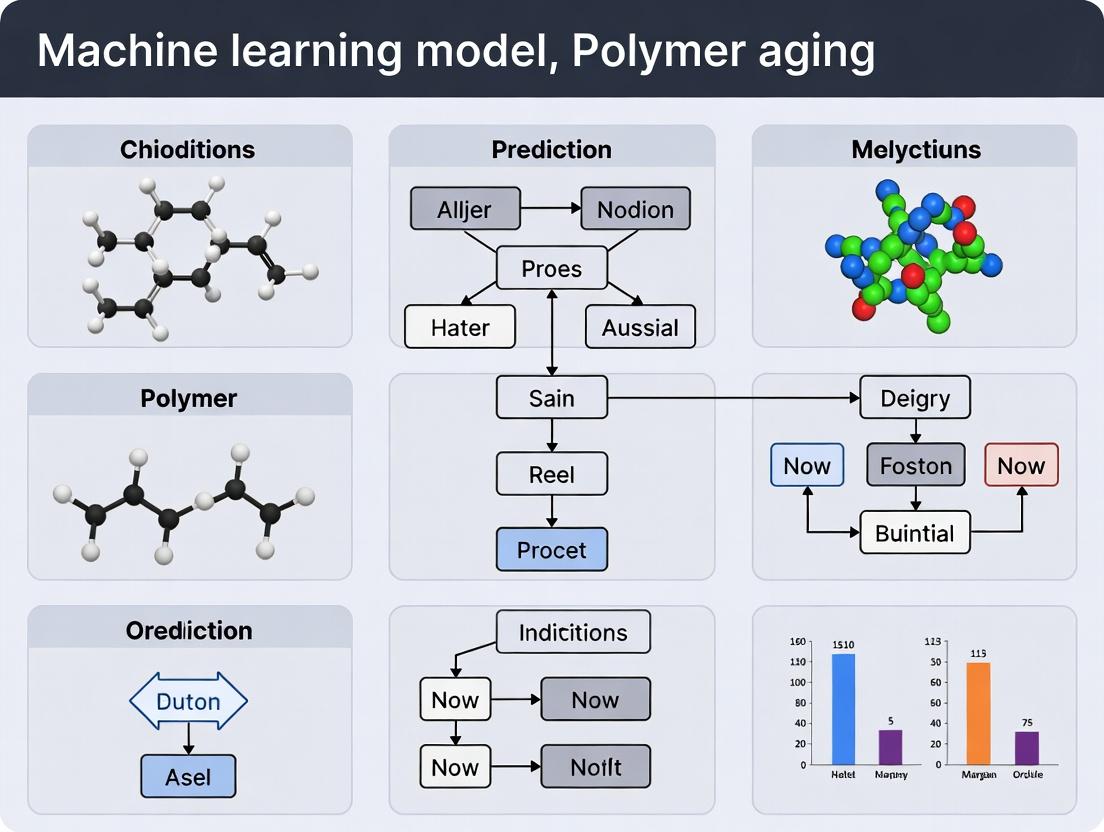
This article presents a comprehensive ML-driven paradigm for predicting polymer aging, specifically tailored for biomedical researchers and drug development professionals.
Predicting Polymer Degradation: A Machine Learning Framework for Biomaterial Stability in Drug Delivery Systems
Abstract
This article presents a comprehensive ML-driven paradigm for predicting polymer aging, specifically tailored for biomedical researchers and drug development professionals. We explore the fundamental mechanisms of polymer degradation, detail the construction and application of predictive machine learning models, address common challenges in model training and data scarcity, and validate the approach through comparative analysis with traditional experimental methods. The framework aims to accelerate biomaterial development, enhance the reliability of drug delivery systems, and reduce costly late-stage failures by providing accurate, data-driven forecasts of long-term polymer stability.
Understanding Polymer Aging: Mechanisms, Challenges, and the Case for ML Prediction
1. Introduction & Thesis Context
The clinical success of biodegradable implants, sutures, and controlled-release formulations hinges on precise polymer degradation kinetics. Unpredictable in vivo degradation—accelerated or delayed—leads to device failure, toxic monomer accumulation, or erratic drug release. This application note positions the problem within a Machine Learning (ML)-driven paradigm for polymer aging prediction. By integrating high-throughput experimental protocols with ML model training, we move from phenomenological observation to predictive science.
2. Quantitative Data Summary
Table 1: Key Factors Influencing Polymer Degradation Kinetics
| Factor | Impact on Degradation Rate | Typical Measurable Parameters |
|---|---|---|
| Polymer Properties | Intrinsic | Mw (g/mol), Polydispersity Index (PDI), Crystallinity (%), Tg (°C), monomer sequence |
| Device Formulation | Medium | Hydrophilic additive (e.g., PEG) %, Porosity (%), Surface area-to-volume ratio |
| Environmental (in vitro) | Controlled | pH, Ionic strength (mM), Enzyme concentration (U/mL), Temperature (°C) |
| Environmental (in vivo) | Variable & Unpredictable | Local pH flux, specific enzyme profiles, mechanical stress cycles, cellular activity |
Table 2: Common Biomaterials & Reported Degradation Half-Life Ranges
| Polymer | Typical in vitro (PBS, 37°C) Degradation Time | in vivo Variability (Reported Range) | Key Degradation Mechanism |
|---|---|---|---|
| Poly(lactic-co-glycolic acid) (PLGA 50:50) | 1-2 months | ± 3-6 weeks | Hydrolysis |
| Poly(L-lactic acid) (PLLA) | 12-24 months | ± 4-8 months | Hydrolysis, enzymatic |
| Poly(ε-caprolactone) (PCL) | 24-48 months | ± 6-12 months | Hydrolysis, enzymatic |
| Poly(glycolic acid) (PGA) | 6-12 months | ± 1-3 months | Hydrolysis |
3. Experimental Protocols for ML-Ready Data Generation
Protocol 3.1: High-Throughput In Vitro Degradation Profiling Objective: Generate consistent, multi-parameter degradation datasets for ML model training. Workflow:
- Fabrication: Use a micro-molding system to produce polymer films (e.g., 1mm thickness, 5mm diameter) with systematic variation in Mw and crystallinity.
- Sterilization: Ethanol immersion (70%, 30 min) followed by UV irradiation (30 min per side).
- Immersion: Place films (n=6 per condition) in 96-well deep-well plates containing 2 mL of degradation media per well. Media conditions span: pH (5.5, 7.4, 8.0), with/without enzymes (e.g., 10 U/mL Lipase or Esterase), at 37°C under gentle agitation (100 rpm).
- Temporal Sampling: At pre-defined intervals (e.g., days 1, 3, 7, 14, 30, etc.), remove a full plate set for analysis.
- Multi-Modal Analysis:
- Mass Loss: Dry samples to constant weight; calculate remaining mass (%).
- Molecular Weight: Analyze via GPC (Gel Permeation Chromatography).
- Surface Morphology: Image via SEM (Scanning Electron Microscopy).
- Chemistry: Assess via FTIR (Fourier-Transform Infrared Spectroscopy) for bond changes.
- Release Profile: Quantify any encapsulated model drug (e.g., fluorescein) via HPLC/UV-Vis.
- Data Structuring: Compile all temporal data into a structured table (CSV) with columns: [PolymerID, Timepoint, pH, EnzymeConc, Mwinitial, Mwcurrent, Mass_remaining, etc.].
Protocol 3.2: Accelerated Aging Study Design Objective: Predict long-term stability under elevated stress conditions. Method:
- Subject polymer samples to elevated temperatures (e.g., 50°C, 70°C) under controlled humidity (75% RH).
- Apply the Arrhenius model cautiously to extrapolate degradation rates to 37°C. Note: This method is limited for processes with mechanistic shifts.
- Use data to train ML models on accelerated-to-real-time degradation mapping.
4. Visualization of the ML-Driven Research Paradigm
Diagram Title: ML-Driven Polymer Aging Prediction Workflow
5. The Scientist's Toolkit: Research Reagent Solutions
Table 3: Essential Materials for Degradation Studies
| Item | Function & Rationale |
|---|---|
| PLGA (50:50, 75:25) | Model hydrolytically degradable polymer with tunable degradation rate via lactide:glycolide ratio. |
| Poly(ε-caprolactone) (PCL) | Slow-degrading, crystalline polymer for long-term implant studies. |
| Phosphate Buffered Saline (PBS), pH 7.4 | Standard isotonic medium for simulating physiological fluid. |
| Lipase from Pseudomonas cepacia (≥30 U/mg) | Model enzyme for ester bond hydrolysis, simulating enzymatic degradation. |
| GPC/SEC System with RI/Viscometry Detectors | Gold-standard for measuring absolute molecular weight and distribution changes over time. |
| Simulated Body Fluid (SBF) | Ion concentration similar to human blood plasma, for studying bioactivity and degradation. |
| Fluorescein (or Rhodamine B) | Hydrophilic model drug for quantifying release kinetics from polymeric matrices. |
| AlamarBlue or MTS Assay Kit | For assessing cytocompatibility of degradation byproducts in vitro. |
Within the framework of an ML-driven paradigm for polymer aging prediction, understanding and quantifying the fundamental chemical and physical degradation pathways is paramount. Hydrolysis, oxidation, and physical stress are not isolated phenomena but interconnected processes whose kinetics and synergistic effects must be empirically characterized to generate high-fidelity training data. These application notes provide standardized protocols for isolating and measuring these key pathways, enabling the generation of structured datasets for predictive model development.
Table 1: Key Degradation Pathways and Characteristic Metrics
| Degradation Pathway | Primary Target (Polymer Example) | Key Measurable Outputs | Typical Accelerated Aging Conditions | Relevant ML Model Input Features |
|---|---|---|---|---|
| Hydrolysis | Polyesters (PLA, PLGA), Polyamides, Polycarbonates | Molecular Weight (Mw) decrease, Mass loss, Carboxylic acid end-group concentration, pH change in medium. | 37-70°C, 50-100% Relative Humidity | Time, Temperature, Humidity, Initial Mw, Crystallinity, Hydrophilicity |
| Oxidation | Polyolefins (PE, PP), Polyurethanes, Rubbers | Carbonyl Index (FTIR), Hydroperoxide concentration, Embrittlement time, O2 consumption. | 25-80°C, Elevated O2 or under UV irradiation | Time, Temperature, [O2], UV intensity, Antioxidant concentration, Surface-to-volume ratio |
| Physical Stress | Hydrogels, Semi-crystalline polymers, Microparticle dispersions | Crack propagation rate, Erosion rate, Agglomeration size (DLS), Loss of tensile strength. | Cyclic mechanical loading, Shear stress (in vitro), Freeze-thaw cycles. | Stress amplitude, Frequency, Number of cycles, Glass Transition Temp (Tg), Crosslink density |
Table 2: Example Experimental Data from Recent Studies (2023-2024)
| Study Focus | Polymer System | Condition | Result (Quantified) | Measurement Technique |
|---|---|---|---|---|
| Hydrolytic Stability of Novel Copolymers | Poly(ester-ether-urethane) | PBS, pH 7.4, 60°C for 28 days | Mw reduced by 62% ± 5%; Erosion front advanced at 0.15 mm/day. | GPC, SEM-EDX |
| Autoxidation Kinetics in Stabilized PP | Isotactic Polypropylene | 80°C, 5 bar O2 | Carbonyl Index reached 0.25 after 120 hrs without stabilizer; with Irganox 1010, time extended to 450 hrs. | FTIR Spectroscopy |
| Shear-Induced Aggregation of PLGA NPs | PLGA Nanoparticles | In vitro flow, 1000 s⁻¹ shear for 2h | Hydrodynamic diameter increased from 180 nm to 320 nm; PDI > 0.4. | Dynamic Light Scattering (DLS) |
Detailed Experimental Protocols
Protocol 3.1: Isolating and Quantifying Hydrolytic Degradation Kinetics
Objective: To measure the rate of ester bond cleavage in a polyester film under controlled humidity and temperature, independent of oxidative stress. Materials: See "Scientist's Toolkit" below. Procedure:
- Sample Preparation: Cast polymer films of uniform thickness (100 ± 10 µm). Dry in vacuo for 48h. Record initial mass (m₀) and characterize initial Mw via GPC.
- Degradation Chamber Setup: Place samples in sealed desiccators. Use saturated salt solutions (e.g., K₂SO₄ for 97% RH, MgCl₂ for 33% RH) to maintain constant relative humidity. Place desiccators in ovens at controlled temperatures (e.g., 37°C, 50°C, 70°C).
- Sampling: At predetermined time points (e.g., 1, 2, 4, 8 weeks), remove triplicate samples.
- Analysis:
- Mass Loss: Rinse samples, dry, and weigh (mₜ). Calculate mass loss % = [(m₀ - mₜ)/m₀] * 100.
- Molecular Weight: Dissolve a portion of the sample and perform GPC to determine Mw reduction.
- End-Group Analysis: Titrate dissolved polymer to determine increasing carboxylic acid end-group concentration.
- Data for ML: Tabulate Time, Temperature, RH%, Initial Mw, mₜ/Mw₀.
Protocol 3.2: Accelerated Oxidation and Carbonyl Index Tracking
Objective: To monitor the early-stage auto-oxidation of polyolefins via FTIR under elevated oxygen pressure. Materials: See "Scientist's Toolkit" below. Procedure:
- Baseline Characterization: Obtain FTIR spectrum of pristine polymer film. Calculate initial carbonyl index (CI₀) as CI = A₁₇₁₅ / A₍reference₎, where A₁₇₁₅ is the absorbance at ~1715 cm⁻¹ (C=O stretch) and A₍reference₎ is the absorbance of a stable band (e.g., ~2720 cm⁻¹ for PP).
- Accelerated Aging: Place samples in a pressure vessel (oxidation bomb) purged and pressurized with pure O₂ to 3-5 bar. Incubate in a forced-air oven at 80°C.
- Periodic Sampling: Vent the bomb at set intervals (e.g., 24, 48, 96, 200 hrs). Quickly remove samples for FTIR analysis to prevent post-sampling oxidation.
- Analysis: Obtain FTIR spectrum and calculate CI at each time point. Plot CI vs. time. Determine the oxidation induction time (OIT) as the x-intercept of the linear regression of the rapid-rise period.
- Data for ML: Tabulate Time, Temperature, O₂ Pressure, Antioxidant Type/Concentration, CI, OIT.
Protocol 3.3: Simulating Physical Stress in Hydrogel Drug Depots
Objective: To quantify erosion and crack propagation in a hydrogel under cyclic compressive loading. Materials: See "Scientist's Toolkit" below. Procedure:
- Hydrogel Fabrication: Form cylindrical hydrogels (e.g., 10 mm diameter, 5 mm height) via crosslinking. Characterize initial compressive modulus.
- Dynamic Mechanical Stress: Mount sample in a bioreactor chamber filled with PBS at 37°C. Apply uniaxial cyclic compressive strain (e.g., 10-15% strain at 1 Hz) using a mechanical tester integrated with the chamber.
- Real-time & Endpoint Monitoring:
- Medium Analysis: Periodically sample PBS and analyze for polymer content (via UV-Vis or HPLC) to quantify erosion rate.
- Imaging: Use time-lapse microscopy to monitor surface crack initiation and propagation. Quantify crack length over time.
- Mechanical Integrity: At endpoint, measure the final compressive modulus.
- Data for ML: Tabulate Cycle Number, Strain %, Frequency, Eroded Mass, Crack Length, Modulus Loss %.
Visualization: Pathways and Workflows
The Scientist's Toolkit: Essential Research Reagents & Materials
| Item Name / Category | Function in Aging Studies | Example Product / Specification |
|---|---|---|
| Controlled Humidity Chambers | Precisely maintain specified Relative Humidity (RH) for hydrolytic studies, independent of temperature. | Desiccators with saturated salt solutions or programmable climatic chambers. |
| Oxidation Bomb (Pressure Vessel) | Accelerates oxidative aging by maintaining elevated, constant oxygen pressure at elevated temperatures. | Stainless steel vessel, rated for 5-10 bar O₂ at 100°C, with safety valve. |
| Gel Permeation Chromatography (GPC/SEC) | The gold standard for tracking polymer chain scission (hydrolysis) or crosslinking via molecular weight distribution. | System with refractive index (RI) and multi-angle light scattering (MALS) detectors. |
| FTIR Spectrometer with ATR | Non-destructive, quantitative measurement of oxidation products (Carbonyl Index) and other chemical groups. | FTIR with diamond ATR crystal, high-sensitivity detector. |
| Programmable Mechanical Tester | Applies precise, cyclic physical stress (compression, tension, shear) to simulate in vivo mechanical environments. | Bioreactor-coupled system capable of 0.1-20 Hz cyclic loading in fluid. |
| Dynamic Light Scattering (DLS) | Monitors nanoparticle or polymer aggregate size change due to shear-induced or hydrolytic aggregation. | Instrument with temperature control and ability to handle high particle concentrations. |
| Saturated Salt Solutions | Provides constant, known relative humidity in closed containers for low-cost, reproducible hydrolytic studies. | Lithium Chloride (~11% RH), Magnesium Chloride (~33% RH), Sodium Chloride (~75% RH). |
| Radical Initiators (e.g., AIBN) | Used to study controlled radical-induced oxidation, providing a more consistent onset of degradation. | 2,2'-Azobis(2-methylpropionitrile), purified, stored cold. |
Limitations of Traditional Accelerated Aging Tests and QSAR Models
Within the pursuit of a machine learning (ML)-driven paradigm for polymer aging prediction, a critical evaluation of established methodologies is essential. Traditional Accelerated Aging Tests (AAT) and Quantitative Structure-Activity Relationship (QSAR) models form the historical backbone of stability and property prediction. However, their inherent limitations now act as catalysts for the adoption of more sophisticated, data-integrated ML approaches. This document details these limitations through structured data, protocols, and tools, providing a clear rationale for the paradigm shift.
Quantitative Limitations of Traditional Methods
The core constraints of conventional approaches are summarized below.
Table 1: Key Limitations of Traditional Accelerated Aging Tests
| Limitation | Description | Quantitative Impact / Example |
|---|---|---|
| Extrapolation Uncertainty | Reliance on the Arrhenius equation to predict shelf-life at room temperature from high-temperature data. | A 10°C increase doubles degradation rate (Q₁₀≈2), but polymer transitions (Tg) can invalidate this. Error margins in predicted shelf-life can exceed 100%. |
| Failure to Capture Complex Mechanisms | Single-stress (e.g., heat) tests miss synergistic effects of light, O₂, humidity, and mechanical stress. | Study shows polymer embrittlement time under multi-stress (UV+O₂+heat) is 5x faster than heat-only AAT. |
| High Resource Intensity | Requires extensive physical space, numerous identical samples, and long instrument time. | A standard ICH Q1A(R2) condition (40°C/75% RH) for a 24-month real-time equivalent requires 6 months and ~100s of samples for statistical power. |
| Material and Time Cost | Significant consumption of API/excipient and long lead times for results. | A single AAT study for a polymer-drug composite can consume >500g of material and delay formulation decisions by 3-6 months. |
Table 2: Key Limitations of Conventional QSAR Models for Polymer Aging
| Limitation | Description | Quantitative Impact / Example |
|---|---|---|
| Limited Descriptor Scope | Relies on 1D/2D molecular descriptors (e.g., logP, molar refractivity) for polymer repeat units. | Descriptors often fail to capture supra-molecular structure (crystallinity >40% can reduce O₂ permeability by orders of magnitude). |
| Inability to Model Long-Term Temporal Dynamics | Static models provide a snapshot prediction, not an evolution over time. | Cannot predict autocatalytic oxidation or hydrolysable linker cleavage kinetics beyond early time points without manual re-parameterization. |
| Poor Transferability | Models trained on narrow chemical spaces (e.g., homologous polyesters) fail on novel architectures. | Predictive R² drops from >0.9 for training set to <0.3 for polymers containing novel bio-derived monomers. |
| Neglect of Processing History | Does not account for extrusion temperature, shear rate, or annealing effects on morphology. | Processing can alter polymer free volume by up to 15%, directly impacting diffusivity of small molecules (e.g., O₂, H₂O). |
Detailed Experimental Protocols
Protocol 3.1: Standard Accelerated Aging Test for Polymer Films (ICH Q1A(R2) Inspired)
Objective: To determine the tentative shelf-life of a polymer film or formulation under accelerated temperature and humidity conditions.
Materials: See Scientist's Toolkit (Section 5).
Procedure:
- Sample Preparation: Cut polymer films into identical discs (e.g., 20mm diameter). Weigh and measure initial thickness (n≥30 for statistical significance).
- Initial Characterization: Perform key property assays (Tensile strength, FTIR for carbonyl index, SEC for Mw, DSC for Tg) on a representative subset (n=5).
- Conditioning: Place samples in controlled environmental chambers. Standard conditions include 25°C/60% RH (control), 40°C/75% RH, and 50°C/75% RH.
- Sampling Schedule: Remove samples at defined intervals (e.g., 0, 1, 2, 3, 6 months). Condition samples to room temperature in a desiccator before analysis.
- Analysis: Re-measure key properties from step 2. Track changes over time.
- Data Analysis & Extrapolation:
a. Plot property degradation (e.g., % elongation at break) vs. time for each condition.
b. Apply Arrhenius equation:
k = A exp(-Ea/RT), wherekis the degradation rate constant at temperatureT. c. CalculateEa(activation energy) from rates at different temperatures. d. Extrapolate rate (k) to desired storage temperature (e.g., 25°C). e. Estimate time to reach critical property failure threshold.
Protocol 3.2: Building a Conventional 2D-QSAR Model for Hydrolytic Degradation Rate
Objective: To predict the hydrolysis rate constant (log k) of polyester libraries based on monomer structure.
Materials: Chemical database (e.g., PubChem), QSAR software (e.g., Dragon, PaDEL-Descriptor), statistical software (e.g., R, Python with scikit-learn).
Procedure:
- Dataset Curation: Compile a dataset of 20-50 known polyesters with experimentally measured hydrolysis rate constants (log k) in buffer at pH 7.4 and 37°C.
- Descriptor Generation: a. Input SMILES strings of the polymer repeat unit into descriptor calculation software. b. Calculate a wide range of 1D/2D descriptors: constitutional, topological, electronic, and geometrical. c. Pre-process data: Remove zero-variance descriptors, handle missing values.
- Feature Selection: Use correlation analysis and stepwise regression to reduce descriptor pool to ~4-6 most relevant features (e.g., logP, polar surface area, bond connectivity indices).
- Model Development: Split data (70:30) into training and test sets. Use Multiple Linear Regression (MLR) on the training set to build the model:
log k = c + a₁D₁ + a₂D₂ + .... - Validation: Assess model performance on the test set using metrics: R², Q² (cross-validated R²), and Root Mean Square Error (RMSE).
- Applicability Domain: Define the chemical space of the model using descriptor ranges. New predictions outside this domain are considered unreliable.
Visualizations
Title: Limitations of Traditional Aging Prediction Methods
Title: Critical Factors Missed by QSAR and AAT
The Scientist's Toolkit: Research Reagent Solutions
Table 3: Essential Materials for Traditional Polymer Aging Studies
| Item | Function | Specification / Example |
|---|---|---|
| Environmental Chambers | Provide precise, stable temperature and humidity control for AAT. | ESPEC, Thermotron. Capable of ±0.5°C and ±2.5% RH control from 10°C to 80°C. |
| Polymer Film Casting Knife | Produce uniform-thickness films for consistent, comparable testing. | Bird Film Applicator, adjustable gap 50-1000 µm. |
| Tensile Tester | Quantify mechanical degradation (elongation, strength). | Instron 5944 with 10N load cell, compliant with ASTM D882. |
| FTIR Spectrometer | Monitor chemical bond changes (e.g., carbonyl growth, hydrolysis). | Nicolet iS20 with ATR accessory; resolution 4 cm⁻¹. |
| Size Exclusion Chromatography (SEC) System | Measure changes in molecular weight distribution over time. | Agilent Infinity II with multi-angle light scattering (MALS) detector. |
| Differential Scanning Calorimeter (DSC) | Determine glass transition temperature (Tg) shifts due to aging. | TA Instruments Q2500, hermetic Tzero pans. |
| QSAR Descriptor Software | Calculate molecular descriptors from chemical structure. | Dragon (Talete), PaDEL-Descriptor (open-source). |
| Chemical Standards | For calibrating degradation product analysis (HPLC, GC). | USP-grade monomers, known oxidation products (e.g., hydroperoxides). |
Foundational Data & Feature Sets
The predictive modeling of polymer lifespan requires a structured multi-modal data architecture. The following table summarizes the core quantitative data streams integrated into modern ML paradigms.
Table 1: Core Data Modalities for Polymer Aging Prediction
| Data Modality | Typical Features & Measurements | Example Instruments | Relevance to Aging Prediction |
|---|---|---|---|
| Chemical Structure | Monomer identity, functional groups, molecular weight, polydispersity index (PDI). | NMR, GPC/SEC, FTIR. | Determines intrinsic reactivity and degradation pathways. |
| Thermal Properties | Glass transition temp (Tg), melting temp (Tm), decomposition temp (Td), heat capacity. | DSC, TGA, DMA. | Predicts stability under thermal stress. |
| Mechanical Properties | Tensile strength, elongation at break, modulus, toughness. | Universal Testing Machine. | Quantifies performance loss over time. |
| Environmental Exposure | Temperature, humidity, UV intensity, chemical exposure concentration. | Weathering chambers, sensors. | Provides accelerated aging conditions. |
| Morphological Data | Crystallinity, phase separation, surface roughness. | XRD, SEM, AFM. | Links microstructure to degradation kinetics. |
| Spectroscopic Time-Series | FTIR peak shifts, UV-Vis absorbance changes, chemiluminescence. | In-situ FTIR, spectroscopy. | Tracks chemical changes in real-time. |
Application Notes: ML Paradigm Integration
Note 1: From Correlative to Causal Models Early ML applications used supervised learning (e.g., Random Forest, SVM) to correlate initial polymer properties with measured lifespan under set conditions. The paradigm is shifting towards hybrid models that integrate physics-based degradation equations (e.g., Arrhenius kinetics for thermal aging) with deep learning layers, creating physics-informed neural networks (PINNs). This enhances extrapolation reliability beyond the training data range.
Note 2: Multi-Task Learning for Resource Efficiency Given the cost of long-term aging studies, multi-task learning models are pivotal. A single model can be trained to predict multiple interdependent endpoints simultaneously: e.g., tensile strength retention and molecular weight change and discoloration index after t years. This leverages shared representations across tasks, improving data efficiency.
Note 3: Handling Sparse & Censored Data Real-world polymer aging data is often right-censored (samples have not yet failed at test conclusion) and sparse. Survival Analysis models, such as Cox Proportional Hazards models enhanced with gradient boosting (GBSA), are specifically adapted for this data type, predicting time-to-failure probability distributions.
Experimental Protocols
Protocol 1: Accelerated Aging and High-Throughput Characterization for ML Dataset Generation
Objective: To generate a consistent, high-dimensional dataset for training ML models predicting polymer lifespan.
Materials:
- Polymer samples (varied formulations).
- QUV Accelerated Weathering Tester or equivalent.
- Environmental chamber with precise T/RH control.
- Automated tensile tester with robotic sample handler.
- In-situ FTIR spectrometer with ATR accessory.
- Microplate reader for colorimetric assays (e.g., hydroxyl number).
Procedure:
- Design of Experiments (DoE): Define a sample matrix varying key synthetic parameters (e.g., inhibitor %, crosslink density).
- Baseline Characterization: For each sample, perform full characterization per modalities in Table 1. Record as Time=0 data.
- Accelerated Aging: Place replicate samples in weathering chambers. Employ a stratified exposure matrix: different sets exposed to varying, but logged, levels of UV (0-1.5 W/m²), T (40-90°C), and RH (10-80%).
- Time-Slice Sampling: At pre-defined intervals (e.g., 0, 200, 500, 1000 hrs), remove n replicates from each exposure condition.
- High-Throughput Characterization: Using automated systems, re-measure a subset of key properties: tensile strength, FTIR spectra at key wavenumbers, yellowness index.
- Data Curation: Assemble all data into a structured table. Each row represents a sample at a time point, with columns for initial properties, exposure conditions, elapsed time, and measured degradation endpoints.
Protocol 2: Training a Hybrid Physics-Informed Neural Network (PINN)
Objective: To develop a model that predicts molecular weight loss over time under thermal aging.
Materials:
- Software: Python with TensorFlow/PyTorch, SciPy.
- Dataset from Protocol 1, focusing on thermal aging series.
- Known Arrhenius parameters (activation energy Ea, pre-exponential factor A) for hydrolysis or oxidation of the polymer class, from literature.
Procedure:
- Data Preparation: Isolate data from isothermal aging experiments. Features: Initial Mn, temperature (T), time (t). Target: Measured Mn(t).
- Model Architecture: Design a neural network with:
- Input Layer: (Initial Mn, T, t).
- Hidden Layers: 3-5 fully connected layers with activation functions.
- Physics Layer: A custom layer that computes the classic polymer degradation kinetic equation:
Mn_predicted = f(Mn_initial, k, t), where the rate constantkis predicted by a branch of the network ask = A * exp(-Ea/(R*T)). The network learns to adjust A and Ea within plausible bounds.
- Hybrid Loss Function: Define Loss = α * MSE(Measured Mn, Predicted Mn) + β * MSE(Literature Ea, Network Ea). Weigh α and β.
- Training: Train the network on 80% of the data. Use the remaining 20% for validation.
- Extrapolation Test: Validate the model's predictions at a temperature not included in the training set, comparing to a purely data-driven model's performance.
Visualization: ML Workflow for Polymer Lifespan Prediction
Title: ML Pipeline for Polymer Aging Prediction
The Scientist's Toolkit: Research Reagent Solutions
Table 2: Essential Materials for ML-Driven Polymer Aging Research
| Item | Function & Relevance |
|---|---|
| Controlled-Polydispersity Polymer Standards | Essential for calibrating GPC/SEC and creating precise training data on the effect of Mw/PDI on degradation rate. |
| UV-Stabilizers & Antioxidants (e.g., HALS, Phenolics) | Used in DoE to create formulation gradients. Their concentration becomes a critical predictive feature for weatherability. |
| Deuterated Solvents for In-Situ NMR | Enable real-time, non-destructive monitoring of chemical structure changes during aging within an environmental NMR probe. |
| Functionalized Nanoparticles (SiO2, ZnO) | Common additives to modify properties. Their surface chemistry and dispersion state are key features in ML models for nanocomposite durability. |
| Fluorescent Probes for ROS Detection | (e.g., Singlet Oxygen Sensor Green). Provide quantitative, high-throughput data on oxidative stress intensity during photo-aging, a valuable model target. |
| Reference Photodegradable Polymer (e.g., Polypropylene film) | Serves as a positive control in accelerated weathering tests to calibrate and validate chamber intensity, ensuring dataset reproducibility across labs. |
Application Notes
Within the Machine Learning (ML)-driven paradigm for polymer aging prediction, accurate model training and validation hinge on the systematic integration of three core data types. These data types collectively define the polymer system, its exposure scenario, and the resulting physicochemical evolution.
1. Chemical Structure Data: This defines the polymer's inherent identity and susceptibility to degradation. It moves beyond simple monomer names to quantitative descriptors crucial for ML models.
- SMILES/String Notation: Canonical representation of monomer and repeat unit structure.
- Molecular Weight & Dispersity (Đ): Metrics of polymer chain length and distribution, critical for relating structure to properties like tensile strength and solubility.
- Functional Group Descriptors: Quantitative presence of specific groups (e.g., ester, carbonate, hydroxyl, unsaturated bonds) known to be vulnerable to hydrolysis, oxidation, or UV attack.
- Chain Architecture: Linear, branched, crosslinked, or block/gradient copolymer structure.
- Additive & Formulation Data: Identity and concentration of stabilizers, plasticizers, fillers, or active pharmaceutical ingredients (APIs).
2. Environmental Condition Data: This quantitatively defines the stressor field driving the aging process. It must be captured as continuous, multi-faceted time-series data where possible.
- Primary Stressors: Intensity of light (W/m², spectral irradiance), temperature (K, including cycles), relative humidity (%), partial pressure of oxygen (pO₂), pH, and mechanical stress (MPa, frequency).
- Exposure Regime: Continuous vs. cycled conditions. For ML, the precise timing and sequence of cycles are features.
- Medium: Composition of immersion or exposure atmosphere (e.g., buffer ionic strength, simulated biological fluids, pollutant concentrations).
3. Experimental Degradation Metrics: These are the measured outputs (responses) that the ML model aims to predict. They span multiple length scales and must be time-resolved.
- Macroscopic Properties: Mass loss, water uptake, tensile strength/modulus/elongation at break, discoloration (ΔE*, yellowness index), glass transition temperature (Tg) shift.
- Chemical Changes: Molecular weight change (via GPC/SEC), new functional group formation (via FTIR, NMR), oxidation index, API/polymer assay (via HPLC).
- Morphological Changes: Surface roughness (via AFM), crystallinity change (via DSC, XRD), crack formation (via SEM).
The synergistic integration of these data types into a structured, time-stamped database is the foundational step for developing predictive ML models of polymer aging, enabling the transition from qualitative stability assessments to quantitative lifetime prediction.
Research Reagent Solutions & Essential Materials
| Item | Function in Polymer Aging Research |
|---|---|
| QUV or Xenon Arc Weatherometer | Accelerates photo-aging by simulating solar radiation (UV/Vis) with controlled temperature and humidity cycles. |
| Environmental Chamber | Provides precise, long-term control over temperature and relative humidity for thermal/hydrolytic aging studies. |
| Size Exclusion Chromatography (SEC/GPC) System | Quantifies changes in molecular weight and dispersity, a primary metric of chain scission or crosslinking. |
| FTIR Spectrometer (with ATR) | Identifies formation or loss of specific chemical functional groups (e.g., carbonyl growth from oxidation) non-destructively. |
| Tensile Tester / Dynamic Mechanical Analyzer (DMA) | Measures the evolution of mechanical properties (strength, modulus, viscoelasticity) as a function of aging. |
| Simulated Body Fluids (e.g., SBF, FaSSIF, FeSSIF) | Provides biologically relevant media for aging studies of polymers used in drug delivery or medical devices. |
| Reference Polymer Standards | Well-characterized polymers (e.g., PCL, PLA, PS) with known degradation profiles for calibrating and validating experimental protocols. |
| Data Logging Sensors | Miniature, calibrated sensors for continuous in-situ monitoring of temperature, humidity, and light within aging chambers. |
Experimental Protocols
Protocol 1: Controlled Accelerated Photo-Oxidative Aging with Multi-Point Sampling
Objective: To generate time-series data on polymer degradation under controlled UV/thermal stress for ML model training.
Materials: Polymer films/specimens, QUV weatherometer equipped with UVA-340 lamps, calibrated data logger, aluminum foil, microbalance, specimen holders.
Procedure:
- Baseline Characterization: Weigh each specimen (m₀). Perform initial FTIR, GPC, and tensile testing on a representative subset (t=0 cohort).
- Experimental Setup: Mount specimens in weatherometer holders. Cover a defined border of each specimen with aluminum foil to create a protected "control" area for later assessment of physical changes vs. chemical changes.
- Conditioning: Program weatherometer to cycle between UV irradiation (e.g., 0.7 W/m² @ 340nm, 50°C) and dark condensation (e.g., 100% RH, 40°C). A typical cycle is 8 hours UV / 4 hours condensation.
- Multi-Point Sampling: Remove replicate specimens (n≥3) at predetermined, non-linear time intervals (e.g., 0, 24, 96, 216, 500, 1000 hours) to capture degradation kinetics.
- Post-Exposure Analysis:
- Mass Change: Record mass (mₜ) after gentle drying.
- Chemical Analysis: Acquire ATR-FTIR spectra from exposed and foil-masked areas. Calculate carbonyl index (CI) as ratio of C=O peak area (~1715 cm⁻¹) to a stable reference peak (e.g., C-H ~1450 cm⁻¹).
- Molecular Weight: Analyze via GPC in THF or DMF. Report Mn, Mw, Đ.
- Mechanical Properties: Perform tensile testing per ASTM D638.
- Data Structuring: Compile all data into a single table with columns for: Timepoint (hr), AvgMassLoss (%), AvgCI, AvgMn (g/mol), AvgTensileStrength (MPa), EnvironmentalParams (UVdosecumulative (J/m²), Tempprofile).
Protocol 2: Hydrolytic Degradation in Biorelevant Media
Objective: To quantify hydrolysis kinetics of biodegradable polymers (e.g., polyesters) under simulated physiological conditions.
Materials: Polymer films/particles, phosphate-buffered saline (PBS, pH 7.4) or other biorelevant media (SIF, SGF), sodium azide (NaN₃, 0.02% w/v), orbital shaking incubator, hermetic vials, 0.22 μm syringe filters.
Procedure:
- Preparation: Weigh specimens (m₀, ~20-50 mg). Pre-dry. Add NaN₃ to all media to prevent microbial growth.
- Immersion: Place each specimen in a vial containing 10-20 mL of pre-warmed medium (37°C). Seal vials to prevent evaporation. Include vials with medium only as blanks.
- Incubation: Place vials in an orbital shaking incubator (37°C, 60 rpm) to ensure constant agitation and temperature.
- Multi-Point Sampling: At each timepoint (e.g., 1, 7, 14, 28, 56 days), remove replicate vials (n=3).
- Sample Processing:
- Medium Analysis: Filter the incubation medium. Analyze for degradation products (e.g., lactic acid, glycolic acid for PLA/PGA) via HPLC-UV/RID. Measure pH.
- Polymer Analysis: Rinse retrieved specimens with DI water, dry to constant mass (mₜ). Analyze by GPC and FTIR as in Protocol 1.
- Data Structuring: Compile data into a table with columns: Timepoint (days), AvgMassRemaining (%), AvgpHofMedium, AvgMn (g/mol), AvgDegradantConcentration (μg/mL), Medium_Type.
Table 1: Exemplar Chemical Structure Descriptors for Model Polymers
| Polymer | SMILES (Repeat Unit) | Key Functional Groups | Typical Mn (g/mol) Range | Typical Đ | Architecture |
|---|---|---|---|---|---|
| Polylactic Acid (PLA) | C[C@H](C(=O)O)C |
Ester, Aliphatic | 50,000 - 150,000 | 1.5 - 2.0 | Linear |
| Polyethylene (LDPE) | CC |
C-C, C-H | >100,000 | 4 - 20 | Branched |
| Polycaprolactone (PCL) | C(CCCC(=O)O)CC |
Aliphatic Ester | 40,000 - 80,000 | 1.5 - 2.0 | Linear |
| Polystyrene (PS) | C(=C/c1ccccc1)\C |
Aromatic, C=C | 100,000 - 400,000 | 1.5 - 2.5 | Linear |
Table 2: Standard Environmental Conditions for Accelerated Aging Tests
| Test Type | Light Source/Intensity | Temperature | Humidity | Cycle | Equivalent Outdoor* |
|---|---|---|---|---|---|
| ISO 4892-2 (B) | Xenon Arc, 0.51 W/m² @ 340nm | 65°C (black panel) | 50% RH | 102 min light / 18 min light+spray | ~1-2 months/year |
| ASTM G154 (Cycle 1) | UVA-340, 0.89 W/m² @ 340nm | 60°C (air) | -- | 8 h UV at 60°C / 4 h Condens. at 50°C | Varies by climate |
| Hydrolytic (ISO 37) | None (dark) | 70°C (±1°C) | Immersion in PBS | Continuous | -- |
| Thermo-Oxidative (OIT) | None | 180°C - 220°C (isothermal) | 0% RH (O₂ atmosphere) | Continuous | -- |
*Equivalent is highly material-dependent.
Table 3: Typical Degradation Metrics Over Time for PLA (70°C, PBS)
| Time (Days) | Mass Remaining (%) | Mn (g/mol) | Đ | Tensile Strength (MPa) | Carbonyl Index (CI) |
|---|---|---|---|---|---|
| 0 | 100.0 ± 0.5 | 120,000 ± 5000 | 1.8 ± 0.1 | 60 ± 3 | 0.05 ± 0.01 |
| 7 | 99.5 ± 0.8 | 95,000 ± 8000 | 2.0 ± 0.2 | 55 ± 4 | 0.08 ± 0.02 |
| 28 | 95.2 ± 1.2 | 45,000 ± 6000 | 2.5 ± 0.3 | 25 ± 6 | 0.30 ± 0.05 |
| 56 | 80.1 ± 3.5 | 15,000 ± 4000 | 3.2 ± 0.5 | 8 ± 3 | 0.85 ± 0.10 |
Visualizations
Building the Predictive Engine: A Step-by-Step Guide to ML Models for Polymer Aging
Within the broader thesis on an ML-driven paradigm for polymer aging prediction, raw polymer characterization data is heterogeneous and unsuited for direct model ingestion. This document details the critical data curation and feature engineering protocols required to transform experimental polymer properties into robust, predictive model inputs. The curated datasets are foundational for developing models that predict degradation kinetics, mechanical failure, and chemical change under environmental stress.
Data Curation Framework: From Raw Measurements to Structured Data
Polymer aging research generates multi-modal data. Curation involves systematic collection, cleaning, and unification into a structured knowledge base.
Table 1: Primary Data Sources for Polymer Aging Prediction
| Data Category | Example Measurements | Typical Format/Range | Key Challenges in Curation |
|---|---|---|---|
| Polymer Intrinsic Properties | Monomer structure, Molecular weight (Mw, Mn), Polydispersity Index (PDI), Crystallinity (%) | SMILES strings, Mw: 10k-500k Da, PDI: 1.05-3.0, Crystallinity: 10-80% | Inconsistent naming, missing PDI, batch-to-batch variance. |
| Accelerated Aging Experimental Data | Time-to-failure, Tensile strength retention (%), Elongation at break retention (%), Fourier-Transform Infrared (FTIR) peak shifts (cm⁻¹) | Time: 0-1000 hrs, Retention: 0-120%, Wavenumber: 400-4000 cm⁻¹ | Varying time intervals, different aging conditions (T, RH, UV dose). |
| Environmental Stressors | Temperature (°C), Relative Humidity (%), UV Intensity (W/m²), Chemical exposure | T: 25-150°C, RH: 0-95%, UV: 0-1.5 W/m² | Condition synchronization across experiments. |
| Chemical Characterization | Glass Transition Temp (Tg), Melt Temp (Tm), Oxidation Induction Time (OIT) | Tg: -50°C to 200°C, Tm: 100-300°C, OIT: 1-50 min | Technique-dependent results (e.g., DSC heating rate). |
Protocol 2.1: Curation of Accelerated Aging Datasets
- Objective: Create a unified, time-synchronized dataset from disparate aging experiments.
- Materials: Raw data files from tensile testers, FTIR spectrometers, environmental chambers.
- Procedure:
- Data Aggregation: Compile all experimental runs into a master spreadsheet. Enforce a standard column header format (e.g.,
Polymer_ID,Aging_Temp_C,Exposure_Time_hr,Tensile_Strength_MPa). - Time Normalization: For experiments with irregular sampling, interpolate key property values (e.g., strength retention) at fixed time intervals (e.g., 0, 24, 48... hrs) using a piecewise linear interpolation.
- Outlier Handling: Flag data points where property change exceeds 3 median absolute deviations from the median trend for a given polymer batch. Review flagged points against lab notes for experimental anomalies.
- Missing Data Imputation: For missing minor experimental parameters, use mean/mode imputation within the same polymer family. Document all imputations.
- Data Aggregation: Compile all experimental runs into a master spreadsheet. Enforce a standard column header format (e.g.,
Feature Engineering: Constructing Predictive Descriptors
Raw data must be transformed into features that capture material behavior and degradation physics.
Table 2: Engineered Features for Polymer Aging Models
| Feature Class | Engineered Feature Name | Calculation Method | Physical/Chemical Rationale |
|---|---|---|---|
| Polymer Descriptors | Chain_rigidity_index |
Ratio of rigid cyclic monomers to total monomers in repeat unit. | Predicts backbone susceptibility to chain scission. |
Normalized_Mw |
(Mw - Mwmin) / (Mwmax - Mw_min) per polymer family. | Accounts for non-linear effects of molecular weight on durability. | |
| Degradation Kinetics | Strength_decay_rate_k |
Slope from fitting tensile strength vs. time to an exponential decay model: S = S₀·exp(-k·t). | Quantifies the intrinsic degradation rate under test conditions. |
OIT_inverse |
1 / Oxidation Induction Time (OIT). | Proxy for oxidative stability; inversely related to degradation propensity. | |
| Environmental Stress | Arrhenius_accelerated_factor |
exp[(Ea/R) * (1/Tref - 1/Taging)] where Ea is activation energy. | Normalizes aging effects across different temperatures. |
Hydrothermal_stress |
(RH/100) * exp(-Ea_humidity / (R * T)). | Combined thermal-humidity stress factor. | |
| Spectral Features | Carbonyl_index |
Area of carbonyl peak (1710 cm⁻¹) / Area of reference peak (e.g., 1450 cm⁻¹). | Direct measure of oxidation extent. |
Hydroxyl_index_shift |
Shift in hydroxyl peak position (cm⁻¹) from baseline. | Indicates changes in hydrogen bonding due to aging. |
Protocol 3.1: Calculating the Carbonyl Index from FTIR Spectra
- Objective: Generate a consistent, quantitative measure of polymer oxidation from raw spectral data.
- Materials: Baseline-corrected FTIR absorbance spectra (ASCII
.csvor.txt), spectral analysis software (e.g., Python with SciPy, OriginLab). - Procedure:
- Select Reference Peak: Identify a stable, unchanging internal reference peak (e.g., C-H bending at ~1450 cm⁻¹ or C-C stretching at ~1360-1380 cm⁻¹).
- Define Integration Boundaries: For the carbonyl (C=O) peak: 1670-1780 cm⁻¹. For the reference peak: e.g., 1420-1480 cm⁻¹.
- Baseline Correction: For each spectrum, fit a linear baseline between the boundaries of each integration region and subtract it.
- Peak Integration: Calculate the area under the curve (AUC) for both the carbonyl and reference peaks using the trapezoidal rule.
- Index Calculation: Compute the Carbonyl Index (CI) for each time point t as: CI(t) = [AUCcarbonyl(t) / AUCreference(t)].
Diagram Title: FTIR Carbonyl Index Calculation Workflow
The Scientist's Toolkit: Research Reagent Solutions
Table 3: Essential Materials for Polymer Aging & Feature Engineering
| Item / Solution | Function / Role in Protocol |
|---|---|
| Standard Reference Polymers (e.g., NIST PE, PS) | Used for calibrating analytical instruments (DSC, GPC, FTIR) and validating aging test protocols. |
| Stabilizer-Free Polymer Blanks | Critical for isolating the inherent aging behavior of the base polymer without antioxidant interference. |
| Chemical Quenching Agents (e.g., Irganox 1010, Tinuvin 770) | Added to control samples to halt oxidation post-aging, allowing precise "snapshot" characterization. |
| Deuterated Solvents (for NMR) | Enable detailed structural analysis of aged polymers to validate spectral feature engineering (e.g., carbonyl index). |
| Internal FTIR Standard Film (e.g., Polystyrene) | Thin film with known, stable peaks used to verify spectrometer wavelength calibration over time. |
| Accelerated Aging Chamber with Multi-Stress Control | Enables generation of the core experimental dataset under programmable T, RH, and UV conditions. |
| Gel Permeation Chromatography (GPC) Standards | Narrow PDI polymers used to calibrate GPC for accurate Mw and PDI measurement, key polymer descriptors. |
Integrated Workflow: From Experiment to Model Input
The complete pipeline for preparing model-ready data involves sequential steps of curation, transformation, and validation.
Diagram Title: Polymer Data to Model Input Pipeline
Within a broader thesis on developing an ML-driven paradigm for polymer aging prediction, the selection of an appropriate algorithm is foundational. Predicting properties like tensile strength, elongation at break, or degradation rate from molecular descriptors, formulation data, and accelerated aging conditions requires a model that balances interpretability, predictive accuracy, and computational efficiency. This document provides application notes and protocols for evaluating four cornerstone model classes: Linear/Polynomial Regression, Random Forests, Gradient Boosting Machines (GBM), and Neural Networks (NN), specifically for polymer science researchers and drug development professionals working on material stability.
Table 1: Algorithm Comparison for Polymer Aging Prediction
| Aspect | Linear/Polynomial Regression | Random Forest (RF) | Gradient Boosting (e.g., XGBoost) | Neural Networks (Multilayer Perceptron) |
|---|---|---|---|---|
| Core Principle | Models linear/polynomial relationships between features and target. | Ensemble of decorrelated decision trees via bagging. | Ensemble of sequential trees, each correcting prior errors. | Network of interconnected layers (weights & activation functions) learning hierarchical features. |
| Interpretability | High. Direct coefficient analysis. | Medium. Feature importance available; complex internal structure. | Medium-High. Feature importance available; sequence matters. | Low. "Black-box" model; complex feature transformations. |
| Handling Non-Linearity | Poor (Linear) to Fair (Poly). Requires manual feature engineering. | Excellent. Inherently captures complex interactions. | Excellent. Highly effective for heterogeneous data. | Excellent. Universal function approximator. |
| Risk of Overfitting | Low (Linear) to High (High-degree Poly). | Low-Moderate. Robust via bagging and max depth control. | Moderate-High. Requires careful tuning of trees, learning rate. | High. Requires strong regularization (dropout, early stopping). |
| Typical Performance (on Tabular Polymer Data) | Low for complex aging dynamics. | High. Strong benchmark, robust. | Very High. Often state-of-the-art for tabular data. | Variable. Can match boosting; needs large, scaled data. |
| Training Speed | Very Fast. | Fast to Moderate (parallelizable). | Moderate to Slow (sequential). | Slow to Very Slow (GPU-dependent). |
| Data Scale Sensitivity | Sensitive to outliers. | Robust to outliers and missing values. | Robust to outliers, sensitive to missing values. | Requires large datasets; sensitive to feature scaling. |
| Best Suited For | Establishing baselines, interpretable relationships with few key factors. | Robust, high-accuracy benchmarking with minimal tuning. | Maximizing predictive accuracy for competition/production. | Extremely complex, high-dimensional data (e.g., spectral inputs). |
Table 2: Synthetic Polymer Aging Dataset Performance Summary (Hypothetical) Scenario: Predicting % Elongation Loss after 500h thermal aging from 15 material/condition features.
| Model | MAE (Target: < 8%) | R² Score | Training Time (s) | Key Hyperparameters Tuned |
|---|---|---|---|---|
| Polynomial Regression (deg=3) | 12.5 | 0.62 | 0.1 | Polynomial Degree, L2 Regularization (alpha) |
| Random Forest | 6.8 | 0.89 | 4.5 | nestimators=200, maxdepth=12, minsamplesleaf=5 |
| XGBoost | 5.9 | 0.92 | 12.7 | nestimators=300, learningrate=0.05, max_depth=8 |
| Neural Network | 6.5 | 0.90 | 85.2 | layers=[64,32], dropout=0.2, learning_rate=0.001 |
Experimental Protocols for Model Training & Evaluation
Protocol 1: Dataset Preparation for Polymer Aging
- Feature Assembly: Compile dataset where each row represents a unique polymer formulation/aging condition. Columns include: a) Molecular/Formulation Features (e.g., molecular weight, polydispersity index, additive % w/w). b) Aging Condition Features (e.g., temperature (°C), humidity (%RH), UV intensity). c) Target Variable (e.g., measured property retention after t hours).
- Preprocessing: Impute missing values (e.g., median for additives, k-NN for spectral data). Encode categorical variables (One-Hot Encoding). For Regression & NN: Standardize features (zero mean, unit variance). For tree-based models (RF, GBM): scaling is not required.
- Split: Perform a Stratified Split (based on key formulation clusters) into Training (70%), Validation (15%), and Hold-out Test (15%) sets.
Protocol 2: Model Training & Hyperparameter Optimization Workflow
- Baseline Training: Train each model on the training set with sensible defaults.
- Hyperparameter Tuning:
- Tool: Use
RandomizedSearchCVorOptunafor efficient search. - Common Search Spaces:
- RF:
n_estimators: [100, 500],max_depth: [5, 30],min_samples_split: [2, 10]. - XGBoost:
n_estimators: [100, 500],learning_rate: [0.01, 0.2],max_depth: [3, 10],subsample: [0.7, 1.0]. - NN:
hidden_layer_sizes: [(50,), (100,50)],dropout_rate: [0.0, 0.5],learning_rate: [1e-4, 1e-2].
- RF:
- Tool: Use
- Validation: Evaluate on the validation set using MAE and R². Iterate tuning.
- Final Evaluation: Retrain the best model configuration on the combined training+validation set. Report final performance only on the held-out test set.
Protocol 3: Model Interpretation & Insight Extraction
- Regression: Analyze coefficient magnitudes and signs for polynomial terms.
- Tree-Based (RF/GBM): Calculate and plot Permutation Importance or SHAP (SHapley Additive exPlanations) values to identify top predictive features (e.g., "aging temperature" and "antioxidant concentration" are key).
- NN: Use partial dependence plots (PDPs) or surrogate models (like a simpler tree) to approximate feature relationships learned by the network.
Diagrams
Model Selection & Training Workflow for Polymer Aging Prediction
Neural Network Architecture for Polymer Property Prediction
The Scientist's Toolkit: Research Reagent Solutions
Table 3: Essential Tools for ML-Driven Polymer Aging Studies
| Item / Solution | Function in the ML Pipeline | Example/Note |
|---|---|---|
| Accelerated Aging Chambers | Generates controlled degradation data, the ground truth for model training. | Xenon-arc (UV), thermal-oxidative, humidity chambers. Parameters are key model features. |
| Characterization Suite (FTIR, DMA, TGA) | Quantifies chemical/mechanical property changes (target variables). | FTIR for carbonyl index; DMA for storage modulus (E'); TGA for % weight loss. |
| Scikit-learn | Core library for Regression, Random Forest, data preprocessing, and validation. | Provides RandomizedSearchCV, StandardScaler, and essential metrics. |
| XGBoost / LightGBM | High-performance implementations of Gradient Boosting Machines. | Often delivers top predictive performance on tabular polymer data. |
| TensorFlow / PyTorch | Frameworks for building and training custom Neural Networks. | Essential for non-tabular data (e.g., spectral images, molecular graphs). |
| SHAP / Eli5 | Model interpretation libraries for explaining predictions. | Quantifies contribution of each feature (e.g., antioxidant type) to a prediction. |
| Matplotlib / Seaborn | Visualization libraries for plotting results, PDPs, and importance plots. | Critical for communicating insights to material scientists. |
| Jupyter Notebook / Lab | Interactive development environment for exploratory data analysis and prototyping. | Facilitates collaborative analysis and documentation. |
Within the paradigm of machine learning (ML)-driven research for polymer aging prediction, the transition from formulation design to stability forecasting is a critical, multi-step process. This Application Note delineates a standardized workflow for researchers and drug development professionals to efficiently leverage predictive models for accelerated polymer stability assessment, crucial for pharmaceutical excipient and drug delivery system development.
Materials & Research Reagent Solutions
Table 1: Essential Research Reagents and Materials
| Item | Function |
|---|---|
| Polymer Library (e.g., PLGA, PVP, PEG variants) | Provides a diverse set of base materials with varying physicochemical properties (MW, lactide:glycolide ratio, end groups) for formulation and model training. |
| Active Pharmaceutical Ingredient (API) | The drug compound to be stabilized; its degradation kinetics are often the primary stability endpoint. |
| Plasticizers & Stabilizers (e.g., citrate esters, antioxidants) | Modifiers used to tailor polymer mechanical properties and oxidative stability, serving as critical input variables. |
| Accelerated Stability Chambers | Environmental chambers that control temperature and relative humidity (RH) to induce accelerated aging for rapid data generation. |
| High-Performance Liquid Chromatography (HPLC) | Primary analytical tool for quantifying API degradation and polymer breakdown products over time. |
| Differential Scanning Calorimetry (DSC) | Used to measure glass transition temperature (Tg), crystallinity, and other thermal events indicative of polymer stability. |
| Fourier-Transform Infrared Spectroscopy (FTIR) | Identifies chemical bond changes (e.g., ester hydrolysis, oxidation) in the polymer matrix during aging. |
Experimental Protocol: Data Generation for Model Training & Validation
Protocol: Formulation Preparation & Characterization
- Weighing & Mixing: Precisely weigh polymer, API, and excipients according to the design of experiments (DoE) matrix. Use a microbalance (precision ±0.01 mg).
- Processing: Process mixtures via solvent casting, hot-melt extrusion, or spray drying, as appropriate. Record all processing parameters (temperature, shear rate, solvent evaporation rate).
- Initial Characterization: For each fresh formulation batch, perform:
- DSC: Ramp from -50°C to 150°C at 10°C/min under N₂ purge to determine initial Tg.
- FTIR: Acquire spectrum in ATR mode from 4000-650 cm⁻¹; note key functional group absorbances.
- HPLC Assay: Determine time-zero API concentration and purity.
Protocol: Accelerated Stability Studies
- Storage: Place aliquots of each formulation in controlled stability chambers at minimum three conditions (e.g., 25°C/60% RH, 40°C/75% RH, 60°C/<10% RH).
- Sampling: Remove triplicate samples at predefined time points (e.g., 0, 1, 2, 4, 8, 12 weeks).
- Stability-Indicating Analysis:
- Quantify remaining API and major degradation products via validated HPLC.
- Monitor polymer integrity via FTIR peak shifts (e.g., carbonyl stretch at ~1750 cm⁻¹ for polyesters).
- Track physical state changes via DSC (Tg shifts, crystallization events).
- Degradation Kinetics: Fit API loss over time to appropriate kinetic models (e.g., zero-order, first-order) to calculate degradation rate constants (k) at each condition.
Table 2: Example Accelerated Stability Data Output for PLGA Formulations
| Formulation ID | Storage Condition | Degradation Rate k (week⁻¹) | Tg Shift after 12 weeks (°C) | Major Degradation Pathway |
|---|---|---|---|---|
| PLGA50:50-API-A | 40°C / 75% RH | 0.15 ± 0.02 | -8.2 | Hydrolysis |
| PLGA50:50-API-A | 60°C / dry | 0.05 ± 0.01 | -1.5 | Bulk Erosion |
| PLGA85:15-API-B | 40°C / 75% RH | 0.08 ± 0.01 | -3.7 | Surface Erosion |
Core ML-Driven Prediction Workflow
Figure 1: ML workflow for polymer stability prediction
Application Protocol: Deploying the Workflow for a New Formulation
Step-by-Step User Protocol
Input Specification: In the software interface, input the new formulation's parameters into structured fields:
- Polymer Properties: Monomer ratio, molecular weight, end-group functionality, viscosity.
- Additives: Identity and concentration of plasticizers, stabilizers, fillers.
- API: Identity, loading (%), and key physicochemical properties (provided via lookup table).
- Processing Method: Selected from a dropdown (e.g., compression molding, extrusion).
Feature Vector Assembly: The backend system automatically computes the feature vector, incorporating both user inputs and derived molecular descriptors fetched from integrated cheminformatics tools.
Model Query: The feature vector is passed to the pre-trained ensemble ML model. The model consists of:
- A Random Forest regressor for initial degradation rate prediction.
- A Gradient Boosting Machine classifier for identifying the dominant degradation pathway.
- A Neural Network for predicting long-term physical property changes (e.g., Tg evolution).
Prediction Output & Reporting: The system returns a structured prediction report.
Table 3: Example ML Model Prediction Output for a New Formulation
| Predicted Endpoint | Value | Confidence Interval | Key Influencing Features |
|---|---|---|---|
| Time to 10% API Loss at 25°C | 24.5 months | [22.1, 27.3 months] | Polymer hydrophobicity, API loading |
| Dominant Degradation Pathway | Bulk Hydrolysis | 87% probability | Ester bond density, residual moisture |
| Tg Reduction after 1 year | 5.2 °C | [3.8, 6.5 °C] | Initial Tg, plasticizer concentration |
Figure 2: User protocol for obtaining a prediction
Model Validation & Continuous Learning Protocol
Protocol: Prospective Validation
- Prepare 3-5 new polymer formulations not present in the original training set.
- Subject them to the standard accelerated stability Protocol (Section 3.2).
- Compare experimental results at the 4- and 8-week timepoints with the model's predictions made at time zero.
- Calculate key performance metrics: Mean Absolute Error (MAE) for degradation rates, accuracy for pathway classification.
Protocol: Model Retraining
- Data Curation: Upon successful validation, add the new formulation data (inputs and experimental outcomes) to the Historical Degradation Database.
- Trigger: Retraining is triggered automatically when the database grows by 15% or every 6 months.
- Process: The system performs automated hyperparameter optimization on the expanded dataset and validates performance on a held-out temporal split before redeployment.
This iterative workflow embodies the ML-driven paradigm, transforming polymer stability prediction from a solely experimental, time-intensive task into a rapid, informatics-guided design cycle.
This case study is an integral component of a broader thesis proposing a machine learning (ML)-driven paradigm for polymer aging prediction research. PLGA (poly(lactic-co-glycolic acid)) nanoparticle degradation is a complex, non-linear process governed by hydrolytic scission of ester bonds, influenced by intrinsic (e.g., L:G ratio, molecular weight) and extrinsic (e.g., pH, temperature) factors. Traditional empirical models often fail to capture these multi-factorial interactions. This work demonstrates how integrating experimental data with ML models can transform the predictive accuracy of degradation kinetics, accelerating the design of controlled-release drug delivery systems.
Key Experimental Data & Parameters
The following quantitative data, compiled from recent literature and experimental studies, are essential for model training and validation.
Table 1: Physicochemical Properties of PLGA Nanoparticles & Their Influence on Degradation
| Property | Typical Range Studied | Impact on Hydrolytic Degradation Rate (k) | Primary Data Source |
|---|---|---|---|
| Lactide:Glycolide (L:G) Ratio | 50:50, 65:35, 75:25, 85:15 | Higher lactide content slows degradation (k decreases ~40% from 50:50 to 85:15) | In vitro degradation studies (PBS, 37°C) |
| Initial Molecular Weight (Mw, kDa) | 10 - 100 kDa | Higher Mw correlates with longer lag phase before mass loss (inverse relationship with k) | GPC analysis over time |
| Nanoparticle Size (nm, DLS) | 80 - 300 nm | Smaller particles degrade faster due to higher surface-area-to-volume ratio (k increase ~2x from 300nm to 80nm) | Dynamic Light Scattering (DLS) |
| Nanoparticle Porosity | Low, Medium, High | Increased porosity accelerates water penetration and degradation (k increase ~1.5x for high vs. low) | SEM/BET analysis |
| Drug Loading (%) | 1% - 20% (e.g., Doxorubicin) | Hydrophilic drugs can create pores/channels, accelerating degradation (k increase up to 1.8x) | Drug release kinetics correlation |
Table 2: Environmental Conditions & Measured Degradation Outcomes
| Condition Variable | Tested Range | Key Degradation Metric | Observed Trend |
|---|---|---|---|
| pH of Medium | 5.0 (lysosomal), 7.4 (physiological), 8.5 | Time for 50% mass loss (T₅₀) | Degradation accelerates in both acidic and basic conditions vs. neutral (T₅₀ reduced by ~30-50%). |
| Temperature (°C) | 4 (storage), 37 (physio.), 50 (accelerated) | Hydrolysis rate constant (k, week⁻¹) | Arrhenius behavior; k at 50°C is ~3-4x greater than at 37°C. |
| Phosphate Buffer (PBS) Concentration | 0.01 M - 0.1 M | Rate of molecular weight loss (d(Mw)/dt) | Higher ionic strength can increase degradation rate via ionic catalysis. |
Detailed Experimental Protocols
Protocol 1: Preparation of PLGA Nanoparticles via Single-Emulsion Solvent Evaporation
Objective: To reproducibly generate PLGA nanoparticles with controlled properties for degradation studies. Materials: See "The Scientist's Toolkit" below. Procedure:
- Dissolution: Dissolve 100 mg of PLGA (selected L:G ratio and Mw) and the model drug (if loading) in 2 mL of dichloromethane (DCM).
- Emulsification: Pour the organic solution into 4 mL of a 1-5% (w/v) poly(vinyl alcohol) (PVA) aqueous solution. Emulsify using a probe sonicator (70% amplitude, 60 seconds on ice).
- Solvent Evaporation: Pour the primary emulsion into 40 mL of a 0.3% PVA stirring solution. Stir magnetically (500 rpm) for 4 hours at room temperature to evaporate DCM.
- Washing & Collection: Centrifuge the nanoparticle suspension at 15,000 rpm for 20 minutes. Wash the pellet three times with deionized water to remove PVA and free drug.
- Lyophilization: Resuspend the final pellet in a 5% sucrose solution as a cryoprotectant. Freeze at -80°C and lyophilize for 48 hours. Store at -20°C.
Protocol 2: In Vitro Hydrolytic Degradation Study
Objective: To generate time-series data on mass loss, molecular weight change, and morphology. Procedure:
- Incubation Setup: Weigh 10 mg of lyophilized nanoparticles into 15 mL centrifuge tubes (n=3 per time point). Add 10 mL of pre-warmed phosphate-buffered saline (PBS, pH 7.4, 0.1M).
- Controlled Environment: Place tubes in a shaking incubator (37°C, 100 rpm). Pre-determine time points (e.g., Day 1, 3, 7, 14, 21, 28).
- Sampling: At each time point, centrifuge tubes at 15,000 rpm for 20 min. Carefully remove and save the supernatant for pH measurement and drug release analysis.
- Mass Loss Measurement: Wash the pellet with DI water, lyophilize, and weigh the dry mass. Calculate % mass remaining.
- Molecular Weight Analysis: Dissolve the dried pellet from step 4 in DCM, filter (0.22 µm PTFE), and analyze by Gel Permeation Chromatography (GPC) against PLGA standards.
- Morphological Analysis: (At select time points) image nanoparticles using Scanning Electron Microscopy (SEM).
Machine Learning Model Integration Protocol
Protocol 3: Building a Predictive Degradation Kinetics Model
Objective: To train an ML model that predicts molecular weight loss over time based on input parameters. Workflow:
- Feature Engineering: Define input features: L:G ratio, Initial Mw, Size, Porosity, Drug Load %, pH, Temperature.
- Target Variable: Define output as
Mw(t) / Mw(0)at time t. - Data Splitting: Split experimental dataset (e.g., 80/20) into training and test sets.
- Model Selection & Training: Train a Random Forest Regressor or a Gradient Boosting model (e.g., XGBoost) on the training set. Use cross-validation to optimize hyperparameters.
- Validation: Predict on the hold-out test set. Evaluate using R² score, Mean Absolute Error (MAE), and plot predicted vs. actual degradation profiles.
Diagram Title: ML Workflow for Degradation Prediction
The Scientist's Toolkit: Research Reagent Solutions
Table 3: Essential Materials for PLGA Degradation Studies
| Item / Reagent | Function / Role | Key Consideration |
|---|---|---|
| PLGA Polymers (varying L:G, Mw) | The core biodegradable material. Forms nanoparticle matrix. | Source with consistent purity and end-group chemistry is critical. |
| Poly(Vinyl Alcohol) (PVA, 87-89% hydrolyzed) | Emulsifier and stabilizer during nanoparticle formation. | Degree of hydrolysis affects nanoparticle surface properties and degradation. |
| Dichloromethane (DCM) | Organic solvent for dissolving PLGA. | Rapid evaporation rate is key for nanoparticle hardening. |
| Phosphate Buffered Saline (PBS) | Standard aqueous medium for in vitro degradation studies. | Ionic strength and pH must be carefully controlled and reported. |
| Sucrose | Cryoprotectant for lyophilization. Prevents nanoparticle aggregation. | Essential for preserving nanoparticle structure during freeze-drying. |
| GPC/SEC System with RI Detector | Analyzes molecular weight distribution over time. | Must use PLGA-specific standards for accurate calibration. |
| Dynamic Light Scattering (DLS) Instrument | Measures nanoparticle hydrodynamic size and PDI. | Regular calibration with standard latex beads required. |
| Lyophilizer (Freeze Dryer) | Removes water to obtain dry, stable nanoparticle powder for accurate weighing. | Optimized cycle (freezing ramp, primary/secondary drying) prevents cake collapse. |
Diagram Title: PLGA Hydrolytic Degradation Pathway
Integrating Predictions into the Drug Product Development Lifecycle
Application Note AN-PDP-2023-01: Predictive Stability Modeling for Polymer-Based Dosage Forms
Context: Within the ML-driven paradigm for polymer aging prediction, the timely integration of predictive stability models enables risk-mitigated formulation development and reduced regulatory uncertainty.
Objective: To utilize accelerated stability data and molecular descriptors to predict long-term chemical degradation (e.g., hydrolysis) in polymer-coated tablets.
Experimental Protocol: Predictive Model Training and Validation
Protocol 1: Accelerated Stability Study Design
- Materials: Drug substance, three candidate polymer coatings (e.g., HPMC, PVA, Acrylate), excipient blends.
- Sample Preparation: Manufacture coated tablets using a standard process. Package in commercial primary packaging (HDPE bottles with desiccant).
- Stress Conditions: Place samples in controlled stability chambers (ICH Q1A(R2) guidelines). Test conditions:
- 40°C/75% RH
- 50°C/75% RH
- 60°C (dry)
- 25°C/60% RH (control)
- Sampling Points: 0, 1, 3, 6 months. Analyze in triplicate.
- Analytical Methods: HPLC for assay and related substances, Karl Fischer for moisture, USP dissolution.
Protocol 2: Data Curation & Feature Engineering
- Raw Data: Compile degradation kinetics (e.g., % impurity X over time) from Protocol 1.
- Polymer Descriptors: Calculate molecular descriptors for each polymer using cheminformatics software (e.g., RDKit). Key descriptors include: Molecular Weight, LogP, Number of Hydroxyl Groups, Topological Polar Surface Area.
- Environmental Features: Encode stress conditions (Temperature, Relative Humidity) numerically.
- Formulation Features: Include drug loading (%w/w), coating thickness (µm).
- Label: The degradation rate constant (k) for the formation of the main degradant, calculated via zero or first-order kinetics.
Protocol 3: Machine Learning Model Development
- Algorithm Selection: Train and compare: (a) Random Forest Regressor, (b) Gradient Boosting Regressor, (c) Support Vector Regressor.
- Software: Python with scikit-learn, pandas, numpy.
- Procedure:
- Split data (70/15/15) into Training, Validation, and Hold-out Test sets.
- Perform feature scaling (StandardScaler).
- Optimize hyperparameters using 5-fold cross-validation on the Training set and evaluate on the Validation set.
- Select best-performing model based on R² and Root Mean Squared Error (RMSE) on the Validation set.
- Perform final evaluation on the Hold-out Test set.
Results Summary:
Table 1: Model Performance on Hold-out Test Set for Degradation Rate (k) Prediction
| Model | R² Score | RMSE (k units) | Key Predictive Features (Importance >10%) |
|---|---|---|---|
| Gradient Boosting | 0.91 | 0.015 | Storage Temperature (42%), Polymer LogP (28%), RH% (18%) |
| Random Forest | 0.88 | 0.018 | Storage Temperature (40%), Polymer LogP (25%), Coating Thickness (15%) |
| SVR (RBF kernel) | 0.79 | 0.025 | - |
Table 2: Predicted vs. Actual 24-Month Degradant Level at 25°C/60% RH
| Polymer Type | Predicted % Degradant | Actual (from Long-Term Study) | Prediction Error |
|---|---|---|---|
| HPMC | 0.52% | 0.49% | +0.03% |
| PVA | 0.78% | 0.82% | -0.04% |
| Acrylate | 0.21% | 0.19% | +0.02% |
Conclusion: The ML model accurately predicted long-term stability, enabling the selection of the optimal polymer (Acrylate) 18 months prior to the completion of real-time studies.
Visualization: Predictive Stability Workflow
The Scientist's Toolkit: Key Research Reagent Solutions
Table 3: Essential Materials for Predictive Polymer Aging Studies
| Item Name / Category | Function & Relevance to Prediction |
|---|---|
| Polymer Library (e.g., various grades of HPMC, PVP, Acrylates) | Provides diverse chemical structures for training robust ML models that can generalize across polymer chemistry. |
| Controlled Stability Chambers (ICH conditions) | Generates high-stress, time-series degradation data required for kinetic modeling and feature extraction. |
| Cheminformatics Software (e.g., RDKit, OpenBabel) | Calculates quantitative molecular descriptors (features) of polymers (e.g., LogP, TPSA) for ML input. |
| ML Framework (e.g., scikit-learn, PyTorch) | Provides algorithms (Random Forest, GBM, NN) to learn complex relationships between polymer features and aging outcomes. |
| High-Performance Liquid Chromatography (HPLC/UPLC) with PDA/HRMS | Delivers precise, multi-analyte degradation profiles (the target output variable for prediction models). |
| Dynamic Vapor Sorption (DVS) Instrument | Quantifies polymer-water interactions (moisture sorption isotherms), a critical feature for hydrolysis prediction. |
| Forced Degradation Study Materials (Oxidants, UV chamber) | Expands the chemical degradation space in training data, improving model robustness for out-of-distribution predictions. |
Overcoming Hurdles: Optimizing ML Model Performance and Addressing Data Gaps
Within the thesis on an ML-driven paradigm for polymer aging prediction, a central challenge is the acquisition of large, high-quality experimental datasets. Long-term aging studies are inherently time-consuming and resource-intensive, resulting in "small data" scenarios. This document outlines practical strategies and protocols to maximize insights from limited experimental datasets, enabling robust model development.
The following strategies are employed to mitigate the small data problem in polymer aging research.
Table 1: Summary of Small Data Mitigation Strategies
| Strategy Category | Specific Technique | Key Principle | Typical Data Increase/Impact | Primary Use Case in Polymer Aging |
|---|---|---|---|---|
| Data Augmentation | Synthetic Minority Oversampling (SMOTE) | Generates synthetic samples in feature space. | Can increase minority class samples by 100-200%. | Balancing datasets for failure (e.g., crack, discoloration) vs. non-failure samples. |
| Physics-Informed Augmentation | Applies known physical degradations (e.g., spectral shifts, noise) to spectral data (FTIR, Raman). | Can effectively double/triple dataset size. | Augmenting spectroscopic data from accelerated aging tests. | |
| Transfer Learning | Pre-training on Large Public Datasets | Uses models pre-trained on related large datasets (e.g., polymer property databases, material spectra libraries). | Reduces required task-specific data by ~30-70%. | Initializing models for predicting mechanical property loss. |
| Domain Adaptation | Adapts knowledge from simulation or high-dose-rate aging to natural aging conditions. | Improves prediction accuracy by 15-40% on target domain. | Bridging accelerated aging data to real-time aging predictions. | |
| Model Architecture & Training | Simplified Models (e.g., Random Forest, GPs) | Uses models with lower inherent complexity and data hunger. | Often outperform deep learning with N < 1000. | Initial exploratory analysis of aging factors. |
| Bayesian Neural Networks | Provides uncertainty quantification with limited data. | Delivers prediction ± uncertainty intervals. | Critical for safety-critical predictions where confidence matters. | |
| Experimental Design | Active Learning | Iteratively selects the most informative samples for experimental testing. | Reduces experiments needed for target accuracy by 20-50%. | Guiding the next round of DMA or tensile testing on aged samples. |
| Optimal Experimental Design (OED) | Designs experiments to maximize information gain (e.g., D-optimal design). | Maximizes Fisher information for parameter estimation. | Planning climate chamber conditions (T, RH, UV dose) for aging trials. |
Detailed Experimental Protocols
Protocol 3.1: Physics-Informed Data Augmentation for FTIR Spectra
Objective: To artificially expand a limited set of FTIR spectra from aged polymer samples by applying physically realistic transformations.
Materials:
- Source FTIR spectra (e.g., .csv files of wavenumber vs. absorbance).
- Python environment with NumPy, SciPy, and libraries like
spec_augmentor custom code.
Procedure:
- Baseline Shift: For each spectrum, simulate varying baseline drift by adding a random convex combination of a linear and a quadratic function. Amplitude should be within ±0.05 AU based on instrument noise characteristics.
python code: baseline = a * np.linspace(0, 1, n) + b * np.linspace(0, 1, n)2wherea, b ~ U(-0.02, 0.02). - Peak Broadening/Narrowing: Apply a convolution with a Gaussian kernel of randomly selected width (σ). σ ~ U(0.9, 1.1) times the original instrument resolution to mimic slight changes in scanning conditions or material homogeneity.
- Random Noise Injection: Add Gaussian white noise with a standard deviation of 0.5-1.0% of the spectrum's maximum absorbance to simulate instrument noise.
- Controlled Peak Intensity Variation: For specific functional group peaks (e.g., C=O stretch at ~1710 cm⁻¹ for oxidation), apply a scaling factor (e.g., 0.8 to 1.2) to simulate the progression of degradation. This must be based on known chemical kinetics (Beer-Lambert law approximation).
- Validation: Visually inspect augmented spectra against real spectra to ensure physical plausibility. Do not augment beyond the bounds of possible physical states.
Protocol 3.2: Active Learning Loop for Guiding Tensile Testing
Objective: To iteratively select the most informative aged polymer specimens for destructive tensile testing, maximizing the information gain for a predictive model of elongation-at-break.
Materials:
- Library of aged polymer specimens (non-destructively characterized, e.g., by colorimetry, thickness, initial FTIR).
- Universal Testing Machine (UTM).
- Initial small dataset of (specimen features, elongation-at-break) pairs.
Procedure:
- Train Initial Model: Train a Gaussian Process (GP) regression model or an ensemble model on the initial small dataset of tensile results.
- Query Strategy: Apply the "Expected Improvement" or "Maximum Uncertainty" acquisition function to all remaining specimens in the library (using their non-destructive features).
- Specimen Selection: Select the top 3-5 specimens identified by the query strategy as being most uncertain or having the highest potential to improve the model.
- Experimental Testing: Perform tensile tests (ASTM D638) on the selected specimens to obtain ground-truth elongation-at-break values.
- Model Update: Add the new data points to the training set and retrain the predictive model.
- Iteration: Repeat steps 2-5 for a predetermined number of cycles or until the model's performance (e.g., RMSE on a held-out set) plateaus.
- Final Model: The final model, trained on the actively acquired data, is used to predict properties for all remaining untested specimens.
Visualizations
Title: Strategic Workflow for Small Polymer Data
Title: Active Learning Loop for Polymer Testing
The Scientist's Toolkit: Research Reagent Solutions
Table 2: Essential Materials & Tools for Small Data Polymer Aging Research
| Item Name | Supplier Examples | Function in Context | Key Consideration |
|---|---|---|---|
| Accelerated Aging Chambers | Q-Lab, Atlas Material Testing, BINDER | Provides controlled stress conditions (UV, T, RH) to generate aging data faster than real time. | Ensure spectral output matches relevant environmental stressors (e.g., UVA-340 lamps for sunlight). |
| High-Throughput Characterization Robots | Bruker, Anton Paar, Formulatrix | Automates sample preparation and measurement (e.g., micro-FTIR, DSC) to increase data density per aged sample. | Compatibility with heterogeneous or degraded polymer surfaces is critical. |
| Reference Material Kits | NIST (e.g., SRM 2034), scientific polymer suppliers | Provides standardized samples with known properties for model validation and calibration transfer. | Essential for establishing baseline performance across different labs/instruments. |
| Spectral Databases | NIST Chemistry WebBook, IR & Raman Open Databases | Large public repositories of material spectra for pre-training models via transfer learning. | Data quality and relevance to aged polymer spectra (e.g., presence of oxidation peaks) must be vetted. |
| Bayesian Optimization Software | Ax, BoTorch, scikit-optimize | Implements active learning and optimal experimental design algorithms to guide the next experiment. | Requires integration with lab data management systems for seamless operation. |
| Data Augmentation Libraries | Augmentor, SpecAugment, Albumentations (customized) | Provides algorithmic frameworks for implementing physics-informed data augmentation on spectral or image data. | Customization for polymer-specific transformations (peak shifts, broadening) is often necessary. |
Hyperparameter Tuning and Avoiding Overfitting in Complex Polymer Models
Within an ML-driven paradigm for polymer aging prediction, developing robust models requires stringent protocols for hyperparameter optimization and overfitting mitigation. This document provides application notes and detailed experimental methodologies for researchers and drug development professionals engaged in predictive polymer science.
Polymer aging models, which must predict properties like tensile strength loss, glass transition temperature shift, or chemical degradation from complex spectral or environmental data, are highly susceptible to overfitting. This is due to the high-dimensionality of input features (e.g., from FTIR, NMR, DSC) coupled with often limited experimental datasets. Effective hyperparameter tuning is the primary defense, ensuring generalization to unseen polymer formulations or aging conditions.
Core Hyperparameters & Tuning Strategies
The following table summarizes key hyperparameters for common algorithms in polymer aging prediction, their typical search space, and tuning priority.
Table 1: Critical Hyperparameters for Polymer Aging Models
| Algorithm | Hyperparameter | Typical Search Space | Function & Impact on Overfitting | Tuning Priority |
|---|---|---|---|---|
| Gradient Boosting (XGBoost, LightGBM) | n_estimators |
100-1000 | Number of sequential trees. Too high leads to overfitting. | High |
max_depth |
3-10 | Maximum tree depth. Lower values constrain model, reducing variance. | High | |
learning_rate |
0.001-0.3 | Shrinks contribution of each tree. Lower rates require more trees but improve generalization. | High | |
subsample |
0.6-1.0 | Fraction of samples used per tree. Values <1 introduce randomness, acting as regularization. | Medium | |
| Neural Networks | hidden_layer_sizes |
(50,50) to (200,200) | Network capacity. Larger networks memorize noise. | High |
dropout_rate |
0.1-0.5 | Randomly drops units during training, preventing co-adaptation. | High | |
learning_rate (Adam) |
1e-4 to 1e-2 | Step size for weight updates. Critical for stable convergence. | High | |
L2_lambda |
1e-5 to 1e-2 | Weight decay penalty. Directly penalizes large weights. | Medium | |
| Support Vector Machines | C (Regularization) |
1e-3 to 1e3 | Inverse of regularization strength. High C fits training data more closely. | High |
gamma (RBF kernel) |
1e-4 to 10 | Kernel coefficient. High gamma leads to overfitting complex boundaries. | High |
Experimental Protocols for Robust Model Development
Protocol 3.1: Structured Data Partitioning for Polymer Datasets
Objective: To create data splits that realistically reflect the challenge of predicting aging for novel polymer compositions.
- Collect Dataset: Assemble data matrix where rows represent unique polymer samples (with formulation, processing, aging conditions) and columns represent features (e.g., initial molecular weight, additive concentrations, accelerated aging time, temperature) and target(s) (e.g., % elongation at break retained).
- Apply Stratified Splitting: If the target is categorical (e.g., "failed"/"intact"), use stratified sampling to maintain class ratios. For regression, use binning on the target for approximate stratification.
- Implement Composition-Based Holdout: For generalization testing, allocate 15-20% of unique polymer base formulations (or chemical families) to a strict holdout test set. This set is never used in tuning.
- Create Tuning Subsets: From the remaining 80-85%, perform a nested cross-validation:
- Outer Loop (Performance Estimation): 5-fold CV.
- Inner Loop (Hyperparameter Tuning): On each outer training fold, further split into training/validation sets (e.g., 80/20) for grid or Bayesian search.
Protocol 3.2: Bayesian Hyperparameter Optimization with Early Stopping
Objective: To efficiently navigate high-dimensional hyperparameter spaces.
- Define Search Space: Use domains in Table 1. For tree-based models, include
colsample_bytree. - Choose Optimization Framework: Utilize
scikit-optimize,Optuna, orhyperopt. - Set Objective Function: Minimize validation loss (e.g., Mean Squared Error for regression) on the inner-loop validation set.
- Integrate Early Stopping: For iterative models (NNs, GBDT), implement callbacks (e.g.,
EarlyStopping(patience=50)) to halt training when validation performance plateaus, directly combating overfitting. - Execute Trials: Run 50-100 evaluation trials per inner loop. Select the hyperparameter set yielding the lowest median validation error across inner folds.
Protocol 3.3: Regularization and Feature Selection Protocol
Objective: To reduce model complexity and focus on predictive features.
- Pre-feature Selection: Apply domain knowledge to remove irrelevant features (e.g., batch ID).
- Algorithmic Regularization:
- For tree-based models: Tune
max_depth,min_child_weight, andsubsample. - For NNs: Apply Dropout and L2 Regularization (Weight Decay).
- For tree-based models: Tune
- Post-hoc Analysis: Use permutation feature importance or SHAP values on the trained model. Iteratively remove features with near-zero importance and retune.
Validation & Overfitting Diagnostics
Table 2: Overfitting Diagnostic Metrics & Thresholds
| Metric | Calculation | Indicative Threshold (No Overfitting) | Interpretation for Polymer Models |
|---|---|---|---|
| Train-Test Performance Gap | Train_MSE - Test_MSE |
< 10% relative increase in Test_MSE | A large gap suggests the model memorized aging lab data but won't generalize. |
| Learning Curves | Plot of Train/Validation MSE vs. Training Set Size | Curves converge as data increases | If they don't converge, more data or stronger regularization is needed. |
| Cross-Validation Variance | Std. Dev. of CV scores across outer folds | < 15% of mean CV score | High variance indicates model stability is poor for different polymer subsets. |
Visual Workflows
Title: Polymer Model Training & Validation Workflow
Title: Overfitting Mitigation Strategies for Polymer Models
The Scientist's Toolkit: Research Reagent Solutions
Table 3: Essential Tools for ML-Driven Polymer Aging Research
| Item/Category | Specific Example/Product | Function in Pipeline |
|---|---|---|
| Automated ML Framework | scikit-learn, XGBoost, PyTorch |
Provides core algorithms, preprocessing, and model evaluation modules. |
| Hyperparameter Optimization | Optuna, scikit-optimize |
Enables efficient Bayesian search over complex hyperparameter spaces. |
| Model Interpretation | SHAP (SHapley Additive exPlanations) |
Explains model predictions, identifying critical polymer features driving aging. |
| Data Validation | Great Expectations or Pandera |
Creates data quality checks to ensure consistency in experimental polymer data inputs. |
| Computational Environment | JupyterLab, Conda environment | Reproducible environment for analysis with pinned library versions. |
| High-Performance Computing | Slurm cluster or cloud GPUs (AWS, GCP) | Accelerates training of deep learning models on large spectral datasets. |
Machine learning (ML) models, particularly deep neural networks (DNNs) and ensemble methods, have become pivotal in predicting polymer aging phenomena—a critical factor in materials science and drug delivery system stability. However, the highest predictive accuracy is often achieved by complex "black-box" models that obscure the underlying physical and chemical rationale. For scientists, this trade-off between interpretability and accuracy is a central challenge. This document provides Application Notes and Protocols to integrate explainable AI (XAI) techniques into an ML-driven paradigm for polymer aging research, ensuring models are both accurate and actionable.
Key XAI Techniques: Quantitative Comparison
The following table summarizes the core interpretability methods, their applicability to common model types in polymer aging studies, and their impact on predictive performance based on recent benchmarking studies.
Table 1: Comparison of Explainable AI (XAI) Techniques for Polymer Science
| Technique | Best Suited Model Type | Interpretability Output | Impact on Accuracy (Reported Δ R²) | Computational Overhead | Key Insight for Polymer Aging |
|---|---|---|---|---|---|
| SHAP (SHapley Additive exPlanations) | Tree-based (RF, GBDT), DNNs | Feature importance, local contributions | Negligible (< ±0.02) | High | Quantifies synergistic effect of humidity & temperature on chain scission rate. |
| LIME (Local Interpretable Model-agnostic Explanations) | Any black-box model | Local surrogate model (linear) | None (post-hoc) | Medium | Identifies dominant functional group degradation for a specific polymer batch. |
| Partial Dependence Plots (PDP) | Any predictive model | Global feature effect trends | None (post-hoc) | Low | Visualizes non-linear relationship between UV dose and tensile strength loss. |
| Permutation Feature Importance | Any model with scorable output | Global feature importance | None (post-hoc) | Medium | Ranks additives (e.g., stabilizers) by their protective influence. |
| Attention Mechanisms | RNNs, Transformers | Feature importance scores | Integral (can improve) | Low-Medium | Highlights temporal sequences in FTIR spectra predictive of oxidation onset. |
| Surrogate Models (e.g., GAMs) | Any black-box model | Globally interpretable model | Typically negative (Δ R² -0.05 to -0.15) | Low | Provides a simple equation approximating the complex aging function. |
Experimental Protocols
Protocol 3.1: Integrating SHAP for Mechanistic Insight into Accelerated Aging Studies
Objective: To explain predictions from a Gradient Boosting model that forecasts the remaining useful life (RUL) of a poly(lactic-co-glycolic acid) (PLGA) film from accelerated aging study data.
Materials & Data:
- Input Features: Initial molecular weight (Mw), lactide:glycolide ratio, glass transition temperature (Tg), incubation temperature (°C), relative humidity (%), pH of medium.
- Target Variable: Normalized Mw retention after t days.
- Trained Model: Scikit-learn GradientBoostingRegressor.
Procedure:
- Model Training: Train the model on historical aging dataset using standard train/test split. Record test set R².
- SHAP Explainer Initialization: For tree-based models, use the
TreeExplainerfrom the SHAP library:explainer = shap.TreeExplainer(trained_model). - Calculation of SHAP Values: Calculate SHAP values for the entire test set:
shap_values = explainer.shap_values(X_test). - Global Analysis: Generate a summary plot to view overall feature importance and value effects:
shap.summary_plot(shap_values, X_test). - Local Explanation: Select a specific sample (e.g., a batch that degraded unexpectedly fast). Use
shap.force_plot(explainer.expected_value, shap_values[i], X_test.iloc[i])to visualize contributions of each feature for that prediction. - Scientific Validation: Correlate high SHAP values for specific features (e.g., high humidity) with known chemical mechanisms (e.g., hydrolysis) via literature search. Design a follow-up experiment (e.g., controlled humidity study) to confirm the model's insight.
Protocol 3.2: Using Attention-Based RNNs for Interpretable Spectral Analysis
Objective: To predict oxidation onset time from time-series FTIR spectra while identifying the most informative wavenumbers.
Materials & Data:
- Input Data: Sequential FTIR spectra (1800-600 cm⁻¹) collected at regular intervals during polymer oxidation.
- Target: Time-to-oxidation (hours).
- Model Architecture: RNN with an attention layer.
Procedure:
- Data Preprocessing: Normalize spectra (StandardScaler) and create sequences of 10-time steps.
- Model Building: Construct a model using Keras/TensorFlow:
- Model Training: Train the model using Mean Squared Error loss.
- Extracting Attention Weights: After training, create a sub-model that outputs the attention weights for each input sequence.
- Visualization: For a prediction, plot the average attention weights across the sequence against the wavenumber axis. Peaks indicate spectral regions the model "attended to" most.
- Interpretation: Map high-attention wavenumbers to known chemical bonds (e.g., ~1715 cm⁻¹ for carbonyl formation during oxidation). This validates the model against domain knowledge.
Visual Workflows
- Diagram 1: XAI-Integrated Research Workflow (97 chars)
- Diagram 2: Model Spectrum: Interpretability vs. Accuracy (88 chars)
The Scientist's Toolkit: Research Reagent Solutions
Table 2: Essential Tools for Interpretable ML in Polymer Aging Research
| Item / Solution | Function in Interpretable ML Pipeline | Example Vendor/Implementation |
|---|---|---|
| SHAP Library | Computes Shapley values for any model, providing consistent, theoretically grounded feature attributions. | Open-source Python library (shap). |
| LIME Library | Creates local, interpretable surrogate models to explain individual predictions. | Open-source Python library (lime). |
| Eli5 Library | Debugs ML classifiers and explains their predictions, with support for permutation importance. | Open-source Python library (eli5). |
| Anaconda Distribution | Provides a robust Python/R environment with data science packages for model development and analysis. | Anaconda, Inc. |
| Captum Library | Provides model interpretability for PyTorch models, including integrated gradients and layer-wise relevance propagation. | Meta PyTorch (open-source). |
| Accelerated Aging Chambers | Generates controlled-stress aging data (thermal, UV, humidity) required to train and validate predictive models. | ESPEC, Thermo Fisher Scientific. |
| Spectroscopic Analysis Tools | Provides time-series chemical data (e.g., FTIR, Raman) for use as inputs or validation of model attention outputs. | PerkinElmer, Agilent, Horiba. |
| Interactive Dashboard Tools | Enables visualization of model explanations for collaborative analysis (e.g., SHAP plots, PDPs). | Plotly Dash, Streamlit. |
This document outlines the application of hybrid modeling—integrating physics-based models with data-driven machine learning (ML)—within a broader research thesis focused on predicting polymer aging and degradation. This paradigm is critical for applications in controlled drug delivery, long-term implant stability, and formulation development, where accurate lifetime prediction under environmental stress is essential.
Foundational Hybrid Modeling Architectures
Quantitative Comparison of Hybrid Model Types
The following table summarizes prevalent architectures for combining domain knowledge with ML.
Table 1: Architectures for Physics-Informed Machine Learning in Polymer Science
| Model Type | Core Mechanism | Key Advantage | Typical Application in Polymer Aging | Data Requirement |
|---|---|---|---|---|
| Physics-Informed Neural Networks (PINNs) | Incorporates PDEs of degradation (e.g., oxidation kinetics) directly into the neural network loss function. | Enforces physical consistency, even in data-sparse regimes. | Predicting spatial-temporal degradation profiles in complex geometries. | Low to Moderate. |
| Model-Based Feature Engineering | Uses outputs or intermediate variables from physical models (e.g., free volume, chain scission rate) as input features for ML models (e.g., GBM, RF). | Leverages well-established theory to guide feature discovery. | Correlating accelerated aging test results to real-time aging conditions. | Moderate. |
| Residual/Error Modeling | An ML model (e.g., Gaussian Process) learns the discrepancy between a simplified physical model predictions and high-fidelity experimental data. | Improves accuracy where first-principles models are incomplete. | Correcting Arrhenius-based lifetime predictions for non-thermal stressors. | High (for residuals). |
| Sequential/Serial Hybrids | Physical model provides a coarse simulation, followed by an ML model for local refinement or inverse design. | Modular; allows use of legacy simulation tools. | Mapping chemical structure to degradation rate constants. | Moderate to High. |
Application Notes & Detailed Protocols
Protocol A: PINN for Oxidative Degradation Front Prediction
Objective: To predict the oxygen concentration and hydroperoxide formation depth in a polymer slab over time, governed by diffusion-reaction physics.
Background Physical Model: The core dynamics can be described by Fickian diffusion coupled with a second-order reaction for oxygen consumption:
∂C/∂t = D * ∇²C - k * C * P
where C is oxygen concentration, D is diffusion coefficient, k is rate constant, and P is hydroperoxide concentration.
Materials & Reagent Solutions:
Table 2: Research Toolkit for Protocol A
| Item/Category | Function/Description | Example Supplier/Product |
|---|---|---|
| FTIR Microspectroscopy System | Spatially resolved measurement of oxidation products (e.g., carbonyl index). | Thermo Fisher Scientific, Nicolet iN10 MX. |
| Controlled Atmosphere Oven | Provides precise temperature and oxygen concentration for accelerated aging. | ESPEC, BPH Series. |
| Polymer Film Samples | Model polymers with known initial chemistry (e.g., polypropylene, polyurethane). | Goodfellow or in-house synthesized. |
| Oxygen Sensor Films | Luminescent probes for non-destructive in-situ O₂ concentration mapping. | PreSens, OxoPlate. |
| PyTorch/TensorFlow with PINN Libraries | Framework for implementing custom loss functions combining data and PDEs. | PyTorch, DeepXDE library. |
Experimental Workflow:
- Sample Preparation: Prepare polymer films of uniform thickness (e.g., 500 µm). Characterize initial molecular weight (GPC) and FTIR baseline.
- Accelerated Aging: Age samples in ovens at multiple temperatures (e.g., 60°C, 80°C, 100°C) under controlled O₂ pressure. Extract samples at regular time intervals.
- Spatial Profiling: For each aged sample, use FTIR microspectroscopy in transmission mode with a spatial resolution of ~10 µm to map the carbonyl index (peak ~1715 cm⁻¹) across the film cross-section.
- Data Curation: Construct a dataset of tuples:
{spatial_position, time, temperature, measured_carbonyl_index, boundary_O2_concentration}. - PINN Implementation:
a. Define a neural network
N(x, t, T)with outputs forC_predandP_pred. b. Construct the loss functionL = L_data + λ * L_physics. -L_data: Mean Squared Error (MSE) between predicted and measured carbonyl index (proxy forP). -L_physics: MSE of the PDE residual(∂C/∂t - D∇²C + kCP)computed using automatic differentiation on the network's outputs. c. Train the network using the curated dataset, penalizing solutions that violate the diffusion-reaction law.
Diagram 1: PINN training workflow for polymer oxidation.
Protocol B: Hybrid Feature Engineering for Lifetime Prediction
Objective: To predict the time-to-failure (e.g., 50% tensile strength loss) of a medical polymer under multi-stress conditions.
Background Physical Model: The classical Arrhenius model for thermal aging: t_f = A * exp(E_a / (R * T)), where t_f is time to failure, E_a is activation energy, and T is temperature.
Materials & Reagent Solutions:
Table 3: Research Toolkit for Protocol B
| Item/Category | Function/Description | |
|---|---|---|
| Tensile Tester with Environmental Chamber | Measures mechanical property loss under controlled T, RH, and UV. | Instron, with CETE chamber. |
| Hydrolysis Rate Constants | Literature or DFT-calculated constants for ester/amide bond cleavage. | N/A (Computational or Database). |
| Gradient Boosting Machine (GBM) Library | Robust algorithm for modeling non-linear relationships on tabular data. | XGBoost, LightGBM. |
| Design of Experiments (DoE) Software | Plans efficient aging experiments across multiple stressor factors. | JMP, Modde. |
Experimental Workflow:
- DoE: Design an aging matrix varying Temperature (T), Relative Humidity (RH), UV Intensity (I_uv), and Mechanical Strain (ε) using a fractional factorial or central composite design.
- Accelerated Aging & Testing: Age samples according to the DoE matrix. At each time point, perform tensile tests to determine strength retention.
- Feature Computation: For each experimental condition, compute physics/kinetics-based features:
t_Arrhenius: Predicted failure time from a baseline Arrhenius fit.Hydrolytic_Rate: Estimated fromk_hydrolysis(T, RH, pH)models.UV_Dose: Cumulative photon doseI_uv * time.Stress_Relaxation_Time: From a simple Voigt model fit to initial creep data.
- Model Training: Assemble a feature matrix with the computed physical features and the raw environmental parameters (T, RH, I_uv, ε). Train an XGBoost regressor to predict the actual experimental
t_f. - Interpretation: Use SHAP (SHapley Additive exPlanations) analysis to quantify the contribution of each hybrid feature to the final prediction, validating or refining the physical assumptions.
Diagram 2: Hybrid feature engineering for lifetime prediction.
Within the broader thesis on an ML-driven paradigm for polymer aging prediction, continuous learning (CL) is essential for maintaining model relevance. Polymer aging data is generated over long timescales and under diverse environmental conditions. Static models become obsolete. This document provides application notes and protocols for implementing CL strategies to integrate new experimental results, ensuring predictive accuracy for applications in material science and drug development (e.g., polymer-based drug delivery systems).
Core Continuous Learning Strategies for Polymer Aging
Table 1: Comparison of Continuous Learning Strategies
| Strategy | Mechanism | Pros for Polymer Aging | Cons | Key Hyperparameters |
|---|---|---|---|---|
| Replay (Memory Buffer) | Stores subset of old data; interleaves with new data for retraining. | Mitigates catastrophic forgetting of historical aging profiles. | Buffer size limits; may not capture full distribution. | Buffer size, Sampling strategy (e.g., reservoir). |
| Elastic Weight Consolidation (EWC) | Adds penalty term to loss function based on Fisher Info. Matrix, protecting important parameters for old tasks. | Computationally efficient; good for sequential experimental batches. | Requires estimation of parameter importance; performance decays with many tasks. | EWC lambda (regularization strength). |
| Architectural (Progressive Nets) | Adds new frozen columns/modules for new data/tasks. | No forgetting; enables feature reuse from prior aging stages. | Architecture grows; can become computationally heavy. | Column width, Lateral connection type. |
| Regularization-based (LwF) | Uses knowledge distillation via softened outputs of old model. | No need to store old raw data (privacy benefit). | Performance depends on relationship between old/new data tasks. | Distillation temperature, Regularization weight. |
Detailed Experimental Protocols
Protocol 3.1: Data Pipeline for New Polymer Aging Experiments
Objective: Standardize ingestion of new experimental results for model updating. Materials: Newly aged polymer samples (e.g., PLGA, PCL), characterization tools (FTIR, GPC, DSC), data templating software. Procedure:
- Sample Characterization: For each new batch (N≥3), perform:
- Molecular Weight: Use Gel Permeation Chromatography (GPC). Record Mn, Mw, Đ.
- Chemical Structure: Use Fourier-Transform Infrared (FT-IR) Spectroscopy. Note peak shifts (e.g., carbonyl stretch at ~1750 cm⁻¹).
- Thermal Properties: Use Differential Scanning Calorimetry (DSC). Record Tg, Tm, ΔH.
- Mechanical Test: (If applicable) Perform tensile testing. Record Young's modulus, elongation at break.
- Environmental Logging: Record aging conditions: Temperature (°C), Relative Humidity (%), Immersion Media (e.g., PBS pH 7.4), Time point (days).
- Data Structuring: Populate a standardized CSV template with columns:
[Polymer_ID, Batch, Timepoint, Temp, RH, Media, Mn, Mw, Đ, Tg, FTIR_Peak_Height, Modulus, Target_Property_Degradation]. - Validation & Entry: A second researcher verifies entries against lab notebooks. Data is pushed to a versioned database (e.g., SQLite) accessible to the ML training pipeline.
Protocol 3.2: Incremental Model Update with Experience Replay
Objective: Update a deep learning model (e.g., LSTM or Transformer) predicting degradation rate, using new data while retaining performance on old data.
Materials: Trained baseline model (model_v1.pth), historical data buffer (H), new experimental dataset (D_new), GPU cluster.
Procedure:
- Buffer Update: Implement reservoir sampling to update fixed-size memory buffer
Hwith samples fromD_new. - Training Loop Configuration:
- Loss Function: Use combined loss:
L_total = L_task(MSE) + λ * L_distill.L_distillis optional knowledge distillation loss from previous model. - Batch Composition: Each training batch = 50% data from
D_new+ 50% data sampled from bufferH. - Optimizer: AdamW (lr=1e-4, weight_decay=1e-5).
- Loss Function: Use combined loss:
- Training: Train
model_v1on the mixed batches forEepochs (e.g., 50). Monitor loss on a held-out validation set containing data from all time periods. - Evaluation: Evaluate the updated
model_v2on:- Test Set (New): Data from latest experiment.
- Test Set (Old): Historical test data not in buffer
H. - Report: Percentage performance drop on old data (forgetting measure) and gain on new data.
Visualizations
Title: Continuous Learning Workflow for Polymer Aging Models
Title: Knowledge Consolidation in Continuous Learning
The Scientist's Toolkit: Research Reagent Solutions
Table 2: Essential Materials for Polymer Aging & Continuous Learning
| Item | Function in Context | Example/Supplier Note |
|---|---|---|
| Standard Polymer Libraries | Provide controlled, well-characterized starting materials for aging studies. | PLGA (Lactel), PCL (Sigma-Aldrich), PEG-PLA (PolySciTech). |
| Controlled Aging Chambers | Enable reproducible acceleration of aging under precise environmental conditions (Temp, RH, UV). | ESPEC environmental chambers, Atlas UV testers. |
| Gel Permeation Chromatography (GPC) System | Critical for quantifying chain scission (Mw decrease), the primary metric of chemical aging. | Agilent/Waters systems with RI detectors. Use PS standards. |
| FT-IR Spectrometer with ATR | Monitors chemical group changes (e.g., ester bond hydrolysis, oxidation) non-destructively. | PerkinElmer/Thermo Fisher models. |
| High-Performance Computing (HPC) Node with GPU | Necessary for training and updating complex neural network models on large datasets. | NVIDIA GPU (e.g., A100, V100) with CUDA, ≥32 GB RAM. |
| MLOps Platform (Versioning) | Tracks model versions, dataset versions, and hyperparameters for reproducible CL cycles. | Weights & Biases, MLflow, or custom Docker/Git suite. |
| Reservoir Sampling Script | Algorithm for maintaining a fixed-size, representative memory buffer of past experimental data. | Custom Python implementation (import random). |
| Automated Data Validation Pipeline | Ensures new experimental data conforms to schema and quality thresholds before ingestion. | Built with Pandas/Pydantic Great Expectations framework. |
Benchmarking Success: Validating ML Predictions Against Real-World Aging Data
Within the broader thesis on an ML-driven paradigm for polymer aging prediction in drug development (e.g., for long-term stability of polymer-based drug delivery systems or container closures), robust validation is critical. Predicting properties like molecular weight loss, glass transition temperature shift, or mechanical property decay over years requires frameworks that rigorously assess model generalizability beyond the training dataset, preventing costly late-stage failures.
Core Validation Frameworks: Definitions and Applications
Hold-Out Validation
The dataset is split once into distinct, non-overlapping sets for training, validation (optional), and final testing. The test set is held back entirely until the final model evaluation.
Cross-Validation (CV)
The training data is systematically partitioned into k folds. The model is trained on k-1 folds and validated on the remaining fold. This process is repeated k times, with each fold used exactly once as the validation set. Common variants include k-fold, stratified k-fold (preserving class distribution), and Leave-One-Out (LOO) CV.
Prospective Validation
The model, frozen after development, is evaluated on new, experimentally generated data collected after model finalization. This simulates real-world deployment and is the gold standard for confirming predictive utility.
Quantitative Comparison of Frameworks
Table 1: Comparison of Validation Frameworks for Polymer Aging Prediction
| Framework | Typical Data Split | Key Advantage | Key Limitation | Best Suited For |
|---|---|---|---|---|
| Hold-Out | 70/15/15 (Train/Val/Test) | Simple, fast; mimics final deployment test. | High variance estimate with small datasets; inefficient data use. | Large, stable polymer datasets (>10k samples). |
| k-Fold CV | k folds (e.g., k=5, 10) | Reduces variance; uses all data for training/validation. | Computationally expensive; can be optimistic if data is not IID. | Small to medium polymer datasets (100-10k samples). |
| Stratified k-Fold | k folds, preserving key feature distribution | Controls for covariate shift in critical aging factors (e.g., initial Mw). | Complexity in defining strata for continuous outcomes. | Datasets with imbalanced or critical covariate distributions. |
| Prospective | All historical data for training, new batch for testing | Provides "real-world" performance estimate; tests temporal robustness. | Requires time and resources to generate new experimental data. | Final validation before technology transfer or regulatory submission. |
Table 2: Example Performance Metrics from a Hypothetical Polymer Degradation Model
| Validation Method | RMSE (Mw Prediction) | R² | Comput. Time (hrs) | Notes |
|---|---|---|---|---|
| Hold-Out (80/20) | 1.25 kDa | 0.89 | 0.5 | High variance across random splits. |
| 5-Fold CV | 1.18 kDa | 0.91 | 2.5 | More stable performance estimate. |
| Prospective (6-month new data) | 1.42 kDa | 0.85 | N/A | True operational performance; highlights slight model decay. |
Detailed Experimental Protocols
Protocol 4.1: Implementing k-Fold Cross-Validation for Polymer Aging Model
Objective: To reliably estimate the generalization error of a random forest model predicting time-to-embrittlement.
Materials: See Scientist's Toolkit (Section 6).
Procedure:
- Data Preparation: Compile dataset of polymer formulations (features: catalyst type, initial crystallinity, antioxidant concentration, processing temperature) and measured time-to-embrittlement (target).
- Stratification: Stratify the data into k=5 folds based on the deciles of the target variable to ensure representative distribution in each fold.
- Iterative Training:
- For i = 1 to 5:
- Assign fold i as the validation set. Combine the remaining 4 folds as the training set.
- Train the Random Forest regressor on the training set. Hyperparameters (e.g., n_estimators=100) are fixed or optimized via nested CV.
- Predict on validation fold i. Store predictions and true values.
- For i = 1 to 5:
- Aggregation: After all iterations, concatenate all k validation predictions. Calculate global performance metrics (RMSE, MAE, R²).
- Final Model: Retrain the model on the entire dataset using the same hyperparameters for future use.
Protocol 4.2: Prospective Validation for a Hydrolytic Degradation Predictor
Objective: To validate a previously developed QSAR model for poly(lactic-co-glycolic acid) (PLGA) hydrolysis rate under GMP-relevant conditions.
Materials: New batches of PLGA with varied LA:GA ratios, GPC, titration setup, controlled climate chambers.
Pre-Validation:
- Freeze the model code and parameters. Document all training data and preprocessing steps.
Prospective Testing:
- Design of Experiment (DoE): Synthesize 10 new PLGA formulations within but not identical to the original design space.
- Aging Study: Place samples in phosphate buffer (pH 7.4, 37°C) per ICH Q1A(R2) guidelines. Use calibrated equipment.
- Blinded Testing: For each formulation, input only the initial molecular descriptors into the frozen model to obtain a prediction of molecular weight at 3 months (Mw_pred).
- Experimental Truth: At 3 months, experimentally determine the molecular weight (Mw_exp) via GPC.
- Analysis: Perform a Bland-Altman analysis and calculate the prediction error (Mwexp - Mwpred) for each new formulation. A successful validation requires >80% of errors within pre-defined acceptable limits (e.g., ±15%).
Visualization of Workflows and Relationships
Title: Hold-Out vs k-Fold Validation Workflow
Title: Prospective Validation in ML-Driven Polymer Research
The Scientist's Toolkit
Table 3: Essential Research Reagent Solutions for Polymer Aging Validation Studies
| Item / Reagent | Function in Validation Context | Example / Specification |
|---|---|---|
| Accelerated Aging Chambers | Provides controlled stress conditions (Temp, Humidity, UV) to generate prospective validation data on practical timescales. | ESPEC, Caron; programmable per ICH Q1A. |
| Gel Permeation Chromatography (GPC/SEC) | Gold-standard for measuring polymer molecular weight distribution, the primary metric for degradation validation. | Agilent, Malvern; with multi-angle light scattering (MALS) detector. |
| Thermogravimetric Analysis (TGA) | Quantifies mass loss due to volatilization or decomposition, a key target for oxidative aging models. | TA Instruments, Mettler Toledo; with controlled atmosphere. |
| FTIR Spectrometer | Tracks chemical structure changes (e.g., carbonyl index) for validating degradation pathway predictions. | Bruker, Thermo Scientific; with ATR accessory. |
| ML Framework (Python) | Implements cross-validation, hyperparameter tuning, and prediction workflows. | scikit-learn, TensorFlow/PyTorch, with scikit-learn's cross_val_score. |
| Data Versioning Tool | Critical for freezing the model development dataset during prospective validation. | DVC (Data Version Control), Git LFS. |
| Statistical Software | Performs rigorous comparison of predicted vs. experimental data (Bland-Altman, equivalence testing). | R, Python (SciPy, statsmodels). |
Within the broader thesis on a machine learning (ML)-driven paradigm for polymer aging prediction, the accurate quantification of model performance is paramount. Moving beyond traditional empirical approaches, ML models predict complex degradation profiles—changes in molecular weight, tensile strength, or drug release kinetics over time. This necessitates a nuanced analysis of error, explained variance, and predictive uncertainty. This Application Note details the critical role of Root Mean Square Error (RMSE), Coefficient of Determination (R²), and Prediction Intervals (PIs) in validating models that forecast the temporal evolution of polymer properties. These metrics form the statistical bedrock for transitioning from descriptive analytics to reliable, prescriptive insights in pharmaceutical development and material science.
Core Performance Metrics: Definitions and Interpretations
Table 1: Core Performance Metrics for Degradation Profile Analysis
| Metric | Formula | Interpretation in Aging Prediction | Ideal Value |
|---|---|---|---|
| Root Mean Square Error (RMSE) | $\sqrt{\frac{1}{n}\sum{i=1}^{n}(yi - \hat{y}_i)^2}$ | Measures the standard deviation of prediction residuals. Represents the average model error in the original units of the degradation metric (e.g., MPa, kDa). Crucial for understanding real-world impact. | Closer to 0 |
| Coefficient of Determination (R²) | $1 - \frac{\sum{i=1}^{n}(yi - \hat{y}i)^2}{\sum{i=1}^{n}(y_i - \bar{y})^2}$ | Represents the proportion of variance in the observed degradation profile explained by the model. Indicates model fit quality across the entire aging trajectory. | Closer to 1 |
| Prediction Interval (PI) Width | $\hat{y} \pm t{\alpha/2, df} \cdot \sqrt{\sigma^2{error} + \sigma^2_{\hat{y}}}$ | Quantifies uncertainty for a single new prediction. The range within which a future experimental degradation data point is expected to fall with a given confidence level (e.g., 95%). | Narrower intervals indicate higher predictive precision. |
Experimental Protocol: Model Training & Metric Evaluation
This protocol outlines the standard workflow for developing and validating an ML model for polymer degradation prediction.
Protocol 3.1: Comprehensive Workflow for Model Validation
- Dataset Curation: Assemble a high-quality dataset of polymer aging studies. Each entry must include: initial polymer properties (e.g., crystallinity, Mw), aging conditions (e.g., temperature, pH, humidity), and time-series measurements of the target degradation metric.
- Train-Test-Temporal Split: Randomly split 70% of data for training. The remaining 30% is held out for final testing. Crucially, ensure the test set contains polymers or conditions not seen during training to assess generalizability. For time-series, also implement a forward-chaining temporal split.
- Model Training & Hyperparameter Tuning: Train candidate ML models (e.g., Random Forest, Gradient Boosting, Neural Networks) on the training set using k-fold cross-validation. Optimize hyperparameters to minimize cross-validated RMSE.
- Performance Metric Calculation on Test Set:
- Generate predictions ($\hat{y}_i$) for the held-out test set.
- Calculate RMSE and R² using the formulas in Table 1.
- Compute 95% Prediction Intervals for each prediction. For non-parametric models like Random Forest, use the out-of-bag error or quantile regression forests. For Gaussian Process models, use the predictive posterior variance.
- Holistic Analysis: A model is deemed robust only if it achieves low RMSE, high R², and reliable PIs (where ~95% of actual test points fall within the intervals).
Visualizing the Validation Workflow and Metric Relationships
Diagram Title: ML Model Validation Workflow for Polymer Aging
Diagram Title: Conceptual Relationship of Key Metrics
The Scientist's Toolkit: Essential Research Reagent Solutions
Table 2: Key Reagents & Materials for Polymer Aging and Model Validation
| Item / Solution | Function in Research |
|---|---|
| Accelerated Aging Chambers | Provides controlled stress environments (elevated T, %RH, UV) to generate accelerated degradation datasets for model training. |
| Gel Permeation Chromatography (GPC/SEC) | The gold-standard technique for quantifying time-dependent changes in polymer molecular weight distribution, a primary degradation profile. |
| Tensile Testing System | Measures the mechanical property decay (e.g., elongation at break, modulus) of polymer films or scaffolds over aging time. |
| Statistical Software (Python/R with scikit-learn, TensorFlow, Pyro) | Platforms for implementing ML algorithms, calculating performance metrics (RMSE, R²), and generating prediction intervals. |
| Reference Standard Polymers (e.g., PEG, PLA) | Well-characterized materials used as controls to calibrate aging experiments and validate predictive model outputs. |
| Quantile Regression Forest Library | Enables the calculation of non-parametric prediction intervals from tree-based ensemble models, critical for uncertainty quantification. |
This document is framed within a broader thesis proposing a Machine Learning (ML)-driven paradigm shift in polymer aging prediction research for medical products. Conventional methodologies, primarily standardized accelerated aging protocols (e.g., ASTM F1980, FDA Guidance), rely on the Arrhenius model and fixed temperature elevation to extrapolate shelf life. While established, these methods are time-consuming, material-intensive, and assume linear degradation kinetics. The emerging paradigm integrates real-time sensor data, multi-stress factors, and ML models to provide dynamic, high-accuracy predictions of polymer degradation, potentially reducing validation time and improving reliability.
Application Notes: Core Comparative Analysis
Table 1: Quantitative Comparison of Key Methodological Parameters
| Parameter | Conventional ASTM/F1980 Protocol | ML-Driven Prediction Approach |
|---|---|---|
| Primary Basis | Arrhenius equation (Q₁₀=2.0 assumption) | Pattern recognition from multi-factorial datasets |
| Standard Duration | Typical: 3-6 months accelerated testing for 2-3 year claim | Initial model training: 1-2 months; prediction: real-time |
| Key Input Variables | Single stressor (Temperature: 40-60°C typical) | Multi-stressors (T, RH, light, mechanical stress, chemical exposure) |
| Data Type | Periodic, destructive point measurements (e.g., tensile, HPLC) | Continuous, non-destructive sensor streams (FTIR, Raman, impedance) |
| Output | Extrapolated shelf life at RT (e.g., 24 months) with confidence interval | Probabilistic remaining useful life (RUL) forecast with uncertainty quantification |
| Model Validation | Comparison to real-time aging data (often lagging by years) | K-fold cross-validation on historical & synthetic datasets |
| Adaptability | Low; protocol is fixed post-initiation | High; model continuously updates with incoming data |
| Resource Intensity | High (multiple batches, extensive lab testing) | High initial compute, lower long-term lab resource use |
Table 2: Reported Performance Metrics from Recent Studies (2023-2024)
| Study Focus (Polymer Type) | Conventional Method Error | ML Model (Type) Error | Key Improvement |
|---|---|---|---|
| PLGA Hydrolysis (Drug Eluting Stent) | ~15-20% in degradation time prediction | ~5-8% (Gradient Boosting Regressor) | 2.5x accuracy increase |
| PVC Plasticizer Leaching | ~12% in concentration prediction after 18 months RT | ~3% (LSTM Neural Network) | Captured non-linear migration kinetics |
| Silicone Rubber Hardness | ASTM method showed ±5 Shore A points deviation | ±1.5 Shore A points (Random Forest) | Higher precision & earlier failure detection |
Detailed Experimental Protocols
Protocol A: Conventional ASTM F1980-21 Accelerated Aging Study
- Objective: Determine the shelf-life of a packaged polymeric medical device.
- Materials: See "Scientist's Toolkit" (Section 5).
- Procedure:
- Sample Preparation: Select minimum of three lots of finished product. Prepare test units for T=0, real-time, and accelerated aging cohorts.
- Accelerated Aging Condition Calculation: Determine accelerated aging factor (AAF) using AAF = Q₁₀^((TAA - TRT)/10). Assume Q₁₀=2.0 unless justified. Example: For TAA=55°C and TRT=25°C, AAF = 2^((55-25)/10) = 2³ = 8.
- Aging Chambers: Place accelerated aging samples in a calibrated chamber maintained at T_AA ±2°C and appropriate humidity.
- Duration: Age samples for a time equivalent to the desired shelf life divided by the AAF (e.g., for 24-month claim and AAF=8, age for 3 months).
- Testing Intervals: Remove samples at calculated intervals. Perform destructive physical, chemical, and functional tests per predefined specifications.
- Data Analysis: Compare accelerated aged data to T=0 and real-time data (if available). Establish correlations and extrapolate shelf life.
Protocol B: ML-Driven Aging Prediction Workflow
- Objective: Train and validate an ML model to predict polymer property degradation under multi-stress conditions.
- Materials: See "Scientist's Toolkit" (Section 5).
- Procedure:
- Multi-Stress Aging Experiment Design: Deploy sensors within polymer samples or package headspace. Subject samples to a designed experiment (DoE) with varying, often cyclic, levels of T, RH, light, and strain.
- High-Frequency Data Acquisition: Continuously collect sensor data (e.g., spectroscopic, electrical). Perform periodic, minimally invasive calibration measurements (e.g., micro-sampling for GPC).
- Feature Engineering: From temporal sensor data, extract features (e.g., peak shift rates, absorbance ratios, variance). Fuse with environmental stressor logs.
- Model Training: Split dataset (e.g., 70/15/15 for train/validation/test). Train models like Random Forest, XGBoost, or LSTM. Use validation set for hyperparameter tuning.
- Validation & Uncertainty Quantification: Test model on held-out data. Report metrics (RMSE, MAE, R²). Employ methods like Monte Carlo Dropout or conformal prediction to quantify prediction intervals.
- Deployment: Deploy trained model in a software layer connected to live sensor feeds for real-time RUL forecasting of new batches.
Mandatory Visualizations
Title: Conventional ASTM Accelerated Aging Workflow
Title: ML-Driven Aging Prediction Workflow
The Scientist's Toolkit: Essential Research Reagents & Materials
| Item | Function in Experiment |
|---|---|
| Environmental Chamber (Precision) | Provides precise, stable control of temperature and humidity for accelerated aging studies per ASTM standards. |
| In-situ FTIR or Raman Probe | Enables non-destructive, real-time monitoring of chemical bond changes (e.g., carbonyl formation, hydrolysis) within the polymer. |
| Microtensile Tester with Environmental Cell | Measures mechanical property degradation (tensile strength, elongation) under controlled stress and environment. |
| HPLC-MS System | Quantifies low-level leachables, degradants, or monomer release from polymers during aging (destructive analysis). |
| Data Acquisition (DAQ) System | Aggregates continuous time-series data from multiple sensors (T, RH, strain gauges, spectroscopic probes). |
| Cloud Compute/GPU Instance | Provides the computational power necessary for training complex ML models (e.g., deep neural networks) on large datasets. |
| Reference Materials (NIST Traceable) | Certified polymers with known aging profiles for model validation and calibration of analytical methods. |
| QCM (Quartz Crystal Microbalance) | Measures extremely small mass changes (e.g., moisture absorption, volatile loss) in thin polymer films in real-time. |
This application note provides detailed protocols and data comparisons for predicting the aging behavior of three critical polymer classes: polyesters, polyurethanes, and hydrogels. The work is situated within a broader, ML-driven research paradigm aimed at accelerating the development of stable polymeric materials for biomedical and industrial applications. Accurate prediction of degradation profiles is essential for drug delivery system design, implant longevity, and material sustainability.
Table 1: Key Experimental Aging Indicators for Featured Polymers
| Polymer Class | Specific System | Key Aging Metric | Typical Initial Value (t=0) | Value After Accelerated Aging (e.g., 60°C, 75% RH, 28 days) | Primary Degradation Mechanism | ML Model Prediction Error (Mean Absolute %) |
|---|---|---|---|---|---|---|
| Polyester | PLGA (50:50) | Molecular Weight (Mw, kDa) | 45.0 ± 2.1 | 18.5 ± 1.8 | Hydrolytic scission | 4.2% |
| Polyester | PCL | Tensile Strength (MPa) | 32.5 ± 1.5 | 30.1 ± 1.4 | Slow hydrolysis, minor crystallinity change | 3.1% |
| Polyurethane | Aliphatic TPU (e.g., PEG-PU) | Elongation at Break (%) | 550 ± 25 | 480 ± 30 | Hydrolysis of ester/urethane links, chain scission | 5.8% |
| Polyurethane | Aromatic TPU (e.g., MDI-based) | Yellowing Index (YI) | 1.5 ± 0.2 | 8.7 ± 0.5 | Photo-oxidation, quinone formation | 7.5% |
| Hydrogel | PEGDA | Swelling Ratio (Q) | 12.5 ± 0.8 | 15.2 ± 1.1 | Chain scission, network relaxation | 6.3% |
| Hydrogel | Alginate-Ca²⁺ | Compression Modulus (kPa) | 85 ± 6 | 62 ± 7 | Ion leaching, partial depolymerization | 9.0% |
Table 2: Input Features for ML-Driven Aging Prediction Models
| Feature Category | Specific Features (Examples) | Relevance to Aging Prediction |
|---|---|---|
| Chemical Structure | Monomer identity, hydrophilicity index, ester/urethane bond density, crosslink density | Determines susceptibility to hydrolysis/oxidation. |
| Initial Properties | Mw, Tg, crystallinity %, initial mechanical strength | Baseline for change quantification. |
| Environmental Stressors | Temperature, humidity, pH, UV intensity, mechanical load | Accelerates specific degradation pathways. |
| Accelerated Aging Data | Time-point measurements of Mw, mechanical properties, color, swelling | Trains time-series forecasting models. |
Experimental Protocols
Protocol 1: Accelerated Hydrolytic Aging of Polyesters and Polyurethanes
Objective: To simulate long-term hydrolytic degradation under controlled, accelerated conditions.
- Sample Preparation: Prepare polymer films (100-200 µm thick) by solvent casting or compression molding. Die-cut into standardized dumbbell or disc shapes.
- Baseline Characterization: Measure initial molecular weight (GPC), thermal properties (DSC), and tensile mechanical properties.
- Aging Environment: Place samples in controlled climate chambers at specified temperatures (e.g., 50°C, 70°C) and relative humidity (e.g., 75% RH). Use phosphate-buffered saline (PBS, pH 7.4) for submerged conditions.
- Time-Point Sampling: Remove replicates (n≥5) at predetermined intervals (e.g., 1, 7, 14, 28 days).
- Post-Aging Analysis: Rinse samples, dry to constant weight. Characterize molecular weight retention, mass loss, and changes in mechanical properties (tensile/elongation).
- Data Logging: Record all data with precise environmental logs for ML training dataset assembly.
Protocol 2: Photo-Oxidative Aging of Aromatic Polyurethanes
Objective: To evaluate UV-induced oxidative degradation and discoloration.
- Sample Preparation: As in Protocol 1.
- Baseline Color Measurement: Use a spectrophotometer to determine initial CIE Lab values and calculate Yellowing Index (YI).
- UV Exposure: Expose samples in a QUV weatherometer equipped with UVA-340 lamps. Standard cycle: 8 hours UV at 60°C, 4 hours condensation at 50°C.
- Time-Point Sampling: Remove replicates at intervals (e.g., 24, 48, 96, 200 hours).
- Analysis: Measure YI, FTIR for carbonyl index growth (peak ~1720 cm⁻¹), and surface cracking via SEM.
- Data Logging: Log UV dose (J/m²), temperature, and all analytical results.
Protocol 3: Swelling & Mechanical Degradation of Hydrogels
Objective: To monitor network breakdown in hydrogels under cyclic stress and swelling.
- Hydrogel Synthesis: Fabricate networks (e.g., UV-crosslink PEGDA, ionic-crosslink alginate) with controlled crosslink density.
- Initial Swelling: Measure equilibrium swelling ratio (Q) in PBS at 37°C. Perform unconfined compression tests for initial modulus.
- Aging Conditions: Immerse gels in PBS (with/without lysozyme) at 37°C. Apply cyclic compressive strain (e.g., 0-10% strain, 1 Hz) to a subset using a bioreactor.
- Time-Point Sampling: Remove replicates periodically.
- Analysis: Measure changes in swelling ratio (indicates chain scission/crosslink loss), compression modulus, and solute release rate (if loaded).
- Data Logging: Record swelling kinetics, modulus decay, and environmental conditions.
Visualizations
Primary Hydrolytic Degradation of Polyesters
ML-Driven Polymer Aging Prediction Workflow
The Scientist's Toolkit: Research Reagent Solutions
Table 3: Essential Materials for Polymer Aging Studies
| Item | Function/Benefit | Example/Supplier |
|---|---|---|
| Controlled Climate Chambers | Precisely regulate temperature and humidity for reproducible accelerated aging. | ESPEC, ThermoFisher Scientific. |
| QUV Weatherometer | Simulates and accelerates UV sunlight and rain damage for photo-oxidation studies. | Q-Lab Corporation. |
| Gel Permeation Chromatography (GPC) System | Tracks changes in molecular weight and distribution, a key degradation indicator. | Waters, Agilent. |
| Dynamic Mechanical Analyzer (DMA) | Measures viscoelastic properties (E', E'', Tan δ) under temperature/frequency sweeps. | TA Instruments, Mettler Toledo. |
| PBS (Phosphate Buffered Saline), pH 7.4 | Standard physiological medium for in vitro hydrolytic and biodegradation studies. | Sigma-Aldrich, Gibco. |
| Fourier Transform Infrared (FTIR) Spectrometer | Identifies formation/degradation of chemical bonds (e.g., carbonyl growth). | Thermo Scientific, Bruker. |
| Enzymes (e.g., Lipase, Lysozyme) | Used to study enzyme-mediated degradation of specific polymers (e.g., PCL, hydrogels). | Sigma-Aldrich. |
| ML Software Frameworks | For developing predictive models from experimental aging datasets. | Scikit-learn, TensorFlow, PyTorch. |
Application Notes
The integration of machine learning (ML) into polymer aging prediction represents a paradigm shift with significant economic and temporal advantages over traditional empirical methods. These Application Notes detail the implementation and quantifiable benefits of an ML-driven framework for predicting polymer degradation, with a focus on accelerated material development and stabilization for drug delivery systems.
1. Quantifiable Impact Analysis The adoption of ML models, particularly accelerated property prediction pipelines, drastically reduces the experimental burden. The following table summarizes core efficiency gains.
Table 1: Economic & Temporal Impact of ML-Driven Polymer Aging Prediction
| Metric | Traditional Empirical Approach | ML-Driven Approach | Percent Reduction |
|---|---|---|---|
| Primary Aging Study Duration | 18-24 months (real-time) | 3-6 months (accelerated + prediction) | 75-83% |
| Formulation Screening Cycles | 6-8 cycles (physical batches) | 2-3 cycles (virtual + validation) | 60-67% |
| Material Cost per Candidate | $12,000 - $18,000 | $4,000 - $6,000 | 67% |
| Person-Hours per Project | 1,200 - 1,800 hours | 400 - 600 hours | 67% |
2. Core ML Workflow and Protocol The predictive workflow integrates computational and experimental validation.
Diagram 1: ML-Driven Polymer Aging Prediction Workflow
Protocol 2.1: Development of an ML Model for Hydrolysis Rate Prediction Objective: To train a model predicting hydrolysis rate constant (k) from polymer structure and accelerated aging conditions. Materials: See "The Scientist's Toolkit" below. Procedure:
- Data Curation: Assemble a dataset from historical studies. Key features include: polymer chemical descriptors (e.g., ester density, glass transition temperature Tg), and environmental parameters (temperature, pH, humidity).
- Feature Engineering: Calculate molecular descriptors using RDKit. Normalize all features.
- Model Training: Implement a Gradient Boosting Regressor (e.g., XGBoost). Use 80% of data for training, 20% for hold-out testing.
- Validation: Validate model performance using k-fold cross-validation. Primary metrics: R² score and Mean Absolute Error (MAE) on log-transformed k values.
- Deployment: Use the trained model to predict k for novel copolymer structures under specified aging conditions.
3. Targeted Experimental Validation Protocol ML predictions guide a minimal, high-confidence validation set.
Protocol 3.1: Targeted Validation of ML-Predicted Stable Formulations Objective: Experimentally confirm the stability of top ML-prioritized polymer candidates for a long-acting implant. Materials: See toolkit. Focus on 2-3 virtual hits. Procedure:
- Sample Preparation: Synthesize or procure the top-predicted polymer candidates. Prepare films or microparticles.
- Accelerated Aging: Subject samples to stressed conditions (e.g., 60°C, 75% RH). Include a control condition (e.g., 25°C, 60% RH).
- Time-Point Sampling: Collect samples at 0, 1, 2, 4, and 8 weeks. Analyze for molecular weight (GPC), mass loss, and drug release kinetics (if loaded).
- Data Integration: Compare experimental degradation profiles with ML predictions. Use discrepancies to refine the model in the next iteration.
Diagram 2: Iterative Model Refinement Cycle
The Scientist's Toolkit: Research Reagent Solutions
Table 2: Essential Materials for ML-Driven Polymer Aging Research
| Item | Function & Rationale |
|---|---|
| Polymer Degradation Dataset | Curated historical data linking structure, environment, and degradation metrics. The foundational training set for ML models. |
| RDKit or Mordred Software | Open-source cheminformatics toolkits for calculating molecular descriptors (e.g., partial charge, polarity) from polymer repeat unit SMILES. |
| XGBoost / Scikit-learn | ML libraries for building and evaluating regression and classification models to predict aging outcomes. |
| Gel Permeation Chromatography (GPC) | Essential analytical instrument for tracking changes in polymer molecular weight distribution over time, the key metric for chain scission. |
| Controlled Climate Chambers | Enable precise, accelerated aging studies under varied temperature and humidity conditions to generate training and validation data. |
| High-Throughput Screening (HTS) Assay Kits | (e.g., fluorescence-based oxidation probes) Allow for rapid generation of degradation data on many samples to expand training datasets. |
Conclusion
The integration of machine learning into polymer aging prediction represents a transformative shift from empirical guesswork to a quantitative, predictive science. By understanding the foundational mechanisms, implementing robust methodological pipelines, proactively troubleshooting model limitations, and rigorously validating outcomes, researchers can build reliable tools for forecasting biomaterial stability. This paradigm not only promises to de-risk the development of long-acting injectables, implants, and nanoparticle therapies but also opens avenues for designing next-generation, degradation-tunable polymers. Future directions include the adoption of generative models for inverse design of stable polymers, multi-modal learning incorporating microscopy or spectroscopy data, and the establishment of shared benchmark datasets to propel the field toward more robust and clinically translatable predictive models.