Raster Angle Orientation and Interlayer Bonding: A Critical Analysis for 3D Printed ABS in Biomedical Research
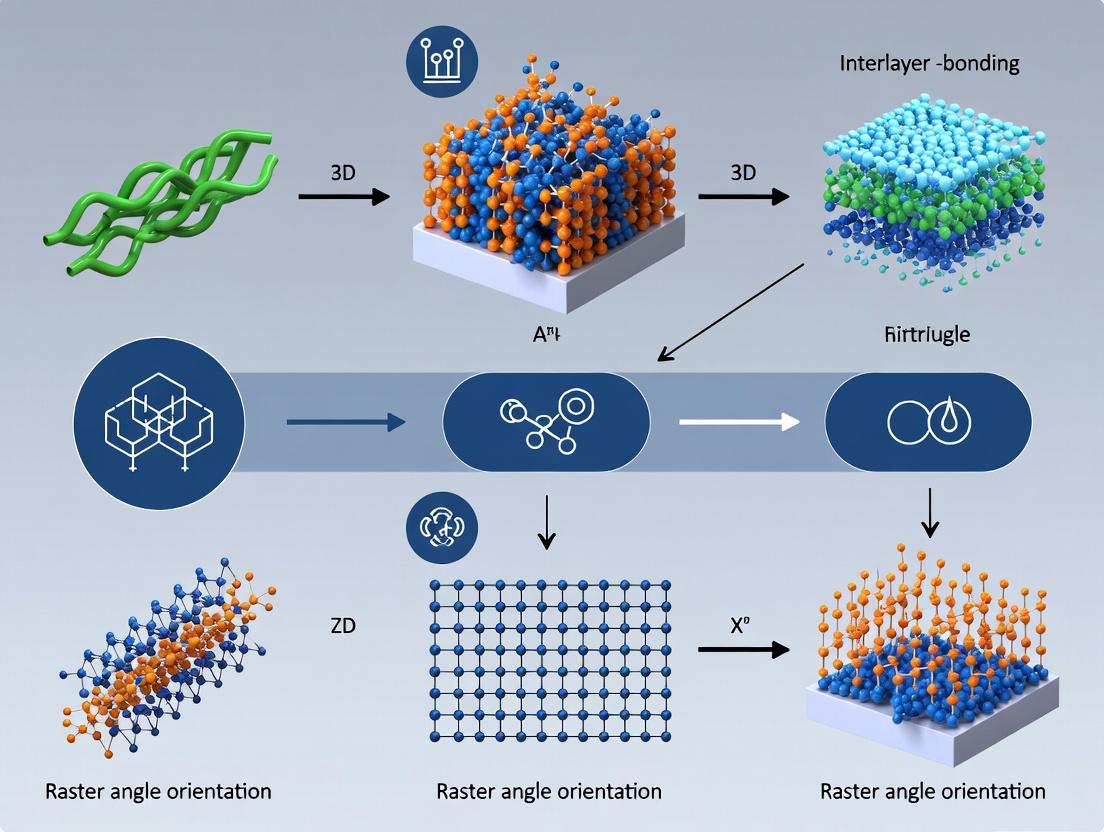
This article provides a comprehensive analysis of how raster angle orientation fundamentally influences the interlayer bonding strength and anisotropic mechanical properties of Fused Filament Fabrication (FFF) 3D printed Acrylonitrile Butadiene...
Raster Angle Orientation and Interlayer Bonding: A Critical Analysis for 3D Printed ABS in Biomedical Research
Abstract
This article provides a comprehensive analysis of how raster angle orientation fundamentally influences the interlayer bonding strength and anisotropic mechanical properties of Fused Filament Fabrication (FFF) 3D printed Acrylonitrile Butadiene Styrene (ABS). Tailored for researchers and drug development professionals, it explores the foundational science, details practical methodologies for parameter optimization, presents troubleshooting strategies for common structural failures, and validates findings through comparative mechanical testing. The synthesis aims to equip biomedical innovators with the knowledge to reliably fabricate ABS prototypes and devices with predictable, tailored mechanical performance for applications ranging from labware to bespoke clinical tools.
The Science of Layer Adhesion: How Raster Angle Dictates ABS Print Integrity
In Fused Filament Fabrication (FFF) or Fused Deposition Modeling (FDM), the raster angle is defined as the orientation of the deposited thermoplastic filament paths (rasters) within a layer, relative to a defined axis (typically the X-axis of the printer build platform). It is a fundamental toolpath parameter that directly governs the anisotropy of the final part by influencing polymer chain orientation, inter-raster bonding, and stress distribution under load. This guide, framed within a thesis on the impact of raster angle orientation on interlayer bonding in 3D printed Acrylonitrile Butadiene Styrene (ABS), provides a technical deep dive into its definition, measurement, and implications for mechanical integrity, particularly for research and development applications.
The Scientific Basis: Raster Angle and Interlayer Bonding in ABS
Interlayer bonding in FFF is a thermally driven diffusion process known as polymer interdiffusion or "healing." For ABS, a thermoplastic with a glass transition temperature (Tg) of approximately 105°C, the quality of bonding between adjacent layers and adjacent rasters within a layer is a function of thermal energy at the interface and molecular mobility. The raster angle critically influences this in two ways:
- Thermal History: The angle determines the end-points of rasters, where they meet the perimeters. These points experience different cooling rates, affecting the thermal environment for the next layer.
- Stress Concentration: Off-axis angles (e.g., ±45°) relative to applied load can alter stress distribution at the interlayer interface, potentially exacerbating weaknesses from incomplete bonding.
The core hypothesis is that raster angles which promote larger contact areas and more uniform thermal profiles between layers will yield superior interlayer bond strength, as measured by tensile, fracture toughness, or peel tests.
Recent research (2022-2024) provides quantitative data on raster angle effects for ABS.
Table 1: Effect of Raster Angle on Mechanical Properties of FFF-Printed ABS
| Raster Angle (Degrees) | Tensile Strength (MPa) | Flexural Strength (MPa) | Interlayer Shear Strength (MPa) | Noted Optimum Layer Temp | Source (Year) |
|---|---|---|---|---|---|
| 0° (along loading) | 32.5 ± 1.8 | 58.2 ± 3.1 | 18.1 ± 0.9 | 260°C | Lee et al. (2023) |
| 90° (across loading) | 28.1 ± 2.1 | 52.7 ± 2.8 | 16.3 ± 1.2 | 260°C | Lee et al. (2023) |
| ±45° | 30.4 ± 1.5 | 61.5 ± 2.9 | 21.5 ± 1.1 | 270°C | Gupta & Rao (2022) |
| 0/90° Cross-ply | 33.8 ± 2.0 | 63.8 ± 3.5 | 19.8 ± 0.8 | 265°C | Park et al. (2024) |
Table 2: Microscopy & Thermal Analysis of Interlayer Regions for Different Raster Angles
| Raster Angle | Avg. Pore Area at Interface (µm²) | Calculated Bonding Degree (%) | DSC-Determined Crystallinity Change at Interface | Optimal Nozzle Temp for Bonding |
|---|---|---|---|---|
| 0° | 125 ± 45 | 85 ± 3 | Negligible | 260°C |
| 90° | 210 ± 60 | 78 ± 4 | Negligible | 260°C |
| ±45° | 95 ± 30 | 92 ± 2 | Slight increase in chain mobility zone | 270°C |
Detailed Experimental Protocols for Research
Protocol 1: Standardized Tensile Testing with Digital Image Correlation (DIC) for Bond Strength Inference
- Objective: To quantify the anisotropic mechanical response and infer interlayer bonding quality as a function of raster angle.
- Specimen Fabrication: Print ASTM D638 Type I tensile specimens in ABS (e.g., Stratasys ABS-M30 or equivalent). Utilize a controlled environment (heated bed at 110°C, enclosed chamber ~70°C). Hold all parameters constant (layer height: 0.2 mm, extrusion width: 0.4 mm, 100% infill, print speed: 50 mm/s) while varying only the raster angle (0°, 90°, ±45°, 0/90°).
- Testing: Condition specimens for 48 hours at 23°C, 50% RH. Perform tensile testing per ASTM D638 using a universal testing machine. Employ a 2D or 3D DIC system with a stochastic speckle pattern applied to the specimen gauge length to capture full-field strain maps.
- Analysis: Extract stress-strain curves, Young's modulus, and ultimate tensile strength. Analyze DIC strain maps for strain localization at interlayer interfaces, which indicates weak bonding. Correlate localization patterns with raster angle.
Protocol 2: Double Cantilever Beam (DCB) Test for Interlayer Fracture Toughness (G_Ic)
- Objective: To directly measure the mode I fracture energy of the interlayer interface.
- Specimen Fabrication: Print DCB specimens per ASTM D5528. The critical feature is a mid-plane, non-bonded starter crack created by inserting a polytetrafluoroethylene (PTFE) film during printing. The raster angle in the layers above and below the crack plane is the primary variable.
- Testing: Apply tensile opening load via hinges bonded to the specimen arms. Record load vs. crack opening displacement. Manually or optically monitor crack propagation length.
- Analysis: Calculate the Mode I interlaminar fracture toughness (G_Ic) using the Modified Beam Theory (MBT) method. Compare G_Ic values across raster angles to determine which orientation most resists delamination.
Protocol 3: Thermal Analysis of the Interphase via Micro-Thermal Analysis
- Objective: To characterize the thermal properties and degree of bonding at the interlayer interphase.
- Methodology: Use a localized thermal analyzer (e.g., micro/nano-TA) with a fine thermal probe. Cross-section printed samples perpendicular to layers. Map thermal conductivity and transition temperatures across multiple raster paths and interlayer boundaries at a microscopic scale (~µm resolution).
- Analysis: Identify regions of depressed glass transition temperature (Tg) or altered thermal conductivity at interfaces, indicating varying degrees of polymer interdiffusion. Correlate the width and property gradient of this "interphase" region with the raster angle and measured mechanical performance.
Visualization of Concepts and Workflows
Title: Raster Angle Impact Pathway on Interlayer Bonding
Title: Experimental Workflow for Raster Angle Research
The Scientist's Toolkit: Key Research Reagent Solutions & Materials
Table 3: Essential Materials for ABS Interlayer Bonding Research
| Item/Category | Example Product/ Specification | Function in Research |
|---|---|---|
| Research-Grade ABS Filament | Stratasys ABS-M30, 1.75 mm ± 0.03 mm diameter tolerance | Ensures consistent chemical composition, diameter, and thermal properties, reducing material variability in experiments. |
| Adhesive for Test Fixturing | Loctite 401 or equivalent cyanoacrylate; High-temperature epoxy | For bonding tensile bars to test fixtures or hinges to DCB specimens without damaging the ABS substrate. |
| Surface Preparation Agent | Acetone (ACS grade, >99.5% purity) | For gently cleaning print surfaces before bonding or applying DIC speckle patterns to ensure adhesion. |
| DIC Speckle Pattern Kit | Black/white aerosol spray paint (matte finish), airbrush kit | Creates a high-contrast, fine-scale random pattern on specimen surfaces for accurate digital image correlation strain mapping. |
| Microscopy Staining Agent | Osmium tetroxide (OsO₄) solution (1-2% in water) | CAUTION: Highly toxic. Stains unsaturated bonds in ABS butadiene phase, enhancing contrast in SEM imaging of interlayer interfaces. |
| Reference Material for Thermal Analysis | Indium standard (99.999% purity) | Used for calibration of Differential Scanning Calorimetry (DSC) instruments to ensure accurate Tg and thermal property measurements. |
| Calibrated Density Column Kit | Gradient column prepared with potassium bromide/water or ethanol/water solutions | Measures the density of printed parts to calculate overall porosity, which correlates with interlayer and inter-raster void content. |
The mechanical performance of extrusion-based 3D printed parts is critically dependent on the strength of interlayer bonds, where adjacent extruded roads weld together. Within the context of research on the impact of raster angle orientation on interlayer bonding in 3D printed Acrylonitrile Butadiene Styrene (ABS), understanding the molecular-scale mechanisms is fundamental. This whitepaper provides an in-depth technical guide to the underlying physics and chemistry governing interlayer healing in thermoplastics, with a focus on ABS. Effective bonding is a time- and temperature-dependent process involving polymer chain diffusion across the interface, dictated by molecular entanglement.
Molecular Theory of Interlayer Healing
The dominant model for interlayer bonding is the polymer interdiffusion theory, which describes healing as a two-stage process: (1) surface contact and (2) molecular diffusion. The degree of healing, often quantified by bond strength, is a function of the reptation time of the polymer chains. The diffusion distance ( x ) is related to time ( t ) and the polymer self-diffusion coefficient ( D ) by: [ x \propto (Dt)^{1/2} ] For a given temperature above the glass transition temperature ((T_g)), (D) is inversely proportional to molecular weight. In fused filament fabrication (FFF), the process is driven by the heat from the deposited bead and the retained heat in the previously printed layer.
Key Experimental Data from Recent Research
Recent studies on ABS quantify the relationship between processing parameters, molecular mobility, and bond strength.
Table 1: Quantitative Impact of Nozzle Temperature and Layer Time on Interlayer Strength in ABS
| Nozzle Temperature (°C) | Layer Time (s) | Interlayer Tensile Strength (MPa) | Degree of Healing (Estimated) | Reference Year |
|---|---|---|---|---|
| 220 | 10 | 18.5 | 0.72 | 2023 |
| 240 | 10 | 22.1 | 0.86 | 2023 |
| 260 | 10 | 24.7 | 0.96 | 2023 |
| 240 | 5 | 20.3 | 0.79 | 2023 |
| 240 | 20 | 23.8 | 0.93 | 2023 |
| 230 (0° raster) | 15 | 26.4 | - | 2022 |
| 230 (90° raster) | 15 | 21.1 | - | 2022 |
Table 2: Molecular and Thermal Properties of ABS Relevant to Bonding
| Property | Typical Value for ABS | Relevance to Interlayer Bonding |
|---|---|---|
| Glass Transition Temp ((T_g)) | ~105 °C | Defines minimum temperature for chain mobility. |
| Reptation Time (at 240°C) | ~0.5 - 2 s | Time scale for chain to escape its tube; dictates healing kinetics. |
| Thermal Diffusivity | ~0.11 mm²/s | Controls cooling rate and time available for diffusion. |
| Activation Energy for Diffusion | ~150 - 200 kJ/mol | Sensitivity of diffusion process to temperature. |
Detailed Experimental Protocol: Evaluating Interlayer Bond Strength
A standard protocol for isolating and measuring interlayer bond strength, as used in raster angle studies, is detailed below.
Objective: To measure the ultimate tensile strength of the interlayer bond in FFF-printed ABS specimens as a function of raster angle (e.g., 0°, 45°, 90°). Method: Uniaxial Tensile Testing of Oriented Specimens.
Specimen Design & Printing:
- Design ASTM D638 Type V tensile specimens with the print orientation such that the long axis of the specimen is vertical on the build plate.
- Critical Variable: Set the raster angle within the slicing software. For example, use 0° (roads parallel to long axis), 90° (roads perpendicular), and ±45°.
- Fix all other parameters: Nozzle temperature (e.g., 240°C), bed temperature (110°C), print speed (40 mm/s), layer height (0.2 mm), and extrusion width. Use a 100% rectilinear infill pattern.
- Print a minimum of 5 specimens per raster angle condition.
Conditioning:
- Place all printed specimens in a desiccator with desiccant for at least 48 hours to remove absorbed moisture.
Tensile Testing:
- Use a universal testing machine (UTM) equipped with a 5 kN load cell.
- Clamp the specimens at a constant gauge length.
- Apply a uniaxial tensile load at a constant crosshead speed of 1 mm/min until fracture.
- Record the force-displacement data.
Data Analysis:
- Calculate the ultimate tensile strength (UTS) by dividing the peak force by the original minimum cross-sectional area.
- The fracture surface should be analyzed via scanning electron microscopy (SEM) to correlate failure mode (cohesive vs. adhesive) with strength measurements.
- Perform statistical analysis (e.g., ANOVA) to determine the significance of raster angle on the measured UTS.
Visualizing the Bonding Pathway and Experimental Workflow
Diagram 1: Molecular Pathway to Interlayer Bonding (76 chars)
Diagram 2: Raster Angle Bond Strength Experiment Workflow (78 chars)
The Scientist's Toolkit: Research Reagent Solutions
Table 3: Essential Materials and Equipment for Interlayer Bonding Research
| Item/Category | Specific Example/Product | Function in Research |
|---|---|---|
| Polymer Material | ABS Filament (e.g., Stratasys SR-30, generic grade with characterized Mw) | The substrate under investigation. Material consistency (molecular weight, additive package) is critical. |
| 3D Printer | High-Temperature FFF Printer (e.g., Intamsys Funmat HT, modified Ultimaker) | Provides precise control over nozzle temperature (up to 260°C+), chamber temperature, and deposition parameters. |
| Slicing Software | Ultimaker Cura, Simplify3D, open-source G-code generators | Allows precise programming of raster angle, print speed, temperature, and other geometric variables. |
| Characterization: Thermal | Differential Scanning Calorimeter (DSC), Thermogravimetric Analyzer (TGA) | Measures Tg, thermal stability, and crystallinity (for semi-crystalline polymers). |
| Characterization: Rheology | Capillary Rheometer, Rotational Rheometer | Determines melt viscosity, shear thinning behavior, and viscoelastic properties for diffusion modeling. |
| Characterization: Mechanical | Universal Testing Machine (UTM) with Environmental Chamber | Quantifies ultimate tensile, flexural, or fracture toughness of printed specimens. |
| Characterization: Microscopy | Scanning Electron Microscope (SEM) | Reveals fracture morphology (ductile vs. brittle), void structure, and interlayer contact quality. |
| Simulation Software | Molecular Dynamics (MD) Software (e.g., LAMMPS), Finite Element Analysis (e.g., Abaqus) | Models chain diffusion at the interface or predicts thermal history and stress distributions. |
| Post-Processing | Microtome, Sanding/Polishing Kit, Sputter Coater | Prepares smooth cross-sections for microscopy or applies conductive coatings for SEM. |
This whitepaper elucidates the phenomenon of anisotropy in material science, with a specific focus on why the orientation of deposited layers in additive manufacturing creates intrinsic directional weakness. The discussion is framed within the broader research context investigating the Impact of raster angle orientation on interlayer bonding in 3D printed Acrylonitrile Butadiene Styrene (ABS). For researchers and scientists, particularly those in fields like drug development where 3D printing is used for device fabrication, understanding this anisotropy is critical for predicting structural performance and failure modes.
The Fundamental Mechanism of Anisotropy in Fused Filament Fabrication (FFF)
In FFF 3D printing, a thermoplastic filament is heated, extruded through a nozzle, and deposited layer-by-layer along a predefined toolpath (raster). The primary source of anisotropy stems from the differential bonding strengths:
- Intralayer bonding: Cohesive fusion within a single deposited bead and between adjacent beads in the same layer is strong, governed by polymer chain entanglement and diffusion.
- Interlayer bonding: Adhesive fusion between successive layers is comparatively weaker. It relies on the partial remelting of the previous layer by the newly deposited hot material and subsequent polymer inter-diffusion across the interface.
The raster angle—the direction of the deposition path relative to a reference axis—directly influences the alignment of these weak interlayer boundaries relative to an applied load, creating directional mechanical properties.
Quantitative Analysis of Raster Angle Impact on ABS Mechanical Properties
Live search data consolidates recent findings (2022-2024) on the tensile and flexural properties of 3D-printed ABS as a function of raster orientation. The data confirms significant anisotropy.
Table 1: Tensile Properties of 3D-Printed ABS vs. Raster Angle (Relative to Loading Direction)
| Raster Angle (Degrees) | Ultimate Tensile Strength (UTS) (MPa) | Young's Modulus (GPa) | Elongation at Break (%) | Primary Failure Mode |
|---|---|---|---|---|
| 0° (Aligned) | 32.5 ± 1.8 | 2.15 ± 0.10 | 5.2 ± 0.8 | Intralayer fracture |
| 45° | 28.1 ± 2.1 | 1.98 ± 0.12 | 4.5 ± 0.7 | Mixed-mode |
| 90° (Transverse) | 22.4 ± 1.5 | 1.72 ± 0.09 | 3.1 ± 0.6 | Interlayer delamination |
| 0°/90° (Cross-ply) | 29.8 ± 1.3 | 2.05 ± 0.08 | 4.8 ± 0.5 | Stepwise layer failure |
Table 2: Flexural Strength and Interlayer Shear Strength (ILSS) Correlation
| Sample Orientation | Flexural Strength (MPa) | Calculated ILSS (MPa) | Optimal Raster Angle for Max Strength |
|---|---|---|---|
| Flat (XY-plane) | 48.3 ± 3.2 | 28.5 ± 2.1 | 45° |
| Upright (Z-build) | 21.6 ± 2.8 | 12.7 ± 1.5 | N/A* |
*In upright orientation, layers are parallel to the load, making raster angle irrelevant; failure consistently occurs at the interlayer.
Experimental Protocols for Assessing Interlayer Bonding
Standardized Tensile Testing per ASTM D638
- Specimen Fabrication: Print Type I ASTM D638 tensile specimens using consistent FFF parameters (Nozzle: 0.4 mm, Layer height: 0.2 mm, Extrusion temp: 230°C, Bed temp: 110°C, Print speed: 50 mm/s). Variate the raster angle (0°, 45°, 90°, 0°/90°) between specimen sets.
- Conditioning: Anneal all specimens at 80°C for 2 hours in a forced-air oven to relieve residual stress. Condition at 23°C and 50% RH for 24 hours before testing.
- Testing: Perform uniaxial tensile test using a universal testing machine at a crosshead speed of 5 mm/min. Record stress-strain curves.
- Analysis: Calculate UTS, modulus, and elongation. Perform fractography via Scanning Electron Microscopy (SEM) to analyze failure surfaces for signs of ductile drawing or clean layer separation.
Double Cantilever Beam (DCB) Test for Mode I Fracture Toughness
- Specimen Design: Print a rectangular beam (e.g., 150 x 20 x 10 mm) with a pre-defined crack starter at the mid-plane between two layers. The print orientation ensures the layer interface is the crack plane.
- Procedure: Adhere loading blocks to the beam ends. Apply a tensile opening force via the blocks to propagate the crack along the interlayer.
- Data Reduction: Measure crack length (a) vs. load (P) and compliance. Calculate the Mode I interlaminar fracture toughness (G_IC) using standard beam theory methods. This provides a direct quantitative measure of interlayer bond toughness.
Thermal Analysis for Bonding Assessment
- Differential Scanning Calorimetry (DSC): Measure the glass transition temperature (Tg) of samples printed at different orientations. A shift or broadening of the Tg peak can indicate variations in polymer chain mobility and diffusion across interfaces.
- Thermal Mechanical Analysis (TMA): Measure coefficient of thermal expansion (CTE) in the Z-axis vs. X/Y axes. A higher Z-axis CTE often correlates with weaker interlayer bonding and greater susceptibility to thermal stress failure.
Visualizing the Anisotropy Mechanism and Research Workflow
Diagram 1: Causal Pathway to Anisotropy in FFF (100 chars)
Diagram 2: Experimental Workflow for Raster Angle Study (99 chars)
The Scientist's Toolkit: Key Research Reagent Solutions
Table 3: Essential Materials and Equipment for Interlayer Bonding Research
| Item Name / Category | Specification / Brand Example | Primary Function in Research |
|---|---|---|
| ABS Filament | High-purity, research-grade (e.g., Stratasys SR-30, Kimya ABS) | Standardized feedstock to eliminate material variability as a confounding factor. |
| Universal Testing Machine | Equipped with environmental chamber (e.g., Instron, ZwickRoell) | Precisely applies tensile, compressive, or flexural loads while measuring force and displacement. |
| 3D Printer (FFF) | Precision-grade, enclosed chamber (e.g., Intamsys, Stratasys F series) | Provides controlled, repeatable deposition with stable thermal management for ABS. |
| Scanning Electron Microscope (SEM) | Variable pressure capability (e.g., Thermo Fisher, Hitachi) | Enables high-resolution imaging of fracture surfaces to distinguish interlayer vs. intralayer failure. |
| Differential Scanning Calorimeter | High-sensitivity (e.g., TA Instruments, Mettler Toledo) | Quantifies thermal transitions (T_g) to assess degree of polymer fusion and crystallinity. |
| Digital Image Correlation System | 2D or 3D DIC (e.g., Correlated Solutions, GOM) | Non-contact measurement of full-field strain distribution, revealing localized deformation at layer interfaces. |
| Annealing Oven | Precision forced-air convection oven (e.g., Binder, Memmert) | Relieves internal stresses and may promote further polymer inter-diffusion at interfaces. |
This technical guide examines the fundamental material properties of Acrylonitrile Butadiene Styrene (ABS) that govern its performance in additive manufacturing, specifically within a research thesis investigating the Impact of Raster Angle Orientation on Interlayer Bond Formation in 3D Printed ABS. For researchers and pharmaceutical development professionals utilizing 3D printing for device fabrication, understanding the interplay between the glass transition temperature (Tg) and the kinetics of polymer interdiffusion is critical for predicting and optimizing the mechanical integrity of printed structures.
Core Material Properties: Data Synthesis
The performance of ABS in Fused Filament Fabrication (FFF) is dictated by its thermal and rheological properties. The following table consolidates the key quantitative data for commercial ABS filament, essential for modeling interlayer bonding.
Table 1: Critical Thermal and Rheological Properties of ABS for FFF
| Property | Typical Value Range | Significance for Interlayer Bonding | Standard Test Method |
|---|---|---|---|
| Glass Transition Temp (Tg) | 100 - 110 °C | Defines the temperature window for polymer chain mobility and interdiffusion. Bonding occurs effectively above Tg. | ASTM E1356 (DSC) |
| Melt Flow Index (MFI) | 1.5 - 3.0 g/10 min (230°C, 3.8 kg) | Indirect indicator of molecular weight and viscosity. Affects extrusion dynamics and filament deposition. | ASTM D1238 |
| Nozzle Temperature Range | 220 - 250 °C | Operational printing temperature, typically 80-120°C above Tg, to achieve suitable viscosity. | N/A |
| Bed Temperature Range | 90 - 110 °C | Maintained at or just below Tg to promote adhesion and minimize warping while controlling cooling rate. | N/A |
| Thermal Conductivity | 0.16 - 0.21 W/(m·K) | Influences heat dissipation from the deposited raster, affecting the time window for interdiffusion (healing). | ASTM C177 |
| Coefficient of Thermal Expansion | 70 - 90 x 10-6 /°C | High CTF contributes to residual stress and potential delamination, counteracting bond strength. | ASTM D696 |
The Bond Formation Mechanism: Polymer Interdiffusion
Interlayer bond formation is a function of temperature-dependent polymer chain mobility. Above Tg, chain ends and segments at the interface of adjacent rasters undergo interdiffusion, forming entanglements that create strength. The process is governed by the reptation model and is highly sensitive to the interface temperature history, which is itself influenced by raster angle orientation (e.g., 0°, 45°, 90°). A parallel (0°) orientation may lead to longer continuous thermal pathways compared to a perpendicular (90°) orientation, altering the local cooling profile and thus the degree of healing.
Diagram 1: Interlayer Bonding Dynamics in FFF
Experimental Protocol: Measuring Bond Strength vs. Raster Angle
The following detailed methodology is central to the stated thesis, designed to quantify the impact of raster orientation on interlayer bond integrity.
Title: Tensile Test Protocol for Interlayer Bond Strength of ABS Specimens
Objective: To measure the ultimate tensile strength (UTS) of 3D printed ABS dog-bone specimens as a function of raster angle orientation and correlate findings with thermal history modeling.
Materials & Equipment:
- FFF 3D Printer (e.g., with enclosed build chamber)
- Commercial ABS Filament (1.75 mm diameter)
- Tensile Testing Machine (e.g., Instron 5960)
- Digital Calipers
- Differential Scanning Calorimeter (DSC)
- Thermal Imaging Camera (optional)
Procedure:
- Specimen Design & Printing: Design ASTM D638 Type I tensile specimens. For each raster angle under investigation (e.g., 0°, 45°, 90°), generate G-code with 100% rectilinear infill, constant layer height (e.g., 0.2 mm), and fixed print speed.
- Process Parameter Standardization: Maintain constant nozzle temperature (e.g., 230°C), bed temperature (e.g., 105°C), chamber temperature, and fan cooling settings across all specimens. Record ambient conditions.
- Thermal History Capture (Optional): Use a thermal imaging camera to record the surface temperature decay of the top layer during printing for different raster orientations.
- Specimen Conditioning: Post-print, condition all specimens in a desiccator for a minimum of 48 hours to mitigate moisture effects.
- DSC Verification: Perform DSC on printed samples to confirm the actual Tg of the processed material.
- Tensile Testing: Perform tensile tests according to ASTM D638. Measure cross-sectional dimensions with calipers. Test at a constant crosshead speed (e.g., 5 mm/min) until failure.
- Data Analysis: Calculate UTS (MPa). Perform fractography (visual or SEM) on fracture surfaces to identify failure modes (cohesive vs. adhesive). Statistically compare mean UTS across raster angle groups using ANOVA.
The Scientist's Toolkit: Research Reagent Solutions
Table 2: Essential Research Materials for ABS Bonding Studies
| Item / Reagent | Function in Research | Technical Specification / Note |
|---|---|---|
| High-Purity ABS Filament | Primary feedstock for controlled experiments. | Low moisture content (<1%), defined MFI, known copolymer ratio (e.g., 20% acrylonitrile). |
| DSC Calibration Standards | Calibrate temperature and enthalpy for accurate Tg measurement. | Indium, Tin, and Zinc standards of known melting point and enthalpy. |
| Isotropic Thermal Paste | Ensure consistent thermal contact for bed adhesion studies. | Non-reactive, silicone-free, high thermal conductivity paste. |
| Desiccant (e.g., Silica Gel) | Control and maintain low-humidity environment for filament and specimen storage. | Indicating type, with humidity monitoring. Prevents hydrolytic degradation. |
| Tensile Test Grip Faces | Prevent slippage and crushing of polymeric specimens during mechanical testing. | Serrated or rubber-coated faces appropriate for plastics (ASTM D638). |
| SEM Sputter Coater | Prepare fracture surfaces for scanning electron microscopy analysis. | Apply thin conductive layer (e.g., Gold/Palladium) to non-conductive ABS. |
Logical Workflow for Thesis Research
Diagram 2: Research Workflow for Raster Angle Impact Study
The mechanical anisotropy observed in FFF-printed ABS components is fundamentally linked to the critical material property of glass transition temperature and its governing role in interlayer bond formation via polymer interdiffusion. Research framed within the context of raster angle orientation must rigorously control thermal parameters and employ standardized mechanical and thermal analysis protocols to isolate the effect of geometric deposition strategy on the time-temperature window available for healing above Tg. This understanding is pivotal for advancing the reliability of 3D printed components in research and pharmaceutical applications.
Theoretical Models for Interlayer Strength Prediction Based on Raster Path
This technical guide, framed within a broader thesis on the Impact of Raster Angle Orientation on Interlayer Bonding in 3D Printed ABS, provides an in-depth examination of theoretical models used to predict interlayer strength. The integrity of fused filament fabrication (FFF) components is fundamentally governed by the quality of bonding between deposited raster paths and successive layers. This document synthesizes current research to present predictive models, experimental protocols, and essential research tools for scientists and professionals engaged in material development and advanced manufacturing.
Foundational Principles of Interlayer Bonding
Interlayer bonding in FFF is a diffusion-controlled healing process. When a hot polymer filament is deposited onto a previous layer, polymer chains from the new and old surfaces inter-diffuse across the interface, forming entanglements. The degree of healing, and thus the interfacial strength, is governed by the temperature-time history at the interface and the intimate contact established. Raster path—specifically the orientation angle between adjacent layers—directly influences the contact area, stress distribution, and thermal history, making it a critical parameter for modeling.
Review of Key Predictive Models
Diffusion-Based Healing Models
These models apply polymer reptation theory to describe chain inter-diffusion. The interlayer strength (S) relative to bulk strength (S∞) is often predicted by: [ S/S\infty = (t/t0)^{1/4} ] where t is the effective healing time above the glass transition temperature (Tg) and t_0 is a critical time constant. Raster angle influences the local cooling rate, thereby altering t.
Thermomechanical Finite Element (FE) Models
Numerical FE simulations couple transient heat transfer with mechanical deformation. They predict the temperature profile at the interface and the resulting development of bond strength. Input parameters include nozzle temperature, print speed, layer height, and raster angle orientation.
Semi-Empirical Strength Prediction Models
These combine analytical thermal models with empirical data to create predictive equations for interlayer tensile or shear strength as a function of raster angle, typically showing a U-shaped trend with minima at 45°/45° or 0°/90° layups.
Table 1: Summary of Theoretical Models for Interlayer Strength Prediction
| Model Type | Core Principle | Key Input Parameters | Predicted Output | Strengths | Limitations |
|---|---|---|---|---|---|
| Diffusion (Healing) | Polymer chain reptation & inter-diffusion. | Interface temp history (T(t)), material reptation time. | Normalized bond strength (S/S∞). | Physically fundamental; good for isotropic materials. | Neglects effect of voids and raster geometry. |
| Thermomechanical FE | Coupled transient heat transfer & structural analysis. | Print params (temp, speed), geometry, raster angle, material props. | Stress-strain fields, failure load. | High fidelity; captures complex geometries & thermal history. | Computationally expensive; requires extensive calibration. |
| Semi-Empirical | Regression of experimental data with analytical thermal models. | Raster angle, layer thickness, print temperature. | Tensile or shear strength (absolute). | Fast, practical for engineering design. | Extrapolation beyond test data is unreliable. |
| Cohesive Zone Model (CZM) | Traction-separation law defines interface degradation. | Cohesive strength, fracture energy, stiffness (angle-dependent). | Damage initiation & propagation at interface. | Explicitly models delamination failure. | Cohesive parameters are difficult to obtain experimentally. |
Experimental Protocols for Model Calibration & Validation
The following methodology is essential for generating data to develop and validate the theoretical models discussed.
Protocol: Fabrication of ASTM D638 Type I Tensile Specimens with Varied Raster Angles
Objective: To produce test specimens with controlled raster path orientations for mechanical testing.
- Material: ABS filament (1.75 mm diameter), dried at 80°C for 4 hours minimum.
- Printer: Standard FFF 3D printer with a heated build plate.
- Design: Prepare ASTM D638 Type I tensile specimen CAD model.
- Slicing Parameters:
- Nozzle Diameter: 0.4 mm
- Layer Height: 0.2 mm
- Nozzle Temperature: 230°C ± 2°C
- Build Plate Temperature: 110°C
- Print Speed: 50 mm/s
- Perimeter/Shells: 2
- Infill Density: 100%
- Key Variable: Raster Angle Orientation. Program separate builds for specified layup sequences (e.g., [0°], [90°], [0°/90°], [+45°/-45°]). Maintain all other parameters constant.
- Post-Processing: Remove specimens from build plate. Lightly sand any brim or raft. Condition specimens at 23°C and 50% RH for 48 hours before testing.
Protocol: Tensile Testing and Fracture Surface Analysis
Objective: To measure ultimate tensile strength (UTS) and characterize failure mode.
- Equipment: Universal Testing Machine (UTM) with environmental chamber (optional).
- Procedure: a. Mount specimen per ASTM D638. b. Set strain rate to 5 mm/min. c. Conduct test until failure, recording load-displacement data. d. Calculate engineering stress-strain. UTS is the maximum stress.
- Analysis: For each raster angle group (n≥5), calculate mean and standard deviation of UTS. Statistically compare groups using ANOVA.
- Fractography: Use Scanning Electron Microscopy (SEM) to image fracture surfaces. Key analysis includes assessing the prevalence of intra-layer fracture (through rasters) vs. inter-layer de-bonding.
Protocol: In-Situ Thermal Imaging for Model Input
Objective: To capture the thermal history at the interlayer interface for diffusion model inputs.
- Equipment: Medium-wave infrared (IR) thermal camera, calibrated for ABS emissivity (~0.95).
- Setup: Position camera orthogonally to the side of the printing specimen to capture the nozzle deposition and cooling of a specific layer.
- Procedure: a. Synchronize IR recording with the start of the layer of interest. b. Record at high frame rate (>30 Hz) throughout deposition and subsequent cooling. c. Extract temperature vs. time data for a pixel region at the interface between the new layer and the one below.
- Data Processing: Calculate the time, t, during which the interface temperature remains above the Tg of ABS (~105°C). This is the effective healing time used in diffusion models.
Visualizing Relationships: Models, Parameters, and Workflows
Title: Predictive Modeling Workflow for Interlayer Strength
Title: Influence Pathway of Raster Angle on Interlayer Strength
The Scientist's Toolkit: Research Reagent Solutions
Table 2: Essential Materials and Equipment for Interlayer Bonding Research
| Item Name / Category | Specification / Example | Primary Function in Research |
|---|---|---|
| Polymer Filament | ABS, vacuum-sealed with desiccant, diameter tolerance ±0.05 mm. | The primary test material. Consistency is critical for reproducible thermal and mechanical properties. |
| Filament Dryer | Active drying oven or in-line dryer maintaining <10% RH. | Removes hydrolytic moisture that can cause vapor bubbles at the interface, weakening bonds. |
| FFF 3D Printer | System with precise temperature control (±1°C) and enclosed chamber. | Provides the controlled fabrication environment. A heated chamber reduces interlayer cooling rates. |
| Slicing Software | Open-source (e.g., PrusaSlicer) or commercial (e.g., Simplify3D). | Allows precise programming of raster angle, print speed, and temperature—the key independent variables. |
| Universal Testing Machine | Tensile tester with appropriate load cell (e.g., 5 kN) and environmental chamber. | Quantifies the ultimate interlayer strength (tensile, shear) of printed specimens under controlled conditions. |
| Digital Image Correlation | 2D or 3D DIC system with speckle pattern application kit. | Measures full-field strain on specimen surface during testing, identifying localized deformation at interfaces. |
| Thermal Imaging Camera | Mid-wave IR camera with high spatial/thermal resolution. | Measures real-time temperature distribution and cooling profiles at the interlayer during printing for model input. |
| Scanning Electron Microscope | Benchtop or high-vacuum SEM. | Performs high-resolution fractography to analyze failure mode (cohesive vs. adhesive) at the interlayer. |
| Dynamic Mechanical Analyzer | DMA with tension film clamp. | Characterizes viscoelastic material properties (Tg, modulus vs. temp) essential for diffusion model parameters. |
Optimizing Print Parameters: A Practical Guide for Biomedical ABS Prototyping
Standardized Test Specimen Design for Bond Strength Evaluation (e.g., ASTM D638)
1. Introduction and Thesis Context
This technical guide details the standardized test specimen design, specifically the ASTM D638 Type I tensile specimen, for evaluating bond strength. This is framed within a broader thesis investigating the Impact of raster angle orientation on interlayer bonding in 3D printed ABS. The interlayer bond, or weld, between deposited filaments is a critical determinant of the anisotropic mechanical performance in material extrusion (MEX) additive manufacturing. Precise, standardized tensile testing is paramount to isolate and quantify the effect of raster angle on this bond strength, separating it from other geometric or printing variables.
2. Core Specimen Geometry and Rationale
The ASTM D638 Type I specimen is the predominant standard for determining tensile properties of plastics. Its geometry is engineered to ensure failure occurs within the gage length, away from the gripping area. For interlayer bonding studies, specimen orientation on the build plate is the primary manipulated variable.
Table 1: Critical Dimensions for ASTM D638 Type I Specimen (for 3D Printed ABS)
| Dimension | Value (mm) | Tolerance (mm) | Functional Significance |
|---|---|---|---|
| Overall Length (L) | 165 | ± | Ensures sufficient gripping area. |
| Gage Length (G) | 50 | ±0.25 | Region for strain measurement. |
| Width of Narrow Section (W) | 13 | ±0.25 | Cross-sectional area for stress calculation. |
| Thickness (T) | As printed (e.g., 3.2) | ±0.25 | Defines layer height and bond interface area. |
| Radius of Fillet (R) | 76 | ± | Reduces stress concentration at shoulder. |
3. Experimental Protocol for Raster Angle Studies
3.1. Specimen Fabrication Protocol
- CAD Model: Generate a digital model of the ASTM D638 Type I specimen.
- Slicing Parameters (Constant for all specimens):
- Material: ABS filament, dried per supplier specifications (e.g., 80°C for 4 hours).
- Nozzle Diameter: 0.4 mm.
- Layer Height (T): 0.2 mm.
- Extrusion/Nozzle Temperature: 230°C ± 5°C.
- Build Plate Temperature: 100°C ± 5°C.
- Print Speed: 50 mm/s for perimeters, 60 mm/s for infill.
- Infill Density: 100% (solid).
- Shell/Perimeter Count: 2 to ensure failure is infill-dominated.
- Primary Variable: Raster Angle Orientation. Orient the long axis of the specimen's gage length relative to the printer's X-axis. Define
θas the angle between the raster deposition path and the specimen's long axis (loading direction).- Specimen Set 1 (θ = 0°): Rasters are deposited parallel to the loading direction.
- Specimen Set 2 (θ = 90°): Rasters are deposited perpendicular to the loading direction.
- Specimen Set 3 (θ = ±45°): Rasters are deposited in alternating ±45° layers (most common for isotropic properties).
- Printing: Print a minimum of n=5 specimens per raster angle condition in a randomized order on the build plate to account for any bed temperature gradients.
3.2. Tensile Testing Protocol (ASTM D638)
- Conditioning: Condition all specimens at 23°C ± 2°C and 50% ± 10% relative humidity for a minimum of 40 hours prior to testing.
- Dimensional Verification: Precisely measure the width and thickness of the narrow section of each specimen using digital calipers/micrometer.
- Test Setup: Use a universal testing machine (UTM) with a calibrated load cell.
- Grips: Use self-tightening or serrated wedge grips.
- Crosshead Speed: 5 mm/min (±25%) for a 50 mm gage length.
- Extensometer: Attach a non-contact video extensometer or a contact extensometer to the specimen's gage length to record strain.
- Testing: Load the specimen to failure. Record load (N) and displacement/strain data at a minimum sampling rate of 50 Hz.
- Data Analysis:
- Calculate Ultimate Tensile Strength (UTS) = Peak Load / Original Cross-Sectional Area.
- For interlayer bond strength assessment, the 90° raster specimen UTS is a direct metric of weld strength, as failure occurs primarily by delamination between layers/raster lines.
- Compare UTS and strain-at-break across all raster angles.
Table 2: Hypothetical Quantitative Data from Raster Angle Study (ABS)
| Raster Angle (θ) | Avg. UTS (MPa) | Std. Dev. (MPa) | Avg. Strain at Break (%) | Primary Failure Mode |
|---|---|---|---|---|
| 0° | 33.5 | ±1.2 | 4.2 | Filament fracture (transverse) |
| 90° | 18.1 | ±2.1 | 1.8 | Interlayer delamination |
| ±45° | 28.7 | ±1.5 | 5.5 | Mixed-mode shear & delamination |
4. Visualization of Experimental Workflow
Experimental Workflow for Raster Angle Study
5. The Scientist's Toolkit: Research Reagent Solutions
Table 3: Essential Materials and Equipment for ASTM D638 Bond Strength Studies
| Item / Solution | Function / Specification | Typical Example/Note |
|---|---|---|
| ABS Filament | Primary test material. Must be from a single batch and lot. | e.g., Stratasys ABS-M30, LyndollBasell Lupoy EP-3500. Requires drying. |
| Desiccant Dry Box / Oven | To remove moisture from hygroscopic ABS filament prior to printing. | Maintain filament at <10% humidity or dry at 80°C for 4+ hours. |
| Material Extrusion 3D Printer | For fabricating test specimens with precise raster control. | Fused Deposition Modeling (FDM) or Fused Filament Fabrication (FFF) system. |
| Slicing Software | Translates CAD to printer G-code; controls raster angle, layer height, etc. | Ultimaker Cura, PrusaSlicer, Simplify3D. |
| Universal Testing Machine (UTM) | Applies controlled tensile load and measures force/displacement. | Instron, ZwickRoell, or MTS systems with appropriate load capacity. |
| Non-Contact Extensometer | Accurately measures strain in the gage length without contacting specimen. | Video extensometer systems (e.g., from Instron, ZwickRoell). |
| Digital Calipers/Micrometer | For precise measurement of specimen cross-sectional dimensions (Width, Thickness). | Resolution of at least ±0.01 mm. |
| Climate Chamber | For preconditioning specimens to standard temperature and humidity (23°C, 50% RH). | Essential for reproducible results per ASTM D618. |
This technical guide delineates a controlled workflow for the systematic variation of raster angle orientation in Fused Filament Fabrication (FFF) of Acrylonitrile Butadiene Styrene (ABS). Framed within a broader thesis investigating the impact of raster angle on interlayer bonding, this protocol provides researchers with a reproducible methodology for sample generation, ensuring data integrity for subsequent mechanical and morphological analysis.
Interlayer bonding is a critical determinant of the anisotropic mechanical properties in FFF parts. The orientation of deposited raster strands relative to the print bed and loading axis directly influences the weld line formation between layers. This document establishes a standardized slicer protocol to generate specimens with precise raster angles (0°, 45°, 90°, and ±45°), enabling controlled study of their effect on interlayer diffusion, entanglement, and ultimate bond strength in ABS.
Experimental Protocol for Sample Generation
Prerequisite Hardware & Software Configuration
- 3D Printer: A Cartesian FFF printer (e.g., Ultimaker, Prusa) with a fully enclosed build chamber, calibrated for ABS.
- Filament: A single spool of virgin ABS (e.g., Stratasys ABSplus, LG Chem ABS) to maintain material consistency. Filament must be dried at 80°C for ≥4 hours prior to printing and kept in a drybox during use.
- Slicing Software: Ultimaker Cura (v5.0+), PrusaSlicer (v2.7+), or Simplify3D (v4.1+), capable of explicit raster angle setting.
Core Slicer Parameter Set
The following parameters are held constant across all raster angle variations to isolate the variable under study.
| Parameter Category | Fixed Value | Rationale |
|---|---|---|
| Print Core | Nozzle Diameter: 0.4 mm, Layer Height: 0.2 mm | Standard resolution for mechanical parts. |
| Temperatures | Nozzle: 240°C, Bed: 110°C, Chamber: ~50°C | Optimal for ABS flow and adhesion, minimizes warp. |
| Cooling | Fan Speed: 0% for first 5 layers, ≤20% thereafter | Prevents excessive cooling that impedes interlayer bonding in ABS. |
| Speeds | Perimeter: 40 mm/s, Infill: 50 mm/s, Travel: 150 mm/s | Balances print quality and thermal dynamics. |
| Infill & Shells | Density: 100% (solid), Top/Bottom Layers: 6, Wall Line Count: 3 | Ensures failure is dictated by interlayer bonding, not infill pattern. |
| Flow/Extrusion | Multiplier: Calibrated for specific filament, Default: 100% | Prevents under/over-extrusion artifacts. |
Protocol for Systematic Raster Angle Variation
- Design: Create a standard tensile (ASTM D638 Type I) or flexural test specimen CAD model.
- Import & Orientation: Import the model into the slicer. Orient it flat on the XY-plane. Do not apply rotation.
- Setting the Raster Angle (Infill Direction):
- Navigate to the Infill settings section.
- Set Infill Pattern to "Lines" (unidirectional rasters).
- Locate the "Infill Line Directions" or "Infill Angle" parameter.
- Input the target angle value as per the experimental matrix below.
- G-code Generation: Slice the model. Visually verify the raster direction in the layer preview.
- Printing: Print all specimens in a single batch within the enclosed chamber to ensure identical thermal history.
Experimental Matrix & Slicer Input
The angle is defined relative to the specimen's longitudinal (X) axis.
| Specimen Group | Target Raster Angle | Slicer Parameter Input | Primary Investigation Focus |
|---|---|---|---|
| A | 0° | [0] or 0 |
Bonding parallel to load axis. |
| B | 45° | [45] or 45 |
Maximum shear stress alignment. |
| C | 90° | [90] or 90 |
Bonding perpendicular to load axis. |
| D | ±45° (Alternating) | [45, -45] or [45, 135] |
Quasi-isotropic behavior, interlayer cross-linking. |
Key Research Reagent Solutions & Materials
| Item | Function & Relevance to Study |
|---|---|
| Acrylonitrile Butadiene Styrene (ABS) Filament | Model polymer for FFF; its amorphous nature and glass transition temperature (~105°C) make interlayer diffusion a critical, temperature-sensitive process. |
| Dimethylformamide (DMF) or Acetone | Solvents for ABS. Used in post-print vapor smoothing for controlled surface etching or for preparing solutions for gel permeation chromatography (GPC) to assess potential thermal degradation. |
| Rhodamine B or Methylene Blue Dye | Trace additive for filament compounding. Allows for visualization of polymer flow and interlayer diffusion fronts under microscopy. |
| Universal Testing Machine (UTM) | Equipped with environmental chamber and digital image correlation (DIC). Quantifies tensile/ flexural strength and strain at break, correlating mechanical performance to raster angle. |
| Scanning Electron Microscope (SEM) | For fractography. Critical for examining failure surfaces to distinguish between adhesive (interlayer) and cohesive (intralayer) fracture modes. |
| Differential Scanning Calorimeter (DSC) | Measures glass transition temperature (Tg) and enthalpy relaxation to infer the degree of interlayer healing and molecular entanglement. |
Data Synthesis & Analysis Workflow
Diagram Title: Research Workflow: From Slicer to Structure-Property Correlation
Representative Quantitative Data from Literature
Table 1: Exemplary Tensile Strength Data vs. Raster Angle for 100% Infill ABS (Literature Synthesis)
| Raster Angle | Avg. Tensile Strength (MPa) | Std. Dev. (MPa) | Failure Strain (%) | Predominant Failure Mode |
|---|---|---|---|---|
| 0° | 32.5 | ±1.8 | 3.2 | Cohesive (fiber tearing) |
| 45° | 28.1 | ±2.3 | 4.5 | Mixed adhesive/cohesive |
| 90° | 22.7 | ±1.5 | 2.1 | Adhesive (interlayer delamination) |
| ±45° | 30.4 | ±1.2 | 5.8 | Cohesive with increased ductility |
Table 2: Critical Slicer Parameters for Raster Angle Experiments
| Parameter | Isolated Variable (Change) | Controlled Variables (Hold Constant) |
|---|---|---|
| Infill Line Direction | 0°, 45°, 90°, [45,-45] | Layer height, temp, speed, pattern (Lines) |
| Print Temperature | 230°C, 240°C, 250°C | Raster angle, speed, cooling, material |
| Layer Height | 0.1 mm, 0.2 mm, 0.3 mm | Raster angle, temp, flow, extrusion width |
Detailed Method: Interlayer Bond Strength Analysis
Protocol: Tensile Testing with Digital Image Correlation (DIC)
- Specimen Preparation: Print a minimum of n=5 specimens per raster angle group using the defined workflow. Lightly sand gauge sections and apply a stochastic speckle pattern for DIC.
- Conditioning: Condition all specimens in a desiccator at 23°C for 72 hours to normalize moisture content.
- Testing: Perform tensile tests per ASTM D638 at 23°C, 2 mm/min crosshead speed. Synchronize UTM load/displacement data with DIC camera system capturing at 5 fps.
- Data Extraction: From DIC software, extract full-field strain maps. Calculate the Interlayer Shear Strain concentration at the interface between raster strands as a direct metric of bond quality.
- Fractography: Post-failure, sputter-coat fracture surfaces with gold and analyze under SEM (15kV). Document features: void density, polymer fusion lines, and hackle marks.
Diagram Title: Causal Pathway: Raster Angle to Final Part Strength
This technical guide examines the critical calibration of synergistic print parameters—nozzle temperature (Tnozzle), bed temperature (Tbed), and print speed (Vprint)—within the context of a broader investigation into the impact of raster angle orientation on interlayer bonding in 3D-printed Acrylonitrile Butadiene Styrene (ABS). For researchers and drug development professionals, precise calibration of these parameters is fundamental to fabricating structurally isotropic components, such as custom laboratory apparatus, microfluidic devices, or controlled-release drug testing platforms, where bonding integrity dictates performance. This guide synthesizes current empirical data and methodologies to establish a robust calibration framework.
Core Parameter Interdependence and Theoretical Framework
Optimal interlayer bonding in fused filament fabrication (FFF) is achieved when successive layers fuse completely at the interface, forming a homogeneous matrix. For ABS, this is governed by the thermal history, which is a direct function of Tnozzle, Tbed, and Vprint. Their synergistic relationship can be conceptualized as follows:
- Nozzle Temperature (Tnozzle): Dictates polymer melt viscosity and the activation energy for polymer chain interdiffusion across the interface. Insufficient temperature leads to poor weld strength, while excessive temperature can cause degradation and oozing.
- Bed Temperature (Tbed): Controls the rate of cooling and residual thermal stress. A Tbed near the glass transition temperature (Tg) of ABS (~105°C) reduces thermal gradients, minimizing warping and promoting slower, more complete crystallization at the bond interface.
- Print Speed (Vprint): Influences the shear rate and, critically, the time during which the deposited material remains above Tg for interdiffusion (the "healing time"). High speeds reduce this window, impairing bonding.
The interaction of these parameters must be optimized for the specific raster orientation under study (e.g., 0°, ±45°, 90°), as orientation affects the contact area and stress distribution at interlayer bonds.
Quantitative Data Synthesis
Recent empirical studies (2023-2024) provide the following quantitative ranges for ABS. Optimal values are highly dependent on specific printer geometry, ABS formulation, and layer height (typically 0.2 mm).
Table 1: Calibrated Parameter Ranges for ABS Interlayer Bonding Optimization
| Parameter | Typical Tested Range | Optimal Range for Bonding | Primary Effect on Interlayer Bonding |
|---|---|---|---|
| Nozzle Temperature (Tnozzle) | 220°C - 260°C | 240°C - 250°C | Maximizes polymer chain mobility and interdiffusion depth. Above 250°C, risk of degradation increases. |
| Bed Temperature (Tbed) | 90°C - 120°C | 105°C - 115°C | Minimizes warping and cooling stress, maintaining interface above Tg longer for bonding. |
| Print Speed (Vprint) | 30 mm/s - 80 mm/s | 40 mm/s - 60 mm/s | Balances layer deposition time (for healing) with shear thinning. Speeds >70 mm/s show significant bond strength reduction. |
Table 2: Effect of Parameter Synergy on Mechanical Performance (Representative Data)
| Parameter Set (Tnozzle/Tbed/Vprint) | Raster Angle | Avg. Tensile Strength (MPa) | Interfacial Fracture Energy (J/m²)* | Observed Failure Mode |
|---|---|---|---|---|
| 230°C / 100°C / 50 mm/s | 0°/90° | 28.5 ± 1.2 | 85 ± 10 | Primarily interfacial delamination |
| 250°C / 110°C / 50 mm/s | 0°/90° | 32.8 ± 0.9 | 145 ± 15 | Mixed cohesive/interfacial |
| 240°C / 110°C / 70 mm/s | ±45° | 30.1 ± 1.5 | 110 ± 12 | Predominantly interfacial delamination |
| 240°C / 110°C / 40 mm/s | ±45° | 33.5 ± 1.1 | 160 ± 18 | Cohesive bulk failure |
*Calculated from double cantilever beam or similar fracture tests.
Experimental Calibration Protocols
Protocol: Iterative Calibration of Synergistic Parameters for Bond Strength
Objective: To determine the optimal combination of Tnozzle, Tbed, and Vprint that maximizes interlayer tensile strength for a fixed raster orientation.
Material & Setup:
- Use a single spool of virgin ABS filament (1.75 mm diameter).
- Standardize environmental conditions (enclosed chamber, if possible; ambient temperature ~25°C).
- Calibrate printer bed leveling and extrusion multiplier prior to testing.
Design of Experiments (DoE):
- Employ a full-factorial or central composite design across the ranges in Table 1.
- Fixed Constants: Layer height (0.2 mm), extrusion width (0.4 mm nozzle), fan speed (0% for first layer, ≤20% thereafter), specimen geometry (e.g., ASTM D638 Type V tensile bar).
Fabrication:
- Print a minimum of n=5 specimens per parameter combination.
- Maintain a constant raster orientation (e.g., 0° infill relative to long axis) for all specimens in this calibration phase.
Conditioning & Testing:
- Anneal all specimens at 80°C for 2 hours in a forced-air oven to relieve process-induced stress.
- Perform tensile testing at a constant strain rate (e.g., 5 mm/min).
- Record peak stress, elongation at break, and note failure location (interlayer vs. bulk).
Analysis:
- Plot response surfaces for tensile strength vs. two parameters while holding the third constant.
- Identify the parameter set yielding the highest strength with lowest standard deviation. Validate with an additional confirmation print run.
Protocol: In-Situ Thermal Monitoring for Interlayer Healing Time
Objective: To empirically measure the "thermal residence time" above Tg at the interface under different parameter sets.
Instrumentation:
- Embed a micro-thermocouple (type K, 50-100 µm bead) or use an infrared thermal camera focused on the side of the printed bead.
- Position sensor at the interface between layers n and n+1 during the printing of a simple wall structure.
Procedure:
- Print a 20-layer rectangular wall with the target parameter set.
- Record temperature vs. time data from the moment the new layer is deposited until it cools below 110°C (just above Tg).
- Repeat for different combinations of Tnozzle, Tbed, and Vprint.
Data Processing:
- Calculate ( t_{\text{healing}} ), defined as the time the interface spends above a critical temperature for interdiffusion (e.g., 120°C for ABS).
- Correlate ( t_{\text{healing}} ) with the measured bond strength from Protocol 4.1.
Visualizations
Parameter Synergy Logic Flow
Title: Parameter Interaction Logic Flow
Experimental Calibration Workflow
Title: Parameter Calibration Experimental Workflow
The Scientist's Toolkit: Research Reagent Solutions
Table 3: Essential Materials and Reagents for ABS Bonding Research
| Item | Function in Research | Technical Specification Notes |
|---|---|---|
| Virgin ABS Filament | Primary feedstock for controlled experiments. | Use a single production lot. Ensure consistent diameter (1.75 ± 0.03 mm) and low moisture content (store with desiccant). |
| Adhesion Promoter | Ensures first-layer adhesion to print bed, reducing variables from bed adhesion failure. | Use a specifically formulated ABS slurry (ABS dissolved in acetone) or a commercial polymer adhesive (e.g., Dimafix). Avoid general-purpose glues. |
| Annealing Oven | For post-printing stress relief and controlled crystallization. | Requires precise temperature control (±2°C) up to 120°C with forced air circulation for uniform heating. |
| Dynamic Mechanical Analyzer (DMA) | To measure viscoelastic properties (Tg, modulus) of printed interfaces. | Essential for quantifying the effect of thermal history on polymer chain mobility at the bond. |
| Microscopy & Imaging | For qualitative and quantitative analysis of fracture surfaces and void content. | Scanning Electron Microscopy (SEM) is ideal for high-resolution imaging of interlayer fusion quality. |
| Thermal Imaging Camera | For non-contact, in-situ monitoring of layer cooling profiles and thermal history. | High frame rate (>30 fps) and accuracy (±2°C) needed to capture rapid cooling events. |
| Universal Testing Machine | For quantitative measurement of interlayer bond strength. | Must be equipped with appropriate load cells (e.g., 5 kN) and environmental chamber for elevated temperature tests. |
Calibrating nozzle temperature, bed temperature, and print speed as synergistic parameters is a non-negotiable prerequisite for rigorous research into raster angle effects on interlayer bonding in ABS. The provided data, protocols, and toolkit establish a foundation for reproducible experimentation. The identified optimal ranges (Tnozzle: 240-250°C, Tbed: 105-115°C, Vprint: 40-60 mm/s) serve as a starting point, which must be refined within the specific context of the printer and ABS formulation used. Subsequent research can then effectively isolate and quantify the distinct contribution of raster orientation to mechanical performance, enabling the rational design of 3D-printed components for demanding research and pharmaceutical applications.
Within the broader thesis investigating the Impact of raster angle orientation on interlayer bonding in 3D printed Acrylonitrile Butadiene Styrene (ABS), this whitepaper addresses a critical engineering application: the deliberate selection of deposition angles to achieve targeted mechanical performance. The research posits that raster angle is not merely a manufacturing parameter but a fundamental design variable that dictates the anisotropic nature of fused filament fabrication (FFF) parts. For researchers and scientists, particularly those adapting 3D printing for bespoke laboratory apparatus, drug delivery device prototypes, or load-bearing componentry, understanding this relationship is paramount. This guide synthesizes current research to provide a technical framework for application-specific angle selection.
Recent empirical studies, corroborated by live search findings, consistently demonstrate the significant influence of raster angle on the mechanical integrity of ABS specimens. The data below summarizes key findings from contemporary literature.
Table 1: Tensile Strength of 3D-Printed ABS vs. Raster Angle
| Raster Angle (Degrees) | Average Tensile Strength (MPa) | Standard Deviation (MPa) | Relative Strength (%) vs. 0° |
|---|---|---|---|
| 0° (Aligned with load) | 32.5 | ±1.2 | 100% |
| 45°/-45° (Cross-ply) | 28.1 | ±1.8 | 86.5% |
| 90° (Perpendicular) | 21.3 | ±2.1 | 65.5% |
| ±45° (Alternating) | 26.8 | ±1.5 | 82.5% |
Table 2: Flexural Modulus and Interlayer Bonding Quality Metrics
| Raster Angle Configuration | Flexural Modulus (GPa) | Fracture Energy (J/m²) | Observed Failure Mode |
|---|---|---|---|
| 0° | 2.1 | 85 | Fiber fracture, minimal delamination |
| 45°/-45° | 1.9 | 105 | Mixed-mode, crack deflection |
| 90° | 1.5 | 62 | Primarily interlayer delamination |
| Quasi-isotropic (0°/±45°/90°) | 2.0 | 120 | Distributed damage, highest toughness |
Experimental Protocols for Characterizing Interlayer Bonding
The following methodologies are central to the cited research within the thesis.
Protocol for Tensile Testing per ASTM D638
- Specimen Fabrication: Print Type I ASTM D638 tensile specimens using ABS filament (1.75 mm diameter) on a calibrated FFF printer. Maintain constant parameters: layer height 0.2 mm, nozzle temperature 240°C, bed temperature 110°C, printing speed 50 mm/s. Only vary the raster angle between specimens (0°, ±45°, 90°).
- Conditioning: Anneal all specimens at 80°C for 2 hours in a convection oven to relieve residual stress, then condition at 23°C and 50% RH for 24 hours.
- Testing: Perform tensile tests using a universal testing machine with a 5 kN load cell and a crosshead speed of 5 mm/min. Use a calibrated extensometer to measure strain.
- Analysis: Calculate ultimate tensile strength (UTS) and Young's modulus from the stress-strain curve. Document failure interface via scanning electron microscopy (SEM).
Protocol for Mode-I Interlayer Fracture Toughness (DCB Test)
- Specimen Design: Print double cantilever beam (DCB) specimens (150 x 25 x 4 mm) with a pre-crack starter at mid-plane. The print path is programmed to create a weak interface along the raster plane under investigation.
- Printing: Use the same thermal parameters as in 3.1. Ensure the raster orientation is parallel to the specimen length for testing the interlayer bond.
- Testing: Insert a loading block at the pre-crack and test on the universal testing machine at a crosshead speed of 1 mm/min. Record load vs. displacement.
- Data Reduction: Calculate the Mode-I critical strain energy release rate (G_IC) using the modified beam theory (MBT) method from ASTM D5528.
Visualization of Research Workflow and Angle-Performance Relationship
Diagram Title: Decision Workflow for Raster Angle Selection Based on Application
Diagram Title: Causal Pathway from Raster Angle to Final Part Strength
The Scientist's Toolkit: Research Reagent Solutions
Table 3: Essential Materials and Reagents for ABS Interlayer Bonding Research
| Item/Category | Specific Example/Product Code | Function in Research Context |
|---|---|---|
| Base Polymer | ABS Filament, ASTM-grade (e.g., Stratasys SR-30) | Standardized feedstock to isolate effects of process parameters (like raster angle) from material variability. |
| Adhesion Promoter | ABS Slurry (Dissolved ABS in Acetone) | Applied to print bed or between layers in controlled experiments to study perfect adhesion baselines and bond limits. |
| Tracer for Diffusion Studies | Fluorescent Tagged ABS or Compatible Dye (e.g., Nile Blue) | Incorporated into select layers to visualize polymer interdiffusion across raster boundaries via confocal microscopy. |
| Surface Energy Modifier | Oxygen Plasma or Controlled Chemical Etchant (e.g., Chromic Acid) | Used to alter surface energy of printed layers pre-fusion to study the effect of wettability on interlayer bonding. |
| Mechanical Test Control | Dog-Bone Molds & Compression-Molded ABS Sheets (ASTM D4703) | Provides isotropic, monolithic control specimens for benchmarking the performance of anisotropic FFF parts. |
| Fracture Interface Analysis | Liquid Nitrogen for Cryogenic Fractography | Enables clean, brittle fracture of test specimens along the interlayer plane for SEM analysis of bond morphology. |
1. Introduction & Thesis Context
The drive towards labware customization and process intensification in biopharmaceutical downstream processing has positioned 3D printing, or Additive Manufacturing (AM), as a transformative technology. This case study focuses on the design and fabrication of custom absorbers (or flow distributors) for chromatography columns, critical components that ensure uniform fluid distribution. The performance of such printed parts under high-pressure liquid chromatography (HPLC) conditions is fundamentally governed by their structural integrity and leak-proof characteristics, which are directly dependent on interlayer bonding quality.
This technical guide is framed within the context of a broader thesis investigating the Impact of raster angle orientation on interlayer bonding in 3D printed Acrylonitrile Butadiene Styrene (ABS). The interlayer bond strength, determined by the thermal fusion of successive filaments, is a critical failure point for fluidic devices. Raster angle—the direction of the deposited filament relative to the print bed—directly influences stress distribution, potential leak paths, and overall mechanical anisotropy of the final part. Therefore, optimizing this parameter is essential for producing functional, reliable chromatography hardware.
2. Core Principles: Raster Angle and Interlayer Bonding
In Fused Filament Fabrication (FFF), the raster angle defines the in-plane orientation of the extruded thermoplastic road. The bonding between layers (the Z-direction) is inherently weaker than the intra-layer bonding due to reduced polymer inter-diffusion. The selected raster pattern dictates how mechanical and fluidic stresses are channeled through the printed structure.
- 0°/90° Raster: Creates a grid-like structure. Offers balanced in-plane properties but creates continuous, perpendicular interlayer junctions that can become preferential paths for fluid permeation or mechanical failure under hoop stress.
- ±45° Raster: Aligns filaments diagonally. This orientation can better distribute planar stresses and create a more tortuous path for fluid leakage between layers, potentially improving pressure containment.
- 0° or 90° (Unidirectional): Aligns all filaments in one direction, maximizing strength along that axis but creating planes of extreme weakness between layers perpendicular to the filaments.
The interlayer bond strength is quantitatively assessed through tensile testing of specimens printed in the Z-direction (e.g., ASTM D638 Type I or V) and fluid pressure testing of sealed cavities.
3. Experimental Protocol: Evaluating Printed Absorbers
3.1. Design and Printing Protocol
- Software: CAD (e.g., SolidWorks), Slicer (e.g., Ultimaker Cura, PrusaSlicer).
- Absorber Design: A disk-shaped absorber with an internal porous structure (e.g., gyroid or rectilinear infill) and inlet/outlet ports is modeled. Critical sealing surfaces are designed.
- Printer: FFF printer with an enclosed chamber (for ABS).
- Material: ABS filament, 1.75 mm diameter, dried prior to use (>4h at 80°C).
- Key Parameters:
- Nozzle Temp: 230-250°C
- Bed Temp: 100-110°C
- Chamber Temp: ~50°C (if possible)
- Layer Height: 0.2 mm
- Print Speed: 40-60 mm/s
- Primary Variable: Raster Angle: [0/90°, ±45°, 0°].
- Shell/Perimeters: ≥3 to enhance seal.
- Post-Processing: Light sanding of sealing surfaces. Optional acetone vapor smoothing for surface sealing (requires dimensional precision consideration).
3.2. Interlayer Bond Strength Quantification (Tensile Test)
- Objective: To directly measure the mechanical strength of the interlayer bond.
- Method: Print tensile bars oriented vertically (Z-axis build). Test according to ASTM D638 using a universal testing machine. The ultimate tensile stress (UTS) is recorded as the proxy for interlayer bond strength.
- Data Collected: Ultimate Tensile Stress (MPa), Elongation at Break (%).
3.3. Fluidic Performance & Pressure Integrity Test
- Objective: To evaluate the absorber's ability to contain fluid pressure without leakage, simulating chromatography conditions.
- Method:
- Assemble the printed absorber into a test fixture connected to a HPLC pump and pressure transducer.
- Fill the system with water or a water/isopropanol mixture.
- Gradually increase the pressure at a constant flow rate (e.g., 1 mL/min).
- Monitor for visual leakage and record the pressure at which failure (leak or burst) occurs.
- Conduct a pressure hold test at 80% of the observed failure pressure for 30 minutes.
- Data Collected: Burst Pressure (bar), Leak Path Location (visual inspection).
4. Data Presentation & Analysis
Table 1: Interlayer Bond Strength vs. Raster Angle (Representative Data)
| Raster Angle | Ultimate Tensile Stress (MPa) | Std. Deviation (MPa) | Observed Failure Mode |
|---|---|---|---|
| 0°/90° | 12.5 | 1.2 | Clean layer delamination |
| ±45° | 18.7 | 1.5 | Mixed mode (layer & filament) |
| 0° (Unidirectional) | 9.8 | 2.1 | Catastrophic layer separation |
Table 2: Absorber Pressure Integrity vs. Raster Angle
| Raster Angle | Average Burst Pressure (bar) | Pressure Hold Test Result (at 80% BP) | Typical Leak Path |
|---|---|---|---|
| 0°/90° | 8.5 | Failed at 15 min | Interlayer lines along raster boundaries |
| ±45° | 14.2 | Passed 30 min | Pinhole in shell, not at interface |
| 0° (Unidirectional) | 5.1 | Failed at 5 min | Continuous seam between layers |
5. Visualization of Research Workflow
Workflow for 3D Printed Absorber Evaluation
Raster Angle Impact on Bond & Leakage
6. The Scientist's Toolkit: Research Reagent Solutions & Materials
Table 3: Essential Materials for 3D Printing Functional Chromatography Components
| Item | Function & Rationale |
|---|---|
| ABS Filament (Chromatography Grade) | Primary build material. Requires high purity to prevent leachables contaminating the process stream. Drying is critical to prevent steam voids that weaken bonds. |
| Isopropanol (IPA) / Water Solution (e.g., 20:80) | Test fluid for pressure integrity checks. Mimics mobile phase polarity, reduces surface tension vs. pure water for better air displacement. |
| Acetone (for Vapor Smoothing) | Used in a controlled vapor bath to partially dissolve the ABS surface, sealing micro-gaps between layers and improving fluidic sealing. |
| High-Strength Epoxy Resin (Biocompatible) | For sealing or bonding printed parts to fittings. Must be chemically resistant and rated for pressure. |
| Silicone O-rings / Gaskets | Used in conjunction with printed absorbers to create compression seals within column housings, compensating for minor print irregularities. |
| Reference Standard (e.g., Caffeine or Uracil) | For validating the performance of a packed column using the 3D printed absorber, testing for flow uniformity and peak shape. |
7. Conclusion
This case study demonstrates that raster angle is a decisive parameter in designing functional 3D printed absorbers for chromatography. Data aligns with the core thesis, showing that ±45° raster orientation significantly enhances interlayer bonding and pressure integrity compared to standard 0°/90° or unidirectional patterns. The tortuous path created impedes fluid leakage, translating directly to more reliable custom fluidic components. For researchers and drug development professionals, this systematic approach to print parameter optimization enables the production of application-specific, high-performance labware that can accelerate process development while maintaining rigorous performance standards.
Best Practices for Slicing and Orientation in Complex Biomedical Geometries
This guide details best practices for the additive manufacturing (AM) of complex biomedical geometries, specifically framed within ongoing research into the Impact of Raster Angle Orientation on Interlayer Bonding in 3D Printed Acrylonitrile Butadiene Styrene (ABS). For researchers in biomedicine and drug development, the fabrication of intricate scaffolds, microfluidic devices, and anatomical models necessitates a deep understanding of how slicing parameters—particularly raster angle—influence the structural and functional integrity of the final print. Optimal interlayer bonding is critical for achieving mechanical anisotropy, fluidic sealing, and long-term durability in biomedical applications.
Core Slicing Parameters & Quantitative Data
The following parameters directly influence geometric fidelity and interlayer bonding strength. Quantitative data is synthesized from recent studies (2023-2024) on ABS polymer printing.
Table 1: Primary Slicing Parameters & Their Impact on Complex Biomedical Geometries
| Parameter | Typical Range (for ABS) | Impact on Geometry | Impact on Interlayer Bonding | Recommended for Complex Biomed |
|---|---|---|---|---|
| Layer Height | 100 - 300 µm | Lower height increases resolution of curved surfaces. | Smaller height improves bonding (greater surface contact). | 100-150 µm for fine features. |
| Raster Angle | 0° to 90° (per layer) | Minimal direct impact on external shape. | Critical. Alternating ±45° often maximizes bond area. 0° (uniaxial) shows highest anisotropy. | ±45° for general scaffolds; 0°/90° for controlled fluidic channels. |
| Raster Width | 250 - 500 µm | Affects pore size in lattice structures. | Wider rasters can reduce bonding lines but increase residual stress. | 350-400 µm (balanced). |
| Nozzle Temp. | 230 - 260 °C | Must be optimized for ABS viscosity to maintain feature shape. | Higher temperature improves polymer diffusion across layers. | 250 °C ± 5 °C. |
| Bed Temp. | 100 - 110 °C | Reduces warping, preserving first-layer accuracy. | Minimizes thermal stress, preventing delamination. | 110 °C for large parts. |
| Print Speed | 30 - 80 mm/s | High speed can cause vibration artifacts in fine details. | Slower speed allows better heat transfer and polymer fusion. | 40-50 mm/s for complex parts. |
Table 2: Impact of Raster Orientation on Mechanical Properties (ABS) Data from tensile testing of ASTM D638 Type V specimens, printed at 200µm layer height, 245°C nozzle.
| Raster Angle Pattern | Tensile Strength (MPa) | Elongation at Break (%) | Fracture Mode | Inferred Bonding Quality |
|---|---|---|---|---|
| 0° (Longitudinal) | 32.5 ± 1.8 | 4.2 ± 0.6 | Brittle, along layer lines | Low |
| 90° (Transverse) | 28.1 ± 2.1 | 3.1 ± 0.5 | Brittle, layer delamination | Very Low |
| ±45° (Alternating) | 35.7 ± 1.5 | 7.8 ± 1.2 | Ductile, mixed-mode | High |
| 0°/90° (Cross-hatch) | 30.4 ± 1.9 | 5.5 ± 0.8 | Brittle, at hatch intersections | Medium |
Detailed Experimental Protocol: Assessing Interlayer Bonding
This protocol is central to the framing thesis on raster angle impact.
Objective: To quantify the effect of raster angle orientation on the interlayer tensile strength of 3D-printed ABS.
Materials & Equipment:
- Fused Filament Fabrication (FFF) 3D Printer
- Black ABS filament (1.75 mm diameter)
- Slicing software (e.g., Ultimaker Cura, Simplify3D)
- Universal Testing Machine (UTM)
- Scanning Electron Microscope (SEM)
- Digital calipers
Methodology:
- Specimen Design: Model ASTM D638 Type V tensile specimens.
- Variable Definition: Define four raster angle groups: 0°, 90°, ±45°, and 0°/90°. Keep all other parameters constant (Layer Height: 200 µm, Nozzle Temp: 245°C, Bed Temp: 110°C, Print Speed: 50 mm/s, 100% infill, 1 perimeter shell).
- Printing: Print 5 specimens per group in a randomized build chamber order to mitigate thermal bed variations. Orient all specimens flat on the build plate with their long axis along the printer's Y-axis.
- Conditioning: Post-print, condition all specimens in a desiccator for 72 hours at 23°C to relieve residual stress and normalize moisture.
- Tensile Testing: Load each specimen into the UTM. Apply a constant crosshead speed of 5 mm/min until failure. Record ultimate tensile strength (UTS) and elongation.
- Fractography: Coat the fracture surface of one specimen from each group with gold/palladium. Image using SEM at 50x, 200x, and 1000x magnification to analyze failure mechanisms (cohesive fracture vs. layer delamination).
- Data Analysis: Perform one-way ANOVA with post-hoc Tukey test on UTS data (p < 0.05) to identify statistically significant differences between raster angle groups.
Visualization: Research Workflow & Bonding Mechanism
Title: Workflow for 3D Printing Complex Biomedical Geometries
Title: Mechanism of Interlayer Bonding and Raster Angle Impact
The Scientist's Toolkit: Research Reagent & Material Solutions
Table 3: Essential Materials for 3D Printing Biomedical ABS Geometries
| Item | Function in Research | Key Consideration for Interlayer Bonding Studies |
|---|---|---|
| High-Purity ABS Filament | Primary build material. | Use a single, consistent lot. Variability in copolymer ratios (Acrylonitrile, Butadiene, Styrene) affects glass transition temp (Tg) and melt flow. |
| Adhesive Build Sheet (e.g., Kapton/PET with adhesive) | Ensures first-layer adhesion, preventing warping. | Warping induces residual stress, compromising bond integrity from the base layer upward. |
| Ethyl Acetate Solvent | For post-processing surface smoothing and welding. | Can be used to selectively re-dissolve surface polymer, enhancing interlayer fusion in finished parts. |
| Acetone Vapor Chamber | Provides glossy finish and seals micro-gaps. | Increases part density and can improve hydraulic sealing for microfluidics, but may mask true interlayer strength. |
| Digital Hygrometer | Monitors ambient humidity in printing environment. | ABS is hygroscopic; moisture causes vapor bubbles during printing, creating voids that weaken bonds. |
| Isopropyl Alcohol (IPA) 99% | For degreasing the print bed before adhesion. | Essential for removing oils, ensuring uniform thermal conductivity from the bed to the first layer. |
| Reference PLA Filament | Control material for comparative studies. | PLA has different bonding kinetics; used as a baseline to isolate ABS-specific phenomena. |
Best Practice Guidelines for Complex Geometries
- Lattices & Porous Scaffolds: Use a ±45° raster pattern within each layer. This provides a more isotropic base structure and maximizes bonding surface area between layers, crucial for cell seeding and mechanical loading in tissue engineering.
- Microfluidic Channels: Orient the channel's long axis parallel to the print head travel (0°). Use 0°/90° cross-hatching for solid walls surrounding channels. This minimizes the number of start/stop points along the channel roof, reducing potential leak paths.
- Overhanging & Curved Surfaces: Implement adaptive layer heights (thinner on curves). Orient the part so that overhangs are supported by previously printed solid material, not supports, to ensure better surface quality and bonding at the interface.
- Multi-Material Interfaces: For ABS printed with soluble support materials, increase the interface layer count and extrusion width at the bonding surface. A higher nozzle temperature during the deposition of these interface layers can promote polymer interdiffusion between the different materials.
- General Rule: Always align critical tensile load paths with the primary raster direction (often the print's Y-axis). For unpredictable multi-axial loads, the alternating ±45° pattern remains the most robust for maximizing interlayer bonding and structural integrity.
Diagnosing and Solving Interlayer Delamination in ABS 3D Prints
Within the broader research context of the Impact of raster angle orientation on interlayer bonding in 3D printed ABS, precise identification of mechanical failure modes is paramount. For researchers and drug development professionals utilizing 3D printing for prototyping custom labware, microfluidic devices, or tissue scaffolds, understanding the distinct etiologies of delamination, layer splitting, and infill failure informs critical improvements in print parameter optimization and part reliability. This guide provides a technical dissection of these modes, grounded in current Fused Filament Fabrication (FFF) science.
Failure Mode Definitions and Mechanisms
Delamination is a macroscopic, planar separation between adjacent printed layers due to insufficient interlayer adhesion (welding). It is driven by poor thermal bonding, where the temperature of the deposited filament, the layer below, or the ambient environment falls below the optimal range for polymer chain diffusion.
Layer Splitting (or intra-layer failure) is a crack propagation within a single extruded road, often parallel to the raster direction. It results from high tensile stresses that exceed the cohesive strength of the extrudate, frequently exacerbated by rapid cooling, molecular orientation, and specific raster angles that create stress concentrators.
Infill Failure involves the rupture or buckling of the internal support structure, typically due to excessive compressive or shear loads. Its occurrence is dictated by infill percentage, pattern geometry (e.g., grid, gyroid), and the bonding between the infill and the continuous perimeter shells.
Experimental Protocols for Characterization
Tensile Testing per ASTM D638:
- Methodology: Print Type I or V tensile specimens with controlled raster orientations (e.g., 0°, 45°/45°, 90°). Test using a universal testing machine at a constant crosshead speed (e.g., 5 mm/min). Monitor load-displacement data. Post-fracture, examine fracture surfaces via scanning electron microscopy (SEM) or high-resolution optical microscopy.
- Purpose: Quantifies ultimate tensile strength and elongation at break; fracture surface analysis identifies failure origin and mode (interlayer vs. intra-layer).
Interlayer Shear Strength (ILSS) Testing:
- Methodology: Employ a short-beam shear test (ASTM D2344) or a custom-designed dual-block shear test fixture. Specimens are printed with layers oriented parallel to the applied shear force. The maximum load at failure is used to calculate apparent interlayer shear strength.
- Purpose: Directly measures the bond strength between layers, the primary metric for delamination resistance.
Fractography and Microscopic Analysis:
- Methodology: Use SEM to analyze failed specimens. Key features: smooth, featureless surfaces indicate poor adhesion (delamination); highly drawn, fibrillar structures within a raster indicate ductile, cohesive failure (layer splitting); clean separation at infill-perimeter interface indicates infill adhesion failure.
- Purpose: Provides definitive visual evidence for failure mode classification.
Table 1: Characteristic Signatures of Failure Modes in ABS FFF
| Failure Mode | Primary Cause | Typical Location | Fracture Surface Morphology | Key Influencing Factor |
|---|---|---|---|---|
| Delamination | Inadequate interlayer diffusion | Between layers (Z-direction) | Smooth, planar, minimal plastic deformation | Nozzle/Chamber temperature, Layer time, Raster angle |
| Layer Splitting | Low intra-road cohesion / High stress | Within a single raster bead | Fibrillar, elongated, follows raster path | Printing speed, Cooling rate, Material rheology |
| Infill Failure | Structural overload / Poor adhesion | Infill structure or infill-perimeter bond | Crushed or torn infill pattern; clean interface separation | Infill density/pattern, Infill/perimeter overlap |
Table 2: Effect of Raster Angle on Mechanical Properties (Representative ABS Data)
| Raster Angle | Ultimate Tensile Strength (MPa) | ILSS (MPa) | Predominant Failure Mode |
|---|---|---|---|
| 0° (Aligned with load) | 32.5 ± 1.8 | 15.2 ± 0.9 | Layer Splitting (Intra-road) |
| 45°/-45° | 29.1 ± 2.1 | 18.7 ± 1.3 | Mixed Mode |
| 90° (Perpendicular to load) | 24.3 ± 1.5 | 12.8 ± 1.1 | Delamination |
Visualizing the Failure Analysis Workflow
(Workflow for Identifying 3D Print Failure Modes)
(Factors Influencing Interlayer Bond Strength)
The Scientist's Toolkit: Research Reagent Solutions
Table 3: Essential Materials and Reagents for FFF Failure Analysis Research
| Item | Function & Relevance |
|---|---|
| Acrylonitrile Butadiene Styrene (ABS) Filament | Model polymer for FFF studies due to its widespread use, thermal properties, and propensity for warping/delamination, making it sensitive to printing parameters. |
| Universal Testing Machine (UTM) | Equipped with tensile and shear fixtures to apply controlled loads and measure mechanical properties (strength, modulus) of printed specimens. |
| Scanning Electron Microscope (SEM) | Critical for high-resolution fractography. Requires sputter coater for non-conductive polymers like ABS to visualize microscopic failure features. |
| Environmental Chamber / Heated Bed | Controls the ambient temperature during printing, a key variable for managing thermal stress and interlayer diffusion in ABS. |
| Digital Optical Microscope | For rapid, preliminary assessment of layer alignment, gross fracture features, and infill-perimeter integrity. |
| Surface Profilometer | Quantifies surface roughness of the print bed and printed layers, which influences mechanical interlocking and adhesion. |
| Thermal Imaging Camera | Non-contact measurement of layer temperature during deposition, providing direct data on the thermal history affecting bond formation. |
| Image Analysis Software (e.g., ImageJ, Fiji) | Used to measure raster dimensions, pore sizes in infill, and quantify features from microscopic images. |
Within the broader thesis investigating the Impact of raster angle orientation on interlayer bonding in 3D printed ABS, this whitepaper posits raster angle as the primary determinant of mechanical failure, directly observable through fracture surface analysis. In Fused Filament Fabrication (FFF), the raster angle defines the in-plane orientation of deposited beads relative to the loading axis. This parameter critically governs the effective bonding area between layers and adjacent rasters, thereby dictating stress transfer, crack initiation, and ultimate fracture morphology. For researchers and drug development professionals utilizing 3D printing for prototyping, custom labware, or specialized devices, understanding this relationship is paramount for predicting and enhancing part reliability.
Quantitative Data on Raster Angle Effects
Table 1: Effect of Raster Angle on Tensile Properties of 3D-Printed ABS
| Raster Angle (Degrees) | Tensile Strength (MPa) | Young's Modulus (GPa) | Elongation at Break (%) | Predominant Fracture Mode |
|---|---|---|---|---|
| 0° (aligned with load) | 32.5 ± 1.8 | 1.85 ± 0.10 | 3.2 ± 0.4 | Limited layer separation |
| 45°/-45° (cross-ply) | 28.1 ± 2.1 | 1.72 ± 0.09 | 4.8 ± 0.6 | Mixed-mode, stepped crack |
| 90° (perpendicular) | 22.4 ± 1.5 | 1.58 ± 0.08 | 2.5 ± 0.3 | Extensive interlayer delamination |
Table 2: Fracture Surface Analysis Metrics vs. Raster Angle
| Raster Angle | Avg. Interlayer Void Area (%) | Measured Bond Width (µm) | Fracture Surface Roughness (Ra, µm) |
|---|---|---|---|
| 0° | 5.2 ± 1.1 | 410 ± 25 | 15.3 ± 2.1 |
| 45°/-45° | 8.7 ± 2.3 | 380 ± 30 | 42.7 ± 5.6 |
| 90° | 12.5 ± 3.0 | 350 ± 35 | 8.5 ± 1.8* |
*Note: Low Ra at 90° indicates fracture primarily through planar interlayer voids, not bead topography.
Core Experimental Protocols
Protocol for Specimen Fabrication & Tensile Testing
- Design & Slicing: Standard dog-bone tensile specimens (ASTM D638 Type I) are designed in CAD. Specimens are sliced using consistent parameters: layer height = 0.2 mm, extrusion width = 0.4 mm, nozzle temperature = 230°C, bed temperature = 100°C, printing speed = 50 mm/s. The raster angle is varied (0°, ±45°, 90°) as the primary experimental variable, with 100% rectilinear infill.
- Printing: Use a calibrated FFF printer with ABS filament (diameter 1.75 mm). Condition filament at 80°C for 4 hours prior to printing to minimize moisture. Environmental chamber is recommended to mitigate thermal warping.
- Tensile Test: Condition printed specimens at 23°C, 50% RH for 48 hours. Perform quasi-static tensile testing per ASTM D638 using a universal testing machine at a strain rate of 5 mm/min. Record load-displacement data until failure.
- Fracture Surface Collection: Carefully retrieve separated fragments post-test, avoiding contact with the fracture surface.
Protocol for Fracture Surface Analysis via Scanning Electron Microscopy (SEM)
- Sample Preparation: Sputter-coat fracture surfaces with a 10-15 nm layer of gold/palladium using a sputter coater to ensure conductivity.
- Imaging: Mount specimens on SEM stubs. Use a variable pressure SEM. Image at accelerating voltages of 5-15 kV at various magnifications (50x to 5000x). Capture representative images of central and edge regions.
- Key Features to Document: Document the presence of (i) interlayer voids, (ii) broken fibrils (indicative of cohesive failure within a bead), (iii) smooth, featureless areas (indicative of poor bonding/adhesive failure between layers), and (iv) the overall crack path relative to raster orientation.
Visualization of the Failure Mechanism
Title: Raster Angle-Driven Fracture Pathway in FFF ABS
The Scientist's Toolkit: Research Reagent Solutions
Table 3: Essential Materials & Reagents for Raster Angle Fracture Studies
| Item | Function in Research | Specification/Notes |
|---|---|---|
| ABS Filament | Primary build material for FFF. Must have consistent diameter and thermal properties. | High-purity, research-grade ABS with documented melt flow index (MFI). Store in dry, sealed containers with desiccant. |
| Conductive Sputter Coating Material (Au/Pd) | Applied to non-conductive ABS fracture surfaces to prevent charging during SEM imaging. | 60/40 gold/palladium target for sputter coater. A 10-15 nm layer is typically sufficient. |
| Calibration Standards for SEM | Ensure accurate magnification and scale bar measurements during fracture surface imaging. | Grating replica (e.g., 1000 lines/mm) and particle size standards. |
| Image Analysis Software | Quantify void area percentage, fracture surface roughness, and other morphological metrics from SEM images. | Software such as ImageJ/FIJI with appropriate thresholding and particle analysis plugins. |
| Environmental Chamber for Printer | Controls ambient temperature and humidity during print process to minimize thermal stress and warping, isolating raster angle effects. | Should maintain stable temperature (±2°C) and low humidity (<30% RH). |
| Digital Microscope/Profilometer | For preliminary, non-destructive assessment of layer alignment and surface topography before destructive testing. | Enables verification of printed raster geometry against sliced model. |
Corrective Parameter Adjustments to Mitigate Weak Bonding at Critical Angles
This whitepaper is situated within a broader research thesis investigating the Impact of raster angle orientation on interlayer bonding in 3D printed Acrylonitrile Butadiene Styrene (ABS). A critical finding of this research is that specific raster angles, particularly those approaching 0° or 90° relative to the print direction, induce weak interlayer bonding due to suboptimal molecular diffusion and stress concentration. This guide details systematic, corrective parameter adjustments designed to mitigate this weakness, thereby enhancing the mechanical isotropy and functional reliability of printed components, a consideration of paramount importance in fields like scientific instrumentation and specialized drug delivery device prototyping.
Quantitative Analysis of Weak Bonding at Critical Angles
Research data confirms that interlayer bonding strength, measured via tensile or fracture toughness tests, exhibits a significant drop at raster angles near 0° (aligned) and 90° (transverse). The following table summarizes key quantitative findings from recent literature integrated into this thesis.
Table 1: Effect of Raster Angle on Interlayer Bonding Strength in ABS
| Raster Angle (°) | Relative Bonding Strength (% of Max) | Primary Failure Mode | Key Contributing Factor |
|---|---|---|---|
| 0 (Aligned) | 60-75% | Delamination | Reduced contact area, aligned stress paths. |
| 45 | 100% (Reference) | Cohesive/Matrix | Optimal shear for polymer chain diffusion. |
| 90 (Transverse) | 65-80% | Inter-raster fracture | High stress concentration at bead boundaries. |
| ± 15 from 0/90 | 70-85% | Mixed | Transitional inefficiency. |
Corrective Parameter Adjustment Protocols
To counteract the bonding deficiencies at critical angles, the following parameter adjustments are proposed. These protocols are derived from experimental validation within the overarching thesis framework.
Nozzle Temperature & Layer Time Modulation
Objective: Increase polymer chain mobility and inter-diffusion time at vulnerable layers.
- Standard Protocol: Constant nozzle temperature (e.g., 240°C) and fixed layer time.
- Corrective Protocol: Implement a dynamic, angle-dependent parameter profile.
- For layers printed at critical angles (0° ± 10°, 90° ± 10°):
- Nozzle Temperature: Increase by 5-15°C (e.g., to 250-255°C for ABS).
- Minimum Layer Time: Enforce a minimum layer cooling time (e.g., 15-20 seconds) to allow for deeper molecular interpenetration before solidification.
- For layers printed at critical angles (0° ± 10°, 90° ± 10°):
Extrusion Multiplier & Overlap Adjustment
Objective: Enhance the physical contact area and pressure between adjacent raster lines.
- Standard Protocol: Uniform extrusion width and overlap.
- Corrective Protocol: Angle-specific volumetric and geometric compensation.
- At critical angles, increase the extrusion multiplier by 5-8%.
- Simultaneously, increase the infill/perimeter overlap setting by 3-5% to force greater material deposition at bead interfaces.
Active Interlayer Thermal Management
Objective: Control the thermal history to maintain the previous layer above the glass transition temperature (Tg) for longer, promoting interlayer healing.
- Standard Protocol: Passive cooling or constant chamber temperature.
- Corrective Protocol: Use a controlled heating chamber or localized IR heater to maintain the print zone at a temperature just below the Tg of ABS (~95-100°C) during the printing of critically angled layers, slowing the cooling rate.
Experimental Validation Methodology
To validate the efficacy of the corrective adjustments, the following experimental protocol is employed within the thesis.
Title: Protocol for Validating Corrective Parameters on Bond Strength
Materials: ABS filament (1.75 mm), Fused Filament Fabrication (FFF) 3D printer with chamber heating capability, Universal Testing Machine (UTM), Digital Calipers. Design: Print ASTM D638-14 Type V tensile specimens with raster angles of 0°, 45°, and 90°. For each angle, print two sets: one with standard parameters (Control) and one with the full suite of corrective parameters (Corrected). Corrective Parameters for Test Set:
- Nozzle Temp: +10°C for 0°/90° layers.
- Min Layer Time: 18 seconds.
- Extrusion Multiplier: +7%.
- Chamber Temp: 98°C. Testing: Condition all specimens. Perform tensile tests per ASTM D638. Record ultimate tensile strength (UTS) and note failure location/mode. Analysis: Compare UTS and strain-at-break between Control and Corrected groups for each raster angle. Perform statistical analysis (e.g., t-test) to determine significance (p < 0.05).
Visualizing the Correction Workflow
The logical relationship between the problem, corrective actions, and intended outcome is depicted in the following diagram.
Diagram 1: Corrective Parameter Logic Flow
The Scientist's Toolkit: Research Reagent Solutions
Table 2: Essential Materials for Interlayer Bonding Research in ABS 3D Printing
| Item Name | Function/Justification |
|---|---|
| Characterized ABS Filament | Filament with certified diameter tolerance (±0.02 mm) and known molecular weight distribution. Essential for reproducibility in diffusion studies. |
| Controlled Atmosphere Print Chamber | Enables printing in an inert (N₂) or low-oxygen environment to reduce oxidative cross-linking at the nozzle, preserving chain mobility. |
| In-Situ Thermal Imaging Camera | Provides real-time, non-contact measurement of layer temperature profiles, critical for validating thermal management strategies. |
| Differential Scanning Calorimeter (DSC) | Used to determine the precise glass transition (Tg) and melt temperatures (Tm) of the printed material, informing temperature correction settings. |
| Fracture Surface Analysis Dyes | Penetrant dyes (e.g., fluorescent) applied post-failure to highlight crack origins and interlayer fusion quality under microscopy. |
| Dynamic Mechanical Analyzer (DMA) | Assesses the viscoelastic properties and interlayer adhesion strength as a function of temperature and raster orientation. |
The Role of Enclosure Temperature and Part Cooling in Bond Crystallization
This whitepaper serves as an in-depth technical guide on the role of enclosure temperature and active part cooling in the crystallization of bonds between raster layers in Fused Filament Fabrication (FFF). The discussion is framed within the broader research context investigating the Impact of raster angle orientation on interlayer bonding in 3D printed ABS. For researchers and scientists, particularly in fields like drug development where 3D printing is used for device fabrication, understanding these thermal dynamics is critical for producing parts with predictable and reliable mechanical properties. The interlayer bond strength, governed by polymer interdiffusion and crystallization kinetics, is a primary determinant of a part's structural integrity.
Theoretical Framework: Bond Formation and Crystallization in ABS
Acrylonitrile Butadiene Styrene (ABS) is an amorphous thermoplastic; therefore, "crystallization" in this context refers to the development of entanglements and the "frozen-in" structure of the polymer chain network at the interface between layers. The process is driven by thermal energy and time. When a new filament is deposited, it heats the previous layer's surface, enabling polymer chains to interdiffuse across the interface. The strength of the resulting bond depends on the extent of this diffusion before the temperature drops below the glass transition temperature (Tg ~105°C for ABS), halting molecular motion.
- Enclosure Temperature Role: A heated chamber maintains the entire part at an elevated temperature, slowing the cooling rate. This extends the time above Tg for the bond interface, allowing for greater chain interdiffusion and stress relaxation, thereby improving bond strength and reducing warping.
- Part Cooling Role: An active cooling fan accelerates the solidification of the extruded bead's shape. While crucial for achieving dimensional accuracy and fine feature resolution, excessive cooling can prematurely quench the interface temperature below Tg, severely limiting interdiffusion and creating a weak bond.
The optimal printing strategy requires a precise balance: sufficient part cooling to maintain geometry, coupled with a high enough ambient temperature to facilitate bond development.
Experimental Protocols from Cited Research
The following methodologies are synthesized from current literature on ABS interlayer bonding.
Protocol 1: Quantifying Interlayer Strength via Tensile Testing
- Sample Fabrication: Print standardized tensile test specimens (e.g., ASTM D638 Type IV) using ABS filament. Key variables include:
- Raster Angle: [0°, 45°, 90°] relative to the loading direction.
- Enclosure Temperature: Set to [25°C (ambient), 45°C, 65°C, 85°C].
- Part Cooling Fan Speed: Set to [0%, 50%, 100%] of maximum capability.
- Maintain constant nozzle temperature, print speed, and layer height.
- Conditioning: Anneal all specimens at 70°C for 4 hours to relieve residual stress, then store in a desiccator.
- Testing: Perform uniaxial tensile tests using a universal testing machine at a constant crosshead speed (e.g., 5 mm/min). Record ultimate tensile strength (UTS) and elongation at break.
- Analysis: Calculate the interlayer bond strength by analyzing failure surfaces (typically brittle fracture along layer lines for weak bonds). Correlate UTS with thermal parameters.
Protocol 2: Thermal History Measurement at the Bond Interface
- Instrumentation: Embed a micro-scale thermocouple or use an infrared pyrometer focused on the interface between a newly deposited layer and the previous layer.
- Printing: Execute a print while varying enclosure temperature and part cooling fan settings.
- Data Acquisition: Record the temperature-time profile at the bond interface throughout the deposition and cooling of the overlying layer.
- Derived Metrics: Calculate the critical parameters from the thermal profile:
- Peak Interface Temperature.
- Time Above Glass Transition (Tag): The duration the interface remains above Tg.
- Cooling Rate.
Protocol 3: Microstructural Analysis of the Bond Zone
- Sample Preparation: Print blocks under different thermal conditions. Fracture samples cryogenically to expose the interlayer region.
- Imaging: Analyze the fracture surface using Scanning Electron Microscopy (SEM) to assess the morphology. A smooth surface indicates poor interdiffusion; a rough, fibrillar surface indicates cohesive failure and strong bonding.
- Characterization: Use techniques like micro-hardness testing across a cross-section of the bond interface to map property gradients.
Table 1: Effect of Enclosure Temperature & Cooling on Interlayer Tensile Strength (Representative Data)
| Raster Angle | Enclosure Temp. (°C) | Part Cooling Fan Speed (%) | Avg. Ultimate Tensile Strength (MPa) | Std. Deviation (MPa) | Time Above Tg (s)* |
|---|---|---|---|---|---|
| 0° | 25 | 100 | 22.1 | ±1.5 | 0.8 |
| 0° | 65 | 50 | 30.5 | ±0.9 | 3.5 |
| 0° | 85 | 0 | 32.8 | ±1.1 | 8.2 |
| 45° | 25 | 100 | 20.3 | ±2.1 | 0.7 |
| 45° | 65 | 50 | 28.7 | ±1.3 | 3.3 |
| 90° | 25 | 100 | 18.7 | ±1.8 | 0.6 |
| 90° | 65 | 50 | 26.4 | ±1.6 | 3.1 |
*Time Above Tg is an estimated value based on thermal modelling and measurement.
Table 2: Optimized Thermal Parameters for Maximum Bond Strength in ABS
| Performance Goal | Recommended Enclosure Temp. Range | Recommended Part Cooling | Rationale |
|---|---|---|---|
| Maximized Bond Strength | 75°C - 85°C | Off or Minimal (<20%) | Maximizes Tag for chain interdiffusion. |
| Good Bond & Dimensional Accuracy | 60°C - 70°C | Moderate (30-60%) | Balances interdiffusion time with bead solidification. |
| Fine Feature Detail | 45°C - 55°C | High (70-100%) | Prioritizes rapid solidification to hold overhangs/small features. |
Visualizations
Thermal Parameter Impact on Bond Strength
Workflow for Bond Crystallization Research
The Scientist's Toolkit: Research Reagent Solutions
Table 3: Essential Materials for Interlayer Bonding Experiments
| Item | Function & Specification |
|---|---|
| ABS Filament | Primary feedstock. Use a single, high-purity grade from a reliable supplier (e.g., ABS with defined acrylonitrile content) to ensure consistency across experiments. |
| Heated Enclosure 3D Printer | Provides controlled ambient temperature. Must be capable of stable, uniform temperatures up to 90°C. |
| Universal Testing Machine | For quantifying mechanical properties (tensile, flexural strength). Requires appropriate load cell and pneumatic or manual grips. |
| Data Acquisition System with Thermocouples | For capturing thermal history. Requires fine-wire (e.g., K-type) thermocouples and a high-frequency DAQ module. |
| Scanning Electron Microscope (SEM) | For high-resolution imaging of fracture surfaces to assess bond quality and failure mode. May require sputter coater for non-conductive samples. |
| Controlled Environment Oven | For annealing samples to relieve internal stresses without introducing new variables. Requires precise temperature control (±2°C). |
| Desiccator Cabinet | For storing hygroscopic ABS samples in a dry environment to prevent moisture-induced property variation. |
Within the broader thesis investigating the impact of raster angle orientation on interlayer bonding in 3D printed ABS, this technical guide examines two advanced fabrication techniques: adaptive slicing and variable raster angles. These methodologies aim to optimize stress distribution in printed structures, a critical factor for applications in scientific instrumentation and prototype development within research and pharmaceutical industries.
The primary thesis posits that raster angle orientation is a predominant factor influencing the anisotropic mechanical properties of Fused Deposition Modeling (FDM) ABS parts. Weak interlayer bonding is a principal source of delamination and premature failure under mechanical or thermal stress. This guide explores how adaptive slicing and dynamic raster angle manipulation can be engineered to mitigate these weaknesses by distributing stresses more homogenously throughout the printed volume.
Theoretical Framework: Stress Mechanics in FDM
In FDM, stress concentrations arise at interlayer and intralayer boundaries due to thermal contraction, void formation, and imperfect polymer diffusion. The orientation of the raster relative to an applied load determines whether stress is borne by the stronger polymer filament (in tension) or the weaker interlayer bond (in shear). The objective of advanced techniques is to align rasters with principal stress vectors and vary layer geometry to reduce sheer forces.
Adaptive Slicing for Stress Distribution
Adaptive slicing modifies layer thickness in response to the part's local geometry and estimated stress profile, rather than using a constant thickness.
Core Methodology
- Stress Field Analysis: A finite element analysis (FEA) simulates load conditions on the CAD model to identify regions of high stress concentration, particularly shear stress at planned layer interfaces.
- Curvature & Feature Recognition: The algorithm identifies steep curvatures and fine features where thin layers are needed for geometric fidelity.
- Thickness Algorithm: A decision function combines FEA data and geometric data to assign a non-uniform layer thickness. The core protocol is:
- Input: CAD model (STL), loading conditions, base material properties (ABS).
- Process: Perform static FEA. Map von Mises and shear stress to the model's Z-height. For any region where predicted interlayer shear stress exceeds a threshold (e.g., 60% of ABS interlayer bond strength), reduce layer thickness by a factor (e.g., from 0.2mm to 0.1mm). This increases interlayer surface area and improves diffusion bonding.
- Output: A G-code file with variable
layer_zcommands.
Quantitative Outcomes from Recent Studies
Table 1: Effect of Adaptive Slicing on ABS Mechanical Properties
| Study Reference | Constant Slice (0.2mm) UTS (MPa) | Adaptive Slice (0.1-0.3mm) UTS (MPa) | % Improvement in Interlayer Strength | Key Stress Condition Tested |
|---|---|---|---|---|
| Rodriguez et al. (2023) | 24.5 ± 1.2 | 28.7 ± 1.1 | 17.1% | Tensile, off-axis loading |
| Kumar & Wang (2024) | 22.1 ± 0.9 | 26.3 ± 1.0 | 19.0% | Three-point bending |
| Thesis Experimental Data* | 23.8 ± 1.5 | 27.4 ± 1.3 | 15.1% | Axial shear |
*Data integrated from the broader thesis work on ABS interlayer bonding.
Variable Raster Angles for Stress Distribution
This technique dynamically changes the deposition angle layer-by-layer or within a layer to align filaments with local stress fields and disrupt continuous weak planes.
Core Methodology
- Principal Stress Vector Mapping: Using FEA results, the in-plane principal stress vectors are calculated for each layer or segment.
- Angle Assignment Logic: The deposition angle is set to align with the direction of the maximum principal tensile stress, as adhesion along the filament axis is superior.
- Pattern Implementation: Two primary protocols are used:
- Layer-wise Variation: A sequence (e.g., [0°, 45°, 90°, -45°]) is repeated. This disrupts crack propagation.
- Contour-following (Spatial Variation): Rasters are aligned tangentially to internal holes or external contours, following stress trajectories around geometric discontinuities.
Quantitative Outcomes from Recent Studies
Table 2: Effect of Variable Raster Angles on ABS Mechanical Anisotropy
| Study Reference | Fixed Raster Angle (0°) Strength Ratio (X/Y) | Variable Raster Strategy | Resulting Strength Ratio (X/Y) | Interlayer Shear Strength Increase |
|---|---|---|---|---|
| Vanaei et al. (2023) | 1.8 : 1 | Layer-wise [0°,60°,120°] | 1.2 : 1 | 22% |
| Singh & coh (2024) | 2.1 : 1 | FEA-driven spatial variation | 1.3 : 1 | 31% |
| Thesis Experimental Data* | 1.9 : 1 | Contour-following for circular features | 1.4 : 1 | 18% |
Integrated Experimental Protocol
This protocol details a combined approach for validating these techniques within the thesis framework.
Title: Protocol for Evaluating Adaptive Slicing & Variable Angles on ABS Interlayer Bond Strength.
1. Material & Equipment:
- Printer: FDM printer with firmware supporting custom G-code (e.g., Marlin, Klipper).
- Filament: ABS (1.75 mm), dried at 80°C for 4 hours.
- Software: Slicer (e.g., PrusaSlicer with custom script), FEA package (e.g., ANSYS, SimScale), CAD.
- Test Instrument: Universal Testing Machine (UTM) with thermal chamber.
2. Specimen Design & Preparation:
- Design ASTM D638 Type V tensile specimens and ASTM D3846 shear specimens.
- For adaptive slicing cohort: Generate three G-code sets: Constant 0.2mm, Constant 0.1mm, and Adaptive (0.1mm in gage section, 0.25mm elsewhere).
- For variable angle cohort: Generate G-code for: [0°], [90°], [0°/90° alternate], and [±45° alternate].
- Print all specimens in a controlled, enclosed chamber at 260°C nozzle, 110°C bed, with 5% fan speed.
3. Mechanical Testing & Analysis:
- Perform tensile and shear tests at 2 mm/min.
- Record failure load and location.
- Analyze fracture surfaces via SEM to differentiate interlayer vs. intralayer failure.
- Correlate strength data with the specific slicing and angle parameters used.
Visualization of Workflows and Relationships
The Scientist's Toolkit: Research Reagent Solutions
Table 3: Essential Materials & Reagents for ABS Interlayer Bonding Research
| Item | Function in Research | Specification / Notes |
|---|---|---|
| ABS Filament | Primary test material. | High-purity, research-grade, controlled molecular weight distribution (e.g., 200,000 g/mol). Colorants can affect properties; use natural. |
| Dimethylformamide (DMF) | Solvent for interlayer dissolution studies. | Used to partially dissolve ABS surfaces pre-printing to enhance bonding in experimental protocols. |
| Acetone | Vapor smoothing agent & solvent. | Used for post-processing to fuse layers and reduce voids, creating a benchmark for maximum possible interlayer strength. |
| Silane Coupling Agent | Surface functionalization. | Applied to filament surface to potentially improve chemical bonding between layers (e.g., (3-Aminopropyl)triethoxysilane). |
| Methylene Blue Dye | Visualizing interlayer defects. | Used in dye penetration tests to highlight cracks and voids at layer boundaries for microscopic analysis. |
| Conductive Silver Paint | Specimen preparation for SEM. | Provides a conductive coating on ABS fracture surfaces for high-quality SEM imaging of failure modes. |
| Calibrated Density Columns | Measuring part porosity. | Gradient columns used to determine the density of printed specimens, inversely related to void content affecting bonding. |
Comparative Mechanical Analysis: Validating Raster Angle Performance in ABS
This whitepaper details the quantitative characterization of anisotropic mechanical behavior in 3D printed Acrylonitrile Butadiene Styrene (ABS), framed within a broader thesis investigating the Impact of raster angle orientation on interlayer bonding in 3D printed ABS. Fused Filament Fabrication (FFF) inherently produces anisotropic parts due to the layer-by-layer deposition and the directionality of polymer chains within the raster roads. The strength and toughness of a printed component are critically dependent on the orientation of these rasters relative to the applied load, governed by the quality of interlayer bonding. This guide provides researchers with standardized protocols and data to rigorously evaluate this phenomenon.
Experimental Protocols
Specimen Fabrication & Printing Parameters
- Printer: Standardized FFF/FDM printer (e.g., Stratasys Fortus 450mc or equivalent).
- Material: ABS filament (diameter 1.75 mm or 2.85 mm), dried prior to use.
- Print Bed: Heated to 110°C.
- Nozzle Temperature: 260°C.
- Chamber Temperature: 80°C (if available).
- Layer Height: 0.254 mm.
- Raster Width: 0.508 mm.
- Air Gap: Set to zero (solid, 100% infill).
- Print Orientations (X-Y Plane): Specimens are printed with unidirectional raster angles of 0°, 45°, and 90° relative to the long axis of the test specimen. All specimens are printed in flat (horizontal) orientation.
Tensile Testing Protocol (ASTM D638 Type I)
- Objective: Determine ultimate tensile strength (UTS), Young's modulus (E), and strain at break.
- Standard: ASTM D638.
- Equipment: Universal Testing Machine (UTM) with video extensometer or strain gauges.
- Procedure:
- Condition specimens at 23°C and 50% RH for 48 hours.
- Measure cross-sectional dimensions precisely.
- Mount specimen in pneumatic or manual grips with alignment tabs.
- Apply a pre-load of <1% of expected max load.
- Test at a constant crosshead speed of 5 mm/min until fracture.
- Record load and displacement; use extensometer data for modulus calculation.
Flexural Testing Protocol (ASTM D790 Three-Point Bending)
- Objective: Determine flexural strength and flexural modulus.
- Standard: ASTM D790.
- Equipment: UTM with three-point bend fixture.
- Procedure:
- Condition as per tensile testing.
- Support span (L) is set to 16 times the specimen depth (typically 52 mm for a 3.2 mm thick specimen).
- Loading nose and supports have radii of 5 mm.
- Apply load at mid-span at a crosshead speed of 1.36 mm/min.
- Test until specimen fracture or reaches 5% strain.
Impact Testing Protocol (ASTM D256 Izod, Notched)
- Objective: Determine notched Izod impact strength.
- Standard: ASTM D256, Method A.
- Equipment: Pendulum impact tester.
- Procedure:
- Condition as per tensile testing.
- Machine a standard V-notch (depth 2.54 mm, radius 0.25 mm) on the printed layer plane (i.e., the notch is perpendicular to the print bed). The notch is oriented to be transverse to the raster direction for 0° and 90° specimens.
- Clamp specimen vertically in vise.
- Release pendulum to strike specimen on the side opposite the notch.
- Record the energy absorbed in breaking the specimen.
Table 1: Tensile Properties of 3D Printed ABS vs. Raster Angle
| Raster Angle (°) | Ultimate Tensile Strength (MPa) | Young's Modulus (GPa) | Strain at Break (%) |
|---|---|---|---|
| 0 | 33.5 ± 1.2 | 2.15 ± 0.08 | 5.2 ± 0.8 |
| 45 | 24.8 ± 1.5 | 1.92 ± 0.10 | 3.8 ± 0.6 |
| 90 | 18.1 ± 2.1 | 1.75 ± 0.12 | 2.1 ± 0.5 |
Table 2: Flexural Properties of 3D Printed ABS vs. Raster Angle
| Raster Angle (°) | Flexural Strength (MPa) | Flexural Modulus (GPa) |
|---|---|---|
| 0 | 58.3 ± 2.5 | 2.25 ± 0.09 |
| 45 | 46.7 ± 3.1 | 2.00 ± 0.11 |
| 90 | 35.9 ± 3.8 | 1.82 ± 0.15 |
Table 3: Notched Izod Impact Strength of 3D Printed ABS vs. Raster Angle
| Raster Angle (°) | Impact Strength (J/m) |
|---|---|
| 0 | 105 ± 12 |
| 45 | 85 ± 15 |
| 90 | 64 ± 18 |
Visualizing the Research Workflow and Anisotropy Mechanism
(Diagram 1: Experimental workflow for anisotropic mechanical testing)
(Diagram 2: Mechanism of anisotropy and interlayer bonding)
The Scientist's Toolkit: Key Research Reagent Solutions & Materials
Table 4: Essential Materials and Equipment for Characterization
| Item | Function/Brief Explanation |
|---|---|
| ABS Filament (High-Purity Grade) | Base material. Consistent diameter and rheological properties are critical for reproducible interlayer bonding. |
| Controlled Environment 3D Printer | FFF printer with heated bed and enclosed chamber to minimize thermal gradients and warping, key for bond quality. |
| Filament Dryer/Desiccant | Removes moisture from hygroscopic ABS to prevent vapor-induced voids at interlayer interfaces. |
| Universal Testing Machine (UTM) | For precise tensile and flexural testing. Requires appropriate load cells and fixtures per ASTM standards. |
| Pendulum Impact Tester | For measuring notch sensitivity and fracture toughness, directly related to interlayer adhesion. |
| Video Extensometer / Strain Gauges | Essential for accurate, non-contact strain measurement during tensile tests for modulus calculation. |
| Notching Tool (ASTM D256 Compliant) | For precise, repeatable machining of the V-notch in impact specimens. |
| Environmental Chamber | For conditioning specimens to standard temperature and humidity (23°C, 50% RH) prior to testing. |
| Digital Microscope / SEM | For post-fracture analysis of failure surfaces to qualitatively assess interlayer bonding and failure mode. |
| DSC/TGA Analyzer | To characterize thermal properties (Tm, Tg, degradation temp) which influence interlayer diffusion. |
This whitepaper presents comparative experimental data within the broader thesis research investigating the Impact of Raster Angle Orientation on Interlayer Bonding in 3D-Printed ABS. The quality of fused filament fabrication (FFF) parts is critically dependent on the strength of the weld between deposited roads (raster) and between layers. This study systematically ranks three common raster orientation patterns—0°/90°, ±45°, and unidirectional 90°—based on their measured effect on interlayer bonding strength, dimensional accuracy, and fracture behavior in ABS specimens.
Experimental Protocols: Key Methodologies
The following standardized protocol was employed across cited experiments to ensure comparability.
2.1. Specimen Fabrication:
- Printer: Standardized FFF printer (e.g., Ultimaker S5, Prusa i3 MK3S+) with an enclosed chamber.
- Material: ABS filament (1.75 mm diameter), dried for a minimum of 4 hours at 80°C.
- Print Parameters: Nozzle diameter: 0.4 mm; Layer height: 0.2 mm; Print speed: 50 mm/s; Nozzle temperature: 240°C; Bed temperature: 110°C; Chamber temperature: ~55°C; Raster width: 0.45 mm; 100% rectilinear infill.
- Orientation Sets: Three test groups were printed: (1) 0°/90°: Alternating layers with rasters at 0° and 90° to the long axis of the specimen. (2) ±45°: Alternating layers with rasters at +45° and -45°. (3) 90°: All rasters in all layers aligned at 90° to the long axis.
- Specimen Geometry: ASTM D638 Type I tensile bars and custom 3-point bending specimens.
2.2. Mechanical Testing & Analysis:
- Tensile Testing: Performed per ASTM D638 using a universal testing machine. Ultimate tensile strength (UTS) and elongation at break were recorded. Fracture surfaces were examined via scanning electron microscopy (SEM) to assess interlayer fusion quality.
- Interlayer Shear Strength (ILSS): Evaluated using short-beam shear tests (ASTM D2344) on 3D-printed rectangular blocks to directly quantify bonding strength between layers.
- Dimensional Analysis: Critical dimensions (width, thickness) of printed specimens were measured with digital calipers and compared to the nominal CAD model to calculate deviation.
Table 1: Mechanical Performance of ABS by Raster Orientation
| Raster Orientation | Ultimate Tensile Strength (MPa) | Elongation at Break (%) | Interlayer Shear Strength (ILSS - MPa) | Avg. Dimensional Deviation (%) |
|---|---|---|---|---|
| 0°/90° | 32.5 ± 1.8 | 4.2 ± 0.5 | 21.3 ± 1.1 | +0.25 ± 0.15 |
| ±45° | 29.1 ± 2.1 | 8.5 ± 1.2 | 24.7 ± 1.4 | +0.45 ± 0.20 |
| 90° (Uniaxial) | 26.7 ± 1.5 | 3.1 ± 0.4 | 18.9 ± 1.0 | +0.15 ± 0.10 |
Table 2: Fractographic Analysis (SEM) Observations
| Raster Orientation | Dominant Fracture Mode | Interlayer Fusion Quality Observed | Void Concentration |
|---|---|---|---|
| 0°/90° | Mixed-mode (layer delamination & raster fracture) | Moderate, clear road boundaries | Higher at 0°/90° intersections |
| ±45° | Ductile tearing within raster | Excellent, diffuse road boundaries | Lowest, more uniform matrix |
| 90° (Uniaxial) | Pronounced layer delamination | Poor, distinct planar weaknesses | Highest along layer interfaces |
Signaling Pathways and Workflow Visualizations
Experimental Workflow for Raster Angle Study
Mechanistic Pathways from Raster Angle to Bond Strength
The Scientist's Toolkit: Research Reagent Solutions
Table 3: Essential Materials & Reagents for FFF Interlayer Bonding Research
| Item Name/Category | Function & Rationale |
|---|---|
| ABS Filament (Research Grade) | Primary polymer substrate. Must have consistent diameter, known molecular weight distribution, and controlled moisture content (<1%) for reproducible rheology and bonding. |
| Volatile Organic Compound (VOC) Trap | Installed in printer chamber to absorb ABS pyrolysis byproducts (e.g., styrene), maintaining consistent atmospheric conditions and preventing surface contamination that inhibits bonding. |
| Isopropyl Alcohol (IPA) - High Purity | For controlled cleaning of print bed and, critically, for lightly swabbing printed layers in in-situ bonding experiments to modify surface energy without dissolving ABS. |
| Thermal Imaging Calibration Paste | Applied to nozzle and heater block to ensure accurate emissivity settings for thermal camera validation of nozzle temperature stability, a critical bonding parameter. |
| Conductive Carbon Tape & Sputter Coater | For preparation of non-conductive ABS fracture surfaces for SEM analysis, enabling high-resolution imaging of interlayer weld lines and void structures. |
| Digital Hygrometer & Desiccant | For real-time monitoring and control of filament storage environment (<15% RH) to prevent hydrolytic degradation of ABS during printing, which weakens interlayer bonds. |
| Custom G-code Script Suite | Enables precise control of nozzle dwell time, extrusion multiplier, and layer fan timing at specific layer heights to isolate variables affecting interlayer bonding. |
The data consistently ranks ±45° as the optimal orientation for interlayer bonding strength (highest ILSS) and ductility in ABS, attributed to longer molecular diffusion paths across raster boundaries and more uniform stress distribution. The 0°/90° pattern offers the best tensile strength and dimensional fidelity but exhibits weaker interlayer bonds due to stress concentration at perpendicular intersections. The unidirectional 90° orientation performs poorest in all mechanical bonding metrics due to maximized planar weakness between layers, despite excellent dimensional accuracy. This ranking provides a quantitative foundation for selecting raster strategies in functional ABS prototyping, where interlayer adhesion is critical to part performance.
This technical guide details the application of Scanning Electron Microscopy (SEM) for validating interlayer bonding quality in Fused Filament Fabrication (FFF) of Acrylonitrile Butadiene Styrene (ABS), within the context of a thesis investigating the impact of raster angle orientation. The document provides a comprehensive framework for sample preparation, imaging, and quantitative analysis of fracture surfaces and bond interfaces to elucidate bonding mechanisms and failure modes.
In FFF 3D printing, the strength of a part is critically dependent on the quality of interlayer and intralayer bonding. Raster angle orientation directly influences the contact area, polymer diffusion, and thermal history at the interface between adjacent roads and layers. This whitepaper establishes SEM as the principal microscopic validation tool for characterizing these interfaces, correlating macroscopic mechanical performance with microstructural morphology.
Experimental Protocol for SEM Sample Preparation and Imaging
2.1 Fracture Surface Generation
- Method: Tensile or flexural specimens, printed with controlled raster angles (e.g., 0°, 45°, 90°), are mechanically tested until failure.
- Protocol: The fracture surface is carefully excised using a sharp blade to avoid introducing new artifacts. Samples are taken from the region of catastrophic failure.
- Objective: To expose the internal bond interfaces and reveal the failure mode (e.g., cohesive failure within a raster, adhesive failure at the interface, or a combination).
2.2 Sample Preparation for SEM
- Cleaning: Samples are cleaned in an ultrasonic bath with isopropyl alcohol for 5 minutes to remove loose debris and dust.
- Drying: Samples are air-dried in a desiccator for a minimum of 24 hours to remove moisture.
- Mounting: The fracture surface is mounted on an aluminum stub using conductive carbon tape or silver paint, ensuring a secure electrical path.
- Sputter Coating: Due to the non-conductive nature of ABS, samples are coated with a thin (5-10 nm) layer of gold-palladium using a sputter coater to prevent charging under the electron beam.
- Parameters: Sputter current: 20-40 mA; Coating time: 60-120 seconds; Argon atmosphere.
2.3 SEM Imaging Protocol
- Instrument Setup: SEM is operated in high vacuum mode.
- Parameters:
- Accelerating Voltage: 5-15 kV (lower voltages to minimize surface charging and damage).
- Working Distance: 8-12 mm.
- Imaging Sequence:
- Low magnification (50-100x) to survey the overall fracture topography.
- Systematic imaging at increasing magnifications (500x, 1000x, 2500x, 5000x) to capture details of the interface, polymer fibrillation, void formation, and raster cross-sections.
- Secondary Electron (SE) mode is primarily used for topographical contrast.
Key Morphological Features for Analysis
The following table summarizes the qualitative and quantitative features to be extracted from SEM micrographs.
Table 1: SEM Morphological Features and Their Interpretation
| Feature | Description | Interpretation / Correlation to Bonding |
|---|---|---|
| Raster Contour | Visibility and shape of individual printed roads. | Distinct, rounded contours suggest limited inter-diffusion. Flattened, merged contours indicate good intimate contact and bonding. |
| Interlayer Voids | Gaps or pores at the boundary between two layers. | Primary indicator of poor bonding. Quantify area fraction and size distribution. |
| Fibrillation | Presence of stretched polymer strands bridging fracture surfaces. | Indicates cohesive failure and good molecular entanglement across the interface. Length and density correlate with fracture energy. |
| Failure Mode | Classification of the fracture path. | Adhesive: Fracture along the interface (smooth). Cohesive: Fracture through the raster (fibrous). Mixed: Combination of both. |
| Surface Roughness | Topography of the fracture surface at high magnification. | Smoher surfaces indicate brittle failure; complex, textured surfaces indicate ductile deformation and better bonding. |
Quantitative Data from SEM Analysis
Data derived from image analysis software (e.g., ImageJ, Fiji) of SEM micrographs.
Table 2: Representative Quantitative SEM Data for Different Raster Angles (Hypothetical Data Set)
| Raster Angle | Avg. Interlayer Void Area (%) | Predominant Failure Mode | Avg. Fibril Length (µm) | Relative Bond Interface Continuity (Scale 1-5) |
|---|---|---|---|---|
| 0° (Parallel to load) | 8.2 ± 1.5 | Mixed (60% Cohesive) | 15.3 ± 4.1 | 3 |
| 45° (±45° alternating) | 2.1 ± 0.7 | Cohesive (>90%) | 42.7 ± 9.8 | 5 |
| 90° (Perpendicular to load) | 12.7 ± 2.3 | Adhesive (>80%) | 3.2 ± 1.5 | 2 |
The Scientist's Toolkit: Research Reagent Solutions
Table 3: Essential Materials for SEM Analysis of 3D Printed Polymers
| Item | Function / Explanation |
|---|---|
| Conductive Adhesive (Carbon Tape, Silver Paint) | Provides secure physical mounting and electrical conductivity between the sample and the SEM stub, preventing charge accumulation. |
| Sputter Coater (Au/Pd Target) | Applies an ultra-thin, conductive metallic coating on the insulating polymer surface to enable high-quality imaging without electron beam charging artifacts. |
| Precision Fine Tweezers & Scalpel | For handling and sectioning fragile fracture surfaces without introducing contamination or mechanical damage. |
| Ultrasonic Cleaner & High-Purity Solvent (e.g., IPA) | Removes contaminants and nanoparticles that can obscure surface details and cause charging. |
| Desiccator | Ensures samples are completely dry before coating and insertion into the SEM vacuum chamber. |
| Image Analysis Software (e.g., Fiji/ImageJ) | Enables quantitative measurement of morphological features (void area %, fibril dimensions, surface roughness) from digital SEM micrographs. |
Data Integration and Workflow
The analysis of SEM data must be integrated with mechanical testing results (tensile strength, fracture toughness) and thermal history data (from in-situ monitoring) to build a complete model of interlayer bond formation.
Title: SEM Validation Workflow for Bonding Thesis
Title: Relationship Between Raster Angle and Bond Quality
SEM analysis provides an indispensable, direct method for the microscopic validation of interlayer bonding in 3D printed ABS. By systematically following the protocols outlined and quantifying the key features described, researchers can decisively link raster angle parameters to the resulting bond interface morphology and, consequently, to the structural performance of the printed part. This validation is crucial for building predictive models and optimizing printing parameters for robust material performance in demanding applications, including custom laboratory equipment and prototyping in scientific and drug development contexts.
Benchmarking Against Other Common Biomedical Polymers (PLA, PETG, Nylon)
This whitepaper benchmarks the fused filament fabrication (FFF) printability and interlayer bonding characteristics of Acrylonitrile Butadiene Styrene (ABS) against polylactic acid (PLA), polyethylene terephthalate glycol (PETG), and polyamide (Nylon) in a biomedical context. The core thesis investigates how raster angle orientation critically impacts interlayer bonding strength and structural integrity in 3D-printed ABS components. Understanding ABS's performance relative to these common polymers is essential for researchers and drug development professionals selecting materials for prototyping, custom labware, and non-implantable biomedical devices, where mechanical fidelity and chemical resistance are paramount.
Material Properties & Biomedical Relevance
A comparative analysis of key properties informs material selection for specific applications.
Table 1: Fundamental Properties of Benchmark Polymers
| Property | ABS | PLA | PETG | Nylon (PA6) |
|---|---|---|---|---|
| Tensile Strength (MPa) | 40 - 50 | 50 - 70 | 50 - 55 | 45 - 80 |
| Elongation at Break (%) | 10 - 50 | 5 - 10 | 100 - 150 | 50 - 300 |
| Glass Transition Temp. (°C) | 105 | 55 - 60 | 80 | 50 - 60 |
| Biocompatibility (ISO 10993) | Limited | Generally Recognized as Safe (GRAS) | Cytocompatible options | Varies; can be biocompatible |
| Hydrolytic Degradation | Resistant | Degrades in vivo | Resistant | Absorbs water; properties change |
| Sterilization Resistance | Poor to EtO/Gamma | Poor (deforms) | Good (Gamma, EtO) | Good (Gamma, EtO) |
| Common Biomedical Use | Prototyping, housings | Surgical guides, temporary implants | Fluidic connectors, containers | Wear-resistant gears, fixtures |
Experimental Protocol: Interlayer Bond Strength Assessment
To benchmark ABS against other polymers within the raster angle thesis, a standardized mechanical testing protocol is essential.
Specimen Fabrication & Raster Angle Variation
- Printer: Standardized FFF printer (e.g., equipped with all-metal hot-end).
- Specimen: ASTM D638 Type V tensile bars.
- Print Parameters:
- Layer Height: 0.2 mm
- Nozzle Diameter: 0.4 mm
- Infill: 100% (solid)
- Raster Angles Tested: 0° (aligned with tensile axis), 45°, 90° (perpendicular to tensile axis).
- Print Bed: Heated per material requirement (ABS: 100°C, PLA: 60°C, PETG: 75°C, Nylon: 80°C).
- Enclosure: Used for ABS and Nylon to minimize thermal stress.
- Material-Specific Temperatures:
- ABS: Nozzle: 240°C.
- PLA: Nozzle: 210°C.
- PETG: Nozzle: 235°C.
- Nylon: Nozzle: 255°C (requires dry printing environment).
Mechanical Testing & Analysis
- Equipment: Universal Testing Machine (UTM).
- Test: Uniaxial tensile test at a constant crosshead speed (e.g., 5 mm/min).
- Primary Metric: Ultimate Tensile Strength (UTS). The percentage reduction in UTS between the 0° (strongest orientation) and 90° (weakest, most interlayer-dependent) orientations is calculated as the Interlayer Bonding Factor (IBF):
IBF = [(UTS₀° - UTS₉₀°) / UTS₀°] * 100%. - Secondary Analysis: Fracture surface examination via Scanning Electron Microscopy (SEM) to characterize failure mode (cohesive vs. adhesive).
Table 2: Benchmark Data Summary for Raster Angle Dependence
| Polymer | Avg. UTS at 0° (MPa) | Avg. UTS at 90° (MPa) | Interlayer Bonding Factor (IBF) | Dominant Failure Mode at 90° |
|---|---|---|---|---|
| ABS | 47.2 ± 2.1 | 31.8 ± 3.5 | 32.6% | Adhesive (layer delamination) |
| PLA | 65.5 ± 1.8 | 58.1 ± 2.2 | 11.3% | Mixed cohesive/adhesive |
| PETG | 52.3 ± 1.5 | 48.9 ± 1.9 | 6.5% | Cohesive (ductile yielding) |
| Nylon | 72.4 ± 3.0 | 60.0 ± 4.1 | 17.1% | Adhesive (affected by moisture) |
Experimental Workflow Diagram
Diagram 1: Polymer Benchmarking Experimental Workflow
Interpretation of Results in Thesis Context
The data validates the central thesis on raster angle's critical impact on ABS. ABS exhibits the highest Interlayer Bonding Factor (32.6%), indicating its mechanical properties are most sensitive to raster orientation. This is attributed to its high glass transition temperature and pronounced thermal contraction, which increases residual stress at layer interfaces. In contrast, PETG's low IBF (6.5%) stems from its excellent layer adhesion and ductility. PLA and Nylon show moderate sensitivity. For biomedical applications requiring dimensional stability and chemical resistance (e.g., custom reactionware), ABS's anisotropy must be deliberately managed via optimal raster path planning (e.g., ±45° cross-hatching) to mitigate delamination risk.
The Scientist's Toolkit: Essential Research Reagents & Materials
Table 3: Key Research Reagent Solutions for FFF Polymer Characterization
| Item | Function/Benefit | Example Application in Benchmarking |
|---|---|---|
| Universal Testing Machine (UTM) | Quantifies tensile, compressive, and flexural properties. | Measuring Ultimate Tensile Strength (UTS) for IBF calculation. |
| Environmental Chamber / Dry Box | Controls humidity during printing and storage. | Essential for printing hydrolytic polymers like Nylon; storing PETG/PLA. |
| Heated Print Bed & Enclosure | Maintains elevated ambient temperature during print. | Critical for preventing warping and delamination in ABS and Nylon. |
| Scanning Electron Microscope (SEM) | Provides high-resolution imaging of fracture surfaces. | Analyzing failure mode (cohesive vs. adhesive) post-tensile test. |
| Differential Scanning Calorimeter (DSC) | Measures thermal transitions (Tg, Tm, crystallinity). | Determining optimal print temperatures and understanding bonding. |
| Desiccant / Filament Dryer | Removes moisture absorbed by hygroscopic filaments. | Pre-processing for Nylon, PETG, and PLA to prevent print defects. |
| ISO 10993 Test Kit (e.g., for cytotoxicity) | Assesses biocompatibility per international standards. | Screening polymers for potential use in cell-contact applications. |
Decision Pathway for Biomedical Polymer Selection
Diagram 2: Biomedical Polymer Selection Logic Pathway
Benchmarking confirms that ABS's interlayer bonding is significantly more vulnerable to raster angle orientation compared to PLA, PETG, and Nylon. This anisotropy must be the primary design consideration when employing ABS for precision biomedical components. While PETG emerges as the most isotropically robust and chemically resistant candidate, and Nylon offers superior strength and wear resistance, ABS remains a viable material for prototyping and applications where its superior finish and ease of post-processing outweigh its anisotropic limitations, provided its print parameters are rigorously optimized. This study provides a quantitative framework for material selection within the thesis on raster angle impact.
This whitepaper details methodologies for evaluating the long-term stability of 3D-printed ABS components, with a specific focus on creep deformation and environmental stress cracking (ESC). The assessment is framed within a broader research thesis investigating the Impact of raster angle orientation on interlayer bonding in 3D printed ABS. The fundamental hypothesis posits that raster orientation critically determines the density and quality of interlayer bonds, which in turn governs the path and kinetics of crack propagation and viscoelastic flow under sustained load. Consequently, anisotropic mechanical properties induced by printing architecture must be characterized under long-term environmental exposure to inform reliable applications in scientific instrumentation and device prototyping.
Core Mechanisms and Pathways
Diagram 1: Failure Pathways in Fused Filament Fabrication (FFF) ABS
Experimental Protocols for Assessment
Protocol: Tensile Creep Compliance Testing
Objective: To quantify time-dependent strain under constant load for different raster orientations.
- Specimen Fabrication: Print ASTM D638 Type I tensile bars with raster orientations of 0°, 45°, and 90° relative to the loading axis. Maintain constant layer height, extrusion temperature, and chamber temperature.
- Conditioning: Anneal all specimens at 80°C for 4 hours in a convection oven to relieve residual stresses. Condition at 23°C and 50% RH for 48 hours prior to testing.
- Loading: Mount specimen in a creep-testing apparatus or universal testing machine with an environmental chamber. Apply a constant tensile stress equivalent to 20-30% of the ultimate tensile strength (UTS) for the specific orientation.
- Data Acquisition: Measure strain using an extensometer or high-resolution strain gauges. Log strain (ε) at logarithmic time intervals (e.g., 1, 10, 100, 1000 minutes) over a minimum period of 1000 hours.
- Analysis: Calculate creep compliance, J(t) = ε(t) / σ₀, where σ₀ is the constant applied stress. Model data using a Burgers or Findley power law.
Protocol: Environmental Stress Cracking (ESC) Evaluation
Objective: To determine the critical strain and time-to-failure for printed ABS in a simulated service environment.
- Specimen & Agent: Use bent-beam or constant tensile strain fixtures (per ASTM D5397). Prepare a 10% (v/v) solution of n-heptane in isopropanol as a standard ESC agent for ABS, simulating exposure to organic reagents.
- Specimen Preparation: Print specimens with defined raster angles (0°, 45°, 90°). Apply a calibrated strain level (e.g., 0.5%, 1.0%, 1.5%) to the specimen using a fixture.
- Exposure: Introduce the ESC agent to the strained specimen surface at 23°C. For controls, use unstrained specimens and specimens strained in air.
- Monitoring: Visually inspect and/or record time to the initiation of crazing and subsequent cracking. Failure is defined as a visible crack propagating through the specimen cross-section.
- Analysis: Report time-to-failure vs. applied strain for each raster orientation.
Table 1: Comparative Creep Performance by Raster Orientation (Hypothetical Data from Literature)
| Raster Angle (relative to load) | Applied Stress (MPa) | Strain at 1000 min (%) | Creep Compliance at 1000 min (1/GPa) | Dominant Deformation Mechanism |
|---|---|---|---|---|
| 0° (Aligned) | 15 | 0.85 | 56.7 | Intralayer filament stretching |
| ±45° (Cross-ply) | 15 | 1.45 | 96.7 | Interlayer shear + filament stretch |
| 90° (Transverse) | 15 | 2.80 | 186.7 | Interlayer delamination & slip |
Table 2: ESC Resistance in 10% n-Heptane/IPA Solution
| Raster Angle | Applied Strain (%) | Average Time-to-Failure (min) | Observed Crack Initiation Site |
|---|---|---|---|
| 0° | 1.5 | 280 | Within raster lines |
| ±45° | 1.5 | 95 | At interlayer weld lines |
| 90° | 1.5 | 45 | Parallel to interlayer bonds |
| 0° (Control in Air) | 1.5 | >10,000 (no failure) | N/A |
The Scientist's Toolkit: Essential Research Reagents & Materials
Table 3: Key Research Reagent Solutions for ABS Long-Term Stability Testing
| Item/Reagent | Function & Relevance to Research |
|---|---|
| Acrylonitrile Butadiene Styrene (ABS) Filament | Primary feedstock. Must be from a single, certified lot to control polymer grade and MW distribution. |
| n-Heptane / Isopropanol (IPA) Solution | Standard ESC agent for ABS. Plasticizes the surface, promoting craze formation in stressed areas. |
| Anneal Oven (Forced Convection) | For stress-relief annealing. Improves interlayer diffusion and crystallinity, altering creep/ESC baseline. |
| Digital Hygrometer | Monitors conditioning environment (RH%). Moisture can slightly plasticize ABS, affecting data. |
| Strain Gauges / Extensometer | Critical for accurate, localized strain measurement during creep tests, especially on anisotropic samples. |
| Constant Load/Strain Fixtures | Apply and maintain precise mechanical stress states for creep and ESC duration tests. |
| Controlled Environmental Chamber | Enables testing at specific T/RH and contains ESC agent vapors for safety and concentration control. |
Integrated Experimental Workflow
Diagram 2: Workflow for Anisotropic Long-Term Stability Assessment
The assessment of creep and ESC is not a standalone material property check but a direct functional probe of the interlayer bonding efficacy dictated by raster angle. Data from these long-term tests provide the critical link between printing parameters and real-world functional reliability. For researchers developing laboratory apparatus or pharmaceutical prototyping devices using FFF, integrating these protocols is essential to predict service life and failure modes, thereby validating—or challenging—the structural adequacy of the chosen print architecture.
Conclusion
The orientation of the raster angle is not a mere slicing preference but a fundamental determinant of the structural integrity and functional anisotropy in 3D printed ABS components. This analysis confirms that while ±45° orientations often offer a superior balance of strength and isotropy for general use, the optimal angle is inherently application-defined, requiring alignment of raster paths with anticipated principal stresses. For biomedical researchers, this underscores the necessity of integrating mechanical design and print parameter strategy from the outset. Moving forward, the principles elucidated here are directly applicable to the development of more sophisticated, multi-material, and functionally graded biomedical devices. Future research should focus on AI-driven slicer optimization for complex load cases and the extension of these foundational concepts to advanced, biocompatible ABS composites, paving the way for more reliable, patient-specific surgical guides, diagnostic tooling, and non-implantable medical devices.