The Glass Transition in Semi-Crystalline Polymers: A Critical Guide for Advanced Material Design in Biomedical Applications
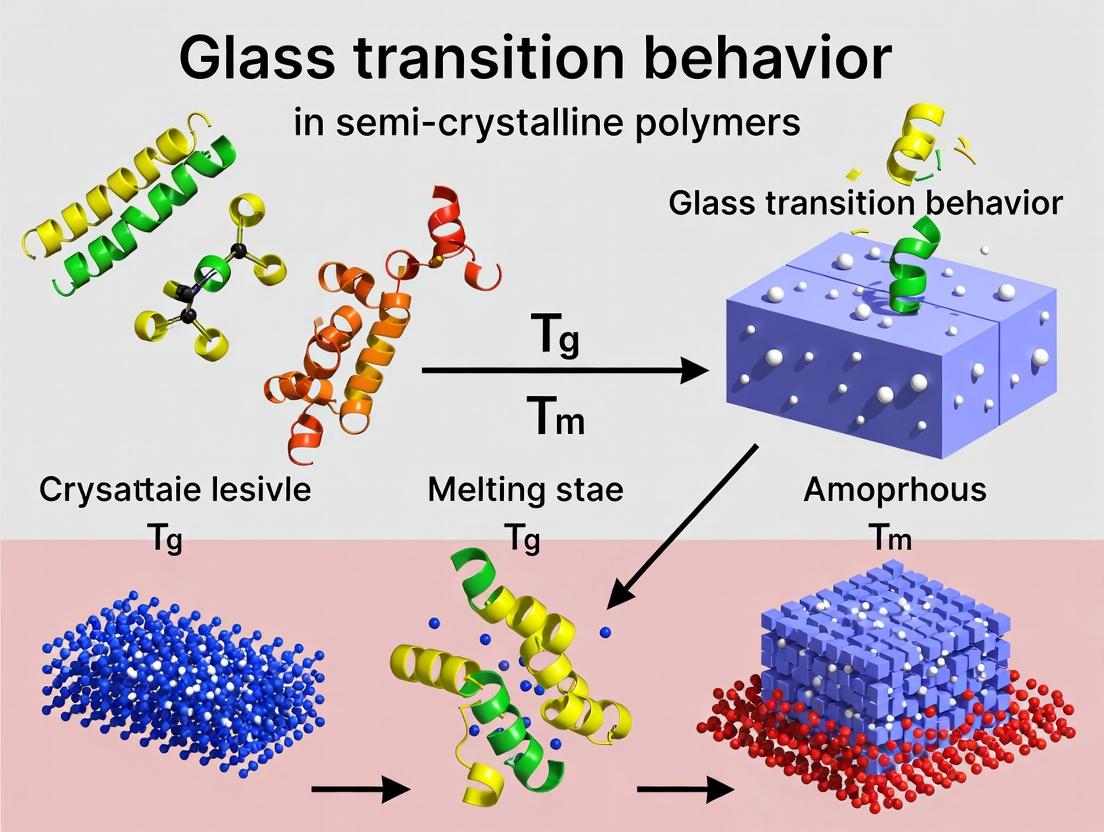
This comprehensive article explores the complex interplay between the amorphous and crystalline phases in semi-crystalline polymers, focusing on the critical role of the glass transition temperature (Tg).
The Glass Transition in Semi-Crystalline Polymers: A Critical Guide for Advanced Material Design in Biomedical Applications
Abstract
This comprehensive article explores the complex interplay between the amorphous and crystalline phases in semi-crystalline polymers, focusing on the critical role of the glass transition temperature (Tg). Tailored for researchers, scientists, and drug development professionals, it provides a foundational understanding of thermal transitions, details modern characterization methodologies like DMA and DSC, addresses common challenges in measurement and data interpretation, and offers comparative insights into polymer selection. The content bridges fundamental material science with practical applications in controlled drug delivery systems and medical device optimization, providing a roadmap for leveraging Tg to predict and engineer polymer performance in demanding biomedical environments.
Unlocking the Dual Nature: Core Concepts of the Glass Transition in Semi-Crystalline Polymers
Framing Context: This whitepaper situates itself within a broader thesis investigating the glass transition behavior in semi-crystalline polymers. The unique macroscopic viscoelastic properties of these materials are a direct consequence of their complex, multi-phase microstructure, comprising crystalline lamellae, amorphous regions, and the critical interface between them. Understanding the constraint imposed by the crystalline phase on the amorphous phase is paramount for predicting performance in applications ranging from medical device fabrication to controlled-release drug delivery systems.
Structural Hierarchy and Quantitative Metrics
The semi-crystalline morphology is characterized by quantifiable parameters for each region, as summarized in Table 1.
Table 1: Quantitative Parameters of Semi-Crystalline Polymer Morphology
| Structural Component | Typical Size Range | Key Measurable Parameters | Common Characterization Techniques |
|---|---|---|---|
| Crystalline Lamellae | 5 - 50 nm thickness | Lamellar thickness (Lc), Long period (L), Crystallinity (χc) | SAXS, WAXS, AFM, TEM |
| Amorphous Region | 2 - 20 nm (constrained) | Glass transition temperature (Tg), Segmental mobility (τ), Free volume | DSC, DMA, Dielectric Spectroscopy, PALS |
| Interfacial Constraint Zone | 1 - 5 nm (gradient) | Thickness gradient, Mobility gradient, Modified Tg | NMR, Raman Spectroscopy, MD Simulation |
Experimental Protocols for Probing the Interfacial Constraint
Protocol: Modulated Differential Scanning Calorimetry (MDSC) for Multiple TgDetection
Objective: To deconvolute the glass transition of the bulk-like amorphous phase from the rigid amorphous fraction (RAF) at the crystal-amorphous interface.
- Sample Preparation: Precisely weigh 5-10 mg of polymer. For drug development studies, prepare films with the active pharmaceutical ingredient (API) via solvent casting or melt-pressing.
- Thermal Pre-treatment: Subject the sample to a controlled thermal history (e.g., heat to Tm+30°C, isothermal for 5 min, cool at 10°C/min to 25°C) to standardize morphology.
- MDSC Run: Use a hermetically sealed pan. Run under a nitrogen purge (50 mL/min). Apply a modulated temperature program: underlying heating rate 2°C/min, modulation amplitude ±0.5°C, period 60 seconds, from -50°C to Tm+10°C.
- Data Analysis: Analyze the reversing heat flow signal. Identify the step change in heat capacity (ΔCp). A broadened or bisected Tg step indicates the presence of a mobility gradient, with the higher-temperature transition assigned to the constrained interfacial region.
Protocol: Synchrotron Small-Angle X-ray Scattering (SAXS) during Temperature Ramp
Objective: To correlate lamellar morphology (long period, L) with amorphous phase mobility changes at Tg.
- Sample Preparation: Prepare thin films (~0.5 mm thickness) suitable for transmission.
- Beamline Setup: Align sample in the synchrotron beam. Calibrate the q-range using a silver behenate standard.
- In-situ Experiment: Employ a programmable thermal stage. Collect 2D SAXS patterns at a frame rate of 1 frame/°C while heating from below Tg to above Tm at a rate of 2°C/min.
- Data Processing: Integrate 2D patterns azimuthally to obtain 1D intensity I(q) vs. scattering vector q. Fit the correlation function to extract the long period L. Plot L vs. Temperature; a distinct change in slope at Tg indicates thermal expansion decoupling due to constrained amorphous segments.
Visualization of Concepts and Workflows
Title: Hierarchical Relationship from Morphology to Properties
Title: MDSC Protocol for Detecting Constrained Amorphous Regions
The Scientist's Toolkit: Research Reagent Solutions
Table 2: Essential Materials for Morphology-Property Studies
| Item / Reagent | Function / Relevance |
|---|---|
| Poly(L-lactic acid) (PLLA) | Model semi-crystalline, bioresorbable polymer. Used to study crystallization kinetics and drug release profiles. |
| Indomethacin or Methylene Blue | Small molecule model "drugs" for probing dispersion in amorphous regions and release kinetics. |
| Deuterated Solvents (e.g., d-Chloroform) | For NMR studies to probe segmental mobility and phase composition without interference. |
| Quartz Reference Pan (for MDSC) | Provides an inert, high-thermal-conductivity reference for precise ΔCp measurement. |
| Silver Behenate Standard | Calibrates the q-scale in SAXS experiments for accurate nanoscale dimensioning. |
| Nitrogen Gas Supply | Provides inert atmosphere during thermal analysis to prevent oxidative degradation of samples. |
| Specific Nucleating Agents (e.g., Talc) | Used to control lamellar density and thickness, thereby systematically varying the interfacial constraint. |
1. Introduction and Thesis Context Within the broader thesis on glass transition behavior in semi-crystalline polymers, understanding the molecular-scale mechanics of the glass transition temperature (Tg) is paramount. The Tg is not a first-order phase transition but a dynamic, kinetically determined event where an amorphous polymer (or the amorphous regions within a semi-crystalline polymer) transitions from a brittle, glassy state to a rubbery or viscous state. This whitepaper delves into the three core, interlinked concepts explaining this phenomenon: chain segment mobility, free volume, and the cooperative motion of chain segments. For semi-crystalline polymers, these dynamics are confined to the amorphous domains, constrained by the surrounding crystalline lamellae, which profoundly influences the measured Tg and material performance.
2. Core Concepts and Quantitative Data
2.1 Free Volume Theory The free volume (Vf) is the unoccupied space between polymer chains enabling movement. As temperature decreases, Vf contracts. The Williams-Landel-Ferry (WLF) equation describes the temperature dependence of viscoelastic properties above Tg, rooted in free volume concepts.
Table 1: Free Volume Parameters for Selected Polymers
| Polymer | Tg (°C) | Free Volume Fraction at Tg (f_g) | Thermal Expansion Coefficient (α) (1/K) |
|---|---|---|---|
| Polystyrene (Atactic) | 100 | 0.025 | α_rubbery: ~5.5 x 10^-4 |
| Poly(methyl methacrylate) | 105 | 0.025 | α_rubbery: ~5.0 x 10^-4 |
| Poly(vinyl acetate) | 30 | ~0.025 | α_rubbery: ~7.0 x 10^-4 |
| Polyethylene (Amorphous) | -120 | ~0.025 | α_rubbery: ~10 x 10^-4 |
2.2 Chain Mobility and the Onset of Cooperative Motion Below Tg, chain segment mobility is frozen in long-range terms. As T approaches Tg, localized motions (β, γ relaxations) occur. The key event at Tg is the onset of cooperative motion (α-relaxation), where larger chain segments (10-50 backbone atoms) move in concert. This is quantified by the activation energy (Ea) of the α-relaxation, which increases dramatically as T approaches Tg from above.
Table 2: Apparent Activation Energy (Ea) for α-Relaxation Near Tg
| Polymer | Tg (K) | Ea at Tg+10K (kJ/mol) | Ea at Tg (kJ/mol, extrapolated) | Method |
|---|---|---|---|---|
| Polystyrene | 373 | ~500 | >> 500 | Dielectric Spectroscopy |
| Poly(vinyl chloride) | 354 | ~350 | >> 400 | Dynamic Mechanical Analysis |
| Polyisoprene | 210 | ~250 | >> 300 | Dielectric Spectroscopy |
3. Experimental Protocols for Characterization
3.1 Differential Scanning Calorimetry (DSC) for Tg Determination
- Objective: To measure the heat capacity change associated with the glass transition.
- Protocol:
- Sample Prep: Precisely weigh 5-10 mg of polymer. For semi-crystalline samples, use a controlled thermal history (e.g., quench from melt) to standardize amorphous content.
- Instrument Calibration: Calibrate temperature and enthalpy using indium and zinc standards.
- Run Cycle: a. Equilibrate at 50°C below expected Tg. b. Heat at 10°C/min to 50°C above Tg (first heating, records thermal history). c. Cool at 10°C/min to starting temperature. d. Re-heat at 10°C/min (second heating, reports Tg independent of prior history).
- Data Analysis: Tg is taken as the midpoint of the step change in heat flow on the second heating curve.
3.2 Dynamic Mechanical Analysis (DMA) for Cooperative Motion
- Objective: To measure the temperature-dependent viscoelastic moduli (Storage Modulus E', Loss Modulus E'') and identify α-relaxation.
- Protocol:
- Sample Geometry: Prepare a rectangular film or bar (typical dimensions: 10mm x 5mm x 0.1mm).
- Clamping: Secure in tension, dual cantilever, or 3-point bending fixture as appropriate.
- Frequency Setting: Perform a multi-frequency run (e.g., 0.1, 1, 10 Hz) to assess frequency dependence.
- Temperature Ramp: Heat at 2-3°C/min from well below Tg to above Tg under nitrogen flow.
- Data Analysis: The peak in the loss modulus (E'') or tan δ (E''/E') corresponds to the α-relaxation. The shift in peak temperature with frequency is used to calculate Ea via the Arrhenius or Vogel-Fulcher-Tammann equation.
4. Visualization: Molecular Dynamics at Tg
Title: Molecular States and Mobility Around Tg
5. The Scientist's Toolkit: Research Reagent Solutions
Table 3: Essential Materials for Tg Research in Semi-Crystalline Polymers
| Item | Function in Research |
|---|---|
| High-Purity Polymer Resins (e.g., PCL, PLA, PEEK) | Base material for studying the effect of crystallinity and morphology on Tg. Must have well-characterized molecular weight and dispersity. |
| Controlled Crystallization Ovens (with N2 purge) | To create semi-crystalline samples with defined thermal history (spherulite size, crystallinity %). |
| Quenching Bath (Liquid Nitrogen or Dry Ice/Isopropanol) | To rapidly cool polymers from the melt, creating a predominantly amorphous structure for baseline Tg measurement. |
| Dielectric Spectroscopy Cells (with gold-plated electrodes) | For measuring the α-relaxation process over a wide frequency range to study cooperativity length scales. |
| DSC Calibration Standards (Indium, Zinc, Sapphire) | Essential for accurate temperature, enthalpy, and heat capacity calibration of DSC instruments. |
| Dynamic Mechanical Analyzer (DMA) Fixtures (Tension, 3-Point Bending) | For clamping thin film or fiber samples to measure viscoelastic properties as a function of temperature and frequency. |
| Inert Atmosphere Supplies (Nitrogen or Helium gas cylinders) | To prevent oxidative degradation during thermal analysis runs, especially above 200°C. |
| Molecular Diluents / Plasticizers (e.g., Diethyl Phthalate, Low-MW PEG) | Used to systematically increase free volume and study its direct effect on depressing Tg. |
| Anti-oxidant Additives (e.g., Irganox 1010) | Added in trace amounts to polymer melts before processing to prevent chain scission/crosslinking during analysis. |
Within the context of a broader thesis on glass transition behavior in semi-crystalline polymers, this whitepaper investigates the complex interplay between crystalline regions and the amorphous phase. Crystallinity profoundly influences the glass transition temperature (T_g) and the dynamics of the amorphous chains through mechanisms of confinement, the formation of a rigid amorphous fraction (RAF), and the consequent broadening of the transition region. Understanding these phenomena is critical for researchers and scientists designing polymers with tailored mechanical, thermal, and barrier properties, and for drug development professionals formulating stable amorphous solid dispersions where crystallinity must be meticulously controlled.
Core Mechanisms and Theoretical Framework
Physical Confinement by Lamellae
In semi-crystalline polymers, chain-folded lamellar crystals create nanoscale domains that confine the amorphous chains. This geometric restriction reduces conformational mobility, leading to an increase in the observed T_g relative to the fully amorphous polymer. The extent of this effect depends on the lamellar thickness (L) and the interlamellar spacing.
The Rigid Amorphous Fraction (RAF)
The RAF is a portion of the amorphous phase that is located at the crystal-amorphous interface. These chains are immobilized due to their attachment to or interaction with the crystal surface, and thus do not contribute to the glass transition at the characteristic T_g of the mobile amorphous fraction (MAF). The RAF only mobilizes at temperatures above T_g, often concurrently with the melting of the crystals.
Broadening of the Glass Transition
The heterogeneous nature of the amorphous phase—comprising chains with varying degrees of mobility from the crystal interface to the bulk-like interlamellar regions—results in a distribution of relaxation times. This heterogeneity manifests experimentally as a broadening of the glass transition step in calorimetry (DSC) or a widening of the loss peak in dielectric spectroscopy.
Table 1: Effect of Crystallinity on Glass Transition Parameters in Selected Polymers
| Polymer | Crystallinity (%) | T_g of Amorphous (℃) | T_g (Semi-cryst) (℃) | Transition Width (℃) | RAF (%) | Method | Reference |
|---|---|---|---|---|---|---|---|
| Poly(L-lactic acid) (PLLA) | 30 | ~58 | ~65 | ~15 | 15-20 | DSC, TMDSC | 1 |
| Poly(ethylene terephthalate) (PET) | 40 | ~75 | ~80-85 | ~20 | ~20 | DSC, Dielectric | 2 |
| Isotactic Polypropylene (iPP) | 50 | ~-10 | ~5-10 | Broad | 25-30 | DMA, DSC | 3 |
| Poly(ether ether ketone) (PEEK) | 30 | ~145 | ~155 | ~25 | ~15 | DSC, NMR | 4 |
Table 2: Key Techniques for Characterizing Confinement and RAF
| Technique | Measured Parameter | Information Gained | Typical Protocol |
|---|---|---|---|
| Differential Scanning Calorimetry (DSC) | Heat Flow vs. T | T_g, Heat Capacity Step (ΔCp), Crystallinity | Heat-Cool-Heat at 10℃/min under N₂. |
| Temperature-Modulated DSC (TMDSC) | Reversing/Non-rev. Heat Flow | Deconvolution of T_g (reversible) from relaxation/annealing. | Underlying heat rate 2℃/modulation ±0.5℃ per 60s. |
| Dielectric Spectroscopy (DES) | ε'', Loss Tangent | Molecular dynamics, Distribution of relaxation times. | Isothermal frequency scans (10⁻² to 10⁶ Hz) across a T range. |
| Solid-State NMR (¹³C CP/MAS) | Spin-Lattice Relaxation (T₁) | Domain-specific mobility, Identification of RAF. | Variable temperature CP/MAS with T₁ρ measurement. |
Experimental Protocols
Protocol: Quantifying RAF via Calorimetry
- Sample Preparation: Precisely weigh (~5-10 mg) samples of the semi-crystalline polymer and a fully amorphous reference of the same polymer.
- Instrument Calibration: Calibrate the DSC for temperature and enthalpy using indium and zinc standards.
- First Heating Run (to erase thermal history): Seal samples in Al pans. Heat from 25℃ to at least 30℃ above the melting point (T_m) at a standard rate (e.g., 10℃/min) under a nitrogen purge (50 mL/min). Record the total melting enthalpy (ΔH_m).
- Controlled Cooling: Cool the sample at a defined, reproducible rate (e.g., 10℃/min) to create a specific thermal history.
- Second Heating Run (analysis): Re-heat the sample at the same standard rate (10℃/min) through the glass transition and melting region.
- Data Analysis:
- Determine the crystallinity (χc) from the melting enthalpy: χc (%) = (ΔHm / ΔHm⁰) * 100, where ΔHm⁰ is the enthalpy of a 100% crystalline reference.
- Measure the change in heat capacity (ΔCp) at *Tg* for the semi-crystalline sample.
- Measure the ΔCp for the fully amorphous reference.
- Calculate the Mobile Amorphous Fraction (MAF): MAF = (ΔCp,sample / ΔCp,amorphous).
- Calculate RAF: RAF (%) = 100 - MAF (%) - Crystallinity (%).
Protocol: Dielectric Spectroscopy to Probe Dynamics
- Electrode Assembly: Place the polymer film (~100 µm thick) between two parallel gold-plated brass electrodes in a dielectric cell.
- Temperature Control: Place the cell in a temperature-controlled oven or nitrogen cryostat with stability of ±0.1℃.
- Frequency Sweep Measurement: At each target temperature (spanning from below to above T_g), apply a sinusoidal voltage (typically 0.1-1 V) and measure the complex permittivity (ε* = ε' - iε'') over a broad frequency range (e.g., 10⁻¹ to 10⁶ Hz) using an impedance analyzer.
- Data Modeling: Fit the ε''(f) peak at each temperature to the Havriliak-Negami function to obtain the characteristic relaxation time (τ). Plot log(τ) vs. 1/T to construct the relaxation map. The breadth of the α-relaxation (associated with T_g) indicates dynamic heterogeneity.
Visualizations
Diagram 1: Model of confinement and RAF formation.
Diagram 2: Multi-technique workflow for analysis.
The Scientist's Toolkit: Key Research Reagents & Materials
Table 3: Essential Materials for Investigating Crystallinity and Tg
| Item | Function/Description | Critical Application |
|---|---|---|
| High-Purity Polymer Resins | Base material with controlled molecular weight and tacticity. | Creating reproducible amorphous and semi-crystalline samples for comparison. |
| Thermal Stabilizers (e.g., Irganox 1010) | Antioxidant to prevent thermo-oxidative degradation during repeated heating cycles in DSC/DMA. | Ensuring thermal data reflects polymer structure, not degradation artifacts. |
| Controlled Atmosphere (N₂) Supply | Inert gas purge for thermal analysis instruments. | Prevents oxidation during high-temperature measurements above T_g and T_m. |
| Standard Reference Materials (Indium, Zinc) | Calibrants for temperature and enthalpy in calorimetry. | Absolute quantification of melting enthalpy and accurate T_g determination. |
| Dielectric Cell with Parallel Plate Electrodes | Capacitor assembly for holding polymer film during dielectric spectroscopy. | Applied electric field probes dipolar relaxation dynamics in the sample. |
| Quartz or Sapphire Windows (for in-situ setups) | Optical access for combined techniques (e.g., Raman during heating). | Correlating structural changes (crystallinity) with thermal events. |
This technical guide, framed within a broader thesis on glass transition behavior in semi-crystalline polymers, examines the primary factors modulating the glass transition temperature (Tg). Understanding these factors is critical for tailoring polymer properties in applications ranging from advanced manufacturing to drug delivery systems.
The glass transition is a reversible change in an amorphous polymer or the amorphous regions of a semi-crystalline polymer from a hard, glassy state to a soft, rubbery state. Tg is not a first-order phase transition but a kinetic phenomenon, making it highly sensitive to molecular and processing parameters. This paper details the influence of molecular weight, chain architecture, plasticizers, and thermal history, providing a foundational framework for predictive material design in pharmaceutical and polymer sciences.
Molecular Weight
Tg increases with molecular weight (MW) due to a reduction in chain-end free volume. Chain ends have greater mobility than mid-chain segments; as MW increases, the concentration of these ends decreases.
Quantitative Relationship: The Fox-Flory equation describes this relationship: 1/Tg = 1/Tg,∞ - K / Mn where Tg,∞ is the Tg at infinite molecular weight, K is a constant, and Mn is the number-average molecular weight.
Table 1: Effect of Molecular Weight on Tg for Polystyrene
| Number-Average Molecular Weight (Mn, g/mol) | Glass Transition Temperature (Tg, °C) |
|---|---|
| 3,000 | 62 |
| 10,000 | 86 |
| 50,000 | 98 |
| > 100,000 | ~100 (approaching Tg,∞) |
Experimental Protocol: Determining Fox-Flory Parameters
- Polymer Synthesis & Fractionation: Synthesize or obtain a series of linear polymer samples with narrow molecular weight distributions via anionic polymerization or preparative size-exclusion chromatography (SEC).
- Molecular Weight Characterization: Determine the absolute Mn for each fraction using SEC with multi-angle light scattering (MALS) detection or membrane osmometry.
- Tg Measurement: Analyze each sample using Differential Scanning Calorimetry (DSC). Use a heating rate of 10°C/min under nitrogen purge. The midpoint of the heat capacity change in the second heating cycle is taken as Tg.
- Data Fitting: Plot 1/Tg vs. 1/Mn. Perform a linear regression; the y-intercept is 1/Tg,∞ and the slope is -K.
Diagram 1: Fox-Flory parameter determination workflow.
Chain Architecture
Branching, crosslinking, and tacticity significantly alter chain mobility and free volume.
- Branching: Short-chain branching generally reduces Tg by inhibiting chain packing and increasing free volume. Long-chain branching can increase Tg by introducing topological constraints.
- Crosslinking: Increases Tg dramatically by restricting segmental motion. The increase is proportional to crosslink density.
- Tacticity: Isotactic and syndiotactic polymers often have higher Tg than atactic counterparts due to higher crystallinity, which restricts amorphous chain mobility.
Table 2: Impact of Chain Architecture on Polymeric Tg
| Polymer Type | Architectural Feature | Effect on Tg | Typical Magnitude of Change |
|---|---|---|---|
| Polyethylene | Linear vs. Short-Chain Branched | Decrease | Δ ~ -10 to -20°C |
| Polydimethylsiloxane | Crosslink Density Increase | Increase | Δ can exceed +50°C |
| Poly(methyl methacrylate) | Atactic vs. Syndiotactic | Increase | Δ ~ +10 to +15°C |
Experimental Protocol: Probing Architecture via Rheology & DSC
- Sample Preparation: Prepare well-defined architectural variants (e.g., via controlled radical polymerization with branched monomers, or precise crosslinking).
- Thermal Analysis: Perform DSC as described in Section 2 to determine the Tg.
- Rheological Confirmation: Conduct dynamic mechanical analysis (DMA) in torsion or shear mode. Obtain the temperature sweep at a fixed frequency (e.g., 1 Hz, 3°C/min). The peak in tan δ (loss factor) provides a rheological Tg. Crosslinking will broaden and shift the tan δ peak to higher temperatures.
- Correlation: Correlate the Tg from DSC with the crosslink density calculated from rubbery plateau modulus (from DMA) or swelling experiments.
Plasticizers
Low molecular weight additives (plasticizers) reduce Tg by increasing free volume and lubricating polymer chains. The extent of depression is governed by the concentration and compatibility of the plasticizer, often modeled by the Gordon-Taylor equation.
Quantitative Relationship: The Gordon-Taylor equation: Tg,blend = (w1Tg1 + K * w2Tg2) / (w1 + K * w2) where w1, w2 are weight fractions, Tg1, Tg2 are glass transitions, and K is a fitting parameter related to free volume.
Table 3: Tg Depression in Polyvinyl Acetate by Dioctyl Phthalate (DOP)
| Weight % DOP | Tg of Blend (°C) |
|---|---|
| 0 | 35 |
| 10 | 20 |
| 20 | 5 |
| 30 | -10 |
Experimental Protocol: Measuring Plasticization Efficiency
- Blend Preparation: Prepare homogeneous polymer/plasticizer blends by solution casting from a common solvent (e.g., THF) followed by thorough vacuum drying.
- DSC Measurement: Analyze blends using DSC (as per Section 2). Ensure hermetic pans to prevent plasticizer evaporation.
- Data Modeling: Plot the measured Tg versus plasticizer weight fraction. Fit data to the Gordon-Taylor equation to obtain the interaction parameter K.
- Homogeneity Check: Use Modulated DSC (MDSC) to check for a single, composition-dependent Tg, confirming a homogeneous amorphous mixture.
Diagram 2: Molecular mechanism of plasticizer action.
Thermal History
Tg is a rate-dependent property. Processing conditions (cooling rate, annealing) create non-equilibrium states, affecting measured Tg and enthalpy recovery.
- Cooling Rate: Faster cooling rates result in a higher measured Tg due to the "freezing in" of a higher free volume state.
- Annealing: Annealing below Tg allows physical aging, reducing enthalpy and free volume, leading to an endothermic peak near Tg upon subsequent heating.
Experimental Protocol: Characterizing Thermal History Effects
- Conditioning: Subject identical amorphous polymer samples to different thermal histories:
- Sample A: Quench from above Tg to liquid nitrogen.
- Sample B: Cool slowly (e.g., 1°C/min) from above Tg.
- Sample C: Anneal at Tg - 20°C for 24 hours after quenching.
- DSC Analysis: Run DSC on all samples at an identical heating rate (e.g., 10°C/min). Record the onset and midpoint Tg and note any enthalpy recovery peaks.
- Interpretation: Compare Tg values and the presence/area of the endothermic recovery peak just before the Tg step.
The Scientist's Toolkit: Research Reagent Solutions
Table 4: Essential Materials for Tg Studies
| Item/Category | Example(s) | Function in Research |
|---|---|---|
| Well-Defined Polymers | Polyystyrene standards, PEG blocks, PLA of varying L/D ratios | Provide model systems for isolating the effect of MW, architecture, and stereochemistry. |
| Plasticizers | Dioctyl phthalate (DOP), Triethyl citrate, Glycerol | Investigate Tg depression for formulation or processing tuning. |
| Crosslinking Agents | Dicumyl peroxide, Tetramethylthiuram disulfide (TMTD), UV initiators (e.g., Irgacure 2959) | Systematically vary crosslink density to study its impact on chain mobility and Tg. |
| Thermal Analysis Standards | Indium, Tin, Cyclohexane | Calibrate temperature, enthalpy, and heat capacity response of DSC instruments. |
| Hermetic Sealing Tools | TZero pans & lids (aluminum), Sealing press | Prevent sample degradation, oxidation, and loss of volatile components (e.g., plasticizers) during DSC. |
| Solvents for Casting | Tetrahydrofuran (THF), Chloroform, Toluene (anhydrous) | Prepare homogeneous polymer blends and films for controlled sample morphology. |
The glass transition in semi-crystalline polymers is a complex interfacial phenomenon dictated by the interplay of intrinsic molecular factors (MW, architecture) and extrinsic formulation/processing factors (plasticizers, thermal history). Mastery of these relationships, through the rigorous experimental protocols outlined, enables the precise engineering of polymer properties for targeted applications in drug delivery, medical devices, and high-performance materials. This guide provides a foundational methodology central to advancing the broader thesis on structure-property relationships in polymer science.
Within the broader thesis on glass transition behavior in semi-crystalline polymers, this whitepaper examines the pivotal role of the glass transition temperature (Tg) in determining the in vivo performance of polymeric biomedical devices. Tg is not merely a material property but a critical performance indicator governing the mechanical stability, degradation kinetics, and drug release profiles of implants and carriers. This guide details the underlying principles, measurement protocols, and implications for device design.
The glass transition temperature (Tg) demarcates the boundary between a polymer's glassy, rigid state and its rubbery, pliable state. For semi-crystalline polymers used in medicine, such as poly(lactic-co-glycolic acid) (PLGA), poly(L-lactic acid) (PLLA), and polycaprolactone (PCL), the amorphous regions dictate the Tg, while crystalline domains provide structural reinforcement. The precise Tg, relative to physiological temperature (37°C), determines whether an implant will maintain its intended shape and modulus or undergo undesirable creep and premature erosion.
The Core Principles: Tg as a Determinant of Performance
Mechanical Integrity and Load-Bearing
Implants for orthopedic or cardiovascular applications must withstand cyclical stresses. A Tg significantly above 37°C ensures the polymer remains in its glassy state, providing high modulus and dimensional stability. A Tg near or below body temperature leads to viscoelastic behavior, potential deformation, and mechanical failure.
Degradation and Erosion Kinetics
Hydrolytic scission of ester bonds in common bio-polymers is a diffusion-controlled process. Below Tg, chain mobility is low, restricting water ingress and slowing bulk erosion. Above Tg, increased free volume accelerates water penetration and mass loss, leading to unpredictable device lifetime.
Drug Release Profiles from Carriers
For drug-eluting stents or microparticle carriers, Tg governs drug diffusion rates. A glassy matrix severely constrains diffusion, potentially leading to lag phases or incomplete release. A rubbery matrix facilitates faster diffusion but may cause burst release. Intelligent design tailors Tg to achieve zero-order or stimulus-responsive release.
Table 1: Tg and Performance of Common Biomedical Polymers
| Polymer | Typical Tg (°C) | Crystallinity | Key Biomedical Use | Performance Link to Tg |
|---|---|---|---|---|
| PLGA (50:50) | 45-55 | Low | Sutures, microparticles | Tg > 37°C: Maintains structure initially, then rubbery erosion. |
| PLLA | 55-65 | High | Bone screws, meshes | High Tg ensures rigidity; slow crystalline degradation. |
| PCL | -60 to -60 | Semi-crystalline | Long-term implants, drug delivery | Always rubbery at 37°C; slow, predictable degradation. |
| Poly(glycerol sebacate) (PGS) | ~-30 | Low | Soft tissue engineering | Elastomeric; matches soft tissue mechanics. |
Experimental Determination of Tg: Methodologies
Accurate Tg measurement is non-negotiable for quality by design (QbD).
Differential Scanning Calorimetry (DSC) Protocol
- Sample Prep: Precisely weigh 5-10 mg of dried polymer into an aluminum crucible. Hermetically seal.
- Method: Run a heat-cool-heat cycle under N₂ purge (50 mL/min).
- First Heat: -20°C to 150°C at 10°C/min (erases thermal history).
- Cooling: 150°C to -20°C at 10°C/min.
- Second Heat: -20°C to 150°C at 10°C/min.
- Analysis: Tg is identified as the midpoint of the step change in heat capacity on the second heating curve. Report onset, midpoint, and endpoint.
Dynamic Mechanical Analysis (DMA) Protocol
- Sample Prep: Mold or cut polymer into rectangular bars (e.g., 20 x 5 x 1 mm).
- Method: Use a tension or compression clamp. Apply a sinusoidal strain (0.1%) at a frequency of 1 Hz while ramping temperature (e.g., -80°C to 100°C at 3°C/min).
- Analysis: The peak in the tan δ curve or the sharp drop in the storage modulus (E') indicates Tg. DMA is sensitive to molecular motions and is ideal for detecting secondary transitions.
Table 2: Comparison of Tg Measurement Techniques
| Technique | Sample Required | Information Gained | Key Advantage for Biomedicine |
|---|---|---|---|
| DSC | 5-10 mg | Bulk thermal transition, crystallinity, enthalpy. | Gold standard for quantitative Tg; small sample size. |
| DMA | 10-100 mg (shaped) | Viscoelastic modulus (E', E''), tan δ, sub-Tg relaxations. | Directly measures mechanical property change at Tg. |
| AFM-NanoTA | Nanoscale | Local thermal properties at surfaces/interfaces. | Maps Tg heterogeneity in composite drug carriers. |
Visualization: The Role of Tg in Polymer Performance Pathways
Diagram Title: Tg Dictates Polymer Behavior at 37°C
The Scientist's Toolkit: Essential Research Reagents & Materials
Table 3: Key Research Reagent Solutions for Tg-Focused Studies
| Item | Function/Description | Critical Note |
|---|---|---|
| Poly(D,L-lactide-co-glycolide) (PLGA) | Model copolymer; Tg tunable via LA:GA ratio. | Use low MW for lower Tg. Purify to remove residual monomers. |
| DSC Calibration Standards (Indium, Zinc) | Calibrate temperature and enthalpy scales of DSC. | Mandatory for accurate, reproducible Tg measurement. |
| Phosphate Buffered Saline (PBS), pH 7.4 | Simulate physiological conditions for in vitro degradation studies. | Degassing reduces bubble formation during incubation. |
| Molecular Sieves (3Å or 4Å) | Dry organic solvents (e.g., DCM, acetonitrile) for polymer synthesis/processing. | Residual solvent plasticizes polymer, artificially lowering Tg. |
| Size Exclusion Chromatography (SEC) Kit | Determine molecular weight (Mn, Mw) and dispersity (Đ). | Tg is intrinsically linked to Mn (Fox-Flory equation). |
| Plasticizers (e.g., Triethyl Citrate, PEG) | Intentionally lower Tg to tailor mechanical/drug release properties. | Optimize concentration to avoid excessive softening. |
Advanced Considerations: Plasticization and Hydration
In vivo, polymers absorb water and biological fluids. Water acts as a potent plasticizer, depressing the effective Tg. This must be characterized via humidity-controlled DSC or by measuring wet samples after equilibration in PBS. The extent of Tg depression predicts the real-world transition from designed to operational state.
Diagram Title: Hydration's Impact on Effective Tg
Integrating Tg analysis into the development pipeline for polymeric implants and drug carriers is a biomedical imperative. It moves device design from empirical formulation to predictive science. Within the broader study of semi-crystalline polymers, understanding the interplay between the rigid amorphous fraction, mobile amorphous fraction, and crystalline domains—all reflected in Tg behavior—is the key to engineering the next generation of reliable, effective medical devices.
From Lab to Clinic: Measuring Tg and Engineering Polymer Performance for Biomedical Use
1. Introduction This whitepaper details the application of three cornerstone thermoanalytical techniques—Differential Scanning Calorimetry (DSC), Dynamic Mechanical Analysis (DMA), and Dielectric Analysis (DEA)—for the comprehensive characterization of semi-crystalline polymers. The context is a broader thesis investigating the nuanced glass transition behavior in these materials, where the interplay between rigid amorphous fractions (RAF), mobile amorphous fractions (MAF), and crystalline domains dictates macroscopic properties. For researchers and drug development professionals, mastering these techniques is critical for elucidating structure-property relationships in applications ranging from biomedical scaffolds to pharmaceutical solid dispersions.
2. Core Principles and Data Correlation
Table 1: Core Capabilities and Measured Parameters
| Technique | Primary Stimulus | Primary Response | Key Extracted Parameters for Semi-Crystalline Systems |
|---|---|---|---|
| DSC | Controlled temperature program (heat/cool/isothermal) | Heat flow difference (vs. reference) | Melting temperature (Tm), Enthalpy of fusion (ΔHf), Crystallinity (χc), Glass Transition (Tg), Cold crystallization temperature (Tcc) |
| DMA | Controlled oscillatory stress/strain (single or multi-frequency) | Resulting strain/stress & phase lag (δ) | Storage/Loss moduli (E', E"), Tan delta (tan δ), Tg (from E" or tan δ peak), Sub-Tg relaxations, Creep compliance |
| DEA | Controlled oscillatory electric field (multi-frequency) | Current/charge response & phase lag (δ) | Permittivity (ε'), Loss factor (ε"), Conductivity (σ), Dipolar relaxation times, Ion mobility, Tg (from ε" peak or conductivity change) |
Table 2: Quantitative Comparison of Glass Transition Detection
| Technique | Typical Sample Form | Tg Identification Method | Sensitivity to Amorphous Phase | Detects Rigid Amorphous Fraction (RAF)? |
|---|---|---|---|---|
| DSC | 5-20 mg film/powder | Midpoint/Inflection in heat flow step | Moderate; requires MAF | Indirectly via ΔCp suppression |
| DMA | Film, fiber, bar (tensile/bending) | Peak in E" or tan δ curve | High; mechanical softening | Yes, via breadth of transition & modulus plateau |
| DEA | Film with electrodes | Peak in ε" or onset in σ | Very High; dipolar/ionic mobility | Yes, via broadened/fragmented relaxation peaks |
3. Detailed Experimental Protocols
3.1. Differential Scanning Calorimetry (DSC)
- Objective: Determine thermal transitions, degree of crystallinity, and glass transition temperature.
- Sample Preparation: Precisely weigh 5-10 mg of polymer into a hermetic aluminum pan. Ensure uniform sample shape and contact with pan bottom. An empty pan serves as reference.
- Protocol: Perform a minimum 3-step program: (1) First Heat: 25°C to 200°C at 10°C/min to erase thermal history. (2) Controlled Cooling: 200°C to 25°C at a controlled rate (e.g., 10°C/min) to define crystallization conditions. (3) Second Heat: 25°C to 200°C at 10°C/min for analysis. Use nitrogen purge gas (50 mL/min).
- Data Analysis: Tg is taken as the midpoint of the heat capacity step. Melting temperature (Tm) is the peak maximum. Crystallinity (%) = [ΔHf (sample) / ΔHf⁰ (100% crystalline polymer)] x 100, where ΔHf⁰ is the theoretical enthalpy of fusion for the pure crystal.
3.2. Dynamic Mechanical Analysis (DMA)
- Objective: Probe viscoelastic properties and molecular relaxations as a function of temperature, frequency, and time.
- Sample Preparation: Prepare rectangular film strips (typical: 10-20mm length, 5-10mm width, <1mm thickness) or use molded bars. Ensure parallel, smooth surfaces for clamp contact.
- Protocol: Mount sample in tension or dual/single cantilever clamps. Set a static force to ensure sample tautness. Apply a dynamic oscillatory strain (typically 0.1%). Run a temperature ramp from -100°C to 150°C at 2°C/min at a fixed frequency (e.g., 1 Hz). Optionally, perform multi-frequency sweeps (0.1, 1, 10, 100 Hz).
- Data Analysis: Identify Tg as the peak maximum in the E" (loss modulus) or tan δ curve. The storage modulus drop indicates softening. The breadth and height of the tan δ peak inform about amorphous phase heterogeneity and mobility.
3.3. Dielectric Analysis (DElectric Analysis)
- Objective: Investigate molecular mobility via dipole reorientation and ionic conductivity.
- Sample Preparation: Create a parallel-plate capacitor. Place polymer film between two conductive electrodes (e.g., sputtered gold, brass plates). Ensure full contact and no air gaps.
- Protocol: Apply a sinusoidal voltage (typically 0.5-1.0 V) across the sample. Perform a Broadband Dielectric Spectroscopy (BDS) scan: sweep frequency (e.g., 10-1 to 106 Hz) at fixed temperatures, or sweep temperature (e.g., -50°C to 200°C at 2°C/min) at fixed frequencies.
- Data Analysis: The α-relaxation peak in ε" corresponds to the glass transition. The activation energy is derived from the frequency dependence of the peak (Arrhenius/FVH fit). DC conductivity (ion mobility) is analyzed from the low-frequency ε" plateau.
4. Visualizing the Complementary Analytical Workflow
Title: Multitechnique Characterization Workflow
5. The Scientist's Toolkit: Essential Research Reagents & Materials
Table 3: Key Reagents and Materials for Characterization
| Item | Function & Relevance |
|---|---|
| Hermetic Aluminum DSC Pans/Lids | Encapsulate samples, prevent volatile loss, ensure good thermal contact. Critical for accurate ΔHf measurement. |
| Indium / Zinc DSC Calibration Standards | Calibrate temperature and enthalpy scale of DSC. Indium (Tm=156.6°C, ΔHf=28.5 J/g) is a primary standard. |
| Quartz / Aluminum DMA Calibration Kit | Validate DMA force, displacement, and compliance for accurate modulus measurement. |
| Conductive Electrodes (Gold Sputter, Brass Plates) | Create capacitor for DEA. Gold sputtering provides uniform, non-reactive contact for films. |
| Silicone Oil / Thermal Paste | Ensure good thermal transfer in DMA/DEA fixtures and eliminate air gaps in DEA cell. |
| Inert Purge Gas (N₂, He) | Prevent oxidative degradation during heating scans in DSC/DMA and minimize air conduction in DEA. |
| Reference Dielectric Fluid (e.g., Dry air, known polymer) | Calibrate DEA cell capacitance and geometry for accurate ε' and ε" values. |
| Controlled Humidity Chamber | Condition samples to study plasticization effects of water on Tg, crucial for hygroscopic polymers. |
6. Data Synthesis and Conclusion Integrating data from DSC, DMA, and DEA provides a multi-dimensional view of the amorphous phase in semi-crystalline polymers. DSC offers the baseline thermal profile and crystallinity. DMA delivers the mechanical consequence of the glass transition, sensitive to the polymer's use as a structural material. DEA probes the localized and global dipole motions with superior sensitivity to the onset of chain mobility, often detecting Tg at lower temperatures than DSC. Discrepancies between Tg values from these techniques are not errors but inform on the presence of RAF, distribution of relaxation times, and the decoupling of different molecular motions. This tri-technique approach is indispensable for advanced research into the glass transition behavior of complex semi-crystalline systems.
Best Practices for Sample Preparation and Thermal Analysis Protocol to Avoid Artifacts
Within the broader research on glass transition behavior in semi-crystalline polymers, the reliability of thermal analysis data is paramount. Artifacts arising from improper sample preparation or flawed experimental protocols can lead to misinterpretation of critical phenomena such as the glass transition temperature (Tg), enthalpy of relaxation, and degree of crystallinity. This guide details rigorous methodologies to ensure data integrity in techniques like Differential Scanning Calorimetry (DSC) and Thermogravimetric Analysis (TGA).
Foundational Principles and Common Artifacts
Artifacts in thermal analysis of semi-crystalline polymers often manifest as spurious peaks, shifts in transition temperatures, or inaccurate enthalpy measurements. Primary sources include:
- Residual Solvent/Water: Plasticizes the polymer, lowering the observed Tg.
- Thermal History: Non-uniform thermal history creates variable enthalpic relaxation.
- Sample Geometry & Mass: Excessive mass causes thermal lag and temperature gradients.
- Oxidative Degradation: Occurs during measurement if atmosphere is uncontrolled.
- Poor Sample-Pan Contact: Leads to inconsistent heat transfer.
Quantitative Data on Artifact Impact
Table 1: Impact of Common Preparation Errors on Measured Tg in Poly(L-lactic acid) (PLLA)
| Preparation Error | Typical Tg Shift (ΔTg) | Effect on Enthalpic Recovery Peak | Reference Method |
|---|---|---|---|
| Residual Dichloromethane (5% wt.) | -8°C to -12°C | Broadened, magnitude reduced | DSC, Modulated DSC |
| Inadequate Drying (Ambient) | -3°C to -7°C | Enhanced endothermic peak | TGA-Moisture Analysis |
| Over-large Sample (>10 mg) | +2°C to +5°C (lag) | Peak shape distorted | DSC at varied heating rates |
| High Heating Rate (40°C/min) | +4°C to +6°C | Peak shifted to higher T | Standard DSC (20°C/min) |
| Oxidized Surface (in air) | Variable, often increased | Baseline drift, exothermic artifact | DSC under N₂ vs. Air |
Table 2: Recommended Protocol Parameters for Key Polymers
| Polymer Type | Recommended Mass (DSC) | Optimal Heating Rate for Tg | Recommended Purge Gas & Flow | Sealing Crucible Type |
|---|---|---|---|---|
| Polyethylene Terephthalate (PET) | 5 - 8 mg | 10°C/min | N₂, 50 mL/min | Hermetic Aluminum (pinhole lid) |
| Polypropylene (PP) | 3 - 6 mg | 20°C/min | N₂, 50 mL/min | Standard Aluminum |
| Poly(L-lactic acid) (PLLA) | 4 - 7 mg | 10°C/min | Dry Air or N₂, 50 mL/min | Hermetic Aluminum |
| Nylon 6 | 5 - 8 mg (dry) | 10°C/min | N₂, 50 mL/min | High-Pressure Gold-plated Steel |
Detailed Experimental Protocols
Protocol for Solvent-Cast Film Preparation & Drying
Objective: To prepare amorphous, homogeneous films with minimal residual solvent for baseline Tg measurement.
- Dissolution: Dissolve polymer in appropriate high-purity solvent (e.g., chloroform for PLLA) at ~2% w/v. Stir magnetically for 12 hours at room temperature.
- Filtration: Filter solution through a 0.45 µm PTFE syringe filter into a clean glass vial.
- Casting: Pour filtrate onto a leveled, clean glass Petri dish (or Teflon sheet) inside a fume hood.
- Controlled Evaporation: Cover dish loosely with foil to reduce dust and allow slow evaporation for 24 hours.
- Vacuum Drying: Peel film and place in a vacuum oven. Dry at a temperature at least 20°C below the anticipated Tg (e.g., 40°C for PLLA) under vacuum (<0.1 mbar) for a minimum of 48 hours. Store in a desiccator over P₂O₅.
Protocol for DSC Measurement of Tg in Semi-Crystalline Polymers
Objective: To accurately determine the glass transition region and associated enthalpy relaxation.
- Sample Preparation: Precisely cut film/particle to 5.00 ± 0.20 mg using a clean micro-punch or scalpel. Handle with tweezers to avoid contamination.
- Pan Sealing: Place sample in a tared, hermetic aluminum crucible. Crimp the lid using a dedicated press to ensure full encapsulation but create a microscopic pinhole with a needle to prevent pressure build-up.
- Instrument Calibration: Calibrate DSC for temperature and enthalpy using Indium and Zinc standards at the planned heating rate.
- Thermal History Erasure (1st Heating):
- Load sample and empty reference pan.
- Purge with N₂ at 50 mL/min.
- Equilibrate at -20°C (or 50°C below expected Tg).
- Heat at 20°C/min to a temperature 30°C above the melting point (Tm) to erase all thermal history.
- Hold for 3 minutes.
- Controlled Cooling & Measurement (2nd Heating):
- Cool at a controlled rate (e.g., 10°C/min) to the start temperature. This defines the thermal history.
- Equilibrate for 5 minutes.
- Heat at the standard rate (10°C/min) through the Tg and Tm regions.
- Data Analysis: Analyze the 2nd heating curve. Tg is taken as the midpoint of the heat capacity step. Quantify the enthalpy relaxation from the endothermic peak immediately following the Tg.
Visualization of Workflows
Title: Polymer Thermal Analysis Workflow for Tg Accuracy
Title: Thermal Artifact Sources and Mitigation Paths
The Scientist's Toolkit: Essential Research Reagents & Materials
Table 3: Key Materials for Reliable Polymer Thermal Analysis
| Item | Function / Rationale | Example & Specification |
|---|---|---|
| Hermetic Aluminum DSC Pans | Provides sealed, inert environment; pinhole prevents pressure build-up from volatiles while limiting oxidation. | TA Instruments Tzero or PerkinElmer stainless pans. |
| High-Purity Calibration Standards | For accurate temperature and enthalpy calibration of DSC. Mandatory for quantitative work. | Indium (Tm=156.6°C, ΔH=28.45 J/g), Zinc (Tm=419.5°C). |
| Inert Purge Gas | Prevents oxidative degradation during heating. Nitrogen is standard; use ultra-high purity (99.999%). | N₂ gas with inline moisture/oxygen trap. |
| Desiccant for Storage | Maintains sample dryness post-preparation, preventing moisture absorption which plasticizes polymers. | Phosphorus pentoxide (P₂O₅) or molecular sieves in a desiccator. |
| High-Purity Solvents | For solution casting. Impurities remain in film and affect Tg. | HPLC-grade Chloroform, Tetrahydrofuran, etc. |
| PTFE Syringe Filters | Removes undissolved particles or gel bits that create heterogeneous sample regions. | 0.45 µm pore size, 25 mm diameter. |
| Micro-balance | Precise sample weighing (0.01 mg precision) is critical for reproducible sample mass in DSC/TGA. | Balance with draft shield, calibration checked. |
| Vacuum Oven | For thorough removal of residual solvent and moisture under controlled, low-temperature conditions. | Oven capable of <0.1 mbar vacuum, temperature stability ±1°C. |
This technical guide details the exploitation of glass transition temperature (Tg) in semi-crystalline polymers to engineer precise drug delivery systems. Framed within a broader thesis on glass transition behavior, this whitepaper elucidates how Tg serves as a master variable controlling polymer chain mobility, thereby dictating the critical triumvirate of matrix degradation, drug diffusion, and resultant release kinetics. By modulating Tg through copolymer composition, crystallinity, and plasticization, researchers can design systems with tailored, predictable performance from burst to zero-order release.
The glass transition temperature (Tg) represents the reversible transition of an amorphous polymer region from a hard, glassy state to a soft, rubbery state. In semi-crystalline polymers used in drug delivery (e.g., PLGA, PCL, PLA), the amorphous regions coexist with crystalline lamellae. The mobility of polymer chains in these amorphous domains, governed by the Tg relative to the deployment temperature (e.g., 37°C), is the fundamental determinant of:
- Degradation Profile: Hydrolytic/enzymatic attack kinetics depend on chain mobility and water penetration.
- Drug Diffusion Rate: Molecular mobility of the drug through the polymer matrix is a function of free volume, which changes drastically at Tg.
- Release Kinetics: The combined result of diffusion and erosion mechanisms.
A polymer below its Tg (glassy) offers low diffusion and slow, surface-led degradation. Above Tg (rubbery), diffusion increases and bulk erosion becomes dominant. The objective is to deliberately engineer Tg to achieve a target release profile.
Core Mechanisms: How Tg Governs Delivery Parameters
Degradation Profiles
Polymer degradation (primarily hydrolysis for polyesters) is a function of water uptake and chain mobility. Below Tg, water diffusion is Fickian and slow, leading to surface erosion. Above Tg, rapid water penetration causes bulk erosion.
Table 1: Impact of Tg Relative to Physiological Temperature on Degradation
| Tg Relative to 37°C | Polymer State | Water Uptake | Dominant Erosion Mode | Degradation Profile |
|---|---|---|---|---|
| Tg >> 37°C (e.g., PLA, Tg ~60°C) | Glassy | Low, slow | Surface Erosion | Linear mass loss, near-zero-order |
| Tg ≈ 37°C (e.g., PLGA 50:50, Tg ~45-50°C) | Transitional | Moderate | Anomalous (Mixed) | Complex, multi-phase |
| Tg << 37°C (e.g., PCL, Tg ~ -60°C) | Rubbery | High, rapid | Bulk Erosion | Lag time followed by rapid decay |
Diffusion Rates
Drug diffusion coefficient (D) follows Williams-Landel-Ferry (WLF) or free volume theory, exhibiting a strong nonlinear dependence on (T - Tg).
Table 2: Approximate Diffusion Coefficient Dependence on (T - Tg)
| (T - Tg) [°C] | Relative Chain Mobility | Estimated D Relative to Tg State | Typical Release Mechanism Contribution |
|---|---|---|---|
| -30 | Frozen, very low | 10⁻⁴ | Negligible diffusion, purely erosion-driven |
| 0 (At Tg) | Onset of mobility | 1 (Reference) | Diffusion begins to contribute |
| +20 | High | 10² to 10³ | Diffusion dominant, Fickian |
| +50 (e.g., PCL at 37°C) | Very high | >10⁴ | Very rapid, often burst release |
Release Kinetics
The overall release kinetics are a convolution of diffusion and erosion processes, both Tg-mediated.
- Glassy Systems (Tg >> 37°C): Release is erosion-controlled, often approximating zero-order kinetics.
- Rubbery Systems (Tg << 37°C): Release is diffusion-controlled, often following Higuchi or first-order kinetics.
- Systems near Tg: Exhibit complex, often biphasic release (initial diffusion burst followed by erosion phase).
Experimental Protocols for Tg Engineering and Analysis
Protocol: Modulating Tg via Copolymer Synthesis
Objective: Synthesize a series of PLGA copolymers with varying LA:GA ratio to achieve a targeted Tg.
- Materials: D,L-lactide, Glycolide, Stannous octoate (catalyst), Vacuum line, Schlenk flask.
- Procedure:
- Purify monomers by recrystallization.
- In a dry Schlenk flask, combine lactide and glycolide at desired molar ratios (e.g., 100:0, 85:15, 75:25, 50:50).
- Add stannous octoate (0.05% w/w).
- Evacuate and purge with argon 3x.
- Immerse in oil bath at 140°C for 24h under argon.
- Dissolve cooled product in dichloromethane and precipitate in cold methanol.
- Filter and dry under vacuum to constant weight.
- Outcome: A polymer library with Tg tunable from ~55°C (PLA) to ~45°C (PLGA 50:50).
Protocol: Determining Tg and Crystallinity (DSC)
Objective: Characterize the Tg, melting point (Tm), and percent crystallinity (χc) of synthesized polymers.
- Materials: Differential Scanning Calorimeter (DSC), hermetically sealed aluminum pans.
- Procedure:
- Weigh 5-10 mg of polymer into a pan.
- Run a heat-cool-heat cycle from -20°C to 200°C at 10°C/min under N₂ purge.
- Analyze first heat for Tg (midpoint of heat capacity change), Tm, and ΔHm.
- Calculate χc = (ΔHm / ΔHₘ⁰) * 100%, where ΔHₘ⁰ is the melt enthalpy of 100% crystalline polymer (e.g., 93.6 J/g for PLLA).
- Key Data: Tg, Tm, χc. Crystallites act as physical crosslinks, restraining amorphous chain mobility and effectively elevating the operative Tg.
Protocol: In Vitro Release Study Correlating to Tg
Objective: Measure drug release from polymer matrices with varying Tg.
- Materials: Model drug (e.g., Fluorescein, ~350 Da), cast film or microparticle formulation equipment, phosphate buffer saline (PBS, pH 7.4), shaking incubator at 37°C, UV-Vis or HPLC.
- Procedure:
- Prepare drug-loaded polymer films/microparticles from polymers with characterized Tg.
- Immerse samples in PBS (n=3) in incubator.
- At predetermined time points, withdraw and replace release medium.
- Quantify drug concentration analytically.
- Fit release data to models (Zero-order, Higuchi, Korsmeyer-Peppas) and correlate release rate constants to (37°C - Tg).
The Scientist's Toolkit: Research Reagent Solutions
Table 3: Essential Materials for Tg-Based Delivery System Research
| Item | Function & Relevance to Tg |
|---|---|
| Poly(L-lactide) (PLLA) | High Tg (~60°C) model polymer for glassy, surface-eroding systems. |
| Poly(D,L-lactide-co-glycolide) (PLGA) | Industry standard. Tg tunable via LA:GA ratio. Demonstrates Tg-erosion-release relationship. |
| Poly(ε-caprolactone) (PCL) | Low Tg (~ -60°C) model for rubbery, bulk-eroding, diffusion-dominated systems. |
| Poly(ethylene glycol) (PEG) | Used as a plasticizer or block copolymer. Lowers Tg, increases hydrophilicity and diffusion rates. |
| Differential Scanning Calorimeter (DSC) | Essential for measuring Tg, Tm, and crystallinity. |
| Thermogravimetric Analysis (TGA) | Assesses thermal stability and residual solvent (a potent plasticizer). |
| Dynamic Mechanical Analysis (DMA) | Provides viscoelastic properties and a sensitive measure of Tg. |
| Gel Permeation Chromatography (GPC) | Tracks molecular weight loss (degradation) which can itself affect Tg. |
System Design Workflows and Pathways
Diagram Title: Workflow for Tg-Driven Drug Delivery System Design
Diagram Title: Causal Pathway from Tg to Release Kinetics
Advanced Considerations & Future Outlook
- Hydroplasticization: Water absorption during hydration lowers the effective Tg in situ, dynamically changing mechanisms during release.
- Drug as Plasticizer: High drug loading can plasticize the polymer, lowering Tg and accelerating release—a critical feedback loop.
- Core-Shell Design: Utilize polymers with different Tg values in core-shell geometries to create sophisticated, multi-stage release profiles.
- Stimuli-Responsive Tg: Explore polymers whose Tg changes in response to pH, enzymes, or external triggers (e.g., ultrasound, light).
The glass transition temperature is not merely a material property but a powerful design lever in controlled drug delivery. By strategically manipulating Tg through polymer chemistry, formulation, and processing, researchers can rationally engineer degradation profiles, diffusion rates, and ultimately, precise release kinetics. Integrating Tg as a central parameter in the design workflow enables a predictive, physics-based approach to developing next-generation therapeutic delivery systems, moving beyond empirical optimization to true molecular design.
Tg as a Design Parameter for Sterilization Resistance and Shelf-Life Stability of Medical Devices
Within the ongoing research thesis on glass transition behavior in semi-crystalline polymers, the glass transition temperature (Tg) emerges as a pivotal, yet complex, design parameter for medical devices. The thesis posits that the Tg is not merely a fixed material property but a dynamic characteristic influenced by polymer morphology (crystalline vs. amorphous domains), processing history, and environmental conditioning. For medical devices, which must withstand terminal sterilization and maintain functionality over extended shelf lives, understanding and engineering Tg becomes a critical exercise in polymer physics. This guide delves into how Tg dictates a device's mechanical performance during sterilization (e.g., Ethylene Oxide exposure, gamma irradiation, steam autoclaving) and its long-term dimensional and functional stability.
Core Principles: Tg, Sterilization, and Physical Aging
The Role of Tg in Sterilization Resistance
Sterilization processes impose thermal and radiative stresses. A polymer's response is governed by its relation to Tg.
- Below Tg: The polymer is in a glassy state, chains are frozen, and the device is dimensionally rigid.
- At or Above Tg: The polymer transitions to a rubbery or viscous state, leading to potential deformation, loss of mechanical strength, and increased molecular mobility that can accelerate chemical degradation (e.g., hydrolysis).
Key Challenge for Semi-Crystalline Polymers: These materials possess a crystalline melting temperature (Tm) and a Tg. The amorphous regions undergo the glass transition, while crystalline regions remain ordered until Tm. Sterilization temperatures between Tg and Tm can cause creep and stress relaxation in the amorphous regions, potentially compromising device integrity.
Tg and Shelf-Life Stability: Physical Aging
Below Tg, polymers are not in thermodynamic equilibrium. They undergo "physical aging," a slow relaxation toward equilibrium, resulting in embrittlement, dimensional shrinkage, and changes in transport properties. The rate of physical aging is exponentially dependent on the difference between storage temperature and Tg (Tstorage - Tg). A higher Tg relative to storage temperature dramatically slows aging, enhancing shelf-life stability.
Quantitative Data on Polymers and Sterilization Methods
Table 1: Key Semi-Crystalline Polymer Properties and Sterilization Compatibility
| Polymer | Typical Tg (°C) | Typical Tm (°C) | Recommended Sterilization Method | Critical Considerations |
|---|---|---|---|---|
| Polyetheretherketone (PEEK) | ~143 | ~343 | Gamma, e-Beam, EtO | High Tg & Tm provide excellent thermal resistance. May discolor/yellow with irradiation. |
| Polypropylene (PP) | ~ -10 to 0 | ~160 - 170 | EtO, Gamma (low dose) | Tg below RT; physical aging minimal at RT. Gamma can cause chain scission/embrittlement. |
| Polyethylene (HDPE, UHMWPE) | ~ -120 | ~130-135 | Gamma, Gas Plasma | Extremely low Tg; highly flexible at use temps. Crosslinking from irradiation improves wear. |
| Poly(L-lactide) (PLLA) | ~55-65 | ~170-180 | EtO, Low-Temp Plasma | Tg near body temp; device may soften in vivo. Hydrolysis rate spikes above Tg. |
| Poly(vinylidene fluoride) (PVDF) | ~ -35 | ~177 | Gamma, EtO, Steam (limited) | Tg below RT; good chemical/creep resistance. |
Table 2: Impact of Sterilization Methods on Polymer Properties Near Tg
| Method | Typical Conditions | Primary Effect on Amorphous Phase | Consequence for Tg-Related Performance |
|---|---|---|---|
| Steam Autoclave | 121°C, 15-30 min, saturated steam | Plasticization by water, thermal energy. | If T_process > Tg, severe deformation. Can permanently increase Tg if annealing occurs. |
| Ethylene Oxide (EtO) | 40-60°C, high humidity, gas exposure | Less thermal stress, but humidity can plasticize. | Safer for low-Tg polymers. Residuals can act as plasticizers, lowering effective Tg. |
| Gamma Irradiation | 25-45 kGy, ambient temperature | Radical formation, chain scission/crosslinking. | Scission lowers molecular weight, potentially reducing Tg. Crosslinking can increase Tg. |
| E-Beam | 25-45 kGy, ambient temperature (fast) | Similar to gamma, but dose rate effects. | Local heating can temporarily exceed Tg, causing uneven effects. |
Experimental Protocols for Characterization
Protocol: Modulated Differential Scanning Calorimetry (MDSC) for Tg Determination
Objective: To accurately measure the Tg of a semi-crystalline medical device component, separating reversible heat flow (Tg) from non-reversible events (enthalpy relaxation, cold crystallization).
- Sample Preparation: Precisely weigh 5-10 mg of material. For devices, use a microtome to create a thin slice from the region of interest.
- Equipment: Calibrated MDSC with nitrogen purge.
- Method: a. Equilibrate at -50°C (or 50°C below expected Tg). b. Heat to 30°C above Tm at a linear rate of 3°C/min. c. Apply a modulation amplitude of ±0.5°C every 60 seconds.
- Analysis: Plot Reversible Heat Flow vs. Temperature. Tg is identified as the midpoint of the step transition. The non-reversible plot indicates any enthalpy recovery peak just above Tg, signifying physical aging.
Protocol: Accelerated Aging Study for Shelf-Life Prediction
Objective: To predict physical aging and property changes over shelf life based on the polymer's Tg.
- Sample Conditioning: Sterilize device samples per intended method.
- Storage Chambers: Place samples in multiple controlled chambers at temperatures Taging (e.g., 40°C, 50°C, 60°C). Crucially, ensure (Taging - Tg) is consistent and meaningful (positive for accelerated aging).
- Time Points: Remove samples at logarithmic intervals (e.g., 1, 3, 6 months).
- Testing: Perform mechanical (tensile, impact), dimensional, and thermal (DSC for enthalpy recovery) testing.
- Modeling: Use Arrhenius or Tool-Narayanaswamy models to extrapolate data to real-time storage temperatures (e.g., 25°C). The activation energy is strongly linked to (T - Tg).
Visualizing the Role of Tg in Device Performance
Tg's Role in Medical Device Design Decisions
The Scientist's Toolkit: Essential Research Reagents & Materials
Table 3: Key Reagent Solutions for Investigating Tg and Aging
| Item | Function & Relevance |
|---|---|
| Hermetic DSC Pans & Lids | Ensures no mass loss during MDSC runs, critical for measuring accurate Tg, especially for polymers prone to volatilization or hydrolysis. |
| Dynamic Mechanical Analysis (DMA) Fixtures (Tension, 3-Point Bend) | Measures viscoelastic properties (E', E'', tan δ) to determine Tg with high sensitivity and assess modulus changes above/below Tg. |
| Desiccant for Controlled Humidity Chambers | Controls environmental humidity during aging studies, as water is a potent plasticizer that can significantly lower the effective Tg. |
| Fumed Silica or Nanoparticle Additives | Used in composite studies to investigate the effect of fillers on Tg and physical aging kinetics in polymer matrices. |
| Deuterated Solvents for GPC (e.g., TCB, Chloroform-d) | For Gel Permeation Chromatography to measure molecular weight before/after sterilization, linking Mw changes to Tg shifts. |
| Accelerated Aging Ovens with Precision Temperature Control (±0.5°C) | Essential for reliable shelf-life prediction studies, enabling accurate temperature settings relative to Tg. |
| Microtome/Cryogenic Fracture Setup | Allows precise sampling of specific device regions (e.g., weld lines, core) for localized Tg measurement, as processing creates gradients. |
This case study is framed within a broader thesis on glass transition behavior in semi-crystalline polymers. The glass transition temperature (Tg) and degree of crystallinity (Xc) are not intrinsic material constants but are interdependent design parameters. They are profoundly influenced by processing history and composition, governing the mechanical, degradation, and biological performance of polymers critical to biomedical and engineering applications. This guide details the methodologies for manipulating these parameters in three cornerstone polymers: poly(L-lactic acid) (PLLA), poly(lactic-co-glycolic acid) (PLGA), and poly(ether ether ketone) (PEEK).
The following tables summarize the intrinsic characteristics and the tunable range of key properties for PLLA, PLGA, and PEEK.
Table 1: Intrinsic Thermal Properties and Typical Ranges
| Polymer | Tg Range (°C) | Tm Range (°C) | Theoretical Xc Max (%) | Key Influencing Factor |
|---|---|---|---|---|
| PLLA | 55 - 65 | 170 - 190 | ~70% | Thermal annealing, Mw |
| PLGA (50:50) | 45 - 55 | Amorphous | 0% | LA:GA ratio, Mw |
| PEEK | 143 - 145 | 335 - 343 | ~35% | Cooling rate, annealing |
Table 2: Tailored Property Outcomes via Processing
| Polymer | Primary Method | Resultant Xc (%) | Effective Tg Shift | Impact on Tensile Modulus |
|---|---|---|---|---|
| PLLA | Quenched from Melt | < 5% | ~60°C (lowered) | 1.5 - 2.0 GPa |
| PLLA | Annealed at 110°C | 40 - 60% | ~65°C (elevated) | 3.0 - 4.0 GPa |
| PLGA | 85:15 LA:GA | N/A | ~50°C | N/A |
| PLGA | 50:50 LA:GA | N/A | ~45°C | N/A |
| PEEK | Rapid Quench | ~20% | ~143°C | 3.7 GPa |
| PEEK | Slow Cool/Annealed | 30 - 35% | ~145°C | 4.5+ GPa |
Experimental Protocols for Crystallinity and Tg Control
Protocol: Thermal Annealing to Induce Crystallinity in PLLA
- Objective: To increase the degree of crystallinity and elevate the effective Tg of PLLA specimens.
- Materials: Amorphous PLLA film or scaffold (quenched), Differential Scanning Calorimetry (DSC) instrument, controlled oven.
- Procedure:
- Characterize initial thermal state using DSC (first heat, 20°C/min from -20°C to 200°C).
- Place samples in a temperature-controlled oven at an annealing temperature (Ta) between Tg (60°C) and Tm (180°C). Typical Ta = 100-120°C.
- Anneal for a defined period (t), from 30 minutes to several hours.
- Cool samples slowly in the oven to room temperature.
- Re-run DSC on annealed samples. Observe the increase in melting enthalpy (ΔHm) and the sharpening of the Tg step.
- Data Analysis: Calculate Xc = [ΔHm / (ΔHm⁰ * w)] * 100%, where ΔHm⁰ is the theoretical enthalpy for 100% crystalline PLLA (93.0 J/g), and w is the polymer weight fraction.
Protocol: Controlling PLGA Tg via Copolymer Ratio
- Objective: To tailor the degradation rate and mechanical stiffness at body temperature by synthesizing PLGA with a targeted Tg.
- Materials: L-lactide, glycolide monomers, catalyst (e.g., stannous octoate), vacuum line, polymerization ampules.
- Procedure:
- Purge lactide and glycolide monomers separately via repeated argon/vacuum cycles.
- Weigh monomers to achieve desired molar ratio (e.g., 75:25, 50:50, 25:75 LA:GA) in a dried ampule.
- Add catalyst (0.01-0.05 wt%).
- Seal ampule under vacuum and place in oil bath at 140-180°C for 6-24 hours.
- Dissolve the cooled polymer in chloroform and precipitate in cold methanol to purify.
- Characterize final Tg and molecular weight via DSC and GPC.
- Data Analysis: Plot Tg vs. LA:GA ratio. A linear relationship is often observed following the Fox equation: 1/Tg = w(LA)/Tg(LA) + w(GA)/Tg(GA).
Protocol: Isothermal Crystallization Kinetics for PEEK
- Objective: To model and control the crystallinity of PEEK for high-performance implant manufacturing.
- Materials: PEEK pellets, hot press, DSC, polarized optical microscope (POM) with hot stage.
- Procedure:
- Melt PEEK samples at 400°C for 5 minutes to erase thermal history.
- Rapidly cool to a selected isothermal crystallization temperature (Tc) between Tg and Tm (e.g., 300°C, 310°C, 320°C).
- Hold at Tc and monitor the heat flow (DSC) or spherulite growth (POM) over time.
- Analyze the exothermic peak (DSC) to determine the crystallization half-time (t₁/₂).
- Data Analysis: Apply the Avrami equation: 1 - X(t) = exp(-Ktⁿ), where X(t) is relative crystallinity, K is rate constant, and n is the Avrami exponent. Plot log[-ln(1-X(t))] vs. log(t).
The Scientist's Toolkit: Research Reagent Solutions
Table 3: Essential Materials for Polymer Tailoring Experiments
| Item | Function | Example/Specification |
|---|---|---|
| Differential Scanning Calorimeter (DSC) | Measures Tg, Tm, Xc, and crystallization kinetics. | TA Instruments Q20, Mettler Toledo DSC3. |
| Polarized Optical Microscope (POM) | Visualizes spherulite morphology and growth in real-time. | Microscope with Linkam hot stage. |
| Vacuum Oven | For controlled drying of polymers and precise thermal annealing. | Capable of <0.1 mbar, ±1°C uniformity. |
| Stannous Octoate (Sn(Oct)₂) | Common catalyst for ring-opening polymerization of lactides/glycolides. | Purified, stored under argon. |
| Molecular Sieves | Essential for drying solvents (e.g., chloroform, toluene) for synthesis. | 3Å or 4Å pore size. |
| Gel Permeation Chromatography (GPC) | Determines molecular weight (Mw, Mn) and dispersity (Đ). | System with refractive index detector. |
| Hot Press | Prepares uniform polymer films for testing. | Electrically heated, with water cooling. |
Visualized Workflows and Relationships
Title: PLLA Property Control via Thermal Processing
Title: PLGA Tg Design Logic for Drug Release
Title: PEEK Crystallinity via Isothermal Control
Navigating Complexity: Solving Common Challenges in Tg Analysis and Material Formulation
Troubleshooting Broad, Weak, or Multiple Tg Signals in DSC and DMA Traces
This guide is framed within a broader thesis investigating the complex glass transition (Tg) behavior in semi-crystalline polymers (SCPs). The Tg is not a single thermodynamic transition but a kinetic relaxation process manifesting over a temperature range. In SCPs, this is further complicated by the presence of crystalline domains that constrain and segment the amorphous phase, leading to heterogeneities in molecular mobility. Consequently, Differential Scanning Calorimetry (DSC) and Dynamic Mechanical Analysis (DMA) traces often exhibit broad, weak, or multiple Tg signals, posing significant challenges in interpretation and material characterization. Accurate deconvolution of these signals is critical for correlating structure-property relationships in applications ranging from biomedical devices to high-performance engineering plastics.
Root Causes of Anomalous Tg Signals
The table below summarizes the primary physical and experimental causes for anomalous Tg signals in SCPs.
Table 1: Causes of Broad, Weak, or Multiple Tg Signals
| Cause Category | Specific Cause | Effect on DSC Signal | Effect on DMA Signal |
|---|---|---|---|
| Material Inherent | High Degree of Crystallinity | Weak, broad step change (ΔCp reduction) | Weak, broad tan δ peak; modulus step may be obscured |
| Nanoconfinement of Amorphous Regions | Multiple or broadened step changes | Multiple or broadened tan δ/ E'' peaks | |
| Physical Aging/Enthalpy Relaxation | Endothermic peak overlapping Tg step | Shift in tan δ peak to higher T; peak broadening | |
| Blend or Copolymer Morphology | Multiple Tg steps depending on phase separation | Multiple tan δ peaks corresponding to phases | |
| Sample & Experimental | Excessive Sample Mass (DSC) | Thermal lag, broadening of transition | N/A |
| Poor Sample-Mount Contact (DMA) | N/A | Weak, noisy modulus data; obscured transitions | |
| Inappropriate Heating Rate | Fast rate: Tg shifts higher, broadens. Slow rate: weak signal. | Fast rate: shifts peak. Slow rate: better resolution but long time. | |
| Residual Solvent/Plasticizer | Tg depression and broadening | Tan δ peak shift to lower T, possible broadening | |
| Sample History Variability | Inconsistent Tg values and shapes | Inconsistent transition temperatures and magnitudes |
Detailed Experimental Protocols for Diagnosis and Resolution
Protocol 3.1: DSC Standard Operating Procedure for SCPs
- Sample Preparation: Cut 5-10 mg from a representative section using a precision micro-punch. For films, use a clean scalpel. Ensure uniform thickness.
- Encapsulation: Use hermetically sealed aluminum crucibles. Crucible must be crimped tightly to prevent volatiles from escaping.
- Instrument Calibration: Perform baseline calibration with empty crucibles and temperature/enthalpy calibration using Indium (Tm = 156.6°C, ΔHf = 28.4 J/g).
- Temperature Program (First Heat):
- Equilibrate at -50°C (or 50°C below expected Tg).
- Heat at 10°C/min to 30°C above the polymer's melting point.
- This first heat erases thermal history. Record data.
- Temperature Program (Second Heat):
- Cool rapidly from the melt at 20-50°C/min to -50°C.
- Re-heat at 10°C/min (or a slower rate like 5°C/min for better resolution) through the Tg and Tm.
- Analyze the Tg from the second heat for reproducible, history-free data.
- Data Analysis: Use the half-height or midpoint method on the reversible heat flow signal. Report the onset, midpoint, and endpoint of the transition.
Protocol 3.2: DMA Strain/ Frequency Sweep to Probe Mobility Gradients
- Sample Geometry: Prepare rectangular specimens (e.g., 20 x 5 x 0.5 mm) with parallel, smooth surfaces.
- Mounting: Secure the sample in the tension or dual-cantilever clamp with uniform torque. Ensure good mechanical contact.
- Initial Temperature Sweep: Run at 1 Hz, 0.1% strain (within linear viscoelastic region), heating at 2°C/min to identify the approximate Tg region from the peak in tan δ or E''.
- Multi-Frequency Sweep: At a fixed temperature near the identified Tg, perform a frequency sweep from 0.1 Hz to 100 Hz. Record storage (E') and loss (E'') moduli.
- Data Analysis: Apply Time-Temperature Superposition (TTS) if applicable. Construct a master curve to assess the distribution of relaxation times. A broad distribution indicates heterogeneous mobility, explaining a broad Tg.
Protocol 3.3: Annealing Protocol to Detect Enthalpy Relaxation
- Conditioning: Heat sample in DSC to erase history (Protocol 3.1, Step 4).
- Annealing: Cool rapidly to a temperature 10-20°C below the expected Tg. Hold isothermally for a defined time (t_a: 1, 4, 16 hours).
- Measurement: After the hold, immediately cool the sample by 20°C, then re-heat through the Tg at 10°C/min.
- Observation: The appearance and growth of an endothermic enthalpy recovery peak just prior to the Tg step confirm physical aging. This peak can obscure the true Tg step change.
Visualized Workflows for Troubleshooting
Diagram 1: Diagnostic Flow for Anomalous Tg Signals
Diagram 2: Two-Run DSC Protocol for SCPs
The Scientist's Toolkit: Essential Research Reagents & Materials
Table 2: Key Research Reagent Solutions for Tg Analysis
| Item | Function & Rationale |
|---|---|
| Hermetic Aluminum DSC Crucibles with Lids | To encapsulate samples, preventing mass loss from volatiles and ensuring good thermal contact. Essential for accurate ΔCp measurement. |
| Indium Calibration Standard | High-purity metal for calibrating DSC temperature and enthalpy scales. Its sharp melting point (156.6°C) ensures instrument response accuracy. |
| Liquid Nitrogen Cooling System | Enables rapid quenching of SCP samples after the first heat to create a reproducible, amorphous-rich state for second-heat analysis. |
| High-Purity Inert Gas (N₂ or Ar) | Purge gas for DSC/DMA furnaces to prevent oxidative degradation of polymers at high temperatures during testing. |
| Standard Reference Polymers (e.g., atactic PS) | Materials with well-established, narrow Tg values. Used to validate instrument performance and measurement methodology. |
| High-Temperature Silicone Grease (DMA) | Applied minimally to improve thermal contact between sample and clamp surfaces, reducing noise and data artifacts. |
| Precision Sample Cutting Dies | To create DMA specimens with consistent, parallel geometry, crucial for accurate modulus calculation and reproducibility. |
| Desiccant Storage | For storing SCP samples and reference materials to prevent moisture absorption, which plasticizes the polymer and depresses Tg. |
Understanding the glass transition temperature (Tg) is fundamental to predicting the performance and stability of semi-crystalline polymers, which are ubiquitous in advanced materials and amorphous solid dispersions for drug delivery. However, the calorimetric signature of Tg in Differential Scanning Calorimetry (DSC) is often convoluted with other thermal events, notably melting (Tm), recrystallization, and physical aging. This guide, framed within broader research on glass transition behavior, provides a rigorous methodological framework for deconvoluting these overlapping phenomena to extract accurate, reliable thermodynamic data critical for both material science and pharmaceutical development.
Theoretical Background and Thermal Event Signatures
Each thermal event exhibits distinct but potentially overlapping characteristics in DSC thermograms.
- Glass Transition (Tg): A second-order transition manifesting as a step-change in heat capacity. It is a reversible, kinetically controlled phenomenon indicating the onset of long-range segmental motion in the amorphous regions.
- Melting (Tm): A first-order endothermic peak corresponding to the dissociation of crystalline lamellae. Its enthalpy (ΔHm) is proportional to the degree of crystallinity.
- Cold Crystallization/Recrystallization: An exothermic peak occurring when amorphous chains gain sufficient mobility above Tg to reorganize into ordered structures. This event is heating-rate dependent.
- Physical Aging: An endothermic enthalpy recovery peak appearing immediately after the Tg step, resulting from the spontaneous relaxation of the glass toward equilibrium during storage below Tg.
The primary challenge lies in the temporal and thermal proximity of these events, especially in systems with low crystallinity or complex thermal histories.
Quantitative Signatures and Data Comparison
The following table summarizes key quantitative parameters for distinguishing these events via DSC.
Table 1: Distinguishing Characteristics of Overlapping Thermal Events in DSC
| Thermal Event | DSC Signature | Typical Enthalpy (ΔH) | Kinetic Dependency | Reversibility | Key Identifying Feature |
|---|---|---|---|---|---|
| Glass Transition (Tg) | Endothermic step change | ~0 J/g (heat capacity change) | High (heating rate, quenching) | Reversible | Mid-point temperature, step height (ΔCp) |
| Melting (Tm) | Sharp endothermic peak | 10-200 J/g (polymer dependent) | Low (perfected crystals) | Irreversible (on cooling) | Peak temperature, invariant with aging time |
| Recrystallization | Sharp exothermic peak | -5 to -100 J/g | Very High (heating rate, nucleation) | Irreversible | Occurs between Tg and Tm, rate-dependent |
| Physical Aging | Superimposed endothermic peak | 0.1 - 10 J/g (increases with aging time) | High (aging time & temperature) | Erasable by annealing above Tg | Peak magnitude grows with aging time, directly precedes Tg step |
Experimental Protocols for Deconvolution
Protocol A: Modulated DSC (MDSC) for Intrinsic Separation
Objective: To separate reversing (heat capacity) and non-reversing (kinetic) heat flow components. Methodology:
- Sample Preparation: Precisely weigh 5-10 mg of polymer into a hermetic Tzero pan.
- Instrument Calibration: Calibrate the DSC (e.g., TA Instruments Q2000, Mettler Toledo DSC 3) for heat flow and temperature using indium and sapphire standards.
- Method Parameters:
- Heating rate: 2 °C/min (underlying)
- Modulation amplitude: ±0.5 °C
- Modulation period: 60 seconds
- Temperature range: At least 50°C below to 50°C above the expected Tg/Tm.
- Data Analysis: The reversing heat flow signal will show the clean Tg step, isolated from the superimposed melting, recrystallization, or enthalpy recovery peaks present in the non-reversing heat flow signal.
Protocol B: Multi-Rate Heating to Probe Kinetics
Objective: To distinguish kinetically controlled events (Tg, physical aging, recrystallization) from equilibrium events (melting of stable crystals). Methodology:
- Perform identical DSC runs on identically prepared samples at three different heating rates (e.g., 2, 10, and 20 °C/min).
- Analysis:
- Tg and Physical Aging Peak: The apparent Tg and the enthalpy of the physical aging peak will shift to higher temperatures with increased heating rate.
- Recrystallization Peak: The recrystallization exotherm will shift significantly, often increasing in magnitude and moving to a higher temperature at faster rates.
- Melting Peak (Tm): The peak position for melting of well-formed crystals is largely independent of heating rate.
Protocol C: Annealing and Erasure of Physical Aging
Objective: To confirm the presence of physical aging and isolate its enthalpy. Methodology:
- Age the Sample: Condition the sample at a temperature Tage (where Tage < Tg) for a defined period (e.g., 24 hours).
- First Heat (Aged State): Run DSC from below T_age to above Tg. Observe the endothermic enthalpy recovery peak.
- Erase History: Immediately quench-cool the sample from above Tg to below T_age at the instrument's maximum rate.
- Second Heat (Re-set State): Re-run the DSC under identical conditions. The enthalpy recovery peak will be absent or significantly diminished, confirming its assignment to physical aging.
Visualizing the Experimental Strategy and Event Overlap
Title: Experimental Deconvolution Workflow for Thermal Events
Title: Overlapping Thermal Events in a DSC Thermogram
The Scientist's Toolkit: Essential Research Reagents and Materials
Table 2: Key Research Reagent Solutions for Thermal Analysis of Polymers
| Item | Function & Rationale |
|---|---|
| Hermetic Tzero Pans & Lids (Aluminum) | Provides a sealed, contaminant-free environment with superior thermal contact and pressure integrity, essential for preventing solvent loss or oxidation during heating. |
| High-Purity Indium Standard | Used for calibration of temperature and enthalpy scale due to its sharp, well-defined melting point (156.6 °C) and known fusion enthalpy (28.45 J/g). |
| Sapphire (Al₂O₃) Disk Standard | Used for calibration of heat capacity (Cp) across a wide temperature range, as its Cp is precisely known and linear. |
| High-Purity Nitrogen Gas Supply | Inert purge gas (50 mL/min flow typical) to prevent thermal-oxidative degradation of the polymer sample during analysis. |
| Liquid Nitrogen Cooling System (LNCS) | Enables rapid quench-cooling and sub-ambient temperature operation, critical for studying physical aging and capturing the glassy state. |
| Reference Material (Empty Pan) | An empty, sealed pan identical to the sample pan. It is used in the reference furnace to subtract the pan's thermal contribution from the sample signal. |
| Calibration Suite (e.g., Gallium, Zinc, Tin) | Supplementary standards to verify calibration over a broad temperature range, ensuring accuracy for polymers with Tg or Tm outside Indium's range. |
Addressing the Impact of Hydration and Solvent Uptake on Tg in Physiological Environments
This whitepaper provides a technical guide on the plasticizing effects of hydration and solvent uptake on the glass transition temperature (Tg) of semi-crystalline polymers. This topic is integral to a broader thesis on Glass Transition Behavior in Semi-Crystalline Polymers, which seeks to establish predictive models for polymer performance under real-world conditions. In physiological environments (e.g., gastrointestinal tract, subcutaneous tissue, bloodstream), polymers used in drug delivery devices, implants, and coatings are exposed to aqueous media and biological solutes. The ingress of water and other small molecules acts as a plasticizer, increasing chain mobility and depressing the Tg. This depression can shift a polymer from a glassy to a rubbery state at body temperature (37°C), critically altering its mechanical properties, degradation kinetics, and drug release profile. Understanding and quantifying this phenomenon is therefore paramount for the rational design of reliable polymeric biomedical products.
Core Mechanisms and Quantitative Data
Water and solvent molecules diffuse into the polymer matrix, disrupting intermolecular hydrogen bonding and van der Waals forces between polymer chains. This increases free volume and facilitates chain segmental motion, effectively lowering the energy required for the glass transition. The extent of Tg depression (ΔTg) depends on the polymer's hydrophilicity/crystallinity, the solvent's plasticizing potency, and the temperature.
The Fox equation, while simplistic, offers a foundational model for predicting the Tg of a polymer-water system: 1/Tg,mix = wp/Tg,p + ww/Tg,w where wp and ww are the weight fractions of polymer and water, and Tg,p and Tg,w are their respective glass transition temperatures (Tg of water ≈ 136K).
For more accurate predictions, the Gordon-Taylor equation is widely employed: Tg,mix = (wp * Tg,p + K * ww * Tg,w) / (wp + K * ww) where K is a fitting constant related to the strength of polymer-water interaction.
Recent experimental data for common biomedical polymers is summarized below.
Table 1: Experimentally Determined Glass Transition Depression in Physiological Buffer (37°C, PBS)
| Polymer | % Crystallinity (Dry) | Tg (Dry) (°C) | Tg (Hydrated) (°C) | ΔTg (°C) | Equilibrium Water Uptake (wt%) | Key Application |
|---|---|---|---|---|---|---|
| Poly(L-lactic acid) (PLLA) | 40-70 | 60-65 | 55-60 | ~5 | 1-2 | Bioresorbable sutures, stents |
| Poly(lactic-co-glycolic acid) (PLGA 50:50) | Amorphous | 45-50 | ~37 (at body temp) | 8-13 | 5-10 | Controlled release microspheres |
| Poly(ε-caprolactone) (PCL) | ~50 | (-60) - (-65) | (-65) - (-70) | ~5 | <1 | Long-term implants |
| Poly(2-hydroxyethyl methacrylate) (pHEMA) | Amorphous (Hydrogel) | ~100 | ~0 to -10 | >100 | 35-40+ | Soft contact lenses |
| Poly(vinyl alcohol) (PVA) | Variable | ~85 | -20 to 20 | 65-105 | 30-50+ | Hydrogel coatings, tablets |
Table 2: Plasticizing Potency (K constant from Gordon-Taylor Fit) for Selected Solvents
| Solvent | Tg of Solvent (K) | K Value for PLGA | K Value for PVA | Notes |
|---|---|---|---|---|
| Water | 136 | ~3.5 | ~1.5 | Strong plasticizer for polyesters |
| Methanol | 175 | ~2.0 | ~2.2 | More potent than water for some systems |
| Ethanol | 160 | ~1.8 | ~1.9 | Used in co-solvent systems for tuning release |
| Acetone | 190 | ~0.7 | N/A | Weak plasticizer, can induce antiplasticization |
Experimental Protocols for Characterization
Protocol for Gravimetric Solvent Uptake andTg Correlation
Objective: To determine equilibrium solvent content and its corresponding effect on Tg. Materials: Polymer films/specimens, Phosphate Buffered Saline (PBS, pH 7.4), analytical balance, desiccator, Differential Scanning Calorimetry (DSC) instrument. Method:
- Drying: Dry pre-weighed (Wdry) polymer samples in a vacuum desiccator over P₂O₅ until constant mass.
- Hydration: Immerse samples in PBS at 37°C. At predetermined intervals, remove, blot surface water, and weigh immediately (Wwet).
- Equilibrium: Continue until weight stabilizes. Calculate water uptake: % Uptake = [(Wwet - Wdry) / Wdry] * 100.
- Thermal Analysis: For each time point (including dry), hermetically seal a sample in a DSC pan. Run a heat-cool-heat cycle (e.g., -80°C to 150°C at 10°C/min under N₂). Determine Tg from the second heating scan as the midpoint of the heat capacity change.
- Correlation: Plot Tg versus % water uptake and fit data to the Gordon-Taylor equation.
Protocol for Dynamic Mechanical Analysis (DMA) in Simulated Physiological Fluid
Objective: To measure the viscoelastic transition (E'' peak, tan δ peak) in situ or after exposure. Materials: DMA instrument with submersion clamp or bath, polymer films/bars, PBS. Method:
- Mounting: Clamp dried sample in the DMA. Establish a static strain force.
- Dry Run: Perform a temperature ramp (e.g., -50°C to 150°C at 2°C/min, 1 Hz frequency) to obtain dry Tg from the peak in loss modulus (E'') or tan δ.
- Wet Run: Submerge the sample/clamp in pre-heated PBS (37°C) or perform a temperature ramp with the sample immersed. For post-hydration, equilibrate sample in PBS, blot, and run immediately in a sealed humidity-controlled chamber.
- Analysis: Compare the temperature of the E'' or tan δ peak for dry and hydrated states. The shift indicates ΔTg.
Visualization of Workflows and Relationships
Title: Mechanism of Tg Depression by Solvent Plasticization
Title: Experimental Workflow for Tg-Plasticization Study
The Scientist's Toolkit: Key Research Reagent Solutions
Table 3: Essential Materials for Investigating Hydration Effects on Tg
| Item | Function/Application | Key Consideration |
|---|---|---|
| Phosphate Buffered Saline (PBS), pH 7.4 | Standard physiological immersion medium for hydration studies. | Use sterile, isotonic buffers to mimic biological conditions. Add sodium azide (0.02%) for long-term studies to prevent microbial growth. |
| Poly(L-lactic acid) (PLLA) & PLGA Resins | Model semi-crystalline and amorphous benchmark polymers. | Source resins with defined molecular weight, LLA:GA ratio, and end groups. Characterize inherent viscosity. |
| Hermetic Sealing DSC Pans & Lids | For encapsulating hydrated samples during thermal analysis to prevent solvent loss. | Use high-pressure pans if studying volatile solvents. Ensure a proper seal to avoid artifacts. |
| Dynamic Mechanical Analysis (DMA) with Environmental Chamber | For in situ measurement of viscoelastic transitions under controlled humidity/temperature. | Submersion kits or humidity generators are essential for simulating physiological conditions during testing. |
| Karl Fischer Titration Apparatus | For precise, absolute determination of water content in a polymer sample. | More accurate than gravimetry for low water uptake (<2%) or for verifying equilibrium content. |
| Desiccant (e.g., P₂O₅, molecular sieves) | For achieving and maintaining a truly "dry" state as a baseline for all experiments. | Use in a vacuum desiccator. Dry until constant mass is achieved (may take days/weeks). |
| Model Plasticizers (Glycerol, PEG 400) | For controlled studies on plasticizer potency and comparison with water. | Useful for creating calibration curves of Tg depression vs. plasticizer content. |
Strategies for Stabilizing Tg Against Batch-to-Batch Variability and Ensuring Reproducibility
The glass transition temperature (Tg) is a critical material property in semi-crystalline polymers, dictating mechanical behavior, stability, and performance in applications ranging from drug delivery to engineering plastics. Within the broader thesis on glass transition behavior, a central challenge is the batch-to-batch variability in Tg, which stems from fluctuations in molecular weight, crystallinity, plasticizer content, and thermal history. This whitepaper details strategies to stabilize Tg and ensure experimental reproducibility.
The primary factors influencing Tg in semi-crystalline polymers are summarized in Table 1.
Table 1: Key Factors Affecting Tg Variability
| Factor | Typical Impact on Tg (ΔTg Range) | Mechanism of Influence |
|---|---|---|
| Molecular Weight (Mw) | +5°C to +30°C (per log Mw increase) | Reduced chain end free volume. Plateau near critical Mw. |
| Crystallinity (%) | +0.1°C to +0.5°C per % increase | Constrains amorphous phase mobility. |
| Residual Solvent/Plasticizer | -5°C to -20°C per 1% w/w | Increases free volume and chain mobility. |
| Thermal History (Annealing) | ±1°C to ±10°C | Alters relaxation state and crystallinity. |
| Additive/Polymer Blend Ratio | Variable, can be ±15°C | Modifies intermolecular interactions. |
Core Stabilization Strategies & Protocols
Rigorous Raw Material Characterization & Pre-processing
Protocol: Standardized Polymer Pre-screening
- Inherent Viscosity (IV) Measurement: Dissolve polymer (e.g., PLGA, PCL) in suitable solvent (e.g., chloroform) at 0.5% w/v. Measure flow time at 25°C using a calibrated Ubbelohde viscometer. Calculate IV and correlate to Mw via the Mark-Houwink-Sakurada equation using known K and a values.
- DSC First Heat Analysis: Subject 5-10 mg of as-received polymer to DSC from -50°C to 200°C at 10°C/min under N₂. Record Tg, enthalpy of cold crystallization (ΔHcc), and melting enthalpy (ΔHm). Calculate % crystallinity: %Xc = [(ΔHm - ΔHcc)/ΔH°m] * 100, where ΔH°m is the enthalpy for 100% crystalline polymer.
- Residual Solvent Analysis: Use Headspace Gas Chromatography-Mass Spectrometry (HS-GC-MS). Weigh 100 mg polymer into a vial, seal, heat at 120°C for 60 min, and inject headspace gas.
Controlled Processing & Annealing Protocols
Protocol: Standardized Film Casting & Annealing for DSC Specimens
- Cast polymer solution (5% w/v in consistent solvent) onto a leveled glass plate using a calibrated casting knife (e.g., 500 µm gap).
- Dry films under controlled, sequential conditions: 24h at ambient, 24h under vacuum at 30°C, and finally 48h under vacuum at a temperature 10°C below the measured Tg.
- For annealing, place dried films in a vacuum oven at a target temperature (Tg < T_anneal < Tm) for a defined period (e.g., 2h at 80°C for PLGA 50:50), followed by slow cooling (0.5°C/min) to room temperature.
- Punch specimens from the central region of the film for DSC.
Advanced Analytical Correlations
Protocol: Dielectric Spectroscopy (DES) for α-Relaxation Mapping
- Prepare disk-shaped samples (diameter ~20mm, thickness ~100µm) via controlled casting/compression molding.
- Load sample into a dielectric cell (e.g., parallel plate). Perform frequency sweeps (typically 0.1 Hz to 1 MHz) across a temperature range (e.g., Tg - 50°C to Tg + 50°C) at intervals of 2-3°C.
- Fit the loss modulus (ε'') peak at each temperature to the Havriliak-Negami model. The peak frequency (f_max) corresponds to the α-relaxation time.
- Plot log(fmax) vs. 1/T and fit to the Vogel-Fulcher-Tammann equation. The temperature at which fmax = 0.01 Hz or 0.1 Hz is often reported as TgDES, providing a dynamic measure highly sensitive to batch variations.
Experimental Workflow for Tg Stabilization
This diagram outlines the integrated workflow from material receipt to validated batch release.
Workflow for Tg Stabilization and Batch Release
The Scientist's Toolkit: Essential Research Reagents & Materials
Table 2: Key Research Reagent Solutions for Tg Analysis
| Item | Function / Rationale |
|---|---|
| High-Purity, Low-Mw Solvents (e.g., CHCl₃, THF, DCM) | Ensure consistent polymer dissolution for casting/film formation without introducing variable low-Mw impurities. |
| Inert Gas Supply (N₂ or Ar, 99.999%) | Provides inert atmosphere during DSC/TGA runs to prevent oxidative degradation at high temperatures. |
| Indium & Zinc DSC Calibration Standards | Calibrate DSC temperature and enthalpy scale before each experimental series for absolute accuracy. |
| Hermetic Sealed DSC Pans (Tzero) | Provide superior thermal contact and prevent solvent/weight loss during Tg measurement. |
| Dielectric Spectroscopy Cell with Temperature Control | Allows measurement of α-relaxation dynamics, offering a complementary, sensitive Tg metric. |
| Vacuum Oven with Programmable Ramp/Cool | Enables precise, reproducible drying and annealing protocols to erase thermal history. |
Data Integration & Decision Pathway
The final decision on batch acceptance relies on correlating data from multiple techniques, as shown in the logic diagram below.
Multi-Technique Data Correlation Logic
Benchmarking & Selection: A Comparative Analysis of Tg Behavior in Key Biomedical Polymers
Within the broader thesis on glass transition behavior in semi-crystalline polymers, this guide examines four critical biomaterials: Poly(lactic-co-glycolic acid) (PLGA), Poly(ε-caprolactone) (PCL), Poly(L-lactic acid) (PLLA), and Polyetheretherketone (PEEK). The glass transition temperature (Tg) is a fundamental property dictating a polymer's transition from a rigid, glassy state to a soft, rubbery state, profoundly influencing its processing, mechanical performance, and application suitability. For semi-crystalline polymers, the interplay between the amorphous regions (governed by Tg) and crystalline domains defines key characteristics such as degradation rate, toughness, and biocompatibility. This analysis provides a comparative data table, detailed experimental protocols for key characterization methods, and essential research tools for scientists in polymer science and drug development.
Comparative Data Table
| Polymer | Full Name | Glass Transition Temp (Tg) °C | Crystallinity Range | Key Applications |
|---|---|---|---|---|
| PLGA | Poly(lactic-co-glycolic acid) | 40-55 (Varies with LA:GA ratio) | Amorphous to Low (<10%) | Controlled drug delivery, resorbable sutures, tissue engineering scaffolds. |
| PCL | Poly(ε-caprolactone) | (-60) to (-65) | Low to High (30-70%) | Long-term implantable devices, drug delivery (months to years), tissue regeneration. |
| PLLA | Poly(L-lactic acid) | 55-65 | Medium to High (20-50%) | Orthopedic fixation devices (screws, pins), sutures, stent coatings. |
| PEEK | Polyetheretherketone | ~143 | High (30-40%) | Spinal fusion cages, orthopedic implants, dental abutments, replacing metal parts. |
Experimental Protocols for Characterization
Differential Scanning Calorimetry (DSC) for Tg and Crystallinity
Objective: To determine the glass transition temperature (Tg), melting temperature (Tm), and degree of crystallinity (Xc) of the polymer samples.
- Sample Preparation: Precisely weigh 5-10 mg of polymer into a standard aluminum DSC pan. Hermetically seal the pan with a lid. Use an empty sealed pan as a reference.
- Instrument Calibration: Calibrate the DSC (e.g., TA Instruments Q200, PerkinElmer DSC 8000) for temperature and enthalpy using indium and zinc standards.
- Thermal Program:
- Equilibration: Hold at -90°C (or below the expected Tg of PCL) for 5 min.
- First Heating: Heat to 250°C (or above Tm of the polymer) at 10°C/min. This erases thermal history.
- Cooling: Cool back to -90°C at 10°C/min.
- Second Heating: Re-heat to 250°C at 10°C/min. Data from this cycle is used for analysis.
- Data Analysis:
- Tg: Determine as the midpoint of the step change in heat capacity in the second heating curve.
- Xc: Calculate using: Xc (%) = [(ΔHm - ΔHc) / ΔHm°] × 100, where ΔHm is melting enthalpy, ΔHc is cold-crystallization enthalpy, and ΔHm° is the theoretical enthalpy for a 100% crystalline polymer (e.g., 135 J/g for PLLA, 136 J/g for PEEK).
X-ray Diffraction (XRD) for Crystallinity and Phase
Objective: To quantify crystallinity and identify crystalline phases within the polymer matrix.
- Sample Preparation: Prepare smooth, flat films or powder samples. Mount on a zero-background silicon wafer holder.
- Instrument Setup: Use a benchtop or synchrotron X-ray diffractometer (e.g., Bruker D8 Advance) with Cu Kα radiation (λ = 1.5418 Å). Configure with a voltage of 40 kV and current of 40 mA.
- Scan Parameters: Perform a wide-angle X-ray diffraction (WAXD) scan from 5° to 40° (2θ) with a step size of 0.02° and a dwell time of 1-2 seconds per step.
- Data Analysis: Use peak-fitting software (e.g., Jade, TOPAS) to deconvolute the amorphous halo and crystalline peaks. The crystallinity index is calculated from the ratio of the area under crystalline peaks to the total scattered intensity.
Visualizing Polymer Analysis Workflow
Polymer Characterization Pathway
The Scientist's Toolkit: Key Research Reagents & Materials
| Item | Function & Relevance |
|---|---|
| High-Purity Polymer Resins | PLGA, PCL, PLLA, PEEK with defined molecular weights and LA:GA ratios. The fundamental material for processing and testing. |
| DSC Calibration Standards | Indium (Tm=156.6°C, ΔHm=28.45 J/g) and Zinc for accurate temperature/enthalpy calibration of thermal analyzers. |
| XRD Sample Holders | Low-background silicon wafers or zero-diffraction plates to minimize noise during crystallinity measurement. |
| Molecular Weight Markers | Polystyrene standards for Gel Permeation Chromatography (GPC) to determine Mn, Mw, and PDI, critical for degradation kinetics. |
| In Vitro Degradation Media | Phosphate Buffered Saline (PBS) at pH 7.4, often with controlled temperature and agitation, to simulate physiological conditions. |
| Cell Culture Assays | Primary osteoblasts or mesenchymal stem cells (MSCs) with AlamarBlue or PicoGreen assays to evaluate cytocompatibility of polymer extracts or scaffolds. |
| Solvents for Processing | Chloroform, Dichloromethane (DCM), Hexafluoroisopropanol (HFIP) for dissolving polymers for film casting or electrospinning. |
| Non-Solvent for Precipitation | Methanol or Ethanol used to precipitate and purify polymers from solution, affecting final morphology and crystallinity. |
Within the broader thesis on glass transition behavior in semi-crystalline polymers, the validation of predictive thermodynamic models against empirical data is a critical step. The glass transition temperature (Tg) is a key property influencing polymer processing, stability, and performance, particularly in pharmaceutical formulation where polymers act as excipients. This guide provides an in-depth technical comparison between predictive Group Contribution Methods (GCMs) and direct experimental Tg determination, focusing on validation protocols for semi-crystalline systems.
Theoretical Foundation: Group Contribution Methods
Group Contribution Methods operate on the principle that the thermodynamic properties of a molecule are the sum of the contributions from its constituent functional groups and structural fragments. For Tg prediction, common methods include those by Van Krevelen, Hoy, and the Advanced Chemistry Development (ACD) software algorithms.
Core Equation: Tg = Σi ni * ΔTgi + Base Contribution where *ni* is the number of occurrences of group i, and ΔTg_i is its contribution value.
Key GCMs and Their Parameters
The following table summarizes contemporary GCMs and their reported performance metrics from recent literature.
Table 1: Comparison of Group Contribution Methods for Tg Prediction
| Method (Source) | Year | Avg. Absolute Error (K) | Polymer Classes Covered | Key Limitation for Semi-Crystalline Polymers |
|---|---|---|---|---|
| Van Krevelen | 2009 | 15-20 | Amorphous, some semi-crystalline | Poor accounting for crystallinity effects |
| Hoy Method | 2014 | 12-18 | Broad | Does not differentiate tacticity |
| ACD/Percepta | 2023 | 10-15 (claimed) | Pharmaceutical polymers | Proprietary group parameters |
| Modified Bicerano | 2021 | 8-12 (for trained set) | Engineering polymers | Requires known backbone flexibility factor |
| Machine Learning-Augmented GCM | 2023 | 5-10 | Custom datasets | High dependency on training data quality |
Experimental Tg Determination Protocols
Direct measurement remains the benchmark for validation. The following are detailed protocols for the primary techniques.
Differential Scanning Calorimetry (DSC) – Standard Protocol
Principle: Measures heat flow difference between sample and reference as a function of temperature. Procedure:
- Sample Preparation: Precisely weigh 5-10 mg of polymer into a hermetic aluminum pan. For semi-crystalline polymers, pre-condition by heating to 30°C above melting point (Tm) at 10°C/min, then quench-cool to -50°C to establish a consistent thermal history.
- Calibration: Calibrate temperature and enthalpy using indium and zinc standards.
- Experimental Run: Under N₂ purge (50 mL/min), heat from -50°C to 30°C above Tm at a standard rate of 10°C/min.
- Data Analysis: Tg is identified as the midpoint of the step change in heat capacity in the second heating cycle, using tangential intersection method per ASTM E1356.
Dynamic Mechanical Analysis (DMA) – Standard Protocol
Principle: Measures viscoelastic response (storage modulus E', loss modulus E'', tan δ) under oscillatory stress. Procedure:
- Sample Preparation: Mold or cut polymer to dimensions suitable for clamp (e.g., 20 x 5 x 1 mm for tensile mode).
- Mounting: Secure sample in clamp, ensuring uniform tension. Apply static force to prevent slack.
- Experimental Run: At a fixed frequency (commonly 1 Hz) and strain (0.1%), ramp temperature at 3°C/min. A broader range (e.g., -100°C to 150°C) is typical.
- Data Analysis: Tg is typically reported as the peak maximum of the loss modulus (E'') curve or the tan δ peak, noting the latter is 10-20°C higher.
Comparative Data from Recent Studies
Table 2: Experimental Tg Values for Common Semi-Crystalline Polymers (Selected)
| Polymer | % Crystallinity (Xc) | DSC Tg (Midpoint, °C) | DMA Tg (E'' peak, °C) | Source |
|---|---|---|---|---|
| Poly(L-lactic acid) (PLLA) | ~35% | 60-65 | 70-75 | Polymer, 2023 |
| Poly(ε-caprolactone) (PCL) | ~45% | -60 | -50 | Biomacromolecules, 2022 |
| Poly(ethylene oxide) (PEO), Mw=100k | ~70% | -67 | -55 | J. Pharm. Sci., 2023 |
| Isotactic Polypropylene (i-PP) | ~50% | -10 to 0 | 5-15 | Macromolecules, 2022 |
Validation Workflow and Comparative Analysis
The process of validating GCM predictions against experiment follows a defined pathway.
Diagram Title: GCM Validation Workflow Against Experimental Data
The Scientist's Toolkit: Research Reagent Solutions
Table 3: Essential Materials and Reagents for Tg Research
| Item | Function/Brief Explanation | Example Product/Supplier |
|---|---|---|
| Hermetic DSC Pans & Lids | Seals volatile samples; ensures consistent thermal contact and pressure. | Tzero Aluminum Pans (TA Instruments) |
| High-Purity Indium Standard | Primary temperature and enthalpy calibration standard for DSC (mp 156.6°C, ΔHfus=28.45 J/g). | 99.999% Indium (Mettler Toledo) |
| Quenching Media (Liquid N₂) | Provides rapid cooling (>50°C/min) to establish amorphous state for semi-crystalline polymers. | N₂(l) (Industrial Gas Suppliers) |
| Dynamic Mechanical Analyzer | Measures viscoelastic properties; superior for detecting sub-Tg relaxations. | DMA 850 (TA Instruments), EPLEXOR (Gabo) |
| Thermally Stable Reference Material (Al₂O₃) | Inert reference for DSC heat flow baseline. | Alumina Powder (Sigma-Aldrich) |
| Controlled Atmosphere (N₂) Gas | Prevents oxidative degradation during high-temperature scans. | High-Purity N₂(g) (Airgas) |
| Polymer Standards (e.g., PS, PMMA) | Secondary standards for method verification and inter-laboratory comparison. | NIST Traceable Tg Standards (e.g., PS 105 °C) |
| Molecular Modeling Software | Implements GCMs and other predictive algorithms. | ACD/Percepta, COSMOtherm, In-house Codes |
The validation process often reveals systematic discrepancies between GCM predictions and experimental values for semi-crystalline polymers.
Diagram Title: Primary Sources of Tg Prediction Error
Table 4: Quantitative Error Analysis for PLLA (Illustrative Case)
| Parameter | GCM (Van Krevelen) Prediction | DSC Measurement (10°C/min) | DMA Measurement (1 Hz) | Error (GCM vs. DSC) |
|---|---|---|---|---|
| Tg Value | 55 °C | 62 °C | 72 °C | -7 °C |
| Noted Influence | N/A | Quenching rate alters measured Tg by ±3°C. | Crystallinity (35%) increases Tg by ~10°C vs. fully amorphous. | Significant |
| Recommendation | Apply empirical correction factor for crystallinity (Xc). | Report thermal history precisely. | Use for application-relevant (dynamic) Tg. | Validation essential. |
For a thesis on glass transition in semi-crystalline polymers, GCMs provide a valuable first estimate, particularly for novel polymer structures. However, their validation against meticulously conducted experiments is non-negotiable. DSC provides the thermodynamic Tg, while DMA offers the mechanical Tg, both of which are critical for understanding application-specific behavior. The recommended protocol is to use GCMs for screening and guidance, followed by experimental determination using both DSC and DMA under rigorously controlled conditions to establish a validated structure-property relationship. The resulting dataset can then inform corrections to GCMs for specific polymer sub-classes, closing the validation loop.
This whitepaper is framed within a broader thesis on Glass Transition Behavior in Semi-Crystalline Polymers, which investigates the intricate interplay between amorphous and crystalline phases. The glass transition temperature (Tg) is a critical parameter dictating the segmental mobility of polymer chains in the amorphous regions. In semi-crystalline systems, the crystalline lamellae act as physical crosslinks, imposing constraints on the amorphous phase. This report provides an in-depth technical guide on how Tg fundamentally governs key mechanical properties—elastic modulus, toughness, and creep resistance—thereby enabling predictive material design for high-performance applications in biomedical devices, packaging, and advanced drug delivery systems.
Foundational Principles: The Tg-Mechanics Relationship
The mechanical performance of a semi-crystalline polymer below and above its Tg is fundamentally different. Below Tg, the amorphous regions are in a glassy state—chains are frozen, leading to high stiffness but brittleness. Above Tg, these regions become rubbery, allowing for greater energy dissipation and ductility. The degree of crystallinity, crystal morphology, and the nature of the amorphous-crystalline interface modulate this basic relationship. The constrained amorphous phase near crystalline surfaces often exhibits a higher local Tg, complicating the direct correlation with bulk properties.
Data Presentation: Quantitative Correlations
Table 1: Tg and Mechanical Properties of Common Semi-Crystalline Polymers
| Polymer | Tg (°C) | Crystallinity (%) | Elastic Modulus (GPa) @ 25°C | Toughness (MPa·m^0.5) | Creep Resistance Index* |
|---|---|---|---|---|---|
| Poly(L-lactic acid) (PLLA) | 55-60 | 30-50 | 2.7-4.1 | 2-4 | Medium |
| Poly(ethylene terephthalate) (PET) | 70-80 | 30-50 | 2.0-4.1 | 1-6 | High |
| Poly(ether ether ketone) (PEEK) | 143 | 30-35 | 3.6-4.4 | 4-6 | Very High |
| Isotactic Polypropylene (i-PP) | -10 to 0 | 50-70 | 1.5-2.0 | 3-5 | Medium |
| High-Density Polyethylene (HDPE) | -125 | 70-90 | 0.8-1.5 | 3-6 | Low-Medium |
| Nylon-6,6 | 50-60 | 40-50 | 1.6-3.8 | 3-5 | High |
*Creep Resistance Index is a qualitative ranking based on reported strain under long-term load relative to Tg and crystallinity.
Table 2: Effect of Plasticizer on PLLA Properties (Model System)
| DBP Content (wt%) | Tg (DSC, °C) | Modulus (GPa) @ 37°C | Strain at Break (%) | Creep Strain (%) after 24h @ 2MPa |
|---|---|---|---|---|
| 0 | 58 | 2.8 | 6 | 1.2 |
| 5 | 45 | 1.9 | 90 | 2.8 |
| 10 | 32 | 1.1 | >200 | 5.5 |
| 15 | 18 | 0.5 | >250 | 12.1 |
*DBP: Dibutyl phthalate; Data illustrates the direct plasticization effect lowering Tg and its mechanical consequences.
Experimental Protocols for Key Measurements
Protocol A: Determining Tg via Dynamic Mechanical Analysis (DMA)
Objective: To measure Tg as the peak in tan δ and the onset drop in storage modulus (E').
- Sample Preparation: Cut specimens to dimensions (e.g., 20 x 5 x 1 mm³ for tension film clamp).
- Instrument Setup: Mount sample in DMA with appropriate fixture. Set static strain to 0.05% and dynamic strain to 0.02% (within linear viscoelastic region). Frequency: 1 Hz.
- Temperature Ramp: Equilibrate at -50°C, then heat at 3°C/min to 150°C (or above polymer melt).
- Data Analysis: Identify Tg as the peak maximum of the tan δ curve. Record the corresponding drop in E' as the practical "use temperature" limit.
Protocol B: Tensile Testing for Modulus & Toughness Correlation
Objective: To correlate tensile properties with independently measured Tg.
- Conditioning: Anneal samples at 10°C above Tg for 2 hours to standardize thermal history, then condition at test temperature (e.g., 23°C) and 50% RH for 48h.
- Tensile Test: Perform test per ASTM D638 using a minimum of 5 specimens. Use an extensometer.
- Analysis: Calculate elastic modulus from the initial linear slope of the stress-strain curve (0.1–0.5% strain). Calculate toughness as the area under the stress-strain curve up to fracture.
Protocol C: Creep Compliance Testing
Objective: To quantify time-dependent deformation under constant load relative to Tg.
- Load Application: Apply a constant tensile or flexural load (e.g., 30-50% of yield stress) to the specimen.
- Measurement: Record strain (ε(t)) as a function of time (t) over a prolonged period (hours to days) at a constant temperature (T).
- Data Modeling: Fit data to a Burgers model or Findley's power law: ε(t) = ε₀ + A·tⁿ. The parameter 'A' is the creep resistance coefficient. Tests are repeated at multiple T values, particularly (Tg - 20°C), Tg, and (Tg + 20°C).
Visualizations: Relationships and Workflows
Title: Decision Flow: Tg vs. Service Temperature Dictates Mechanical State
Title: Input Parameters Influencing Tg and Final Mechanical Properties
The Scientist's Toolkit: Key Research Reagent Solutions
Table 3: Essential Materials for Tg-Mechanics Correlation Studies
| Item / Reagent | Function / Rationale |
|---|---|
| Thermal Analysis Suite | |
| Differential Scanning Calorimeter (DSC) | Determines the principal Tg, crystallinity (ΔHf), and thermal history. |
| Dynamic Mechanical Analyzer (DMA) | The gold standard for measuring the mechanical Tg (tan δ peak) and tracking modulus changes. |
| Mechanical Testing | |
| Universal Testing Machine (UTM) with Environmental Chamber | Performs tensile/compression tests at controlled temperatures relative to Tg. |
| Creep/Rheology Tester | Quantifies time-dependent deformation under sustained load. |
| Polymer Systems & Modifiers | |
| Well-Characterized Semi-Crystalline Polymers (e.g., PLLA, PEEK, Nylon) | Model systems with varying inherent Tg and crystallizability. |
| Certified Plasticizers (e.g., DBP, Citrate Esters) | Systematically lowers Tg to study its isolated effect on mechanical properties. |
| Nucleating Agents (e.g., Talc, Organic Phosphates) | Increases crystallinity and alters morphology, affecting the constrained amorphous phase and Tg. |
| Sample Prep & Characterization | |
| Precision Microtome/Cryofracture | Prepares smooth, defect-free specimens for DMA/tensile testing and SEM analysis. |
| Polarized Light Microscope (PLM) with Hot Stage | Visualizes spherulitic morphology and monitors crystallization kinetics. |
| Gel Permeation Chromatography (GPC) | Characterizes Mw and PDI, which influence both Tg and mechanical strength. |
This analysis is framed within a broader thesis investigating the glass transition behavior in semi-crystalline polymers. The glass transition temperature (Tg) is not a mere material property; it is a decisive design parameter that dictates the in-service mechanical performance, degradation profile, and biological integration of polymeric implants. This guide examines how the fundamental difference in Tg between flexible polymers like poly(ε-caprolactone) (PCL) and rigid, high-Tg polymers like poly(L-lactic acid) (PLLA) directly informs their selection for specific biomedical applications.
Fundamental Polymer Properties & Quantitative Data
The core divergence stems from the relationship between Tg and physiological temperature (≈37°C). A polymer with a Tg below 37°C is in a rubbery, flexible state in vivo, while one with a Tg above 37°C remains in a glassy, rigid state.
Table 1: Key Properties of PCL vs. High-Tg PLLA
| Property | Poly(ε-caprolactone) (PCL) | Poly(L-lactic acid) (PLLA) |
|---|---|---|
| Glass Transition Temp (Tg) | -60°C to -50°C | 55°C to 65°C |
| Melting Temperature (Tm) | 58°C to 64°C | 170°C to 180°C |
| State at 37°C (Body Temp) | Rubbery, Flexible | Glassy, Rigid |
| Crystallinity | Semi-crystalline (low) | Semi-crystalline (high) |
| Degradation Time (Full resorption) | 2-4 years | 1.5-5 years |
| Tensile Modulus | 0.2 - 0.5 GPa | 2.7 - 4.0 GPa |
| Tensile Strength | 20-40 MPa | 50-70 MPa |
| Elongation at Break | 300-1000% | 2-6% |
| Primary Degradation Mode | Hydrolytic (bulk erosion, slow) | Hydrolytic (bulk erosion, faster initial) |
Tg-Driven Application Selection
Low-Tg, Flexible Polymers (e.g., PCL):
- Application Guidance: Ideal for applications requiring sustained flexibility, compliance, or cyclic deformation.
- Exemplar Cases: Soft tissue engineering scaffolds (e.g., vascular grafts, ligament/tendon interfaces), compliant membranes, long-term drug delivery systems (microspheres, capsules), and pediatric implants where growth is a factor.
- Rationale: The rubbery state allows for high strain recovery, reducing stress shielding and promoting mechanical stimuli transfer to growing tissues.
High-Tg, Rigid Polymers (e.g., PLLA):
- Application Guidance: Essential where structural rigidity, high mechanical strength, and dimensional stability are paramount.
- Exemplar Cases: Load-bearing orthopedic fixation (screws, pins, plates), meniscus repair scaffolds, stents, and craniofacial reconstruction.
- Rationale: The glassy state provides the necessary modulus and strength to stabilize bone fragments or maintain an open lumen under physiological loads.
Experimental Protocols for Characterization
Understanding these distinctions requires standardized experimental protocols to measure and interpret Tg and related properties.
Protocol 1: Differential Scanning Calorimetry (DSC) for Tg Determination
- Sample Prep: Precisely weigh 5-10 mg of polymer (dried to constant weight) into a hermetic aluminum DSC pan.
- Temperature Program:
- 1st Heat: Ramp from -90°C to 200°C at 10°C/min (erases thermal history).
- Cooling: Quench or cool from 200°C to -90°C at 20°C/min.
- 2nd Heat: Ramp from -90°C to 200°C at 10°C/min (analysis scan).
- Data Analysis: Tg is identified on the 2nd heating scan as the midpoint of the step change in heat capacity. Tm and crystallinity are also calculated from this scan.
Protocol 2: Dynamic Mechanical Analysis (DMA) for Viscoelastic Performance
- Sample Prep: Fabricate polymer into rectangular bars (e.g., 30 x 10 x 1 mm) or appropriate geometry for tension/flexure.
- Test Setup: Mount sample in the DMA clamp. Apply a small, oscillatory strain (0.1%) at a fixed frequency (1 Hz).
- Temperature Ramp: Heat the sample from -100°C to 120°C at 3°C/min.
- Data Analysis: Plot storage modulus (E'), loss modulus (E''), and tan delta (E''/E') vs. temperature. Tg is often taken as the peak of the tan delta curve, representing the maximum in energy dissipation.
Diagrams of Selection Logic & Workflow
Title: Implant Polymer Selection Logic Based on Tg
Title: Experimental Workflow for Implant Polymer Evaluation
The Scientist's Toolkit: Key Research Reagents & Materials
Table 2: Essential Materials for Polymer Implant Research
| Item | Function / Explanation |
|---|---|
| Polymer Resins (PCL, PLLA) | High-purity, medical-grade starting materials with known inherent viscosity and molecular weight. Essential for reproducible scaffold fabrication. |
| Dichloromethane (DCM) / Chloroform | Common solvents for dissolving polymers for solution-based processing (e.g., electrospinning, solvent casting). Must be anhydrous for controlled experiments. |
| Phosphate Buffered Saline (PBS), pH 7.4 | Standard medium for in vitro hydrolysis studies to simulate physiological ionic conditions and monitor degradation. |
| Differential Scanning Calorimeter (DSC) | Instrument to measure glass transition temperature (Tg), melting point (Tm), and crystallinity of polymer samples. |
| Dynamic Mechanical Analyzer (DMA) | Instrument to measure the viscoelastic modulus and damping behavior of polymers as a function of temperature, directly revealing the material state at 37°C. |
| Gel Permeation Chromatography (GPC) System | Used to monitor changes in polymer molecular weight and distribution over time during degradation studies. |
| Enzyme (e.g., Proteinase K for PLLA) | Used in accelerated degradation studies to simulate enzymatic breakdown relevant to specific in vivo environments. |
| Cell Culture Media & Primary Cells | For biocompatibility and cell-scaffold interaction studies, crucial for evaluating the biological response to flexible vs. rigid surfaces. |
| 3D Printing or Electrospinning Setup | Fabrication tools to create controlled porous scaffold architectures from polymer solutions or melts, enabling structure-property studies. |
The study of glass transition temperature (Tg) in semi-crystalline polymers represents a central thesis in advanced polymer science, positing that precise control over the amorphous domain dynamics dictates macroscopic material performance. This whitepaper frames emerging polymer systems within this thesis, examining how molecular engineering of chain mobility, crystallite constraints, and intermolecular interactions enables the predictive tuning of Tg. For biomedical applications—from biodegradable stents to thermo-responsive drug depots—this control is paramount. The Tg governs sterilization tolerance, in vivo degradation kinetics, mechanical integrity at body temperature, and stimulus-responsive payload release.
Emerging Polymer Systems & Tunable Tg Mechanisms
Recent research has focused on several polymer families where Tg can be systematically engineered through copolymerization, stereochemistry control, and nanofiller integration.
Table 1: Emerging Semi-Crystalline Polymers with Engineered Tg for Biomedical Applications
| Polymer System | Base Tg Range (°C) | Tuning Method | Achievable Tg Range (°C) | Key Biomedical Application |
|---|---|---|---|---|
| Poly(L-lactide-co-ε-caprolactone) (PLCL) | LLA: ~60, CL: ~(-60) | Varying LLA:CL molar ratio | -60 to +60 | Vascular grafts, elastic scaffolds |
| Poly(propylene fumarate) (PPF) Derivatives | ~50 | Crosslink density, side-chain length | 30 to 80 | Bone cement, 3D-printed scaffolds |
| Poly(aryl ether ketone) (PAEK) Copolymers | ~145 | Ketone:ether ratio, sulfonation | 100 to 180 | Long-term implantable devices |
| Poly(β-hydroxybutyrate-co-β-hydroxvalerate) (PHBV) | ~5 | HV content, nucleation agents | -10 to +20 | Sutures, drug delivery microspheres |
| Stereocomplex Polylactides (sc-PLA) | PLLA: ~60 | D-/L- ratio, molecular weight | 50 to 70 | High-strength resorbable fixation devices |
Core Tuning Mechanisms:
- Copolymerization: Introducing comonomers disrupts chain symmetry, reducing crystallinity and depressing Tg (e.g., caprolactone into PLA). Rigid comonomers elevate Tg.
- Stereocomplexation: Blending enantiomers (e.g., PLLA & PDLA) forms stereocomplex crystals with higher melting points, which constrains amorphous chains, often raising the effective Tg.
- Post-Polymerization Modification: Introducing ionic groups (e.g., sulfonation) increases intermolecular forces, raising Tg.
- Nanocomposites: Incorporating nanoparticles (e.g., cellulose nanocrystals) can increase Tg via restriction of chain mobility, provided dispersion is optimal.
Experimental Protocols for Tg Analysis & Characterization
Protocol 3.1: Differential Scanning Calorimetry (DSC) for Tg Determination
- Equipment: Modulated DSC (MDSC) is preferred.
- Sample Prep: Precisely weigh 5-10 mg of polymer into a hermetic aluminum pan. Ensure sample is dry.
- Method: 1. Equilibrate at -90°C. 2. Heat at 5°C/min to 200°C under N2 purge (50 mL/min) to erase thermal history. 3. Cool at 10°C/min to -90°C. 4. Re-heat at 3°C/min to 200°C using a modulation amplitude of ±0.5°C every 60 seconds.
- Analysis: Tg is identified from the reversing heat flow signal as the midpoint of the step change in heat capacity. Crystallinity (%) is calculated from the enthalpy of melting (ΔHm) in the first heat cycle relative to ΔHm of a 100% crystalline standard.
Protocol 3.2: Dynamic Mechanical Analysis (DMA) for Viscoelastic Transition Mapping
- Equipment: DMA in tension or film clamp mode.
- Sample Prep: Cut polymer to dimensions: length >15mm, width 5-10mm, thickness 0.1-1mm.
- Method: 1. Mount sample, ensuring taut, slack-free clamping. 2. Apply a static force 10% greater than needed to maintain tension. 3. Apply a dynamic oscillatory strain (0.1%). 4. Temperature sweep from -100°C to polymer Tm at 3°C/min, frequency of 1 Hz.
- Analysis: Tg is taken as the peak maximum of the tan δ curve. The storage modulus (E') drop onset provides the practical service temperature limit.
Protocol 3.3: Synthesis of Tunable PLCL Copolymers (Ring-Opening Polymerization)
- Reagents: L-lactide, ε-caprolactone, stannous octoate catalyst (Sn(Oct)2), anhydrous toluene.
- Procedure: In a glovebox, add monomers at desired molar ratio (e.g., 70:30 LLA:CL) to a flame-dried Schlenk flask. Add toluene and 0.1 mol% Sn(Oct)2. Seal flask, remove from glovebox. Purge with argon, then perform three freeze-pump-thaw cycles. Immerse in an oil bath at 130°C for 24h with stirring. Terminate by cooling. Precipitate polymer into cold methanol, filter, and dry under vacuum.
The Scientist's Toolkit: Research Reagent Solutions
Table 2: Essential Materials for Polymer Synthesis & Tg Tuning Research
| Item | Function & Rationale |
|---|---|
| Anhydrous Monomers (Lactide, Glycolide, Caprolactone) | High-purity, dry monomers are critical for controlled ring-opening polymerization to achieve predictable molecular weight and composition. |
| Stannous Octoate (Sn(Oct)₂) | FDA-approved, highly efficient catalyst for ROP. Concentration controls polymerization rate and final Mn. |
| Molecular Sieves (3Å or 4Å) | Used to dry solvents and monomers in-situ, preventing chain transfer reactions that limit molecular weight. |
| Deuterated Chloroform (CDCl₃) with TMS | Standard solvent for ¹H NMR analysis to determine copolymer composition and monomer conversion. |
| Polymer Standards (Narrow Dispersity) | Polystyrene or polymethyl methacrylate standards for GPC/SEC calibration to determine Mn, Mw, and Đ. |
| Hermetic DSC Pans & Lids | Ensure no sample mass loss or degradation during thermal analysis, providing accurate Tg and melting data. |
| Cellulose Nanocrystals (CNC) | Renewable, high-modulus nanofiller used to elevate Tg and improve mechanical properties via chain confinement. |
| Phosphate Buffered Saline (PBS), pH 7.4 | Standard medium for in vitro degradation studies to simulate physiological conditions and monitor Tg changes over time. |
Visualizing Relationships & Workflows
Diagram 1: Tg Tuning Research Logic Flow
Diagram 2: Experimental Workflow for Polymer Development
Conclusion
The glass transition in semi-crystalline polymers is not a singular event but a defining characteristic of the constrained amorphous phase, profoundly influencing mechanical integrity, degradation profiles, and drug release kinetics. By mastering foundational concepts, rigorous methodologies, and optimization strategies, researchers can deliberately engineer polymer microstructure. The comparative analysis underscores that polymer selection is fundamentally a decision about the desired Tg and its stability in vivo. Future directions point toward smarter, multi-stimuli-responsive polymers where Tg is dynamically tunable, advanced computational models for precise prediction, and the development of novel semi-crystalline systems designed explicitly for personalized medical devices and targeted, triggered therapeutic delivery. A deep understanding of Tg behavior remains indispensable for translating polymer science into safe, effective, and reliable clinical outcomes.