The Mirror World: How Asymmetric Catalysis Creates Life-Saving Medicines
In the world of molecules, handedness can be a matter of life and death.
Imagine a pair of gloves. They are identical in every way except that one is a mirror image of the other. You cannot fit a left glove onto your right hand. In the molecular world, the same principle exists; many molecules come in left- and right-handed versions, called enantiomers. While they may look similar, their biological effects can be vastly different. Asymmetric catalysis is the powerful chemical art of creating just one of these "handed" molecules, and it is the invisible force behind some of the world's most important medicines, from the Parkinson's treatment L-DOPA to the common heart drug Plavix .
Molecular Handedness
Enantiomers are mirror-image molecules that can have dramatically different biological effects.
What is Asymmetric Catalysis?
At its core, asymmetric catalysis is a sophisticated form of chemical matchmaking. A chiral catalyst—a substance that itself is handed but is not consumed in the reaction—steers the formation of a new molecule, ensuring that one particular hand, or enantiomer, is overwhelmingly favored 2 .
Think of it like a right-handed workman on an assembly line, who, given a nondescript part, instinctively attaches it in a way that only produces a right-handed final product. In the chemical world, this "workman" might be a complex metal-based catalyst or a simple organic molecule, and its ability to control the outcome with precision is what makes modern pharmaceutical manufacturing possible.
This field has earned two Nobel Prizes (2001 and 2021), underscoring its profound impact on science and society. It allows chemists to build intricate, three-dimensional molecular architectures with exquisite control, providing a direct and efficient route to the complex chiral compounds that are the basis of so many modern drugs 6 .
Nobel Prizes in Asymmetric Catalysis
2001 Nobel Prize
Awarded to William S. Knowles, Ryoji Noyori, and K. Barry Sharpless for their work on chirally catalyzed hydrogenation and oxidation reactions.
2021 Nobel Prize
Awarded to Benjamin List and David W.C. MacMillan for the development of asymmetric organocatalysis.
The Toolkit of the Asymmetric Chemist
The chiral catalysts that drive these reactions are marvel of design. They often incorporate metals like manganese, copper, or cobalt, paired with carefully crafted organic structures that create a uniquely shaped "pocket" where the chemical reaction takes place 1 6 . The structure of this pocket dictates which enantiomer is formed.
| Tool | Function | Example |
|---|---|---|
| Chiral Ligands | Organic molecules that bind to a metal, creating a chiral environment around the catalytic metal center. | PHANEPHOS, Quinap: Privileged ligand structures used in hydrogenations 6 . |
| Organocatalysts | Organic molecules that catalyze reactions without metals, often through hydrogen bonding or iminium ion formation. | Cinchona Alkaloids: Natural products used for a wide range of reactions 7 . |
| Biocatalysts | Enzymes that perform highly selective transformations on specific molecular targets. | Lipases: Used in kinetic resolutions to separate enantiomers 5 . |
| Chiral Solvents/Additives | Substances that can influence the chiral environment of a reaction, sometimes improving selectivity. | Chiral Ionic Liquids: Can enhance enantioselectivity in certain reactions 3 . |
Catalyst Type Usage in Pharmaceutical Industry
Key Advantages of Asymmetric Catalysis
Atom Economy
Minimizes waste by producing primarily the desired enantiomer.
Process Efficiency
Reduces steps compared to traditional separation methods.
Sustainability
Catalysts can often be recycled and reused multiple times.
Drug Purity
Ensures high enantiomeric purity of pharmaceutical products.
A Deep Dive: The Manganese-Cinchona Catalyst
A major historical hurdle in asymmetric catalysis has been the reliance on expensive and toxic "noble metals" like platinum and rhodium. A groundbreaking 2025 study by Paira, Sundararaju, and colleagues offers a compelling solution: an efficient, selective, and Earth-abundant catalyst based on manganese 6 .
The Experiment: Designing a Greener Catalyst
The research team set out to create a new catalytic system using manganese, a cheap and abundant metal, paired with modified cinchona alkaloids—chiral ligands derived from natural sources 6 .
Methodology: A Step-by-Step Process
- Ligand Design: The team synthesized a library of 14 different cinchona-based ligands, systematically varying their structures to find the optimal fit around the manganese metal center 6 .
- Reaction Optimization: They tested these ligand libraries in a model reaction: the asymmetric hydrogenation of acetophenone (a simple ketone) to produce 1-phenylethanol (a chiral alcohol). They meticulously adjusted variables like solvent, base, and pressure 6 .
- Mechanistic Study: Using techniques like X-ray crystallography and Density Functional Theory (DFT) calculations, they determined the precise 3D structure of the catalyst and mapped out the reaction pathway to understand how enantioselectivity is achieved 6 .
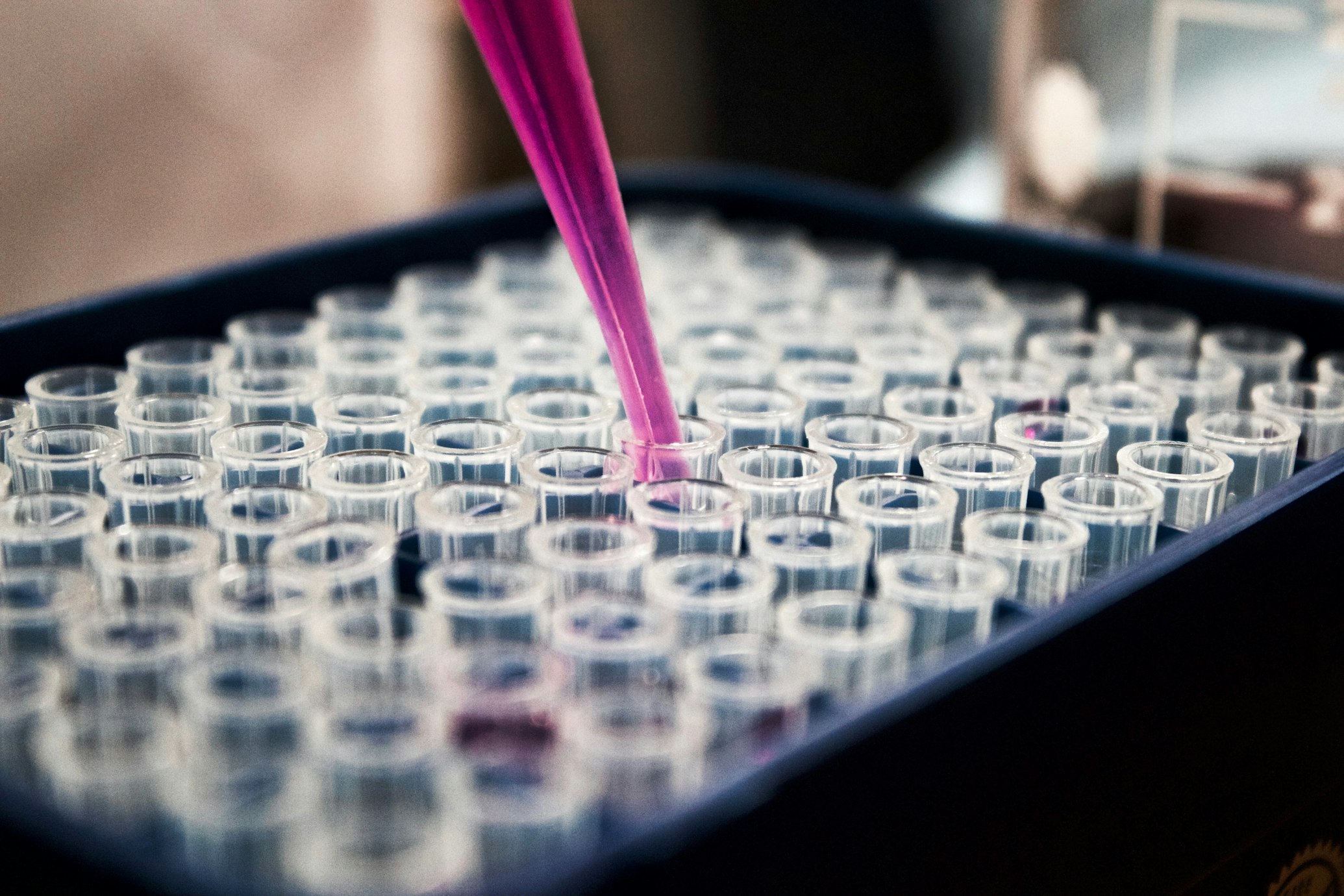
Advanced laboratory techniques enable precise catalyst design and optimization.
Results and Analysis: A Resounding Success
The optimized catalyst, a complex of manganese with ligand L6, proved exceptionally effective. It achieved 99% conversion and a remarkable 92% enantiomeric excess (ee) for the model reaction, meaning the desired enantiomer was produced with very high purity 6 .
The true power of this system, however, lies in its broad applicability and stunning chemoselectivity—its ability to reduce only the targeted ketone group while leaving other sensitive functional groups untouched.
| Substrate Category | Example Product | Yield (%) | Enantiomeric Excess (ee %) |
|---|---|---|---|
| Aryl Ketones | 1-Phenylethanol | 99 | 92 |
| Ketones with Ethers | 1-(Benzodioxol-5-yl)ethanol | 89 | 94 |
| Heterocyclic Ketones | 1-(Thiophen-2-yl)ethanol | 88 | 88 |
| Ketones with Alkynes | 1-Phenylpent-4-yn-1-ol | 90 | 99 |
| Ketones with Alkenes | 1-Phenylbut-3-en-1-ol | 92 | 95 |
This chemoselectivity is a monumental advantage for drug synthesis. It allows chemists to perform a key transformation late in the synthetic sequence without having to protect other reactive parts of the complex molecule, saving steps, time, and waste.
Manganese Catalyst Performance Metrics
Pushing the Boundaries: New Frontiers in Asymmetric Catalysis
The field is far from static. Scientists are continuously developing new strategies to access uncharted chemical space.
Ultra-High-Throughput Screening
One major challenge has been the slow pace of screening new catalysts, as analyzing the purity of chiral products traditionally requires time-consuming chromatographic methods. A 2023 study addressed this with a revolutionary ultra-high-throughput screening platform 7 .
This method uses ion mobility-mass spectrometry (IM-MS) combined with a clever "diastereoisomerization" strategy. By converting the enantiomeric products into diastereomers (which have different physical properties) using a chiral tag, the system can analyze up to ~1,000 reactions per day with an accuracy rivaling traditional methods 7 . This breakthrough dramatically accelerates the discovery of new catalytic systems and the optimization of reaction conditions.
Inherently Chiral Scaffolds
Furthermore, researchers are expanding the very definition of chirality by creating "inherently chiral" scaffolds 5 . These are not molecules with a single chiral carbon atom, but large, complex structures—like macrocyclic calixarenes or mechanically interlocked molecules—where the chirality is a property of the entire twisted framework.
These novel architectures have promising applications in molecular recognition, sensing, and as new types of catalysts themselves 5 .
High-Throughput Screening Acceleration
From Lab to Life: The Industrial Impact
The ultimate test of any chemical methodology is its translation to real-world applications. Asymmetric catalysis has passed this test with flying colors, becoming a cornerstone of the pharmaceutical and agrochemical industries .
The drive for single-enantiomer drugs was solidified by the US FDA's 1992 policy, which emphasized evaluating individual enantiomers. Today, the majority of new small-molecule drugs are chiral. For instance, in 2020, 20 out of 35 new FDA-approved drugs were chiral molecules .
| Drug | Therapeutic Use | Role of Asymmetric Catalysis |
|---|---|---|
| Esomeprazole (Nexium) | Treats GERD | The (S)-enantiomer of omeprazole provides improved therapeutic efficacy. |
| L-DOPA | Treats Parkinson's disease | Asymmetric synthesis ensures production of the biologically active L-enantiomer. |
| Clopidogrel (Plavix) | Prevents heart attacks and strokes | Only the (S)-enantiomer is therapeutically active as an antiplatelet agent. |
| S-Naproxen | Anti-inflammatory painkiller | The (S)-enantiomer is responsible for the desired analgesic effect. |
Chiral Drugs in 2020
L-DOPA
Parkinson's treatment where only the L-enantiomer is effective.
Clopidogrel
Anti-platelet drug where the S-enantiomer prevents blood clots.
Esomeprazole
GERD medication with improved efficacy as a single enantiomer.
S-Naproxen
Anti-inflammatory where only the S-enantiomer provides pain relief.
Conclusion: The Future is Handed
Asymmetric catalysis has evolved from a scientific curiosity into an indispensable discipline that sits at the heart of modern molecular innovation. By allowing us to construct chiral molecules with precision, it has unlocked safer, more effective medicines and more sustainable agricultural products.
The future of the field is bright, guided by the principles of green chemistry. The shift towards Earth-abundant metals like manganese and iron, the development of recyclable catalysts, and the integration of artificial intelligence and high-throughput technologies promise to make asymmetric synthesis even more efficient, sustainable, and powerful 6 . In the quest to build the complex molecules of tomorrow, controlling handedness will remain a fundamental and life-enabling science.