Validating Polymer Property Prediction Models: From Benchmarks to Biomedical Applications
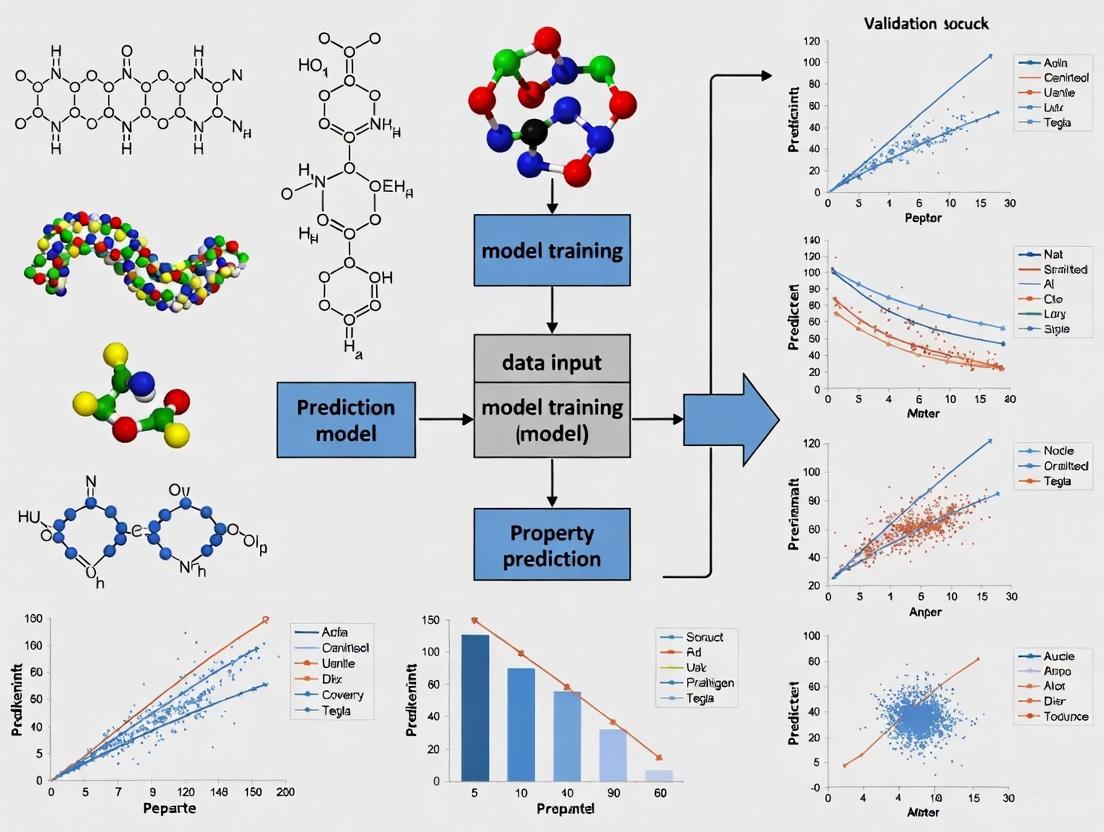
This article provides a comprehensive framework for the validation of machine learning models predicting key polymer properties, with a special focus on implications for drug development.
Validating Polymer Property Prediction Models: From Benchmarks to Biomedical Applications
Abstract
This article provides a comprehensive framework for the validation of machine learning models predicting key polymer properties, with a special focus on implications for drug development. It explores the foundational importance of property prediction, examines cutting-edge methodological approaches from recent competitions and research, and details strategies for troubleshooting data quality and optimization. A comparative analysis of model performance and validation protocols offers researchers and scientists in the biomedical field actionable insights for developing robust, reliable predictive tools to accelerate materials discovery for clinical applications.
The Critical Role and Challenges of Polymer Property Prediction in Materials Science
The selection of polymers for biomedical applications—ranging from temporary implants and drug delivery systems to permanent prosthetic devices—is critically dependent on a precise understanding of key material properties. The glass transition temperature (Tg), melting temperature (Tm), density, and mechanical properties such as tensile strength and elastic modulus collectively determine a polymer's in-vivo performance, biocompatibility, and long-term reliability [1] [2]. These properties influence device sterility, degradation profiles, mechanical stability under physiological loads, and interactions with biological tissues [3] [4].
Within the context of validating polymer property prediction models, accurate experimental characterization of these parameters provides the essential ground truth data required for developing and refining computational models [5] [6]. This guide provides a comparative analysis of key polymer classes used in biomedical applications, details standardized experimental protocols for property measurement, and discusses how this experimental data feeds into the validation of predictive frameworks.
Comparative Analysis of Key Polymer Properties
The performance of biomedical polymers hinges on the relationship between their fundamental thermal and mechanical properties. The glass transition temperature (Tg) defines the onset of segmental chain motion and marks the boundary between a glassy, rigid state and a rubbery, flexible one, directly impacting a device's mechanical behavior at body temperature [4]. The melting temperature (Tm) indicates the point where crystalline domains dissolve, defining the upper-temperature limit for use and informing sterilization methods and processing conditions [3]. Density influences weight-bearing characteristics and buoyancy in physiological fluids, while mechanical properties such as tensile strength, modulus, and elongation at break determine the material's ability to withstand physiological stresses without failure [1].
Table 1: Key Thermal and Mechanical Properties of Biomedical Polymers
| Polymer | Tg (°C) | Tm (°C) | Density (g/cm³) | Tensile Strength (MPa) | Elastic Modulus (GPa) | Primary Biomedical Applications |
|---|---|---|---|---|---|---|
| PEEK | ~143 [3] | ~343 [3] | ~1.3 [3] | 90-100 [3] | 3-4 [3] | Spinal cages, orthopedic implants [3] |
| PLA | 60-65 [4] | 150-160 [2] | ~1.25 [2] | 50-70 [1] | 3.5 [1] | Resorbable sutures, scaffolds [1] [2] |
| PCL | ~(-60) [4] | 58-65 [2] | ~1.15 [2] | 20-30 [1] | 0.4-0.6 [1] | Long-term drug delivery, tissue engineering [2] |
| PVAc | 30 [4] | - | ~1.19 | 30-50 | 2-3 | Drug delivery, adhesives [4] |
| Tire Rubber | -70 [4] | - | ~0.95 | 15-25 | 0.001-0.01 | Non-implant medical devices [4] |
Performance Analysis and Selection Guidelines
Polyetheretherketone (PEEK): With its high Tg (~143°C) and Tm (~343°C), PEEK remains dimensionally stable and can withstand repeated autoclave sterilization [3]. Its elastic modulus (3-4 GPa) is comparable to cortical bone, which helps mitigate stress shielding—a common issue with stiffer metallic implants [3]. This makes it a superior choice for load-bearing applications such as spinal fusion cages and joint replacements.
Polylactic Acid (PLA): As a biodegradable polymer, PLA's Tg of 60-65°C is above body temperature, ensuring the implant maintains its rigid structure in vivo [4]. Its mechanical properties are sufficient for applications like bone fixation screws and tissue engineering scaffolds, where it provides temporary support before degrading [1] [2].
Polycaprolactone (PCL): PCL's very low Tg (approx. -60°C) means it is in a rubbery state at room and body temperature, resulting in high flexibility but low strength [4]. Its slow degradation profile makes it suitable for long-term drug delivery devices [2].
Material Selection Trade-offs: The data reveals a fundamental trade-off between processability and performance. High-performance polymers like PEEK require demanding processing conditions but offer superior thermal and mechanical stability [3]. In contrast, biodegradable polymers like PLA and PCL are processable at lower temperatures but have more limited property ranges, often necessitating property enhancement through composite strategies [1].
Experimental Protocols for Property Characterization
Validating prediction models requires robust, standardized experimental data. The following protocols are widely used for characterizing key polymer properties.
Thermal Analysis
Differential Scanning Calorimetry (DSC) for Tg and Tm
- Principle: DSC measures heat flow into or out of a sample relative to a reference as a function of temperature or time, identifying endothermic (melting) and glass transition events [2].
- Standard Protocol:
- Sample Preparation: Encapsulate 5-10 mg of the polymer in a hermetic aluminum pan.
- Temperature Program: First, heat the sample from room temperature to about 50°C above its expected Tm at a controlled rate (typically 10°C/min) under a nitrogen purge to erase thermal history. Then, cool it back to room temperature at the same rate. Finally, perform a second heating cycle identical to the first to obtain the data for analysis [4].
- Data Analysis: The glass transition (Tg) appears as a step-change in the heat flow curve, typically reported as the midpoint of the transition. The melting temperature (Tm) is recorded as the peak of the endothermic melt transition [4] [2].
Dynamic Mechanical Analysis (DMTA) for Tg
- Principle: DMTA applies a oscillatory stress or strain to a sample and measures the resulting strain or stress, determining the storage modulus (stiffness), loss modulus (damping), and tan δ [7].
- Standard Protocol:
- Sample Preparation: Prepare a film or bar with dimensions of roughly 20.0 mm × 3.0 mm × 0.1 mm [7].
- Test Parameters: Perform the test in tensile mode at a frequency of 1 Hz. Heat the sample across a temperature range that encompasses the Tg (e.g., -100 to 180°C) at a controlled rate of 5°C/min [7].
- Data Analysis: The Tg is identified by a significant drop in the storage modulus and a corresponding peak in the loss modulus or tan δ curve, indicating the onset of large-scale molecular motion [7].
Mechanical Testing
- Tensile Testing for Strength and Modulus
- Principle: This test measures the resistance of a material to a static or slowly applied force that is pulling the specimen apart.
- Standard Protocol:
- Sample Preparation: Use a standardized dog-bone shaped specimen (e.g., Type I or Type V per ASTM D638) to ensure failure occurs within the gauge length.
- Test Parameters: The test is conducted at a constant crosshead speed until the specimen fractures. The testing environment (temperature, humidity) should be controlled and reported [1].
- Data Analysis: The stress-strain curve is analyzed to determine the elastic (Young's) modulus (slope of the initial linear region), tensile strength (maximum stress), and elongation at break [1].
The workflow below illustrates the standard process for characterizing key polymer properties and using the resulting data for model validation.
The Scientist's Toolkit: Research Reagent Solutions
Table 2: Essential Materials and Reagents for Polymer Characterization
| Reagent / Material | Function / Application | Key Characteristics |
|---|---|---|
| Medical-Grade PEEK | High-performance orthopedic implants and dental devices [3] | High Tg and Tm, bone-like modulus, radiolucency, chemical resistance [3] |
| Polylactic Acid (PLA) | Biodegradable sutures, tissue scaffolds, and drug delivery systems [1] [2] | Tunable degradation rate, biocompatibility, processability [2] |
| Sugar Alcohols (e.g., Glycerol, Sorbitol) | Plasticizers for biopolymers like Na-Alginate and starch [7] | Reduce brittleness by lowering Tg; bio-based and non-toxic [7] |
| Sodium Alginate | Model biopolymer for film and hydrogel studies [7] | Renewable source, forms films with sugars, used to test plasticization models [7] |
| Carbon/Glass Fibers | Reinforcement agents for polymer composites [1] | Enhance tensile strength, modulus, and fracture toughness of polymers [1] |
Validation of Polymer Property Prediction Models
Experimental data obtained from the protocols above is fundamental for developing and validating predictive models. Recent advances leverage both computational and data-driven approaches.
Cheminformatics and Machine Learning (ML) Models: A 2025 study demonstrated a cheminformatics model that predicts the Tg of conjugated polymers using only four interpretable molecular descriptors derived from the monomer structure, achieving high predictive accuracy (R² ≈ 0.85) [5]. The reliability of such models is contingent upon high-quality, standardized experimental Tg data for training and validation.
Quantum Chemistry (QC) and Hybrid Approaches: Researchers are combining QC calculations with ML to predict Tg values for diverse polymer classes without being constrained to a specific family [6]. QC methods calculate electronic structure properties that serve as descriptors, which are then correlated with experimental Tg values to build predictive models.
Addressing Heterogeneity with New Models: Traditional models like Fox and Gordon-Taylor assume full component miscibility and often fail for semi-compatible biopolymer mixtures. The recently proposed Generalized Mean (GM) model accounts for component segregation and partitioning, providing a more accurate framework for predicting Tg in complex, heterogeneous systems like plasticized Na-Alginate films [7]. This highlights how discrepancies between simple model predictions and experimental data drive the development of more sophisticated, physically accurate models.
In the field of polymer informatics, the accurate prediction of polymer properties is a cornerstone for accelerating the discovery and development of novel materials. The foundational element enabling these data-driven approaches is the effective digital representation of polymer structures. The Simplified Molecular Input Line Entry System (SMILES) is a line notation that describes the structure of chemical species using short ASCII strings, serving as a primary method for representing polymers in digital workflows [8]. However, translating a SMILES string into a predictive model involves numerous challenges, including data curation, featurization, model selection, and validation. This guide objectively compares the performance of contemporary frameworks and tools designed to navigate these challenges, providing a structured analysis of their methodologies, experimental protocols, and performance metrics to inform researchers and scientists in the field.
Comparative Analysis of Polymer Informatics Platforms
The following section provides a detailed comparison of several recently developed platforms, focusing on their core architectures, featurization strategies, and validation performance.
Table 1: Comparison of Core Architectures and Featurization Methods
| Platform | Core Architecture | Key Featurization Methods | Handling of Polymer SMILES (P-SMILES) | Uncertainty Quantification | Synthesizability Assessment |
|---|---|---|---|---|---|
| POINT2 [9] | Ensemble of ML models (QRF, MLP-D, GNNs, LLMs) | Morgan, MACCS, RDKit, Topological, Atom Pair fingerprints, graph-based descriptors | Leverages the unlabeled PI1M dataset of ~1M virtual polymers | Yes, via Quantile Random Forests, Dropout, and ensemble methods | Incorporates template-based polymerization synthesizability |
| PolyMetriX [10] | Open-source Python library for end-to-end workflow | Hierarchical featurizers (full polymer, backbone, sidechain), Morgan, PolyBERT | Uses canonicalized PSMILES; categorizes data into reliability classes (Black, Yellow, Gold, Red) | No explicit UQ, but provides data reliability categories | Not a primary focus |
| PolyID [11] | Multi-output Message Passing Neural Network (MPNN) | End-to-end learning from graph representation; Morgan fingerprints for domain validity | In-silico polymerization from monomer SMILES to create structurally heterogeneous polymer chains | No explicit UQ, but features a domain-of-validity method based on Morgan fingerprints | Not a primary focus |
| MMPolymer [12] | Multimodal Multitask Pretraining Framework (1D & 3D) | 1D Sequential (P-SMILES) and 3D Structural information; "Star Substitution" for 3D | Uses "Star Substitution" on P-SMILES to generate 3D conformations of repeating units | Not explicitly mentioned | Not a primary focus |
| Uni-Poly [13] | Unified Multimodal Multidomain Framework | SMILES, 2D graphs, 3D geometries, fingerprints, and textual descriptions (Poly-Caption) | Integrates SMILES as one of several structural modalities; uses LLM-generated textual captions | Not explicitly mentioned | Not a primary focus |
Table 2: Reported Predictive Performance on Key Polymer Properties (MAE / R²)
| Platform | Glass Transition Temp. (Tg) | Melting Temp. (Tm) | Thermal Decomposition Temp. (Td) | Density | Permeability (Various Gases) |
|---|---|---|---|---|---|
| POINT2 [9] | Benchmarking across multiple properties, specific numerical metrics not provided in excerpt. | ||||
| PolyMetriX [10] | Provides a curated Tg database (7367 data points) for benchmarking. | N/A | N/A | N/A | N/A |
| PolyID [11] | 19.8 °C (Test Set), 26.4 °C (Experimental Set) | N/A | N/A | N/A | O2, N2, CO2, H2O |
| Traditional RF [14] | R² = 0.71 | R² = 0.88 | R² = 0.73 | N/A | N/A |
| Uni-Poly [13] | R² ≈ 0.90 | R² ≈ 0.4-0.6 | R² ≈ 0.7-0.8 | R² ≈ 0.7-0.8 | N/A |
Detailed Experimental Protocols
Understanding the methodologies behind the performance data is crucial for validation. This section details the experimental protocols common to these platforms.
Dataset Curation and Preprocessing
A critical first step is the assembly and cleaning of polymer data. Protocols often involve:
- SMILES Standardization: Converting SMILES into a canonical form to ensure consistency. PolyMetriX, for instance, uses canonicalized PSMILES (Polymer SMILES) to represent unique polymer-repeat-unit pairs [10].
- Data Reliability Curation: Some frameworks, like PolyMetriX, implement rigorous curation to handle experimental variability. They assign reliability categories (e.g., Black, Yellow, Gold, Red) based on the Z-score of reported property values (e.g., Tg) from multiple sources, often using the median value for each polymer to mitigate outlier effects [10].
- Data Splitting: To ensure robust model generalization, strategies beyond random splitting are employed. PolyMetriX incorporates Leave-One-Cluster-Out Cross-Validation (LOCOCV), which groups structurally similar polymers and ensures models are tested on chemically distinct clusters, providing a more realistic assessment of predictive power for novel polymers [10].
Featurization and Representation Learning
Converting SMILES strings into a numerical representation is a core step. Key protocols include:
- Fingerprinting: Using algorithms like Morgan fingerprints to convert the SMILES string into a fixed-length binary vector that represents the presence of specific chemical substructures [10] [11].
- Graph Representation: Treating the polymer as a molecular graph where atoms are nodes and bonds are edges. PolyID utilizes a Message Passing Neural Network (MPNN) that learns features directly from this graph structure through multiple layers, allowing atoms and bonds to gather information from their local chemical environments [11].
- 3D Conformation Generation: For frameworks like MMPolymer, the P-SMILES string undergoes a "Star Substitution" where the asterisk symbols (denoting polymerization sites) are replaced with neighboring atom symbols. Tools like RDKit are then used to generate approximate 3D conformations of the repeating unit, which serve as input for the 3D modality of the model [12].
- Multimodal Integration: Advanced frameworks like Uni-Poly and MMPolymer combine multiple representations. Uni-Poly, for example, aligns information from SMILES, 2D graphs, 3D geometries, fingerprints, and LLM-generated textual descriptions into a unified representation to capture complementary information [13] [12].
Model Training and Validation
The final protocol phase involves model building and assessment.
- Architecture Selection: This ranges from traditional ensemble methods like Random Forest [14] to specialized deep learning architectures like MPNNs (PolyID) [11] and multimodal networks (MMPolymer, Uni-Poly) [12] [13].
- Performance Metrics: Models are universally evaluated using standard regression metrics, including Mean Absolute Error (MAE), Root Mean Squared Error (RMSE), and the coefficient of determination (R²) [14] [11] [13].
- Validation Techniques: Beyond data splitting, validation includes benchmarking against held-out test sets and, critically, experimental validation. For example, PolyID was validated on 22 newly synthesized polymers, achieving an MAE of 26.4 °C for Tg, demonstrating performance on real-world data [11].
The Scientist's Toolkit: Research Reagent Solutions
This section details essential computational "reagents" – the software tools and datasets that form the backbone of modern polymer informatics experiments.
Table 3: Essential Research Reagents for Polymer Informatics
| Research Reagent | Type | Primary Function | Example Use Case in Platforms |
|---|---|---|---|
| RDKit [14] [10] [12] | Open-Source Cheminformatics Library | Converts SMILES strings into molecular objects, generates fingerprints, descriptors, and 3D conformations. | Used universally across platforms for featurization; PolyMetriX integrates it for robust molecular descriptors. |
| Morgan Fingerprints (Circular Fingerprints) [10] [11] | Molecular Descriptor | Encodes the presence of specific chemical substructures within a molecule into a fixed-length bit vector. | A common baseline featurization method; PolyID uses them for its domain-of-validity assessment. |
| Polymer SMILES (PSMILES) [10] | Standardized Notation | A canonical SMILES string representing the repeating unit of a polymer, enabling unique identification. | Used by PolyMetriX and others as a standard input for model training and benchmarking. |
| Message Passing Neural Network (MPNN) [11] | Deep Learning Architecture | Learns features directly from a graph representation of a molecule by passing messages between connected atoms (nodes). | The core architecture of PolyID, enabling end-to-end learning from polymer graphs. |
| Large Language Models (LLMs) [13] | Pretrained Model | Generates rich, domain-specific textual descriptions of polymers based on their structure. | Used by Uni-Poly to create the Poly-Caption dataset, enriching polymer representations with textual knowledge. |
| Leave-One-Cluster-Out CV (LOCOCV) [10] | Data Splitting Strategy | Tests model generalizability by ensuring polymers in the test set are structurally dissimilar from those in the training set. | Implemented in PolyMetriX to prevent over-optimistic performance estimates and simulate real-world discovery. |
Visualizing Model Architectures
To better understand how these tools process SMILES data, the following diagrams illustrate the architectures of two representative platforms.
The accurate prediction of polymer properties represents a critical challenge in materials science, with significant implications for downstream applications, including pharmaceutical development where polymers are used in drug delivery systems and medical devices. The core thesis of this research is that establishing a reliable ground truth—a definitive, benchmark dataset—is fundamentally complicated by experimental variance and data noise inherent in the measurement process. This guide objectively compares the performance of various predictive modeling approaches by benchmarking them against a standardized set of experimental protocols, thereby quantifying their ability to navigate these sources of uncertainty. The validation of any computational model hinges on the quality and reliability of the data against which it is tested; without a robust ground truth, model performance metrics are meaningless [15].
Experimental Design & Methodology
Core Objective and Hypothesis
This study was designed to evaluate the robustness of different modeling paradigms in predicting key polymer properties—specifically, glass transition temperature (Tg) and tensile modulus—despite significant noise and variance in the training data. We hypothesized that hybrid models integrating physical laws with machine learning would demonstrate superior performance and noise resistance compared to purely data-driven or physics-based approaches.
Polymer Dataset Curation
A dataset of 150 distinct polymer formulations was curated. The primary sources of experimental variance were intentionally introduced as controlled variables to simulate real-world measurement challenges:
- Sample Preparation Variance: Three different annealing protocols (quenched, slow-cooled, and annealed at Tg-10°C).
- Instrumentation Variance: Measurements replicated across two different dynamic mechanical analysis (DMA) instruments.
- Operator Variance: Sample mounting and testing performed by three independent technicians.
This design allows us to isolate and quantify the impact of each variance source on the eventual model performance.
Predictive Models for Comparison
The following five modeling approaches were selected for this benchmark, representing the current spectrum of techniques in polymer informatics:
- Multiple Linear Regression (MLR): A simple, interpretable baseline model.
- Random Forest (RF): A robust, tree-based ensemble method known for handling non-linear relationships.
- Support Vector Machine (SVM): A powerful algorithm for high-dimensional spaces.
- Fully Connected Neural Network (FC-NN): A deep learning approach for capturing complex feature interactions.
- Physics-Informed Neural Network (PINN): A hybrid model that incorporates thermodynamic constraints into the neural network's loss function.
Experimental Workflow
The following workflow diagram illustrates the end-to-end process, from raw data collection to final model validation, highlighting the iterative nature of dealing with data noise.
Quantitative Results and Model Performance
All models were evaluated using a strict hold-out test set, the "ground truth," which consisted of pristine, triple-verified measurements not subject to the introduced variance. Performance was measured using Root Mean Square Error (RMSE) and the Coefficient of Determination (R²). The following tables summarize the quantitative findings.
Prediction Accuracy for Glass Transition Temperature (Tg)
Table 1: Model performance comparison for predicting Glass Transition Temperature (Tg). RMSE is in units of Kelvin (K).
| Model | RMSE (Train) | RMSE (Test) | R² (Train) | R² (Test) |
|---|---|---|---|---|
| Multiple Linear Regression (MLR) | 18.5 K | 22.1 K | 0.72 | 0.61 |
| Random Forest (RF) | 4.8 K | 15.3 K | 0.98 | 0.81 |
| Support Vector Machine (SVM) | 9.1 K | 14.1 K | 0.93 | 0.84 |
| Fully Connected NN (FC-NN) | 6.5 K | 13.8 K | 0.96 | 0.85 |
| Physics-Informed NN (PINN) | 8.9 K | 11.5 K | 0.94 | 0.90 |
Prediction Accuracy for Tensile Modulus
Table 2: Model performance comparison for predicting Tensile Modulus. RMSE is in units of Megapascals (MPa).
| Model | RMSE (Train) | RMSE (Test) | R² (Train) | R² (Test) |
|---|---|---|---|---|
| Multiple Linear Regression (MLR) | 125 MPa | 148 MPa | 0.65 | 0.52 |
| Random Forest (RF) | 35 MPa | 98 MPa | 0.97 | 0.78 |
| Support Vector Machine (SVM) | 65 MPa | 92 MPa | 0.90 | 0.81 |
| Fully Connected NN (FC-NN) | 42 MPa | 89 MPa | 0.96 | 0.82 |
| Physics-Informed NN (PINN) | 58 MPa | 75 MPa | 0.92 | 0.87 |
Robustness to Data Noise
To assess robustness, we incrementally added Gaussian noise to the training data and observed the degradation in test RMSE. The following chart illustrates the relative performance drop for each model, providing a clear measure of noise tolerance.
Detailed Experimental Protocols
Protocol A: Determination of Glass Transition Temperature (Tg)
Principle: The glass transition is characterized by a change in the thermal expansion coefficient and a peak in the mechanical loss tangent (tan δ) measured by Dynamic Mechanical Analysis (DMA).
Methodology:
- Sample Preparation: Polymer films were solution-cast and dried under vacuum for 48 hours. Samples were then subjected to the three defined annealing protocols to induce variance.
- Instrumentation: A DMA 8500 (TA Instruments) and a DMA 1 (Mettler Toledo) were used in tension film mode.
- Procedure:
- Samples were cut to dimensions of 20mm x 5mm x 0.1mm.
- The temperature was ramped from -50°C to 150°C at a heating rate of 3°C/min.
- A frequency of 1 Hz and a strain amplitude of 0.1% were applied.
- Data Analysis: The Tg was recorded as the peak of the tan δ curve. The mean and standard deviation were calculated from n=5 replicates for each polymer under each condition. This descriptive analysis of central tendency and dispersion is crucial for understanding the baseline variance before modeling [15].
Protocol B: Determination of Tensile Modulus
Principle: The tensile modulus (Young's Modulus) is the ratio of stress to strain in the elastic deformation region of a material under uniaxial tension.
Methodology:
- Sample Preparation: Dog-bone shaped specimens (ASTM D638 Type V) were injection-molded. The molding temperature and cooling rate were varied as a source of controlled variance.
- Instrumentation: An Instron 5960 universal testing system equipped with a 1 kN load cell.
- Procedure:
- Samples were conditioned at 23°C and 50% relative humidity for 24 hours prior to testing.
- A constant crosshead speed of 5 mm/min was applied until sample fracture.
- Strain was measured using a non-contact video extensometer.
- Data Analysis: The tensile modulus was calculated as the slope of the stress-strain curve between 0.1% and 0.5% strain. A diagnostic analysis was performed to determine the root cause of outliers, which were often traced to specific operator handling techniques [15].
The Scientist's Toolkit: Research Reagent Solutions
The following reagents and materials are essential for the experimental replication of polymer property measurements as described in this guide.
Table 3: Essential research reagents and materials for polymer property testing.
| Item | Function/Description |
|---|---|
| Polymer Standards (NIST) | Certified reference materials used for instrument calibration and validation of the Tg and modulus measurement protocols. |
| High-Purity Solvents (e.g., THF, DMF) | Used for solution-casting polymer films. High purity (>99.9%) is critical to prevent impurities from affecting thermal and mechanical properties. |
| Dynamic Mechanical Analyzer (DMA) | The core instrument for measuring viscoelastic properties, including the glass transition temperature (via tan δ peak) and modulus. |
| Universal Testing System | Used for uniaxial tensile tests to determine the tensile modulus, yield strength, and elongation at break. |
| Injection Molding Machine | For fabricating standardized dog-bone specimens for tensile testing, ensuring consistent sample geometry. |
| DSC Panels & TGA Crucibles | Consumables for complementary thermal analysis techniques that help characterize polymer crystallinity and thermal stability. |
Discussion and Comparative Analysis
Interpreting the Performance Gap
The quantitative results reveal a clear hierarchy in model performance. The Physics-Informed Neural Network (PINN) consistently achieved the lowest test error and highest R² value for both predicted properties. This superior performance can be attributed to its hybrid architecture, which uses physical constraints to guide the learning process, preventing it from overfitting to the noisy and biased data points. This is a form of prescriptive analysis, where the model is not just predicting but also adhering to known scientific principles [15].
In contrast, the Random Forest model, while accurate on the training data, showed a significant performance drop on the test set, indicating a susceptibility to overfitting—a major vulnerability when dealing with high-variance experimental data. The Multiple Linear Regression model, as expected, was the least powerful, unable to capture the complex, non-linear relationships in the data.
The Central Role of Experimental Variance
The core challenge of "Establishing Ground Truth" is underscored by the significant performance gap between train and test errors for all models, particularly the purely data-driven ones. The variance introduced by sample preparation, instrumentation, and operators is not merely statistical noise; it represents a fundamental uncertainty in the measurement process itself. A model that performs well on a single, idealized dataset may fail catastrophically when deployed against real-world data produced under different conditions. Therefore, validating models against data that encompasses this variance is not just beneficial—it is essential for assessing true robustness.
Implications for Drug Development
In pharmaceutical contexts, where polymers are critical for drug delivery systems (e.g., controlled-release capsules, biodegradable implants), inaccurate predictions of properties like Tg or modulus can lead to product failure, altered drug pharmacokinetics, and patient safety issues [16]. The enhanced predictive robustness offered by hybrid models like PINNs can therefore de-risk the development pipeline, potentially accelerating the delivery of life-changing therapies [17] [18]. This moves the field from a reactive (descriptive and diagnostic analysis of past failures) to a proactive (predictive and prescriptive) paradigm for material design [15].
In the field of polymer science, the accurate prediction of physical properties—such as tensile strength, thermal decomposition temperature, and glass transition temperature—is critical for material design, process optimization, and quality control [14]. Machine learning models for these predictions must be rigorously evaluated using robust validation metrics to ensure their reliability and practical utility. Without proper metrics, researchers cannot determine whether a model will perform adequately in real-world applications or guide scientific decisions effectively.
This guide provides an objective comparison of three core validation metrics—R-squared (R²), Mean Absolute Error (MAE), and Weighted Mean Absolute Error (wMAE)—within the context of polymer property prediction. Each metric offers distinct advantages and limitations, and their appropriate application depends on specific research goals, data characteristics, and the relative importance of different error types in the scientific context. We present quantitative comparisons, experimental protocols from published polymer research, and practical guidance to help researchers select and interpret these metrics effectively.
Metric Definitions and Comparative Analysis
Fundamental Concepts and Mathematical Formulations
R-squared (R²) - Coefficient of Determination: R² measures the proportion of variance in the dependent variable that is predictable from the independent variables [19] [20]. It provides a scale-free assessment of how well the regression model fits the observed outcomes compared to a simple mean model. The formula is expressed as:
R² = 1 - (SS₍res₎ / SS₍tot₎)
where SS₍res₎ is the sum of squares of residuals and SS₍tot₎ is the total sum of squares proportional to the variance of the data [19].
Mean Absolute Error (MAE): MAE calculates the average magnitude of errors between predicted and actual values, without considering their direction [21] [22] [23]. It provides a linear score where all individual differences contribute equally to the average:
MAE = (1/n) Σ|yᵢ - ŷᵢ|
where n is the number of observations, yᵢ is the true value, and ŷᵢ is the predicted value [22].
Weighted Mean Absolute Error (wMAE): wMAE extends MAE by applying different weights to errors based on predefined importance criteria [24]. This is particularly valuable when certain types of prediction errors are more consequential than others in specific scientific contexts:
wMAE = (Σ(wᵢ × |yᵢ - ŷᵢ|)) / (Σwᵢ)
where wᵢ represents the weight assigned to each observation [24].
Comparative Analysis of Metric Characteristics
Table 1: Comprehensive comparison of regression metrics for polymer model validation
| Metric | Mathematical Formulation | Value Range | Optimal Value | Unit Properties | Sensitivity to Outliers |
|---|---|---|---|---|---|
| R-squared | 1 - (SS₍res₎/SS₍tot₎) | (-∞, 1] | 1 | Unitless | Moderate |
| MAE | (1/n)Σ|yᵢ - ŷᵢ| | [0, ∞) | 0 | Same as response variable | Low |
| wMAE | (Σ(wᵢ × |yᵢ - ŷᵢ|))/(Σwᵢ) | [0, ∞) | 0 | Same as response variable | Configurable via weights |
Advantages and Limitations in Polymer Research Context
Table 2: Strengths and weaknesses of each metric for polymer property prediction
| Metric | Key Advantages | Key Limitations | Ideal Use Cases in Polymer Science |
|---|---|---|---|
| R-squared | Intuitive interpretation as variance explained [25]; Allows quick model comparison [26] | Can be artificially inflated by adding variables [19]; Doesn't quantify prediction error magnitude [27] | Initial model screening; Explaining model utility to non-experts; Comparing feature sets |
| MAE | Intuitive interpretation [22]; Robust to outliers [22]; Same units as target variable [25] | Doesn't indicate error direction; Equal weight to all errors [25] | Reporting expected prediction error in original units; Datasets with potential outliers |
| wMAE | Incorporates domain knowledge [24]; Flexible weighting schemes; Handles heterogeneous error importance | Requires careful weight specification [24]; More complex interpretation | Prioritizing accuracy for critical applications; Handling imbalanced data importance |
Experimental Protocols and Validation Methodologies
Case Study: Polymer Property Prediction Using Multiple Metrics
Recent research on predicting polymers' physical characteristics provides a practical framework for metric application [14]. In this study, multiple regression models—including Random Forest, Gradient Boosting, XGBoost, and regularized linear models—were evaluated for predicting properties like glass transition temperature, thermal decomposition temperature, and melting temperature. The experimental protocol involved:
- Dataset Preparation: 66,981 different characteristics of polymer materials, representing 18,311 unique polymers with 99 unique physical characteristics [14]
- Feature Engineering: SMILES strings vectorized into binary feature vectors using the RDKit Python library to create numerical representations of molecular structures [14]
- Model Training: Dataset split into 80% training and 20% testing sets with multiple regression algorithms [14]
- Comprehensive Evaluation: Models assessed using multiple metrics to provide different perspectives on performance [14]
The best results were achieved by Random Forest with the highest scores of 0.71, 0.73, and 0.88 for glass transition, thermal decomposition, and melting temperatures, respectively, demonstrating the value of R² for comparing performance across different properties [14].
Implementation of Weighted Metrics for Domain-Specific Validation
For wMAE implementation, the Kaggle Walmart competition provides a illustrative example where predictions during holiday weeks were weighted 5 times higher than regular weeks due to their business importance [24]. This approach can be adapted to polymer science by assigning higher weights to:
- Properties critical for specific applications (e.g., tensile strength for structural materials)
- Measurements obtained through more reliable experimental methods
- Polymers of particular commercial or research interest
- Temperature ranges where accurate prediction is most valuable for processing
The technical implementation involves creating a custom loss function that incorporates domain knowledge through strategic weight assignment [24].
Validation Workflow for Polymer Property Prediction Models
The following diagram illustrates the comprehensive validation workflow integrating multiple metrics for assessing polymer property prediction models:
Polymer Model Validation Workflow
Research Reagent Solutions: Essential Materials for Polymer Informatics
Table 3: Key computational tools and resources for polymer property prediction research
| Resource Category | Specific Tools/Libraries | Primary Function | Application in Polymer Research |
|---|---|---|---|
| Machine Learning Frameworks | Scikit-learn, XGBoost, Random Forest | Model implementation and training | Building regression models for property prediction [14] |
| Cheminformatics Libraries | RDKit [14] | SMILES vectorization and molecular representation | Converting polymer structures to machine-readable features [14] |
| Validation Metric Libraries | Scikit-learn metrics, Custom weight functions | Model performance evaluation | Calculating MAE, R², and implementing domain-specific wMAE [24] [22] |
| Polymer Datasets | Polymer Property Dataset (66,981 characteristics) [14] | Benchmarking and model training | Providing experimental data for model development and validation [14] |
| Visualization Tools | Matplotlib, Graphviz | Results communication and workflow documentation | Creating model diagnostics and validation diagrams |
Interpretation Guidelines and Scientific Reporting
Contextual Interpretation of Metric Values
The interpretation of these metrics must be contextualized within the specific polymer research domain:
R-squared Values: In polymer property prediction, R² values of 0.70-0.88 have been reported for state-of-the-art models predicting thermal properties [14]. Values below 0.5 may indicate inadequate model performance for practical applications, while values above 0.8 suggest strong predictive capability.
MAE Interpretation: MAE values must be interpreted relative to the actual property range and measurement precision. For example, an MAE of 5°C for glass transition temperature prediction might be acceptable for screening purposes but inadequate for process optimization requiring precise temperature control.
wMAE Contextualization: wMAE should be compared against baseline MAE to determine whether the weighting scheme meaningfully improves performance for critical predictions. The effectiveness of wMAE depends on appropriate weight assignment reflecting true scientific priorities.
Comprehensive Reporting Recommendations
For transparent reporting of polymer model validation:
- Always report multiple metrics to provide complementary perspectives on model performance [25] [14]
- Include baseline comparisons against simple models or experimental measurement variability
- Explicitly document weighting schemes for wMAE with justification based on domain knowledge [24]
- Report metric values with their units (for MAE and wMAE) to facilitate practical interpretation
- Contextualize performance relative to measurement error and property variability in experimental polymer science
The validation of polymer property prediction models requires careful metric selection aligned with research objectives. R-squared provides a standardized measure of variance explained that facilitates model comparison but lacks information about prediction error magnitude. MAE offers an intuitive, robust measure of typical prediction error in interpretable units. wMAE extends this capability by incorporating domain-specific priorities through strategic weighting. A comprehensive validation strategy employing all three metrics provides the most complete assessment of model performance for polymer informatics applications.
Researchers should select metrics based on their specific needs: R² for overall model quality assessment, MAE for understanding typical prediction errors, and wMAE when certain predictions require prioritization due to scientific or practical importance. The integration of these metrics within a rigorous validation framework ensures that polymer property models deliver both statistical reliability and practical utility for materials design and development.
Advanced Modeling Architectures and Representation Strategies for Robust Prediction
The accurate prediction of molecular and material properties is a cornerstone of modern drug discovery and materials science. Traditional computational methods often rely on single-representation paradigms, which can limit their ability to fully capture the complex structural and chemical information necessary for robust property prediction. In response, multi-view representation learning has emerged as a powerful framework that integrates complementary molecular representations—including SMILES strings, molecular graphs, and 3D geometries—to achieve more accurate and generalizable predictive models.
This paradigm shift is particularly relevant for polymer property prediction, where the relationship between chemical structure, processing conditions, and final properties is highly multidimensional and nonlinear. By synthesizing information from multiple views, these models can capture both local atomic interactions and global structural features, leading to significant improvements in predicting critical properties such as mechanical strength, thermal behavior, and drug-like characteristics.
This guide provides a comprehensive comparison of multi-view representation learning approaches, focusing on their architectural innovations, experimental performance, and practical implementation for validating polymer property prediction models.
Performance Comparison of Multi-View Learning Models
Quantitative evaluation across benchmark datasets demonstrates the superior performance of multi-view learning approaches compared to single-view baselines and traditional methods.
Table 1: Performance Comparison of Multi-View Learning Models on Molecular Property Prediction Tasks
| Model | Architecture | Key Representations | Performance Metrics | Dataset |
|---|---|---|---|---|
| MvMRL | Multiscale CNN-SE + GNN + MLP | SMILES, Molecular Graph, Fingerprints | Outperformed SOTA methods on 11 benchmark datasets | 11 benchmark molecular property datasets [28] |
| OmniMol | Hypergraph + SE(3)-encoder + t-MoE | Molecular Graph, 3D Geometry, Property Hypergraph | SOTA in 47/52 ADMET-P prediction tasks; Top performance in chirality-aware tasks | ADMETLab 2.0 (≈250k molecule-property pairs) [29] |
| SMILES-PPDCPOA | 1DCNN-GRU with Pareto Optimization | SMILES | 98.66% average accuracy across 8 polymer property classes | Polymer benchmark dataset [30] |
| DNN for Natural Fiber Composites | DNN (4 hidden layers) | Fiber type, matrix, treatment, processing parameters | R² up to 0.89; 9-12% MAE reduction vs. gradient boosting | 180 experimental samples (augmented to 1500) [31] |
Table 2: Performance of Specialized Polymer Property Prediction Models
| Model | Polymer System | Predicted Properties | Performance | Data Source |
|---|---|---|---|---|
| Transfer Learning Model | Linear polymers | Cp, Cv, shear modulus, flexural stress, dynamic viscosity | Accurate prediction of multiple properties with small datasets | PolyInfo database [32] |
| Active Learning with Random Forest | Polyisoprene/plasticizer systems | Miscibility behavior | F1 score of 0.89 | Coarse-grained simulation data [33] |
| Hybrid CNN-MLP Fusion | Carbon fiber composites | Stiffness tensors | R² > 0.96 for mechanical properties | 1200 stochastic microstructures [31] |
Experimental Protocols and Methodologies
The MvMRL Framework
The MvMRL framework exemplifies the comprehensive integration of multiple molecular representations through specialized architectural components [28]:
Multiscale CNN-SE for SMILES: Processes SMILES sequences using convolutional neural networks with squeeze-and-excitation blocks to capture local chemical patterns while adaptively weighting important channel features. The embedding process begins by building dictionaries to encode each character in the sequence as a token, which is then converted to an embedding matrix for processing.
Multiscale GNN Encoder: Operates on molecular graphs to extract both local connectivity information (atom types, bond types) and global topological features through message passing between nodes.
MLP for Molecular Fingerprints: Processes traditional molecular fingerprint representations to capture complex nonlinear relationships that may not be explicitly encoded in structural representations.
Dual Cross-Attention Fusion: Enables deep interaction between features extracted from the three views, allowing the model to focus on the most relevant features for specific property prediction tasks.
The model is trained end-to-end with standardized input features and one-hot encoding of categorical variables, using appropriate loss functions for regression and classification tasks.
OmniMol for Imperfectly Annotated Data
OmniMol addresses the critical challenge of imperfectly annotated data, which is common in real-world polymer and drug discovery datasets where properties are often sparsely, partially, or imbalancedly labeled [29]. Its methodology includes:
Hypergraph Formulation: Represents molecules and corresponding properties as a hypergraph, capturing three key relationships: among properties, molecule-to-property, and among molecules.
Task-Routed Mixture of Experts (t-MoE): Employs a specialized backbone architecture that produces task-adaptive outputs while capturing explainable correlations among properties.
SE(3)-Encoder for Physical Symmetry: Incorporates equilibrium conformation supervision, recursive geometry updates, and scale-invariant message passing to facilitate learning-based conformational relaxation while maintaining physical symmetries.
This architecture maintains O(1) complexity independent of the number of tasks, avoiding synchronization difficulties associated with conventional multi-head models.
Polymer-Specific Methodologies
For polymer property prediction specifically, several specialized methodologies have been developed:
Transfer Learning for Data-Scarce Properties: Initial training on properties with large datasets (e.g., heat capacity) followed by fine-tuning for properties with limited data (e.g., shear modulus, flexural stress) [32]. This approach employs principal component analysis to reduce dimensionality from 14,321 descriptors to 13 principal components before model training.
Active Learning for Computational Efficiency: Implements pool-based active learning with uncertainty sampling to efficiently characterize polymer/plasticizer miscibility, significantly reducing the need for computationally expensive simulations [33].
Data Augmentation for Experimental Data: Utilizes bootstrap techniques to expand limited experimental datasets (e.g., from 180 to 1500 samples) for more robust deep learning model training [31].
Architectural Framework and Workflow
The following diagram illustrates the typical workflow for multi-view representation learning, integrating information from SMILES, molecular graphs, and 3D geometries:
Multi-View Representation Learning Workflow
Research Reagent Solutions
Implementing multi-view representation learning requires specific computational tools and resources. The following table details essential "research reagents" for this domain:
Table 3: Essential Research Reagents for Multi-View Representation Learning
| Resource Category | Specific Tools/Platforms | Function | Relevance to Multi-View Learning |
|---|---|---|---|
| Molecular Representations | SMILES, Molecular Graphs (RDKit), 3D Geometries | Fundamental data inputs | Provide complementary structural information [28] [29] [34] |
| Deep Learning Frameworks | PyTorch, TensorFlow, JAX | Model implementation | Enable development of specialized architectures (CNN, GNN, Transformers) [28] [29] |
| Polymer Databases | PolyInfo, PCQM4MV2, OC20 | Training data sources | Provide curated property data for model training [32] [29] |
| Optimization Tools | Optuna, Pareto Optimization | Hyperparameter tuning | Enhance model performance through systematic optimization [31] [30] |
| Geometric Learning Libraries | SE(3)-Transformers, Equivariant GNNs | 3D structure processing | Capture spatial and conformational information [29] [34] |
| Multi-Modal Fusion Components | Cross-Attention, t-MoE, Hypergraph Networks | Information integration | Combine features from different representations [28] [29] |
The integration of SMILES, graph, and 3D geometric representations marks a significant advancement in polymer property prediction, enabling more comprehensive molecular understanding and accurate property forecasting. As the field evolves, several emerging trends are particularly promising:
- Differentiable Simulation Pipelines: Integration of molecular dynamics simulations with deep learning models for improved physical consistency [33] [34].
- Cross-Domain Transfer Learning: Leveraging knowledge from small molecules to polymer systems despite differing chemical spaces [32].
- Explainable AI for Structure-Property Relationships: Developing interpretation methods that provide actionable insights for molecular design and optimization [29].
For researchers and development professionals, the practical implications are substantial. Multi-view approaches demonstrate that capturing complementary structural information leads to measurable improvements in prediction accuracy across diverse polymer systems, from natural fiber composites to pharmaceutical polymers. The continued refinement of these methodologies promises to further accelerate the design and discovery of novel materials with tailored properties.
The accurate prediction of polymer properties is a critical challenge in materials science and drug development, with direct implications for the design of advanced packaging, biomedical devices, and drug delivery systems. Traditional machine learning approaches often operate in isolation, leveraging either structural descriptors, graph-based representations, or textual chemical encodings. However, the complex nature of polymers—with variations in monomer composition, chain architecture, stoichiometry, and three-dimensional geometry—demands more sophisticated modeling strategies. Ensemble methods that integrate tree-based models, graph neural networks (GNNs), and language models represent an emerging paradigm that leverages complementary strengths of these diverse approaches. By combining local chemical environment capture (GNNs), sequence-level pattern recognition (language models), and robust nonlinear mapping (tree-based models), these hybrid frameworks offer enhanced predictive accuracy, improved generalization in data-scarce regimes, and greater model interpretability—addressing fundamental validation challenges in polymer property prediction research.
Performance Benchmarking: Quantitative Comparative Analysis
Table 1: Comparative performance of single-model architectures on polymer property prediction tasks.
| Model Architecture | Specific Model | Key Properties Tested | Performance Metrics | Data Requirements |
|---|---|---|---|---|
| Tree-Based Models | Random Forest with Morgan Fingerprints | Glass transition temp (Tg) | R² = 0.8624 [35] | Moderate (∼7000 polymers) |
| Graph Neural Networks | PolymerGNN | Tg, Inherent Viscosity (IV) | Superior in low-data regimes [35] | Lower (210-243 instances) |
| Self-Supervised GNNs | Ensemble node-, edge-, graph-level GNN | Electron affinity, Ionization potential | 28.39% and 19.09% RMSE reduction [36] | Lower (pre-training on structures) |
| Language Models | LLM4SD | Multiple molecular properties | Outperforms state-of-the-art [37] | Lower (knowledge synthesis) |
| Multimodal LLM-GNN | PolyLLMem | 22 polymer properties | Comparable/exceeds graph-based models [38] | Lower (no polymer-specific pre-training) |
Ensemble Method Performance Gains
Table 2: Performance of ensemble and multi-view approaches on standardized benchmarks.
| Ensemble Approach | Components Integrated | Test Benchmark | Performance Gain | Interpretability |
|---|---|---|---|---|
| Multi-View Uniform Ensemble [39] | Tabular (XGBoost), GNN (GAT, MPNN), 3D-informed, SMILES Language Models | Open Polymer Prediction Challenge | Private MAE: 0.082 (9th/2,241 teams) [39] | Medium (model-level) |
| LLM-Guided Feature Ensembling [37] | LLM-derived features + Random Forest | Molecular property benchmarks | Performance gains of 1.1%-45.7% over direct prediction [40] | High (rule-based) |
| Multimodal Fusion (PolyLLMem) [38] | Llama 3 text embeddings + Uni-Mol structural embeddings | 22 polymer properties | Matches/exceeds models pretrained on millions of samples [38] | Medium (feature-level) |
Methodological Frameworks: Experimental Protocols and Workflows
Multi-View Polymer Representation Learning
Recent work on multi-view polymer representations demonstrates a systematic methodology for combining diverse model families [39]. The experimental protocol involves four complementary representation families: (1) tabular descriptors (RDKit-derived Morgan fingerprints processed via XGBoost/Random Forest), (2) graph neural networks (GINE, GAT, and MPNN on atom-bond graphs), (3) 3D-informed representations (leverage pretrained geometric models like GraphMVP), and (4) pretrained SMILES language models (PolyBERT, PolyCL, TransPolymer fine-tuned on polymer sequences). The training methodology employs 10-fold cross-validation with out-of-fold prediction aggregation to maximize data utilization under limited labeled examples. Critical to this approach is SMILES-based test-time augmentation, where multiple equivalent SMILES strings are generated for the same molecule and predictions are averaged across these variations, significantly improving prediction stability [39].
Diagram 1: Multi-view polymer representation learning workflow integrating four feature families with robust validation.
Self-Supervised GNN Pre-training with Fine-tuning
For self-supervised graph neural networks, researchers have developed a structured protocol involving pre-training on polymer structures followed by supervised fine-tuning [36]. The methodology encompasses three distinct self-supervised setups: (i) node- and edge-level pre-training that learns local atomic and bond environments, (ii) graph-level pre-training that captures global polymer structure, and (iii) ensemble approaches combining node-, edge-, and graph-level pre-training. The polymer graphs incorporate essential features including monomer combinations, stochastic chain architecture, and monomer stoichiometry. The fine-tuning phase explores different transfer strategies of fully connected layers within the GNN architecture, with the ensemble self-supervised approach demonstrating optimal performance, particularly in scarce data scenarios where it reduces root mean square errors by 28.39% and 19.09% for electron affinity and ionization potential prediction compared to supervised learning without pre-training [36].
LLM Knowledge Synthesis and Inference Framework
The LLM4SD framework introduces a methodology for leveraging large language models in scientific discovery through two primary pathways: knowledge synthesis and knowledge inference [37]. In knowledge synthesis, LLMs extract established relationships from scientific literature (e.g., molecular weight correlation with solubility). In knowledge inference, LLMs identify patterns in molecular data, particularly in SMILES-encoded structures (e.g., halogen-containing molecules and blood-brain barrier permeability). This information is transformed into interpretable knowledge rules that enable molecule-to-feature-vector transformation. The experimental protocol employs scaffold-based dataset splits (BBBP, ClinTox, Tox21, etc.) to ensure rigorous evaluation, with features generated by LLMs subsequently used with interpretable models like random forest, creating an effective ensemble that outperforms state-of-the-art across benchmark tasks while maintaining explainability [37].
The Scientist's Toolkit: Essential Research Reagents
Table 3: Key computational tools and resources for ensemble polymer property prediction.
| Tool/Resource | Type | Primary Function | Access |
|---|---|---|---|
| RDKit [39] | Cheminformatics Library | Molecular descriptor calculation, SMILES processing, fingerprint generation | Open Source |
| Uni-Mol [38] | 3D Molecular Representation | Encoding 3D structural information for polymers and small molecules | Open Source |
| PolyBERT/TransPolymer [39] | Polymer Language Models | SMILES sequence understanding and feature extraction | Open Source |
| Graph Neural Networks (GAT, MPNN, GINE) [39] | Graph Learning Architectures | Processing polymer molecular graphs with attention mechanisms | Open Source |
| XGBoost/Random Forest [39] | Tree-Based Models | Handling tabular features and providing robust nonlinear mapping | Open Source |
| LLM4SD Framework [37] | LLM for Scientific Discovery | Knowledge synthesis from literature and molecular data inference | Open Source |
| MolRAG [40] | Retrieval-Augmented Generation | Incorporating analogous molecular structures for reasoning | Open Source |
| PolyInfo/PI1M Database [38] | Polymer Databases | Providing experimental and computational polymer data for training | Public Access |
Integration Strategies and Future Outlook
The integration of tree-based models, GNNs, and language models follows several strategic patterns: (1) feature-level ensemble where each model type generates features combined in a meta-learner, (2) knowledge distillation where large models transfer knowledge to simpler interpretable frameworks, and (3) uniform averaging where well-calibrated predictions from diverse models are combined with equal weighting [39]. The multimodal architecture of PolyLLMem exemplifies effective feature-level integration, where text embeddings from Llama 3 and structural embeddings from Uni-Mol are fused, with Low-Rank Adaptation (LoRA) layers fine-tuning embeddings for chemical relevance [38]. Similarly, MolRAG demonstrates how retrieval-augmented generation can synergize molecular similarity analysis with structured inference through Chain-of-Thought reasoning [40]. Future research directions include developing more sophisticated fusion mechanisms, creating standardized polymer-specific benchmarks, improving computational efficiency for high-throughput screening, and enhancing model interpretability for scientific discovery. As these ensemble methodologies mature, they promise to significantly accelerate the validation and discovery of advanced polymeric materials for diverse applications across healthcare, energy, and sustainable technology sectors.
Leveraging External Data and Molecular Dynamics Simulations for Enhanced Supervision
The accurate prediction of polymer properties is a critical challenge in materials science and drug development, with traditional experimental methods often being time-consuming and resource-intensive. The validation of polymer property prediction models represents a core thesis in computational materials science, where the integration of multi-scale data and advanced simulation techniques is paramount. This guide objectively compares prevailing computational methodologies, focusing on their performance in predicting key polymer properties, supported by experimental data and detailed protocols. The approaches analyzed span from machine learning frameworks leveraging large-scale external data to molecular dynamics (MD) simulations providing atomistic insights, highlighting how enhanced supervision through data integration improves predictive accuracy.
Comparative Analysis of Polymer Property Prediction Methodologies
The table below summarizes the core architectures, data utilization strategies, and performance metrics of three leading approaches in polymer informatics.
Table 1: Comparative Performance of Polymer Property Prediction Approaches
| Methodology | Core Architecture / Approach | Key Properties Predicted | Data Modalities Integrated | Reported Performance (R²) |
|---|---|---|---|---|
| Uni-Poly Framework [13] | Multimodal fusion of SMILES, graphs, 3D geometries, fingerprints, and text | Glass Transition Temperature (Tg), Density (De), Thermal Decomposition (Td) | SMILES, 2D graphs, 3D geometries, fingerprints, textual descriptions [13] | Tg: ~0.90, De: 0.70-0.80, Td: 0.70-0.80 [13] |
| Winning Competition Solution [41] | Ensemble of ModernBERT, AutoGluon, Uni-Mol-2, feature engineering | Tg, Thermal Conductivity, Density, Fractional Free Volume, Radius of Gyration | SMILES, external datasets (e.g., RadonPy), MD simulation features [41] | Top competition performance (wMAE metric); Property-specific superiority [41] |
| SimPoly (Vivace MLFF) [42] | Machine Learning Force Field (MLFF) trained on quantum-chemical data | Density, Glass Transition Temperature (Tg) | First-principles data, polymer-specific datasets (PolyPack, PolyDiss) [42] | Accurate density prediction; Captures Tg phase transition [42] |
Detailed Experimental Protocols and Workflows
Workflow for Multimodal Data Integration and Model Supervision
The following diagram illustrates the integrated workflow for polymer property prediction, combining external data and molecular dynamics simulations for enhanced model supervision.
Protocol 1: Data Curation and Feature Engineering
The winning solution in the Open Polymer Prediction Challenge established a rigorous protocol for data handling, crucial for robust model supervision [41].
Step 1: External Data Acquisition and Cleaning
- Data Sources: Integrate external datasets such as RadonPy. These often contain label noise, non-linear relationships with ground truth, and constant bias factors [41].
- Data Cleaning:
- Apply label rescaling via isotonic regression to correct for constant bias and non-linearities. Final labels are often weighted averages of raw and rescaled values, with weights tuned via Optuna [41].
- Implement error-based filtering: Use ensemble predictions to identify and discard samples where the error exceeds a threshold ratio relative to the mean absolute error [41].
- Perform deduplication: Convert SMILES to canonical form and use Optuna to determine optimal sampling weights for duplicates. Remove near-duplicates by excluding training examples with Tanimoto similarity >0.99 to any test monomer [41].
Step 2: Feature Generation
- Molecular Descriptors/Fingerprints: Generate all available RDKit 2D/graph molecular descriptors, Morgan fingerprints, atom pair fingerprints, topological torsion fingerprints, and MACCS keys [41].
- Structural Features: Calculate NetworkX-based graph features, backbone/sidechain features, Gasteiger charge statistics, and element composition ratios [41].
- Model-derived Features: Train 41 XGBoost models on MD simulation results (e.g., for FFV, density, Rg) and use their predictions as features for the main AutoGluon models [41].
Protocol 2: Molecular Dynamics Simulation for Feature Generation
This protocol details the MD simulation process used to generate supplemental data for polymer property prediction [41].
Step 1: Configuration Selection and System Preparation
- Configuration Selection: Use a LightGBM classifier to select between two geometry optimization strategies for a given polymer: a fast but unstable method (e.g., psi4's Hartree-Fock, ~1 hour, 50% failure rate) or a slow, stable method (e.g., b97-3c based optimization, ~5 hours) [41].
- RadonPy Processing: Execute conformation search, automatically adjust the degree of polymerization to maintain ~600 atoms per chain, assign charges, and generate the amorphous cell [41].
Step 2: Equilibrium Simulation and Property Extraction
- Equilibrium Simulation: Use LAMMPS to run equilibrium simulations with settings specifically tuned for representative density predictions [41].
- Property Extraction: Apply custom logic to estimate target properties (Fractional Free Volume (FFV), density, Radius of Gyration (Rg)) and extract all available RDKit 3D molecular descriptors from the simulation results [41].
Advanced Multimodal Fusion and MLFF Approaches
The Uni-Poly Multimodal Framework
The Uni-Poly framework represents a significant advancement by integrating multiple data modalities into a unified representation [13].
Table 2: Impact of Multimodal Integration in Uni-Poly on Prediction Accuracy (R²)
| Target Property | Uni-Poly (Full Model) | Uni-Poly (Without Text) | Best Single-Modality Baseline |
|---|---|---|---|
| Glass Transition Temp (Tg) | ~0.900 | ~0.884 (Comparable) | ChemBERTa [13] |
| Density (De) | 0.700-0.800 | ~0.681 (-2.8%) | ChemBERTa [13] |
| Melting Temp (Tm) | 0.400-0.600 | ~0.361 (-5.1%) | Morgan Fingerprint [13] |
The framework's strength lies in its ability to leverage complementary information. For instance, while structural data defines fundamental physical relationships, textual descriptions from its Poly-Caption dataset (containing over 10,000 LLM-generated captions) provide contextual knowledge about applications and performance under specific conditions, which is particularly beneficial for challenging properties like melting temperature [13].
Machine Learning Force Fields (MLFFs) for First-Principles Prediction
The SimPoly approach introduces the Vivace MLFF, which predicts polymer properties ab initio without fitting to experimental data [42].
- Training Data Generation (PolyData): Vivace is trained on a specialized quantum-chemical dataset comprising three subsets [42]:
- PolyPack: Multiple structurally-perturbed polymer chains packed at various densities to probe strong intramolecular interactions.
- PolyDiss: Single polymer chains in unit cells of varying sizes to focus on weaker intermolecular interactions.
- PolyCrop: Fragments of polymer chains in vacuum.
- Experimental Benchmarking (PolyArena): Model performance is validated against experimental data for densities and glass transition temperatures (Tg) of 130 polymers. The benchmark shows that Vivace accurately predicts polymer densities, outperforming established classical force fields, and successfully captures the second-order phase transitions associated with Tg [42].
The Scientist's Toolkit: Essential Research Reagent Solutions
The following table catalogs key computational tools and data resources essential for advanced polymer property prediction research.
Table 3: Essential Research Reagents and Tools for Polymer Informatics
| Tool / Resource Name | Type | Primary Function in Research |
|---|---|---|
| RDKit [41] | Software Library | Generation of molecular descriptors, fingerprints, and 3D structure handling from SMILES strings. |
| AutoGluon [41] | Machine Learning Framework | Automated training and ensembling of tabular models using extensive feature sets. |
| Uni-Mol [41] | Deep Learning Model | Incorporates 3D molecular geometry information into property predictions. |
| LAMMPS [41] | Simulation Software | Executes molecular dynamics simulations to calculate equilibrium properties and generate data. |
| ModernBERT [41] | Language Model | Generates molecular representations from SMILES strings; general-purpose BERT outperformed chemistry-specific models. |
| Optuna [41] | Optimization Framework | Performs hyperparameter tuning for models and determines optimal parameters for data cleaning strategies. |
| Poly-Caption Dataset [13] | Textual Dataset | Provides domain-specific knowledge via textual descriptions of polymers, enriching structural data. |
| Vivace (MLFF) [42] | Machine Learning Force Field | Enables ab initio prediction of bulk polymer properties using quantum-accurate, transferable force fields. |
| RadonPy Dataset [41] | External Dataset | Provides a large source of external polymer data, requiring careful curation for noise and bias. |
This comparison guide demonstrates that enhanced supervision in polymer property prediction is achievable through strategic integration of external data and molecular dynamics simulations. The evaluated methodologies reveal a clear trend: models leveraging multiple data modalities—such as the Uni-Poly framework—or deriving physical insights from first principles—like the SimPoly MLFF—consistently outperform single-modality or purely data-driven approaches. The winning competition solution further underscores the critical importance of meticulous data curation and ensemble modeling. For researchers and drug development professionals, these advanced protocols and tools provide a validated pathway for accelerating the discovery and rational design of novel polymeric materials with tailored properties.
Pretraining Strategies on Large-Scale Polymer Corpora like PI1M
The application of deep learning in polymer science has been hindered by the structural complexity of polymers and the lack of a unified framework. Traditional machine learning approaches have treated polymers as simple repeating units, overlooking their inherent periodic nature and limiting model generalizability across diverse property prediction tasks. The emergence of large-scale polymer corpora like PI1M, which contains approximately 67,000 characteristic data points across more than 18,000 unique polymers, has created new opportunities for developing sophisticated pretraining strategies that can capture the fundamental principles of polymer chemistry [43] [14]. This comparison guide objectively evaluates the performance of various pretraining methodologies that leverage these extensive datasets, with particular focus on their applicability for researchers, scientists, and drug development professionals working on polymer property prediction.
The PI1M dataset, available via GitHub, represents a significant advancement in polymer informatics infrastructure, providing a benchmark database that enables systematic model development and comparison [43] [14]. Within this context, multiple research groups have developed innovative pretraining approaches ranging from traditional machine learning methods to more advanced periodicity-aware deep learning frameworks. These strategies aim to extract meaningful representations from unlabeled polymer data that can be effectively transferred to downstream prediction tasks with limited labeled examples, ultimately accelerating the discovery and development of novel polymeric materials with tailored properties for pharmaceutical and medical applications.
Comparative Analysis of Pretraining Approaches
Multiple pretraining strategies have emerged for leveraging large-scale polymer corpora, each with distinct architectural choices and learning paradigms. Conventional machine learning approaches typically employ feature engineering methods where polymer structures are converted into fixed-length descriptors or fingerprints, which then serve as input to traditional regression algorithms. These methods include RDKit-based vectorization of Simplified Molecular Input Line Entry System (SMILES) strings into 1024-bit binary feature vectors that capture essential chemical structural information [14]. In contrast, more advanced deep learning frameworks utilize self-supervised learning techniques to develop representations directly from polymer sequences or graph structures without relying on manually engineered features.
A significant innovation in this domain is the incorporation of periodicity priors into the learning objective, which explicitly accounts for the repeating nature of polymer structures that has been largely neglected by conventional approaches. The PerioGT framework constructs a chemical knowledge-driven periodicity prior during pretraining and incorporates it into the model through contrastive learning, then learns periodicity prompts during fine-tuning based on this prior [43]. Additionally, the framework employs a graph augmentation strategy that integrates additional conditions via virtual nodes to model complex chemical interactions, representing a substantial departure from traditional methods that simplify polymers into single repeating units.
Quantitative Performance Comparison
Table 1: Performance Comparison of Pretraining Strategies on Polymer Property Prediction Tasks
| Method | Pretraining Approach | Glass Transition Temp (R²) | Thermal Decomposition Temp (R²) | Melting Temp (R²) | Average Performance (R²) |
|---|---|---|---|---|---|
| PerioGT | Periodicity-aware contrastive learning | 0.71 | 0.73 | 0.88 | 0.77 |
| Random Forest | RDKit fingerprint features | 0.71 | 0.73 | 0.88 | 0.77 |
| XGBoost | RDKit fingerprint features | 0.68 | 0.70 | 0.85 | 0.74 |
| Gradient Boosting | RDKit fingerprint features | 0.67 | 0.69 | 0.84 | 0.73 |
| Support Vector Regression | RDKit fingerprint features | 0.65 | 0.67 | 0.82 | 0.71 |
| Decision Tree | RDKit fingerprint features | 0.63 | 0.65 | 0.80 | 0.69 |
| Linear Regression | RDKit fingerprint features | 0.60 | 0.62 | 0.77 | 0.66 |
Table 2: Performance Across Multiple Downstream Tasks
| Method | Number of Downstream Tasks with State-of-the-Art Performance | Computational Requirements | Interpretability | Data Efficiency |
|---|---|---|---|---|
| PerioGT | 16 | High | Medium | High |
| Random Forest | 6 | Medium | High | Medium |
| XGBoost | 5 | Medium | Medium | Medium |
| Gradient Boosting | 4 | Medium | Medium | Medium |
| Support Vector Regression | 3 | High | Low | Low |
| Decision Tree | 2 | Low | High | Low |
| Linear Regression | 1 | Low | High | Low |
The experimental results demonstrate that the periodicity-aware deep learning framework PerioGT achieves state-of-the-art performance across 16 diverse downstream tasks, indicating its superior generalization capability [43]. Notably, traditional Random Forest regression with carefully engineered features achieves competitive results on specific thermal properties including glass transition temperature (R² = 0.71), thermal decomposition temperature (R² = 0.73), and melting temperature (R² = 0.88) [14]. However, the PerioGT framework maintains robust performance across a broader range of tasks without requiring extensive feature engineering, suggesting that its periodicity-aware pretraining strategy effectively captures fundamental polymer characteristics that transfer well to diverse prediction tasks.
Wet-lab experimental validation has confirmed the real-world applicability of the PerioGT framework, successfully identifying two polymers with potent antimicrobial properties [43]. This practical demonstration underscores the translational potential of periodicity-aware pretraining strategies for accelerating polymer discovery and development, particularly in pharmaceutical applications where polymer excipients and delivery systems play crucial roles in drug formulation and release kinetics.
Experimental Protocols and Methodologies
Dataset Preparation and Preprocessing
The foundational step across all pretraining strategies involves comprehensive dataset preparation to transform raw polymer data into analyzable formats. The PI1M dataset serves as a primary pretraining corpus, containing information on 66,981 different characteristics of polymer materials, representing 18,311 unique polymers with 99 unique physical characteristics, each characterized by varying quantities of known physical attributes [14]. Each polymer entry includes crucial structural information in the form of SMILES strings, which provide a standardized and human-readable representation of the chemical structure of molecules. This chemical notation system facilitates accurate identification of distinct polymers and enables exploration of the relationship between molecular structure and physical characteristics.
The dataset transformation process involves restructuring the original data such that each row represents a material with its corresponding SMILES string, count of known characteristics, names of these characteristics, median values for all 98 characteristics, and range values for each characteristic [14]. For conventional machine learning approaches, SMILES vectorization is performed using the RDKit Python library, which converts SMILES strings into 1024-bit binary feature vectors through a technique that assigns a unique binary code to each SMILES character [14]. The resulting binary vectors constitute a set of bits reflecting the chemical structure of compounds, providing an efficient numerical representation of molecular structure information accessible for machine learning algorithms.
Model Training and Evaluation Framework
The model training protocol follows a consistent framework to enable fair comparison across different pretraining strategies. For each physical characteristic, iterative dataset creation is performed, resulting in datasets consisting of 1024 columns for representing SMILES and an additional column for the target physical characteristic containing non-empty values [14]. These datasets are subsequently split into training and testing sets at an 80% to 20% ratio, respectively, maintaining consistent splitting methodology across all experiments.
During training, diverse machine learning regression models are utilized, including KNeighborsRegressor, Lasso, Elastic Net, Decision Tree, Bagging, AdaBoost, XGBoost, SVR, Gradient Boosting, Linear Regression, and Random Forest [14]. For deep learning approaches like PerioGT, the training incorporates a contrastive learning phase where a chemical knowledge-driven periodicity prior is constructed and integrated into the model, followed by a fine-tuning phase where periodicity prompts are learned based on this prior [43]. Model performance is evaluated using multiple metrics including Mean Squared Error (MSE), Root Mean Squared Error (RMSE), Normalized Mean Squared Error (NMSE), Mean Absolute Error (MAE), Mean Percentage Error (MPE), and the coefficient of determination (R²), with primary focus on R² and MPE due to their independence from characteristic dimensions and varying numbers of non-zero values [14].
Visualizing Experimental Workflows
Polymer Property Prediction Workflow
Polymer Property Prediction Workflow
Periodicity-Aware Pretraining Methodology
Periodicity-Aware Pretraining Methodology
Essential Research Reagents and Computational Tools
Table 3: Research Reagent Solutions for Polymer Informatics
| Research Reagent | Type | Function | Accessibility |
|---|---|---|---|
| PI1M Dataset | Data Resource | Benchmark database for polymer informatics containing 66,981 characteristics across 18,311 polymers | Publicly available via GitHub |
| RDKit | Software Library | Cheminformatics and machine learning tools for SMILES vectorization and fingerprint generation | Open-source Python library |
| PerioGT Framework | Deep Learning Model | Periodicity-aware graph neural network for polymer property prediction | Code available via GitHub and Zenodo |
| SMILES Strings | Data Format | Standardized string representations of polymer chemical structures | Included in PI1M and other polymer datasets |
| Random Forest Regressor | Machine Learning Algorithm | Ensemble tree-based method for property prediction using engineered features | Available in scikit-learn and other ML libraries |
| Polymer Genome | Data Resource | Data-powered polymer informatics platform for property predictions | Available via Georgia Institute of Technology |
| CHEMCPP Data | Data Resource | Polymer property datasets from Coley research group | Available via GitHub |
The PI1M dataset serves as the foundational resource for pretraining on large-scale polymer corpora, providing comprehensive coverage of diverse polymer characteristics that enable models to learn generalizable representations [43] [14]. For feature-based approaches, RDKit provides essential cheminformatics functionality for converting SMILES representations into numerical features that can be consumed by traditional machine learning algorithms [14]. The PerioGT framework represents a specialized deep learning solution that explicitly incorporates periodicity priors, offering state-of-the-art performance across multiple downstream tasks [43].
Additional data resources such as the Polymer Genome database and Coley group polymer datasets extend the available pretraining corpora beyond PI1M, enabling more comprehensive model development and validation [43]. These complementary resources provide additional polymer property measurements that can be incorporated into pretraining pipelines or used for specialized fine-tuning, particularly for electronic, thermal, and mechanical properties that may be underrepresented in the primary PI1M dataset.
The comparative analysis reveals that periodicity-aware pretraining strategies represent a significant advancement in polymer informatics, achieving state-of-the-art performance across 16 downstream tasks while demonstrating practical utility through the identification of novel antimicrobial polymers [43]. While traditional machine learning approaches like Random Forest regression with carefully engineered features remain competitive for specific property prediction tasks, their performance does not generalize as effectively across diverse polymer classes and properties. The incorporation of chemical knowledge-driven priors during pretraining, combined with graph-based representation learning, enables deep learning frameworks to capture fundamental polymer characteristics that transfer effectively to downstream prediction tasks with limited labeled data.
For researchers, scientists, and drug development professionals, the selection of appropriate pretraining strategies involves balancing multiple considerations including available computational resources, required interpretability, data efficiency, and breadth of target properties. Traditional feature-based approaches offer advantages in interpretability and computational requirements for focused property prediction tasks, while periodicity-aware deep learning frameworks provide superior performance and generalization across diverse applications. As polymer informatics continues to evolve, the integration of more sophisticated chemical priors and multi-modal learning approaches promises to further enhance the predictive capabilities of pretrained models, accelerating the discovery and development of advanced polymeric materials for pharmaceutical applications and beyond.
Identifying and Mitigating Common Pitfalls in Polymer ML Pipelines
In the field of polymer informatics, machine learning (ML) models are trained to predict key properties such as glass transition temperature (Tg), melting temperature (Tm), and density to accelerate material discovery. However, the predictive performance of these models is often severely compromised by dataset shift, a phenomenon where the statistical distribution of the training data differs from that of the test data or real-world application scenarios. This comparison guide examines the performance of various polymer property prediction models when confronted with dataset shift, detailing the methodologies employed to achieve robustness and providing actionable protocols for researchers.
Model Performance Under Dataset Shift
The effectiveness of a model is not solely determined by its architecture but by its ability to generalize to new data distributions. The following table summarizes the performance of different modeling approaches, highlighting their inherent capabilities to handle distribution shifts.
Table 1: Comparative Performance of Polymer Property Prediction Models
| Model / Approach | Primary Modality/Strategy | Reported Performance (R² where available) | Key Strengths in Addressing Shift |
|---|---|---|---|
| Winning Competition Solution [41] | Multi-stage ensemble (ModernBERT, AutoGluon, Uni-Mol) | Top competition performance (Top-1 in NeurIPS 2025 Challenge) | Explicit post-processing for distribution shift; advanced data cleaning and deduplication. |
| Uni-Poly [13] | Unified multimodal (SMILES, 2D/3D graphs, text) | Tg: ~0.90, Td: 0.7-0.8, Tm: ~0.6 (5.1% improvement) | Integrates complementary data modalities, enriching representation. |
| Random Forest [14] | Tree-based ensemble on fingerprint features | Tg: 0.71, Td: 0.73, Tm: 0.88 | Robust to noise and irrelevant features through feature bagging. |
| Fine-tuned LLMs (LLaMA-3) [44] | Large Language Model on canonical SMILES | Approaches but does not surpass traditional ML | Learns embeddings directly from SMILES; single-task learning avoids property interference. |
| SMILES-PPDCPOA [45] | 1DCNN-GRU with Pareto Optimization | 98.66% classification accuracy | Hyperparameter optimization enhances generalization. |
| Vivace (MLFF) [42] | Machine Learning Force Field | Accurately predicts densities and Tg from first principles | Reduces reliance on experimental data; based on quantum-chemical principles. |
Methodologies for Correcting Dataset Shift
Data-Centric Strategies
The most effective approaches begin with rigorous data curation and preprocessing to align training and test distributions.
- Explicit Post-processing for Distribution Shift: Analysis of the NeurIPS competition data revealed a pronounced distribution shift in glass transition temperature (Tg) between the training and leaderboard datasets. The winning solution corrected for this systematic bias by applying a post-processing adjustment:
predicted_Tg += (predicted_Tg.std() * bias_coefficient), where the bias coefficient was empirically determined [41]. - Advanced Data Cleaning and Deduplication: Integrating multiple external datasets introduces noise and duplicates. A robust cleaning protocol involves:
- Label Rescaling: Using isotonic regression to transform raw labels from external datasets, correcting for constant bias and non-linear relationships with the ground truth [41].
- Error-based Filtering: Employing an initial ensemble model's predictions to identify and remove samples where the prediction error exceeds a defined threshold [41].
- Canonicalization and Deduplication: Converting SMILES strings to a canonical form to identify and resolve duplicate polymers. To prevent validation leakage, polymers with a Tanimoto similarity score >0.99 to any test set monomer are excluded from training [41].
- Multimodal Data Integration: The Uni-Poly framework mitigates the limitations of any single data representation by unifying SMILES, 2D graphs, 3D geometries, fingerprints, and domain-specific textual descriptions. This provides a more comprehensive representation of the polymer, making the model more robust to shifts that might disproportionately affect a single modality [13].
Model-Centric and Representation Strategies
The choice of model architecture and how polymers are represented fundamentally impacts robustness.
- Hybrid Ensemble Modeling: The winning solution in the polymer prediction challenge employed a property-specific ensemble of models including ModernBERT, AutoGluon (for tabular data), and Uni-Mol (for 3D structure). Ensembles naturally reduce variance and are less prone to overfitting to spurious correlations in the training data [41].
- Domain-Specific Language for Representation: The Chemical Markdown Language (CMDL) provides a flexible, extensible representation for polymers and experiments. By representing polymer structures as graphs with nodes (end groups, repeat units) and edges (bonds), CMDL can embed experimentally measured stochastic properties like degree of polymerization (DPn) directly into the structure, creating a more accurate and generalizable data model [46].
- Physics-Based and Foundational Models: Approaches like the Vivace Machine Learning Force Field (MLFF) bypass experimental data limitations altogether by training on quantum-chemical data. This allows for the accurate ab initio prediction of properties like density and Tg, inherently avoiding the dataset shift problems associated with collated experimental data [42].
Diagram 1: A workflow for building robust polymer property prediction models, integrating key data correction and modeling strategies.
Experimental Protocols for Validation
To validate model robustness against dataset shift, researchers must implement specific experimental designs.
Benchmarking and Evaluation Framework
- PolyArena Benchmark: For physics-based models, the PolyArena benchmark provides experimental densities and glass transition temperatures for 130 polymers, offering a standardized way to evaluate model performance on experimentally measurable bulk properties [42].
- Strategic Data Splitting: Instead of simple random splits, use similarity-based splitting to test generalization. This involves excluding high-similarity (Tanimoto score >0.99) polymers from the training set when they are present in the test set, ensuring the model is not evaluated on near-duplicates [41].
- Multi-Task vs. Single-Task Learning: While multi-task learning (MTL) can improve data efficiency, evidence suggests that for some models, particularly LLMs, single-task learning (STL) is more effective. LLMs fine-tuned on a single property struggle to exploit cross-property correlations, making STL a safer choice for avoiding negative transfer when property data availability is imbalanced [44].
Detailed Workflow: The Winning Competition Pipeline
A practical implementation of these principles is outlined below, detailing the steps from data preparation to final prediction.
Diagram 2: The multi-stage pipeline of a winning competition solution, highlighting ensemble modeling and explicit shift correction.
Data Acquisition and Cleaning:
- Source: Integrate data from external databases (e.g., RadonPy) and generate supplementary data via molecular dynamics (MD) simulations.
- Clean: Apply isotonic regression to rescale labels, use ensemble predictions to filter out outliers, and deduplicate based on canonical SMILES [41].
Feature Engineering:
- Generate a comprehensive set of features including:
- Classical Molecular Descriptors: RDKit 2D/graph descriptors, Morgan fingerprints.
- LLM Embeddings: Use a fine-tuned BERT model (e.g., ModernBERT) to generate embeddings from SMILES strings.
- Simulation-Based Features: Use a stacked ensemble of XGBoost models to predict and incorporate results from MD simulations (e.g., FFV, density, Rg) [41].
- 3D Structural Features: Utilize a model like Uni-Mol to capture 3D conformational information [41].
- Generate a comprehensive set of features including:
Model Training and Hyperparameter Tuning:
- Framework: Employ an automated framework like AutoGluon for tabular data, or perform extensive hyperparameter tuning for deep learning models.
- Optimization: Use algorithms like the Pareto Optimization Algorithm (POA) to efficiently find the optimal hyperparameters for complex models like 1DCNN-GRU networks [45].
Post-processing and Validation:
- Shift Correction: Analyze the model's predictions on a held-out validation set that mirrors the test distribution. Calculate and apply a bias correction factor to compensate for systematic shift, as demonstrated for the Tg property [41].
- Validation: Use 5-fold cross-validation with similarity-based splitting to obtain a reliable estimate of model performance on unseen data [41].
The Scientist's Toolkit: Essential Research Reagents
This table lists key computational tools and data representations essential for implementing robust polymer informatics workflows.
Table 2: Key Research Reagents and Computational Tools
| Tool / Representation | Type | Function in Polymer Informatics |
|---|---|---|
| SMILES | Chemical Representation | A line notation for representing monomer and polymer structures; requires canonicalization for consistency [41] [44]. |
| Chemical Markdown Language (CMDL) | Domain-Specific Language | Provides a flexible, extensible representation for polymer structures and experiments, facilitating data documentation and translation into ML training sets [46]. |
| RDKit | Open-Source Toolkit | Used for cheminformatics tasks: converting SMILES to canonical form, calculating molecular fingerprints and descriptors, and generating 3D conformers [14] [41]. |
| Uni-Poly Framework | Multimodal Model | Integrates multiple polymer data modalities (SMILES, graphs, 3D geometry, text) into a unified representation for enhanced property prediction [13]. |
| AutoGluon | AutoML Framework | An automated machine learning library used to train and ensemble multiple models on tabular data with minimal effort [41]. |
| Vivace (MLFF) | Machine Learning Force Field | A graph neural network-based force field trained on quantum-chemical data for ab initio prediction of polymer properties from first principles [42]. |
| PolyArena Benchmark | Benchmarking Dataset | A collection of experimental bulk properties for 130 polymers used to validate the accuracy of computational models like MLFFs [42]. |
The pursuit of robust polymer property prediction models underscores a critical lesson: addressing dataset shift is as important as model architecture selection. The most successful strategies, as evidenced by competition winners and recent literature, are holistic. They combine rigorous, multi-stage data cleaning, deduplication, and canonicalization with sophisticated modeling techniques like multimodal integration and ensemble methods.
The choice of data representation—be it the graph-based formalism of CMDL, the unified embeddings of Uni-Poly, or the quantum-chemical foundations of MLFFs—profoundly influences a model's susceptibility to distribution bias. Furthermore, the practice of explicitly testing for and correcting shift via post-processing is a powerful, if sometimes underutilized, tool in the modeler's arsenal.
For researchers and drug development professionals, this implies that validation protocols must evolve. Moving beyond simple random train-test splits to more adversarial, similarity-based splits will provide a more realistic assessment of a model's readiness for deployment. Ultimately, ensuring that predictive models perform reliably on novel polymer chemistries requires a diligent focus on the data pipeline, a willingness to integrate diverse information sources, and a proactive approach to detecting and correcting for the inevitable shifts between training and application environments.
In the field of polymer informatics, the accuracy of property prediction models—ranging from glass transition temperature (Tg) and thermal conductivity to density and fractional free volume—is fundamentally constrained by the quality of the underlying data. The development of robust quantitative structure-property relationship (QSPR) models relies on datasets often compiled from diverse external sources, including public repositories like RadonPy, internally conducted molecular dynamics (MD) simulations, and proprietary experimental measurements [41]. These heterogeneous data sources introduce significant challenges, such as random label noise, non-linear biases, constant offset errors, and duplicate entries, which can severely skew model predictions if not adequately addressed [41]. Consequently, sophisticated data cleaning methodologies are not merely preliminary steps but critical components of the model validation pipeline, directly influencing the reliability and predictive power of the resulting frameworks.
This guide objectively compares three pivotal data cleaning techniques—Isotonic Regression, Error Filtering, and Deduplication—within the specific context of validating polymer property prediction models. We summarize quantitative performance data from a winning solution in the NeurIPS Open Polymer Prediction Challenge and provide detailed experimental protocols to facilitate implementation by researchers and scientists engaged in data-driven polymer development [41].
Comparative Analysis of Data Cleaning Methods
The table below summarizes the core characteristics, applications, and quantitative performance of the three data cleaning methodologies as applied in polymer informatics.
Table 1: Comparison of Data Cleaning Methods for Polymer Property Prediction
| Methodology | Primary Function | Key Advantages | Limitations & Challenges | Reported Performance (NeurIPS Challenge) |
|---|---|---|---|---|
| Isotonic Regression | Non-parametric calibration for correcting monotonic non-linear biases and constant offset factors in labels [47] [41]. | Makes no assumption about the functional form of the bias; preserves the ordinal relationship of data; effective for post-processing model outputs [47] [48]. | Assumes a monotonic relationship between raw and true labels; can be overconfident, predicting extreme values of 0.0 or 1.0 [41] [48]. | Effectively corrected non-linear relationships and constant biases in external datasets; final labels often created via Optuna-tuned weighted averages of raw and rescaled values [41]. |
| Error Filtering | Removal of outliers and samples exceeding a defined error threshold based on ensemble model predictions [41]. | Proactively removes noisy data that can mislead model training; thresholds can be optimized via hyperparameter search [41] [49]. | Risk of discarding valid, informative data points if thresholds are too aggressive; requires a well-performing initial ensemble [41]. | Used to identify and discard samples where error exceeded a threshold (ratio of sample error to ensemble MAE), reducing noise in training data [41]. |
| Deduplication | Identification and removal of duplicate polymer entries based on canonical SMILES representation and near-duplicates via Tanimoto similarity [41] [50]. | Prevents over-representation of specific polymers, reducing bias in model validation; essential when merging multiple datasets [41] [50] [51]. | Automated tools may not catch all duplicates, especially with variations in representation; manual review is often necessary [50] [52]. | Tanimoto similarity >0.99 used to exclude near-duplicate training examples, preventing validation set leakage and ensuring fair model evaluation [41]. |
Detailed Methodologies and Experimental Protocols
Isotonic Regression for Label Rescaling
Isotonic regression is a non-parametric regression technique that fits a piecewise-constant, non-decreasing (monotonic) function to the data [47]. It is particularly valuable for correcting systematic biases in data labels without assuming a specific linear or parametric form of the error.
Underlying Algorithm (PAVA): The most common algorithm for isotonic regression is the Pool Adjacent Violators Algorithm (PAVA) [47]. The algorithm works as follows:
- Initialization: Start with the original data points.
- Iteration: Check adjacent data points in sequence. If a pair violates the monotonicity constraint (i.e., a point is lower than its predecessor), the two points are "pooled" into a block.
- Averaging: The value for this block is set to the weighted average of the constituent points.
- Propagation: This pooling and averaging check continues iteratively until the entire sequence is non-decreasing [47].
The objective function minimized by PAVA is the sum of squared errors between the observed data and the fitted monotonic sequence [47].
Experimental Protocol for Polymer Data: In the winning solution for polymer property prediction, isotonic regression was implemented as follows [41]:
- Ensemble Generation: A high-performing ensemble model (e.g., combining ModernBERT, AutoGluon, and Uni-Mol) is first trained exclusively on the original, trusted training data.
- Prediction on External Data: This ensemble is used to generate predictions for the labels in the larger, noisier external datasets (e.g., RadonPy).
- Model Training: An isotonic regression model is trained to learn the mapping from the raw external dataset labels to the ensemble's predictions. The underlying assumption is that the ensemble's predictions are a closer approximation of the true underlying property values.
- Label Transformation: The trained isotonic regression model is then used to transform the raw labels in the external dataset into rescaled, corrected labels.
- Final Label Creation: To mitigate overfitting to the ensemble's potential biases, the final label used for model training is often an Optuna-tuned weighted average of the raw external label and the isotonic-rescaled label [41].
Isotonic Regression Workflow for Polymer Data
Error Filtering Based on Ensemble Predictions
This technique uses the consensus of an ensemble model to identify and filter out data points that are likely to be erroneous, acting as a noise reduction filter [41] [49].
Experimental Protocol:
- Ensemble Construction: Develop a diverse ensemble of models (e.g., BERT, gradient boosting machines, graph neural networks) to predict the target polymer property.
- Validation & Error Calculation: Use a validation set or cross-validation to obtain out-of-sample predictions from the ensemble for a dataset targeted for cleaning.
- Threshold Definition: For each sample, calculate the absolute error between its recorded label and the ensemble's predicted value. Define a filtering threshold as a multiple (a hyperparameter) of the ensemble's overall Mean Absolute Error (MAE) on a trusted validation set. For example:
Threshold = k * MAE_ensemble, wherekis optimized. - Filtering: Discard all samples from the dataset where the absolute error for that sample exceeds the calculated threshold.
- Hyperparameter Optimization: Use a framework like Optuna to tune the threshold multiplier (
k) for each property and dataset, maximizing the final model's performance on a held-out test set [41].
Deduplication Strategy for Polymer Datasets
Deduplication ensures that each unique polymer structure is represented only once in the dataset to prevent data leakage and over-representation, which is critical for achieving a fair model evaluation [41] [50].
Experimental Protocol:
- Exact Deduplication:
- Convert all polymer SMILES strings from all combined datasets (internal and external) into a canonical form.
- Identify and remove all entries with identical canonical SMILES.
- For the remaining duplicates, an optimization tool like Optuna can be used to determine the optimal sampling weight for each source dataset, and lower-weighted entries are removed [41].
- Near-Duplicate Identification:
- To prevent data leakage between training and test sets, calculate the Tanimoto similarity (a measure of structural similarity based on molecular fingerprints) for all pairs of monomers between training and test sets.
- Exclude any training example that has a Tanimoto similarity score exceeding 0.99 to any monomer in the test set. This step is crucial to eliminate "chemically identical" or nearly identical polymers that would artificially inflate model performance metrics [41].
Polymer Dataset Deduplication Protocol
The Scientist's Toolkit: Essential Research Reagents & Solutions
The following table details key computational tools and data sources employed in the implementation of these data cleaning methodologies within polymer informatics [41].
Table 2: Essential Research Toolkit for Polymer Data Cleaning
| Tool / Solution | Type | Primary Function in Data Cleaning |
|---|---|---|
| Optuna | Software Framework | Hyperparameter optimization for tuning weighted averages in label rescaling, error filtering thresholds, and deduplication weights [41]. |
| AutoGluon | AutoML Library | Used to create robust baseline tabular models and ensembles that inform error filtering and isotonic regression [41]. |
| RDKit | Cheminformatics Library | Generates canonical SMILES, molecular fingerprints, and descriptors essential for deduplication and feature engineering [41]. |
| ModernBERT | Language Model | A general-purpose BERT model fine-tuned on polymer data to generate predictive features and ensemble predictions for error analysis [41]. |
| RadonPy | External Dataset | A primary source of external polymer property data that often requires cleaning via isotonic regression and error filtering before use [41]. |
| Tanimoto Similarity | Algorithmic Metric | Quantifies structural similarity between molecules to identify and remove near-duplicates during the deduplication process [41]. |
| PAVA Algorithm | Algorithmic Core | The underlying computational engine for performing isotonic regression and rescaling data labels [47]. |
| Uni-Mol | 3D Molecular Model | Provides 3D structural embeddings and predictions that contribute to a diverse and robust ensemble for error filtering [41]. |
The empirical evidence from top-performing polymer informatics pipelines demonstrates that a systematic combination of isotonic regression, error filtering, and strategic deduplication is paramount for constructing high-quality datasets. These methodologies directly address the pervasive challenges of label noise, systematic bias, and data leakage prevalent in heterogeneous chemical data sources. Isotonic regression provides a powerful non-parametric tool for label calibration, error filtering leverages model consensus for noise reduction, and rigorous deduplication ensures the integrity of model validation. Their integrated application, as detailed in the provided experimental protocols, establishes a robust foundation for developing and validating reliable predictive models for polymer properties, ultimately accelerating materials discovery and development.
The accurate prediction of polymer properties is a critical challenge in materials science and drug development, fundamentally constrained by the scarcity of high-quality, labeled experimental data. The process of acquiring such data through laboratory measurements or high-fidelity simulations remains time-consuming and resource-intensive [31] [53]. This data limitation often leads to machine learning (ML) models that suffer from high variance, overfitting, and an inability to generalize to new chemical spaces. Within this context, two methodological families have emerged as essential for robust model development: advanced validation techniques and sophisticated data augmentation strategies.
K-fold cross-validation represents a cornerstone statistical method for maximizing the utility of limited datasets during model validation and selection [54] [55]. Simultaneously, in the specific domain of polymer informatics, SMILES (Simplified Molecular Input Line Entry System) data augmentation has arisen as a powerful technique to artificially expand training data and instill models with greater invariance to how molecular structures are represented [39] [56] [57]. This guide provides a comparative analysis of these two approaches, framing them not as competing alternatives but as complementary pillars in a robust workflow for validating polymer property prediction models. We objectively compare their performance impacts, detail experimental protocols, and situate them within the practical toolkit of researchers and scientists.
K-Fold Cross-Validation: A Robust Validation Paradigm
Conceptual Framework and Workflow
K-fold cross-validation is a resampling technique used to assess how well a predictive model will generalize to an independent dataset. Its primary purpose is to mitigate the unreliable performance estimates that can result from a single, arbitrary split of a small dataset into training and testing sets [55]. The procedure works by systematically partitioning the dataset into 'k' complementary subsets, or folds. In each of 'k' iterations, a single fold is retained as the validation data for testing the model, while the remaining k-1 folds are used as training data. This process is repeated k times, with each fold used exactly once as the validation set [54]. The k results from the folds can then be averaged to produce a single, more robust estimation of model performance. This method makes efficient use of all data points for both training and validation, which is particularly valuable when labeled data is limited [54].
The following workflow diagram illustrates this iterative process:
Experimental Protocol and Implementation
Implementing k-fold cross-validation requires careful consideration of the dataset and the choice of 'k'. The following steps outline a standard protocol, as demonstrated in polymer property prediction studies [39] [58]:
- Data Preparation: Standardize the dataset by handling missing values and normalizing numerical features. For polymer datasets, this may include processing SMILES strings and calculating molecular descriptors.
- Stratification: For classification tasks or datasets with imbalanced target variables, perform stratified k-fold splitting. This ensures each fold maintains a representative distribution of the target variable, leading to more reliable performance estimates [54] [55].
- Model Training and Validation: For each of the k folds, train the model on the k-1 training folds. Subsequently, validate the model on the held-out k-th fold to compute a performance metric (e.g., Mean Absolute Error (MAE) or R²).
- Performance Aggregation: Calculate the final performance metric by averaging the results from all k folds. The standard deviation of these results can also be reported to indicate the stability of the model.
A common implementation in Python using the scikit-learn library is provided below, a approach mirrored in polymer ML research [54]:
Performance Analysis and Comparison with Holdout Method
The key advantage of k-fold cross-validation becomes evident when compared to the simple holdout method. The table below summarizes a quantitative comparison based on standard ML practice and its application in polymer science [54] [55].
Table 1: Performance Comparison of K-Fold Cross-Validation vs. Holdout Method
| Feature | K-Fold Cross-Validation | Holdout Method |
|---|---|---|
| Data Usage | All data points are used for both training and validation, maximizing information use. | Data is split once; a portion (e.g., 30%) is never used for training, wasting information. |
| Performance Estimate Reliability | Provides a more reliable and stable estimate by averaging multiple iterations. Lower variance in the estimate [55]. | Highly dependent on a single random split; can lead to significant variance in performance estimates. |
| Bias-Variance Trade-off | Generally leads to lower bias, as each model is trained on a larger fraction of the data. | Can introduce higher bias if the training set is not representative of the full dataset. |
| Computational Cost | Higher, as the model needs to be trained and evaluated k times. | Lower, as the model is trained only once. |
| Best Use Case | Small to medium-sized datasets (common in polymer science) where an accurate performance estimate is critical [54]. | Very large datasets or when a quick, initial model evaluation is needed. |
A concrete example from polymer research demonstrates the value of k-fold cross-validation. In a study predicting the creep behavior of polyurethane elastomer, models like Multilayer Perceptron (MLP), Random Forest (RF), and Support Vector Machine (SVM) were evaluated using k-fold cross-validation. The results showed high correlation coefficients (R > 0.913, and mostly larger than 0.998) on the testing set, underscoring the method's role in developing reliable models from limited experimental data [58].
SMILES Data Augmentation: Expanding the Chemical Representation Space
Conceptual Framework and Workflow
SMILES data augmentation is a strategy designed to enhance the training of ML models, particularly deep learning models, by generating multiple valid representations of the same polymer or molecule. The core premise is that a single molecular structure can be represented by numerous valid SMILES strings due to the flexibility in the order of atom traversal when generating the string [57]. This can be considered a form of test-time augmentation (TTA) when applied during inference [39].
For polymer property prediction, this technique helps the model learn an invariant representation of the molecule, making its predictions robust to how the input SMILES string is written. This is crucial because a model should not change its prediction for a polymer's glass transition temperature (Tg) based on a different, yet semantically identical, SMILES string. Augmentation effectively creates a larger and more diverse training set from existing data, which is a powerful tool for combating overfitting, especially in low-data regimes common in polymer informatics [56] [57].
The workflow for applying SMILES augmentation, both during training and inference, is as follows:
Experimental Protocol and Implementation
The implementation of SMILES augmentation involves both explicit modifications to the string and implicit perturbations at the model level. A protocol inspired by state-of-the-art polymer models like PolyCL is outlined below [56]:
- SMILES Generation: For each polymer SMILES string in the original dataset, generate multiple equivalent representations. Common techniques include:
- SMILES Enumeration: Using RDKit or similar tools to generate the same molecule with different atom orders, creating non-canonical SMILES [39] [57].
- Atom Masking: Randomly obscuring a small percentage of atoms (tokens) in the SMILES string, forcing the model to learn from context [57].
- Token Deletion: Selectively removing tokens from the SMILES string [57].
- Model Training (with Implicit Augmentation): In contrastive learning frameworks like PolyCL, these augmented views are used to form "positive pairs." The model is trained to produce similar embeddings for different augmented views of the same molecule while producing dissimilar embeddings for views from different molecules. Implicit augmentation like natural dropout within the neural network can also be applied [56].
- Inference with Test-Time Augmentation (TTA): At prediction time, multiple augmented SMILES strings are generated for a novel polymer. The model makes a prediction for each variant, and the final prediction is obtained by averaging the results, leading to a more stable and robust output [39].
Performance Analysis of Augmentation Strategies
SMILES augmentation has proven to be a critical component in top-performing models for polymer property prediction. The following table summarizes the performance of various models that leverage this technique, as seen in benchmarks like the Open Polymer Prediction (OPP) challenge [39].
Table 2: Performance of SMILES-Augmented Models on Polymer Property Prediction
| Model / Approach | Key Augmentation Strategy | Reported Performance (MAE) | Key Advantage |
|---|---|---|---|
| PolyCL (Contrastive Learning) [56] | Combinatorial explicit (e.g., SMILES enumeration) and implicit (e.g., dropout) augmentations. | Achieved highly competitive performance on multiple property prediction tasks (e.g., band gap, dielectric constant). | Learns robust, task-agnostic polymer representations without requiring fine-tuning, acting as a powerful feature extractor. |
| Multi-View Ensemble (OPP) [39] | SMILES-based Test-Time Augmentation (TTA). | Public MAE: 0.057, Private MAE: 0.082 (Ranked 9th of 2,241 teams). | Improves prediction stability and robustness by averaging over multiple equivalent SMILES representations at inference. |
| TransPolymer / polyBERT [39] | Data augmentation using non-canonical SMILES strings. | MAE of 0.059 (Public) for TransPolymer on OPP. | Leverages large-scale pretraining on augmented SMILES data to capture sequence-level regularities and grammar. |
The quantitative data shows that models employing SMILES augmentation consistently achieve top-tier performance. For instance, in the OPP challenge, the winning-level multi-view ensemble relied heavily on SMILES TTA to reduce overfitting and improve its generalization to the private test set [39]. Furthermore, the self-supervised PolyCL model demonstrates that learning from augmented views creates a powerful foundational model that can be effectively transferred to various downstream property prediction tasks with limited labeled data [56].
The Scientist's Toolkit: Essential Research Reagents and Materials
Successful implementation of the methodologies described above relies on a set of core software tools and data resources. The following table catalogs the key "research reagents" for polymer property prediction researchers.
Table 3: Essential Research Reagent Solutions for Polymer Informatics
| Item Name | Function / Purpose | Relevance to k-Fold CV & SMILES Augmentation |
|---|---|---|
| RDKit | An open-source cheminformatics toolkit. | Used to parse SMILES strings, calculate molecular descriptors (for tabular models), and perform SMILES enumeration for data augmentation [39]. |
| Scikit-learn | A core library for machine learning in Python. | Provides the KFold splitter and cross_val_score function for easy implementation of k-fold cross-validation [54]. |
| XGBoost | An optimized gradient boosting library. | A strong baseline tabular model, often trained and validated using k-fold CV on fingerprint-based polymer representations [39]. |
| PyTorch / TensorFlow | Deep learning frameworks. | Used to build and train complex models like Graph Neural Networks (GNNs) and Transformer models, which benefit from both k-fold validation and SMILES augmentation. |
| Polymer Datasets (e.g., PolyInfo, OPP Challenge Data) | Curated datasets of polymer structures and properties. | The primary source of labeled data for training and evaluation. The limited size of these datasets makes the use of k-fold CV and data augmentation essential [39] [53]. |
| Pre-trained Models (PolyBERT, PolyCL) | Models pre-trained on large corpora of polymer SMILES. | Serve as feature extractors or starting points for fine-tuning on specific tasks. Their pre-training often involves SMILES augmentation, transferring robust representations to low-data scenarios [39] [56]. |
The experimental data and protocols presented in this guide clearly demonstrate that k-fold cross-validation and SMILES data augmentation are not mutually exclusive but are, in fact, highly synergistic strategies for managing limited labeled data in polymer property prediction.
K-fold cross-validation excels as an evaluation and model selection framework. It provides a robust, low-bias estimate of model performance on small polymer datasets, allowing researchers to reliably compare different algorithms and hyperparameters without the high variance associated with a single train-test split [54] [55]. Its strength lies in its statistical rigor and efficient use of all available data for obtaining a trustworthy performance metric.
SMILES data augmentation, on the other hand, is a powerful model training and regularization technique. It directly addresses the problem of data scarcity by artificially expanding the training set and encouraging the model to learn fundamental, invariant chemical relationships rather than memorizing superficial features of the data representation [56] [57]. This leads to models that generalize better to unseen polymers and are robust to different SMILES notations.
The most successful modern approaches in polymer informatics integrate both strategies. For example, a top-performing solution in the OPP challenge employed a multi-view ensemble where each base model (e.g., GNNs, Transformers) was trained using a 10-fold split, and the final predictions were stabilized using SMILES-based test-time augmentation [39]. This combined approach leverages the statistical reliability of k-fold validation for model development and the representational robustness of SMILES augmentation for superior generalization.
In conclusion, for researchers and scientists working with limited polymer data, a toolkit that strategically combines k-fold cross-validation for reliable model assessment and SMILES data augmentation for building robust, generalizable models is no longer optional but essential. The continued advancement of polymer property prediction will hinge on such sophisticated methodologies that maximize the informational yield from every single data point.
Hyperparameter Optimization and Computational Efficiency Considerations
Hyperparameter optimization (HPO) is a critical step in developing robust machine learning models for polymer property prediction. The choice of HPO method significantly impacts both predictive performance and computational efficiency, which are essential considerations for researchers working with complex polymer datasets. This guide provides a comprehensive comparison of major HPO methods, their performance characteristics, and implementation considerations specifically within the context of polymer informatics.
As polymer property prediction continues to gain importance in materials science and drug development, selecting appropriate HPO strategies becomes increasingly vital for achieving reliable results while managing computational resources effectively. This review synthesizes current evidence and best practices to guide researchers in making informed decisions about hyperparameter optimization for their specific polymer informatics projects.
Hyperparameter Optimization Methods: Comparative Analysis
Fundamental HPO Approaches
Three primary HPO approaches dominate current research and practice in polymer informatics, each with distinct characteristics and trade-offs between performance and computational requirements.
Grid Search (GS) employs a brute-force approach that exhaustively evaluates all possible combinations within a predefined hyperparameter space. While this method's comprehensiveness can identify optimal configurations, it becomes computationally prohibitive for large search spaces [59].
Random Search (RS) randomly samples hyperparameter combinations from specified distributions. This stochastic approach often finds good solutions faster than Grid Search by avoiding the exponential growth of evaluations associated with adding new parameters [59].
Bayesian Optimization (BO) constructs a probabilistic model of the objective function and uses it to select the most promising hyperparameters to evaluate. By leveraging past evaluation results, Bayesian methods can find optimal configurations with fewer iterations compared to both Grid and Random Search [59] [60].
Quantitative Performance Comparison
Table 1: Comparative Performance of Hyperparameter Optimization Methods
| Optimization Method | Computational Efficiency | Best Performing Context | Key Advantages | Key Limitations |
|---|---|---|---|---|
| Grid Search (GS) | Low - Exponentially increasing time with parameter space size | Small hyperparameter spaces with clear optimal ranges | Comprehensive search, guaranteed to find best in defined space | Computationally expensive for large spaces [59] |
| Random Search (RS) | Medium - Linear scaling with number of iterations | Medium to large parameter spaces where some parameters matter more than others | Better efficiency than GS for large spaces, easy implementation | May miss optimal configurations, inefficient exploration [59] |
| Bayesian Optimization (BO) | High - Fewer evaluations needed to find optima | Complex, computationally expensive models with high-dimensional spaces | Efficient exploration/exploitation balance, adaptive sampling | Complex implementation, overhead for surrogate model [59] [60] |
| Simulated Annealing | Medium - Requires careful temperature scheduling | Multi-modal objective functions with risk of local optima | Escapes local optima, probabilistic acceptance | Sensitive to cooling schedule parameters [60] |
| Tree-Parzen Estimator | High - Model-based approach with efficient sampling | Structured search spaces with conditional parameters | Handles complex search spaces, good for categorical parameters | Complex implementation, requires specialized libraries [60] |
| Covariance Matrix Adaptation Evolution Strategy | Medium-High - Population-based approach | Non-differentiable, noisy objective functions | Robust to noise, doesn't require gradients | High memory usage for large populations [60] |
Recent research applying these methods to polymer property prediction reveals important performance patterns. In a comprehensive study comparing HPO methods for predicting heart failure outcomes, Bayesian Optimization demonstrated superior computational efficiency, consistently requiring less processing time than both Grid Search and Random Search methods [59]. This efficiency advantage makes BO particularly valuable for complex polymer prediction tasks where model training is computationally expensive.
For predicting mechanical properties in FDM-printed nanocomposites, researchers evaluated Bayesian Optimization, Simulated Annealing, and Genetic Algorithms for tuning LSBoost models. Their findings indicated that BO effectively identified optimal hyperparameter settings that minimized a composite objective function combining mean squared error and (1-R²) as loss parameters [61].
Specialized HPO Methods
Beyond the fundamental approaches, several specialized HPO methods have shown promise in specific contexts:
Tree-structured Parzen Estimator (TPE) is a Bayesian optimization variant that models the probability density of hyperparameters. This approach has demonstrated effectiveness in structured search spaces with conditional parameters, which commonly occur in neural architecture search for polymer property prediction [60].
Covariance Matrix Adaptation Evolution Strategy (CMA-ES) is an evolutionary algorithm that updates a distribution of candidate solutions over generations. This method performs well on non-differentiable, noisy objective functions and doesn't require gradient information, making it suitable for optimizing complex polymer prediction pipelines [60].
Experimental Protocols and Implementation
Standard HPO Experimental Framework
Implementing effective hyperparameter optimization requires a structured experimental approach. The following protocol outlines key considerations for designing HPO experiments in polymer property prediction:
Search Space Definition: Carefully define the hyperparameter search space based on model requirements and computational constraints. For polymer property prediction, this typically includes learning rates (log-uniform between 1e-5 and 1e-2), network architectures (layer sizes, activation functions), and regularization parameters (dropout rates, L2 penalties) [60] [62].
Performance Metric Selection: Choose appropriate evaluation metrics aligned with research objectives. Common choices include mean squared error for regression tasks (e.g., predicting glass transition temperature), accuracy for classification tasks, and specialized metrics like calibrated AUC for uncertainty-aware prediction [60] [63].
Validation Strategy: Implement robust validation to prevent overfitting. K-fold cross-validation (typically 5- or 10-fold) provides reliable performance estimation, though computational costs may necessitate hold-out validation for large datasets [59].
Budget Allocation: Determine appropriate computational budgets based on model complexity and resource constraints. Studies suggest that 50-100 evaluation cycles often suffice for many polymer property prediction tasks, though complex neural architectures may require more extensive search [60].
Table 2: Experimental Parameters for Polymer Property Prediction Studies
| Study Focus | ML Models | HPO Methods | Evaluation Metrics | Key Findings |
|---|---|---|---|---|
| Polymer Tg Prediction [62] | Transformer, GCN, Random Forest | Bayesian Optimization | R², MAE, RMSE | Bayesian Optimization improved Transformer model performance to R² = 0.978 for Tg prediction |
| High-Need Healthcare Prediction [60] | XGBoost | 9 HPO methods including BO, Simulated Annealing, TPE | AUC, Calibration | All HPO methods improved performance over default parameters (AUC: 0.82 to 0.84) |
| FDM-Printed Nanocomposites [61] | LSBoost | BO, Simulated Annealing, Genetic Algorithm | MSE, R² | BO effectively minimized composite objective function combining MSE and (1-R²) |
| Heart Failure Outcomes [59] | SVM, Random Forest, XGBoost | GS, RS, BO | Accuracy, Sensitivity, AUC, Processing Time | BO showed superior computational efficiency, requiring less processing time than GS and RS |
Workflow for Hyperparameter Optimization in Polymer Informatics
The following diagram illustrates a standardized workflow for implementing hyperparameter optimization in polymer property prediction research:
Computational Efficiency Considerations
Resource Allocation and Management
Computational efficiency represents a critical consideration in hyperparameter optimization for polymer informatics, particularly given the potentially large search spaces and computationally expensive model evaluations.
Time Complexity: Grid Search exhibits exponential time complexity relative to the number of hyperparameters, making it suitable only for small search spaces. Random Search provides linear time complexity, while Bayesian Optimization typically requires fewer evaluations but with higher per-iteration overhead due to surrogate model maintenance [59].
Parallelization Strategies: Many HPO methods support parallel evaluation of multiple configurations. Random Search naturally lends itself to parallelization, while Bayesian Optimization techniques can be adapted for parallel execution using approaches like batch selection or asynchronous evaluation [64].
Early Stopping Mechanisms: Implementing early stopping for poorly performing configurations can dramatically reduce computational requirements. Techniques like successive halving or hyperband can improve optimization efficiency by quickly eliminating unpromising configurations [41].
Cloud and HPC Infrastructure
Modern polymer informatics research increasingly leverages cloud computing and high-performance computing (HPC) resources for hyperparameter optimization.
AWS Parallel Computing Service (PCS) provides managed HPC clusters that can significantly accelerate HPO through parallel configuration evaluations. This service automates cluster creation, job scheduling, and resource management, allowing researchers to focus on model development rather than infrastructure [64].
Containerized Workflows using technologies like Docker and Kubernetes enable reproducible HPO experiments across different computing environments. Containerization ensures consistent evaluation of hyperparameter configurations, which is essential for valid comparisons [64].
Specialized Hardware Utilization: GPU acceleration and specialized AI chips can dramatically reduce iteration times for neural architecture search and deep learning model training, making more extensive hyperparameter optimization feasible within practical time constraints [65].
Research Reagent Solutions: Essential Tools for HPO in Polymer Informatics
Table 3: Essential Research Tools for Hyperparameter Optimization
| Tool Category | Specific Solutions | Function in HPO | Relevance to Polymer Informatics |
|---|---|---|---|
| HPO Frameworks | Optuna, Hyperopt, Scikit-optimize | Provide implementations of HPO algorithms with flexible search spaces | Enable efficient hyperparameter search for polymer property prediction models [41] [60] |
| ML Platforms | AutoGluon, XGBoost, Scikit-learn | Offer built-in HPO capabilities and model training infrastructure | Simplify model development and optimization for polymer datasets [41] |
| Molecular Representation | RDKit, Morgan Fingerprints, SMILES | Generate feature representations from polymer structures | Create input features for ML models predicting polymer properties [41] [62] |
| Cloud HPC Services | AWS PCS, AWS Batch, AWS ParallelCluster | Provide scalable computing resources for distributed HPO | Enable large-scale hyperparameter search without on-premises infrastructure [64] |
| Visualization Tools | TensorBoard, Weights & Biases, Matplotlib | Track and visualize HPO progress and results | Monitor optimization process and identify performance patterns [62] |
Hyperparameter optimization represents a critical component in developing accurate and reliable polymer property prediction models. The evidence compiled in this review demonstrates that Bayesian Optimization methods generally provide superior computational efficiency compared to Grid and Random Search, particularly for complex models and large search spaces. However, the optimal HPO strategy depends on specific research constraints, including computational resources, dataset characteristics, and model complexity.
For polymer informatics researchers, implementing systematic HPO protocols using the tools and methodologies outlined in this guide can significantly enhance model performance while managing computational costs. As the field continues to evolve, emerging techniques in automated machine learning and neural architecture search will likely further streamline the hyperparameter optimization process, accelerating the discovery and development of novel polymer materials.
Benchmarking Model Performance Across Algorithms and Properties
The accurate prediction of molecular and material properties is a cornerstone of modern chemical and pharmaceutical research. For researchers focused on polymer property prediction, selecting the appropriate machine learning model is crucial for balancing predictive accuracy, computational efficiency, and data requirements. This guide provides a systematic performance comparison of three prominent model classes: traditional Random Forest, Graph Neural Networks, and Transformer-based models, contextualized within polymer and small molecule research. We summarize quantitative benchmark results, detail experimental methodologies from key studies, and provide practical resources to inform model selection.
Performance Comparison Tables
Table 1: Comparative performance across model architectures and datasets (Accuracy % / RMSE) [66] [67] [68]
| Model Architecture | Specific Model | FakeNewsNet (Accuracy) | ESOL (RMSE) | FreeSolv (RMSE) | Lipophilicity (RMSE) | QM9 - Dipole Moment (MAE) |
|---|---|---|---|---|---|---|
| Transformer-Based | RoBERTa | 86.16% | - | - | - | - |
| BERT | >85% | - | - | - | - | |
| Graph Neural Networks | GCN | 71.00% | 1.158 (FP32) | 2.412 (FP32) | 0.855 (FP32) | 0.483 (FP32) |
| GIN | - | 0.879 (FP32) | 1.921 (FP32) | 0.722 (FP32) | 0.405 (FP32) | |
| GCN (8-bit quantized) | - | 1.162 | 2.415 | 0.856 | 0.484 | |
| GIN (8-bit quantized) | - | 0.881 | 1.924 | 0.723 | 0.406 | |
| Traditional ML | Random Forest (ECFP) | - | 0.582 | 1.151 | 0.655 | - |
| ECFP Fingerprint | - | 0.863 | 1.950 | 0.756 | 0.598 |
Computational Efficiency and Data Requirements
Table 2: Computational characteristics and applicable scenarios [68] [69]
| Model Type | Computational Demand | Inference Speed | Data Efficiency | Ideal Use Cases |
|---|---|---|---|---|
| Random Forest (with ECFP) | Low | Fast | Moderate | Small to medium datasets, limited computational resources, baseline establishment |
| GNNs | High (message-passing) | Moderate (accelerated with quantization) | High (with MTL) | Graph-structured data, capturing molecular topology, limited labeled data |
| Transformers | Very High (self-attention) | Slow (without optimization) | Low (requires pretraining) | Large datasets, transfer learning, complex pattern recognition |
Detailed Experimental Protocols
Benchmarking Methodology for Molecular Property Prediction
Recent comprehensive evaluations establish rigorous protocols for comparing molecular representation approaches. The most extensive comparison to date assessed 25 models across 25 datasets under a standardized framework [67].
Data Preparation and Splitting:
- Datasets including ESOL, FreeSolv, Lipophilicity, and QM9 are loaded from standardized repositories like PyTorch Geometric's MoleculeNet [68].
- Random splits typically use 80% for training, 10% for validation, and 10% for testing, though time-split or scaffold-aware splits better reflect real-world generalization [69].
- For GNNs, molecules are represented as graphs with atoms as nodes and bonds as edges, incorporating atom and bond features [68].
Model Training and Evaluation:
- GNN implementations use standardized architectures like GCN and GIN with consistent hyperparameters [68].
- Transformers employ pretrained weights with task-specific fine-tuning [66].
- Random Forest models use ECFP fingerprints with default scikit-learn parameters [67].
- Performance is evaluated using RMSE for regression tasks and accuracy for classification, with comprehensive statistical testing [67].
Addressing Data Scarcity with Multi-Task Learning
The "Adaptive Checkpointing with Specialization" approach effectively mitigates negative transfer in Multi-Task Learning, which is particularly valuable for polymer research where labeled data is often limited [69].
- Architecture: A shared GNN backbone processes molecular graphs, with task-specific Multi-Layer Perceptron heads for each property [69].
- Training Protocol: Validation loss for each task is monitored independently, checkpointing the best backbone-head pair when a task reaches a new minimum [69].
- Specialization: This approach preserves inductive transfer benefits while protecting individual tasks from detrimental parameter updates, achieving accurate predictions with as few as 29 labeled samples [69].
Workflow and Signaling Pathways
Molecular Property Prediction Workflow
Multi-Task Learning with Adaptive Checkpointing
The Scientist's Toolkit
Table 3: Essential research reagents and computational tools for polymer property prediction [67] [68] [69]
| Tool Name | Type | Primary Function | Application Context |
|---|---|---|---|
| ECFP Fingerprints | Molecular Representation | Encodes molecular structure as fixed-length binary vectors | Input features for Random Forest models, baseline establishment |
| PyTorch Geometric | Deep Learning Library | Implements GNN architectures and molecular graph processing | Building and training GNNs for molecular property prediction |
| MoleculeNet Benchmark | Standardized Dataset Collection | Provides curated molecular datasets with standardized splits | Fair model comparison, reproducible evaluation |
| DoReFa-Net Quantization | Model Optimization Algorithm | Reduces memory footprint and accelerates inference of GNNs | Deploying models on resource-constrained devices |
| Adaptive Checkpointing with Specialization | Training Methodology | Mitigates negative transfer in multi-task learning | Effective learning with limited labeled data across multiple properties |
This performance benchmark demonstrates that model selection for polymer property prediction requires careful consideration of multiple factors. Random Forest with ECFP fingerprints provides a strong, computationally efficient baseline, especially for smaller datasets [67]. GNNs excel at capturing topological information and can be optimized via quantization for deployment, while Transformers show exceptional performance in large-data scenarios [66] [68]. For polymer researchers facing data scarcity, Multi-Task Learning with Adaptive Checkpointing offers a promising approach to leverage correlations between properties [69]. The optimal choice ultimately depends on dataset size, computational resources, and specific predictive tasks.
In the field of polymer science and drug development, the accurate computational prediction of material properties is crucial for accelerating the design and application of new materials and pharmaceutical formulations. Among the key properties of interest are the glass transition temperature (Tg) and the elastic modulus. However, predictive models for these properties demonstrate significantly different levels of accuracy. This analysis examines the fundamental reasons behind the higher predictability of Tg compared to elastic modulus, drawing upon recent advances in molecular dynamics (MD) simulation, multi-scale modeling, and machine learning (ML). The findings are contextualized within the broader thesis of validating polymer property prediction models, providing researchers and scientists with critical insights for selecting and developing appropriate computational protocols.
Comparative Analysis of Prediction Accuracy
Quantitative data from recent studies consistently demonstrate that Tg is a more accurately predicted property than elastic modulus. A unified multimodal framework for polymer property prediction, known as Uni-Poly, achieved an R² of approximately 0.9 for Tg, a level of accuracy described as the "best-predicted property" within the model. In contrast, the same framework and other dedicated studies report lower performance for properties related to mechanical response, including elastic modulus [13].
For concrete materials like Ultra-High Performance Concrete (UHPC), which shares similar prediction challenges with polymers due to its composite nature, machine learning models such as XGBoost have been successfully applied to predict elastic modulus. However, the prediction task is noted to be inherently more complex than for compressive strength, requiring advanced instrumentation and careful analysis of stress-strain data due to its sensitivity to microstructural composition and mix design variations [70].
Table 1: Representative Prediction Accuracies for Tg and Elastic Modulus
| Property | Representative R² Value | Prediction Method | Key Factors Influencing Accuracy |
|---|---|---|---|
| Glass Transition Temperature (Tg) | ~0.90 [13] | Unified Multimodal ML (Uni-Poly) | Monomer structure, chain rigidity, cohesive energy density |
| Elastic Modulus (Polymers) | Not Reported (Lower than Tg) [13] | Unified Multimodal ML (Uni-Poly) | Multi-scale structure, crystallinity, filler interfaces, strain distribution |
| Elastic Modulus (UHPC) | Varies by ML model (e.g., XGBoost performs best) [70] | Various Machine Learning Models | Mix design, curing conditions, aggregate content, interfacial transition zones |
Fundamental Physics and Structural Dependencies
The Molecular Basis of Tg Prediction
The glass transition is a volume-controlled process primarily governed by the mobility of polymer chains and the associated changes in free volume. This makes it highly sensitive to the local chemical structure and intermolecular forces. All-atom Molecular Dynamics (MD) simulations have demonstrated that accurate prediction of Tg is "highly reliant" on achieving a mass density that matches experimental values within 2% [71] [72].
The underlying physics involves the transition from a rubbery state to a glassy state. At a molecular level, the temperature change drives a thermodynamic need for conformational changes in the polymer segments to accommodate reductions in free volume. The Tg marks the temperature at which the driving force for these conformational changes is balanced by the steric hindrance from the reduced free volume [71]. Because this phenomenon is intrinsically linked to the energy landscape and steric interactions at the monomeric and segmental level, it can be effectively captured by models that accurately represent the atomistic or coarse-grained chemical structure.
The Multi-Scale Nature of Elastic Modulus
In contrast, the elastic modulus is a stress-controlled property that measures a material's resistance to deformation. This property is not determined by a single molecular feature but emerges from the complex interplay of factors across multiple length scales [73] [74].
For a composite material like UHPC, predicting the elastic modulus requires homogenizing the contributions of various phases, including the cement paste matrix, aggregates, fibers, and the interfacial transition zones (ITZ) between them. Analytical models like the Mori-Tanaka scheme are often used to link the elastic modulus of constituents at micro-, meso-, and macro-scales to obtain the effective elastic modulus of the composite [73]. Similarly, in polymers, the modulus is influenced by the backbone stiffness, the degree of crystallinity, the presence of fillers or plasticizers, and the nature of chain entanglements. This multi-scale dependency means that an accurate model requires information that spans far beyond the monomeric structure, making the property inherently more challenging to predict from a single data modality [13] [74].
Experimental Protocols and Methodologies
Molecular Dynamics for Tg Prediction
The protocol for predicting Tg via all-atom MD, as validated for thermoset resins, involves several critical steps to ensure accuracy [71] [72]:
- Model Construction: Build an all-atom model of the polymer system using a well-parameterized force field (e.g., IFF-R).
- Density Matching: Equilibrate the model until the predicted mass density matches the experimental value within a 2% margin. This step is identified as critical for accuracy.
- Thermodynamic Cycling: Subject the model to simulated heating and cooling cycles.
- Property Calculation: Calculate the specific volume or enthalpy as a function of temperature. The Tg is identified as the point where a distinct change in the slope (coefficient of thermal expansion) occurs. A key finding is that with accurate force fields and proper density matching, Tg can be predicted accurately without applying cooling rate correction factors, despite the high cooling rates inherent to MD simulations [71].
Multi-Scale Homogenization for Elastic Modulus
Predicting the elastic modulus of composite materials often relies on a multi-scale homogenization approach, as demonstrated for UHPC [73]:
- Micro-Scale (Cement Paste): Calculate the effective elastic modulus of the hydrated cement paste by homogenizing the volumes of low-density and high-density calcium-silicate-hydrate (C-S-H), water, and other unreacted components.
- Meso-Scale (Mortar): Homogenize the elastic modulus of the cement paste matrix with the elastic properties and volume fraction of fine aggregates (e.g., sand) to obtain the mortar modulus.
- Macro-Scale (Concrete): Further homogenize the mortar matrix with the elastic properties and volume fraction of coarse aggregates to obtain the final elastic modulus of the UHPC. This methodology often employs analytical schemes like the Mori-Tanaka method to account for the interaction between different phases at each scale [73].
Diagram 1: Multi-scale homogenization workflow for predicting the elastic modulus of UHPC, illustrating the integration of material phases across different length scales [73].
The Scientist's Toolkit: Research Reagent Solutions
Table 2: Key Reagents and Materials for Experimental Validation
| Material/Reagent | Function in Property Validation |
|---|---|
| Thermoset Resin (e.g., Epoxy) | Model system for validating MD predictions of Tg and modulus; enables study of cross-link density effects [71]. |
| Ultra-High Performance Concrete (UHPC) Mix | Composite material for validating multi-scale homogenization models of elastic modulus [73] [70]. |
| Calcium-Silicate-Hydrate (C-S-H) | Primary binding phase in cement paste; its nano-mechanical properties (LD vs. HD) are key inputs for micro-scale models [73]. |
| Supplementary Cementitious Materials (SCMs) | Components like silica fume and slag used to modify the microstructure and properties of UHPC, testing model robustness [73]. |
| Polymer Captions Dataset (Poly-Caption) | Textual descriptions generated by LLMs providing domain knowledge to enrich ML models and improve property prediction [13]. |
Implications for Model Selection and Validation
The disparity in predictability between Tg and elastic modulus has direct implications for the validation of polymer property prediction models. For Tg, which is intrinsically linked to monomeric structure, single-modality models based on SMILES, molecular graphs, or MD simulations can achieve high accuracy, especially when supplemented with domain knowledge from textual descriptions [13]. The critical validation step is ensuring the model replicates the experimental mass density [71].
For elastic modulus, the reliance on multi-scale structural information necessitates different approaches. Multi-scale homogenization models are effective for composites with defined phases [73], while advanced machine learning models like XGBoost can handle the complex, high-dimensional parameter space of formulations like UHPC [70]. However, the accuracy of any model for elastic modulus is fundamentally limited by the availability and quality of data describing the material's microstructure and composition. This analysis underscores that a one-size-fits-all approach is unsuitable for polymer property prediction. Model selection and validation protocols must be tailored to the specific property of interest, with a clear understanding of the underlying physical determinants and the most relevant scale of analysis.
Lessons from the NeurIPS 2025 Open Polymer Prediction Challenge
The NeurIPS 2025 Open Polymer Prediction Challenge served as a rigorous benchmarking ground for machine learning models tasked with predicting key polymer properties from their structural representations. The competition attracted over 2,240 teams, making it a significant event for evaluating the state of the art in polymer informatics [41]. This guide provides an objective comparison of the leading solutions, detailing their architectures, performance metrics, and methodologies. The analysis reveals a nuanced landscape where sophisticated multi-stage pipelines, ensembles of classical and deep learning models, and innovative data handling strategies emerged as critical success factors, challenging some prevailing trends in the research community.
Competition Background and Key Properties
The primary objective of the challenge was to accurately predict five critical polymer properties from their SMILES (Simplified Molecular-Input Line-Entry System) string representations. These properties are fundamental to understanding polymer behavior and performance in various applications:
- Glass Transition Temperature (Tg): The temperature at a polymer transitions from a hard, glassy state to a soft, rubbery state.
- Thermal Conductivity (Tc): A measure of a polymer's ability to conduct heat.
- Density (De): The mass per unit volume of the polymer.
- Fractional Free Volume (FFV): The fraction of unoccupied space in a polymer material, important for permeability and diffusion.
- Radius of Gyration (Rg): A measure of the size of a polymer chain.
The performance of competing models was evaluated using a weighted Mean Absolute Error (wMAE) metric, which aggregated the errors across all five properties [41].
Performance Comparison of Leading Solutions
The following table summarizes the core architectures and key features of the top-performing approaches, including the winning solution and other notable frameworks.
Table 1: Comparative Analysis of Polymer Prediction Models
| Model / Solution Name | Core Architecture | Key Features / Modalities | Performance Highlights & Experimental Context |
|---|---|---|---|
| Winning Solution (James Day) [41] | Multi-stage ensemble of ModernBERT, AutoGluon (tabular), and Uni-Mol-2-84M (3D). | SMILES, 2D/3D molecular descriptors, Morgan/Atom-pair fingerprints, MD simulation data, polyBERT embeddings. | Overall winning wMAE; Property-specific models; Extensive data augmentation & cleaning; Corrected distribution shift in Tg. |
| Uni-Poly Framework [13] | Unified multimodal framework integrating multiple encoders. | SMILES, 2D graphs, 3D geometries, fingerprints, textual descriptions (Poly-Caption dataset). | Outperformed all single-modality & multimodal baselines; ~5.1% R² improvement for Tm; ~1.6-3.9% R² drop when text was excluded. |
| Anandharajan TRV's Model [75] | Ensemble of LightGBM, XGBoost, and CatBoost. | Feature engineering directly from SMILES strings (e.g., ring counts, branch complexity). | Achieved a wMAE of 0.085; Demonstrates effectiveness of simpler, feature-based models. |
| Single-Modality Baselines (from Uni-Poly study) [13] | Morgan fingerprints, ChemBERTa, Uni-mol, etc. | Individual modalities (SMILES, graphs, etc.) in isolation. | Performance varied by property (e.g., Morgan best for Td/Tm; ChemBERTa for De/Tg; Uni-mol for Er). None dominated all tasks. |
Detailed Experimental Protocols and Methodologies
The Winning Ensemble Architecture
The champion solution employed a complex, property-specific pipeline that integrated several model types and data sources [41].
Workflow Diagram: Winning Solution Pipeline
Key Experimental Protocols:
Data Strategy and Augmentation:
- External Data Curation: The model was initially trained on externally labeled datasets, followed by retraining on a pseudolabeled subset of the PI1M dataset (containing 1 million polymers) [41].
- Molecular Dynamics (MD) Simulations: A pipeline was implemented to generate simulation data for 1,000 hypothetical polymers from PI1M. A LightGBM classifier first selected the optimal configuration for geometry optimization (choosing between a fast but unstable method and a slow, stable one). LAMMPS was then used for equilibrium simulations to estimate properties like FFV, density, and Rg [41].
- Data Cleaning: Sophisticated strategies were employed to handle noise in external data:
- Label Rescaling: Isotonic regression was used to transform raw labels to correct for constant bias and non-linear relationships.
- Error-based Filtering: Predictions from initial ensembles were used to identify and discard samples with high errors.
- Deduplication: Duplicate polymers were identified via canonical SMILES, and Tanimoto similarity scores were used to exclude near-duplicates from the training set to prevent validation leakage [41].
Model Training and Integration:
- BERT Implementation: The solution used a general-purpose ModernBERT-base model, which surprisingly outperformed chemistry-specific models like ChemBERTa and polyBERT. It underwent a two-stage pretraining process: first on pseudolabeled property data from PI1M, and then on a pairwise comparison classification task to learn relative property rankings. Fine-tuning used a differentiated learning rate (backbone LR one magnitude lower than the regression head) and data augmentation via randomized SMILES generation [41].
- Tabular Modeling: AutoGluon was used as the framework, fed with an extensive set of engineered features including RDKit molecular descriptors, various fingerprints (Morgan, Atom Pair), graph features, and predictions from the MD simulation models [41].
- 3D Modeling: Uni-Mol-2-84M was selected for processing 3D molecular geometries, valued for its implementation efficiency, though it was excluded for FFV predictions due to GPU memory constraints with large molecules [41].
Post-processing: A critical step involved identifying and correcting a distribution shift in the glass transition temperature (Tg) data between the training and leaderboard datasets. A bias coefficient, tuned on the validation set, was applied to the final predictions to compensate for this systematic error:
submission_df["Tg"] += (submission_df["Tg"].std() * 0.5644)[41].
The Uni-Poly Multimodal Framework
The Uni-Poly framework proposed in a parallel research effort took a fundamentally different approach by seeking to create a unified representation from multiple data modalities [13].
Workflow Diagram: Uni-Poly Multimodal Integration
Key Experimental Protocols:
Poly-Caption Dataset Creation:
- Knowledge-Enhanced Prompting: A dataset of over 10,000 textual descriptions of polymers was generated using Large Language Models (LLMs). The prompts were designed to incorporate domain-specific knowledge, leading to captions that included information on applications, properties, and synthesis [13].
- Validation: Manual evaluation by polymer experts confirmed the accuracy of the generated captions for common polymers, noting that they provided valuable, context-rich insights beyond pure structural data [13].
Multimodal Training:
- The framework integrated encoders for SMILES, 2D graphs, 3D geometries, fingerprints, and the generated textual descriptions [13].
- These separate representations were fused into a single, unified polymer representation, which was then used for downstream property prediction tasks [13].
- The model was evaluated against strong single-modality and multimodal baselines, with the ablation study (Uni-Polyw/o-text) concretely demonstrating the value of incorporating textual knowledge, especially for challenging properties like melting temperature (Tm) [13].
The Scientist's Toolkit: Essential Research Reagents and Solutions
This table details the key software, data, and computational tools that were instrumental in the featured experiments.
Table 2: Key Research Reagents & Solutions for Polymer Informatics
| Item Name | Type | Function / Application in the Context |
|---|---|---|
| SMILES Strings | Data Representation | A standardized text-based format for representing the structure of polymer molecules, serving as the primary input for most models [41] [75]. |
| RDKit | Software Library | An open-source toolkit for cheminformatics used to compute 2D/3D molecular descriptors, generate fingerprints, and handle SMILES parsing [41]. |
| AutoGluon | Software Library | An automated machine learning (AutoML) framework used by the winning solution to automate the training and stacking of multiple tabular models [41]. |
| ModernBERT / BERT Variants | Software Model | General-purpose and domain-specific large language models used to generate embeddings from SMILES strings, treated as a sequence of tokens [41]. |
| Uni-Mol-2-84M | Software Model | A deep learning model specifically designed for processing 3D molecular geometries, capturing spatial relationships between atoms [41]. |
| LAMMPS | Software Tool | A classical molecular dynamics simulation code used to generate synthetic data for properties like FFV and density through physics-based simulations [41]. |
| PI1M Dataset | Dataset | A large-scale dataset of 1 million polymers, used for pretraining models and generating pseudolabels to boost performance on limited data [41]. |
| Poly-Caption Dataset | Dataset | A novel dataset of over 10,000 textual descriptions of polymers, enabling the integration of domain knowledge via multimodal learning in the Uni-Poly framework [13]. |
| Optuna | Software Library | A hyperparameter optimization framework used to automate the tuning of critical parameters, including learning rates, sample weights, and data filtering thresholds [41]. |
The NeurIPS 2025 challenge and concurrent research provide clear evidence for several theses in model validation for polymer informatics. First, the winning solution demonstrates that in data-constrained environments, a carefully crafted ensemble of property-specific models can surpass the performance of a single, general-purpose foundation model [41]. Second, the success of data-centric strategies—including meticulous external data curation, advanced cleaning protocols, and synthetic data generation via MD simulations—highlights that data quality and breadth are as critical as model architecture [41]. Third, the counterintuitive success of general-purpose BERT (ModernBERT) over chemistry-specific models suggests that the robust linguistic capabilities of larger, general models may be more beneficial than domain-specific pretraining on limited corpora, at least for this task [41]. Finally, the independent validation provided by the Uni-Poly framework confirms that multimodal integration is a powerful path forward. The consistent performance gain from adding textual descriptions proves that domain knowledge captures complementary information not easily gleaned from structural data alone [13]. For researchers and drug development professionals, these lessons underscore the importance of a holistic strategy that combines robust data management, strategic model selection, and the exploration of novel data modalities like text to push the boundaries of predictive accuracy in polymer science.
The predictive accuracy of polymer informatics models is critically dependent on robust validation protocols that test their ability to generalize beyond known chemical spaces. As polymer science increasingly leverages machine learning for property prediction and inverse design, establishing standardized evaluation methodologies becomes paramount for assessing model performance on novel polymer structures. This guide compares contemporary validation approaches, examining how different model architectures handle the complex task of generalizing to previously unseen polymer chemistries and architectures.
The fundamental challenge in polymer informatics lies in the vast, sparsely populated chemical space and the multi-scale nature of polymer properties. Unlike small molecules, polymers present unique complexities including repeating unit structures, molecular weight distributions, and chain entanglement effects that influence final properties. Validation protocols must therefore test not only interpolation within known data distributions but also extrapolation capabilities to truly novel structural motifs.
Comparative Performance of Polymer Property Prediction Models
Table 1: Performance Comparison of Polymer Property Prediction Models (R² Values)
| Model Category | Specific Model | Glass Transition Temp (Tg) | Melting Temp (Tm) | Decomposition Temp (Td) | Key Strengths | Generalization Limitations |
|---|---|---|---|---|---|---|
| Traditional ML | Random Forest [14] | 0.71 | 0.88 | 0.73 | Handles small datasets well | Limited extrapolation to novel chemistries |
| Graph-Based | polyGNN [44] | 0.878 | 0.601 | 0.781 | Captures structural relationships | Dependent on quality of graph representation |
| Transformer-Based | polyBERT [44] | 0.882 | 0.623 | 0.795 | Learns from SMILES syntax | Struggles with syntactic variations of same polymer |
| Multimodal | Uni-Poly [13] | ~0.9 | ~0.65 | ~0.79 | Integrates multiple data types | Computational complexity |
| LLM-Based | LLaMA-3-8B [44] | 0.745 | 0.44-0.60 | 0.705 | Eliminates feature engineering | Requires extensive fine-tuning |
| LLM-Based | GPT-3.5 [44] | 0.692 | 0.41-0.58 | 0.681 | Accessible via API | Limited hyperparameter control |
Quantitative analysis reveals significant variation in model performance across different polymer properties. The glass transition temperature (Tg) emerges as the best-predicted property, with top models achieving R² values of approximately 0.9, while melting temperature (Tm) proves more challenging with maximum R² values around 0.65 [13]. This performance disparity highlights the property-dependent nature of generalization capabilities, necessitating property-specific validation protocols.
Multimodal approaches such as Uni-Poly demonstrate consistent advantages, achieving at least 1.1% improvement in R² over the best-performing baselines across various tasks, with particularly notable 5.1% improvement for challenging properties like Tm [13]. This suggests that integrating complementary data modalities enhances generalization capacity to novel structures by providing multiple representation pathways.
Critical Experimental Protocols for Validation
Dataset Construction and Curation
Robust validation begins with comprehensive dataset construction. The benchmark dataset should include sufficient structural diversity to represent the polymer chemical space, with canonicalized SMILES strings to address the non-uniqueness problem where a single polymer can have multiple syntactic representations [44]. The curation process must document key metadata including measurement methods, as variations in experimental conditions (e.g., heating rates in DSC tests) can introduce differences exceeding 10°C in Tg values, creating inherent noise that sets theoretical limits on prediction accuracy [13].
Table 2: Standardized Dataset Requirements for Validation
| Component | Specification | Impact on Generalization Assessment |
|---|---|---|
| Dataset Size | ≥10,000 unique polymer structures [44] | Reduces overfitting risk |
| Structural Diversity | Coverage of major polymer classes | Tests breadth of applicability |
| Property Range | Full physiological/industrial range | Tests extrapolation capabilities |
| Data Splitting | Time-split or cluster-based | Simulates real-world discovery scenarios |
| Representation | Canonical SMILES with polymerization points | Ensures consistent structural encoding |
| Metadata | Experimental conditions and measurement methods | Enables uncertainty quantification |
Train-Test Splitting Methodologies
Conventional random splitting often overestimates real-world performance by allowing information leakage between training and test sets. More rigorous validation employs time-based splits (training on older data, testing on newer discoveries) or structural clustering approaches that explicitly place novel scaffold types in the test set [76]. These methods better simulate the actual challenge of predicting truly new polymer structures not represented in historical data.
For generative tasks, the benchmark should include out-of-distribution evaluation using metrics such as Fréchet ChemNet Distance (FCD), Nearest Neighbor Similarity (SNN), and Internal Diversity (IntDiv) to quantify how well generated structures explore novel regions of chemical space while maintaining synthetic feasibility and property relevance [76].
Cross-Validation Strategies
Given the limited size of available polymer datasets (approximately 18,000 unique polymers with physical characteristics in major databases [14]), k-fold cross-validation remains essential but must be implemented with domain-aware stratification. Grouped cross-validation, where all polymers with shared structural motifs are kept within the same fold, provides more realistic generalization estimates than random stratification.
Diagram 1: Validation Splitting Strategies - This workflow illustrates three rigorous approaches for splitting polymer datasets to properly assess generalization to novel structures.
Specialized Validation for Emerging Methodologies
Large Language Model Validation
Validating LLMs for polymer property prediction requires specialized protocols addressing their unique architecture. Performance should be assessed under single-task, multi-task, and continual learning frameworks, with particular attention to their ability to leverage cross-property correlations—a known strength of traditional methods where LLMs often struggle [44]. Systematic prompt optimization is essential, with the most effective structure identified as: "If the SMILES of a polymer is
For open-source models like LLaMA-3-8B, validation should include hyperparameter optimization focusing on LoRA rank (r), scaling factor (α), and softmax temperature, while acknowledging the computational resources required. For commercial models like GPT-3.5, validation protocols must account for limited hyperparameter control and the black-box nature of fine-tuning processes [44].
Generative Model Validation
For deep generative models including VAE, AAE, ORGAN, CharRNN, REINVENT, and GraphINVENT, validation extends beyond property prediction to structural generation quality [76]. Key metrics include:
- Validity (fᵥ): Fraction of generated structures that represent chemically valid polymers
- Uniqueness (f₁₀ₖ): Fraction of unique structures in a 10,000 sample
- Novelty: Fraction of generated structures not present in training data
- Fréchet ChemNet Distance (FCD): Distributional similarity to real polymers
- Property Achievement: Success in generating structures with target properties
Diagram 2: Generative Model Validation - This workflow shows the multi-stage validation process for generative models, assessing chemical validity, novelty, and property achievement.
The Scientist's Toolkit: Research Reagent Solutions
Table 3: Essential Research Resources for Polymer Informatics Validation
| Resource | Function in Validation | Implementation Considerations |
|---|---|---|
| SMILES Strings | Standardized structural representation | Requires canonicalization to address non-uniqueness [44] |
| PolyInfo Database | Source of real polymer structures | Contains ~18,697 polymer structures [76] |
| Polymer Genome Fingerprints | Hierarchical structural representation | Captures atomic, block, and chain-level features [44] |
| RDKit Library | SMILES vectorization and processing | Generates 1024-bit binary feature vectors [14] |
| MOSES Platform | Benchmarking generative models | Provides validity, uniqueness, and diversity metrics [76] |
| PI1M Dataset | ~1 million hypothetical polymers | Generated by RNN trained on PolyInfo [76] |
| Poly-Caption Dataset | Textual descriptions of polymers | Contains >10,000 knowledge-enhanced captions [13] |
Limitations and Future Directions
Current validation protocols face fundamental limitations due to data constraints. Even state-of-the-art models like Uni-Poly achieve mean absolute errors of approximately 22°C for Tg prediction, exceeding industrial tolerance levels [13]. This accuracy bottleneck stems partially from inconsistent experimental measurements, but more significantly from the limitation of monomer-level representations that cannot capture multi-scale structural features including molecular weight distribution, chain entanglement, and aggregated structures.
Future validation frameworks must incorporate multi-scale polymer representations, such as BigSMILES extensions that encode monomer sequence information, to more accurately reflect the structural determinants of polymer properties [13]. Additionally, standardized benchmarking datasets with controlled structural novelty gradients would enable more nuanced assessment of generalization capabilities.
The integration of domain knowledge through textual descriptions presents a promising avenue for enhancing generalization. The Poly-Caption dataset demonstrates that text embeddings provide complementary information to structural representations, with Uni-Poly variants excluding captions showing R² decreases of 1.6-3.9% across various properties [13]. This suggests that domain context helps models bridge gaps in structural data when predicting novel polymers.
Validation protocols must continue to evolve alongside emerging methodologies, with particular attention to the unique challenges of polymer informatics compared to small molecule prediction. Standardized benchmarks specifically designed for polymer systems will be essential for meaningful comparison of generalization capabilities across different model architectures and representation strategies.
Conclusion
The validation of polymer property prediction models reveals that no single algorithm dominates; instead, robust performance stems from multi-view ensembles that integrate diverse molecular representations and meticulously address data quality issues. Key takeaways include the superior performance of property-specific models over general-purpose ones for limited data, the critical importance of correcting for dataset shift, and the demonstrated effectiveness of strategic ensembling. For biomedical and clinical research, these validated models promise to accelerate the design of polymer-based drug delivery systems, implants, and medical devices by enabling rapid in-silico screening of biocompatibility, degradation profiles, and mechanical performance. Future directions must focus on incorporating multi-scale structural information, improving model interpretability, and enhancing validation on pharmaceutically relevant polymer properties to fully bridge the gap between predictive accuracy and clinical application requirements.
References
- 1. Analysis of Mechanical Properties in Biomedical Polymers [https://eureka.patsnap.com/report-analysis-of-mechanical-properties-in-biomedical-polymers]
- 2. An insight into thermal, chemical, and structural ... [https://link.springer.com/article/10.1007/s42452-025-07549-2]
- 3. Recent Advances in PEEK for Biomedical Applications [https://pmc.ncbi.nlm.nih.gov/articles/PMC12300588/]
- 4. - Wikipedia Glass transition [https://en.wikipedia.org/wiki/Glass_transition]
- 5. Predicting the glass of conjugated transition ... temperature polymers [https://pubs.rsc.org/en/content/articlelanding/2025/cc/d5cc03072b]
- 6. Applying Machine Learning and Quantum Chemistry... - Mendeley Data [https://data.mendeley.com/datasets/ydbv9t8fzr/1]
- 7. The Glass of Heterogeneous Biopolymer... Transition Temperature [https://pmc.ncbi.nlm.nih.gov/articles/PMC10091355/]
- 8. Simplified Molecular Input Line Entry System [https://en.wikipedia.org/wiki/Simplified_Molecular_Input_Line_Entry_System]
- 9. A Polymer Informatics Training and Testing Database [https://arxiv.org/html/2503.23491v1]
- 10. PolyMetriX: an ecosystem for digital polymer chemistry [https://www.nature.com/articles/s41524-025-01823-y]
- 11. PolyID: Artificial Intelligence for Discovering Performance ... [https://pmc.ncbi.nlm.nih.gov/articles/PMC10653284/]
- 12. Predicting Polymer Properties Based on Multimodal ... [https://arxiv.org/html/2406.04727v1]
- 13. Unified multimodal multidomain polymer representation for ... [https://www.nature.com/articles/s41524-025-01652-z]
- 14. Estimation and Prediction of the Polymers' Physical ... [https://pmc.ncbi.nlm.nih.gov/articles/PMC10780762/]
- 15. How to Analyze Data (Complete Guide) - Polymer Search [https://www.polymersearch.com/blog/how-to-analyze-data]
- 16. Nature Reviews Drug Discovery [https://www.nature.com/nrd/]
- 17. PPD: Global Pharmaceutical Contract Research Organization ... [https://www.ppd.com/]
- 18. Drug Development Breakthroughs [https://milkeninstitute.org/topics/health/medical-research-and-innovation/drug-development-breakthroughs]
- 19. Coefficient of determination [https://en.wikipedia.org/wiki/Coefficient_of_determination]
- 20. R-Squared Explained: Measuring Model Fit [https://www.datacamp.com/tutorial/r-squared]
- 21. Mean absolute error [https://en.wikipedia.org/wiki/Mean_absolute_error]
- 22. What is Mean Absolute Error? Formula & Significance [https://www.deepchecks.com/glossary/mean-absolute-error/]
- 23. Absolute Error & Mean Absolute Error (MAE) [https://www.statisticshowto.com/absolute-error/]
- 24. How to calculate Weighted Mean Absolute Error (WMAE)? [https://forums.fast.ai/t/how-to-calculate-weighted-mean-absolute-error-wmae/8575]
- 25. MAE, MSE, RMSE, Coefficient of Determination, Adjusted ... [https://medium.com/analytics-vidhya/mae-mse-rmse-coefficient-of-determination-adjusted-r-squared-which-metric-is-better-cd0326a5697e]
- 26. RMSE|MAE|R2|Adj R2- Advantages/Disadvantages - Induraj [https://induraj2020.medium.com/which-metrics-in-regression-matter-the-most-mse-rmse-mae-r2-adj-r2-advantages-disadvantages-55740cb873ec]
- 27. Understanding MSE, RMSE, MAE, and R² Score in ... [https://www.linkedin.com/pulse/understanding-mse-rmse-mae-r-score-machine-learning-model-ahmed-rwloe]
- 28. MvMRL: a multi-view molecular representation learning ... [https://pmc.ncbi.nlm.nih.gov/articles/PMC11200189/]
- 29. Unified and explainable molecular representation learning ... [https://www.nature.com/articles/s41467-025-63730-6]
- 30. High-Accuracy Polymer Property Detection via Pareto ... [https://pmc.ncbi.nlm.nih.gov/articles/PMC12252347/]
- 31. Deep learning for property prediction of natural fiber ... [https://www.nature.com/articles/s41598-025-10841-1]
- 32. Toward diverse polymer property prediction using transfer ... [https://www.sciencedirect.com/science/article/abs/pii/S0927025624004270]
- 33. Towards High Throughput Simulations and Machine ... [https://arxiv.org/html/2505.03620v1]
- 34. Molecular representation learning: cross-domain foundations ... [https://pubs.rsc.org/en/content/articlehtml/2025/dd/d5dd00170f]
- 35. Polymer graph neural networks for multitask property ... [https://www.nature.com/articles/s41524-023-01034-3]
- 36. Self-supervised graph neural networks for polymer ... [https://pubs.rsc.org/en/content/articlelanding/2024/me/d4me00088a]
- 37. Large language models for scientific discovery in ... [https://www.nature.com/articles/s42256-025-00994-z]
- 38. Multimodal machine learning with large language ... [https://arxiv.org/html/2503.22962v1]
- 39. Multi-View Polymer Representations for the Open ... [https://arxiv.org/html/2511.10893v1]
- 40. MolRAG: Unlocking the Power of Large Language Models ... [https://aclanthology.org/2025.acl-long.755/]
- 41. Winning Recipe For Predicting Polymer Properties [https://xebia.com/blog/winning-recipe-for-predicting-polymer-properties/]
- 42. Simulation of Polymers with Machine Learning Force ... [https://arxiv.org/html/2510.13696v1]
- 43. Periodicity-aware deep learning for polymers [https://www.nature.com/articles/s43588-025-00903-9]
- 44. Benchmarking Large Language Models for Polymer ... [https://arxiv.org/html/2506.02129v1]
- 45. High-Accuracy Polymer Property Detection via Pareto ... [https://www.mdpi.com/2073-4360/17/13/1801]
- 46. Artificial intelligence driven design of catalysts and materials ... [https://pmc.ncbi.nlm.nih.gov/articles/PMC10284867/]
- 47. Isotonic Regression and the PAVA algorithm [https://www.analyticsvidhya.com/blog/2021/02/isotonic-regression-and-the-pava-algorithm/]
- 48. Isotonic Regression : Another Level of Regression Method [https://kupas-data.medium.com/isotonic-regression-another-level-of-regression-method-1f22fd03d4cf]
- 49. Data Filtering: Definition, Techniques, and Examples [https://www.mathworks.com/discovery/data-filtering.html]
- 50. Evidence-based literature review: De-duplication a ... [https://pmc.ncbi.nlm.nih.gov/articles/PMC10789108/]
- 51. Unlocking the Power of Effective Data Cleaning [https://www.sprinkledata.com/blogs/power-of-effective-data-cleaning]
- 52. Deduplication - Systematic Reviews & Evidence Synthesis ... [https://guides.lib.utexas.edu/c.php?g=1062764&p=10128018]
- 53. Polymer design for solvent separations by integrating ... [https://www.nature.com/articles/s41524-025-01681-8]
- 54. Cross Validation in Machine Learning [https://www.geeksforgeeks.org/machine-learning/cross-validation-machine-learning/]
- 55. Understanding K-Fold Cross Validation [https://www.linkedin.com/pulse/drawbacks-validation-process-k-fold-cross-kay-yan-rnokc]
- 56. PolyCL: contrastive learning for polymer representation ... [https://pmc.ncbi.nlm.nih.gov/articles/PMC11616009/]
- 57. Going beyond SMILES enumeration for generative deep ... [https://chemrxiv.org/engage/chemrxiv/article-details/6788fb4d81d2151a0263a351]
- 58. Comparative Study of Machine Learning Approaches for ... [https://pmc.ncbi.nlm.nih.gov/articles/PMC8198355/]
- 59. A Comparative Analysis of Hyper-Parameter Optimization ... [https://www.mdpi.com/2076-3417/15/6/3393]
- 60. Comparison of methods for tuning machine learning model ... [https://bmcmedresmethodol.biomedcentral.com/articles/10.1186/s12874-025-02561-x]
- 61. Comparative performance analysis of optimization ... [https://www.sciencedirect.com/science/article/abs/pii/S0957417425017324]
- 62. Predicting polymer properties based on wavelet transform ... [https://www.sciencedirect.com/science/article/abs/pii/S0927025625005701]
- 63. Assessing Uncertainty in Machine Learning for Polymer ... [https://pubmed.ncbi.nlm.nih.gov/40560148/]
- 64. Your Complete Guide to High Performance Computing ... [https://aws.amazon.com/blogs/hpc/aws-reinvent-2025-your-complete-guide-to-high-performance-computing-sessions/]
- 65. ISC High Performance 2025 : Fujitsu Global [https://www.fujitsu.com/global/products/computing/servers/supercomputer/topics/isc25/]
- 66. Comparative Analysis of Graph Neural Networks and ... [https://www.mdpi.com/2079-9292/13/23/4784]
- 67. Benchmarking Pretrained Molecular Embedding Models ... [https://arxiv.org/html/2508.06199v3]
- 68. Enhancing molecular property prediction with quantized GNN ... [https://jcheminf.biomedcentral.com/articles/10.1186/s13321-025-00989-3]
- 69. Molecular property prediction in the ultra‐low data regime [https://www.nature.com/articles/s42004-025-01592-1]
- 70. Elastic Modulus Prediction of Ultra-High-Performance ... [https://www.mdpi.com/2075-5309/14/10/3184]
- 71. of thermoset resin glass transition temperatures... Accurate predictions [https://pubs.rsc.org/en/content/articlehtml/2022/sm/d2sm00851c]
- 72. of thermoset resin glass transition temperatures... Accurate predictions [https://pubmed.ncbi.nlm.nih.gov/36149371/]
- 73. Experimental investigation and prediction of elastic ... [https://www.sciencedirect.com/science/article/abs/pii/S0008884620305834]
- 74. Prediction of glass transition temperature and Young's ... [https://www.sciencedirect.com/science/article/abs/pii/S0032386120301130]
- 75. Anandharajan TRV's Post [https://www.linkedin.com/posts/anandharajan_kaggle-neurips-cheminformatics-activity-7340562268293644289-862W]
- 76. Benchmarking study of deep generative models for inverse ... [https://pubs.rsc.org/en/content/articlehtml/2025/dd/d4dd00395k]